
Most brides who ask me for something simple are really asking for makeup that doesn’t feel like a mask, yet still shows up when a photographer stands three meters away. That’s a narrower target than it sounds. Bridal makeup has to survive crying, kissing, hugging and twelve hours of wear, and camera flash flattens color that looks fine in a mirror. The 25 looks below range from almost bare skin to a classic red lip, with looks sorted by finish, by eye color and by skin depth. For each one I’ve written what I actually do at the chair and where it tends to go wrong.
Matching Foundation by Daylight, Not Under Store Lights
Every look below depends on the base, and the base is where most self-done bridal makeup fails. Store lighting is warm and flattering; window light is honest. I swatch three shades in a stripe along the jaw, step to a window and pick the one that disappears.
Then I check it against the neck and chest, because a strapless or V-neck gown shows the join. If your face is redder or lighter than your body, the foundation should match the body, with color correction on the face underneath.
- Wear the foundation for a full afternoon. Many formulas oxidize and turn half a shade darker within an hour or two.
- Take a photo with flash. If your face looks lighter than your neck, the powder or the SPF is reflecting the light.
- Do the test about the same time of year as the wedding if you can. A summer tan changes the match.
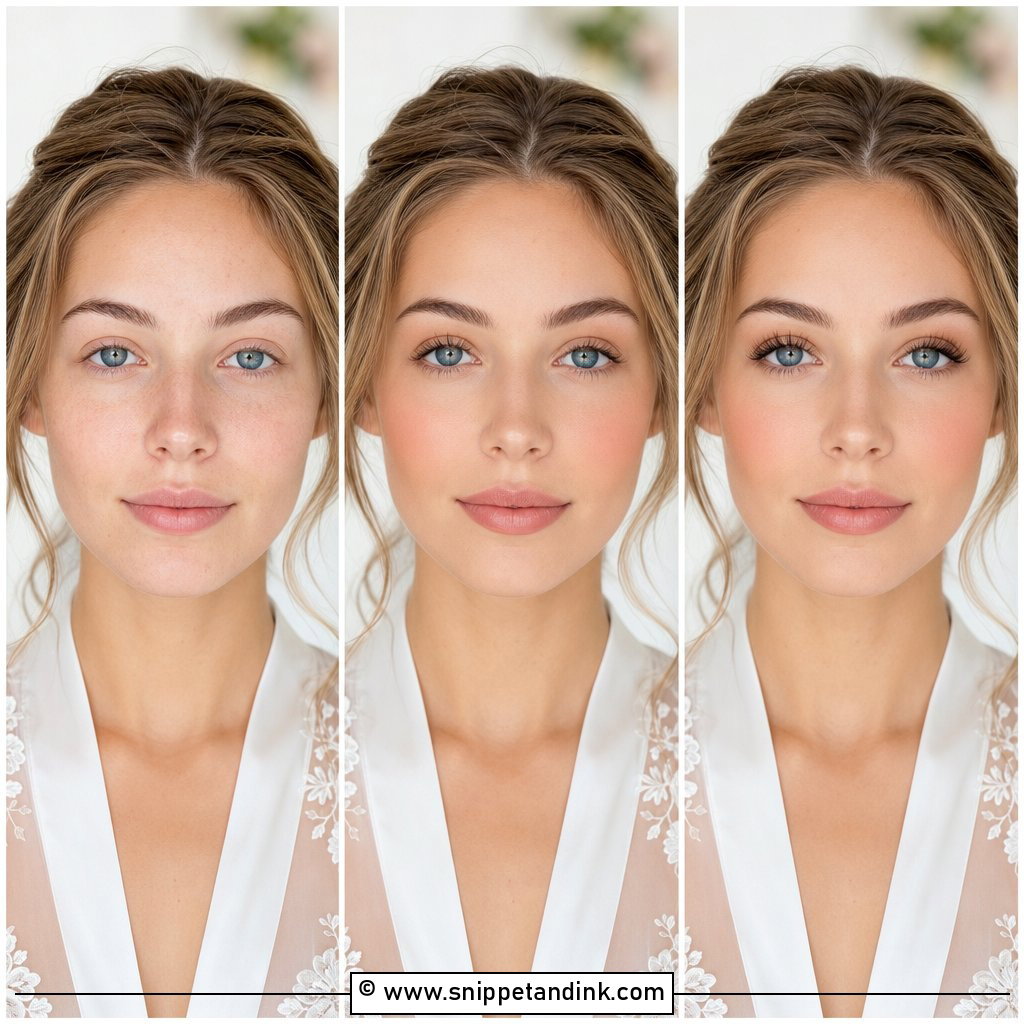
1. Natural Bridal Makeup
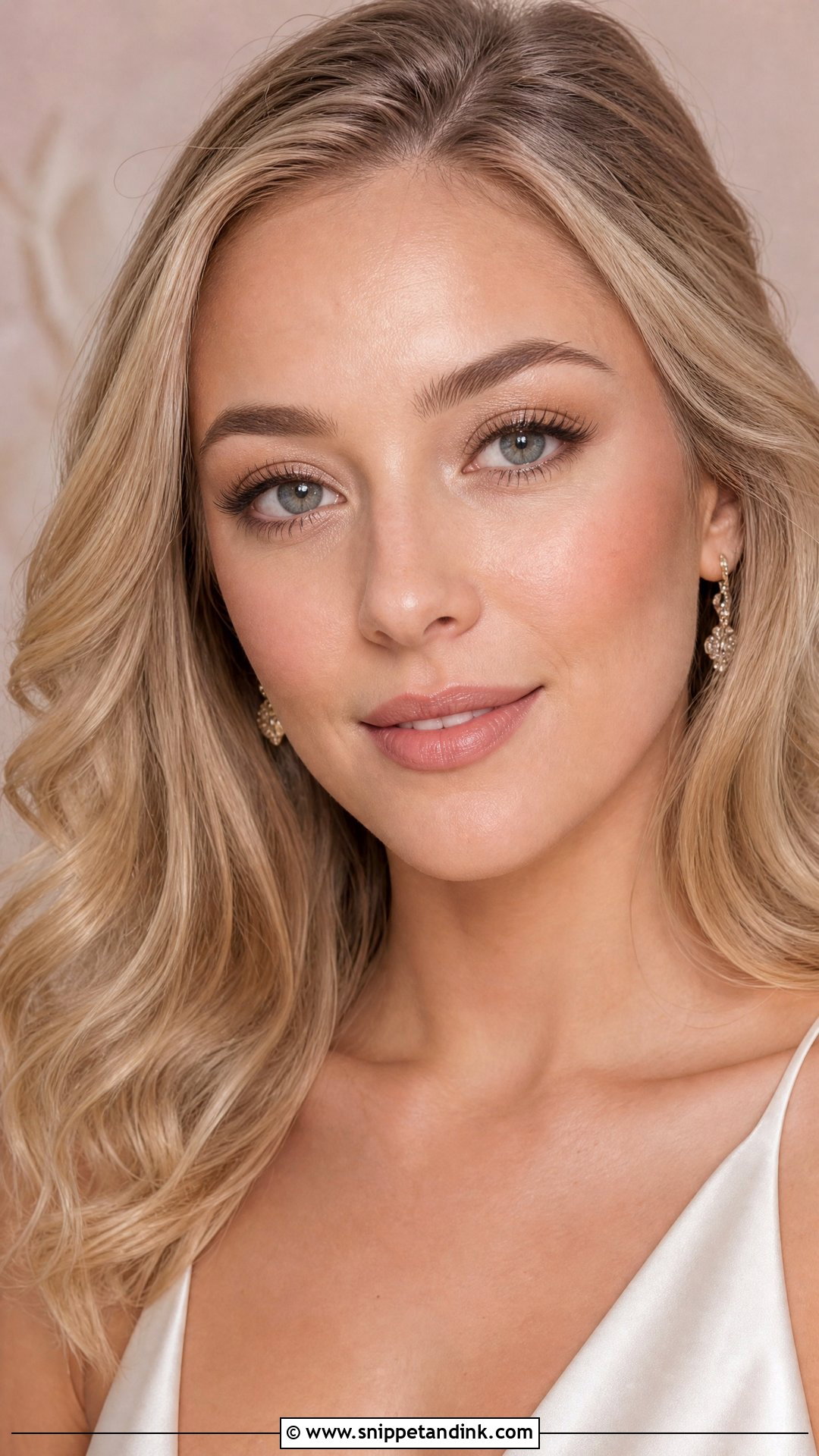
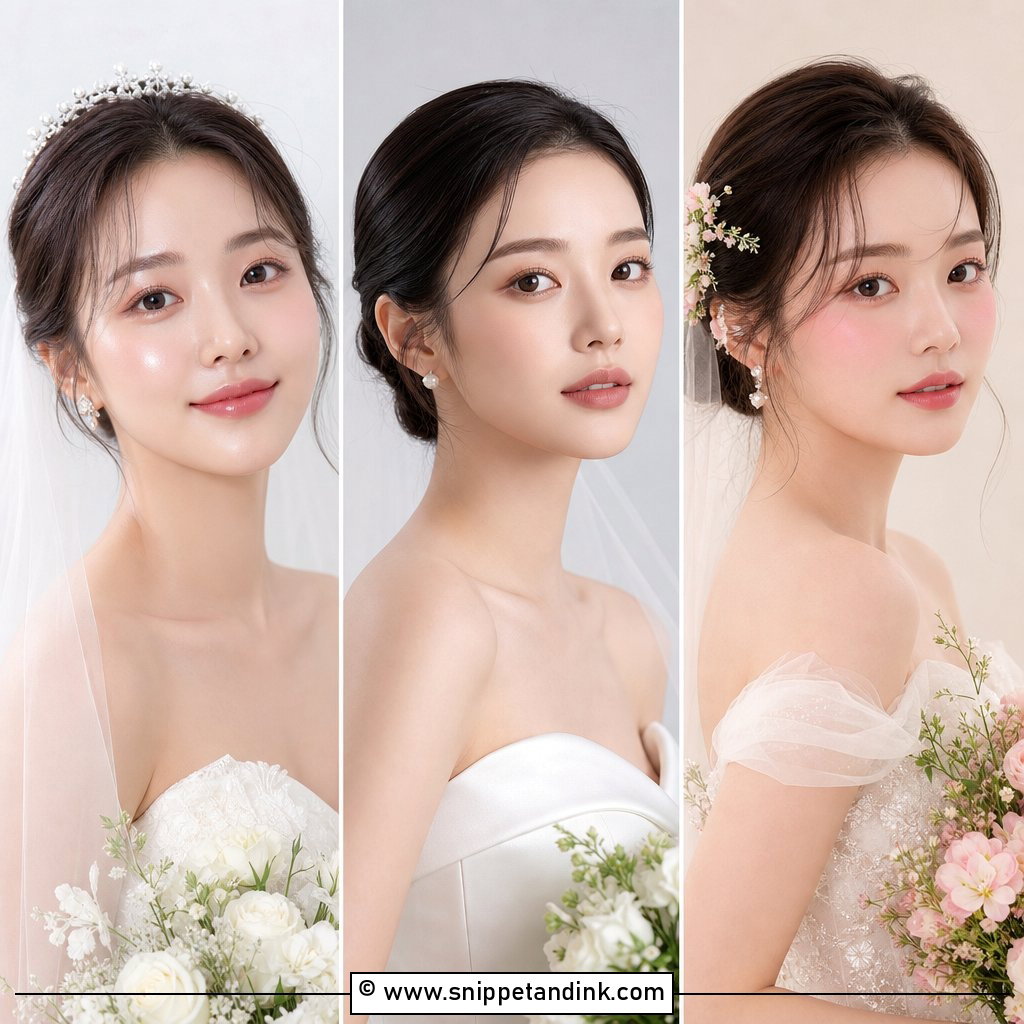
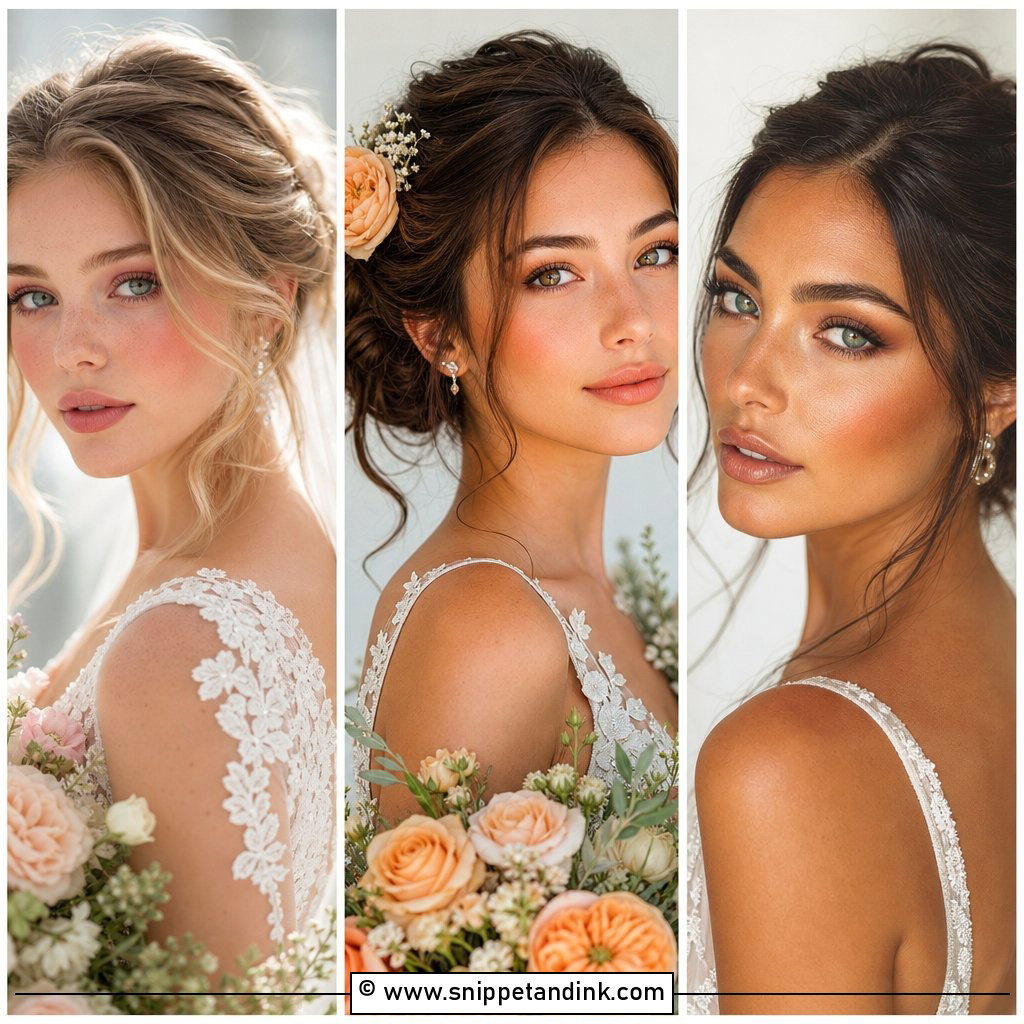
The natural look takes more prep than any other on this list, because there’s nothing to hide behind. I spend most of the time on skin: moisturizer, a few minutes to sink in, then a thin foundation pressed in only where needed. Brown liner instead of black, a few individual lashes at the outer corners and a cream blush. Brides often skip setting spray with a look this light, and that’s when the T-zone breaks up by the speeches.
2. Soft Glam Bridal Makeup
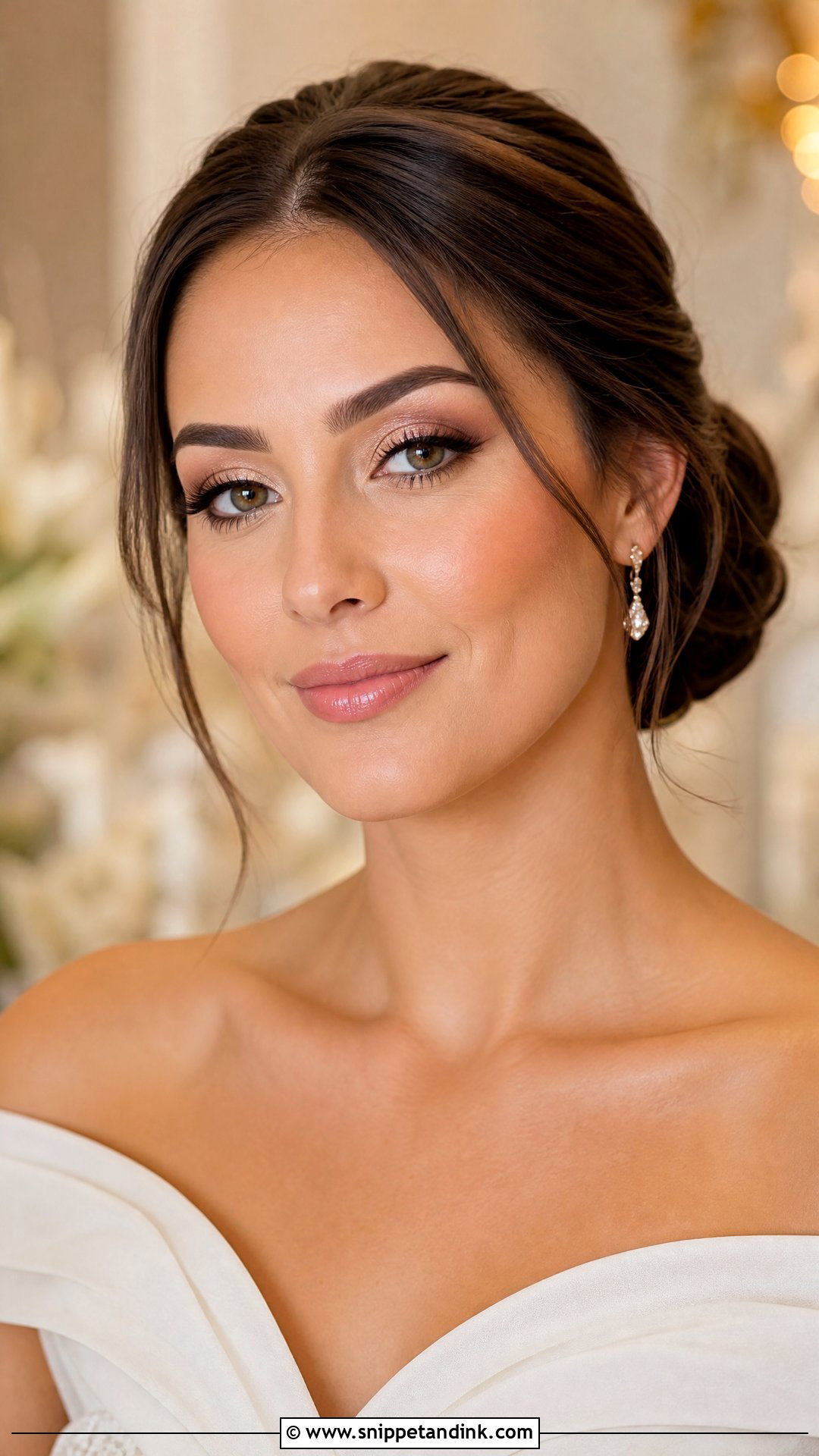
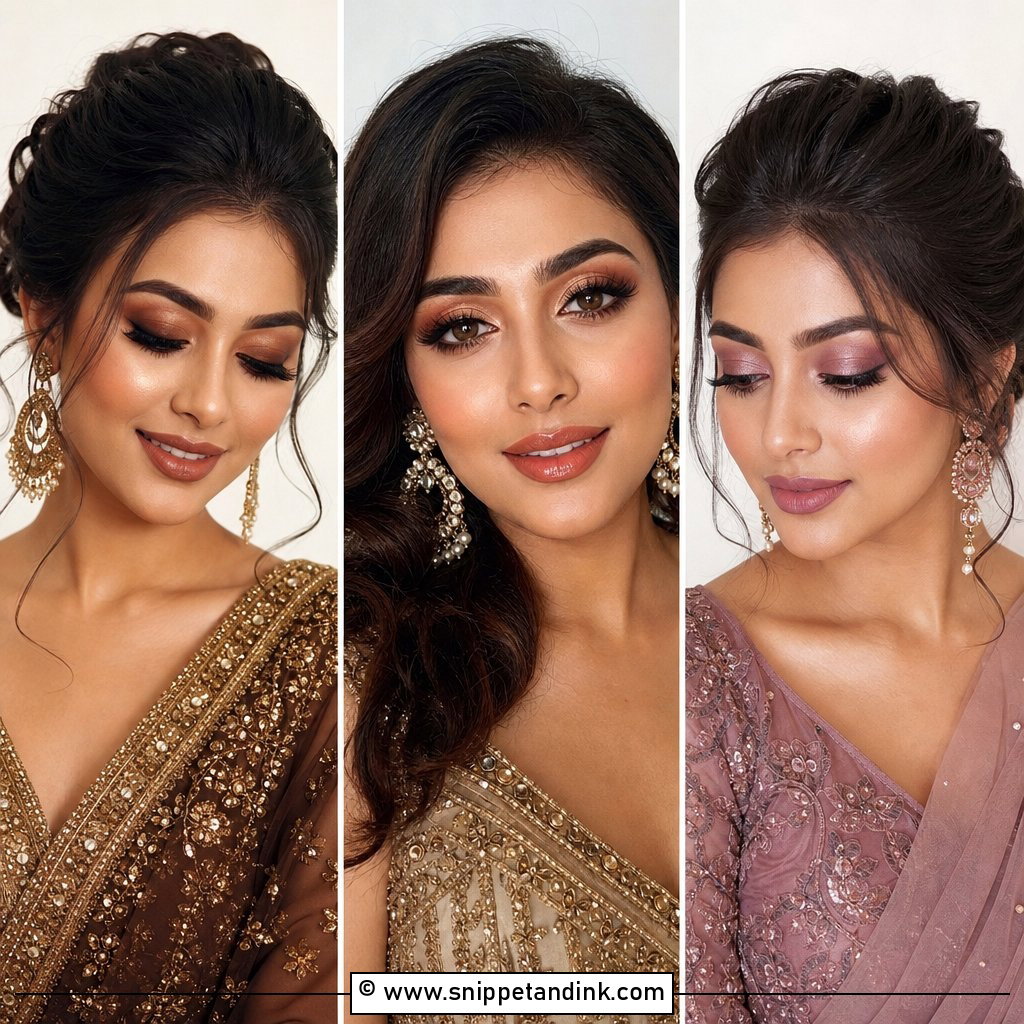
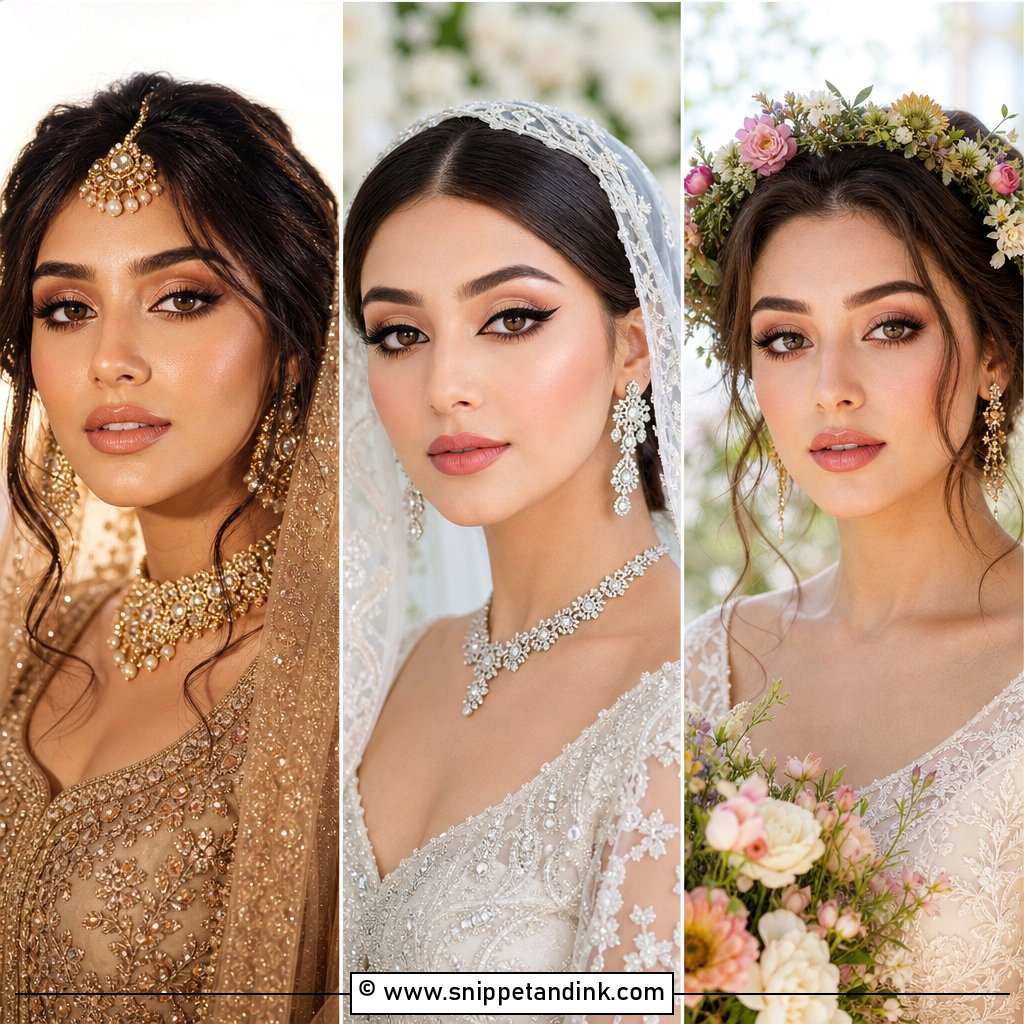
Soft glam is what most of my brides end up choosing, even the ones who came in asking for natural. It adds a warm brown crease, a smudged or thin-winged liner, fuller lashes and a light contour. The mistake I see is contour placed too low, which drags the face down in photos; it belongs just under the cheekbone, blended up toward the temple. Peach-pink blush on top brings the warmth back.
3. Dewy Bridal Makeup
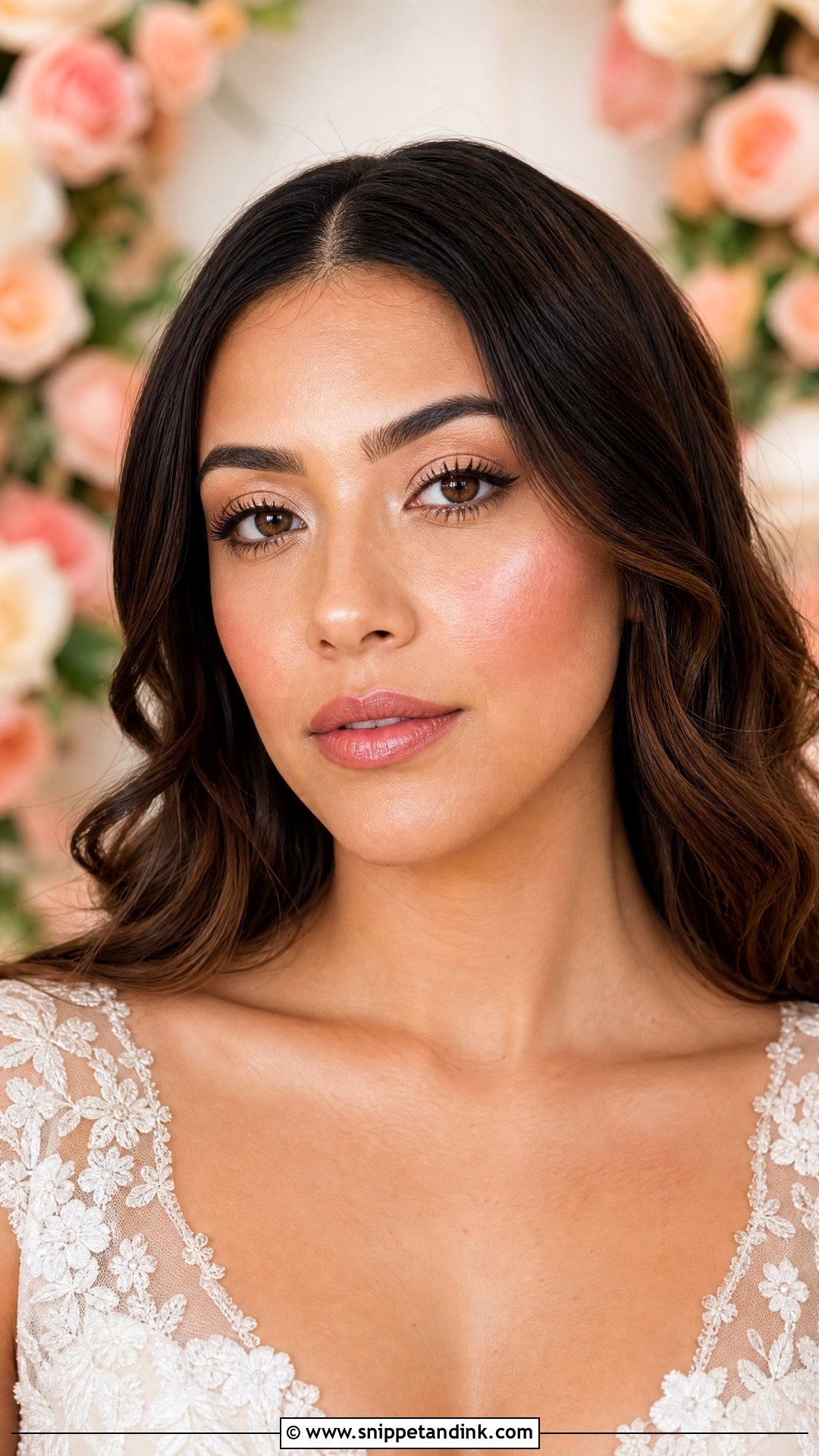
Dewy skin is a balancing act. I keep the glow on the cheekbones, the brow bone and the bridge of the nose, and I powder the center of the face, under the eyes and around the nose, because that’s where shine turns into grease after a few hours. A hydrating primer and a skin-like foundation go underneath. Champagne shadow and a rosy gloss keep the rest quiet. I’d hold back on this one for a July ceremony with no shade, since heat speeds up how fast dewy goes shiny.
4. Matte Bridal Makeup
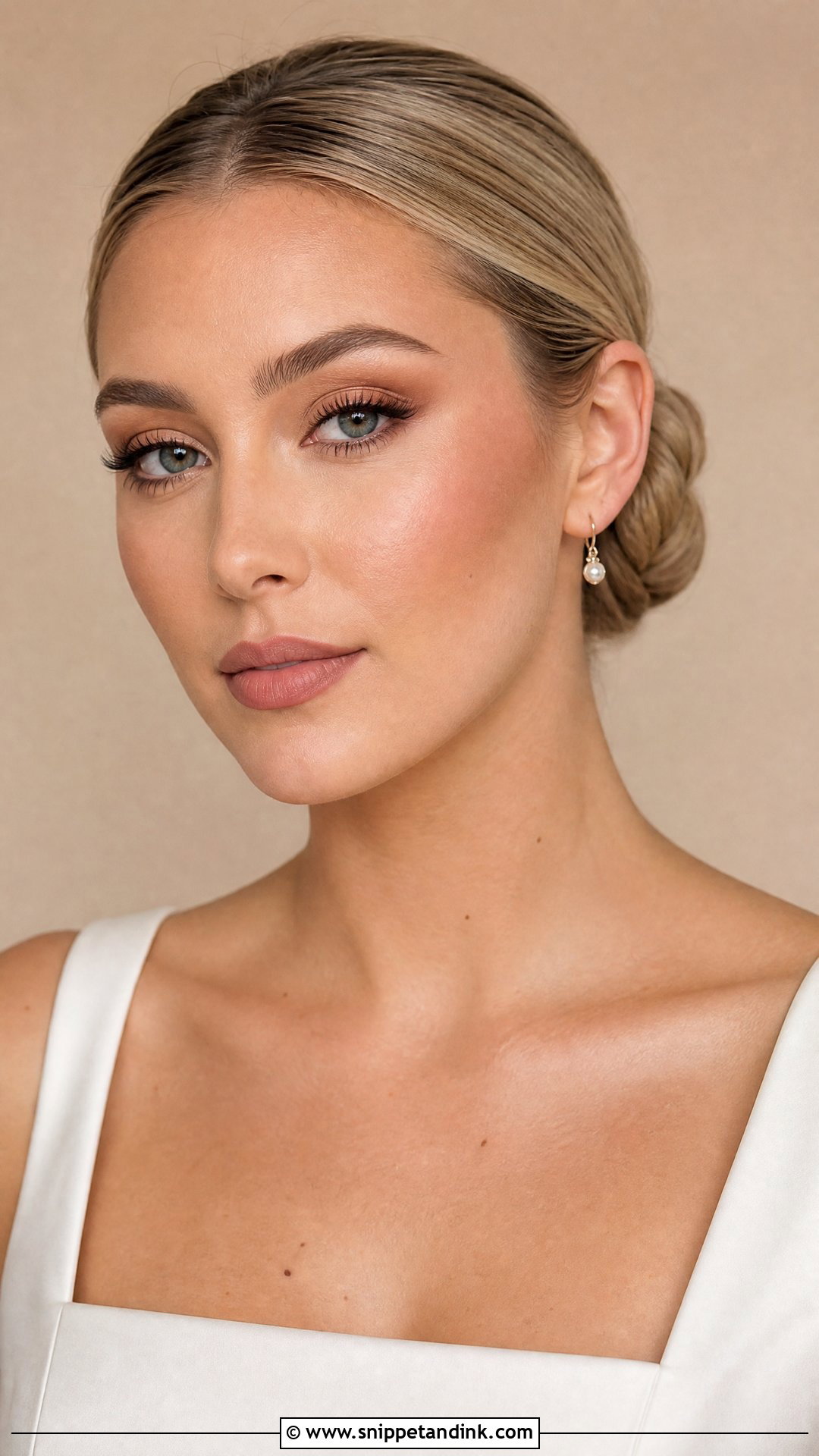
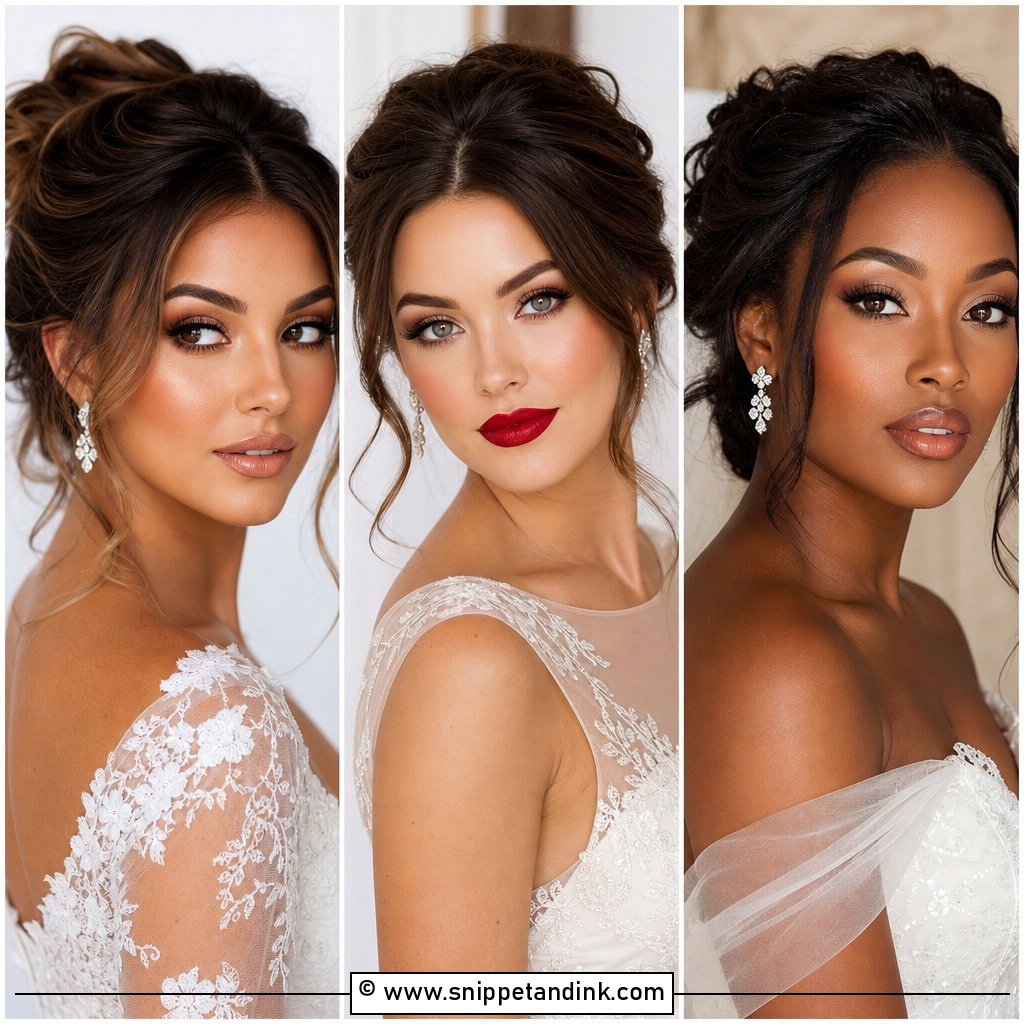
Matte foundation is the most reliable option for oily skin or a hot venue, but it can look flat in close-ups. I avoid that by applying powder in thin, pressed layers instead of one heavy dusting, and by leaving a bit of satin finish on the cheeks. Matte beige and caramel shadows in the crease, a soft brown liner. A touch of highlighter on top of the cheekbone stops the face reading as dull in daylight.
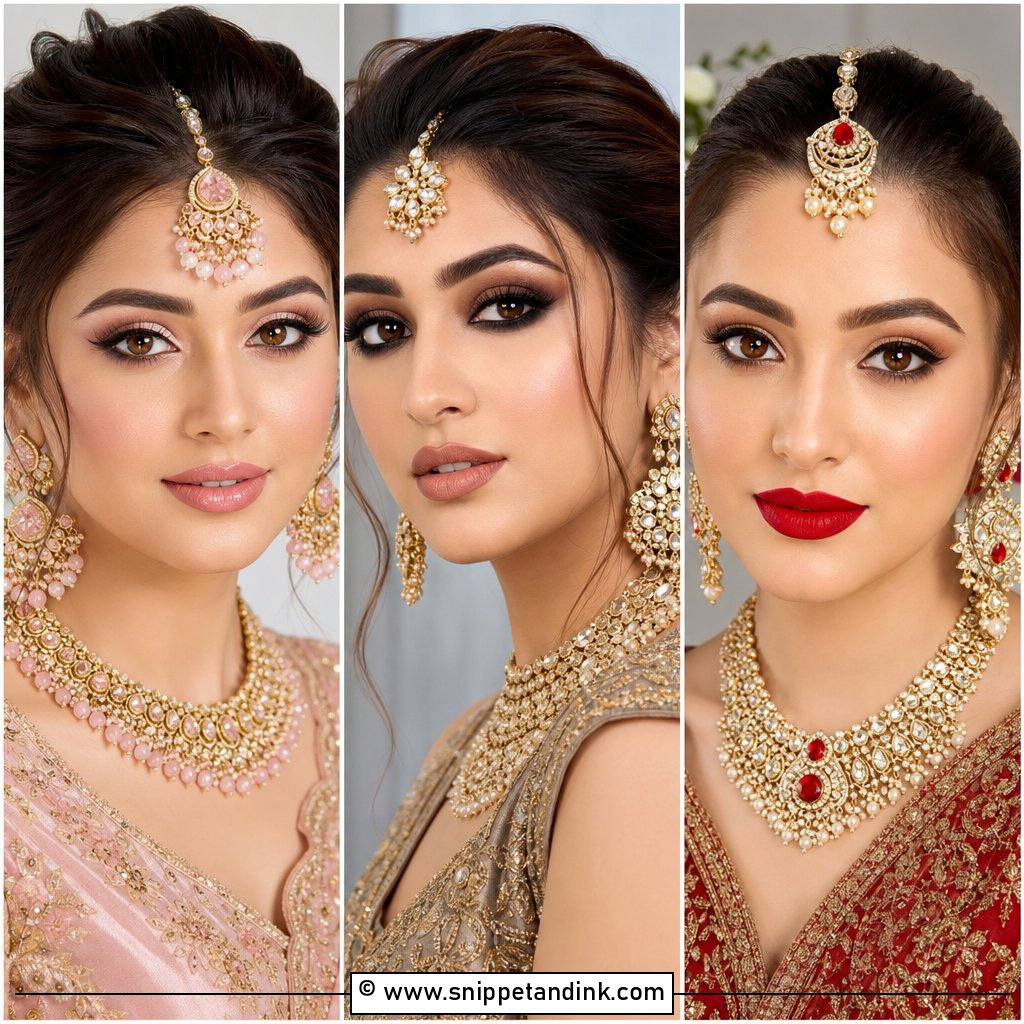
5. Simple Bridal Makeup With Red Lip
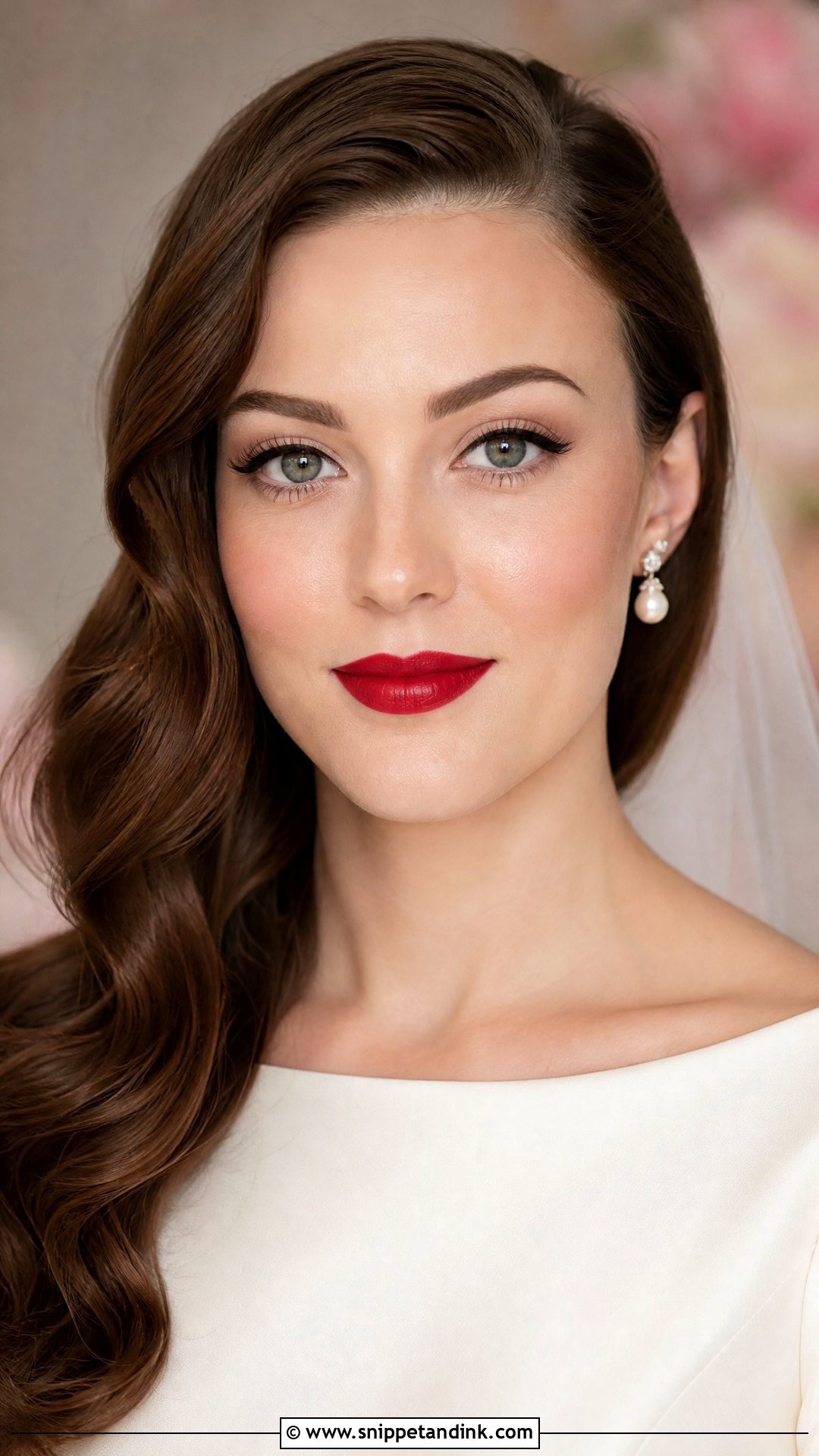
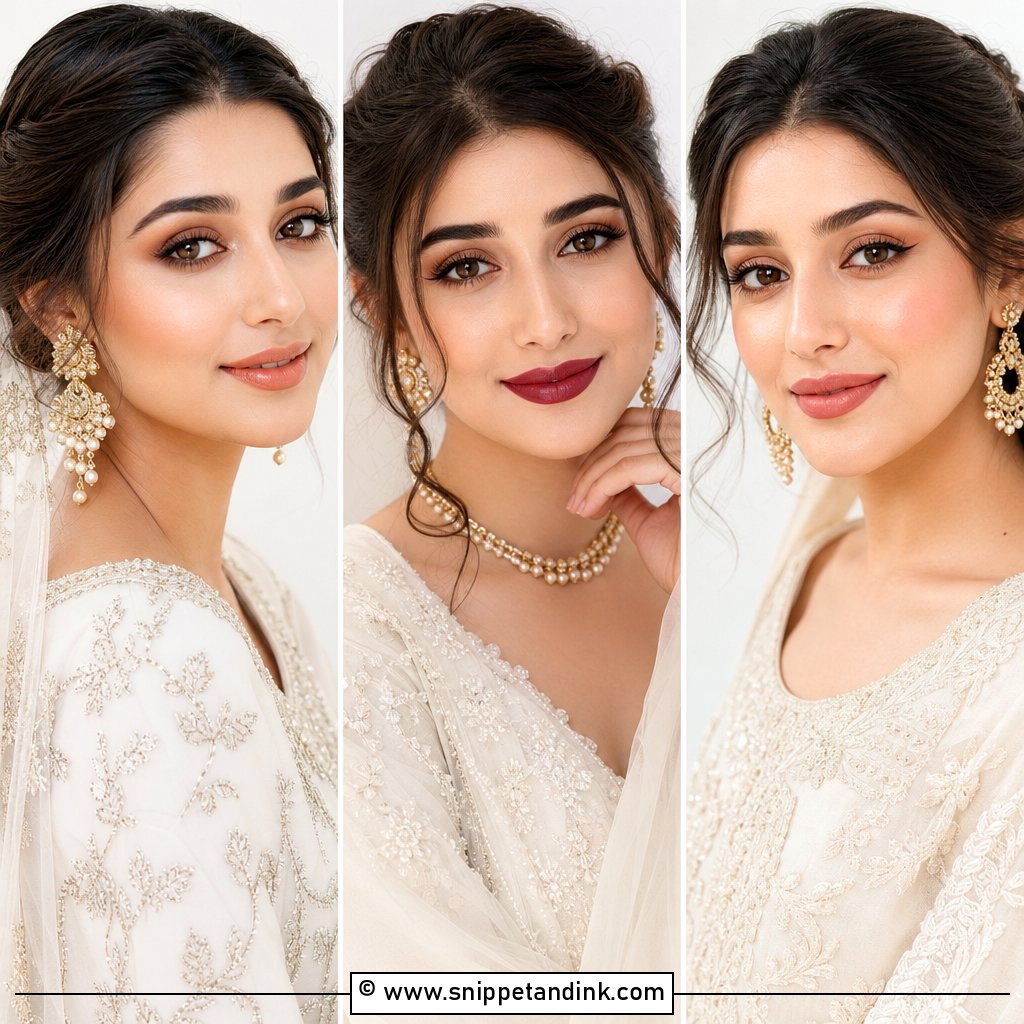
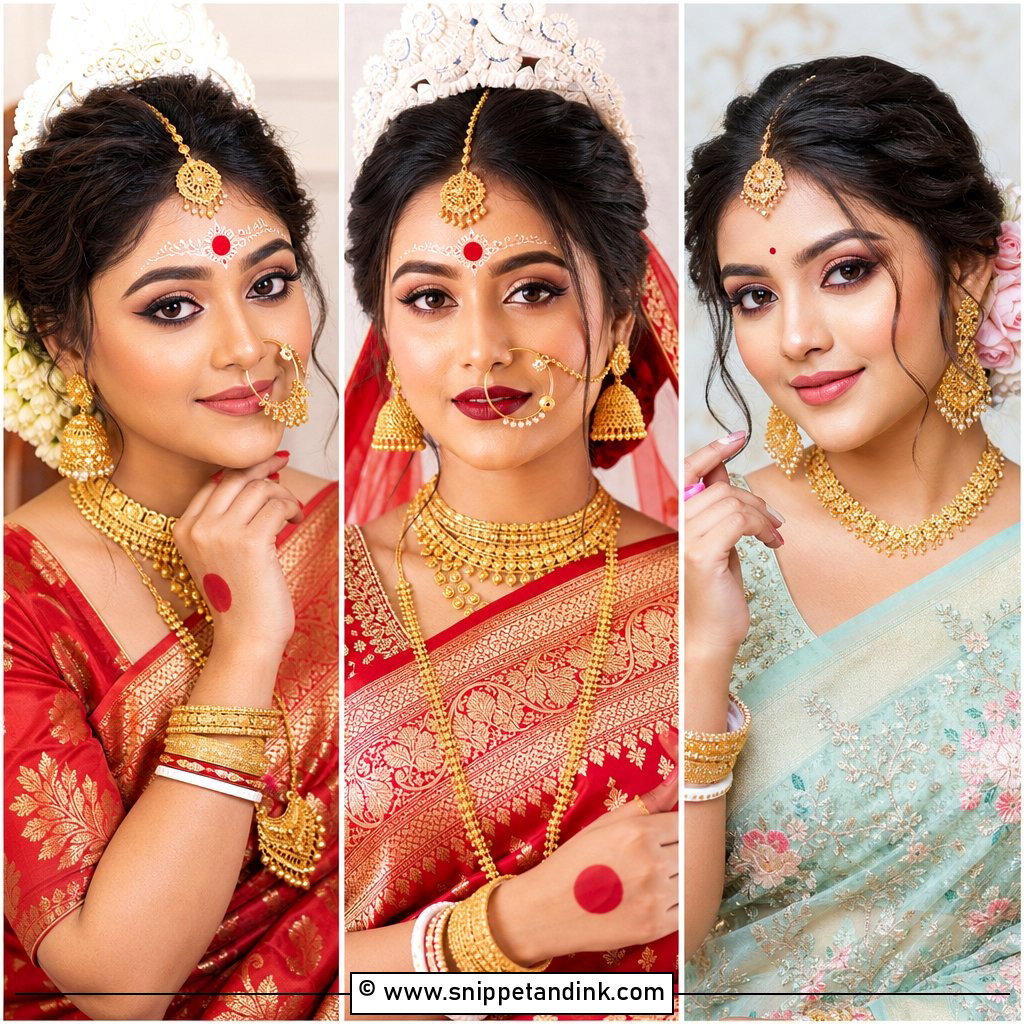
A red lip is the one detail every guest remembers. I keep everything else plain: medium coverage, neat brows, mascara and champagne on the lids. The shade has to suit the undertone; blue-based reds suit cool skin, while warmer, orange-leaning reds flatter warm skin. Line the whole lip, fill it in with the liner, then apply the lipstick. That base stops the red bleeding into fine lines and survives a glass of champagne better.
6. Simple Bridal Makeup With Nude Lip
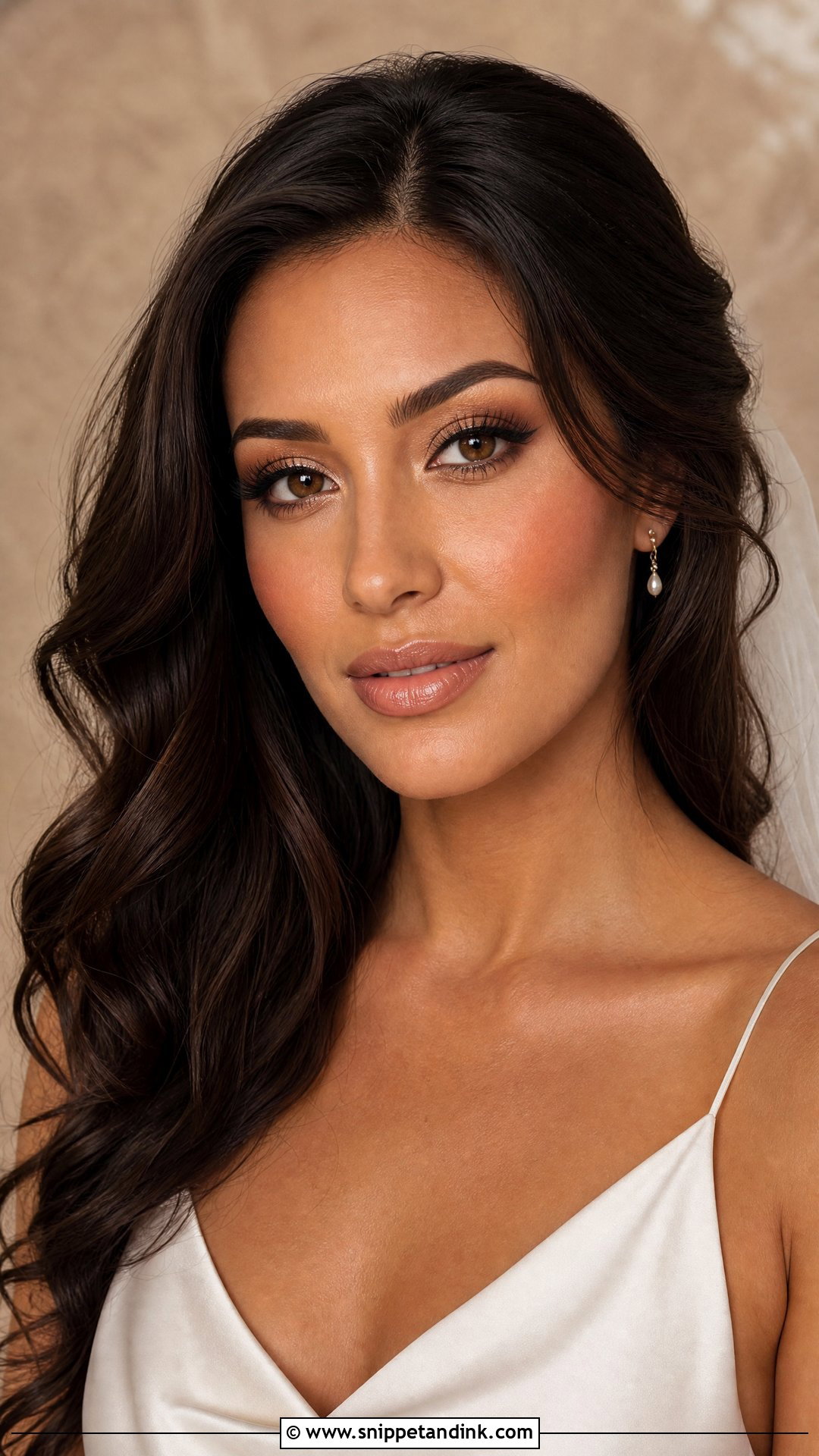
A nude lip fails when it’s the same color as your skin, because the mouth disappears in photos. Go one or two shades deeper than your natural lip. In my experience, pinkish nudes suit fair skin, peachy ones medium, caramel ones tan skin and cocoa or rose-brown deep skin. A dab of gloss in the center adds shape. With the lips this soft, the eyes and brows need a little extra definition to balance the face.
7. Pink Bridal Makeup
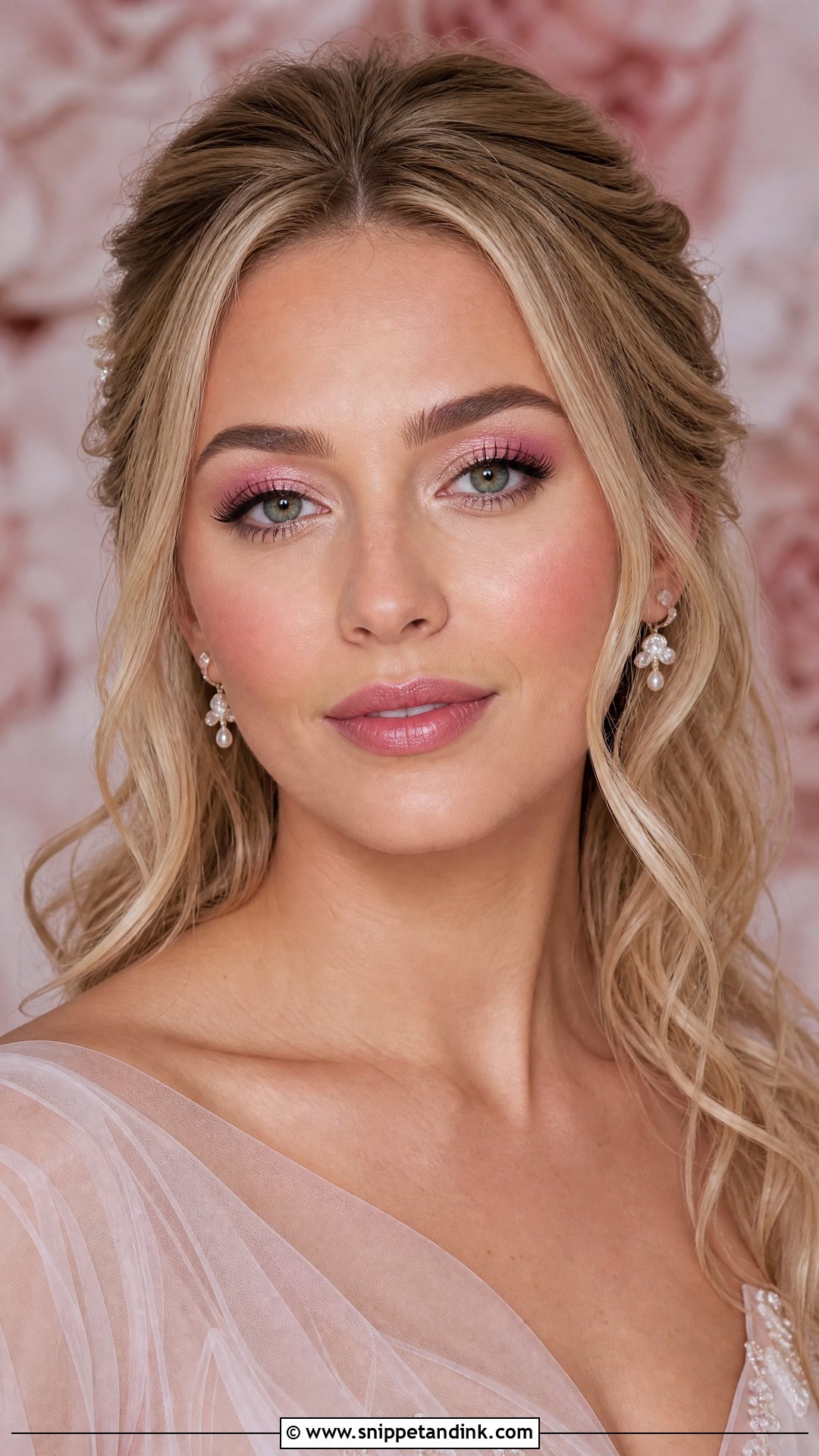
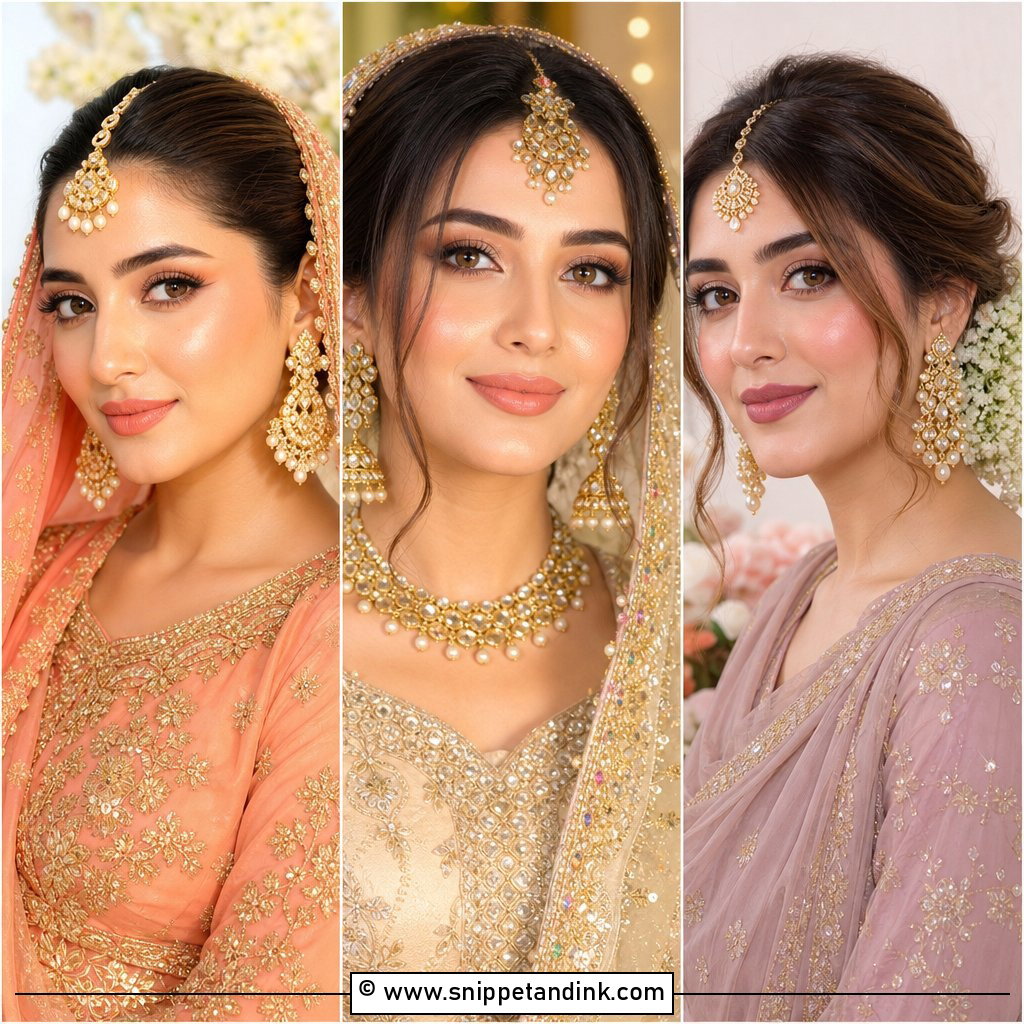
Pink makeup works when every pink comes from the same family. I pick one shade, often a dusty rose, and use it as a wash on the lids, on the cheeks and on the lips, so the face reads as one tone rather than three. Very bright pinks look costume-like next to an ivory gown. Deeper skin needs richer rose or berry-pink, or the color sits on top of the skin and looks chalky.
8. Peach Bridal Makeup
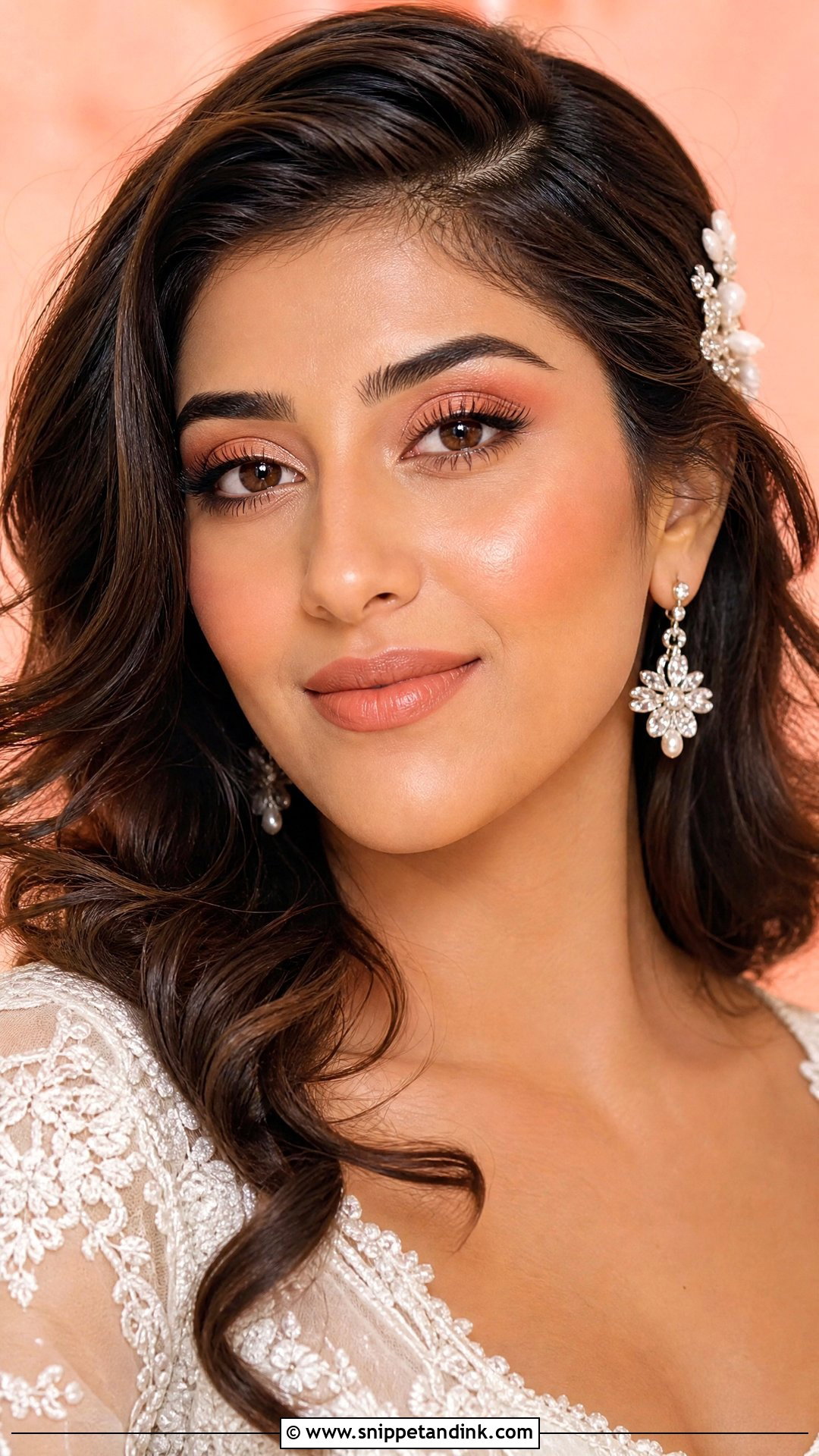
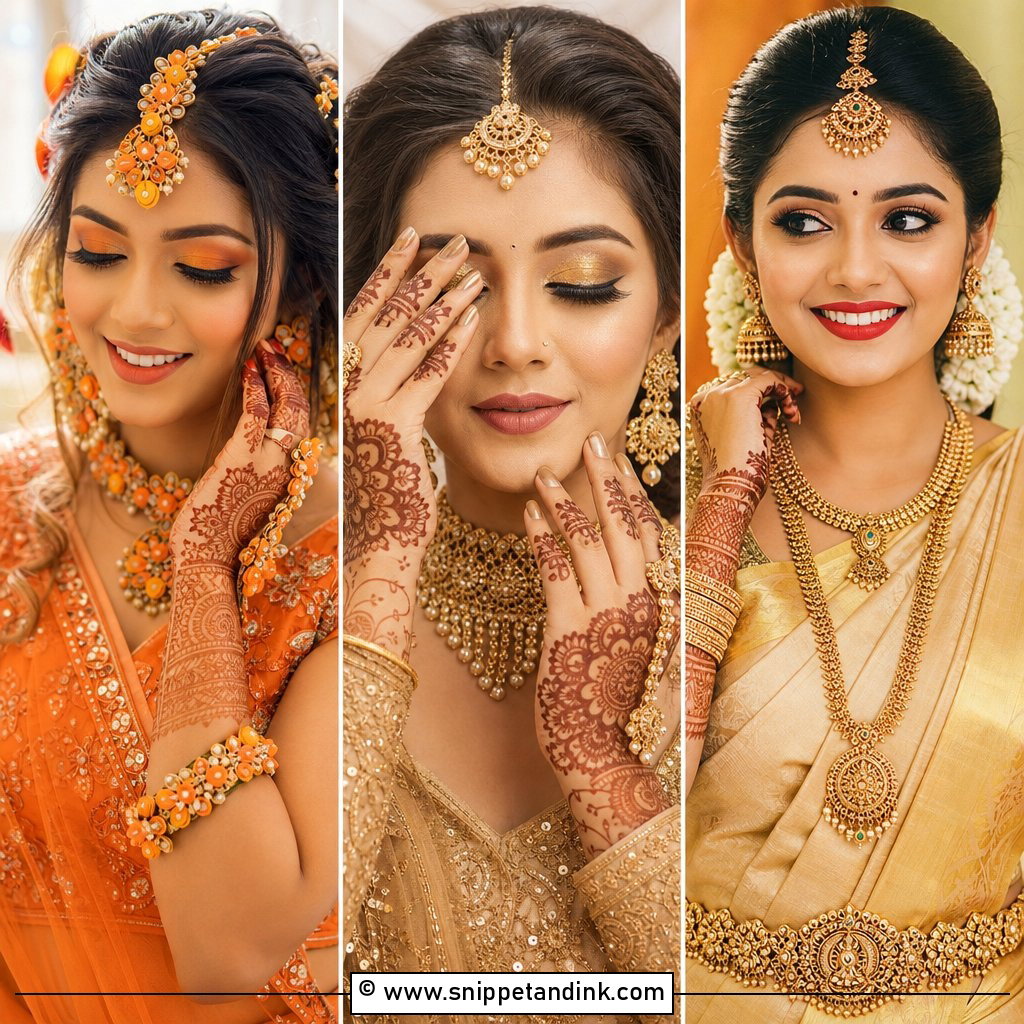
Peach suits more skin tones than any other blush family I use, because it adds warmth without the coolness of pink. High on the cheekbone, a soft apricot shimmer on the lid and a peachy nude lip. Fair skin takes a pale peach; tan and deep skin need a coral or terracotta version, since a pale peach turns ashy on deeper tones. It sits naturally next to gold jewelry.
9. Brown Smokey Bridal Makeup
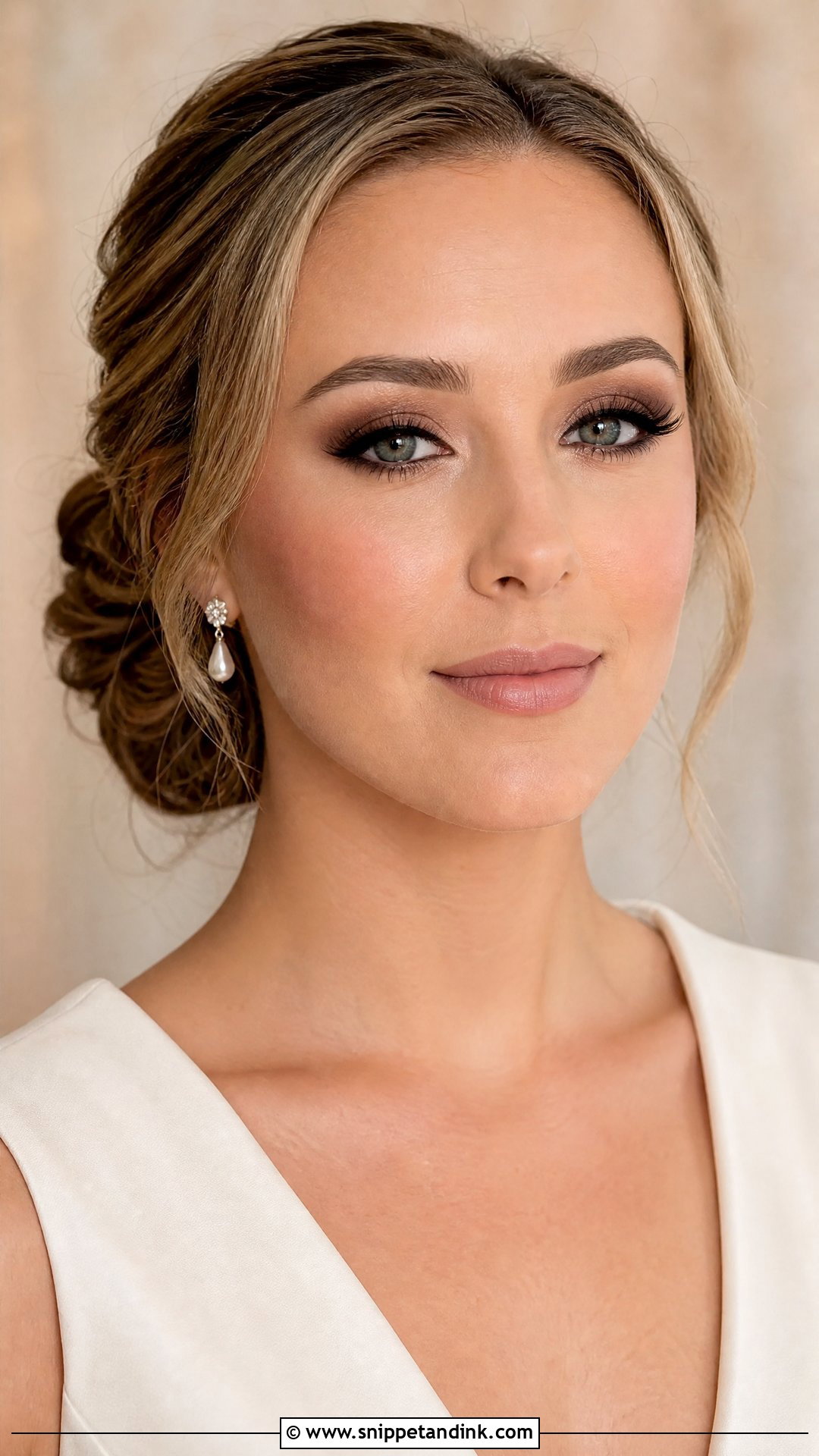
A brown smoky eye gives drama without the heaviness black can bring in daylight. I blend a taupe through the crease, deepen the outer corner with a chocolate brown, and keep the edges soft by working with a clean brush at the end. The complexion stays plain, with a nude or caramel lip. It suits an evening reception best; at a noon ceremony, a deep smoky eye can look heavy against bright sun.
10. Champagne Bridal Makeup
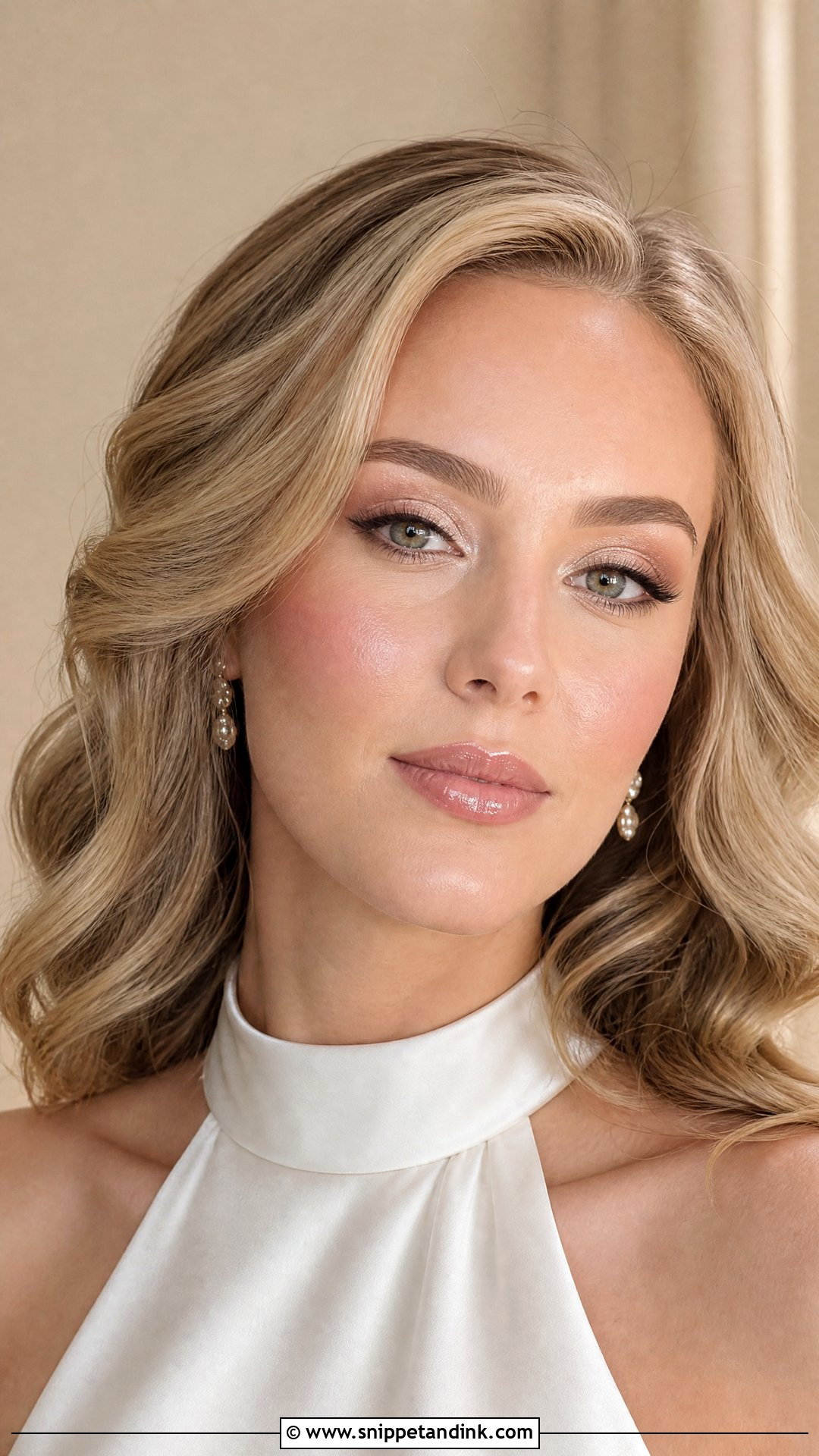
Champagne shimmer on the center of the lid catches light without reading as glitter. I place it with a fingertip, which deposits more pigment than a brush, and blend a light brown through the crease. Thin liner and soft lashes finish the eyes. The risk is fallout under the eyes, so I do eyes before foundation on brides wearing shimmer, and sweep the fallout away first.
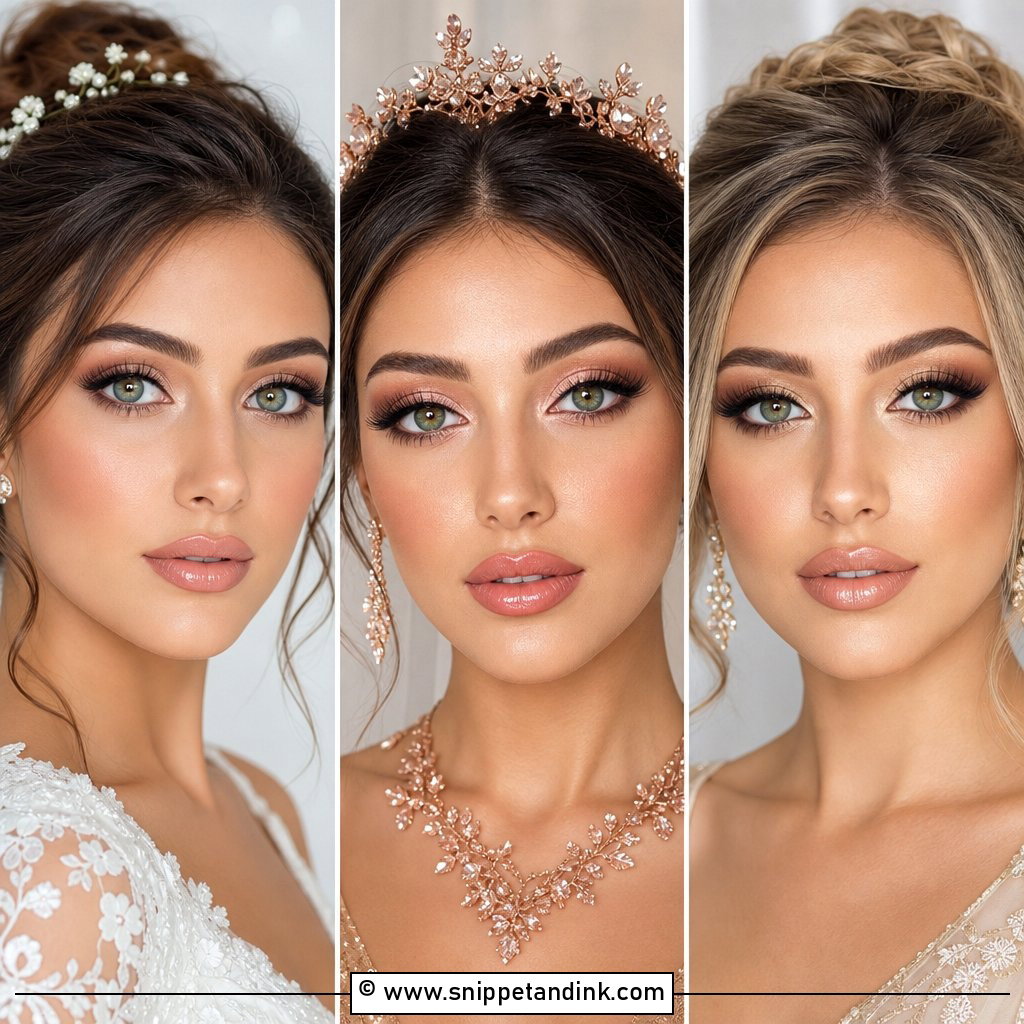
11. Rose Gold Bridal Makeup
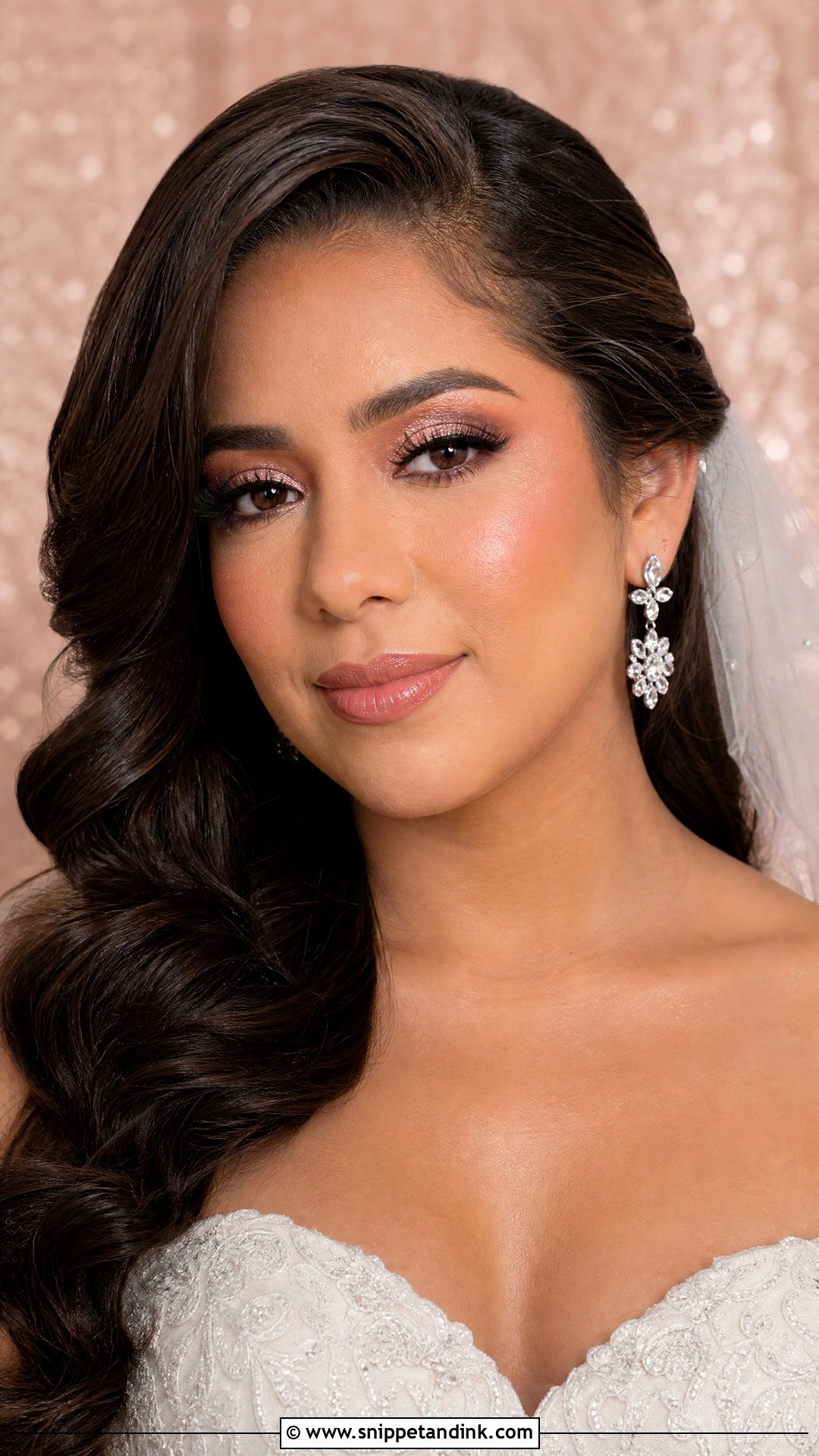
Rose gold sits between silver and bronze, warmer than one, softer than the other. I use it on the lids with a warm brown in the crease and a little highlight at the inner corners. On deep skin, swap for a copper-leaning rose gold; a pale rose gold looks gray on deeper tones. It sits well with blush bridesmaid dresses and gold jewelry.
12. Classic Bridal Makeup
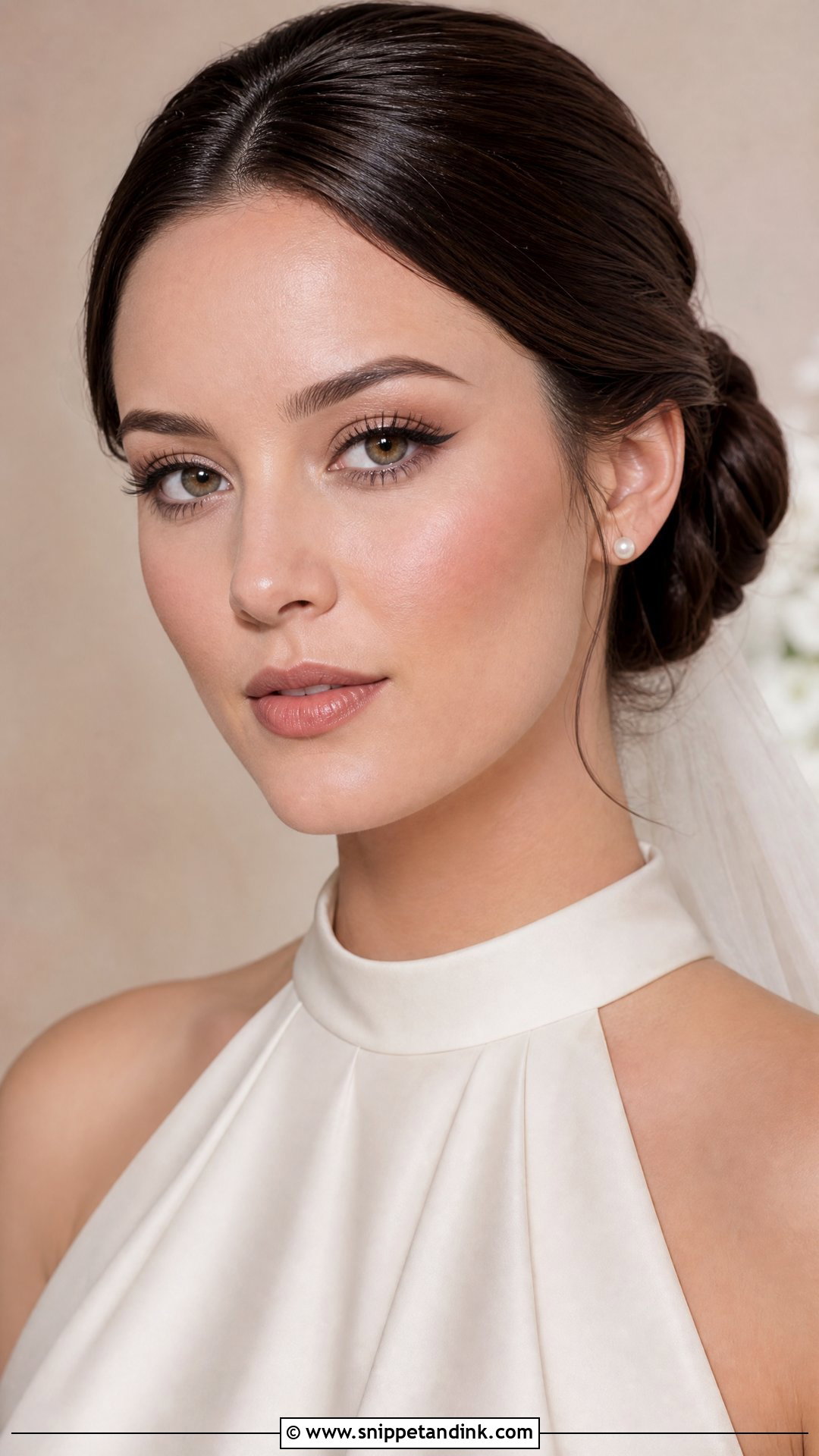
The classic look is the one I’d suggest to a bride who’s worried about regretting her photos in twenty years. It’s neutral matte shadows, a thin black or brown wing, lashes that open the eye, a satin complexion, and a rose or soft berry lip. Nothing in it is trendy, so nothing in it dates. It suits almost any dress and season.
13. Minimal Bridal Makeup
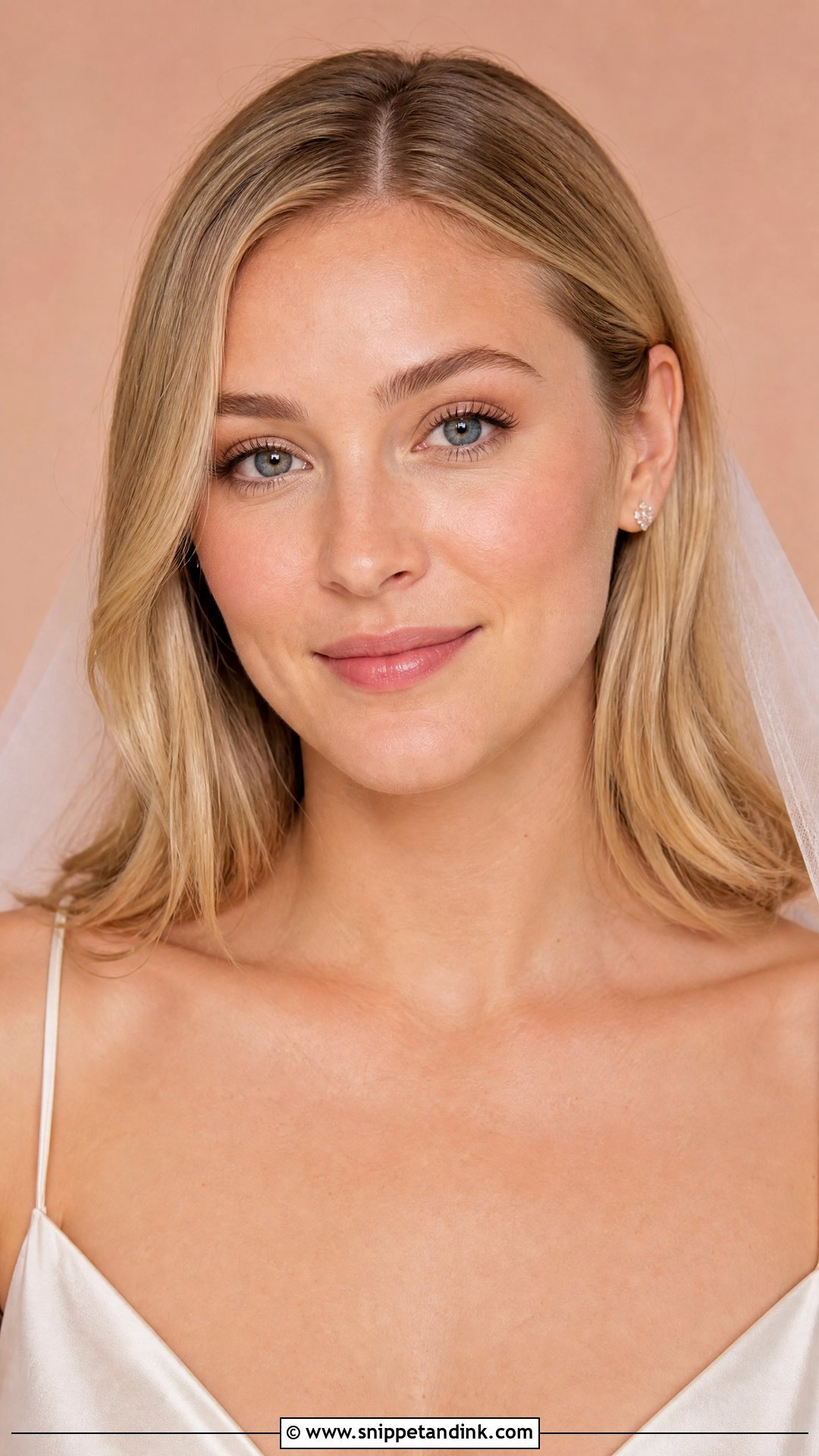
Minimal makeup on a bride who never wears any still needs more than she’s used to. A skin tint, spot concealer, brow gel, waterproof mascara and a tinted balm will look bare in photos unless there’s enough blush. I usually add a bit more blush than she’d choose herself, then check it under a phone camera flash so she can see why. Curled lashes do a lot of the work here.
14. Glowy Bridal Makeup
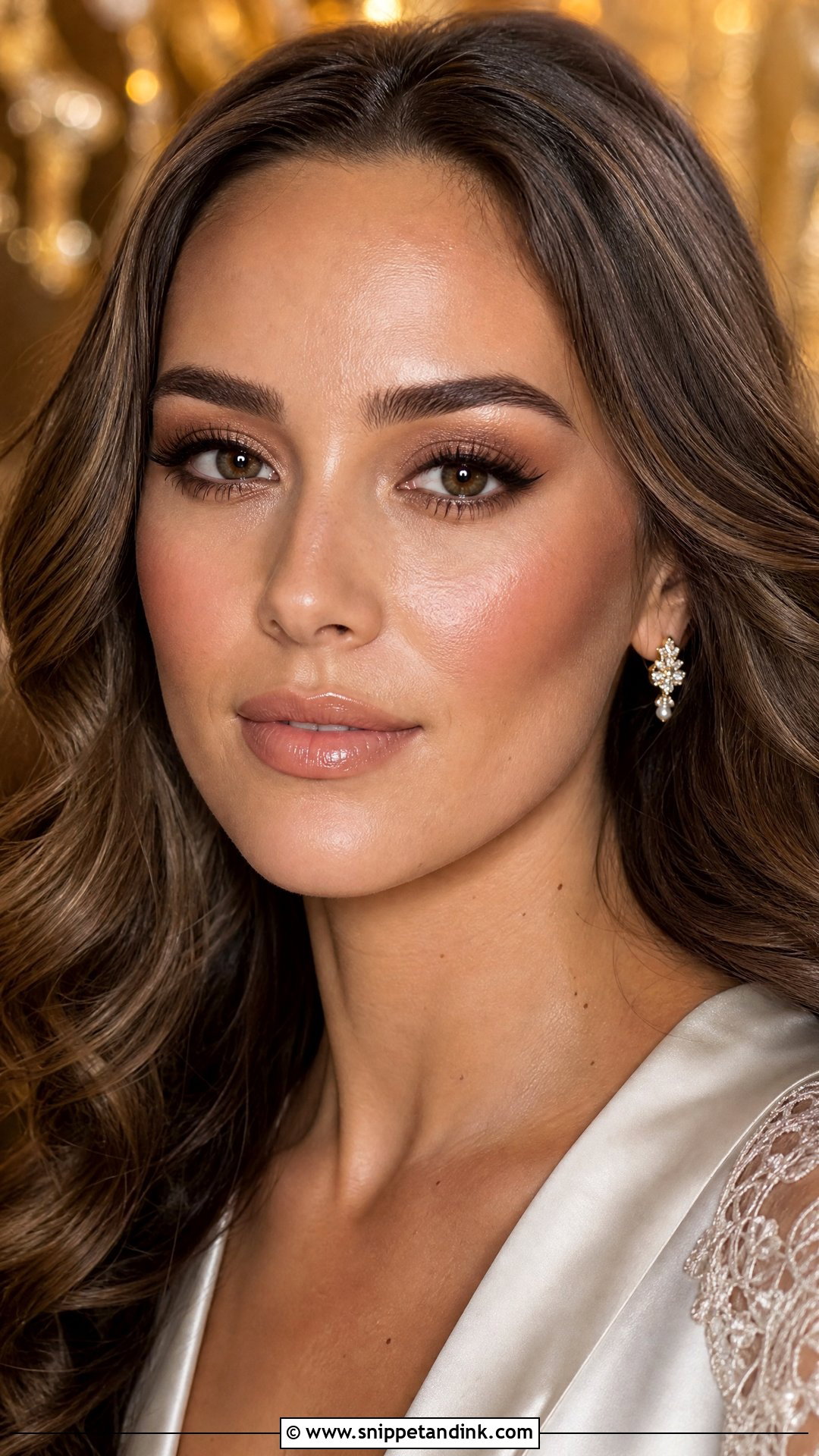
Glowy bridal makeup is more controlled than dewy. I use a luminous primer under foundation, then add highlight only to the cheekbones, brow bones and bridge of the nose. A soft bronze shadow and a glossy nude lip keep it warm. Set with powder only where you’ll get oily. It’s at its best at golden hour, when low warm light picks out the highlight.
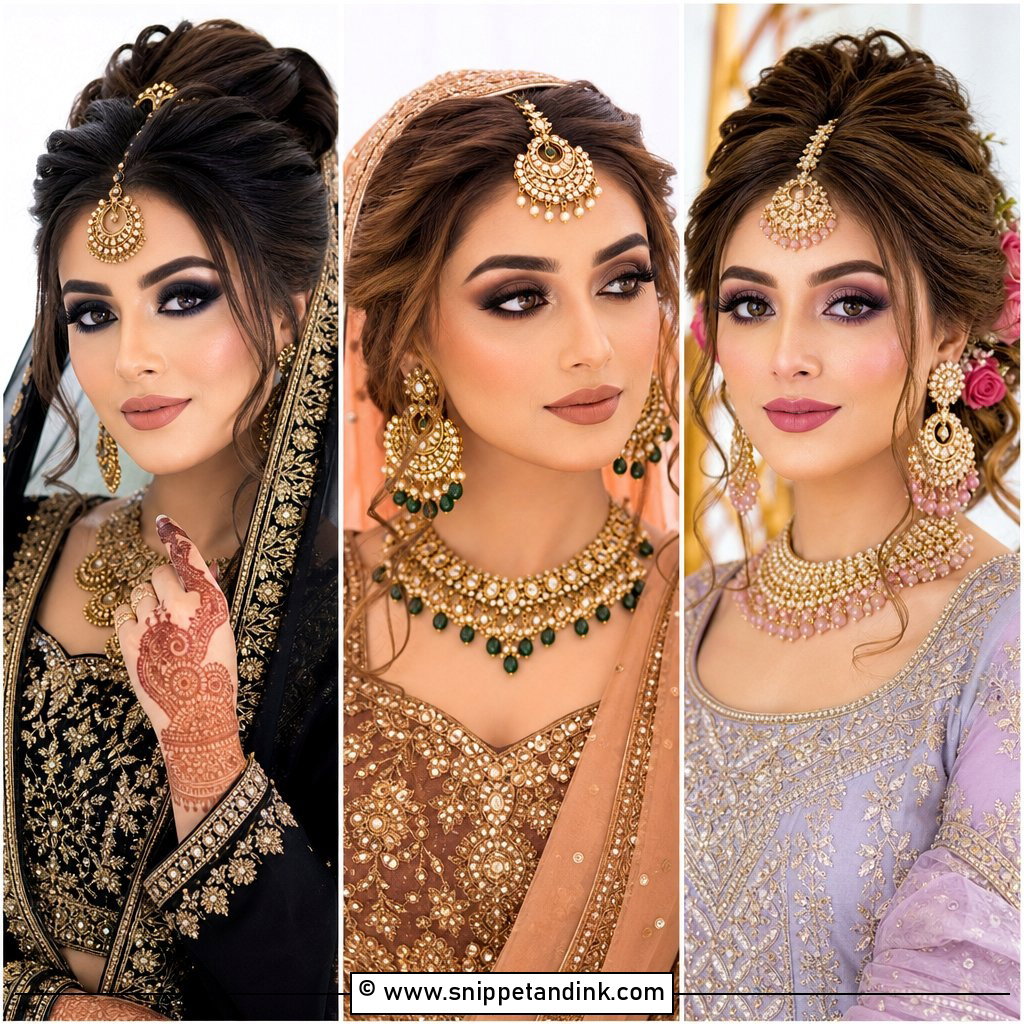
15. Bronzed Bridal Makeup
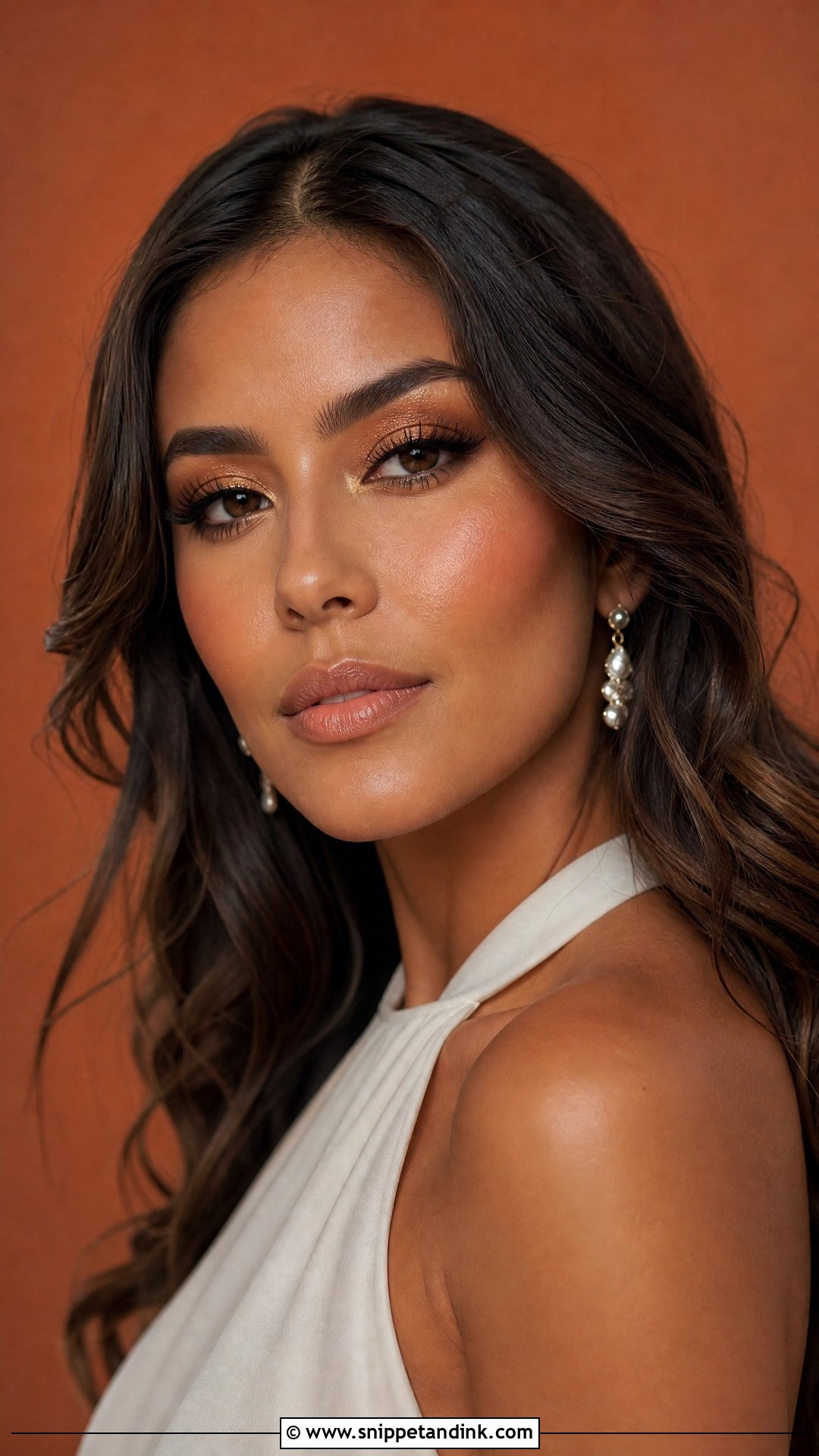
Bronzer as a soft wash beats contour for a sun-kissed bride. I sweep it around the temples, under the cheekbones and along the jaw with a large fluffy brush, then blend until no edge is visible. Warm caramel shadow, brown liner, a peach or nude-brown lip. Match the blush depth to your skin; on deep skin, terracotta or a deep coral reads warm, while on fair skin a light coral is enough. It pairs well with a warm ivory or champagne gown.
16. Bridal Makeup For Blue Eyes
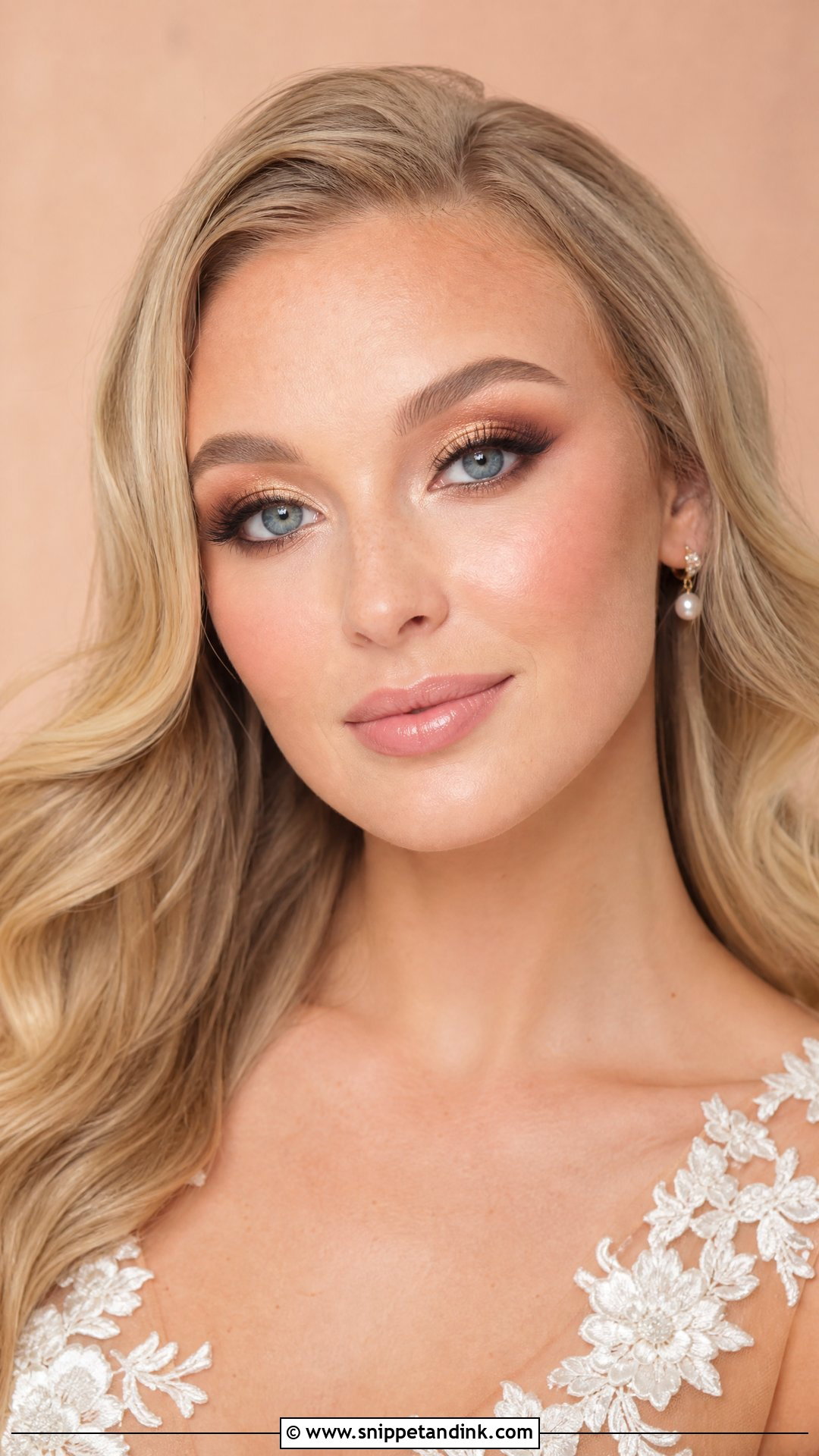
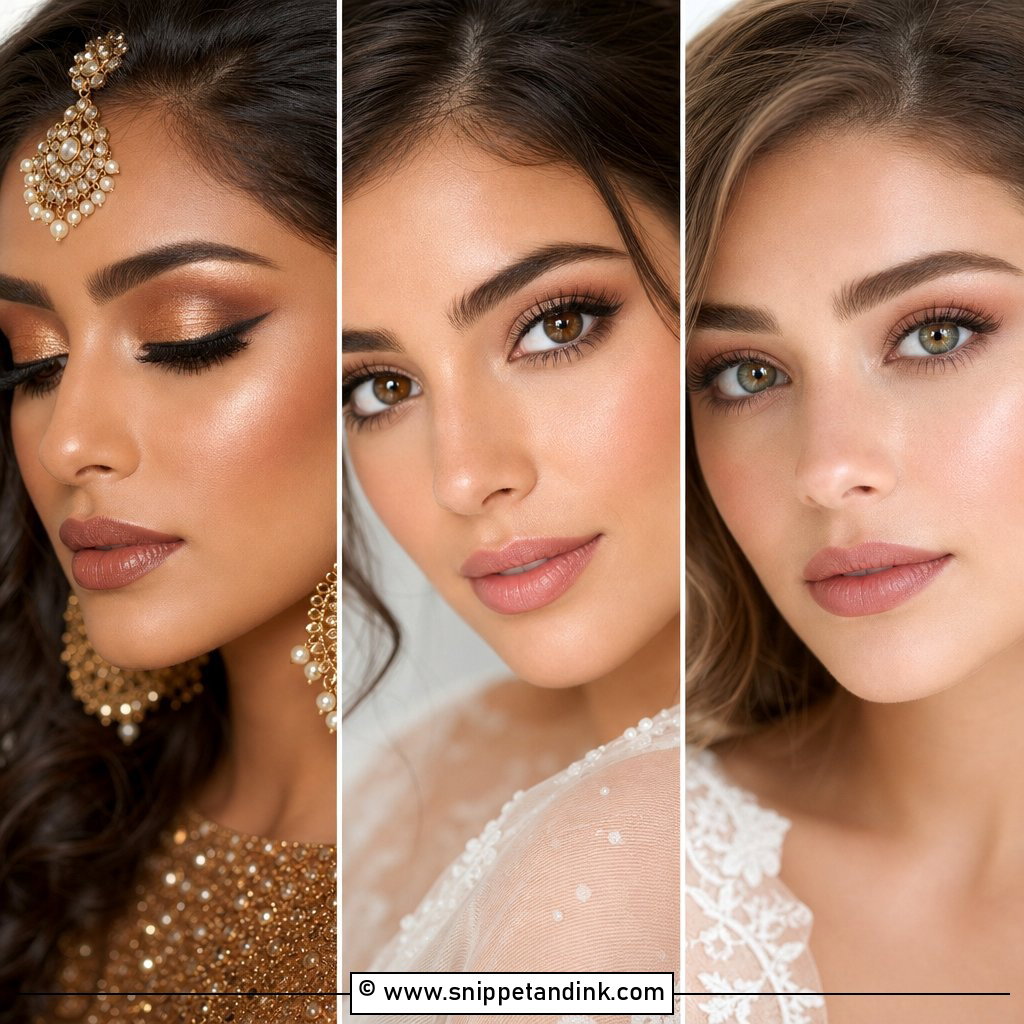
Blue eyes look brightest next to warm colors, because orange-leaning browns and bronzes sit opposite blue on the color wheel. I use a matte brown in the crease, a light shimmer on the lid and brown or bronze liner. Blue shadow tends to compete with the iris instead of lighting it up. Keep the lip a quiet pink nude so the eyes stay the focus.
17. Bridal Makeup For Brown Eyes
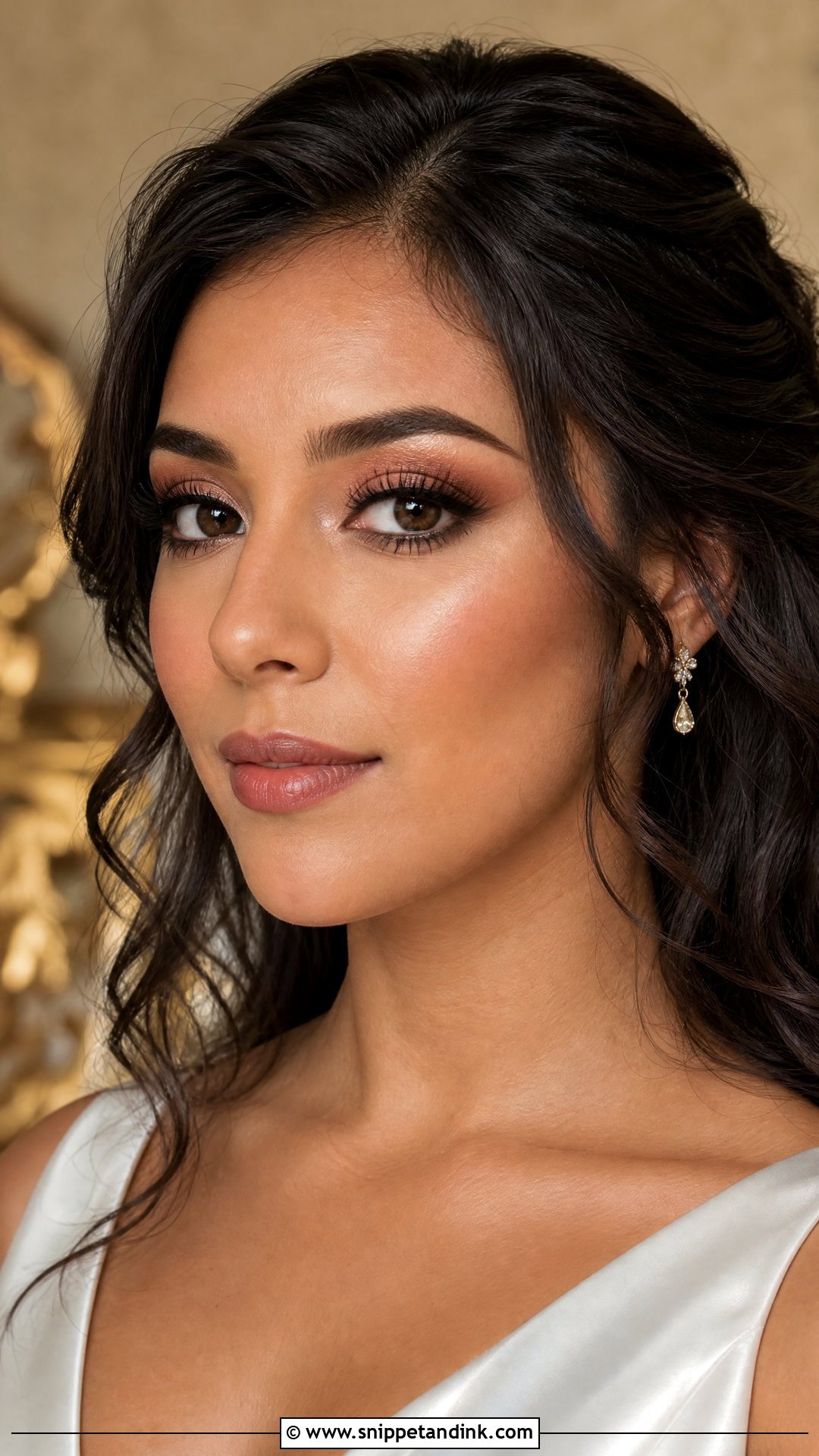
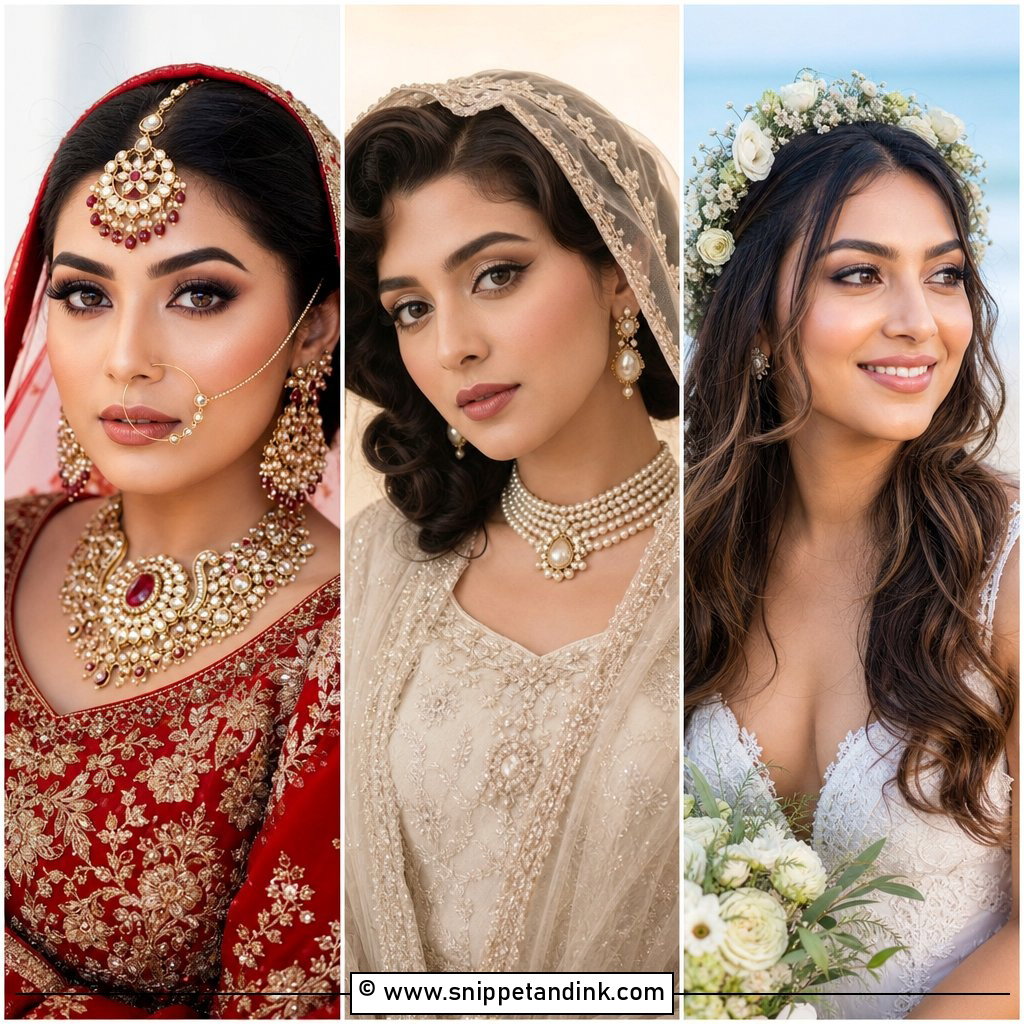
Brown eyes can take almost any shadow, which means the choice is really about the rest of the face. For a simple bridal look, I go with bronze or soft gold on the lid and a brown or black liner at the lash line. Brown eyes can handle slightly fuller lashes, but I keep them wispy so they don’t cast shadows on the cheeks in overhead light. Peach or rose blush and a caramel lip finish it.
18. Bridal Makeup For Green Eyes
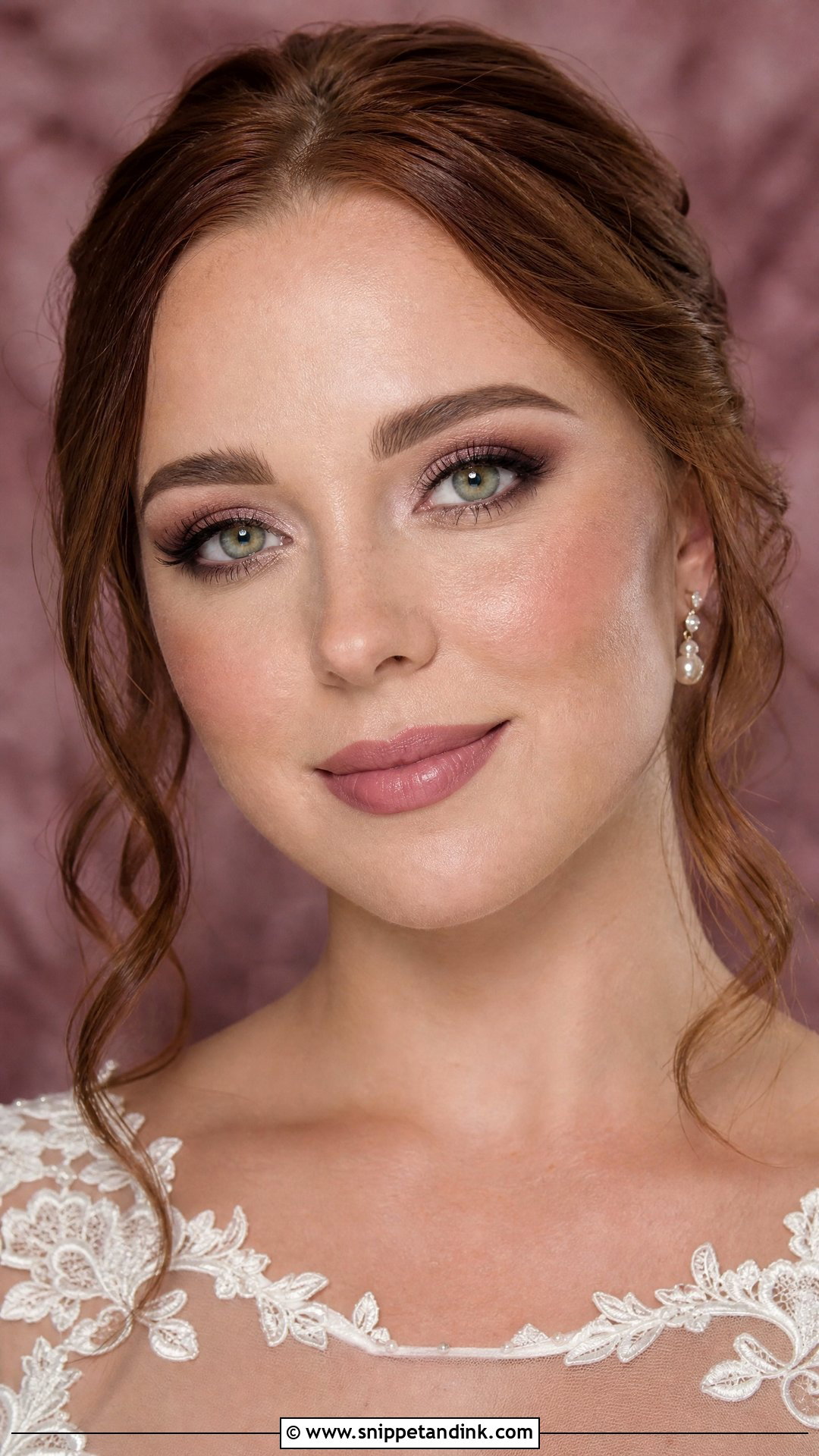
Bridal makeup for green eyes starts with the reds in the shadow palette: mauve, plum and copper all contain red, which sits across from green and makes it look greener. I blend a soft mauve through the crease and a copper shimmer on the lid, then a thin brown line along the upper lashes. A pink nude or soft mauve lip keeps it gentle. It’s a nice way to step away from beige without going bold.
19. Bridal Makeup For Hazel Eyes
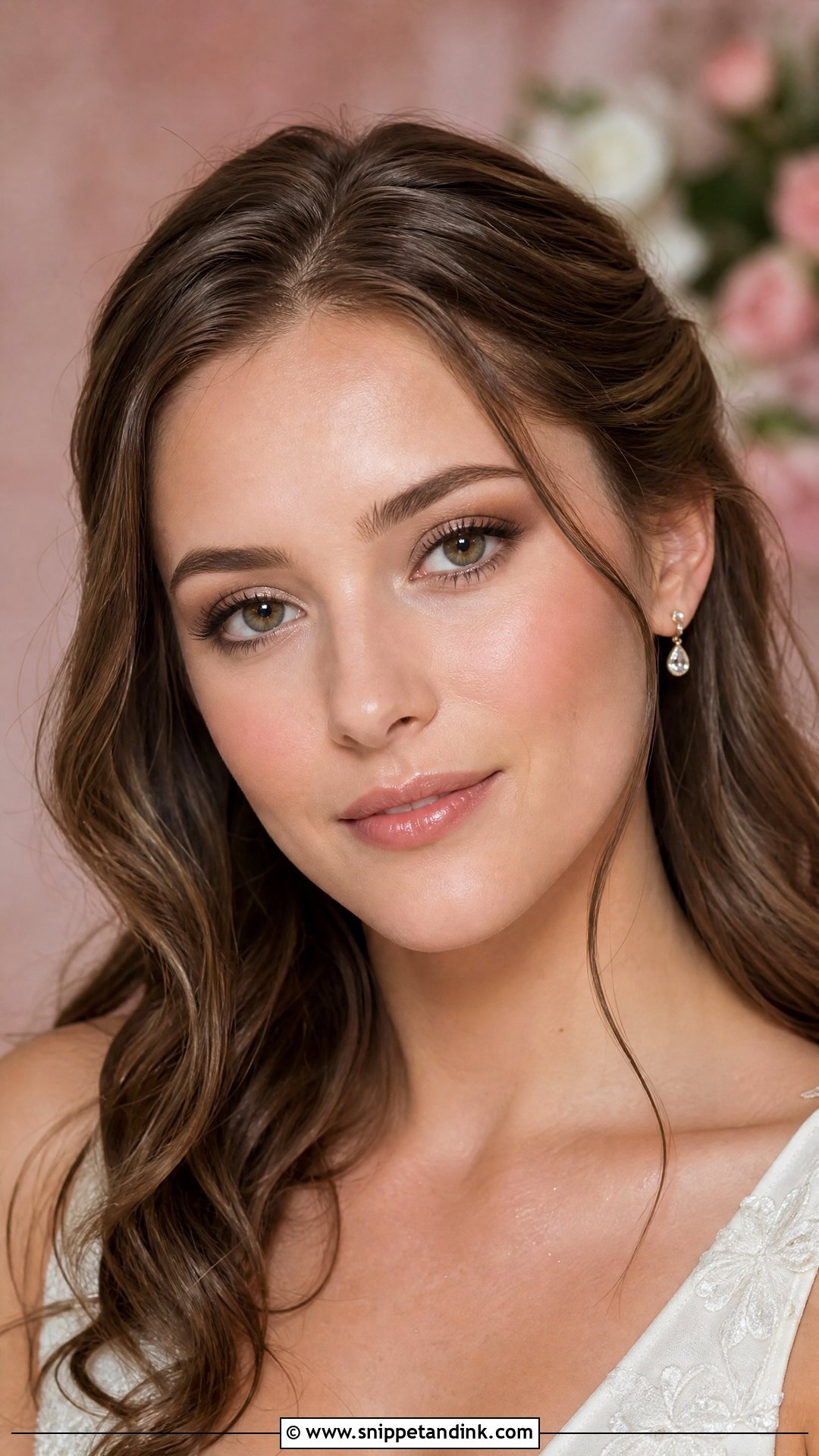
Bridal makeup for hazel eyes lets you choose which color shows up. Gold and warm bronze pull the amber forward, while mauve and plum bring out green flecks. At a trial I’ll often do one eye each way so the bride can see the difference in a mirror. Brown liner, soft lashes and a rose-brown lip work with either.
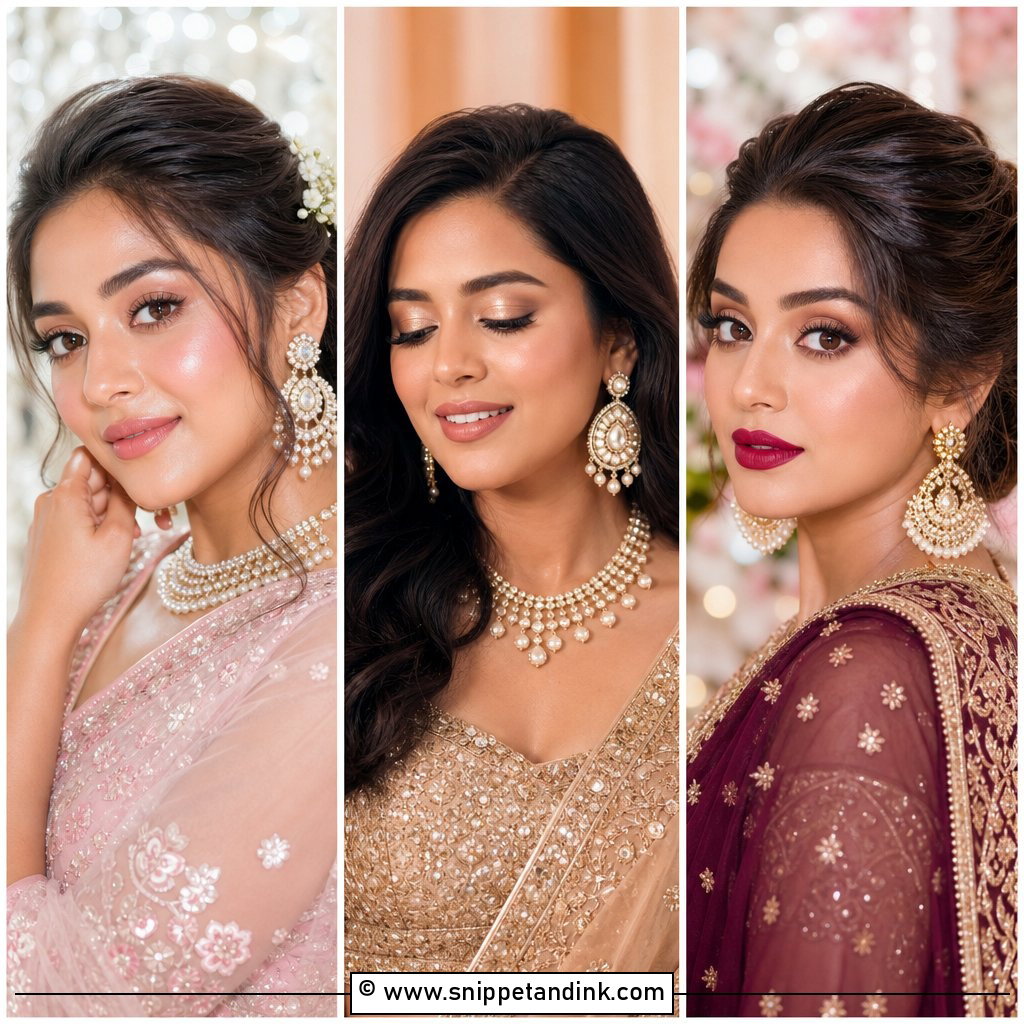
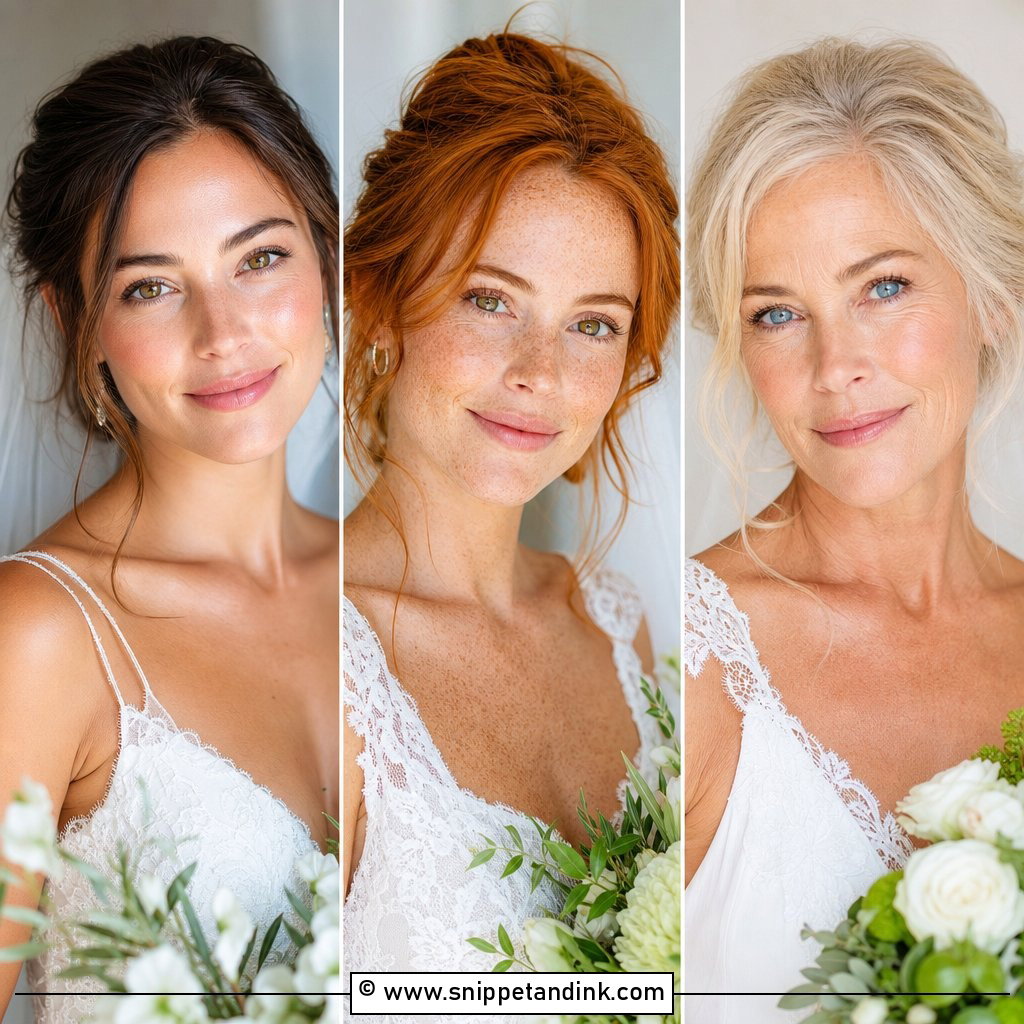
20. Bridal Makeup For Fair Skin
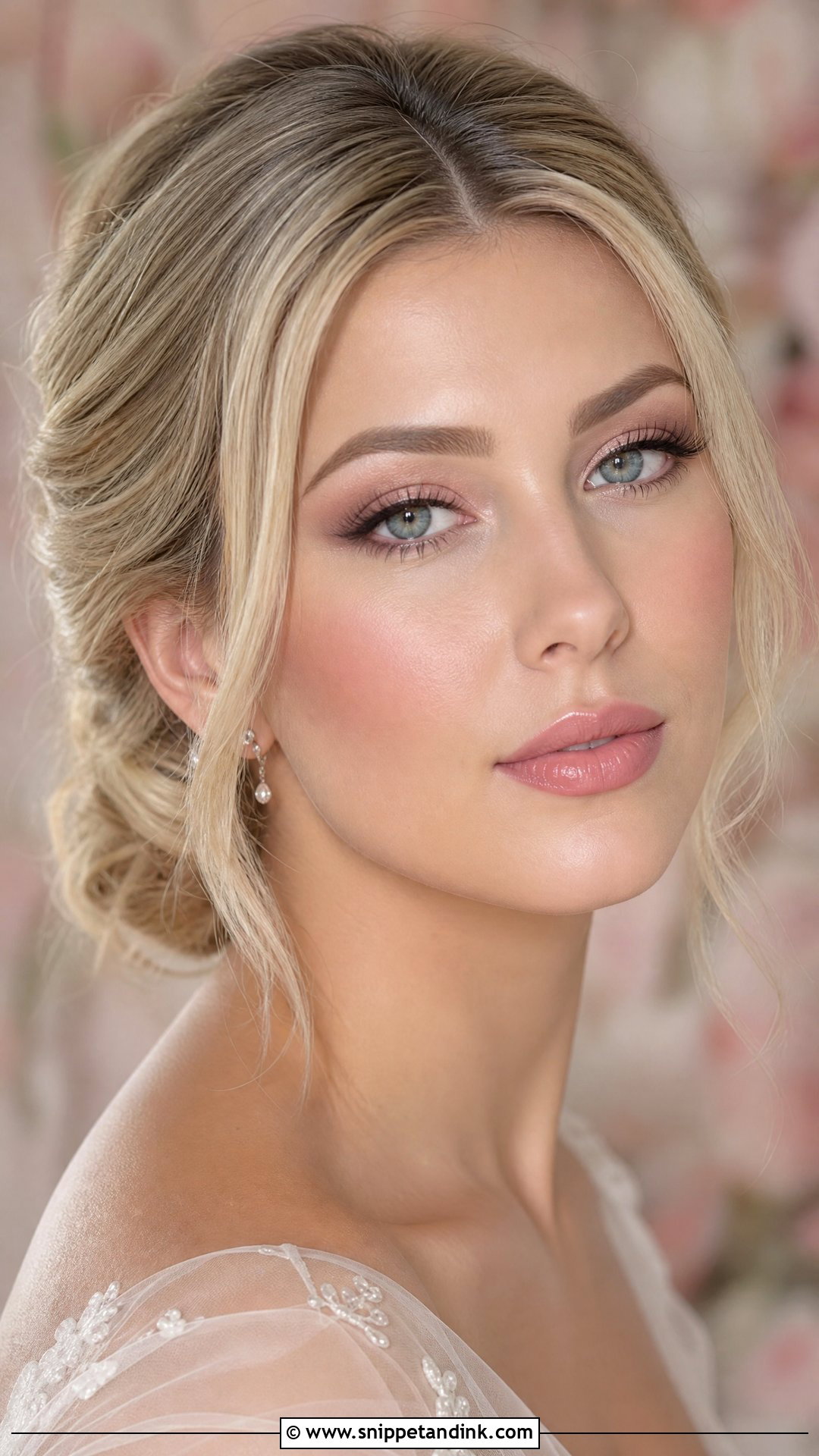
Fair skin shows every harsh edge, so I build in thin layers. Contour is where it usually goes wrong: many contour shades turn gray on very light skin, so I use a soft taupe-brown or just a light bronzer. Soft pink or peach blush, champagne or pale rose shadow and brown rather than black liner. A pink nude or rose lip stops the face from looking washed out next to a white gown.
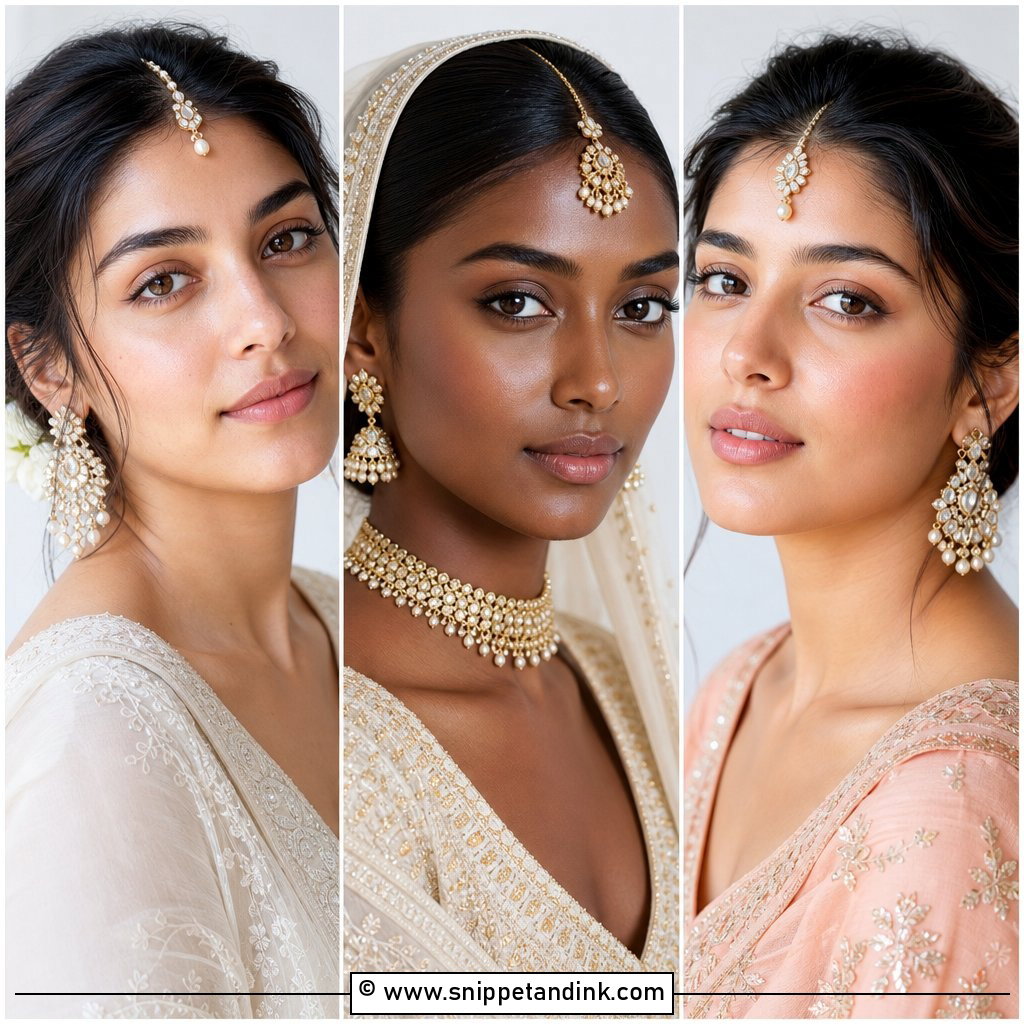
21. Bridal Makeup For Medium Skin
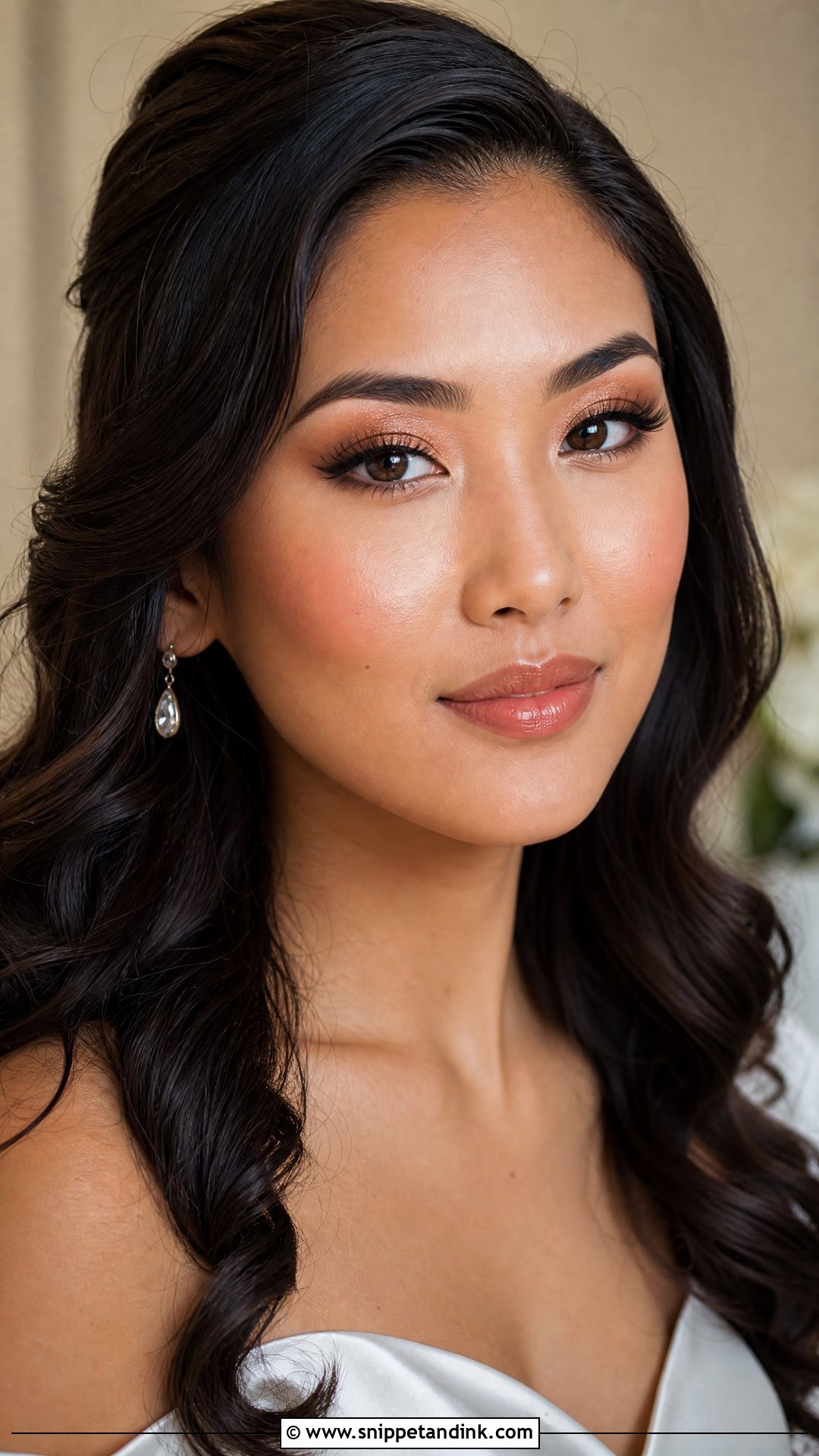
Medium skin needs a foundation that matches the neck as well as the face, since there’s often a shade difference between the two that becomes obvious in a strapless dress. I check it along the jaw. Then warm mauve blush or a peach, with bronze or copper shadow and a brown wing. A golden highlighter blends into medium skin better than a pearly one.
22. Bridal Makeup For Olive Skin
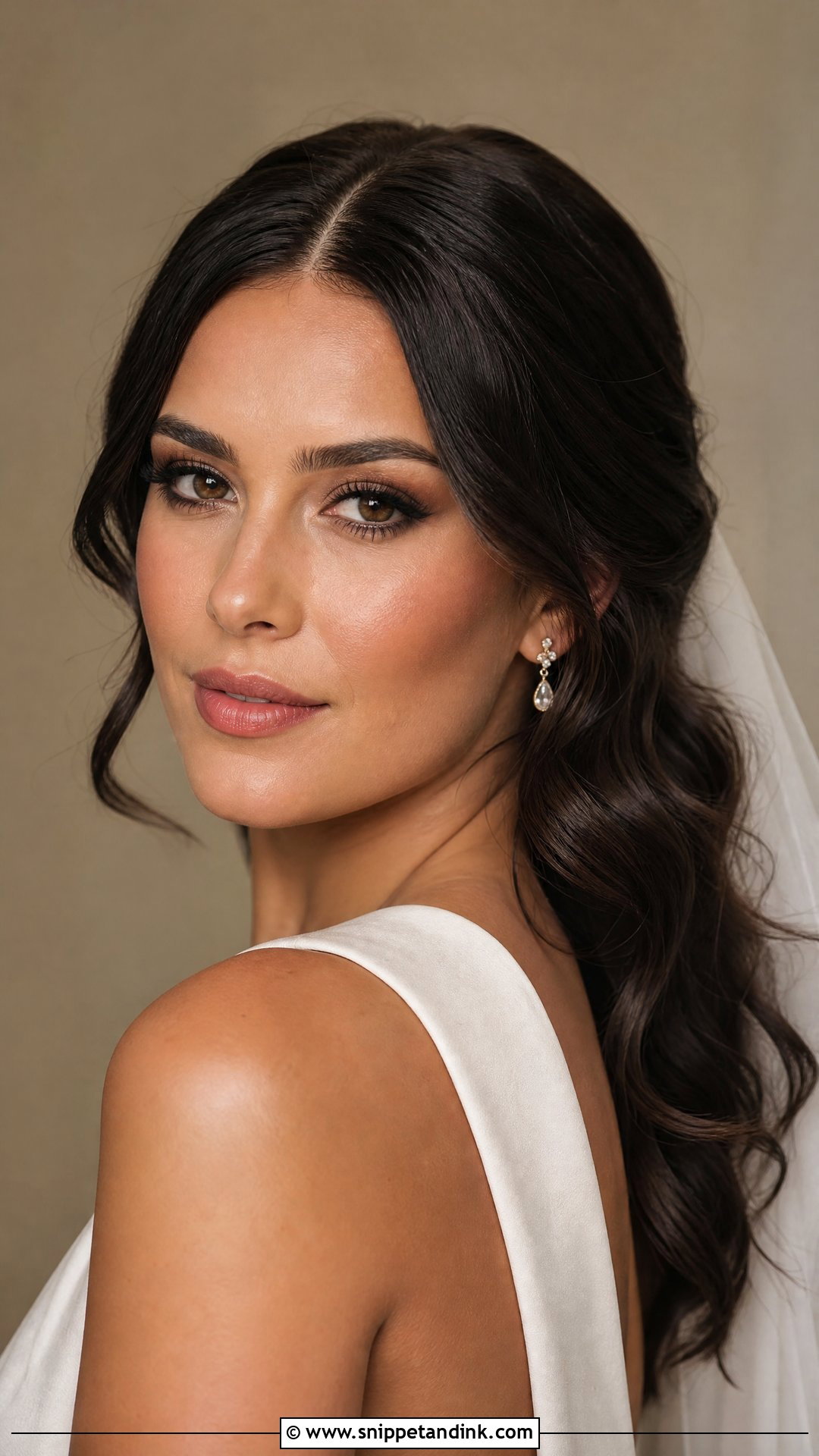
Olive skin has a green-gray undertone that some pale pinks make look ashy. I go for peach, apricot, terracotta or warm mauve on the cheeks. For the eyes, bronze and golden brown. A satin foundation finish helps olive skin look healthy, while a very matte one can make it look tired. Caramel nude or muted coral on the lips keeps the warmth going.
23. Bridal Makeup For Tan Skin
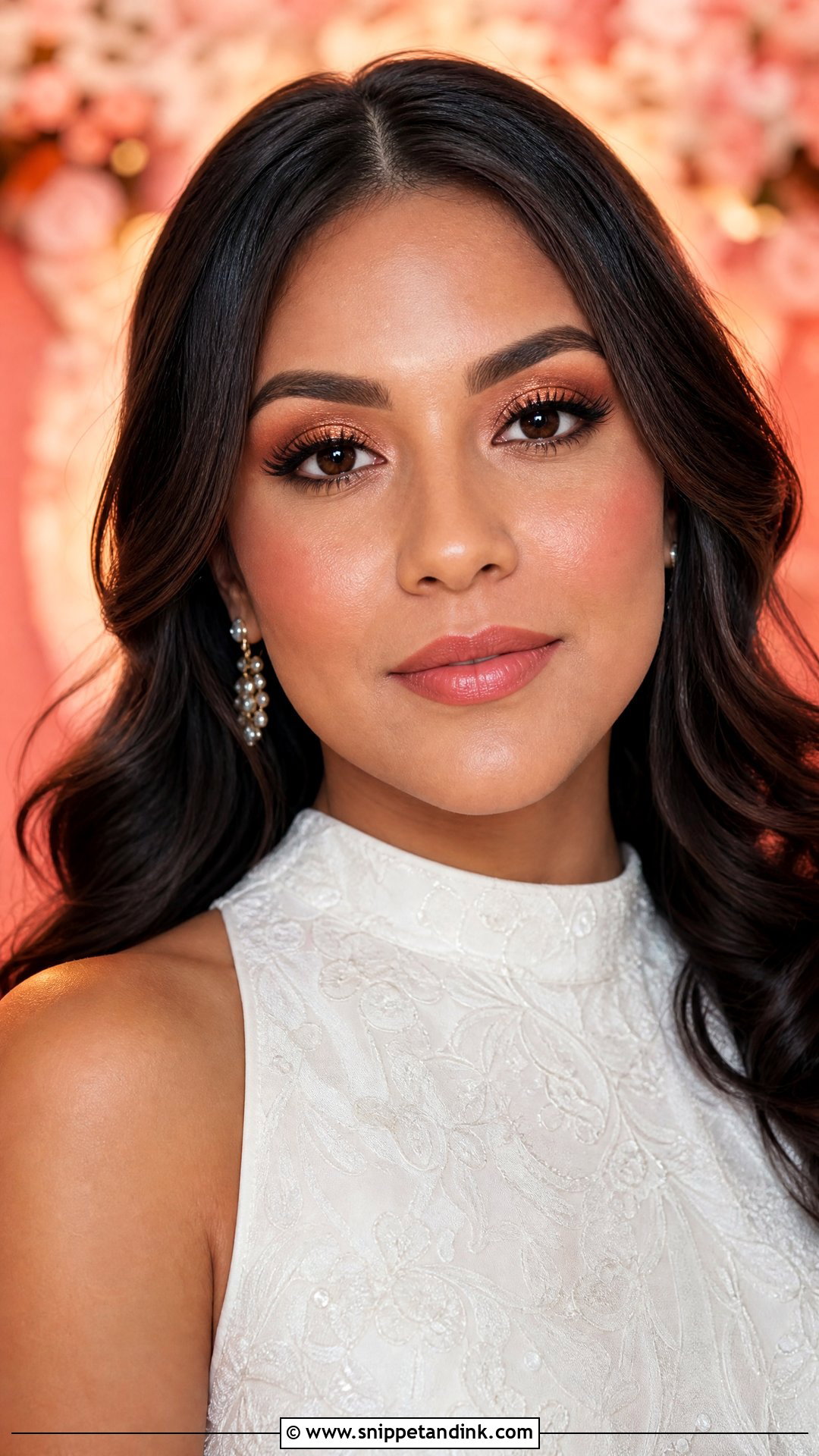
The biggest risk with tan skin is a foundation that turns lighter under flash. I avoid setting powders with a lot of silica on the face, and check the shade with a phone flash at the trial. Bronze and copper on the eyes, a peach or rose blush over a bit of bronzer and a nude-brown lip. Golden highlighter suits tan skin, applied lightly; too much reads as wet in pictures.
24. Bridal Makeup For Deep Skin
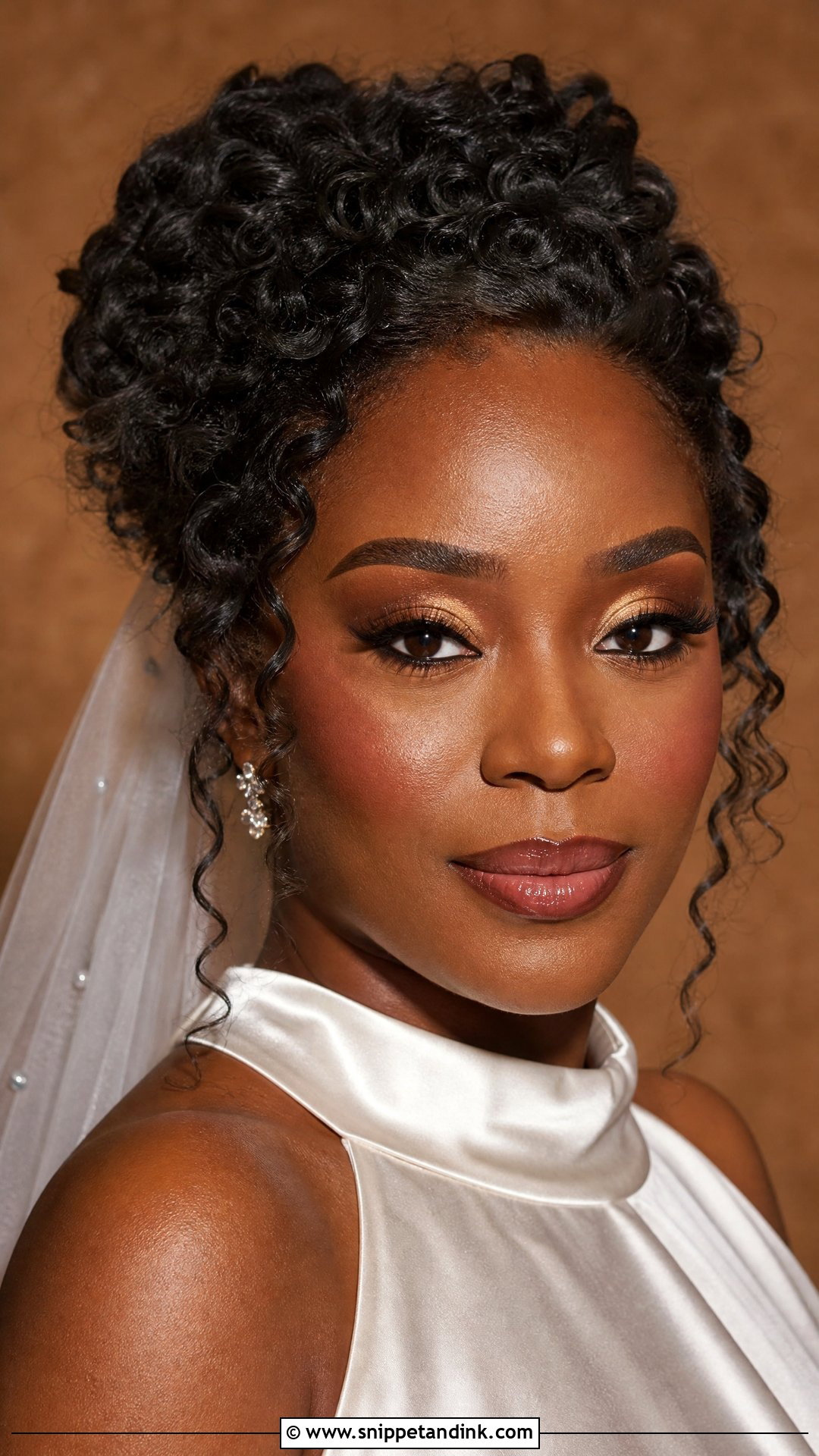
Deep skin needs pigment-rich products, or the color fades into the skin by the time the camera sees it. I choose foundation by undertone first, then build berry, terracotta, plum and warm coral tones on the cheeks. Bronze, copper and espresso shadows suit the eyes, with soft black liner. Pale lip colors need a deeper liner underneath, or they look gray. A golden or bronze highlighter finishes it.
25. Simple Bridal Makeup With Winged Liner
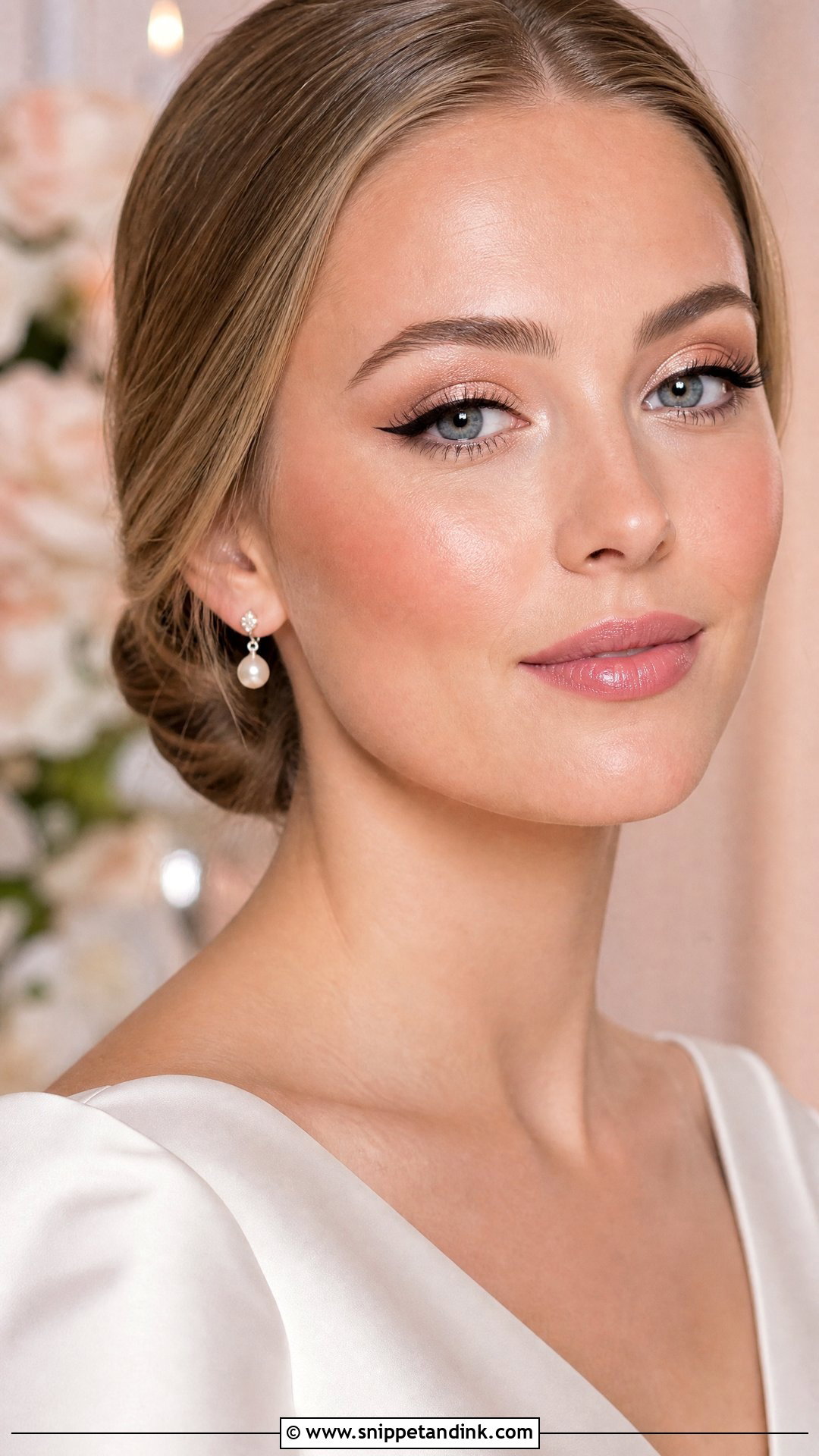
Winged liner works only when it follows the eye’s own shape. I find the angle by tracing a line from the outer edge of the nostril to the outer corner of the eye, then follow that upward. Waterproof gel lasts longer than liquid on oily lids. Keep the shadow neutral so the liner stays the only strong detail. If your lids are hooded, I’d draw the wing with your eyes open, so it isn’t hidden when you’re looking at the camera.
Why Some Bridal Photos Show a White Cast
Flashback is that ghostly white face in a flash photo when everything looked fine in the mirror. It usually comes from two things: setting powders heavy in silica, and sunscreens with zinc oxide or titanium dioxide. Both bounce flash straight back to the lens.
On the wedding morning I skip any separate SPF under foundation for an indoor or evening wedding, and for an outdoor daytime ceremony I use a sunscreen I’ve already tested with flash. Any loose powder goes on in a thin layer and gets buffed in, never left sitting under the eyes. If you’ve had a trial with flash photos and they looked right, don’t change products afterward.
A Blotting Sheet Beats Another Layer of Powder
Brides tend to repowder every time they feel shiny, and by the evening the skin looks cakey. Blotting papers lift the oil without adding product. Press, don’t rub.
In the clutch I’d put blotting papers, your lipstick and its liner, a few cotton buds for under the eyes, and a small tube of the setting spray. That’s enough to keep the look fresh through dinner and dancing.
The Trial Tells You More Than Any Photo
Simple bridal makeup is less about the look you pick and more about whether it holds up. Test your foundation in daylight and under a phone flash, wear the trial makeup for at least five hours, and notice where it fades or creases. Use waterproof mascara, a long-wear lip and a setting spray. Then trust the look that still feels like your own face at the end of the trial.
You'll Like These Ideas:


Leave a Reply