
A Bengali bride already carries a lot of visual weight before I open my kit: red Banarasi sarees, heavy gold, the white mukut, alta, sindoor and the forehead art around the bindi. That is exactly why a lighter face often works better than a full glam one. The looks below keep the skin fresh and let one feature lead, whether that is the lip, the kohl or the forehead design. Some are classic red-lip faces, others suit pastel sarees or a modern reception, and each one is planned as a complete face rather than a single trick.
Planning Makeup Around a Long Night of Rituals
A Bengali wedding often runs late into the night, and the bride sits close to the sacred fire for a good part of it. That heat, the weight of the mukut and the sheer length of the evening shape every decision I make on the face, often more than the saree colour does.
- Base: thin layers set with powder in the oily zones last far longer near fire heat than one heavy layer of foundation.
- Kajal and liner: waterproof or long-wear formulas, because the eyes water from smoke and emotion.
- Lips: a lip liner under the whole lip, so colour fades evenly instead of leaving a ring.
- Forehead: the bindi and forehead art go on after the base is fully set, and I check them with the mukut in place.
Sindoor daan matters too. When the groom applies sindoor to the parting, some powder usually falls onto the forehead or nose. Many families treasure that moment, so I don’t rush to wipe it away. I simply make sure whoever does touch-ups has a clean brush and a little setting powder ready for afterwards.
1. Simple Bengali Bridal Makeup With Red Lip
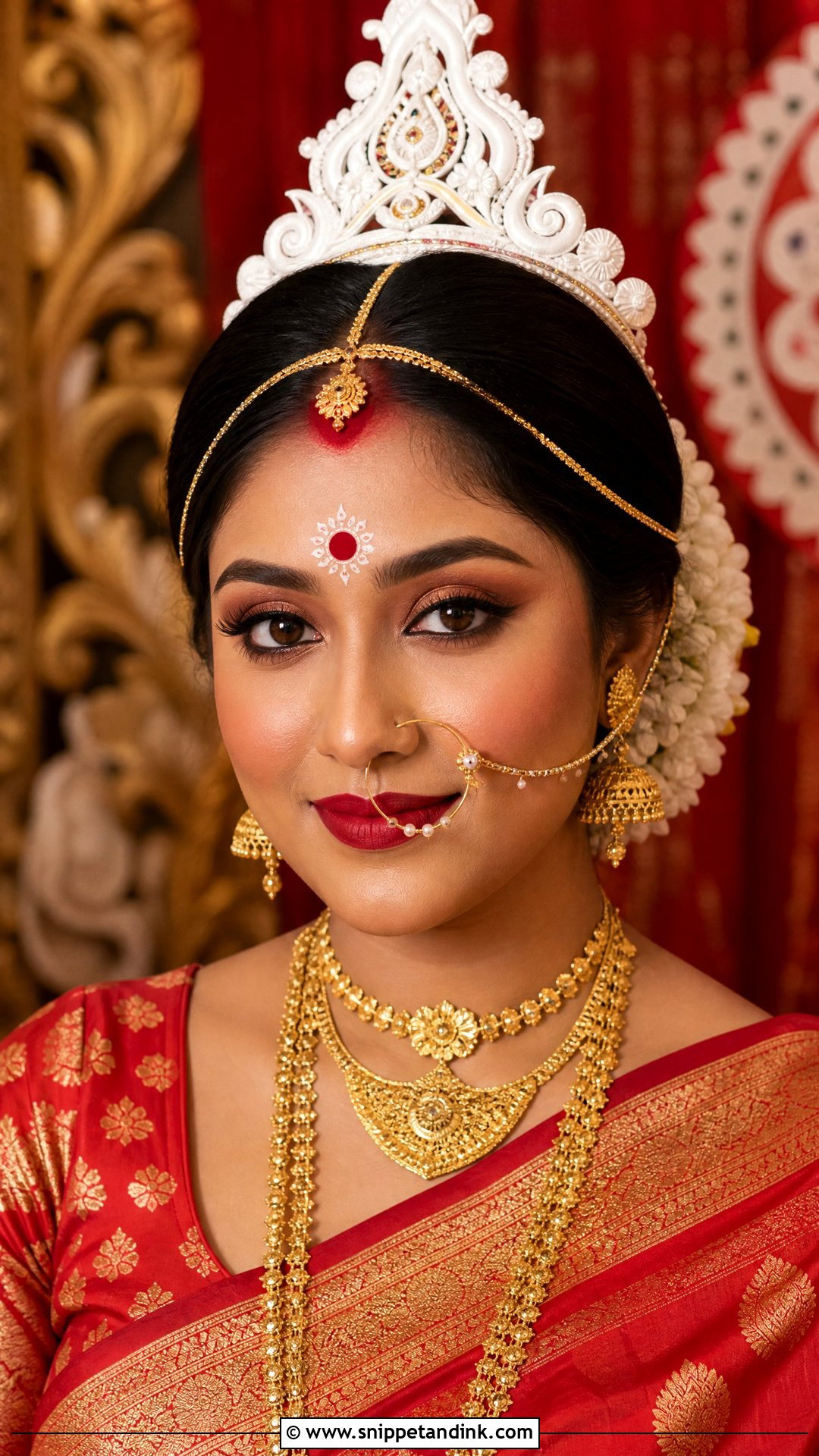
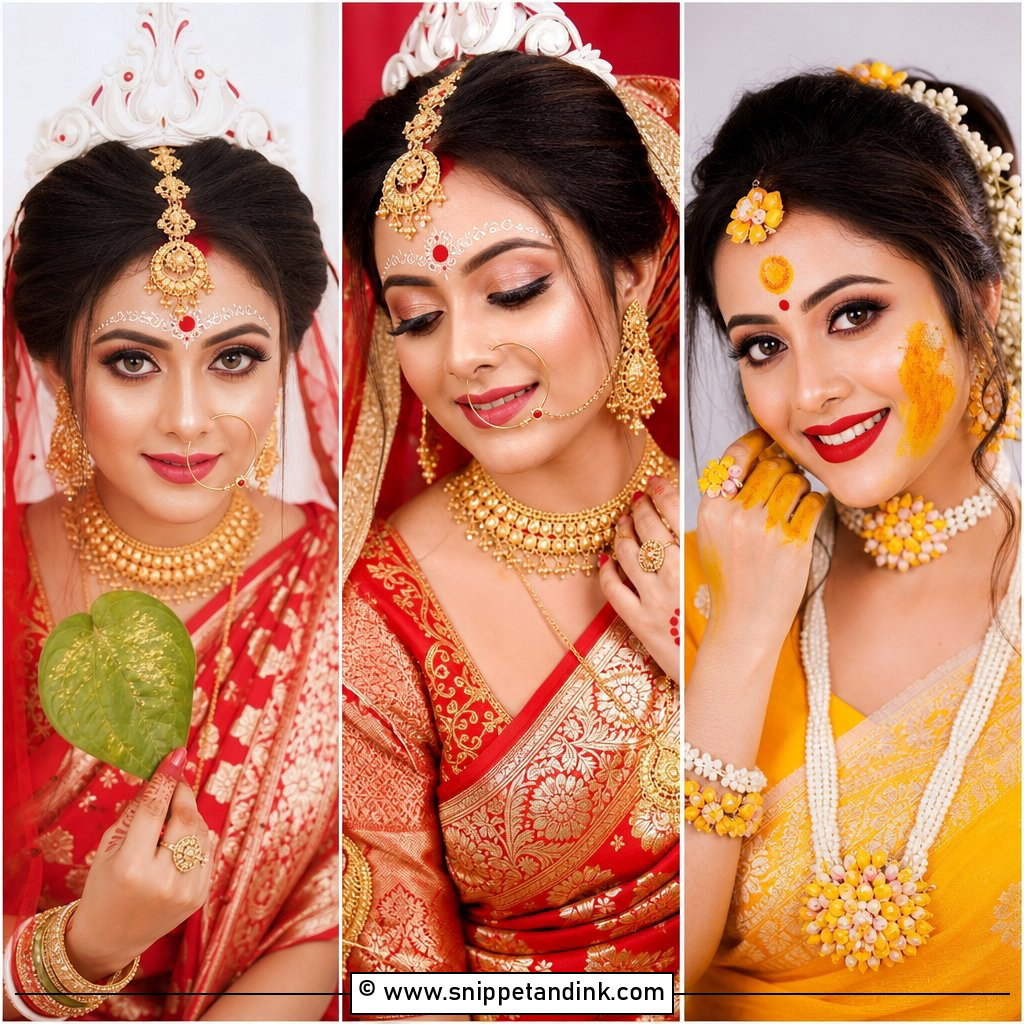
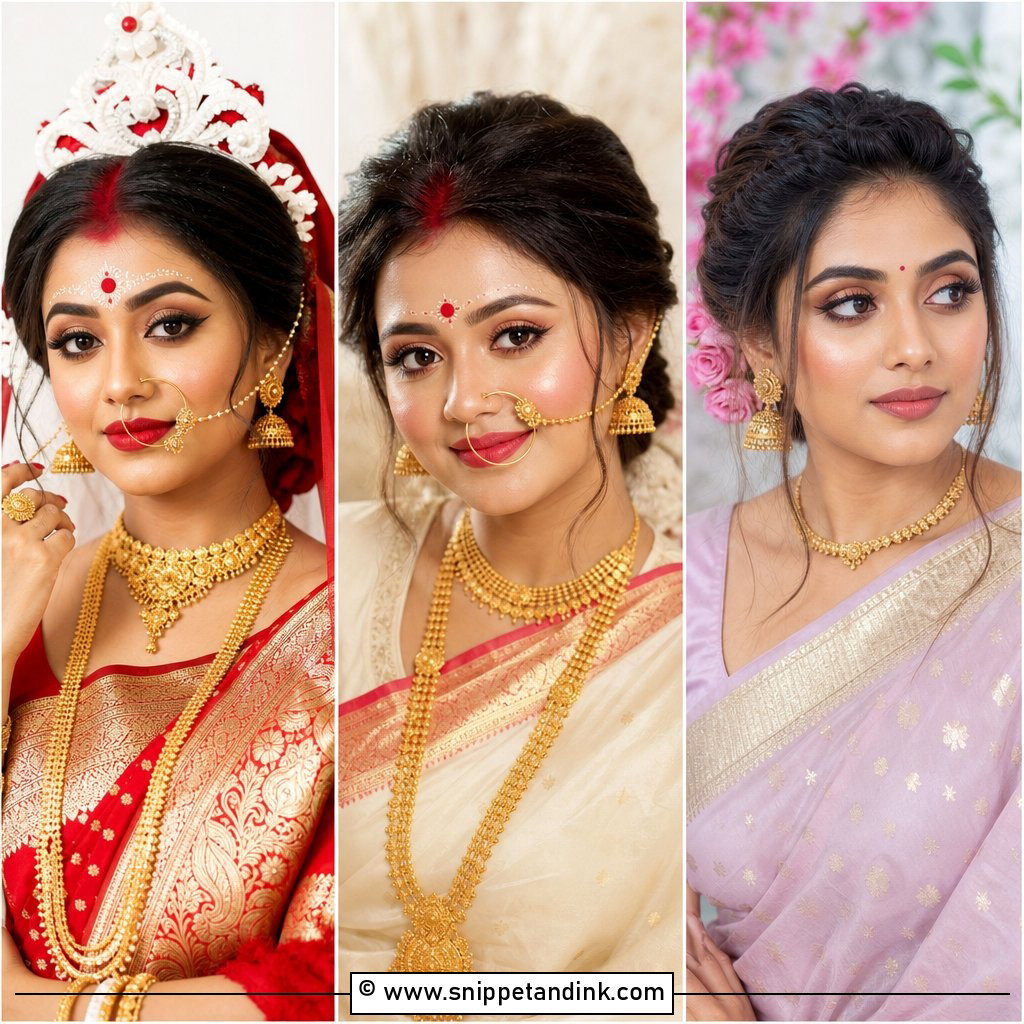
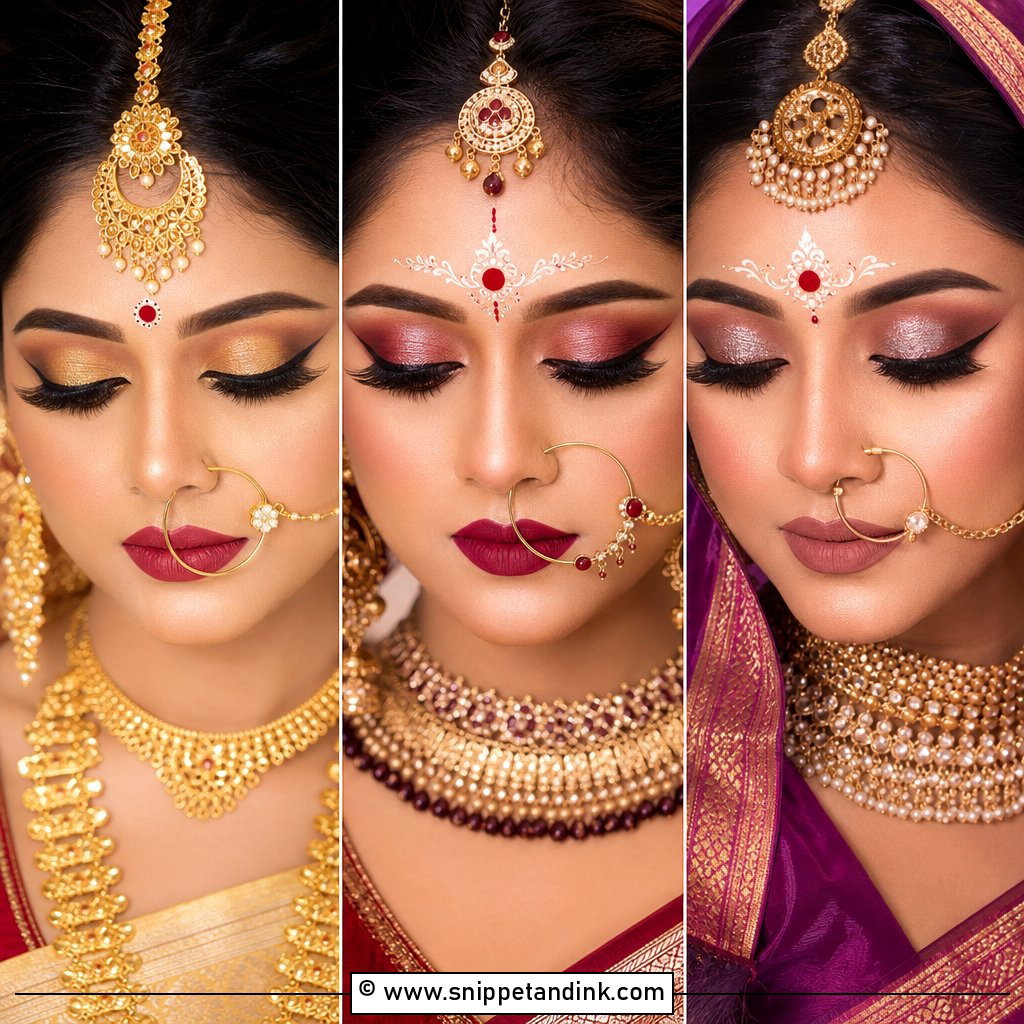
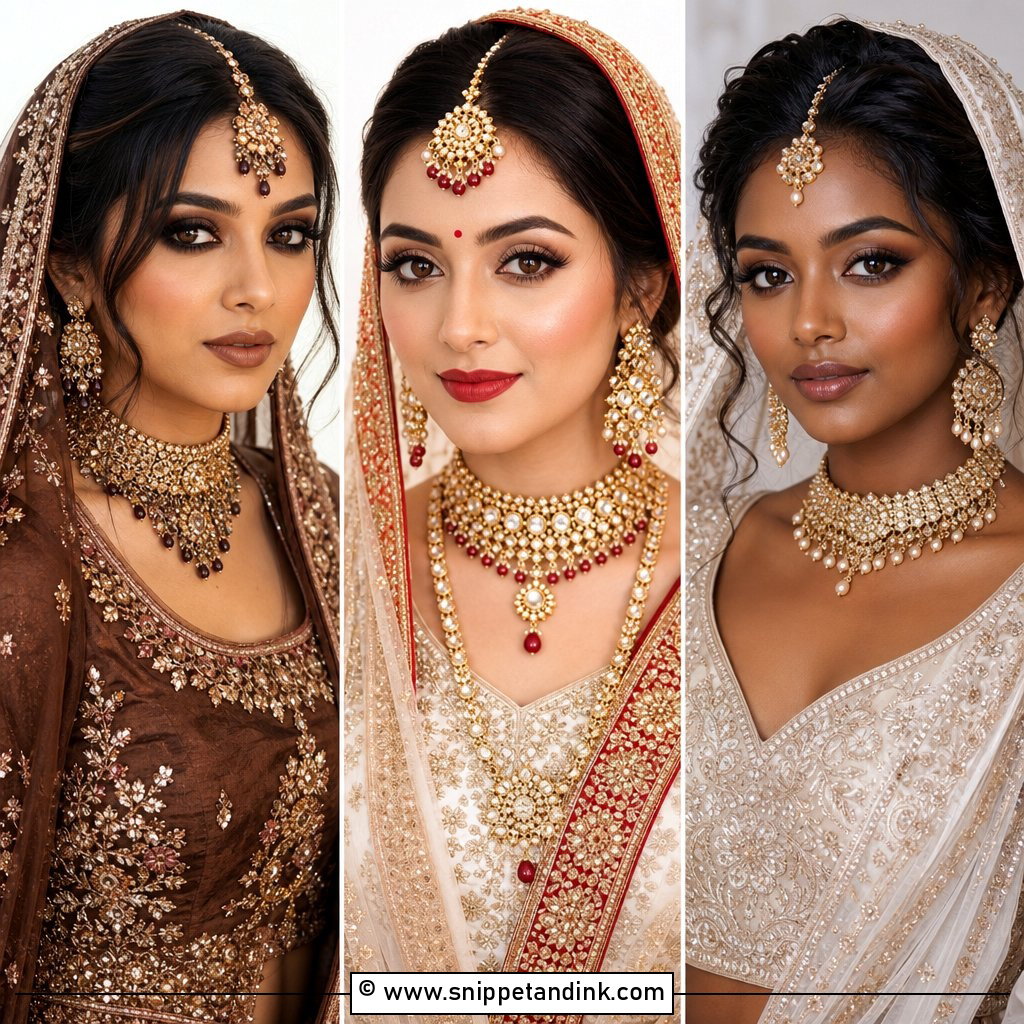
With a red lip doing the work, everything else can step back. I keep the skin soft matte with a thin layer of foundation, concealer only where it’s needed, warm blush and a touch of highlighter on the cheekbones. Eyes stay simple: soft brown shadow, black kajal, a clean liner and natural lashes. The one thing I’m strict about here is lip liner. A red lip bleeds into fine lines over a long evening, so I line and fill the whole lip with pencil before applying the lipstick. A round red bindi and a centre-parted bun finish the face with a red Banarasi and the mukut.
2. Bengali Bridal Makeup With Soft Kohl Eyes
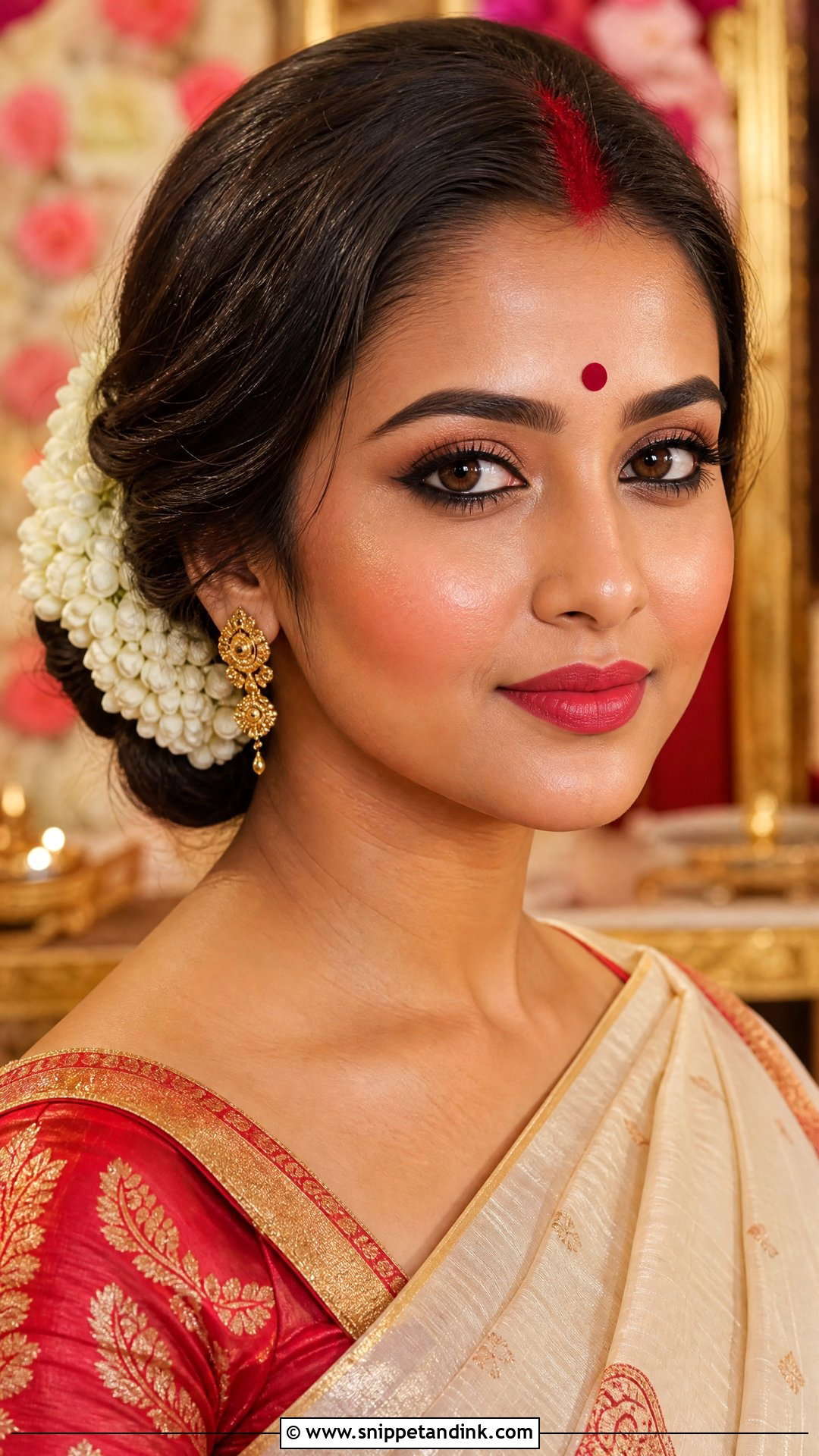
Soft kohl eyes give the traditional look a gentler edge than a sharp smokey eye. I smudge black or deep brown kajal close to the lash lines and soften it with a small brush before it sets, then wash the lid with warm beige or bronze so the eyes stay open. Kajal on the waterline tends to travel downward in heat, so I set the lower line with a matching powder shadow. A skin-like base, peach blush and a muted red or rose lip keep it bridal. It suits red, ivory and maroon sarees.
3. Bengali Bridal Makeup With Dewy Skin
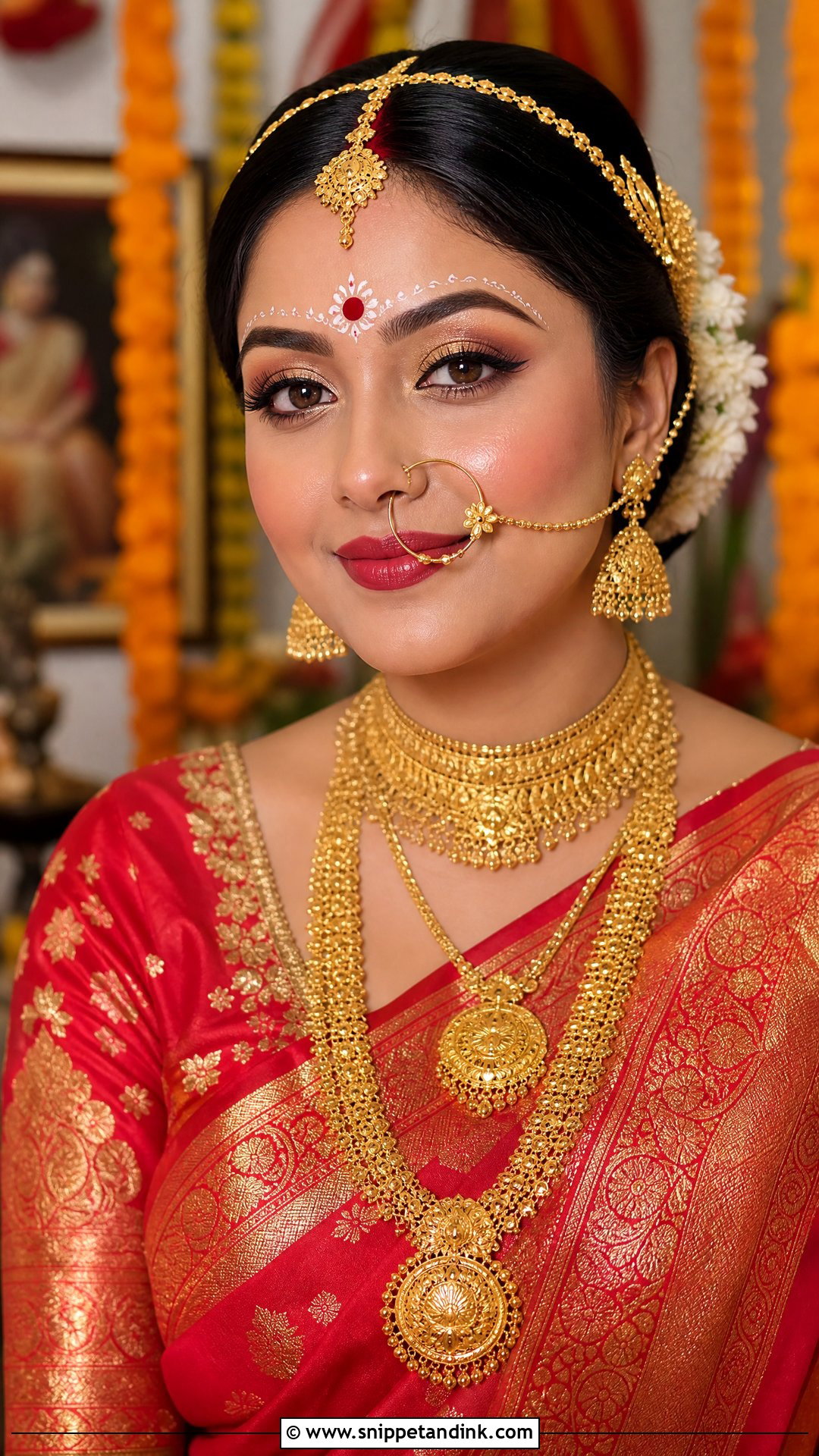
Dewy skin suits daytime rituals and brides who dislike a flat finish, but it has to be built carefully or it slides. I start with well-hydrated skin, use a thin luminous foundation and spot-conceal only where needed, then add cream blush in rose, peach or berry. Glow should sit on the high points of the face, never the T-zone, or it reads as sweat under flash. Kajal, brown liner and fluttery lashes define the eyes, and a satin red or pink lip suits this better than a dry matte.
4. Bengali Bridal Makeup With Nude Lip
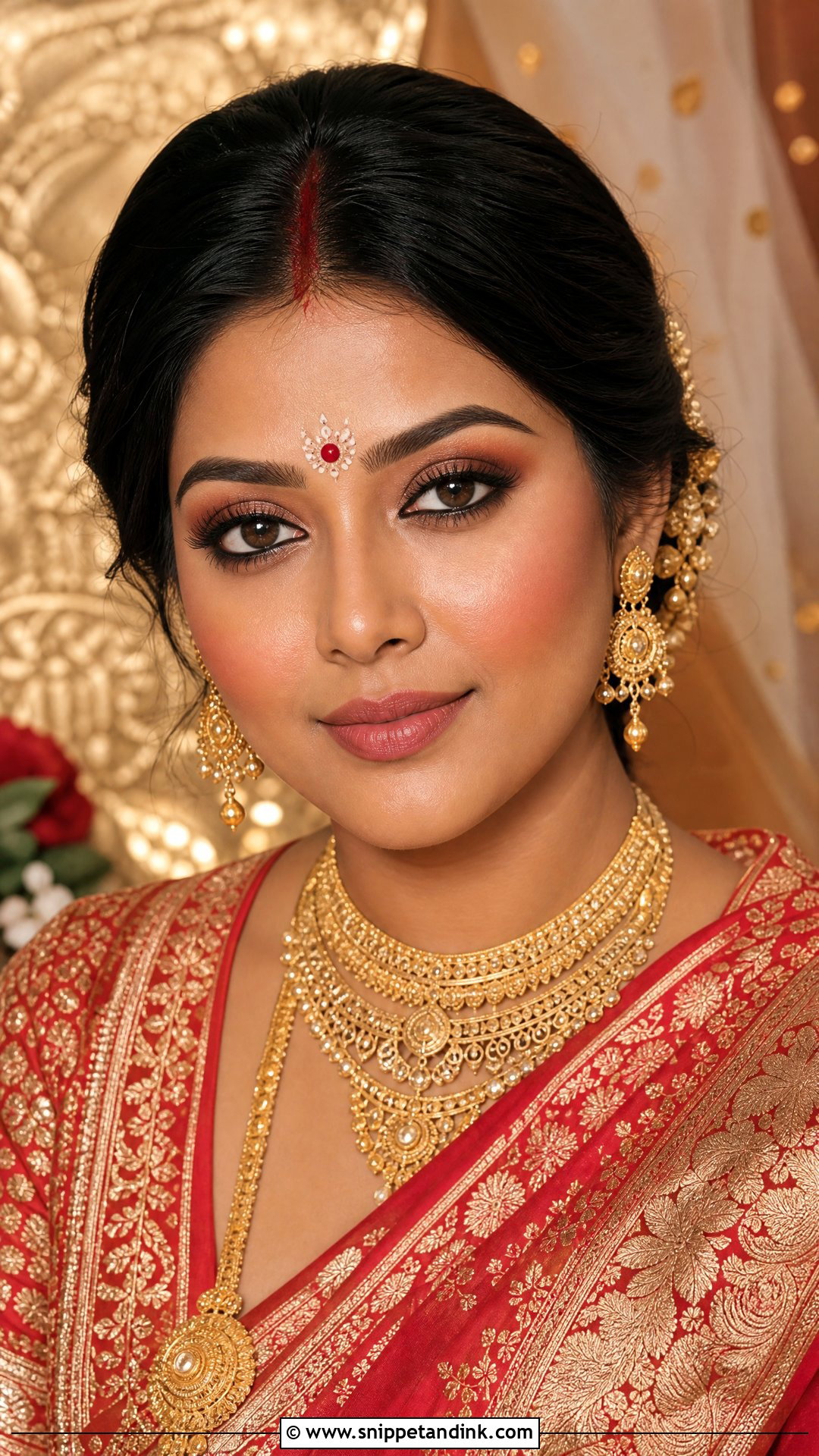
A nude lip still looks bridal when the eyes carry definition. The shade matters more than people expect: choose a nude with a warm peach, rose, caramel or brown undertone, a shade or two deeper than your natural lips, because pale beige nudes turn grey against a red saree. I balance it with bronze eyeshadow, tightlined kajal and a soft wing, plus neat brows and light contour. A red bindi or delicate forehead art keeps the Bengali identity. This face sits well under very heavy jewellery or a dense saree.
5. Bengali Bridal Makeup With Gold Eyeshadow
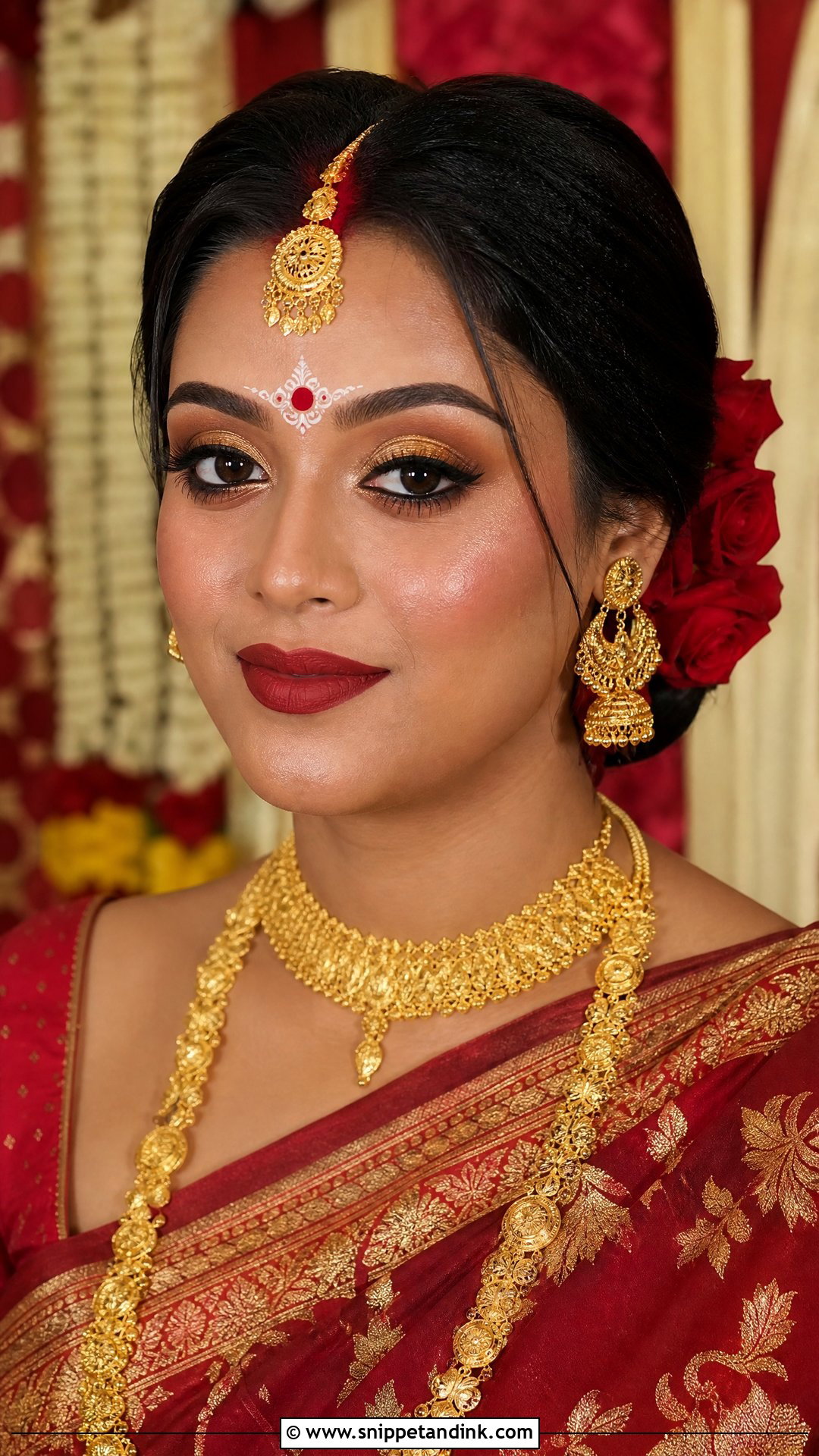
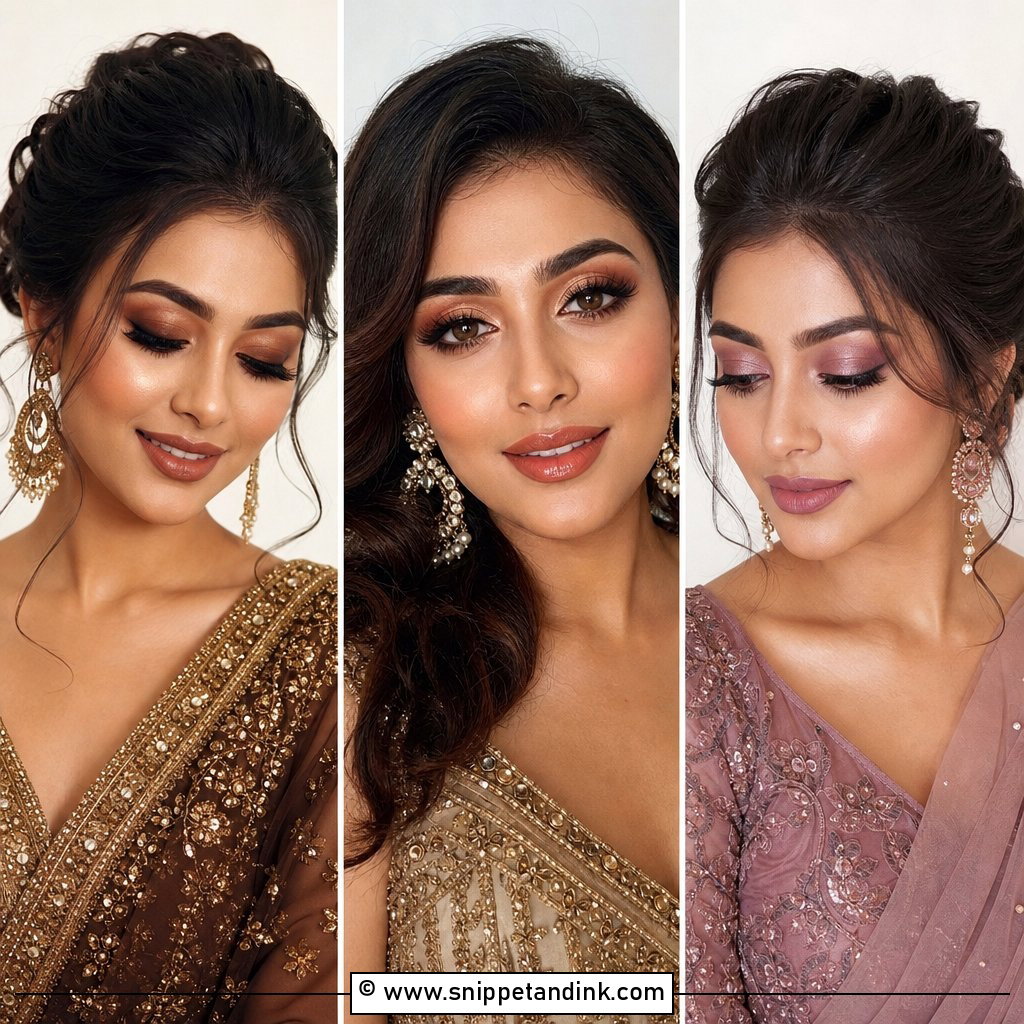
Gold shadow picks up the jewellery, which is why it suits a Bengali bride so naturally. I keep it blended and fine rather than chunky glitter, which catches flash in odd spots. Warm brown goes in the crease, a light gold shimmer on the centre of the lid, and black kajal along the waterline, with curled lashes or a light strip. A satin-matte base with rose blush and champagne highlight lets the lid shine. Classic red, brick red or deep pink lips all work with red, maroon, cream or green-bordered sarees.
6. Bengali Bridal Makeup With Matte Base
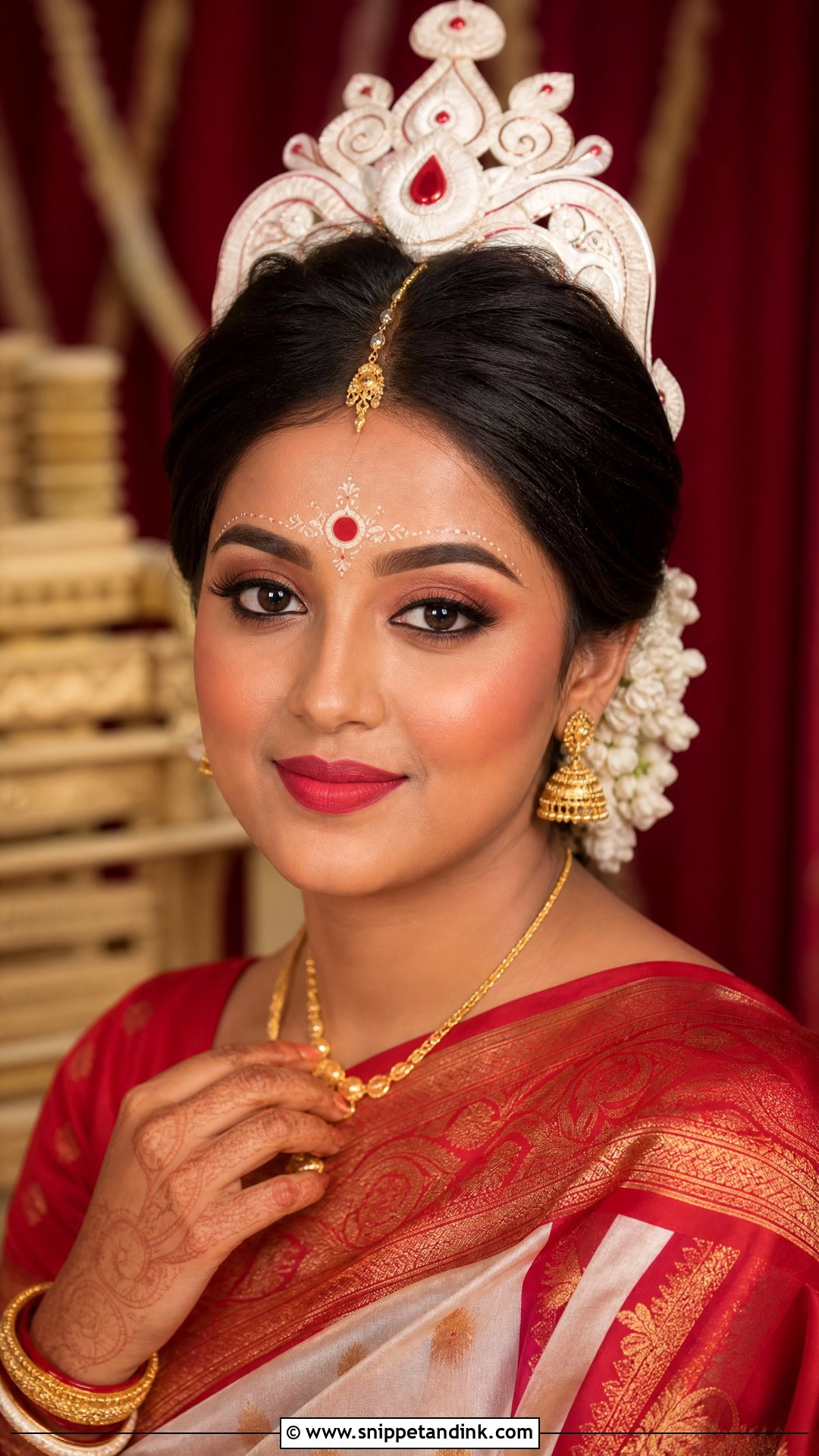
Bengali wedding rituals are long, and many take place near the heat of the sacred fire, so a matte base is often the practical choice for oily skin or humid weather. Matte shouldn’t mean dry. I use a lightweight foundation, powder only the areas that actually get oily, and bring warmth back with blush and bronzer. Defined kajal, a soft brown crease and clean black liner hold the eyes. A matte red or rose-brown lip lasts through photos and ceremonies, with a red bindi, a simple kalka-inspired forehead design and gold jewellery.
7. Bengali Bridal Makeup With Winged Eyeliner
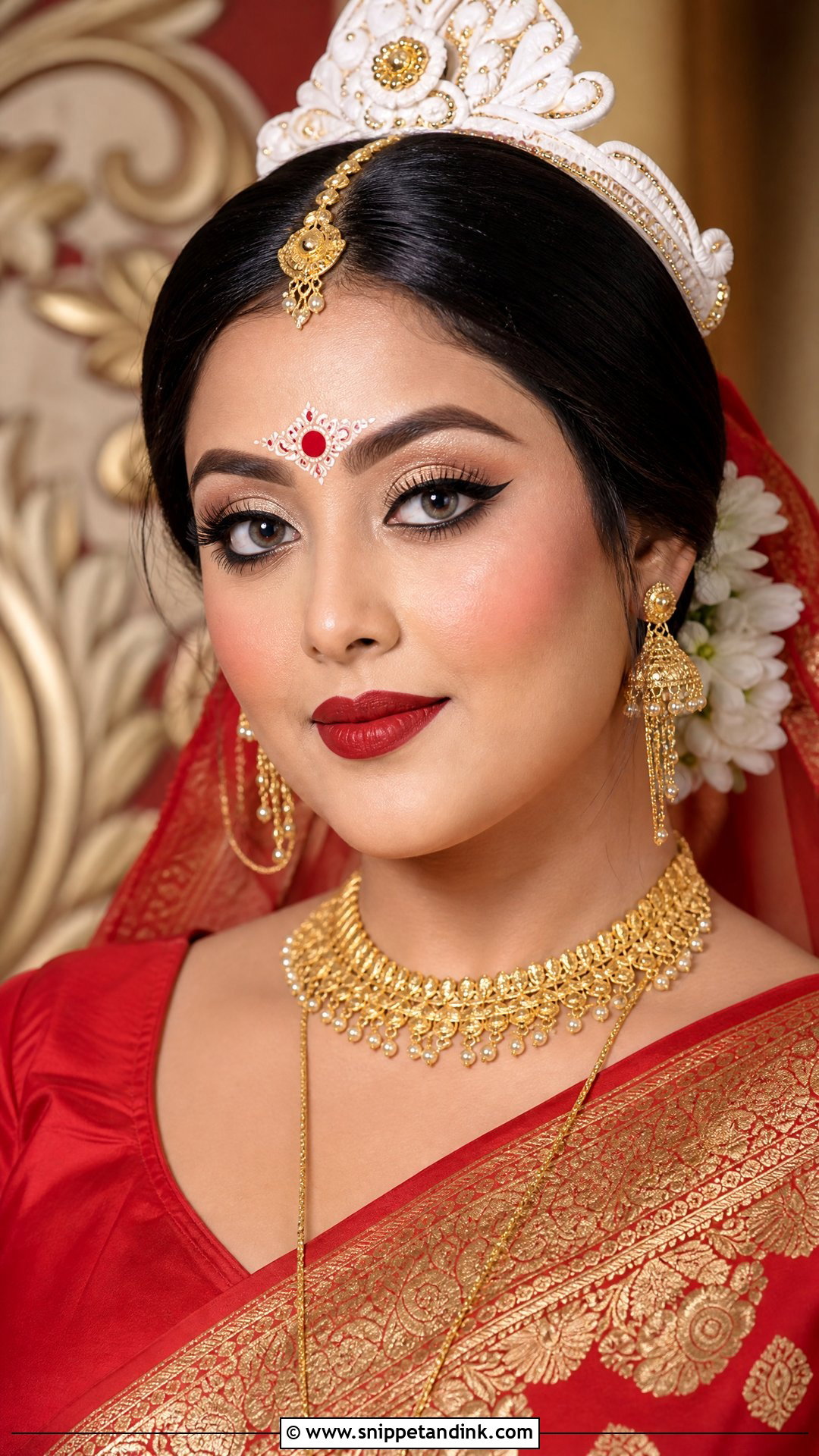
Winged eyeliner lifts the eye without the weight of a smokey look. I draw the wing with the bride looking straight ahead, eyes open, because a wing drawn on a closed lid often disappears into a hooded fold once she opens her eyes. Champagne, beige or light bronze keeps the lid soft, and kajal goes only lightly on the lower lash line. Radiant skin with pink blush and a red or berry lip keeps it festive with a sleek bun, the mukut and statement earrings.
8. Bengali Bridal Makeup With Smokey Eyes
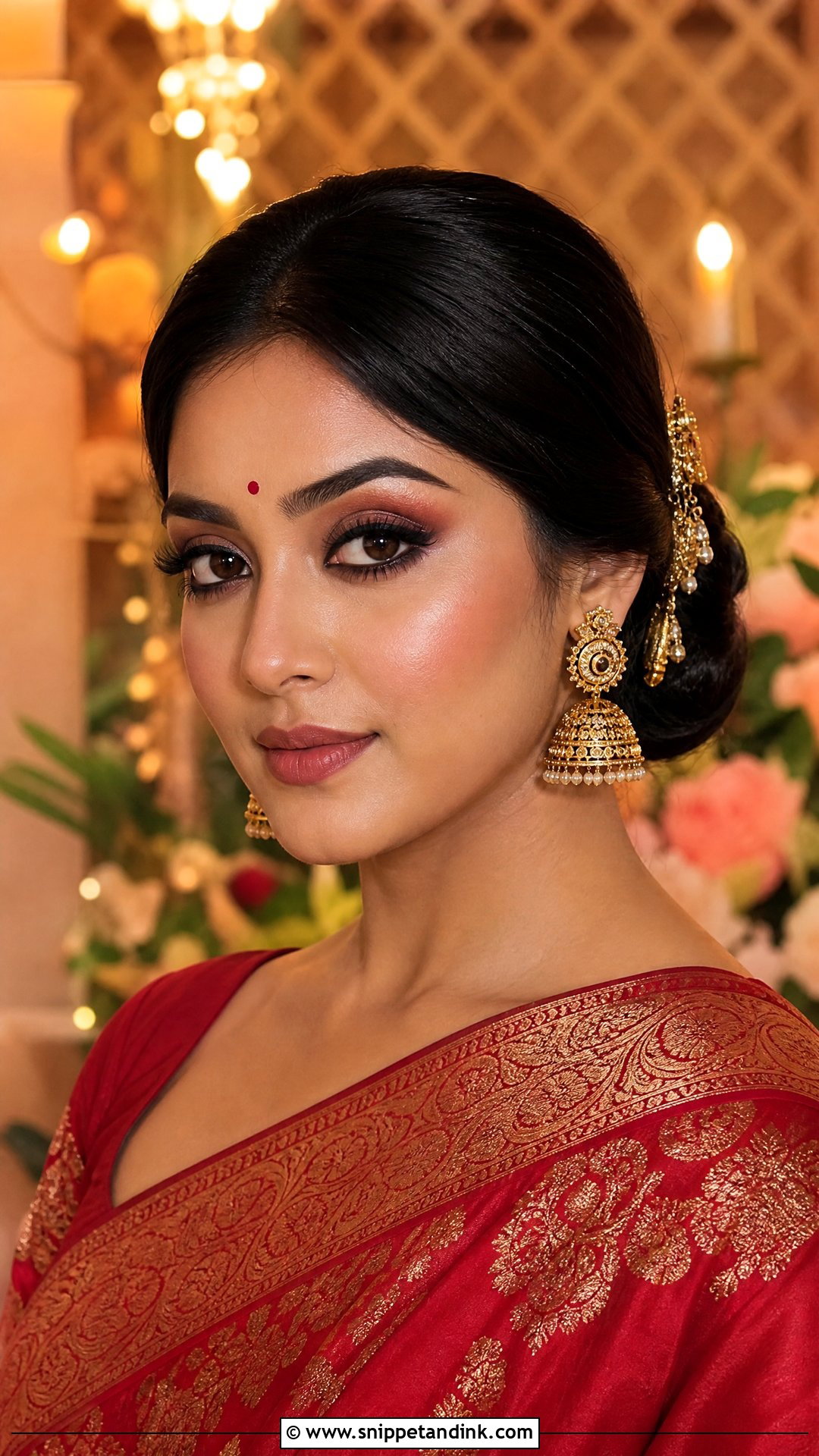
I’d steer most brides toward brown, bronze or charcoal for a smokey eye rather than harsh black, which can look heavy beside a mukut and gold jewellery. The darkest shade stays tight to the lash line, blended upward with warm brown, then kajal, mascara and soft lashes. Do the eyes before the base, so any fallout can be wiped away without disturbing the foundation. Keep the skin clean, not shiny, with nude blush and subtle contour, and choose a muted red, rose or nude brown lip. Evening weddings and receptions suit it best.
9. Bengali Bridal Makeup With Pink Lip
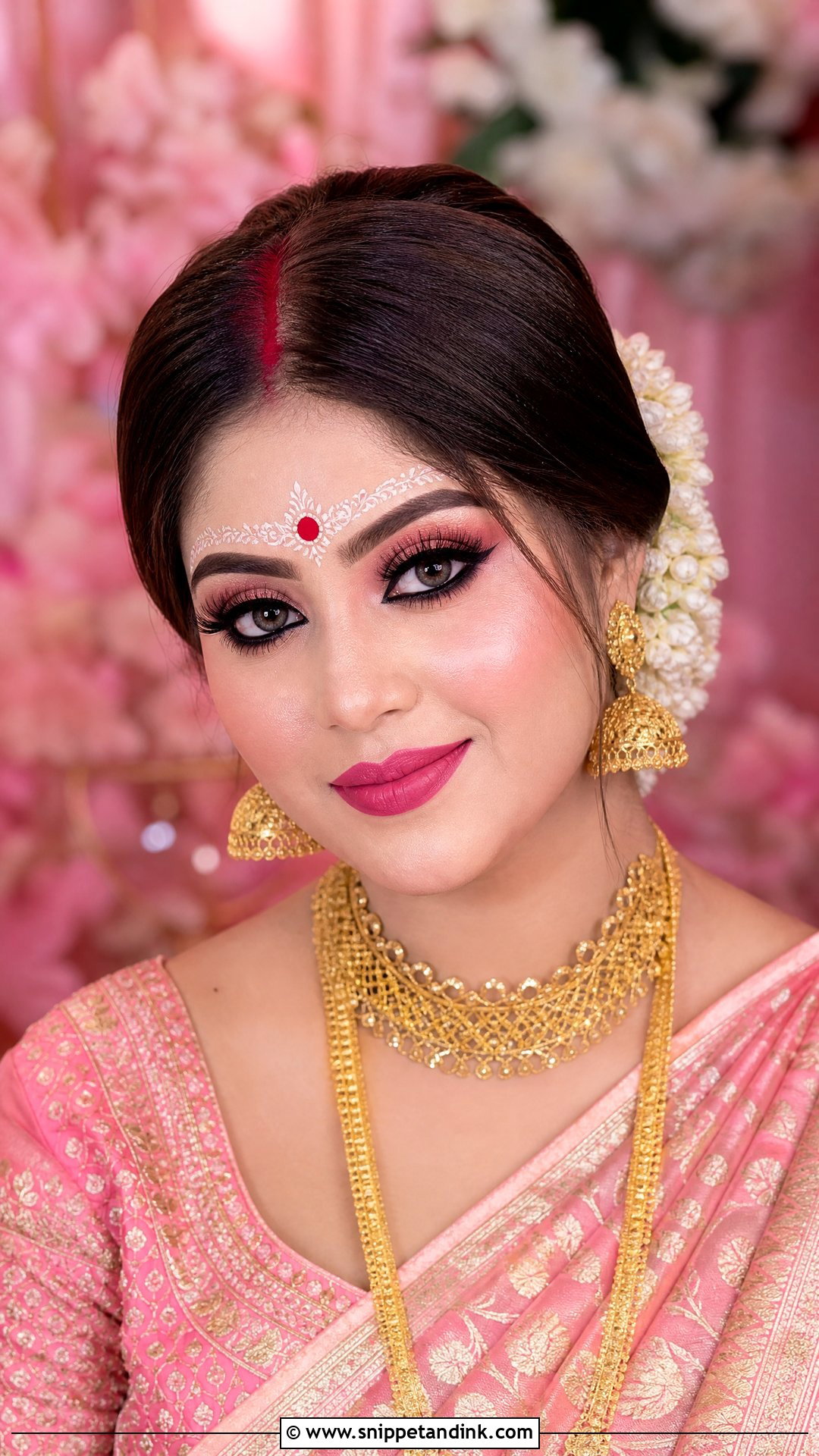
Pink softens the whole face and works with red, pink, ivory, gold or pastel sarees. The shade should come from your undertone: rose pink and mauve for cool or neutral skin, raspberry or warm fuchsia for deeper or warmer complexions. I keep the eyes lightly lined with kajal and washed with champagne or rose-gold shadow, with dewy skin and blush placed high on the cheeks. A red bindi still works, or a smaller one keeps the face delicate.
10. Bengali Bridal Makeup With Maroon Lip
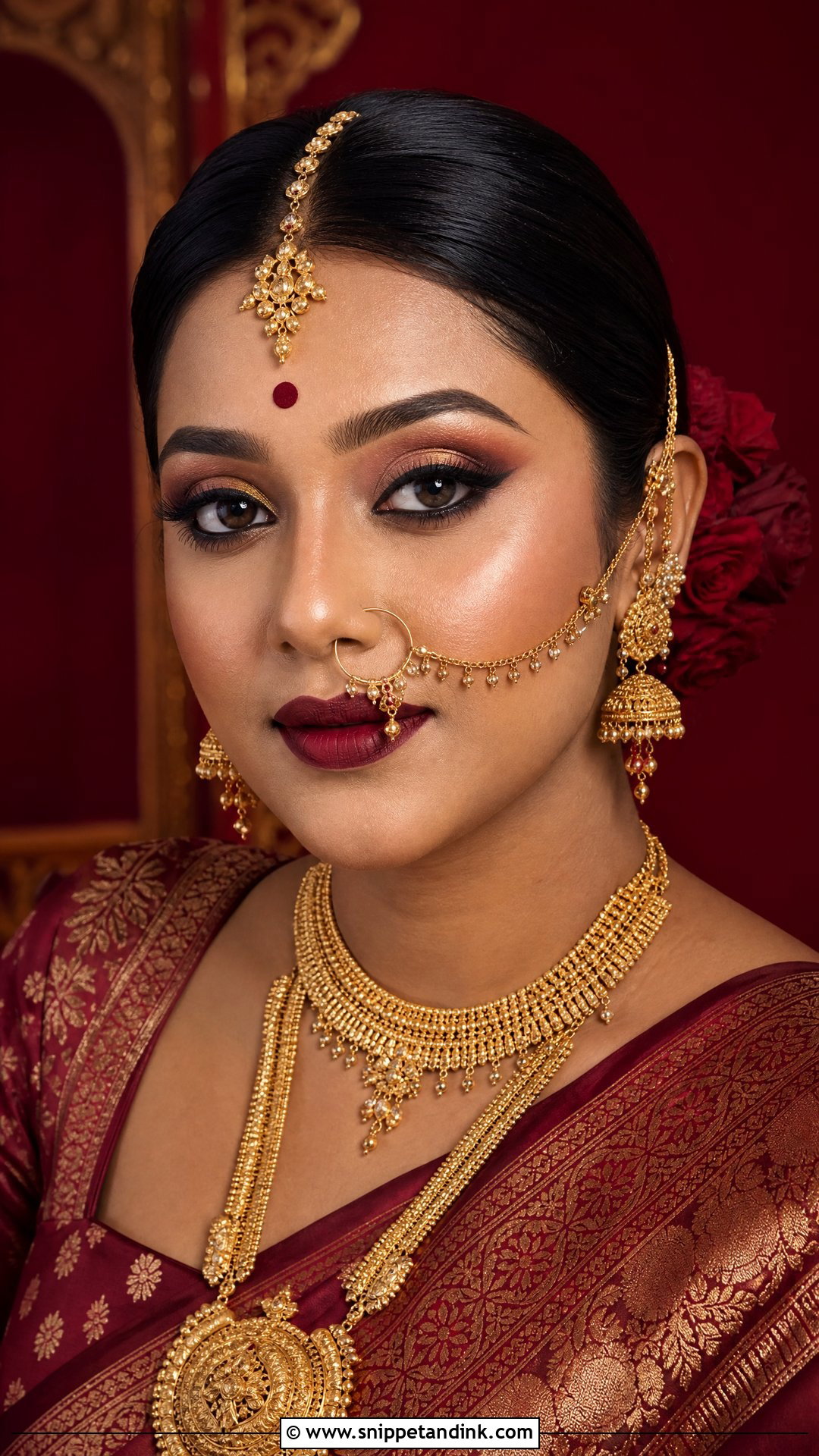
Maroon gives depth without demanding a heavy eye. It looks rich with red, maroon, cream or gold sarees and holds up well in warm indoor lighting. Dark lips show every uneven edge, so I apply maroon with a brush and clean the outline with a little concealer. Eyes stay refined: brown shadow, kajal and a thin black liner, with little shimmer so the lip leads. A medium-coverage base, warm blush, soft contour and a little gold highlighter finish it, with a traditional bindi and centre-parted hair.
11. Bengali Bridal Makeup With Red Bindi
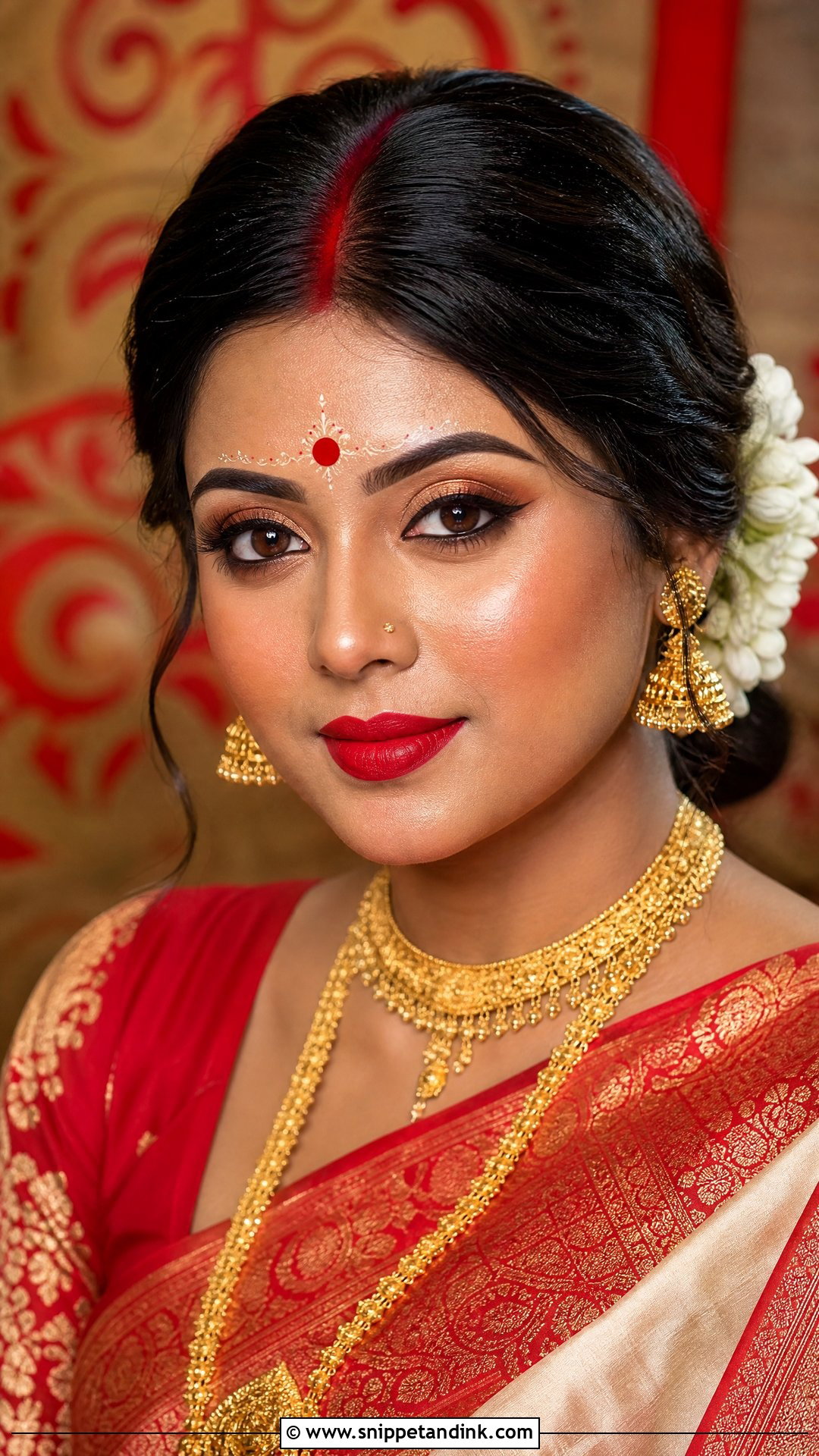
The red bindi makes even very simple makeup look complete. Size matters: a bindi that’s too large for the forehead overpowers the face, and one too small disappears under the mukut, so I try a few sizes against the bride’s face before choosing. White or red dots around it add tradition. Keep the rest soft, with satin skin, warm blush, kajal-lined eyes and a clean lip. Red lipstick makes it classic; rose or nude feels more modern.
12. Bengali Bridal Makeup With White Mukut
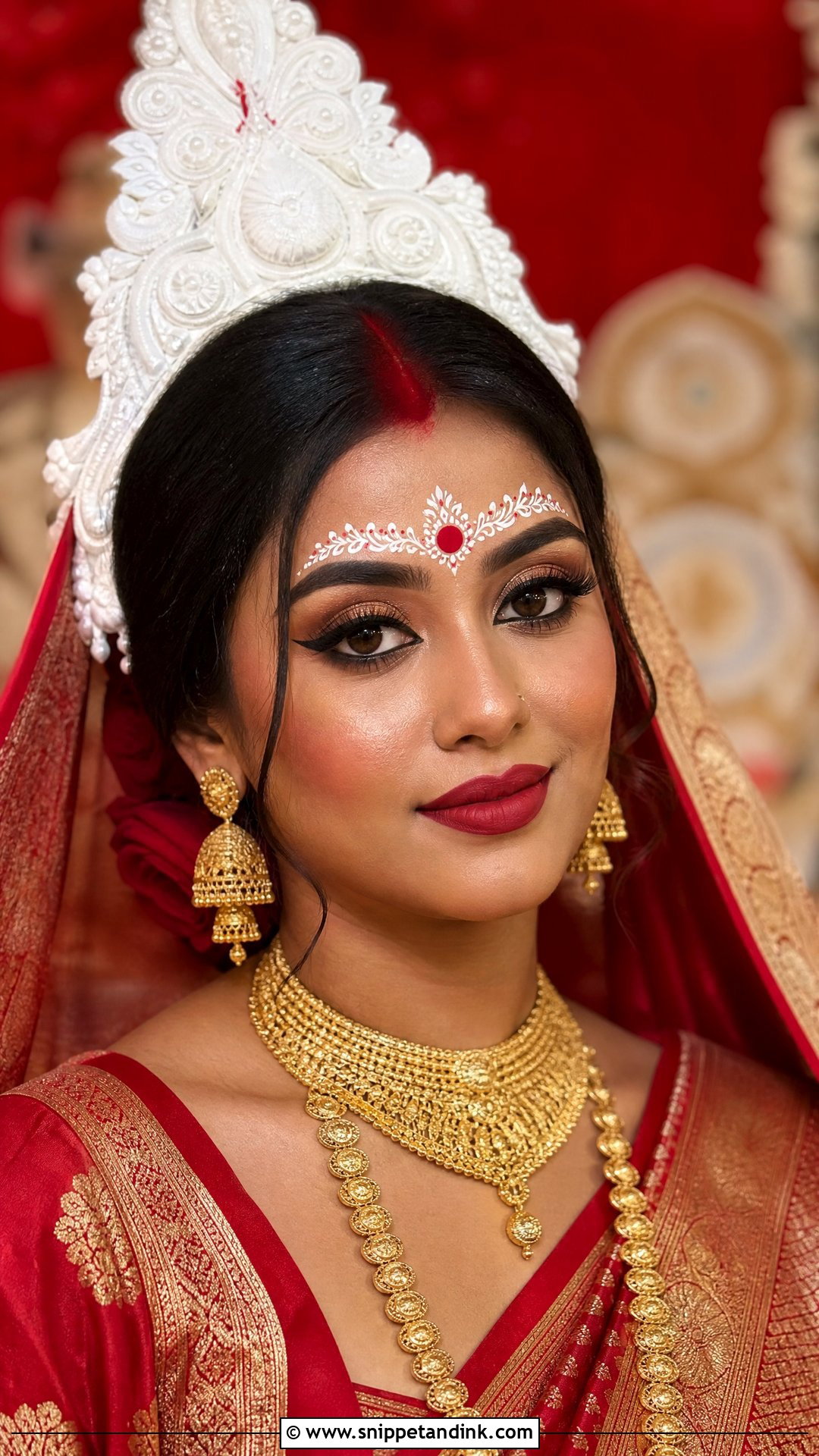
The white mukut frames the face sharply, so the makeup has to be clear and defined. Pale makeup next to bright white can make the face look washed out, which is the mistake I correct most often for this look. I build in more warmth than usual: blush on the cheeks, a warm highlight and well-shaped brows. Red is the most classic lip; berry or deep rose also work. The eyes can stay simple with brown shadow and black liner.
13. Bengali Bridal Makeup With Banarasi Saree
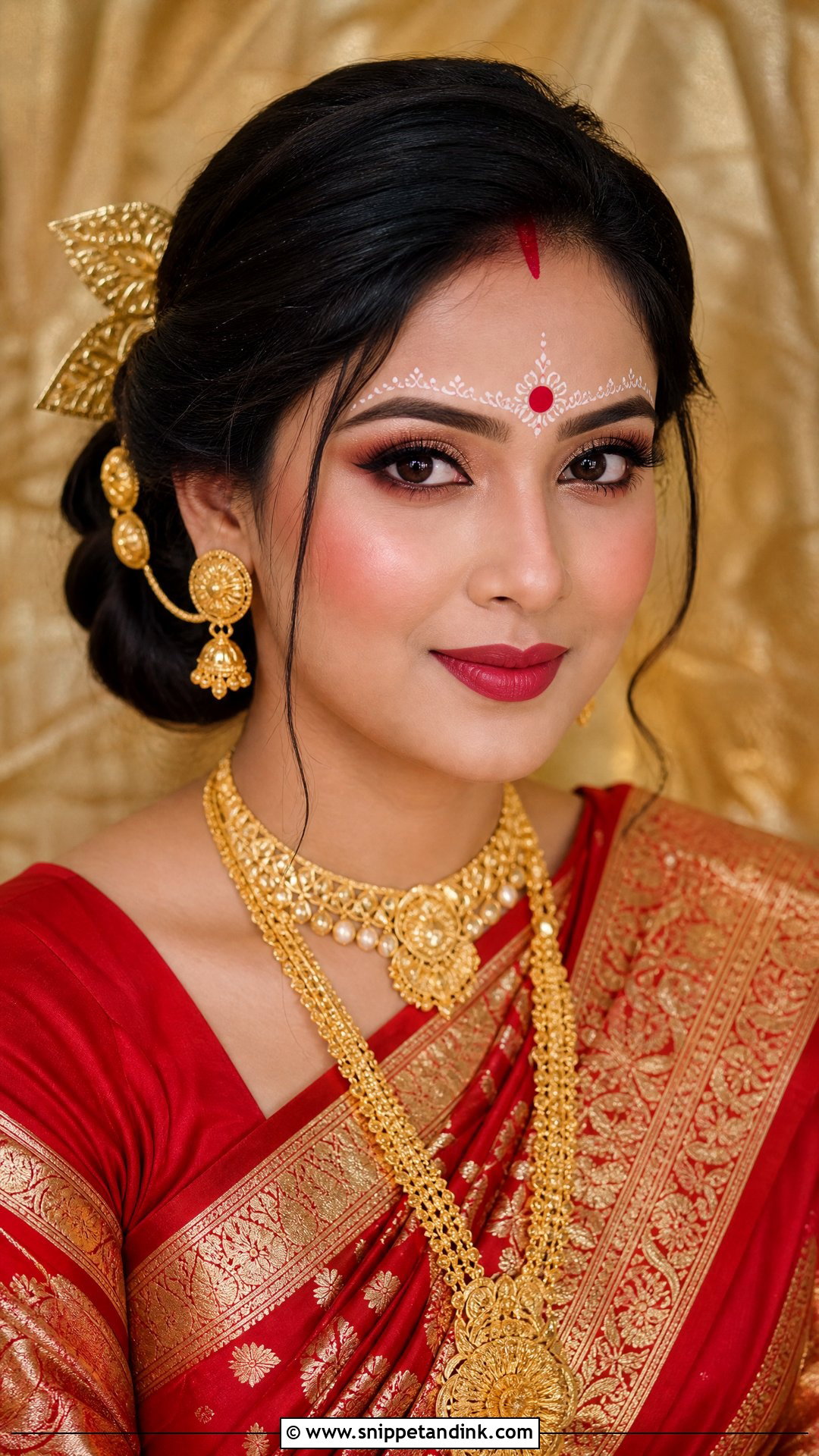
A Banarasi has zari work, rich texture and strong colour, so simple makeup usually wins beside it. I take the blush from the saree itself: coral or warm rose next to red, a deeper berry beside wine, a softer peach beside cream or green. Bronze or gold eyeshadow with black kajal and natural lashes keeps the eyes polished. A red, maroon or rose lip ties it together, with a bindi and subtle forehead detailing. Zari reflects light onto the face in photos, so I go easy on highlighter.
14. Bengali Bridal Makeup With Minimal Eye Makeup
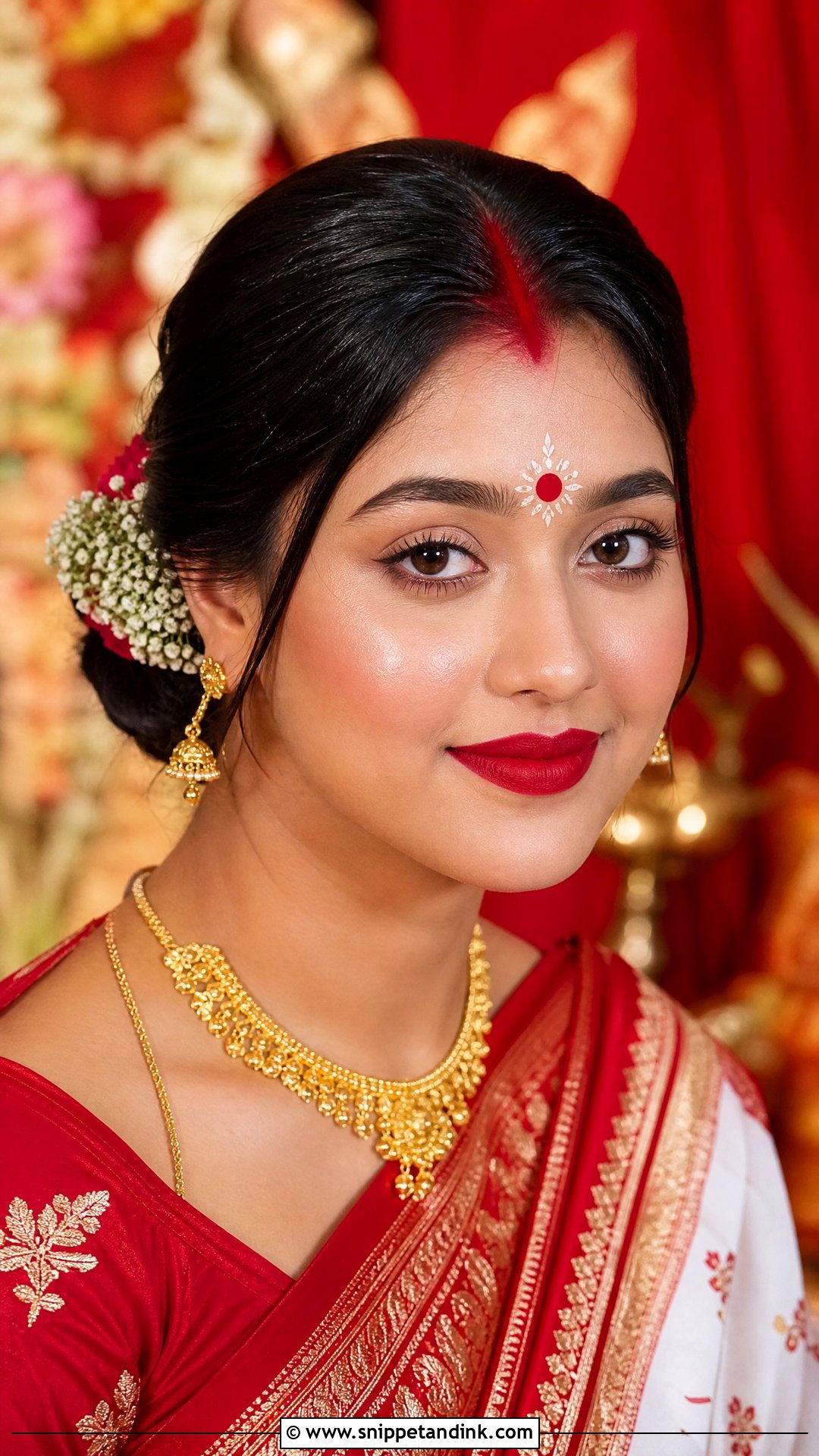
Not every bride is comfortable with heavy lashes or dark shadow, and that’s fine. I use a neutral eyeshadow close to her skin tone, a thin liner, light kajal and mascara, and skip the false lashes if they bother her. The bridal feel then comes from glowing skin, bright blush, neat brows and a strong lip in red, rose or berry. A bindi, sindoor and traditional jewellery carry the Bengali identity. It suits morning ceremonies and outdoor photos especially well.
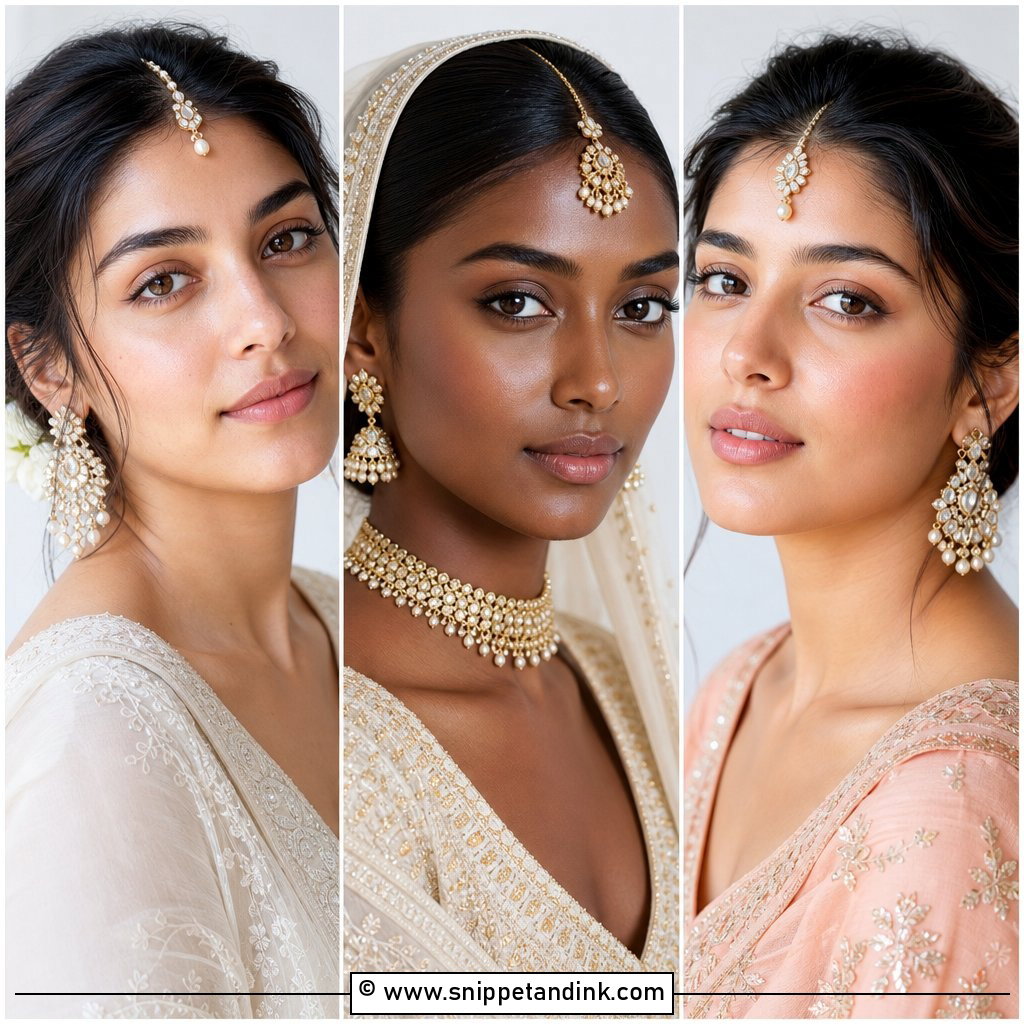
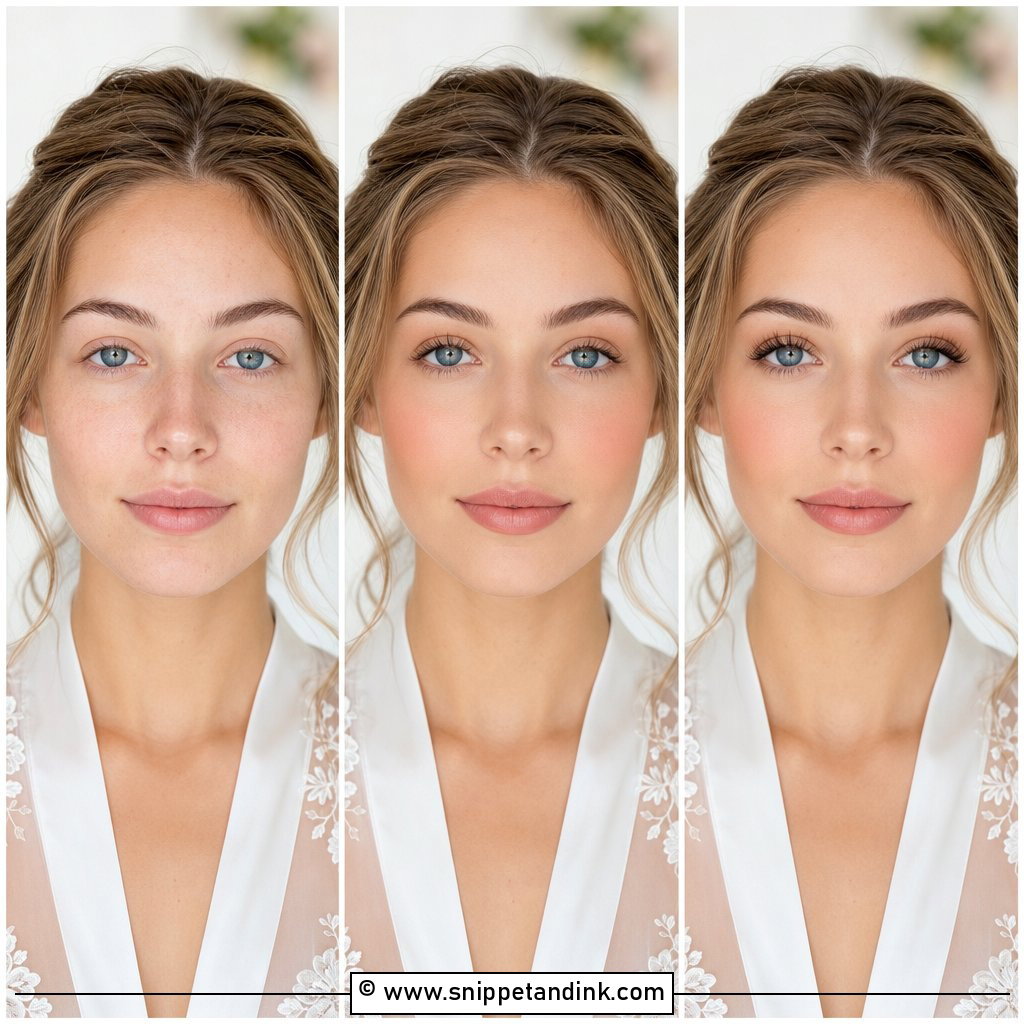
15. Bengali Bridal Makeup With Soft Glam
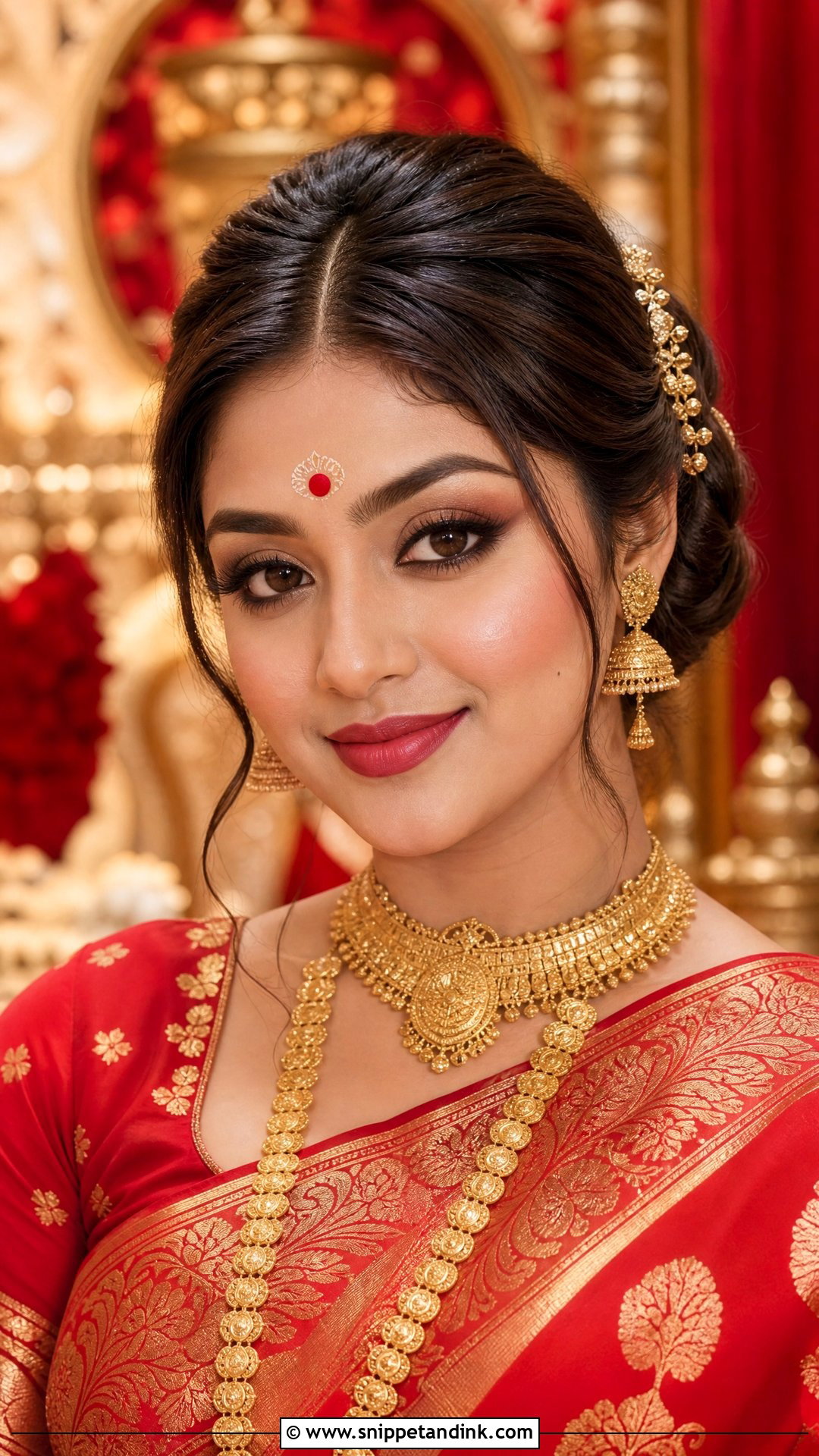
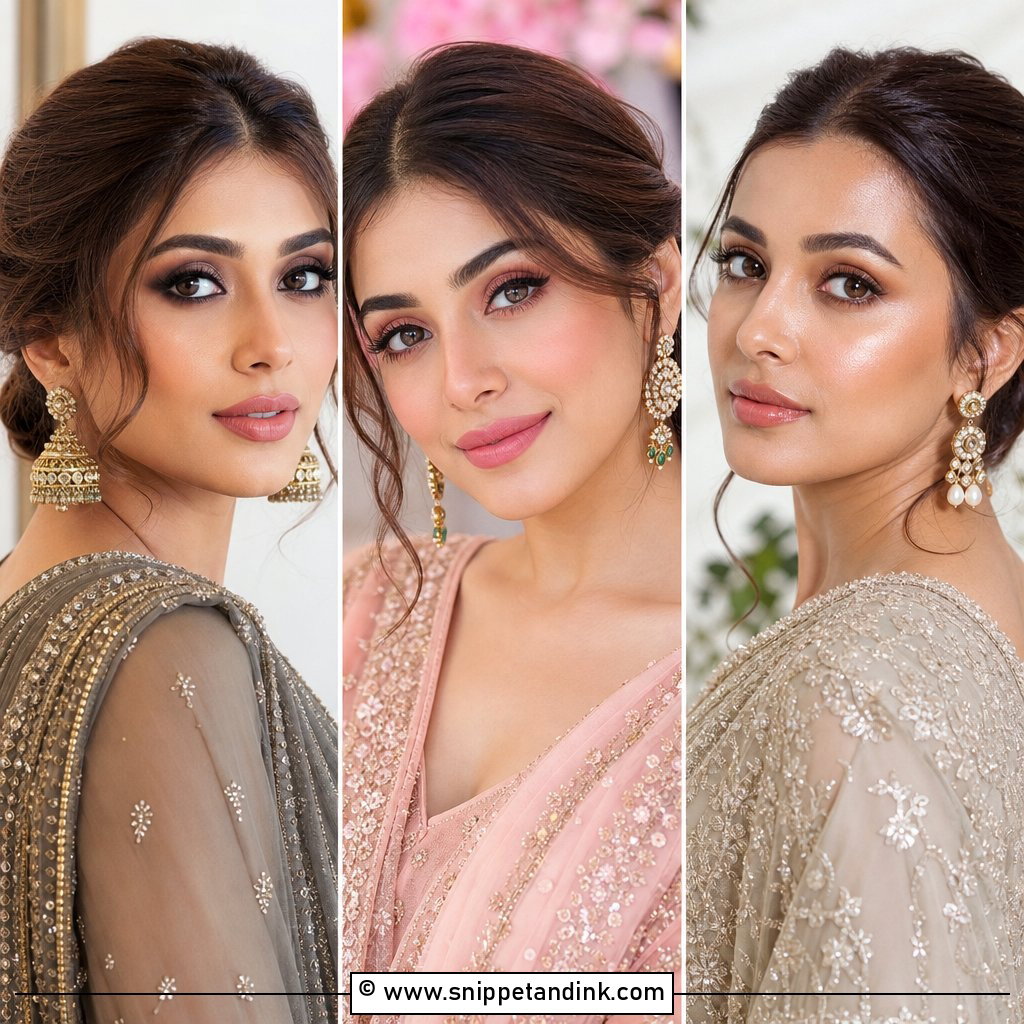
Soft glam Bengali bridal makeup is polished without being bold: blended bronze or taupe on the eyes, black liner close to the lashes, kajal for depth, lifted lashes, light contour under the cheekbones and a glow on the high points. A red-brown, rose or muted berry lip finishes it. It’s the look I suggest when a bride can’t decide, because it sits comfortably with almost every saree colour and face shape. The base needs to be properly set, or soft glam can drift into shine by the end of the night.
16. Bengali Bridal Makeup With Pastel Saree
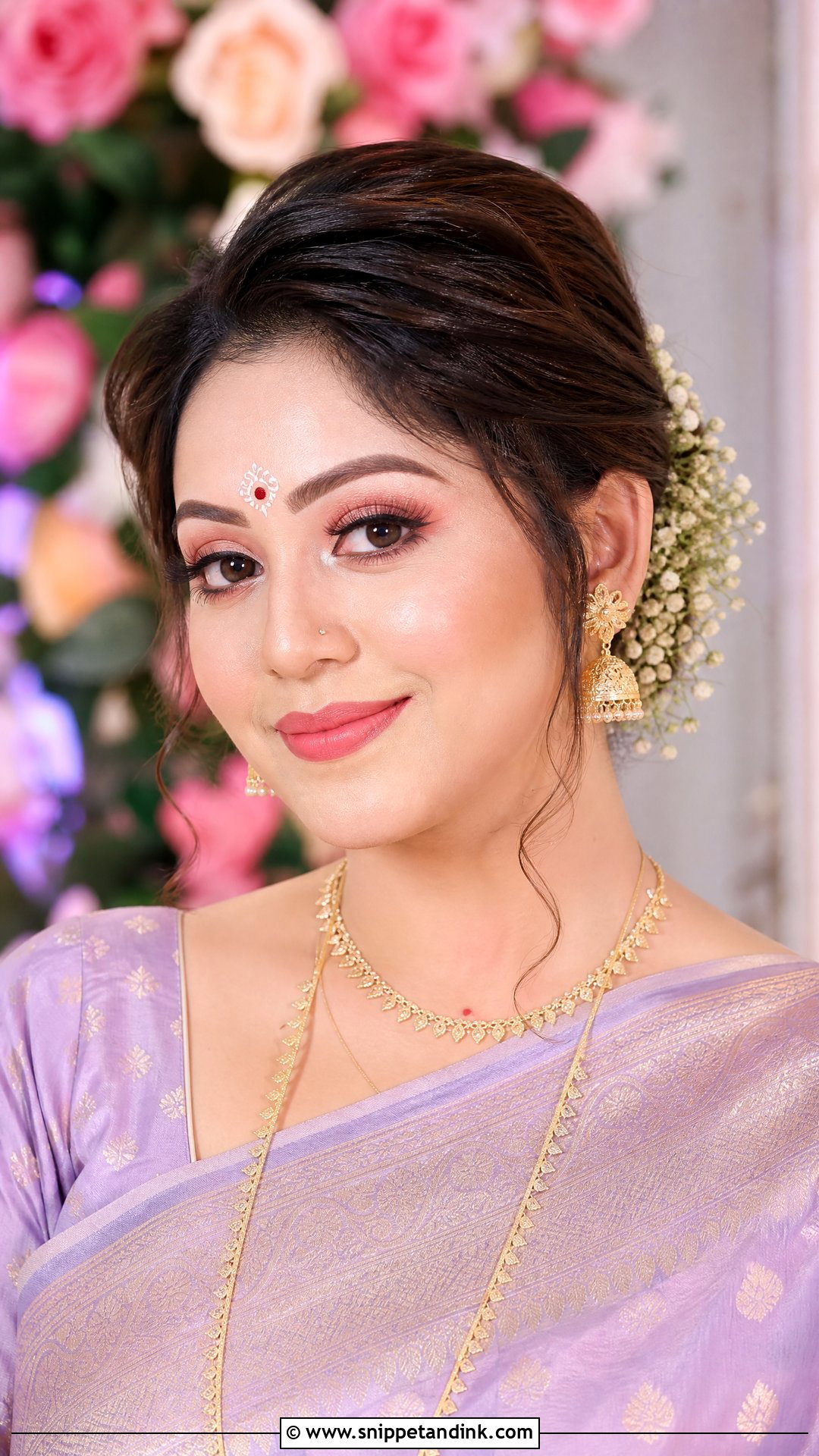
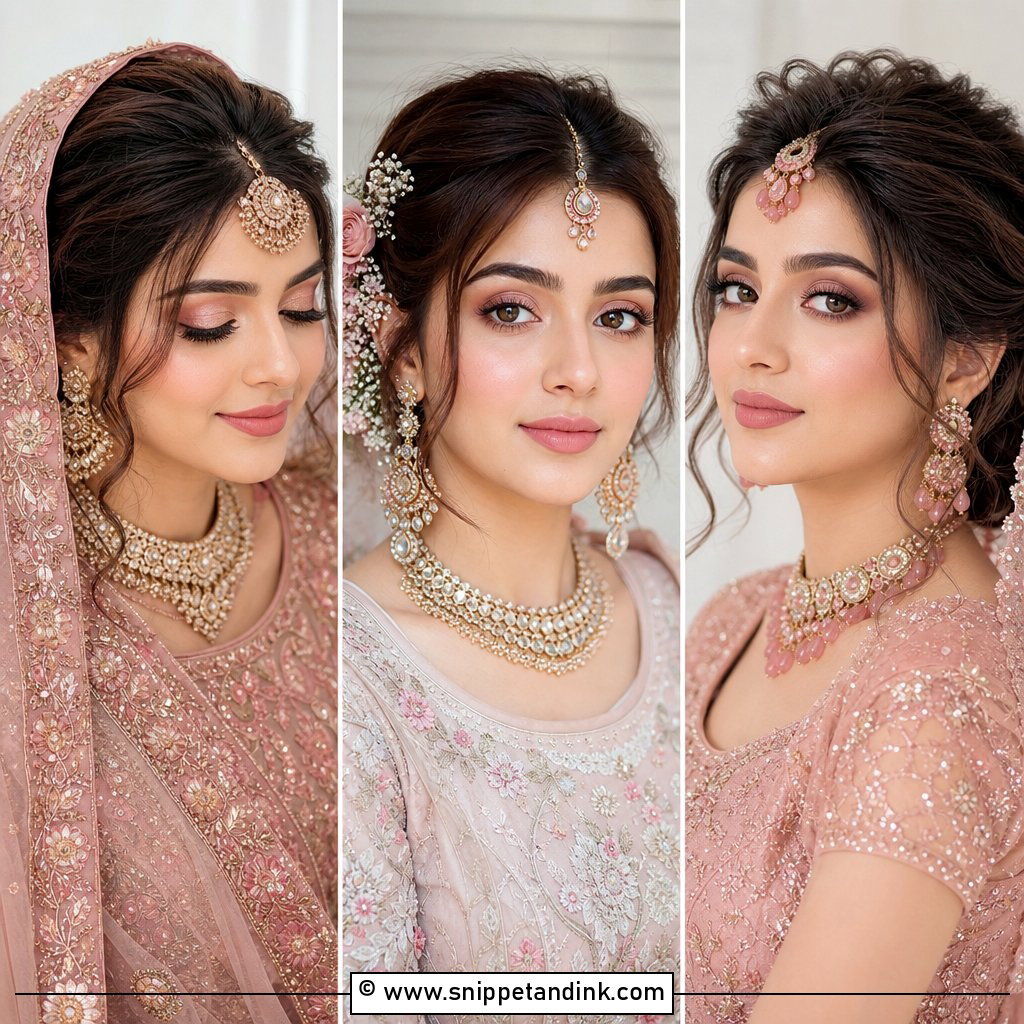
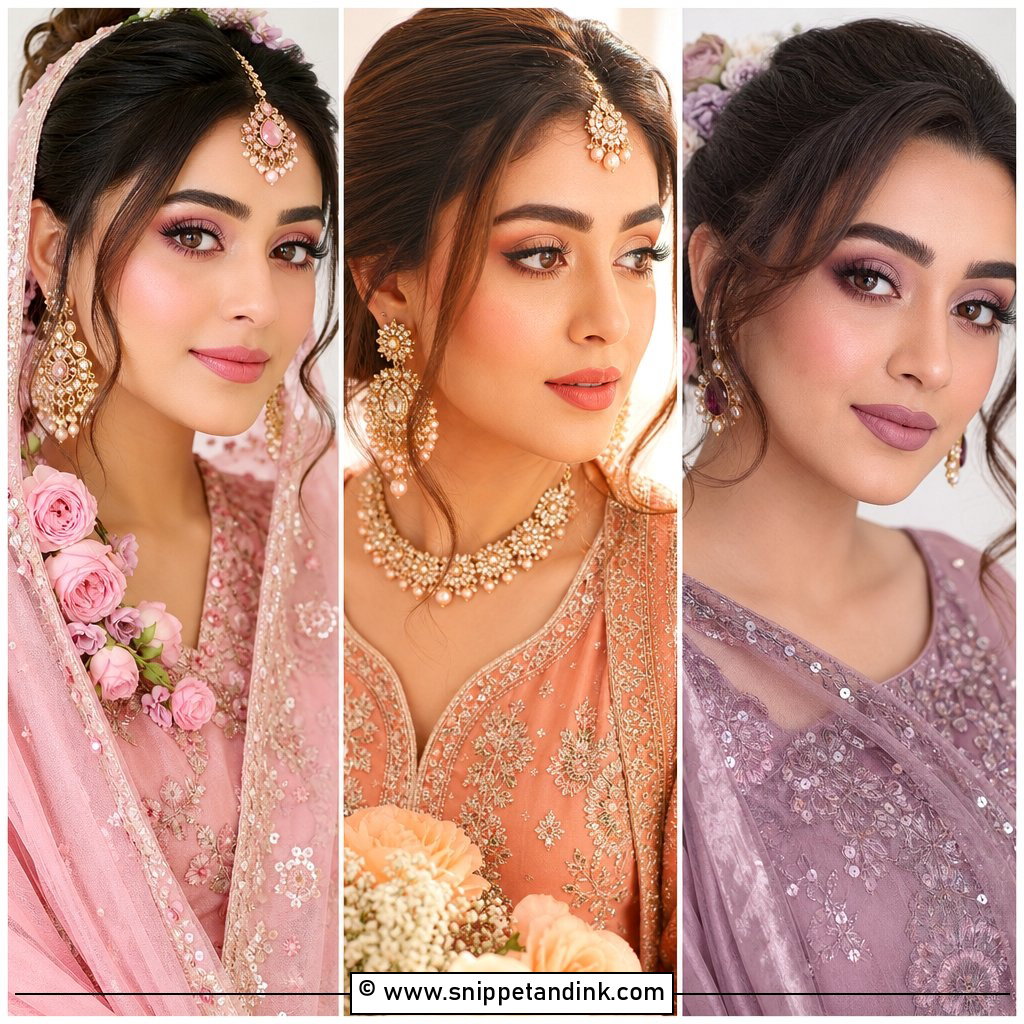
Pastel sarees need a lighter face or the makeup will look heavier than the outfit. Instead of a deep red, try rose pink, peachy nude, soft berry or muted coral, with the blush matching the lip. Champagne, rose-gold or light brown on the eyes, thin liner and mascara keep them fresh. A small red or matching bindi keeps the Bengali touch. With blush, mint, lavender, ivory or powder blue, I always check the face in daylight, since pastels shift colour indoors.
17. Bengali Bridal Makeup With Traditional Forehead Design
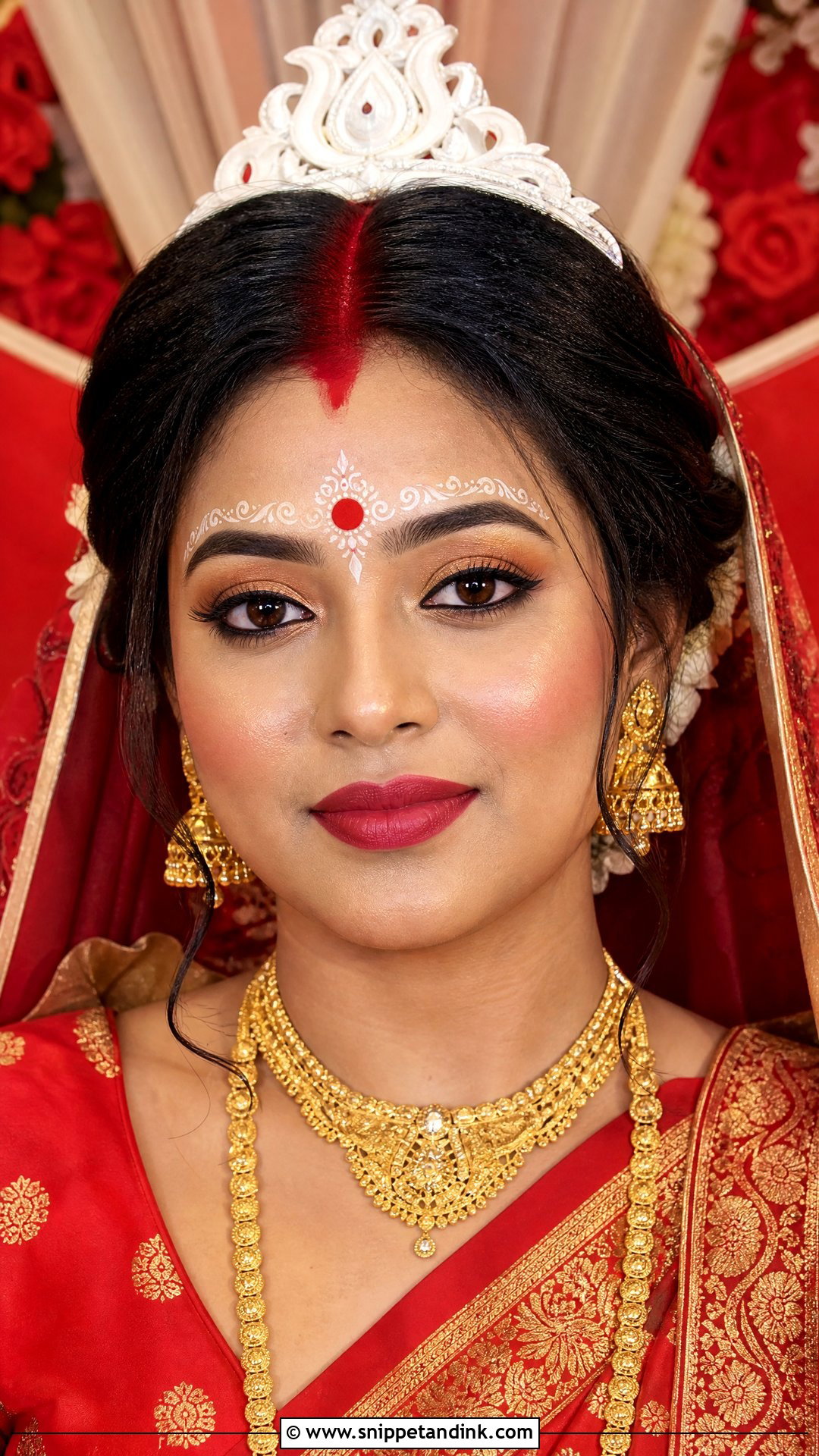
Forehead art changes the whole face, so the rest of the makeup can stay simple. I draw it around the bindi, neat and symmetrical, framing the face rather than competing with it, and I check the mukut position first so the design isn’t hidden under the crown. Soft gold or brown shadow, kajal and clean liner on the eyes, smooth skin with warm blush and a gentle highlight, and a red or deep pink lip complete it. It’s the face I’d choose for traditional portraits.
18. Bengali Bridal Makeup With Natural Glow
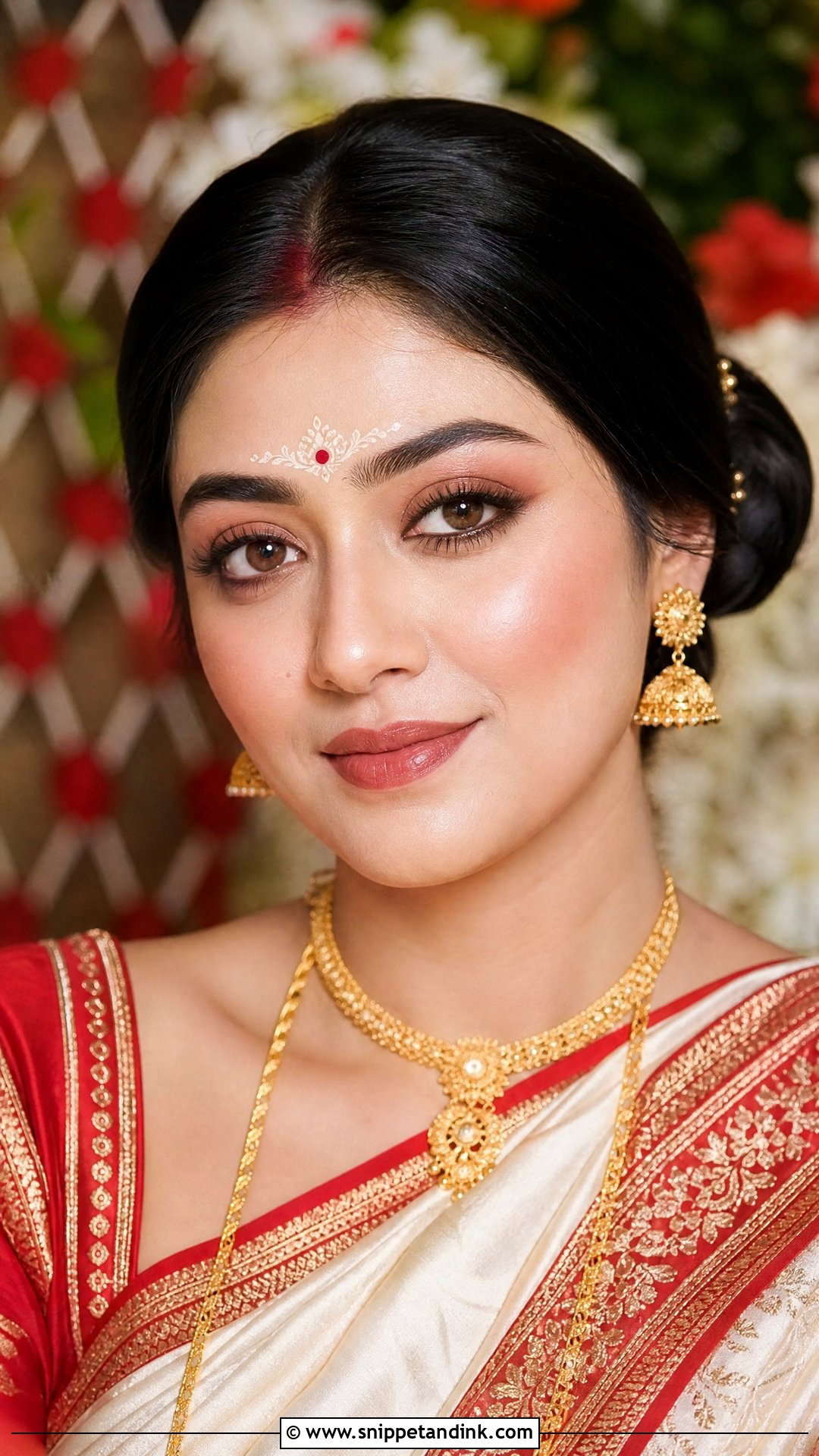
Some brides simply want to look like themselves on a good day. For that, I use sheer to medium coverage and let real skin texture show, with cream blush, soft highlighter and powder only where needed. Brown liner, a little kajal and mascara define the eyes. The lip should sit close to your natural tone: rose, pink-brown or warm nude. A bindi and simple jewellery keep it bridal. A lighter base needs a good primer underneath if the day is long.
19. Bengali Bridal Makeup For Reception
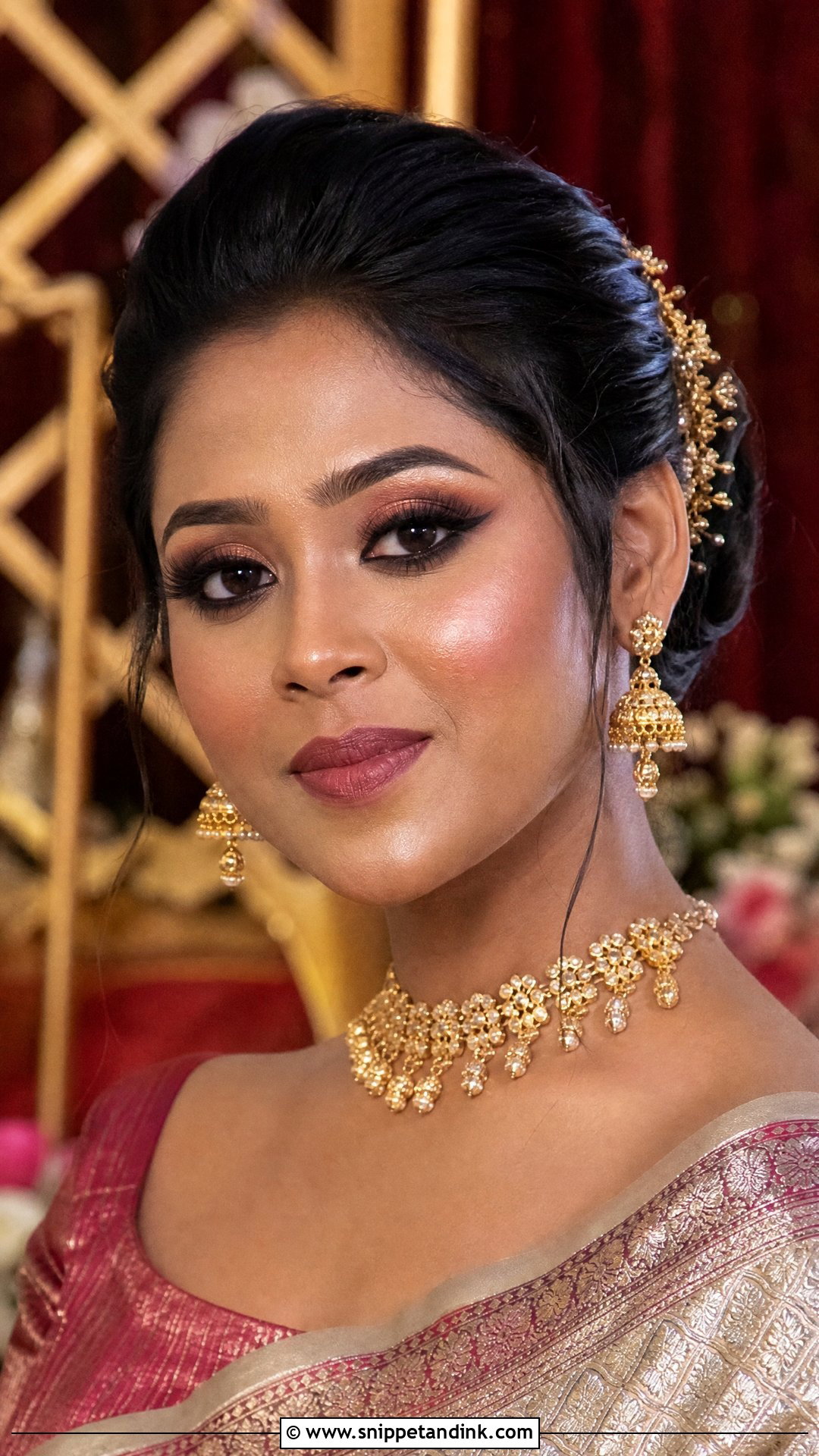
The reception is where a Bengali bride can be more modern. If the outfit is lighter or contemporary, swap the traditional red lip for berry, mauve, rose-brown or satin nude, and give the eyes a soft smokey effect in bronze, copper or taupe with a lifted liner and fuller lashes for evening photos. Often I’m refreshing a face that has already been worn through the wedding, so I blot, re-powder and rebuild the eyes rather than starting over. A smaller bindi keeps the link to tradition.
20. Bengali Bridal Makeup With Classic Red Saree
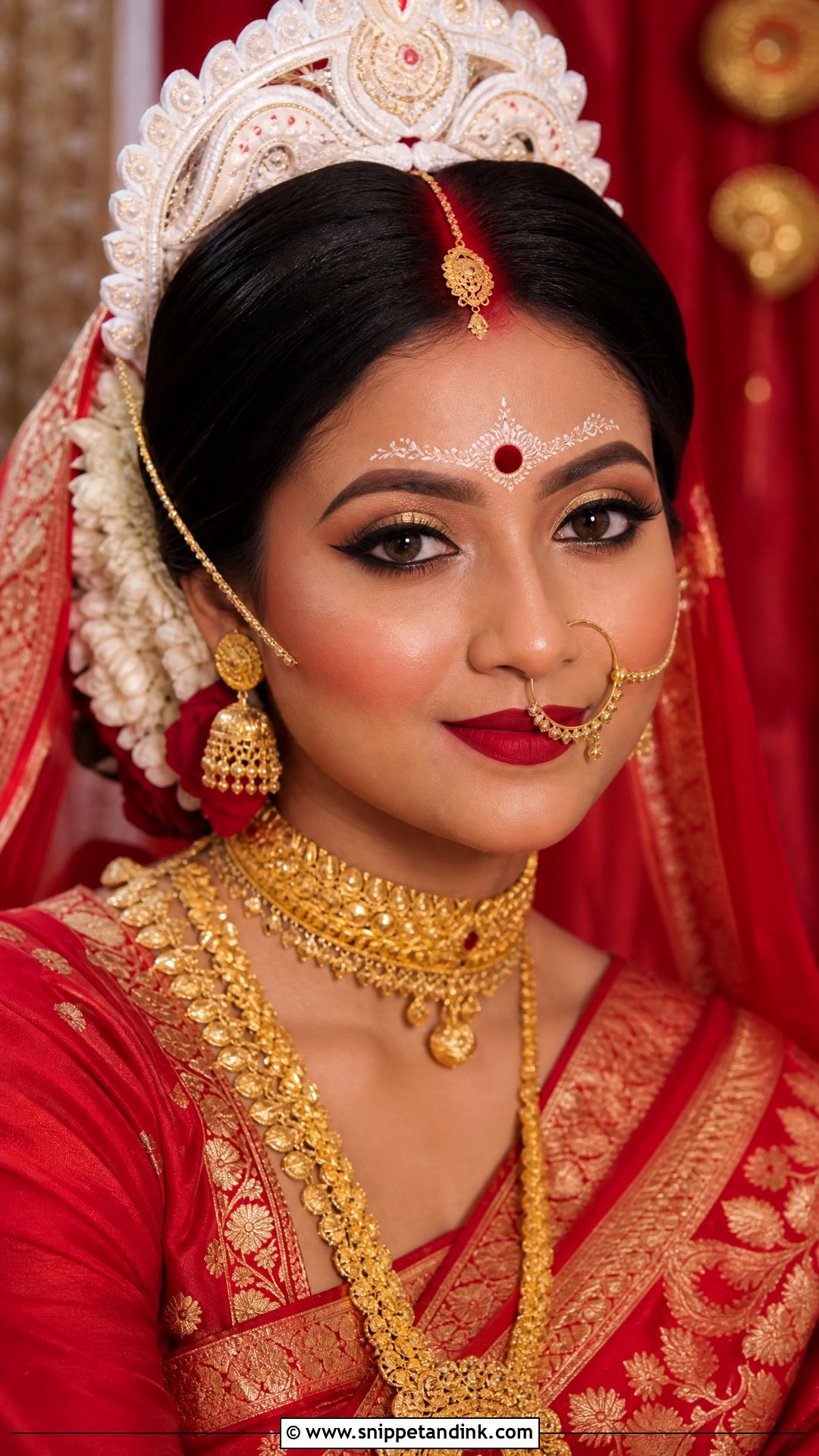
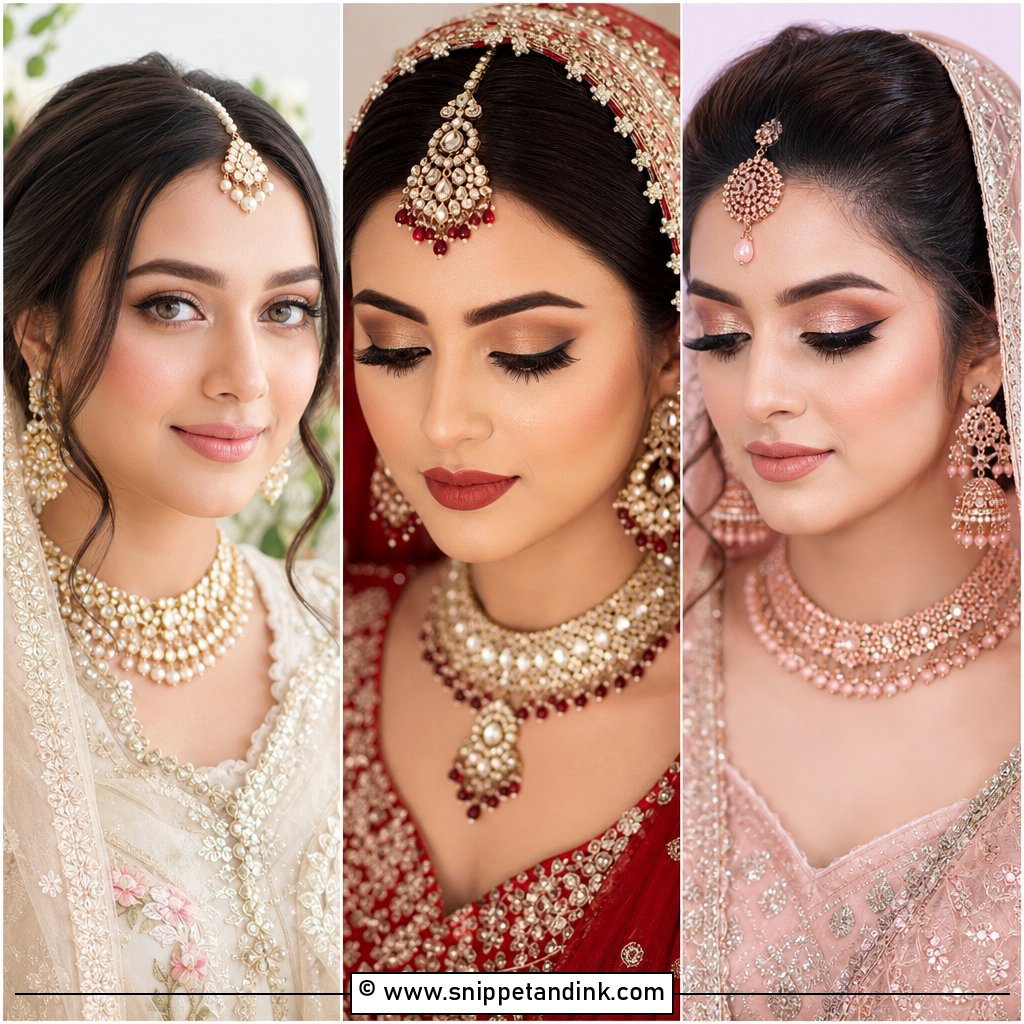
A classic red saree is bold enough that the face should be clean and intentional. Smooth base, soft gold eyeshadow, black kajal and a medium wing, with warm blush so the face doesn’t look flat against all that red. For the lip, I match the saree’s red or go a shade deeper for drama, but I always hold the lipstick against the fabric in daylight first, because a blue-red and an orange-red side by side look like a mistake. A round bindi, sindoor, gold jewellery and a neat bun complete it.
How I Draw Chandan Dots That Stay Symmetrical
The forehead design is the part brides worry about most, and it’s also the part that is easiest to fix if you plan it. Traditionally it is drawn in white sandalwood paste and red kumkum with a fine stick. Many artists now use white and red cosmetic paints or liners, which dry faster and smudge less.
- Set the base with powder over the forehead first, so the paint doesn’t slip.
- Place the bindi, then mark the outer limit of the design on both sides with a single tiny dot, checking it in the mirror.
- Work from the centre outward, one dot on the left, then its partner on the right, rather than finishing one side first.
- Keep dots slightly smaller than you think. They spread a little as they dry, and crowded dots blur in photos.
- Let everything dry completely before the mukut goes on.
If the skin reacts
Sandalwood paste and some red kumkum powders can irritate sensitive skin. If you’ve ever reacted to them, do a patch test at your trial, a small dot behind the ear left for a day, and ask your artist to use cosmetic-grade paints instead.
A Bengali Bridal Face That Still Looks Right at Midnight
Simple doesn’t mean plain or unfinished. It means every detail earns its place, from the base to the kajal, bindi, lip colour, hairstyle and saree. Pick the face that feels comfortable and lasts through the rituals. Lean traditional with a red lip, mukut, gold eyeshadow and forehead art, or modern with a nude lip, dewy skin, soft glam or pastel-saree makeup. Whichever you choose, test it once at a full trial, wearing the saree colour, before the wedding.
You'll Like These Ideas:


Leave a Reply