
A wedding face has three jobs at once. It has to look right across a table, hold up under a photographer’s flash, and still look like you at midnight after hours of hugging, crying and eating. The looks below are complete faces rather than single features: soft glam, matte, dewy, red lips, smoky eyes, blush-led looks and seasonal versions. Right now most of the brides I book are asking for skin that looks like skin, softer definition and lighter lashes, with long-wear products doing the hidden work underneath. I’ve added notes on which skin types each one suits and where it tends to break down.
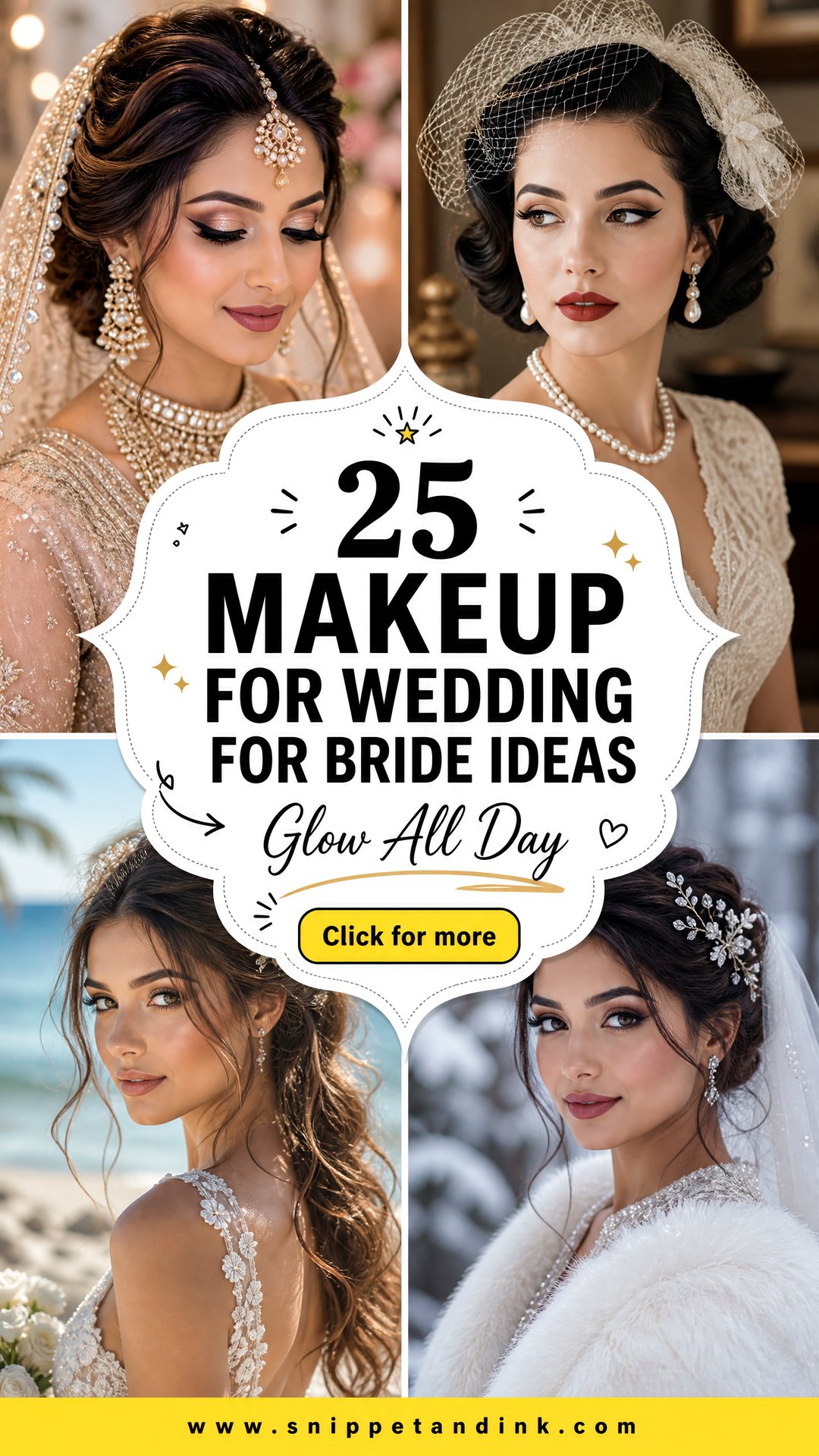
Your Skin Needs a Calm Month Before the Wedding
Every look on this list sits better on skin that hasn’t been shocked recently. The month before is not the time to try a new acid, a retinoid you’ve never used or a facial with extractions. Irritated skin shows through foundation as texture and redness that I can only partly cover.
A rough calendar I give brides
- About four weeks out: book the last professional facial, ideally a gentle one, so any purging has time to settle.
- Two weeks out: stop introducing anything new. Keep the routine you know your skin tolerates.
- One week out: brows shaped or waxed, so any redness has faded long before the morning.
- The night before: cleanse, moisturise and sleep. No sheet masks you haven’t tried, and skip the salty dinner if you puff up easily.
On the day, arrive with a clean face and no moisturiser unless your artist asks you to, so the prep goes on in the right order.
1. Natural Bridal Makeup
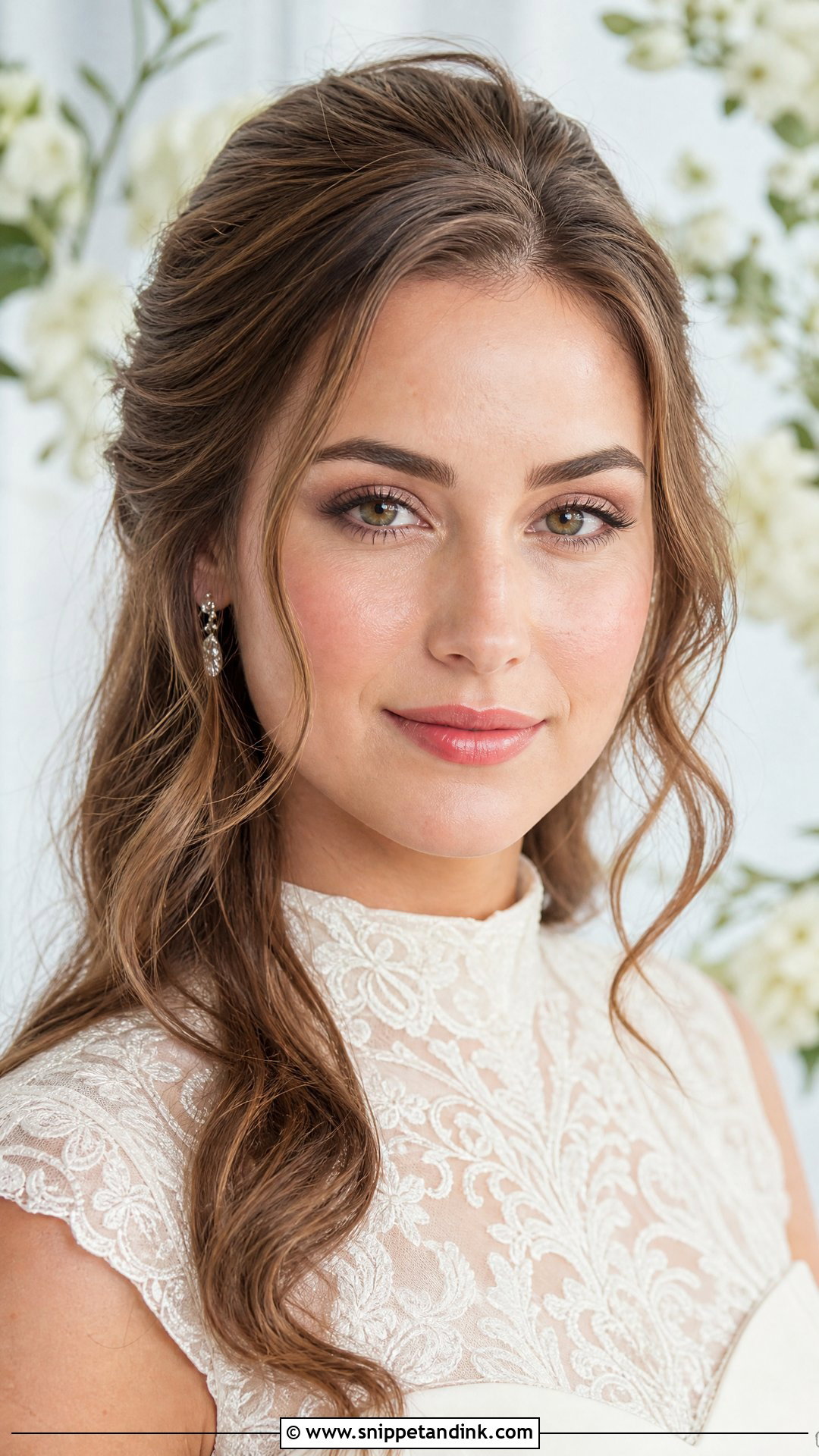
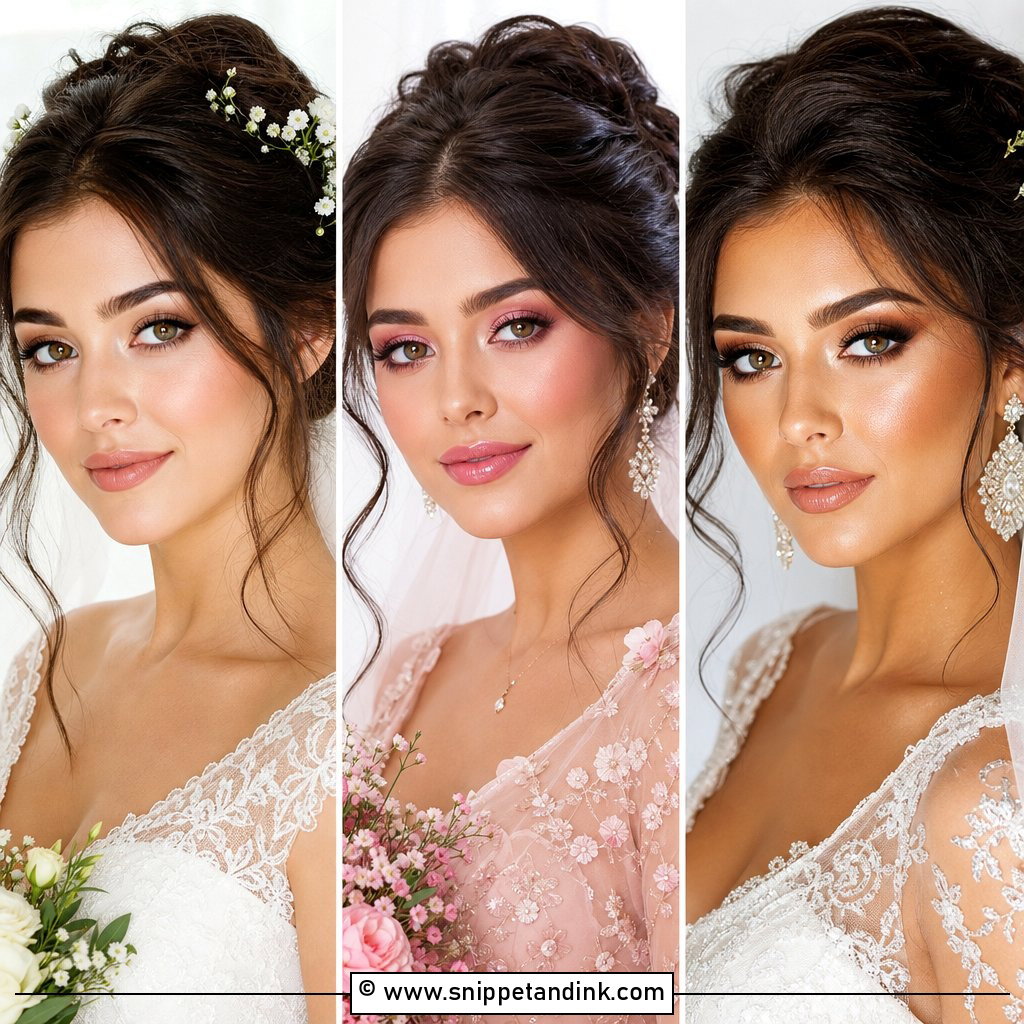
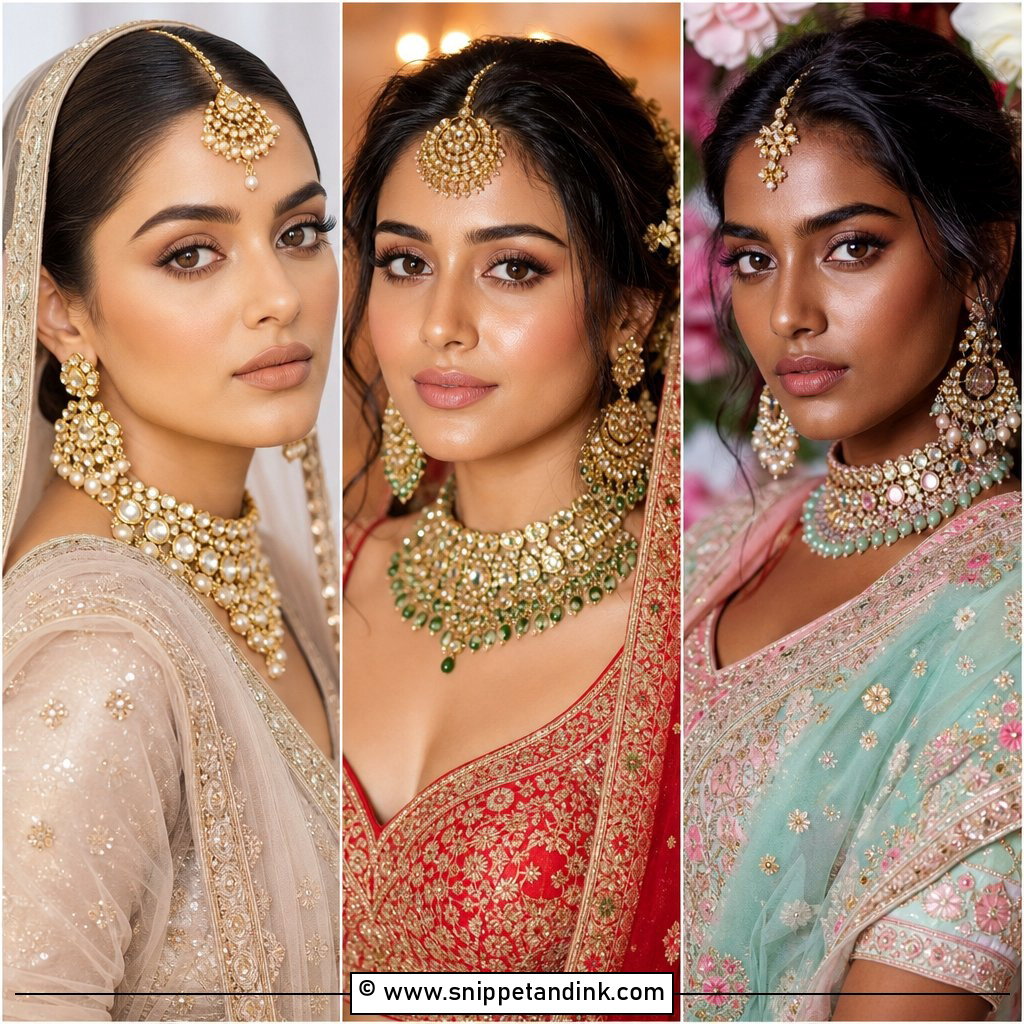
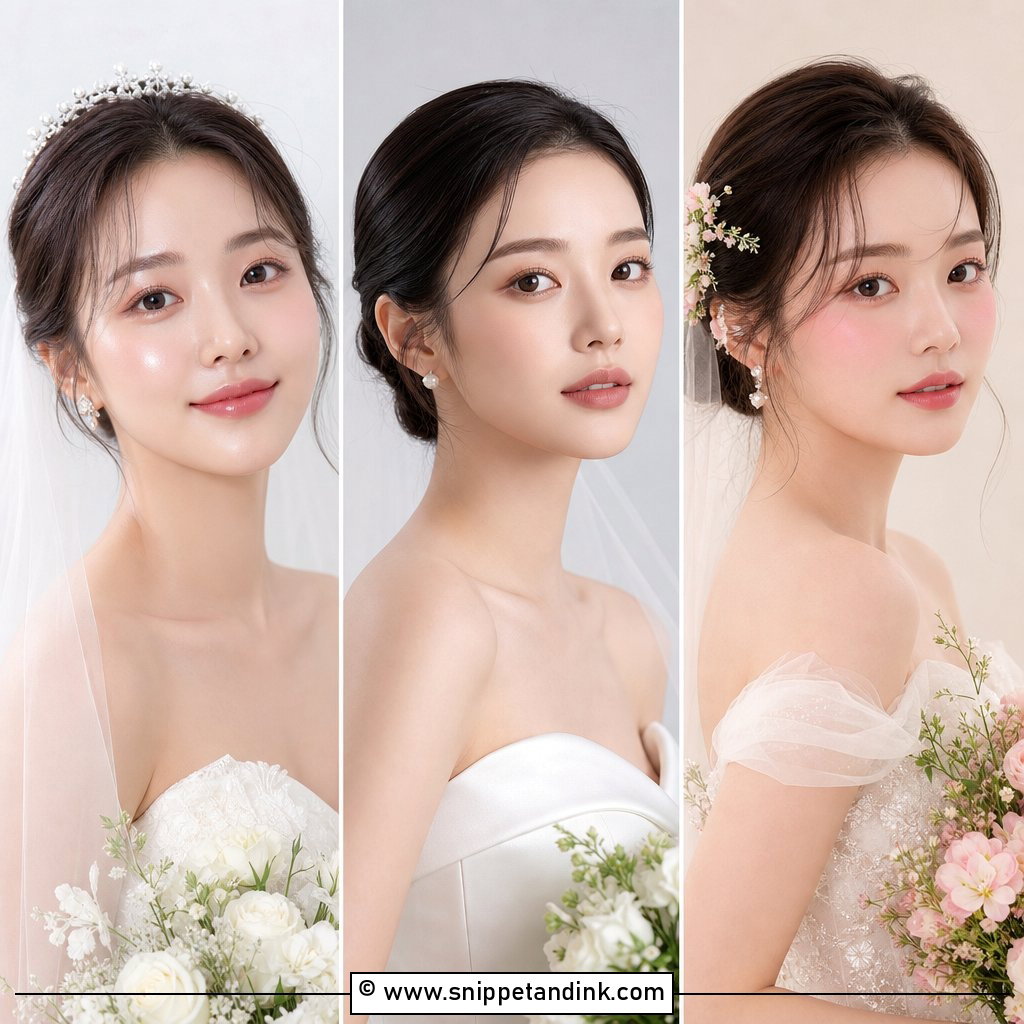
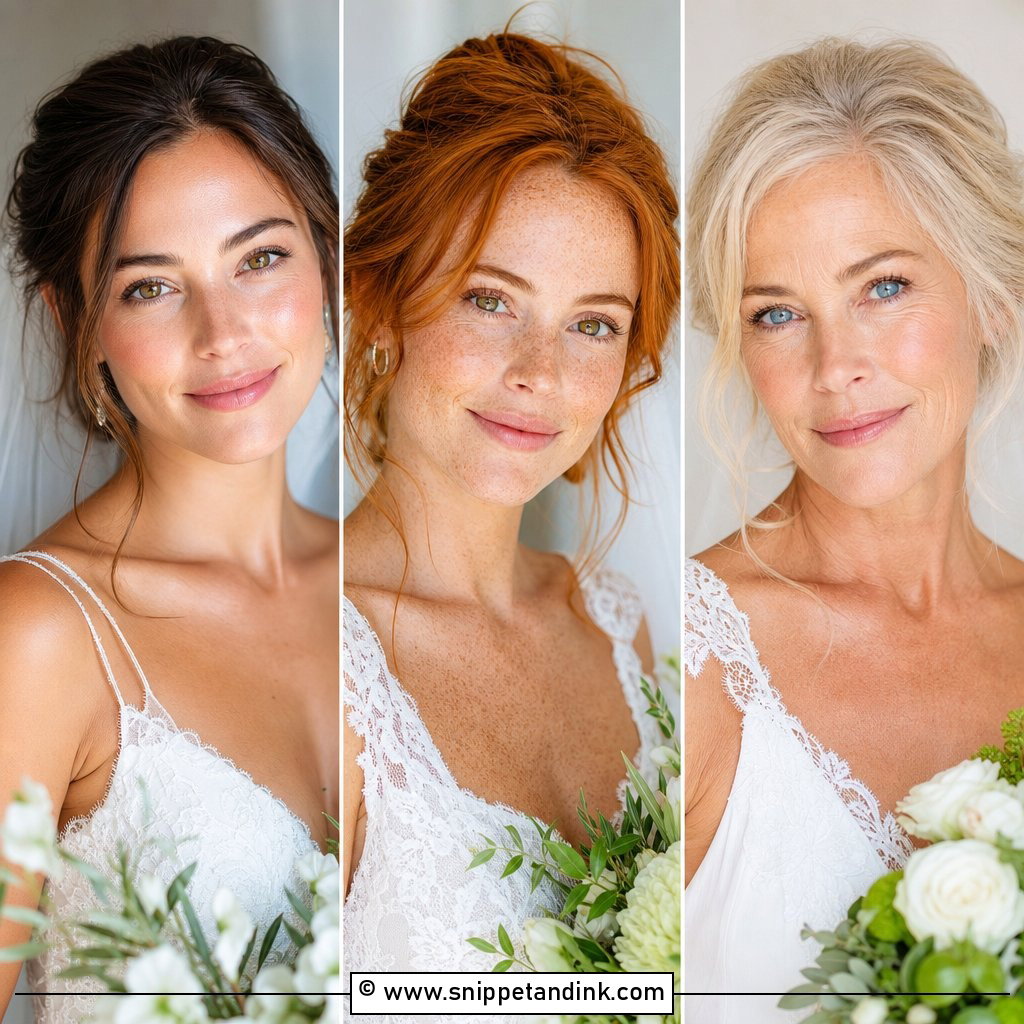
This is the look most brides think will be quick, and it’s often the one I spend longest on, because skin that looks bare needs the most precise concealing. I use a skin tint or thin foundation and conceal only where there’s redness or shadow, then build cheeks with a cream blush matched to undertone: rose for cool, peach for warm. Beige or taupe on the lid, a thin brown liner pressed into the lash roots and fluttery lashes keep the eyes open. Brush the brows up rather than filling them into a block. A sheer rose lip finishes it.
2. Soft Glam Bridal Makeup
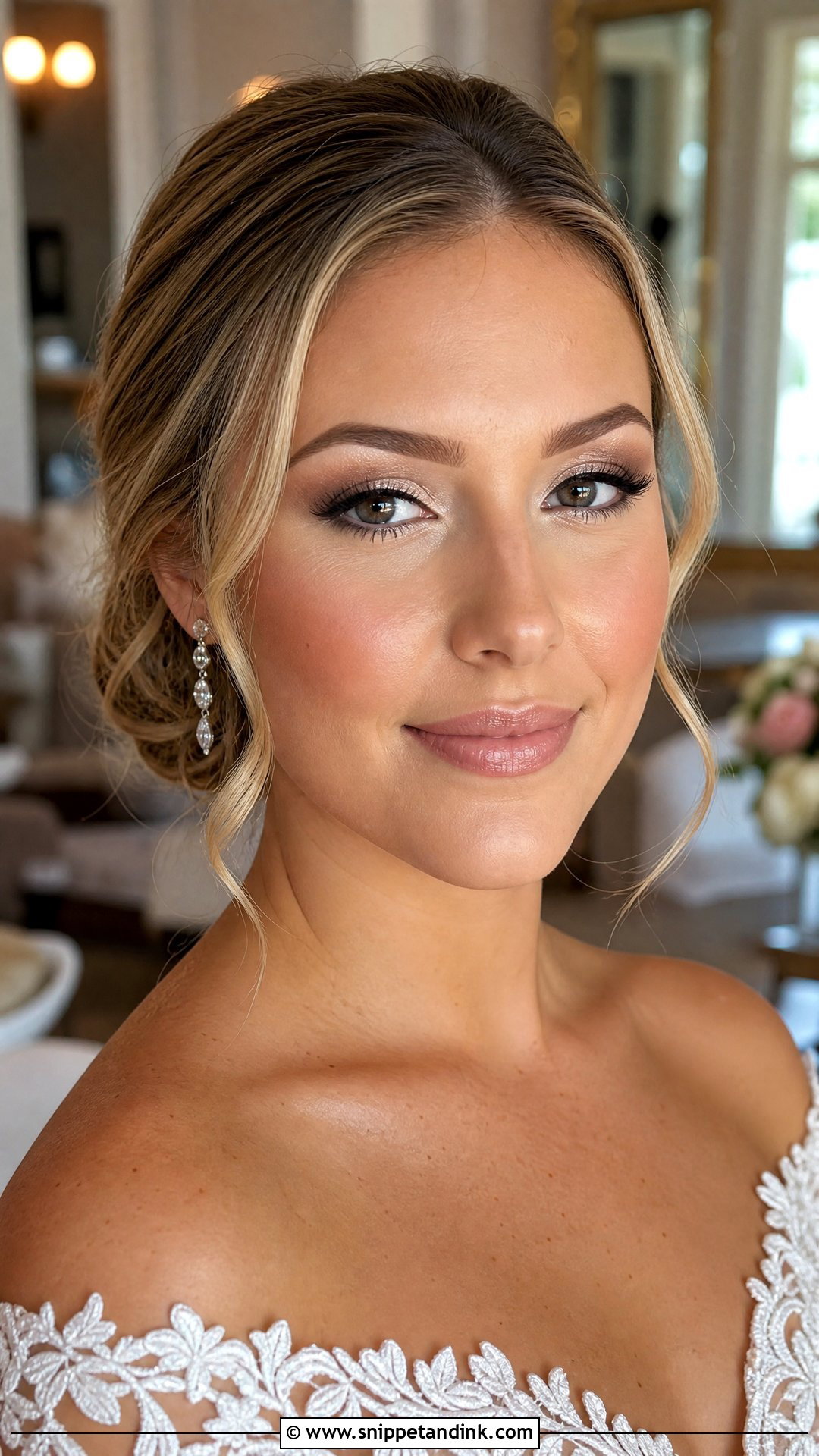
Soft glam is where I start most consultations, since it suits nearly any dress and venue. The difference from natural is structure: medium coverage, a soft contour pressed under the cheekbone, and eyeshadow blended until no edge remains. I work champagne on the lid and taupe or matte brown through the crease, then smudge the liner rather than drawing it. Blush goes on after contour to bring warmth back. A nude, mauve or pink-beige lip keeps it calm.
3. Dewy Bridal Makeup
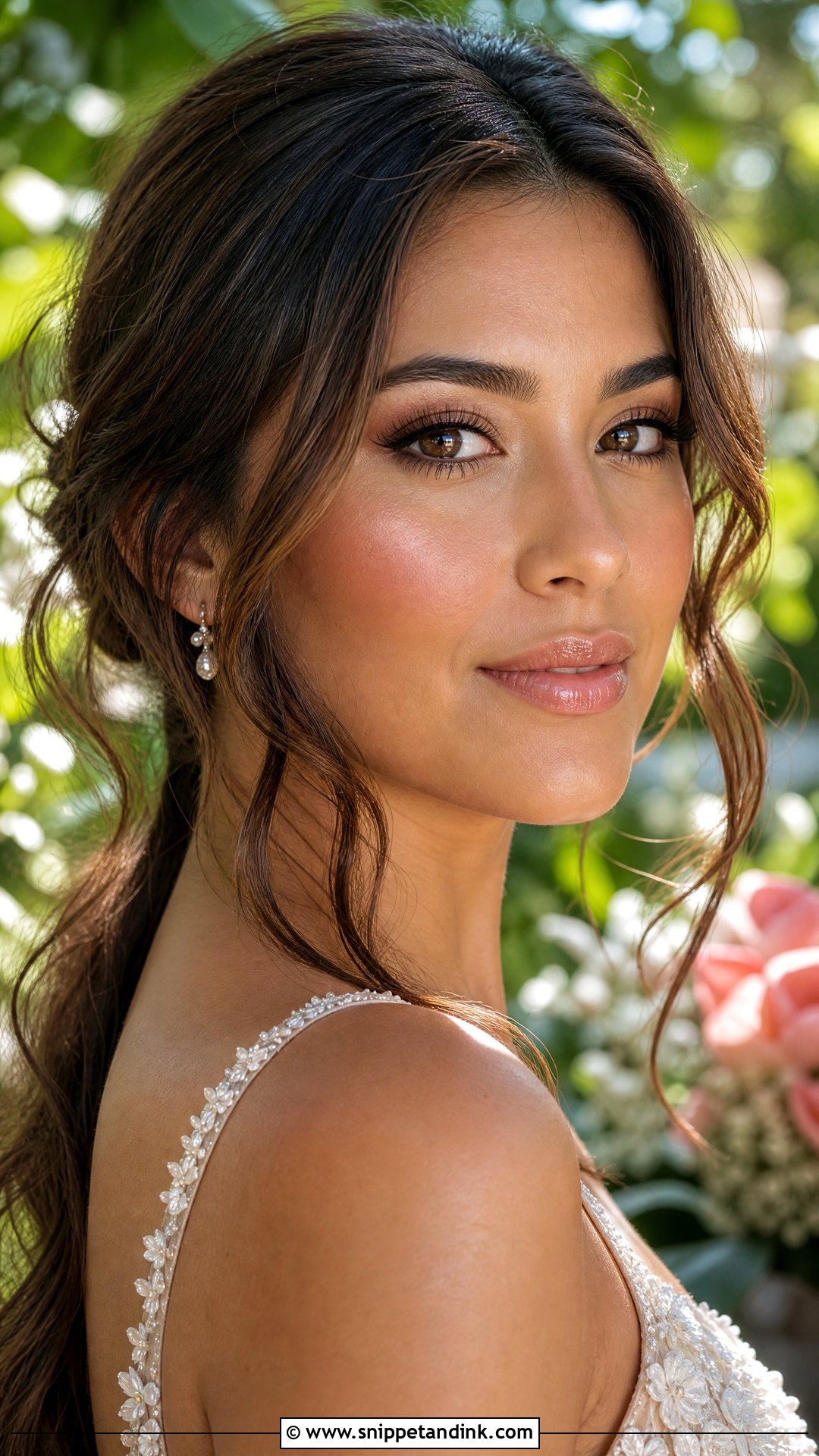
Dewy skin is the finish I have to manage most carefully. The glow should come from the base and a cream blush, not from highlighter scattered everywhere, because shine on the nose, forehead and smile lines reads as sweat in flash photos. I prep with a hydrating layer, let it sink in, then use a radiant long-wear foundation and set only the T-zone and under the eyes. Highlighter stays on the cheekbone tops. If your skin is oily by midday, I’d steer you to satin instead. Spring and daytime weddings in soft light flatter it most.
4. Matte Bridal Makeup
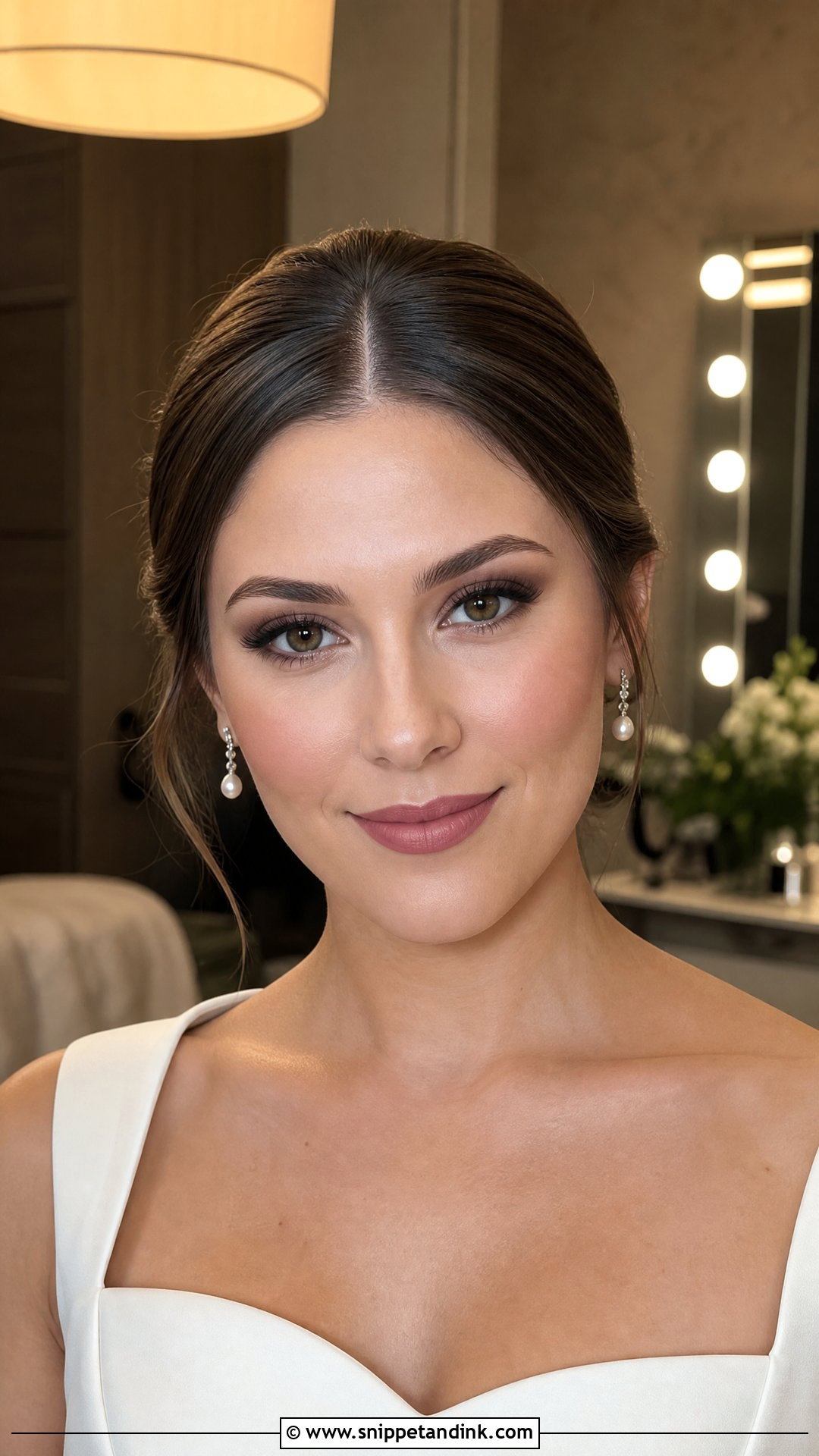
Oily skin and a summer date are the two reasons I’ll suggest matte. The mistake is making it flat. I use a gripping primer and a soft matte foundation, then powder only where oil comes through, mostly the T-zone. Blush and a touch of highlight on the cheekbone stop the face looking like plaster. On the eyes, matte taupe, brown or soft plum. For the lip, a satin-matte nude rather than a fully dry liquid, since a fully matte lip cracks and flakes by the time the speeches start.
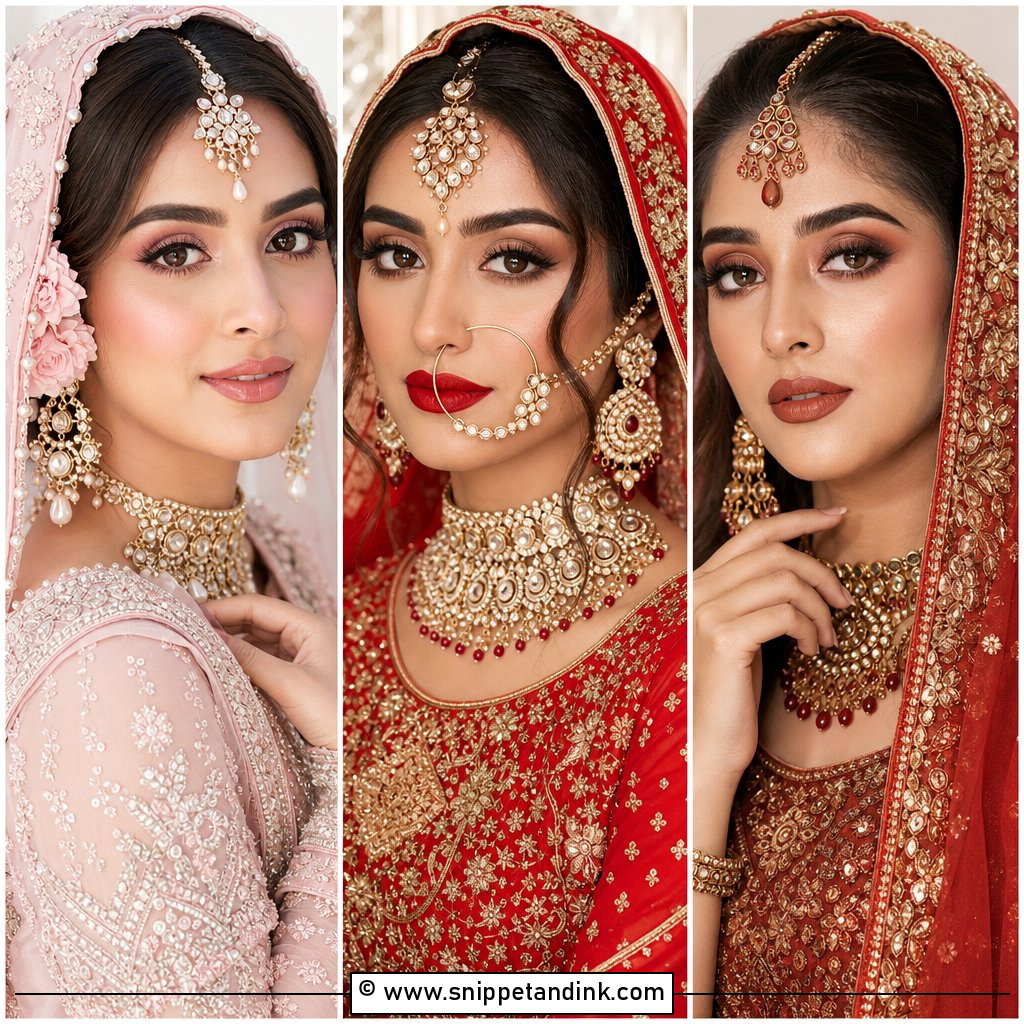
5. Classic Red Lip Bridal Makeup
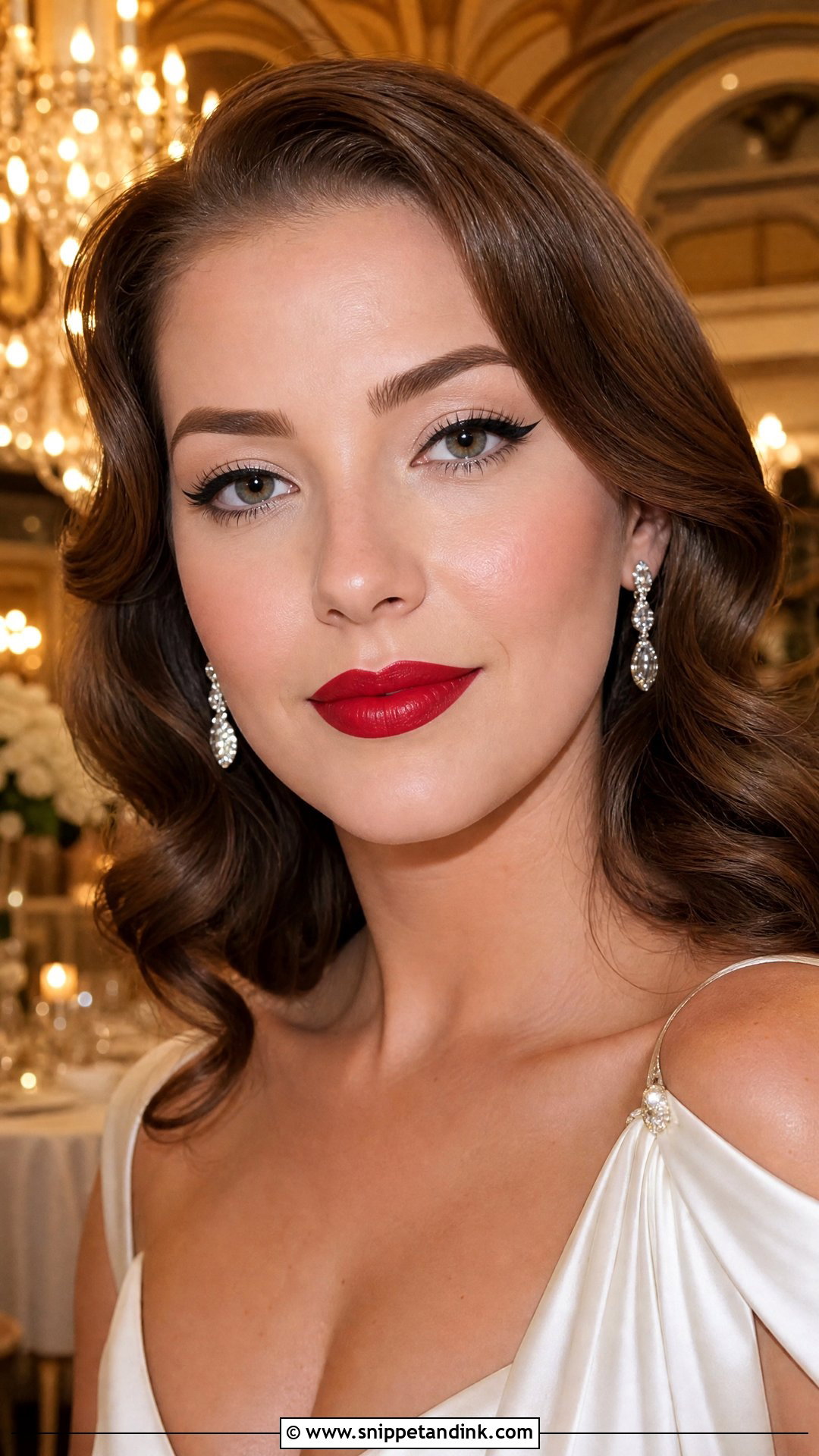
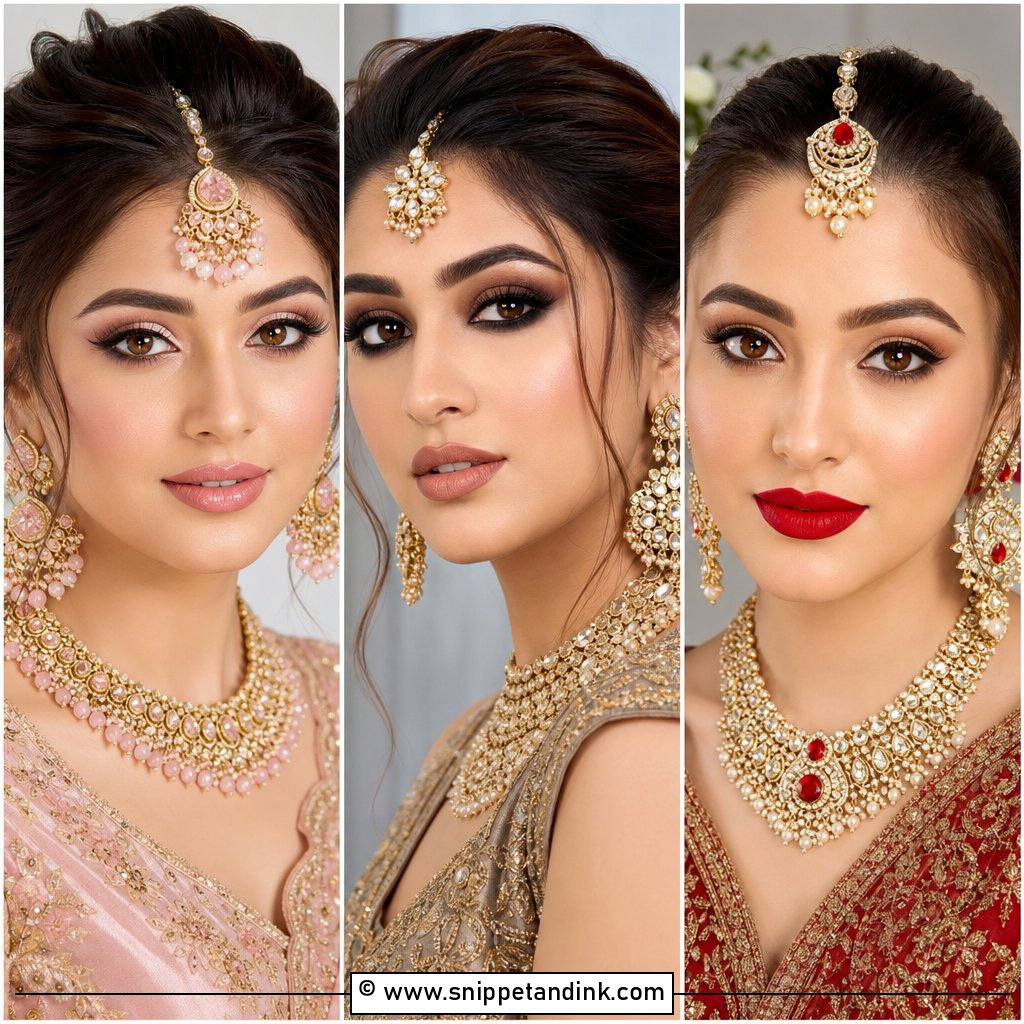
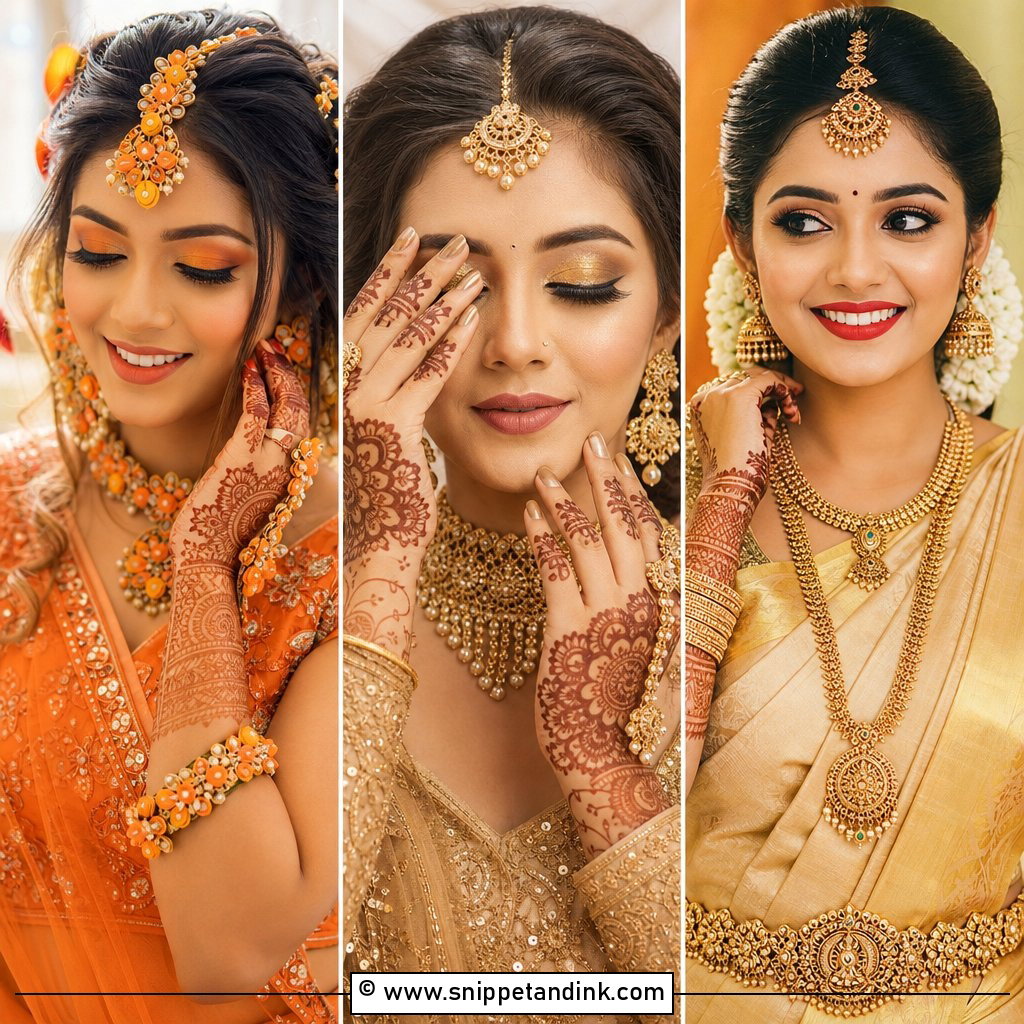
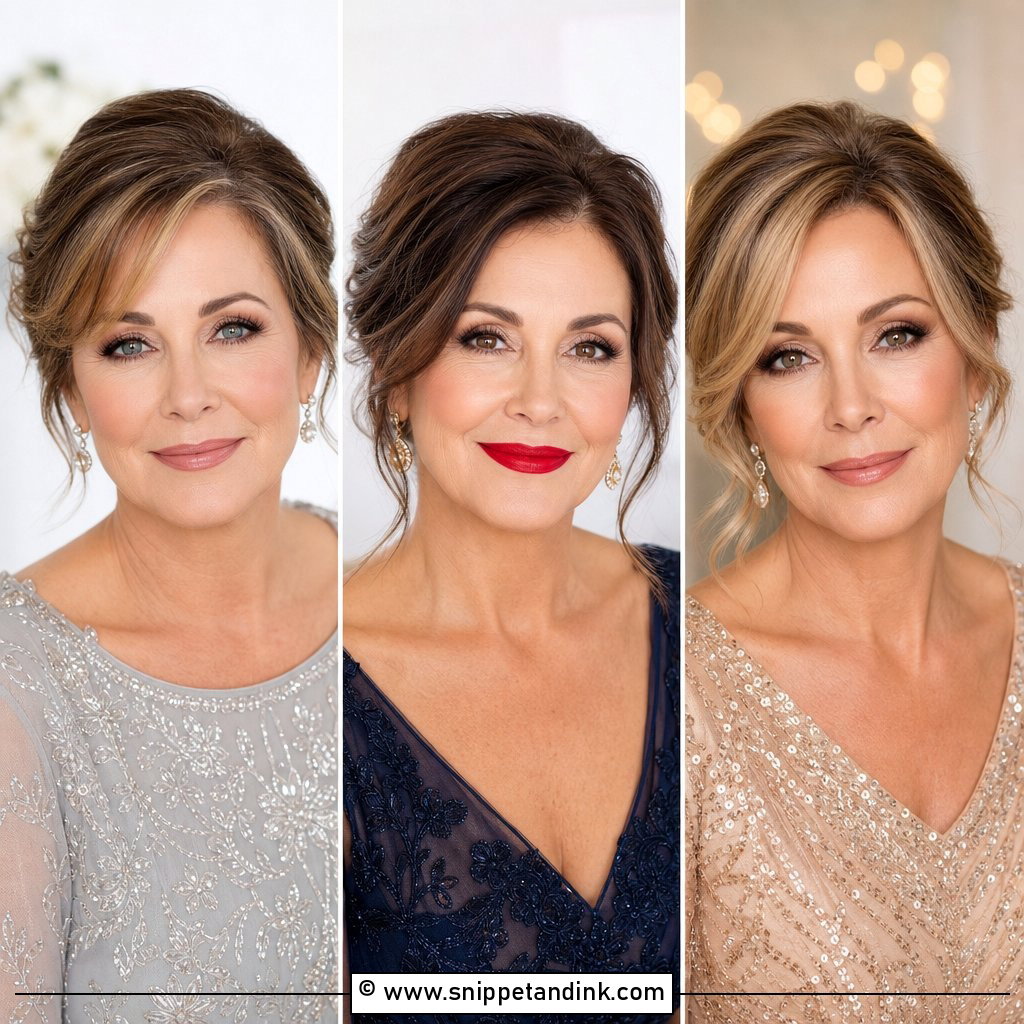
With a red lip, everything else on the face has to step back, so I keep the eyes to ivory or champagne, a thin wing and lifted lashes. The shade matters more than the brand. Blue-based reds suit cool undertones and make teeth look whiter; orange-based reds suit warm skin; a true red sits between. I line the whole lip, apply long-wear colour in two thin layers with a blot between, and press a little translucent powder around the edge so the colour can’t bleed into fine lines. It needs reapplying after dinner no matter what anyone promises.
6. Smokey Eye Bridal Makeup
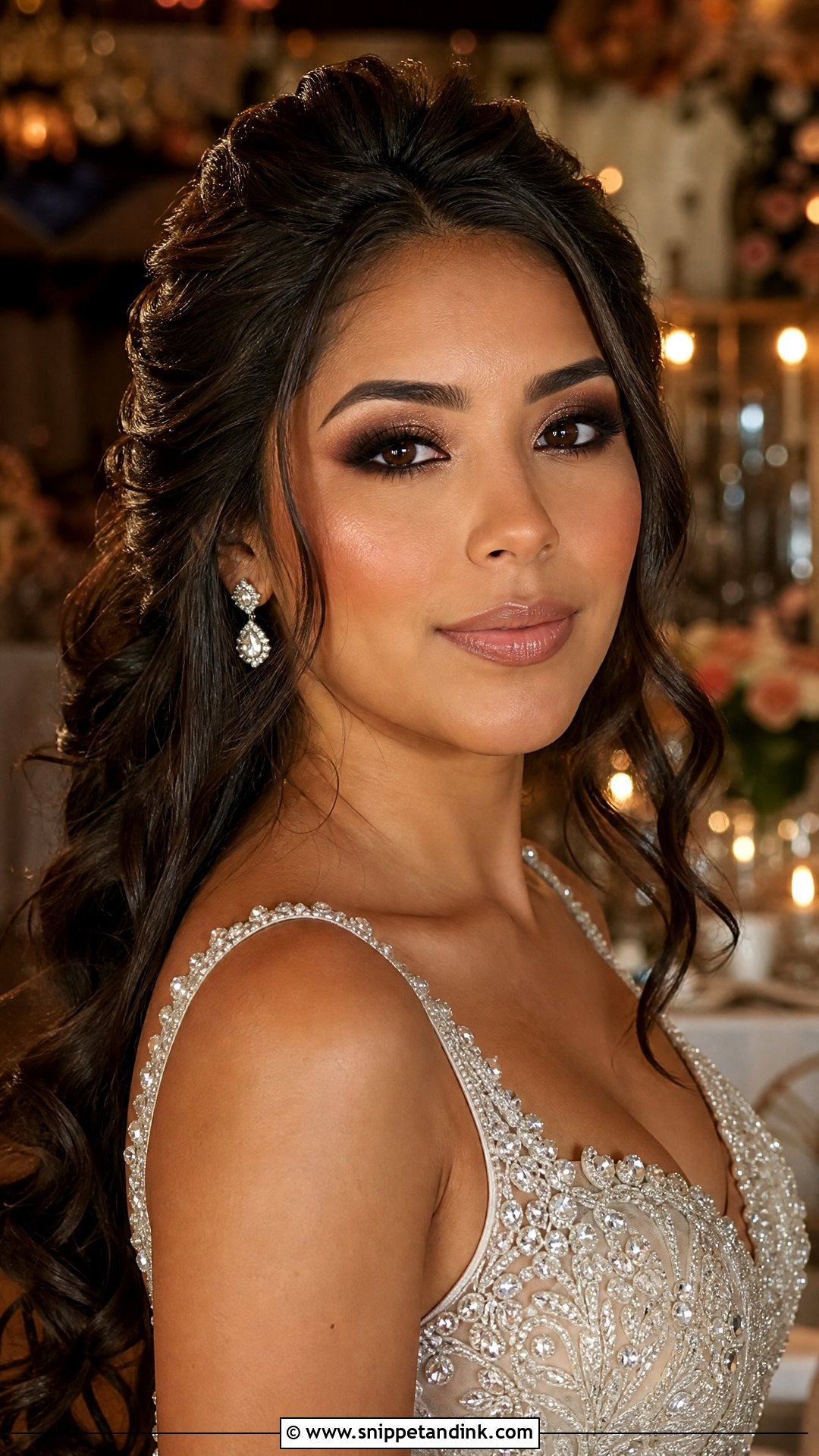
Smokey eye bridal makeup can stay soft if the darkest shade lives only at the lash line. I build it in brown, bronze or soft charcoal, blend upward with a transition shade and keep the lid lighter towards the brow. Pure black across the lid closes most eyes down in photos. I always do the eyes before the base on this look, so fallout can be swept away without ruining the foundation. Balance it with a neutral blush and a nude or soft mauve lip. Evening weddings and formal gowns suit it best.
7. Bronze Bridal Makeup
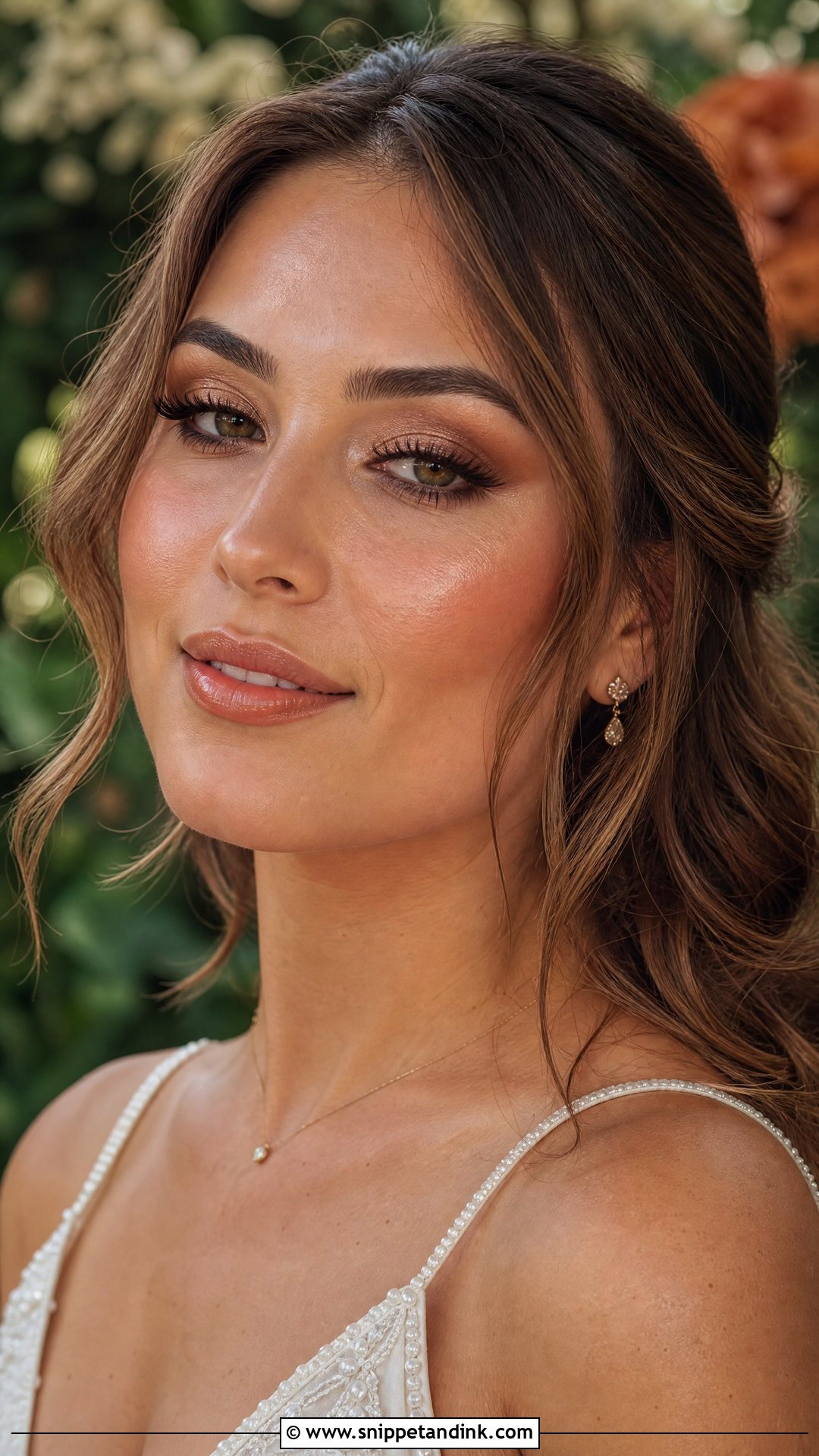
Bronze works when it’s placed where the sun would actually hit: temples, the top of the cheekbones and a little along the jaw. Too much on the centre of the face looks muddy. I pair it with a satin base, terracotta or warm peach blush, bronze shimmer on the lid and matte caramel in the crease. On fair skin I choose a bronzer only a shade or two deeper than your skin, because anything darker looks orange in daylight. Summer and outdoor venues are where it belongs.
8. Pink Bridal Makeup
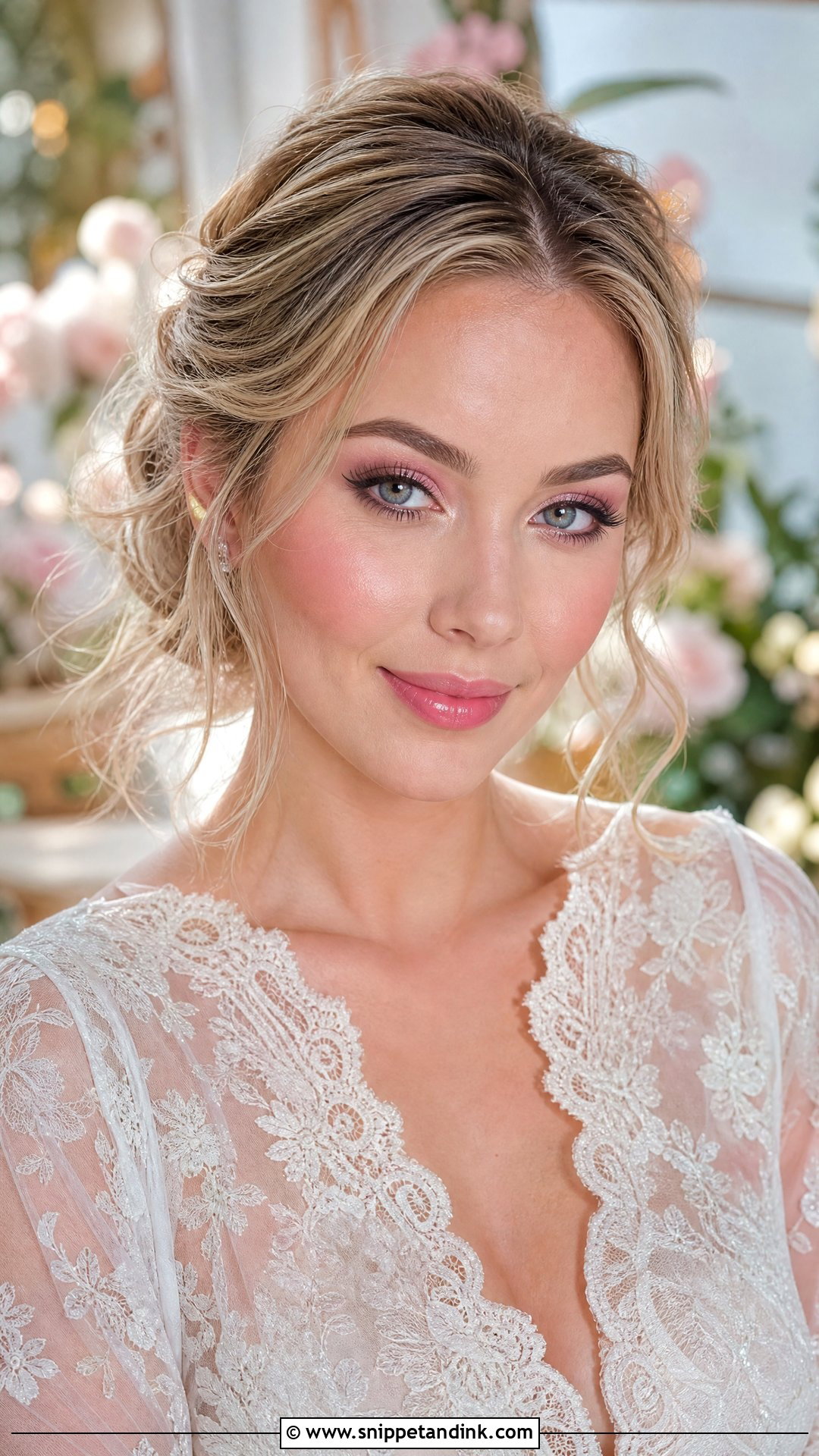
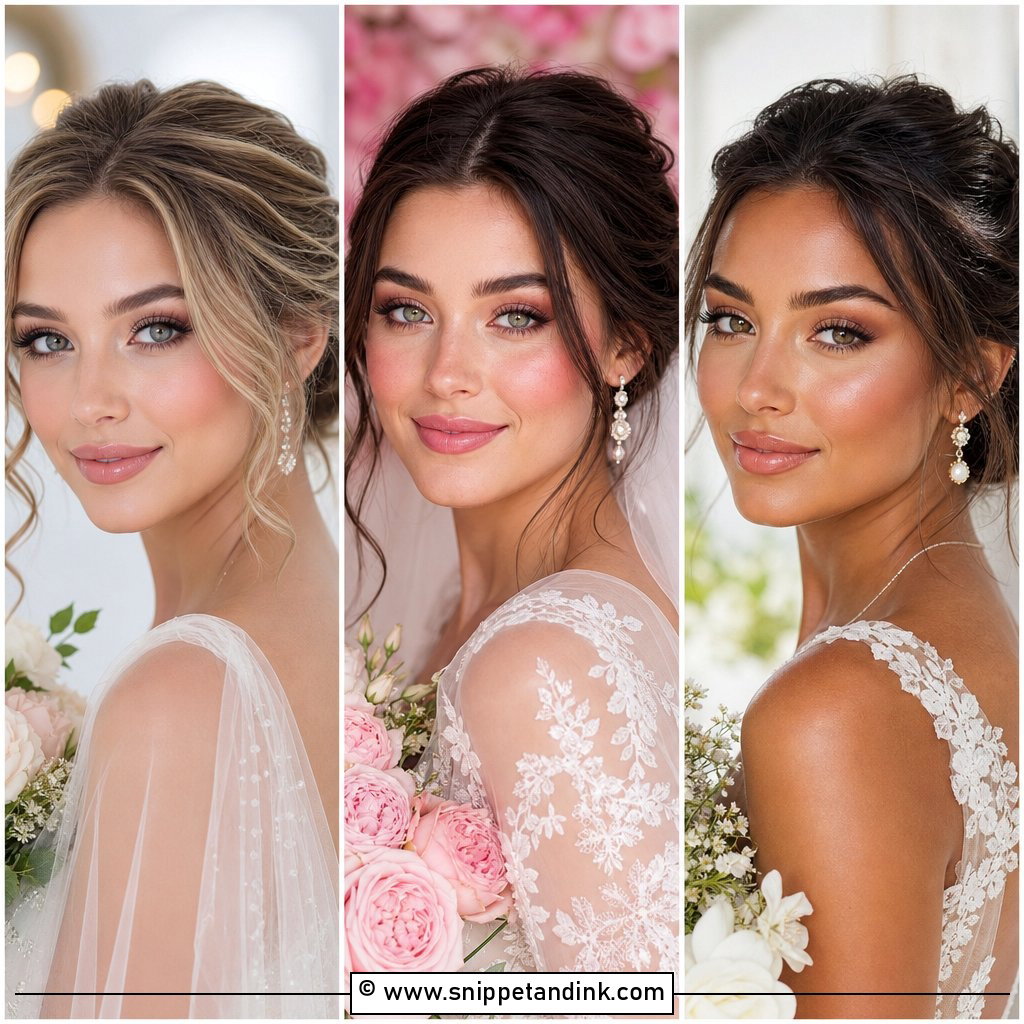
Pink is the colour I adjust most between brides. Dusty and mauve-pinks suit almost everyone; bright bubblegum shades can make warm or olive skin look sallow. I place the blush high on the cheek and sweep a whisper of the same tone into the crease so the face reads as one story. A pale shimmer on the centre of the lid adds light. Finish with a pink nude, a rosy gloss or a satin rose lipstick. It sits naturally beside lace and floral veils.
9. Peach Bridal Makeup
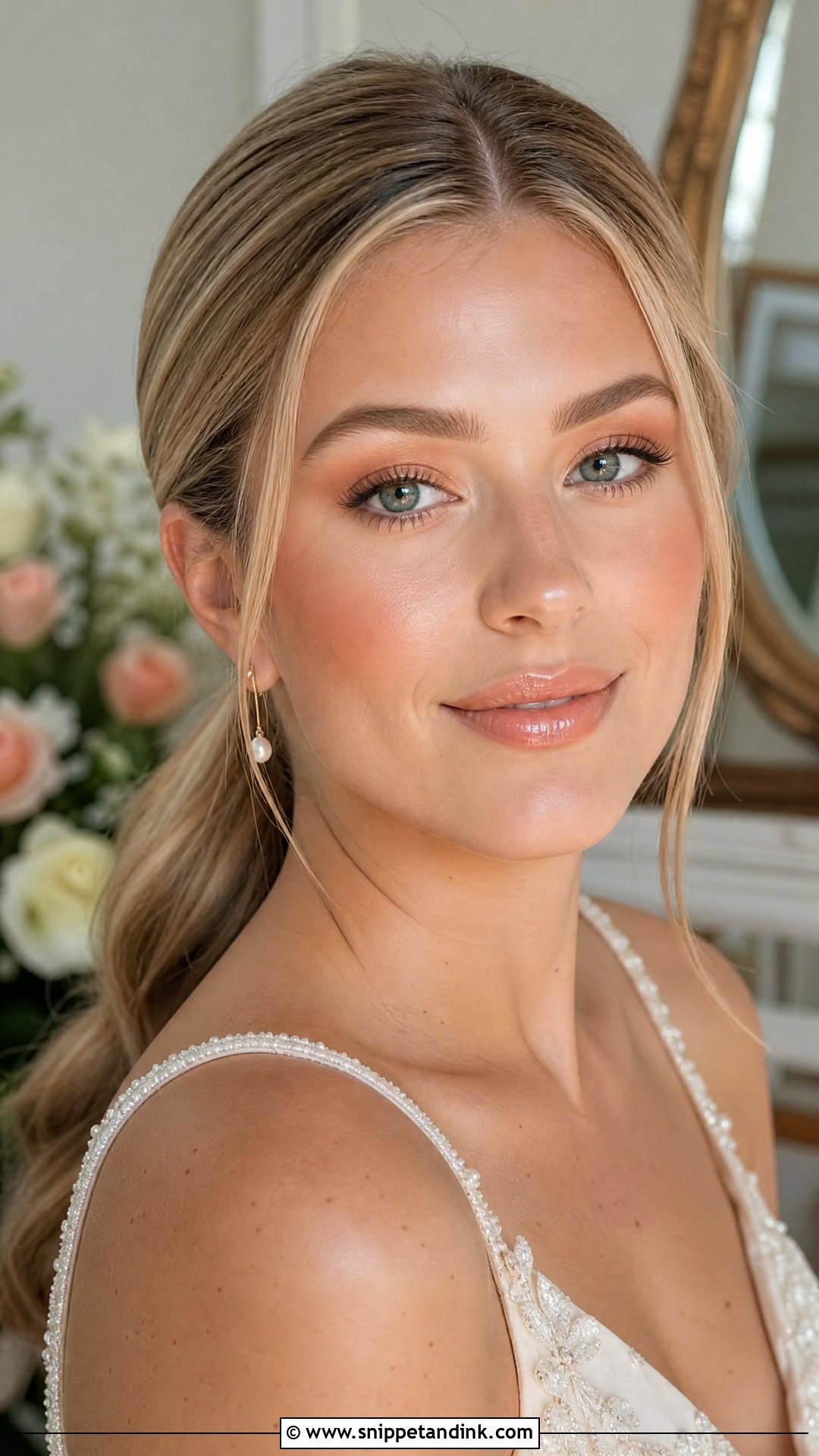
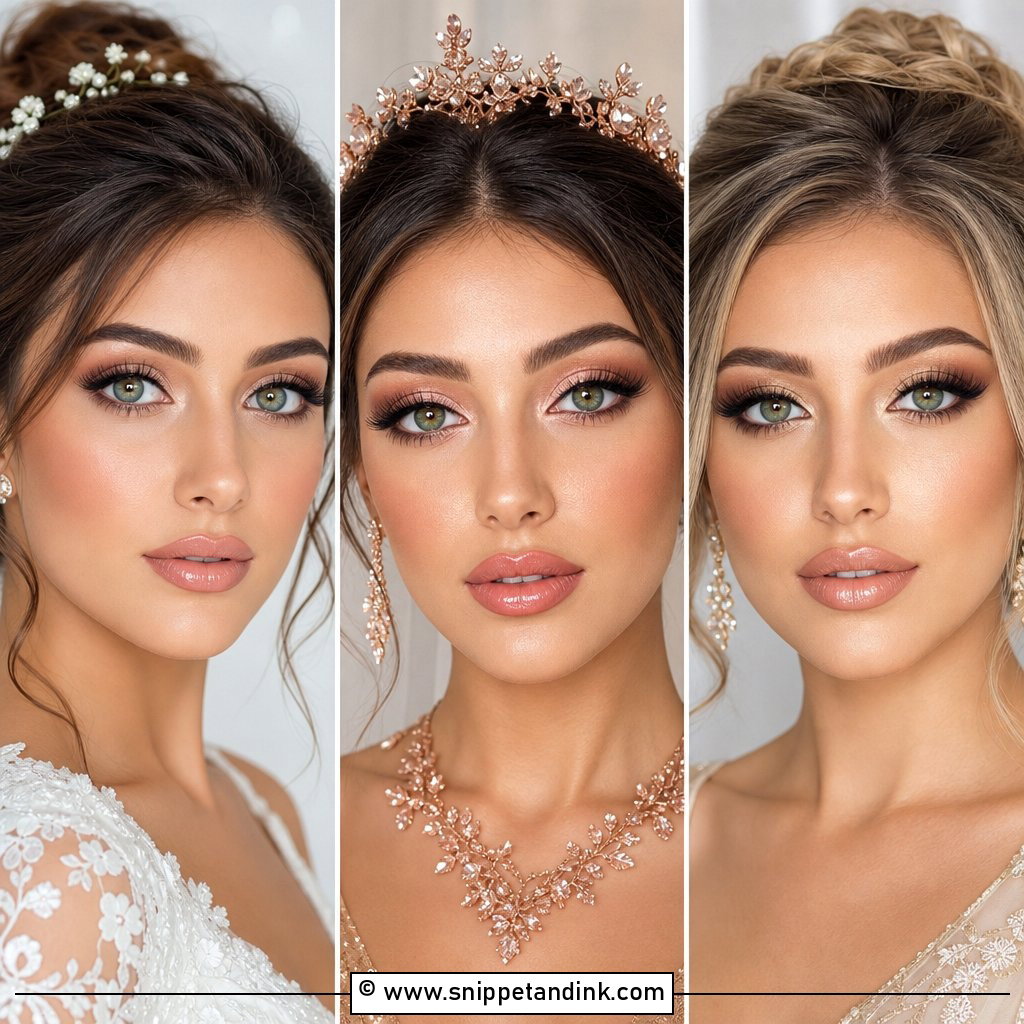
Peach sits between pink and bronze and is one of the easiest shades to wear well. I blend peach blush on the apples and pull it slightly up towards the temple, then use apricot or champagne on the eyes with brown liner and well-separated lashes. Warm undertones carry it naturally. Cool skin can still wear it, just in a softer pastel peach, otherwise it can look like a sunburn. Bright daytime light suits it best, finished with a peachy nude lip or a coral-pink gloss.
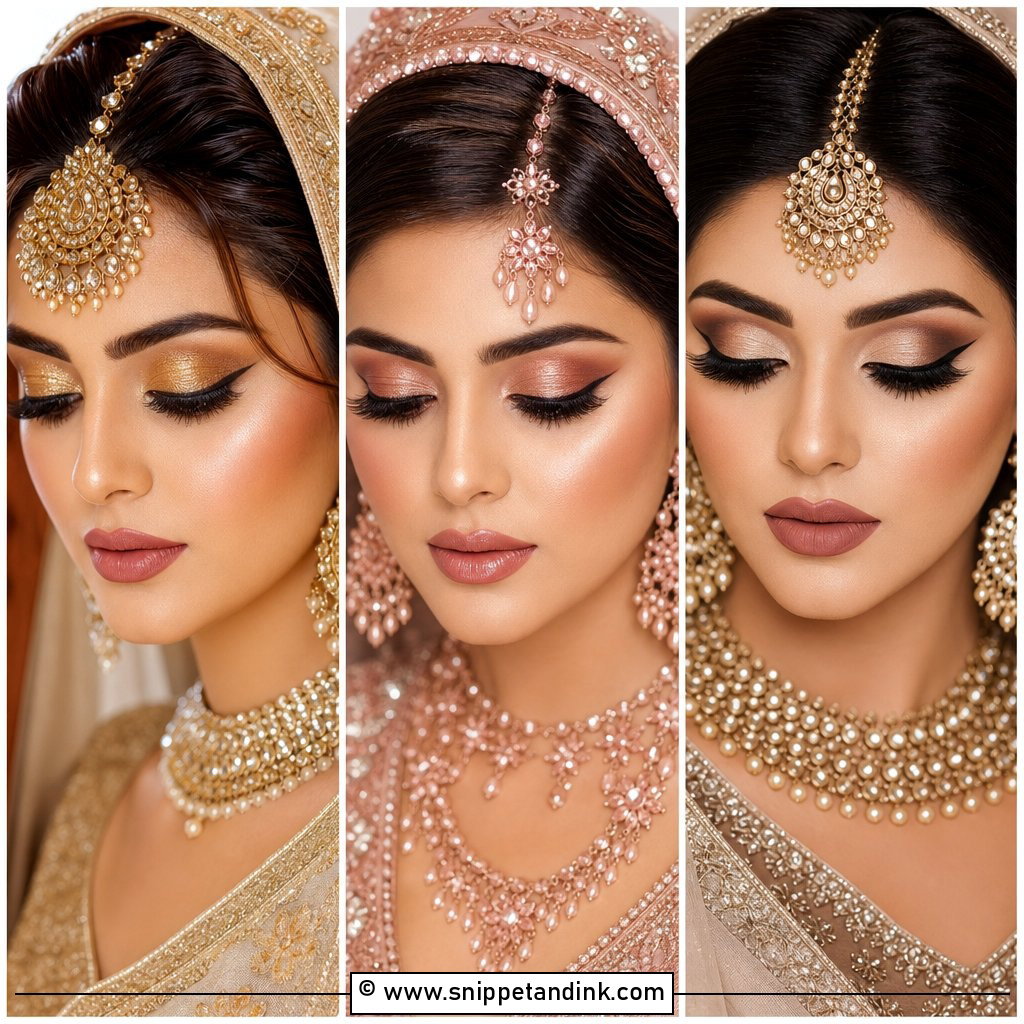
10. Rose Gold Bridal Makeup
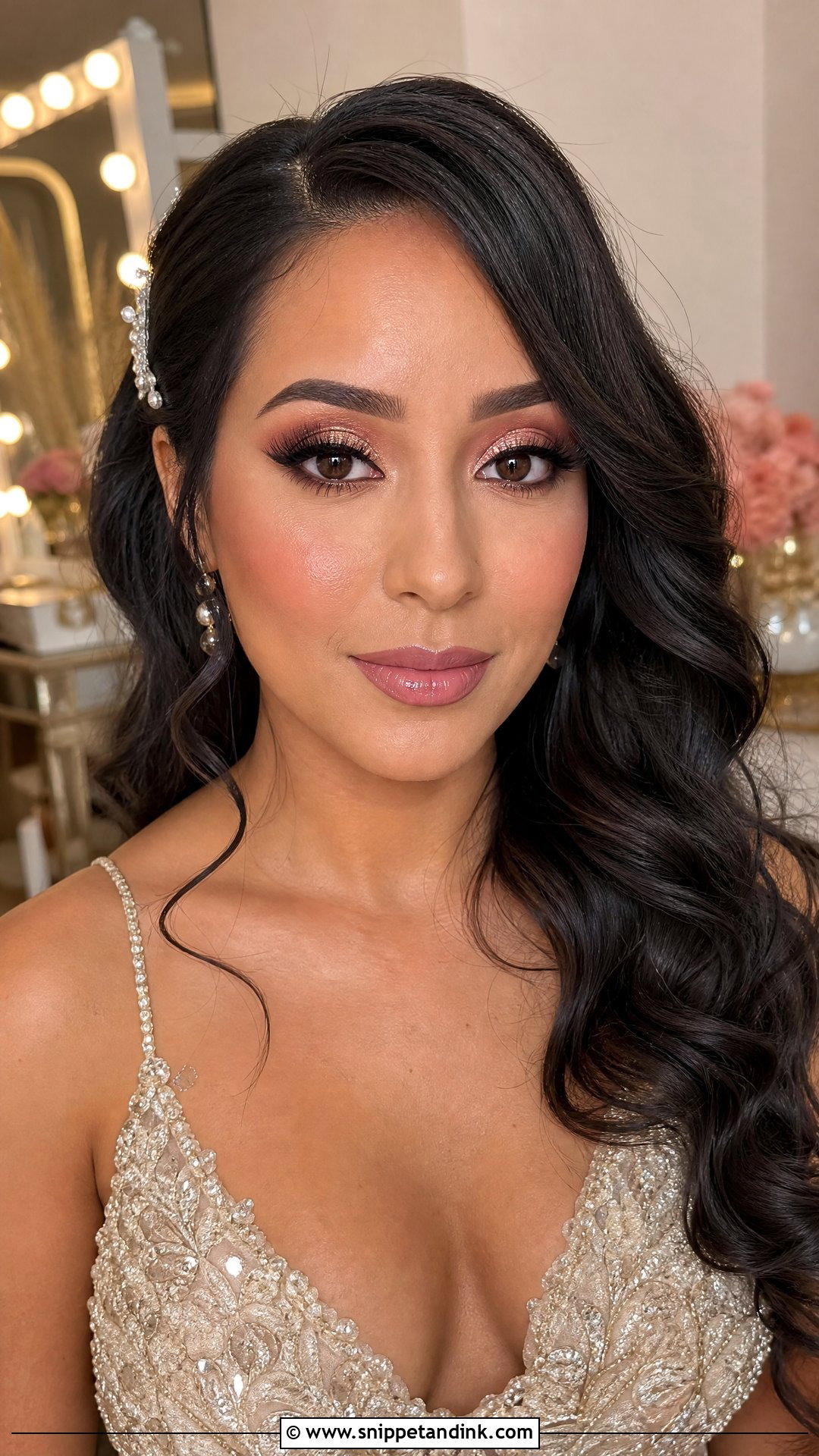
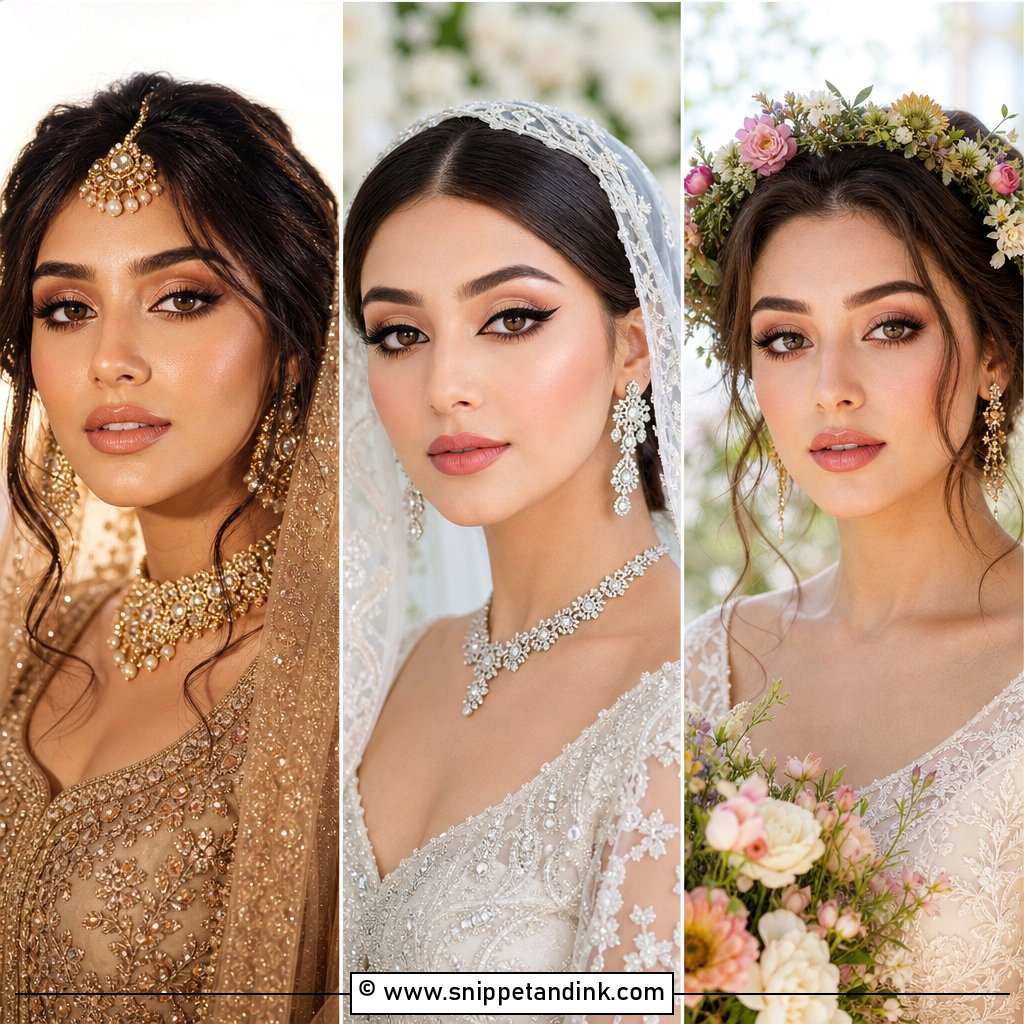
Rose gold makes the eyes the focus: rose gold shimmer across the lid, soft brown or mauve in the crease and a fine liner. Foiled shimmers can look patchy if they go on dry, so I press them on with a fingertip or a slightly damp brush. Keep the skin satin rather than very glowy, or the shimmer competes with the cheeks. Blush stays in the rose or peach family. Pink nude or mauve nude on the lips. Ivory, champagne and blush-toned dresses sit well with it.
11. Brown Smokey Bridal Makeup
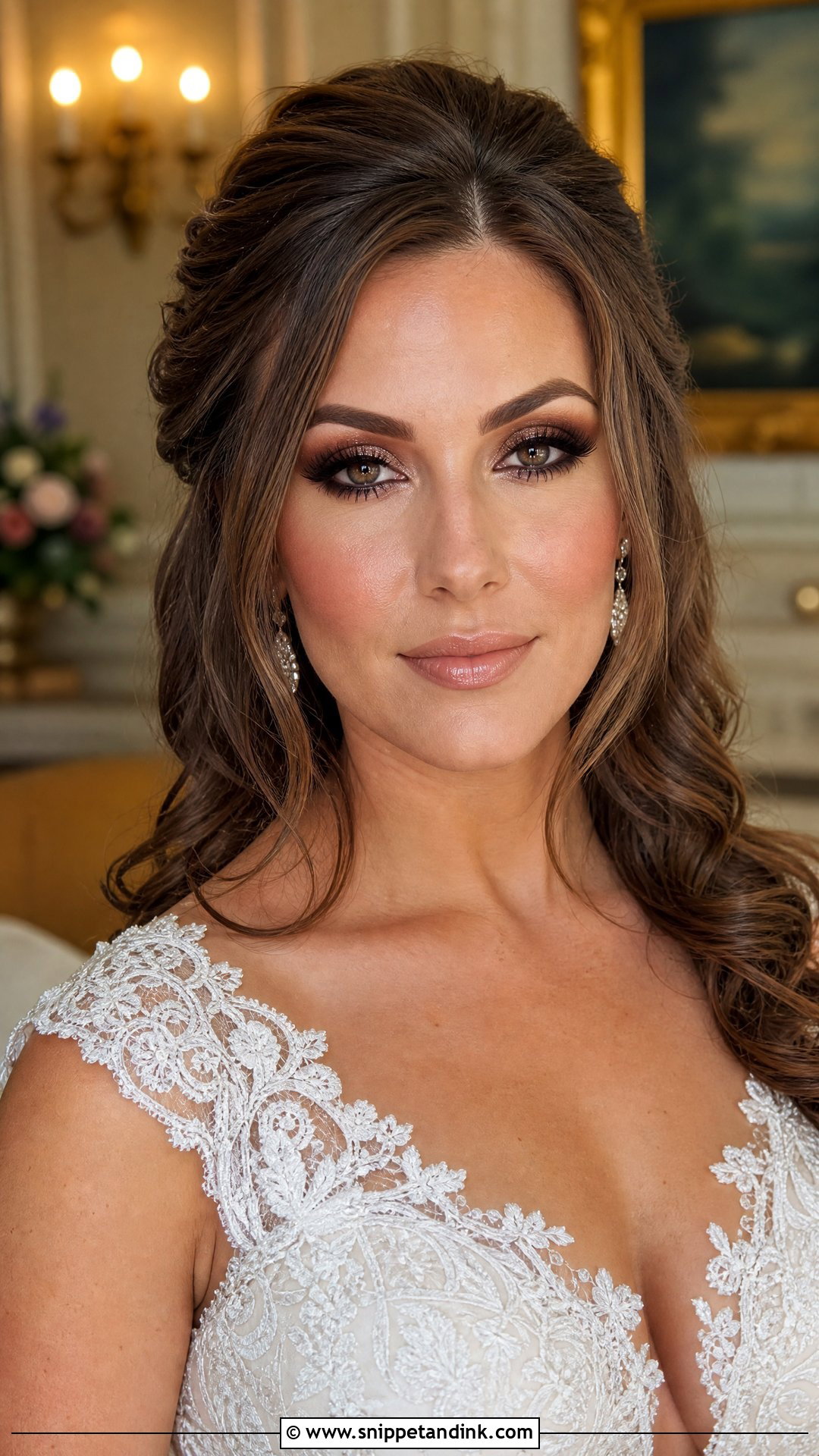
I’ll often switch a bride from black to a brown smokey eye after the trial, because brown gives depth without the hard edge that close-up photos exaggerate. Matte beige goes through the crease, warm brown on the outer corner, deep espresso pressed into the lash line, and a touch of bronze or champagne on the centre of the lid to keep the eye open. Warm blush, sculpted satin skin and a nude lip balance it. It flatters brown, hazel, green and blue eyes alike.
12. Champagne Bridal Makeup
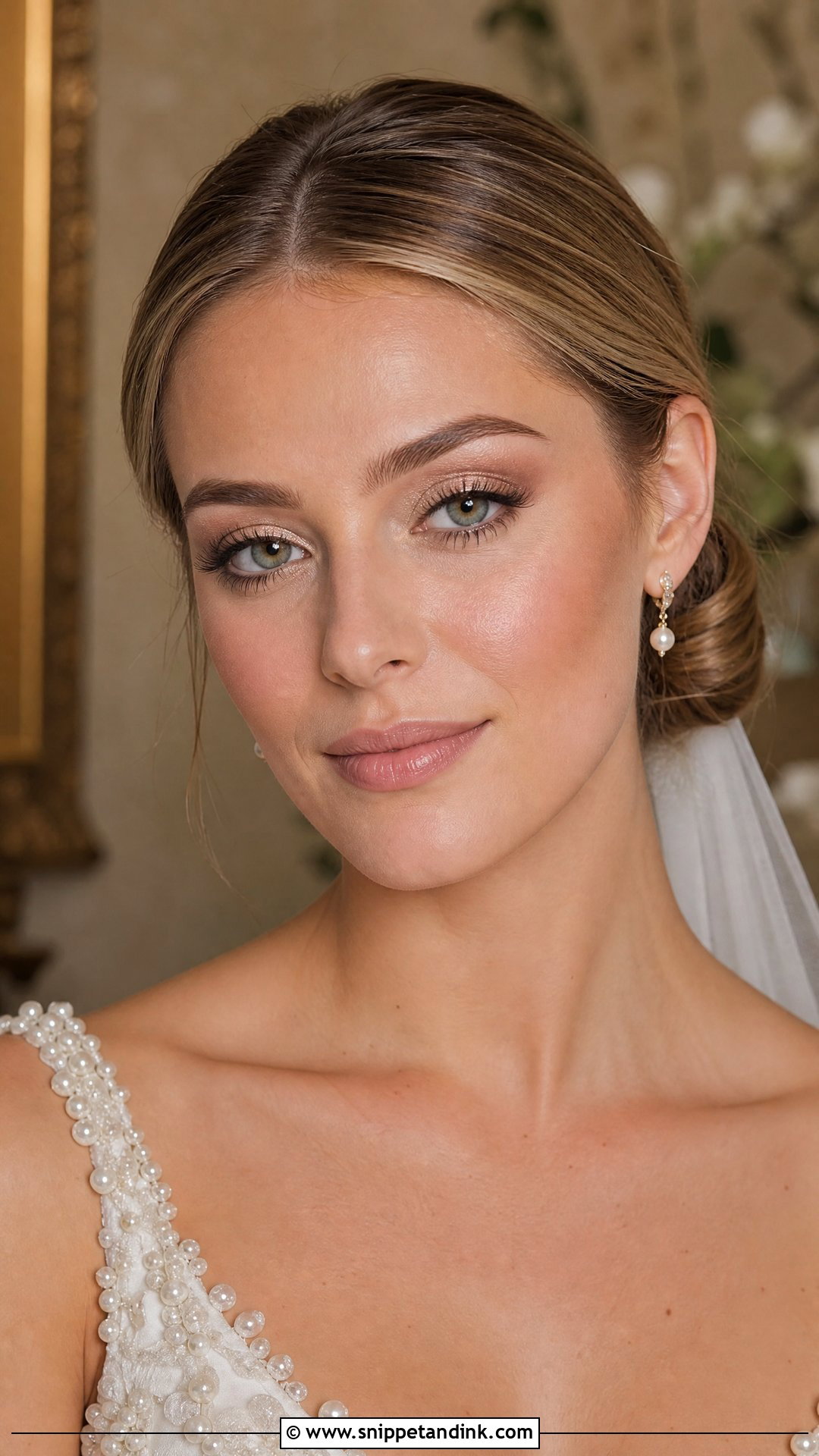
Champagne shimmer on the lid and inner corners brightens tired eyes faster than anything else in my kit, which matters on a morning that started at five. I add taupe or light brown in the crease, then choose brown liner for softness or black for contrast. Soft blush and a gentle highlight keep the skin polished. If you have hooded lids, the shimmer needs to come up slightly above the crease, or it disappears when your eyes are open. A beige rose or peachy lip finishes it, and it suits pearl, satin and minimalist gowns.
13. Full Glam Bridal Makeup
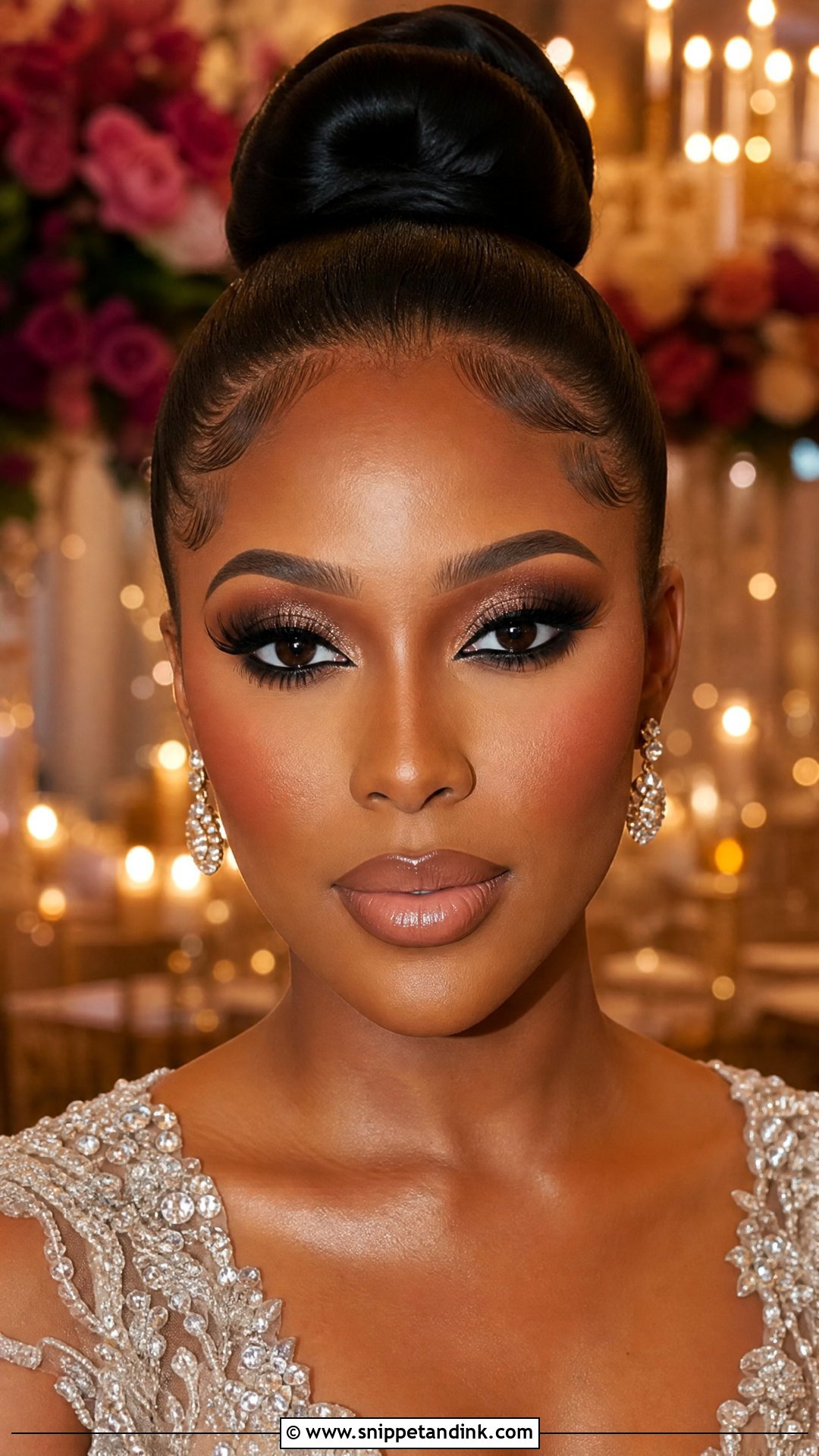
Full glam is about structure: fuller coverage, sculpted contour, brightened under-eyes, defined brows, bold lashes and visible eyeshadow. The rule I hold to is that only one feature leads. Bold eyes get a softer lip; a deep or red lip gets cleaner eyes. Full coverage also means more product on the skin, so I build it in thin layers and set each one, which stops it cracking around the mouth during hours of smiling. I’d only recommend it to a bride who already wears this level of makeup and recognises herself in it.
14. Minimal Bridal Makeup
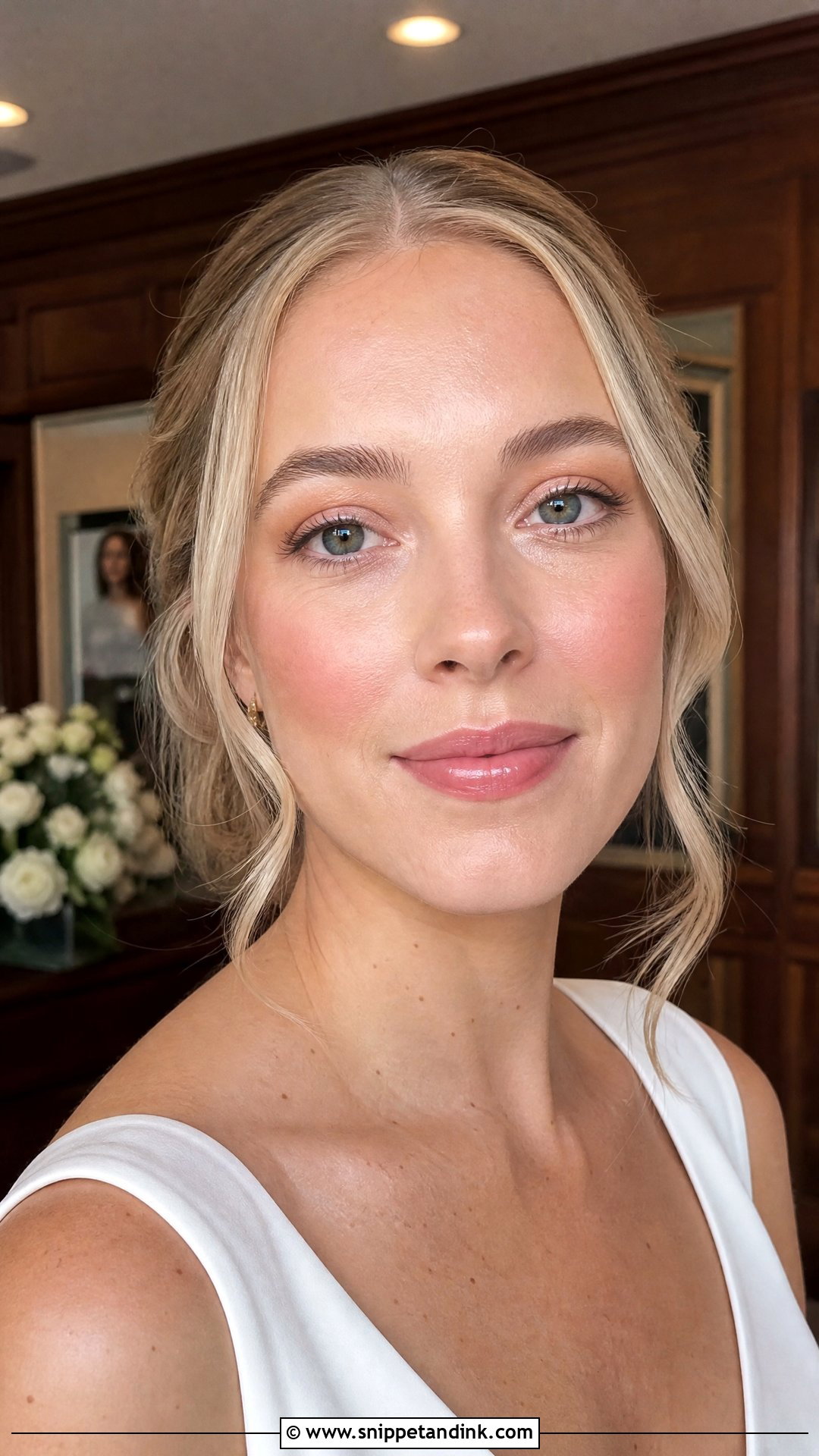
Minimal makeup depends entirely on skin prep, because there’s almost nothing covering it. I use a lightweight base or just concealer, cream blush, clear or tinted brow gel and mascara, with a beige shadow and a tiny line of brown at the lash roots. No heavy contour; a cream bronzer if you want warmth. A tinted balm, nude gloss or pink lip stain finishes it. City weddings, courthouse ceremonies and brides who hate the feeling of makeup are the natural fit. If you have active breakouts, expect a bit more coverage than the name suggests.
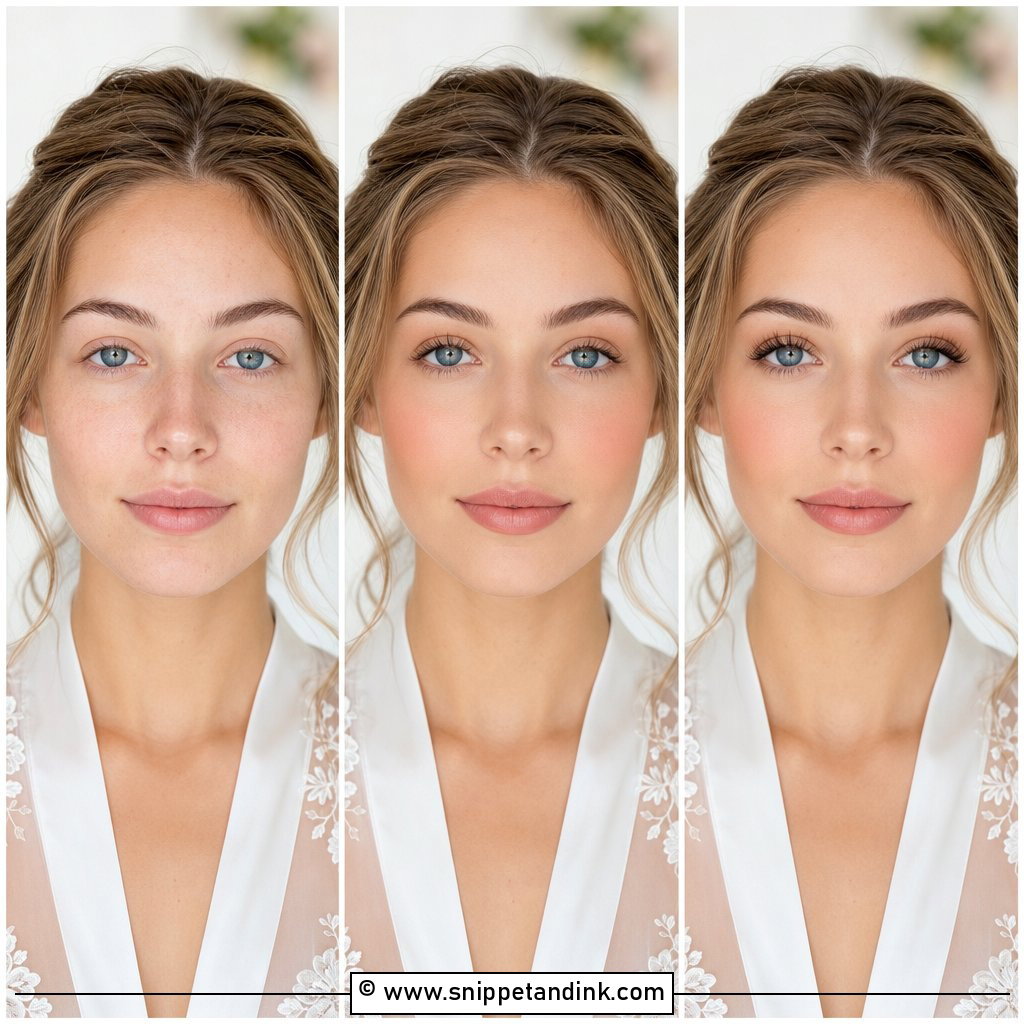
15. Glam Bridal Makeup With Winged Liner
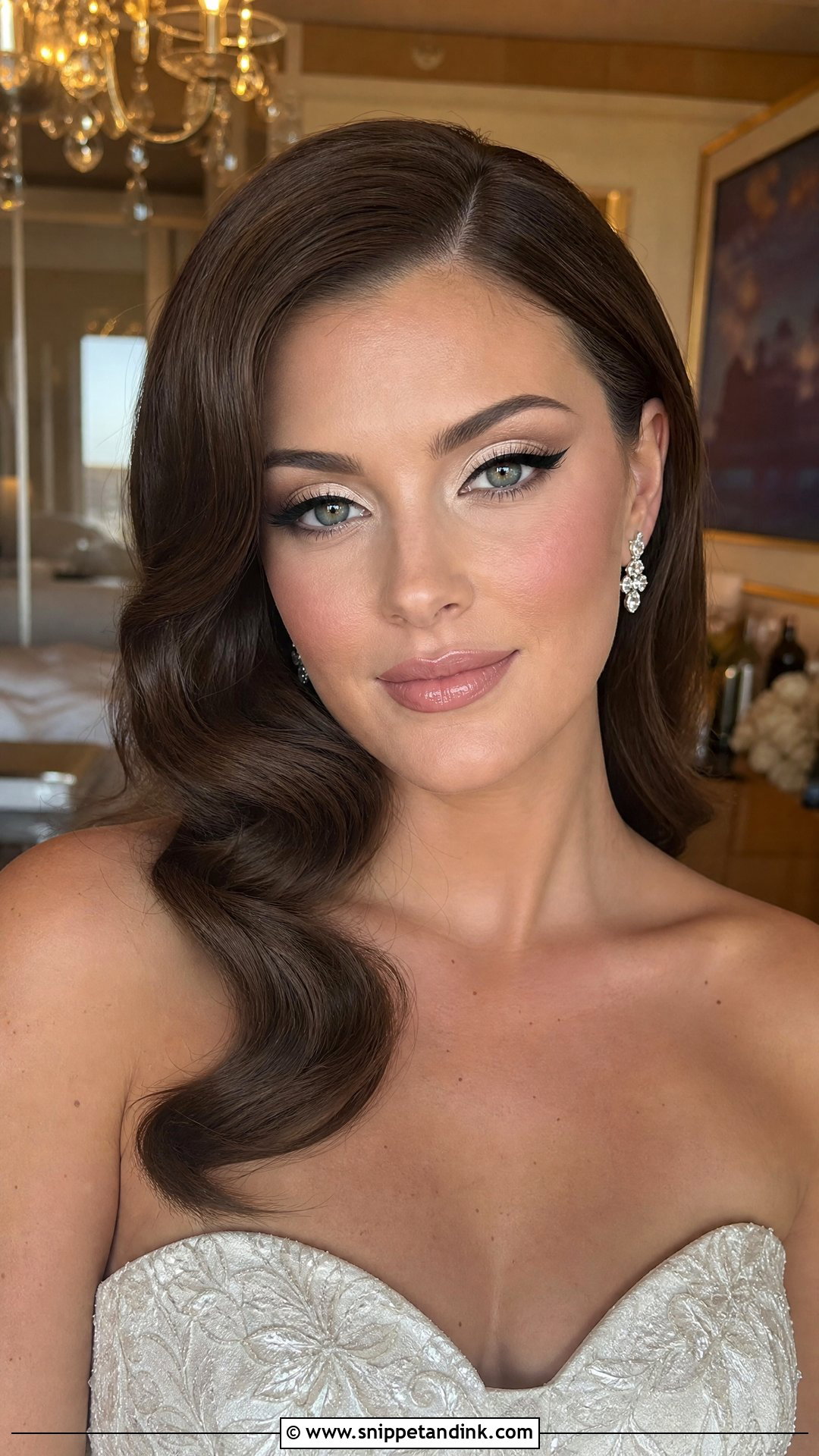
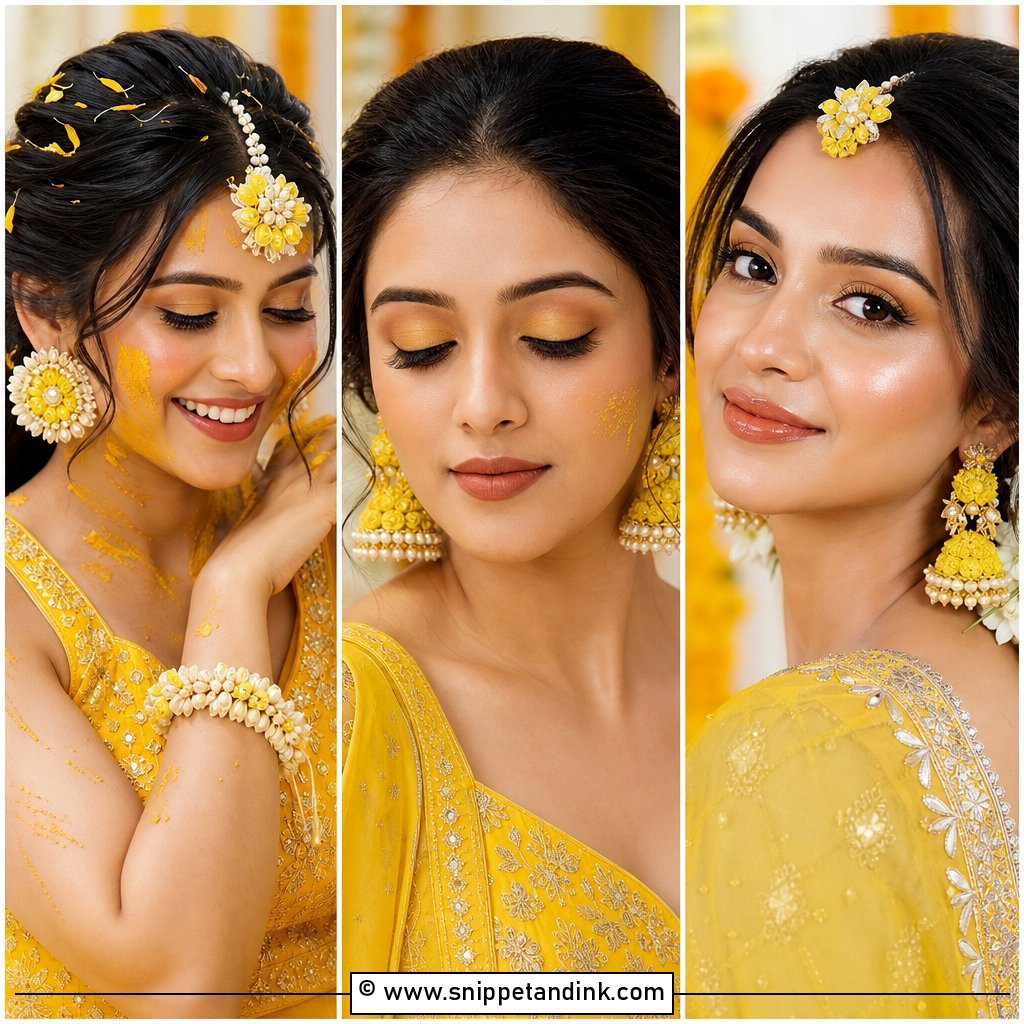
A winged liner lifts the eye and gives the face shape in every photo angle. The wing should follow the angle of your lower lash line, not a template, and on hooded eyes I draw it with the eyes open so it doesn’t fold into a broken shape. Ivory, champagne or light bronze on the lid keeps it soft. Lashes longer on the outer corners extend the lift. The skin can be satin or soft matte with gentle contour and rosy blush. The lip can go nude pink, mauve or red.
16. Gold Bridal Makeup
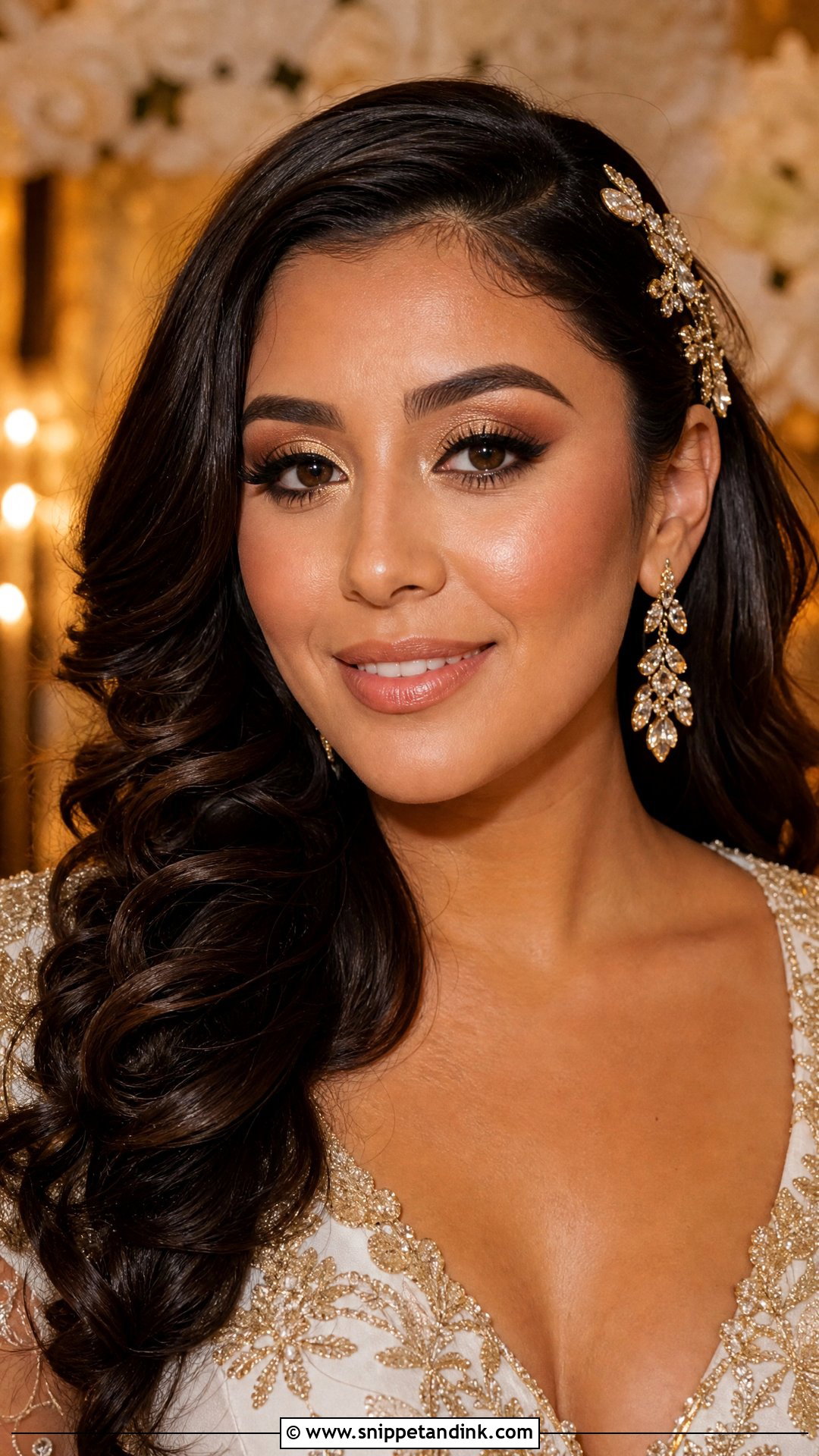
Gold should look like polished metal, not glitter, so I use a smooth metallic or satin shimmer and press it on rather than sweeping. Warm brown, caramel or bronze in the crease adds depth. Glowing skin, soft bronzer and peach or coral blush complete it. Warm, tan and deep skin tones carry gold especially well, and it suits ivory, cream or champagne gowns and gold jewellery. Under candlelight at an evening reception, the lid picks up the flicker without looking overdone.
17. Mauve Bridal Makeup
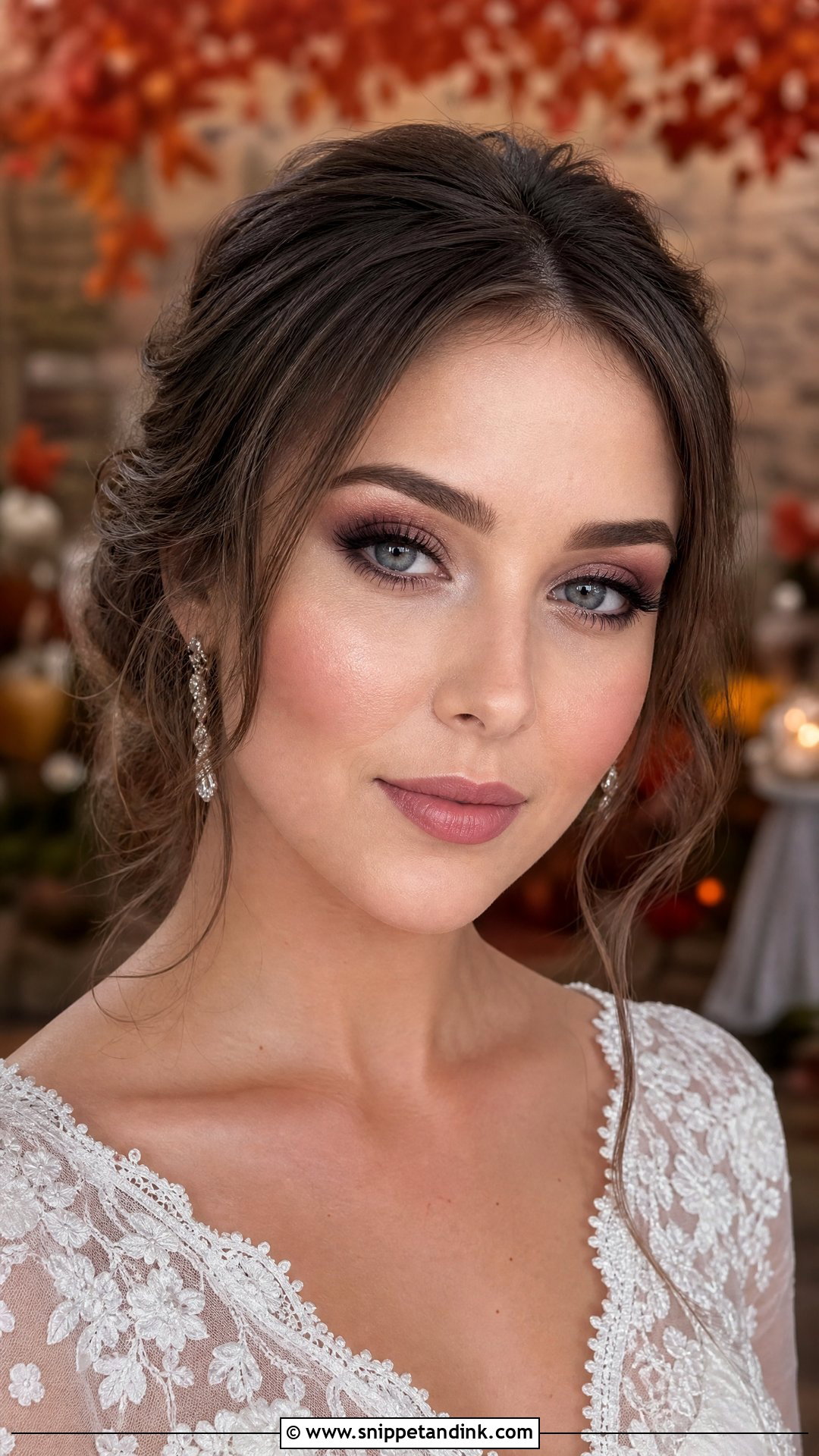
Mauve is cooler than classic pink and more grown-up than a pale nude. It adds colour while still reading as neutral, which is why I suggest it for brides who think they can’t wear colour. Mauve or dusty rose in the crease, a soft shimmer on the lid and brown liner. For cheeks, rosy mauve on fair to medium skin or a muted berry on deep skin, since a light mauve can look grey on deeper complexions. A mauve nude lipstick ties it together. Fall weddings and modern gowns suit it.
18. Berry Lip Bridal Makeup
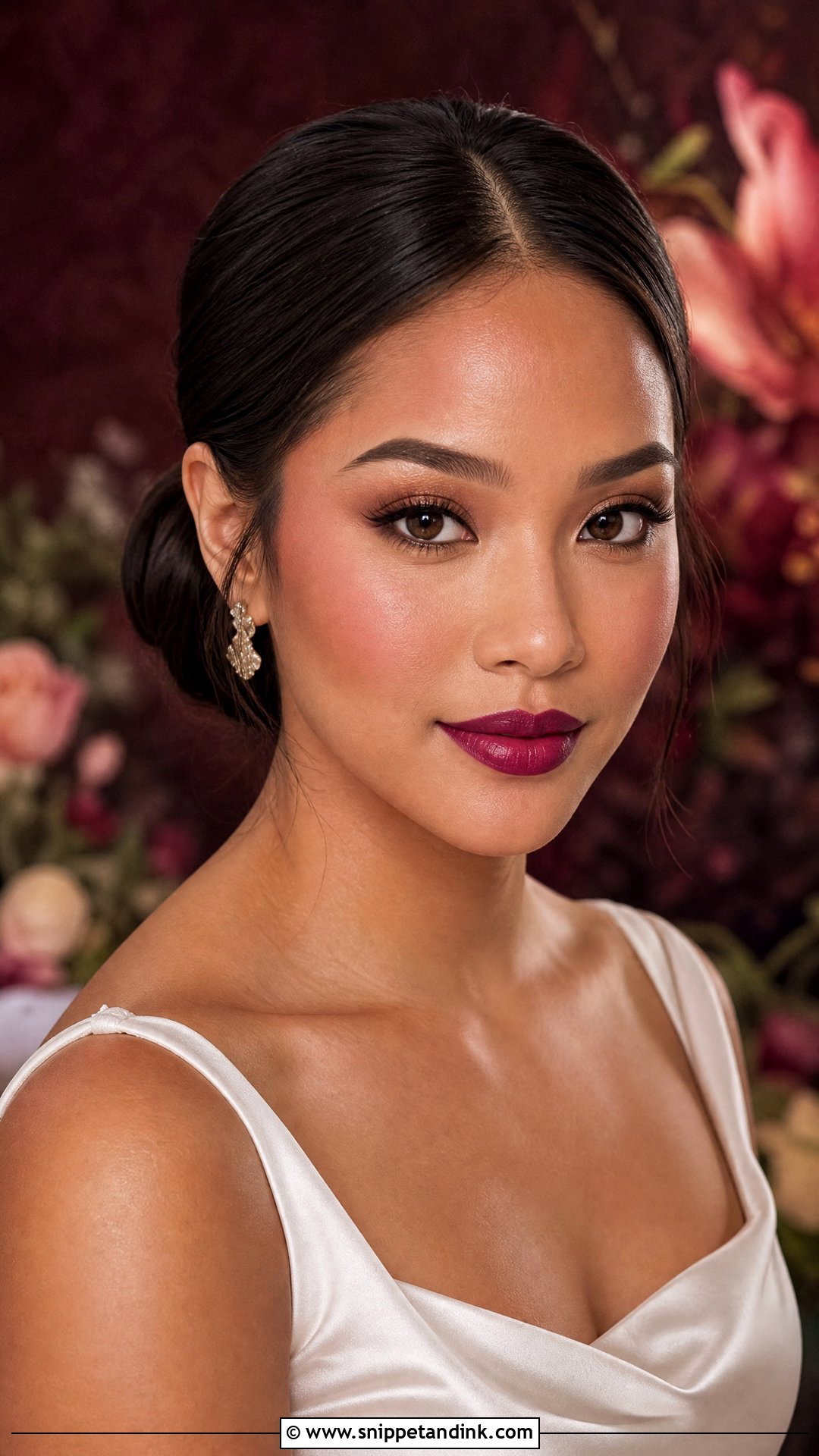
Berry lip bridal makeup is richer than a nude and less traditional than red. Shades run from soft raspberry to deep wine. Deep berries are the hardest lip colour to keep tidy, so I line and fill the whole lip with pencil first, then apply a long-wear satin or soft matte formula on top. If it fades, it fades evenly instead of leaving a dark ring. Taupe, bronze or brown eyes balance it, with a blush that echoes the lip lightly. Fall and winter evening weddings suit it best.
19. Blush Bridal Makeup
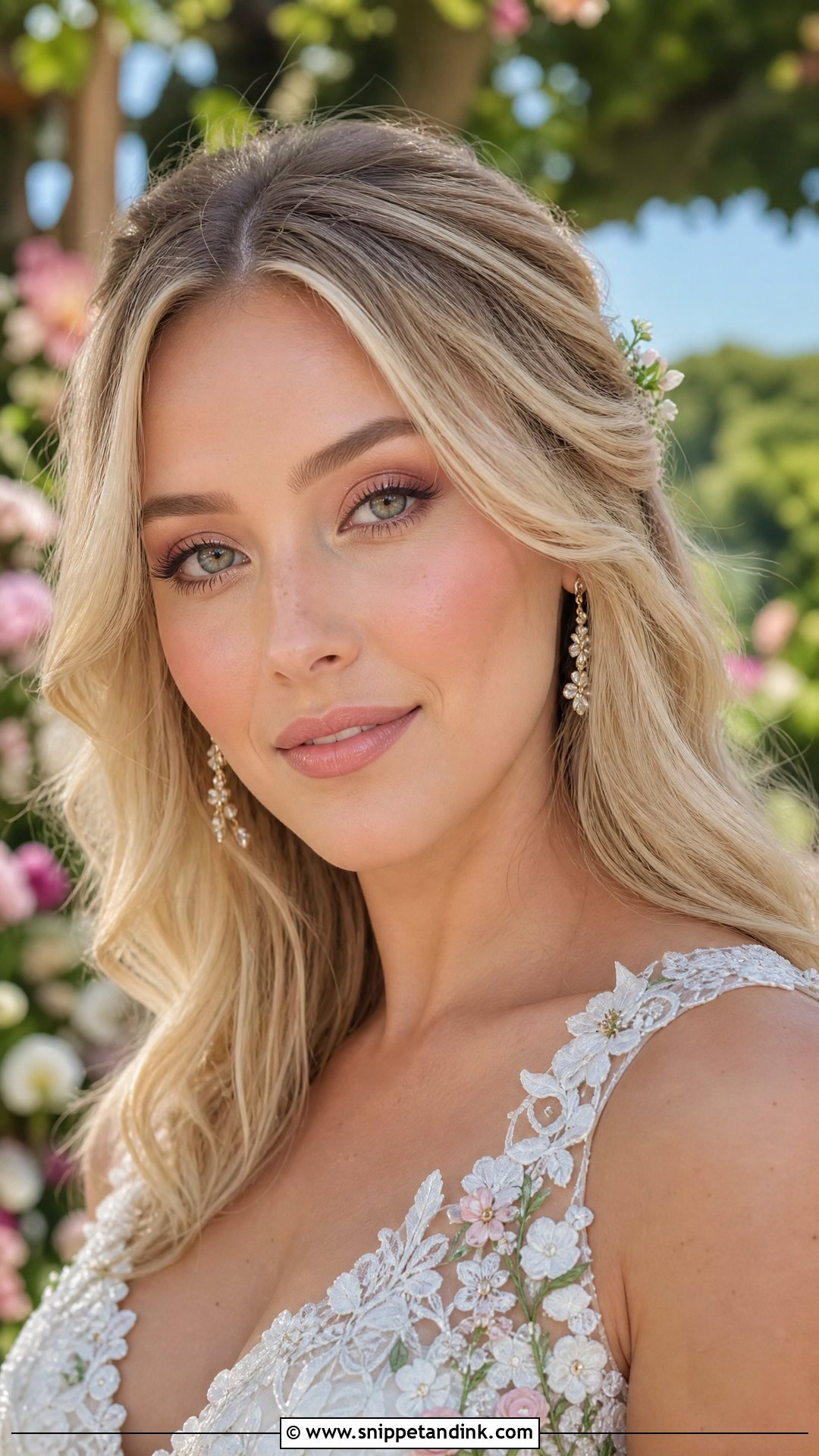
Here the cheeks do the work that contour usually does. I apply cream or liquid blush first, then set it with a light layer of powder blush in a similar shade, which roughly doubles how long the colour survives. Pink, peach, rose, berry or terracotta, depending on your skin. Eyes stay soft with neutral shadow, curled lashes and natural liner, and the lip should connect to the cheek: rosy lip with pink blush, peach nude with peach. The effect is a bride who looks awake and happy, even if she slept four hours.
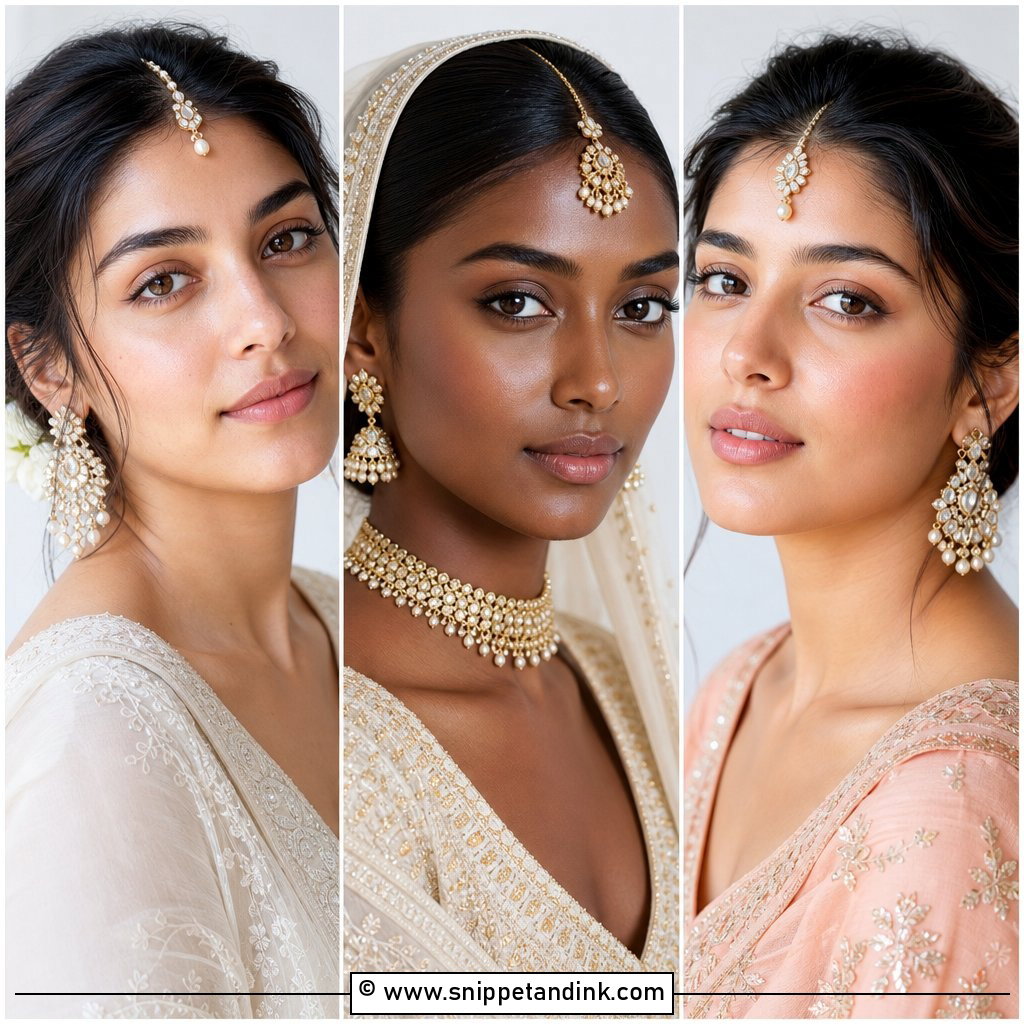
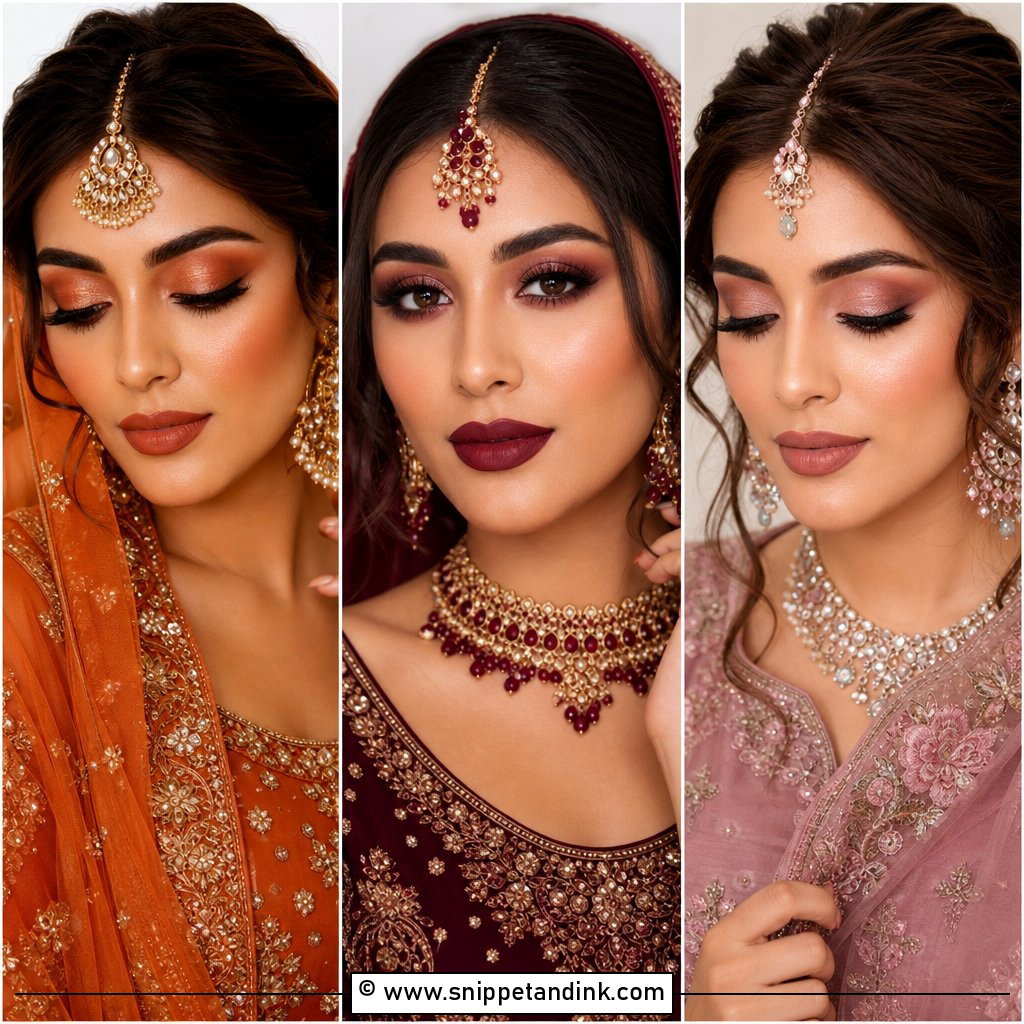
20. Satin Skin Bridal Makeup
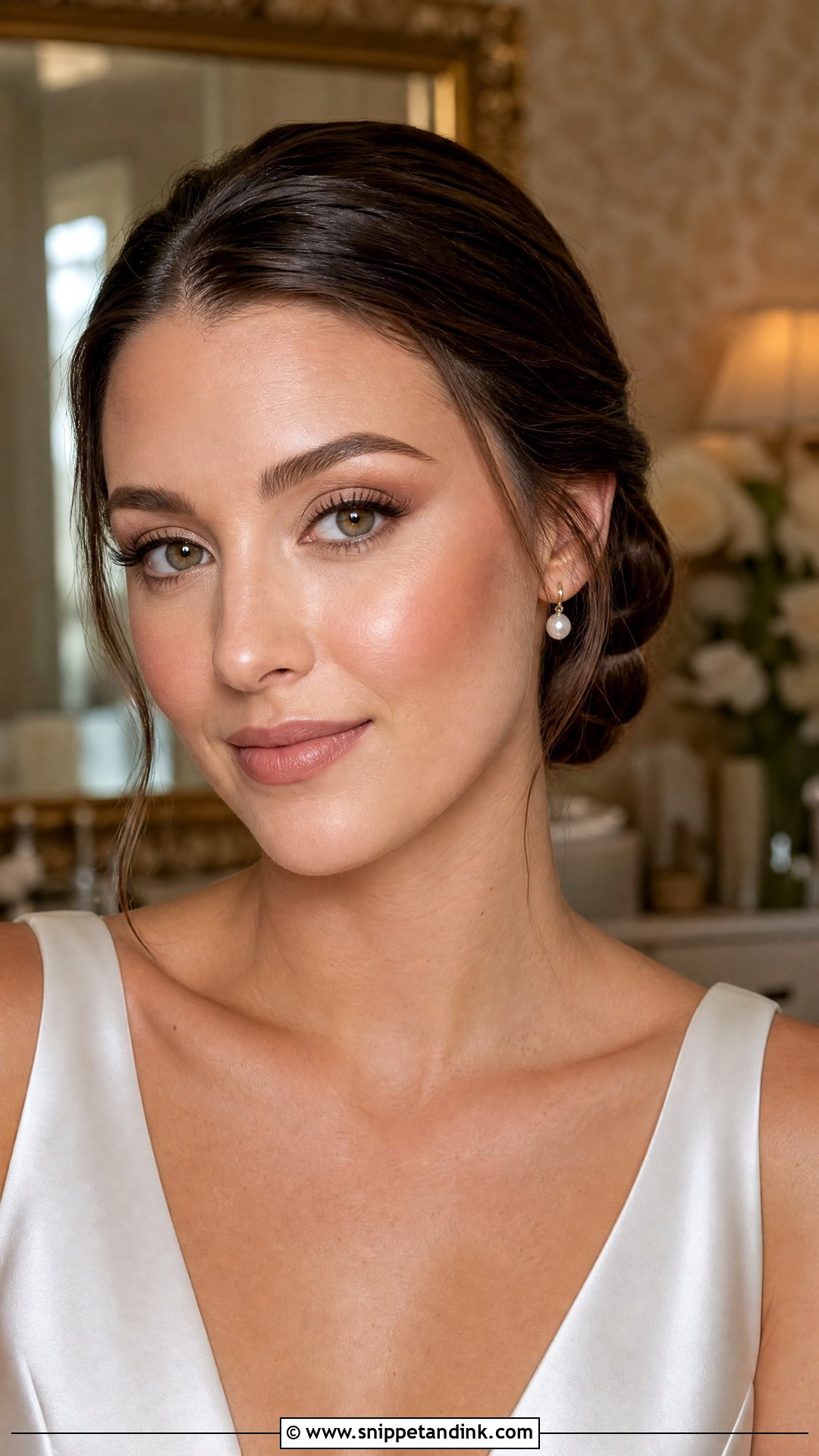
If I had to choose one finish for most weddings, satin would be it. It sits between matte and dewy, so the face looks smooth without being flat or shiny under any light. I use a long-wear skin-like foundation and powder only where you crease or get oily, then add soft contour, natural blush and a controlled highlight on the cheekbone. The eyes can be neutral, soft glam or lightly smoky; the lips nude, rose or pink. Indoors, outdoors, flash or window light, it’s the most predictable finish I know.
21. Neutral Bridal Makeup
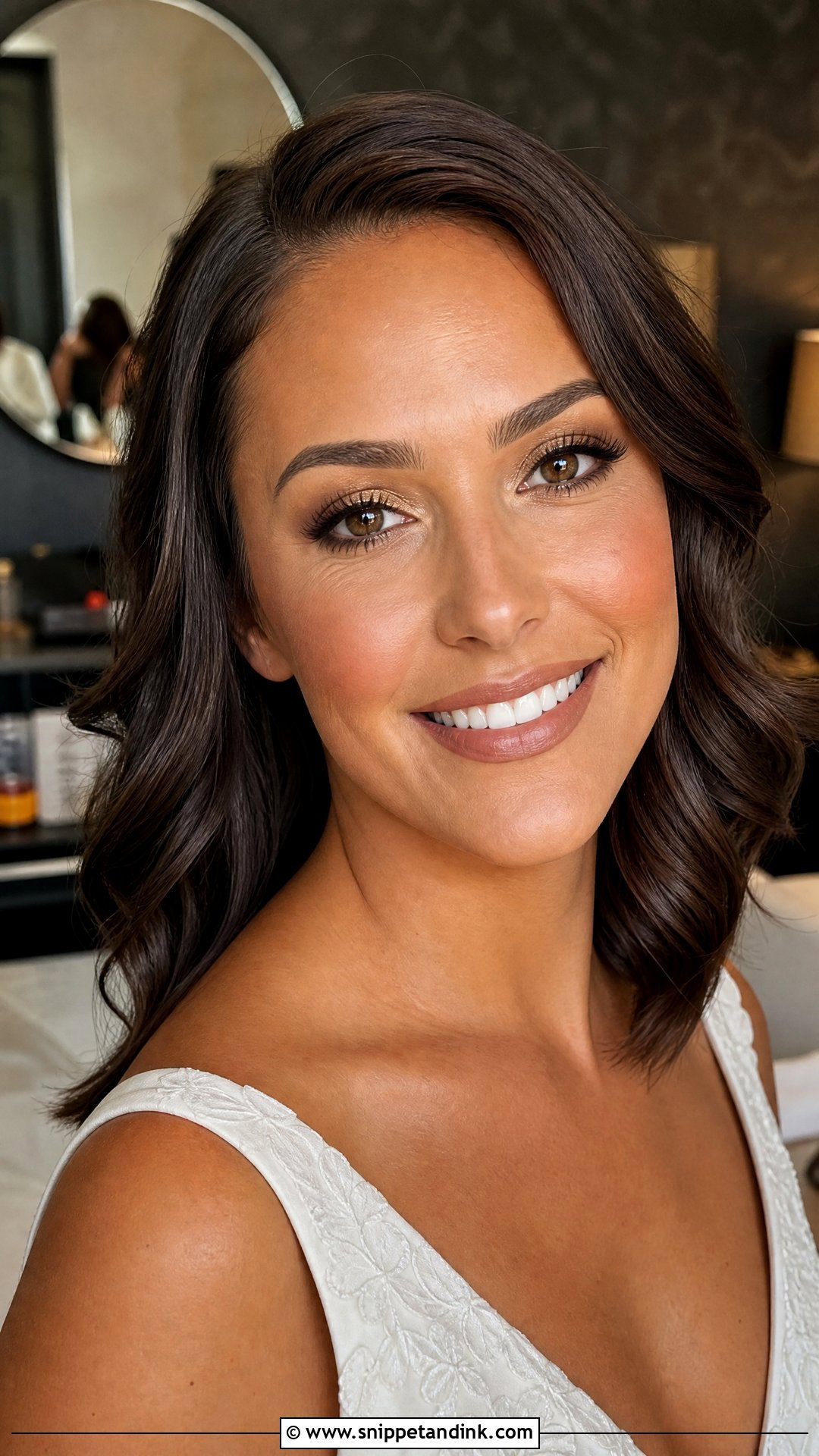
Neutral doesn’t mean plain; it means every shade is chosen to sit close to your own colouring. Beige, taupe, brown, soft peach and muted rose do the work. Medium coverage, subtle bronzer and a blush matched to undertone. I use matte neutrals for depth and a single soft shimmer on the lid for brightness. A nude lip only works with liner, because an unlined nude disappears in photos and makes the mouth look washed out. It sits with almost any dress and bouquet, and it dates more slowly than trend shades.
22. Romantic Bridal Makeup
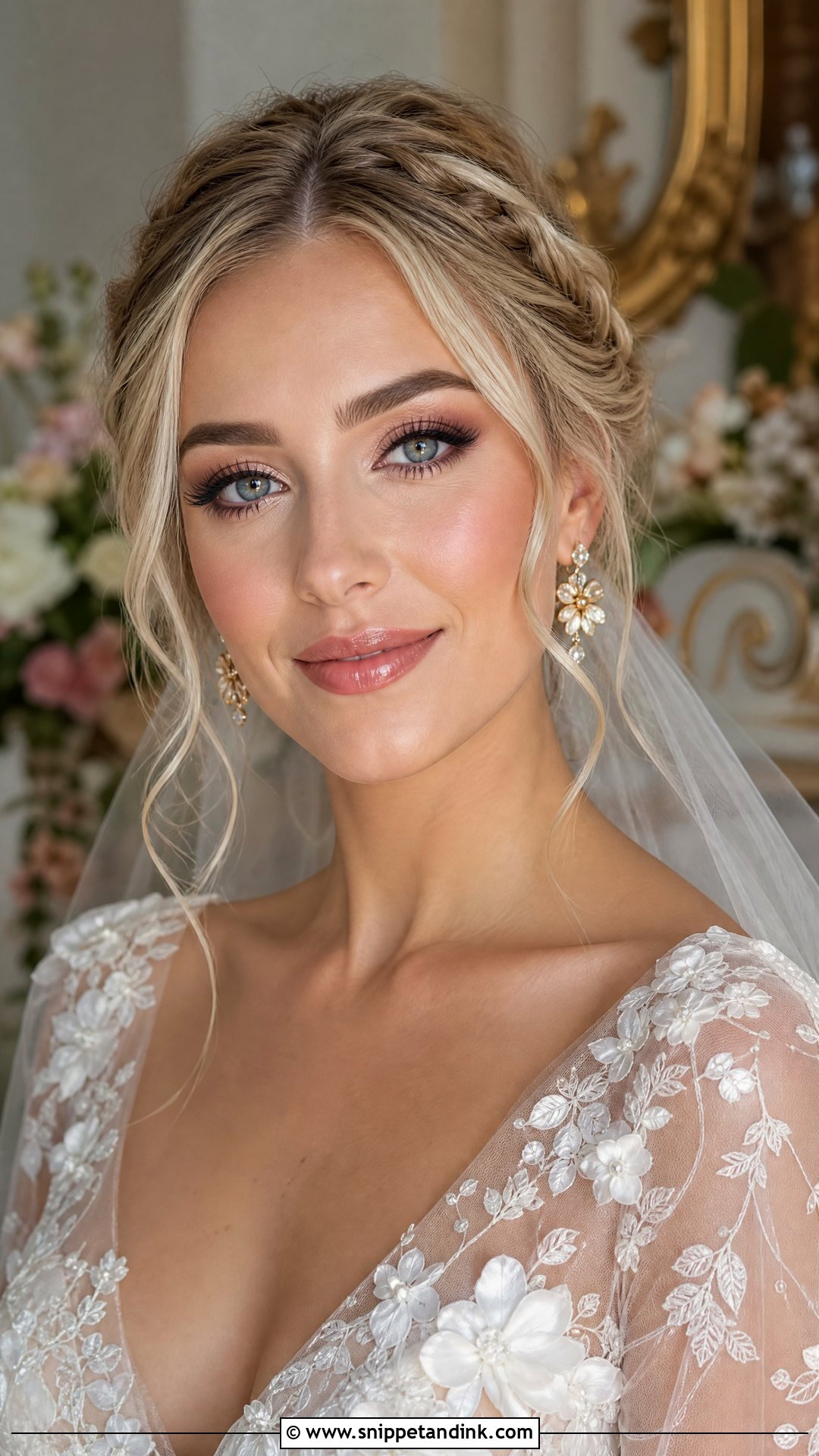
Romantic makeup is about colour that looks like it comes from the skin. I blend rose, champagne or warm peach until no product sits on top, then keep lashes wispy instead of heavy strips and brows softly brushed. The complexion can be dewy or satin with a light highlight on the cheekbone. A rosy nude or petal pink lip completes it. The risk with this look is that it disappears in photos if the blush is too subtle, so I usually go a little stronger on the cheeks than feels natural in the mirror.
23. Vintage Bridal Makeup
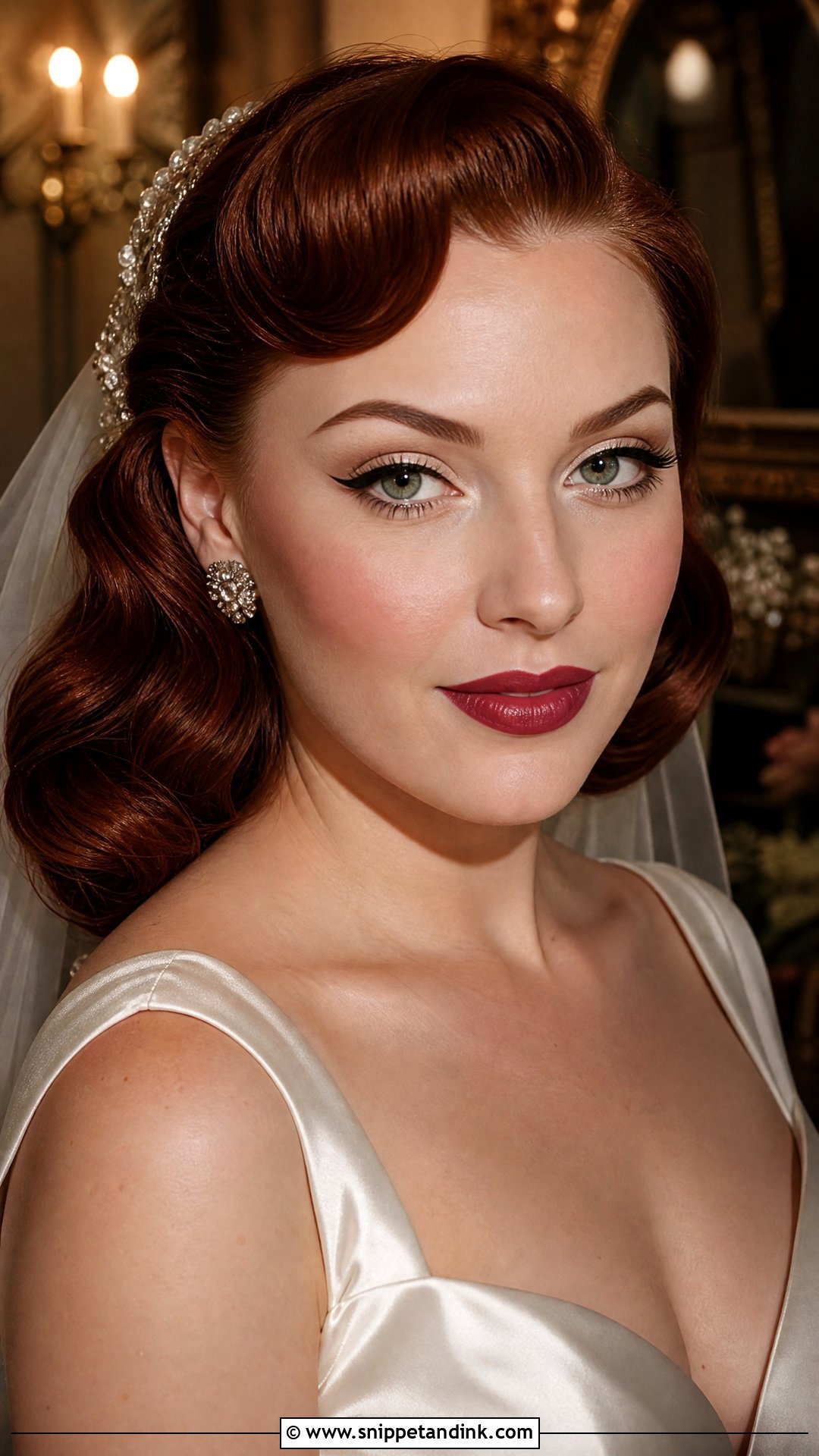
Vintage makeup needs a clean, defined shape without sliding into costume. Satin base, a softly powdered T-zone, structured brows, a winged liner and a defined lip. Choose a red lip for a stronger vintage mood or a rose lip for a softer one. The eyes stay clean with matte ivory or beige and precise liner. I prefer individual lashes for this look because they give lift without the heaviness of a dramatic strip. Blush stays soft. It sits naturally beside sleek updos, birdcage veils and satin gowns.
24. Beach Bridal Makeup
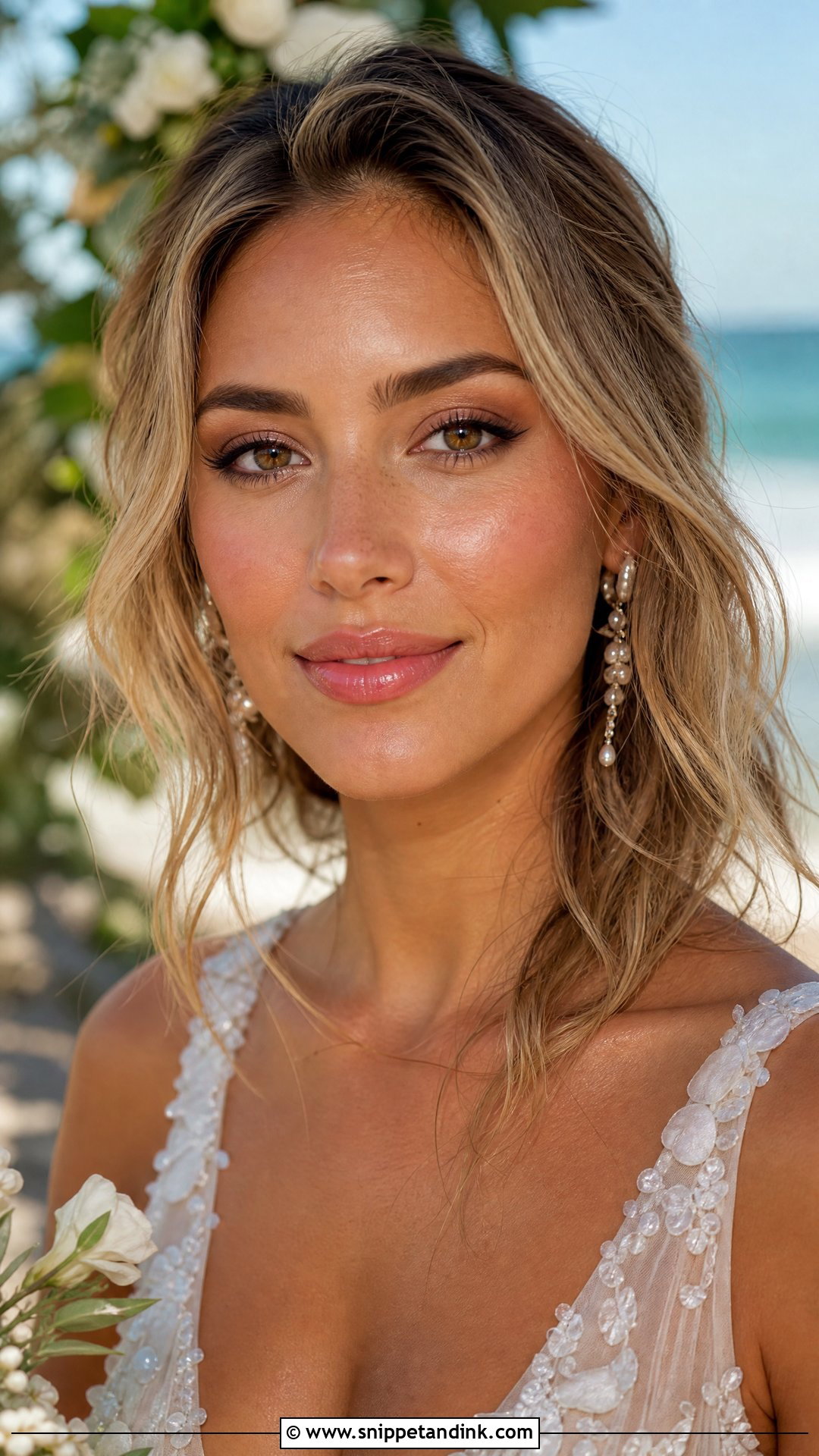
Heat, salt air and wind decide most of what I do at a beach wedding. I keep layers thin, use water-resistant and long-wear products and set the base with a setting spray instead of heavy powder, which can cake once the skin starts to sweat. Cream bronzer, peach or coral blush and a soft highlight look like sunlit skin. Waterproof mascara, brown liner and warm shadow that won’t crease. I’d skip strip lashes in wind and use small clusters instead. Finish with a peachy nude or glossy beige lip.
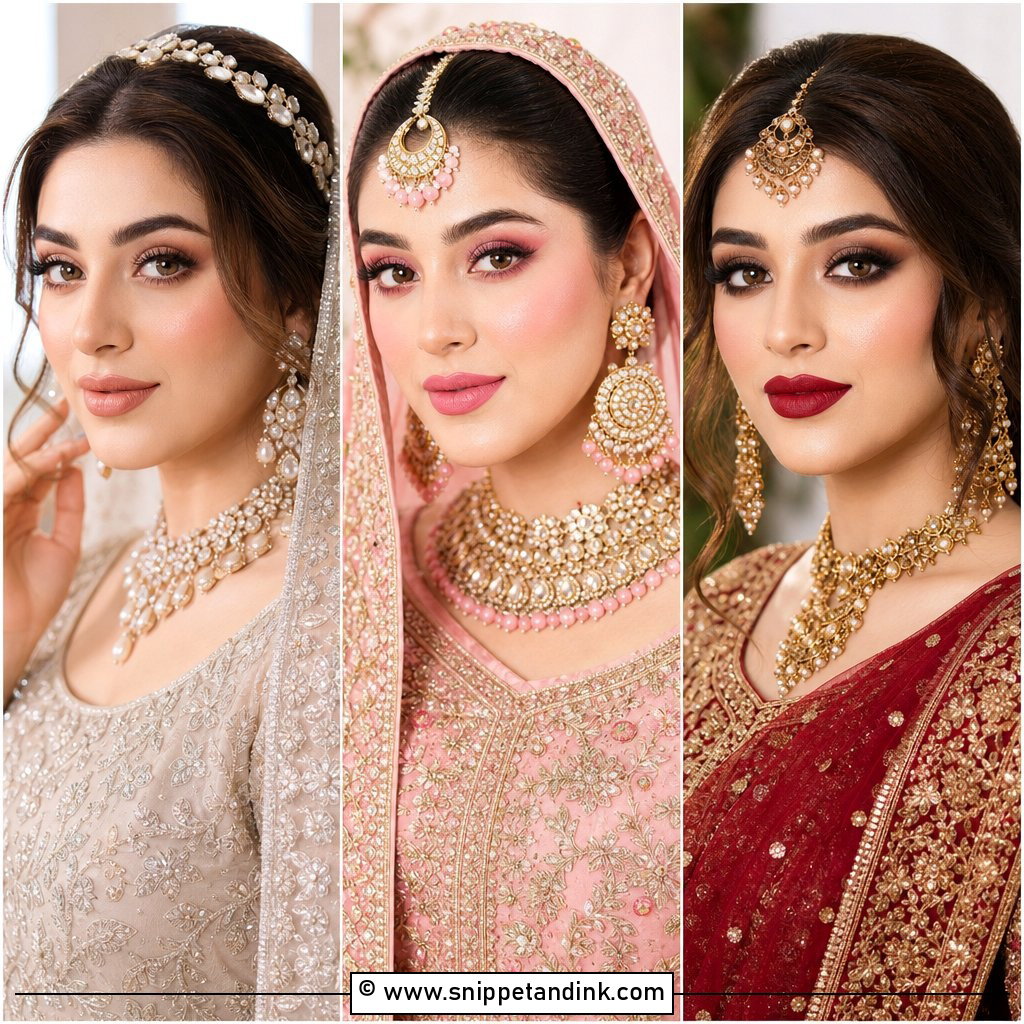
25. Winter Bridal Makeup
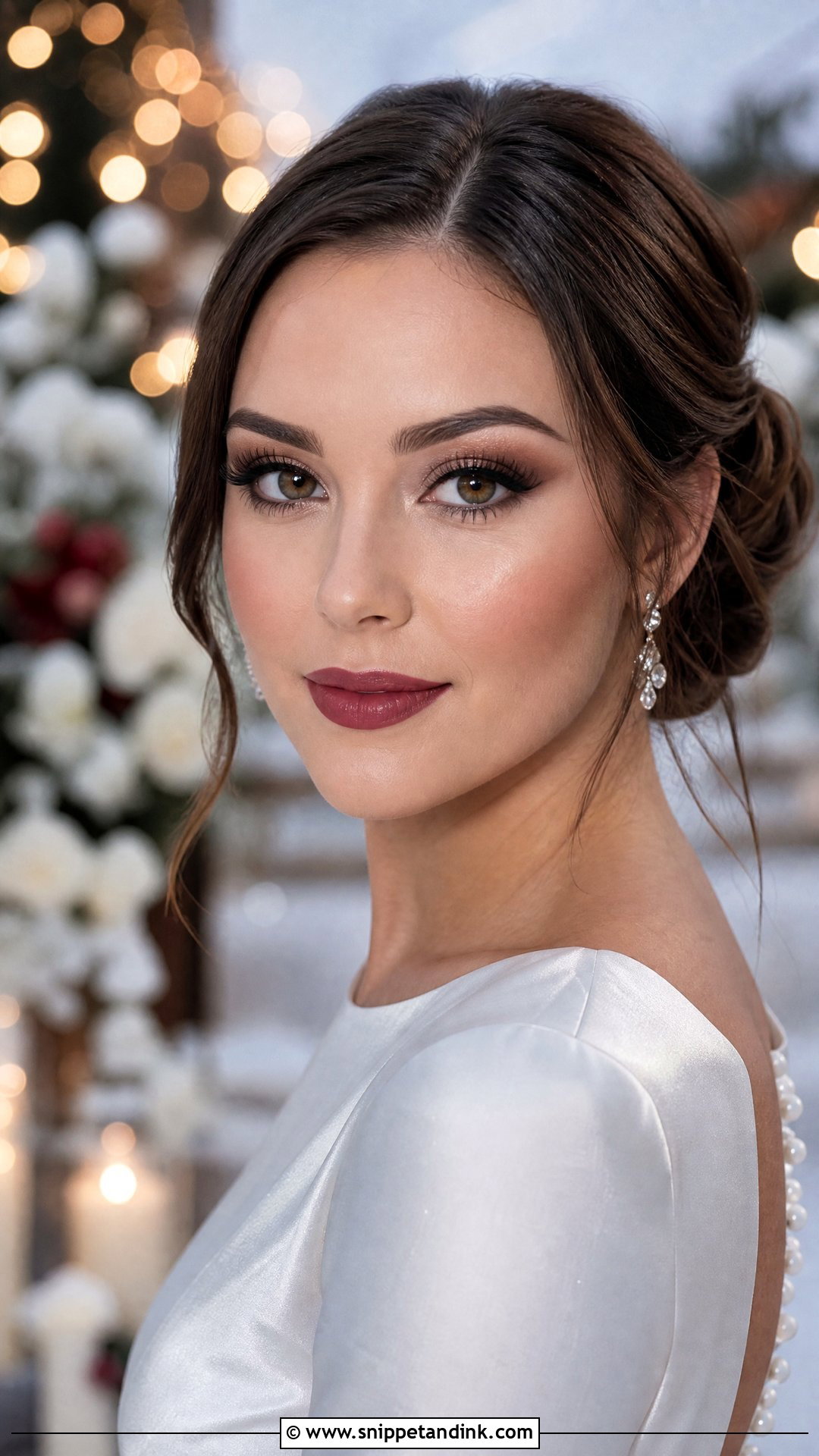
Winter light is cooler and flatter, so I add back warmth with blush, a little bronzer and a satin highlight. Indoor heating dries skin quickly, which means a richer moisturiser at prep and careful powdering only around the nose and under the eyes. The eyes can go deeper: taupe, cocoa, plum-brown or soft charcoal, with fuller lashes for evening receptions. Rose, mauve, berry or red lips all work. It pairs well with long sleeves, satin and sleek hair.
What Wears Off First, and How to Fix It in Two Minutes
Even long-wear makeup moves over ten hours. It just moves in a predictable order, and once you know the order, touch-ups are quick.
- The lip goes first, usually at the cocktail hour. Keep your lipstick and pencil in the clutch and reline before you reapply.
- Shine on the nose and forehead follows. Press a blotting paper on it before reaching for powder, or layers of powder will start to look cakey.
- Under-eye concealer can settle into fine lines by evening. Tap the line gently with a fingertip to smooth it rather than adding more product.
- Tears mostly affect the inner corners and lower lashes. A cotton bud pressed, not rubbed, under the eye lifts smudges cleanly.
Why Some Faces Turn White Under the Camera Flash
Some setting powders, especially very fine silica or heavily mineral products, reflect a flash and leave a pale cast under the eyes or across the forehead. You can’t see it in the mirror, only in the photos. At your trial, ask your artist to take a phone picture with the flash on. If you see a ghostly patch, swap the powder or press it in more lightly before the wedding rather than finding it in the gallery afterwards.
Recognisable in the Album Twenty Years From Now
Trends can point you in a direction, but your skin type, dress, venue, light and season matter more than any of them. If you lean soft, look at the natural, dewy, pink and romantic faces. If you want impact, consider full glam, a smokey eye, winged liner or a red or berry lip. Book a trial, photograph it by a window and under a flash, then wear it for a few hours before you decide. The right face is the one your family recognises when they look at the album years later.
You'll Like These Ideas:


Leave a Reply