
Every bridal designer has a handwriting. Some cut sculpted satin and sharp tailoring; others build around lace, airy tulle, embroidery or unusual draping. Once you can recognize those signatures, shopping gets faster, because you stop booking appointments at salons whose racks were never going to suit you. The 25 labels below run from couture houses to modern labels and more accessible names. For each, I’ve noted what the designer is known for, how I’d style the gown and what I’d check at the fitting, so you can build a short list that fits your venue, comfort and budget.
How Designer Gowns Actually Reach You, and How Long It Takes
Brides often assume they can walk into any shop and buy a named designer’s gown. In practice most bridal labels sell through authorized salons, and each salon carries only some of the collection. Before booking, I check the designer’s stockist list and call ahead to ask which styles the salon has in stock as samples, because you can only try what’s on the rail.
- Salon samples are usually one or two sizes and are clipped to fit you during the appointment. Ask the consultant how a style will feel once made to your size.
- Most designer gowns are made to order after you buy. Delivery commonly takes several months, and couture or customized pieces can take longer, so it varies widely by label.
- Alterations come after delivery and usually need two or three fittings, often spread over six to eight weeks. Build that into your timeline.
- Alterations are rarely included in the gown price. Ask for a rough estimate in the salon, since heavily beaded or lace gowns cost more to alter.
My usual advice is to start appointments around nine to twelve months before the wedding if you have your heart set on a specific designer. That leaves room for ordering, shipping and alterations without paying rush fees.
1. Vera Wang Wedding Dresses
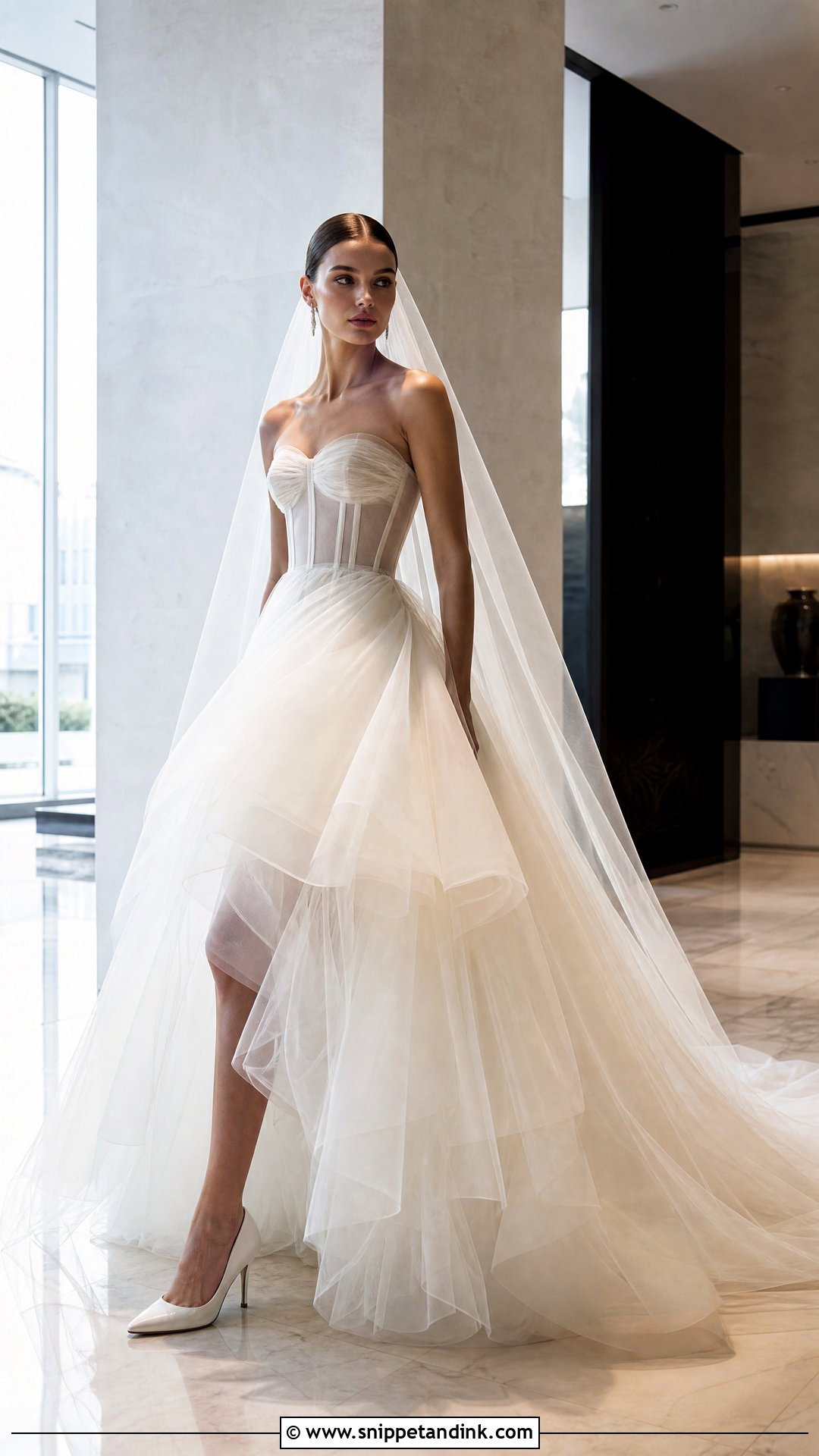
Romance with a fashion edge is the shortest way I can sum up Vera Wang. Traditional bridal elements turn up in unexpected proportions: sculptural ball gowns, sleek columns, layered tulle, corseted bodices and the occasional touch of color. Because the dress usually carries a lot of personality, I keep accessories spare, with small earrings and a clean veil. The thing to test is the skirt. Statement volume and long trains look easy on the hanger, so walk, sit and turn at every fitting before you decide it suits a full day. Hotels and city venues show these gowns well.
2. Monique Lhuillier Wedding Dresses
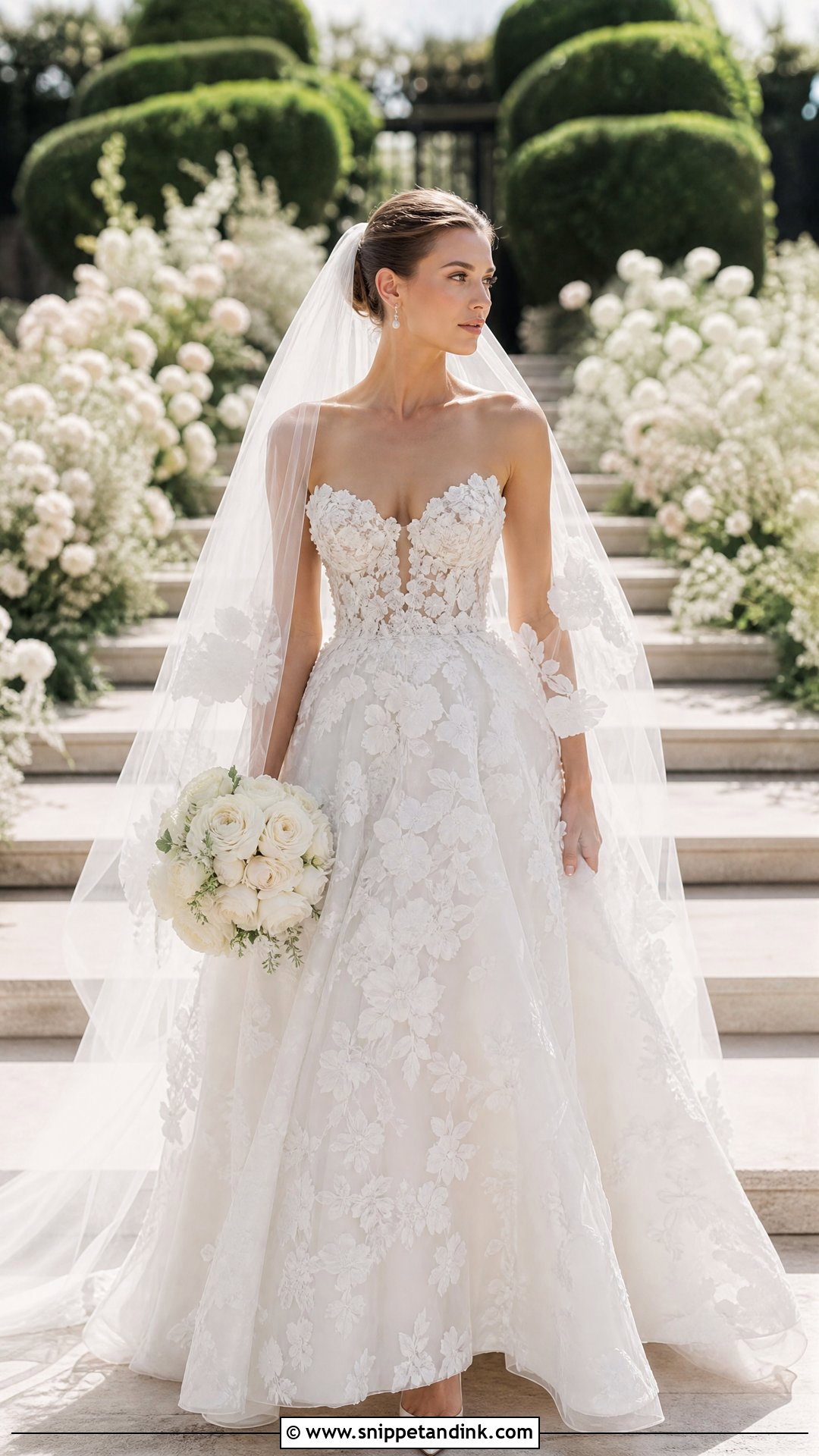
Feminine shapes, luxurious fabrics, floral detail and graceful volume run through most Monique Lhuillier wedding dresses. A floral-appliqué A-line needs almost no jewelry; a structured ball gown with a long train and cathedral veil is the dramatic route. On a petite bride, I ask the salon whether appliqué placement and skirt volume can be scaled down, because full-size floral clusters can swamp a small frame. Taller brides can carry an extended train. Keep the bouquet compact so the bodice stays visible.
3. Oscar de la Renta Wedding Dresses
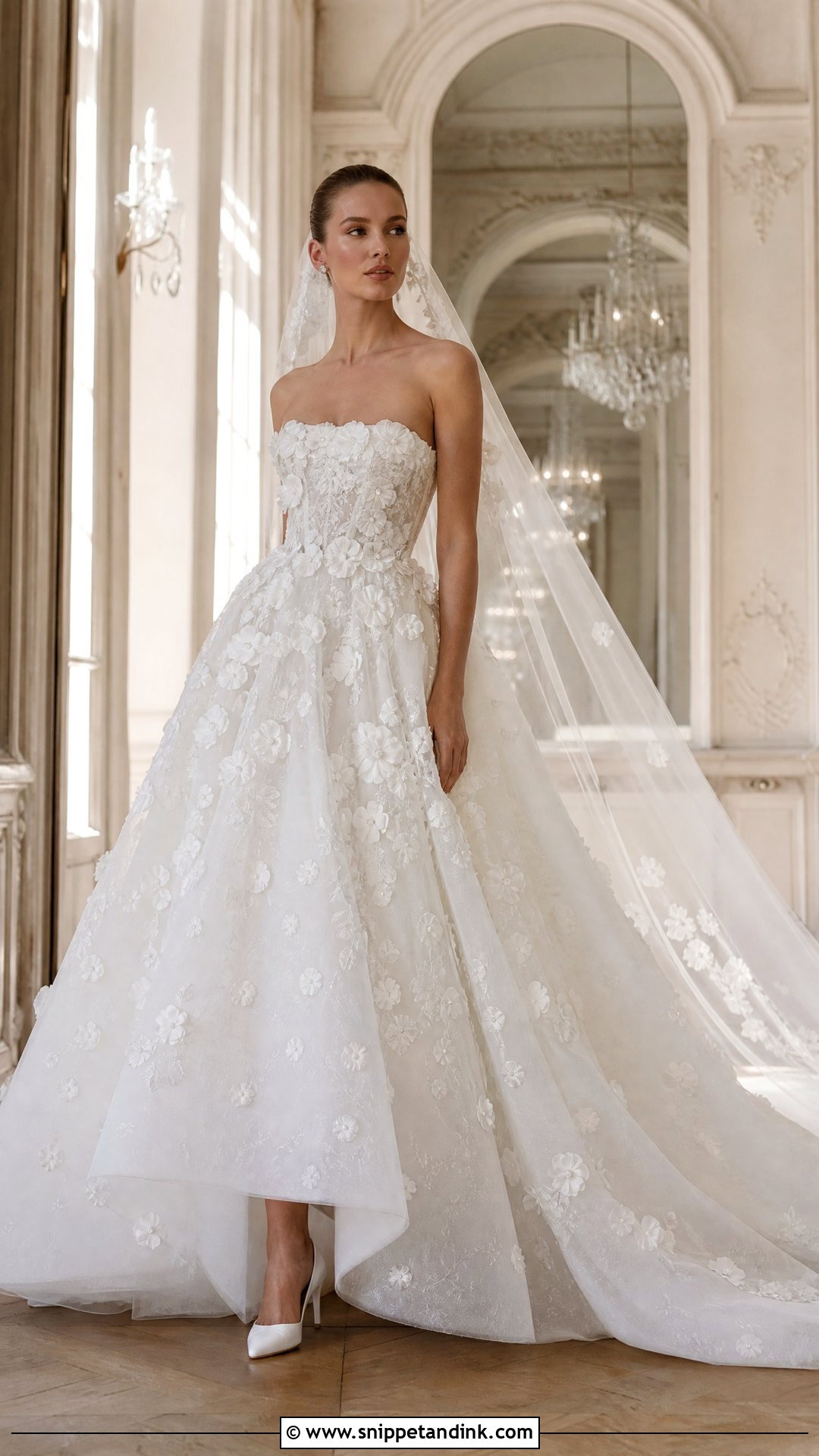
A full skirt covered in delicate florals, walking into a bright ceremony space: that sense of occasion is what people picture with Oscar de la Renta wedding dresses. Expect lace, floral appliqués, statement trains, clean tailoring and carefully shaped bodices. Dimensional flowers suit a garden; structured tulle or a sculpted neckline suits a ballroom. Hold back on accessories and let the workmanship lead. When altering a gown this detailed, I make sure the seamstress preserves the original proportions, because shortening a hem can cut through appliqués that were placed deliberately.
4. Elie Saab Wedding Dresses
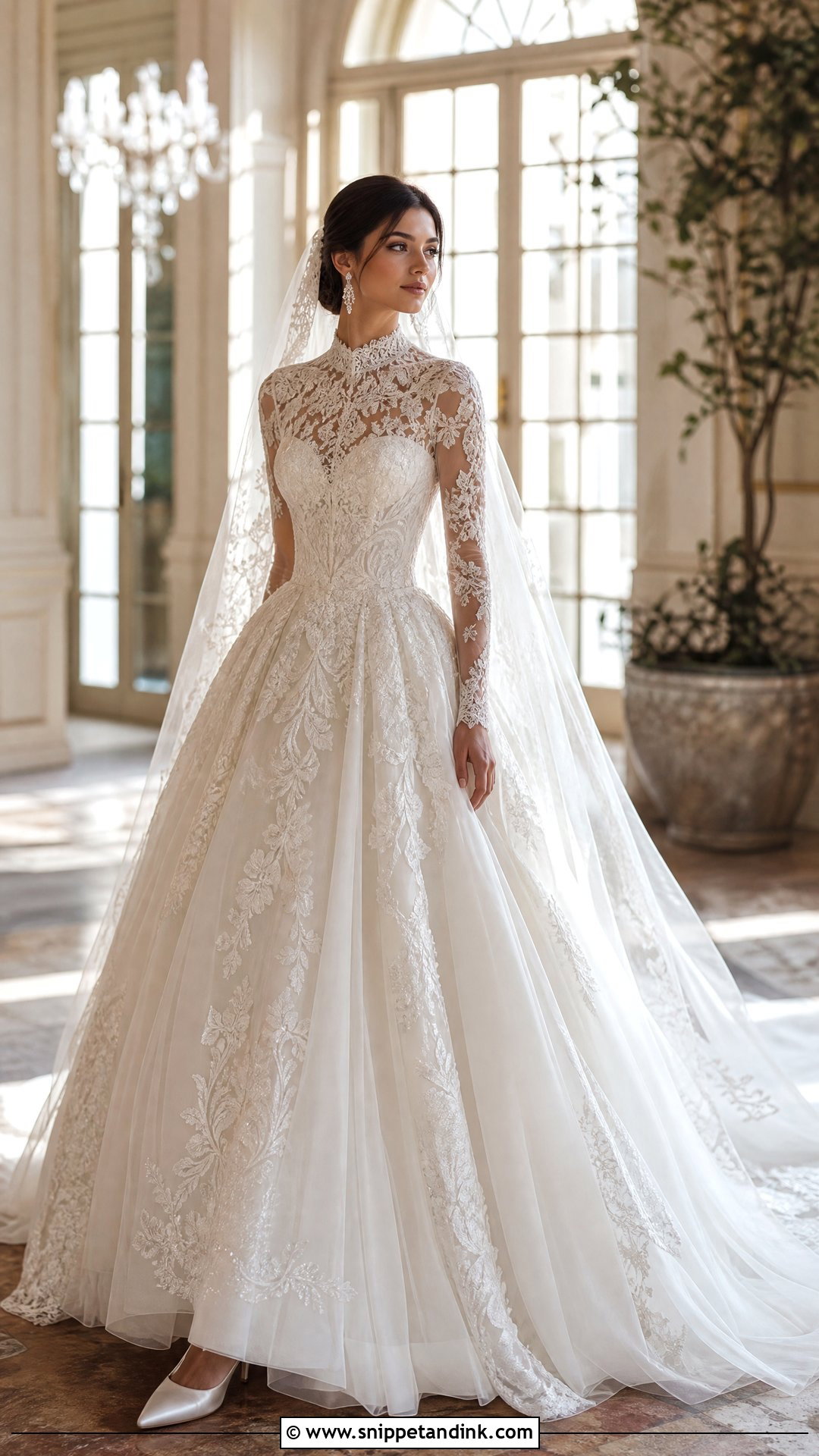
Elie Saab is the label brides name when they mean couture sparkle. Lace, beadwork, soft layers, defined waists and full skirts shape the look, and it belongs at grand hotels, historic estates and evening ceremonies. With that much texture, I’d keep earrings small and the hair neat. Brides wanting coverage can look for long sleeves, illusion necklines or higher bodices. At fittings, look at where the beading lands on your waist, bust and hips: dense embellishment draws the eye, so it should sit where you want attention.
5. Galia Lahav Wedding Dresses
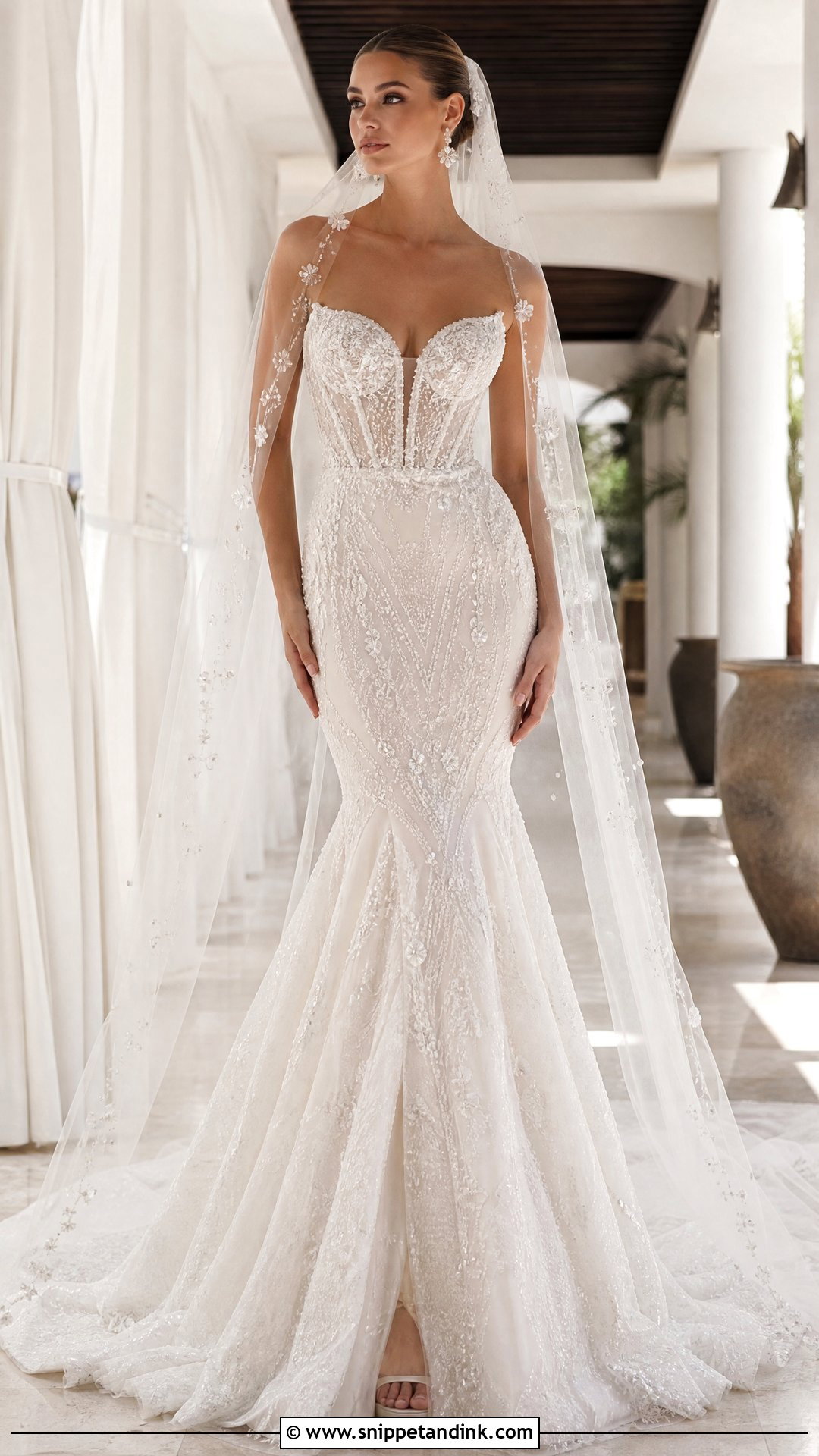
Fitted, dramatic and heavily embellished, Galia Lahav wedding dresses are built for an entrance. Many gowns follow the body through the waist before opening into a sweeping train or layered skirt, and corsetry is central. That kind of fit should feel secure, not restrictive. I have brides sit, raise their arms and walk at a normal pace at every appointment, then ask about lining, neckline changes or extra support. Sleek hair and platform heels suit the scale.
6. Berta Wedding Dresses
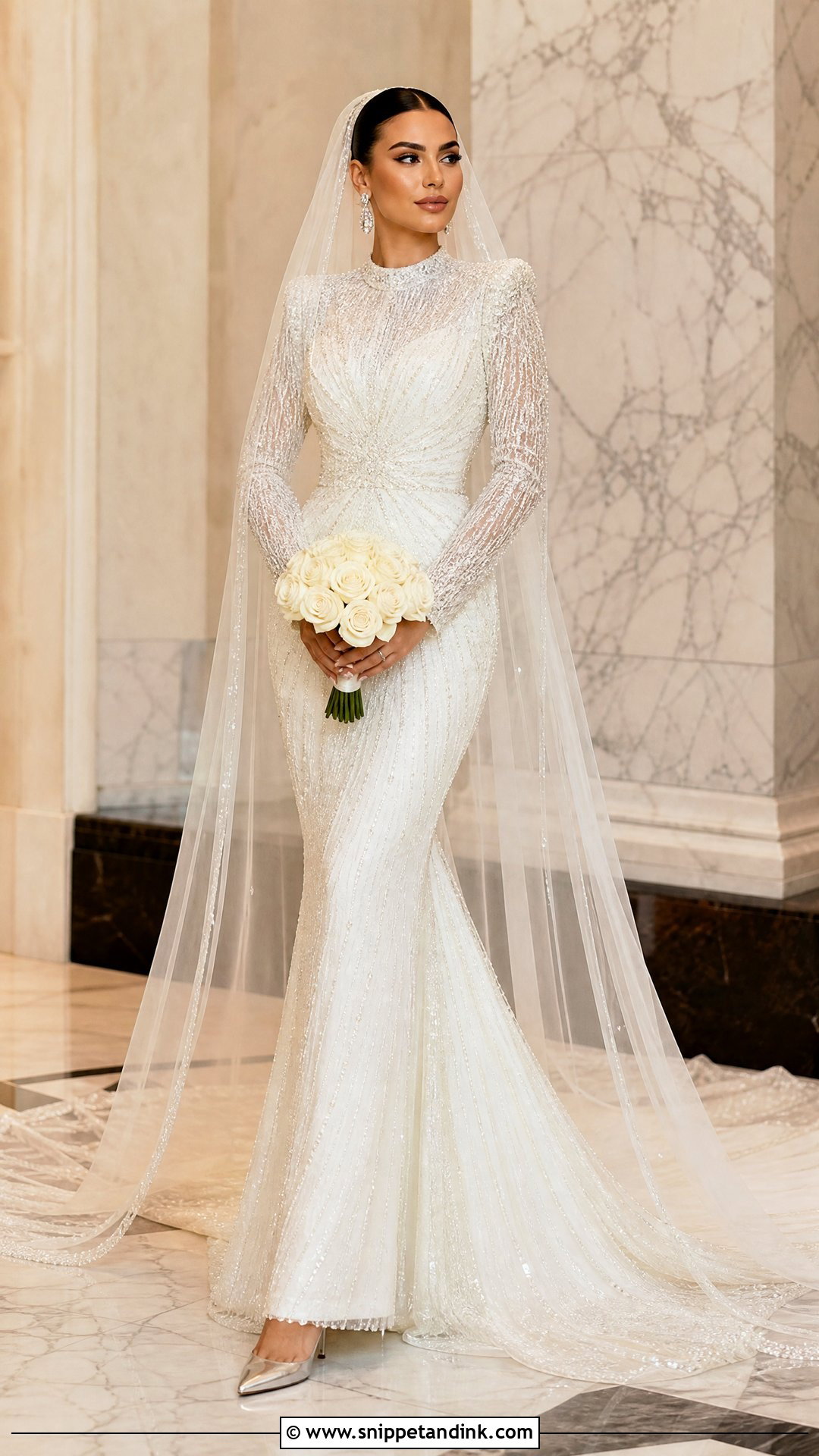
Close fits and shimmer are Berta’s territory: structured bodices, sheer effects and long trains suited to glamorous ballrooms and destination resorts. Professional alterations aren’t optional with gowns this precise. Discuss bust support, lining options, hem length and ease through the hips before the first pin goes in. A tight dress and a secure dress are different things; the second one lets you dance. A long veil adds ceremony, a short one keeps it modern.
7. Zuhair Murad Wedding Dresses
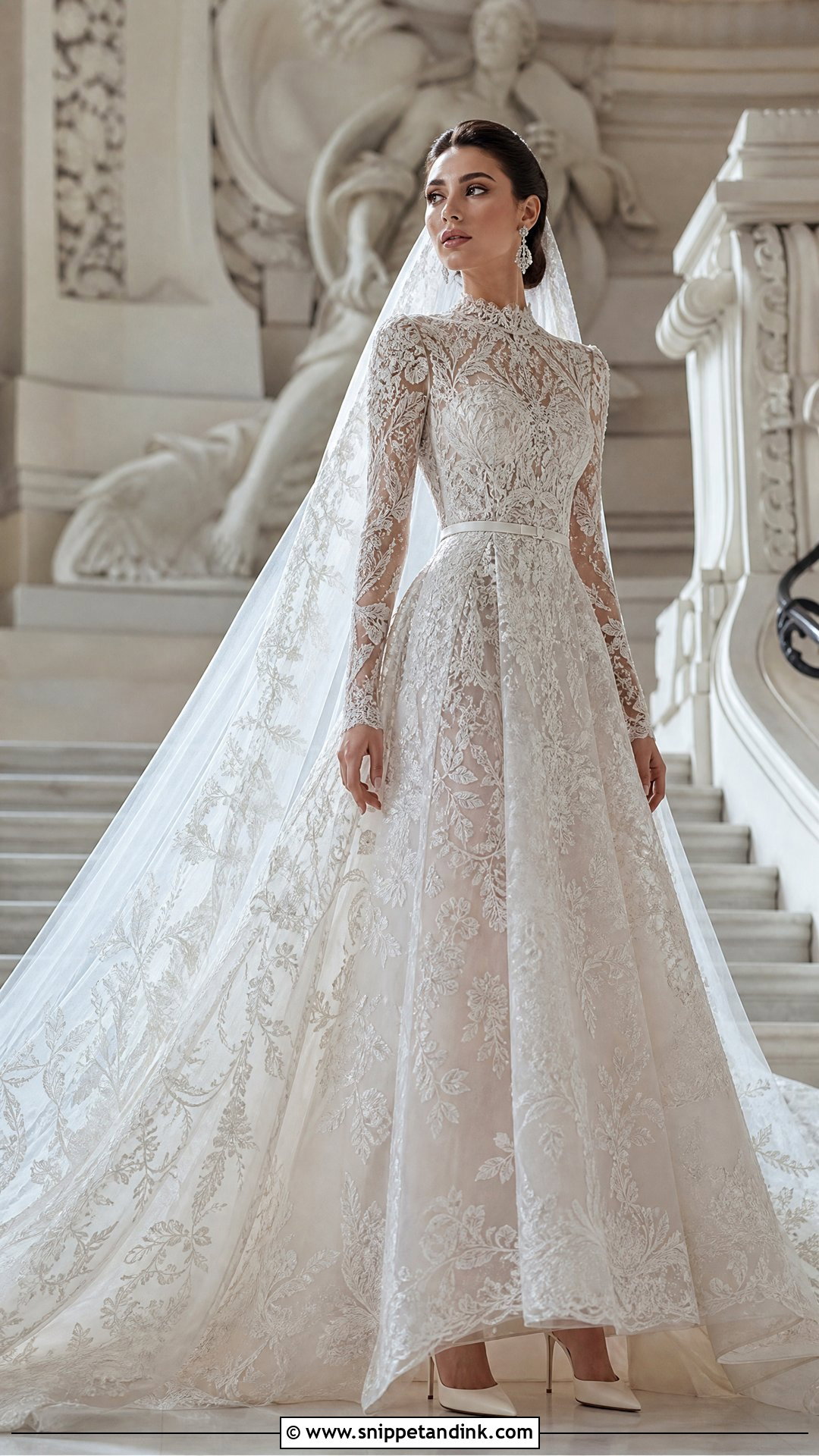
Ornate lace, beading, defined bodices and illusion details give Zuhair Murad gowns their formal glamour, and they look at home in a cathedral or a palace-style hotel. If full-skirt embellishment feels like too much, look for styles where the beading is concentrated on the bodice. Two checks I always do with heavy beadwork: view it by a window and under indoor light, since beads can read very differently in each, and settle on undergarments before alterations, so the gown is fitted around the right foundation.
8. Reem Acra Wedding Dresses
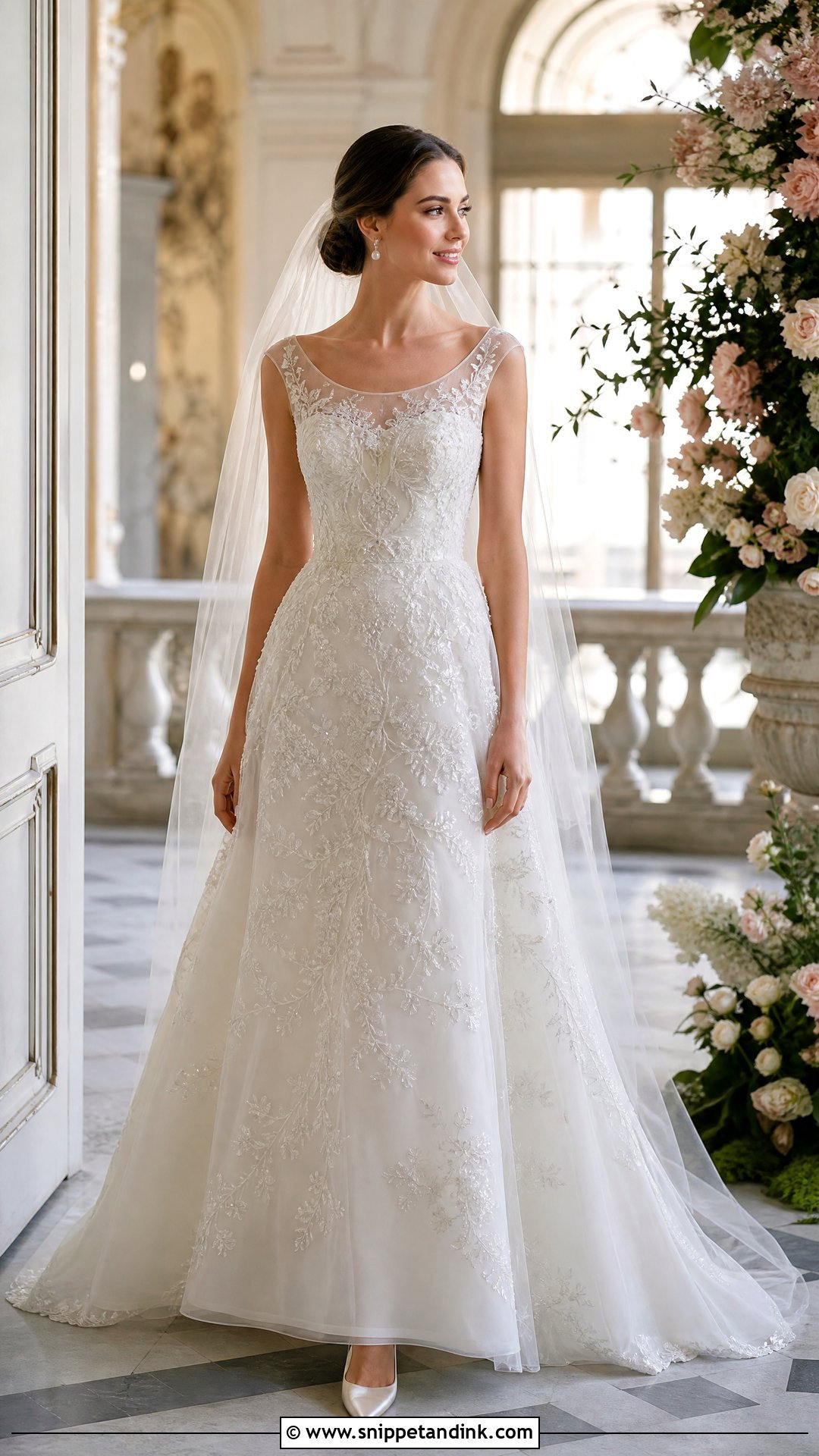
Formal tradition with delicate, artistic detail describes Reem Acra well. Intricate embroidery, lace, subtle sparkle, refined necklines and graceful skirts recur across the collections. Scale is the thing I watch: small motifs look delicate on petite frames, and large patterns create stronger impact on taller brides. A skilled tailor can adjust straps, cups, sleeves and waist placement. Pearl earrings and a low chignon keep it balanced in a garden or ballroom.
9. Ines Di Santo Wedding Dresses
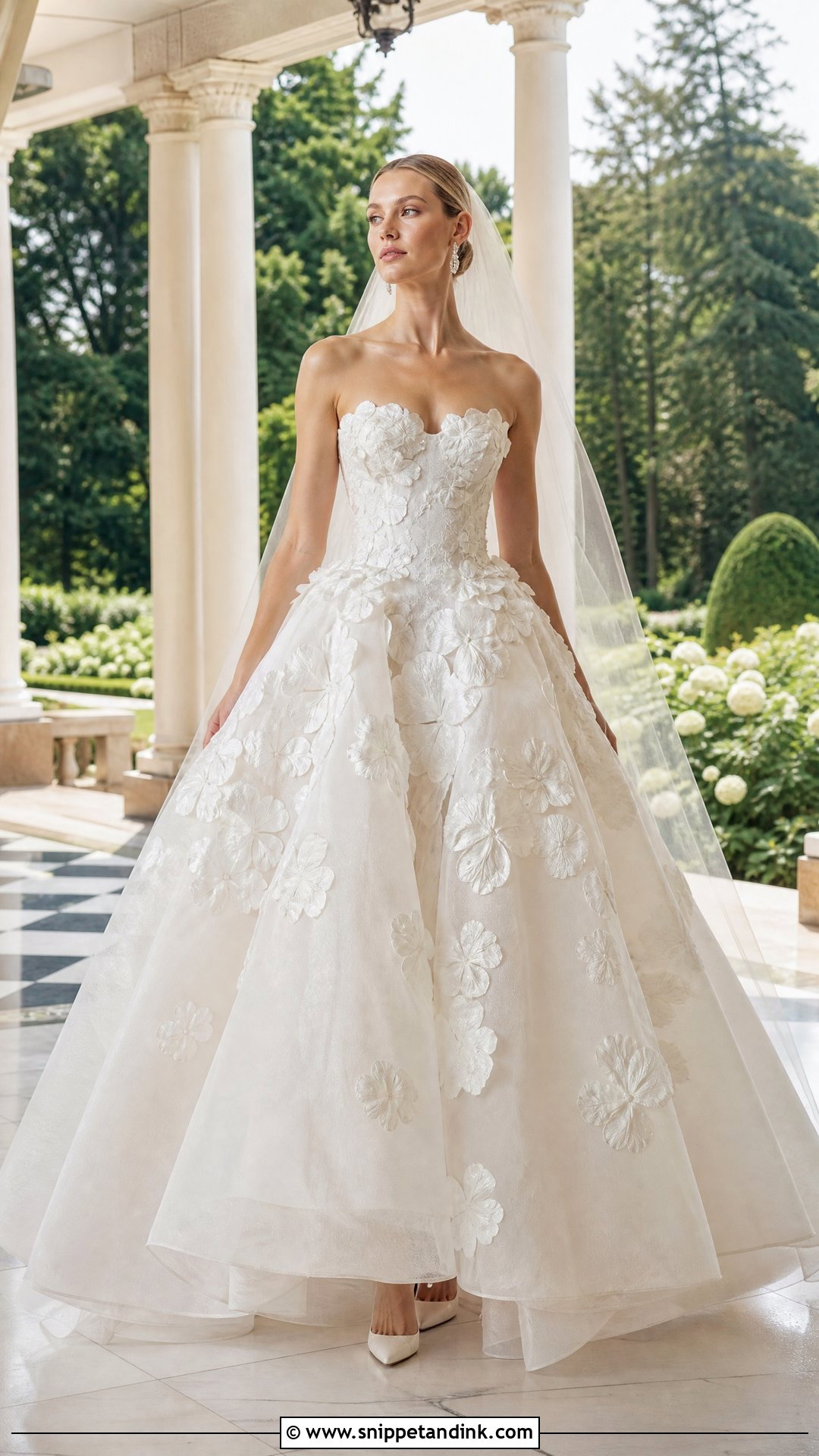
Shape and drama sit side by side in Ines Di Santo gowns, which often include fitted bodices, dimensional flowers, lace and sculptural layered skirts. A full ball gown fills a large indoor venue; a fitted lace silhouette suits a formal garden. Choose the veil according to the back detail of the dress. Before ordering, I ask how the skirt bustles and whether extra support can be built into the bodice, because an elaborate train is much easier to live with after the ceremony when those two are solved.
10. Amsale Wedding Dresses
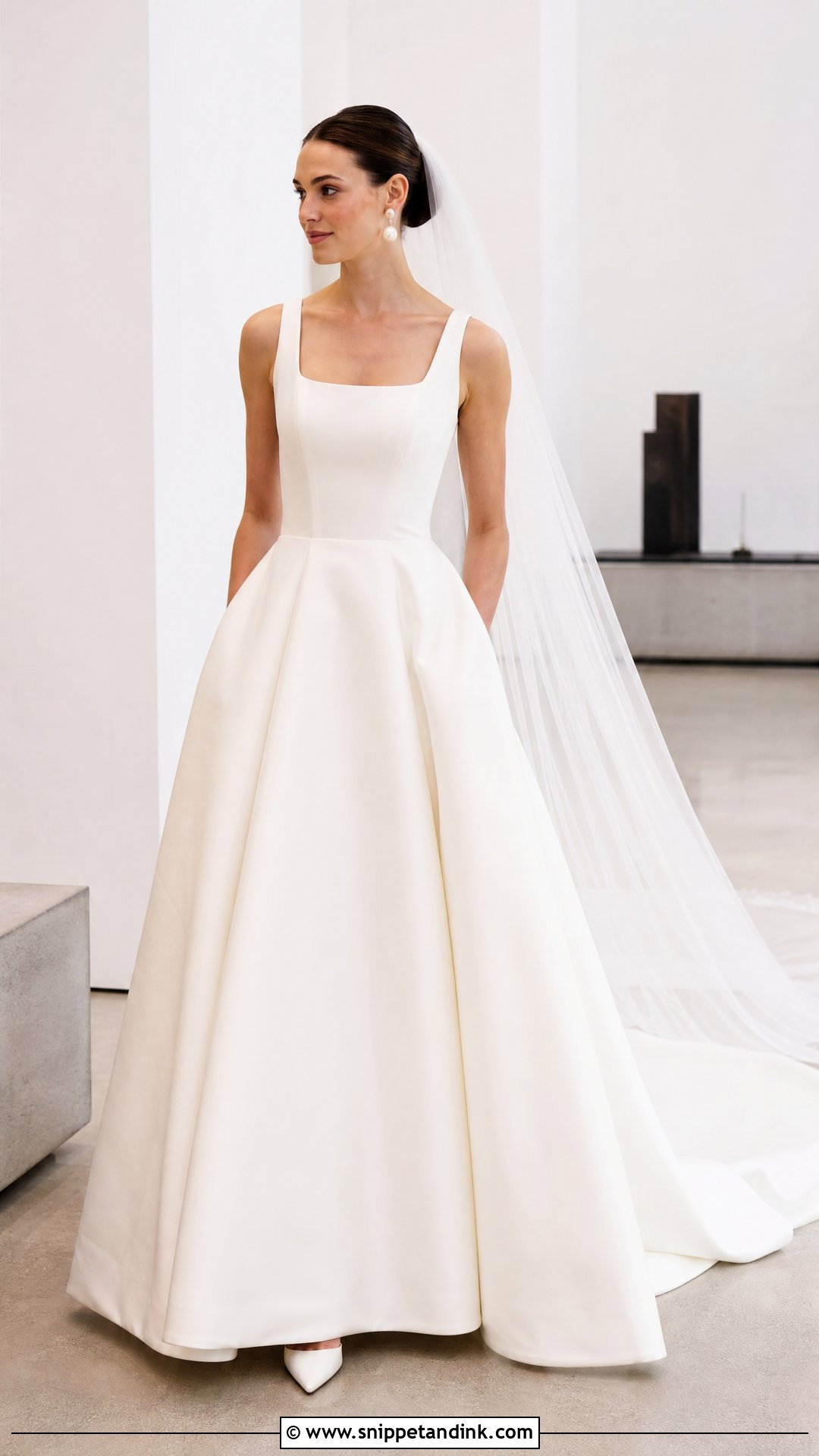
Clean lines can carry as much impact as embellishment, and Amsale proves it with refined simplicity, structured silhouettes and fine fabrics. Satin ball gowns, fitted crepe, square necklines and understated draping all appear. Plain fabric shows every seam and every adjustment, so tailoring has to be exact: check waist placement, hem, bodice support and how the fabric falls as you walk. Clean sleeves or higher necklines add coverage without breaking the minimal effect. Museums and city hotels suit it.
11. Anne Barge Wedding Dresses
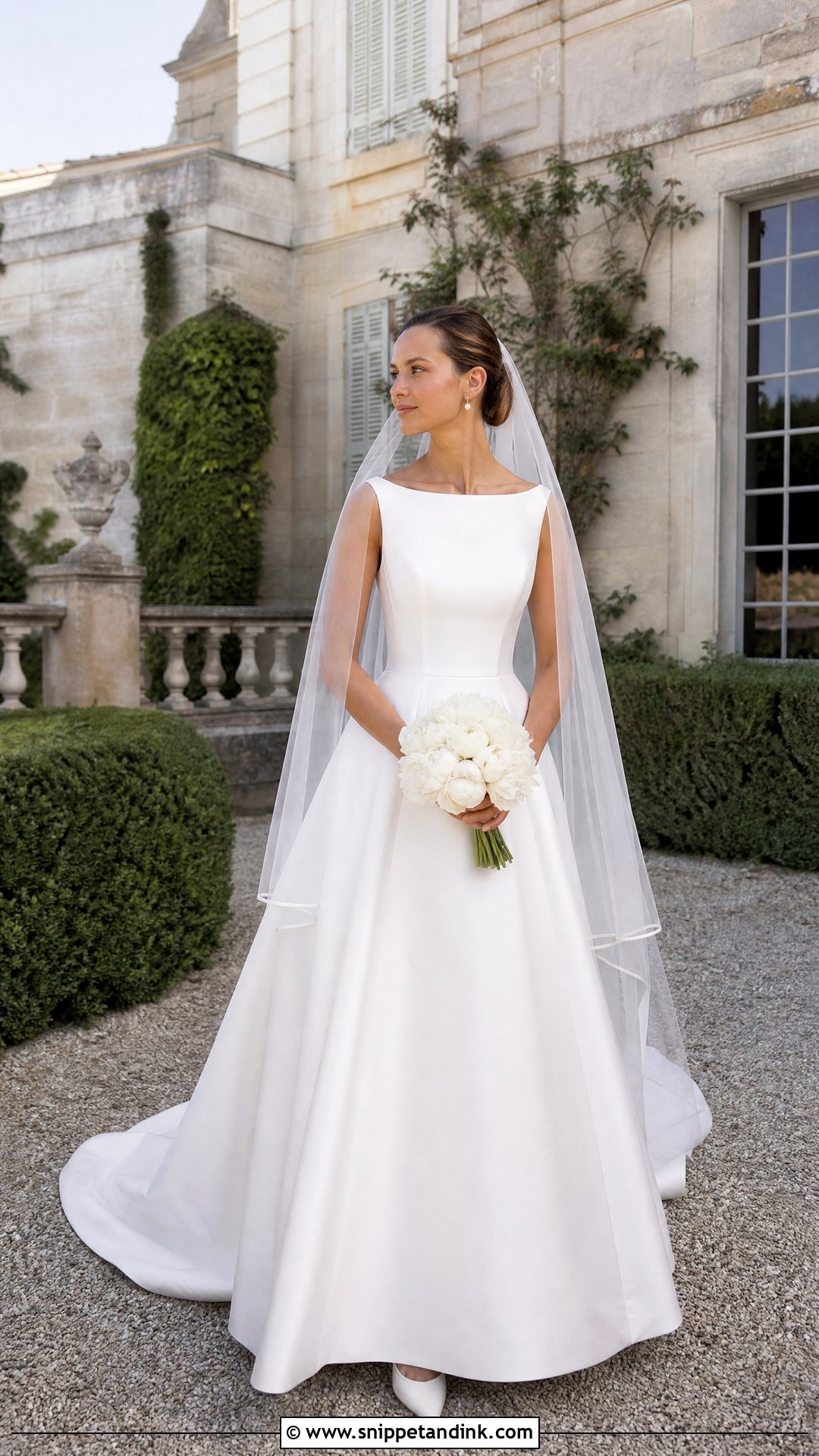
Traditional elegance with a fresh finish is what draws brides to Anne Barge wedding dresses. Expect flattering structure, graceful necklines and balanced proportions. A mikado A-line with a fitted bodice gives a classic ceremony look; a lace column feels lighter and more intimate. Let the neckline decide the jewelry: a clean strapless can take a fine necklace, but a high or embellished neckline usually wants earrings only. Ask for a secure bustle that keeps the skirt’s shape.
12. Sareh Nouri Wedding Dresses
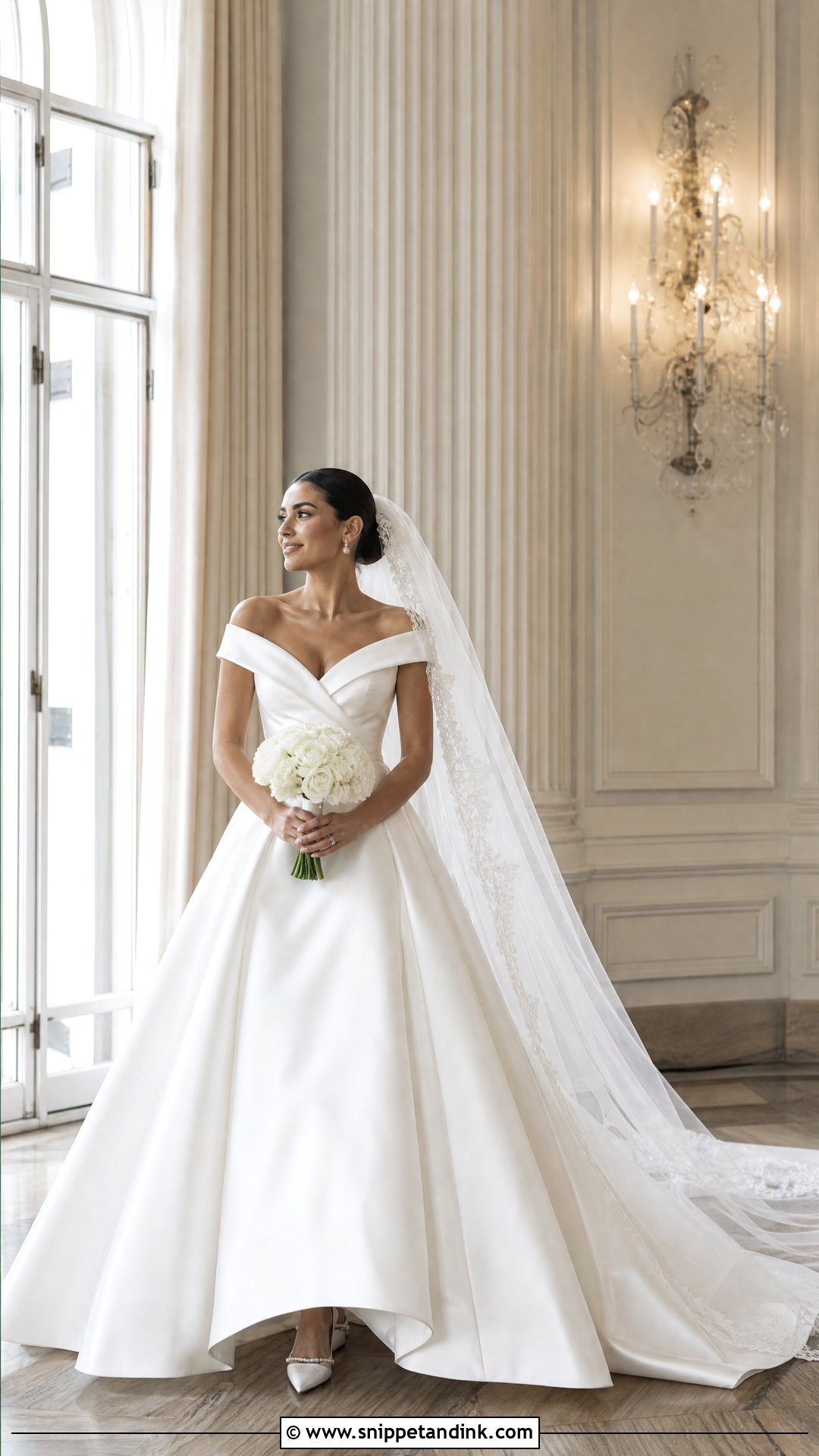
Sareh Nouri is about classic shapes in structured fabrics: sweeping satin skirts, defined waists, crisp necklines. Ball gowns, clean A-lines and romantic lace all appear. What I tell brides is to compare skirt widths in the salon, because structure should support your figure rather than overwhelm it. Petite brides often look best in reduced volume; tall brides can carry a broad skirt and long train. A compact bouquet keeps the waist visible. Formal gardens and stately homes suit it.
13. Danielle Frankel Wedding Dresses
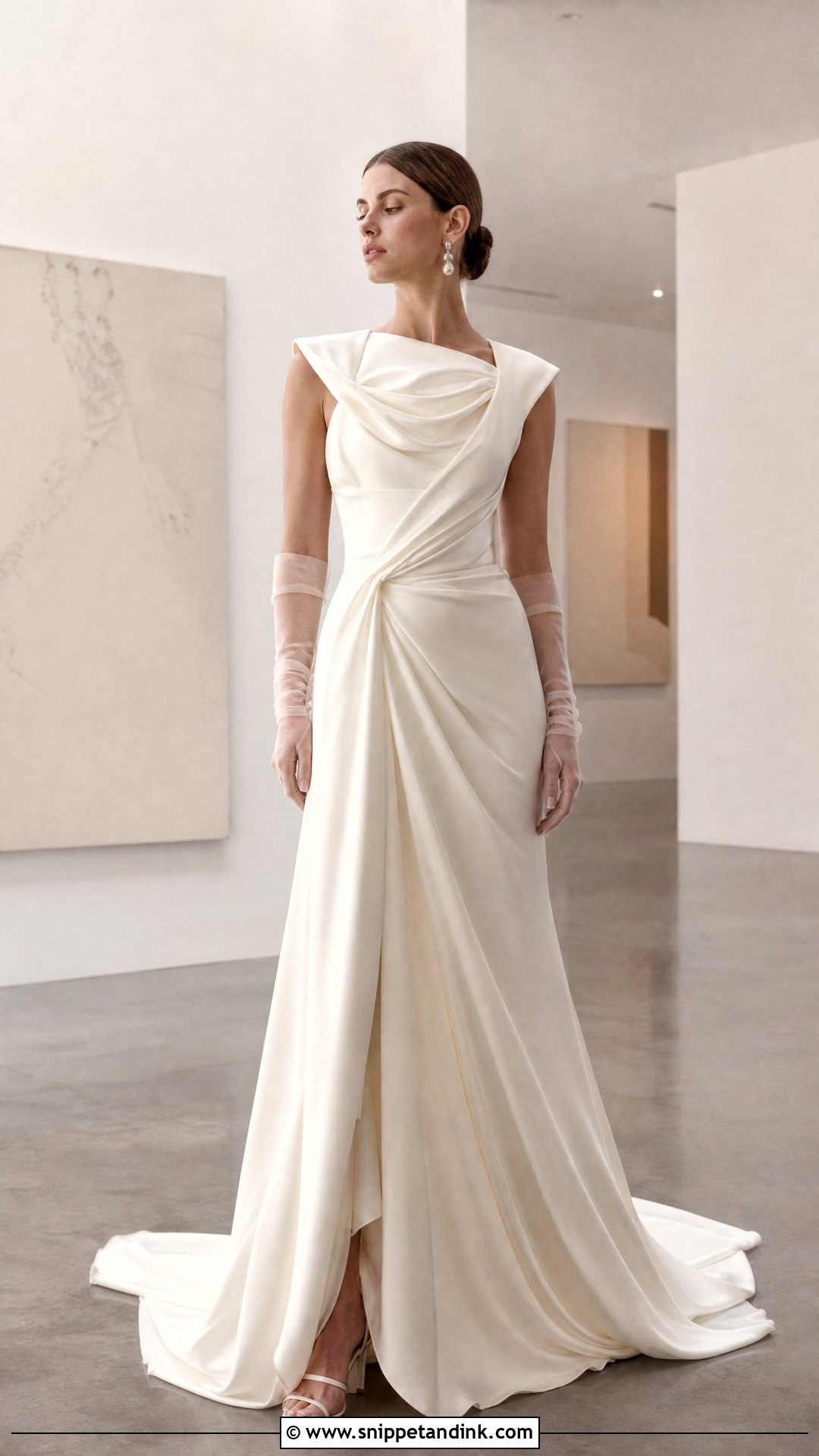
Expressive draping and texture set Danielle Frankel apart, with designs sitting somewhere between fashion and bridal. Galleries, contemporary city weddings and small destination events suit them. Avoid traditional accessories that fight the unusual lines; repeat one element, such as pearl texture or fluid fabric, instead. Draping changes dramatically from different angles, so I always look at these gowns from the side and back at fittings. Pleats and folds also need careful steaming and transport on the day.
14. Alexandra Grecco Wedding Dresses
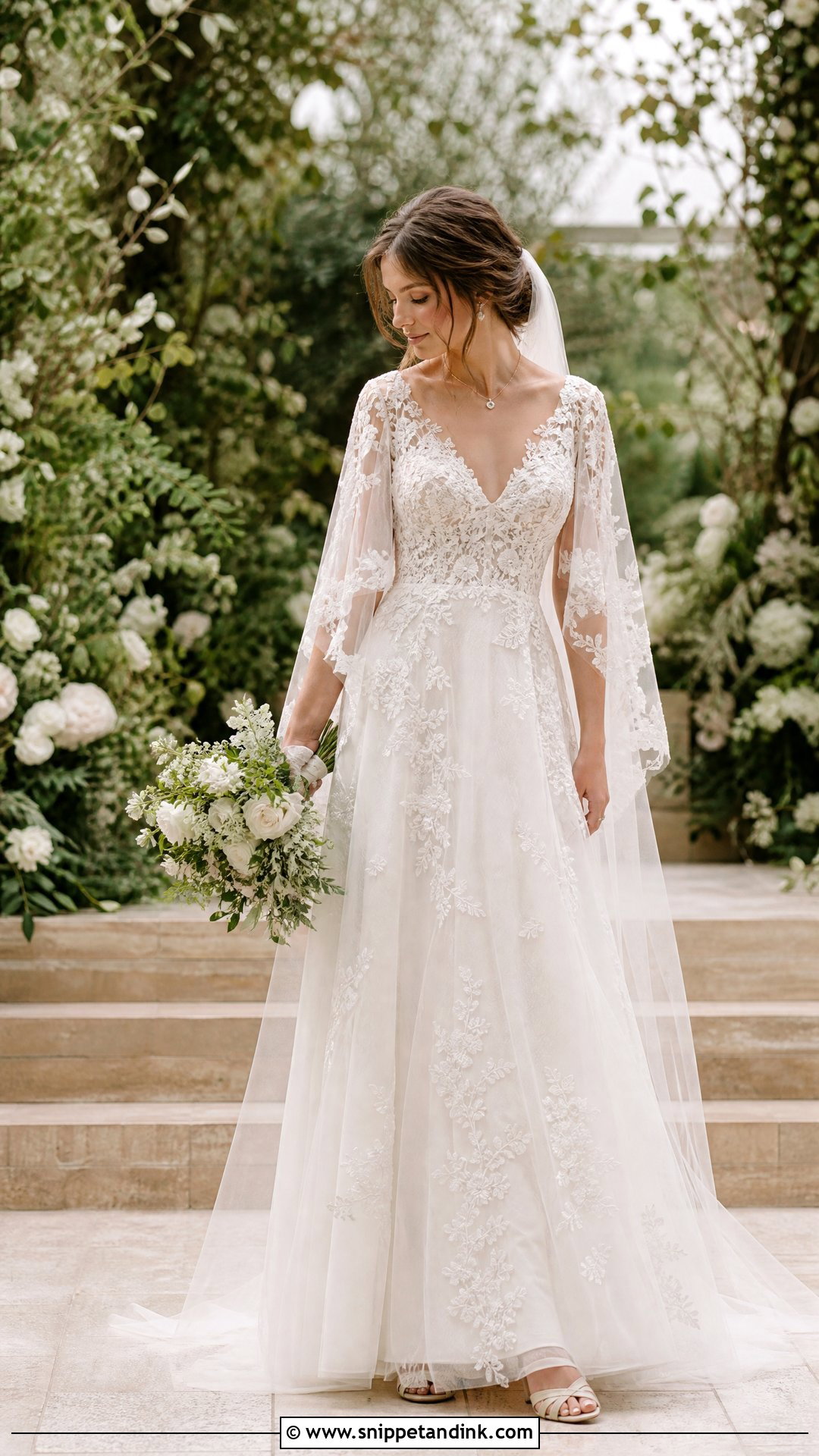
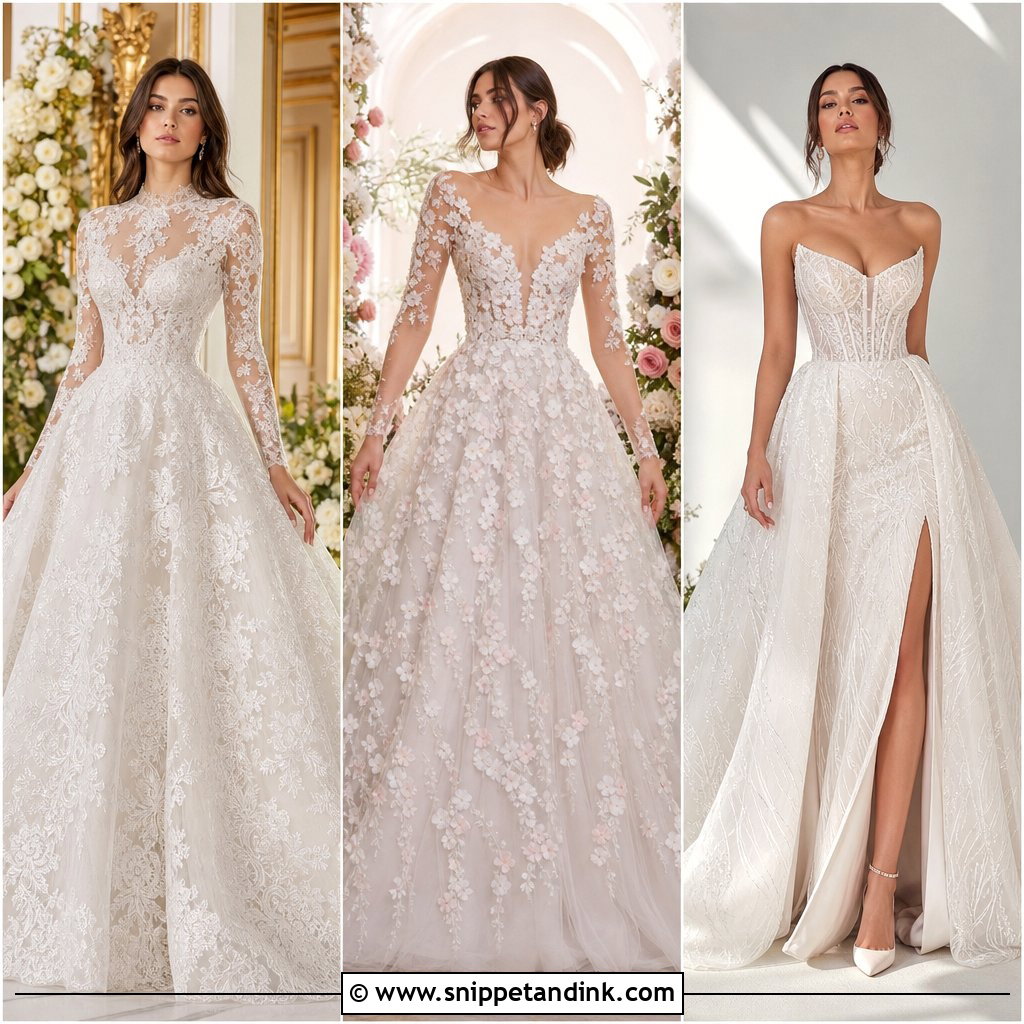
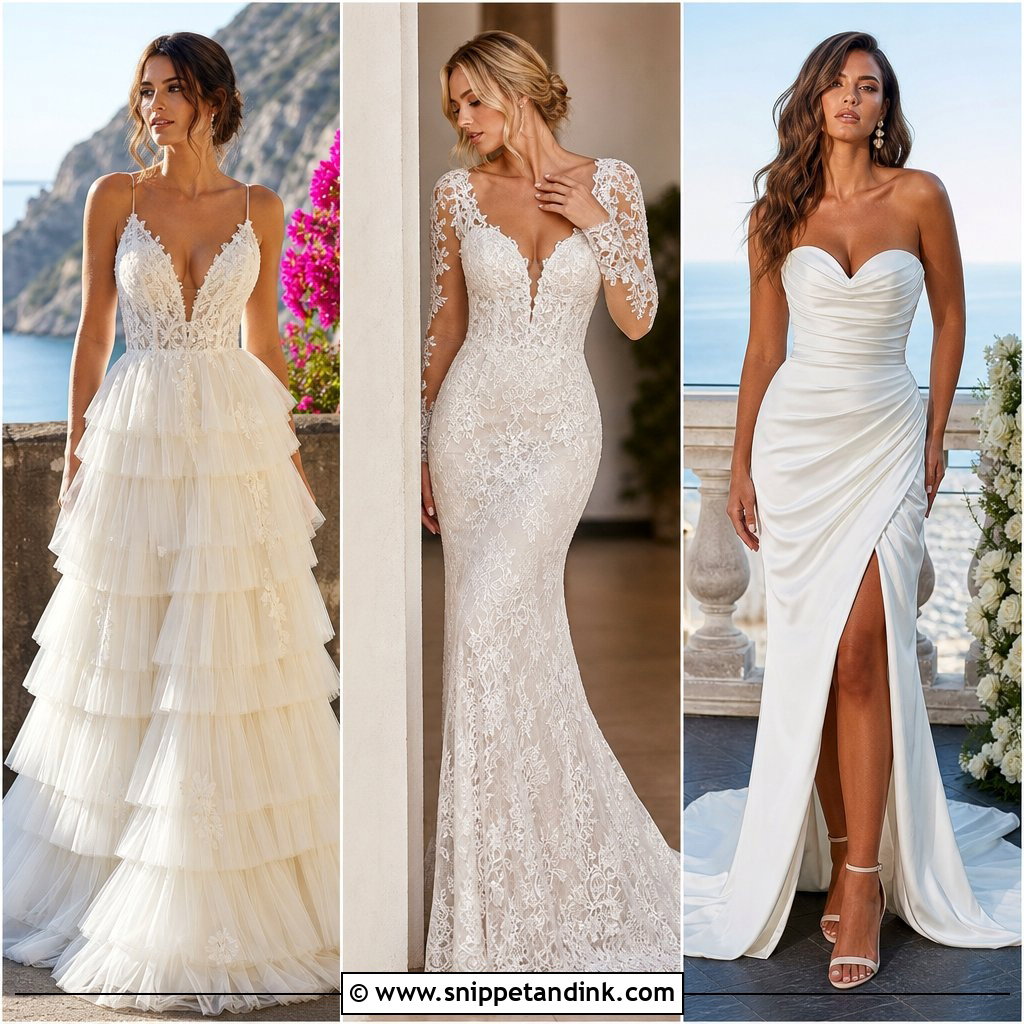
Softness over heavy decoration is the point of Alexandra Grecco wedding dresses, which pair minimal shapes with illusion lace, floral appliqués, delicate sleeves and fluid skirts. A floral dress needs little extra; a plain crepe gown can take bolder earrings or a textured veil. Think about the season when choosing sleeves: sheer long sleeves for cooler weather, sleeveless for summer. Ask about lining and support if you want more coverage. Low heels and a light veil suit garden and gallery venues.
15. Jenny Yoo Wedding Dresses
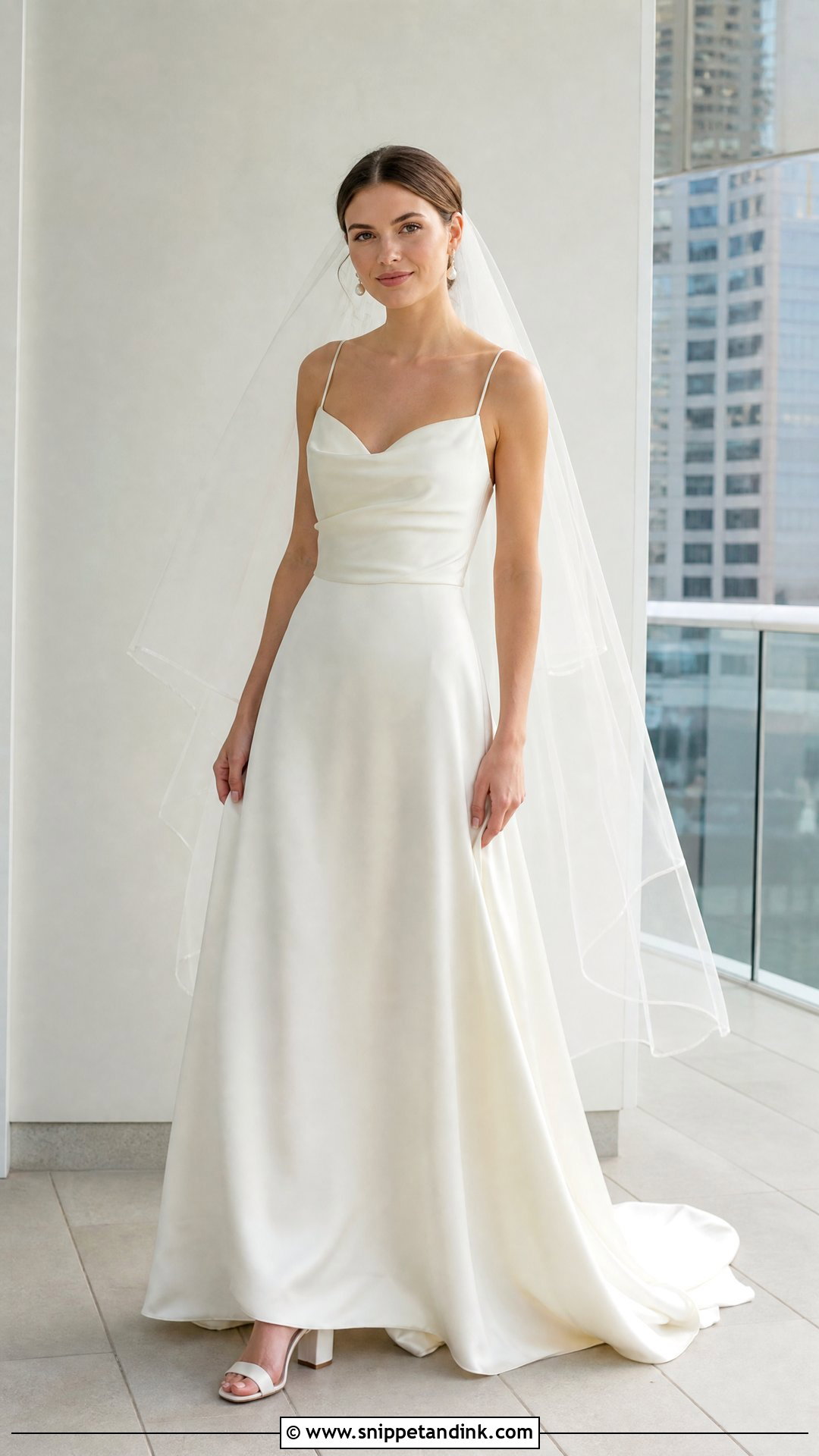
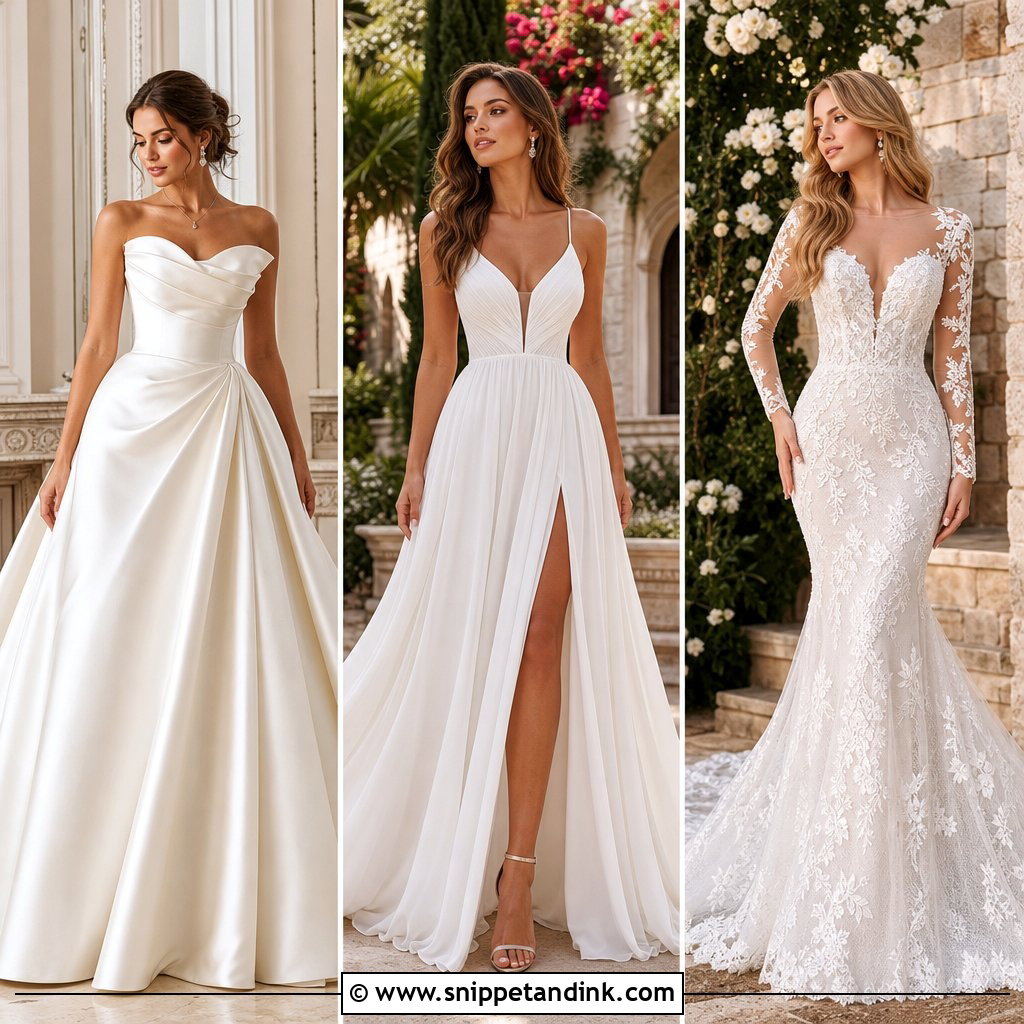
Jenny Yoo is a name I mention to brides who want wearable modern construction: satin slips, flowing chiffon, delicate lace and structured A-lines in versatile minimal shapes. A sleek satin gown with block heels and a fingertip veil makes a complete outfit for a city or garden ceremony. If you’re wearing one gown all day, test the zipper, straps, bust support and skirt movement properly. Confirm ordering timelines and customization with an authorized retailer before you fall for a particular style.
16. Maggie Sottero Wedding Dresses
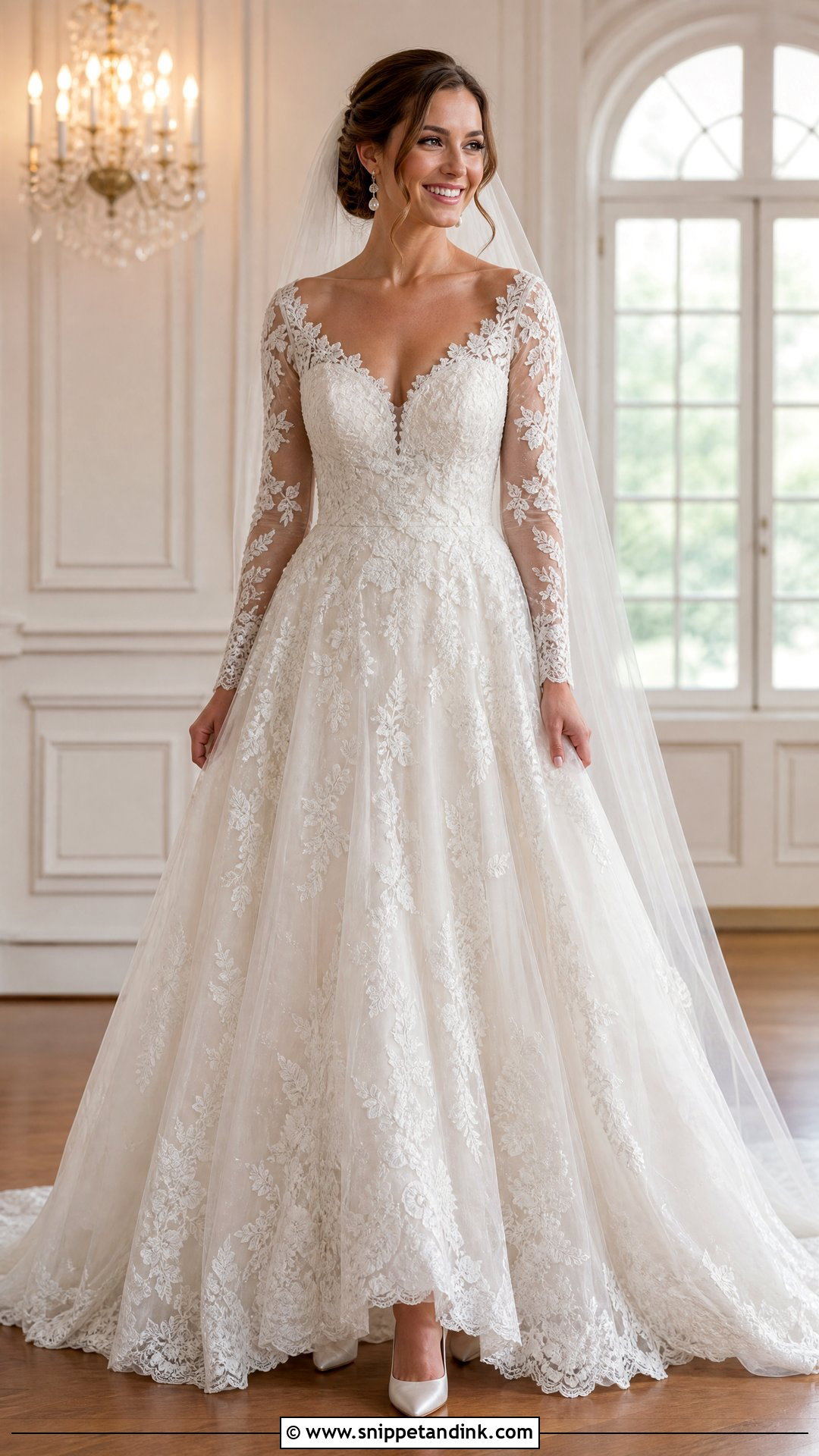
Maggie Sottero wedding dresses cover a very broad range, which makes the label useful when you haven’t settled on a silhouette yet. Lace A-lines, fitted shapes, ball gowns, romantic sleeves and clean minimal options are all there. Try several shapes rather than relying on photos; a dress that looks plain online can surprise you once fitted. Ask the salon about color options, bodice construction and size range before ordering, and which changes can be made without upsetting the gown’s balance.
17. Pronovias Wedding Dresses
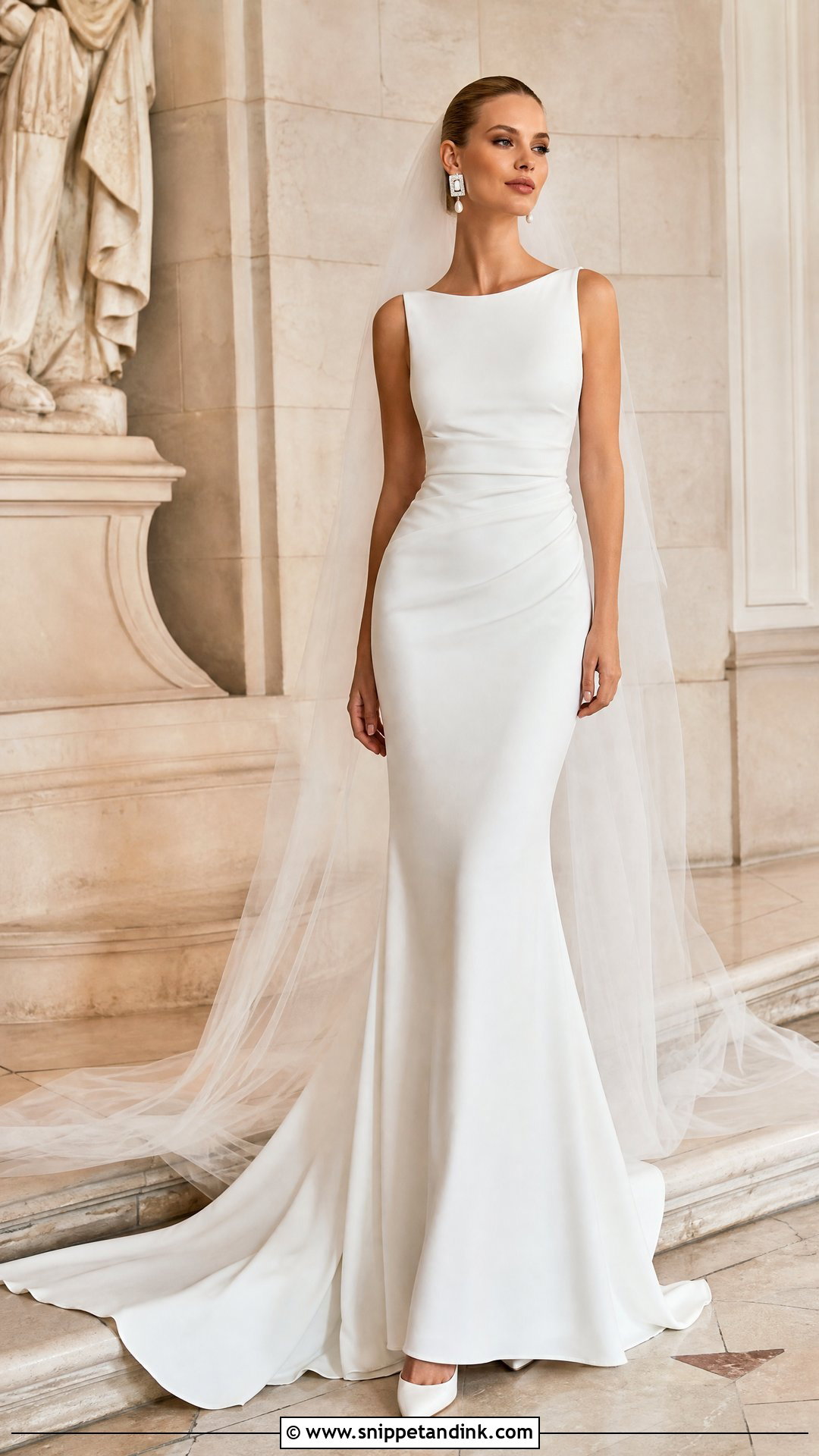
Variety within a polished European look is Pronovias’ strength: fitted lace, smooth crepe, romantic A-lines, statement trains and traditional ball gowns. Before choosing, I walk the bride through her actual venue in my head. Narrow aisles, outdoor paths and staircases all affect what train length is practical. Discuss bustle placement and hem protection during alterations. If you want more coverage, ask whether sleeves, lining, straps or neckline changes can be ordered or added by the salon.
18. Watters Wedding Dresses
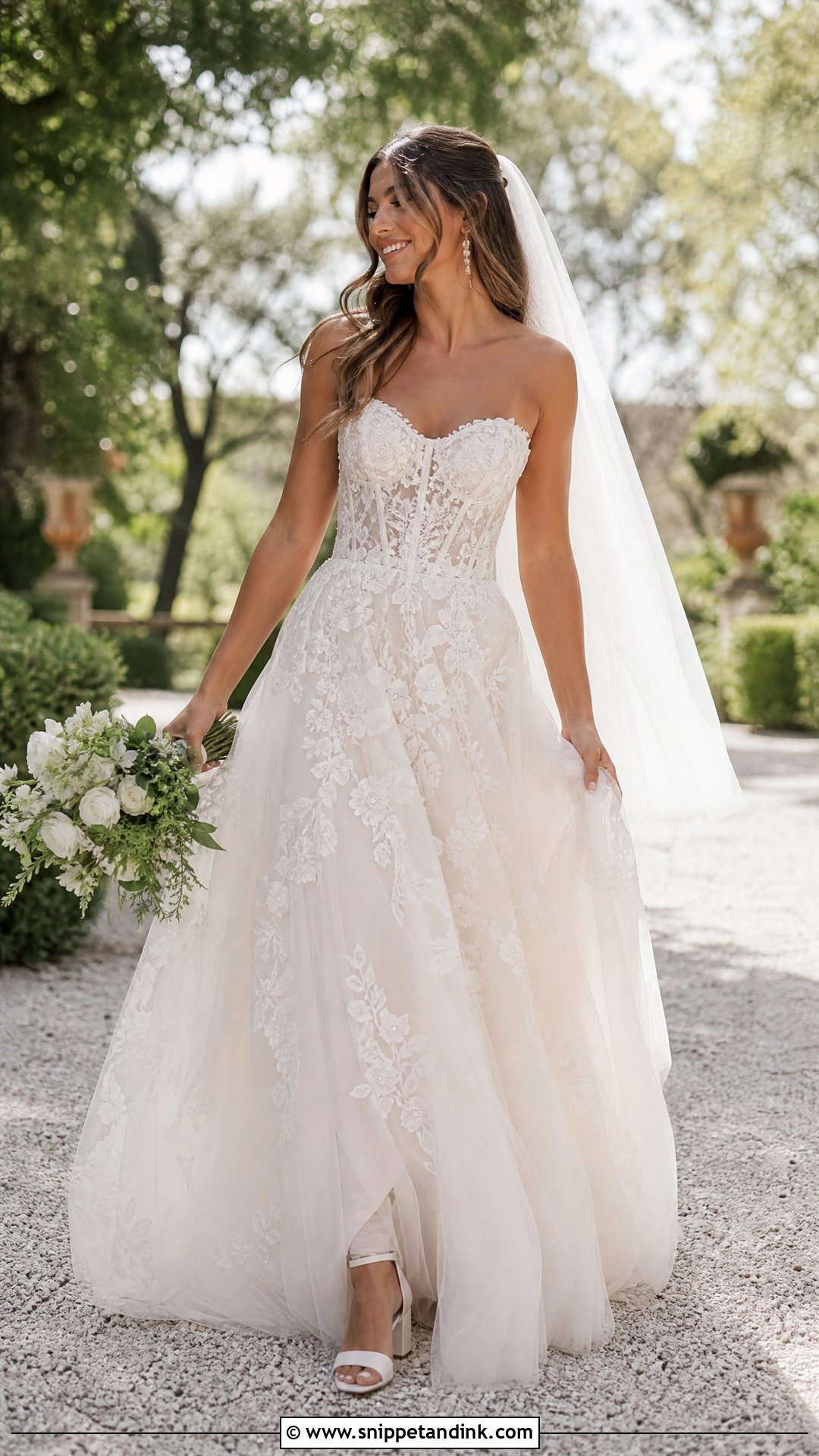
Watters mixes romantic detail with contemporary shapes, from floral tulle and soft lace to corseted bodices, fitted crepe and playful second looks. Ask which Watters line you’re looking at, since construction, design direction and price can differ between them. Order by your measurements, not your everyday clothing size. Bridal sizing runs differently, and the right base size gives your tailor something to work with. A floral A-line with block heels suits a garden; a fitted dress with a sleek bun reads modern.
19. Grace Loves Lace Wedding Dresses
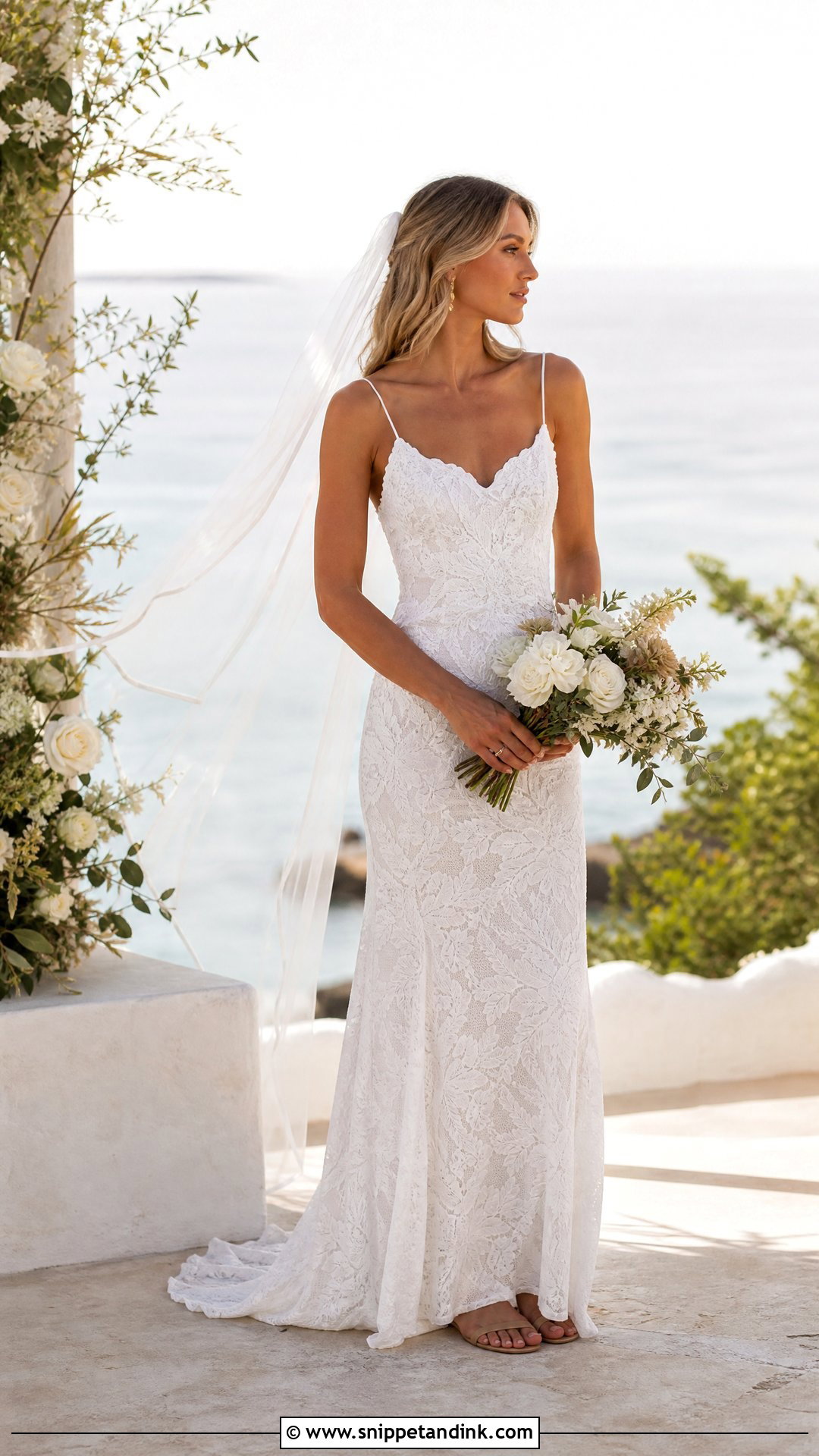
Barefoot ceremonies and open-air venues need a gown that moves, and Grace Loves Lace is closely associated with stretch lace, fluid silhouettes and an easy mood. Soft lace shows everything underneath, so I’d sort undergarments early: smooth, nude foundation pieces with no visible edges. Test how the hem behaves on grass, sand or stone, and set the length with the shoes you’ll actually wear, whether that’s sandals or nothing at all. A clean updo and refined heels sharpen it for a more formal setting.
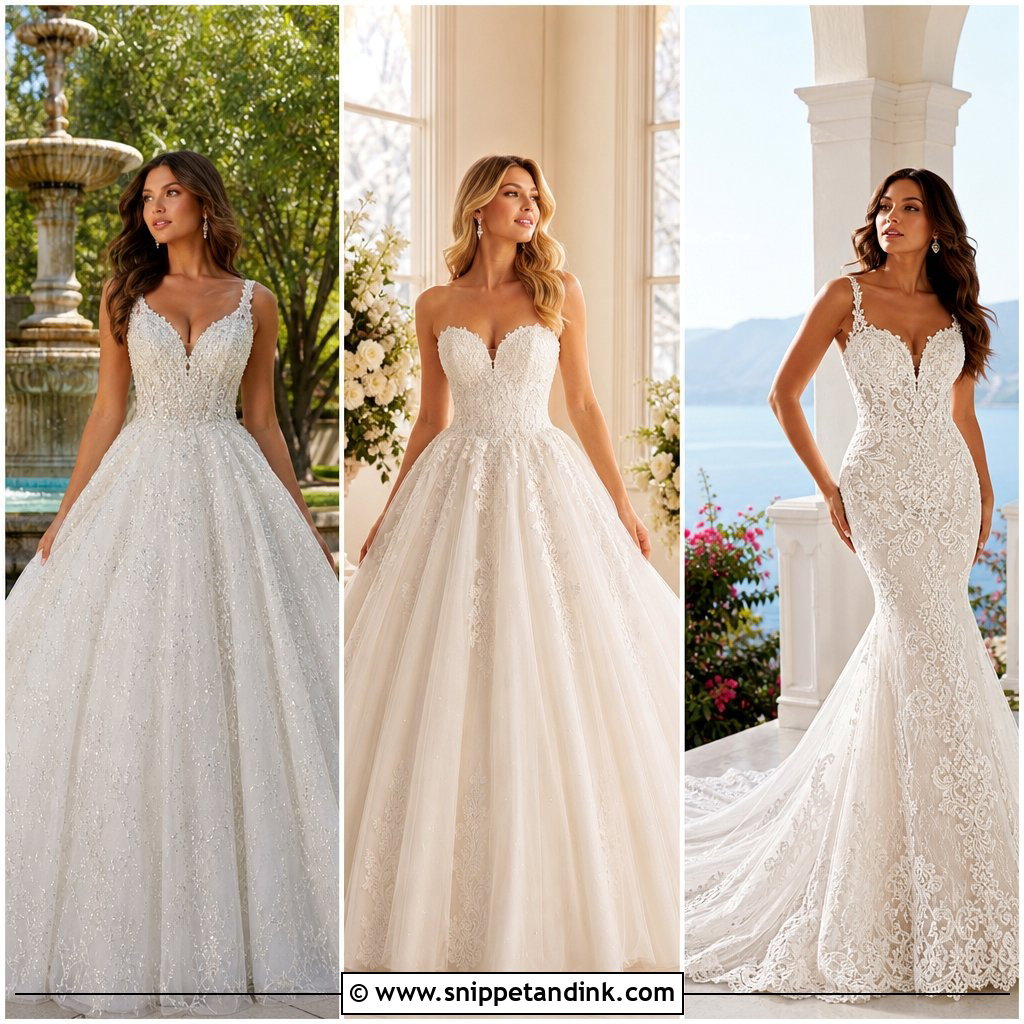
20. Vivienne Westwood Wedding Dresses
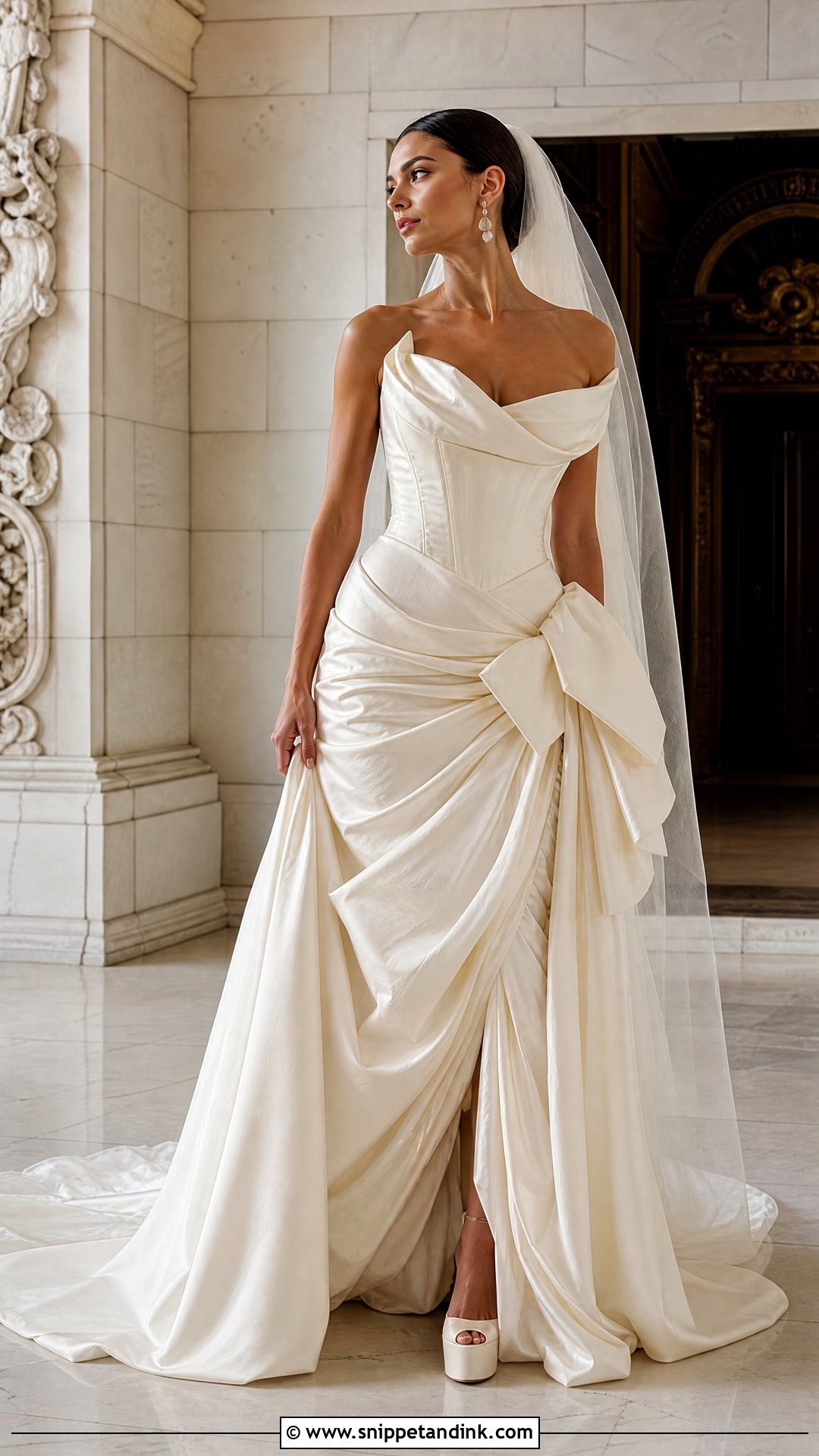
Corsetry, draping and a dramatic view of the body make Vivienne Westwood gowns instantly recognizable. From a distance a gown may look classic; up close you see asymmetric folds, sculptural necklines and unexpected volume. Fit through the corseted bodice, waist and hips is everything. Wear your planned undergarments and shoes to every fitting, and practice sitting and breathing deeply, because structure should support you, not hold you rigid through dinner. Avoid a large bouquet that hides the draping.
21. Halfpenny London Wedding Dresses
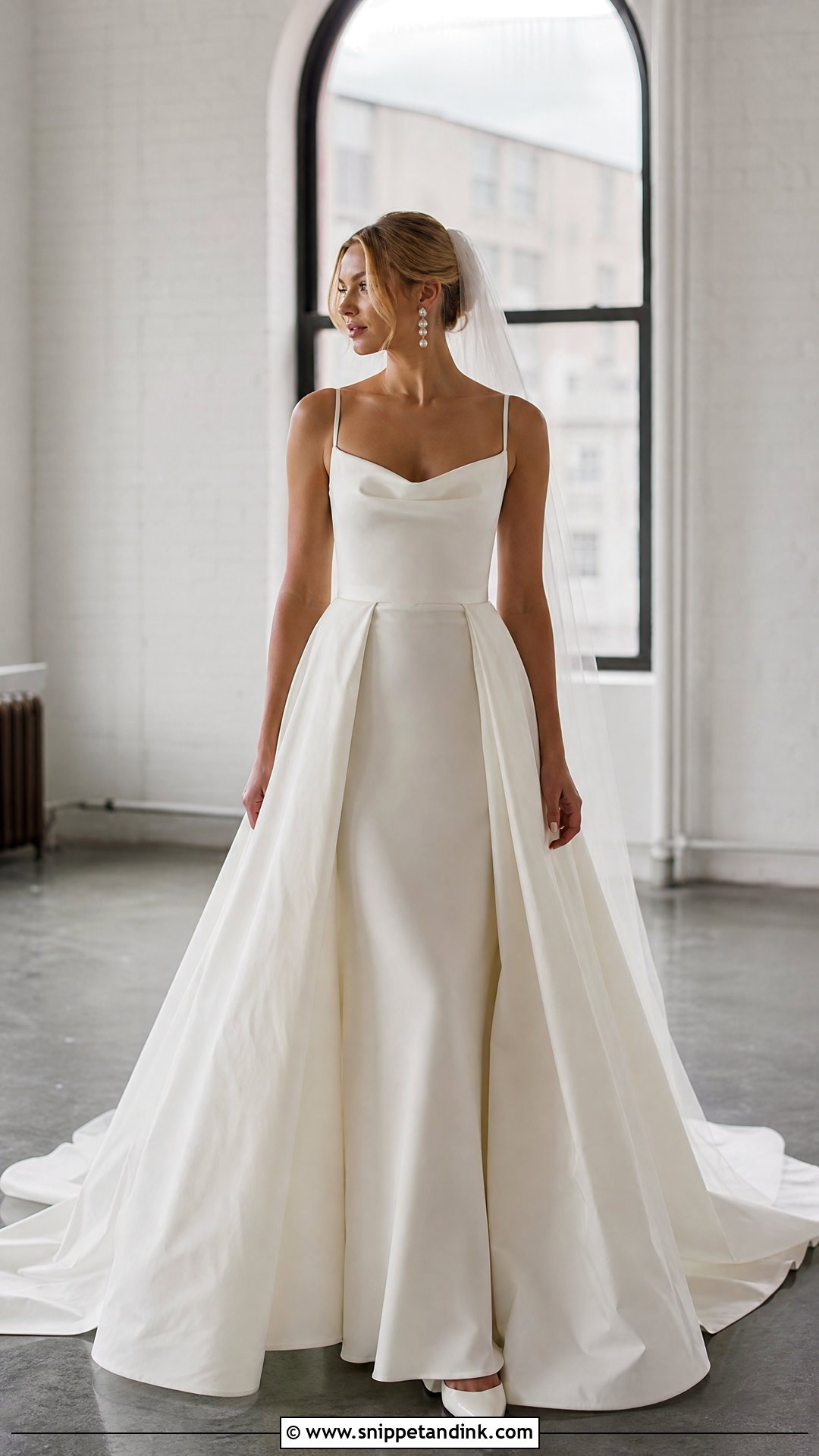
What if your outfit could change during the day? Halfpenny London builds around separates: modern layering, tailoring and couture-inspired detail. A slip dress under a full overskirt for the ceremony, then the skirt comes off for dinner; or a clean gown with dramatic sleeves or a cape. When trying separates, I have brides move in every combination and photograph each one. Check that closures stay hidden and that removing one layer doesn’t disturb the base dress. It suits city hotels and multi-space venues.
22. Emilia Wickstead Wedding Dresses
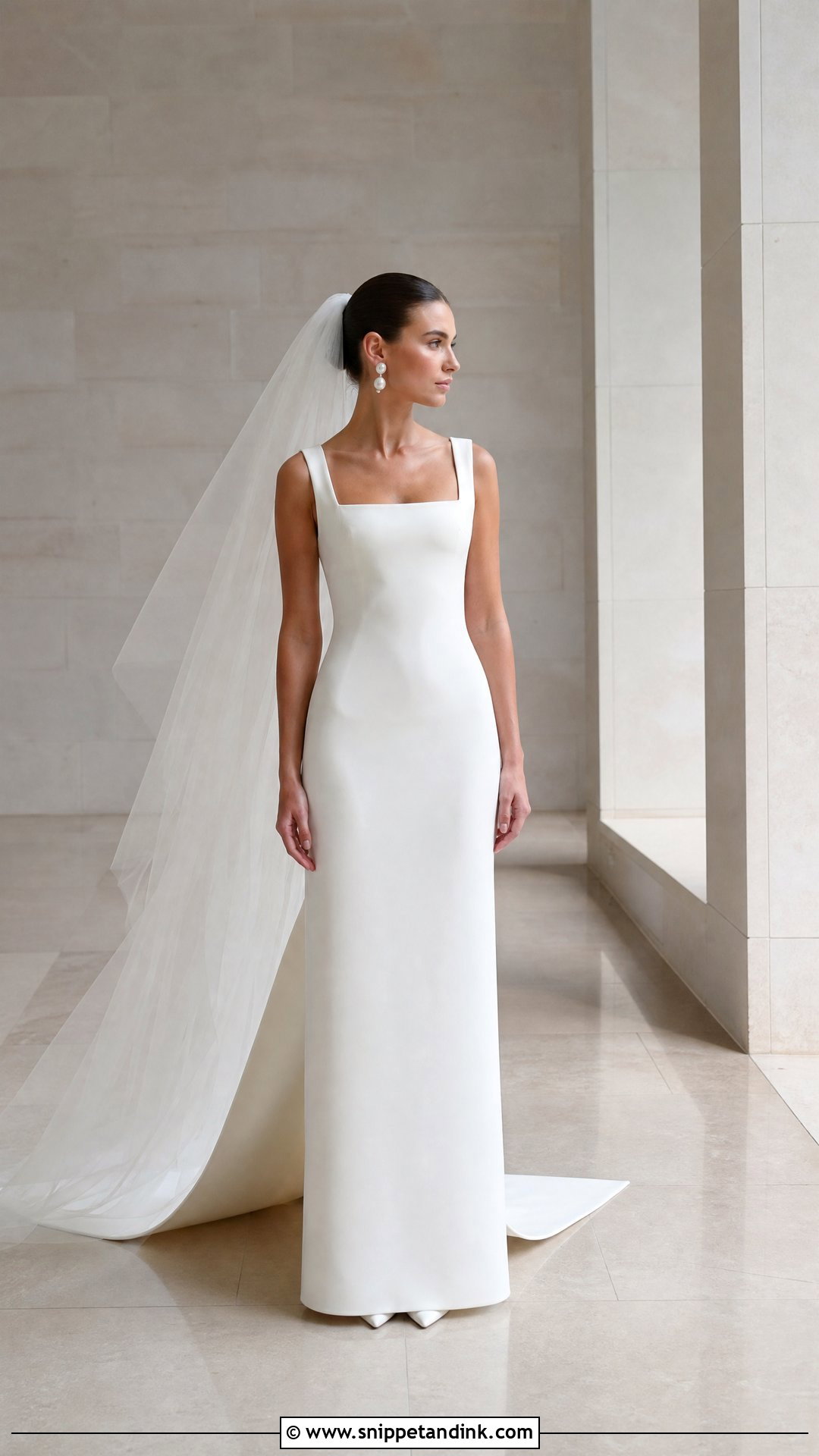
Architectural simplicity and precise tailoring are Emilia Wickstead’s signature: clean bodices, square necklines, columns and controlled volume, without heavy sparkle. Because the silhouette is so restrained, every proportion counts. Check where the waist sits, how the neckline frames your shoulders and whether the train balances with your height. Gloves, a cape or a dramatic veil can add personality, but one statement is enough. Careful pressing keeps the crisp lines on the day.
23. Viktor And Rolf Wedding Dresses
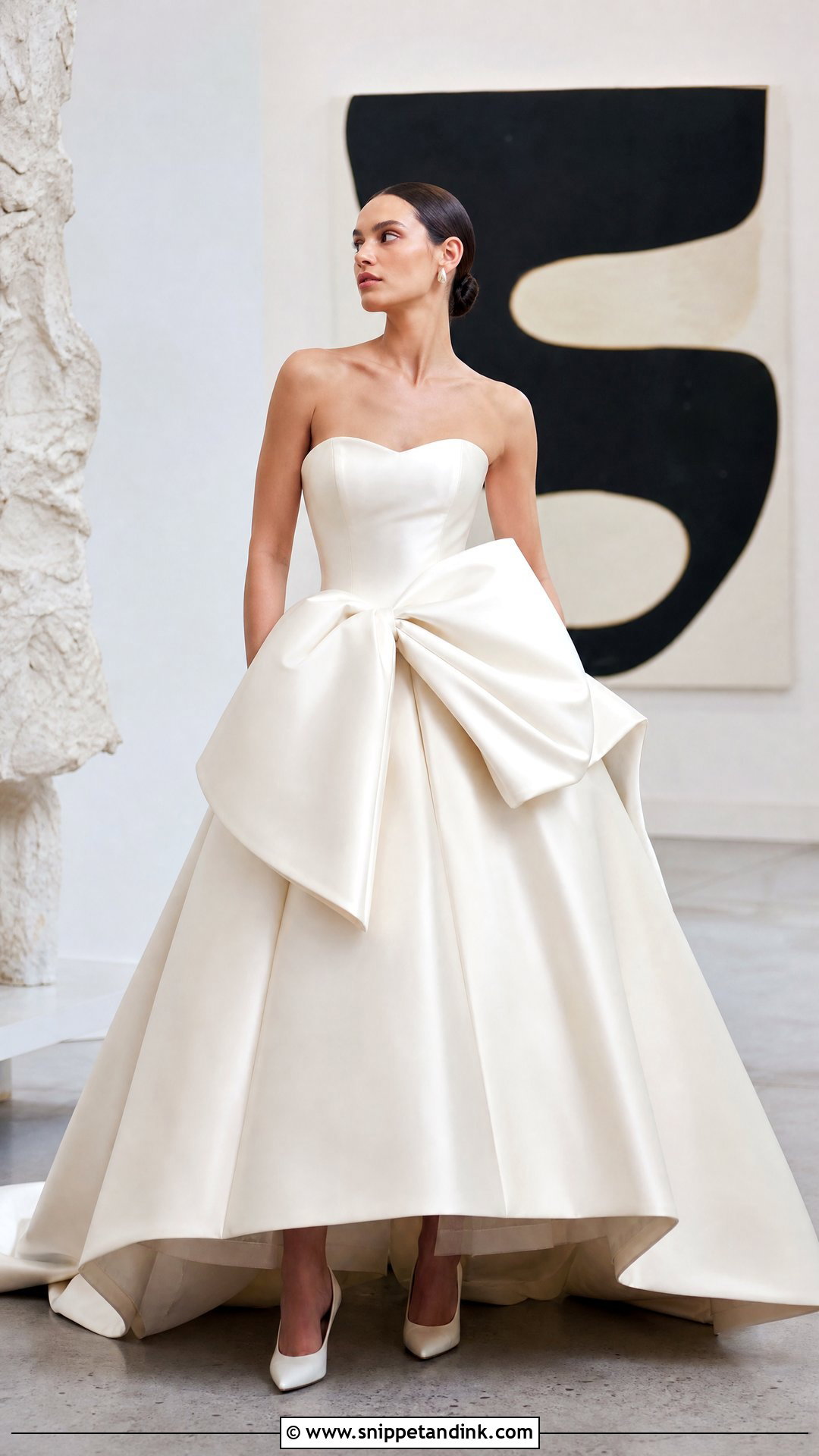
Playful is the word for Viktor and Rolf. Familiar bridal shapes come with bold proportions, sculptural bows, graphic flowers, unusual ruffles or one oversized detail. A structured mini with a big bow works as a reception look; a sculptural ball gown makes a ceremony entrance. Photograph the gown from front, side and back at fittings to see how the volume reads on camera. If there’s a large bow or flower, check it won’t clash with sitting, the veil or where you hold the bouquet.
24. Marchesa Wedding Dresses
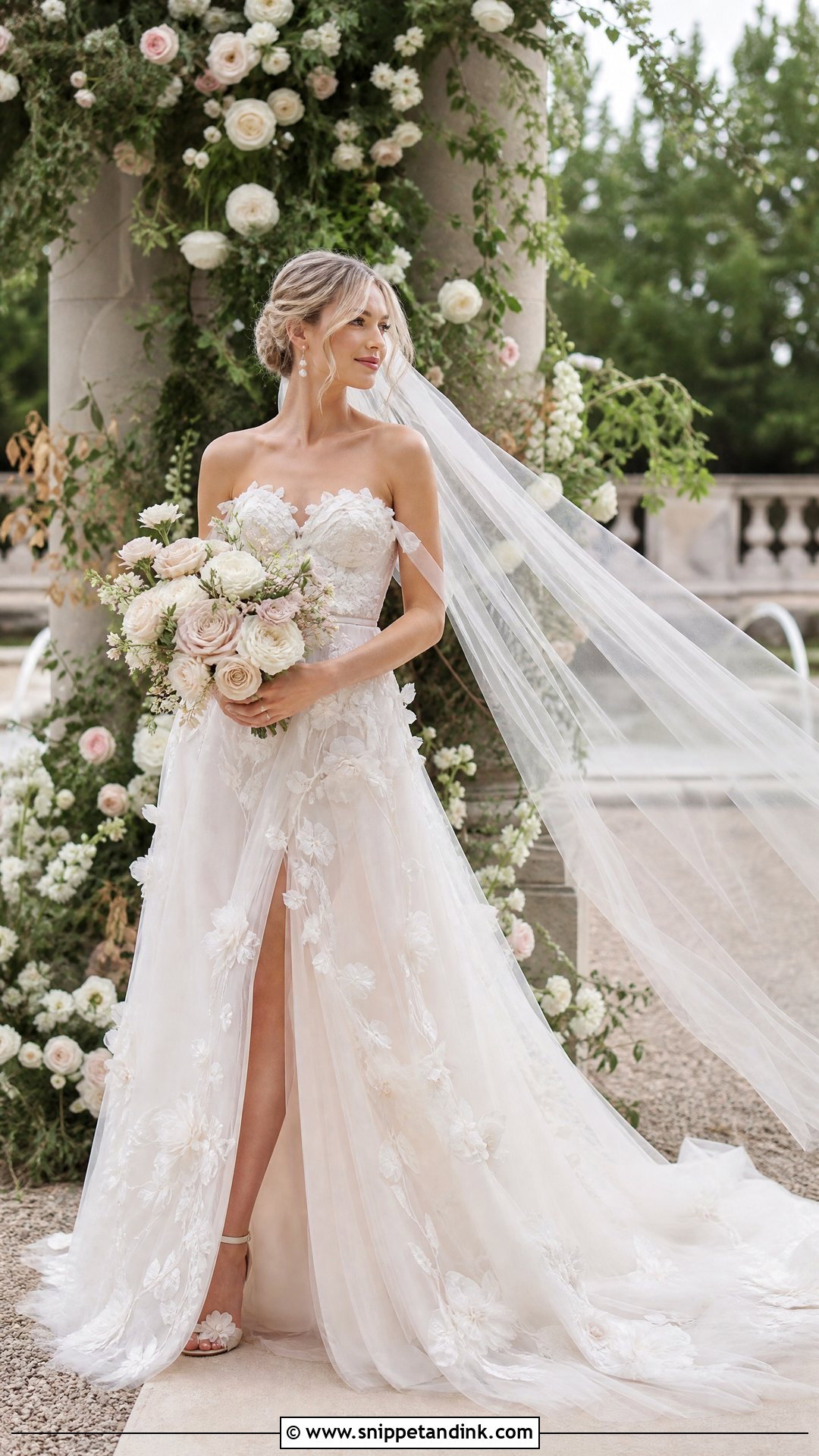
Lace, embroidery, dimensional flowers and soft movement are what brides picture with Marchesa, and the look suits gardens, estates, tents and hotel ballrooms. If the dress has extensive surface detail, keep the bag and necklace plain. Appliqué placement can emphasize the waist and lengthen the body, so I study where the motifs fall on each bride. Ask the tailor to preserve key motifs when shortening the hem or adjusting seams, and transport the gown flat or fully supported so raised flowers aren’t crushed.
25. Wiederhoeft Wedding Dresses
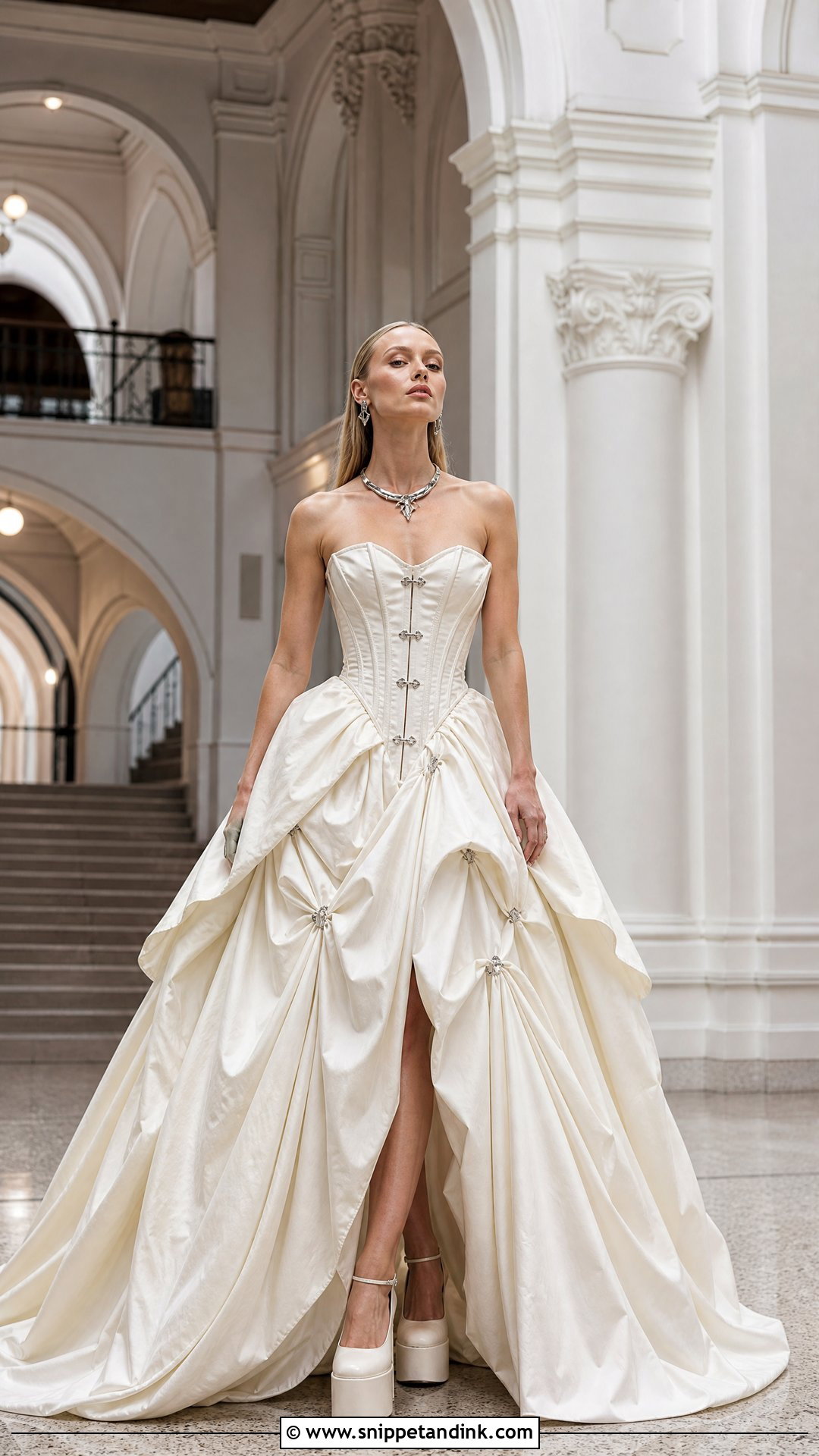
Fashion as part of the wedding’s story: that’s the Wiederhoeft approach. Theatrical corsetry, dramatic volume, metal accents, transformable construction and unconventional proportions appear in the bridal work. A structured gown might convert into a shorter reception look. Transformable designs need practice, so ask the bridal team to demonstrate every closure, removable layer and bustle, then assign one trusted person to learn it before the day. Theaters, art spaces and bold city venues suit it.
Trunk Shows, Sample Sales and Pre-Owned Designer Gowns
A designer label doesn’t always mean full price. There are three routes I point brides toward when the dream name sits outside the budget.
Trunk shows
For a few days, a salon hosts a larger part of a designer’s collection than it normally stocks. You see more styles, sometimes with a designer representative who can explain custom changes, and some salons offer a small incentive for ordering during the event. Book early; appointments fill quickly.
Sample sales
Salons sell their floor samples to make room for new collections. You buy the dress as is, so check every seam, the lining, the zip and the hem for wear and makeup marks. Budget for professional cleaning and for alterations, which can be extensive if the sample size is far from yours.
Pre-owned gowns
A worn-once designer gown can be a real bargain. Ask for the original label and style number, compare the photos with the designer’s own images, and try to see it in person or arrange a return option. Ask whether it was altered and how much seam allowance remains. A gown taken in heavily for its first bride may not let out far enough for you.
A Famous Label Matters Less Than How the Gown Is Made
The right designer suits your personality, venue, comfort needs and level of formality. Minimal crepe, romantic lace, sculptural satin, dramatic corsetry or full couture embellishment: the labels above cover all of it. Save photos of complete looks, but stay open in appointments, because fabric, construction and proportion feel different in person. Try several silhouettes, bring the right undergarments and move naturally in each gown. Ask about ordering dates, customization, alterations and bustles before deciding. A well-made gown that feels like you will always beat a name on the label.
You'll Like These Ideas:


Leave a Reply