
Vera Wang opened her first bridal salon in 1990, and the gowns from that first decade still set the terms for a lot of modern bridal design: clean lines, controlled draping, sculpted bodices, low backs and volume where you don’t expect it. When I style a client in one of these, my first question is whether she’s wearing a true archival piece or a recreation cut from similar fabrics and proportions, because that changes everything from the alteration plan to the shoe height. Older silk, lace and boning usually need some restoration before a tailor can even start. Below are twenty silhouettes I’d consider, each dressed head to toe, with the practical checks I make on every one.
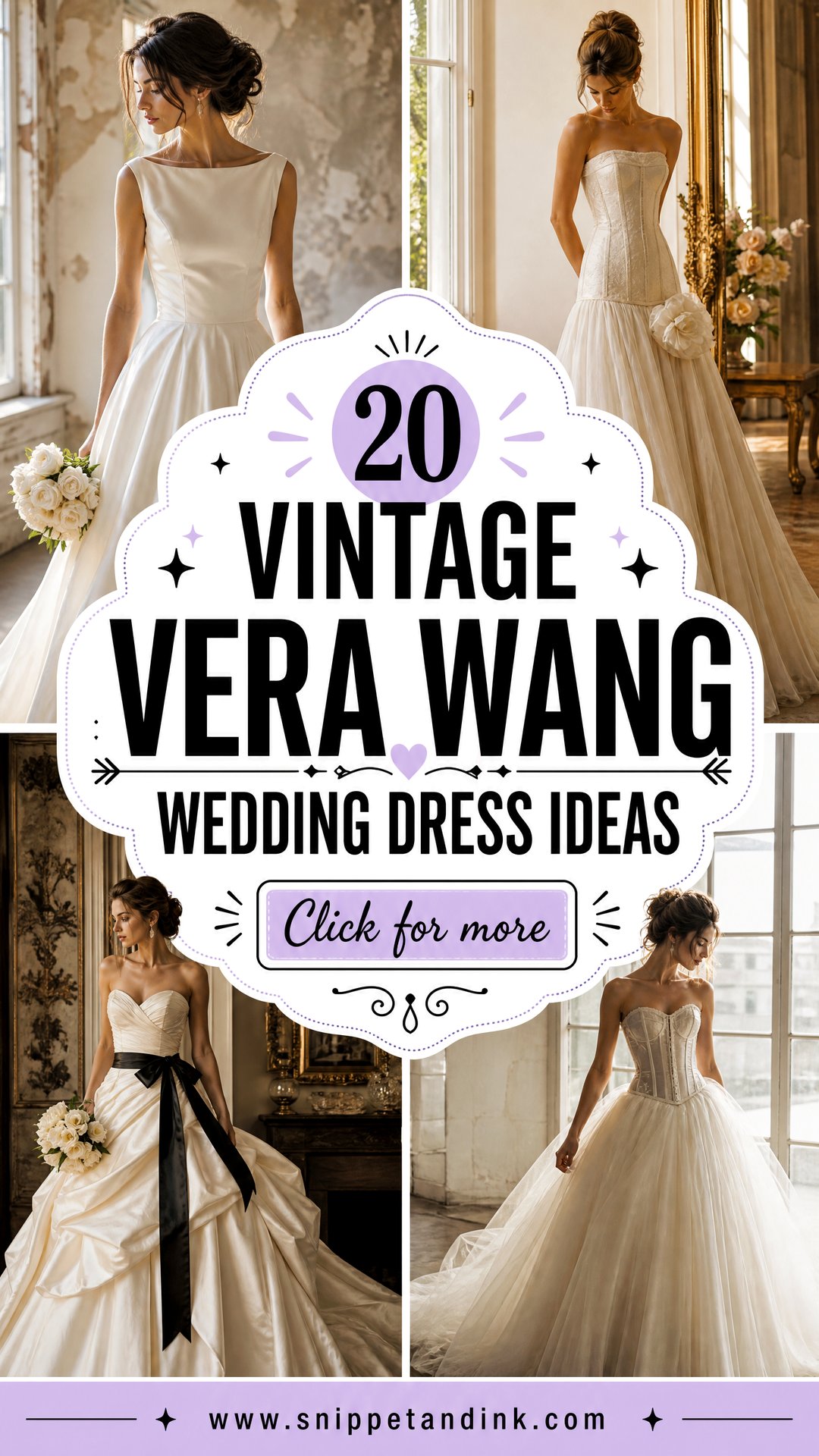
Inside Seams Tell You More Than the Listing Photos
Resale listings show the front of a gown. The inside tells me far more. When a client brings me a pre-owned or archival dress, I go through it in this order before anyone hands over money.
- The labels. Look for the designer label plus a content or care label listing the fabric. A missing content label isn’t fatal, but it means your cleaner will be guessing.
- The bodice structure. A well-made bridal bodice has boning channels, a clean lining and often a grosgrain waist stay inside. Run your fingers along each bone for bends or ends working through the fabric.
- The stress points: underarms, zipper, back closures and the hem, which drags on floors and holds grime.
- Color along old fold lines. Yellow or brown patches there usually come from oxidation or a sugary spill that was never cleaned. A specialist can sometimes lift them, but nobody can promise it.
- Measurements, not the size tag. Bridal sizing runs smaller than street sizing, and an older gown may already have been altered. Ask for bust, waist and hip, and how much seam allowance is left inside.
If a seller won’t send photos of the lining and inner seams, I treat that as the answer.
1. Strapless Satin Vera Wang Wedding Dress
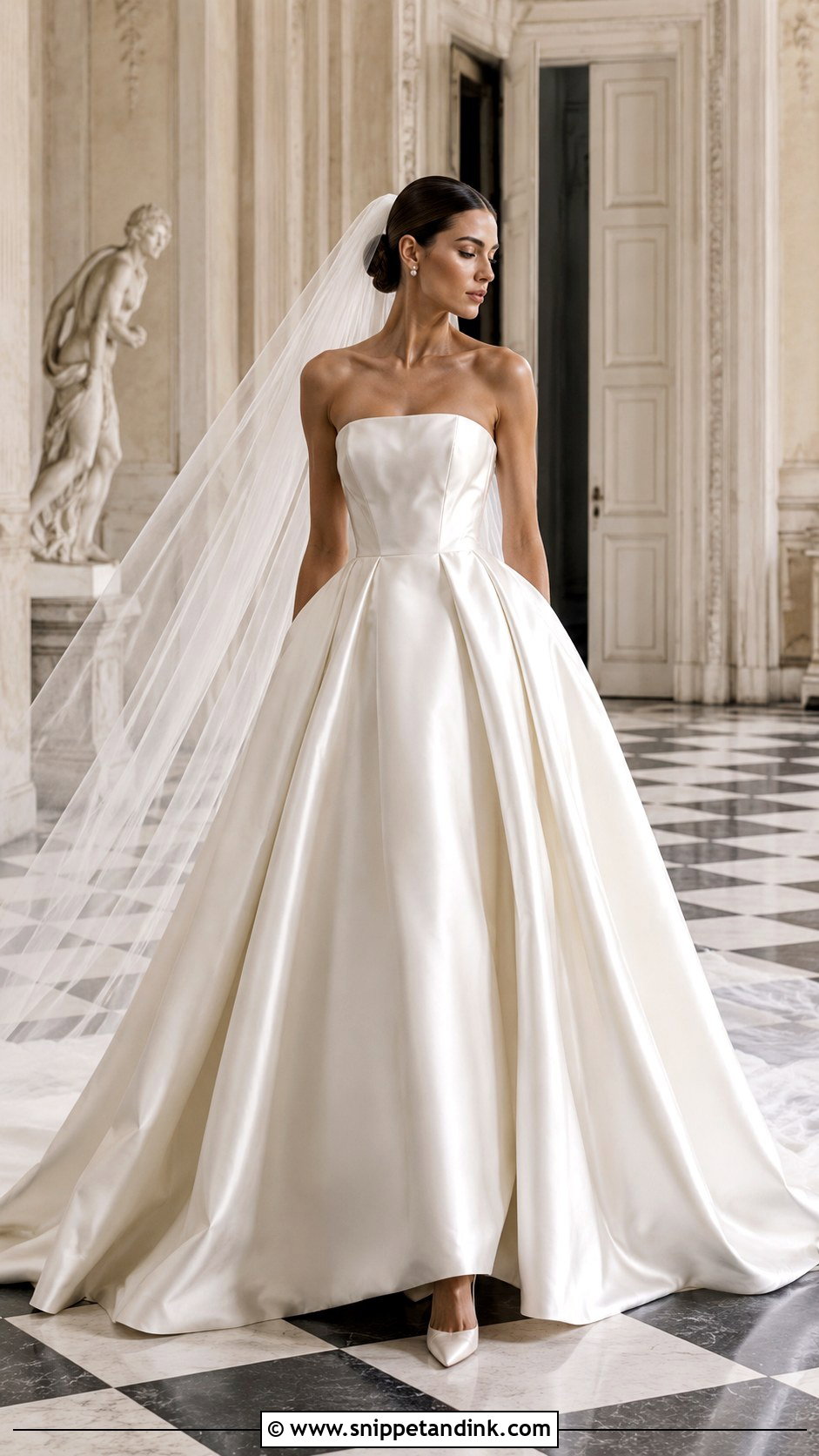
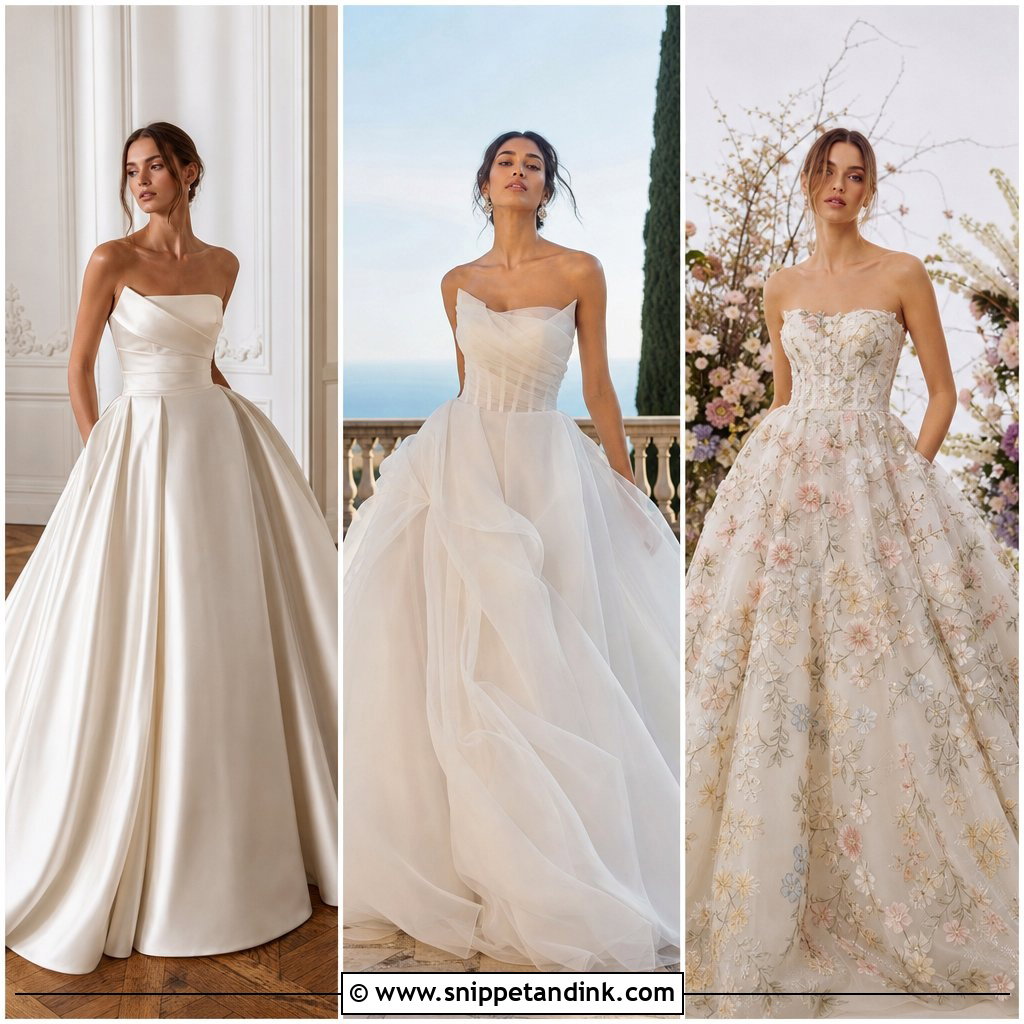
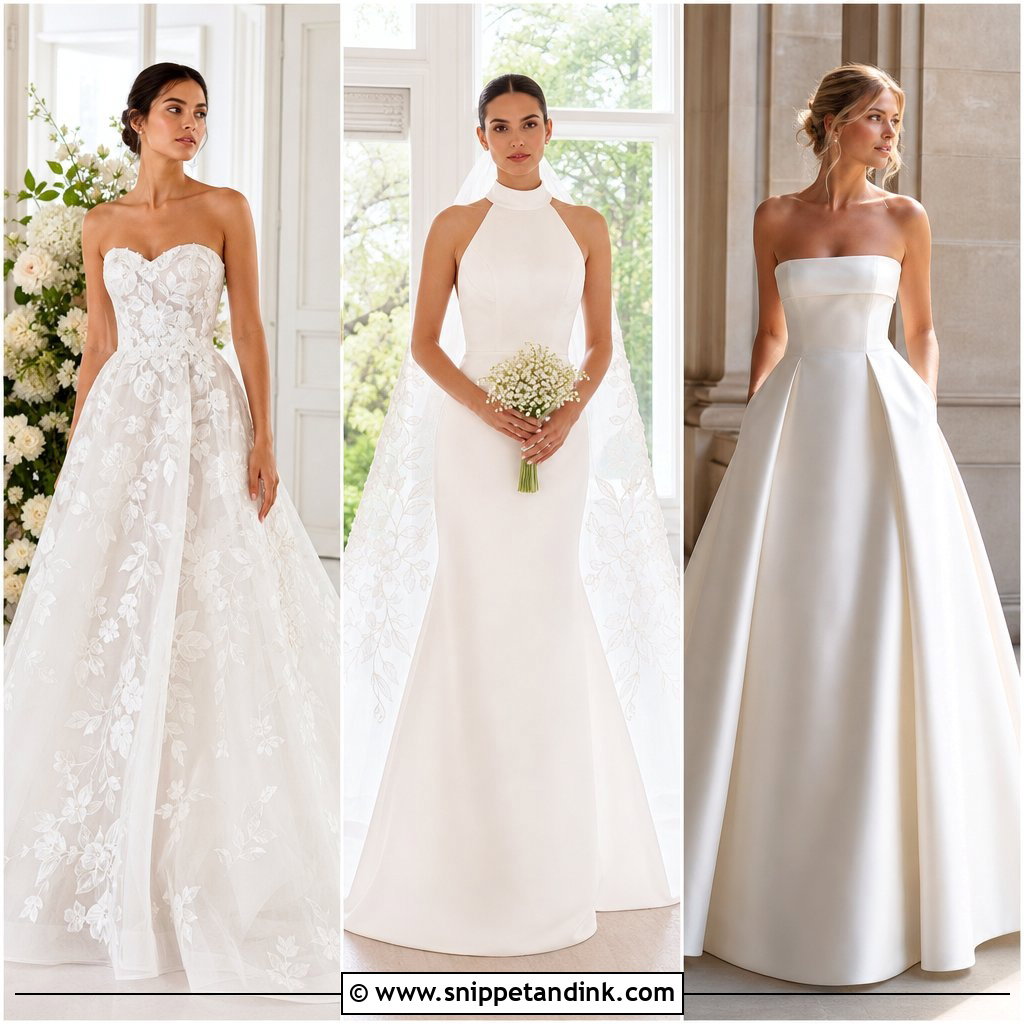
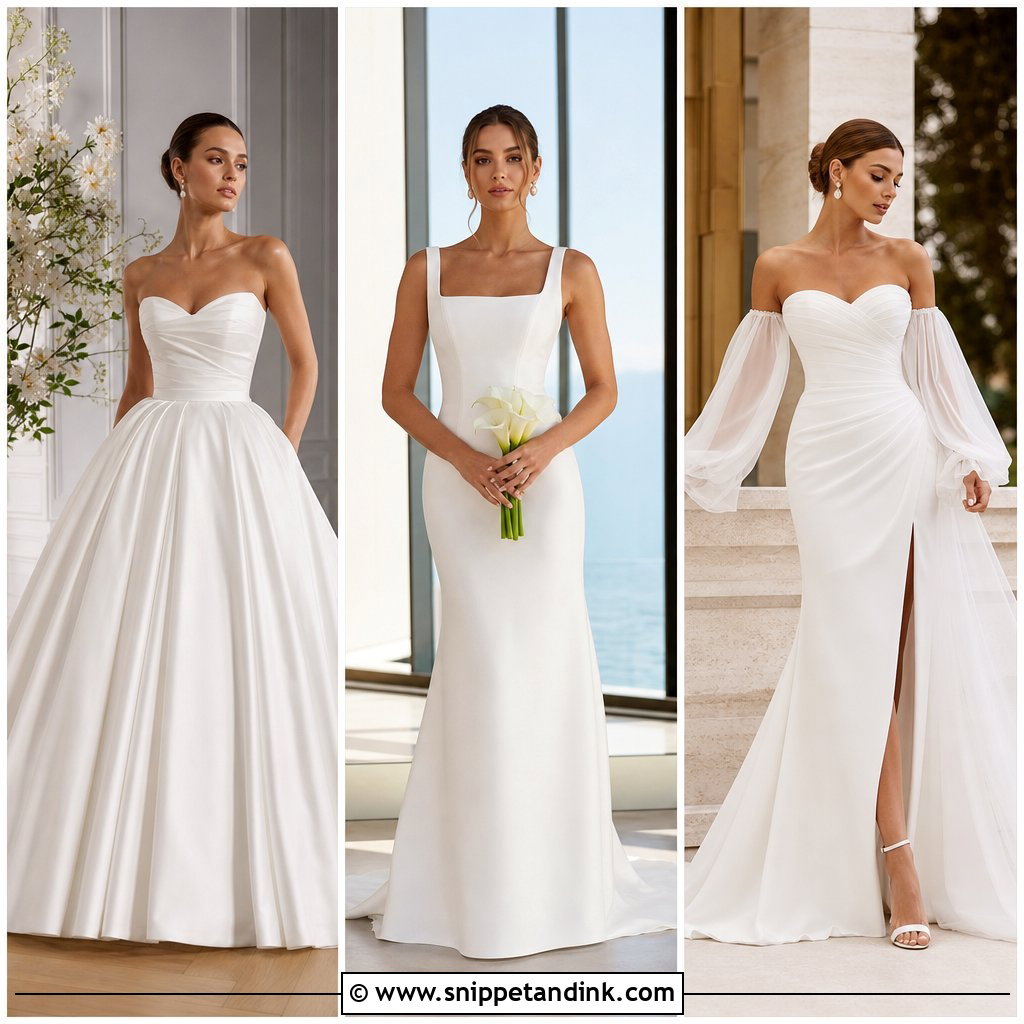
Satin is unforgiving on a strapless bodice, so I always check the boning first: if the bodice relies on your skin to stay up, it will slide by the first dance. A full satin ball gown carries the refined drama of vintage Vera Wang bridal fashion without any beading, as long as the bodice is lightly boned and the neckline sits straight or gently curved. I keep the rest quiet: pearl studs, ivory pointed pumps and a smooth cathedral veil tucked under a low bun. White roses or callas in a compact bouquet won’t fight the surface. Ask for a ballroom bustle if the train is long. Satin reflects whatever light it gets, so a hotel ballroom or historic estate with soft, bright lighting shows it best, while harsh midday sun makes every crease shine.
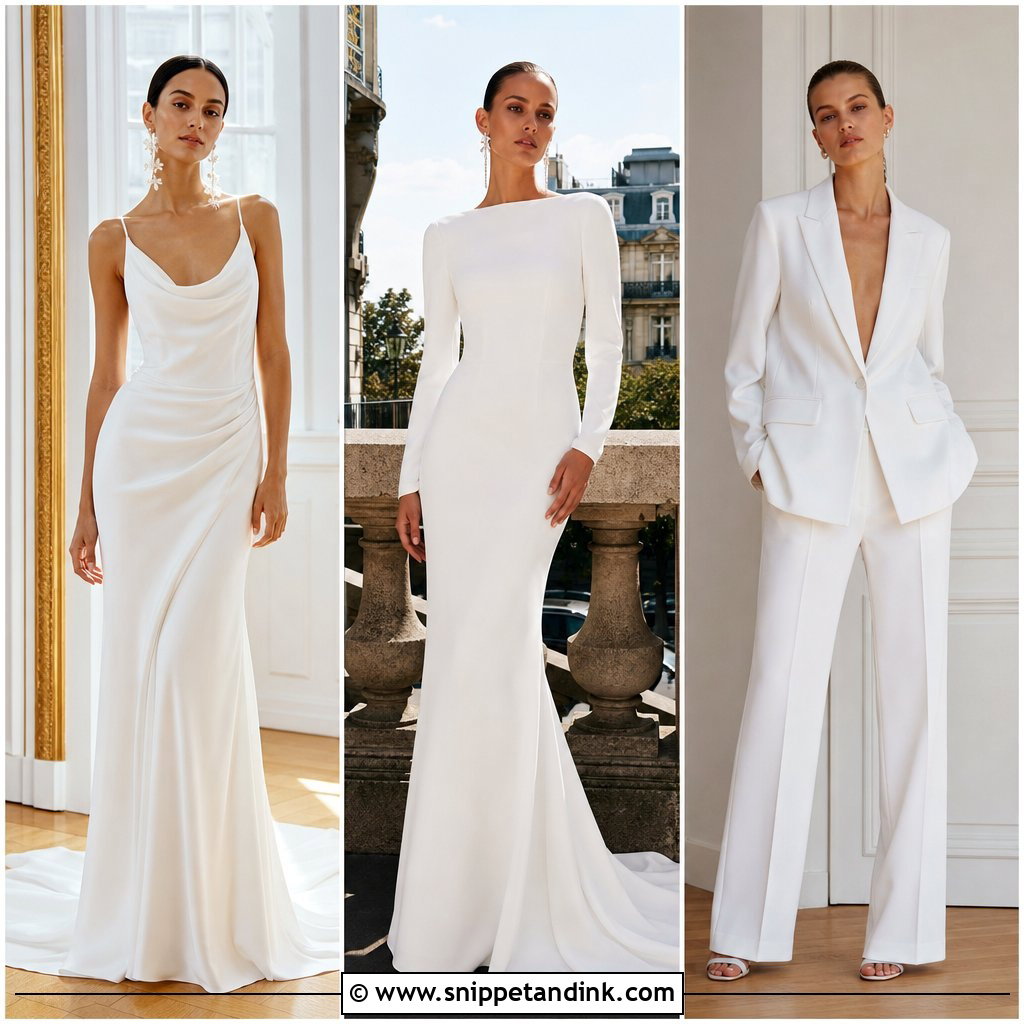
2. Silk Slip Vera Wang Wedding Dress
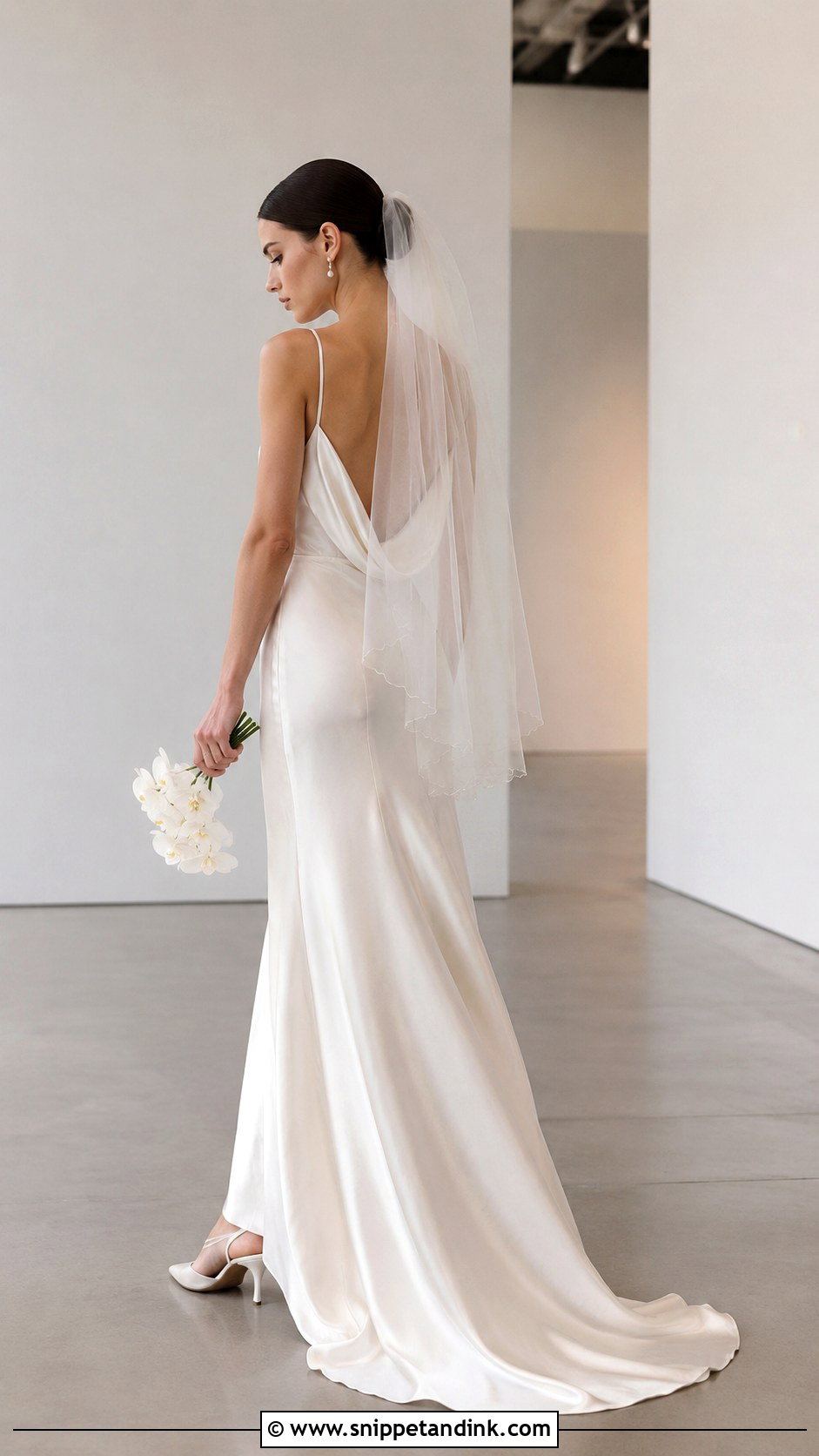
Bias-cut silk is the most honest fabric in bridal. It shows every seam, every line of underwear and every spot where it has been taken in too far. A 1990s slip gown should skim the body, not grip it, so I ask the tailor to keep the original drape even if the hip ends up a little looser. Narrow straps, a softly shaped neckline and a low back are the signature. Test your nude, no-line underwear in daylight before the fitting. Styling stays small: drop earrings, satin slingbacks, a single-layer fingertip veil, a sleek chignon and a few white orchids. One thing worth knowing is that bias silk drops as it hangs, so a careful tailor lets the gown hang for a day before marking the hem.
3. Off-The-Shoulder Vera Wang Wedding Dress
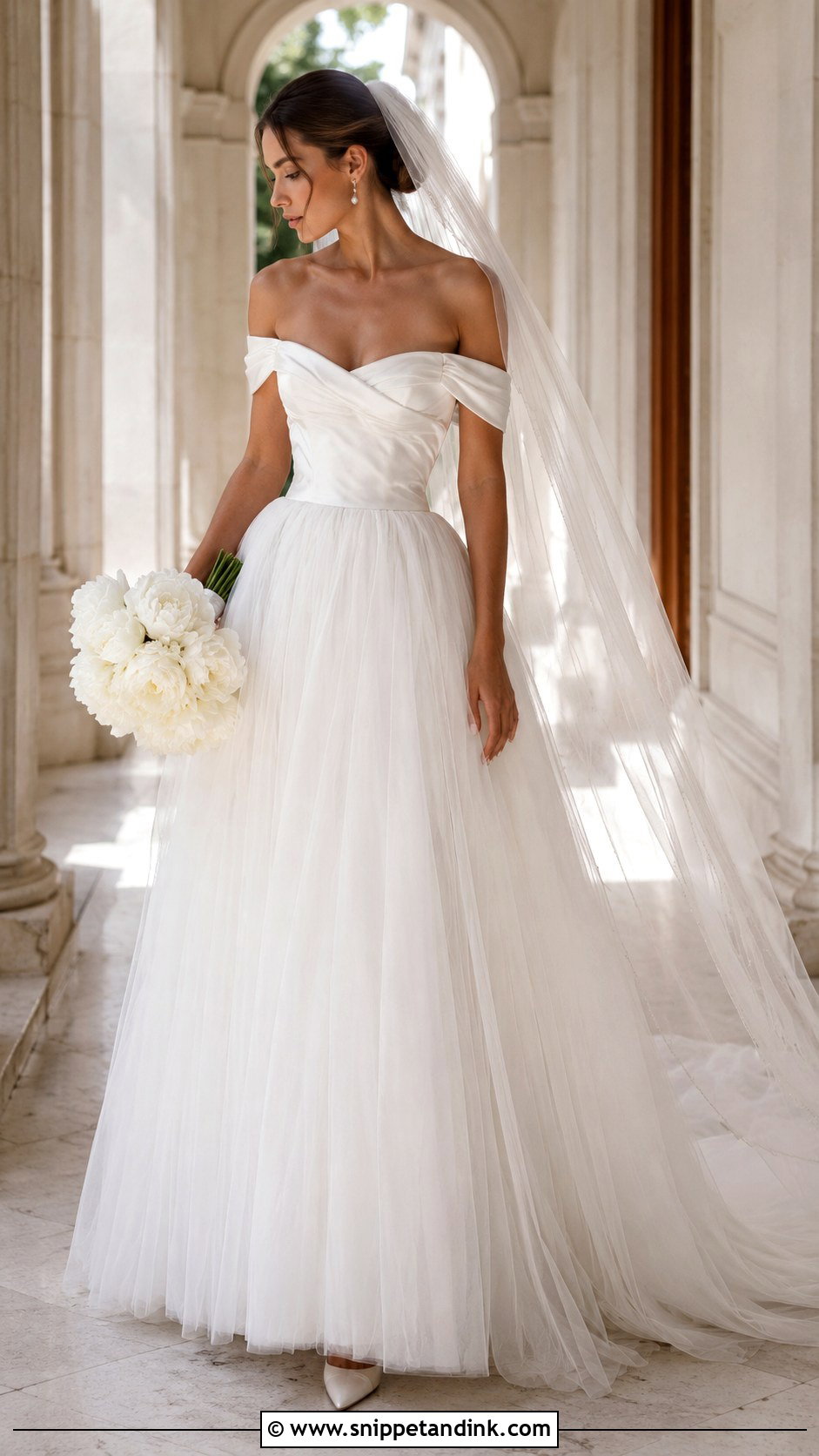
Off-the-shoulder bodices move every time you lift your arms, which is why I have hidden elastic or silicone grip tape added along the inside edge during alterations. The early-1990s version pairs a fitted satin bodice with a full tulle or organza skirt, and the neckline either folds softly across the shoulders or drops into narrow draped sleeves. Hug someone at your fitting. If the neckline climbs, it needs more work. Pearl-and-diamond earrings, low satin pumps and a long raw-edge veil are enough, with a loose low bun and a couple of face-framing waves so it doesn’t turn stiff. A rounded posy of white peonies and greenery suits the shape.
4. Basque Waist Vera Wang Wedding Dress
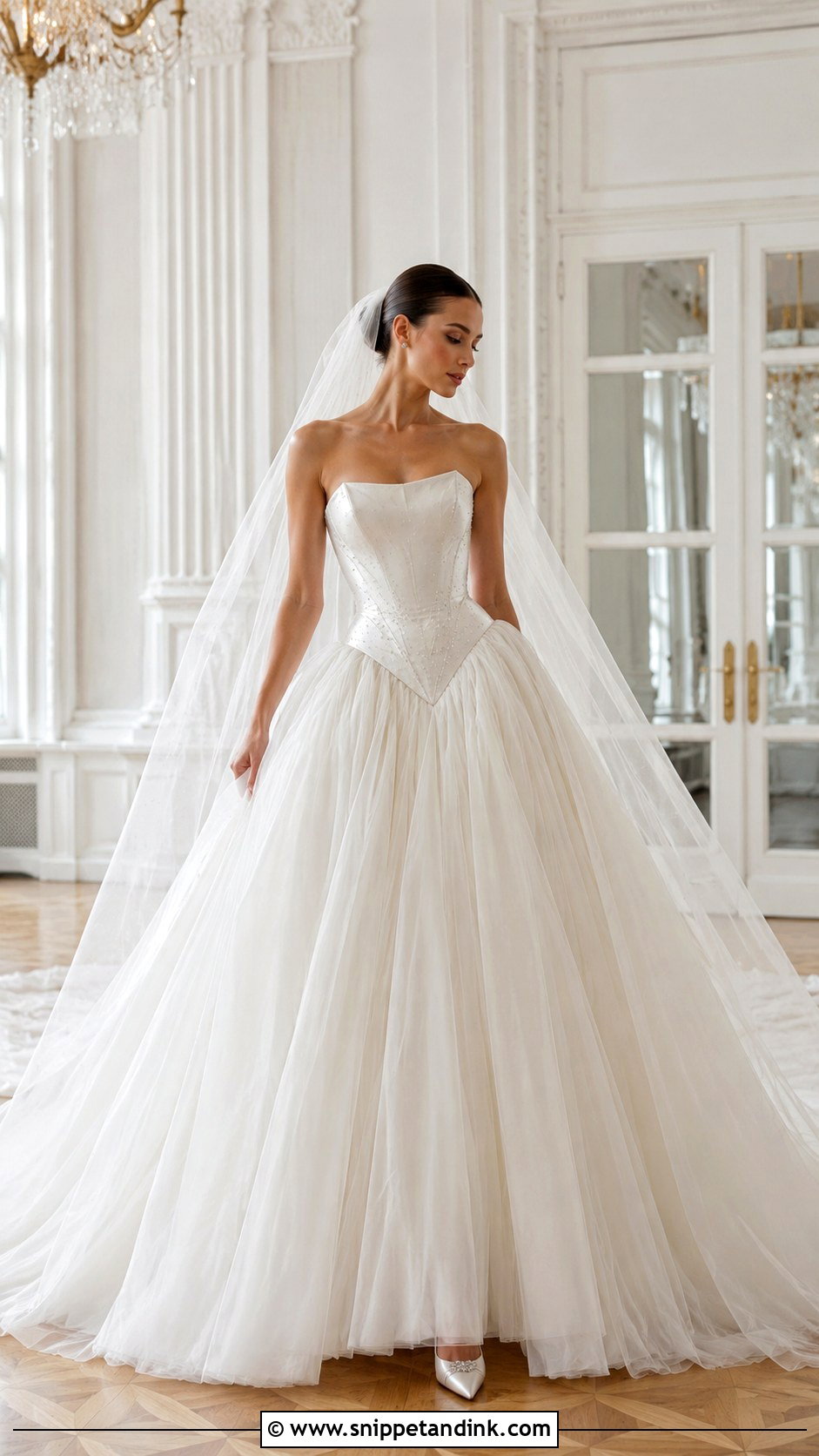
The point of a Basque waist lives or dies by where the V lands. Set it an inch too low and it shortens the legs; set it too high and it reads as an ordinary waist. I have clients sit, stand and walk before the seam is finalized, especially on an original Vera Wang, where unpicking the same seam twice weakens old silk. The bodice dips into a soft V at the center before meeting a voluminous tulle or silk faille skirt. Strapless is the cleanest version, though narrow straps help if you want support. Style it with a plain cathedral veil, crystal studs, pointed ivory heels and a small structured handbag for portraits. Skip the necklace. A smooth bun keeps attention on that sculpted waistline.
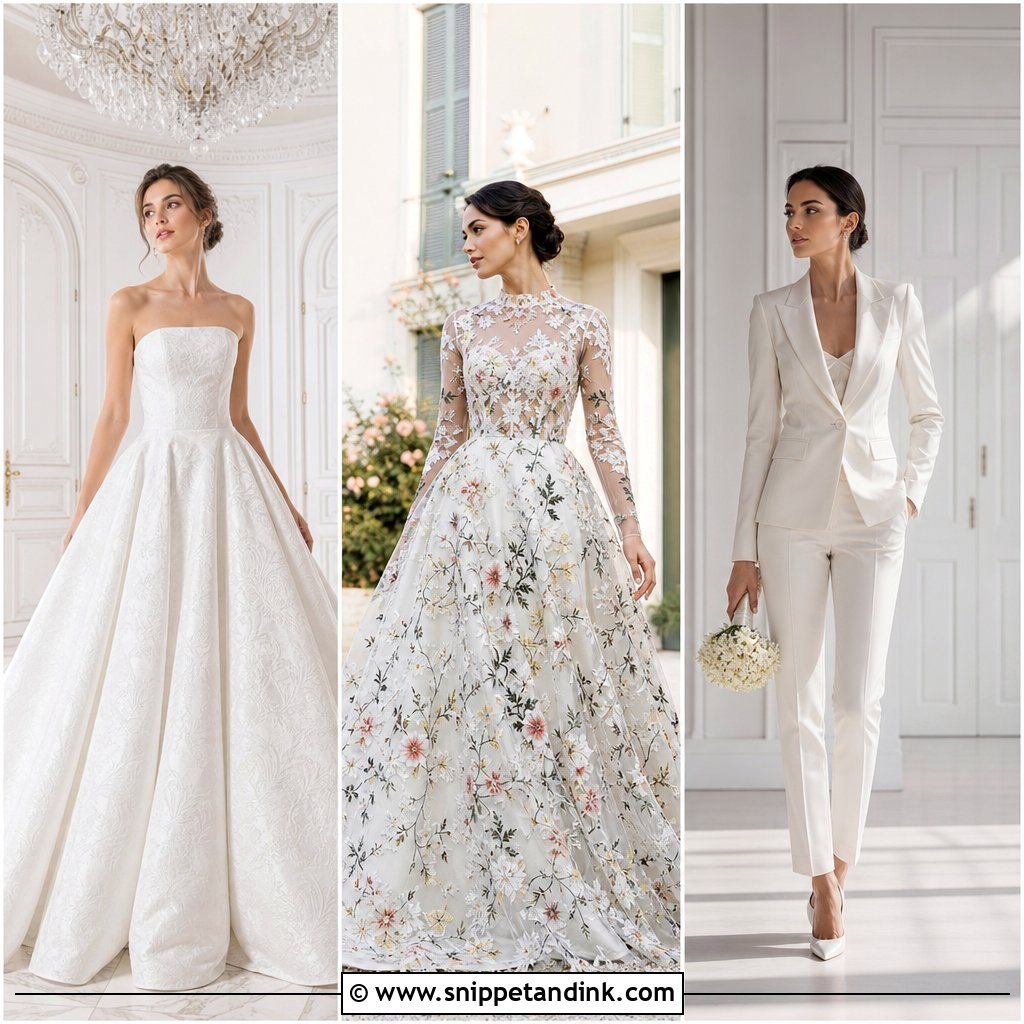
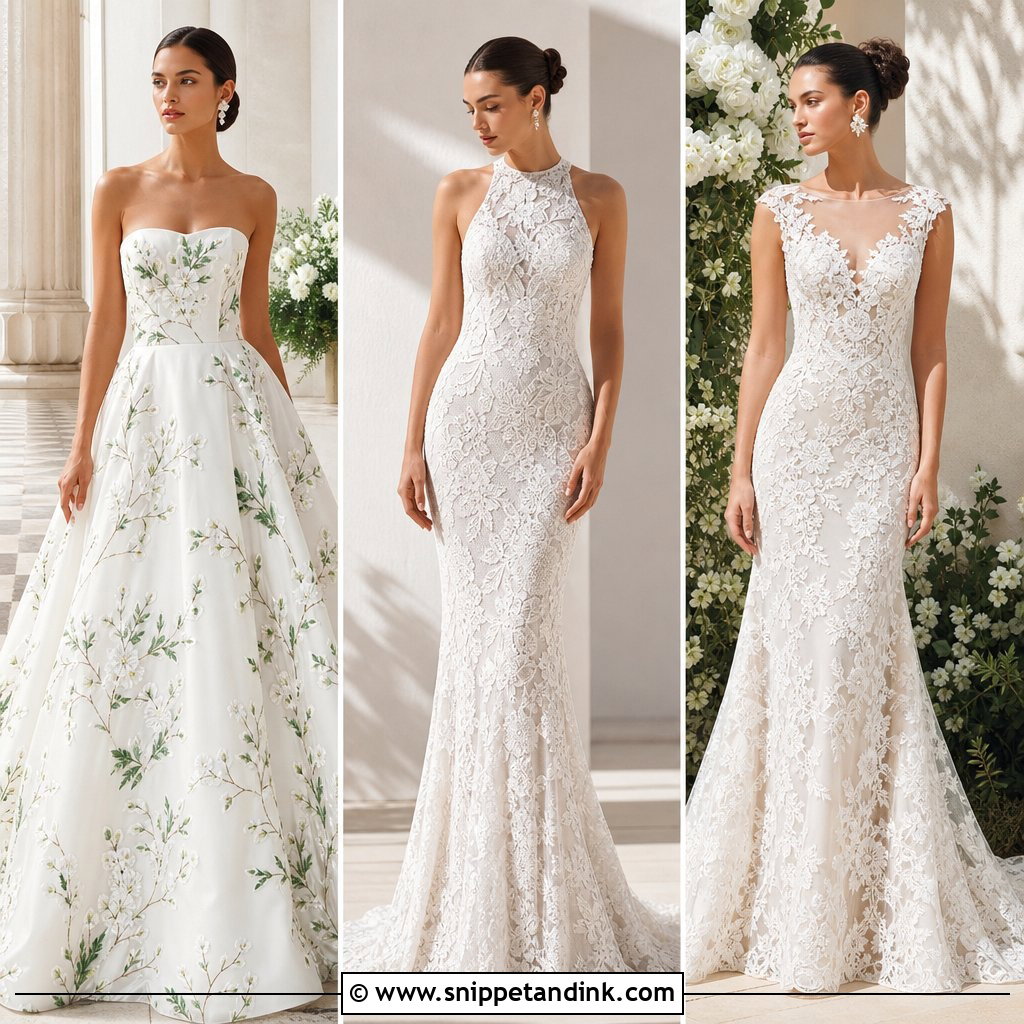
5. Chantilly Lace Vera Wang Wedding Dress
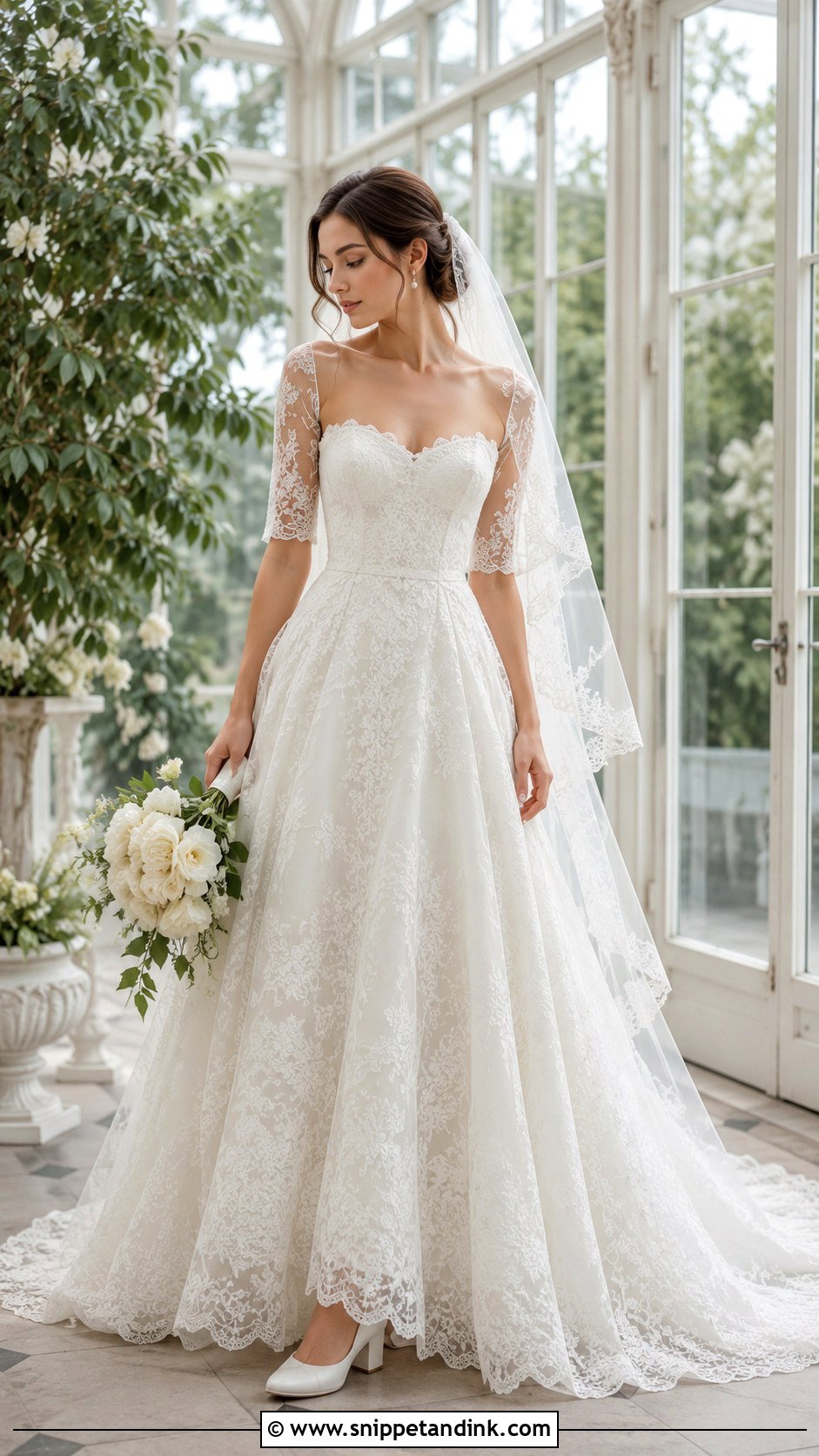
Chantilly is a fine, flat lace worked on a delicate net ground, which is exactly why it ages badly at stress points. Before anyone buys a vintage lace gown, I turn it inside out and look at the underarms, zipper, hem and sleeve seams, because that’s where the net tears first. This A-line has a sweetheart lining, a fine lace overlay and a softly fitted bodice, with sheer elbow-length or long sleeves if you want coverage. Repeat one lace motif on the veil edge rather than matching everything. Pearl earrings, satin block heels, a low twist with gentle waves and white garden roses with trailing greenery finish it. Torn lace belongs with a restoration specialist who can patch the net invisibly; ordinary machine stitching will always show.
6. Bateau Neck Vera Wang Wedding Dress
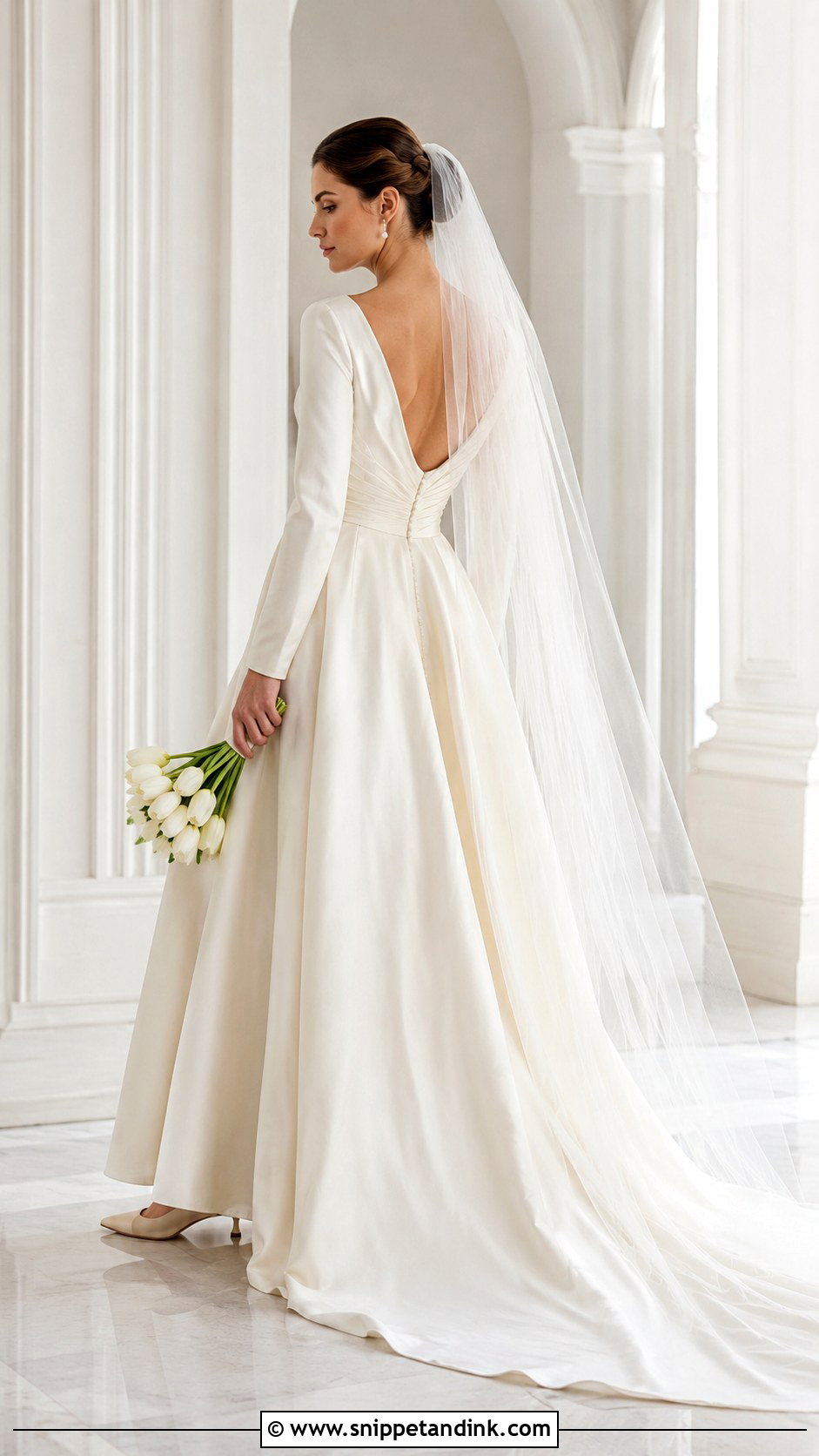
A bateau neckline runs almost shoulder to shoulder, so it frames the collarbones and makes the shoulders read slightly broader. That flatters narrow or sloping shoulders. If yours are already broad, I’d choose the sleeveless version over long sleeves. Silk satin or silk crepe keeps the line clean through a fitted upper body, natural waist and flowing A-line skirt. Pearl button earrings, low kitten heels, a chapel veil under a neat French twist and a few white tulips are all it needs. If the back drops low, lean forward at your fitting and watch the front: a bateau gapes the moment the back loses tension, so the internal support has to hold.
7. Drop Waist Vera Wang Wedding Dress
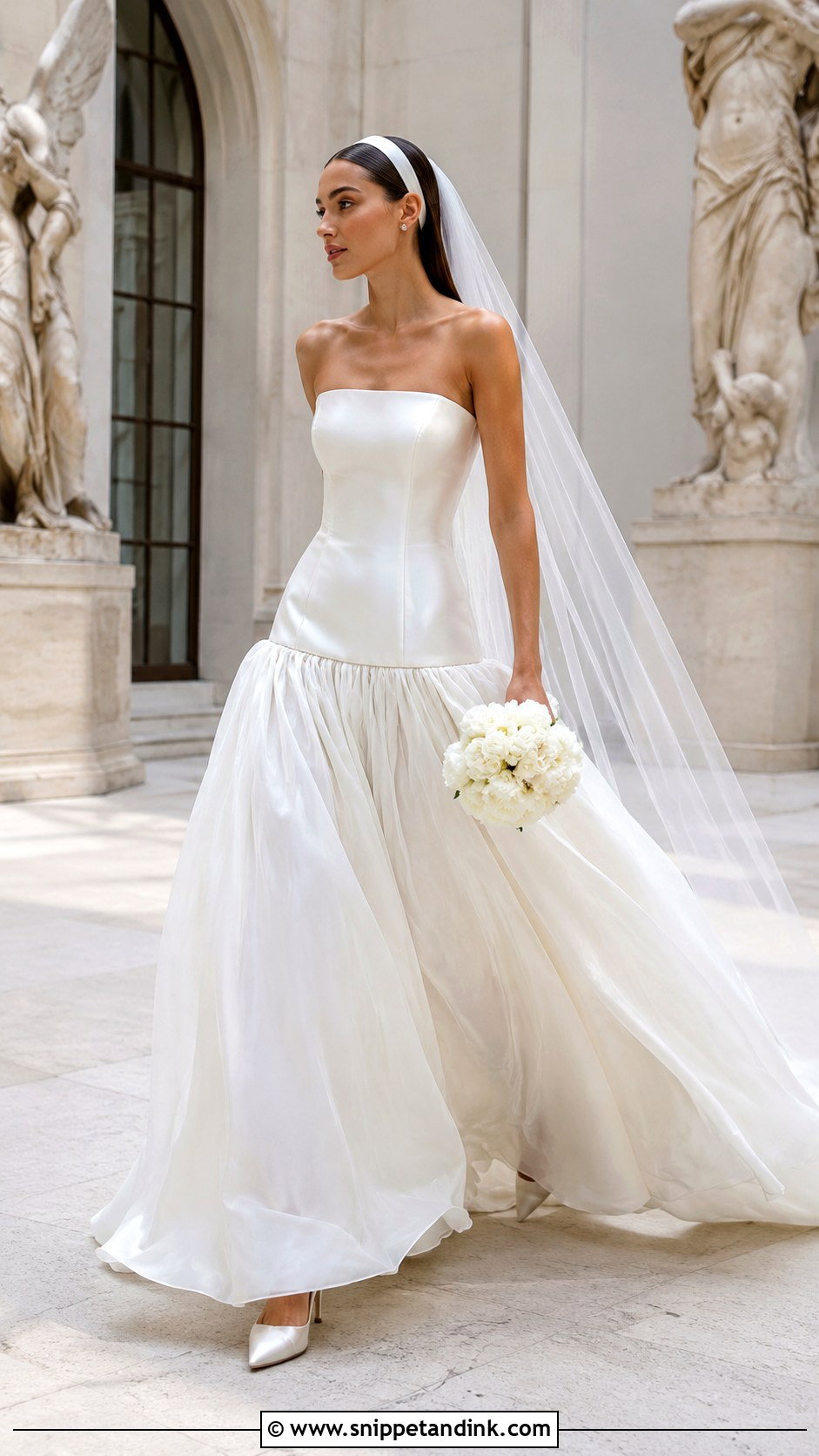
Drop waists are torso math. On a long torso, a skirt that starts near the upper hip looks lean and deliberate. On a shorter torso the same seam can make the legs vanish, and I’d suggest a moderate drop instead. Look for a fitted satin bodice with subtle seaming and tulle or organza layers that move when you walk. A narrow ribbon headband, small diamond studs, pointed pumps and a long sheer veil keep the look slim. A cascading bouquet hides the waistline unless it’s compact and held low. Ask the tailor to check the skirt placement from the side and back as well as the front, because half an inch changes the whole proportion.
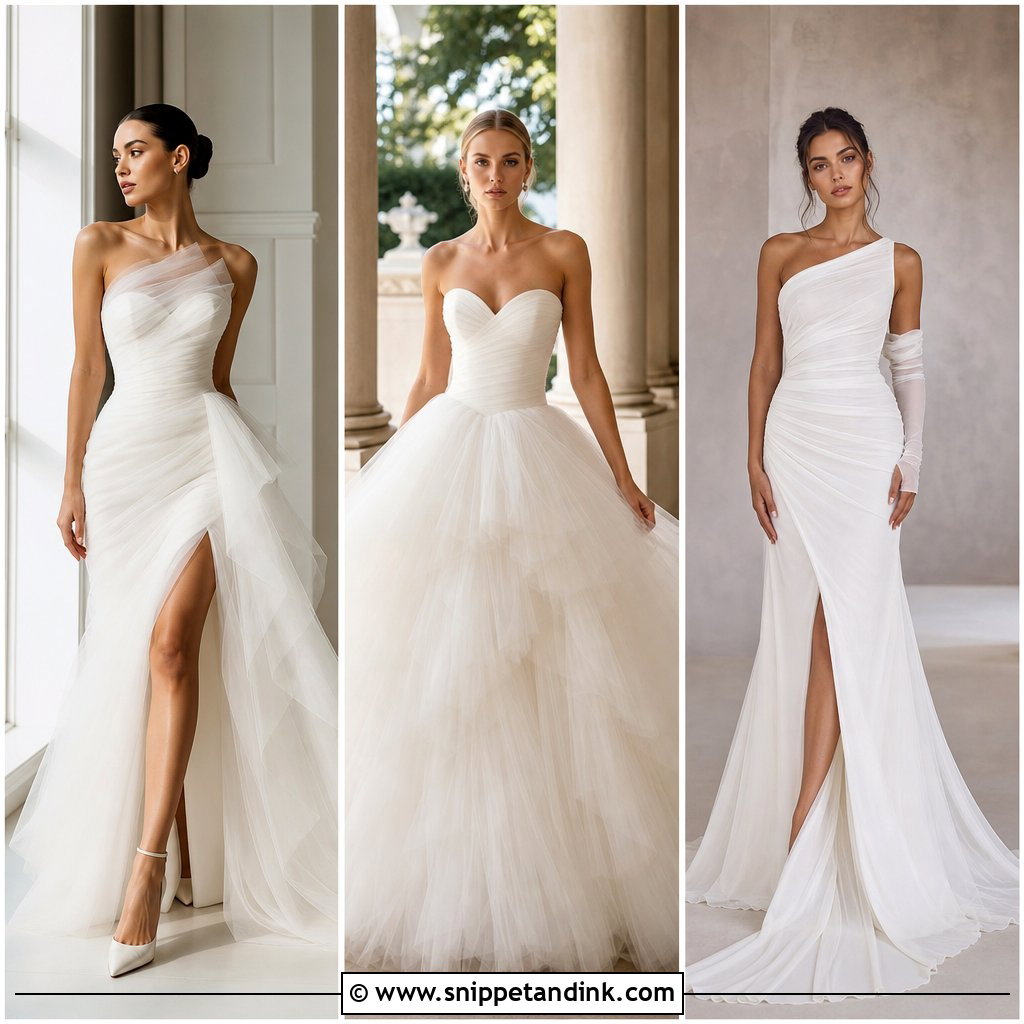
8. Asymmetrical Draped Vera Wang Wedding Dress
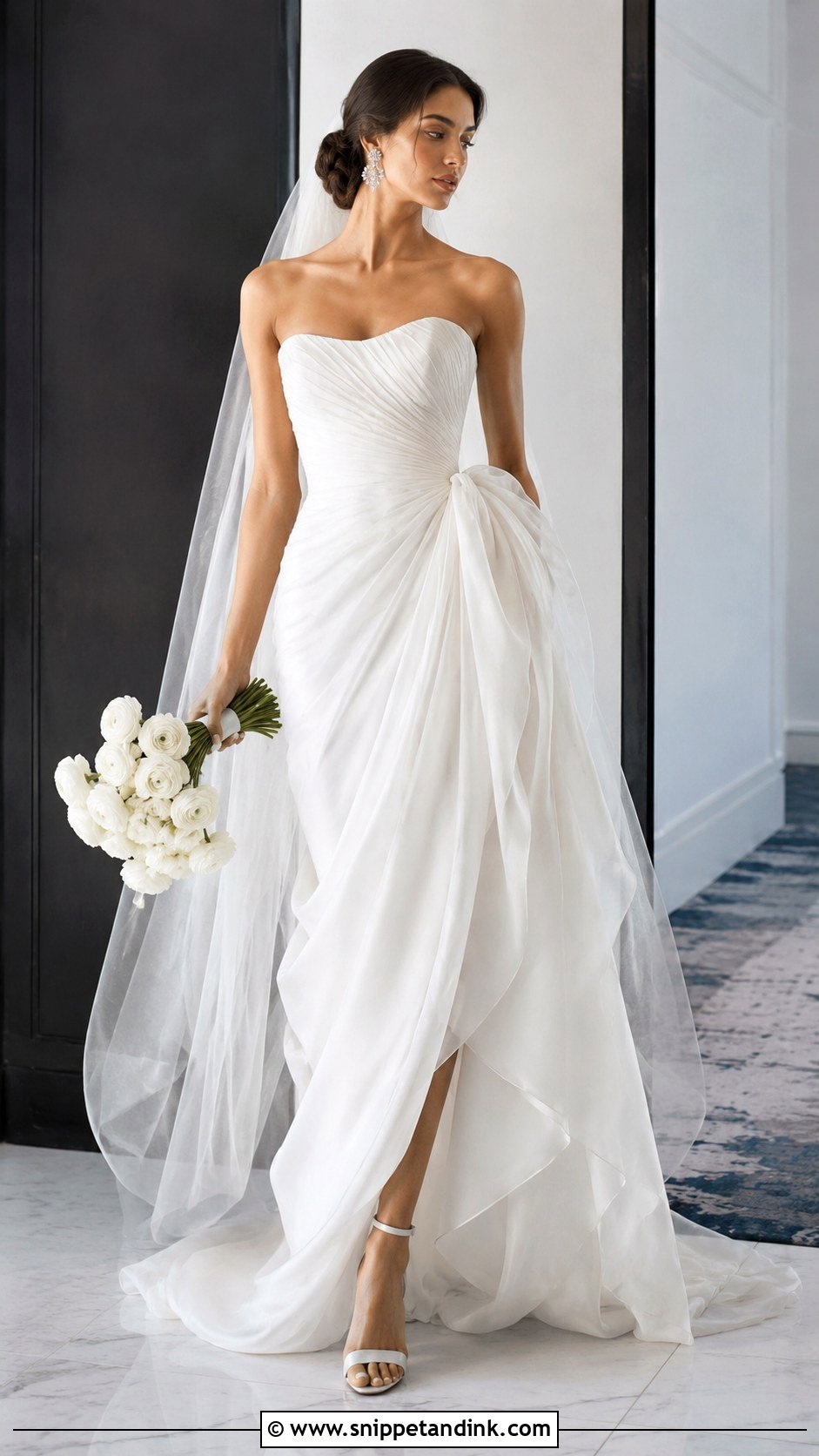
Draping is the hardest thing to alter on any gown. Each pleat is set by hand at an angle, and moving a zipper even slightly can pull the whole diagonal out of line, so if you love this archival-style shape, buy it as close to your size as you can. The bodice is strapless with diagonal pleating gathered toward one hip, and a flowing silk or organza skirt keeps it from feeling rigid. I mirror the asymmetry with a low side bun, then keep everything else plain: understated crystal earrings, ivory ankle-strap heels, a fingertip veil and a loose bunch of white ranunculus and orchids. After any alteration, check that the drape still lies flat around the zipper and waist.
9. Black Sash Vera Wang Wedding Dress
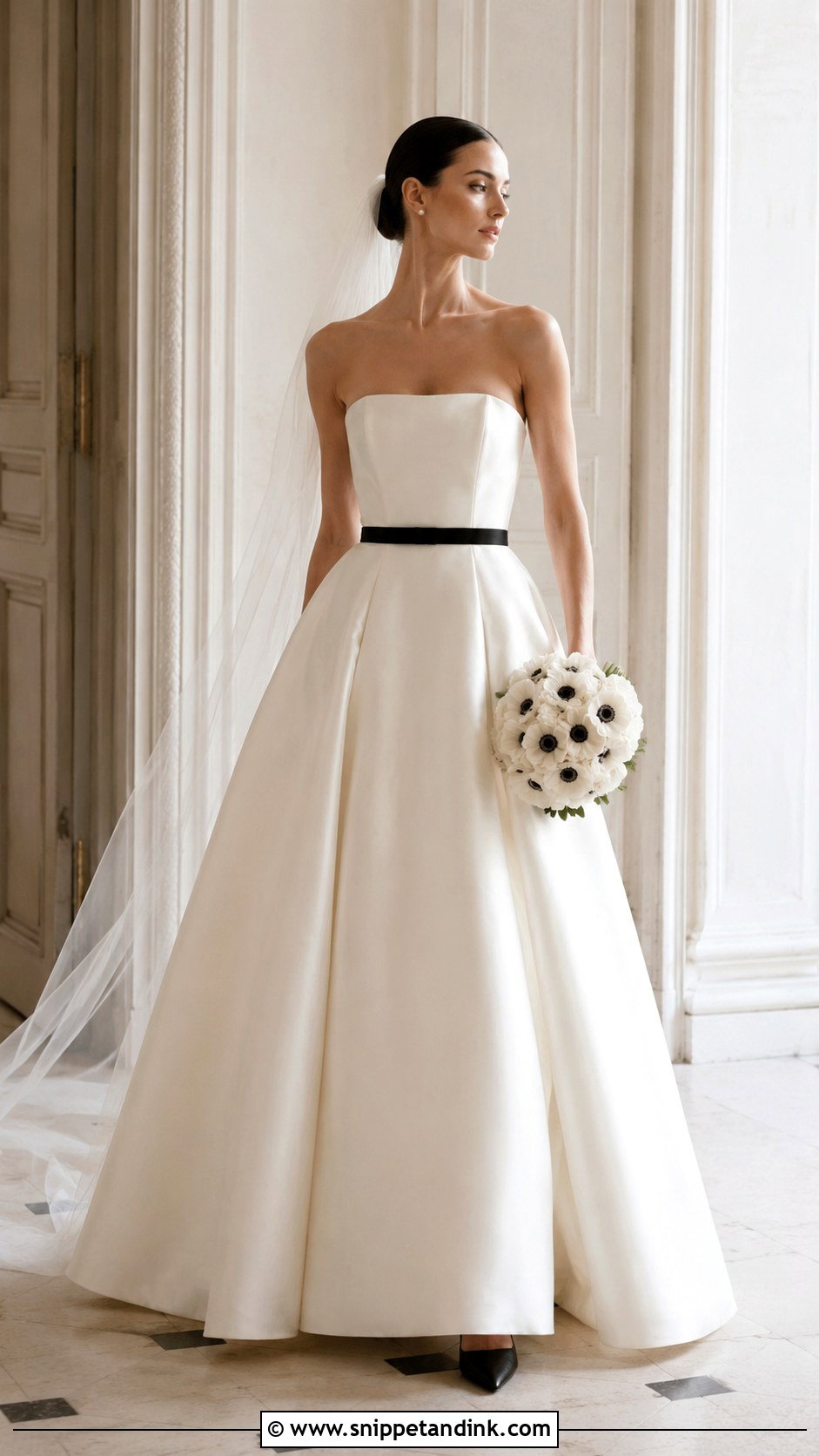
An ivory gown with a black sash is one of the most recognizable contrasts linked to vintage Vera Wang, and the easiest way to spoil it is to add more black. I keep the dark color to the sash and the shoes. Start with a strapless A-line, mermaid or softly structured ball gown and tie a narrow grosgrain sash at the natural waist, with a small bow or clean tails at the back. Black pointed pumps, pearl studs, an untrimmed ivory veil, a sleek bun and white anemones with their dark centers repeat the palette without making it a theme. On an authentic gown, keep the sash removable instead of stitching it into the silk. Dark dye can also bleed onto ivory in heat, so I dampen a corner of the ribbon and press it on white cotton before the wedding.
10. Blush Tulle Vera Wang Wedding Dress
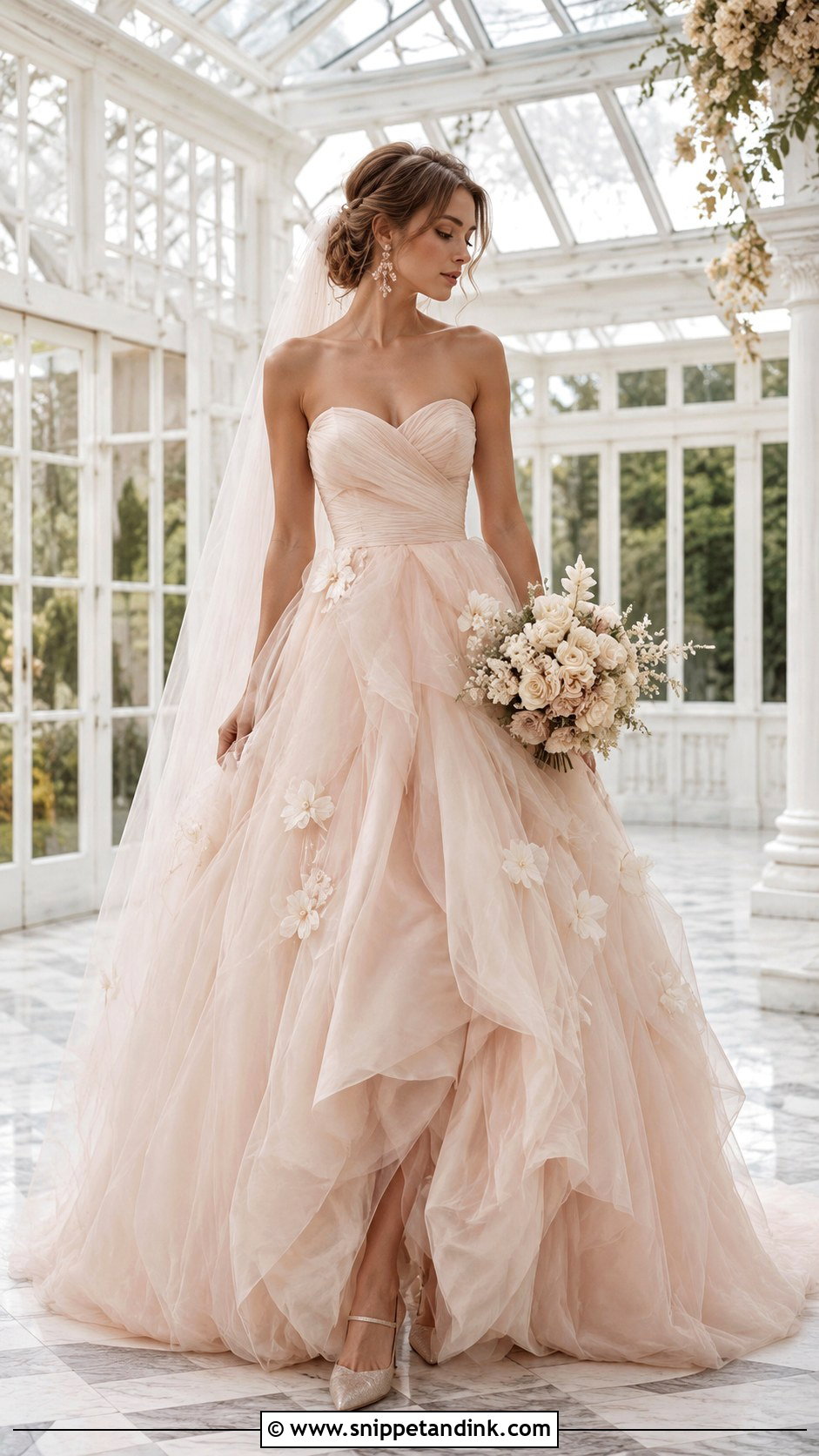
Colored tulle is where vintage gowns surprise people. Older nylon tulle tends to yellow slightly with age, which pushes blush toward peach, and it reads differently on camera than in a fitting room. I always look at a blush gown next to a window before choosing a single accessory. This strapless ball gown has a fitted draped bodice over layers of pale blush, nude or dusty rose tulle, sometimes with ivory appliqués for depth. Champagne satin heels, rose-gold earrings and a light ivory veil let the color come through, where a stark white veil would make it look dingy. A loose chignon and cream roses with blush ranunculus suit a garden, conservatory or ballroom.
11. High Neck Lace Vera Wang Wedding Dress
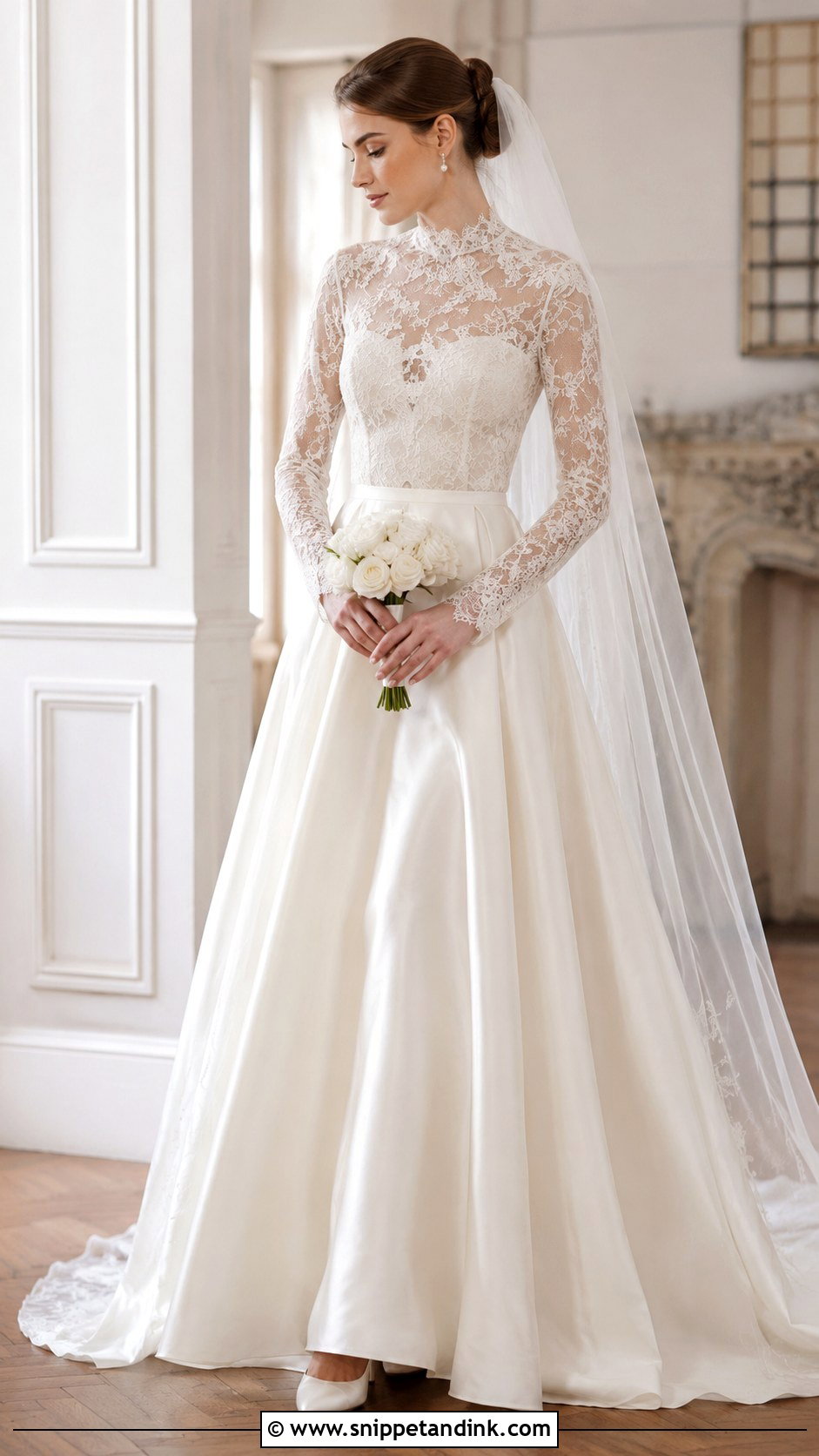
A high lace neckline already does a necklace’s job, so I never add one. What I do check, gently, is the lace at the neck and cuffs. Discoloration, brittle fibers and stretched seams show there first, because skin oils and movement concentrate on those edges. The vintage version has a fitted lace bodice, sheer neckline, long sleeves and a simple lining so the pattern stays the focus. Pearl drops, closed-toe satin heels and a long veil under a smooth low bun suit it, with white sweet peas or roses in hand. Restoration can stabilize weak lace, but a badly damaged collar usually can’t be saved without changing the design. If that’s what you’re looking at, I’d walk away.
12. Halter Neck Vera Wang Wedding Dress
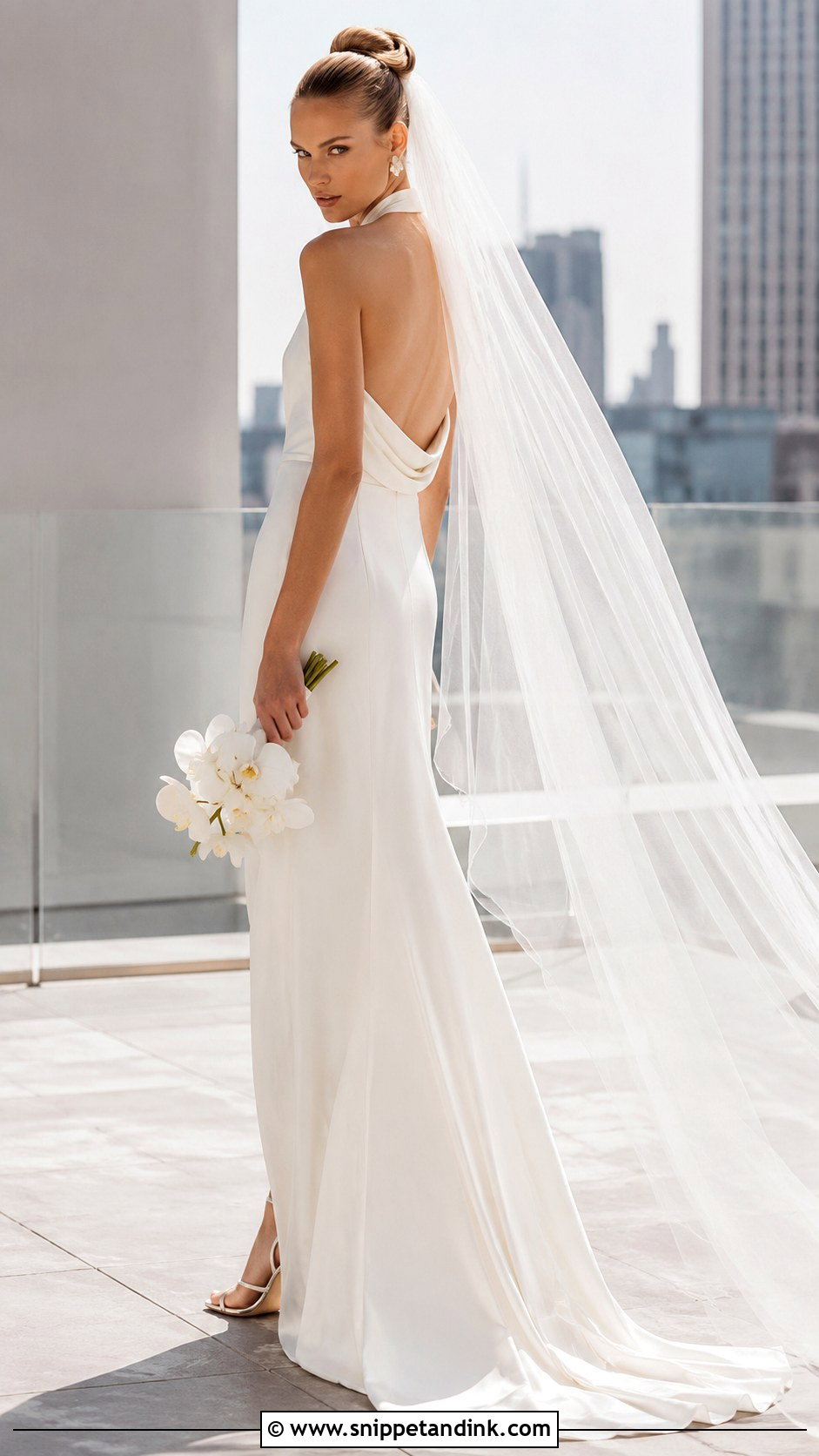
Halters hang the gown’s weight from the back of your neck, and on heavy satin that becomes a headache by the speeches. I ask the tailor to build real support into the bodice so the straps only guide the shape instead of carrying it. The early-2000s version is silk crepe or satin with a fitted waist, open shoulders and a low or draped back, falling as a straight column or widening into a small train. Sculptural earrings, metallic ivory sandals and a sheer chapel veil anchored below a high polished bun are plenty. No necklace, no heavy hairpiece. A compact orchid bouquet keeps up with the modern shape.
13. Low Back Vera Wang Wedding Dress
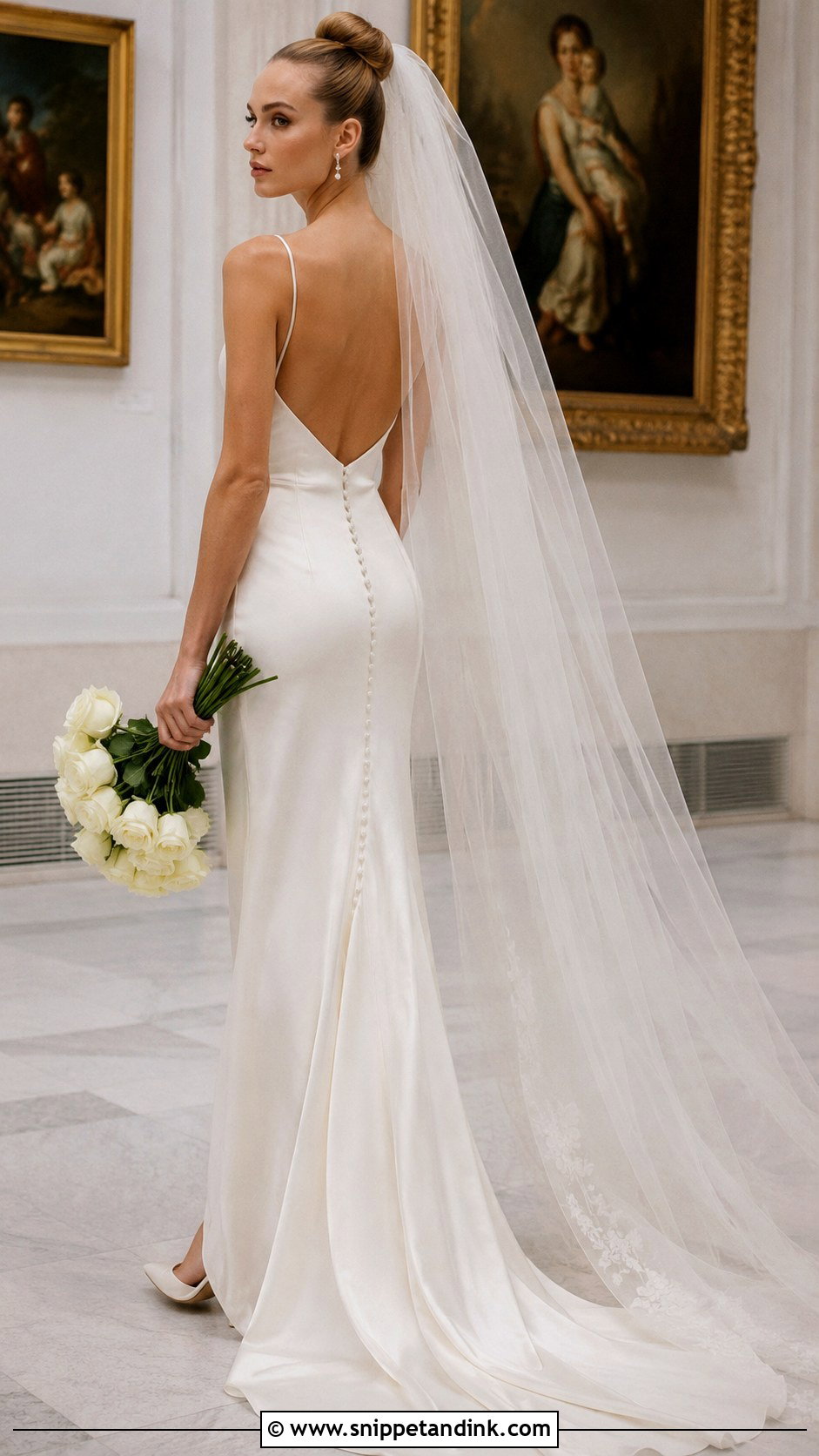
With a low back, the real challenge is what goes under it. I fit seamless low-back shapewear or have cups sewn into the bodice, because one visible bra strap ruins the line. Look for narrow straps, a smooth silk bodice and a gently fitted skirt, perhaps with covered buttons or a small bow at the base of the back. Drop earrings, satin pumps and a cathedral veil that comes off after the ceremony let the back show at the reception. Wear a high bun or sleek ponytail so nothing covers it, and carry long-stem white roses for a clean vertical line. On older gowns, straps and closures take the most strain all day, so reinforce them at the fitting rather than finding out at the reception.
14. Tiered Organza Vera Wang Wedding Dress
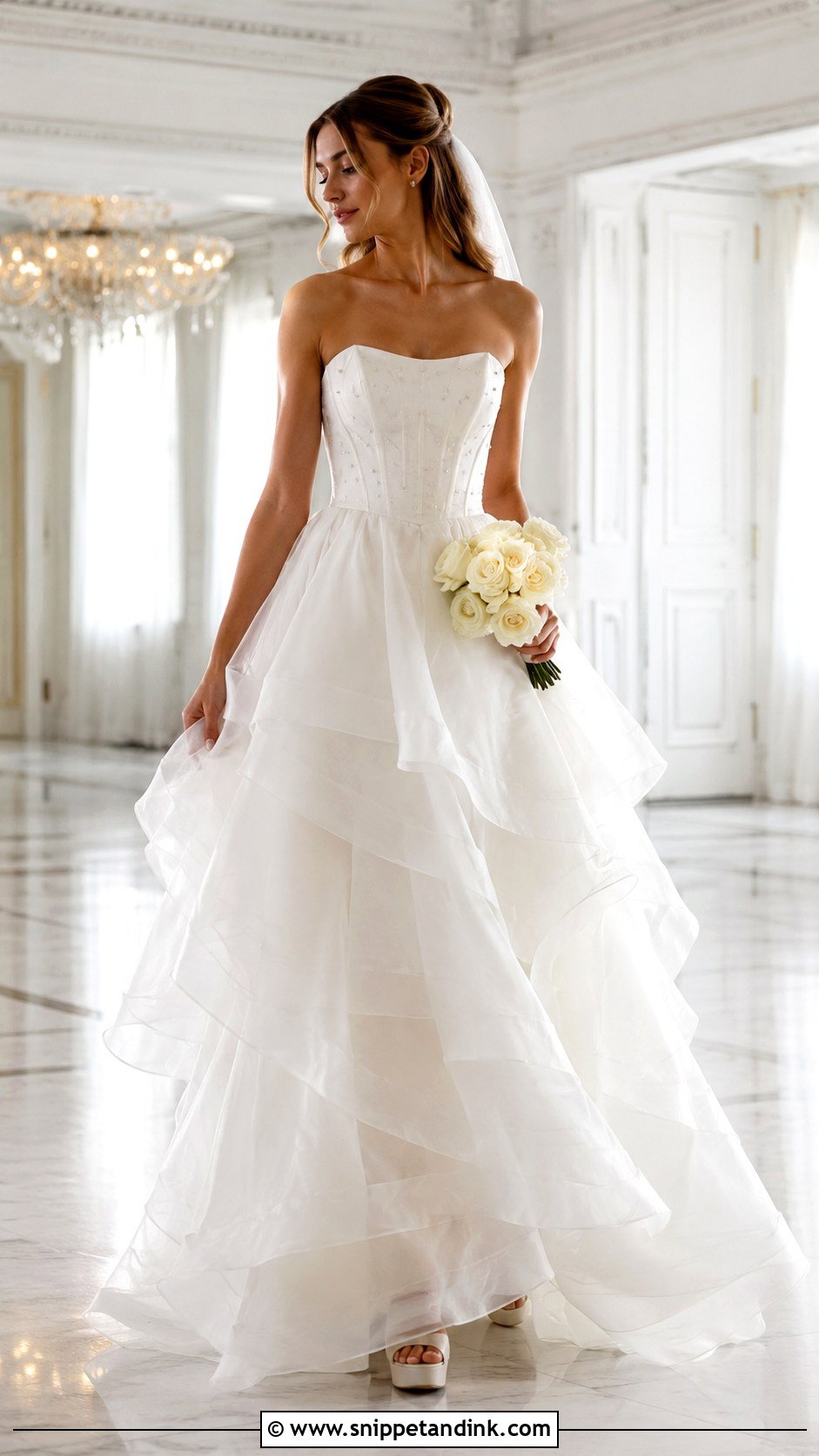
Organza holds volume well, but it creases sharply and snags on anything rough, including beaded clutches and some cufflinks. I book a careful steam for the morning and have the gown transported with the tiers supported, never squashed into a car boot. The silhouette is a strapless gown with a supportive bodice and broad horizontal or softly angled tiers that swing as you walk. Keep the top half quiet: crystal studs, platform ivory sandals, a plain shoulder-length veil, a polished half-up style and a small bouquet of white roses and lisianthus. A hidden wrist loop and a secure bustle make the skirt manageable through portraits and dancing.
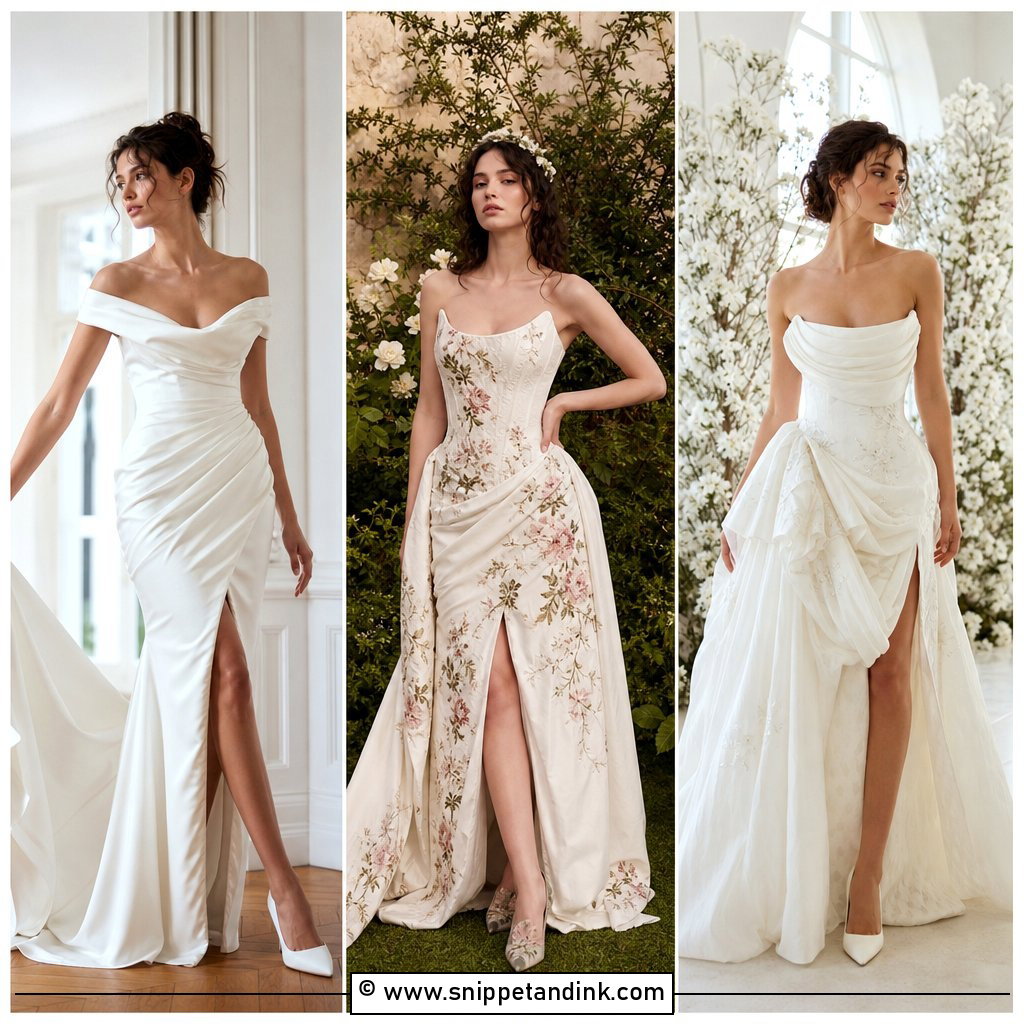
15. Floral Mermaid Vera Wang Wedding Dress
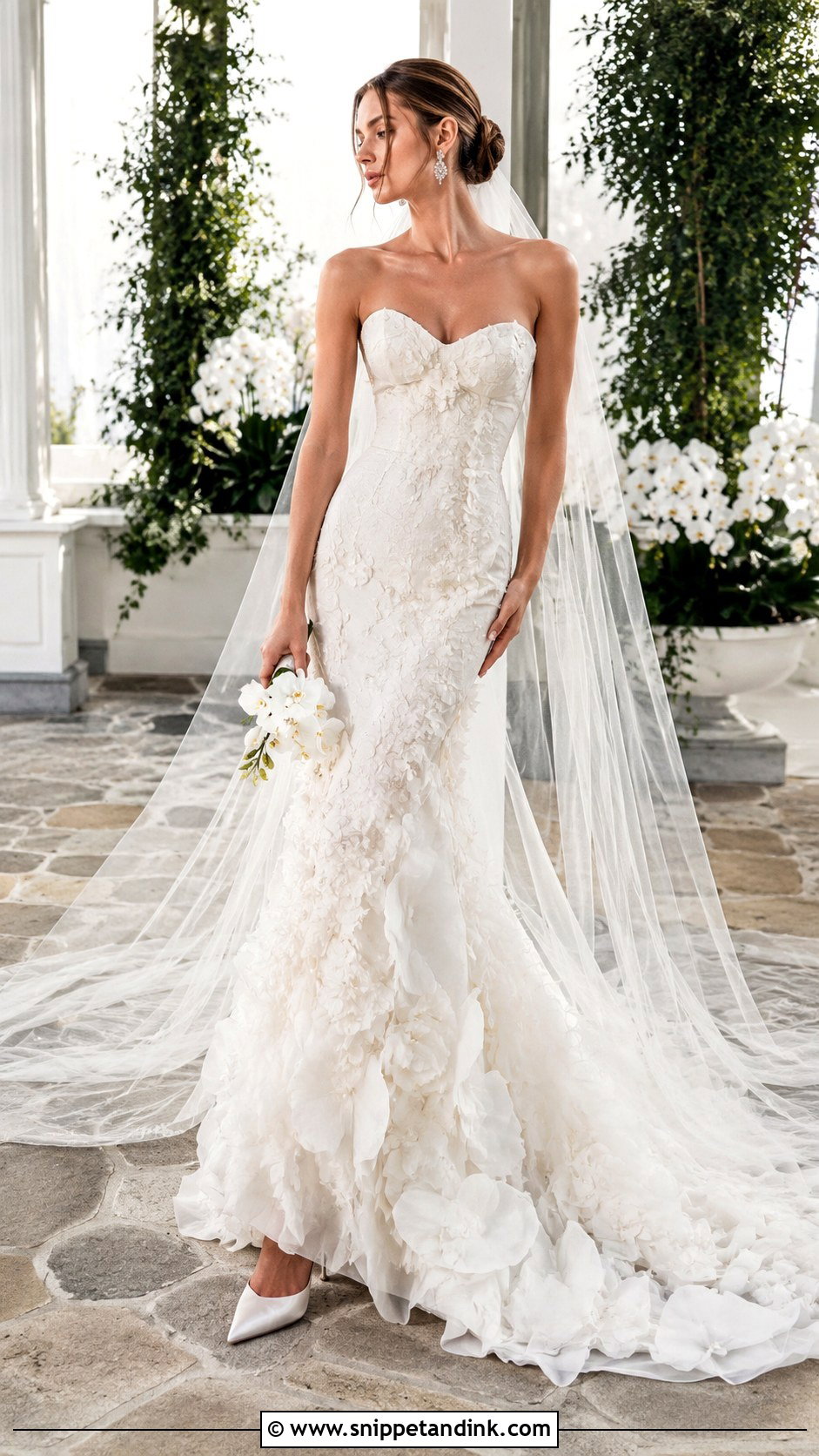
A mermaid that fits perfectly standing still can be impossible to sit in, which is why I make every client walk, sit and climb a few stairs at the fitting. The flare has to start low enough to let your knees move. Here a strapless or sweetheart bodice fits smoothly through the hips before breaking into organza petals, lace flowers or layered appliqués, the dimensional texture so many people connect with dramatic Vera Wang designs. Delicate crystal earrings, pointed satin heels and a long raw-edge veil suit it. Hair goes into a low bun and the bouquet stays small, just white orchids, so the skirt keeps the attention.
16. Minimalist Column Vera Wang Wedding Dress
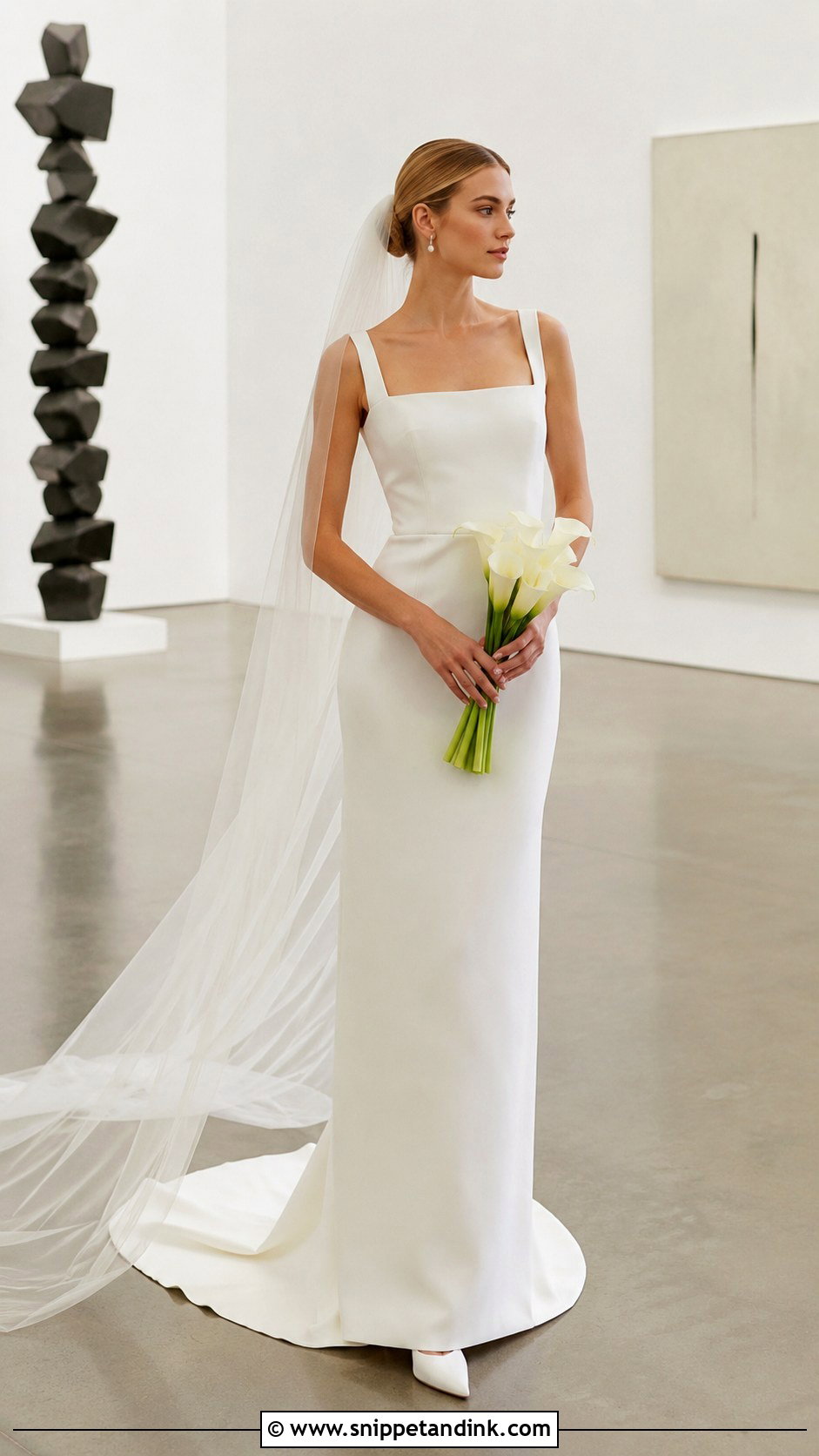
Nothing hides on silk crepe. Every seam, every ridge of underwear and every uneven hem shows, so on a minimalist column I’d put more of the budget into tailoring and foundation garments than into accessories. Look for a square, scoop or softly curved neckline, subtle shaping at the waist and a small train. Pearl drops, pointed ivory pumps, a sheer cathedral veil, a polished low knot and white callas finish it. If the vintage crepe has small marks, a specialist cleaner may lift them, but aggressive spotting can leave a ring or dull the finish, which looks worse than the original mark. A gallery or modern city venue suits how plain it is.
17. Tea Length Vera Wang Wedding Dress
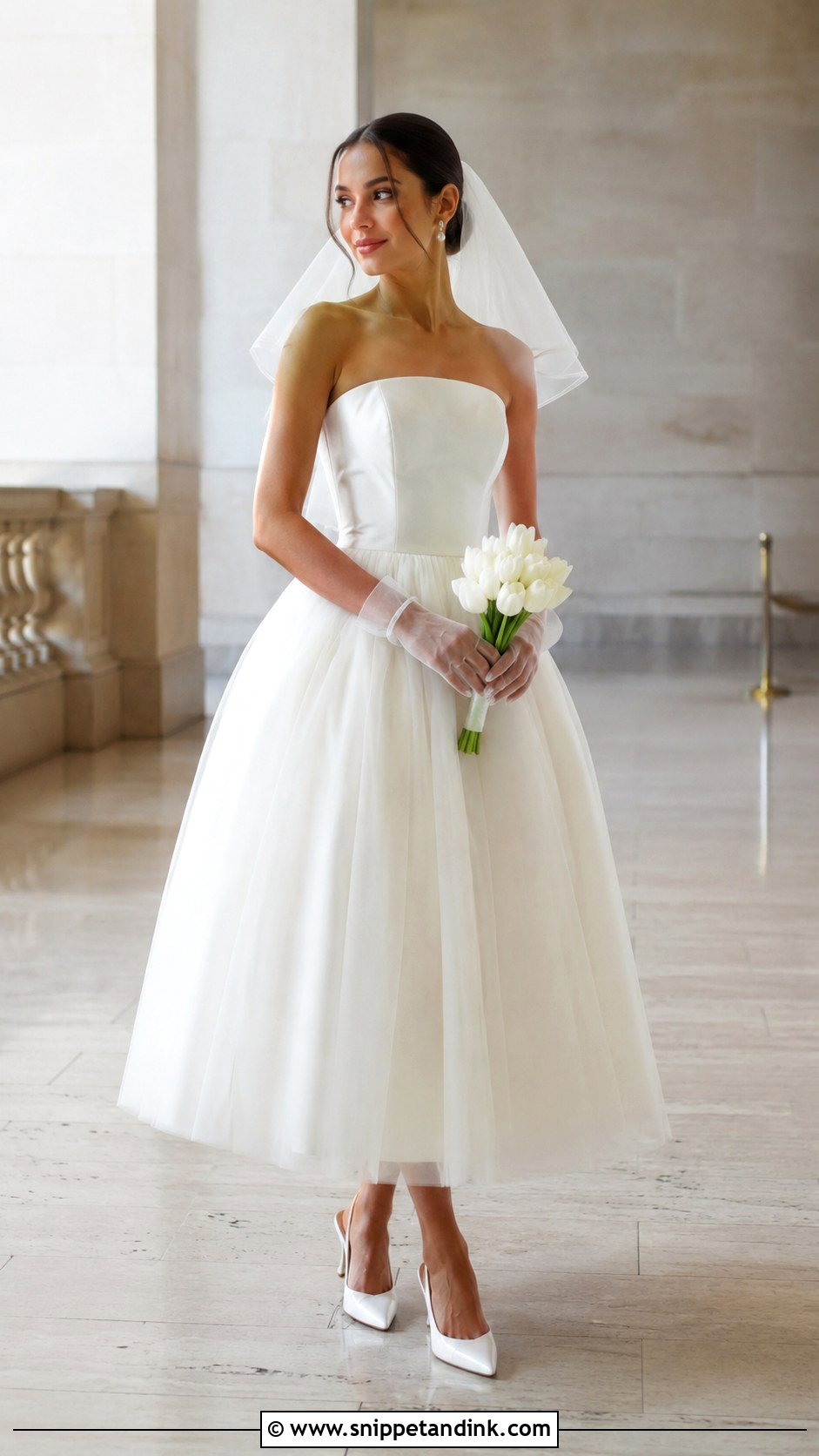
Tea length puts your shoes on show all day, so they have to look refined and still be comfortable after hours of standing. I ask brides to bring those shoes to every fitting, since the hem is set to them. The skirt falls between calf and ankle in full tulle or organza over a fitted satin bodice. Pointed slingbacks, short gloves, pearl earrings and a birdcage or shoulder-length veil, with a smooth bun, keep it polished. White roses or tulips in a compact bouquet hold the proportions. It suits a courthouse ceremony, brunch reception or small indoor party, and a removable tulle overskirt adds volume for portraits without making the dress hard to wear later.
18. Detachable Overskirt Vera Wang Wedding Dress
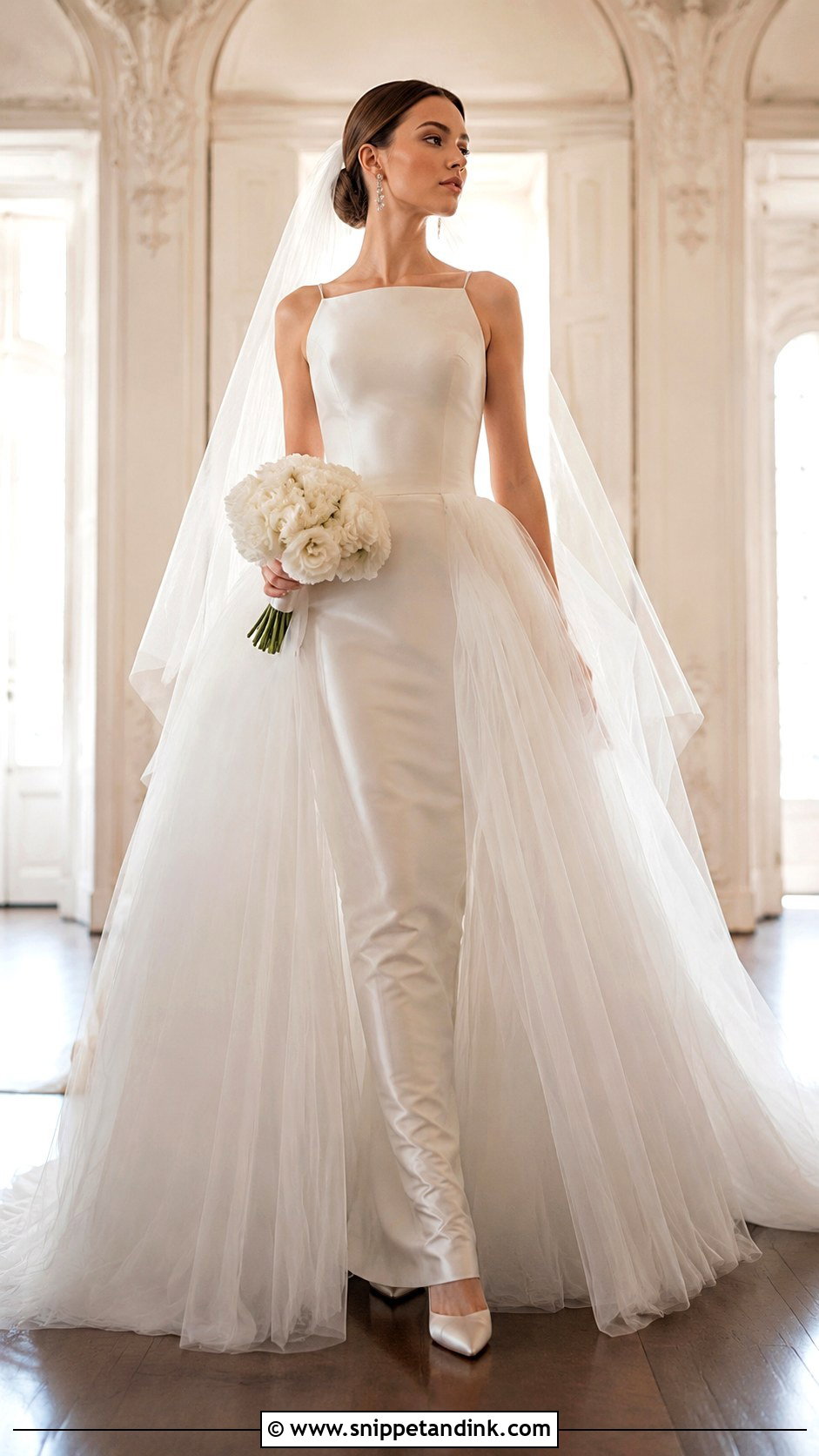
A detachable overskirt gives you two silhouettes without a full outfit change, but on a vintage gown it has to be engineered, not improvised. I never let anyone pin an overskirt into old silk. The tailor should build a separate waistband with discreet hooks or snaps so the gown underneath stays untouched. Start with a fitted silk sheath or mermaid, then add a full tulle, organza or satin overskirt for the ceremony with crystal earrings, satin pumps, a cathedral veil and a structured white bouquet. Afterward the veil and overskirt come off, and a sleek bun works for both versions. Rehearse the removal with whoever will help you on the day, because a hurried tug at a fragile waist seam is how gowns tear.
19. Corset Tulle Vera Wang Wedding Dress
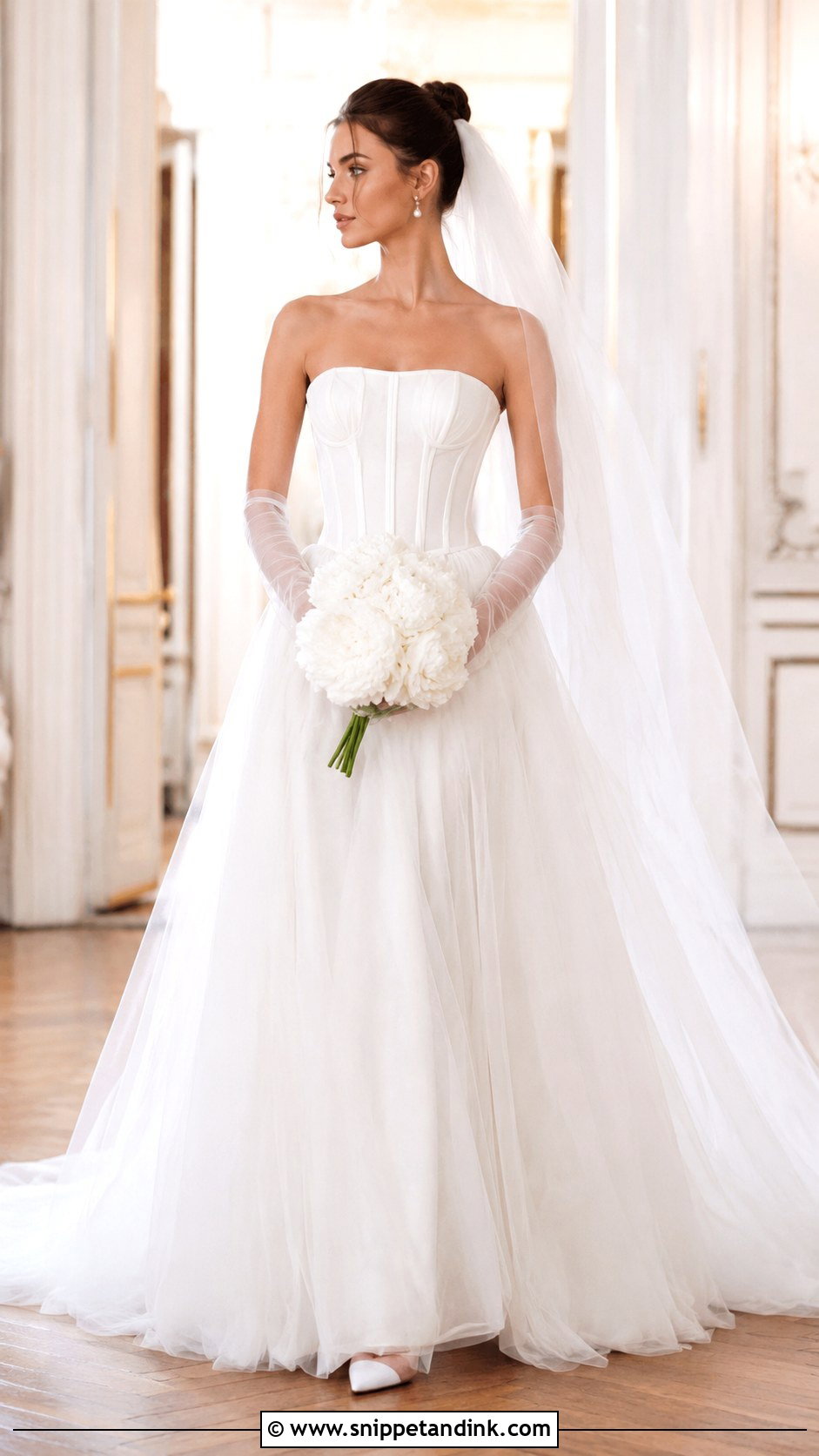
My test for a corset bodice is simple. Can you take a full breath, sit down and raise both arms without the neckline gapping or pinching? If not, it isn’t fitted yet. A vintage Vera Wang gown with visible seaming, a strapless neckline and several lightweight tulle layers sets structure against softness. Pearl earrings, ivory pumps, sheer wrist-length gloves, a simple cathedral veil, a soft French twist and white peonies or garden roses suit it. On older dresses, replace worn boning and stretched internal elastic during alterations. Plastic boning that has sat folded in storage often keeps a permanent bend, and it tends to poke through at the worst moment.
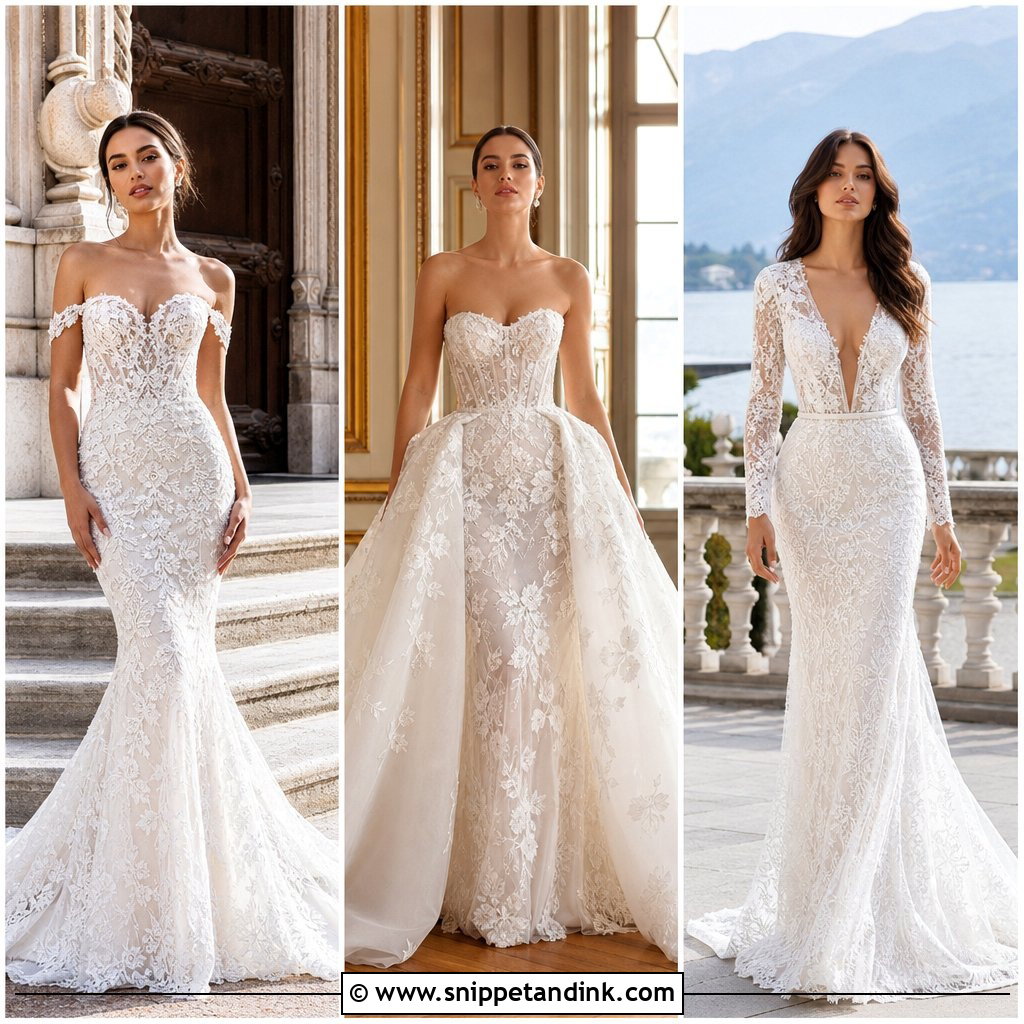
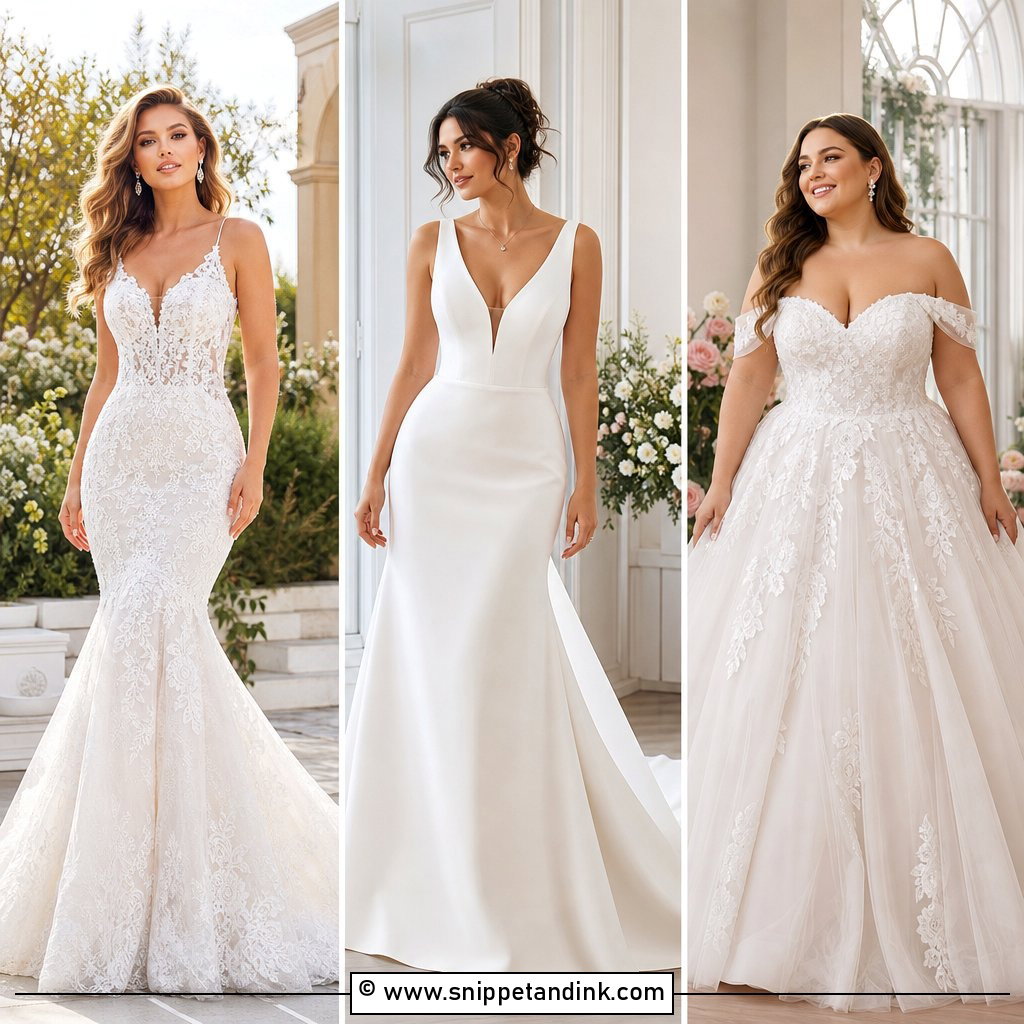
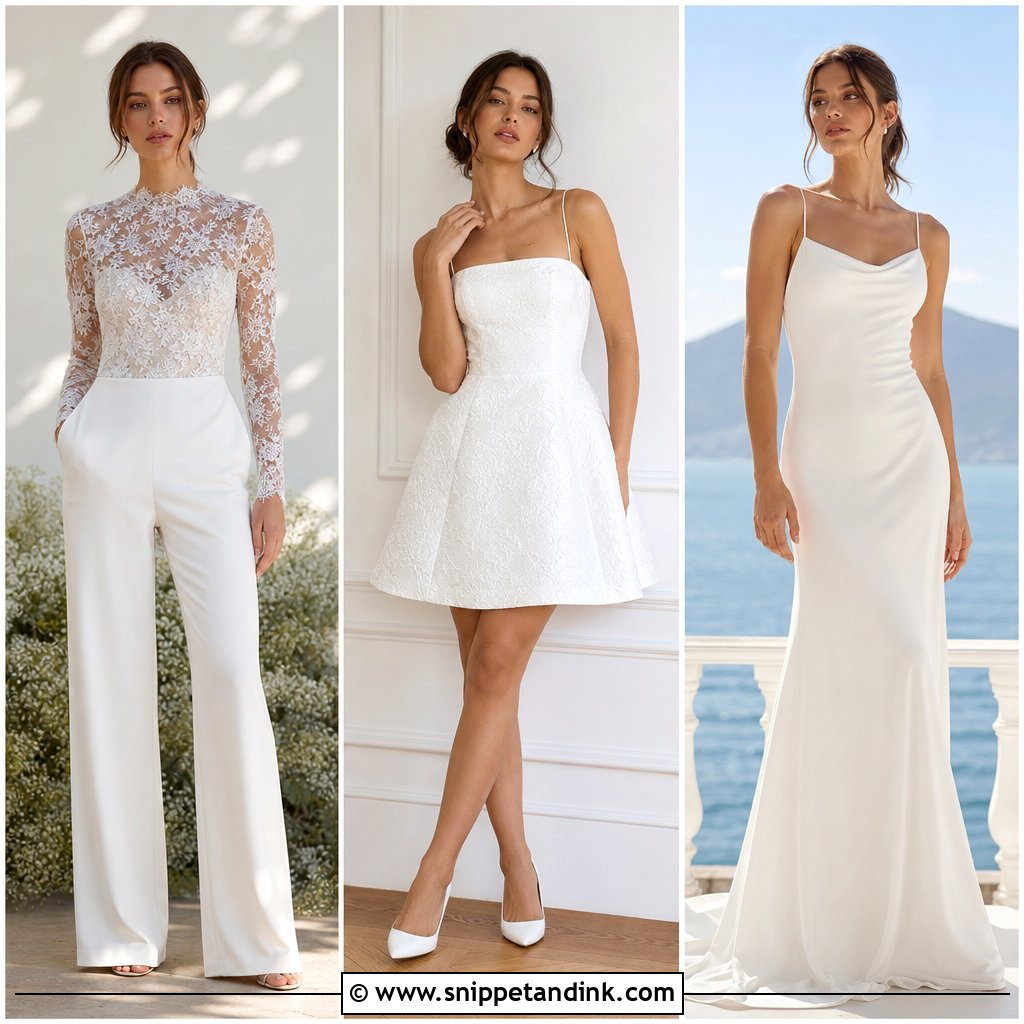
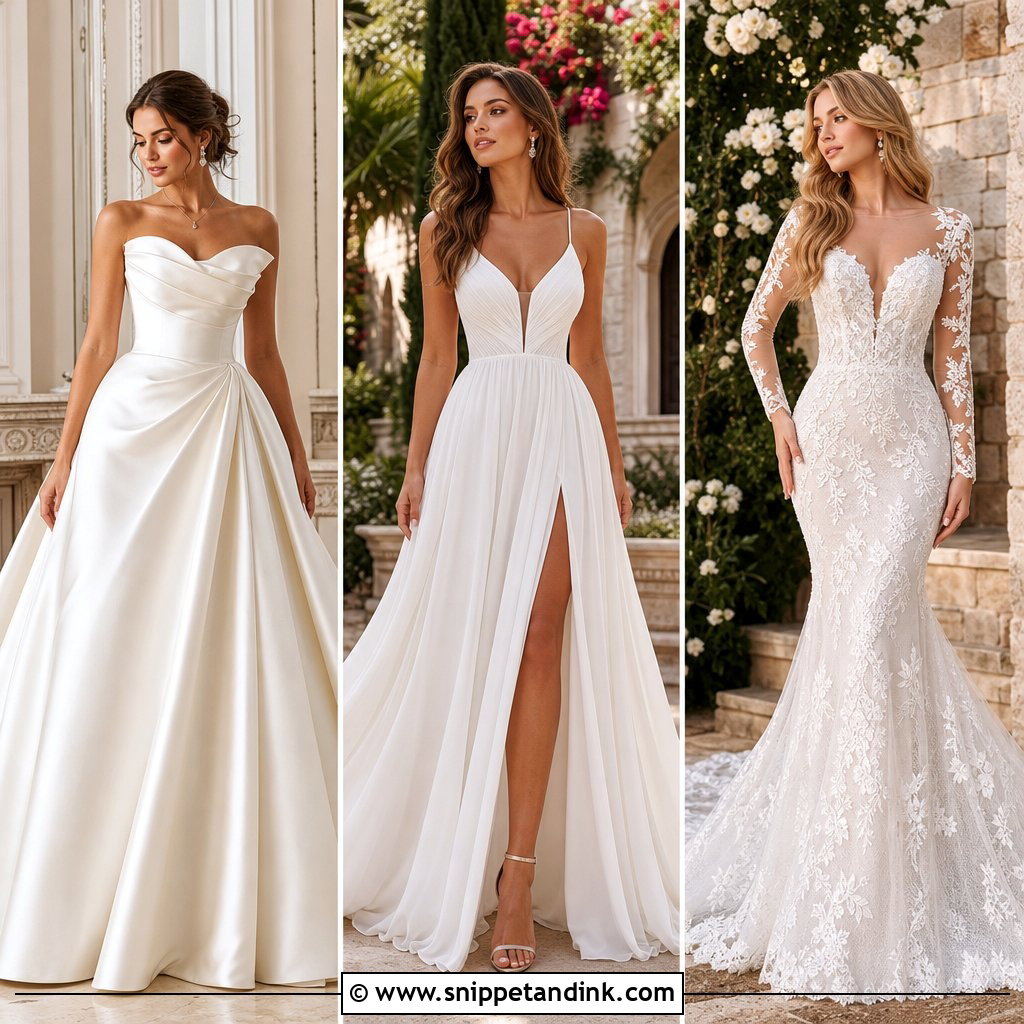
20. Beaded Sheath Vera Wang Wedding Dress
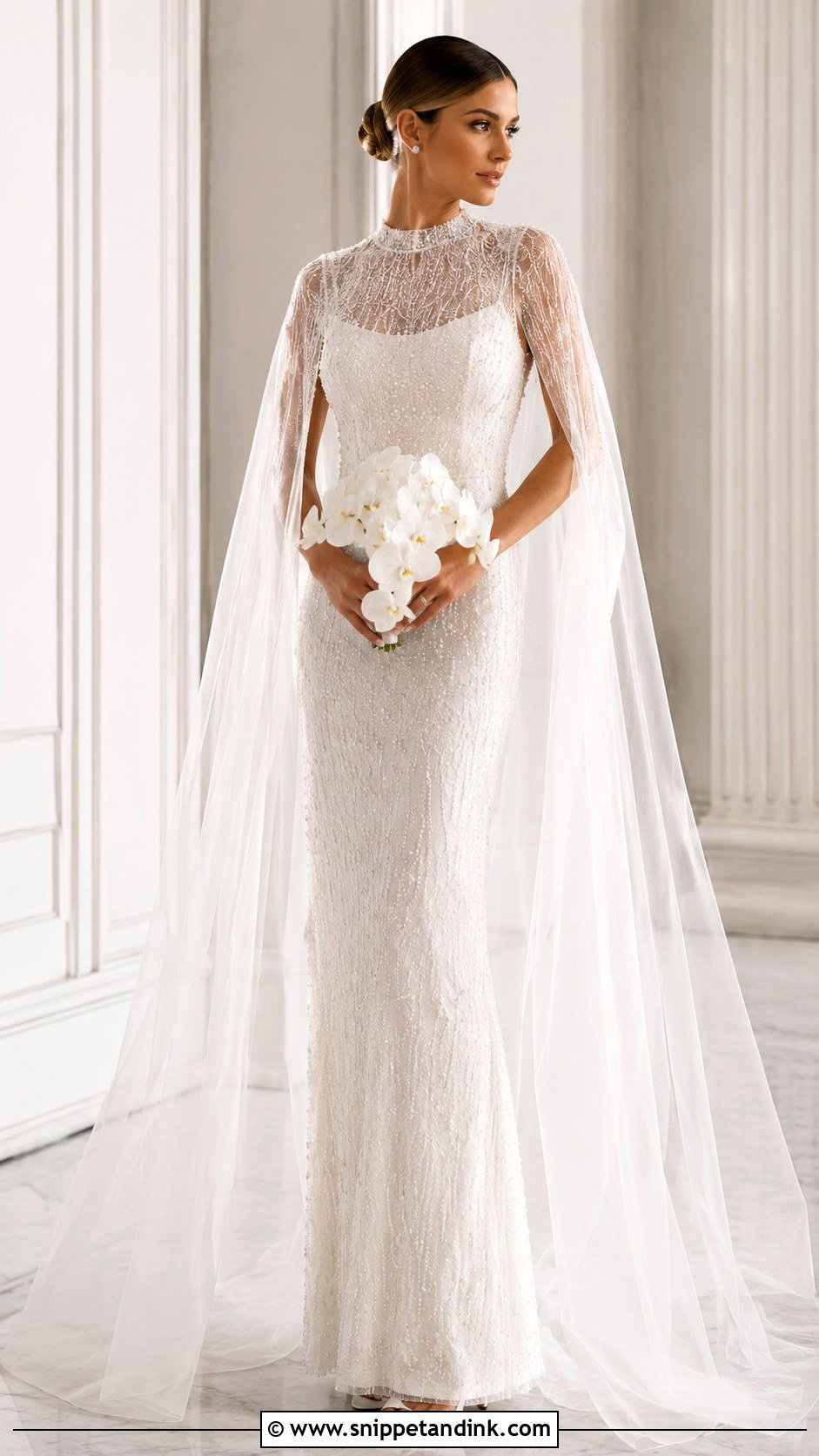
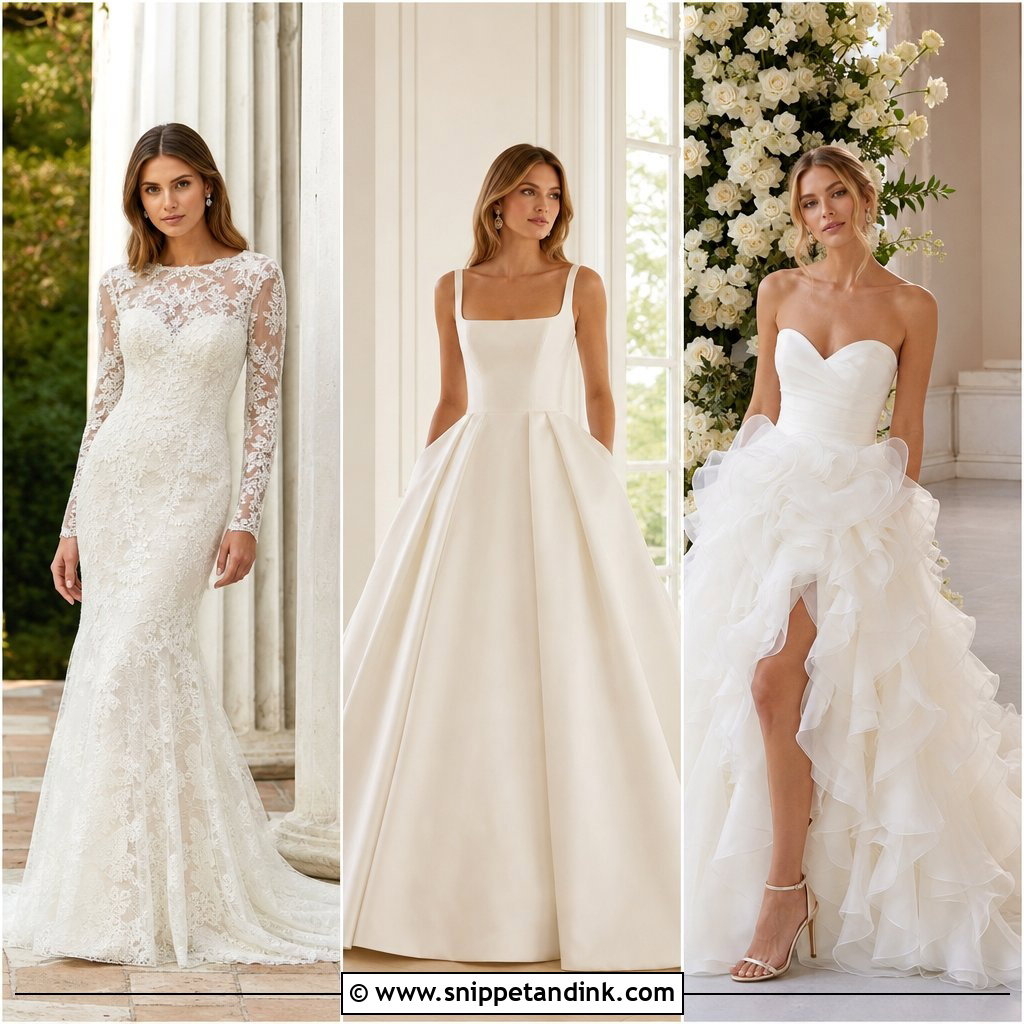
Vintage beadwork is often sewn on a continuous running thread, so a single loose bead can turn into a bald patch by the end of the night. Before alterations begin, I have a specialist stabilize weak or missing sections and knot off any loose runs. This is a slim sheath with fine crystal, pearl or silver-toned beading concentrated at the neckline, waist or upper bodice; dense all-over decoration loses the minimalist vintage feel. Satin slingbacks, small diamond studs, a sheer cape-style veil falling from the shoulders and a sleek side-parted bun keep the line long. Add white orchids or callas in a compact bouquet and it’s ready for an evening ceremony.
Restoration Comes Before the First Fitting
Repairs and alterations are two separate jobs, and the repairs have to happen first. A tailor can’t mark a hem on lace that still needs patching, or take in a bodice whose boning is about to be replaced. This is the order I plan around.
Five to six months out
Cleaning by someone who handles vintage silk, plus any lace, beading or boning repairs. Ask them to write down what they’ll attempt and what they won’t touch.
Around three months out
First fitting, in your actual shoes and shapewear. Big changes, like resetting a waist seam or reshaping a train, happen here so there’s time for a second look.
The last two to three weeks
Final fitting, bustle practice with the person who’ll do it on the day, and pressing. Silk satin should be steamed or pressed through a cloth, never hit directly with a hot iron.
Storing a Thirty-Year-Old Gown So It Lasts Another Thirty
Buy a gown that has already survived three decades and you become its next keeper. Have it cleaned soon after the wedding even if it looks spotless, because clear spills like champagne or white wine oxidize into brown marks months later. Store it folded in an unbleached cotton or muslin bag, with acid-free tissue padding each fold, in a cool, dark closet rather than an attic or basement. Skip plastic, which traps moisture. Don’t leave a heavy ball gown hanging from thin straps for years either; the weight slowly stretches the bodice. Once a year, refold it along different lines so creases never set into permanent breaks.
Vintage Vera Wang Is a Fabric Decision First
Across all twenty, the common thread is controlled shape: clean silk, sculpted corsetry, airy tulle, delicate lace and volume used with restraint. Pick by your body, your venue and how many hours you’ll spend on your feet. With an archival gown, look hard at the fabric, lining, closures, beadwork and internal support before paying for major alterations, and hire a tailor or restoration specialist who has handled fragile bridal fabric before. Then keep every accessory in service of the silhouette. A slip, a ball gown or a textured mermaid can all feel personal once the fit is right.
You'll Like These Ideas:


Leave a Reply