
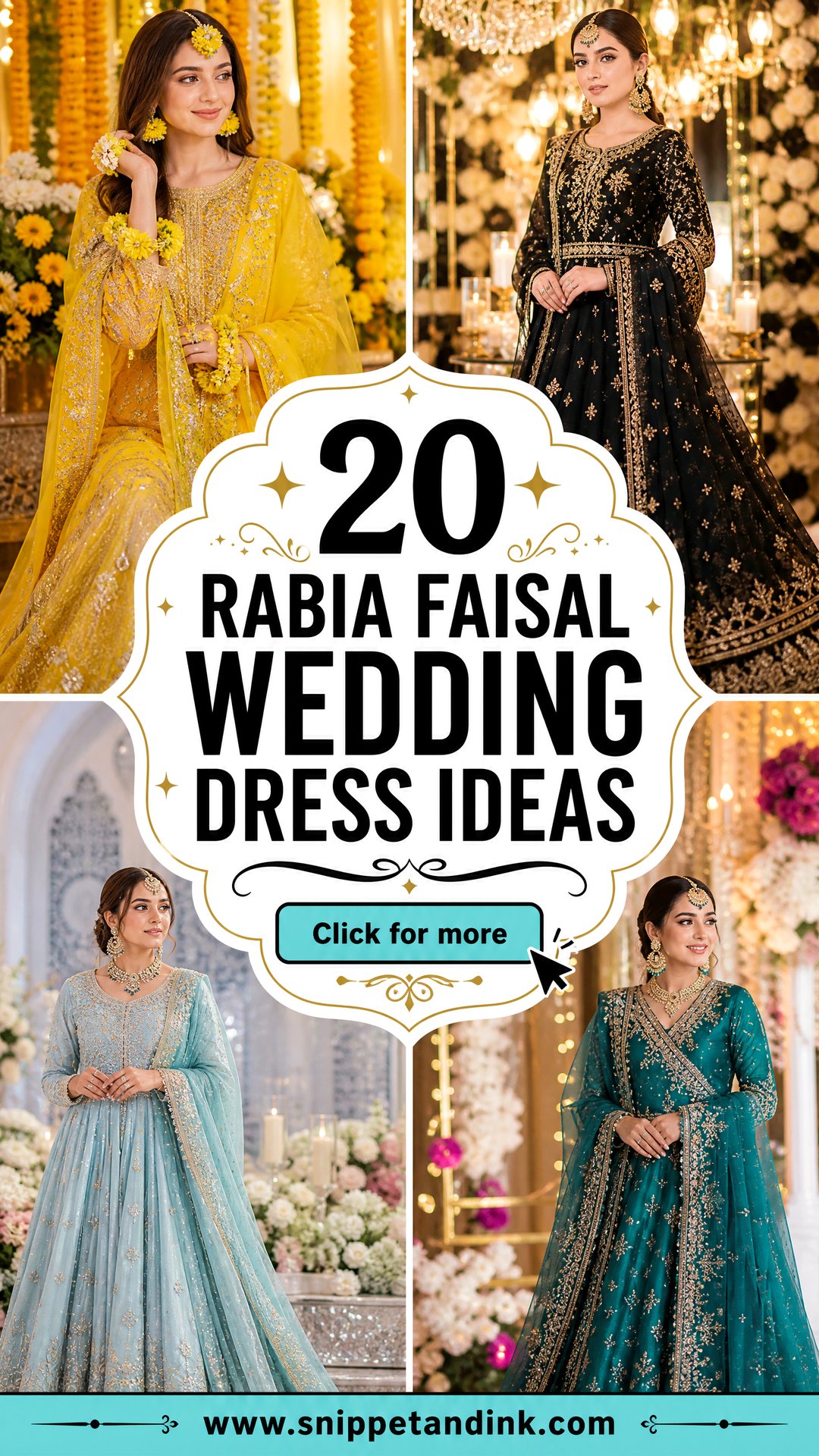
Rabia Faisal pieces sit in the part of Pakistani formalwear where the embroidery does most of the talking, so the styling job is mostly about restraint. When I dress someone in heavy handwork, I settle the dupatta and the necklace line before anything else, because those two decide whether the outfit reads balanced or crowded. Below are twenty complete looks, from red bridal lehengas and ivory nikkah ghararas to velvet pishwas and a red saree, each matched to the function it suits and the hair and makeup I’d put with it. Brides can carry the full weight of the work; guests usually want the same color in a lighter version.
How Much Handwork Can You Carry for Six Hours?
Most of the weight in a Pakistani formal outfit lives in the embroidery, not the fabric. Zardozi and dabka are worked with metallic wire and coiled thread, and a fully covered bridal skirt with a heavy dupatta adds up quickly. Before I sign off on any outfit, I ask how long the wearer will be standing, sitting on a stage or walking between rooms, because a lehenga that feels fine in a five-minute fitting can pull at the waist by the third hour.
- Main bridal day: full work is fine, but ask for a lined skirt instead of stiff net layers if the venue runs warm.
- Nikkah: you may sit on a low seat or the floor for the ceremony, and ghararas or anarkalis fold far more comfortably than a wide lehenga.
- Mehndi and dholki: dancing decides it. Gota and mirror work weigh much less than zardozi and survive a lot of spinning.
- Walima: gowns and maxis with beading concentrated at the bodice keep you upright and comfortable through long rounds of greetings.
Ask the seller how heavy the skirt is. If nobody can tell you, put it on in the shop and sit down for a while before you decide.
1. Rabia Faisal Red Bridal Lehenga Look
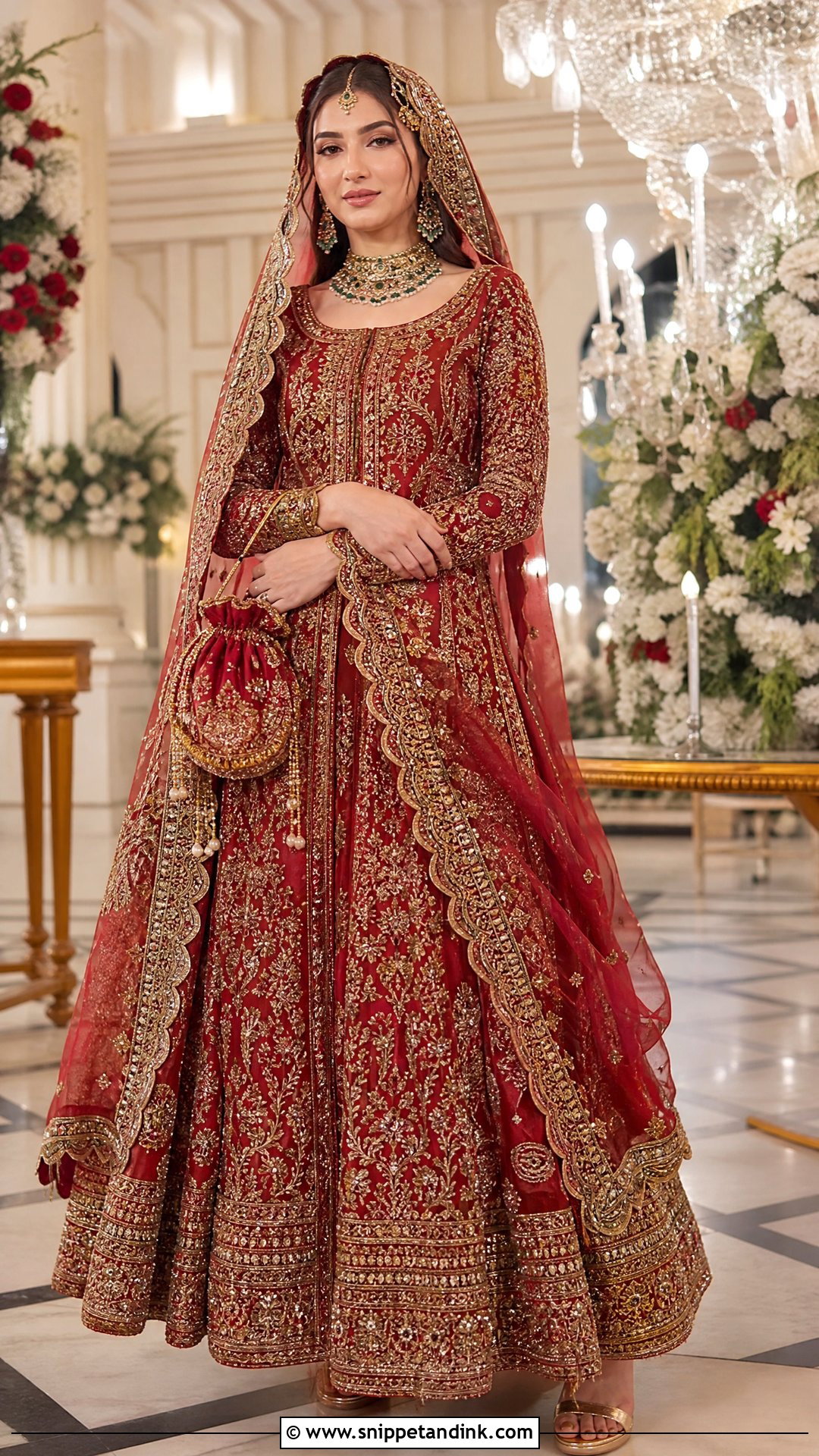
A deep red lehenga worked in antique gold zardozi, dabka and sequins is still the most traditional Pakistani bridal choice, and it is heavy. A fully worked skirt can weigh several kilos, so at the final fitting I have the bride sit, stand and turn in it rather than just pose for the mirror. Pair it with a structured raw silk blouse in full or three-quarter sleeves, a scalloped red dupatta set over the head, and a second lighter dupatta across one shoulder. A kundan choker, matching earrings, a small tikka and gold embroidered heels finish it. For hair I ask for a sleek center-parted bun: it gives the head dupatta something solid to pin into, which loose hair never does. Keep the eyes soft and the lip a muted red, since the outfit already supplies the drama.
2. Rabia Faisal Ivory Nikkah Gharara Look
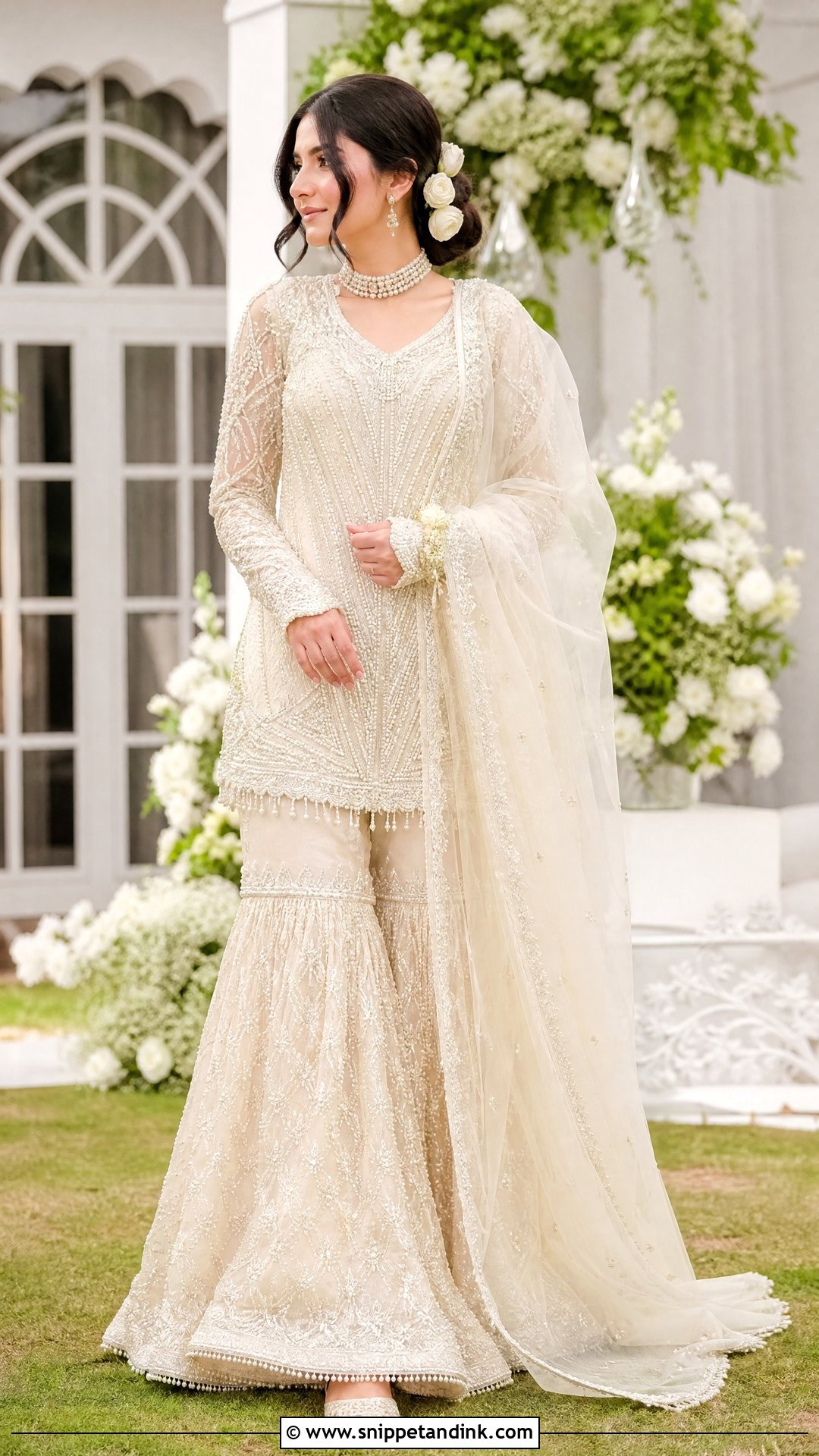
Ivory suits a daytime nikkah because it stays calm in daylight, but it shows every trace of foundation, so I keep a clean scarf over the neckline while the bride is dressing. Build the look around a short silk shirt worked in pearls, silver threadwork and small florals, then add a traditional gharara with embroidery gathered at the knee and a wide fall below it. A sheer organza dupatta with a narrow border keeps the weight down. Pearl drops, a small choker and ivory khussas complete it. Brown liner, peach blush and a soft pink lip sit well against ivory; heavy bronze tends to look muddy next to it. A low bun dressed with white flowers holds a covering dupatta far better than loose waves.
3. Rabia Faisal Yellow Mehndi Sharara Look
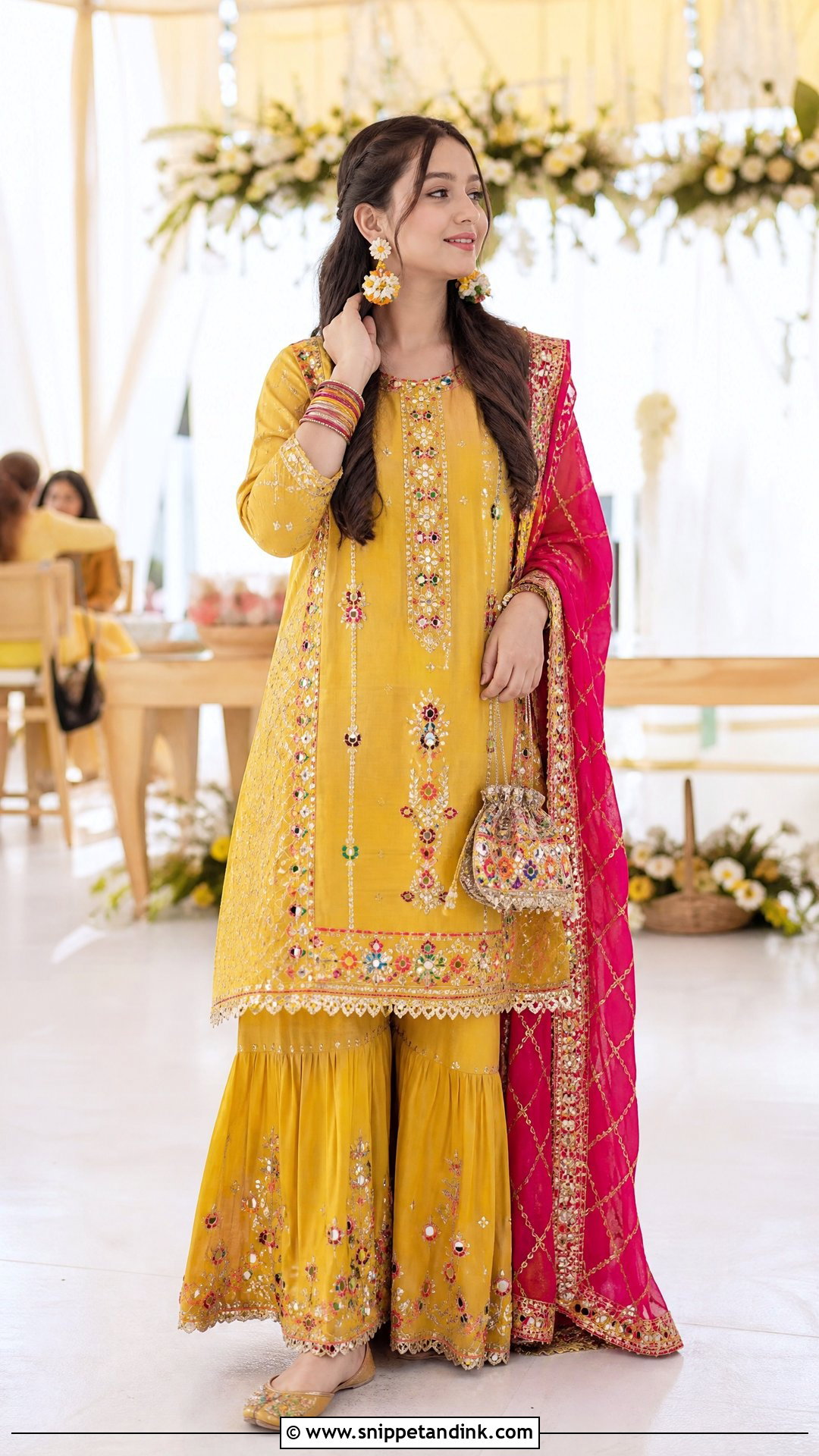
Shararas are the easiest bottoms to dance in, which is why I reach for one at a mehndi. Pick a short mustard or marigold kameez with mirror work, thread embroidery and a little gota, then either match the sharara or give it a green border. Yellow can wash some complexions out under warm indoor bulbs, so a pink or orange dupatta near the face is more than decoration; it puts color back where the camera looks. Floral earrings, stacked bangles, embroidered khussas and a small potli are enough. Glowing skin and a coral lip suit the palette. A loose braid with tiny flowers survives an evening of dancing much better than open curls.
4. Rabia Faisal Emerald Green Mehndi Lehenga Look
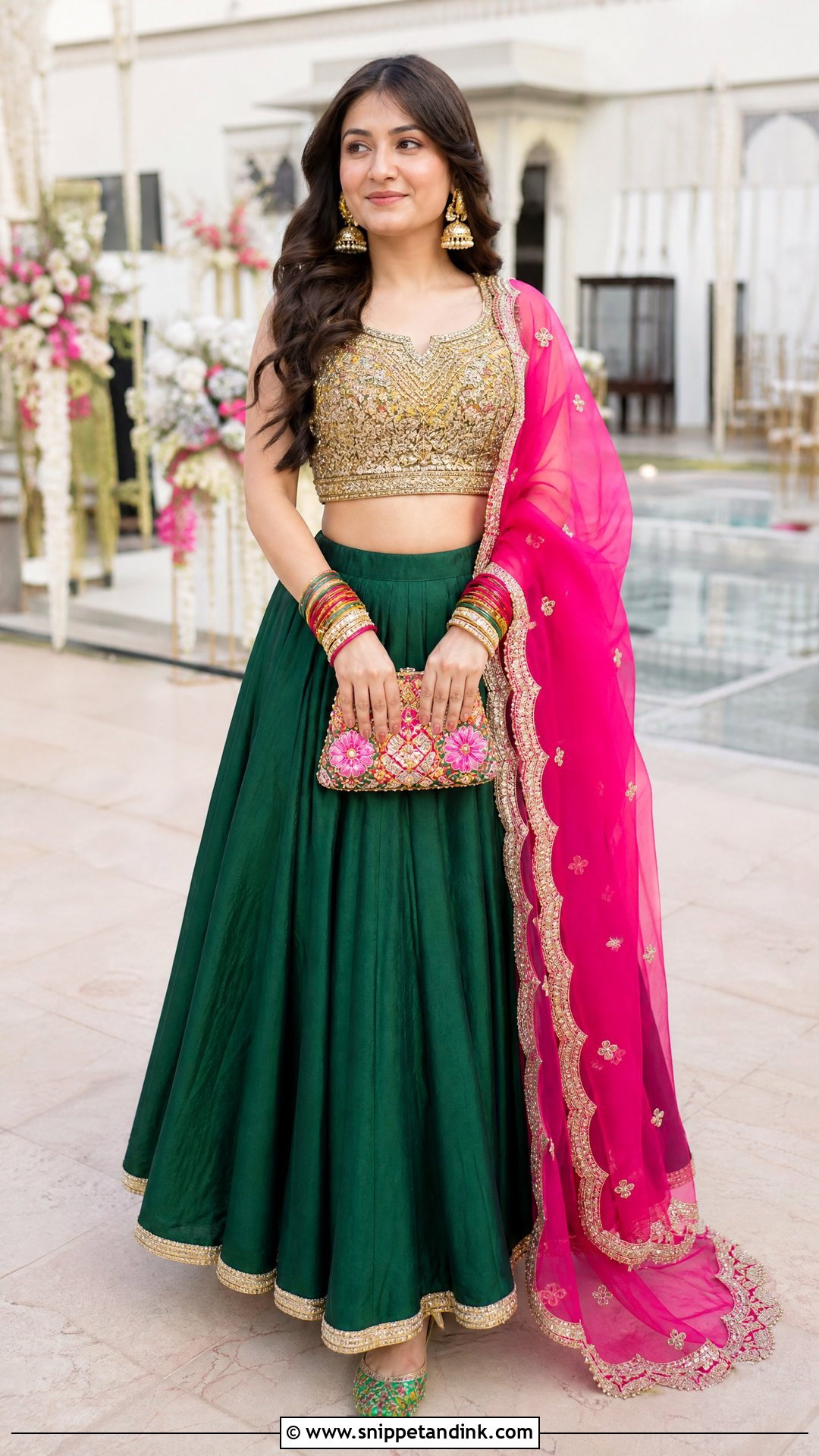
Emerald is what I suggest to a bride who doesn’t want traditional yellow mehndi clothing but still wants the night to feel festive. Choose a cropped blouse with gold embroidery and a flowing green lehenga with borders in pink, orange or turquoise, then lift the deep base with a fuchsia dupatta over one shoulder. Green is one of the few colors where I’d pick gold over silver jewelry almost every time. Jhumkas, matching bangles and a small embroidered bag are plenty. If the floor is grass or covered in petals, wear khussas, not heels. Bronze eyes, a pink lip, and a side-parted ponytail or braid so the earrings stay in view.
5. Rabia Faisal Blush Pink Walima Gown Look
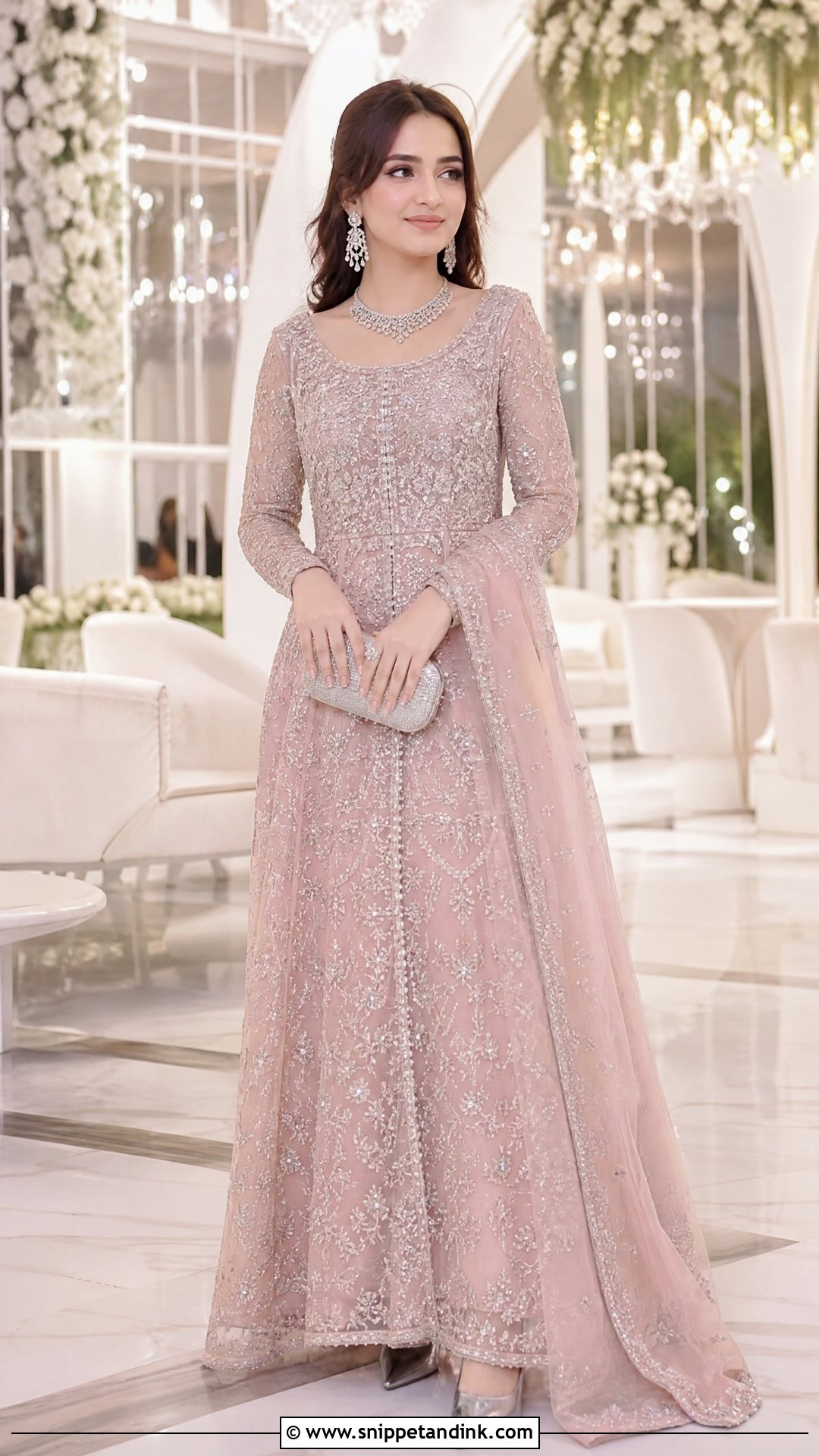
Blush comes up constantly for walimas, and the exact shade matters more than the cut. A very pale blush can vanish against fair skin in flash photos, so I steer people toward a pink with a little warmth in it. Look for a floor-length gown with a fitted bodice, full sleeves and a gentle flare, finished with silver sequins, pearls and tonal floral work. A light matching dupatta with a crystal border can rest over both arms or be pinned at one shoulder. Add a diamond-look necklace, drop earrings, a silver clutch and pointed metallic heels. Luminous skin, rose eyeshadow and a satin pink lip, with a smooth low bun or brushed-out waves.
6. Rabia Faisal Silver Embellished Maxi Look
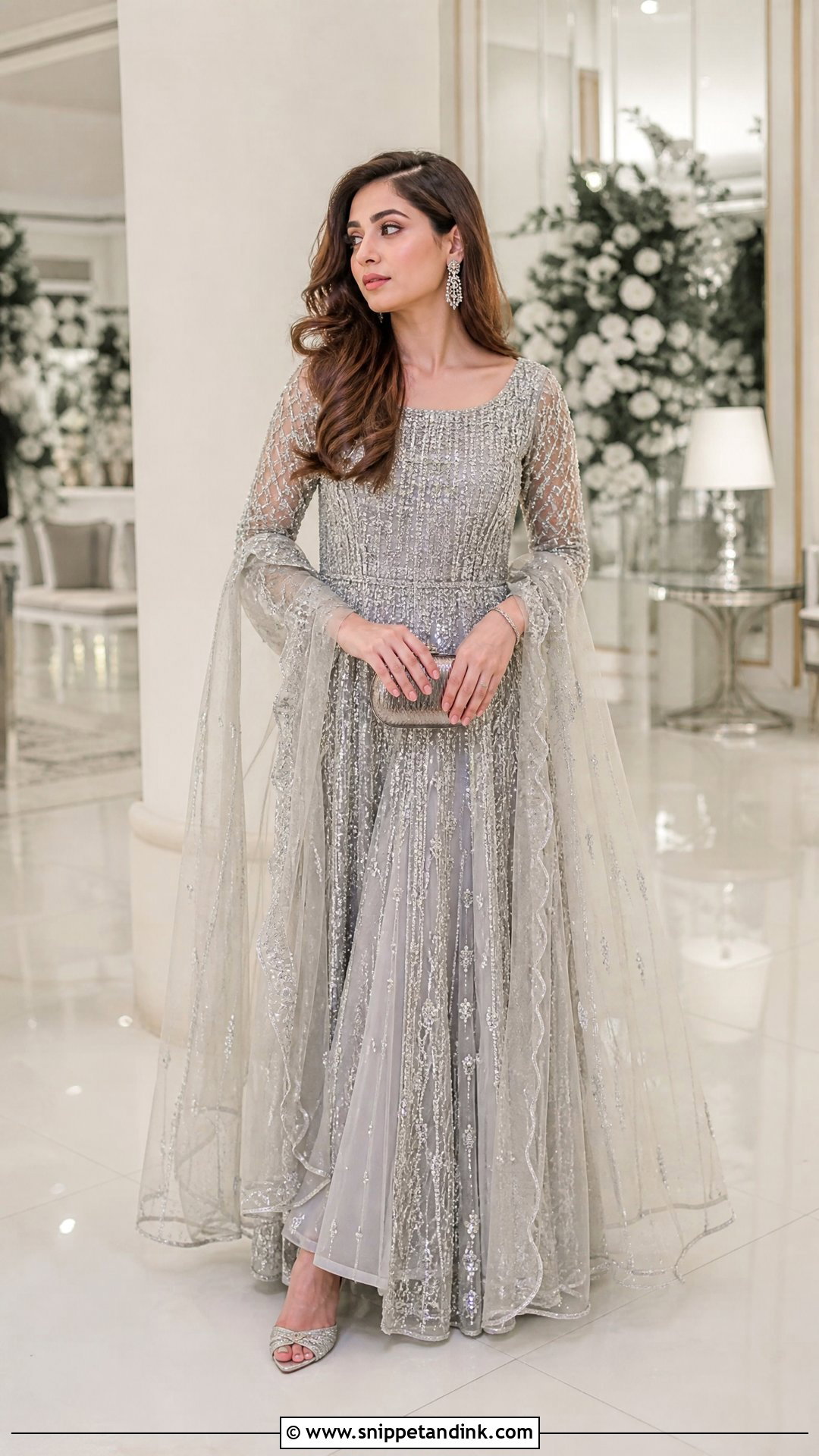
An embellished maxi is lighter to wear than any lehenga here, which counts at a reception where you’ll be on your feet for hours. Choose one with a defined waist, a modest neckline and layers of soft net or chiffon, with crystal beading heaviest at the bodice and scattered across the skirt. That distribution is deliberate: it keeps the shape readable instead of turning the dress into one glittering block. Net snags on beaded bracelets, so I’d choose a slim one over a cuff. Add a matching sheer dupatta, crystal earrings, silver heels and a small metallic clutch. Gray-brown eyeshadow, defined lashes and a dusty rose lip, with sleek straight hair or a low ponytail to keep it modern.
7. Rabia Faisal Maroon Velvet Lehenga Look
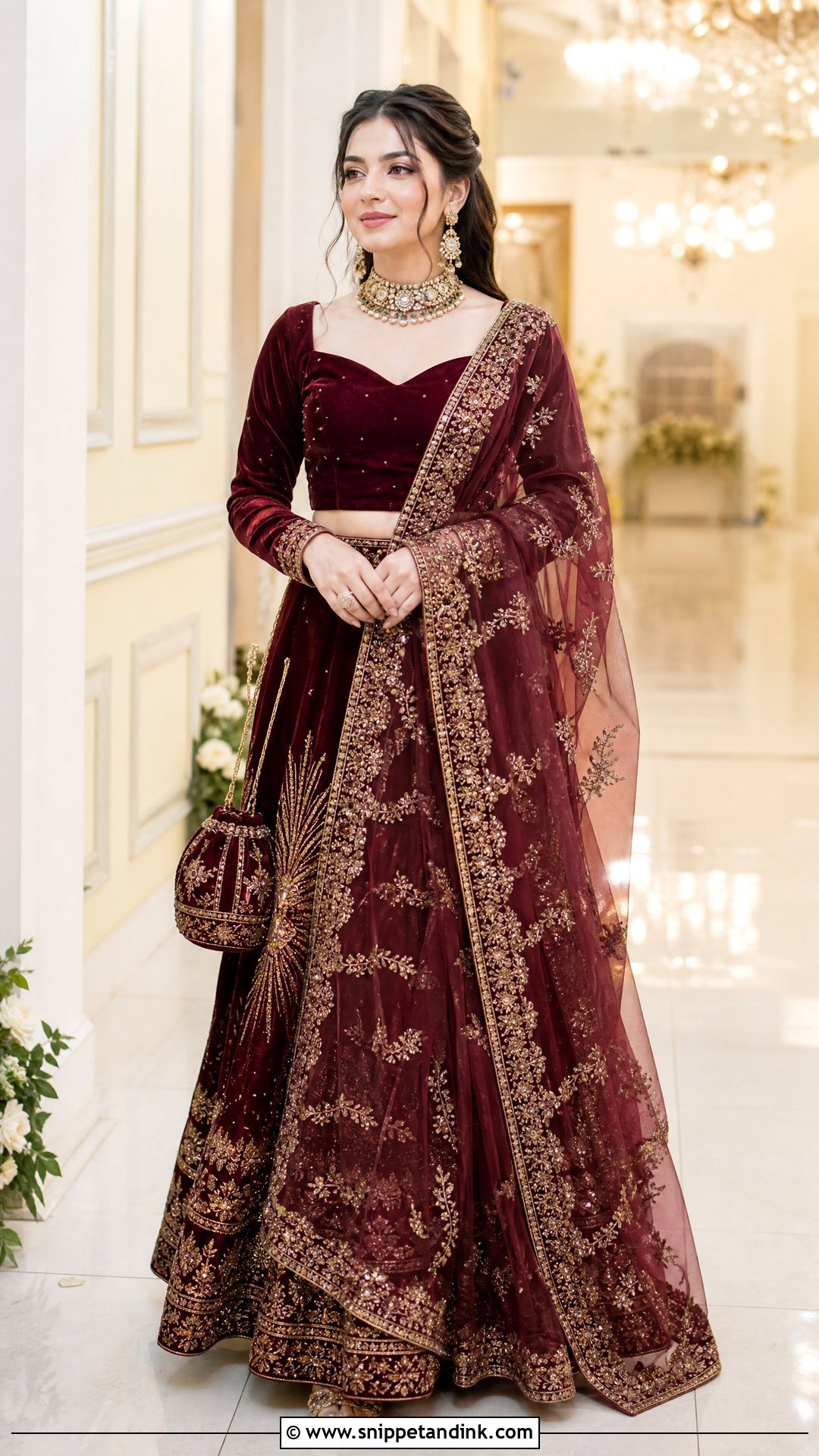
Velvet is a winter fabric for good reason. In a warm hall it gets hot fast, and the pile crushes if you sit on a fold of it for an hour. For a December wedding, though, nothing else gives maroon that depth. Pair a fitted velvet blouse with a full lehenga worked in antique gold around the hem. I usually suggest raw silk for the skirt unless the bride is happy carrying real weight, because a full velvet skirt moves slowly and drags on the waistband. Add a maroon net dupatta with a worked border over one arm, gold earrings, a statement choker, embroidered heels and a velvet potli. Warm brown eyes and a deep rose lip. A center-parted bun keeps the heavy fabric off the face and the neckline clear.
8. Rabia Faisal Black And Gold Wedding Maxi Look
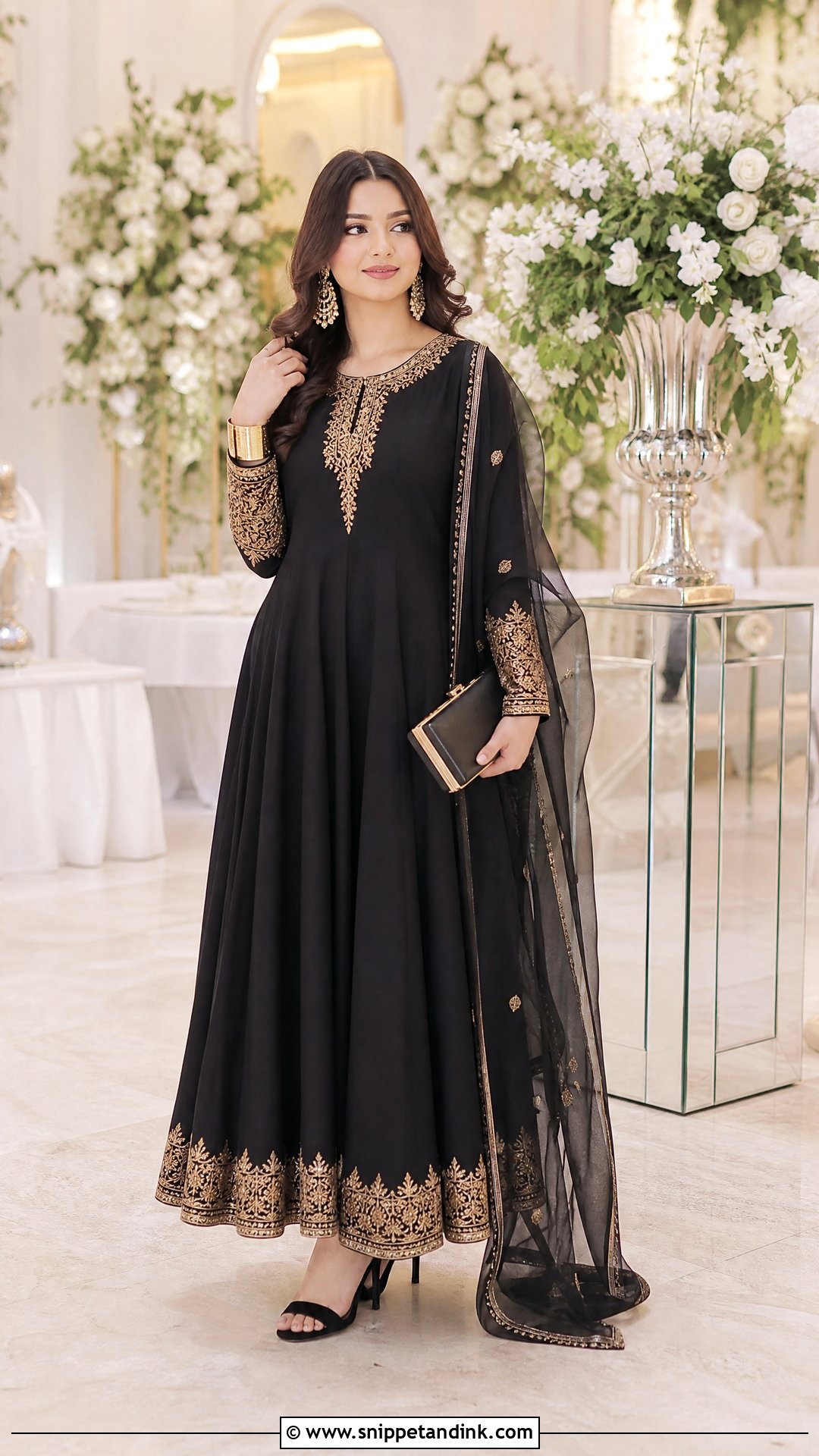
Black is a guest’s color at a Pakistani wedding, never the bride’s, and some families still avoid it at happy functions, so read the room before you wear it. Where it’s welcome, a long black maxi with a fitted top and an easy skirt looks sharp at night. Gold work at the neckline, cuffs and hem gives it edges, and scattered sequins add a little shine. Drape a light black dupatta with a gold border over one shoulder so it doesn’t hide the neckline embroidery. Gold chandelier earrings, a slim cuff, a structured clutch and black or metallic heels. Softly smoked eyes, warm bronzer and a neutral lip, with glossy waves or a polished ponytail.
9. Rabia Faisal Powder Blue Pishwas Look
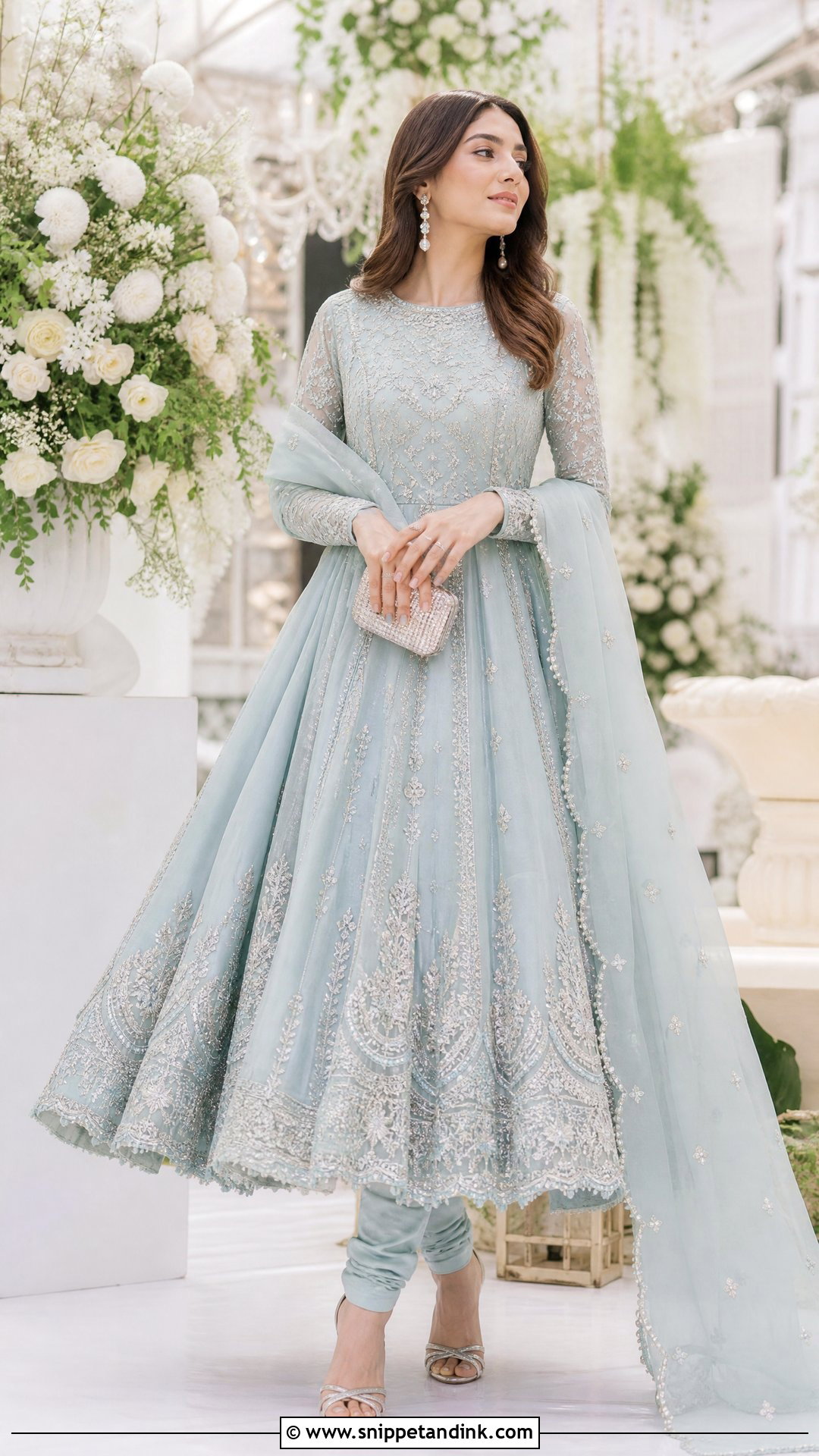
A pishwas carries a lot more skirt than it shows on the hanger, so the first thing I check is the length with the real shoes on. An inch too long and the hem is under your heel on every step. Powder blue keeps it airy for a daytime wedding. Choose a fitted bodice with narrow worked panels running toward the hem in silver thread, pearls and pale blue sequins, over fitted churidar. A sheer dupatta with fine lace or crystal edging, pearl earrings, a delicate tikka, silver sandals and a small beaded clutch finish it. Peach blush, a little shimmer on the lids and a pink-nude lip. Loose curls or a braided half-up style leave the flare as the main event.
10. Rabia Faisal Peach Organza Gharara Look
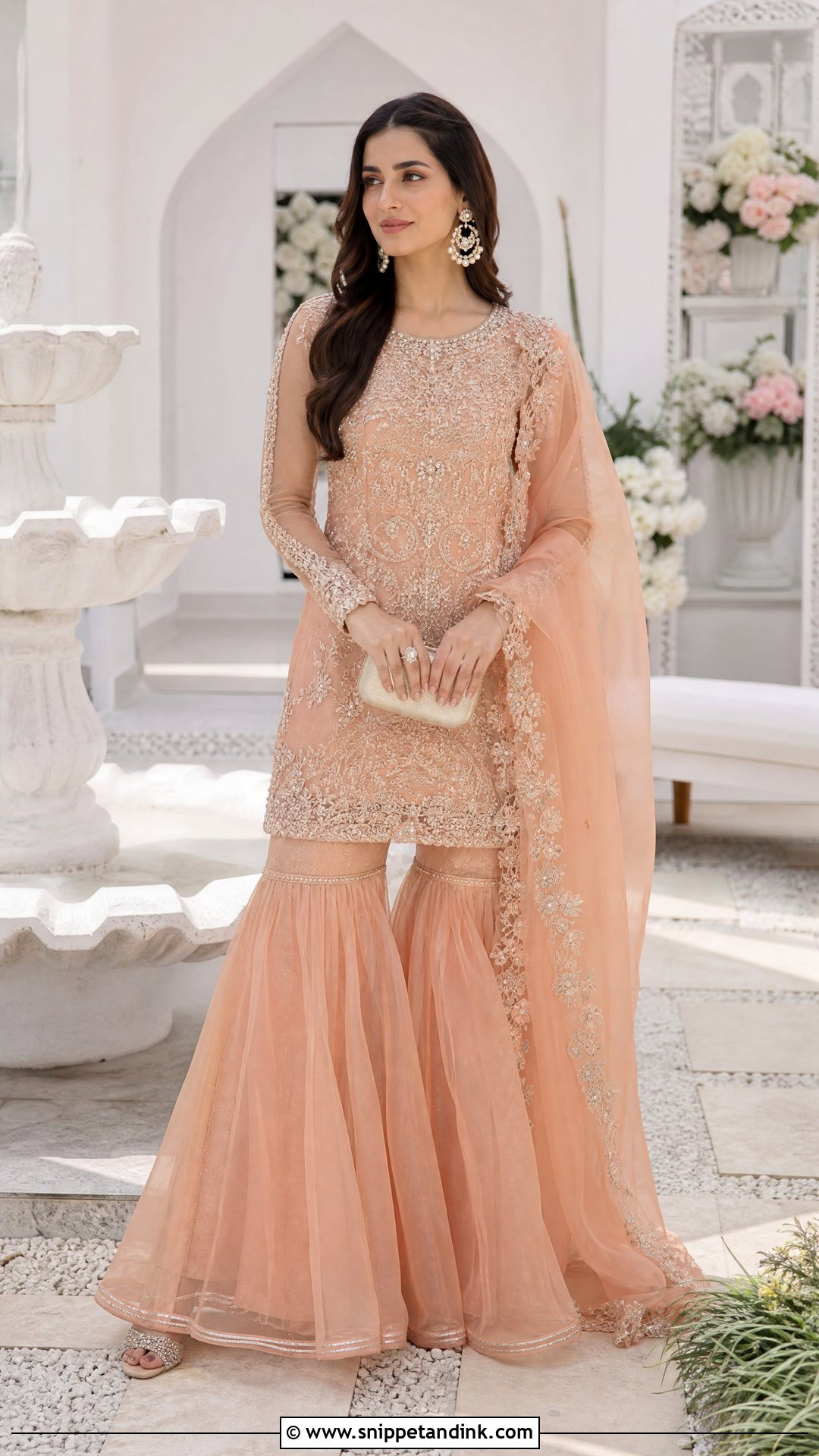
Organza holds its shape, which is why a peach gharara keeps that crisp knee flare in photos. It also creases sharply when you sit on it through a long nikkah, so I tell brides to smooth the flare out behind them before they sit. Choose a straight or slightly flared shirt with pearl embroidery, fine sequins and worked cuffs, over a matching gharara built on a structured knee panel. The floral-edged dupatta can go over the head or across both shoulders. Pearl chandbalis, a thin bracelet, nude embellished heels and a satin clutch. Fresh peach makeup with brown liner for definition. A low textured bun for a nikkah, soft waves if you’re a guest at an engagement.
11. Rabia Faisal Fuchsia Wedding Lehenga Look
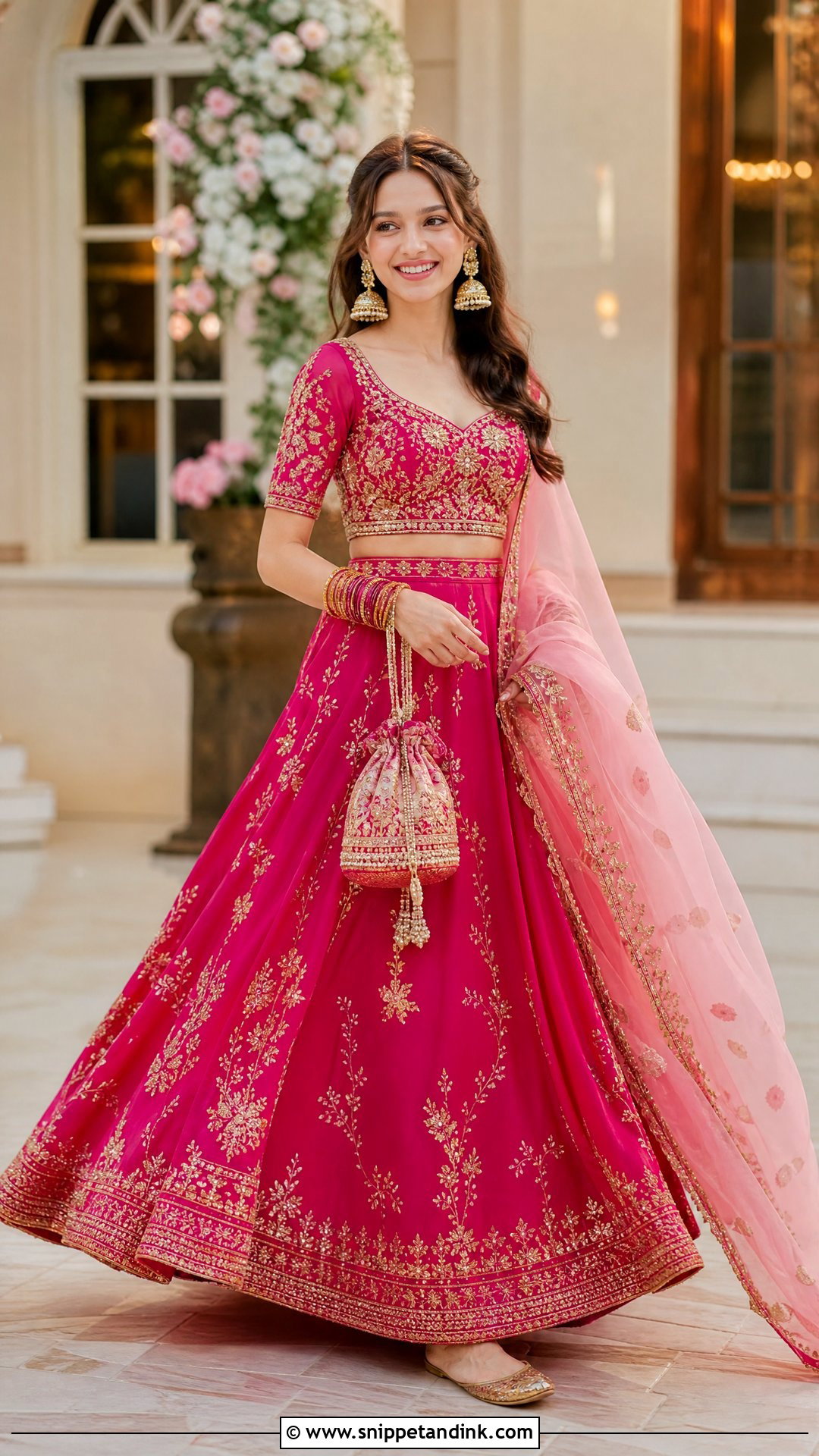
Fuchsia is the color I’d hand a guest who wants to be easy to spot in a packed hall. Start with a fitted blouse in gold threadwork, mirror work or small multicolored motifs, then a full fuchsia lehenga with orange, green or gold coming in through the border. Strong pink against strong pink can look flat, so a lighter pink organza dupatta breaks it up. Gold jhumkas, colorful bangles, a beaded potli and gold khussas. Glowing skin, softly defined eyes and a rosy pink lip. If there’s dancing or the event is outdoors, I’d choose a long braid over open waves and pin the dupatta at the shoulder, or you’ll spend the night chasing it.
12. Rabia Faisal Teal Angarkha Wedding Look
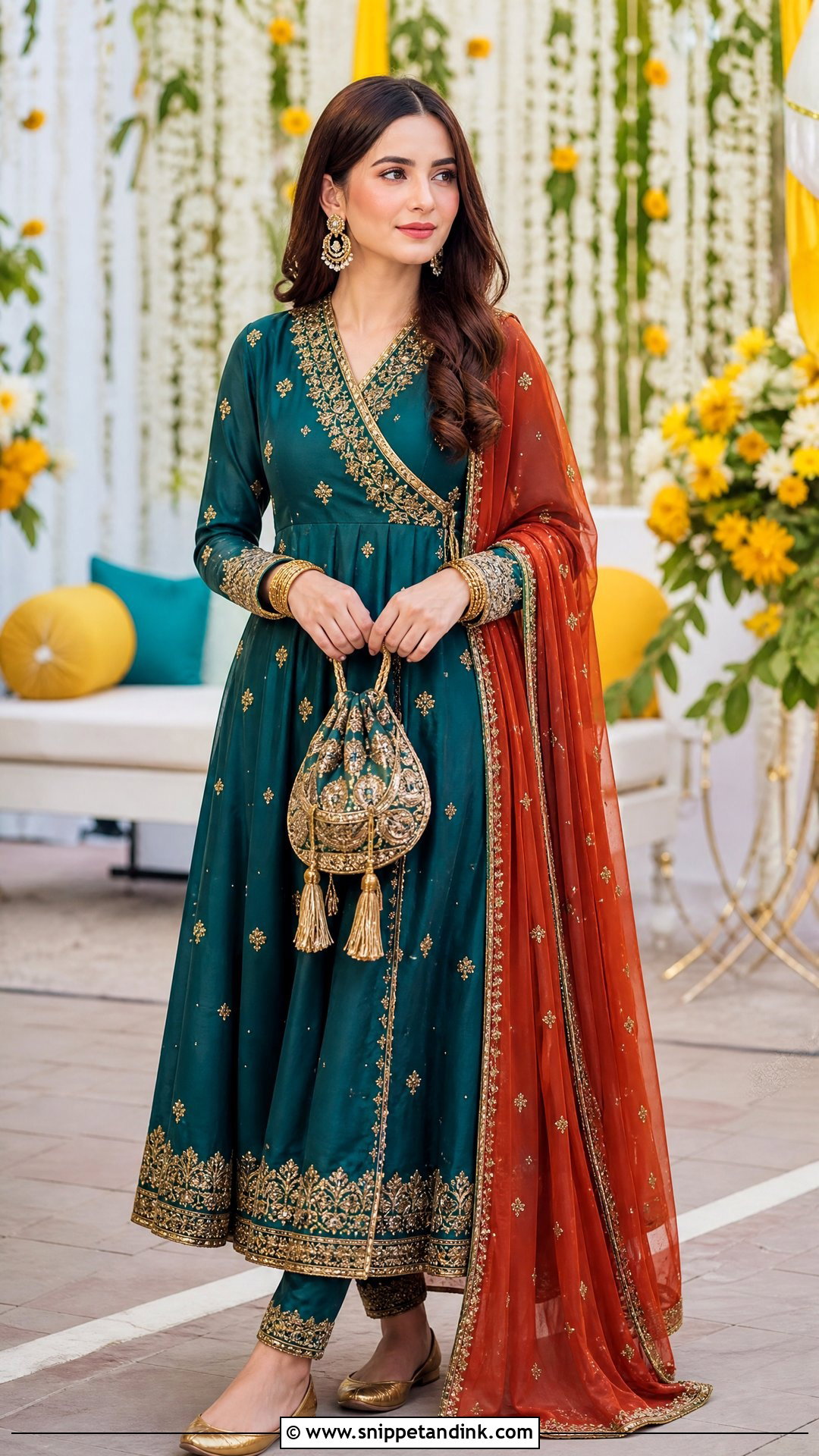
The teal angarkha is all about construction. The wrap bodice overlaps and ties, so the fit at the bust and waist decides everything, and an angarkha that gapes at the overlap can’t be rescued with a safety pin. I have the tie points checked at a fitting before anything else. Choose a long one fitted at the waist that opens into a full skirt, with antique gold embroidery along the neckline, cuffs and front opening. Wear it with fitted trousers and a rust, mustard or deep pink dupatta. Antique gold earrings and bangles, a small potli and embroidered flats. Warm bronze makeup and a terracotta lip flatter teal. It belongs at dholki nights, evening mehndis and family gatherings more than a formal reception.
13. Rabia Faisal Lilac Wedding Maxi Look
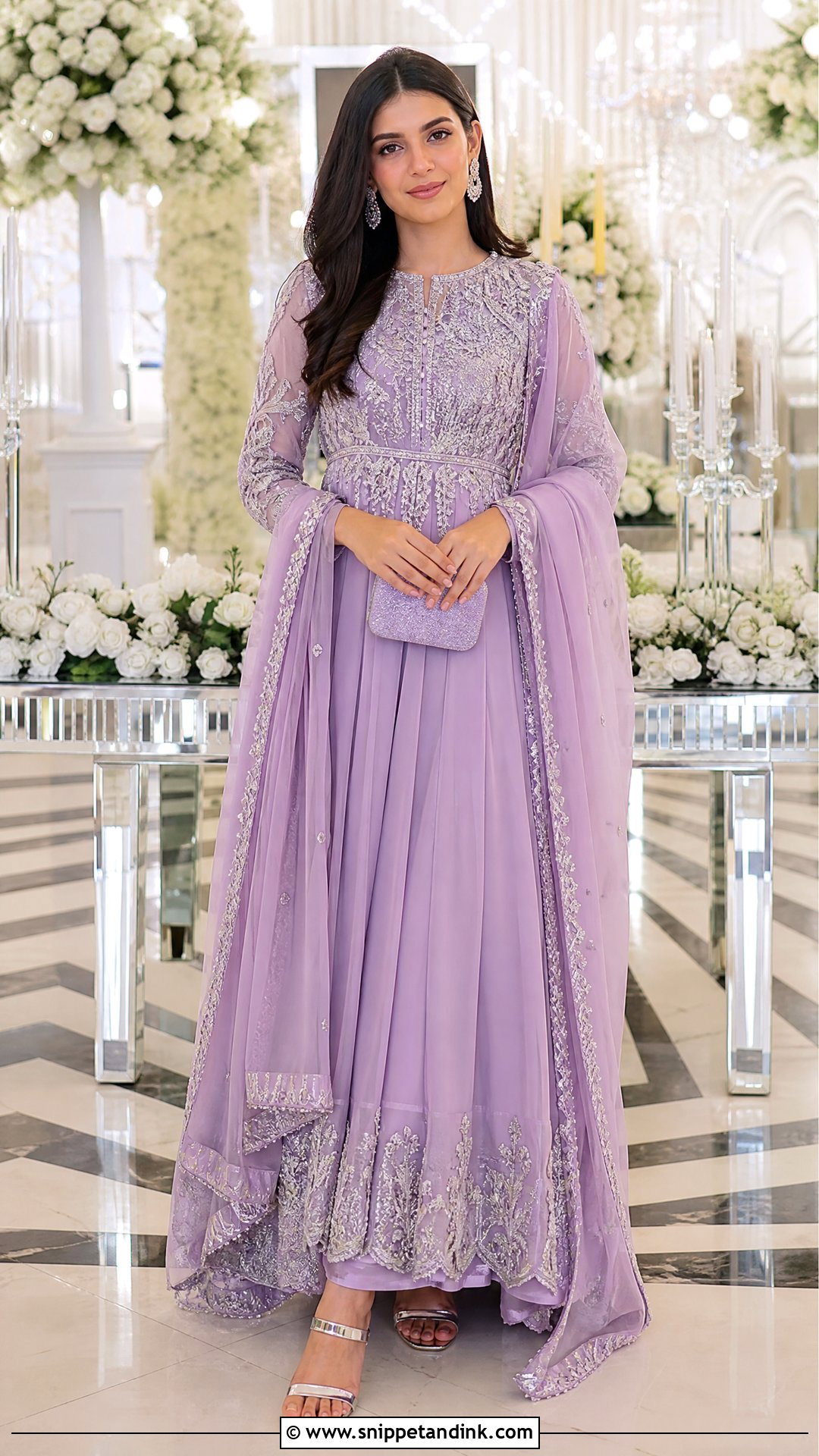
Lilac sits between pink and blue, and under some indoor lighting it drifts toward grey. That’s why I like it with tonal embroidery and pearls that give the surface texture, rather than as a plain flat silk. Pick a floor-length maxi with a fitted waist, full sleeves and a softly layered skirt. A matching organza dupatta with a narrow crystal border keeps the palette cool, along with silver drops, a delicate ring, a lavender clutch and metallic heels. Mauve eyeshadow, pink blush and a rosy nude lip; soft waves or a low twisted bun. Go lighter on crystal for a daytime event and heavier for an evening reception.
14. Rabia Faisal Navy Blue Wedding Lehenga Look
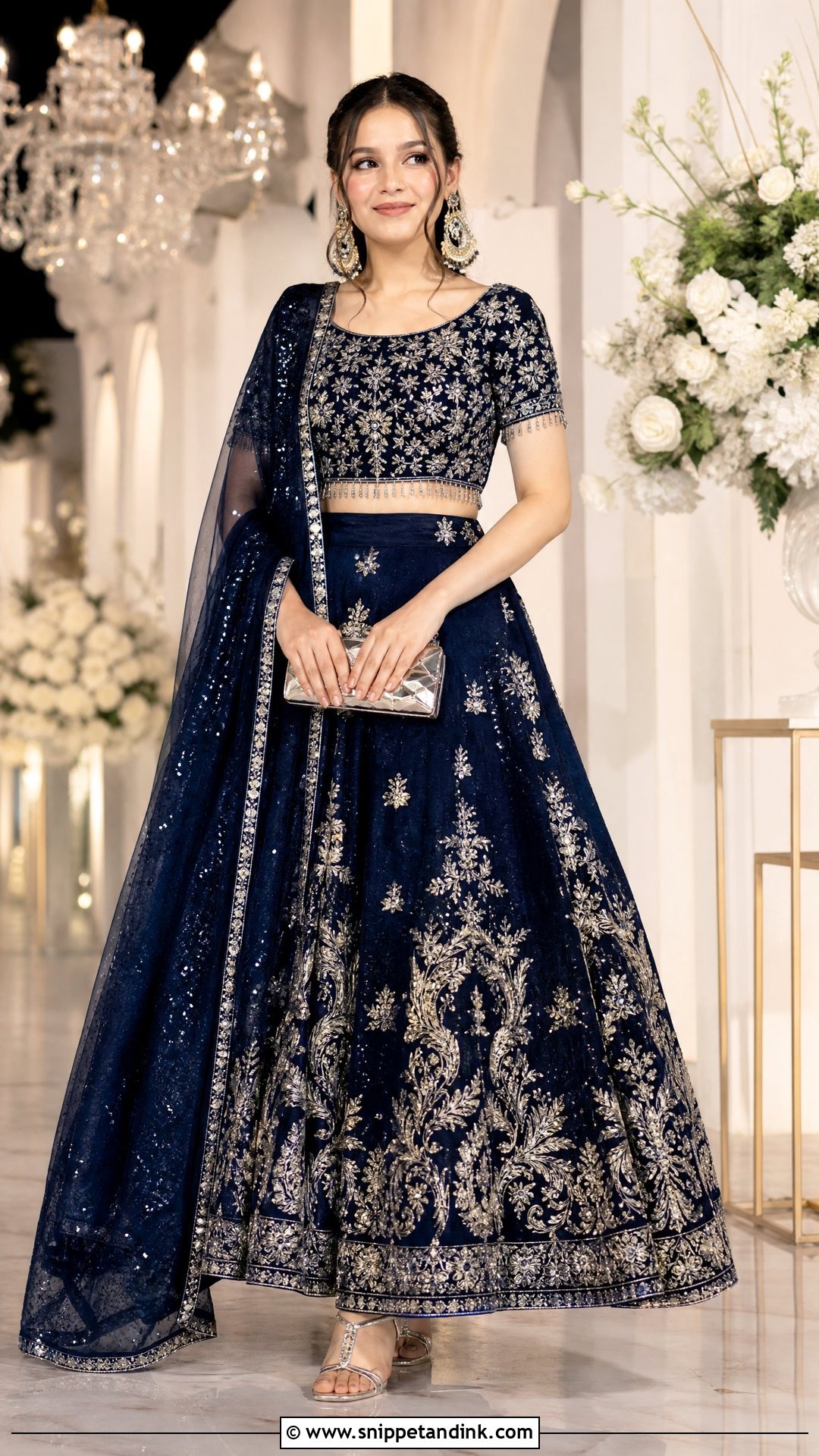
Navy gives you the authority of a dark color without the question marks black can raise at a wedding. Choose a fitted blouse in silver or antique gold embroidery and a generously flared lehenga, with the heaviest work at the hem and smaller motifs across the body so the skirt doesn’t look bare in wide shots. Add a navy net dupatta with scattered sequins and a neatly finished border. Chandelier earrings, a statement ring, a metallic clutch and navy or silver heels. One thing I watch on navy: under flash it can read almost black, so warm blush and a berry lip stop the face from looking cold. A smooth ponytail or center-parted bun keeps the neckline in view during greetings.
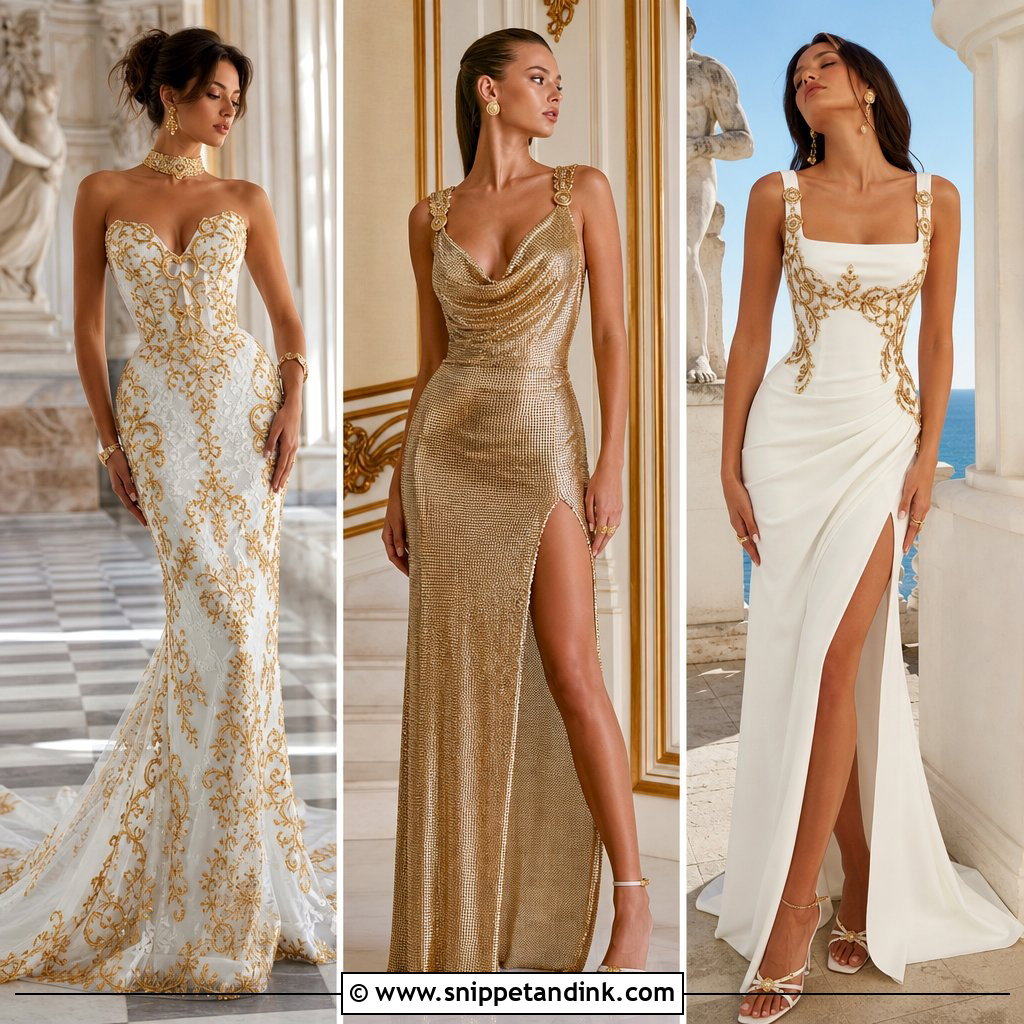
15. Rabia Faisal Champagne Bridal Gown Look
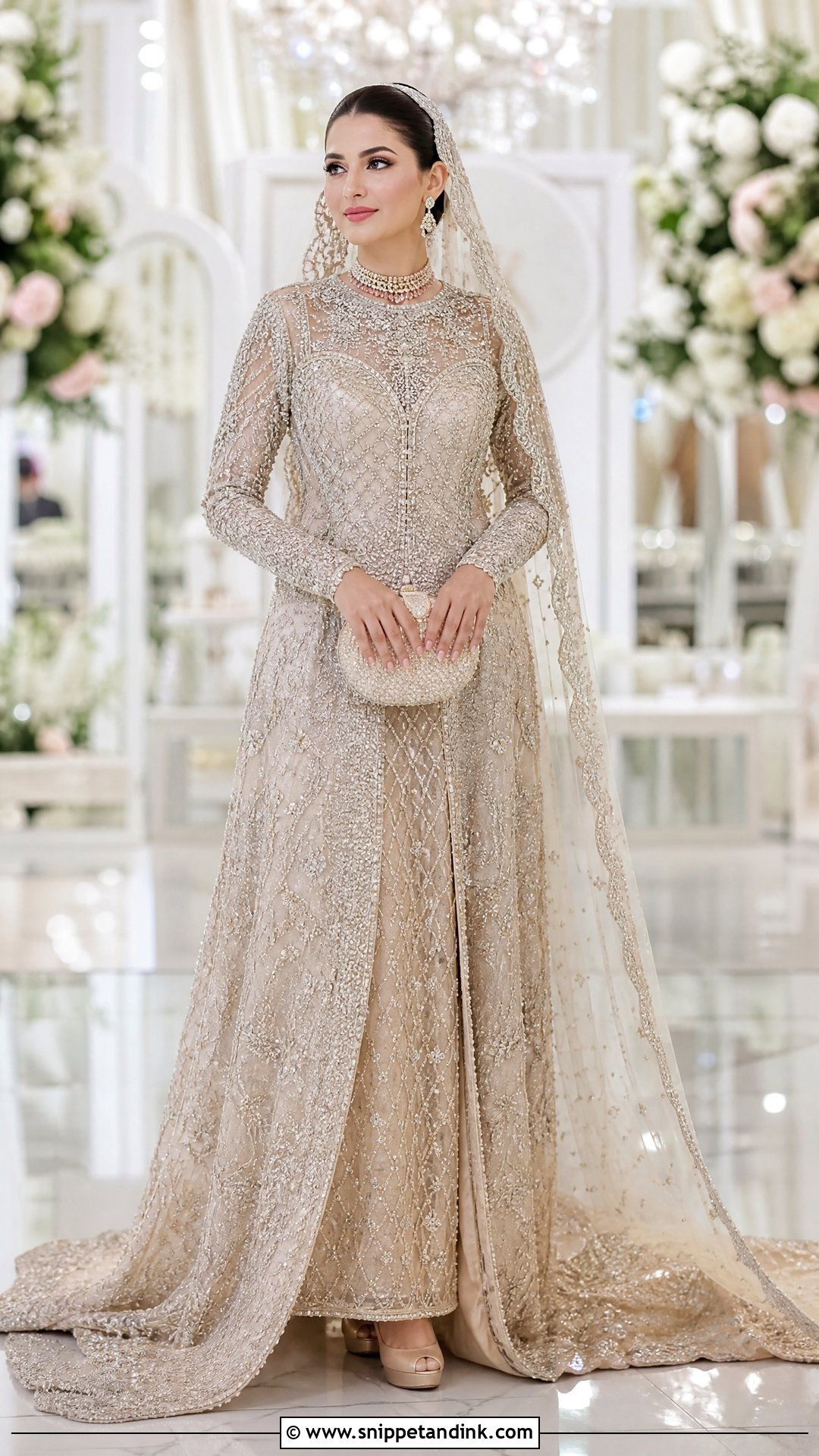
Champagne is the modern alternative to red, but a neutral fabric shows every mark, so I keep makeup wipes and a white towel within reach while the bride dresses. Choose a floor-length gown with a structured bodice, modest full sleeves and a skirt that runs into a short train, worked in gold beads, pearls and crystals that blend into the base. Add a long matching veil or dupatta with a scalloped edge. A crystal choker, drop earrings, champagne heels and a small jeweled clutch. Soft gold eyeshadow and a rose-beige lip. Place the low bun where the veil comb can actually grip. If you’ll be greeting guests at an indoor walima, ask the tailor for a bustle or wrist loop on the train.
16. Rabia Faisal Rust Orange Sharara Look
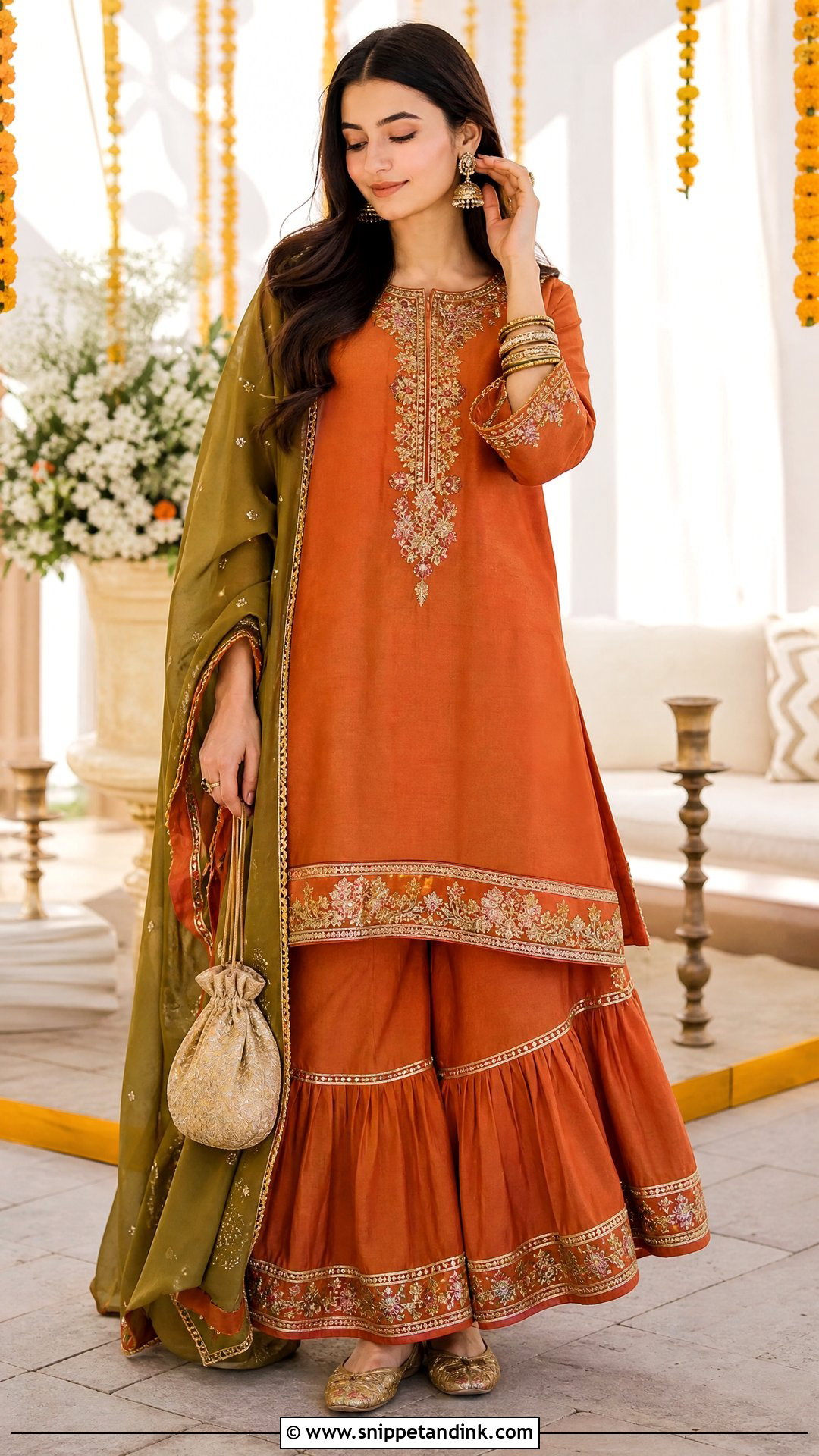
Rust gives a sharara warmth without the intensity of mehndi yellow, and earthy shades like this tend to sit easily on warm and olive skin. Pick a short kameez in raw silk or jacquard with antique gold motifs and worked sleeves, and a wide sharara whose borders get heavier toward the hem. A deep pink or olive dupatta adds contrast while keeping things grounded. Antique jhumkas, stacked bangles, a textured potli and gold khussas. Bronze eyes, peach blush and a warm nude lip. For hair, a loose side braid or a voluminous ponytail; if there’s dancing, I’d hide a second elastic under the wrap. Autumn weddings, dholki nights and outdoor mehndis suit it.
17. Rabia Faisal White And Gold Anarkali Look
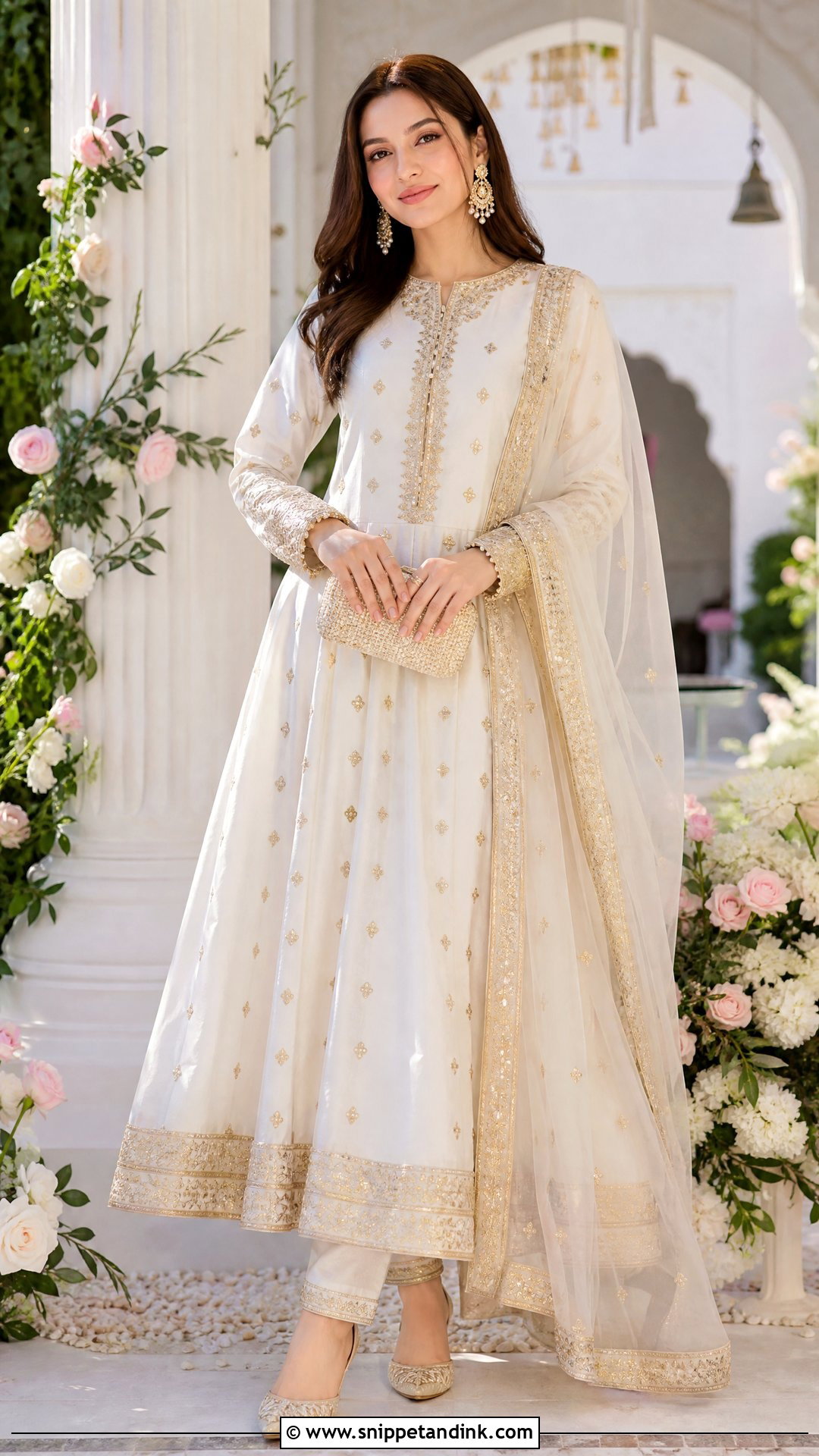
An anarkali’s skirt is cut in panels from a fitted bodice, so the waist seam has to land at your natural waist or the whole flare drops and looks tired. That’s the first thing I check. Choose a floor-length white anarkali with gold thread at the neckline and hem and small motifs scattered across the body, fitted white trousers underneath, and a sheer dupatta with gold lace. Gold and pearl earrings, a slim bracelet, a cream clutch and embroidered heels. Golden shimmer, rosy cheeks and a soft peach lip, with a low bun and small white flowers for a nikkah. Guests should keep the embroidery moderate; a bride can add a heavier dupatta and layered jewelry.
18. Rabia Faisal Plum Velvet Pishwas Look
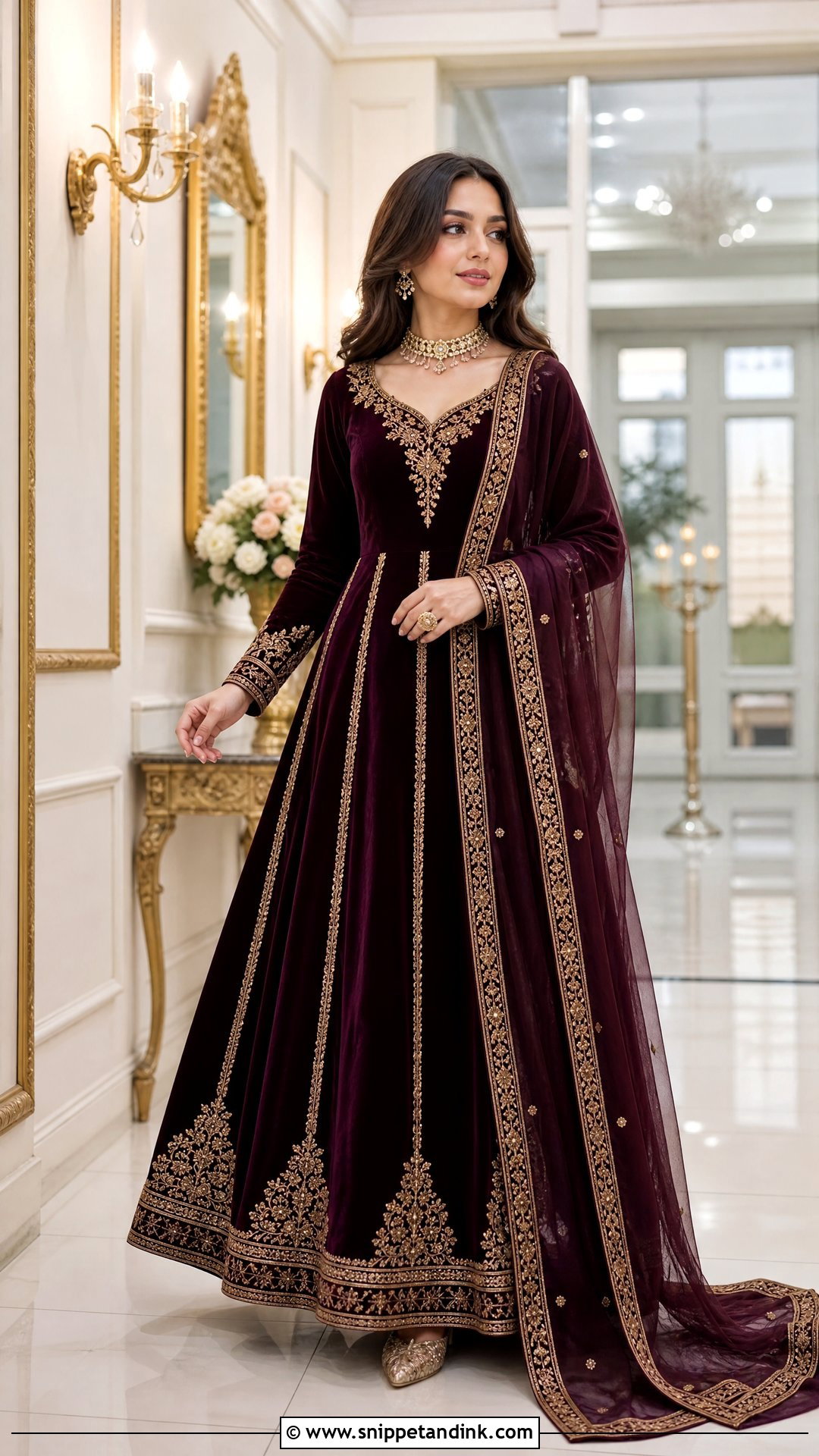
Plum velvet is the richest look in this set and also the warmest to wear, so I’d keep it for a winter reception or an evening hall with good air conditioning. Choose a fitted velvet bodice on a flowing skirt of velvet panels or lighter silk, with antique gold embroidery at the neckline, sleeves, waist and hem. A plum net dupatta with gold edging takes some heaviness off. Kundan choker, matching earrings, a gold ring and embroidered closed-toe heels. Bronze eyes, soft contour and a muted berry lip, then a center-parted low bun or brushed waves. Stop there. Extra bangles or a second necklace only fight with the velvet.
19. Rabia Faisal Pastel Floral Lehenga Look
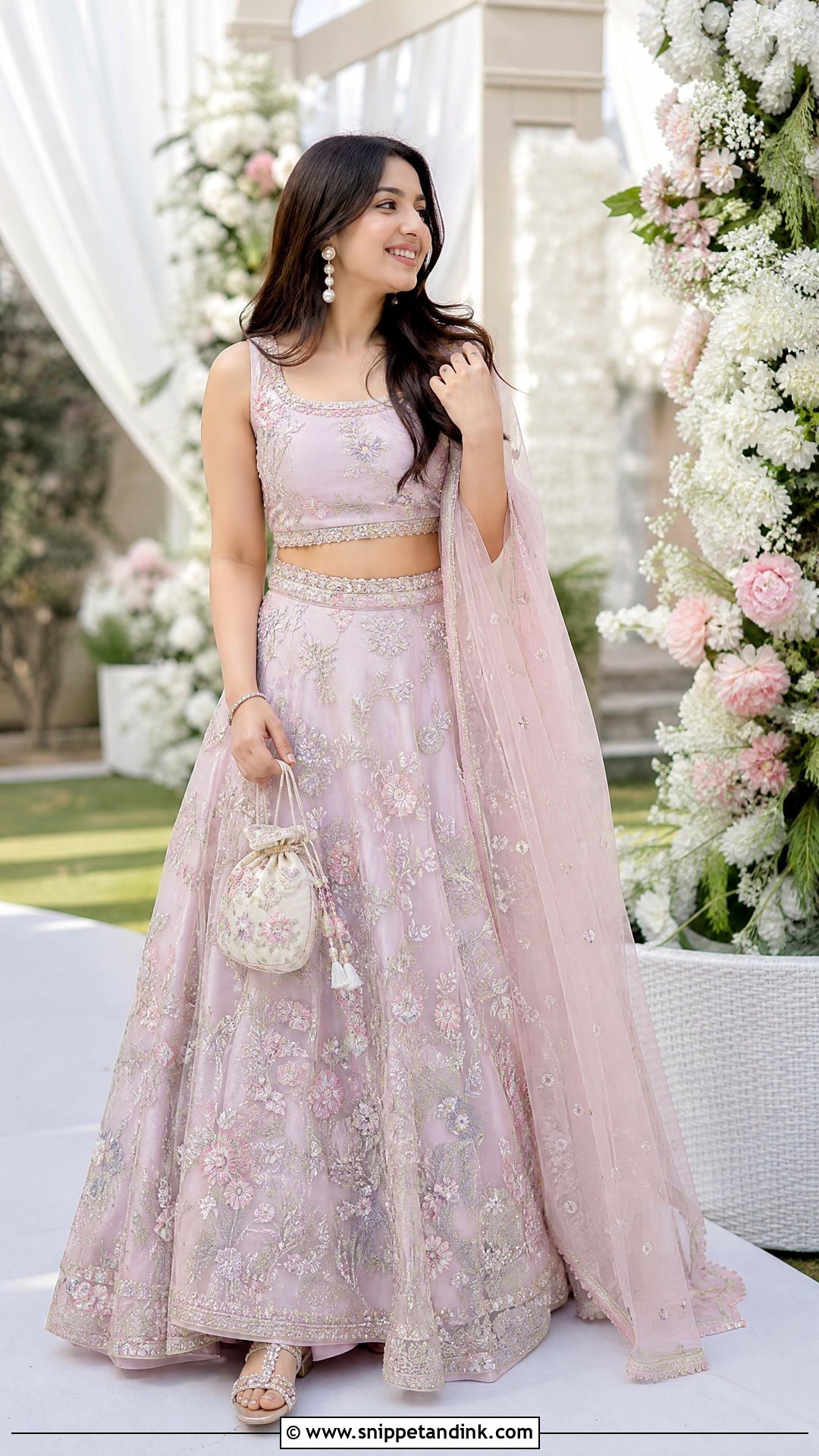
Pastel floral work is light in weight and in mood, and it’s the outfit I’d suggest for a garden nikkah where heat and grass make velvet impractical. Start with a pale pink, mint or powder blue blouse covered in small multicolored flowers, a matching flared skirt where the embroidery thickens near the border, and an organza dupatta scattered with the same motifs. Pearl earrings, a dainty bracelet, a pastel potli and neutral embellished sandals. Organza hems pick up grass stains and damp quickly, so for an outdoor event I keep the skirt length an inch off the ground. Glowing skin, pink blush and a glossy rose lip, with loose curls or a half-up braid.
20. Rabia Faisal Red And Gold Saree Look
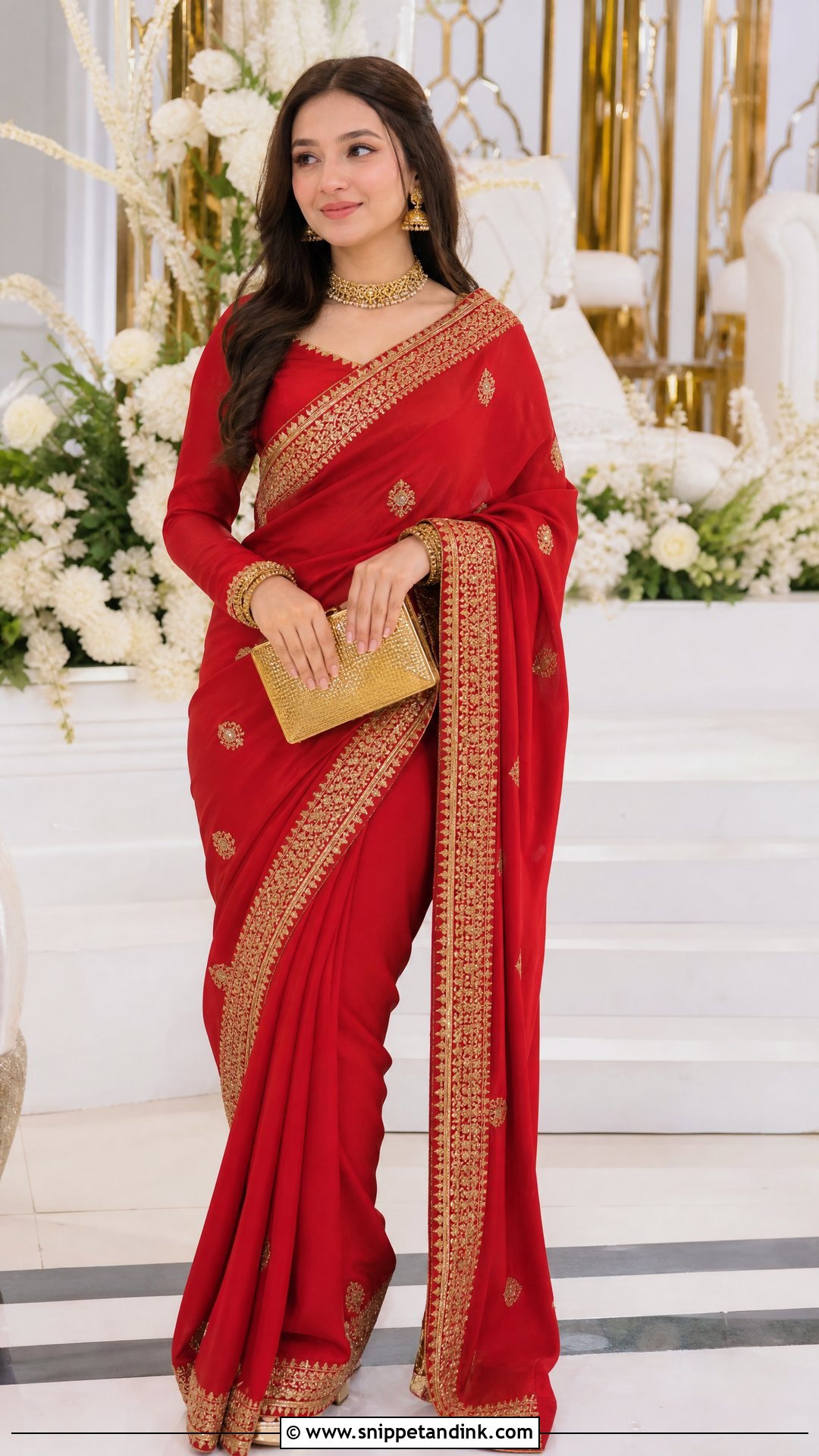
A red and gold saree gives a bride the color of a lehenga with far less weight, but it needs someone who can drape. Pleats that slip by the second hour are the saree problem I’m asked to fix most, so book a person who has draped many times rather than learning on the morning. Choose silk or organza with a defined gold border and small motifs, and a fitted modest blouse with elbow or full sleeves. Pin the pleats at the waist and the pallu at the shoulder, hiding the pins under the border. Gold choker, earrings, bangles, a structured clutch and metallic heels you can genuinely walk in. Winged liner, warm blush and a rich red lip; a sleek bun with fresh flowers or smooth waves.
Ordering a Pakistani Bridal Piece From Overseas
Plenty of brides wearing Pakistani designers live far from the workshop, and custom handwork is slow. Embroidery is done in stages, so made-to-order bridal pieces commonly take several months, and shipping and customs add more on top. Lead times vary by label, so get yours in writing, and I’d still keep a final month free for local alterations.
Measurements from a distance
- Have a tailor measure you rather than a friend with a tape. Armhole, blouse length and the bust-to-waist drop are where home measuring goes wrong.
- Ask for extra seam allowance at the blouse side seams so a local tailor can let them out if needed.
- Send your heel height with the order, since skirt and pishwas lengths are cut to it.
- Request photos of the finished piece on a dress form before it ships.
The day the parcel lands
Unpack it that day, hang the skirt by its inner loops, and try every piece on together. Transit creases relax over a day or two. For the stubborn ones, steam from the reverse and keep the steamer moving and away from metallic thread, which can flatten or dull.
Putting Heavy Work Away After the Last Function
Zari and zardozi tarnish in damp air and sealed plastic, so the outfit needs to breathe. I air it overnight first so any perspiration dries, then fold it with white muslin or acid-free tissue between the layers so worked sections don’t rub against each other. Don’t leave a heavy lehenga hanging for months; the weight drags on the waistband. Every few months, refold along different lines so creases don’t set into the embroidery. Stains should go to a cleaner who handles hand embroidery, because home spot cleaning on metallic thread usually spreads the mark.
Spreading Twenty Looks Across Mehndi, Nikkah and Walima
If you’re planning several functions, treat these as a sequence rather than one decision. The beautiful Pakistani silhouettes here divide fairly cleanly: red lehengas and champagne gowns for the main bridal day, ivory ghararas and white anarkalis for the nikkah, shararas and bright lehengas for mehndi and dholki, and pastel gowns, pishwas and embellished maxis for the walima. Try each one with its dupatta, jewelry and shoes before the week starts, and sit down in it at least once. When in doubt, remove one piece of jewelry. I have never seen an outfit suffer for it.
You'll Like These Ideas:


Leave a Reply