
A signature look rarely comes from the dress alone. It comes from the neckline, fabric, color and shape agreeing with the shoes and jewelry, so that nothing you’re wearing is arguing with anything else. The twenty gowns here range from quiet eveningwear to bold couture-inspired finishes, and each comes with the styling I’d suggest plus the fitting checks I’d make before anyone takes it home. Some belong at a black-tie reception, others at a garden celebration or a milestone party, and the shapes work across ages and sizes.
Which Bra Goes Under a Halter, a Cowl or One Shoulder?
Almost every bride asks what goes underneath before she asks about shoes, and it’s the right order. The neckline decides the support, and the support changes how the bodice fits, so it needs settling before the first alteration.
- Strapless, sweetheart and corset bodices: if the gown is properly boned, a seamstress can sew cups straight into the lining and you may need nothing else.
- Halter and deep V: adhesive cups or a plunge bodysuit with a low back. Try the adhesive on your skin a few weeks ahead, since some people react to it.
- One shoulder: a convertible bra worn with a single strap across the body, or a strapless longline that sits below the bodice edge.
- Cowl and bias-cut satin: smooth, laser-cut pieces close to your skin tone, and nothing with lace texture that will print through.
- Open or low backs: a low-back bodysuit or sewn-in cups, because ordinary straps show the moment you turn.
Whatever you choose, buy it before the first fitting and wear it to every appointment after. Switching support halfway through alterations can move the bust line enough that the bodice has to be taken in or let out again.
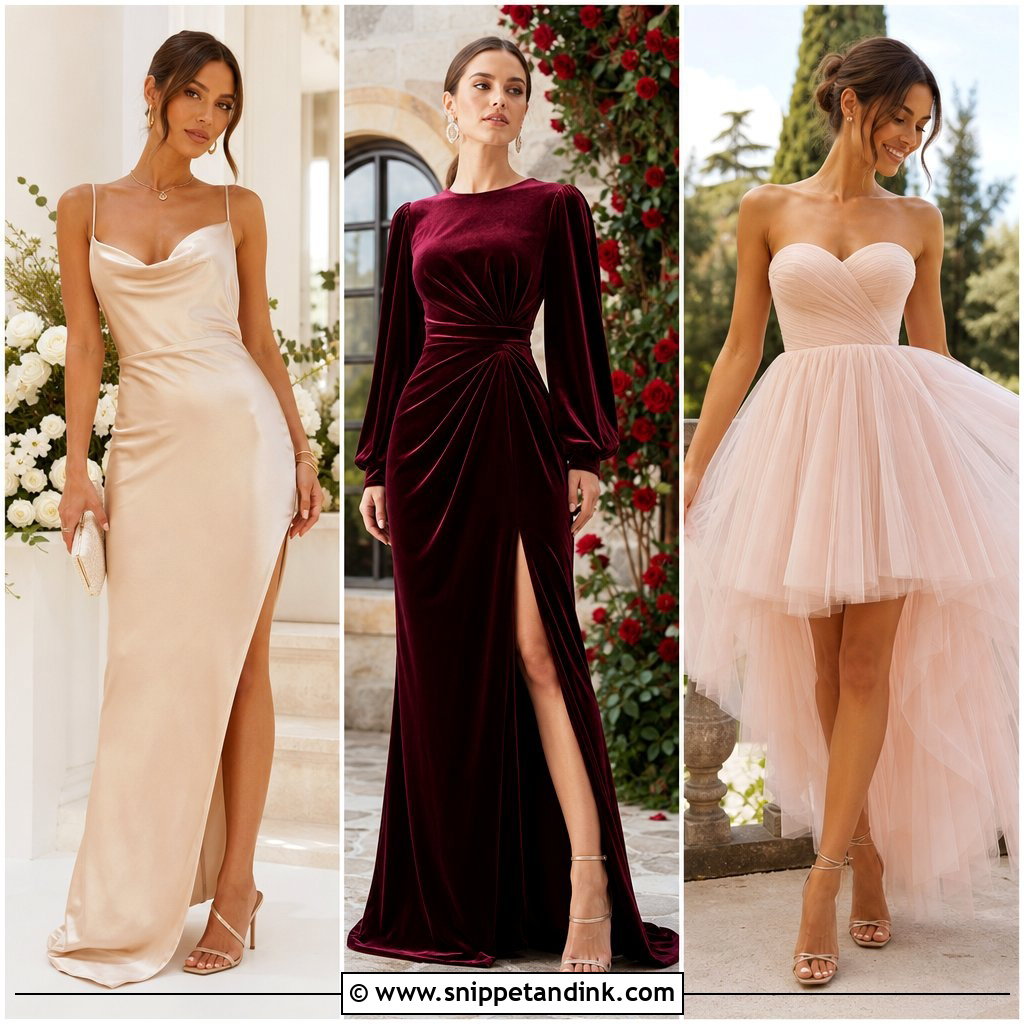
1. Satin Corset Gown
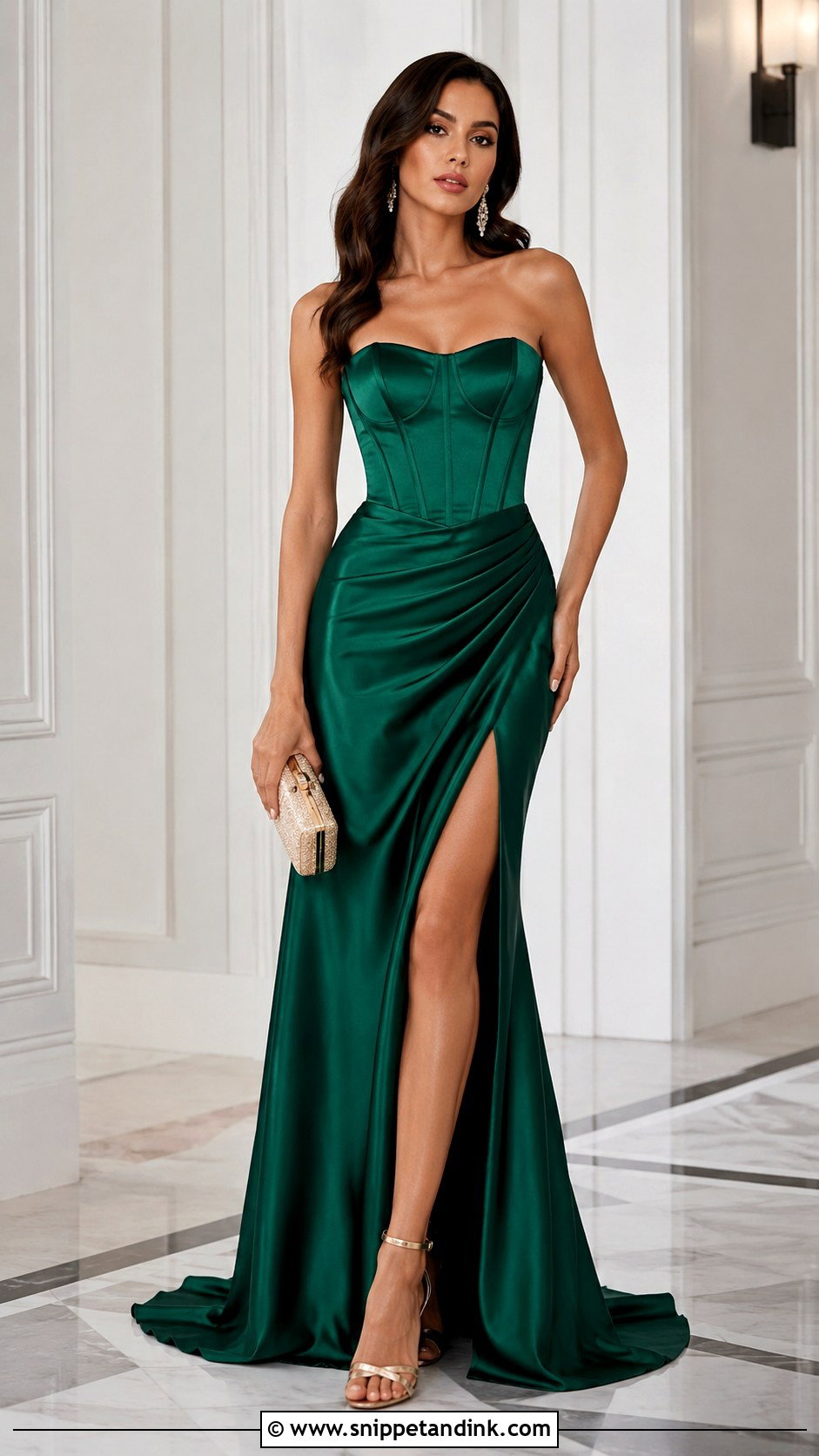
Satin shows every fault in a corset bodice: a bust seam a few millimetres off sits as a visible ripple under any light. So tailoring comes first here, ahead of color, and the bust and waist seams should lie flat without pulling or gapping when you breathe in. Look for a boned bodice over a softly draped floor-length skirt in champagne, emerald, navy or deep burgundy. A thigh-high slit buys you a proper stride. Slim metallic sandals, a hard-shell clutch and drop earrings are enough; skip the necklace if the neckline is already strong. A low bun shows the shoulders, and a matching satin wrap handles a cool evening.
2. Off Shoulder Ball Gown
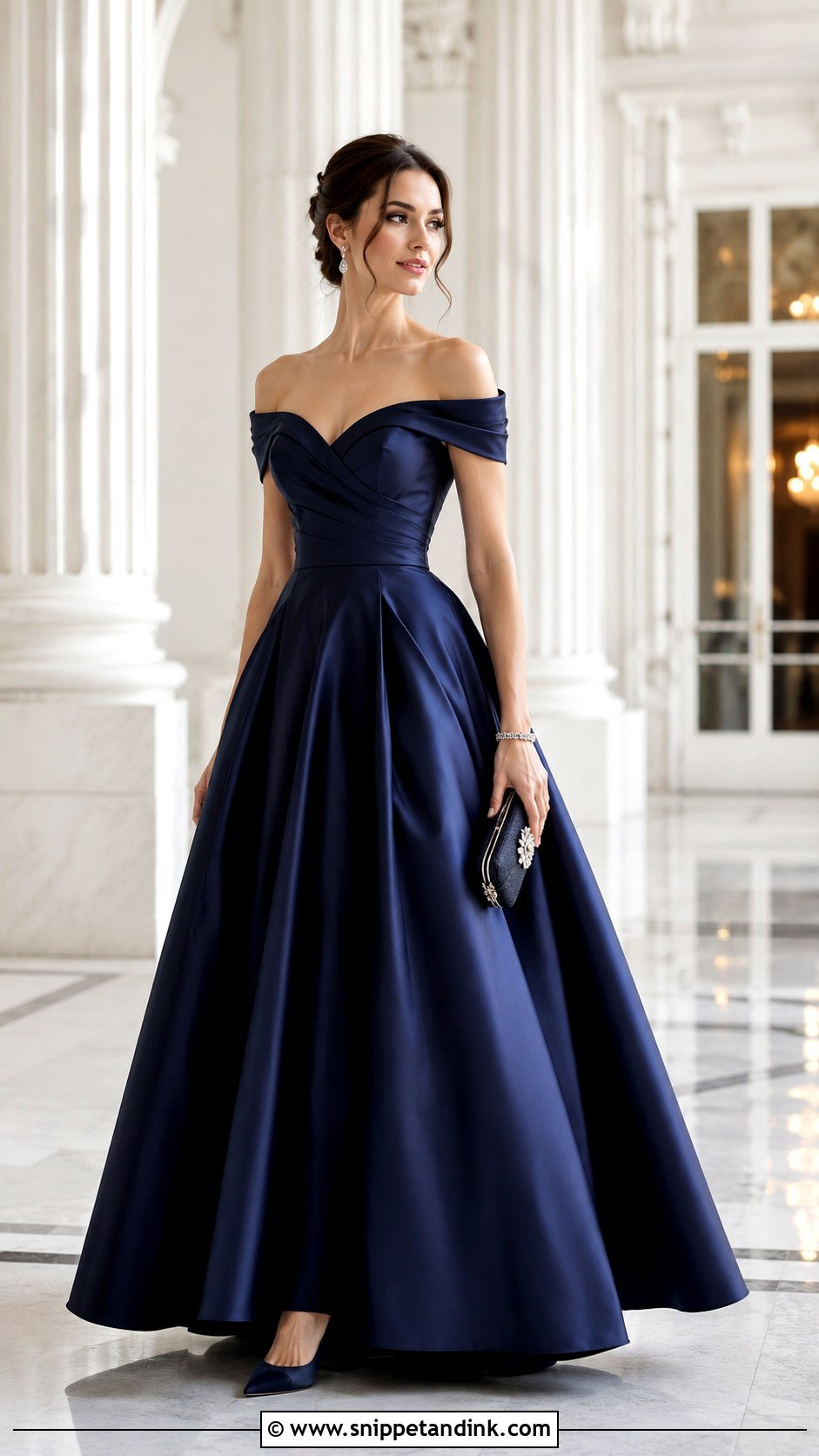
Off-shoulder ball gowns have one practical problem: the sleeves sit on your upper arm, so lifting your arms drags the whole bodice up. Ask for internal corsetry that anchors the bodice to your ribs, or discreet clear straps if you need more bust support, and test it by hugging the fitter. Matte satin gives a clean finish; layered tulle softens it. Pointed pumps or hidden platforms, a crystal bracelet, a compact bag and delicate earrings supply all the sparkle you need. Half-up hair or polished waves leave the collarbone on show, and any wrap should be tailored to sit below the neckline, not over it.
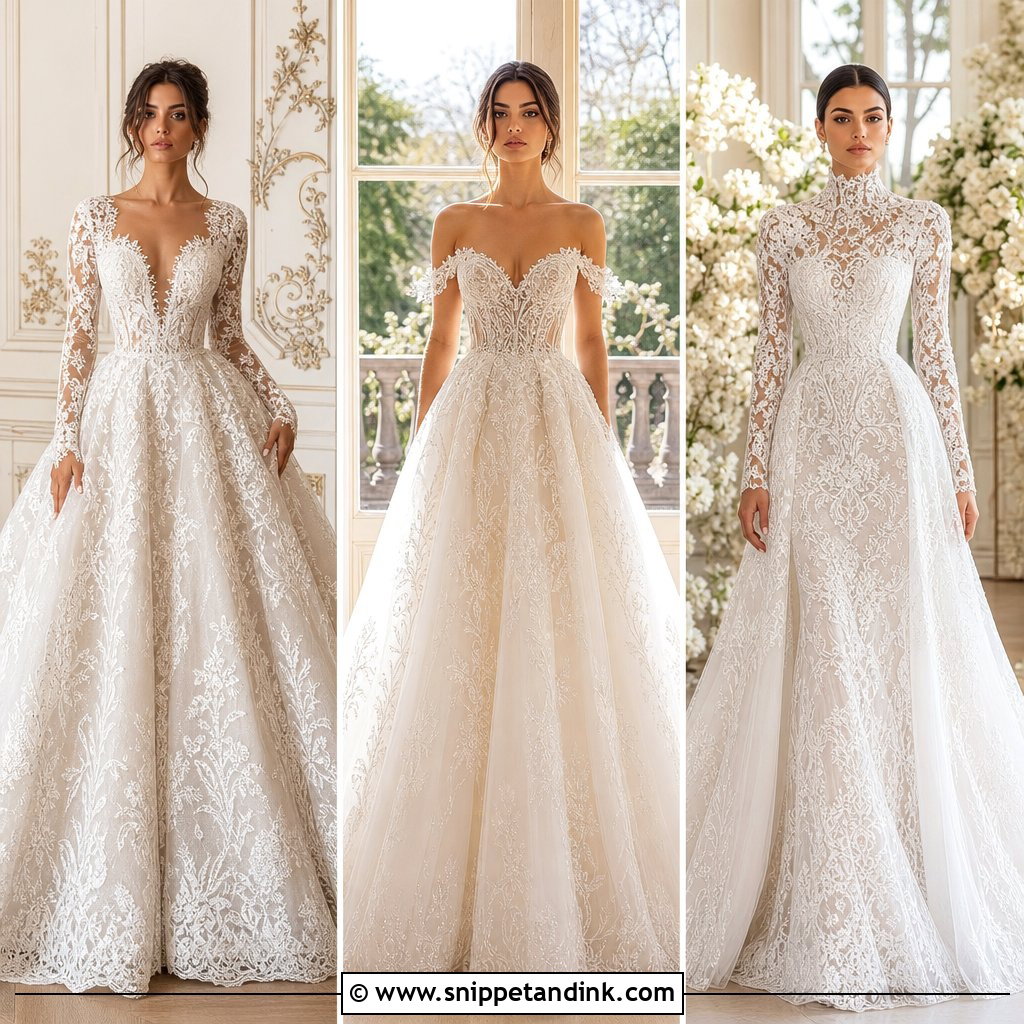
3. Long Sleeve Lace Gown
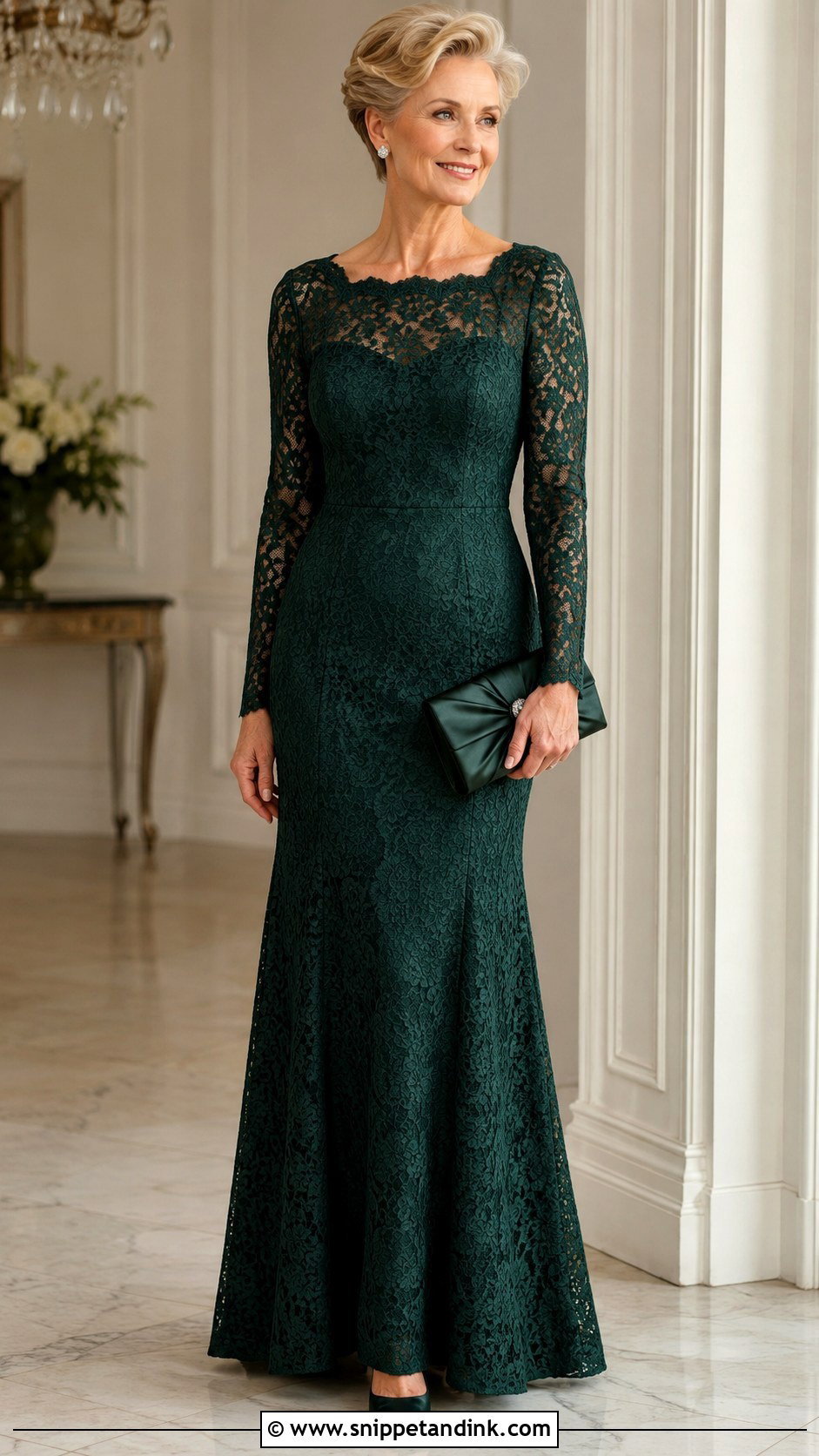
Lace sleeves feel lovely at nine in the morning and scratchy by evening if the edges are poorly finished. I run a finger around the cuff and the underarm before anything else; a scalloped edge should be soft, while a heavily corded lace can rub at the wrist. Look for lining placed strategically through the bodice and skirt, and a fitted waist with a gentle flare to balance the visual weight of the sleeves. Black, midnight, plum and forest green suit evening, and soft blue or dusty rose read lighter. Closed-toe pumps, a small satin clutch and studs are plenty, with no necklace if the lace climbs to the throat. A sleek chignon lets the sleeve pattern show.
4. One Shoulder Draped Gown
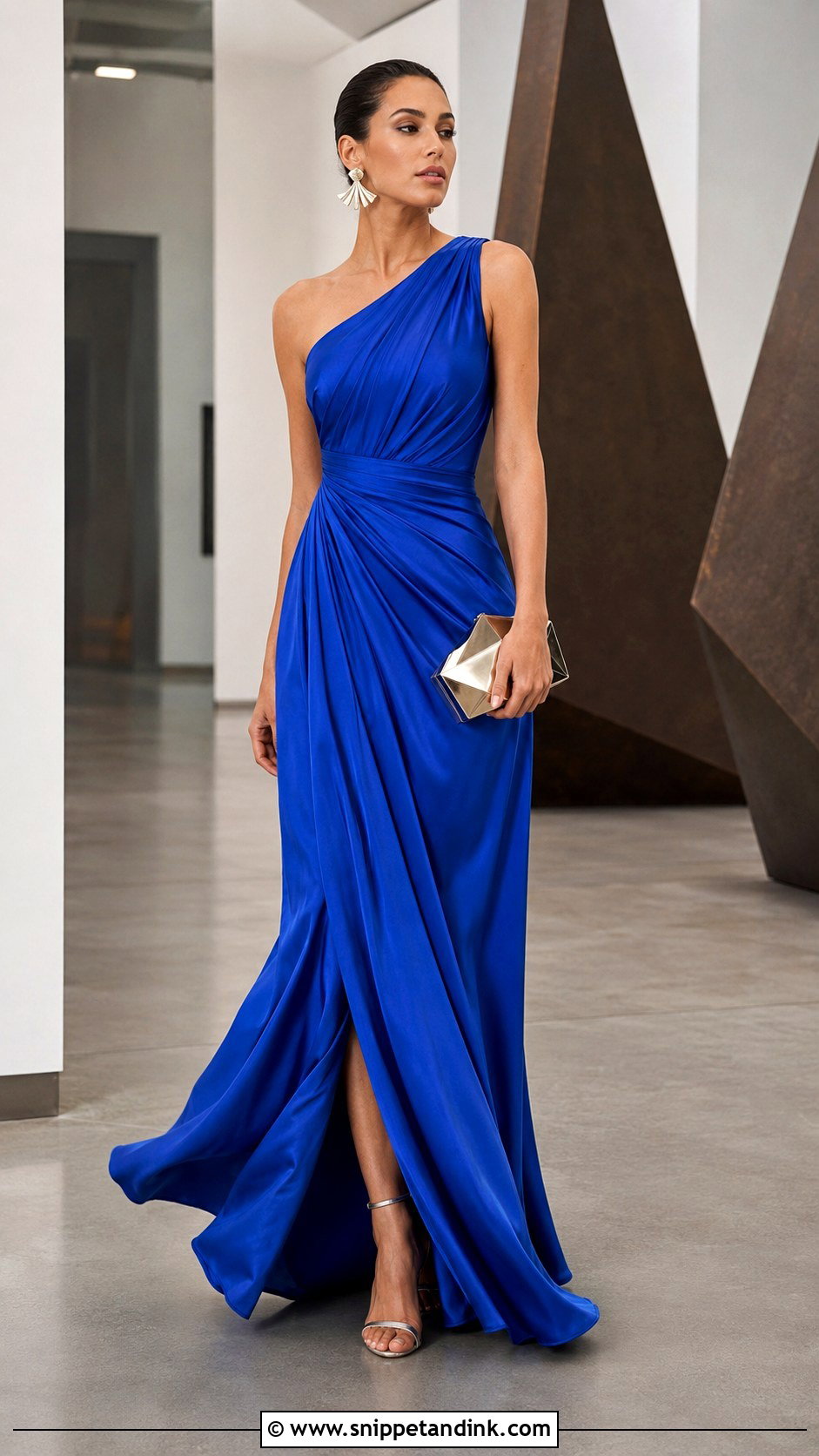
Drape is forgiving. Gentle ruching at the waist smooths a soft middle in a way a tight bodice never will, which is why I reach for this cut when someone wants shape without structure. Fluid crepe or jersey should fall from the shoulder cleanly, without bulk at the strap. Wear one statement earring on the bare side, or two small ones if that feels like too much, and sweep the hair behind the open shoulder. No necklace. If there’s a sash or shoulder panel, have it shortened so it clears the floor. Slim ankle straps and a geometric clutch finish it.
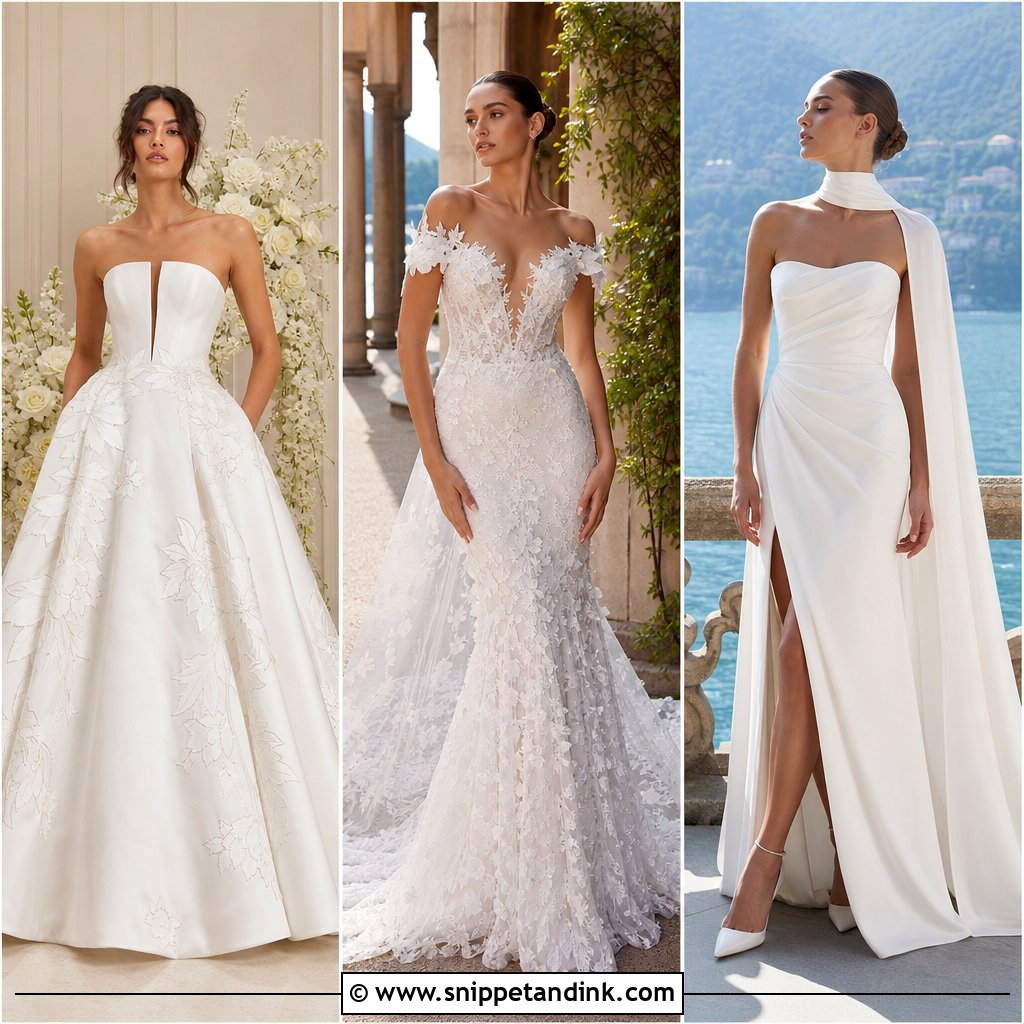
5. Cape Sleeve Gown
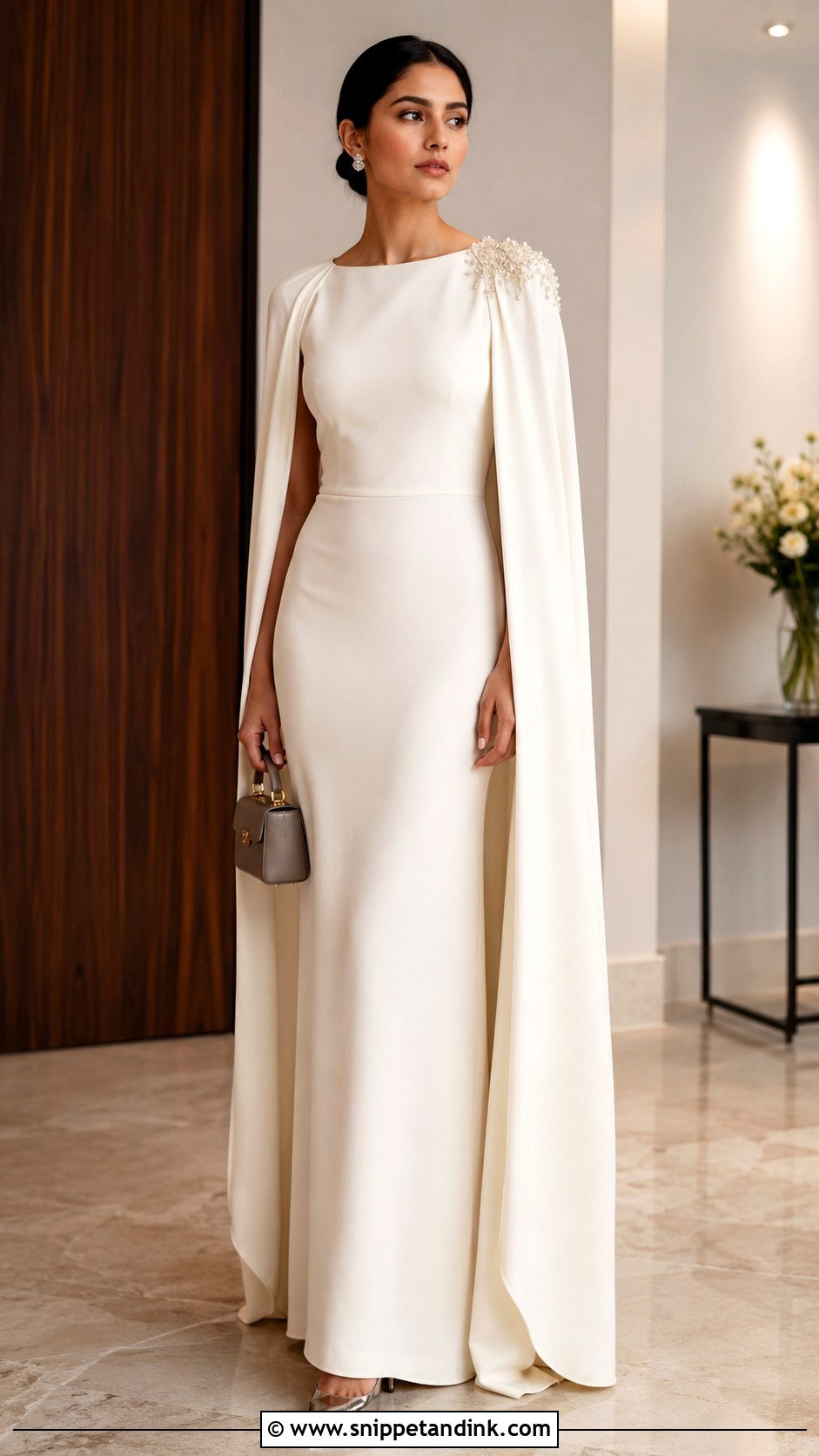
The cape is the gown’s coat, so it has to be proportioned to you. On a petite frame I’d end it near the elbow; on a tall bride a floor-skimming panel looks deliberate rather than swamping. It can fall from the shoulders, fasten at the neckline or extend from fitted sleeves, over a column or lightly flared base. Do the arm test: reach forward as if taking a ring, then up as if waving. If the cape pulls the neckline backward, it’s attached too tightly. Pointed metallic pumps, a structured mini bag and sparkling studs work well, and keep bracelets slim because cape fabric catches on chunky links. Finish with a smooth ponytail or low bun.
6. Mermaid Gown
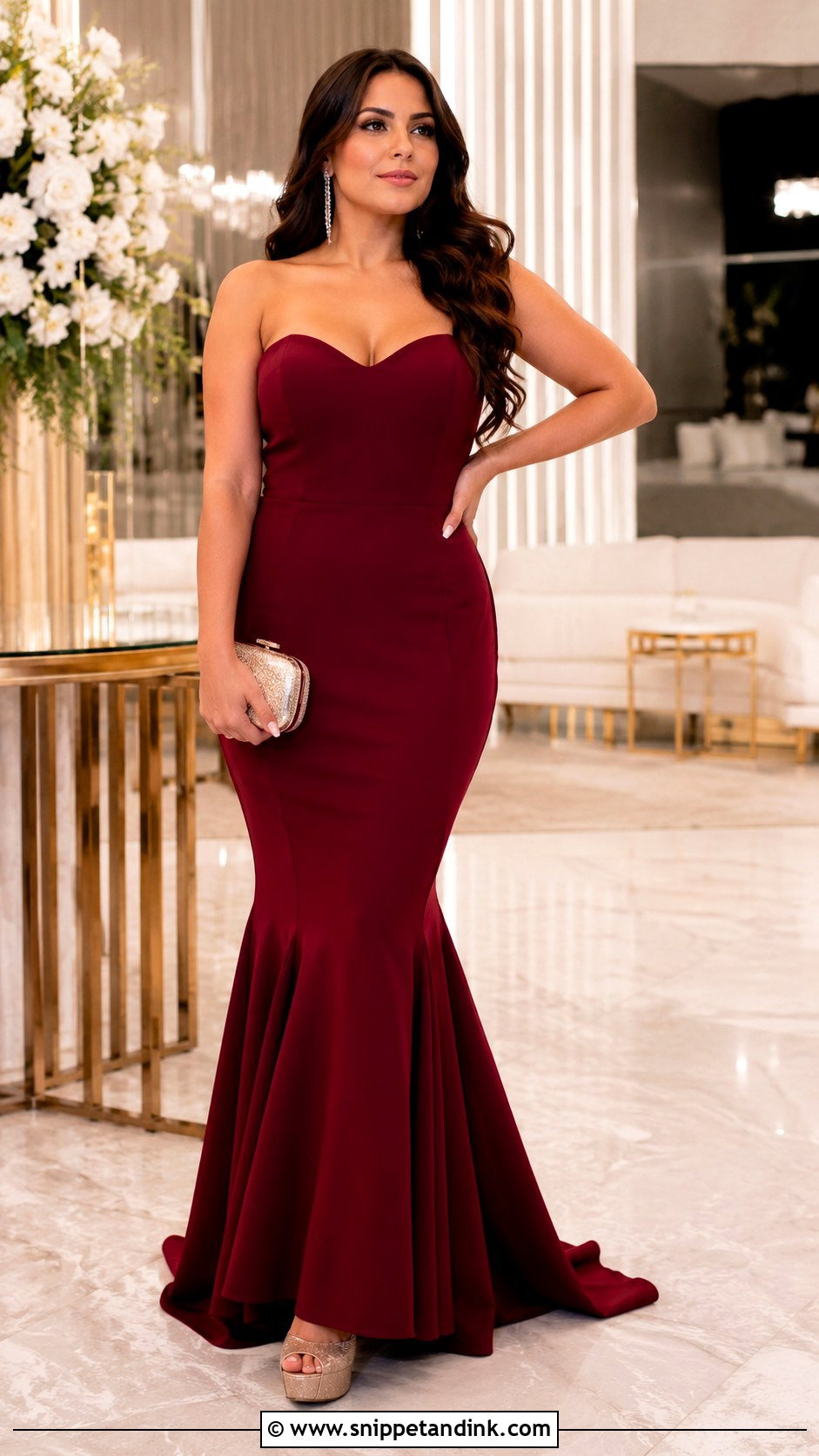
Where the flare begins decides everything. Too high and the gown loses its drama; too low and you’ll shuffle all night. For most brides I mark it at or just above the knee, then have them walk, sit and climb a step before the seamstress commits. Structured crepe, mikado and stretch satin hold the shape and give a little when you sit. Balance the fitted skirt with a soft sweetheart, square or modest V-neck, and wear platform heels so the flare clears the floor. Shapewear should smooth, never squeeze, and must not show through the fabric. Long earrings and a side-parted wave or polished updo suit the proportions.
7. A Line Chiffon Gown
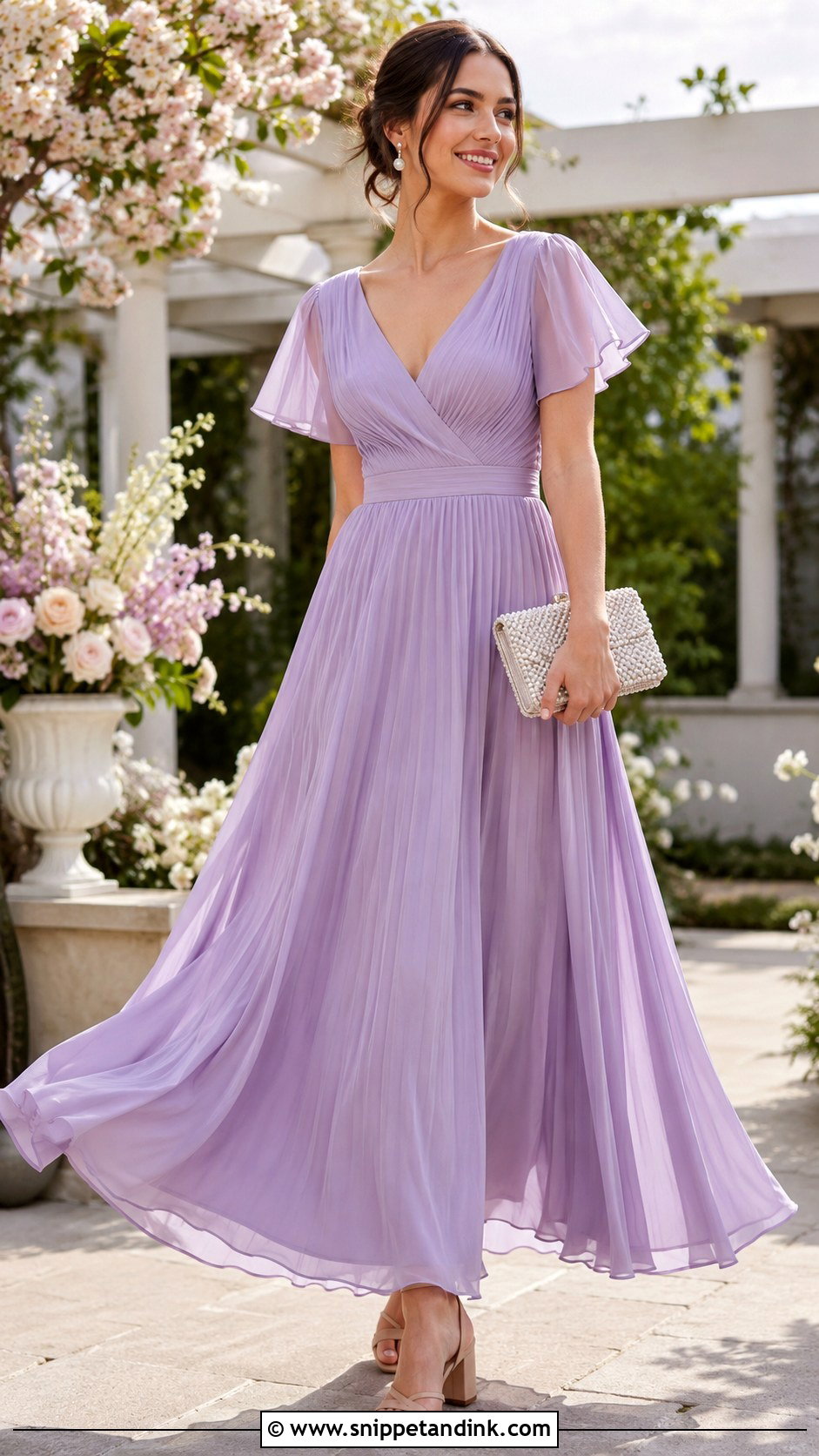
Chiffon is the fabric I’d pick for heat. It breathes and moves in a breeze, and an A-line lets air under the skirt, which makes it right for spring, summer and destination weddings. Add texture with a pleated bodice, a soft V or flutter sleeves. The catch is transparency: check the lining outdoors in daylight, because chiffon that looks opaque in a fitting room can show your legs against a low sun. Block-heel sandals keep you from sinking into a lawn, and a beaded clutch with pearl earrings fits the mood. Pastel blue, lavender, sage, coral and teal all work by season. Set the hem to float just above the floor in your shoes.
8. Sequin Column Gown
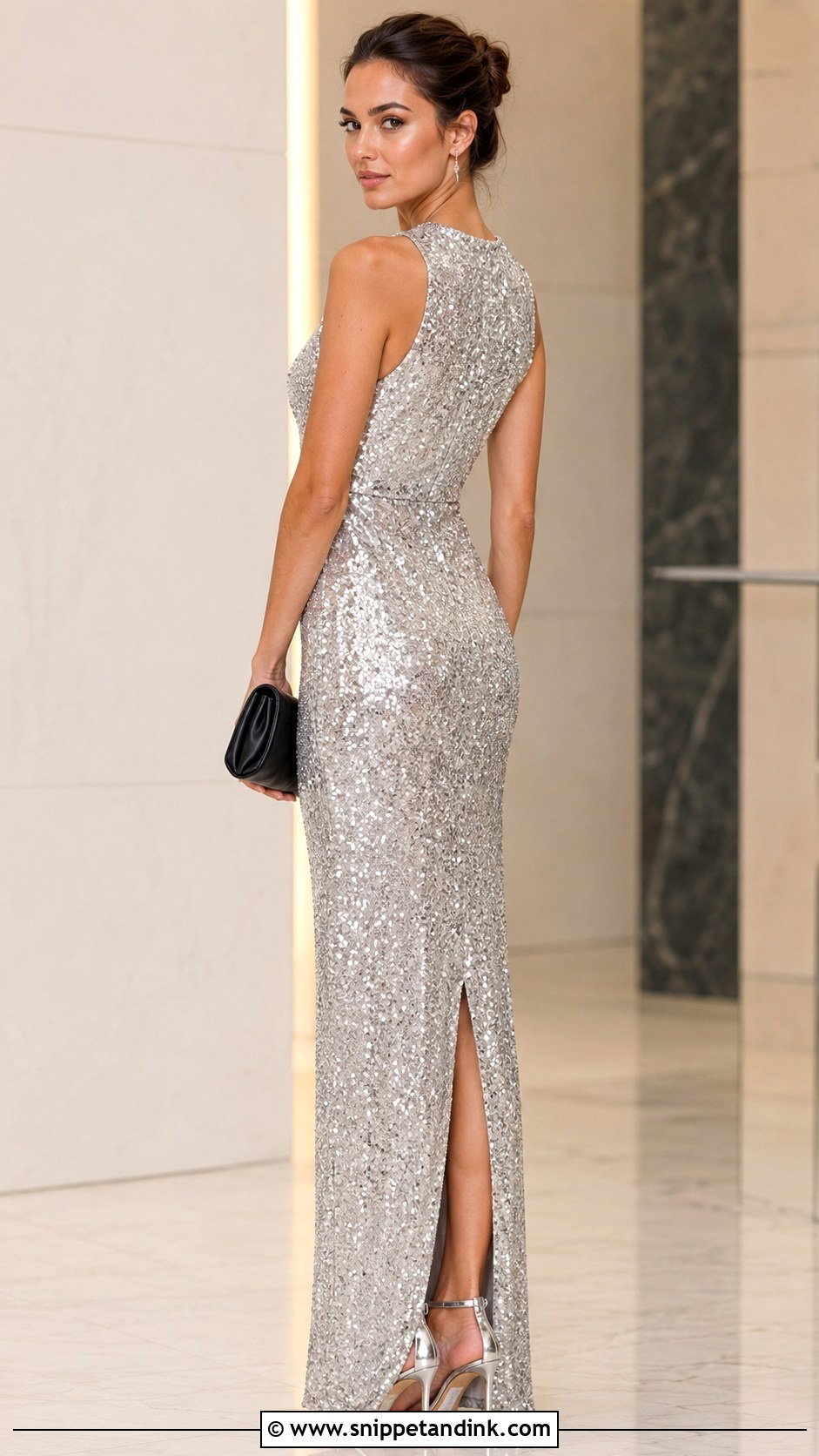
Sequins have a direction. Run your hand downward and they lie flat; brush upward and they catch, so a well-made column has them sewn to fall one way and sit smoothly over the body. The inside matters just as much, because sequin edges are sharp and the lining should cover the neckline and armholes completely. Black, silver, bronze, navy and deep green all look polished. The fabric is already the accessory, so plain heels, a satin clutch and small studs are enough. A back slit makes walking easier. For outerwear, choose a long tailored coat cut generously enough not to crush the sequins.
9. Floral Applique Gown
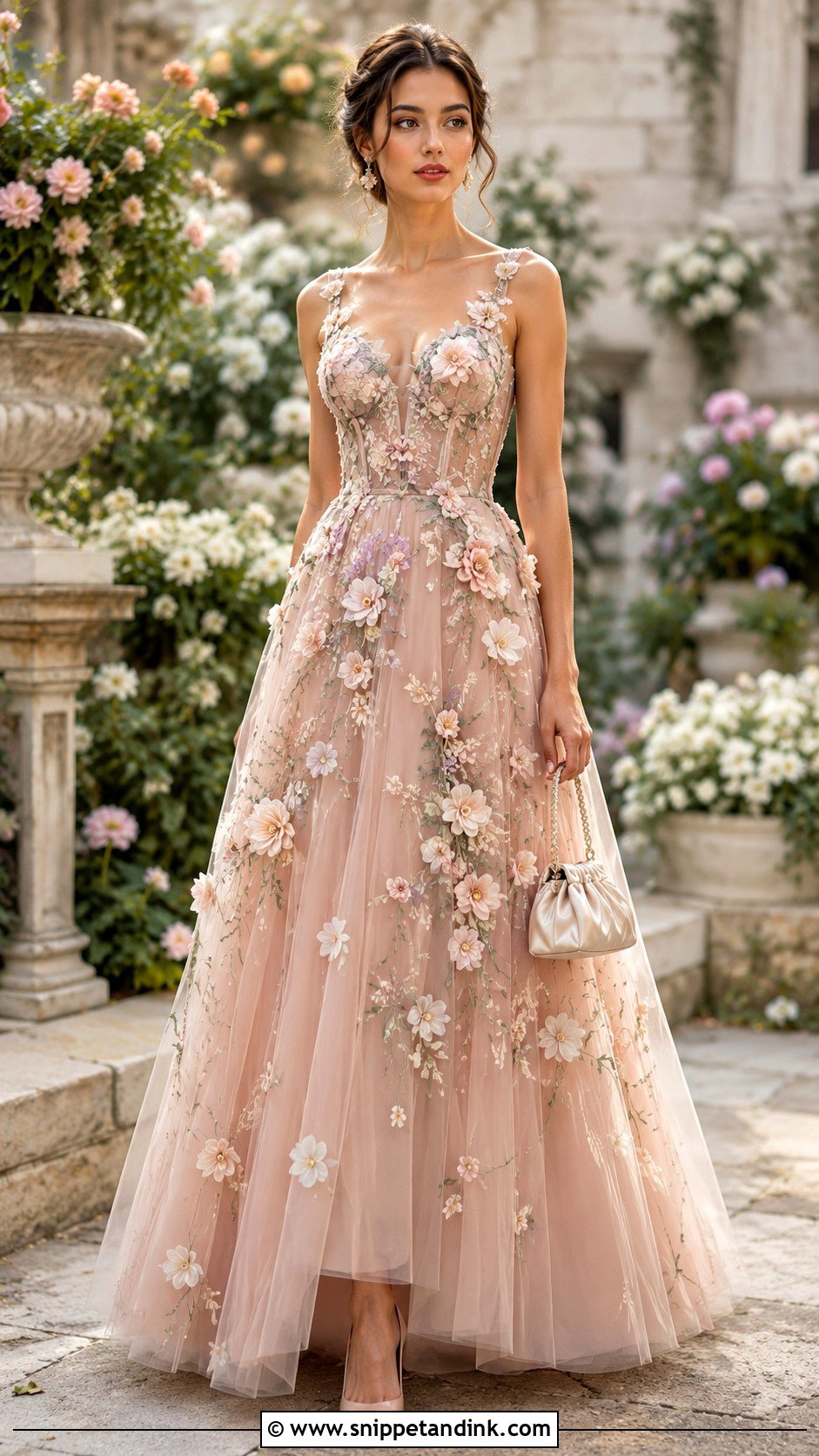
Check the stitching on every flower before you buy. Appliqués are usually attached by hand, and a loose petal at the hip will catch on chair backs all evening. Placement is the other test: flowers gathered at the neckline, waist or shoulders look intentional, while an even scatter everywhere flattens the gown. A fitted bodice over an A-line tulle skirt gives the detail a classic frame. Neutral pumps, a small satin bag and earrings that pick up one quiet color from the embroidery are all it needs. Skip floral necklaces and big hairpieces, and wear a loose low bun or soft waves.
10. Cowl Neck Satin Gown
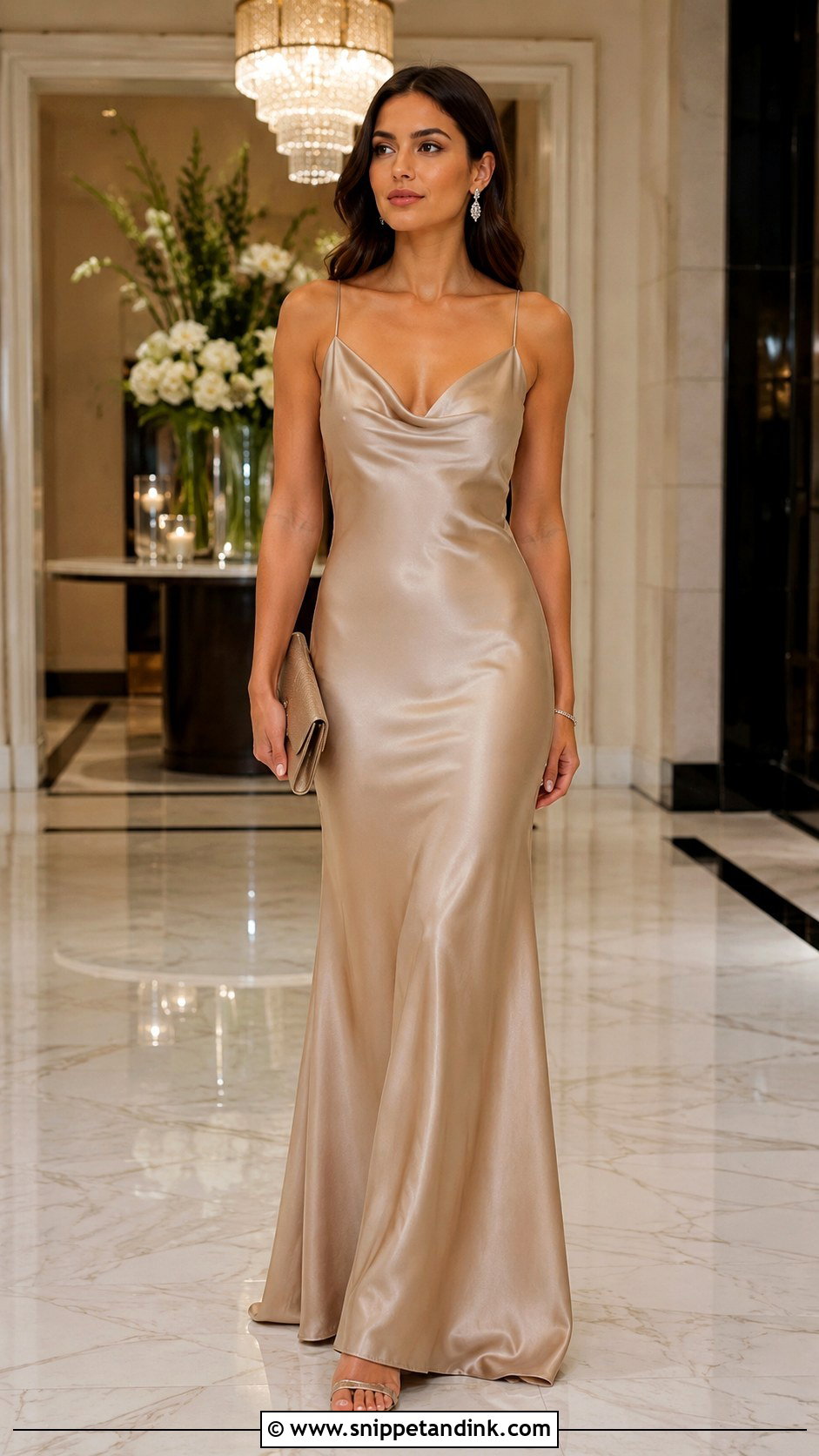
A bias-cut satin cowl skims rather than grips, which means it also shows everything underneath. Smooth, laser-cut underwear close to your skin tone is essential, and I’d look at the gown in daylight and in warm indoor light, since satin’s sheen exaggerates any line. The cowl’s depth needs controlling too: adjustable straps or a well-built back keep the folds in place when you bend to hug a guest, and a tiny hidden stitch at each side can stop the drape sliding. Strappy heels, an envelope clutch, refined drop earrings and one fine bracelet are plenty. Wear a loose bun or side-swept waves, and carry a light wrap for the evening.
11. Halter Neck Gown
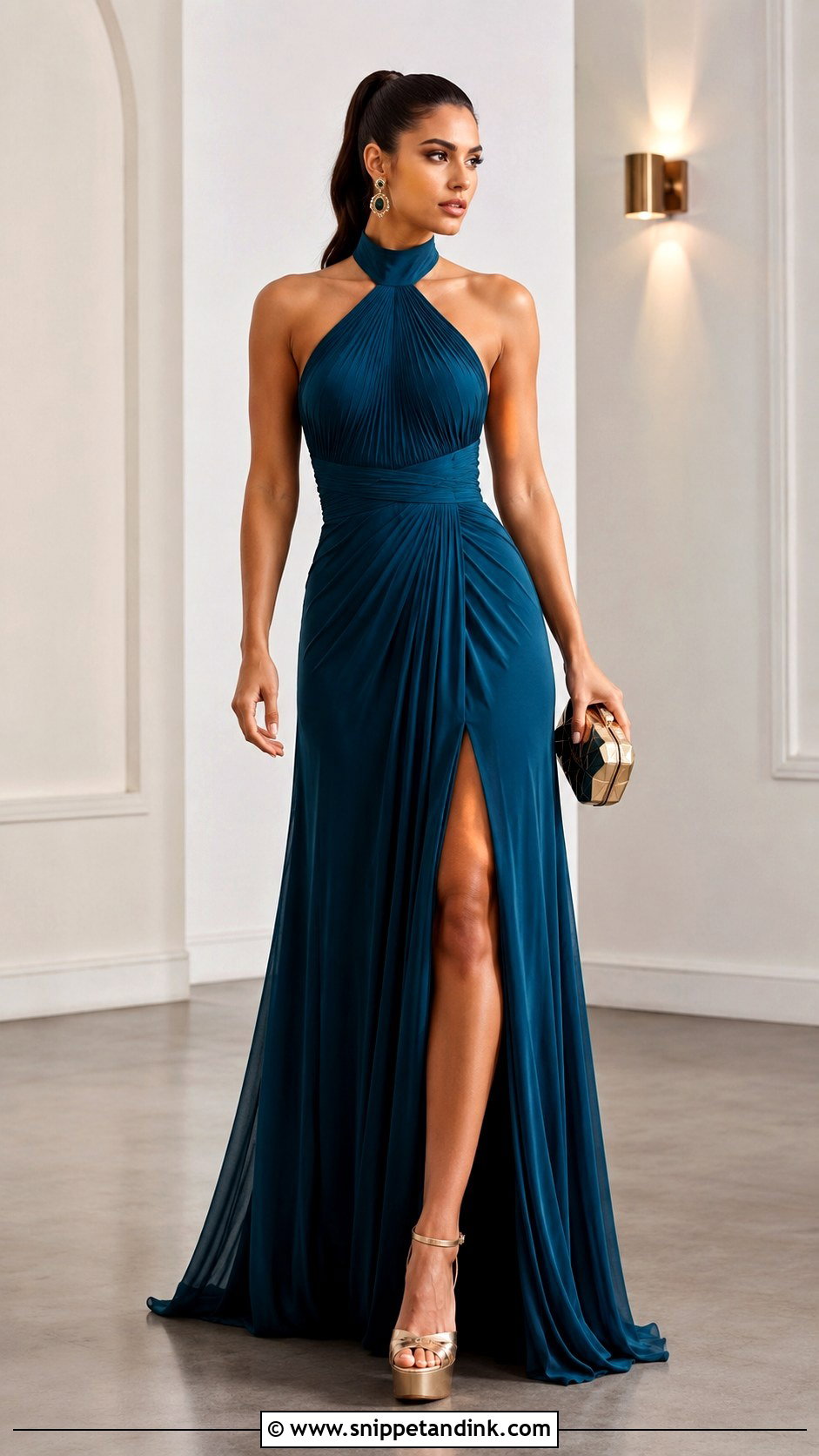
A halter hangs the gown’s weight from your neck, and that is the part people forget. By the speeches a narrow strap can feel like it’s sawing at the nape, so I prefer a wider strap or an adjustable button closure, especially on broader shoulders, where a wide halter also looks more balanced. Choose a flowing skirt for softness or a column for sharpness, in crepe, satin or chiffon. Support depends on the back: adhesive cups for an open back, a strapless support garment or built-in structure otherwise. Platform sandals, a polished clutch and bold earrings, no necklace, and a high bun or sleek ponytail.
12. Basque Waist Ball Gown
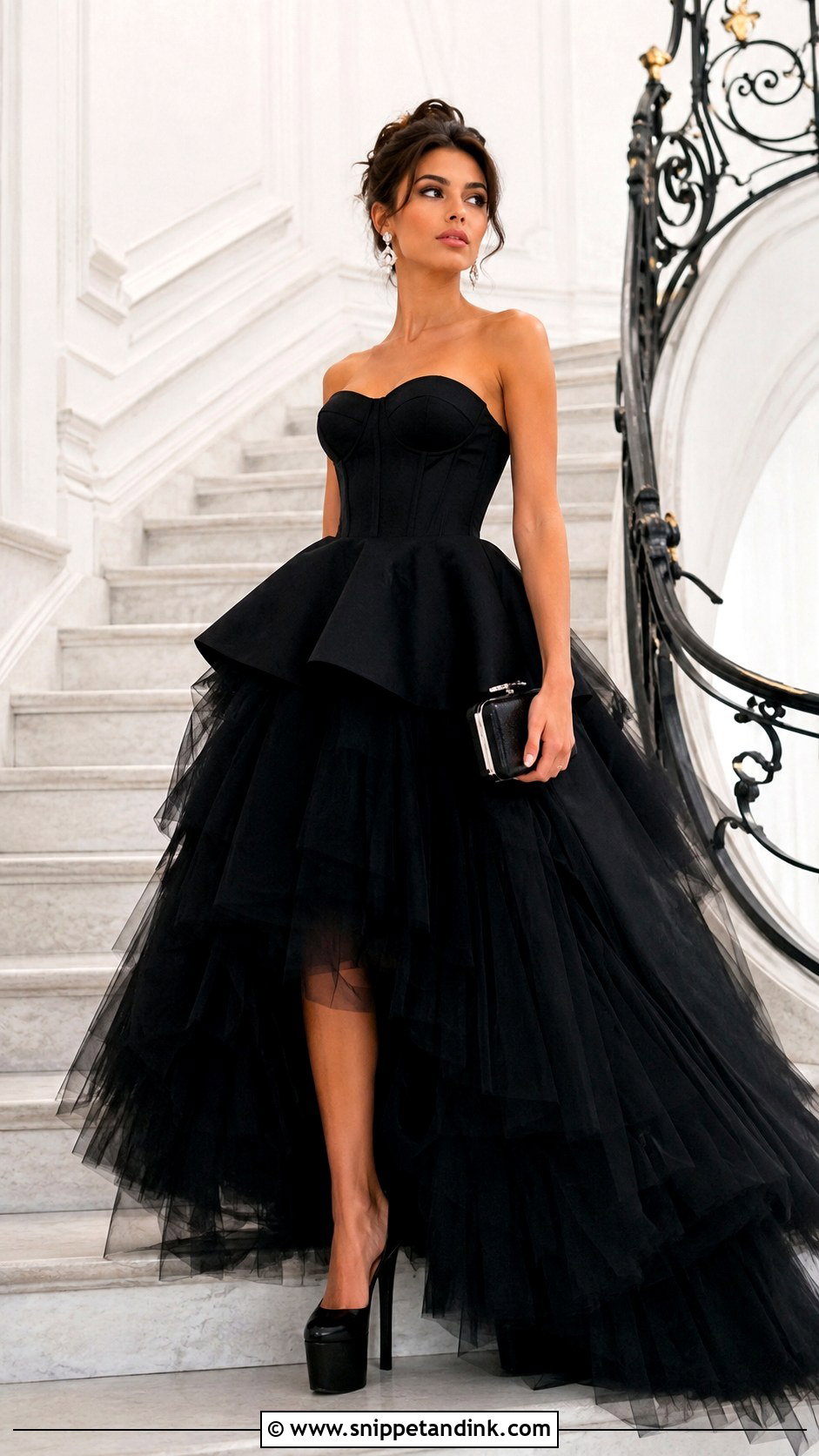
A basque waist ball gown dips its bodice into a point below the natural waist, which lengthens the torso and looks sculpted over a full satin, tulle or organza skirt. Sit down at the fitting. That point should lie flat on the skirt rather than folding up into your stomach; if it buckles, the bodice is too long for you. Strapless and off-shoulder necklines continue the architectural mood. Platform pumps, a structured clutch and a delicate choker or drop necklace suit a plain bodice, and plain studs suit a beaded one. Scale the skirt to your height, because a petite bride can disappear inside a very wide sweep.
13. High Neck Embellished Gown
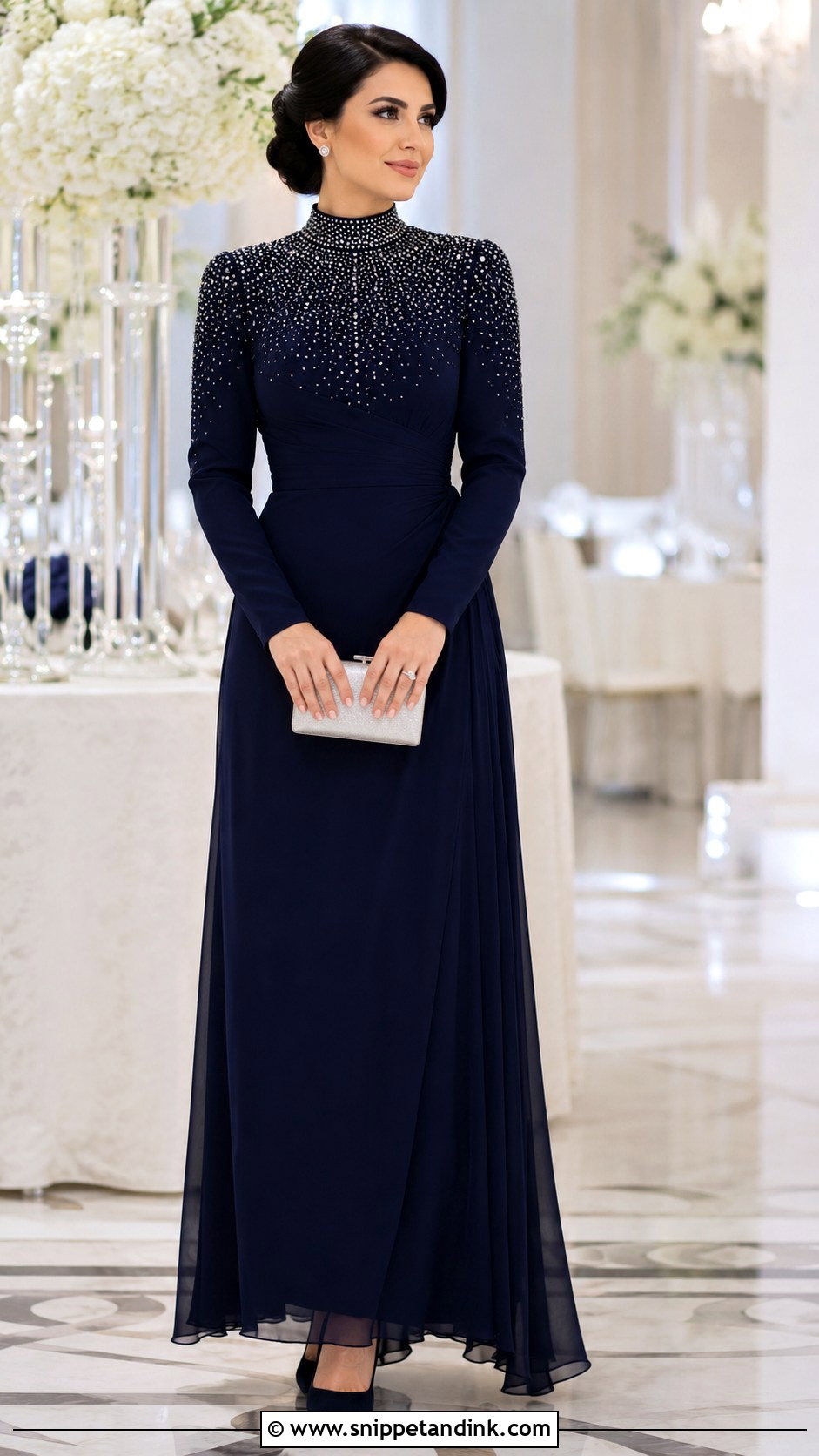
Before buying a beaded high neck, turn the collar inside out. That beadwork sits against your throat all day, and rough backing or heavy rows will rub every time you turn your head. Detail at the collar draws the eye straight to your face, so keep makeup controlled, with a soft matte finish that doesn’t compete with the shine. Balance the top with a plain crepe or chiffon skirt in a clean line, and consider a keyhole back or a subtle slit for movement. Skip necklaces entirely. Closed-toe heels, a simple clutch and small earrings, with a bun, braided updo or sleek ponytail to show the beading.
14. Velvet Evening Gown
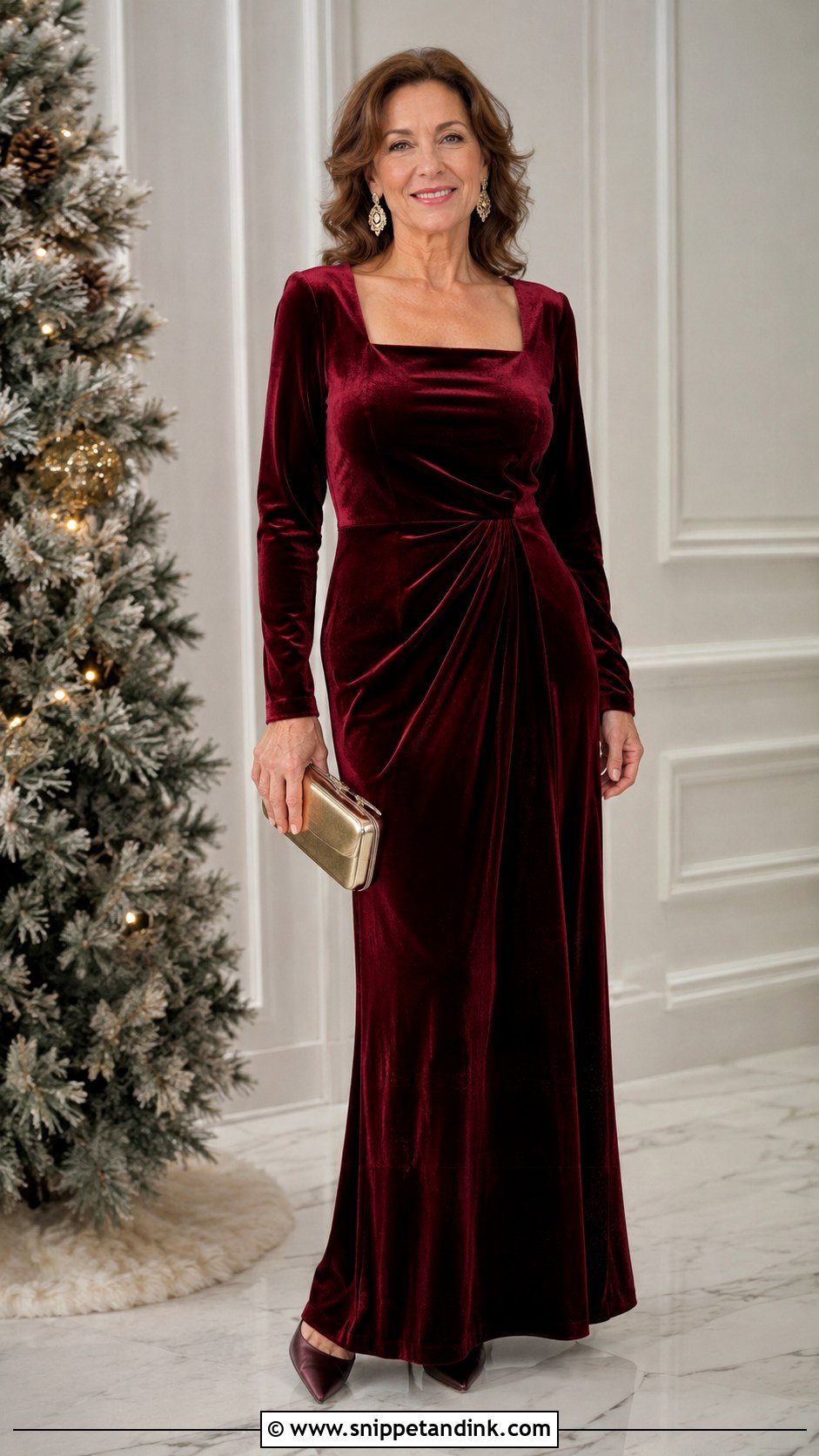
Velvet can look like two colors depending on which way the pile runs, and a well-cut gown has every panel cut in the same direction. Turn slowly in front of a mirror under bright light: if one side of the skirt looks paler, the panels were cut carelessly. Burgundy, dark green, midnight and black are the classics for cooler months. A wrap bodice, square neck or gathered waist keeps the heavy fabric from looking stiff, and a breathable lining stops it feeling hot by evening. Pointed satin pumps, a metallic clutch and antique-style earrings suit it, and a fitted long coat layers neatly on top. Steam sparingly and follow the care label.
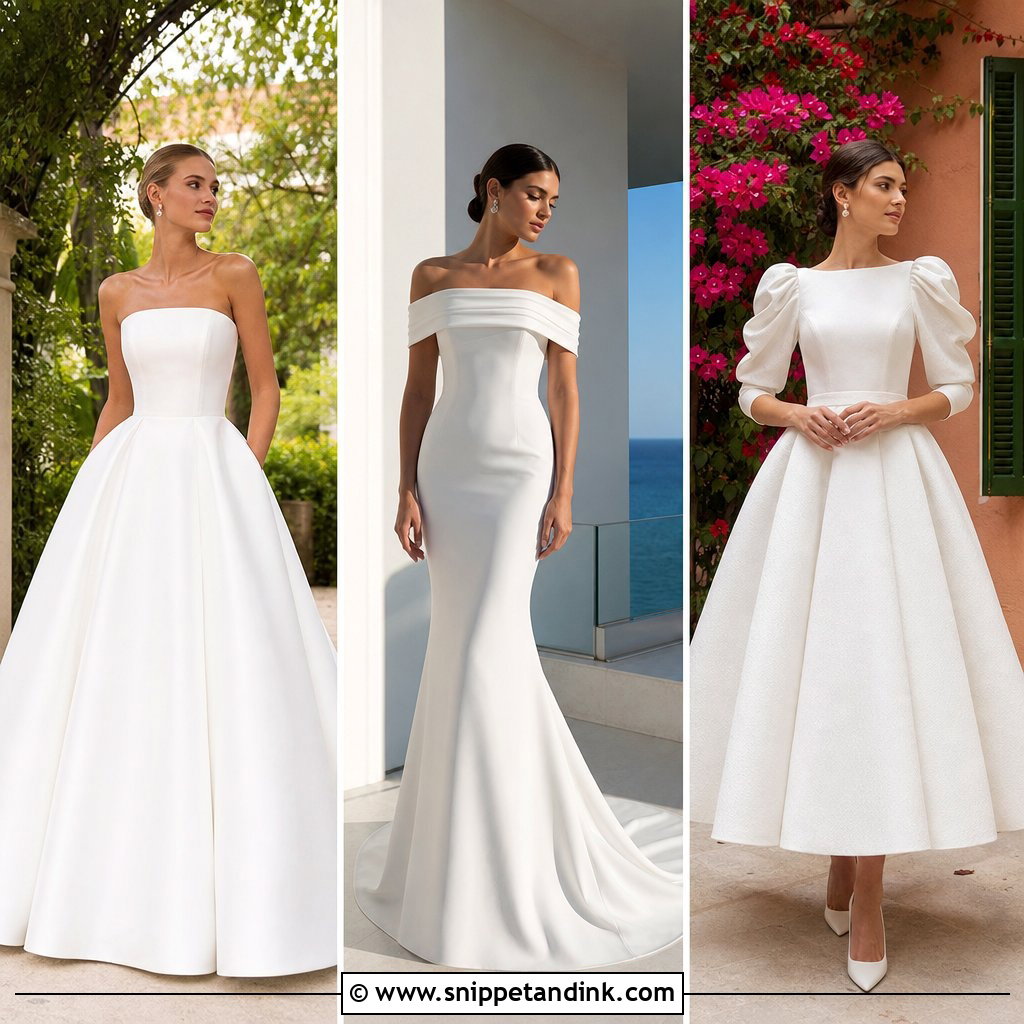
15. Pleated Chiffon Gown
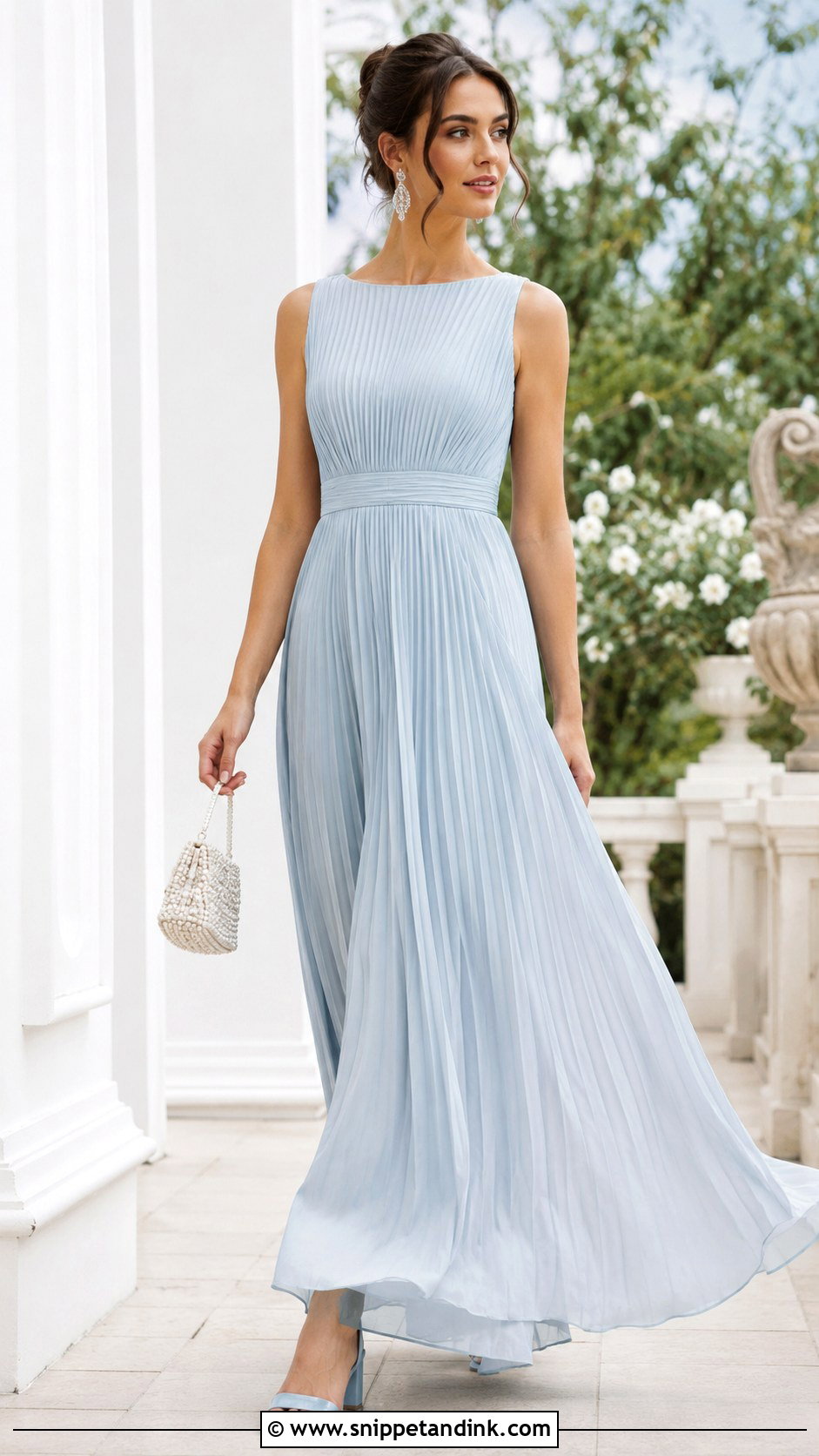
Pleats lengthen the body only when they run evenly from shoulder or waist straight through to the hem. A belted or shaped waistband gives the light fabric some structure. Soft gray, rose, powder blue, teal and plum look especially rich, because the shadow inside each pleat deepens the color. Low block heels, a small beaded bag and delicate earrings suit the airy feel. Skip an oversized shawl; it presses the pleats flat within minutes. Store the gown hanging, never folded, and have the hem set in the exact shoes you’ll wear.
16. Asymmetrical Ruffle Gown
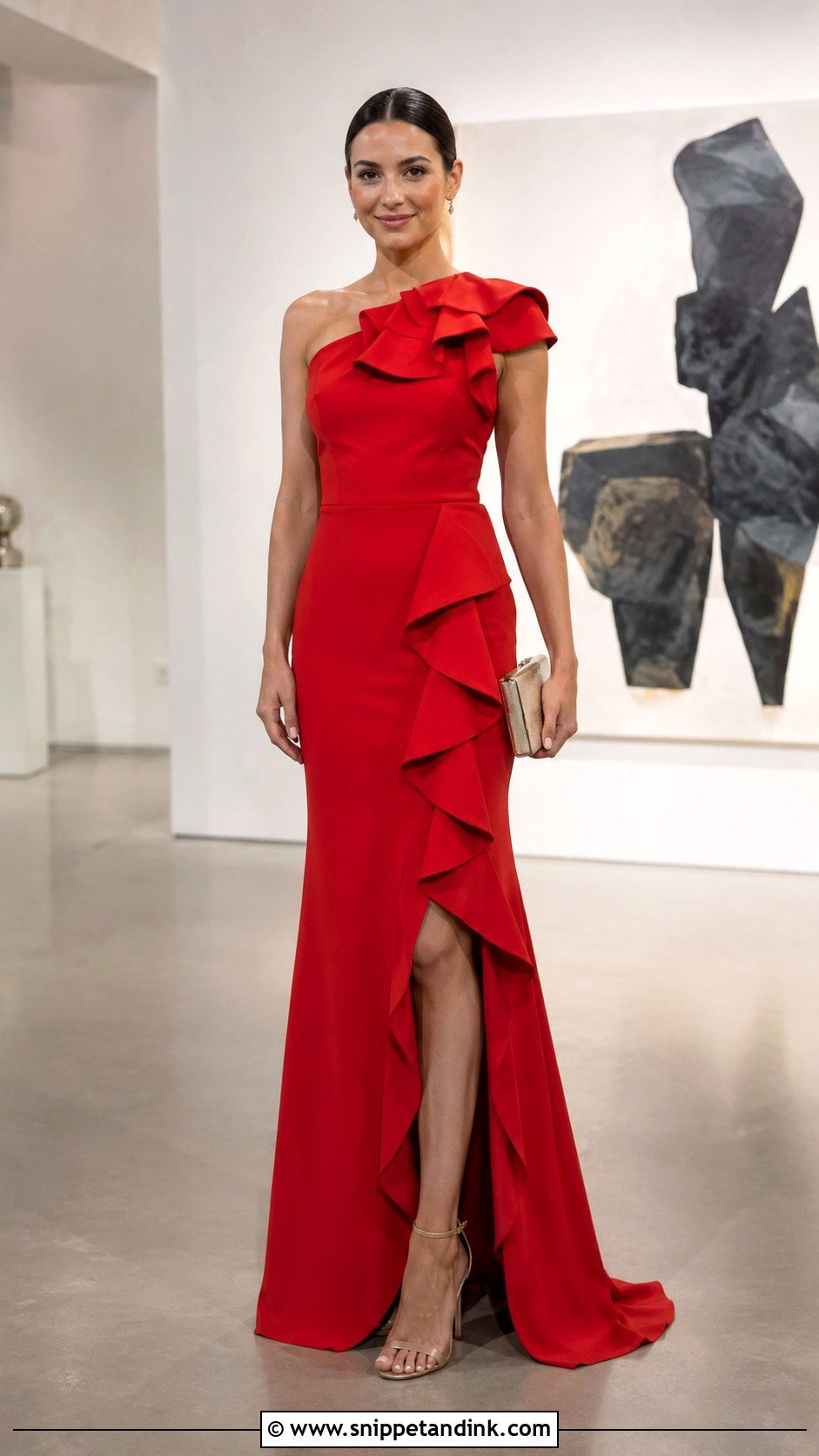
One ruffle, placed well, does more than three. An asymmetrical ruffle gown can carry it across one shoulder, around the neckline or cascading down the skirt, and a solid color keeps the shape easy to read, with red, cobalt, magenta, emerald and black giving the strongest results. A cascade on the skirt needs a walking test, because ruffles that sweep across the front can catch a toe on a step. Pull the hair away from the largest ruffle. Streamlined heels, a smooth box clutch and minimal earrings, and no bracelets that might snag the fabric. Outdoors, a simple fitted coat covers it without fuss.
17. Metallic Draped Gown
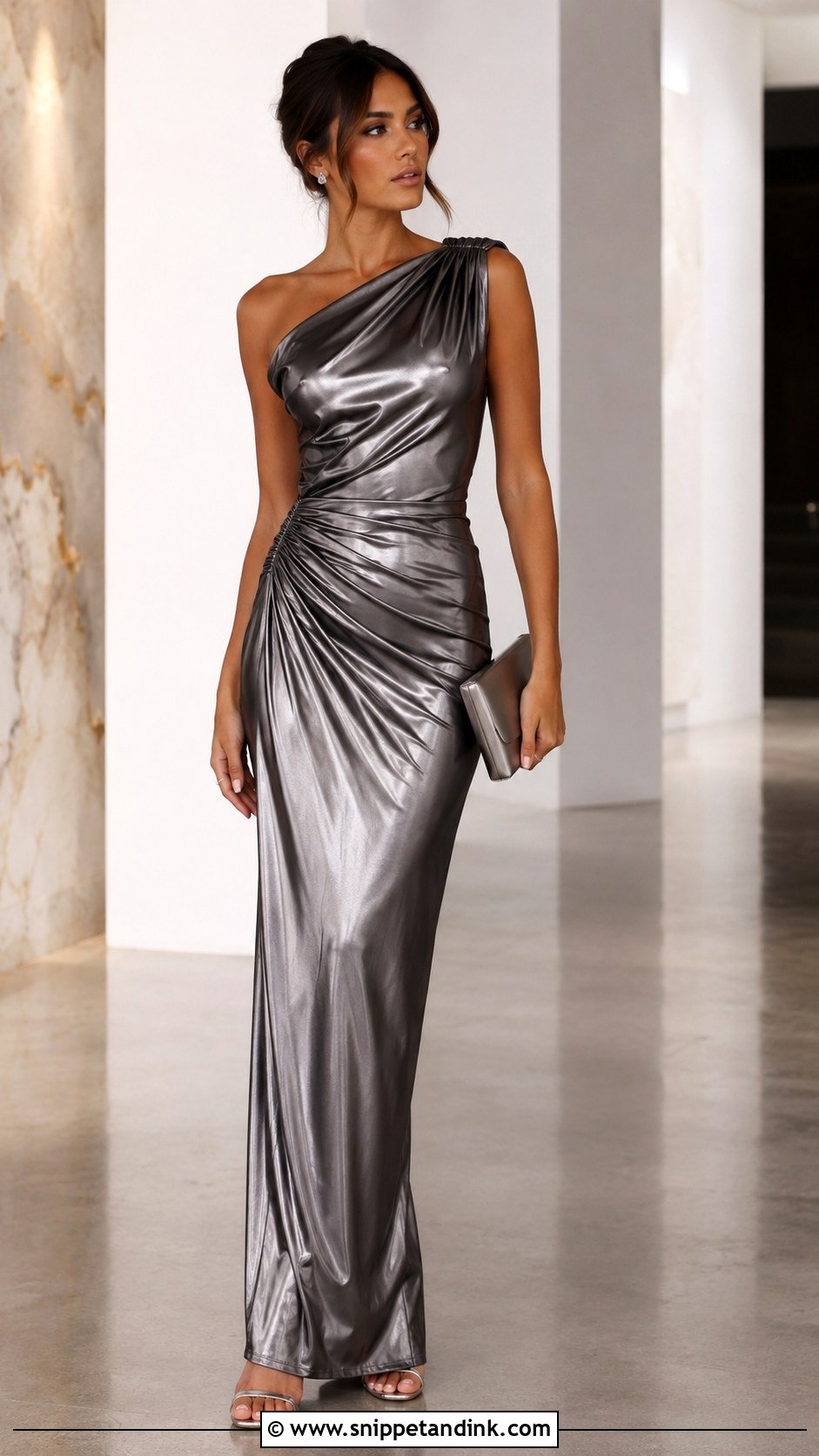
Metallic jersey or lamé in a fluid drape gives a gentler shine than sequins, in silver, pewter, soft gold or rose. Diagonal ruching, a gathered waist or a draped shoulder adds definition. Test it under camera flash before the event: some metallic fabrics flare toward white in flash and lose their color, and that’s better discovered in a fitting room. Smooth underwear prevents lines on a reflective surface. Keep every accessory in one metal family, with neutral metallic sandals, a plain satin clutch and small crystal earrings. A sleek bun or controlled vintage waves match the polished surface, and large necklaces or belts would only crowd it.
18. Peplum Column Gown
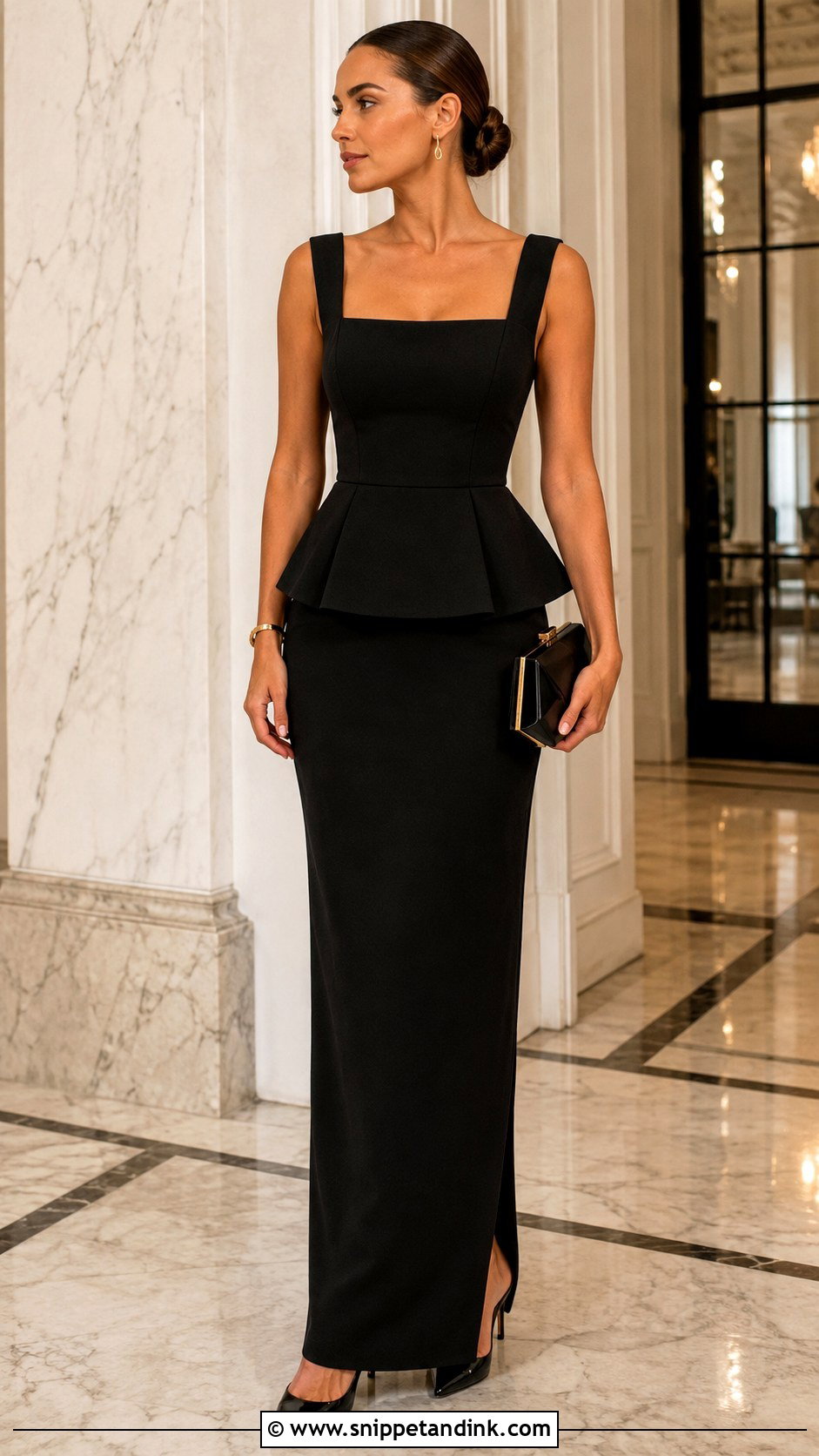
A peplum column gown pairs a straight skirt with structure at the waist, which can add definition to a straight figure or balance broad shoulders against narrower hips. The peplum should lie close; one that juts far from the body adds width in profile. Clean crepe or satin suits it best. During alterations, have the peplum start at the narrowest point of your waist, which isn’t always where the pattern placed it, and make sure the skirt has a back slit you can actually sit in. Pointed pumps, an architectural clutch and slim earrings, with no added belt.
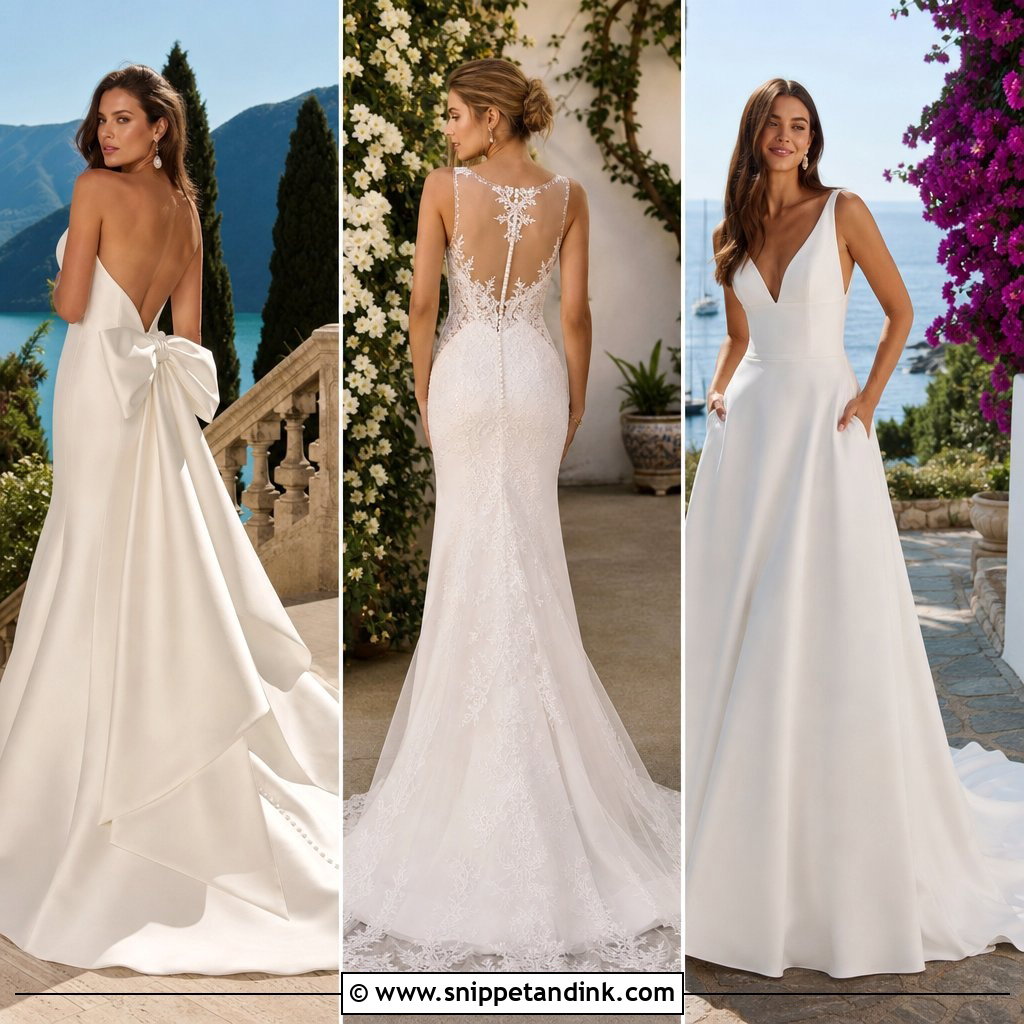
19. Bow Back Gown
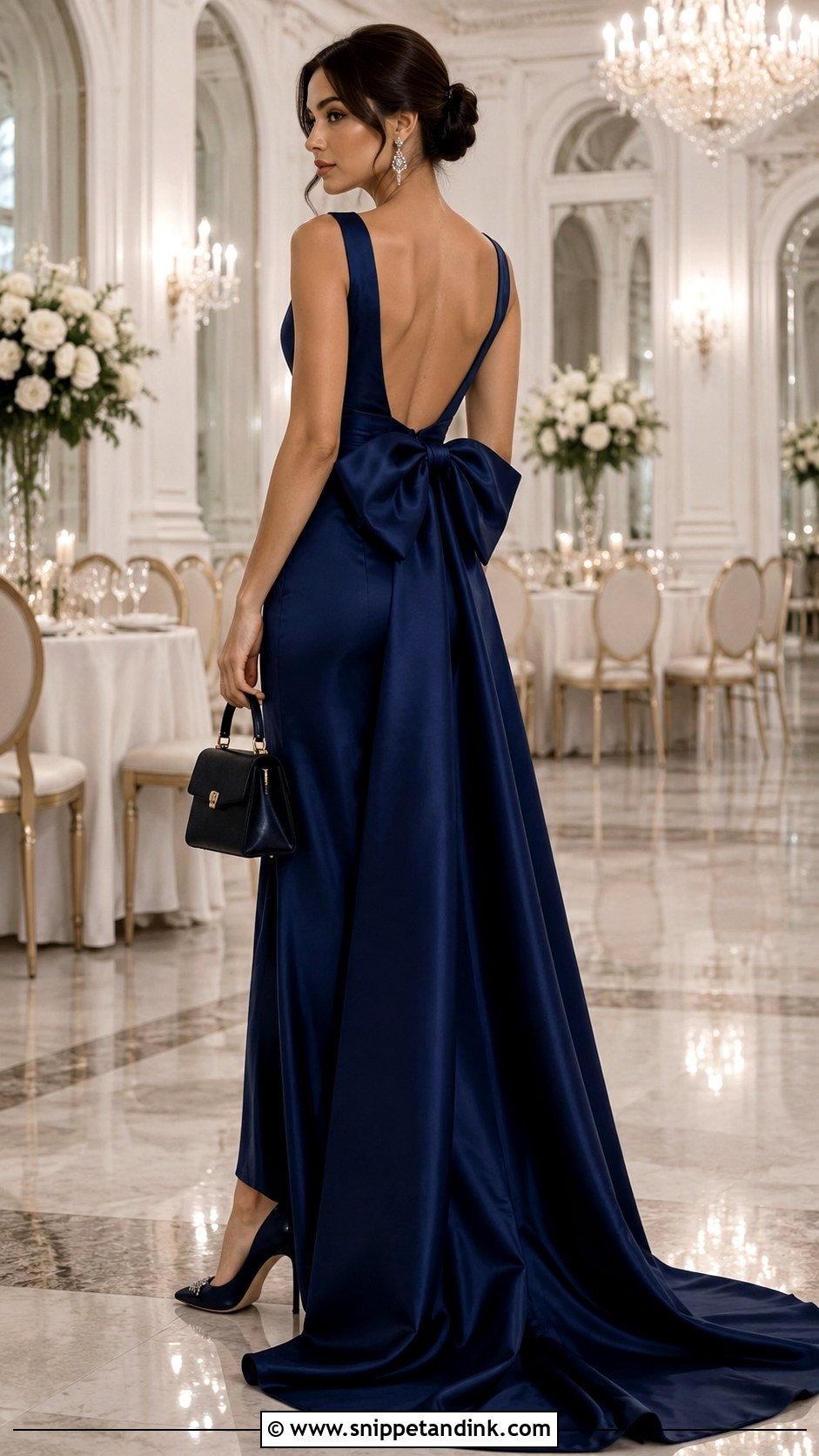
Guests look at your back for the whole ceremony, which is the honest case for this gown. A structured bow at the waist reads classic, and a soft shoulder bow feels more current. Keep the front simple and the hair up, and skip any shawl or long necklace that would hide the bow. Check two things at the fitting. Trailing ribbons should stop well above the hem so you never step on them, and a detachable bow needs proper hooks rather than a single pin. Elegant pumps, a small top-handle bag and pearl or crystal earrings complete it, with a neat train if you’d like more drama.
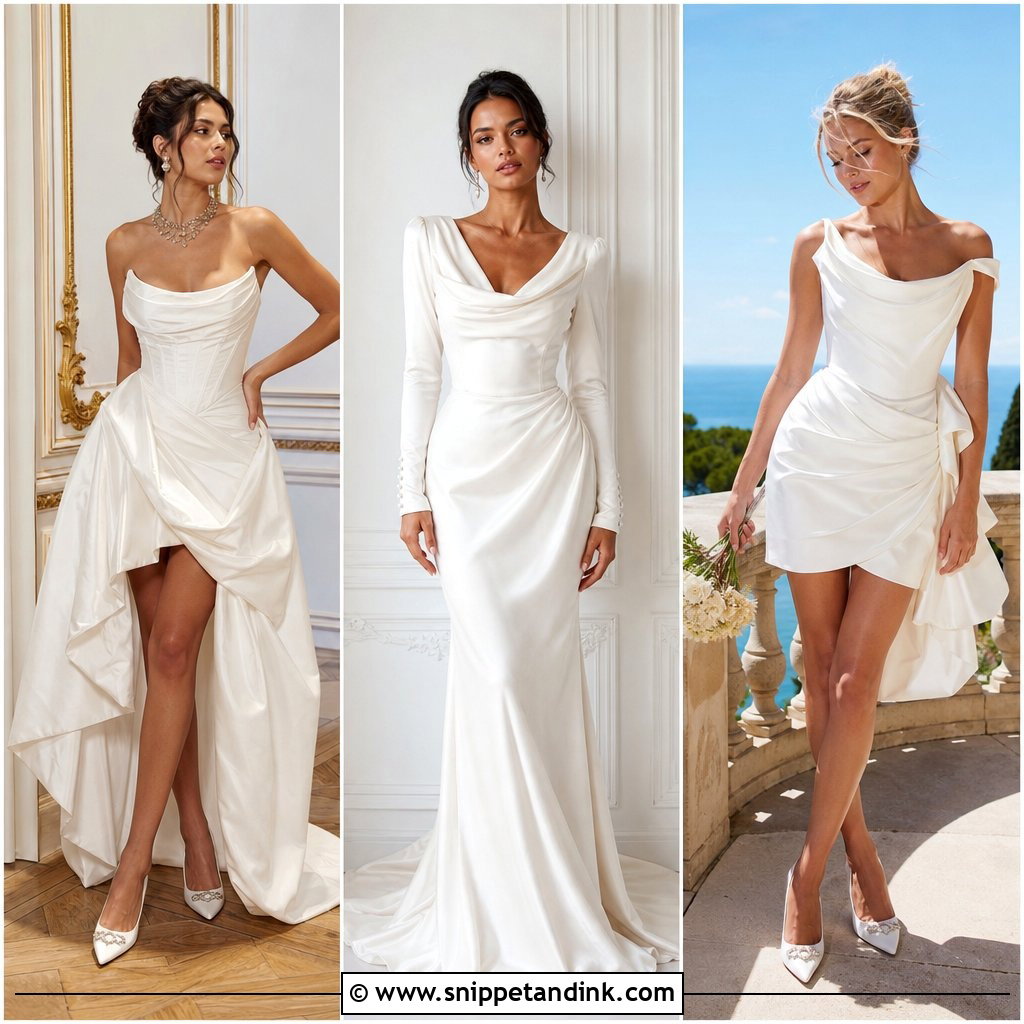
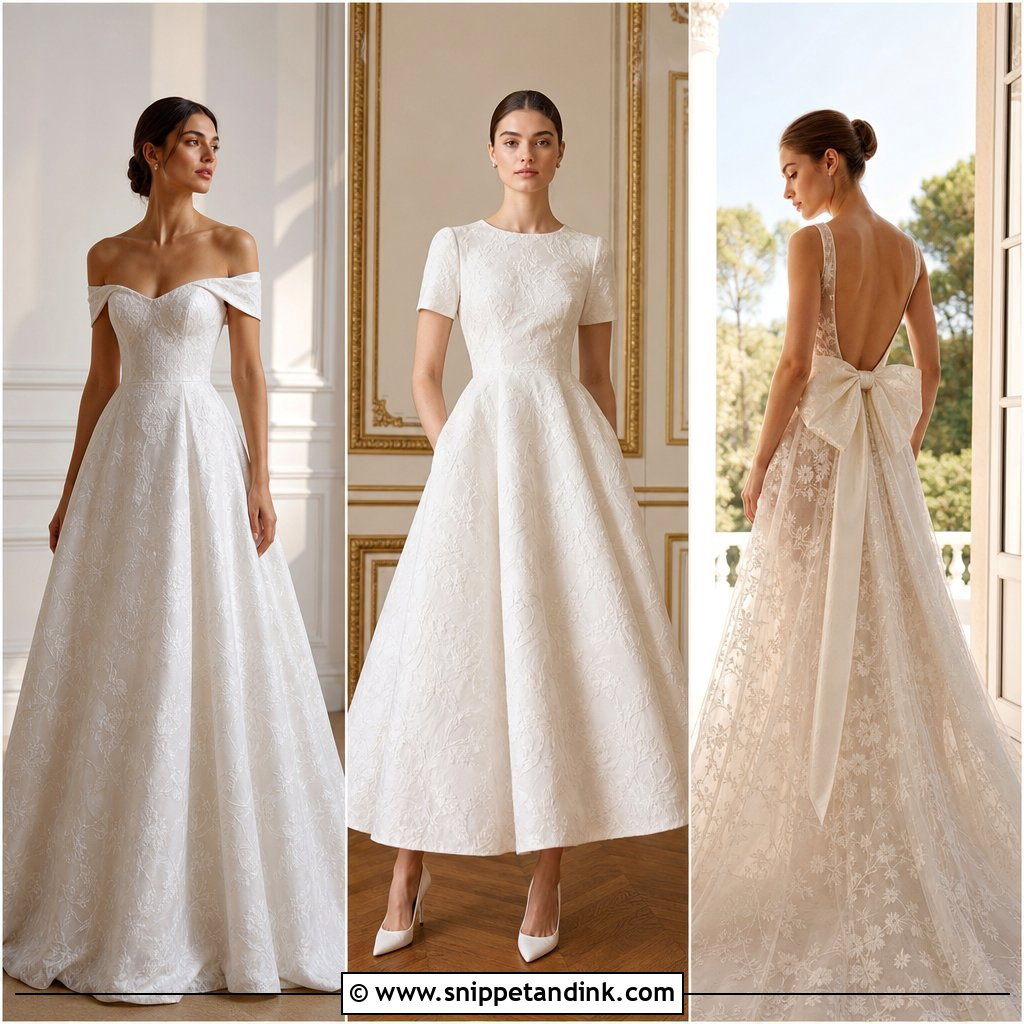
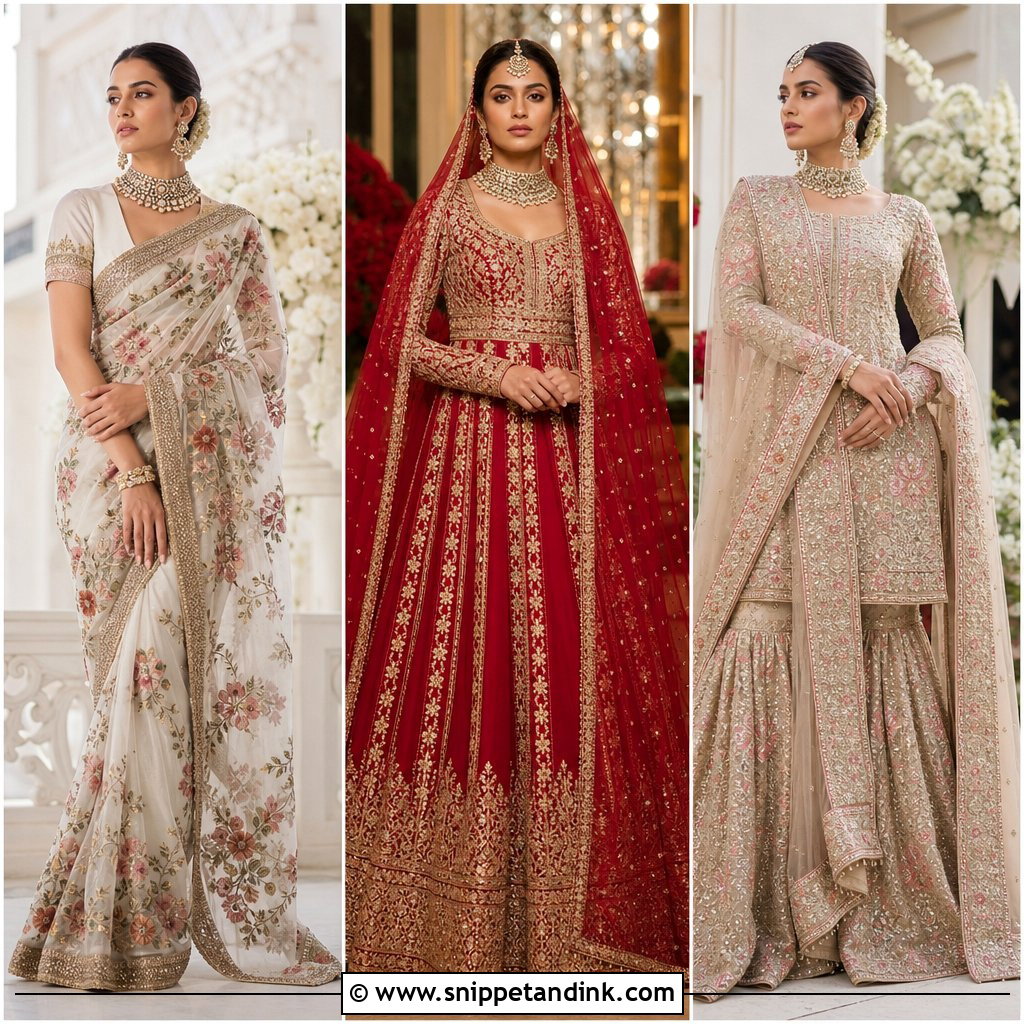
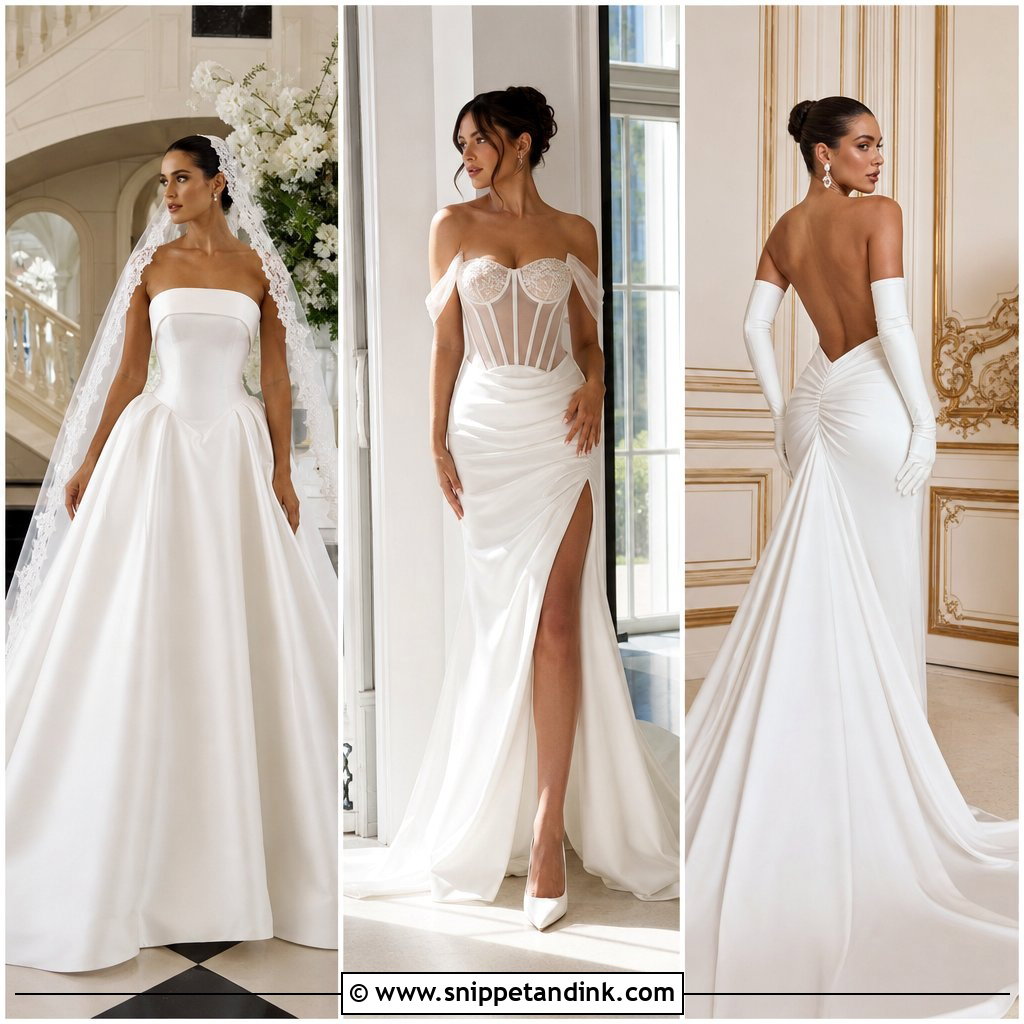
20. Square Neck Minimalist Gown
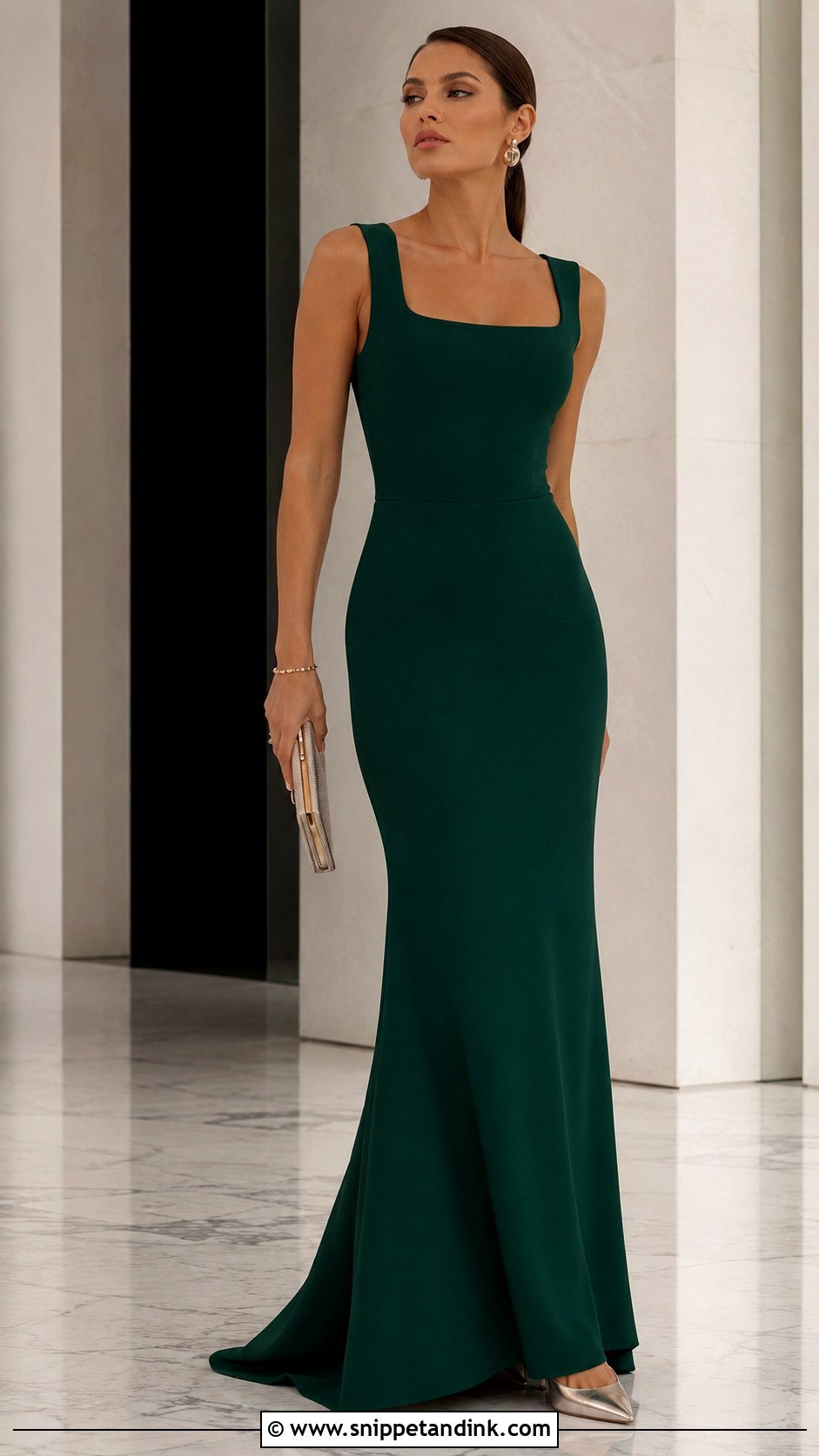
A square neck is one of the kindest lines for the collarbones, and on a minimalist gown it is practically the only detail, so the tailoring has to be exact. Smooth crepe, matte satin or structured jersey with clean seams and a floor-length skirt, plus a fitted bodice and gently flared hem, give shape without embellishment. The thing I watch is the corners: they should sit flat and level, not curl outward when you lower your arms. Strong color makes the simple cut memorable, so cobalt, crimson, emerald and deep plum are worth trying. Pointed heels, a slim clutch, sculptural earrings and perhaps one fine chain.
Sample Racks and Trunk Shows Reward a Careful Eye
Designer gowns often turn up for less at sample sales, and trunk shows give you a short window to try a designer’s whole collection in one place. Both are worth a visit if you go in with realistic expectations.
What I check on a sample gown
- Size: samples are usually made in one or two standard sizes, so you’re judging whether it can be altered to you, not whether it fits today.
- Seam allowance: a gown can be taken in far more easily than it can be let out, so look inside before you fall in love.
- Wear: inspect the hem, underarms and zip for makeup marks, fraying and missing beads, and ask the shop what can be cleaned or repaired before you pay.
- Terms: many sample sales are final sale, with no returns or exchanges.
Ordering at a trunk show
Trunk shows sometimes come with incentives for ordering on the day, which is pleasant, but a deadline shouldn’t rush a decision you’d normally sleep on. Ask how long production takes for your size, whether fabric or color changes are possible, and what alterations usually cost, since they are generally charged separately from the gown itself.
Wear the Gown, Not the Trend List
Impact matters, but comfort and proportion decide whether a gown still looks right at the end of the night. Across these twenty, from minimalist square necks and fluid satin to full ball skirts, appliqués and sculptural ruffles, the same order of decisions works: start with the silhouette that makes you stand taller, then add shoes and accessories that back it up without shouting over it. Factor in the dress code, season, venue and how much you’ll move. Good alterations can transform even a simple gown at the neckline, waist and hem. Keep the details that feel like yours, and let the rest of this season’s trends go.
You'll Like These Ideas:


Leave a Reply