
Before I pick up a brush for a wedding, I ask three questions: how long will you be wearing this, where will you be standing, and how much makeup do you wear on a normal Tuesday? The answers decide more than any mood board. A face for a noon garden ceremony and one for a candlelit ballroom need different bases, different shimmer and a different lip. The thirty looks below cover brides, bridesmaids, mothers and guests, from bare-skin minimal to formal glam. Each one comes with what I’d actually do in the chair and where it tends to fail.
What a Good Makeup Trial Covers, Hour by Hour
I book trials roughly two to three months before the wedding, early enough to change direction and late enough that your skin and hair color are close to what they’ll be on the day. A trial isn’t just a dress rehearsal for the face. It’s where we find what fails.
- Bring photos of looks you like and ones you don’t. The ones you dislike often tell me more.
- Wear a top with a similar neckline to your dress, or at least the same color near your face, so we can judge the foundation match against it.
- Once the face is done, we take photos by a window and with a phone flash. Both matter.
- Then wear it for the rest of the day. Check it at four hours and at eight: where it creases, where it shines, how the lashes feel.
- Message me what you noticed. Those notes change the products on the day more than the trial itself.
1. Natural Wedding Makeup
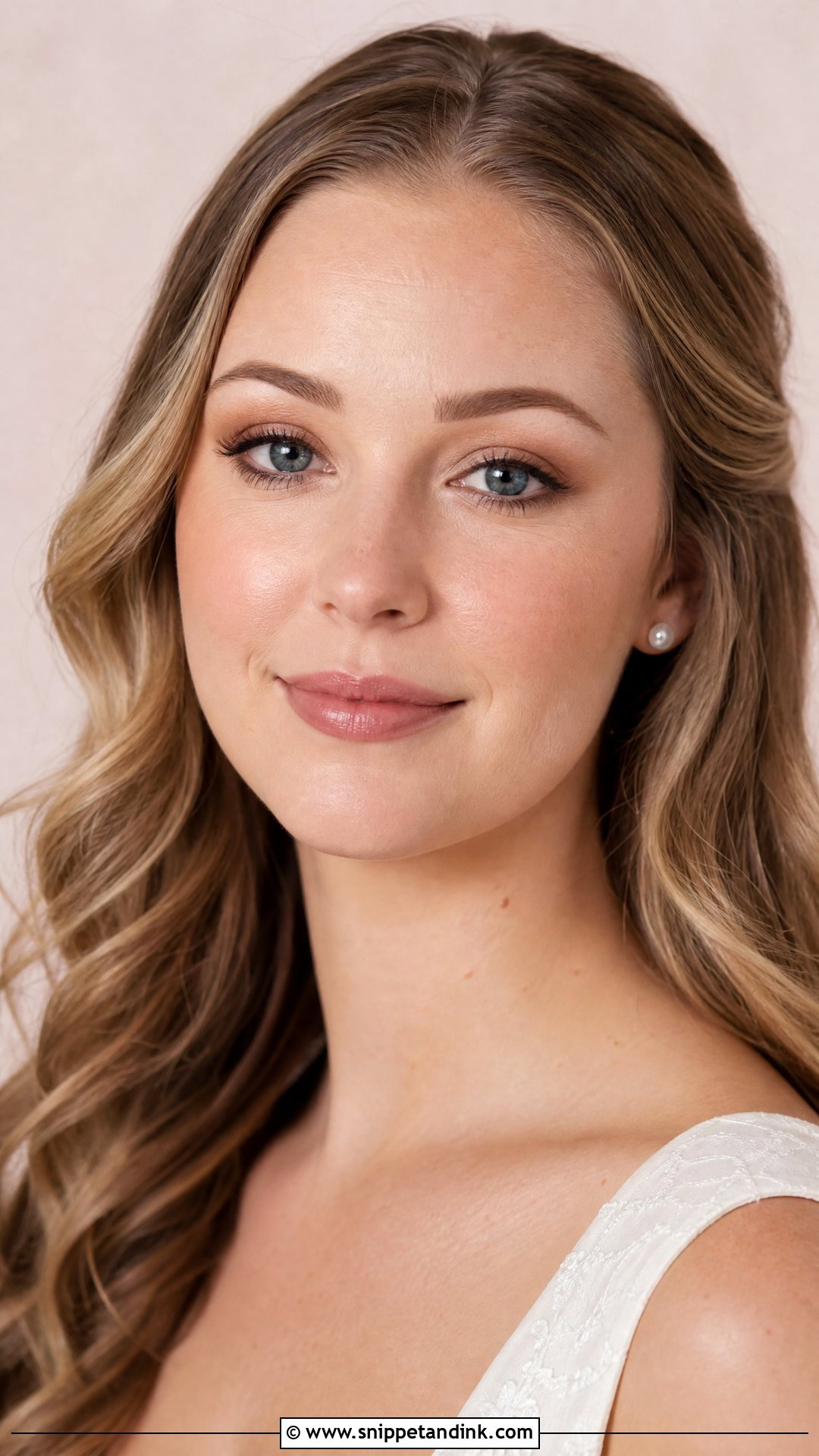
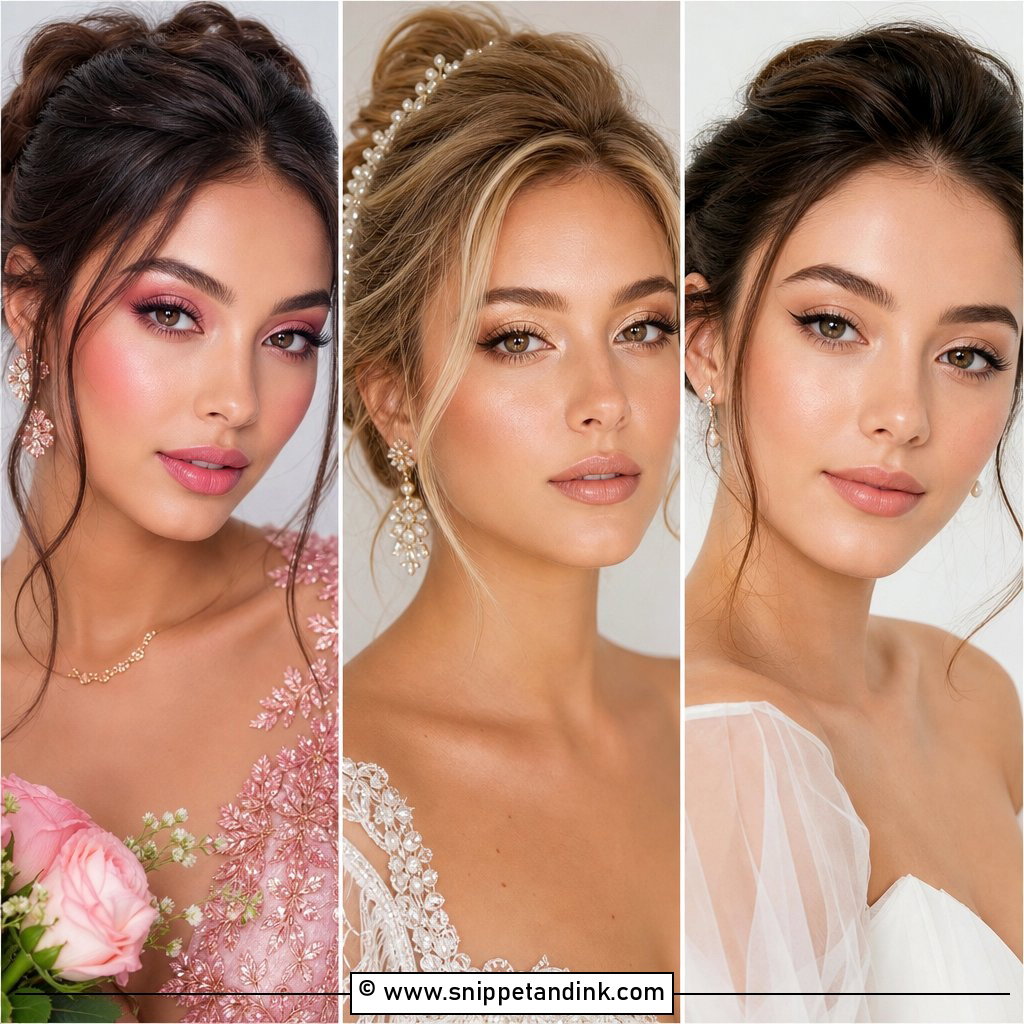
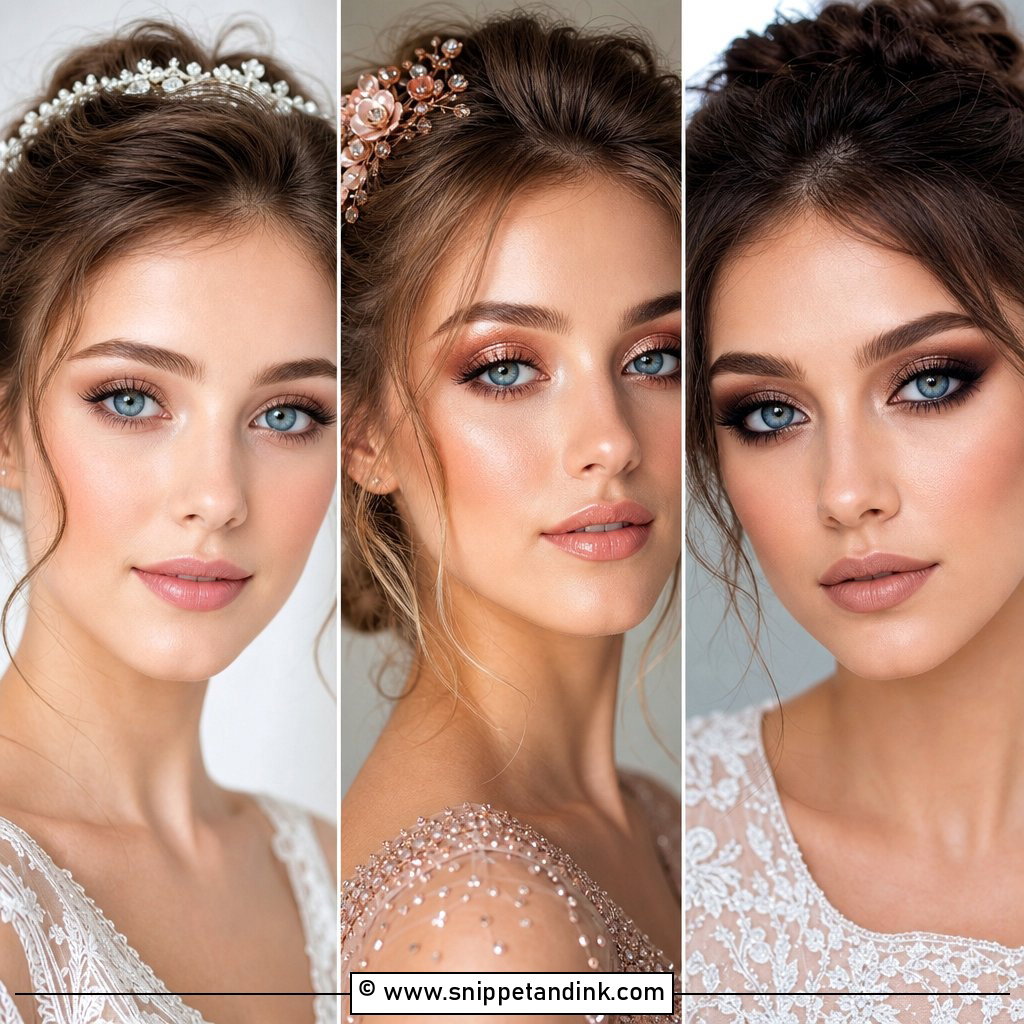
I’d call this the hardest look to do well, because there’s nowhere to hide a heavy hand. Skin prep comes first, then a light skin tint or medium-coverage foundation pressed in with fingers so the real texture still shows. Soft beige or taupe on the lid, brown liner and a wispy half lash instead of a strip. Cream blush in rose or peach. A satin nude or soft pink gloss on the lips. Daytime weddings and brides who rarely wear makeup look most like themselves in it.
2. Soft Glam Wedding Makeup
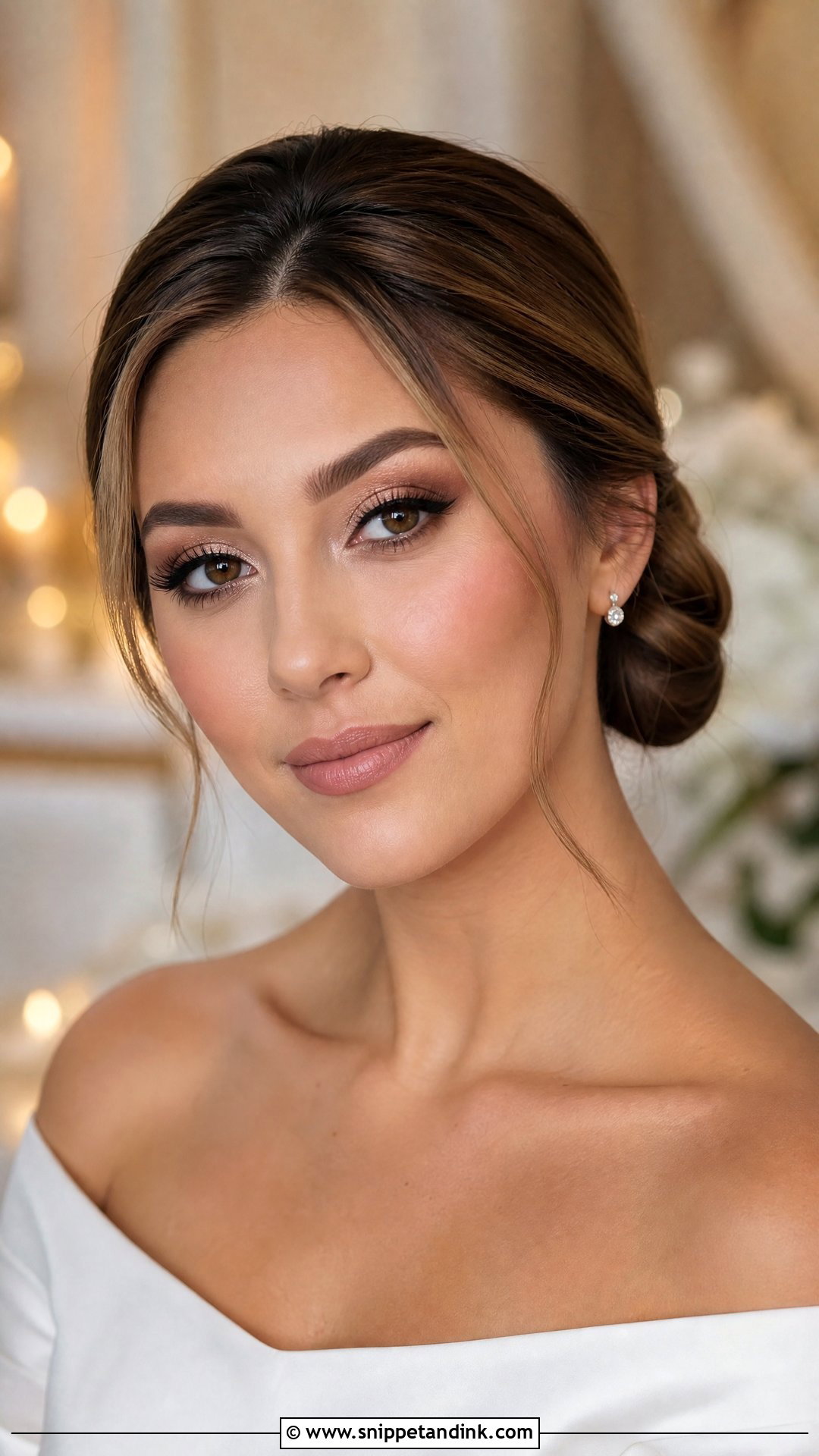
Soft glam is the face that gets booked most, and for good reason: it adds definition without changing who you are. I keep the deepest shade, warm brown or muted bronze, tight to the lash line and blend outward so the eyes look bigger rather than darker. Long-wear foundation, powder on the T-zone only, softly sculpted cheeks. On the lips, a nude rose liner under a creamy lipstick. That liner is the secret; when the lipstick wears off at dinner, a defined lip is left behind instead of a bare one.
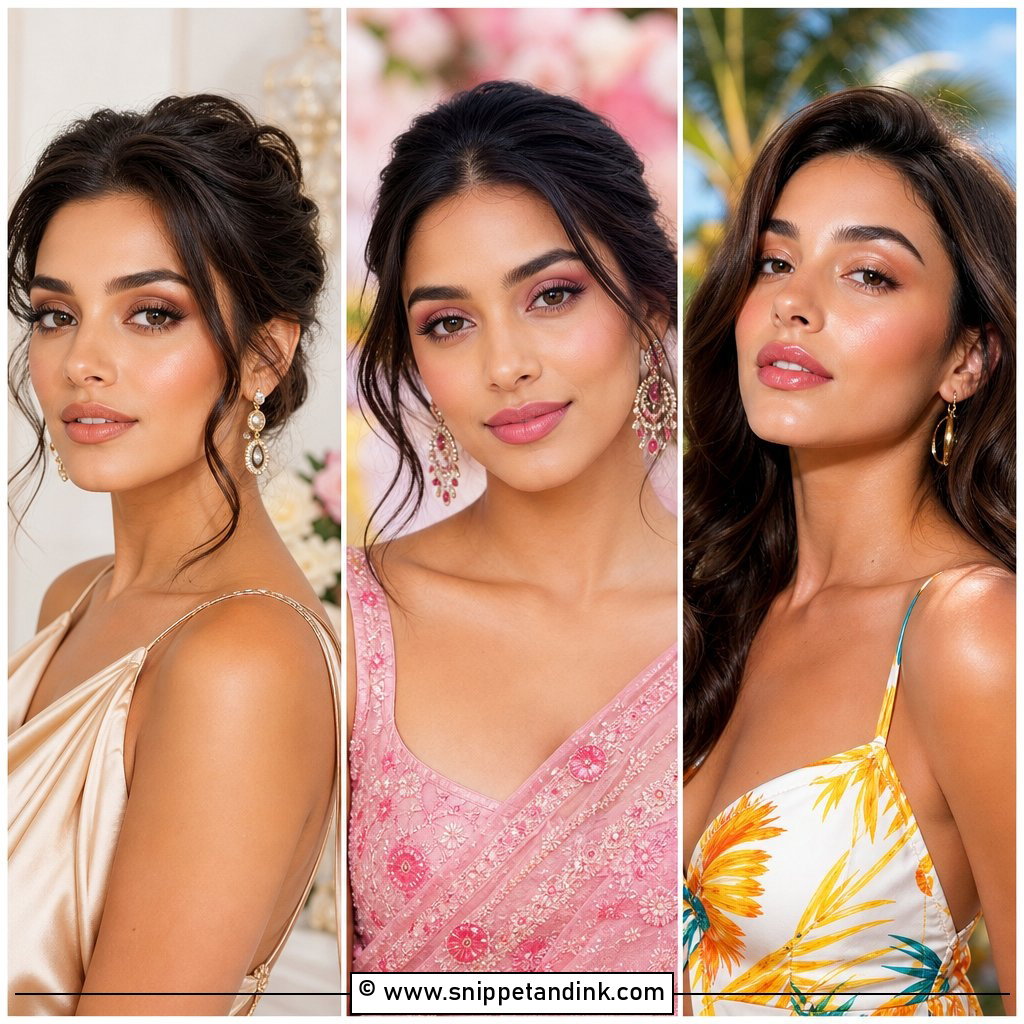
3. Dewy Bridal Makeup
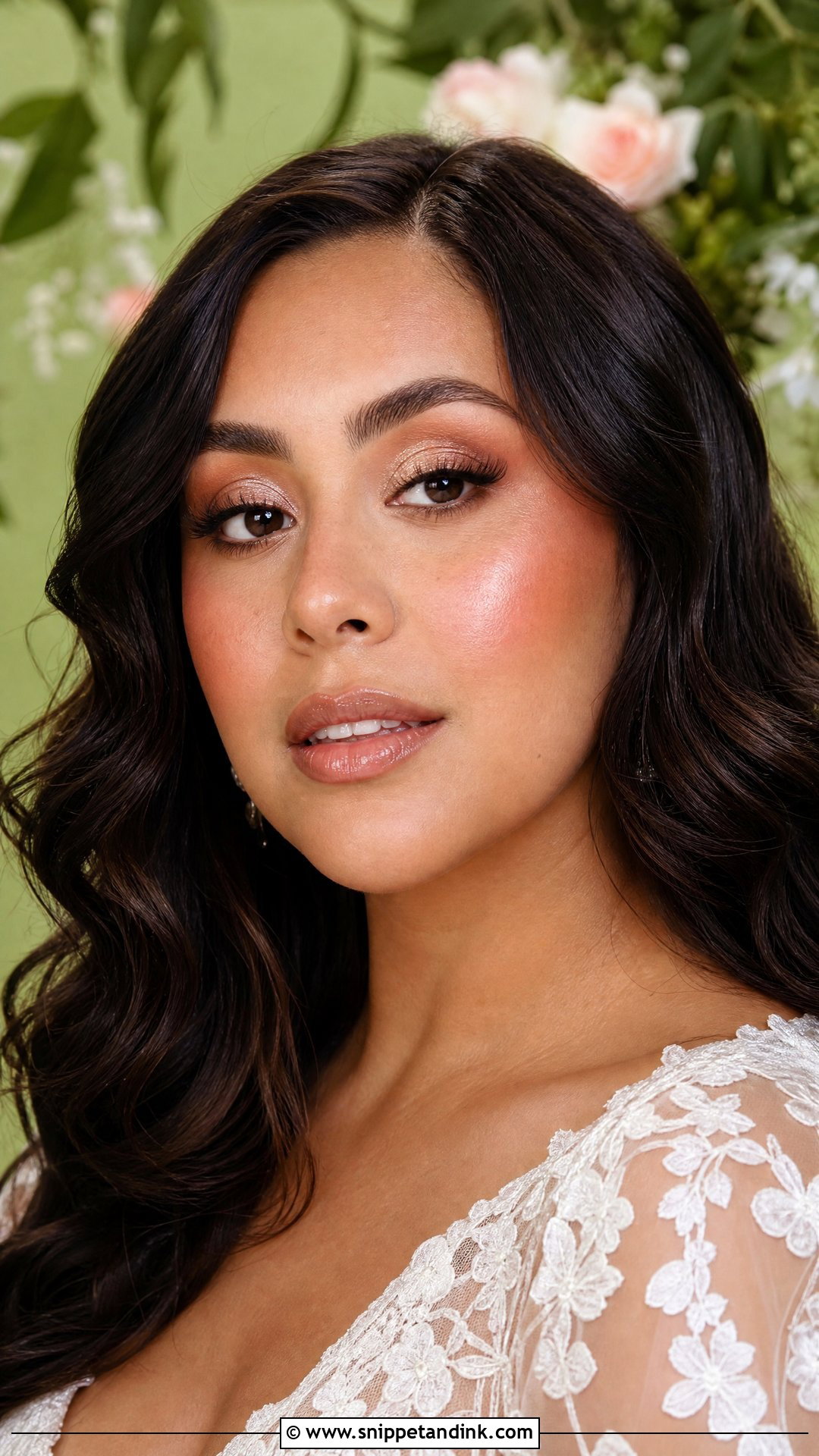
Controlled glow is the phrase I use with brides who want dewy skin. Luminous primer goes on the high points only, not the whole face, and foundation stays natural-finish. Then I powder the sides of the nose, the forehead and the smile lines, the places that crease or shine first. Peach or pink cream blush, a liquid highlighter on the cheekbones, champagne on the lids, soft brown liner. A glossy nude lip. On oily skin I’d swap the cream products for powder ones; dewy can’t be forced on skin that’s already shiny by noon.
4. Matte Wedding Makeup
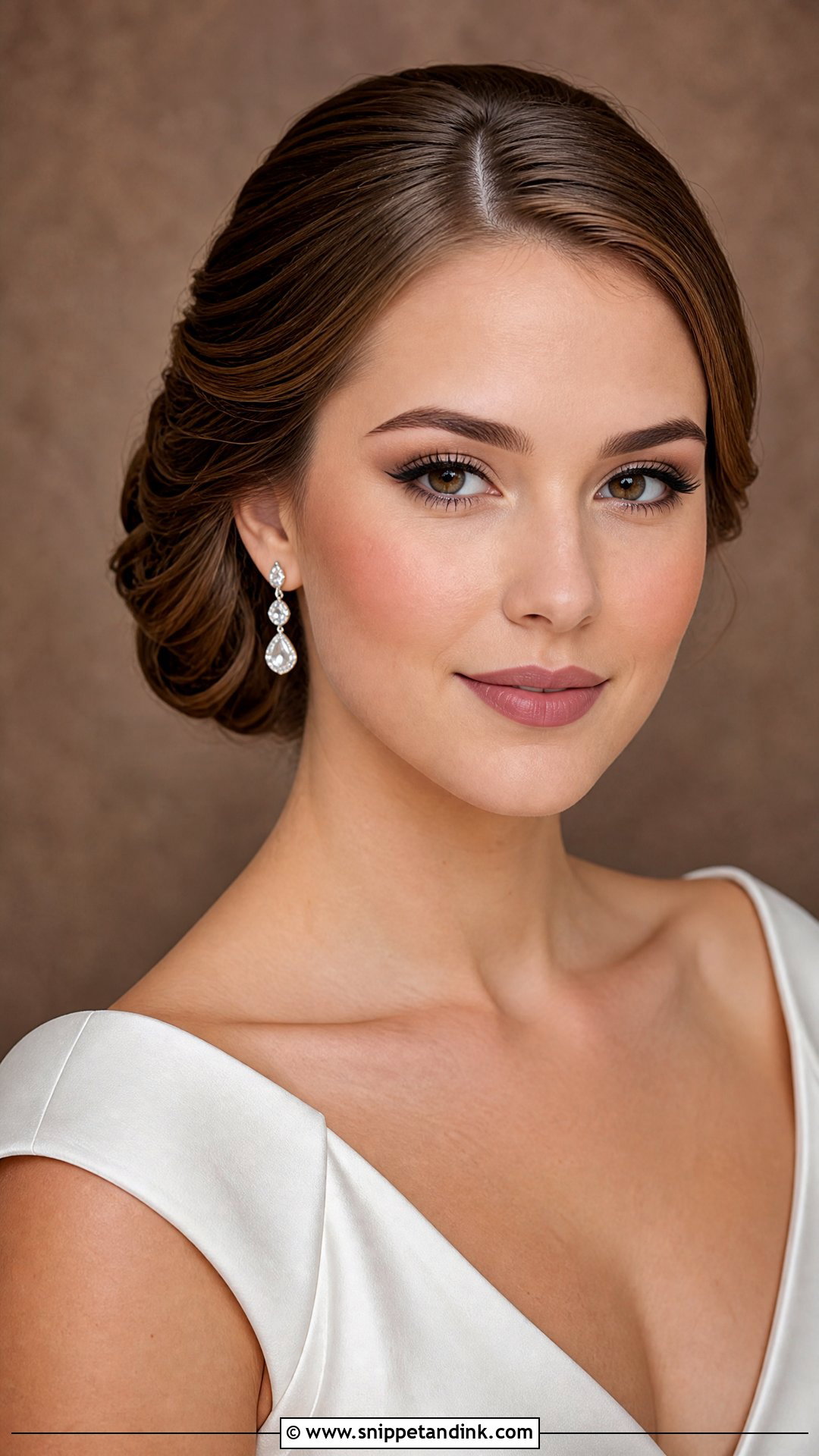
Matte is for long days, heat, oily skin and heavy flash use. Done wrong, it looks flat and dry. I lay down a soft-matte foundation, then cream contour before powder, which keeps some dimension under the matte finish. Warm brown shadow, espresso liner and defined lashes give structure. Blush has to be visible here, or matte skin washes out in photos. A matte nude, mauve or rose lipstick outlasts satin ones. For formal settings it’s the most dependable face I do.
5. Classic Red Lip Wedding Makeup
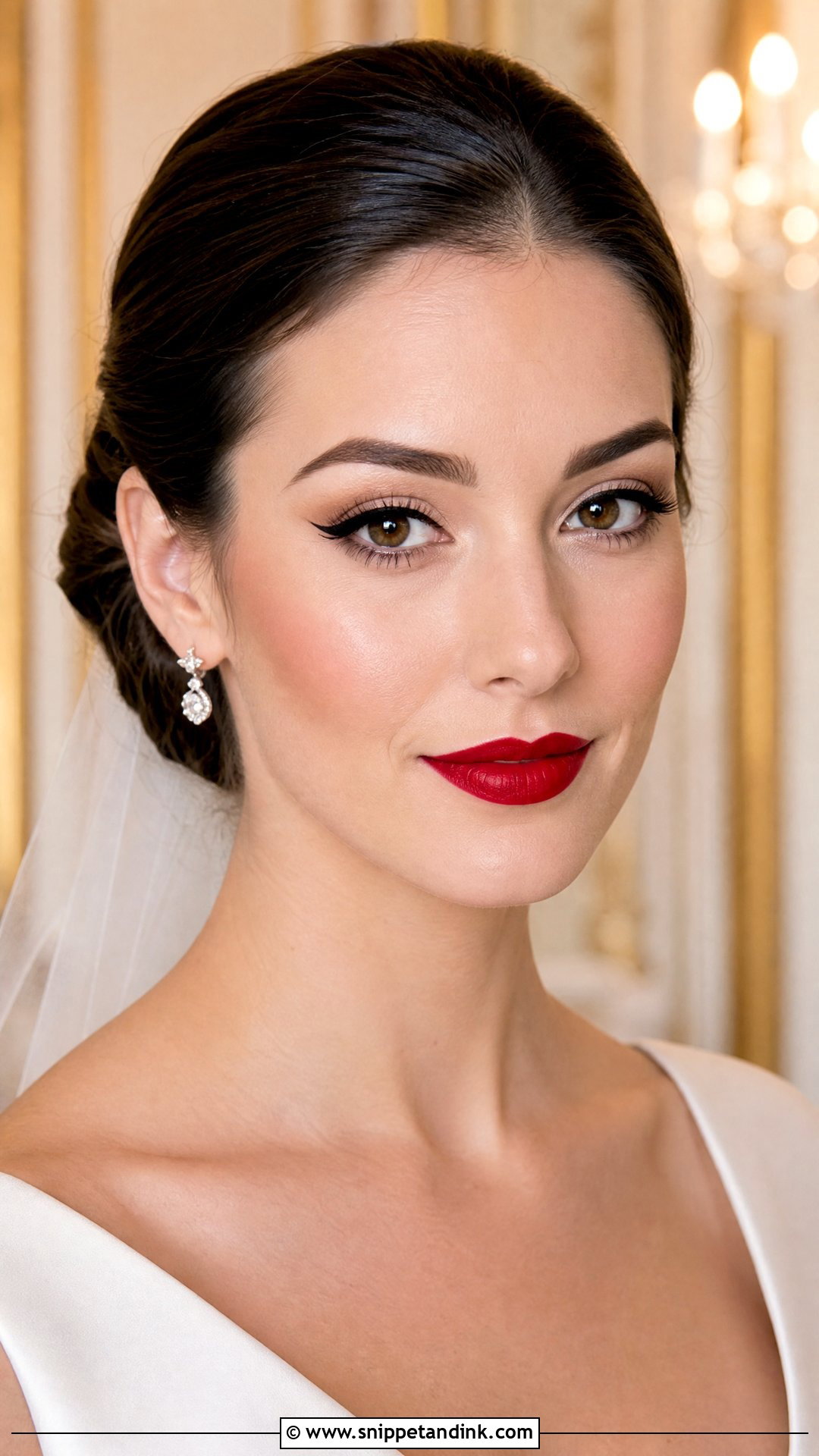
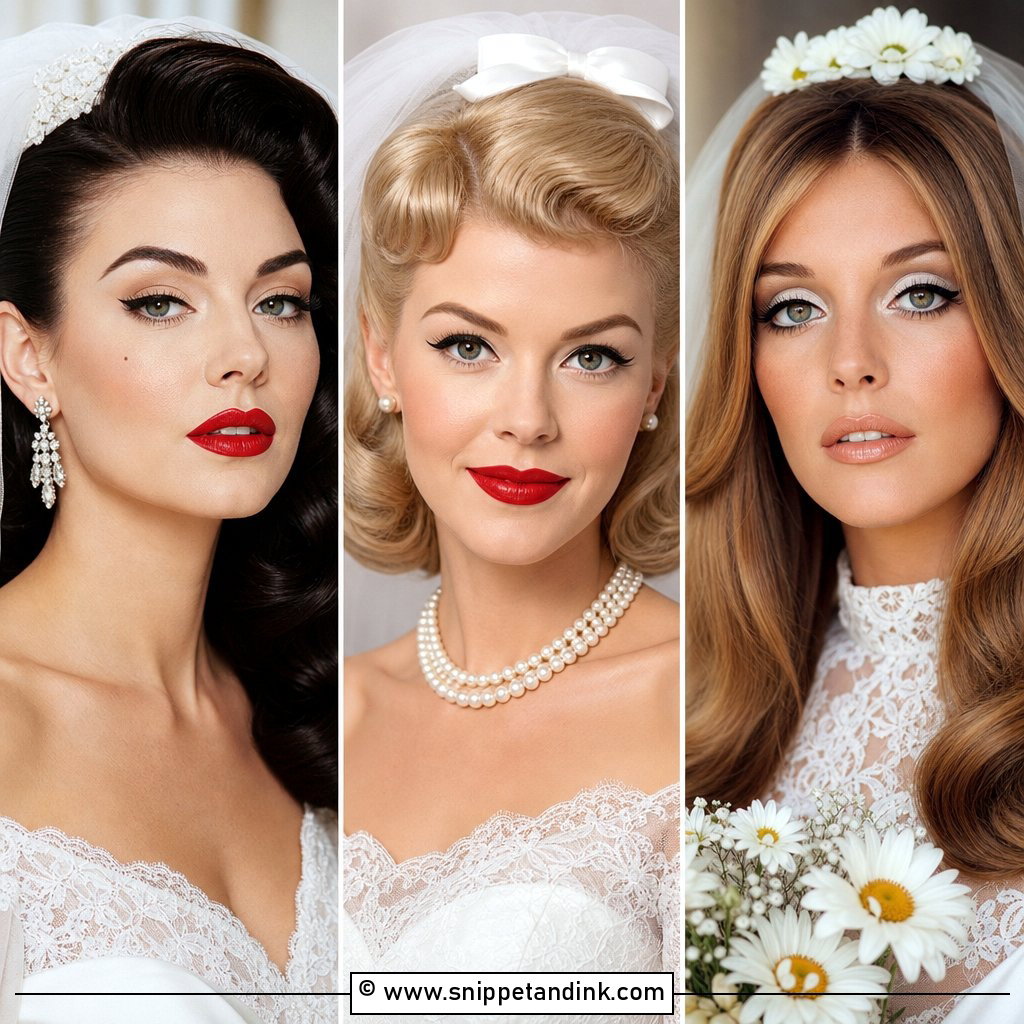
The red lip is the one feature I build the rest of the face around. Complexion even and balanced, contour soft, blush natural. The eyes stay clean: neutral matte shadow, a sharp wing in black or brown, separated lashes. Brows groomed but not darkened. Choose the red by what you want it to do: blue-red reads crisp and classic, brick red warmer, deep red more dramatic for evening. I line and fill the entire lip with liner before the lipstick so it lasts through a toast. Simple gowns and sleek hair suit it best.
6. Pink Bridal Makeup
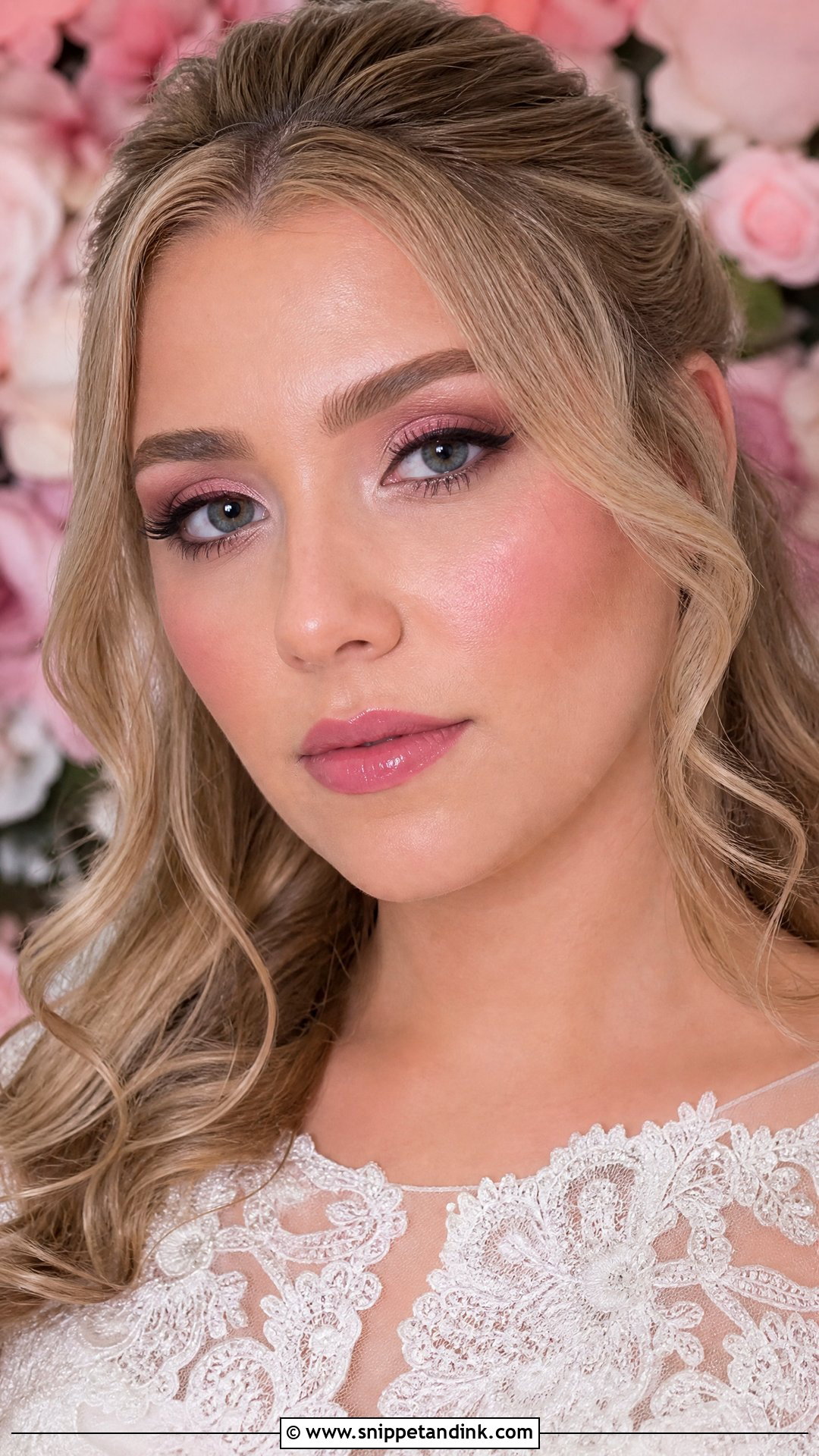
Pink looks most polished when the cheeks, eyes and lips all sit in the same color family. I sweep a rosy satin shadow across the lid and deepen the outer corner with mauve or soft brown so it doesn’t look flat. Brown liner, lifted lashes. A satin base and pink cream blush placed high. A rose-pink lipstick or gloss pulls it together. Keep the shades dusty rather than candy-bright, or it tips from romantic to sweet. Spring weddings and floral dresses suit it.
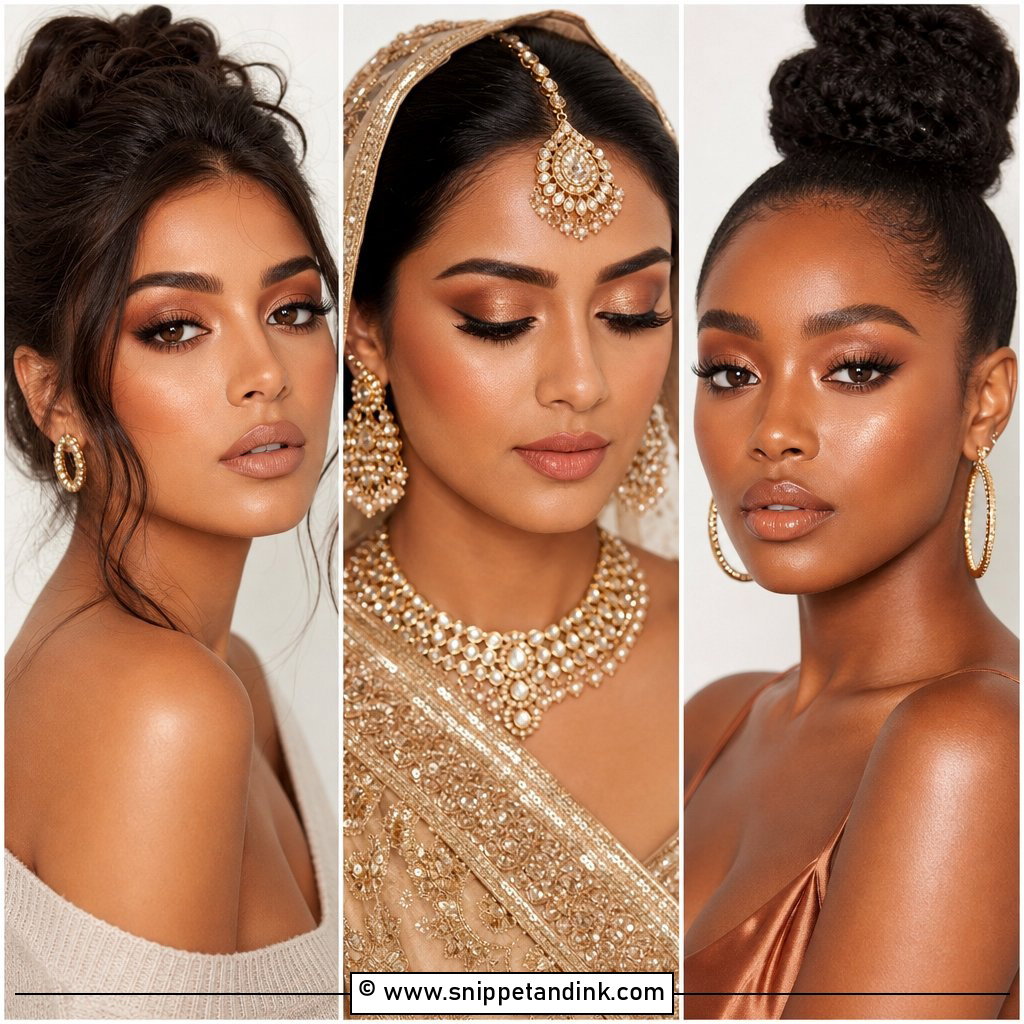
7. Bronze Wedding Makeup
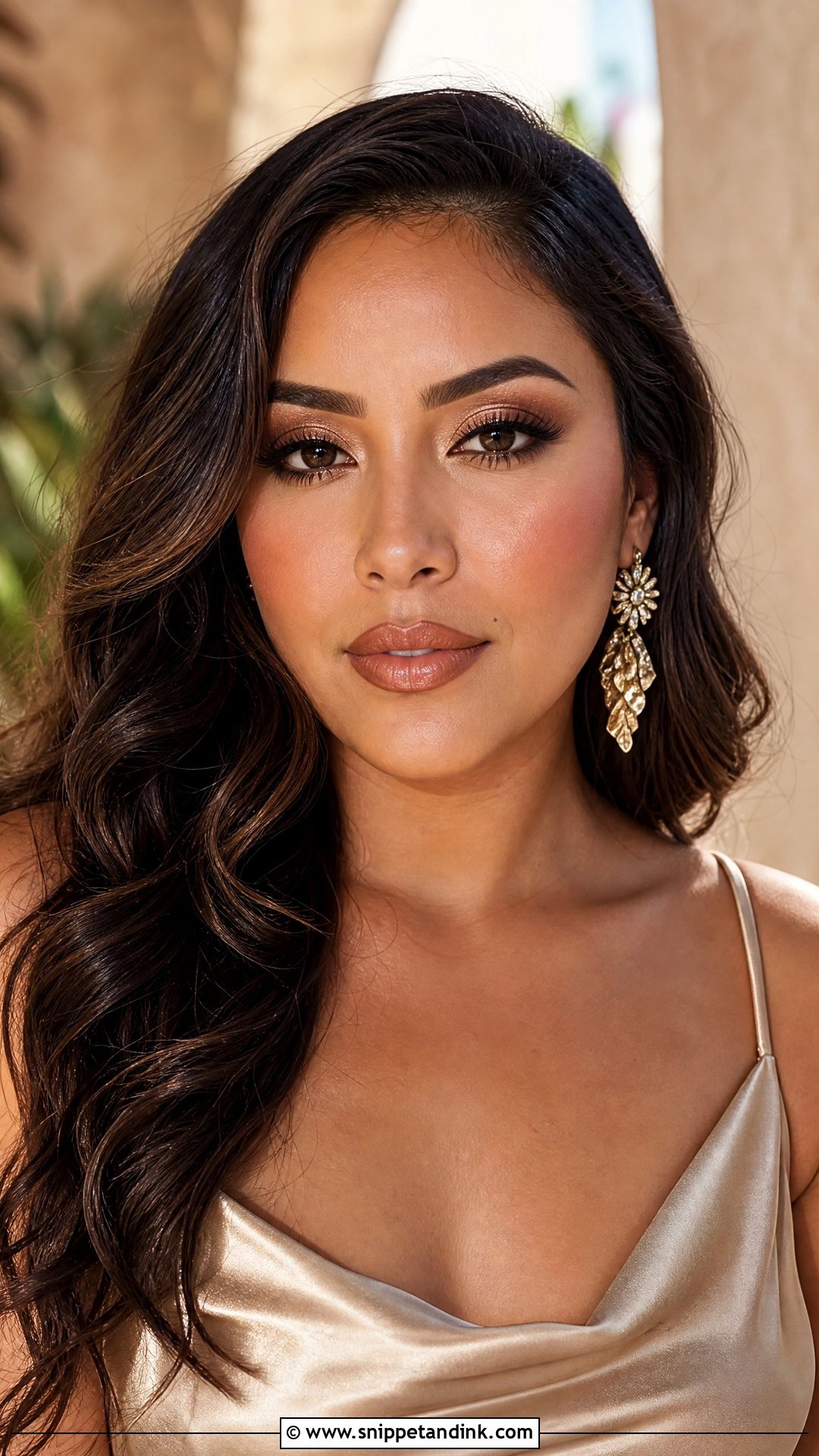
Bronze wedding makeup flatters golden, tan and olive skin with almost no adjustment. I place bronzer where the sun would naturally hit, the top of the forehead, cheekbones and jaw, rather than in a contour stripe. Bronze shimmer on the lid with matte brown in the crease, and dark brown liner rather than black. Peach blush and a champagne highlight keep it luminous. A caramel or peachy nude lip. It reads warm and sunlit rather than bold, which is why it fits a wedding so easily.
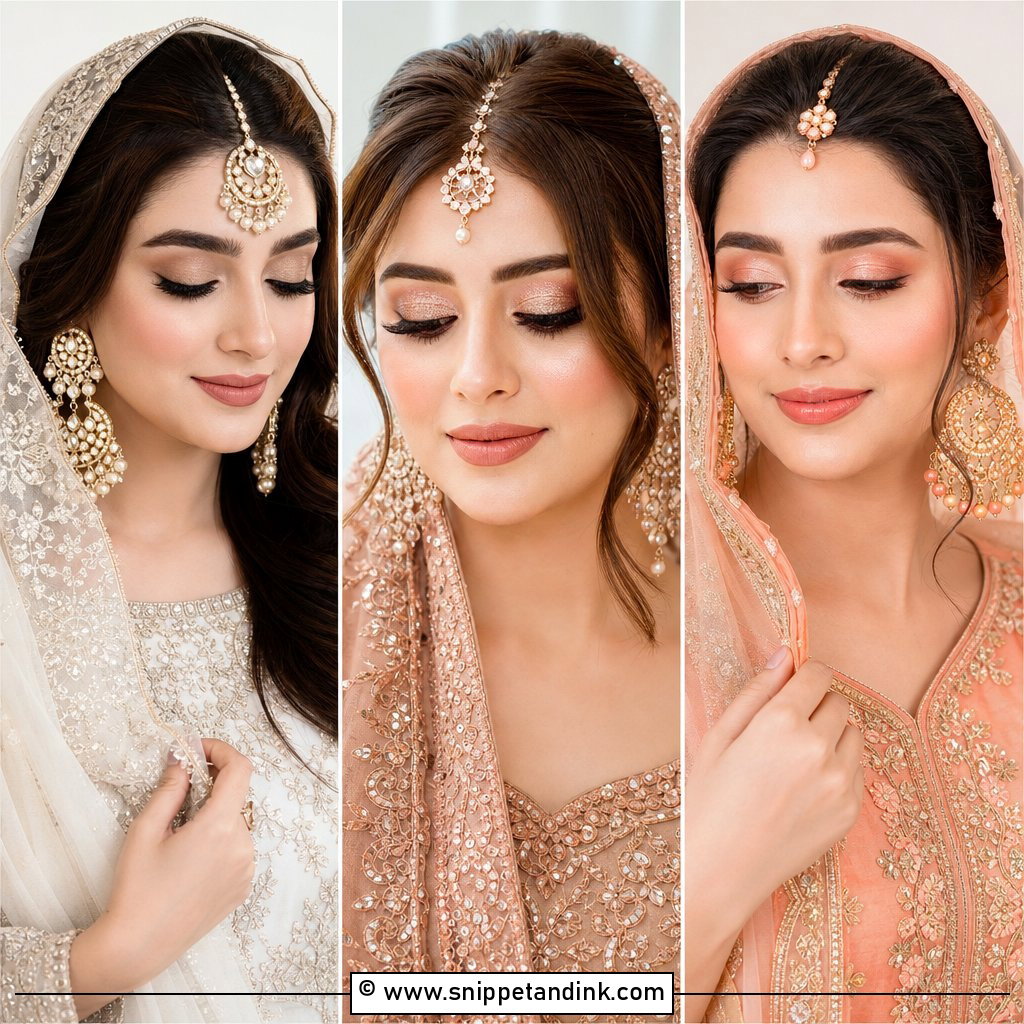
8. Champagne Eye Wedding Makeup
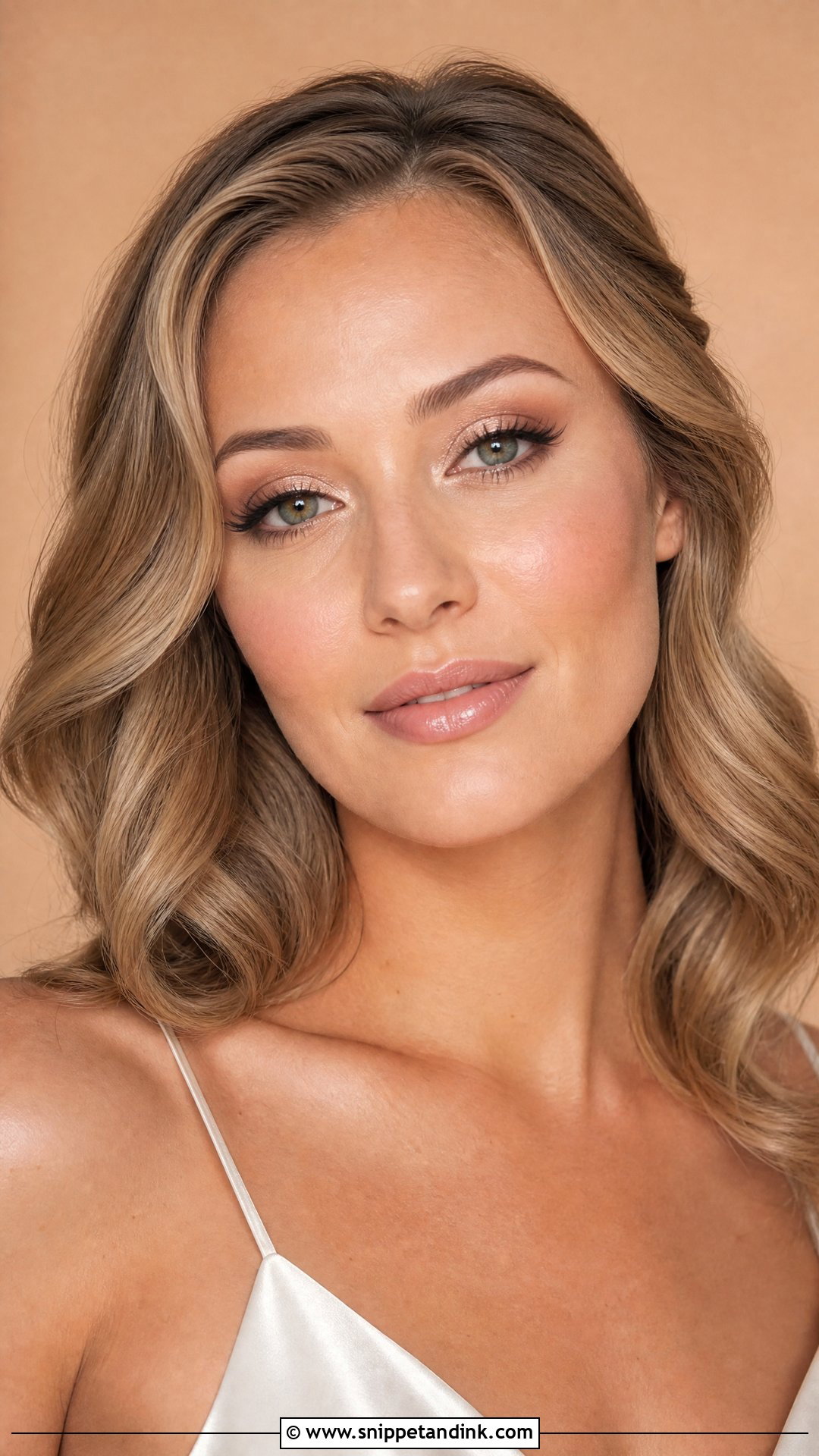
Champagne on the lid brightens the whole face. I press it with a fingertip onto the center of the lid and the inner corner, because a brush leaves it sheer and a finger packs it on. Matte brown in the crease gives it shape. Keep liner thin and close to the lashes so it doesn’t cover the shimmer, and use soft clusters or a light full lash. Satin skin, light contour, peachy pink blush. Nude pink or beige rose on the lips. Brides, mothers and guests can all wear it.
9. Brown Smokey Eye Wedding Makeup
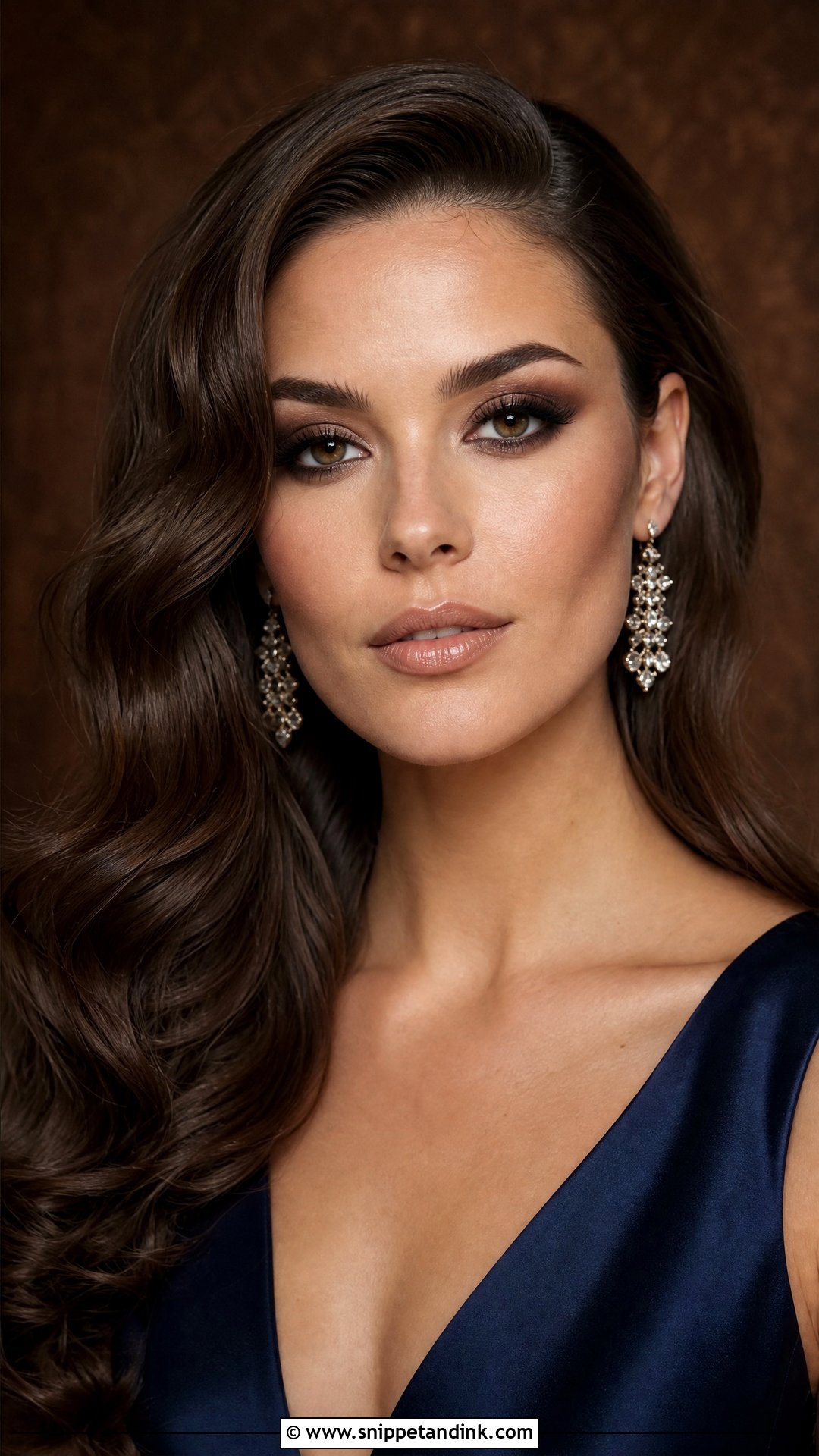
Brown smokes more softly than black, and it suits far more eye colors. I build it in three layers: matte taupe as the transition, warm brown through the crease, deep espresso at the lash line. Every edge gets blended until there’s no visible line. Then liner, smudged with a small brush so it diffuses. Smooth skin, soft contour, neutral blush. Because the eyes carry the face, I keep the lip nude, peach or mauve. Evening and fall weddings are its natural setting.
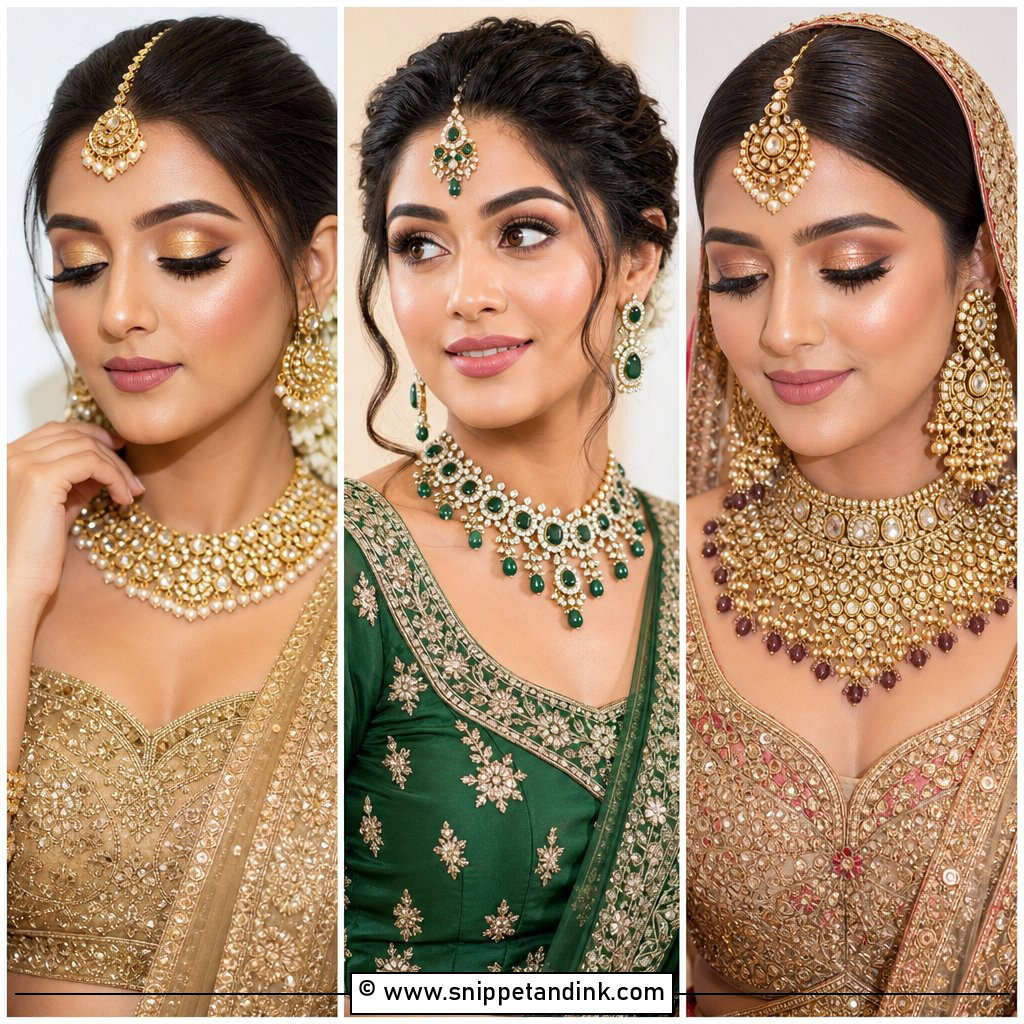
10. Gold Wedding Makeup
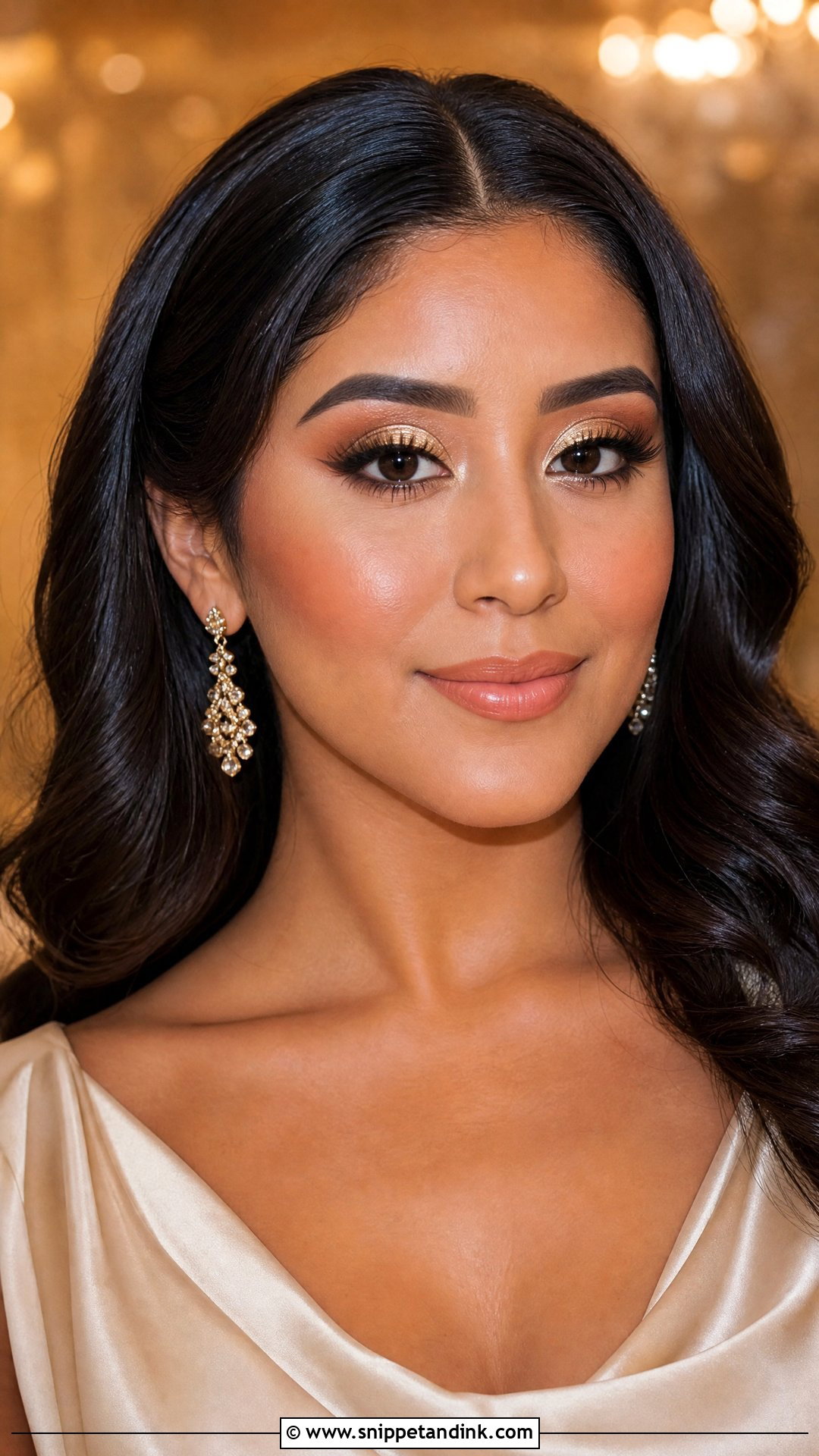
Gold has to be used with discipline to look elegant rather than theatrical. Soft matte brown goes through the crease first, then gold shimmer on the lid or inner corner, and a black or deep brown liner to anchor all that shine. The skin wants bronzer, warm peach blush and a golden highlight. A nude brown or warm rose lip ties it together. Ivory, champagne and warm-toned outfits sit well beside it. I’d keep it for evening, when warm lighting makes gold glow rather than glare.
11. Rose Gold Wedding Makeup
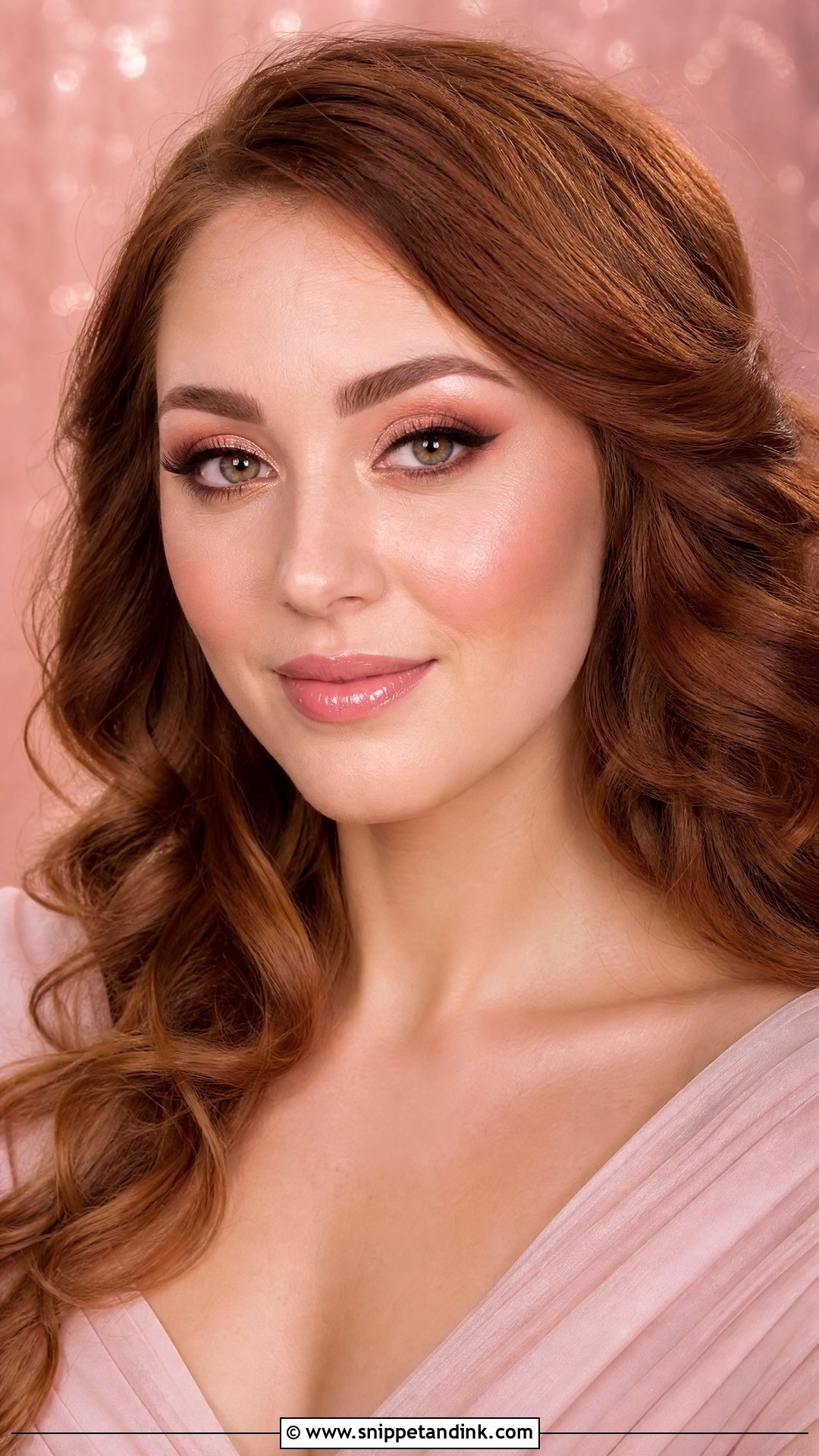
Rose gold mixes rose, copper and champagne, and the blend is what flatters so many undertones. I keep the deepest copper shade soft in the outer corner, add brown liner and wispy lashes, and leave the base satin so the glow looks refined. Rosy peach blush and a subtle highlight on the cheekbones. Rose nude or pink beige on the lips. It’s a step more special than neutral, so bridesmaids and guests often choose it when they want something festive but safe.
12. Peach Wedding Makeup
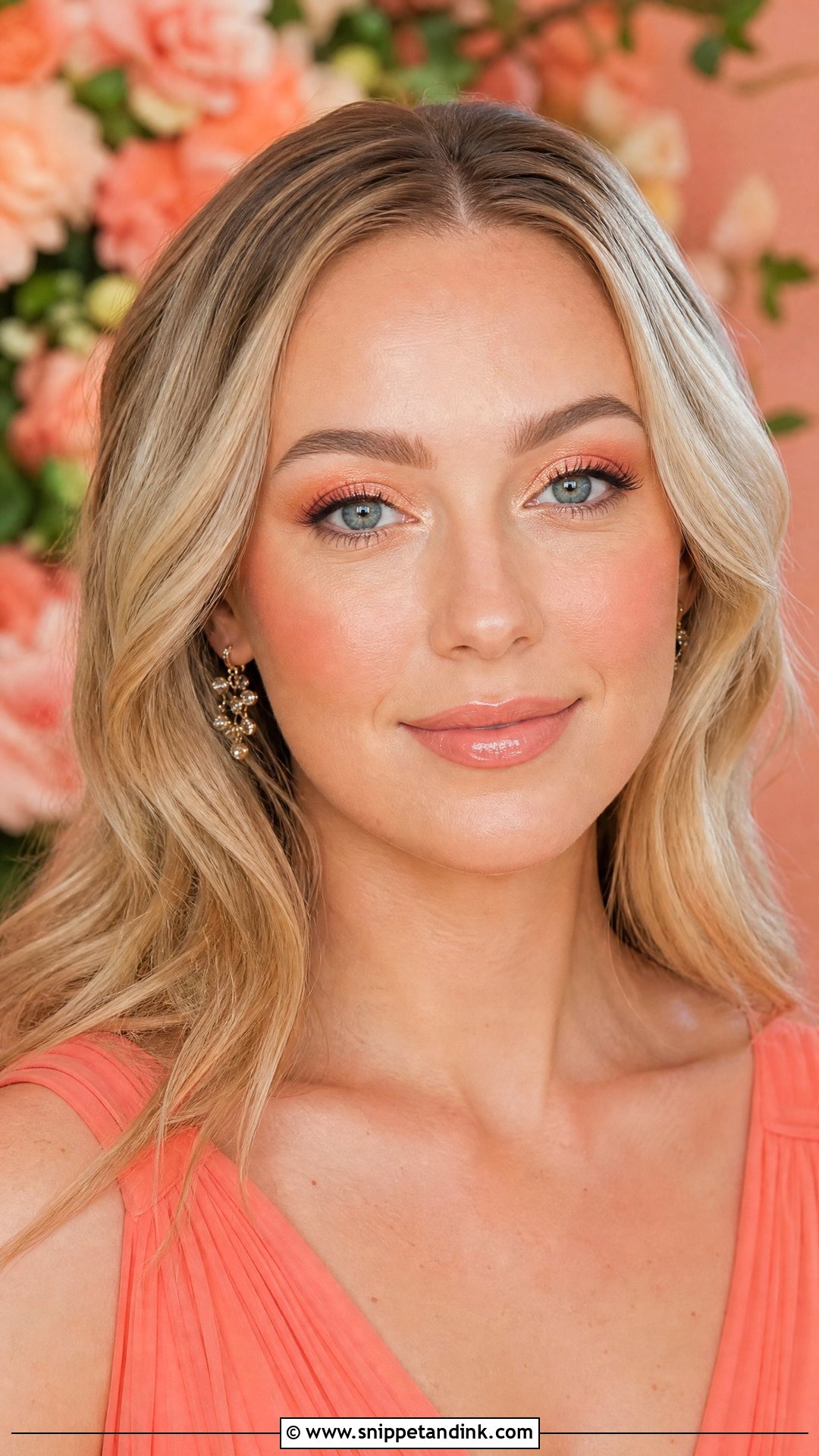
Peach brings brightness to the face without weight. I blend the blush up toward the temples, which lifts the face more than placing it on the apples. Peach matte shadow, warm beige and a touch of champagne shimmer on the eyes, brown liner and mascara. A peach nude lipstick or tinted gloss. It suits spring, summer, beach and daytime weddings. Cream, coral, sage and pale blue outfits all look fresh next to it. Very cool, pink-toned skin sometimes looks sallow in peach, so I’d test it in daylight first.
13. Mauve Wedding Makeup
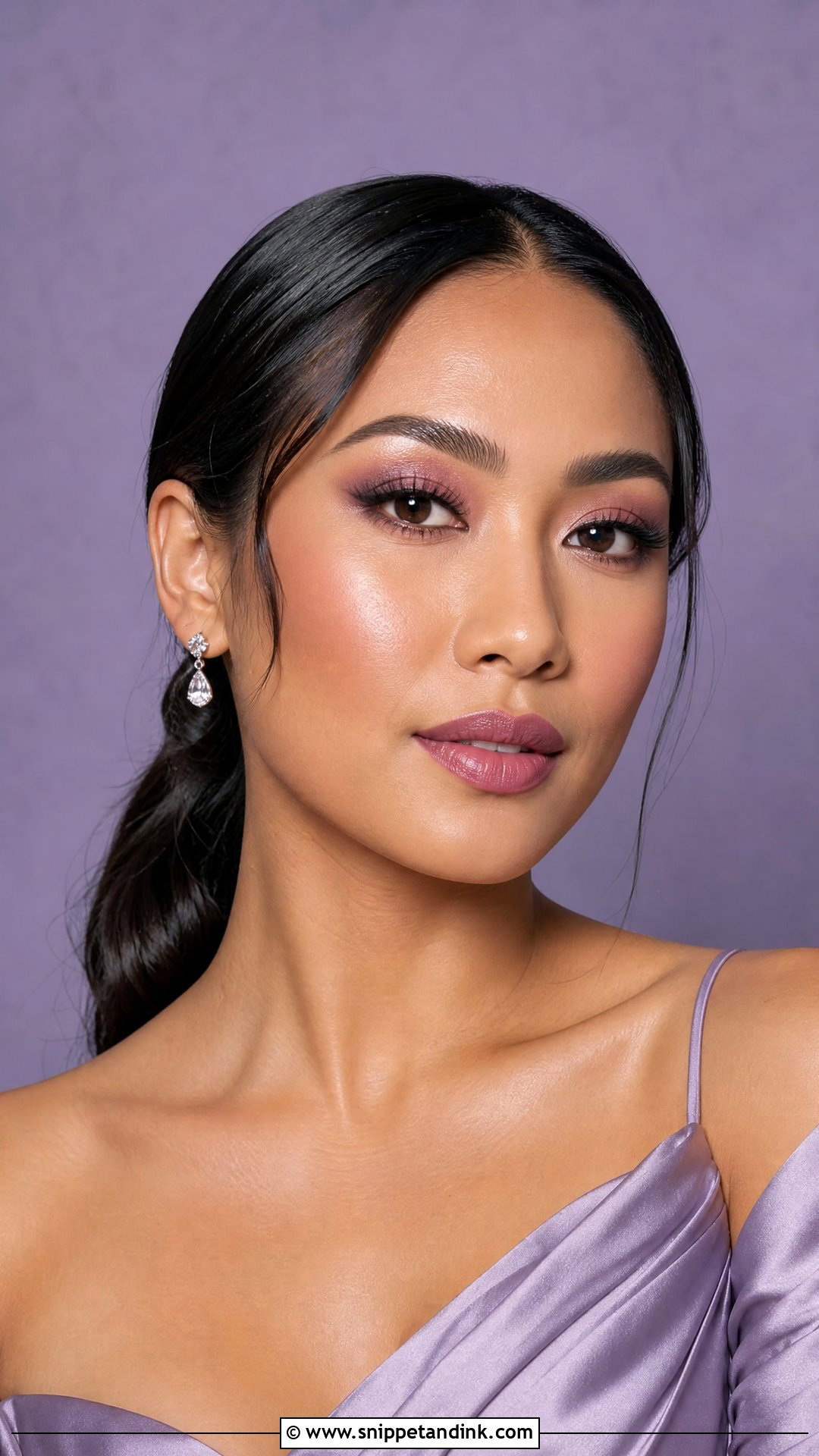
Mauve gives more color than a nude but still reads neutral at a formal event. On the eyes I use mauve and dusty rose with a little warm brown in the crease, which keeps it from looking cold. Satin or soft-matte skin, cool pink or rose blush, and a mauve liner under a creamy mauve lipstick. Green, hazel and brown eyes come alive with it. Black, navy, silver, lavender and dusty pink dresses suit it, as do fall and evening ceremonies.
14. Burgundy Wedding Makeup
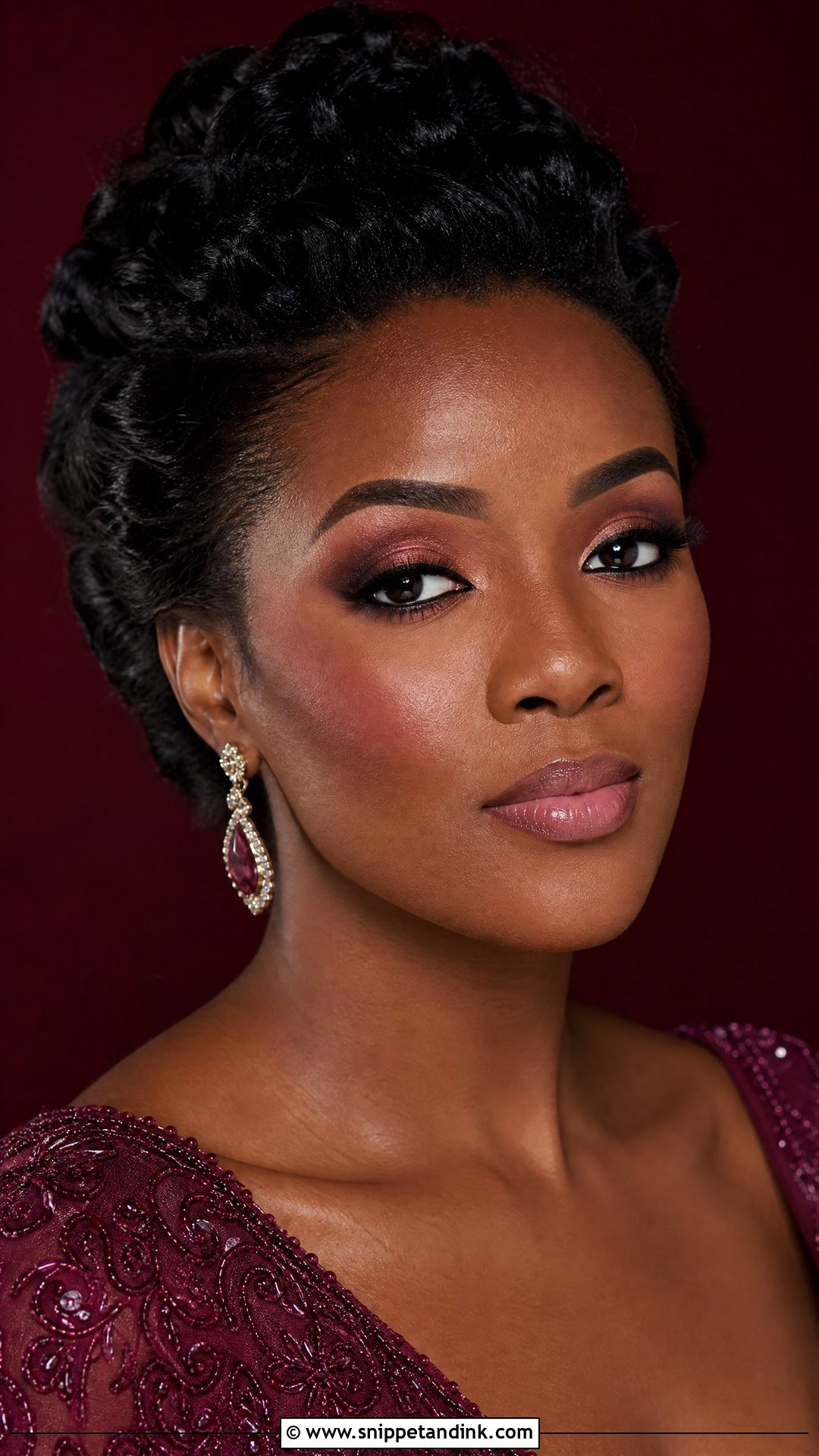
Burgundy gives drama without black shadow. I use it in one controlled place: the outer corner, the lower lash line, or diffused across the lid mixed with brown. Smooth blending matters more here than with any neutral, because burgundy that stops in a hard line looks like a bruise. Polished skin, not shiny, with neutral blush and subtle contour. On lips, a nude rose balances it, or a deep berry for a bold evening look. Fall and winter weddings with darker floral palettes suit it.
15. Winged Liner Wedding Makeup
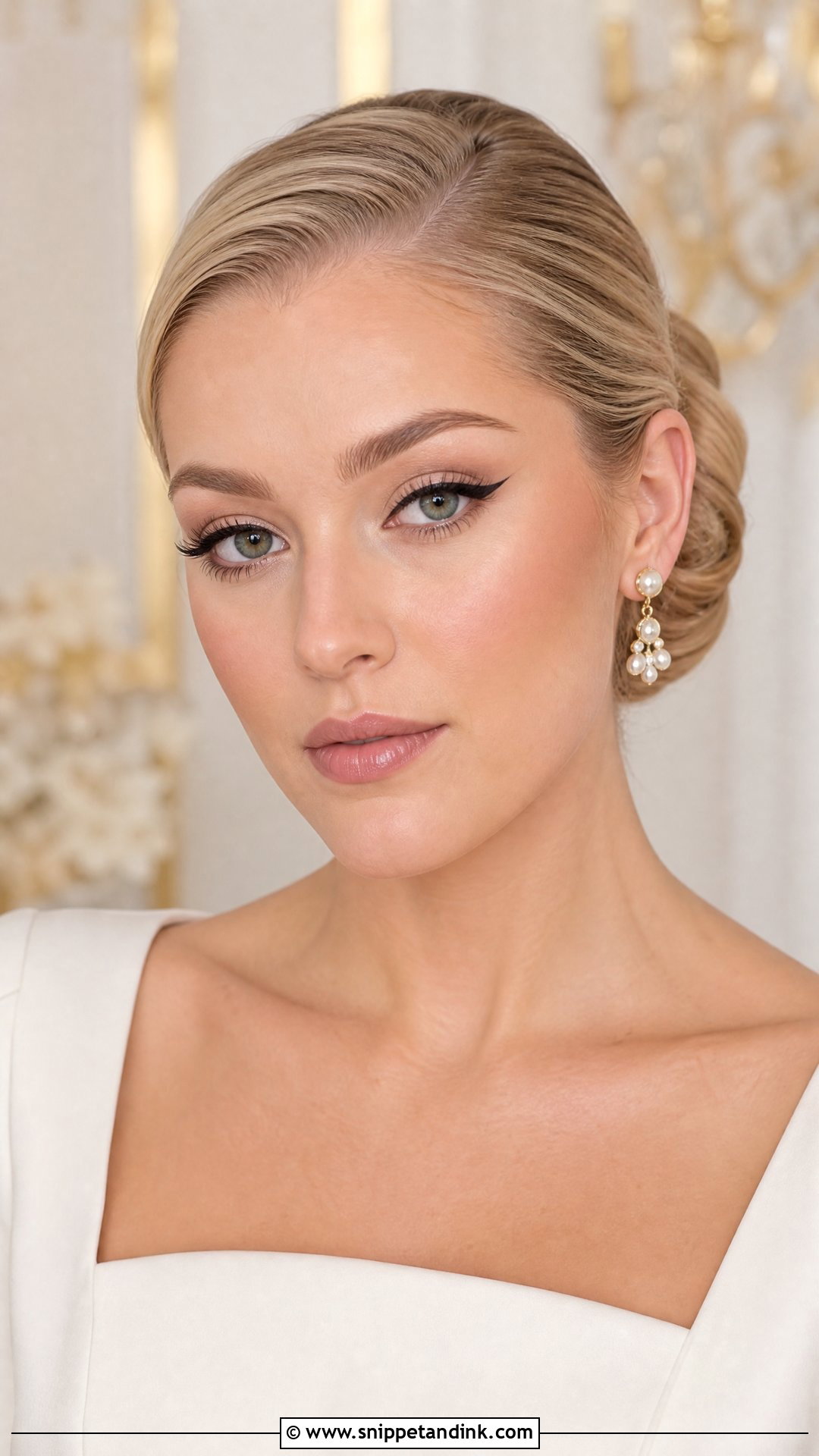
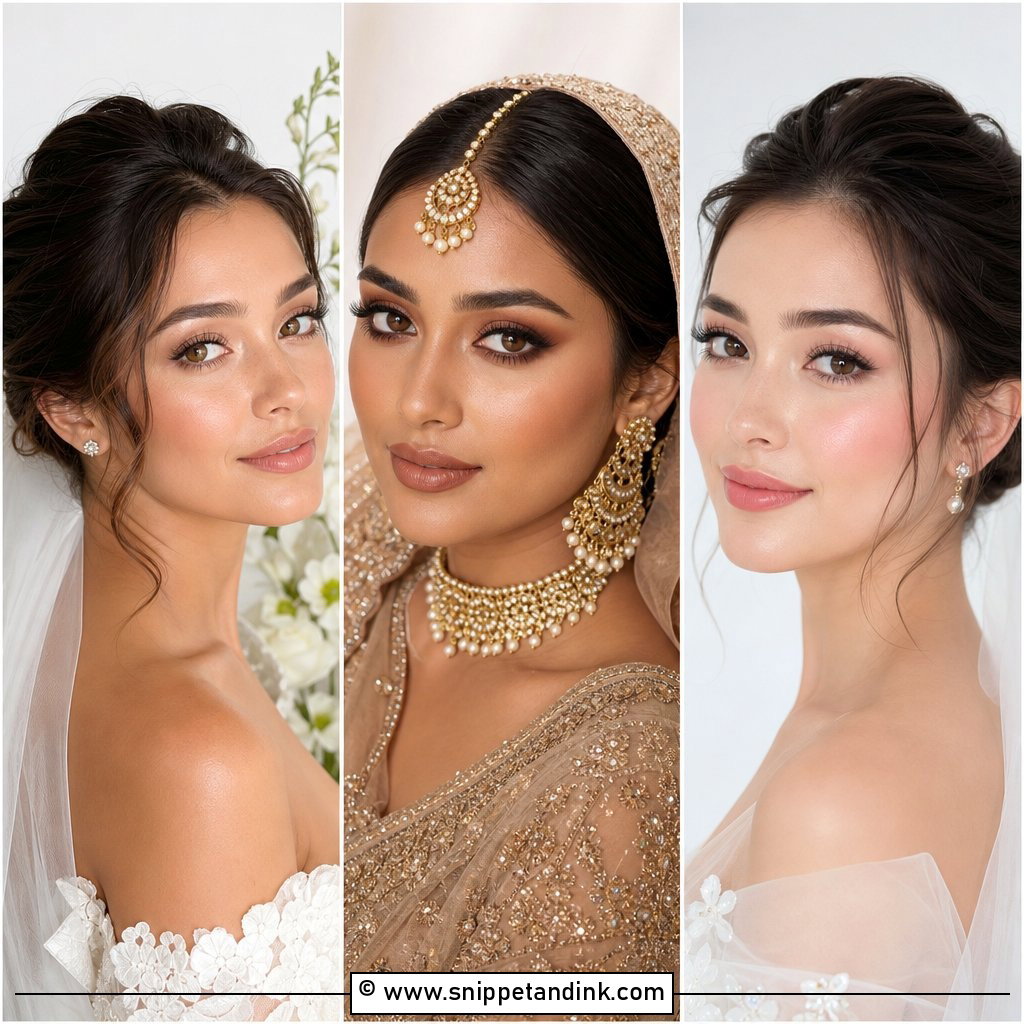
The wing has to fit the eye shape or it reads as a mistake. I draw it with the eye open and looking straight ahead, which shows where the wing will actually sit, especially on hooded lids. Keep the lid simple, matte beige or soft champagne, and the wing thin. Curled lashes, defined brows, smooth satin skin. Blush fresh but not loud. A nude pink lip keeps it bridal; a red lip makes it classic and bold. Sleek hair and structured gowns suit it.
16. Full Glam Wedding Makeup
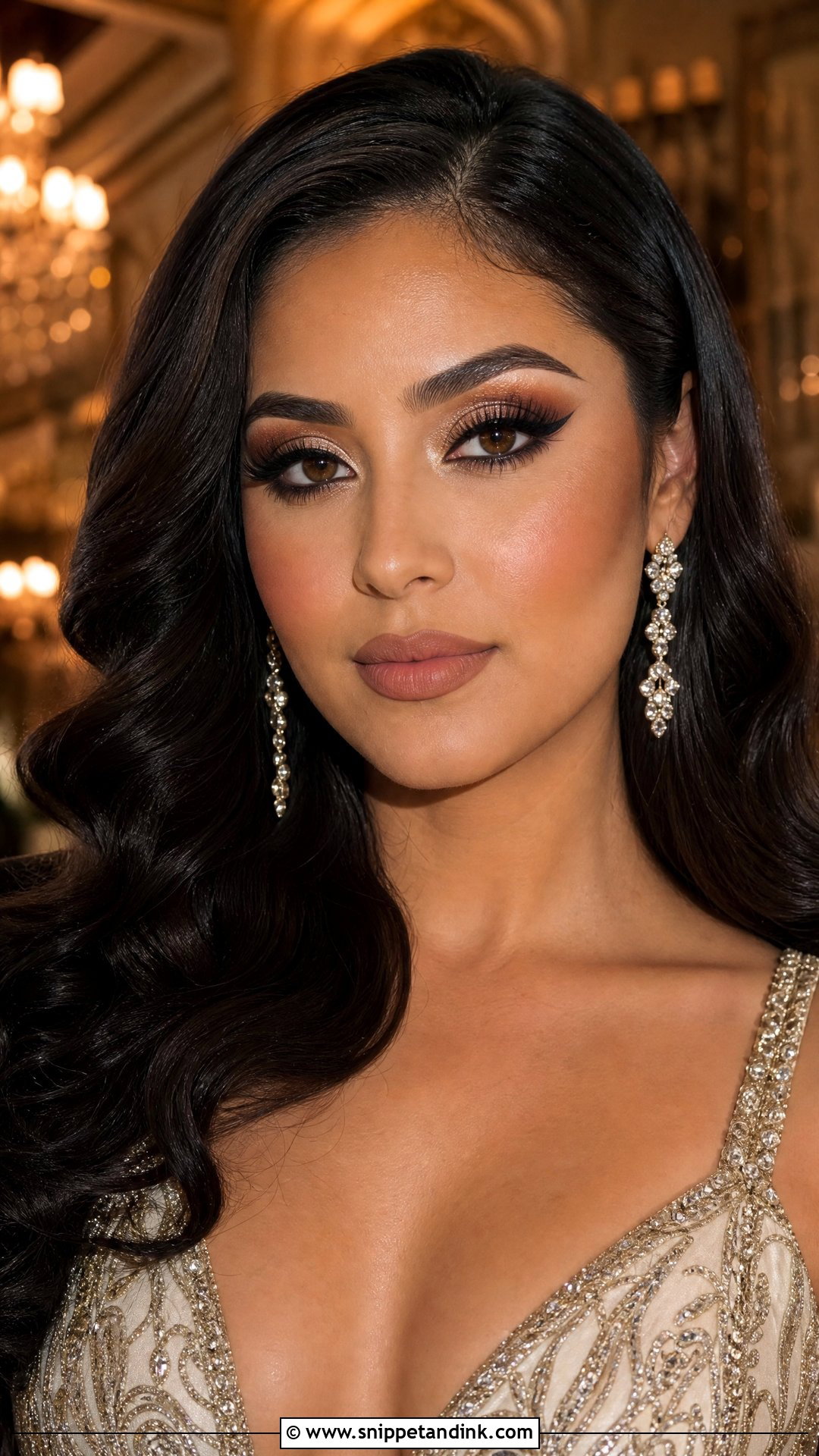
Full glam is built for cameras and big rooms. I use full-coverage foundation, contour, highlight and setting powder, and spend most of the time blending the joins so nothing looks stuck on. Deeper browns, shimmer, a wing and fuller lashes on the eyes; brows shaped and filled but matched to the face, not darker. A nude, rose or brown lip balances the eyes. Evening, ballroom and black-tie weddings call for it. If you don’t usually wear much makeup, I’d suggest soft glam instead; a face you don’t recognize in the mirror won’t feel like your wedding.
17. Minimal Wedding Makeup
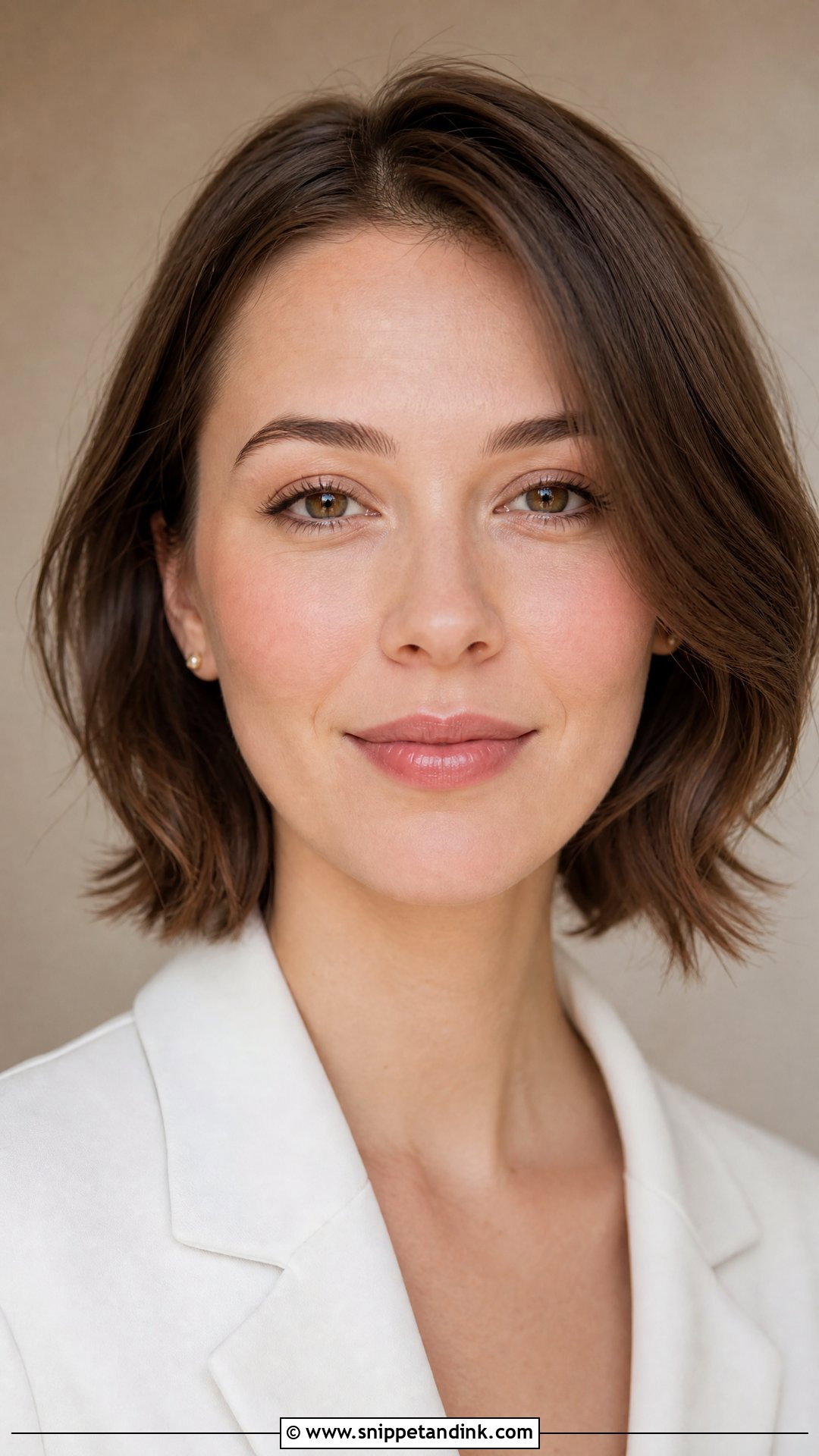
Minimal makeup looks rested and quietly polished. I spot conceal, use a sheer foundation or skin tint, add cream blush, brush brows up with tinted gel and curl the lashes. A wash of neutral shadow and a fine line of brown at the outer lashes only. Tinted balm, nude gloss or a lipstick close to your natural lip color. Courthouse weddings, small ceremonies and outdoor events suit it. The skill is restraint: stop before it becomes a look.
18. Beach Wedding Makeup
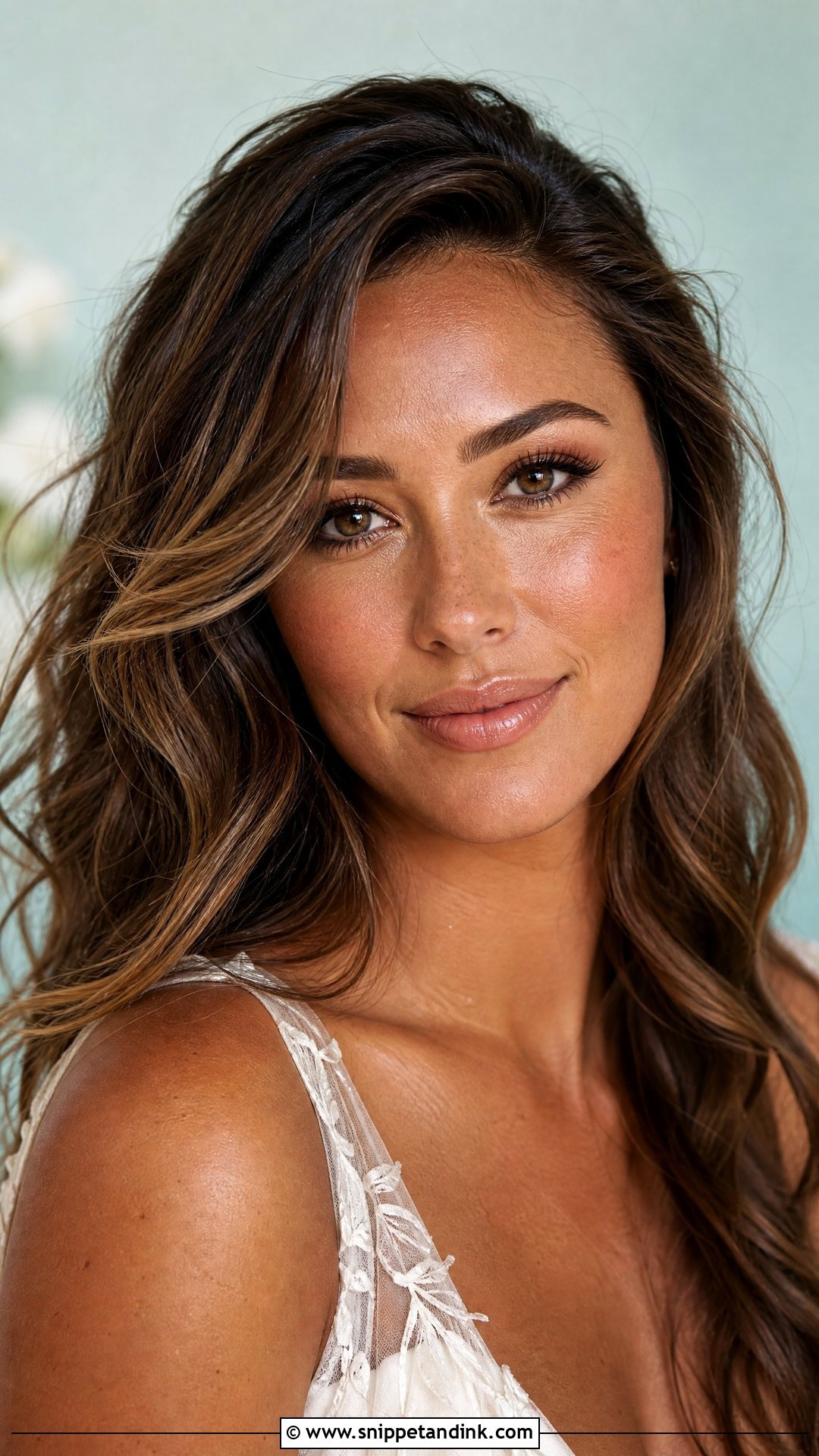
Heat, humidity and wind all hit a beach face at once. I choose lightweight long-wear products and a natural matte or satin base, because skin warms up and glows by itself as the day goes on. Cream bronzer, peach blush and a golden highlight only on the high points. Waterproof mascara, bronze shadow and smudged brown liner. A peach nude or pink lip stain survives better than thick gloss, which catches sand and hair in the wind. Loose waves and linen or flowy dresses pair naturally with it.
19. Garden Wedding Makeup
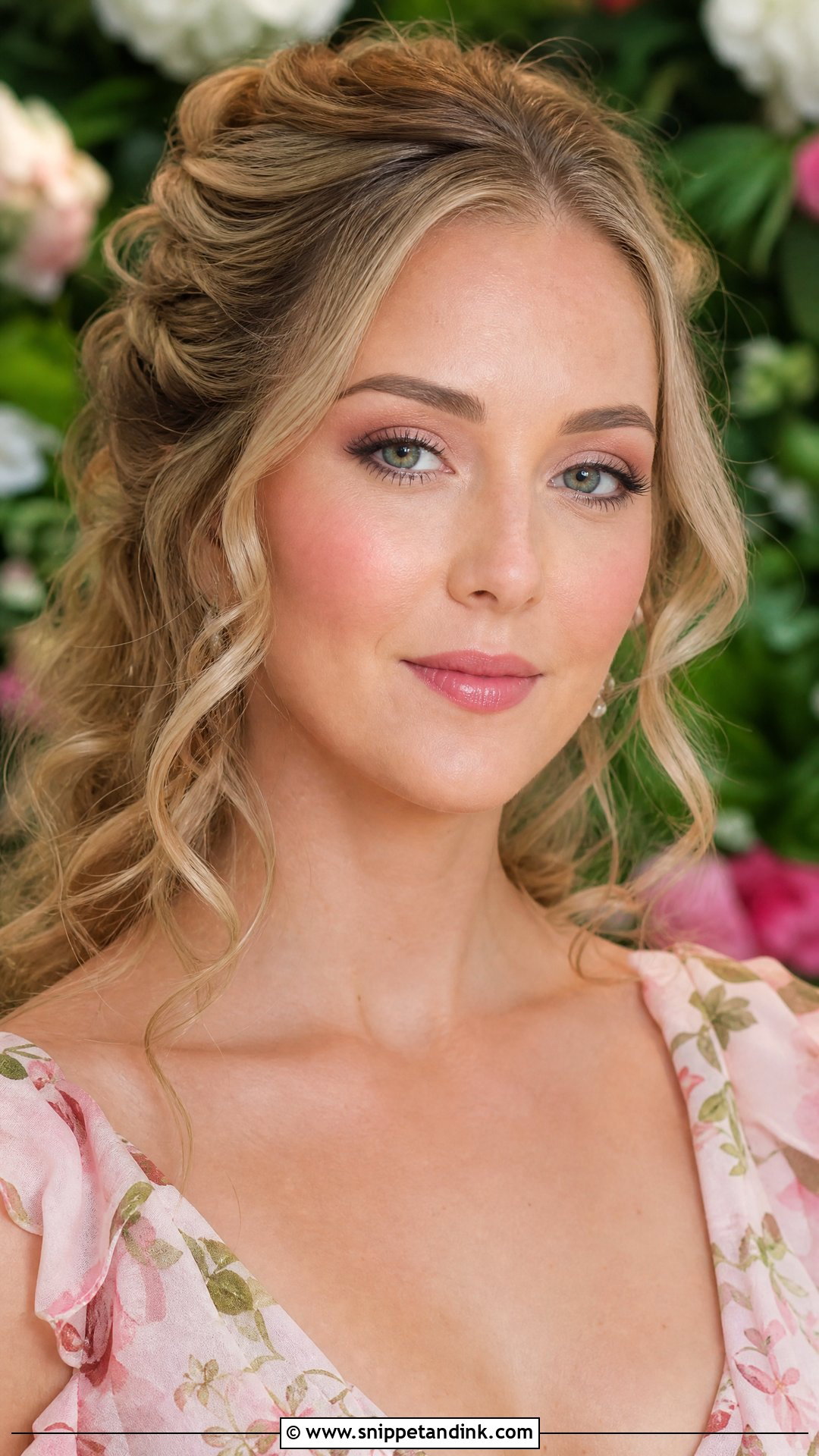
Natural light outdoors is soft but honest, so I build the garden face in light layers. Satin skin, neutral pink or soft brown shadow, brown liner and wispy lashes to keep the eye open. Cream blush in rose or peach, set with a light powder blush in the same shade so it lasts through the afternoon. A rose-pink lipstick or tinted gloss. Floral dresses, lace gowns, soft curls and pastel palettes all sit well with it.
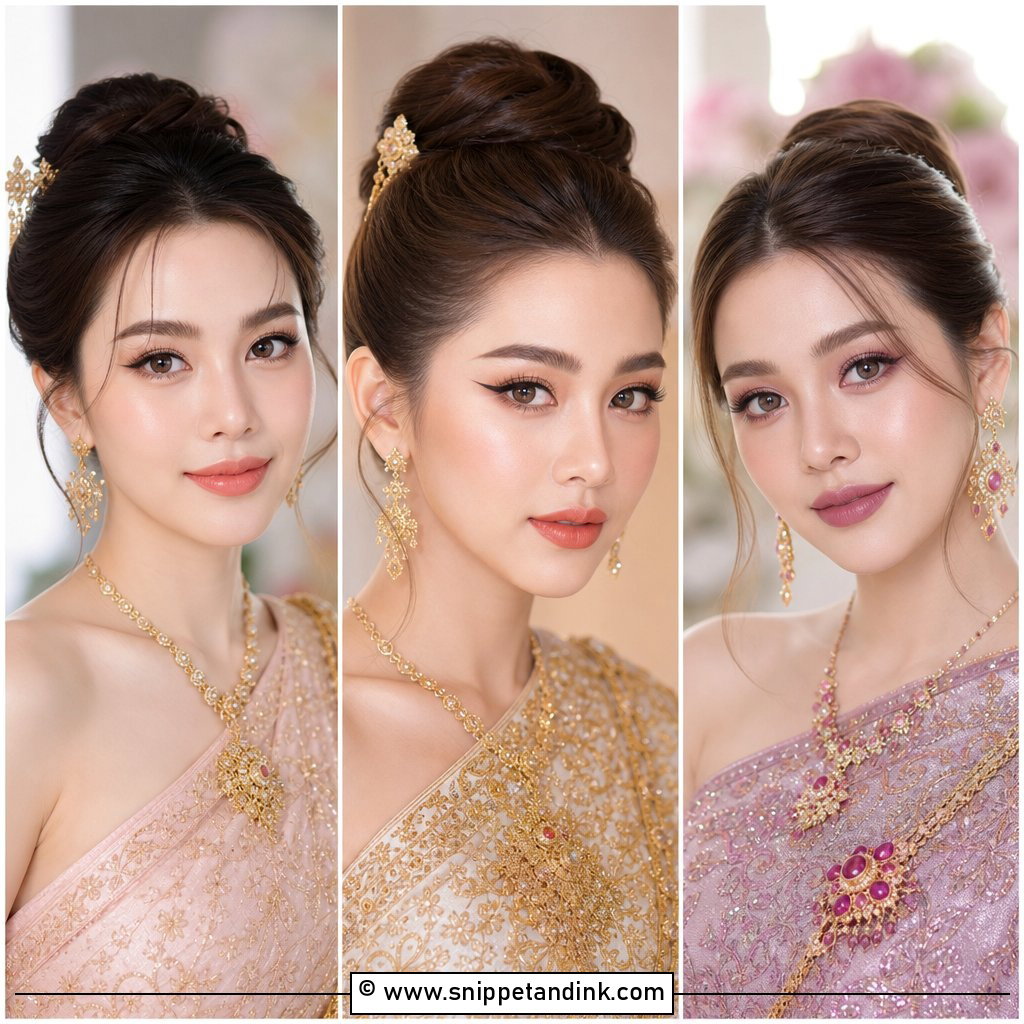
20. Evening Wedding Makeup
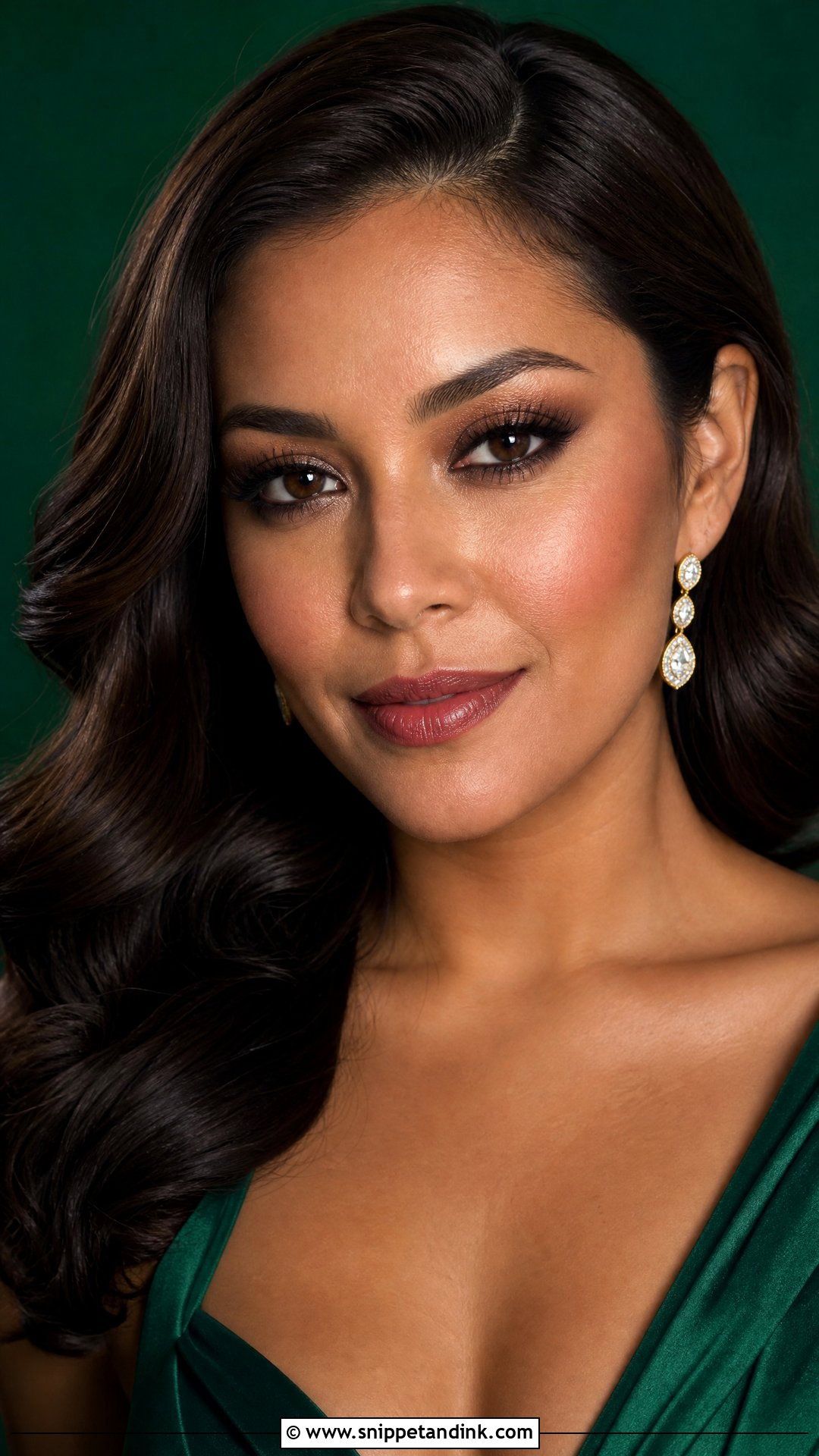
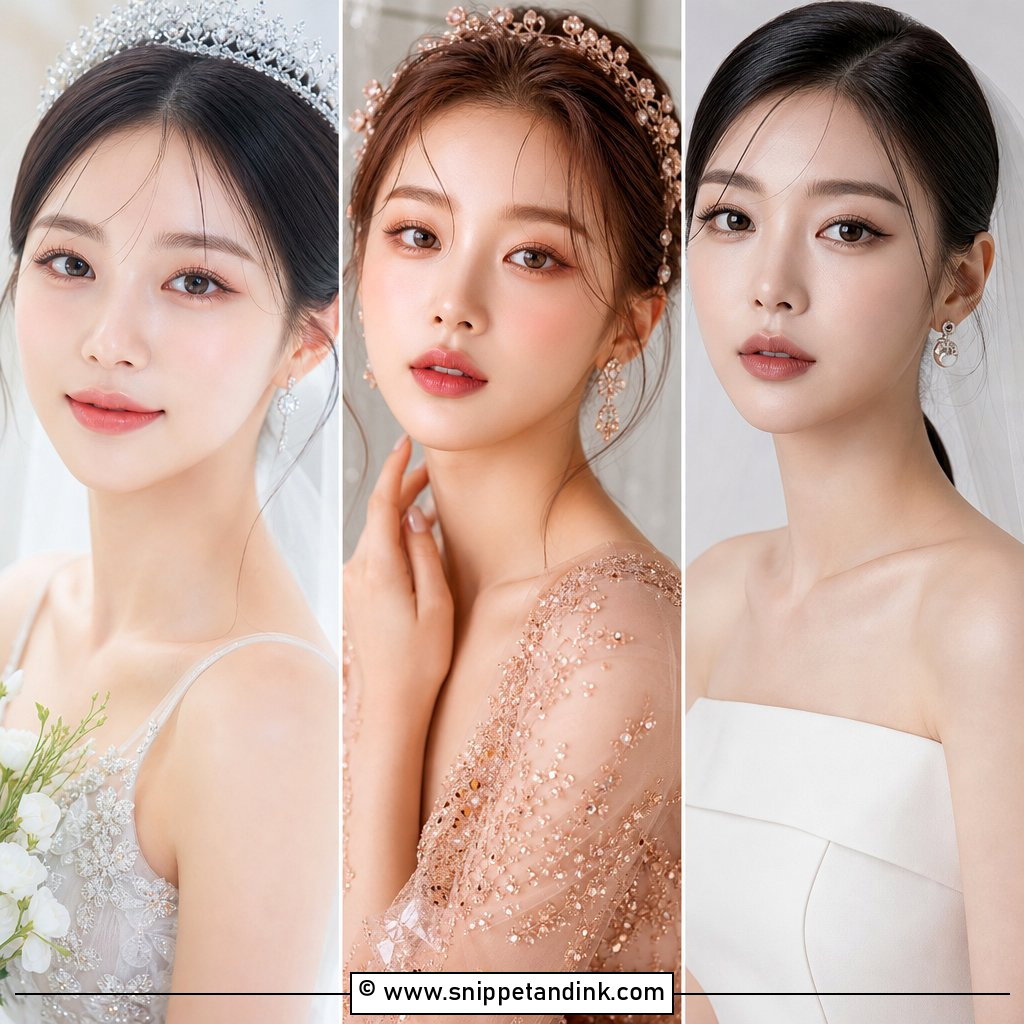
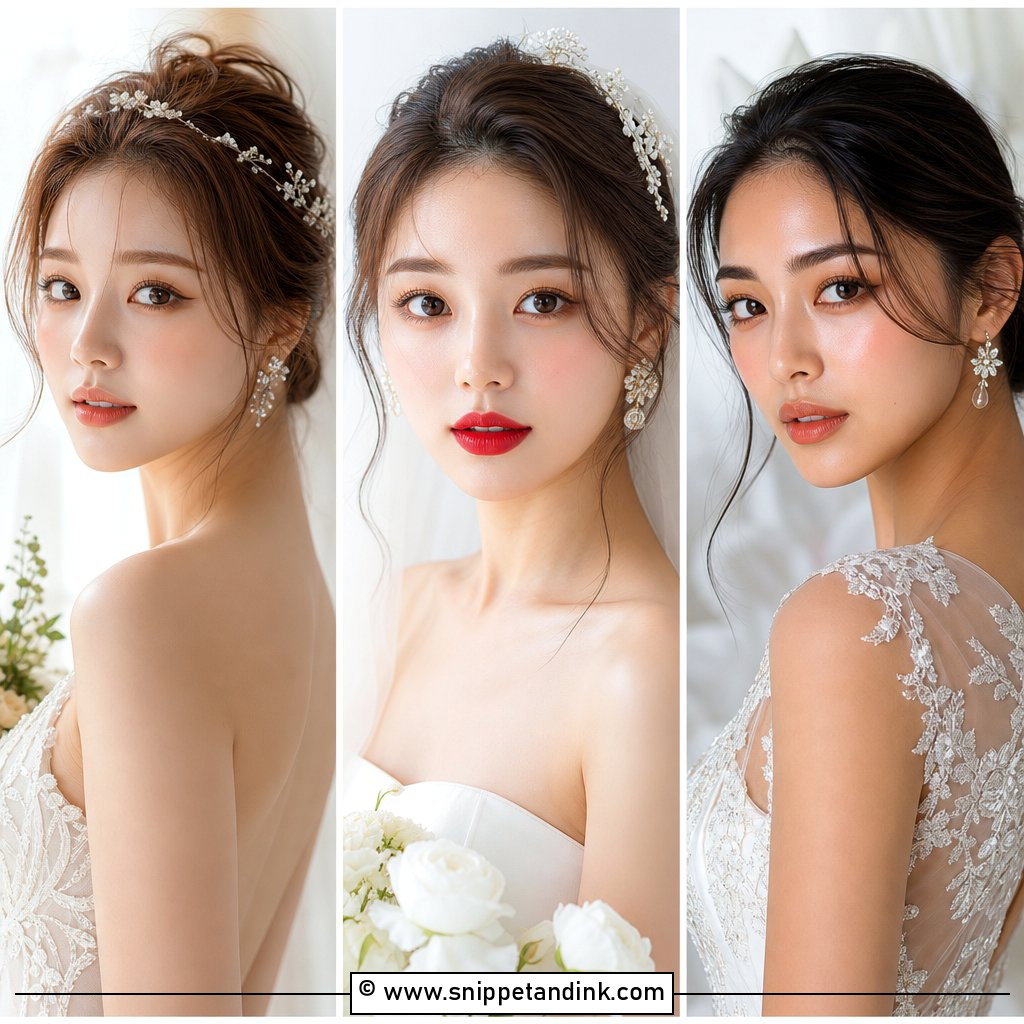
Evening light is softer and warmer, which lets the face take more depth, shine and structure. I set the center of the face well, then add contour, blush and highlight so it doesn’t go flat in dim light. The eyes can go bronze, brown, champagne, plum or charcoal depending on the outfit, with stronger liner and lashes than a daytime face. On the lips, a satin nude, deep rose, berry or classic red. It’s the moment to add drama while keeping every edge blended.
21. Winter Wedding Makeup
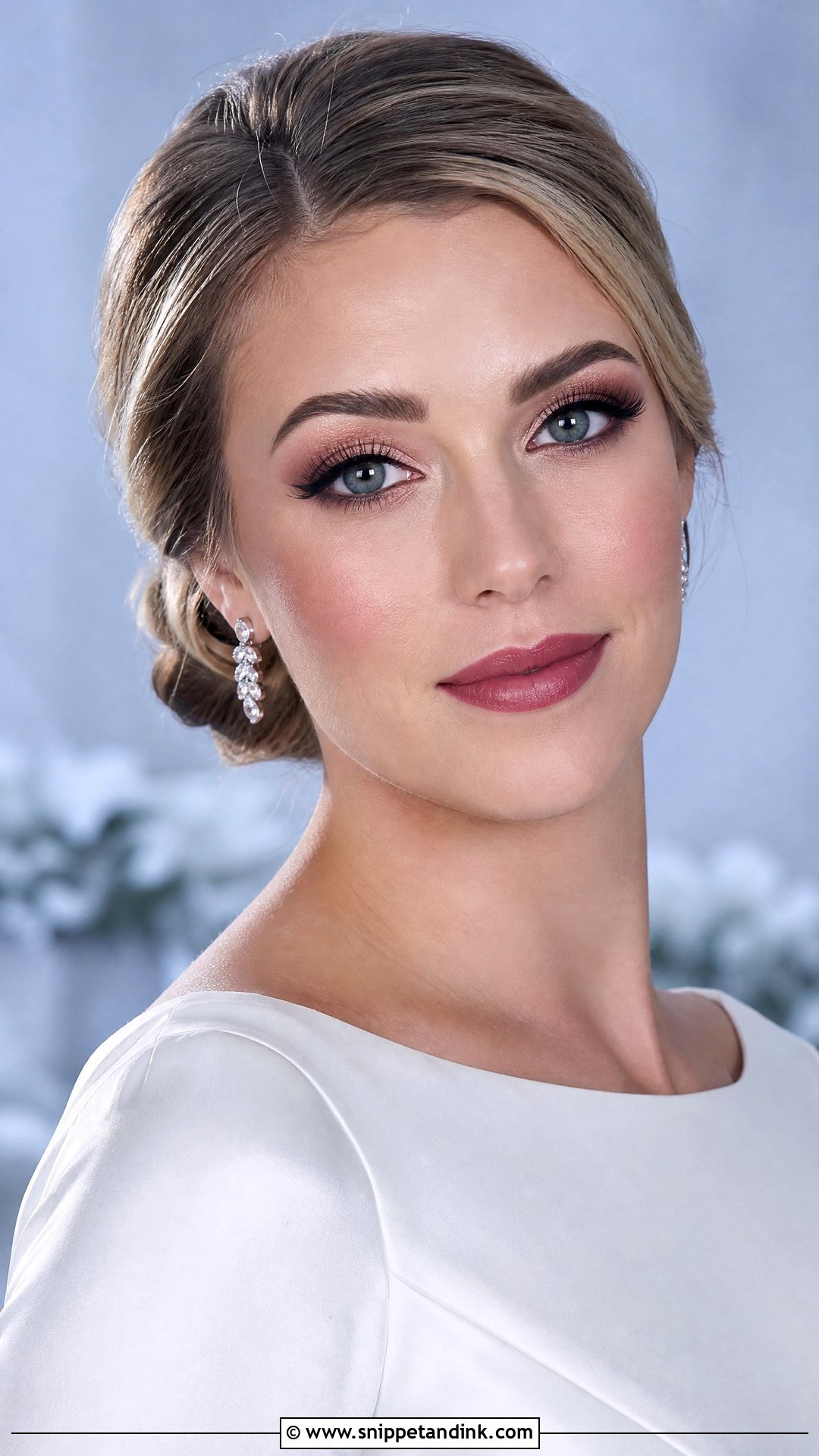
Winter light is flat and pale, so this face needs enough blush and contour to bring dimension back. I use soft matte skin, cool rose blush, and taupe, champagne or plum on the eyes, with thin liner and fluttery lashes. Mauve, rosewood, berry or a soft red on the lips. Highlighter stays refined; icy glitter looks cold against winter skin. It sits well with satin dresses, velvet details, faux fur wraps and deeper seasonal palettes.
22. Summer Wedding Makeup
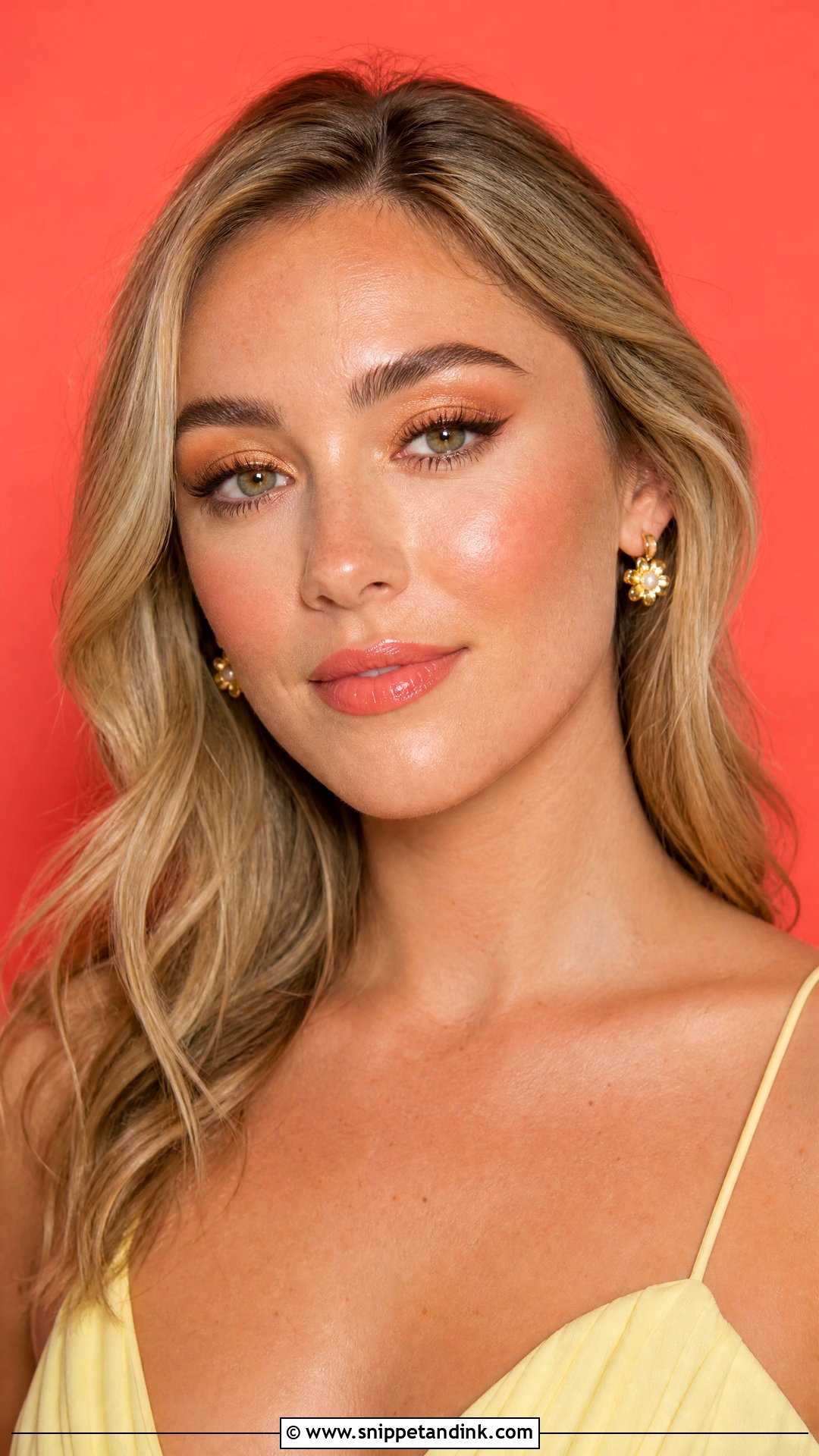
Breathability matters as much as wear time in summer. I start with a gripping primer and a lightweight foundation, set the T-zone, and mist setting spray between layers so each one bonds. Peach, bronze or soft gold on the eyes with waterproof mascara. Cream bronzer and coral or peach blush. I go easy on highlighter around the nose and forehead, which shine on their own in heat. A lip stain or glossy balm is easy to touch up. Destination weddings and bridesmaids standing in the sun need exactly this.
23. Fall Wedding Makeup
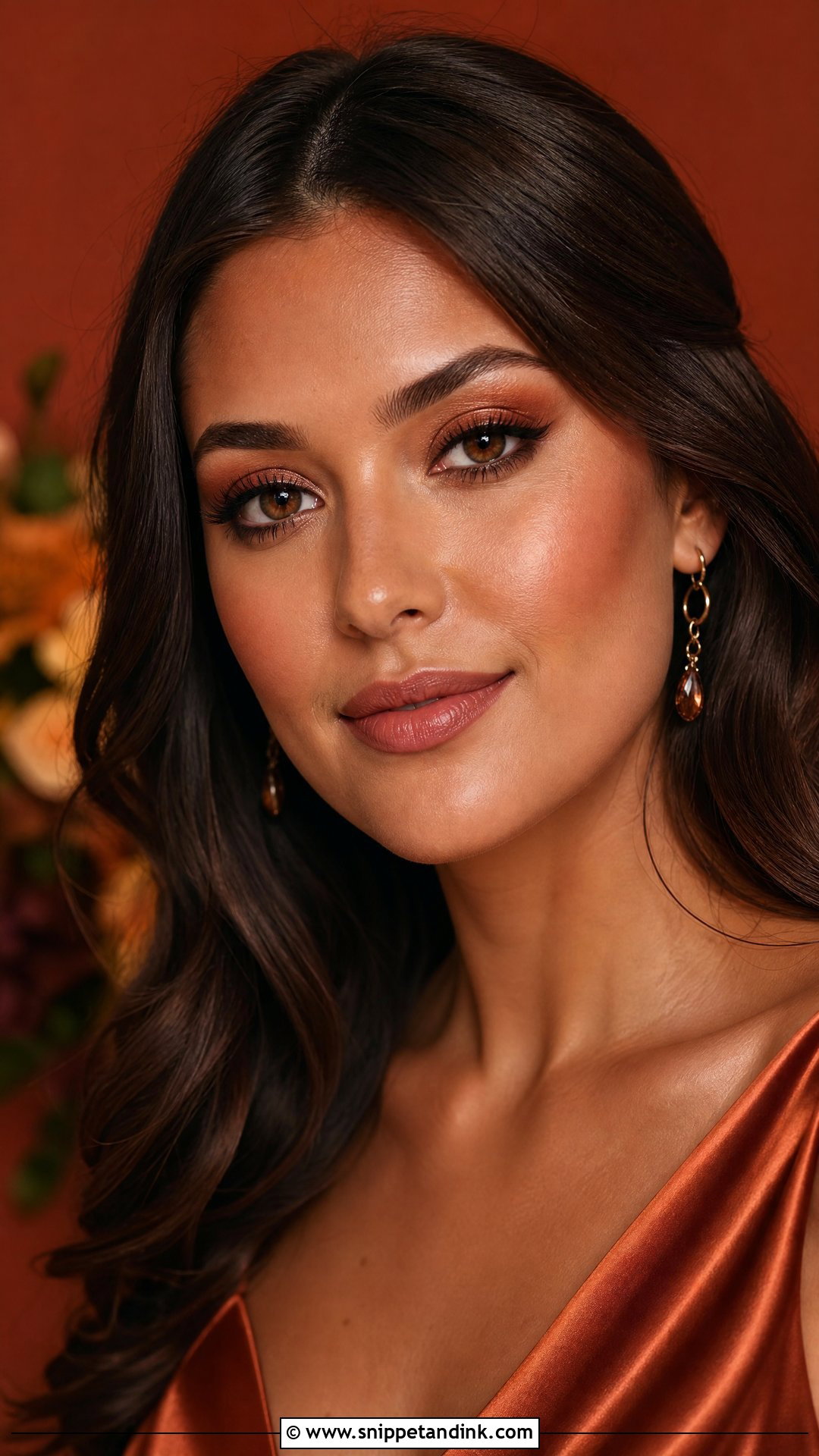
Fall wedding makeup lets me use the warmer, richer tones: bronze eyes, soft brown liner, terracotta blush and rose-brown lips. Satin or soft-matte skin depending on your skin type. Bronzer warms the face but has to be blended out, or it turns orange in photos. Copper, chocolate, olive-brown or muted gold on the eyes. A nude brown or soft berry lip finishes it. Rust, emerald, navy and burgundy dresses suit it, and it stays seasonal without chasing a trend.
24. Spring Wedding Makeup
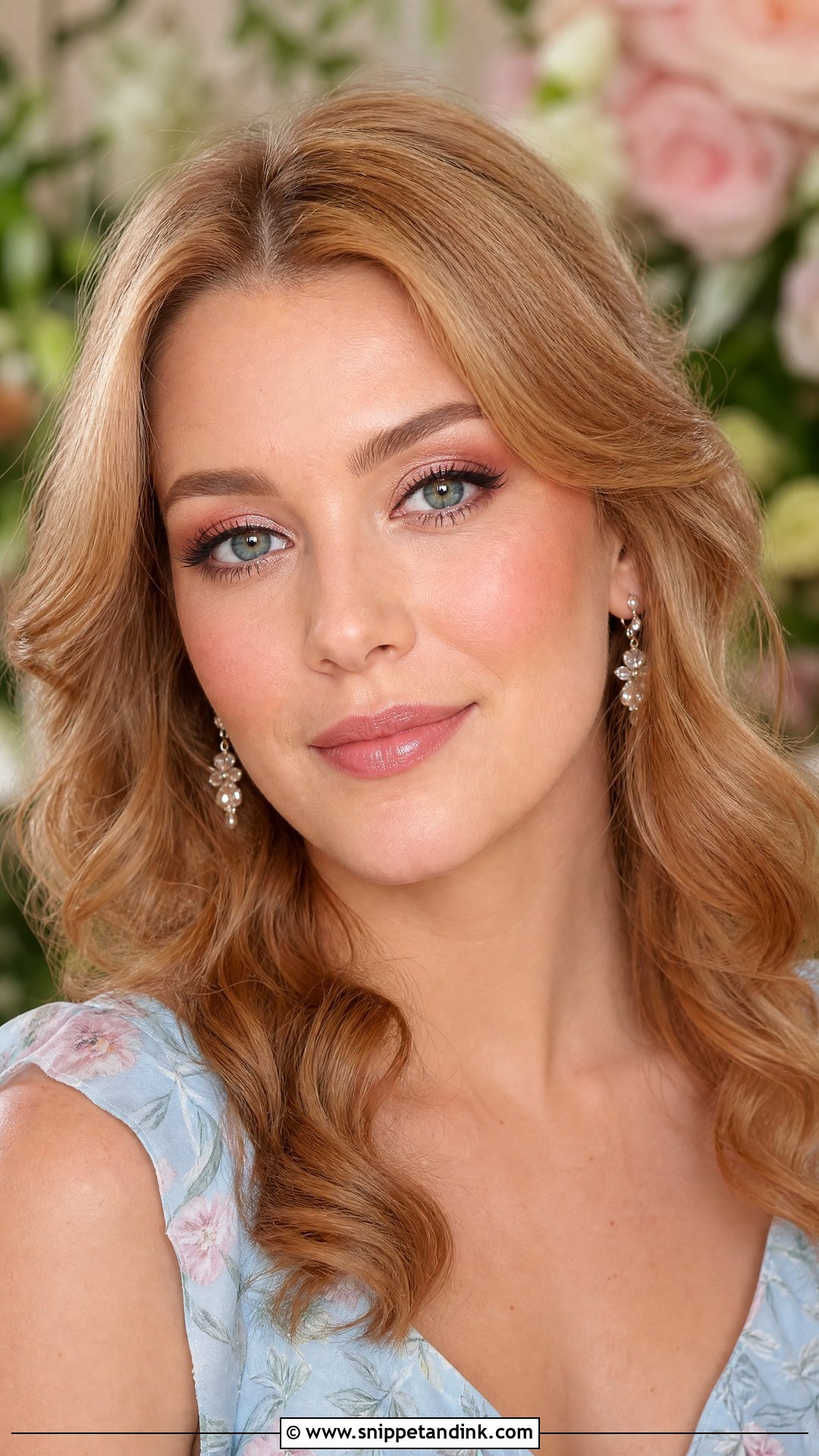
Spring calls for a light hand. I use a natural base with a touch of glow, pink or peach blush to brighten the cheeks, and soft champagne, rose or beige on the eyes. Delicate liner, lifted lashes. A petal pink or sheer coral lip. Morning ceremonies, garden venues and pastel or floral outfits suit it. The aim is fresh definition rather than contrast, so it looks soft in daylight but still holds up in close-up photos.
25. Wedding Guest Makeup
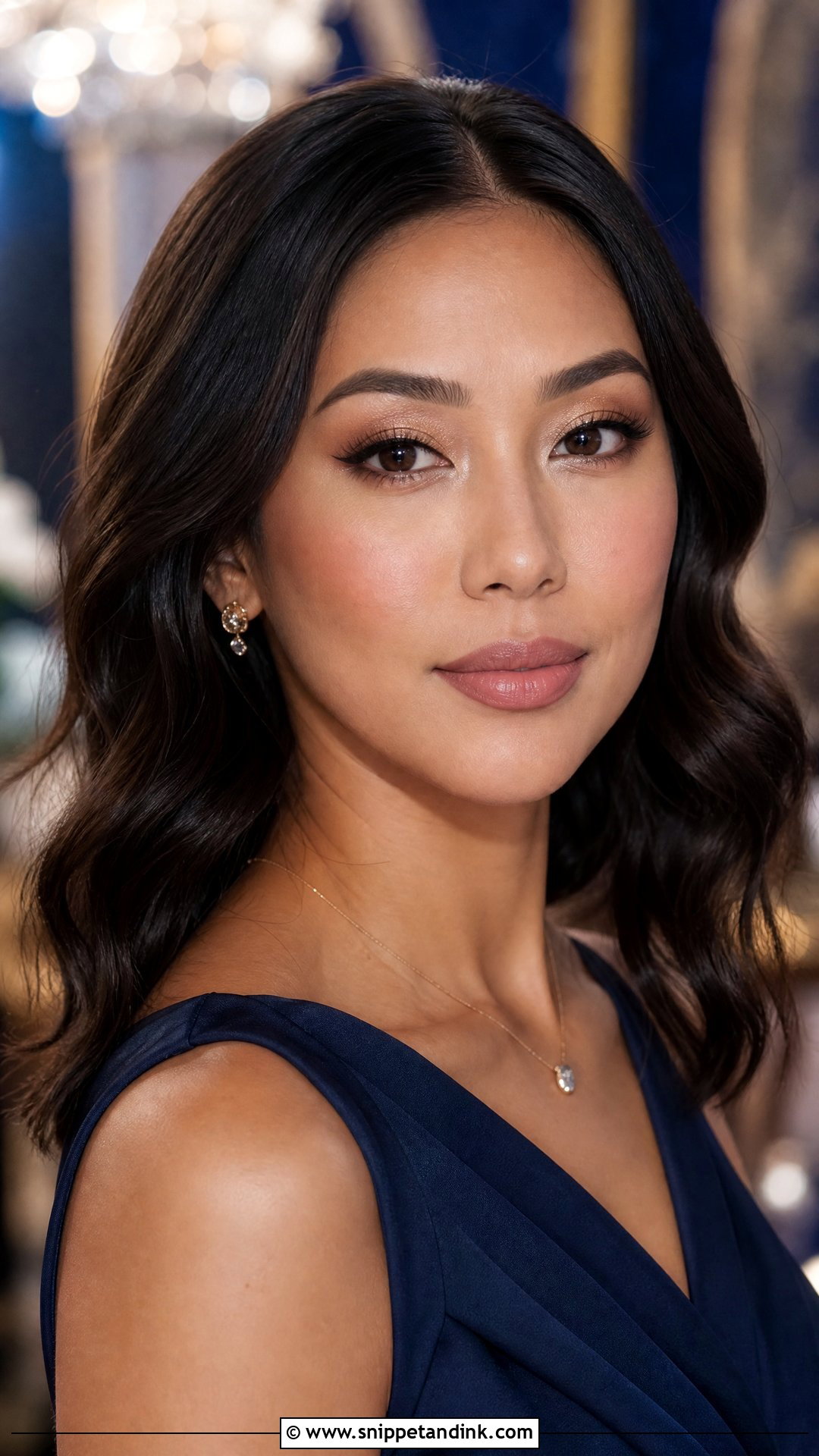
Wedding guest makeup follows one rule I always repeat: polished, but never competing with the bride. Soft glam is usually the safest place to land. Long-wear base, light contour, blush, a soft highlight. Neutral brown, bronze, champagne or mauve on the eyes depending on the outfit, with balanced liner and lashes. A nude rose, peach or berry lip. Match the intensity to the dress code and time of day; full glam at a noon barn wedding looks out of place.
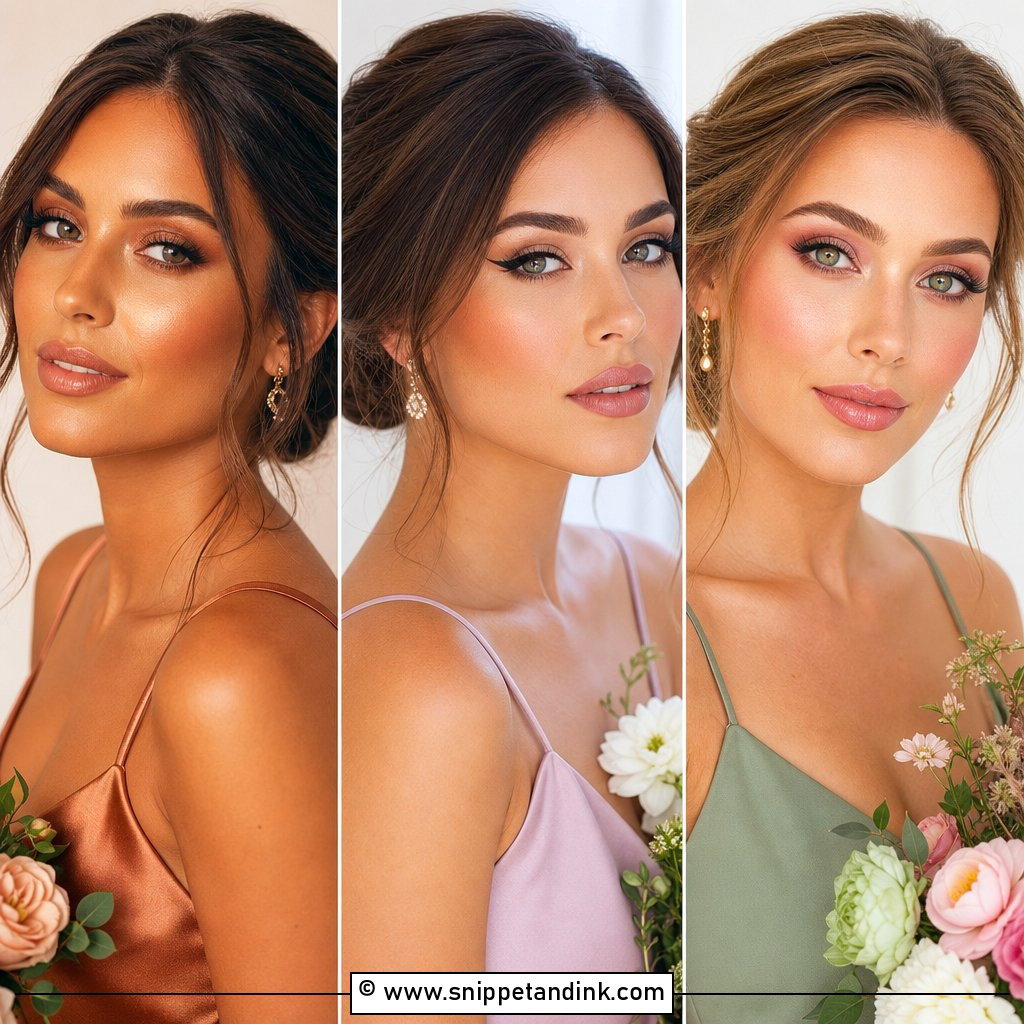
26. Bridesmaid Makeup
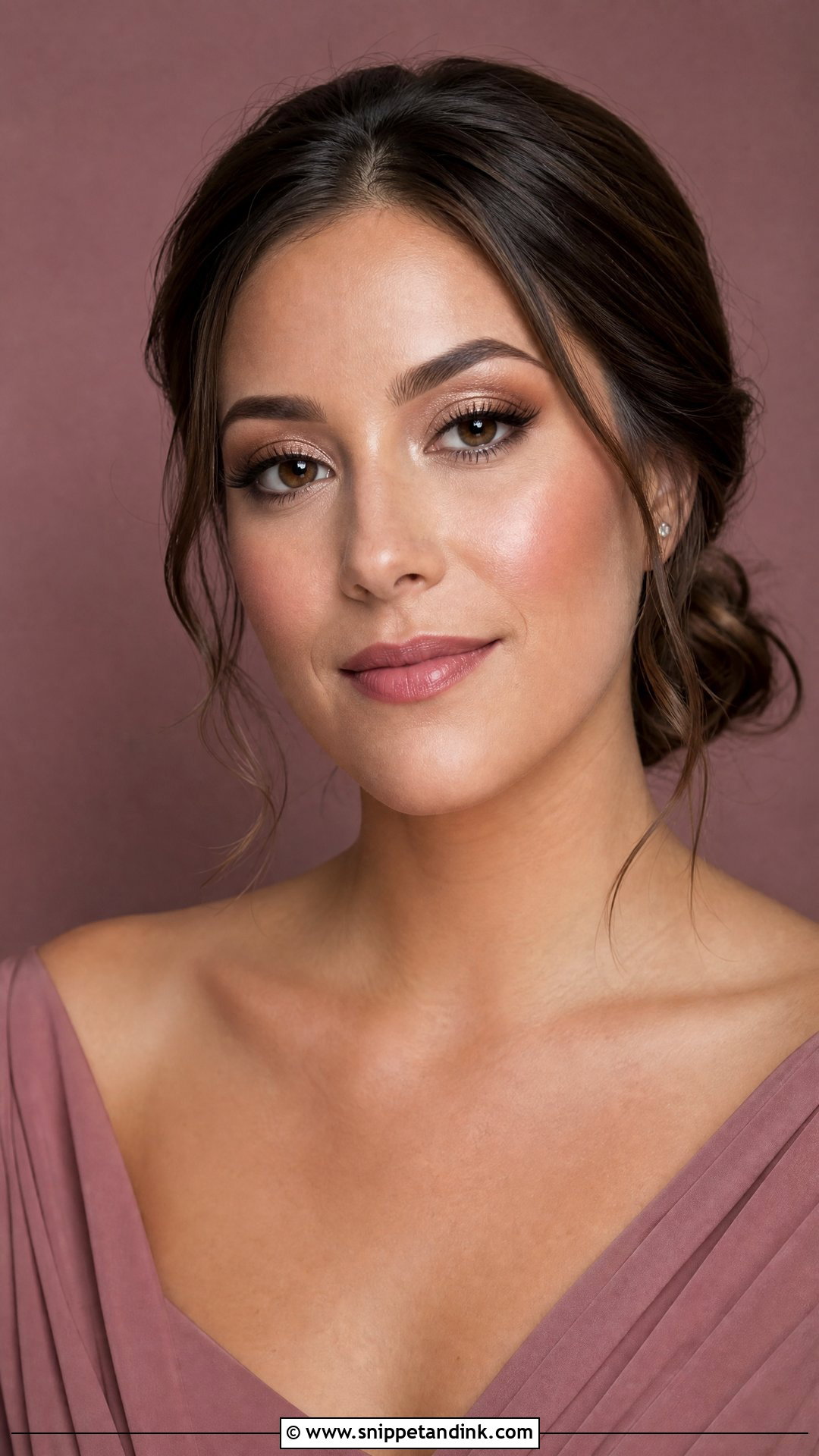
Group photos are where bridesmaid makeup succeeds or fails. I set one shared base, satin skin, neutral eyes, gentle contour, visible blush, then adjust the eye shades for each skin tone and eye shape. Warm brown, champagne, rose and taupe suit most people. Lashes define without weighing the eye down. I pick lip colors in one family, pink nude, rose or mauve, so the line-up looks coordinated rather than identical. Primer, powder and setting spray matter because bridesmaids are on their feet and moving for hours.
27. Mother Of The Bride Makeup
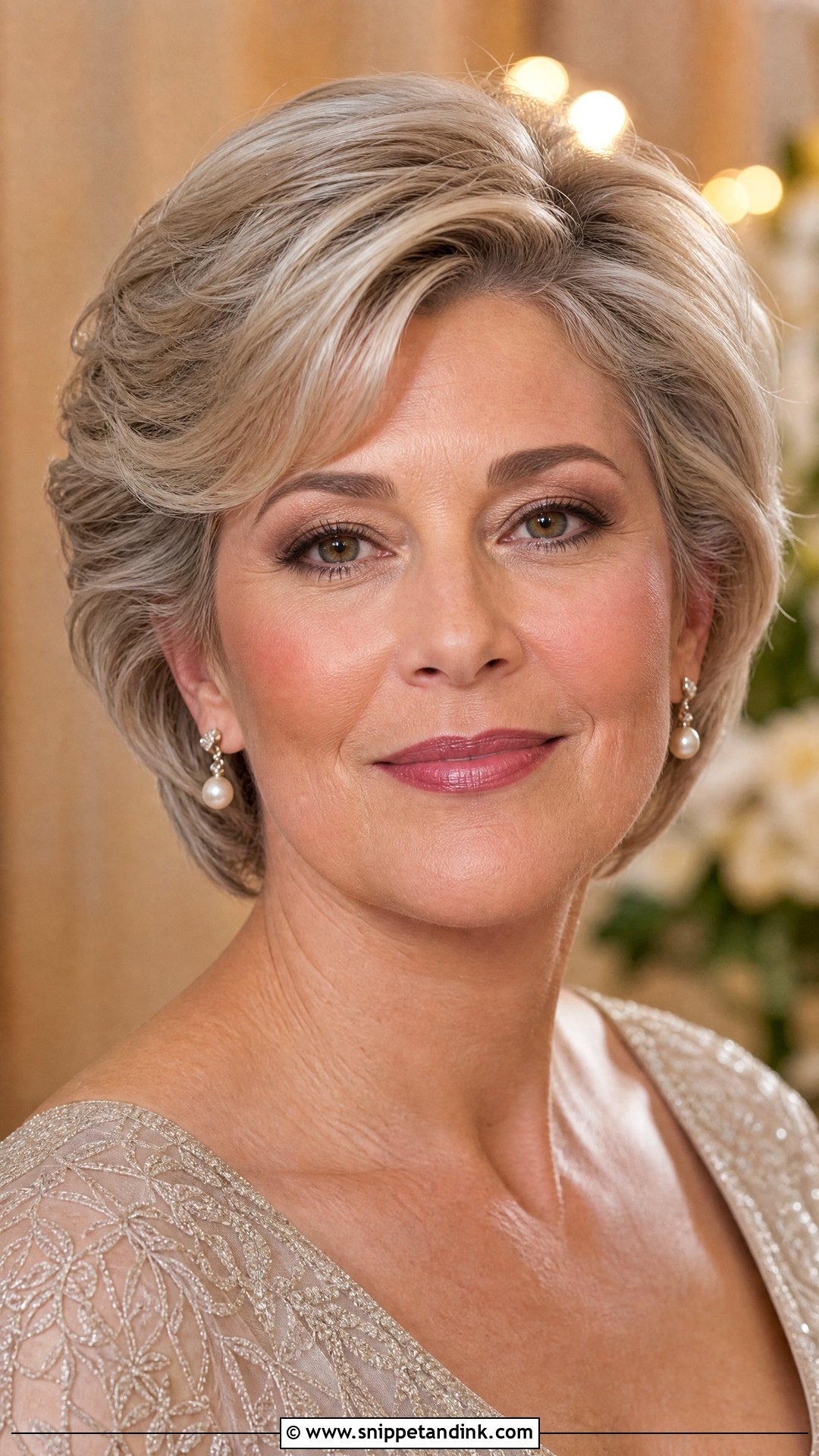
Mother of the bride makeup should lift and brighten without settling into lines. I use a hydrating primer and thin layers of foundation rather than one thick one, conceal only where needed, then set lightly with a finely milled powder. Soft matte taupe, brown, plum or rose on the eyes; heavy shimmer on textured lids shows every crease, but a satin highlight on the inner corner brightens the eye. Cream blush gives life. A rose, berry or neutral pink lipstick. It looks right in photos and across the table.
28. Black Tie Wedding Makeup
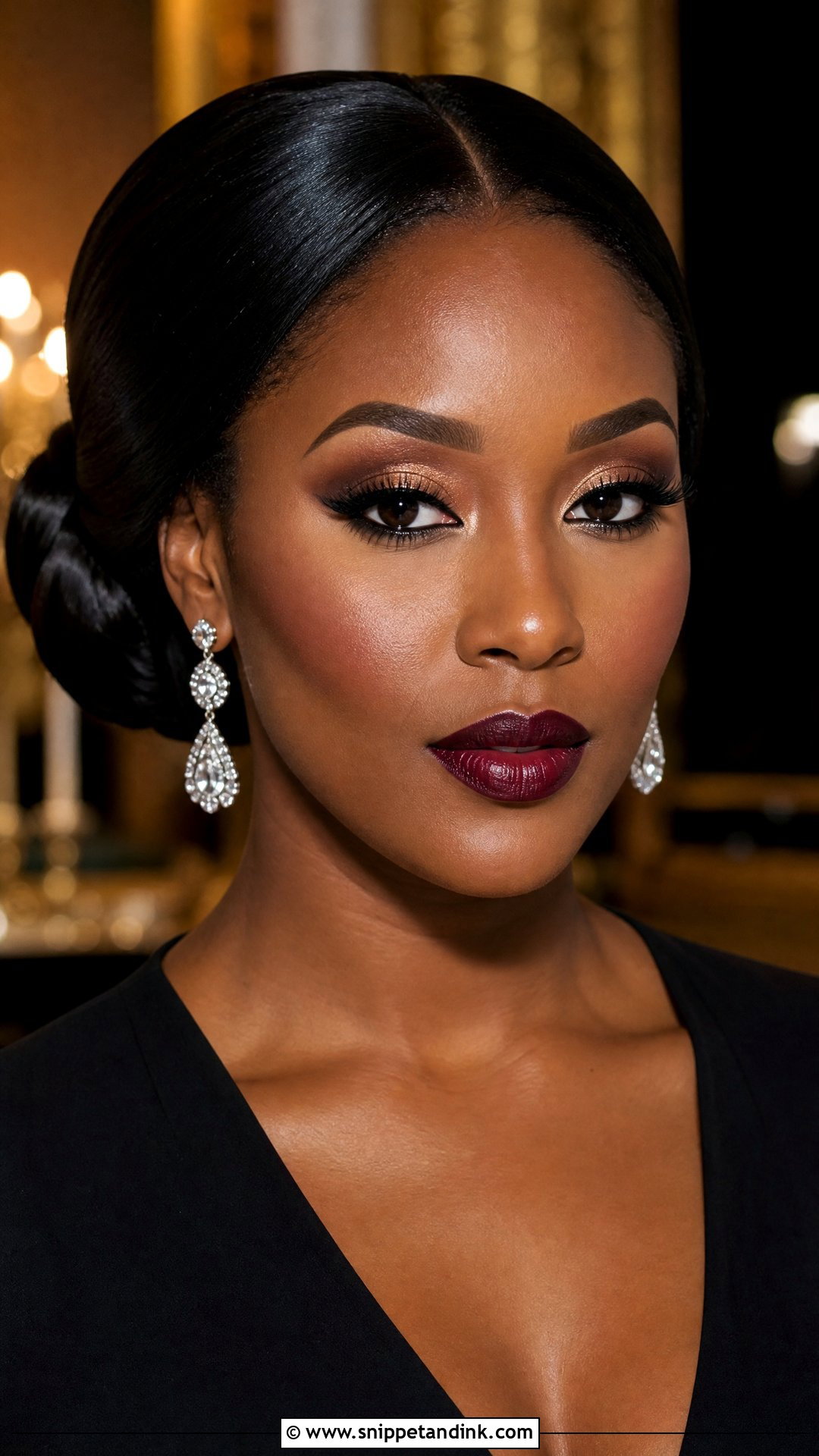
Black tie allows a more sculpted, refined face. The complexion should look smooth and expensive, with balanced contour, blush and highlight. On the eyes, a soft smokey blend, champagne shimmer, a wing or full lashes. Brows structured but not blocky. Satin nude, rose brown, deep berry or classic red on the lips depending on the dress and eye makeup. The finish should feel formal and classic, not trendy, and comfortable to wear through hours of dinner and dancing.
29. Courthouse Wedding Makeup
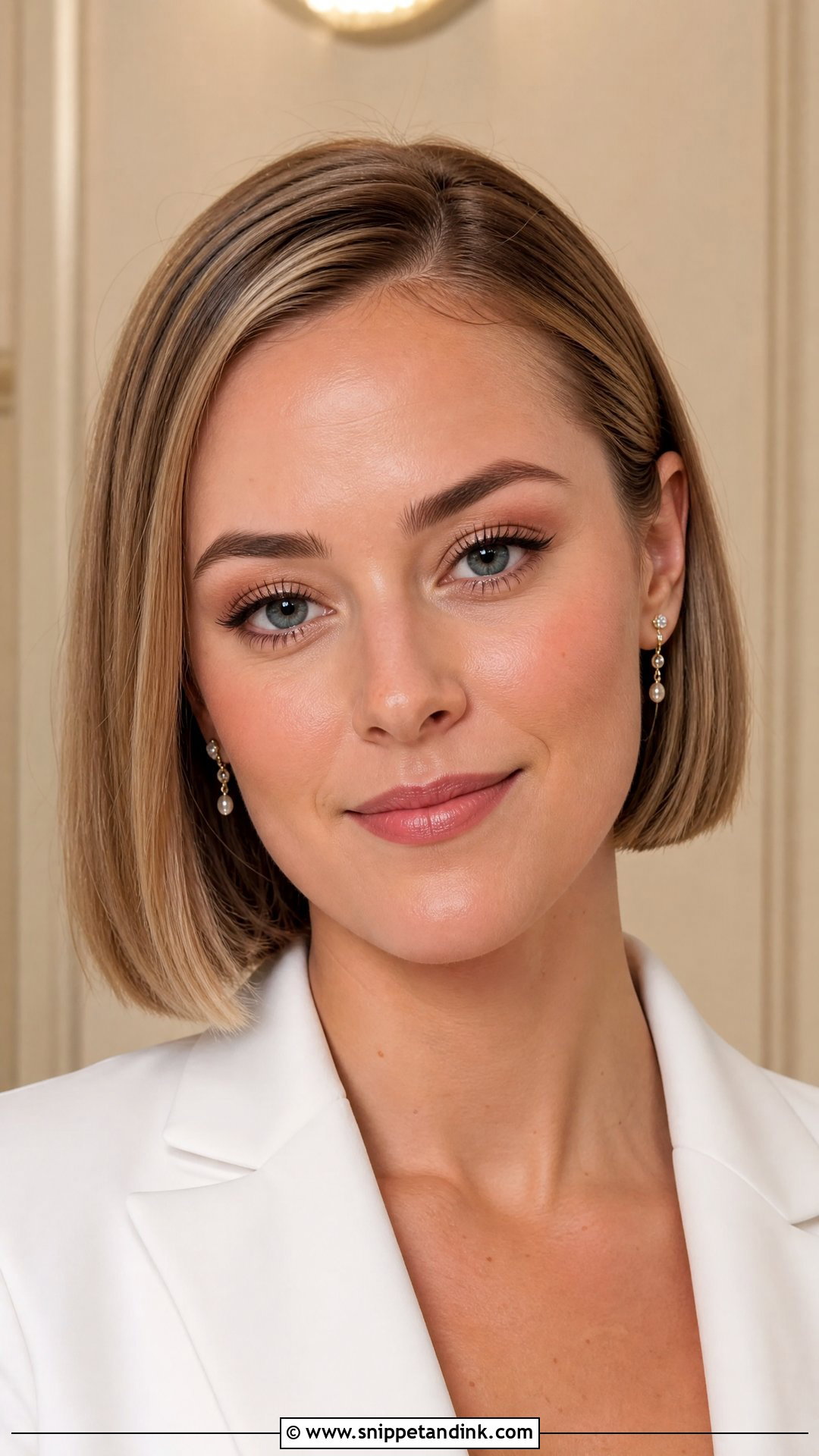
A courthouse look should be simple and fresh without feeling casual. Skin-like base, a touch of concealer, cream blush, light powder. Clean eyes: neutral shadow, brown liner, mascara, groomed brows. A satin nude, rose or muted berry lip gives the face structure. It suits white suits, short dresses and slip dresses. If you’re doing your own makeup, start here; it’s forgiving, and the room is small enough that heavy makeup would look out of place.
30. Bridal Makeup For Photos
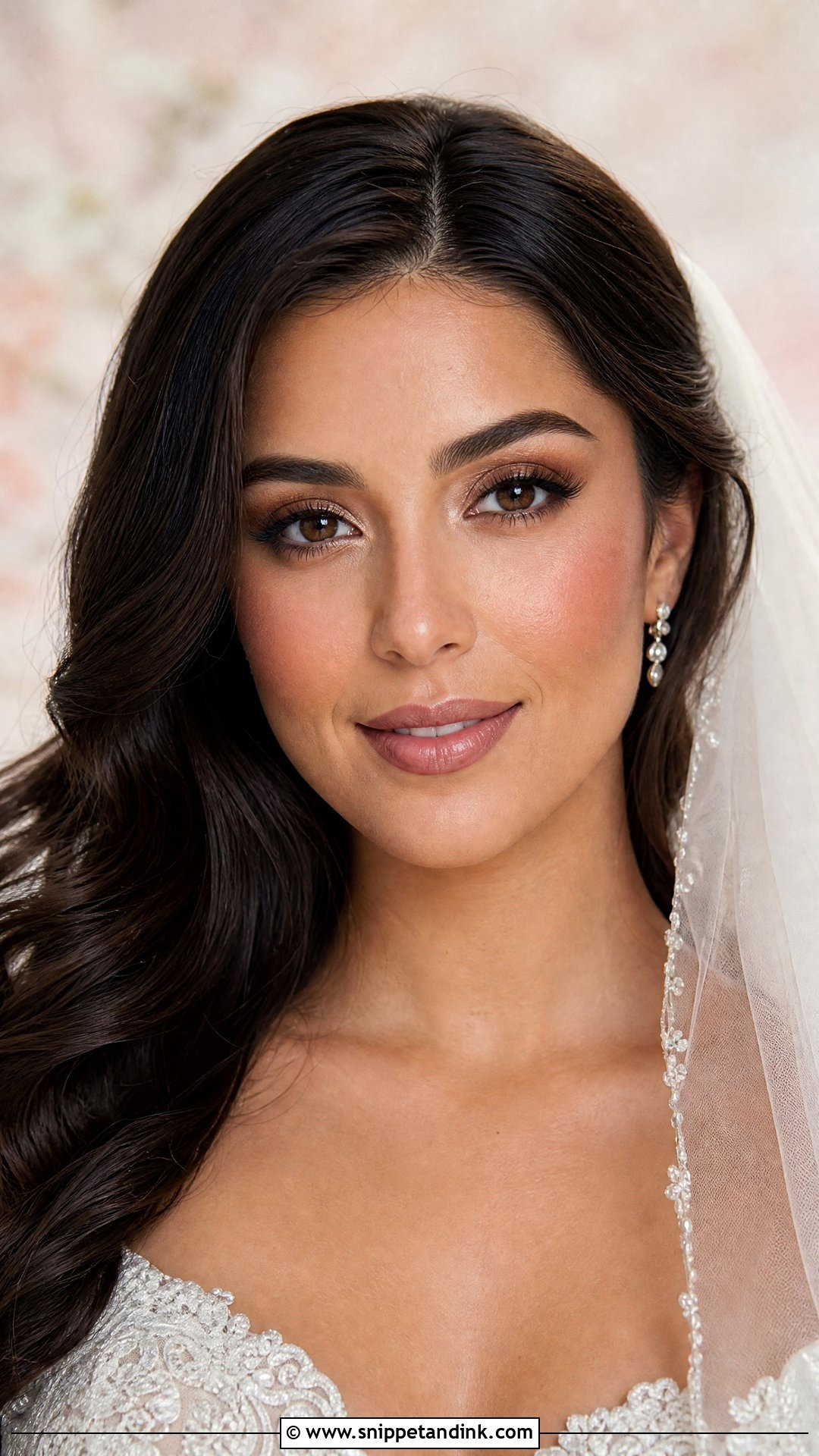
Cameras flatten features, so a face that looks natural in person can disappear in photos. I make blush, brows, lashes and lips a touch more visible than you’d wear normally. Foundation has to match the neck and chest, since necklines are in almost every portrait. I set the areas that crease or shine, place blush slightly higher than usual, and add depth at the lash line even on a natural look. A lip liner close to your lipstick keeps the mouth defined in close-ups.
Running the Getting-Ready Room So Nobody Is Rushed
Makeup timing is where wedding mornings fall apart. I allow about an hour for the bride and thirty to forty-five minutes for each bridesmaid or mother, and I plan to finish the bride roughly an hour before the photographer wants her dressed. That buffer absorbs the late arrival, the spilled coffee and the lash that needs redoing.
The bride usually sits second to last, not first, so her face is the freshest at the ceremony. The last slot goes to whoever is quickest, which leaves time for touch-ups on the bride. If hair and makeup are happening in the same room, makeup usually goes after hair so hairspray doesn’t settle on a finished face.
Sensitive Eyes, Lash Glue and Patch Testing
If your skin reacts easily, tell me before the trial, not on the morning. Most lash glues contain latex, which some people react to, and there are latex-free versions. A patch test on the inner arm forty-eight hours before the trial will show whether a product causes redness.
Contact lens wearers should put lenses in before makeup, never after. If your eyes water easily, I keep eyeliner off the waterline and use a tubing mascara, which slides off in warm water rather than smudging into dark circles when you cry.
How Much Makeup Do You Wear on an Ordinary Day?
That question is a better starting point than any trend. If you wear very little, a natural or soft glam face will feel like you; if you love full glam, don’t let anyone talk you out of it. Then factor in the venue, season, outfit and skin type. Plan for longevity with primer, waterproof mascara, lip liner, powder and setting spray. The looks above cover brides, bridesmaids, guests and family, so there’s a starting point for everyone in the getting-ready room.
You'll Like These Ideas:


Leave a Reply