
Most of the outfit questions I get from guests come down to four facts printed on, or missing from, the invitation: the dress code, the venue, the season and the hour the ceremony starts. Get those right and the rest is personal taste. Right now I’m seeing guests lean into saturated color, sharp tailoring, floral prints and jumpsuits, and that’s good news, because it means a dress is no longer the only respectable answer. Below are thirty outfits I’d happily send someone out the door in, from garden ceremonies to black tie, each with the fabric and fit notes I’d give at a fitting.
Decoding Black Tie Optional, Cocktail and Garden Party Wording
Dress codes cause more panic than any outfit itself, mostly because couples use the words loosely. Here is how I translate them for clients, and what I’d wear if I were unsure.
- Black tie: floor length, or a very formal suit in satin or crepe. A dressy midi is a risk unless the couple says otherwise.
- Black tie optional or formal: a long gown is welcome, but an elegant midi in a rich fabric is fine too.
- Cocktail: knee to midi length, polished fabric, a little shine allowed. Jumpsuits and dressy separates fit here.
- Semi-formal or dressy casual: midi dresses, skirt sets and pastel suiting. Daytime leans lighter, evening darker.
- Garden or beach: the venue matters more than the label, so plan for heels on grass or sand and a breeze.
When the invitation says nothing, I look at the start time and the venue. A six o’clock ceremony in a hotel ballroom is formal whether it’s written or not. If you’re still unsure, the wedding website usually answers it, and it’s fine to ask a member of the wedding party.
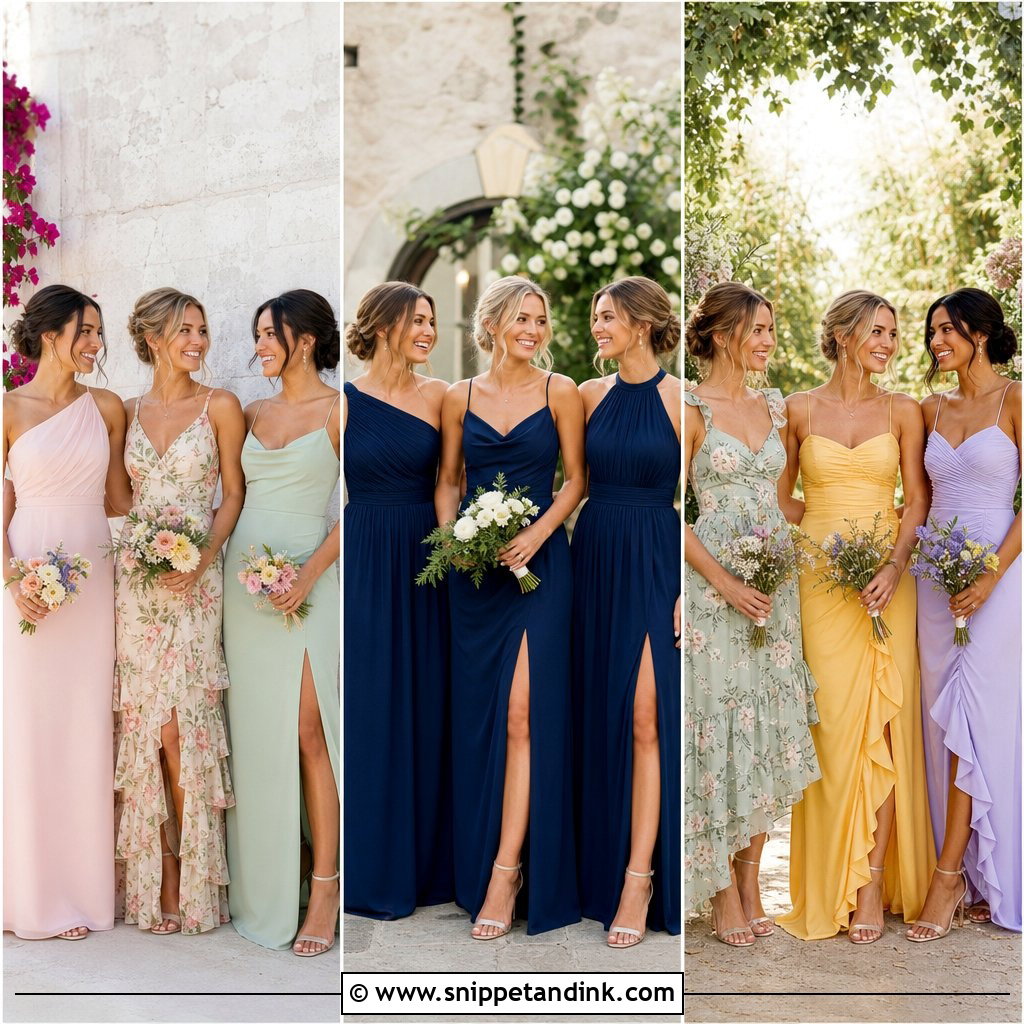
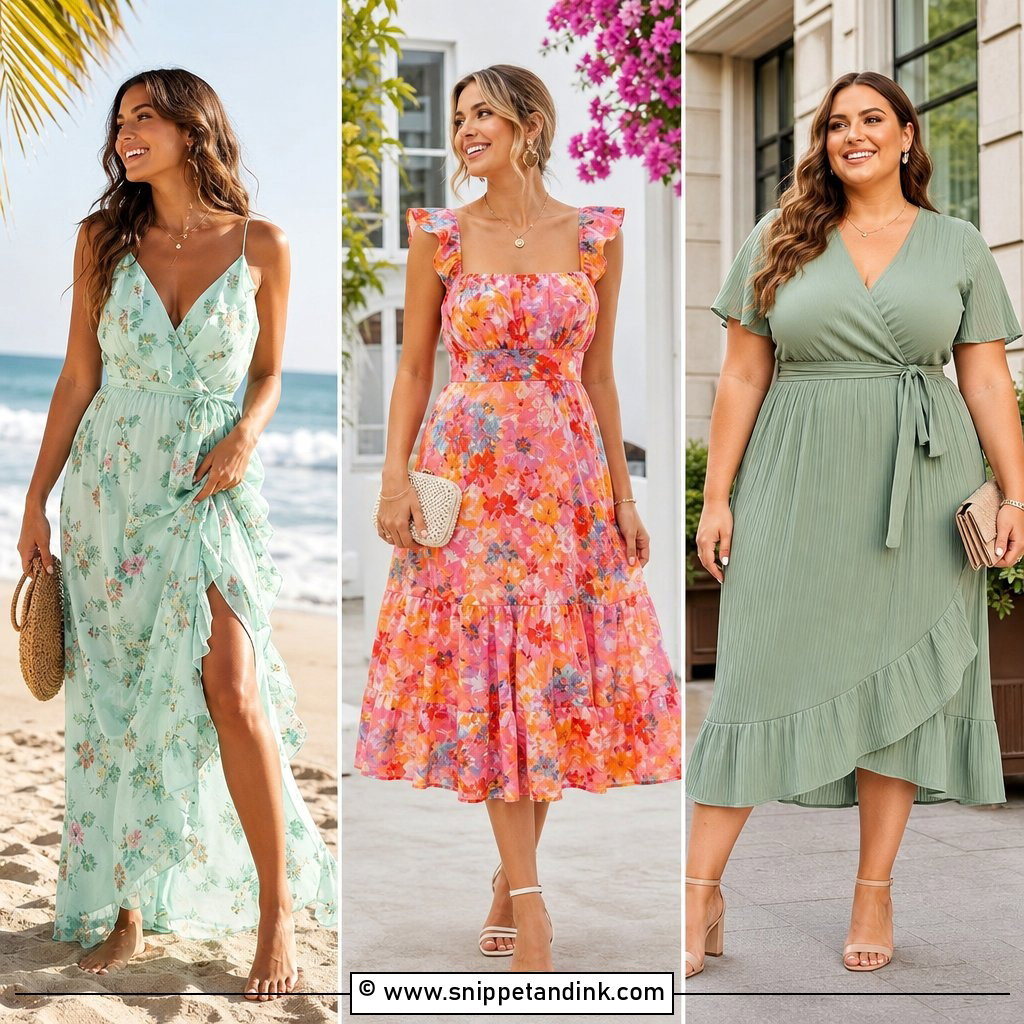
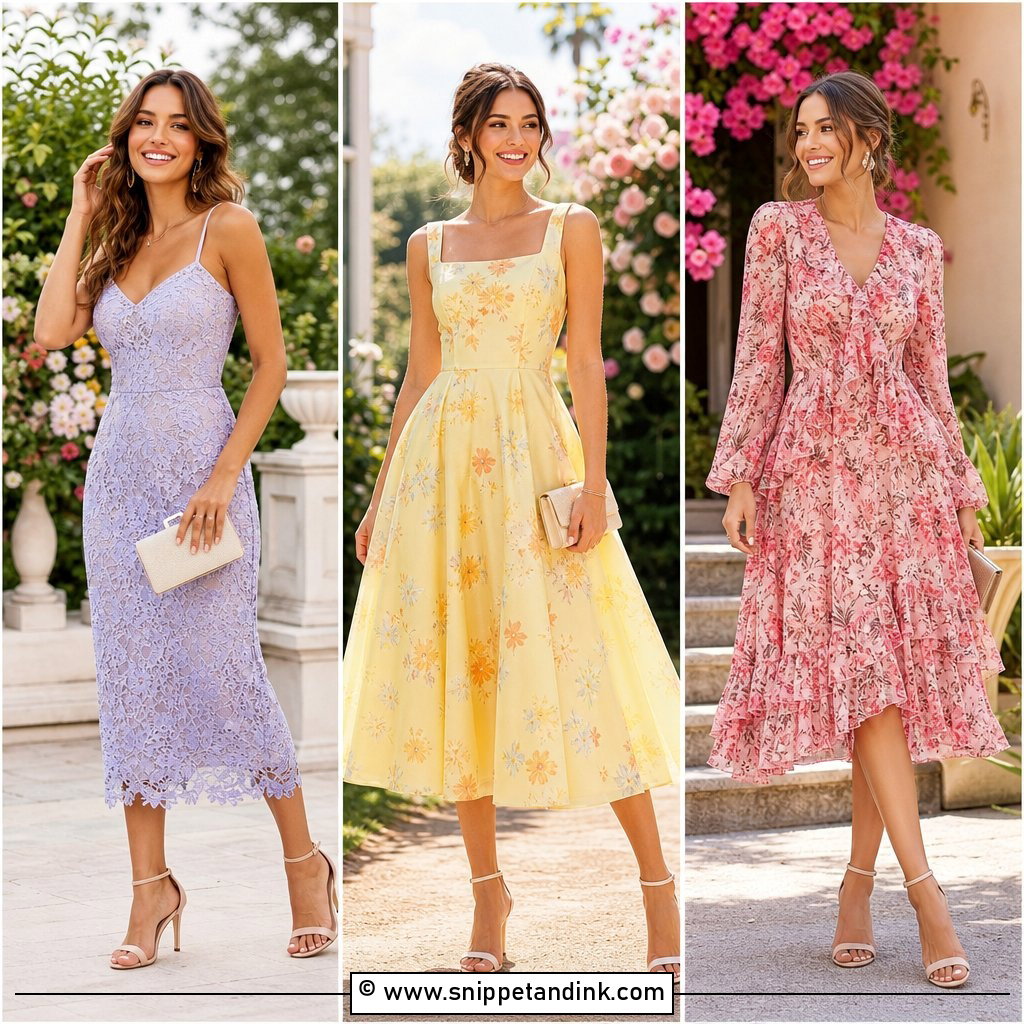
1. Floral Midi Dress Wedding Attire
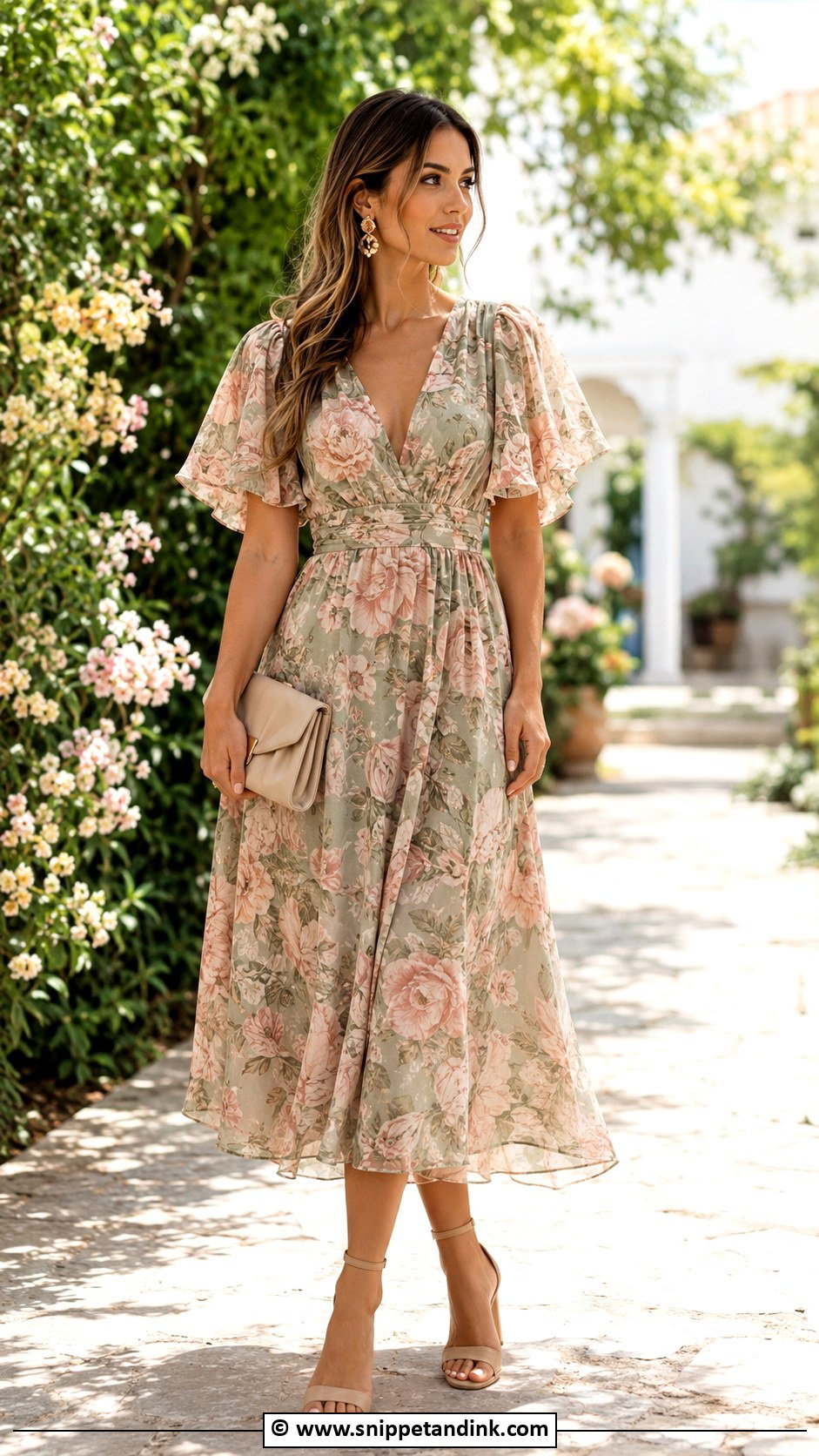
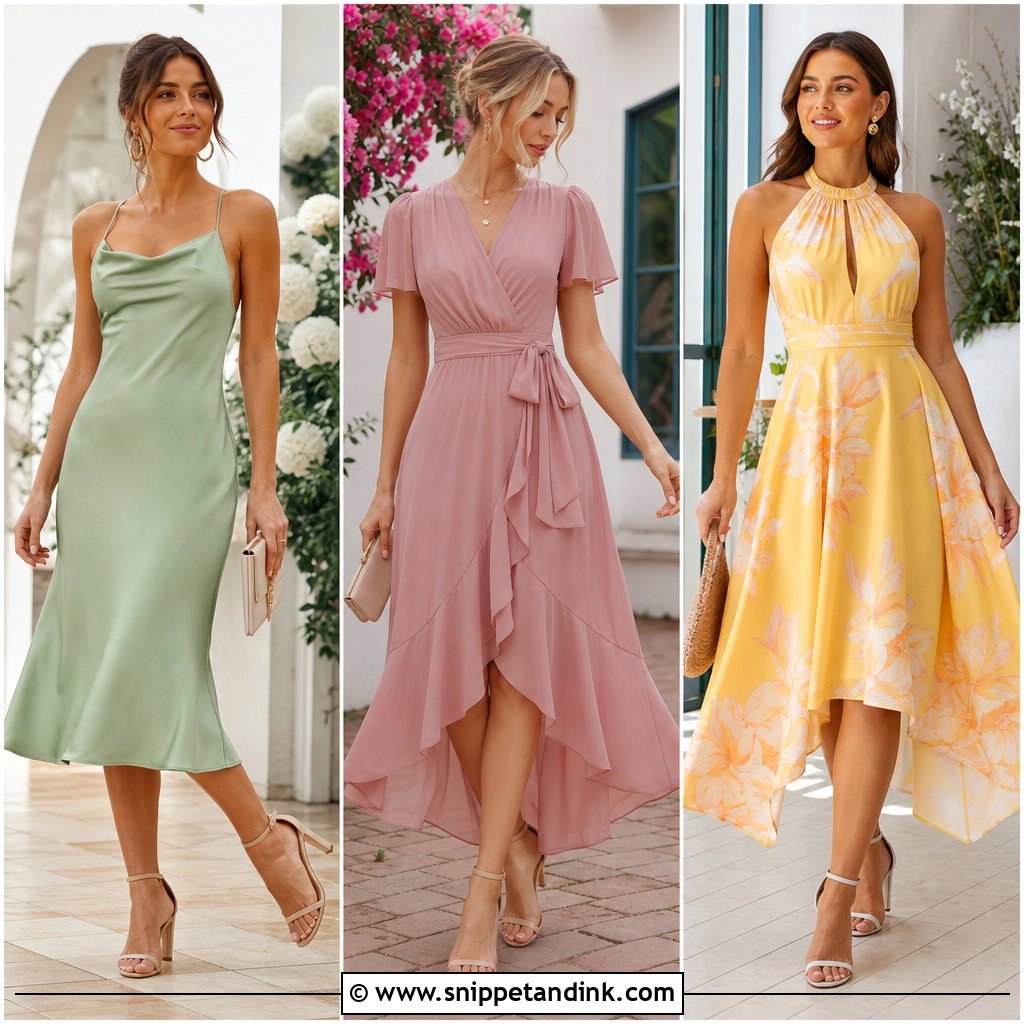
A floral midi is the outfit I suggest most for semi-formal daytime weddings, because the print does the dressing up for you. Keep the background color mid-tone, like sage, lavender or coral, so it doesn’t read as cream from across a lawn. The thing I check on any wrap or fit-and-flare is the skirt when you sit: a skirt cut close to the hip will ride up in a church pew. Block heels or slingbacks, a small clutch and a light shawl for an outdoor reception finish it.
2. Satin Slip Dress Wedding Attire
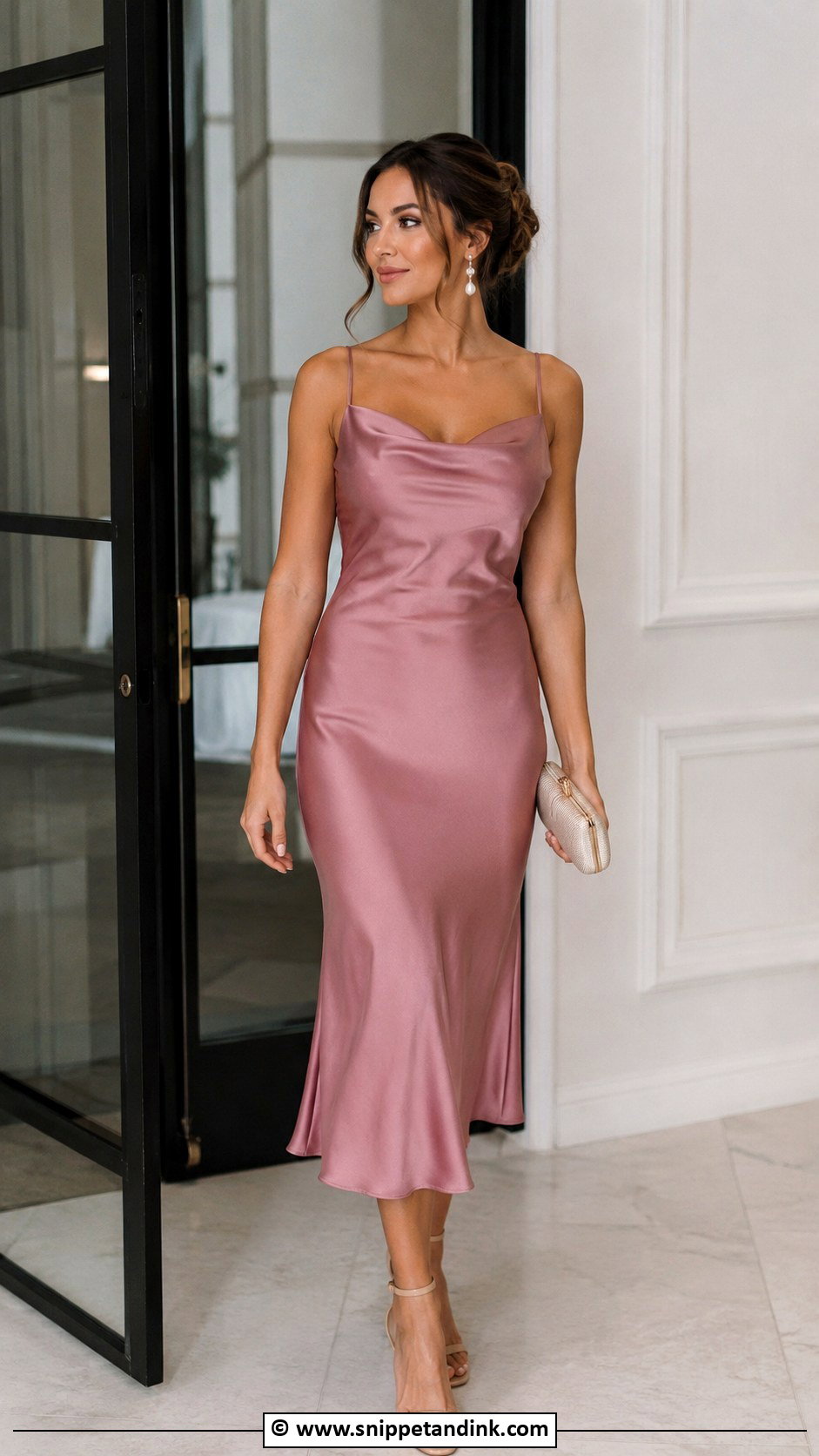
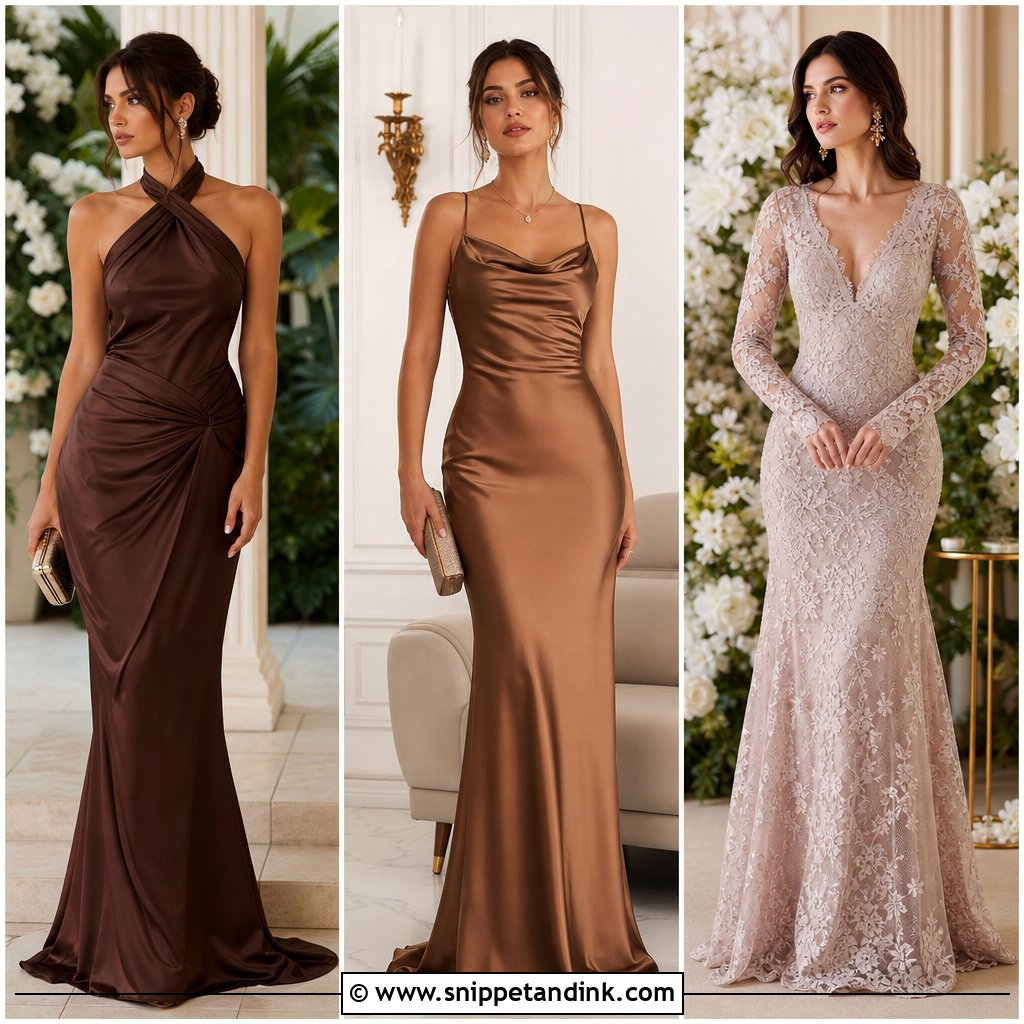
Satin is unforgiving, and I say that with affection. It shows every seam allowance and every line from underwear, so before anything else I have clients try a slip dress on with the exact shapewear they’ll wear. In champagne beige, dusty rose, emerald or cocoa it already looks dressed, so jewelry can stay small. Stay well away from anything that could be mistaken for ivory under warm lighting. A tailored blazer gives coverage for the ceremony, and it reads right at evening receptions, rooftops and cocktail dress codes.
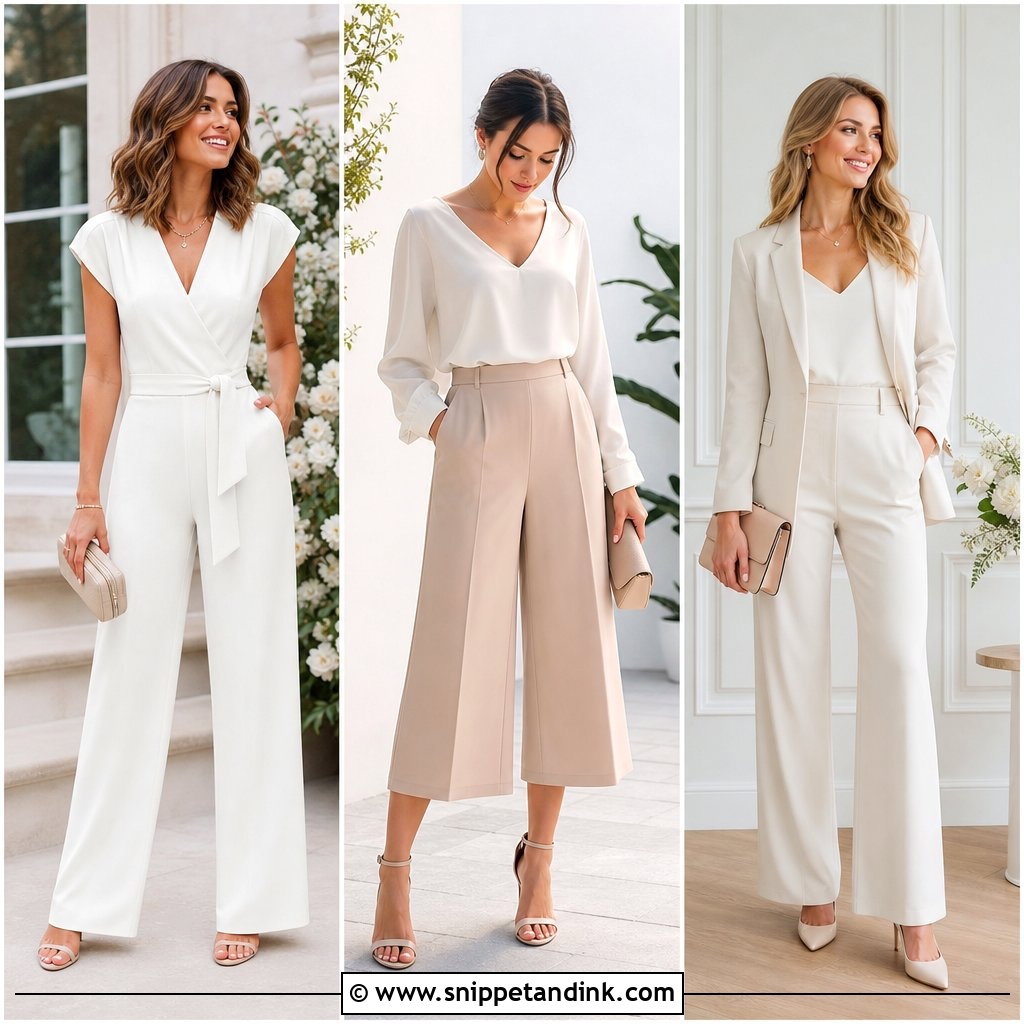
3. Wide Leg Jumpsuit Wedding Attire
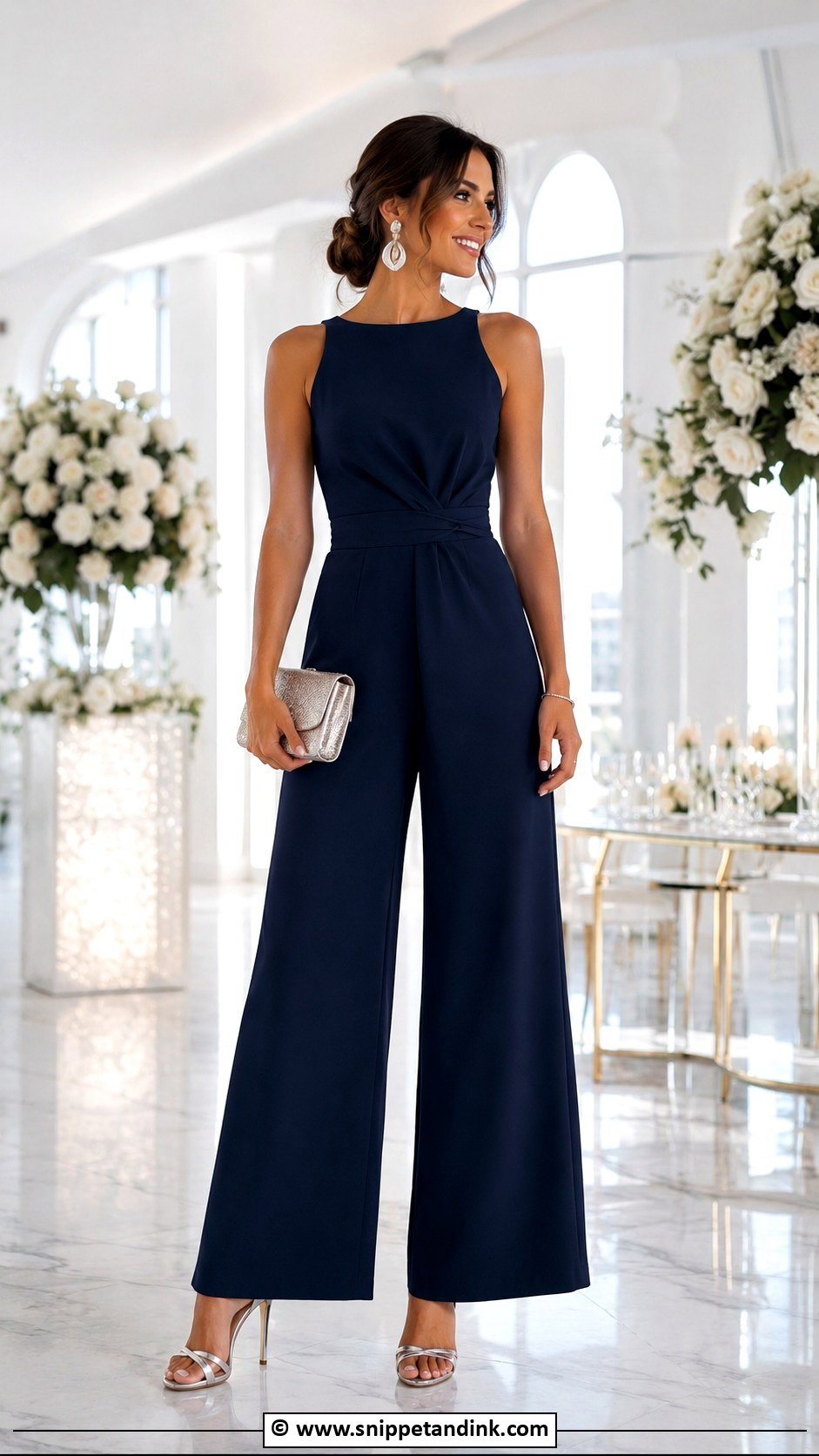
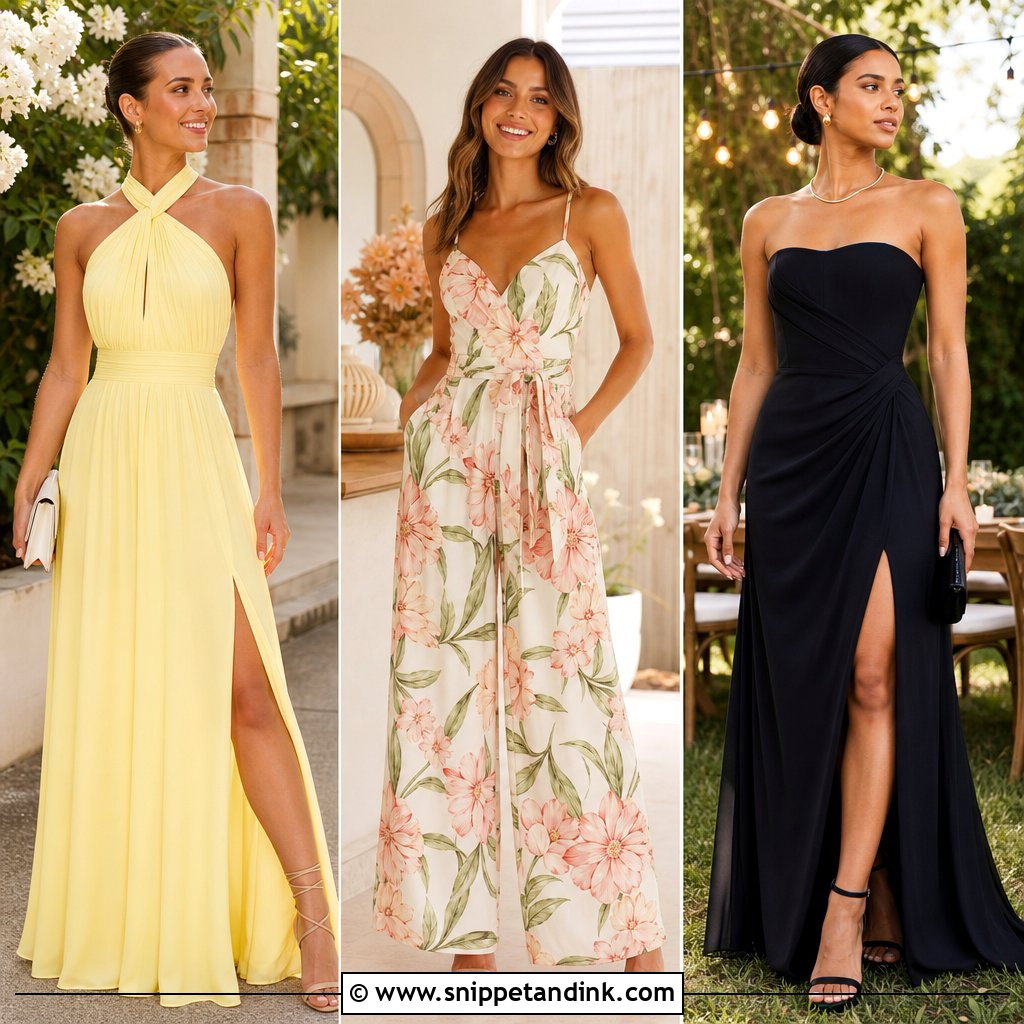
Jumpsuits get booked for weddings now as often as dresses, and the ones that work have a defined waist and fabric with real drape, such as crepe or heavy jersey. I always ask about bathroom logistics before recommending one; a back zip under a halter is a two-person job. Navy, plum, forest and rust keep it formal. Hem the legs for the exact heel you’ll wear, because a wide leg that pools on the floor looks unfinished and collects dirt by dinner.
4. Tailored Suit Wedding Attire
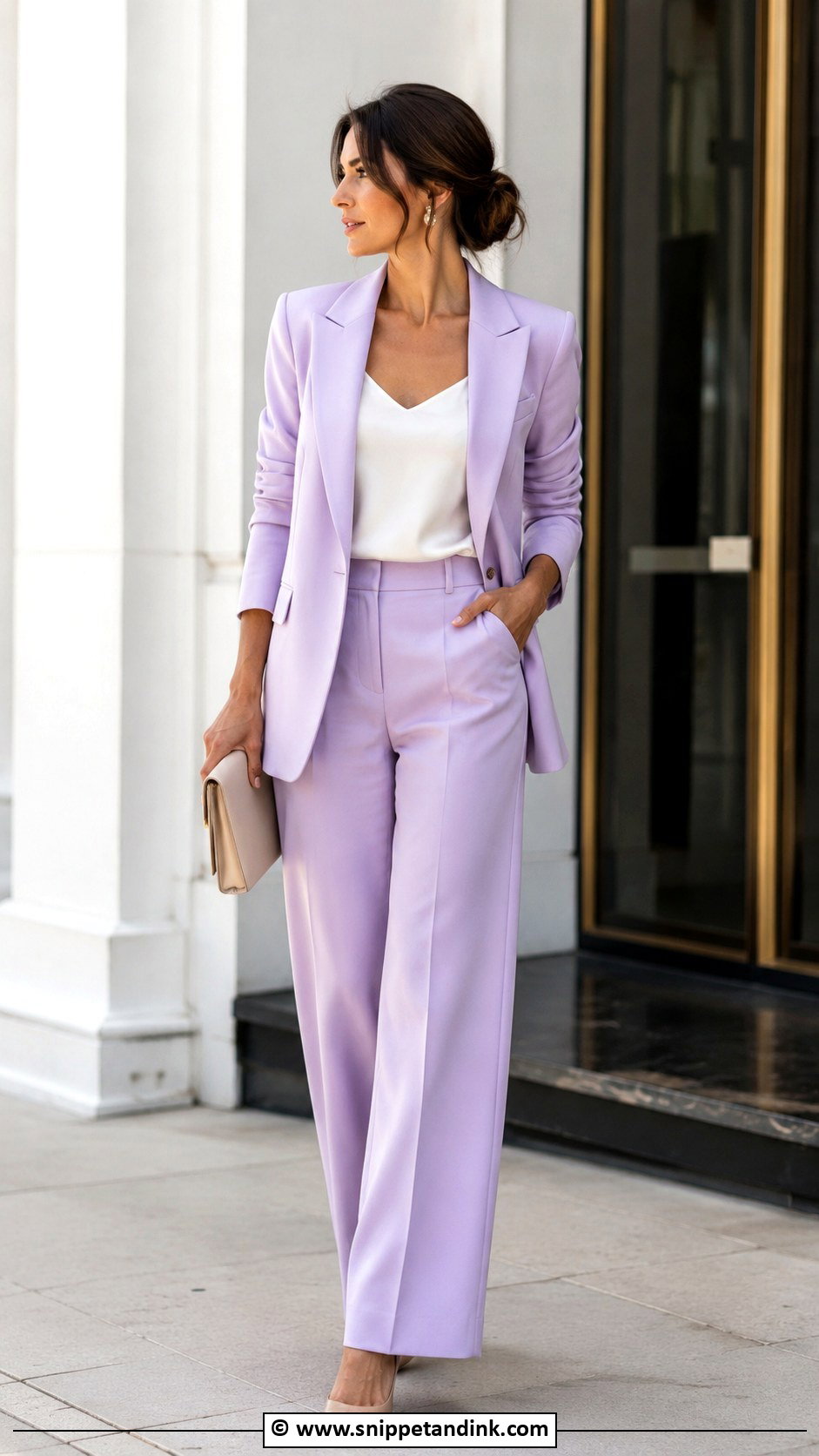
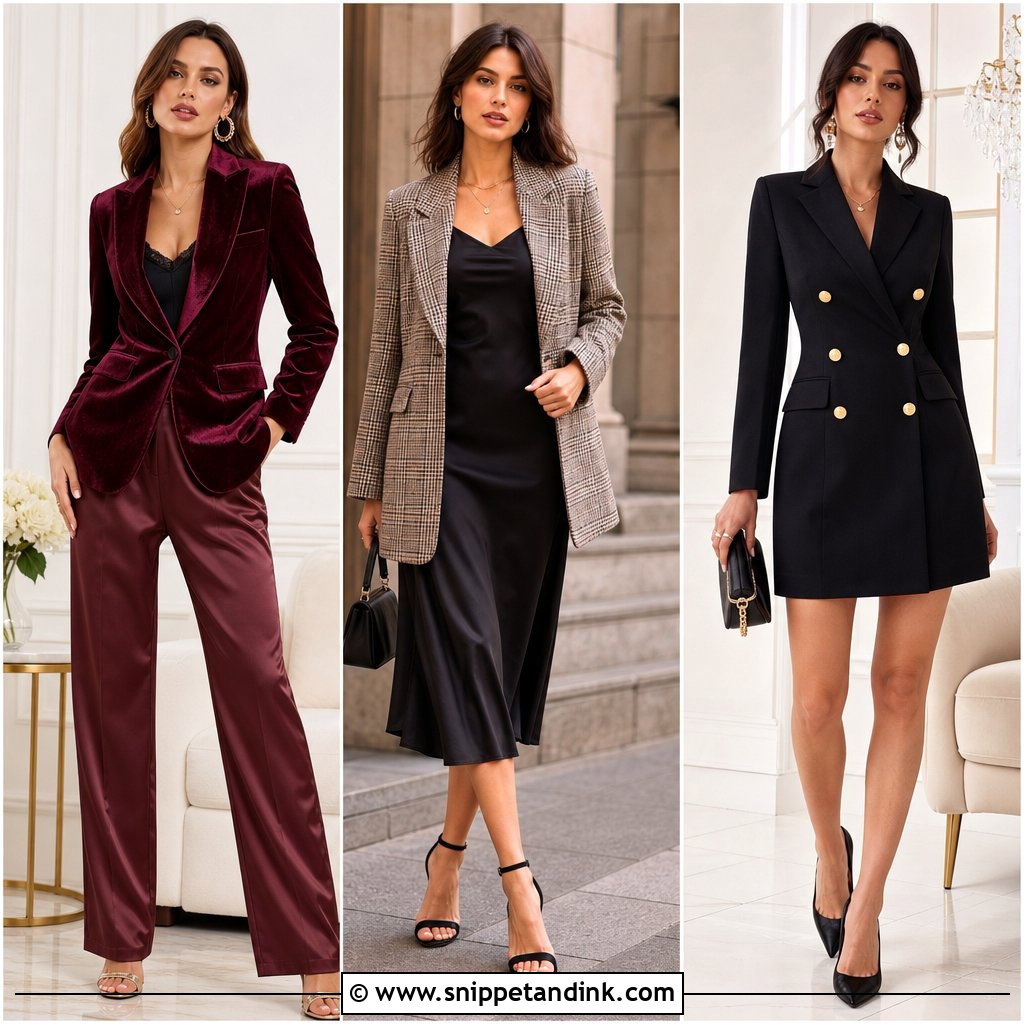
A suit only looks like wedding wear when the color and the fabric move it away from the office. I steer clients toward pastels, jewel tones or warm neutrals and away from black wool. The fitting detail I care most about is the jacket shoulder: if it collapses or pulls, no tailor can fully rescue it, while trousers are cheap to alter. Put a silky cami under the blazer, choose loafers or pointed heels to match the formality, and it suits courthouse ceremonies and city weddings.
5. Pleated Maxi Dress Wedding Attire
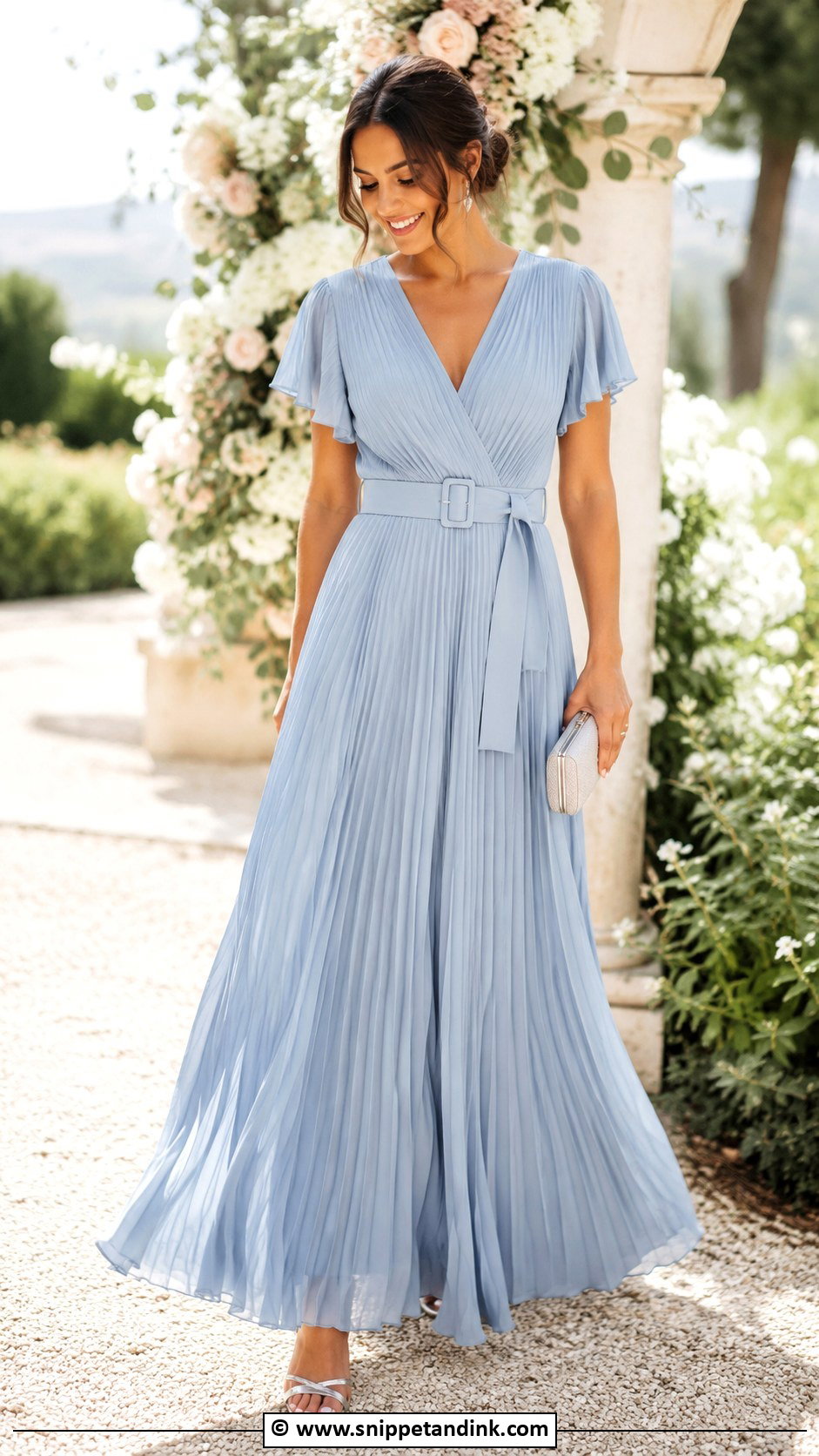
Pleats give movement without beading, which is why a pleated maxi works for formal daytime events. The catch is volume. Knife pleats spring out at the hip, so I usually want a belt or a seamed waist to bring the shape back in. Powder blue, mauve, olive and terracotta all sit well in garden light. If the path to the ceremony is gravel or lawn, wear a block heel; stilettos sink and the hem will catch on them.
6. One Shoulder Dress Wedding Attire
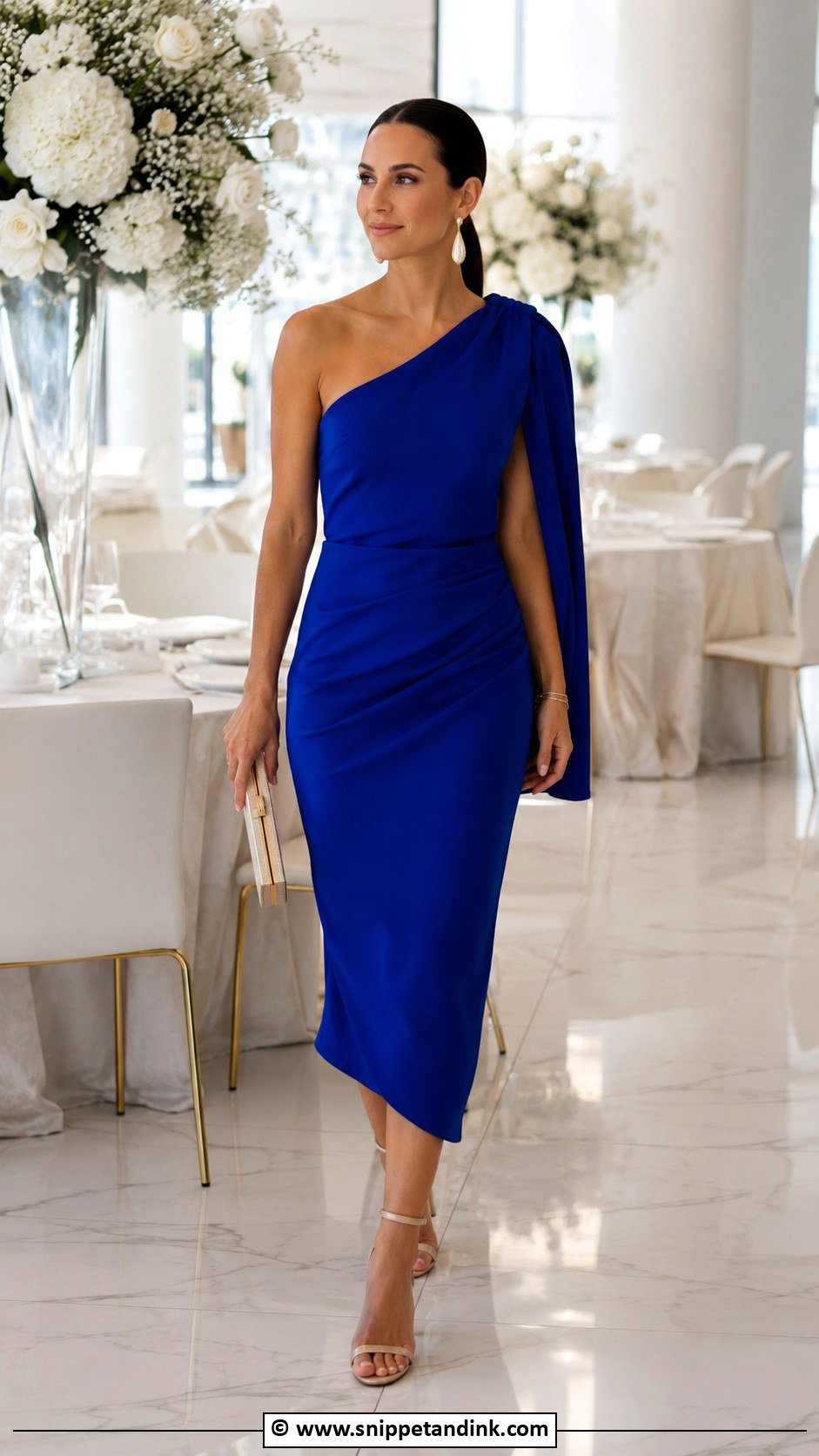
I like a one shoulder neckline for evening weddings because the asymmetry is the whole design, so jewelry can drop to a pair of earrings or a cuff. Fit matters here more than people expect. If the single strap isn’t snug, the bodice slides toward the bare side every time you hug someone, and you’ll be adjusting it in every photo. Crepe and stretch knit hold better than chiffon. Cobalt, berry and chocolate look rich at night.
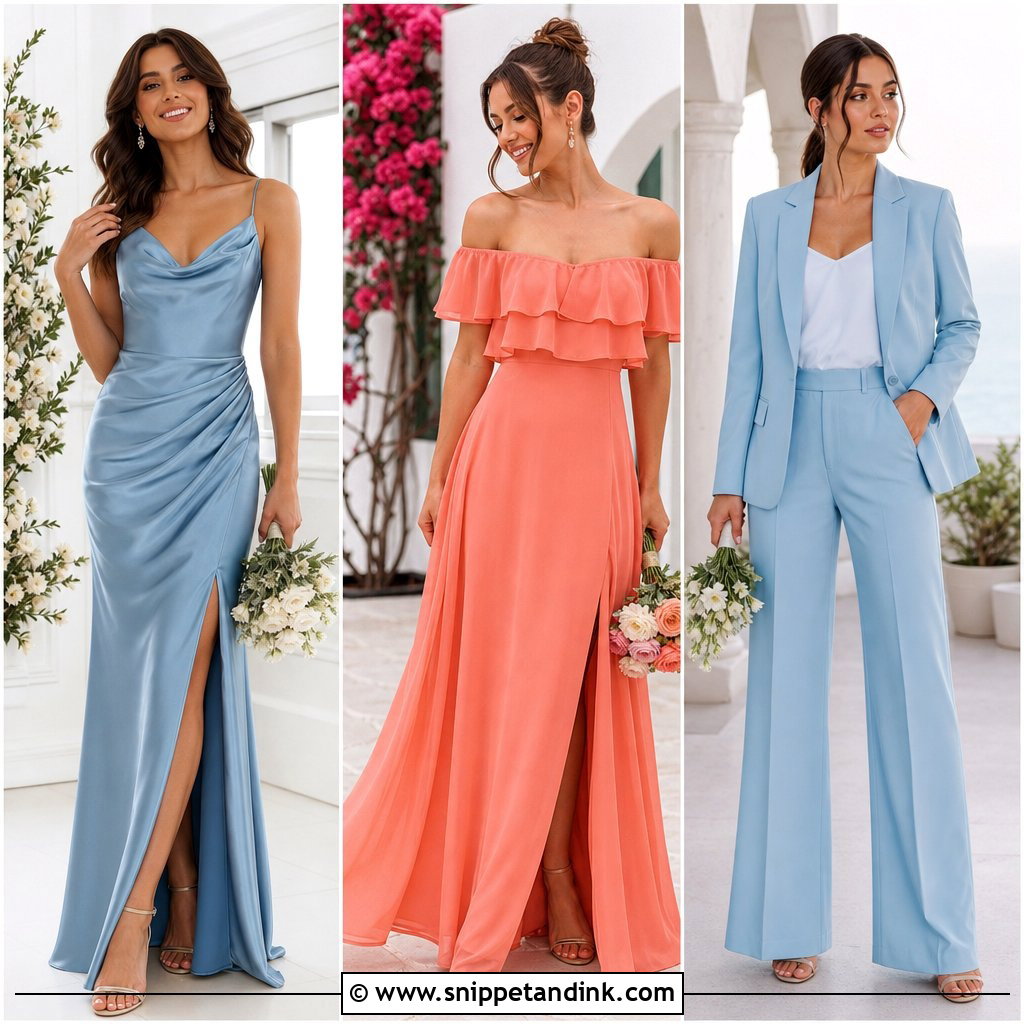
7. Pastel Blazer And Dress Pants Wedding Attire
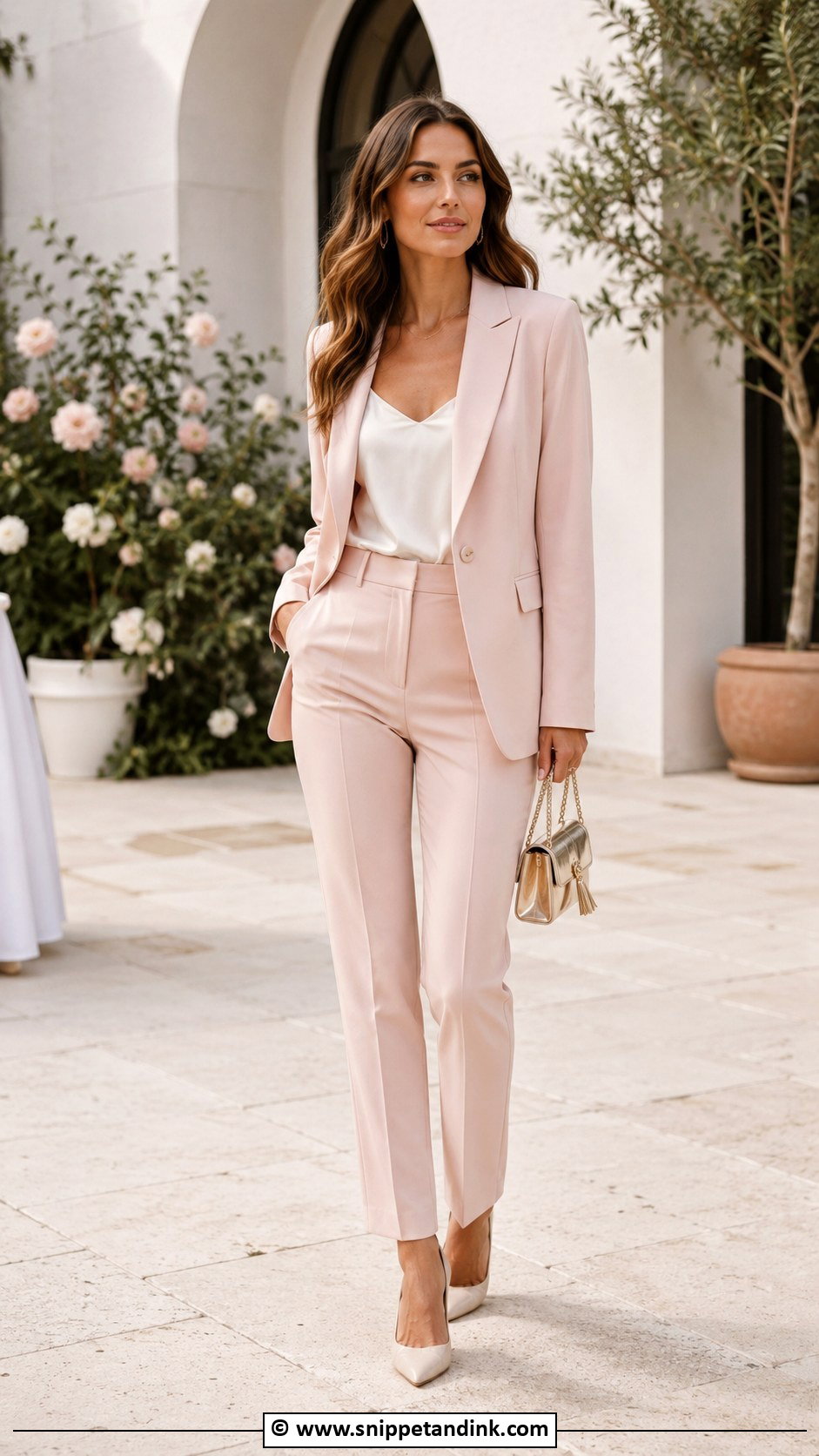
Pastel tailoring is my answer for the guest who wants structure but finds black suiting too severe. Powder blue, butter yellow and mint all read fresh in daylight. Be aware that pale linen blends wrinkle across the lap within an hour of sitting, so I steer people to a wool-blend or crepe for any ceremony longer than twenty minutes. A satin cami underneath and heeled mules make it dressier than a work suit, which is the point at a spring daytime wedding.
8. Chiffon Wrap Dress Wedding Attire
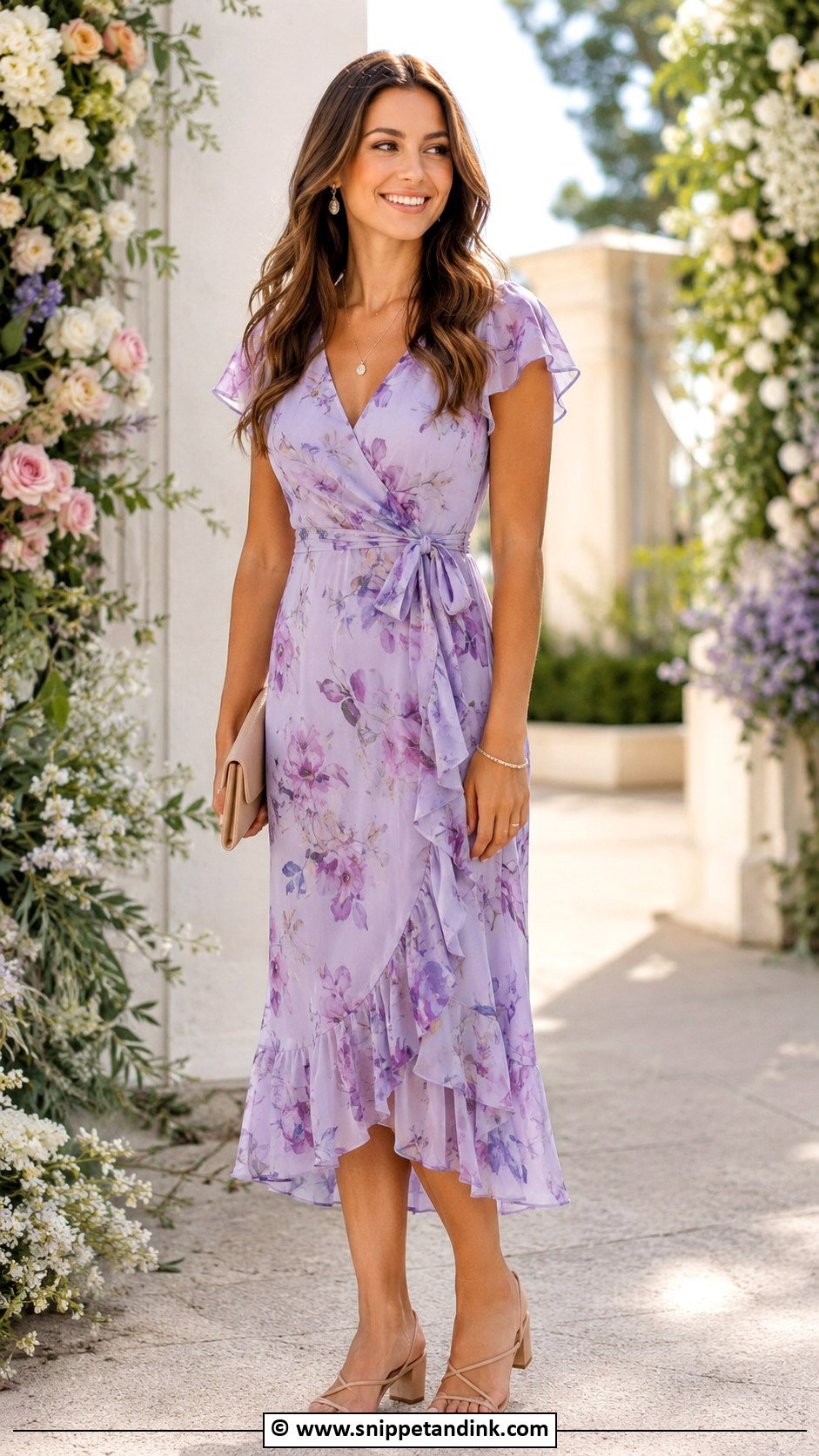
A chiffon wrap dress forgives a long day better than almost anything, since you can loosen the tie after dinner without anyone noticing. Chiffon is sheer, though, so check the lining length in daylight before you commit. I’ve seen plenty of unlined skirts that look modest indoors and very different with the sun behind you. Small botanical prints hide the creases chiffon picks up when you travel. Low block heels and a woven clutch suit destination and brunch weddings.
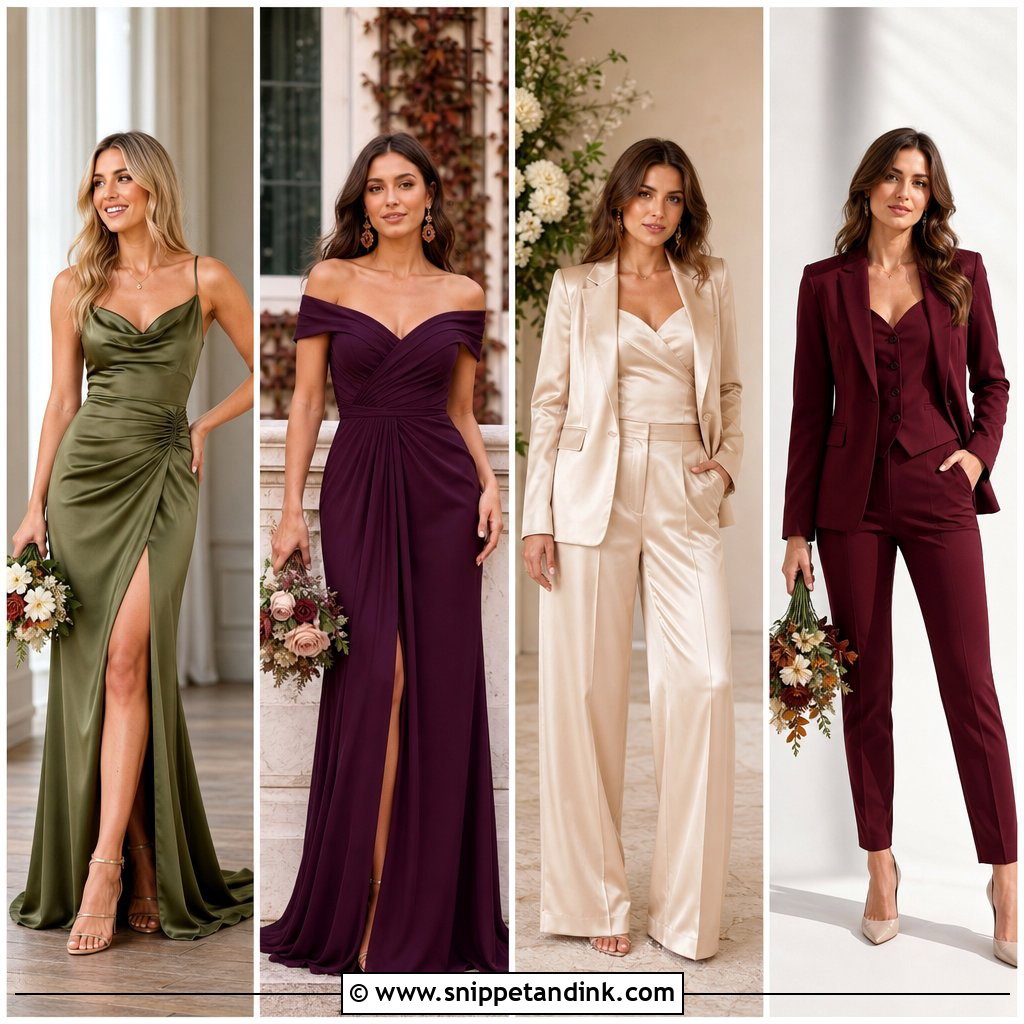
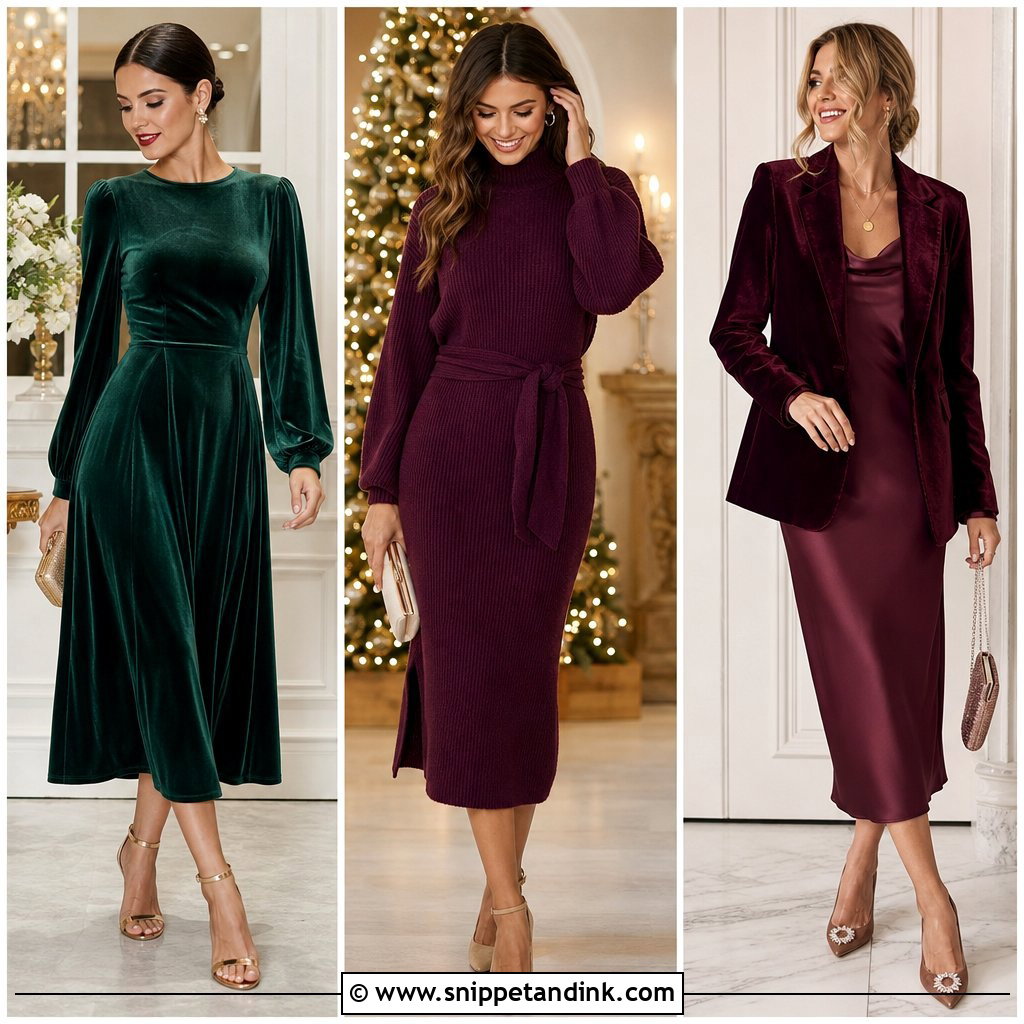
9. Velvet Midi Dress Wedding Attire
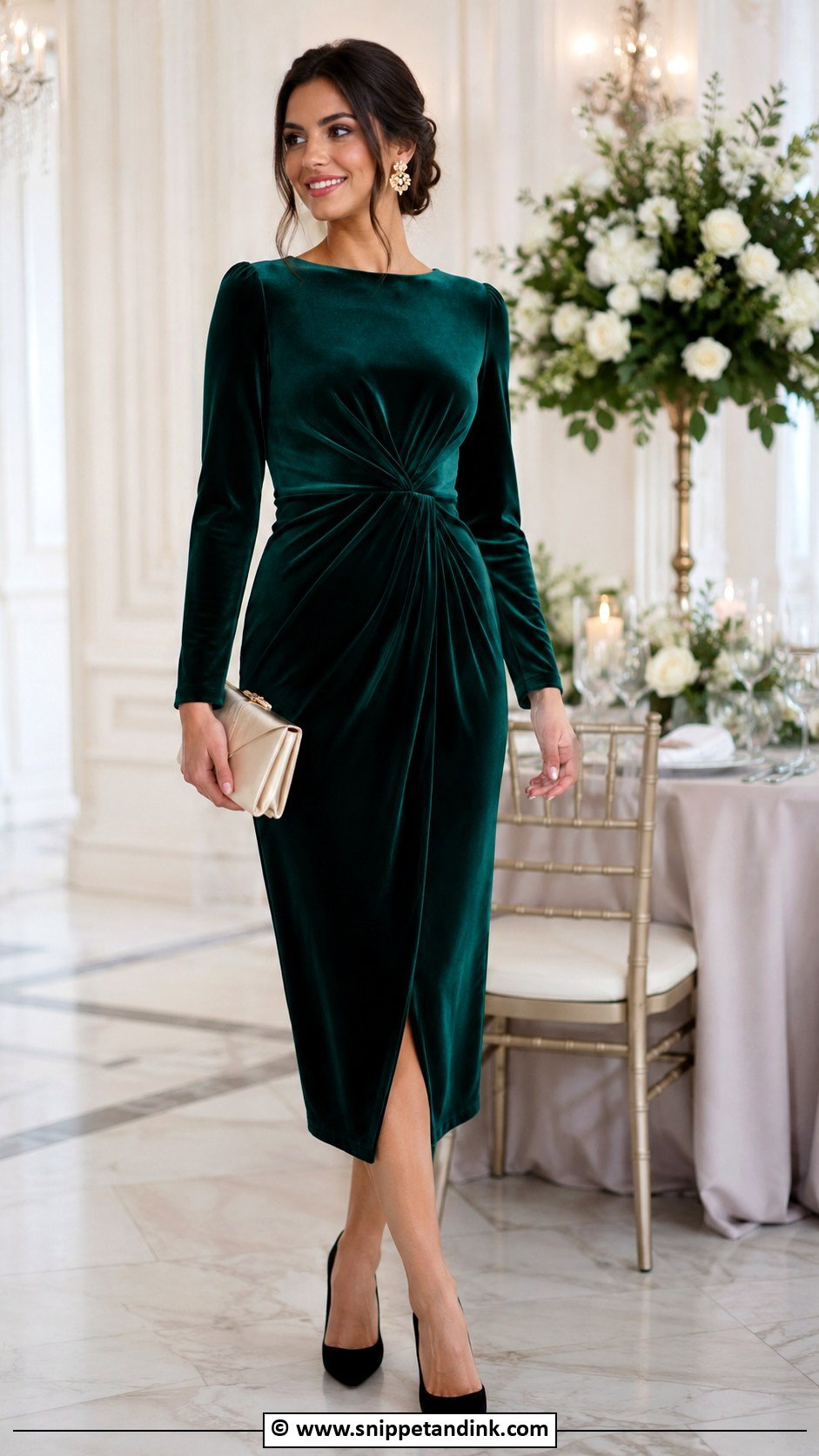
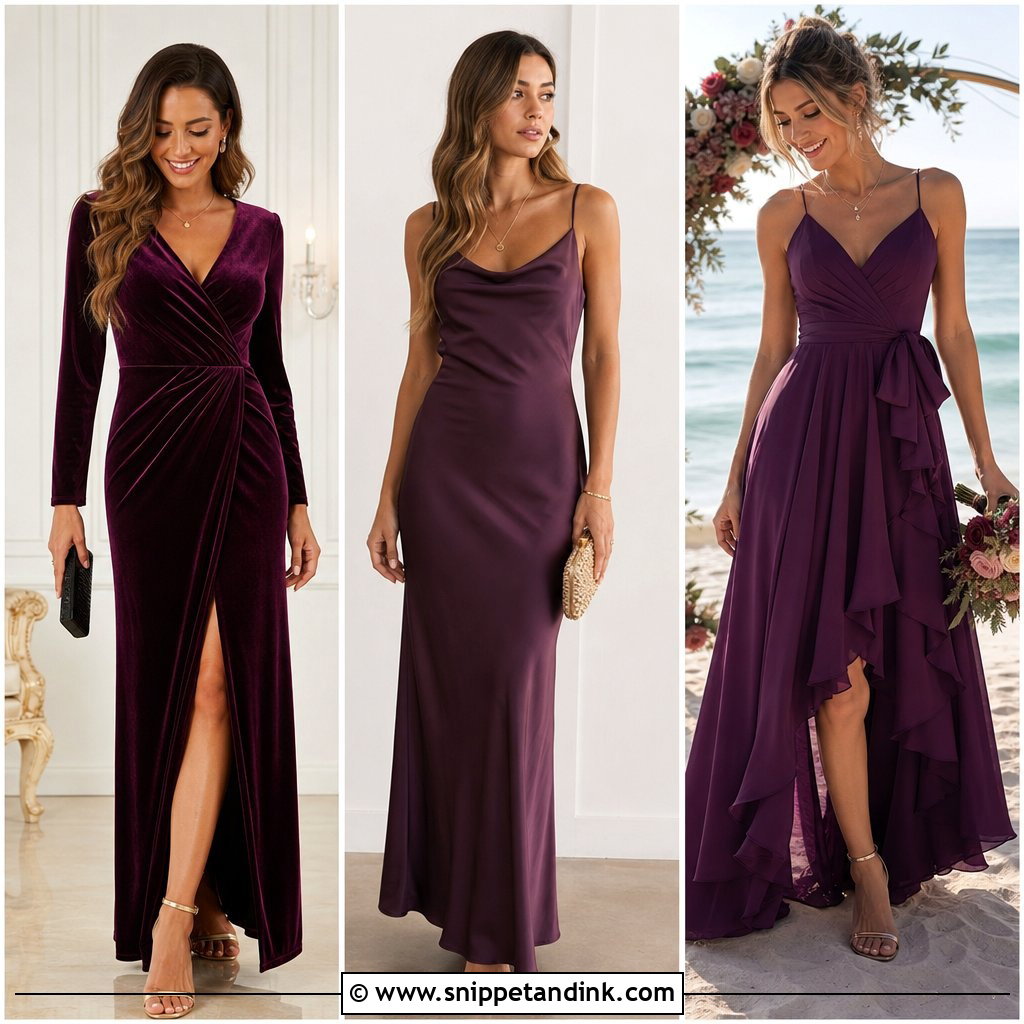
Velvet earns its place at fall and winter weddings because it reflects light unevenly, which gives depth in candlelit rooms. Burgundy, emerald, midnight and espresso show that best. The practical warning: velvet crushes where you sit and holds the mark, so steam it the morning of rather than the night before, and avoid a tight bodycon cut. A satin clutch and metallic earrings lift the color near the face. It suits formal indoor venues and evening receptions.
10. Lace Midi Dress Wedding Attire
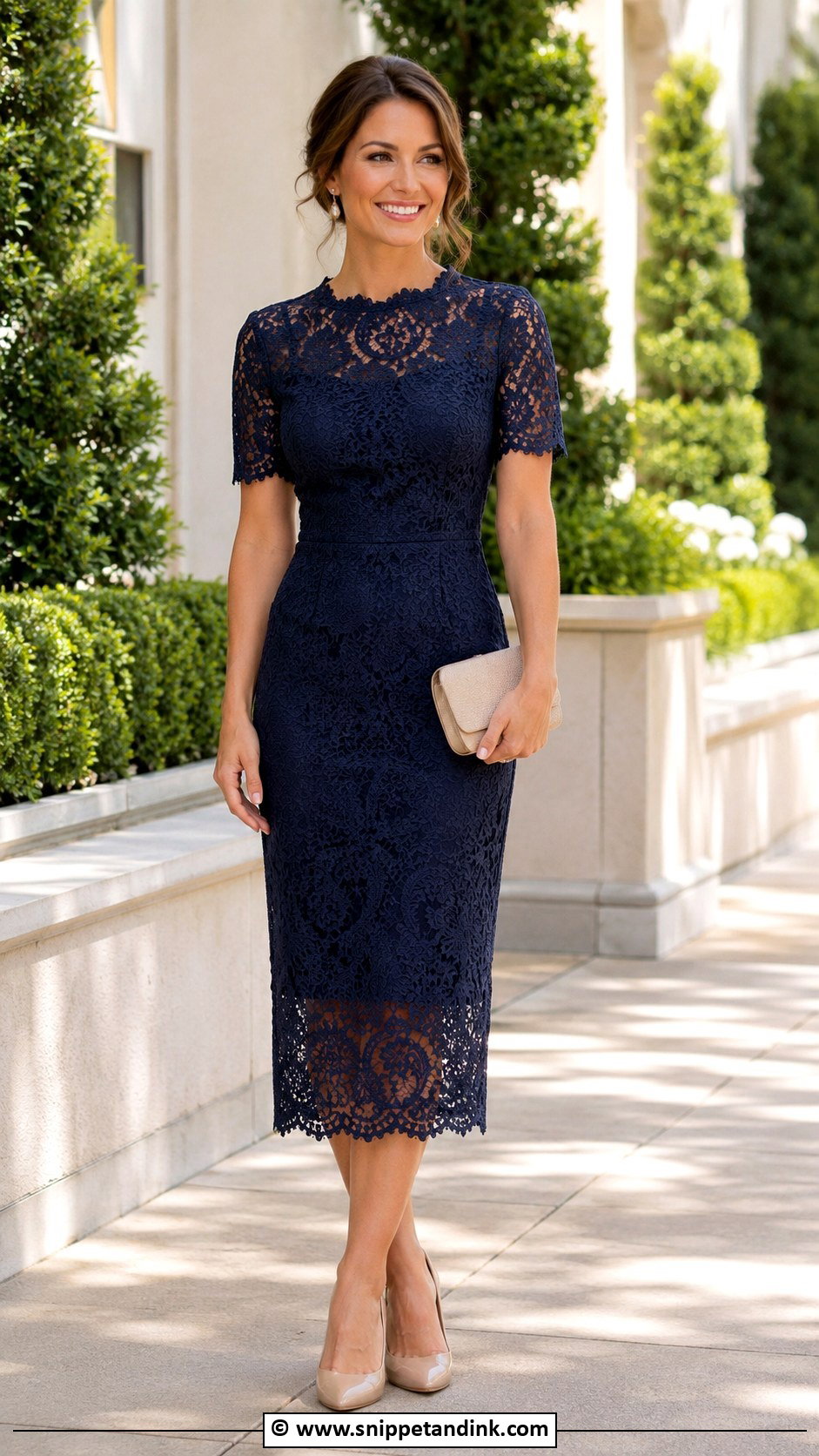
Lace is classic for guests, but only in a shade that can’t be confused with the bride. I’d choose navy, mauve, sage or berry, never cream or ivory, even if the lace is a cut you love. Look inside before you buy. A good lace dress is fully lined to the hem, and an unlined one will catch on bracelets and snag at the seams. If the pattern is busy, keep jewelry to pearl studs. Hotel receptions and traditional ceremonies welcome it.
11. Two Piece Skirt Set Wedding Attire
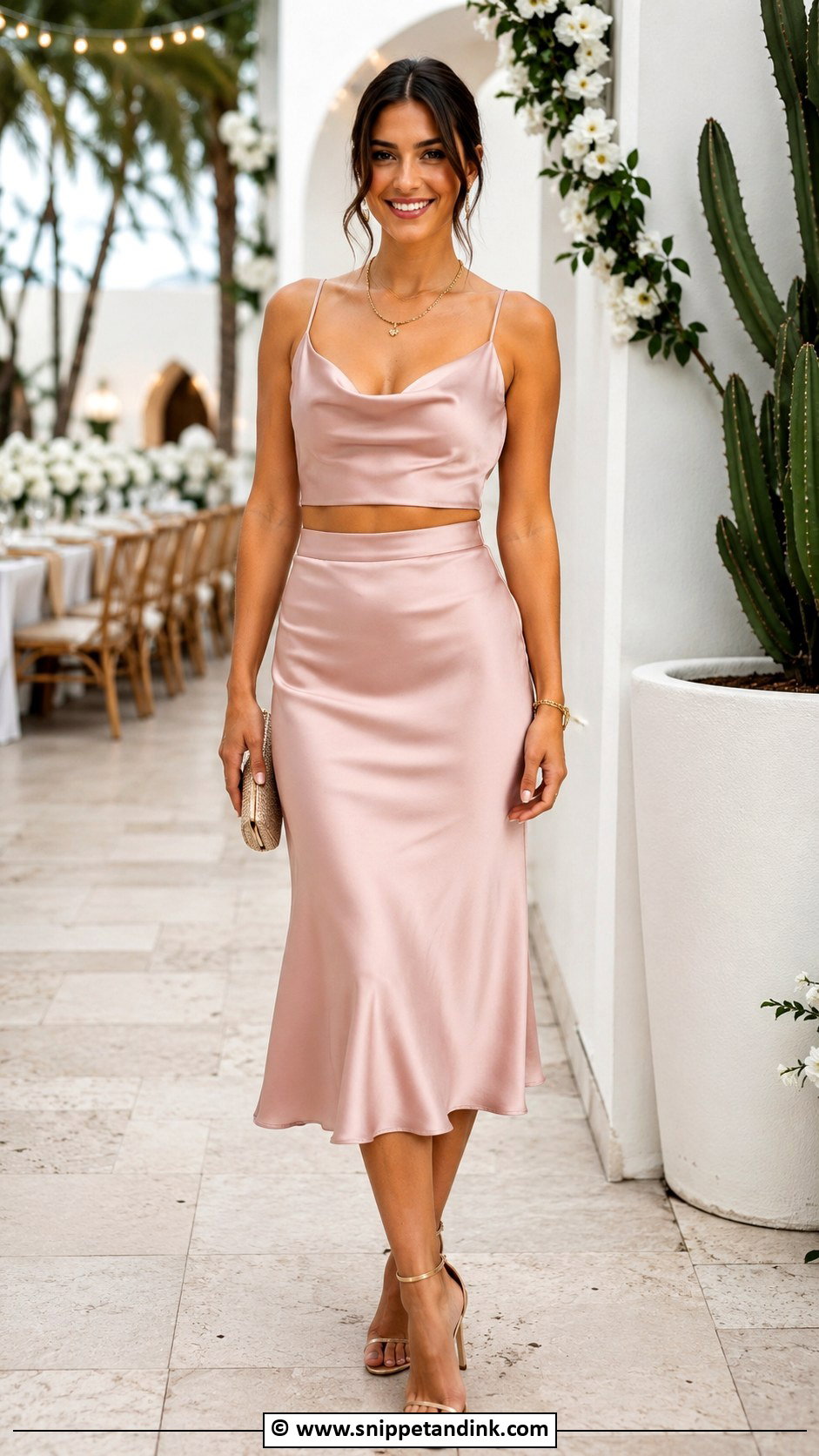
Skirt sets give you two pieces you’ll actually wear again, which is why I recommend them to guests attending three or four weddings in a season. The key is proportion. A cropped top needs a skirt with a genuinely high waist, because a gap of skin that’s fine standing will widen when you reach for a glass. Matching satins or soft florals feel dressy. Heeled sandals and a mini clutch are enough for summer receptions and resort celebrations.
12. High Low Dress Wedding Attire
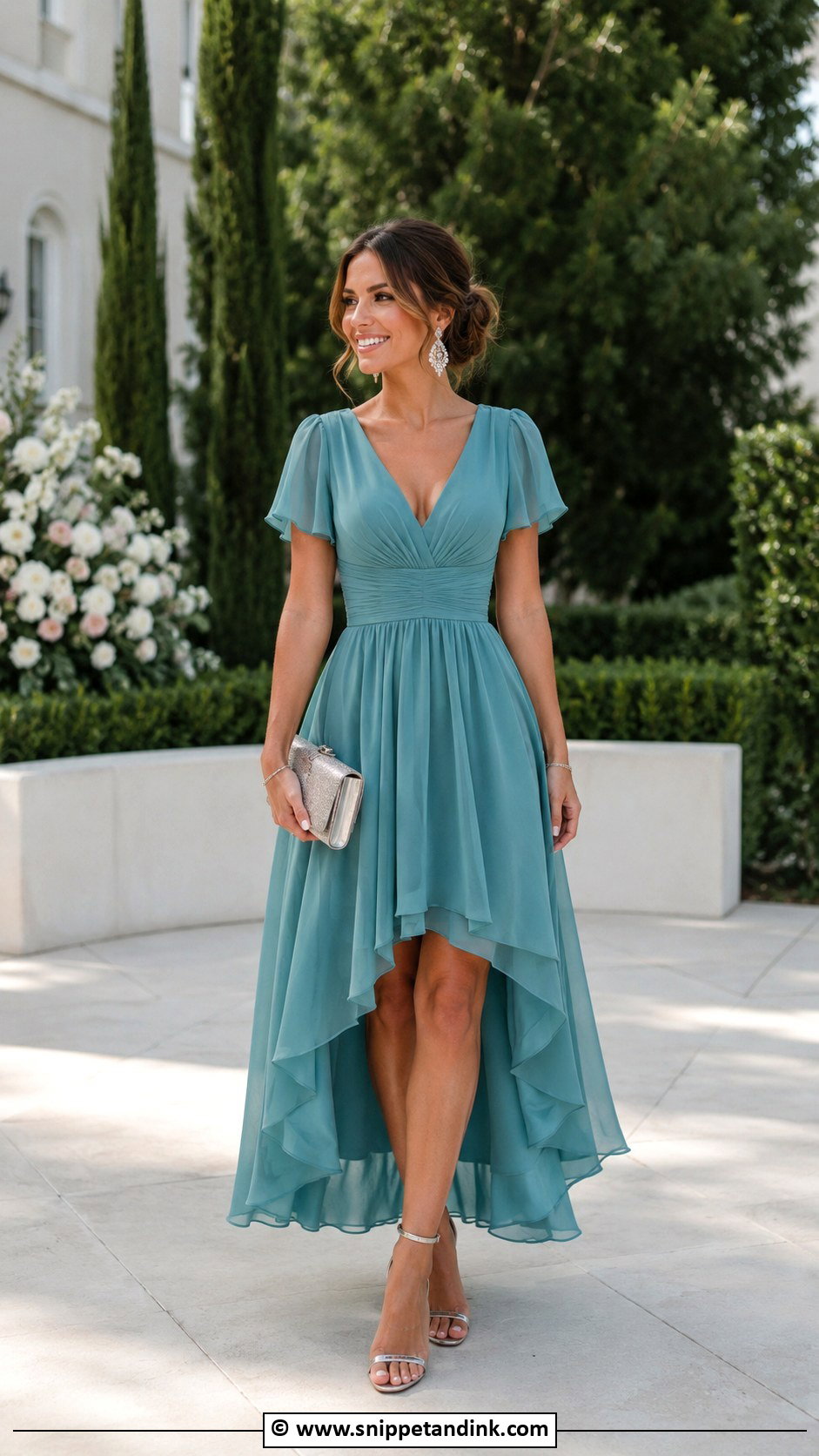
High low hems put your shoes on display, so I tell clients to buy the shoes first and the dress second. Chiffon and crepe fall cleanly; stiff satin can make the longer back stick out like a tail. Teal, rose and lavender suit outdoor daytime light. The front hem should clear your knee when you walk downstairs, so try that in the fitting room. It gives a playful shape at beach weddings and cocktail receptions.
13. Maxi Skirt And Silk Blouse Wedding Attire
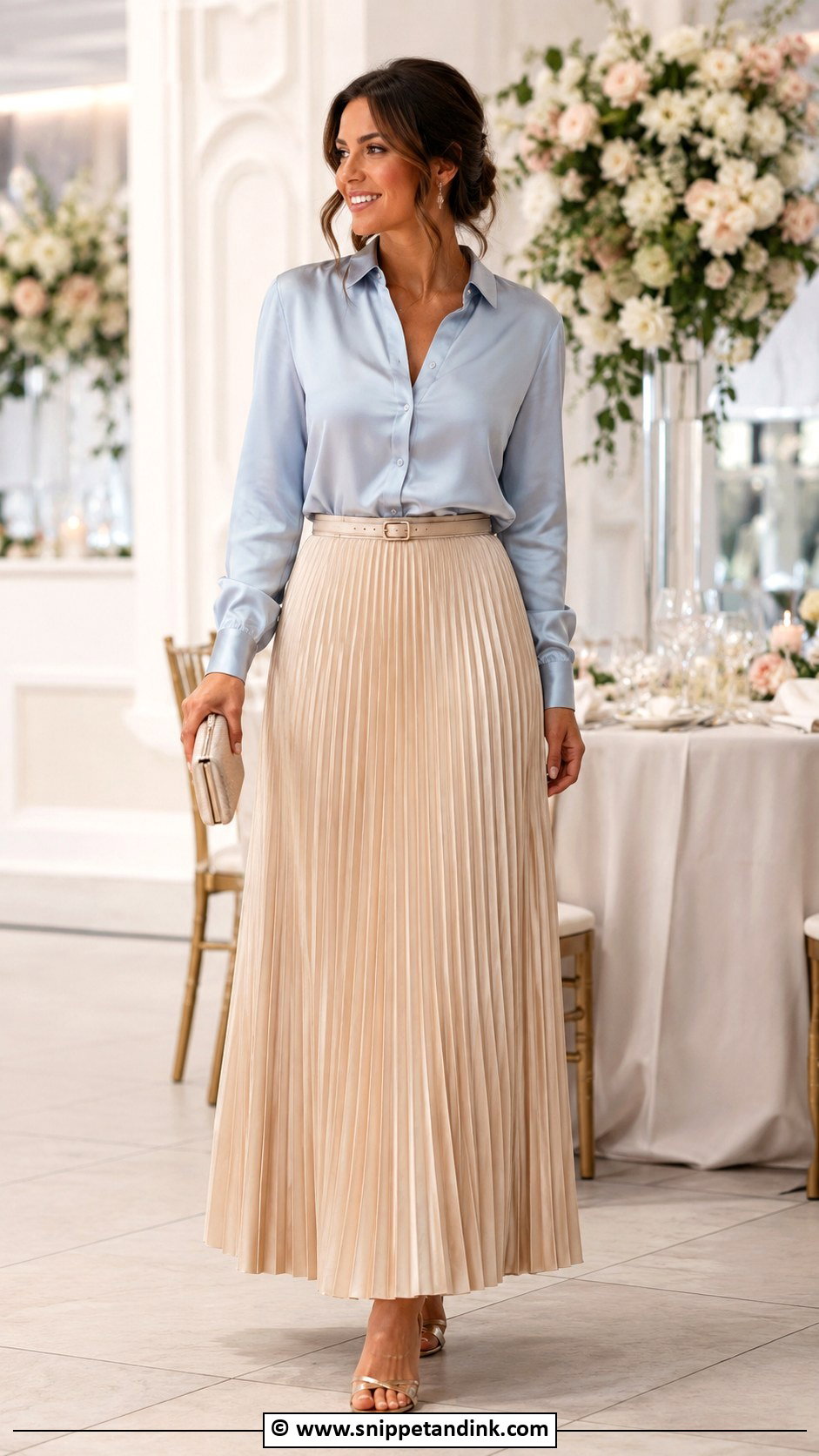
A maxi skirt and silk blouse is my go-to for guests who need sleeves or a longer hem for a religious or cultural ceremony and don’t want a heavy dress. Tonal pairs, like rose with blush or navy with pale blue, look deliberate rather than mismatched. Tuck the blouse fully and add a slim belt; silk untucks every time you lift your arms, and a belt hides the gap. Heeled sandals and a small clutch keep it light for evening receptions.
14. Black Tie Gown Wedding Attire
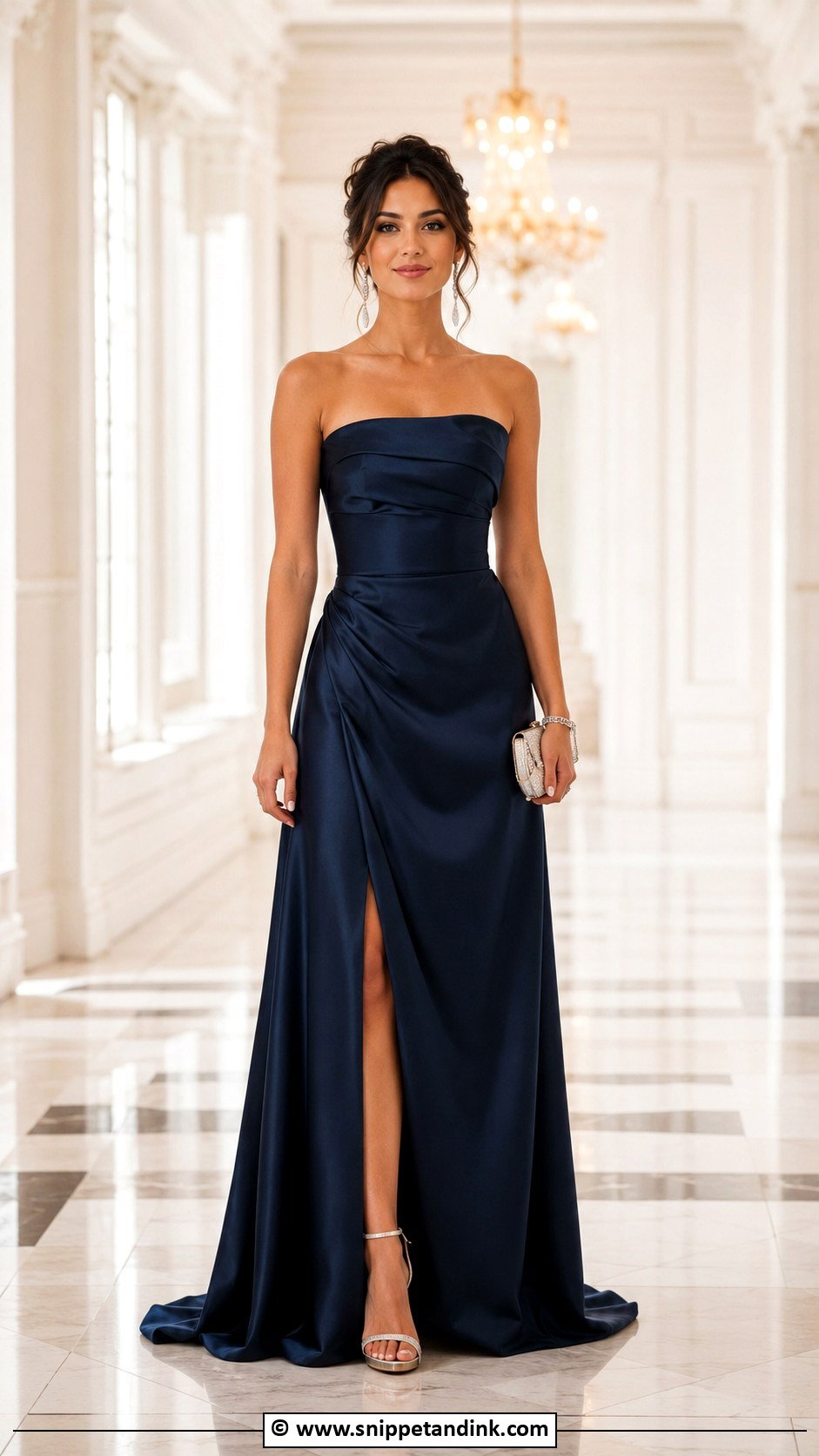
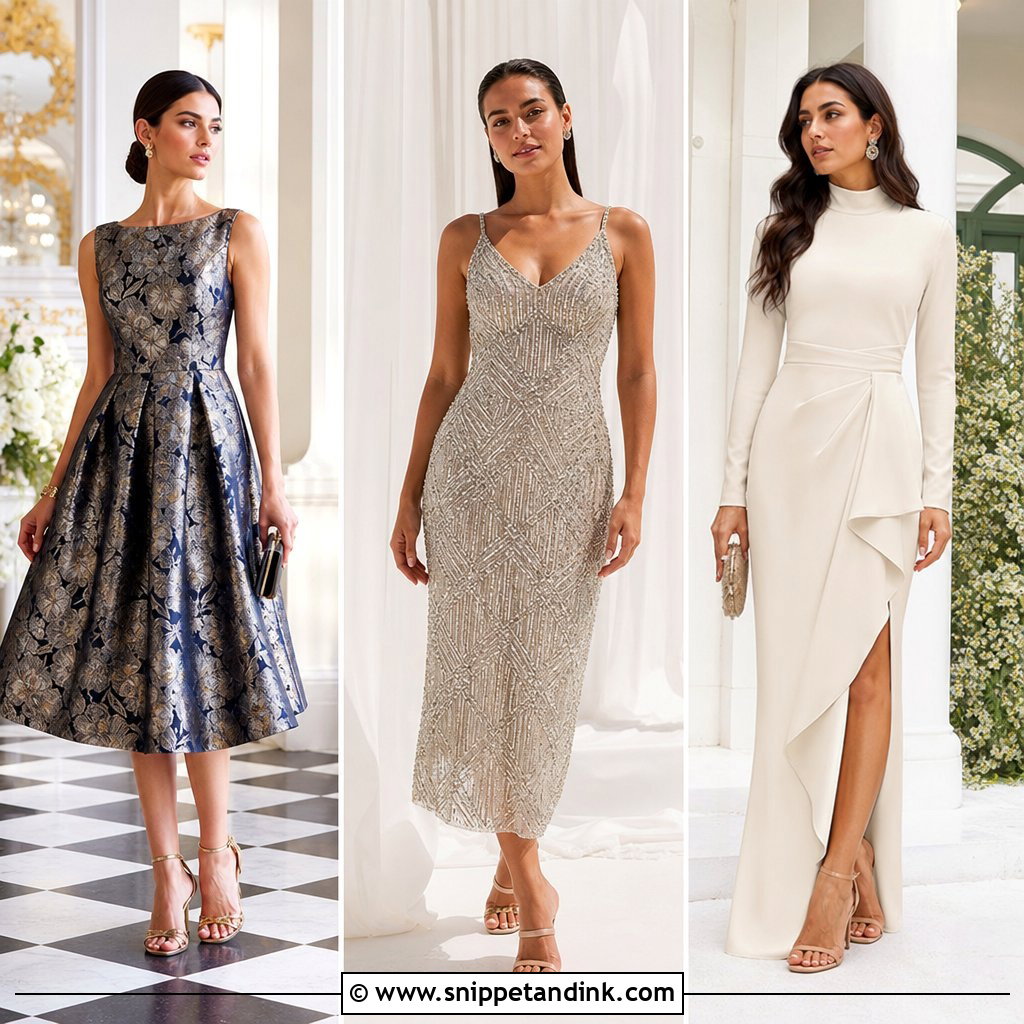
When an invitation says black tie, I treat floor length as the rule, not the suggestion. Satin, crepe and velvet carry formal weight; thin jersey usually doesn’t. Navy, emerald, burgundy and deep teal photograph richly under ballroom lighting. The part people forget is the hem: have it taken up to clear the floor by about a finger’s width in your shoes, or you’ll be stepping on it by the first dance. Bring a wrap or dressy coat for outdoor photos.
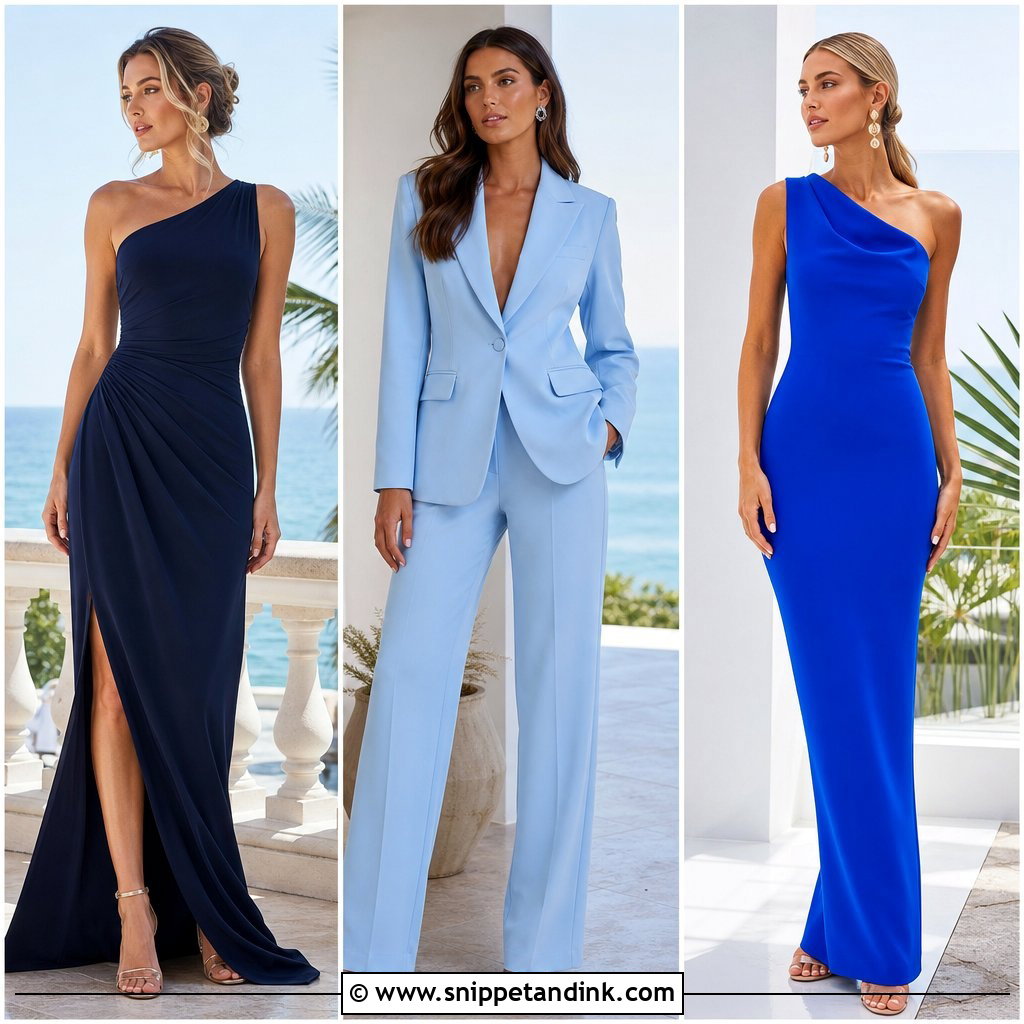
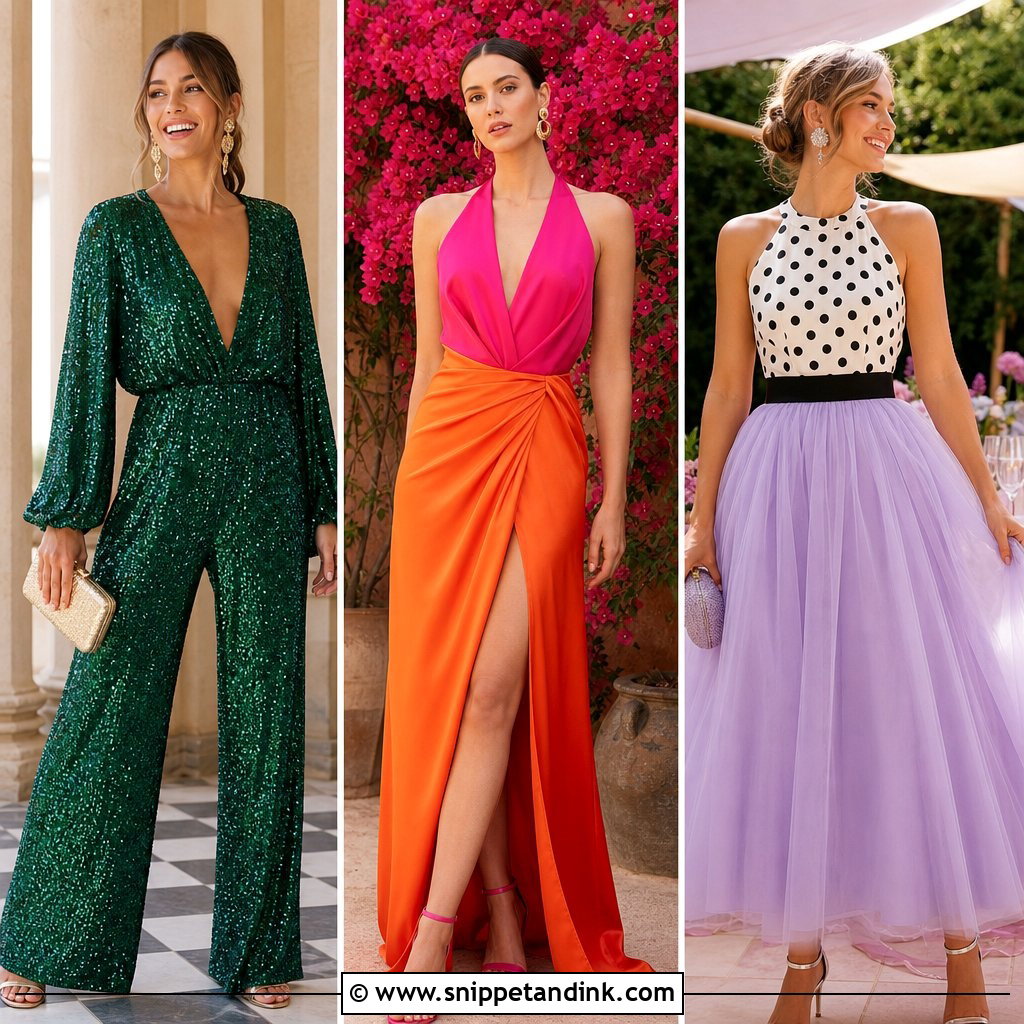
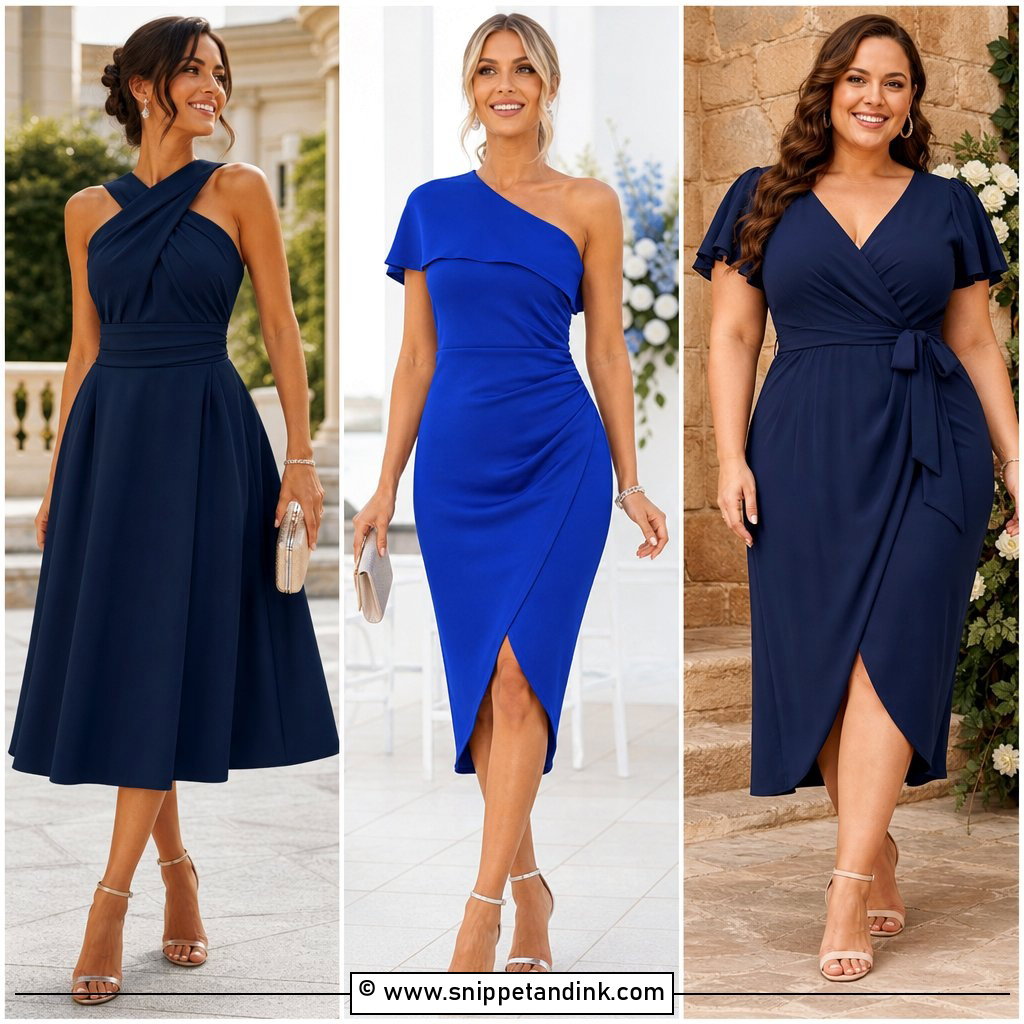
15. Cocktail Midi Dress Wedding Attire
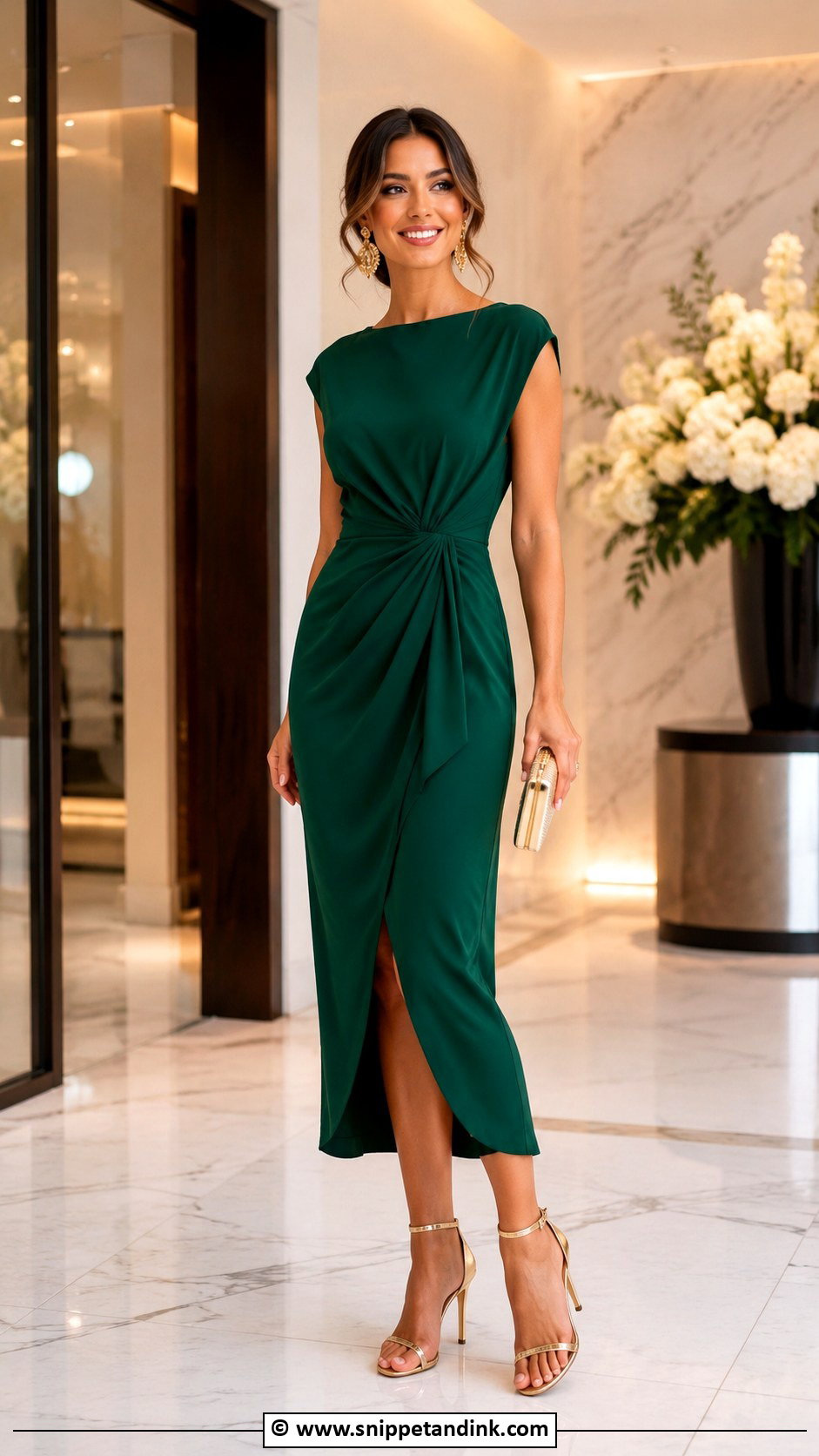
Cocktail attire sits between semi-formal and formal, and a midi is the most dependable way to hit it. A fitted crepe sheath, an A-line satin or a draped cut all work; what changes the mood is color. Bright pink, cobalt, copper or deep purple look festive at an evening reception without competing with the wedding party. Choose one statement piece, usually earrings or a bag, and let the rest stay quiet. Hotel and restaurant weddings suit this best.
16. Garden Party Dress Wedding Attire
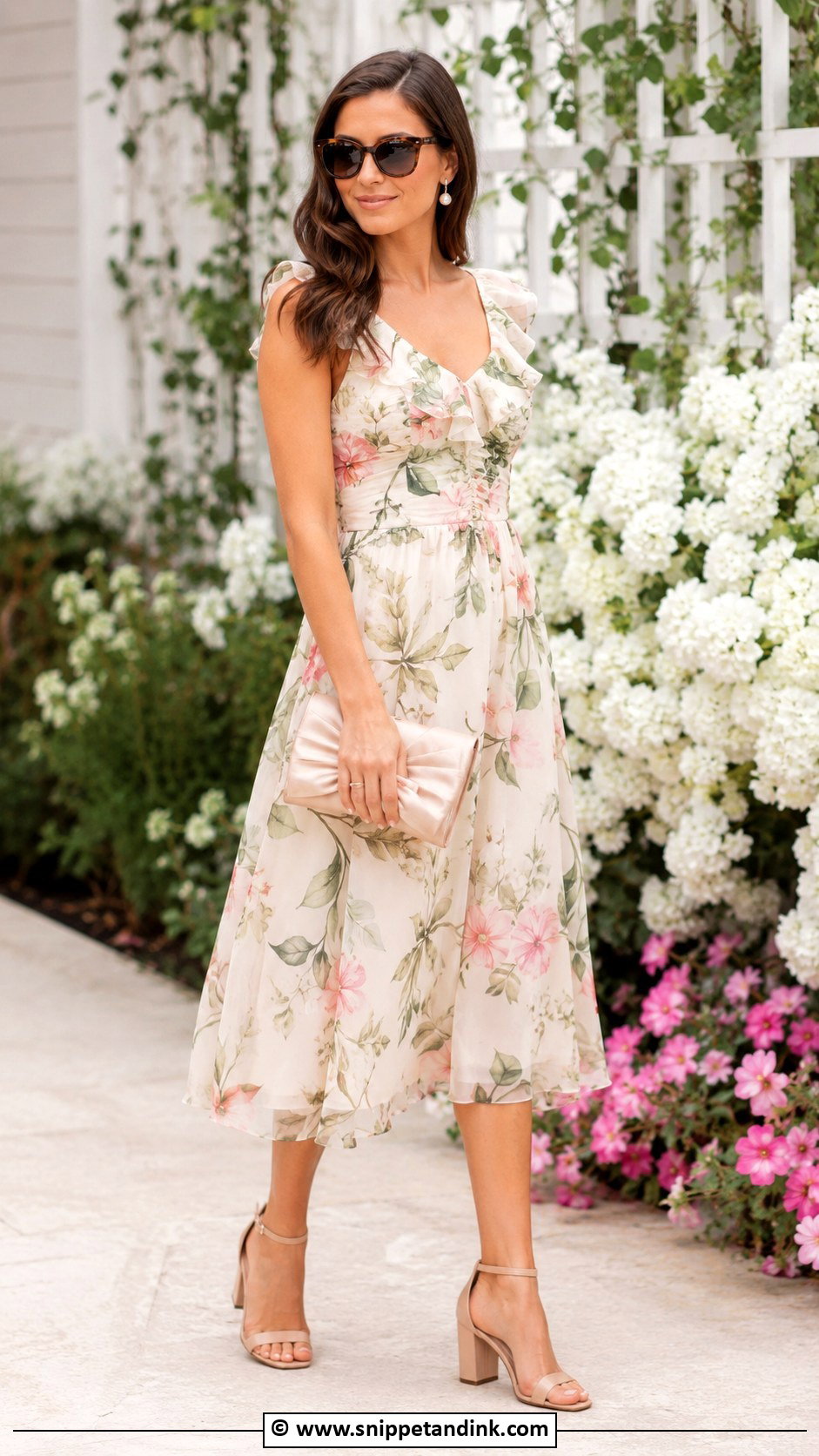
Garden wedding attire has one job beyond looking pretty: surviving grass, sun and an evening temperature drop. I suggest breathable fabrics like cotton-silk, organza or light crepe in a midi length that won’t drag through damp lawn. Heel choice matters more than at any indoor venue, so pick block heels, wedges or dressy flats. Pack sunglasses for the ceremony and a light shawl for when the reception moves on past sunset.
17. Beach Wedding Maxi Dress Attire
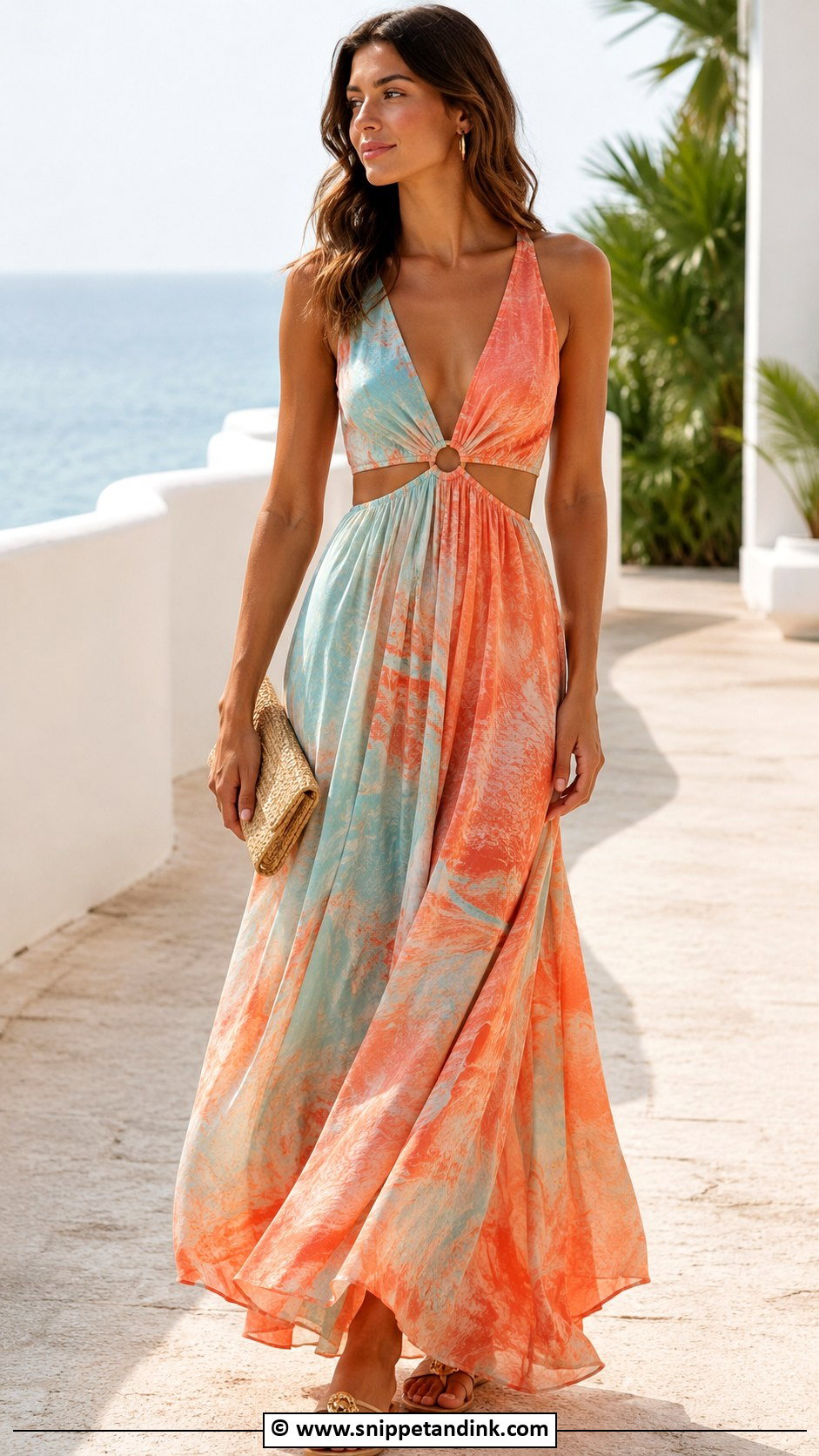
Sand, wind and salt air change everything about a beach outfit. A flowy maxi dress in chiffon or a linen blend breathes; heavy satin traps heat and shows sweat marks. In a sea breeze, lightweight skirts lift, so I sometimes add small weights or a slip to the hem. Flat sandals or dressy slides beat stilettos on sand. Sea blue, coral and sage sit naturally against water, and gold hoops or a woven clutch finish a destination ceremony.
18. Formal Pantsuit Wedding Attire
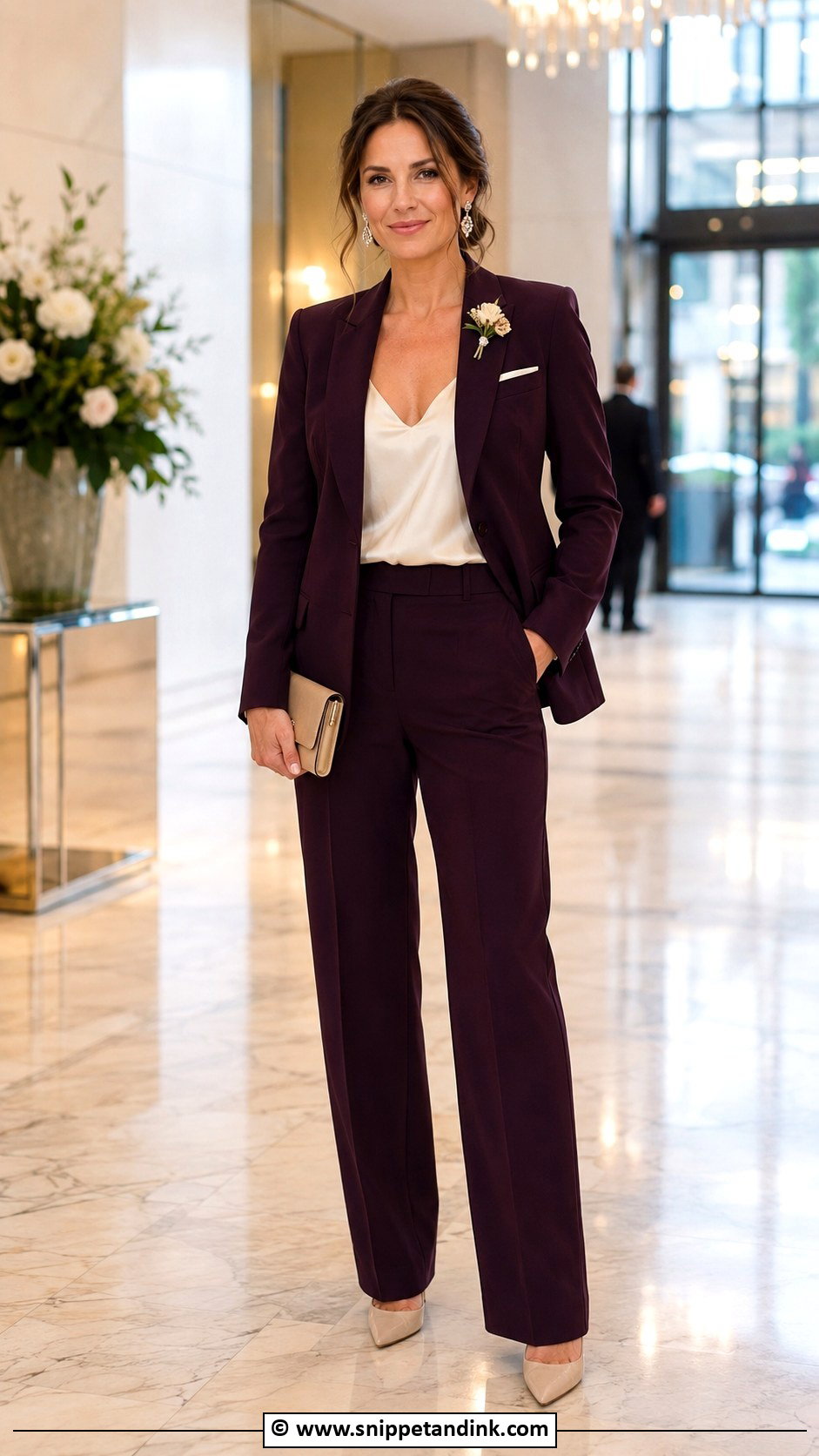
A pantsuit becomes evening wear through fabric and finishing. I look for satin or a fluid crepe that drapes rather than creases, in deep jewel tones, champagne taupe or navy. The trouser hem should just kiss the top of a pointed heel. Swap the work shirt for a silky camisole and add one finishing piece, like a brooch on the lapel or a slim belt. Formal city weddings and evening receptions both suit it.
19. Halter Neck Dress Wedding Attire
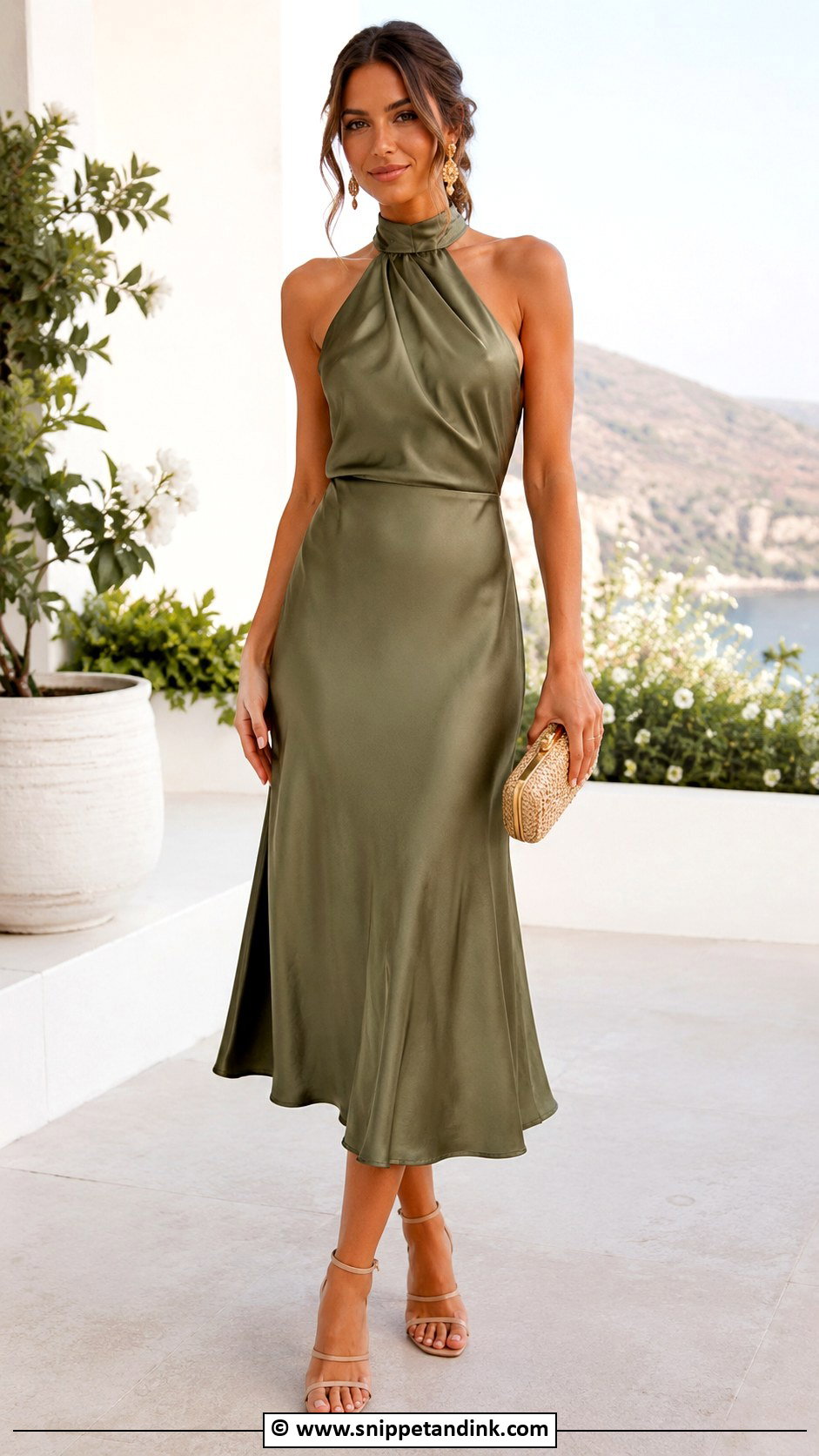
A halter frames the face and shoulders, so I always tell clients to skip the necklace and let earrings do the work. Check one thing before you buy: a halter puts weight on the back of the neck, and a heavy maxi in a halter cut can be uncomfortable by hour five. Lighter crepe or chiffon solves that. Aqua, berry, olive and rust read festive, and a neat updo keeps hair off the tie. Summer receptions and resort venues suit it.
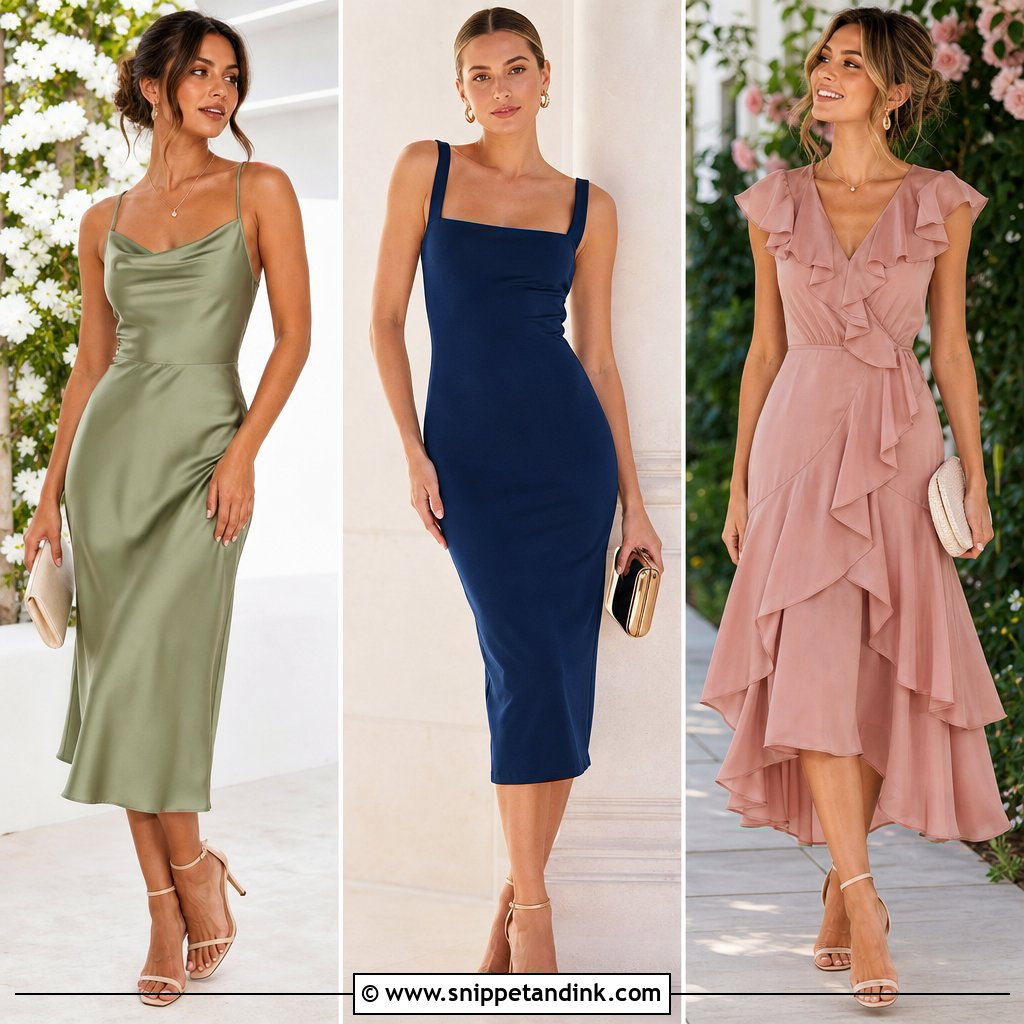
20. Sequin Skirt And Blazer Wedding Attire
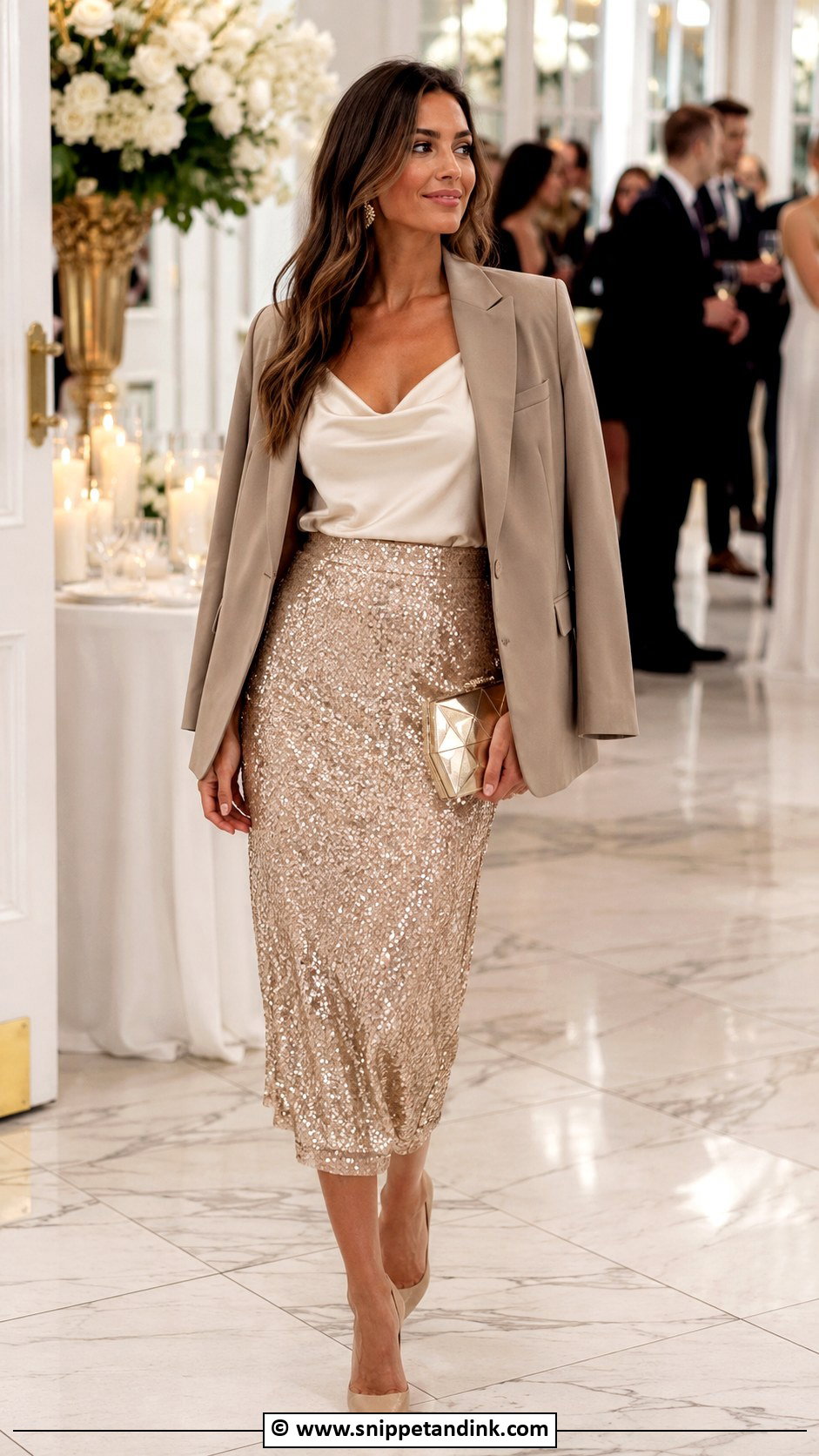
Sequins at a wedding need a counterweight, and a tailored blazer is the one I trust. A midi sequin skirt in champagne, pewter, bronze or navy paired with a plain satin top keeps the sparkle below the waist and the top half calm. Sequins scratch the inside of your arms when you walk, so a blazer also protects you from that. Pointed heels and quiet earrings round it out for winter weddings and cocktail receptions.
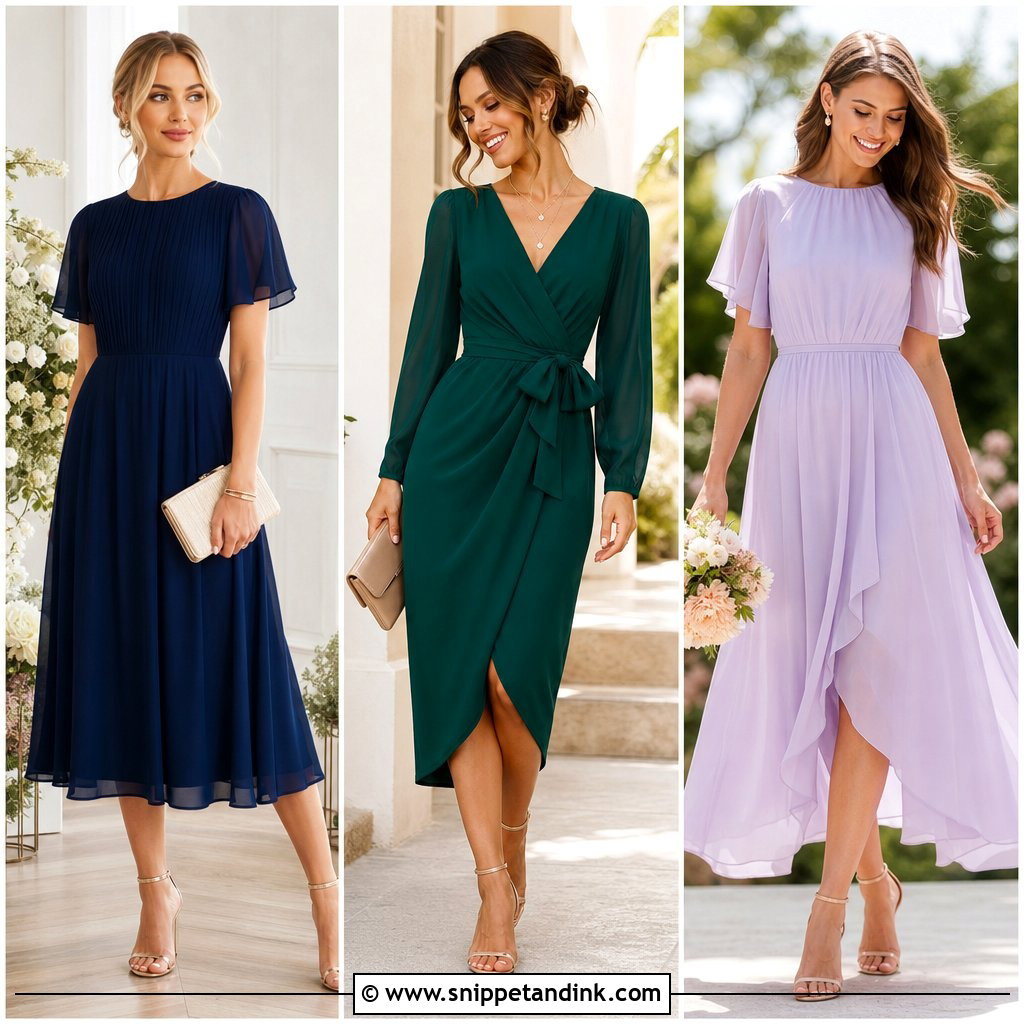
21. Long Sleeve Dress Wedding Attire
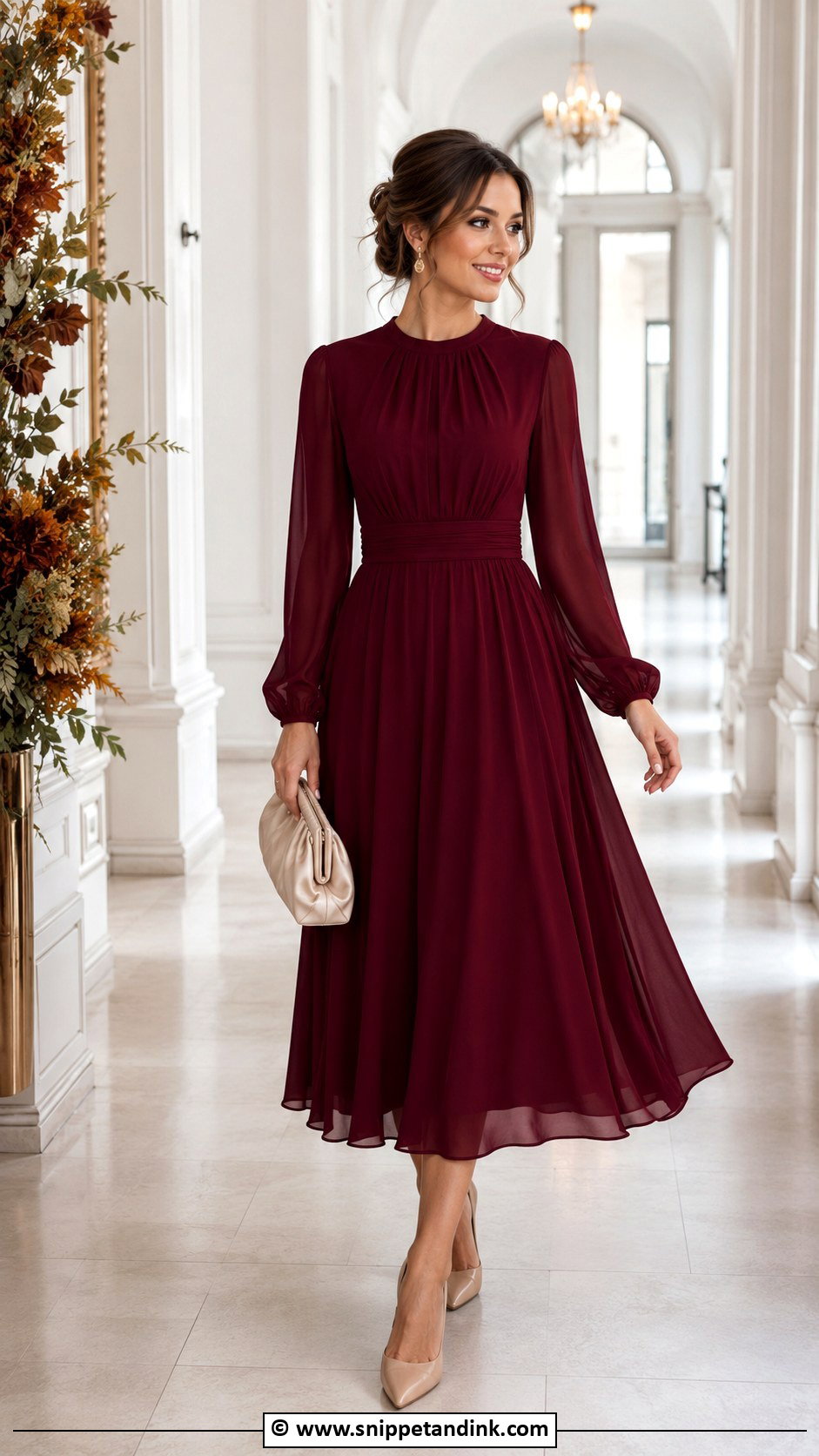
Long sleeves are the most practical choice for cool-season weddings and over-air-conditioned venues, because you won’t need a wrap that ends up on the back of a chair. Sheer chiffon or soft crepe sleeves keep it dressy. Raise your arms in the fitting room; a set-in sleeve that’s too narrow will lift the whole dress when you hug or dance. Burgundy, navy, emerald and dusty mauve suit fall weddings, winter receptions and formal dinners.
22. Tea Length Dress Wedding Attire
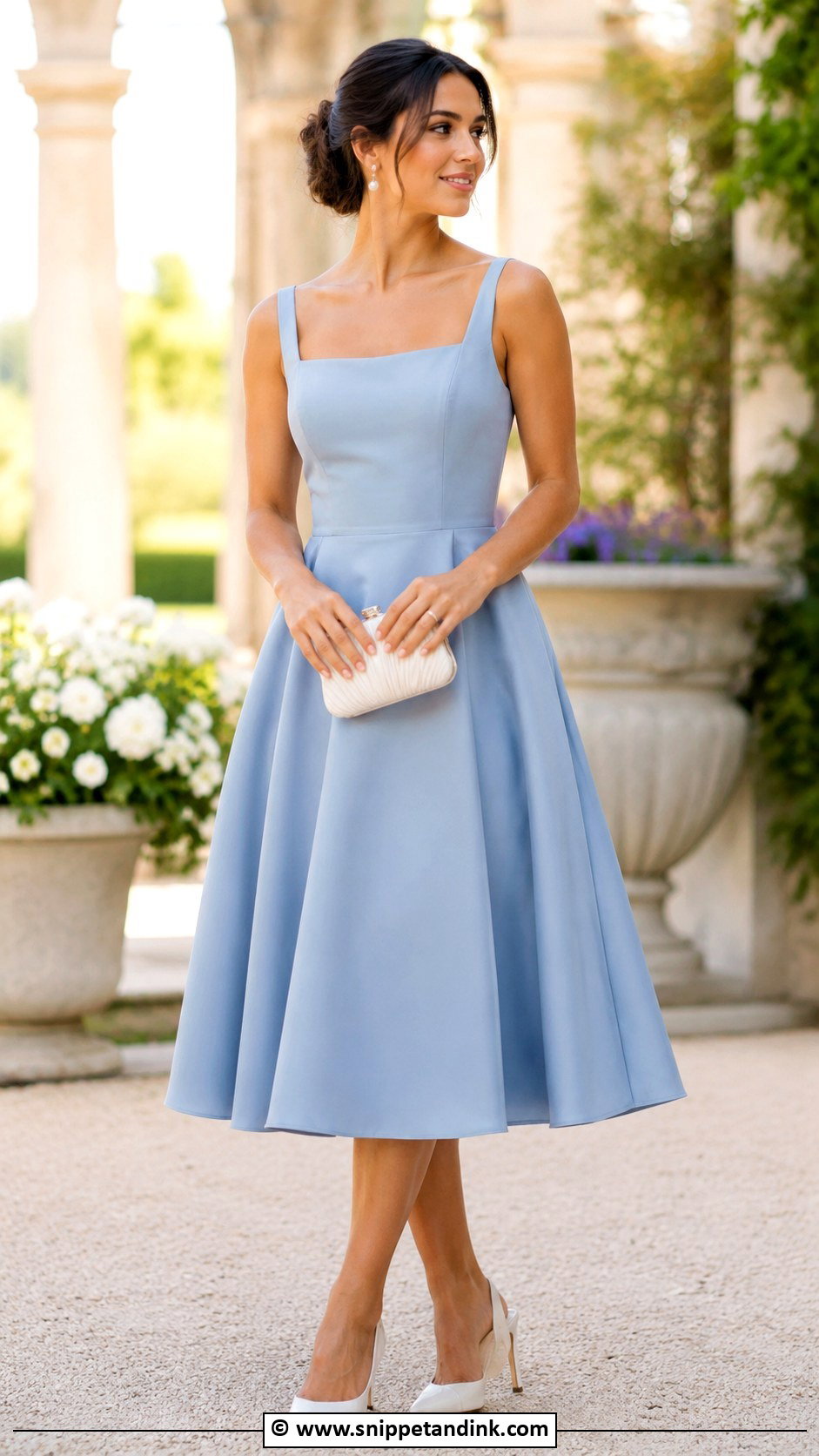
Tea length, falling between the knee and the ankle, is the cut I suggest for guests who plan to dance and don’t want to hold up a hem. Structured satin and tulle overlays give it that slightly vintage shape. The length shows your shoes, so pointed pumps, slingbacks or ankle-strap heels make a difference. Dusty blue, rose and olive suit daytime garden venues and formal brunch receptions, with a compact clutch and simple jewelry.
23. Burgundy Dress Wedding Attire
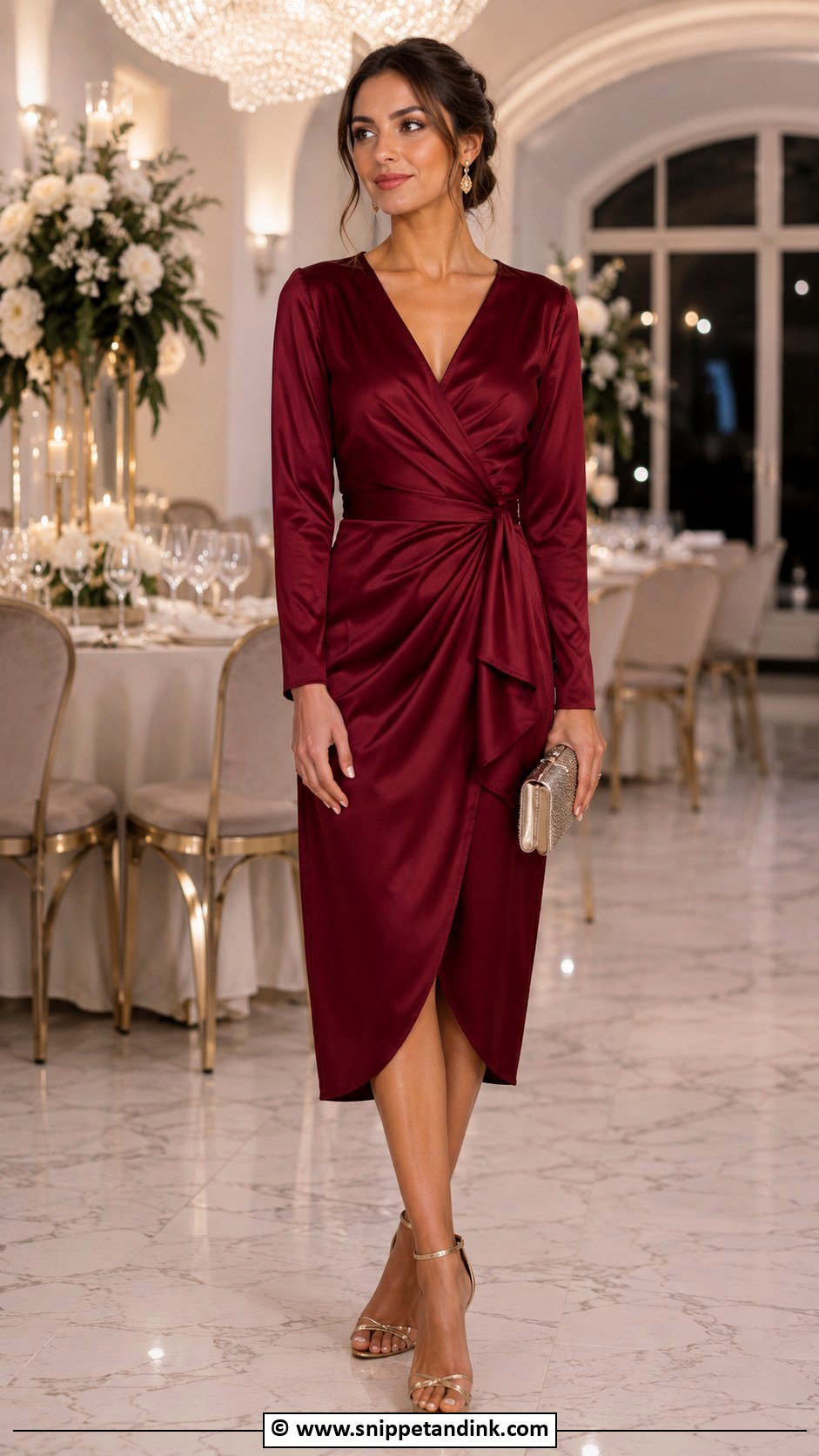
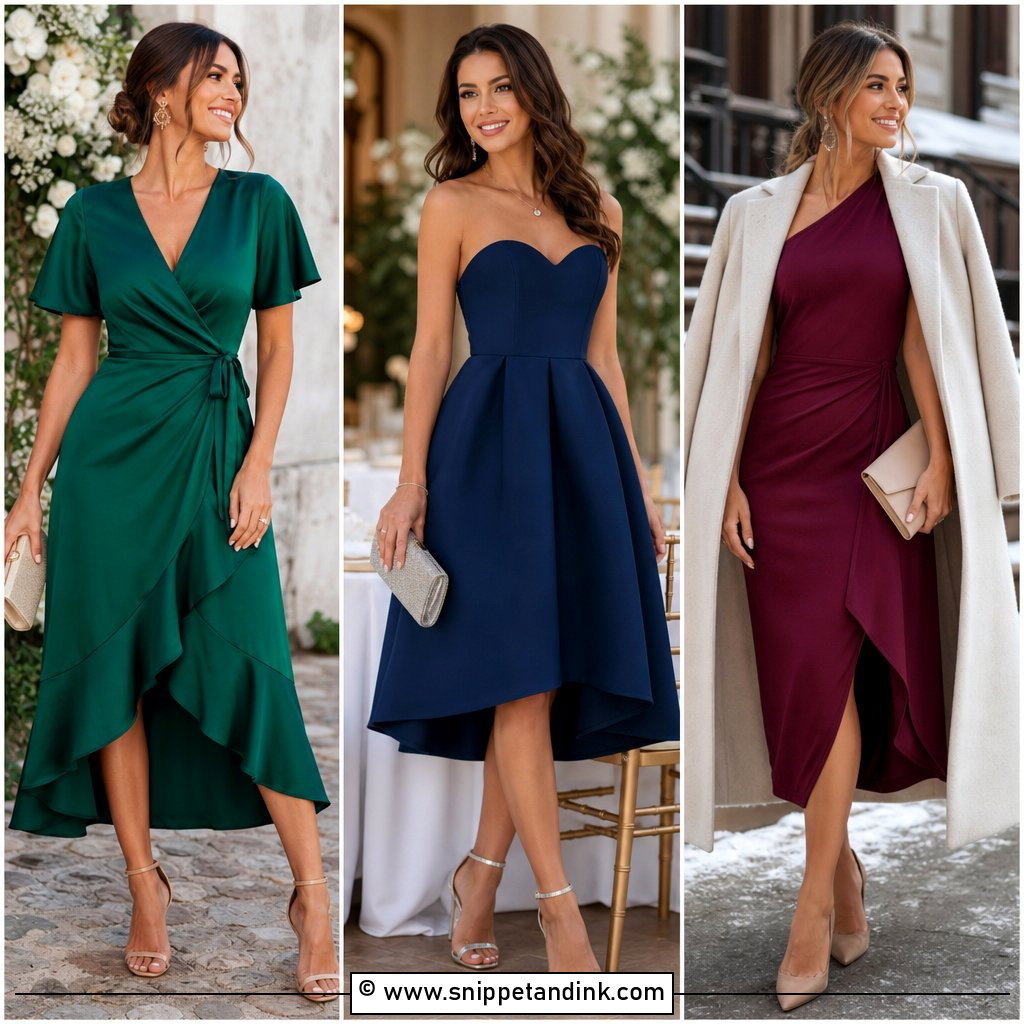
A burgundy dress is the color I turn to when a guest wants something formal that isn’t black. It flatters warm and cool skin alike, which is rarer than you’d think. In satin it looks evening-ready; in velvet or chiffon it suits fall and winter. Pair it with gold, nude or blush accessories, and keep makeup polished rather than dark so the whole look doesn’t sink at a candlelit vineyard or hotel reception.
24. Sage Green Dress Wedding Attire
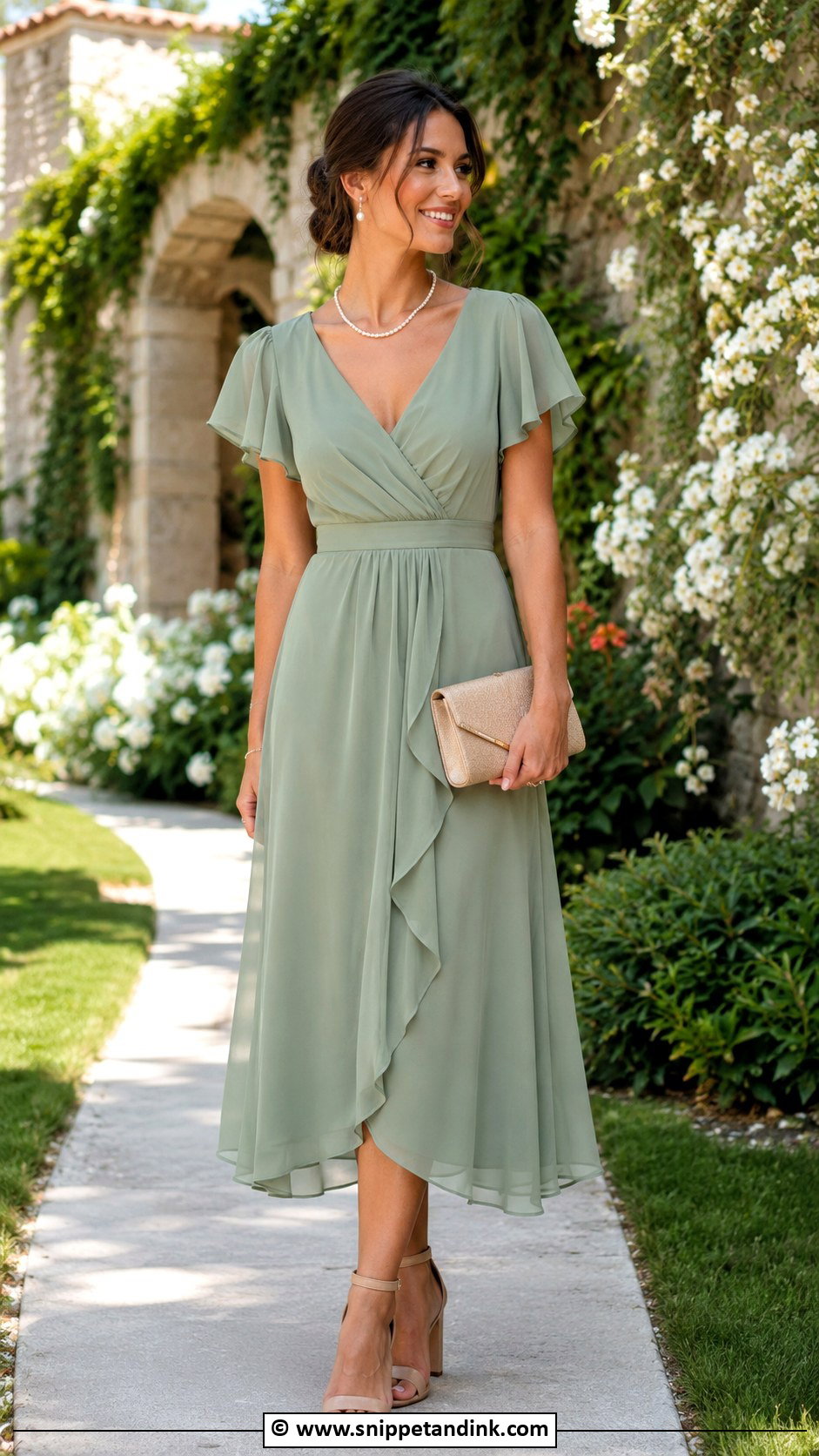
Sage is the color I reach for when a guest doesn’t know the season’s palette yet, because it sits calmly next to almost any bridal party scheme. A sage midi in chiffon, satin or crepe works in spring and early fall alike. Watch the undertone: grey-leaning sage can look washed out on very fair skin, and a warmer olive sage often fixes that. Gold or pearl accessories and a low block heel suit garden ceremonies and rustic venues.
25. Navy Blue Dress Wedding Attire
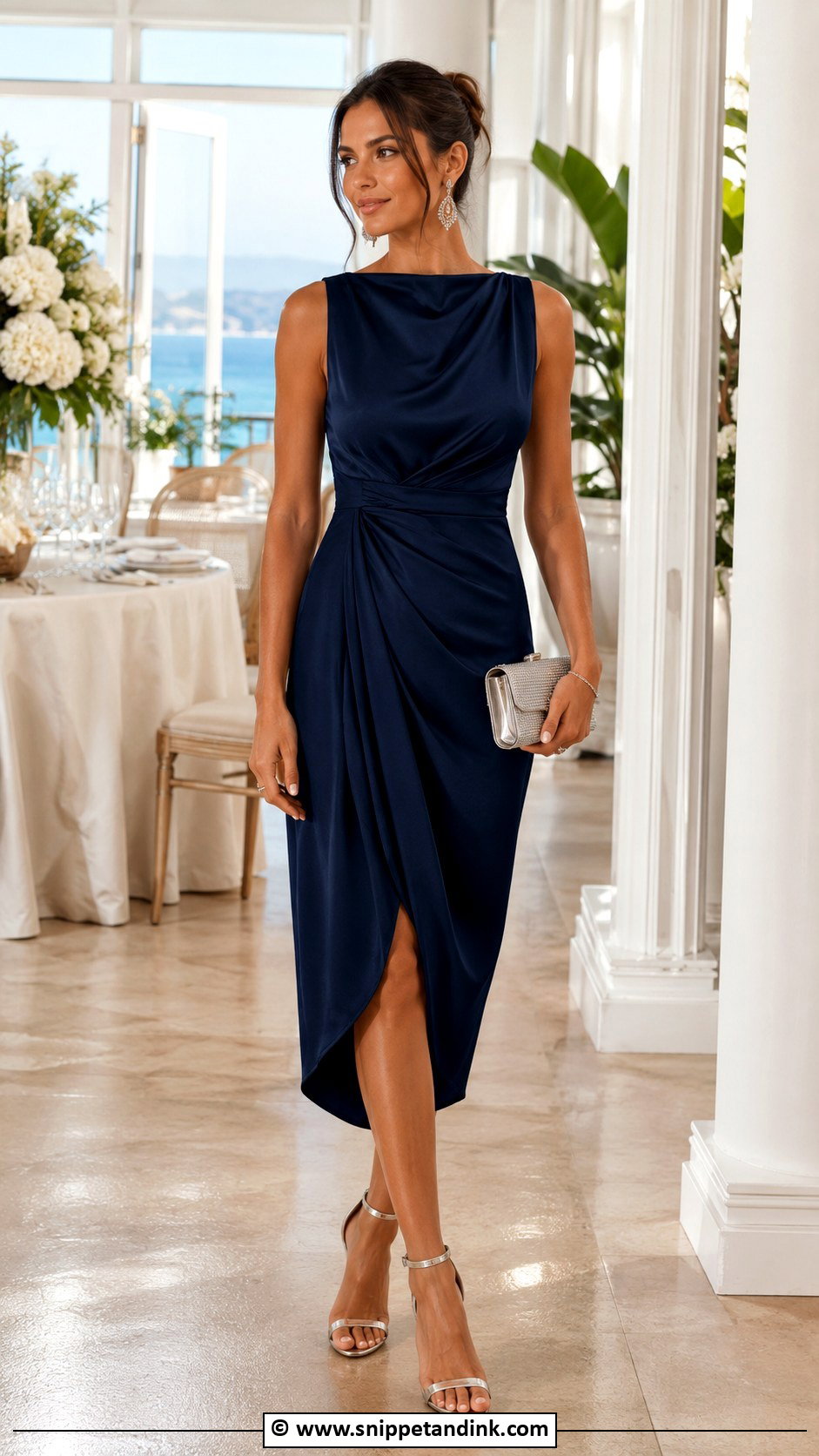
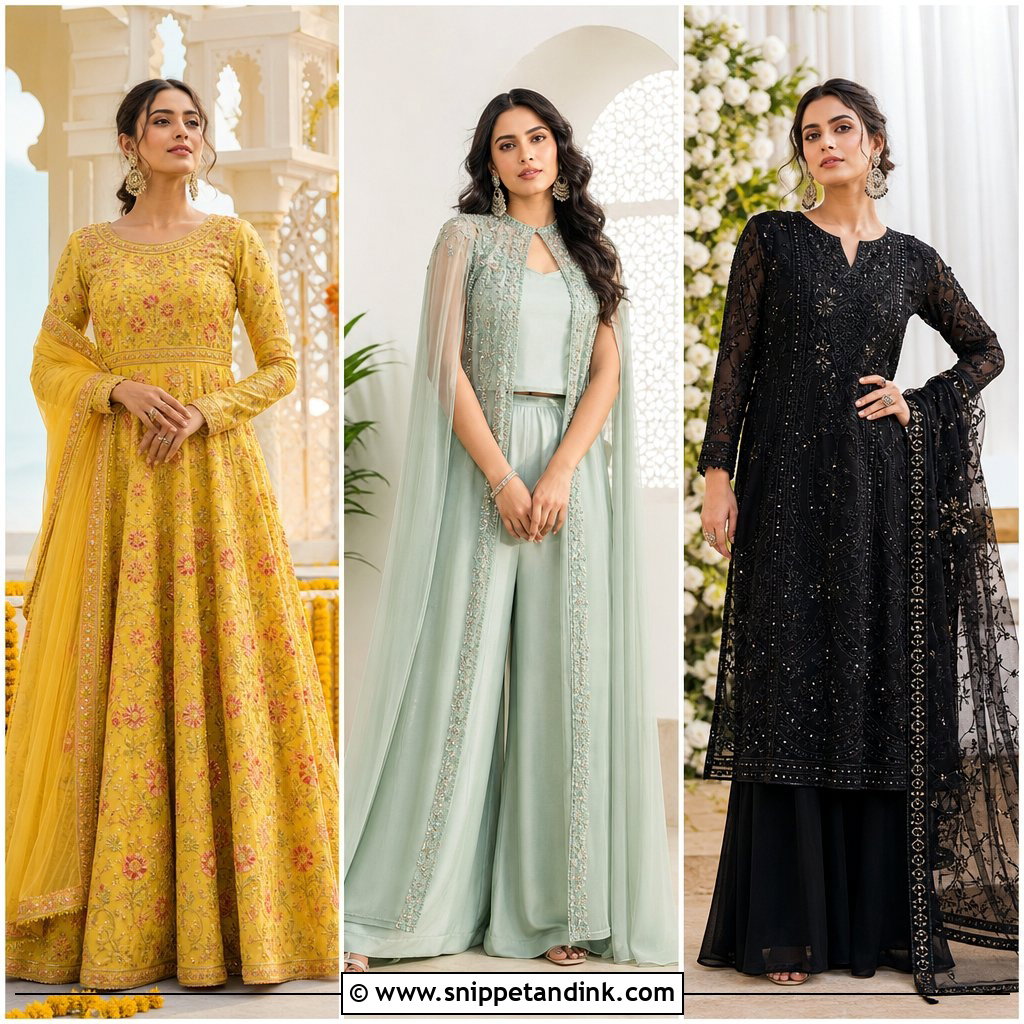
Navy is the outfit I tell guests to buy if they own only one wedding dress. It reads formal at night and softer than black in daylight, and almost every accessory metal works with it. A satin maxi suits evening; a lace or crepe midi suits daytime. Navy does show lint and pet hair, so put a lint roller in your bag. Coastal venues, hotel weddings and formal receptions all welcome it, and it’s easy to repeat.
26. Emerald Green Gown Wedding Attire
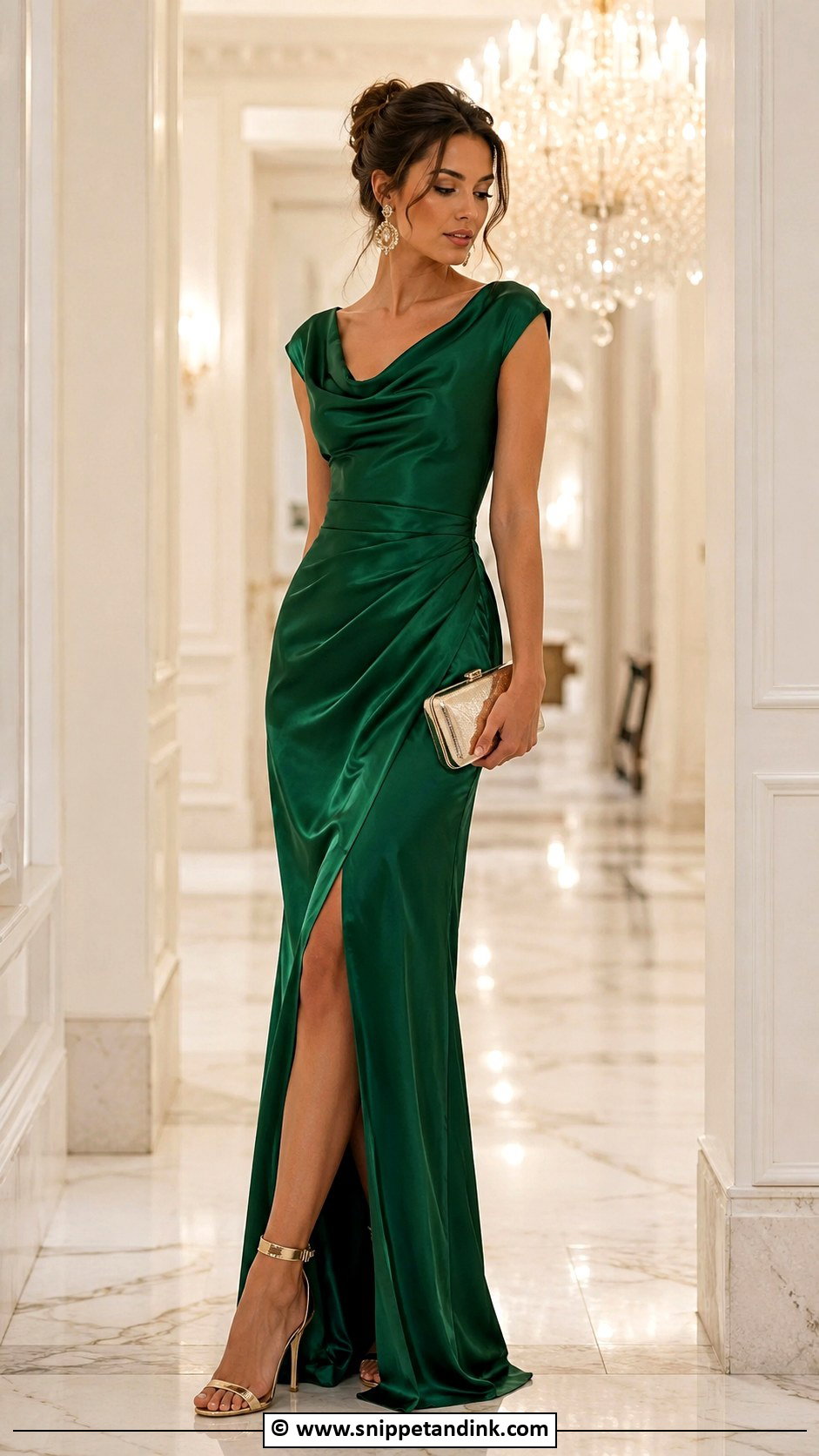
Emerald holds its depth under flash and low light, which is why I love it in a floor-length gown for black tie or winter weddings. It looks richest in satin or velvet, where the fabric catches light along the folds. Choose a clean neckline and a defined waist so the color carries the design. Gold heels, a metallic clutch and simple earrings are enough. Keep the rest pared back for ballroom receptions and formal evening ceremonies.
27. Blush Pink Dress Wedding Attire
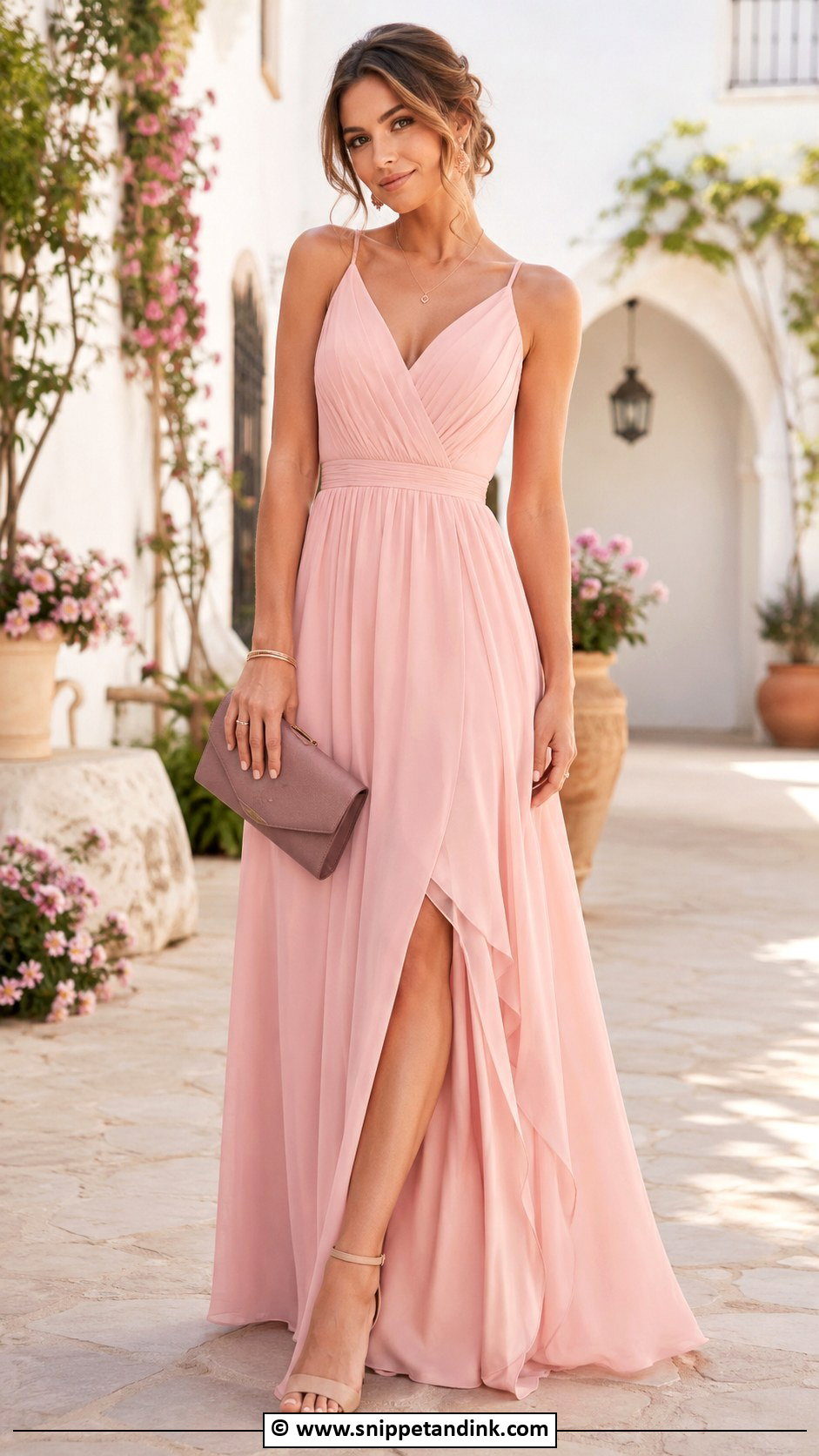
Blush works for a guest only when it is clearly pink, not ivory with a hint of warmth. I hold the fabric next to a sheet of white paper in daylight; if the pink disappears, I put it back. A floral blush print solves the question entirely. Chiffon, satin and lace all suit it. If the dress is very pale, deeper accessories in mauve, taupe or bronze give contrast for spring ceremonies and daytime garden receptions.
28. Plus Size Wedding Guest Attire
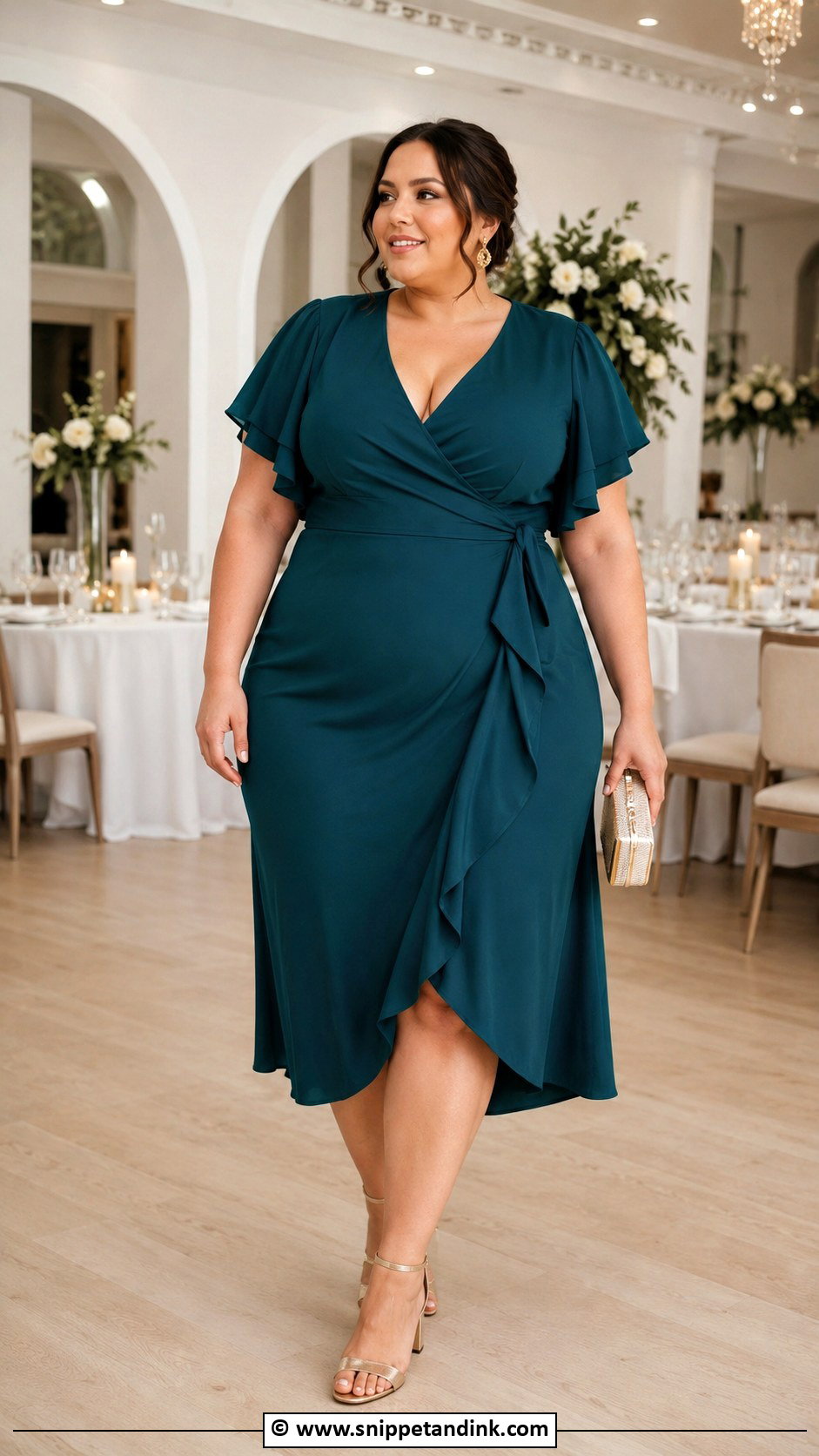
A great plus size wedding guest outfit starts with support, and that means trying it on with the bra you’ll wear, not a fitting-room one. Wrap dresses, fit-and-flare midis, empire maxis and tailored suits with some stretch all give shape. Ponte and heavier crepe skim without clinging, and a lined chiffon moves well. My one firm opinion: don’t size up into something shapeless to hide. A well-fitted piece always looks more confident from the ceremony to the last dance.
29. Petite Wedding Guest Attire
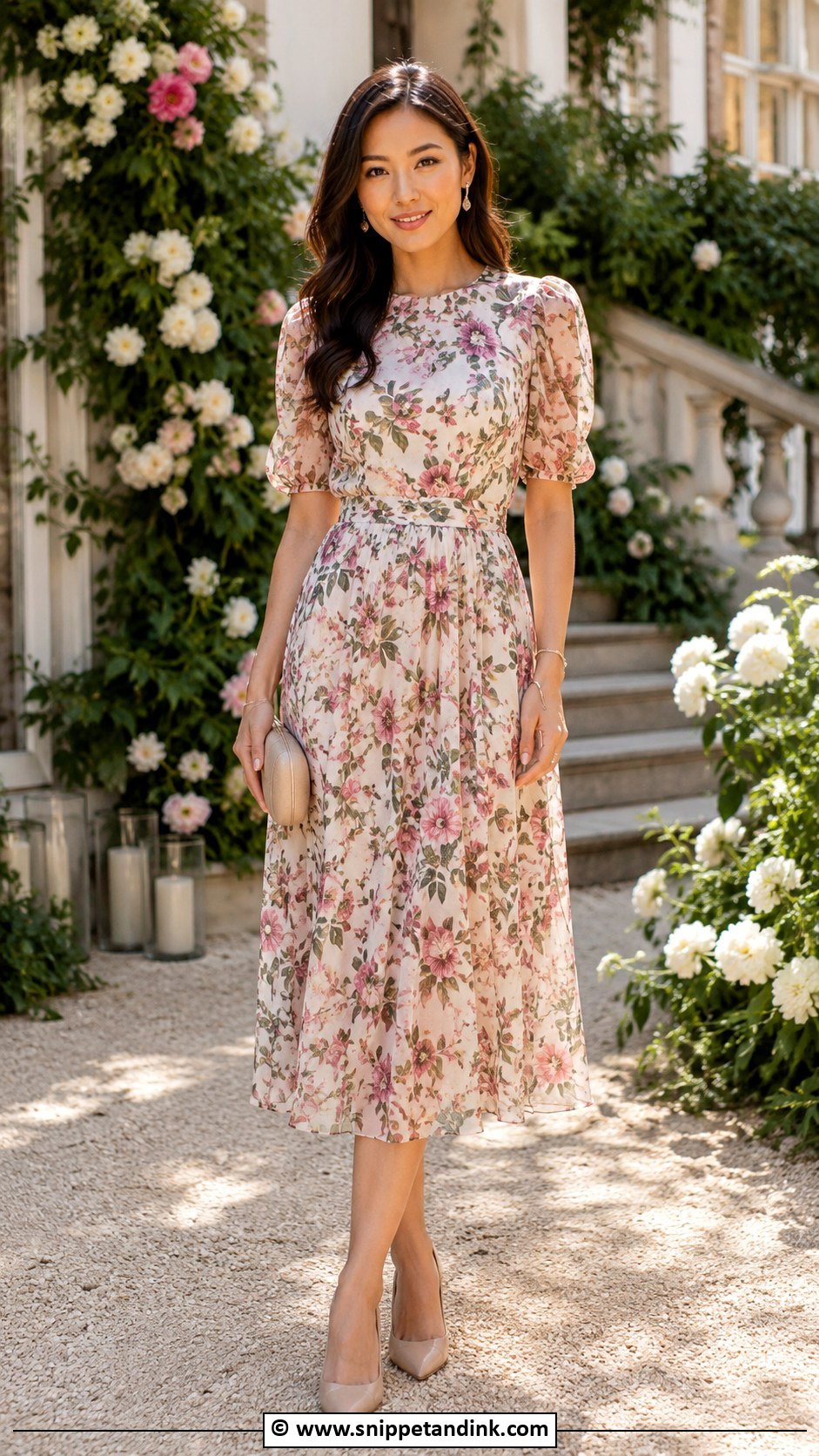
With petite clients, I measure where the midi hem lands before anything else. Below the knee or near the ankle lengthens the leg; mid-calf, at the widest point, shortens it. Column maxis with a small heel, wrap dresses and high-waisted skirt sets all help. Overlong sleeves and bulky layers swallow the frame, so I usually have sleeves shortened too. Pointed nude shoes and vertical seams finish the line at any dress code.
30. Casual Wedding Guest Attire
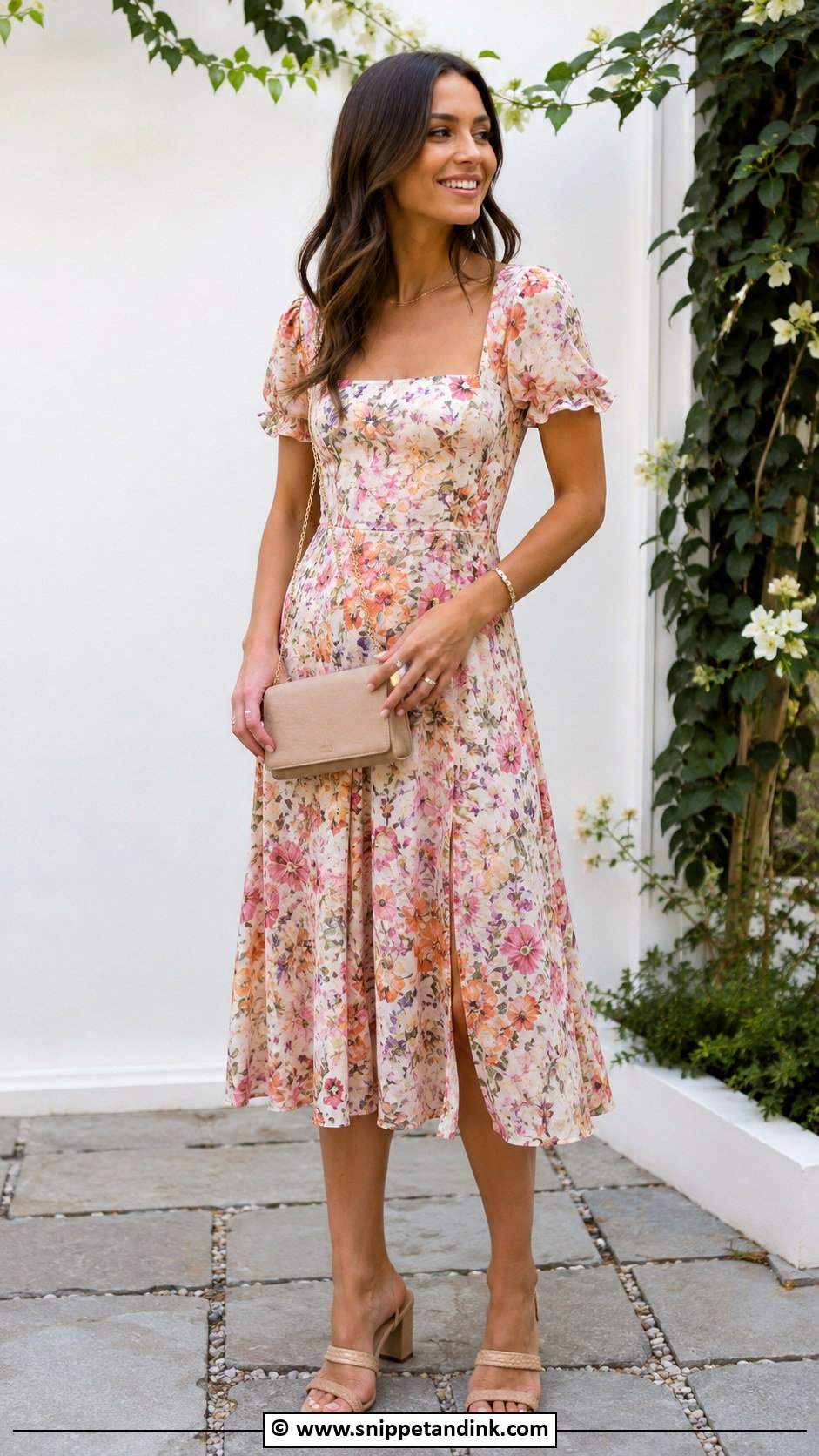
Casual wedding attire still means you dressed for someone else’s day. A printed midi, a linen-blend jumpsuit or soft trousers with a pretty blouse all qualify. Denim and flip-flops don’t, unless the couple specifically asks for them. Breathable fabric and comfortable shoes matter most, since casual weddings tend to be outdoors and on your feet. A neat hairstyle and a small bag show the effort for backyard and daytime ceremonies.
Alterations That Make a Guest Outfit Look Made for You
Most of the difference between an outfit that looks bought and one that looks chosen is alteration, and the work is usually small. I’d allow two to three weeks before the wedding, longer in the busy summer season when tailors get booked up.
- Hems taken to your exact shoe height. Bring the shoes to the appointment.
- Straps shortened so a slip or one shoulder dress doesn’t drift.
- Trouser and jumpsuit lengths set for heels, so the fabric breaks just once over the foot.
- A waist taken in by a centimeter or two. It changes the line more than you’d guess.
- Bra cups or hidden snaps sewn into backless and halter styles.
What I don’t recommend altering is the shoulder seam of a jacket or the bust of a structured gown. Those are expensive, and the result rarely looks original. Buy for the shoulders and the bust, then tailor everything else.
Sitting Through a Long Reception in Satin, Crepe or Chiffon
A wedding is usually eight hours or more of standing, sitting, eating and dancing, and fabric behaves differently over that time. Before buying, I ask clients to sit in the outfit for five minutes in the fitting room, then stand and look in the mirror.
Satin and linen blends show creases across the lap. Crepe and good jersey recover. Chiffon wrinkles a little but hides it in movement. Velvet crushes where you sit. If you know you’ll be seated through a long dinner, a crepe or knit will look fresher in the late photos than a slip dress. Pack a small fashion tape strip, a safety pin and blotting papers in your clutch, and you’ll fix most small problems without leaving the table.
A Closet Check Before the RSVP Goes Back
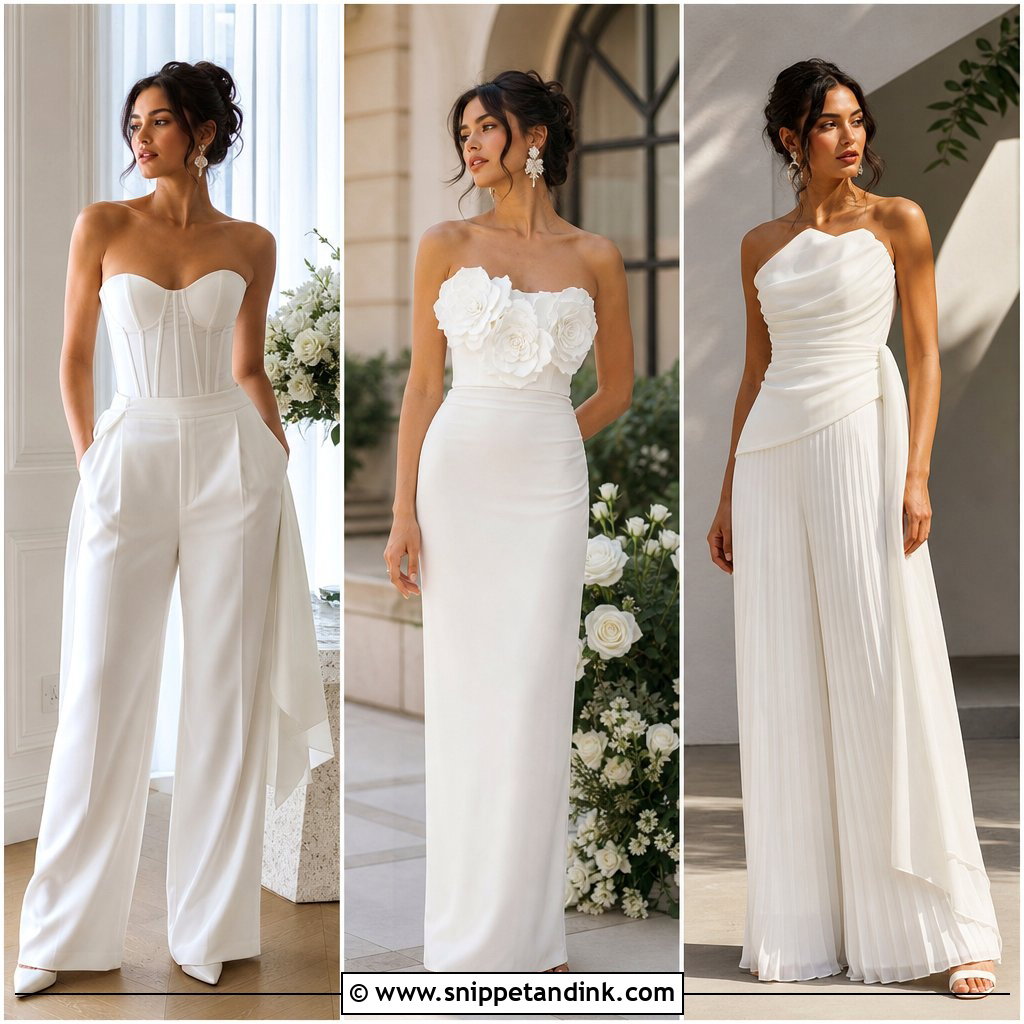
Every outfit above can be right or wrong depending on the invitation, so start there and work outward to fabric, color and shoes. Steer clear of white and anything too casual, and make sure the fit holds when you sit, dance and hug. If you only fix one thing before the wedding, fix the hem for your actual shoes. That small alteration changes how the whole outfit looks on the day.
You'll Like These Ideas:


Leave a Reply