
An Indian wedding asks a lot of a guest’s wardrobe. There may be a haldi in the morning, a mehendi or sangeet that runs late, then the ceremony and a reception, each with its own mood and often its own dress code. When I dress guests for these weekends, I start with the event rather than the outfit: will you be sitting on the floor, dancing, standing for hours, or getting splashed with turmeric? The twenty suits below run from the classic Anarkali and straight silk suit to flared shararas, palazzo sets and modern capes, with notes on shoes, jewelry, bags and dupatta styling for each. Adjust colors, sleeve lengths and embellishment to your age, your build and how close you are to the couple.

Planning Five Functions Without Five New Suits
Few guests need a brand-new outfit for every event, and I rarely recommend one. What I do with clients is lay out the schedule first, then decide where the money goes.
- Spend on the ceremony and the reception. They’re the most photographed and most formal events, and the place where heavier silk or embroidery looks right.
- Wear washable cotton or chanderi to the haldi. Anything you wear there may come home with yellow marks.
- For the mehendi, pick something easy to sit in, ideally with short sleeves.
- Choose the sangeet suit for movement: a sharara, Patiala or flared Anarkali.
- Restyle one suit for two events. A straight kurta set worn with a plain dupatta at the mehendi can return at a dinner with a heavier dupatta and different earrings.
Write the plan down with shoes and jewelry beside each outfit. Shoes are the item guests think about last, and the wrong heel on a lawn or a mandap floor undoes a good suit quickly.
1. Floor-Length Anarkali Suit
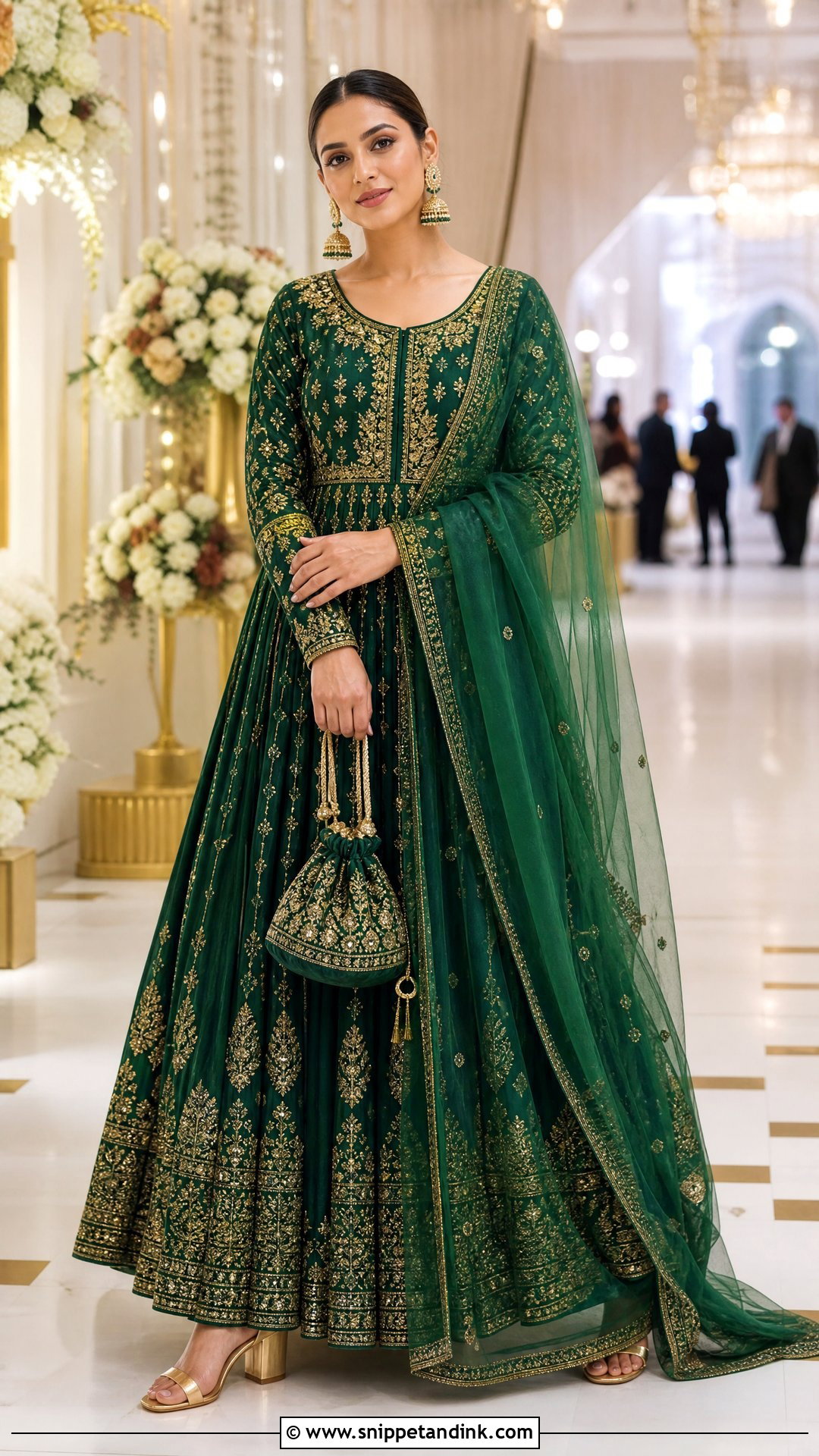
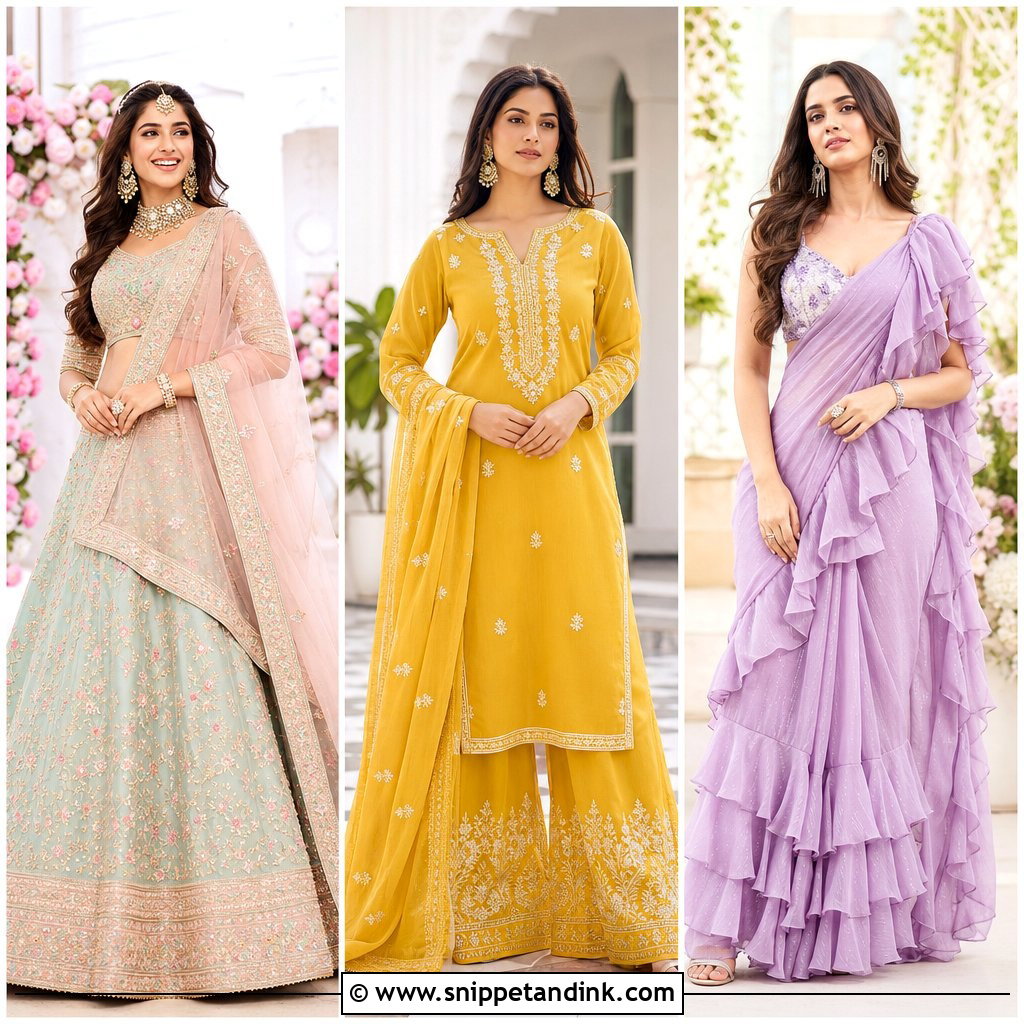
If you’re a first-time guest and nervous about draping, this is the suit I’d send you in. A floor-length Anarkali suit has nothing to wrap and very little to go wrong. Emerald, wine, navy and plum carry an evening ceremony. Look for embroidery concentrated at the neckline and hem; a skirt worked all over gets heavy, and that weight drags the bodice down as the night goes on. Wear a light net dupatta over one shoulder so the front stays visible. The hem should graze the top of your shoe, so have it measured in the block heels you’ll actually wear. With a heavily worked bodice, skip the necklace and let gold jhumkas lead.
2. Pastel Organza Anarkali Suit
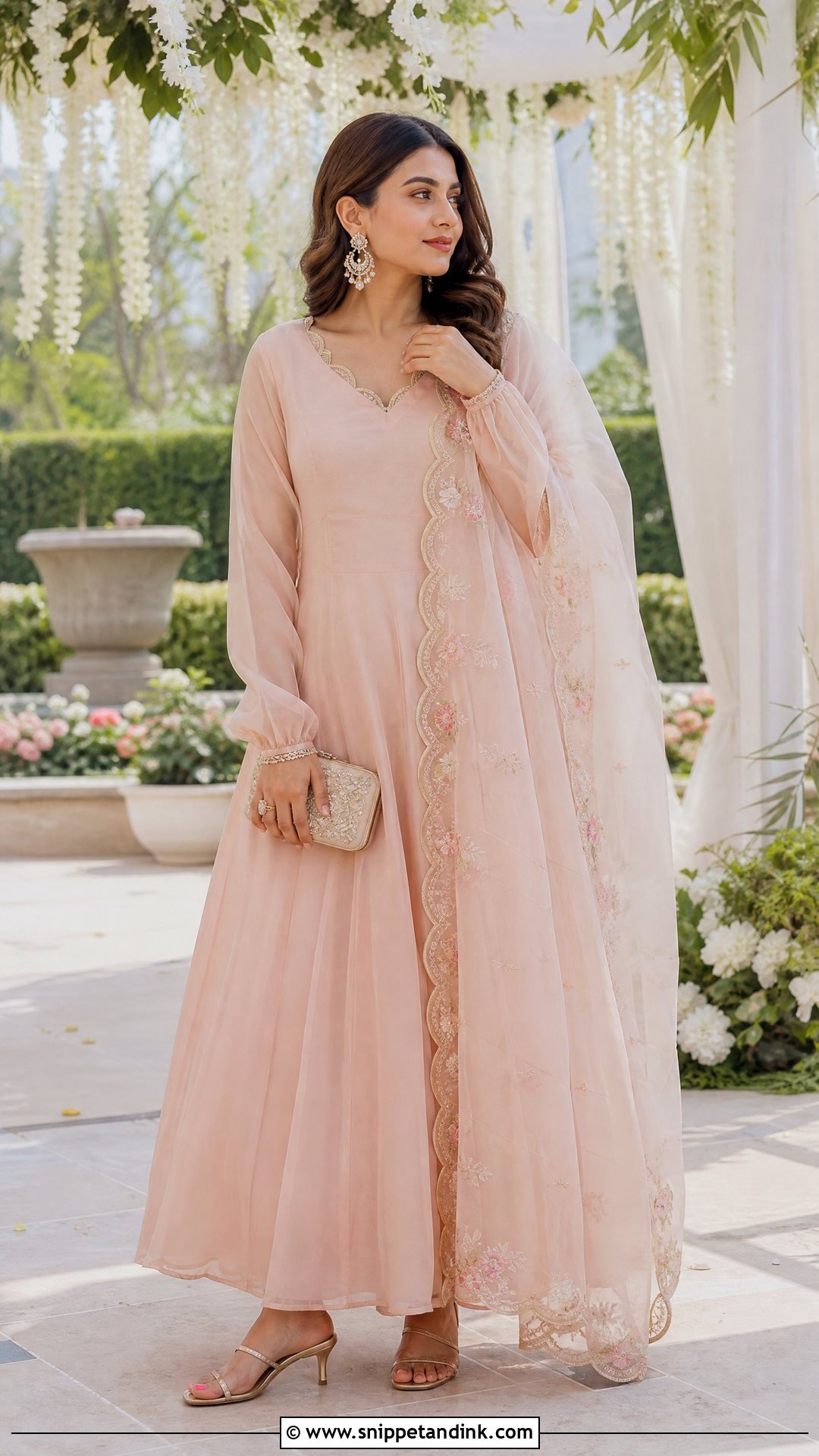
Organza in blush, powder blue or pistachio looks its best in daylight, and daylight is also its weak point. Unlined, it turns sheer under direct sun and camera flash, so an opaque lining isn’t optional. I also look at how the flare is cut. Organza stands away from the body instead of draping, and too many panels can swamp a petite guest. A scalloped organza dupatta, pearl drops and metallic kitten heels keep it light. Pick one jewelry accent, a kundan choker or a delicate maang tikka, and leave the other at home.
3. Velvet Anarkali Suit
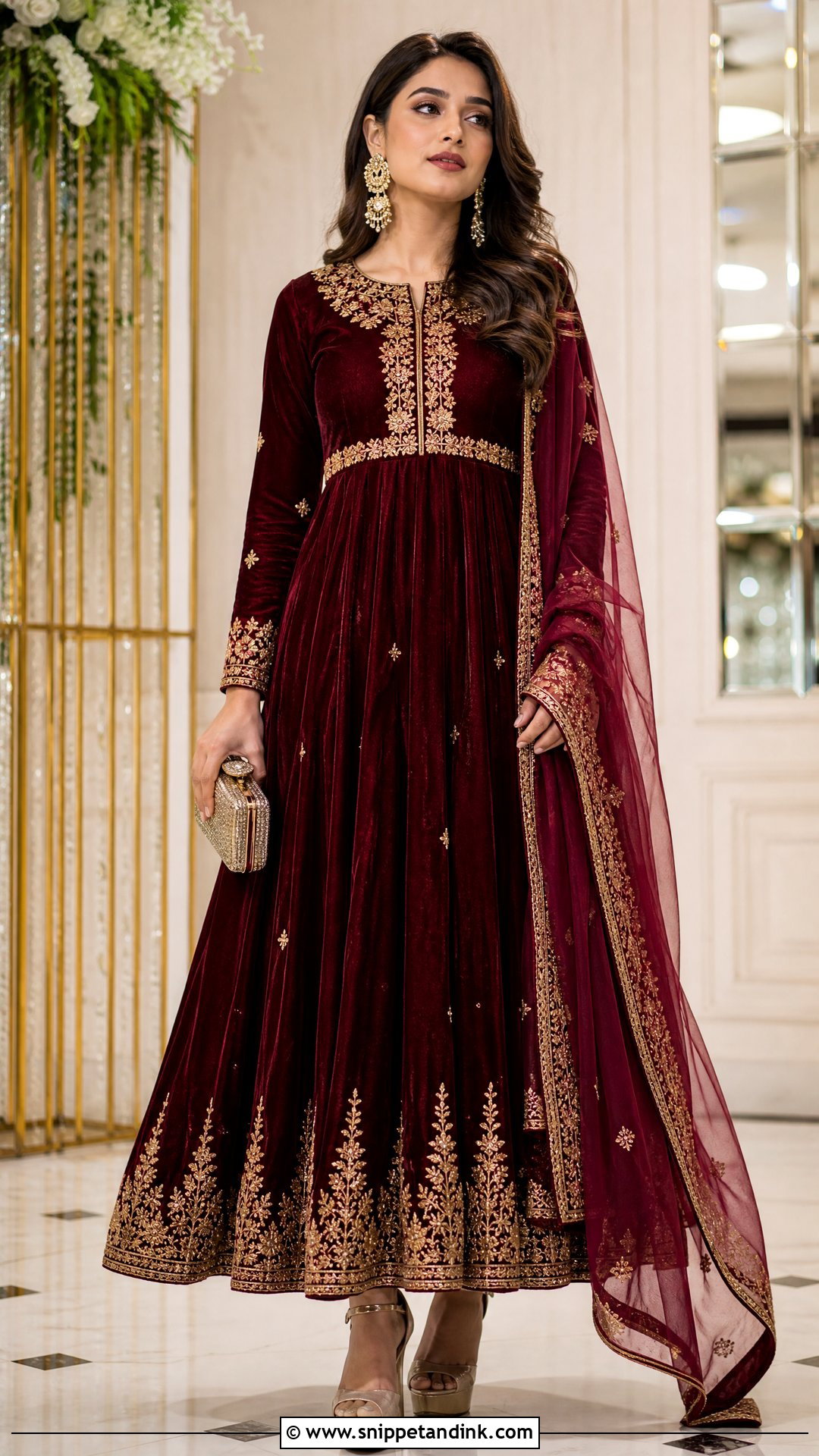
Velvet is a cold-weather fabric, and nothing else. At a chilly outdoor reception it’s a blessing; in a packed hall on a warm night it’s misery within the hour. Maroon, bottle green, midnight blue and aubergine show off its depth. Choose a structured bodice with moderate flare, because velvet panels are heavy and a full circle skirt drags. Pair it with chiffon or net rather than a second velvet layer. The pile also crushes wherever it’s pressed, so hang the suit and steam it before the day; never iron velvet flat. Three-quarter or full sleeves add warmth, and a short necklace suits it better than a stacked set.
4. Chikankari Straight Suit
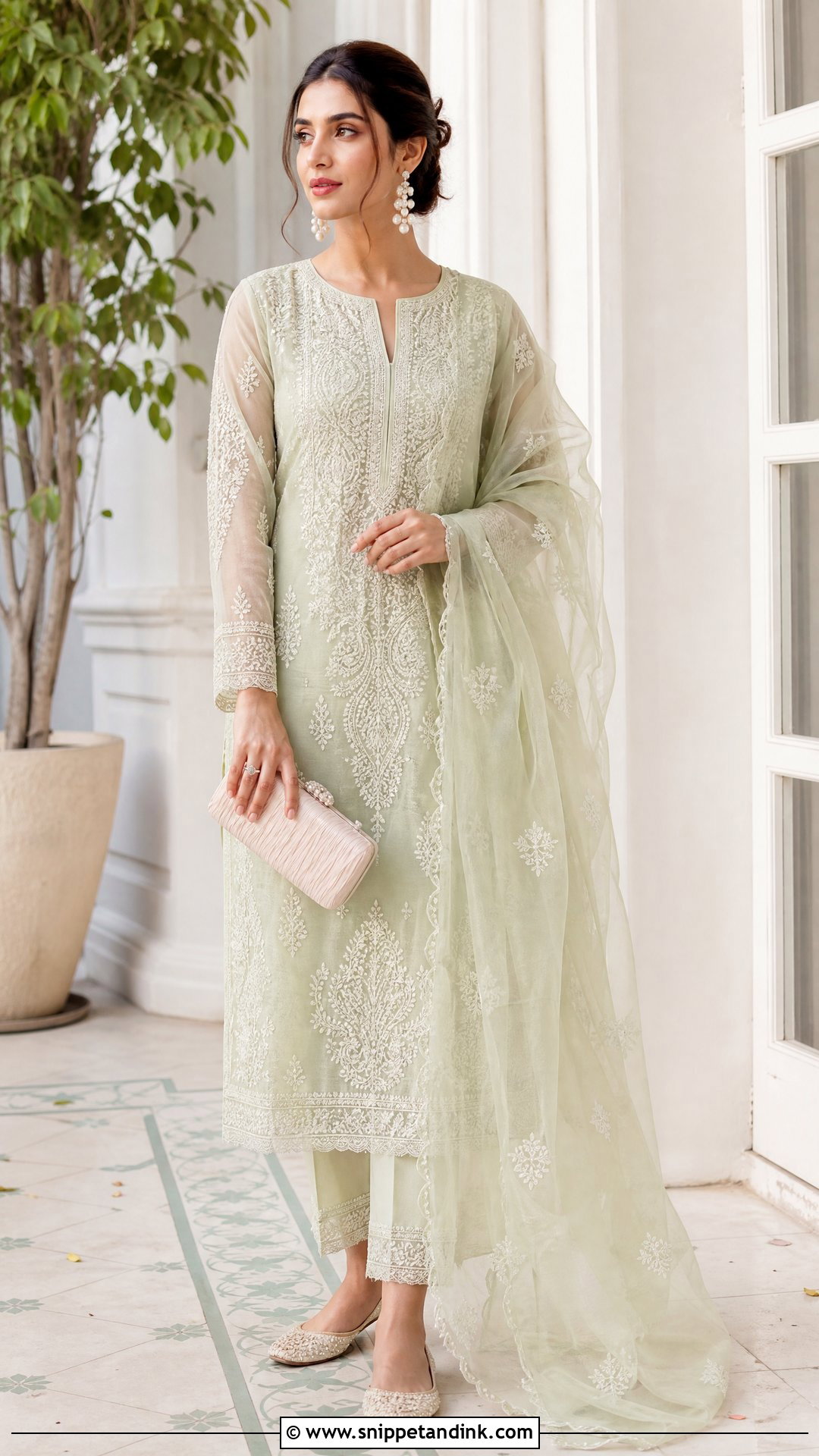
Chikankari is hand embroidery worked in white or tonal thread, and its charm is texture rather than shine. That makes it a smart pick for a guest who doesn’t want to look louder than the family. Ivory, sage, dusty rose and pale blue all suit it. For a wedding, I’d choose a piece with a little mukaish or a few sequins worked into the embroidery, which lifts it out of daywear. Chikankari is traditionally done on fine muslin, georgette or cotton, so the base can be see-through; check the lining in daylight and indoors. An organza dupatta, pearl earrings and pointed juttis finish it.
5. Banarasi Silk Straight Suit
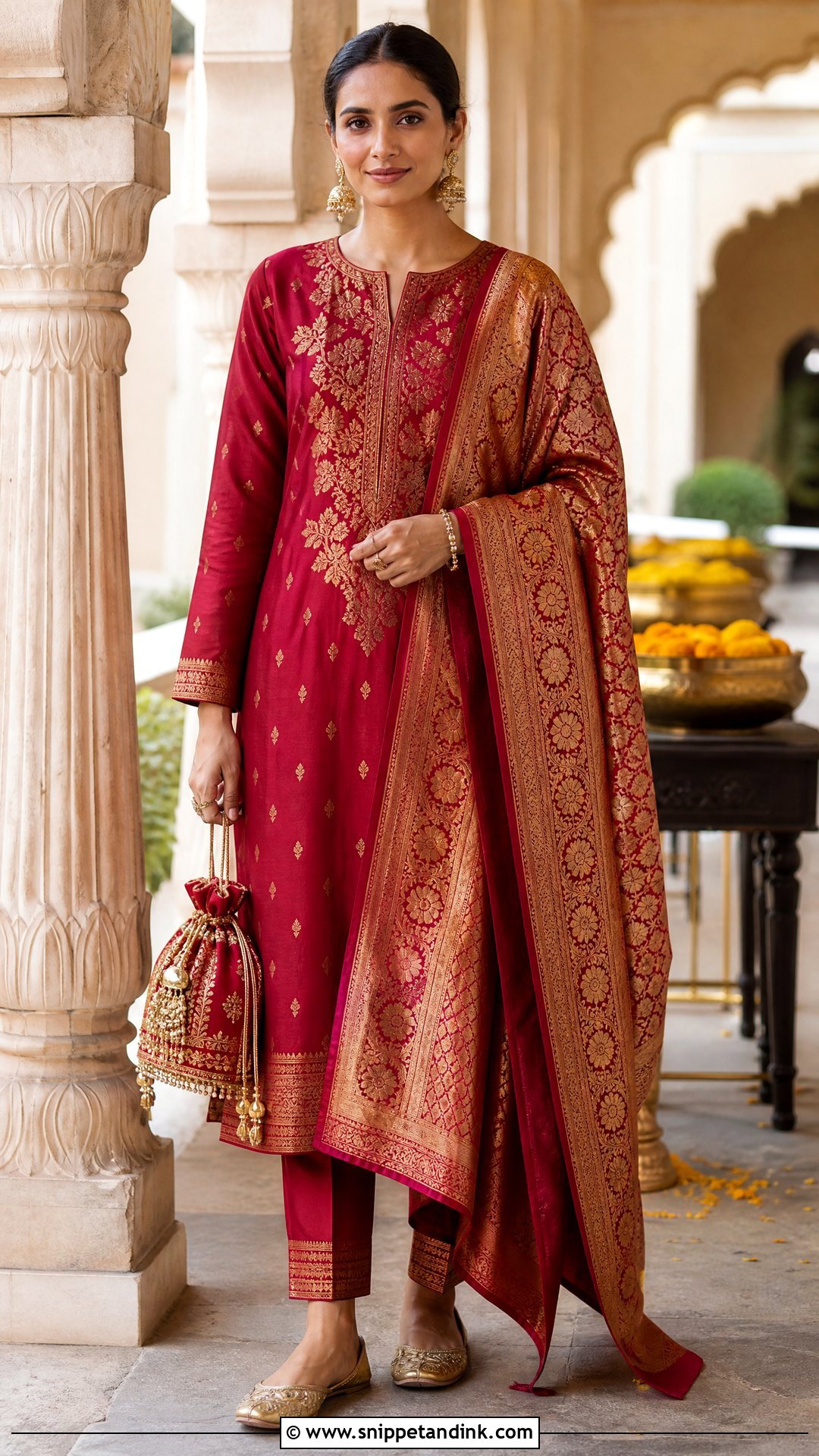
Banarasi silk has its pattern woven into the cloth rather than stitched on top, so the tailoring should stay simple and let the weave show. A ruby, rani pink, royal blue or mustard kurta with gold motifs suits the main ceremony, worn with cigarette pants or a traditional churidar. Proportion is what I watch with Banarasi. Petite guests look better in smaller motifs and an ankle-revealing bottom, while taller guests can carry broad borders and longer kurta lengths. Real silk creases where you sit, so hang it out the night before and accept a little softening by dinner.
6. Embroidered Sharara Suit
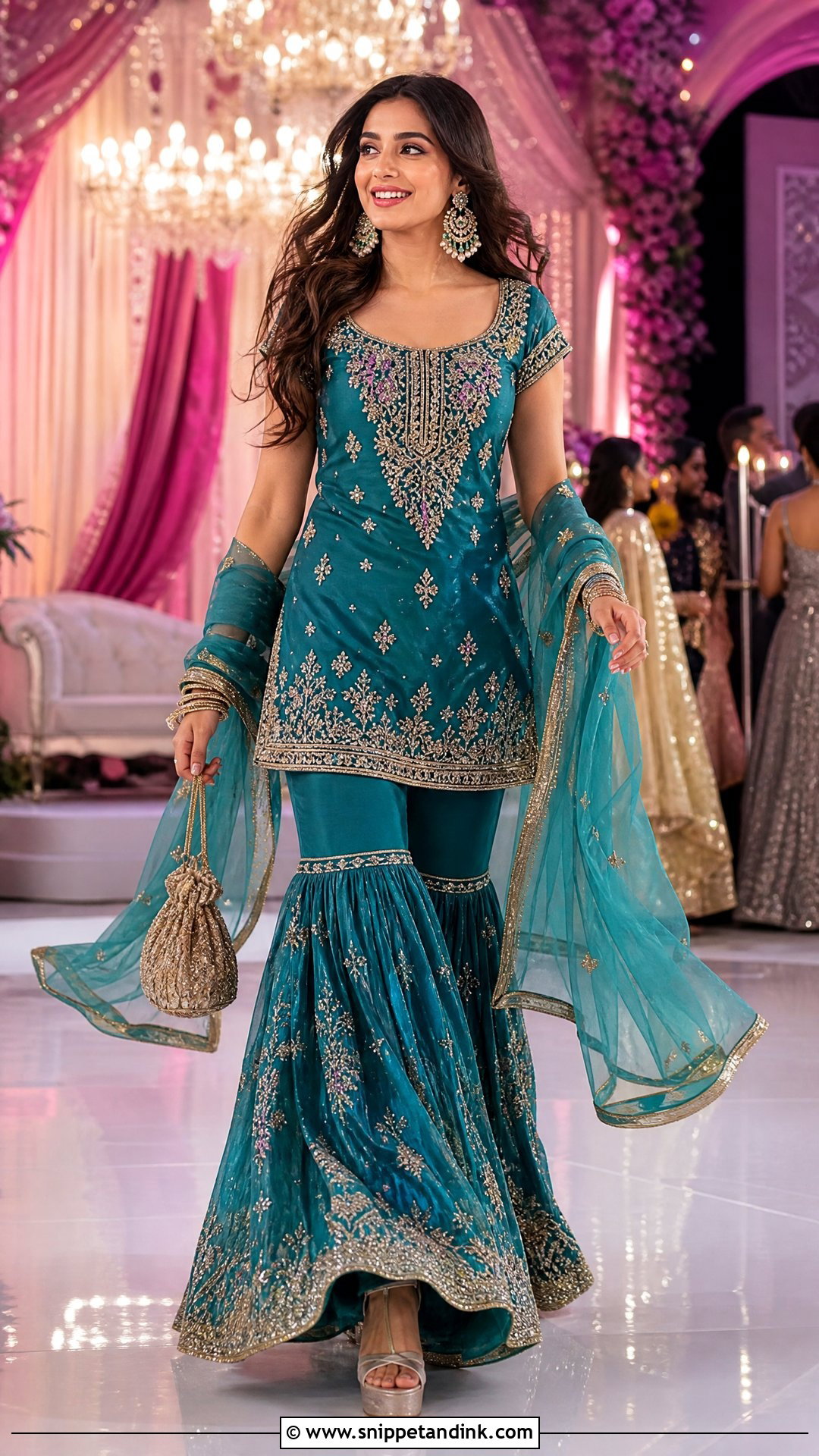
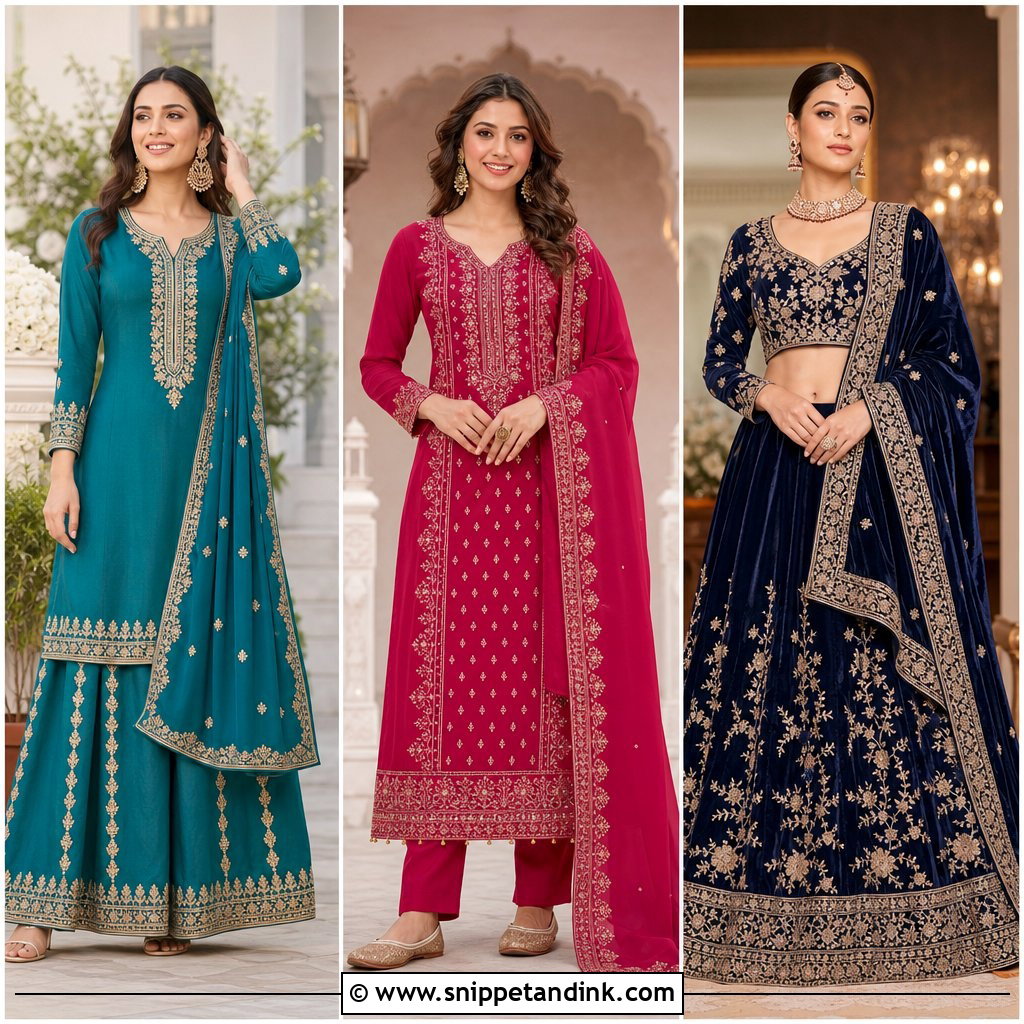
A sharara is two flared legs, not a skirt, which is why it moves so well on a sangeet floor. The proportion that works is a short fitted kurta, a very full sharara and a lighter dupatta. Embroidery on the kurta and along the lower sharara border gives definition without making every piece heavy. Hem length matters more here than on any other suit. I’d fit it in the exact platforms you’ll wear and keep it a finger’s width off the floor, because a hem caught under a heel pulls the whole leg sideways mid-step. Pin the dupatta diagonally before the dancing starts. Coral, mint and rose suit daytime; jewel tones belong to the night.
7. Traditional Gharara Suit
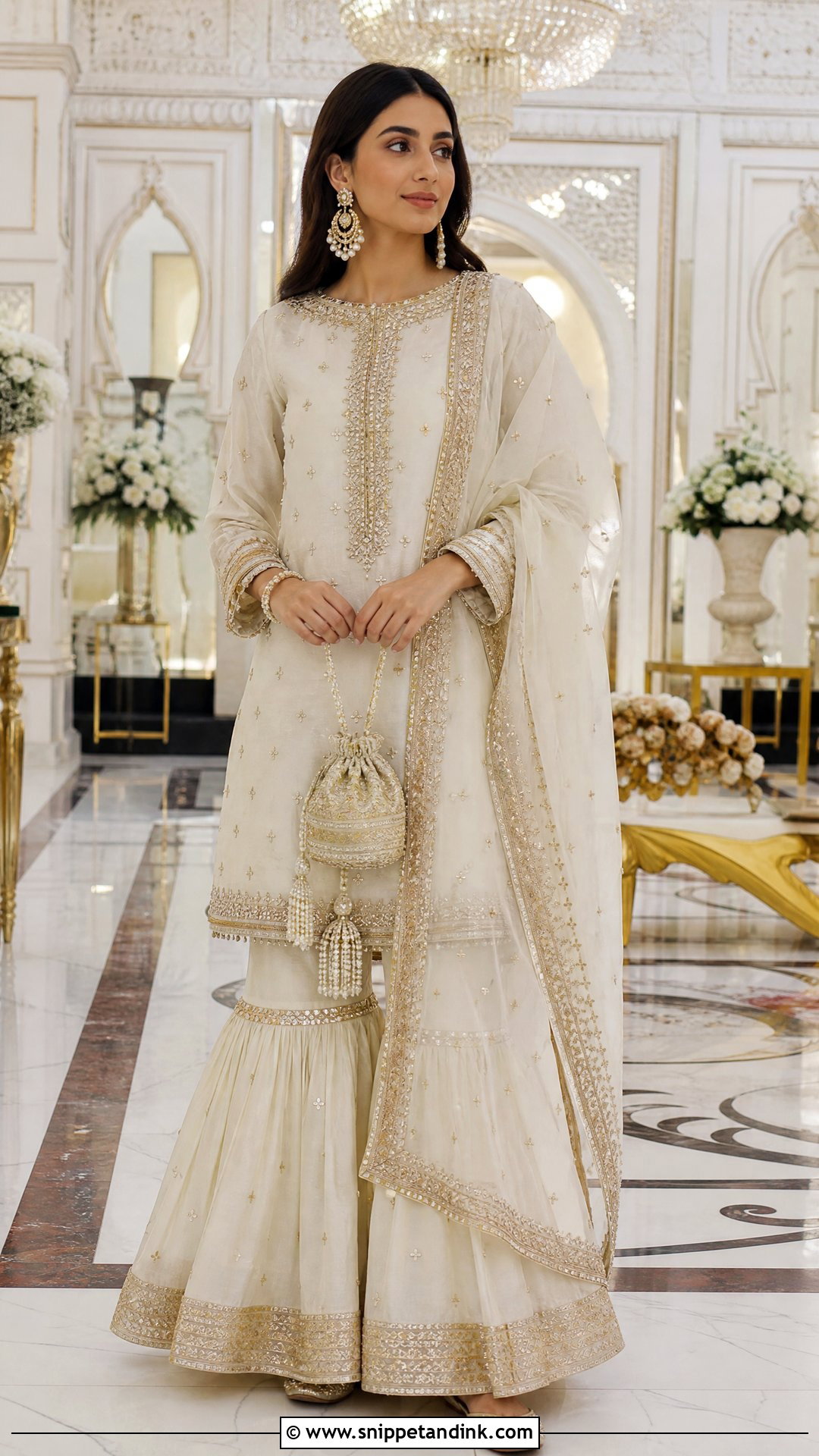
The gharara is the suit I associate most with a nikah or a formal wedding dinner. Unlike a sharara, it’s shaped through the thigh and joins at the knee, where a band of trim hides the seam and the fabric flares out below. That knee join is the whole point, so the kurta must stop at mid-thigh or the detail disappears. Silk, brocade or georgette works above; ivory and gold look classic, teal or rust brings color. Wear a passa or statement earrings, not both. And try a staircase in it before the event, since the gathered lower section is heavy and catches on steps.
8. Floral Palazzo Suit
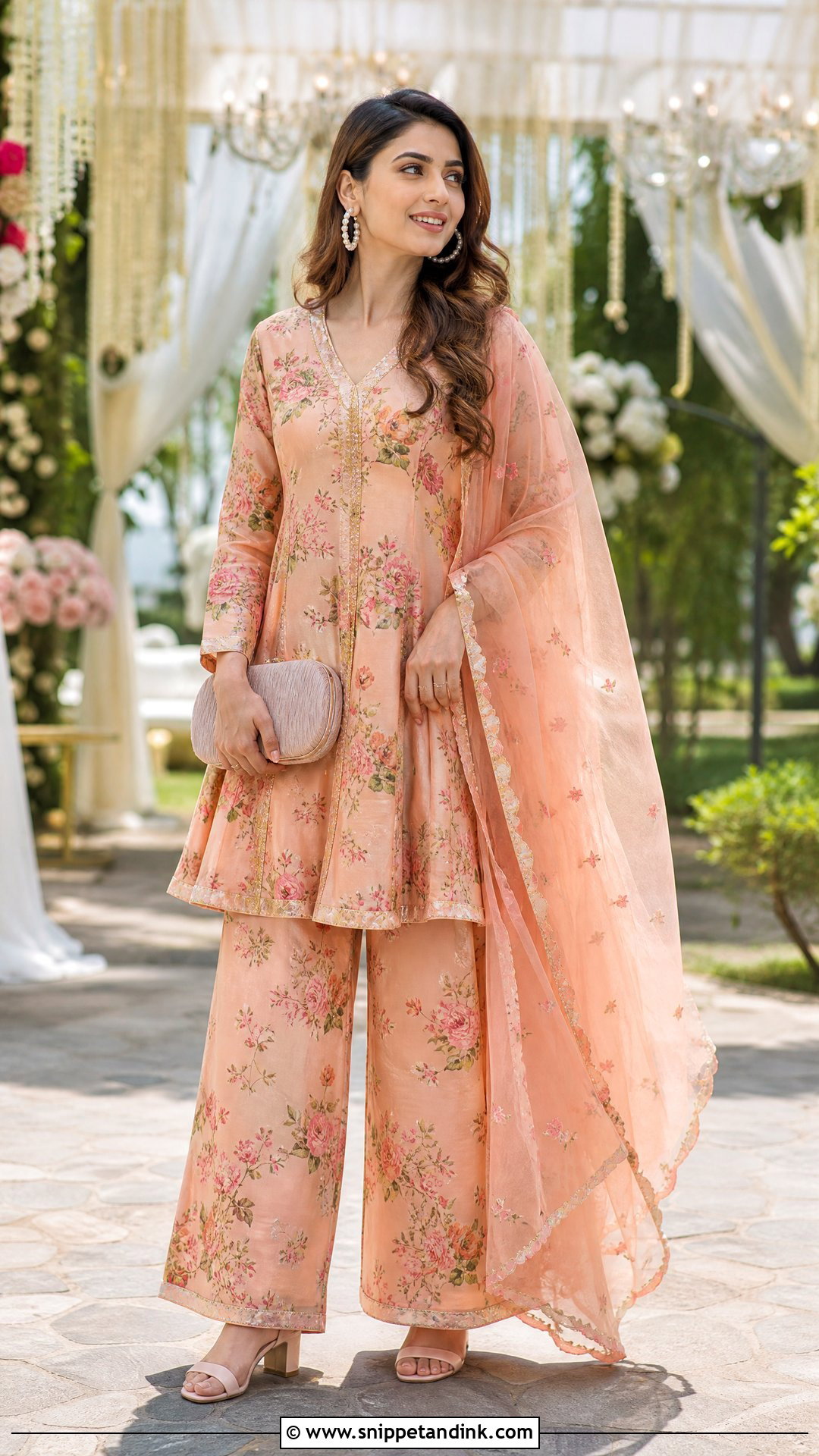
For a daytime wedding outdoors, a floral palazzo suit is cool and forgiving. A straight or lightly flared kurta with printed flowers or appliqué, wide palazzos in the same print or a solid, and an organza dupatta with a narrow border are all it needs. My worry with this one is that it can slide into everyday wear. Tailoring stops that: a kurta ending just below the knee, palazzos with controlled volume and neatly finished hems. Pearl hoops and block heels cope with grass, and a soft braid stays tidy in the heat.
9. Silk Kurta Pant Suit
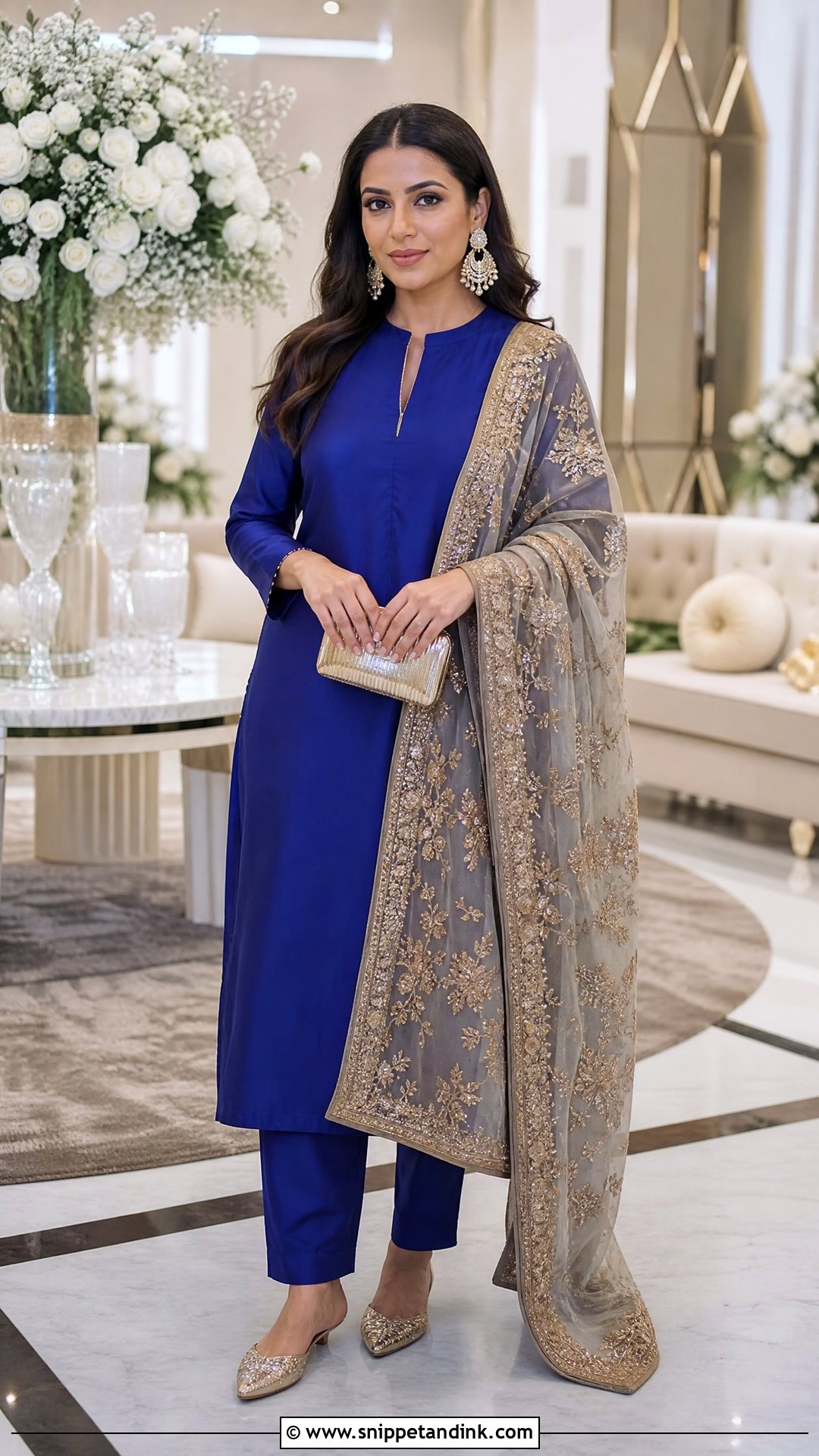
Clean lines are what make this suit modern. A straight silk kurta with side slits, ankle-length tailored pants and a statement dupatta can carry you from an afternoon ceremony to dinner without a change. Cobalt, fuchsia, copper and emerald all hold their color under evening light. Keep gota or zari to the cuffs and neckline. The fit point I check is the side slit: if the pants pull across the hips, the slits splay open and the kurta suddenly looks a size too small. Dress the kurta, pants and shoes in related shades for a longer line, and let the dupatta bring the contrast.
10. Peplum Sharara Suit
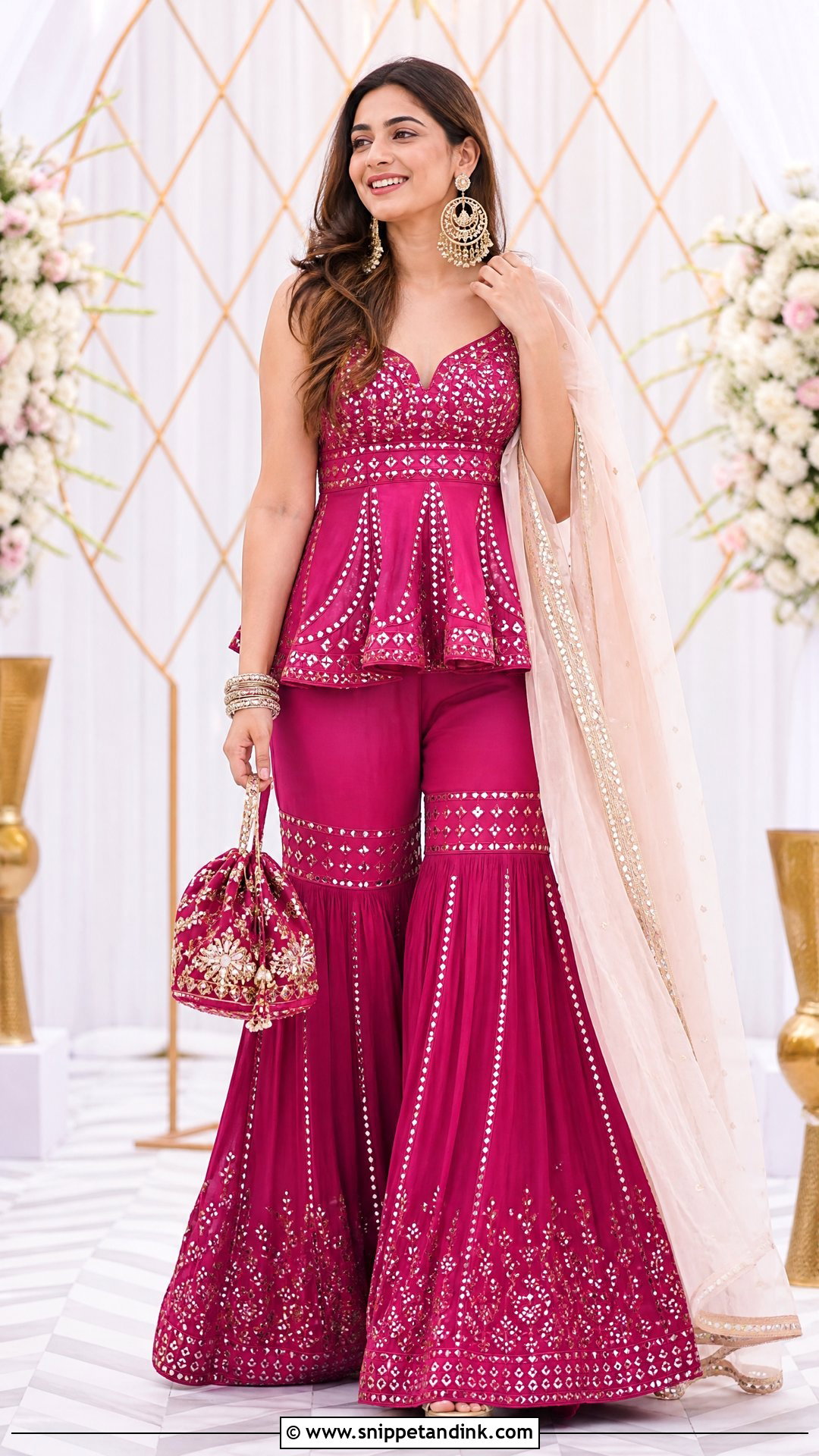
A peplum sharara suit gives you a defined waist with festive volume underneath. The peplum should end around the upper hip and the sharara should sit high, so the two meet without a gap. Mirror work, zardozi or sequins make it right for a sangeet. Turquoise, berry and dark pink are lively, and champagne is the quieter route. What I always test is sitting down. A stiff or very short peplum flips up when you sit and digs in at the waist over a long event. Drape the dupatta so the peplum stays visible, and finish with platform sandals and a compact potli.
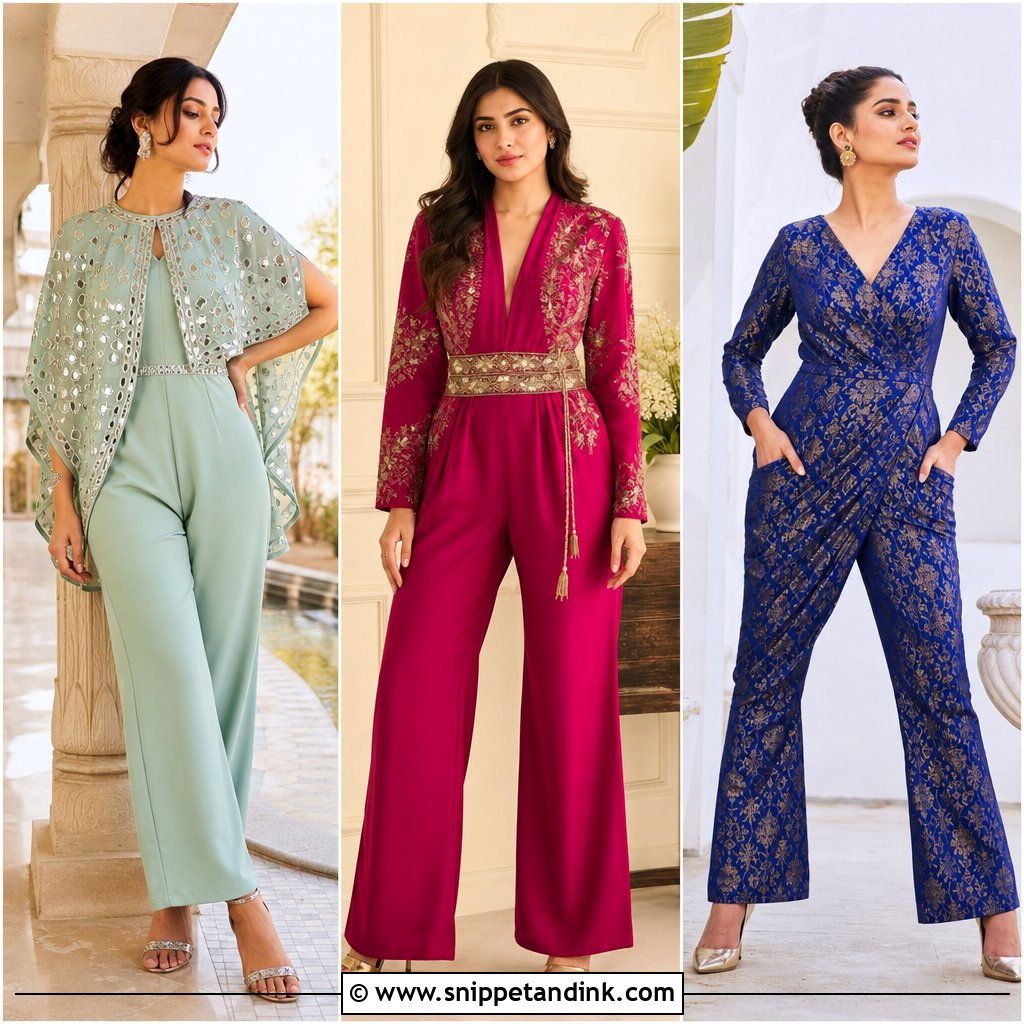
11. Cape Suit With Palazzo Pants
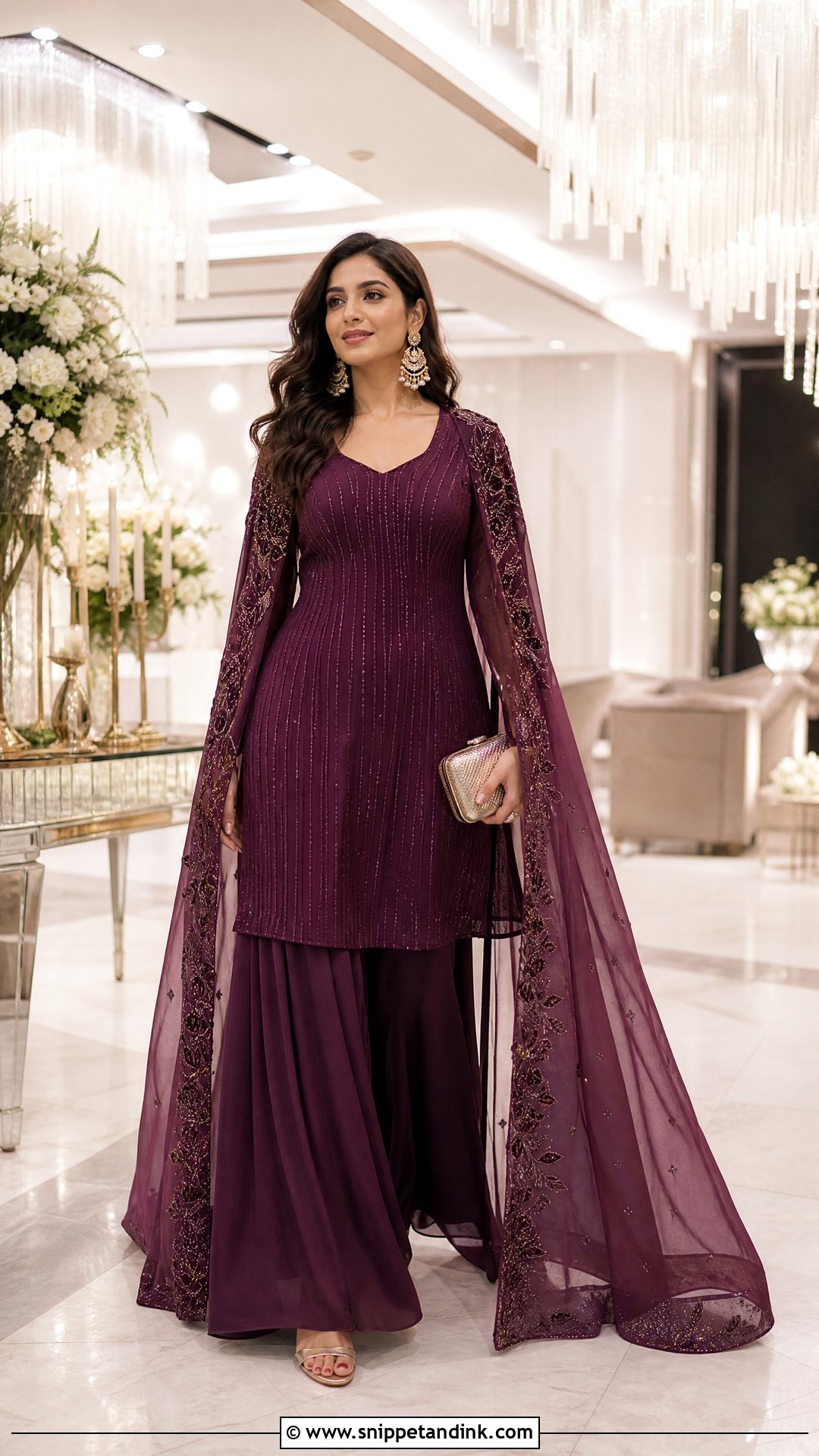
A cape replaces the dupatta, which is the best argument for it: nothing to hold, pin or rescue. Hip-length capes look lighter, while floor-length ones add drama but need watching on stairs and near candles. Underneath, keep a sleeveless or short-sleeve kurta and palazzos streamlined, because a fitted inner kurta stops the layers looking bulky. Navy, plum, emerald, blush and champagne all suit evening events. Skip shoulder bags, which drag the cape out of line, and carry a sleek clutch. If you’ll be dancing, I’d ask for a small snap or thread loop at each shoulder.
12. Long Jacket Suit
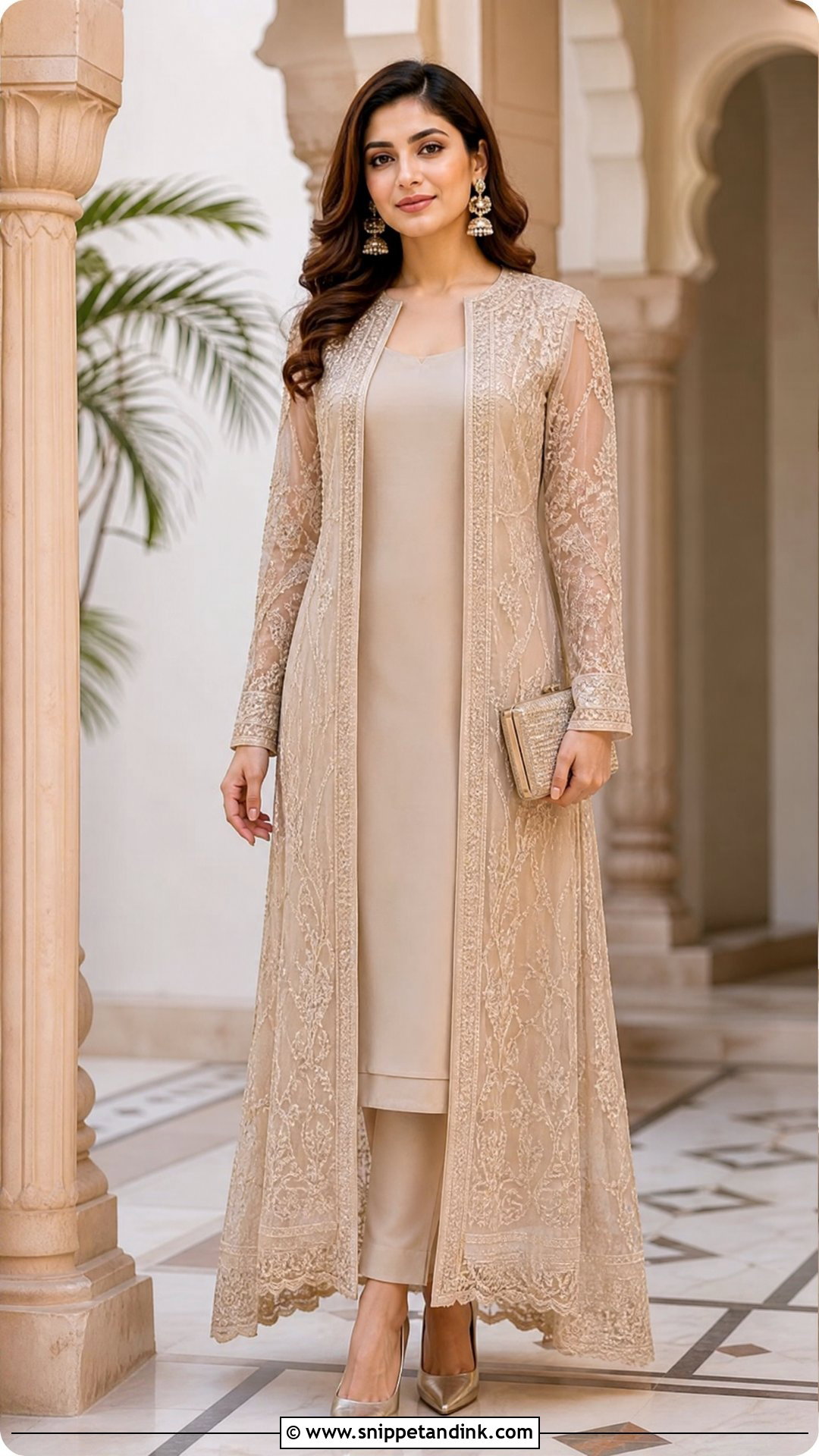
A long jacket suit reads formal the moment you walk in. Over a simple kurta and fitted pants, an open-front jacket falling below the knee or to the ankle provides the movement and coverage, so you can usually skip the dupatta. Tonal colors lengthen the body, and a contrasting jacket is more expressive. Match the fabric to the season: brocade and velvet for winter, organza or embroidered net when it’s warm. Shoulders are the make-or-break fit point on any jacket. If the seam sits past your shoulder bone, it looks borrowed, and no amount of jewelry hides that. Keep the inner kurta from flaring out past the jacket hem.
13. Angrakha Suit With Churidar
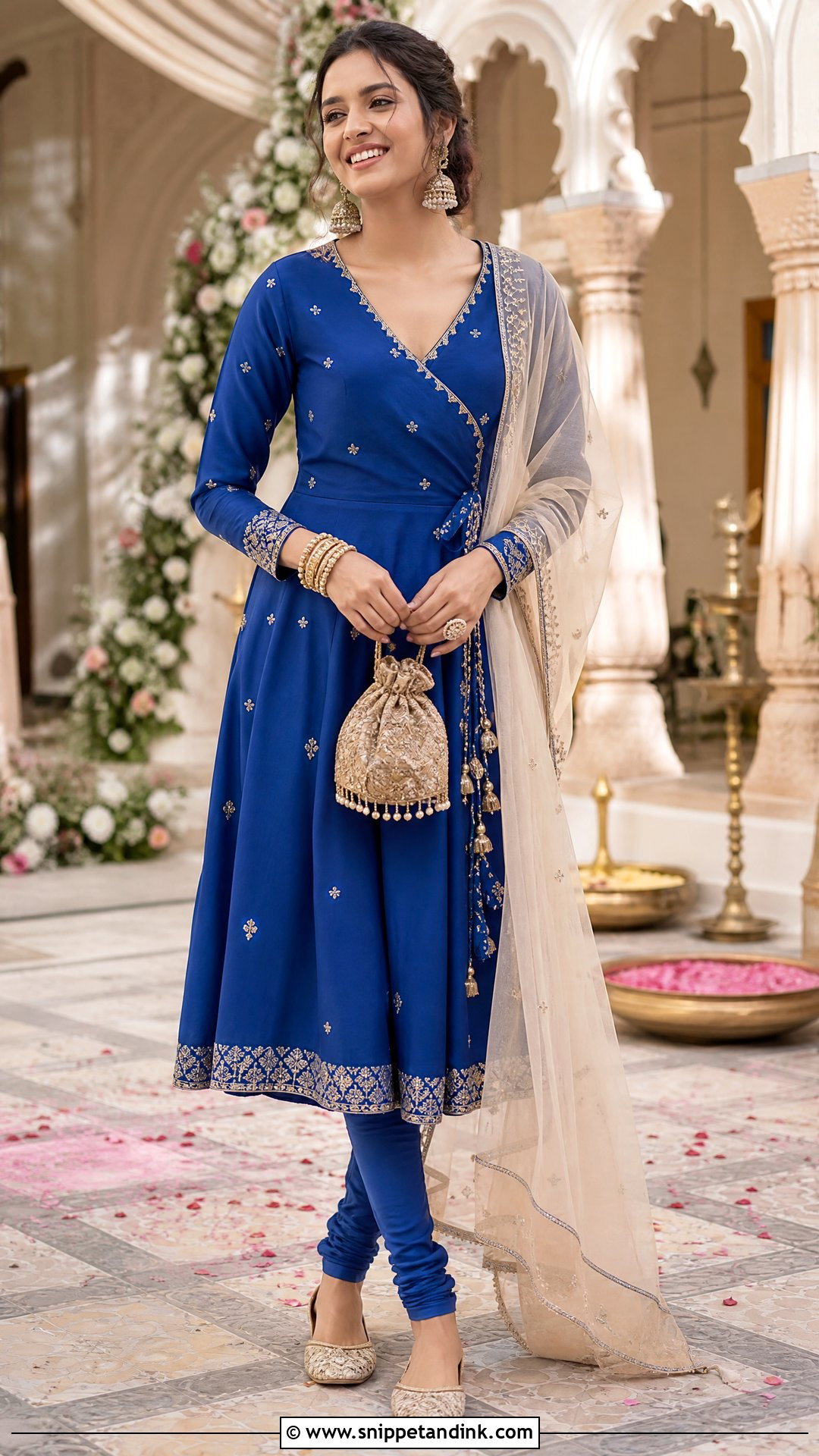
An Angrakha’s diagonal overlap draws the eye across the body, which flatters a wide range of shapes. Choose a calf-length or floor-length kurta that ties securely at the side and pair it with a fitted churidar; gota and tassels can trace the wrap. Saffron, raspberry and teal suit evening, and muted pastels work by day. The overlap is the first thing I check. If it shifts when you bend or raise your arms, ask for a concealed snap so the neckline stays put through the ceremonies and the dancing. Put the dupatta on the shoulder opposite the tie so the construction stays visible.
14. Punjabi Patiala Suit
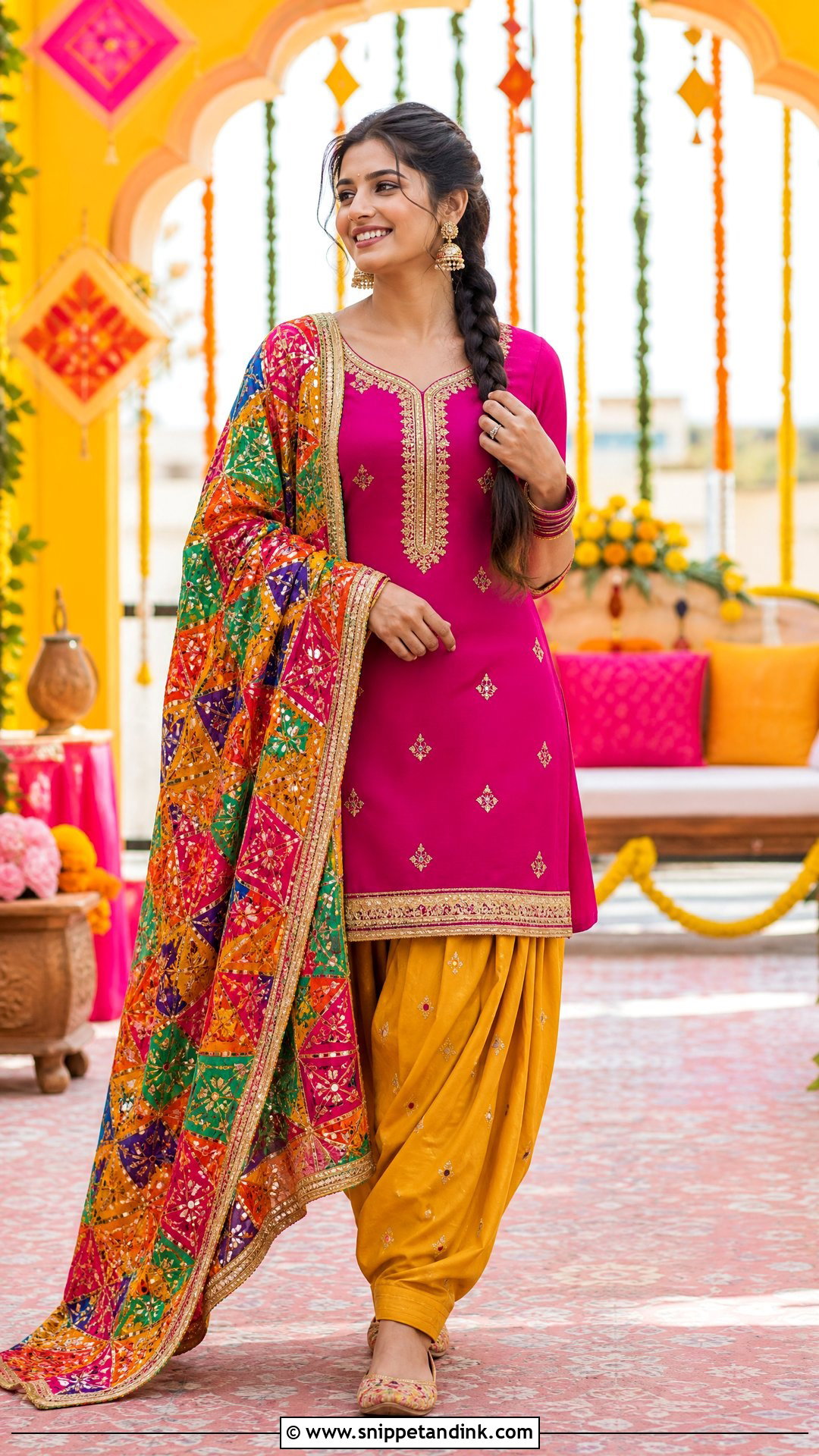
A Punjabi Patiala suit is made for the dhol. The salwar folds a large amount of fabric into deep pleats that hang from the waist, so it moves when you do and never restricts a step. Pair it with a fitted thigh-length kameez and a bright Phulkari dupatta to bring in color. The waistband carries all that weight, so I have it fitted firmly with a sturdy drawstring. Keep the embroidery subtle for a casual pre-wedding function and go richer with gota and threadwork for the main event. Juttis, glass bangles and a braid finish it, and pin the dupatta before you dance.
15. Pakistani Long Kurta Suit
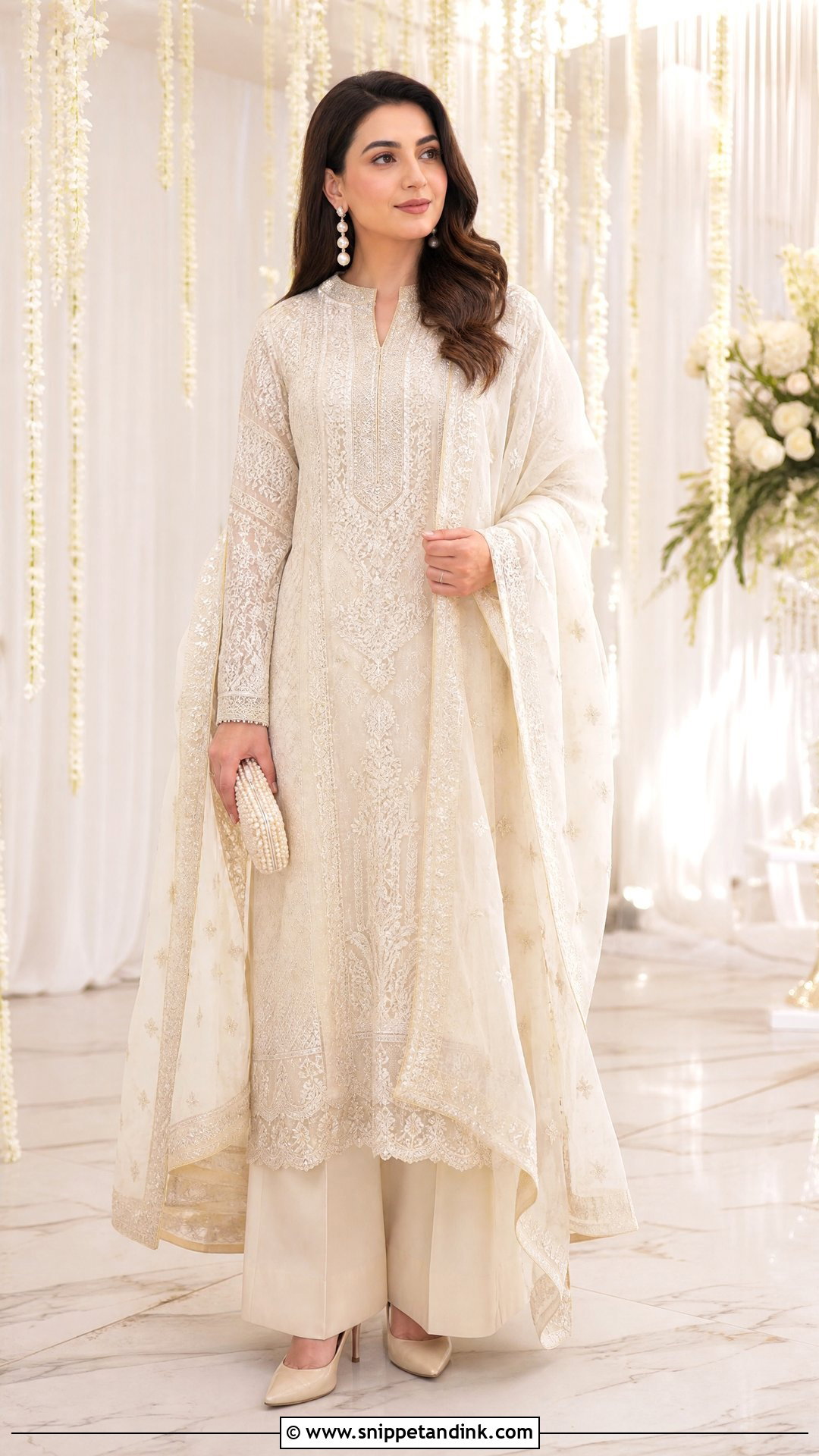
A Pakistani-style long kurta is all about vertical line: ankle length, straight cut, side slits and full sleeves. Slim pants keep it sharp; wide trousers soften it. A chiffon dupatta over both shoulders adds to the length. Ivory, black, deep green and midnight blue look refined with silver, pearl or antique gold work. Because the kurta covers so much of you, a poor fit shows everywhere, and I spend most of the fitting on the shoulders and on sleeve length, which should stop at the wrist bone. If the neckline is densely embroidered, wear drop earrings and leave the neck bare.
16. Bandhani Suit With Palazzo Pants
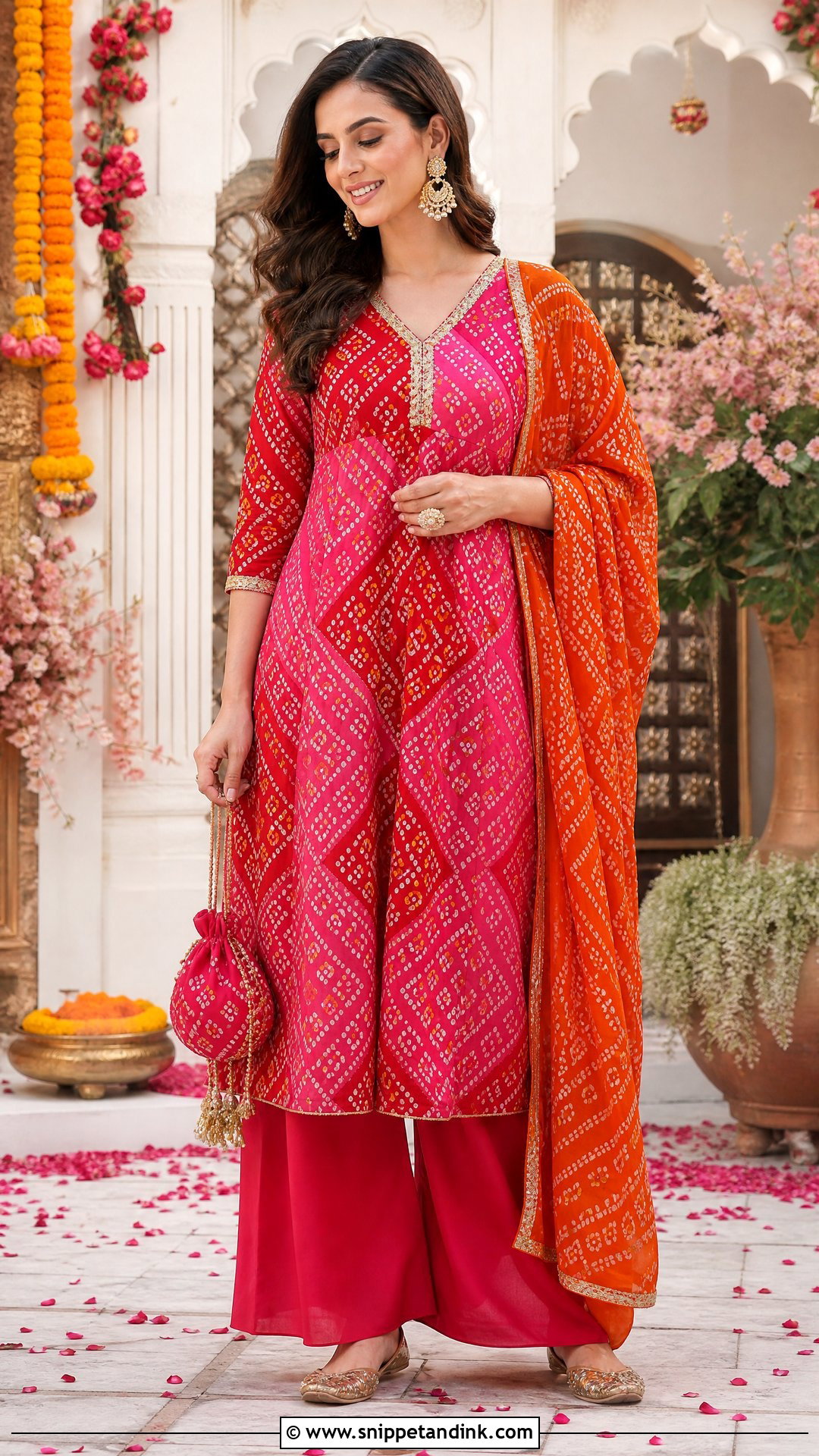
Bandhani dots are tied by hand before dyeing, so no two pieces come out identical, and that small irregularity is what I like about it at a cheerful daytime function. A straight or A-line kurta in red, pink or yellow over solid palazzos keeps the pattern in charge. Gota borders and a few small mirrors add shine. Oxidized silver makes it relaxed enough for a mehendi; gold makes it formal enough for a ceremony. When mixing colors, repeat one shade in the shoes or bag. Keep the palazzos plain, too, because two Bandhani layers together start to vibrate in photos.
17. Mirror Work Suit
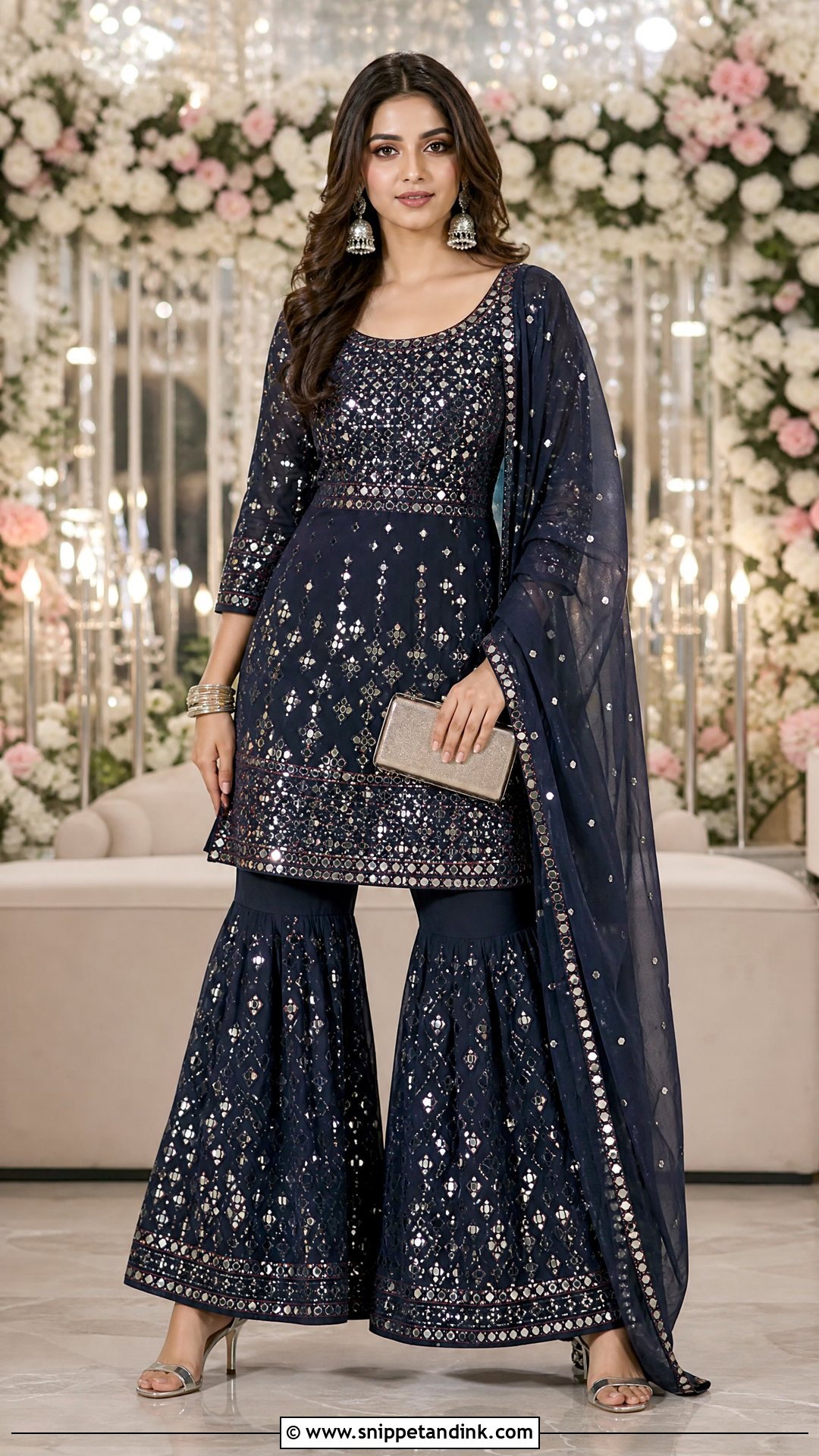
Mirror work is made for evening light, since every small mirror catches a lamp. Choose a fitted kurta with the mirrors concentrated in one or two zones and wear it over flared pants or a sharara. Navy, magenta, purple and emerald make the mirrors stand out; white and pastel versions suit the daytime. Keep the dupatta plain and carry a smooth clutch, because a beaded bag snags the mirror edges. A couple of days before the event, I go over every mirror. A loose one is easy to stitch back at home, and rough backing at the sleeves or waist is far easier to line then than to put up with all night.
18. Black Embroidered Reception Suit
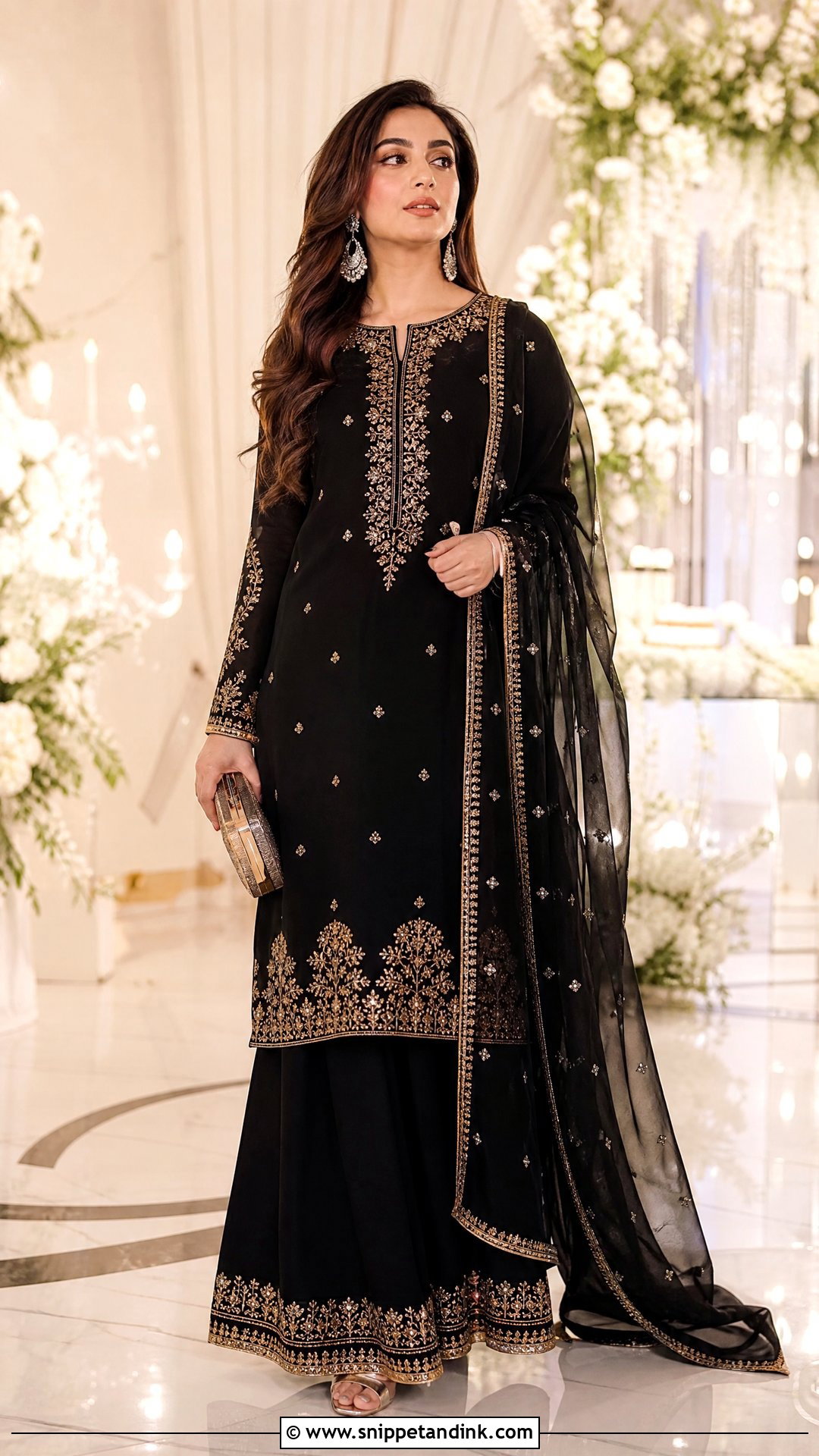
Black works only when the couple’s dress code and the family’s customs allow it, so ask before you buy. Where it’s welcome, a black embroidered suit makes a sharp reception look. An Anarkali, straight kurta set or palazzo suit with gold, silver or multicolor threadwork shows the embroidery clearly against the dark base. Add a sheer dupatta with a defined border. I’d choose a single metal and repeat it across the earrings, clutch and heels, which looks deliberate rather than busy. A sleek bun keeps the mood formal.
19. Yellow Haldi Suit
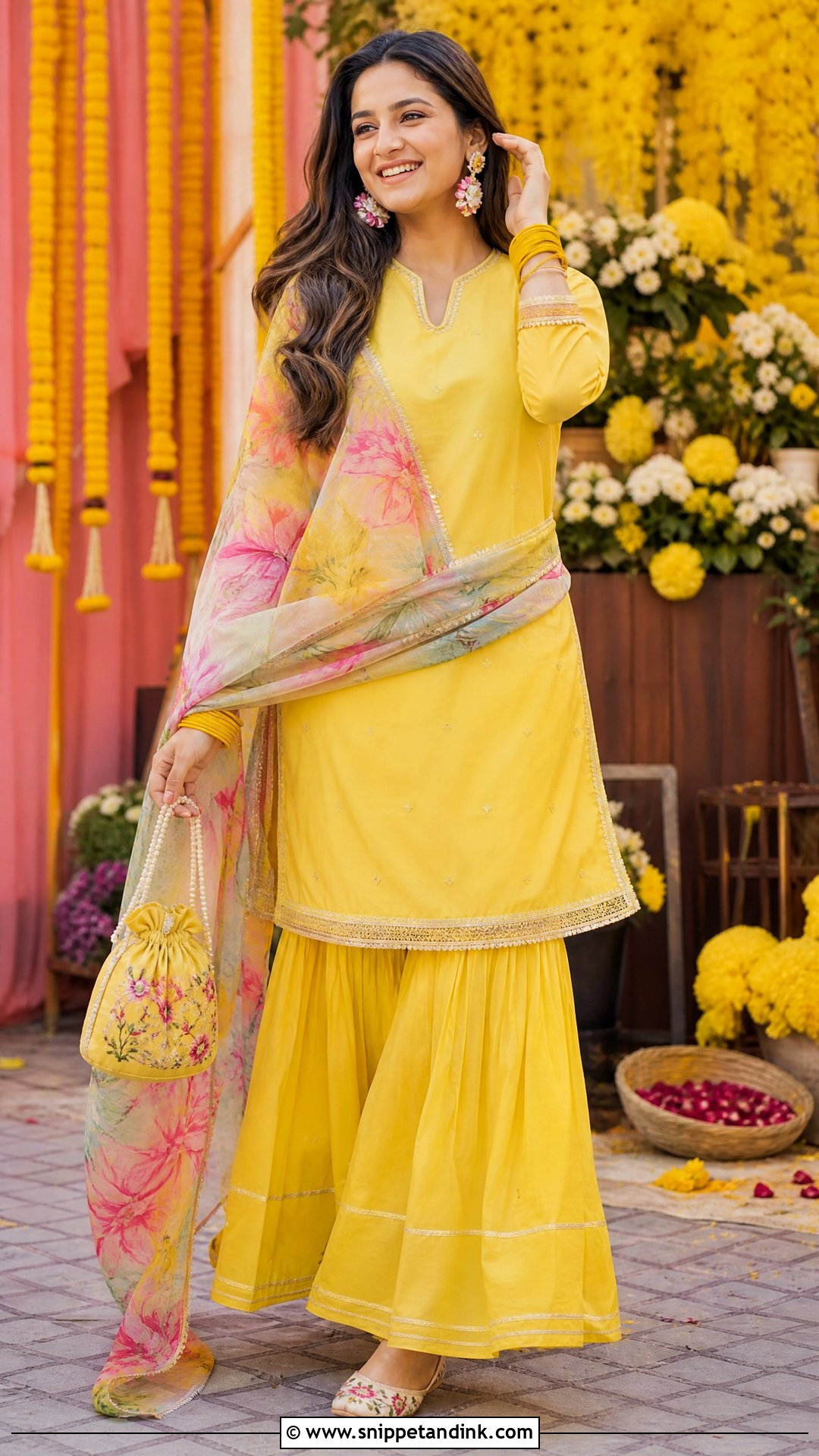
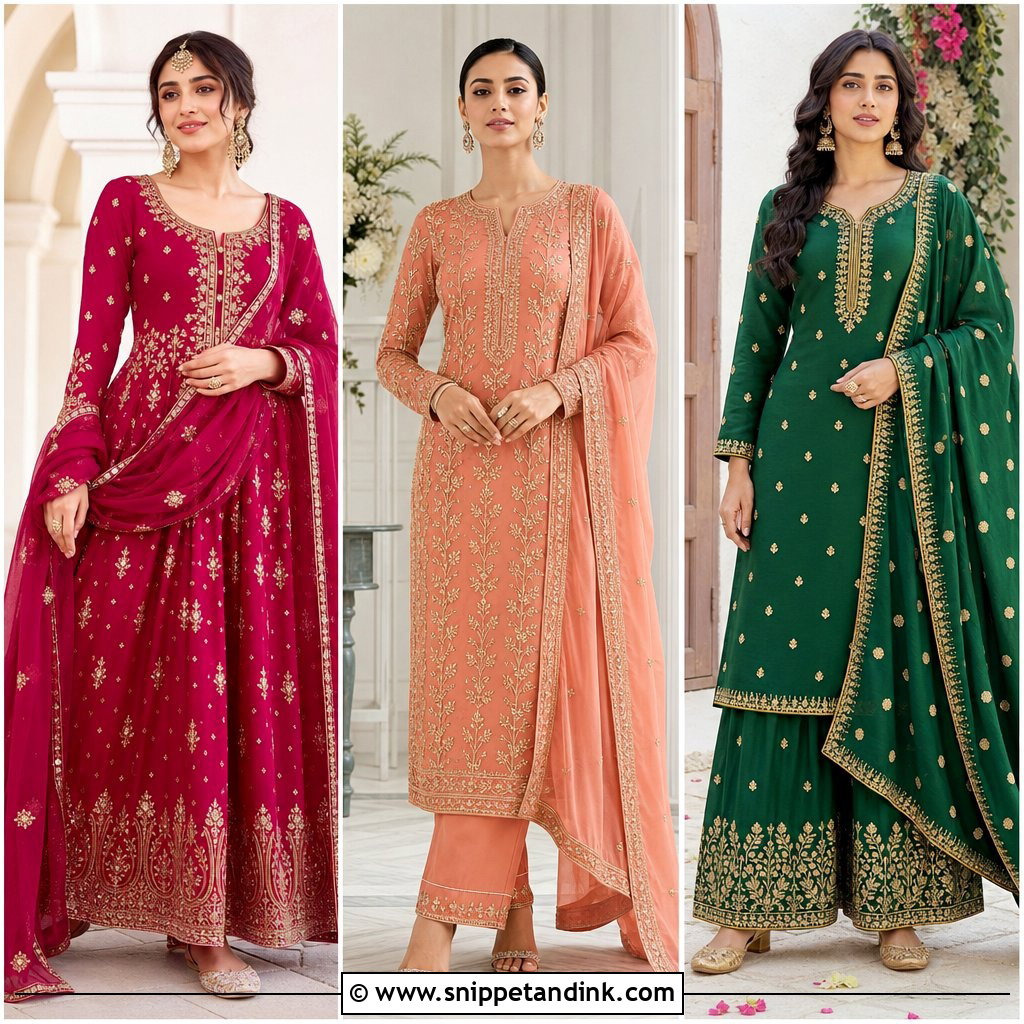
A haldi celebration is messy by design, so dress for turmeric. Yellow hides it best. A comfortable straight kurta or short Anarkali over palazzos or a soft sharara, in cotton silk, chanderi or light georgette, will survive a wash. White threadwork, small mirrors or gota trim add the festive touch. Turmeric stains are stubborn, so I’d leave heirloom silk and anything dry-clean-only at home and bring a washable potli. Flat juttis keep you steady on a wet floor, and sleeves that push up easily let you join the ritual without hesitating.
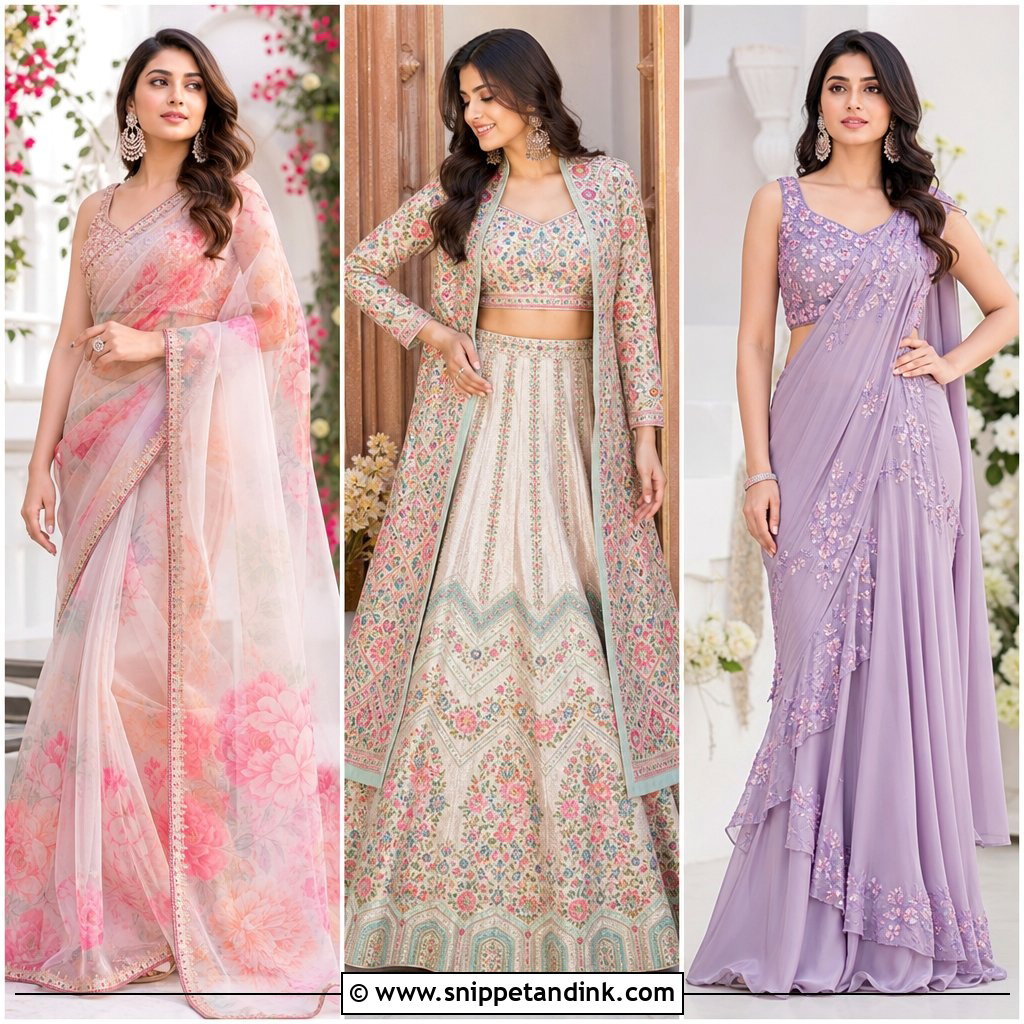
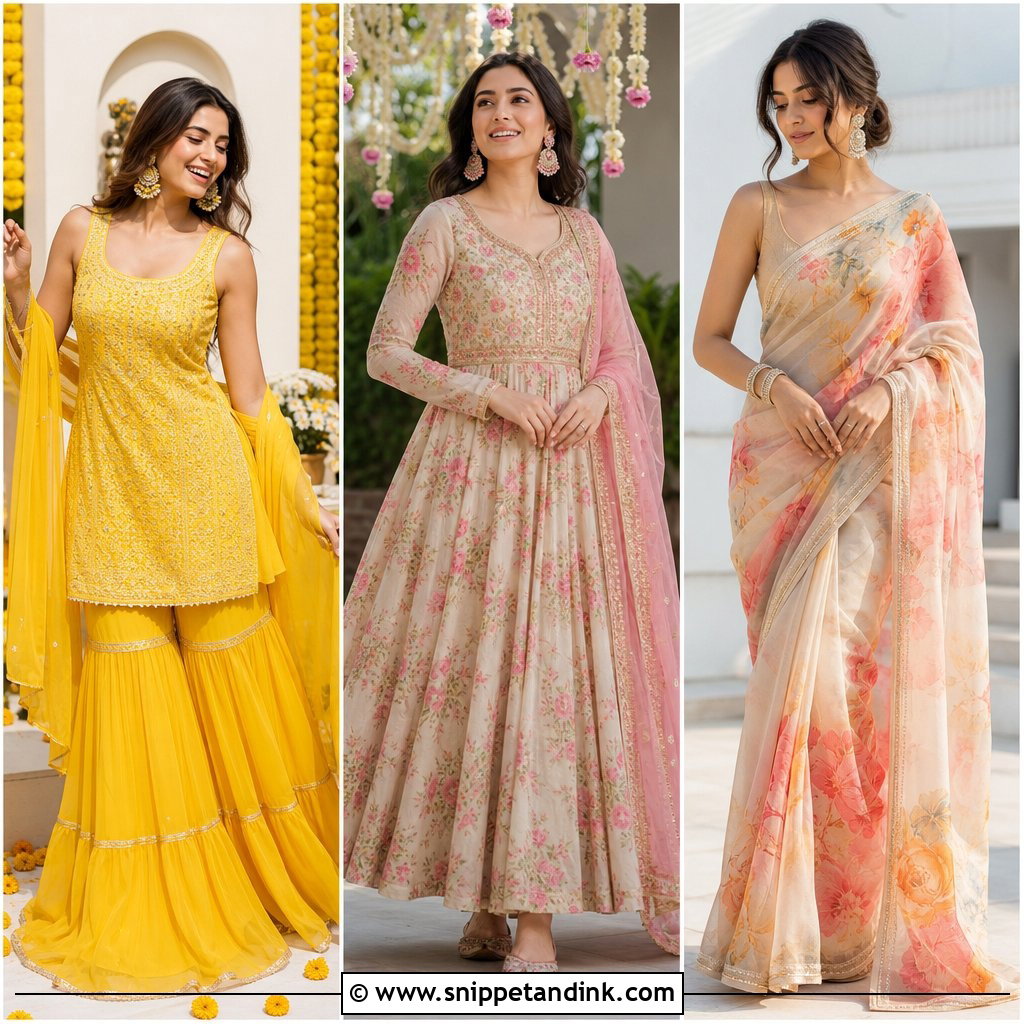
20. Green Mehendi Suit
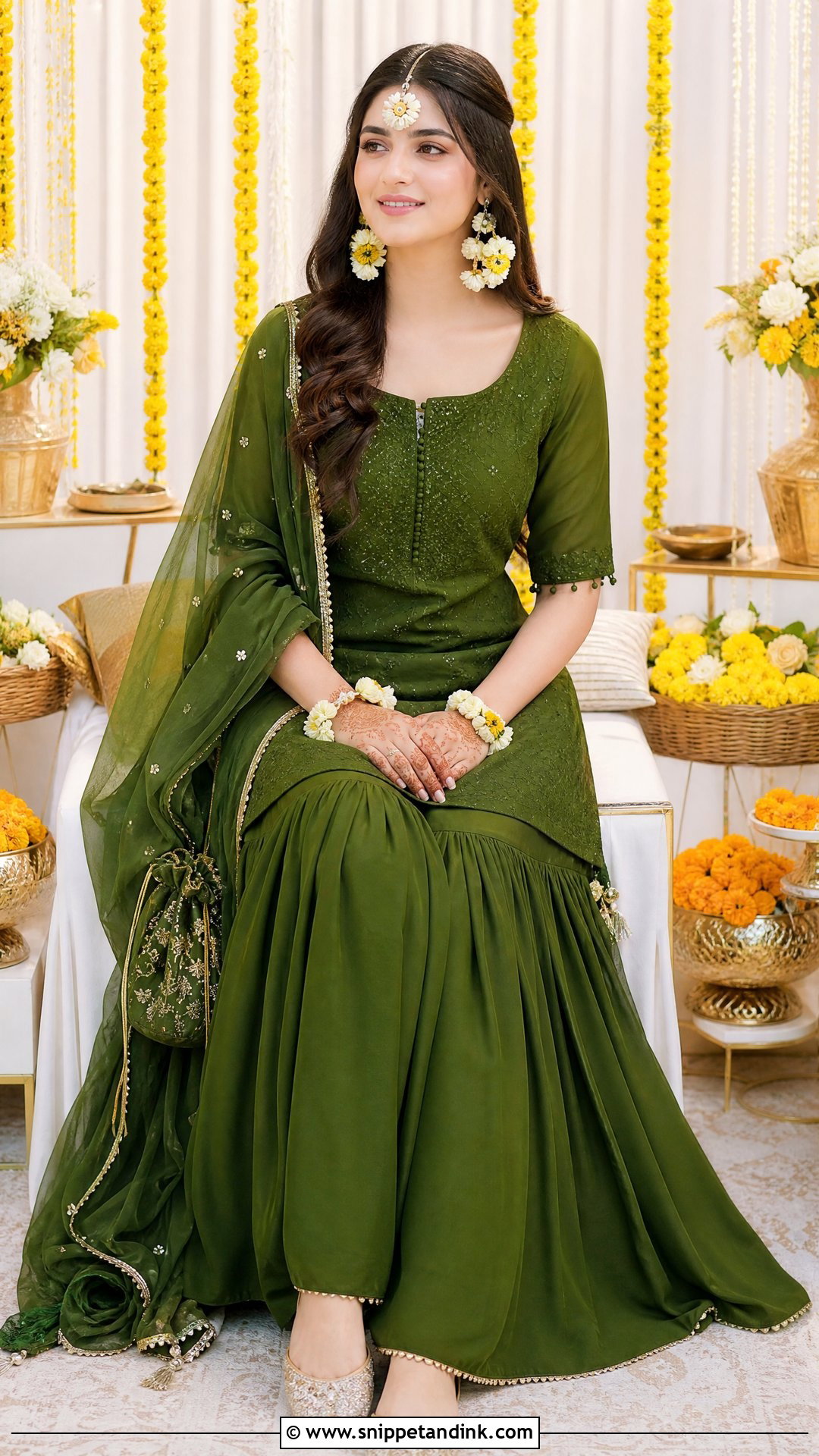
A green mehendi suit has to make room for hours of henna. Short or elbow sleeves leave your hands and forearms free for the artist, and flared shararas or relaxed palazzos let you sit comfortably while the paste dries. Lime, parrot, emerald and olive mix well with pink or orange embroidery. A dupatta pinned to one shoulder, or a light cape instead, won’t slide toward wet paste. Hold off on bracelets and rings until the henna has dried and been scraped away. I’d also pick a crease-resistant fabric, because you’ll sit still longer at this function than at any other.
Colors and Coverage to Check With the Hosts
Customs differ by region, community and family, so I treat these as questions to ask rather than fixed rules. A short message to the couple or a close relative usually settles them.
- Red and deep bridal maroon are often left to the bride. Many guests avoid them at the main ceremony even when nobody says so.
- White and black are linked with mourning in some Hindu families and welcomed in others. Ask before wearing either.
- At a Sikh ceremony in a gurdwara, everyone covers their head, removes their shoes and sits on the floor. Bring a dupatta large enough to stay on your head, and wear a bottom you can sit cross-legged in.
- Temple and mosque venues may expect covered shoulders and arms. A sleeveless kurta is fine if you carry a jacket or wear the dupatta across both shoulders.
Packing Zari and Mirror Work for a Destination Wedding
Embroidered suits travel badly when they’re folded the wrong way. Metallic zari thread can crack along a hard crease, and mirrors press marks into the fabric beside them. This is how I pack a client’s wedding wardrobe:
- Fold along the seams, with acid-free tissue between embroidered layers.
- Keep each suit in its own cotton or muslin bag rather than plastic, so it can breathe.
- Carry the ceremony outfit in your cabin bag. Checked luggage goes missing at the worst possible times.
- Steam on arrival instead of ironing. If you must iron, turn the suit inside out and press through a cotton cloth, never directly on zari, sequins or velvet.
Add a small repair kit: safety pins, dupatta pins, a needle threaded in your suit’s color and some fashion tape for necklines. It takes up almost no room in a bag.
Is Your Suit Ready for the Whole Evening?
Match the suit to the function first and the trend second. Anarkalis and velvet carry an evening ceremony, floral palazzos, Bandhani and pastels feel right in daylight, and shararas and mirror work earn their keep at the sangeet. Short sleeves and pinned dupattas make haldi and mehendi easier. Read the dress code and ask about family customs before you settle on colors. Then put your money into tailoring at the shoulders, waist and hem. A well-fitted simple suit will look better than a badly fitted heavy one every time.
You'll Like These Ideas:


Leave a Reply