
Blonde bridal hair picks up light in a way darker shades don’t, so shine, movement and the little pieces around your face all register on camera. That cuts both ways. A well-built twist looks intricate on light hair; a rushed one looks rushed. Whatever you choose still has to work with your dress, veil and length, and with the weather you’ll actually get rather than the one in the inspiration photo. I’ve written up fifteen styles I’d happily put on a blonde bride, and before the list there’s a note on matching accessory tones to your shade, which trips people up more than the hairstyle does.
Gold, Silver or Pearl Against Warm and Cool Blonde
Blonde isn’t one color, and the metal or pearl tone in your accessories can either melt into it or sit on top looking slightly wrong. I’d settle this before ordering a vine or comb, because swapping it the week before is stressful.
Honey, golden and strawberry blondes
Gold, rose gold and creamy ivory pearls sit naturally in warm shades. Bright silver and stark white crystals can look cold and separate, almost floating on top of the hair.
Icy, platinum and ash blondes
Silver, platinum tones and white pearls blend in. Yellow gold can work, but it reads as deliberate contrast rather than a soft accent, so choose it on purpose.
Beige and mixed-tone blondes
When your color mixes warm and cool ribbons, I match the accessory to the gown and jewelry instead. Ivory dresses like ivory pearls and softer metals; bright white dresses like white pearls and silver. Hold the piece against your hair near a window, not under bathroom lights, before you decide.
1. Blonde Bridal Hollywood Waves
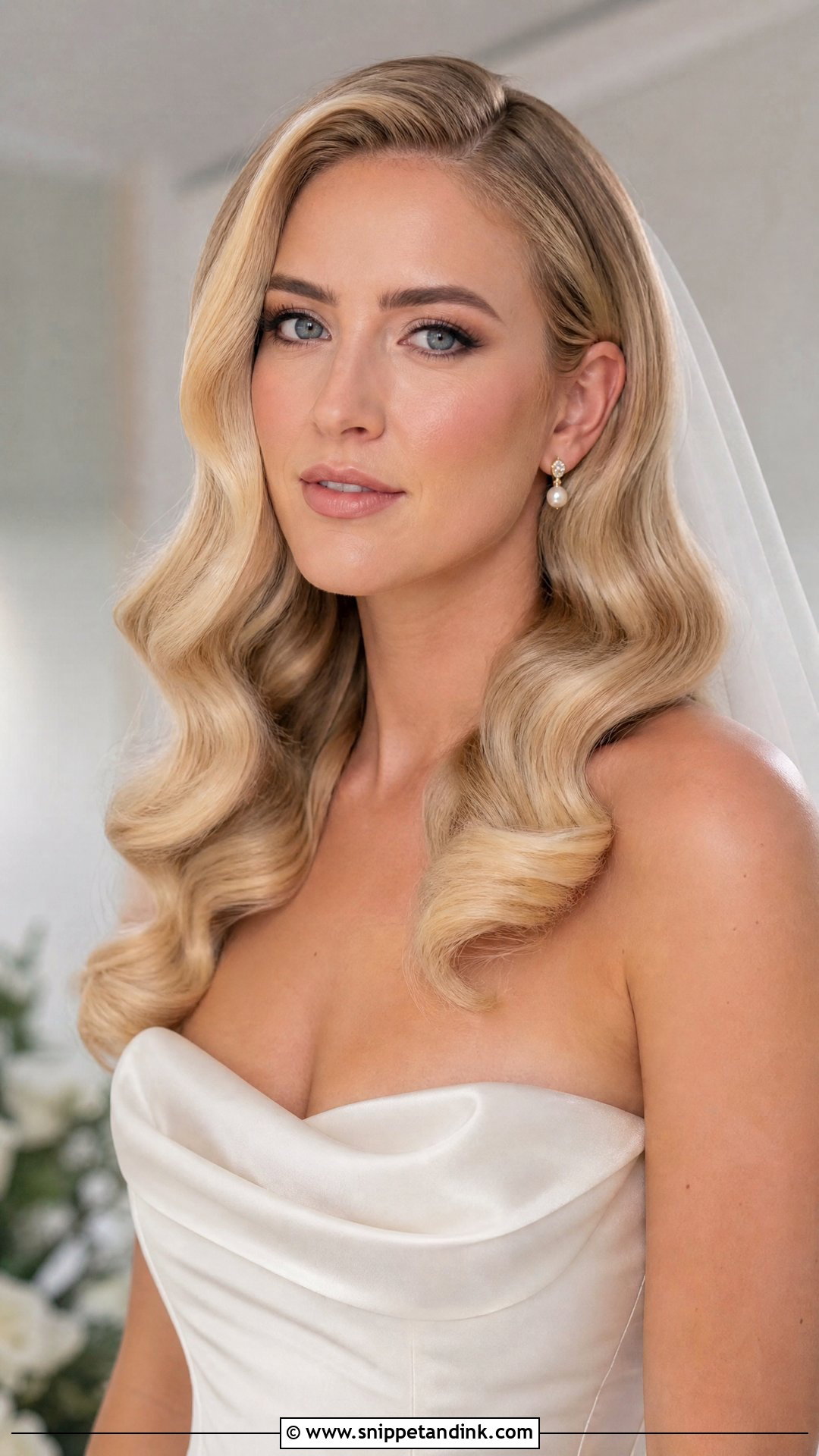
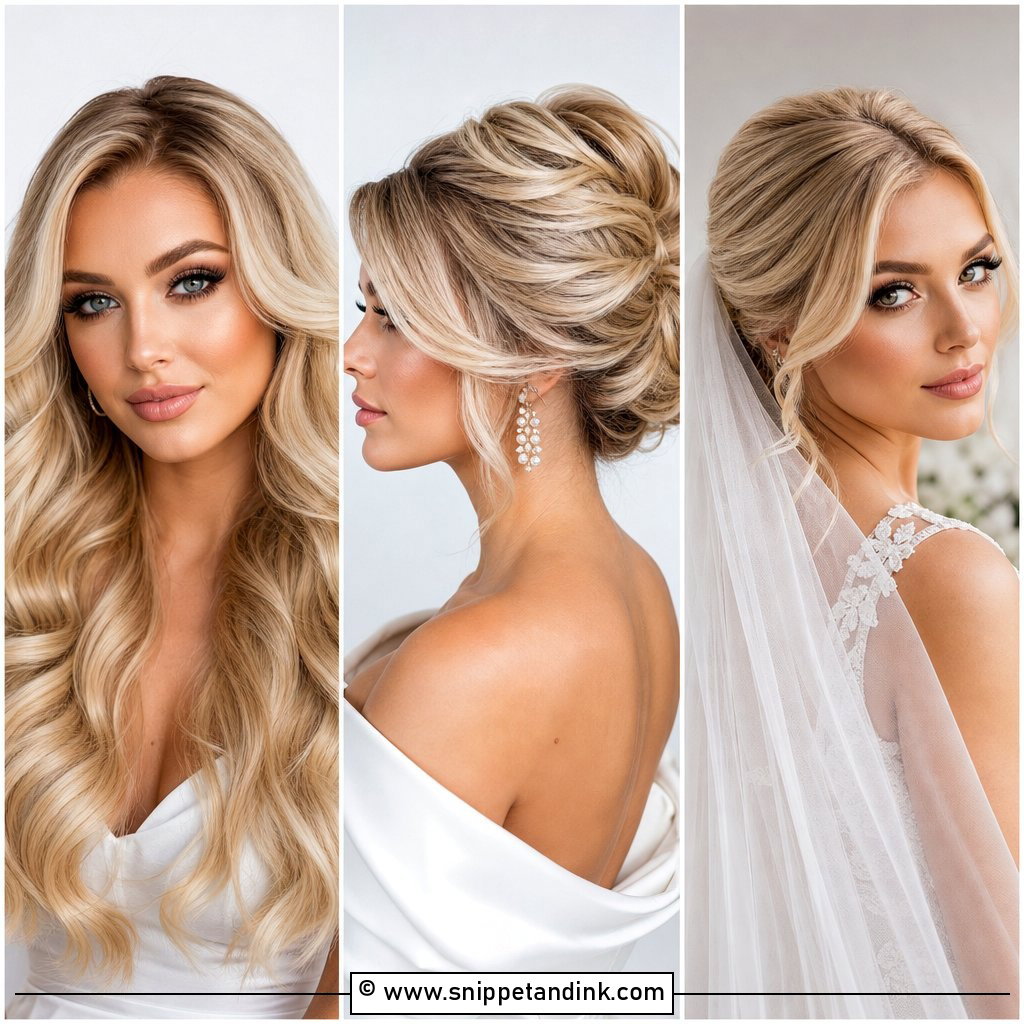
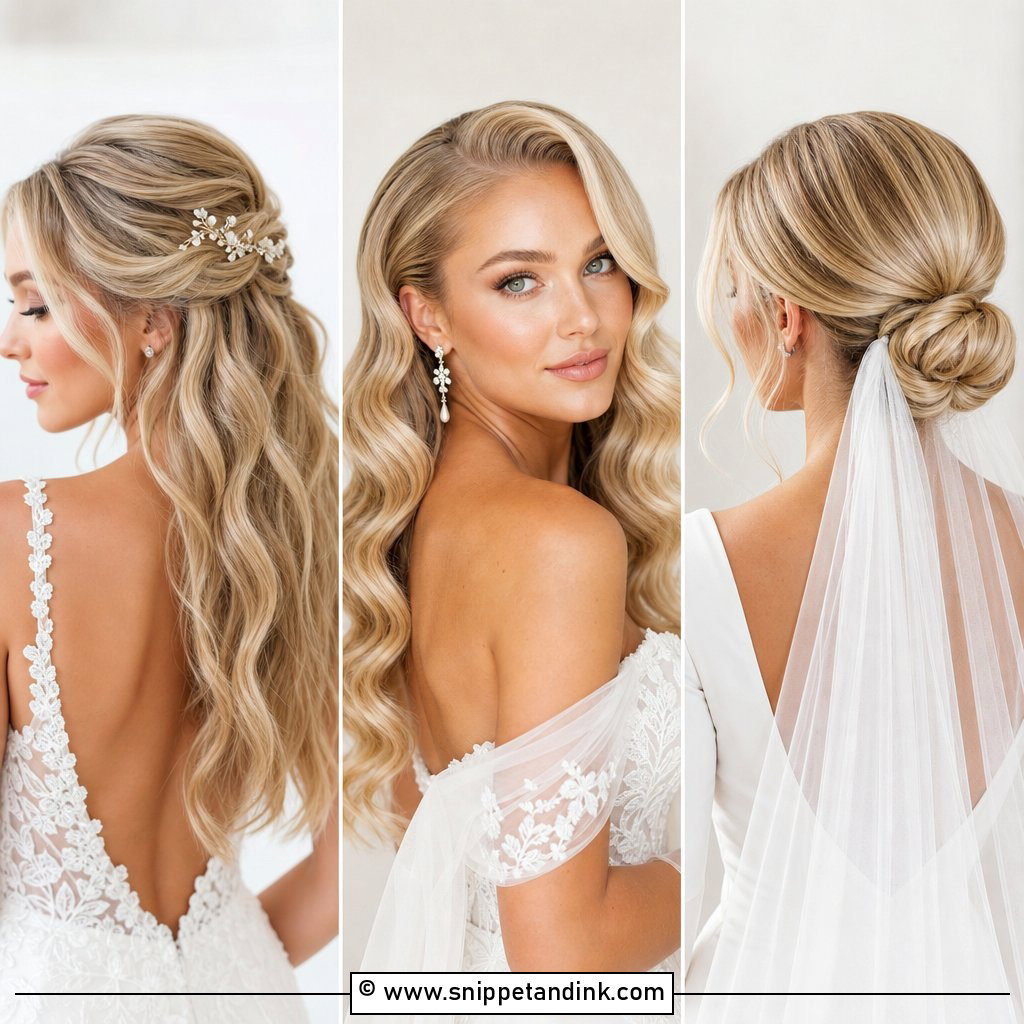
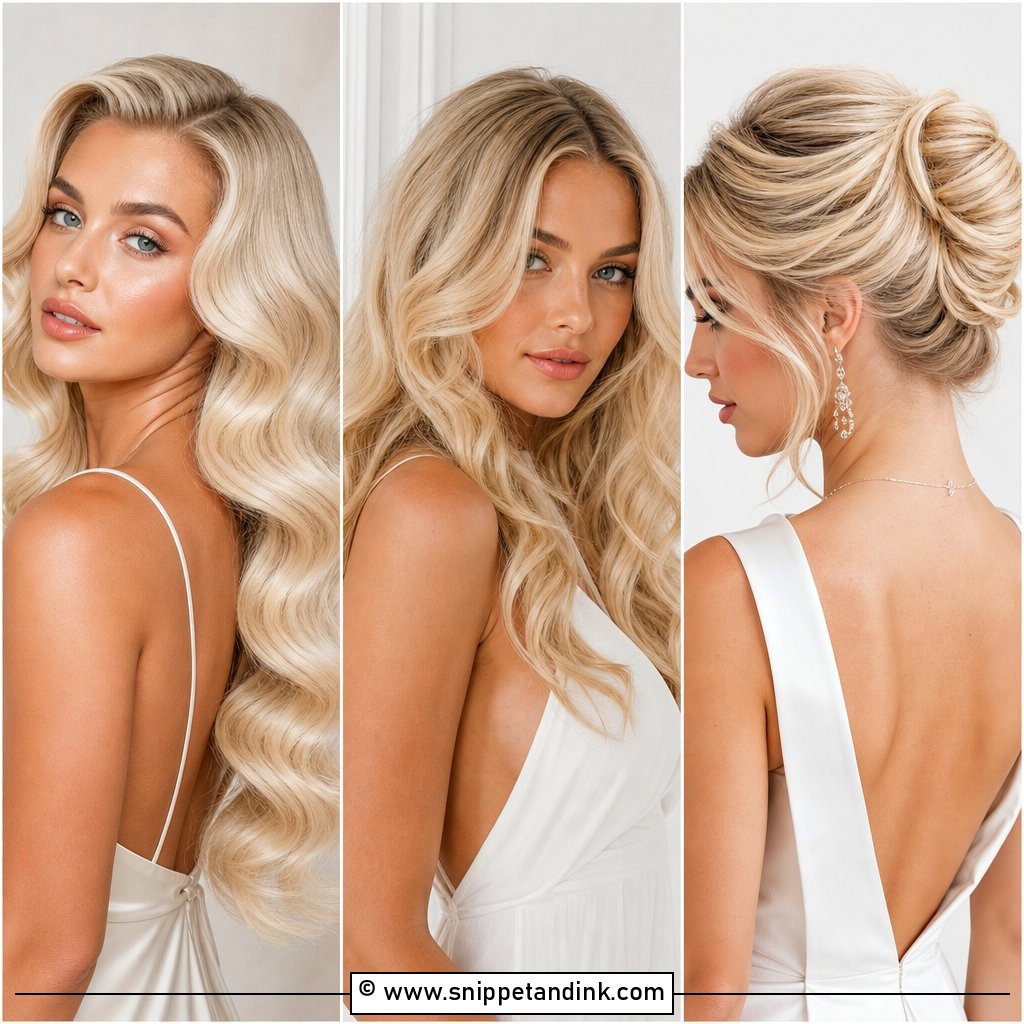
Blonde bridal Hollywood waves show off toner and gloss better than any other vintage look, because the wave is one long, smooth surface rather than broken curls. A deep side part and a shape that either sweeps over one shoulder or sits evenly at the neckline is the classic version. I set them on large hot rollers rather than an iron when the hair is fine, since rollers give a smoother bend and more lift at the root. Medium to long hair works; strapless and satin gowns suit it. Ask for structure that moves when you turn your head; if it doesn’t move, it’s overdone.
2. Blonde Bridal Low Bun
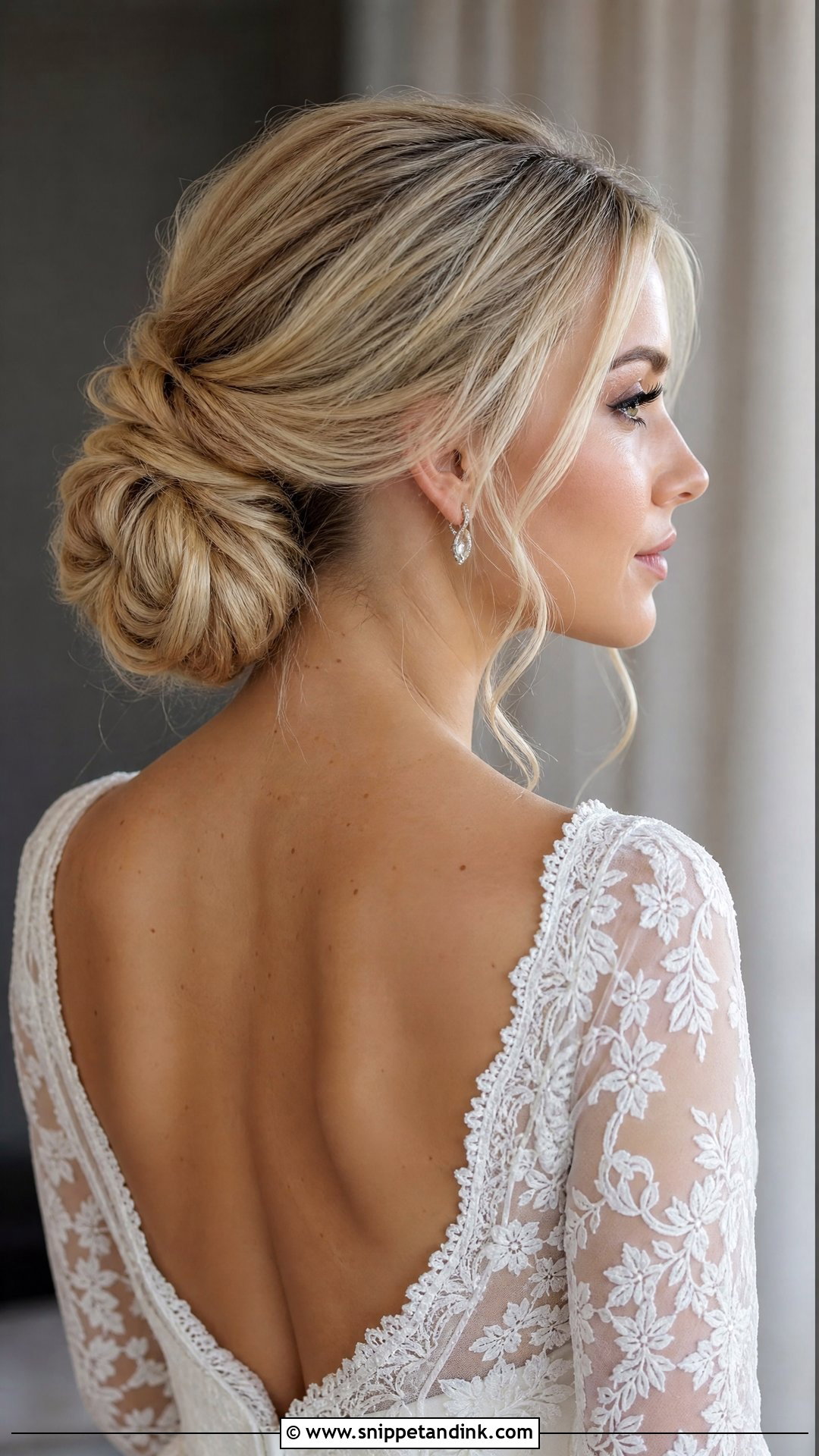
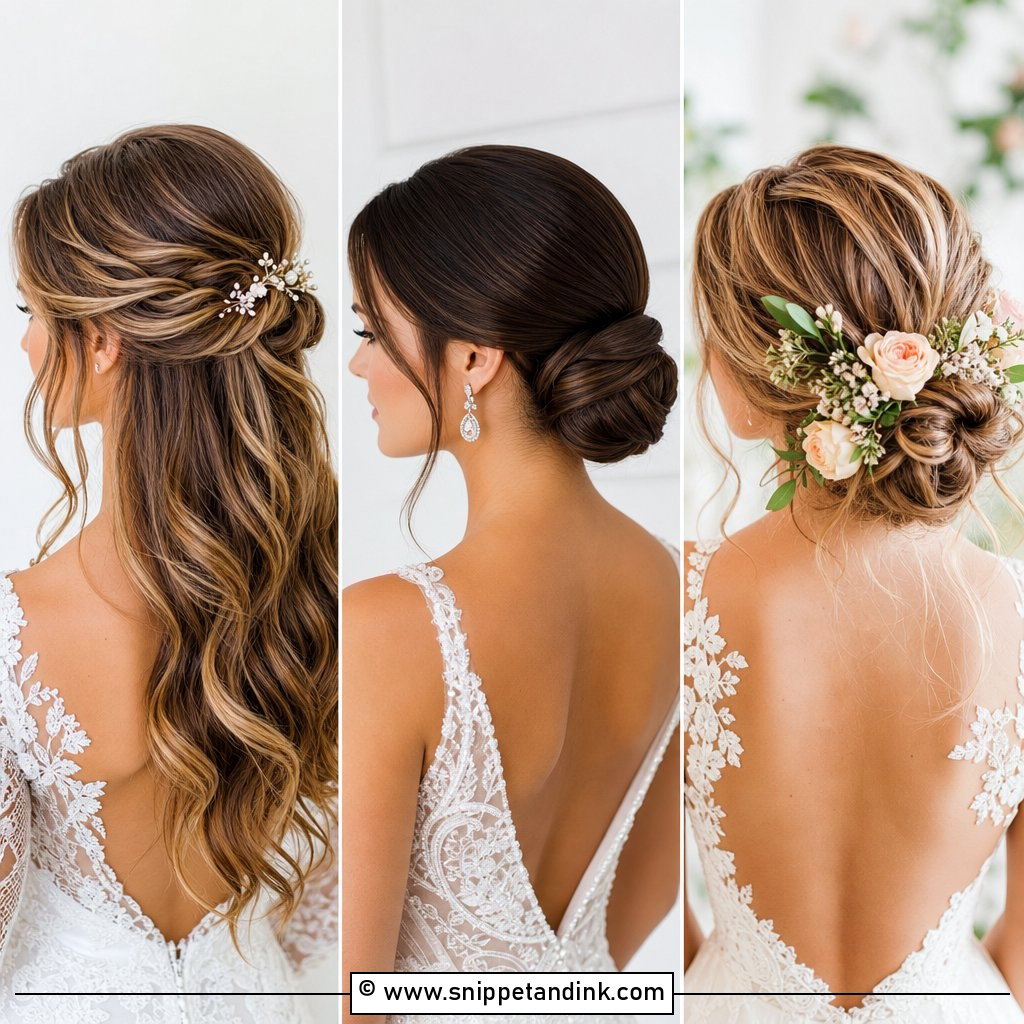
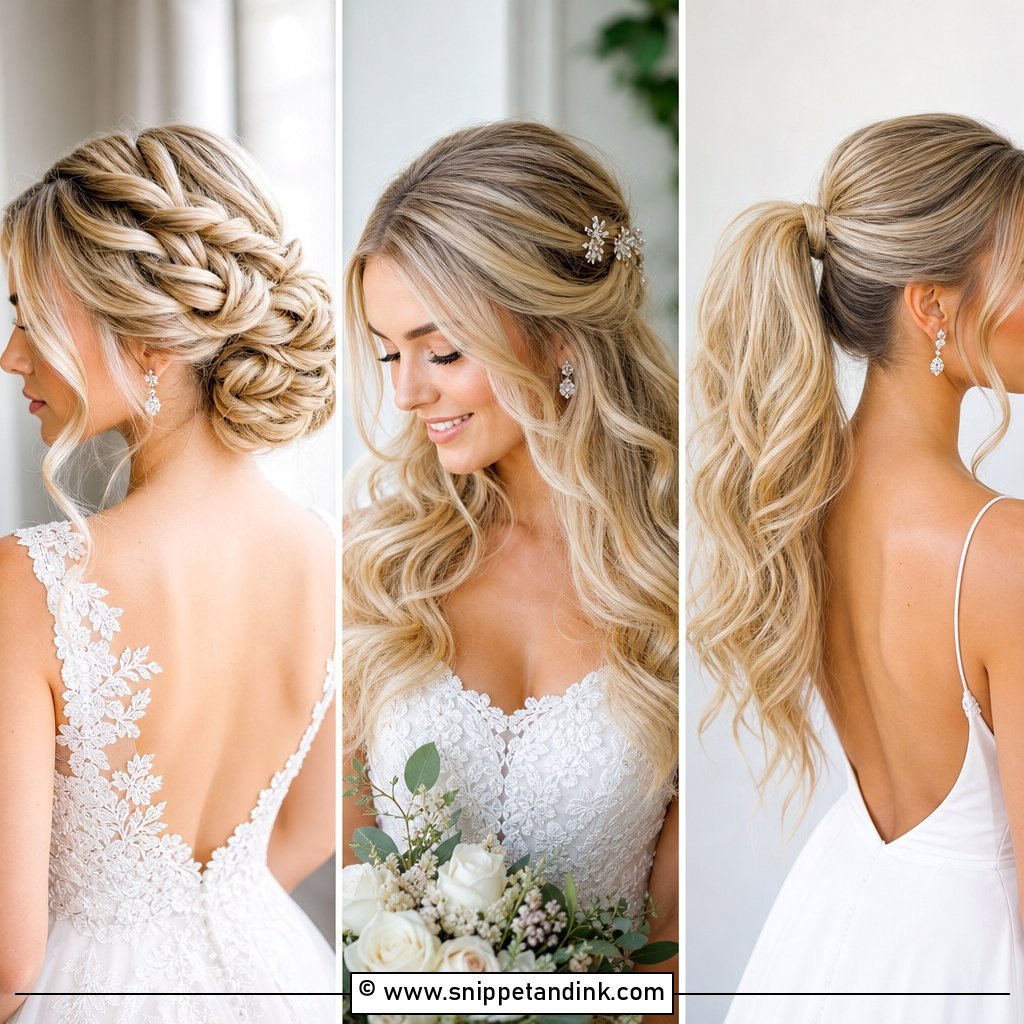
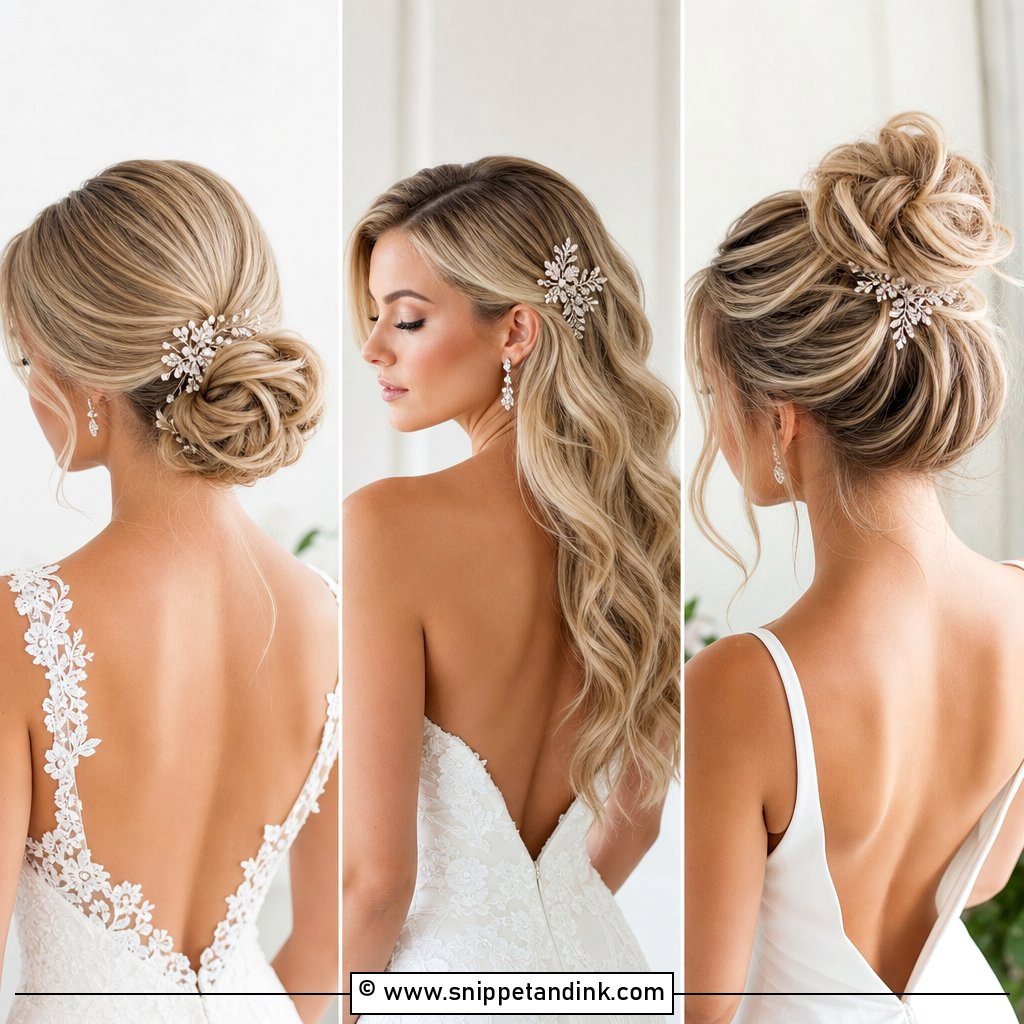
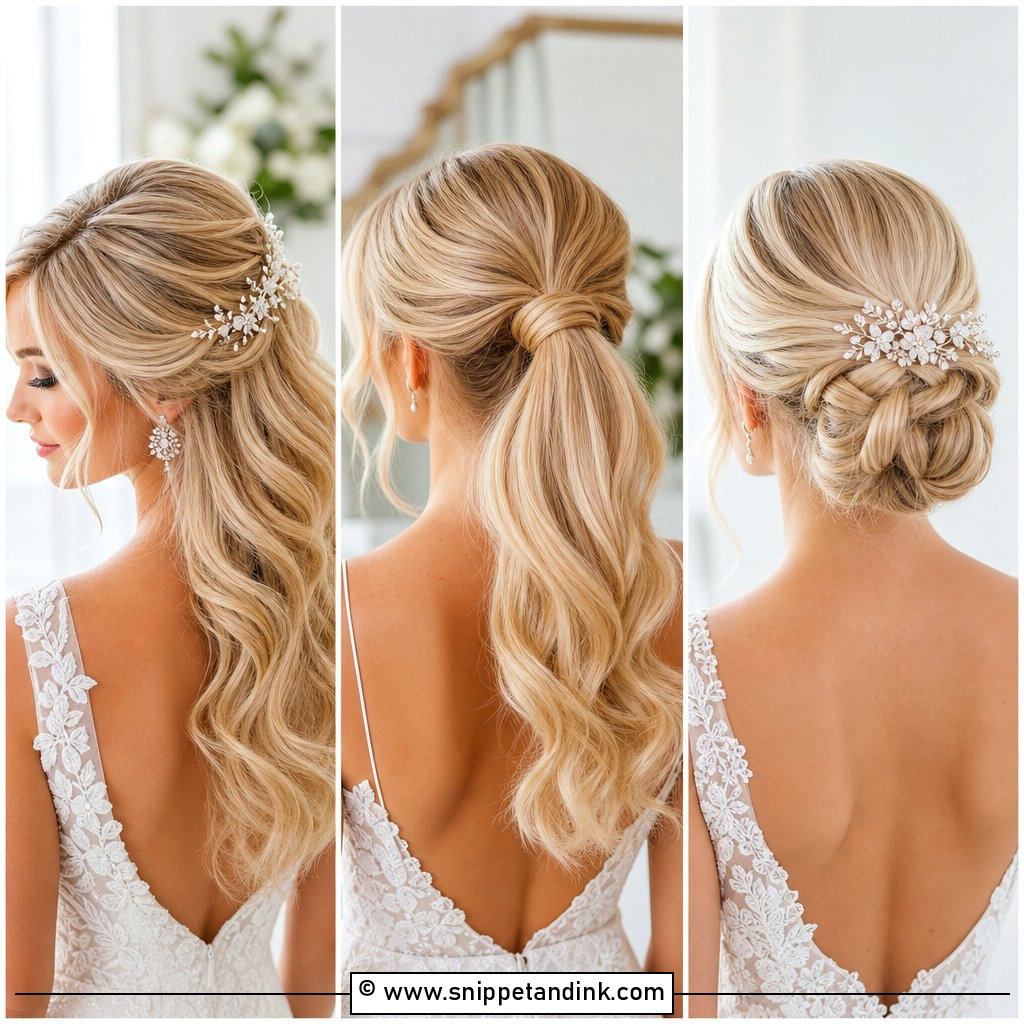
A low bun is the style I trust most on a long, hot day. Sitting at the nape it reads soft; nudged slightly higher it reads more formal. Blonde hair shows the twisted sections clearly, so you rarely need heavy accessories. The foundation matters most: I build it on a tight elastic ponytail or a small pinned base, then wrap the twists around it, which is why it doesn’t sag after six hours. Outdoor ceremonies, warm weather and long veils all suit it. Decide between a smooth or lightly textured finish based on the dress fabric; satin likes smooth, lace likes texture.
3. Blonde Bridal Half Up Half Down Hair
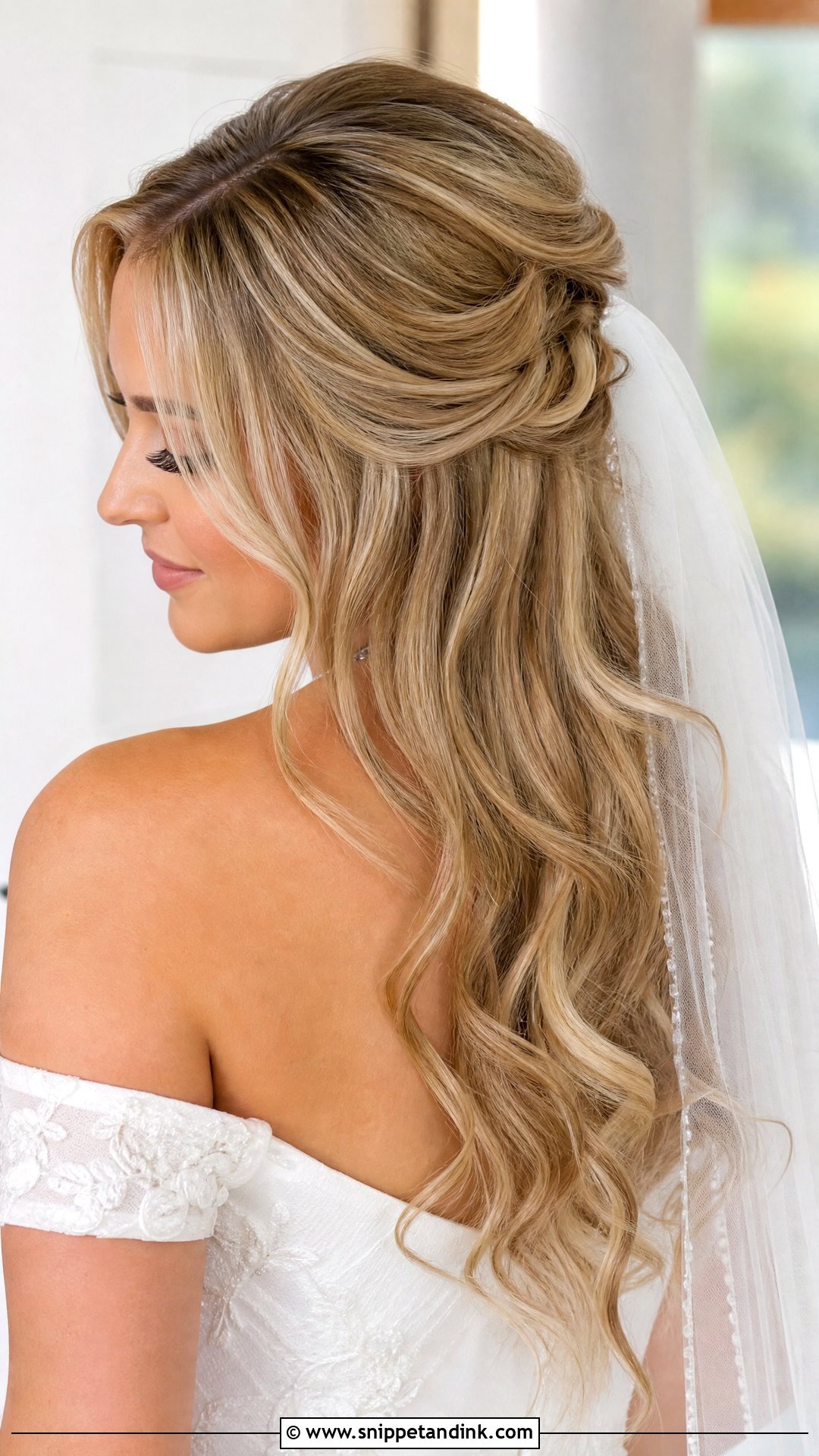
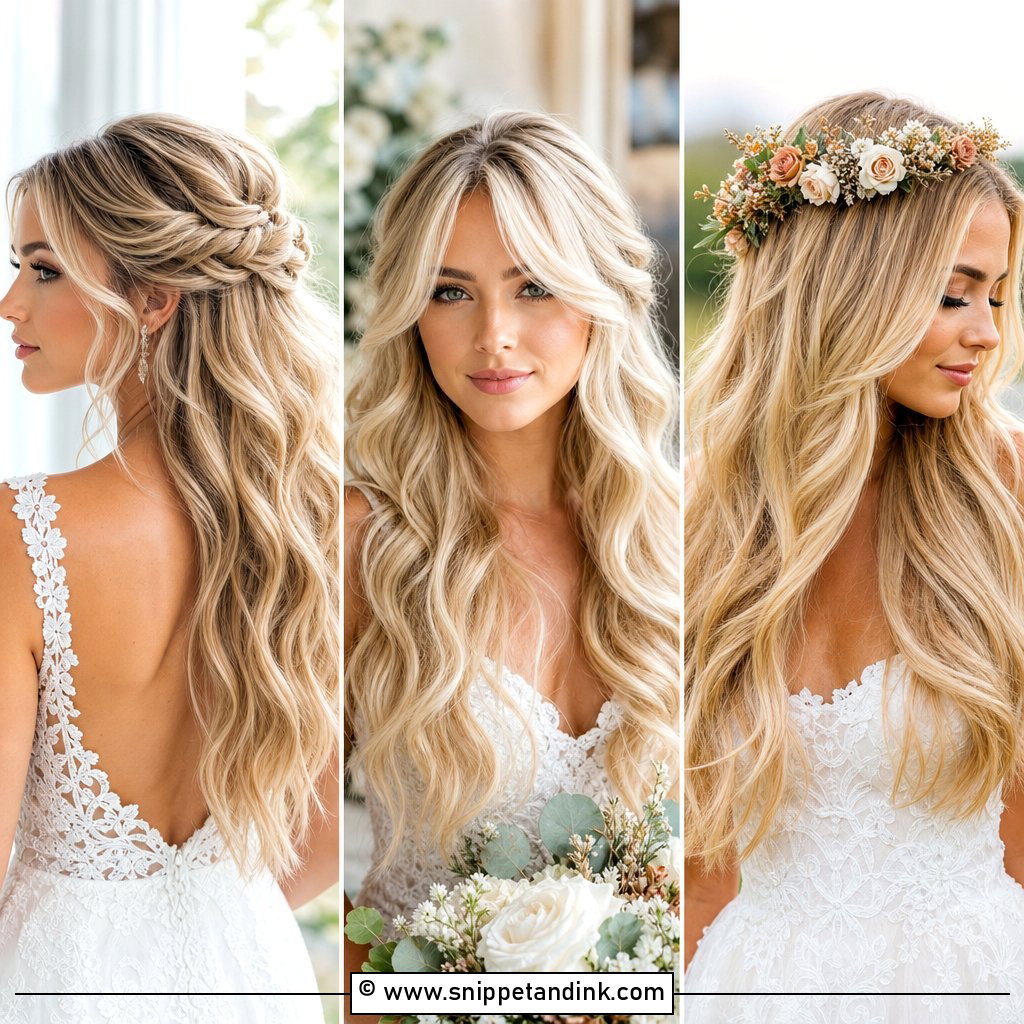
Blonde bridal half up half down hair is my answer for brides whose hair goes flat by lunchtime. The pinned crown section holds volume all day, even when the loose lengths relax. Curled ends and a small hidden pin detail at the back look especially pretty on blonde. Veils, vines, pearl pins and floral clips all fit. The thing I watch is the join: where the pinned section meets the loose hair, a visible line or a gap of scalp can show in back-view photos, so I lightly backcomb underneath before pinning. Keep the waves polished so it reads bridal, not weekend.
4. Blonde Bridal Updo With Face Framing Pieces
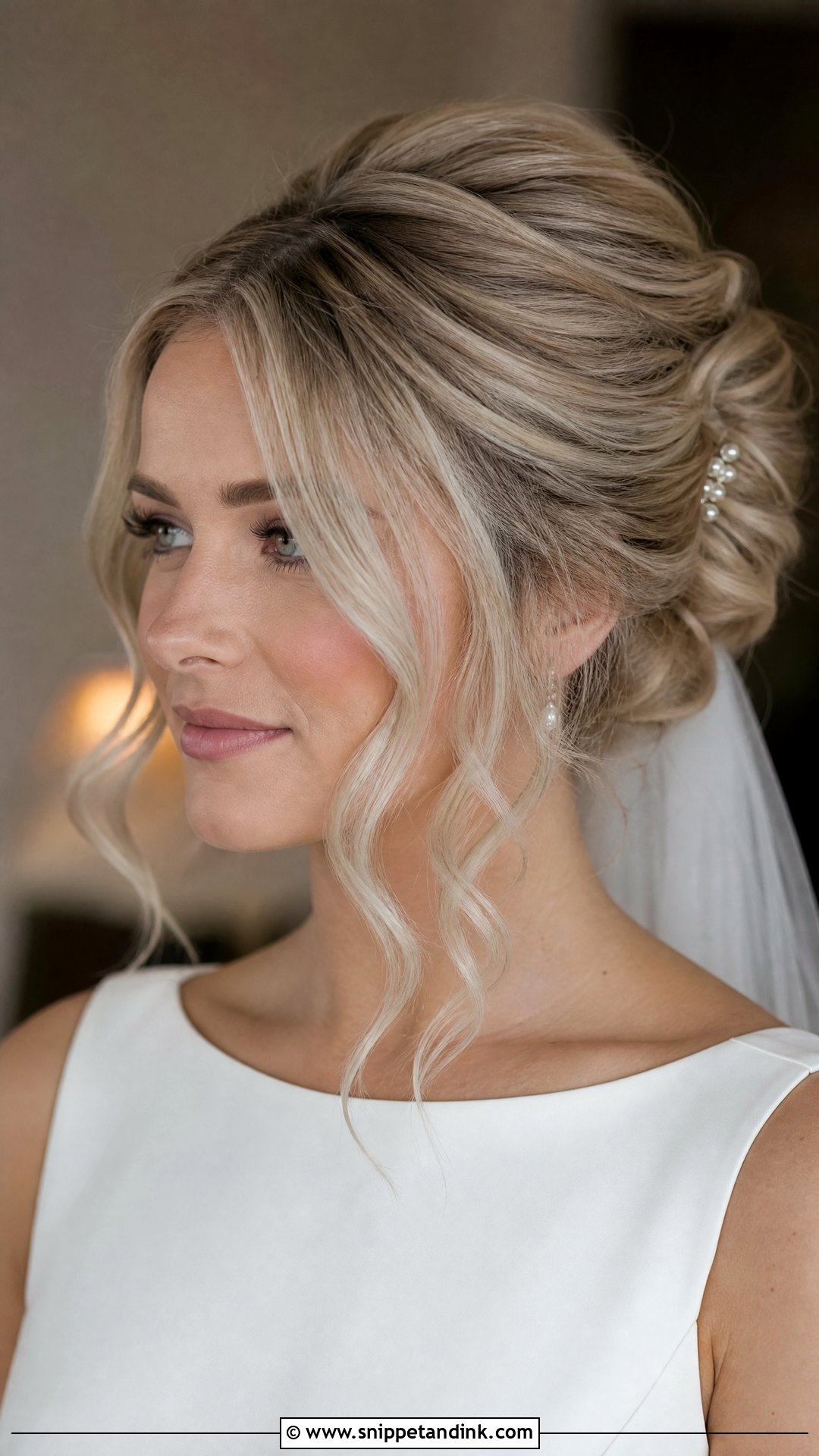
Face-framing pieces are the softest way into an updo. The structure stays at the back, while a few tendrils by the face are curled away from the cheekbones or softened toward the jaw, depending on your face shape. Those pieces are also where updos usually fail: left loose and uncurled, they go stringy within an hour. I cut no new face-framing layers in the final weeks, and I curl the tendrils last with a small iron. Blonde gives the pinned sections an airy look without heaviness. Off-the-shoulder gowns and sweetheart necklines pair well with it.
5. Blonde Bridal Sleek Bun
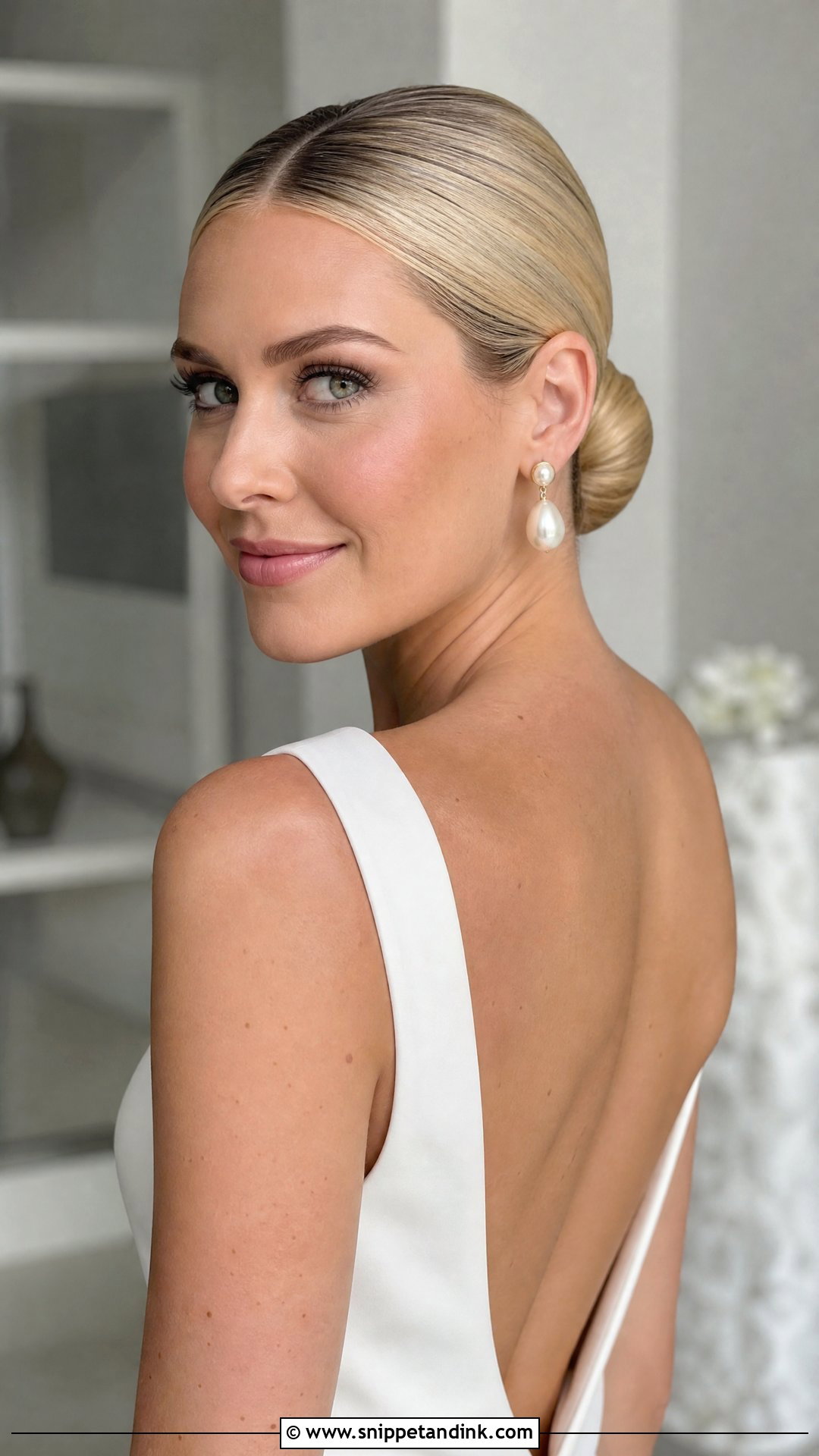
Sleek buns are minimal but not low-effort. On blonde, every flyaway catches the light, so I work in a smoothing cream, brush the hair back with a boar bristle brush and set the surface with a fine mist of spray and a toothbrush along the hairline. A center part or a soft side part both work. The finished look is quiet and strong, especially with statement earrings, a high neckline or a plain veil. Modern gowns and city venues suit it. I’d avoid it if your color is due for a gloss; this style shows brassiness more than any other.
6. Blonde Bridal Braided Updo
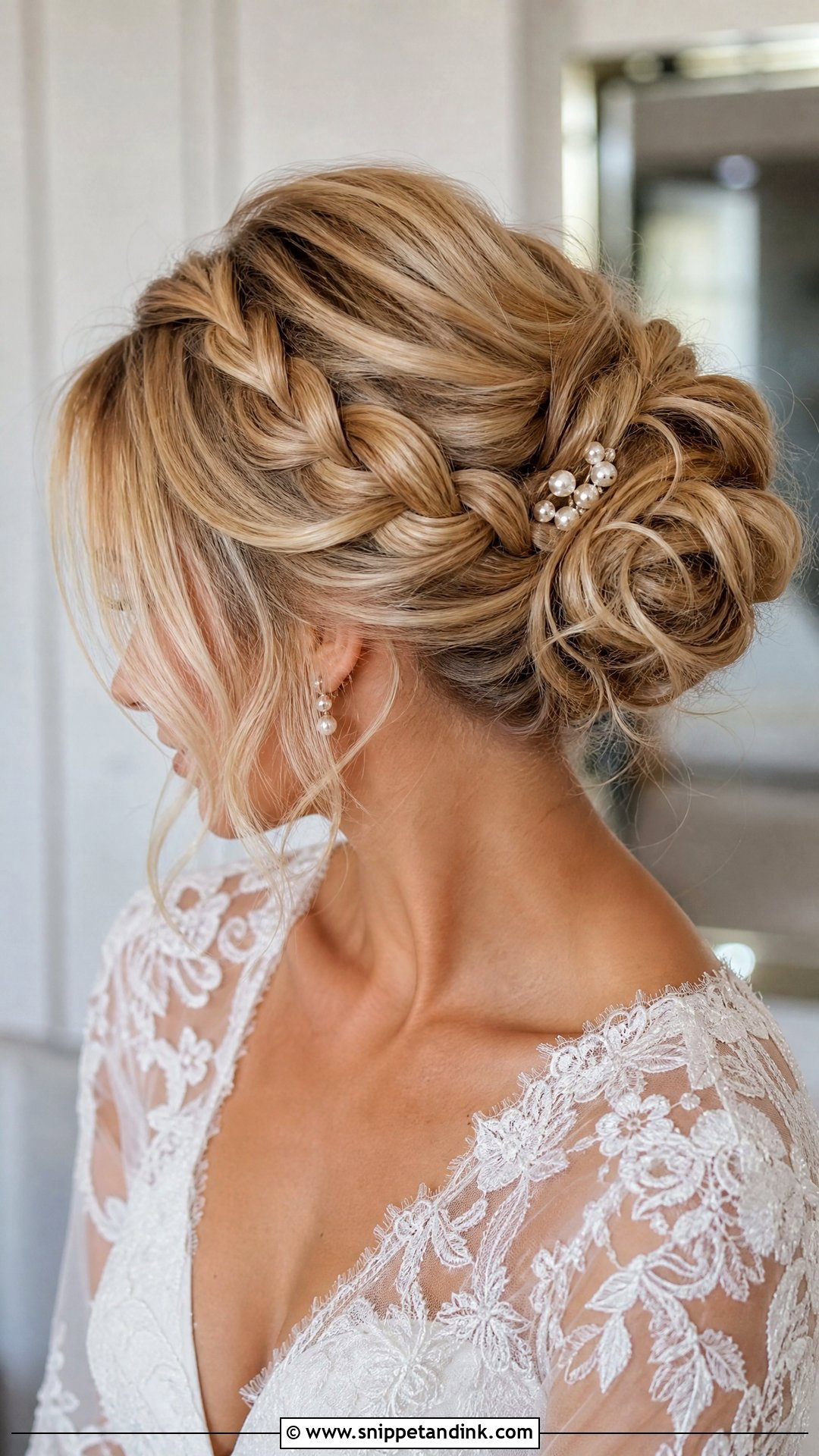
Of every style here, a braided updo holds best through hugs, dancing and wind. The braid can wrap into a low bun, crown the back of the head or blend into twisted pinned sections. Blonde dimension makes each crossing visible, so it rewards attention from the side and back, which are the angles guests see during the ceremony. Freshly washed blonde can be too slippery to braid neatly, so I prep with a dry texture spray first. Garden weddings, lace and romantic veils suit it. Tiny pearl pins add detail without fighting the weave.
7. Blonde Bridal Loose Waves
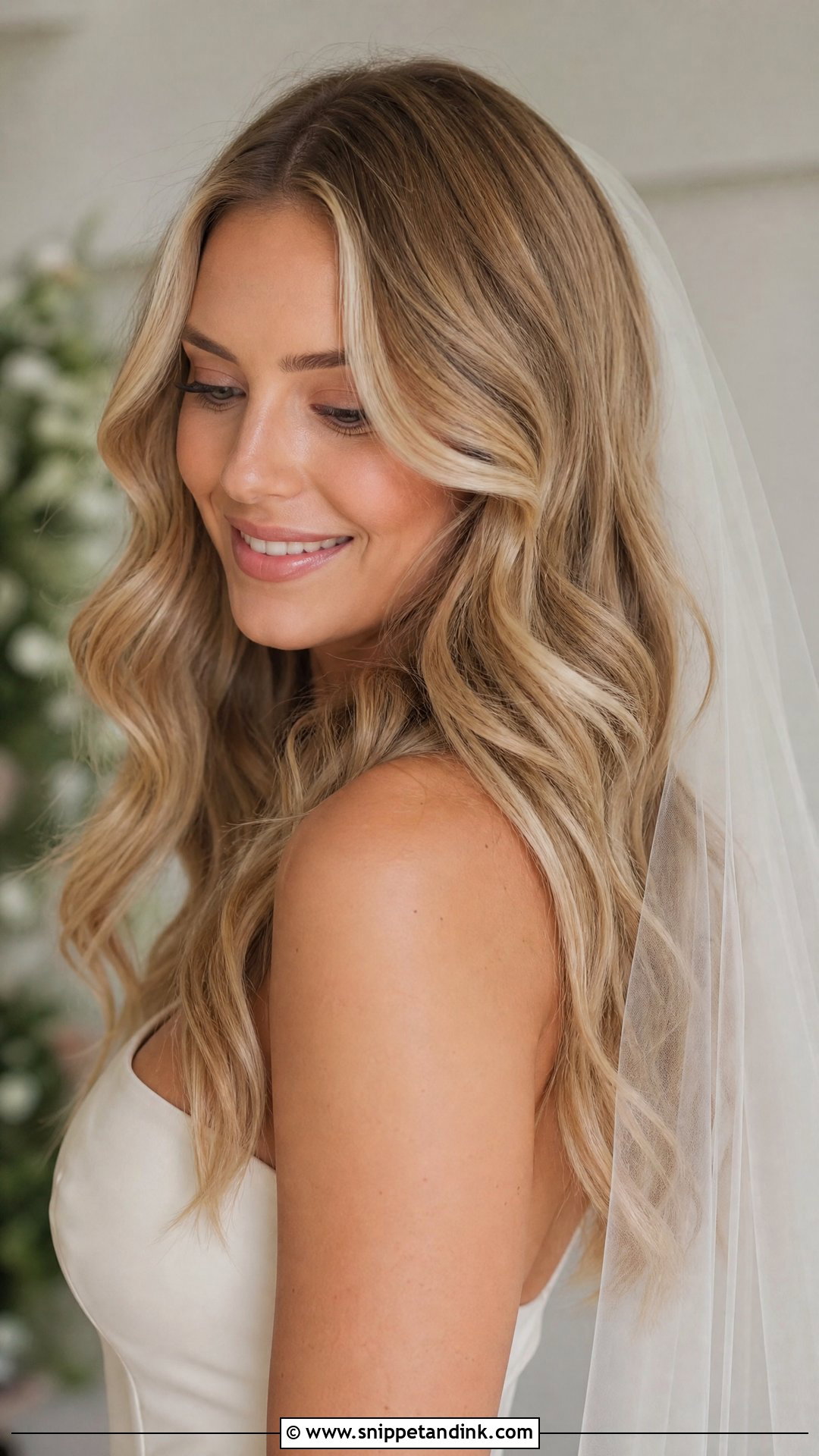
Loose waves are softer and less structured than Hollywood waves, but they still need shine and a clean shape. Long layers help them fall well; face-framing pieces keep portraits flattering. My trick for making them last is to curl in smaller sections than the finished look suggests and then brush lightly, so the wave has more grip than it appears to. Finish with a flexible spray, never a strong hold, or the hair turns crunchy when touched. They’re at home with simple gowns, beach ceremonies and backyard venues.
8. Blonde Bridal Ponytail
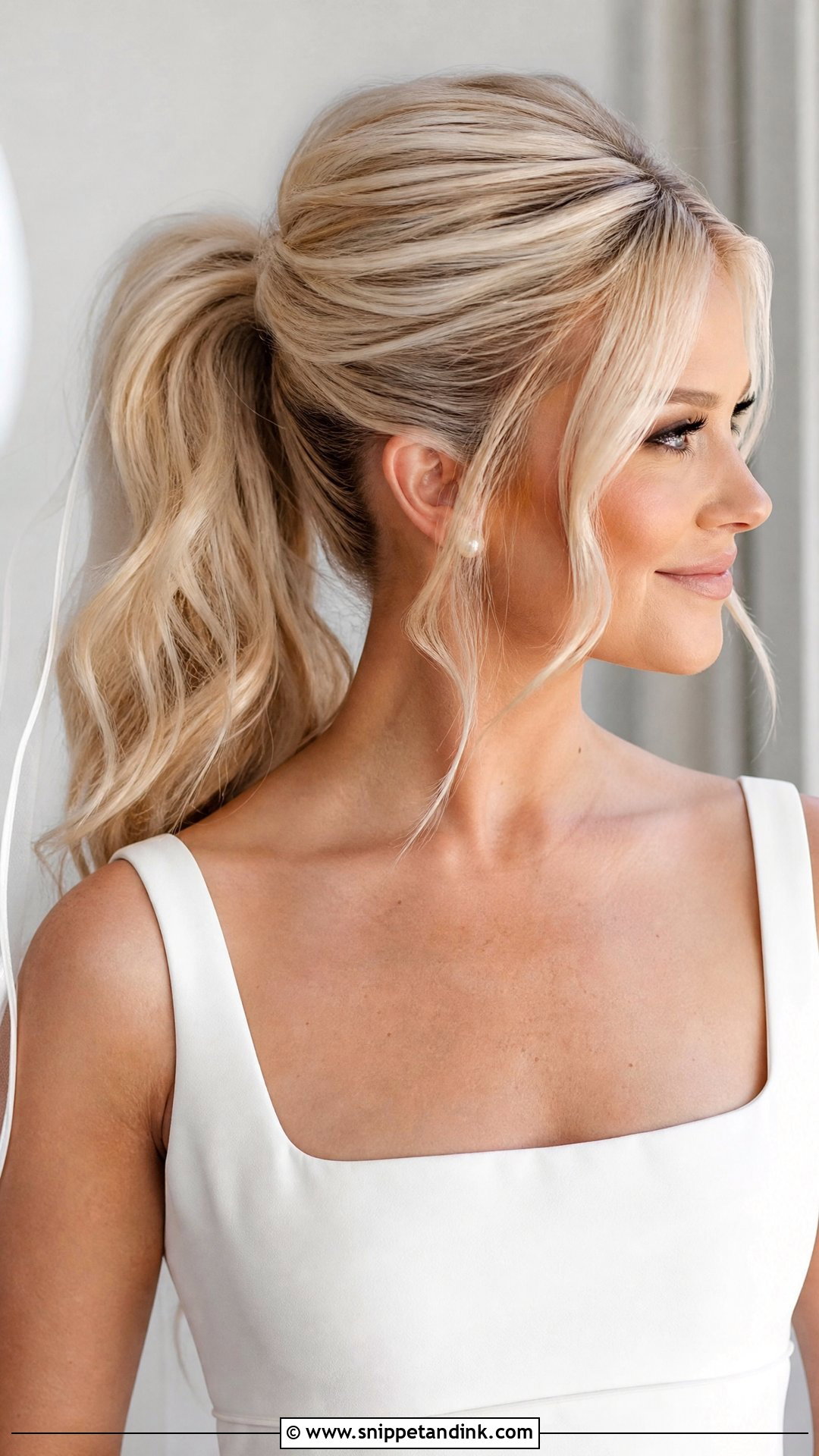
A ponytail can look properly formal, provided it has crown volume, curled lengths, a wrapped base and smooth face-framing pieces. Blonde brightens the whole length, especially when the curls are brushed into waves. It suits open backs, square necklines and minimal accessories, and it keeps hair away from your face without committing to a bun. The weak point is the base: a heavy, curled ponytail drags downward. I secure it with two crossed bobby pins pushed up under the elastic, which keeps it lifted from the first photo to the last dance.
9. Blonde Bridal Chignon
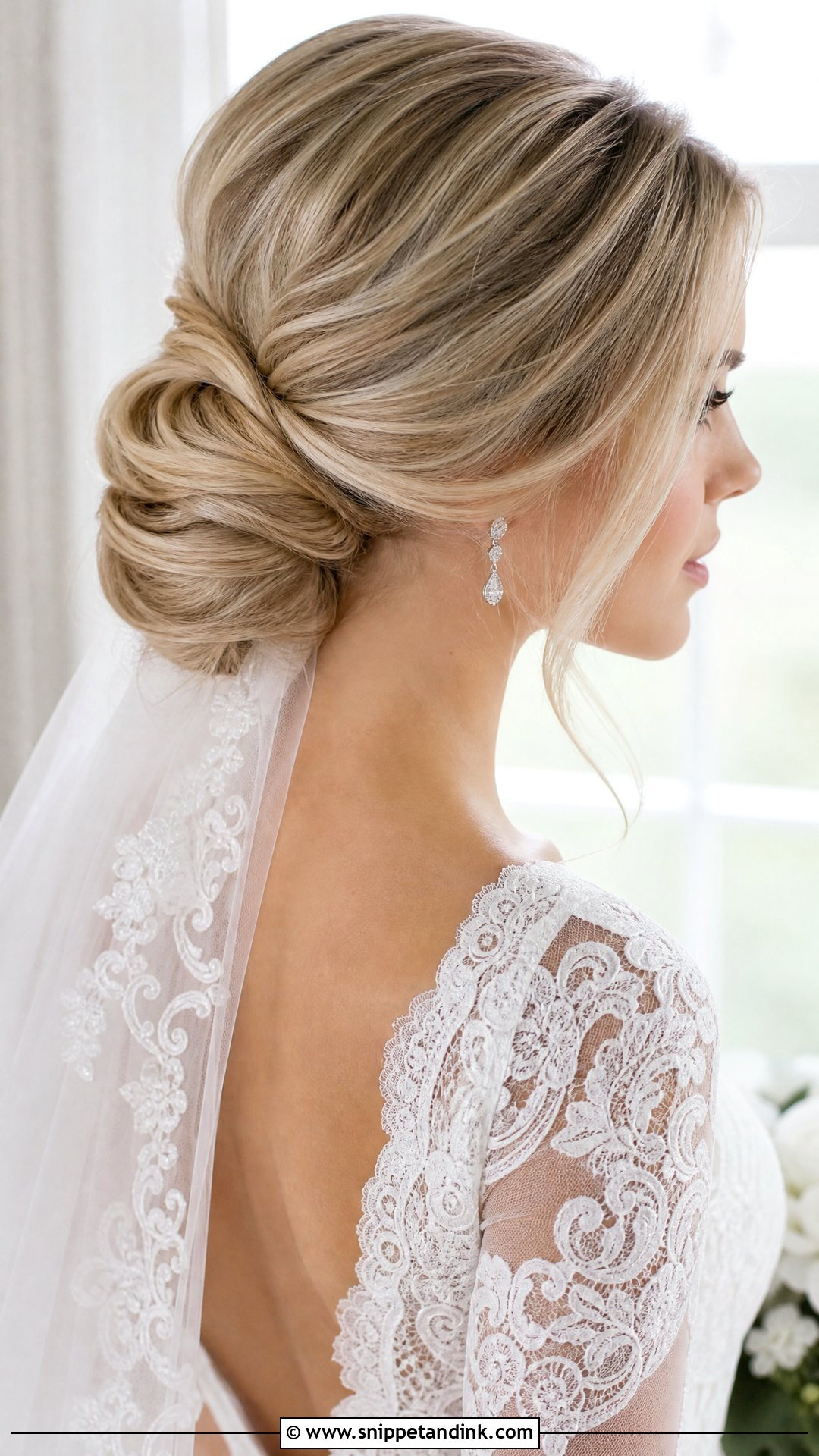
A chignon is softer than a plain bun, built from tucked, rolled, or twisted pieces that sit low at the back of the head. Creamy highlights and beige dimension show up well in those rolls. Cathedral veils and lace gowns suit it, and it stays secure for hours. For a modern feel I’d keep the crown gently lifted rather than heavily teased; big teased crowns date a photo quickly. Note that a low chignon and a high-necked dress collar can collide, so check them together at the trial.
10. Blonde Bridal Side Swept Curls
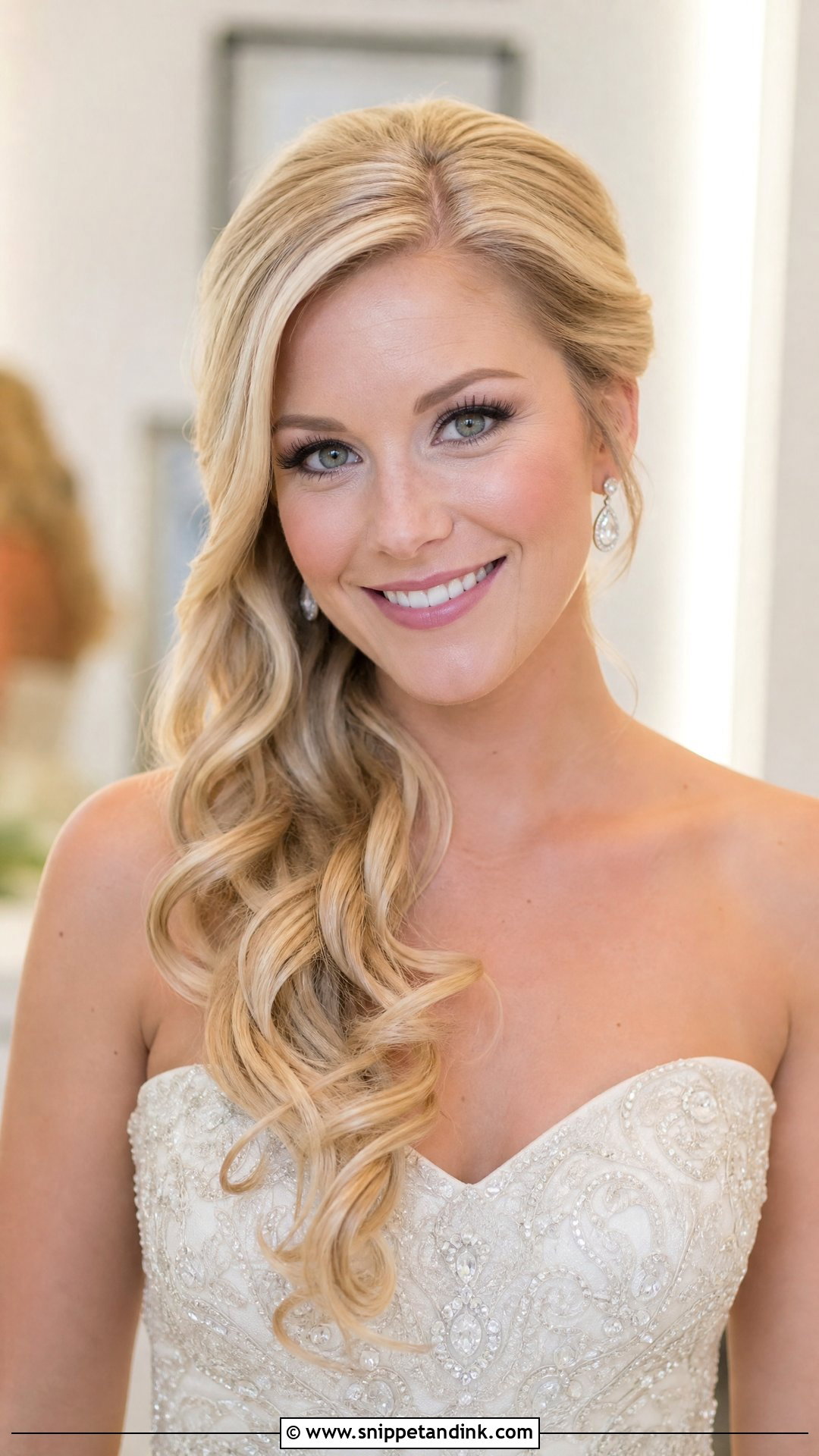
Side swept curls show off the neckline and shoulders, and on blonde the curls catch light from root to end so the whole sweep reads as one glossy shape. The hair is curled, brushed into movement and pinned to one side to fall over the front. One-shoulder and strapless dresses suit it, and it puts an earring on show. The pinned side must be secure but invisible; I usually tuck a small braid behind the ear and pin the curls to that, because pins into loose hair alone won’t take the weight. Smooth curls look more bridal than messy texture here.
11. Blonde Bridal Bun With Veil
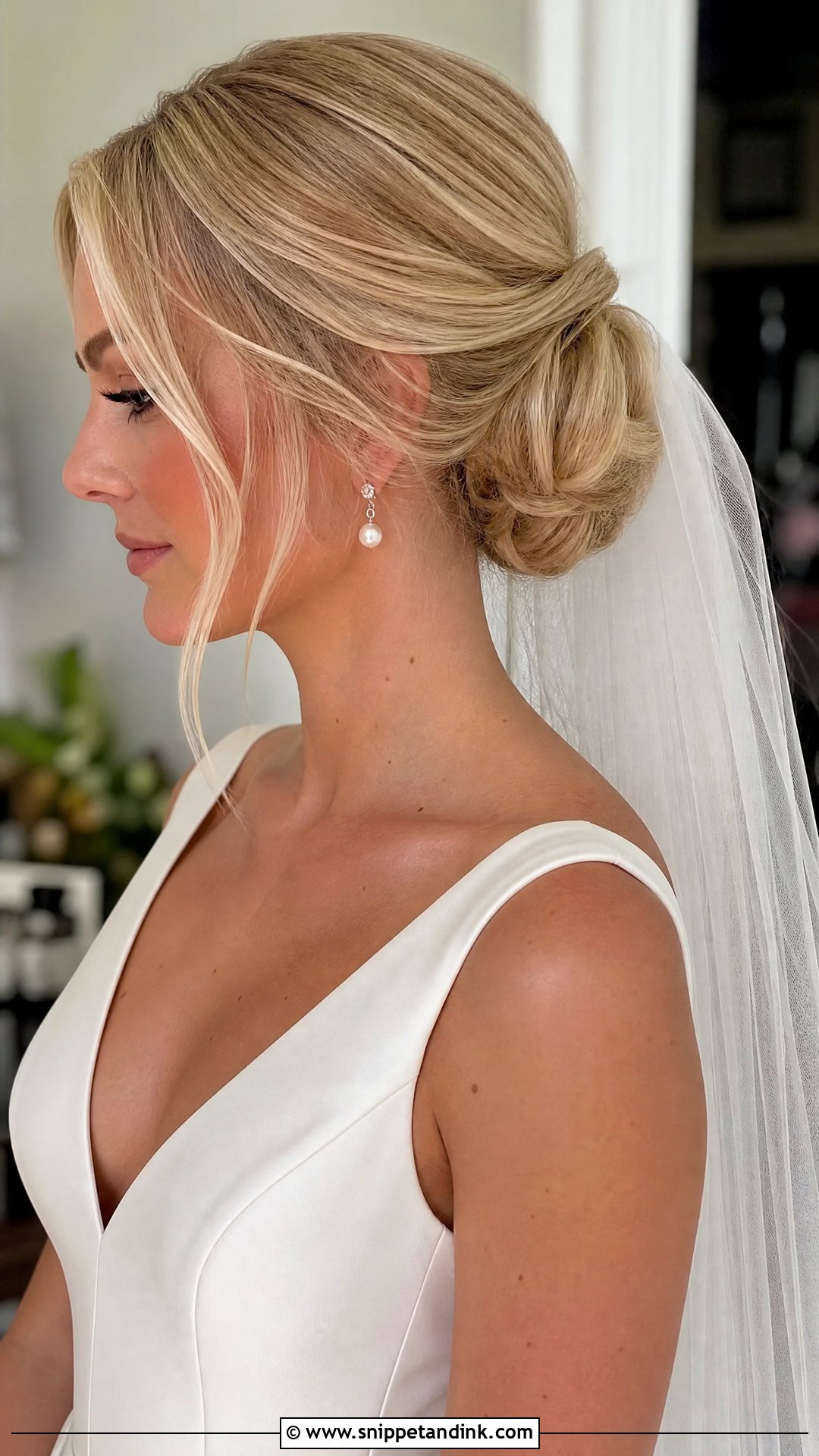
A bun with a veil gives the comb a firm base, and the hairstyle still looks finished once the veil comes off for the reception. The bun can be low, mid-height, smooth or textured. Blonde adds lightness when small sections are pulled out and arranged. Traditional ceremonies and formal venues suit it. Talk through veil placement at the trial: above the bun, the veil frames the whole updo; below it, the bun sits on top like a crown and the veil drops more steeply. I need to know which before I start pinning.
12. Blonde Bridal Pearl Hair
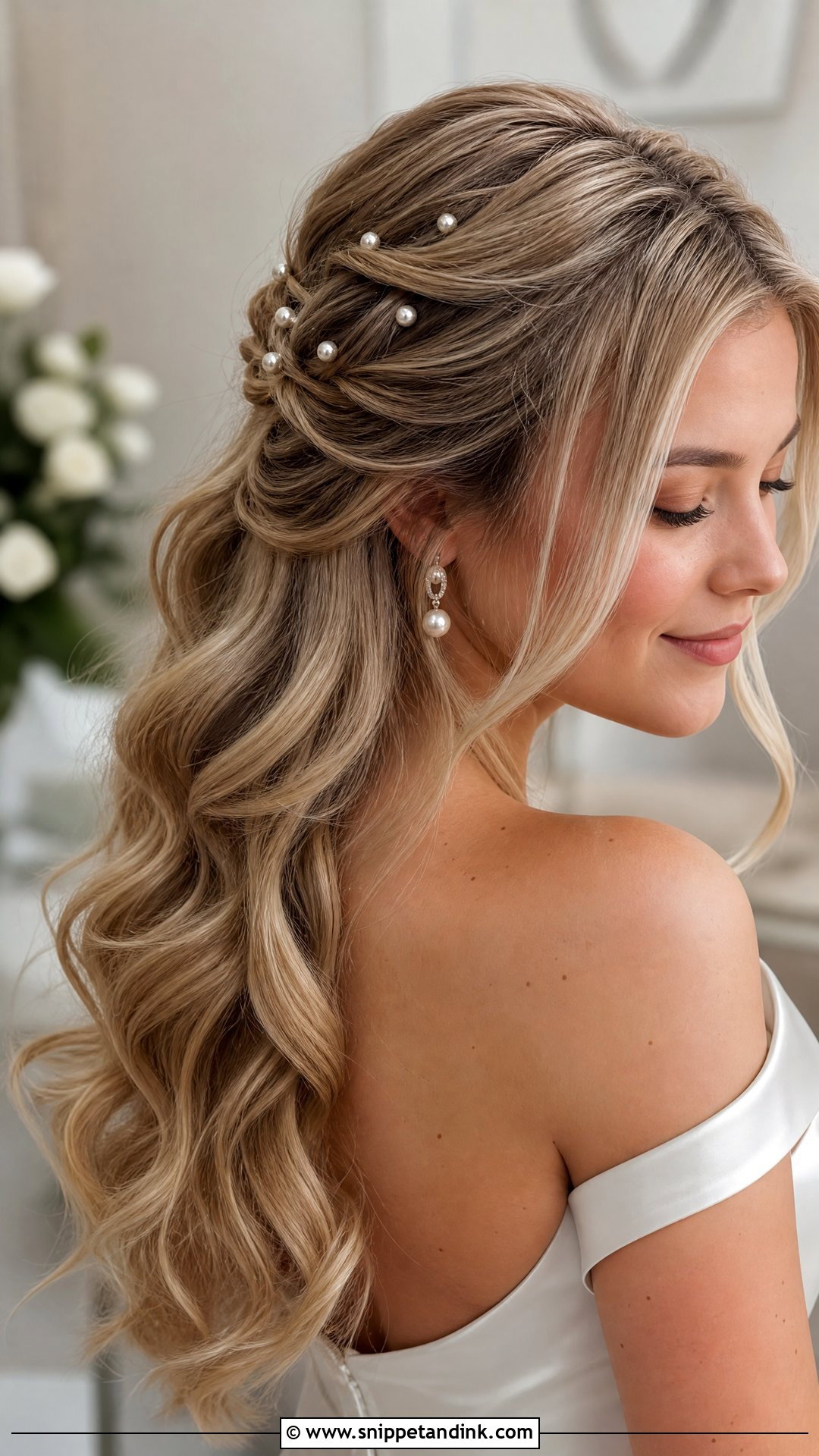
Pearl hair looks best when the pearls follow a line. Instead of covering the entire style, I place pins along the edge of a bun, down a half-up twist or through a braid, spacing them unevenly so they look scattered rather than stamped. Blonde makes a soft background for them. Satin gowns, lace sleeves and pearl earrings tie in well. Overdo it and it can tip toward costume. Pearl pins also slide out of silky hair, so I spray each pin before inserting it and anchor it into a crossed bobby pin.
13. Blonde Bridal Crown Braid
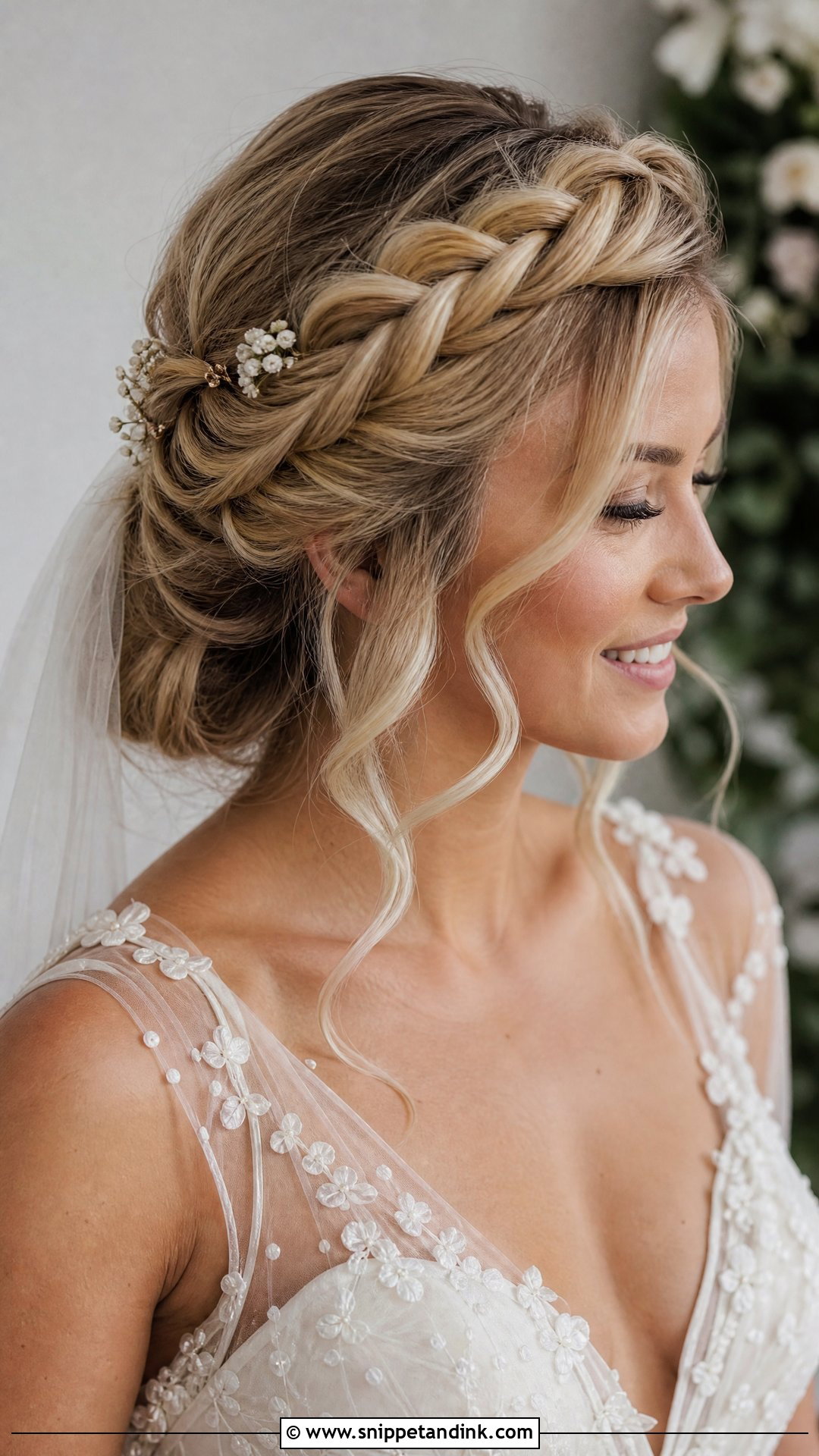
A crown braid wraps around the head and keeps everything secure. It can be a full crown, a partial braid feeding into a low bun, or a halo with loose curls below. On blonde the pattern reads clearly in photos. Outdoor and garden venues, rustic settings, lace and soft tulle suit it. The braid should look full and gently pulled apart; on thinner hair I start with a Dutch braid rather than a French one, because it sits on top of the head and looks wider. Add pins or flowers only if they match the dress.
14. Blonde Bridal Short Hair Waves
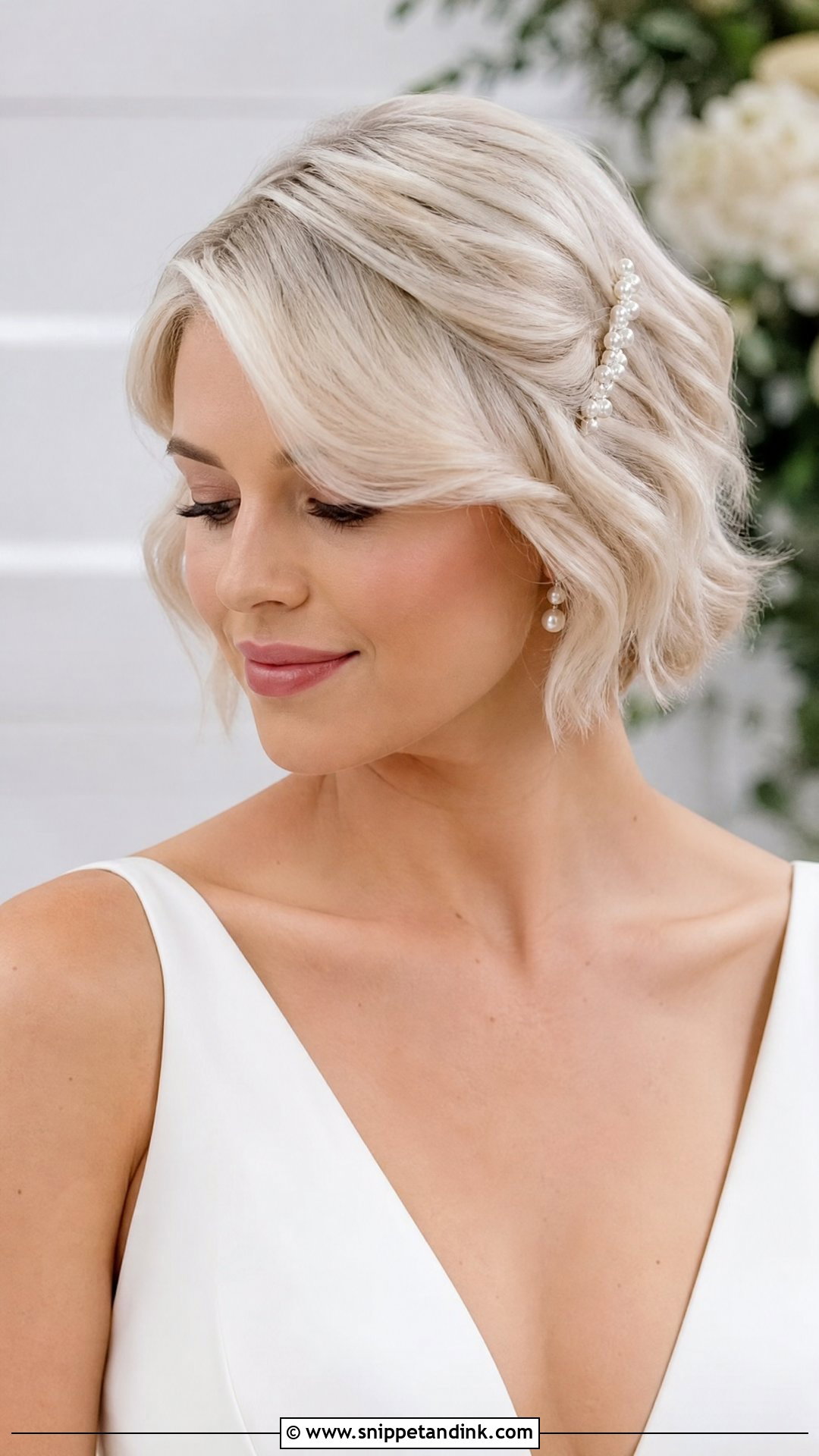
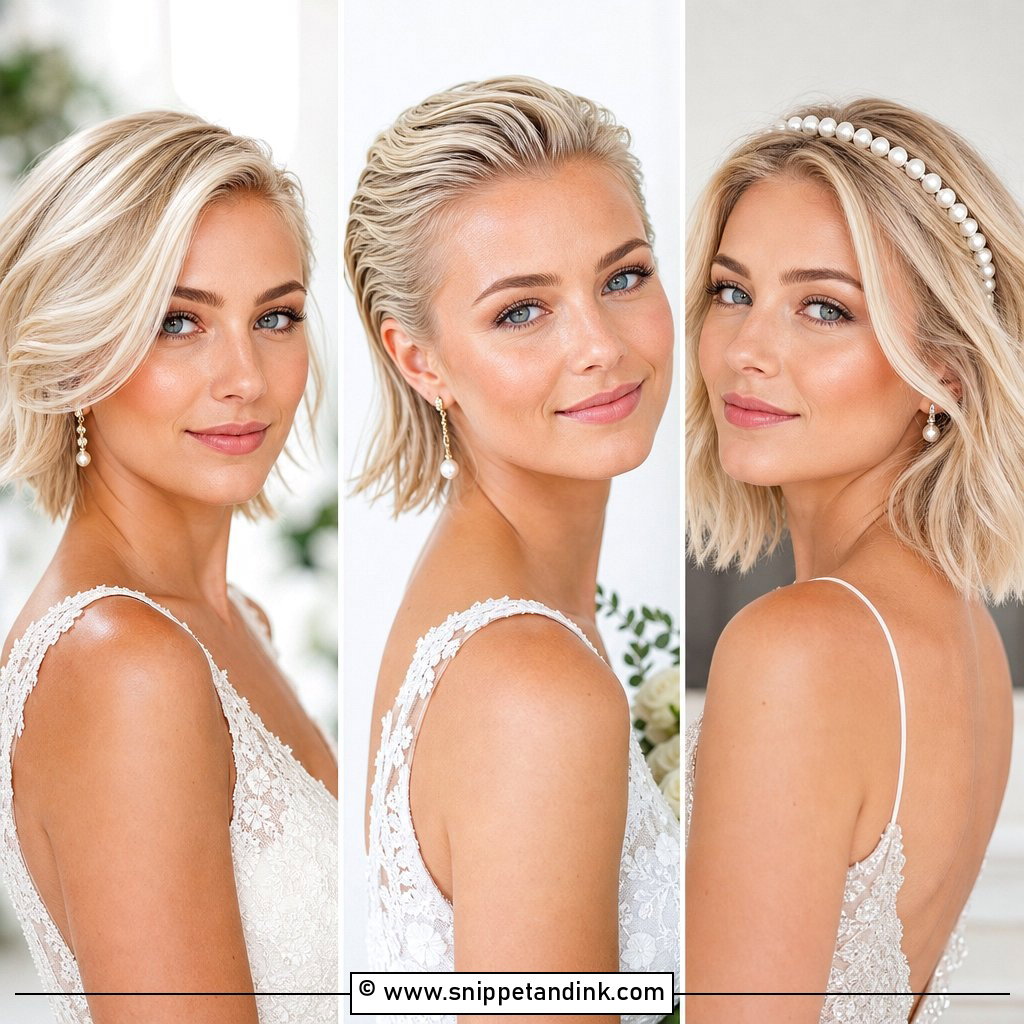
Blonde bridal short hair waves show that a bob or lob can look every bit as bridal as long hair. Soft bends, a side part, polished ends and one delicate accessory are enough. Blonde brightens the face, while the wave gives the cut shape. I’d book a trim about three weeks out so the ends look neat but not freshly chopped. Veils, pearl clips, combs and headbands all work. It suits modern gowns, courthouse weddings, and anyone who wants to look like herself. With short hair, shine and shape carry the whole look.
15. Blonde Bridal Twisted Half Up Hair
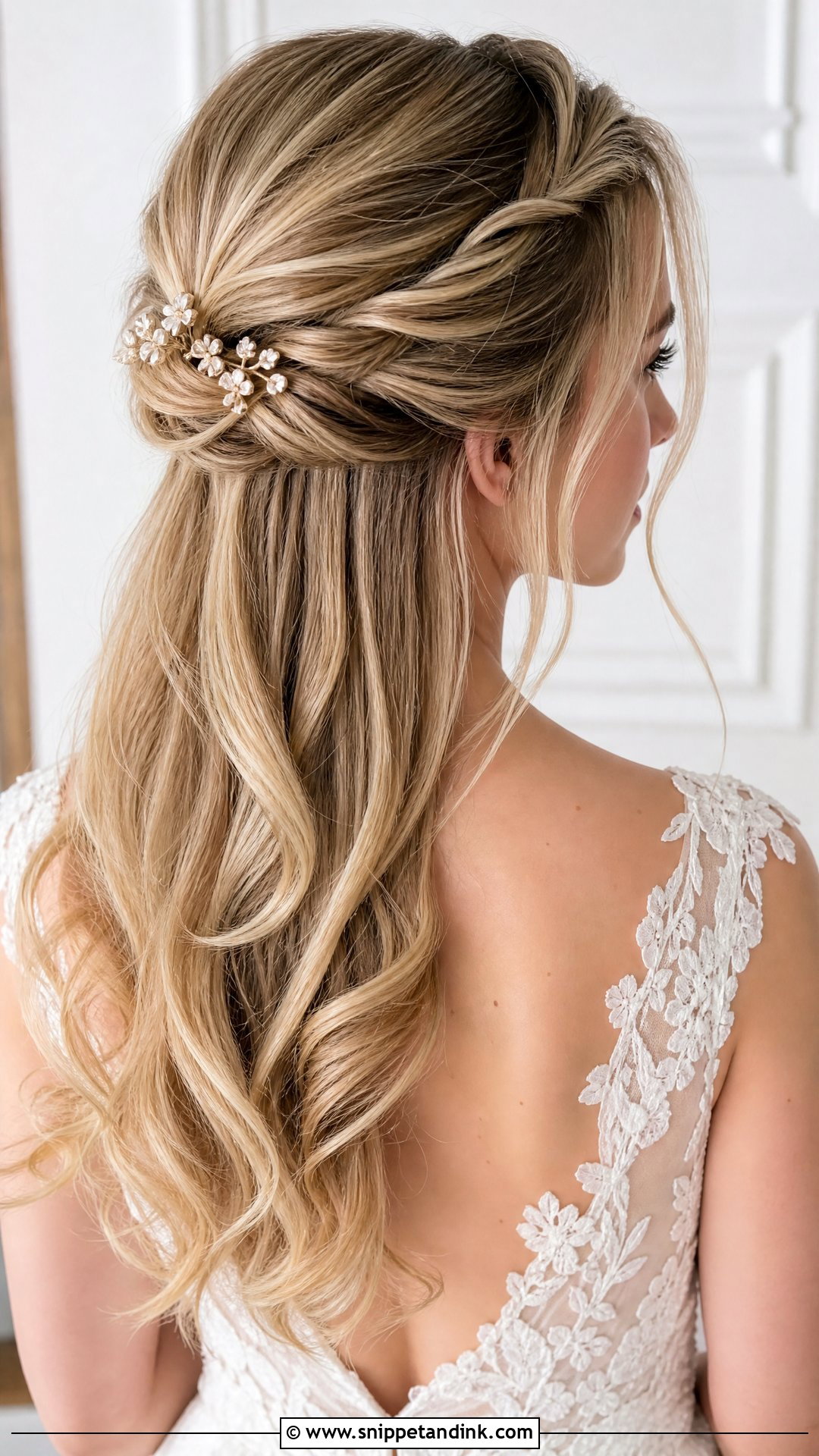
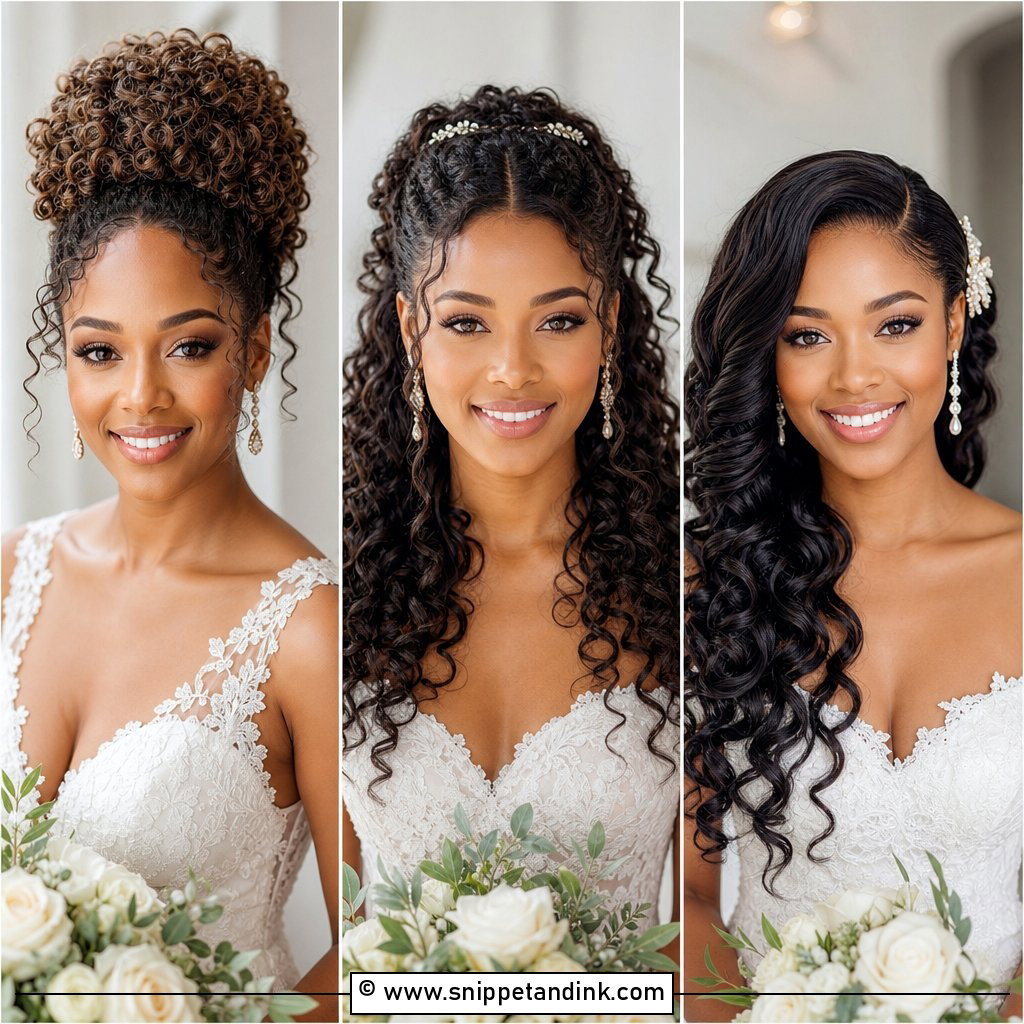
Twisted half up hair is the gentlest style here and the easiest to personalize. The front sections are twisted back and pinned, while the rest falls in curls or waves. Highlights around the hairline make the twists look bright. If you don’t want a heavy updo, start here. The twists loosen as the day goes on, so I twist each one a bit tighter than it looks in the finished style, then gently pull it out after pinning. A veil, a small comb or floral pins all work. Keep the crown lifted and the curls smooth so it balances.
How Long Each Style Keeps You in My Chair
Hair is often the longest single block of the wedding morning, and the style you pick reshapes the whole schedule. Exact times depend on your length, thickness and the stylist, so take this as a rough order and get real timings at your trial.
- Quickest: a sleek bun, a simple ponytail or short waves. Little sectioning and few pins.
- Middle: loose waves, half up styles and side swept curls. Most of the time goes into curling every section and letting it set.
- Longest: braided updos, crown braids, rolled chignons and anything with extensions. Thick or very long hair adds a fair chunk on top.
I time every trial and then add a buffer for the veil, accessories and the photographer’s getting-ready shots. If bridesmaids are booked too, don’t put yourself last. Going second or third means the style has settled but you’re not sitting under a veil for six hours before the ceremony.
Arrive with dry hair washed the way we agreed at the trial, no oils or leave-ins added that morning, and wear a shirt that buttons down the front. Pulling a T-shirt over a finished updo is the quickest way I know to undo an hour of pinning.
Glamour, Security or Softness, Which Matters Most to You?
Most styles above fall into three camps. For glamour, Hollywood waves or side swept curls. For something that won’t budge, a low bun, chignon, braided updo or a bun built to carry a veil. For softness, half up hair, loose waves or twists. Decide which of those three you care about most, then let your dress, venue and length narrow it down. I always tell brides to test the accessories they’ll really wear and look at the trial photos from the back before saying yes.
You'll Like These Ideas:


Leave a Reply