
A Muslim wedding often means two or three separate looks over several days, and some of them sit under a hijab while others are on show in a women-only room. That changes how I plan the hair. A bun meant to lift a scarf is built differently from one meant to be seen, and an open style for a Walima has to survive a Mehndi night two days earlier. Below are 25 looks I would actually put on a bride for her Nikah, Mehndi, or Walima, from hijab foundations and low buns to open curls and braided crowns, with notes on what each one needs underneath and who it suits. Most of them sit well under a heavy dupatta, a jhoomar or a light veil.
What Holds a Bridal Hijab in Place for Eight Hours
Brides often ask me why their hijab slides by mid-afternoon. The answer is usually underneath. A slippery outer fabric over loose hair has nothing to grip, and a heavy, embellished dupatta on top adds weight that pulls everything backward.
- Start with a secure base: a bun or a flat braided crown, set with crossed bobby pins.
- Add an underscarf or bonnet in a cotton or jersey that grips. This is where every pin goes.
- Place the outer hijab and pin it to the underscarf at the temples and the back, never into the hair alone.
- Add the dupatta last and pin it to the hijab at the crown, then at each shoulder, so the weight is spread out.
I prefer straight pins and small magnetic pins on delicate fabric; safety pins pull visible puckers into chiffon. If the jhoomar or matha patti is heavy, it needs its own anchor point, either a small hidden braid or a pinned section of the underscarf, so it doesn’t drag the scarf to one side.
1. Bridal Hijab With High Bun
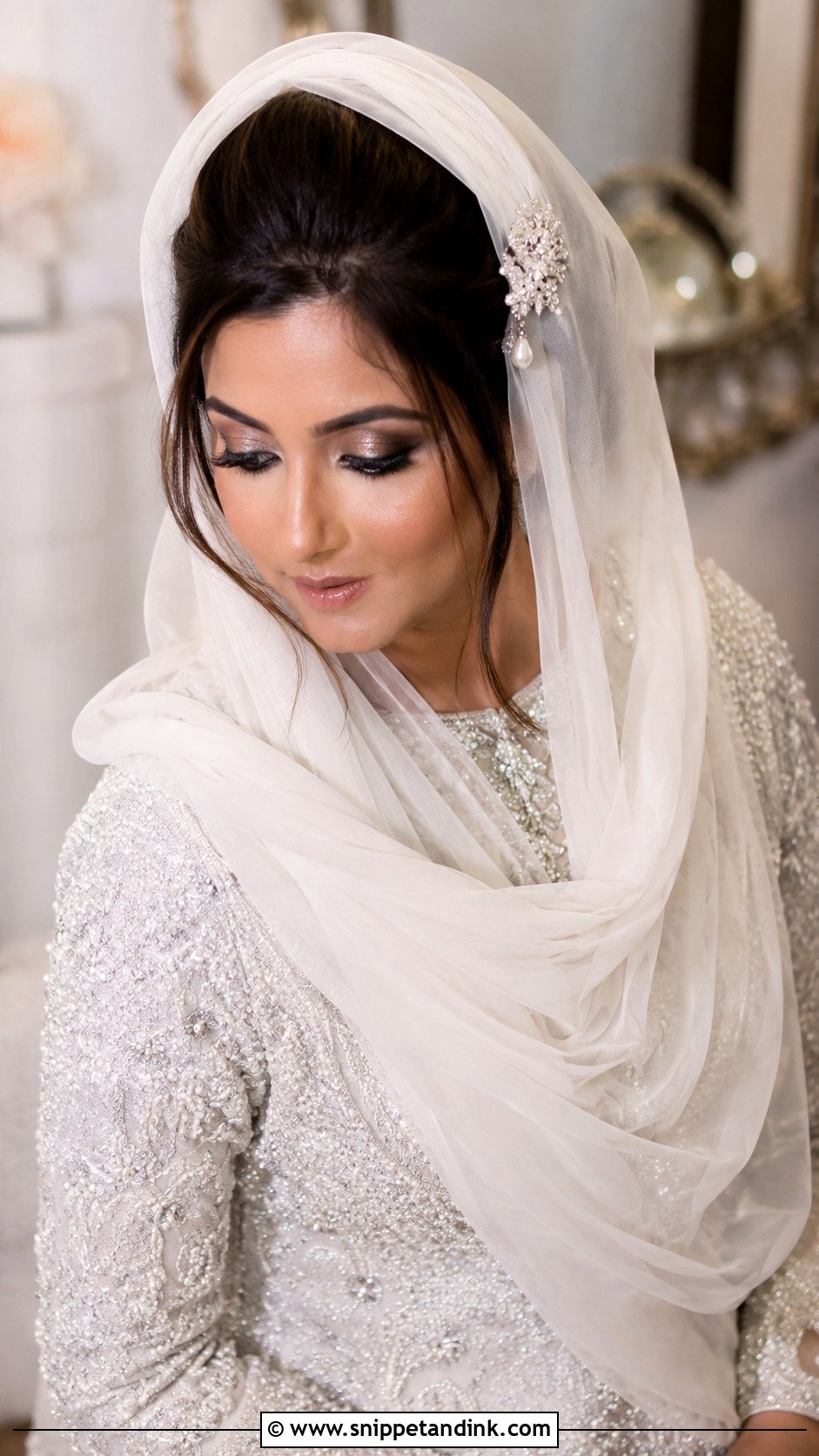
For a polished hijab look, the bun is really scaffolding. I set it high at the crown, secure it with crossed bobby pins into a small elastic base, and cover it with an underscarf so the outer fabric has something smooth to grip. The height lengthens the face and stops a heavy embellished scarf from sliding back over the hours. Chiffon and silk drape cleanly over it. If you plan to wear a jhoomar at the side, tell me early, because I angle the bun slightly away from that side so the ornament sits flat.
2. Low Floral Bun for Nikah
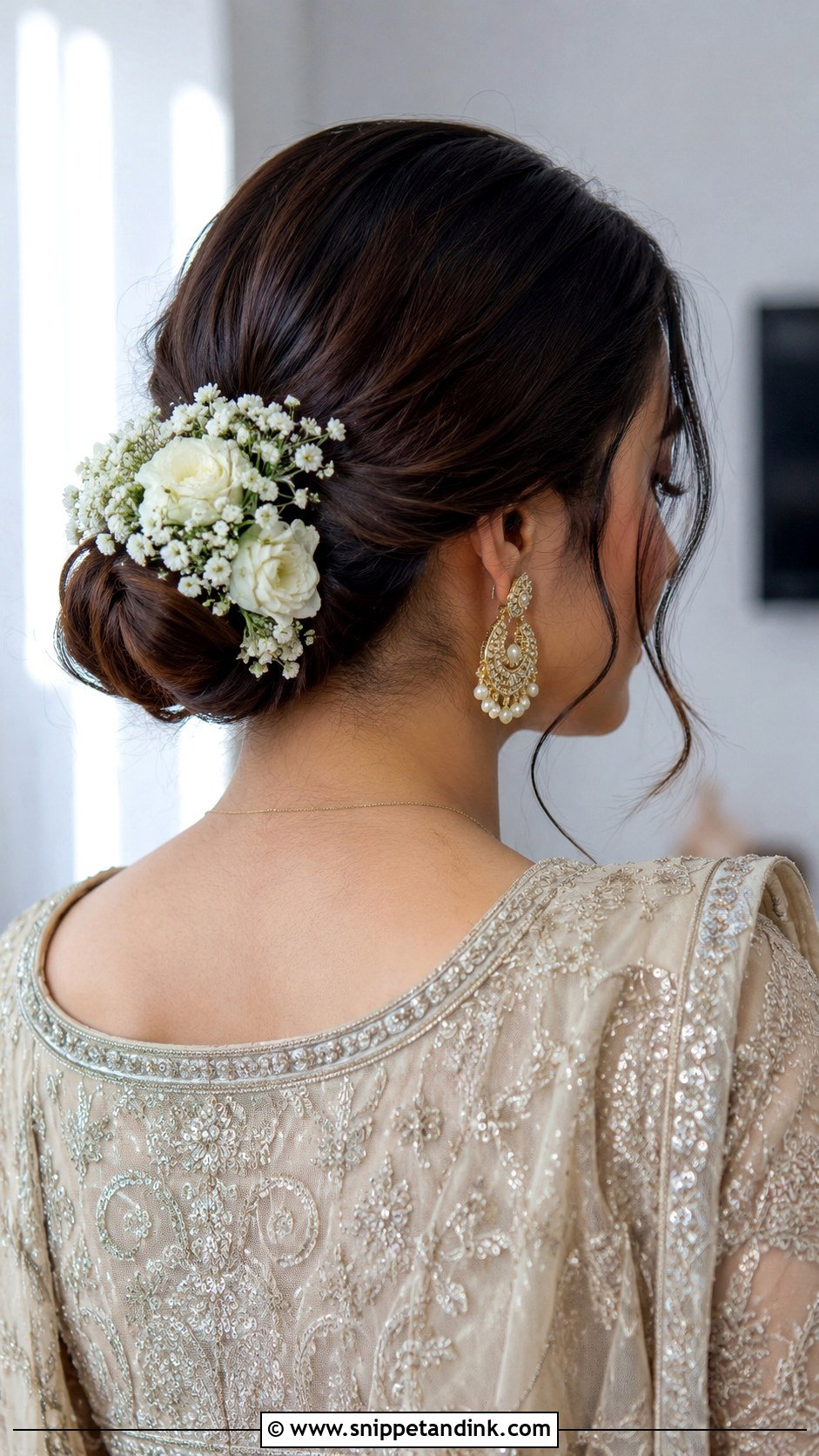
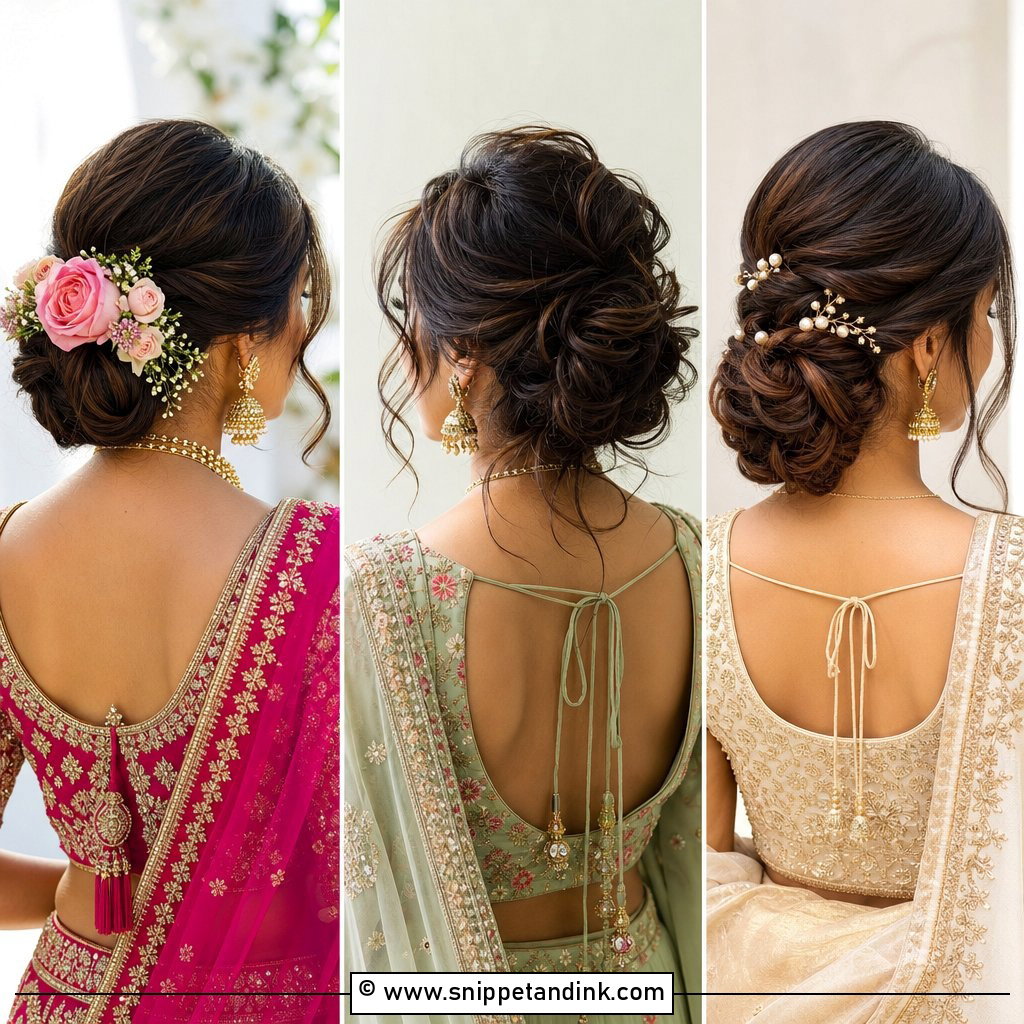
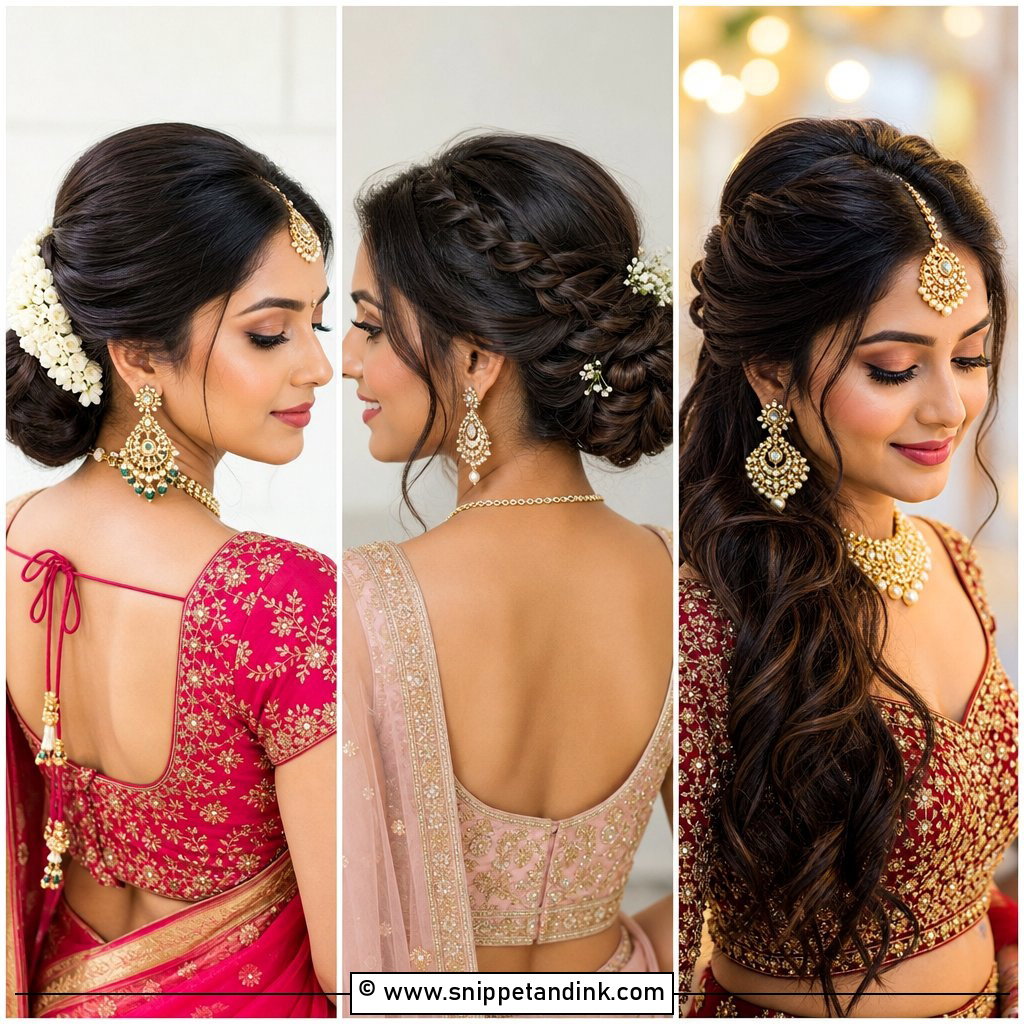
A low bun at the nape is the style I reach for at a Nikah where the bride wants to look calm rather than grand. Tuck fresh blossoms or fabric flowers around it and leave two soft tendrils at the front. On round and square faces I keep the bun slightly off-centre, which softens the jaw. Thick, long hair fills this shape without padding; finer hair usually needs a small donut or a few clip-in wefts. It sits naturally under a draped dupatta, and pearl pins or a matha patti finish it.
3. Messy Fishtail Braid for Mehndi
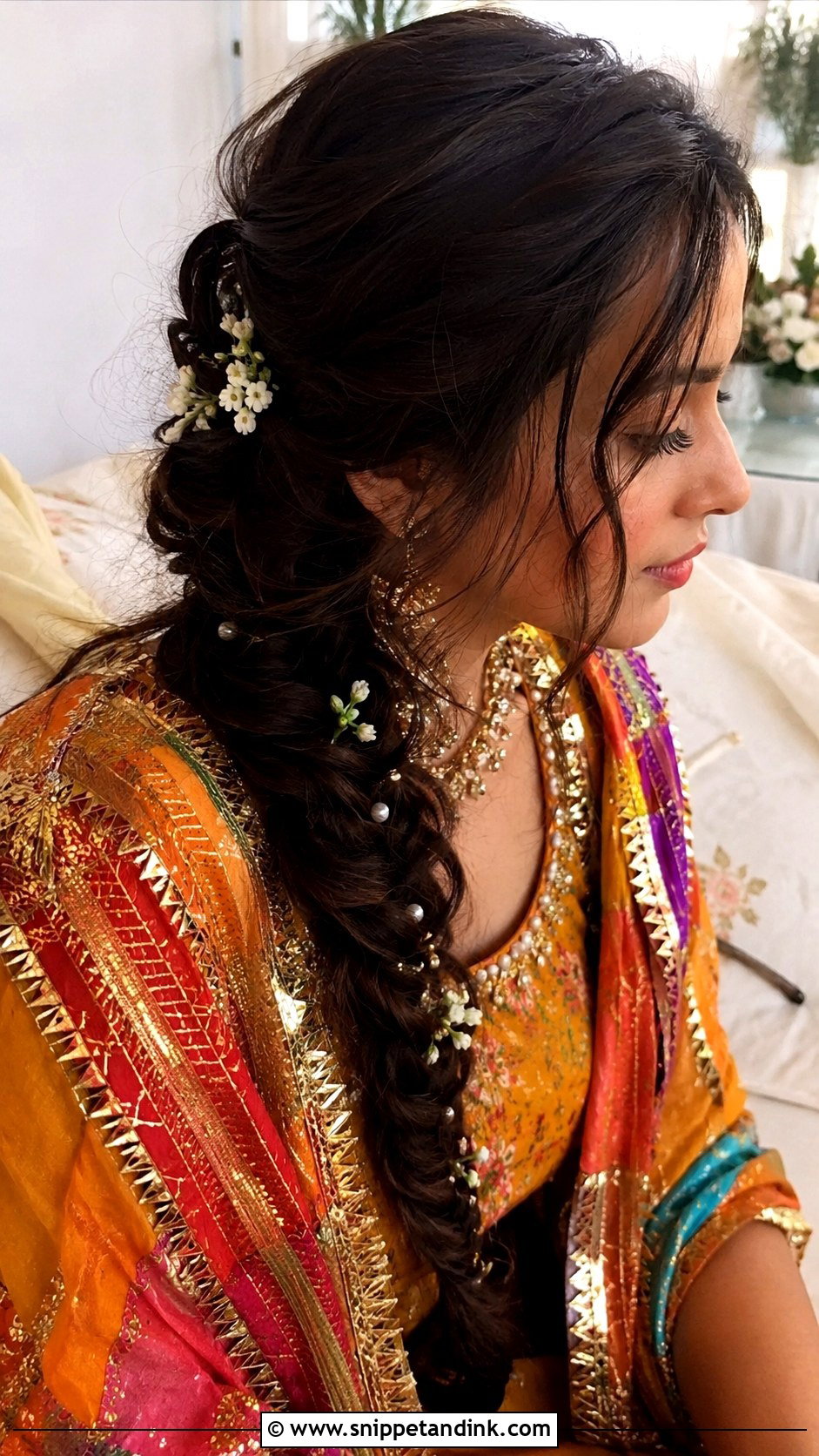
Mehndi nights involve dancing, sitting cross-legged for hours while henna is applied and a lot of hugging, so a loose, pulled-apart fishtail over one shoulder is a sensible choice. It looks better as it relaxes. I braid it tight, then pancake the edges by hand so the texture is set from the start rather than falling out unevenly. Tiny flowers or beads woven in pick up the colours of a gota dupatta. One practical note: keep the braid on the side away from the hand being hennaed, or it will drag through wet paste.
4. Half Up Half Down With Waves
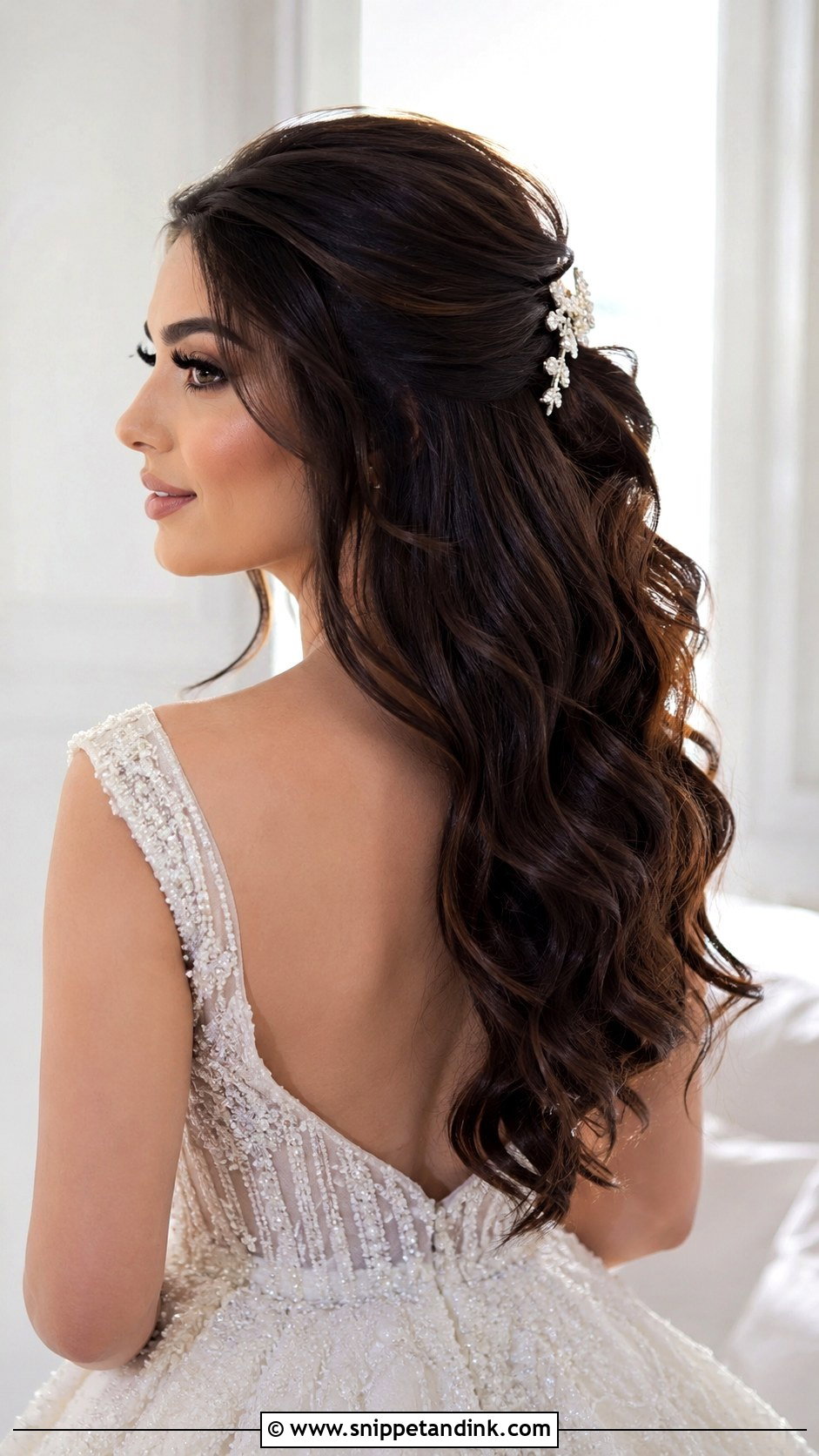
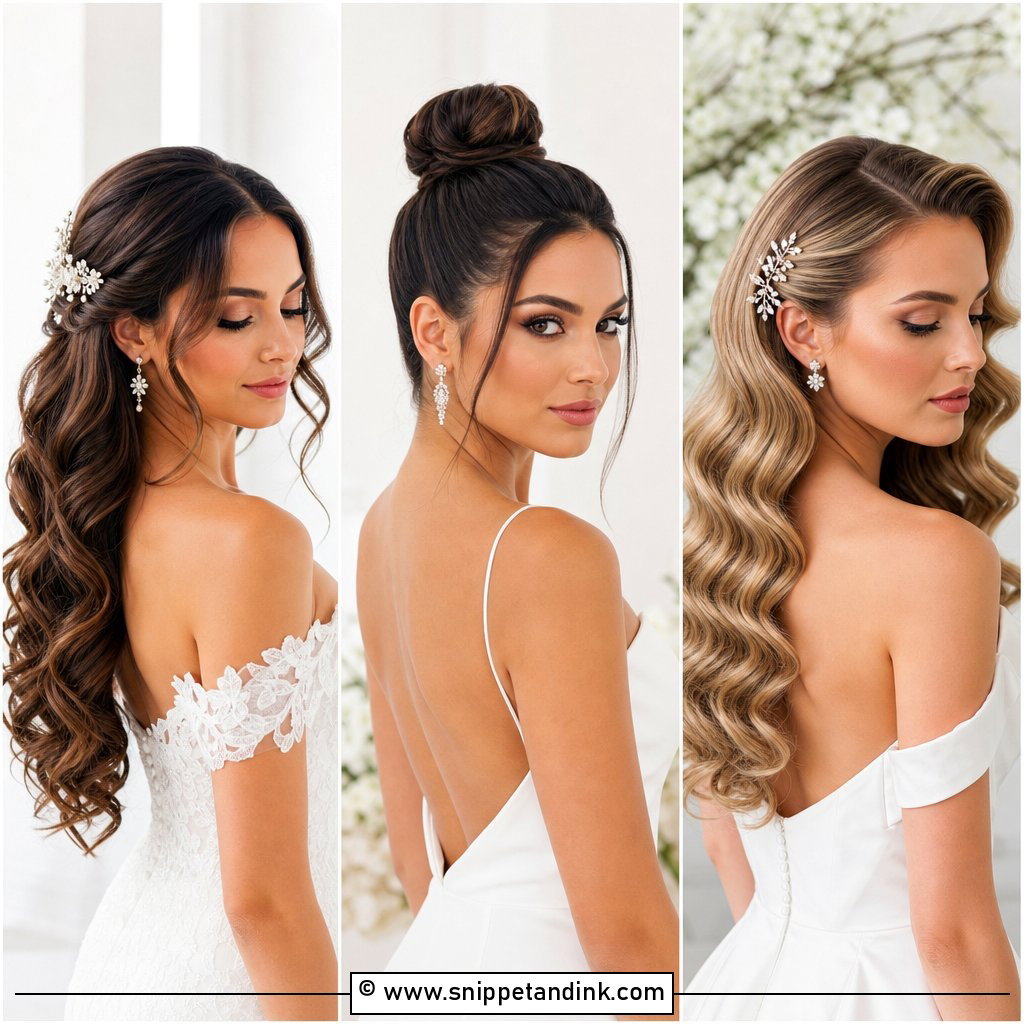
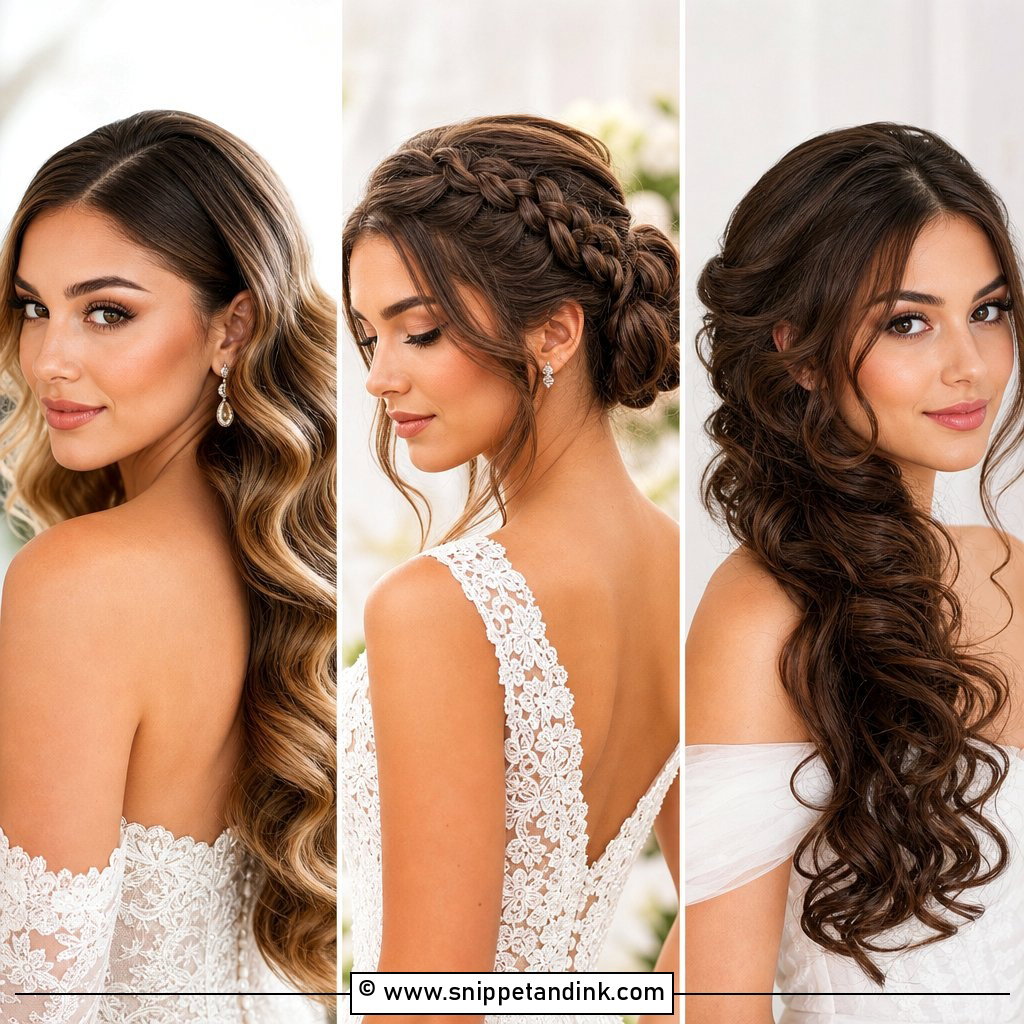
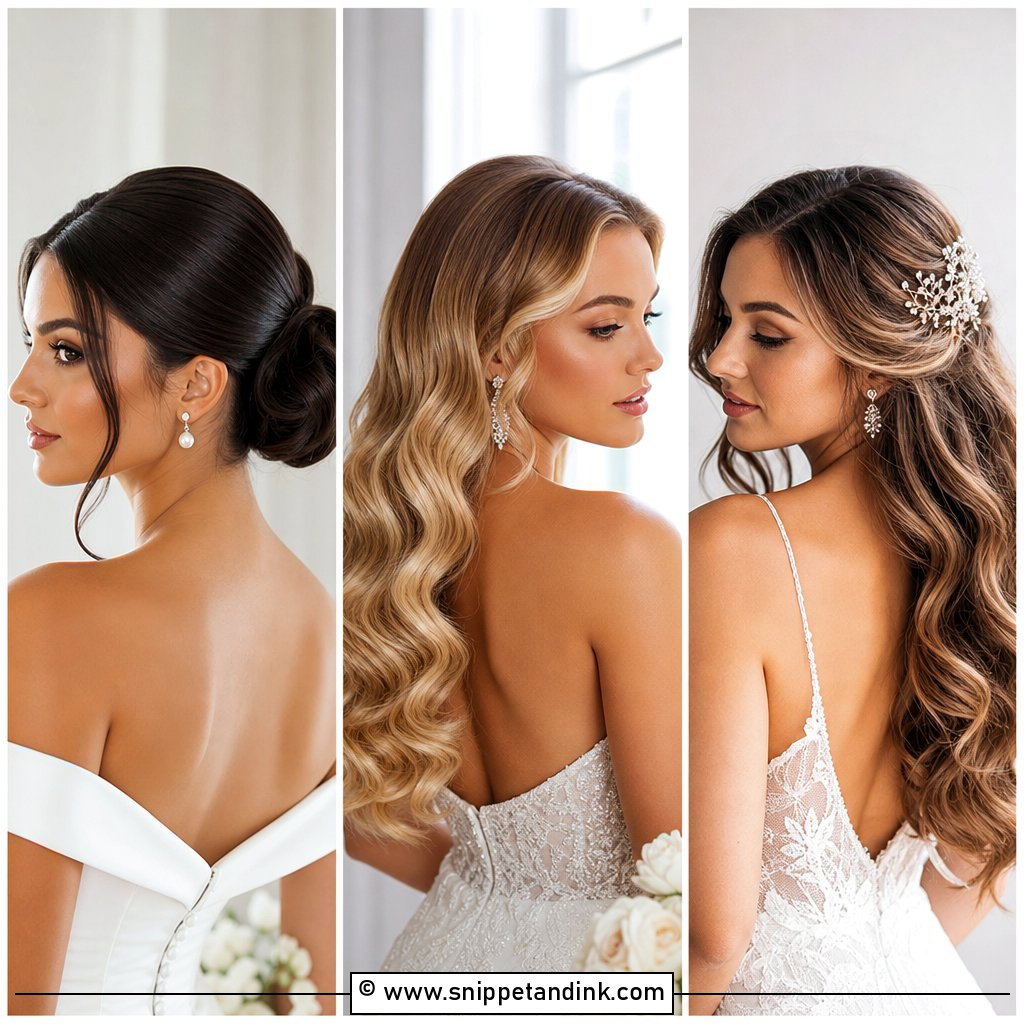
Half up, half down keeps hair off the face while showing length, which makes it a natural fit for a Walima. The pinned top section should anchor at the crown with criss-crossed pins, not just a clip, or it slides down under the weight of an ornament. I curl the lengths with a larger barrel and brush them out into waves. A jeweled clip or a small tiara sits at the crown. Medium to long hair works; on fine hair, heat-protect and set every curl, because humidity in a crowded hall drops loose waves faster than you expect.
5. Embellished Hijab With Side Drape
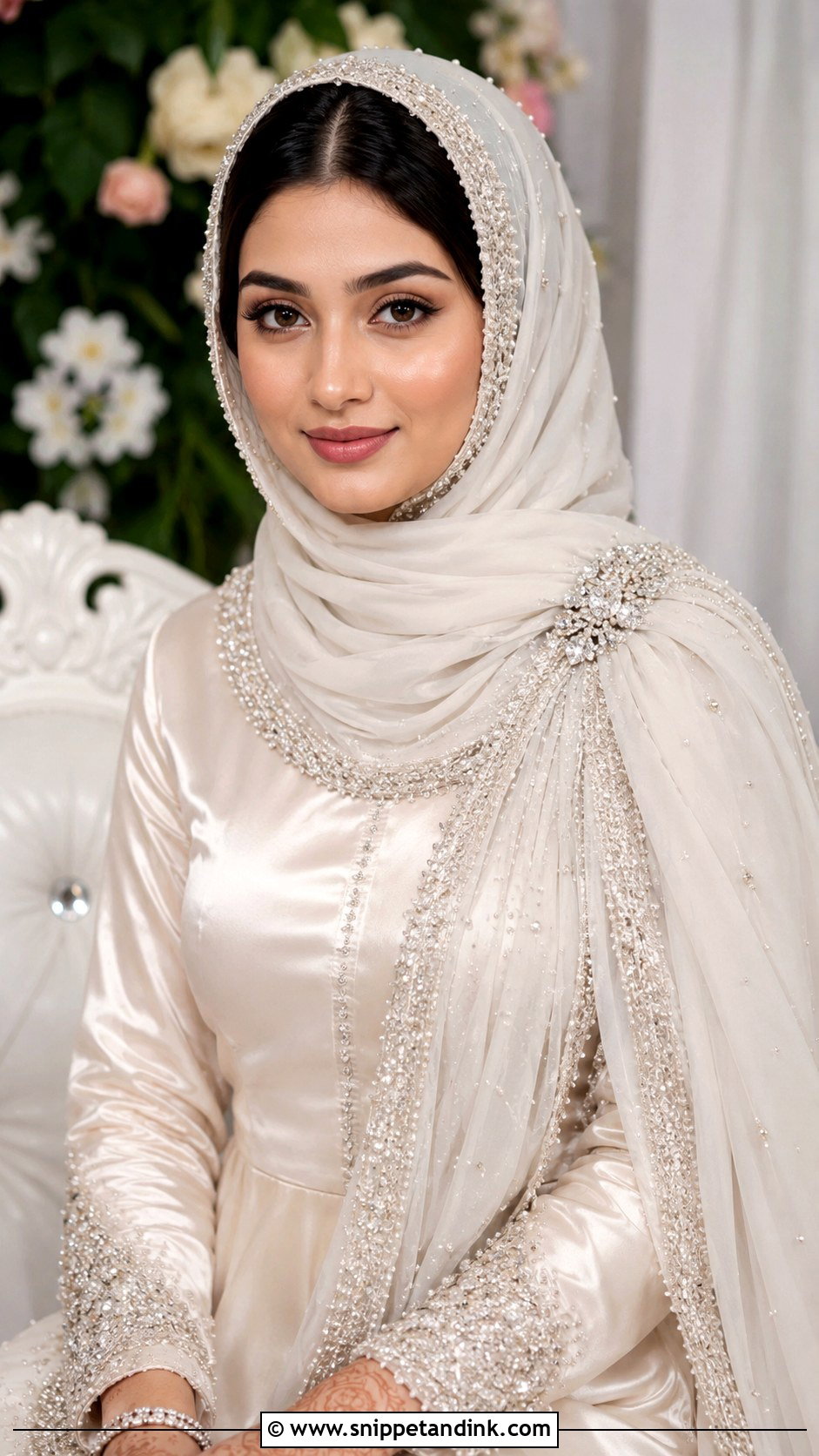
When the outfit is quiet, an embellished hijab can carry the whole look. The side drape falls over one shoulder and the crystal, pearl or embroidered edging catches the light as you move. Embellished fabric is heavy, so I pin it to the underscarf at three points around the face before shaping the drape; a single brooch cannot hold that weight on its own. Pick a hijab shade taken directly from your outfit. It also means you can skip an elaborate updo entirely.
6. Sleek Low Bun With Veil
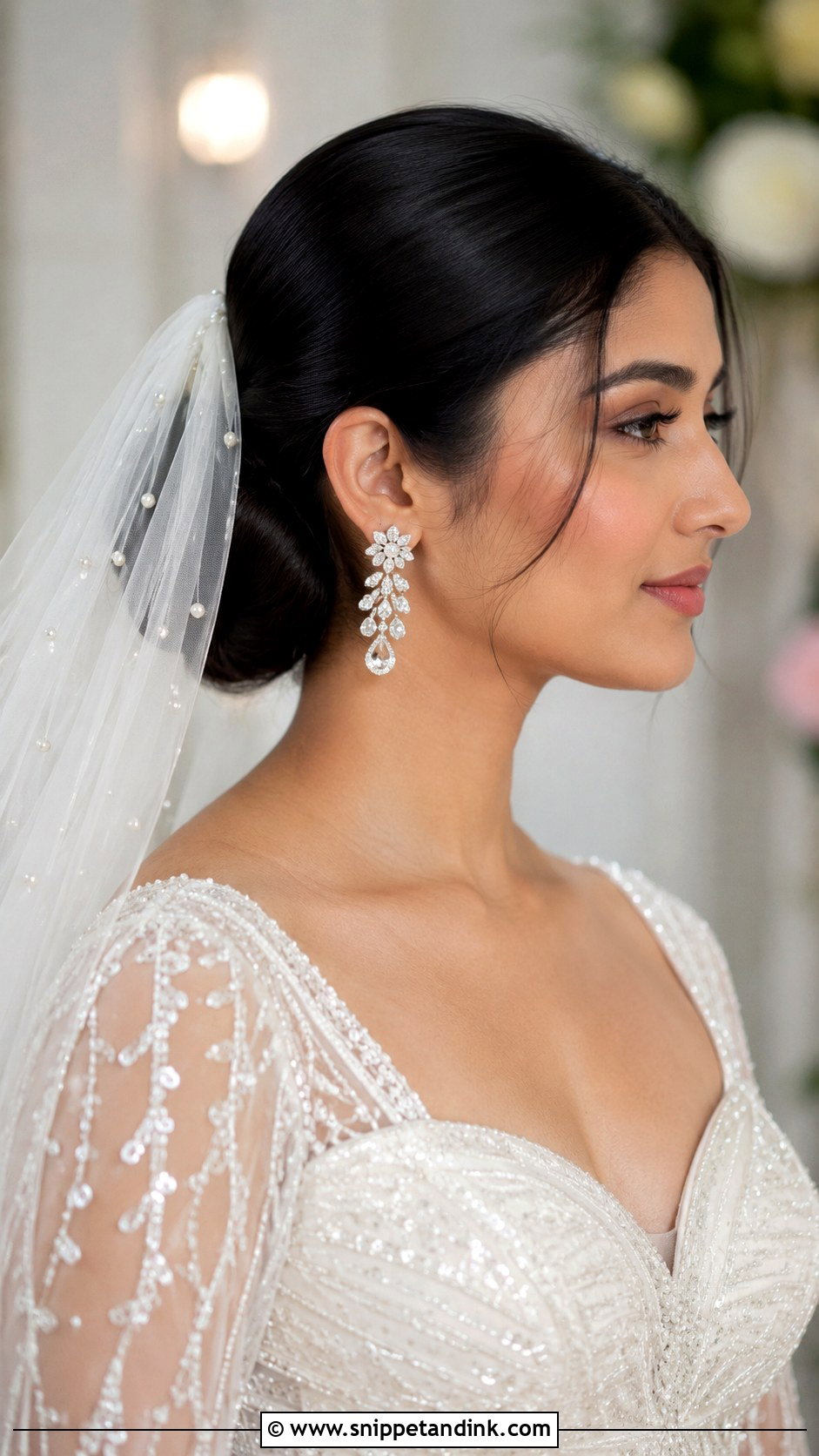
Sleek and low is harder than it looks. Every flyaway shows, so I smooth the hair with a fine-tooth brush and a small amount of gel or wax stick, then tie it at the nape before twisting the bun. The clean finish puts the focus on statement earrings and a matha patti. A veil draped over the top attaches neatly to a comb at the top of the bun. I would steer you away from this one if your hairline is fragile, because tight sleeking on the edges for a long day can pull.
7. Voluminous Curls With Passa
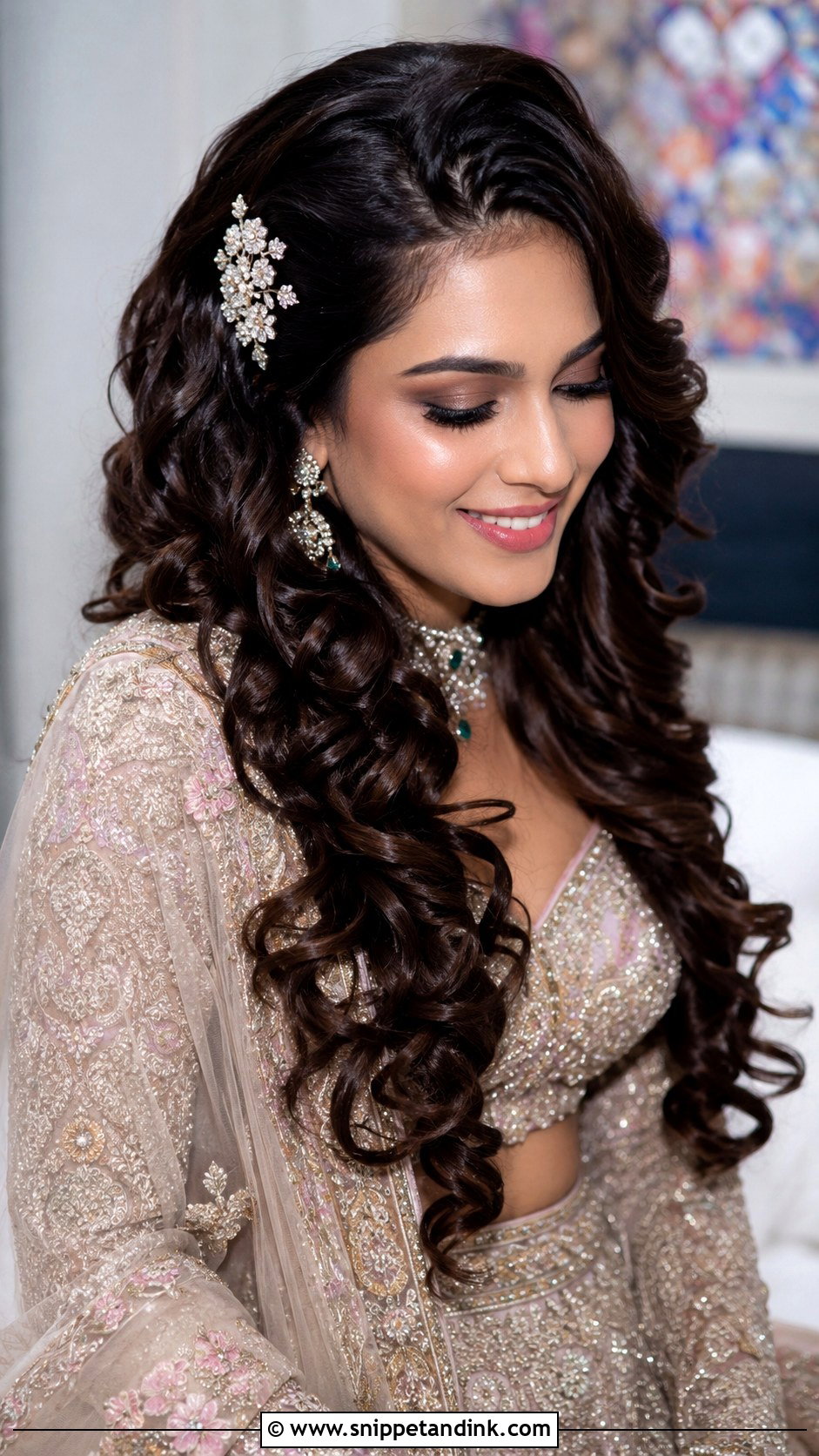
Big curls are about structure, not just the iron. I set each curl while it cools, pinned in a loop, and only brush out once the whole head is cold, which is what keeps the volume through a reception. A sparkling passa pins near the temple on one side. Curls add body to fine strands, but they also need a stronger finishing spray. With a heavily embroidered lehenga and large jewellery, open curls can compete; if your jewellery is very big, consider pulling the curls behind one ear.
8. Braided Crown for Bridal Look
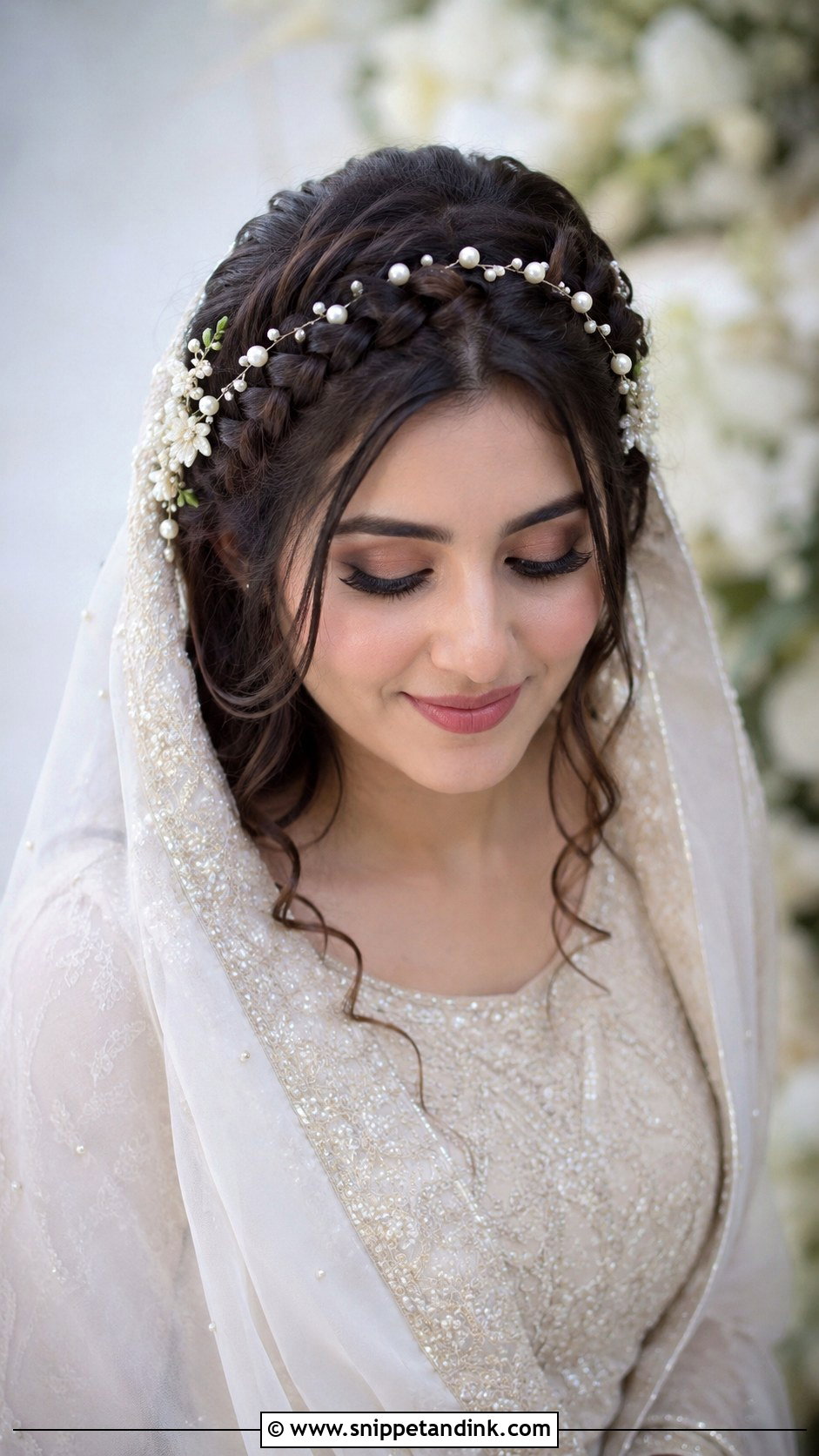
A braided crown wraps the hair around the head and pins it flat, keeping everything off the face for an outdoor or daytime ceremony. It needs length: hair should reach at least the bra strap to circle the head without extensions. I anchor the braid every few inches with U-pins rather than bobby pins, which keep the braid lying flat instead of bunching. Small flowers or pearl pins slot into the plaits, and a dupatta drapes cleanly behind.
9. Bridal Hijab With Pearl Accents
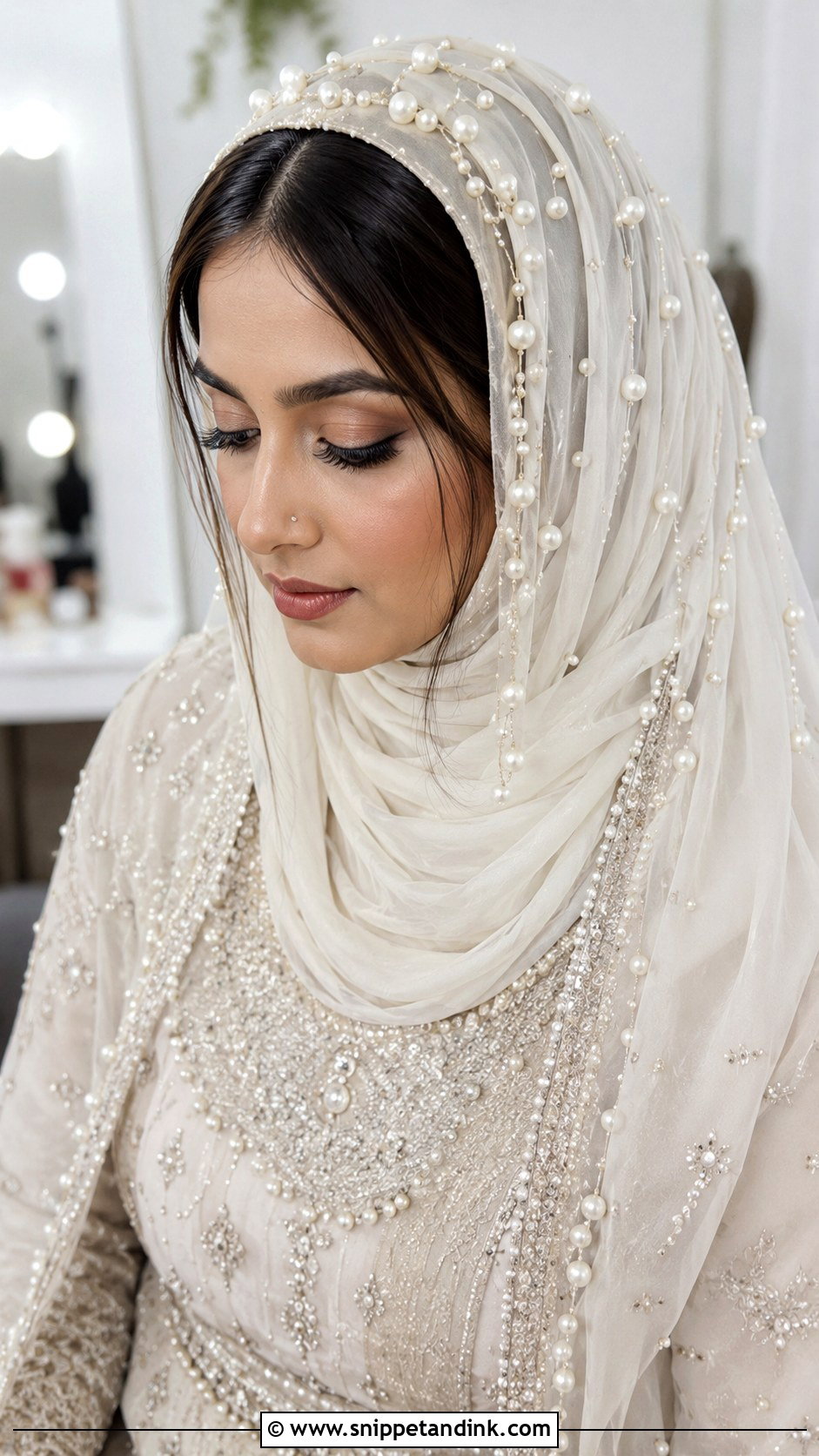
Pearls on a hijab add light without the hardness of crystals. I place strands and pins along the folds of a neatly draped scarf, usually in a cascading line toward one shoulder, so they follow the movement of the fabric. Ivory or cream pearls suit most outfit colours better than bright white. The thing I check is the pin length: pearl pins need to pass through the hijab and catch the underscarf, otherwise they shift each time you turn your head. It is a quiet, refined choice for a Nikah.
10. Side Swept Curls With Maang Tikka
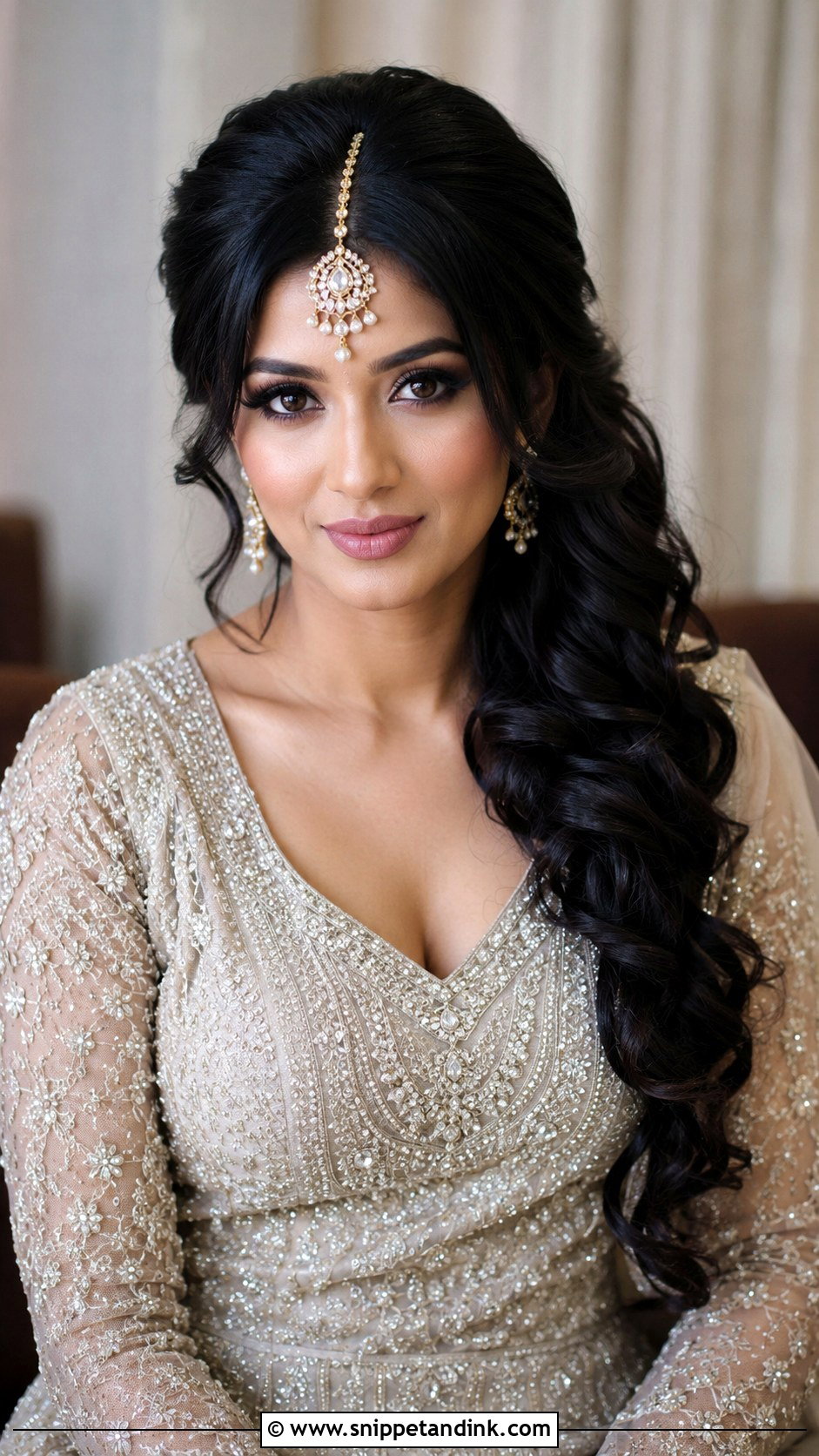
Sweeping curls over one shoulder gives an old Hollywood line and leaves the opposite side of the neck open for earrings. The curls need a hidden anchor: I pin a row of bobby pins behind the ear on the swept side so the weight does not pull back over the hours. A maang tikka resting on the forehead balances the asymmetry. Medium to long hair works, and the style suits evening Walima receptions where you want glamour but not an updo.
11. Twisted Updo With Flowers
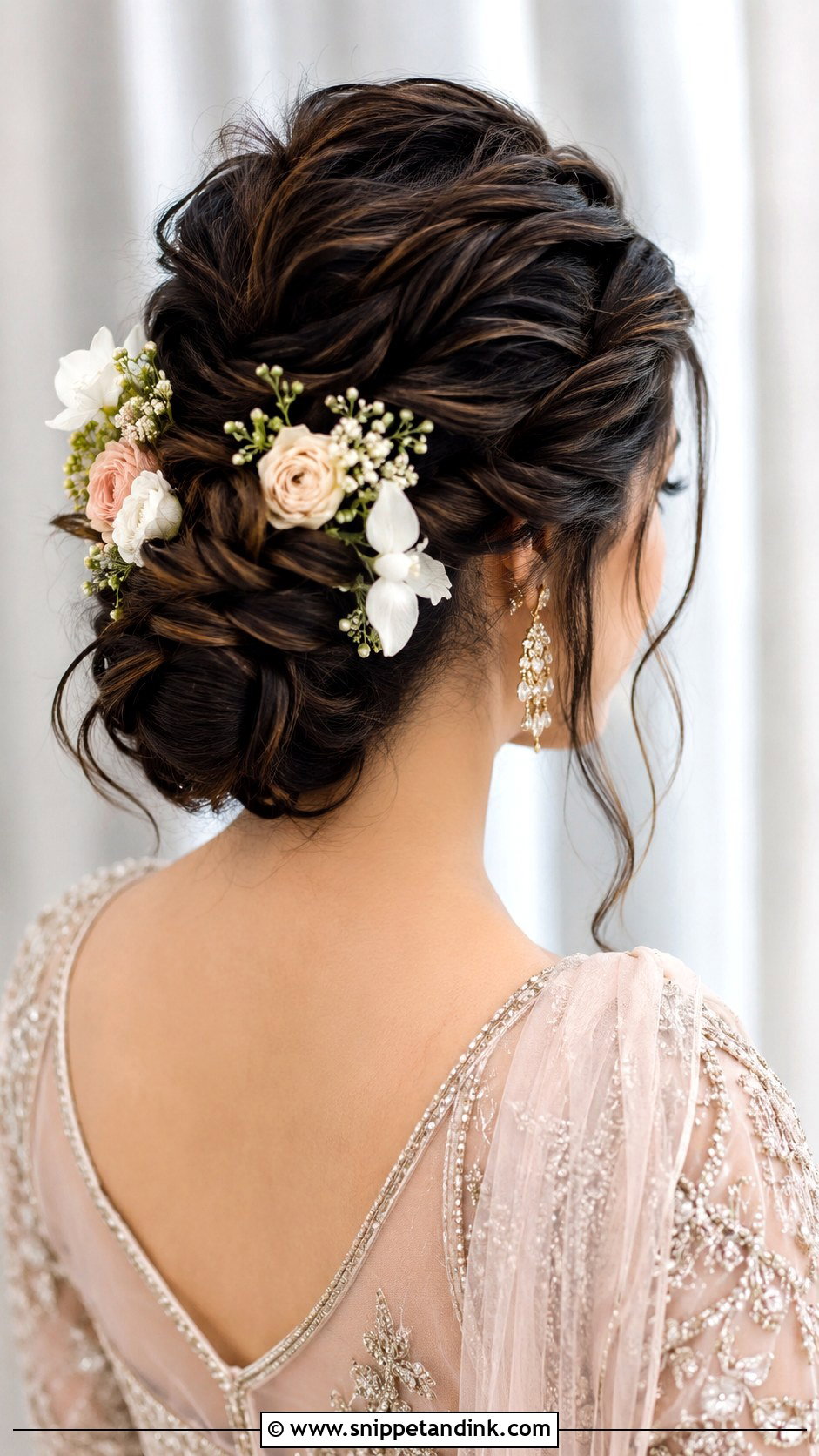
A twisted updo is built from rope-twisted sections pinned into a soft shape at the back. Fresh flowers tucked between the twists give colour and scent. Twisting holds better on second-day hair than freshly washed hair, so I ask brides to wash the day before. It keeps hair off the face through a long daytime ceremony and works on medium or long hair. Pair it with a light veil or a flowing dupatta for outdoor garden weddings.
12. Bridal Bun With Gajra
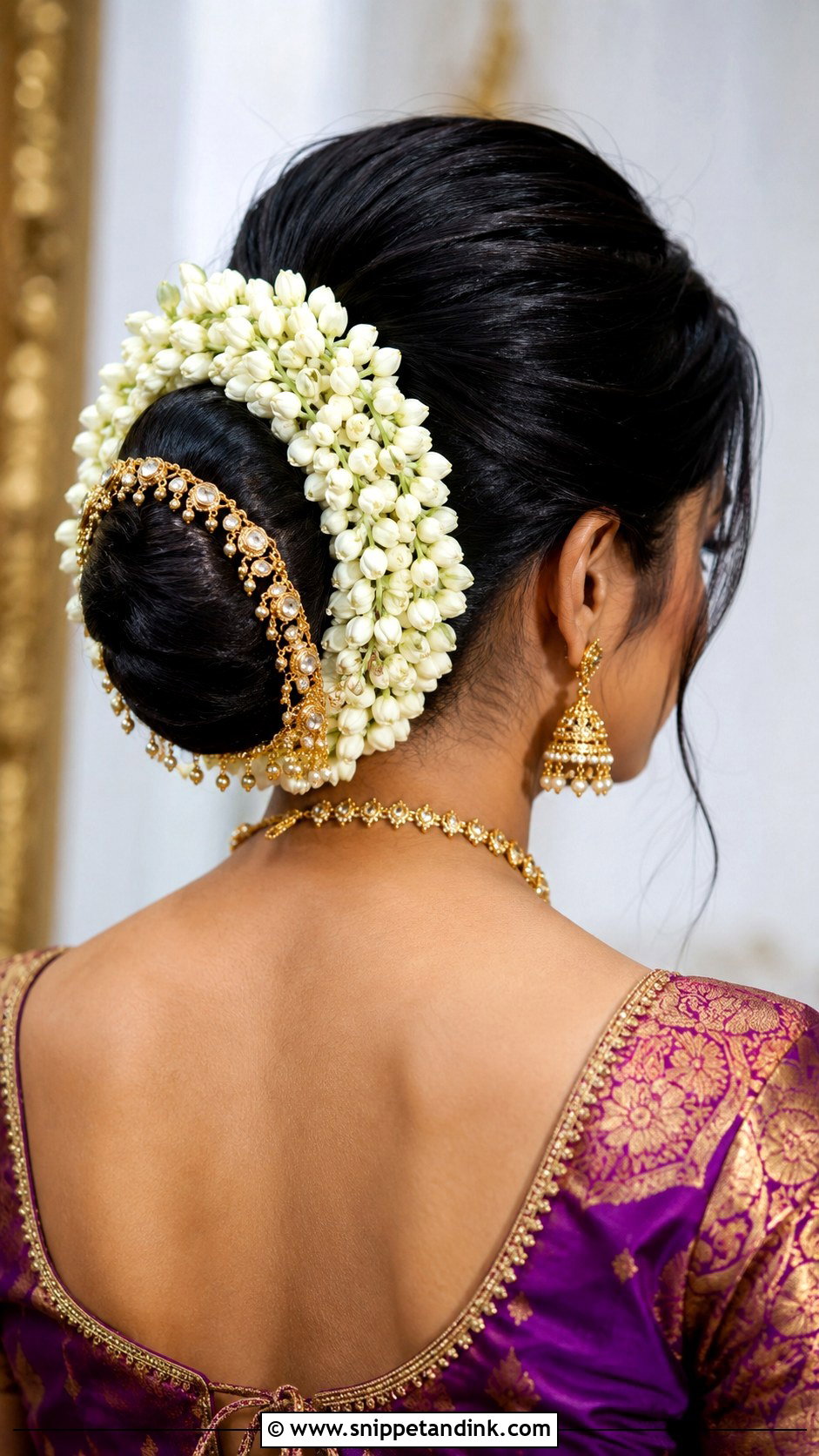
The gajra, a fragrant string of jasmine, is a strong cultural note, and wrapping it around a bun gives a white halo against dark hair. Fresh jasmine wilts and browns within a few hours in heat, so I keep the gajra in the fridge wrapped in damp paper until the last moment and pin it on just before you leave. Secure it with U-pins through the bun every couple of inches. Gold jewellery and a richly coloured outfit suit it, and it works for Nikah and Mehndi ceremonies alike.
13. Loose Waves With Statement Veil
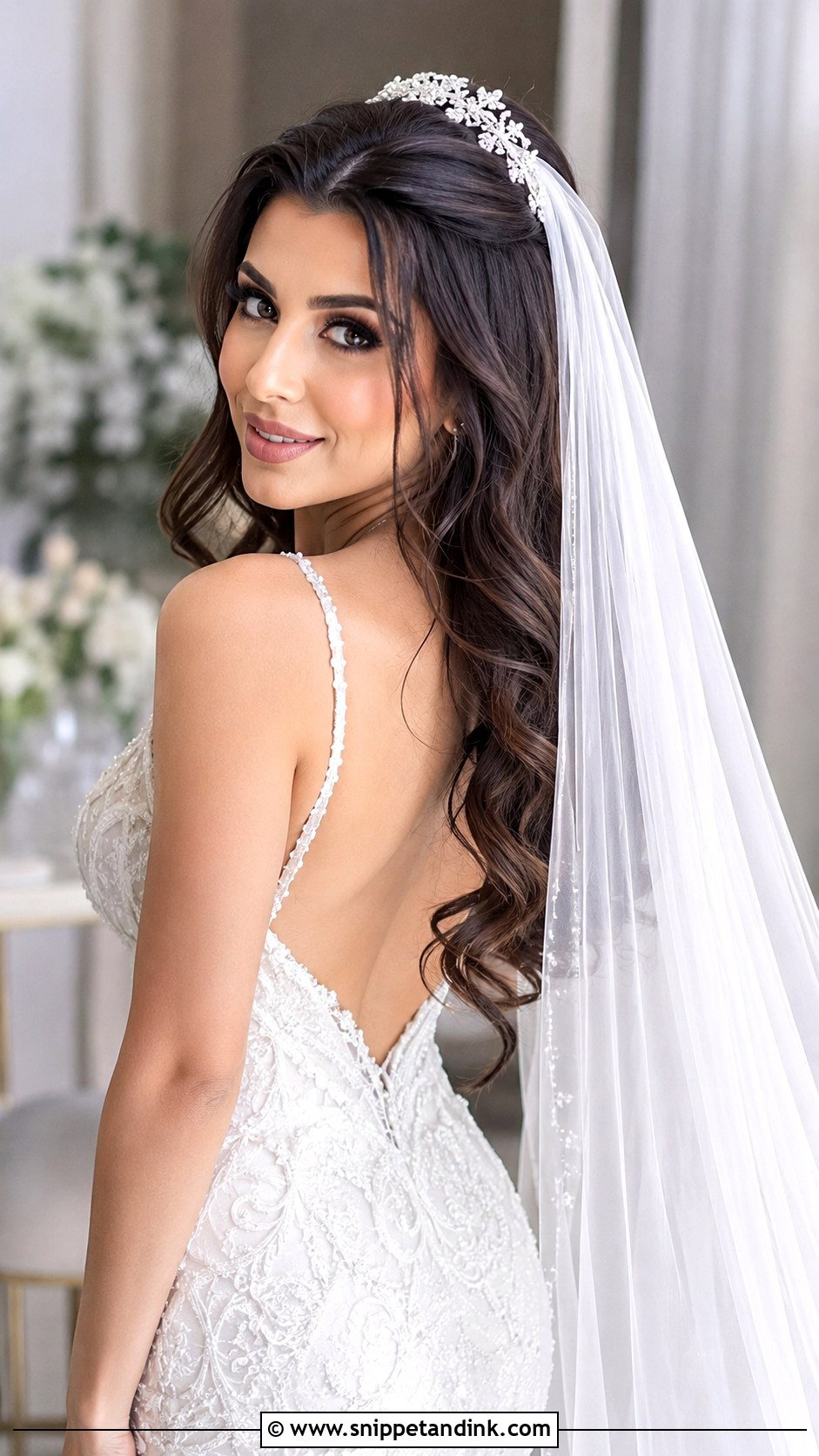
Loose waves under a dramatic veil let the hair show while the veil adds length and movement. The weight of a long veil pulls on a single comb, so I anchor the comb into a small hidden section of pinned hair at the crown, then let the waves fall around it. A jeweled comb at that attachment point gives extra sparkle. It sits equally well with a fitted gown or a traditional lehenga. Bring the actual veil to your trial; length and fabric weight change everything about where it should sit.
14. Bridal Hijab With Layered Drape
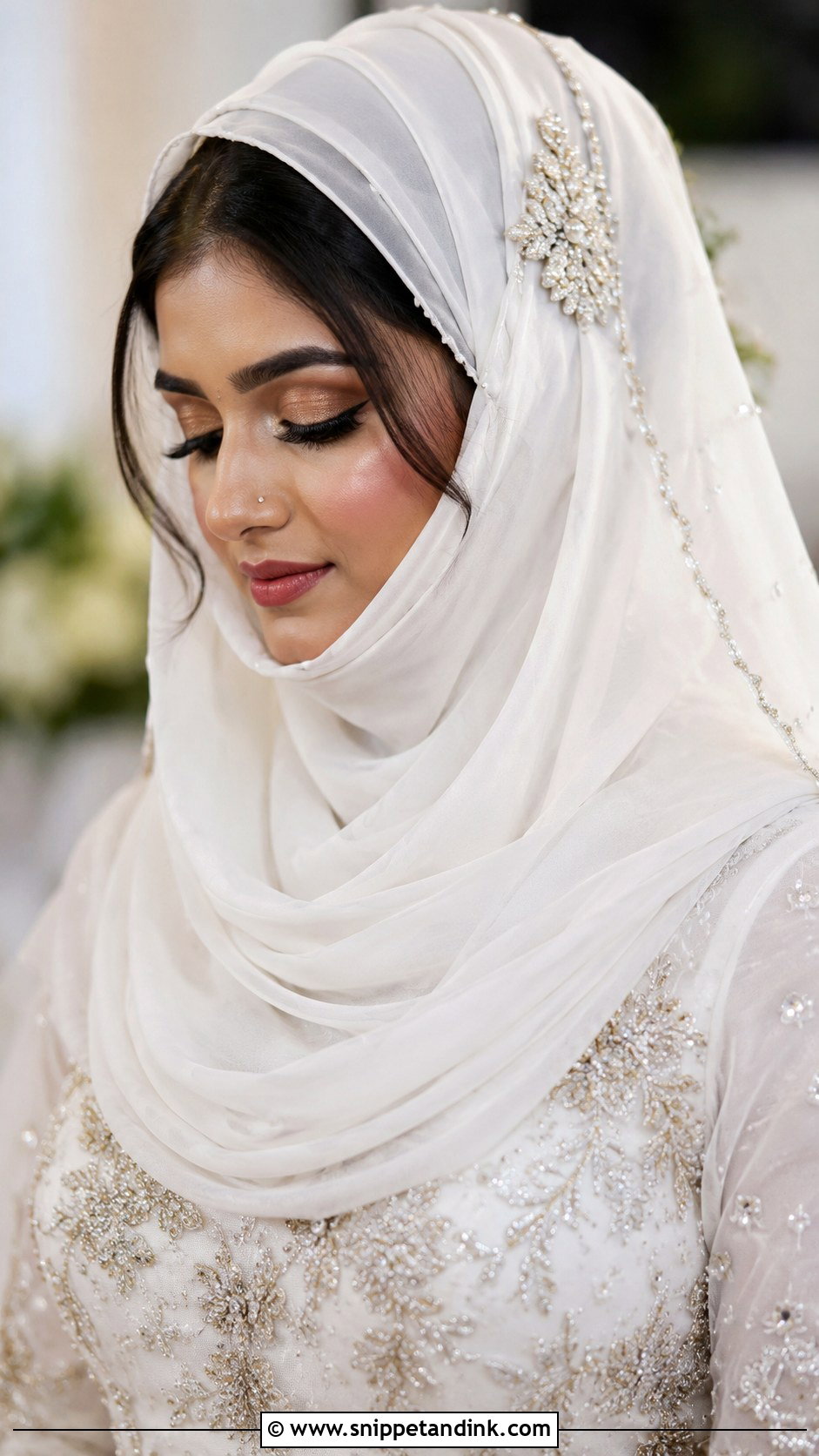
A layered hijab drape folds the scarf in overlapping tiers around the face and shoulders for a fuller, more formal look. Each layer adds weight, so I secure the folds with hidden pins into the underscarf before adding a decorative brooch on top. Chiffon or silk drapes best; stiffer satin stacks up and looks bulky in photos. It gives volume and presence without an updo and suits embellished gowns.
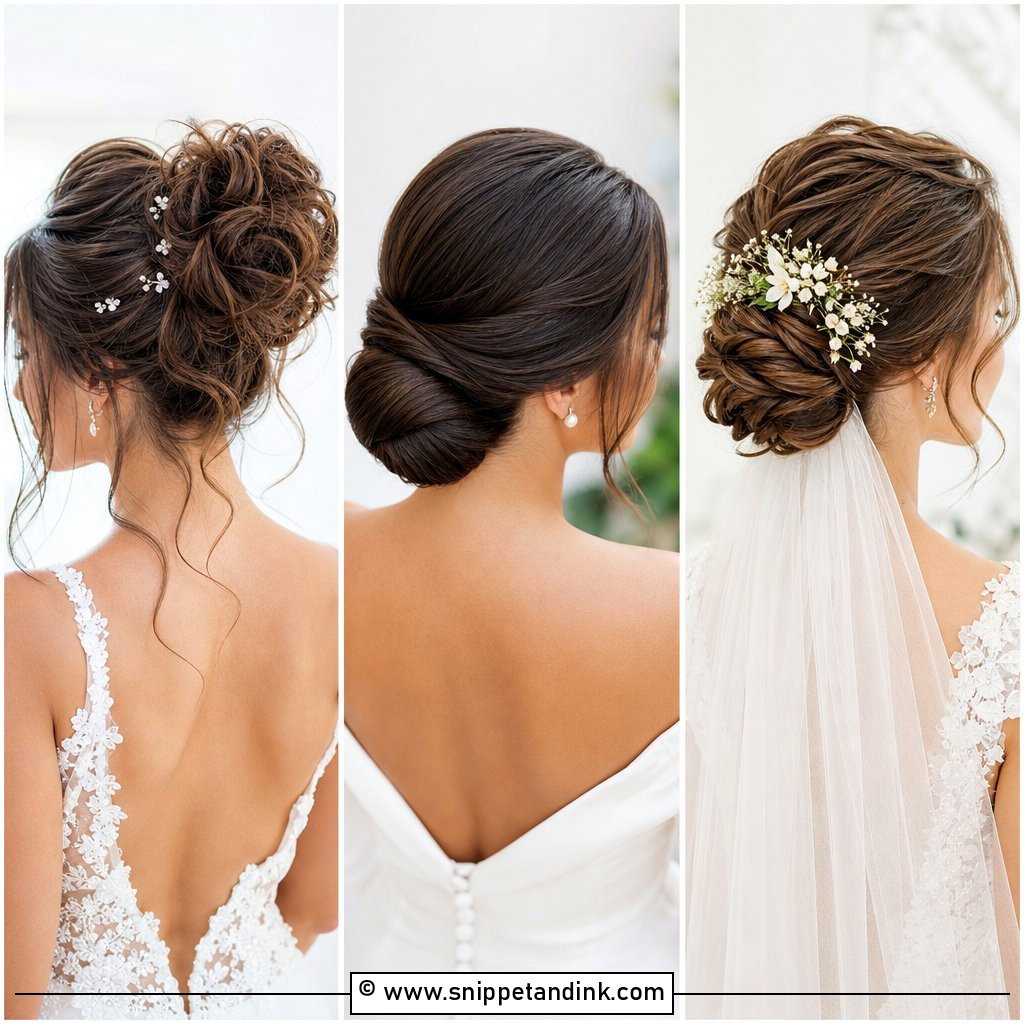
15. Fishtail Braid Updo
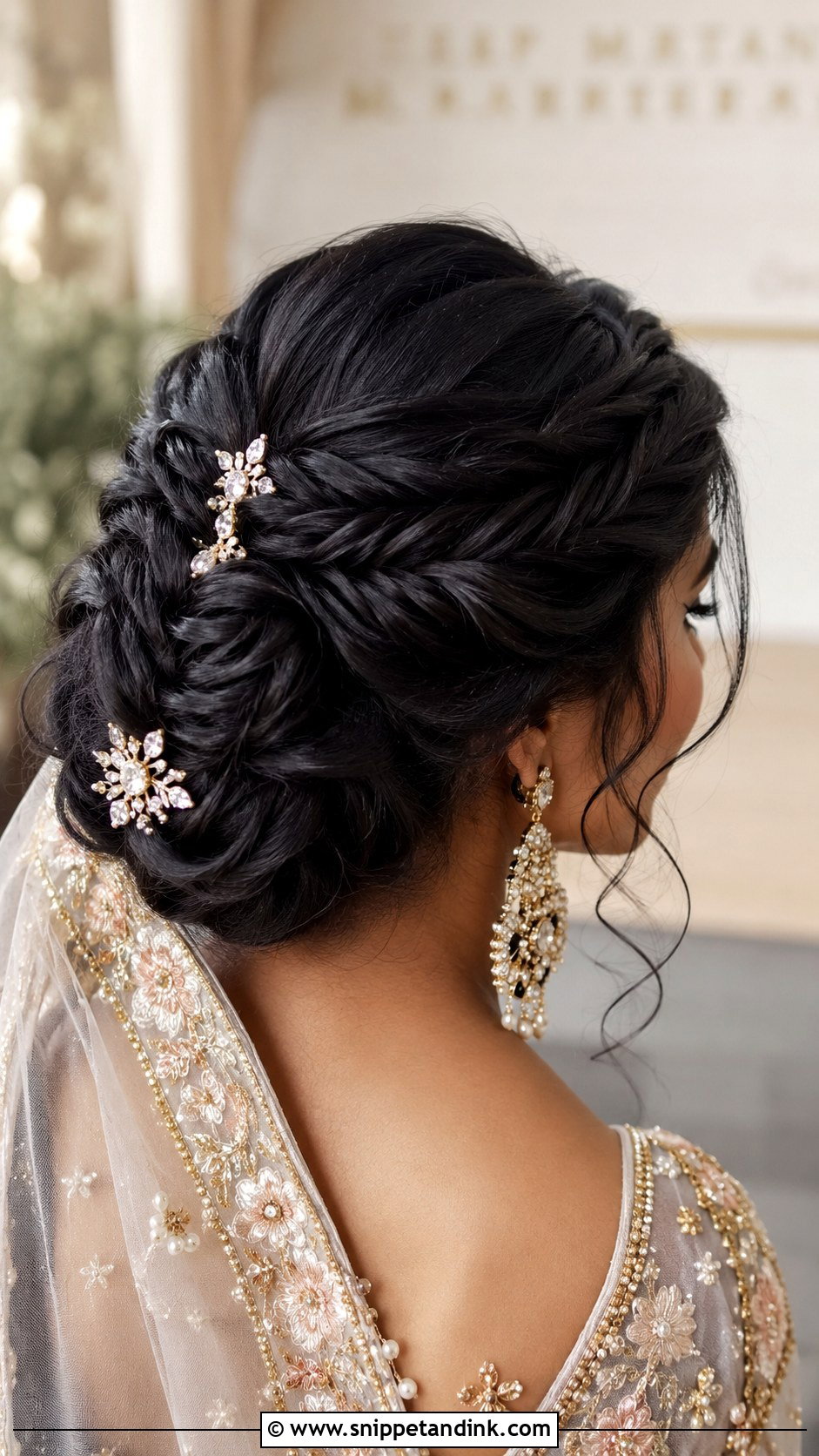
Turning a fishtail into an updo takes patience. I braid it fairly tight, then fold and pin it into a rounded shape at the nape, loosening a few edges for softness. It works best on long, thick hair; on fine hair the braid looks thin once it is coiled, so I add clip-ins before braiding. Jeweled pins or small flowers along the plait add sparkle, and a draped dupatta and dangling earrings complete it.
16. Bridal Hairstyle With Matha Patti
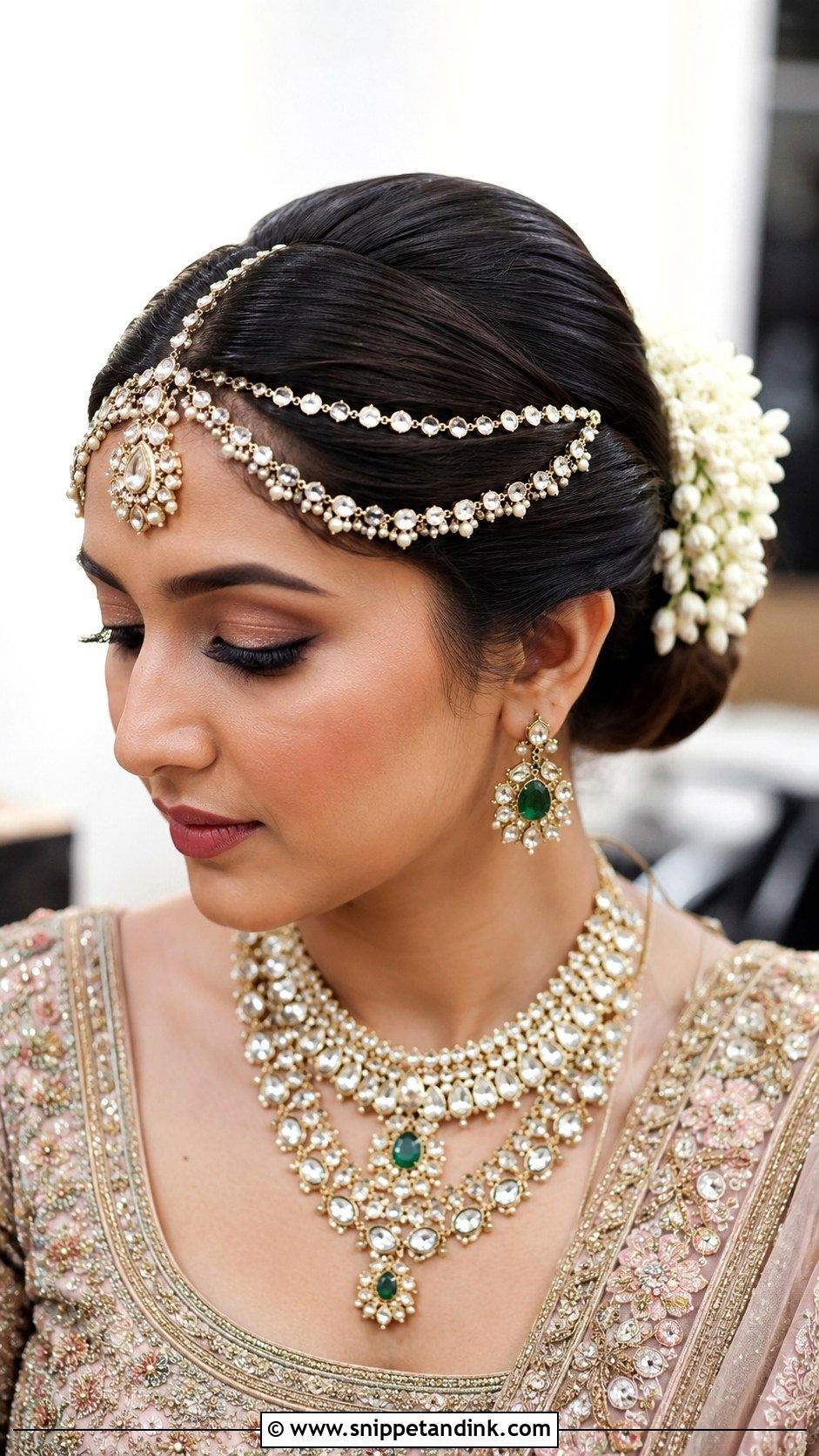
A matha patti drapes across the forehead and hairline, and it changes how I part the hair. The central chain should sit exactly on the parting, so I part the hair dead centre and smooth it flat before placing the piece. A sleek bun or soft waves suit it; anything with volume at the front pushes the chains out of line. The jeweled chains add plenty of sparkle on their own, so I keep the hair simple and let the ornament lead. Coordinating earrings complete it for a Nikah or a Walima.
17. Soft Curls With Flower Crown
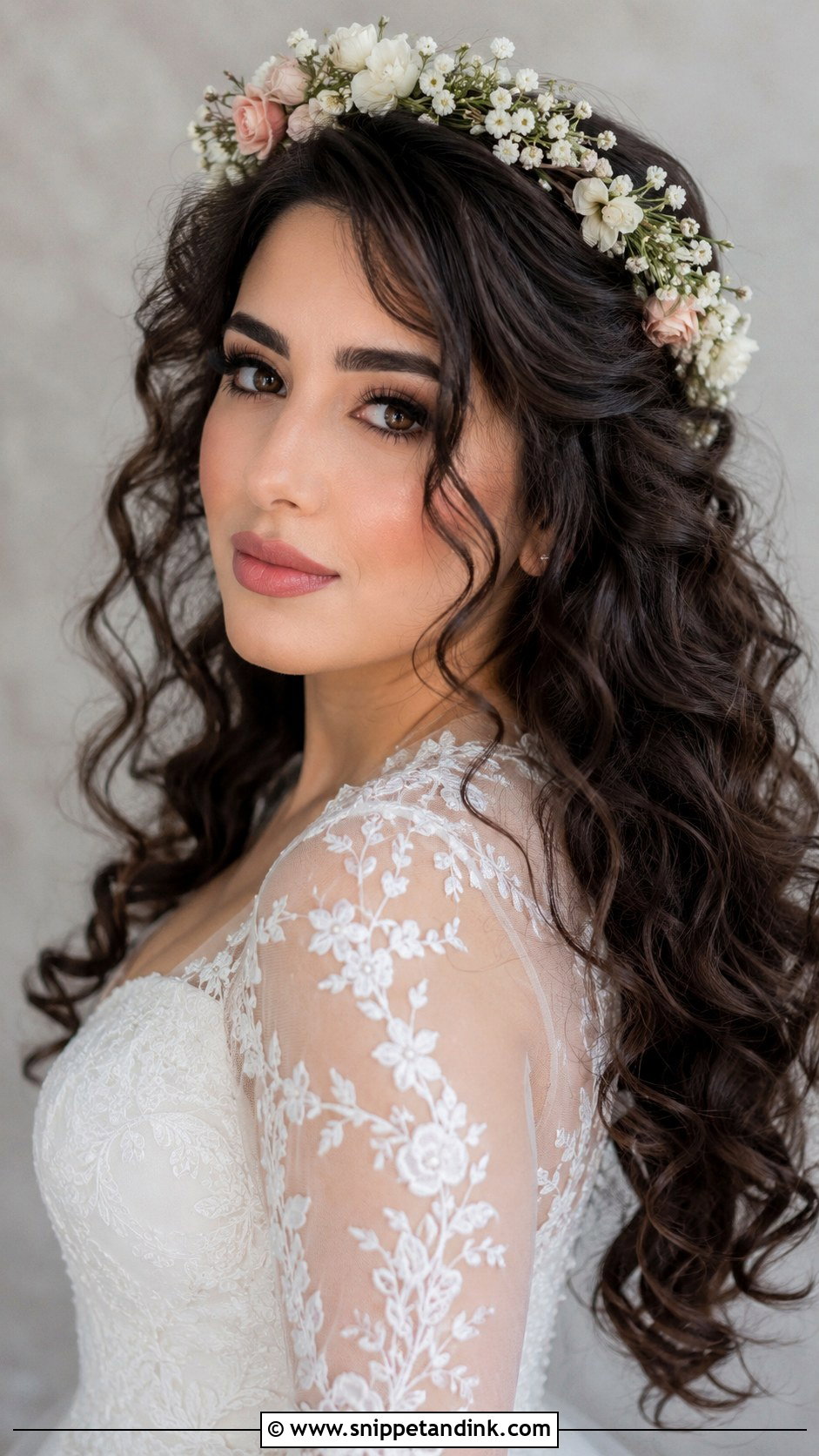
A flower crown over loose curls feels young and light, and it works best at outdoor or daytime events. Pick blooms that hold up out of water: spray roses, baby’s breath and waxflower last far longer than delicate garden petals. I pin the crown with bobby pins crossed through its base at each side so it does not slip forward. Keep jewellery delicate and choose flowers that pick up your outfit colours.
18. Bridal Hijab With Brooch Detail
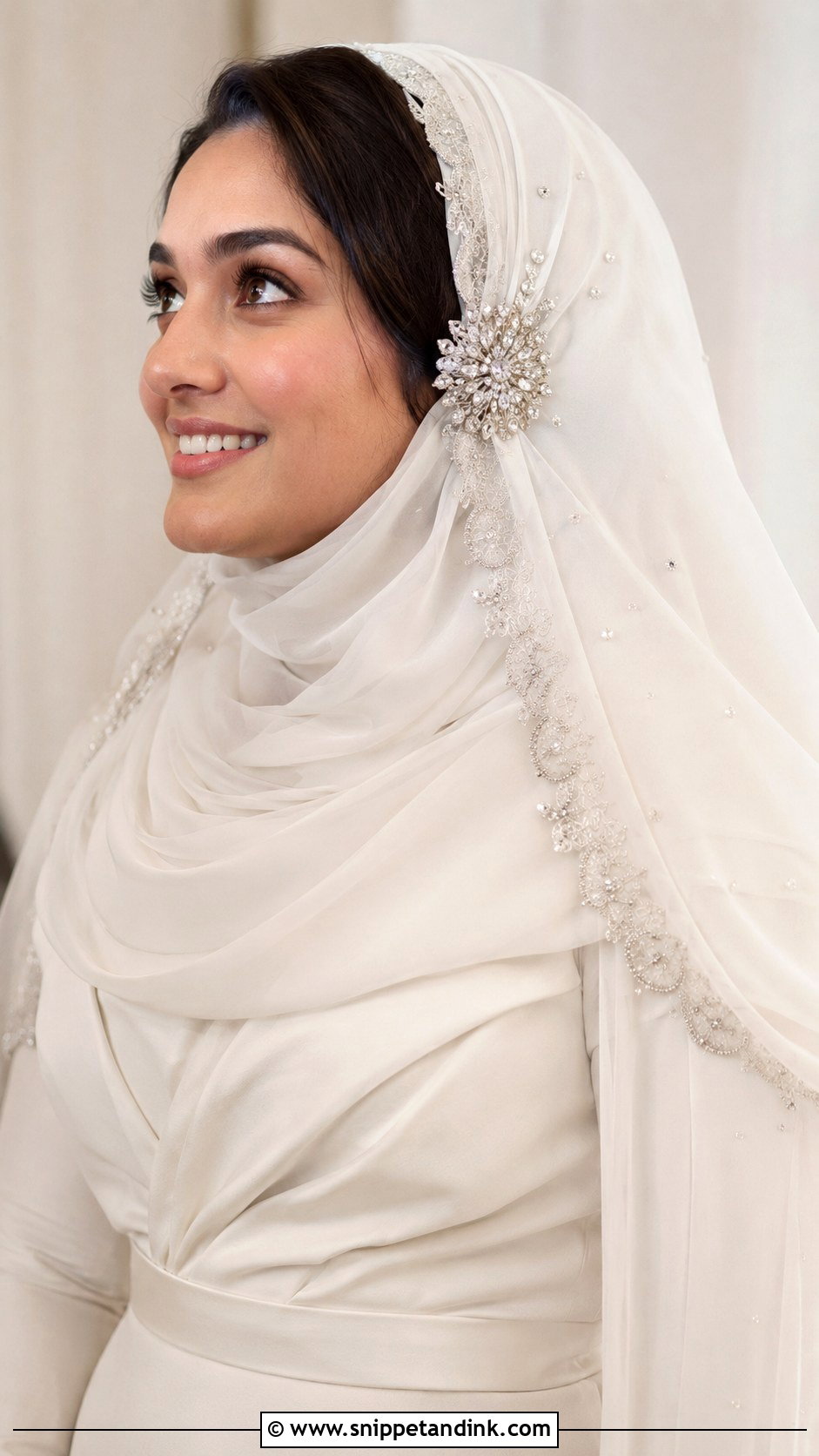
One jeweled brooch on a plain hijab gives a single focal point, and it is a good place to wear a family heirloom. Placement matters: at the temple it draws the eye up toward your face, while lower at the side it frames the jaw. A heavy brooch should be pinned through to the underscarf, or the scarf will sag around it. Choose a metal that matches your jewellery. Simple or embellished gowns both work.
19. Messy Bun With Loose Tendrils
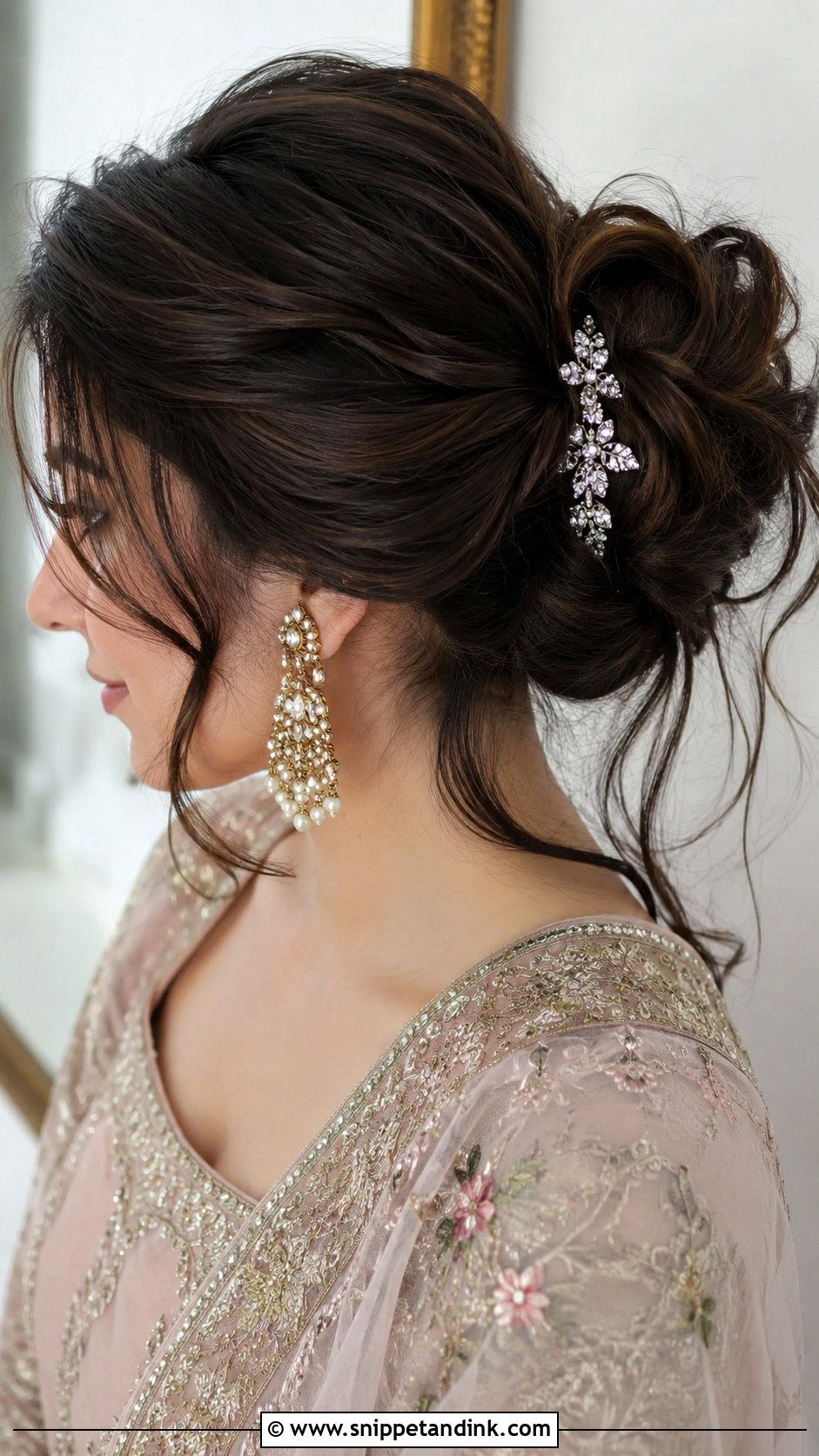
A messy bun looks easy, but on the day it needs to stay messy in the right places. I build it on slightly textured hair, set the shape with pins and then pull out face-framing tendrils deliberately, curling each one so it does not fall flat. It suits Mehndi celebrations and small ceremonies, and works on most textures. A sparkling clip, a few flowers or a delicate veil can all sit on it without overloading the shape.
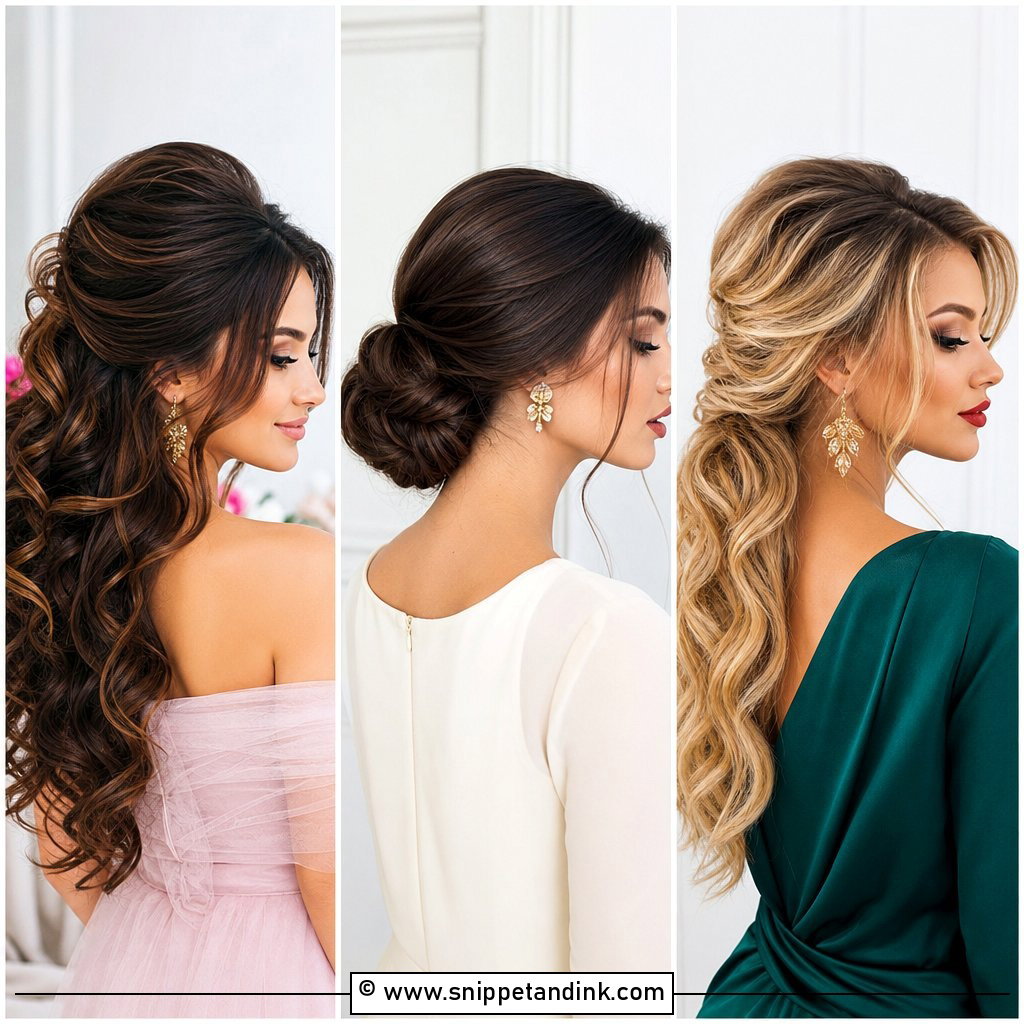
20. Bridal Updo With Jeweled Hairpins
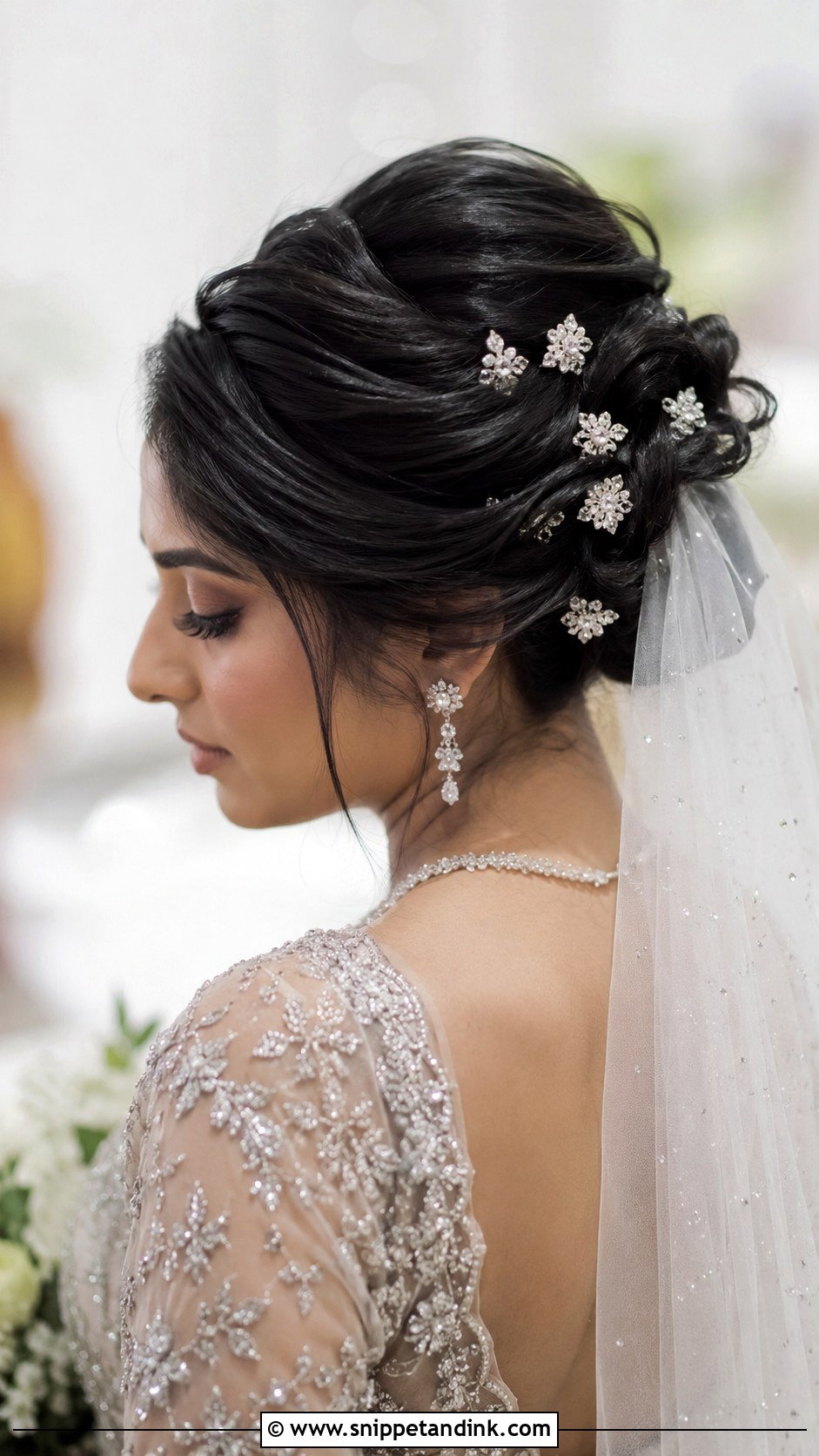
Scattering crystal pins across a soft twist or bun gives sparkle without a single big piece. Space them unevenly and at slightly different depths so they catch light as you move. I insert them into the twists themselves, not on the surface, otherwise they slip out by the reception. Match the metal to your jewellery. It sits nicely with statement earrings and a light veil, for a Nikah or a Walima.
21. Long Straight Hair With Center Part
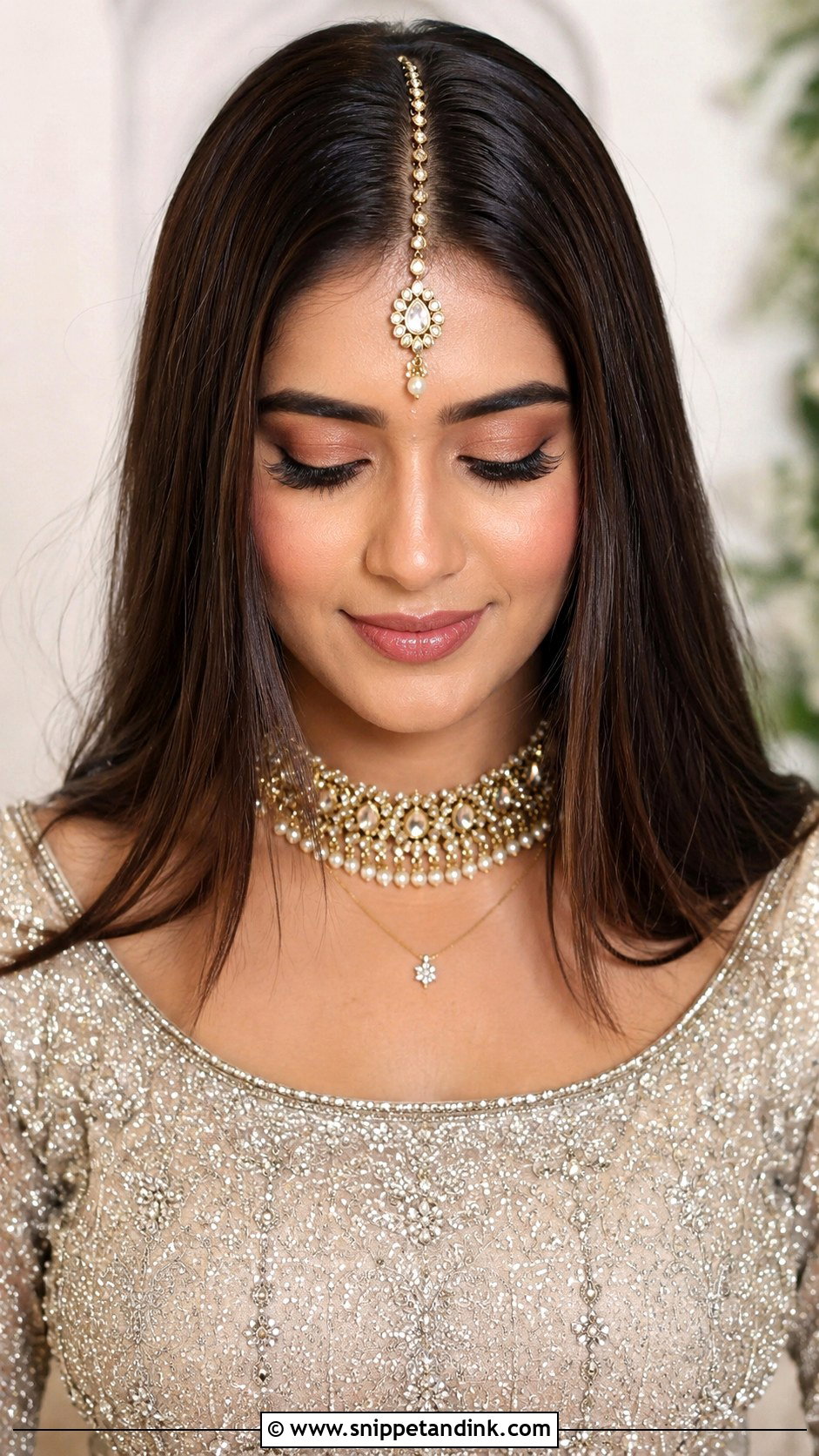
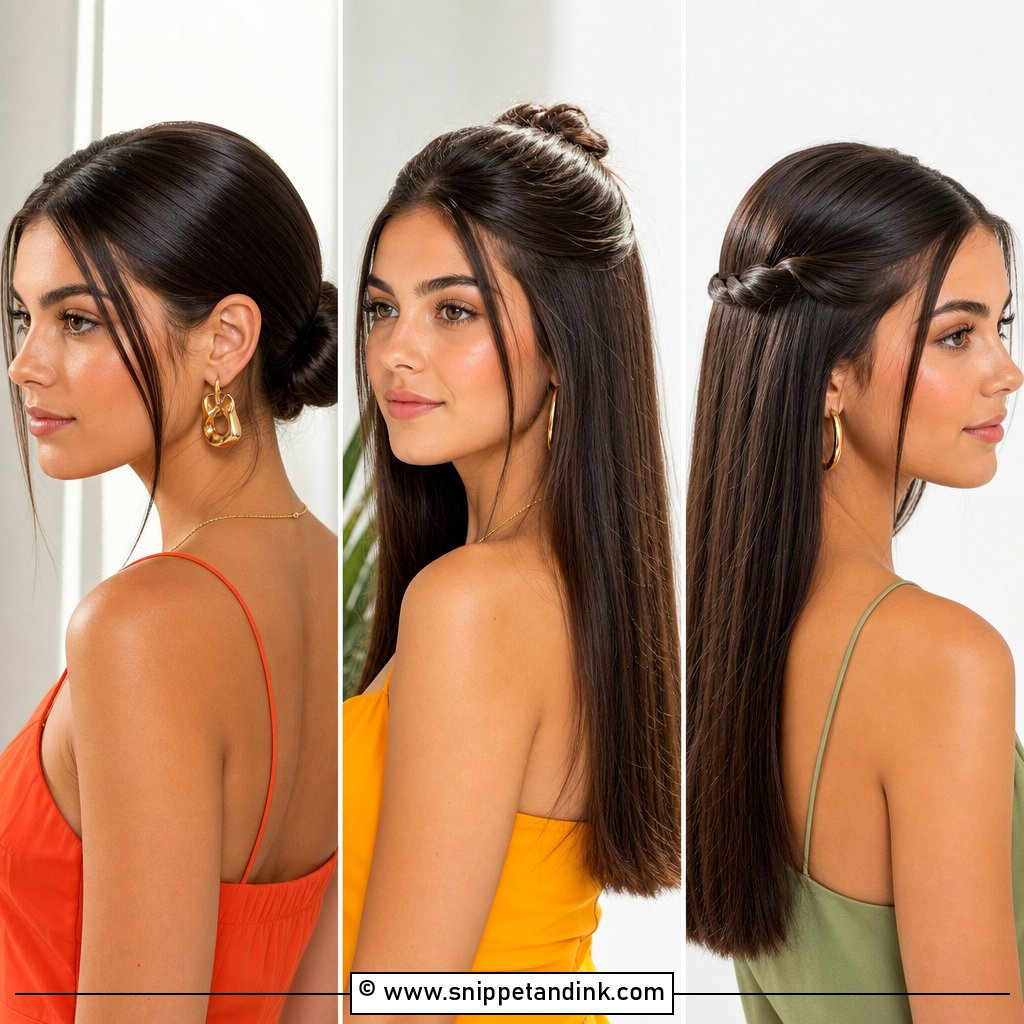
Long, straight hair with a centre part is simple, and simplicity shows every flaw. The hair needs a smoothing blow-dry, then a flat iron on low heat with a glossing serum on the ends; too much product makes it look greasy by the evening. A centre part frames the face symmetrically, so I check that the parting is genuinely straight. A delicate maang tikka or a jeweled headband adds the bridal note. It needs healthy, long hair with some natural body to look intentional rather than unstyled.
22. Bridal Hijab With Cascading Layers
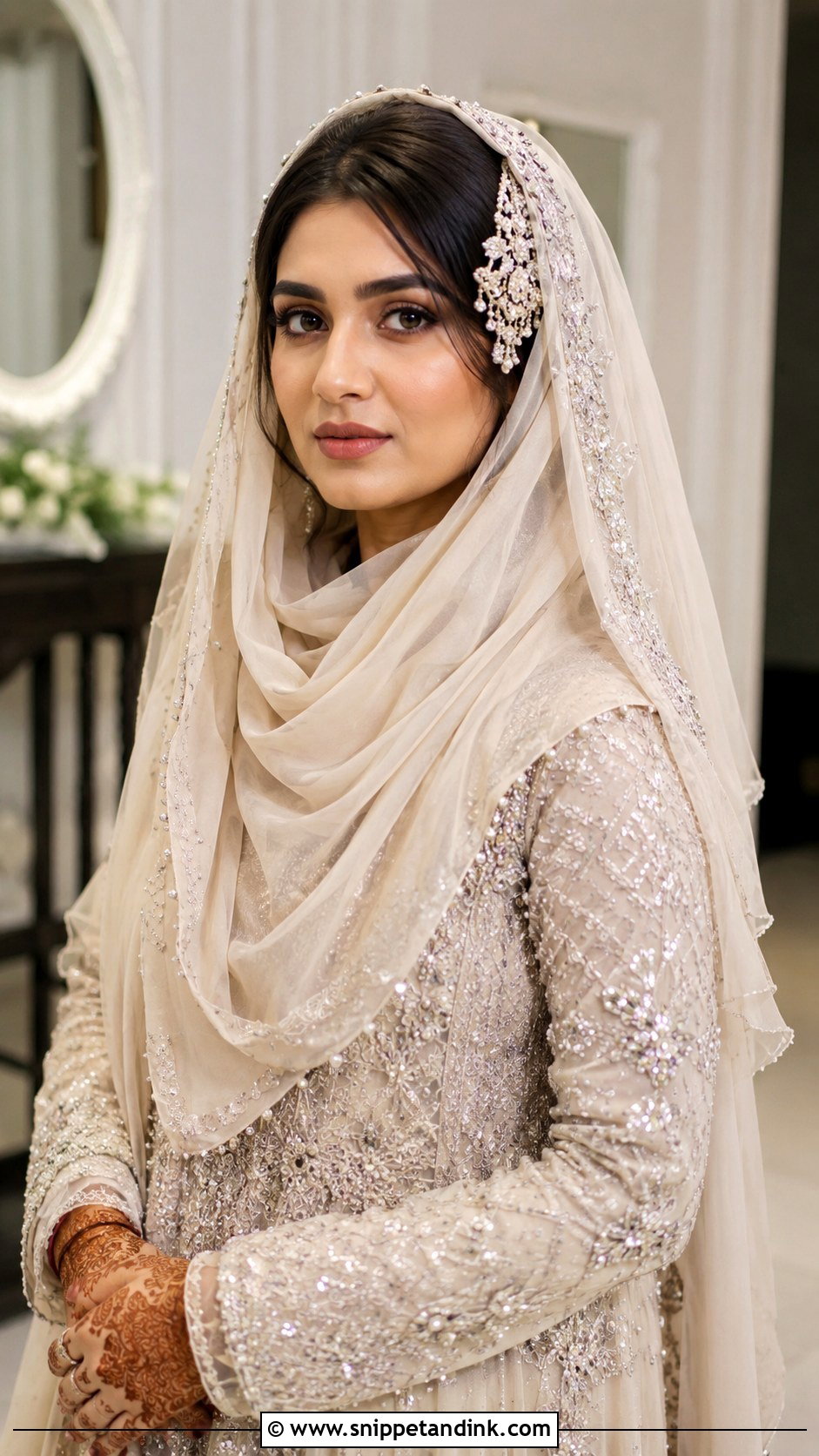
Cascading layers arrange the hijab in waves down the shoulders and back. Lightweight fabric is essential; georgette and chiffon move with you while heavier crepe can drag the whole drape out of shape. Hidden pins secure each layer to the underscarf, and a single decorative accent sits on top. The effect is full and flowing, and it pairs well with embellished gowns and fine jewellery.
23. Braided Bun With Pearls
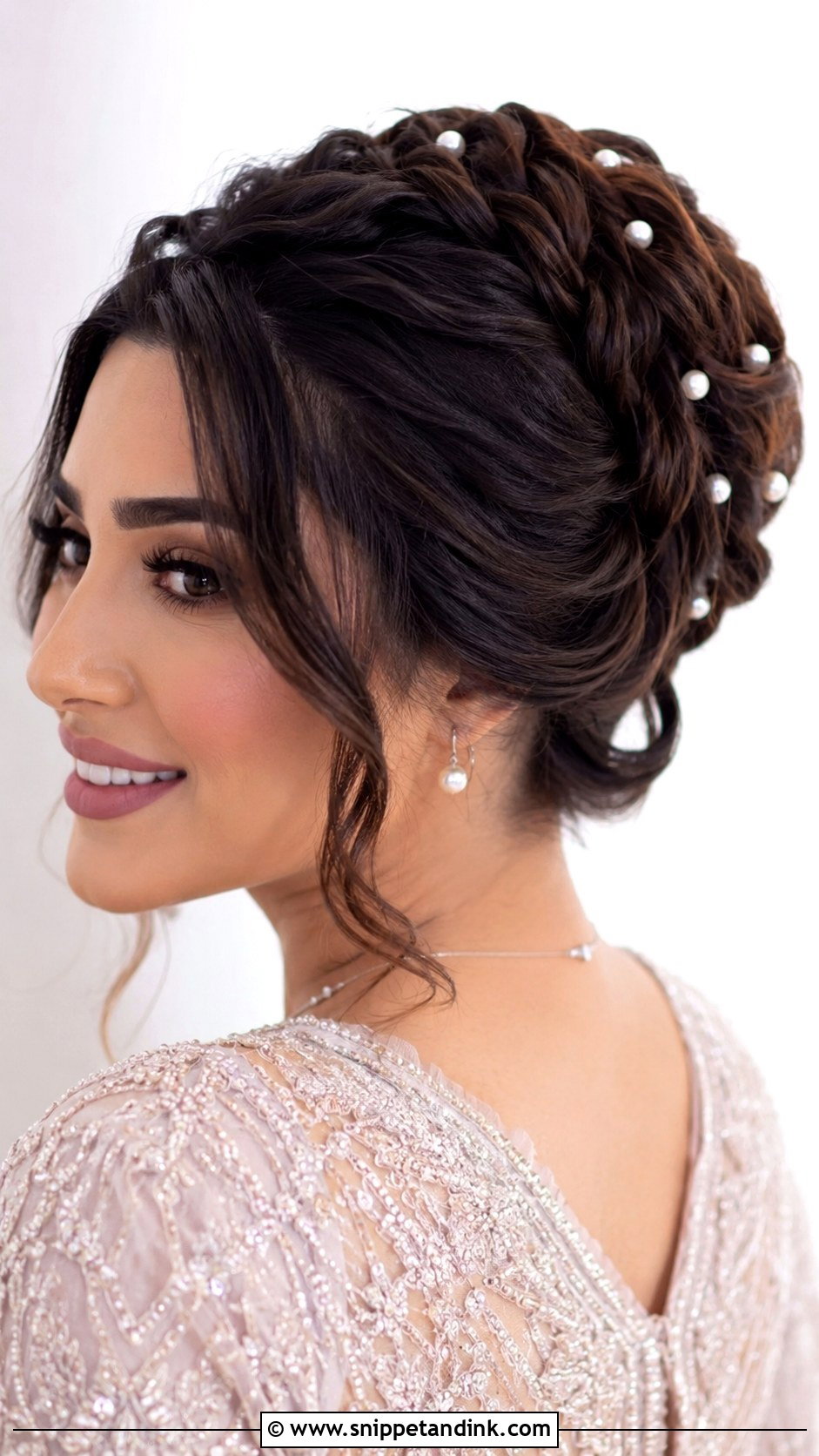
Braids wrapped into a textured bun with tiny pearls scattered through show craftsmanship up close, which is why I like it for brides who will be photographed from behind during the ceremony. On long, thick hair I can braid several sections; on shorter hair, one or two braids around a regular bun gives the same effect. Pearls slide out of loose plaits, so I pin each one through the braid rather than resting it on top. Pearl earrings tie it together.
24. Curly Updo With Side Tendrils
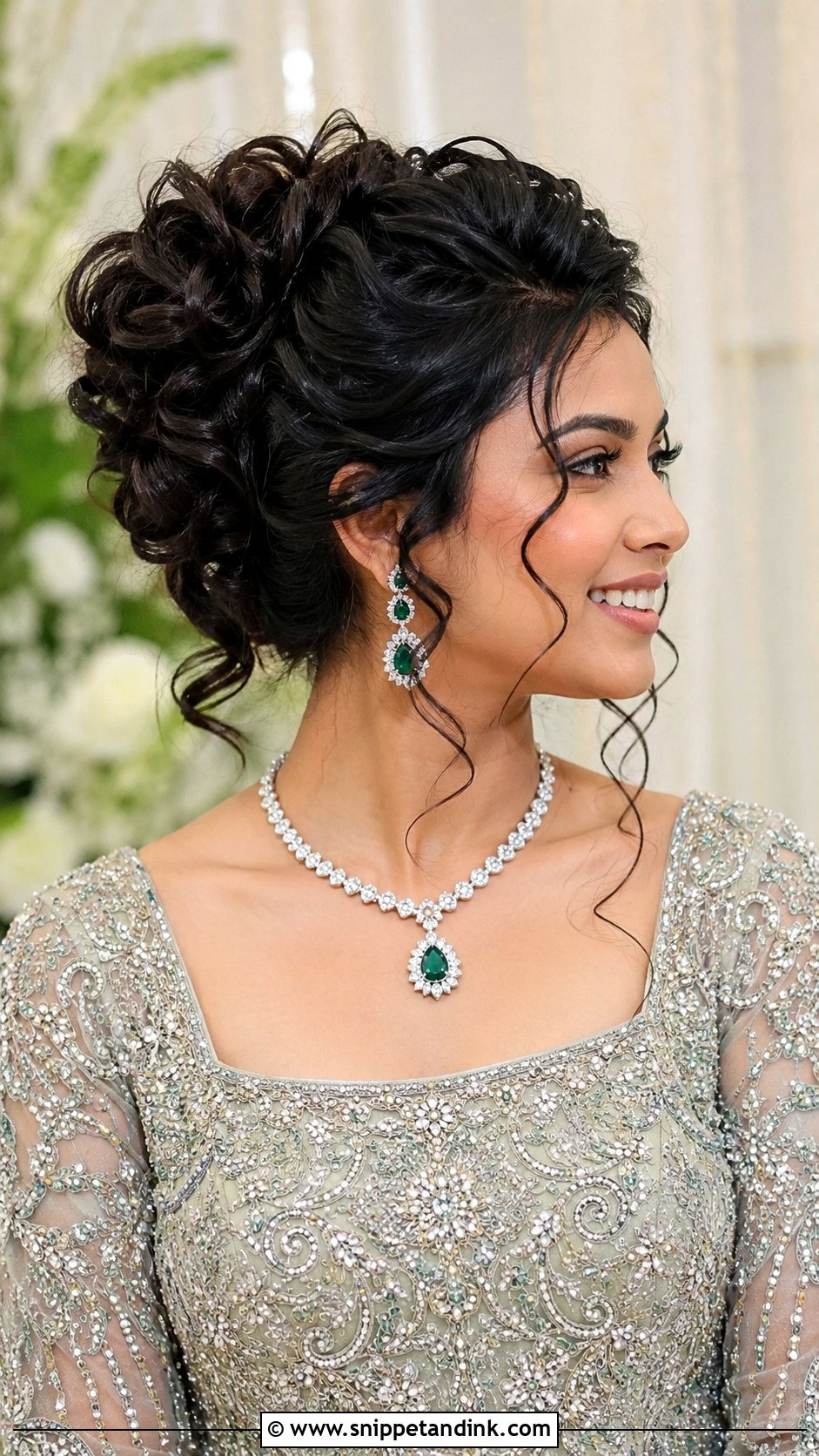
Curly hair should be styled curly. I gather natural curls into a full shape at the back and leave a few loose at the sides, defining them with a curl cream rather than a heat tool. Brushing curly hair dry turns it to frizz, so I work with fingers and a wide-tooth comb. Jeweled pins or small flowers add sparkle, and the volume suits a Walima reception. A light veil and statement earrings finish it.
25. Bridal Hairstyle With Floral Tiara
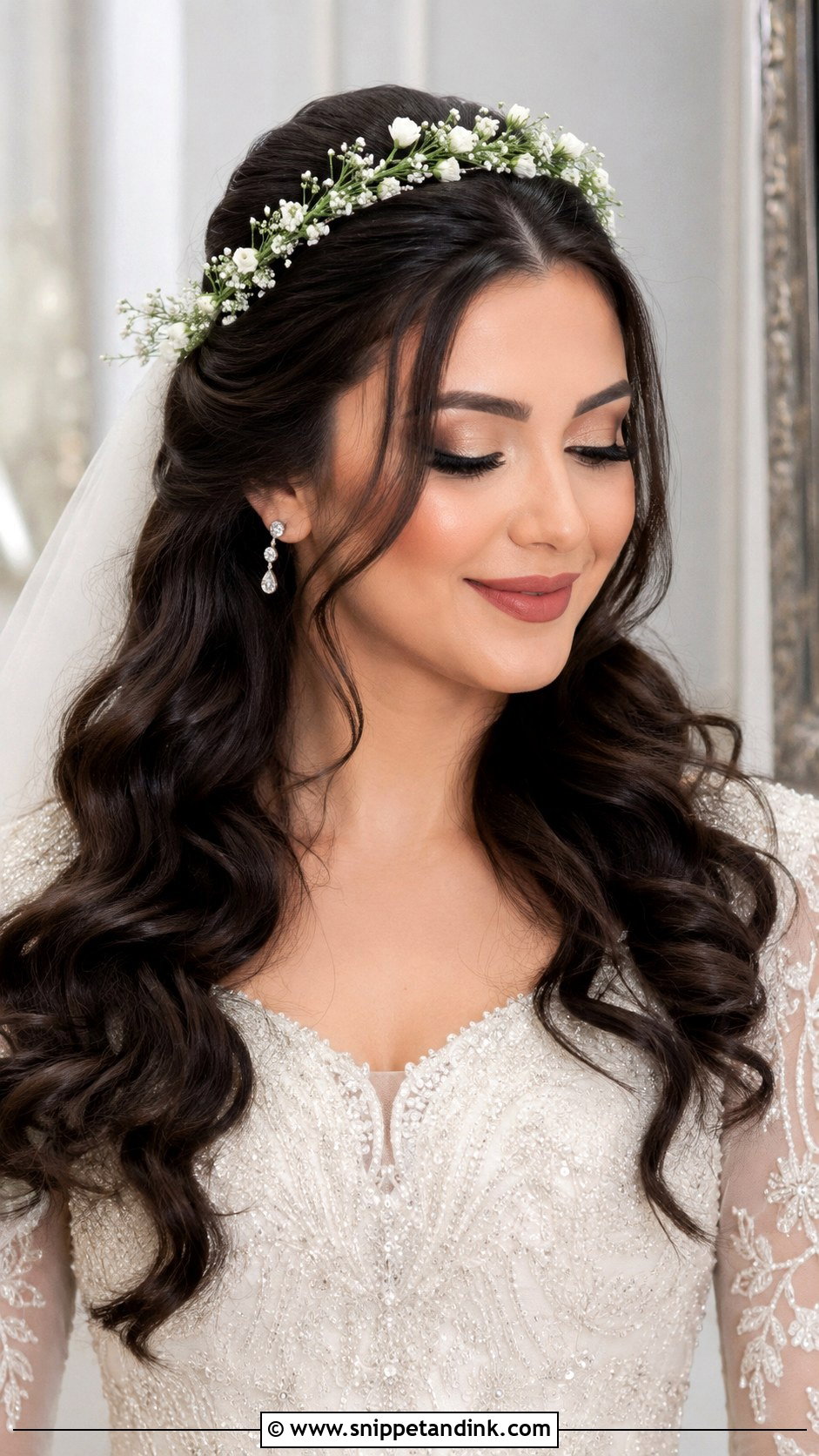
A floral tiara adds height and a rounded crown shape over soft waves or a gentle updo. Delicate blossoms bruise easily, so a florist-made tiara should be wired and kept cool until the morning. It suits both daytime and evening events, and works best with delicate jewellery so the crown stays the focus. Ask your florist to choose flowers that complement your outfit, then bring the tiara to your hair appointment so I can pin it in place.
Mehndi, Nikah and Walima on One Head of Hair
Three events in a few days mean three rounds of heat, pins and spray. Hair that gets curled, washed and curled again starts to look dull by the last event, so I plan the order with the bride.
- Save the most heat-heavy style for the event you care most about. If the Walima is open curls, keep the Mehndi braided and low-heat.
- Wash the night before an updo, not the morning of. Second-day hair grips pins better.
- Use a clarifying wash after the final event to remove the build-up of spray and serum.
- Sleep in a silk scarf between events to keep the shape and reduce frizz.
Privacy for hijab-wearing brides
If you wear hijab and plan an open hairstyle for a women-only celebration, say so when you book. Many brides need a female stylist and a private room for the styling itself, and some prefer the photographer to be a woman for those moments or to stay out of the getting-ready space. These are normal requests, and settling them in advance saves an awkward conversation on the morning.
Start With the Heaviest Piece on Your Head
The style that works is the one built around what you will wear on your head: the weight of the dupatta, the jhoomar, the veil or the hijab drape. Whether you prefer the modest elegance of a draped hijab or open curls for the women’s celebration, start with that piece and plan the hair underneath it. Then match the style to your face shape and the length of each event. Bring every accessory to your trial, and your stylist can decide where the pins go before the day.
You'll Like These Ideas:


Leave a Reply