
Blonde bridal hair down has one big advantage over an updo: the color you paid for actually gets seen. Every bend in a wave catches light at a slightly different angle, so the dimension your colorist built shows up in the aisle shots instead of being folded into a bun. The flip side is that lightened hair is usually finer and slipperier than it was before bleach, and it lets go of a curl faster. So for each idea below I’ve said what I’d do at the chair to make it last, and who I’d quietly steer toward something else. Champagne, honey, beige or pearl, there’s a version here for your shade.
Scheduling Toner, Gloss and a Trim Around the Wedding Date
With hair down, your color is on show from every angle, so I care as much about the salon calendar as the styling. Toner and gloss fade first. They soften with every wash, which is why a gloss done six weeks out often looks a little brassy or flat by the wedding.
- Any real change of shade, like honey to icy, should happen two or three months ahead, so there’s time to correct it if it lands wrong.
- Put your last lightening appointment about two to three weeks before, then a toner or gloss in the final week for maximum shine.
- Trim two to four weeks ahead. Freshly blunt ends can look harsh on waves, and a little settling time helps them fall softly.
- Ease off purple shampoo in the final days. On pale or porous blonde, overuse leaves a lilac cast that shows in close-ups.
- Skip chlorinated pools and long sun exposure in the last fortnight if you can. Both can push a cool blonde toward green or yellow.
If your colorist and your wedding stylist are different people, get them talking. I’ll tell you at the trial if your ends are too dry to hold a curl, and that’s far easier to fix with a bond treatment a month out than with extra spray on the morning.
1. Blonde Bridal Hollywood Waves
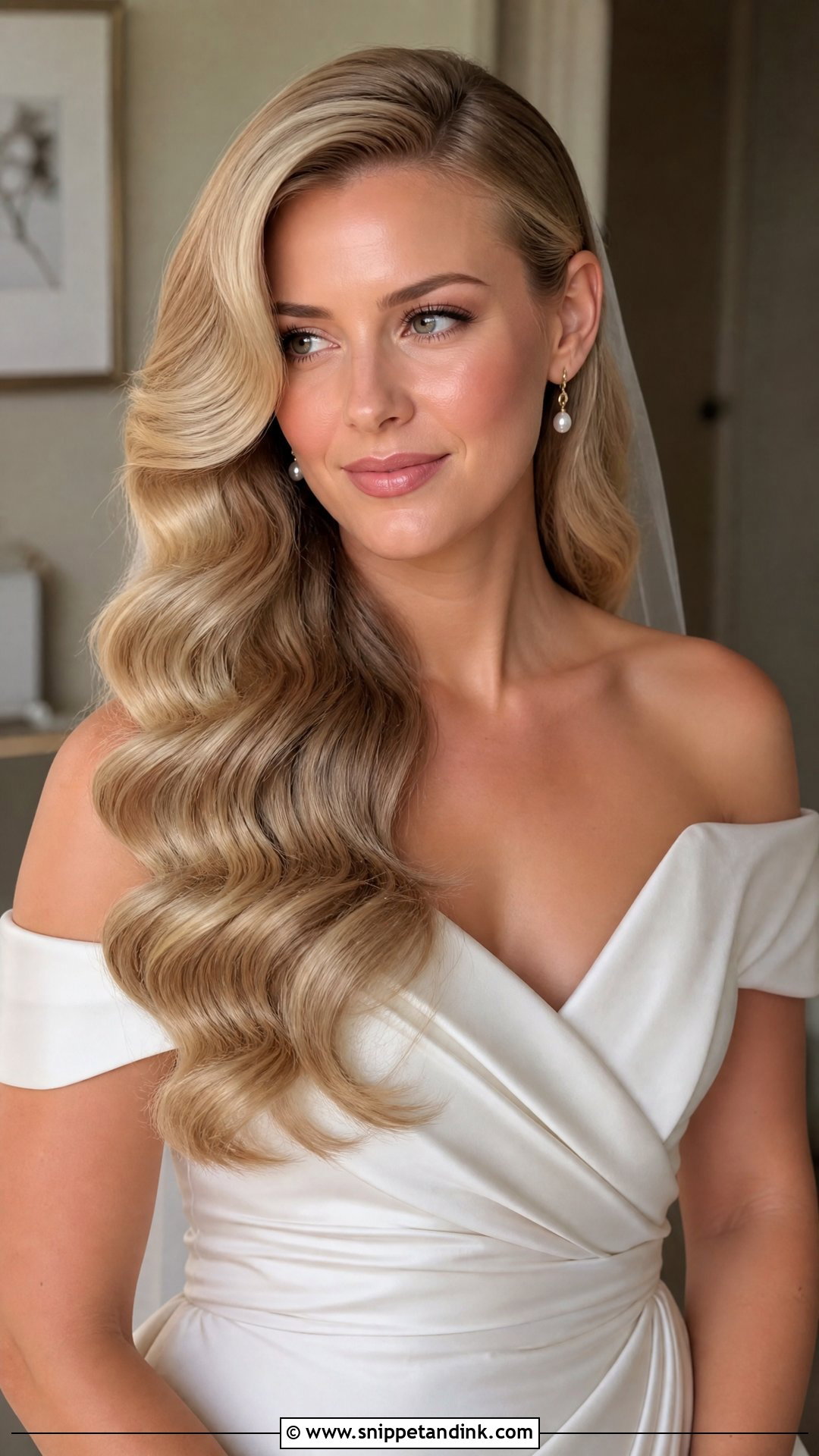
Blonde bridal Hollywood waves are the most disciplined way to wear hair down: every section curled in the same direction, then brushed until the bends join into one continuous S. That uniformity is why they read so glossy on dimensional blonde. I set them with a 1.25 inch iron and pin each curl flat to cool, because brushing warm curls is how you lose the ridge. A deep side part gives you the drama; tucking the short side behind the ear keeps earrings and a veil comb in view. I ask for a flexible spray only, since anything crunchy cracks the shine the moment you hug someone.
2. Blonde Bridal Soft Waves
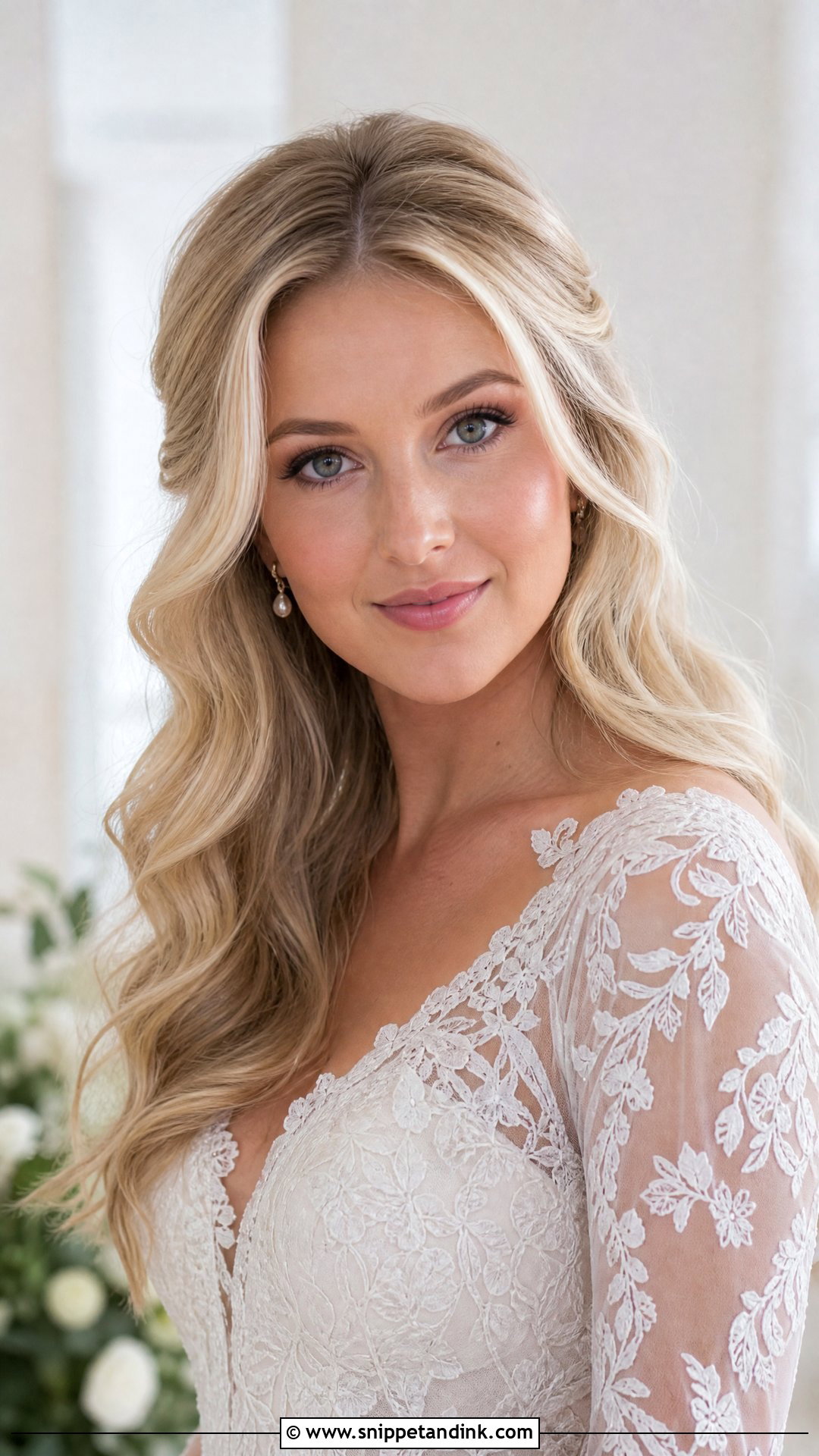
If you wear your hair down most days, soft waves are the upgrade that still looks like you. They’re loose and brushed, starting around the cheekbones, with nothing set or crisp about them. I keep the top smooth and the ends soft rather than piecey, because separated, twisted ends tend to look frizzy on bleached hair under flash. Long layers, mid-lengths and tape-in extensions all blend easily into this shape. Add a pearl pin or a light comb near the ear and it reads bridal without hiding any of the color.
3. Blonde Bridal Beach Waves
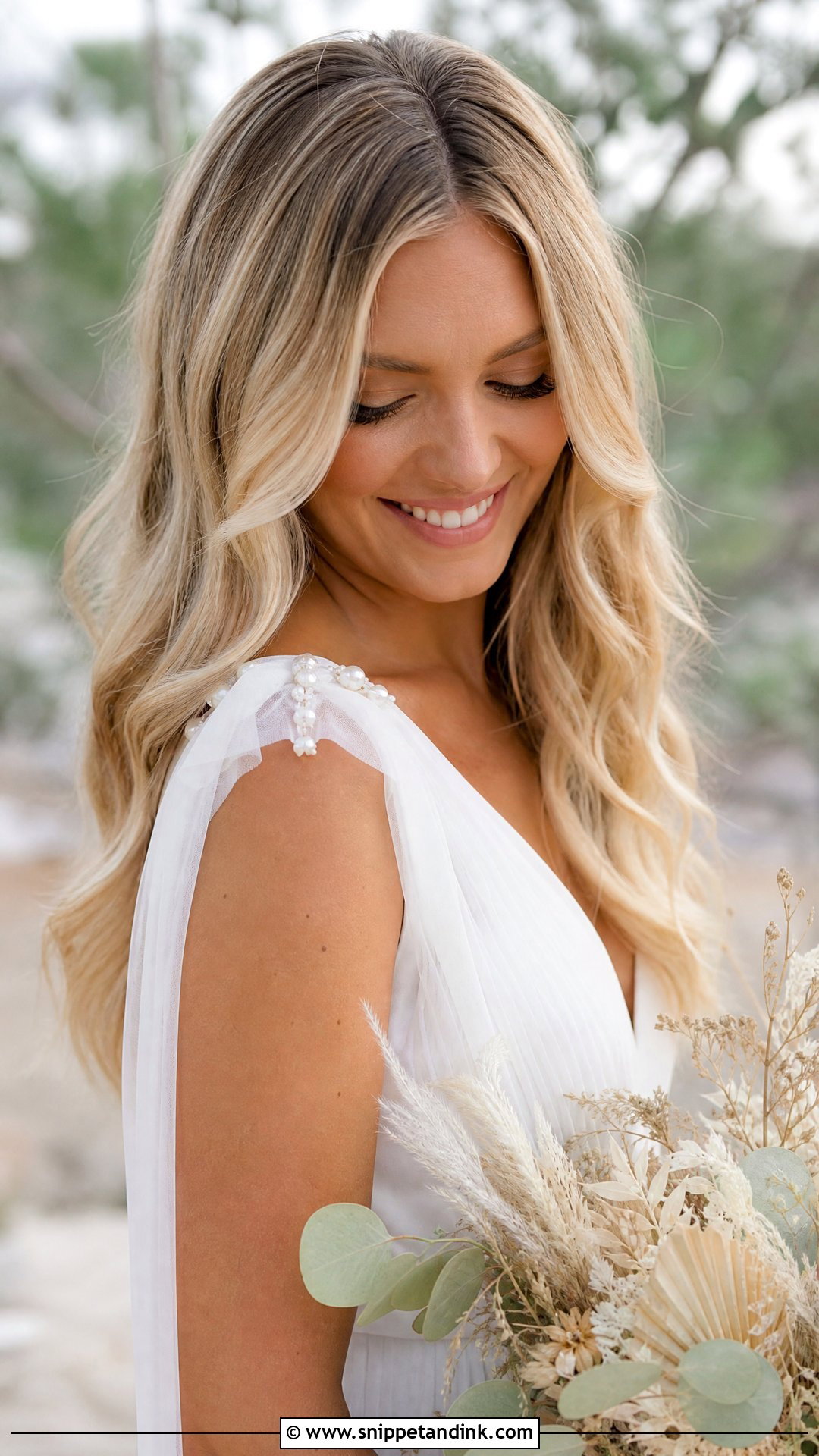
Beach waves on a bride are not the same as beach waves on a Saturday. I start the bend lower, around the jaw, keep the crown smooth with a bit of lift, and use a flat iron twist instead of a curling wand so the texture looks bent rather than ringleted. Balayage and sun-kissed highlights show off well here because the flat sections expose the contrast through the ends. A texture spray adds grip, but go easy: too much and blonde starts to look dry and matte. Garden ceremonies and flowing chiffon gowns suit it best; under a cathedral veil it can look underdressed.
4. Blonde Bridal Half Up Waves
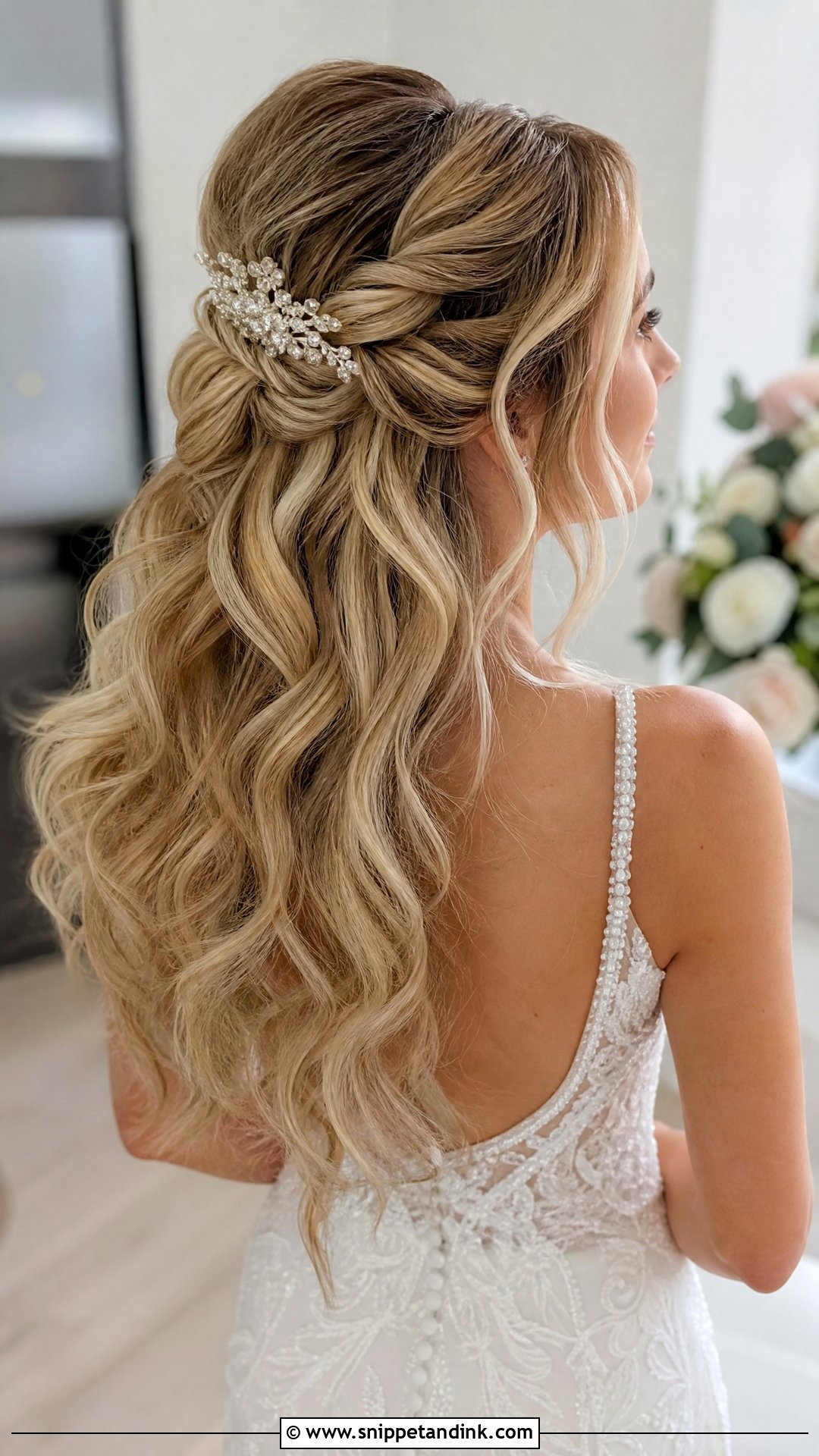
Half up waves are what I suggest most often to brides who want hair down but are nervous about it lasting. Pulling the front sections back keeps hair off your face for the vows and the dancing, and the pinned part holds its shape long after the lengths relax. I usually twist and cross two small sections at the back of the crown, then hide the pins under a comb. On blonde it has a bonus: the twist exposes the lighter and darker ribbons of your color right where the camera sees them. Keep some lift at the crown so the back doesn’t look flat in profile.
5. Blonde Bridal Side Part Waves
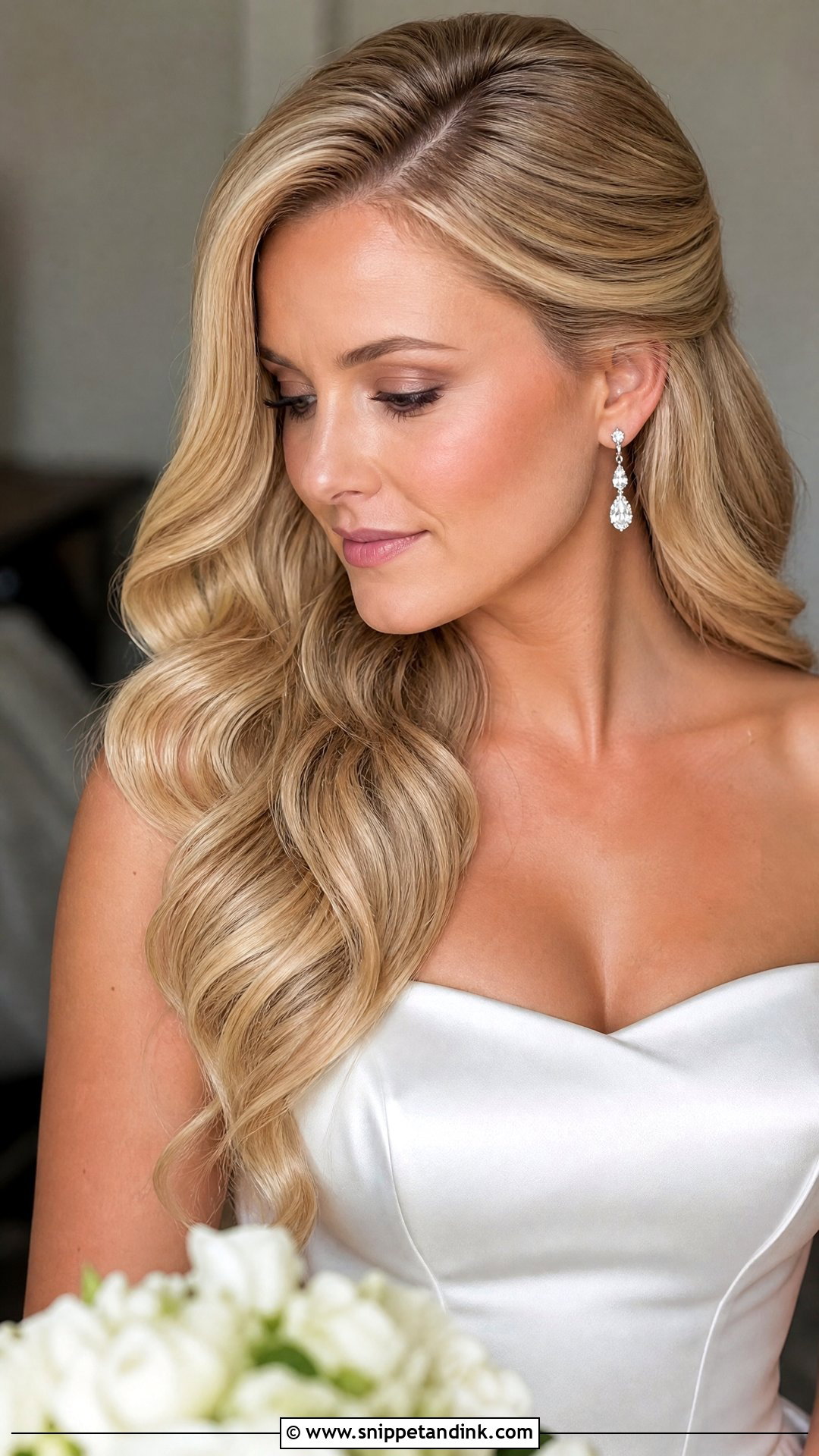
A side part changes the whole outline of the face, and for a lot of brides that’s the easiest way to make hair down feel finished. The weight falls in one sweep, which gives blonde a glossy surface to reflect light. It suits you if you like root lift but don’t want a teased crown. The thing I check first is your natural part: if your hair grows forward or has a cowlick at the front, forcing a deep side part means it springs back by the reception, so I blow-dry the root into the new direction rather than just combing it over. Statement earrings and a clean barrette finish it.
6. Blonde Bridal Center Part Waves
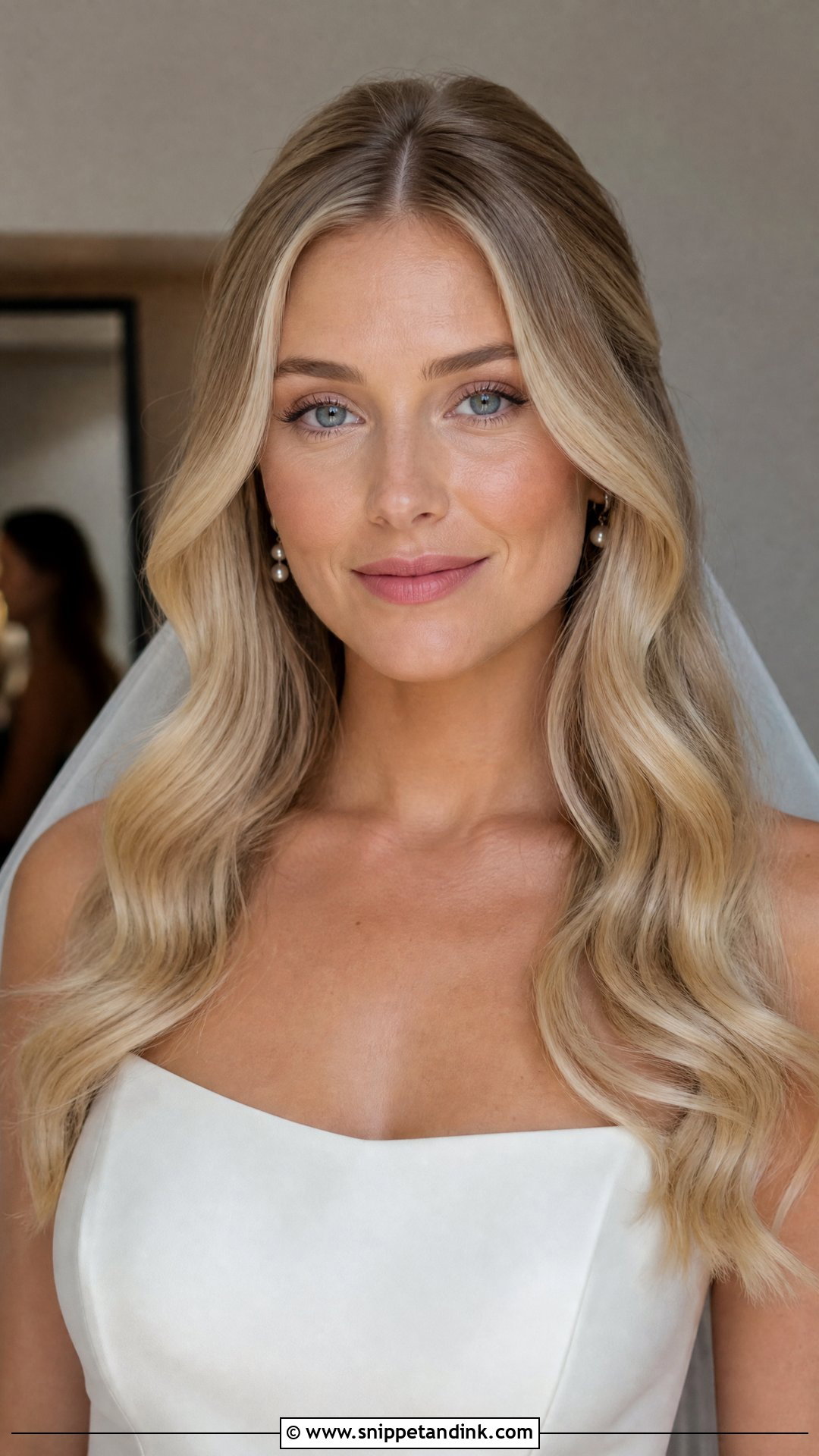
Center part waves are balanced and modern, and they flatter face-framing highlights more than almost anything else on this list, because the brightest pieces sit symmetrically on both cheeks. The waves should be full and brushed out rather than tight. The honest caveat is that a center part shows every bit of asymmetry, so if your hairline or face is noticeably uneven, I’d nudge the part a few millimeters off center. Ask for root control, volume through the sides and soft ends. It pairs naturally with minimal makeup and a clean, structured dress.
7. Blonde Bridal Long Loose Curls
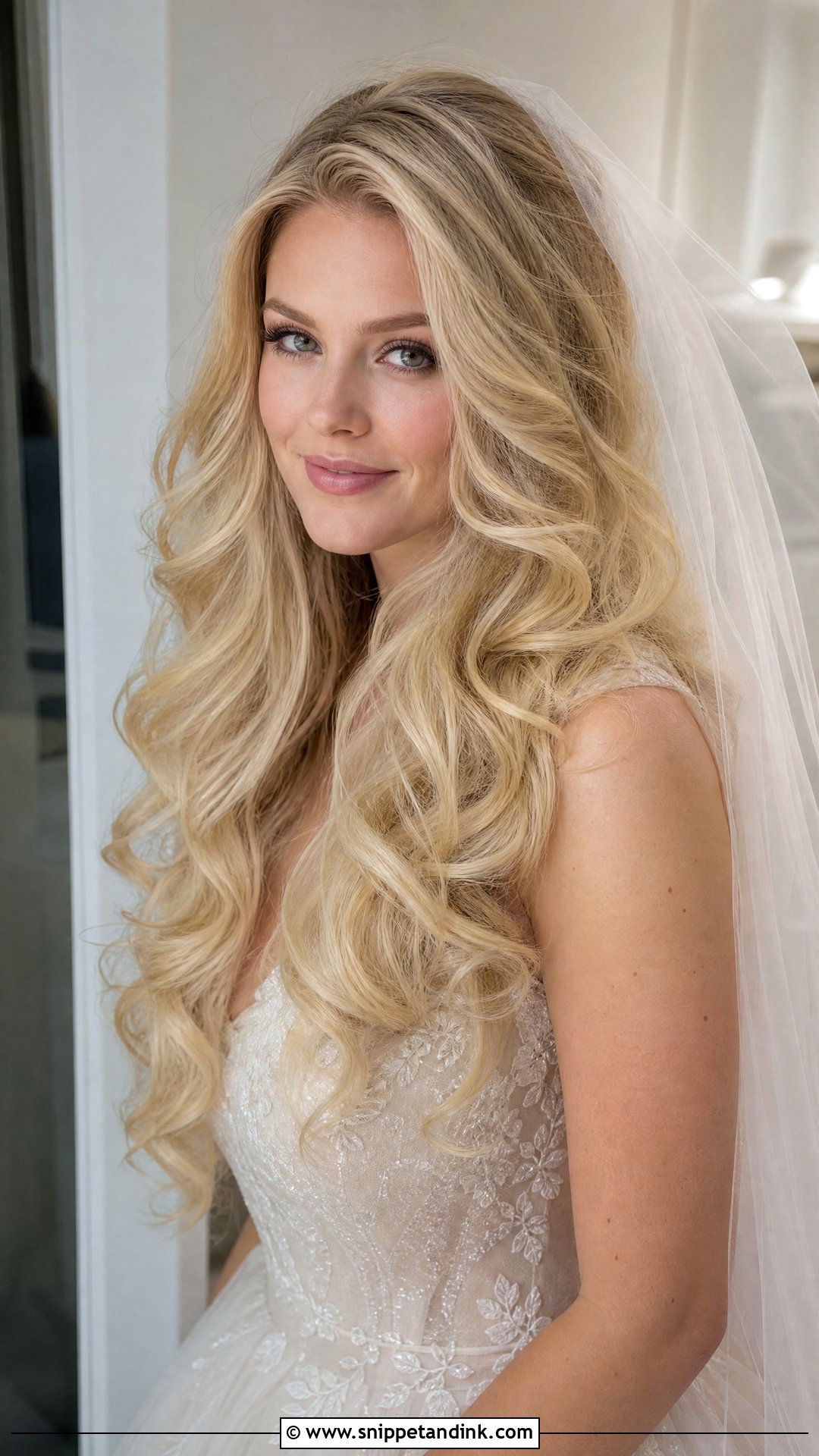
Long loose curls need length to fall properly, which is why I so often add extensions for this one. The curls are large and relaxed, but I set them tighter than the finished look, since curls on long hair drop under their own weight within an hour or two. Highlights through the mid-lengths and ends give each curl a visible outline. To stop it tipping into pageant hair, I brush through with a wide-tooth comb before the final spray. A veil tucked under the crown sits well here, provided the comb goes in before the curls are released.
8. Blonde Bridal Old Hollywood Hair
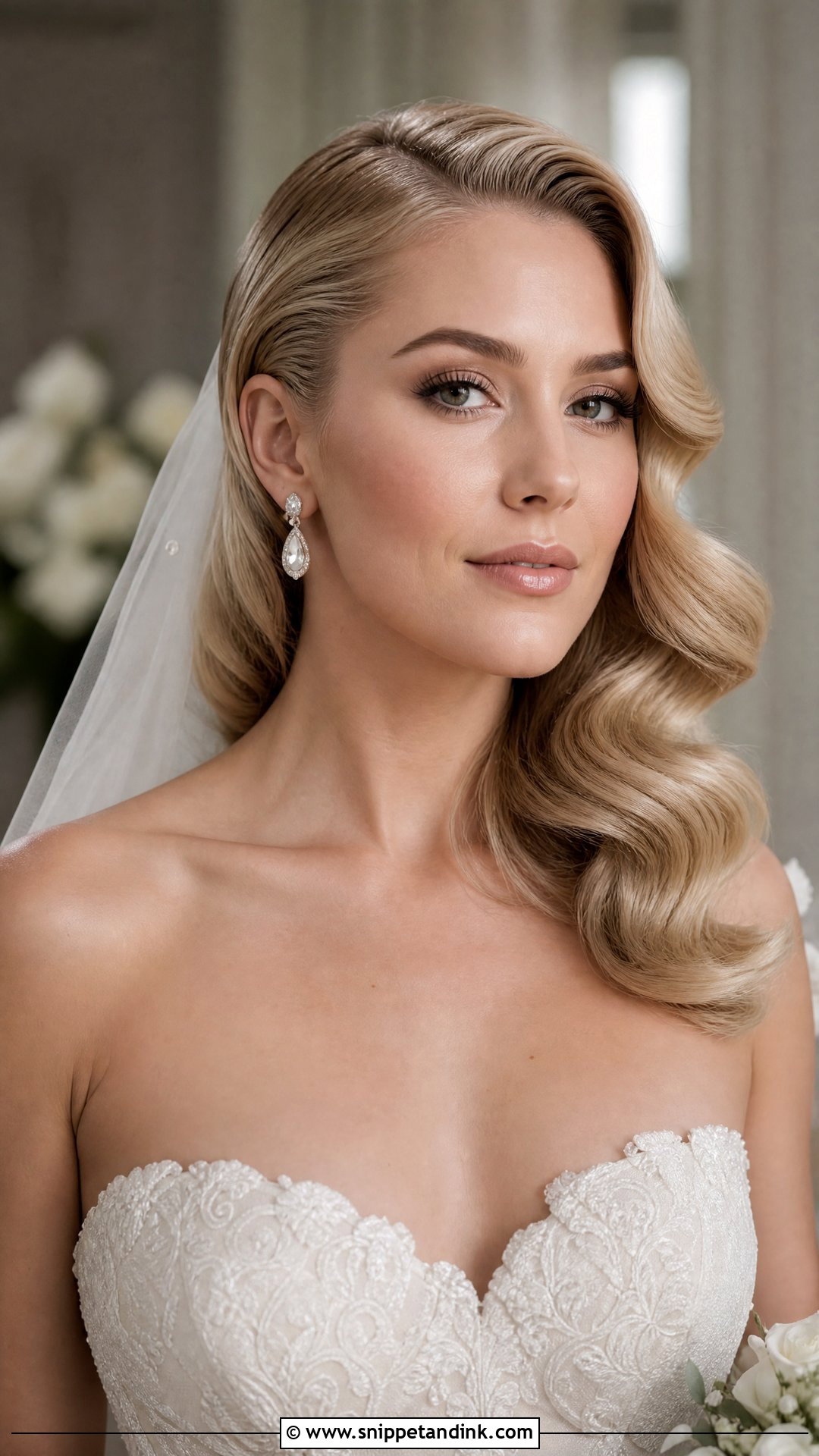
Old Hollywood hair is where blonde really earns its shine. The deep side part, sculpted waves and one side tucked or pinned create a surface as reflective as a satin gown, especially on champagne, pearl or buttery shades. The skill is in the brushing: I brush the set curls out with a boar bristle brush, then press the ridges with clips while I spray, so the waves look controlled but still move. It belongs with fitted gowns, off-the-shoulder necklines and minimal accessories. I’d avoid it on very layered cuts, since short layers pop out of the wave pattern and break the line.
9. Blonde Bridal Hair Down With Veil
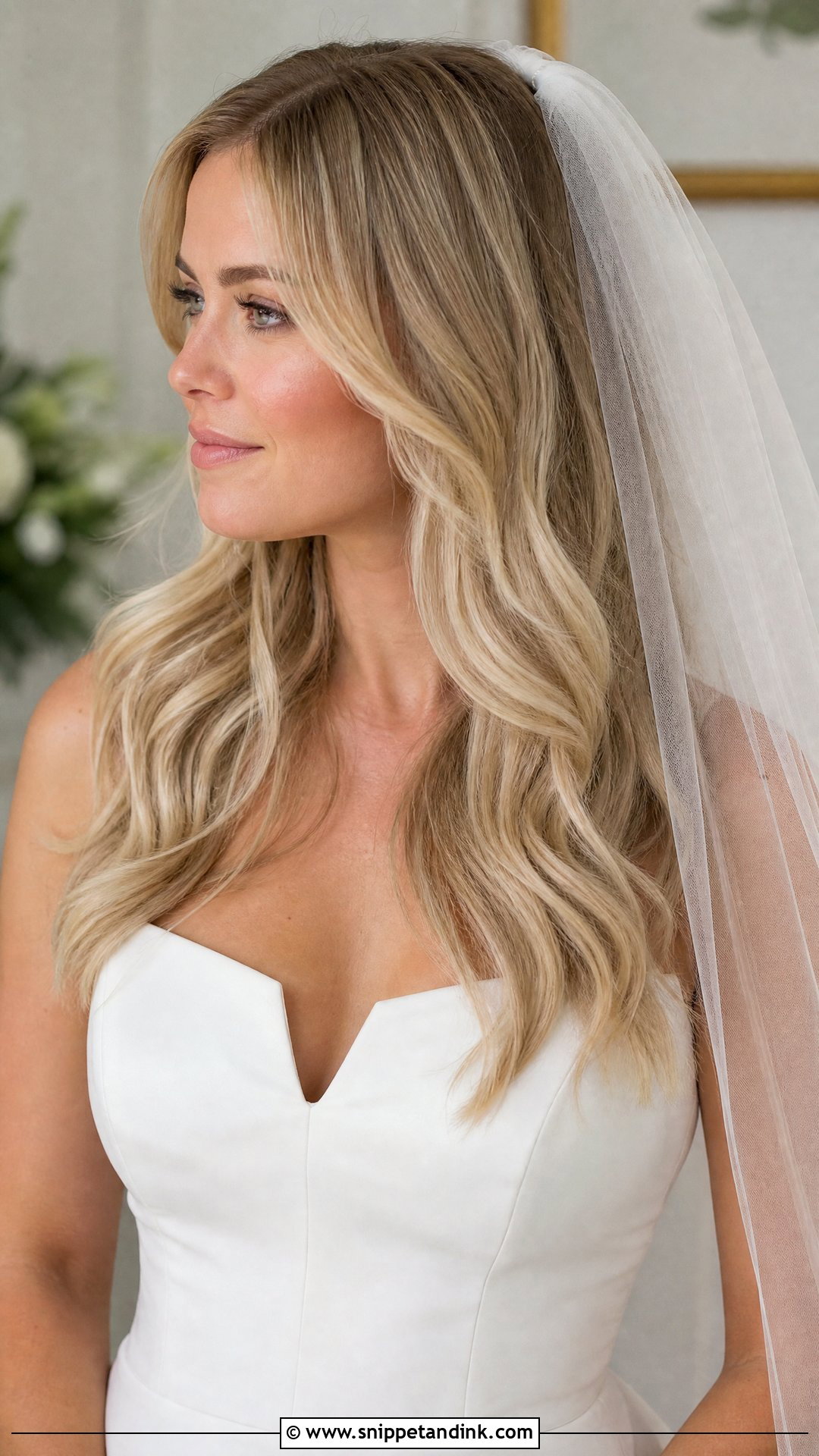
Hair down with a veil needs planning before the first curl goes in. A comb sliding through loose hair is the most common problem I fix on the morning, so I build a hidden anchor: a small section at the crown, lightly backcombed and secured with crossed pins, gives the comb something to bite into without changing the shape you see. Soft waves and smooth half-up bases both take a veil well. Blonde also looks especially luminous under sheer tulle, because the color glows through the fabric. Pick a veil that skims the hair rather than smothering it.
10. Blonde Bridal Hair Down With Pearl Pins
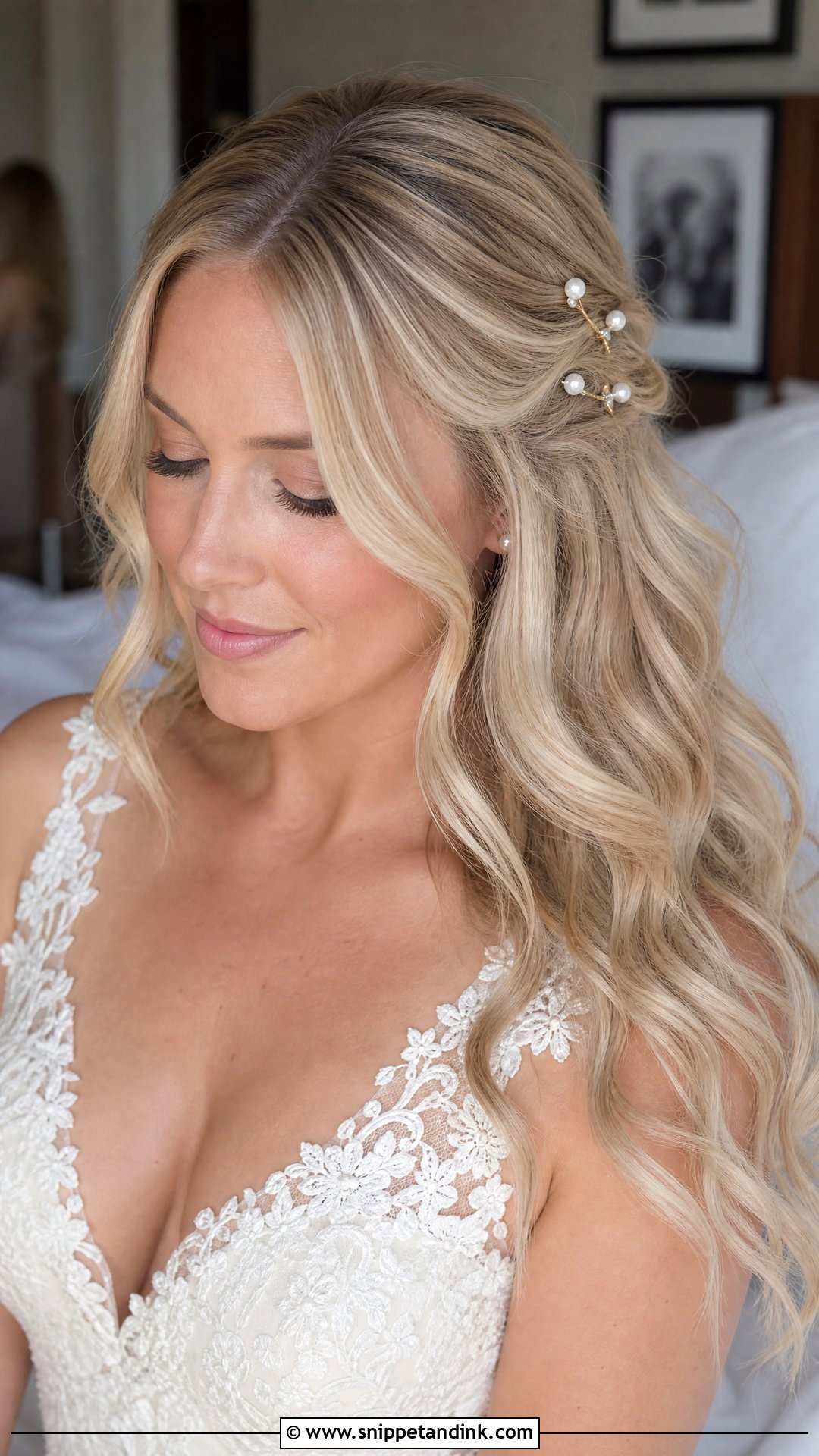
Pearl pins are the most adaptable accessory I work with. They go into soft waves, loose curls or a half-pinned shape, and I can place them in a line along one side or scatter them through the back. Creamy, beige and honey blondes show them off best; on very icy platinum, white pearls can disappear, so I’d look at ivory or blush pearls instead. Slide each pin in against the direction the hair falls and catch a little hair underneath, otherwise they migrate down by the evening. Fewer, well-placed pins look more expensive than a cluster.
11. Blonde Bridal Hair Down With Floral Clips
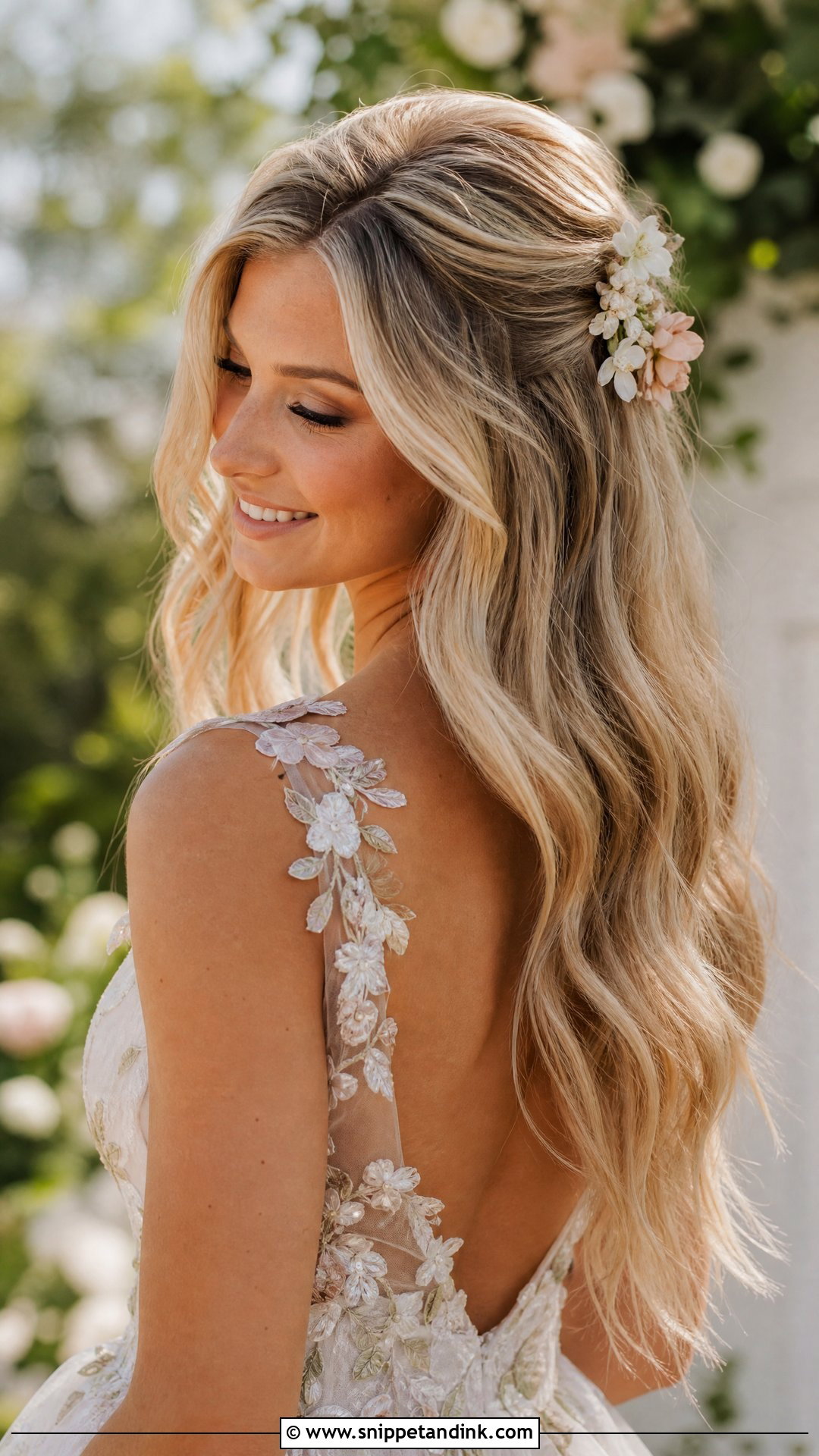
Floral clips give you a romantic detail without committing to a whole crown. The hair stays mostly down with loose waves, and one side is pinned back with a small floral comb or a few delicate clips. Blonde gives flowers a bright background, especially when the waves have dimension behind them. If you’re using fresh stems, ask your florist for hardy ones and have them wired, since soft petals wilt against warm hair within a couple of hours. Silk or porcelain flowers hold up better for a long outdoor day. Keep the cluster to one side so it doesn’t look crowded.
12. Blonde Bridal Hair Down With Face Framing Layers
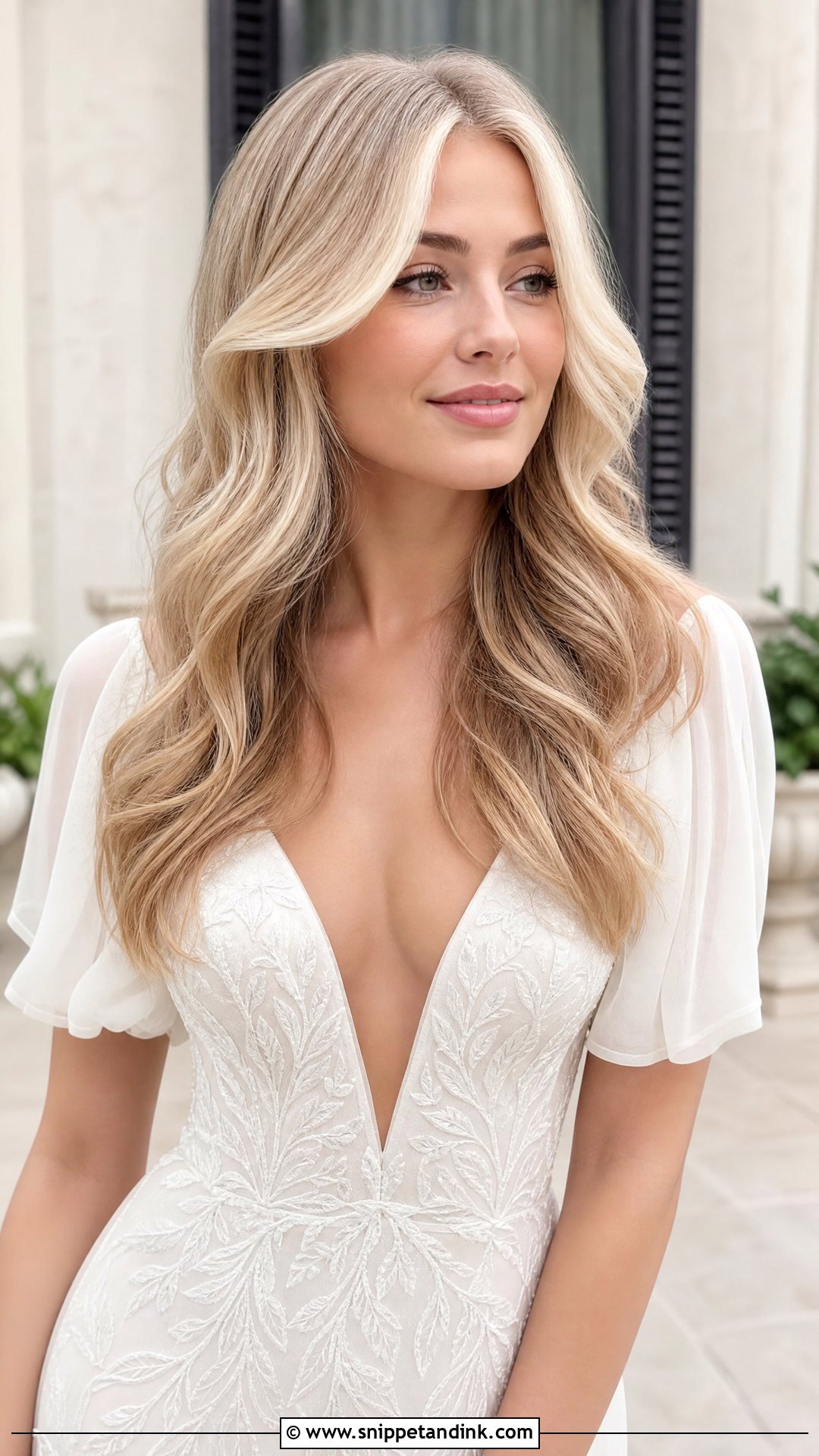
Face-framing layers do a lot of quiet work. Curled away from the face, the front pieces lift off the cheekbones and keep long blonde hair from looking heavy. The lighter pieces at the front also act like a reflector in photos. I’d get these cut at least two weeks before the wedding, never in the final days, because freshly cut layers can sit awkwardly until they settle. On the morning I smooth the roots, shape the front by hand and keep the ends blended so nothing looks chopped.
13. Blonde Bridal Hair Down With Curtain Bangs
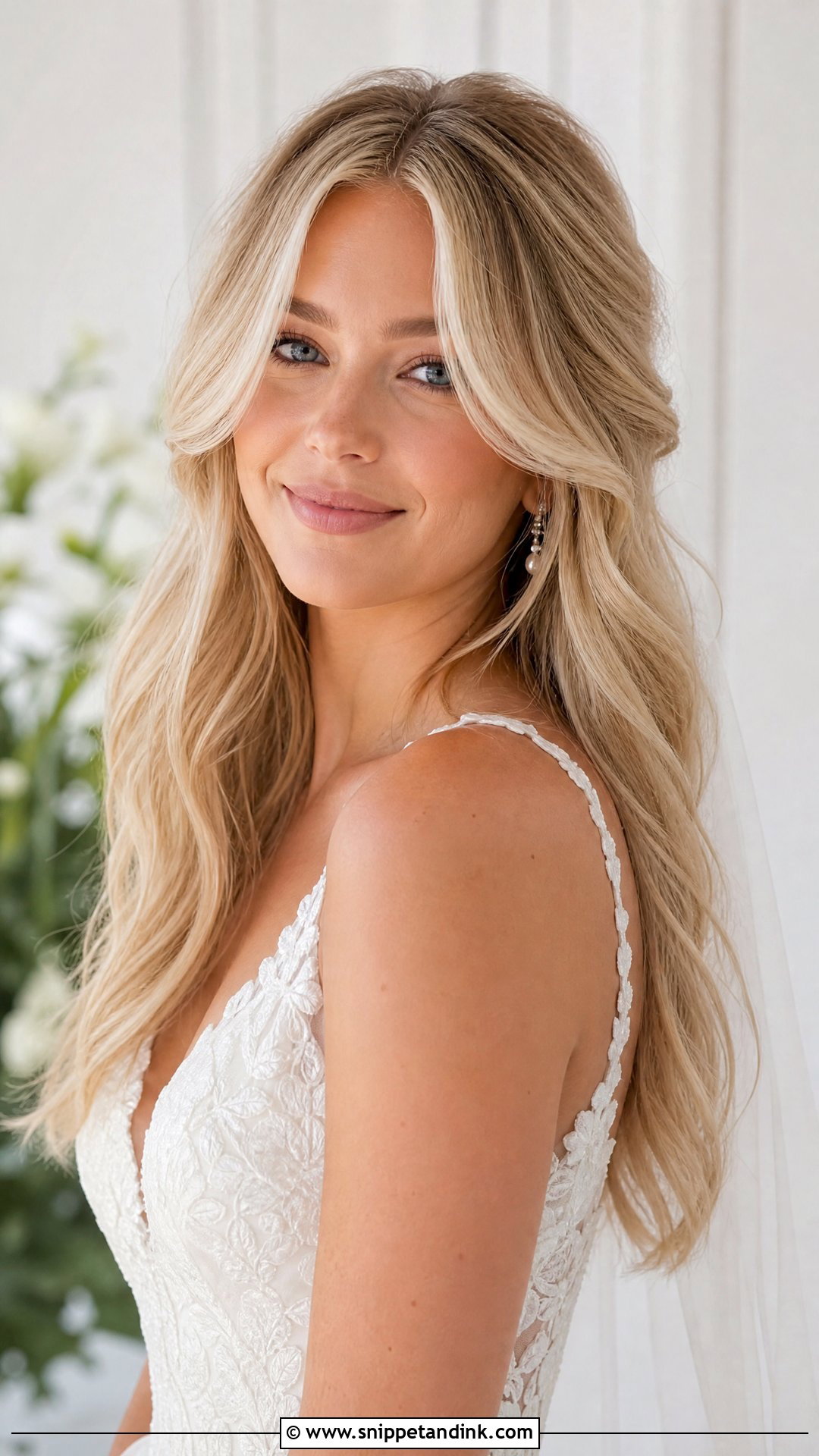
Blonde bridal hair down with curtain bangs works best for brides who already have the bangs, since the point is your everyday hair, just more polished. The bangs should part gently at the center or slightly off it and blend into waves through the sides. I blow-dry them over a small round brush first, then set them with a large velcro roller while I do the rest; curling irons tend to make them too bouncy. Light hold only, because stiff bangs look obvious in close-ups. Don’t cut new curtain bangs for the wedding; they need a few weeks to learn where to fall.
14. Blonde Bridal Straight Hair Down
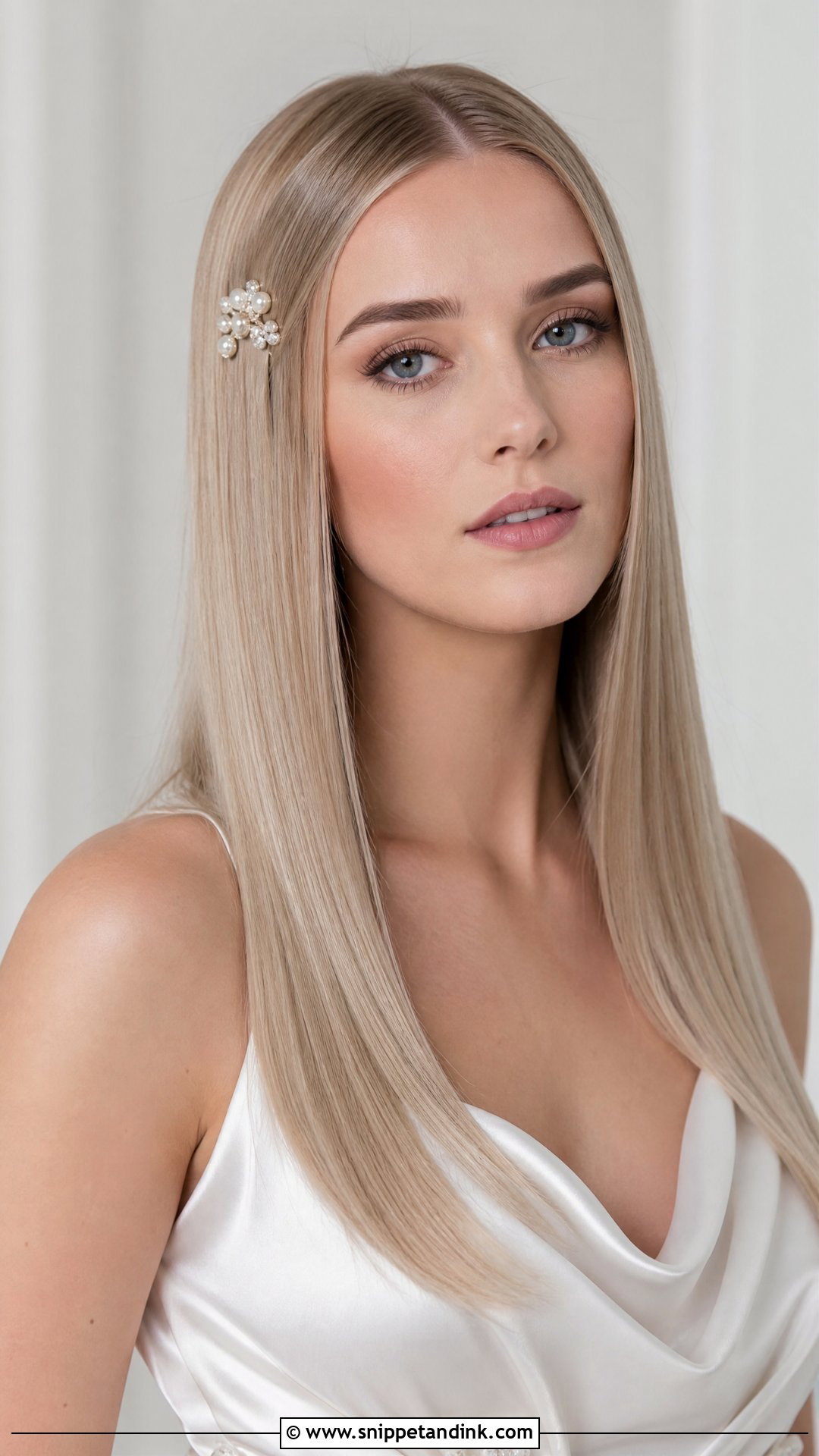
Straight hair down is the least forgiving style here. There’s no wave to hide dry ends or uneven tone, so color, gloss and a trim matter more than with any other look. Done well, it’s sleek and modern, with the ends softly beveled under rather than poker-flat. I flat iron in small sections at a moderate temperature and finish with a shine serum on the lengths only, never the roots, or it goes limp by dinner. A center part reads minimal, a side part softer. It suits square necklines and structured, modern gowns.
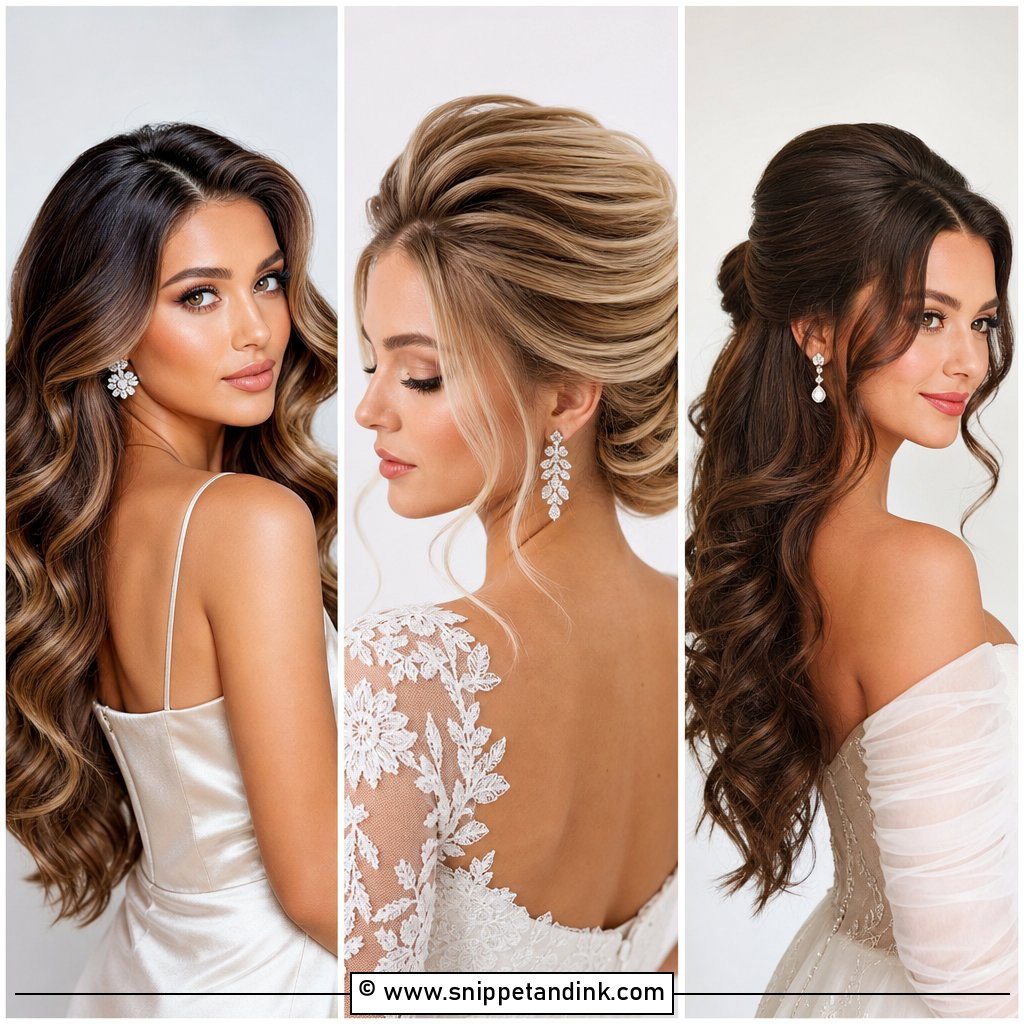
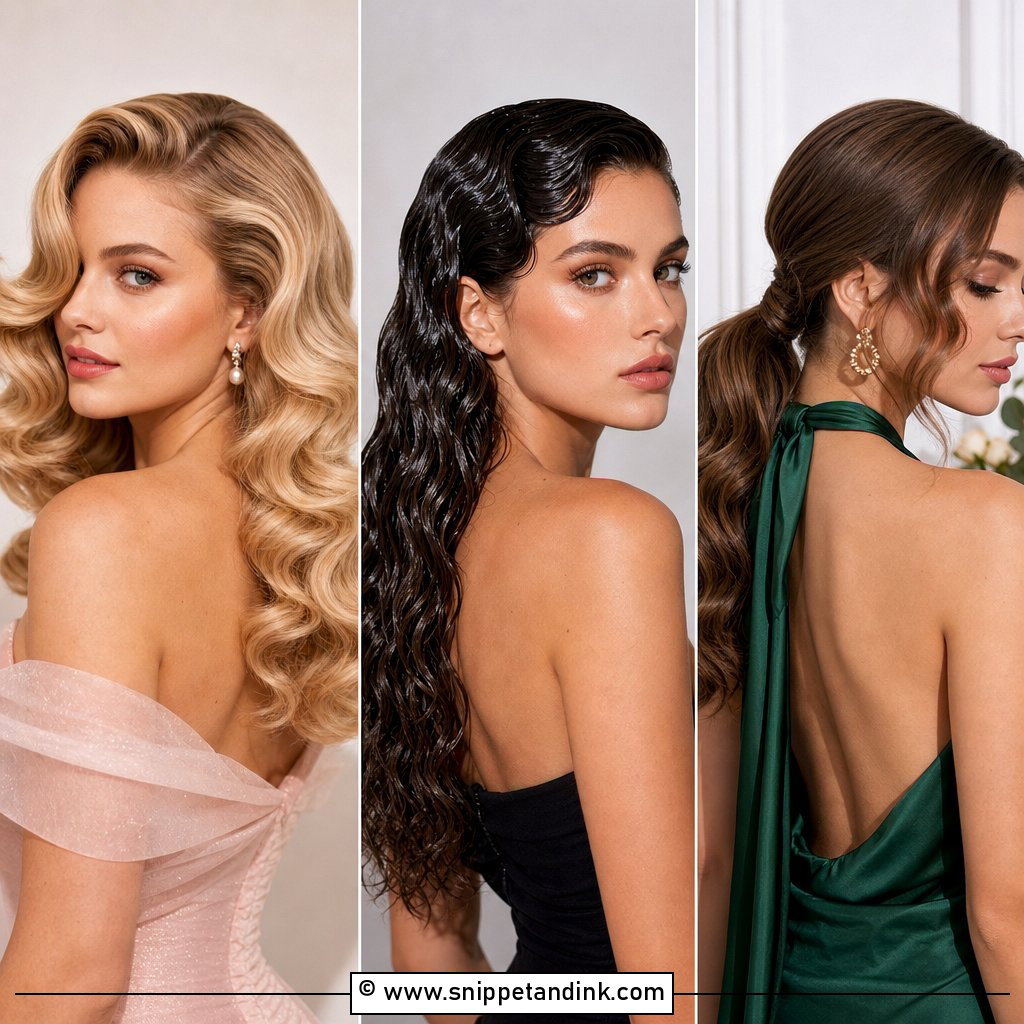
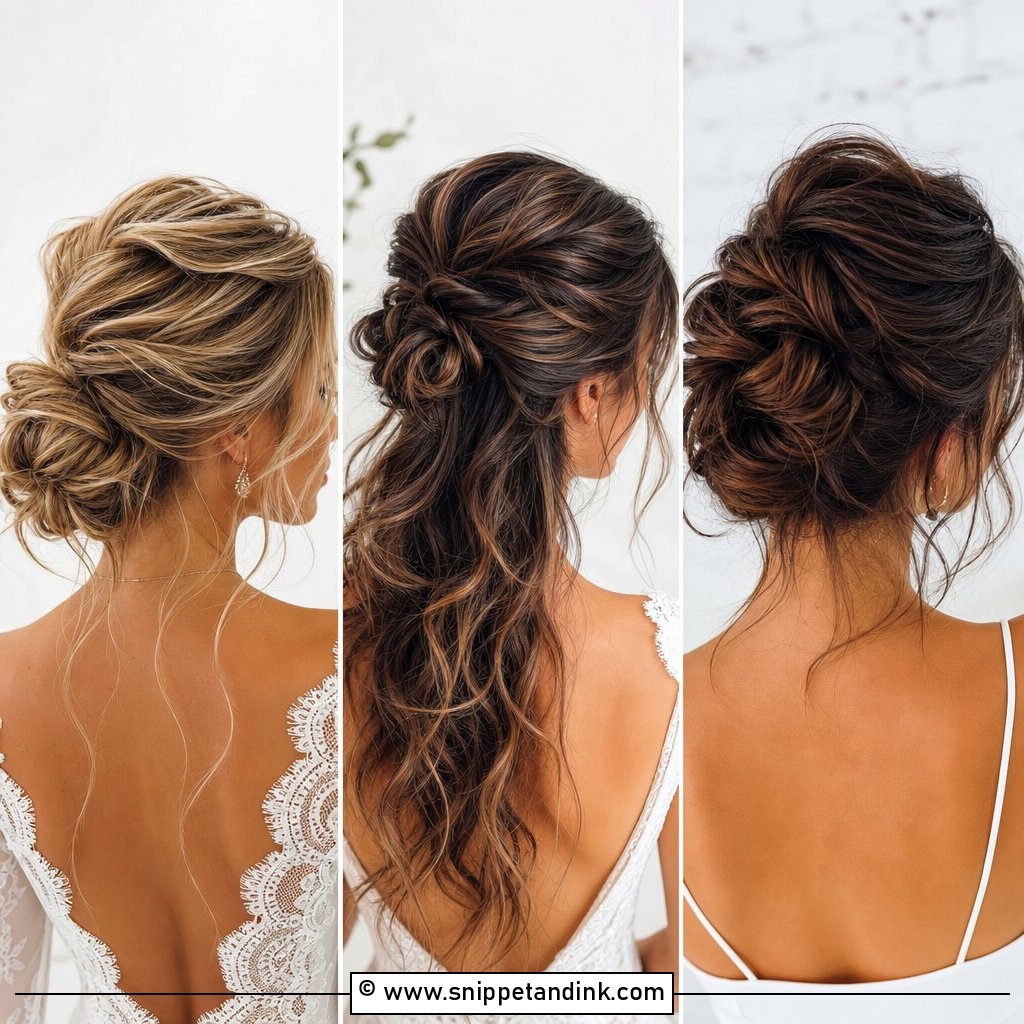
15. Blonde Bridal Bouncy Blowout
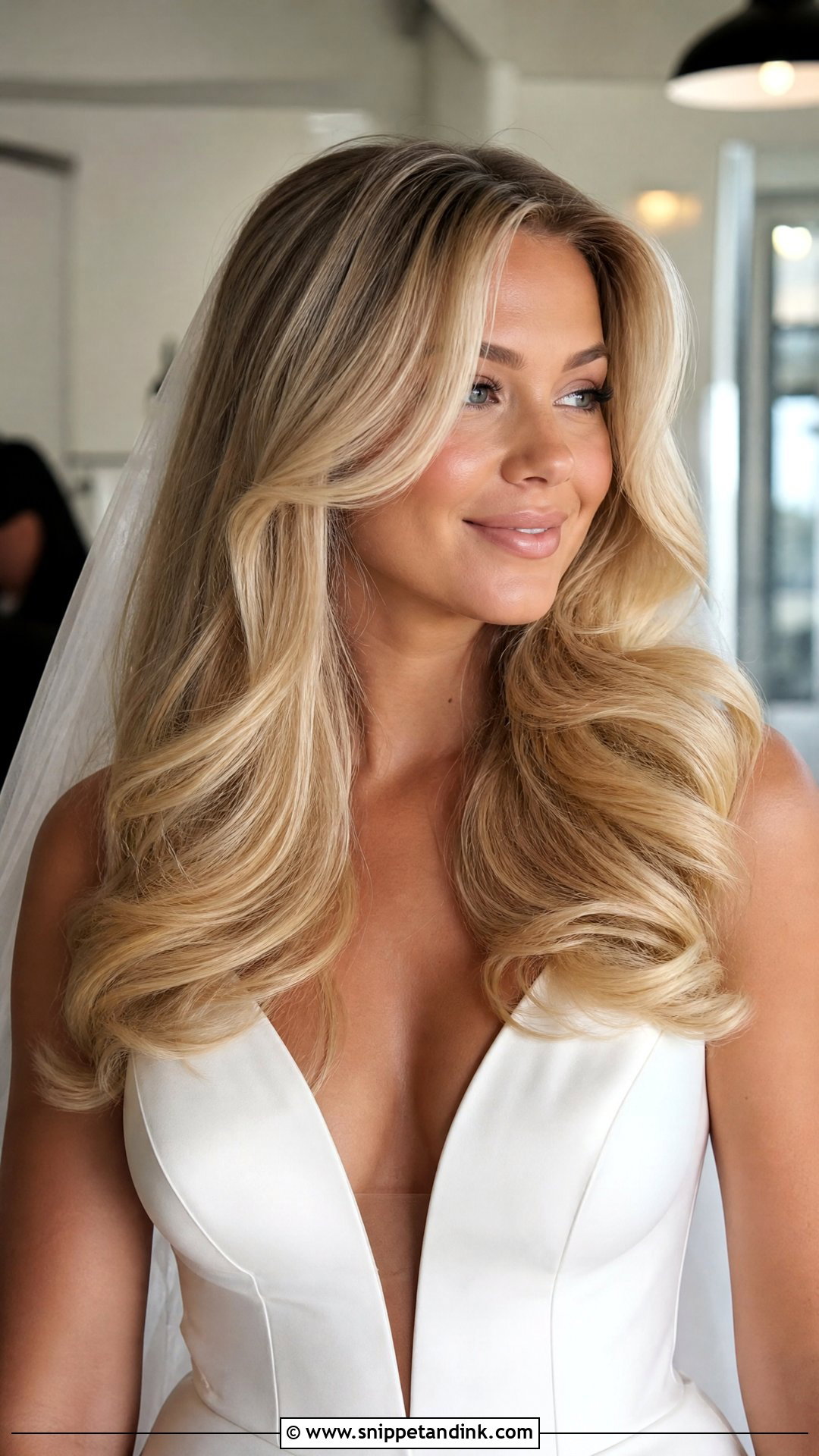
Blonde bridal bouncy blowout styles rely on round-brush work and velcro rollers rather than curling irons, so you get lifted roots and big smooth bends instead of defined curls. It’s comfortable and youthful, and it shows off blonde well as the layers move. The catch is humidity. A blowout depends on hair holding a smooth shape, and on a damp summer day it can puff up within hours, so I keep it for cooler days or indoor venues. A good layered cut makes all the difference, and lightweight products hold the volume without stiffness.
Why Lightened Hair Drops Its Curl, and What I Do About It
Bleach opens up the hair cuticle and often leaves hair finer and silkier than it was, and that combination straightens itself out faster than anything else I style. Curls that bounce at noon can be loose bends by the speeches. That’s fine if you planned for it.
At the chair
- I usually ask brides to wash the night before, not the morning of. Hair a few hours past washing grips a curl better than squeaky-clean hair.
- Every curl gets pinned to cool before I touch it. Brushing warm curls is the single biggest reason waves fall early.
- I set curls tighter than you’ll want them in photos. They relax into the finished shape within an hour or two.
- Hairspray goes on in light layers from a distance, not one heavy coat that weighs the curl down.
Through the day
Keep your hands out of it; tucking hair behind your ears all evening flattens the front faster than the weather does. If the forecast is humid, especially for a beach or garden ceremony, the half up and pinned options above are the safer bet, because the pinned section keeps its shape even as the lengths soften. Also check how your blonde reads next to your dress: very pale hair against bright white can merge in flash photos, and a slightly deeper root gives the photographer contrast.
Hand a bridesmaid a small pouch with a few bobby pins, a travel-size flexible spray, a clear elastic and a tail comb. Ten minutes before the reception entrance rescues almost anything that’s slipped.
A Blonde Down Style That Lasts Past the Last Song
Every look in this list can work on blonde hair worn down; the right one depends on your dress, your venue and how well your hair holds a bend. My advice is to judge each option at ten at night, not at the first look. Do your trial with the veil and accessories in, check photos in daylight and with flash, and keep the style in for several hours afterward to see where it drops. When the shape, the tone of your blonde and the finish agree with each other, you stop thinking about your hair after the ceremony, which is exactly the point.
You'll Like These Ideas:


Leave a Reply