
Most brides who come to me wanting their hair down are really asking for a blowout that still has swing at ten at night. Done well, a bouncy blowout gives lift at the root, shine along the surface and ends that move when you turn your head, without the crunch of a set curl. Fully down or half up, under a veil or with a bow, it shifts from classic to glam mostly through the part and the size of the bend. A wedding blowout also frames most necklines and still feels like hair, not a sculpture, when people are hugging you at the reception.
The Roller Set Is Where the Bounce Comes From
A blowout for a Friday dinner and one that has to last from the first look to the last dance are different jobs. The second is mostly about setting and cooling, and that’s the part rushed wedding mornings skip.
- Wash timing depends on your hair. Very fine or oily hair usually holds better freshly washed; thick or coarse hair often grips better on second-day hair.
- Mousse at the roots and heat protectant through the lengths, then I rough dry to about 80 percent with my fingers. Round-brushing soaking wet hair only wastes time.
- Small sections with a large round brush, each one pulled up and away from the scalp for lift, with the ends over-directed so they curve.
- Every section goes into a velcro or heated roller while it’s still warm. This is what gives the bounce its memory.
- The rollers stay in until the hair is completely cold. Taking them out warm is the most common reason a blowout has dropped before the ceremony starts.
On long hair a proper bridal blowout with a roller set often takes over an hour, so I ask for its own slot in the morning timeline instead of a quick finish squeezed in after makeup.
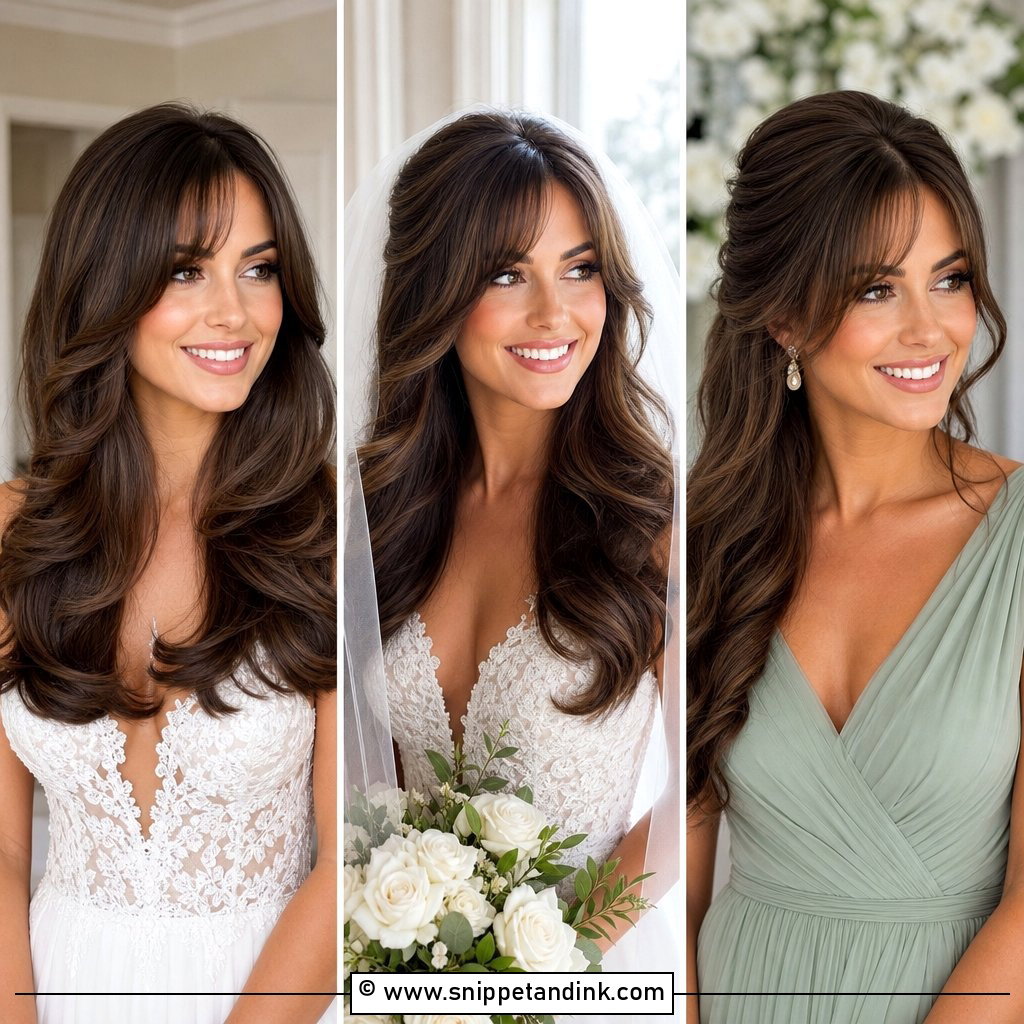
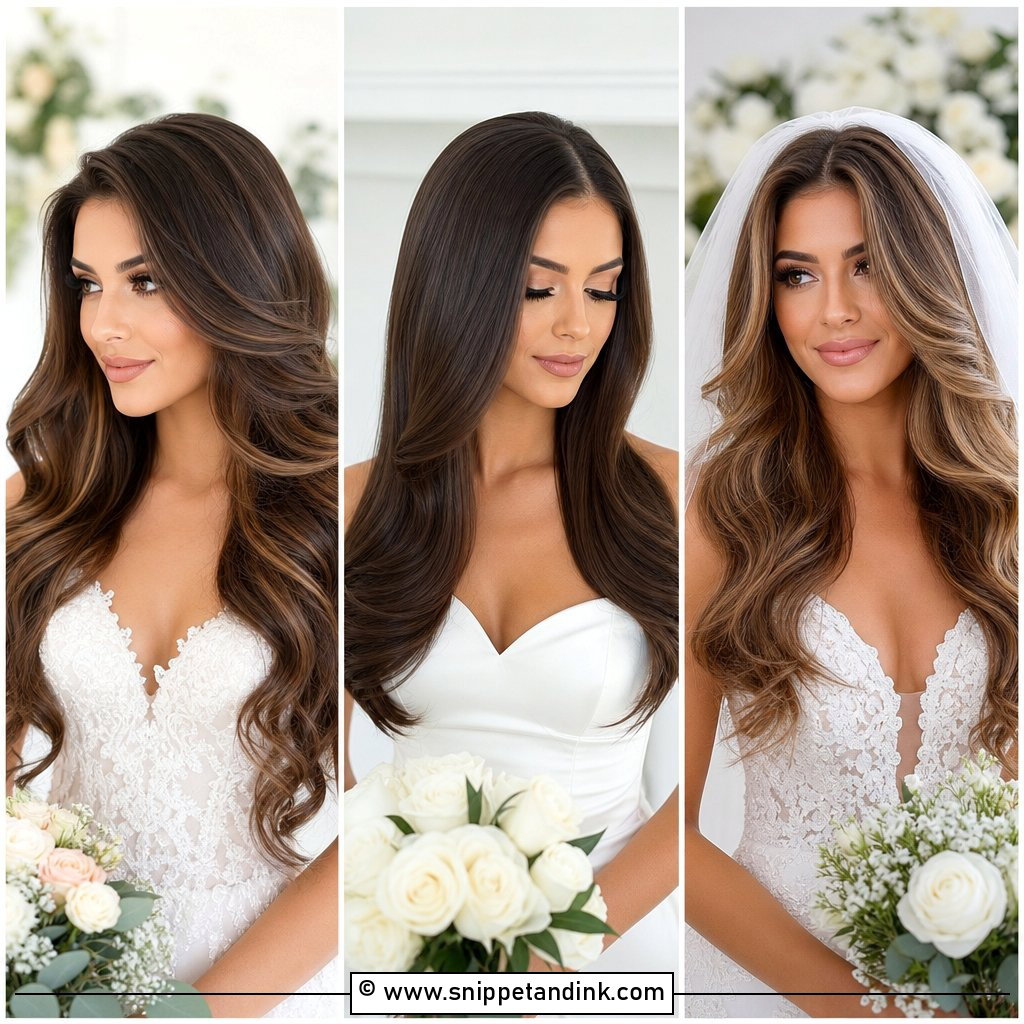
1. Bouncy Blowout Wedding Hair With Face Framing Layers
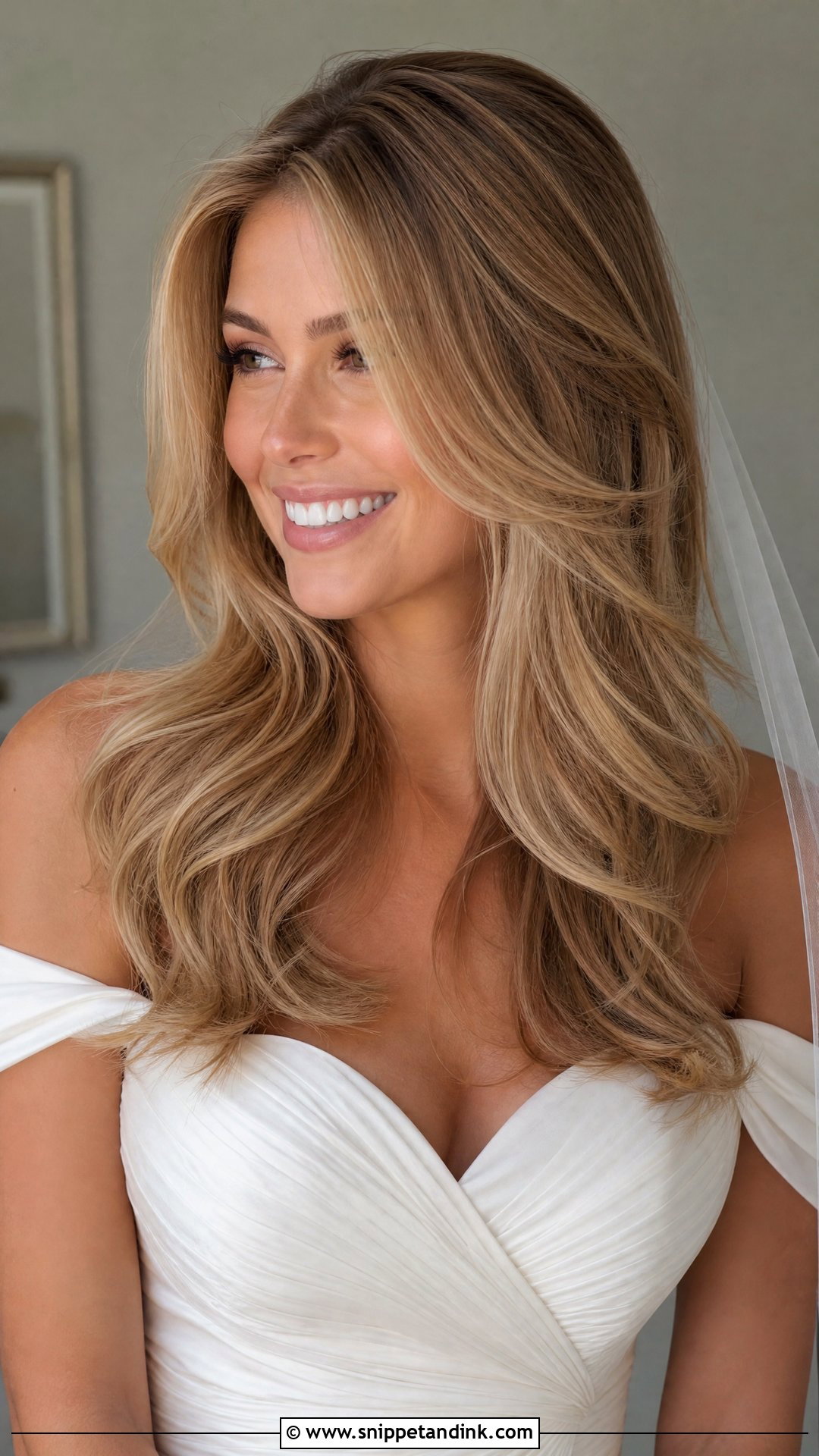
Face framing layers do most of their work around the cheekbones and jaw, which is exactly the area a strapless or sweetheart neckline leaves open. I curl those front pieces away from the face, never toward it, because an inward curl closes the face off in every side-angle photo. The layers stop a full blowout from looking heavy, but if they start much above the cheekbone they tend to flip out by mid-afternoon. Ask for smooth crown volume, lifted curtain pieces and rounded ends, then a flexible spray so the movement stays touchable.
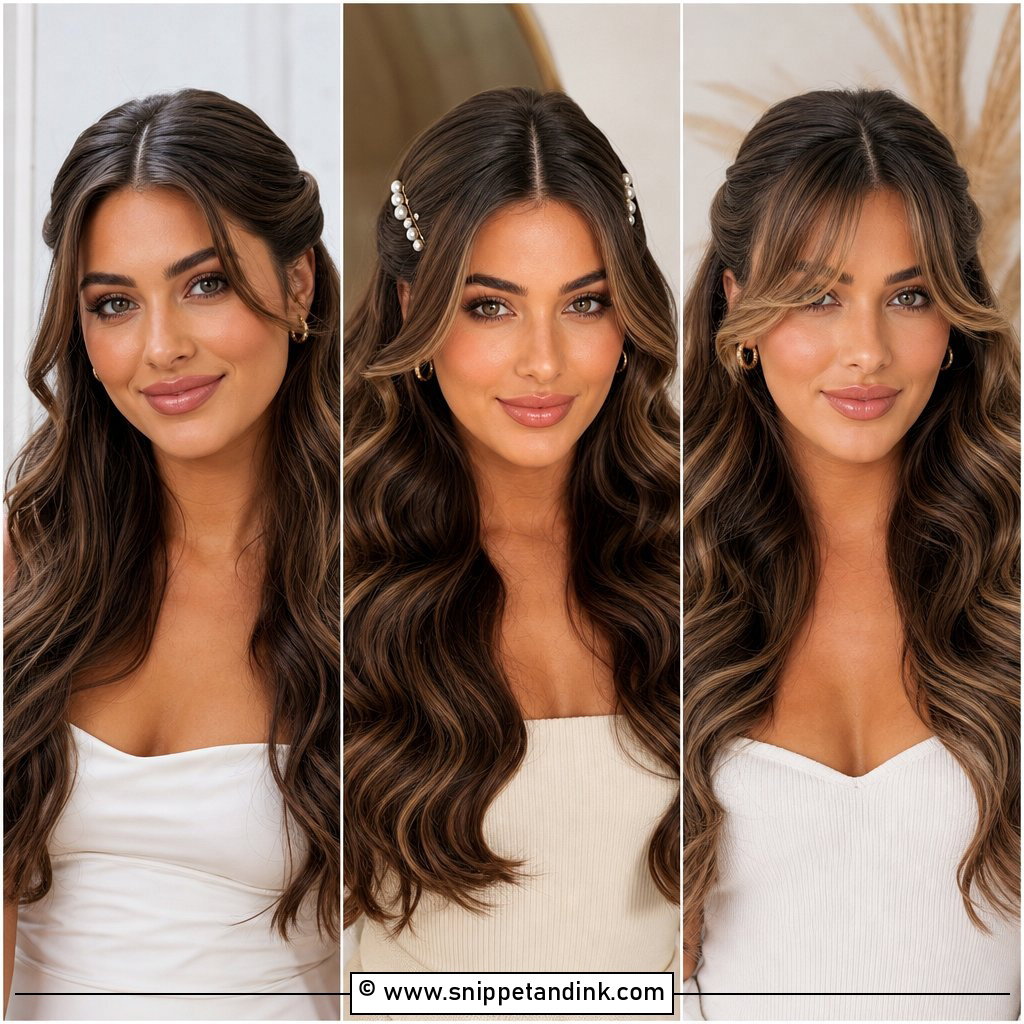
2. Bouncy Blowout Wedding Hair With Curtain Bangs
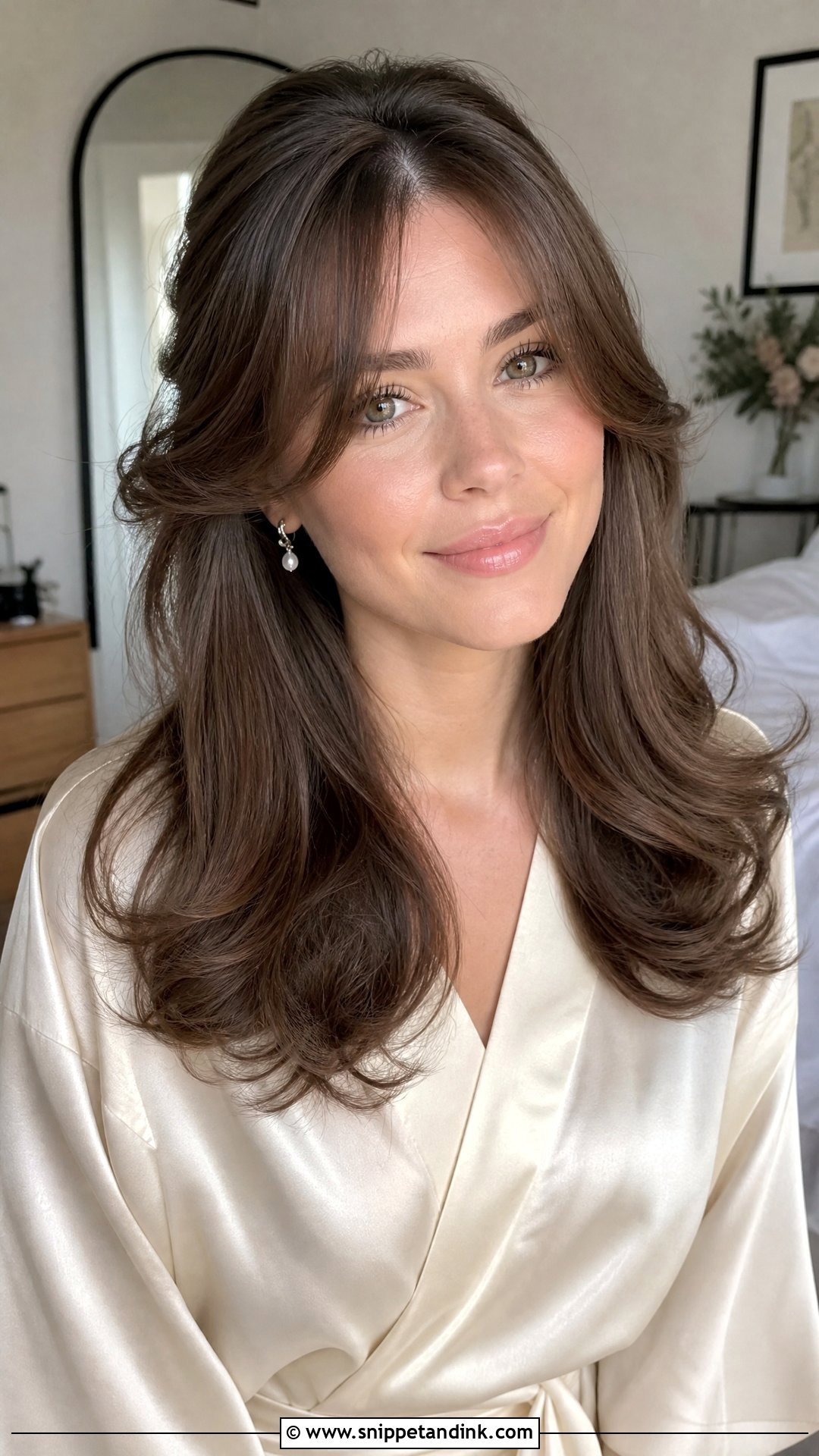
Soft curtain bangs are lovely in a wedding blowout, and they’re also the first thing to collapse. I blow them up and over at the root, set them in a single velcro roller and leave them until everything else is done, because a fringe released warm drops onto the lashes within the hour. Curved away from the eyes, they open the face rather than hiding it. If you trim them yourself, do it two to three weeks out; a fringe cut the week before usually sits too short and stiff.
3. Bouncy Blowout Wedding Hair With Side Part
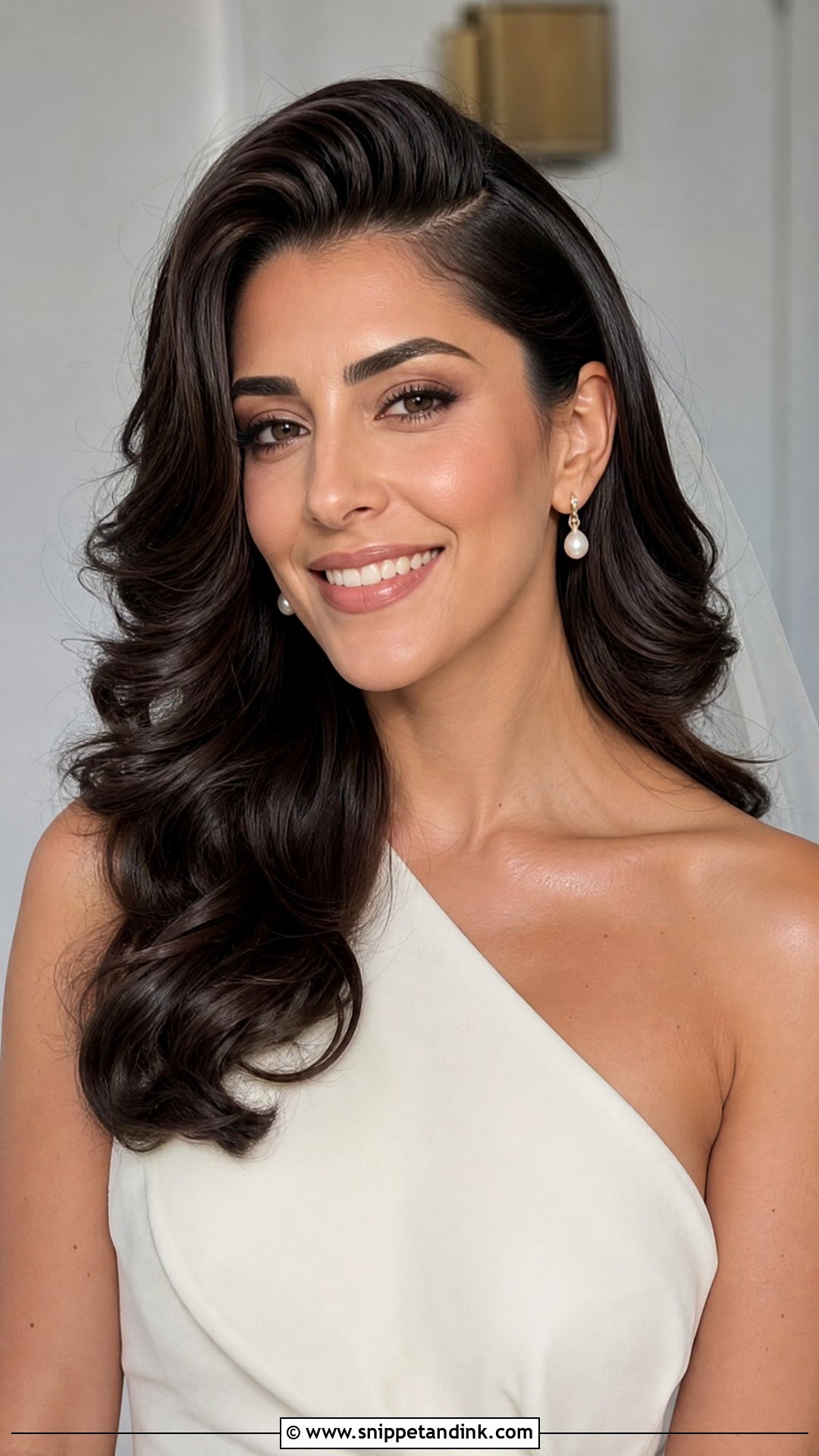
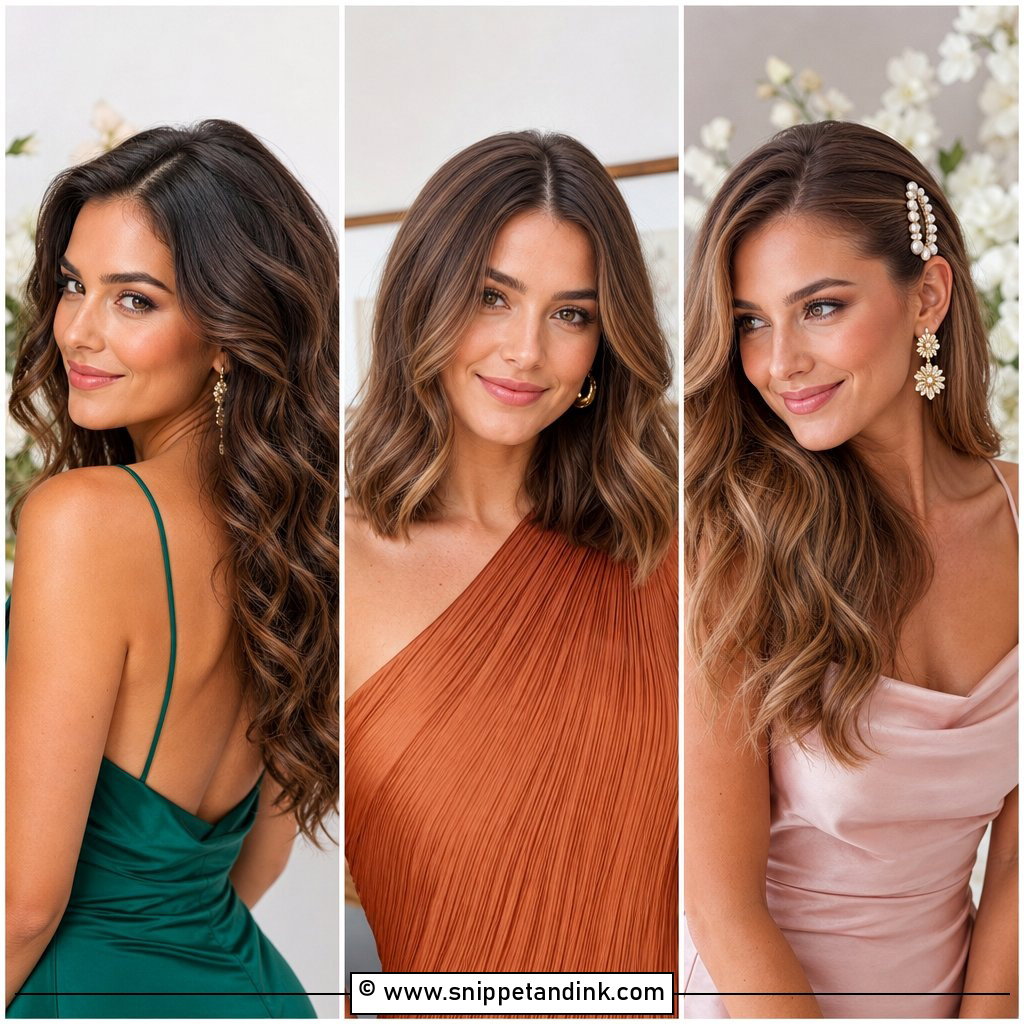
A side part is the quickest way I know to add glamour without adding complication. Flipping the part puts extra height on one side and a soft swoop across the front, so medium to long hair looks fuller in portraits. It sits best against one shoulder and off shoulder gowns, where the heavier side can fall toward the bare shoulder. At the trial I check which way your hair naturally wants to part, since fighting a strong cowlick all day usually ends with the swoop splitting by dinner. Tuck the lighter side behind the ear if you want your earrings seen.
4. Bouncy Blowout Wedding Hair With Middle Part
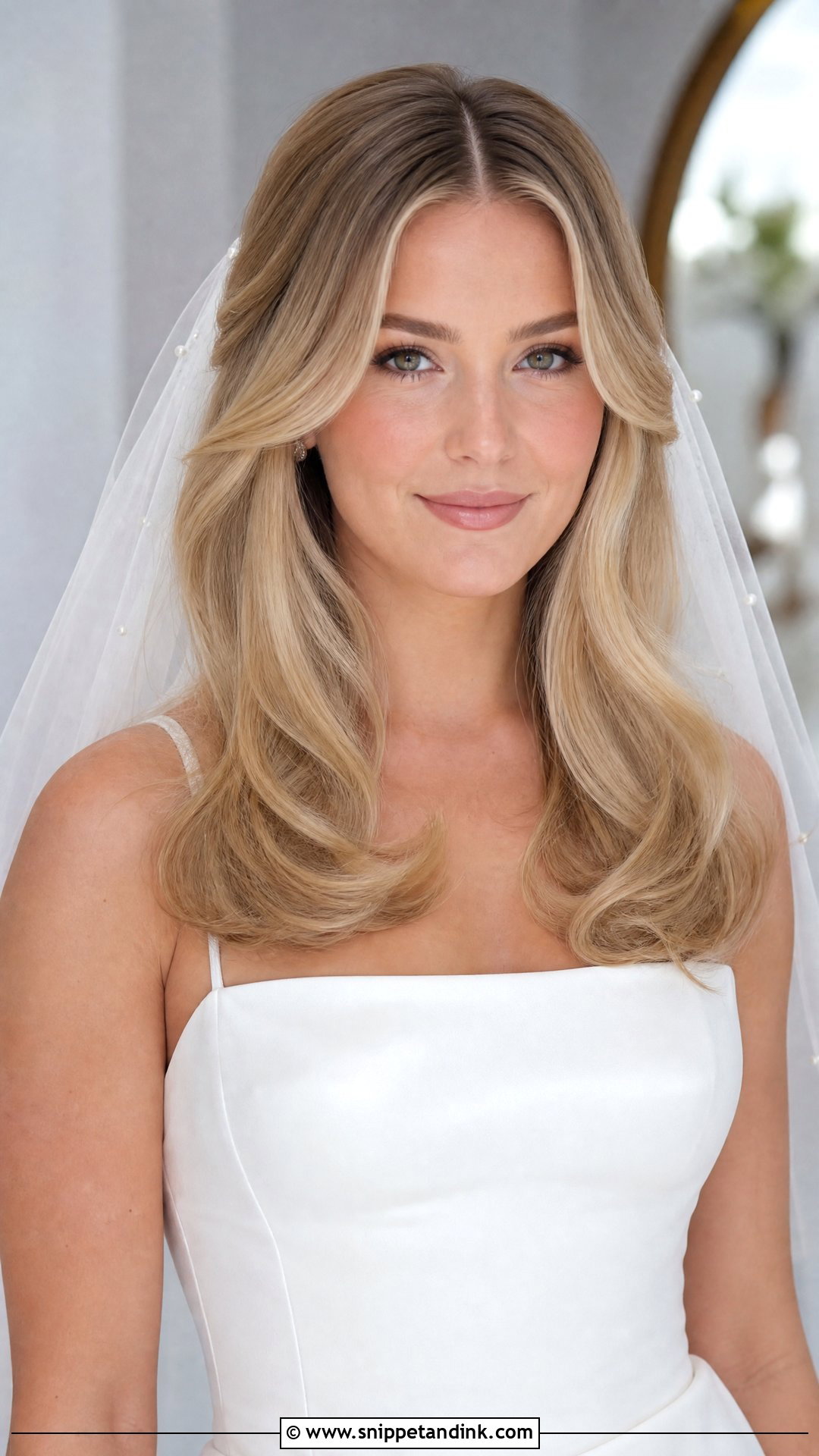
Middle parts are less forgiving than they look. With nothing to hide behind, any flat root or uneven curl on one side shows straight away in a front-on photo. I build hidden lift under the top layer, give the hair soft body through the mid-lengths, and curl both sides away from the face with the same barrel so the ends land at the same height. Done that way it reads modern and calm rather than formal.
5. Bouncy Blowout Wedding Hair With Long Layers
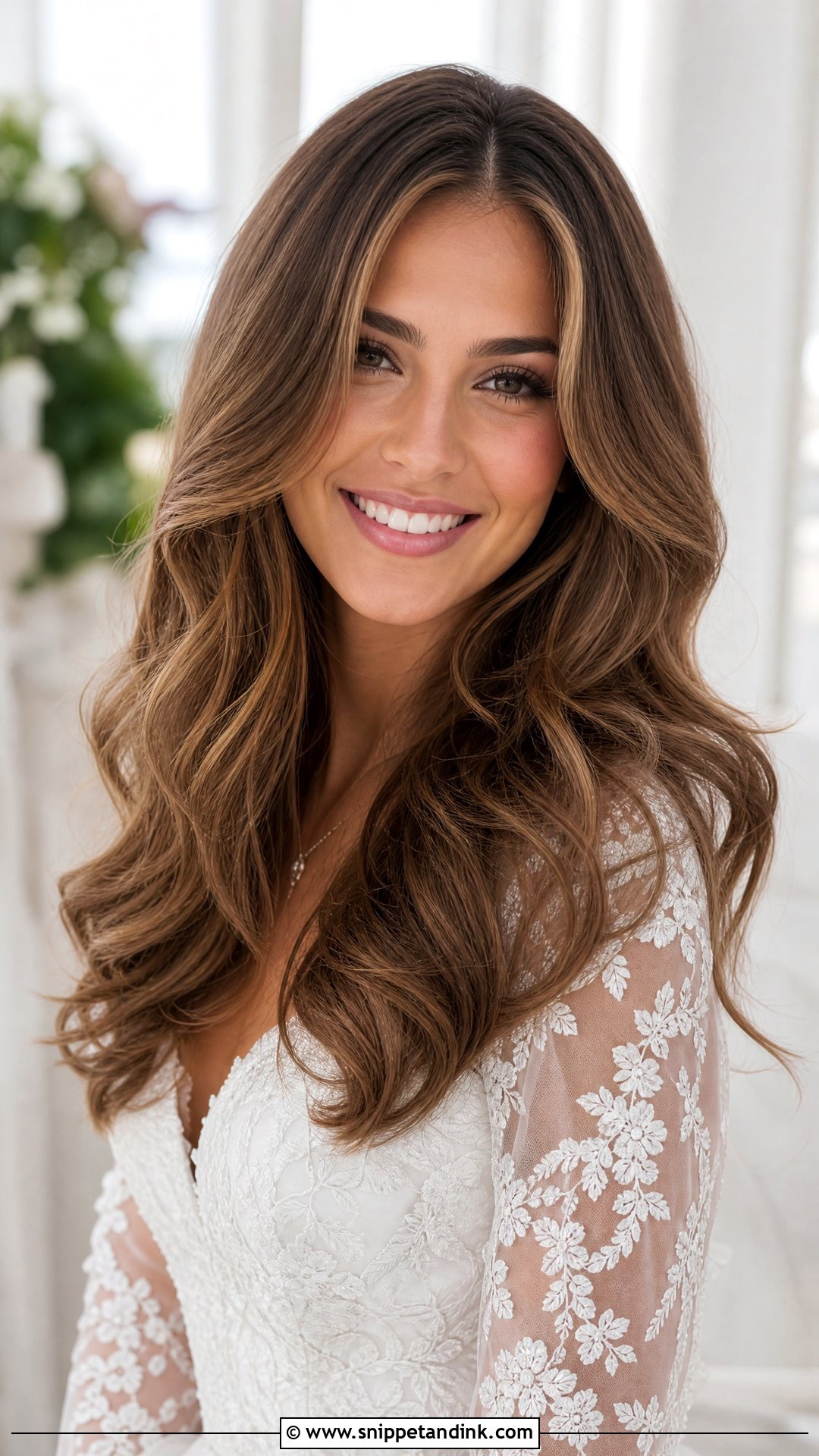
Long layers are the haircut that makes most of this list possible. The shortest pieces start around the chin or collarbone and the longest stay soft, so the hair moves without losing fullness. On thick hair they take out weight; on fine hair they add dimension, as long as the layering isn’t so aggressive that the ends turn wispy. I’d have the cut done four to six weeks before the wedding rather than the week of, so the layers have softened and grown into shape. On the day it’s large rollers after the blowout, then a gentle brush-out once they’re fully cool.
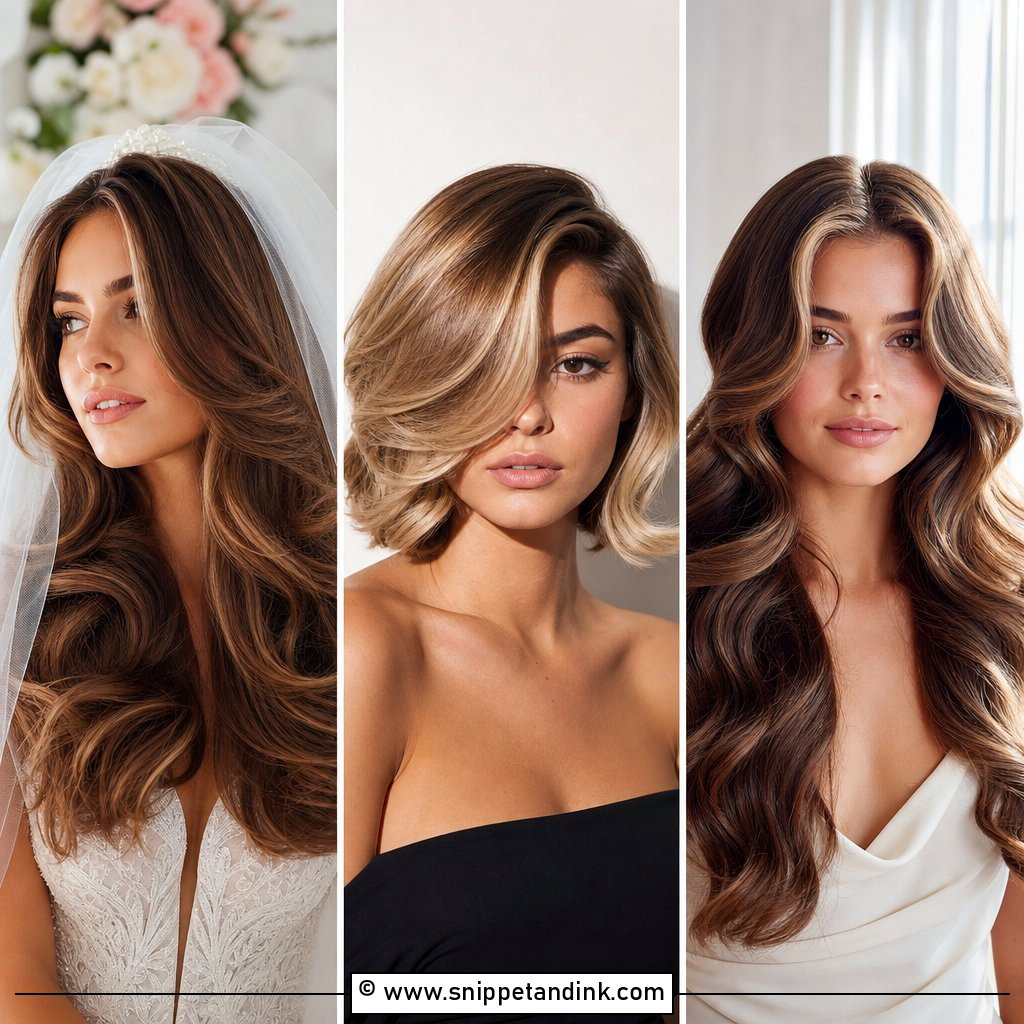
6. Bouncy Blowout Wedding Hair With Veil
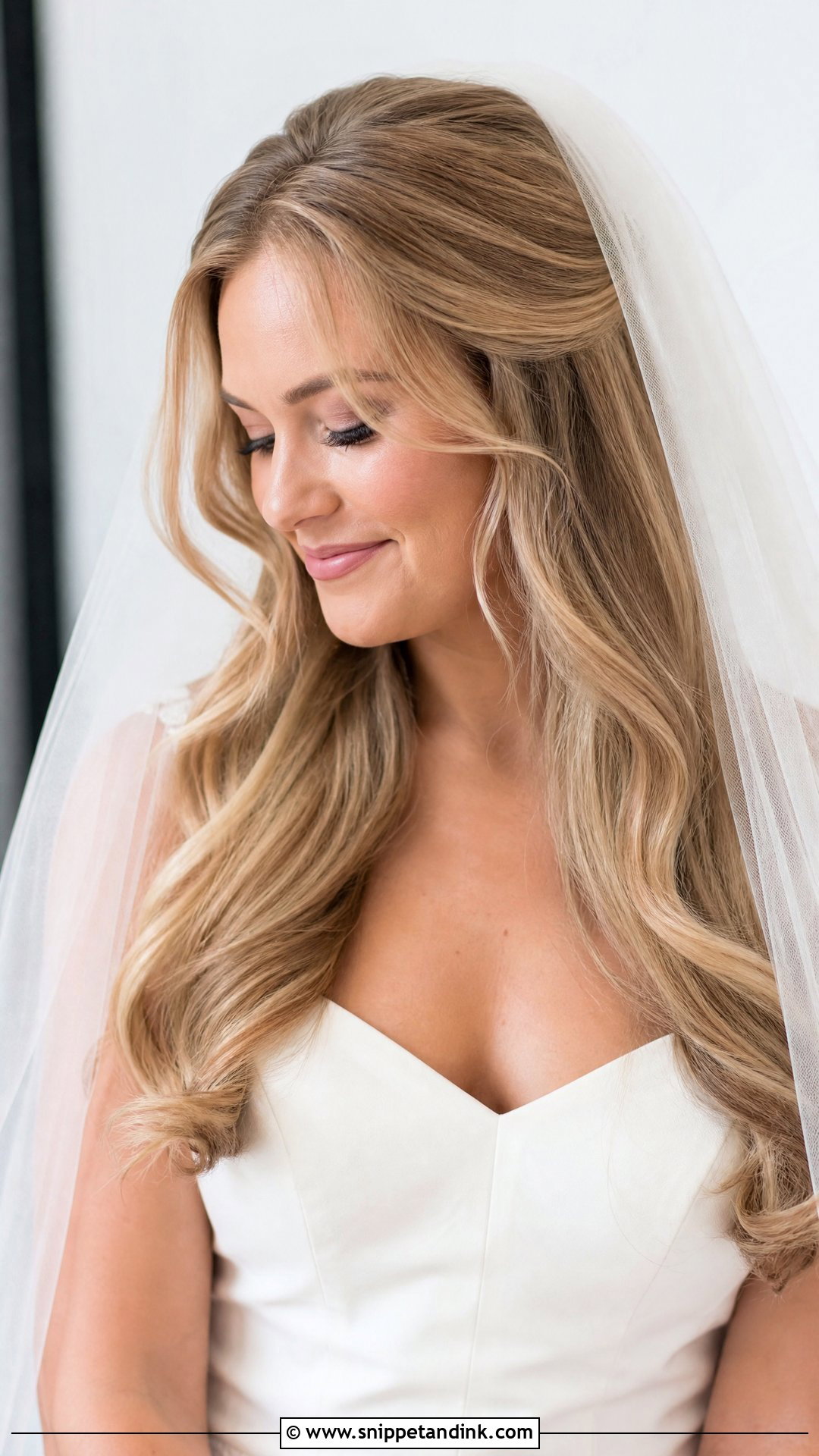
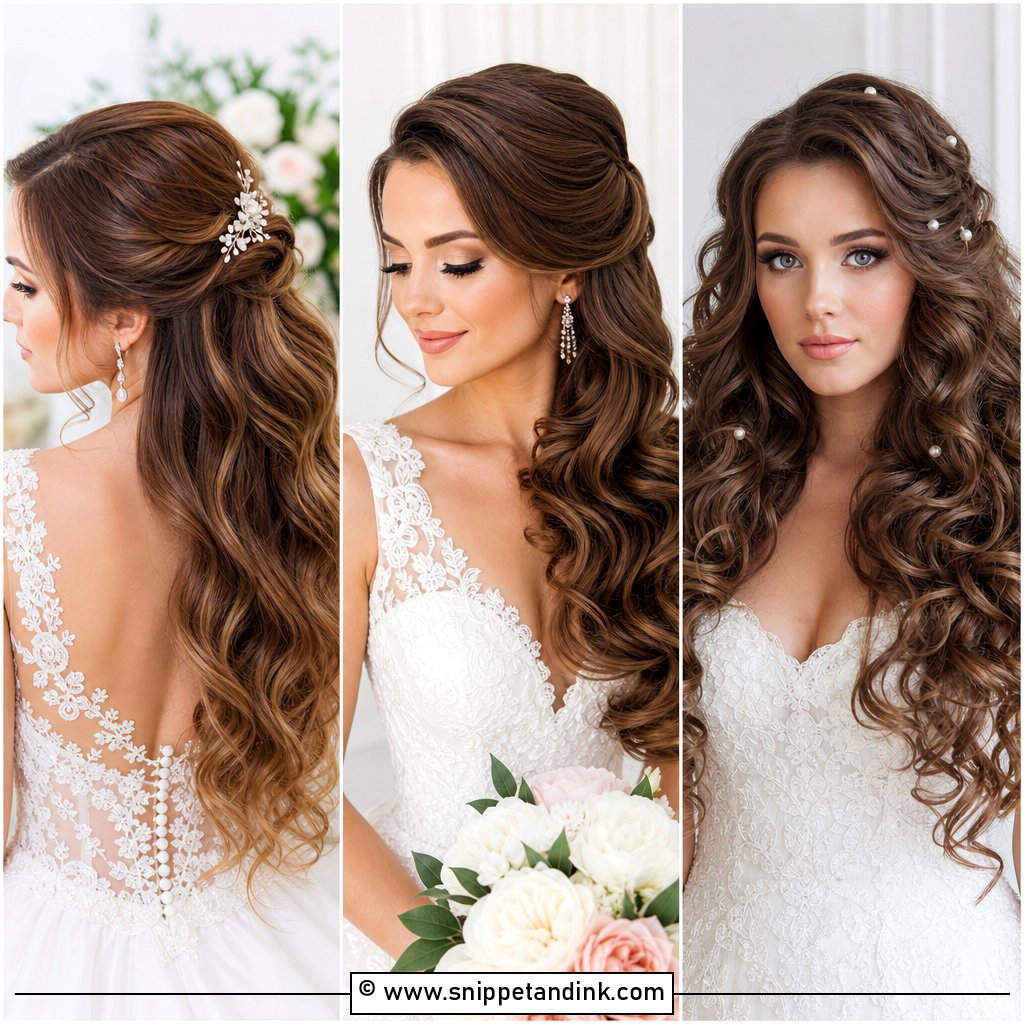
A veil and a blowout get along well, but only if someone has decided where the comb goes. Push it straight into the lifted crown and you flatten the volume you just paid for. I slide the comb in just below the height, or lower at the back, usually anchored over a pair of crossed bobby pins so the weight doesn’t drag. Rounded ends let the tulle fall over the hair without hiding the shape. Bring the actual veil to your trial: a cathedral length pulls far harder than a fingertip one, and we need to practise taking it out before the reception.
7. Bouncy Blowout Wedding Hair With Pearl Pins
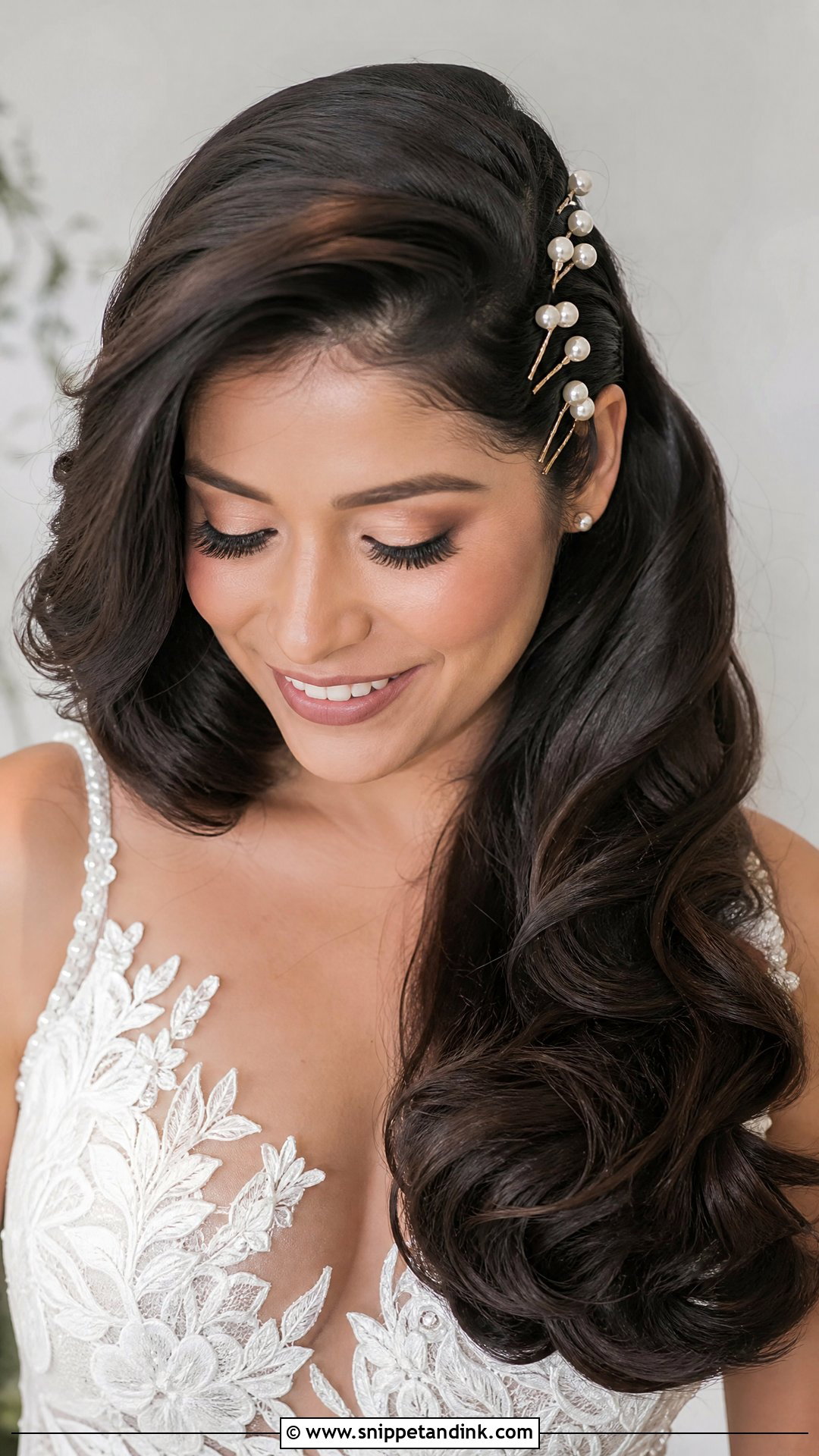
Pearl pins give a blowout a bridal finish without making it formal, and they’re also where brides most often overdo it. Five or six pins placed along one side or near the temple say more than twenty scattered through the back. I open each pin slightly and slide it in against the direction of the curl so it grips without pressing the movement flat. Smooth, glossy hair shows them off; on frizzy texture they get lost. Keep everything else plain.
8. Bouncy Blowout Wedding Hair With Hair Bow
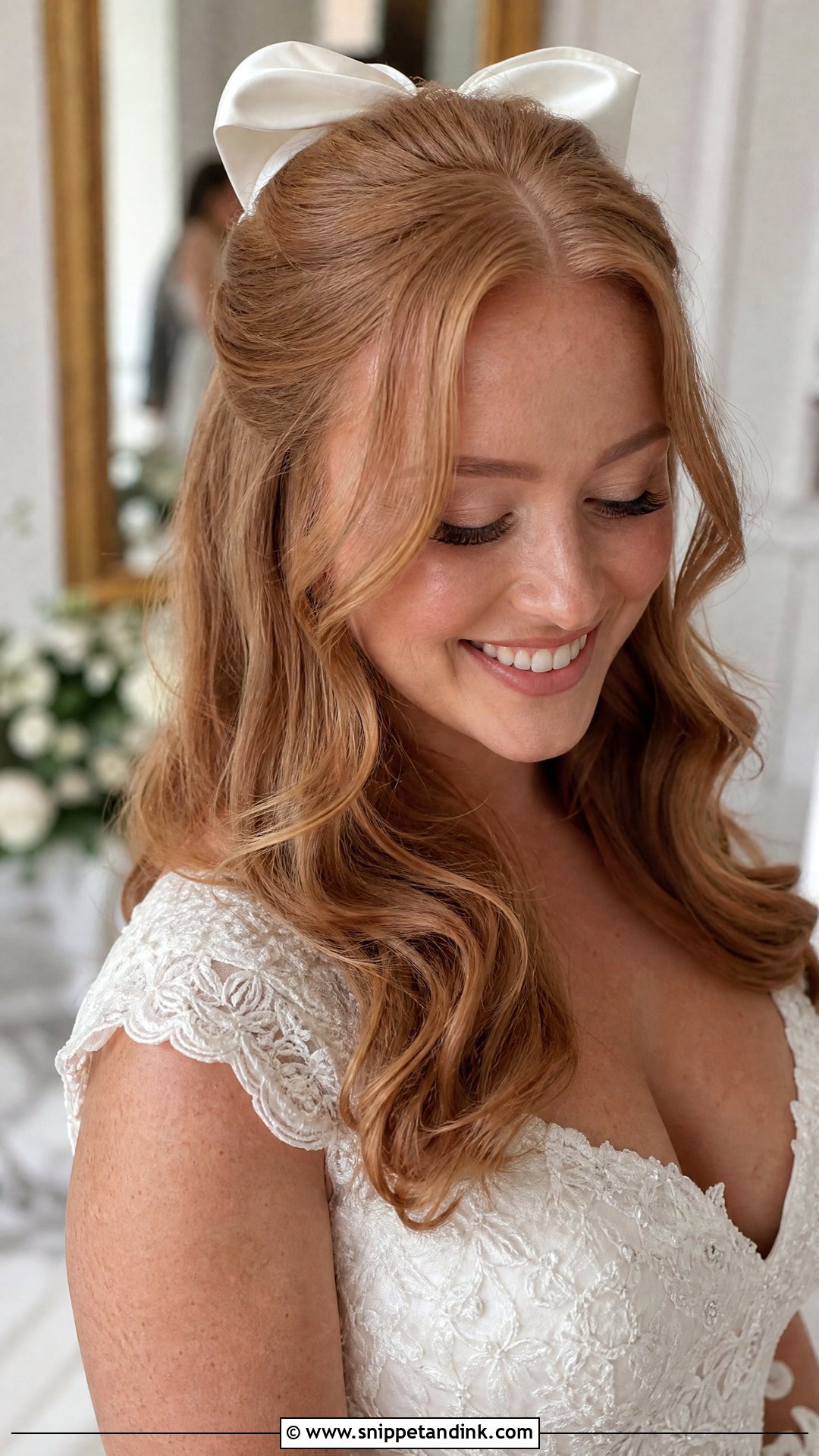
A bow brings a sweeter note to a bouncy wedding blowout than sparkle would. I secure a small half-back section with a clear elastic first and attach the bow over that, so the bow is decoration rather than the thing holding the hair up. Satin and silk read rich on camera; stiff organza can look homemade if the loops are oversized. Keep the top smooth, the sides full and the ends curled under so the bow has a balanced frame. If you’re also wearing a veil, try both together before committing, because they often compete for the same spot.
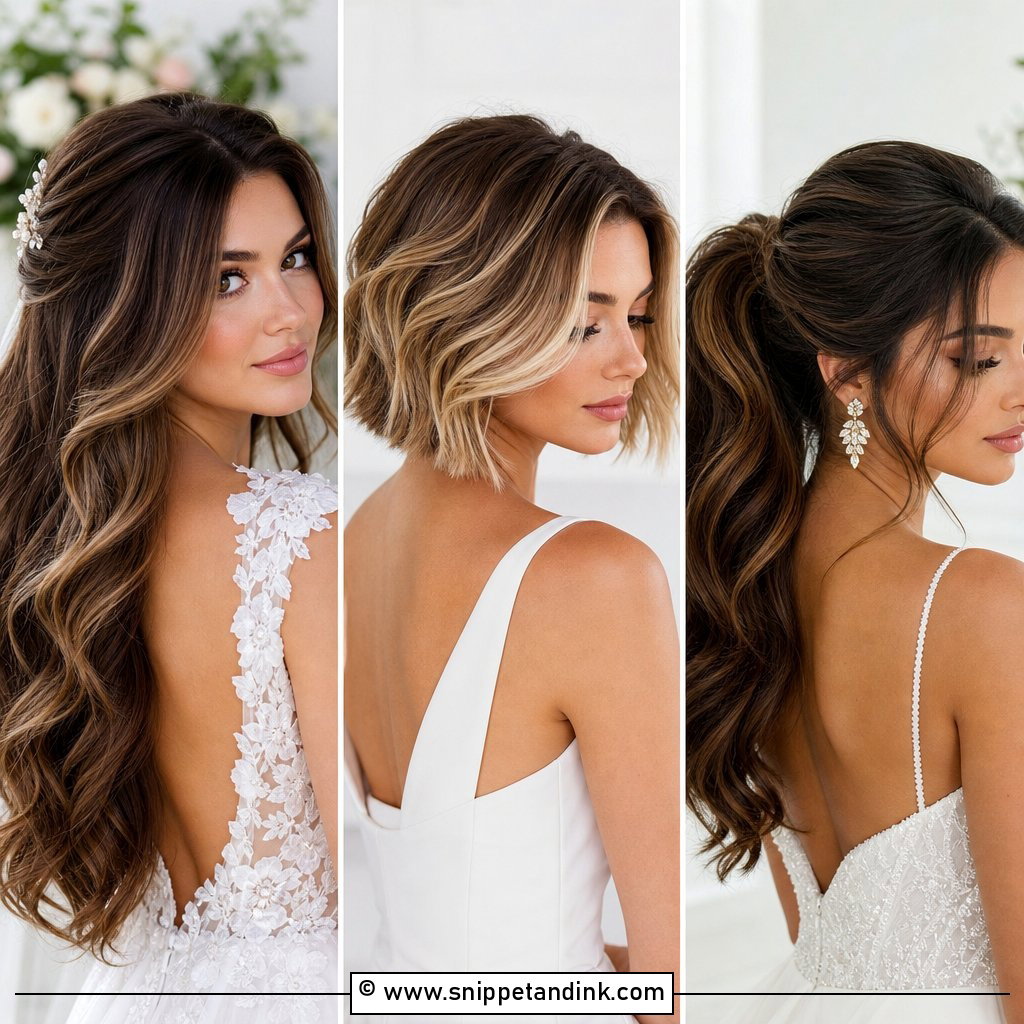
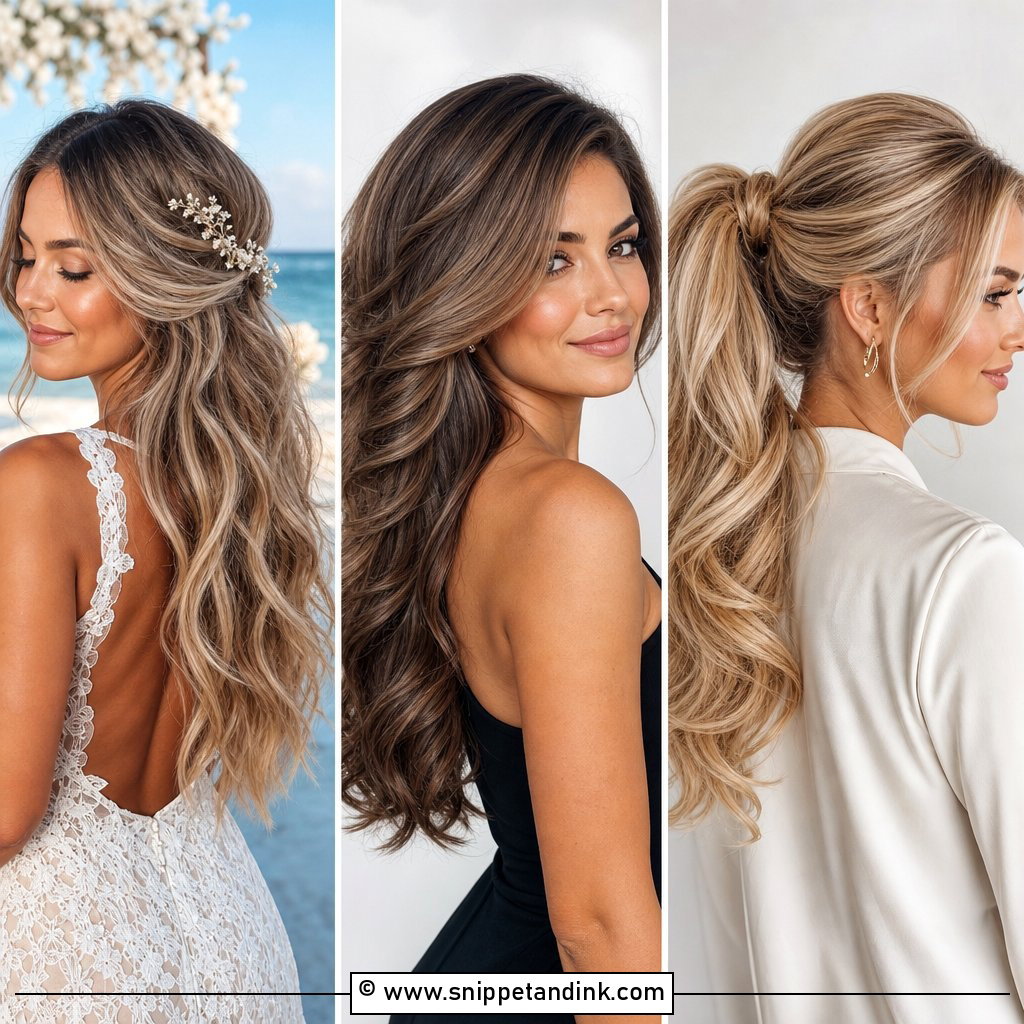
9. Bouncy Blowout Wedding Hair With Half Up Crown
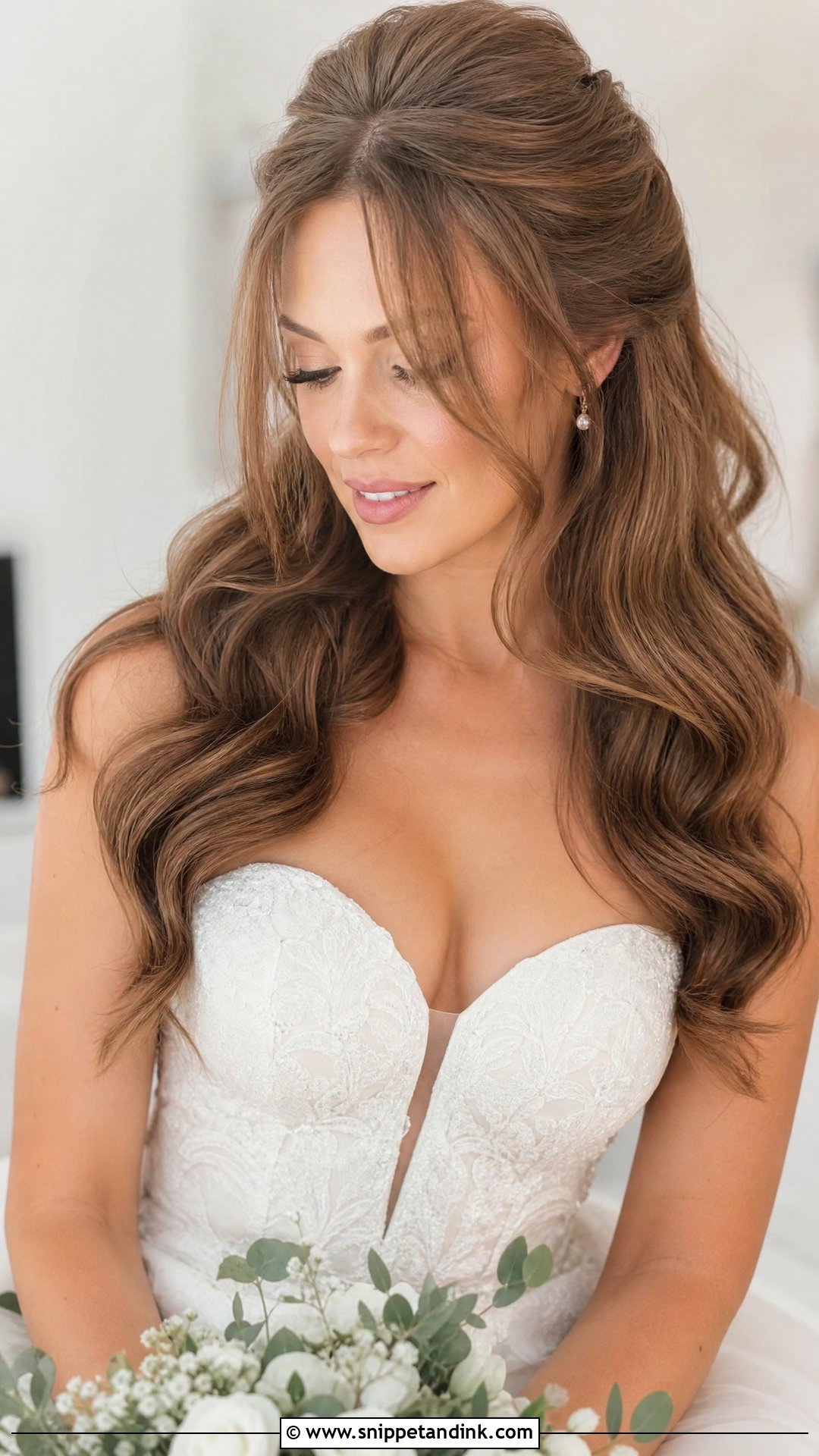
If you love the blowout but hate hair in your face while you eat and dance, the half up crown is the compromise I suggest most. I lift the top section, lightly backcomb underneath at the root, and pin it at the back with crossed pins so it can’t slide. That pinned section gives a veil comb or small accessories a solid base, something loose hair can’t offer. Leave a couple of front pieces out so it doesn’t look scraped back. In hot climates this one earns its place: less hair on the neck, more comfort through the evening.
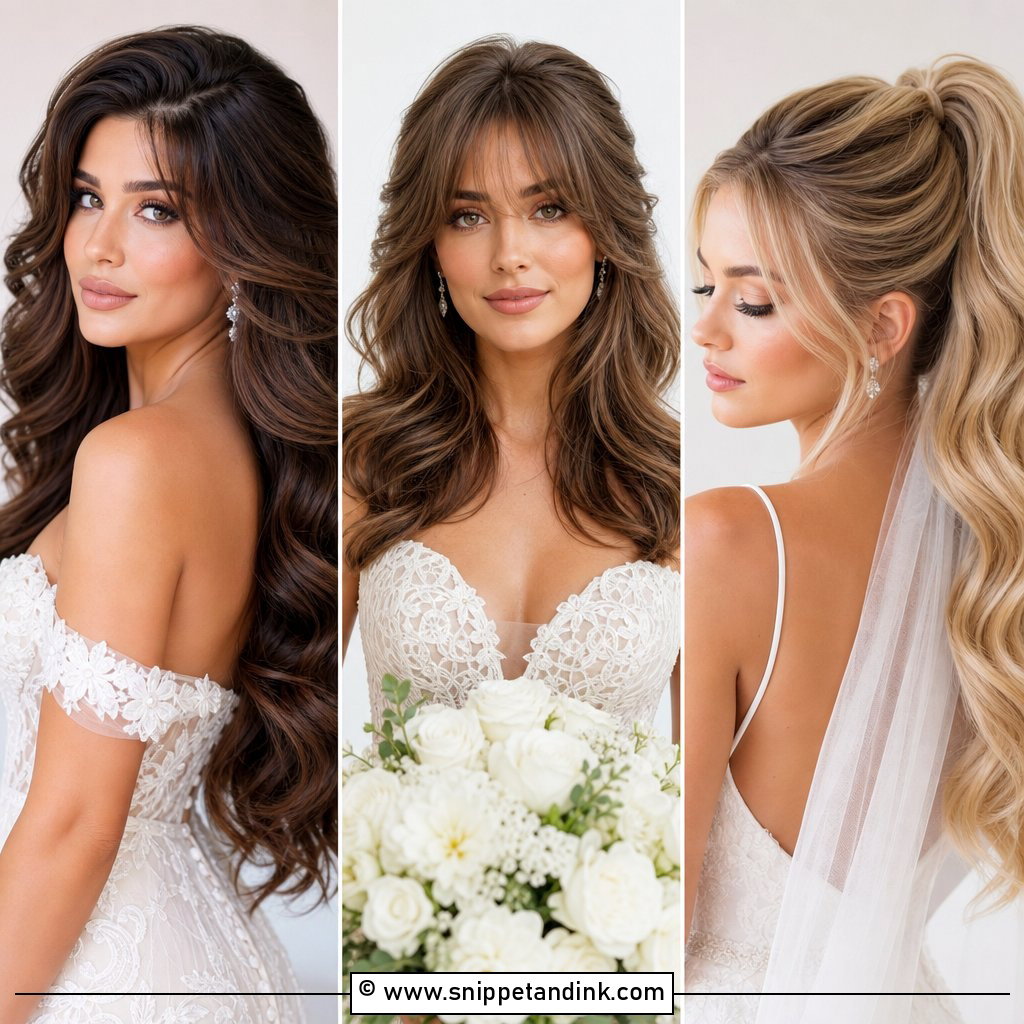
10. Bouncy Blowout Wedding Hair With Soft Waves
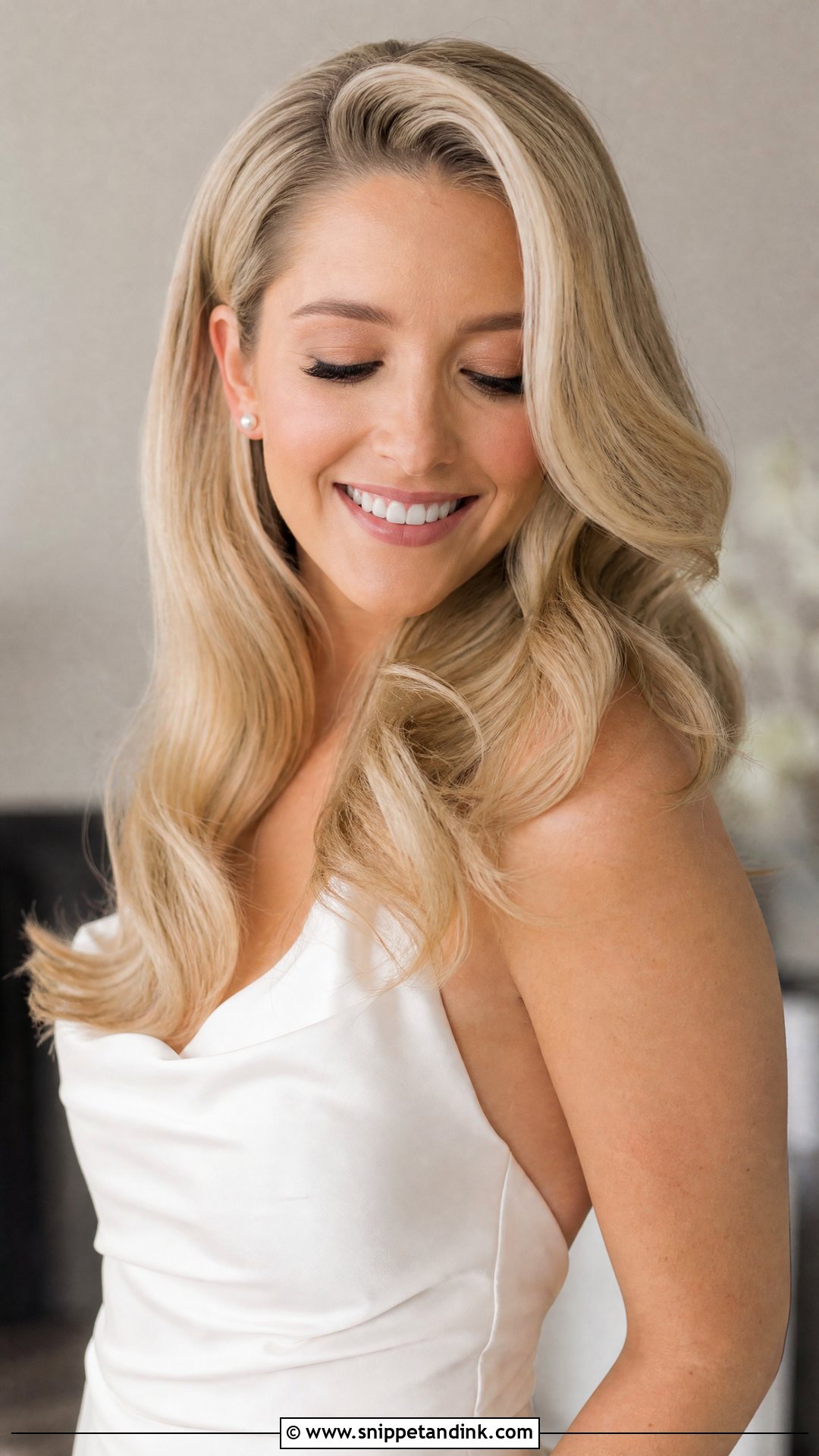
Soft waves are the relaxed end of the blowout family. I use a large barrel and let the bends run through the length, starting below the cheekbones so the roots stay smooth and lifted. The usual mistake is brushing them out too soon; waves that haven’t cooled fall into straight hair with kinked ends. A touch of shine spray on the ends and flexible hold through the layers is plenty. Satin and lace both suit it, which makes it an easy default if you’re undecided.
11. Bouncy Blowout Wedding Hair For Medium Length Hair
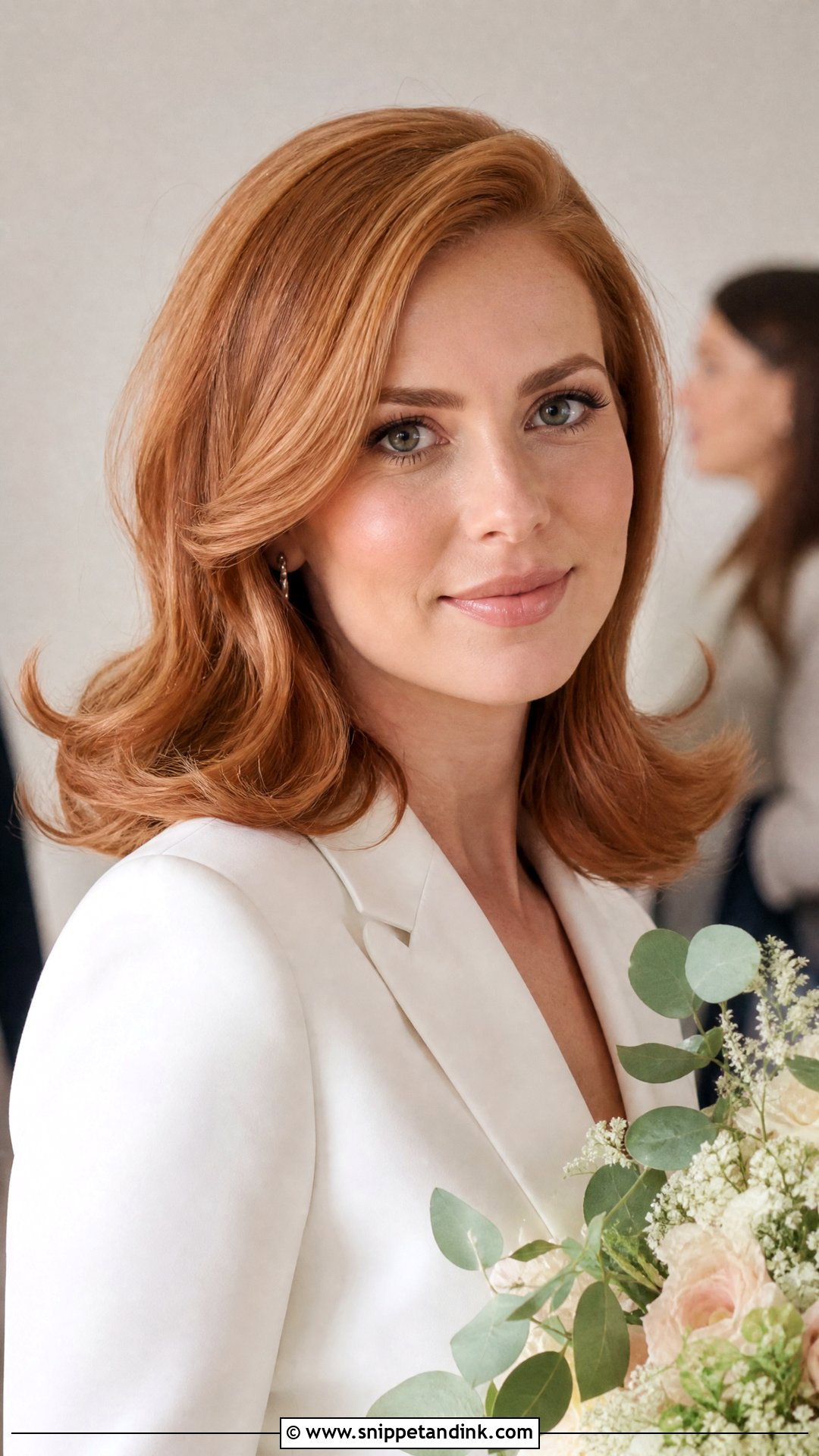
Medium-length hair is quietly the easiest length to blow out for a wedding. A collarbone or shoulder cut has less weight dragging on the curl, so the bounce set at nine in the morning is usually still there at the first dance. The one fight is the ends hitting the shoulders and flipping outward, so I roll the bottom section under with a slightly smaller brush. Add a side part or face framing pieces and keep the volume bridal rather than bulky.
12. Bouncy Blowout Wedding Hair For Long Hair
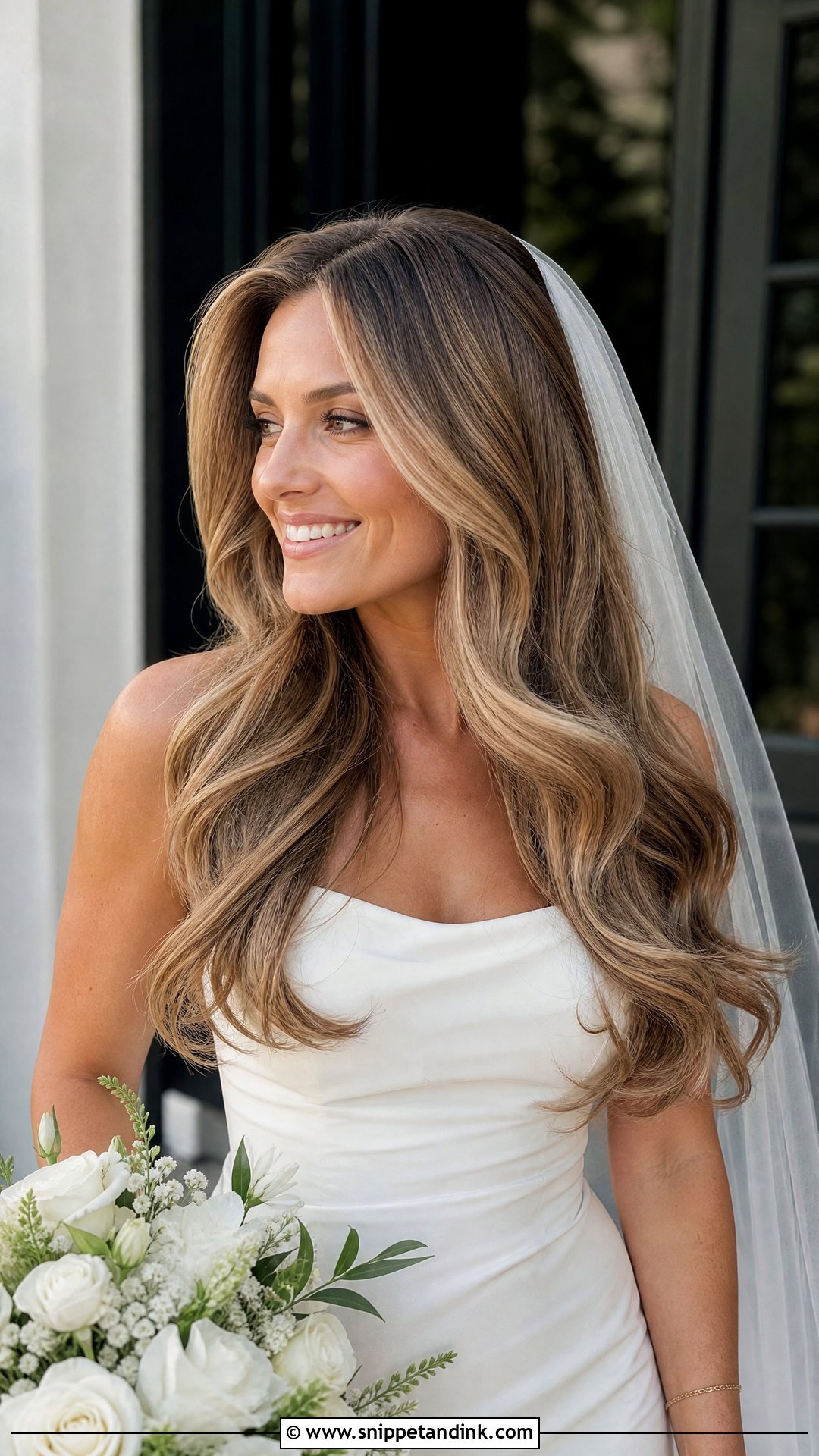
Long hair photographs dramatically in a blowout and drops the fastest, because the length itself is weight. My prep is stricter here: mousse at the root, a roller on every section and a full cooling period, timed to run while makeup is being done. Past bra-strap length, a few hidden pins at the back of the head help hold the shape through the evening. Once the rollers are out, I brush the curls into one smooth mass instead of leaving separated ringlets, which can look dated. A long veil or a fitted gown suits it well.
13. Bouncy Blowout Wedding Hair For Fine Hair
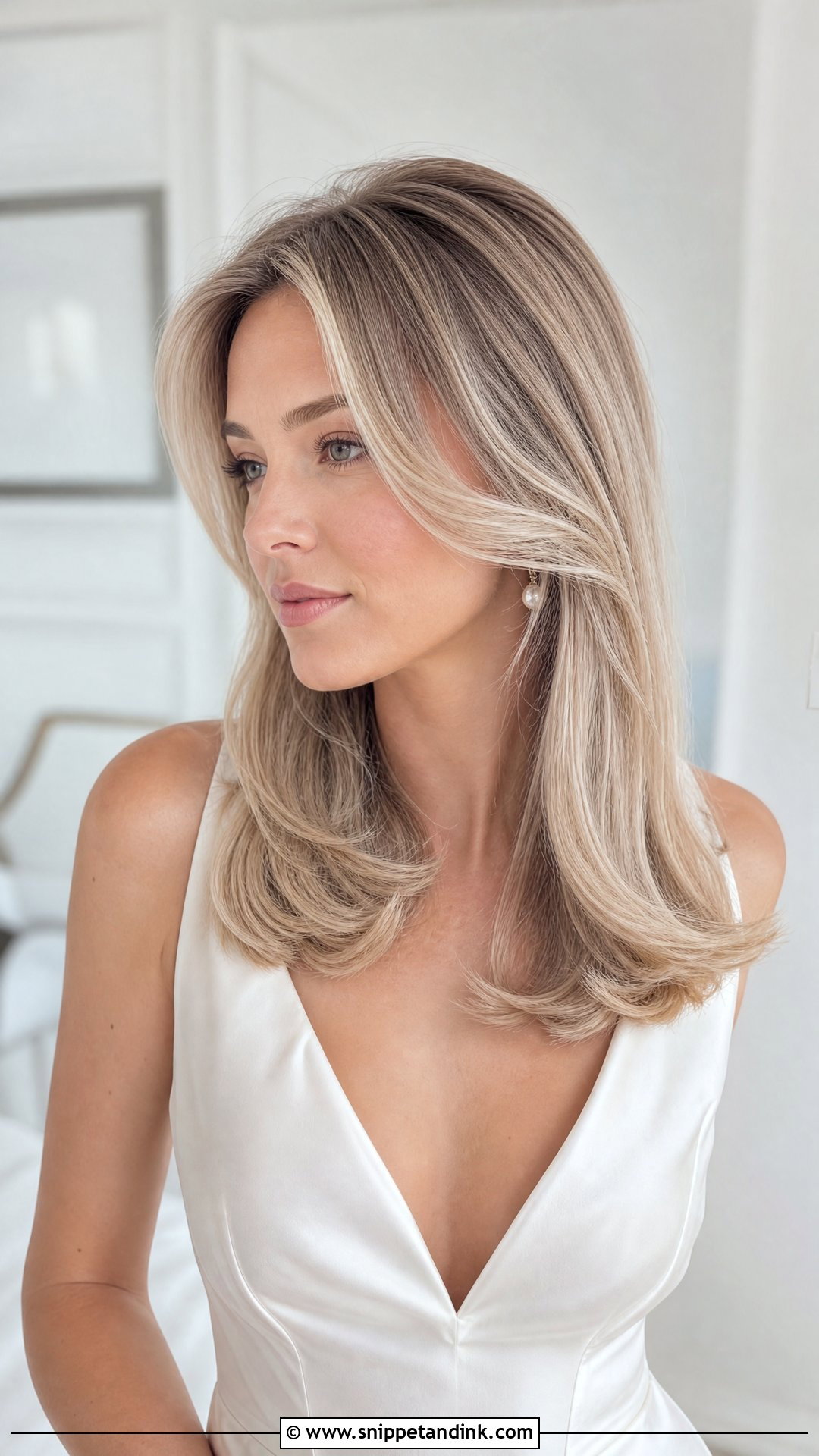
Fine hair can wear a full bouncy blowout; it just needs grip it doesn’t have naturally. I start with lightweight mousse at the roots and a blow-dry technique that lifts each section straight up off the scalp. Rich conditioner or oil on the morning is the quickest way to undo all of it. Layers help, but cut too short they leave the ends looking thin, so a blunt or softly layered perimeter is safer. A light texture spray misted on each section before it goes into the roller gives the curl something to hold.
14. Bouncy Blowout Wedding Hair For Thick Hair
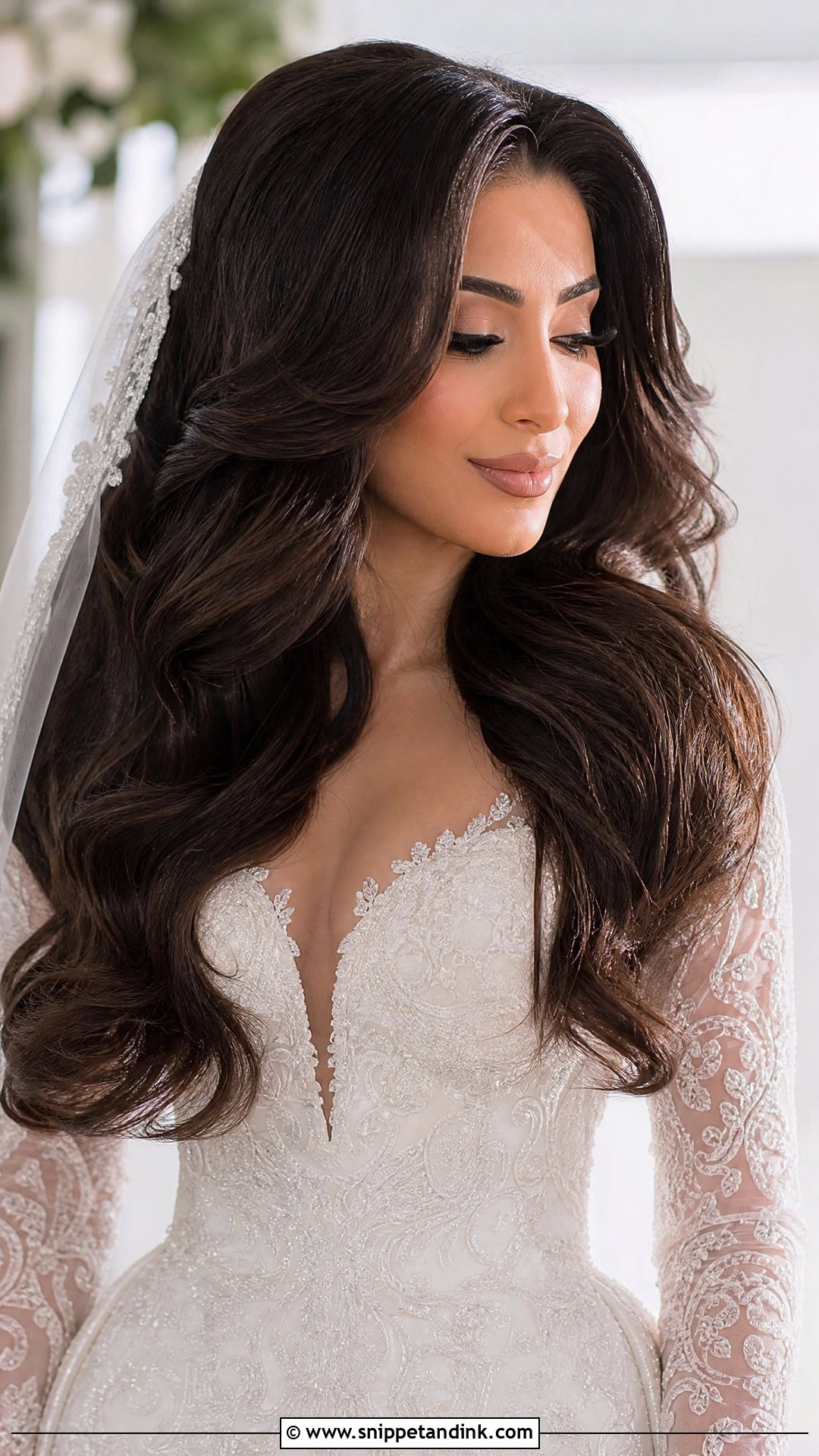
Thick hair holds a curl brilliantly. The risk is width, not flatness. I smooth the roots first and shape the ends with a large round brush so the volume falls down and forward rather than out to the sides in a triangle. Drying takes much longer than brides expect, and any dampness left at the nape will frizz later, so allow extra time in the schedule. For outdoor weddings, an anti-frizz cream through the mid-lengths before drying is worth it.
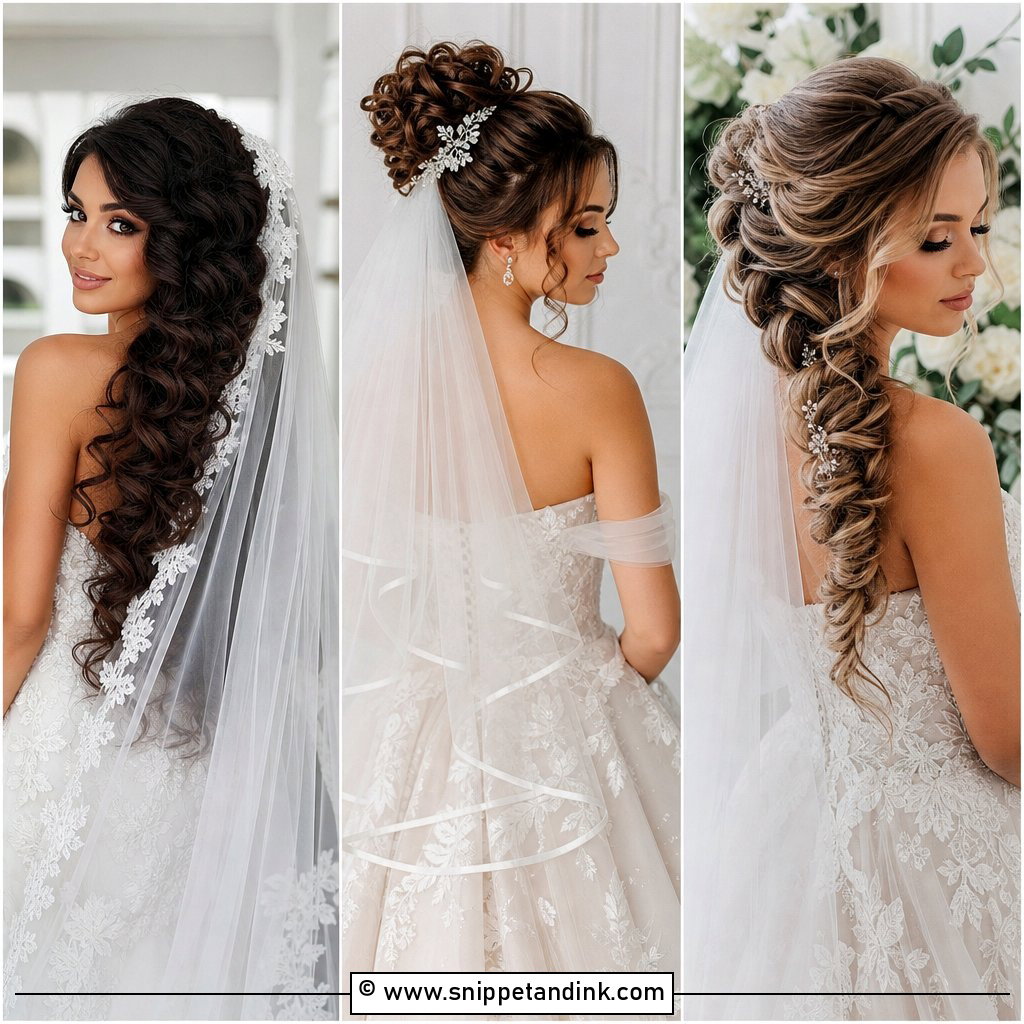
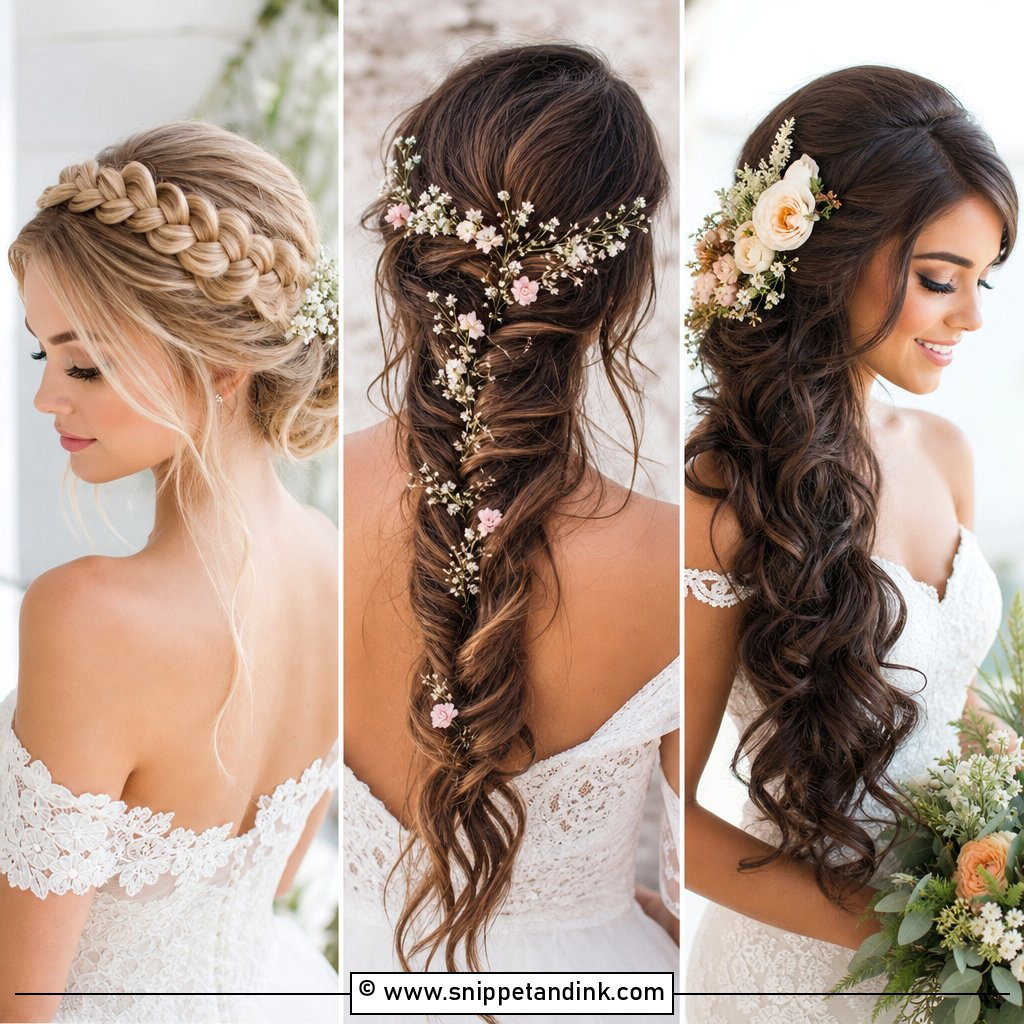
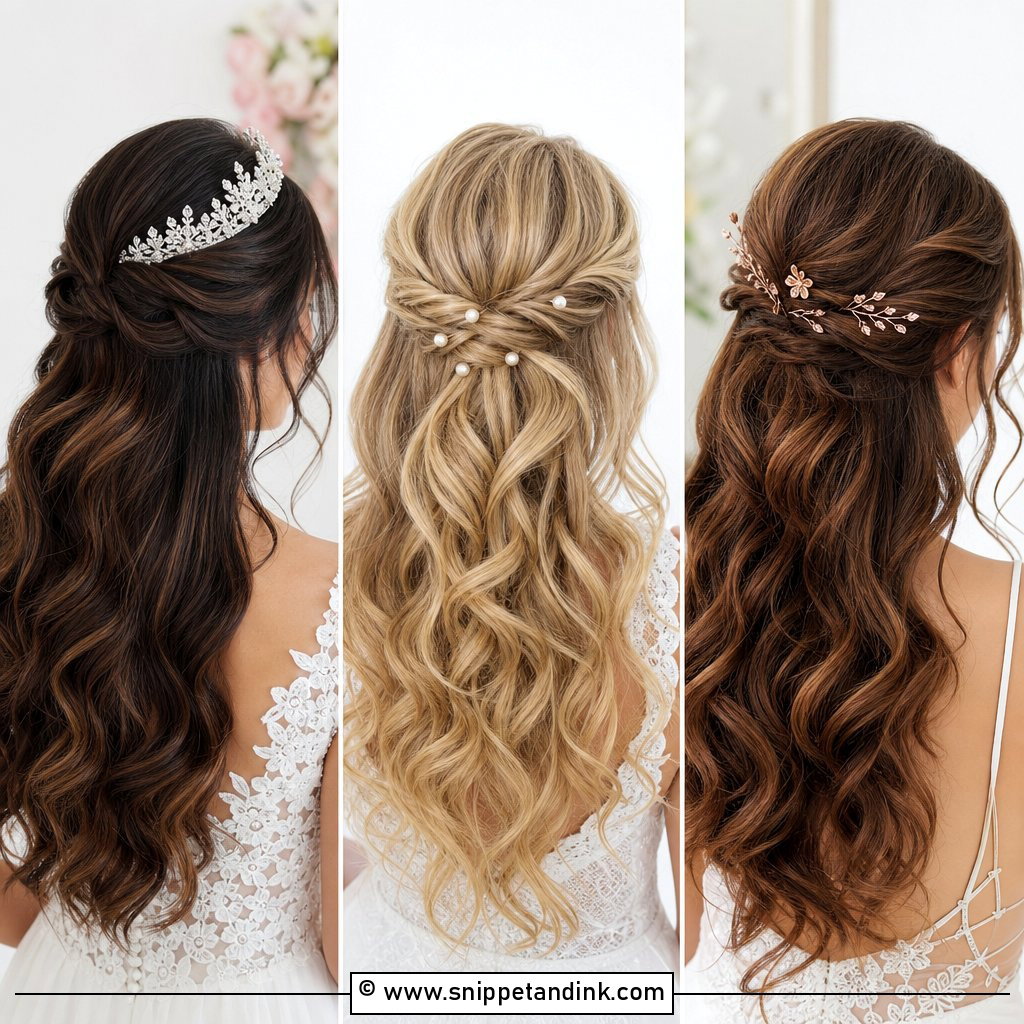
15. Bouncy Blowout Wedding Hair With Hollywood Volume
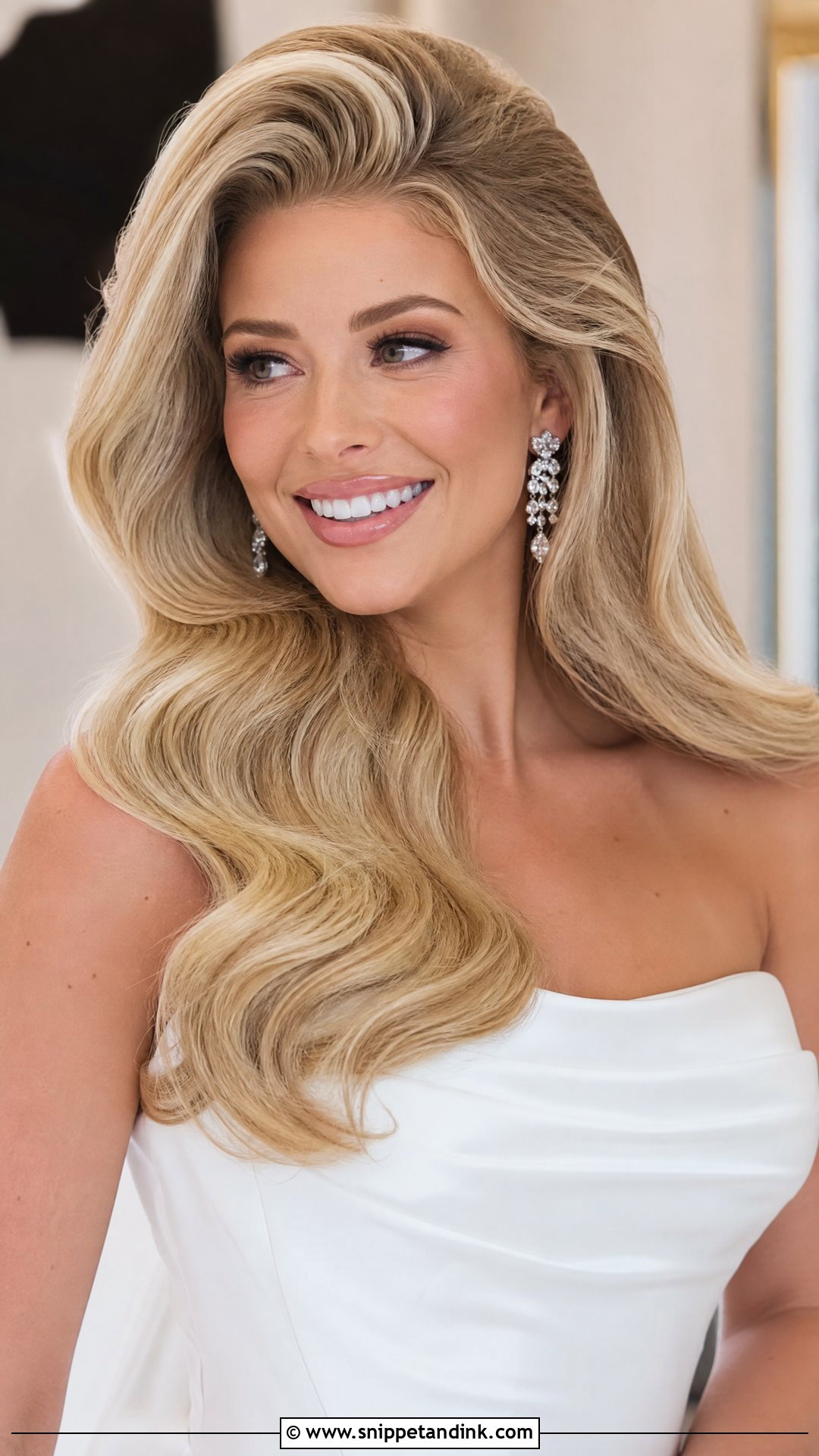
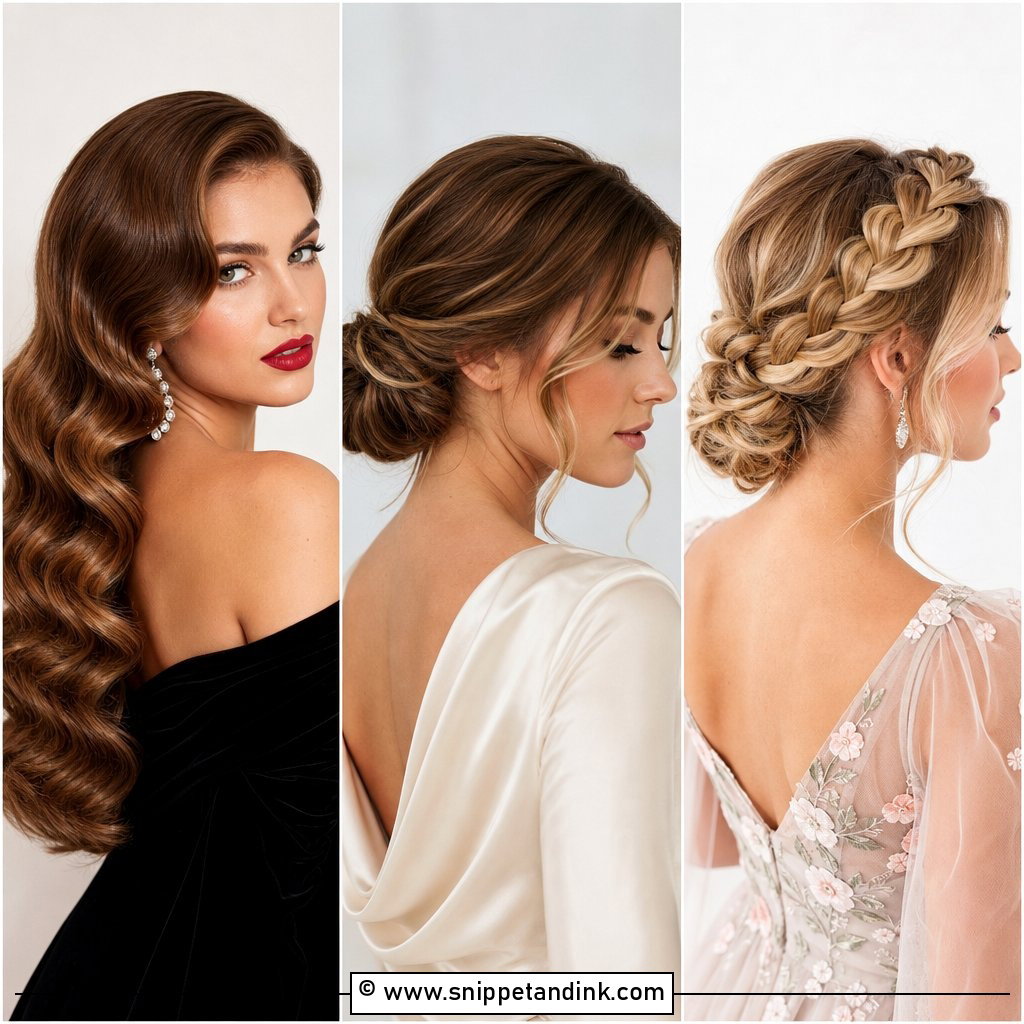
Hollywood volume is the most glamorous version on this list: lifted roots, a glassy surface and big rounded waves around the face. It’s softer than true finger-set waves, which is why I reach for it when a bride asks for drama but is scared of looking costumed. A deep side part pushes it further and pairs well with statement earrings and a clean gown. Shine matters more than size here, so I’d rather do slightly less height and keep the surface smooth. Wind flattens this style fast, so a rooftop or clifftop ceremony needs a pinned back-up plan.
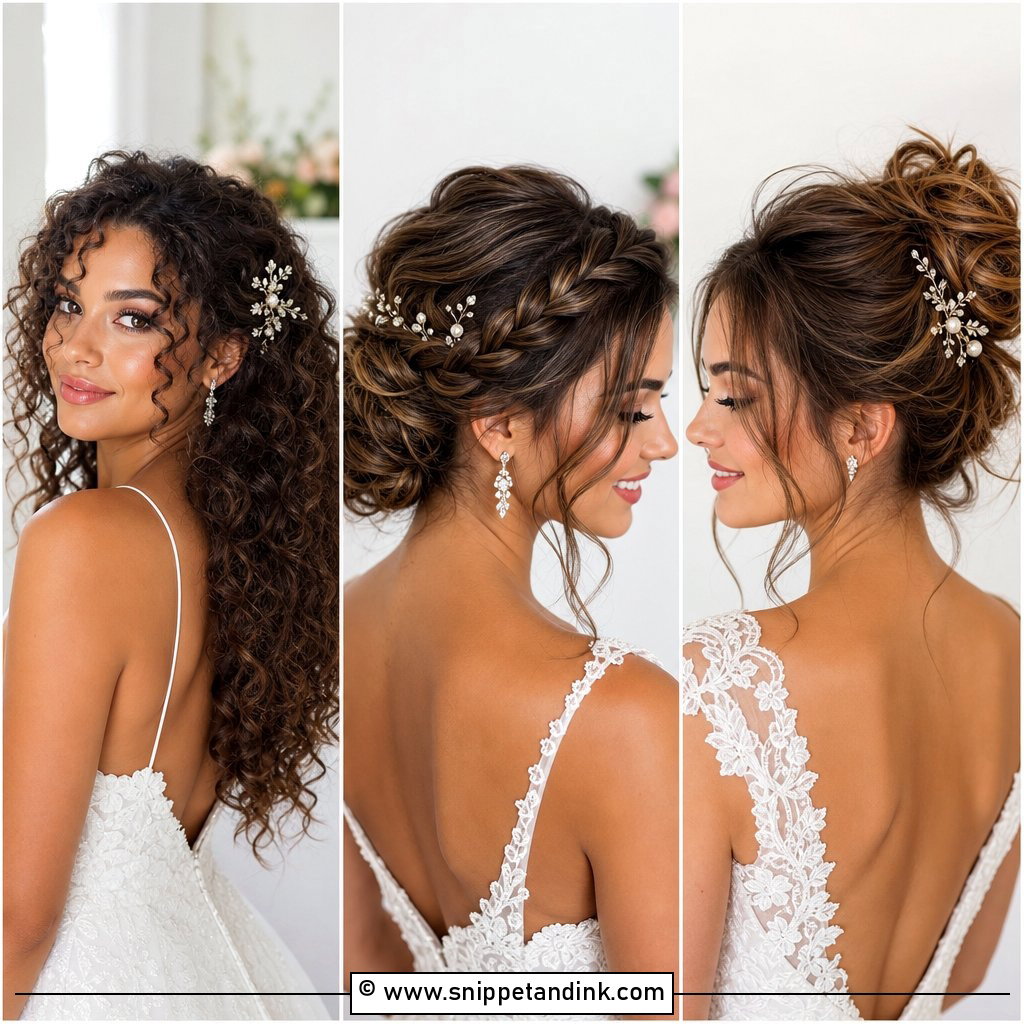
Rain, Wind and Curly Hair That Wants to Revert
Every blowout relaxes over the day, and a slightly softer shape often photographs better at the reception than the tight morning version. Limp roots and fuzzy ends by the speeches are a different matter, and moisture is nearly always the cause.
Naturally curly or wavy hair
Curls that have been blown smooth will try to go back to their natural pattern the moment the air turns damp. I’ll often set a slightly tighter curl than you want, knowing it will open up, and seal the cuticle with an anti-humidity spray. For a summer beach or lakeside wedding, we practise a low pinned side sweep at the trial so there’s a plan if the weather turns.
What a bridesmaid should carry
- Two or three velcro rollers to put into the crown during dinner
- A travel-size dry shampoo or texture spray for root lift
- A small round brush and bobby pins matched to your hair colour
- Blotting papers, since a shiny forehead and a frizzy fringe tend to arrive together
Ten minutes in rollers between portraits and the reception entrance brings back most of the morning’s volume.
What Your Trial Should Settle Before the Morning
Brides who rule out an updo because it feels stiff are often happiest in a blowout, since it gives polish and movement in one look. Every hair type above can wear one, with a veil, a bow or pearls. Whether it holds is decided weeks earlier, by your neckline, the forecast, your texture and how much hold you really need. Use the trial to settle the volume and curl size, and ask for photos from the side and back before you leave the chair.
You'll Like These Ideas:


Leave a Reply