
Hair flowers are the smallest order I make for an Indian wedding and often the one that gets the most attention, because they sit right next to the bride’s face for hours. Jasmine gajra, marigolds, roses and newer choices like hydrangea all carry color and meaning, but they behave very differently once they are cut, wired and pinned into warm hair. A North Indian low bun and the ornate poolajada braid of a South Indian bride need different flowers too. Here are twenty I work with, with notes on how each one lasts, smells and photographs.
Hardy Blooms and Fragile Ones, Sorted by Stamina
Once a flower is cut, wired and pinned into warm hair, it has no water at all. Some handle that for a whole day; others start to droop before the first ritual ends. This is roughly how the flowers in this list behave in my experience:
- Hardy all day: marigold, chrysanthemum, carnation, orchid, kanakambaram and baby’s breath.
- Good for most of a day if sent as buds: jasmine, tuberose, rose and daisy.
- Fragile, best for a short event or added late: hydrangea, gardenia, frangipani, open lilies and lotus.
Heat and sun speed everything up, so an outdoor afternoon ceremony shifts each flower down a group. If your favorite is in the fragile group, plan to wear it for the portraits and swap to something hardier for the hours that follow.
1. Jasmine Flowers for Bridal Bun
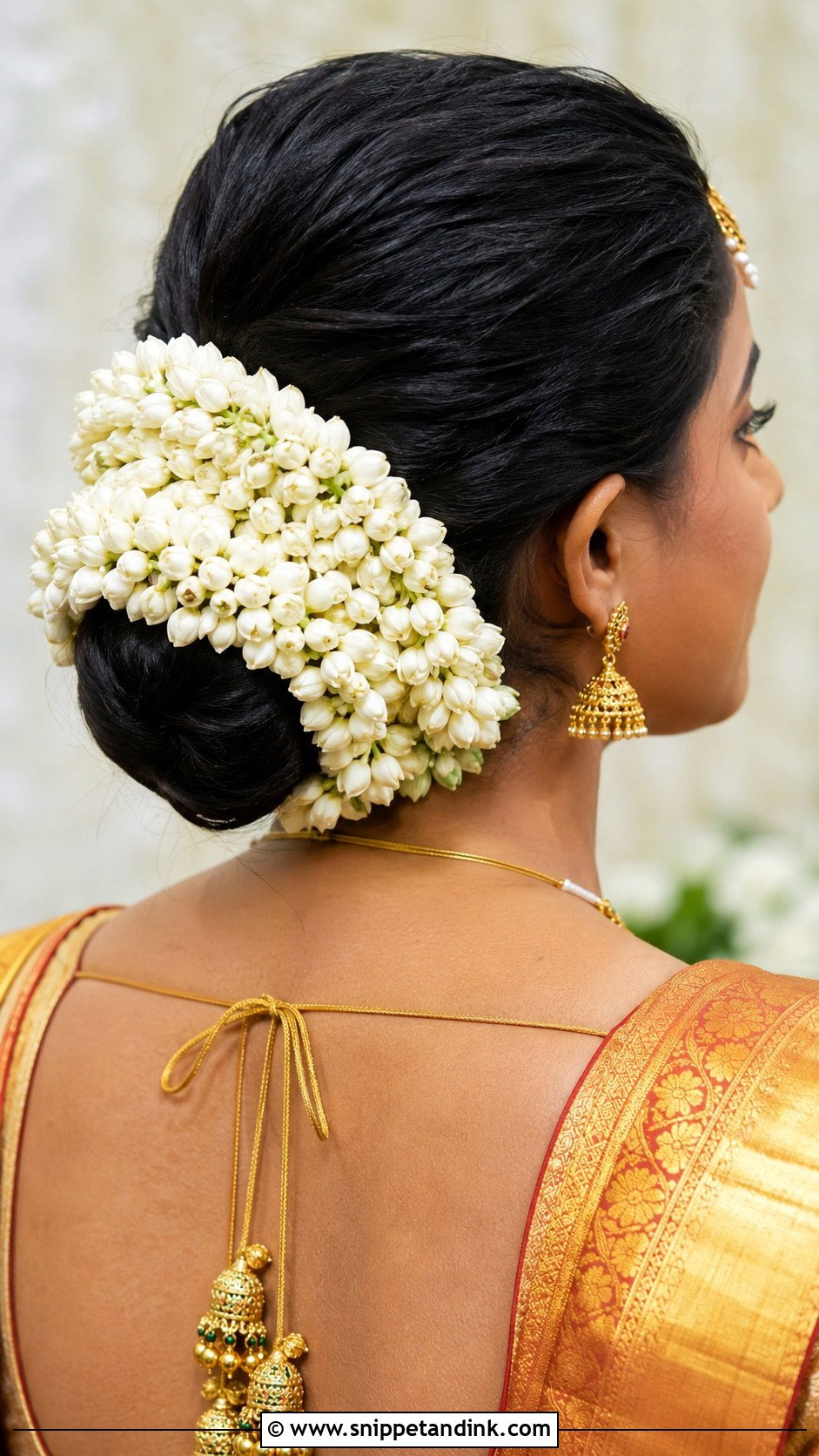
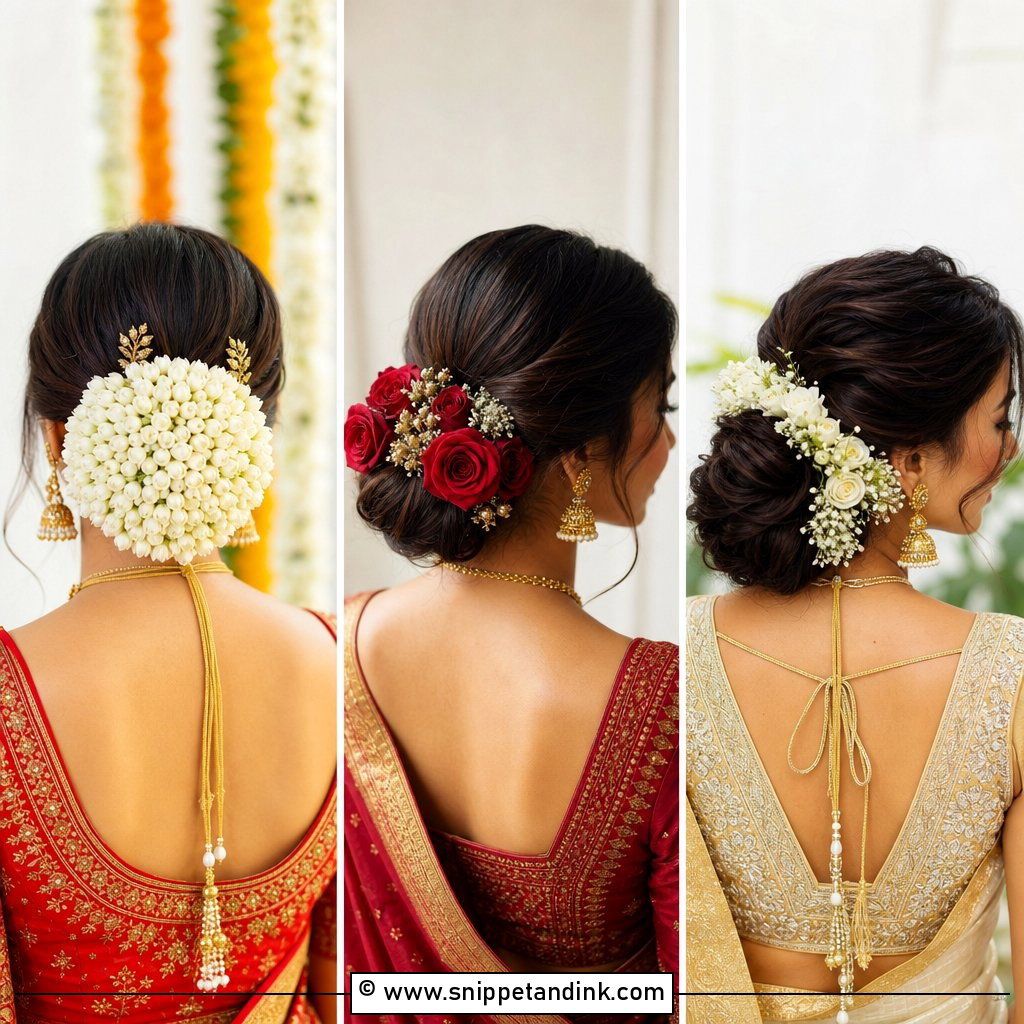
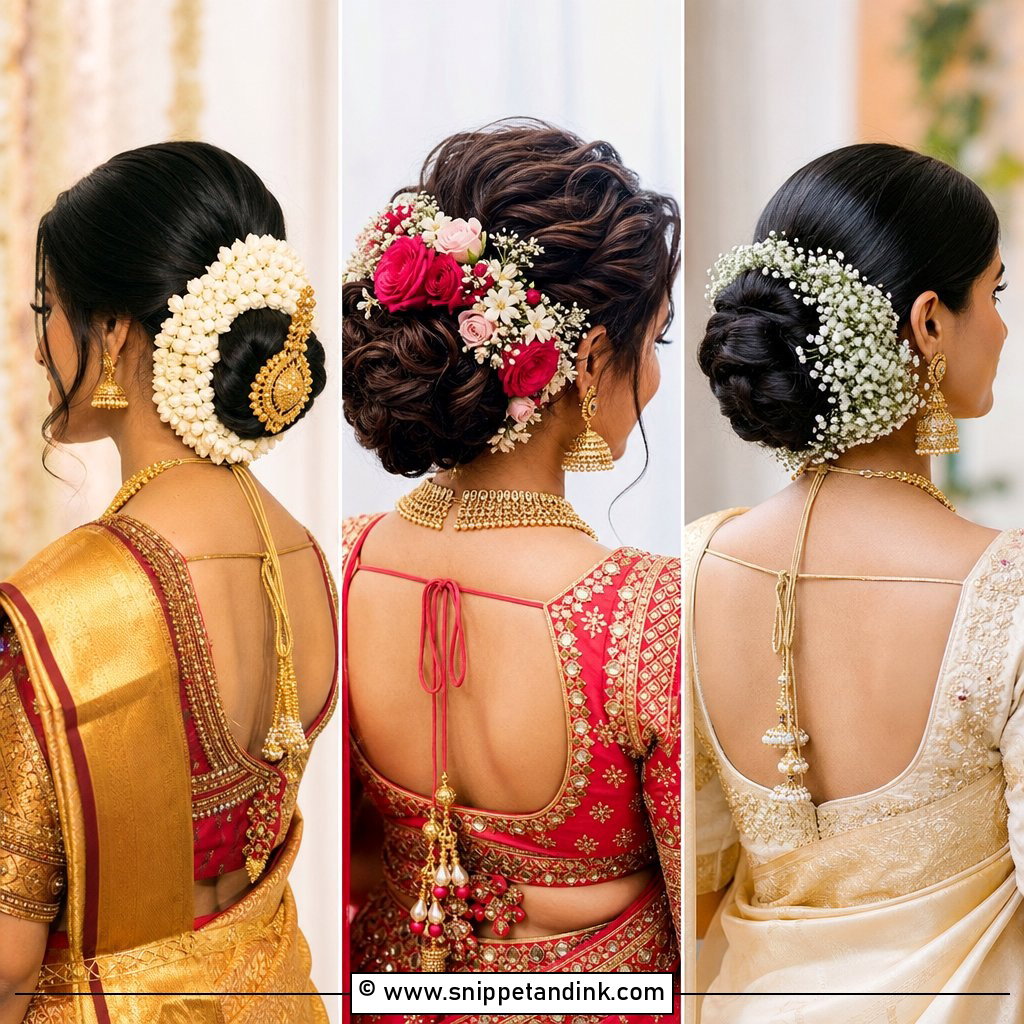
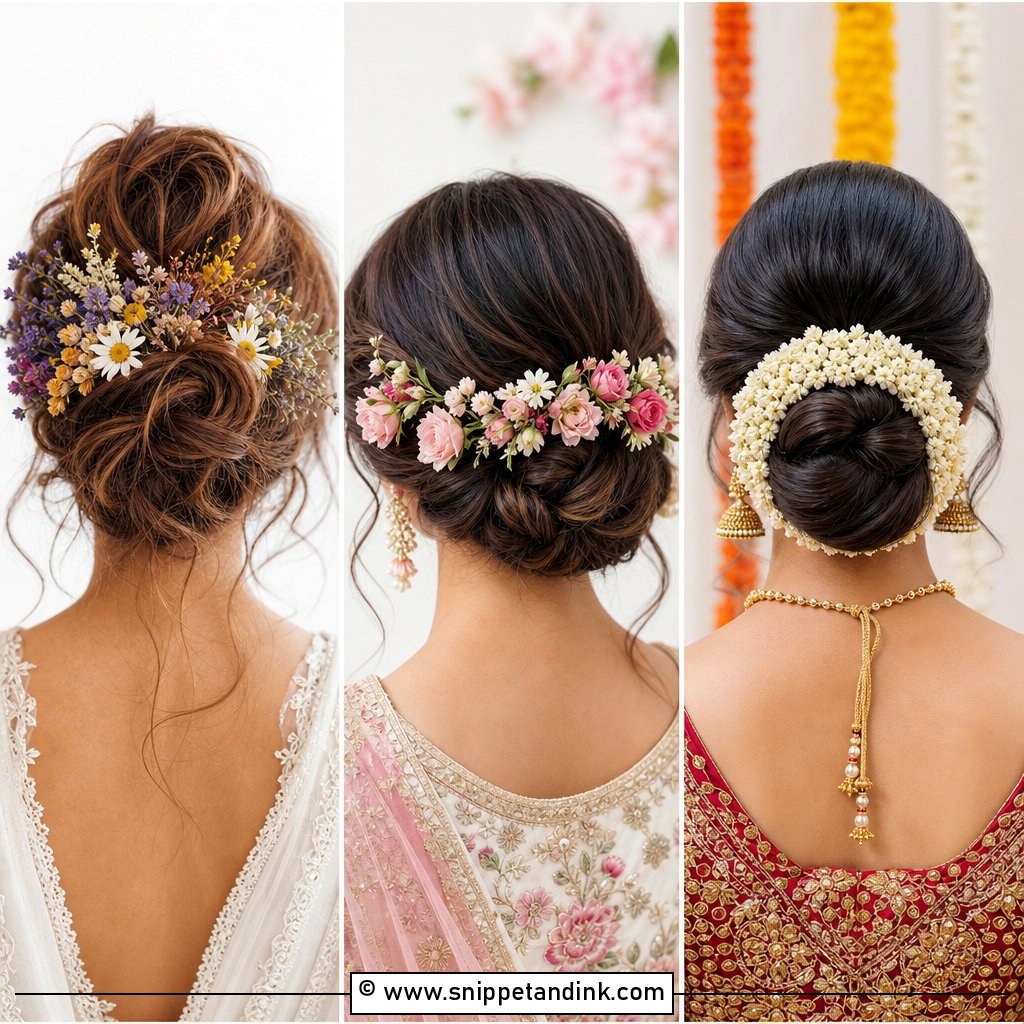
Mogra is the flower I wire more than any other for Indian brides, and the reason is practical as well as traditional. The buds are small, they hold their shape when strung tightly, and they open slowly through the day, so the fragrance builds instead of fading. A woven jasmine garland around a low bun at the nape is the classic placement, and the white sits cleanly against heavy gold. Silk sarees and Kanjeevarams are its natural partners. One strand or a thick layered gajra both work, but I always send tight buds; fully open jasmine browns within a few hours.
2. Red Rose Hair Bun for Indian Bride
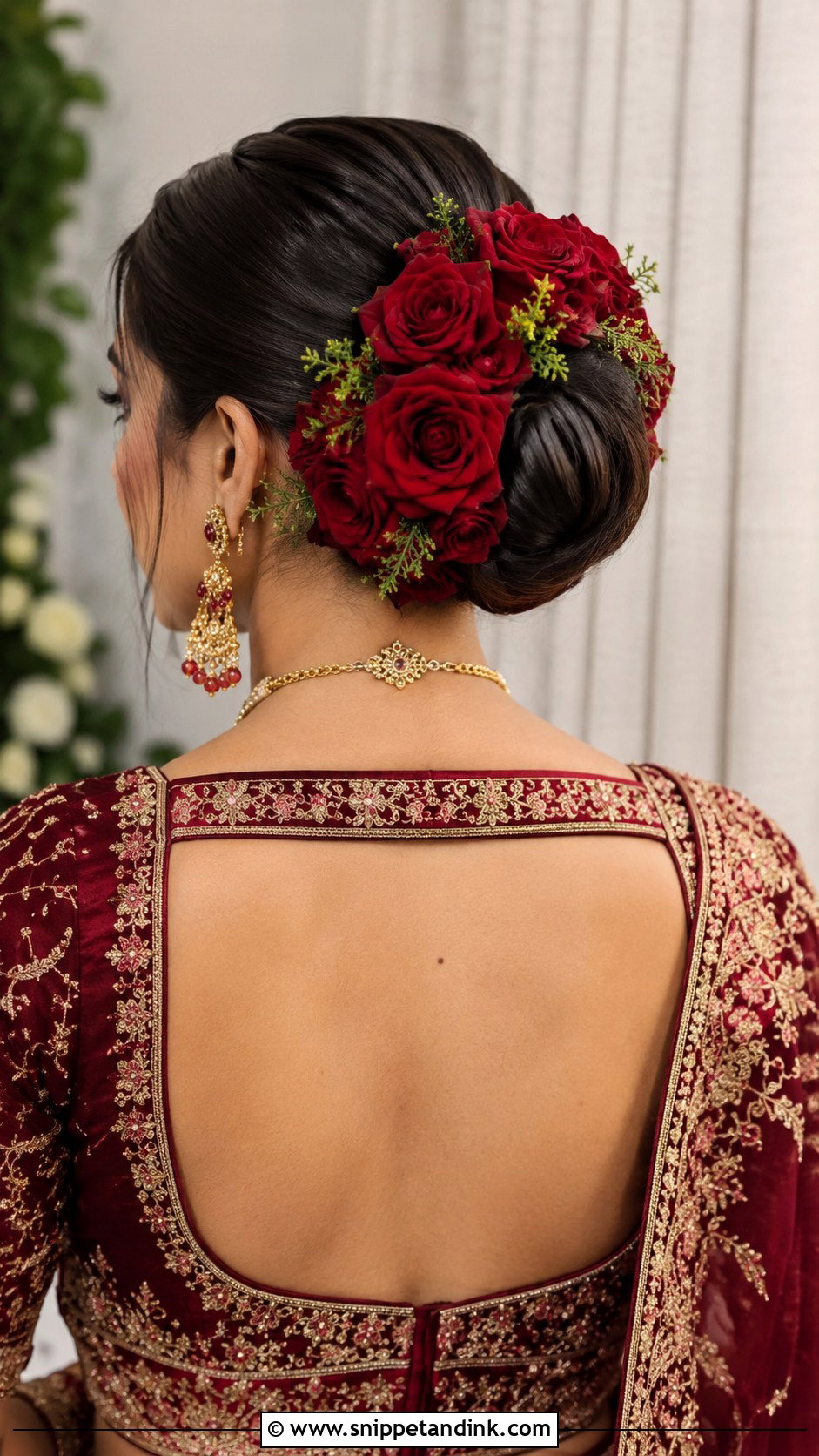
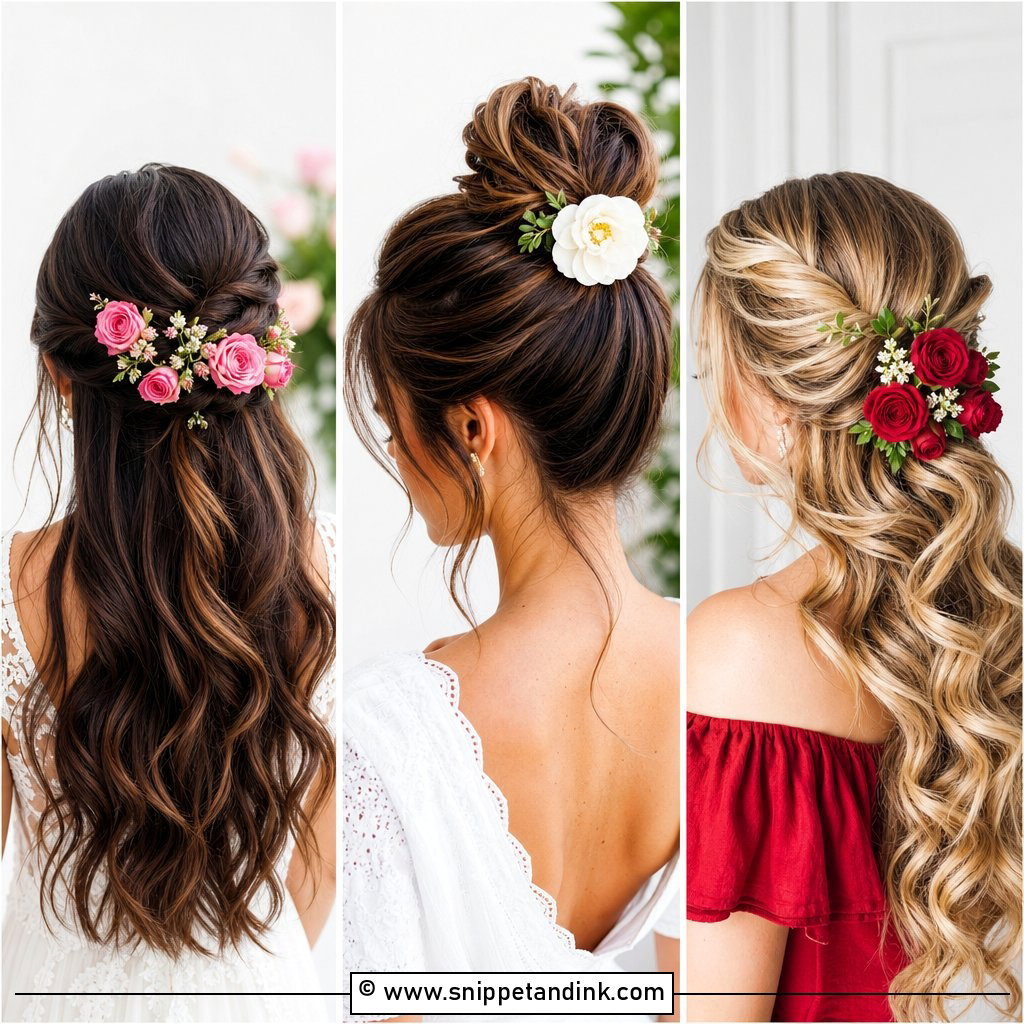
Red roses read clearly against dark hair and pick up the red, maroon or pink of a lehenga. A cluster around a sleek bun or a few full blooms along a braid both work. I strip the outer guard petals first, since they are the ones that bruise and brown, and I use roses that are just opening rather than fully blown, which drop petals onto the blouse. Baby’s breath or a little greenery between them softens the line. With gold jewelry, the contrast is rich without trying.
3. White Rose Bridal Hairstyle
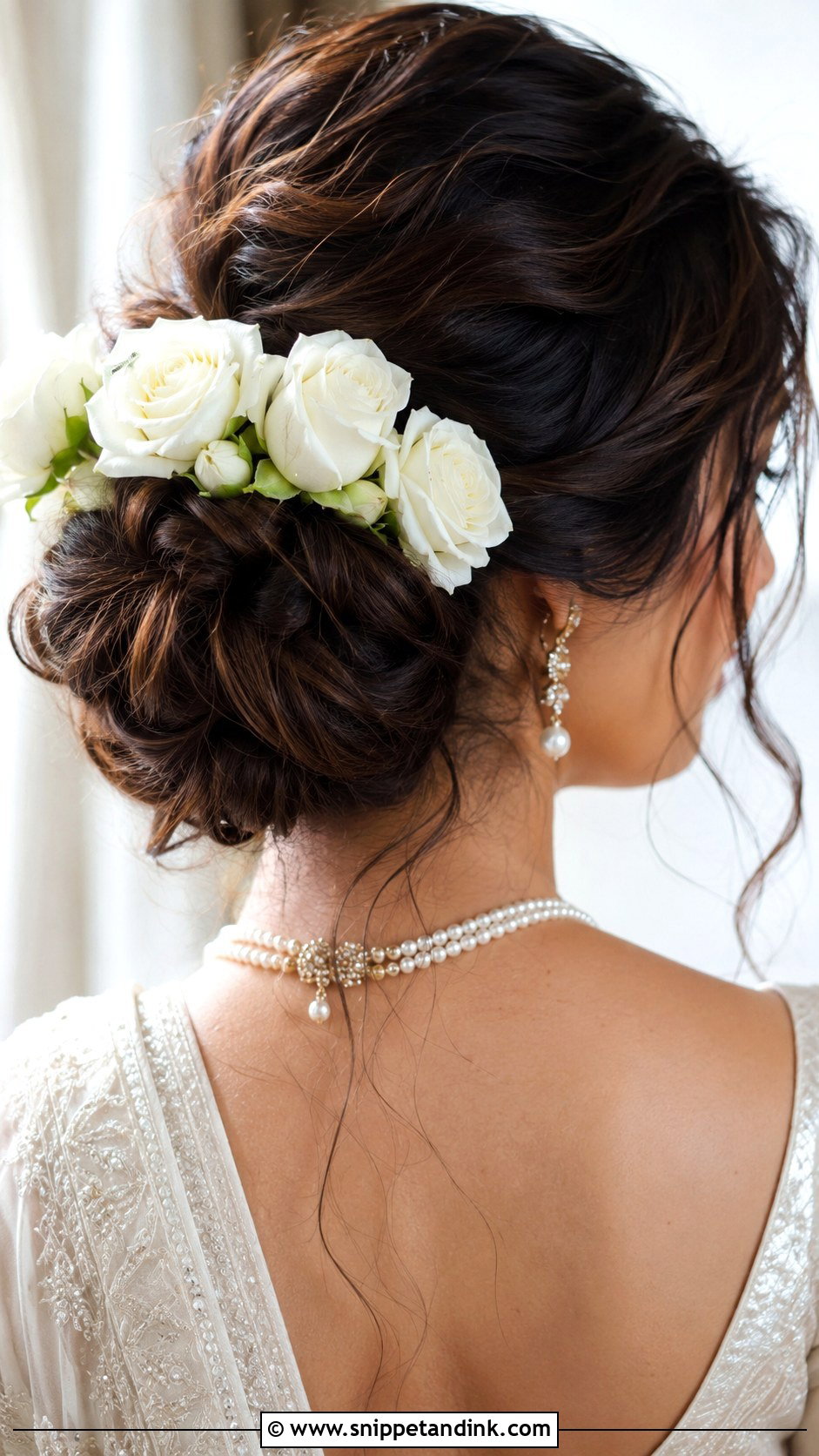
White roses calm a look down. They suit pastel lehengas, ivory sarees and minimal makeup, and they balance heavy jewelry without adding more color. Brides wear them around a twisted bun or scattered through loose curls. The honest drawback: white petals show every bruise, and edges turn tan as they dry. I choose firm, slightly closed heads, handle them with gloves, and keep spares chilled for a swap at the reception. Greenery or pearls alongside keep the look modern.
4. Marigold Flowers for Wedding Hair
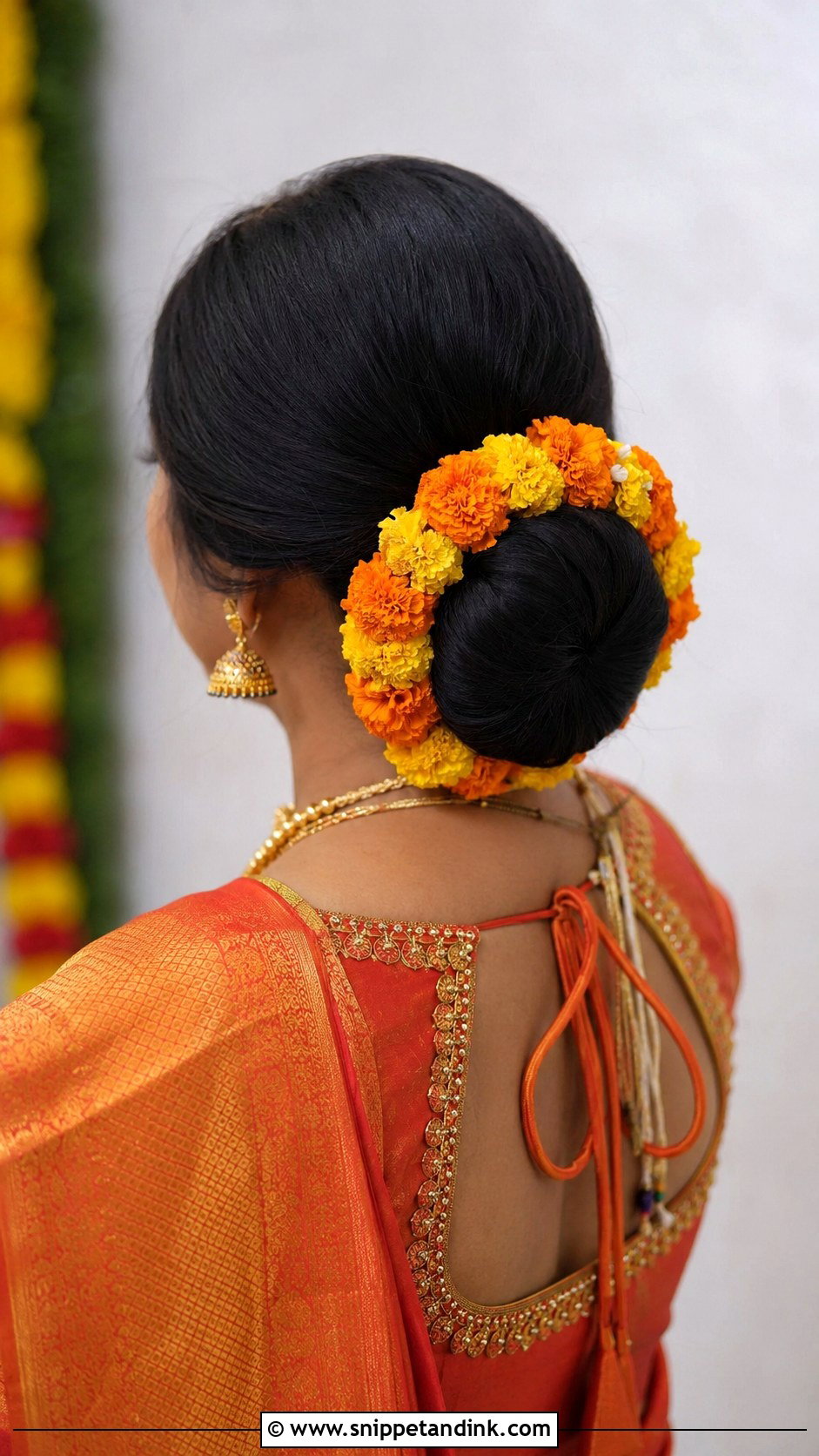
Marigolds are the toughest flower on this list. They hold color and shape for a full day of heat, which is exactly why they turn up at haldi and at long main ceremonies. A woven thread of orange or yellow marigolds around a bun sits well with silk sarees and lehengas, and the flower is linked with good fortune and celebration. I use the small button marigolds for hair; the big ball varieties are too heavy to pin. Green leaves or a few red roses keep it from looking flat.
5. Orchid Flowers for Bridal Braid
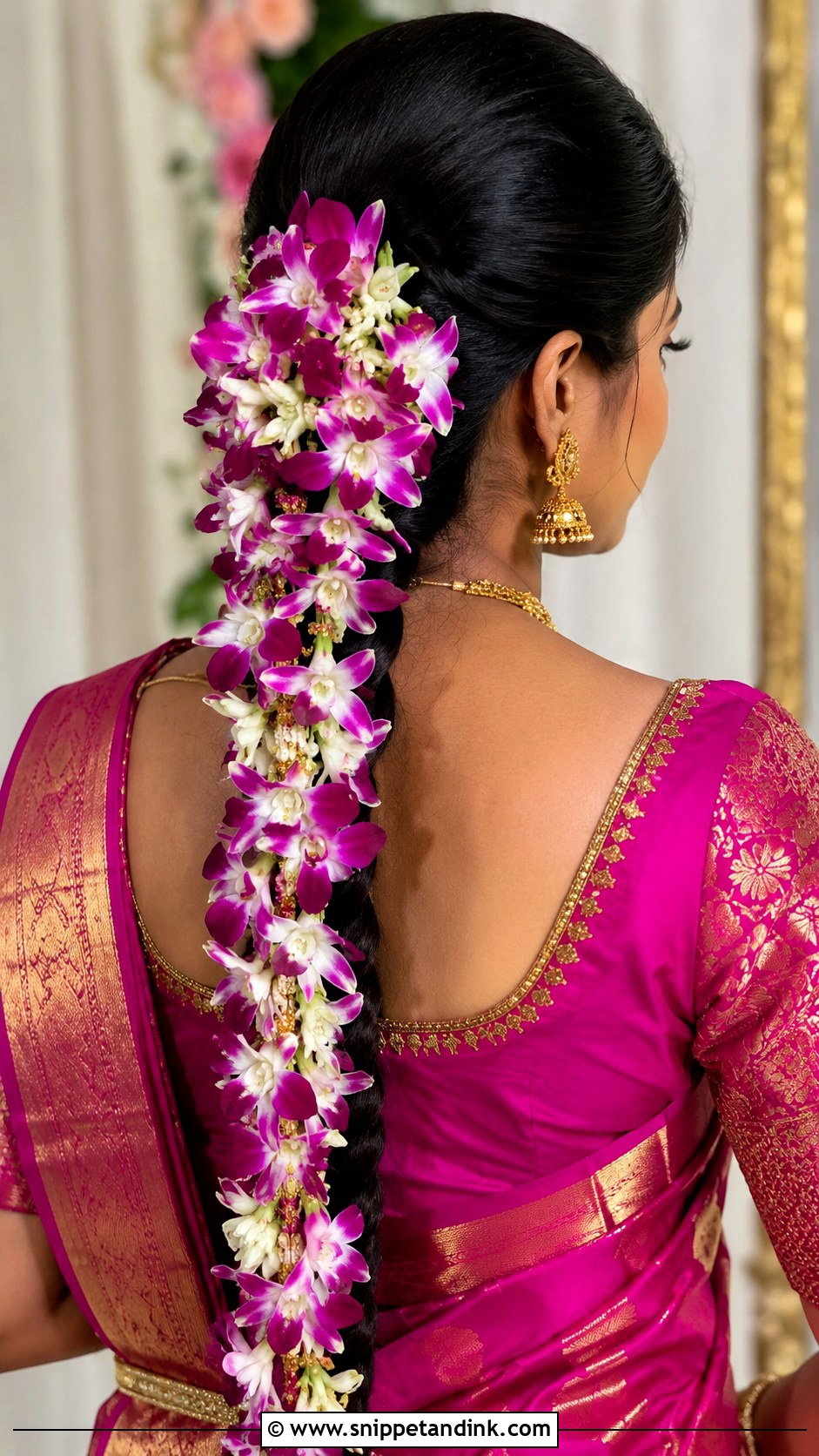
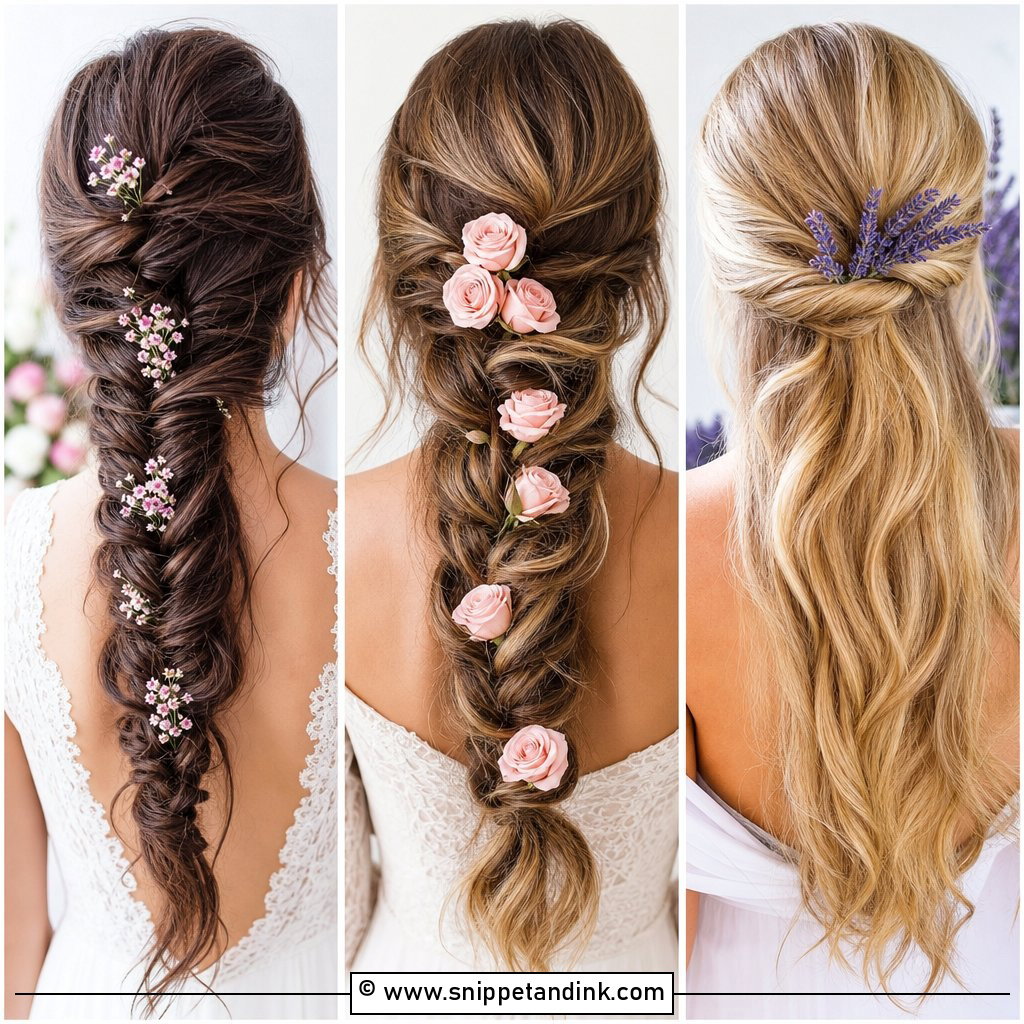
Orchids in purple, white, pink or magenta give a sculptural, slightly modern finish. They thread well along a long braid or into a poolajada, and the waxy petals stay fresh out of water far longer than most delicate flowers. That staying power is why I suggest them for long events in warm weather. Most bridal orchids have almost no scent, so brides who want fragrance pair them with jasmine; pearls give a quieter contrast.
6. Baby’s Breath Bridal Bun
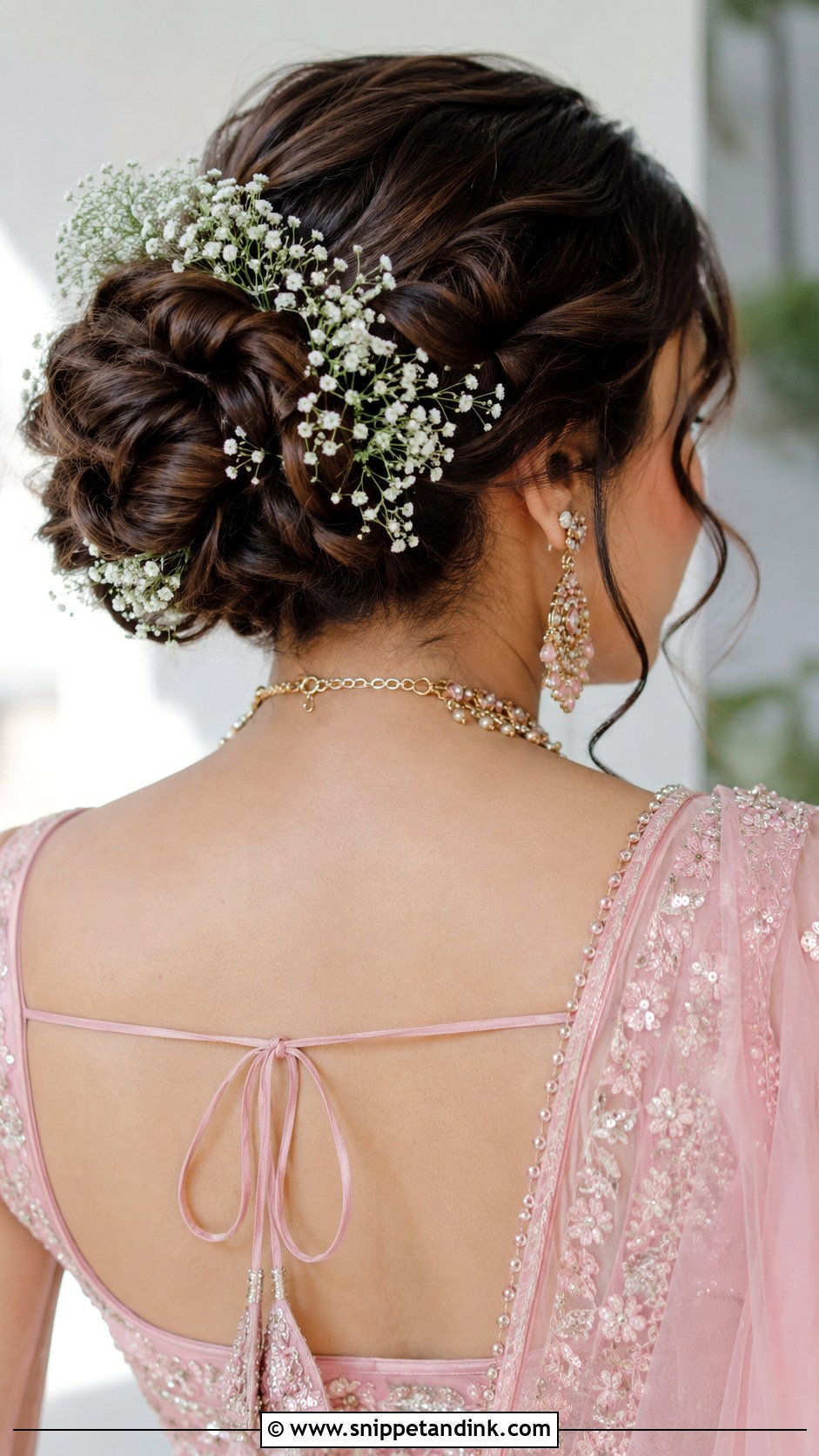
Baby’s breath makes a soft, cloud-like fill. Packed into a twisted bun, the tiny white flowers give volume without weight and leave heavy jewelry room to shine, which is why pastel lehengas, white sarees and minimal bridal styles suit it. It works alone or with roses for fullness. It lasts well out of water. What brides do not expect is the smell: fresh baby’s breath has a faintly sour scent, so I let a bride smell a bunch before she commits to a whole bun of it.
7. Hydrangea Flower Bun for Bride
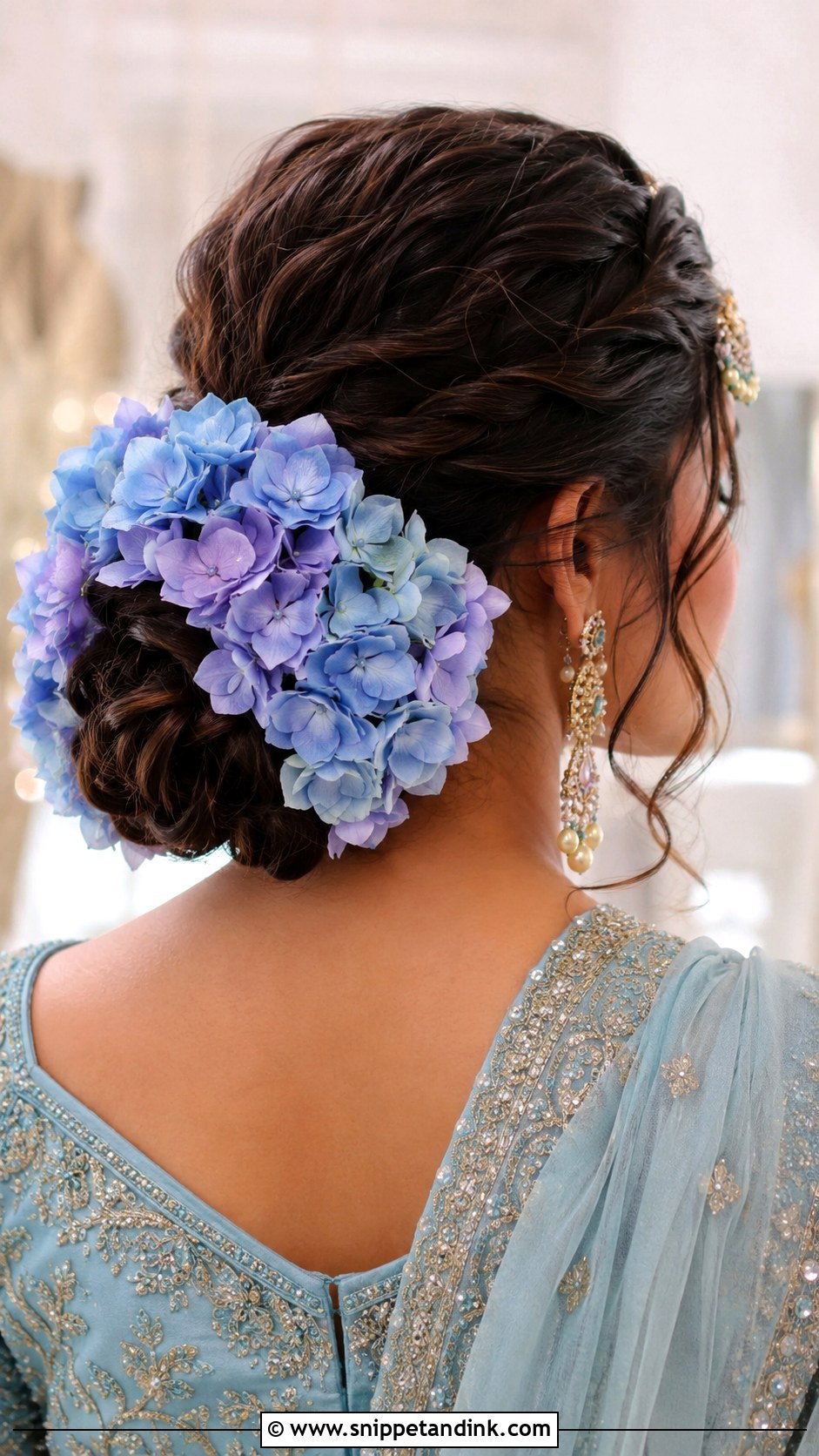
Hydrangeas have become a popular bridal hair flower in recent years. The full clusters come in soft blue, purple, pink and white, and a few florets give instant volume and a garden-fresh look with lehengas, traditional sarees and pastel outfits. They are also one of the thirstiest flowers I work with. Out of water, a hydrangea head can wilt in an hour or two in heat, so I break the clusters into small florets, keep them hydrated until the last moment and add them after the hair is finished. Mixed with baby’s breath or roses, they wear better.
8. Lily Flowers for Bridal Hairstyle
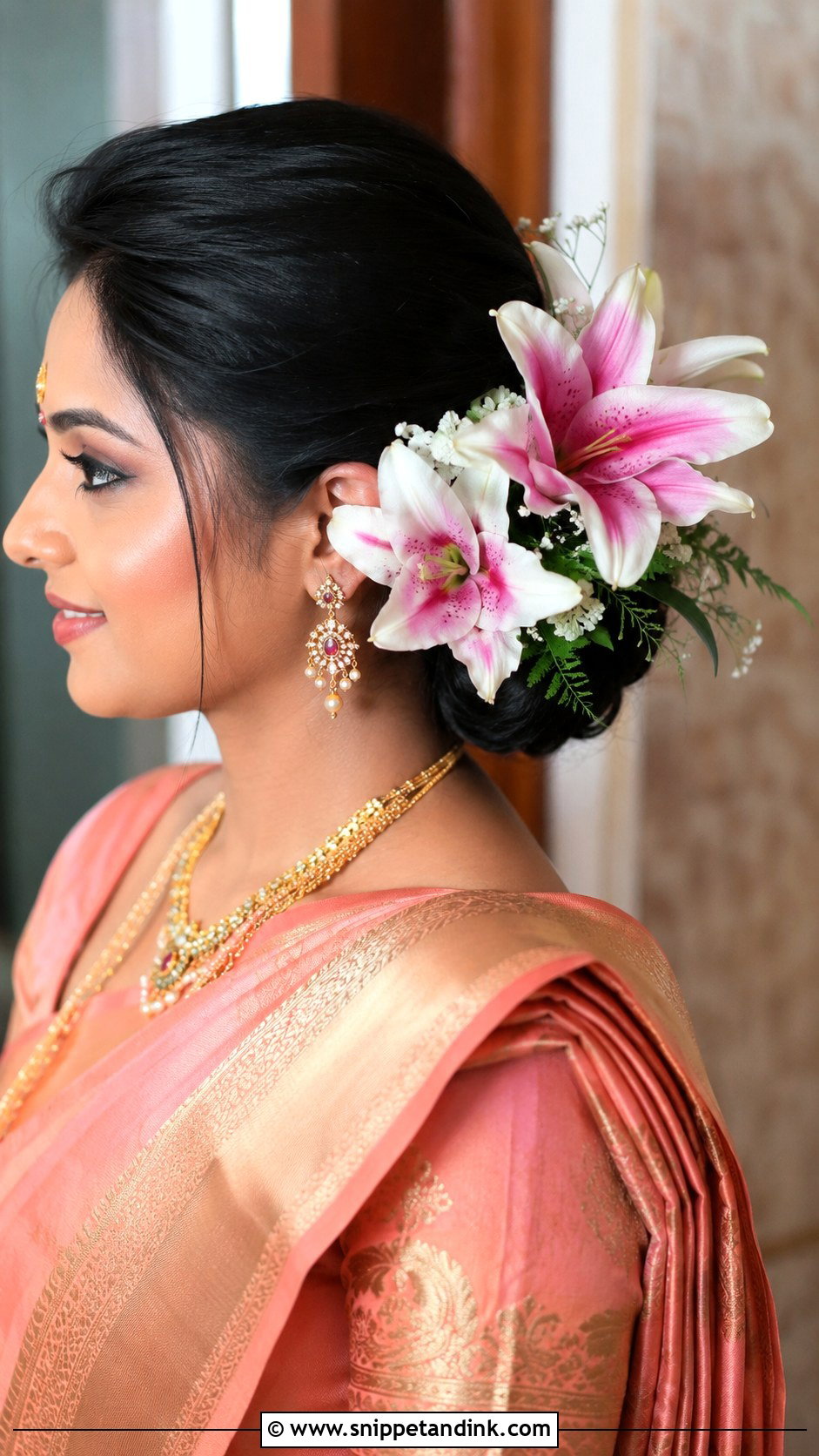
Lilies make a large, sculptural statement tucked into a bun or braid, and in white, pink or orange they match a range of saree and lehenga colors. They were a fixture of classic 90s bridal jadas. Before a lily goes anywhere near a bride, I pull the anthers out. Lily pollen stains silk and skin a rusty orange, and it is very hard to remove. A few blooms with greenery is plenty; more turns heavy quickly.
9. Chrysanthemum Flowers for Wedding Bun
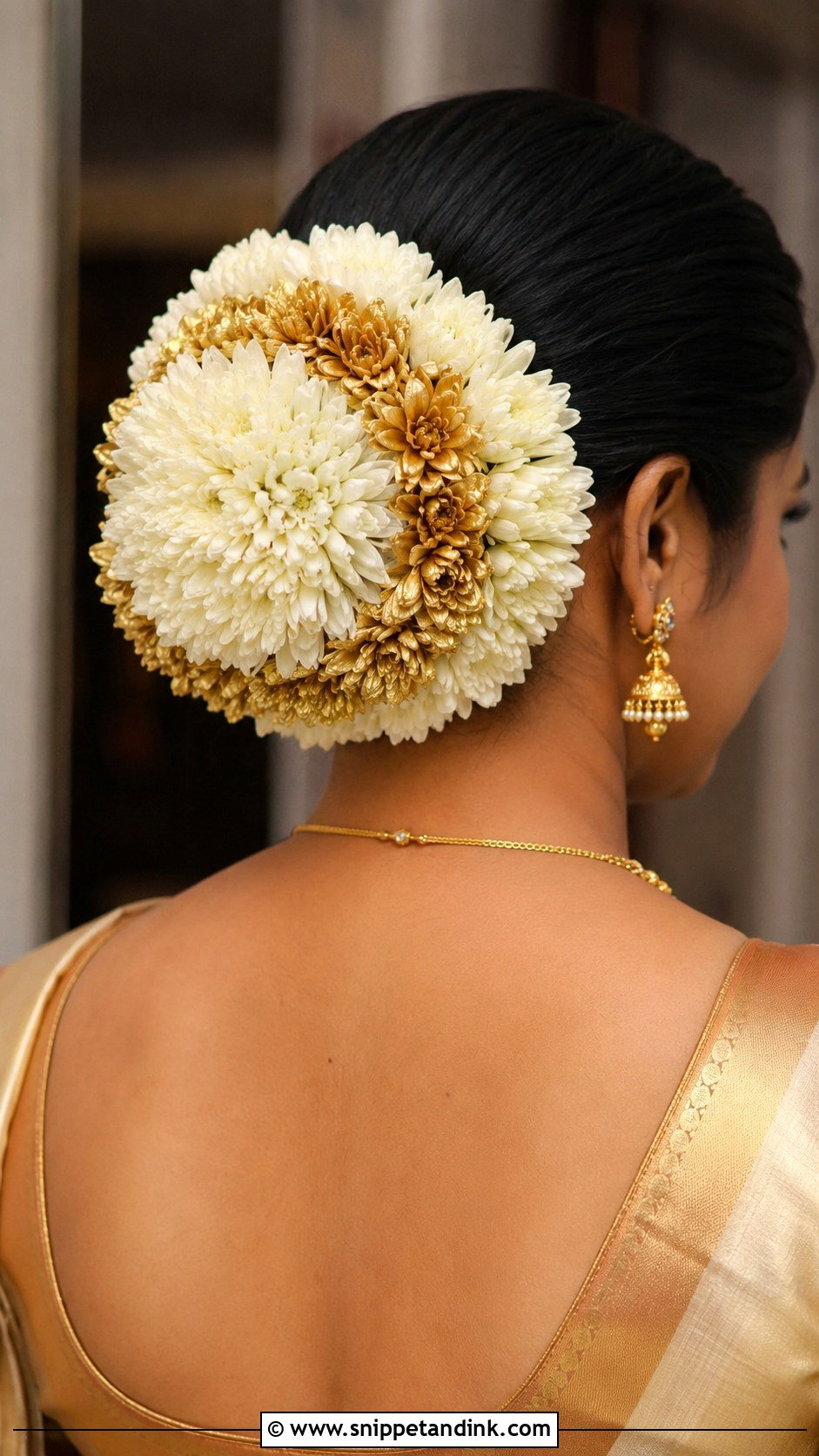
Chrysanthemums, often called shevanti, come in white, yellow and golden tones with full, ruffled heads. Clusters around a low bun give a rich, textured look, and they keep their form through long ceremonies, which makes them one of the most reliable traditional choices. They are linked with joy and long life. Their scent is green and herbal rather than sweet, so I mix them with roses or jasmine when a bride wants fragrance as well as fullness.
10. Lotus Inspired Bridal Hair Flowers
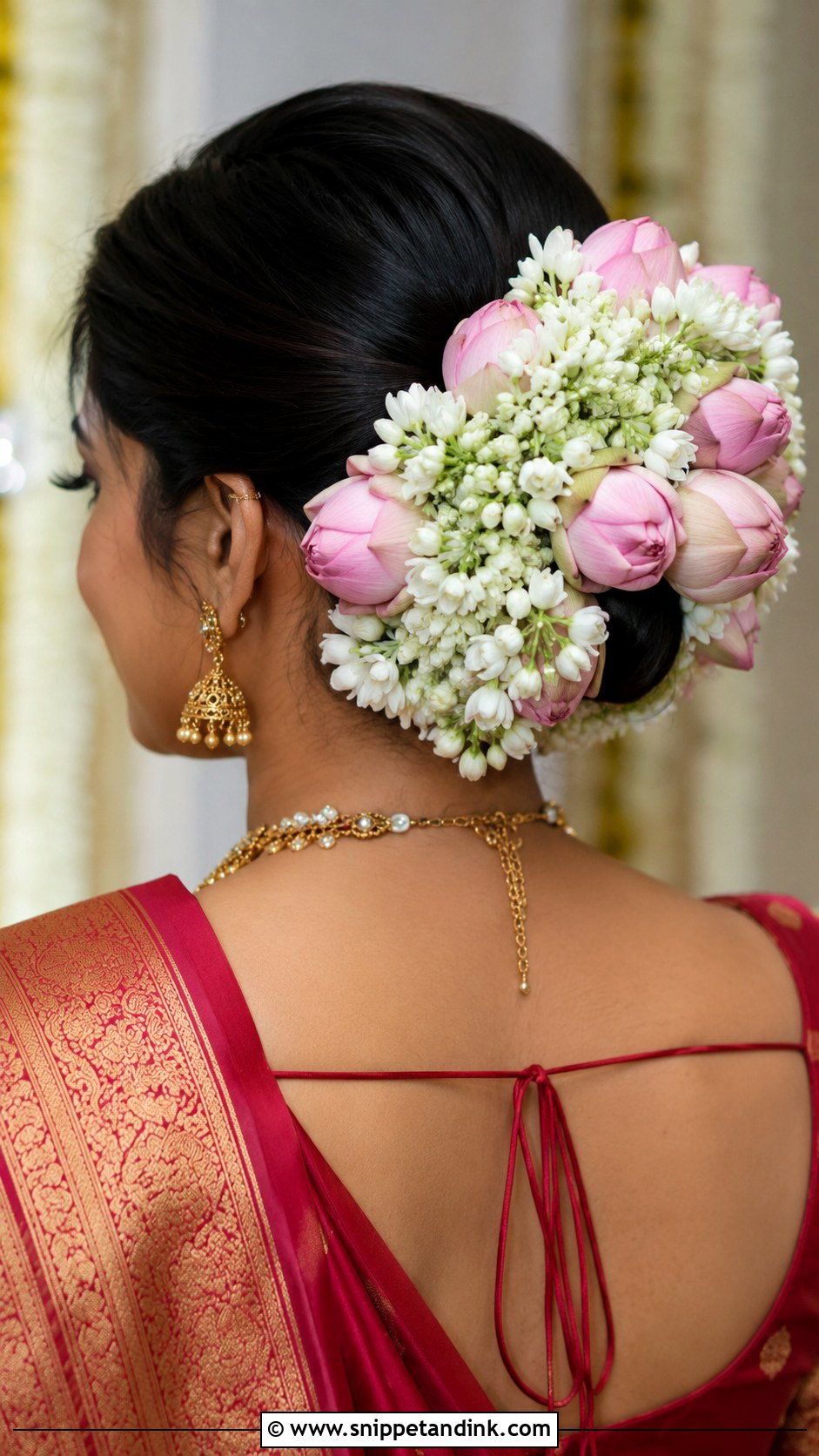
The lotus carries deep spiritual meaning in Indian culture, but a full bloom is heavy and drops petals quickly once cut, so I almost never pin a whole flower into hair. Lotus buds, a few loose petals tucked into jasmine, or a lotus motif in the jewelry give the same reference with far less risk. Pink lotus tones sit well with traditional silk sarees and temple jewelry, and the idea fits temple and South Indian weddings especially. Paired with jasmine or greenery, the finish feels sacred without being fussy.
11. Tuberose Flowers for Bridal Bun
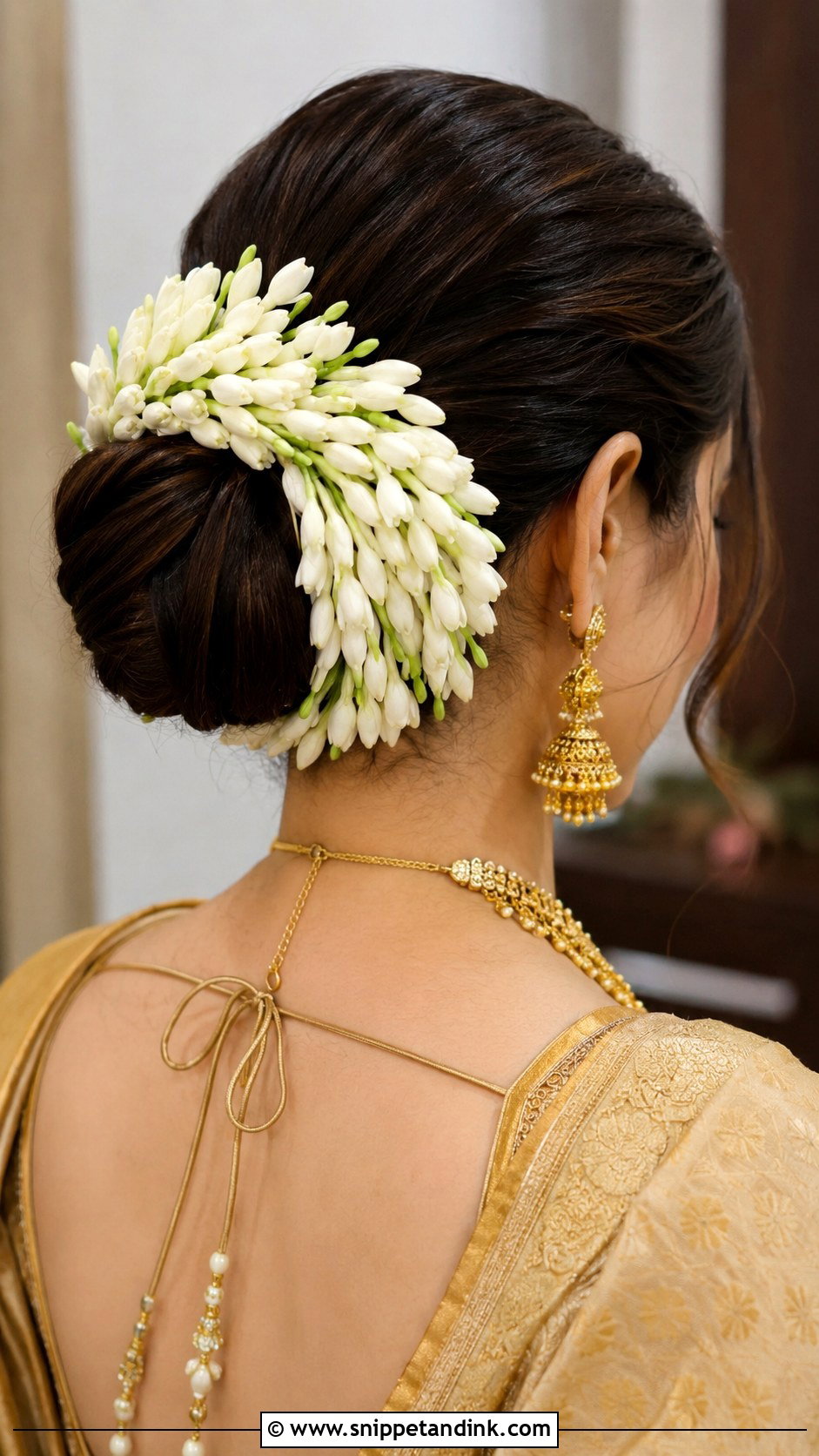
Tuberose, or rajnigandha, has one of the strongest scents in the flower market. A garland of the slender white blooms around a bun is elegant and traditional, and it pairs with jasmine for an extra-fragrant gajra. Against heavy gold and bold makeup, the crisp white holds its own. Strength is the catch. Hours of tuberose right behind the ears gives some people a headache, so I test a short strand on the bride before ordering a full garland.
12. Carnation Flowers for Bridal Hair
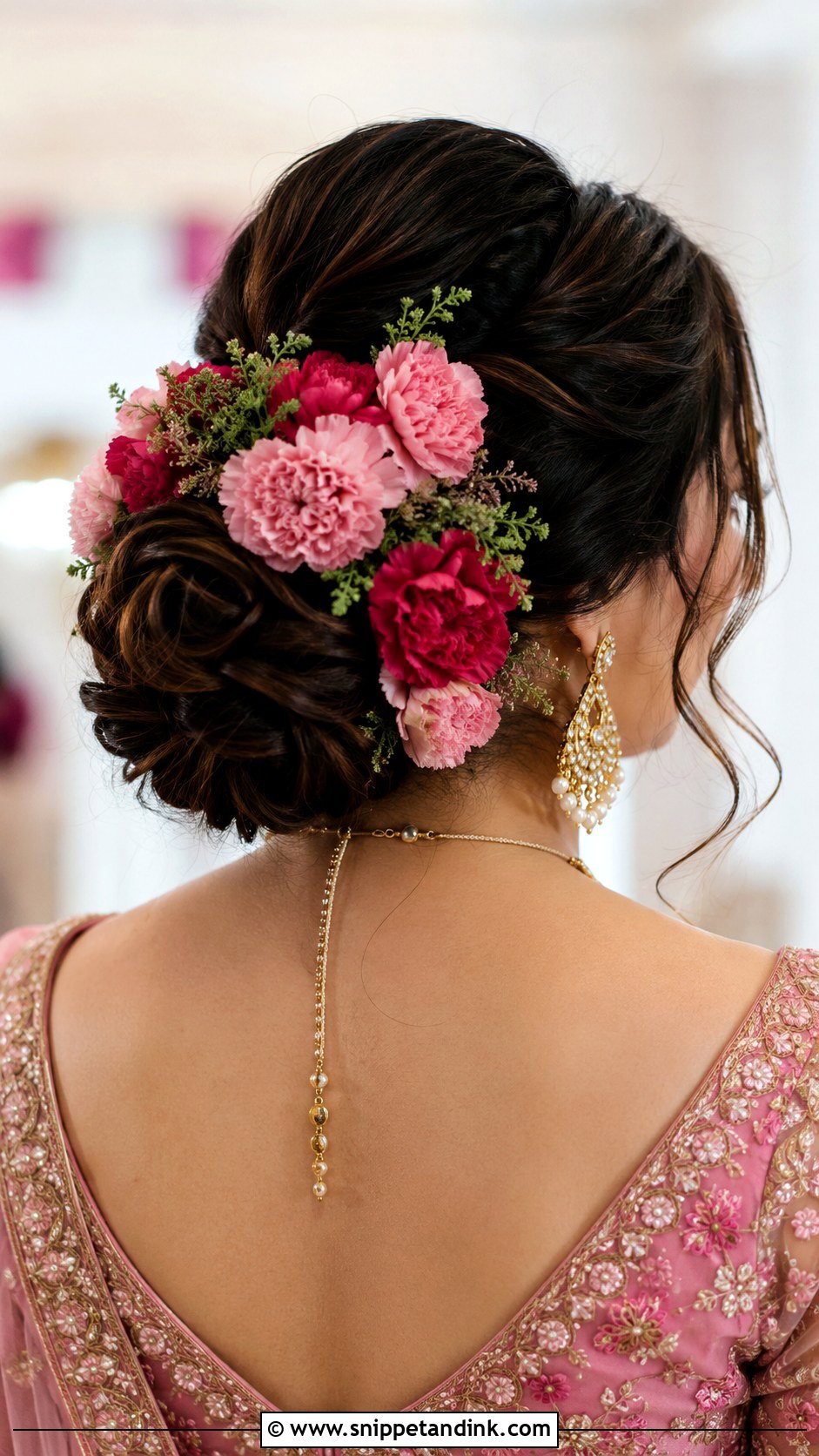
Carnations are the budget-friendly flower I trust for long days. The ruffled petals come in red, pink, white and peach, and they stay fresh through hours of celebration without wilting. Arranged around a bun or along a braid, they give a full look with both lehengas and sarees. I often use them where a bride wants the volume of roses but cannot risk petals dropping. Roses or greenery mixed in add depth.
13. Gardenia Flowers for Wedding Hairstyle
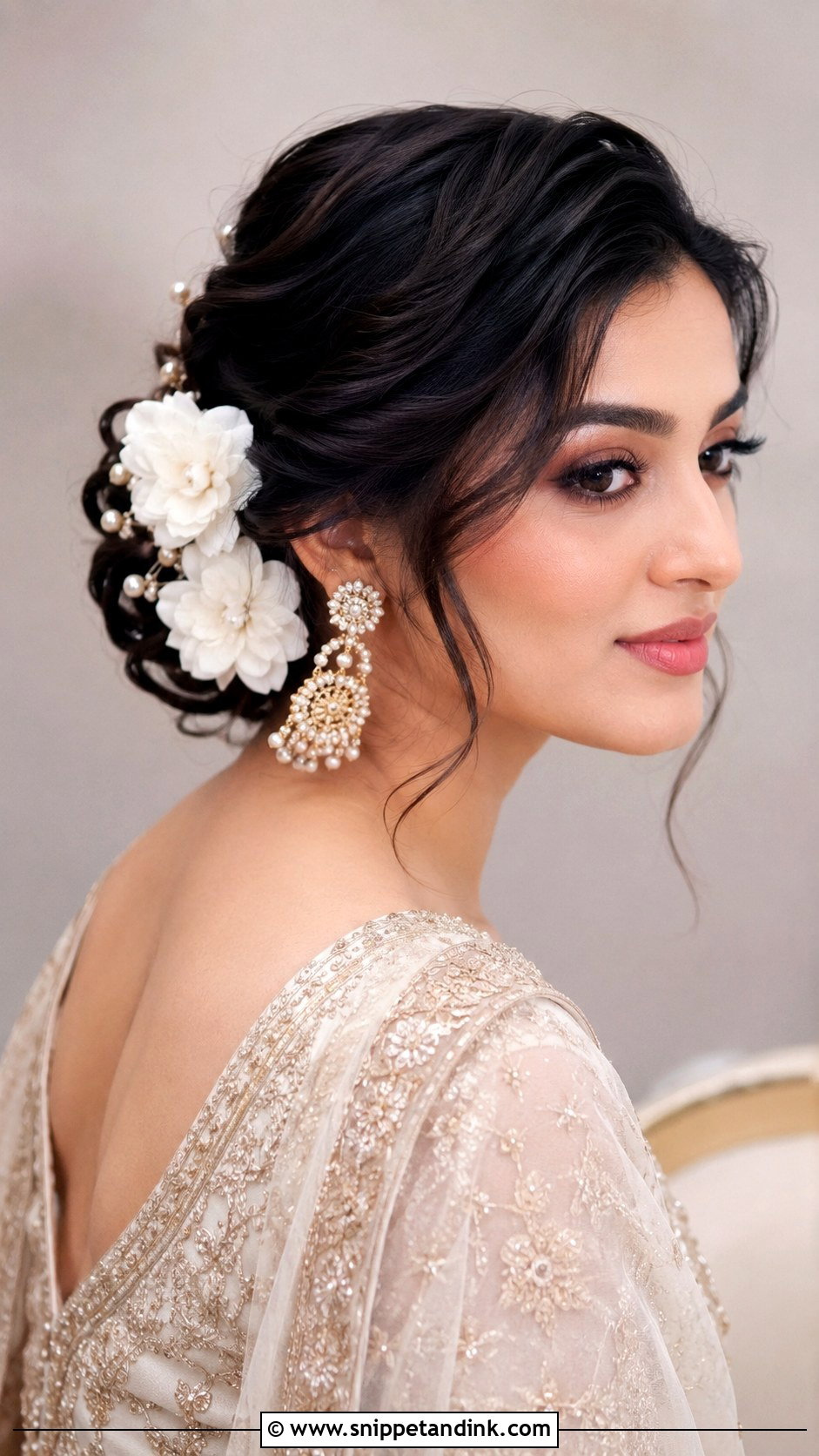
Gardenias have creamy white, velvety petals and a rich scent, and a few tucked into a bun or braid look refined. Pastel lehengas, ivory sarees and soft glam suit them, and the bold petals balance heavy jewelry. They are also the most fragile flower I put in hair. Fingertips leave brown marks on the petals within minutes, so I handle them only by the stem, place them last and never let anyone adjust them by hand. Greenery or pearls finish the look.
14. Frangipani Flowers for Bridal Bun
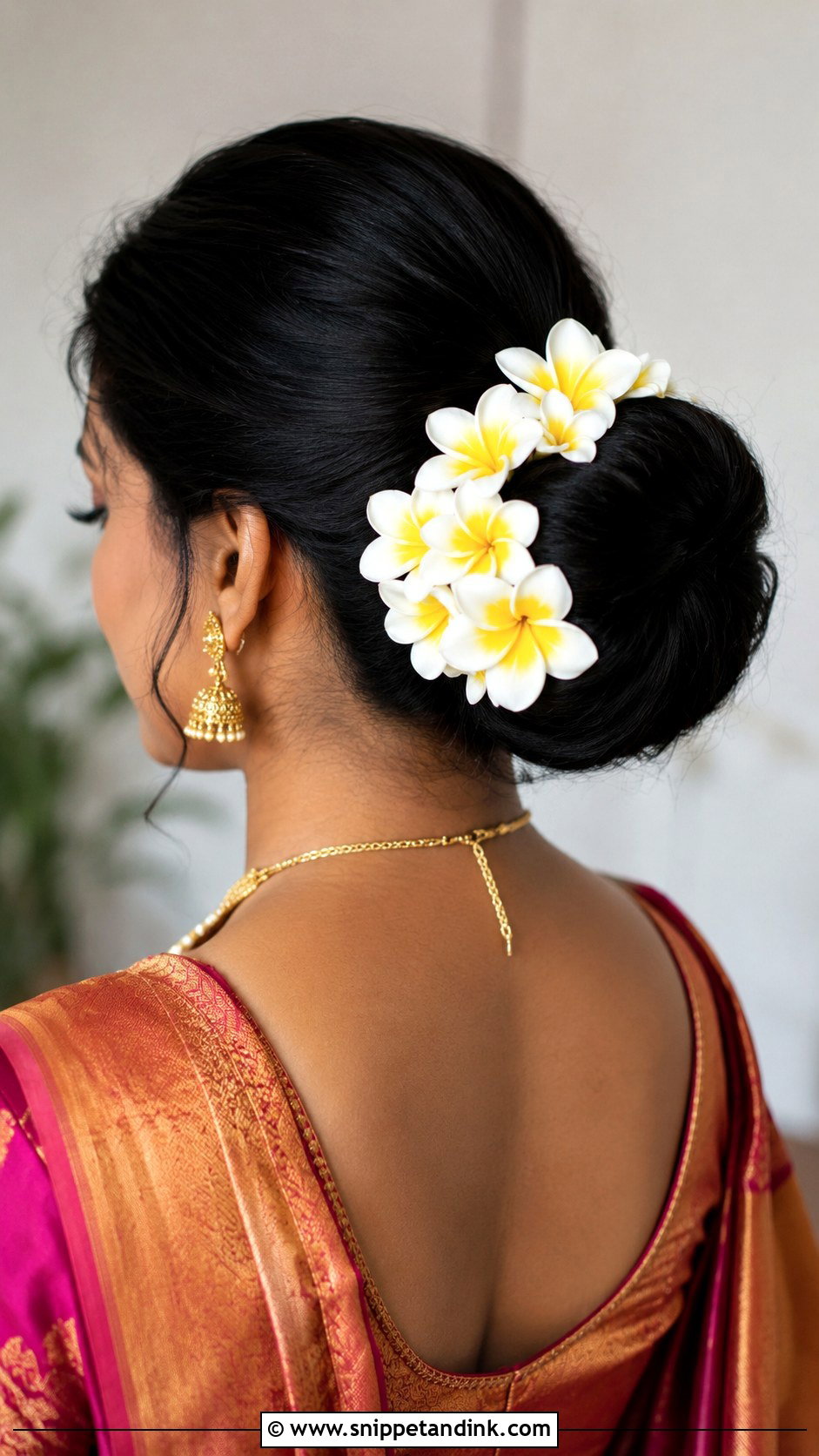
Frangipani, also called champa here, has soft white and yellow blooms and a sweet tropical scent. A few beside a bun give a fresh, breezy look for beach weddings, South Indian ceremonies and summer celebrations, with silk sarees and traditional jewelry. The blooms bruise easily and only last about a day once picked, so I ask for them on the morning itself. The stems also leak a milky sap that can irritate skin; I trim and seal them before they go anywhere near the hairline.
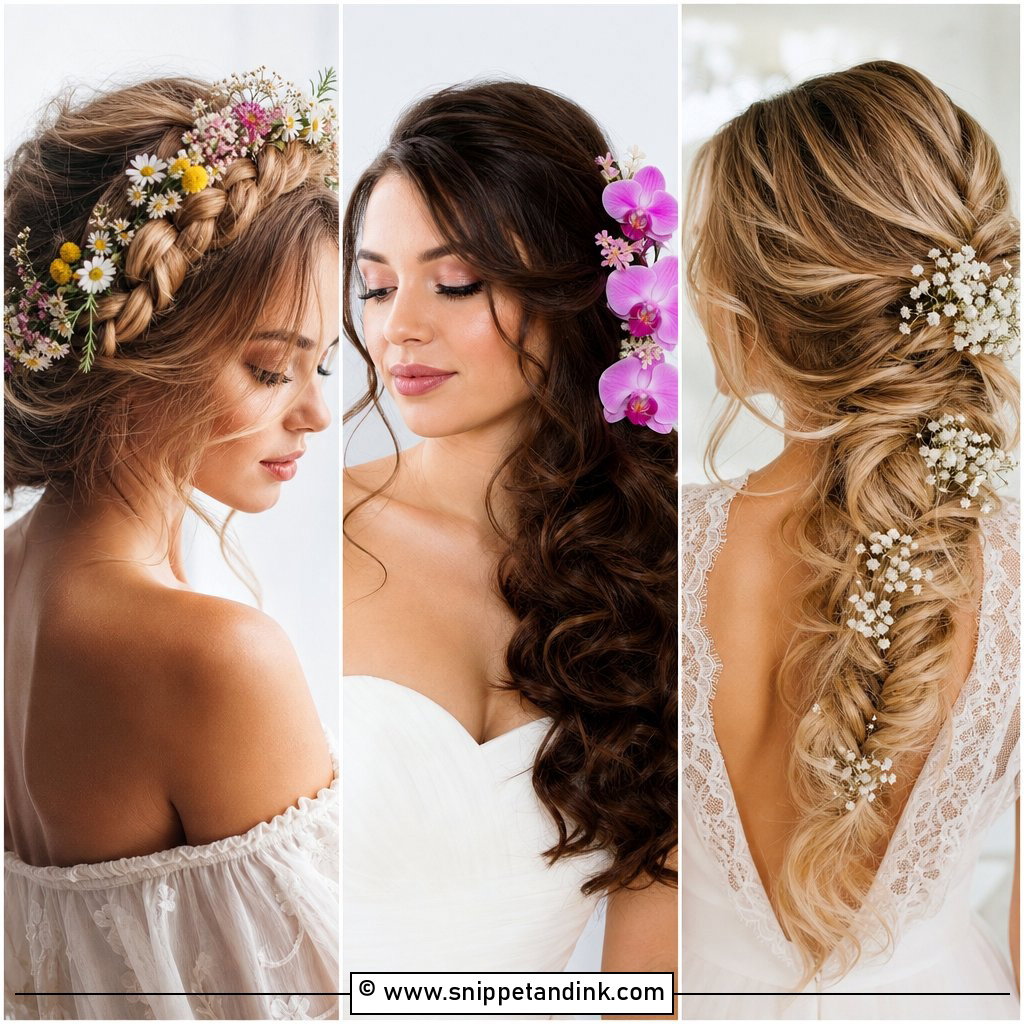
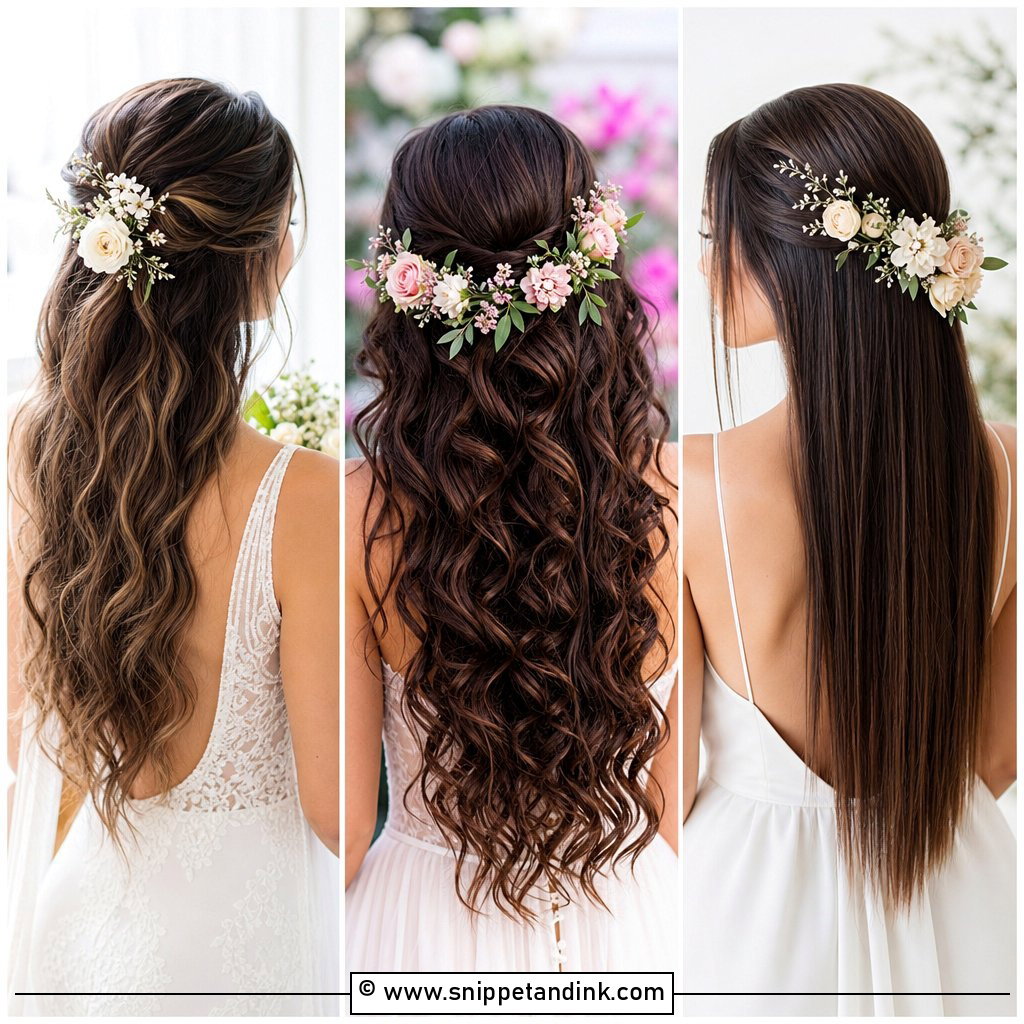
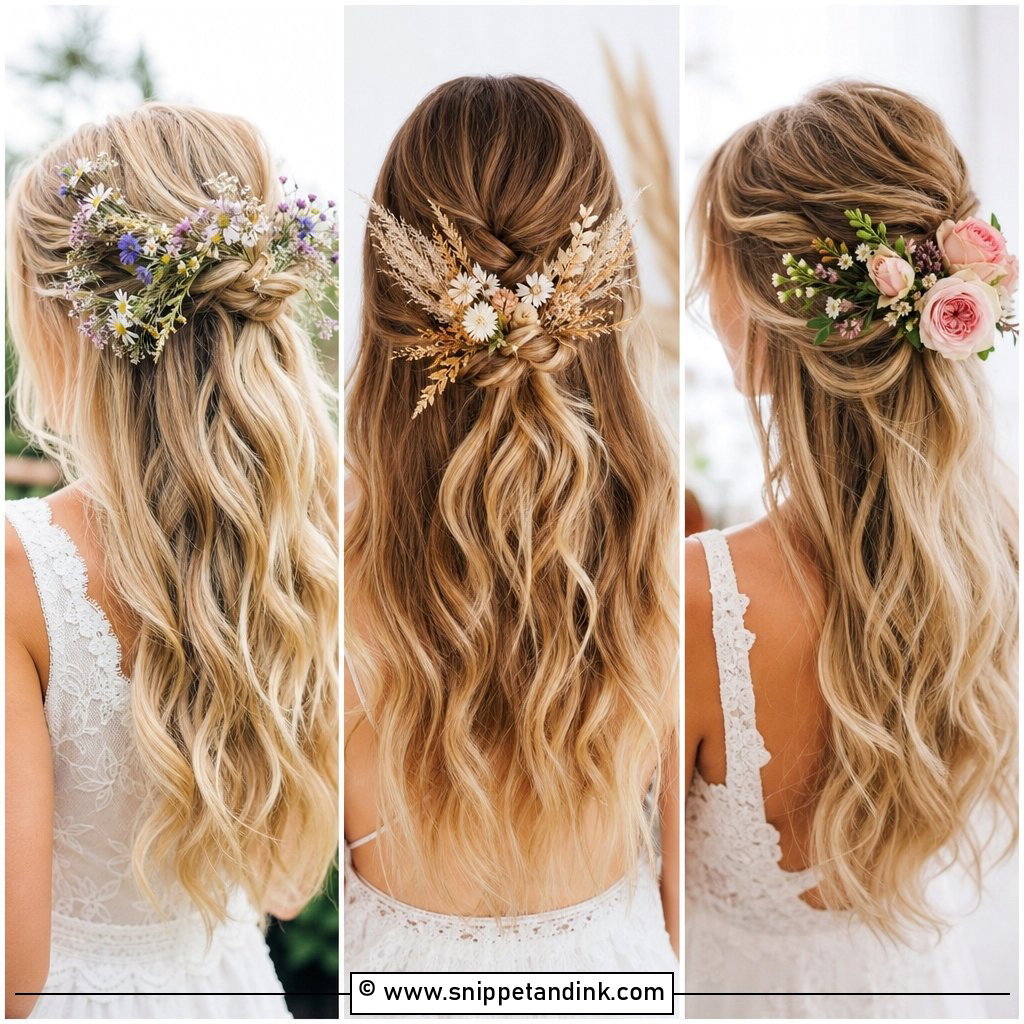
15. Daisy Flowers for Bridal Hairstyle
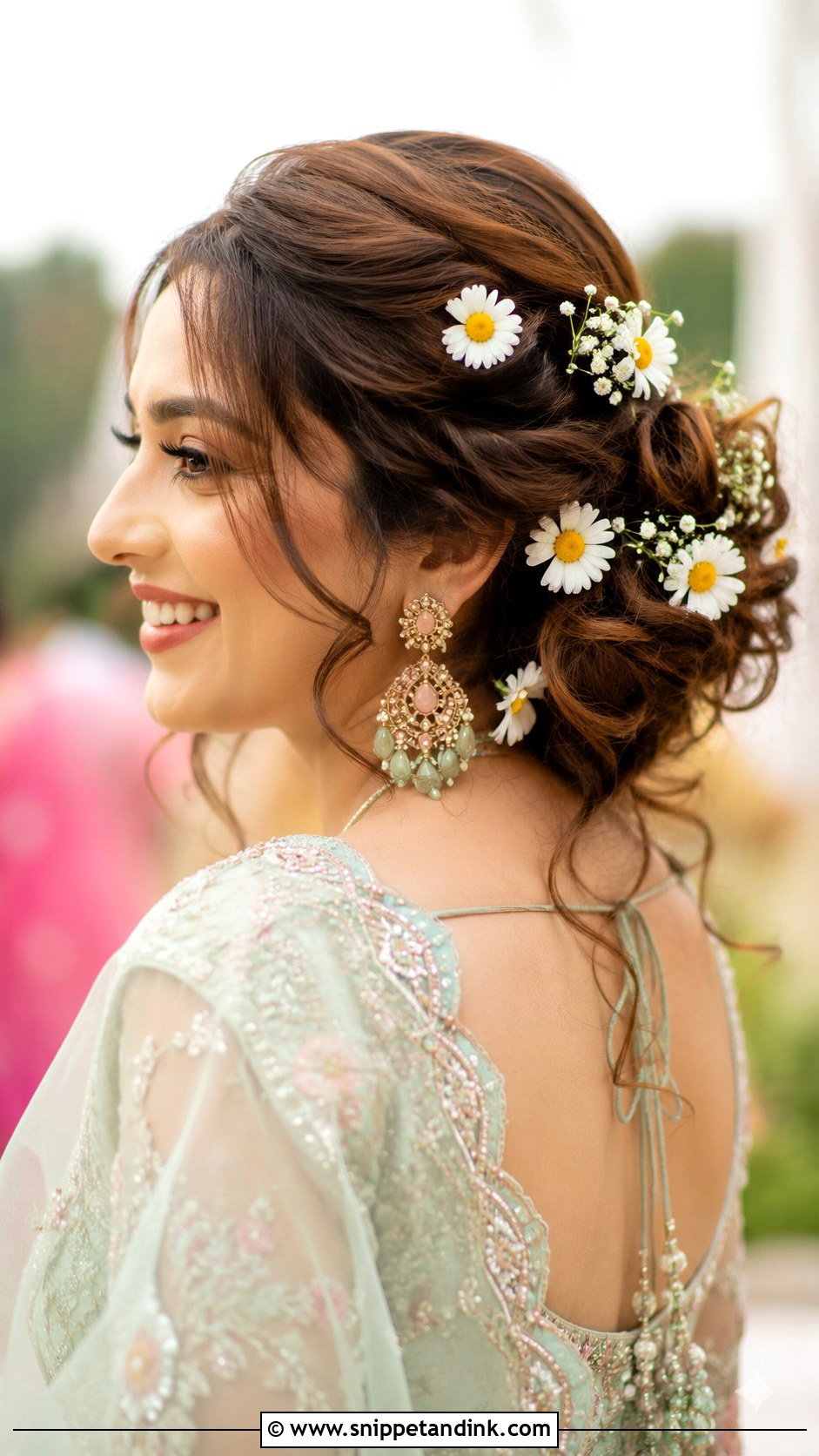
Daisies keep things light and young. Brides who want a garden feel scatter them through loose curls or a soft bun, and they suit pastel lehengas, casual functions and outdoor celebrations. They are small enough to balance a heavier outfit without looking overdone. Daisies are fairly sturdy, though their thin stems snap if pushed straight into a tight bun, so I wire each one first. Baby’s breath or greenery around them gives a soft, romantic effect.
16. Kanakambaram Flowers for South Indian Bride
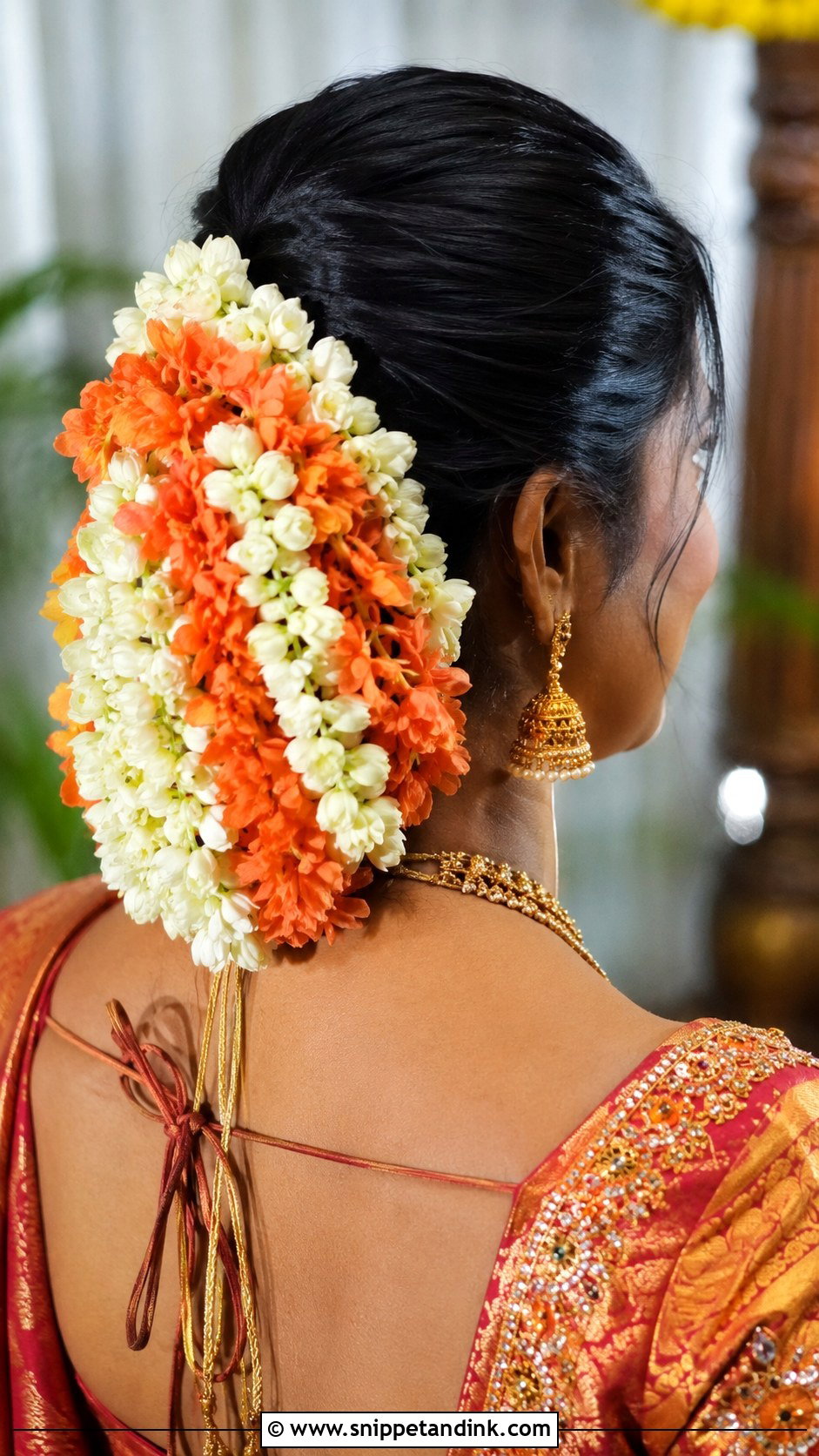
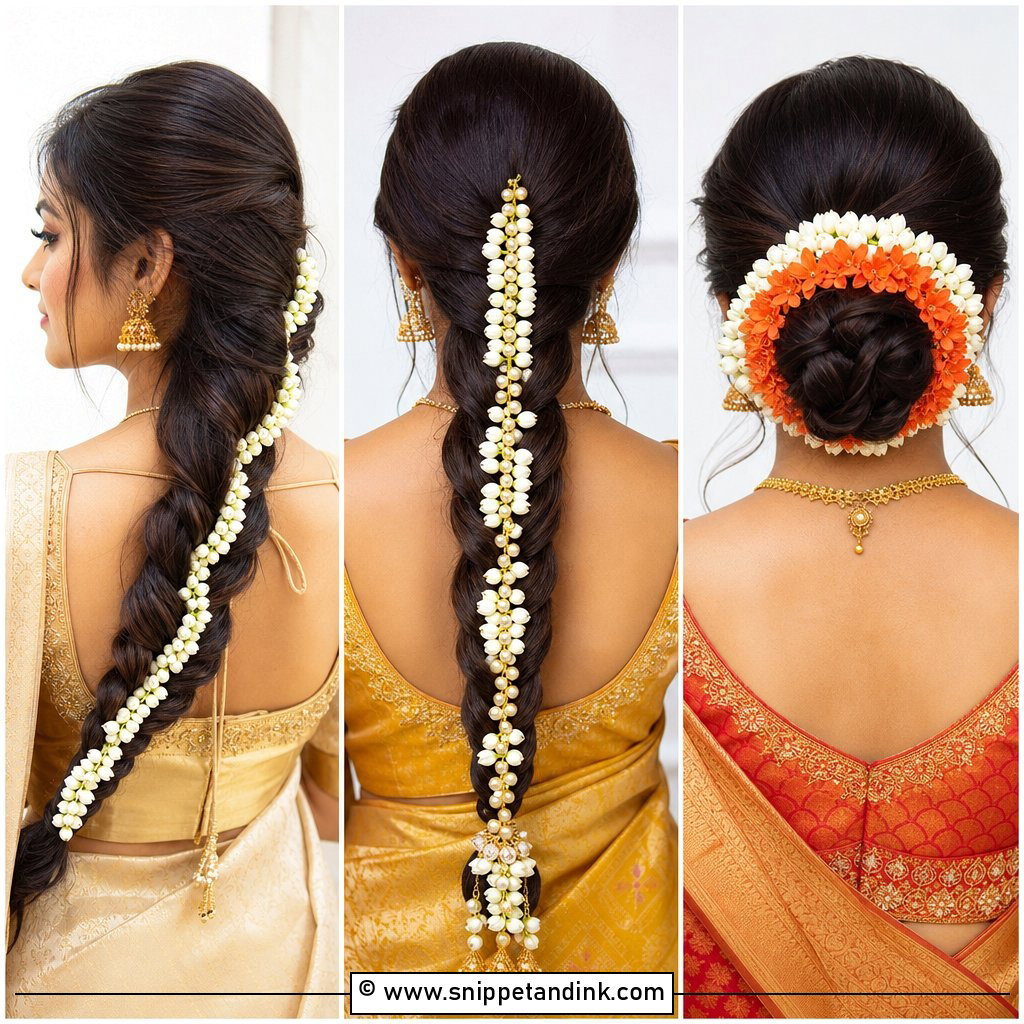
Kanakambaram, the firecracker flower, is a South Indian bridal staple. Its bright orange petals add warmth, and woven kanakambaram with jasmine makes a two-tone gajra that stands out against long, dark hair. It feels festive and auspicious with Kanjeevaram silk and temple jewelry. It has very little scent, which is exactly why it is paired with jasmine. It holds its color through a long ceremony and keeps well when strung tightly.
17. Crossandra Flowers for Bridal Braid
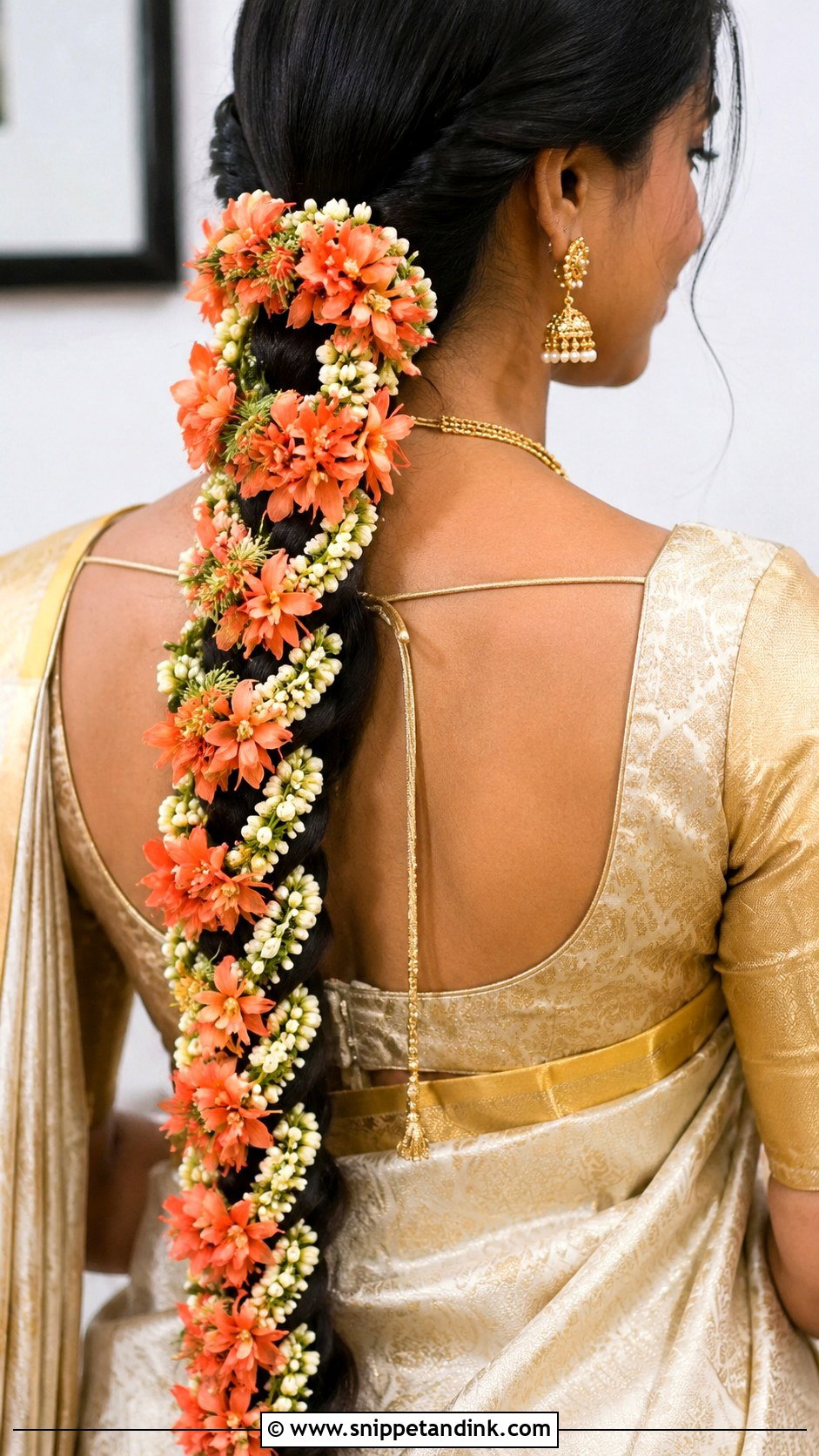
Crossandra is the botanical name behind kanakambaram, and florists sell it in several shades, from orange to coral and peach. Combined with jasmine on a long plait or poolajada, it creates a vibrant, repeating pattern down the hair, and it is considered auspicious at South Indian weddings. Silk sarees and gold ornaments suit it. I pick the shade from the saree border; coral works better than bright orange against pastel silks.
18. Sampangi Flowers for Wedding Hair
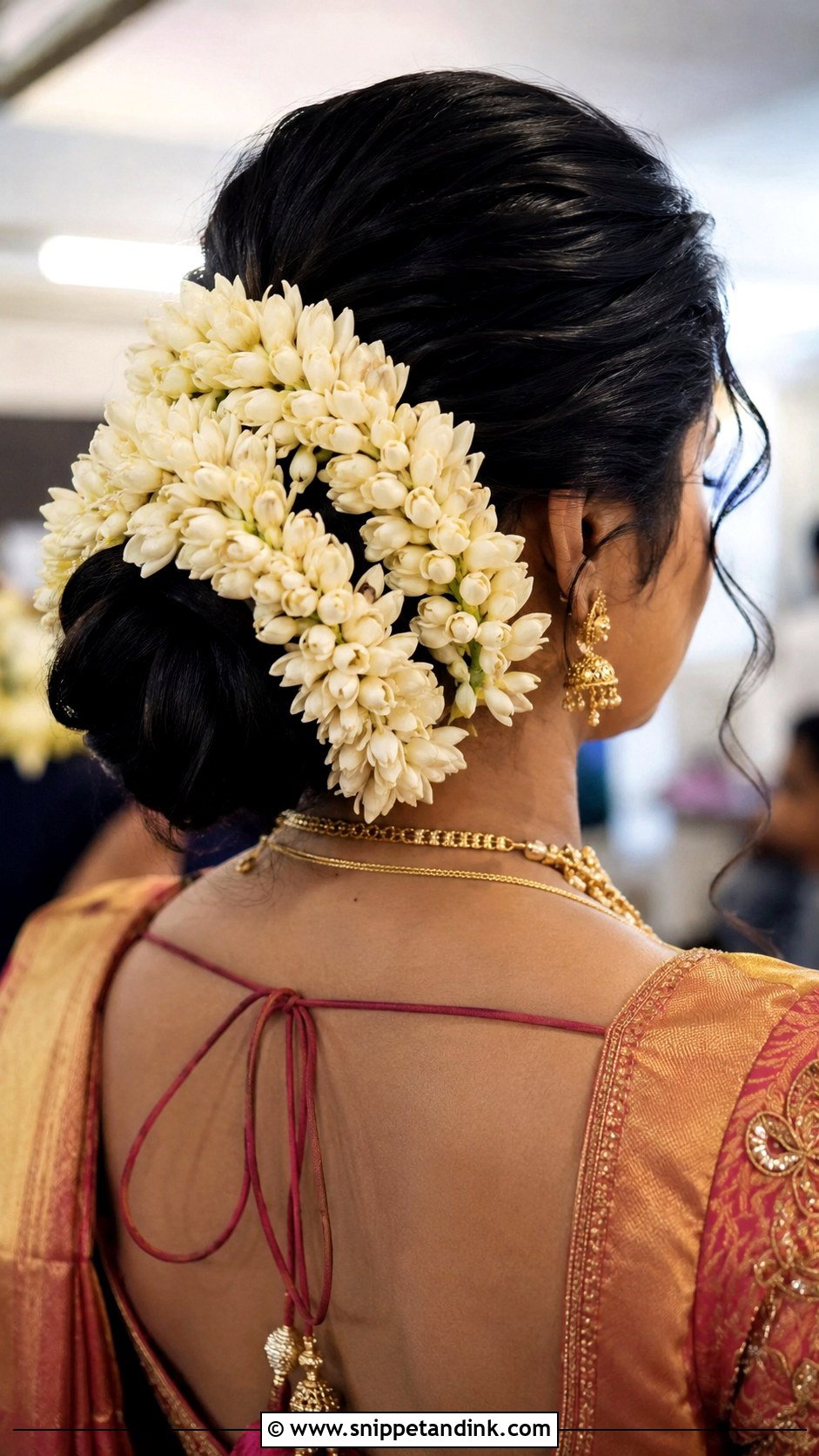
Sampangi is a cherished fragrant bloom in South India, woven into garlands and wrapped around a bun or braid. Its yellow-cream tones sit softly beside silk sarees and traditional jewelry, and it holds up through long ceremonies. Flower names change from region to region and language to language, so I always confirm with the seller exactly which bloom they mean by sampangi before I build a design around it. Combined with jasmine, it makes an extra-fragrant gajra.
19. Poolajada Flower Braid for South Indian Bride
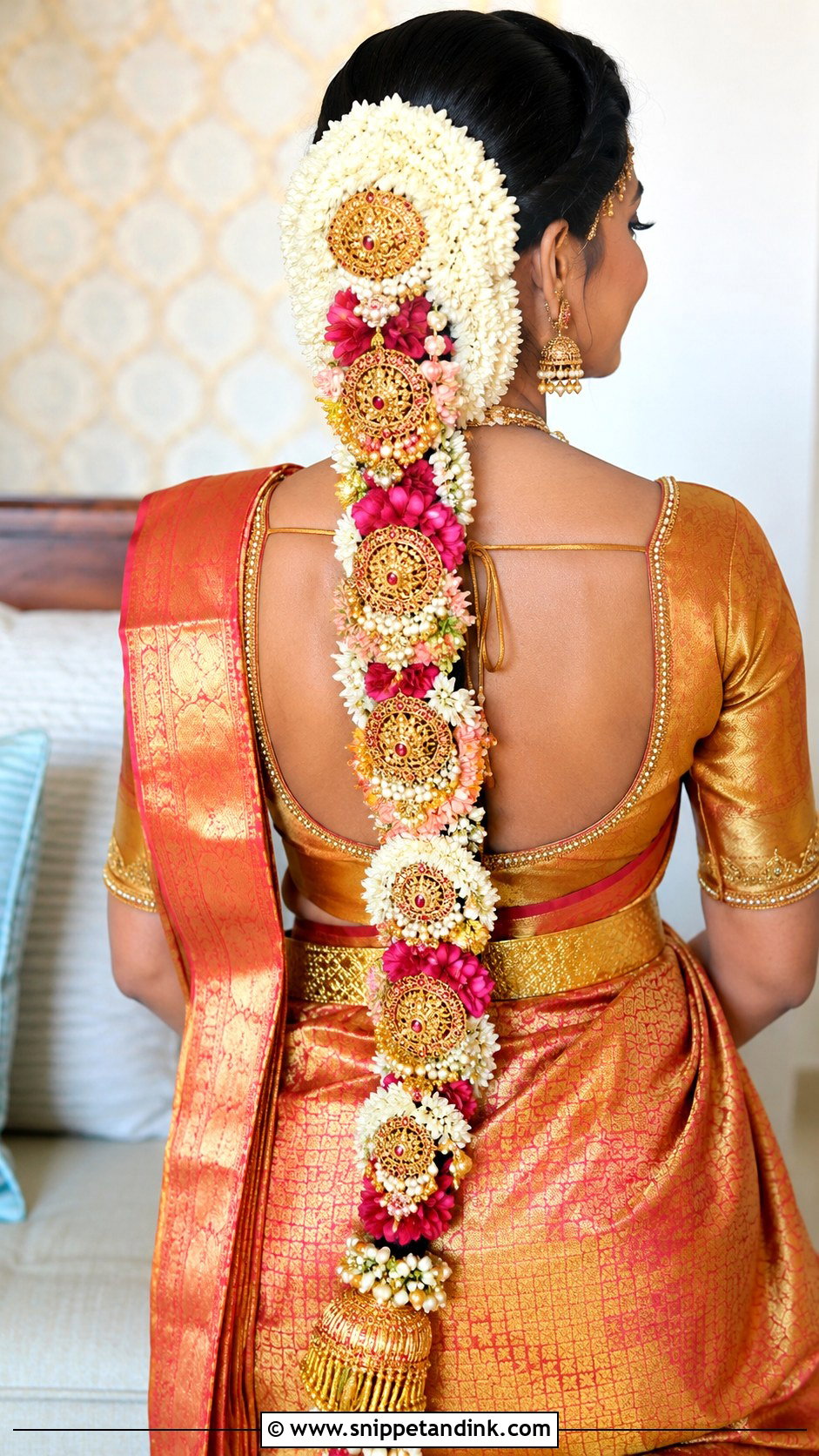
The poolajada is a long, pre-stitched floral braid that covers the bride’s plait from top to tip, built from jasmine, roses, marigolds, orchids and sometimes pearl strings, beads and gold ornaments. It is the grandest flower piece in South Indian bridal dressing, made to match the saree color and theme. Building one takes hours, and a full poolajada is heavy, so I stitch it onto a firm base and agree the delivery time with the hairstylist to the minute. For an authentic South Indian bridal hairstyle, nothing else carries the same weight of tradition.
20. Mixed Flower Gajra for Bridal Bun
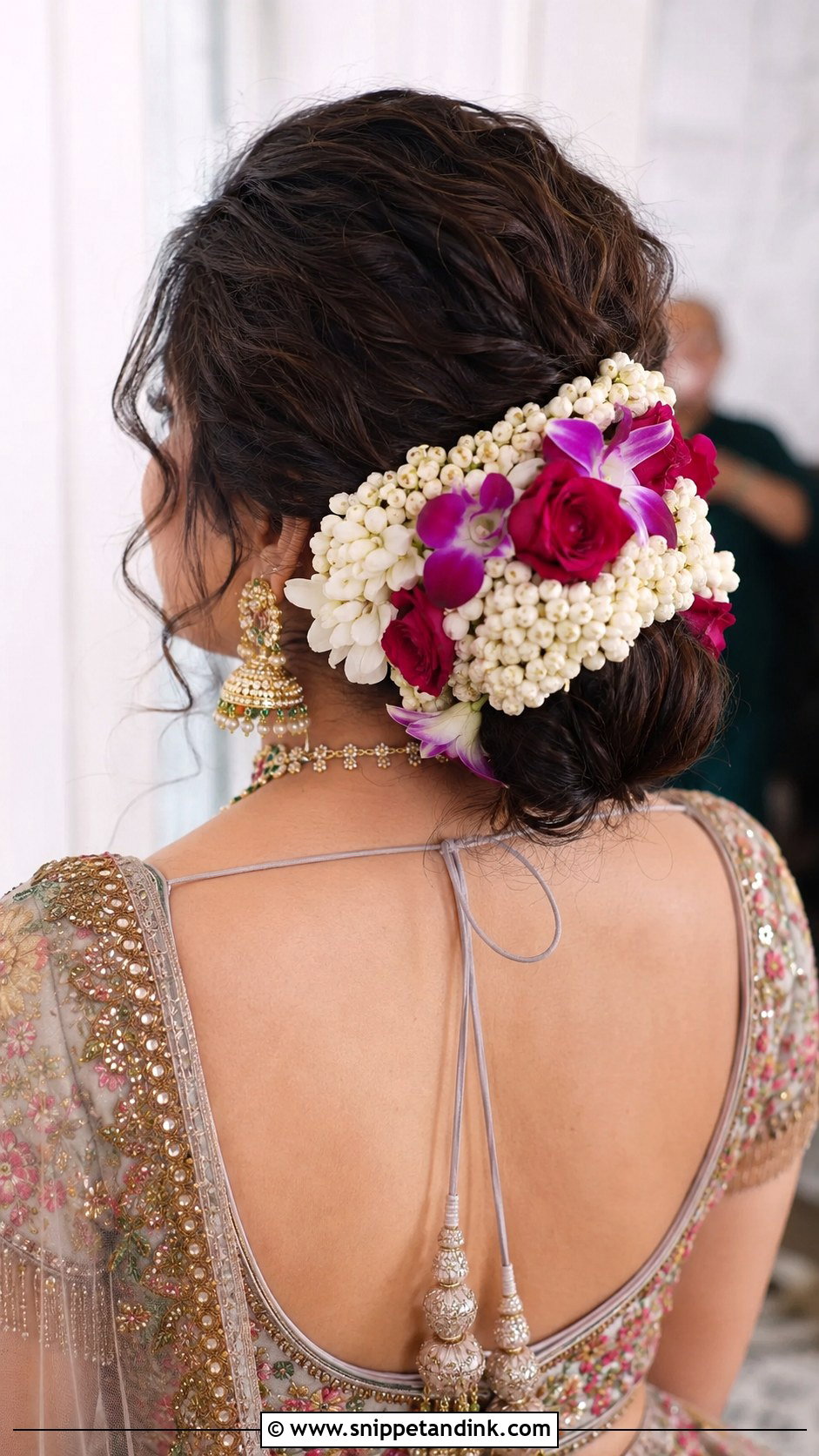
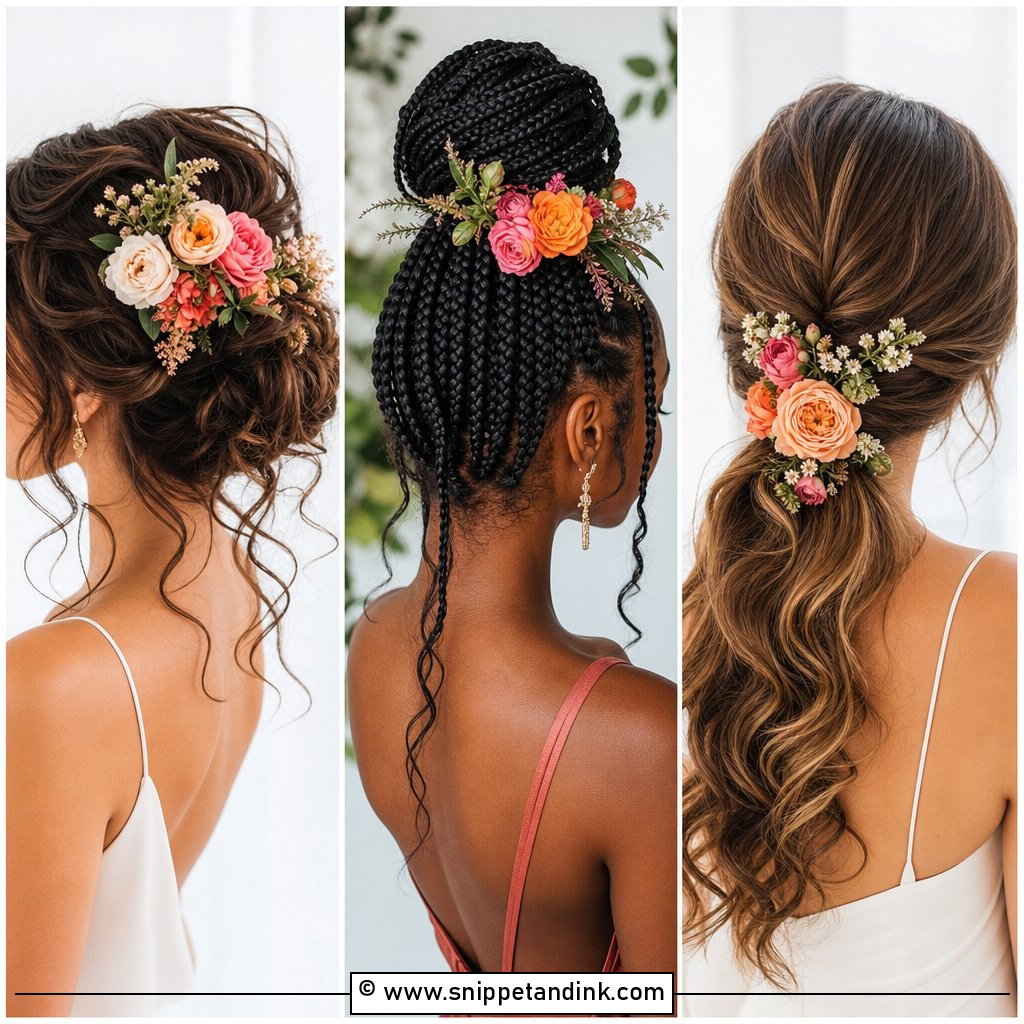
A mixed gajra combines jasmine, roses, mogra, orchids and more into one garland, wrapped around a low bun or layered along a braid. The blend of color and texture gives a rich, personal look that works with sarees and lehengas alike. The skill is in the mix. I pair flowers with similar stamina, so one fragile bloom does not brown while the rest look fresh, and I keep the colors to two or three taken from the outfit.
Your Hair Flowers Need Their Own Order Slip
Hair flowers often get lumped in with the decor order, and that is how a bride ends up with mandap-grade marigolds too large to pin. Treat them as a separate order with its own details:
- Send the florist photos of your hairstyle and outfit, plus your hairstylist’s contact, so the two can agree on sizes and attachment.
- Ask for small blooms, buds and wired or taped stems, not loose cut flowers.
- Set delivery for the morning of each event, timed to the hairstylist’s schedule rather than the venue setup.
- Order a small spare portion in a damp box for touch-ups later in the day.
- Keep everything cool and wrapped in damp cloth until it is used. A refrigerator is fine; a freezer or ice directly on petals is not.
Pollen Stains, Sap and Strong Scents
A few flowers here need handling with care. Lily pollen stains silk, so the anthers come out before delivery. Frangipani sap can irritate sensitive skin. Tuberose, gardenia and a thick jasmine gajra are wonderful at arm’s length but intense when worn behind the ears for eight hours. If you have hay fever, sensitive skin or a history of scent headaches, wear a sample of each flower for an hour before the wedding week. It is a small test that saves a miserable ceremony.
Let the Season Pick Half Your Flowers
Flowers have always been part of Indian bridal dressing, from the jasmine gajra to the poolajada to newer blooms like hydrangea. The right ones pick up your saree, suit the season and still look fresh at the last ritual. Start with your outfit colors, then ask your florist which flowers are in season and which will last the hours you need. Comfort matters as much as looks, so test the scent and the weight at your trial.
You'll Like These Ideas:



Leave a Reply