
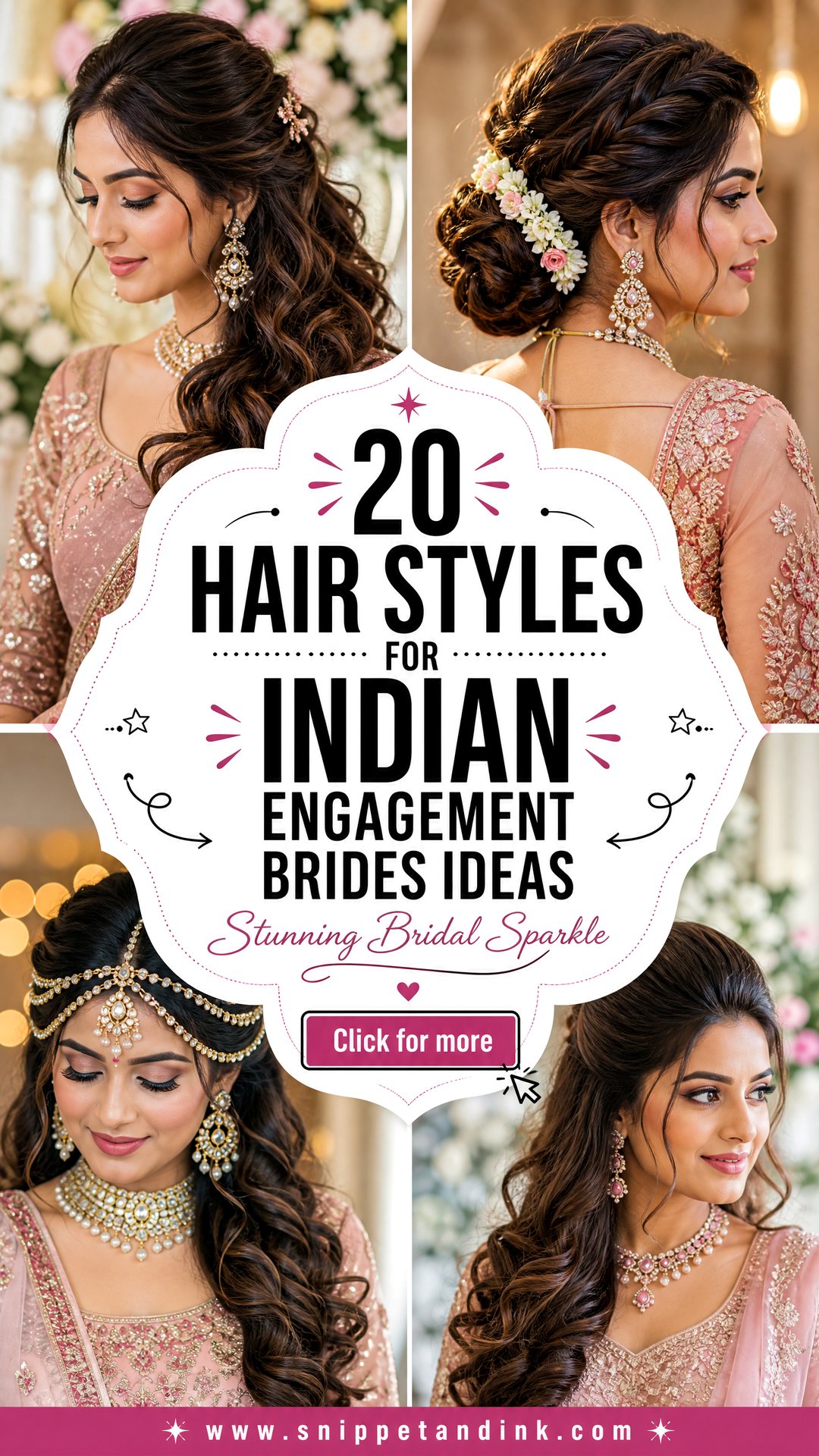
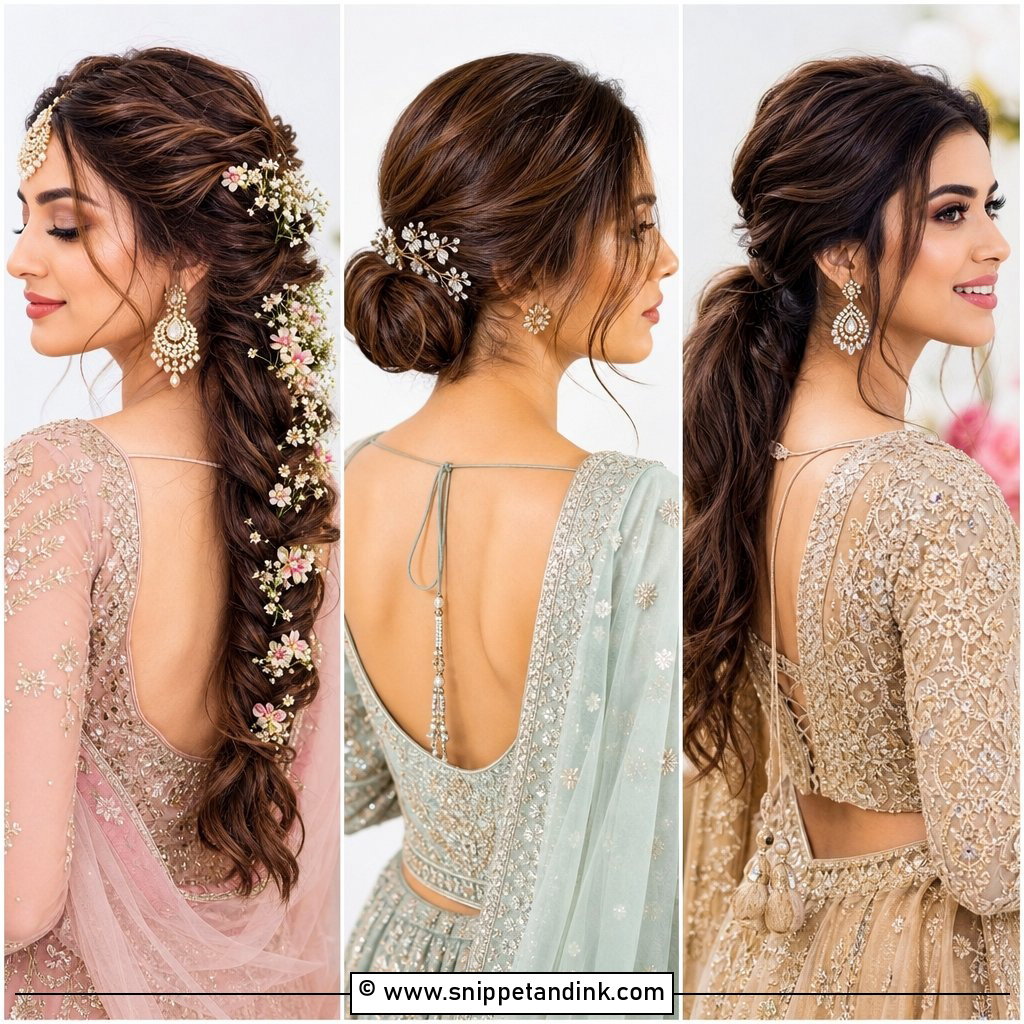
An engagement gives you more freedom with your hair than the wedding itself. There are fewer rituals to work around, often no dupatta over the head, and the mood leans closer to a reception. That’s the moment to try open curls, a sleek ponytail or a modern braid. Classic choices still have their place too: jasmine buns, loose curls with a maang tikka, braids for sarees and smooth waves for lehengas or gowns. What decides it is your neckline, your dupatta, your jewelry, your length and the weather. Here are twenty engagement styles, with what I watch for when I build each one.
Save Something for the Wedding Day
Engagement photos and wedding photos end up side by side in albums. If both days use the same jasmine bun and center-parted tikka, they blur together. I usually suggest planning both looks at once and giving each its own character.
- If the wedding will be a traditional bun under a dupatta, use the engagement for open hair, curls or a ponytail.
- If you’re wearing your hair down at the wedding, try a sleek bun or a braid for the engagement.
- Change the forehead jewelry between events: a tikka for one, a matha patti or hair chain for the other.
- Keep the flowers different too, jasmine on one day and roses or orchids on the other.
Where the engagement is close to the wedding, book one trial that tests both looks back to back. It saves time and shows straight away whether they’re different enough.
1. Indian Engagement Bridal Bun
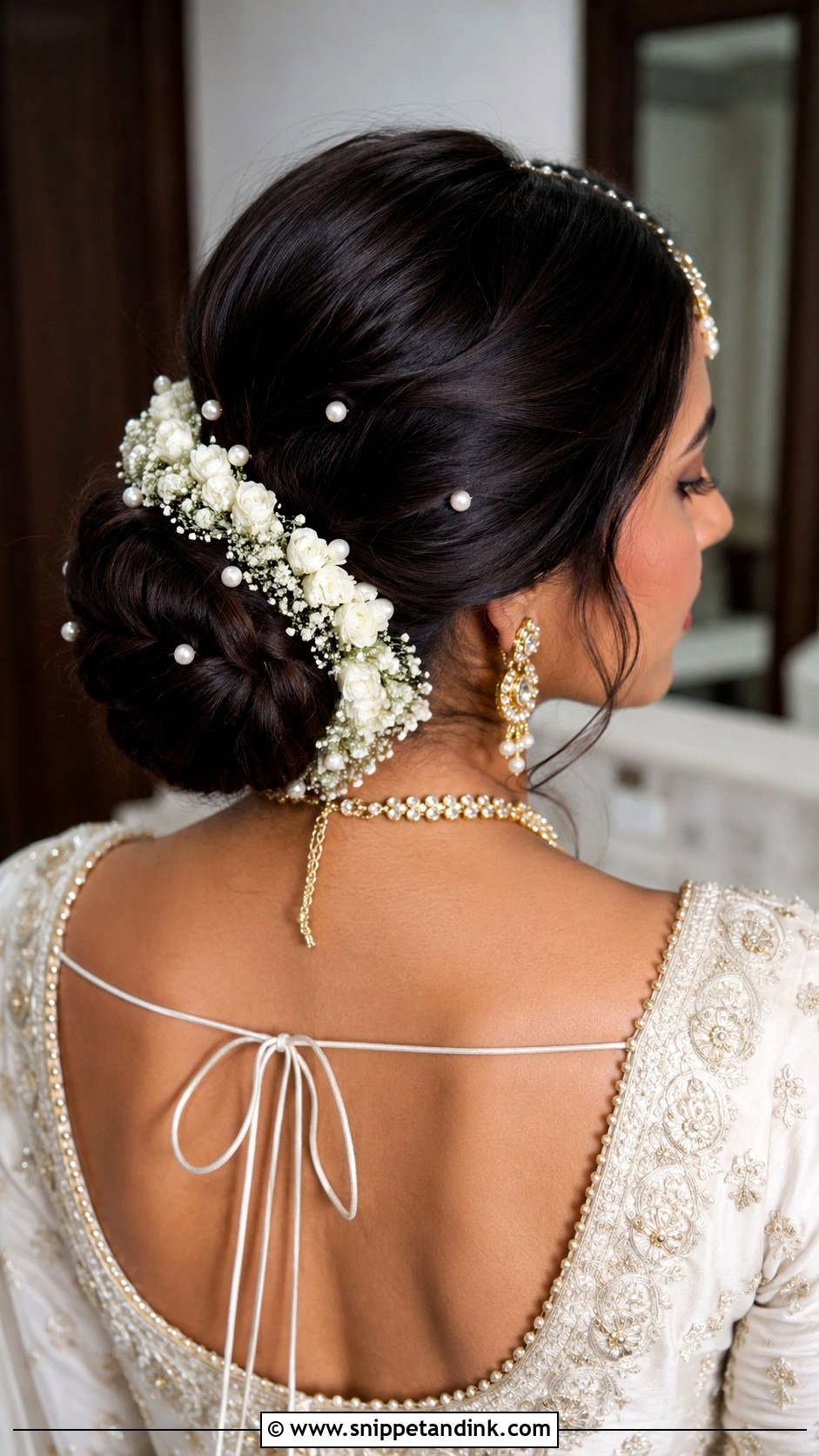
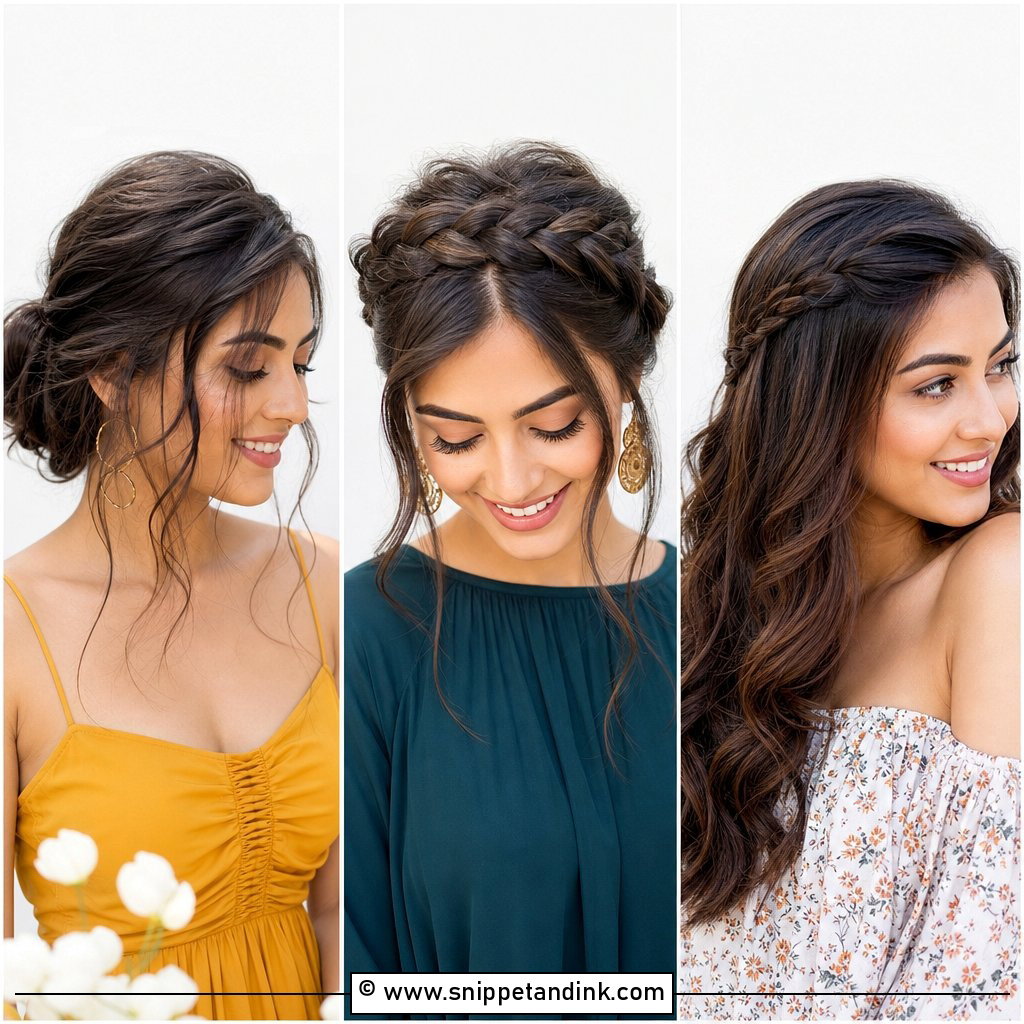
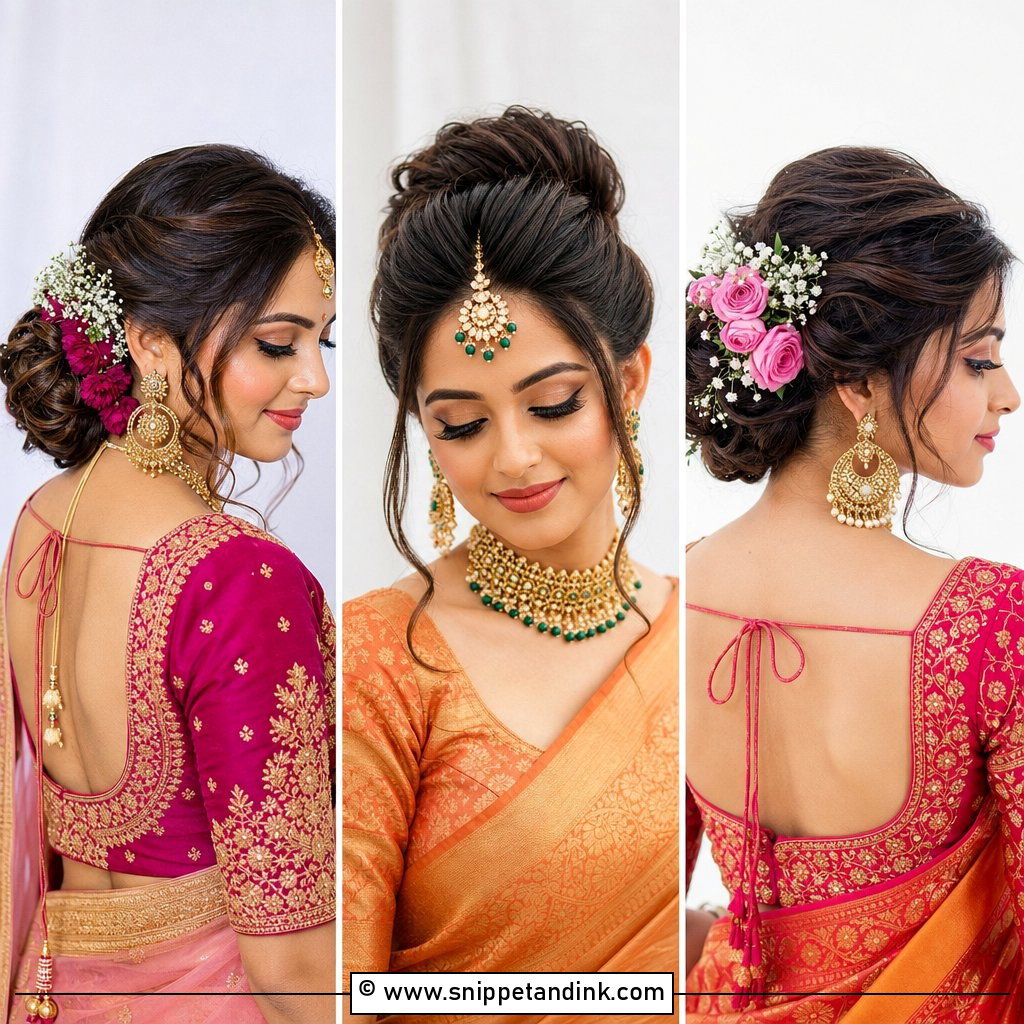
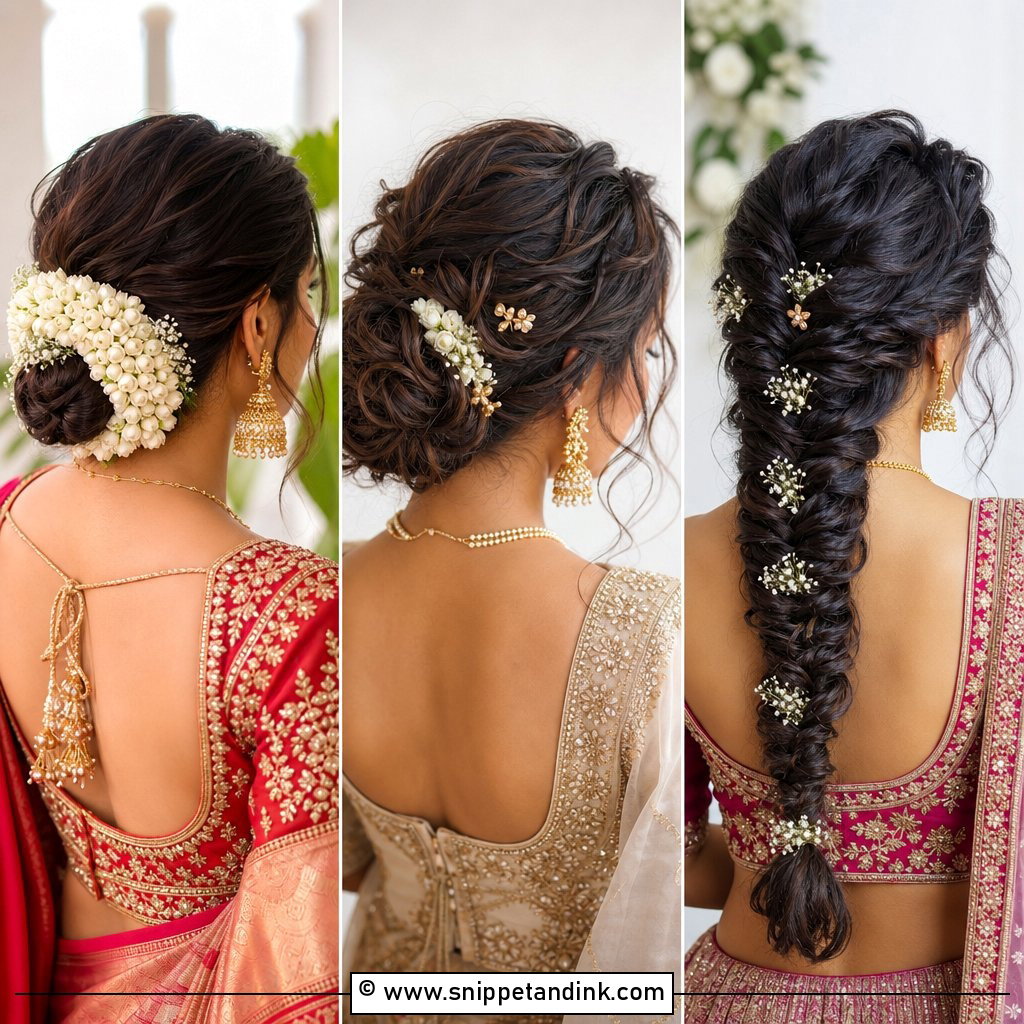
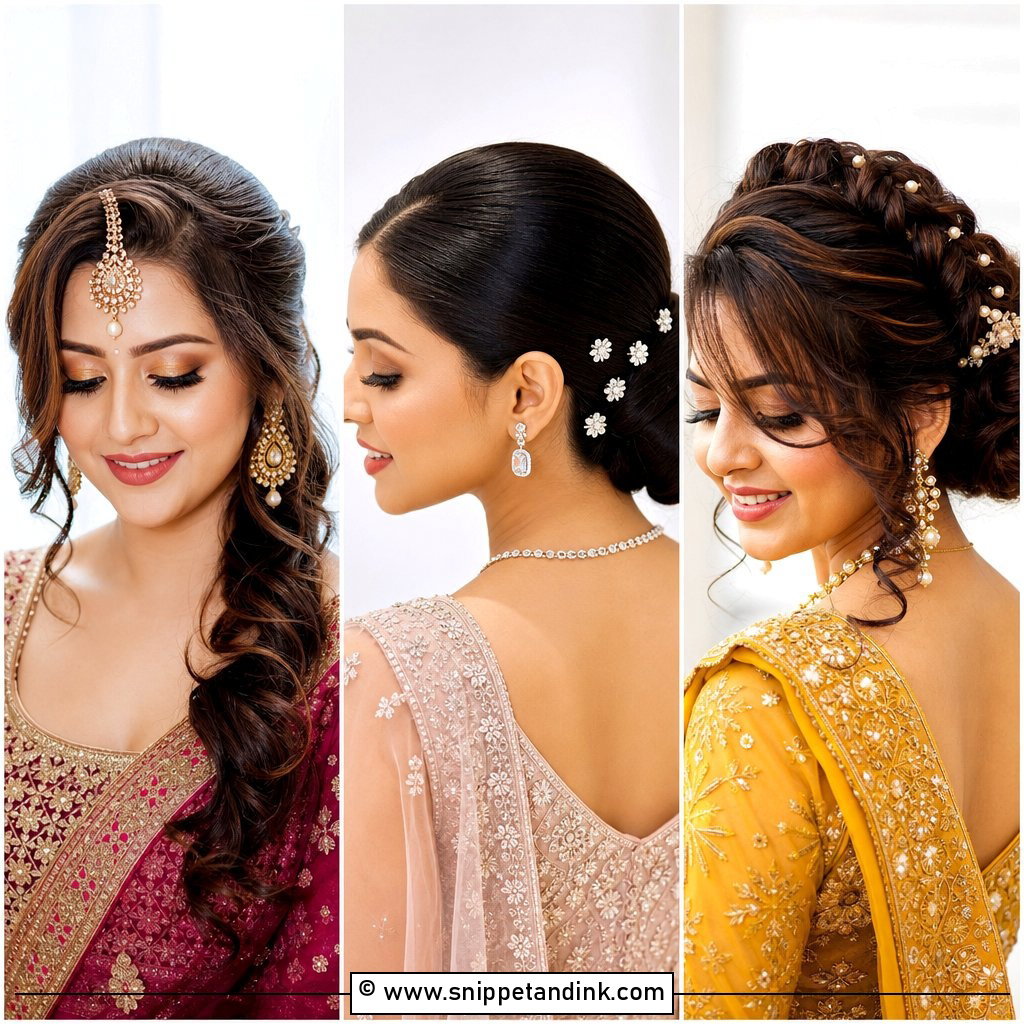
The bun is the steady choice when the outfit is heavy: dense embroidery, a statement blouse or a dupatta that needs pinning. It keeps the face open and the jewelry visible, and it suits lehengas, silk sarees, anarkalis and Indo-western gowns. Low at the nape reads softer; centered at the back looks more traditional. I always secure the base with an elastic, then pin, because a passa or a few strings of jasmine add real weight. Smooth front sections give polish, and a couple of loose pieces soften it.
2. Indian Engagement Loose Curls
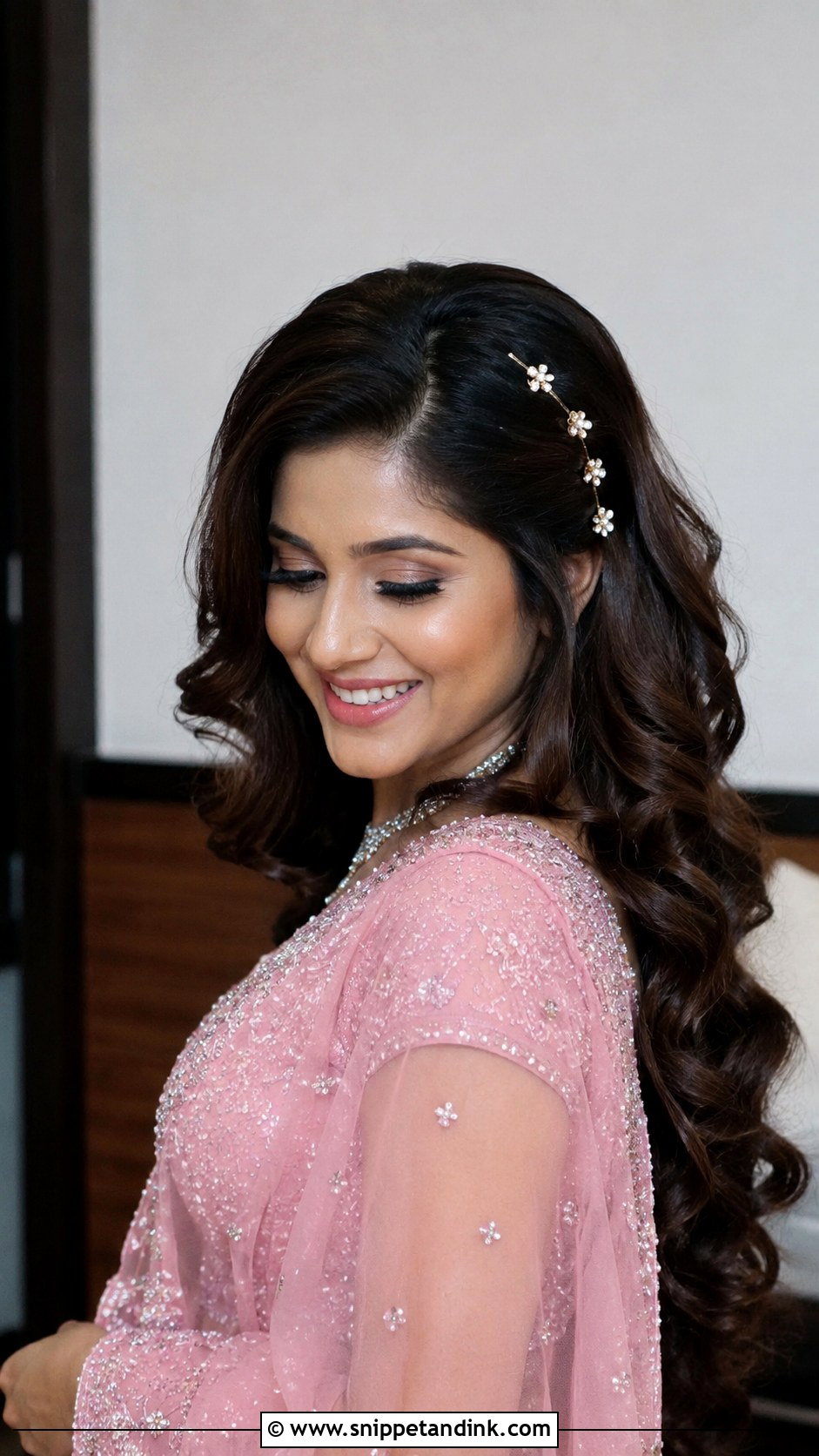
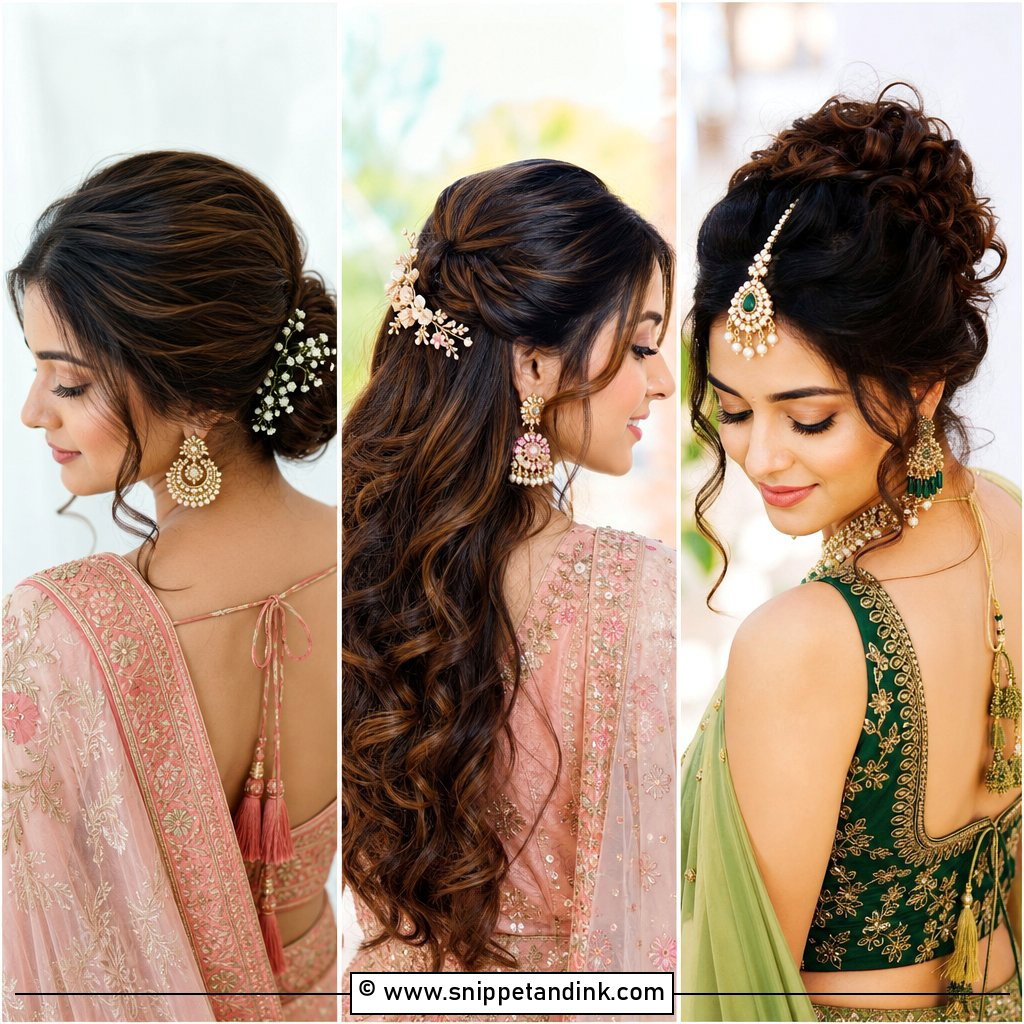
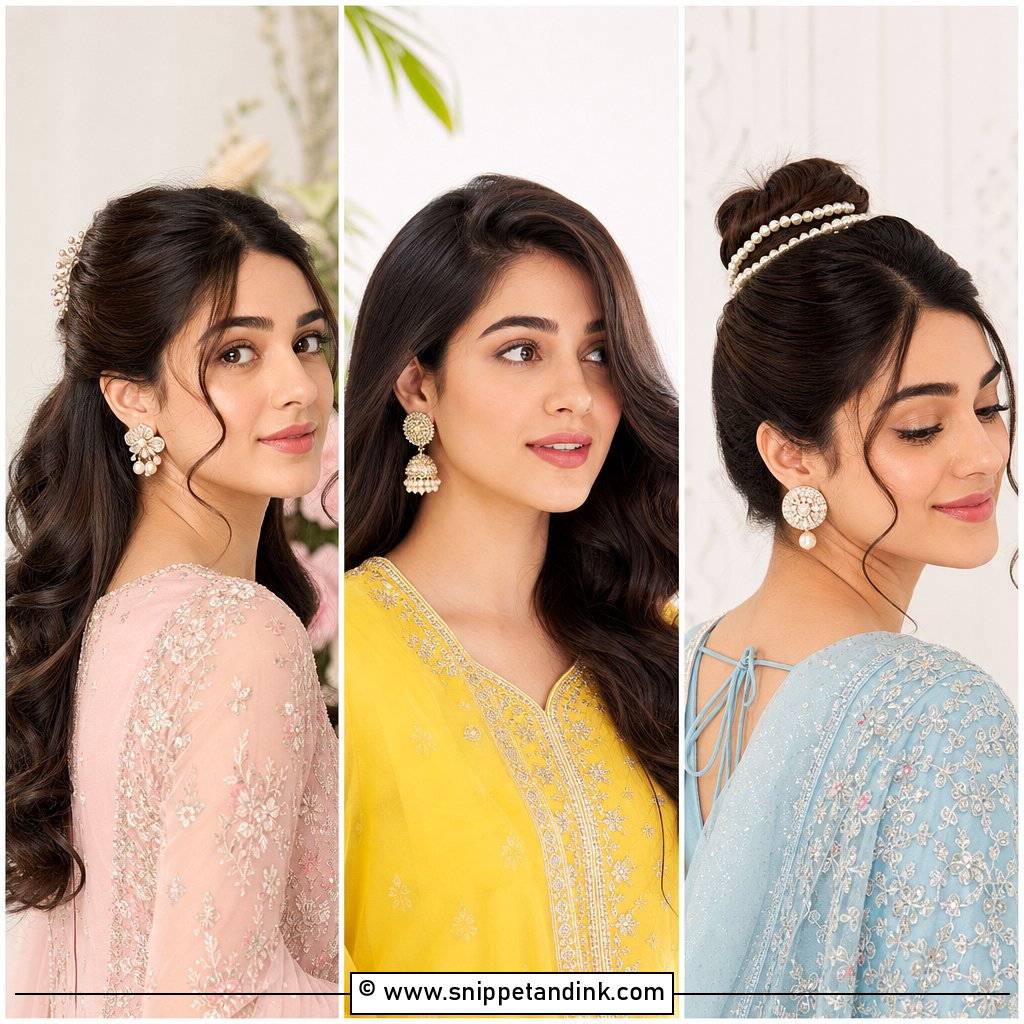
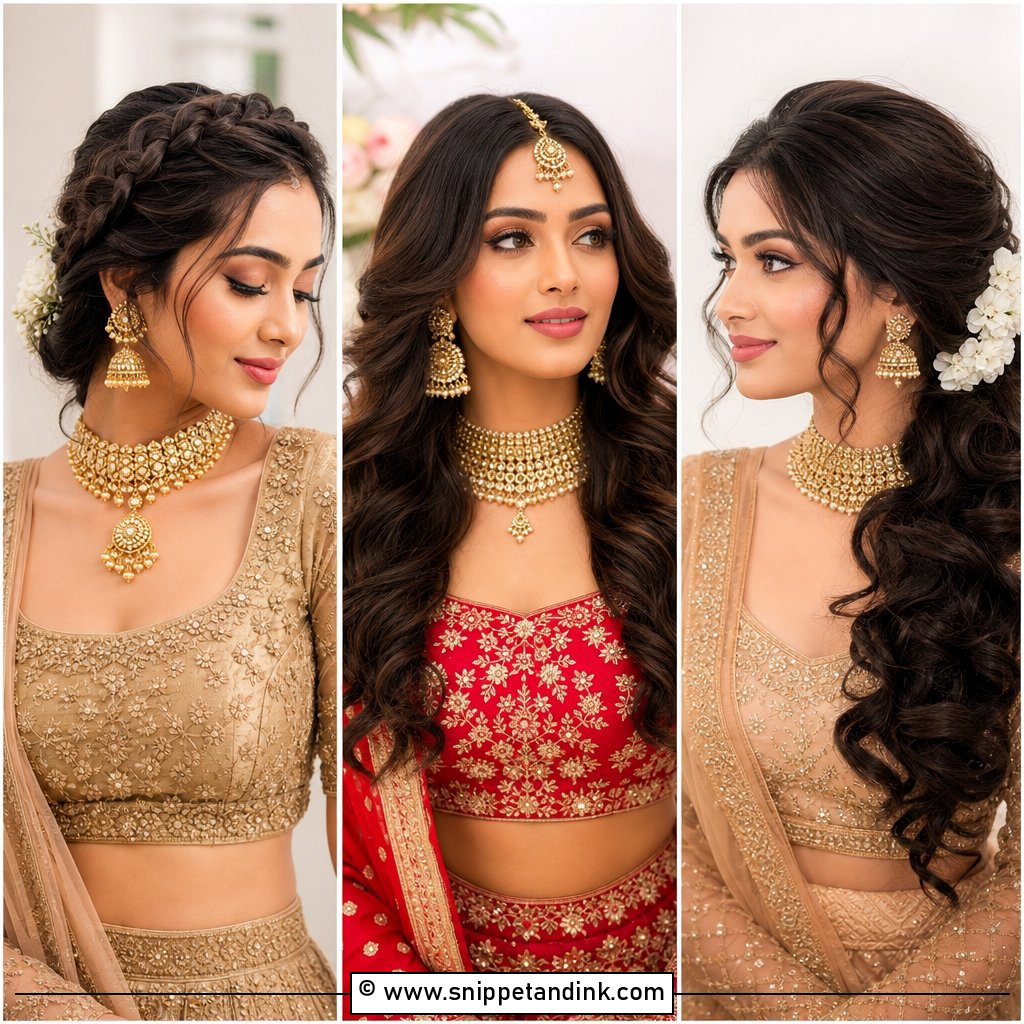
Loose curls let you wear your hair down and still look dressed for the occasion. Controlled curls are the aim, not ringlets. I curl away from the face in medium sections, pin each to cool, brush through lightly and finish with a flexible spray. A center part frames a maang tikka; a side part favors statement earrings. Fine hair benefits from a few hidden wefts for fullness. They need to match your color and be real hair, or they won’t take heat the same way.
3. Indian Engagement Half Up Hairstyle
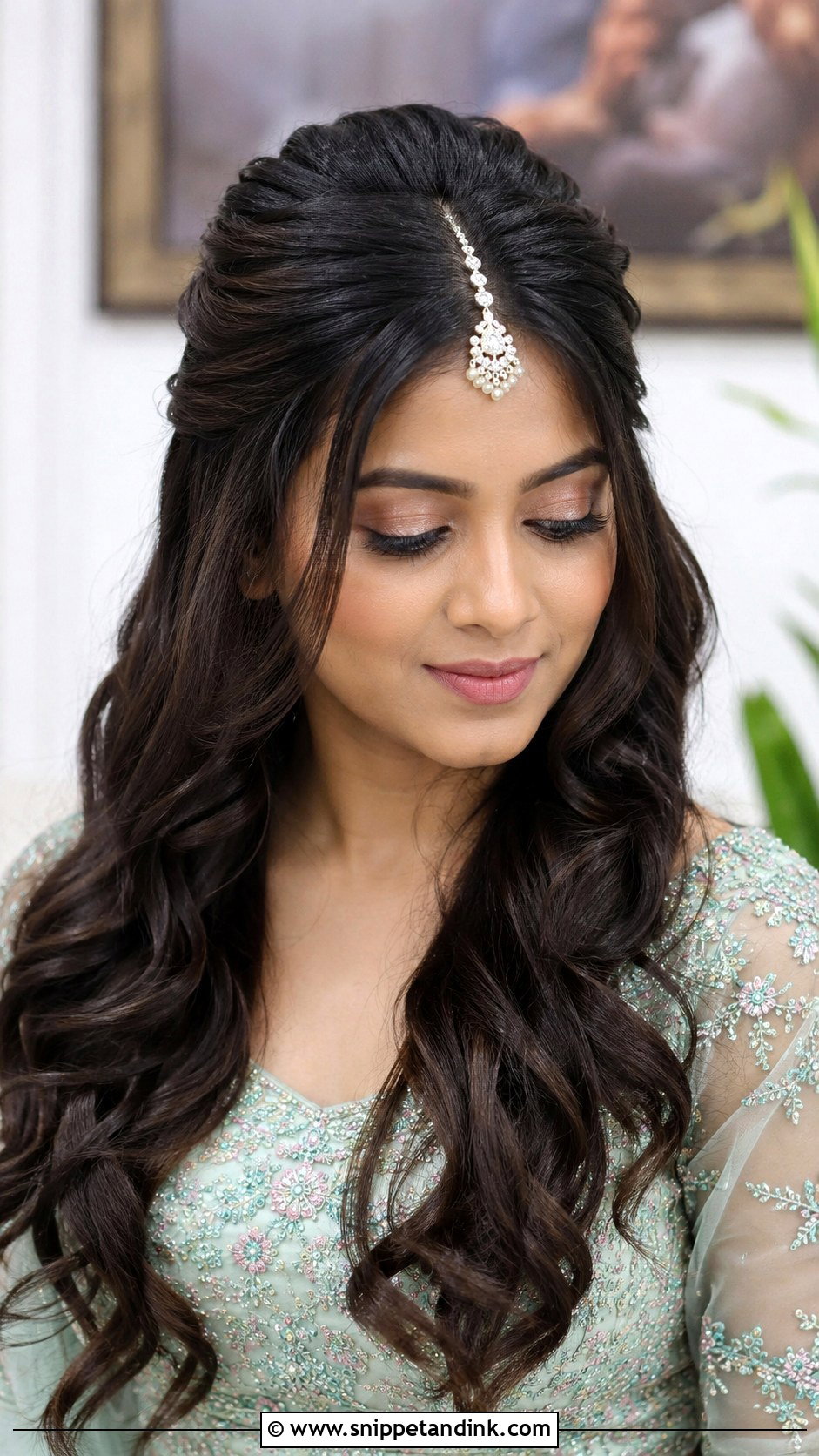
A half up style keeps the crown neat while the length falls in waves or curls, and it gives forehead jewelry a firm base. I place a maang tikka, matha patti or delicate hair chain into the pinned top section, where it can’t slide. Outdoors, that pinned section also controls flyaways. I add lift at the crown with light backcombing, kept soft so it doesn’t turn stiff. Medium to long hair shows it best.
4. Indian Engagement Side Braid
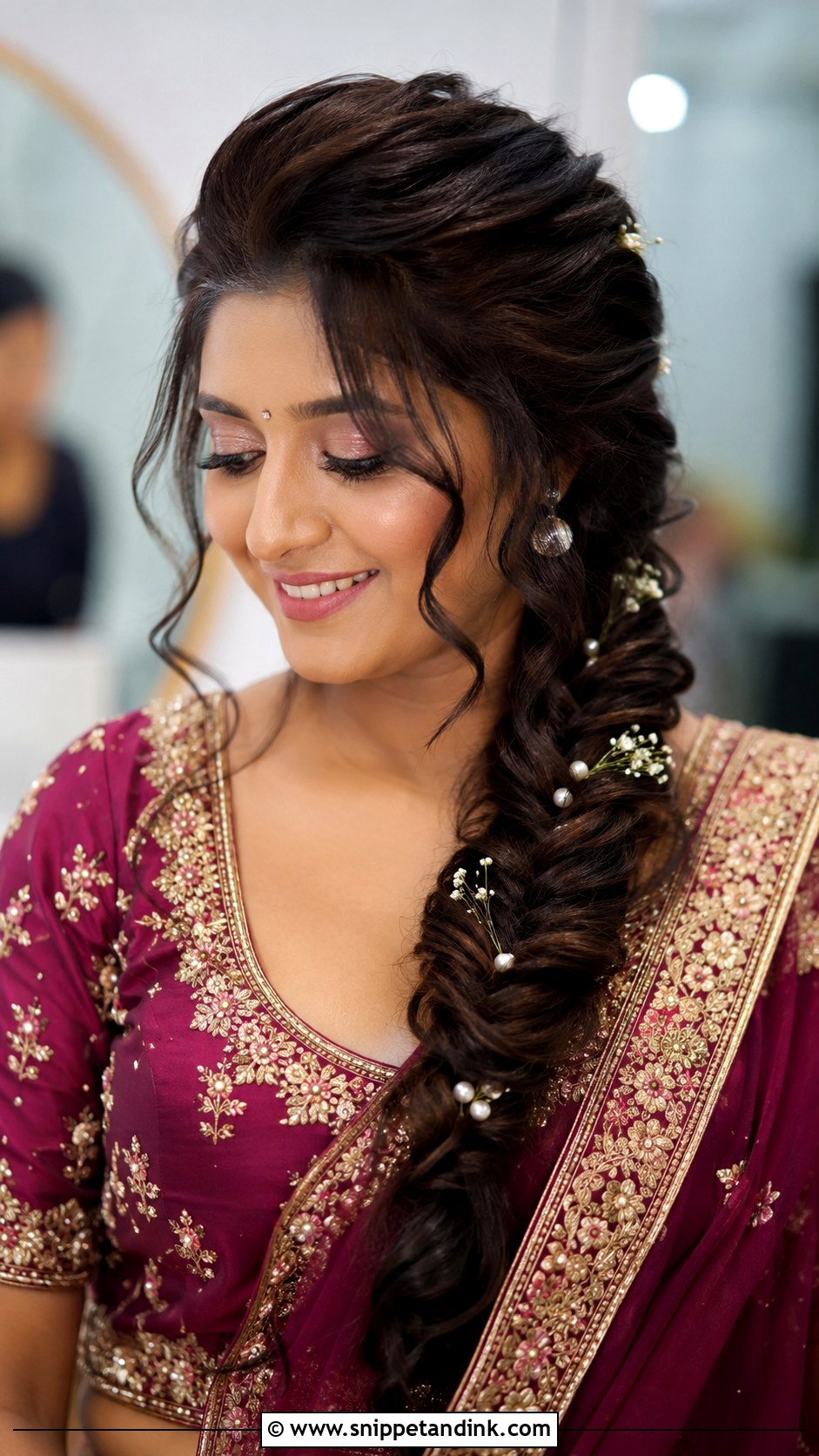
A side braid is easy to photograph from the front and becomes part of the outfit with a saree or lehenga choli. It can be a loose fishtail, a soft Dutch braid or a classic three-strand with curled ends. Flowers, pearls or gold pins along it make it festive. In humidity, a braid outlasts open curls by hours, which is why I suggest it for summer or outdoor engagements. Keep the front soft and decide the part by your tikka: center if you’re wearing one.
5. Indian Engagement Low Bun With Flowers
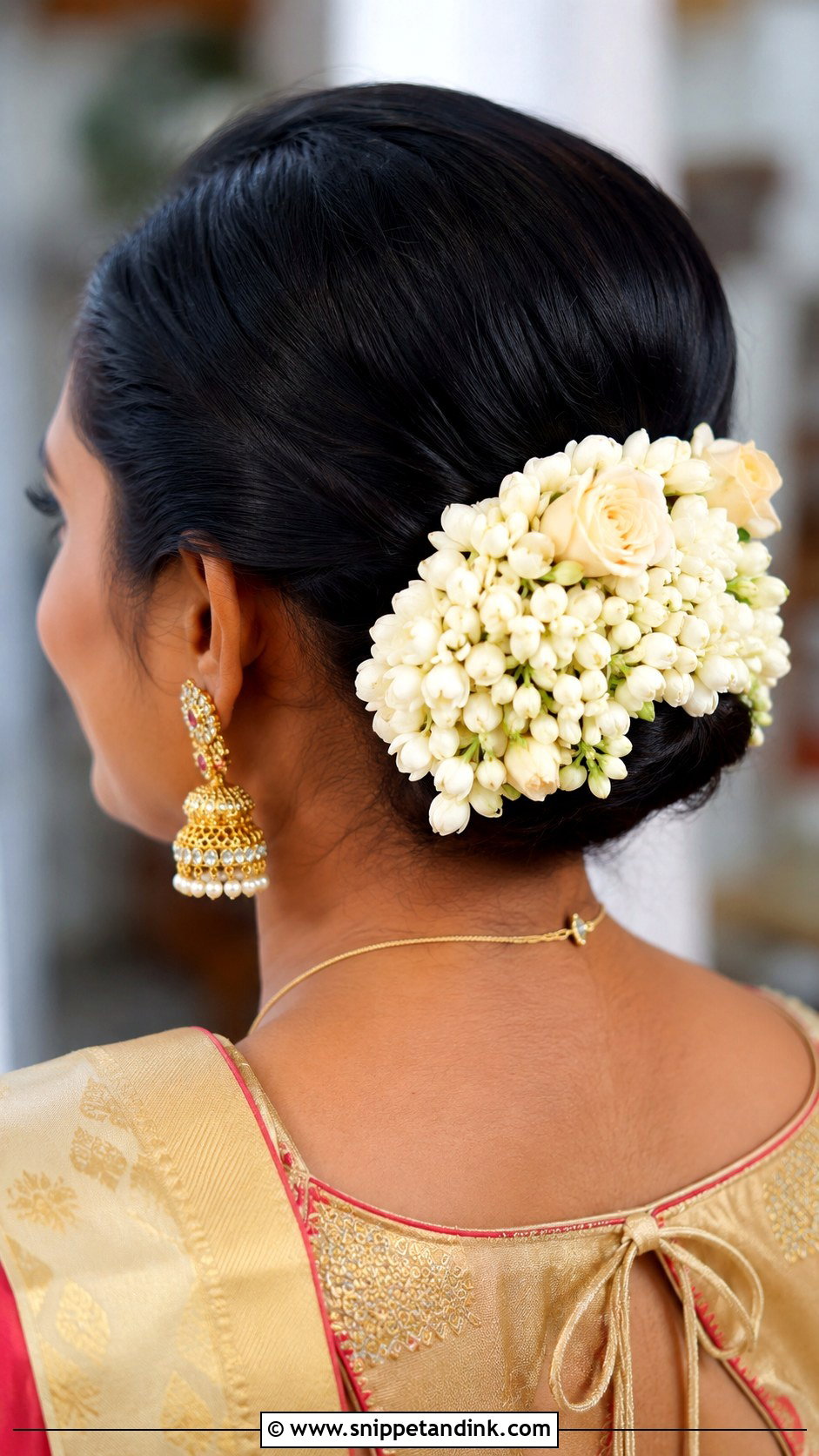
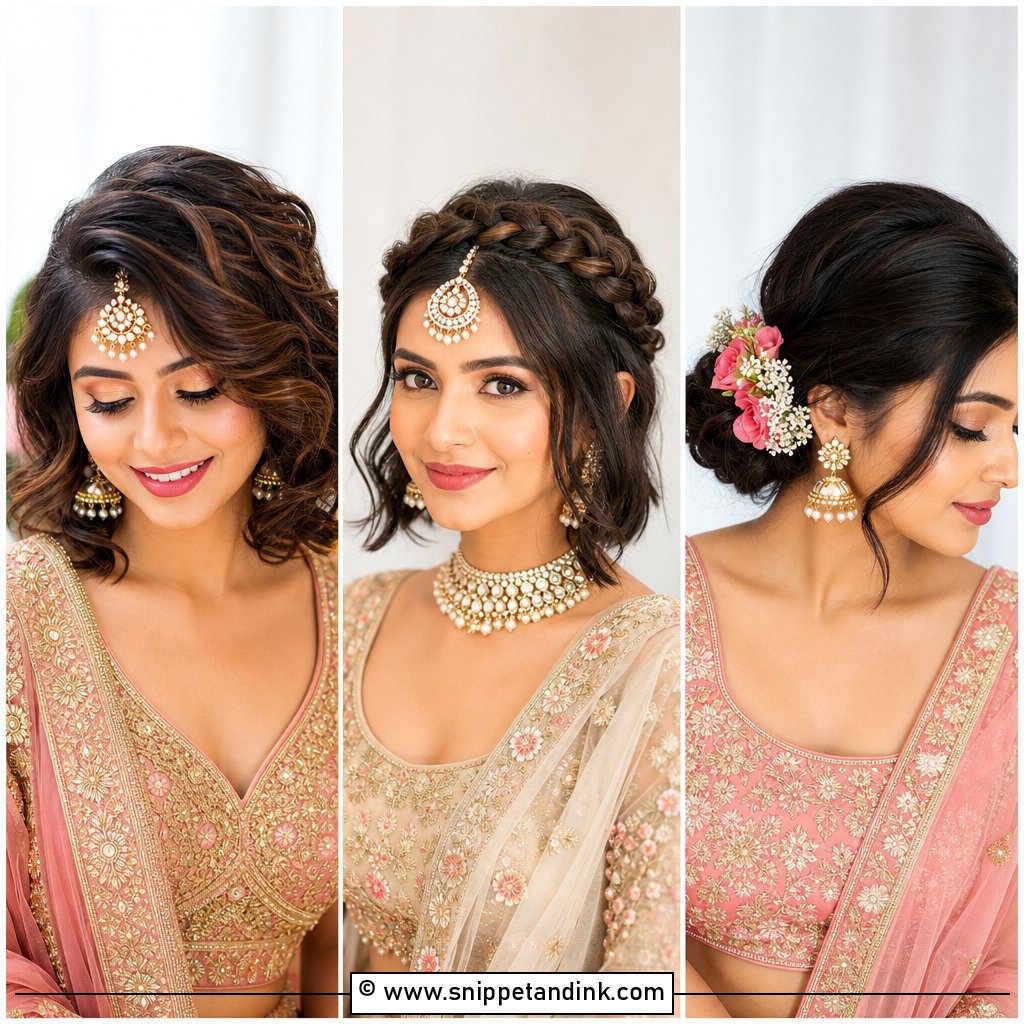
A low bun with flowers sits close to the nape, leaving a backless blouse or deep neckline uncovered. Jasmine gives the traditional fragrance and look; roses, baby’s breath or orchids make it feel more contemporary. It also supports a dupatta pinned over the crown or across the shoulder. I build the bun first and wire in the flowers last, so they don’t get crushed while I pin. A sleek middle part looks formal; soft twisted sections at the front read more relaxed.
6. Indian Engagement Sleek Straight Hair
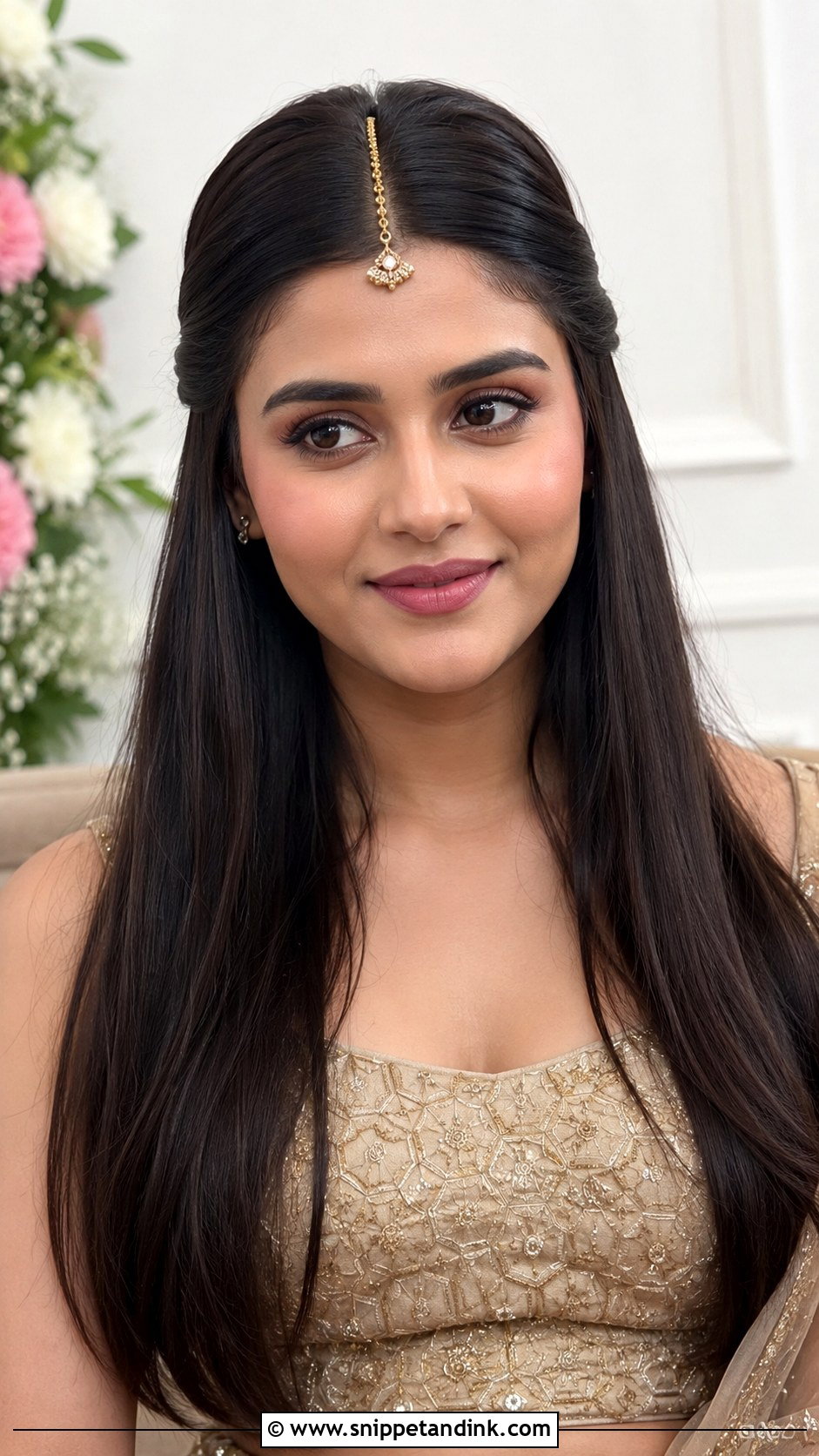
Sleek straight hair suits structured lehengas, contemporary sarees and pastel gowns, especially with bold jewelry. Done well, it’s glossy and moves; done badly, it’s flat. I blow-dry with a round brush for some body at the root before flat ironing. A center part with a tikka looks refined, a deep side part more glamorous. Healthy ends matter because this style shows every split, so a trim two or three weeks ahead is worth it. Use serum sparingly, mostly on the lengths, so it doesn’t look oily under flash.
7. Indian Engagement Wavy Hair
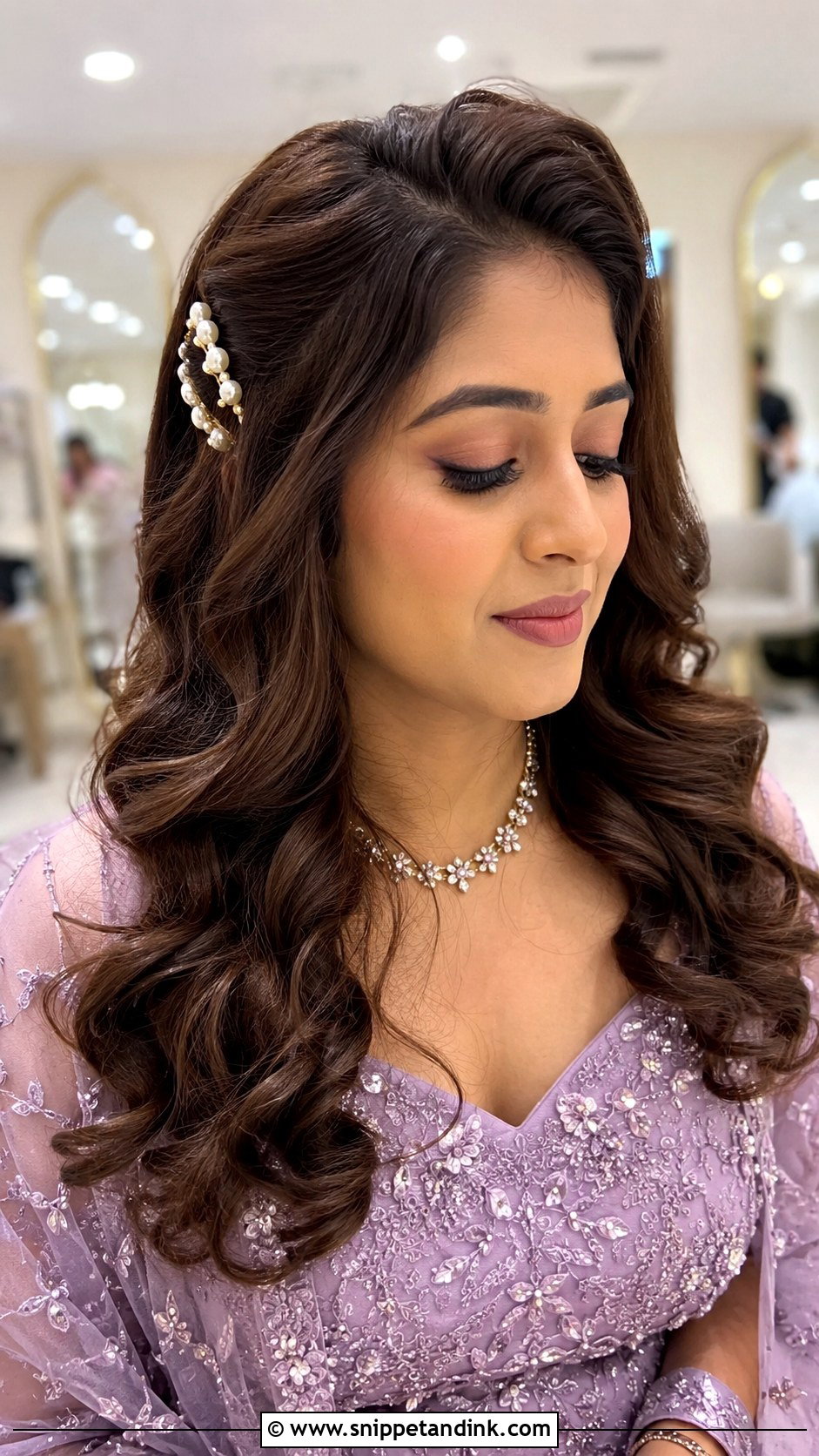
Waves sit between straight hair and full curls: smooth at the root, soft bends through the mid-lengths and brushed-out ends. They frame the face and add movement around the shoulders with lehengas, gowns and lighter sarees. I use a large barrel and alternate the curl direction so the waves don’t clump into one heavy shape. A tikka, pearl clips or one floral pin near the part is plenty. Thick hair holds this shape well; very fine hair may need a tighter curl to end up looking like a wave.
8. Indian Engagement Braided Bun
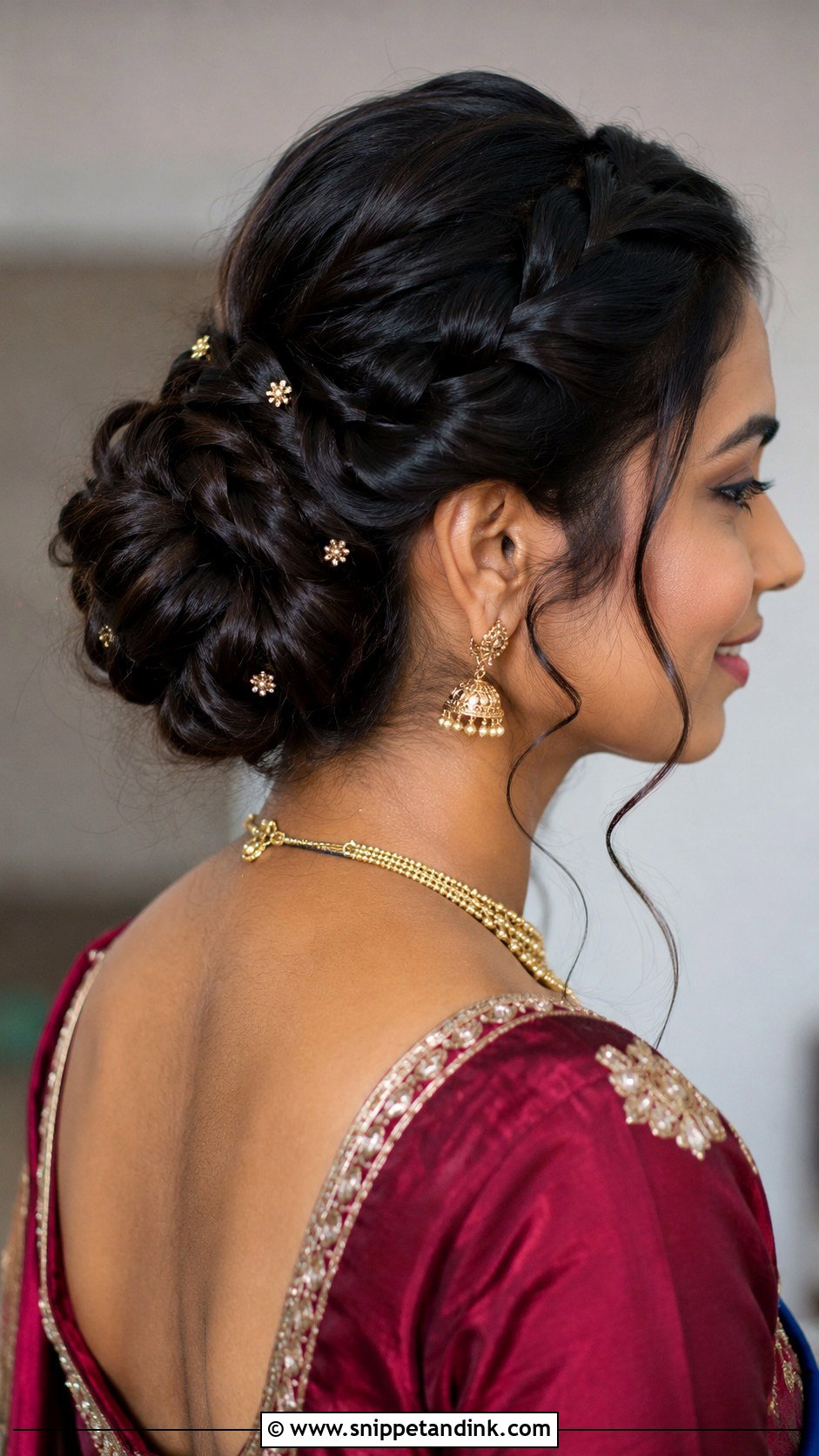
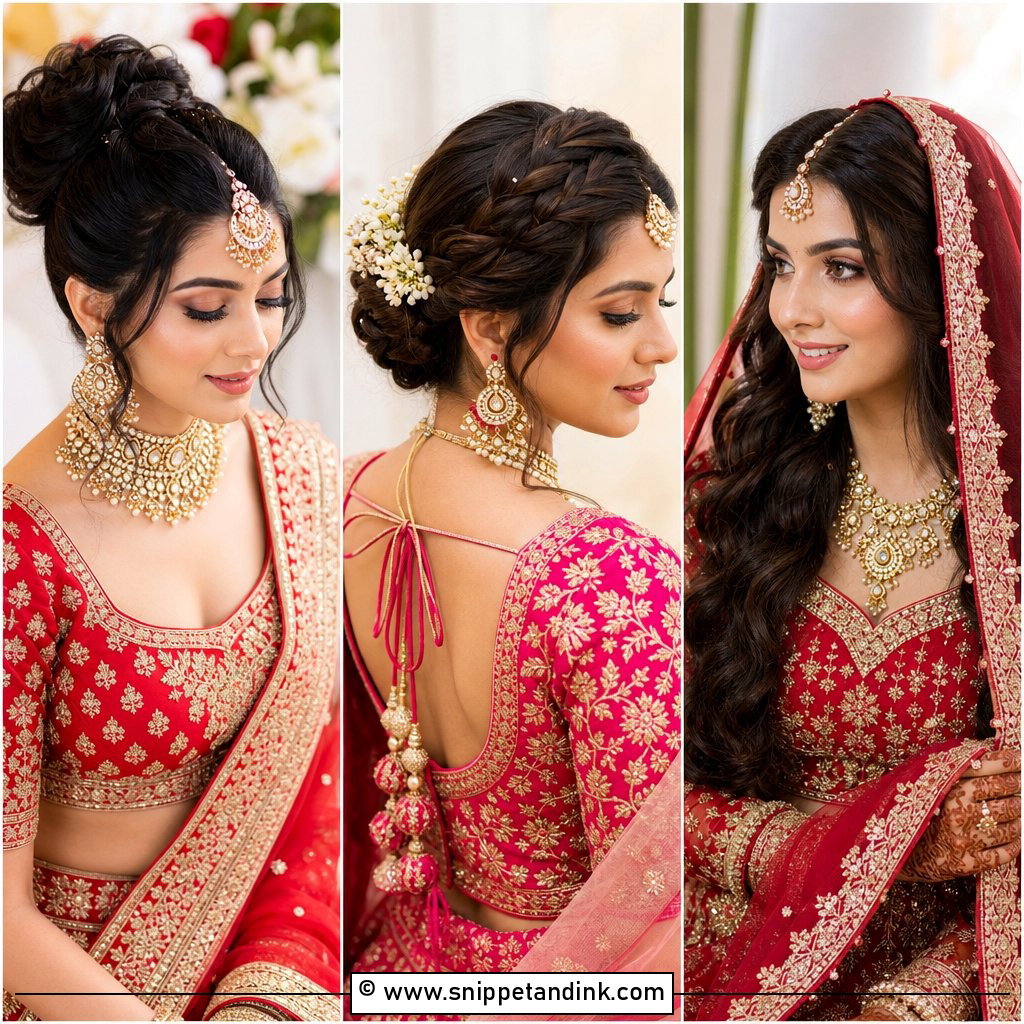
A braided bun gives more detail and more hold than a plain twisted bun. The braid can wrap around the base, start at the front hairline or form the base itself. With sarees, lehengas and heavy bridal sets it looks ornate rather than messy. Because the hair is locked in the braid, it stays secure through a long evening of greetings and photographs. Pearl pins, gold accessories or a few fresh flowers suit it. I’d choose it over a messy bun if your ceremony runs late.
9. Indian Engagement Messy Bun
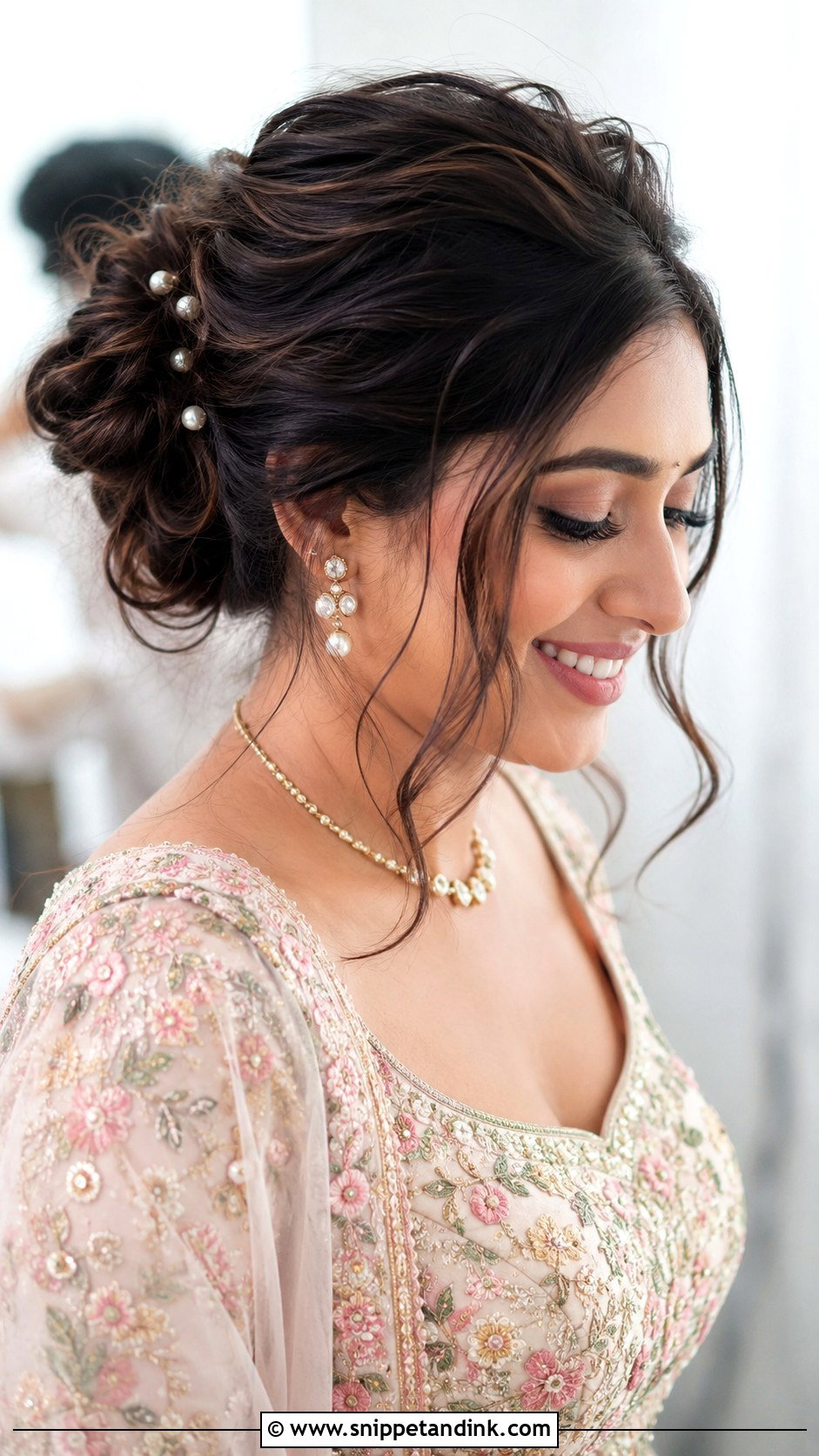
A messy bun can look bridal if the texture is placed rather than random. I build it on a secure base, loosen a few twists and pull out a couple of face-framing pieces at the end. It sits naturally with pastel lehengas, ruffle sarees, floral outfits and lighter jewelry. Outdoors or in humidity, keep the loose pieces few. They frizz first and can look untidy by the ring exchange. Tiny flowers or pearl pins finish it without fighting the outfit.
10. Indian Engagement Ponytail
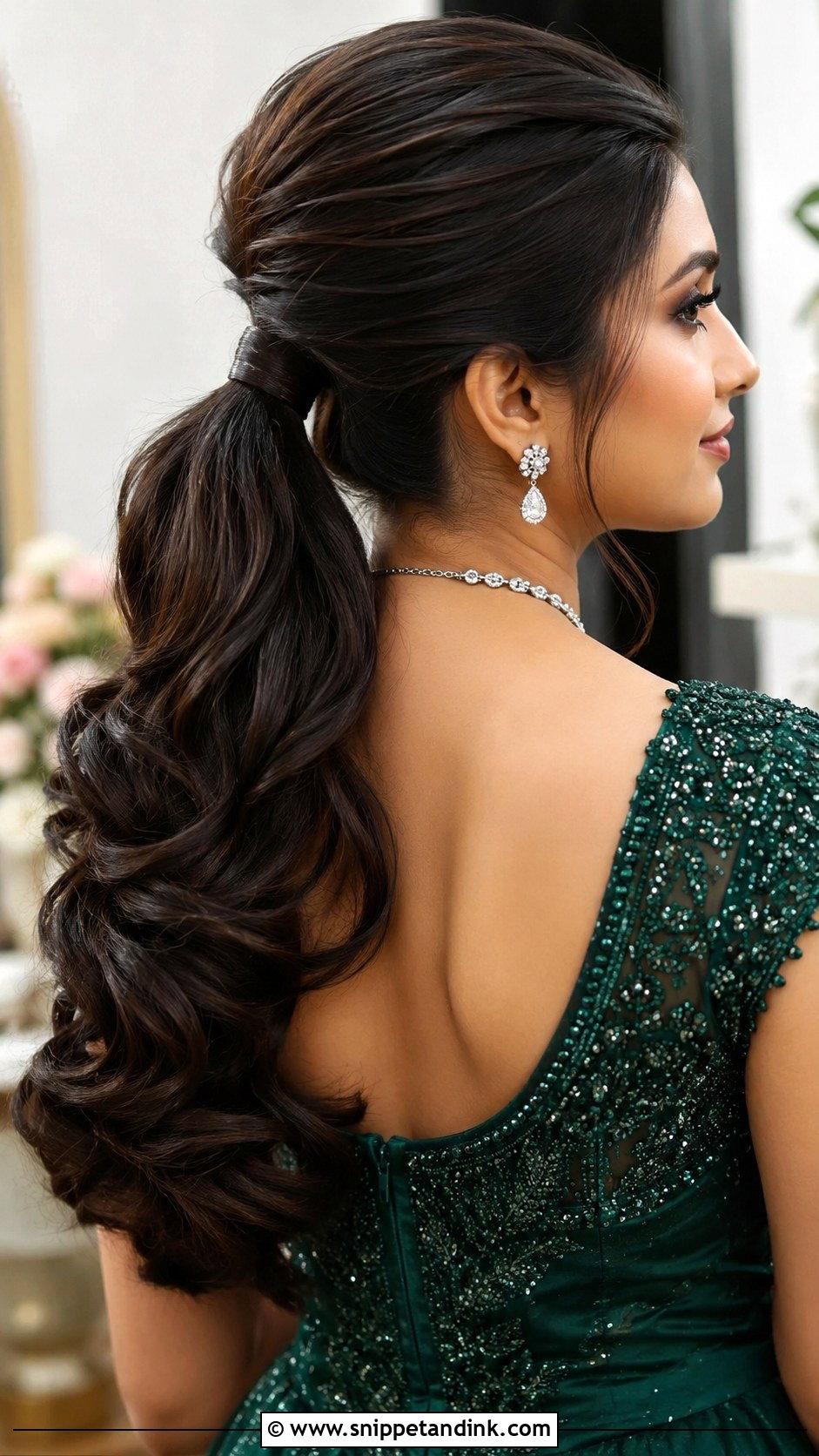
A ponytail looks young and modern with gowns, shararas, capes and contemporary lehengas, and it means far fewer pins on your scalp. High is dramatic, mid-height is balanced and low is elegant. I curl the lengths for volume and wrap a section around the base to hide the elastic. It keeps the face clear for chokers and earrings. One practical note: a heavy high ponytail can pull at the scalp over several hours, so for a long function I’d set it slightly lower than you might first ask for.
11. Indian Engagement Floral Braid
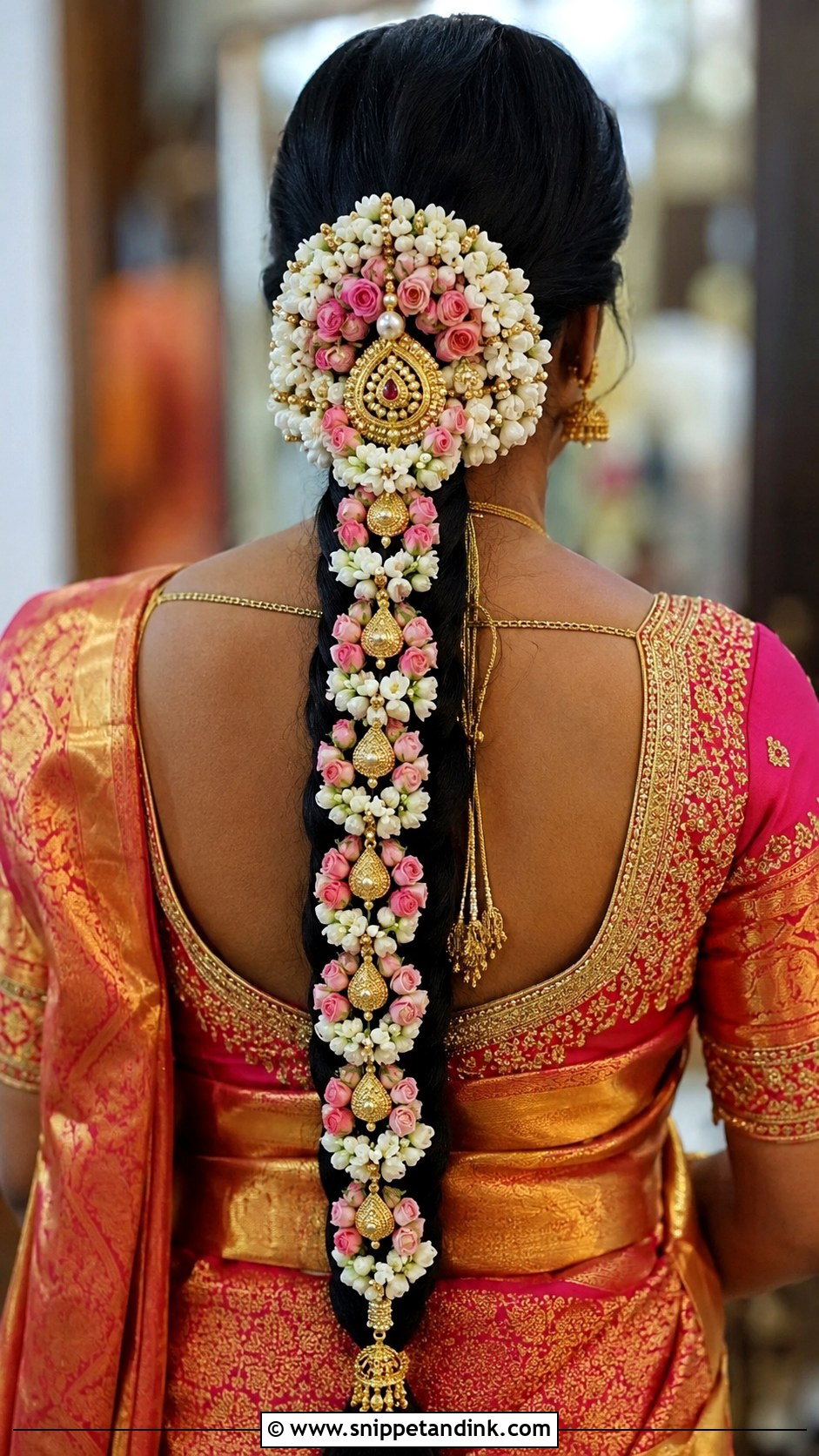
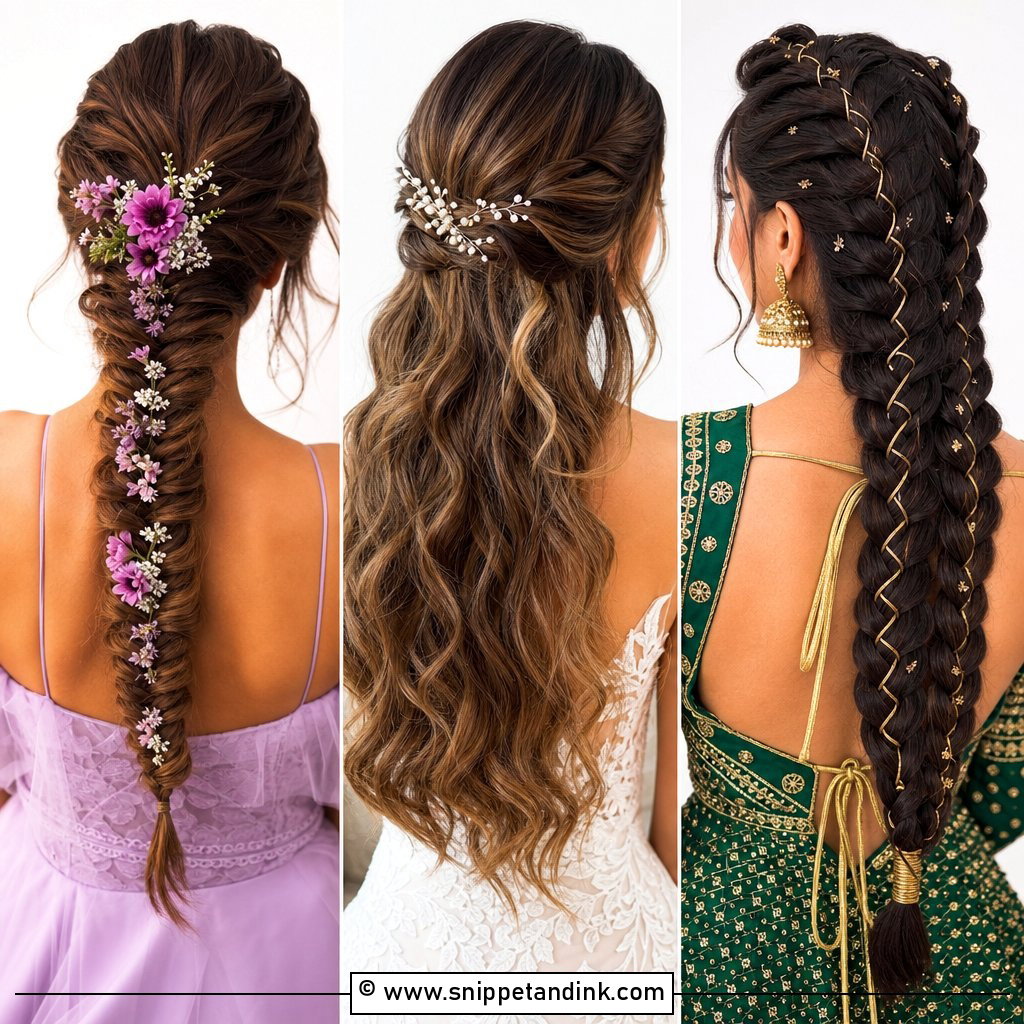
A floral braid has the strongest traditional feel on this list. It suits South Indian outfits, silk sarees, long lehengas and temple jewelry. The braid can be thick and classic, pulled apart softly, or covered along its length with jasmine strands. Roses, mogra or small white flowers make it fuller. Flowers on a braid sit on the back, so this is a style to show from behind in portraits. I stitch or pin each strand in at several points, since a braid swings more than a bun. A tikka or hair chain at the front completes it.
12. Indian Engagement Open Hair With Maang Tikka
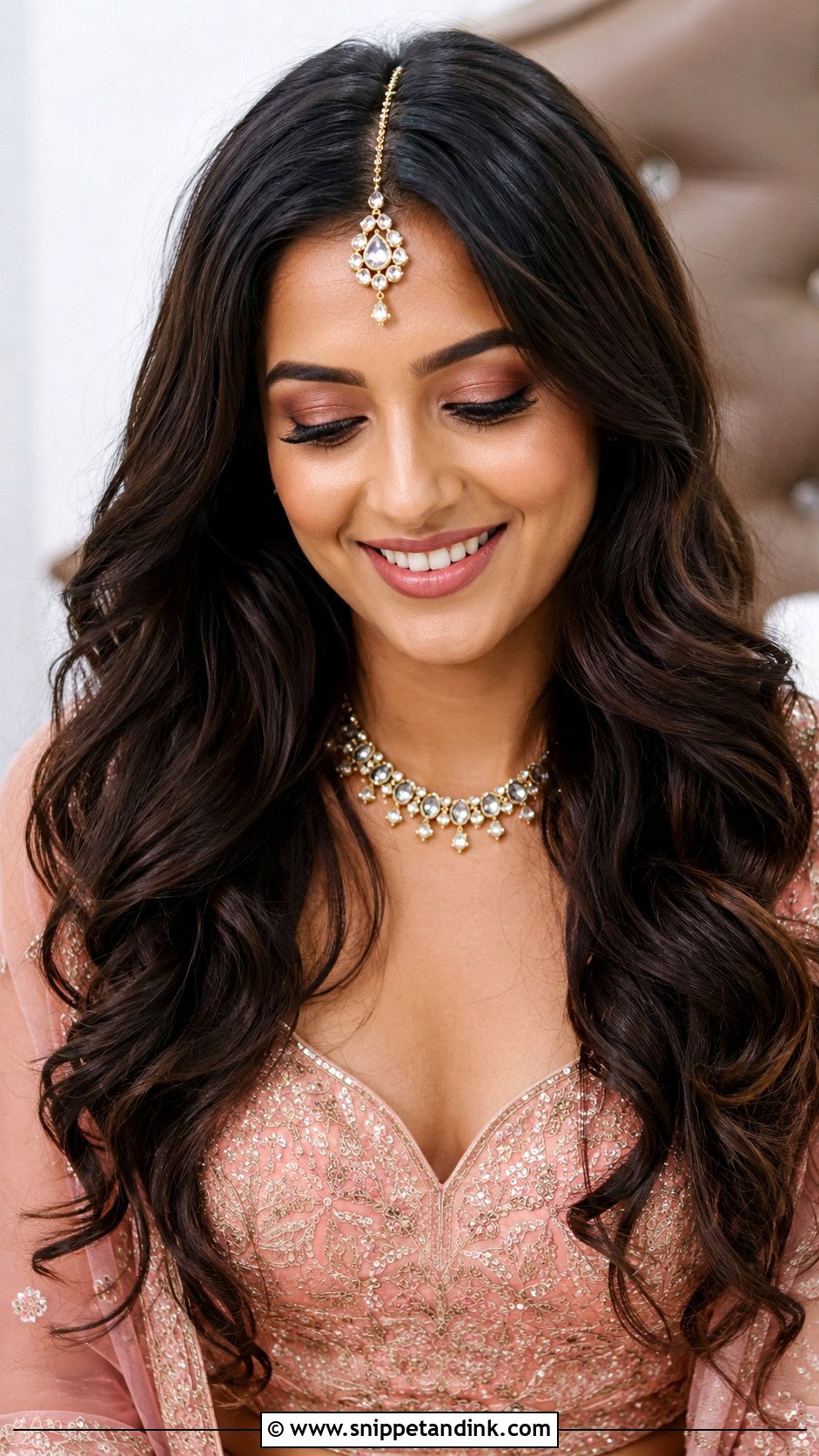
Open hair with a maang tikka is a popular engagement look because it feels young and bridal without much weight. It starts with a clean center part and a smooth crown, then curls or waves through the lengths. The tikka is the focus, so the front has to be precise. I set an anchor of crossed pins at the top of the part and hook the chain onto it. It suits lehengas, gowns and draped sarees, and it works best when the rest of your jewelry isn’t crowded.
13. Indian Engagement Hairstyle With Matha Patti
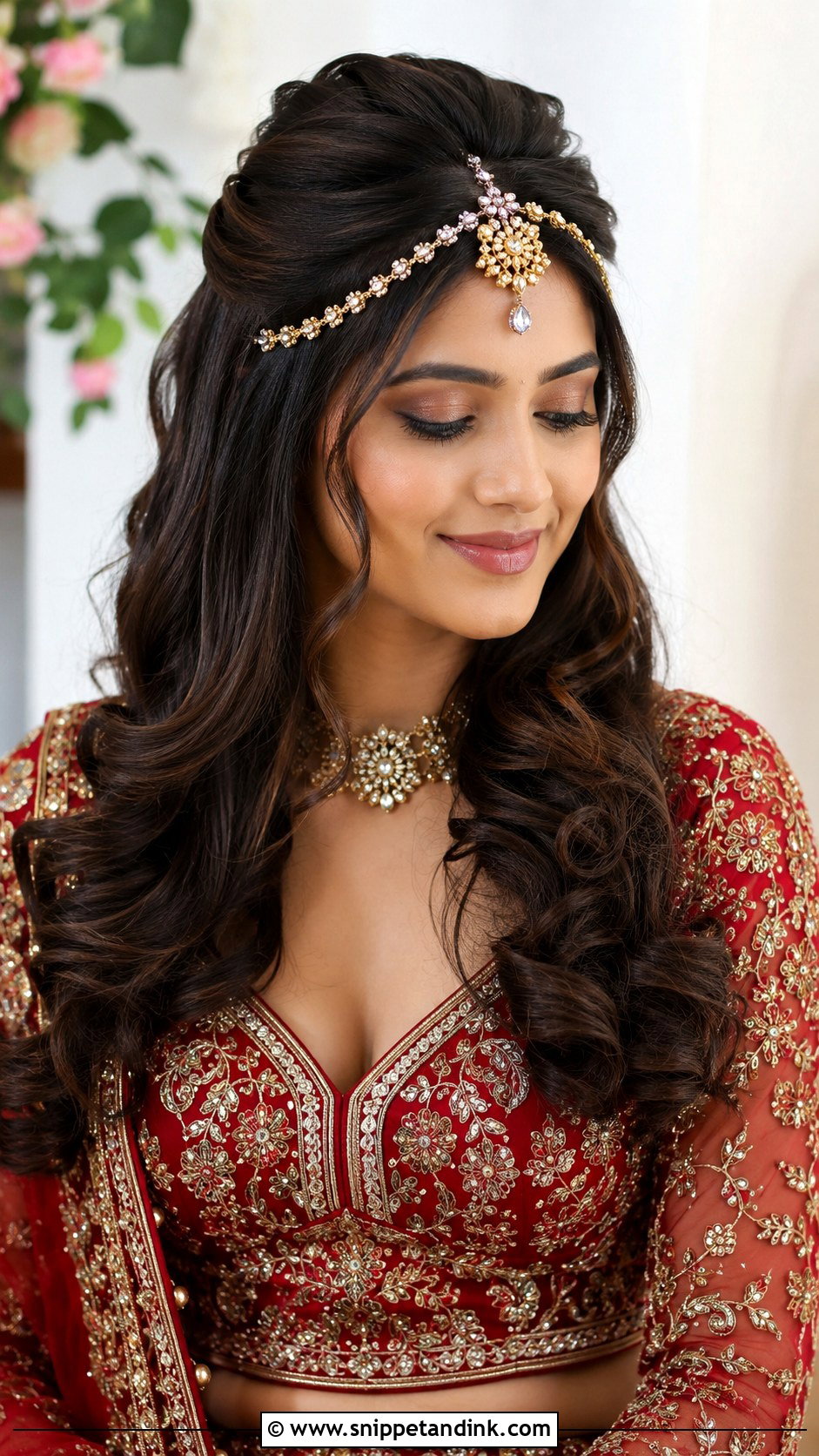
A matha patti covers more of the hairline than a tikka, so the hair underneath needs to be smooth. Any bump at the crown lifts the side chains away from the head. I pair it with a low bun, half up curls or soft open waves, depending on the outfit and face shape. It suits lehengas, ghararas and richly embroidered sarees. Each side chain gets its own hidden pin above the ear. If your face is small or your forehead short, choose a finer design, since a heavy patti can cover too much of it.
14. Indian Engagement Hairstyle For Saree
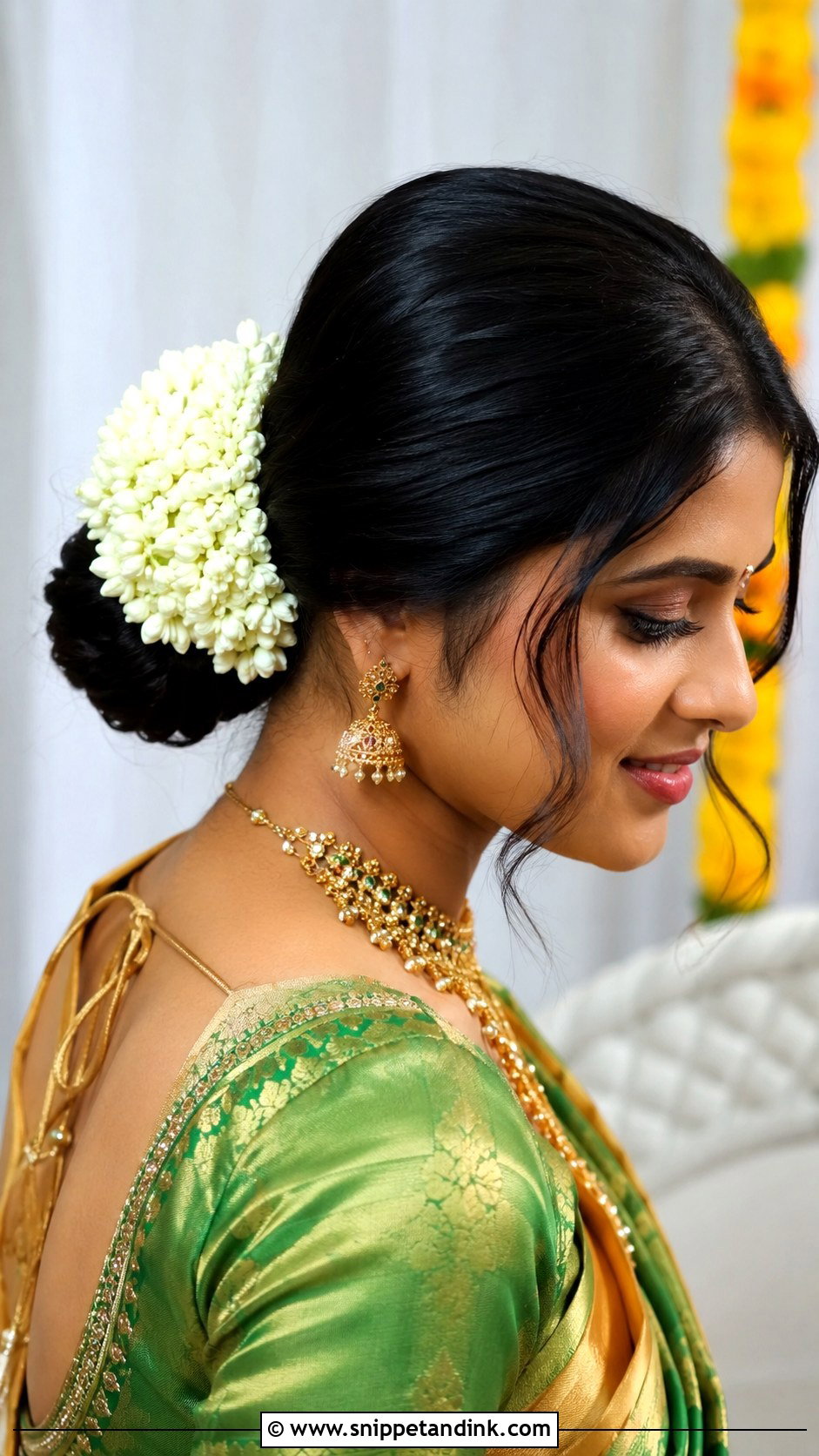
With a saree, I start from the fabric. Silk sarees suit jasmine buns and long braids; chiffon, organza and pre-draped sarees move better with waves or textured buns. A detailed blouse back calls for an updo so the work shows. A plain saree can take loose curls for some glamour. Keep the front neat in every case, because saree looks put the attention on earrings, bindis and forehead jewelry. And check where the pallu falls: hair on that shoulder will tangle with it.
15. Indian Engagement Hairstyle For Lehenga
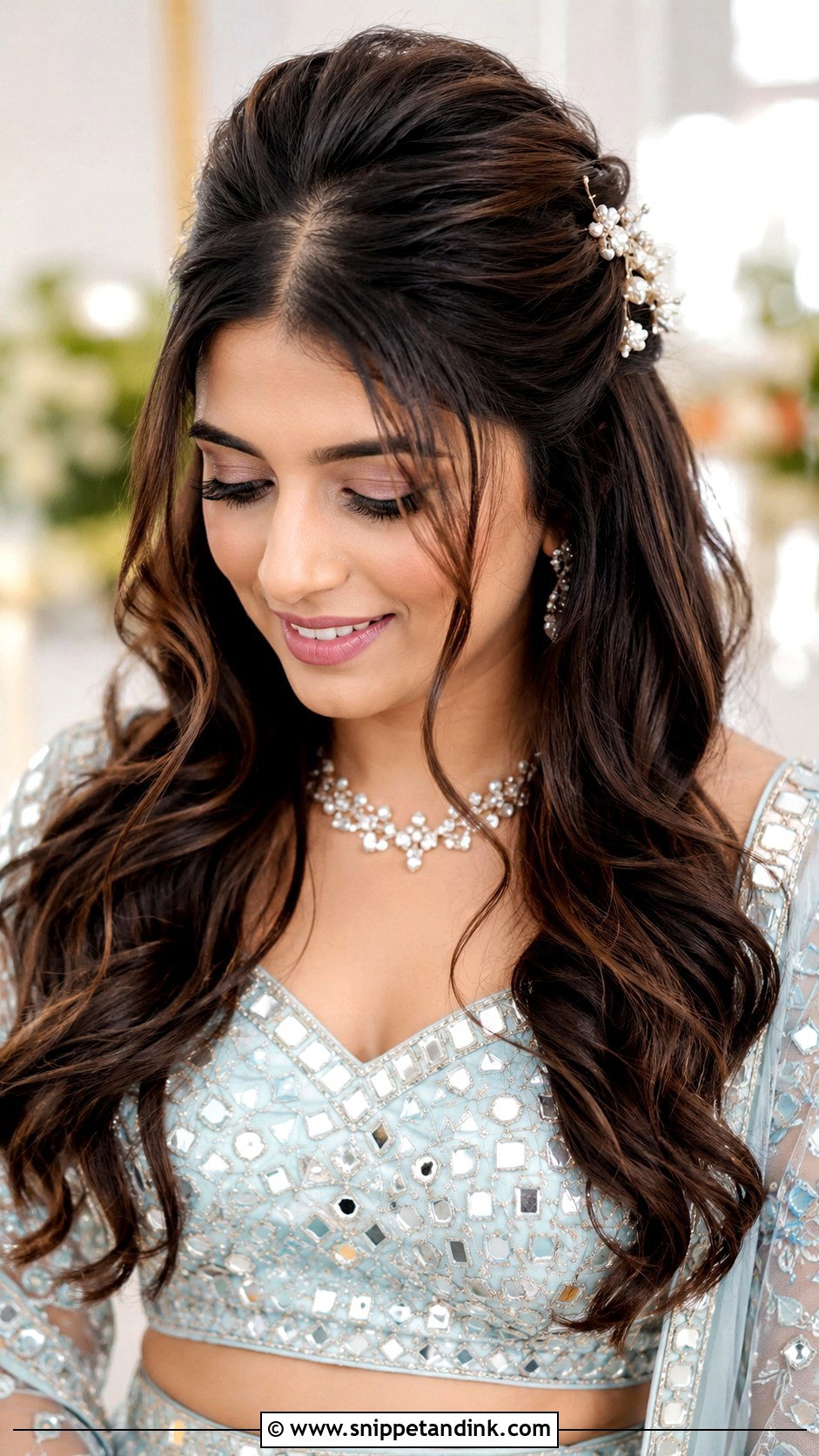
A lehenga leaves more room for glamour: loose curls, half up waves, sleek ponytails and textured buns all suit it. The dupatta usually decides between them. A heavy dupatta pinned on the head needs a bun or half up base to hold the pins. A mirror-work or deeply cut blouse shows better with an updo. For pastel or modern lehengas, soft waves with pearl clips look fresh. Think of proportion: a very full skirt can make flat hair look small, so some crown volume balances it.
16. Indian Engagement Hairstyle For Gown
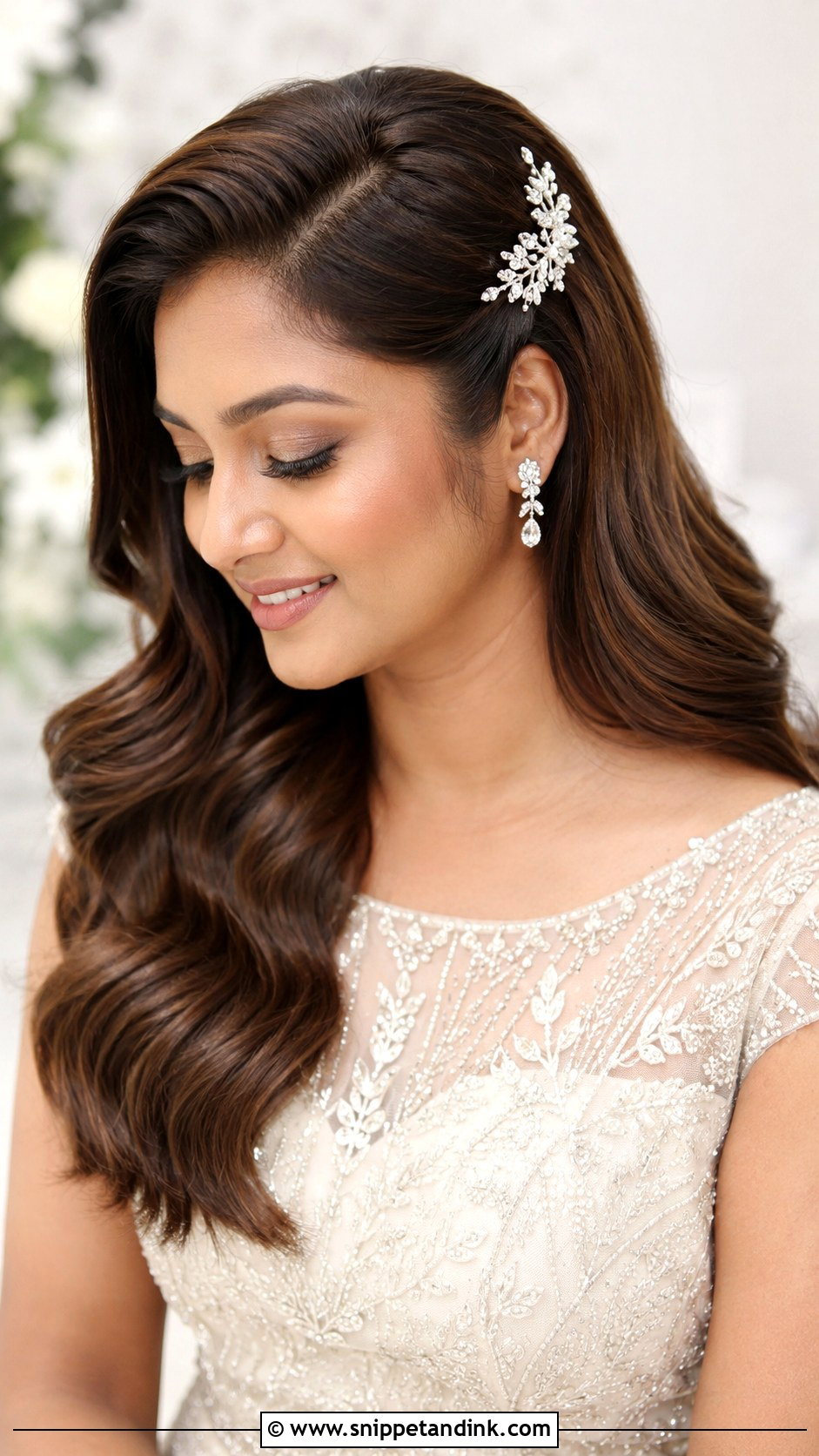
Gowns tend to look best with smoother, more modern hair. Hollywood-style waves, a sleek low bun, a soft ponytail or half up curls all suit. Neckline is the guide. A high neck looks cleaner with an updo, while off-shoulder and sweetheart necklines suit open waves. A maang tikka, pearl pins or fine hair jewelry keep a link to the ceremony if you want one. Keep the finish polished; very textured hair can look casual next to a structured gown.
17. Indian Engagement Front Puff Hairstyle
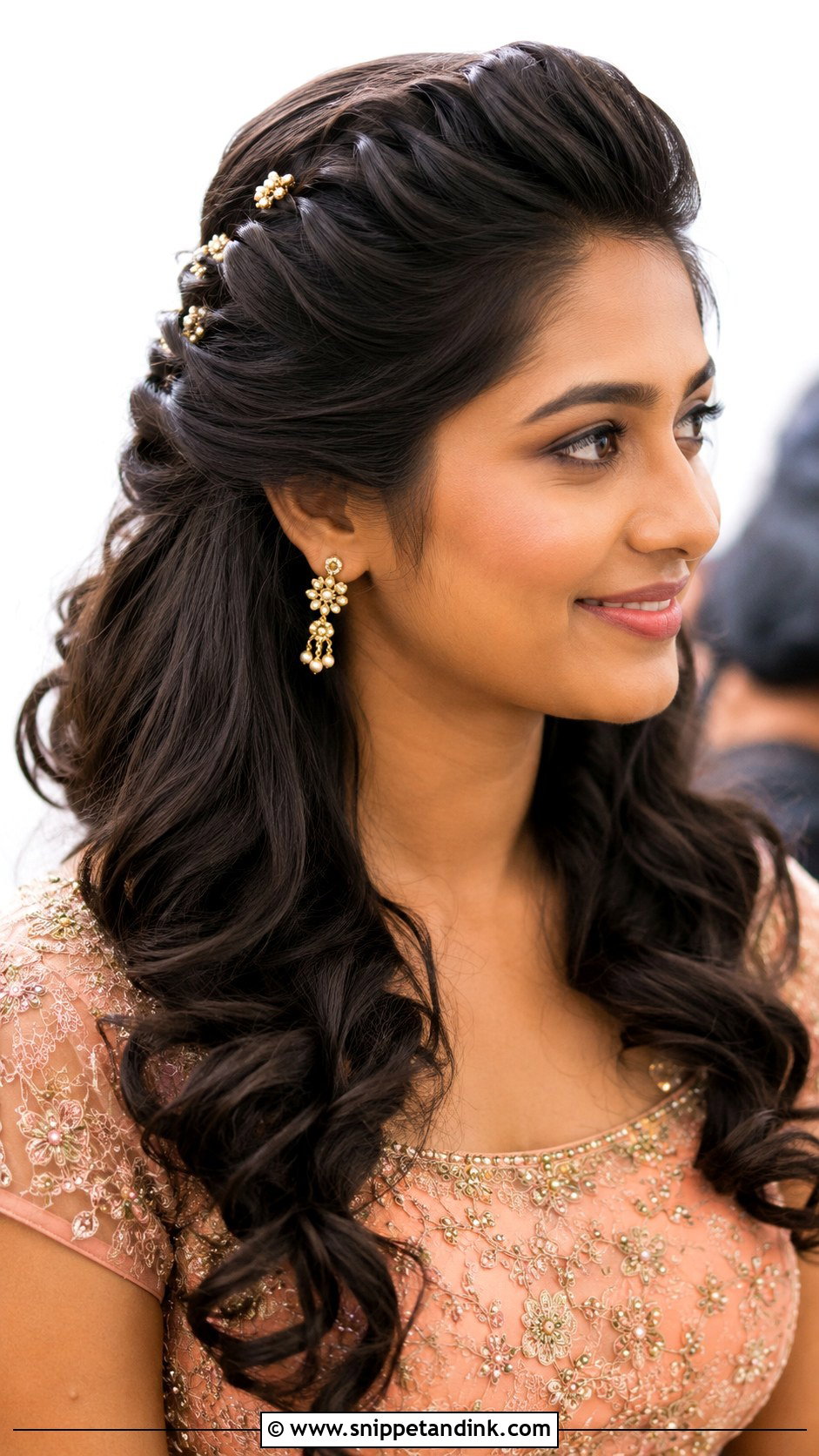
A front puff adds height at the crown and balances a heavy lehenga, dupatta or jewelry set. It pairs with a bun, braid, ponytail or half up curls. I backcomb a small section at the crown, smooth the top layer over it and pin underneath. Keep it low and soft; a tall, rigid puff dates a photo quickly. It can lengthen a round or heart-shaped face slightly. Curled side pieces stop it from looking too structured.
18. Indian Engagement Side Swept Curls
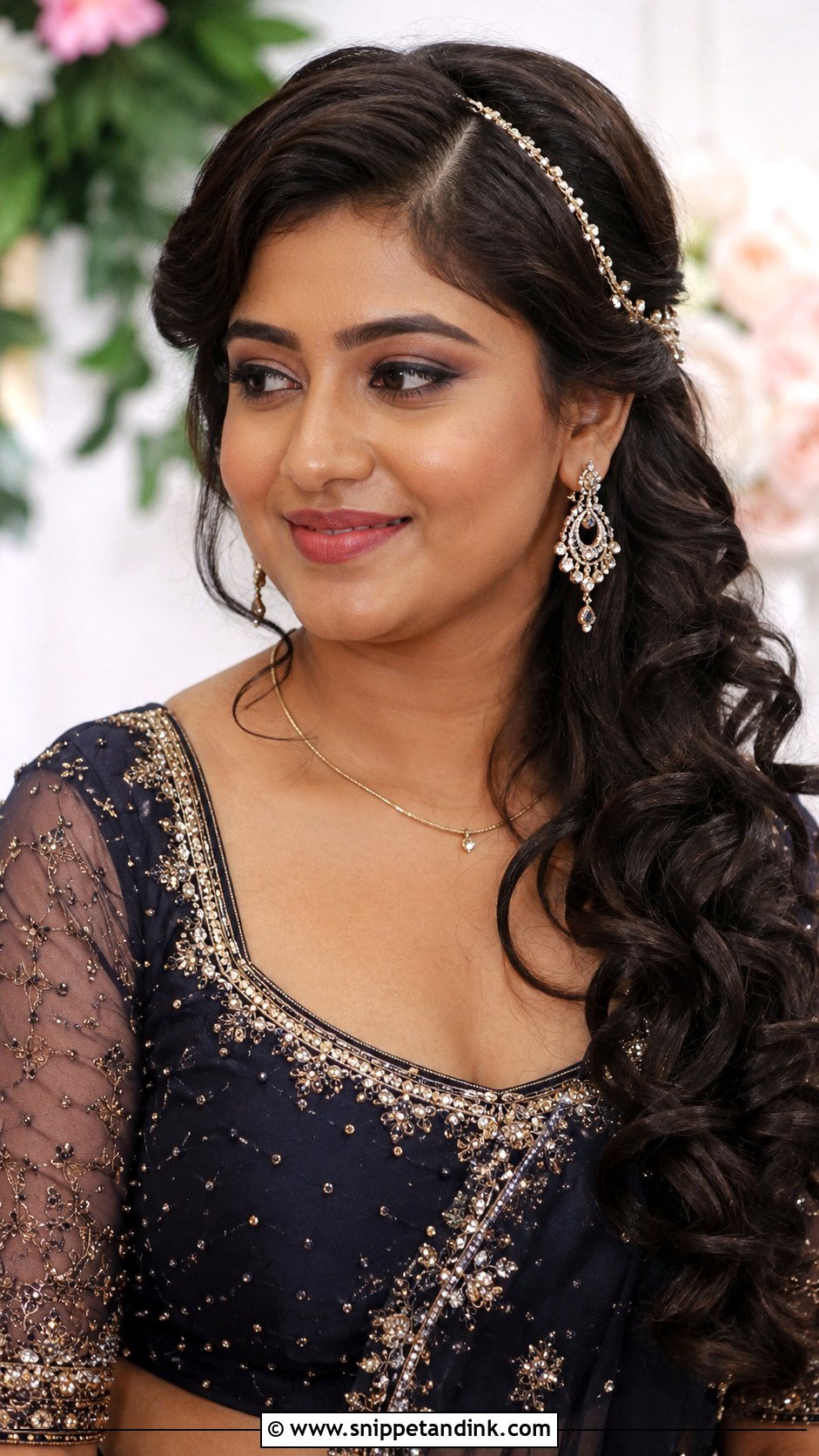
Side swept curls pull the hair over one shoulder, which suits a single statement sleeve, a detailed blouse back or heavy earrings on the open side. I layer the curls so the shape looks full from the front, and I pin the clear side with crossed pins hidden behind the ear. A side part adds drama; a small clip or passa adds a bridal touch. It’s a strong evening or reception-style choice. Use a firm but brushable spray so the curls stay put without stiffness.
19. Indian Engagement Short Hair Hairstyle
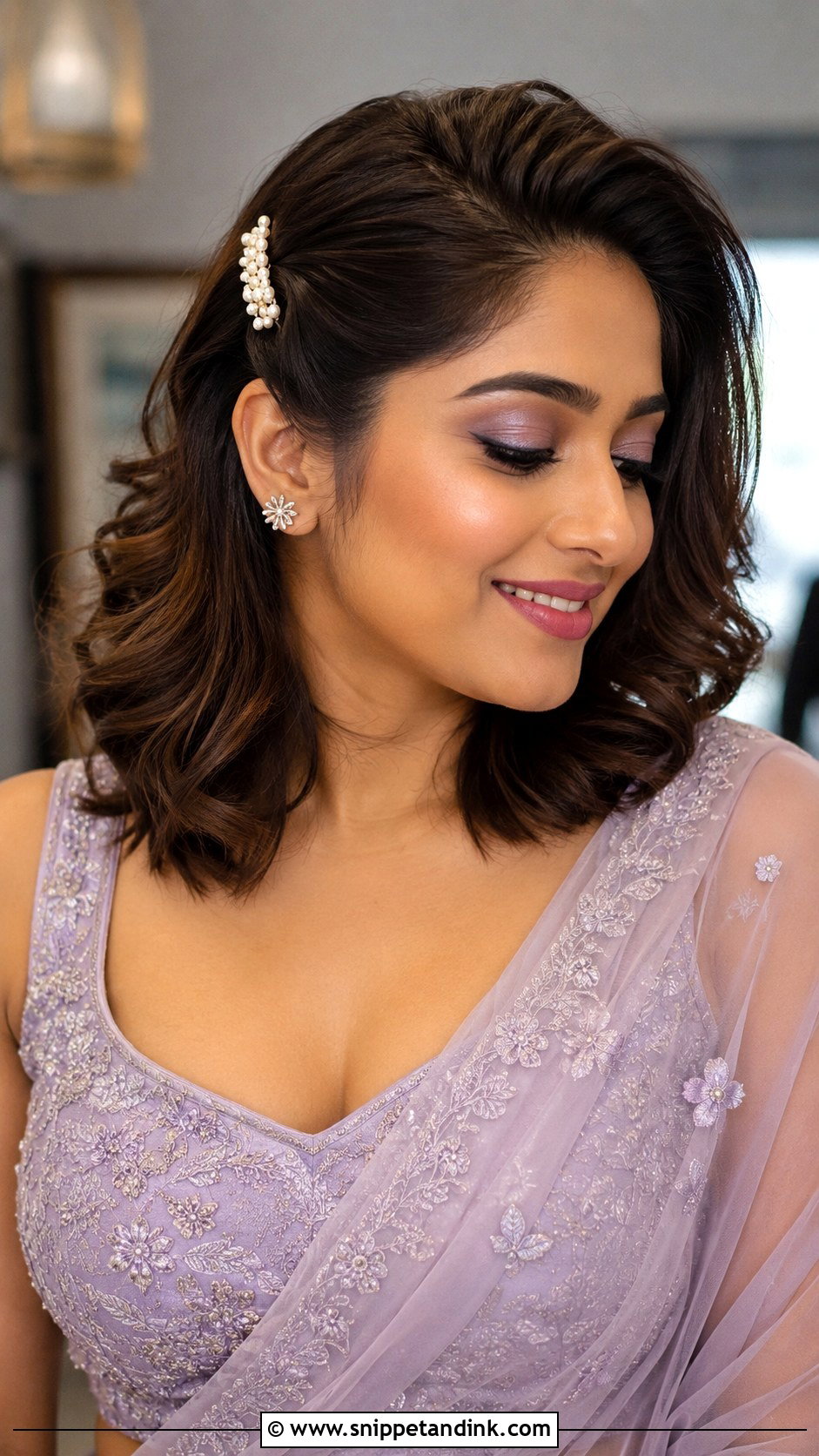
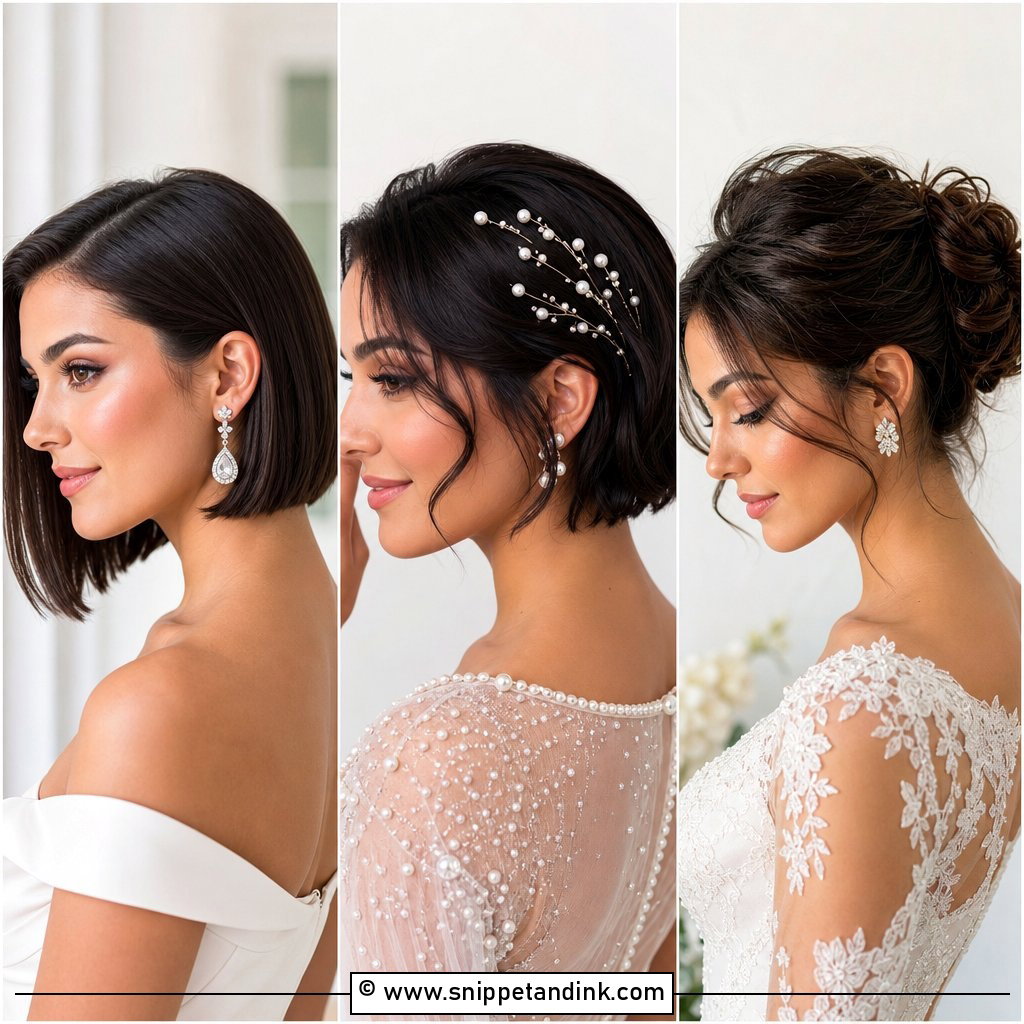
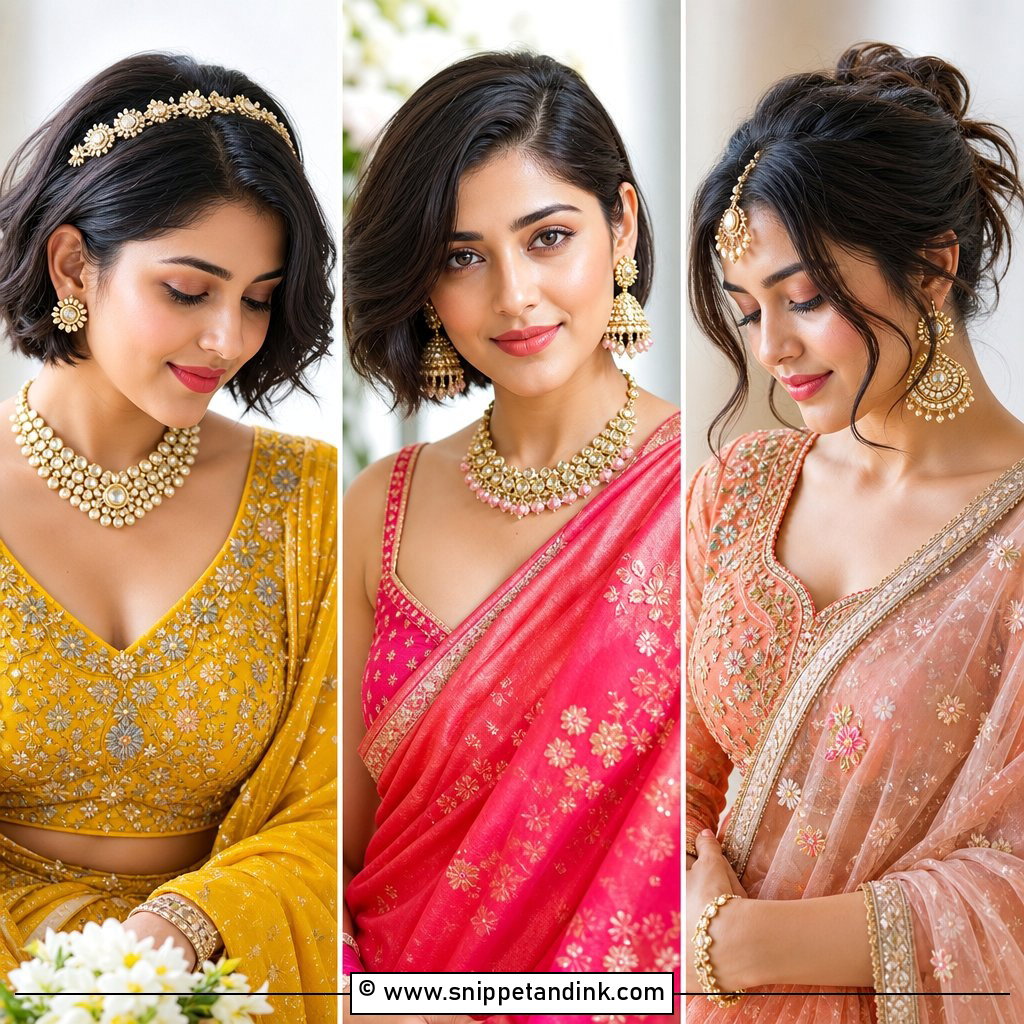
Short hair can look fully bridal with shape and shine. A sleek bob, a curled lob, a pinned side part or a small textured bun all work, with a maang tikka, pearl barrette, fresh flowers or a fine headband adding the ceremony detail. Short hair shows the face clearly, so makeup, earrings and neckline do more of the work. If you’d like a longer look just for the day, clip-in wefts can blend into a lob, but they need to be placed under enough of your own hair to hide the tracks.
20. Indian Engagement South Indian Braid
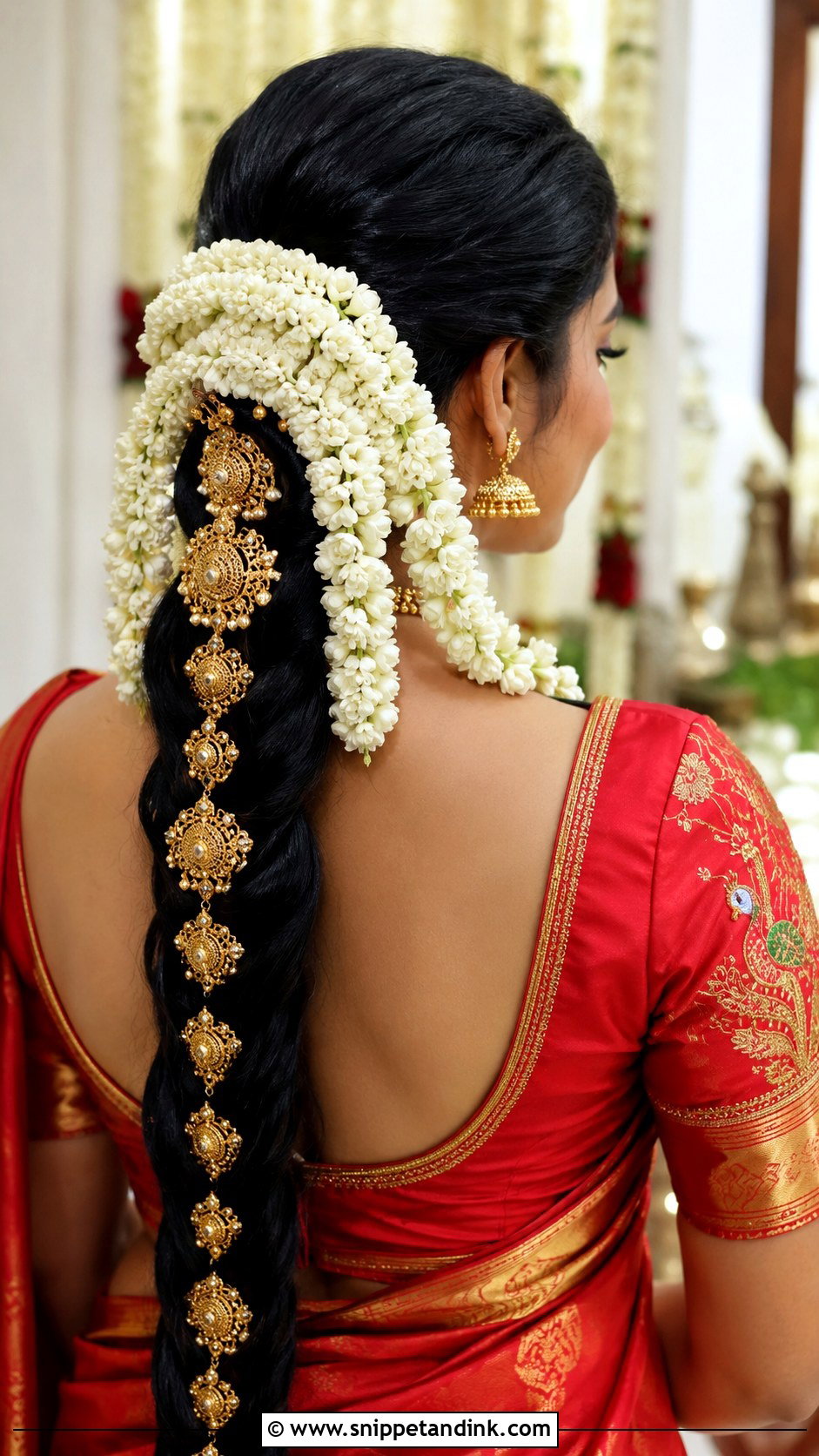
The South Indian braid is a long, neat braid decorated with jasmine, gold pieces, jada billalu or fresh flowers. It belongs with Kanjeevaram sarees, temple jewelry and traditional ceremonies. The front can be center-parted with a tikka or lifted with a soft puff. If your hair isn’t long enough, a braid extension can be woven in to reach the length. Jada billalu are heavy, so I anchor the braid firmly at the nape before attaching them. It holds well all day and looks complete from the back.
Oiling, Keratin and Extensions in the Weeks Before
Hair care routines can work against your engagement style if the timing is off. These are the things I ask brides to plan for.
Oil
Regular oiling is good for the hair, but stop at least a day or two before the event. Oil left in the hair makes curls drop, pins slide and a sleek bun look greasy under lights. Wash it out the day before or on the morning, using shampoo twice if needed, and skip heavy conditioner at the roots.
Smoothing treatments
Keratin and similar treatments make hair very slippery. That helps sleek styles and hurts curls and updos, which need grip. If you want one, have it done several weeks ahead and tell your stylist, so they can plan extra texture prep. Hair color is best done one to two weeks before, so it has settled but still looks fresh.
Extensions
Clip-ins and braid extensions should be bought early and brought to the trial. Match the color to your mid-lengths, not your roots, and choose real human hair if it will be curled. A long braid extension for a South Indian or floral braid should be pinned in place and covered by your own hair at the top, so the join doesn’t show.
Photograph the Back, Not Just the Front
Your engagement hairstyle should suit the outfit, the jewelry and how comfortable you want to be for several hours. A bun is secure, loose curls feel soft, braids carry tradition and sleek hair looks modern. Weigh up the weather, the length of the ceremony, where the dupatta will sit and how much jewelry you’ll wear. Save inspiration photos from the side and back as well as the front, so your stylist can see the whole shape. Then take your own photos at the trial from the same angles, and you’ll know exactly what the camera will see.
You'll Like These Ideas:


Leave a Reply