
Wedding hair should look like you on your best day, not like someone else’s idea of a bride. Some of the couples I style want soft romance, some want sharp tailoring, some want short hair that looks deliberate, and plenty want feminine and masc in one finish. What matters to me in the chair is the haircut you already have, your texture, what you’re wearing and how comfortable you need to feel for ten-plus hours. The styles below cover short cuts, long waves, natural curls, locs, sleek buns and gender-neutral looks, with notes on what makes each one work.
Two Partners, Two Heads of Hair, One Set of Photos
When both of you are getting ready, hair planning doubles, and so does the chance of a rushed morning. I talk to both partners before the trial, even if only one is booked with me, because the two looks will sit side by side in every photo you keep.
- Coordinate rather than copy. One sleek look and one softly textured look sit well together; one sleek and one very undone can look like two different weddings.
- Watch the heights. If one of you wears a high bun or pompadour and the other wears hair down, the height gap in photos will look bigger than it really is.
- Settle on one stylist or two early. One stylist for both means staggered start times and probably seeing each other; two stylists means two trials and two bookings.
- If you’re doing a first look, the person who finishes first waits, so put the longer style first in the schedule.
1. Short Pixie Wedding Hairstyle
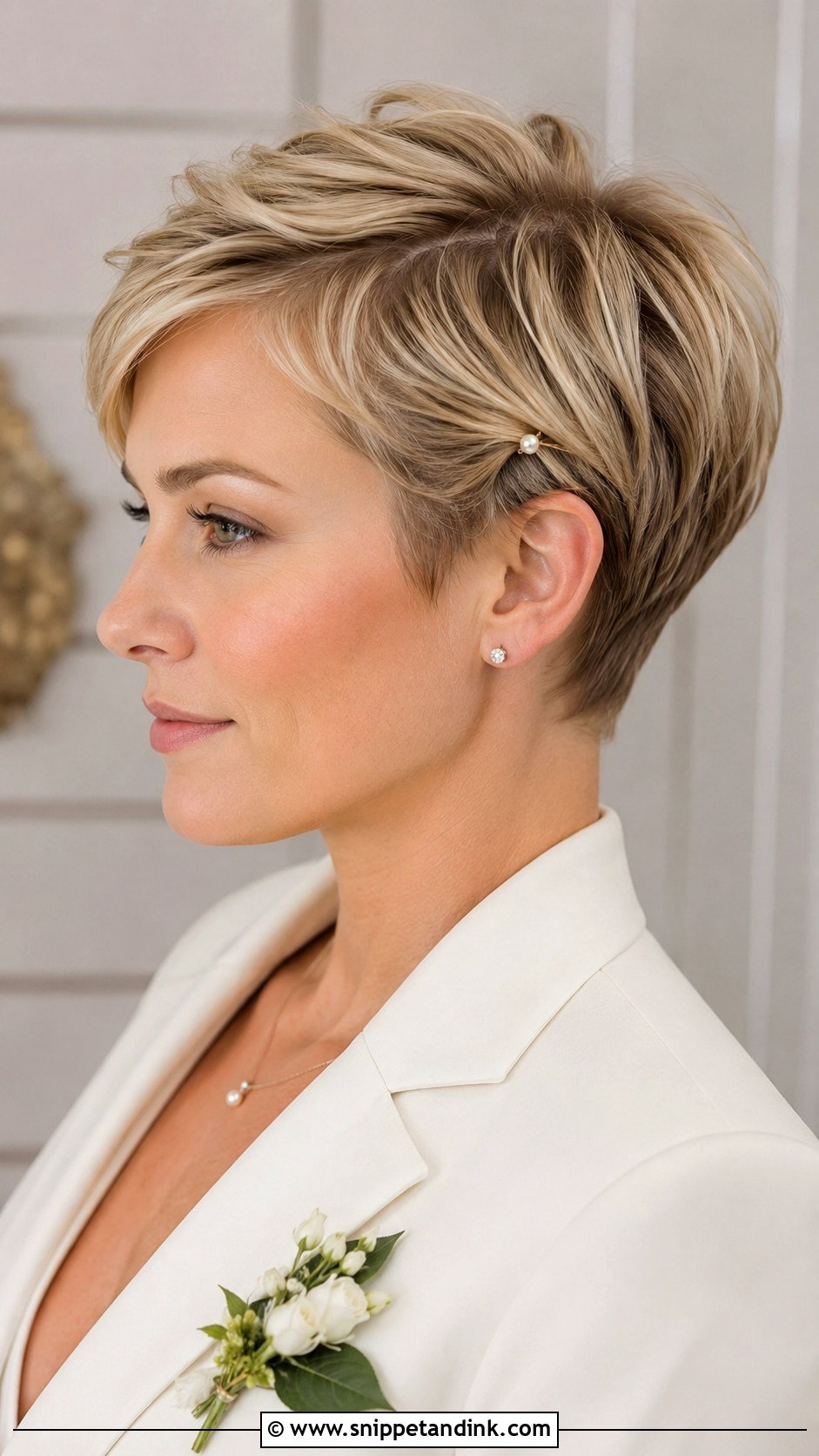
A pixie is the lowest-maintenance hair on the day and the highest-maintenance in the weeks before. It goes with tailored suits, minimalist gowns, jumpsuits and soft separates. The trick is making it look like more than an everyday cut. I add lift at the crown, define the hairline and clean up around the ears and neck with a trimmer if needed. A light cream or flexible pomade gives polish without stiffness, and one pearl pin is enough detail.
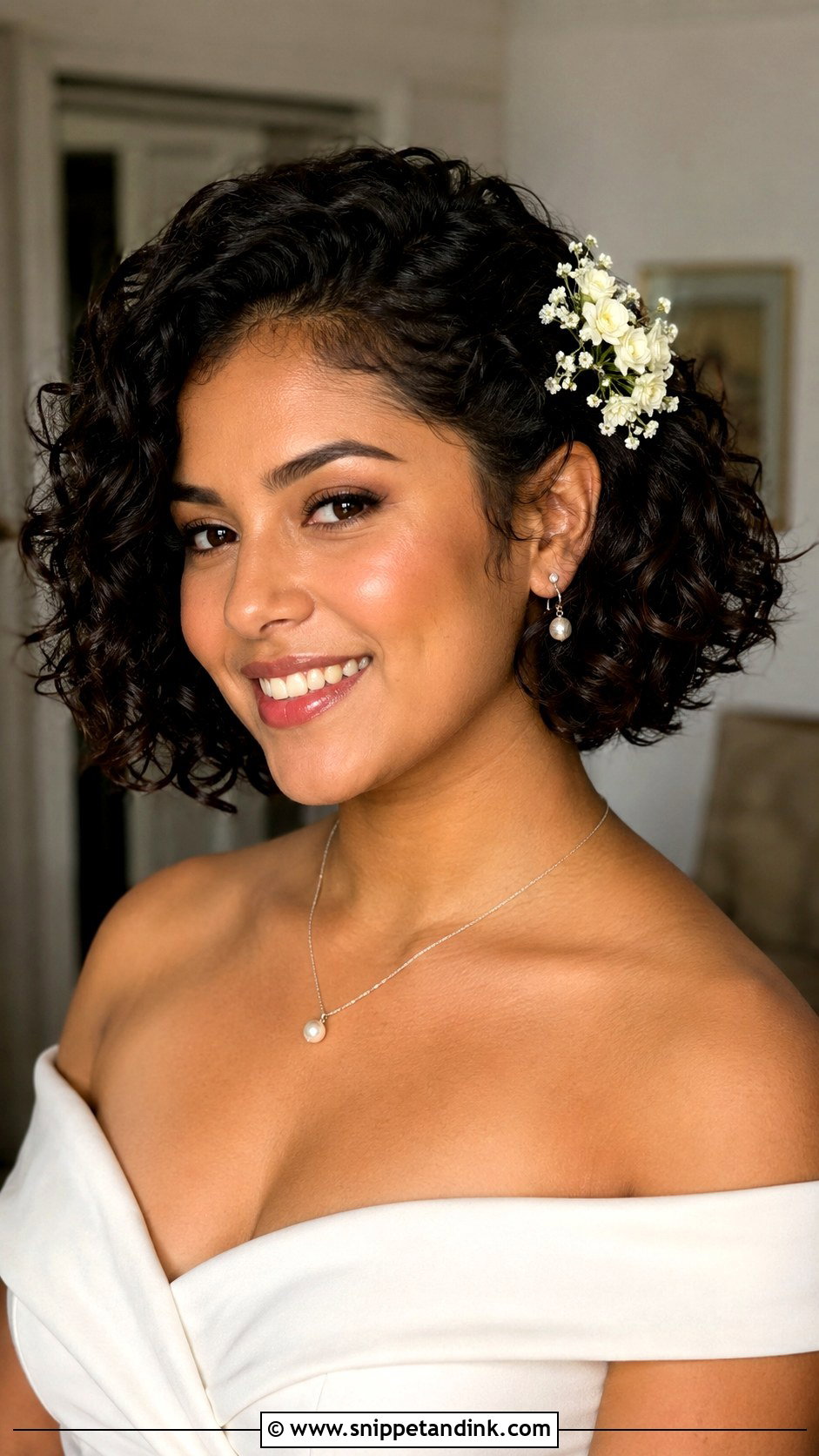
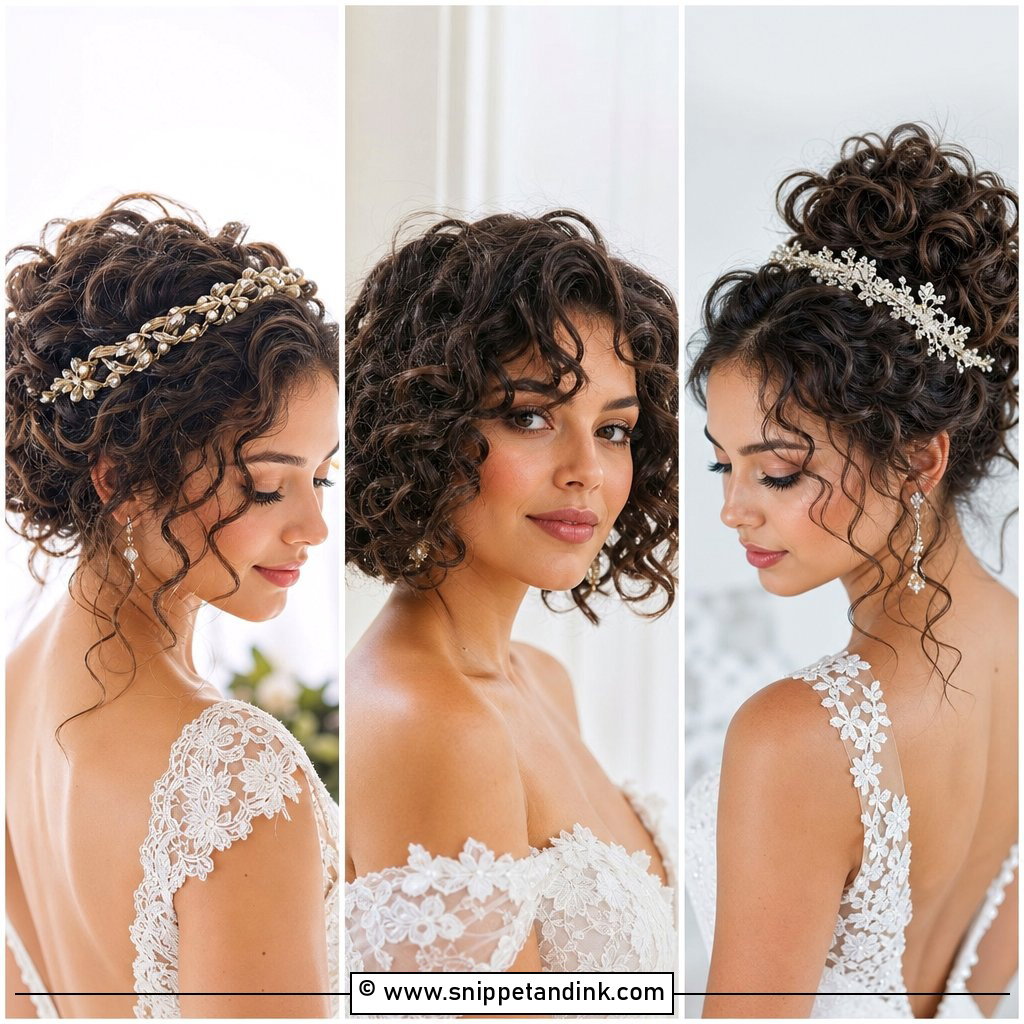
2. Curly Bob Wedding Hairstyle
Curls at the jaw move with you, which is half the appeal. A chin-length or shoulder-grazing bob keeps your natural pattern visible and suits off-the-shoulder outfits, open collars and simple veils. Bobs can go triangular on curly hair, wide at the bottom and flat on top, so I check the shape from the front and add root lift before anything else. Then it’s curl cream, a gentle diffuse and a humidity-resistant finish. A small floral pin or sculptural clip adds the bridal note.
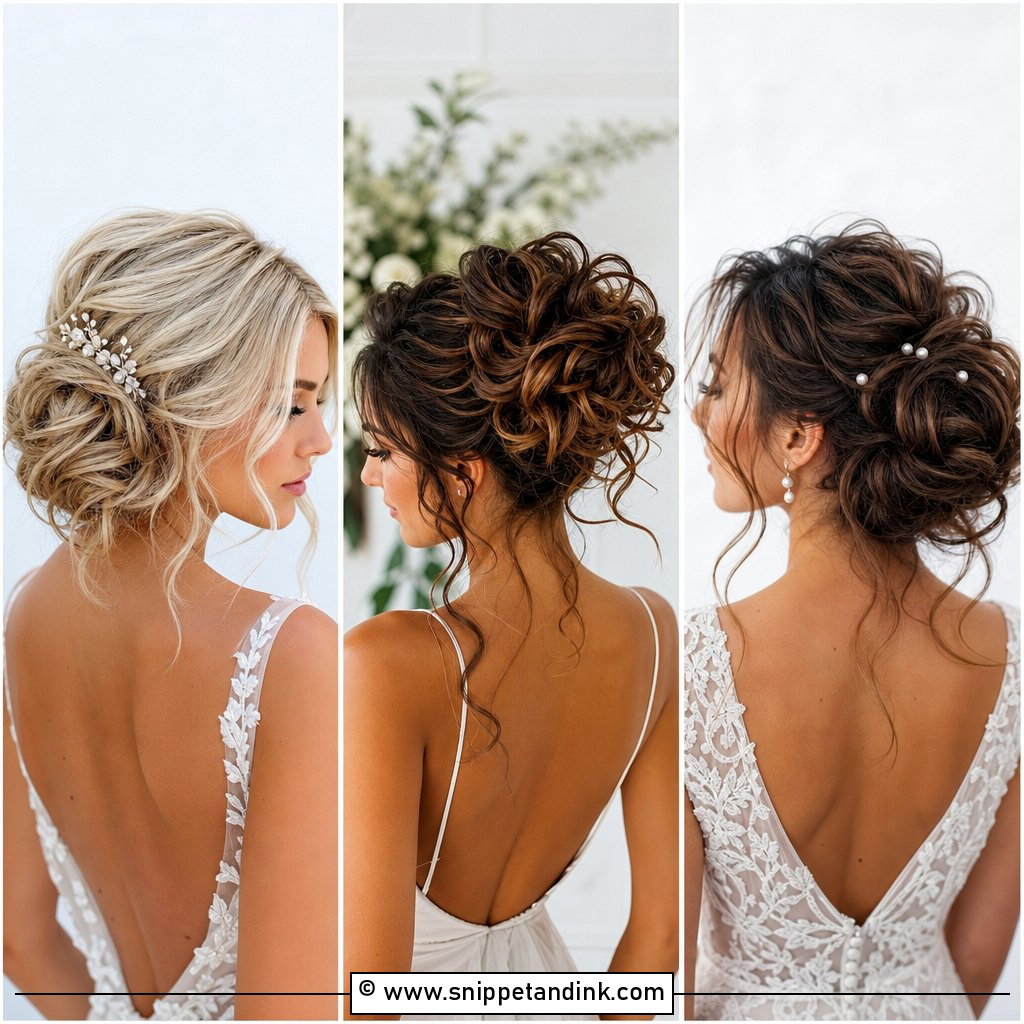
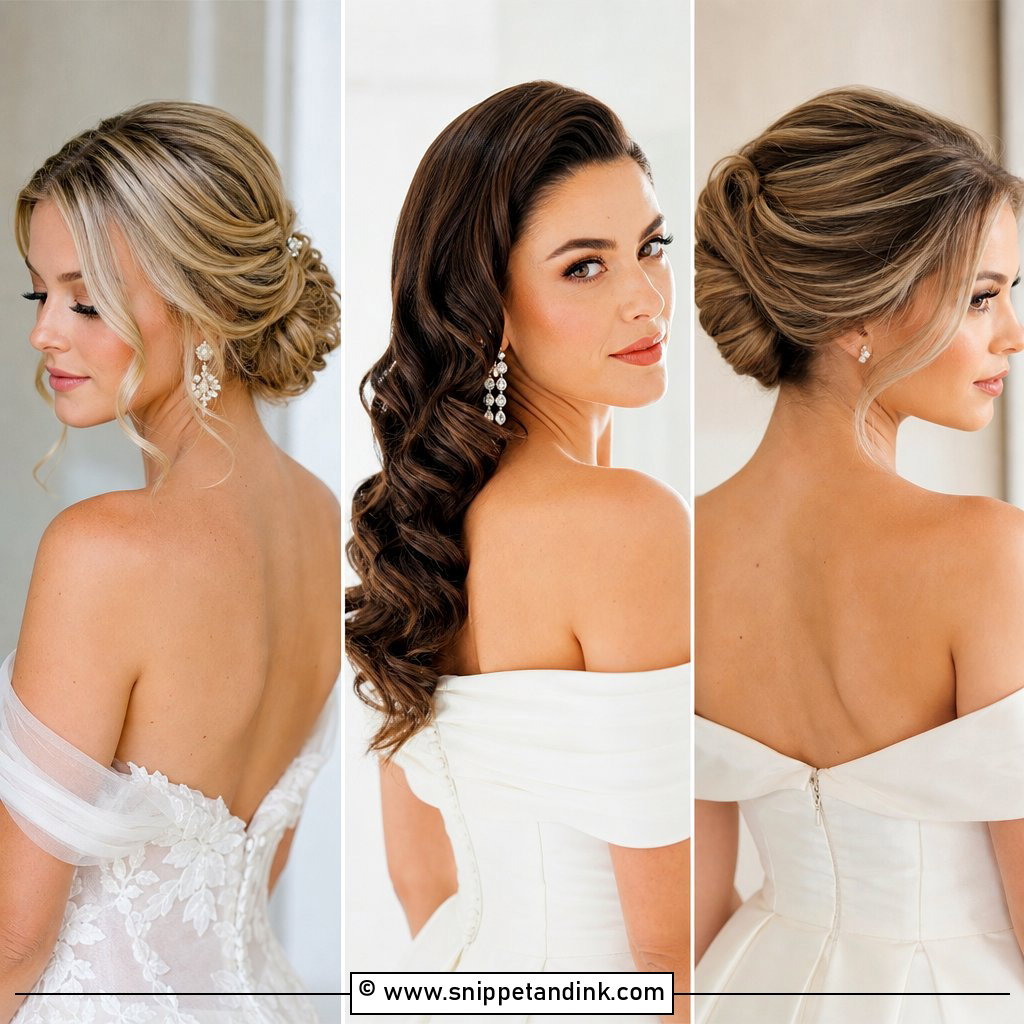
3. Sleek Low Bun Wedding Hairstyle
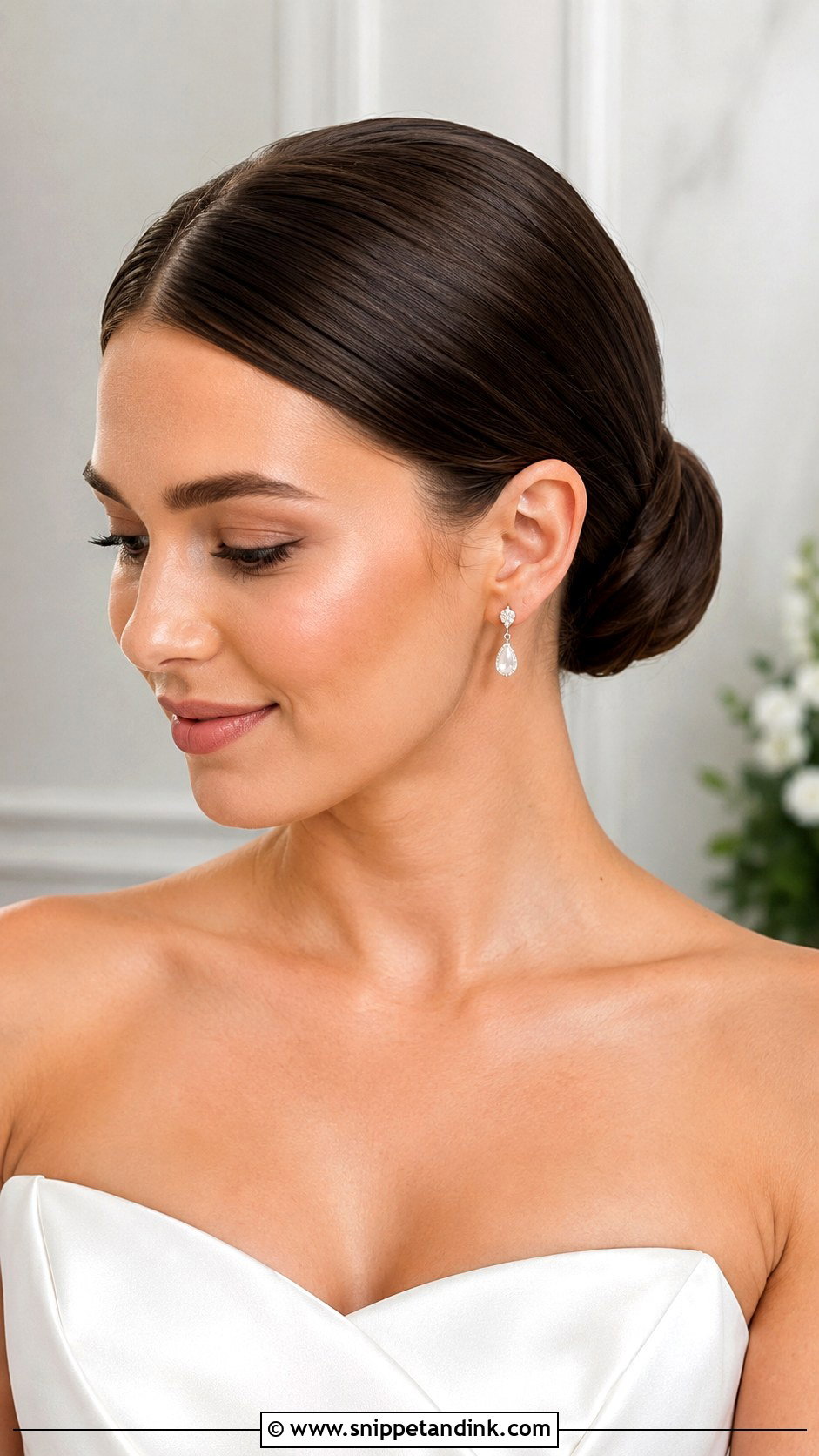
Low buns go with almost anything, and they look especially sharp with a suit, satin, a structured blazer or a simple gown. Sit it at the nape for softness or a little higher for a crisper shape; a center part reads classic and a deep side part adds drama. I tame flyaways with a wax stick rather than gel, because gel can look wet in photos. Then I anchor the bun firmly so it survives dancing and warm weather.
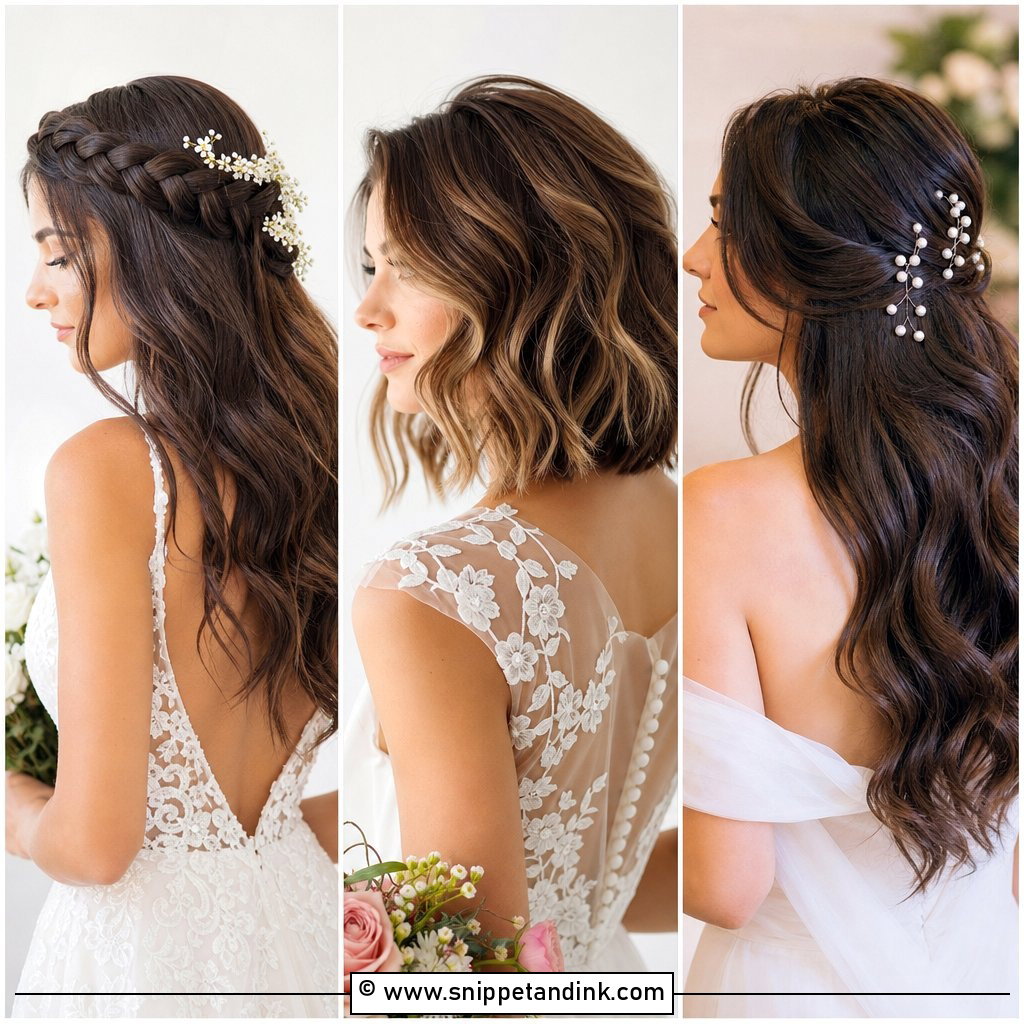
4. Half Up Half Down Wedding Hairstyle
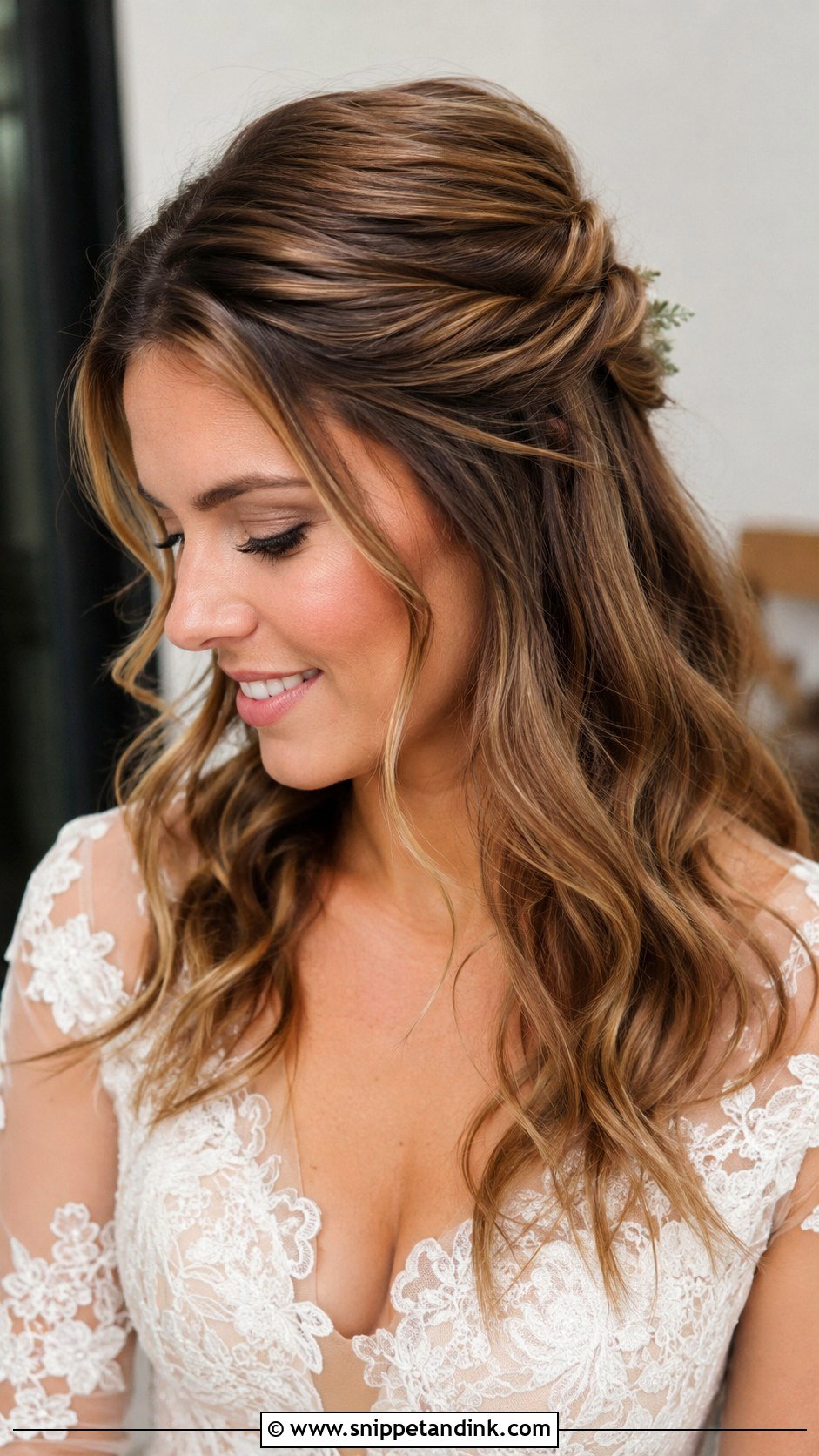
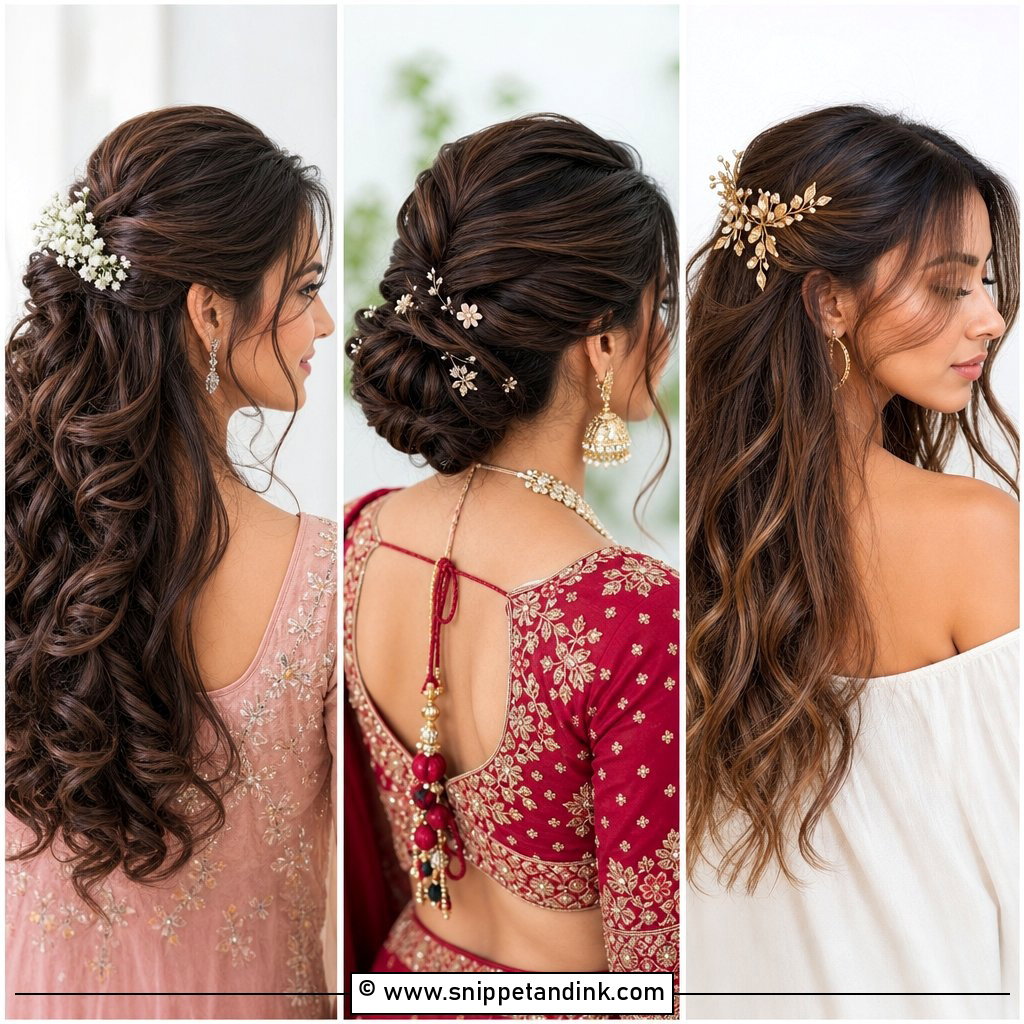
Two brides can wear the same half-up base and still look completely individual, one with a braid at the back, the other with twists, pins or a veil. It keeps the front out of your face while the length, waves or curls stay visible. Profiles matter here, because so many vow photos are taken from the side. I check the pinned section from both sides before you leave the chair. Aim for secure, not tight.
5. Undercut Wedding Hairstyle
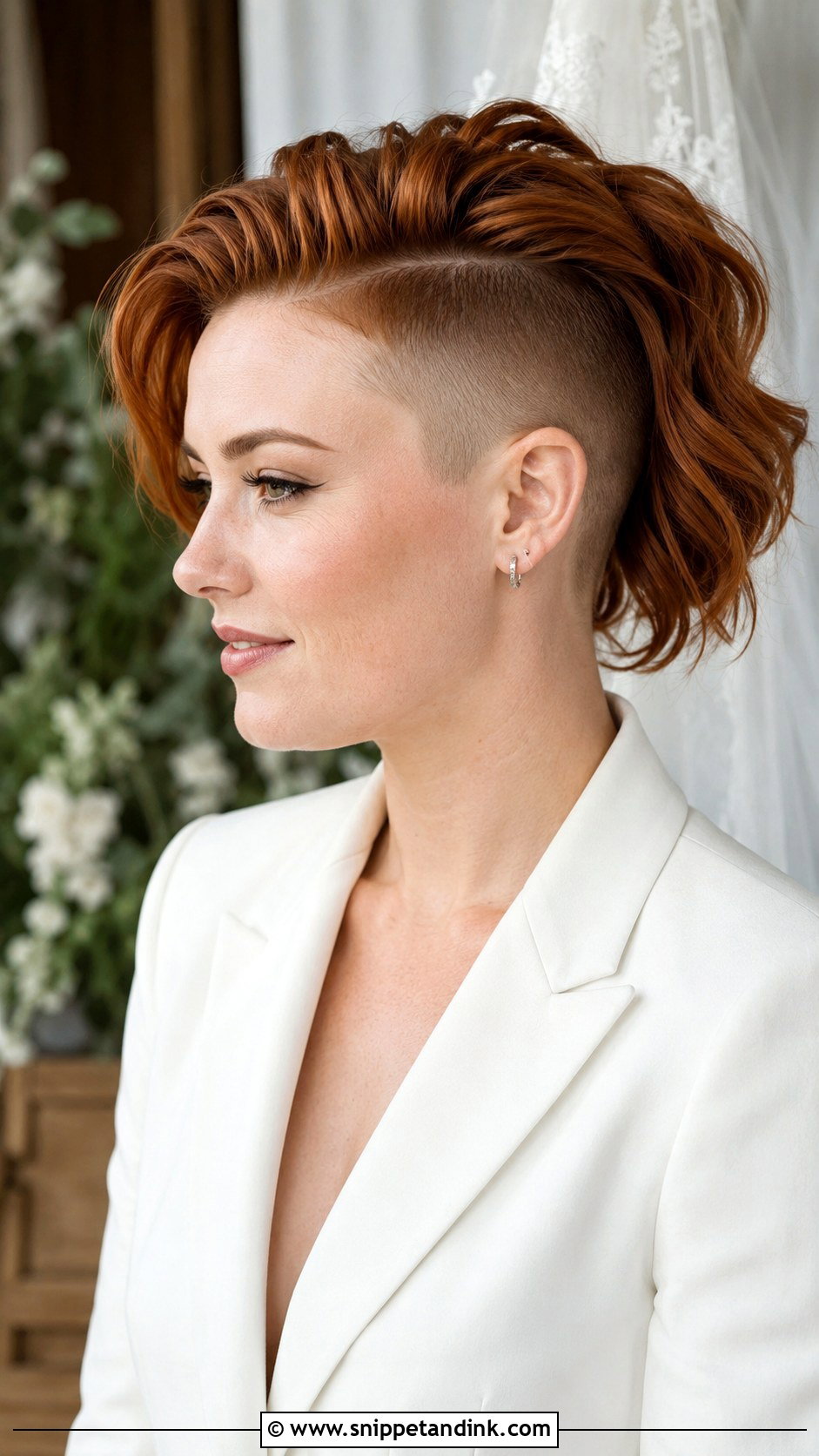
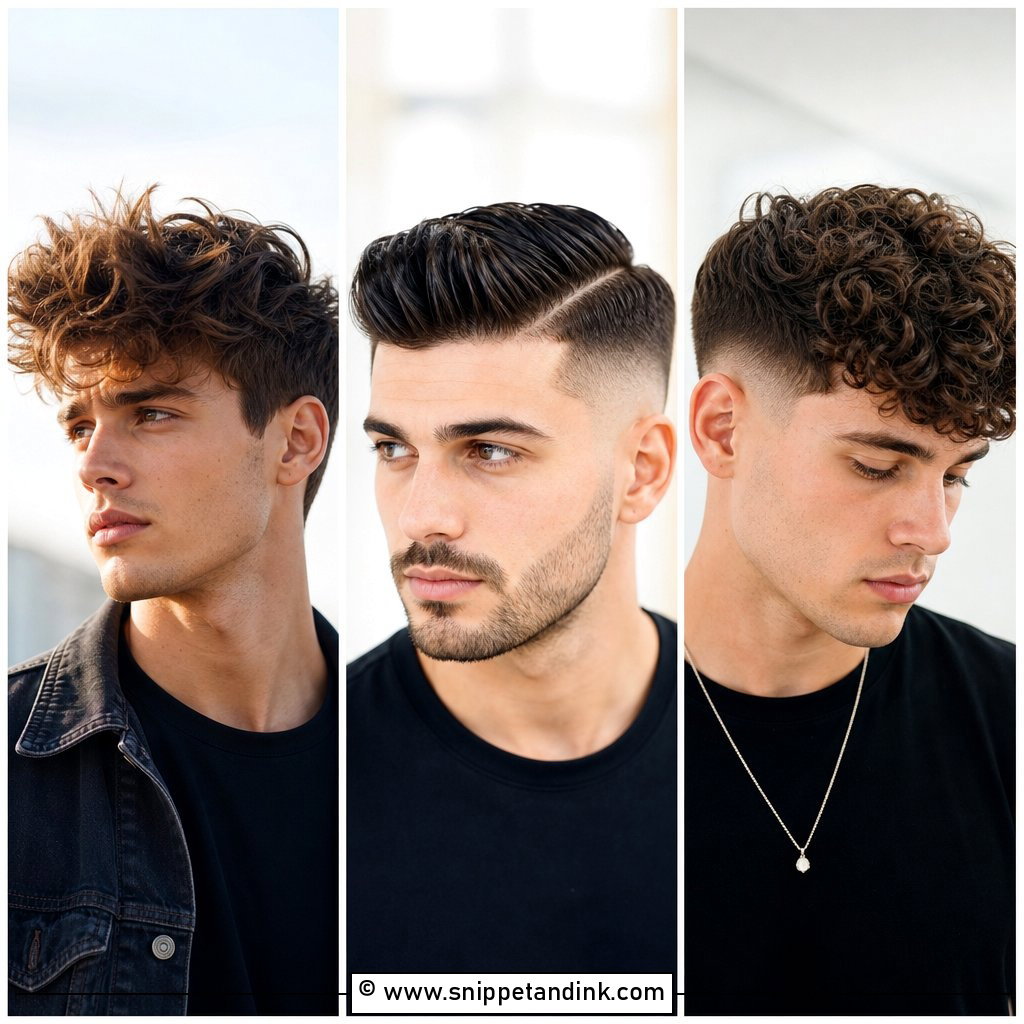
An undercut wedding hairstyle looks clean and graphic when the lines are fresh. The longer top can be waved, brushed back, sculpted into curls or swept to one side, and the shaved section shows off earrings, collars and open necklines. Clipper lines blur fast, so book the cleanup a few days out, not two weeks. A subtle design can be shaved in if you want one, but I’d test it first; a crisp, plain undercut usually reads better from across a room.
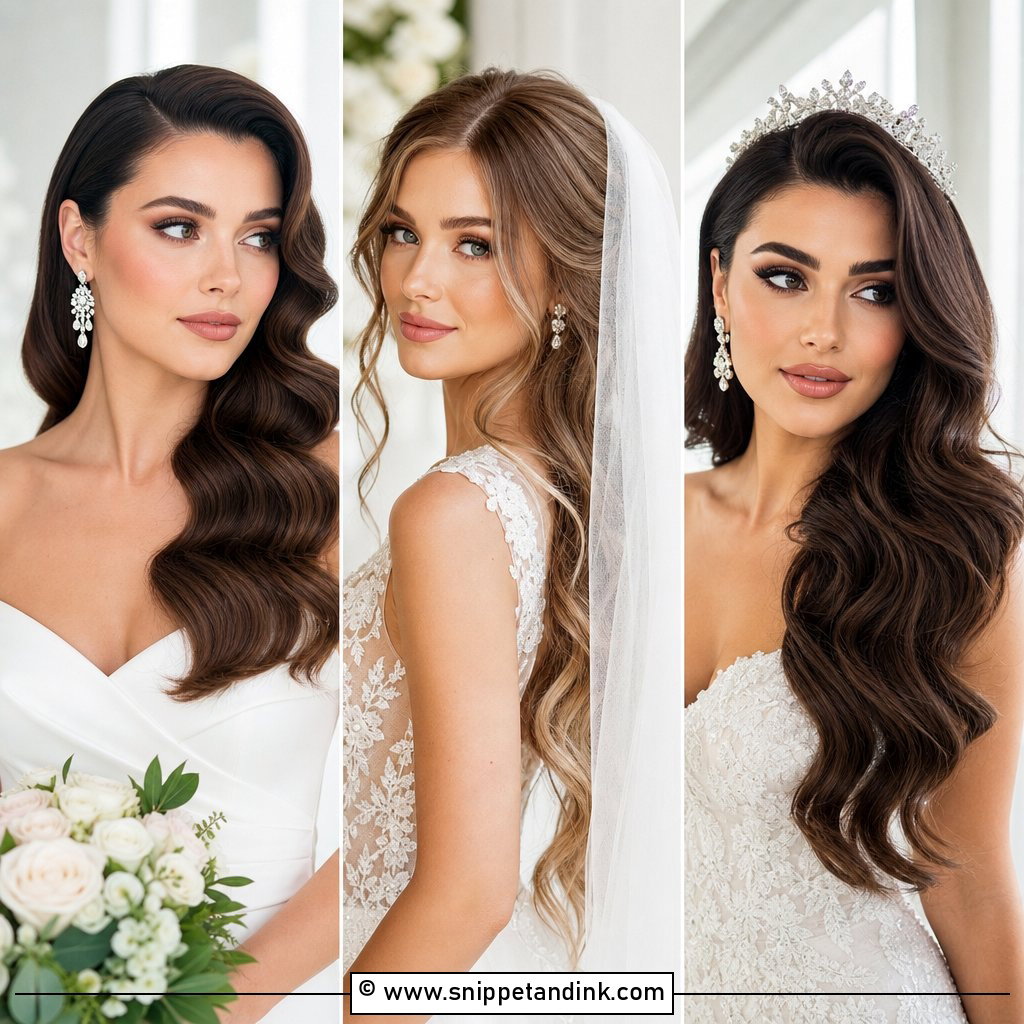
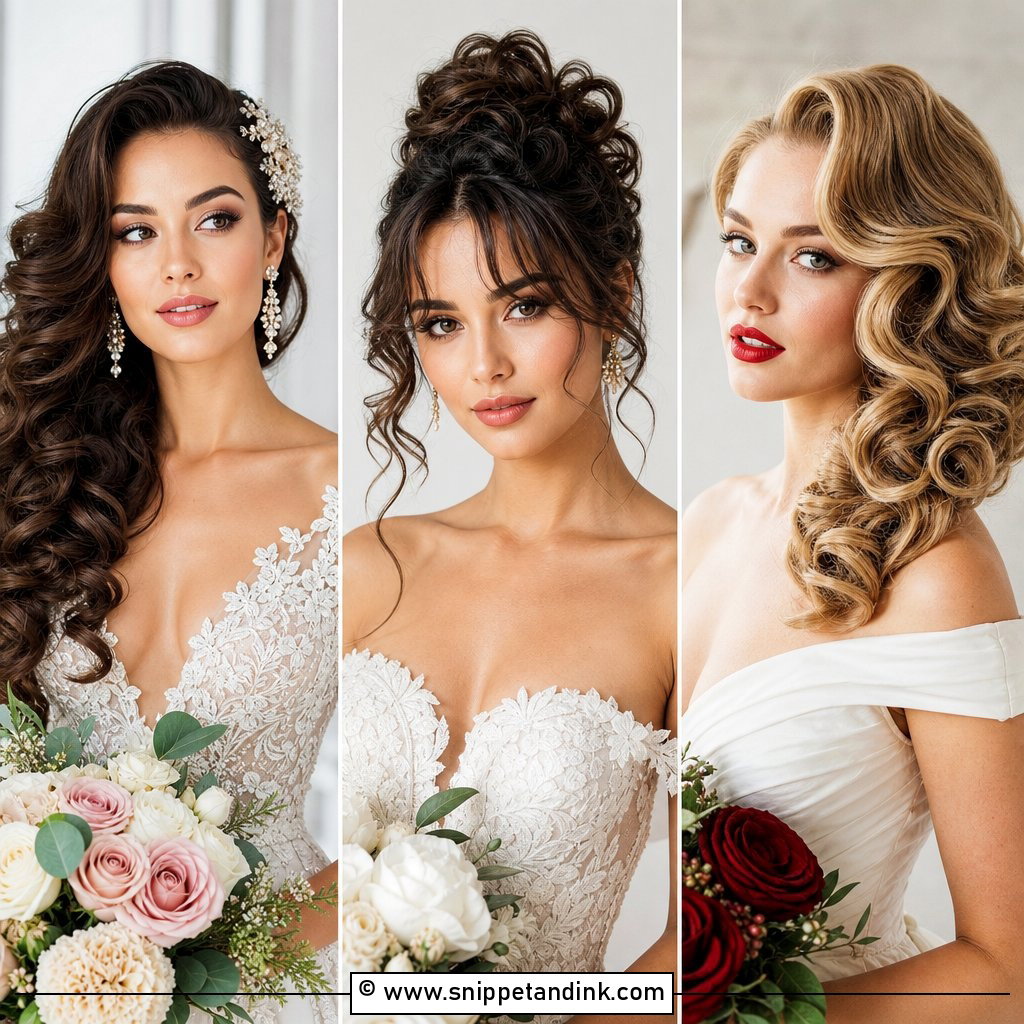
6. Long Hollywood Waves Wedding Hairstyle
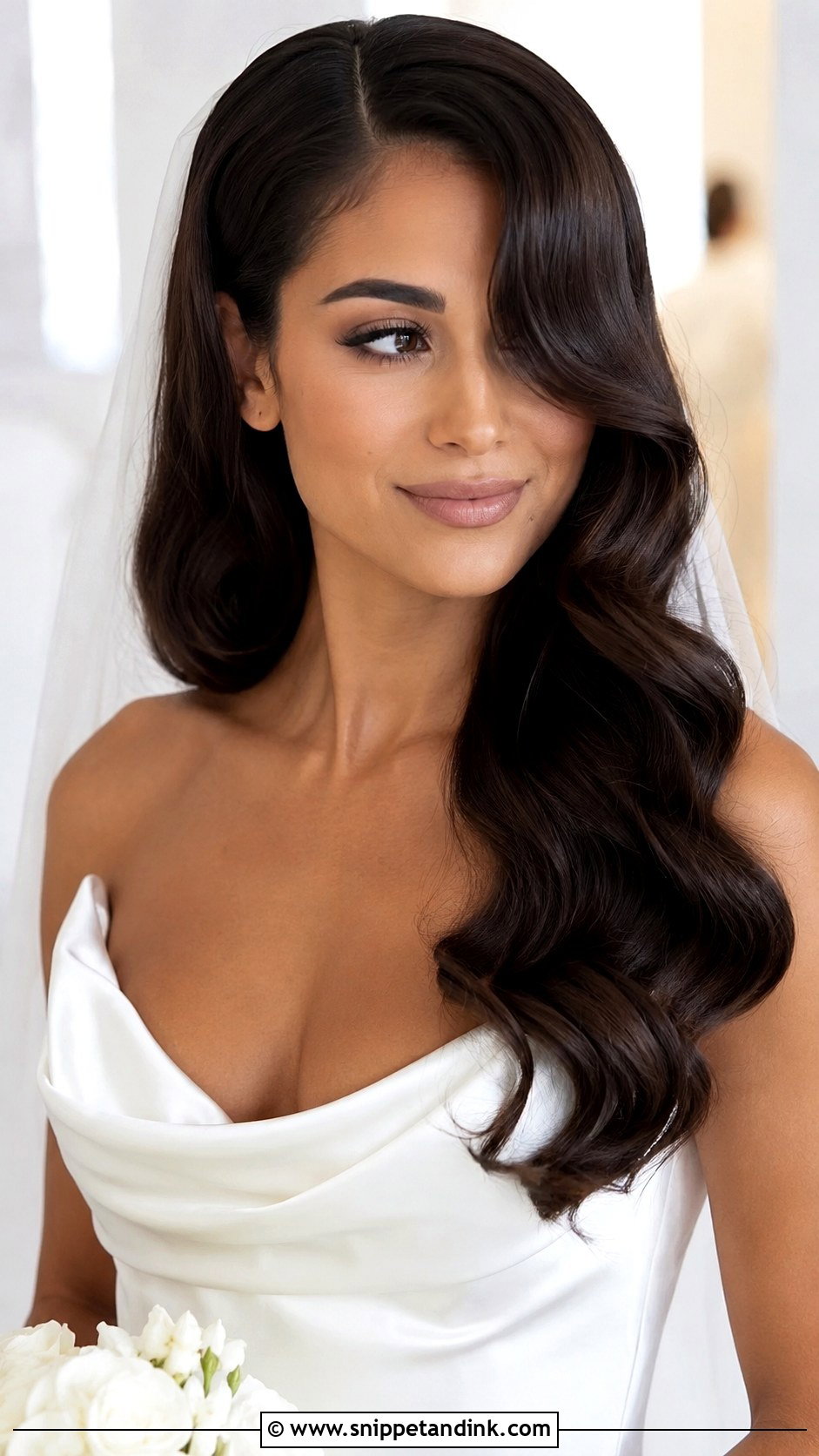
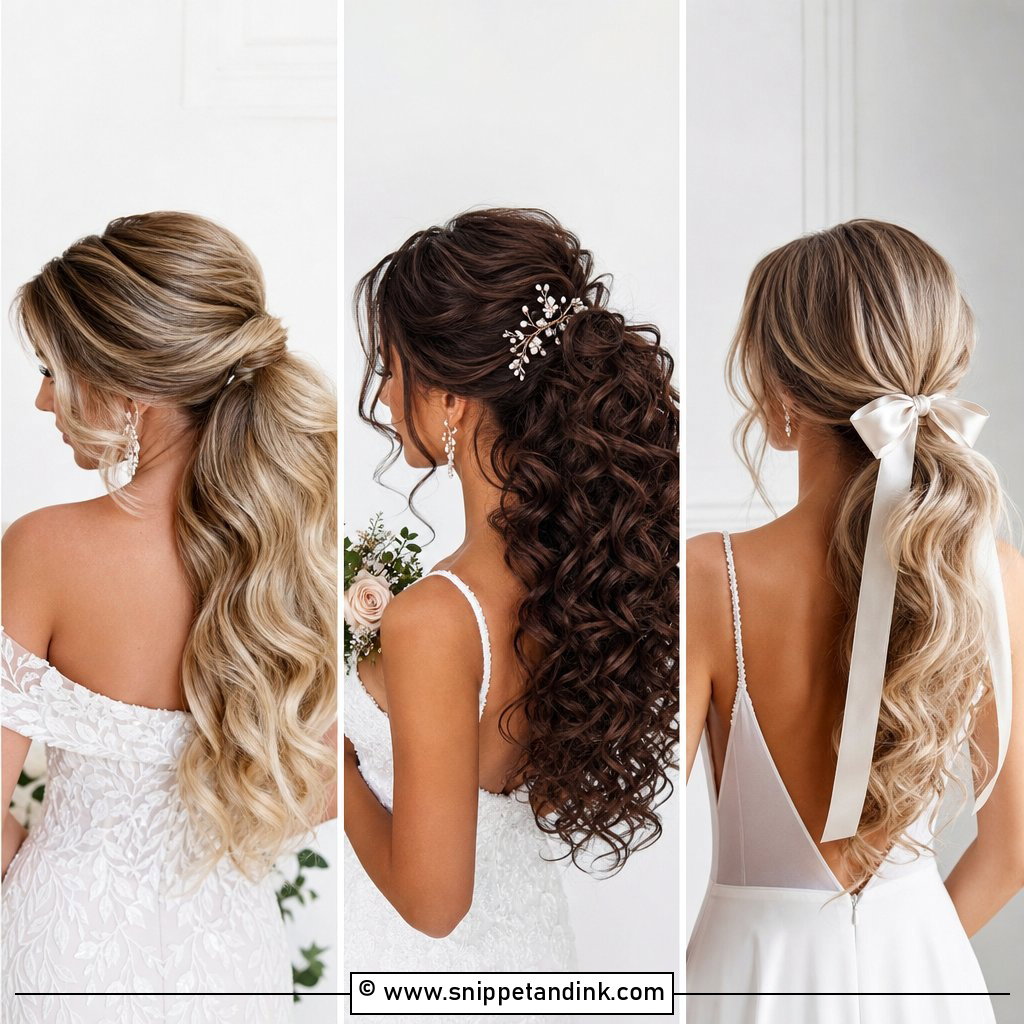
Long Hollywood waves give a strong, classic silhouette. They’re smooth and brushed into one uniform pattern around the face, and they work with gowns, tux-inspired outfits, capes and statement earrings. A deep side part leans vintage; a center part is more current. Prep is everything: each section curled in the same direction, cooled completely, then brushed out. If a single curl goes the other way, the pattern breaks, and you’ll notice it in every photo.
7. Natural Curly Updo Wedding Hairstyle
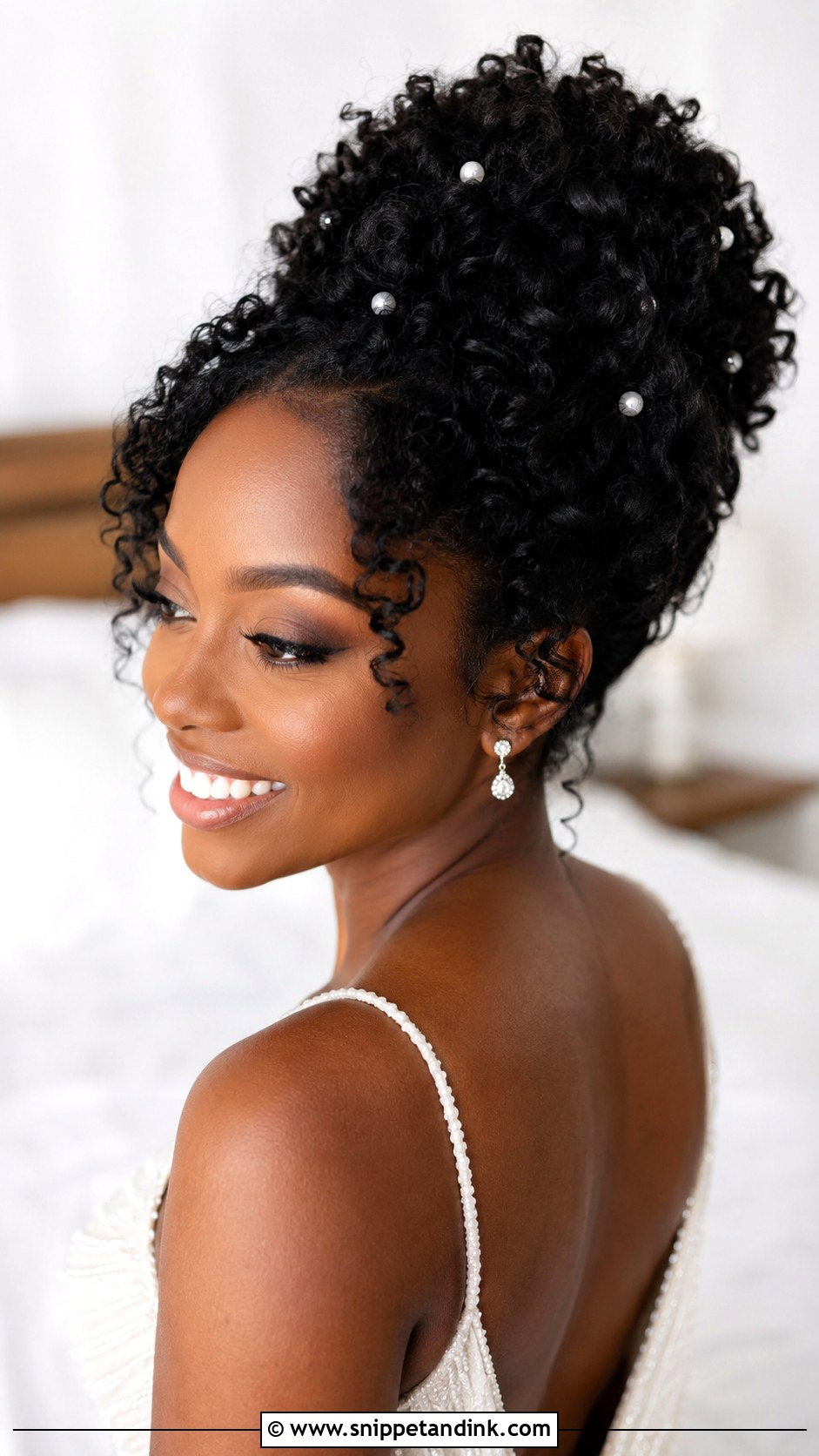
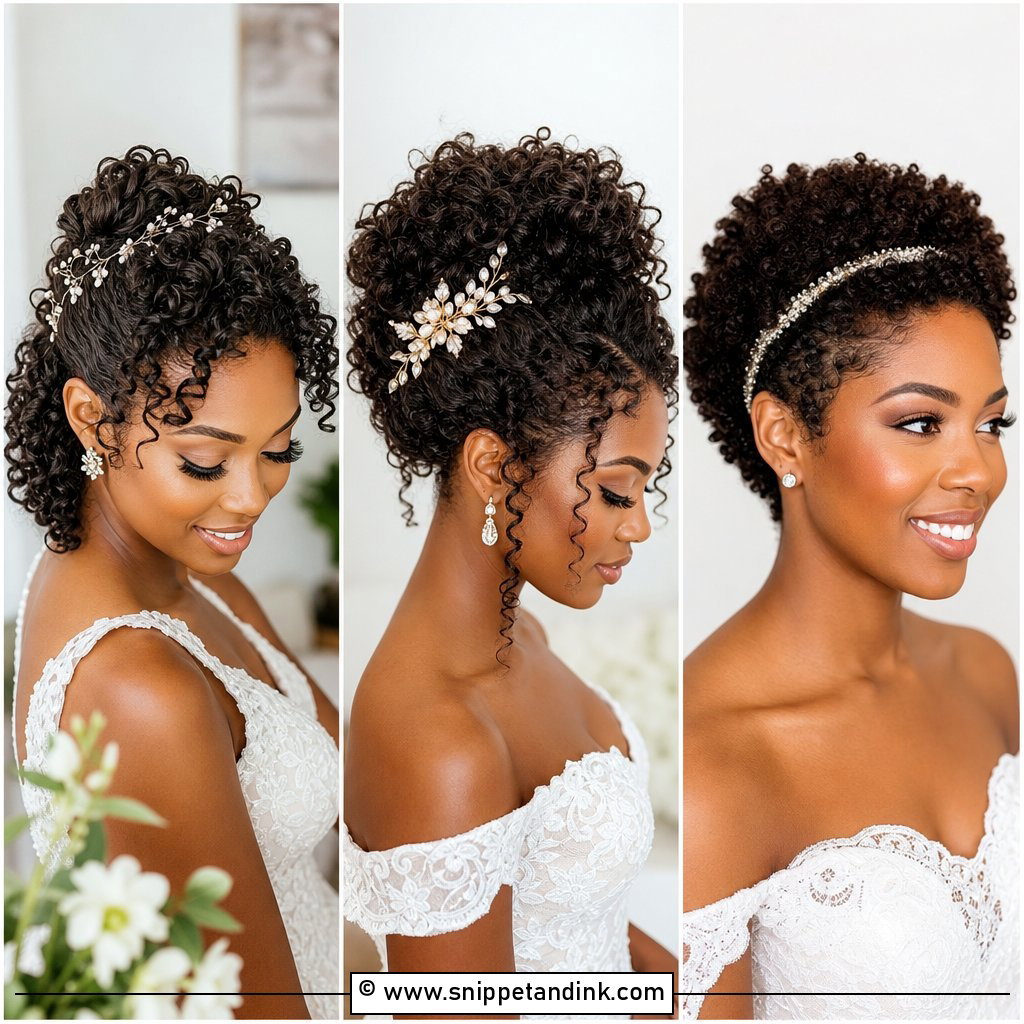
Texture held up and off the neck, with a few curls left at the temples or nape for softness. The curls can be pinned high, gathered low or shaped into a soft crown, depending on the outfit. I prep with leave-in conditioner and a curl definer and shape with my hands, never a brush, so the curl clumps stay intact. Choose pins that match your outfit’s metal. Or skip them and let the curls do the work.
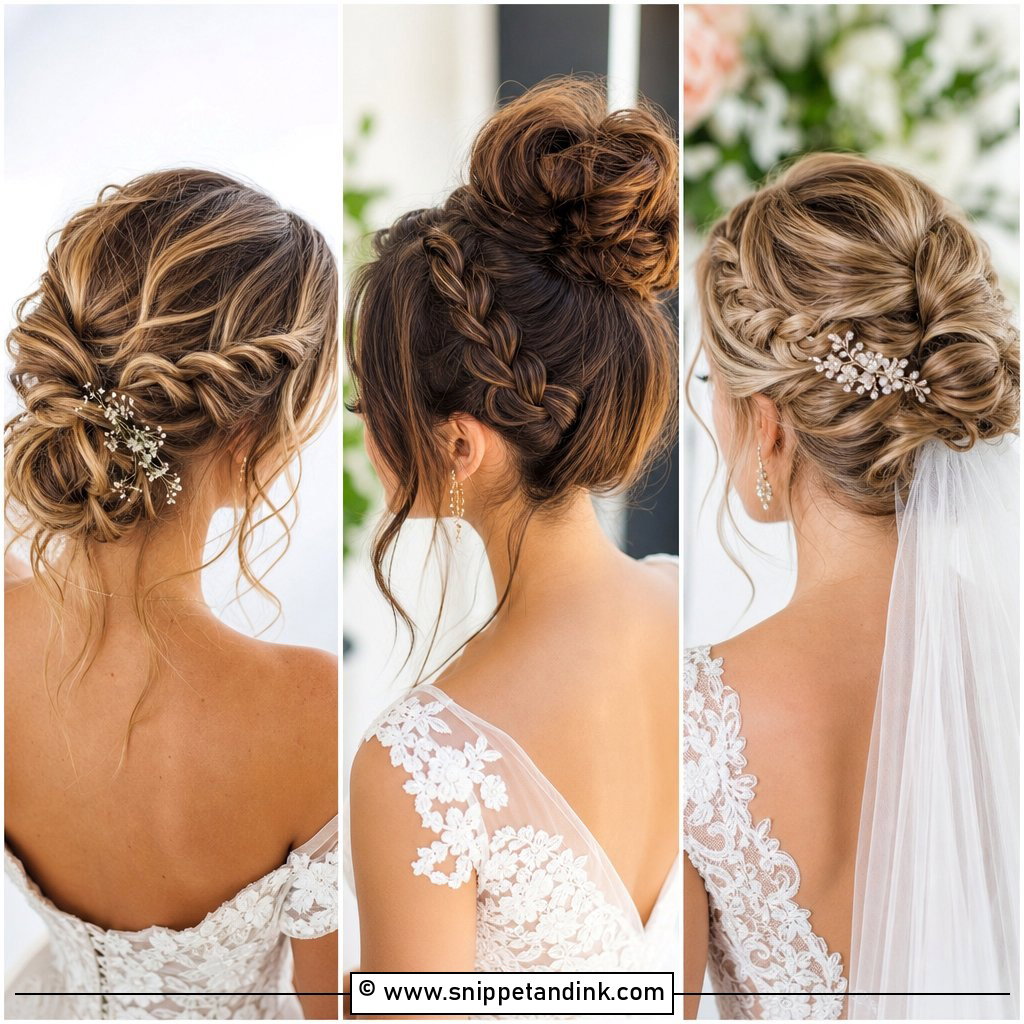
8. Braided Crown Wedding Hairstyle
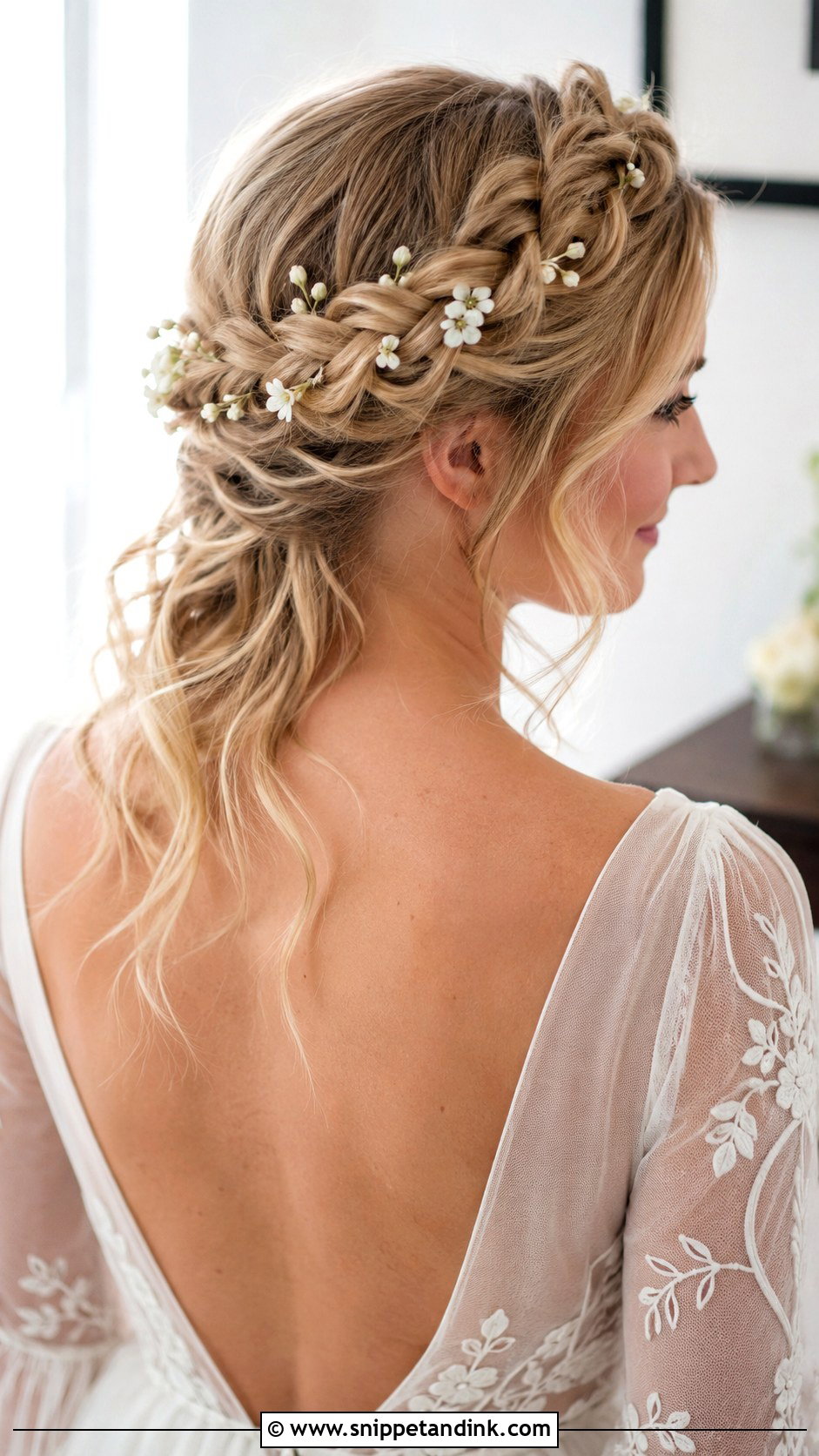
I like crown braids for courthouse and outdoor ceremonies, because they don’t move in wind and ask nothing of you all day. The braid can wrap fully around the head or sit as a partial crown with loose waves behind. It suits medium to long hair and gives shape without a tight bun, which matters if buns give you headaches. I braid firmly, then pull it apart for fullness. Small flowers, pearls or plain pins can be woven in.
9. Textured Low Chignon Wedding Hairstyle
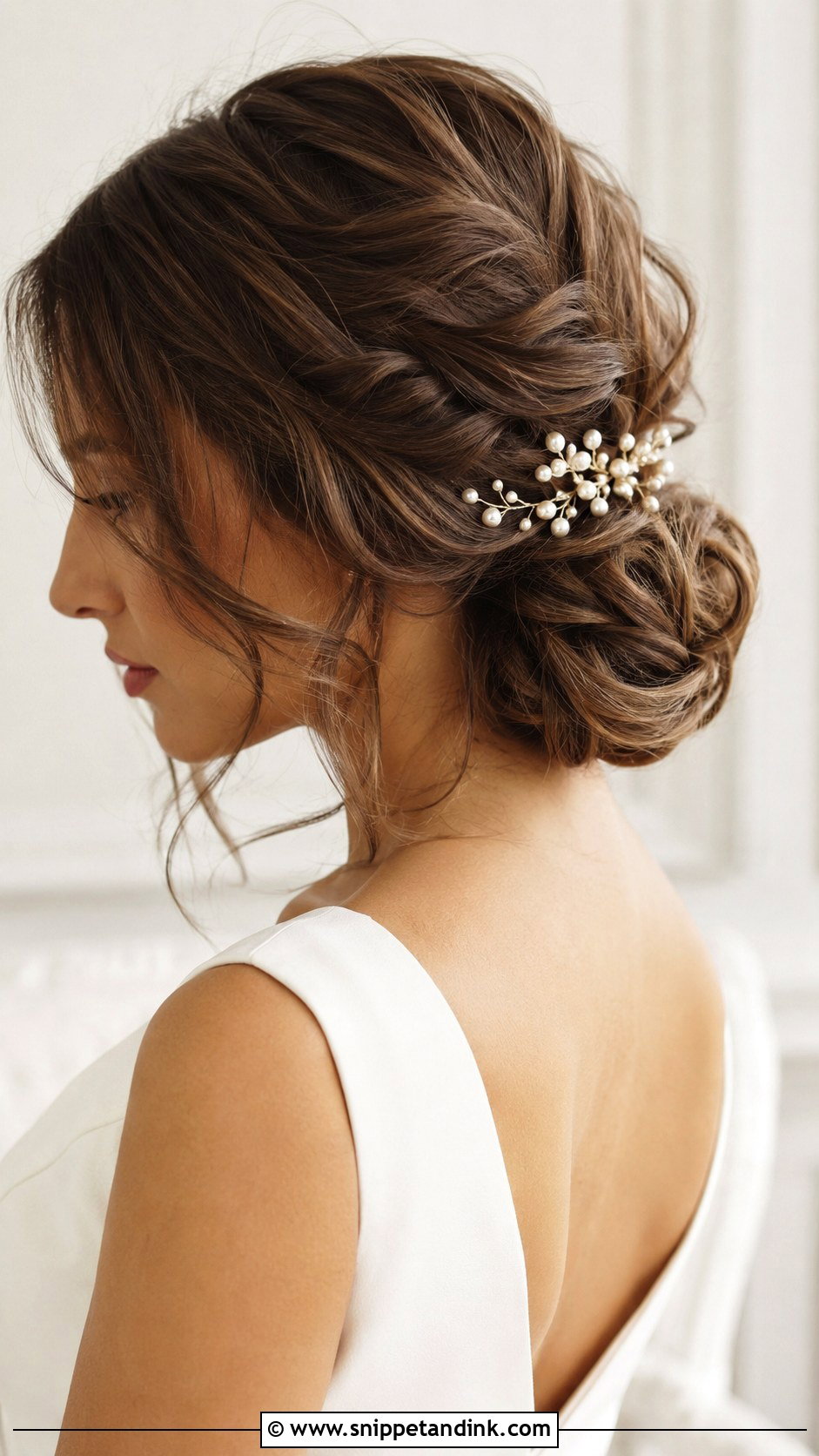
This is the updo for someone who doesn’t want to look too done. The hair is gathered low near the nape, twisted and pinned, with soft pieces left at the face, and it takes veils, combs, pearl pins and clips. It works on most textures because I can loosen, smooth or curl the hair before pinning. A low chignon is seen from behind as often as from the front, at the altar and on the dance floor, so I balance it from every side before any spray goes on.
10. Short Bob With Side Part Wedding Hairstyle
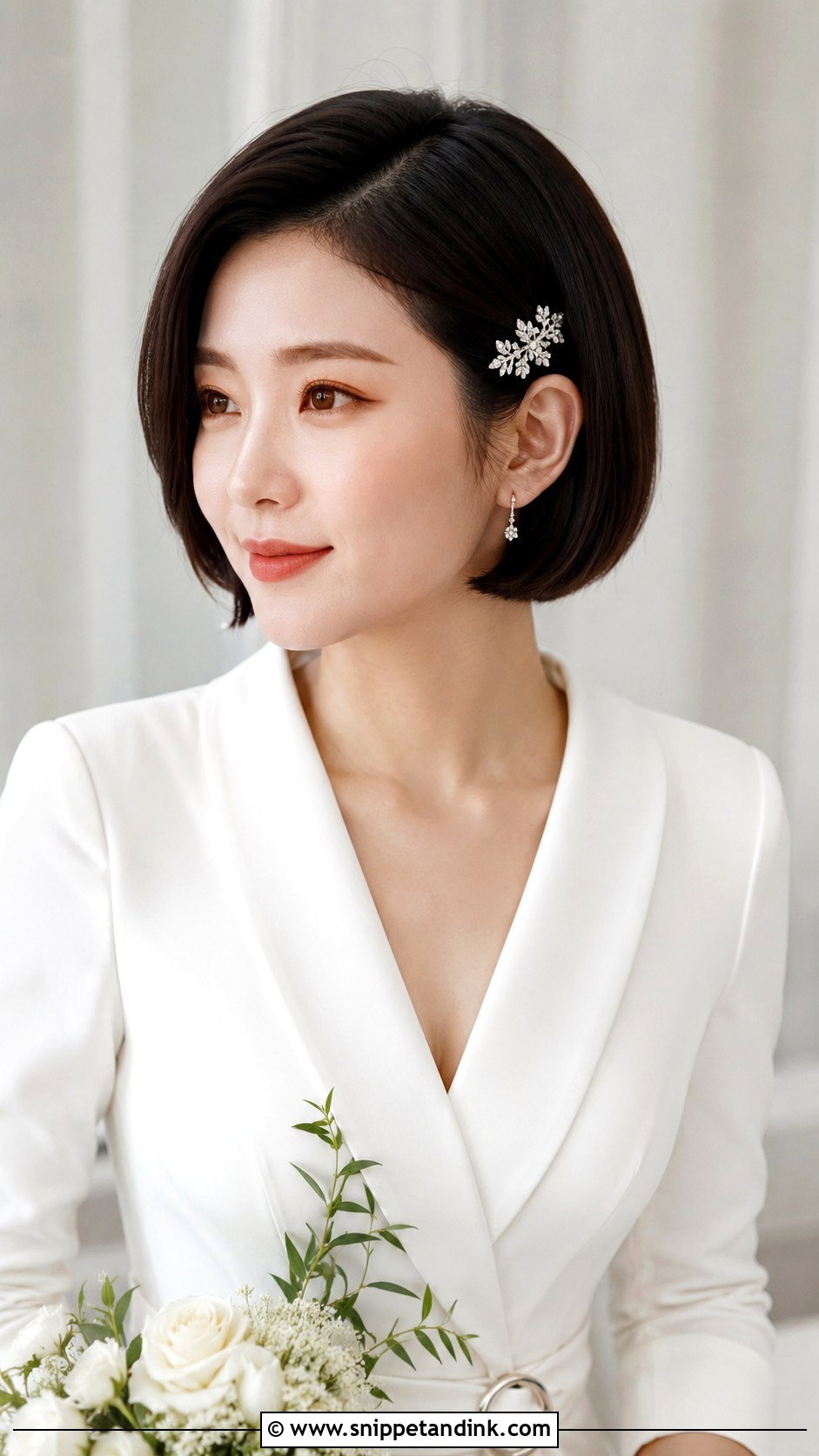
A side-parted bob is short hair at its most polished. The part gives the cut shape, and no extensions or updo are involved. The ends can be tucked under, softly waved or given a slight bend. I set the part with a blow-dry in that direction, since a part that normally lives elsewhere will drift back by the reception. A drop of shine serum and a small clip on the heavier side finish it.
11. High Bun Wedding Hairstyle
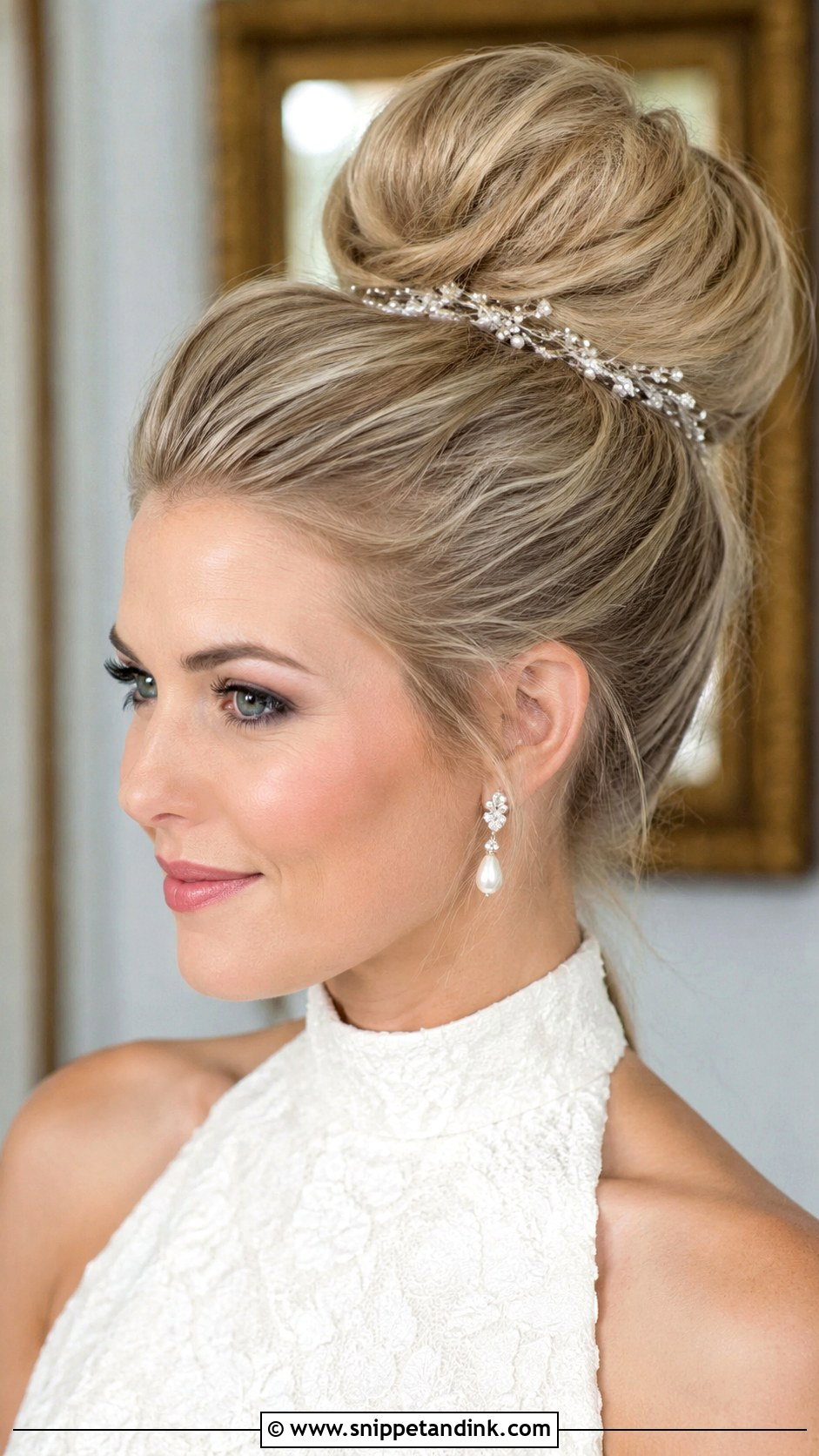
Height is the point, and it pairs best with high necklines, big sleeves or detailed shoulders, where hair on the neck would hide the outfit. The bun can be sculpted, airy or a little undone. Thick hair has the volume built in; fine hair usually needs a padding piece or extensions. A high bun is heavy at the top of the head, so I anchor it to a tight base ponytail and cross the pins. A veil goes underneath the bun, decorative pins around its base.
12. Wavy Lob Wedding Hairstyle
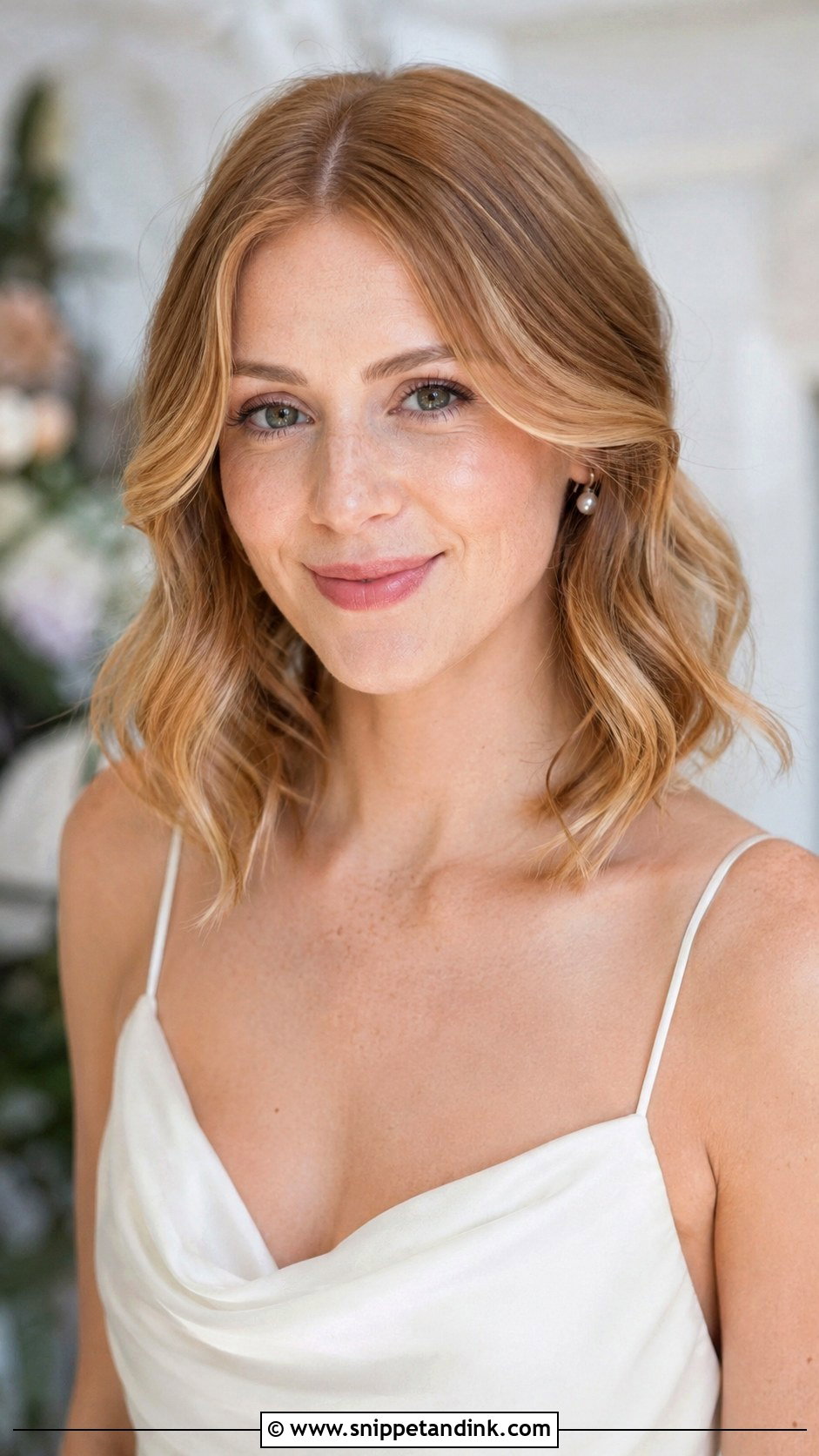
A collarbone-length lob is long enough to wave and short enough to feel light, and it goes with slip dresses, suits and two-piece looks. Loose bends through the mid-lengths make it look fuller. I leave the last inch slightly straight, which keeps it modern instead of prom-like. Middle part for clean, side part for volume. Only a little texture spray; too much and the waves stop moving.
13. Side Swept Curls Wedding Hairstyle
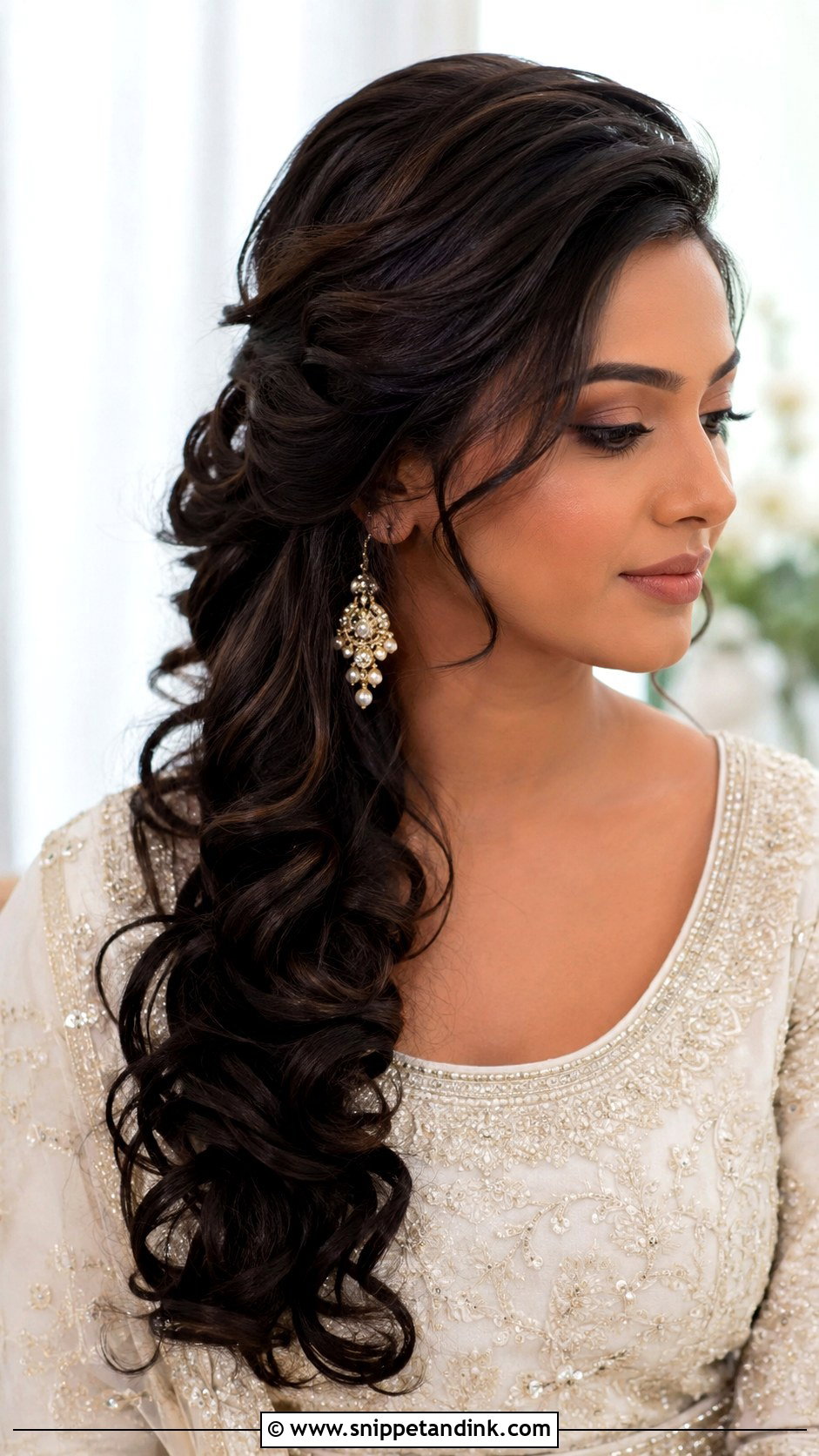
Gathering everything over one shoulder shows off the neckline and gives a clear curve in portraits. It works for long hair, medium hair and curly textures that can be pinned on one side, and the pinned side can be sleek, braided or twisted. I hide a row of strong crossed pins behind the far ear to carry the weight. I also check comfort, because a heavy sweep pulling on one side can feel lopsided after a few hours. Wear your statement earring on the open side.
14. Pompadour Wedding Hairstyle
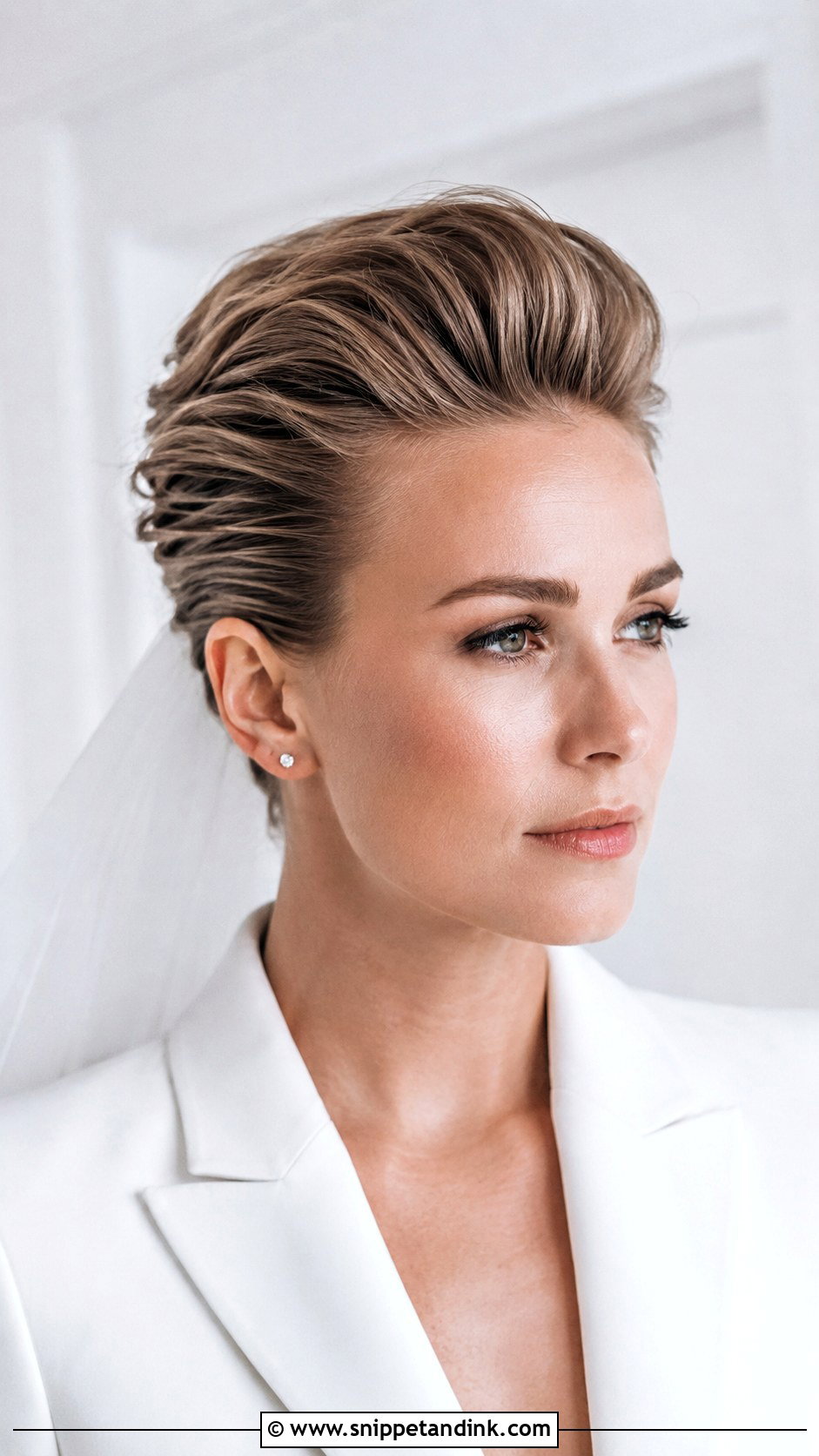
A pompadour wedding hairstyle gives a confident, gender-neutral look with structure at the front, and the sides can be slicked, tapered or blended into the haircut. It suits suits, jumpsuits, blazers and minimalist outfits. I blow-dry the lift in with a round brush before any product goes on. Pomade alone won’t build height; it just weighs the front down. Glossy reads formal and matte reads relaxed, and either way it puts the face, brows and accessories front and center.
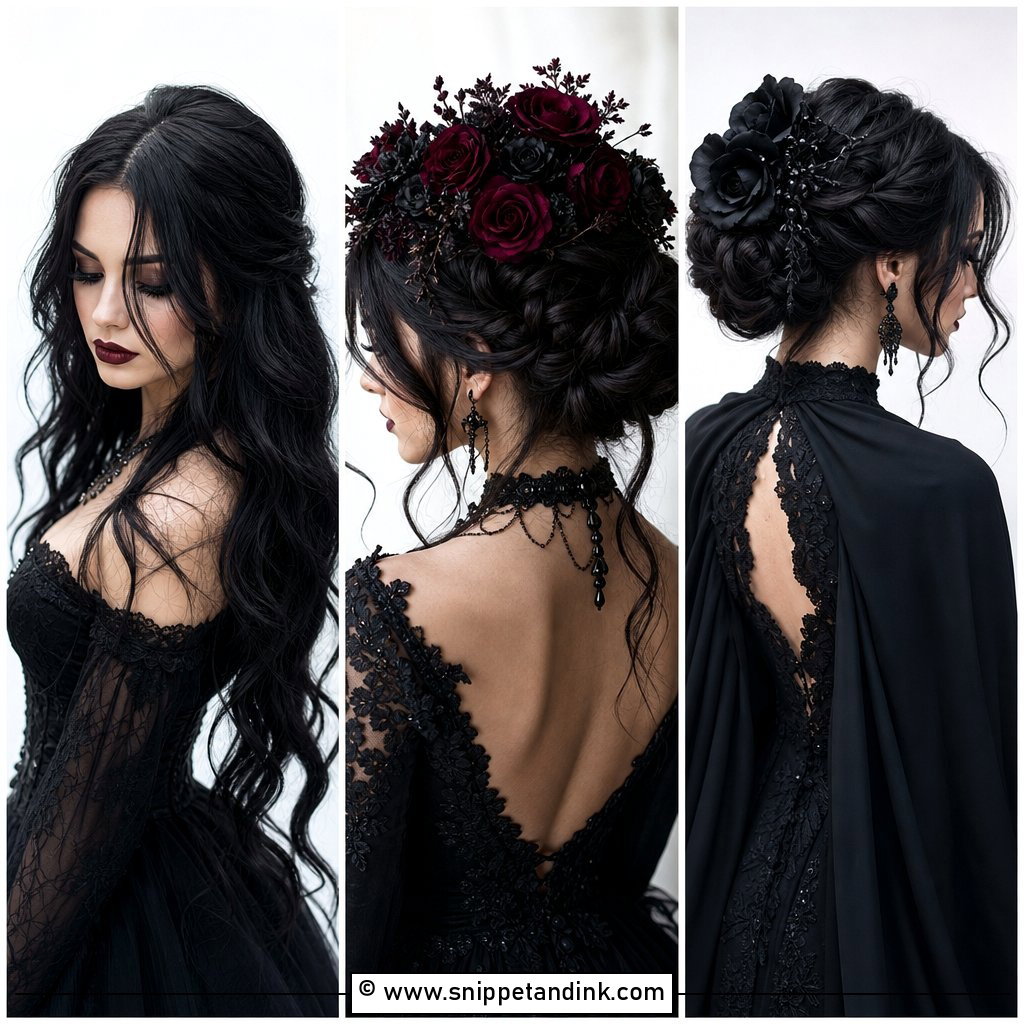
15. Loc Updo Wedding Hairstyle
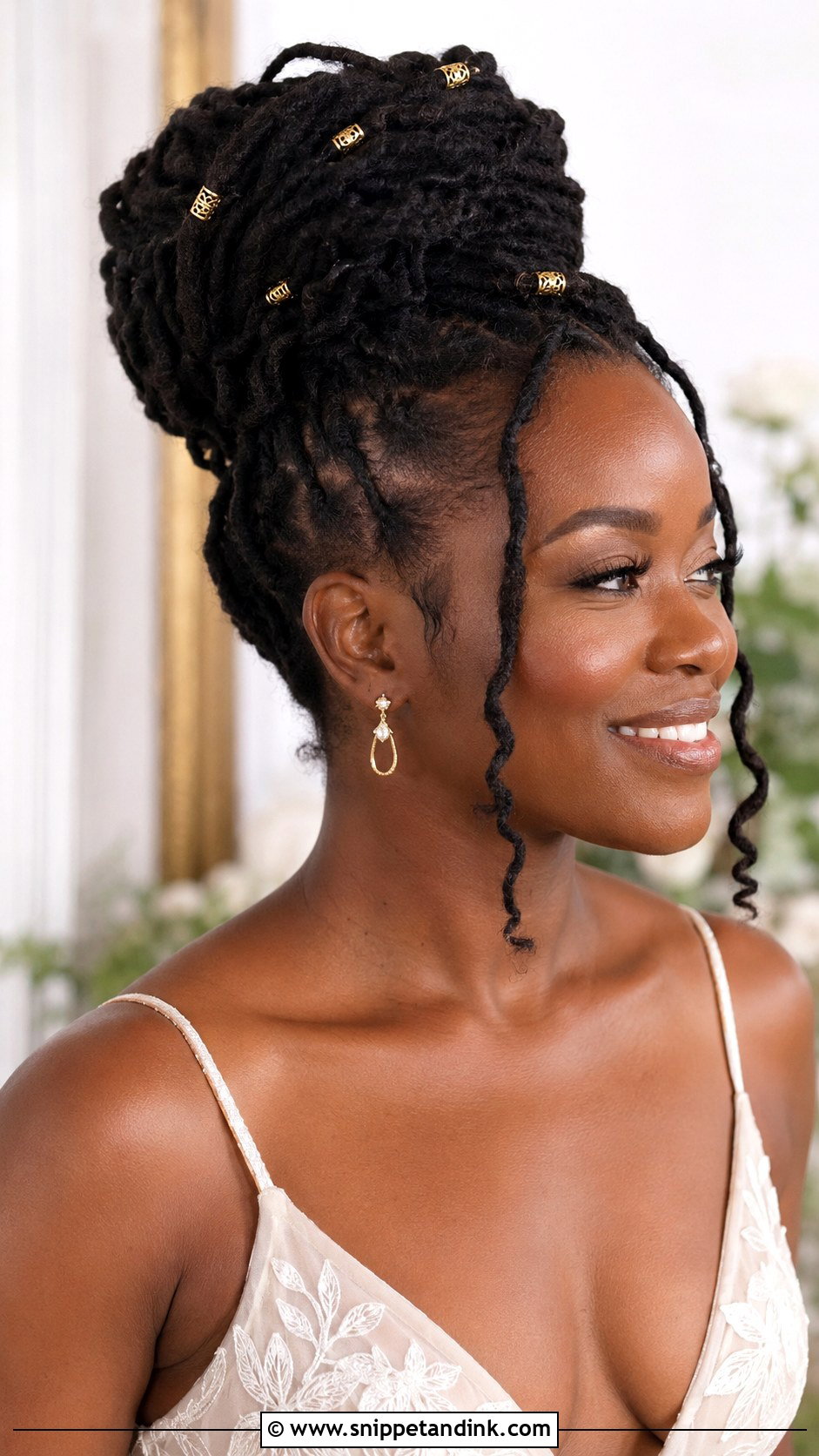
A loc updo wedding hairstyle is protective and holds its shape well. Locs can be wrapped into a high bun, folded into a low updo, pinned into a crown or styled with face-framing pieces, and they take veils, gold cuffs, pearl pins and flowers. Long or thick locs are heavy, so I spread the weight across several anchor points and never stack it all at the crown. If your scalp feels tension at the trial, say so. It only gets worse over a long day.
Barber or Bridal Stylist? Short Cuts Sometimes Need Both
Many bridal stylists are trained in updos and waves and don’t do clipper work, and plenty of barbers don’t do wedding styling. For a pixie, undercut, fade or pompadour you may need both: a barber for the cut, a stylist for finishing on the day. Ask to see short hair and same-sex couples in any portfolio before you book. If every photo is a long-haired updo, keep looking.
When to get the cut
- Fades and undercuts: two to five days before, so the lines are crisp but don’t look raw.
- Pixies and short bobs: about one to two weeks before, so the edges have softened.
- Longer hair: a light trim four to six weeks out, and no dramatic changes after that.
- Never try a new barber in wedding week. Go to the person who already knows your head.
On the day, carry a travel tin of your pomade or cream and a small comb. Short styles recover in seconds with a touch of product, which is one advantage longer hair doesn’t have.
More Than One Mood, Same Wedding
You don’t have to pick between romantic and bold, or between feminine and masc. Wedding hair can carry more than one feeling, just like your outfit does. Start with your haircut, your texture, the venue and what you’re wearing, then pick the style that supports all four. A trial is always worth it, especially if pins, a veil, flowers or shaping product are involved. Pixie, bun, waves, curls, locs or undercut, the right one is the one you forget about once the ceremony starts.
You'll Like These Ideas:


Leave a Reply