
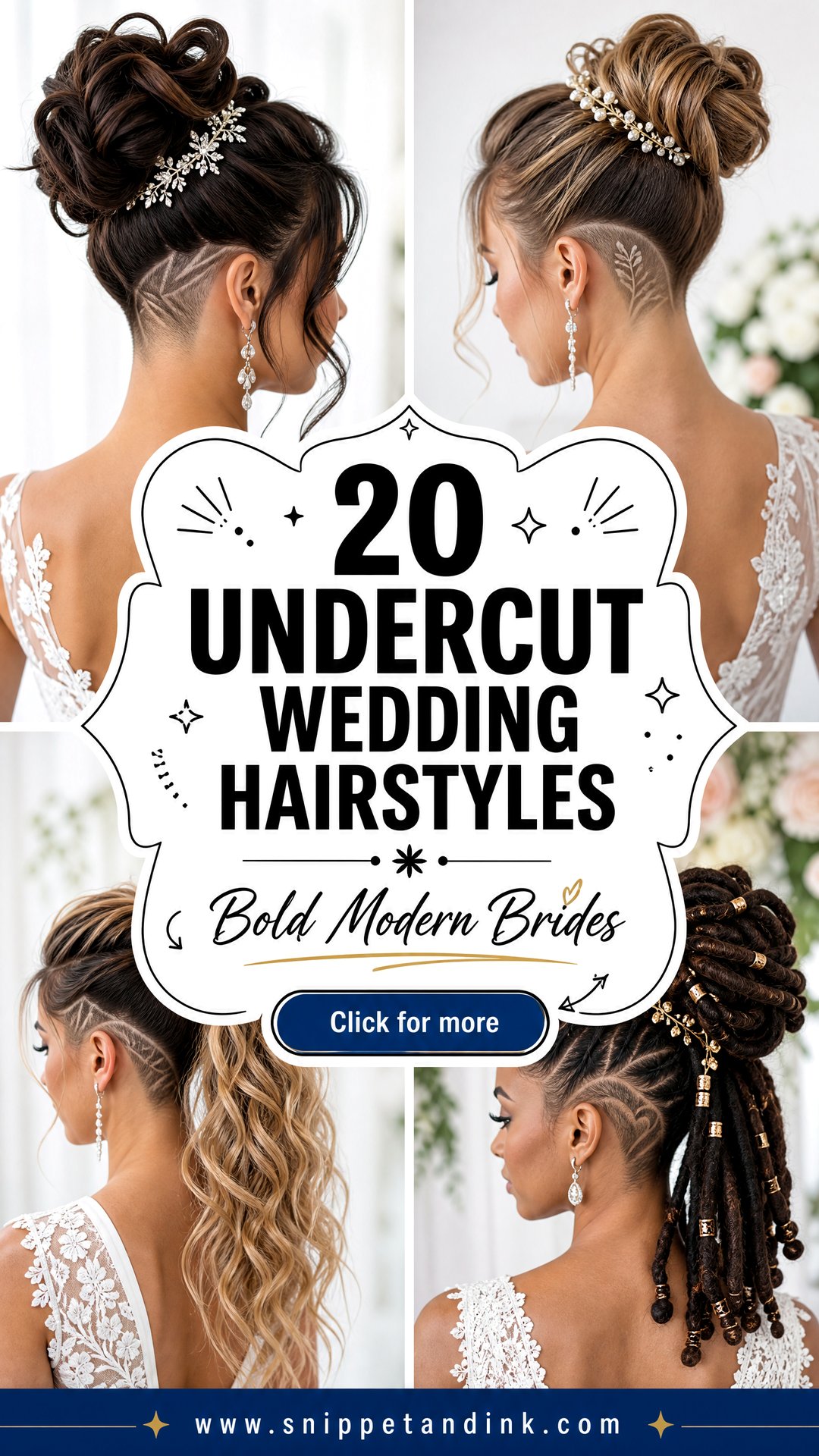
An undercut gives bridal hair a bit of edge, and the real question I ask at a consultation is how much of it you want people to see. Some brides hide it under waves for the ceremony and show it off later; others want it to be the whole point. Where the shaved area sits, at the nape, one side or both, decides which styles below will work, because it changes where I can anchor pins and how a veil sits. The ideas cover short cuts, long hair, curls, locs, bobs and buns.
Timing the Clipper Refresh Before Your Wedding
An undercut only looks sharp for a short time. Clipped hair grows back quickly, and within a couple of weeks the outline blurs. So I ask every undercut bride when she is booked in with her barber or stylist.
- Book the final clipper refresh two to five days before the wedding. That keeps the line crisp but gives the skin time to calm down if it goes red or bumpy after clipping.
- Don’t try a brand new shaved design in the last week. If you want a pattern, have it cut at least once well before, so you know how your skin reacts and how it looks growing out.
- Bring a photo of the undercut freshly cut to your hair trial, so your stylist plans anchors and accessories around the final line.
- Tell your makeup artist about it. Exposed scalp at the side or nape can look red in close-up photos and may need a little color correcting.
If you are thinking of growing it out after the wedding, mention it early. Some styles hide a grow-out stage far better than others.
1. Undercut Wedding Updo
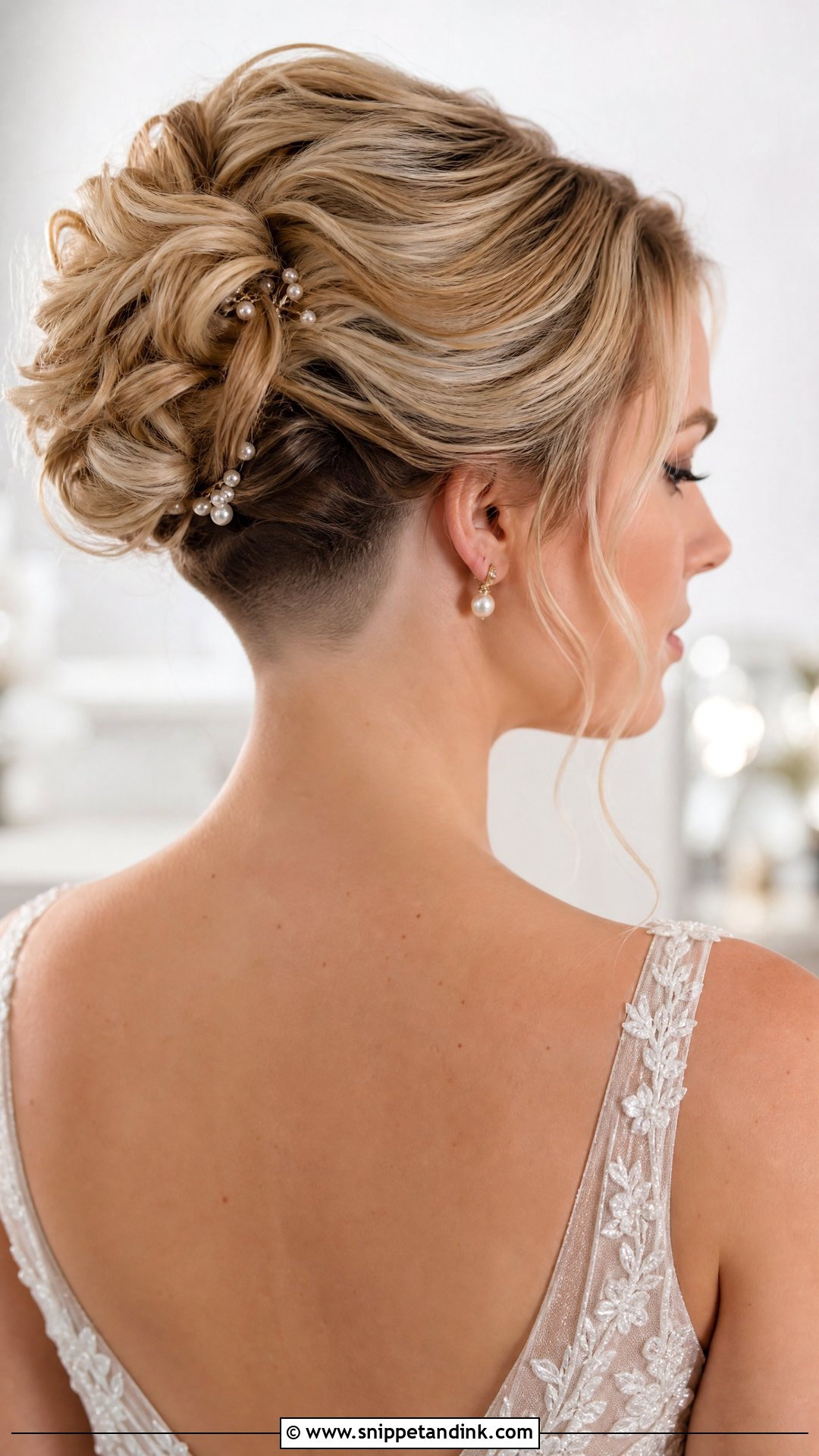
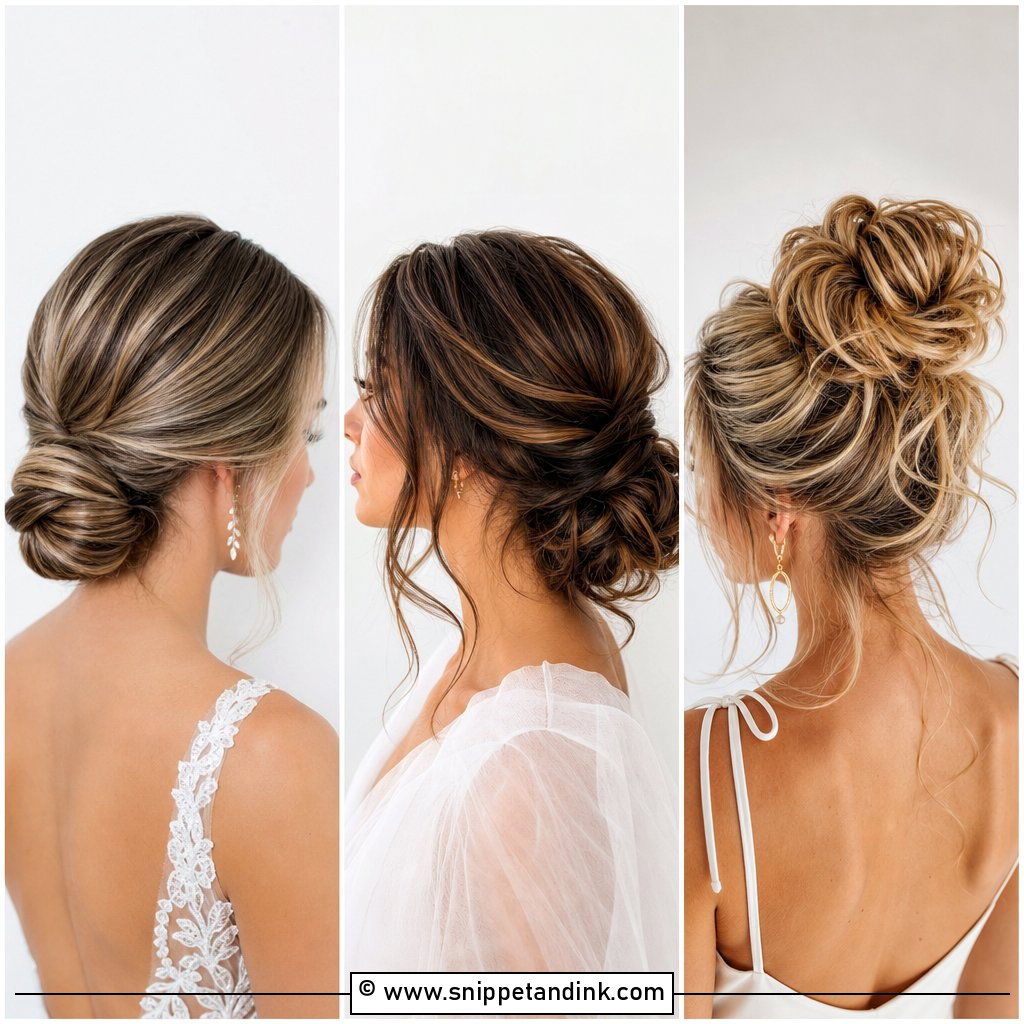
An updo is the clearest way to show the shaved detail. The lift gives structure, and the undercut keeps it from looking old-fashioned. The thing I plan first is the lowest anchor point: pins cannot grip clipper-length hair, so the whole updo has to be secured above the undercut line, with the shape built from there. I keep the crown soft rather than lacquered. A low veil, pearl pins or a few small flowers can sit just above the shaved section.
2. Undercut Wedding Bun
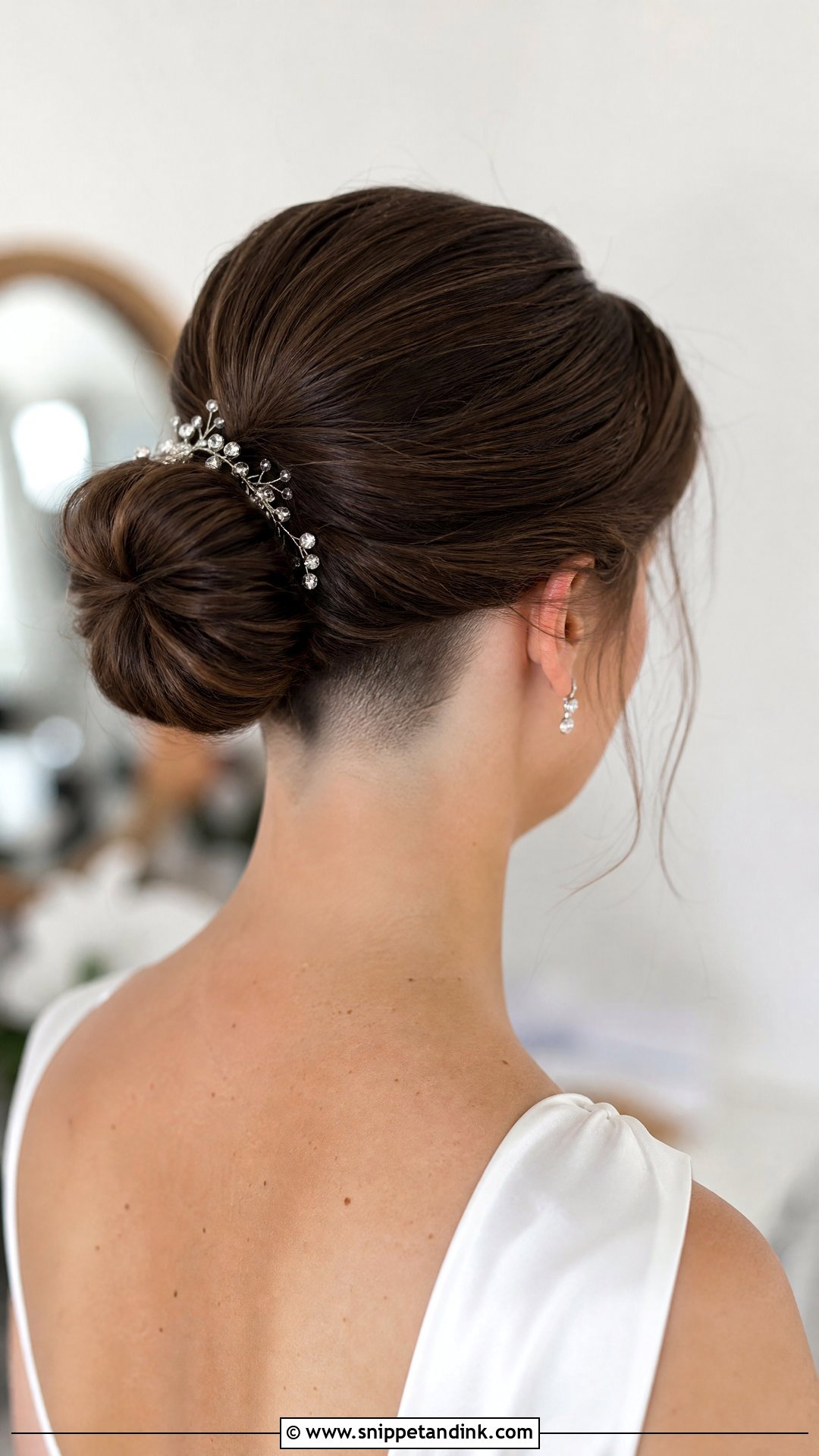
A bun keeps hair off the neck and stays put through a long day. Its height decides how much you show: a low bun partly covers a nape undercut, a higher one reveals it fully. That suits statement earrings and open-back dresses. With a nape undercut, the hair just above the shaved line is often short and springs out, so I smooth it with a little gel or pomade before building the bun. Leave a few face-framing pieces for softness, or slick everything back for a sharper finish.
3. Undercut Wedding Pixie
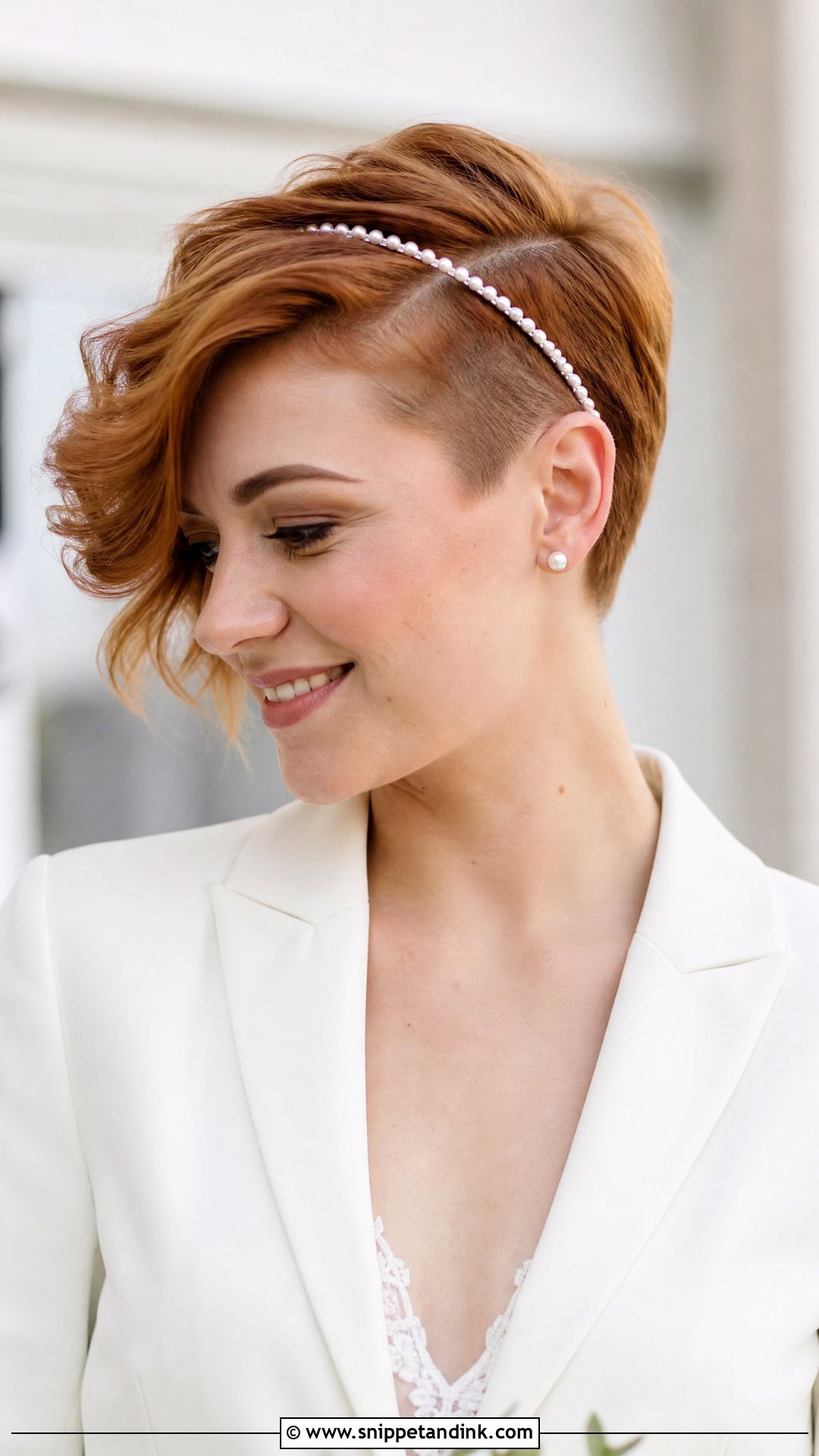
A wedding pixie with an undercut needs no extensions and no updo. The longer top is the only part I really style: a soft wave, a side sweep or a little lift at the roots. Because the cut is already the feature, accessories should be small, a slim pearl headband or one side clip. Use light hold. Pixies look best when they still move a little, and heavy spray makes short hair look helmet-like in close-up photos.
4. Undercut Wedding Bob
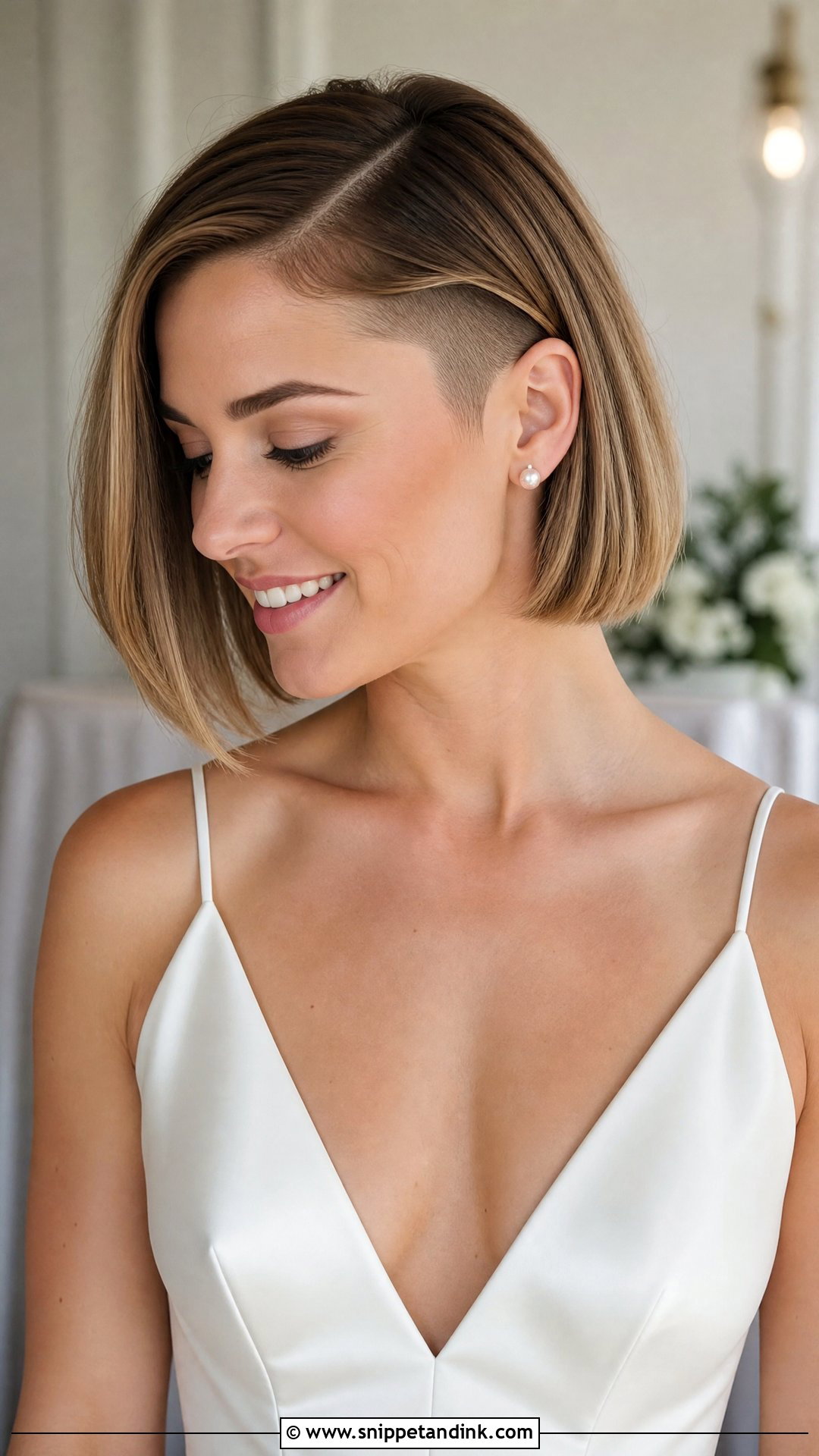
A bob with a side undercut has a hidden reveal: tuck one side behind the ear and the shaved section appears. Worn smooth and straight it looks modern; soft waves make it gentler. A deep side part makes the shape more dramatic, a center part keeps it balanced. Bobs show frizz and flyaways more than longer styles because there is no weight to pull the ends down, so I finish with a light shine spray and a flexible hold rather than anything stiff.
5. Side Undercut Wedding Hairstyle
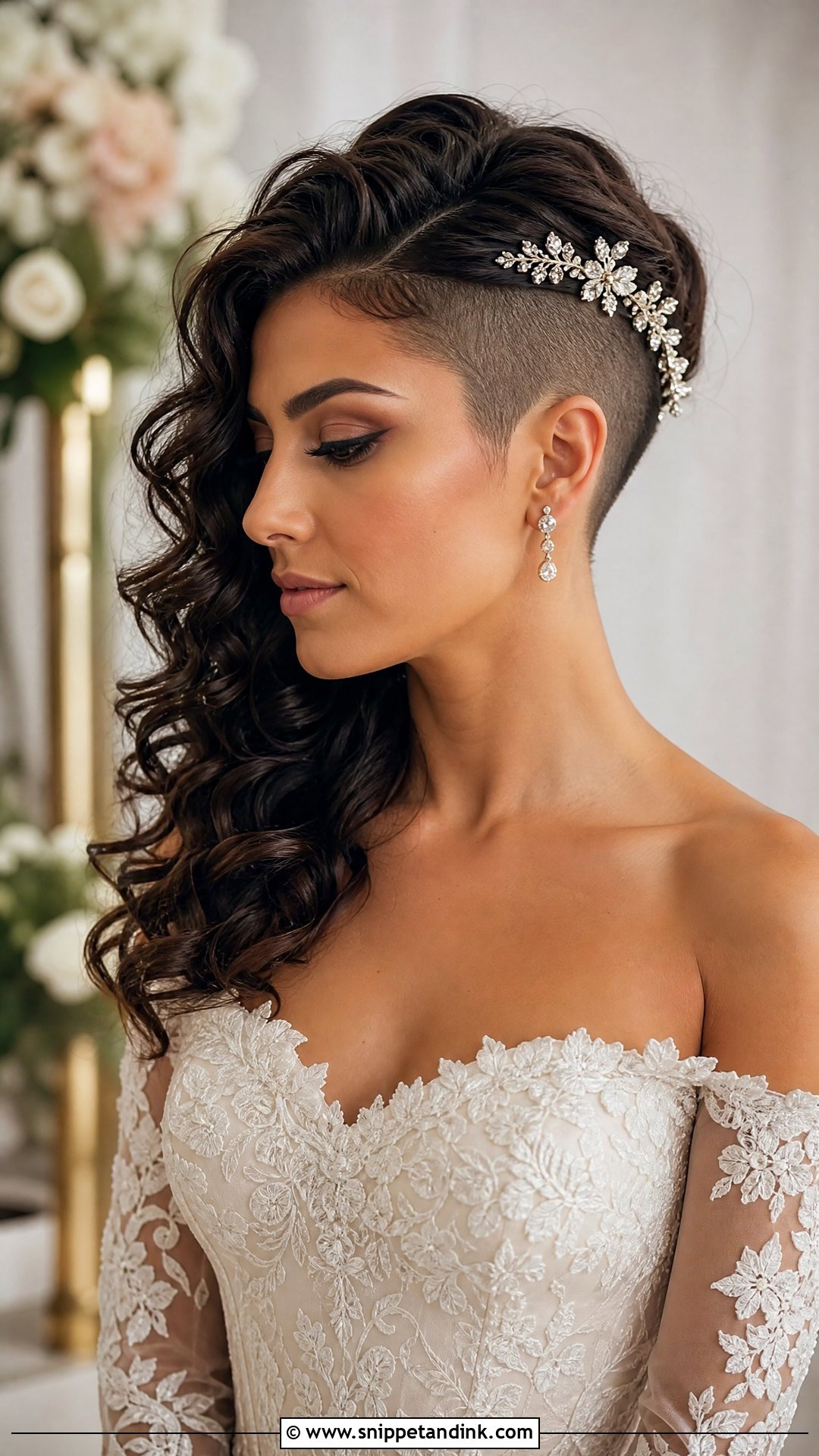
With a side undercut, one side stays shaved or closely cropped and the longer hair sweeps across to the other side. The contrast frames the face and shows off the jawline. It suits an edgy bridal look that still feels dressed up. The swept side carries all the weight, so I pin it discreetly behind the opposite ear, or it slides forward over the face during the day. A jeweled clip can sit just above the shaved side.
6. Nape Undercut Wedding Hairstyle
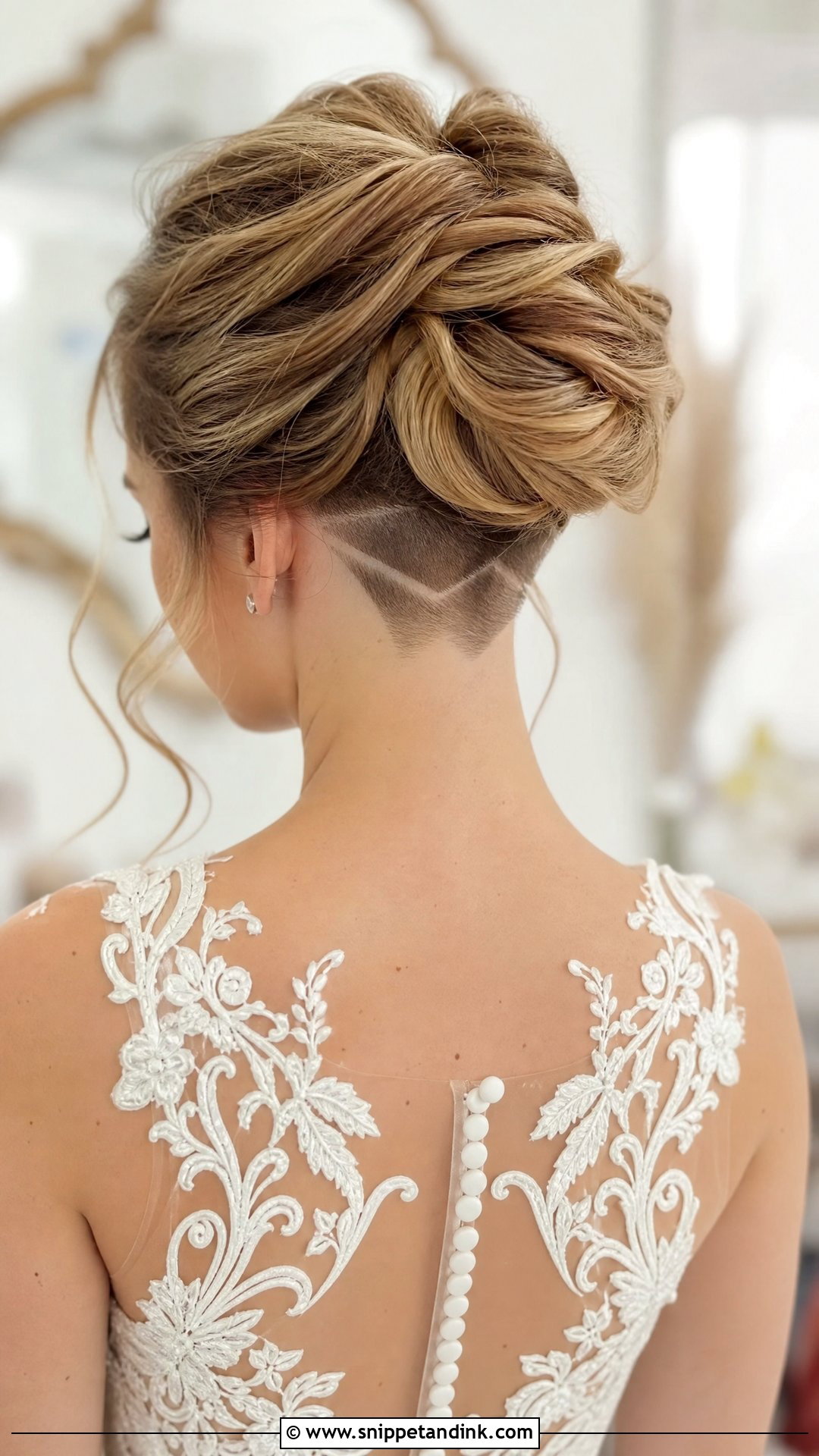
The nape undercut is the easiest one to hide. With hair down, nobody knows it is there; lift it into a bun, ponytail or twist and it appears. That makes it handy if you want to change your hair between ceremony and reception. Keep it clean, add a simple geometric line or ask for a soft taper. It removes bulk at the back, which helps in hot weather, though exposed skin at the nape can burn at an outdoor ceremony, so put sunscreen there.
7. Undercut Wedding Ponytail
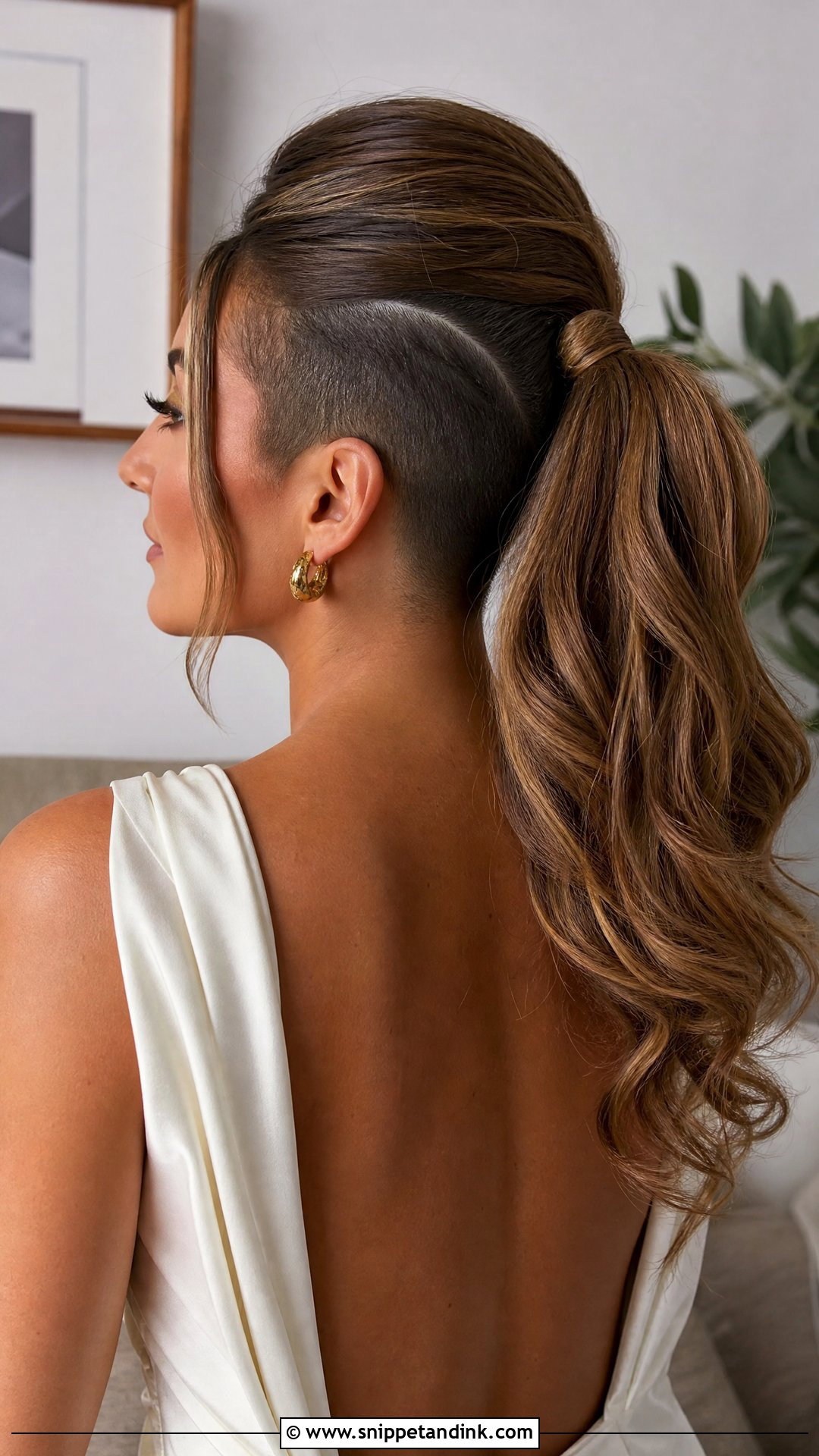
A ponytail is light to wear from ceremony to dancing. A high pony shows the shaved sides or nape fully; a low one is quieter. Waves through the length add volume and a wrapped base finishes it. If your hair is fine, a clip-in ponytail piece adds fullness without hiding the undercut, but it needs to anchor into the longer hair above the shaved area. Keep the roots smooth so the line between long and shaved hair stays crisp. A veil can sit just under the base of the ponytail.
8. Undercut Wedding Half Up
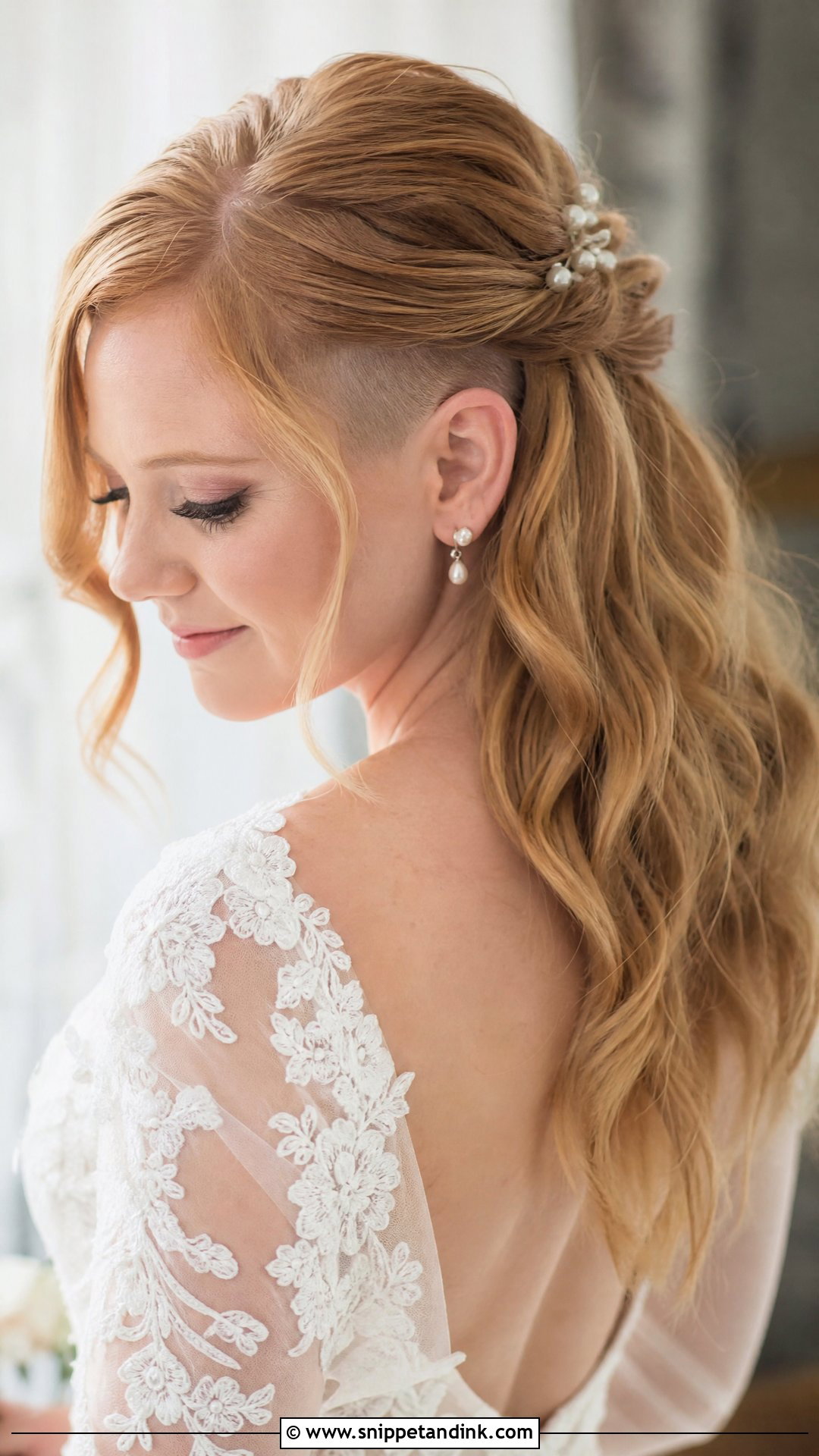
Half up gives you hair on the shoulders with some lift and control at the top. With a side undercut, pinning one section back reveals it; with a nape undercut, a half-up twist shows only a hint. Loose waves keep it romantic and smooth styling makes it modern. The pinned section is what holds the style together, so I place its pins into the thickest hair at the crown, not near the shaved edge.
9. Undercut Wedding Curls
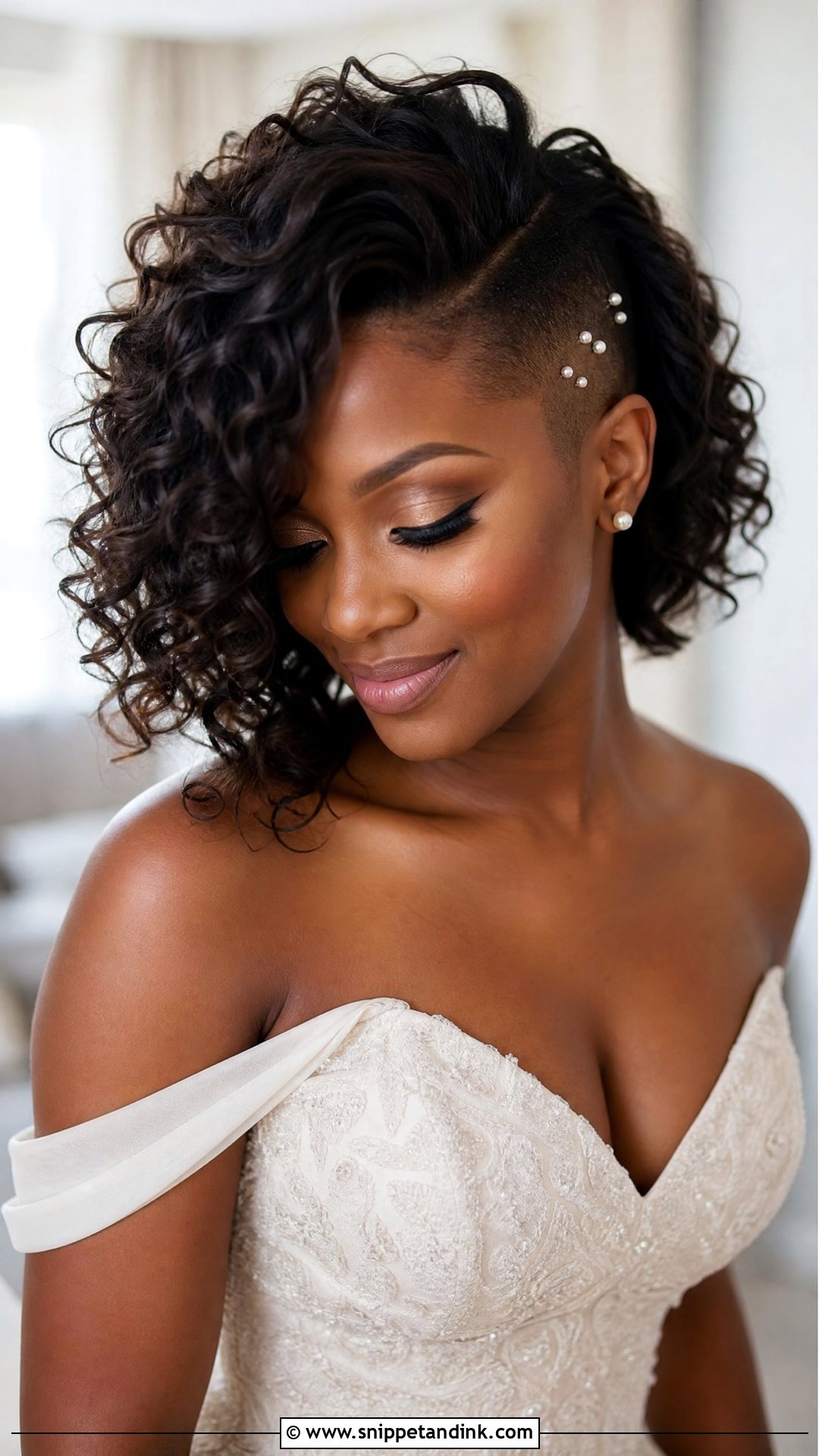
On curly hair the undercut removes weight, and the curls get more spring because of it. Naturally curly brides often ask me to keep their texture rather than straighten it, and an undercut makes that easier to style. A side undercut lets curls fall over one shoulder; a nape undercut makes an updo lighter. Curl cream, gel and a humidity-resistant finish keep definition all day. Pearl pins can sit within the curls without flattening them.
10. Undercut Wedding Waves
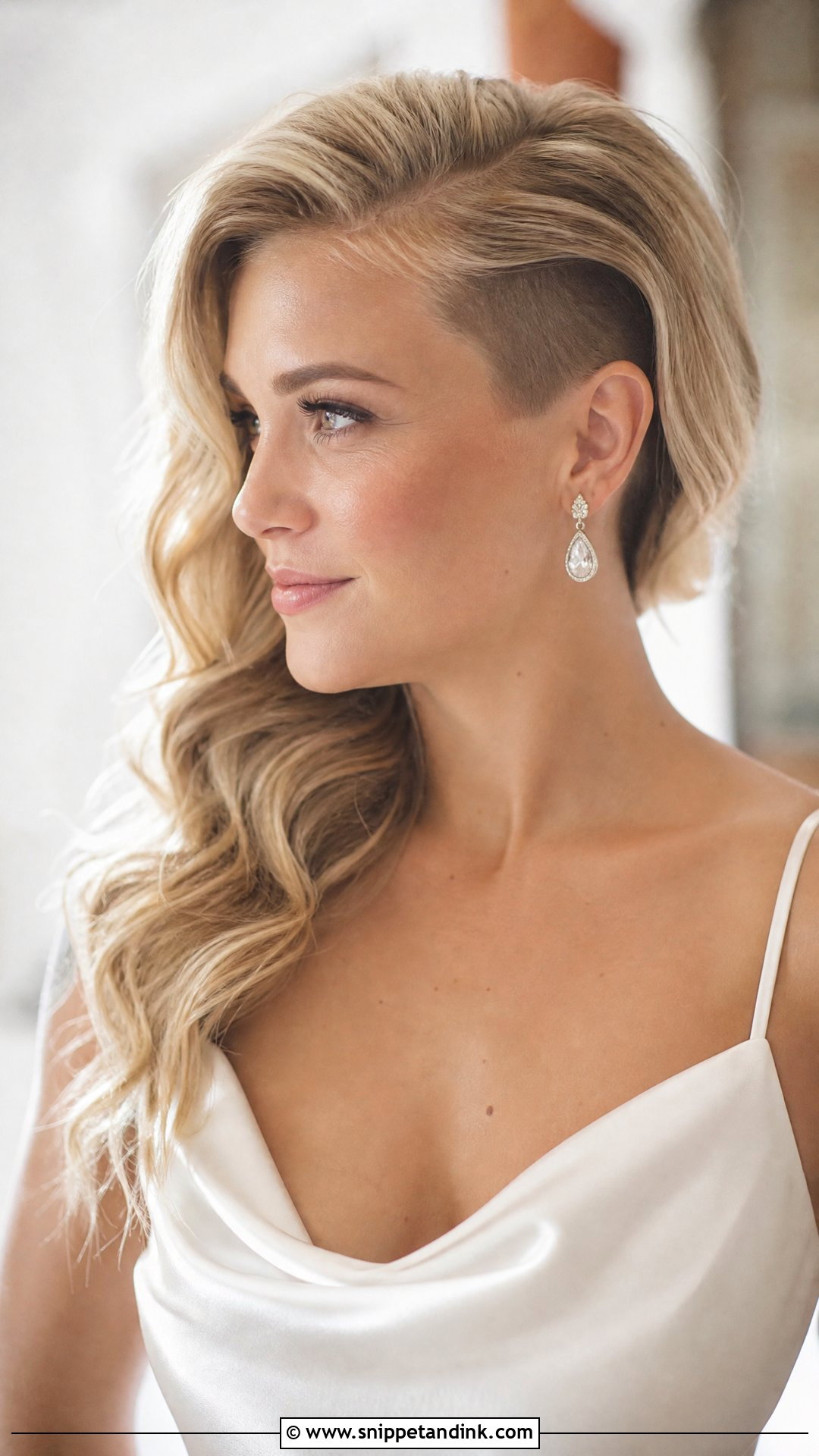
Waves soften the undercut and can hide it until you want to show it with a tuck, a side part or a pinned section. They work on shoulder-length and long hair and on a wavy bob. I set waves with a curling iron and let them cool fully before brushing them out, which helps them last through a long day. Keep them polished, not messy, and use flexible hairspray so they still move.
11. Undercut Wedding Braid
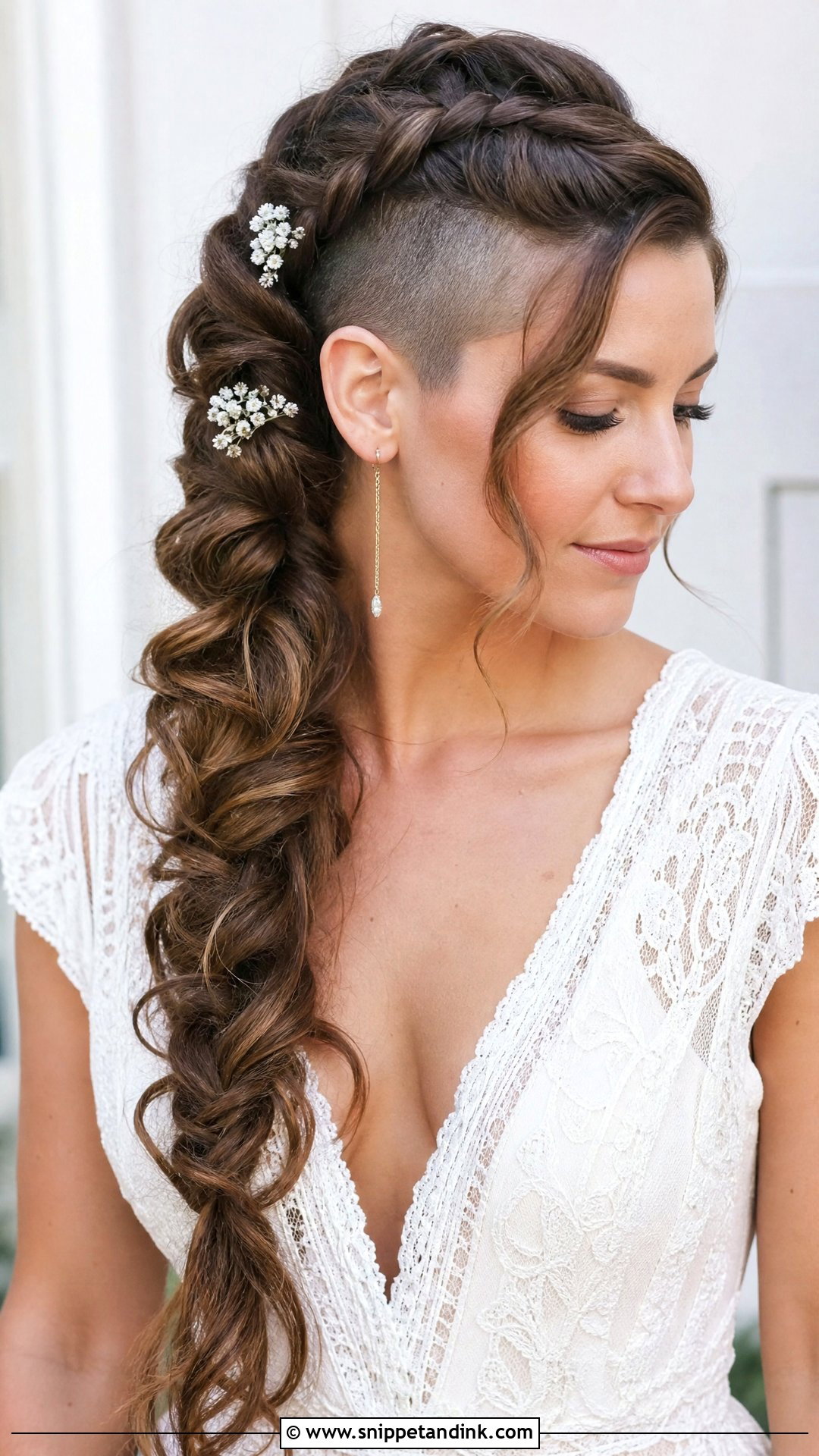
Braids change with placement. A side braid frames the shaved area, a crown braid softens the silhouette and a loose fishtail adds movement on long hair. Braids are also very secure, which makes them practical for dancing. The braid must start in hair long enough to grip, so it begins just above the undercut, not at the shaved edge. Tiny pearls or gold pins along the braid add detail.
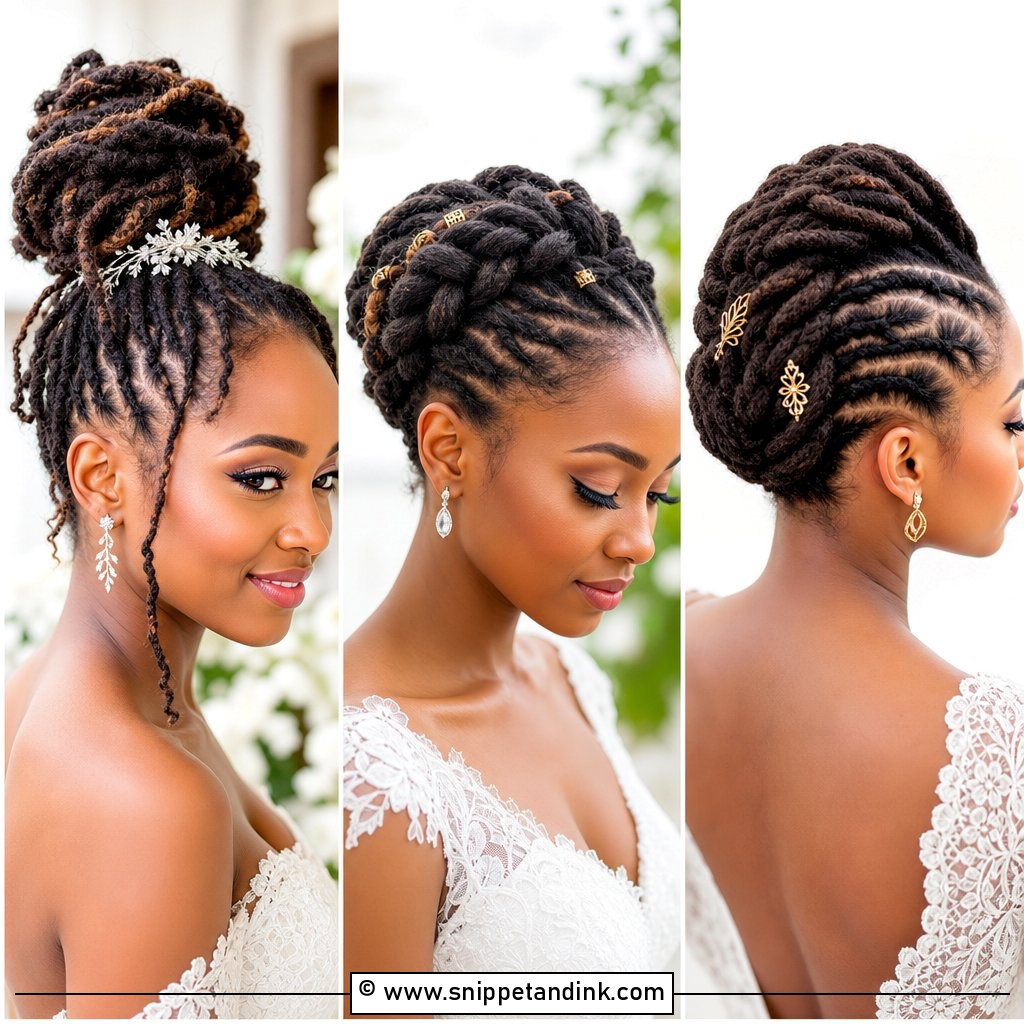
12. Undercut Wedding Locs
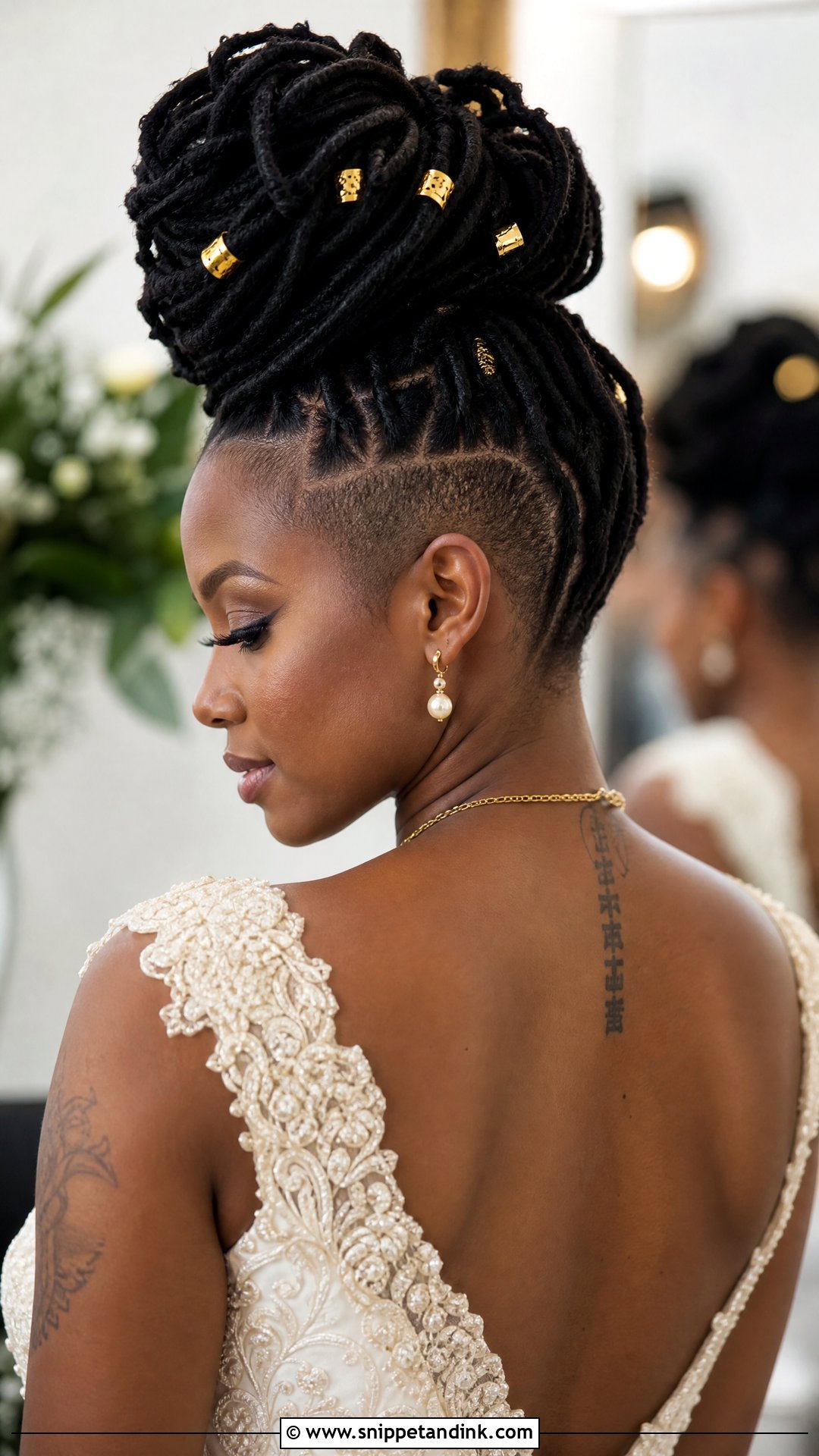
Undercut wedding locs look striking with height and shape. The undercut takes weight off the sides or nape, which helps when locs are lifted into a bun, ponytail or half-up style, as locs are heavy and a full updo can pull. Gold cuffs, pearl pins or bridal chains suit them. Have the shaved outline freshened a few days before the wedding so it looks clean in close-up photos without irritation from the clippers.
13. Undercut Wedding Afro
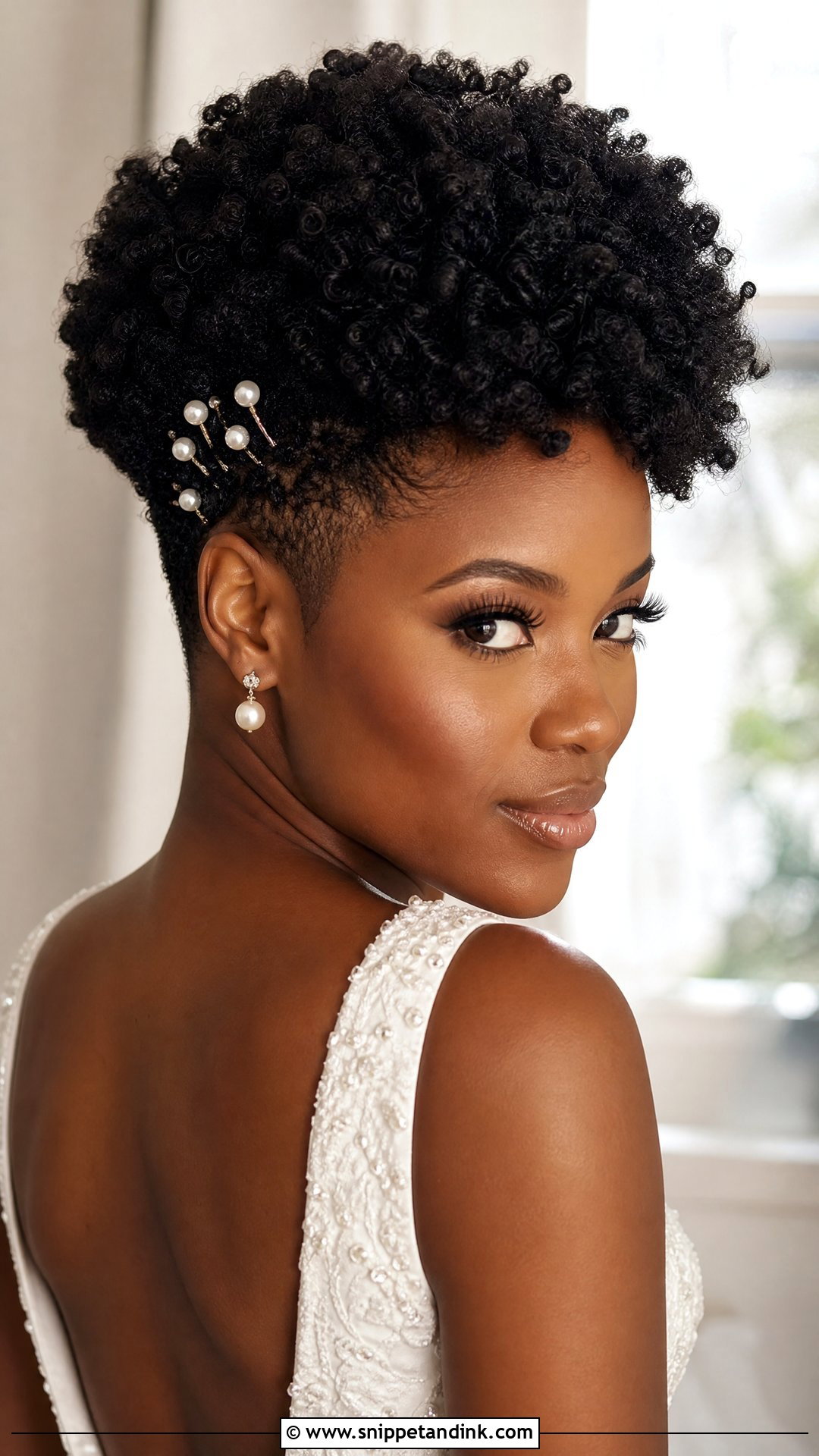
An undercut wedding afro pairs natural volume with a clean shaved edge, and the contrast is the whole look. A side undercut, tapered sides or a nape undercut all work. The shape depends on a good trim, so book it a week or two before the wedding to give the curls time to settle. Moisture keeps the afro defined and soft. A floral comb or slim headband adds a bridal detail without hiding the texture.
14. Undercut Wedding Mohawk
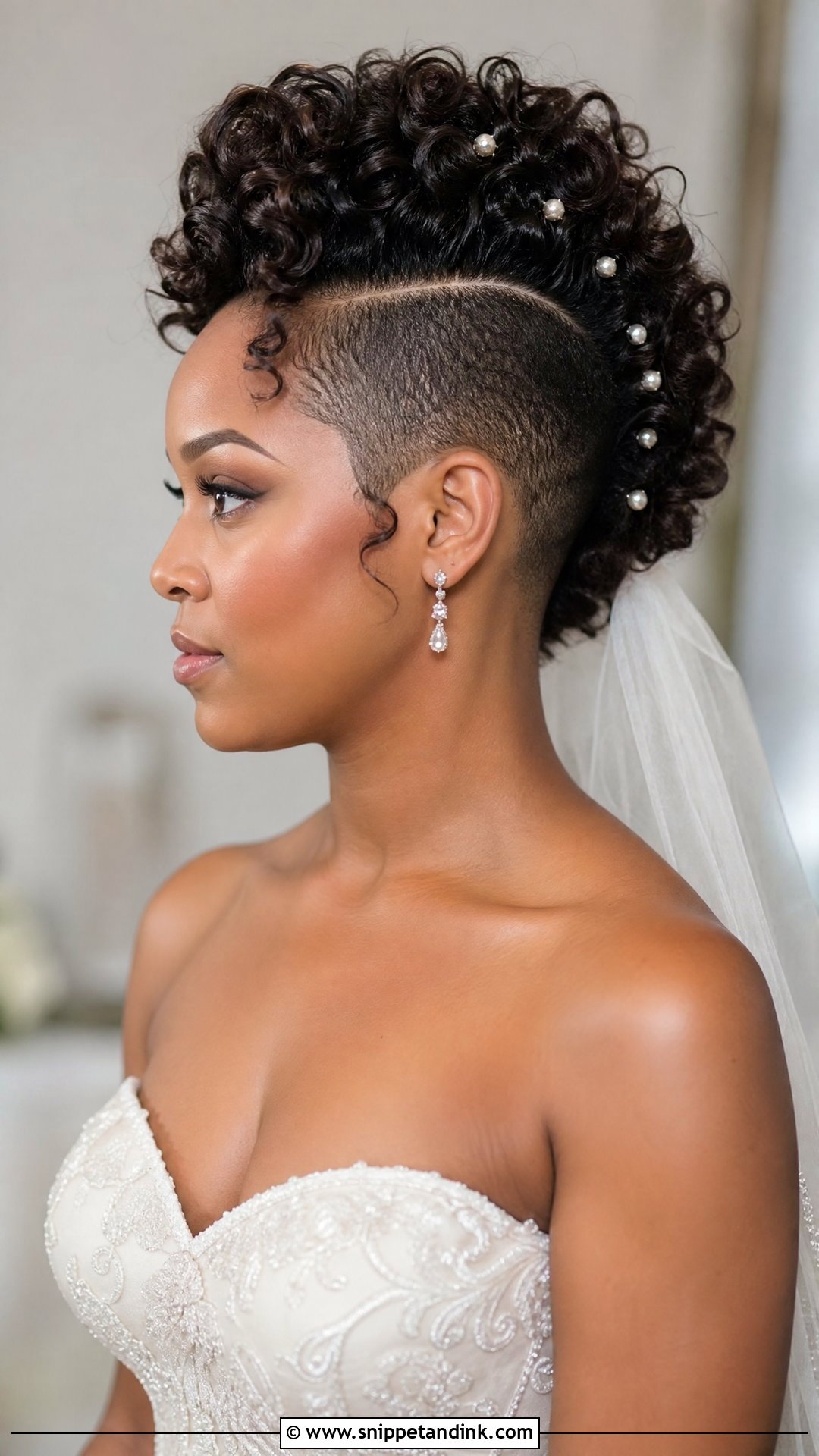
An undercut wedding mohawk is the boldest look here, but it doesn’t have to be extreme. The center section can be curls, waves, twists or soft volume, with shaved sides for contrast. I build height at the center with backcombing at the roots and hold, then keep the top soft. Pearl pins or small flowers along the center soften the line. Strapless and halter necklines leave space for the hair to be the feature.
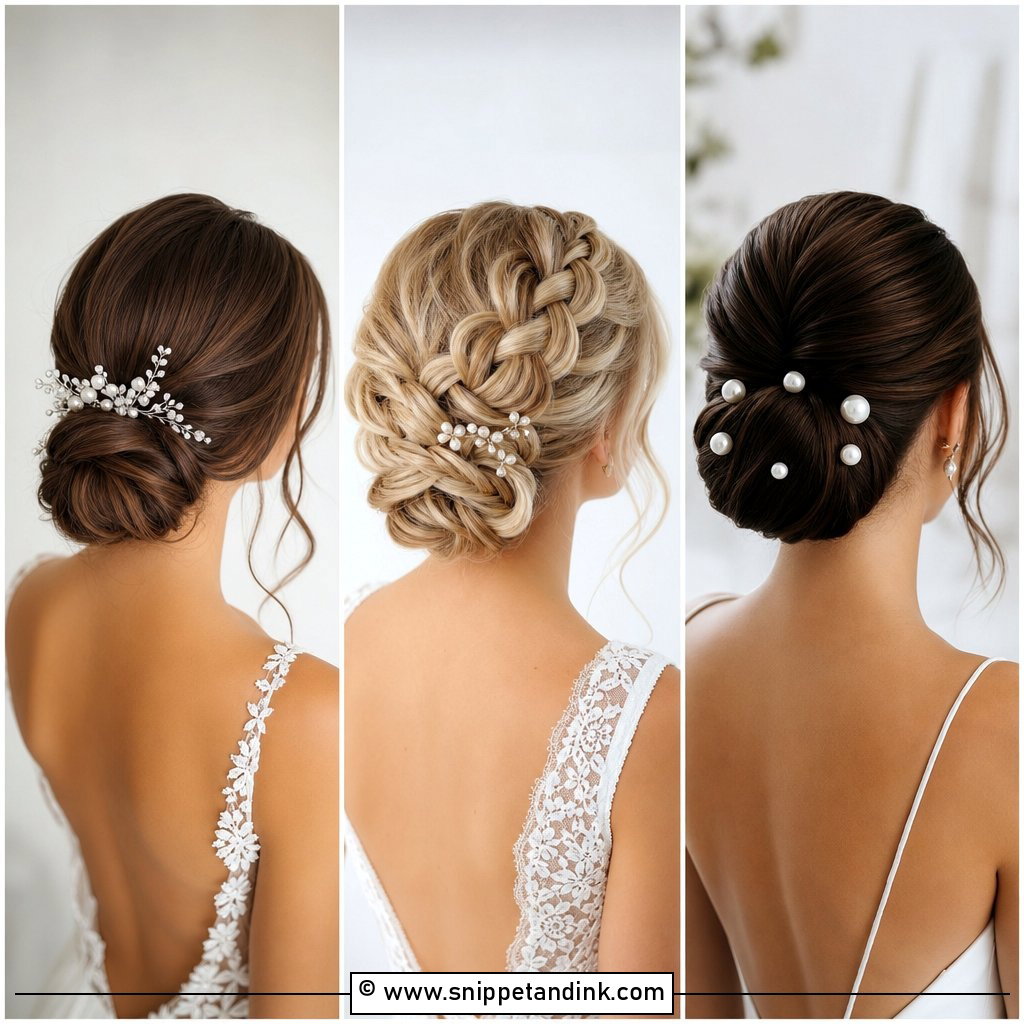
15. Undercut Wedding Finger Waves
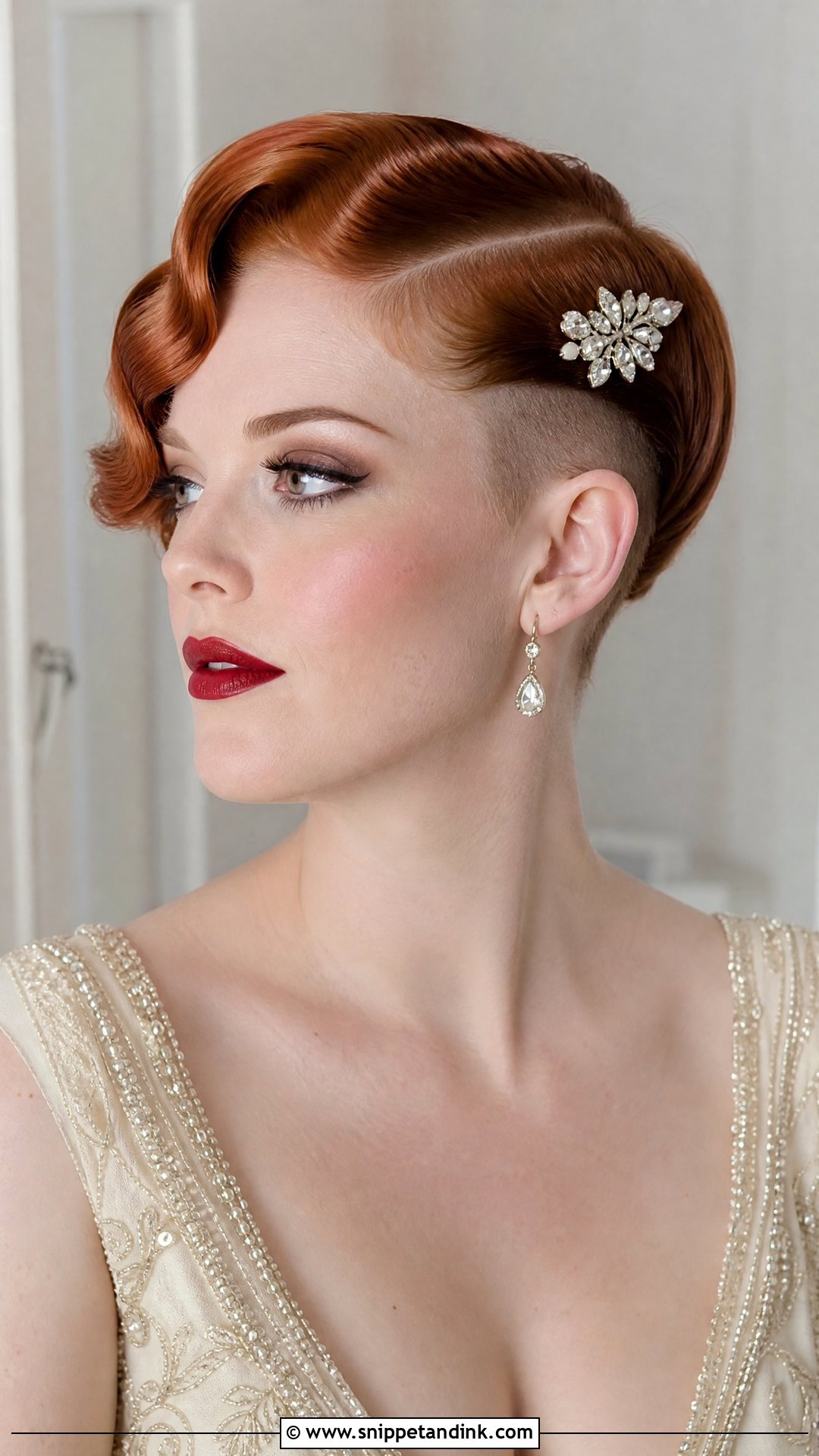
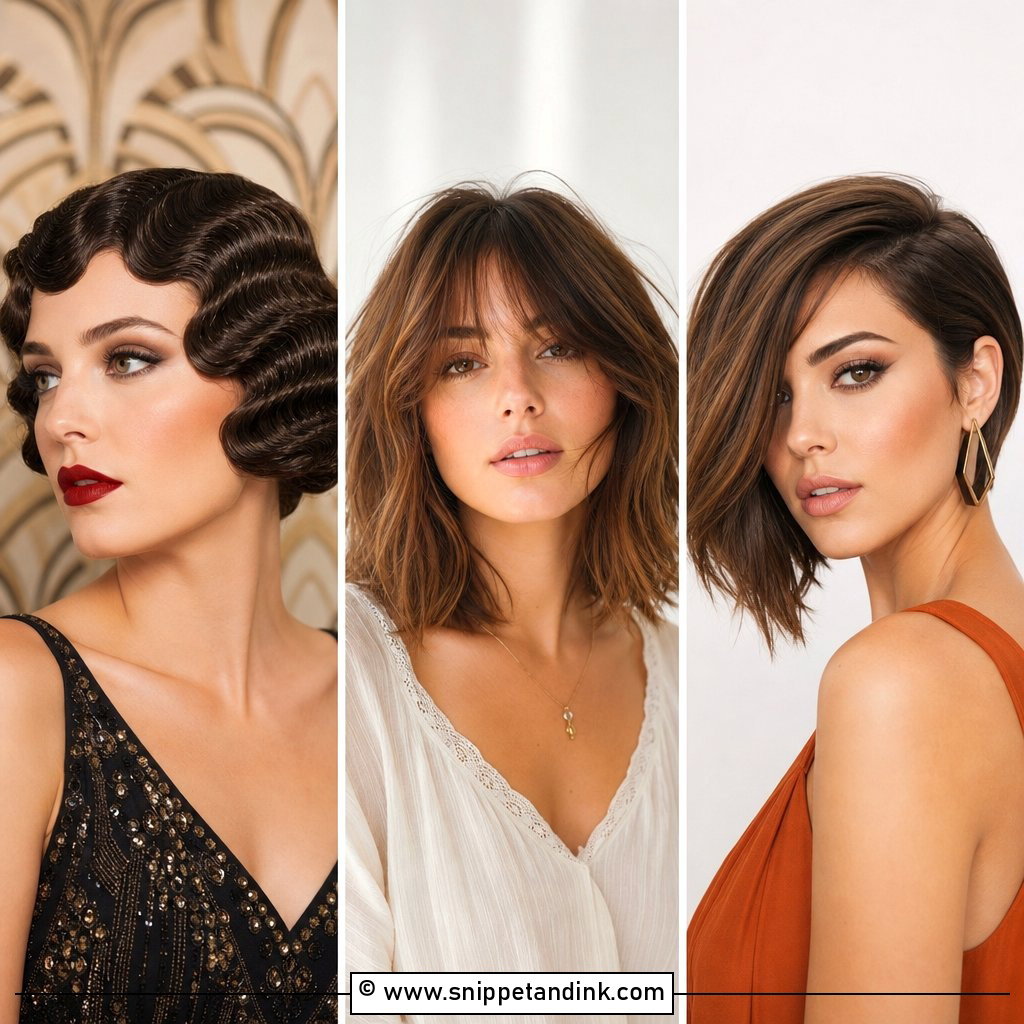
Finger waves are a 1920s technique: the hair is set wet into S-shaped ridges with a comb and fingers, then left to dry in place. They suit short hair, and the undercut makes them look current. A deep side part makes the waves more dramatic and shows off the shaved side. The setting gel must be strong enough to hold the ridges but brushed out lightly so the finish doesn’t look crunchy. Small earrings and a slim clip are enough decoration.
16. Undercut Wedding Chignon
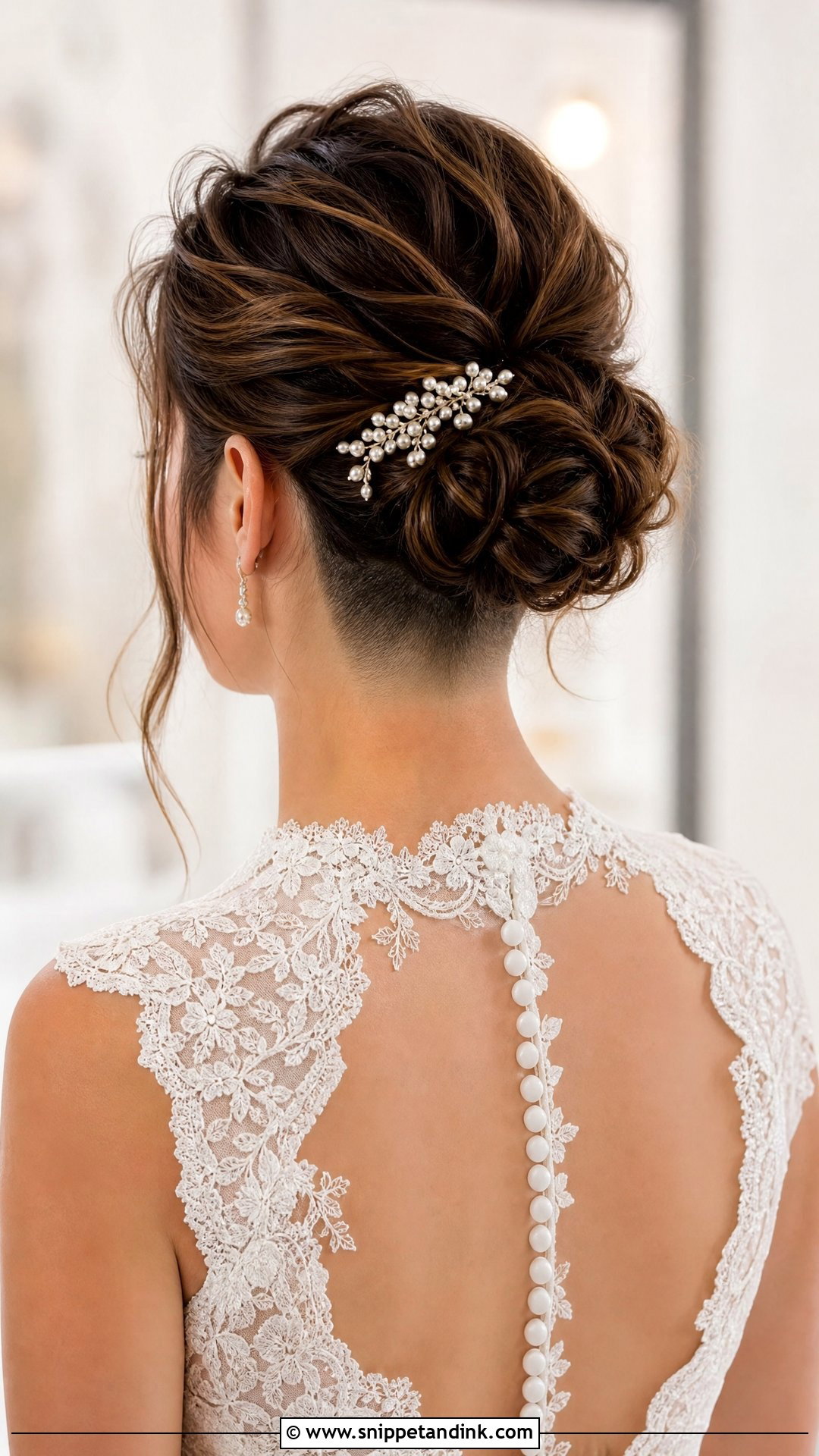
A chignon looks classic from the front and shows the undercut from behind. A low chignon placed just above the shaved area makes the contrast look deliberate. It suits veils, combs and backless gowns. I build soft volume at the crown and smooth the sides, then anchor the chignon to the longer hair at the back of the head, never to the short hair near the shaved line. A few loose strands near the face soften it.
17. Undercut Wedding Short Hair
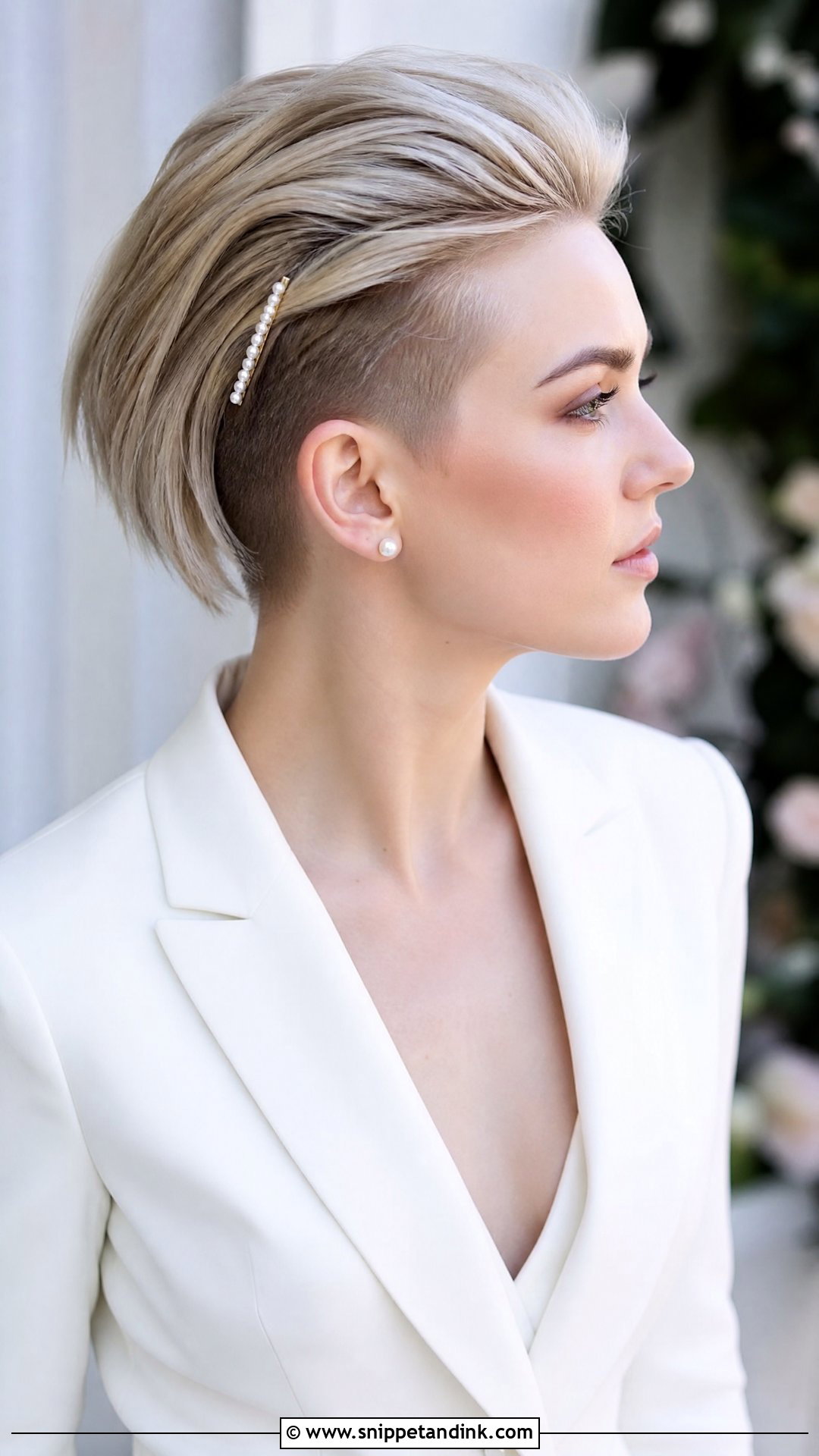
Undercut wedding short hair can feel just as special as a long bridal style. Most of the work happens at the barber or salon before the wedding: get the shape right and the styling on the day is quick. Smooth, tousled, waved or swept back all work. A small comb or pearl barrette has to clip into the longer hair, so check that it grips before the day. Shine and clean edges finish it.
18. Undercut Wedding Long Hair
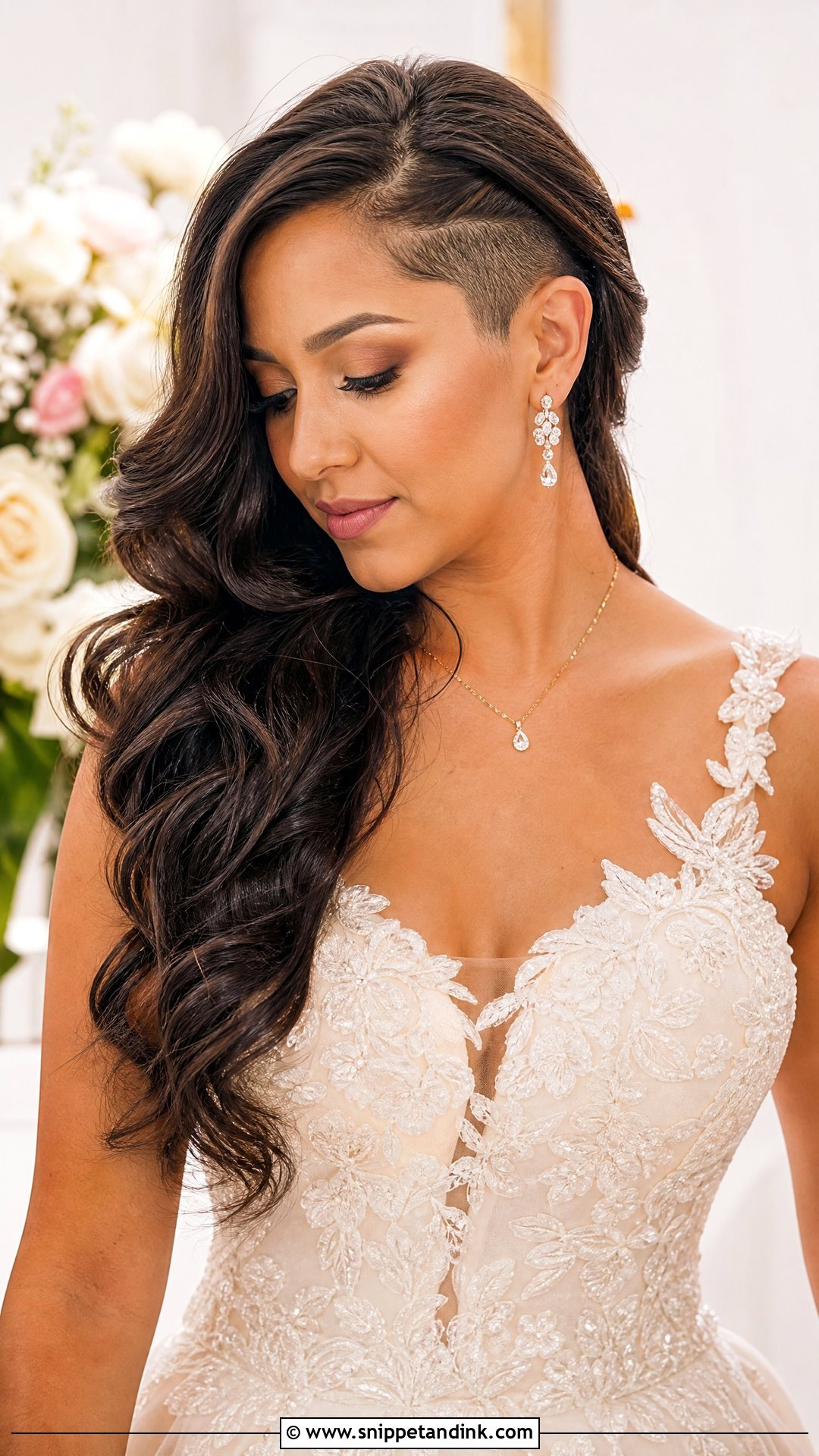
Long hair with an undercut gives the most options: down with the undercut hidden, swept to one side for a reveal, or up to show the shaved detail fully. It suits brides who want to change looks between ceremony and reception. If the undercut has a design, I position the hair to frame the pattern rather than cover part of it. Long hair is heavy, so any updo needs to anchor well above the shaved line.
19. Undercut Wedding Veil Hairstyle
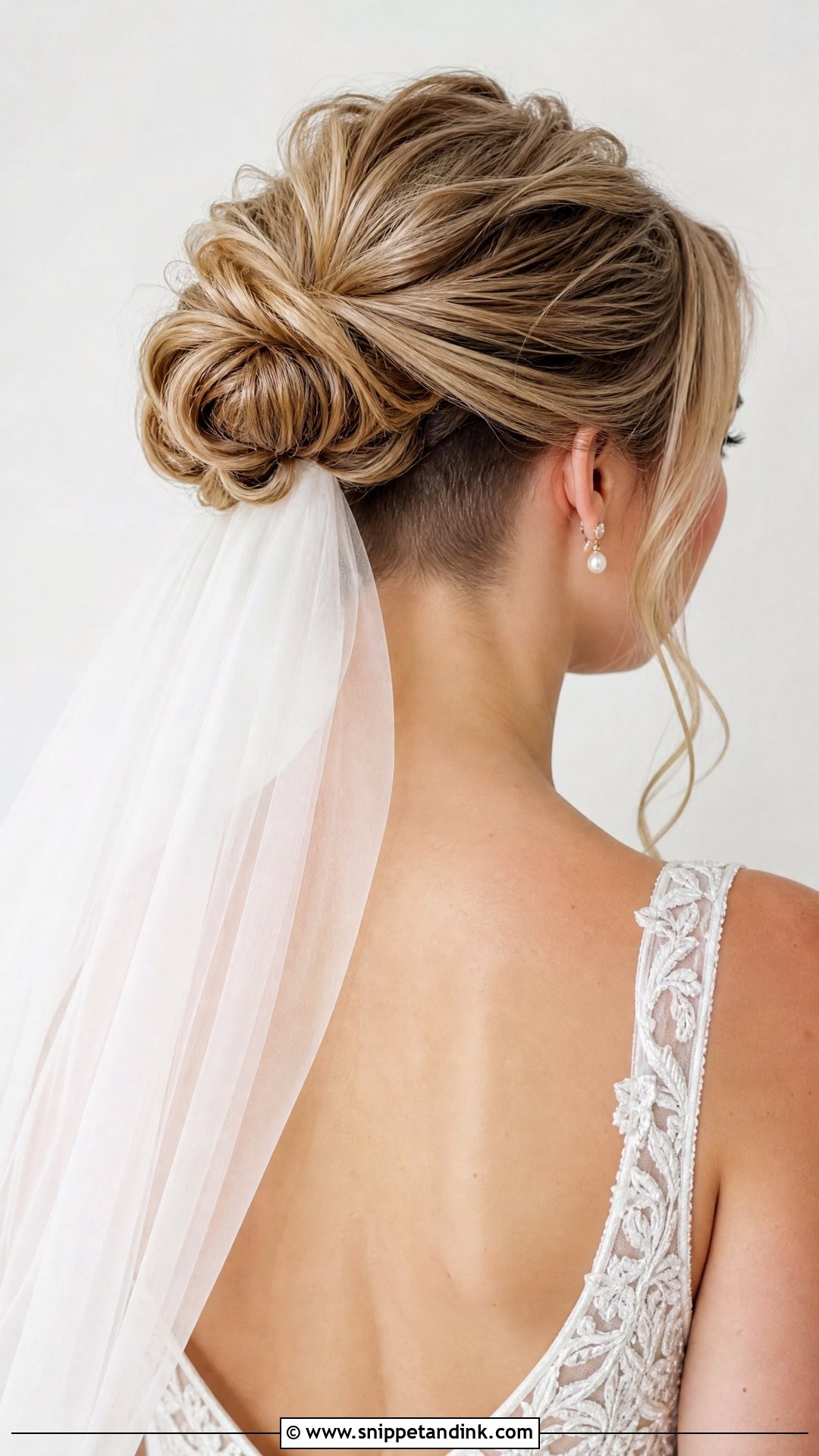
The veil and the undercut compete for the same space, so placement decides what people see. To show the undercut, put the veil low under a bun or ponytail. For a softer look, set it higher so it falls over the shaved section. A comb veil must sit in hair long enough to grip, which is usually above the undercut. At the trial, I test the veil from the side and back and have the bride turn her head quickly to check it stays.
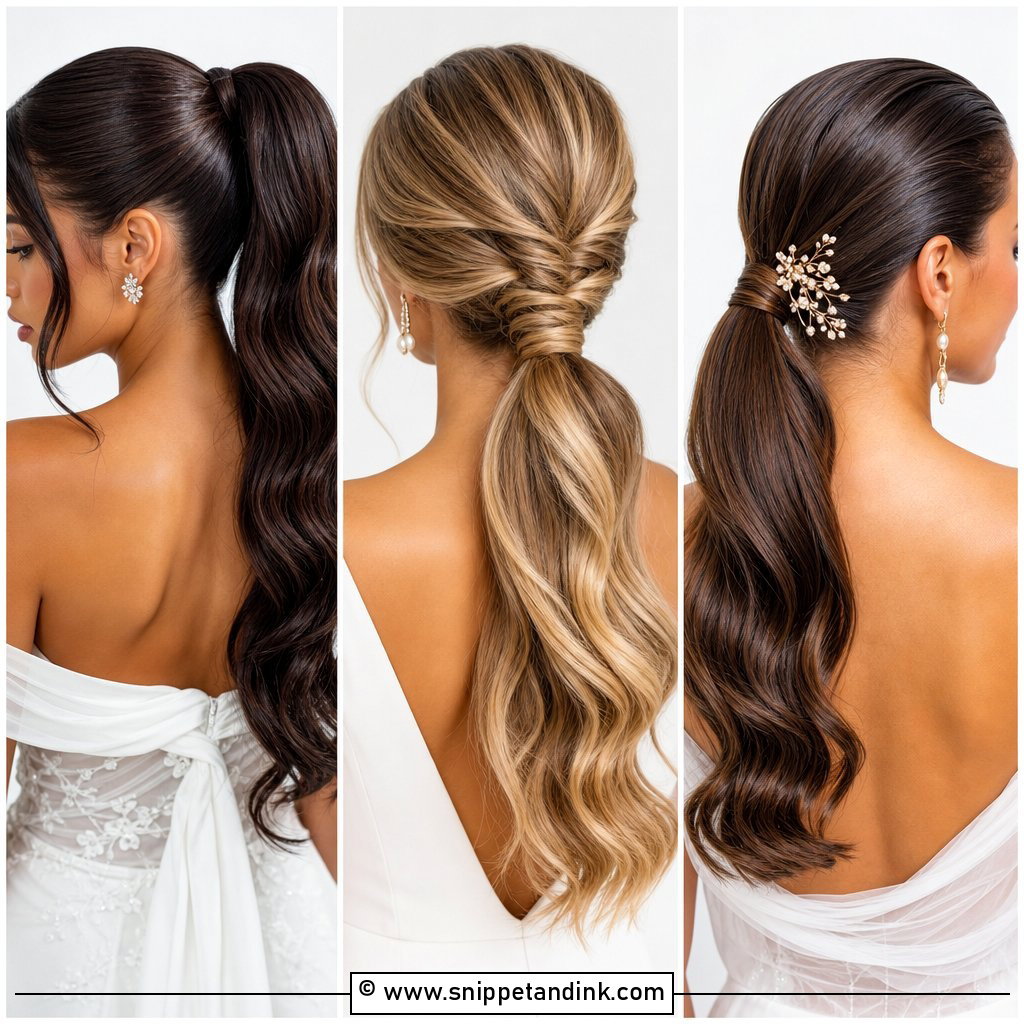
20. Undercut Wedding Hair With Flowers
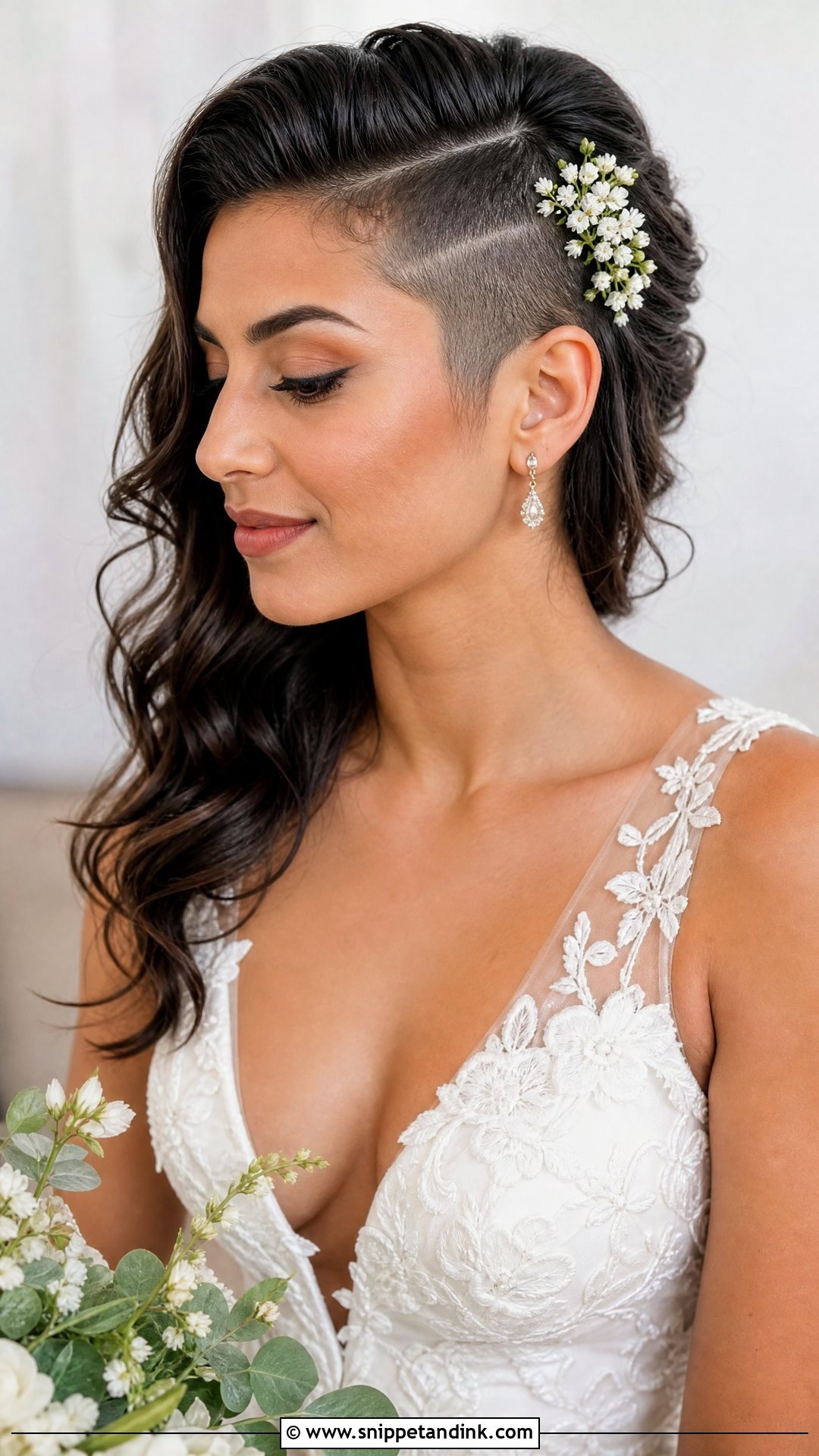
Flowers can sit above the shaved side, around a bun, along a braid or near the nape. Small blooms suit undercuts because big ones hide the shape. They can’t be pinned into the shaved section, so they need to be wired to a comb or pinned into longer hair nearby. If your undercut has a design, place the flowers beside it, not over it. Match them to your bouquet and keep them light.
Where Pins, Combs and a Veil Can Actually Grip
The biggest practical difference with an undercut is that a section of your head has nothing to pin into. Bobby pins need hair longer than the pin itself to grip, and clipper-length hair is far too short. Every style above works around that.
Build a base above the line
For updos and veils, I often make a small anchor first, a tight braid or a secured ponytail just above the shaved edge. Pins and veil combs then lock into that instead of loose hair.
Watch the weight
A long cathedral veil or a heavy crystal comb pulls more on less hair. If most of your hair is shaved, choose a lighter veil or a shorter one, or ask about a veil attached to a headband.
Test it moving
At the trial, hug someone, turn your head quickly and sit down. If anything shifts, we re-anchor it then, not on the morning.
Show It, Hide It or Switch Halfway Through the Night
An undercut gives you a choice most brides don’t have: show the detail, hide it, or change your mind halfway through the night. Your hair length, texture, neckline and veil decide which styles work. Use your trial to test the anchors, the veil and the accessories, and look at the back in a mirror and in photos.
You'll Like These Ideas:


Leave a Reply