
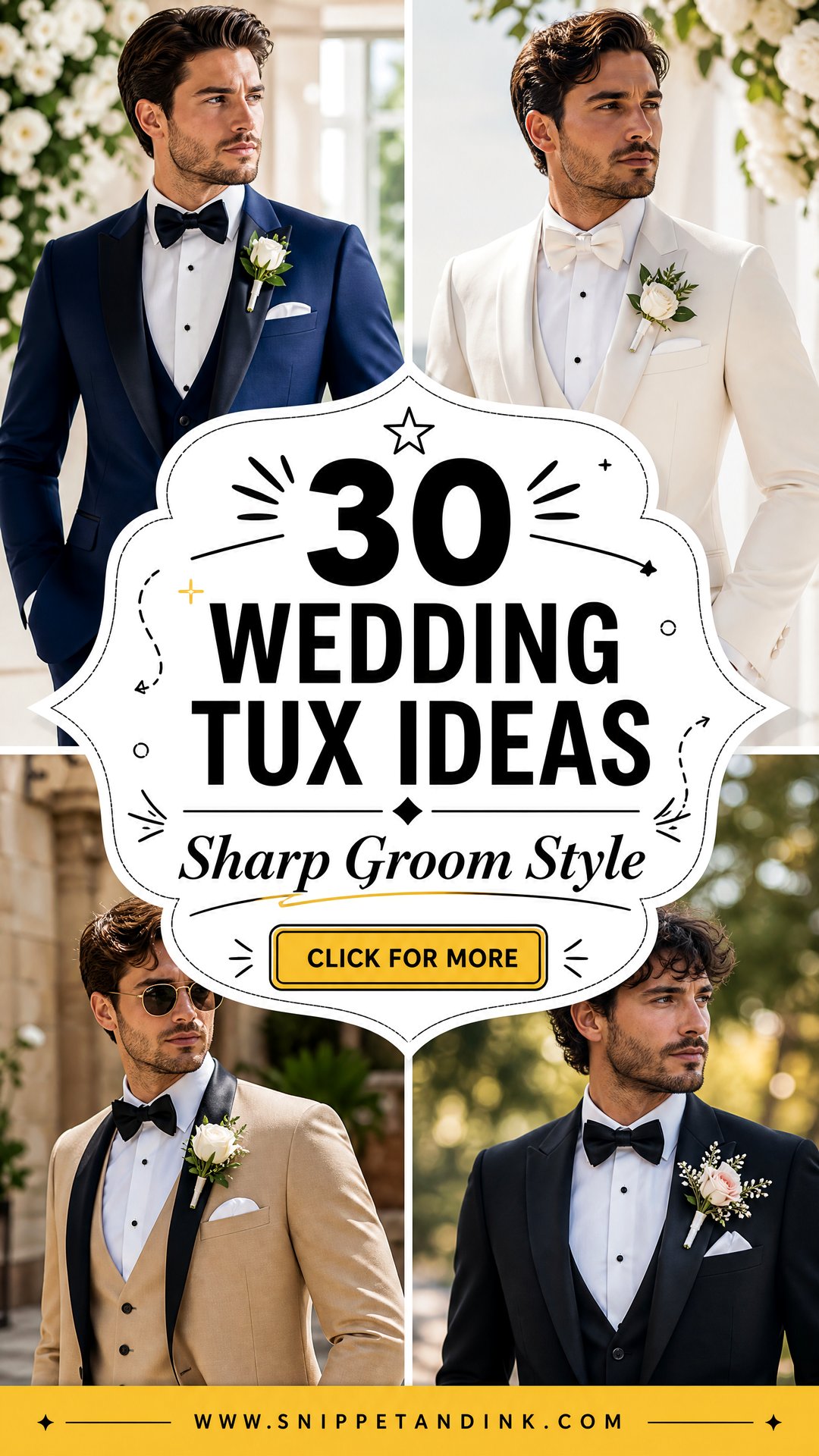
The tuxedo has a rulebook, and most of the grooms I dress want to know which rules still matter and which they can bend. Classic black tie is still the backbone, but colour, lapel shape, fabric and accessories now give a groom, his groomsmen or a formal guest plenty of room for personality. Start with the venue, season and dress code: a ballroom asks for a black peak-lapel tux, while a coastal ceremony can carry a white dinner jacket over black trousers. Then build the whole outfit from jacket to shoes as one decision. Below are 30 tux looks, with the fit and detail notes I give in the fitting room.
Rent, Buy or Made to Measure? Start Here
Before colour or lapels, the first question I ask a groom is how he’ll get the tux, because that decides his timeline and how well it can fit.
- Rental suits a groom who’ll wear black tie once and wants groomsmen to match easily. Book well ahead of peak season, and insist on a fitting in the shop rather than relying on posted measurements.
- Buying off the rack and having it altered makes sense if you’ll wear black tie again. Allow a few weeks for a tailor to adjust sleeves, trousers and the waist.
- Made to measure gives the best fit and the most choice of cloth and lapel, but it usually takes the longest, often a couple of months including fittings. Ask the maker for their timeline before you set a wedding date for the final try-on.
The fit checks I make in the mirror
The shoulder seam ends at the edge of your shoulder, with no dent below it. The buttoned jacket lies flat, without an X of creases. About a centimetre of shirt cuff shows past the sleeve. Tux trousers have a slight break or none, so the hem just touches the shoe. If any of these is off at the final fitting, it’s worth one more visit to the tailor.
1. Classic Black Wedding Tux
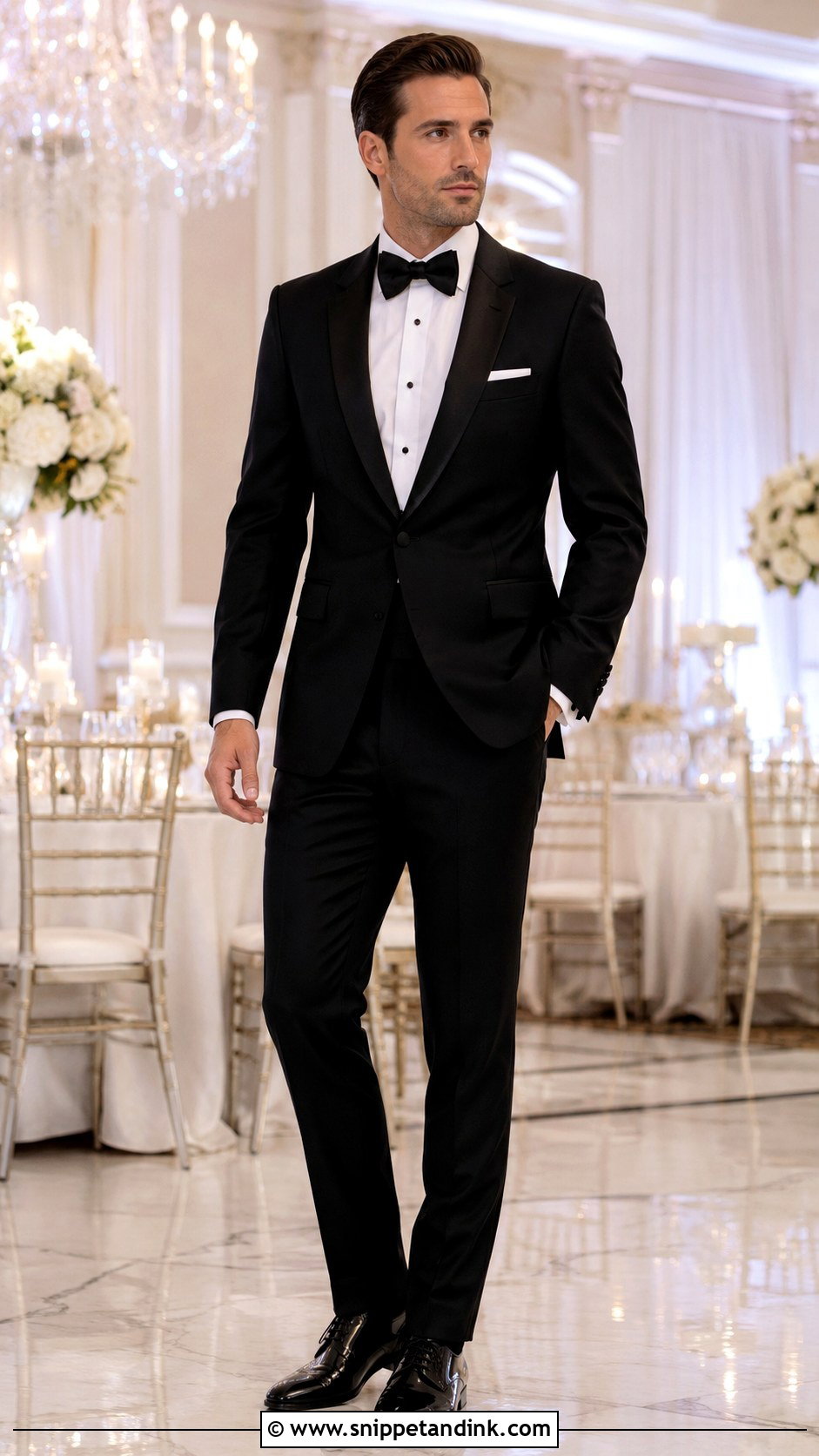
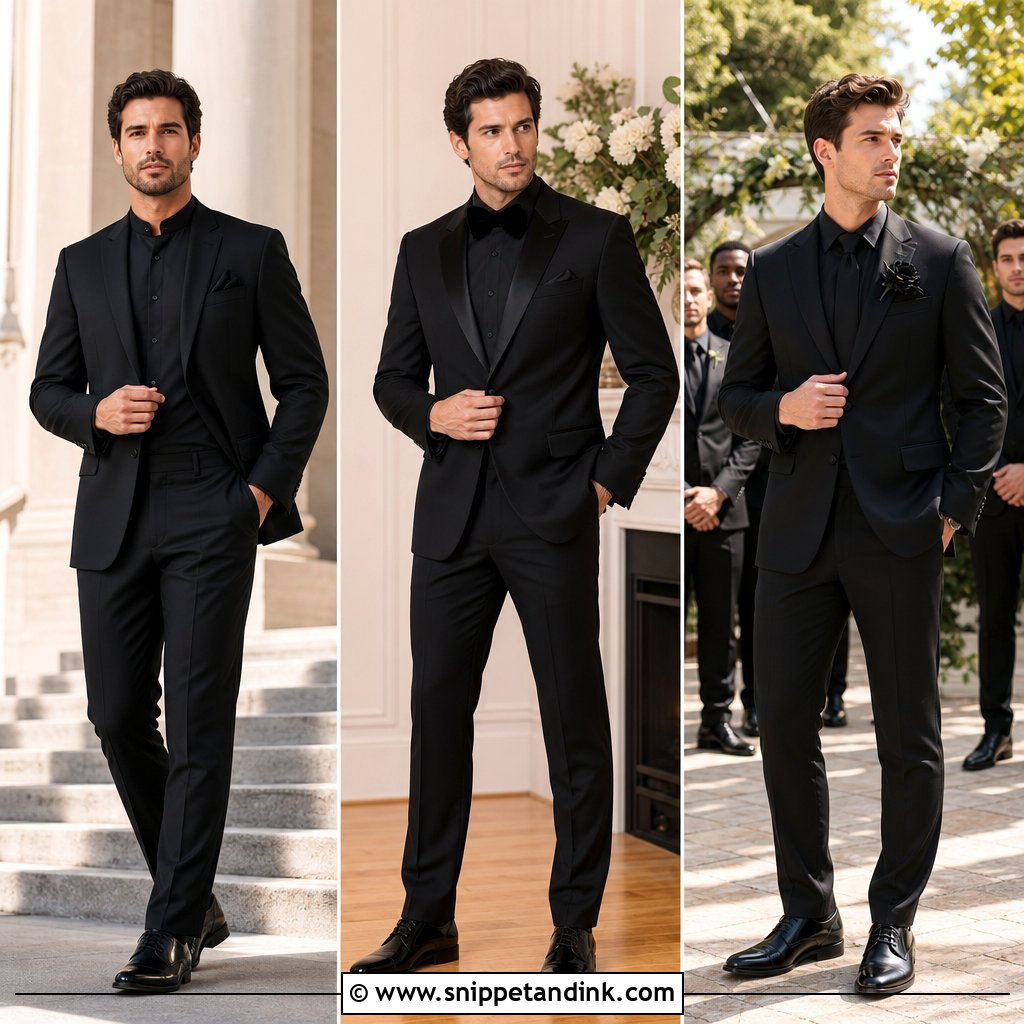
A black wool tuxedo with matching satin-striped trousers, a crisp white tuxedo shirt, a black bow tie and patent oxfords is the outfit nobody will ever question at a black-tie wedding. A white pocket square adds contrast without fuss. What separates a sharp black tux from a rental-looking one is fit: the shoulder seam should end where your shoulder does, and the jacket should close without pulling into an X across the stomach. Ballrooms, hotels and evening receptions suit it.
2. Black Peak Lapel Wedding Tux
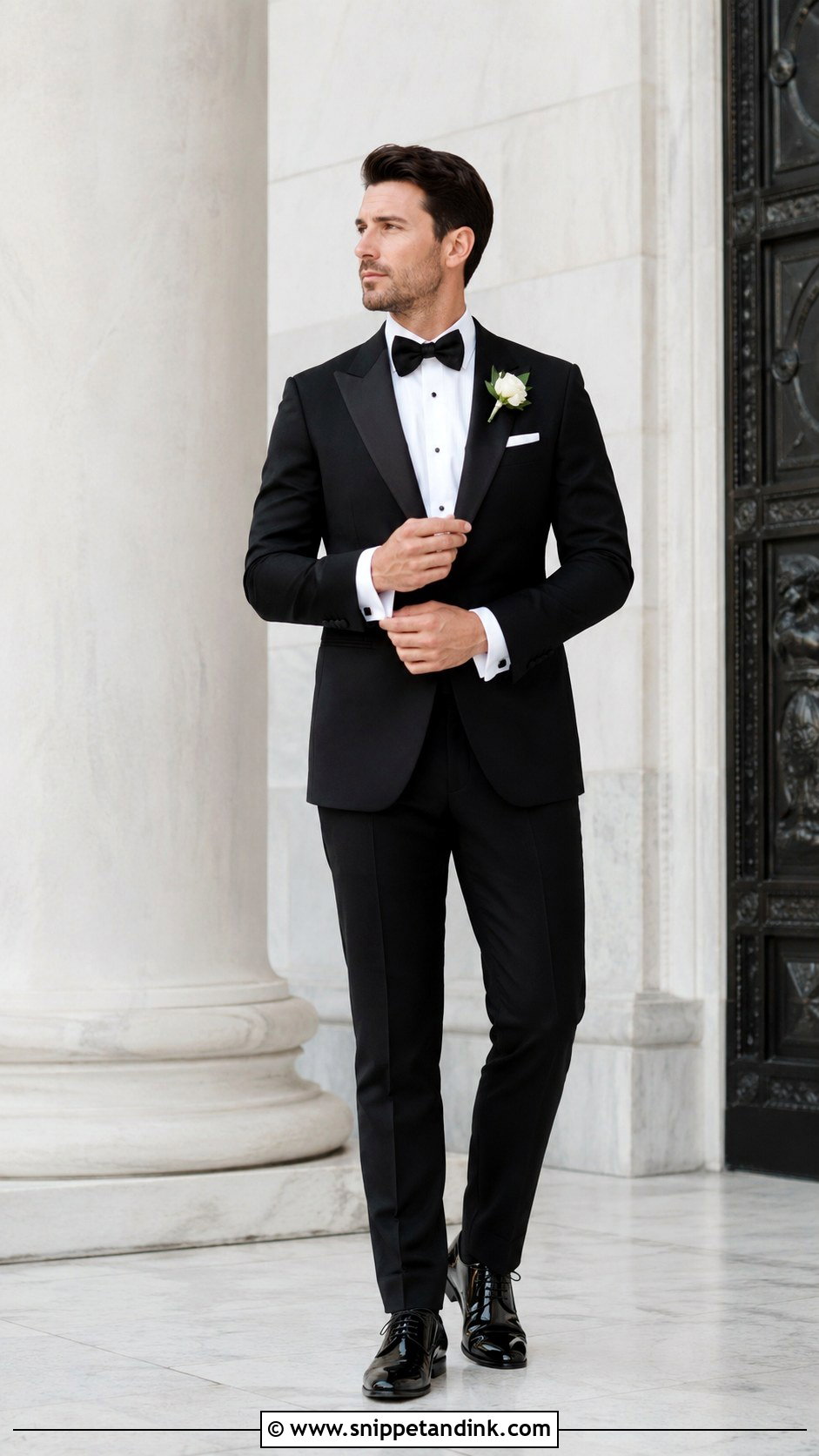
Peak lapels point upward toward the shoulders, which visually broadens the frame and suits slimmer or shorter grooms particularly well. A black peak lapel wedding tux is the most formal of the lapel styles. Pair it with a pleated or piqué-bib tuxedo shirt, black bow tie, black formal trousers and patent shoes. Silver cufflinks and a white pocket square are enough. I’d keep lapel width in proportion to your chest; very wide peaks on a narrow frame look borrowed.
3. Black Shawl Lapel Wedding Tux
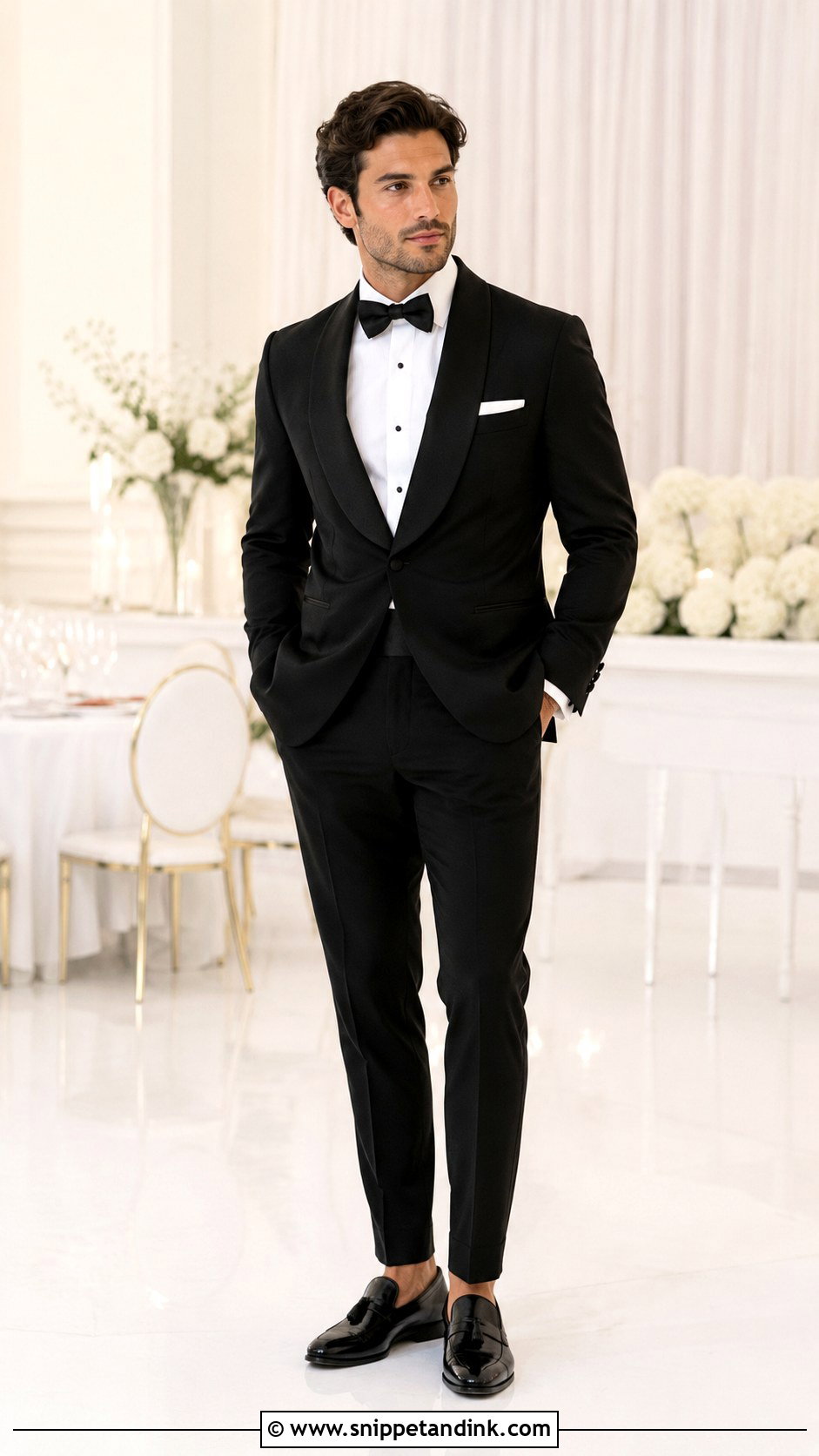
A shawl collar is one continuous rounded line of satin, softer than a peak and with a vintage, evening feel. Wear it with a white tuxedo shirt, black bow tie, black tux trousers and sleek loafers or patent oxfords. A small boutonniere sits well on it. I often suggest the shawl to grooms whose groomsmen wear black notch-lapel suits, because the different collar marks the groom out without any change of colour. It suits rounder faces too, echoing the curve rather than fighting it.
4. Midnight Blue Wedding Tux
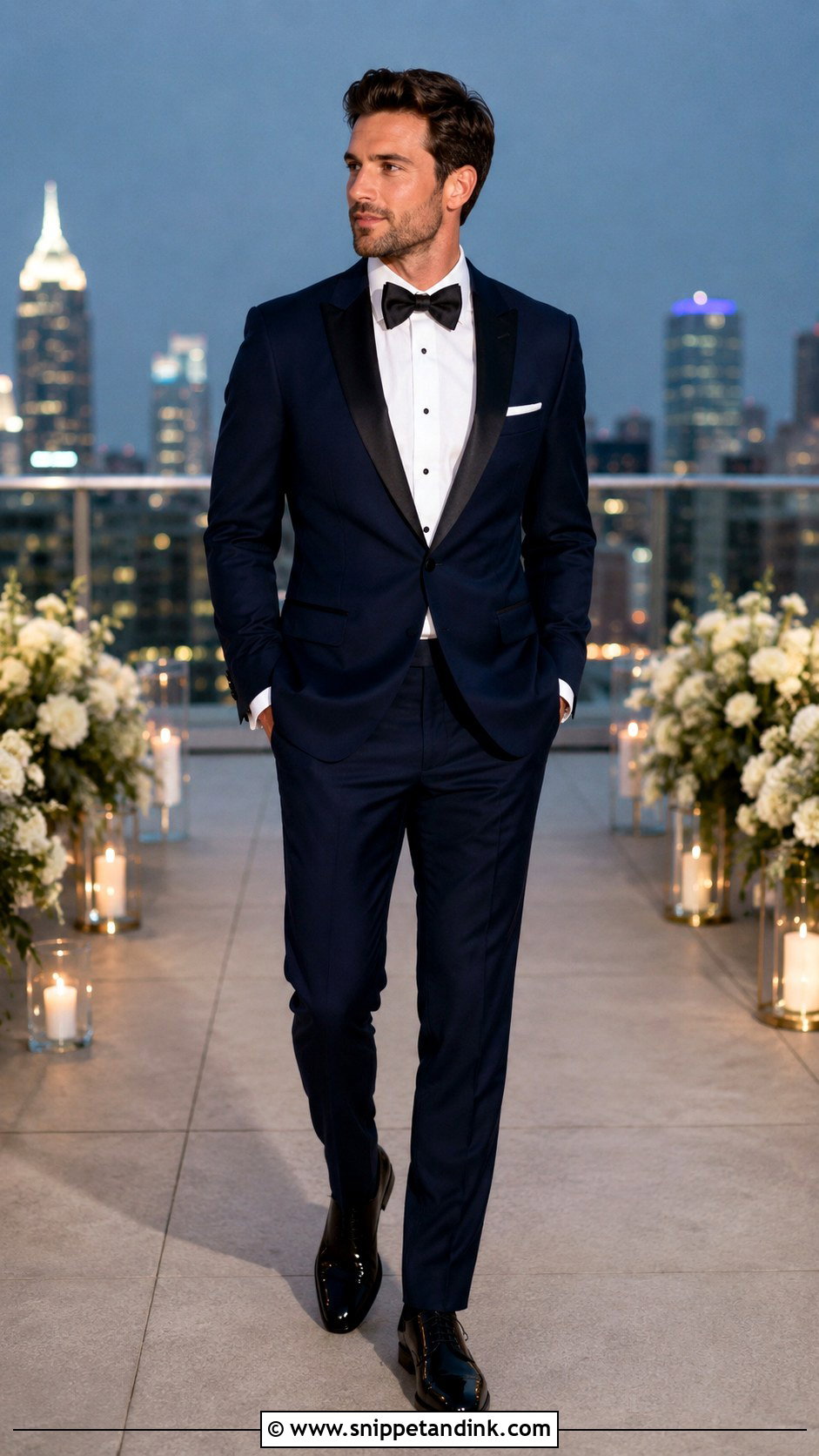
Midnight blue is the old tailor’s trick: under warm artificial light it can look richer and almost darker than black, while black can flatten to a dull grey in photos. Choose a midnight jacket and trousers with black satin lapels, a white tuxedo shirt, black bow tie, black shoes and a white pocket square. Winter weddings, rooftops and hotel receptions suit it. In bright daylight the blue shows clearly, so it reads as a deliberate choice rather than a mistake.
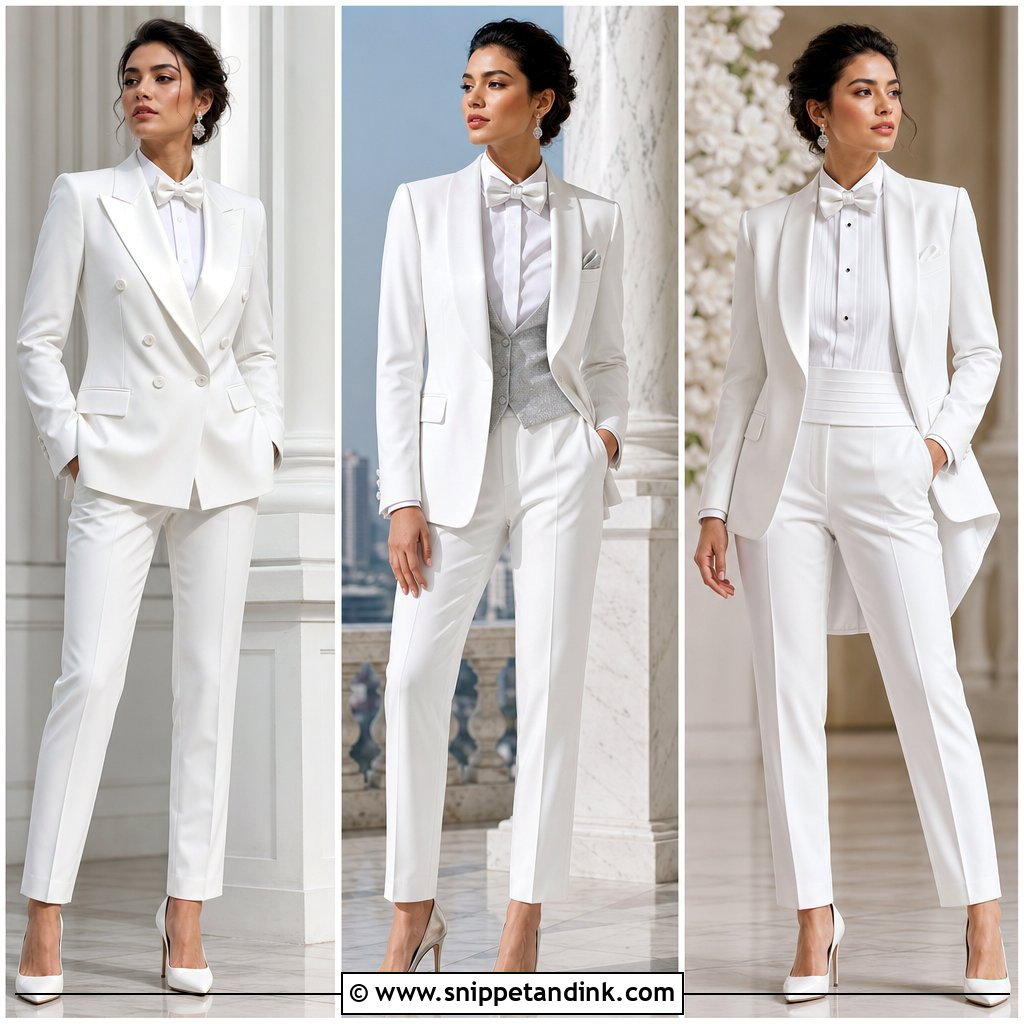
5. White Dinner Jacket Wedding Tux
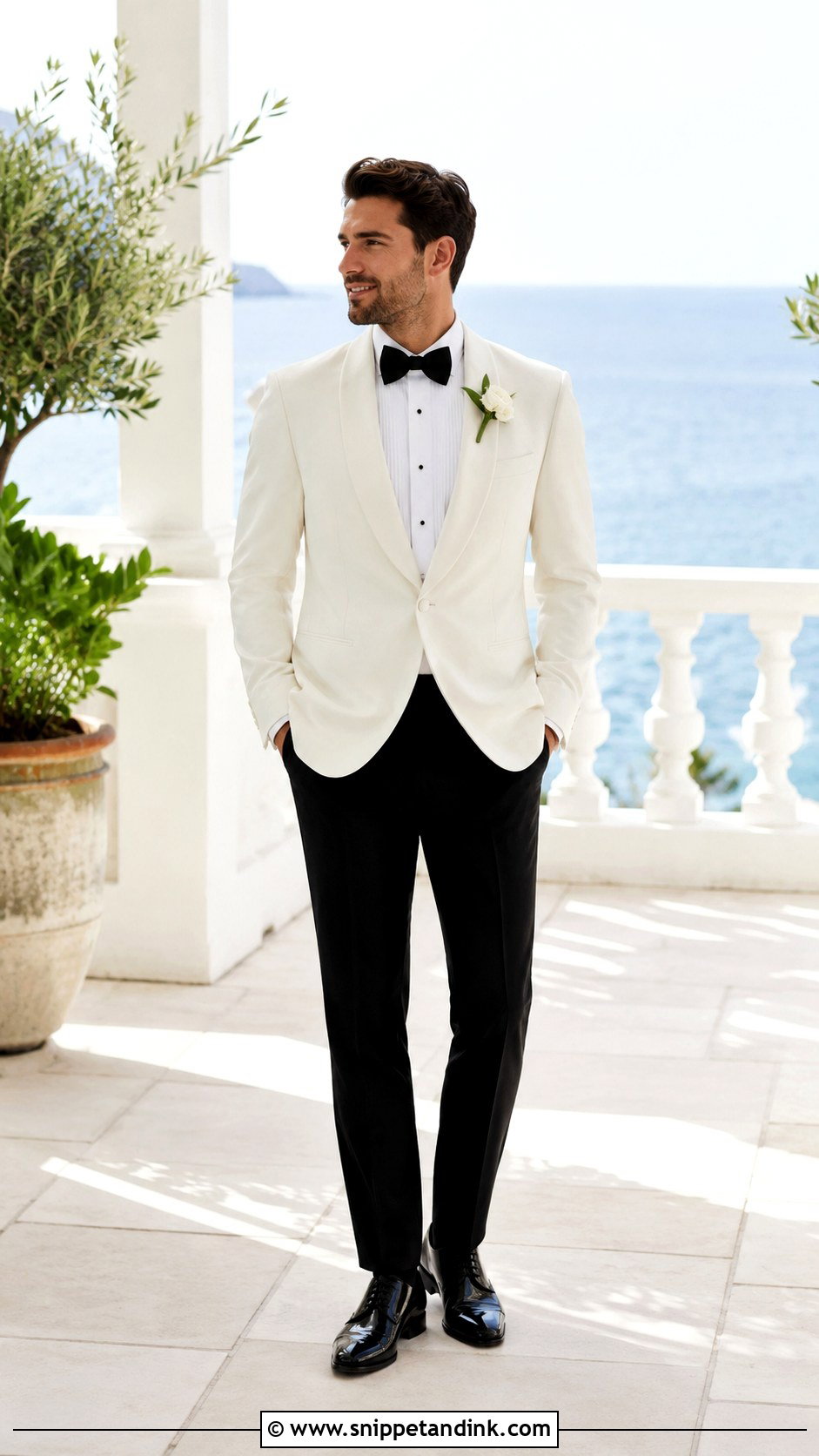
A white dinner jacket is the traditional warm-weather alternative to black, not a novelty. It belongs at resort, coastal and summer evening weddings. Wear it with black tux trousers, a white tuxedo shirt, black bow tie and patent shoes. Skip white trousers unless the dress code is explicitly tropical formal, because the black trousers ground the outfit. One caution: a pure white jacket beside an ivory gown can make the gown look yellow, so I usually steer grooms toward ivory instead.
6. Ivory Wedding Tux
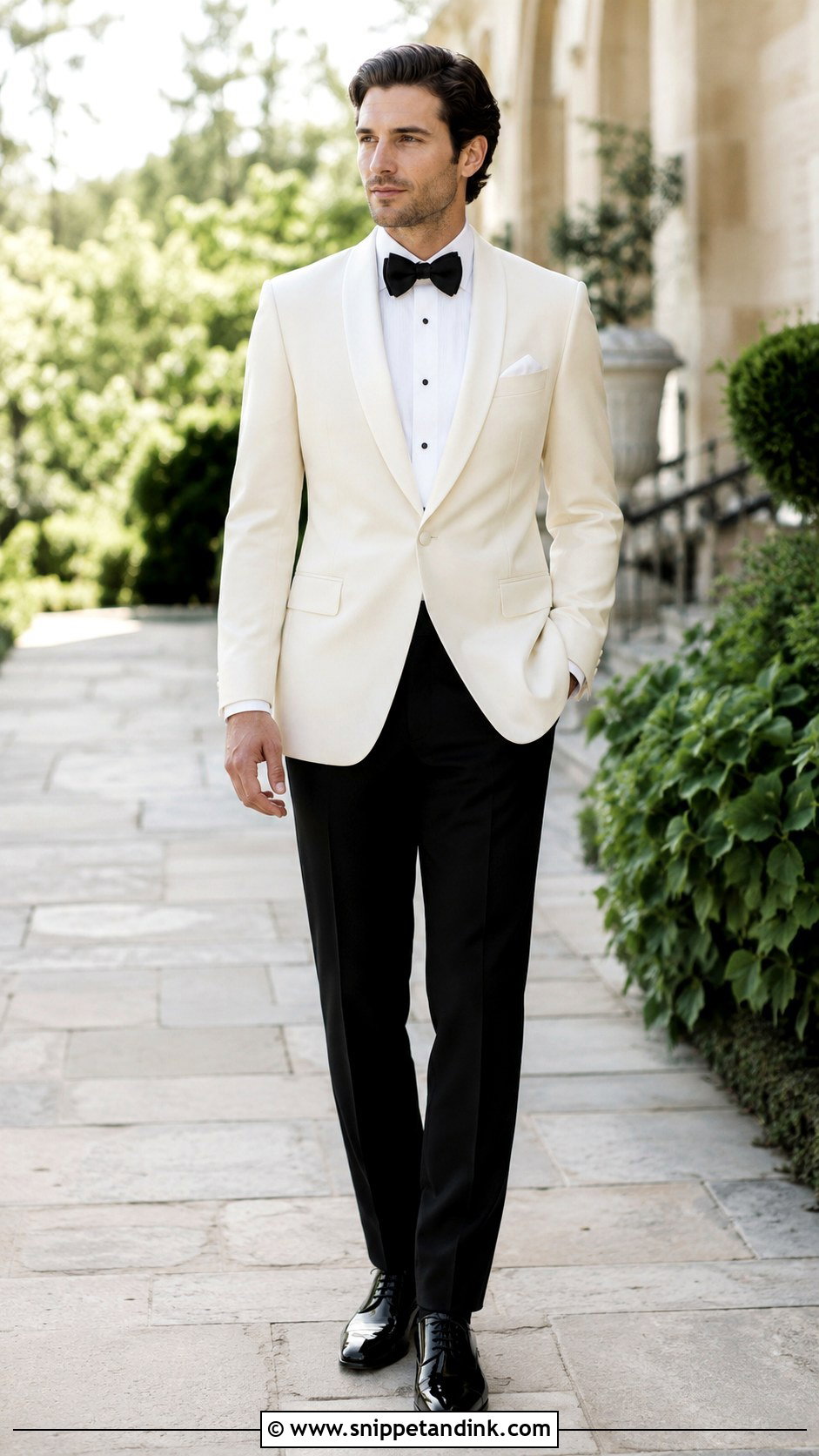
Ivory sits better beside most bridal gowns than bright white, particularly ivory, champagne or off-white dresses. Build it with an ivory dinner jacket, black tux trousers, a white or ivory shirt, black bow tie and black formal shoes. The black trousers and tie give the contrast that stops it looking flat. Garden, estate and warm evening weddings suit it. A black pocket square reads modern; a white one more classic. Ivory shows marks quickly, so I’d keep the jacket on a hanger until photos.
7. Velvet Black Wedding Tux
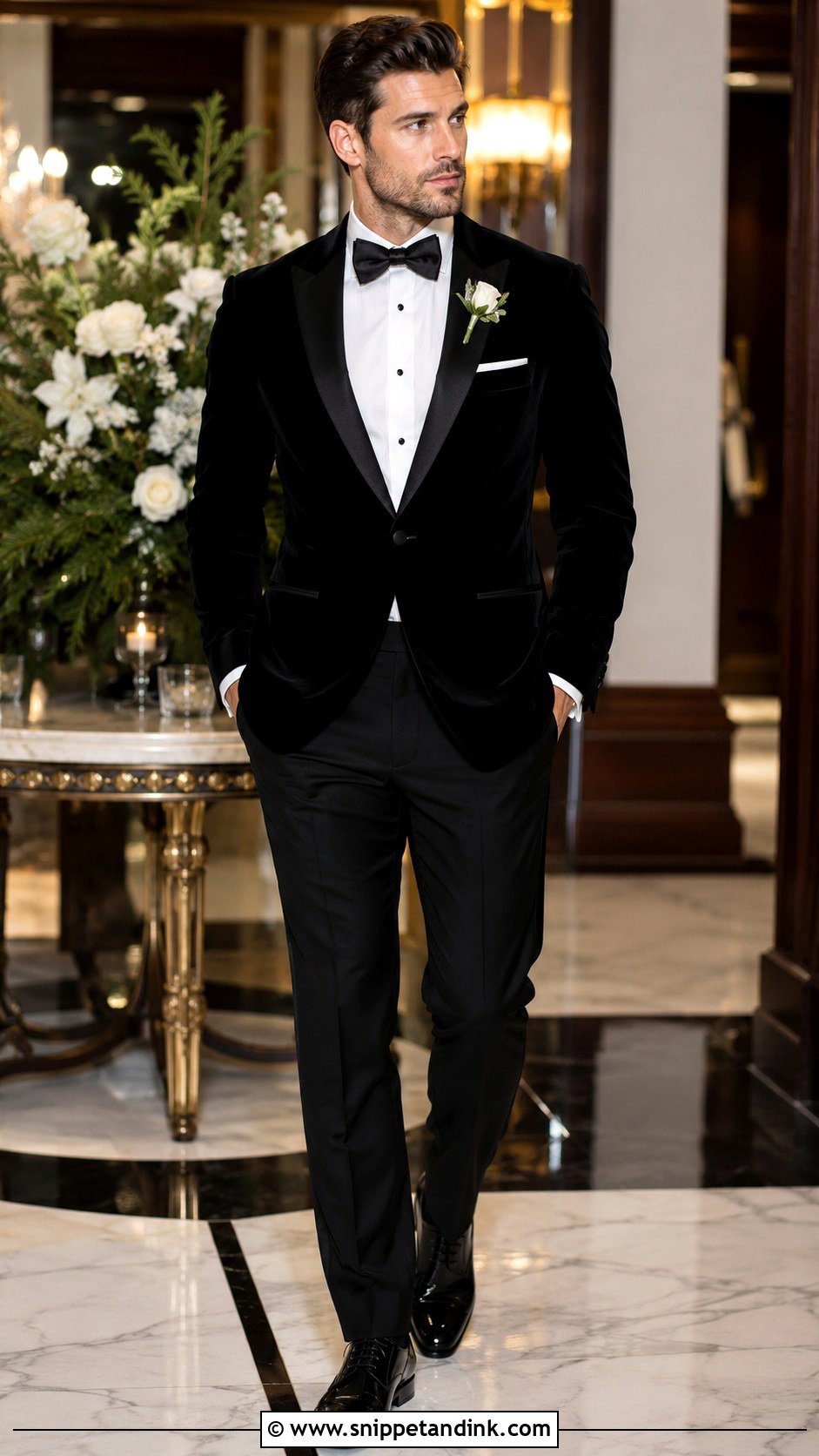
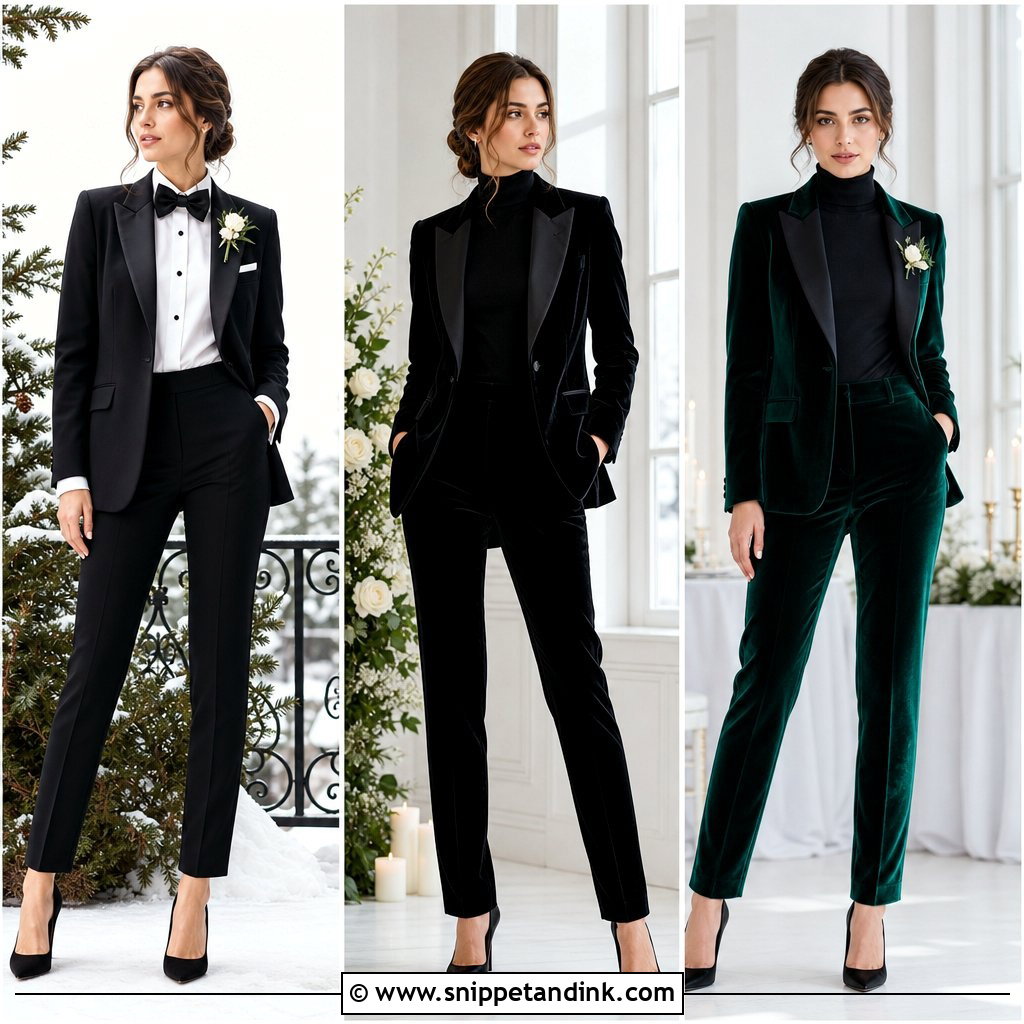
Velvet absorbs light, so a black velvet jacket looks deep and soft where wool looks flat. It belongs at autumn and winter evening weddings. Pair it with black tux trousers, a white shirt, a black bow tie and polished black shoes, and keep everything else plain: a simple pocket square, slim cufflinks and tidy grooming. Velvet is warm, and it crushes where you sit or lean, so I tell grooms to hang it in a steamy bathroom before dressing and avoid leaning against walls for photos.
8. Burgundy Velvet Wedding Tux
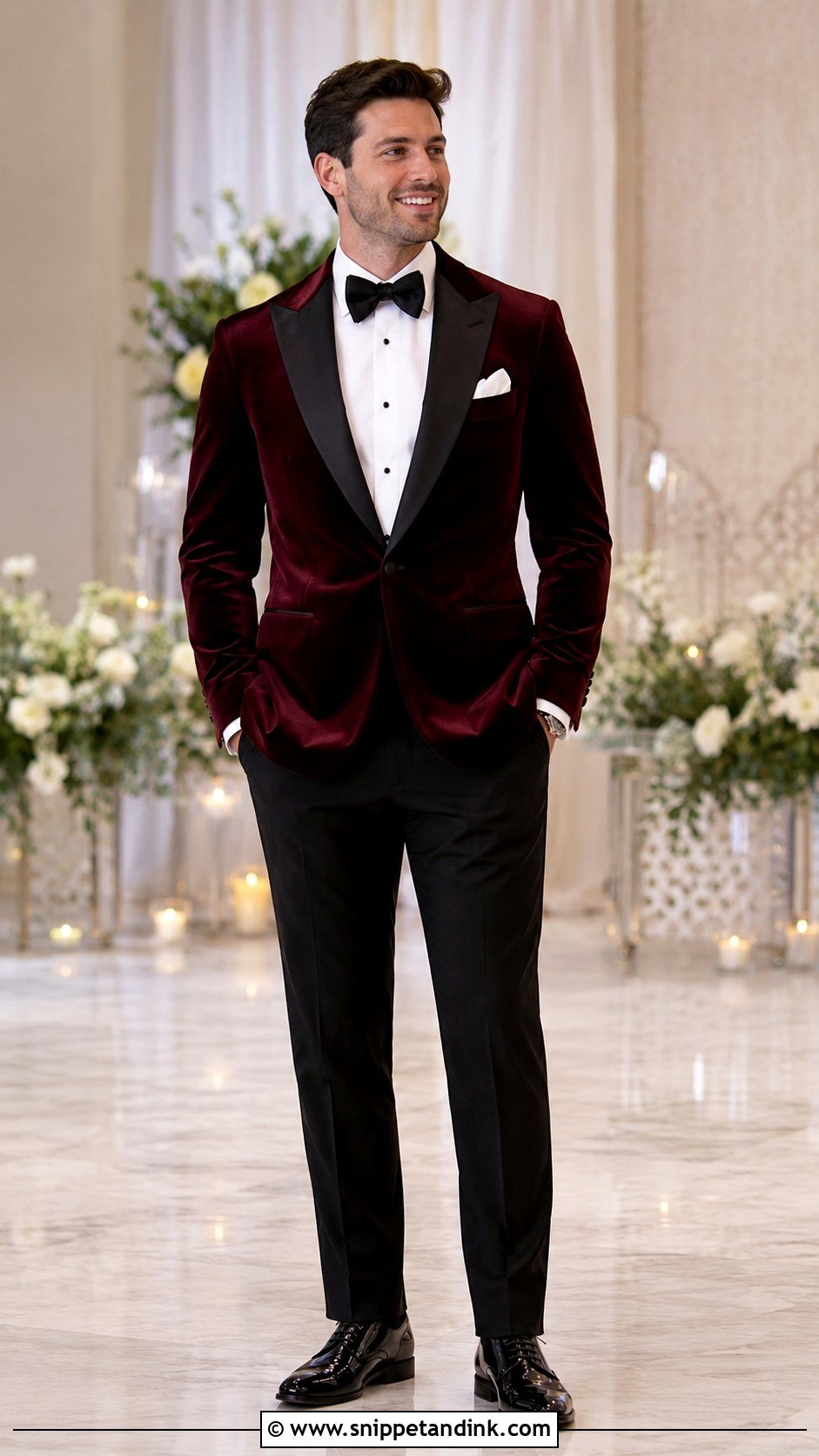
Burgundy velvet gives colour without giving up formality. Wear the jacket with black tux trousers, a white tuxedo shirt, black bow tie and black patent shoes, and keep the shirt and accessories plain so the jacket leads. Deep red sits well with autumn florals, gold accents and moody palettes, and it photographs richly beside neutral bridesmaid dresses or groomsmen in black. Burgundy can bring out redness in the face, so if you flush easily I’d try it on in daylight before committing.
9. Emerald Green Wedding Tux
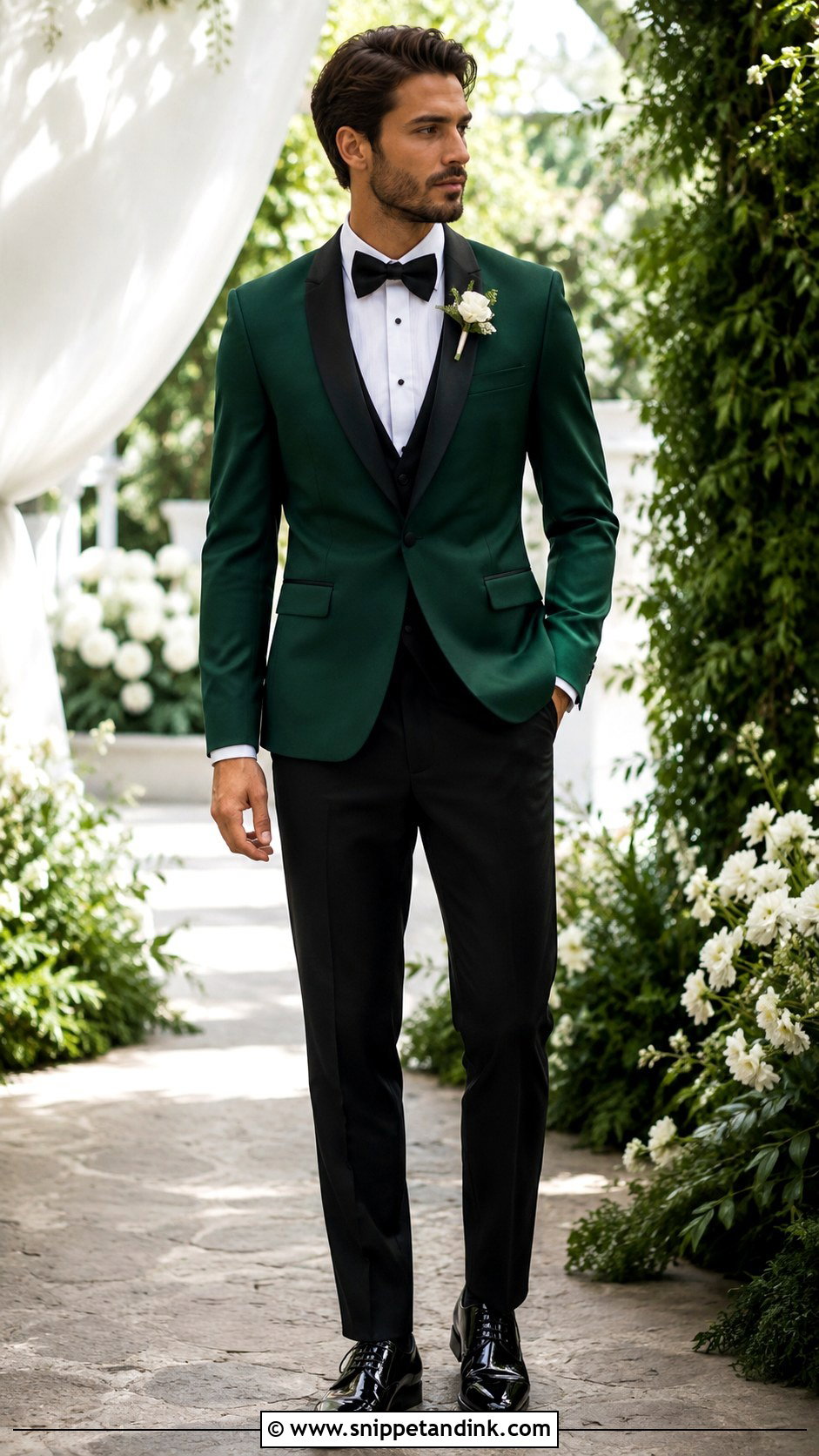
Emerald in velvet or wool reads formal enough for a wedding while feeling fresh. Pair it with black tux trousers, a white shirt, a black bow tie and black shoes. Garden weddings, winter celebrations and green venues suit it. A saturated jacket doesn’t need help, so avoid coloured ties and patterned pocket squares. Emerald coordinates with sage, cream, gold or black wedding colours, and it flatters warm and olive skin tones particularly well.
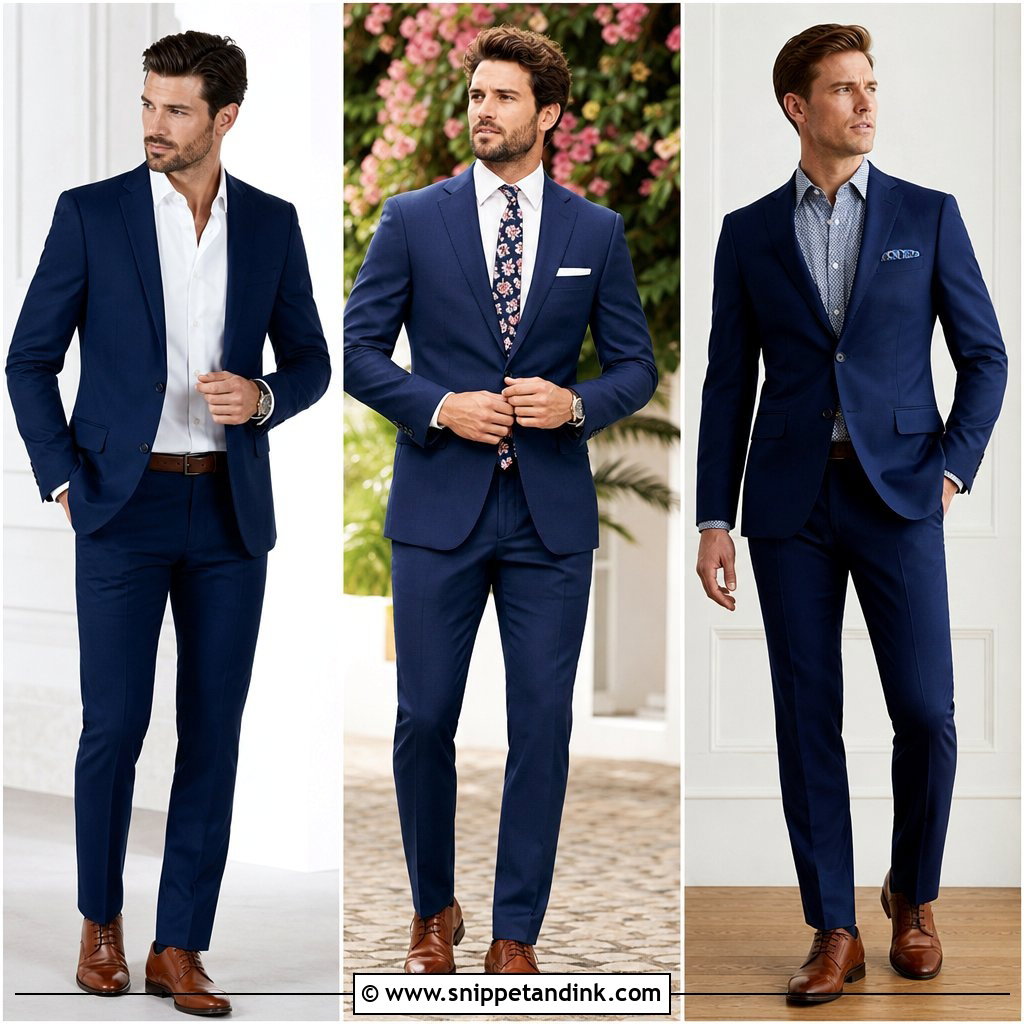
10. Navy Wedding Tux
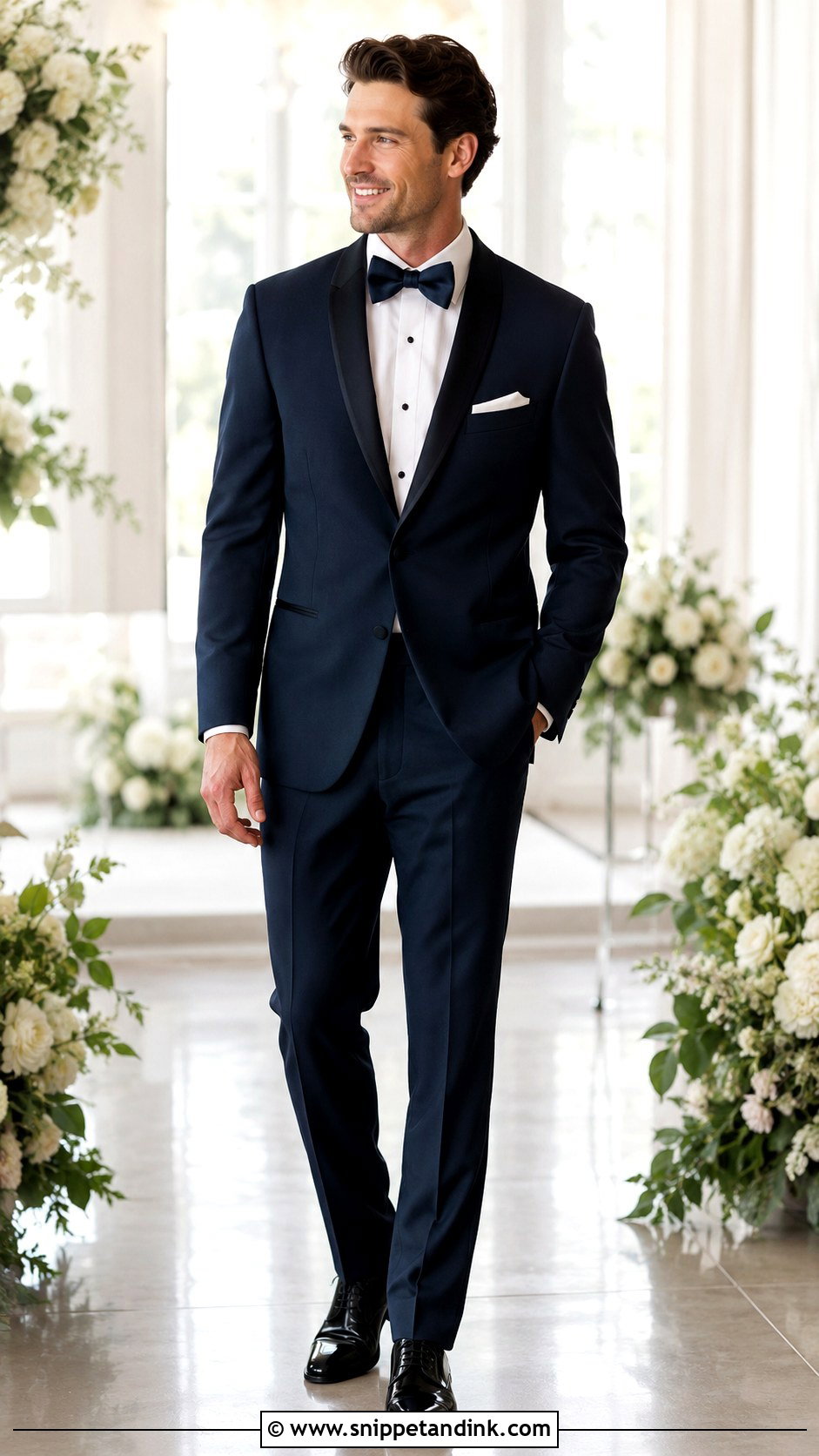
A navy wedding tux gives a little colour while staying polished. Choose a dark navy tuxedo with satin lapels, matching trousers, a white tuxedo shirt and a black or navy bow tie. Black patent shoes keep it formal; dark brown dress shoes soften it for formal-optional weddings. Navy suits spring, summer and outdoor evening weddings and pairs easily with dusty blue, blush, champagne, grey and greenery. Make sure it’s genuinely dark; a mid-navy looks like a business suit with satin added.
11. Charcoal Wedding Tux
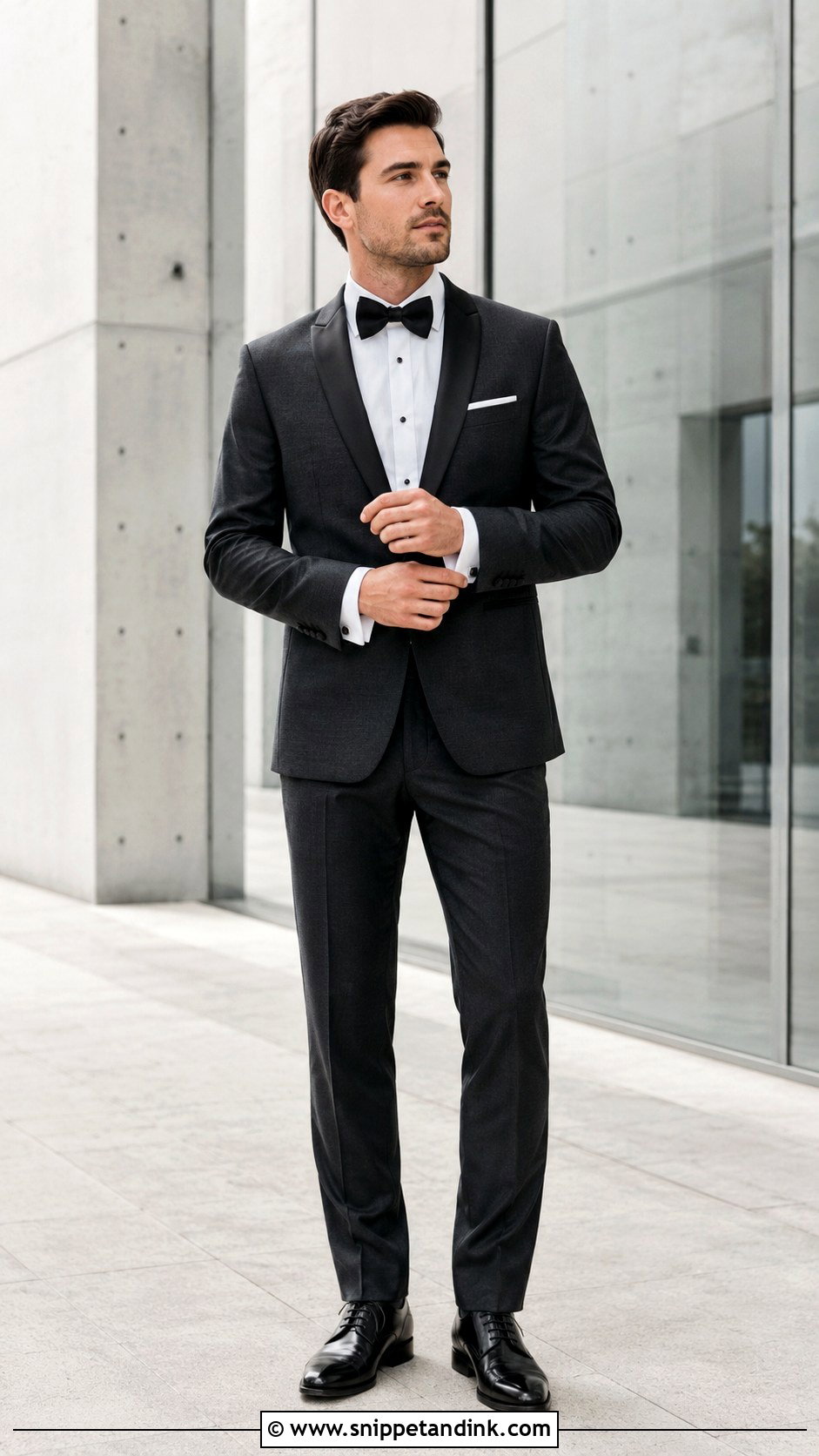
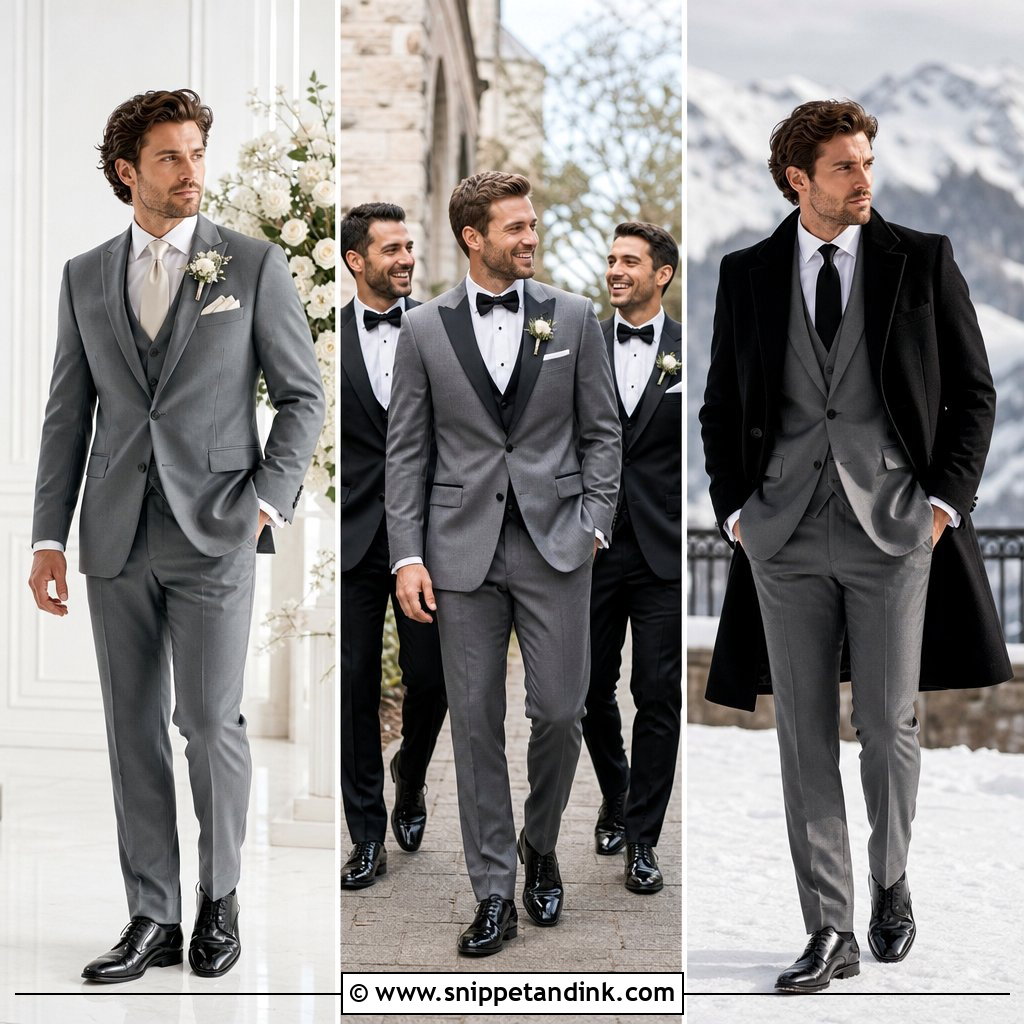
Charcoal is my suggestion when black feels too severe but the wedding still calls for proper formalwear. A charcoal tuxedo jacket with satin or grosgrain lapels, matching trousers, a white dress shirt and a black bow tie, with black oxfords or patent shoes. Grosgrain, the ribbed matte facing, is less shiny than satin and suits charcoal’s softer tone. City weddings, industrial spaces and modern hotels suit it. Silver cufflinks and a white pocket square complete it, and it coordinates with most wedding colours.
12. Light Gray Wedding Tux
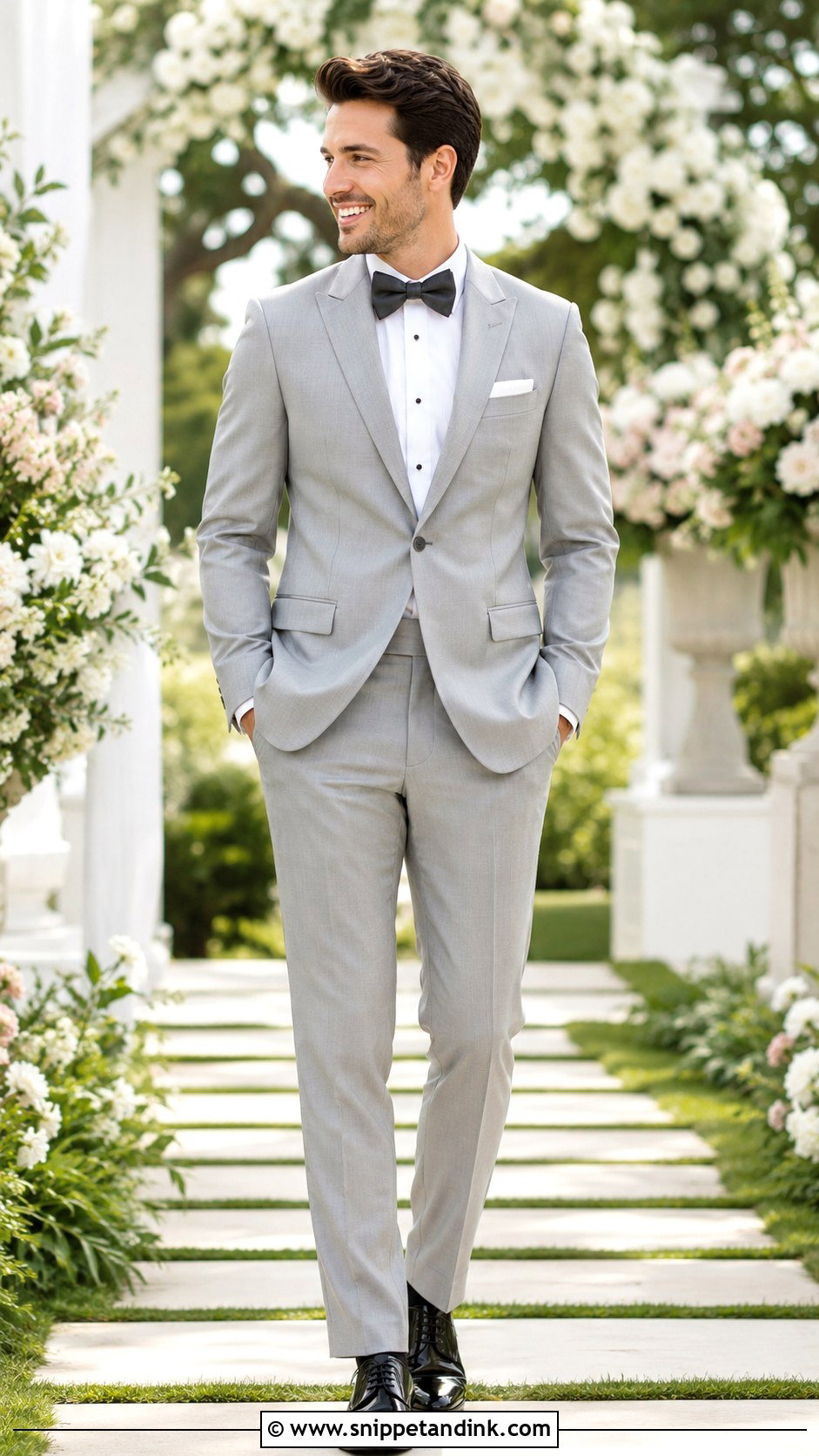
Light grey is a daytime colour, which makes it right for spring ceremonies and warm venues where black would look heavy. A white dress shirt, light grey tux trousers, a black or charcoal bow tie and black or dark brown shoes, depending on the dress code. Satin-trimmed lapels and black footwear make it more formal. A lighter colour shows every wrinkle and loose thread, so the tailoring has to be sharp. A white pocket square and simple boutonniere finish it.
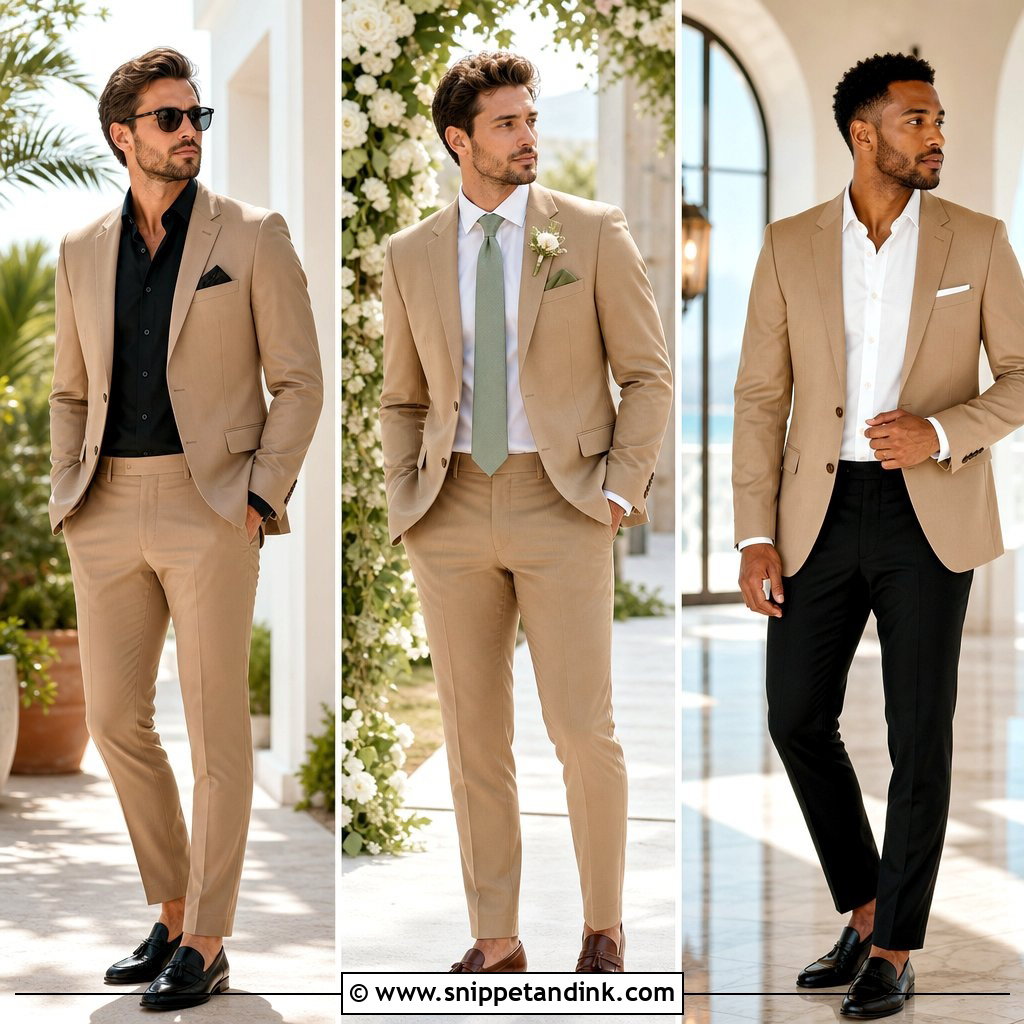
13. Tan Wedding Tux
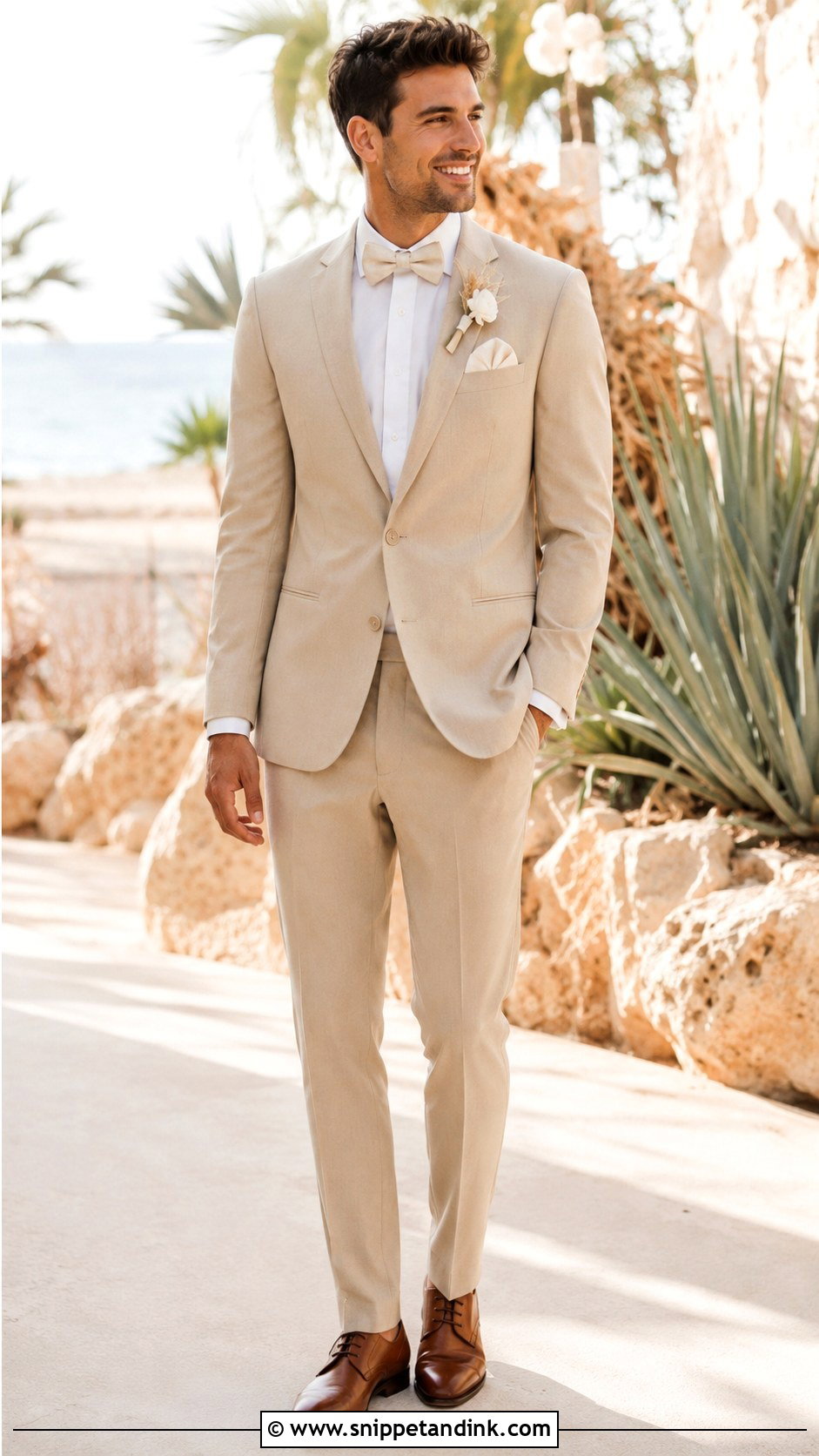
Tan belongs outdoors: beach ceremonies, desert venues, summer gardens and daytime destination weddings. Pair a tan jacket and trousers with a white dress shirt, brown leather shoes and a cream or black bow tie, depending on how formal it is. It isn’t black tie, but it looks excellent at a formal beach or semi-formal wedding. Choose a light, breathable cloth, because a heavy tan wool in the sun is miserable. A linen pocket square or simple boutonniere suits it.
14. All Black Wedding Tux
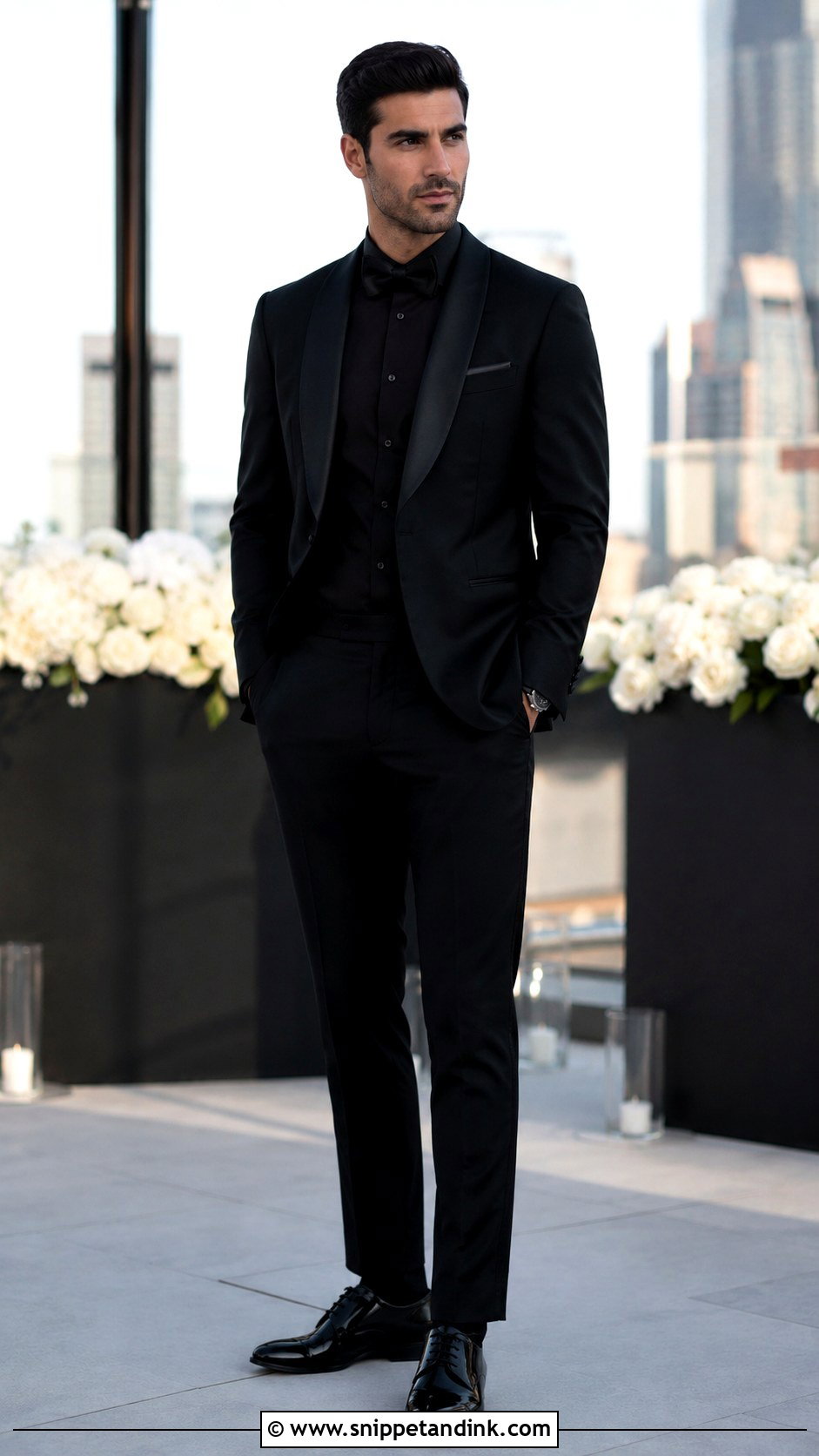
All black, shirt included, is sharp and deliberately unconventional. A black tuxedo jacket and trousers, black dress shirt, black bow tie or slim black tie and polished black shoes. Fashion-forward evening weddings, modern venues and black-and-white themes suit it. With no colour contrast, texture has to separate the layers: satin lapels against a matte shirt, polished shoes against wool. Skip coloured accessories. Under flash, black-on-black can lose detail, so I’d mention it to the photographer.
15. Double Breasted Wedding Tux
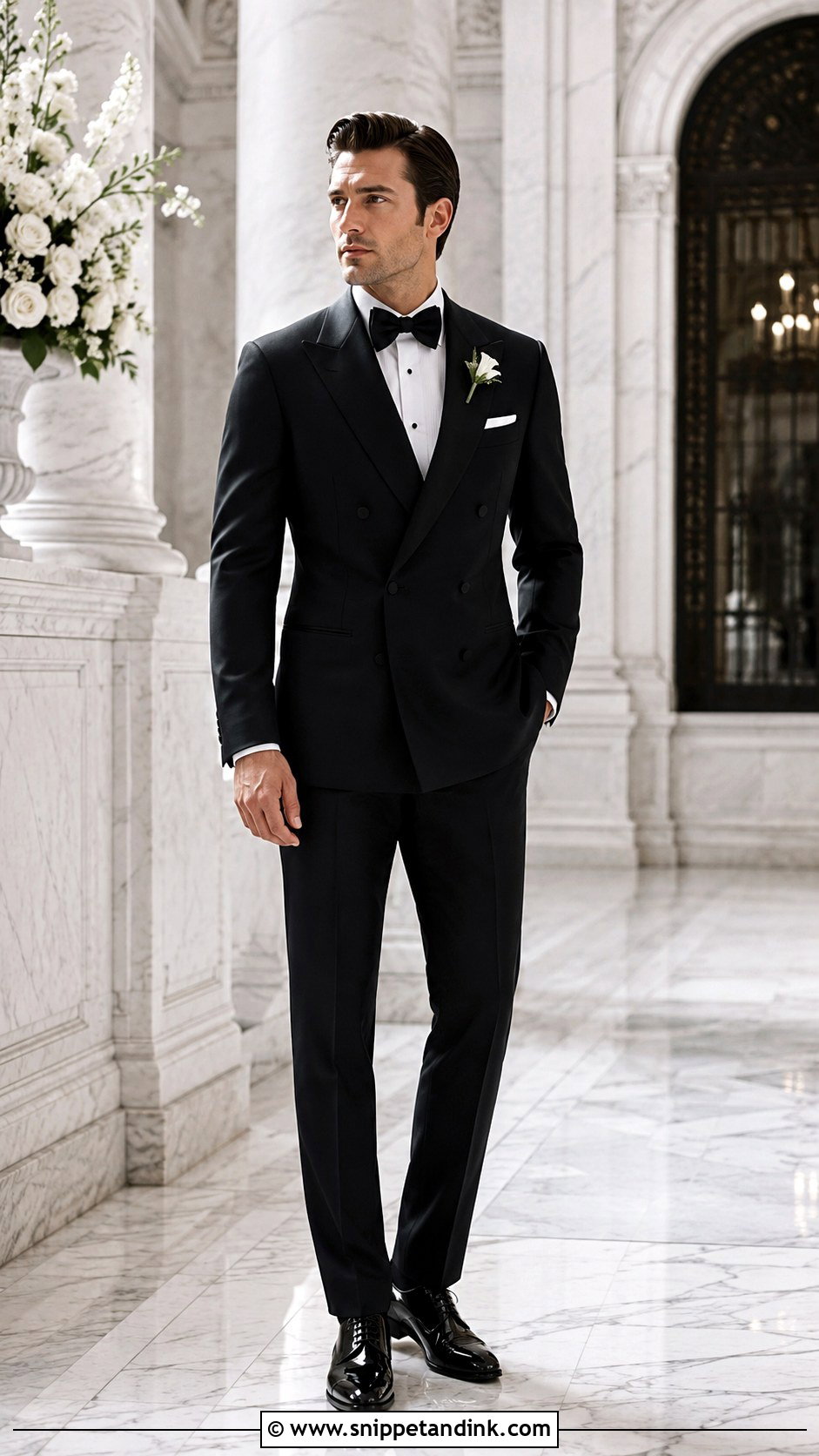
Double-breasted jackets give a strong, tailored shape. Black, midnight blue, ivory or deep green all work, with tux trousers, a white shirt, black bow tie and black formal shoes. The fit has to be precise across the chest and shoulders, because the overlapping front exaggerates any pulling. Unlike a single-breasted jacket, a double-breasted one is meant to stay buttoned, standing and ideally seated too, so try sitting in it before you buy. Formal city weddings and evening receptions suit it.
16. Three Piece Wedding Tux
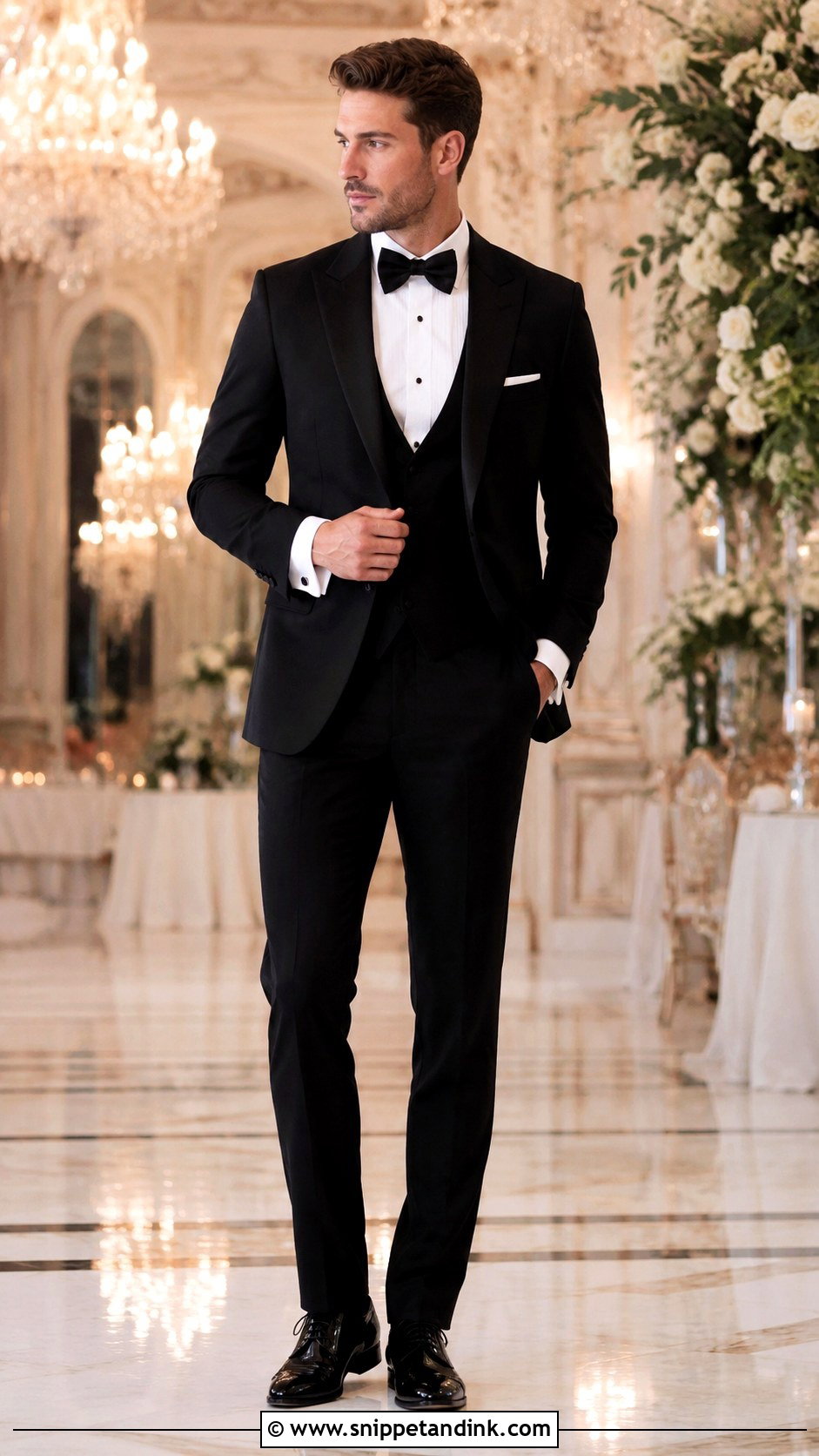
A three piece wedding tux adds a waistcoat, which keeps the outfit looking finished once the jacket comes off for dancing. That’s the main reason I recommend it. A tuxedo jacket, matching trousers, formal vest, white tuxedo shirt, bow tie and polished shoes. Black is most traditional; navy, charcoal and midnight blue work too. Formal waistcoats are cut low, and the trousers should sit high enough at the waist that no shirt shows between them. Cooler seasons and formal venues suit it.
17. Black Tux With White Vest
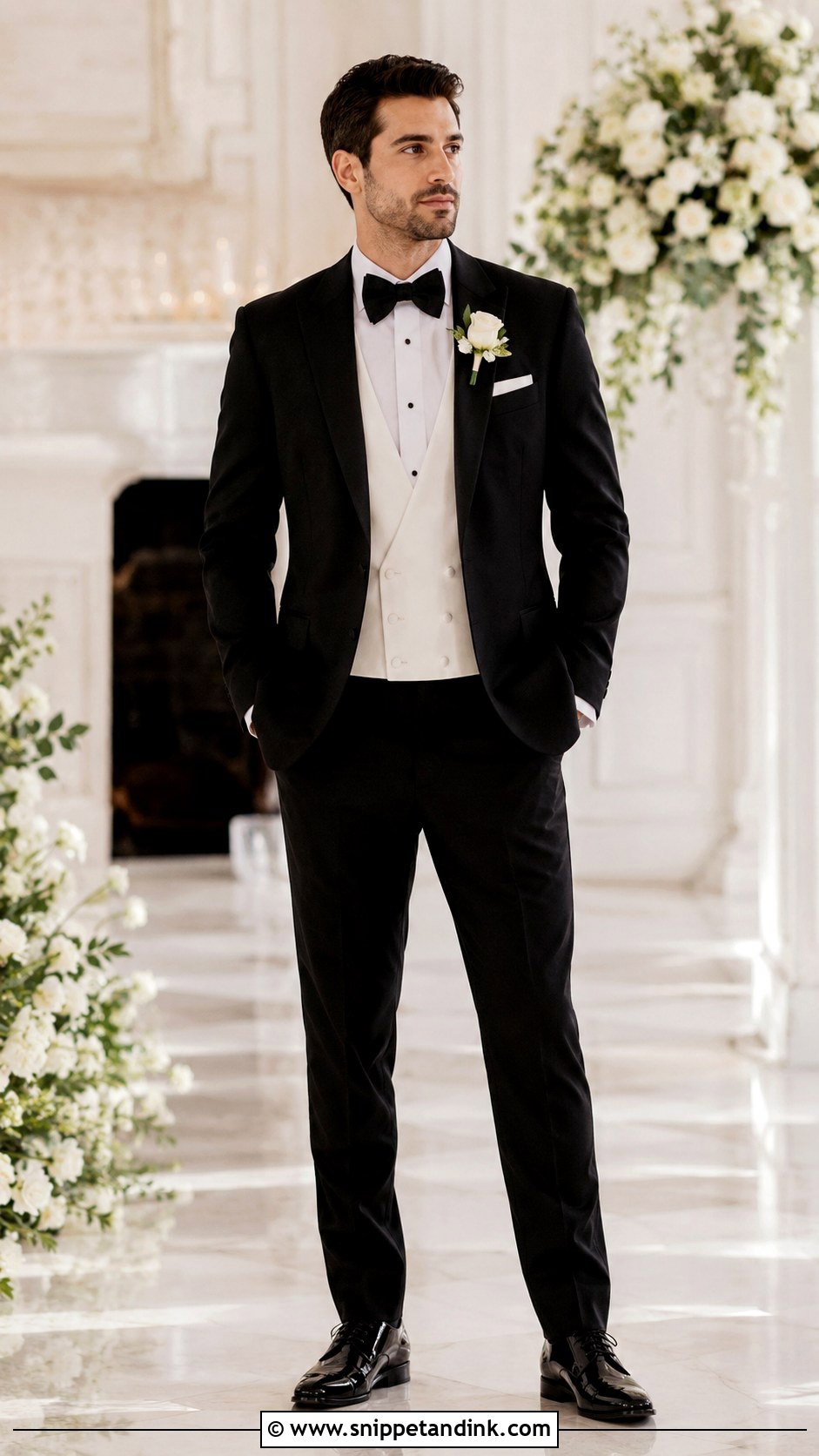
A white waistcoat under a black tux gives extra contrast and a more ceremonial look. Black jacket and trousers, a white formal vest, white tuxedo shirt, black bow tie and patent shoes. Traditional weddings and grand venues suit it. The vest must sit flat under the jacket without bunching at the waist, and its bottom edge should cover the trouser waistband. White vests show every mark, so I’d keep it on its hanger until the last minute.
18. Black Tux With Cummerbund
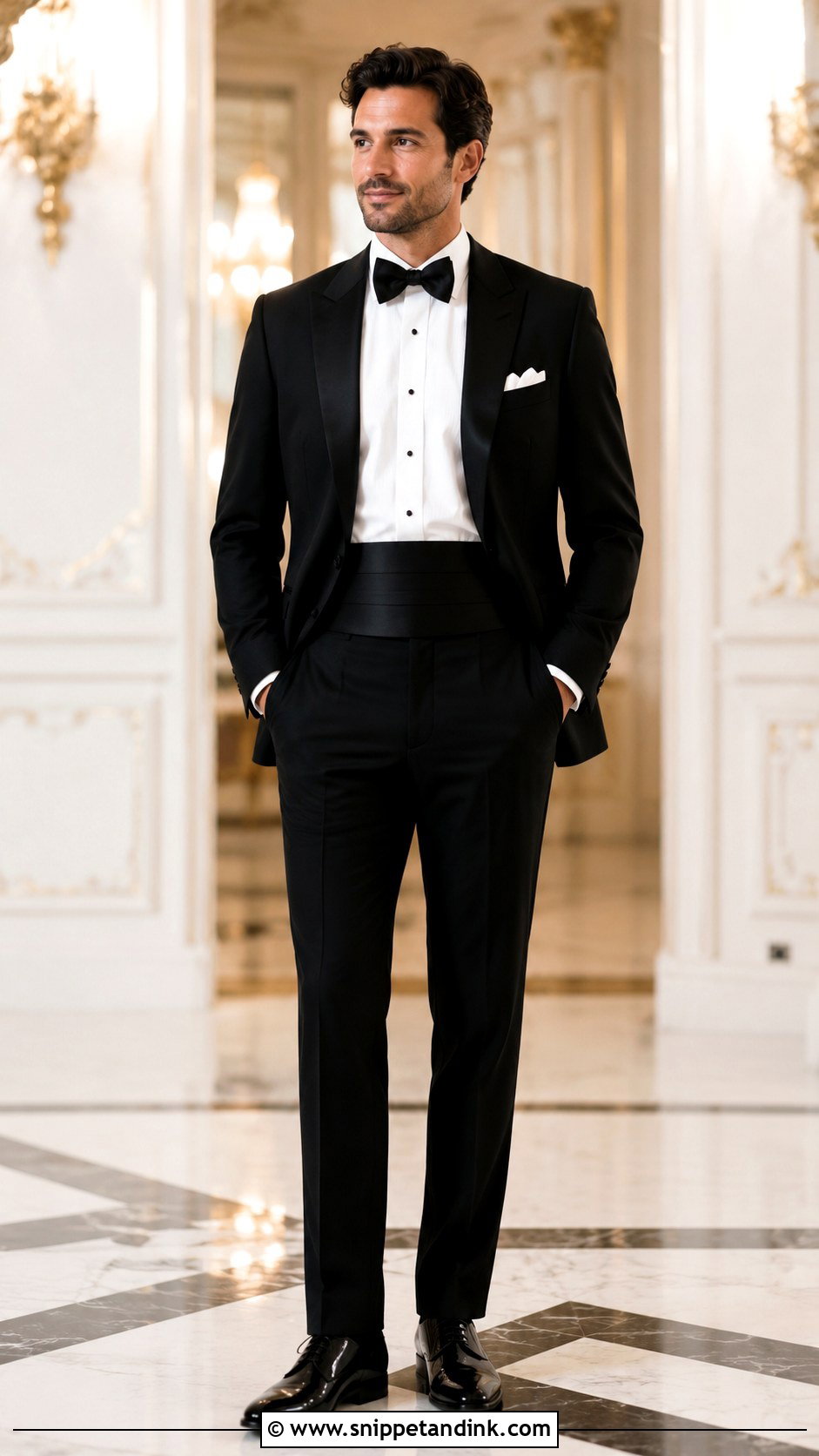
The cummerbund covers the trouser waistband and makes a clean line between shirt and trousers, which is why it’s part of classic black tie. Wear it with a black tuxedo jacket, black tux trousers, white tuxedo shirt, black bow tie and patent shoes. The pleats face upward; that’s the detail I check on every groom, since it’s often put on upside down. It’s a lighter option than a waistcoat for evening weddings. Keep the pocket square white and the cufflinks understated.
19. Black Tux With Long Tie
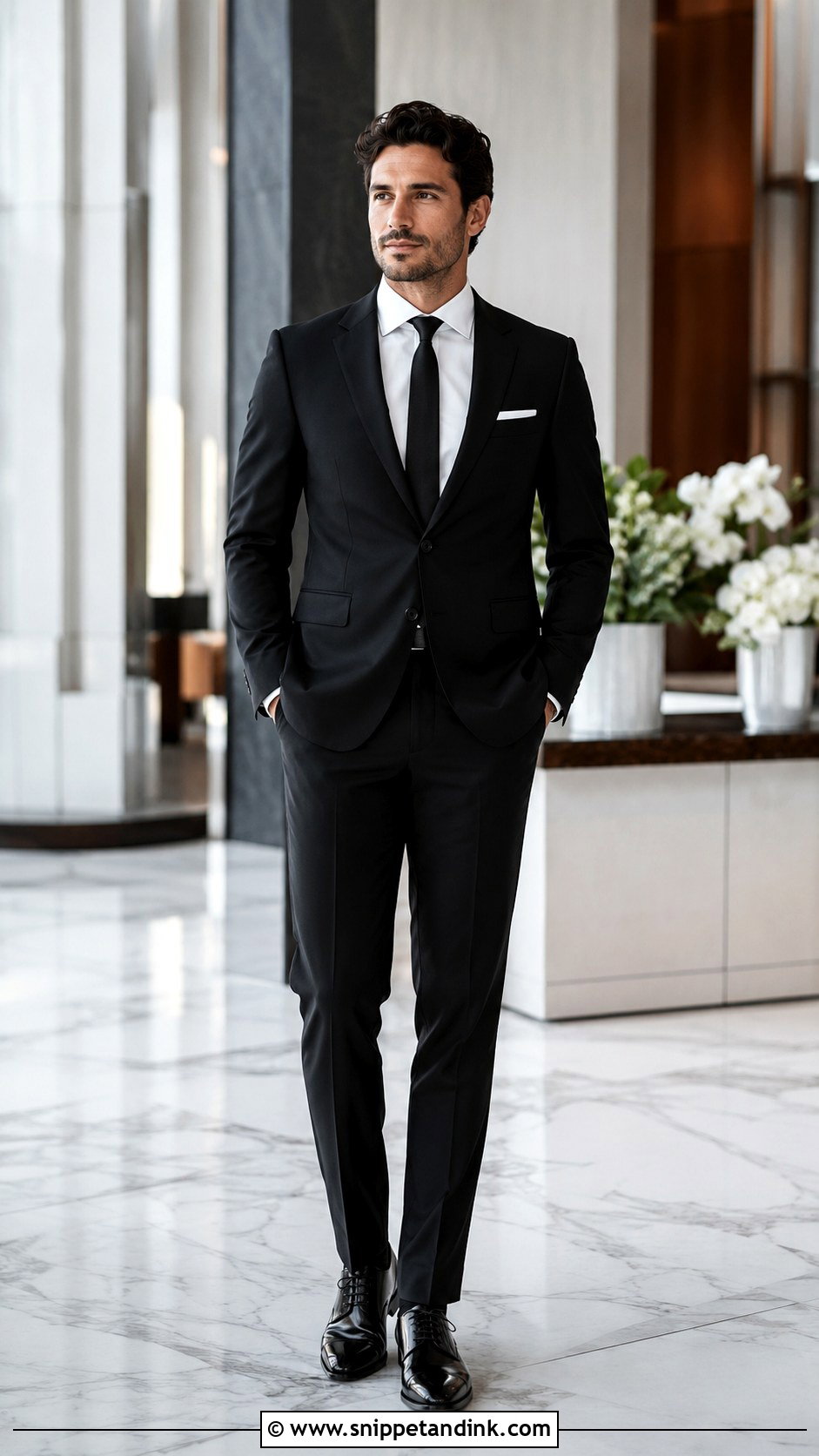
A long tie with a tuxedo is a modern choice for formal-optional weddings and contemporary venues. Pair a black tuxedo jacket and trousers with a white dress shirt, black silk tie, white pocket square and polished black shoes. It’s less strict than a bow tie but still sharp, and it suits grooms who feel awkward in one. Keep the tie slim to medium width to match the lapels, and use a turndown collar shirt, not a wing collar.
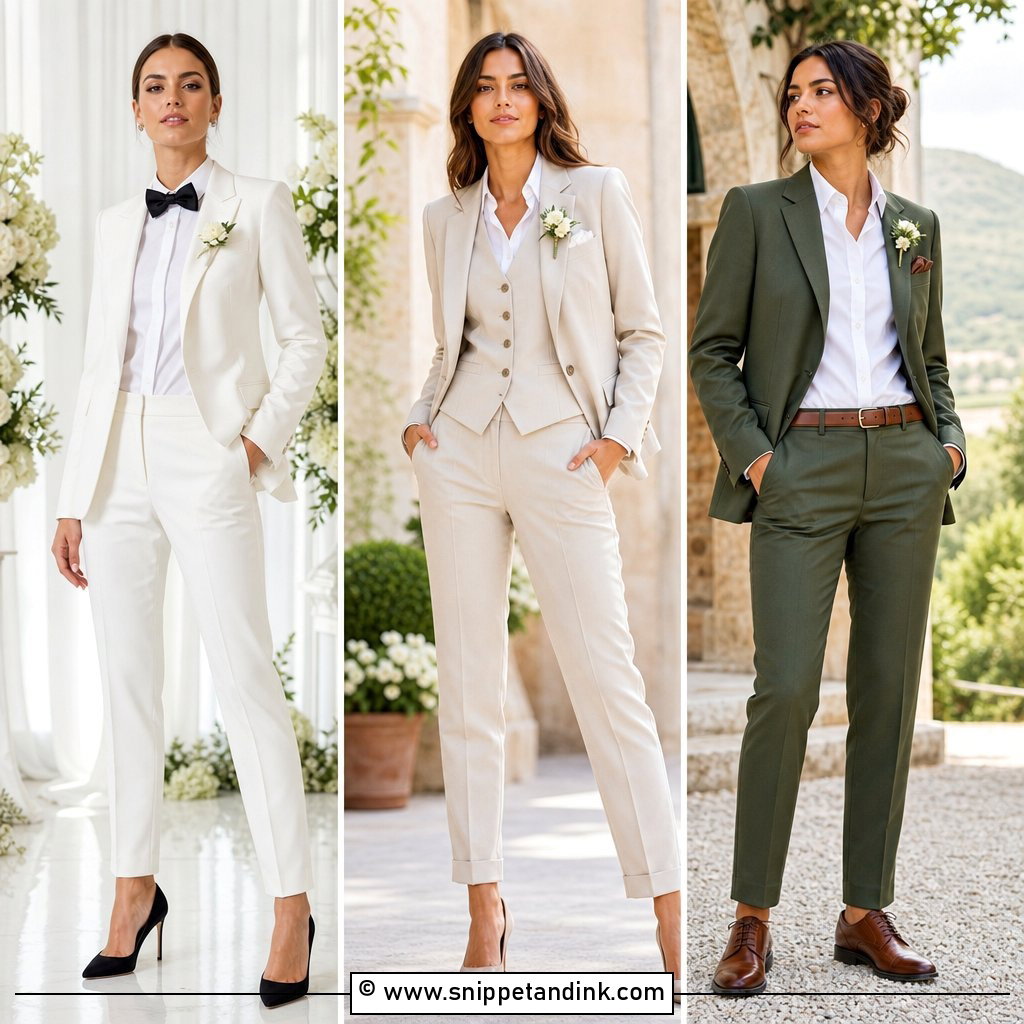
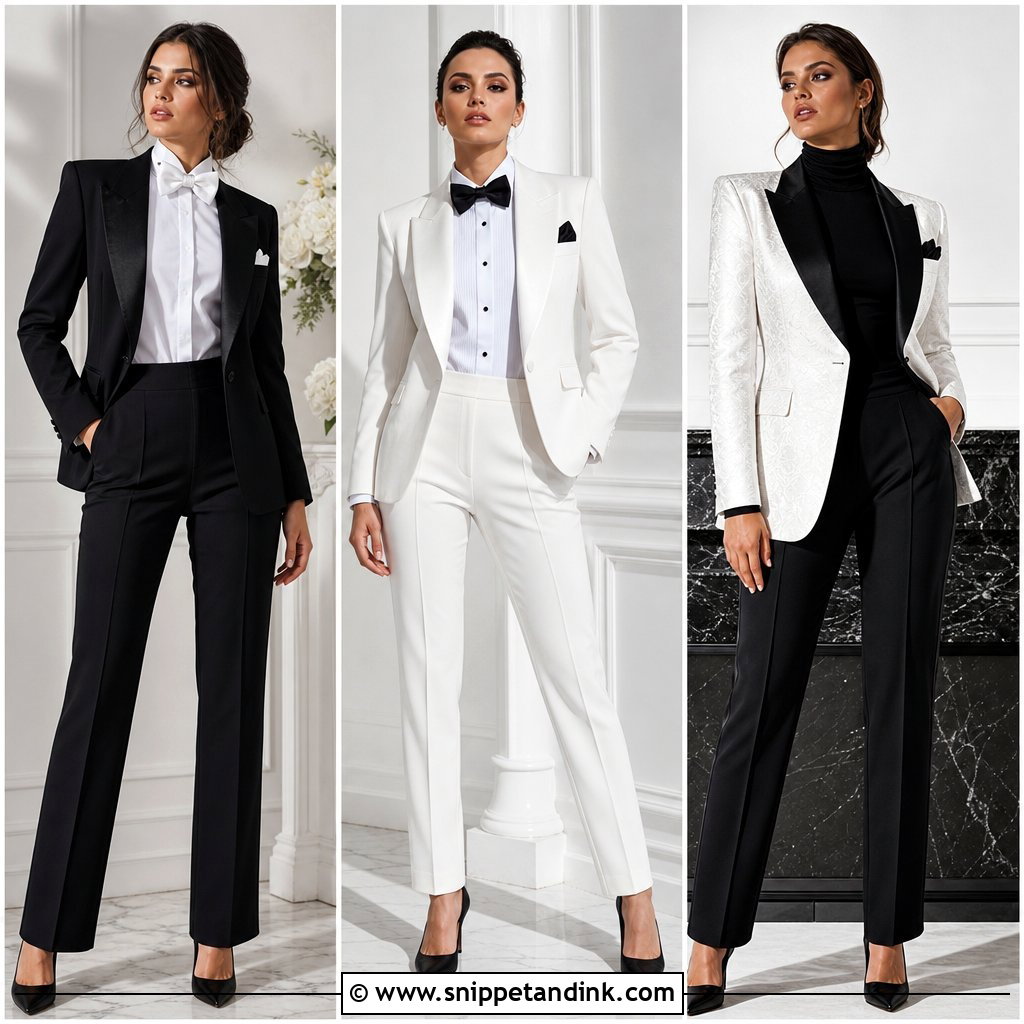
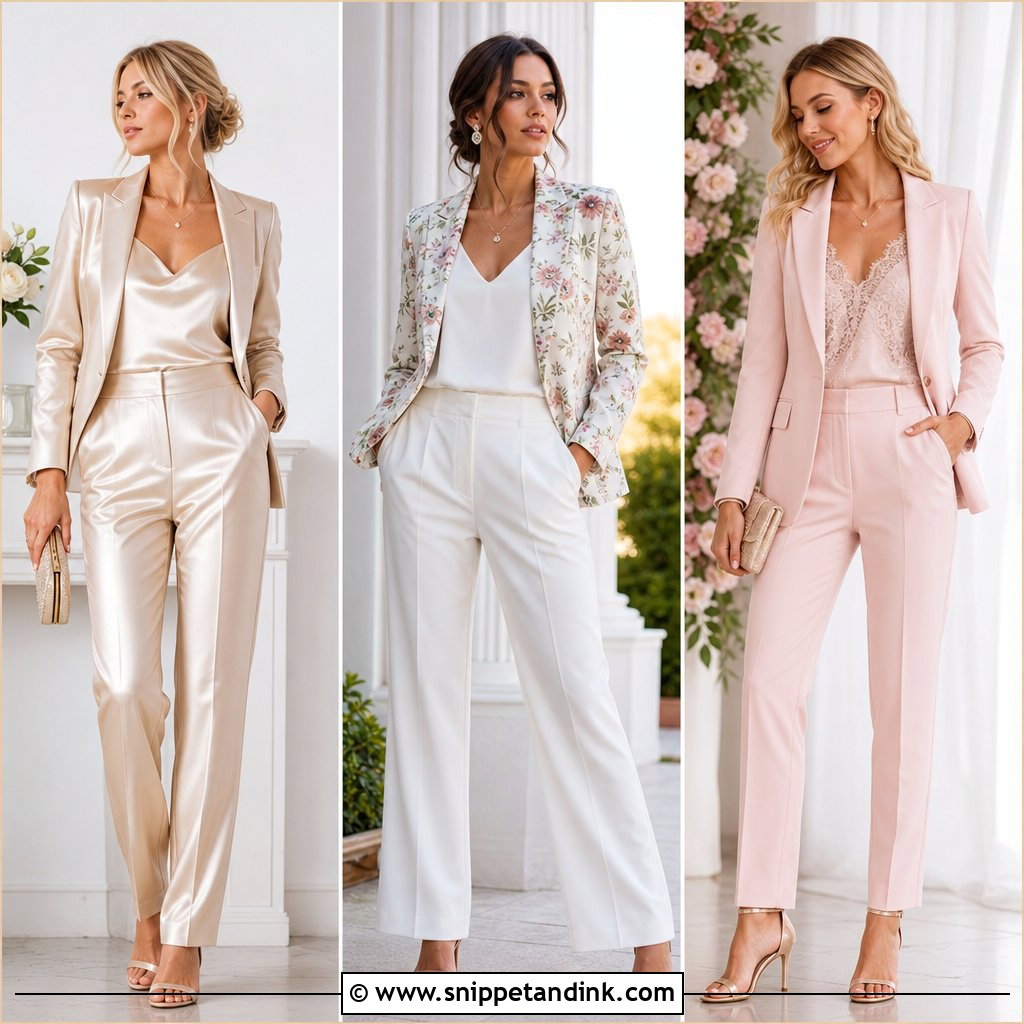
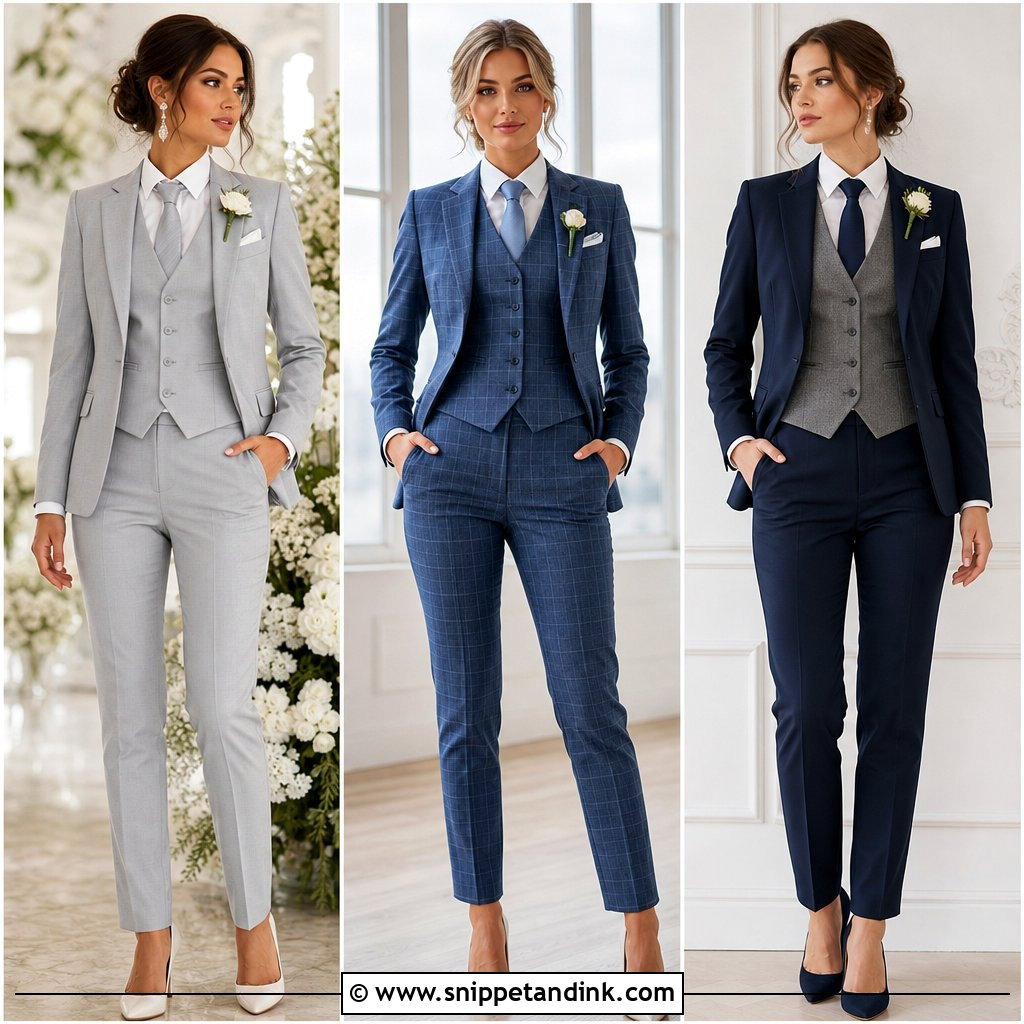
20. Black Tux With Bow Tie
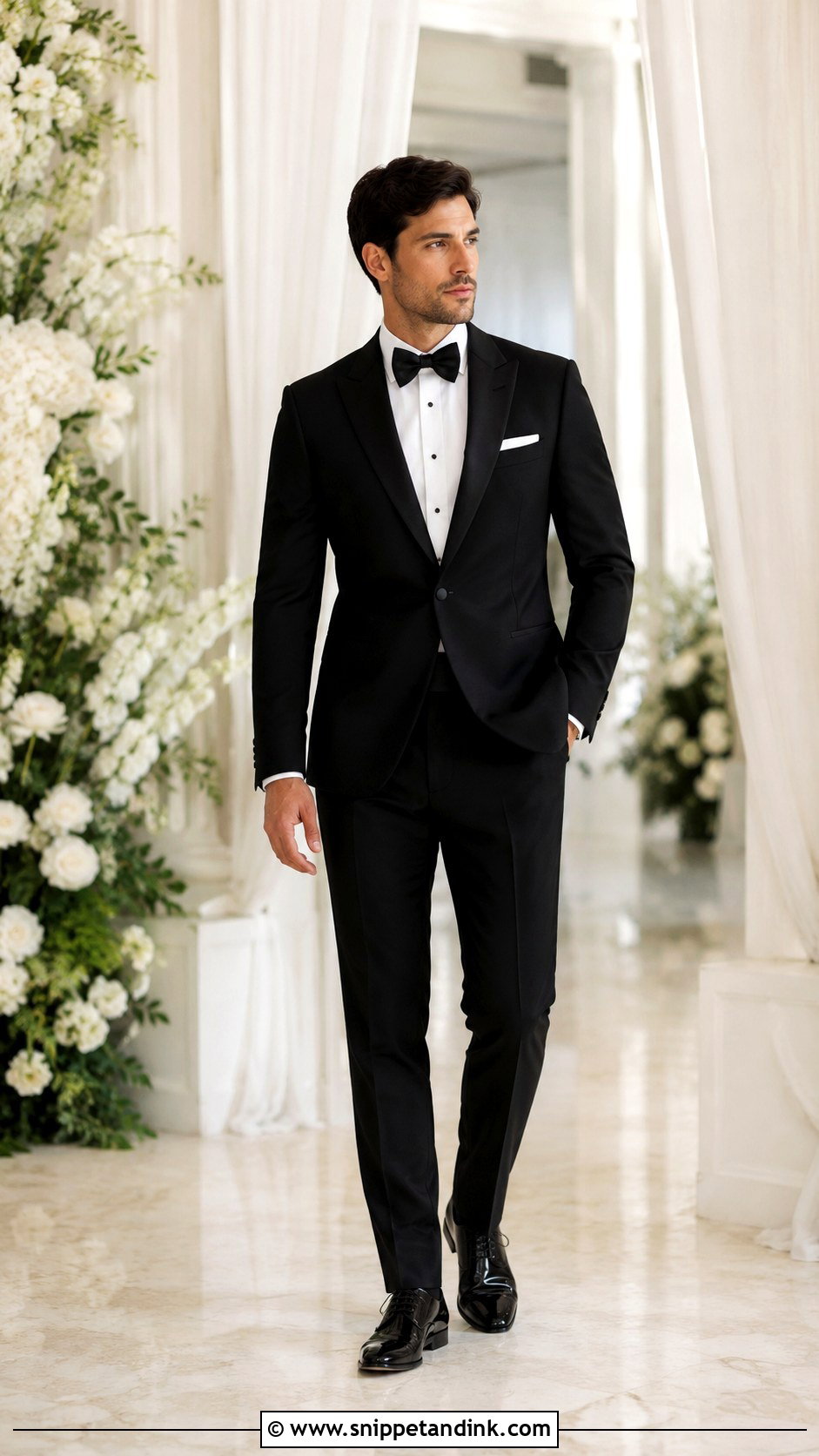
Black tux and bow tie is the look everyone pictures, and it works for grooms, groomsmen, fathers and formal guests. A black tuxedo jacket, matching trousers, white tuxedo shirt, black bow tie, white pocket square and patent shoes. A self-tie bow looks slightly uneven in the right way; a pre-tied one is fine if it sits straight and the band hides under the collar. Proportion matters most: a bow tie no wider than your face and roughly in line with the lapel width.
21. Tux With Loafers
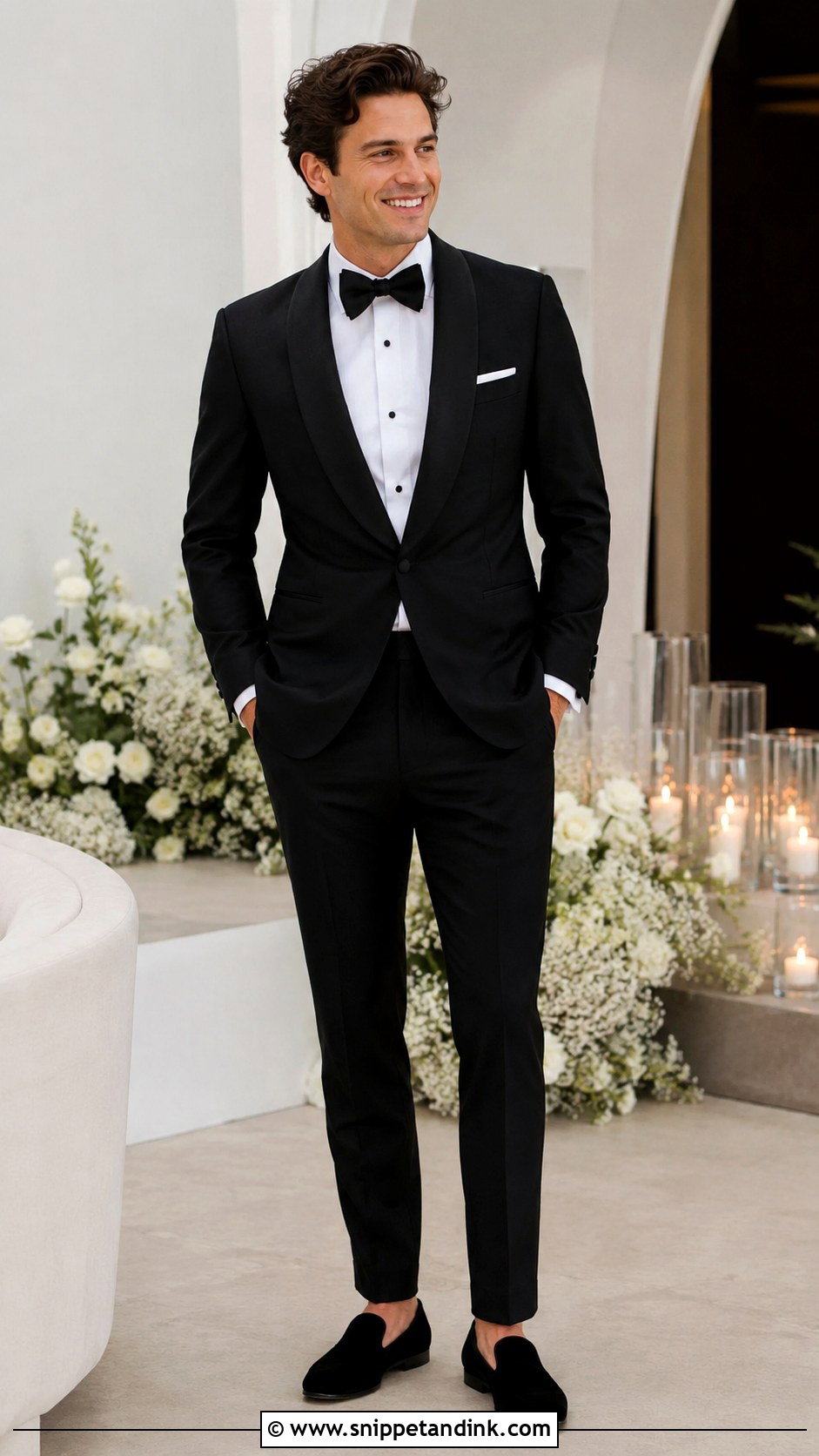
Loafers relax a tux a little without making it casual. Velvet or patent black loafers are the most wedding-appropriate. Pair them with a black, navy or velvet tuxedo, white tuxedo shirt, black bow tie and a clean pocket square. Modern weddings and city venues suit them. They’re easier to wear than stiff formal shoes, but avoid driving shoes and chunky soles. Wear black socks long enough that no leg shows when you sit.
22. Tux With Patent Leather Shoes
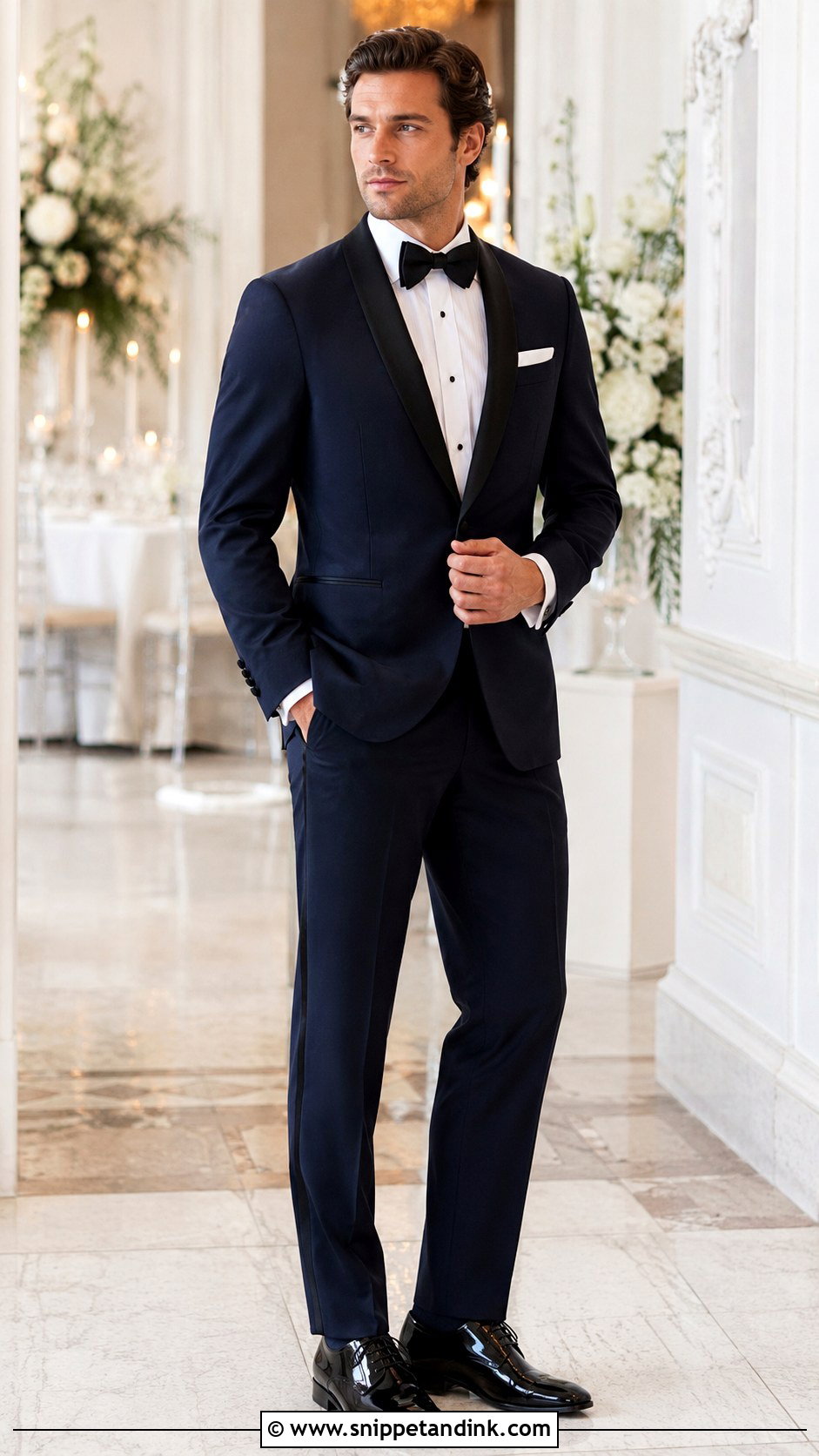
Patent leather mirrors the shine of satin lapels, which is why it’s the traditional black-tie shoe. Black patent oxfords or loafers go with a black, midnight blue or white dinner jacket tux, a white tuxedo shirt, black bow tie and white pocket square. Evening weddings, ballrooms and hotels suit them. Patent creases at the toe and scuffs easily, so wear them around the house a few times to break them in and wipe them with a soft cloth before the ceremony.
23. Tux With Velvet Loafers
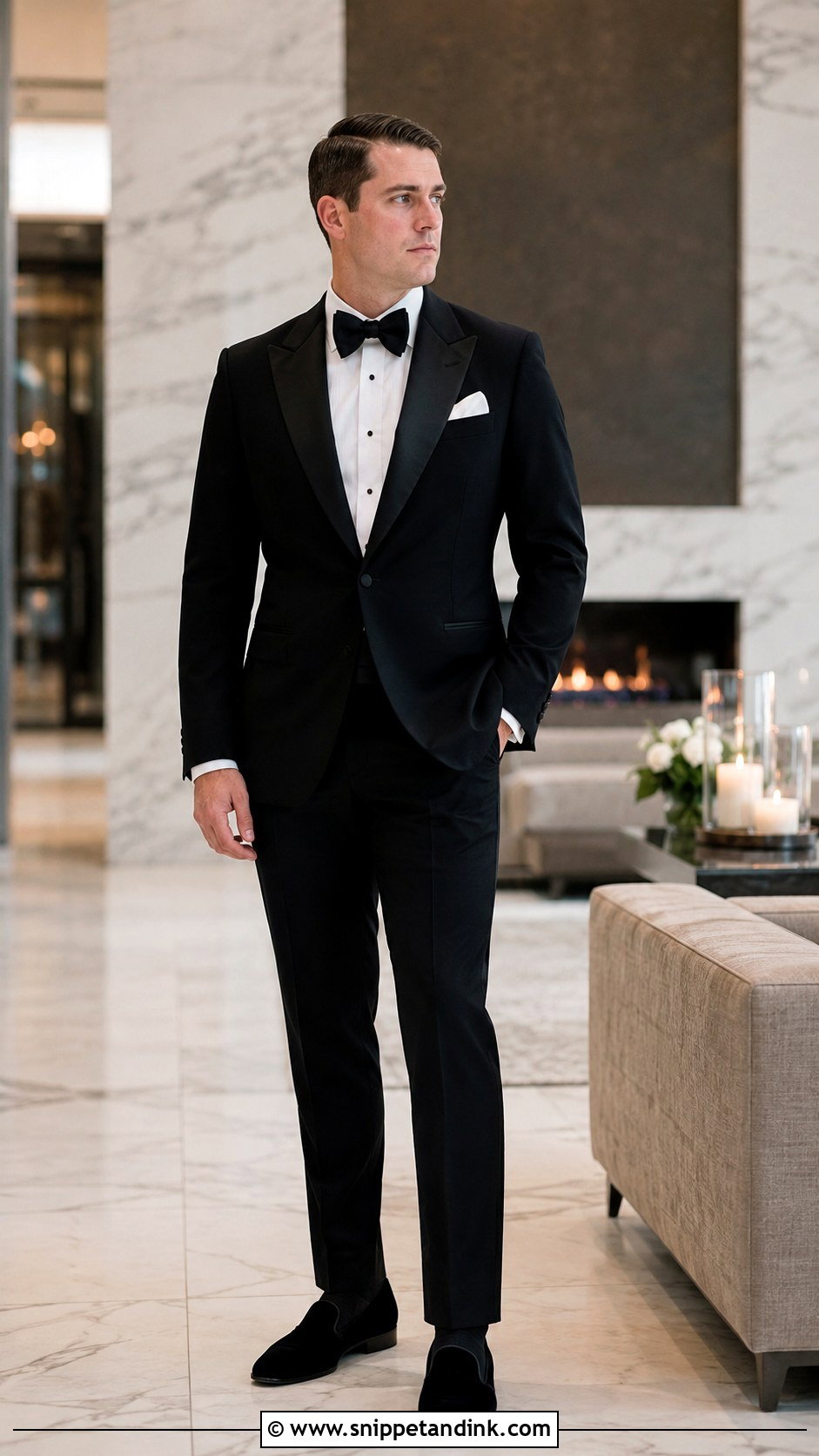
Velvet loafers add texture at the foot. Black works with almost any tux; deep navy or burgundy adds a quiet note of colour. Style them with a black shawl-lapel tux, white shirt, black bow tie and simple pocket square. They’re a step more relaxed than patent oxfords and suit indoor and winter weddings. Velvet marks in rain and on wet grass, so they’re an indoor shoe. Hem the trousers with a slight or no break so the loafers show without looking cropped.
24. Tux With Black Shirt
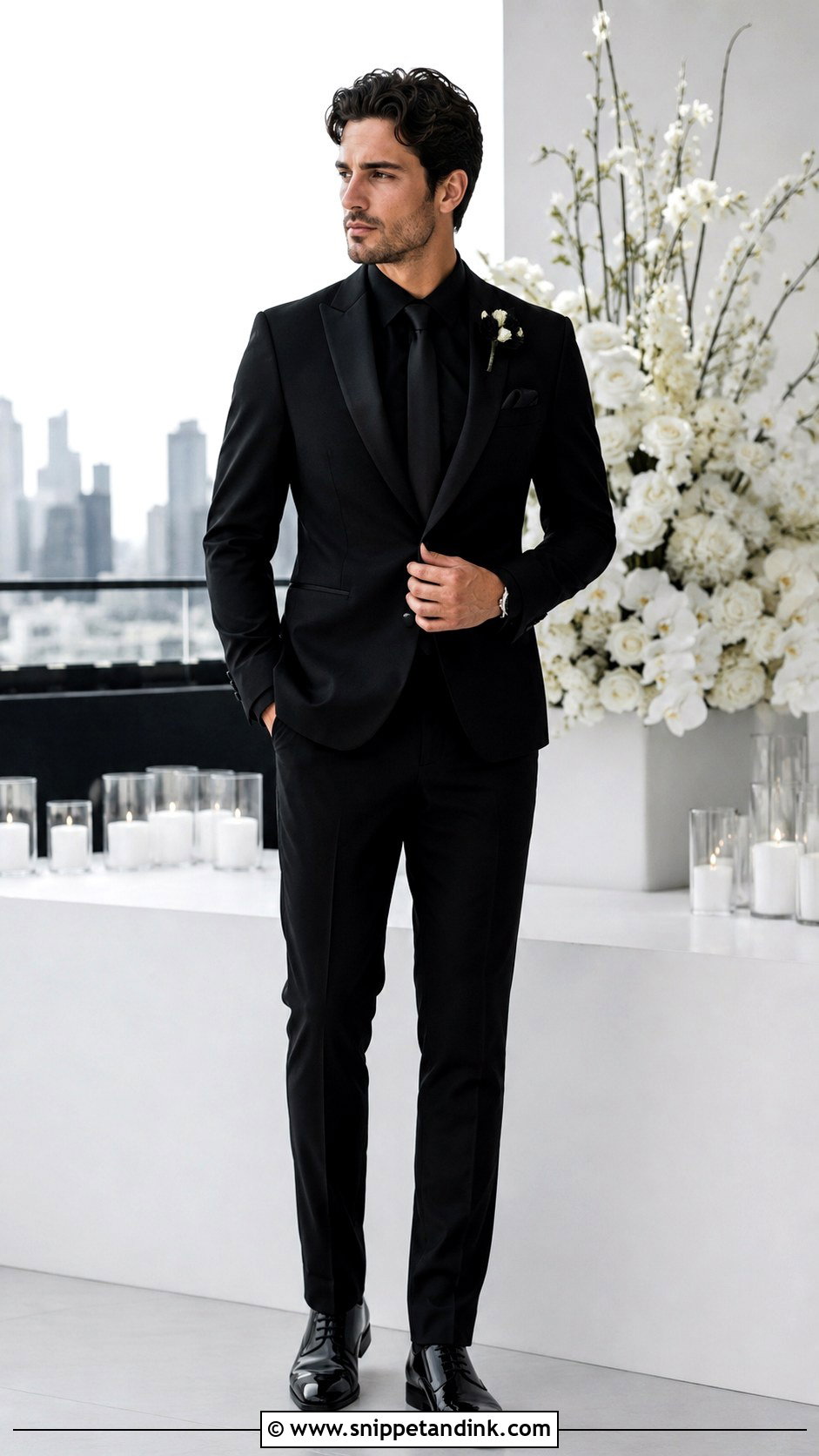
A black shirt under a black tux isn’t traditional black tie, and I tell grooms that plainly. At a sleek, fashion-led evening wedding, though, it works. A black tuxedo jacket and trousers, a fitted black dress shirt, black bow tie or silk tie and polished black shoes. Satin lapels and sharp tailoring separate the layers. Avoid loud accessories. Lofts, rooftops and modern venues suit it.
25. Tux With Pleated Shirt
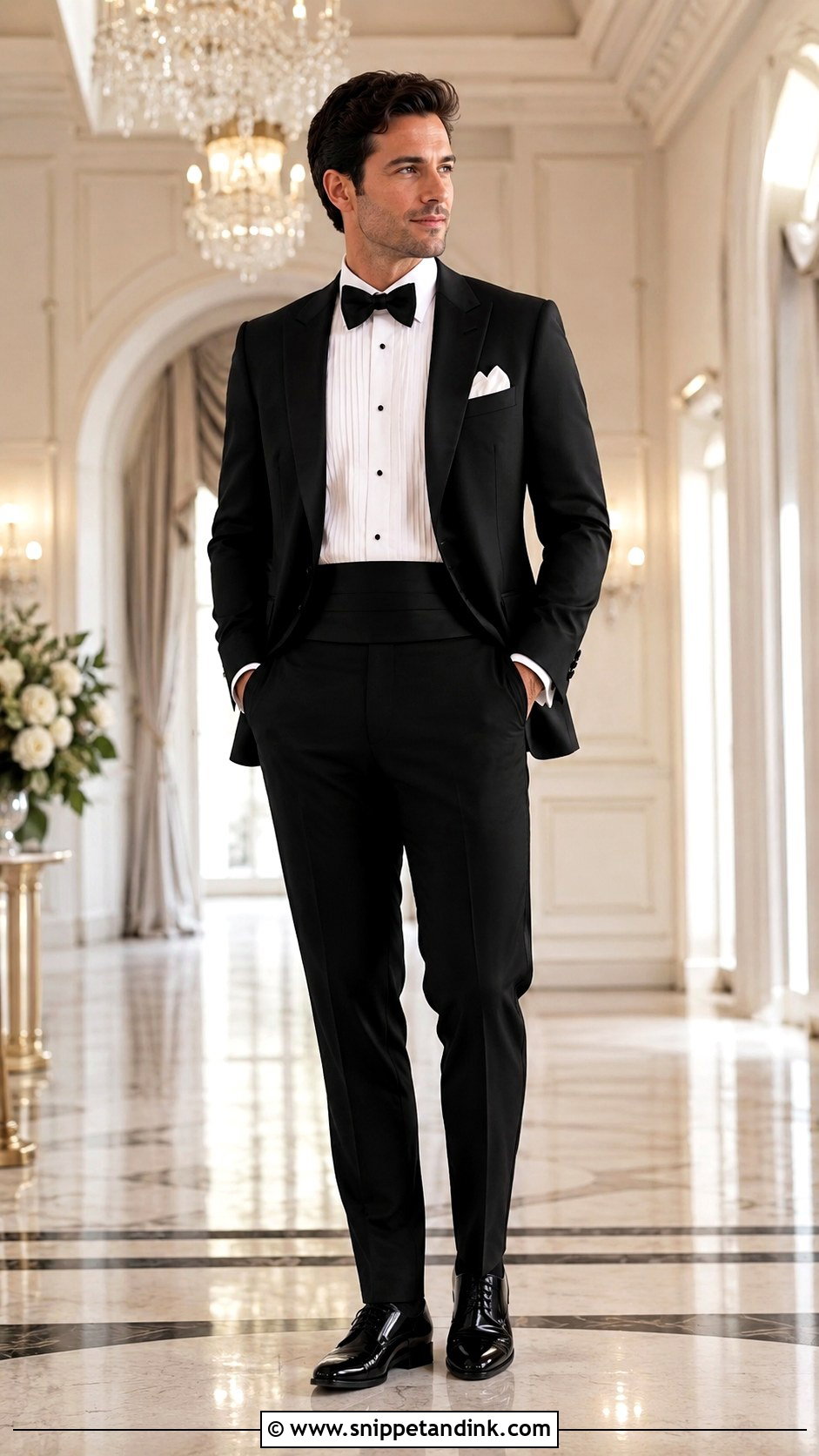
Front pleats add texture to a dress shirt while keeping it clean. Wear one with a black or midnight blue tuxedo, black bow tie, tux trousers, patent shoes and a white pocket square. It’s the traditional choice for evening black tie. Fit at the neck and sleeves matters most: you should fit one finger in a buttoned collar, and about a centimetre of cuff should show below the jacket sleeve. Shirt studs and cufflinks complete it.
26. Tux With Wing Collar Shirt
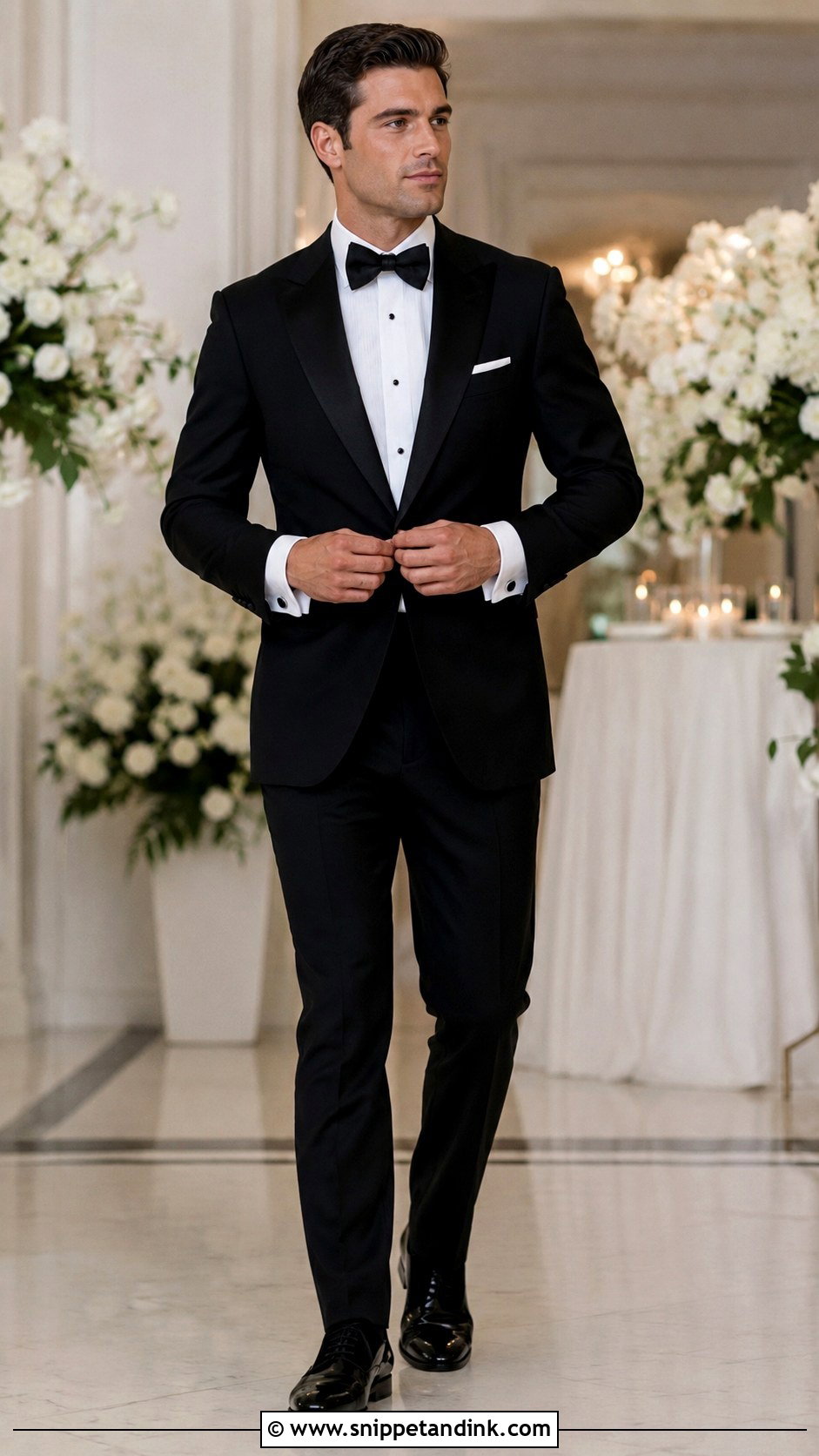
A wing collar has small points folded outward, and it’s the most formal tuxedo shirt. Pair it with a black tuxedo, black bow tie, tux trousers, patent shoes and a white pocket square. Grand venues and traditional black tie suit it. The bow tie sits in front of the wings with the wing tips tucked behind it, which is the detail most often wrong in photos. Keep everything else simple, because the shirt already adds structure.
27. Tux With Floral Boutonniere
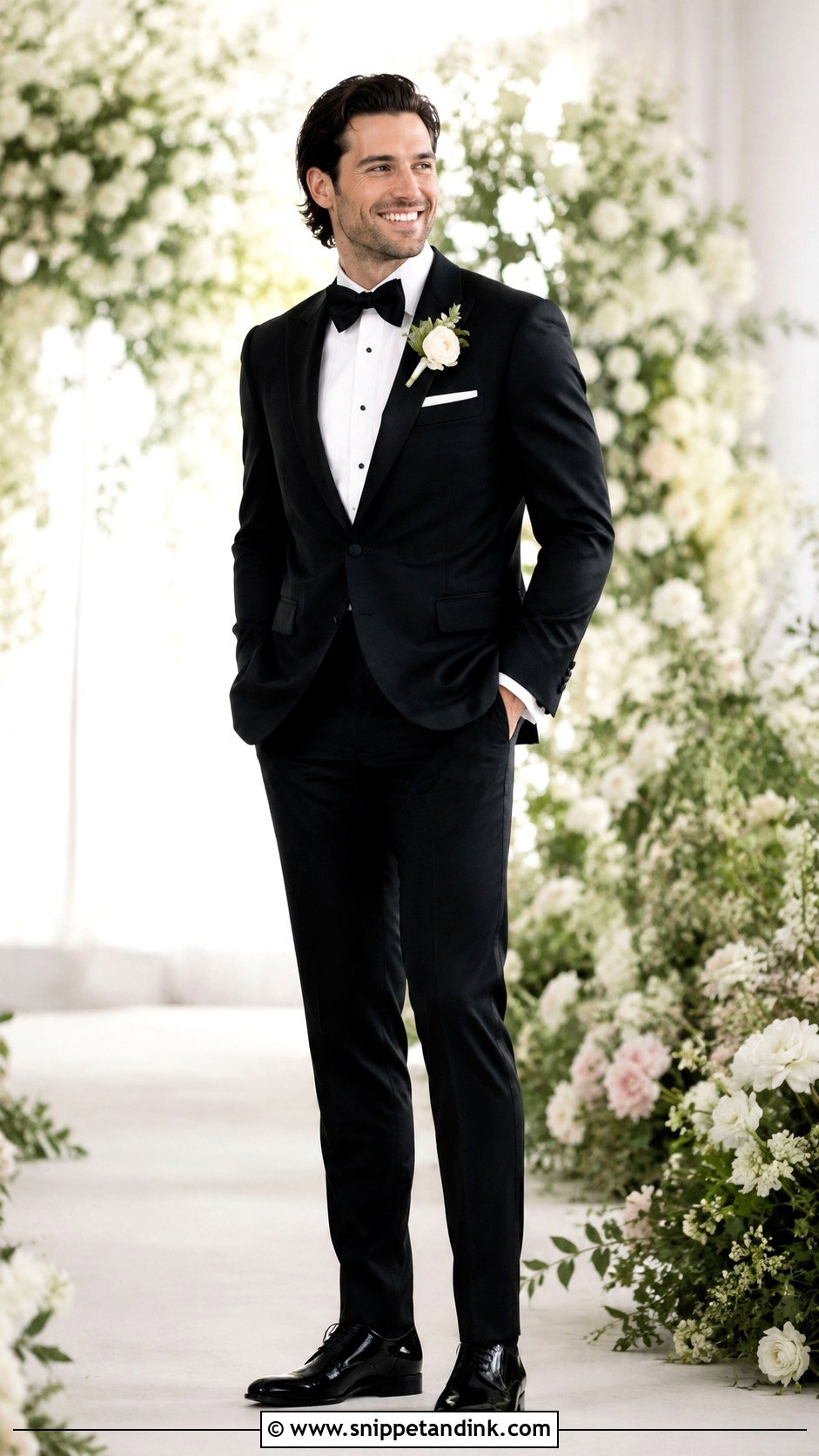
A boutonniere is the easiest way to tie the groom into the floral design. Start with a black, navy, ivory or velvet tux and match the bloom to the bouquet or ceremony flowers. A white tuxedo shirt, bow tie, tux trousers and polished shoes keep the rest clean. It goes on the left lapel, scaled to the lapel width and pinned from behind so the pin doesn’t show. White blooms feel classic, greenery natural and deeper tones seasonal. Ask the florist for a magnet backing on velvet, where pins leave holes.
28. Tux With Colored Bow Tie
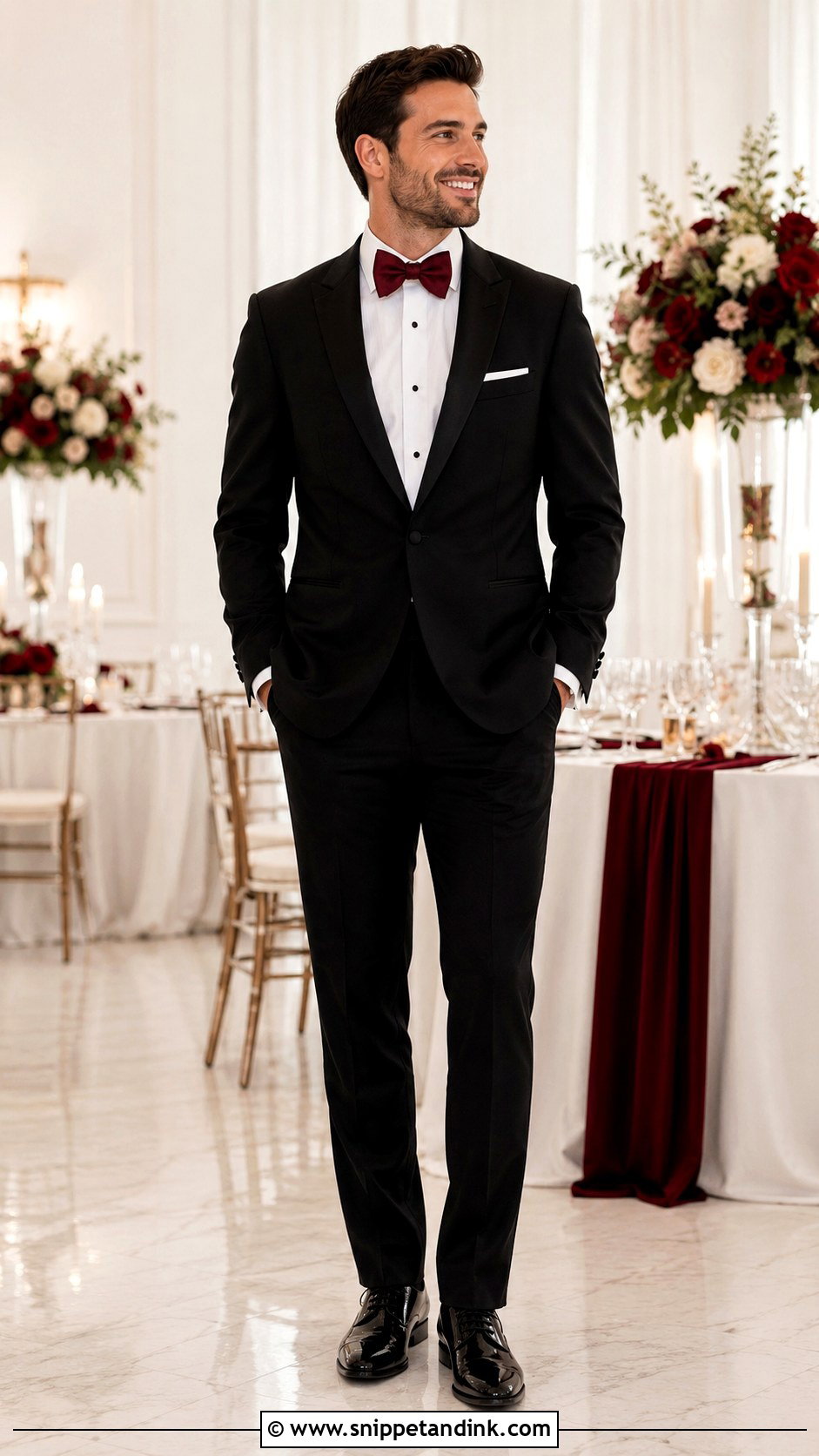
A coloured bow tie works when the wedding is formal but not strict black tie. Choose a deep shade like burgundy, navy, forest green or champagne rather than a novelty brightness. Pair it with a black or navy tuxedo, white shirt, formal shoes and a simple pocket square. It connects groom or groomsmen to the palette without a coloured jacket. Silk or velvet looks refined; shiny polyester looks cheap up close. Don’t match the pocket square exactly, which looks like a boxed set.
29. Groom Tux With Groomsmen Suits
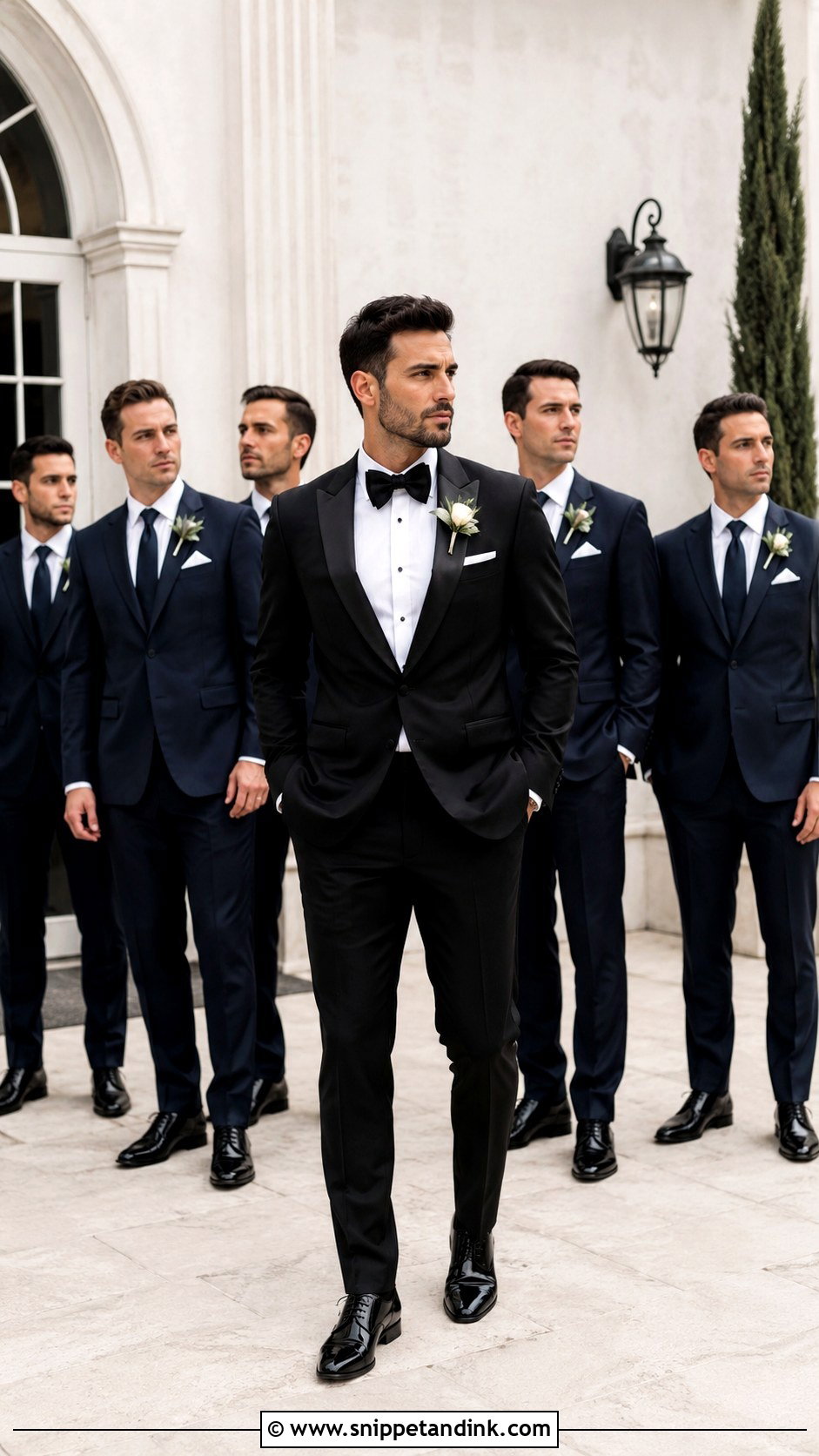
Putting the groom in a tux while groomsmen wear suits creates a clear hierarchy in photos. The groom in a black satin-lapel tuxedo, white shirt, black bow tie and patent shoes; groomsmen in black, charcoal or navy suits. It suits formal and semi-formal weddings that don’t require black tie from everyone. Coordinate pocket squares or boutonnieres. The groom’s outfit should be one step more formal in fabric, lapel or footwear, and I’d keep the groomsmen’s suits in the same tone family so the group looks planned.
30. Beach Wedding Tux
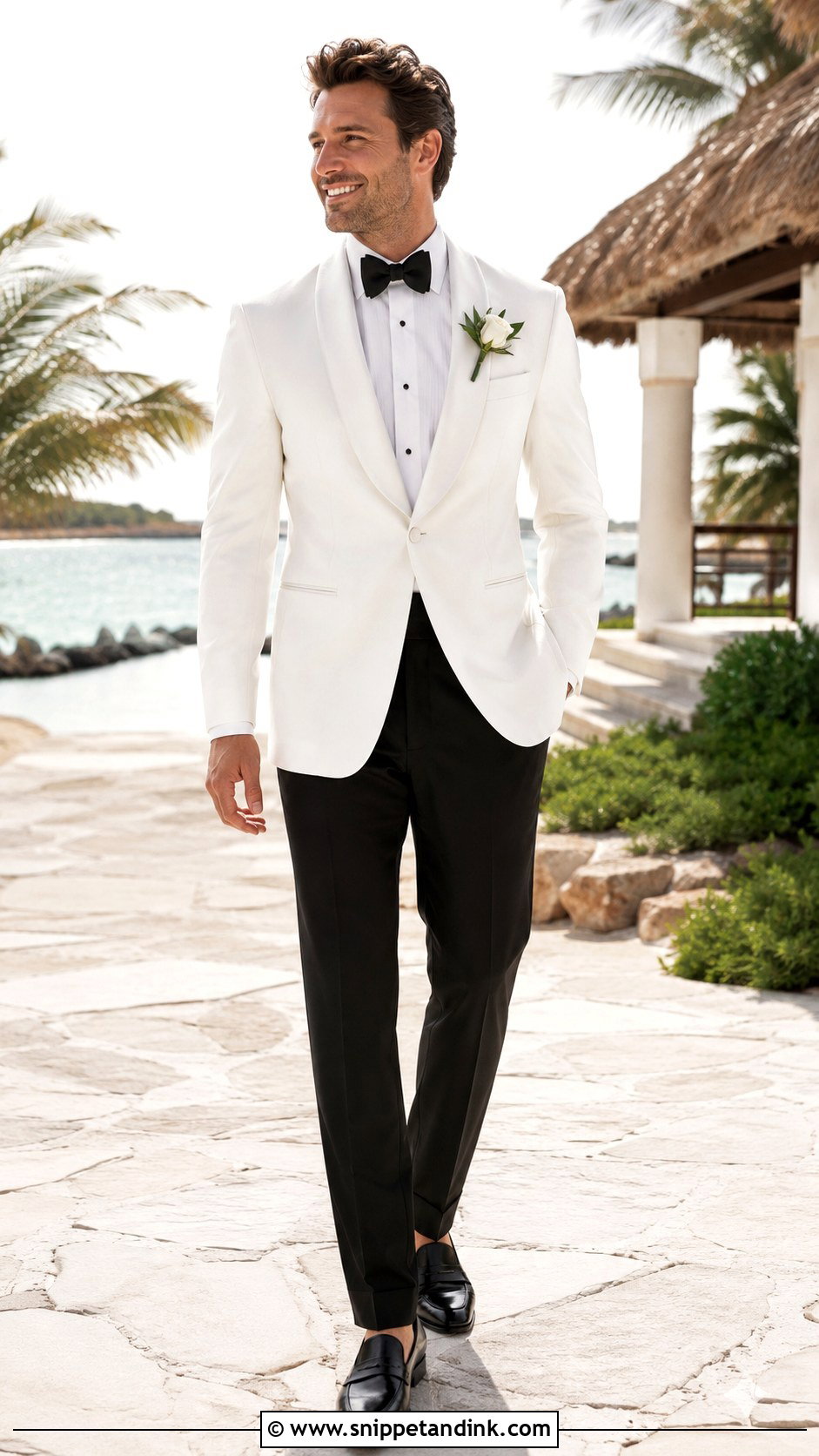
Heat and sand shape the beach tux. A white or ivory dinner jacket with black or navy tux trousers is the most polished coastal option, with a white dress shirt, black bow tie and sleek loafers or light formal shoes. For a relaxed wedding, a tan tux with brown shoes also works. Choose a lightweight, breathable cloth, half-lined if possible, and keep accessories minimal. Patent shoes and sand don’t mix well, so I’d keep a soft cloth with the best man.
Dressing in a Tux on the Morning, in the Right Order
Grooms who’ve never worn black tie often lose half an hour to studs and bow ties. Getting dressed goes faster if you do it in this order.
- Put the shirt studs and cufflinks in before you put the shirt on. It’s far easier with the shirt laid flat.
- Clip the braces to the trousers first. Traditional tux trousers have no belt loops, and side adjusters or braces keep them at the right height.
- Tuck the shirt in, then fasten the cummerbund with pleats facing up, or button the waistcoat and leave the bottom button undone if it’s designed that way.
- Tie the bow tie last before the jacket. If it’s self-tie, practise the knot several times in the week before, not on the morning.
- Jacket on, pocket square in, then the boutonniere, ideally pinned by the florist or a steady-handed friend.
During the day, a single-breasted jacket is buttoned when you stand and unbuttoned when you sit, which stops it straining in seated photos. If the venue is hot, the jacket can come off once the groom does so first, and that’s a good moment to let the waistcoat or cummerbund do its work.
Fit First, Then Fabric, Then the Fun Details
Every tux on this list comes down to fit, formality, season and personal style. A classic black tux will always look sharp, while midnight blue, ivory, velvet, green, burgundy and double-breasted options make the look more personal. Start with the venue, then decide colour, fabric, shirt, shoes and accessories together. Balanced from head to toe and comfortable enough for the ceremony, portraits and reception: that’s the tux a groom remembers wearing.
You'll Like These Ideas:


Leave a Reply