
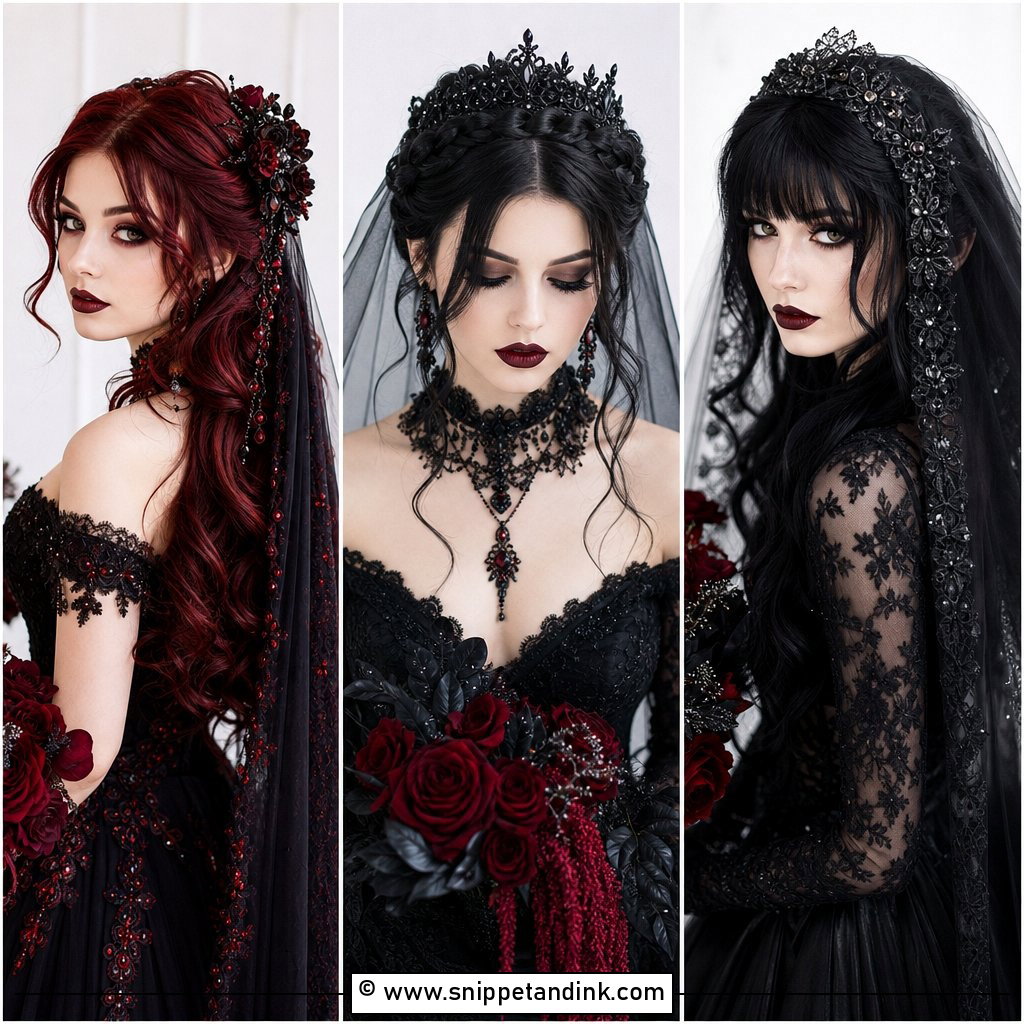
Gothic bridal hair borrows from Victorian portraits, old Hollywood and a bit of punk, and the result can be anything from a sculpted chignon to a crown of black roses. What links the 25 styles below is moody glamour rather than any single shape. I’ve written each one up the way I’d talk it through at a trial: what hair it needs, what holds it, and where it can go wrong. Most of these also have to carry something heavier than a normal bridal veil, so a lot of my notes are about anchoring.
Pinning Roses, Vines and Tiaras So They Stay Put
Gothic styles tend to wear more hardware than a typical bridal look: silk roses, wired vines, metal tiaras, heavy jeweled combs and capes that brush the neck. None of it holds just because it’s pushed into the hair. I build a hidden base first, and everything attaches to that.
- Day-old hair grips better than freshly washed hair. If your hair is very slippery, a texture spray at the roots does the same job.
- For anything heavy, I make a small anchor: a tight mini braid or a bobby-pinned cross under where the piece will sit. The tiara or comb then grips that, not loose strands.
- Decorative pins are rarely strong enough on their own. Plain grips in a matching colour hold, and the pretty pin goes on top.
- Ask your florist to wire real or dried flowers onto pins or a thin band. Loose stems stuck into hair fall out with the first hug.
Real flowers, silk or dried?
Fresh roses look the richest but start to droop after a few hours out of water, especially in warm rooms. Dried flowers stay put all night but crumble if they’re crushed by a veil. Silk is the most practical for black roses, since naturally black blooms are rare and the deep burgundy varieties sold as black often look red in photos.
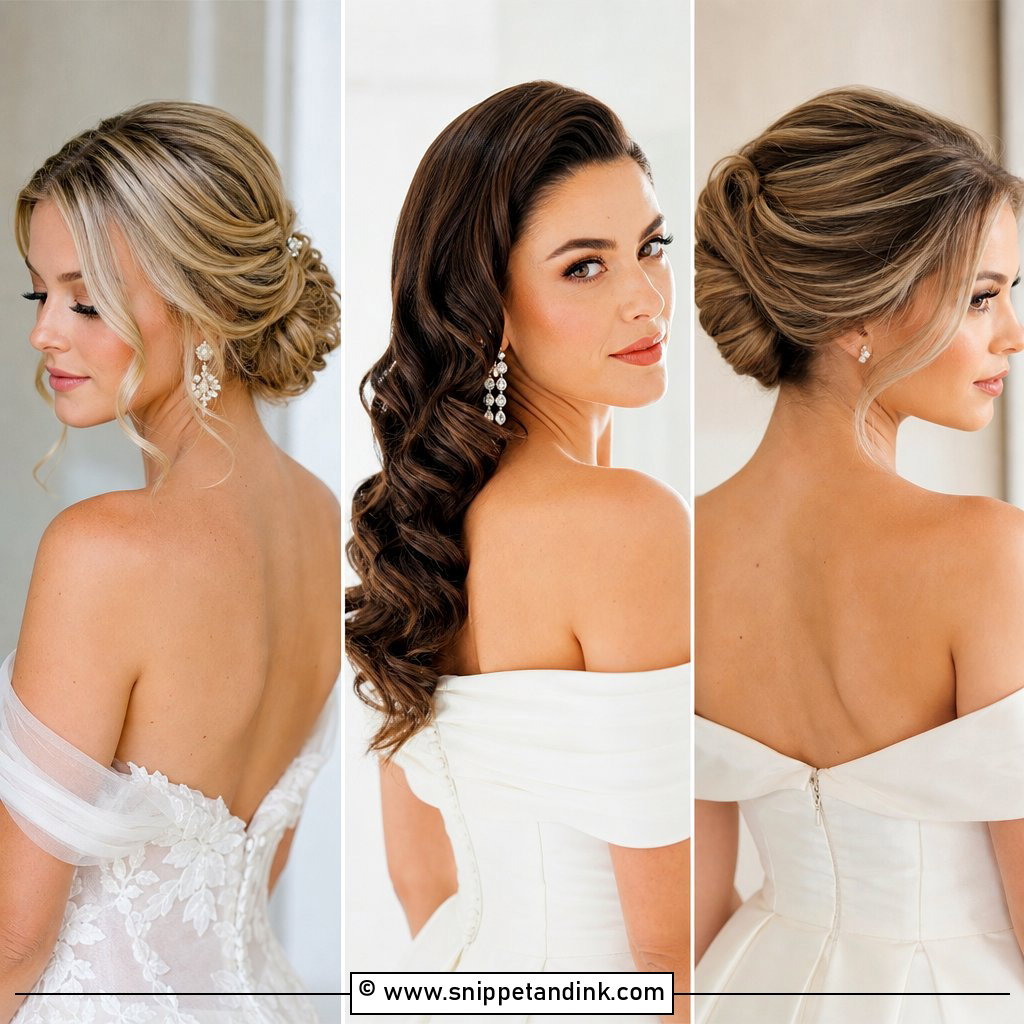
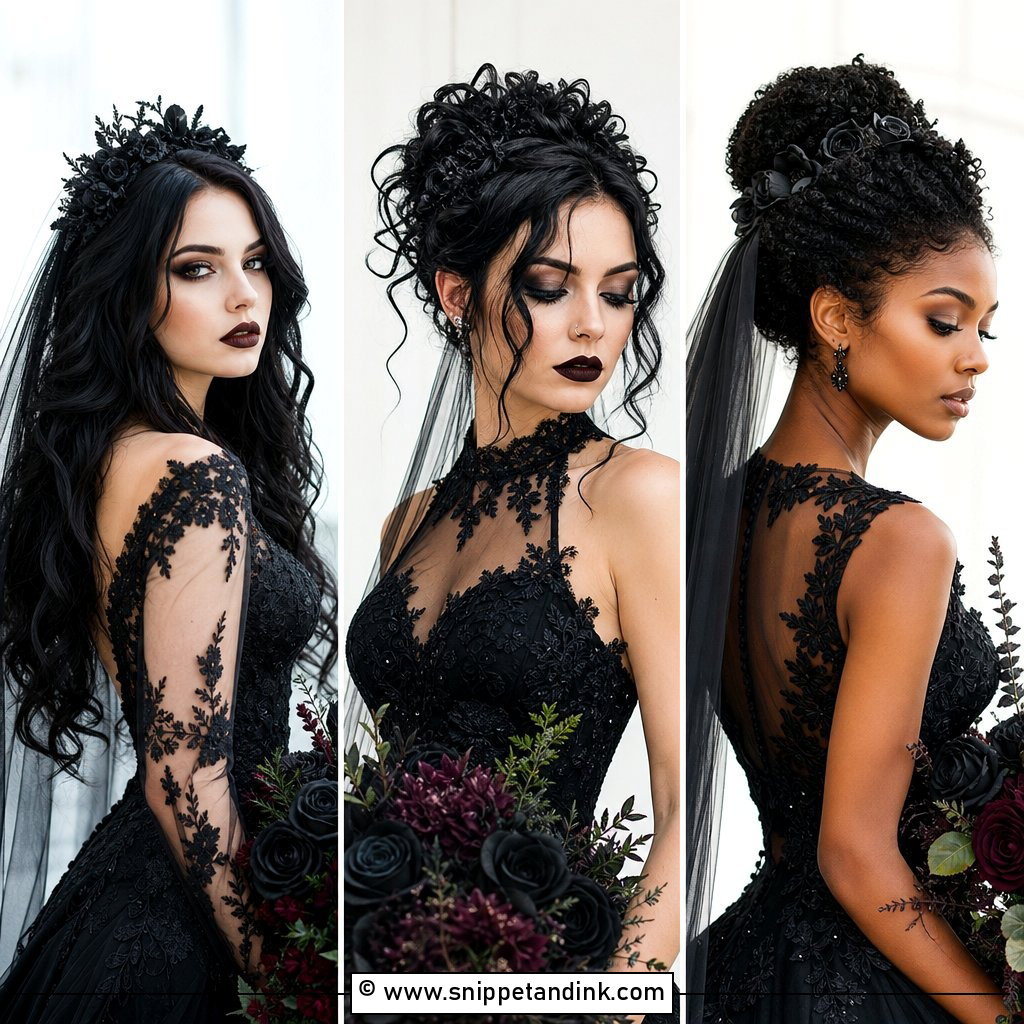
1. Gothic Victorian Updo With Lace Veil
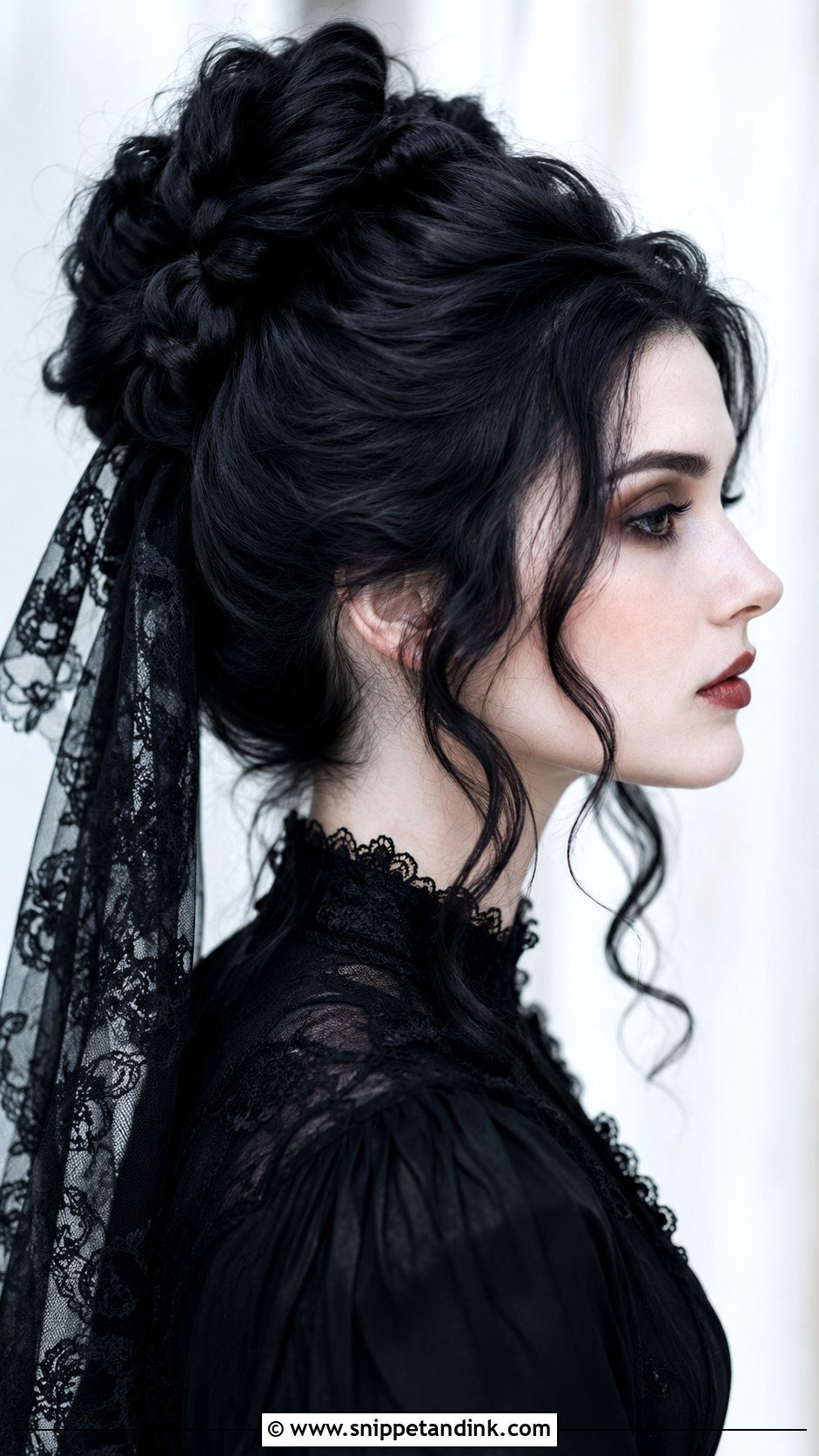
A Victorian-inspired updo is built from twisted sections gathered into a soft, structured bun with lift at the crown. The volume on top is what makes it look like an old portrait, so I back-comb the root at the crown before any twisting starts. A lace veil draped low over the forehead needs that height to sit on, or it flattens the whole shape. Leave a few tendrils loose at the temples. You’ll want hair at least to the shoulders for enough length to twist.
2. Black Rose Braided Crown
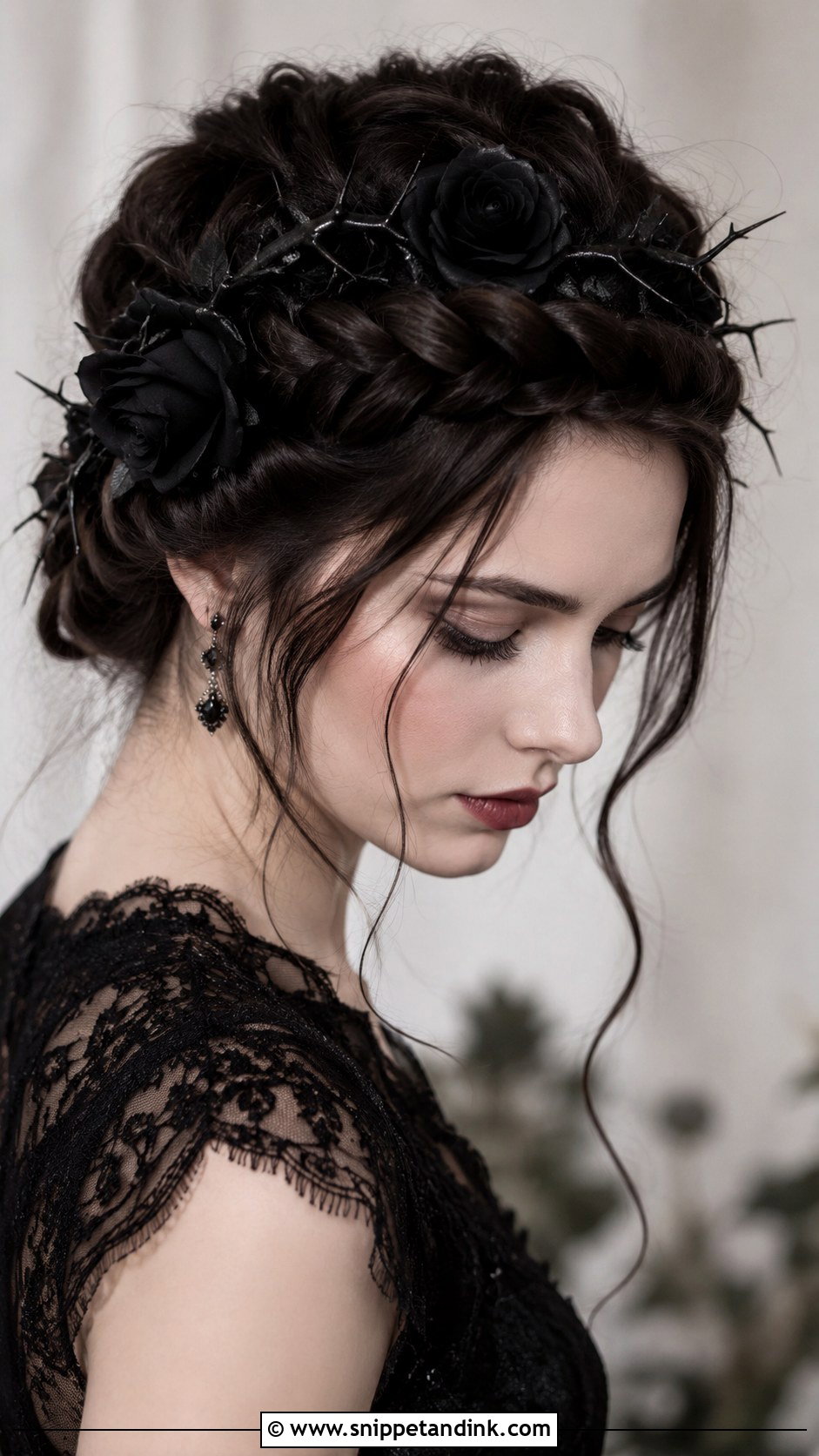
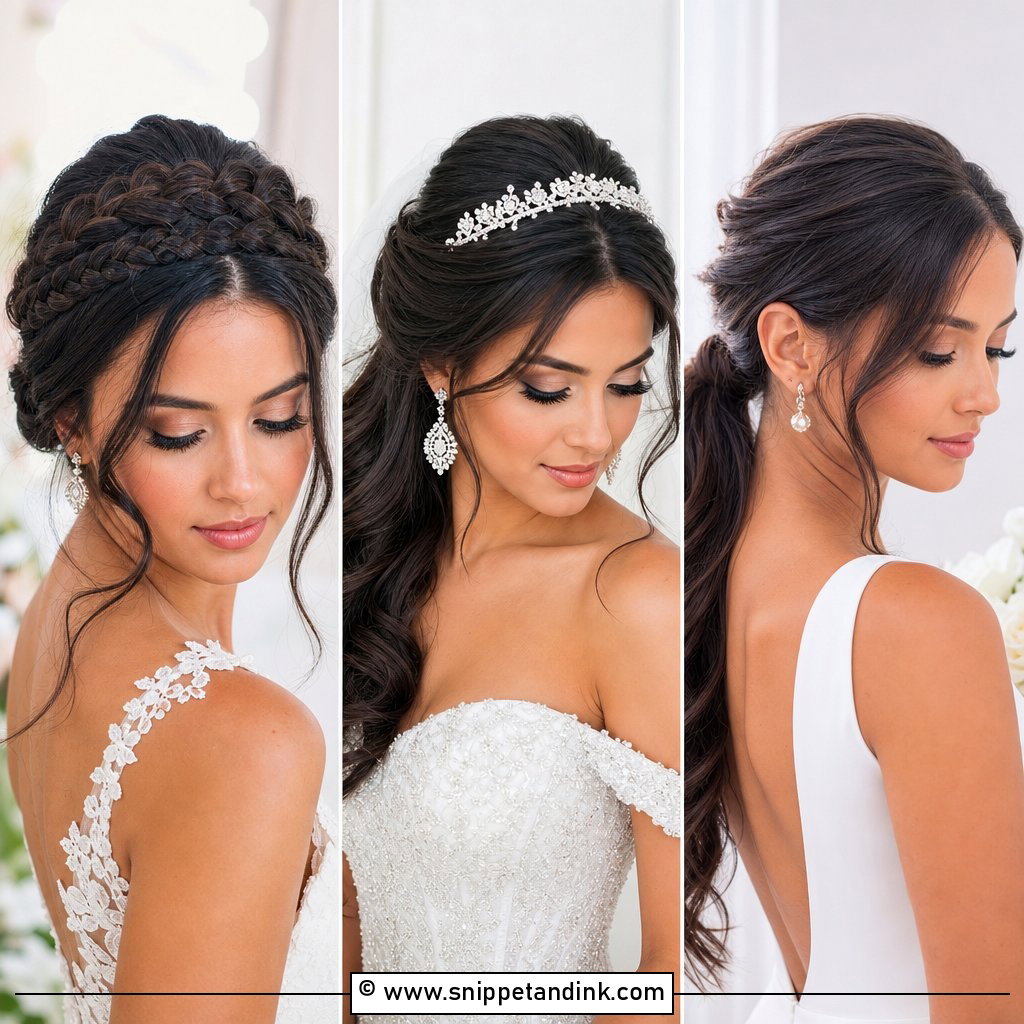
A braided crown wraps a Dutch or French braid around the head like a halo. Dutch braids sit on top of the hair, so they read more clearly in photos than French ones, which sink in. The black roses are tucked into the plait after it’s pinned, not braided in. On thick, long hair the braid can go all the way round; on shoulder-length hair I’d use two braids that meet at the back. It keeps every strand off the face, which is a real advantage at a windy forest ceremony.
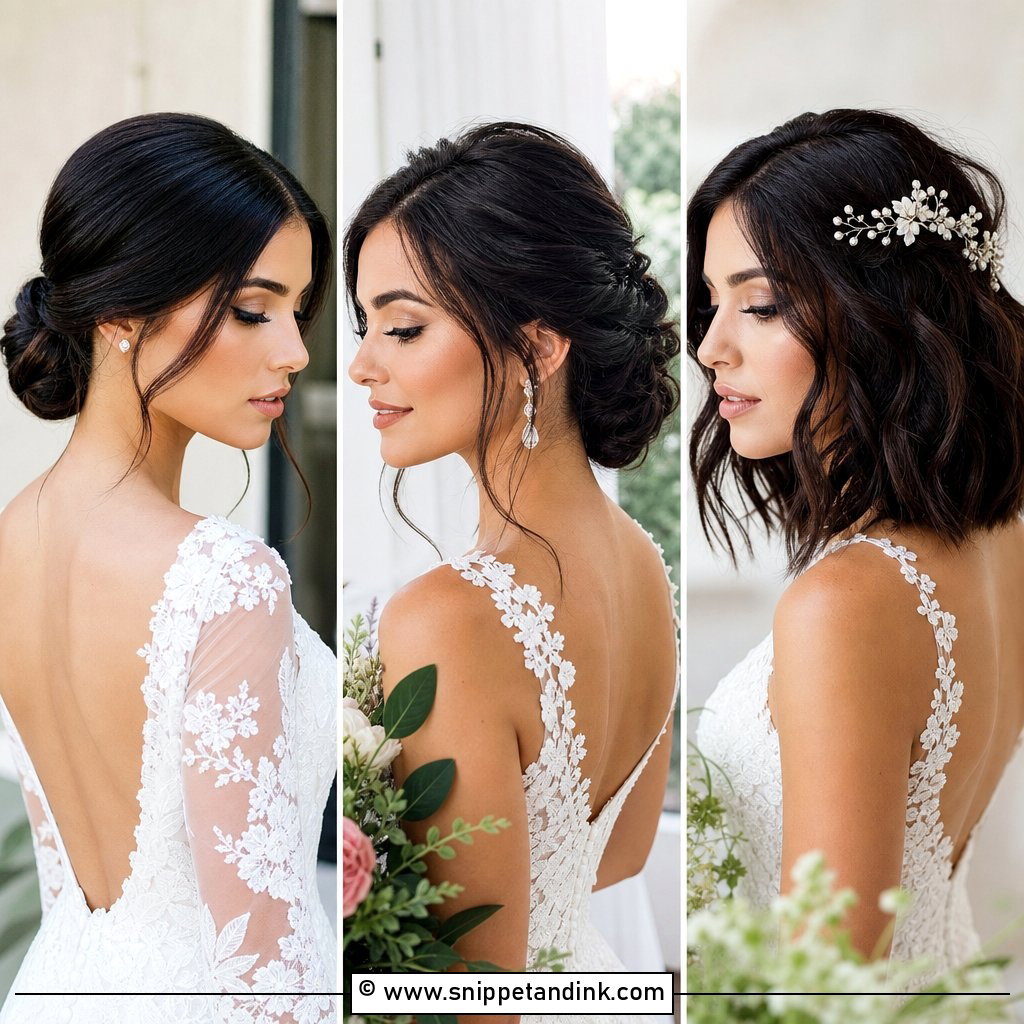
3. Sleek Gothic Low Bun
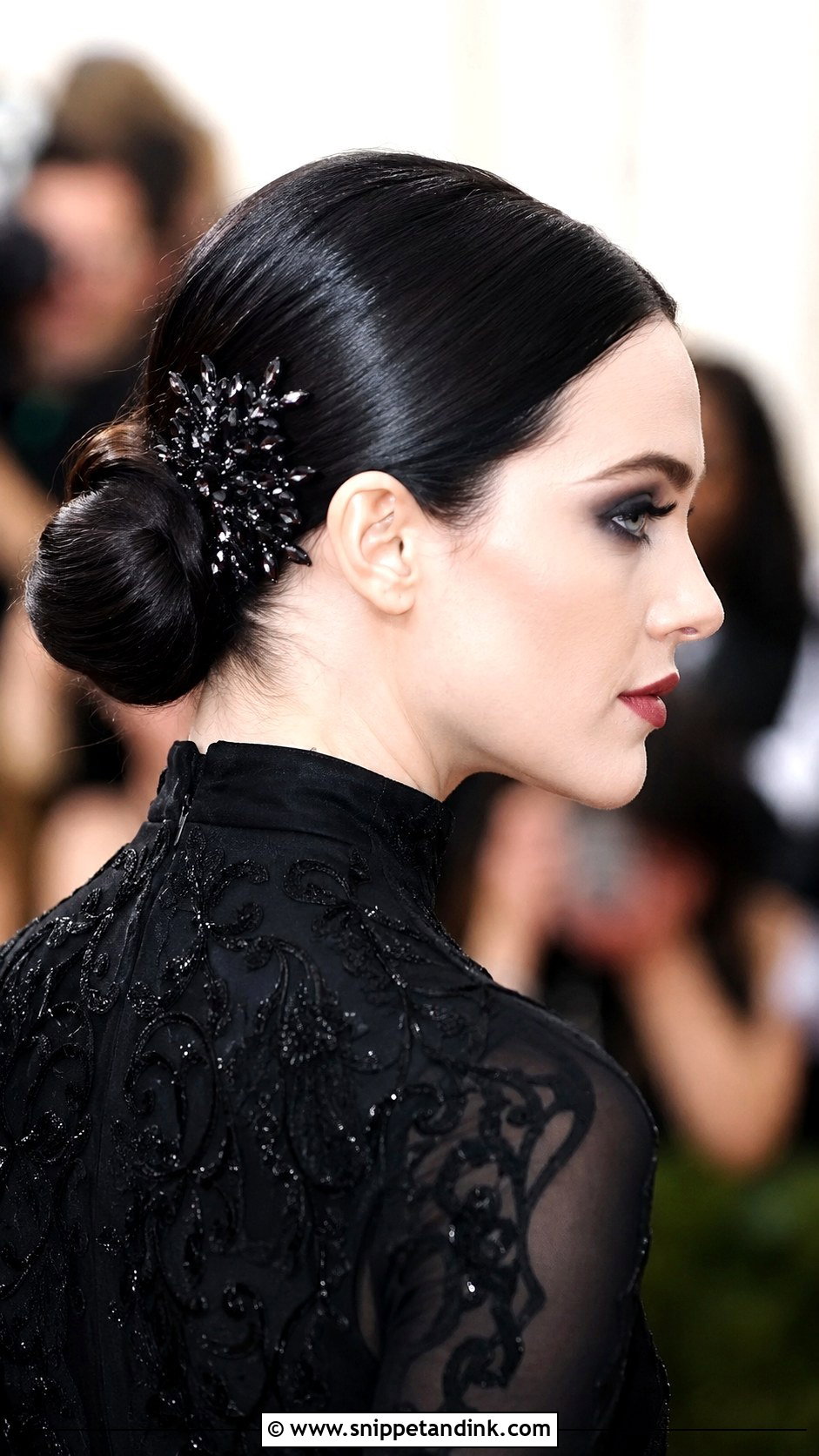
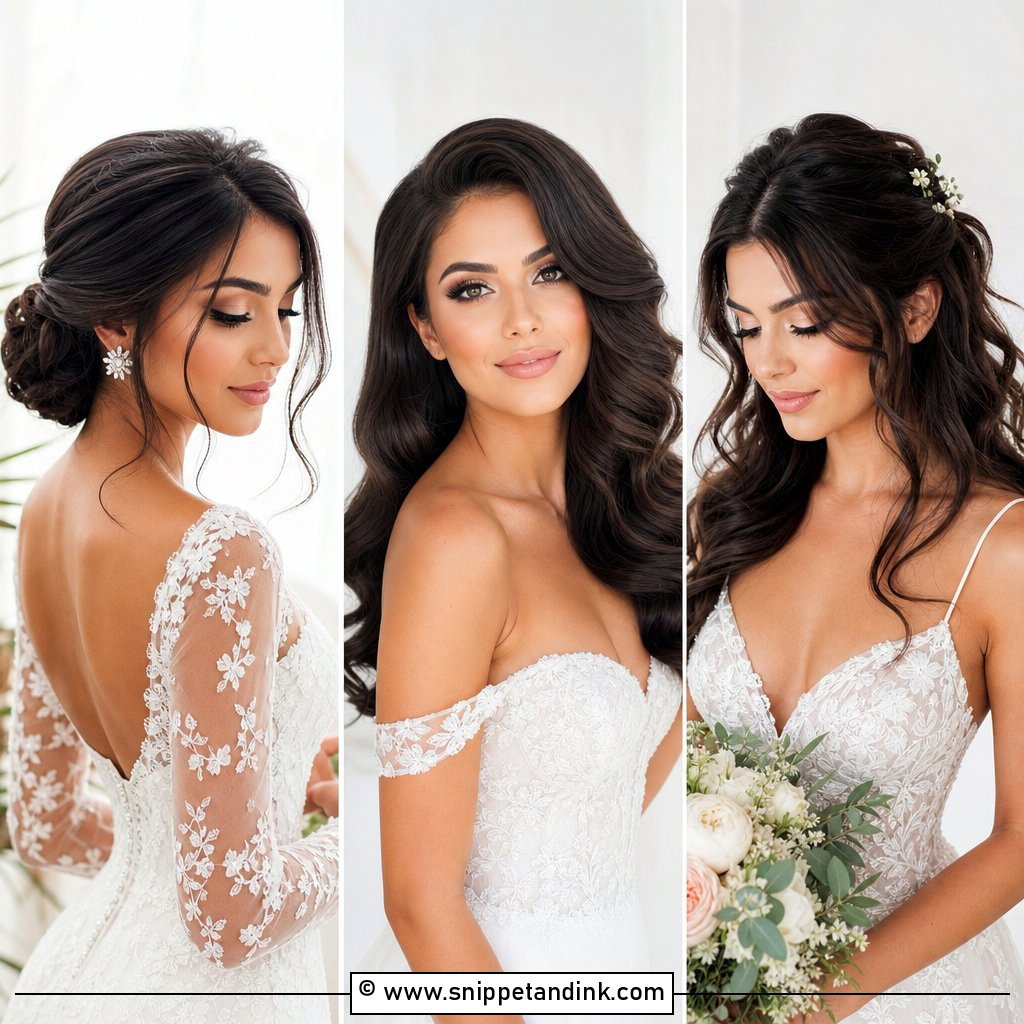
The low bun is the quietest style here and the one that relies most on precision. A dead-straight centre part and a smooth surface are the whole look, so any kink or flyaway shows. I set the base with a strong gel and a fine-tooth comb, then let it dry before twisting. Sleek buns flatter strong bone structure and bold makeup. If you have a high hairline or a lot of baby hair at the temples, tell your stylist early so they can plan how to smooth it. A long cathedral veil anchors easily just above this bun.
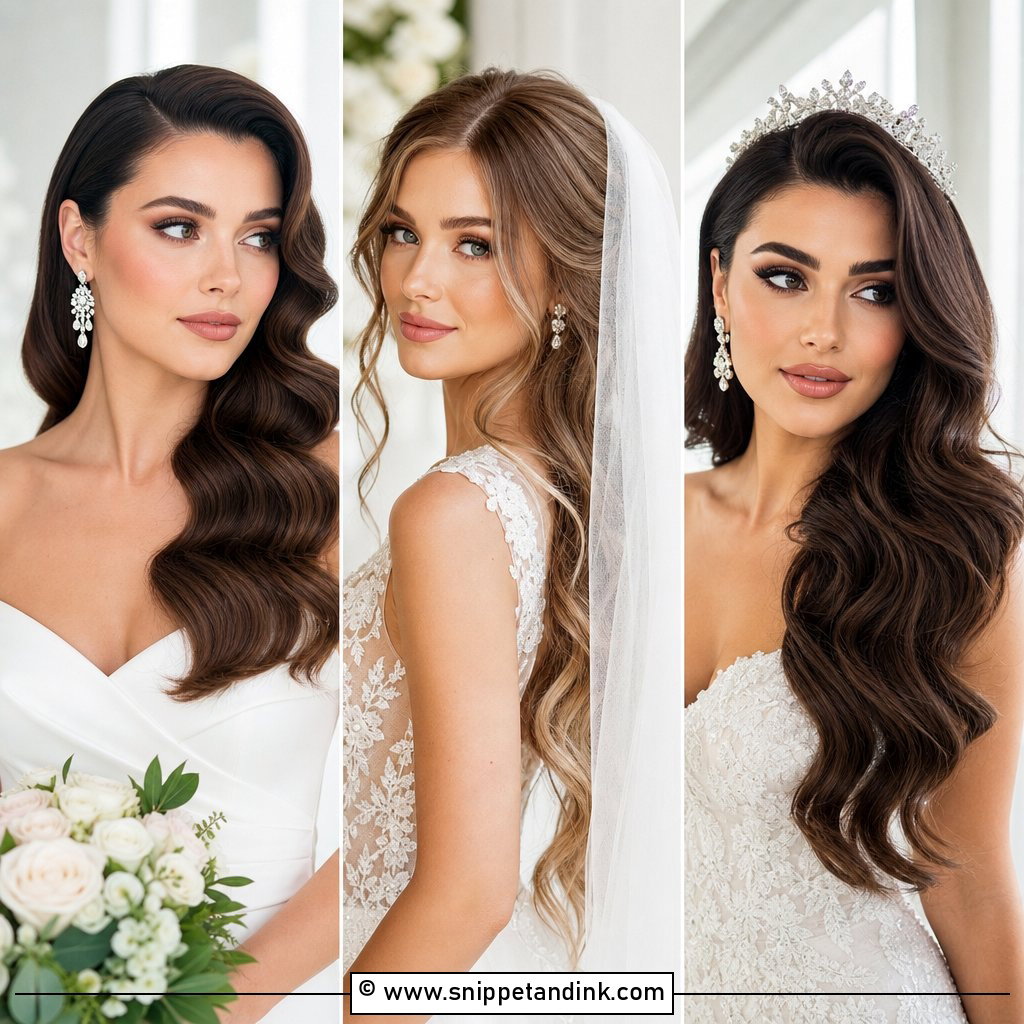
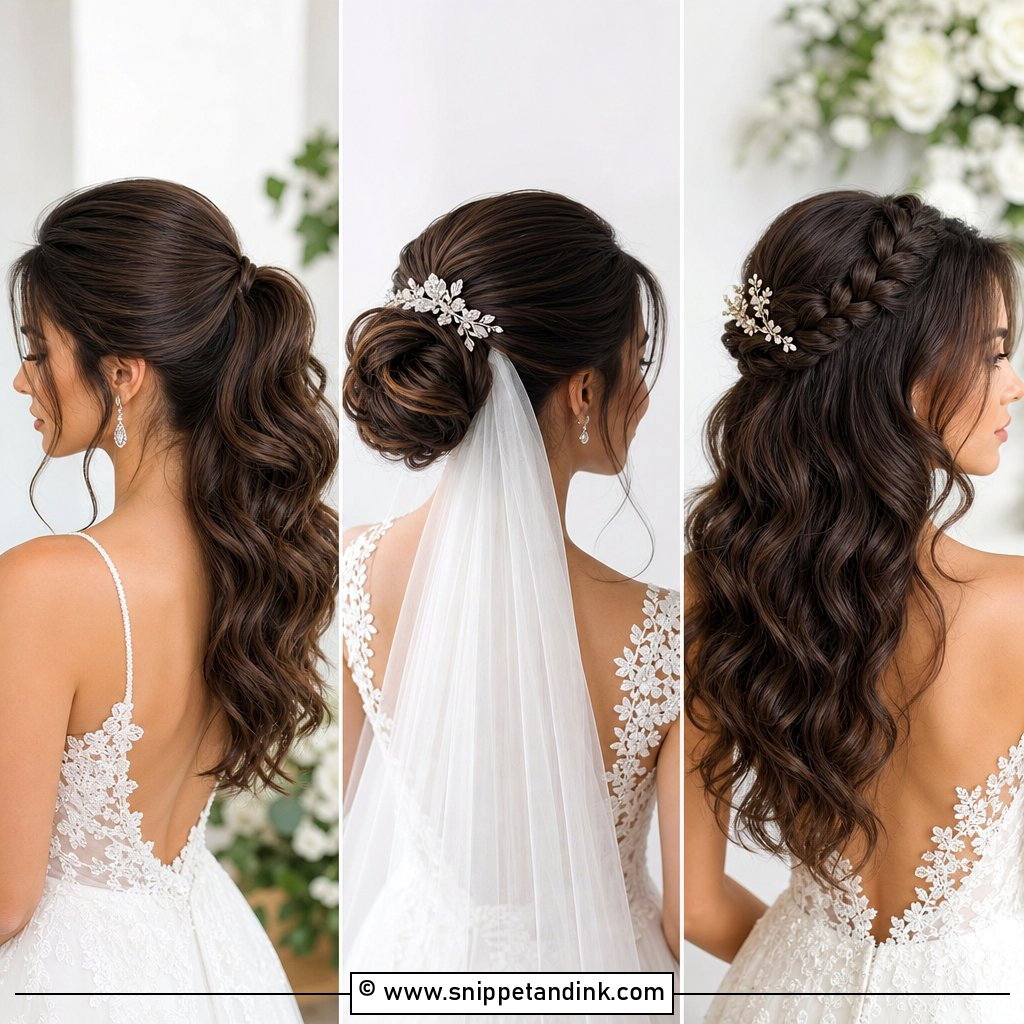
4. Loose Dark Romantic Waves
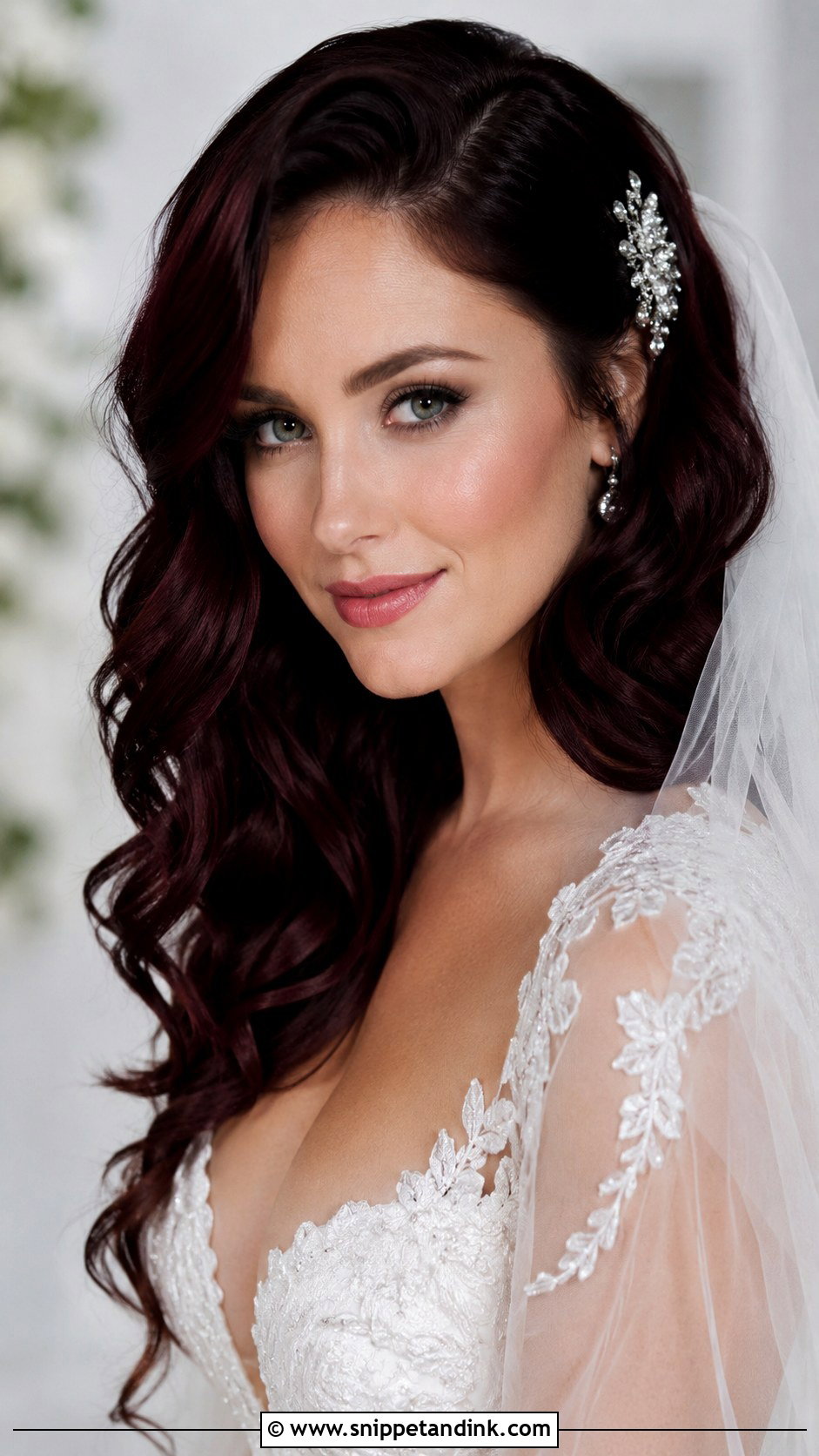
Loose waves are the style that most often falls flat by the first dance. Hair worn down has nothing supporting it, and heat curls drop with humidity and touching. I curl in small sections, let every curl cool fully in a pin curl before brushing it out, and set it with a flexible spray. Pinning one side back with a jeweled clip adds some structure and stops the waves from all collapsing forward. Rich brunette and raven tones show the wave pattern best because light catches the bends.
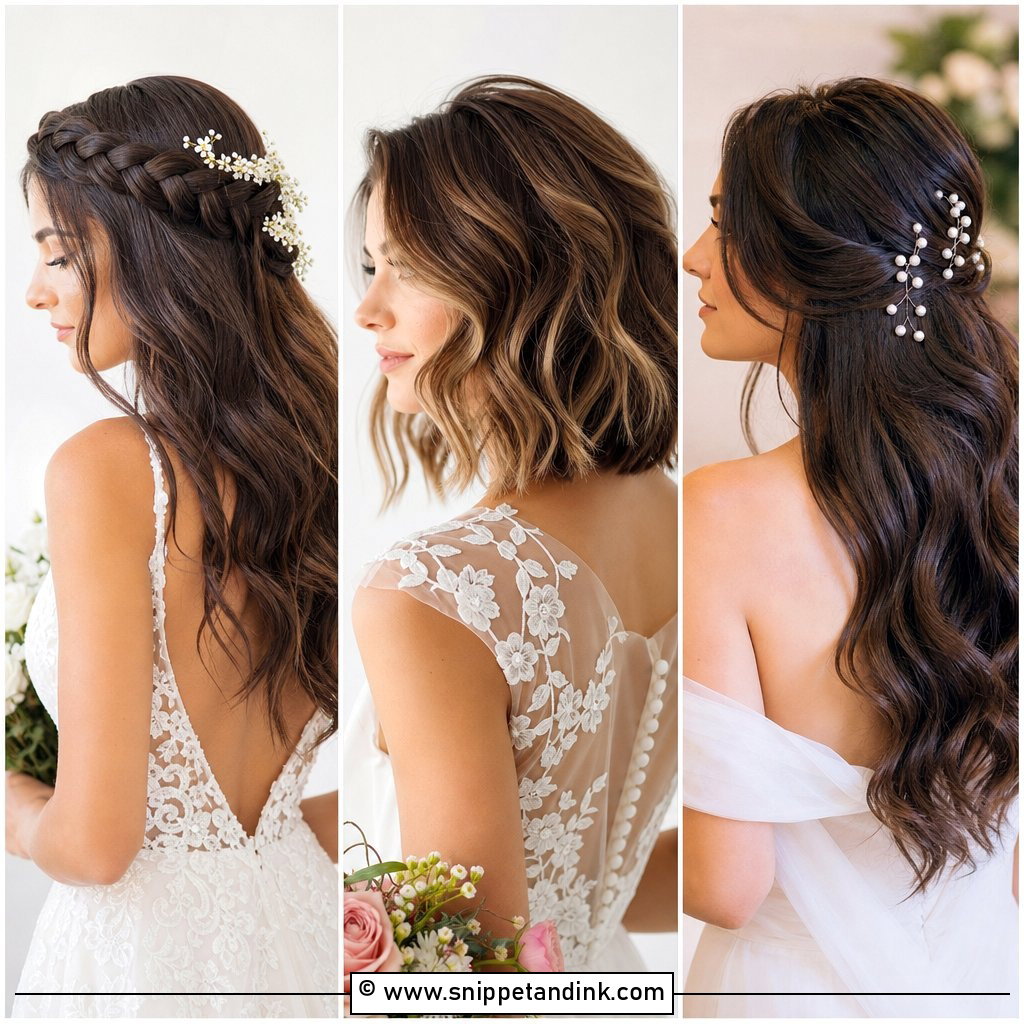
5. Gothic Half-Up Half-Down With Braids
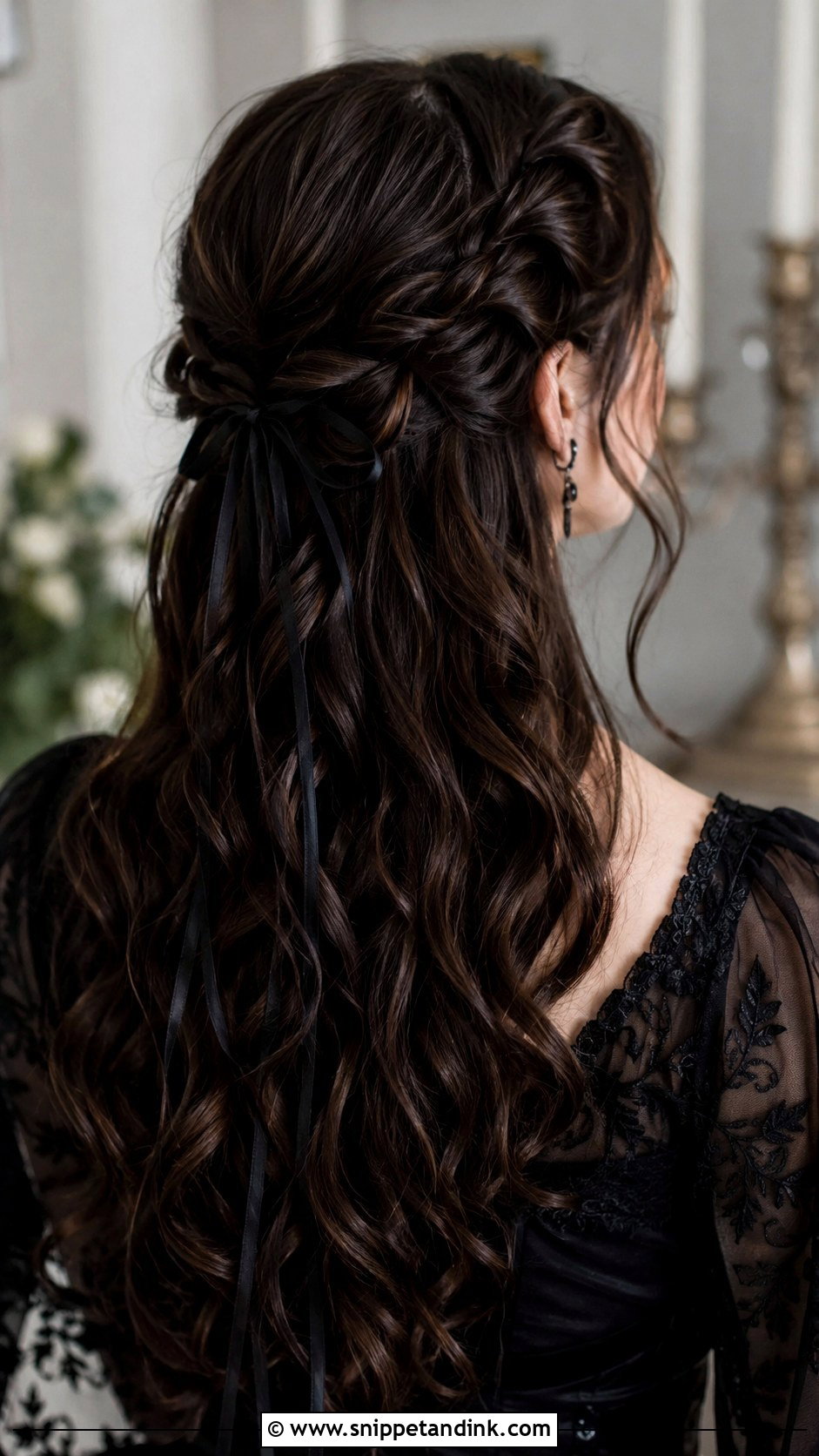
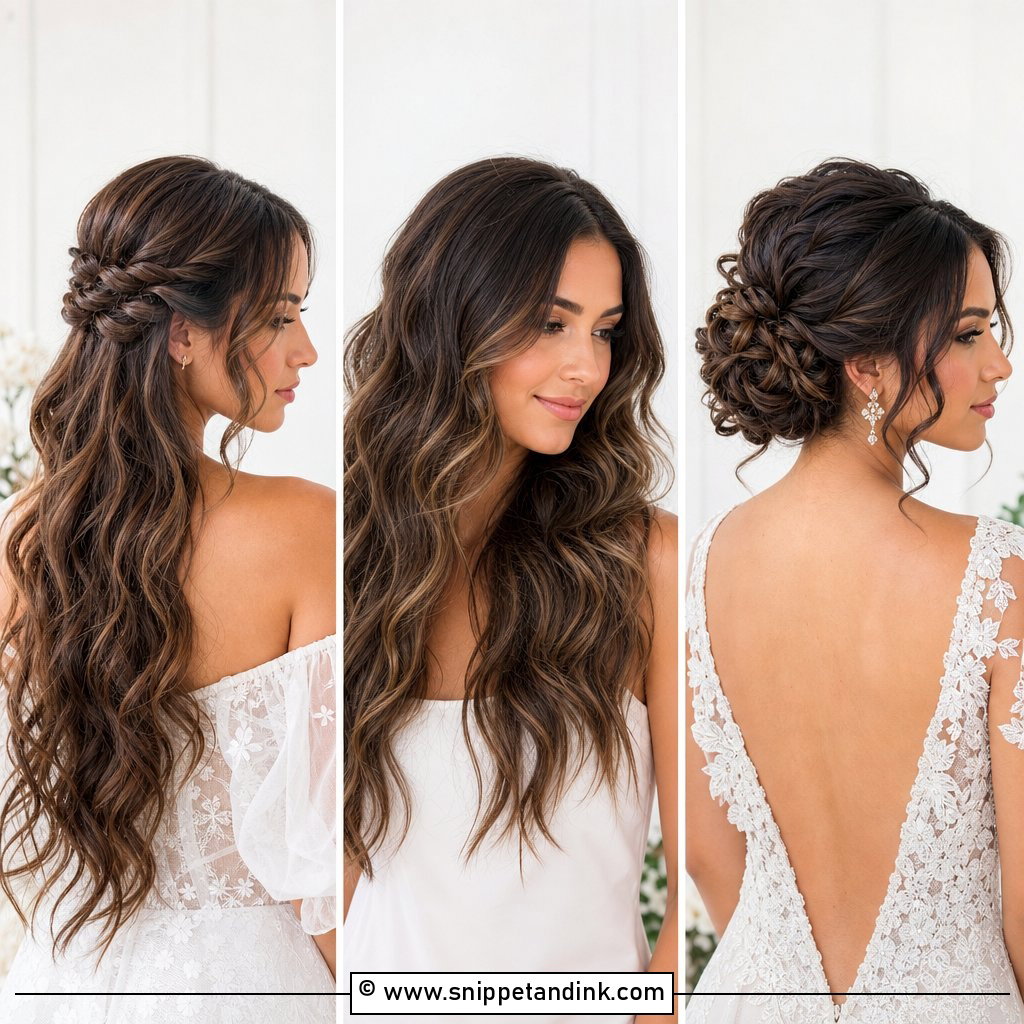
Half-up, half-down settles the updo-or-down debate. The top section is twisted or braided back, and the lengths stay in curls. I braid the top section slightly tighter than looks right, because braids loosen as the day goes on. Thin black ribbon or tiny chains woven through the plaits add the gothic detail. It works on medium to long hair. The one thing to check is your neckline: a high collar can push the hanging curls forward awkwardly.
6. Victorian Gothic Curls With Headpiece
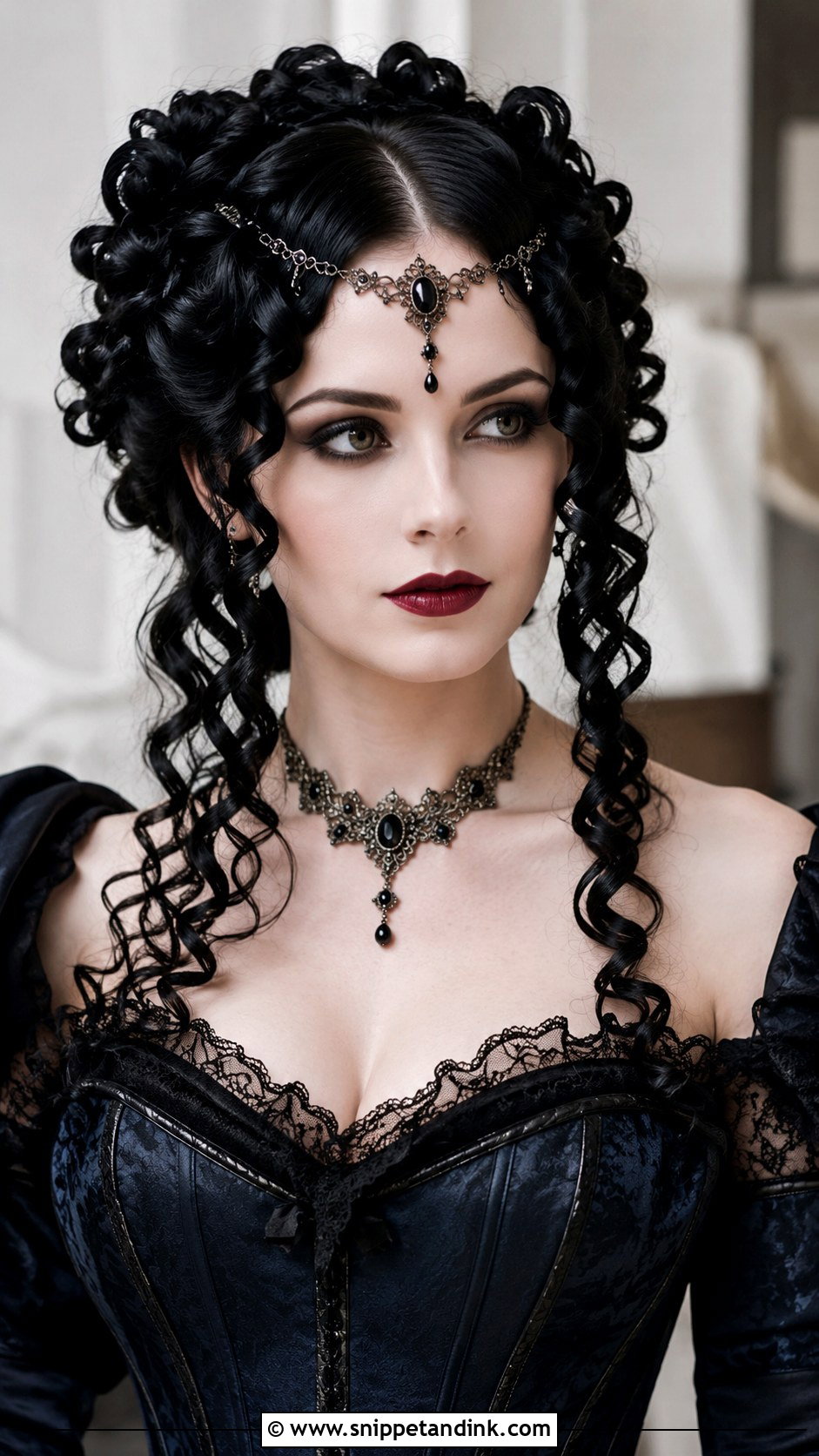
Structured ringlets are pure Victorian theatre, and they’re the most demanding style on this list for the hair itself. Ringlets need hair that holds a curl. Very fine or freshly washed hair often drops within a couple of hours, so I’ll ask you to wash the day before and I’ll set curls with a small-barrel iron and pin each one while it cools. A jeweled band across the forehead turns them regal. Corseted gowns suit them, and the overall effect is a moody, mysterious twist on a period portrait.
7. Gothic Messy Bun With Tendrils
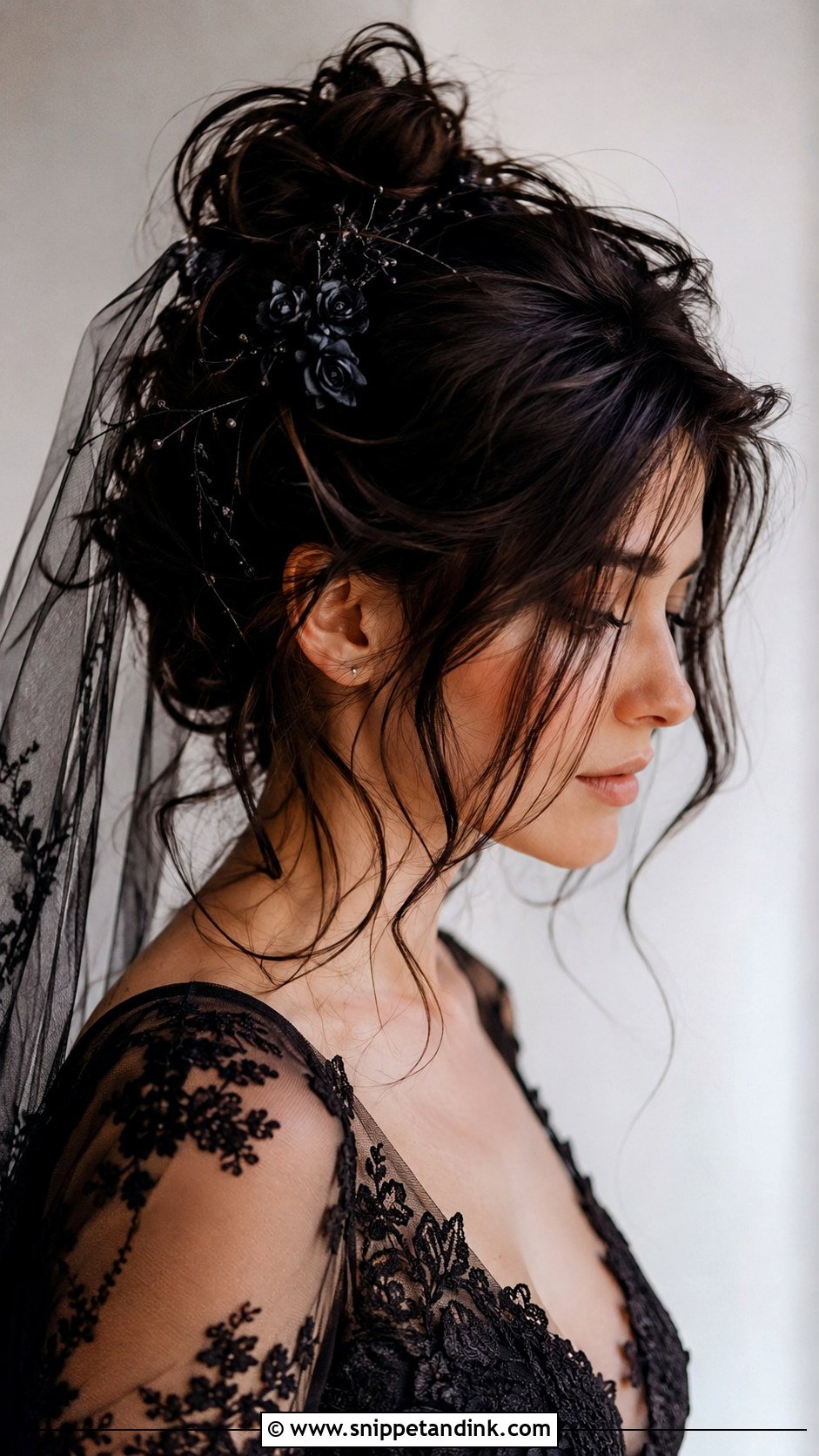
A messy bun is only messy on the surface. Underneath, it’s pinned as securely as any formal updo, otherwise it slowly unravels through the reception. I texturise the hair first with a dry texture spray so the pins grip, gather it loosely, and pull out a few strands around the face. Small black flowers or delicate pins add the gothic note. It’s the most comfortable style here and suits medium to long hair, but very fine hair can look thin in it unless we add a padding.
8. Dark Floral Crown Hairstyle
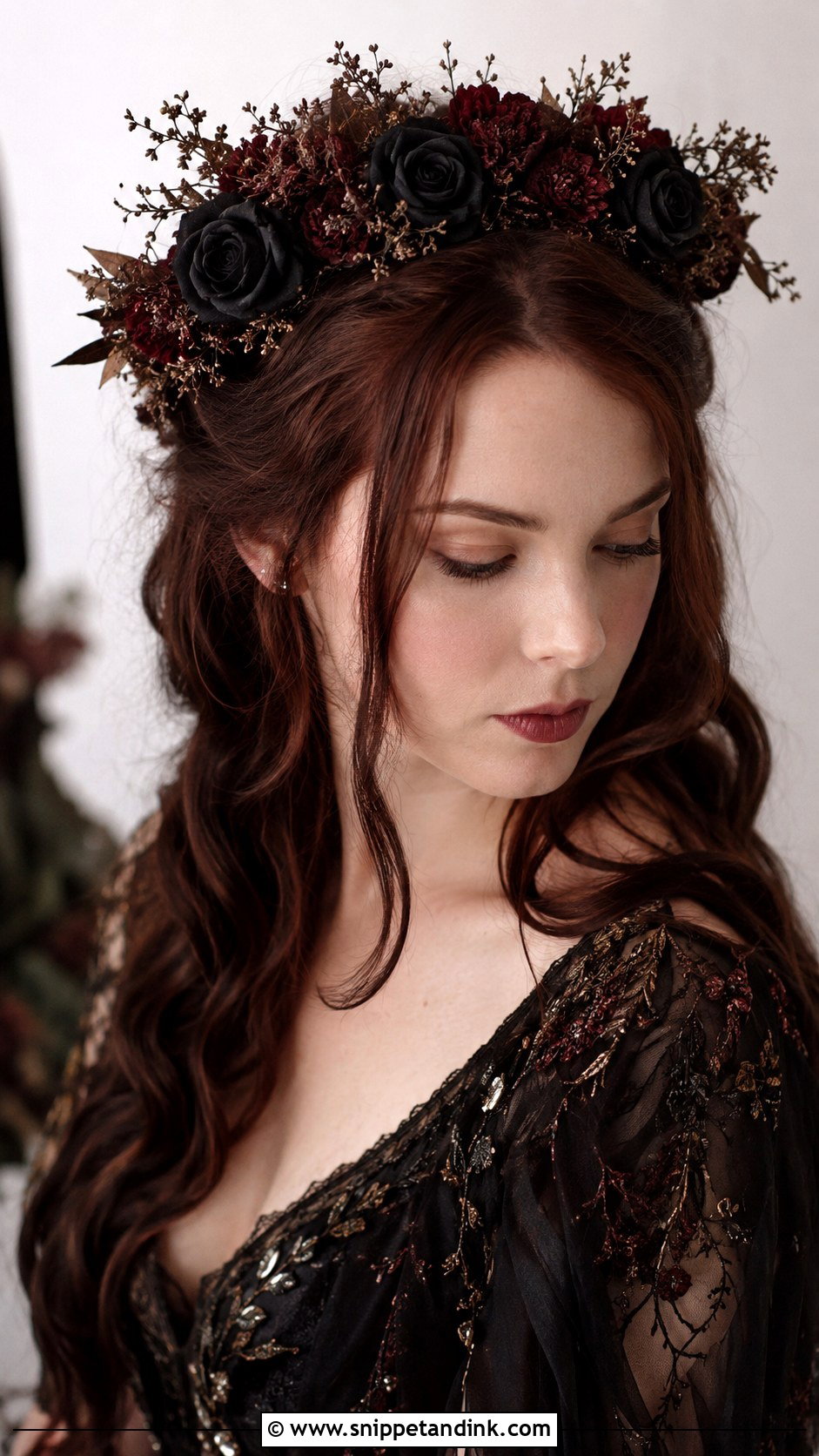
A flower crown in black roses, deep red blooms or dried botanicals looks completely different from the pastel boho version. The crown rests over loose or half-up hair. Dried flowers are my preference because they don’t wilt, but they’re brittle, so the florist should wire them to a flexible base. I anchor the crown with bobby pins crossed over its wire at the sides; a crown that’s only perched slides back as soon as you hug someone. Outdoor and woodland weddings suit it best.
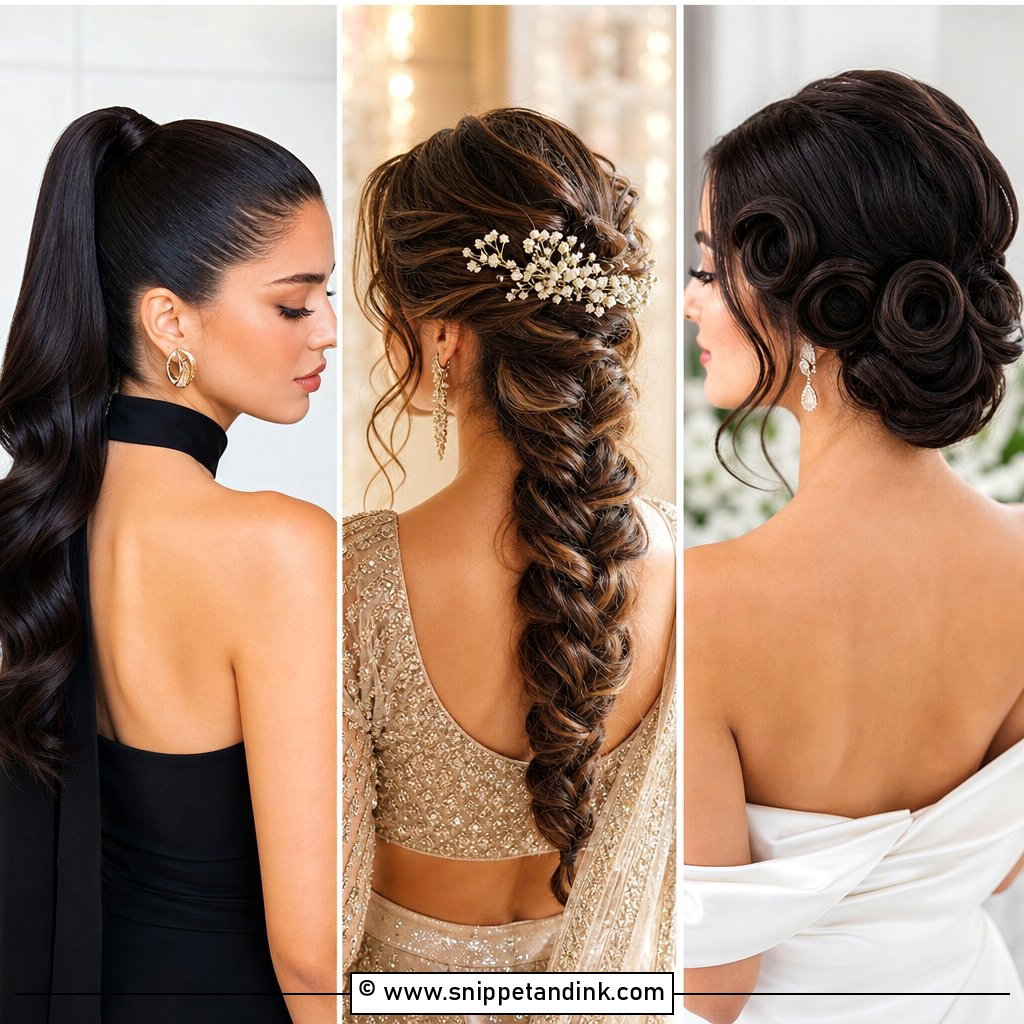
9. Gothic Fishtail Braid
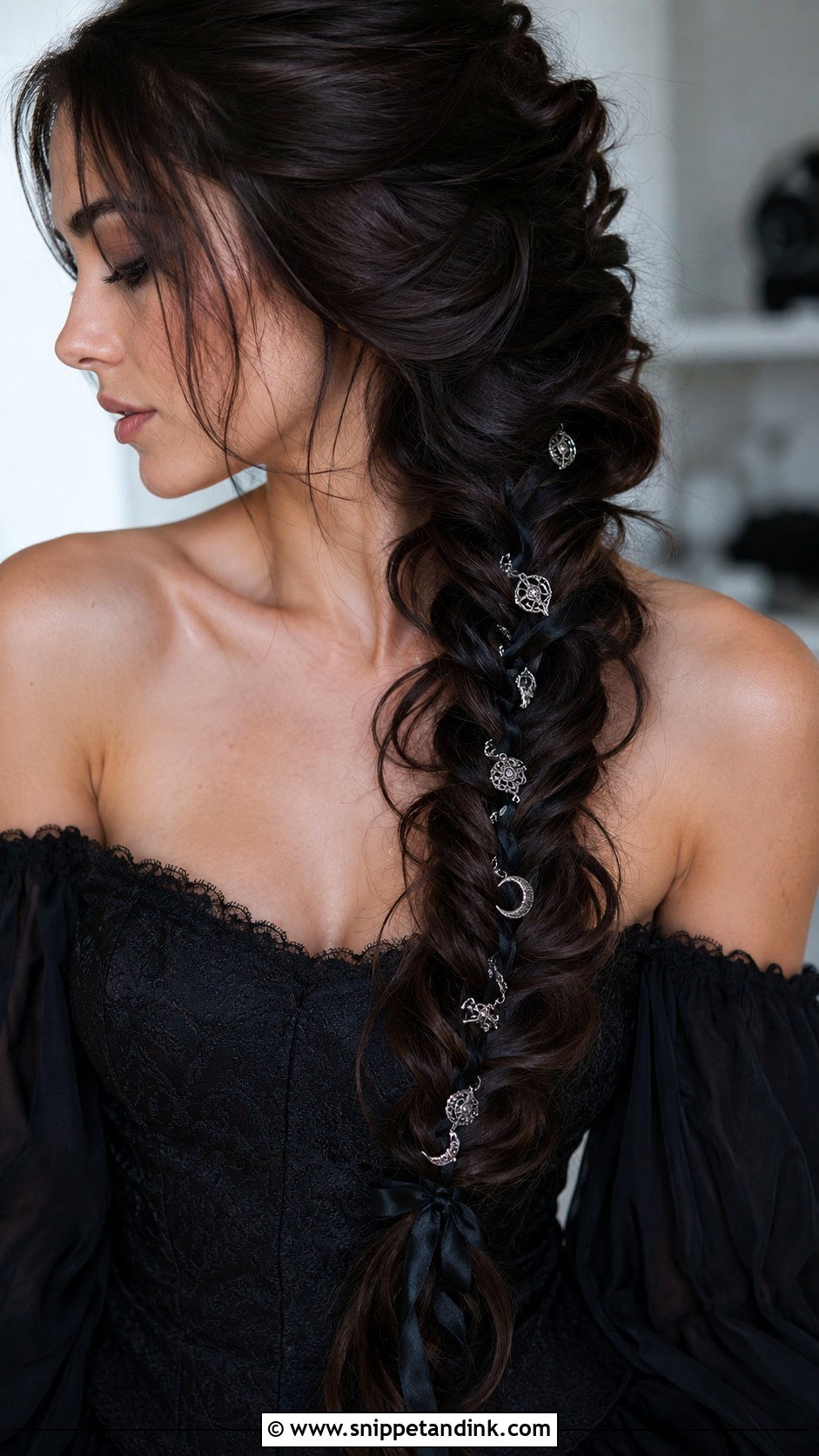
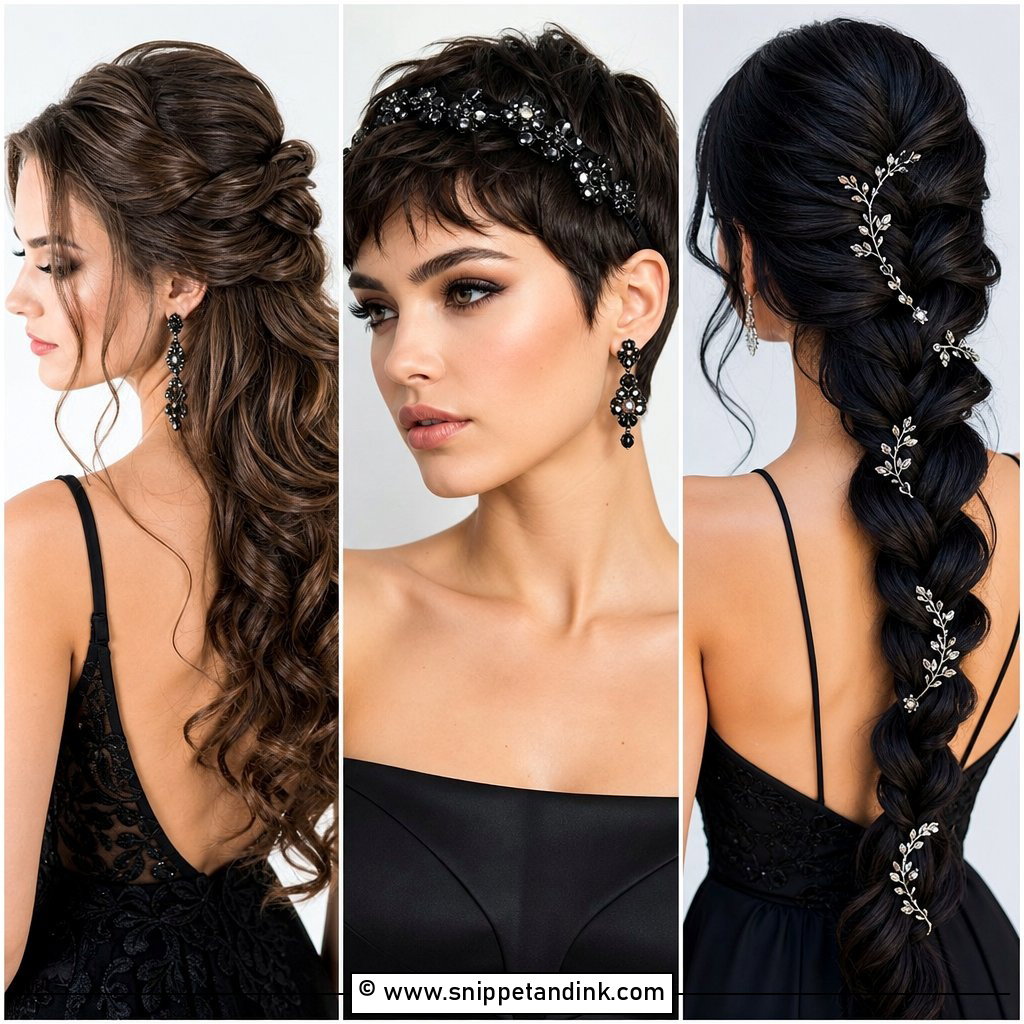
A fishtail is made from two sections, with tiny pieces crossed from the outside of one to the other, which is why it looks more intricate than a standard plait. It needs long hair; anything shorter than mid-back makes a stubby braid. Once it’s done, I gently pull at the edges to widen it, a technique called pancaking, which makes thin hair look twice as thick. Black ribbon or small silver charms add personality. Draped over one shoulder, it shows off an off-shoulder neckline well.
10. Sleek Gothic Ponytail
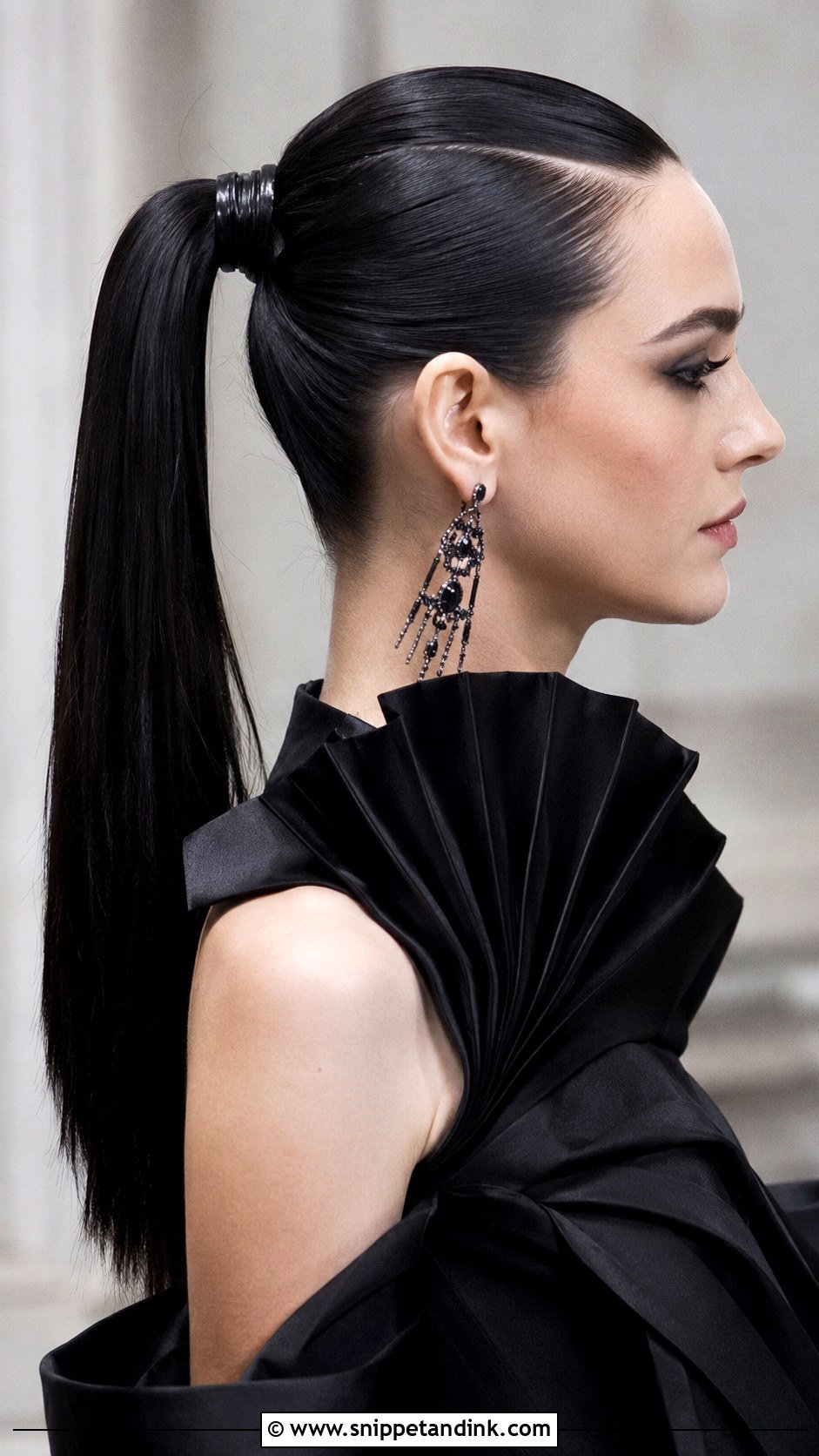
The sleek ponytail is a fashion-week style, and on a bride it reads confident and sharp. I set the base with a strong hold gel, smooth it with a boar bristle brush, and secure it with two elastics, one tight at the base and one a little lower to give the pony lift. A strand wrapped around the base hides the elastic. Clip-in extensions add length if your own hair is shoulder length. The one honest drawback: a high, tight pony can give some people a headache after eight hours.
11. Gothic Updo With Birdcage Veil
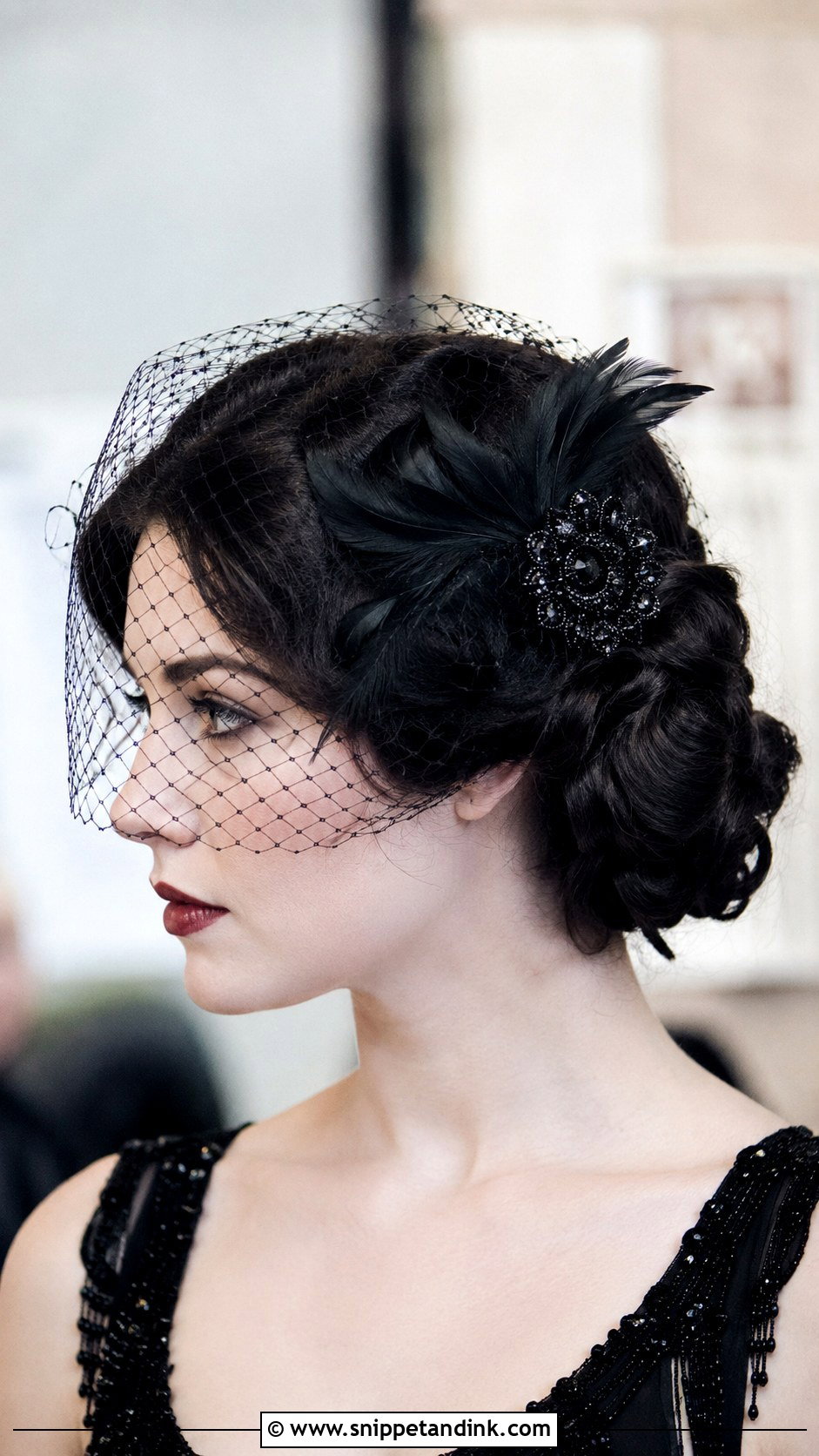
A smooth chignon paired with a birdcage veil is old Hollywood with the lights turned down. The short net covers the eyes or half the face, so the hair underneath should stay smooth and simple. I attach the birdcage with two combs pinned into the side of the updo rather than the crown, which lets it angle across the face properly. It works on short to medium hair too, since the veil carries the drama. A dark feather or brooch at the attachment point hides the combs.
12. Long Gothic Waves With Center Part
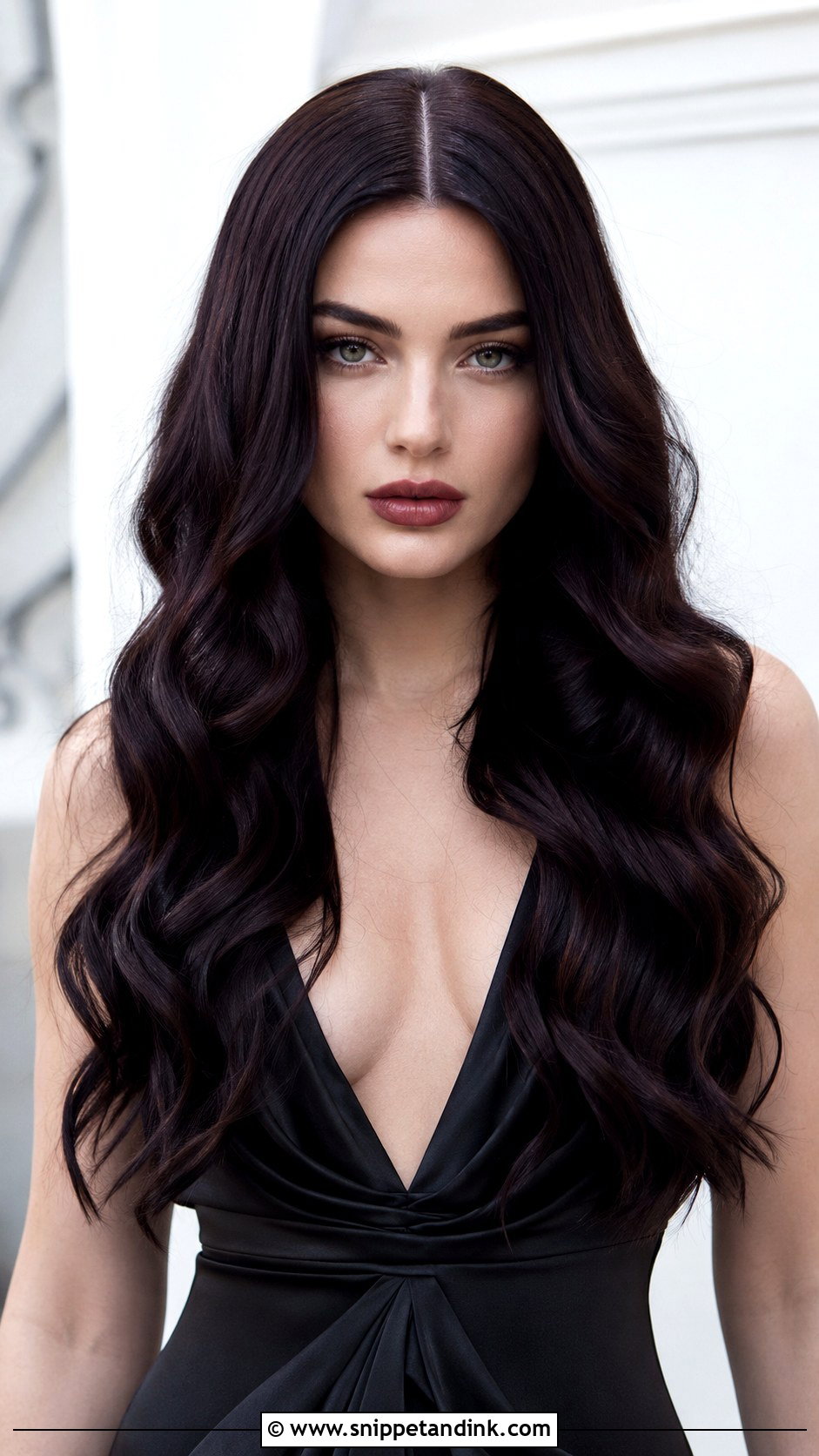
Long waves with a centre part are as simple as gothic hair gets. The symmetry frames the face and lets the length and colour speak. I’d only suggest this to brides with long, healthy hair, because a centre part on thinning lengths shows every gap. Keep the wave soft and glossy, and finish with a shine spray at the end. It works with bare skin and dramatic makeup alike. Pack a small brush and some serum, since this is a style you’ll touch up yourself.
13. Gothic Braided Updo With Vines
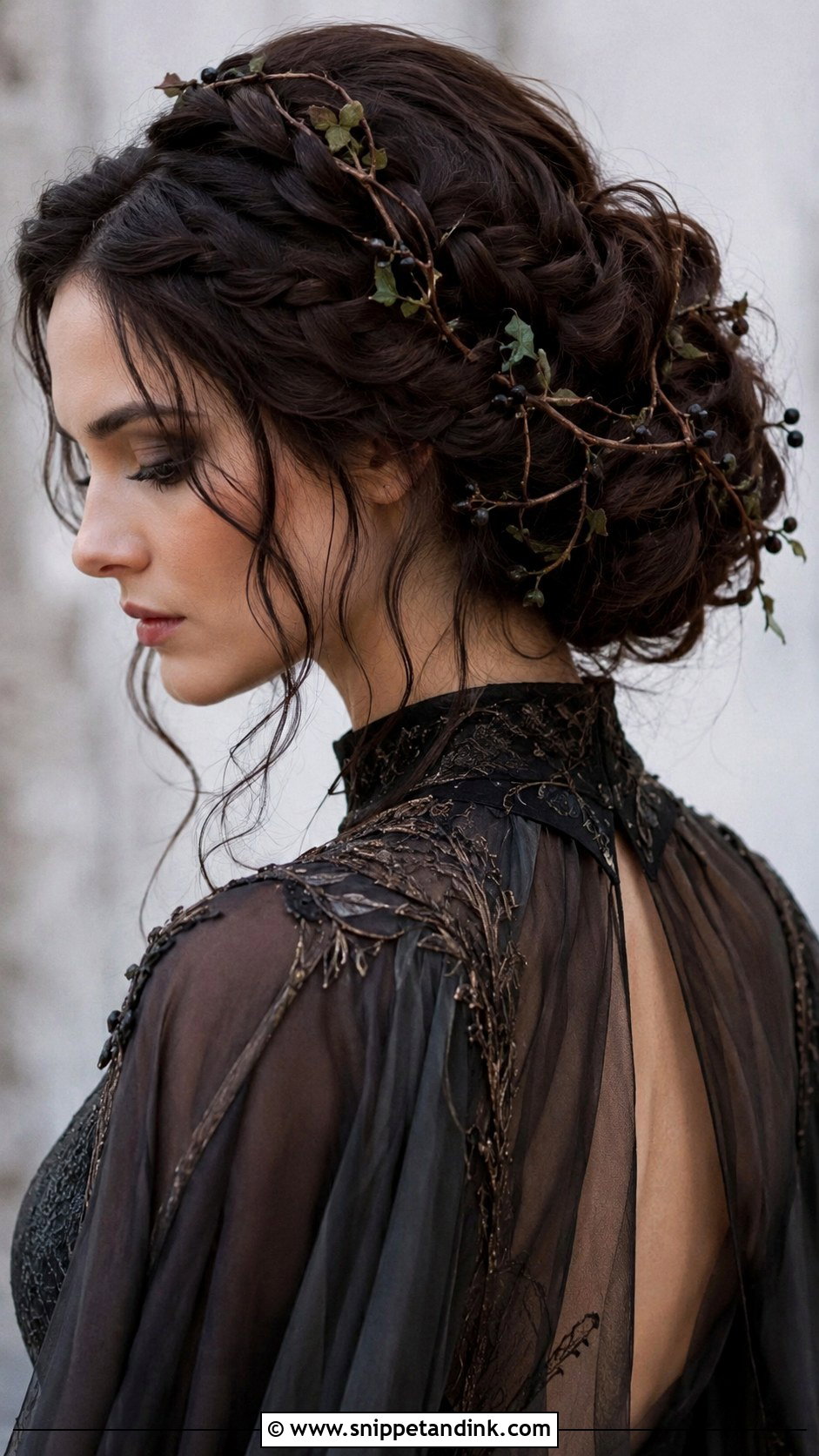
Several braids woven into one sculpted knot give you texture from every angle, which matters in a church where guests mostly see the back of your head. I braid each section separately, loosen them a little, then pin them around a base. Thorny vines and dark berries tucked in make it feel wild. Real thorns are a bad idea near a veil, so I use silk or wired vines. Thick, long hair is the best fit. Capes and long flowing sleeves frame it nicely.
14. Gothic Pin Curls With Side Part
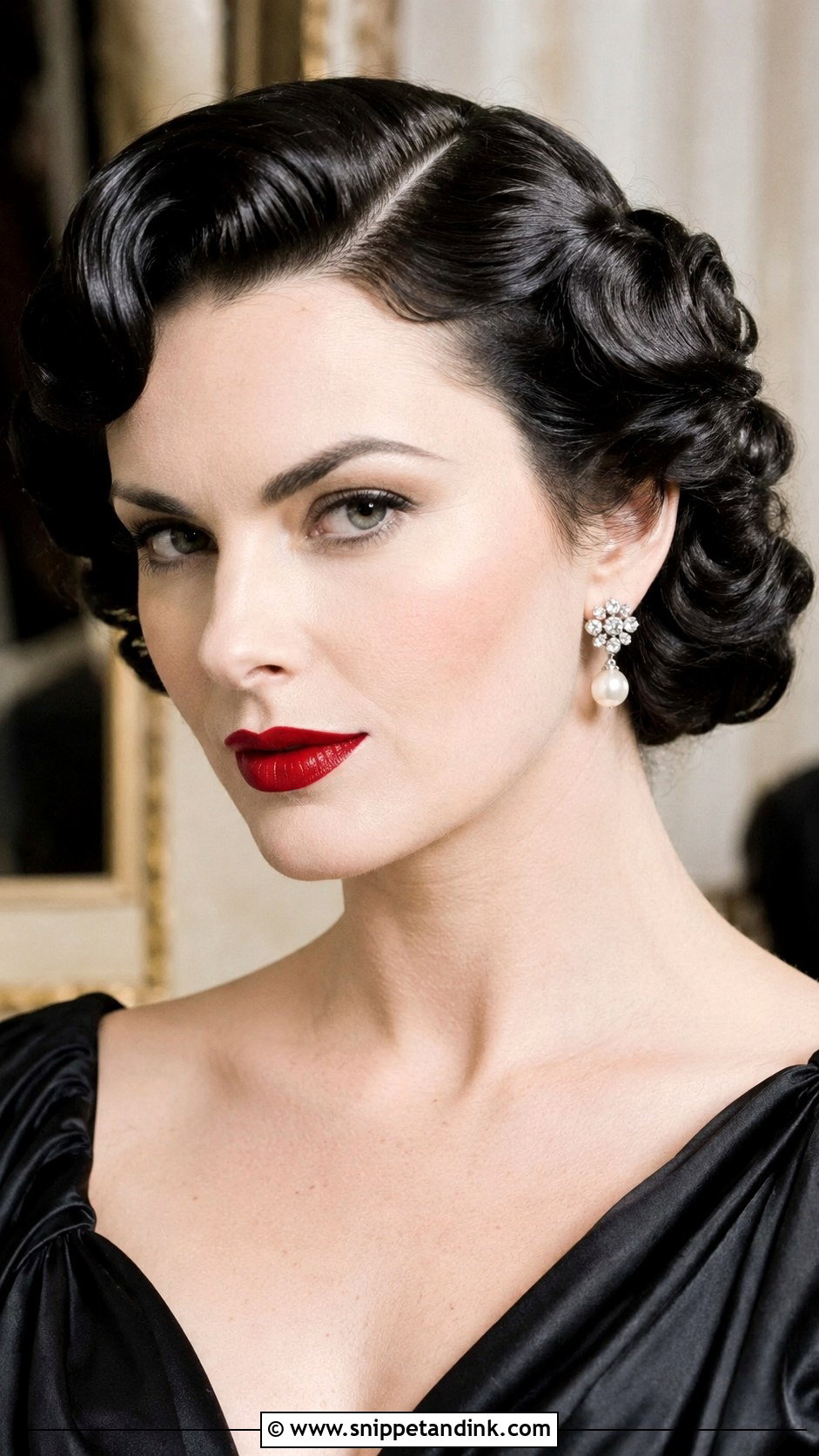
Pin curls are flat, sculpted waves set close to the head, with a deep side part pulling everything toward one cheek. They’re set with small sections wound into coils and clipped while they cool, then brushed into a wave. It’s slow work, and I’d book extra time for it at the trial. Pin the shorter side back to reveal a statement earring. This is one of the few styles on the list that genuinely suits short to medium hair. Retro gowns and red lips belong with it.
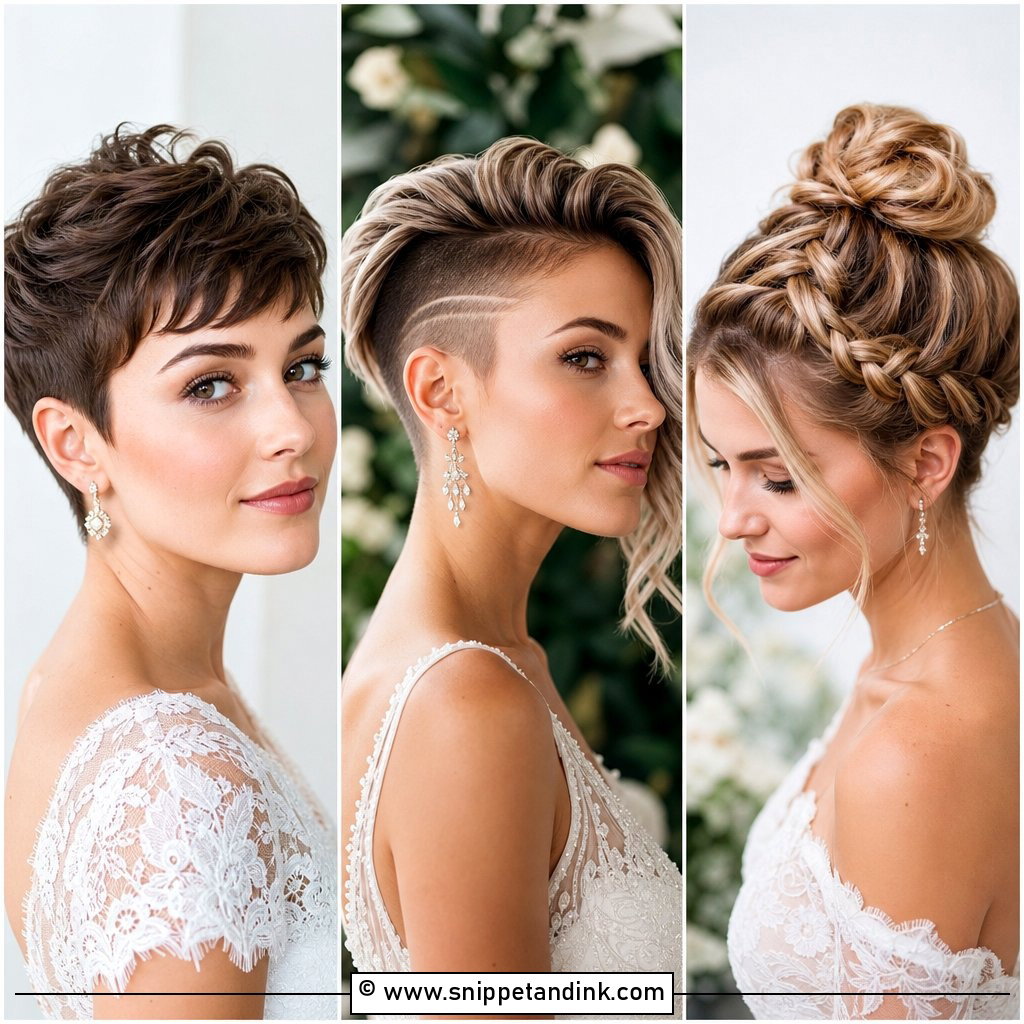
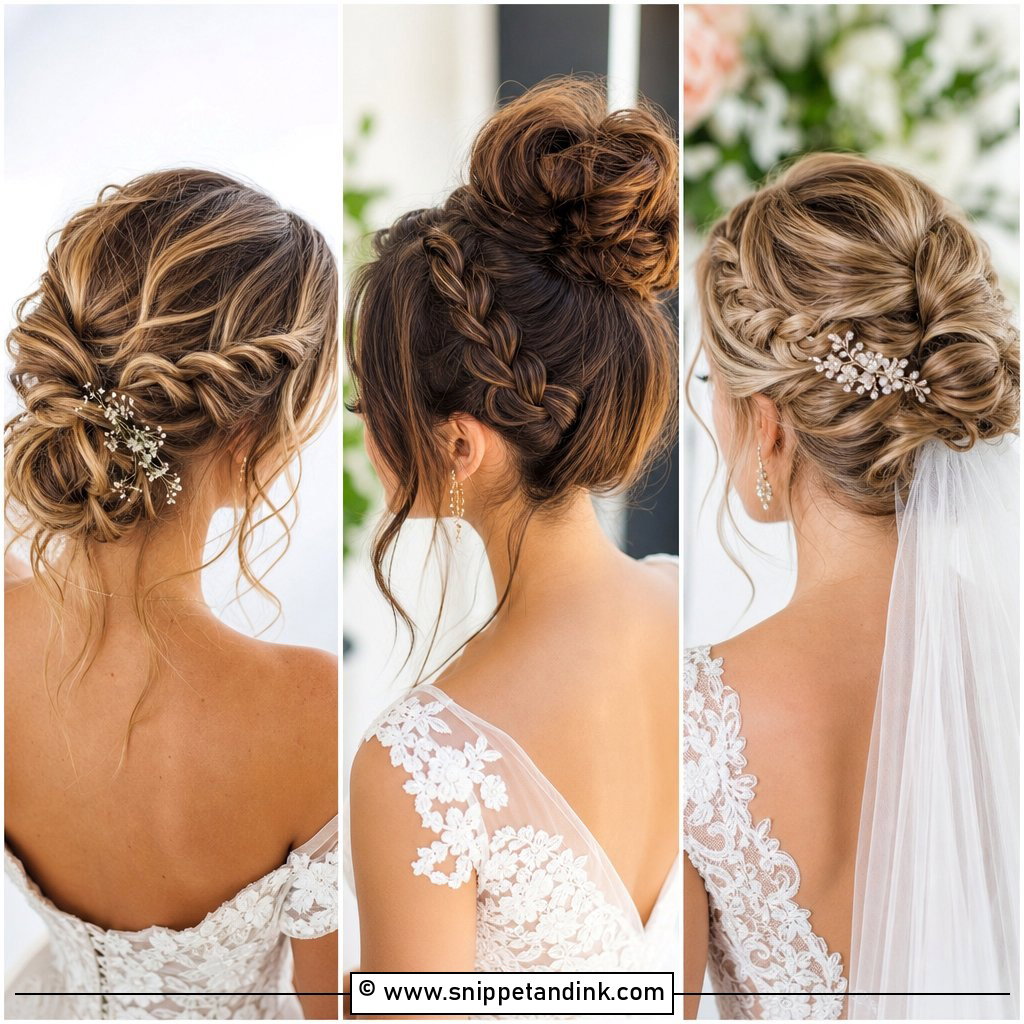
15. Gothic Top Knot With Loose Strands
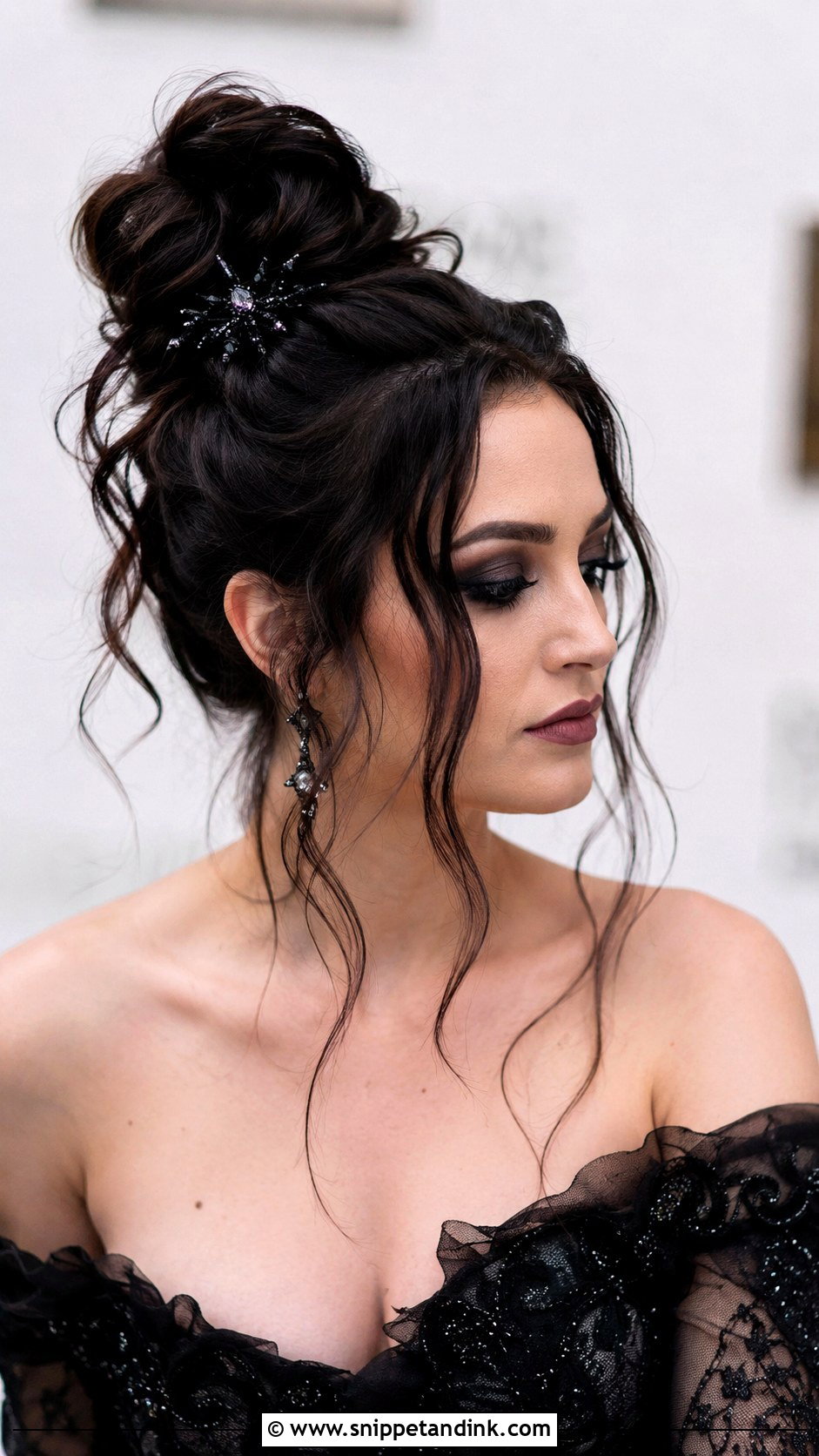
A high top knot sits at the crown and lengthens the neckline. A few loose strands at the face soften it. I tease the base of the pony before wrapping, which gives the knot volume and somewhere for pins to hold. It’s a cool, practical choice for a summer wedding because nothing touches the neck. Where it fails is with a veil: a top knot leaves only the very back of the head for anchoring, so I’d steer you toward a short veil or none. A single dark pin or crystal accent finishes the high-shine knot.
16. Gothic Goddess Braids
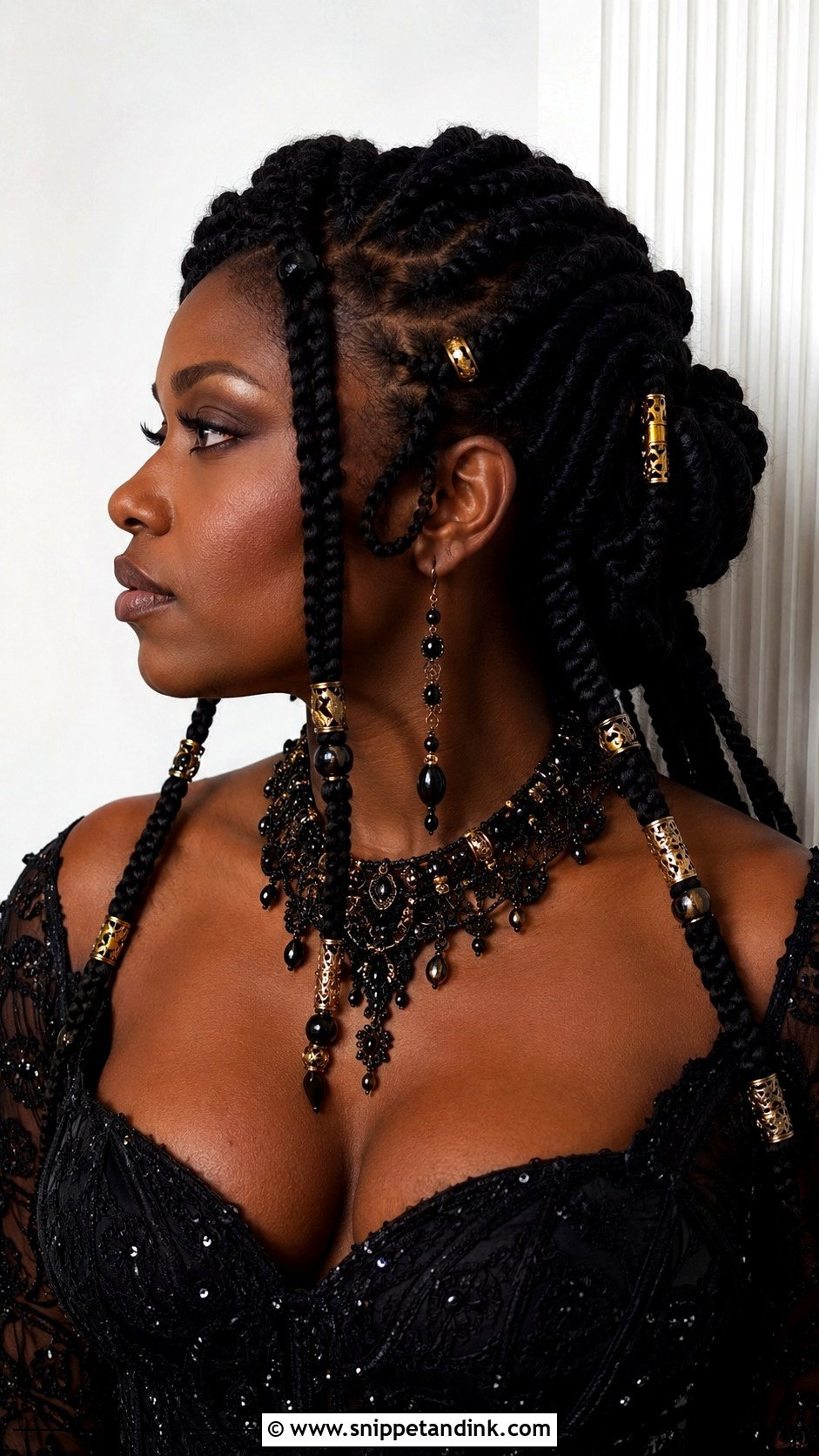
Goddess braids are thick, raised braids that frame the face and sweep back, sometimes left long and sometimes coiled into a low bun. They suit coily and thick textures and protect the hair through a long day. I’d book them two or three days before the wedding, not the morning of, because they take hours to install and look neatest once they’ve settled. Dark beads, gold cuffs and small charms add gothic personality. With a big gown, they carry their own weight beautifully.
17. Gothic Half-Up With Crystal Pins
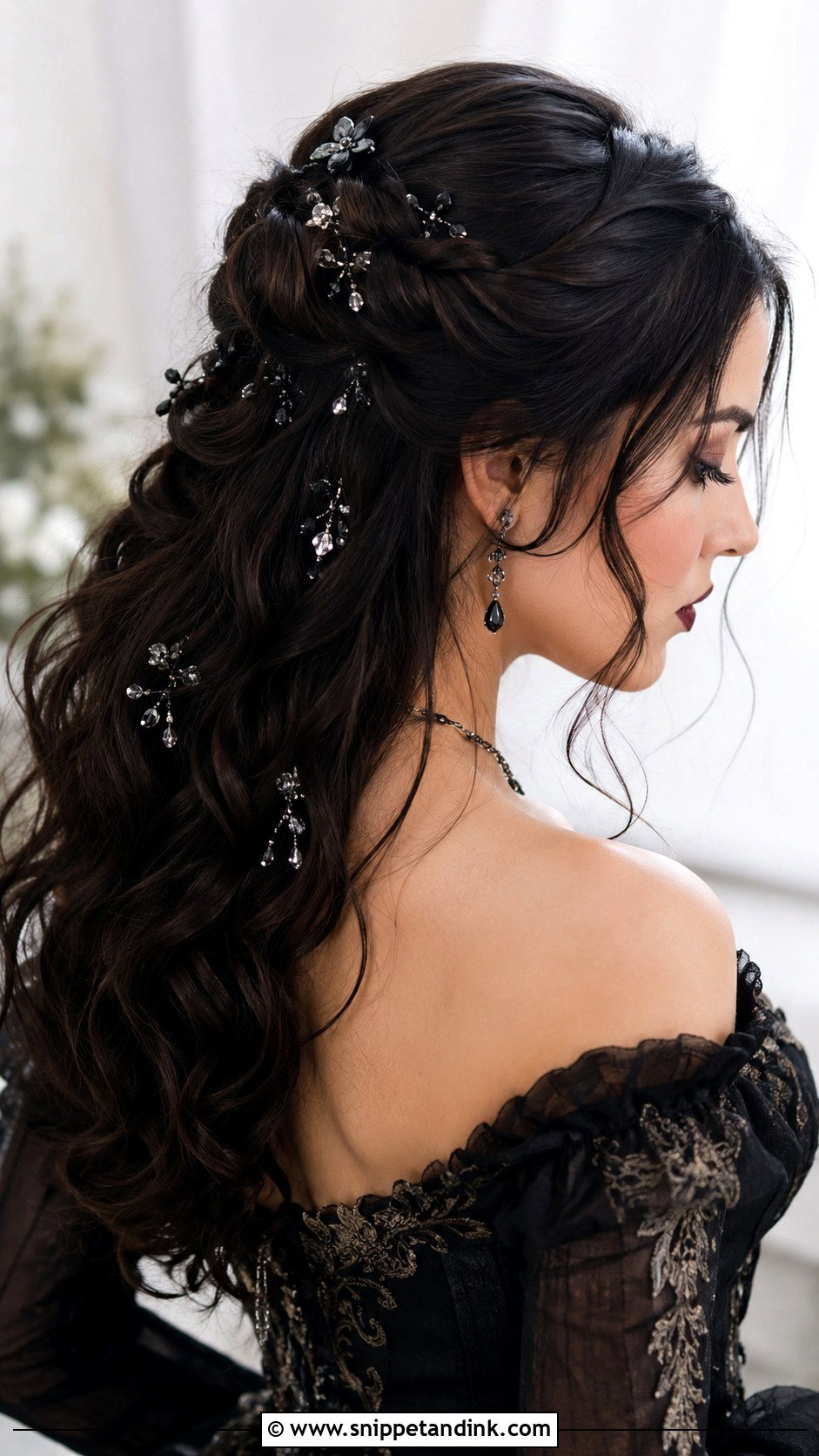
A soft twist pulled back at the crown with the rest left loose gives you some structure and still lets the waves move. The crystal or black jeweled pins are scattered rather than lined up, so they catch light from different angles. I slide decorative pins in over the twist only after I’ve secured it with plain grips underneath, because jeweled pins are heavy and rarely hold on their own. Medium to long hair suits it, with vintage or modern gowns.
18. Gothic Chignon With Black Florals
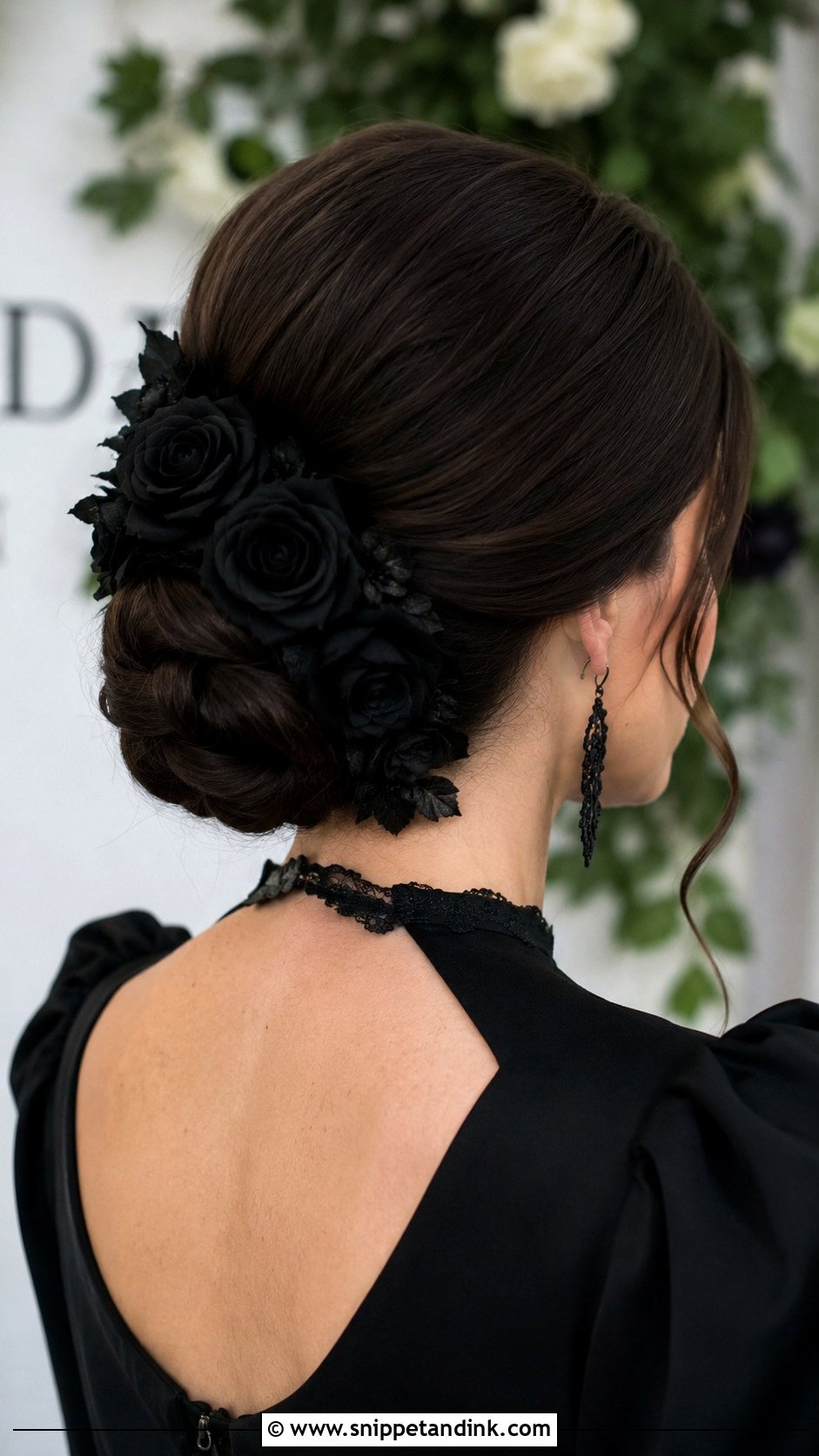
The chignon is a smooth, low knot at the nape, and adding black florals along one side turns a classic shape gothic. The polished bun against moody silk roses is a strong contrast in photos. I attach the flowers on their own pins after the chignon is finished, so a florist can swap them if they bruise. It suits medium to long hair, formal venues and structured gowns. I usually place the veil comb just above the knot so the flowers stay visible.
19. Gothic Voluminous Curls With Tiara
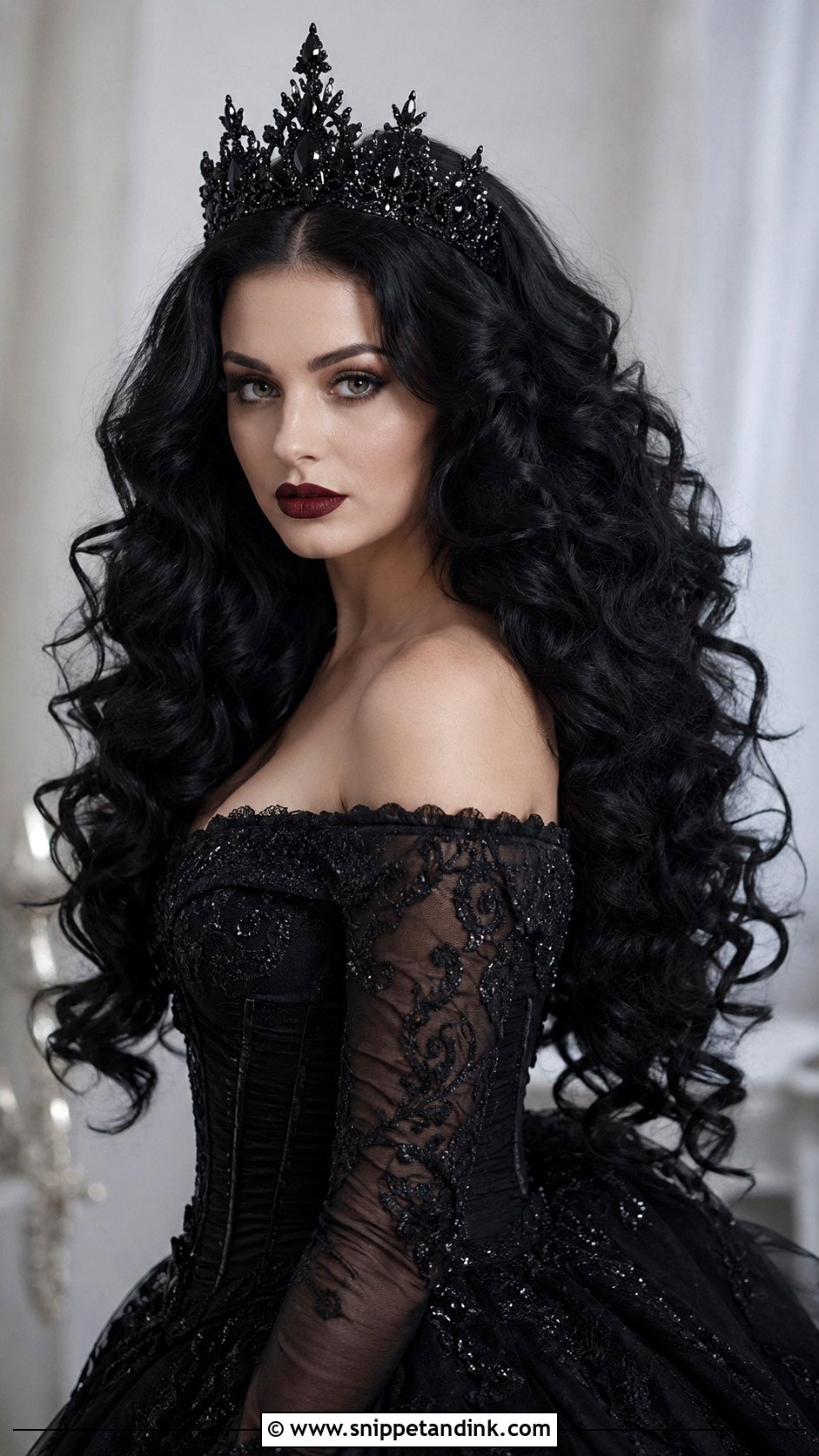
Big voluminous curls crowned with a tiara is the most theatrical look here. The volume relies on hair that holds curl and has density, so long, thick hair is the starting point. I place the tiara before the final curl brush-out, pinning it through loops of hair behind the band so its weight sits on the head and not on the curls. A dark metal or black crystal tiara is the gothic version. Ballgowns and long veils match the scale.
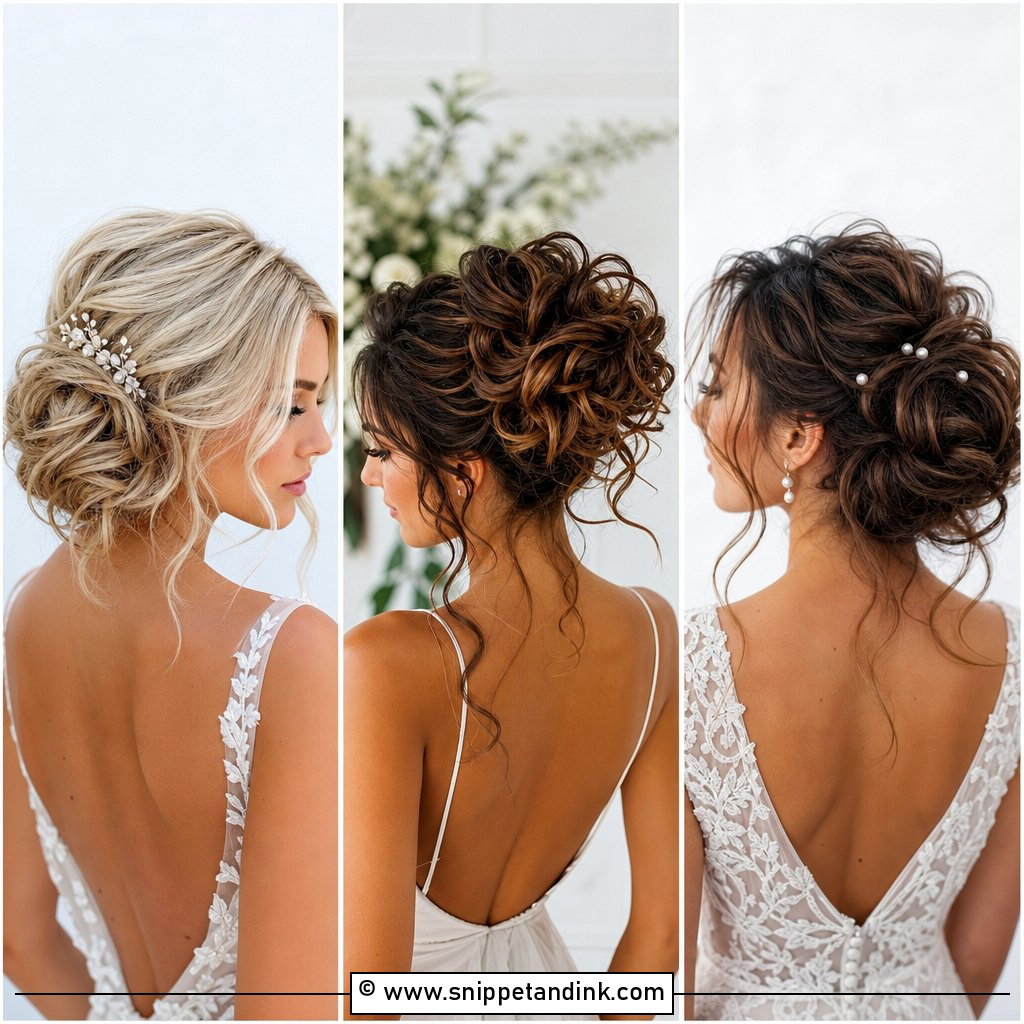
20. Gothic Sleek Bob Styling
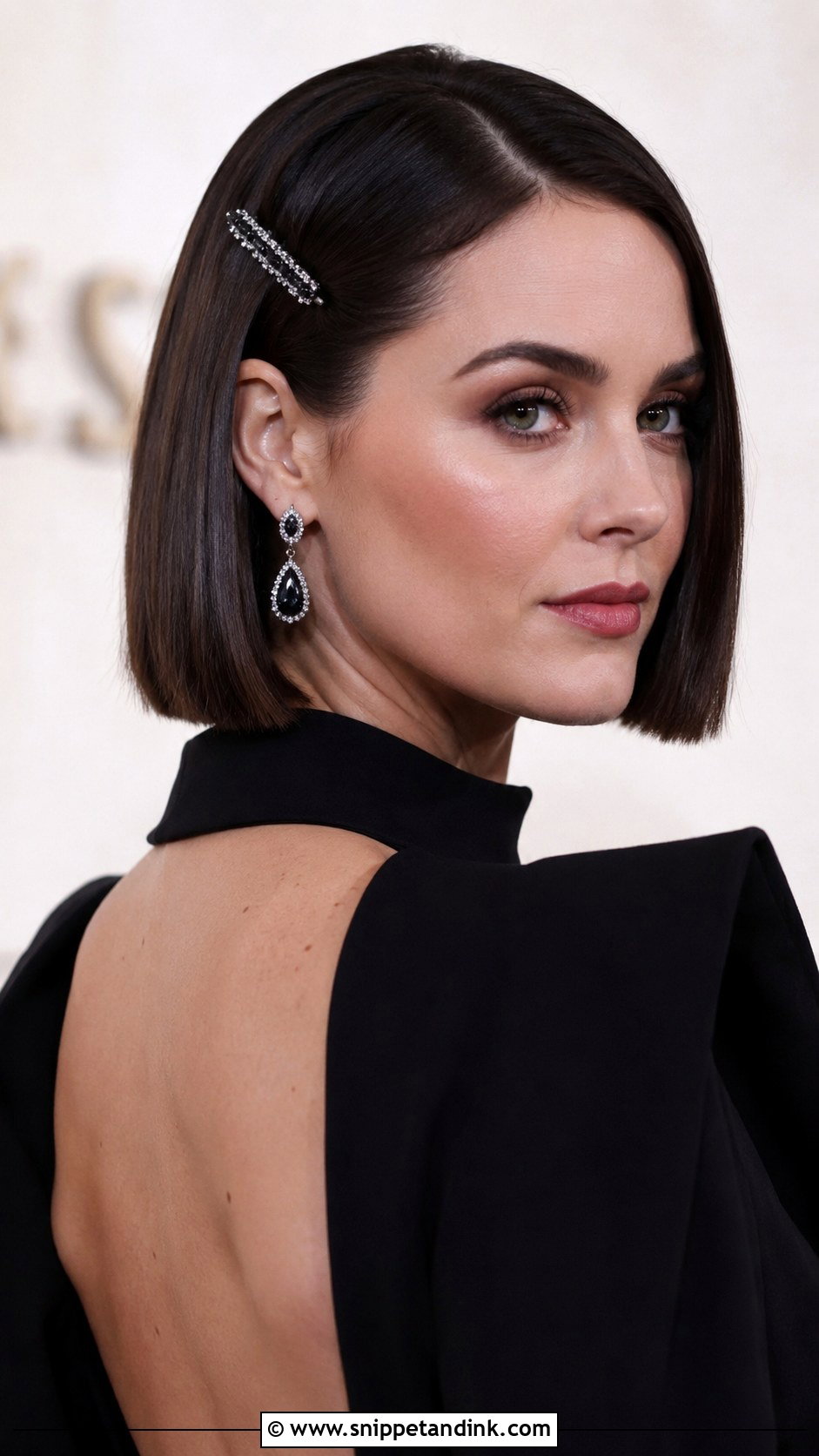
A sleek bob proves short hair can carry the darkest look on the list. The finish is smooth, glossy and straight, which makes a blunt cut look razor sharp. I flat-iron in thin sections and finish with a serum so the ends don’t flip in humidity. A small jeweled clip or dark headband is about all the decoration a bob needs. Get your cut a week before the wedding, not the day before, so the line has softened slightly.
21. Gothic Braided Halo With Veil
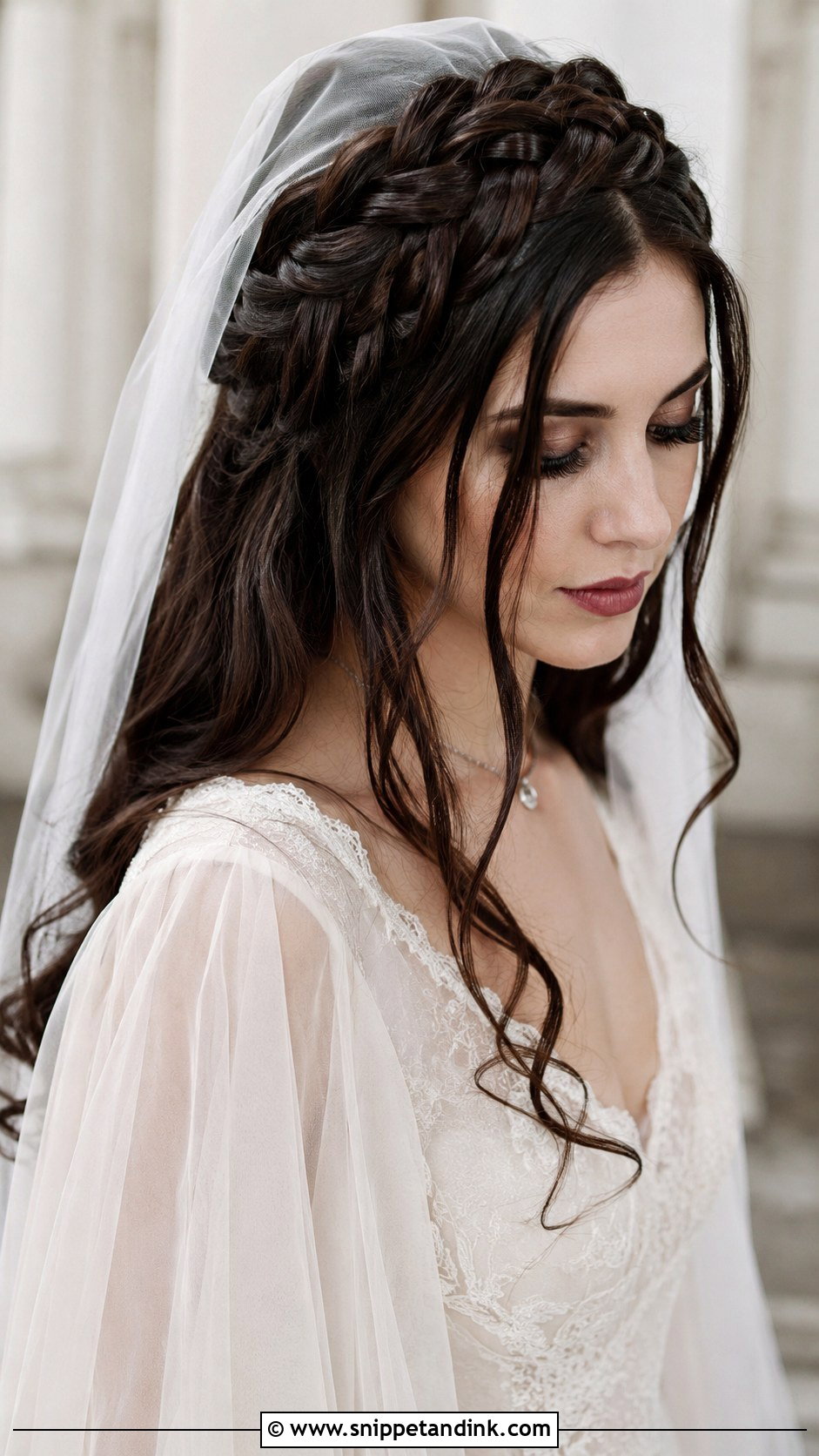
A braided halo combines a crown braid with a long veil layered underneath it. The veil comb goes in first, below the braid line, so the halo sits over the top. That stops the veil from pulling the braid backward. A few face-framing pieces stay loose, and dark flowers or pearl pins can be tucked in. Medium to long hair suits it. This is my go-to when a bride wants something gentle with a gothic thread running through.
22. Gothic Twisted Updo With Cape
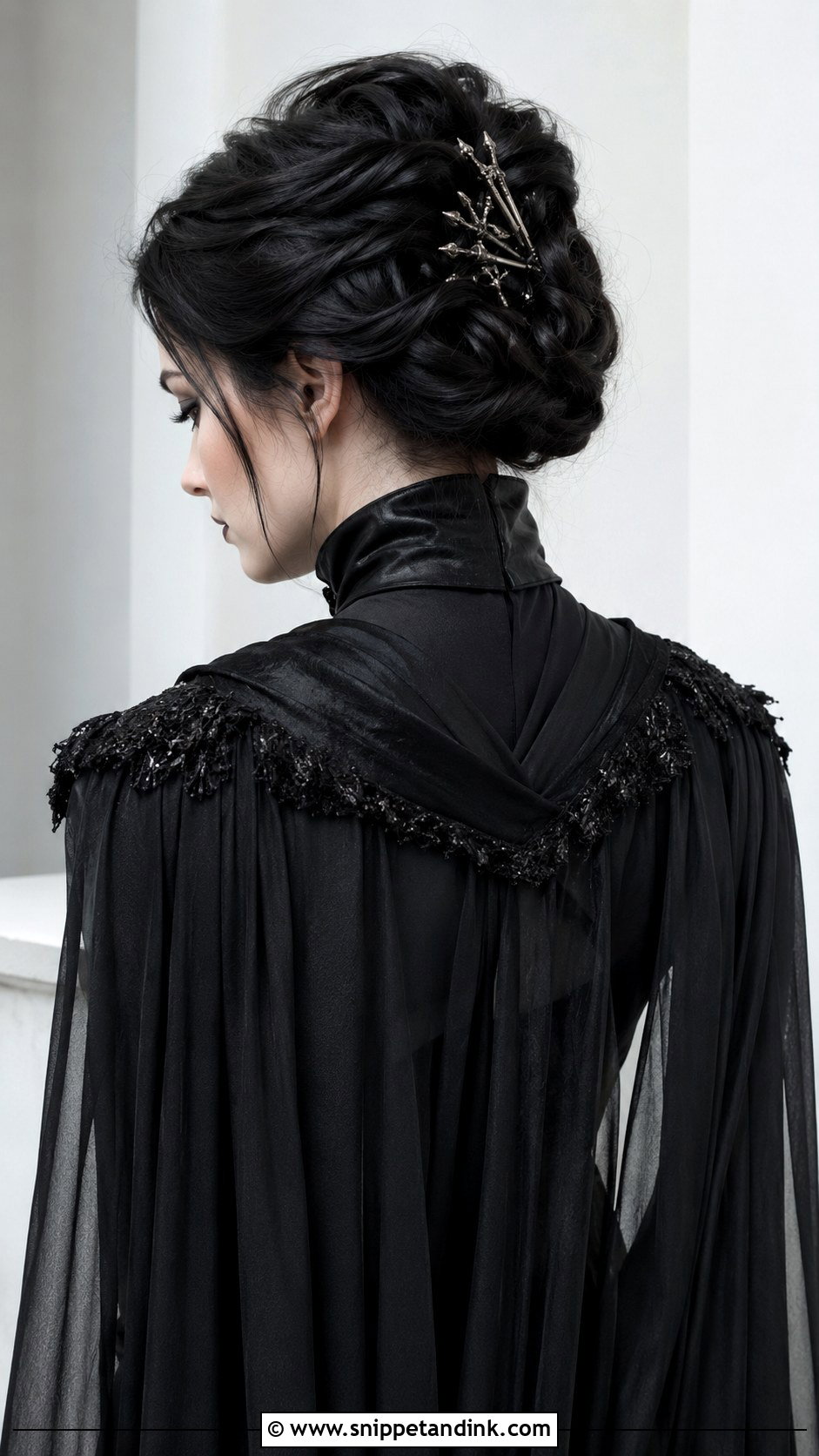
A twisted updo sits in swirls pinned at the back, and paired with a dramatic cape, it gives you a strong silhouette from behind. A cape and loose hair tangle quickly, so I keep this updo compact and tight to the head. The shape needs to stay higher than the cape collar, or the fabric will brush against it all night. Metallic pins add edge. It suits formal venues and structured gowns.
23. Gothic Wavy Lob With Side Sweep
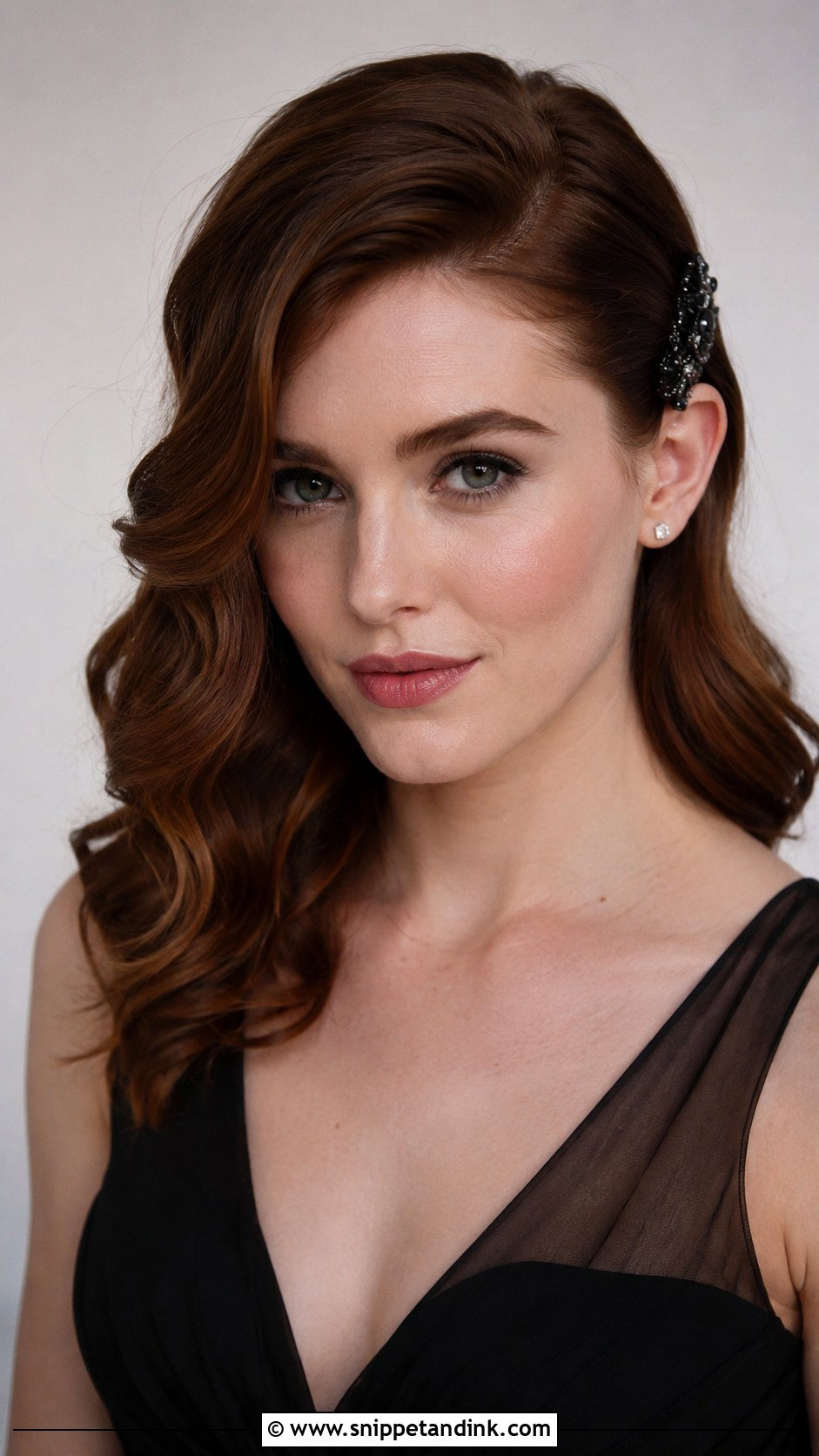
A lob, or long bob, swept to one side gives you movement without full length. The asymmetry feels modern. I curl in alternate directions on a lob so the waves don’t clump into one sausage-shaped curl, then sweep the hair over and pin the back of the swept side with grips you can’t see. A dark jeweled clip on the pinned side adds detail. It suits most face shapes and works with both minimal and statement gowns.
24. Gothic Double Braid Crown
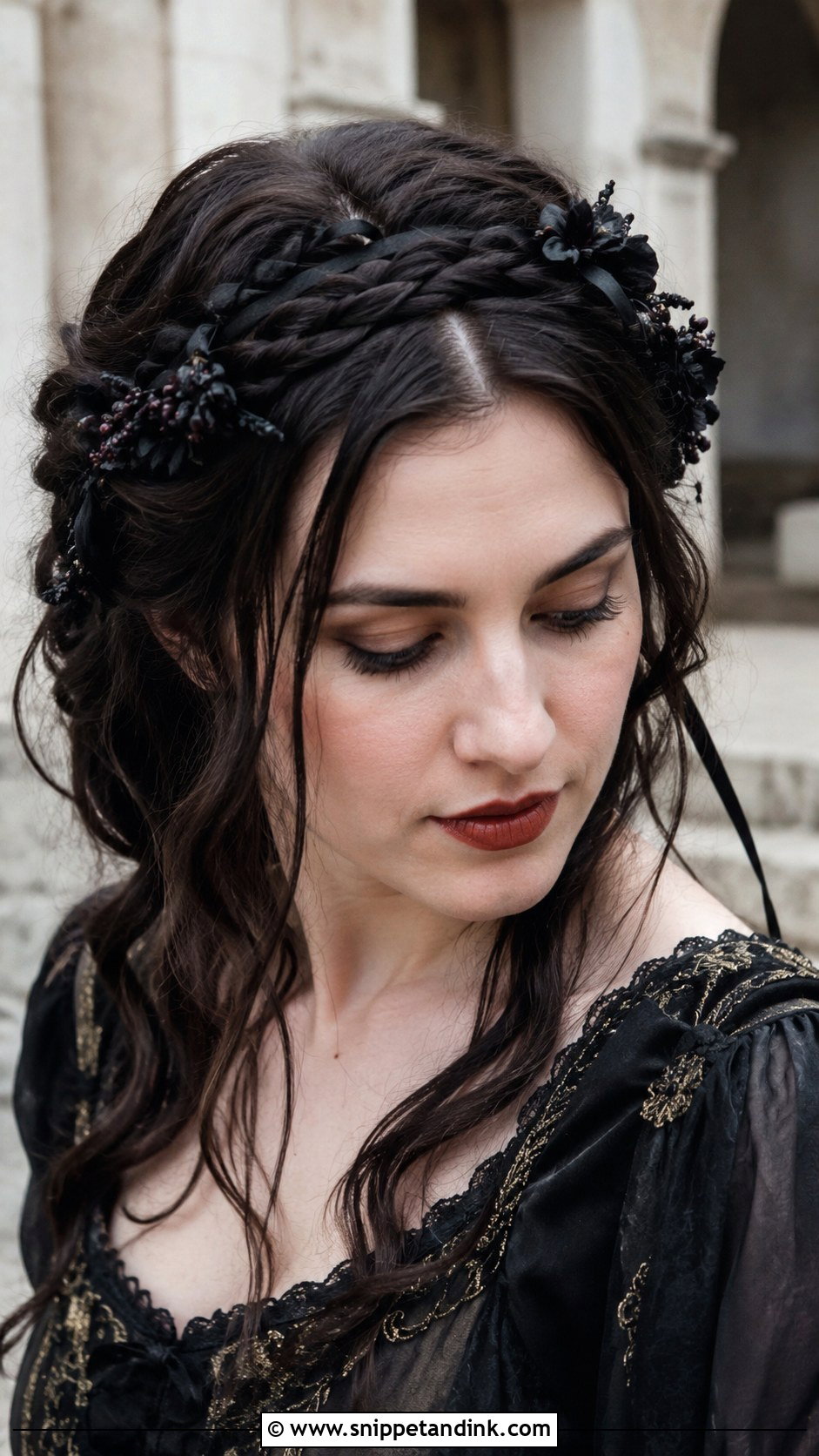
Two thick braids wrapped around the head build a fuller, more layered crown than one braid can. This shape keeps hair completely off the face, which is ideal if you’re getting married outdoors in the wind. It needs long, thick hair, or clip-in extensions braided in. Weave thin black ribbons or dark florals through for colour. Because this crown sits on top of the head, a veil must attach behind it, low at the back.
25. Gothic Slicked-Back Wet Look
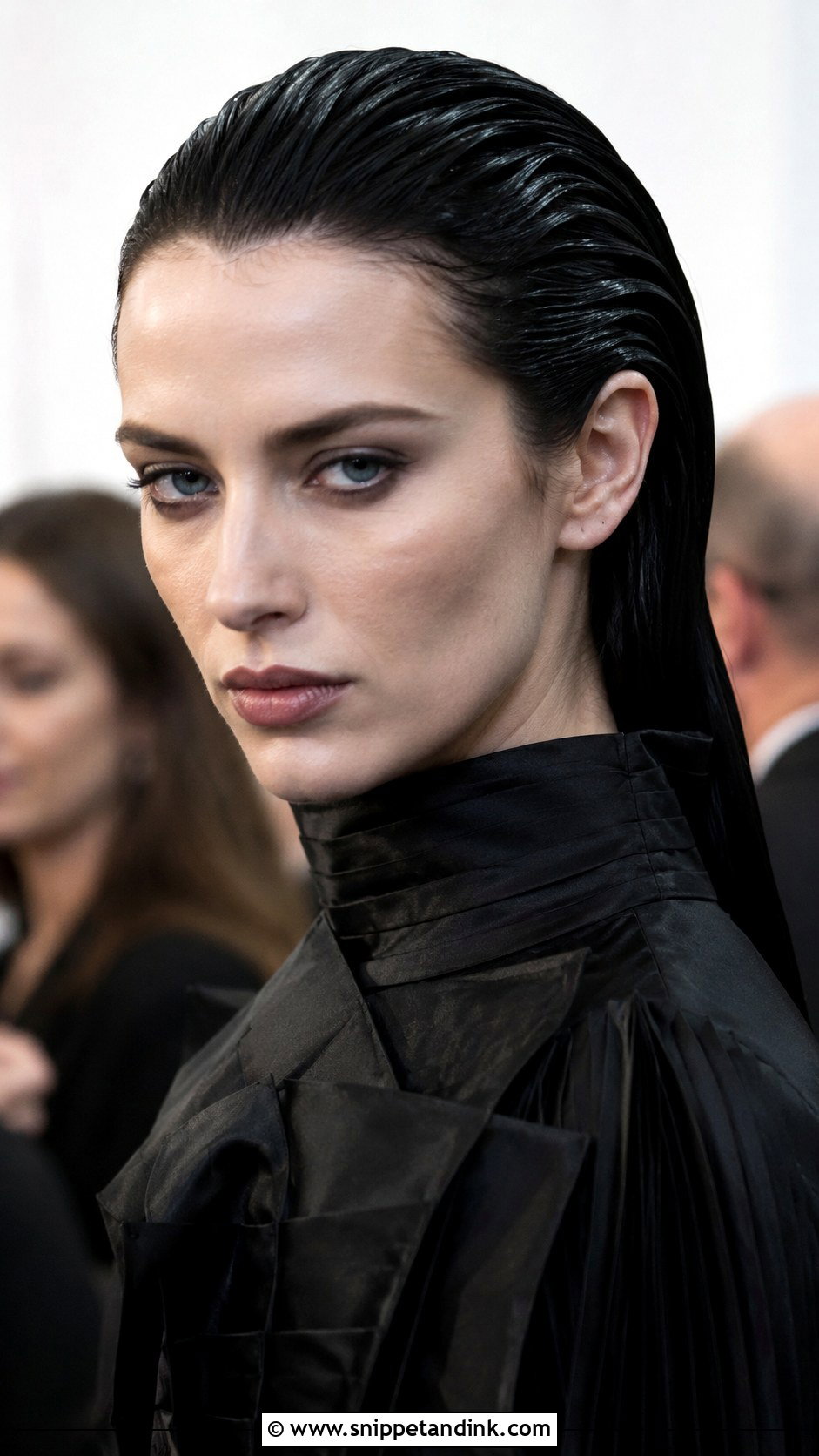
The wet look is the most fashion-led style here. Hair is combed straight back with a strong gel and a glossing product, so it looks freshly out of the shower but stays firm. I apply the product to damp hair and comb it into place, then let it set without touching. It’s bold with sharp makeup and statement jewellery. I’d be honest that it shows your hairline and face shape fully, which suits strong features. Very fine hair can look sparse when it’s slicked back.
Going Raven Black for the Wedding? Time the Dye Carefully
Many gothic brides want deeper colour before the day, and it’s a good idea, but the timing matters more than people expect. Fresh dark dye can bleed. Sweat, rain or a hot room can make a newly coloured black or burgundy shed colour onto your neck, a white collar or an ivory veil.
- Colour your hair one to two weeks before the wedding and wash it a few times before the day. The first washes release most of the excess pigment.
- Use cool water and a sulphate-free shampoo in between, which keeps the colour rich.
- If you’re going from light to black, do a strand test. Black is very hard to remove later, so be sure you want it after the honeymoon too.
- Ask your colourist about a clear gloss a few days before. It adds shine that photographs well and seals the cuticle.
Mention the dye to your stylist before your trial. Freshly dyed hair can be slippier and sometimes drier, which changes how it holds a curl, and I’d rather adjust products at the trial than on the morning.
Your Hair, Your Dark Fairytale, Your Trial Run
Every one of these styles depends on two things: what your hair can genuinely hold, and how you’ll secure whatever goes on top of it. Braided crowns and sleek ponytails are the most secure; loose waves and ringlets are the least. Bring your veil, flowers and any headpiece to your trial, then wear the style for a few hours and move around in it. Dark florals, jeweled pins and lace veils add the gothic mood. The style you forget about by dinner is the one to book.
You'll Like These Ideas:


Leave a Reply