
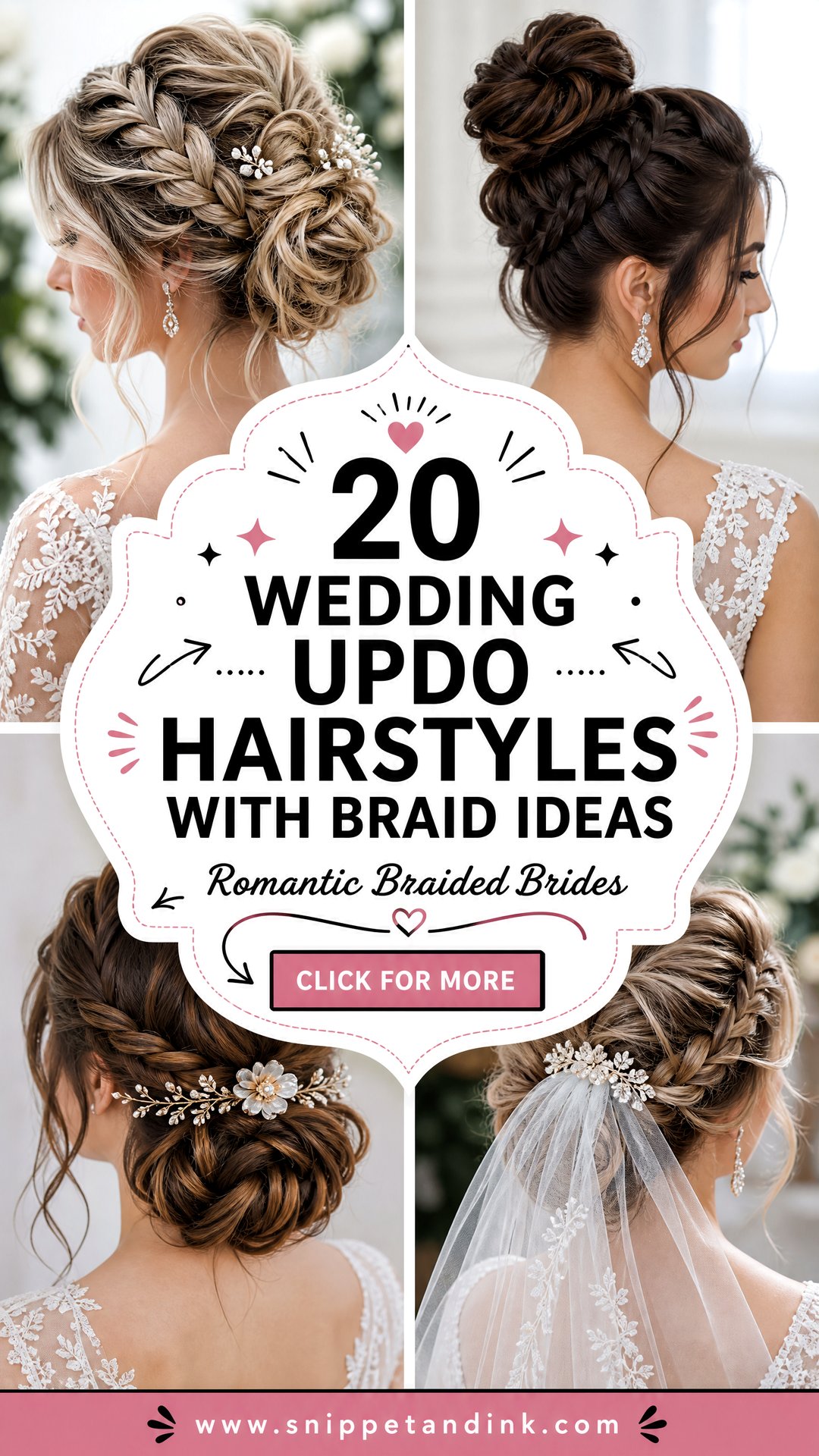
A braid does a quiet job inside an updo. It gives the pins something solid to grip, it hides the layers that would otherwise poke out by the second hour, and it gives the back of your head a pattern worth photographing during the vows. I build a lot of braided updos for long ceremonies, outdoor venues and receptions with real dancing, because they hold their shape when a simple twisted bun starts to slide. The right version depends on your length, your texture and what your neckline leaves visible at the back. Below are twenty braided updos I’d happily recreate, with notes on how each one actually behaves on the day.
Why a Fishtail and a Dutch Braid Behave So Differently on Fine Hair
Every braid on this list is built from the same idea, strands crossing over each other, but the way they cross changes how the style holds and how full it looks. Picking by photo alone is how brides end up disappointed at a trial.
- Dutch braids cross under, so they sit raised and look thicker than the hair really is. They’re my first choice for fine hair that needs to look fuller.
- French braids cross over and sink into the head. They catch layers well but look flatter, so they suit thick hair best.
- Fishtails split hair into two halves and pass tiny pieces across. They look intricate, take longer and show every gap on thin hair.
- Rope braids are two twists, not a plait. They’re quick and sculpted, but they need firm product or they loosen.
Texture matters just as much. Very silky, freshly washed hair lets strands slide out of a braid within an hour. Coarse or curly hair grips well but swells in humidity, so a braid that looks neat at noon can puff by dinner. Tell your stylist honestly how your hair behaves on a damp day.
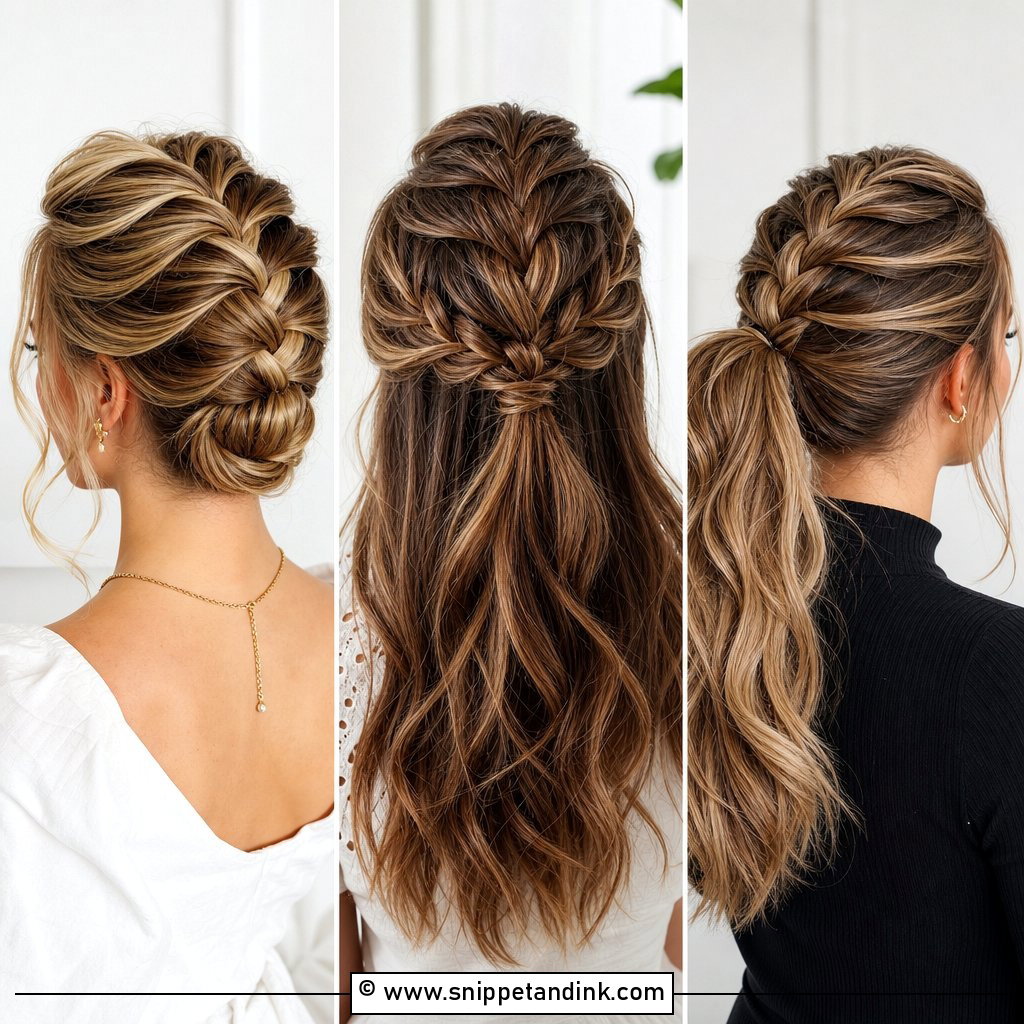
1. Low Bun Wedding Updo With Braid
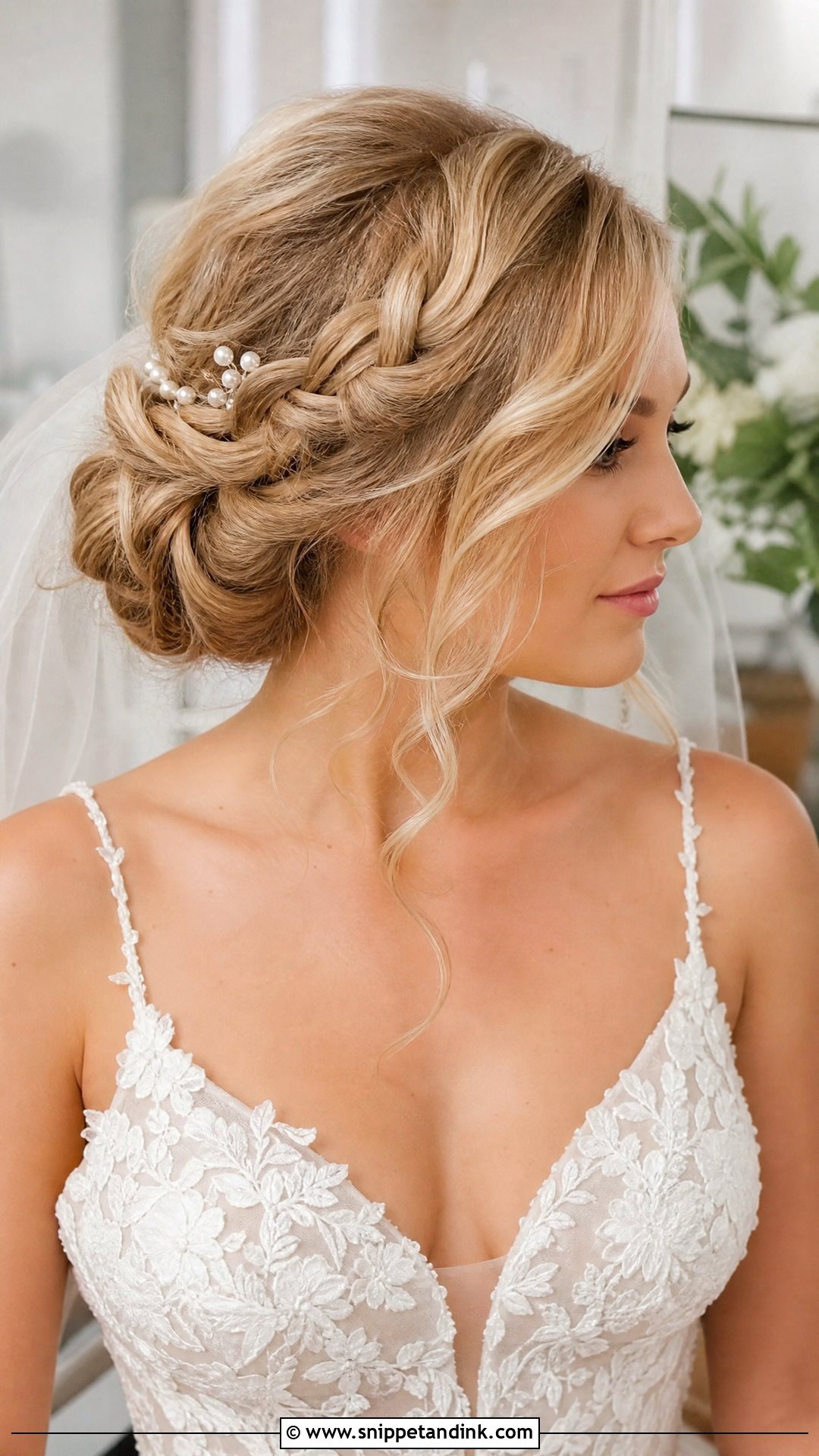
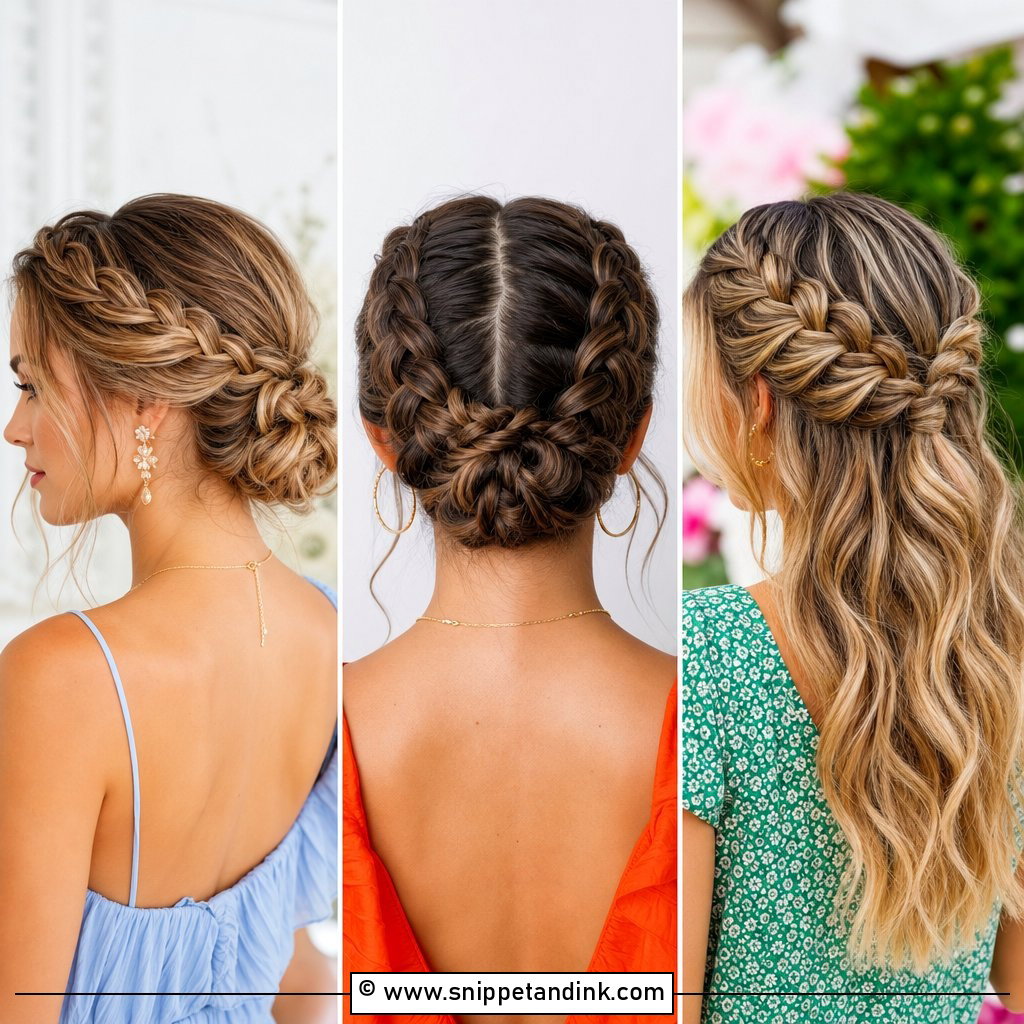
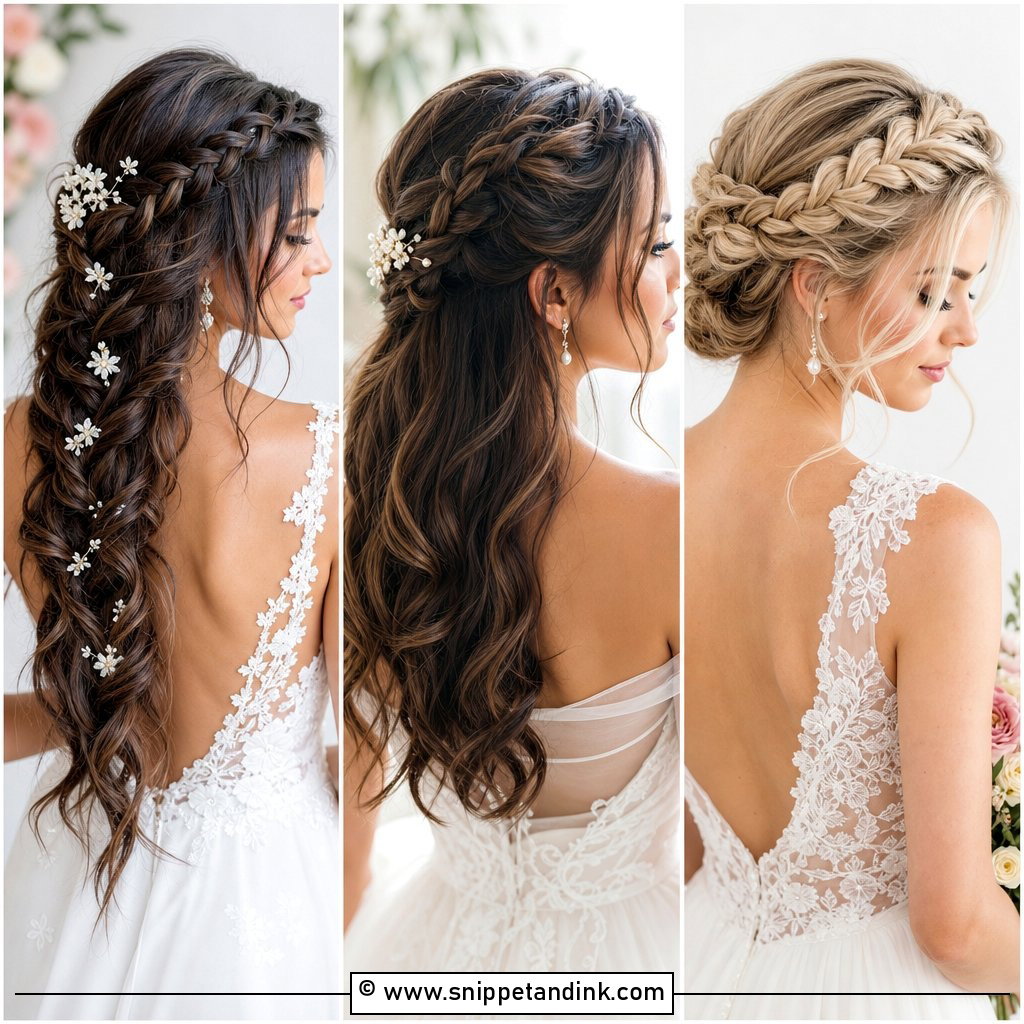
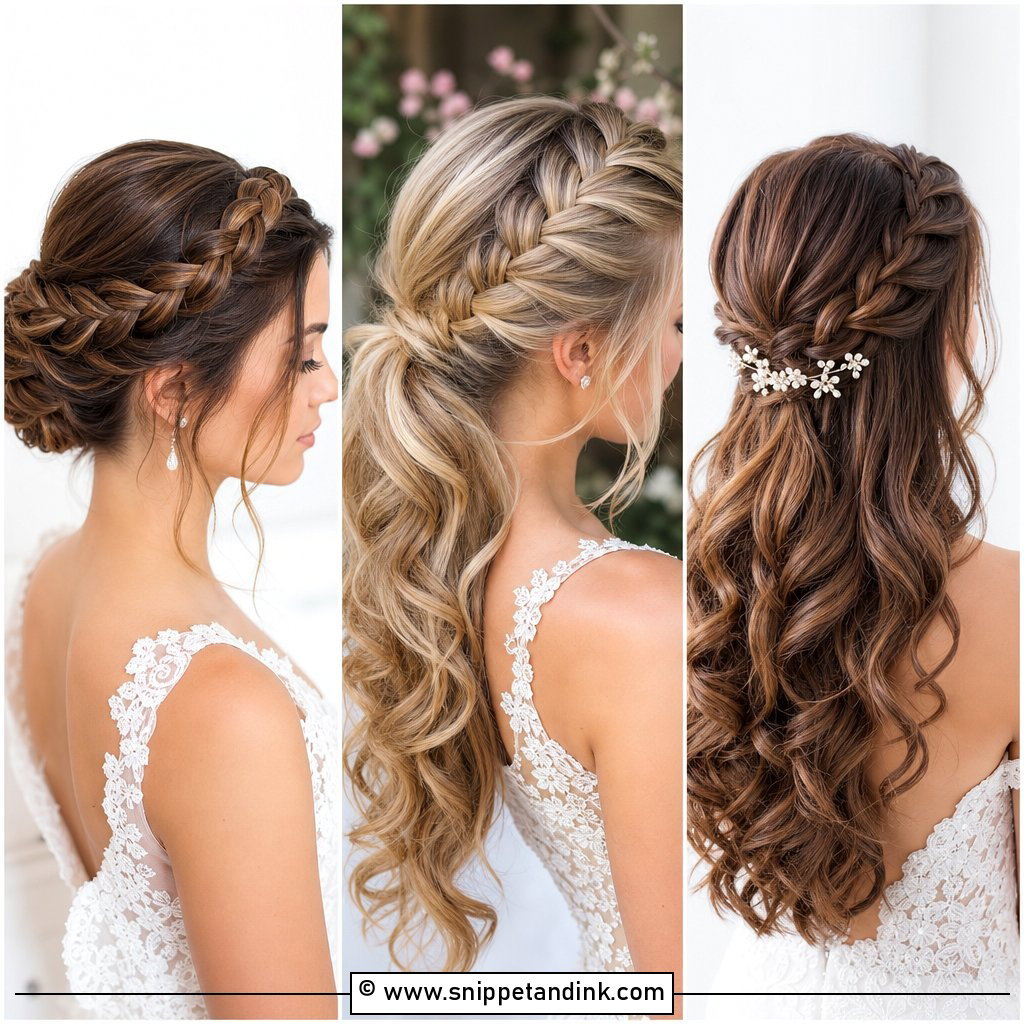
This is the one I reach for when a bride can’t decide. The braid starts behind one ear, sweeps across the back and tucks into a full bun at the nape, so there’s detail from the side without the whole head looking busy. Placement matters more than people expect: if the bun sits too low it pushes against a high collar, so I check the dress neckline before I set the first pin. It sits comfortably under a veil comb and leaves an open back or lace straps completely clear.
2. Side Braid Wedding Updo
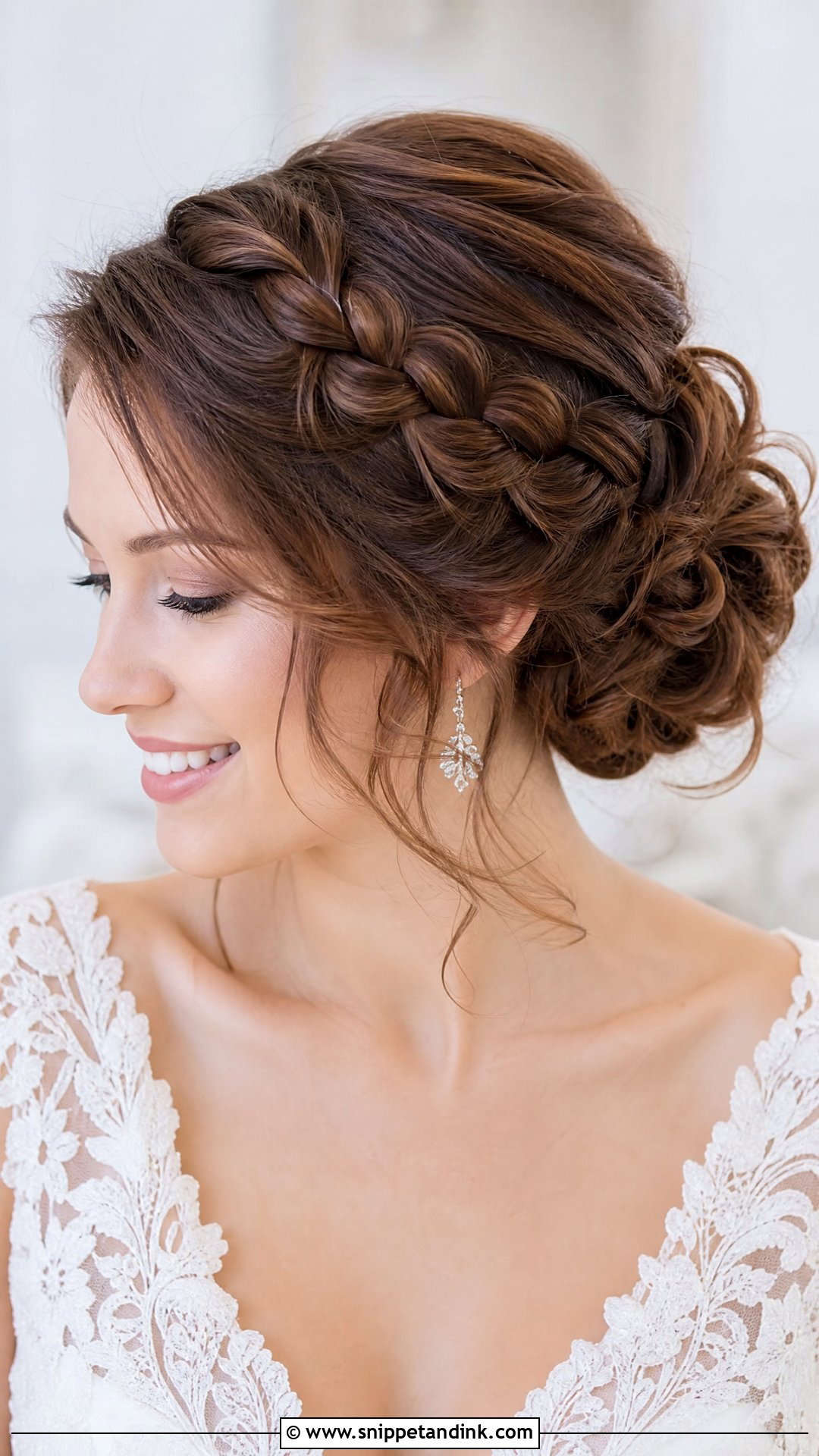
Starting the braid at the part and running it along the temple gives you softness around the face without leaving loads of hair down to frizz. Pinned neat, it reads classic; pulled apart a little, it suits a garden ceremony. The catch is balance. A side braid makes one side of the head visually heavier, so I place it on the side opposite a one-shoulder strap or a statement earring rather than stacking everything in one spot.
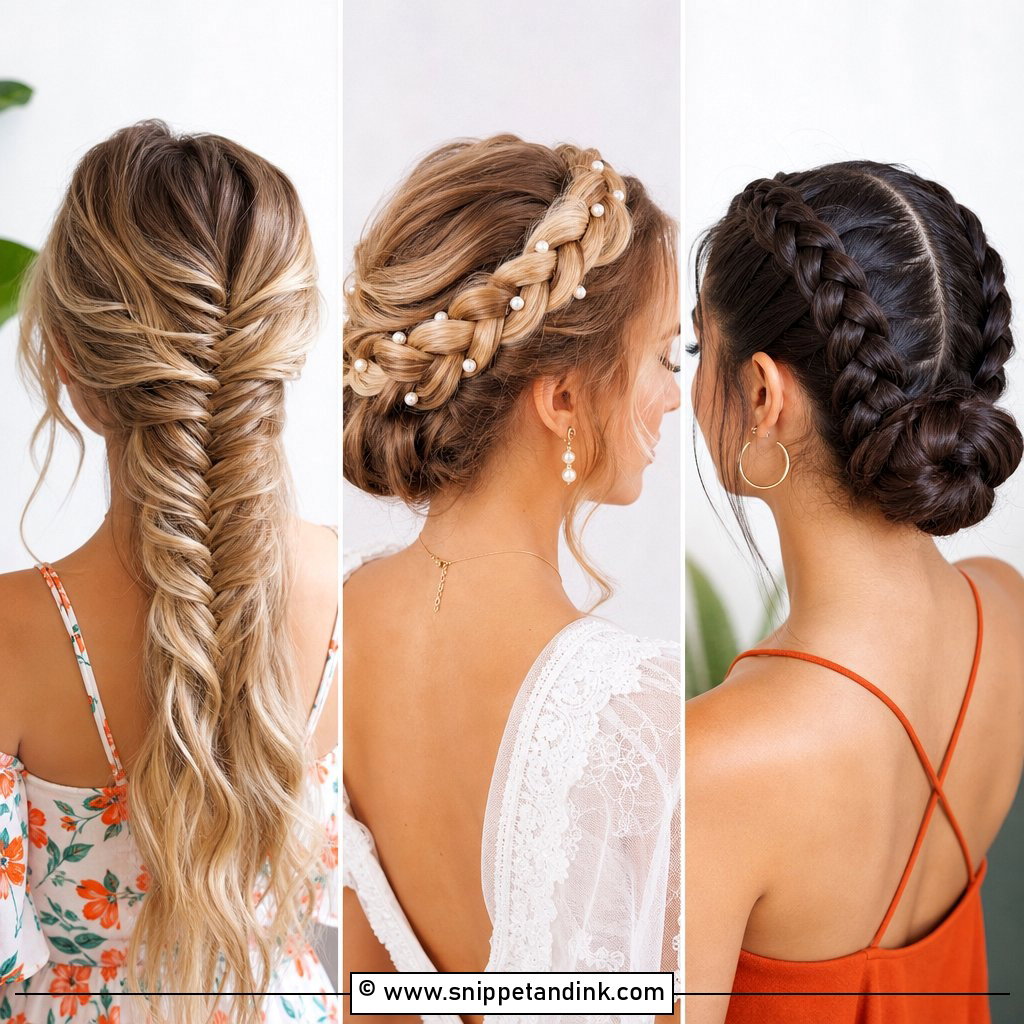
3. Fishtail Braid Wedding Updo
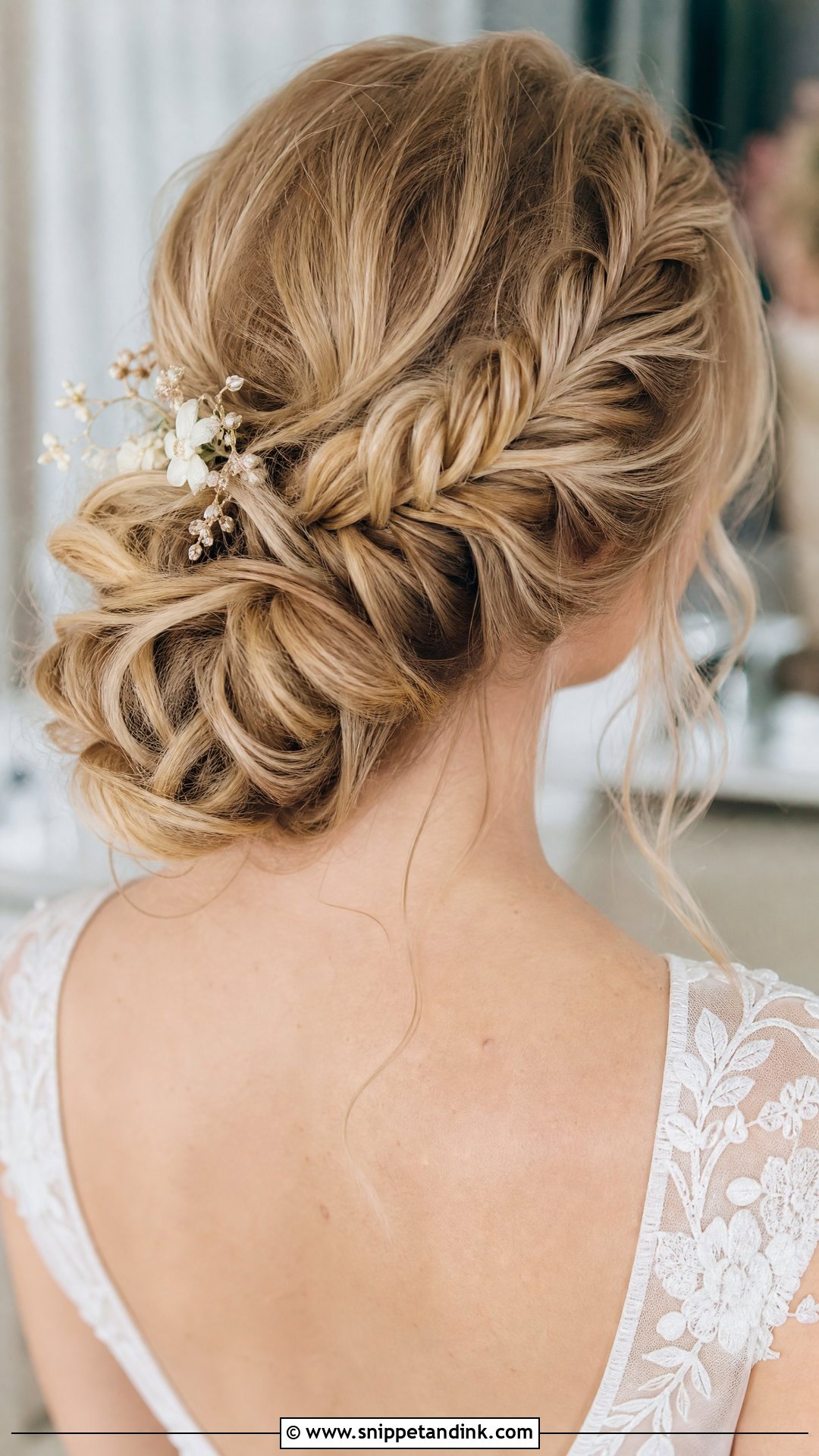
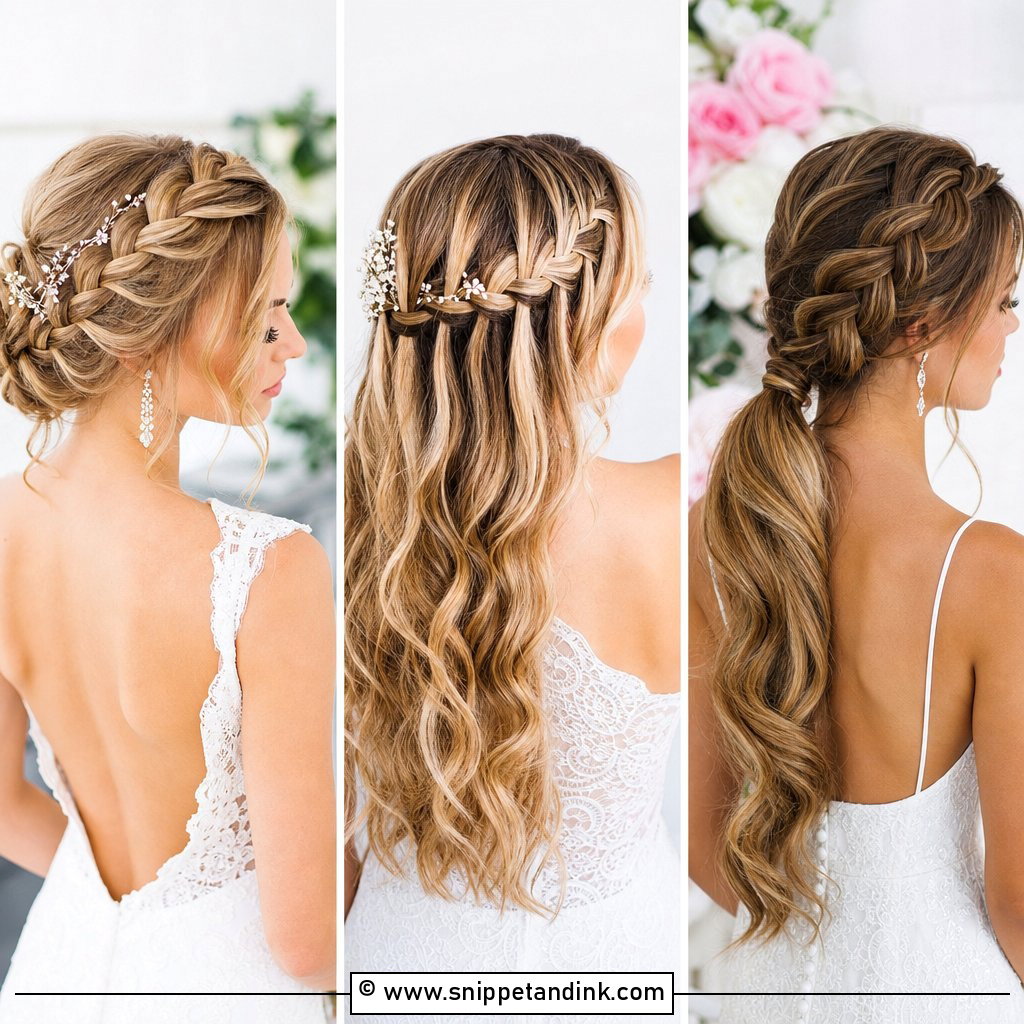
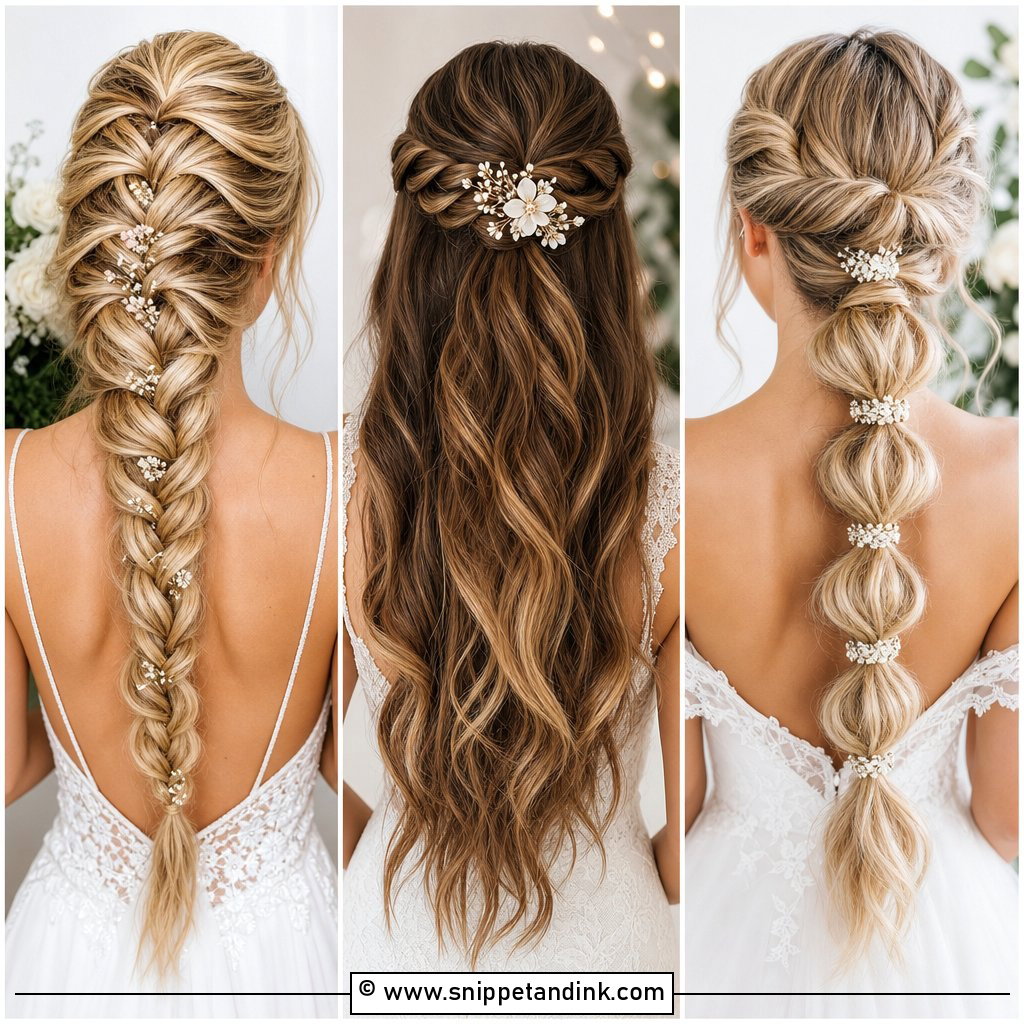
Fishtails have more crossings per inch than a regular braid, which is why the texture looks so fine and woven when you wrap one around the crown or across the back. That detail shows best on hair with some dimension, so highlighted, balayage, blonde, brunette, and copper hair gives the pattern real depth. The tradeoff is time. A fishtail on long, thick hair can take a while to plait evenly, so I always build it at the trial first and loosen it only after it’s pinned, never before.
4. Braided Chignon Wedding Updo
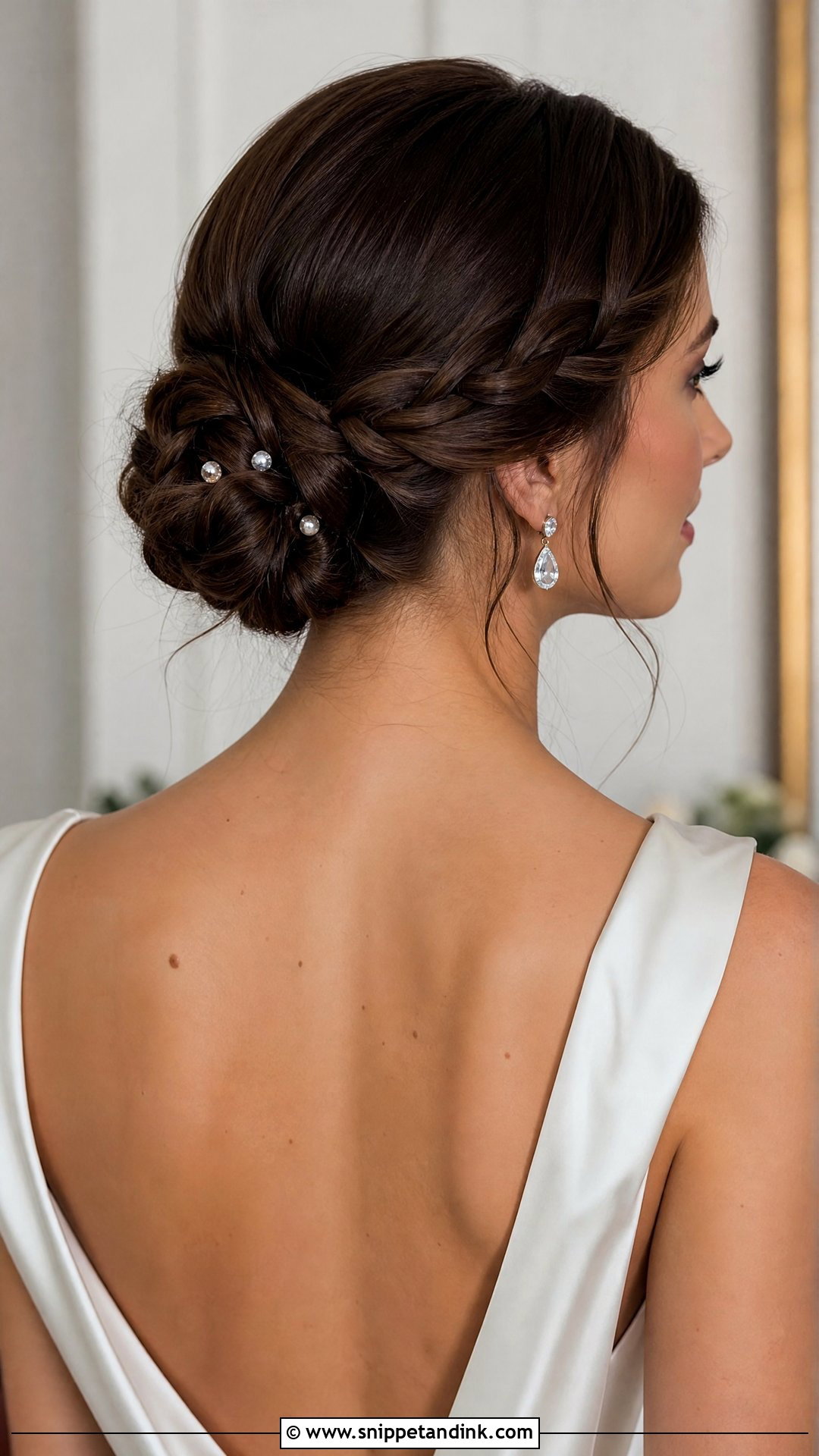
A chignon is already a tidy shape, and a braid woven through it or wrapped around the base gives it texture without changing the outline. I like this under high necklines and satin, where a busy style would compete with the dress. There’s a practical bonus too: I anchor my pins into the braid itself, which holds far better than pinning into loose, smooth hair. Pearl pins or a slim comb are plenty here.
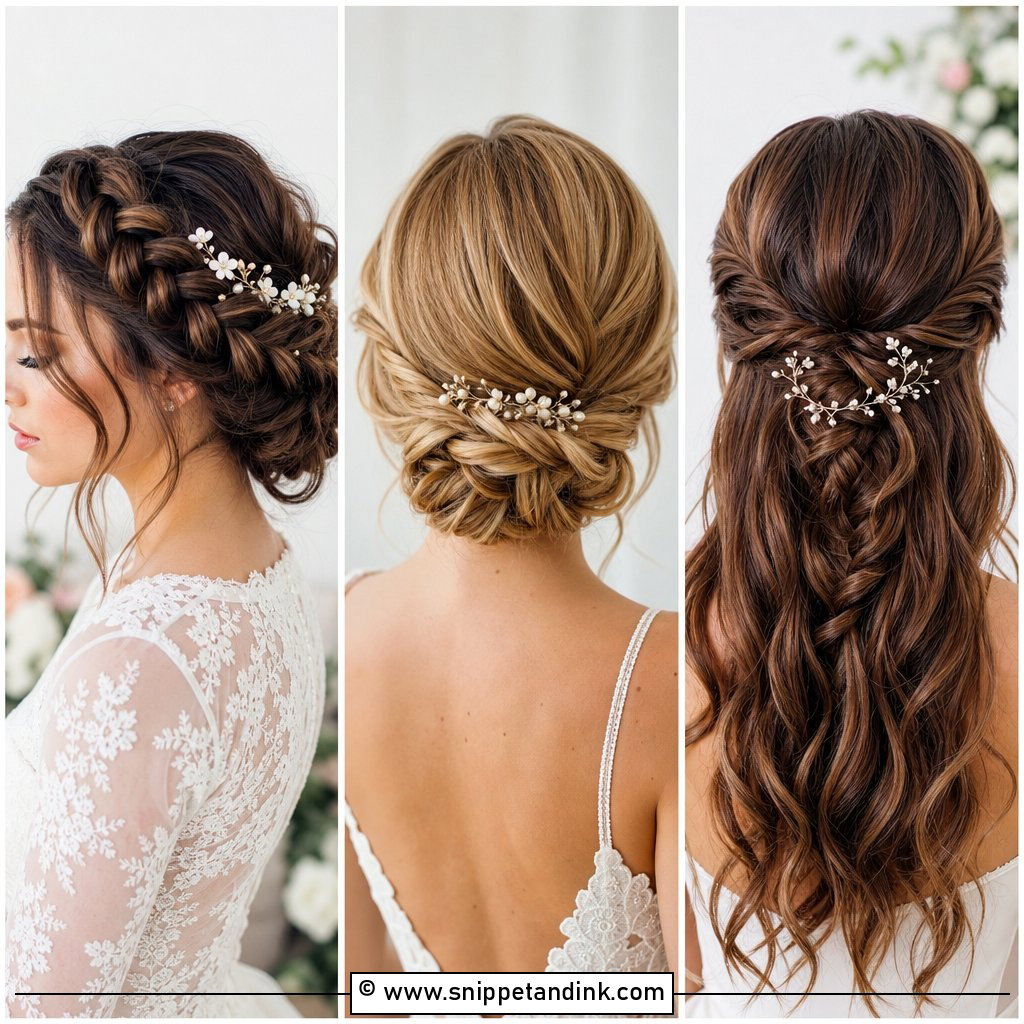
5. Crown Braid Wedding Updo
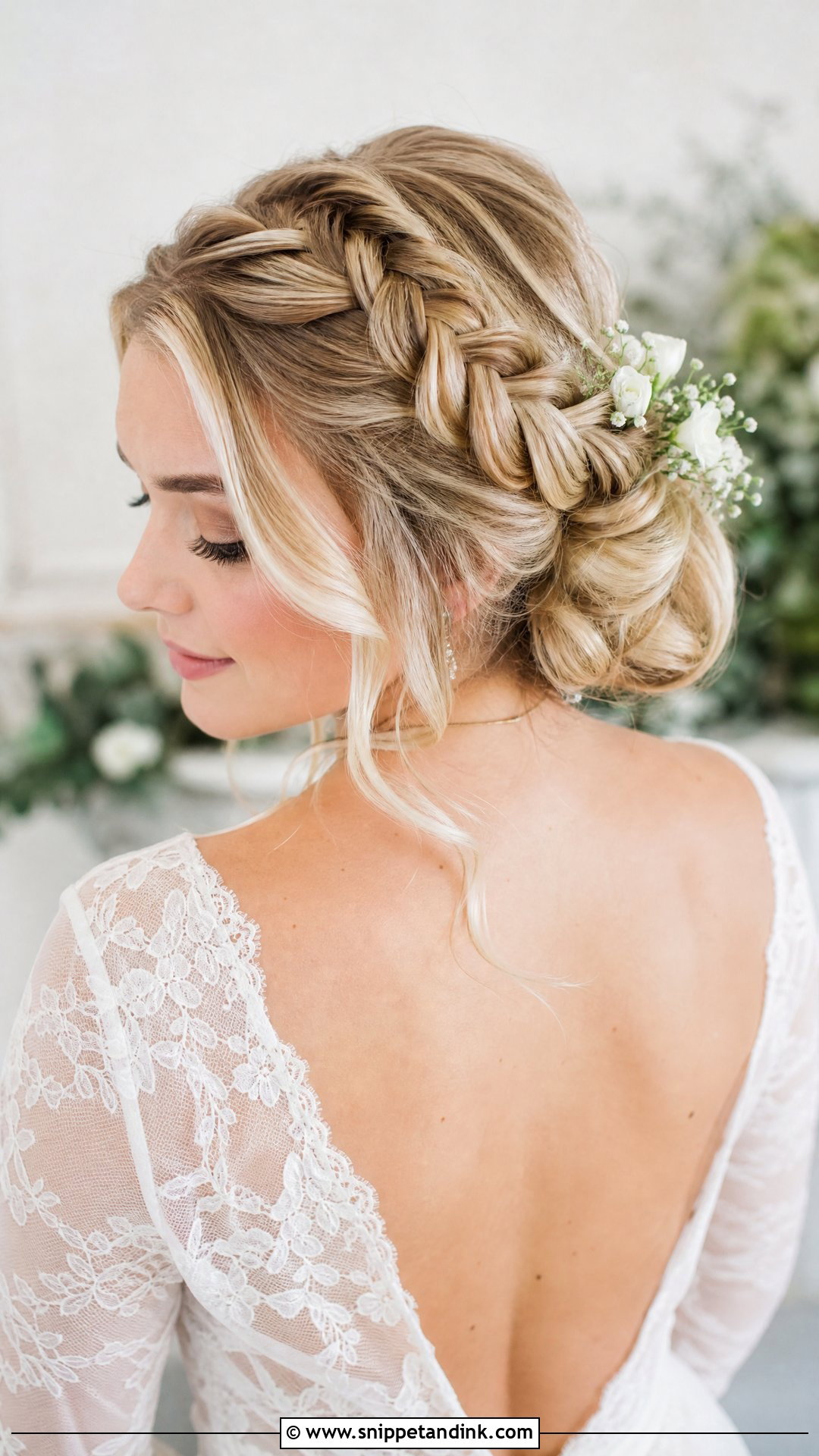
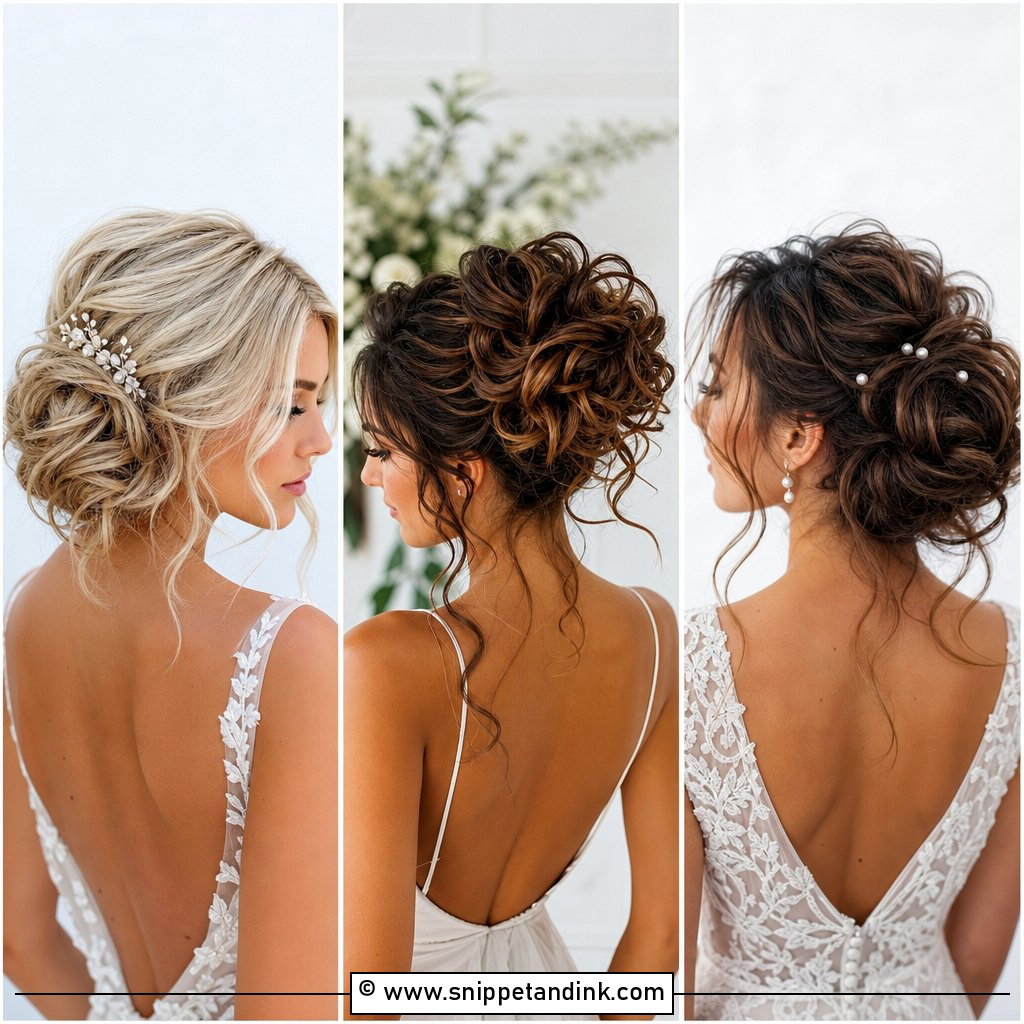
A braid running round the whole crown creates a beautiful halo effect, or it can wrap halfway and drop into a low bun. On thick hair the braid looks full straight away. On fine hair I’ll usually add a clip-in weft just for the braid section, because a skinny crown braid can look sparse in photos taken from slightly above. Outdoor and woodland weddings suit it well, and it stays put in wind better than almost anything else on this list.
6. Dutch Braid Wedding Updo
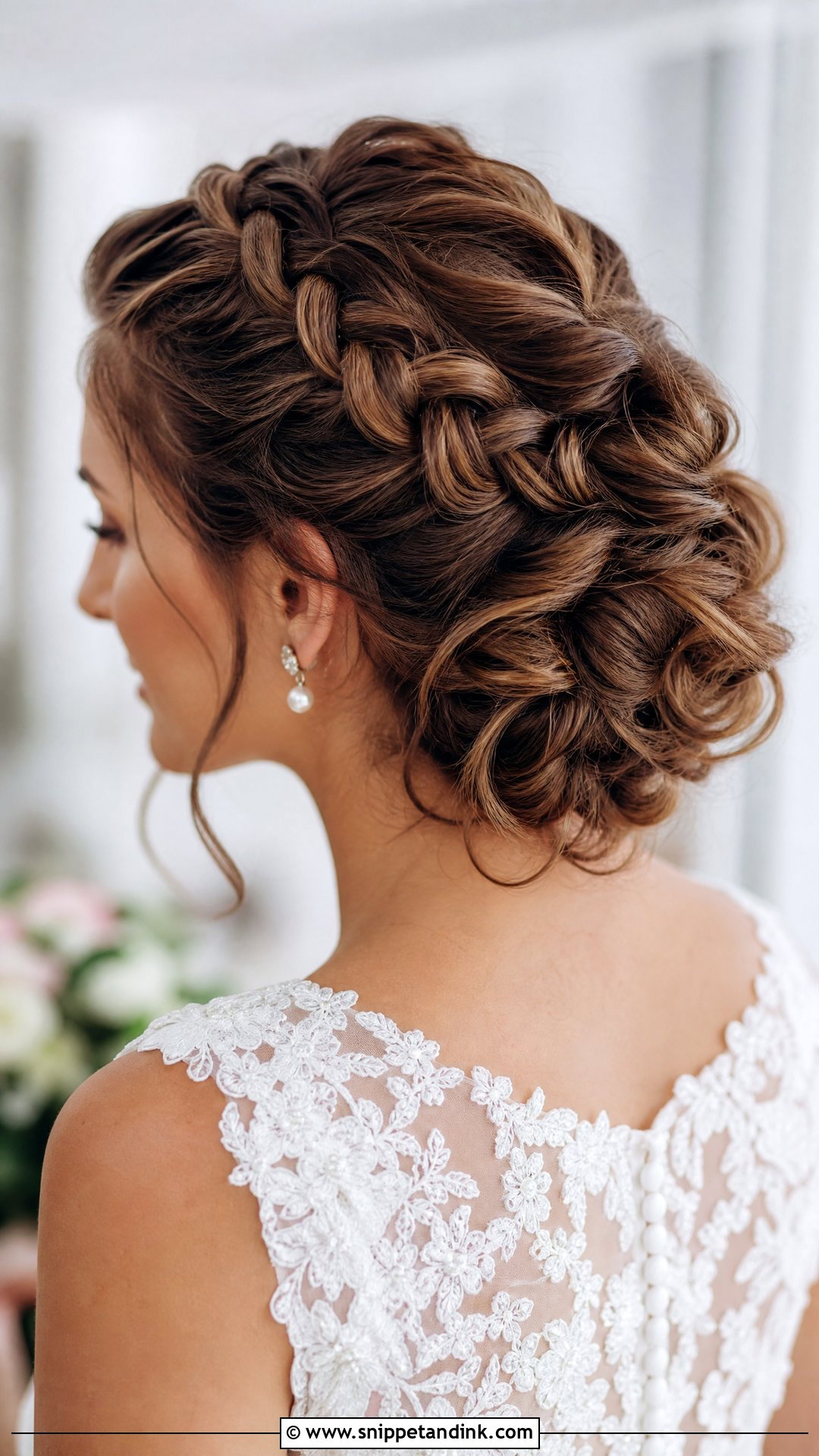
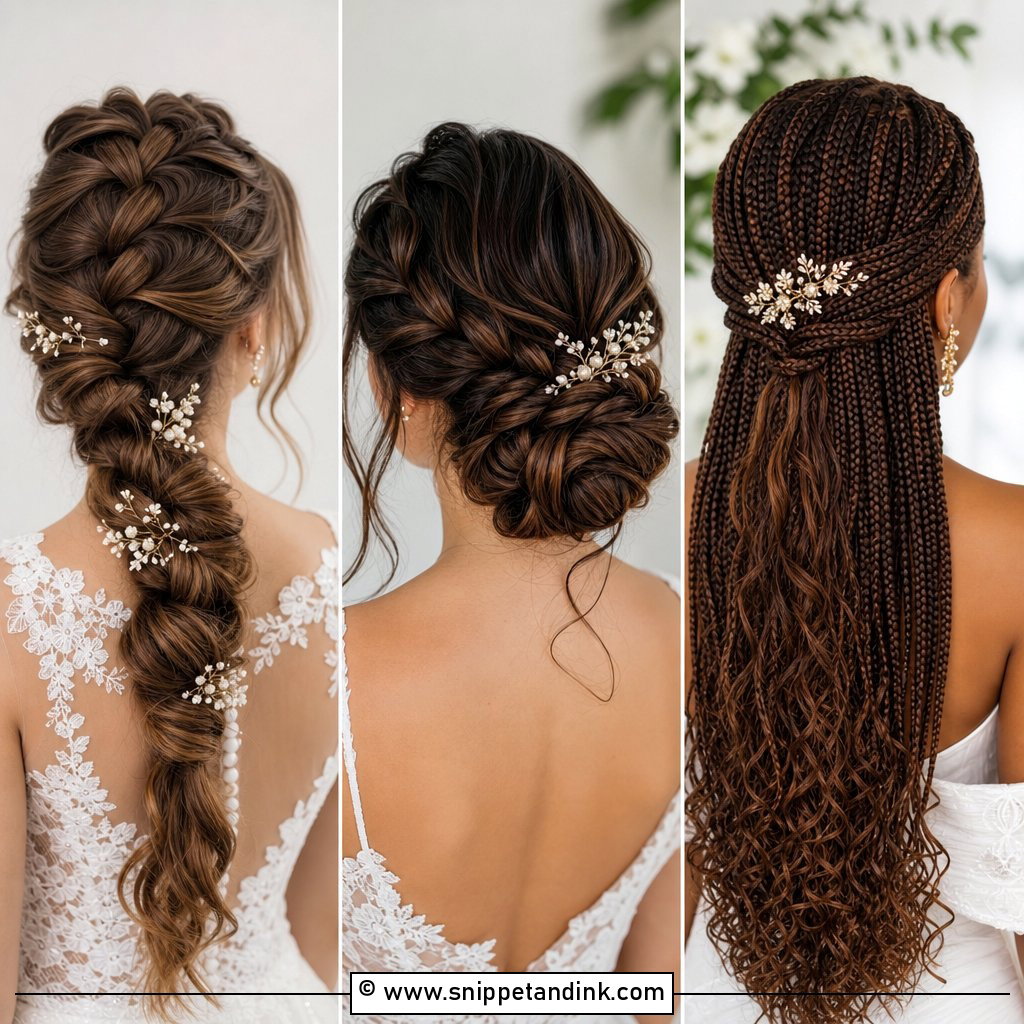
A Dutch braid is an inside-out French braid: you cross the strands under rather than over, so the plait sits raised on top of the head instead of sinking in. That lift gives strong texture with no accessories at all. Worn as double Dutch braids running into a bun, it’s one of the most secure styles I know. It suits thick, wavy and textured hair especially; on very silky hair I’ll prep with a texture spray so the strands don’t slip as I go.
7. French Braid Wedding Updo
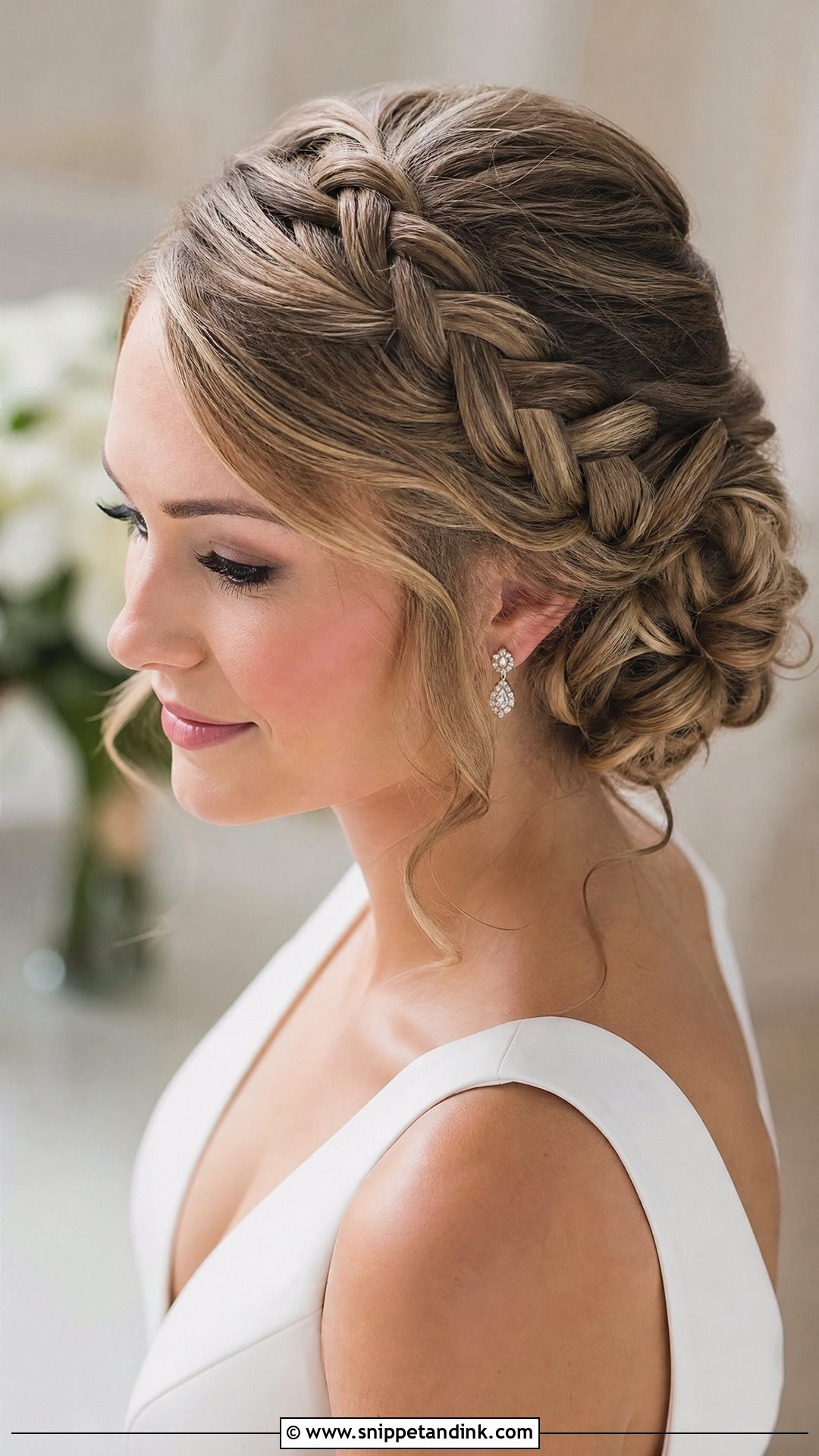
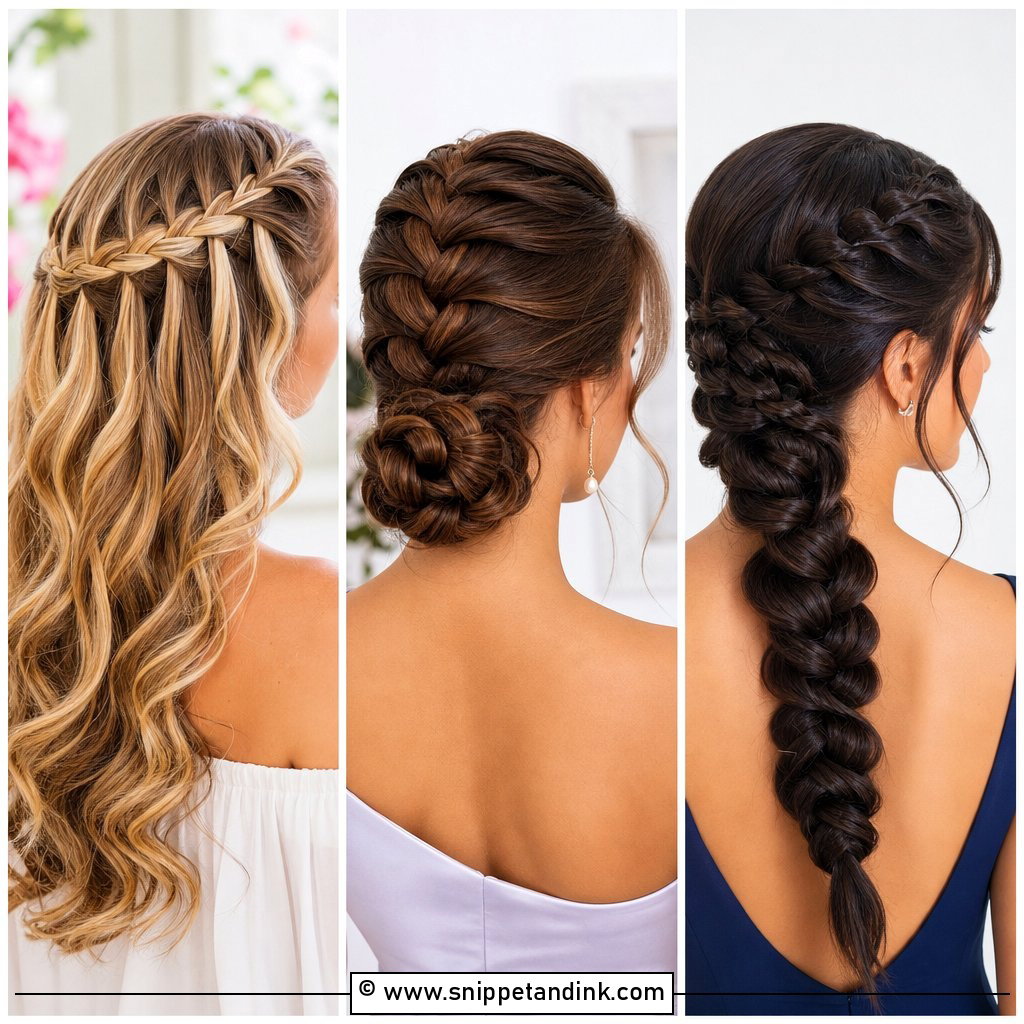
Reliable is the word for this one. A French braid from the crown, or worked gently down one side, catches short layers as it goes, so you don’t get bits escaping at the nape by evening. It gives structure without feeling stiff. If you’ve had layers cut recently, tell your stylist; the shortest ones decide how tight the braid has to be.
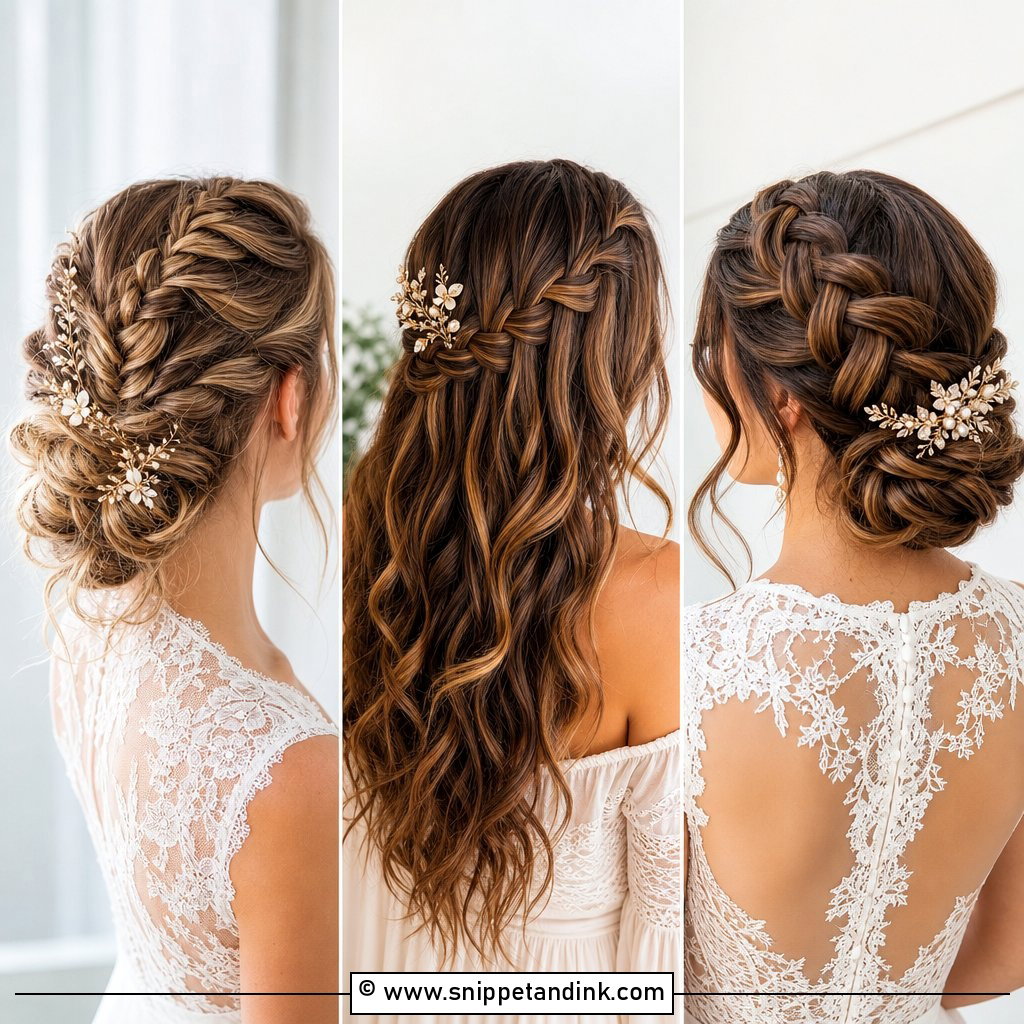
8. Messy Braided Wedding Updo
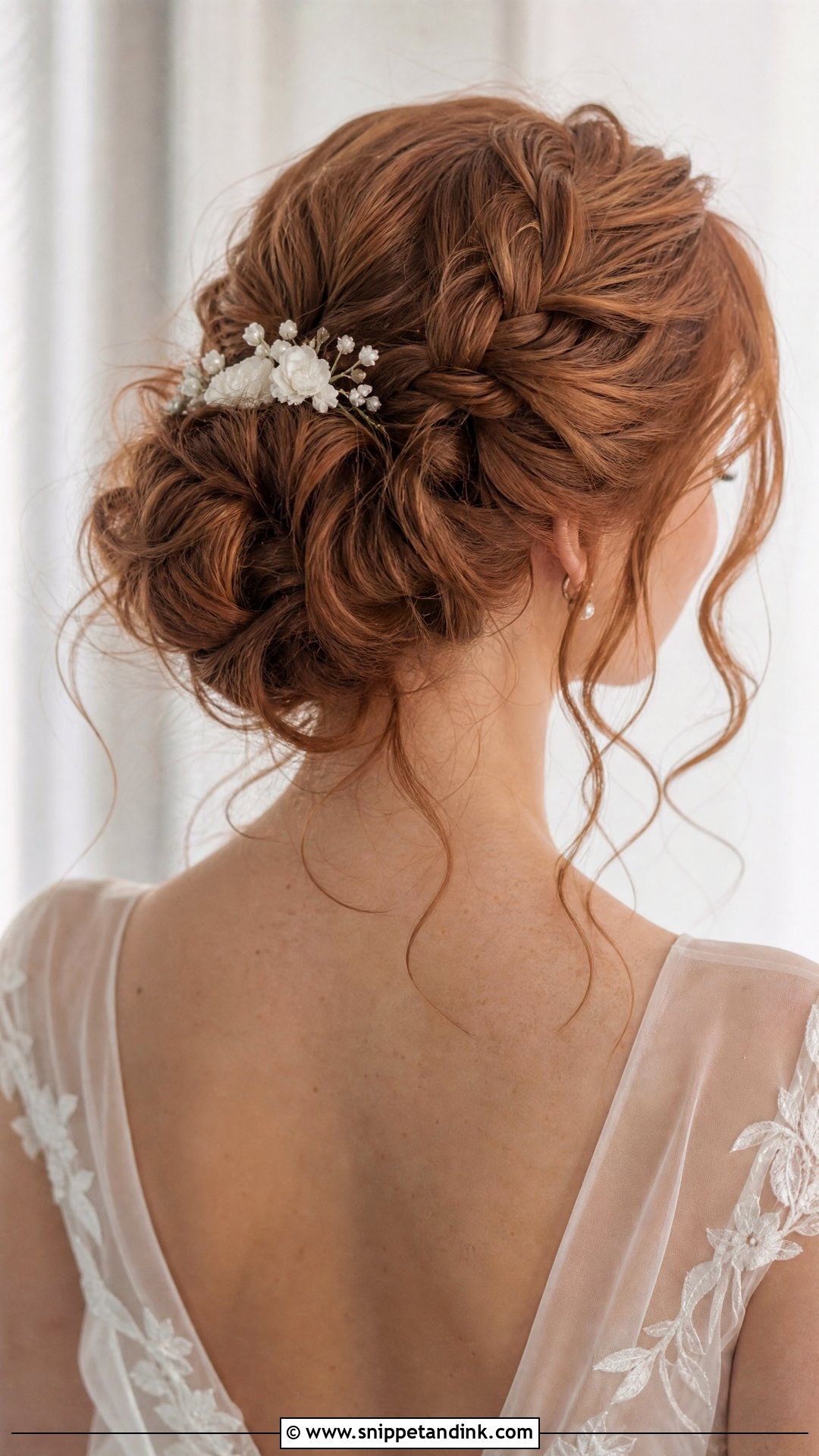
Messy is harder to do well than neat, honestly. The braid gets loosened and pulled apart, then blended into a textured bun so the whole thing looks airy. What keeps it from collapsing is the work underneath: I pin the bun firmly first and only pancake the braid once it’s anchored. Wavy hair, layered cuts and dimensional color suit it best because each loosened section catches light. A few pieces left around the cheeks finish it.
9. Boho Braided Wedding Updo
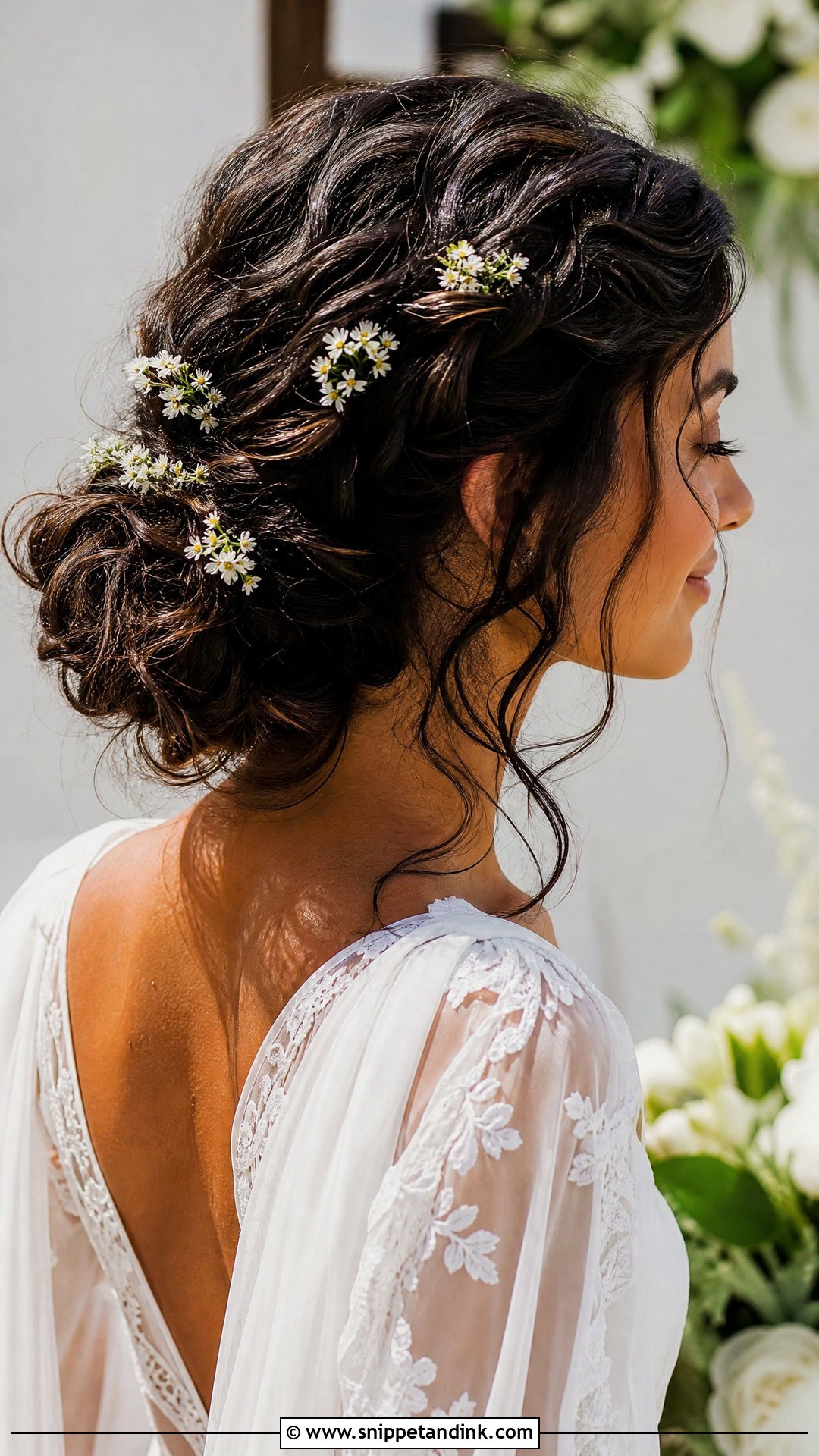
This style usually combines one or more braids, a low undone bun and face-framing tendrils, with a slightly lived-in finish that fits barn, beach and outdoor ceremonies. The braid can be fishtail, Dutch, rope, or classic three-strand, depending on how much detail you want. My one warning: boho texture relies on second-day hair or plenty of product. Freshly washed, conditioned hair won’t hold a loose braid; it slides straight out.
10. Braided Bun Wedding Updo
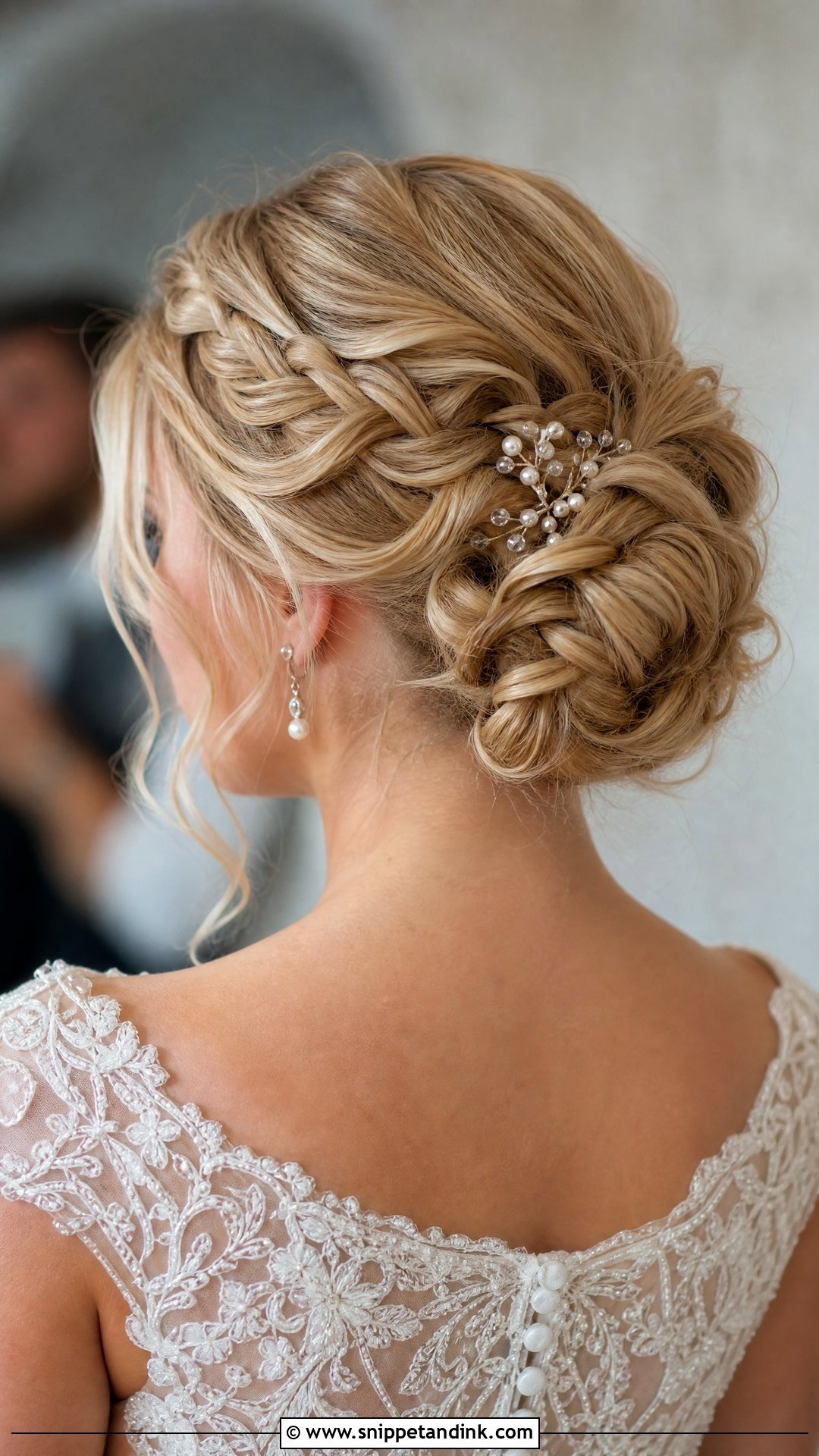
Braid the length first, then coil it into the bun, and a plain bun suddenly has pattern all the way round. You can also weave smaller braids through a textured updo. On thick hair I braid before wrapping because it compresses the bulk, so the bun doesn’t end up the size of a grapefruit. On fine hair, the braid gets gently pancaked wider to fake more volume. It sits happily under a veil, comb or floral piece.
11. High Bun Wedding Updo With Braid
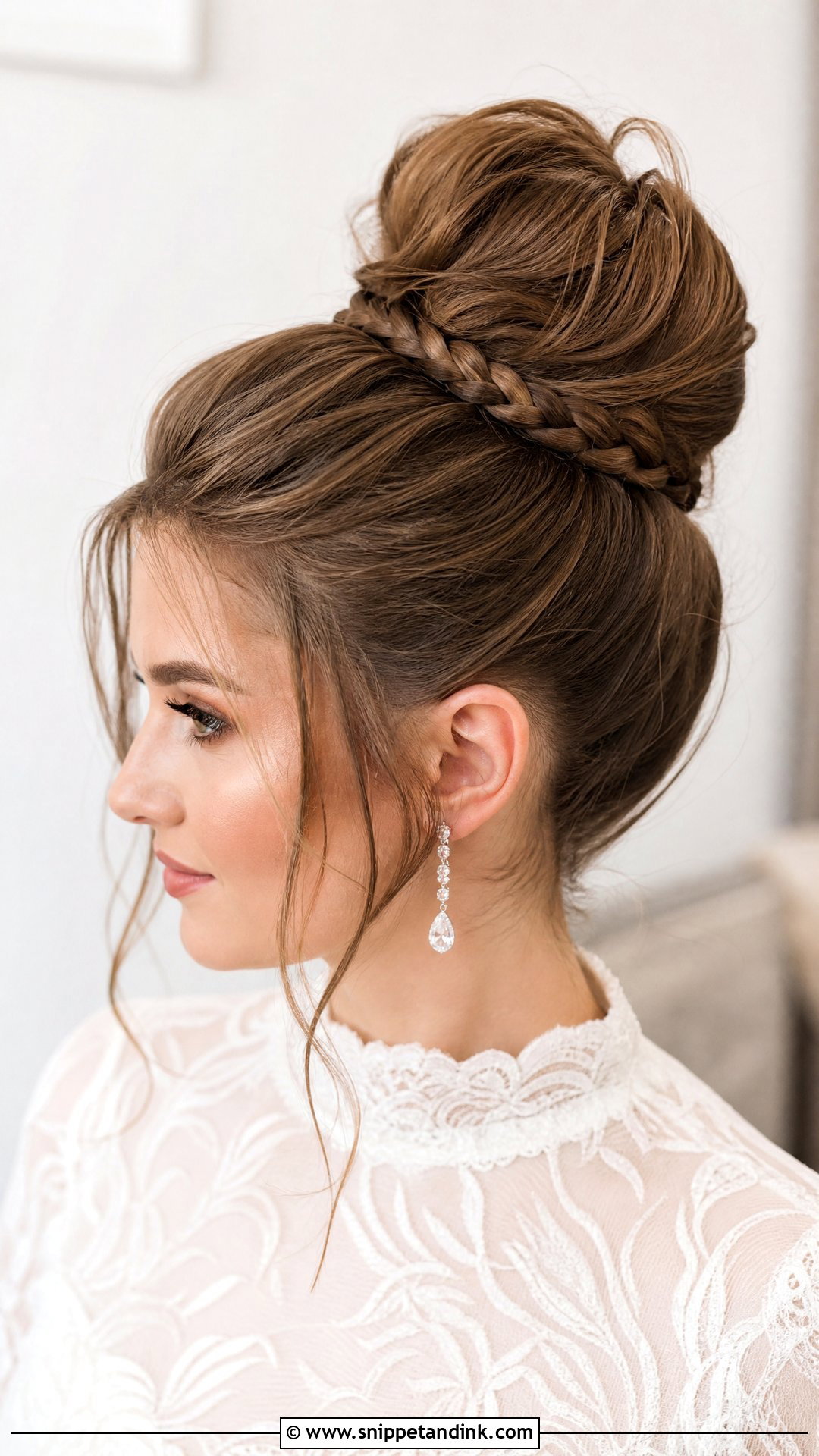
Lifting the bun up high clears the neck completely, which is why I suggest it with high necks, dramatic sleeves and big earrings. The braid can wrap the base, climb up the back or frame the front before joining the knot. Heat is its real selling point: hair off the neck is far more comfortable at a summer ceremony. Do check where the veil goes, though, because a high bun pushes a comb further down the back of the head.
12. Waterfall Braid Wedding Updo
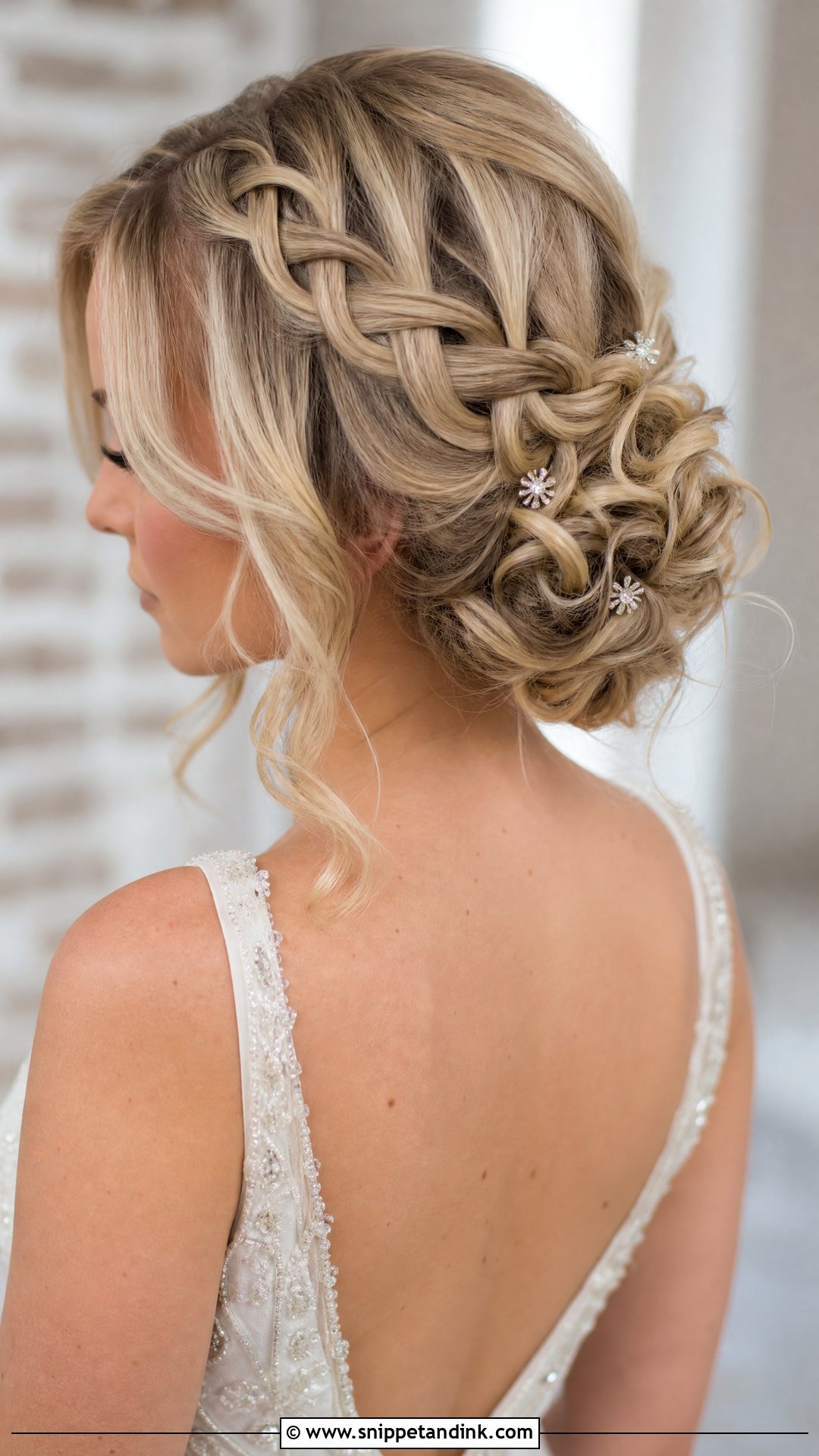
A waterfall braid drops a strand down after each crossing, so you get a woven line with little pieces falling through before everything is gathered into a bun. It reads lighter than a full crown braid. Curled hair is close to essential here, since straight dropped sections look like mistakes rather than design. Highlights and balayage make the pattern easier to pick out in photos, too.
13. Braided Updo For Long Hair Wedding
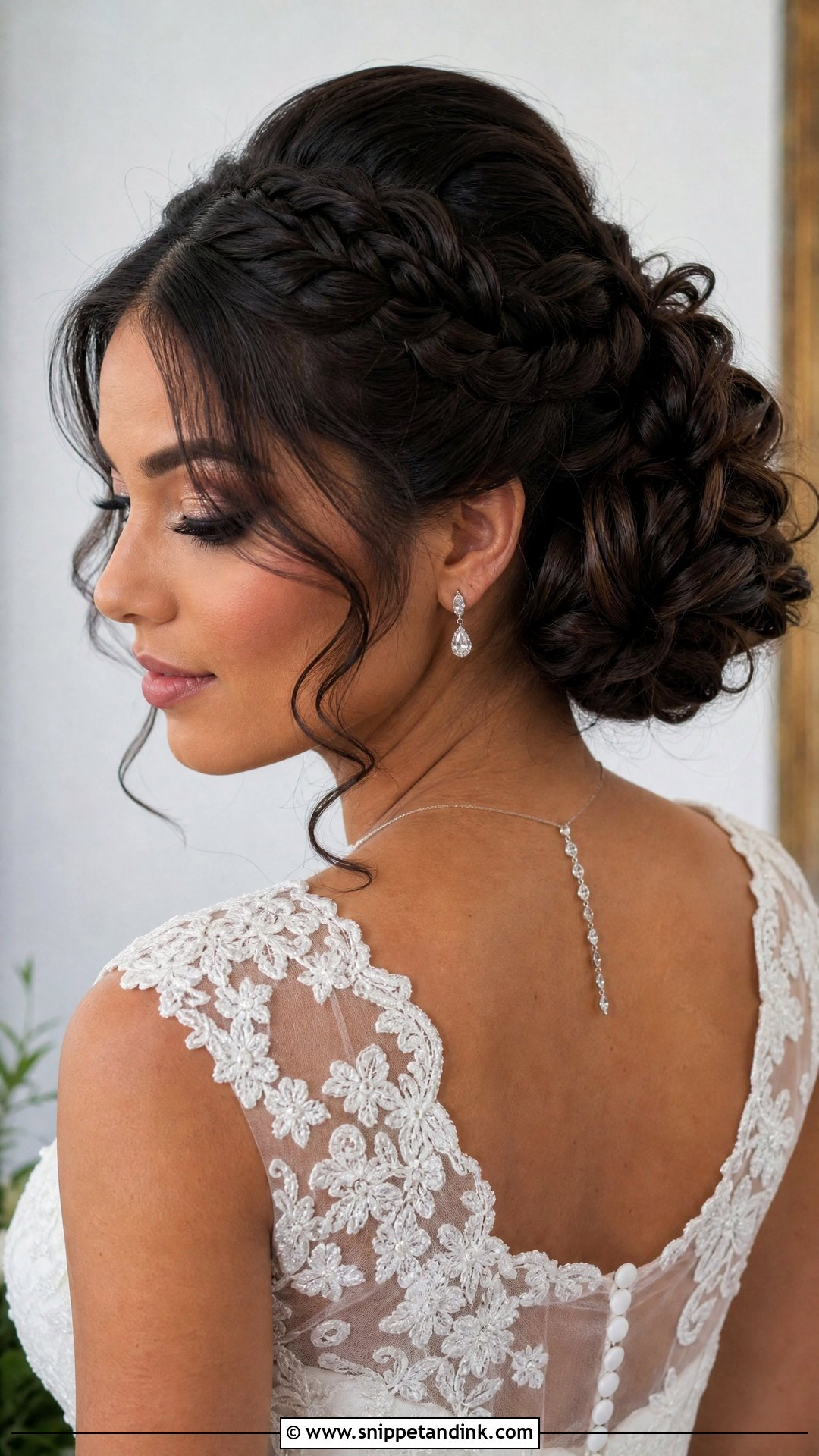
Long hair gives me the most to work with: fishtail buns, braided crowns, multi-braid designs. The real challenge is weight. Waist-length hair pinned into one big shape can pull at the scalp by mid-afternoon and give you a headache, so I split the length into two or three smaller braided sections and pin each one separately. It looks just as full and feels much lighter. Leave a couple of front pieces loose if you want softness.
14. Braided Updo For Medium Hair Wedding
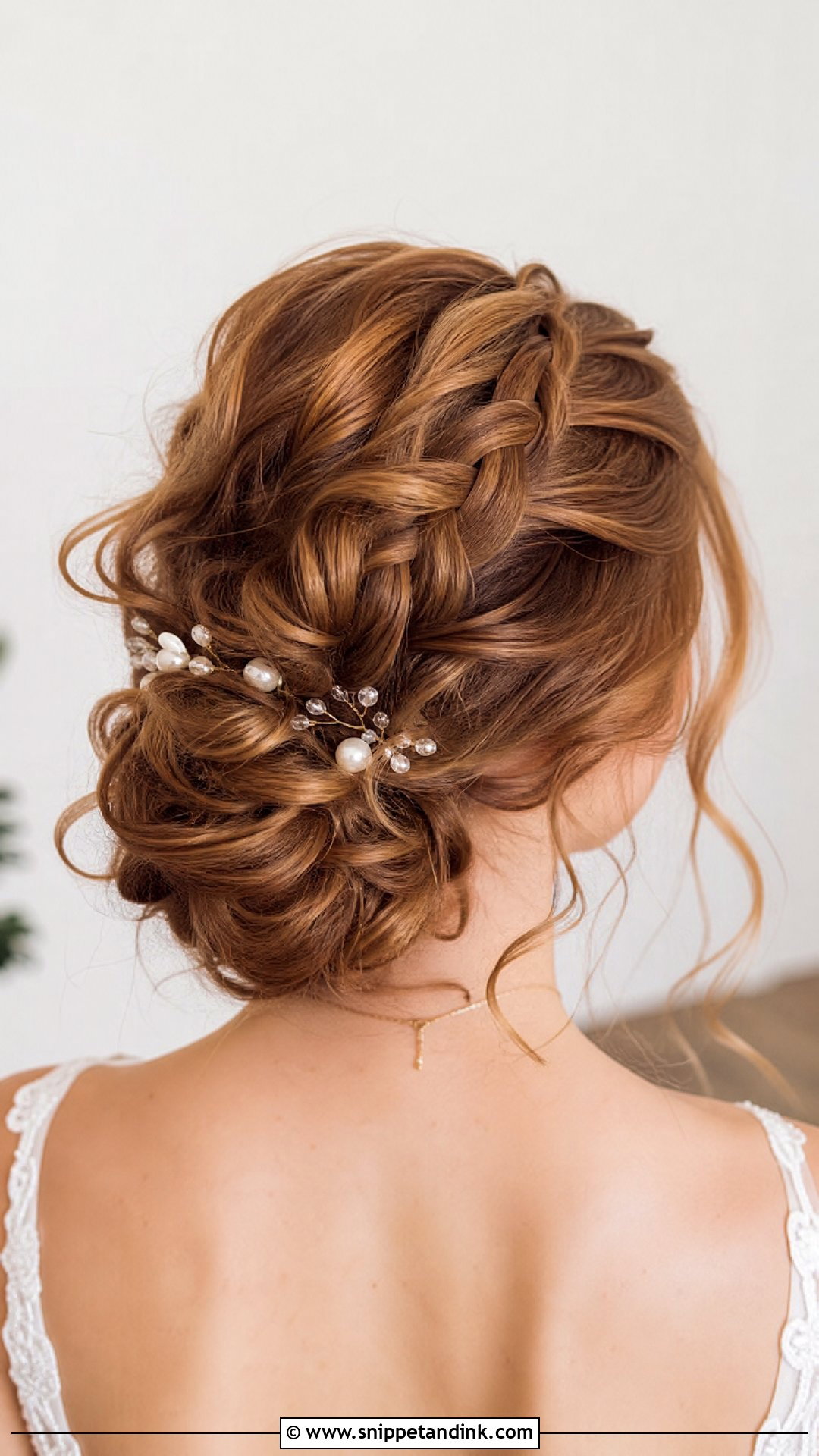
Collarbone-length hair braids up more easily than most brides assume. The braid is smaller, but it’s enough to turn a low bun or soft chignon into something bridal. Where medium hair struggles is fullness at the back, and that’s where a set of clip-ins earns its place. I also curl before pinning: curled hair takes up more room and grips pins better than straight hair of the same length.
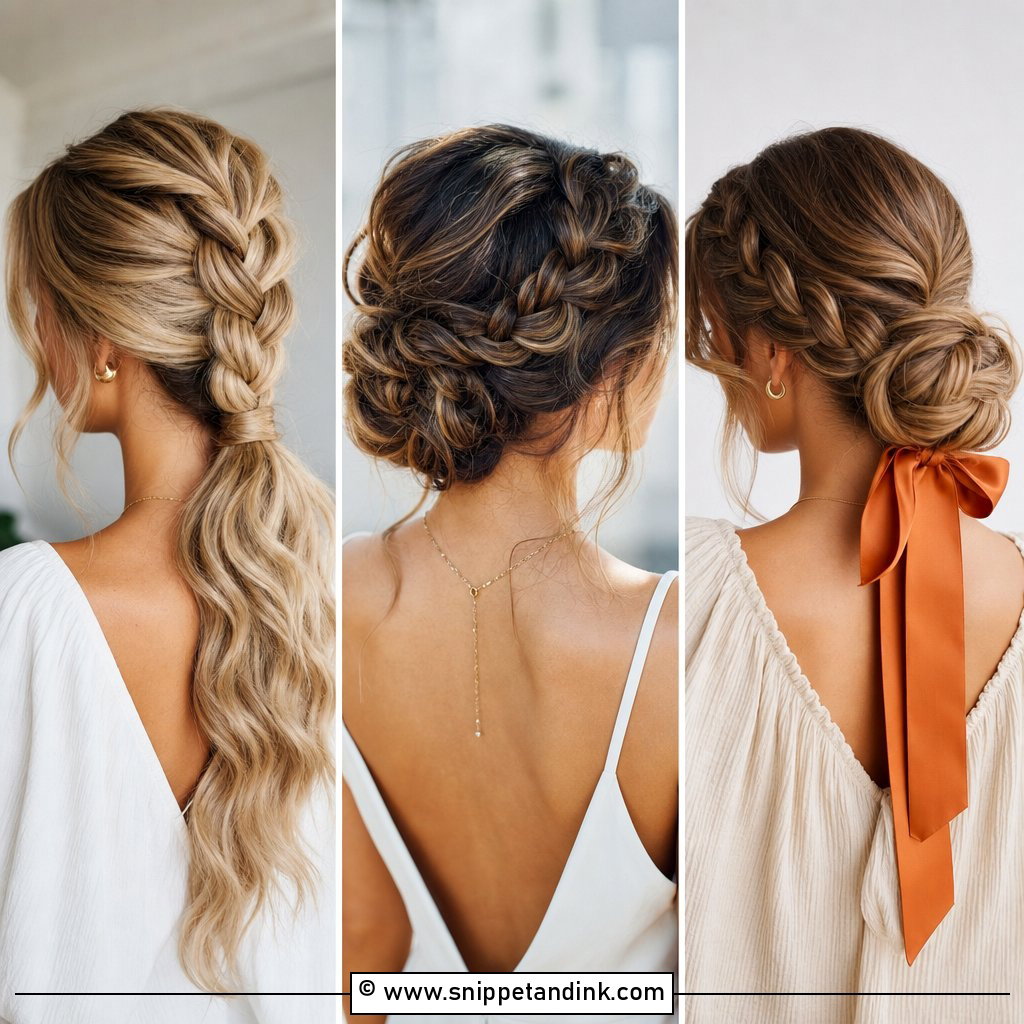
15. Braided Updo For Short Hair Wedding
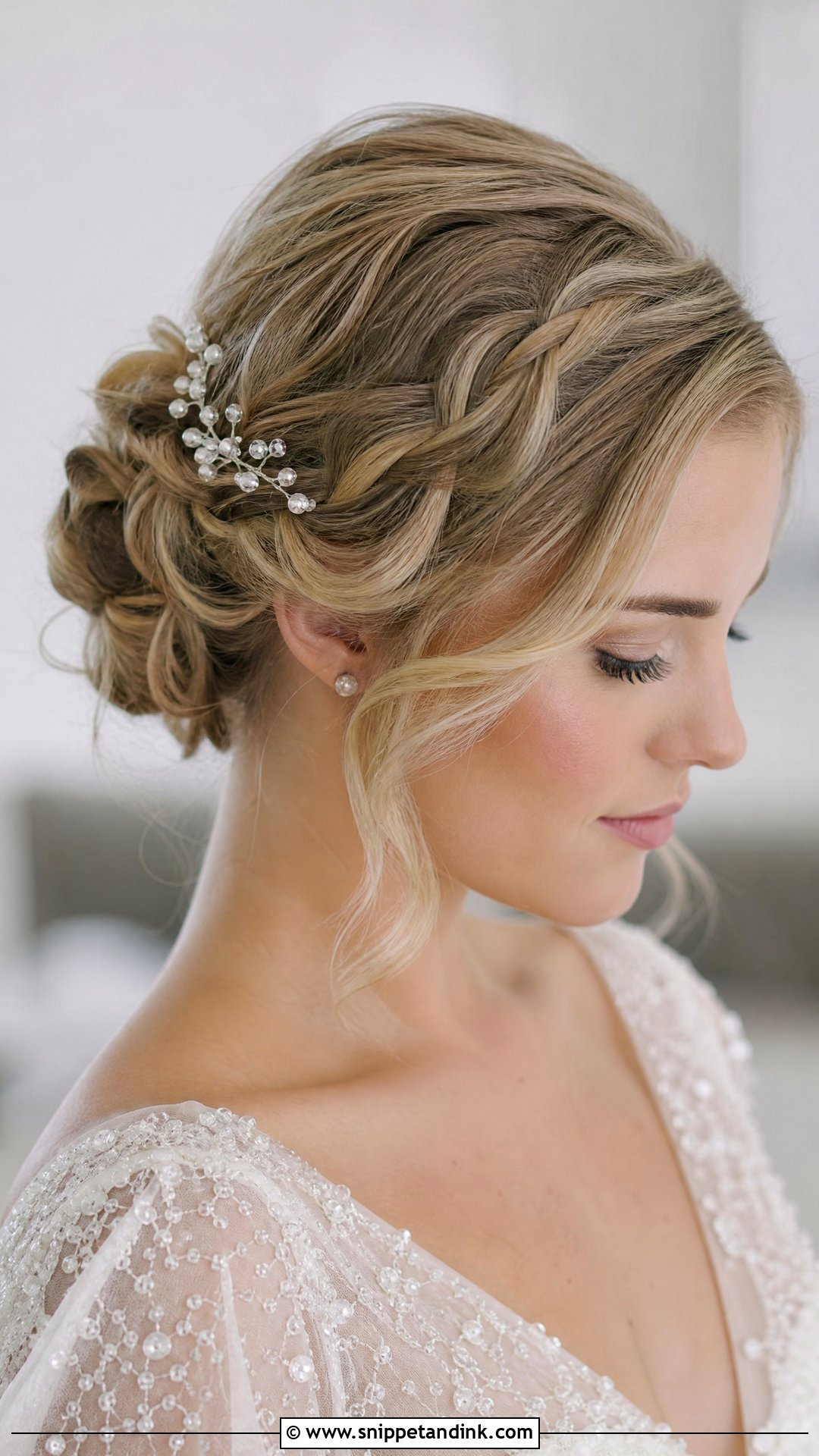
Short hair can absolutely wear a braid; it just changes where the braid goes. On a bob or lob I keep the braid at the hairline or along one side, where there’s enough length to plait, and pin the back into small curls. The finished updo is compact, but texture spray and hidden pins give it grip and fullness. If your shortest layer sits above the ear, it may not reach into a back braid at all, so a side braid is the safer bet.
16. Curly Braided Wedding Updo
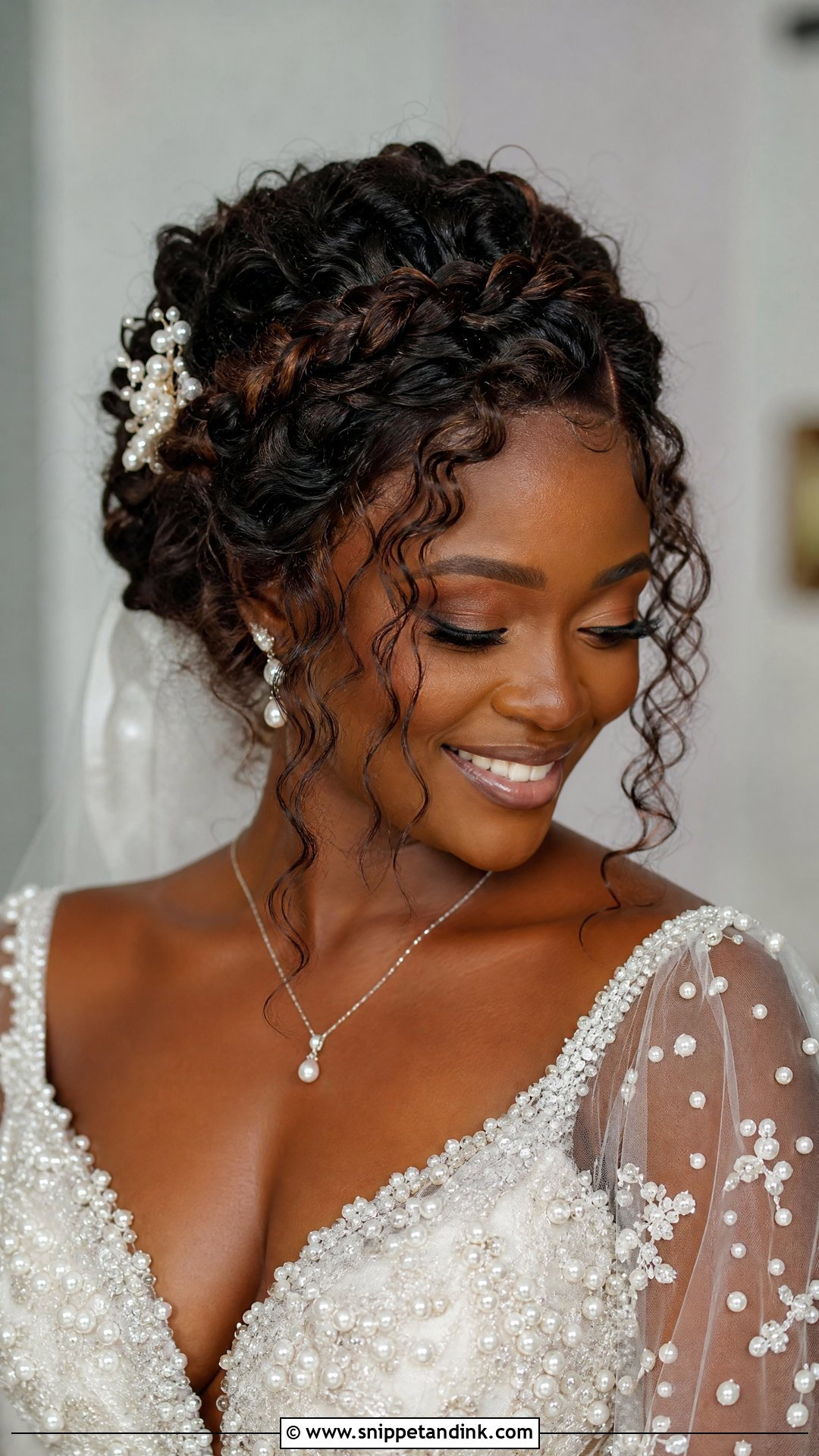
Curls bring their own volume, so the braid only needs to give shape, along the crown, at the side or through the back, before the rest is pinned into a soft bun or puff. Define the curls first and braid gently; brushing them out to braid tighter breaks the pattern into frizz. I’d also avoid heavy hairspray on defined curls, since it dulls them. A curl cream and gel set before your appointment works far better.
17. Sleek Braided Wedding Updo
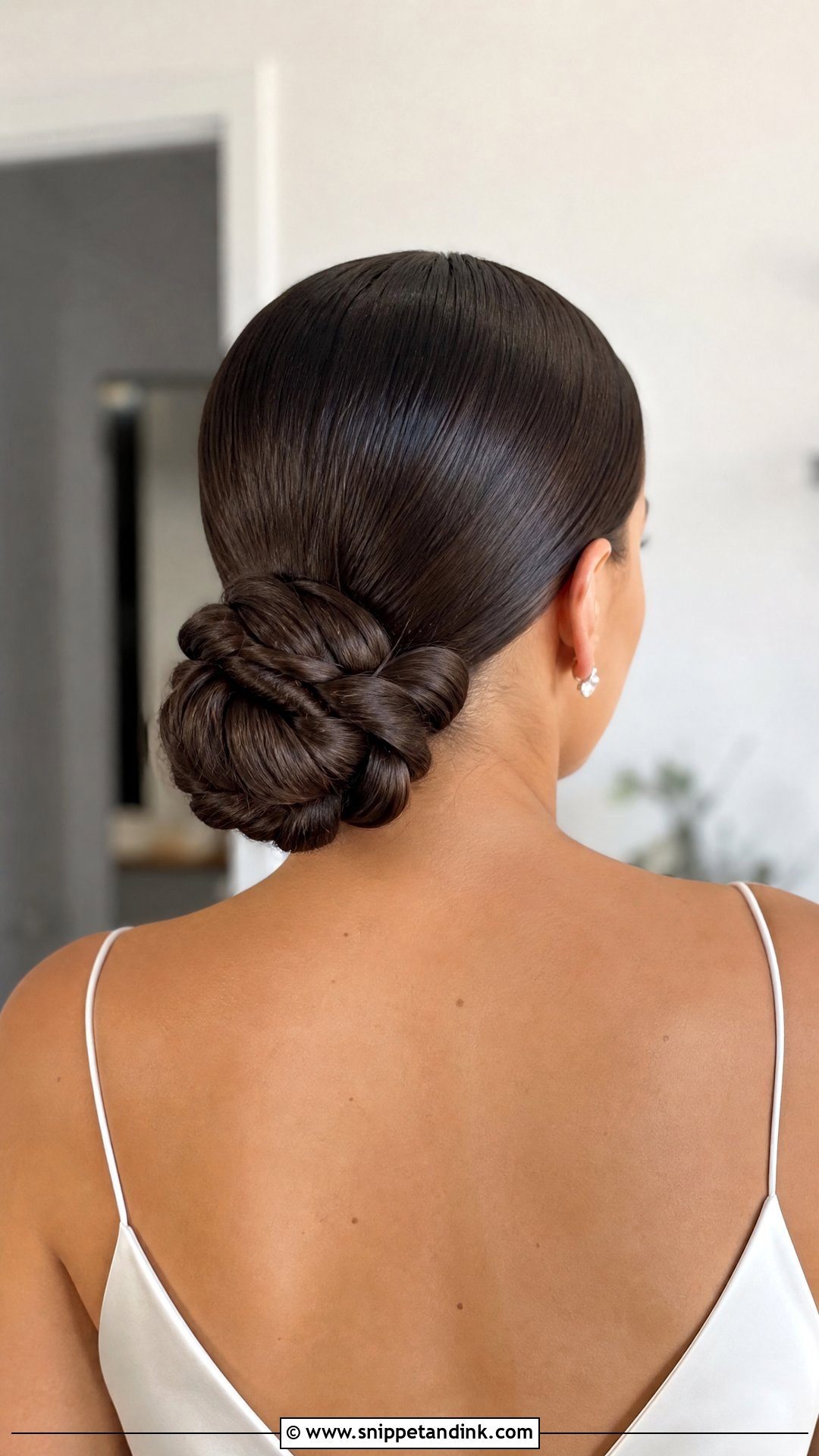
Smoothing the hair close to the head and braiding it into a low bun, high bun or structured chignon gives you the cleanest finish here. It suits minimalist gowns and satin especially. A center part feels modern; a deep side part feels more classic. Sleek styles show every flyaway, so I use a firm-hold gel along the hairline and a light shine spray, then stop before it looks wet or helmet-like on camera.
18. Halo Braid Wedding Updo
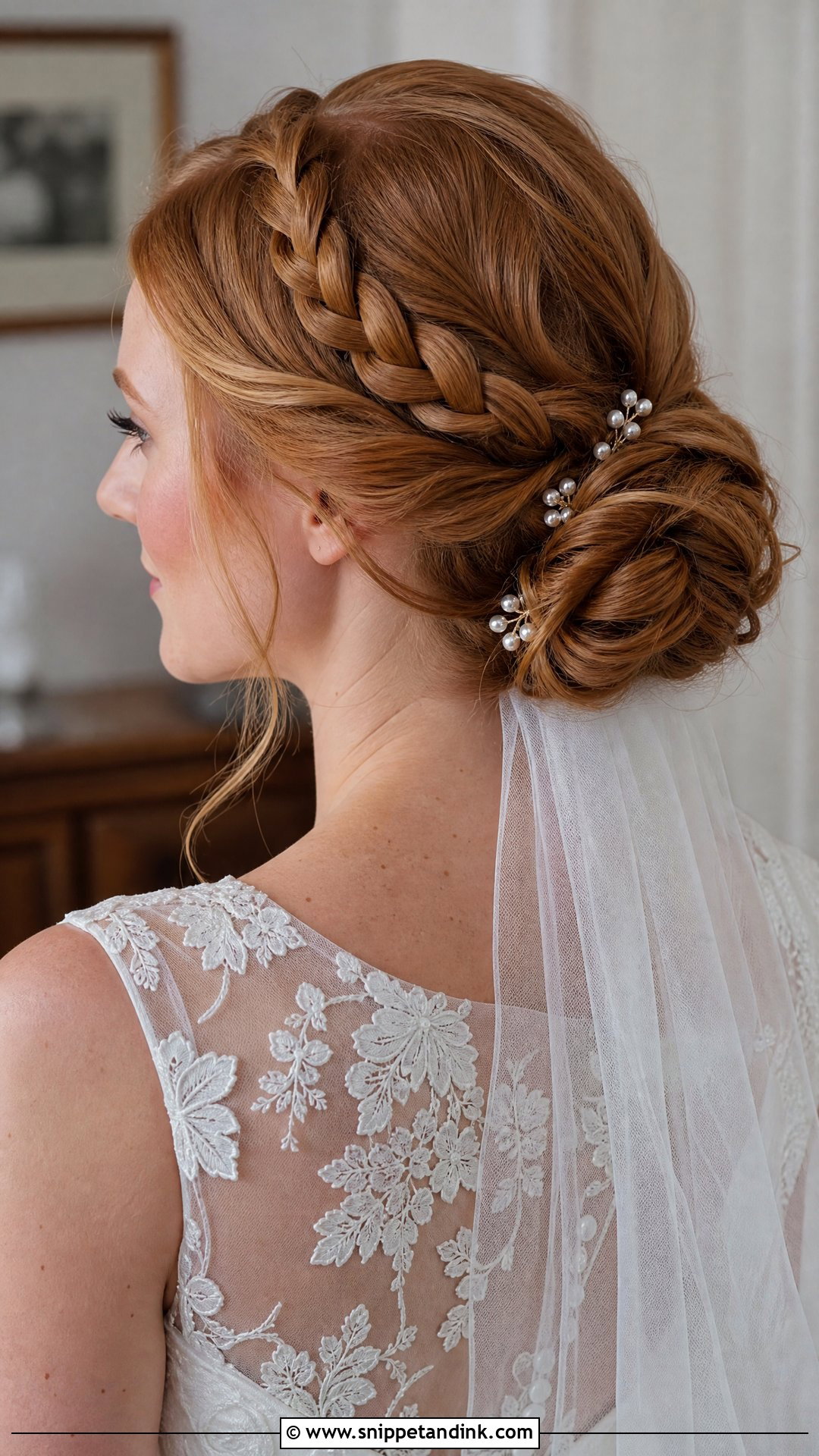
A halo braid is the softer cousin of the crown braid: more rounded, with gentle volume at the hairline rather than a tight band. The ends can be tucked away invisibly or finished into a low bun. Here the braid really is the accessory, so I keep extras small, maybe a few pearl pins. If you’re wearing a veil, place it underneath so the halo stays visible from the front.
19. Rope Braid Wedding Updo
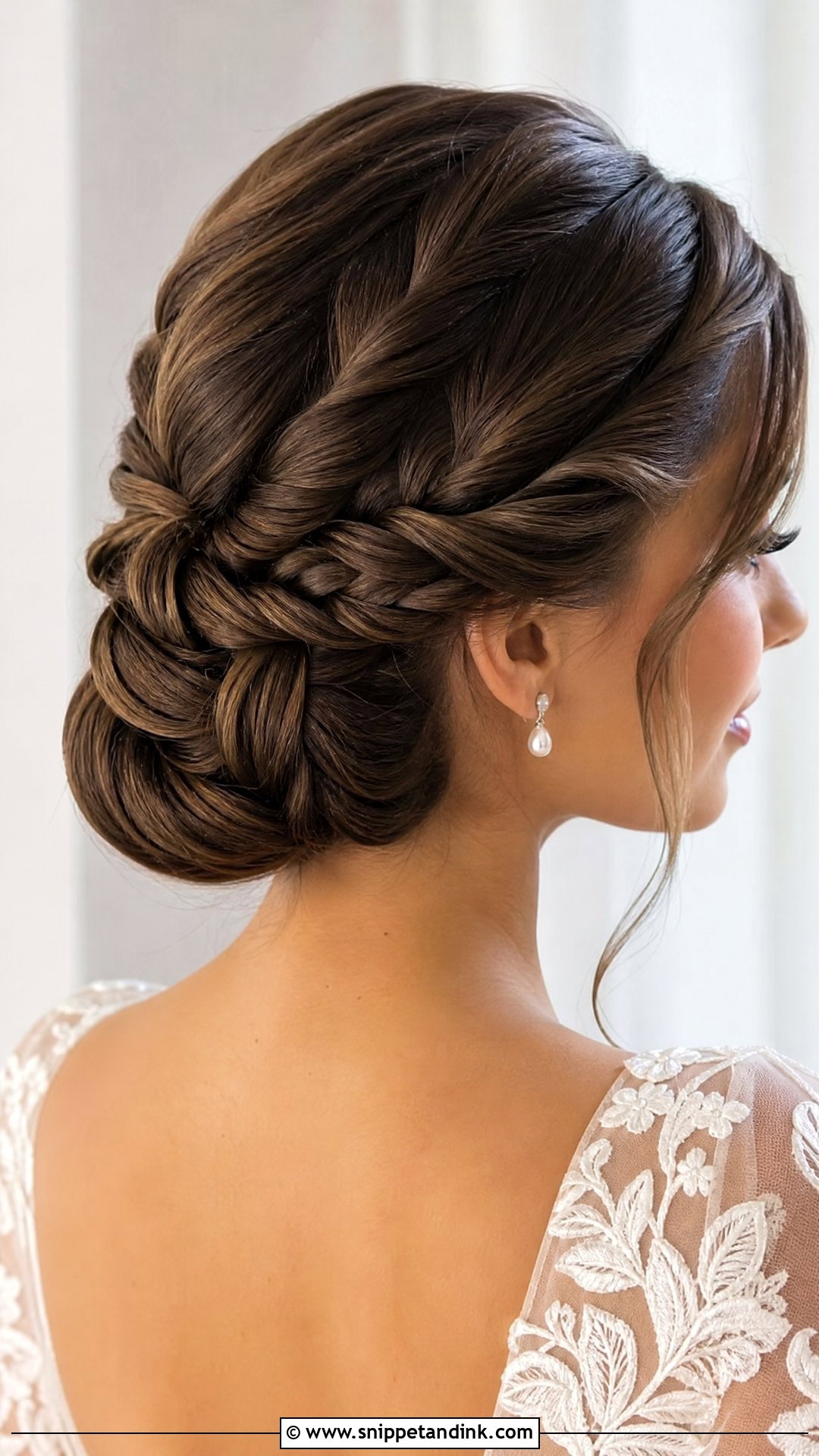
A rope braid is made from two twisted sections wound around each other instead of three plaited strands, which gives a sculpted, spiral look. It can wrap into a bun, run along one side or sit across the back. Rope braids give texture without reading boho, sleek on straight hair, softer on curled. One thing I always do: twist each section in the opposite direction to the wrap, or the rope unwinds itself over the evening.
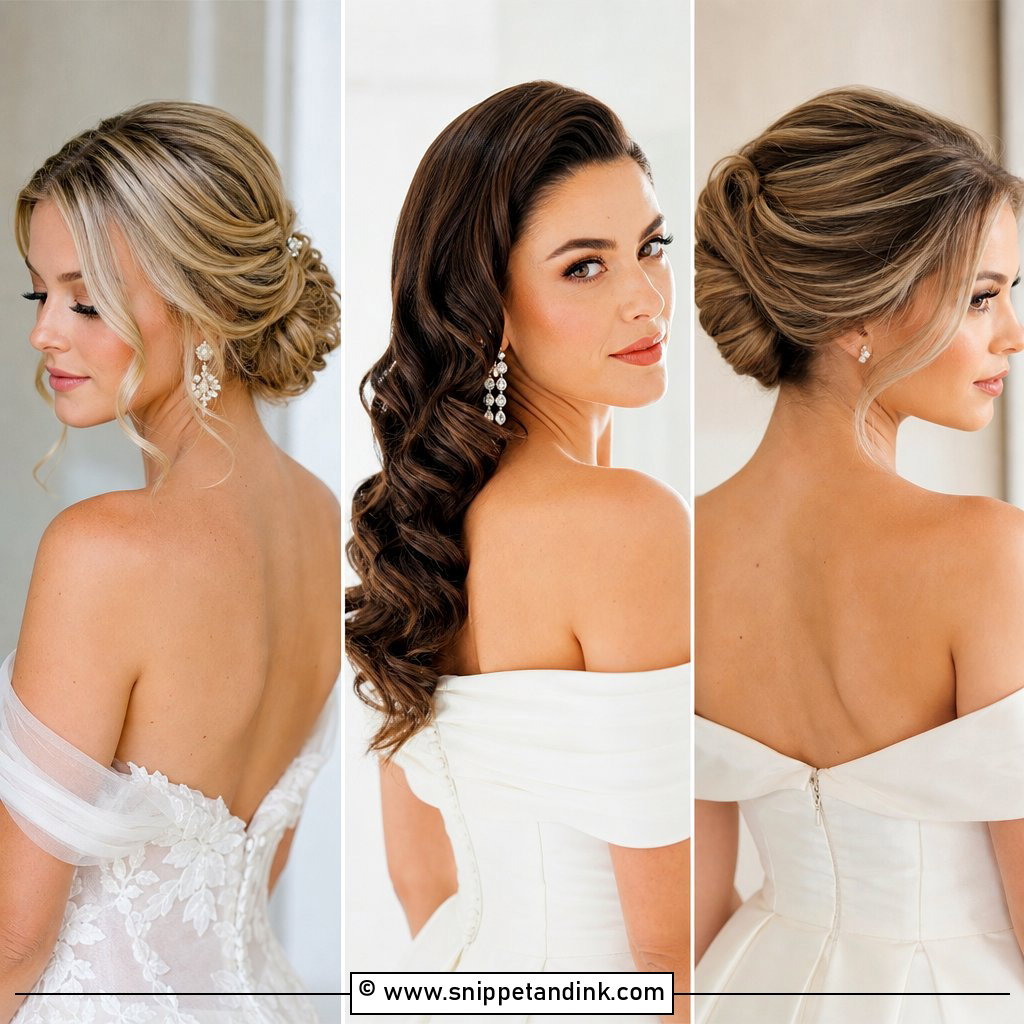
20. Braided Updo With Veil Wedding
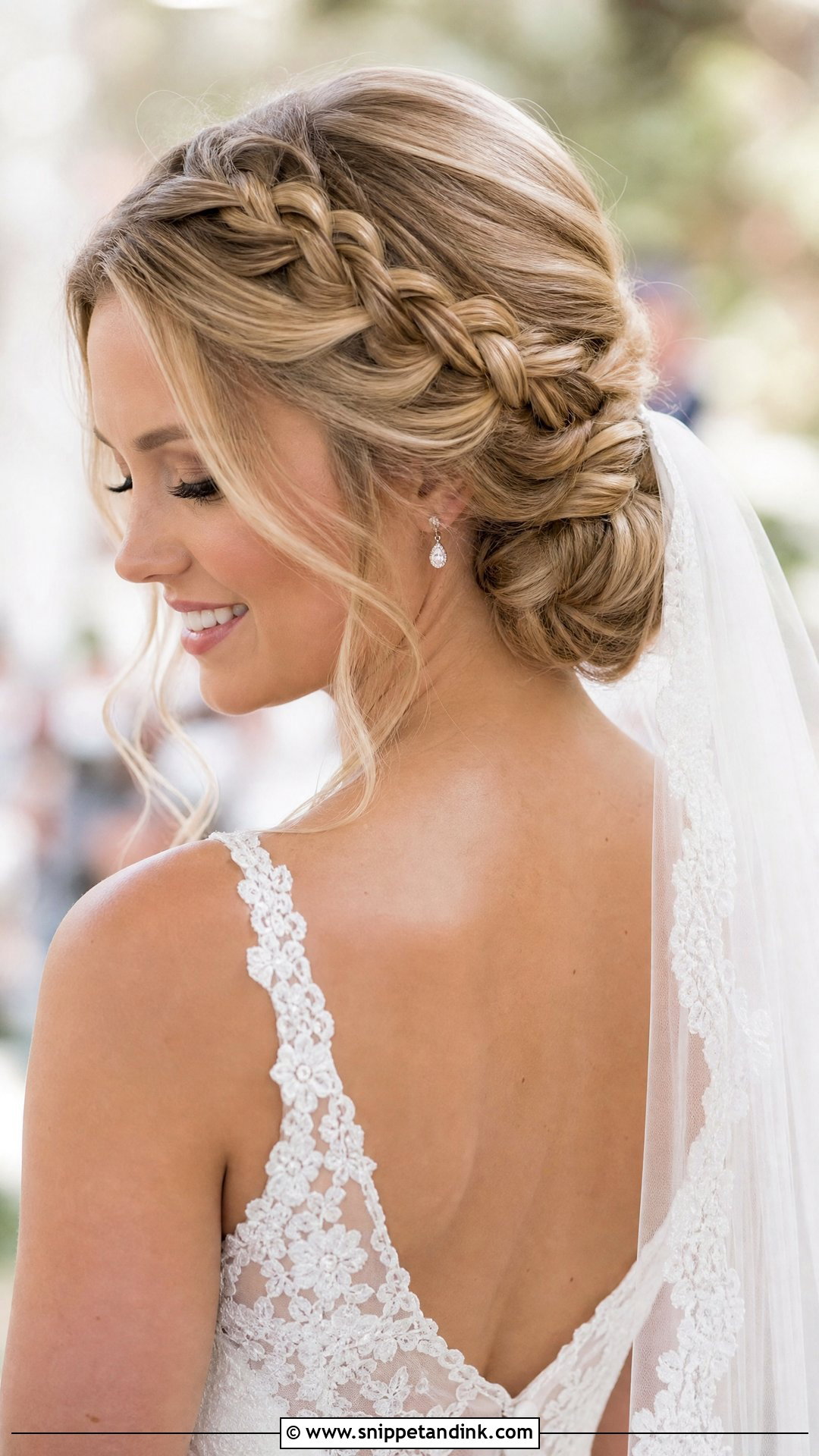
Planning hair around a veil is mostly about leaving the comb a solid place to sit. A low braided bun, side bun or chignon gives you three options: veil above the bun, under it, or tucked into its center. I always slide the actual veil in at the trial, because a heavy cathedral veil needs a different anchor point than a light fingertip one. Done well, the braid shows both before and after the veil comes off, so one style carries you from ceremony to reception.
Arriving With Hair a Braid Can Actually Hold
Most braided updos that fall apart do so because of the prep, not the pins. The best canvas is clean but not squeaky.
- Wash the night before or the morning of, as your stylist prefers, and skip heavy conditioner on the lengths.
- Arrive with hair completely dry. Damp roots stop texture products and curls from setting.
- Leave out shine serums and oils that day; they make braids slippery.
- If you color your hair, book it about a week or two before so the tone settles and the ends aren’t freshly softened.
Getting the Pins Out at the End of the Night
A braided updo can easily hold a few dozen pins. Don’t drag a brush through it. Find the pins by feel, starting at the bun and working outward, then unpick the braid with your fingers. A little conditioner or detangling spray on the lengths before brushing saves a lot of breakage, and sleeping on a loose plait keeps the knots down until morning.
Bring Your Neckline and Your Veil to the Trial
Braids earn their place in an updo because they make the pinning stronger, not just prettier. They help fine hair look fuller and give thick hair a shape it will actually keep. Before you settle on one, think about what your neckline shows at the back, where the veil sits and how humid your venue will be. Save three or four favorites, then let your trial tell you which one holds up on your hair.
You'll Like These Ideas:


Leave a Reply