
Shoulder length is the length I see most often in the trial chair, and it’s more workable than brides expect. It’s long enough to wave, pin into a small bun or twist back, yet short enough that it doesn’t drag a style down by mid-afternoon the way very heavy hair does. The catch is the ends: hair that sits right on the shoulders gets pushed around by straps, collars and veils, so the neckline matters more here than at any other length. That’s why I plan the hair alongside the dress, from strapless gowns to high-neck lace. Below are fifteen looks I’d actually put on this length, with notes on what each one needs to last until the last dance.
Dress Collars and Straps Push This Length Around
Hair that ends at the shoulder is the only length in constant contact with your dress. Straps, a high collar or a lace yoke push the ends up and out, so a wave that looked perfect in the chair can be flipped outward an hour later. I ask brides to wear a top with a similar neckline to their trial, or at least bring a photo of the dress from behind, because it changes which of the styles below I’d recommend.
High necks and lace collars
Ends that brush a high neckline rub with every head turn and frizz by the reception. Either take the hair up, or curl the ends away from the collar so they rest just above it. For sleek styles, the ends need bevelling under or they’ll kick out.
Strapless and off-the-shoulder
Bare shoulders are the easiest match for this length. Down styles fall freely and waves rest on skin without catching on anything. Because nothing hides them, the ends need to be healthy and polished.
Thin straps and cap sleeves
Straps catch curls and pull them apart, especially during hugs. Tucking one side behind the ear or going half up reduces how much hair sits on the strap side, and the style stays neater through the receiving line.
1. Shoulder Length Bridal Waves
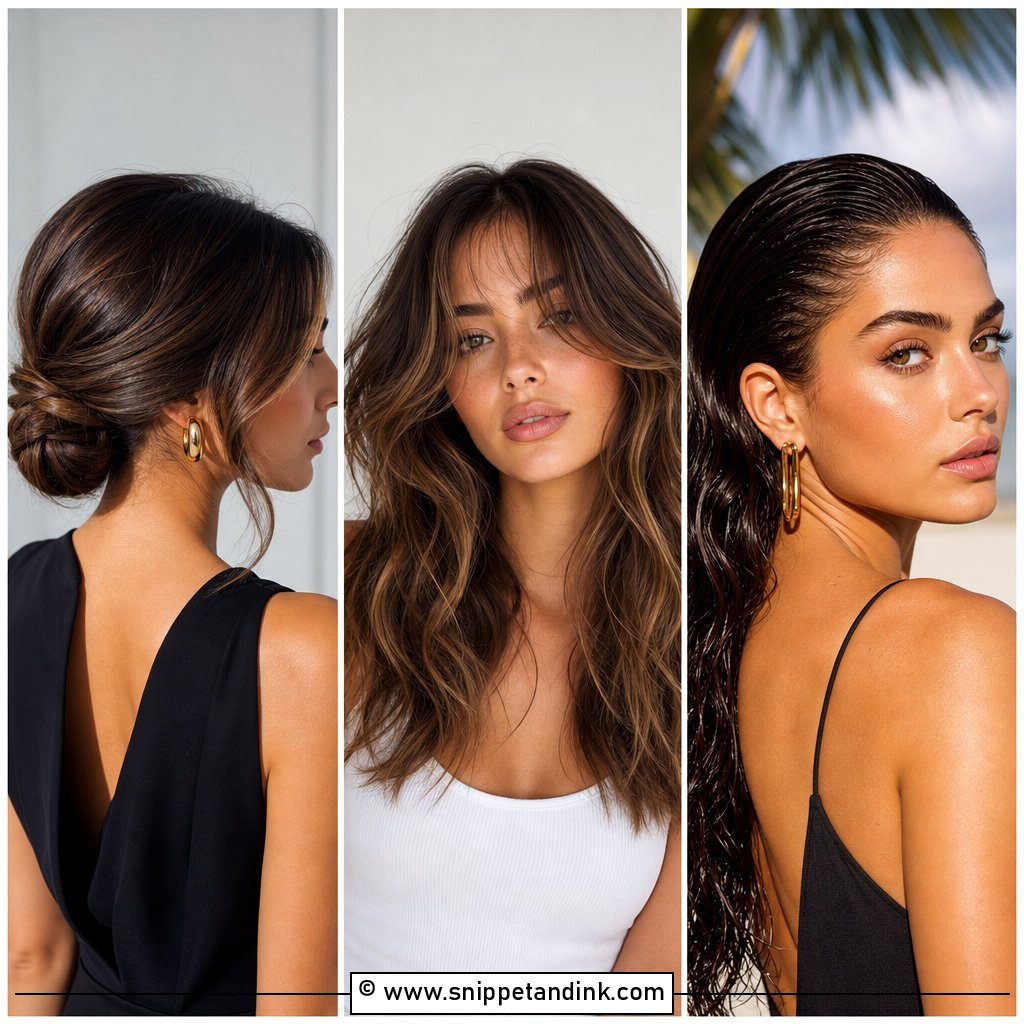
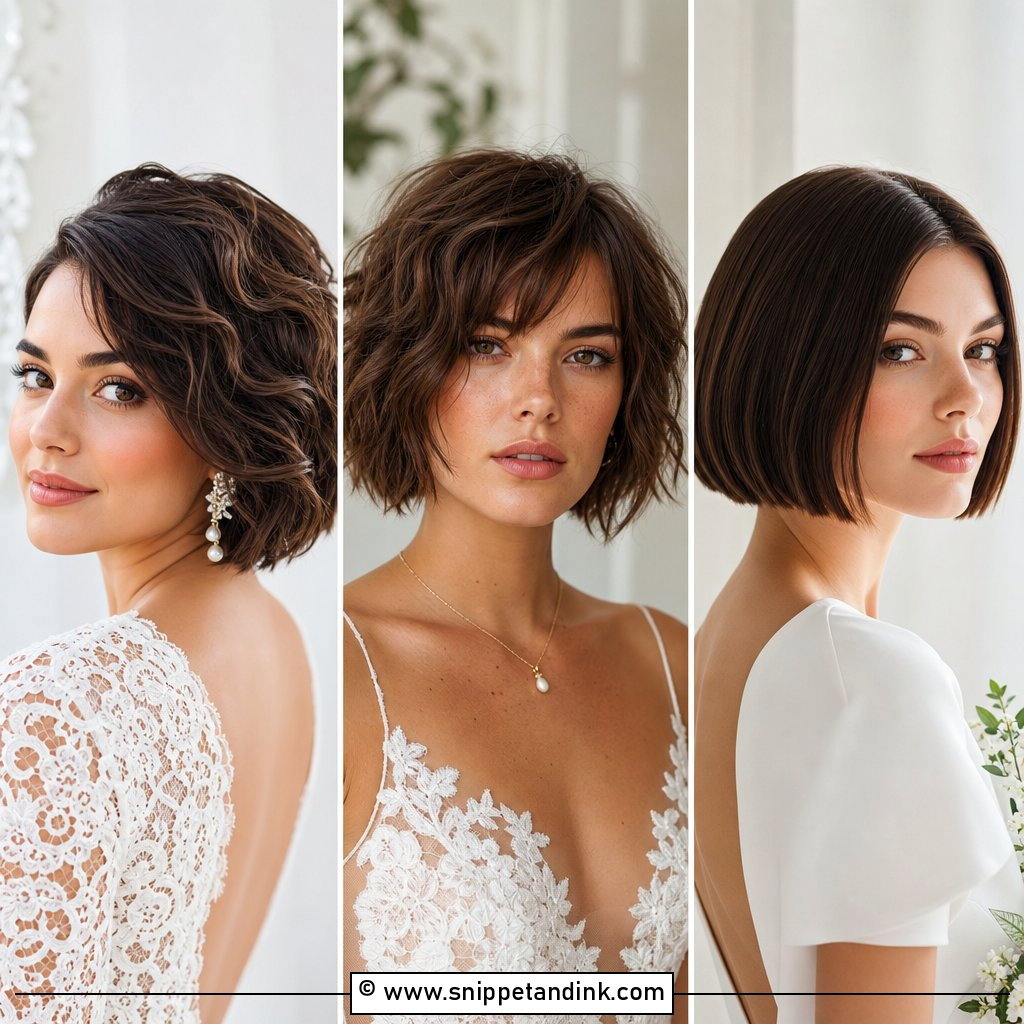
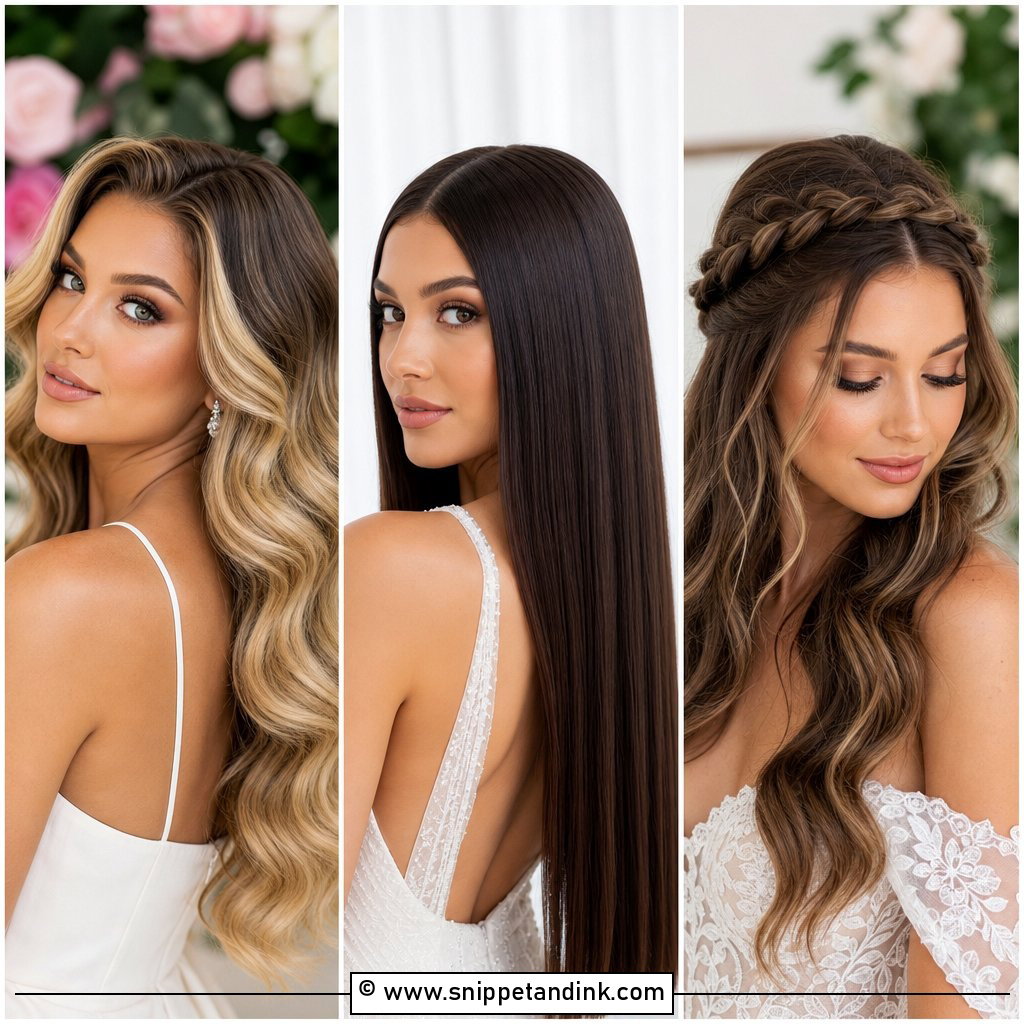
Waves are where I start most shoulder-length trials, because they add width at the jaw and make medium hair look thicker on camera. I curl in sections about an inch wide, pin each curl while it cools, then brush through only once everything is cold. Brushing warm curls is the main reason waves fall flat before the ceremony. Layers and face-framing pieces help the movement read. If your hair is fine and slippery, ask for texture spray before curling rather than after, or the bend can drop within a couple of hours.
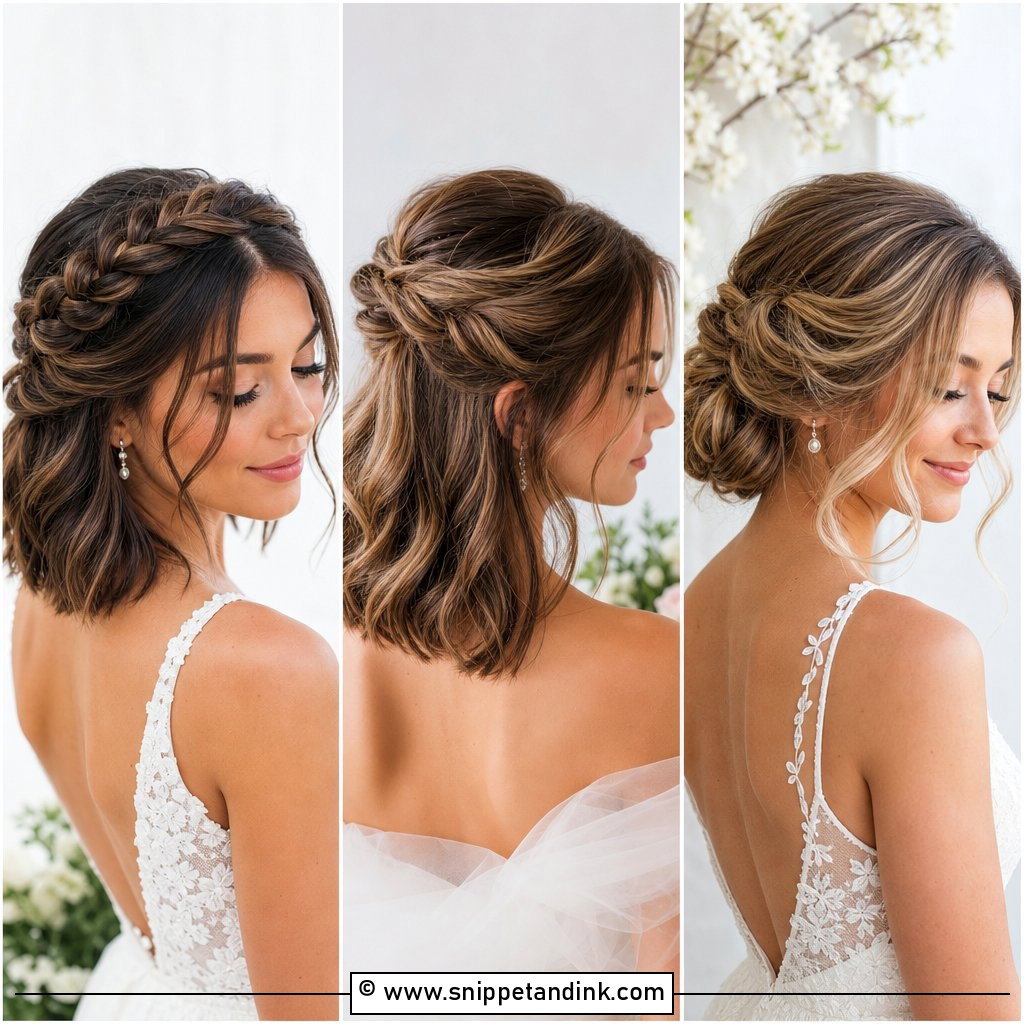
2. Shoulder Length Half Up Bridal Hair
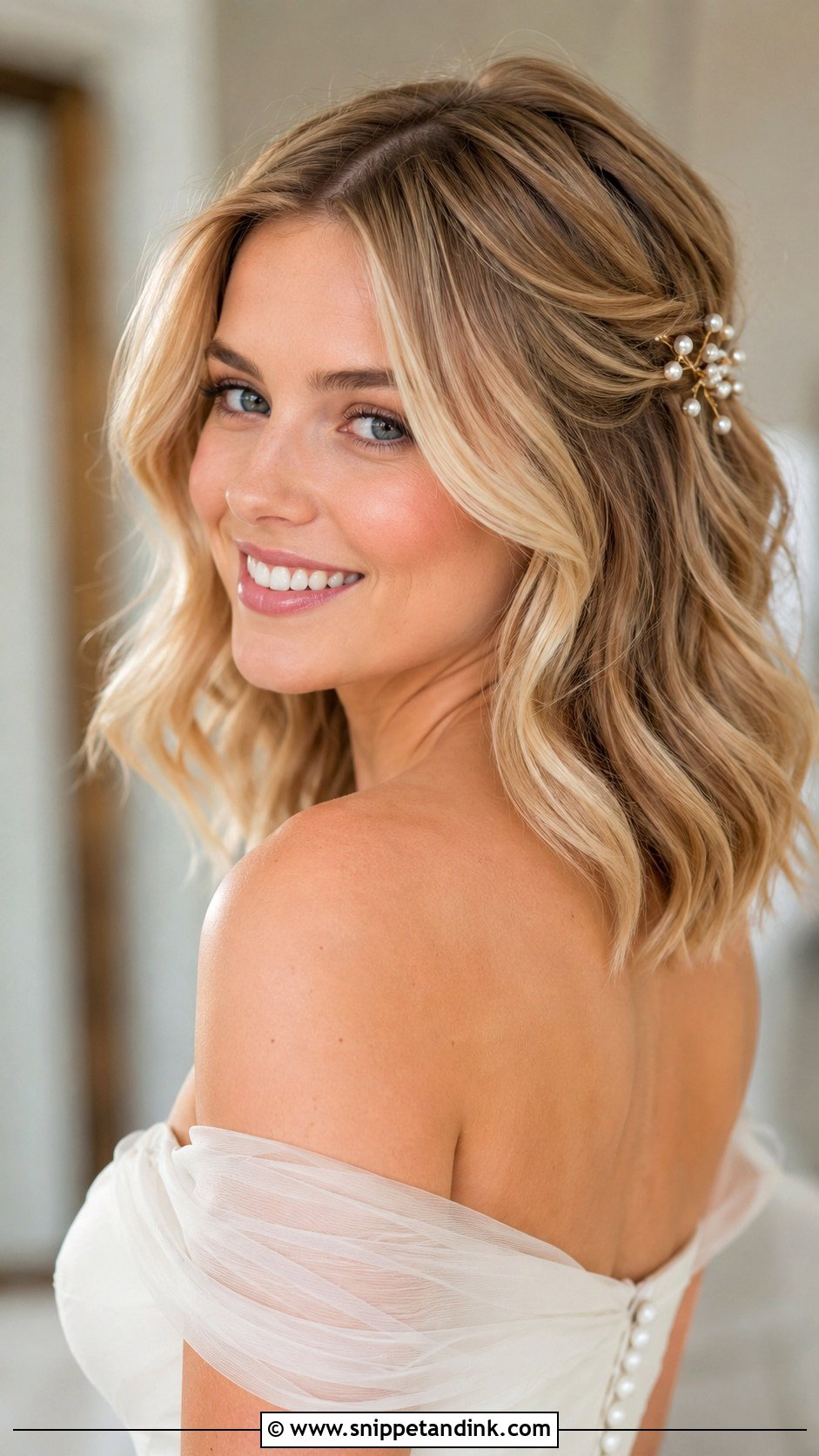
Half up gives you hair down with a bit of insurance. Pinning the top section back opens the face and keeps strands off your lip colour, while the lower length stays loose for waves or smooth bends. On fine hair I tease lightly underneath the top layer at the crown, so the lift holds without a visible bump. The thing to watch at this length is how much hair is left below. Take too big a top section and the bottom looks thin, so I usually take less than brides expect and finish with a small comb or a couple of pearl pins over the anchor.
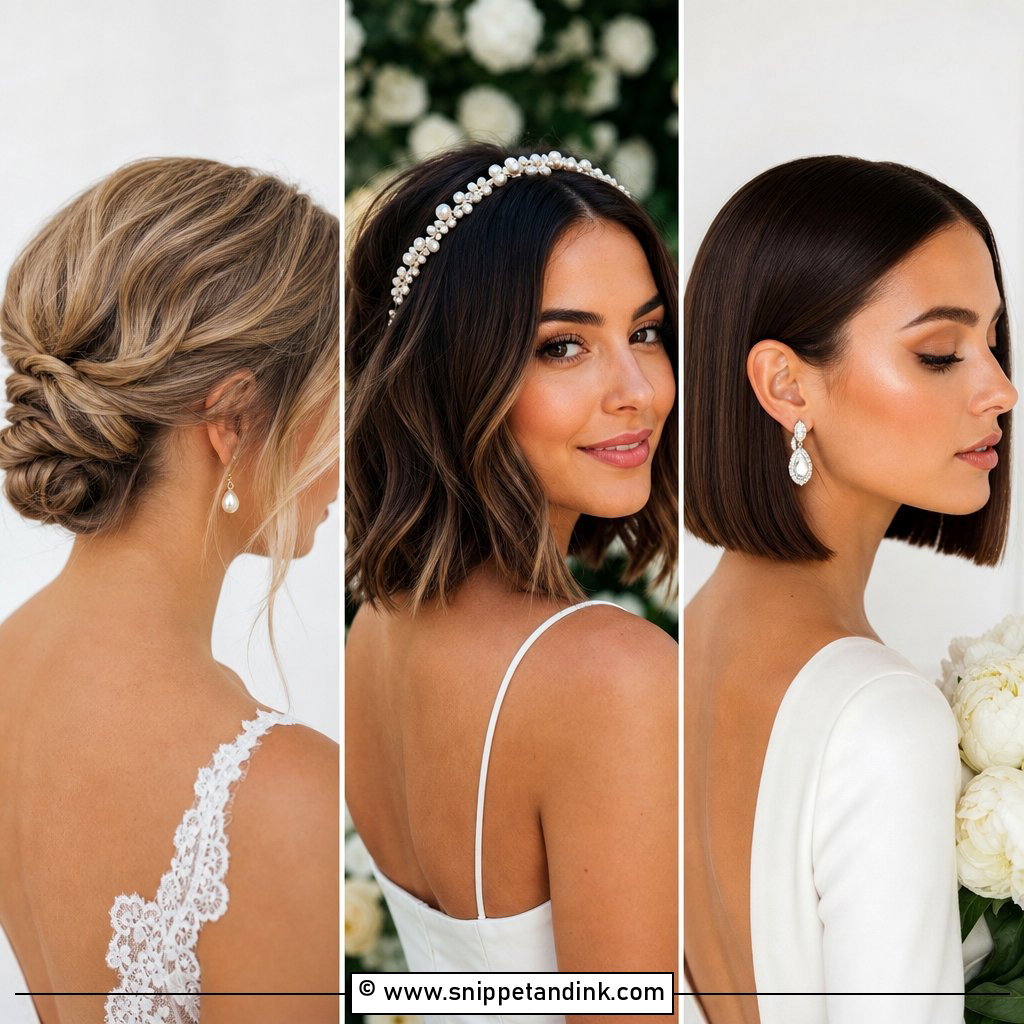
3. Shoulder Length Bridal Low Bun
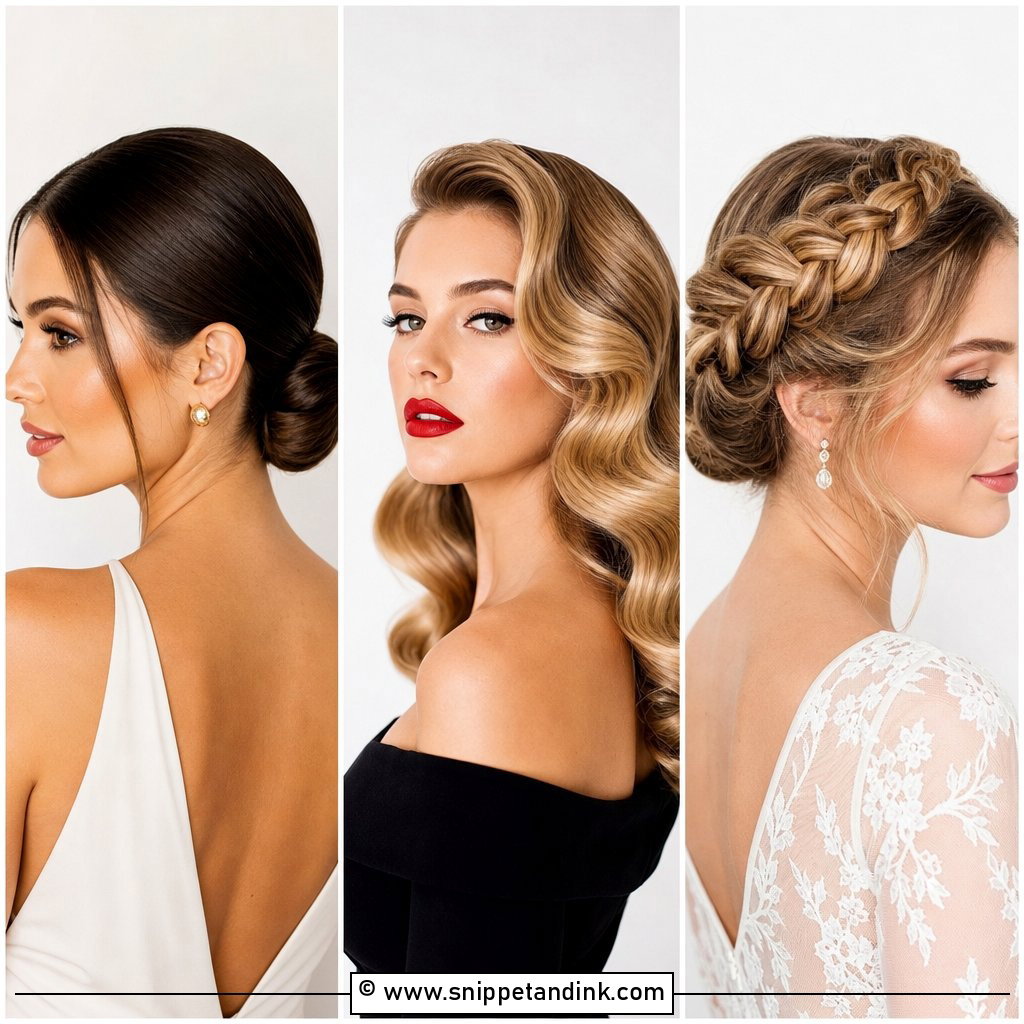
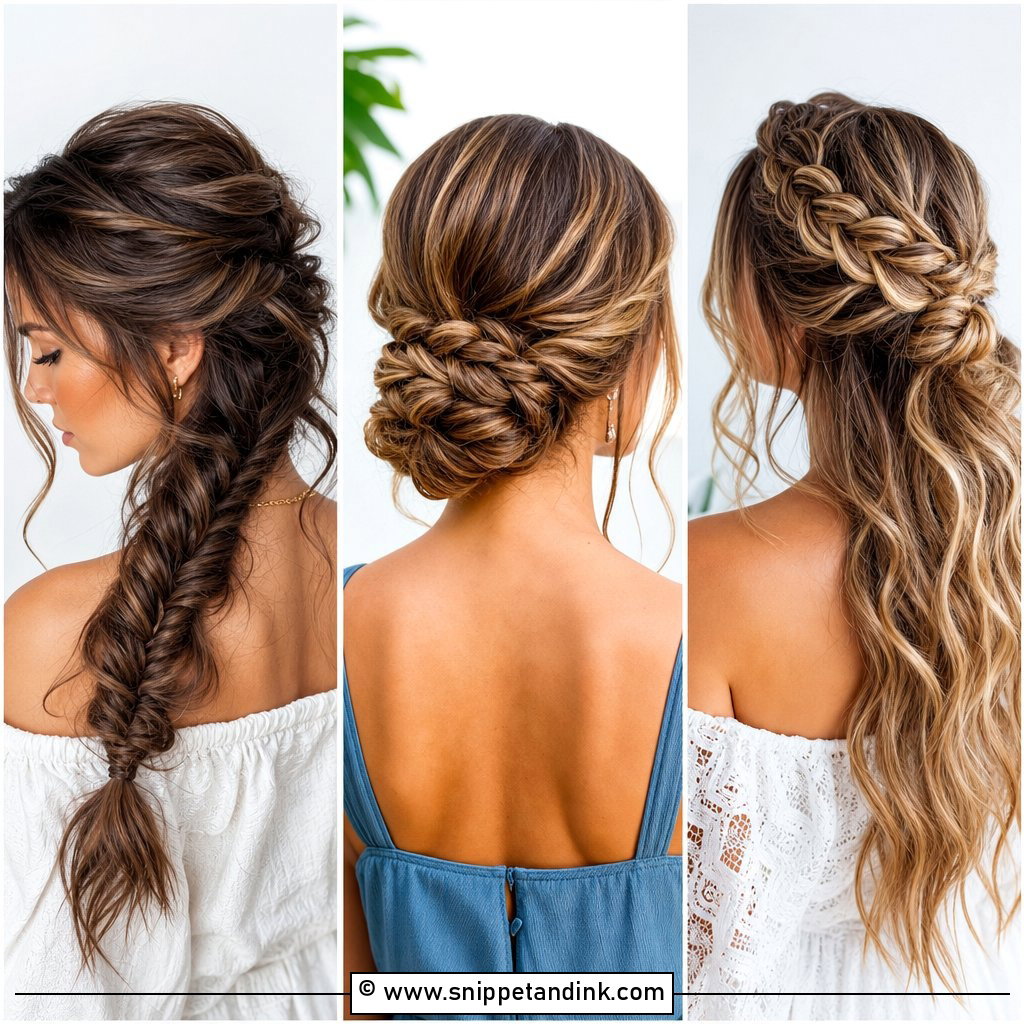
Yes, shoulder length can make a real low bun, just a smaller one. I build it from several pinned sections rather than one ponytail, because the short pieces at the nape won’t reach a single elastic and will spring out by evening. Sometimes I add a small padding piece matched to the hair colour to give it body. A bun keeps a detailed dress back completely uncovered, and a veil comb slides in neatly just above it. The honest limit: if your hair can’t be loosely gathered at the nape without pieces falling out, I’d suggest a twist instead.
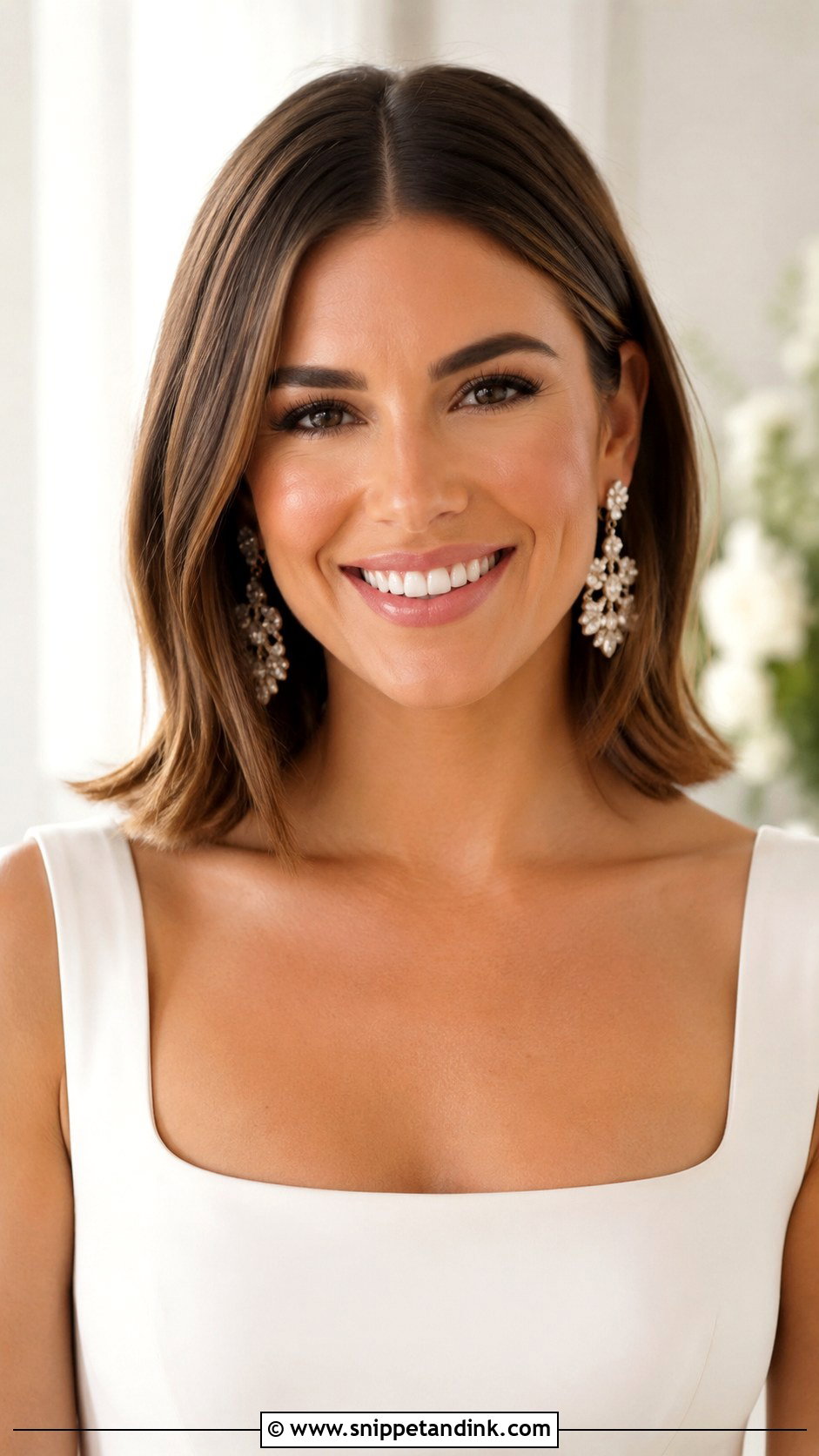
4. Shoulder Length Bridal Bob
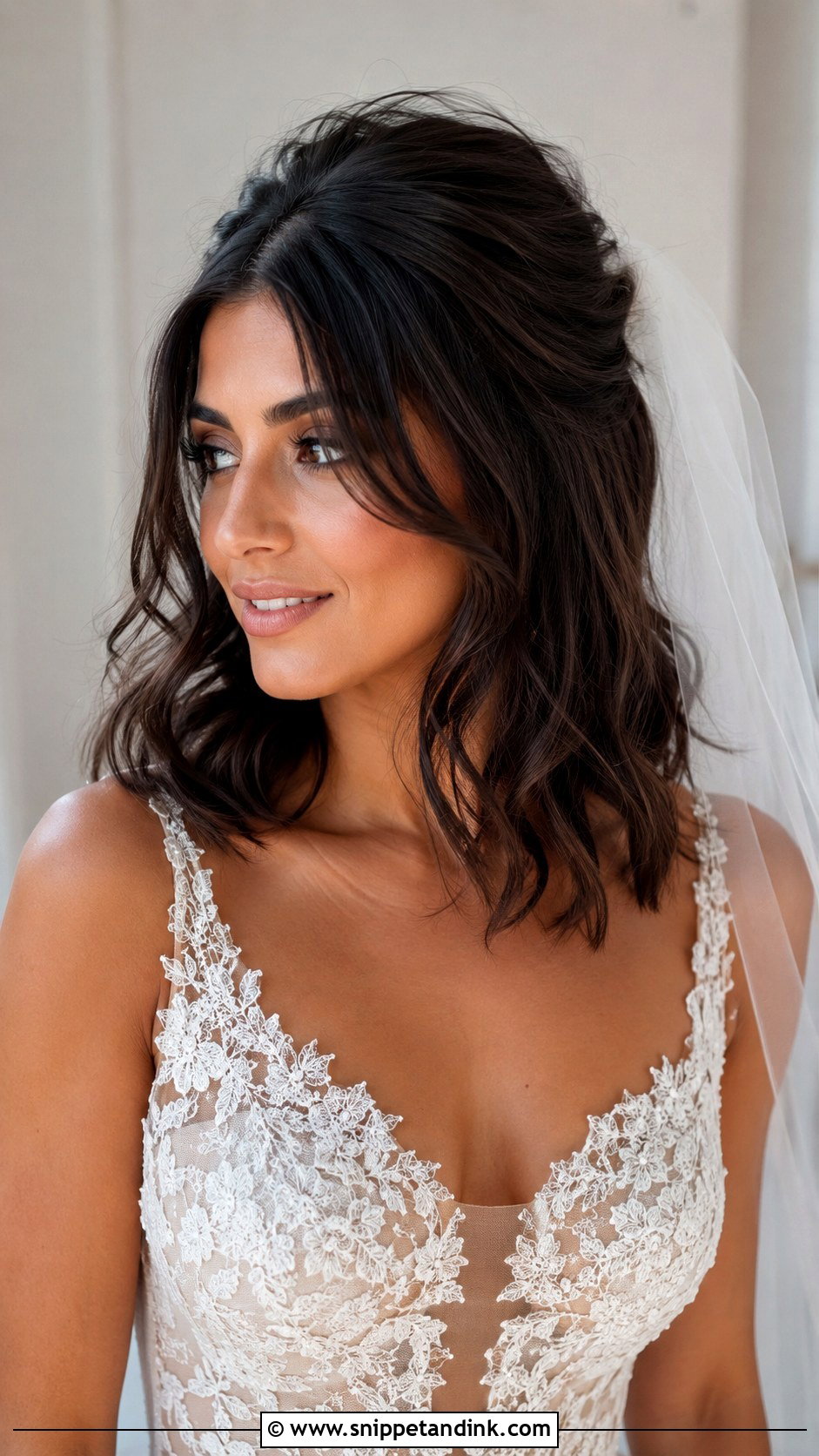
A bob is all about the cut, so I treat it like a finished blowout rather than a hairstyle built on top. Smooth ends, a little root lift and real shine are the whole job. A middle part looks sharper; a side part softens it. Book your trim a few weeks out so the line is crisp without looking freshly chopped. I’d only add a light bend at the ends if the dress has lace or volume, since a dead-straight bob beside a ruffled gown can look unfinished. Statement earrings and a square neckline suit it well.
5. Shoulder Length Bridal Curls
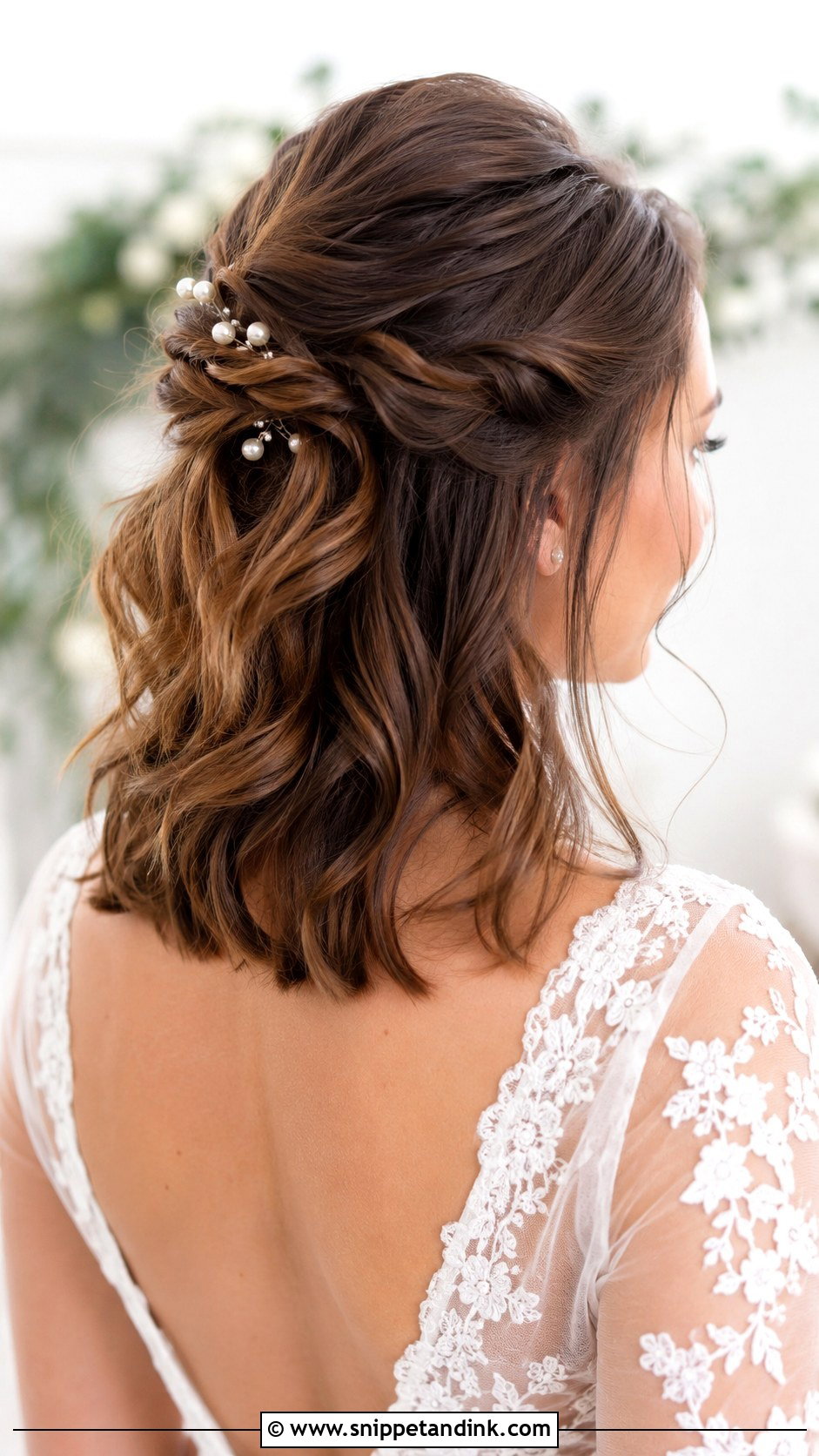
For naturally curly or wavy hair, I’d much rather work with your own pattern than flatten it. Curl cream goes through soaking wet hair, then I diffuse on low until the hair is completely dry, because damp curls under a veil frizz fast. At this length curls shrink, so the shape can sit higher than you expect. I balance that by pinning the front sections back and leaving the sides full. Humidity-resistant hold matters more than any other product decision here, and small pins or a few fresh flowers sit happily right in the curls.
6. Shoulder Length Bridal Hair With Veil
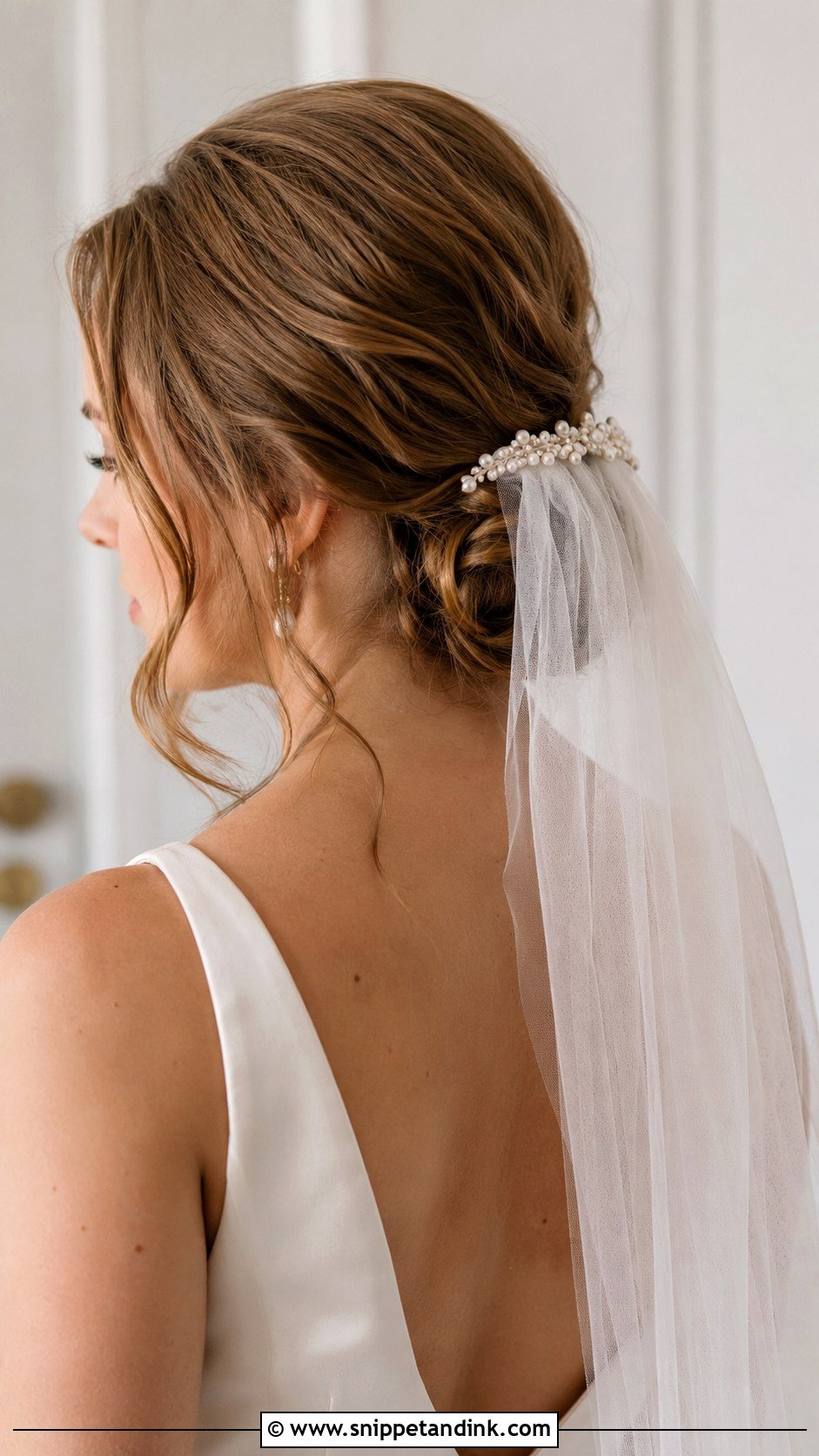
Veil and hairstyle have to be planned together. With loose waves I anchor the comb at the crown into a small crisscross of bobby pins so it has something to grip; a comb slid into clean, silky hair creeps down within the hour. Low buns and tucked styles let the veil sit closer to the nape. Plain tulle can take more texture underneath, while heavy lace or a beaded edge looks better over smoother hair so the detail isn’t fighting the waves. Ask how the hair will look once the veil comes off too, since the comb leaves a small dent that needs brushing out.
7. Shoulder Length Bridal Hair With Tiara
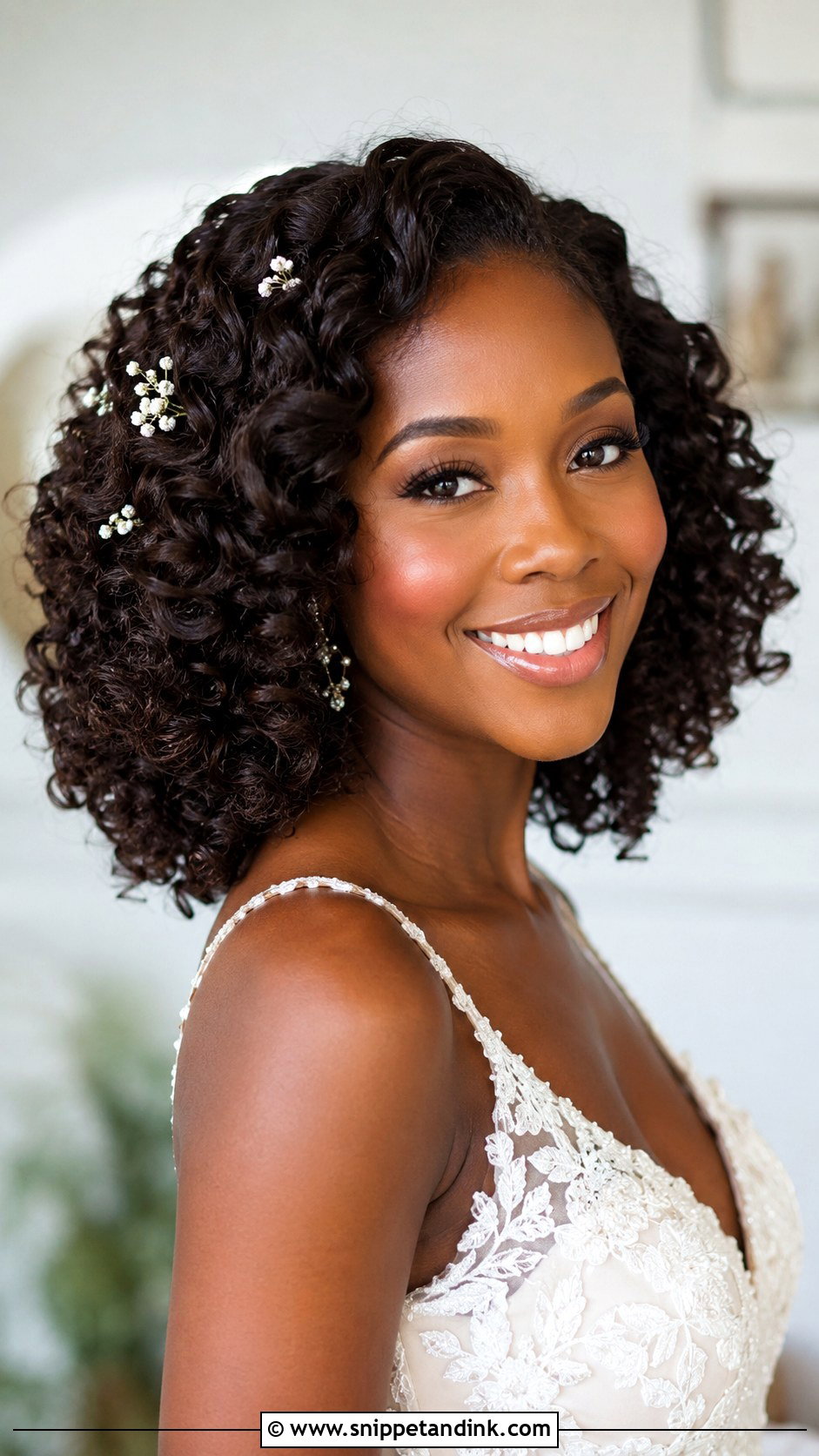
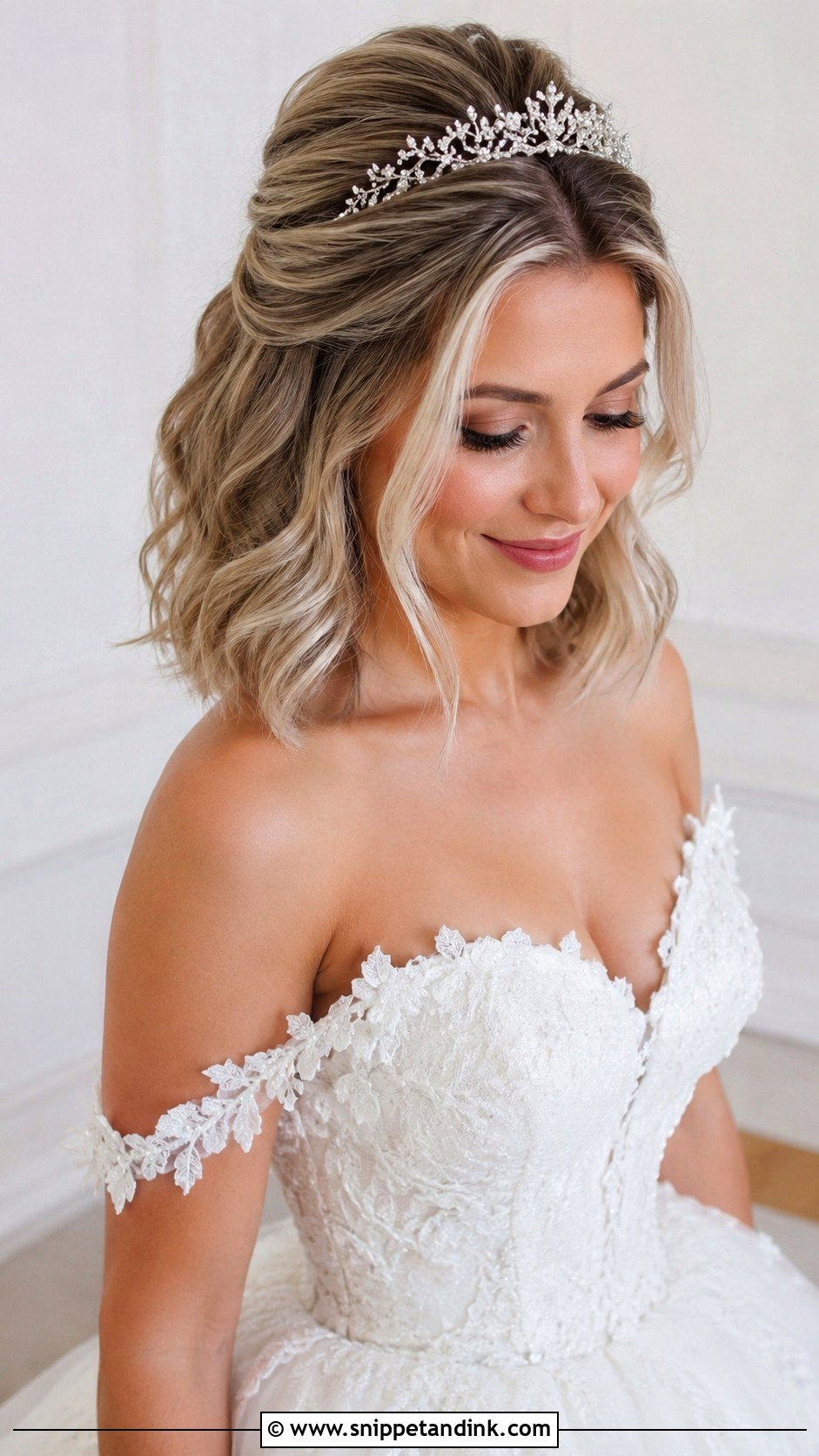
A tiara needs something to sit on. Flat hair underneath is the main reason they look perched rather than worn, so I build a little volume at the crown first, slide the combs or loops in, and secure each end with pins crossed under the band. Waves, brushed curls and half up styles all give it that base. Let the front pieces fall slightly over the band edges so it blends in. I keep spray light around the crown, because crunchy hair around a tiara looks dated in close-ups. Ball gowns and classic veils carry this best.
8. Shoulder Length Bridal Hair With Pearl Pins
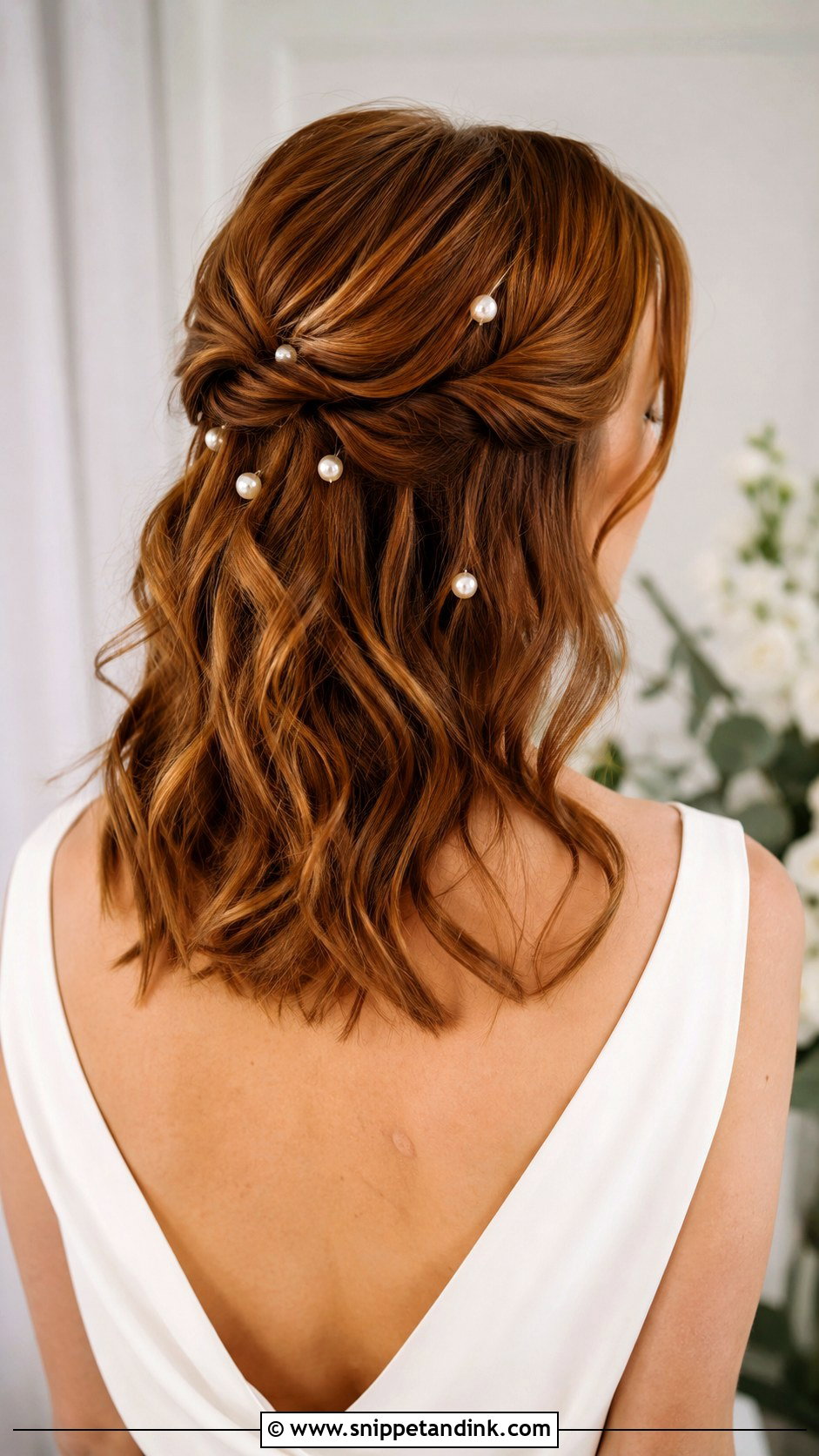
Pearl pins are my favourite accessory for this length because they add detail without weight. I place them where light will hit: along a half up twist, around a small bun, or in a loose cluster above one ear. Random scattering tends to look accidental in photos, so I work in odd numbers and keep them mostly to one side. They show up softly on brown hair and on blonde, auburn, or highlighted hair. On very pale blonde, white pearls can disappear, and a creamier or gold-backed pin gives more contrast.
9. Shoulder Length Bridal Side Part
Moving your part an inch or two over is the quickest way to give medium hair some glamour. A deep side part creates volume at the front and frames the cheekbones, eyes, and lips well. I blow-dry the part in its new direction from wet; switching it on the morning leaves a cowlick that fights back all day. The lighter side can be tucked behind the ear with a clip or small floral pin, which shows off a statement earring. It doesn’t suit everyone, though. A strong double crown can make a deep part stand up in one spot, and that’s worth testing at the trial.
10. Shoulder Length Bridal Updo
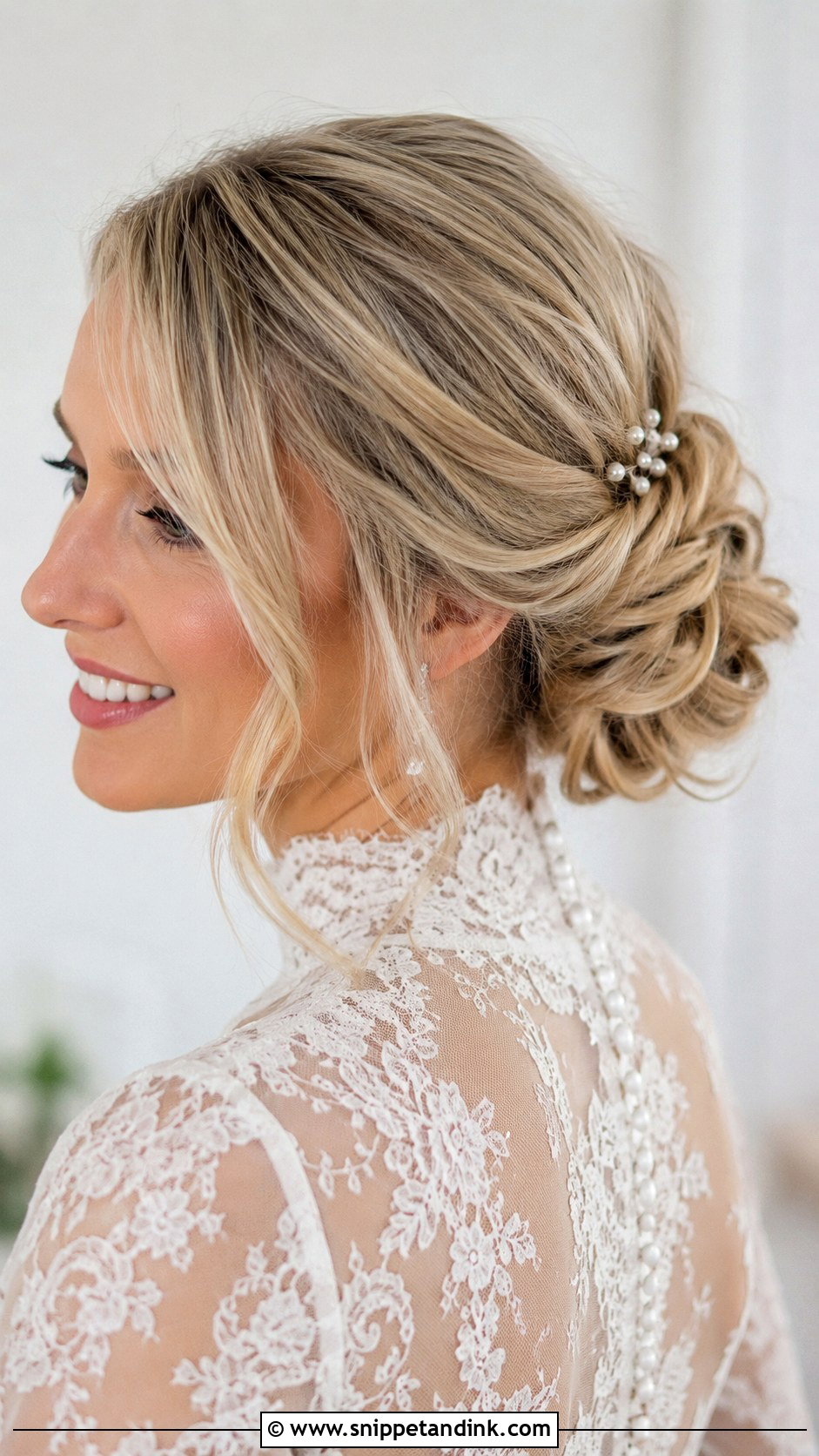
An updo on this length is built, not gathered. I work in small pinned sections and soft twists, overlapping them low so the shape looks full from the back and sides. Getting the hair off the shoulders helps in heat and with high necklines the ends would otherwise brush against all day. Leave a couple of face-framing pieces or it can look severe. The catch: shorter layers often start working loose later in the evening unless they’re pinned properly, so ask your stylist how many layers she’ll need to tuck and how she plans to hold them.
11. Shoulder Length Bridal Hair With Flowers
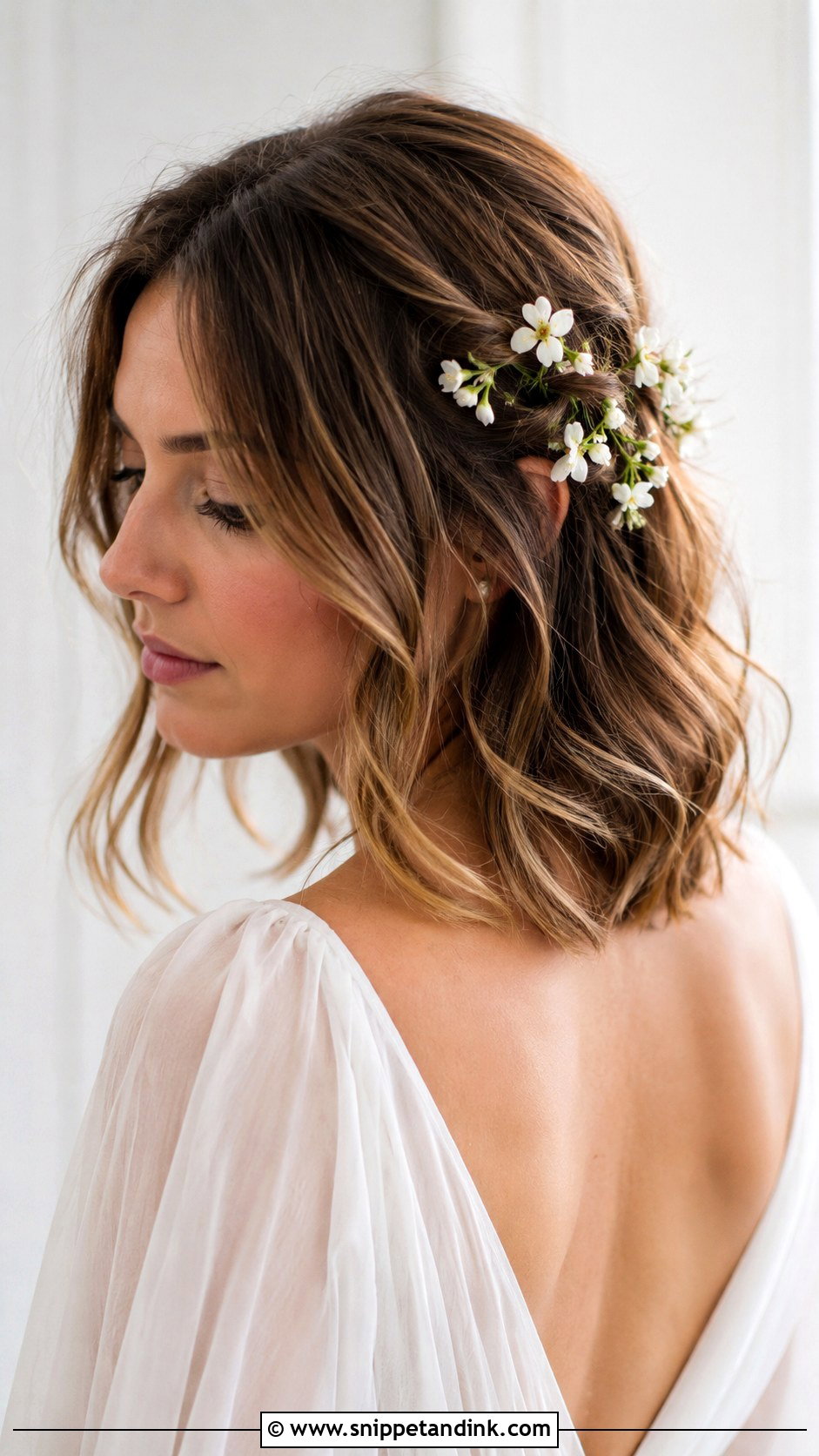
Scale decides whether flowers work here. A big bloom overpowers medium hair, so I stick to small heads like spray roses, waxflower or gypsophila, tucked into waves, along a braid or beside a low bun. Tie the colour to the bouquet so it looks planned. Fresh flowers wilt quickly against warm skin and hair, so I ask the florist to condition them and deliver them separately, then wire them in late in the morning. In real heat, good silk or dried stems hold up better and rarely look any different in photos.
12. Shoulder Length Bridal Sleek Hair
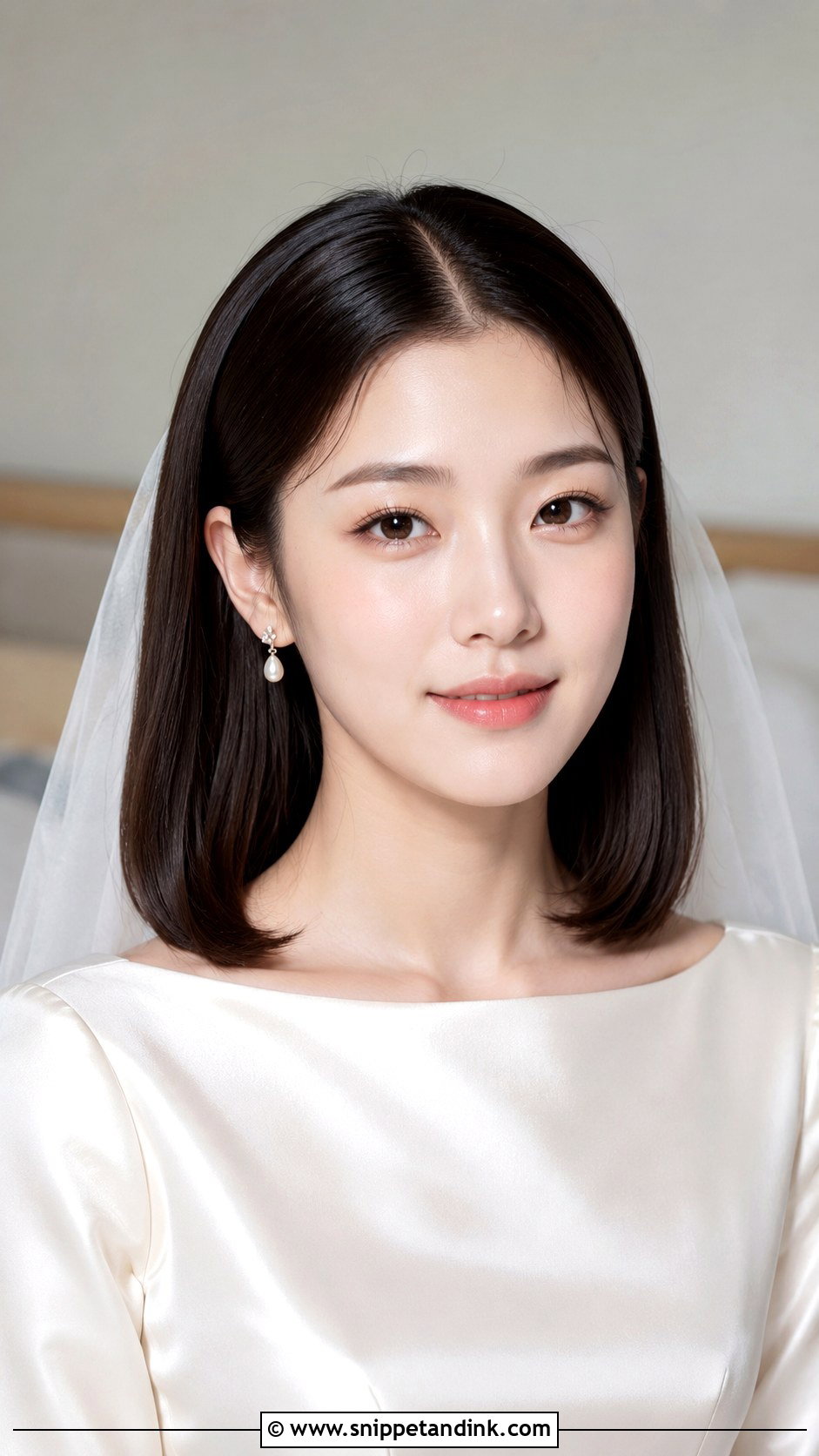
Sleek hair looks simple and is one of the most exacting styles I do. Every pass of the flat iron shows, so I work in thin sections with heat protection, then bevel the ends slightly under so they don’t flip off the shoulders. Shine is the feature, which means a dry or split end shows instantly; a trim beforehand isn’t optional. This is my answer for brides who know their curls always drop. Minimal dresses, structured gowns and long veils suit it, and on humid days an anti-humidity finish stops the crown from puffing.
13. Shoulder Length Bridal Braided Crown
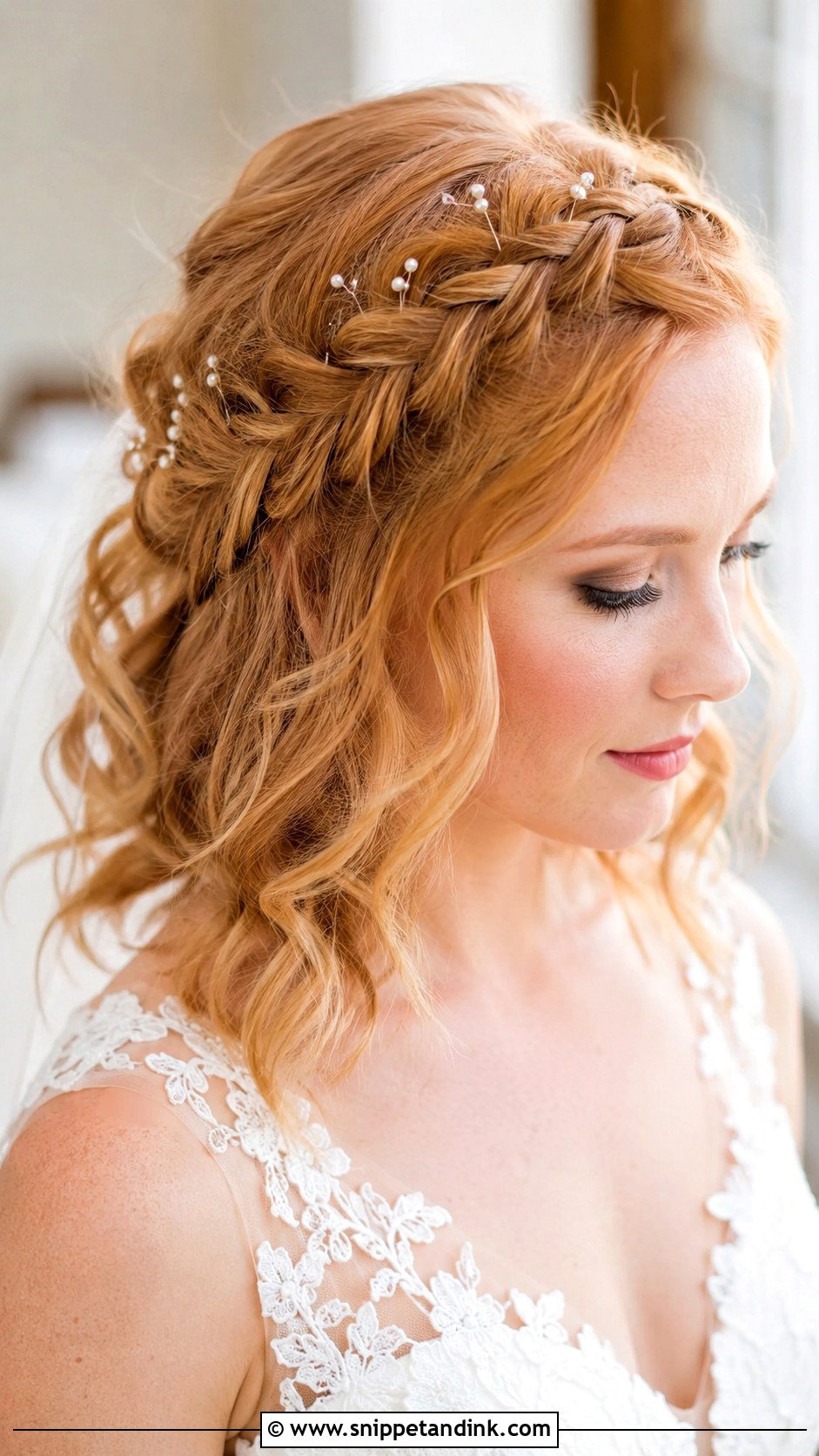
A braided crown keeps the front secure and gives detail around the face without the weight of a full updo. At this length I usually braid from one side across the top rather than wrapping all the way round, because there isn’t enough hair to complete the circle. Gently pulling the loops wider makes the braid look fuller. The rest is curled loose. It survives hugging and dancing better than most down styles, and a light veil can be pinned just behind the braid where the grip is solid.
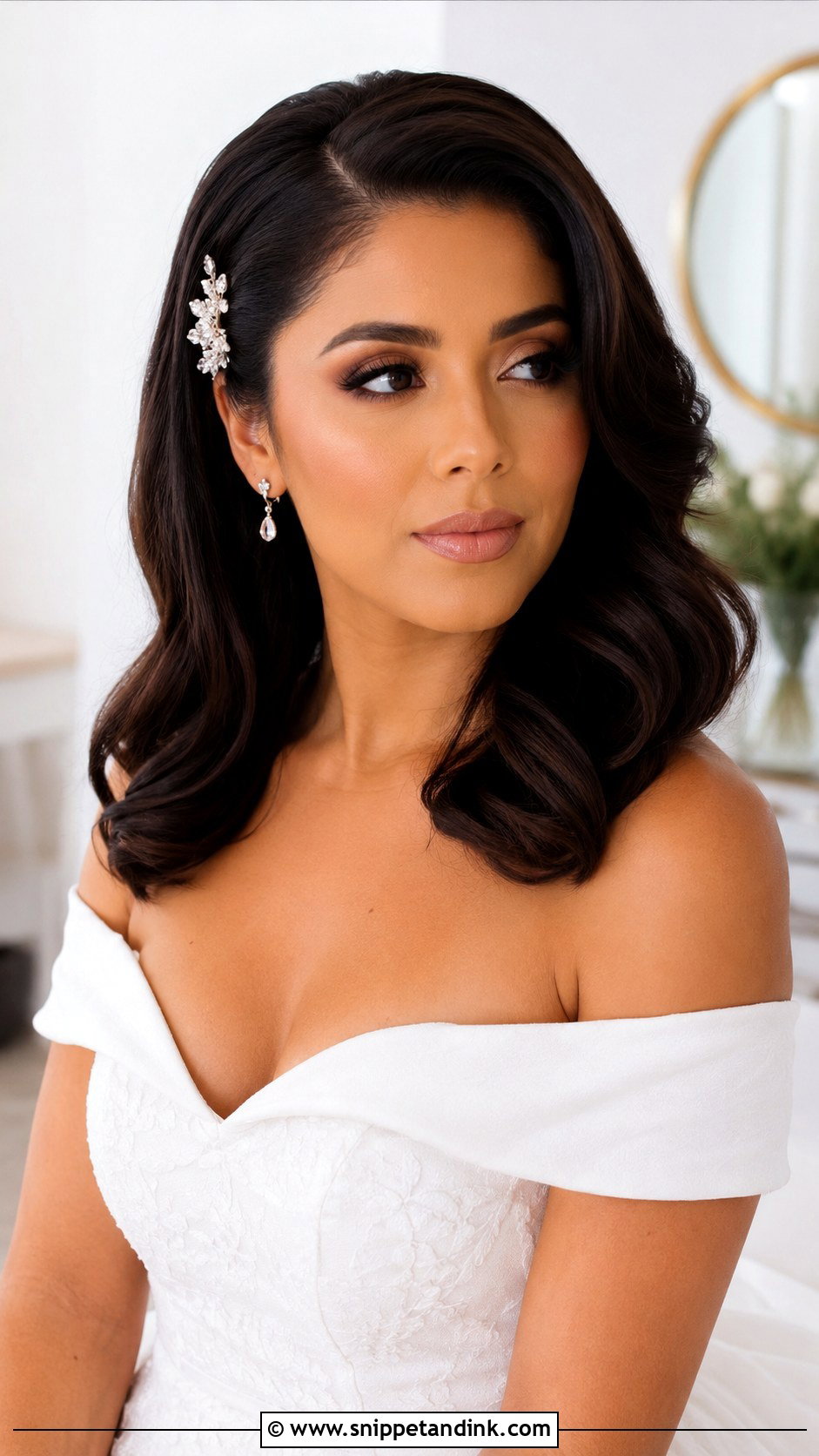
14. Shoulder Length Bridal Hollywood Waves
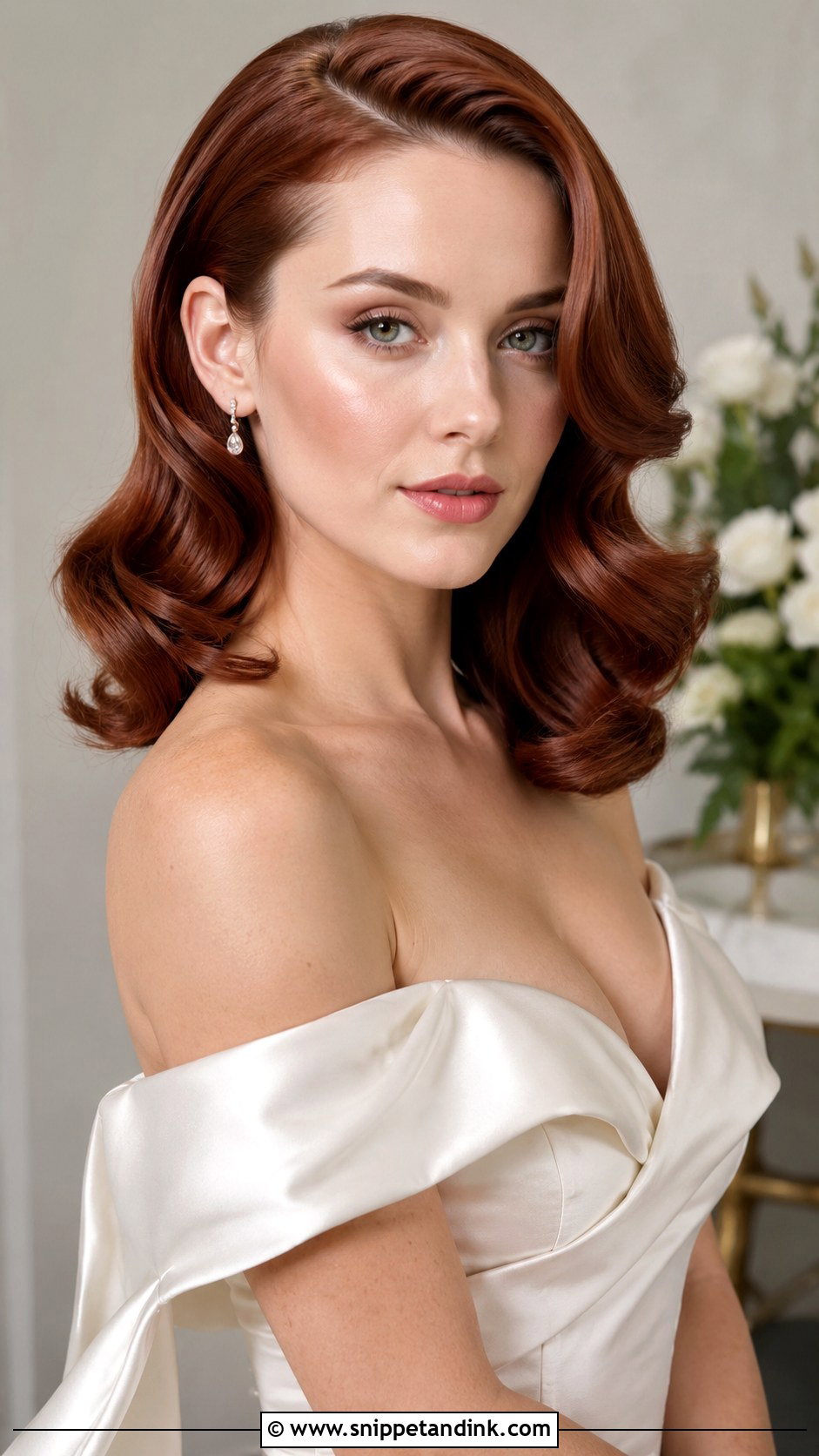
Hollywood waves are sculpted, not tousled. They need a blunt or lightly layered cut where the ends make a clean line, because heavy layering breaks the S pattern into separate curls. I set every curl in one direction, let them cool completely, brush them into one ribbon of waves, then clip the troughs while the spray sets. A side part is close to mandatory. If your cut is very choppy, I’d steer you toward soft waves instead. Satin gowns and off-the-shoulder necklines pair naturally with this.
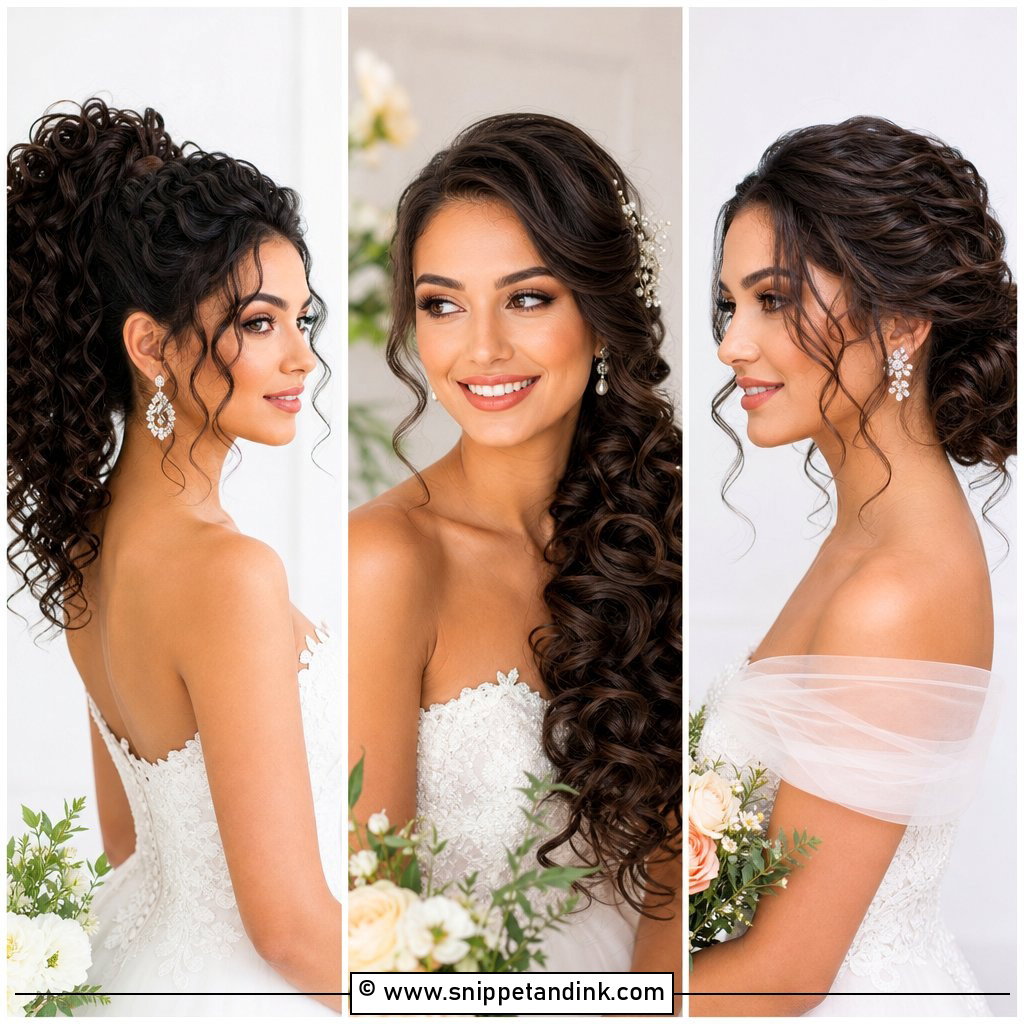
15. Shoulder Length Bridal Ponytail
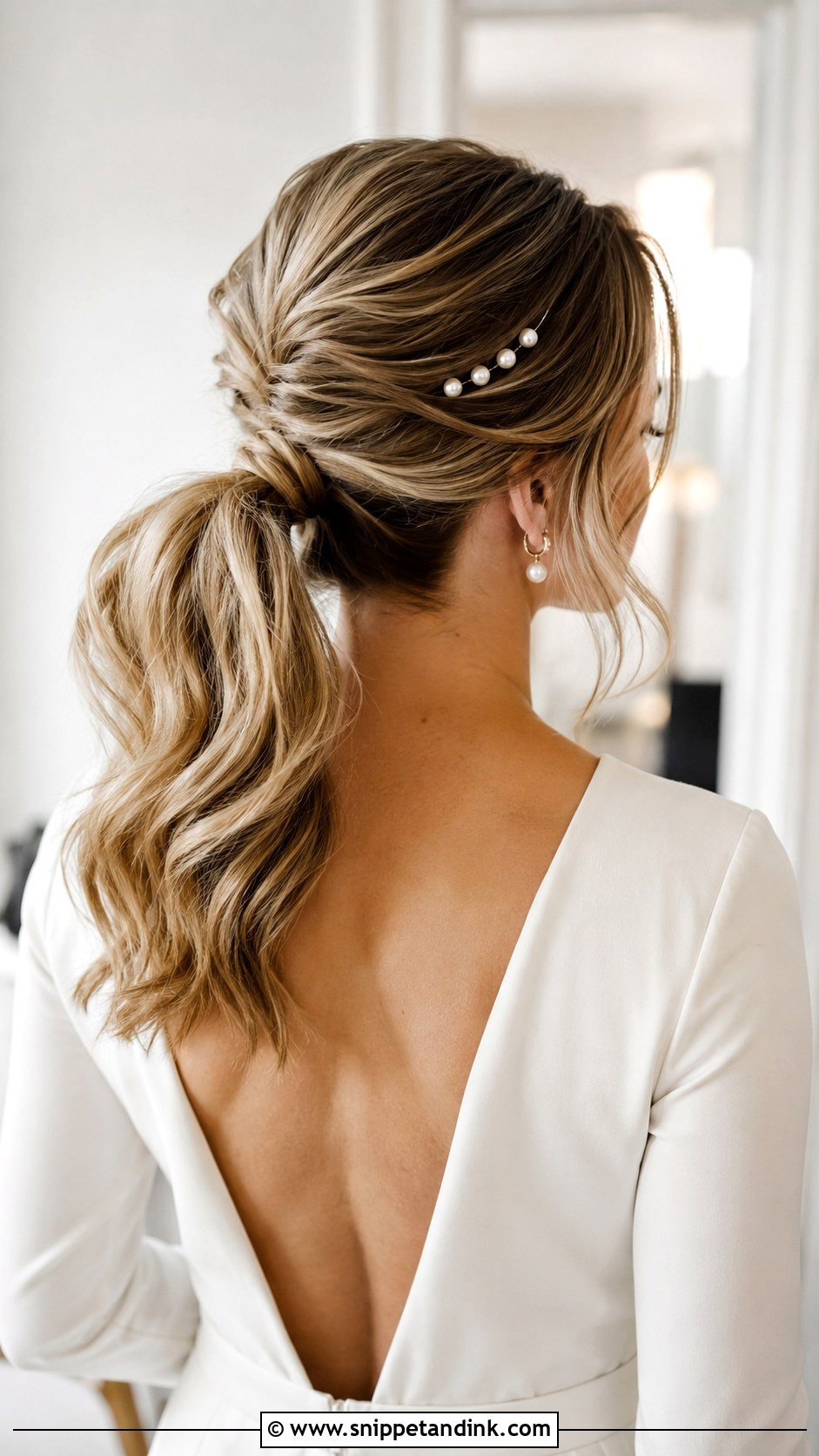
Go low with a ponytail at this length; a high one can look stubby when the hair only reaches the shoulders. I smooth or lightly lift the crown, curl the length, then wrap a small section around the elastic and pin it underneath. Shorter layers near the nape tend to slip out, so I set them with a little gel and a pin before tying. It keeps hair off your face for dancing and windy outdoor ceremonies, and a line of pearl pins down the tie or a thin ribbon dresses it up.
Pins, Padding and the Short Layers at the Nape
Most up-style trouble at this length comes from the lowest hair at the back of the neck. After a layered cut it’s often noticeably shorter than the rest, and it simply won’t reach a bun. Here’s what I do about it, and what you can ask your own stylist for.
- Set the nape pieces with a little strong gel and a flat pin before the style goes up, so they’re tucked rather than escaping by dinner.
- Use padding or a small mesh donut matched to your hair colour when a bun needs to look bigger than the hair allows. It’s light, and it doesn’t show once the hair is wrapped fully over it.
- Cross two bobby pins into an X to make an anchor for any comb, veil or accessory. A single pin slides straight out of freshly washed hair.
- Ask whether clip-in pieces would help. Two or three wefts at the back can turn a small bun into a fuller one, but they need colour matching and testing at the trial, not on the morning.
- Skip a heavily layered cut in the final weeks. If you’re wearing it up, ask your hairdresser to dust the ends only, so the shortest pieces keep their length.
When I’d leave it down instead
If the back is very short or steeply graduated, a down or half up style will look more relaxed than an updo held together by a fistful of pins. I’d rather say that honestly at the trial than have a bride pulling pins out of her neck halfway through the reception, and the down styles in this list are just as bridal when they’re done well.
Fifteen Looks and One Trial to Test Them
Medium-length hair can be waved, pinned, braided, smoothed or lifted, so the decision comes down to your dress, your veil, your texture and how much fuss you’ll tolerate. Softness points toward waves or half up. A low bun, a sleek lob or Hollywood waves give more polish, and a ponytail is the most comfortable for a long day. Whichever you lean toward, bring the actual veil and accessories to your trial and wear the result for a few hours afterward. That afternoon tells you more than any photo will.
You'll Like These Ideas:


Leave a Reply