
A braid is the one bridal style I can promise will look the same at the last dance as it did at the first look. The woven sections grip each other, so the hair can’t drop or frizz loose the way plain curls do. Braids also adapt to almost any setting, a garden ceremony or a ballroom, and to most lengths and textures, from a fishtail threaded with fresh flowers to a sleek Dutch braid finished in a low bun. Here are twenty braided looks I’ve built for brides, each with the detail that decides whether it suits your hair and your gown.
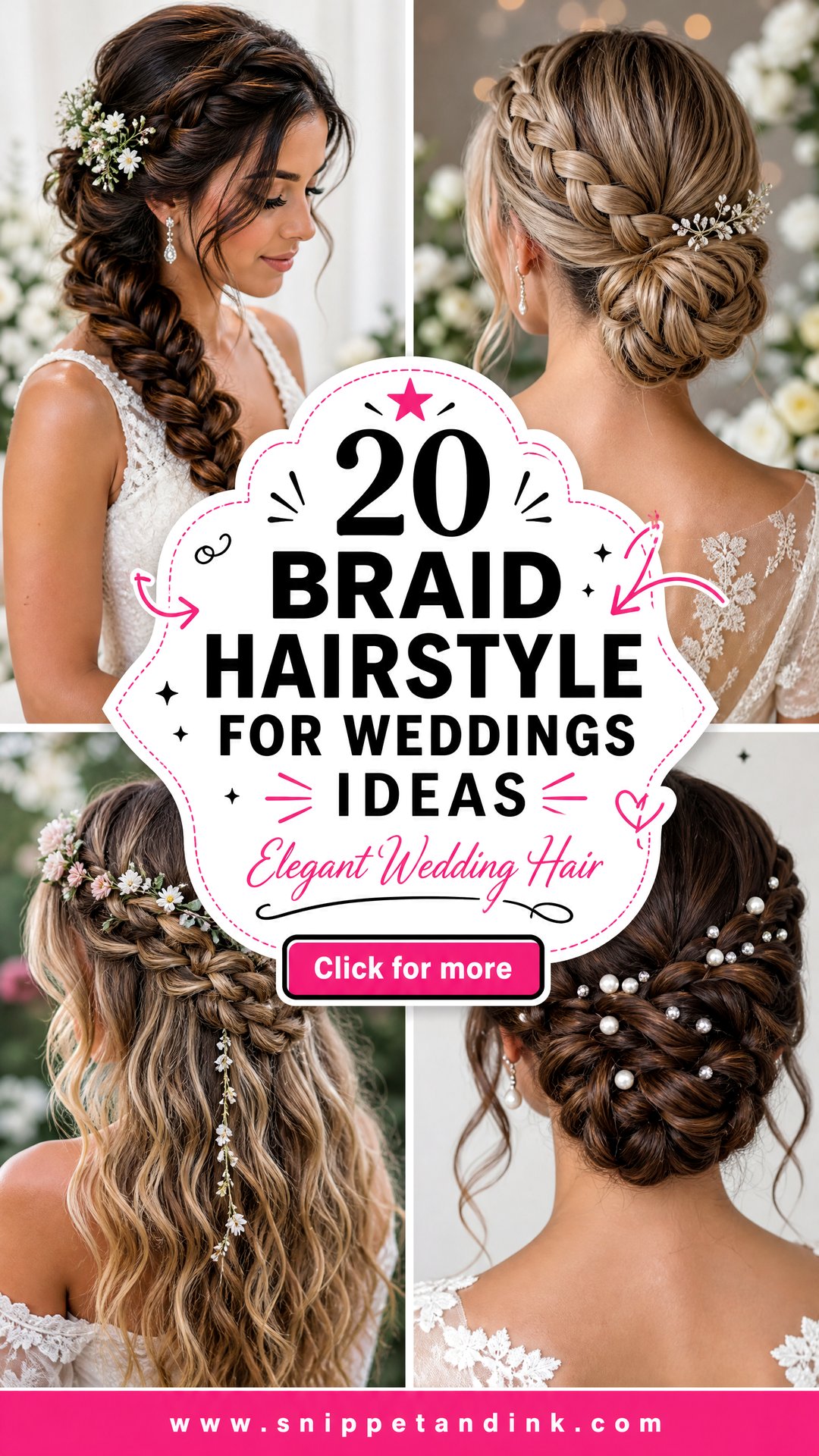
Open Backs, High Necks and Lace: Pairing a Braid With the Gown
I always ask to see the back of the dress before I suggest a braid. Guests spend the whole ceremony looking at your back, and the braid and the gown need to work together there.
Open or low backs
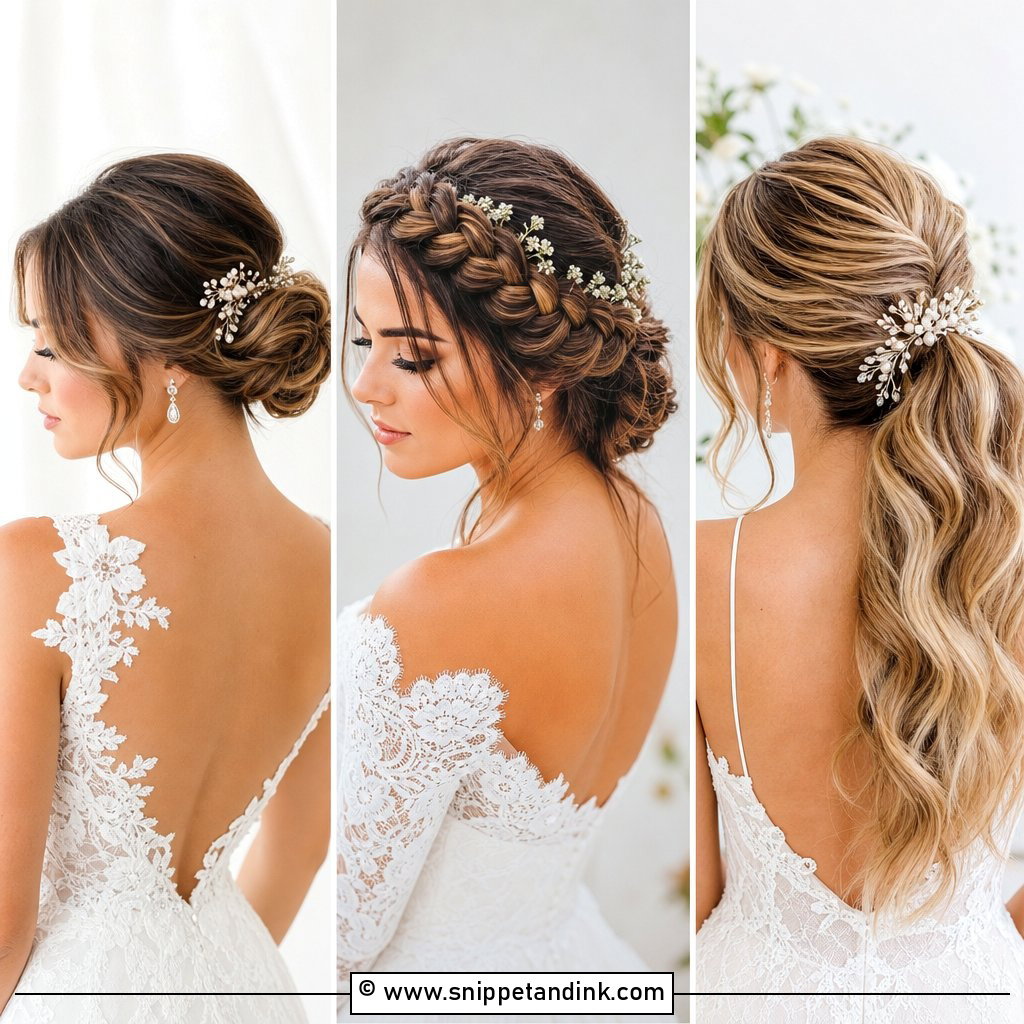
Updos and buns win here. Loose braids hide the detail you chose the dress for, so I’d steer you toward a chignon, a braided low bun or double Dutch braids gathered at the nape.
High necks and illusion collars
A high neckline crowds a low bun. Lift the bun higher, or choose a top knot or half-up crown so the neck and collar have room.
Lace, beading and buttons
Loose braids and tendrils catch on texture. If you want hair down with a lace back, keep the braid on the side away from the most detailed panel, or pin it slightly forward.
Strapless and off-shoulder
These show off shoulders and collarbones, so side braids and fishtails look natural. A braid over one shoulder also adds balance when the neckline is very straight.
1. Fishtail Braid Updo
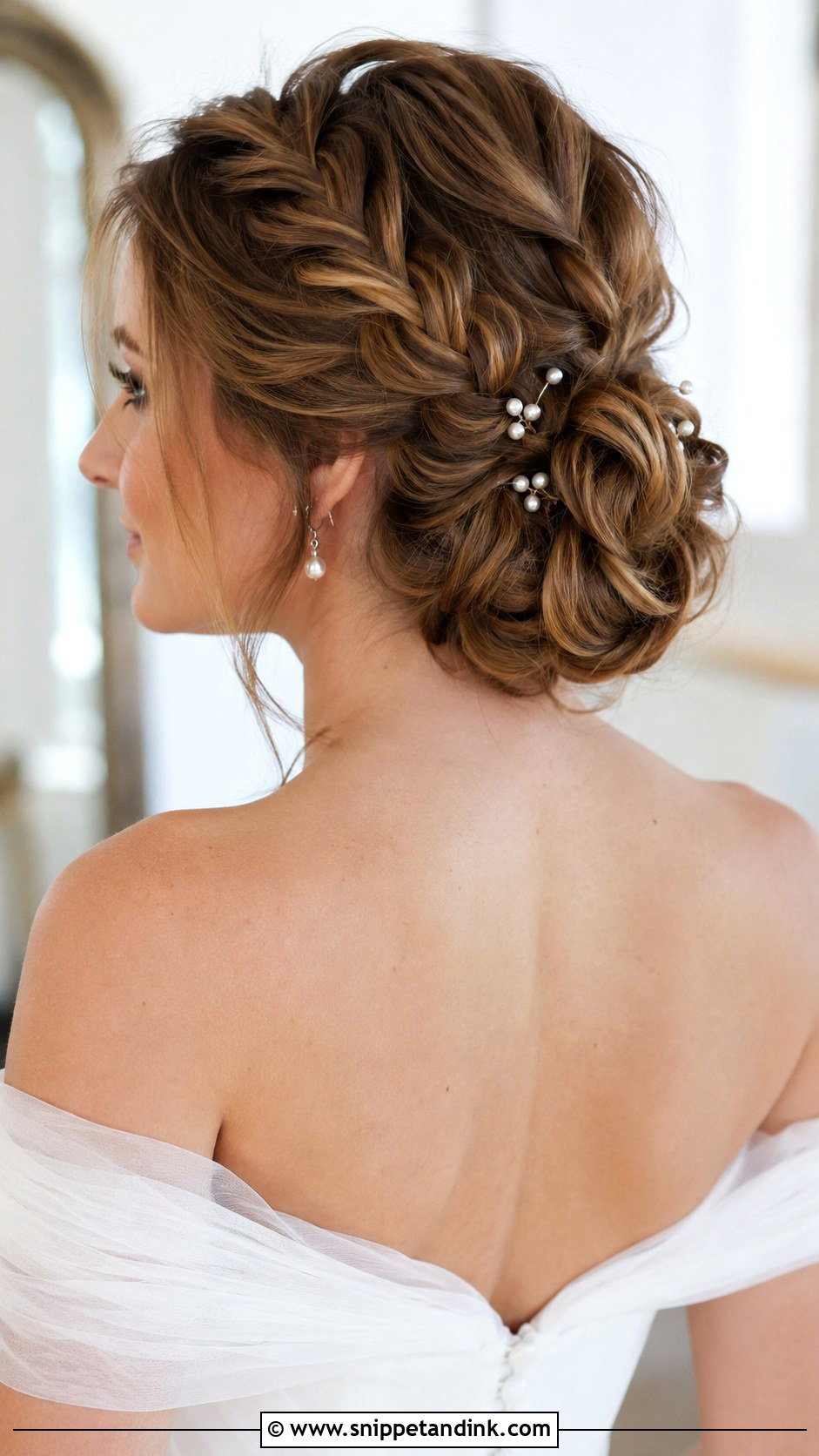
A fishtail swept into a soft updo carries a lot of detail for very little height, so it reads well in close-up photos without overpowering a delicate veil. Loosen the strands for a boho feel or keep them tight for a formal one. The crossovers are tiny, which is both the charm and the problem: heavily layered hair pokes out of them, and I’d only recommend it if your layers reach at least the chin. Pearl pins or small fresh blooms tucked along the braid suit it. Pinned properly, it holds through hours of dancing.
2. Dutch Braid With Low Bun
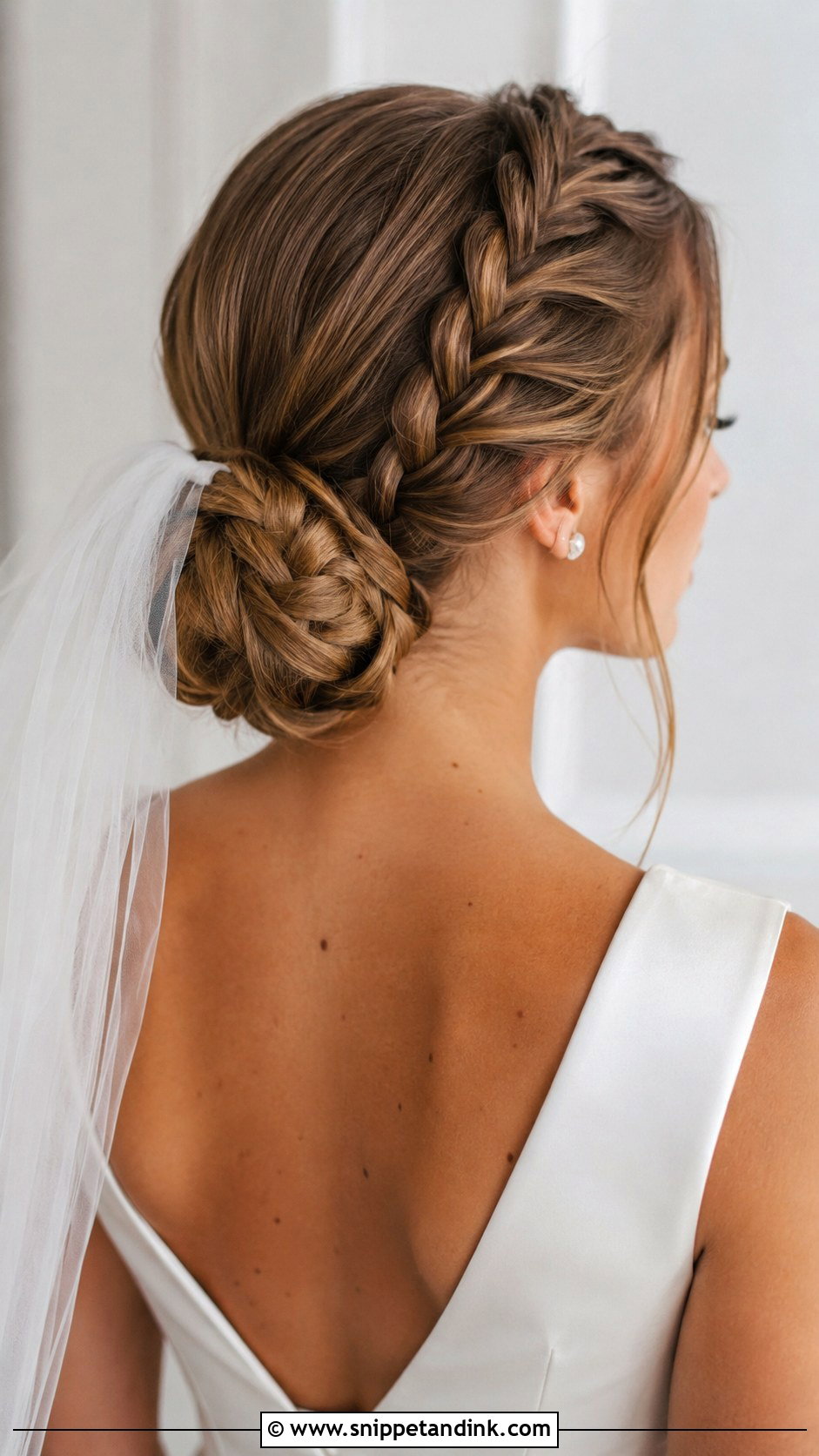
A Dutch braid along the crown, finished in a low bun at the nape, gives raised texture at the front and a quiet shape at the back. Structured gowns like ball gowns and fitted silhouettes suit it, because the clean bun doesn’t compete with a full skirt. It stays secure all day and takes a veil or tiara easily. Here’s my one adjustment for veils: I stop the braid an inch above the bun so the comb has a smooth area to slide into, instead of fighting the braid’s ridge. A few face-framing pieces soften the edges.
3. Waterfall Braid Half-Up
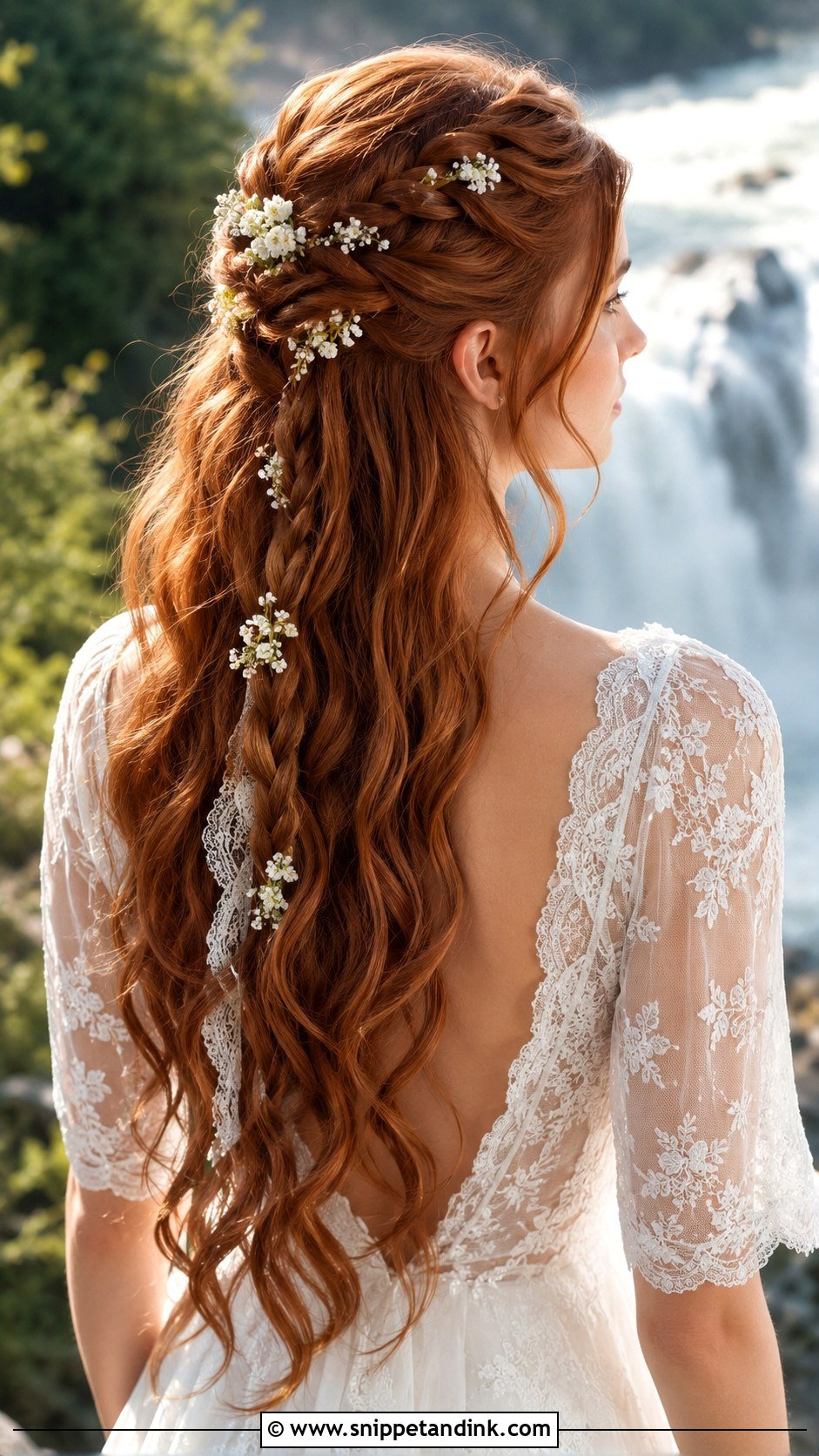
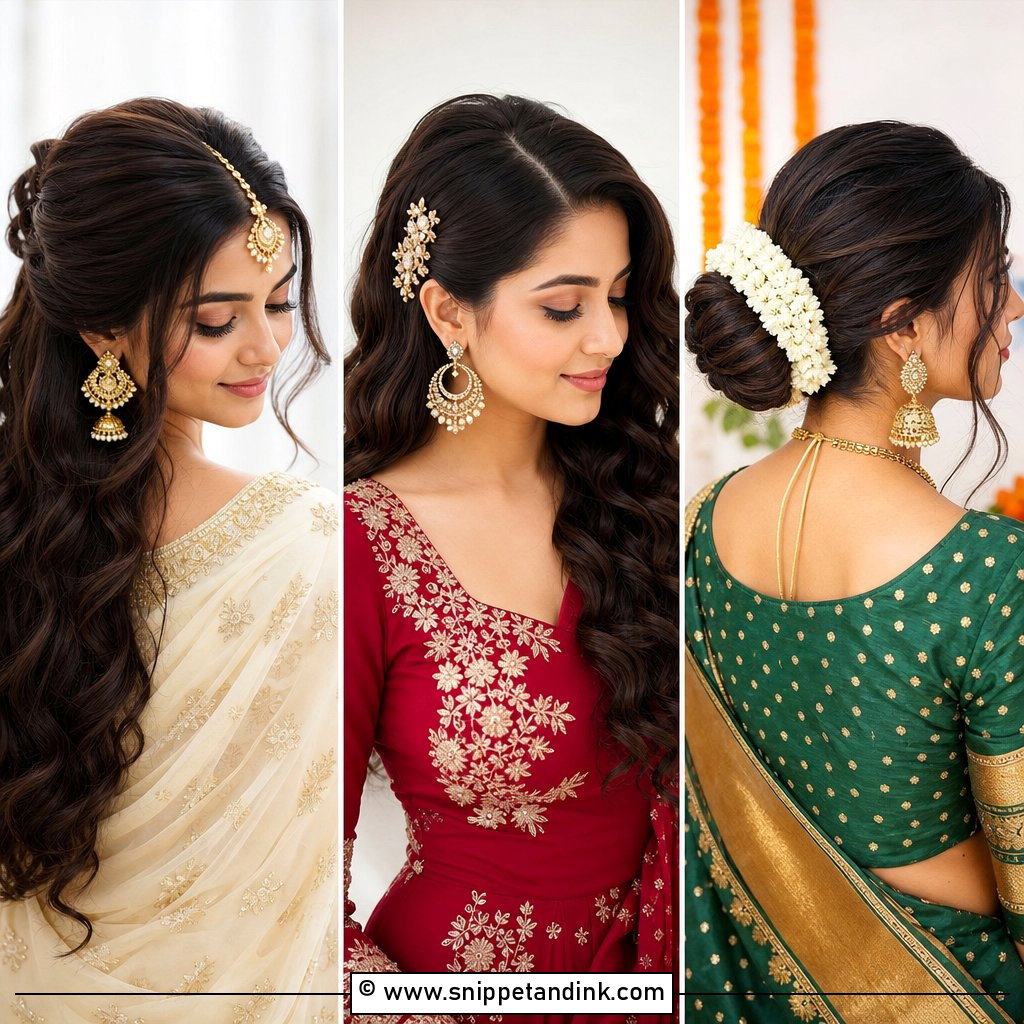
A waterfall braid half-up style keeps hair off your face while waves fall through and below the braid. It suits garden, beach and outdoor ceremonies, and the back stays full. Small flowers or sparkling pins along the braid add charm. It’s the most curl-dependent braid I do, because the falling strands only look intentional when they carry a defined wave. On long, wavy hair it looks light and airy; on fine, straight hair I’d add volume at the roots before starting or choose a different half-up.
4. Crown Braid With Fresh Flowers
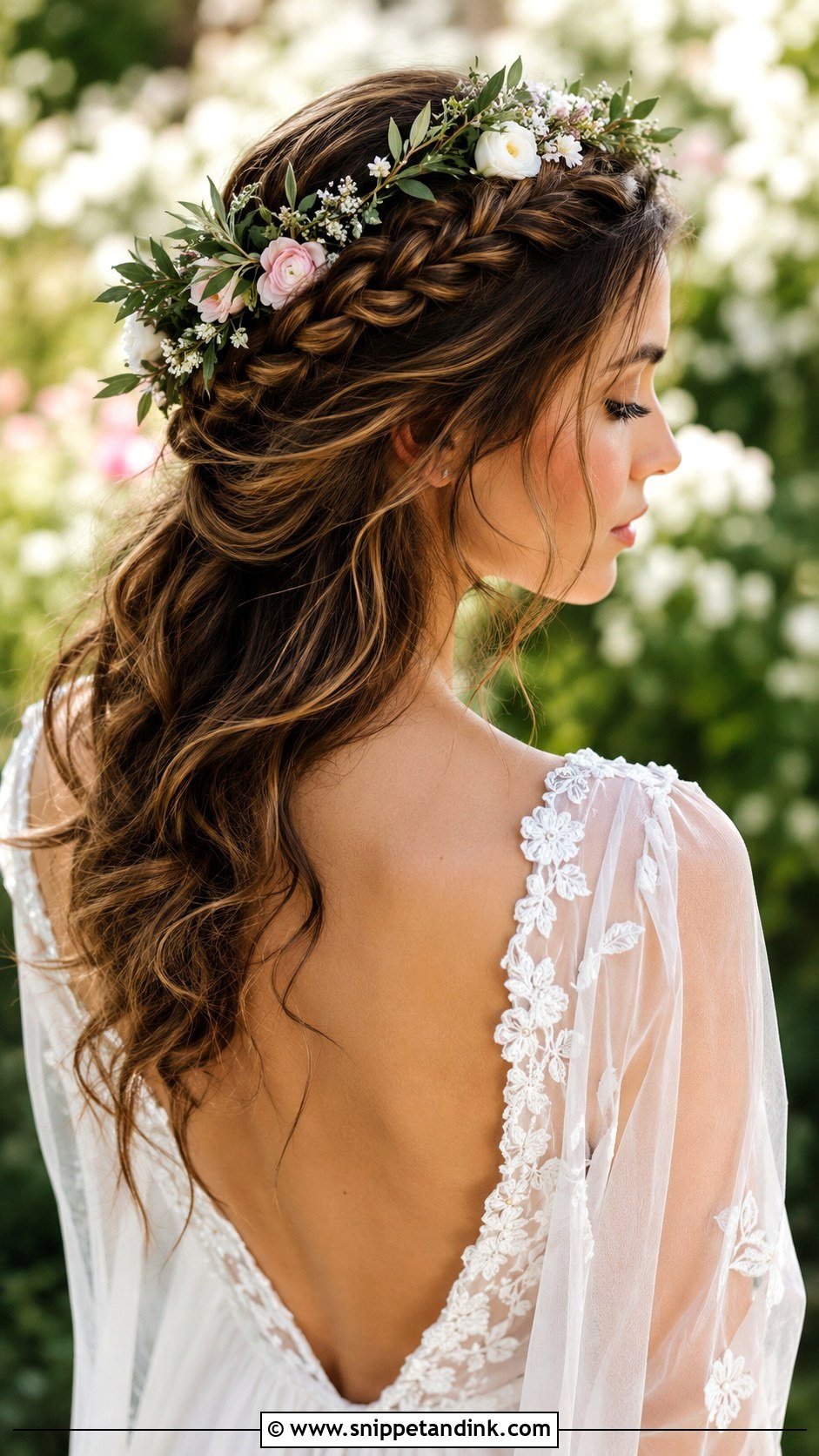
A crown braid wrapping the head like a halo gives pure bohemian beauty, and fresh flowers and greenery tucked through it make it feel like part of the garden. Outdoor and festival-style ceremonies suit it, and it keeps hair off the neck at summer weddings. Longer hair makes the crown easier to build; shorter hair often needs a clip-in weft. I ask the florist to wire the flowers in short pieces so they slide between braid sections rather than sitting on top. Pair it with flowing fabrics for a whimsical feel.
5. Side Swept Braid
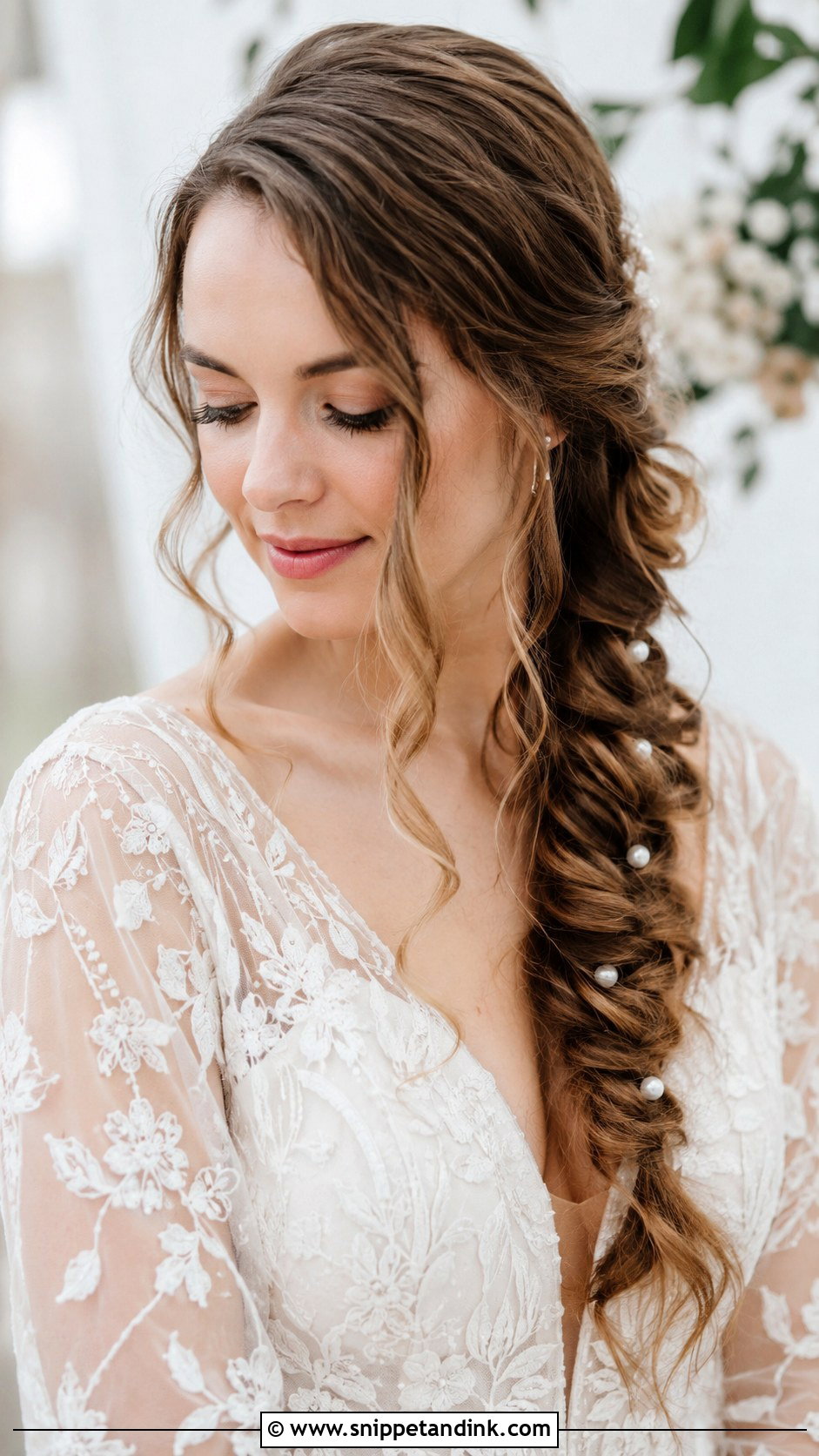
A thick braid draped over one shoulder feels relaxed but still has some drama. I loosen it for fullness and pull out a few wispy strands at the face. It works with both boho and classic gowns and looks especially good in profile shots. Pearls, ribbons or tiny blooms add personality. The catch is shoulder friction. A braid lying on beaded or lace straps can snag and fray, so I pin it slightly forward of the strap. Save it for long hair you’d rather show than tuck away.
6. Braided Low Bun
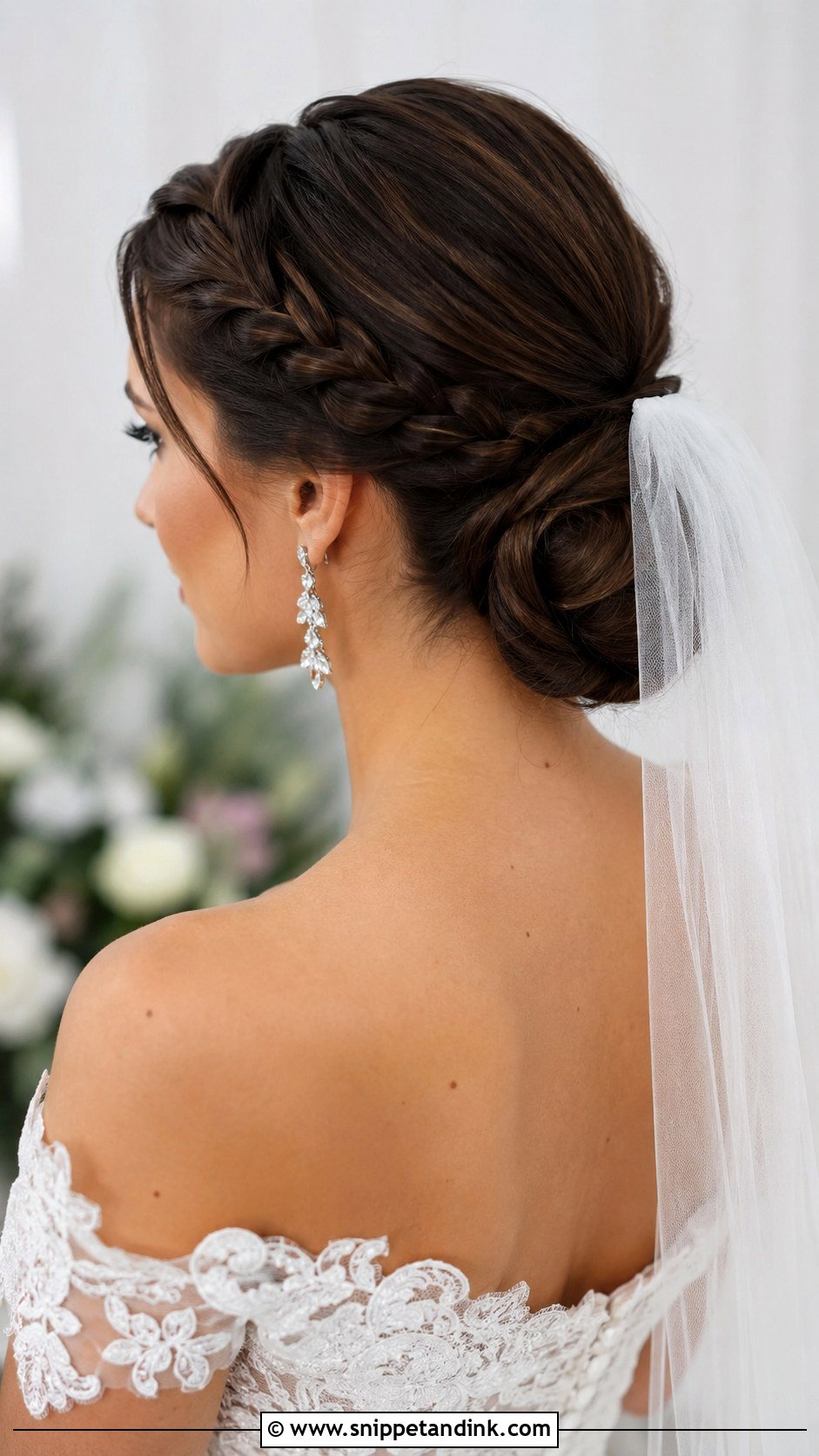
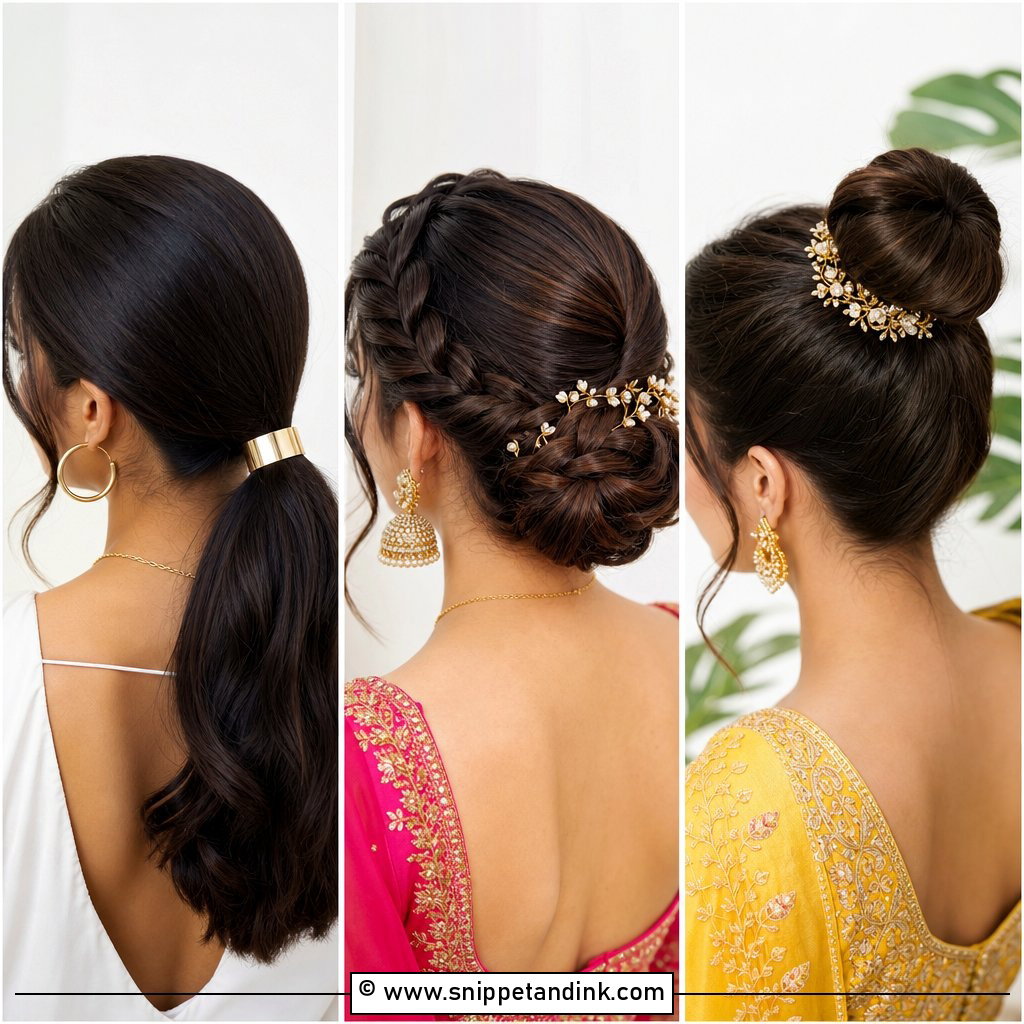
A braided low bun at the nape suits formal weddings, ballroom celebrations and evening receptions. Weaving a braid into the bun gives it texture that a plain chignon lacks. It sits comfortably with veils, statement earrings and structured gowns, and because it’s low, it doesn’t push a veil forward or tilt a tiara. Keep it sleek, or soften it with loose tendrils. Most face shapes suit it, and it keeps hair secure so you can dance freely all night.
7. Boho Braid With Loose Waves
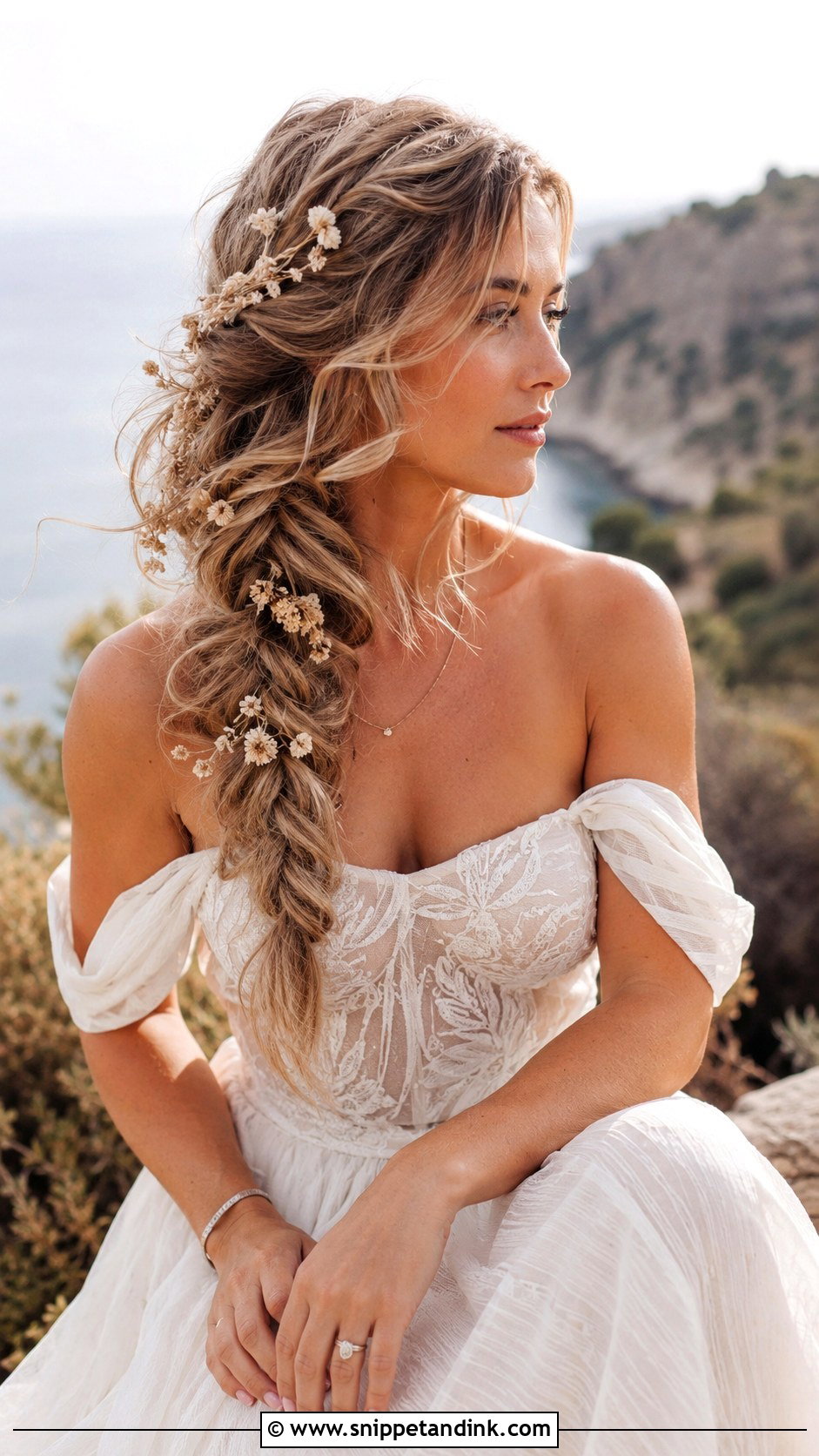
A loose boho braid mixed with tousled waves looks lived-in on purpose. I start a braid somewhere along the side or back, then let the rest of the waves fall naturally. Beach weddings, vineyard ceremonies and relaxed celebrations suit it, finished with dried flowers, baby’s breath or delicate gold accessories. The danger with a deliberately messy style is that it can drift into genuinely messy by evening, so I set the waves with a flexible spray that brushes out rather than a stiff one.
8. Double Dutch Braids Into Updo
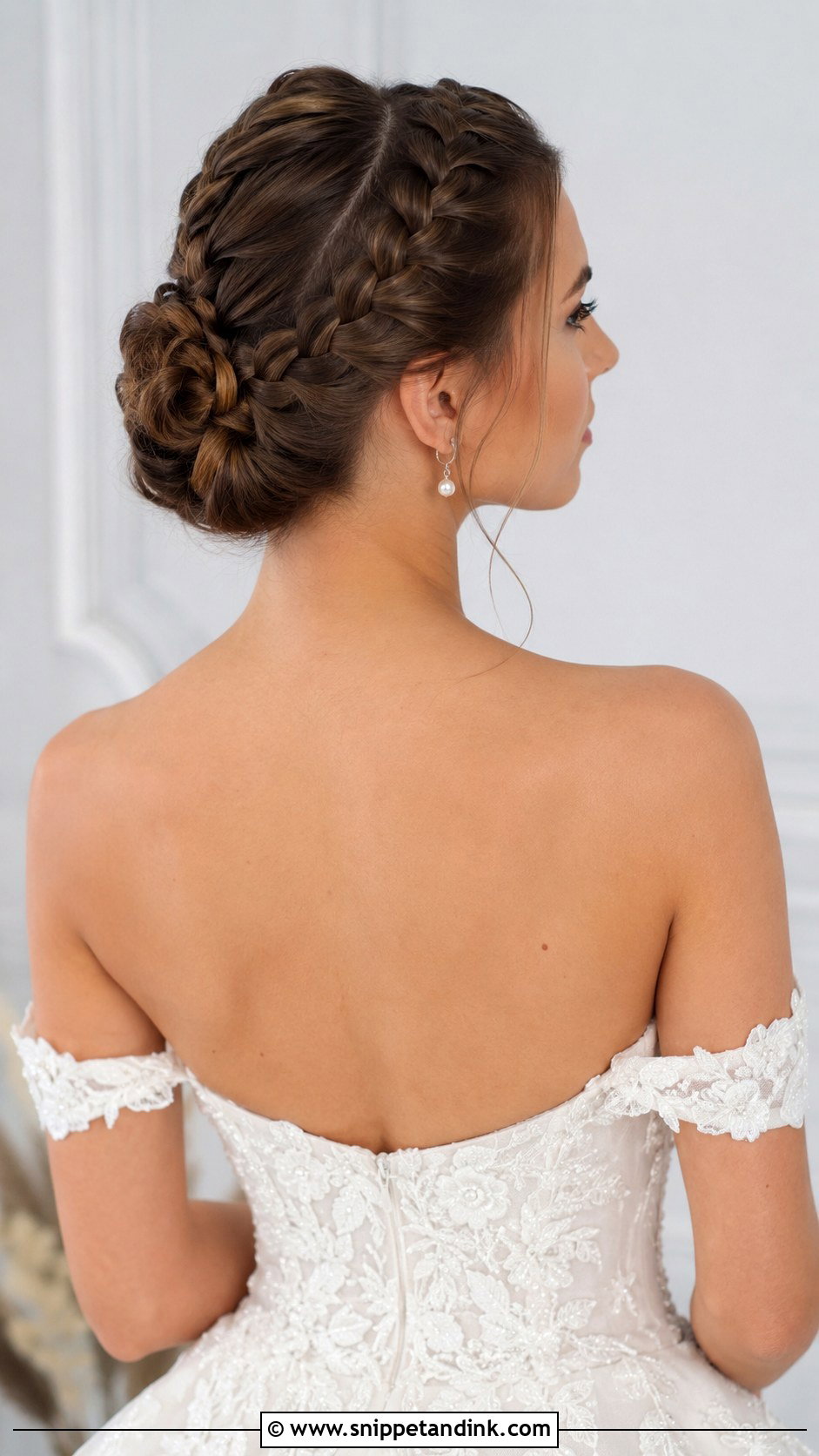
Two Dutch braids running parallel along the scalp, then gathered into an updo, look youthful and sophisticated at once. They keep everything neatly in place, which suits active brides and outdoor ceremonies. Gather them into a bun, a twist or a soft chignon. This look shines with open-back and off-shoulder gowns that show the braiding from behind. I check the two braids match in thickness from the back, since an uneven pair is obvious once the gown frames them.
9. French Braid Updo
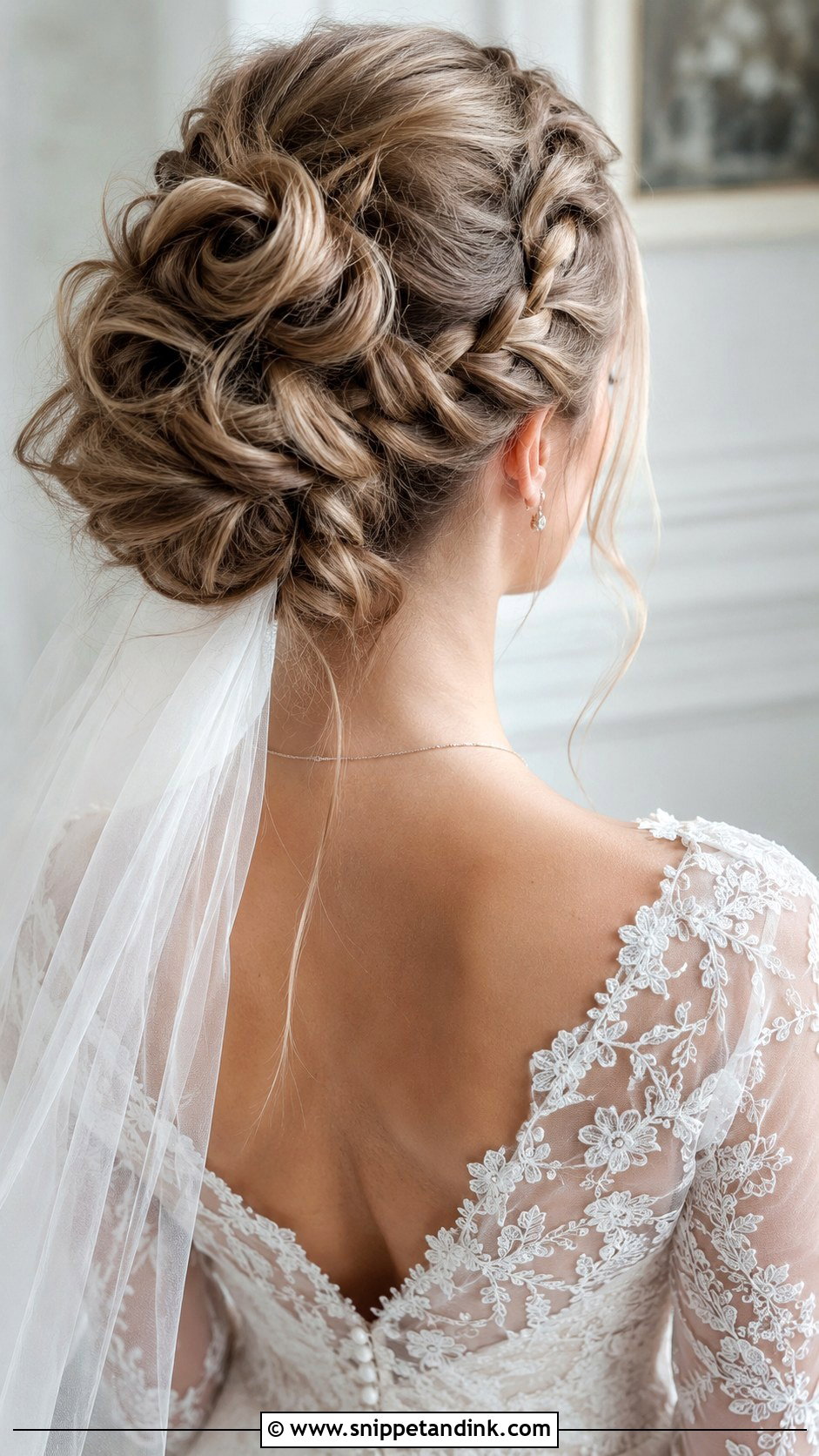
The classic French braid woven into a wedding updo has lasted for good reason. For something less expected, I’ll braid it inverted, starting at the nape and climbing upward into a bun. It suits formal and semi-formal weddings, keeps hair smooth and controlled, and pairs well with veils and hairpieces. The inverted version needs the bride to tip her head forward for some time, so I schedule it early, not while makeup is being finished. Soften it with a few loose strands for a romantic, modern feel.
10. Braided Halo With Veil
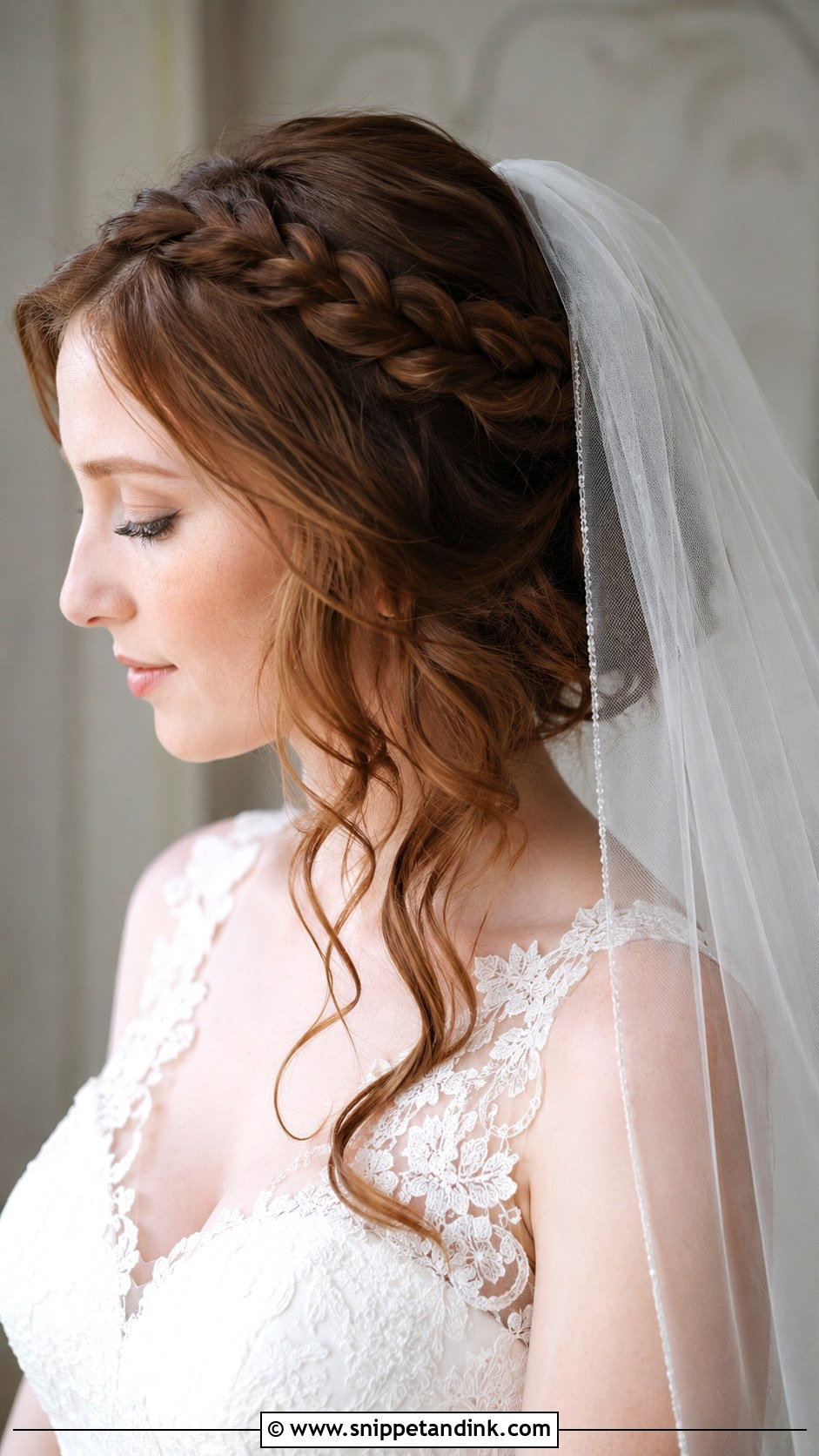
A braided halo combined with a flowing veil creates an ethereal, angelic bridal look. The braid wraps around the head and gives the veil a firm anchor, which traditional and church weddings appreciate. Leave the rest of the hair in waves or sweep it into a low updo beneath. I slide the veil comb under the back of the halo, where the braid acts like a ledge, so the comb can’t slip down. Subtle sparkle accessories add a finishing touch.
11. Messy Fishtail Side Braid
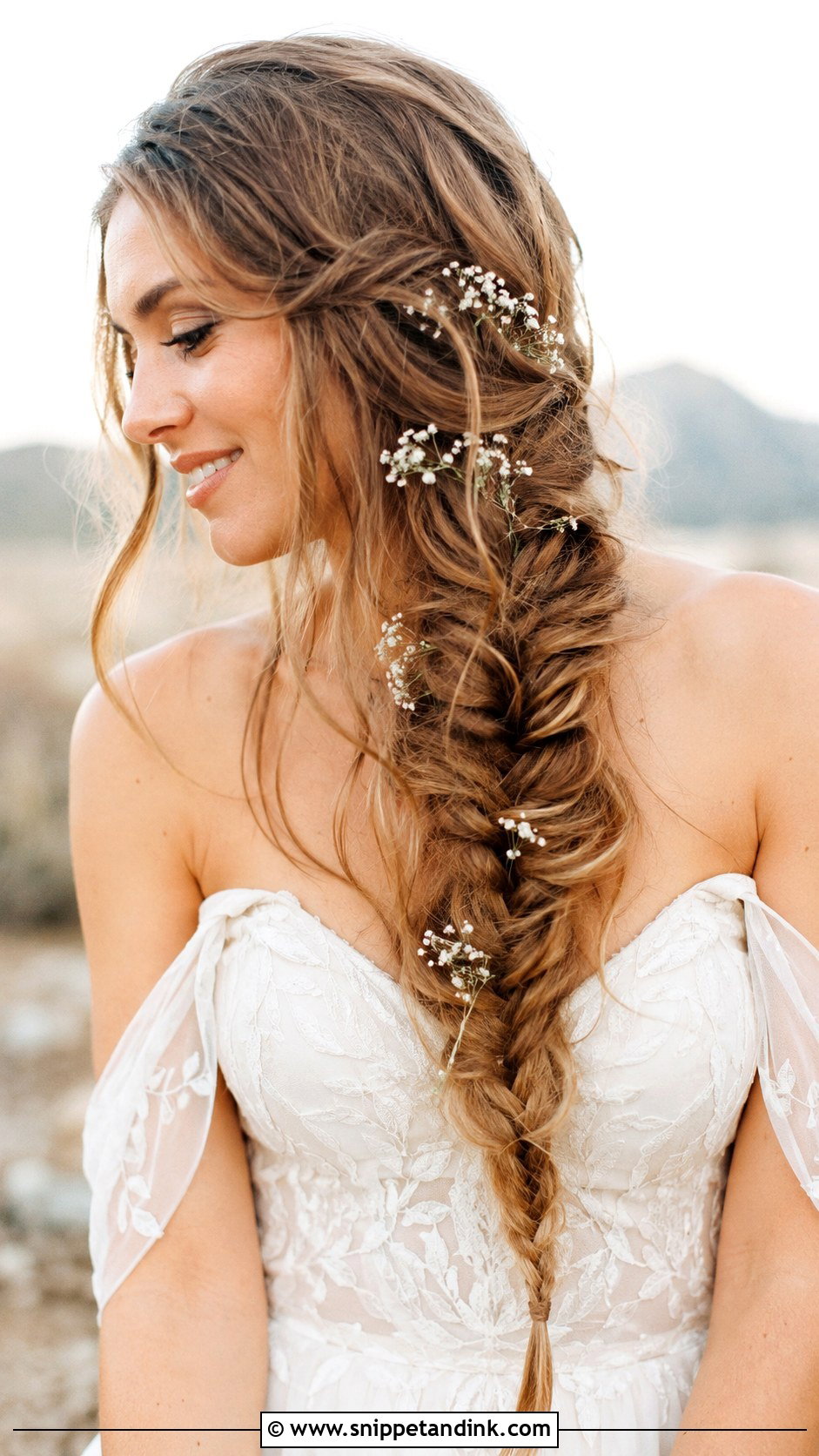
A messy fishtail over one shoulder suits boho-chic weddings, meadows and beaches. I braid it fully, then pull the strands apart gently to create fullness and softness. Baby’s breath, small wildflowers or a ribbon woven in add charm. Flowing bohemian gowns pair naturally with it. Because it’s meant to look undone, it’s also one of the few styles that recovers from a windy ceremony without any touch-up. Long hair shows it off best.
12. Braided Bun With Pearls
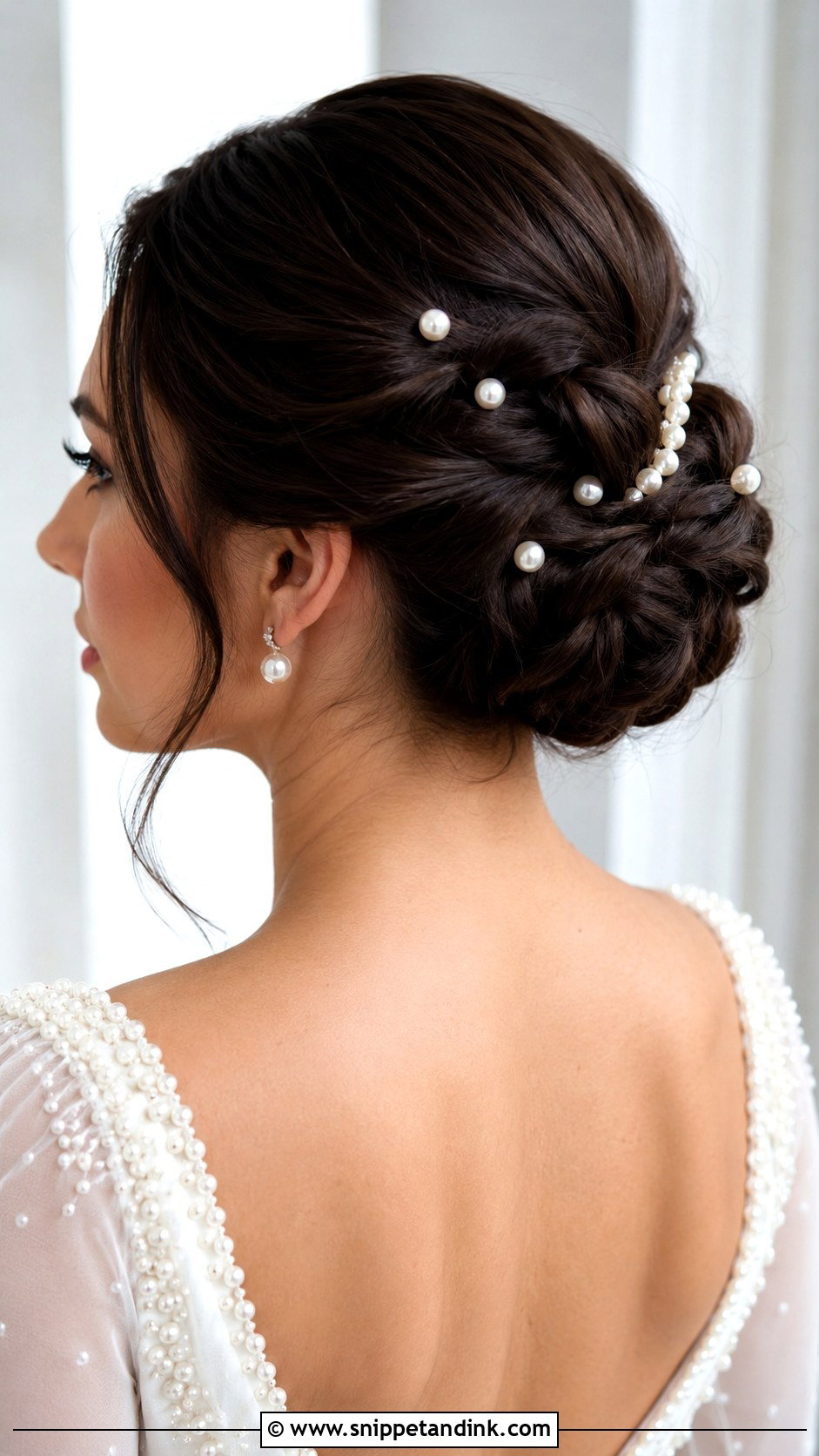
Pearls and braids are a natural pairing. A braided bun with scattered pearl pins, or a fine pearl strand woven through it, looks polished and suits formal weddings and classic gowns. Set it low for a softer look or higher for a modern one. When I weave a pearl strand, I pin both ends deep inside the bun so nothing dangles if the strand gets caught. The pearls pick up light and echo pearl earrings or a necklace without adding more jewelry.
13. Bubble Braid Ponytail
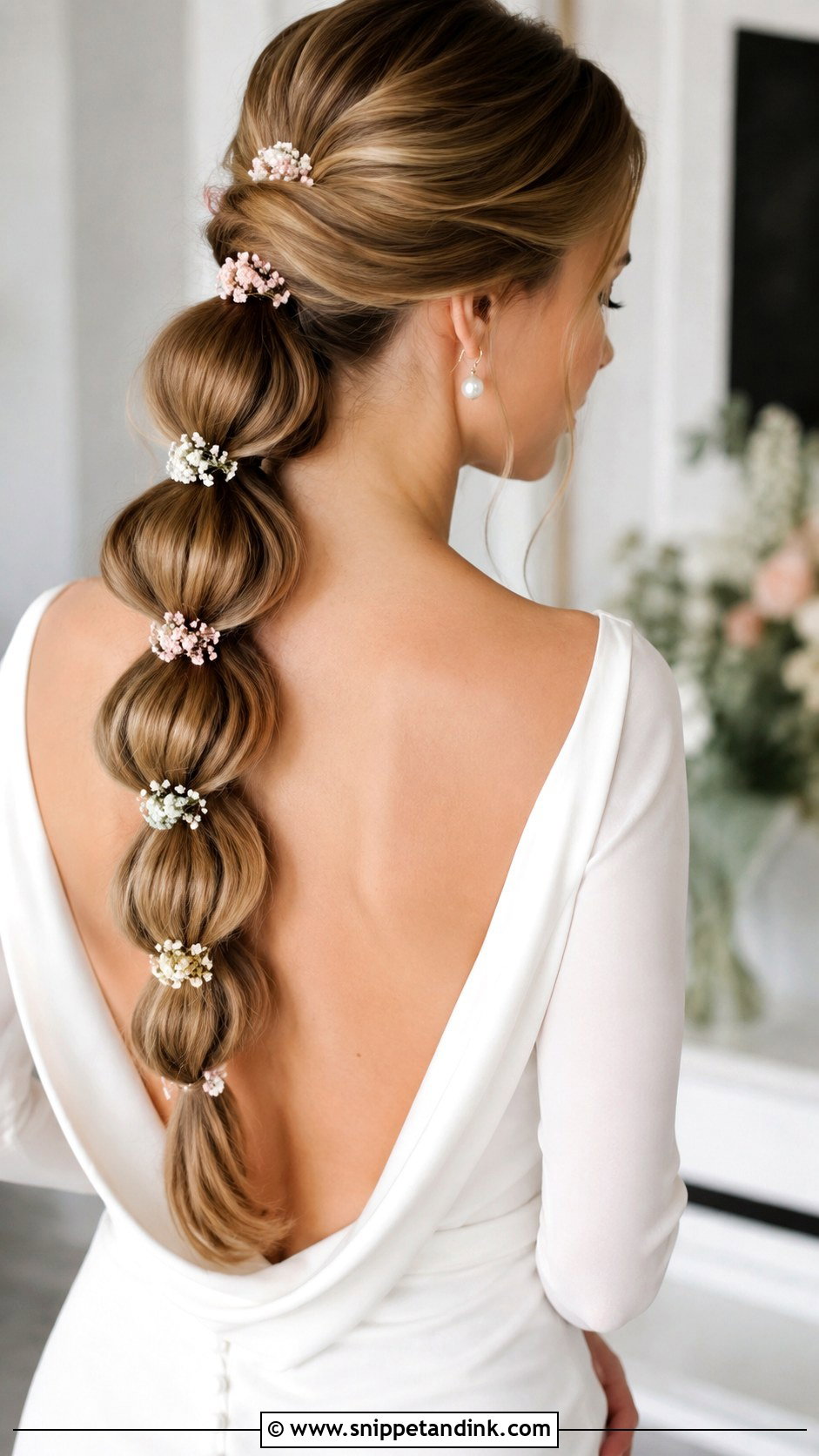
The bubble braid is a playful alternative to traditional styles. I section a ponytail with small elastics and gently puff each segment into a series of bubbles. It suits contemporary weddings and brides who like a bit of fun. Each bubble can hold a tiny flower, pearl or ribbon. It’s far easier to do than it looks and very forgiving with layers, since every section is held by its own elastic. It needs long hair to look complete, and clear elastics keep it neat in close-up photos.
14. Braided Chignon
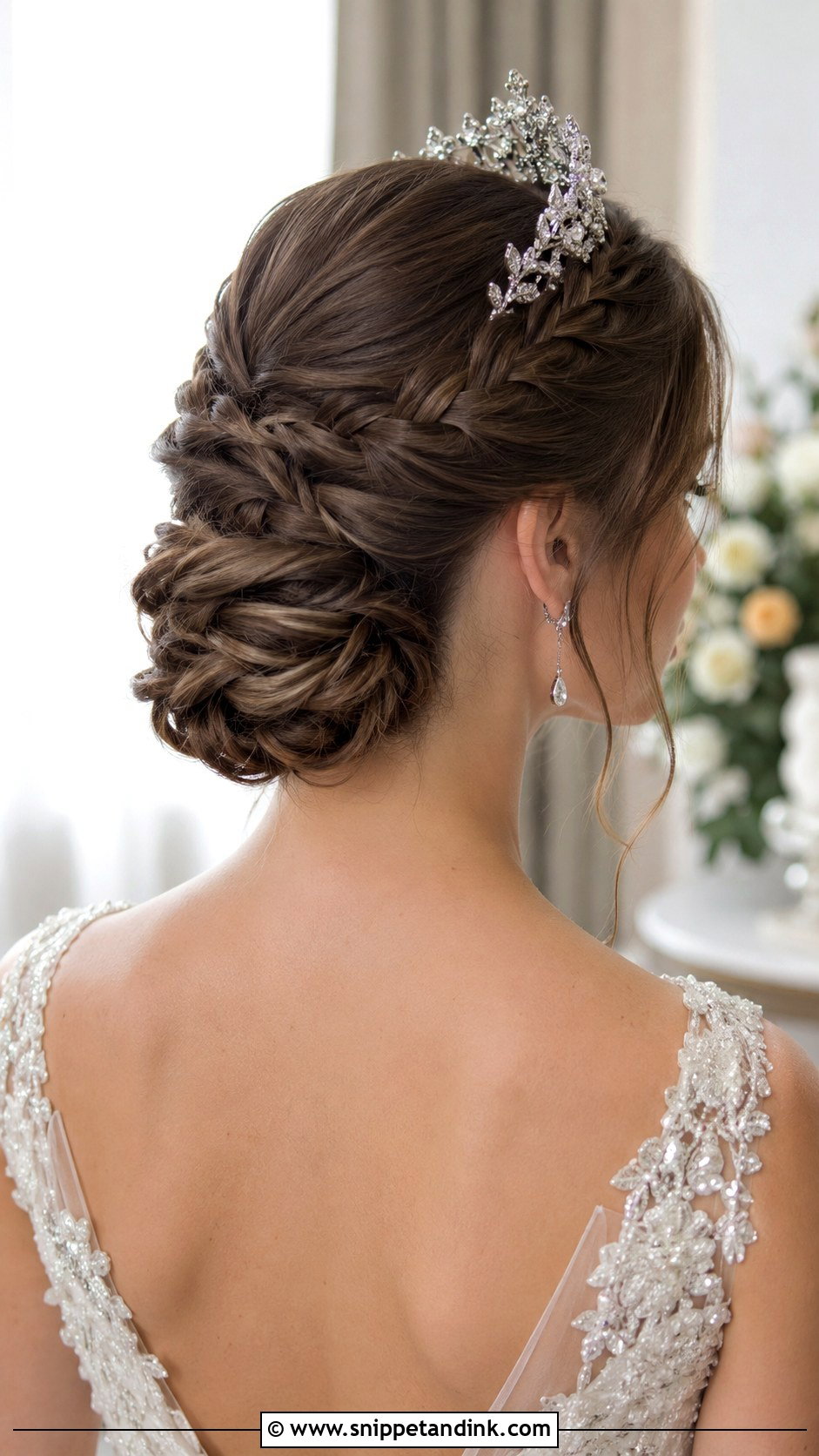
The braided chignon mixes a low, twisted knot with braided sections for dimension at the nape. Formal and black-tie weddings suit it, and it sits well with veils, tiaras and statement gowns. I anchor it with U-pins rather than bobby pins, because they hold the shape without flattening the braids. Soften it with face-framing pieces or keep it sleek. It keeps hair secure from ceremony to last dance and suits most face shapes.
15. Half-Up Braided Crown
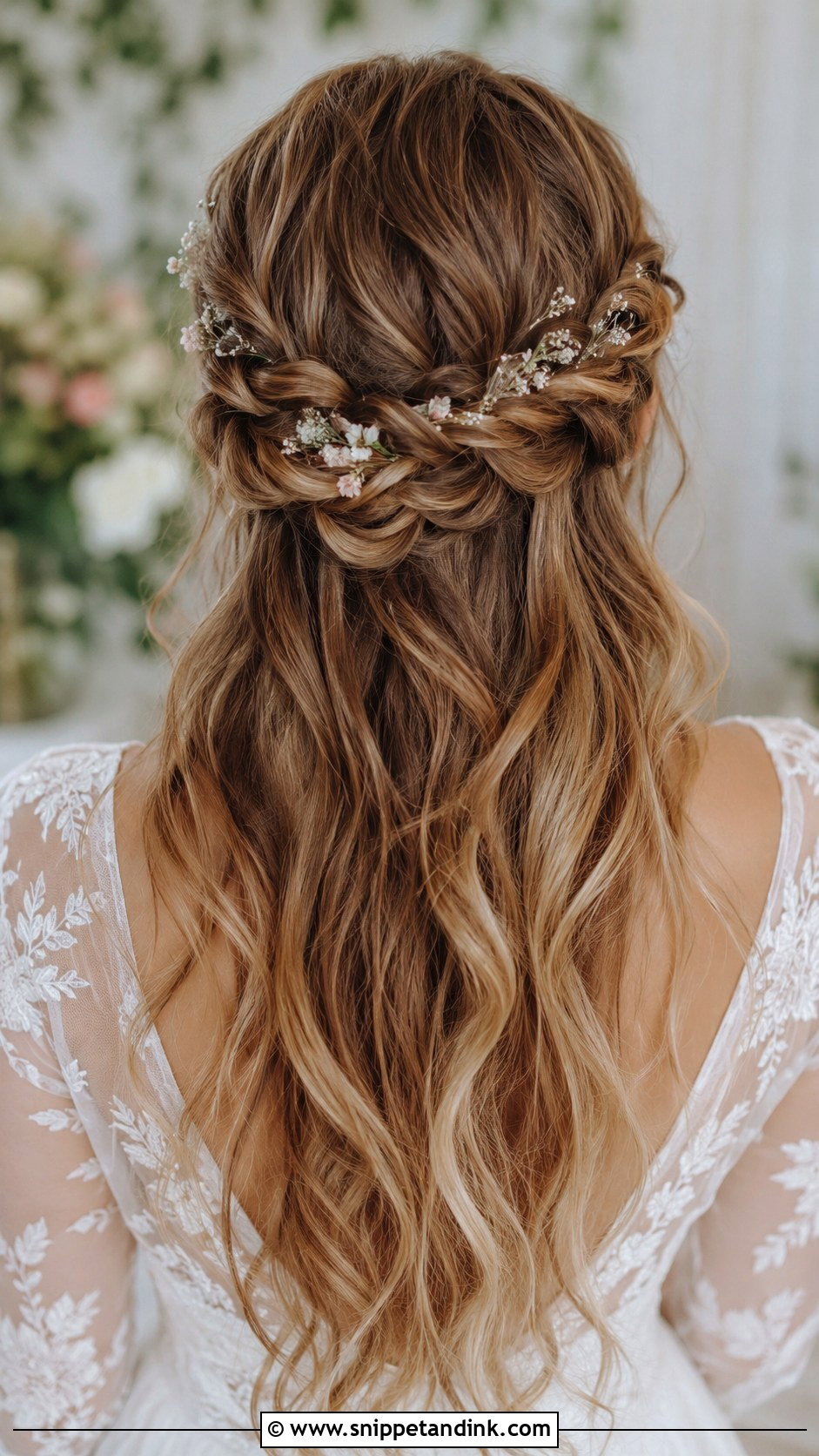
A half-up braided crown keeps hair off the face while length flows below. Two braids meet at the back of the head to form a crown, with loose waves underneath. It suits most wedding themes, boho to classic, and solves the dilemma between an updo and wearing your hair down. Small flowers or sparkling pins along the crown add charm. I pin the join where the two braids meet with two crossed pins, because that’s the one spot that loosens when a veil is lifted off. Indoors or out, it stays neat.
16. Twisted Rope Braid Updo
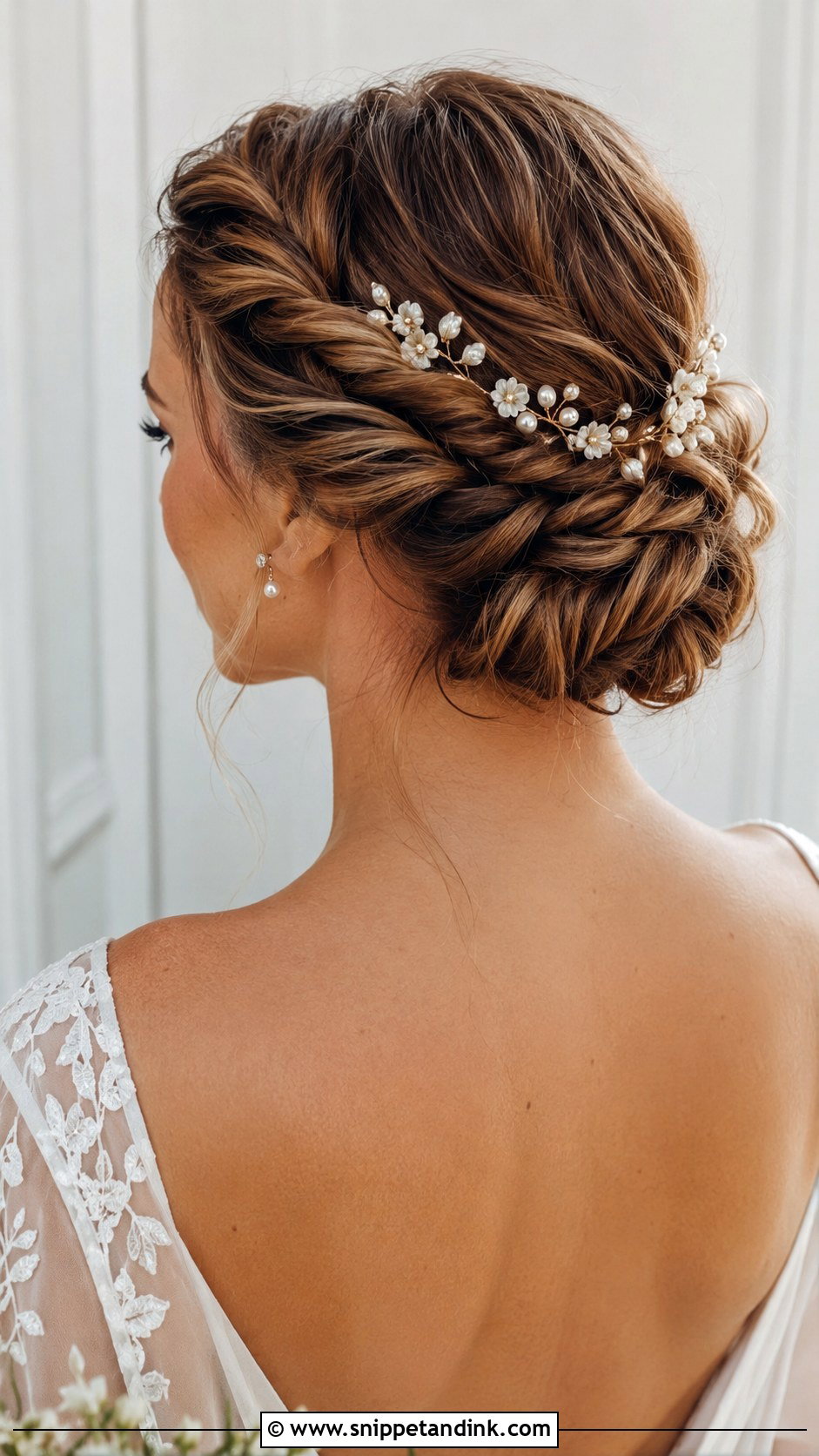
A twisted rope braid looks far more complicated than it is. Two strands are twisted around each other into a rope, then gathered into a low bun or soft chignon. It suits formal and semi-formal weddings and pairs nicely with delicate accessories. The trick is direction: I twist each strand one way and wrap them together the opposite way, which locks the rope; if both go the same way, it unwinds. Done that way, it holds through the whole day.
17. Braided Updo With Tendrils
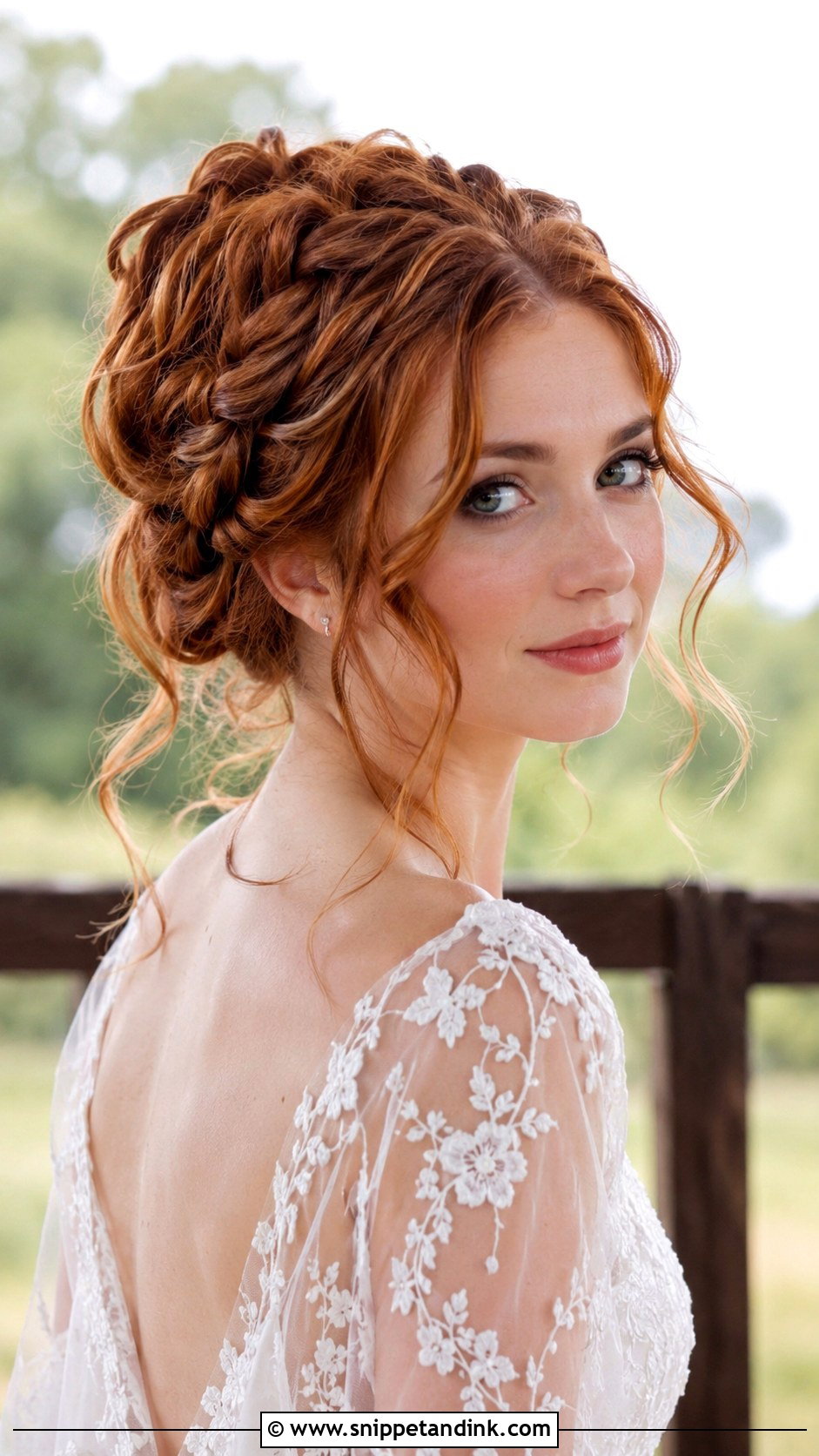
Loose tendrils around the face soften a braided updo. The braids gather into a neat shape while wispy pieces stay out around the hairline. Romantic gowns and outdoor ceremonies suit it. I curl the tendrils lightly with a small iron and leave them slightly longer than you’d expect, because they shrink as the curl sets. It works with most wedding themes and flatters most face shapes.
18. Cornrow Braided Updo
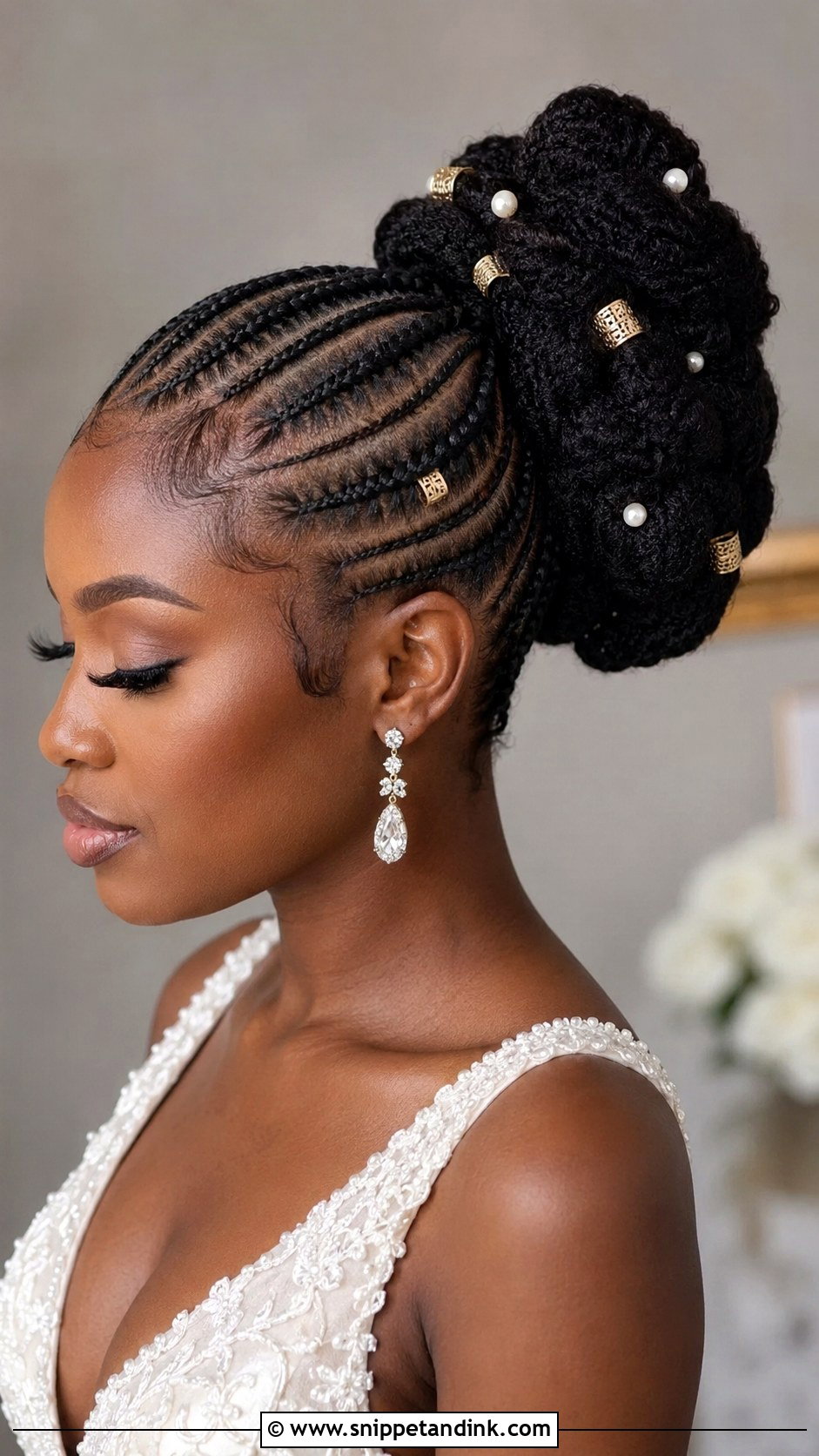
For textured or natural hair, a cornrow braided updo is secure, culturally rich and elegant. Sleek cornrows lead into a gathered bun or sculptural shape at the back, with patterns that show clearly in photos. It’s long-lasting and holds through an active day without worry. I prefer to install cornrows a day or two before the wedding so any tenderness at the scalp has settled, and I keep tension light at the edges to protect the hairline. Gold cuffs, pearls or fresh flowers personalize it, and the style honors heritage with real presence.
19. Loose Braid With Greenery
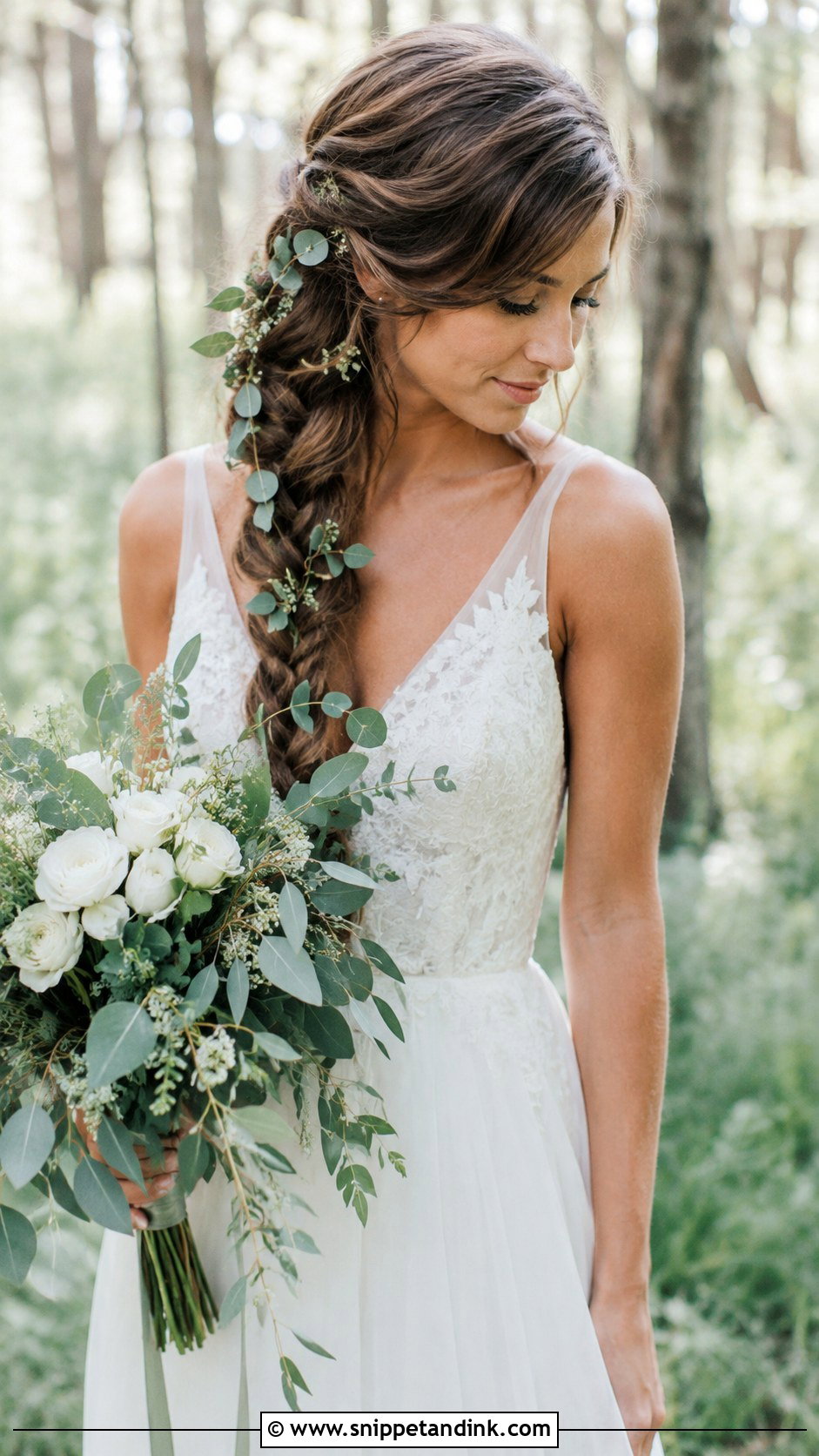
A loose braid woven with trailing greenery and eucalyptus suits garden, forest and outdoor weddings. The braid drapes gently while the sprigs add fresh color. It pairs with flowing gowns and minimal makeup, over one shoulder or down the back. Choose greenery carefully. Eucalyptus and ruscus hold up for hours out of water, while softer leaves wilt quickly, and some sappy stems can mark a light gown, so I wrap each cut end in floral tape. Keep it simple and fresh.
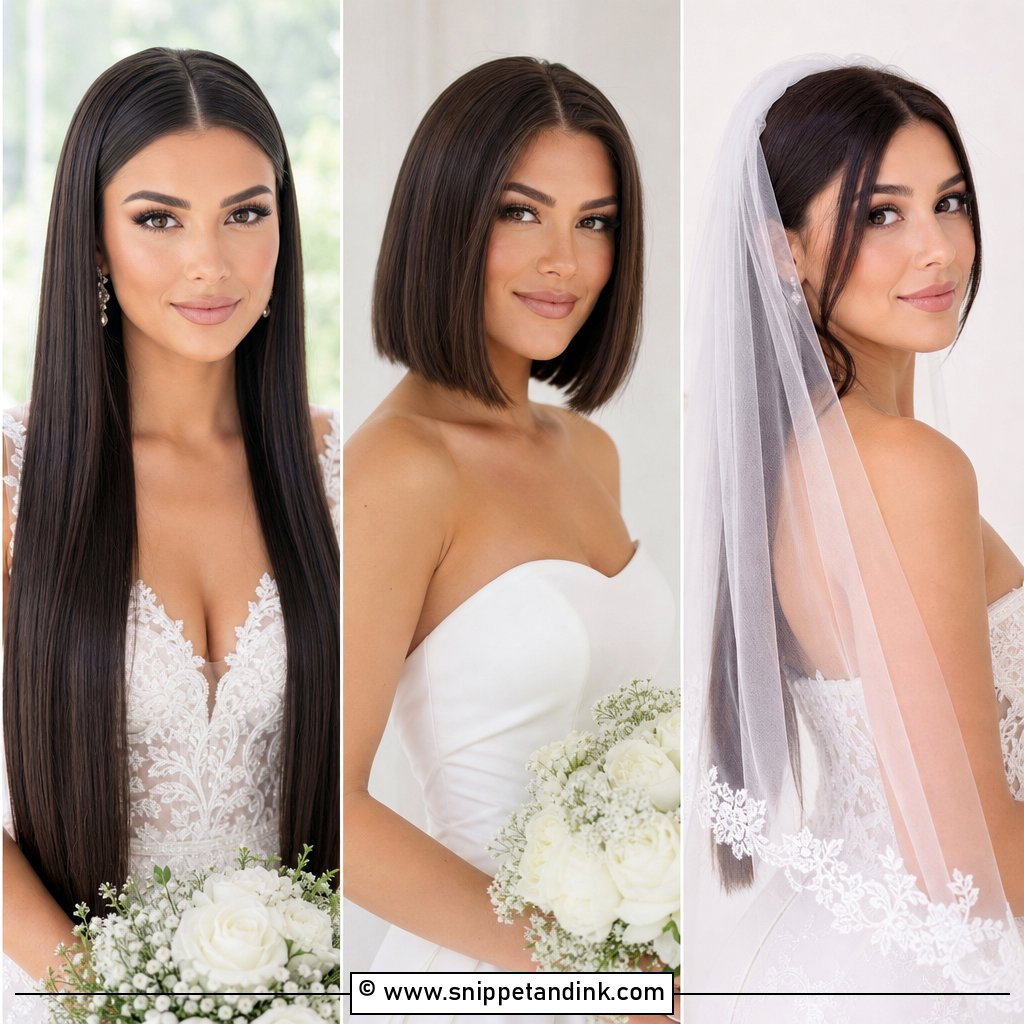

20. Braided Top Knot
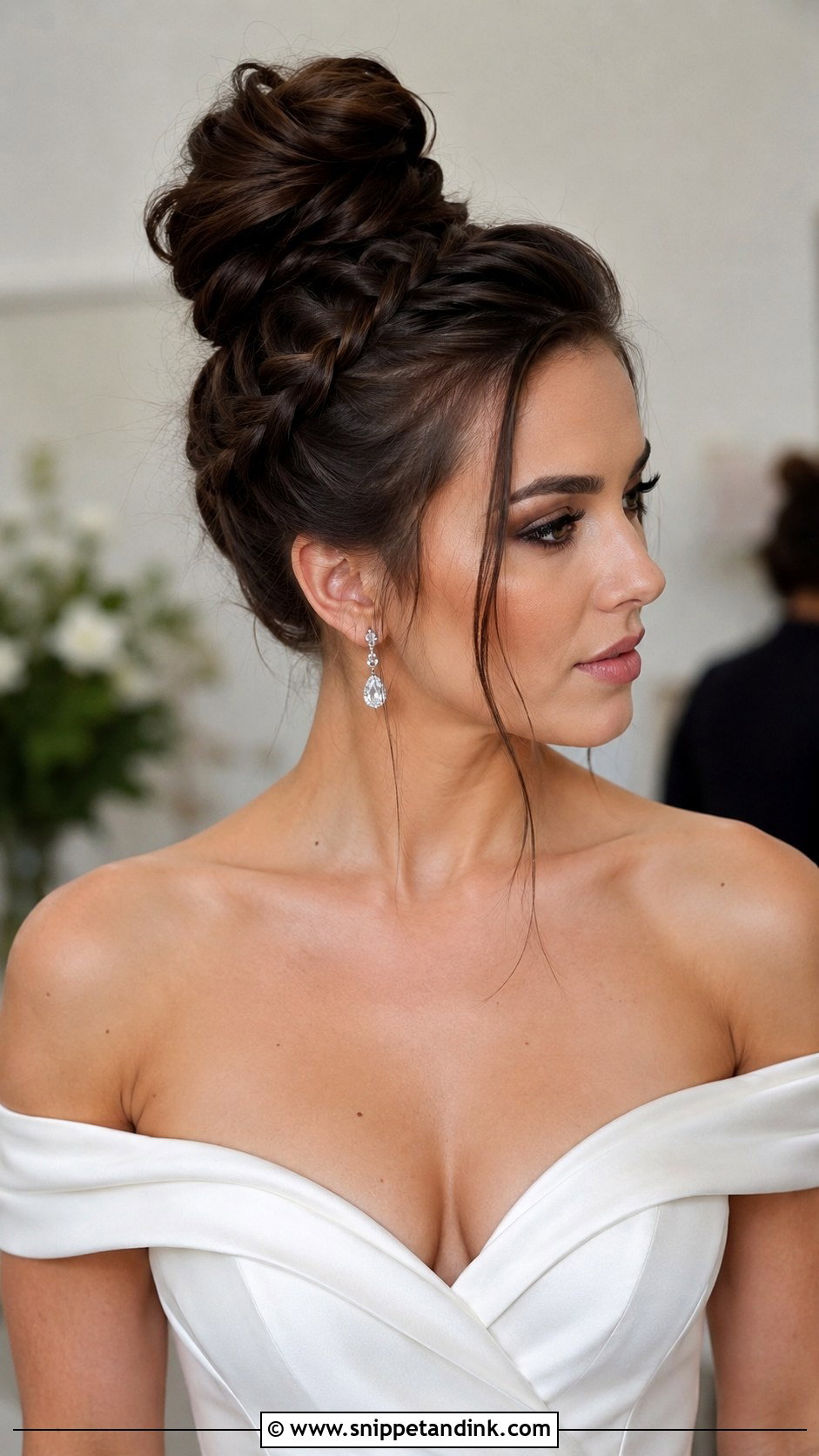
The braided top knot sits high on the head for a fashion-forward look. A braid leads up into the knot, creating height and a little drama. It suits contemporary weddings and shows off the neckline and shoulders, which works well with off-shoulder and high-neck gowns. Keep it sleek or soften it with loose strands. It keeps hair completely off the face at warm-weather celebrations. If you want a veil with it, I place the comb just under the knot, never on top, so the veil falls from the back of the head.
Taking the Braid Down at the End of the Night
Nobody tells brides about this part. After a full day, a braided updo holds dozens of pins and a lot of hairspray, and pulling it apart in a hurry is how hair breaks.
- Find and remove every pin before touching the braids. Feel for them gently with your fingertips, working from the top down.
- Unbraid from the ends upward, one braid at a time, separating strands with your fingers rather than a brush.
- Mist the lengths with a leave-in conditioner or detangling spray to loosen the hairspray.
- Detangle with a wide-tooth comb, starting at the ends and working up.
- Wash the next morning instead of that night if you’re tired; sleeping in a loose braid with a satin pillowcase is fine.
For cornrows or braids with extensions, book a gentle takedown with your stylist if you can, or leave them in for a few days and enjoy them. Removing an install half asleep at two in the morning is how edges get damaged.
Start With Your Hair Texture, Then Let the Gown Decide
Braids give you texture, staying power and a lot of range. A fishtail crown with fresh flowers and a sleek braided chignon sit at opposite ends of that range, and there’s a style here for most themes, gowns and personalities. They work across hair lengths and textures. Add pearls, ribbons or greenery to make the look yours. Then test your favorite at a trial, in your veil and with your accessories, so the wedding morning holds no surprises.
You'll Like These Ideas:


Leave a Reply