
A Rajasthani bridal hairstyle carries more weight than almost any other wedding look I do. There’s the borla at the hairline, often a matha patti or sheesh patti, a gajra, and a heavy odhni pinned over the crown, and all of it has to stay put through hours of rituals. So the hair is really a foundation: a clean center part, a firm base at the back, and enough grip for every pin. The twenty styles below go from the sleek bun to long decorated braids and softer open looks, with notes on how each one copes with the jewelry and the dupatta. They pair with lehengas, Rajputi poshak, bandhani odhnis and gota patti dupattas.
How a Borla Stays Centered All Day
The borla is a round pendant on a chain that runs along the center part, and if it isn’t anchored properly it tips forward or slides off to one side. The fix happens in the hair, not the jewelry.
- Set a sharp center part and smooth the front with a little cream.
- Make a small hidden anchor at the crown: a mini braid or a tight twist secured with crossed pins.
- Hook or pin the borla chain into that anchor, adjusting the length so the pendant sits right at the hairline.
- Only then build the bun, so the chain runs underneath the finished style.
The order of the whole look matters too: hair, then head jewelry, then the dupatta draping, then the final pins through the dupatta into the bun. Draping the odhni before the jewelry is fixed means taking it all off again.
1. Rajasthani Bridal Bun With Borla
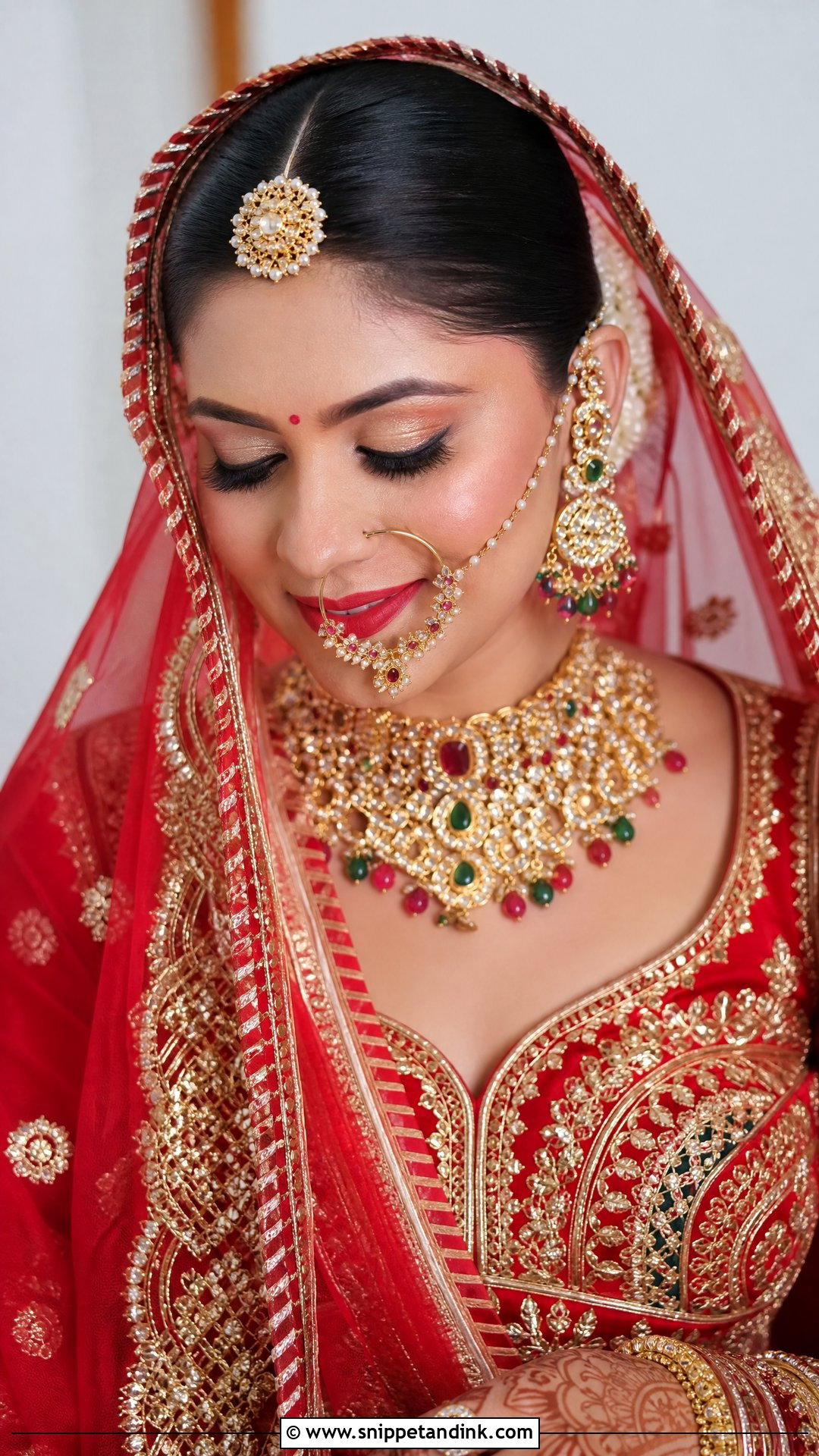
The borla bun is the classic, and there’s a practical reason for it. A clean center part gives the borla a straight line to sit on, and a low or mid bun gives the dupatta pins something solid to grip. I smooth the sides back with a little cream and a fine-tooth comb so nothing frizzes under the jewelry. The face stays open for the nath, choker and earrings. A soft gajra around the bun adds fragrance and hides the pins.
2. Rajasthani Bridal Low Bun With Gajra
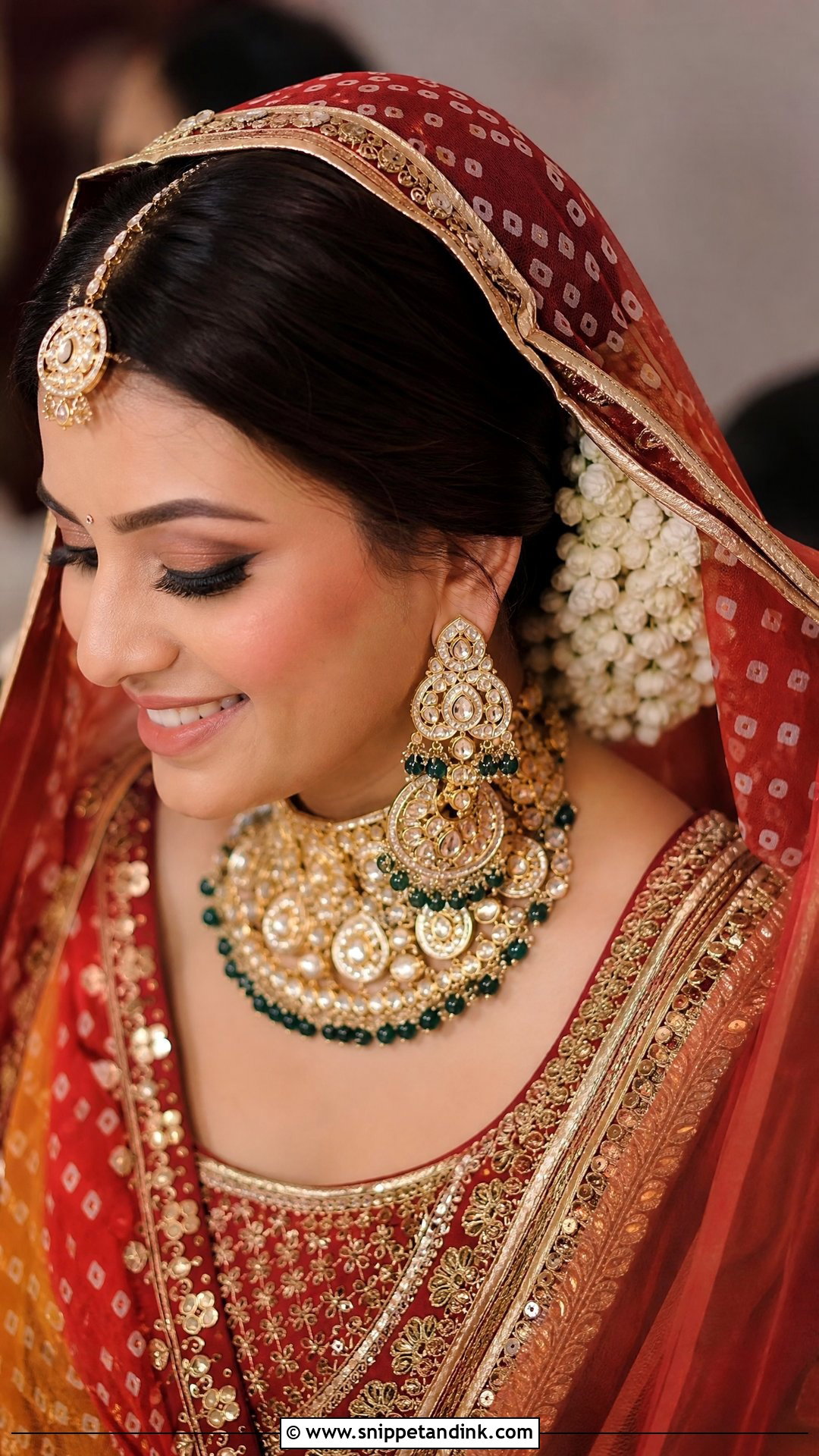
Sitting near the nape, a low bun with gajra keeps the weight off the top of the head, which brides feel by the third hour of a ceremony. Fresh jasmine or mogra can wrap the whole bun or sit on one side. I pin the gajra through its own thread into the bun rather than just over the surface, because loose strings slide down once the flowers soften. The center part stays clean for the borla, and with little volume at the crown, the matha patti and the veil border take the attention.
3. Rajasthani Bridal Braid With Flowers
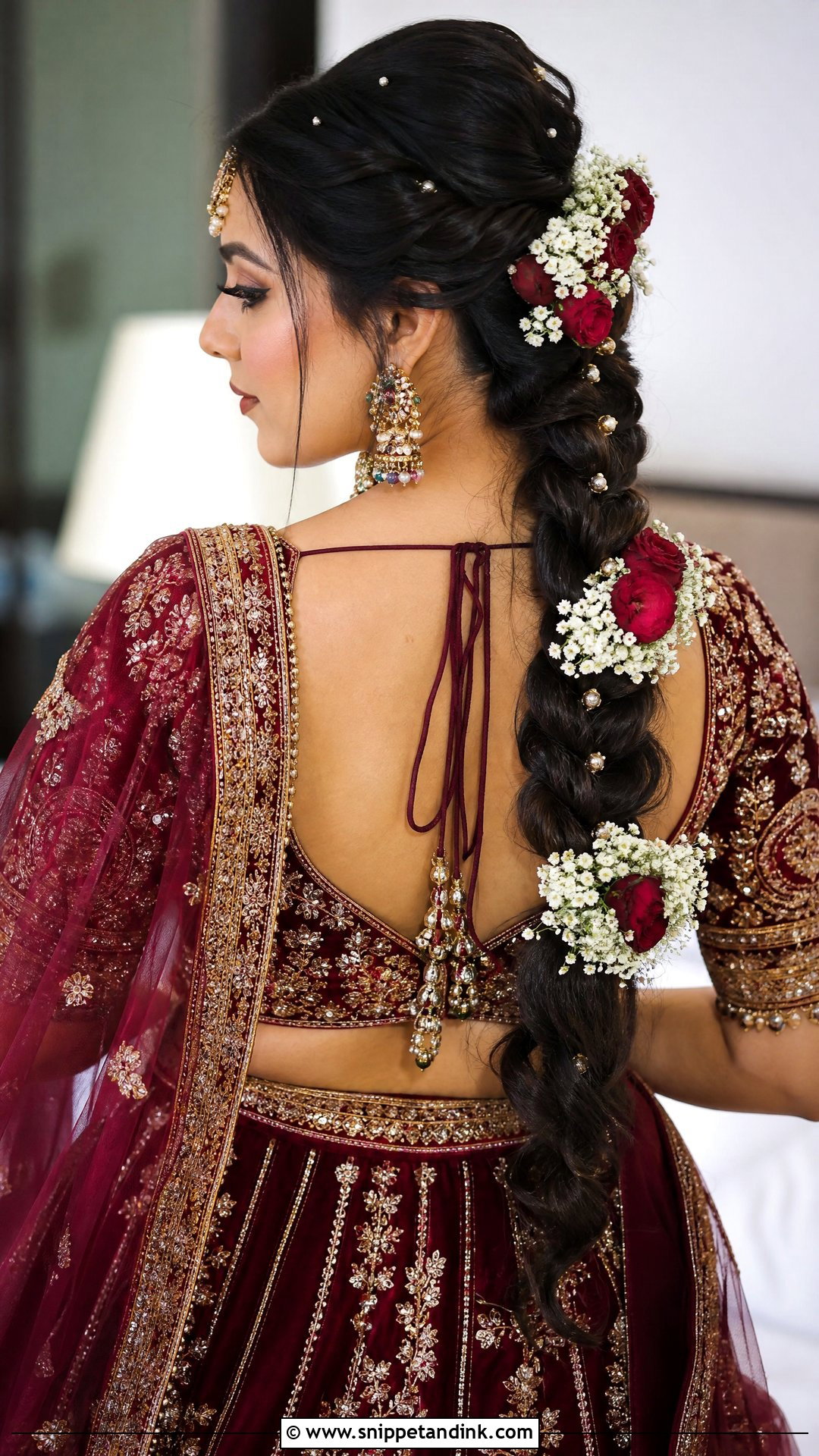
Even with the dupatta over the head, a braid shows at the back, which is why brides love it for portraits. I build it thick and neat, and decorate it with jasmine, roses, pearls or small gold pins. Against a red, maroon or orange outfit, those details read clearly in a back-facing shot. A braid also controls long hair well. One thing to know: the weight of a fully decorated braid pulls on the crown, so I anchor the top with a hidden ponytail first and braid from there.
4. Rajasthani Bridal High Bun With Matha Patti
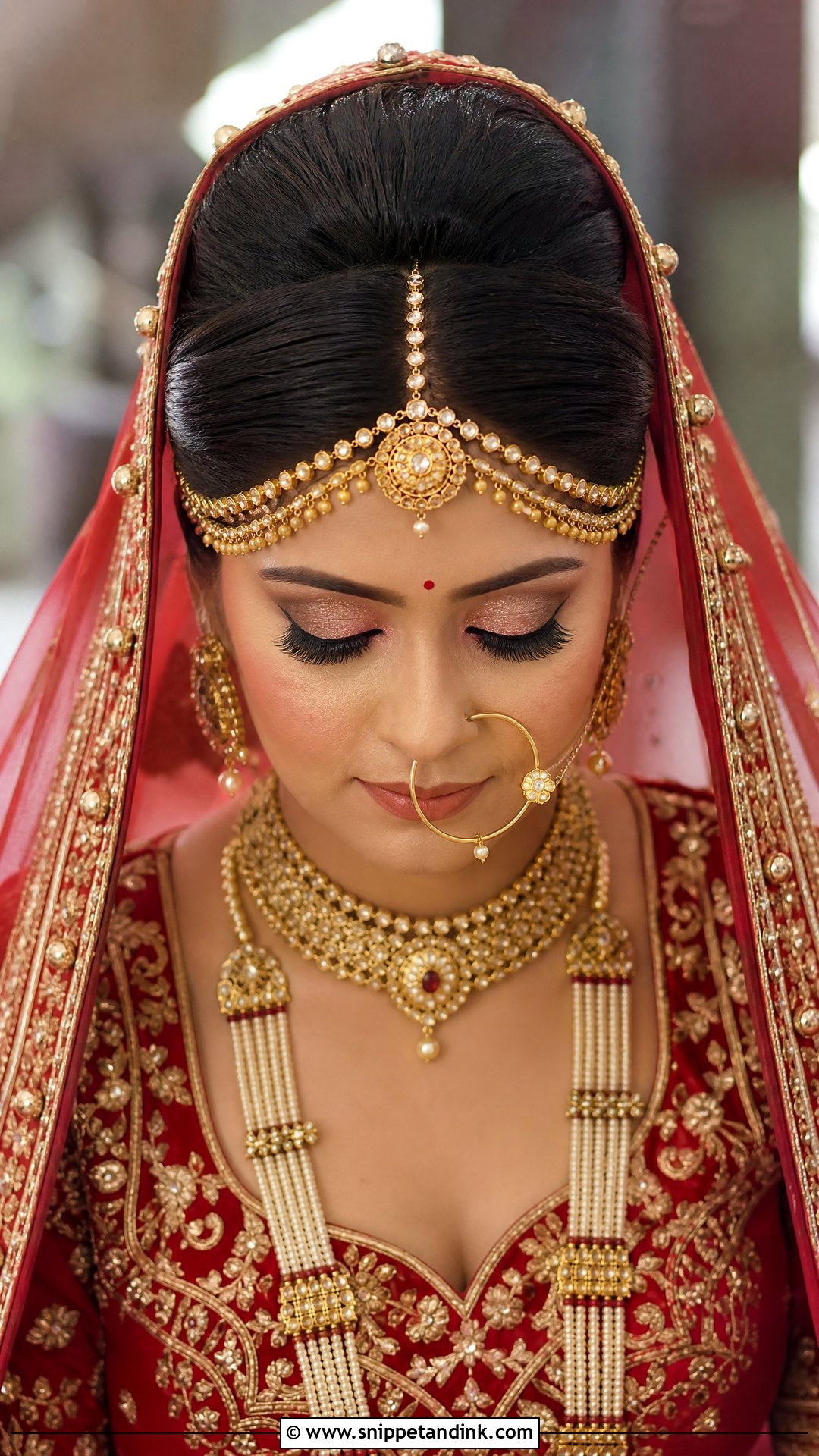
Height at the crown changes how the dupatta drapes. A high bun lifts the odhni so it sits like a frame instead of lying flat on the head, and it gives the head jewelry more balance. The front stays smooth for the matha patti, and the bun takes pearls, flowers or gold accessories. Height adds length to round, oval and heart-shaped faces. Long faces can look longer under it, though, so for those brides I’d lower the bun to mid-height.
5. Rajasthani Bridal Sleek Bun With Dupatta
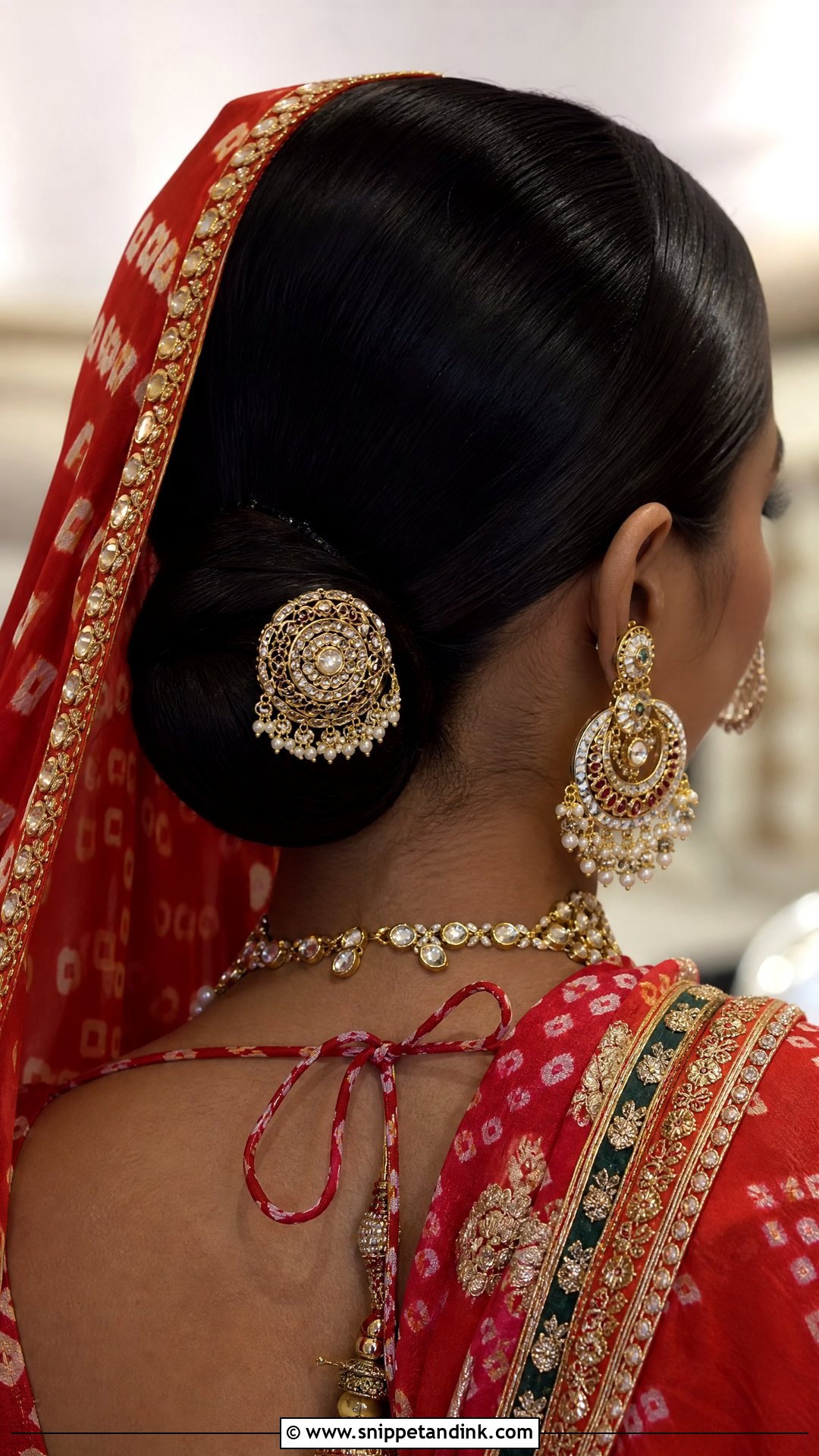
Zero loose pieces, which is the whole point. The hair is center-parted, smoothed with gel or cream and pinned tightly, so the borla, sheesh patti, or matha patti sit sharp and centered with nothing catching on them. Depending on the drape, the bun stays hidden or peeks out under the dupatta. Brides wearing heavy gota patti or bandhani odhnis like the security. A tight sleek style can pull at the temples by evening, so I set it firmly but not painfully, and I check with the bride before the last pins go in.
6. Rajasthani Bridal Messy Bun With Borla
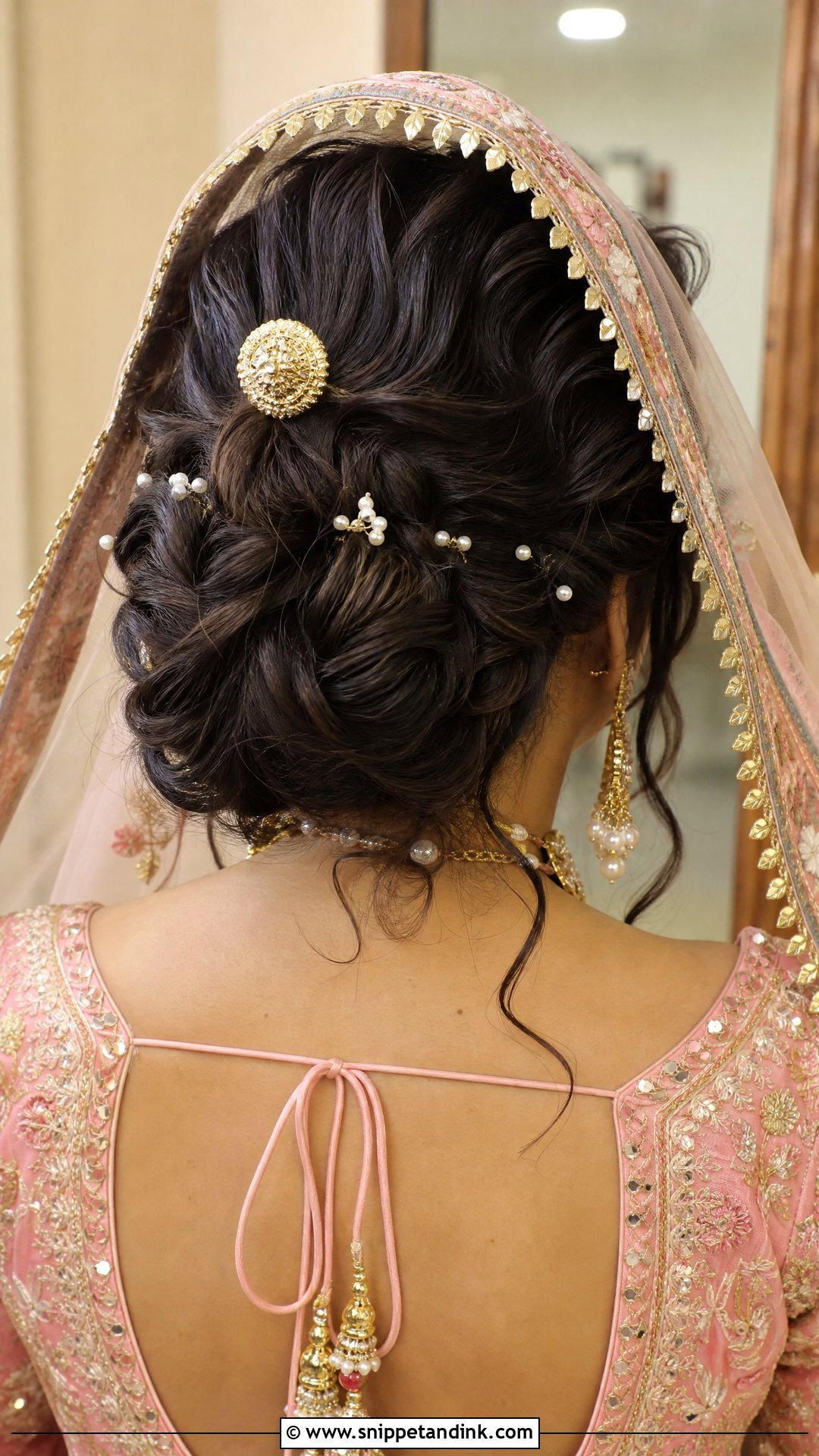
Here the front stays controlled with a center part while the bun gets texture, volume and a few relaxed pieces. It’s softer and less formal than the sleek version, though it still has to hold a dupatta, so the messiness is only on the surface. Underneath, I build a firm base with a ponytail and backcombing before pulling the texture out. Small white flowers, pearl pins or tiny gold pieces tuck into the gaps. The borla keeps it rooted in tradition.
7. Rajasthani Bridal Braided Bun
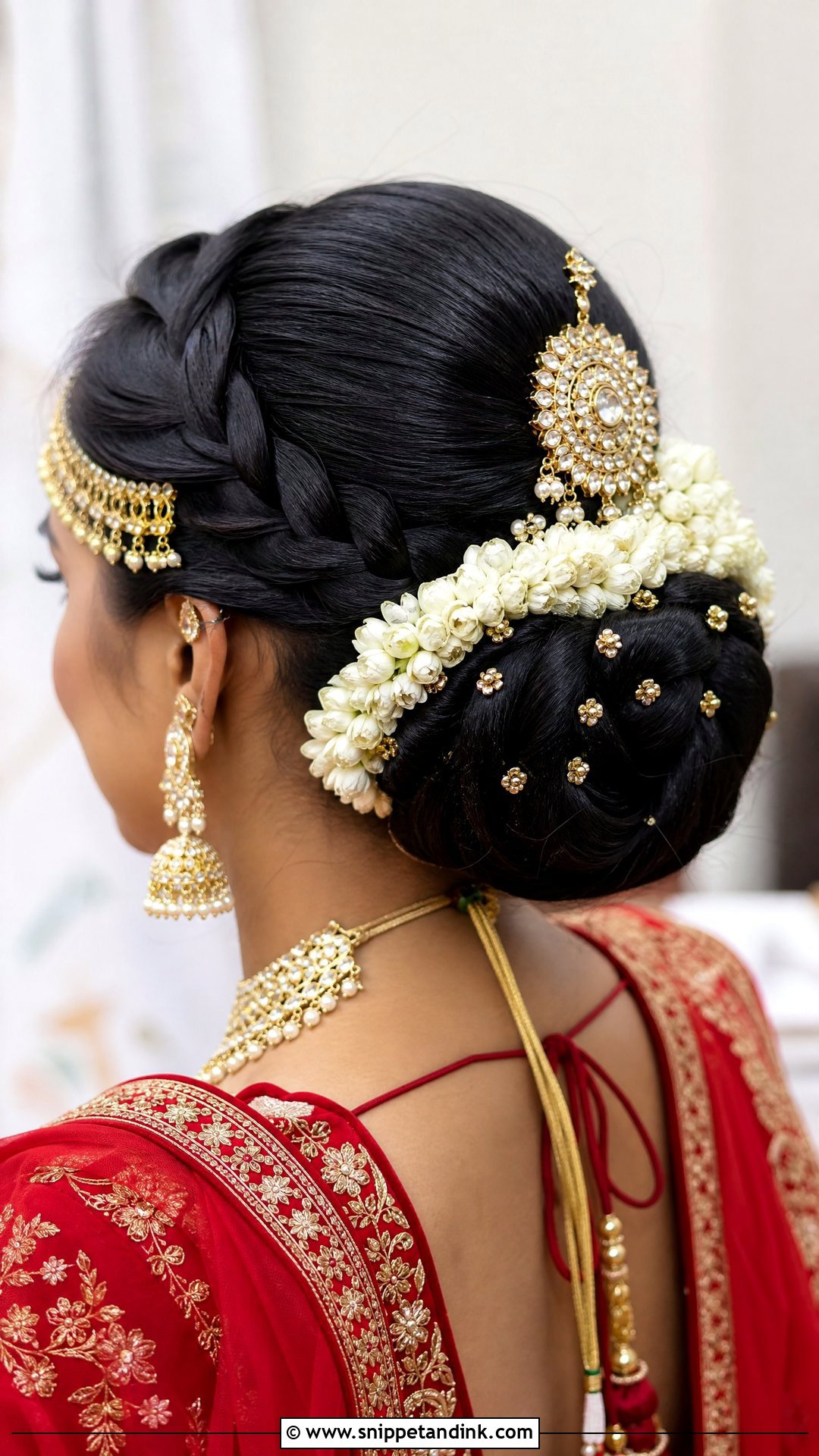
Braiding before wrapping does two jobs: it makes the bun look fuller, and it gives every pin a woven surface to lock into. The braid can start at the side, the crown or the back before it’s coiled into the bun. It sits compact enough for a borla, matha patti and gajra together. Medium and long hair both work, and because the braid holds pins so well, it’s one of the most reliable styles here for a ceremony that runs into the reception.
8. Rajasthani Bridal Side Bun With Flowers
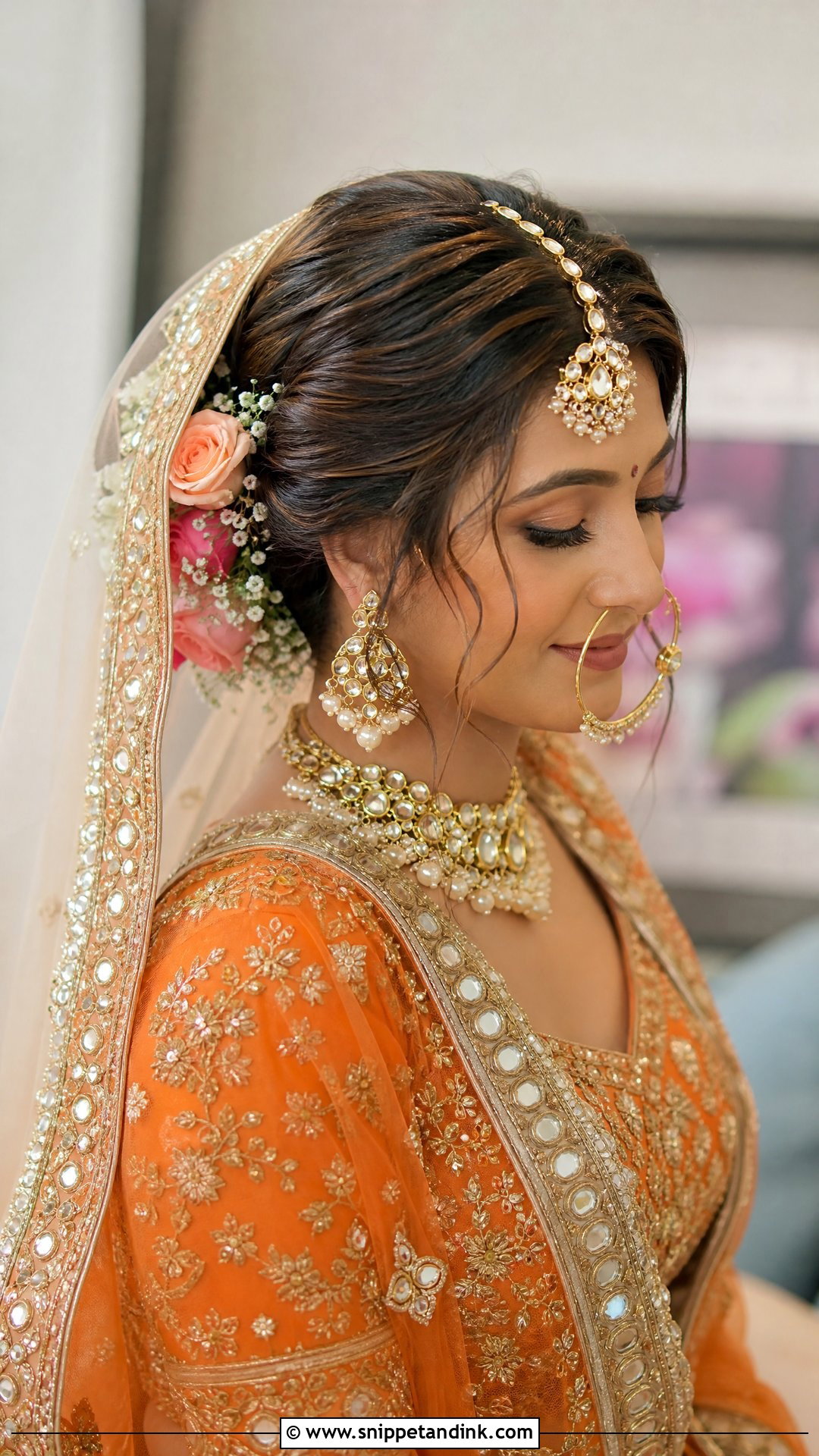
A side bun gives a softer profile and lets the flowers show in photos, which is its main advantage. It sits slightly off-center near the nape, which suits a side-swept dupatta or a veil pinned farther back. The center part still holds the borla in place. Roses, jasmine and small marigolds can echo the outfit. Before committing, check which side faces the guests during the ceremony, so the bun isn’t hidden in every photo.
9. Rajasthani Bridal Long Braid With Borla
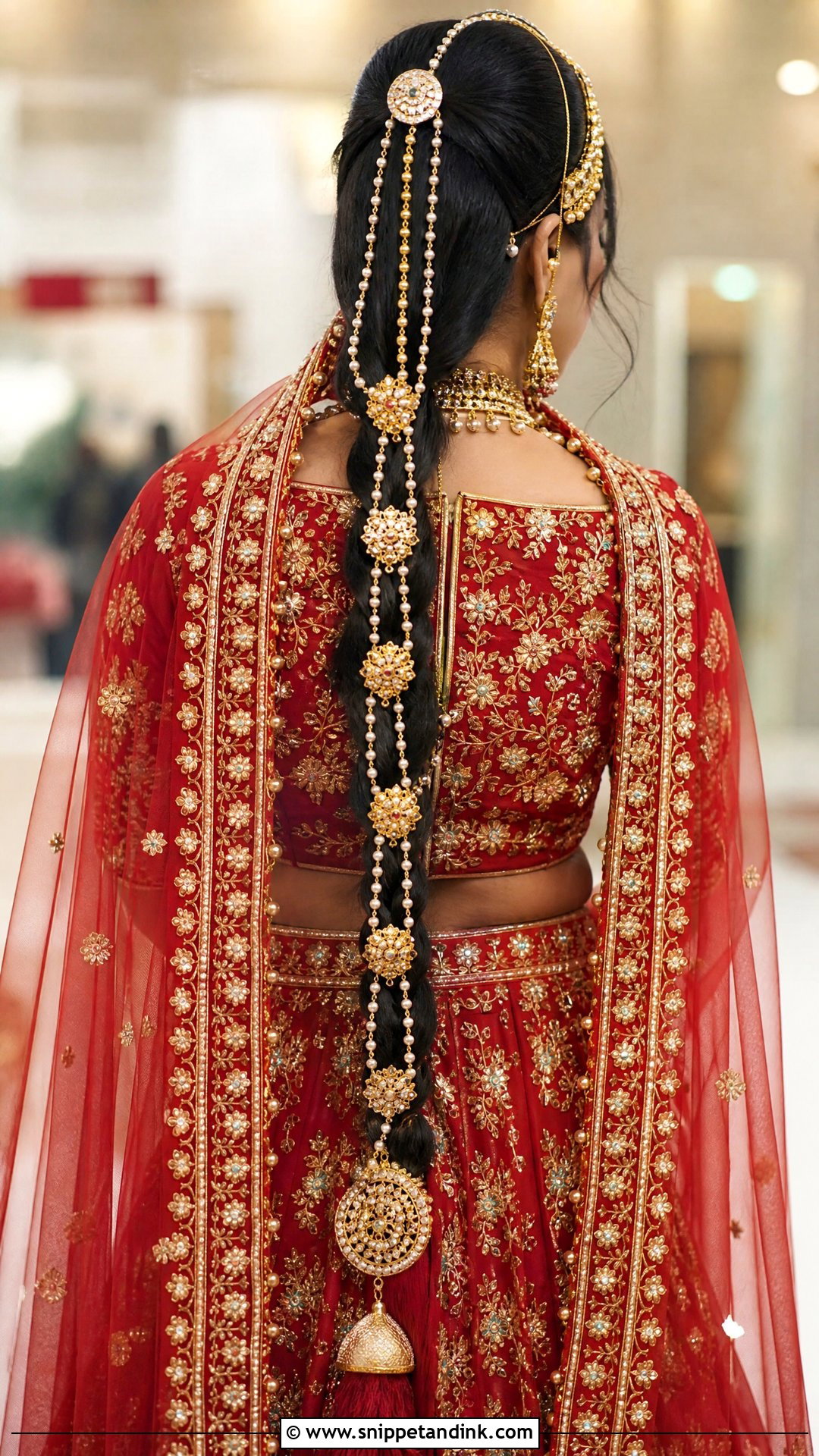
A long braid with the borla is one of the most traditional pairings. The neat part lets the borla be the main forehead ornament, while the braid falls down the back with a strong shape. It can be wrapped with flowers, pearls, gold thread or small kundan clips. Real hair at that length or matching extensions both work; I blend extensions in at the nape so the braid tapers naturally rather than ending in a blunt clump. A sheer dupatta shows the braid through it, while a heavy one hides most of it.
10. Rajasthani Bridal Open Curls With Matha Patti
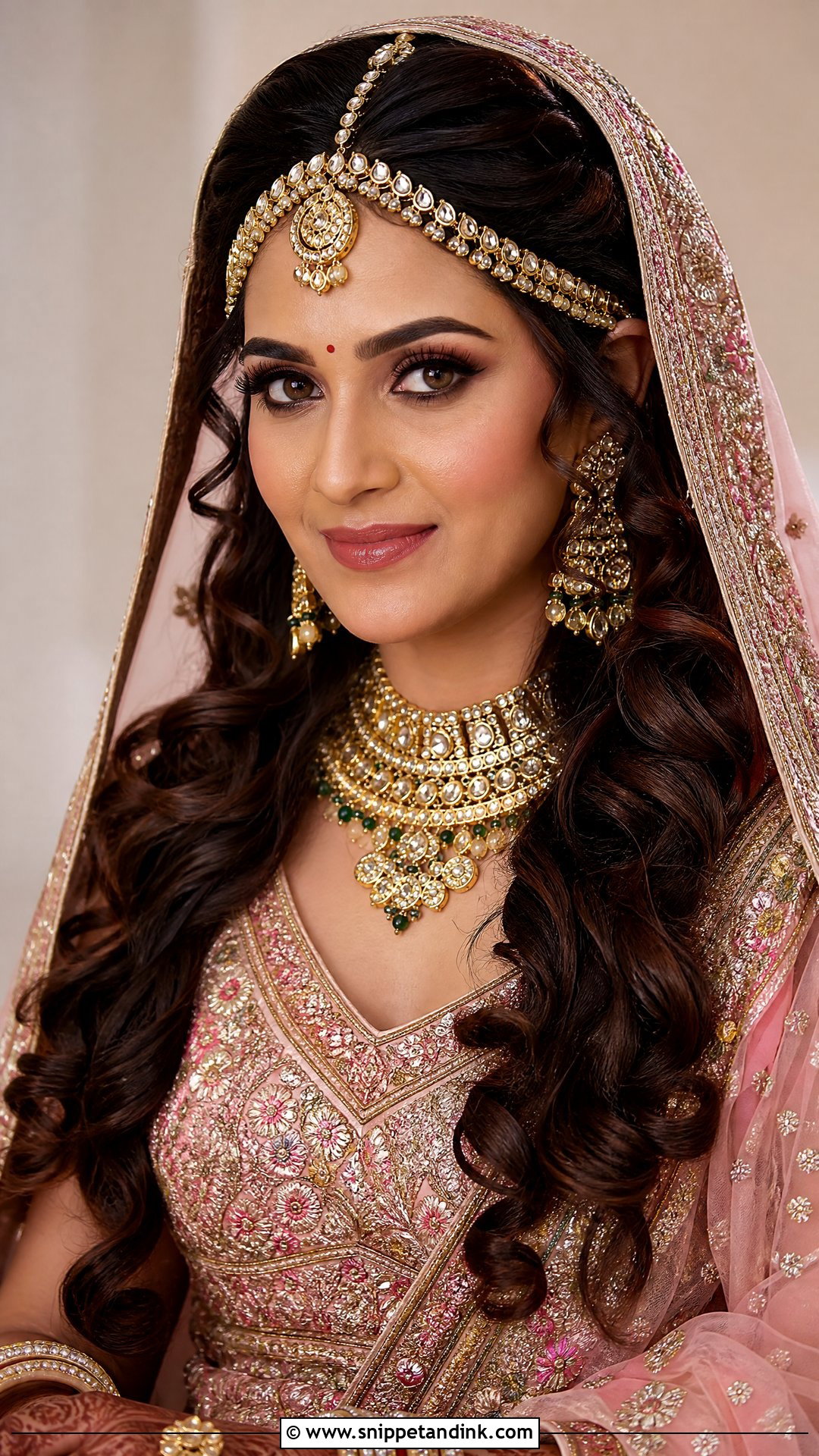
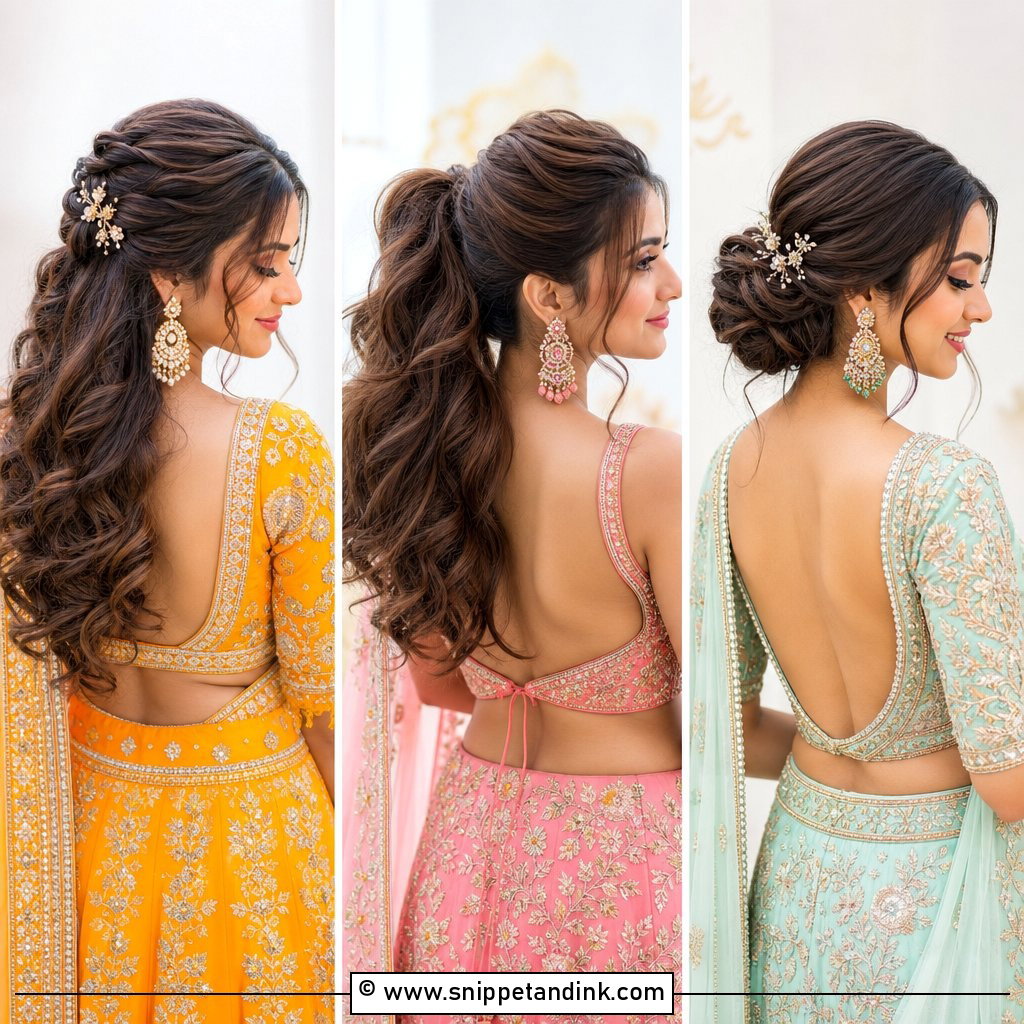
Open curls are the softest, most modern option, and the hardest to keep secure. The hair is center-parted, curled and lightly pinned at the crown so the matha patti has somewhere to hook. I ask for strong hold at the roots, and I hide a small anchor braid under the crown section, because a matha patti chain on loose hair slowly slides back. It moves well in photos and works best with the dupatta set back. Expect curls to drop a little in heat over a long day.
11. Rajasthani Bridal Half Up Hairstyle
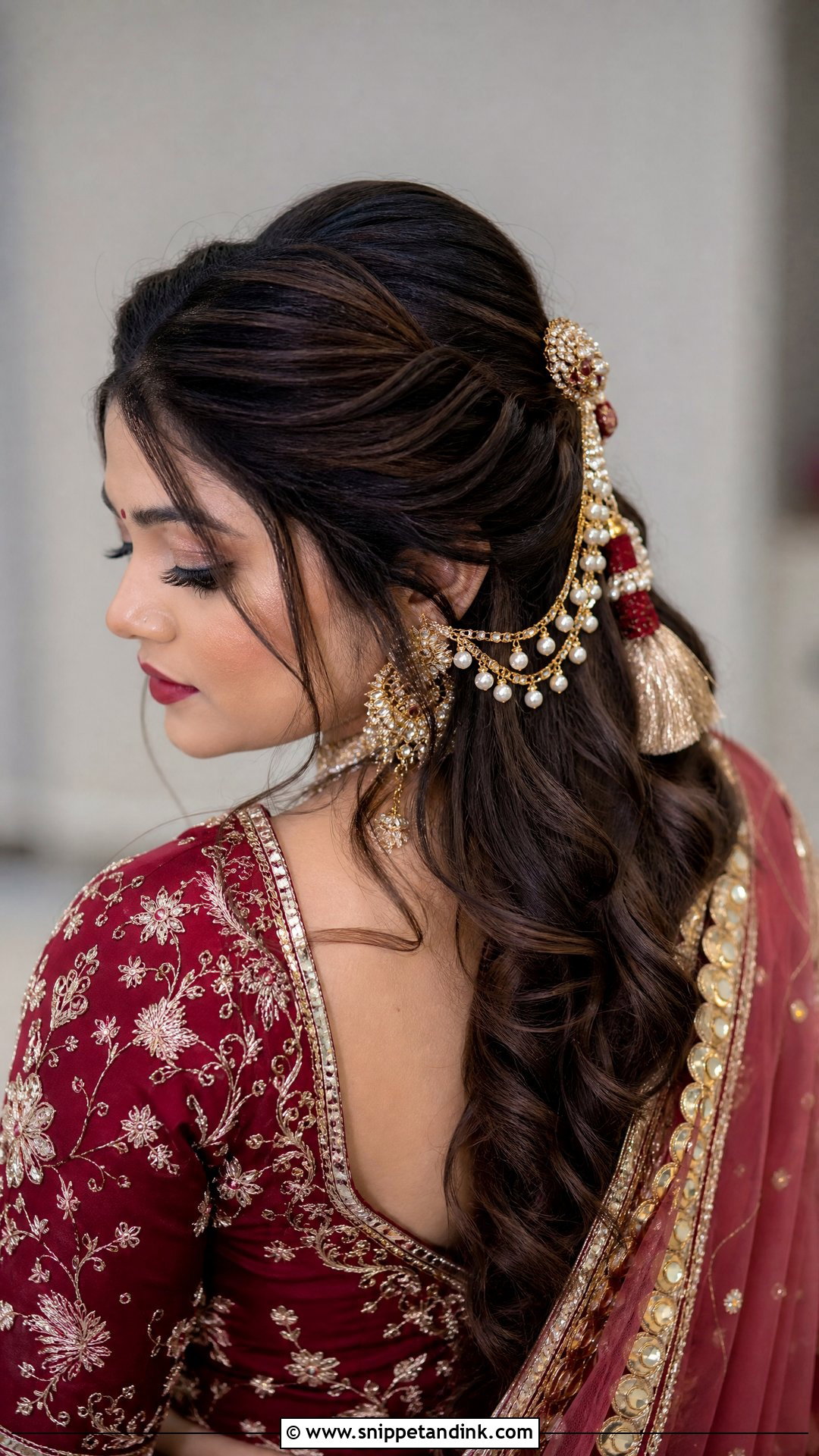
The half up gives you open hair with control at the top. The crown is lifted gently, the front is center-parted for the borla or maang tikka, and the lower hair falls in waves or curls. Very heavy veils flatten it, so I save this for lighter dupattas or the reception. Pearl pins or small flowers cover the spot where the sections are pinned. It’s polished, and less formal than a full bun.
12. Rajasthani Bridal Bun With Sheesh Patti
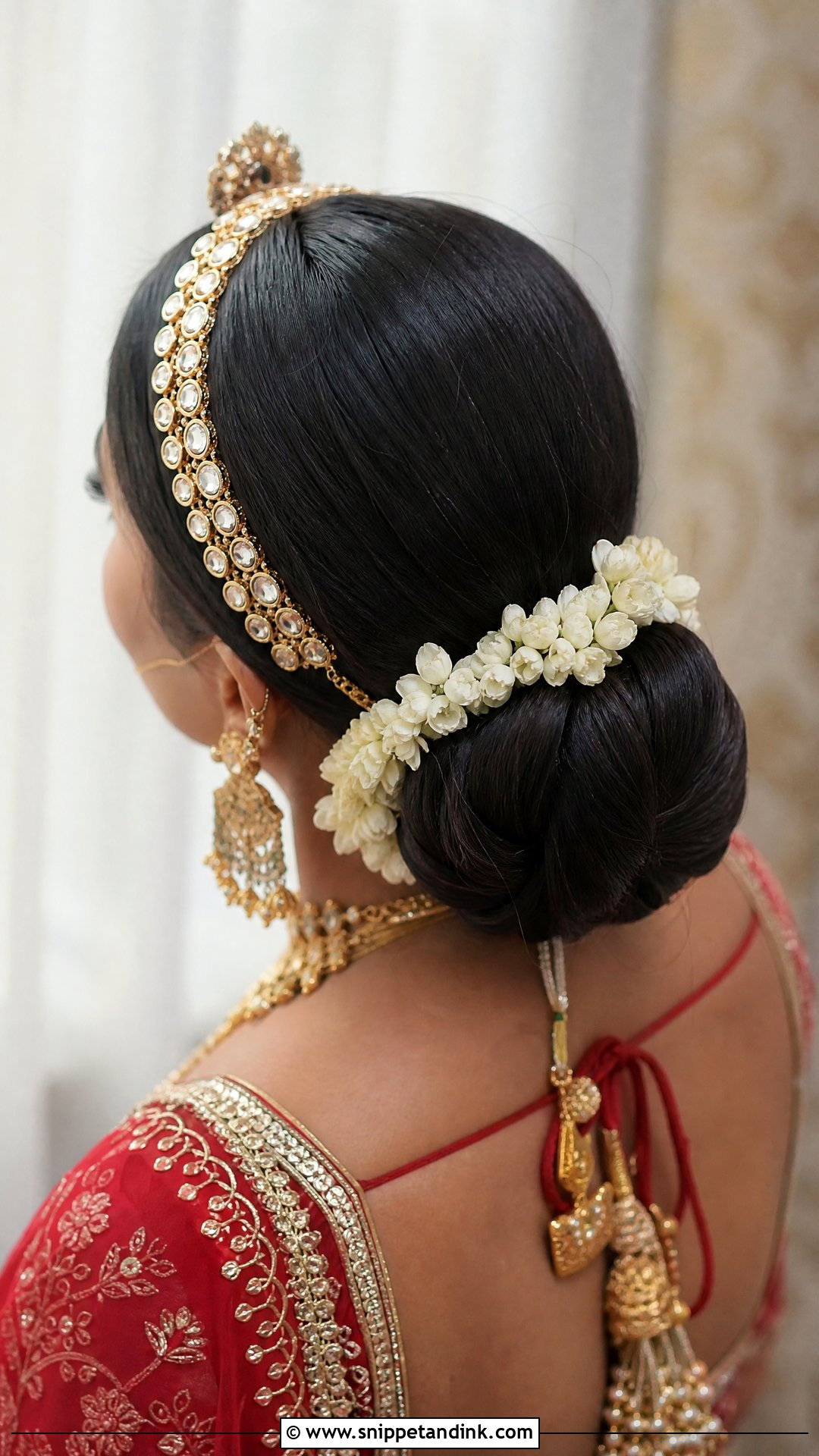
A sheesh patti sits like a jeweled band across the head, so any bump in the hair underneath shows straight through it. I smooth the crown completely and set a low or mid bun, which keeps the headpiece fully visible without crowding it. It’s a striking match with a traditional poshak, a bandhani odhni and heavy kundan. The bun can carry jasmine or stay plain when the headpiece is already busy. I fit the sheesh patti before the final smoothing, so its chains can be tucked in neatly.
13. Rajasthani Bridal Bun With Rose Flowers
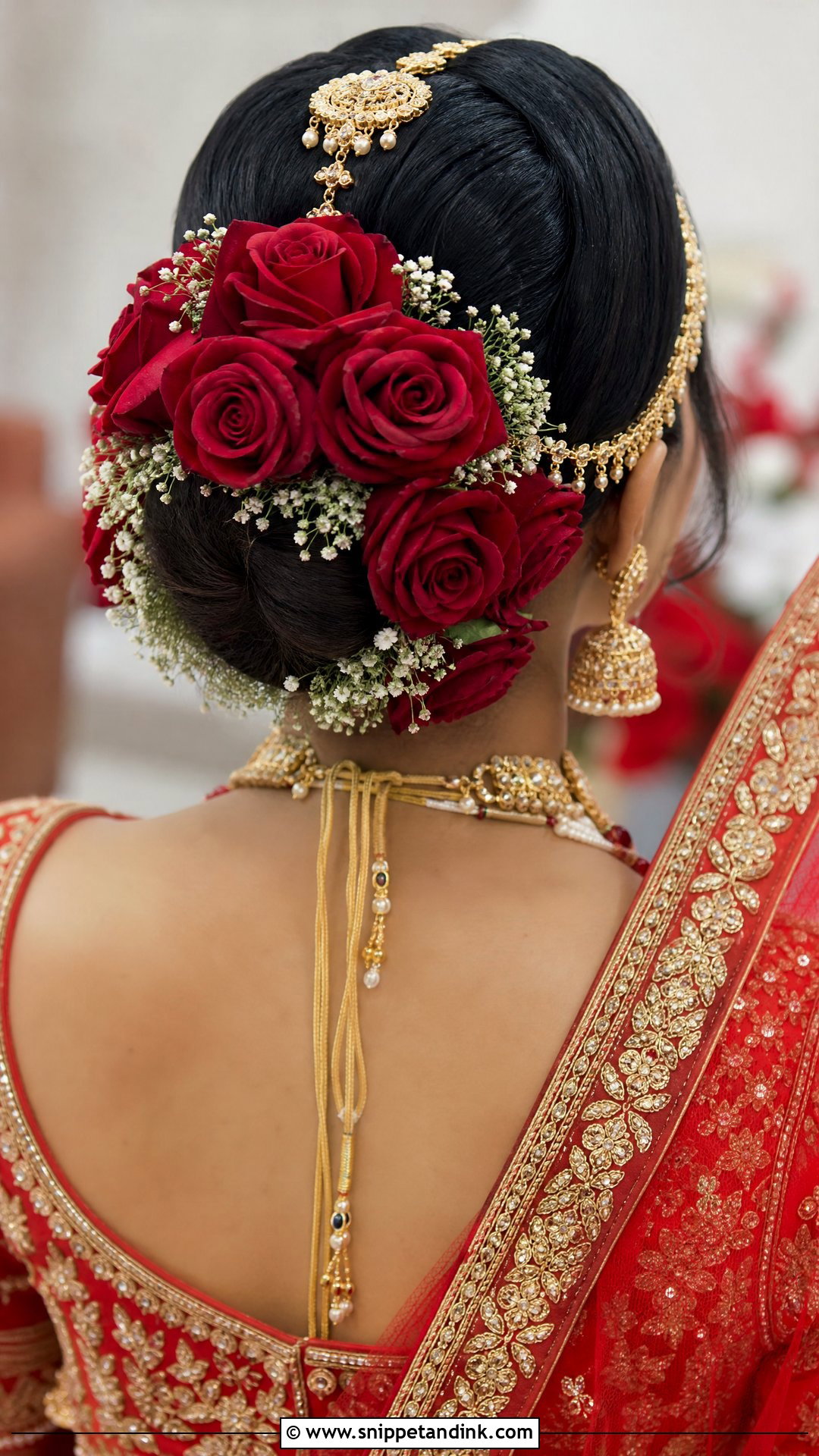
Roses bring stronger color than jasmine. Red, pink or deep maroon blooms can match the lehenga or stand out against a gold dupatta border. The base is a smooth center part for the borla and a firm bun. Roses are heavier than jasmine, so I wire or pin each stem individually and keep them close to the bun so they don’t droop. They add volume and make the bun stand out in back shots. Choose blooms that are firm and just opening; fully open roses shed petals by evening.
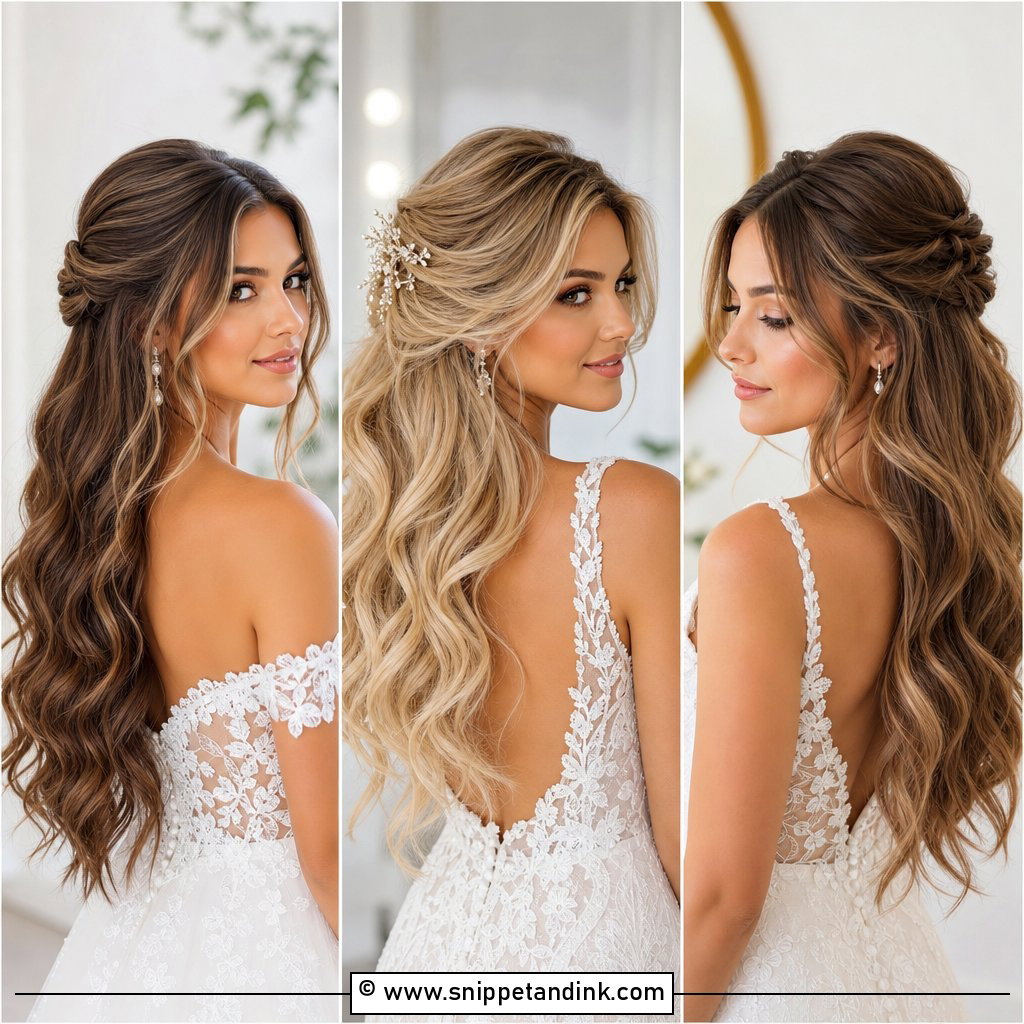
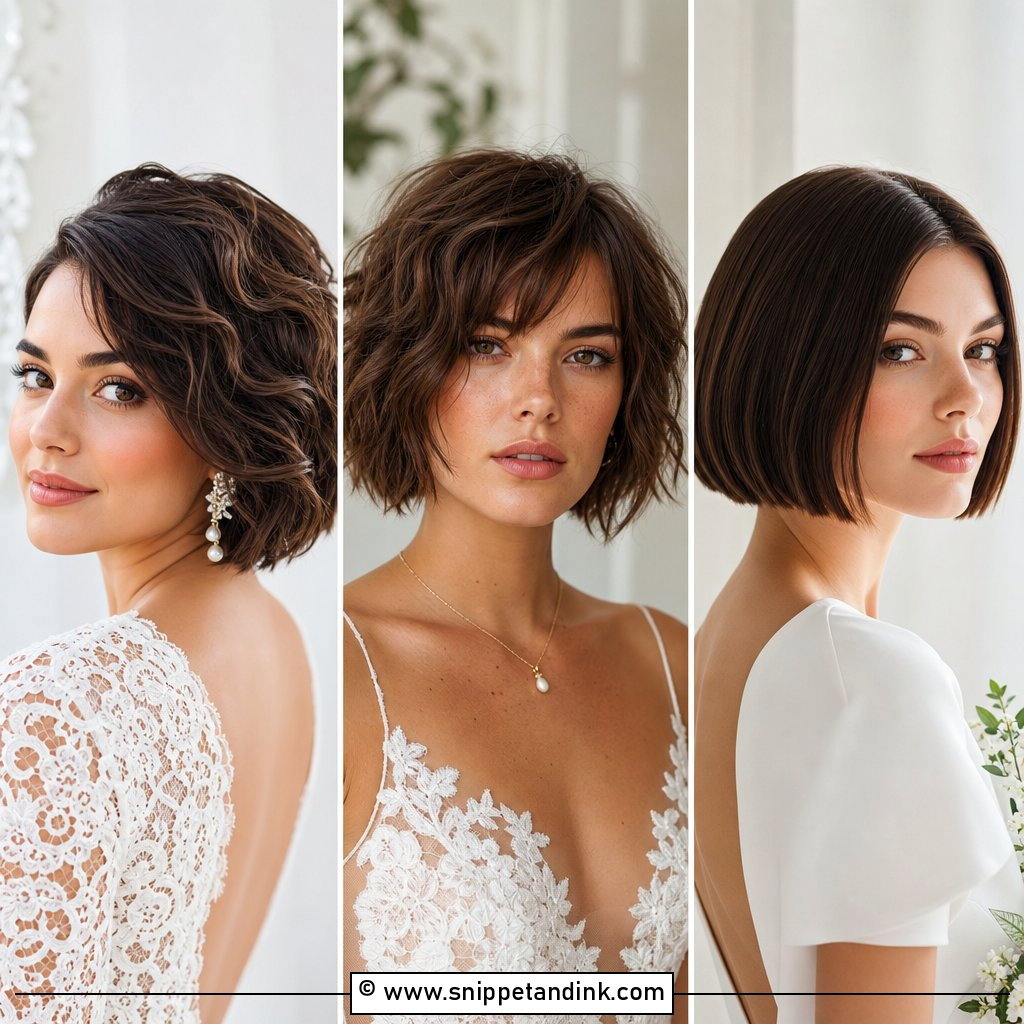
14. Rajasthani Bridal Fishtail Braid
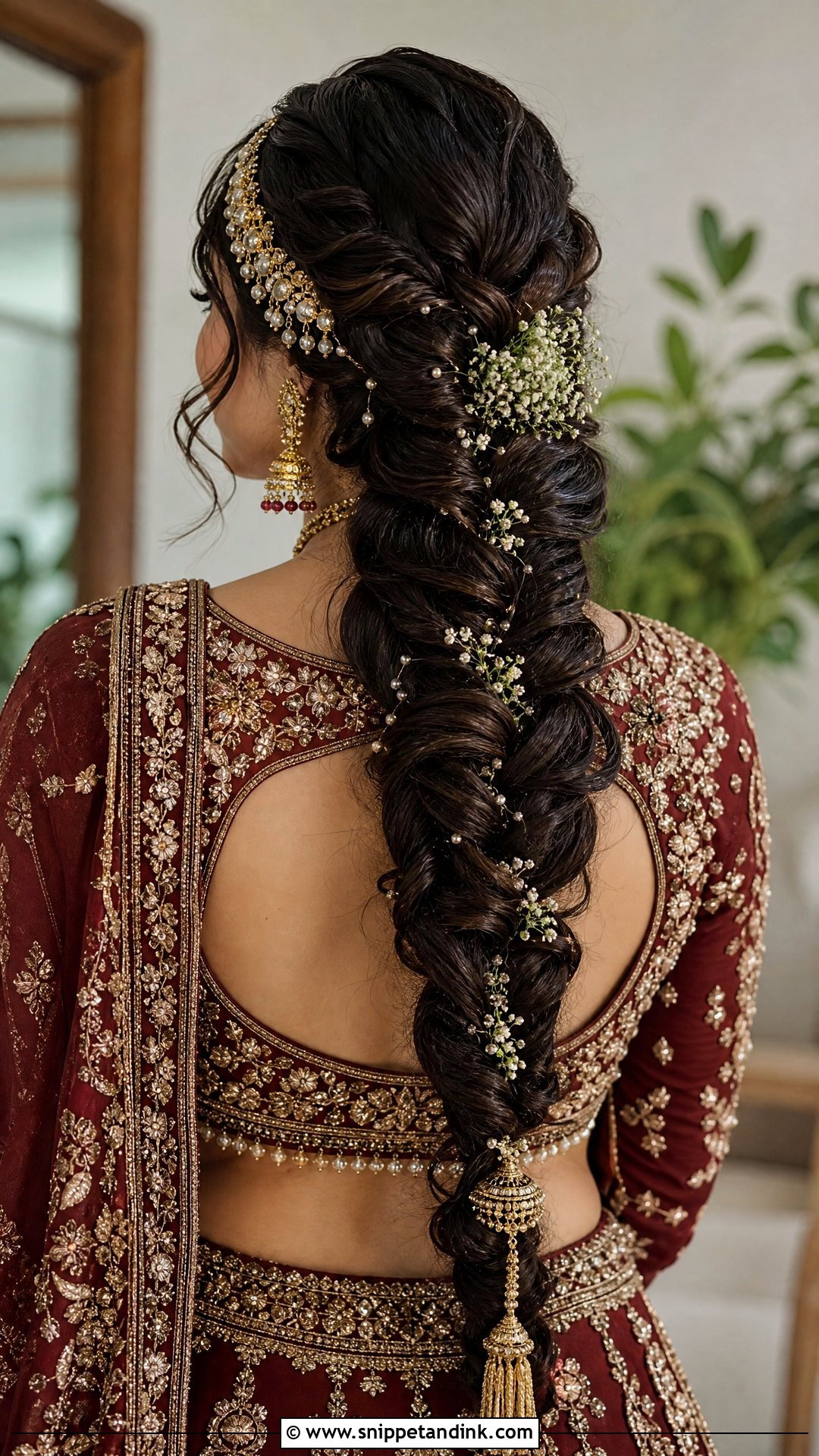
A fishtail looks intricate, and from the back and side it photographs with real detail. The front stays classic with a center part, borla and jewelry. I gently widen the braid for volume, then add pearl pins, small flowers or gold accessories. It’s slower to braid than a three-strand plait, so build that time into the morning schedule. Thick hair or extensions suit it best. Pin the dupatta higher or choose a sheer one, otherwise the texture is lost in the photos.
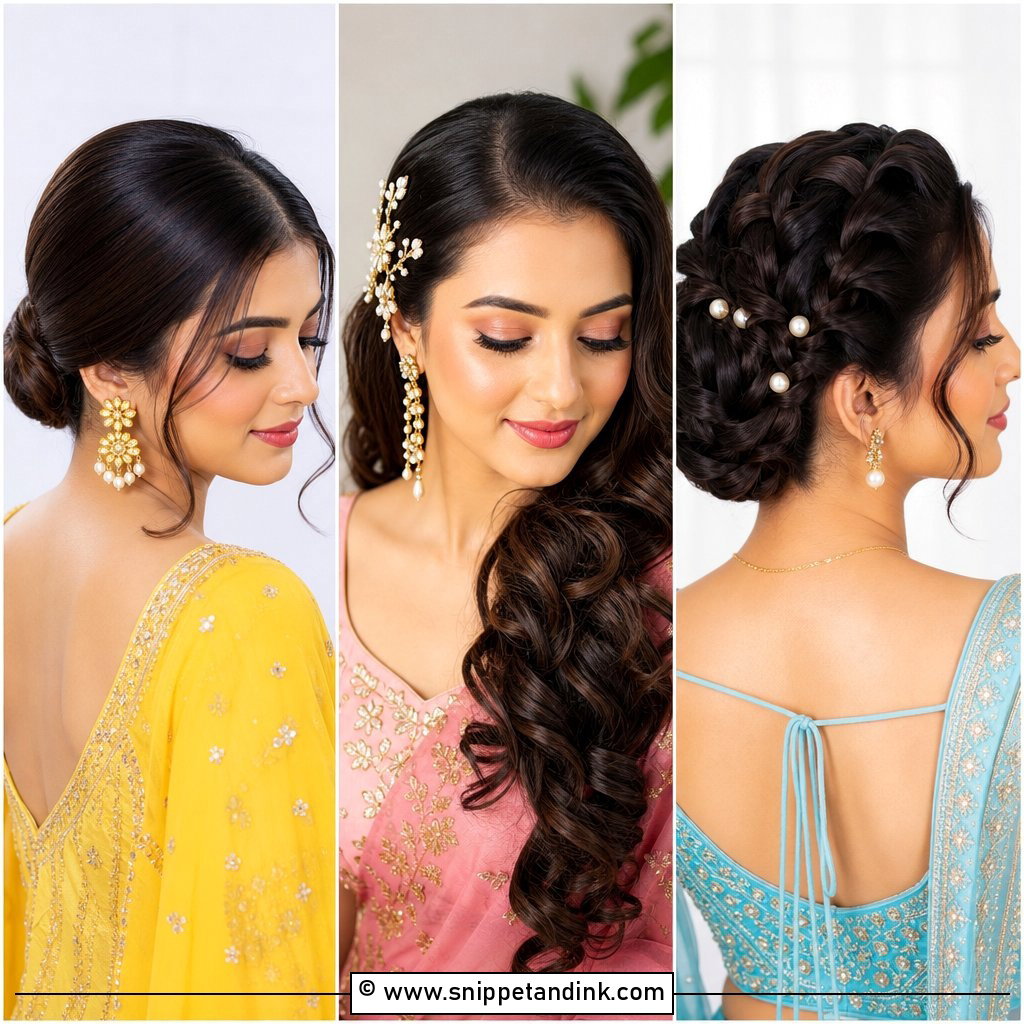
15. Rajasthani Bridal Bubble Braid
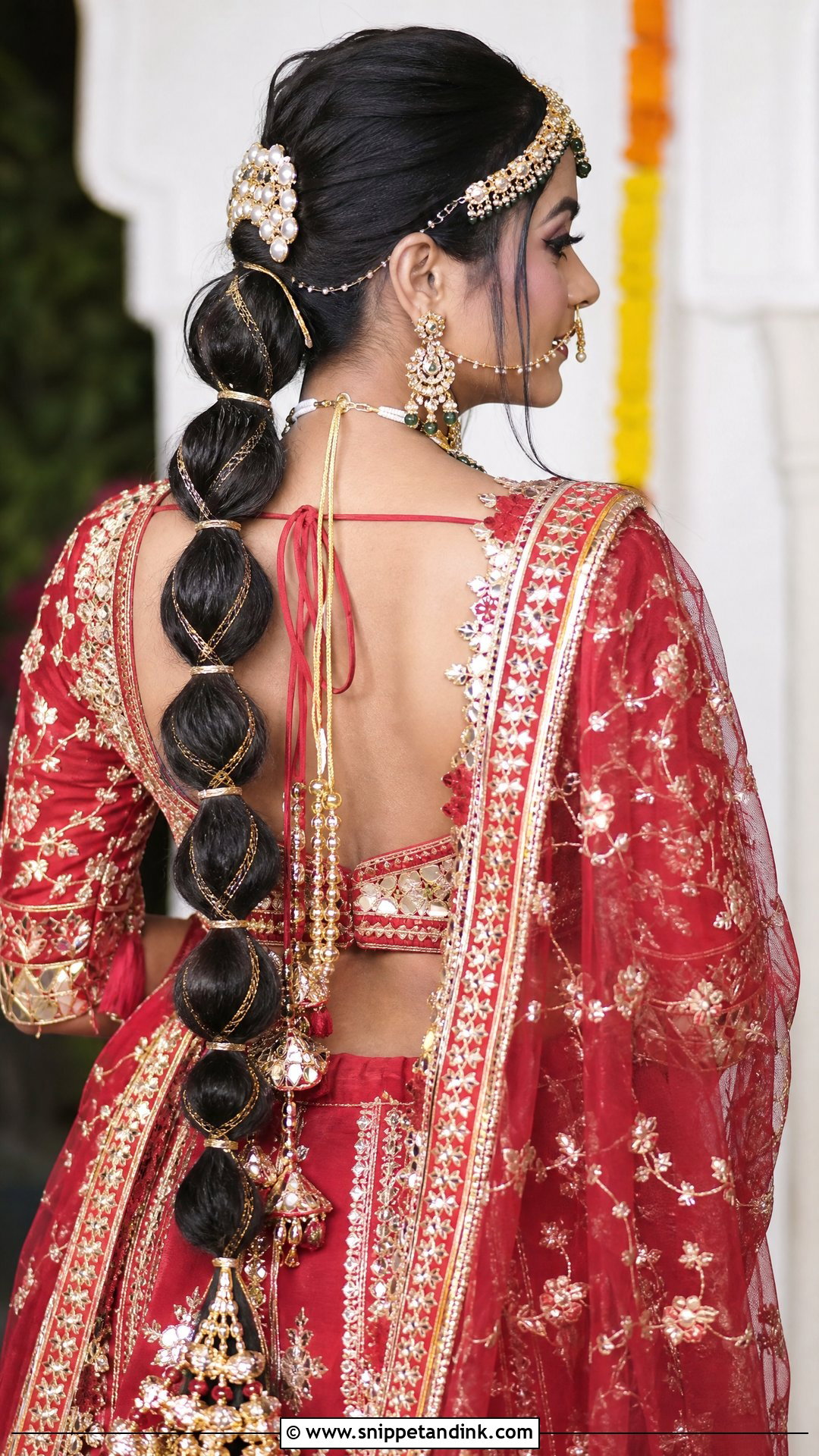
A bubble braid isn’t woven at all: the hair is tied into sections down its length and each one is gently pulled out into a round shape. That makes it quick and full, and it suits medium hair with clip-in extensions particularly well. It can be decorated with small borla-style pins, pearls, flowers or gold thread. Keep the front traditional with a center part and head jewelry so the whole look stays Rajasthani. Use elastics that match the hair, since clear ones can catch the light in flash photos.
16. Rajasthani Bridal Volumized Bun
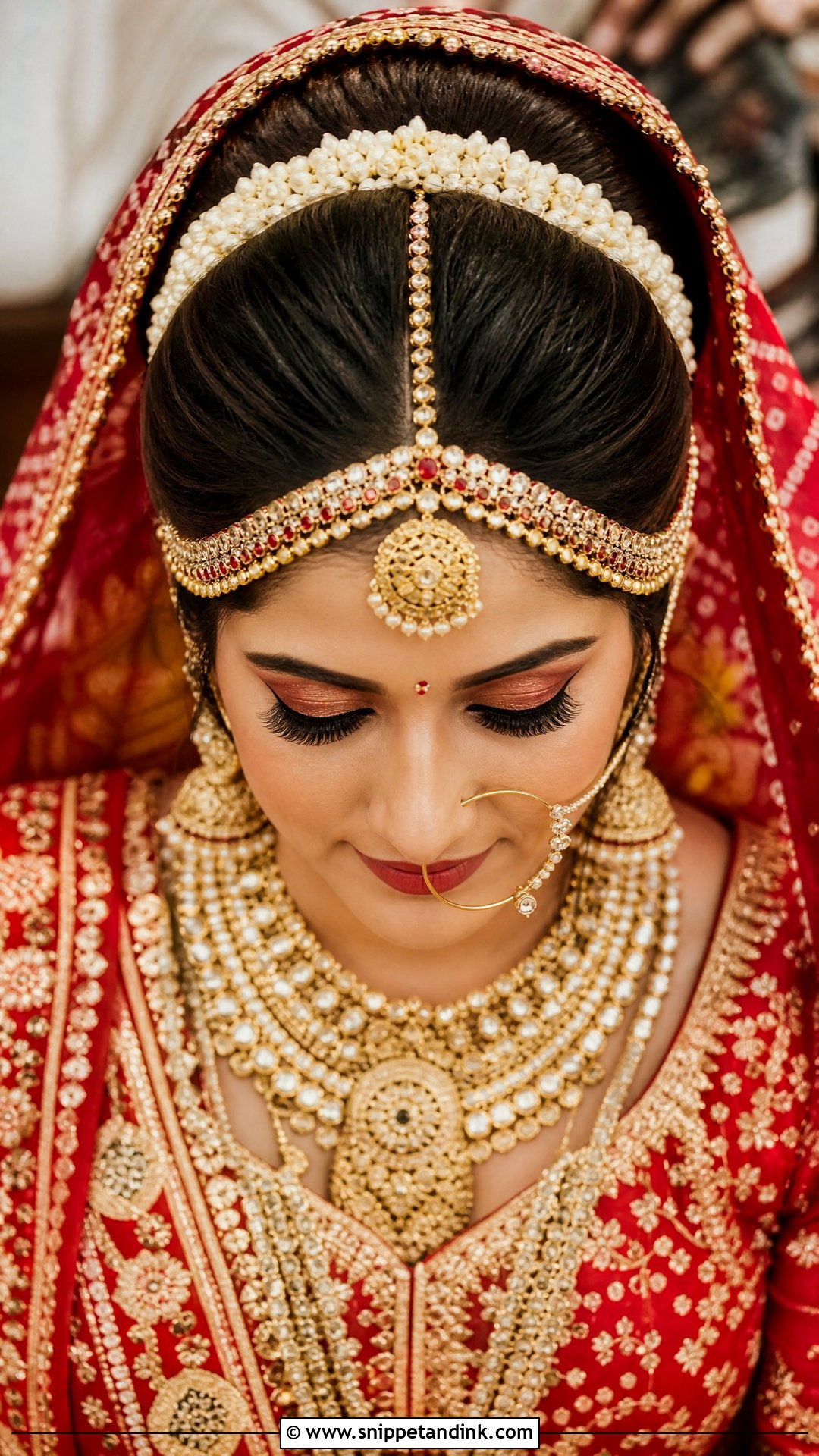
Under a heavy dupatta, a volumized bun stops the head looking flat. I lift the crown slightly and pad the bun with a donut or a filler made from matching hair, which builds a rounded shape without needing thick hair. The veil then sits smoothly over it. A borla, matha patti or sheesh patti goes on the center part, and the bun takes a gajra or small pearl pins. It’s my usual answer for brides with fine or medium hair.
17. Rajasthani Bridal Center Part Bun
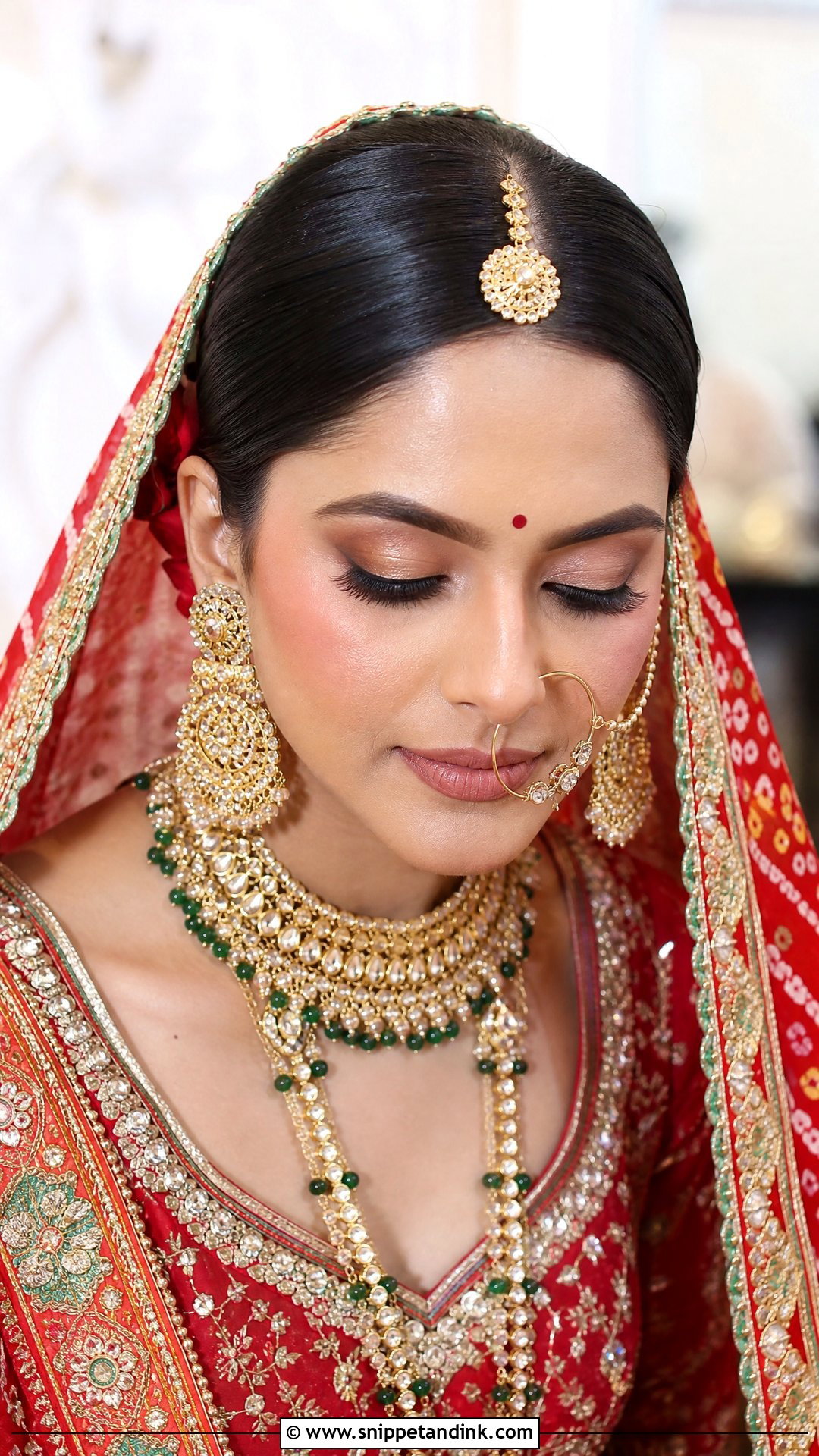
Symmetry is the reason to choose it. A straight center part guides the borla, and smooth sides frame the earrings and nath. The bun sits low, mid or slightly high depending on where the dupatta will be pinned. Because the hair stays plain, a heavily embroidered outfit takes the attention. Before parting, I check the bride’s natural part; a part forced against the hair’s growth tends to drift by evening, so sometimes I lightly blow-dry it in the new direction first.
18. Rajasthani Bridal Crown Braid Bun
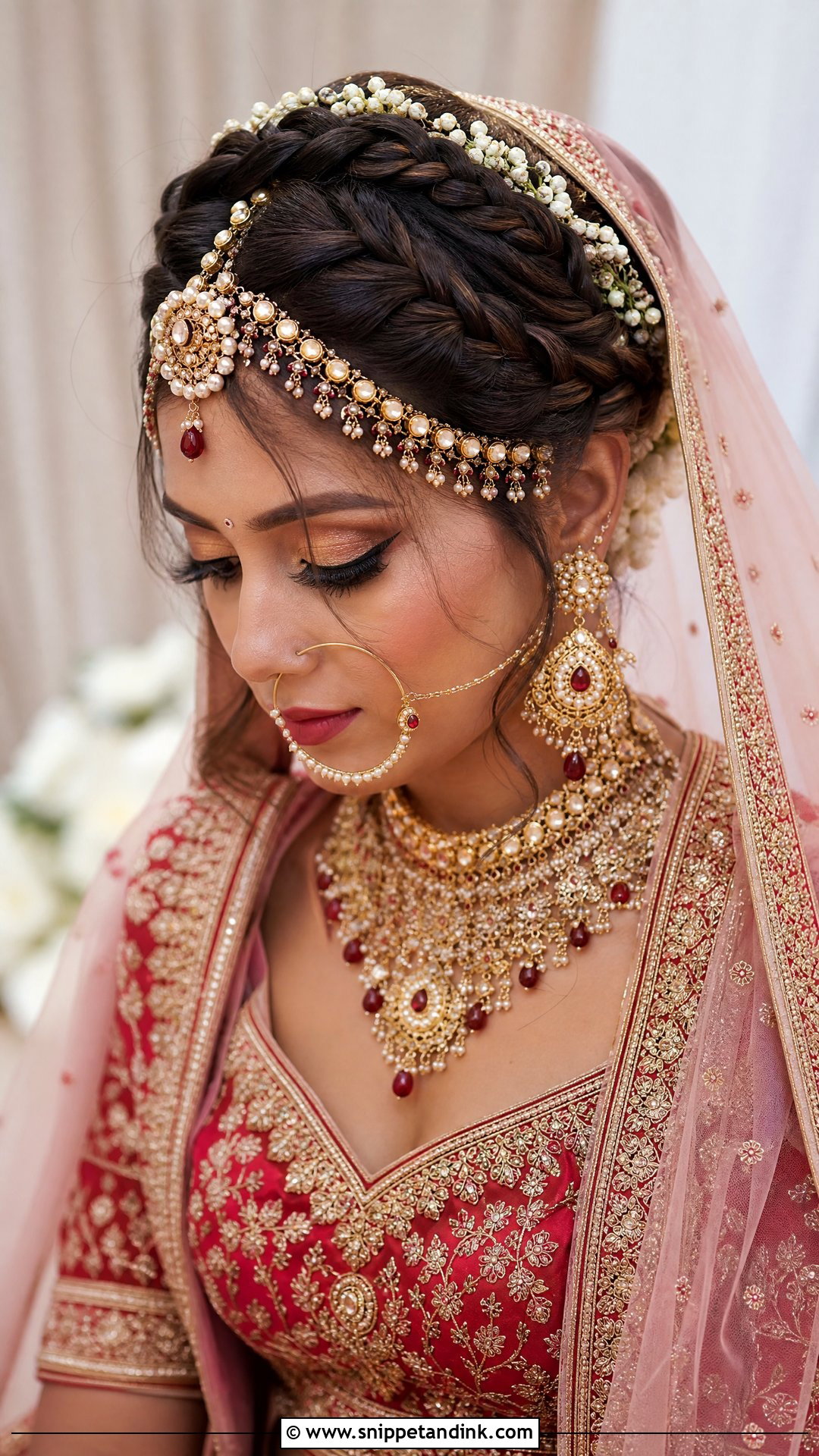
A braid circling the crown gives texture right where the headpiece sits, and it’s very secure. The braid can wrap around the crown or sweep from one side into the bun at the back. It doesn’t hide the borla or matha patti, but the chain of a matha patti has to run over or under the braid, so I place the jewelry before I pin the braid’s ends. The bun can be finished with jasmine, roses, or pearl pins. It holds a dupatta well and stays neat through rituals and family greetings.
19. Rajasthani Bridal Loose Waves With Borla
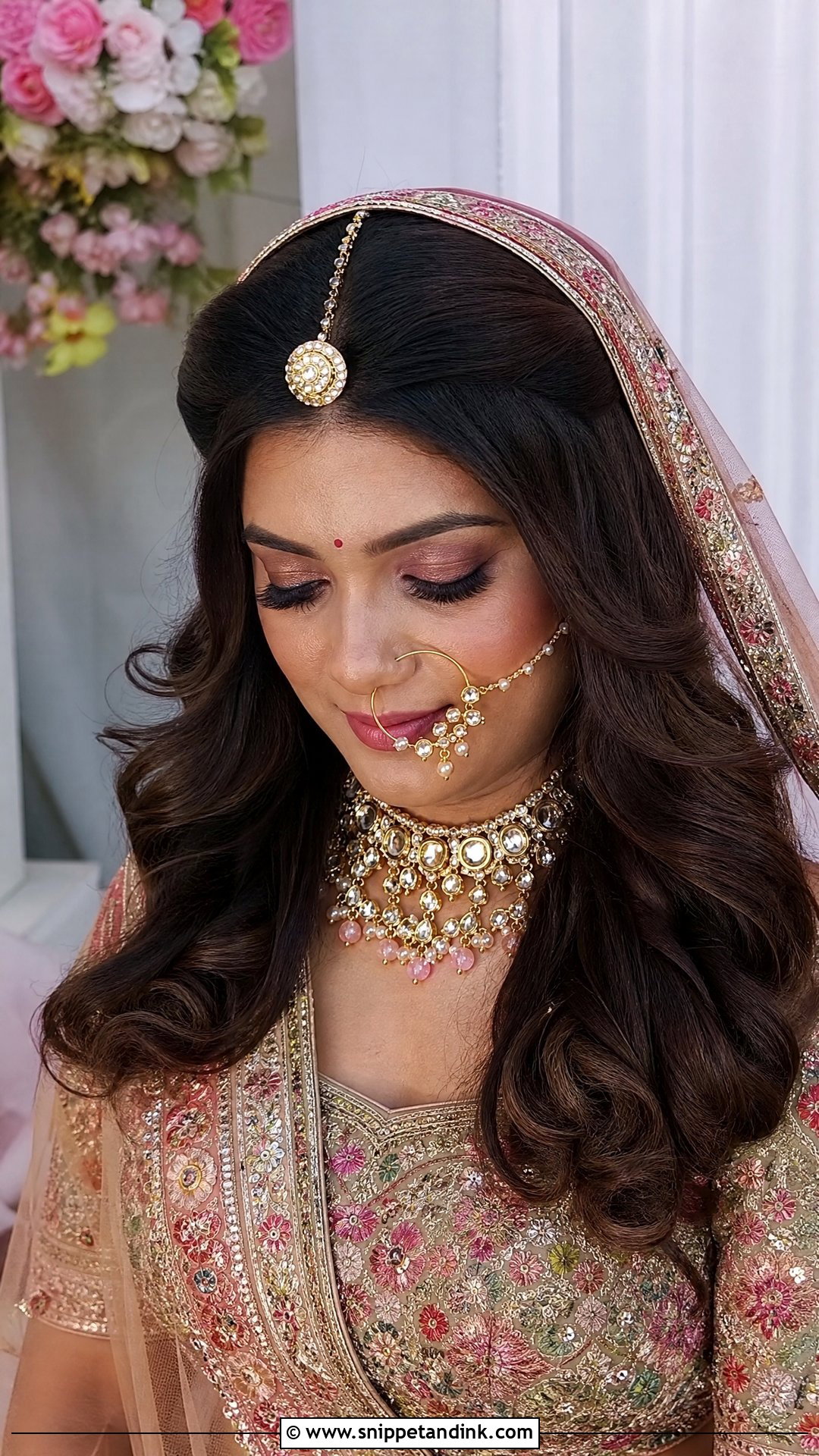
Loose waves feel soft and modern while the borla keeps the Rajasthani touch. I’d keep them for pre-wedding functions, a lighter wedding look, or a dupatta set well back. Without a bun to anchor things, prep is everything: heat protectant, a setting mousse, curls left to cool, and a flexible spray. The front pieces are pinned discreetly behind the ears so the borla stays centered and the face open. Kundan jewelry and a colorful lehenga suit the movement.
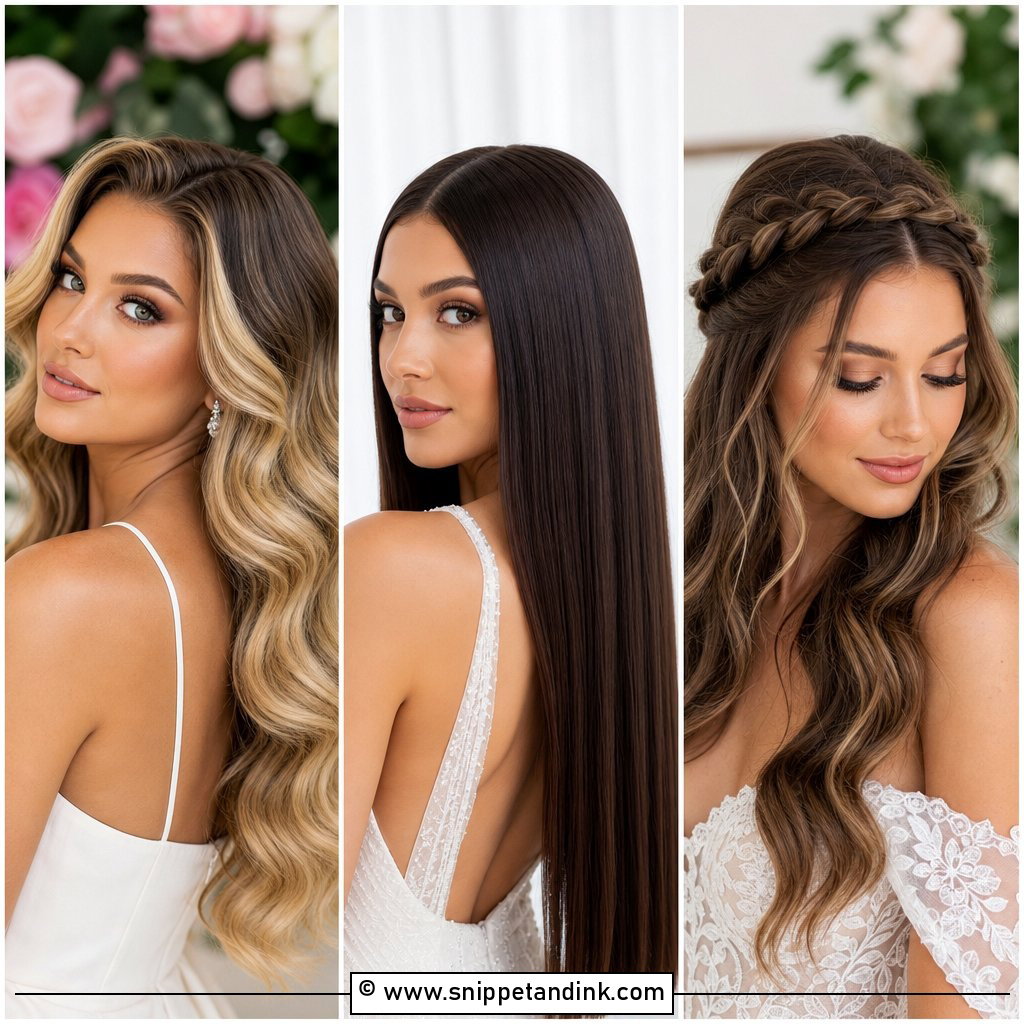
20. Rajasthani Bridal Pearl Bun
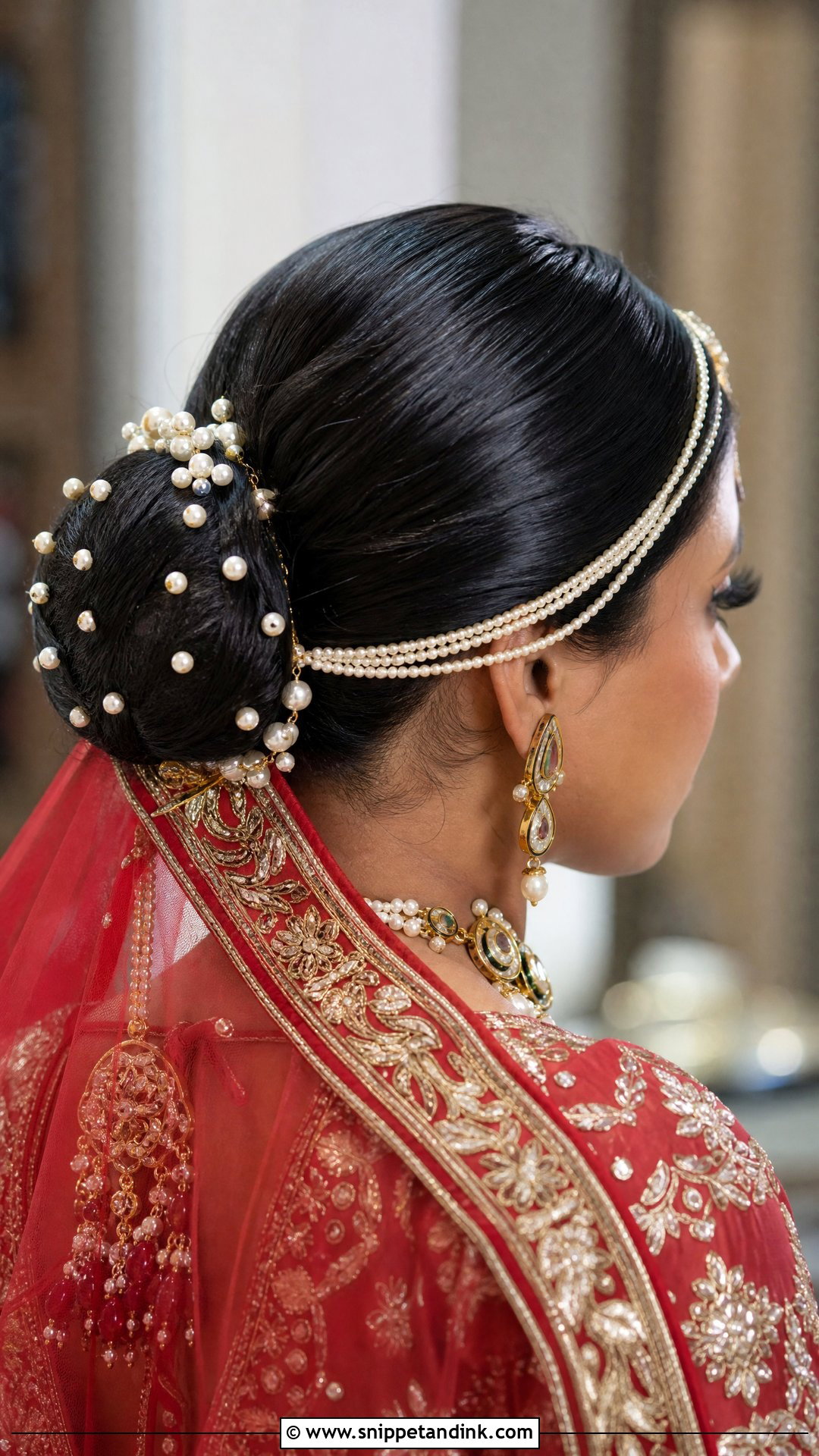
Pearls give decoration without flowers, which is useful when flowers would wilt in heat or clash with the outfit. Center part, smooth back, low or mid bun, then pearl pins, strings or small clusters placed around it. Pearl strings need to be pinned at several points, not just at the ends, or they swing loose when you turn your head. It pairs well with kundan, gold embroidery and either pastel or deep red outfits, and it’s one of the lightest decorated buns to wear.
A Heavy Odhni and a Long Day of Rituals
Most headaches on a wedding day come from weight pulling on a few strands. I spread the dupatta load across many pins pushed into the bun and the crown base, never through loose hair at the temples. Safety pins should go through the fabric and into the bun’s structure only. If anything pulls or pinches during the trial, say so; it won’t feel better ten hours later.
Keeping the gajra fresh
Buy jasmine or mogra as tight buds the same day if you can, wrap them in a damp cloth and keep them somewhere cool until styling. The buds open and release their scent as they warm up on the hair. Ask the florist for gajras strung on firm thread, which is easier to pin.
Taking it all down at night
Remove the dupatta pins first, then the jewelry, then the flowers, and only then the hair pins, working from the outside in. Don’t tug the borla chain. A little oil worked through the hair before brushing loosens the spray and saves a lot of breakage.
Put the Full Weight On Before the Wedding Morning
The right Rajasthani hairstyle is the one that holds your jewelry and dupatta comfortably for the whole day. A sleek bun is the most secure, a gajra bun the most traditional, and long braids, fishtail braids, and bubble braids put the back of the head on show. Open curls and half up looks suit lighter veils and the reception. Bring the actual borla, matha patti and odhni to your trial, and wear everything together for at least an hour before you decide.
You'll Like These Ideas:


Leave a Reply