
Pulling back just the top of your hair is the quiet compromise of bridal styling. Your face stays clear for the vows and the close-up portraits, and your length still moves when you walk and dance. It also gives a veil, pearl pins, a ribbon or a small comb a proper base to sit on. You can wear it braided, curly, sleek, or beachy, and each finish asks something slightly different of your hair. I’ve gone through fifteen variations below, from the ones I’d do on almost anyone to the ones that only behave on certain textures.
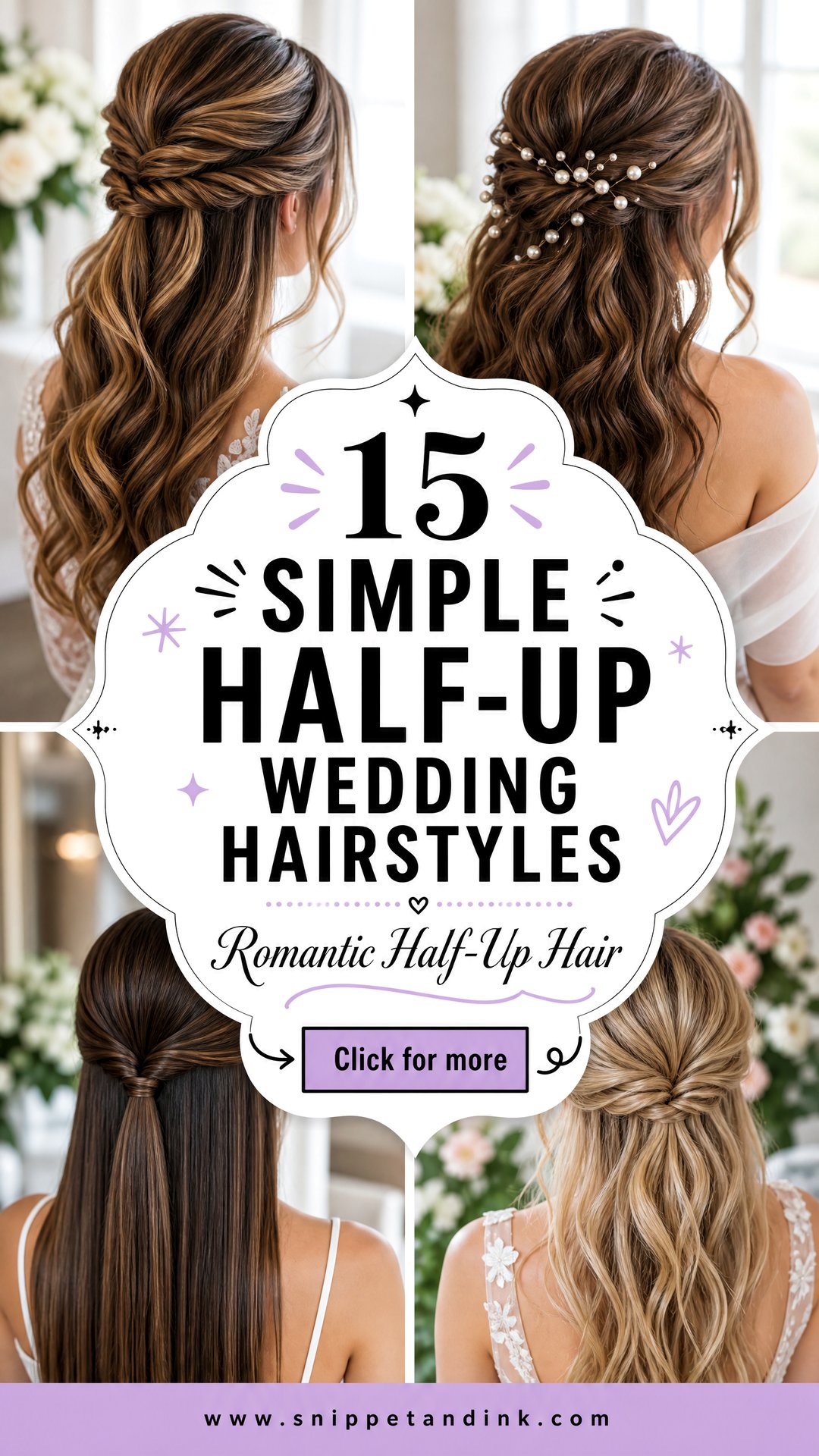
A Cowlick at the Crown Changes Which Version Will Work
Before I recommend a ponytail over a twist, I look at how your hair grows at the crown. Most people have a whorl there, and some have a strong cowlick that pushes hair up or sideways. A half-up section sits right on top of it.
If the growth pattern is strong, a smooth gathered section or a high ponytail tends to split open and show the scalp by midday. Twists and braids hide it far better, because they pull hair from the sides across the problem spot. A small bun can also cover it neatly.
- Part your dry hair at the crown in a mirror to find where it naturally splits.
- Blow-drying the crown against its growth direction on the morning helps it lie flatter.
- If your stylist suggests a different version from the one you saved, ask whether your crown is the reason.
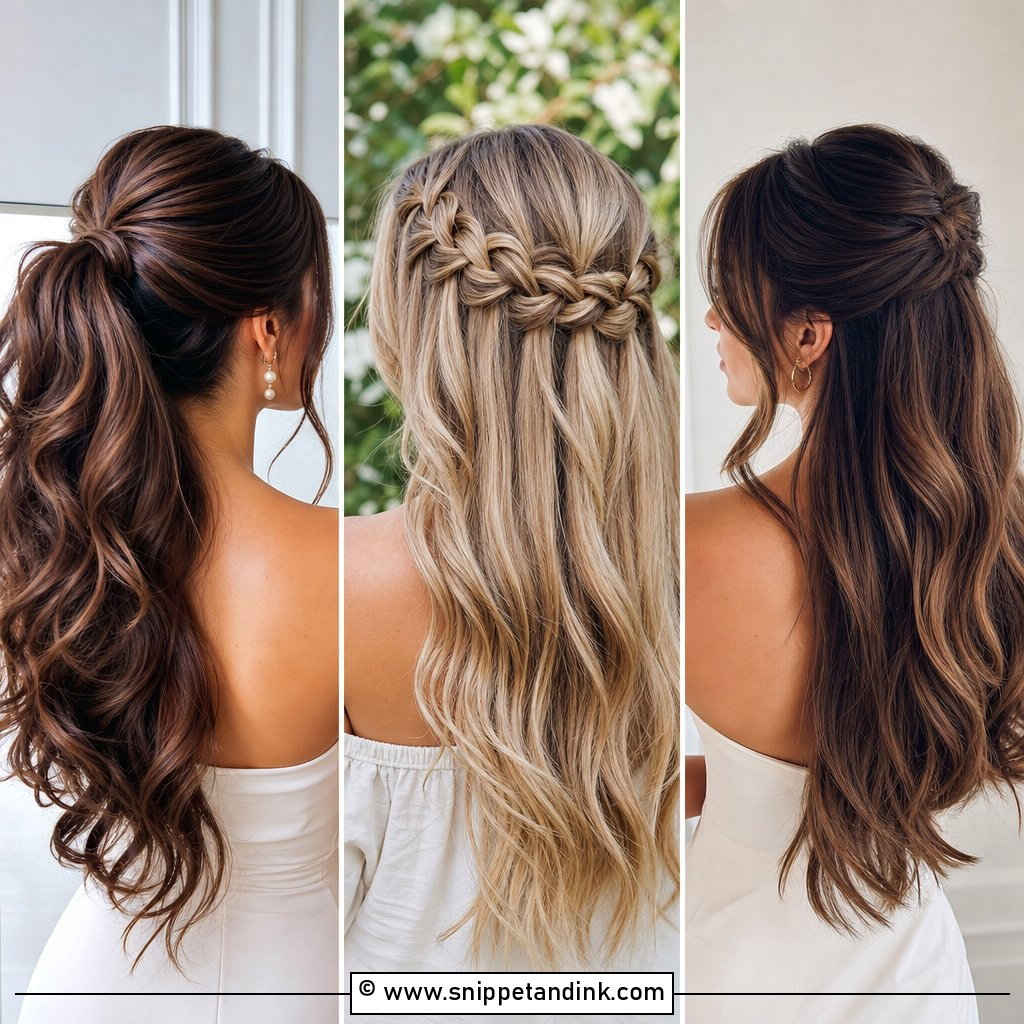
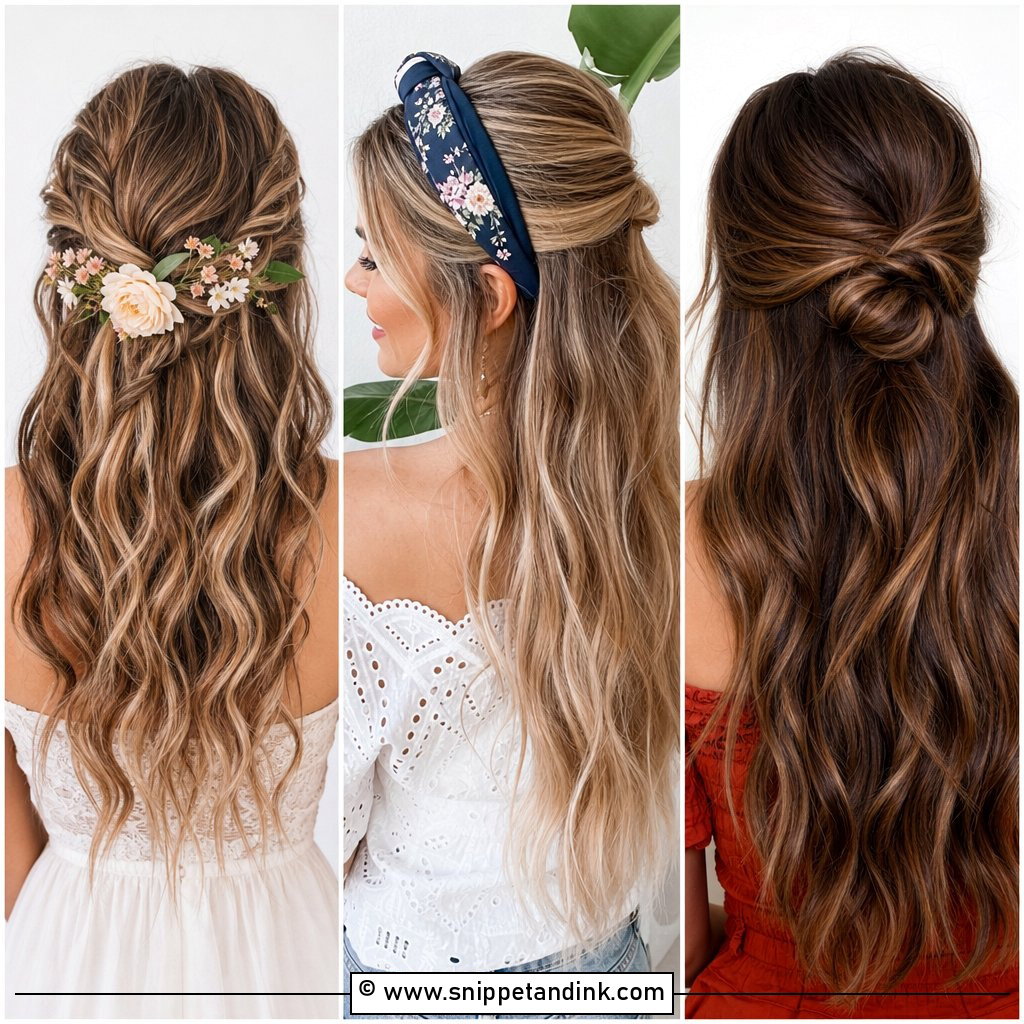
1. Simple Half Up Wedding Hair With Waves
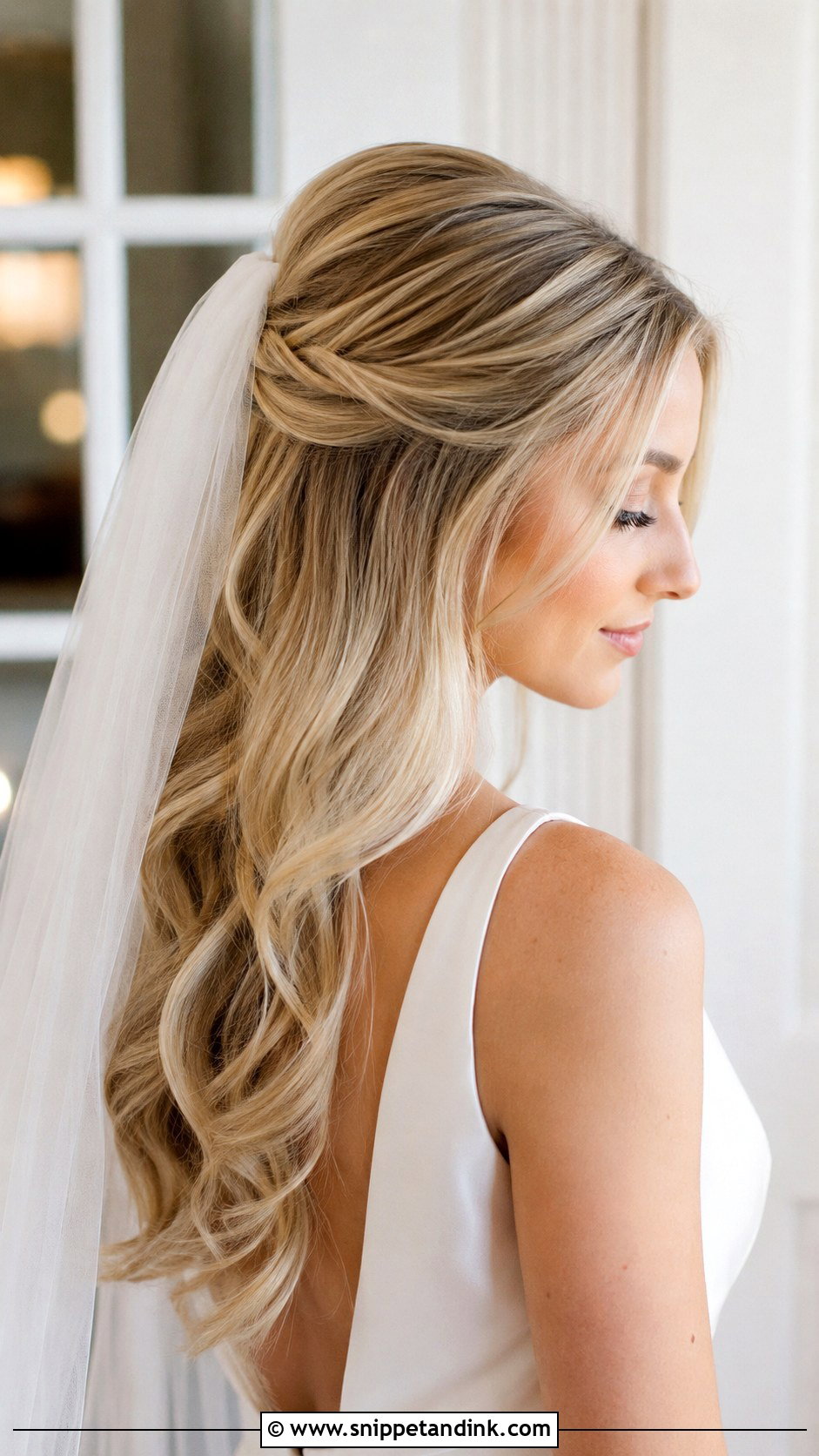
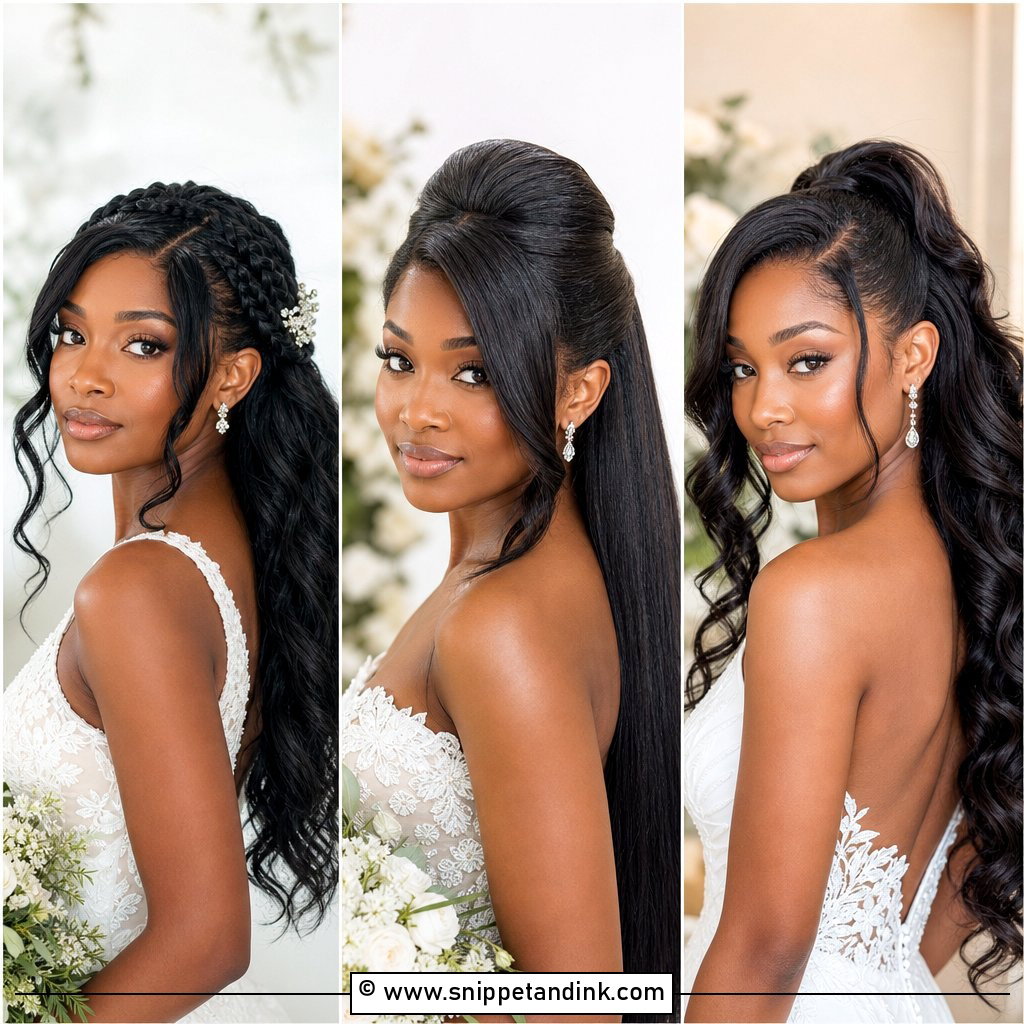
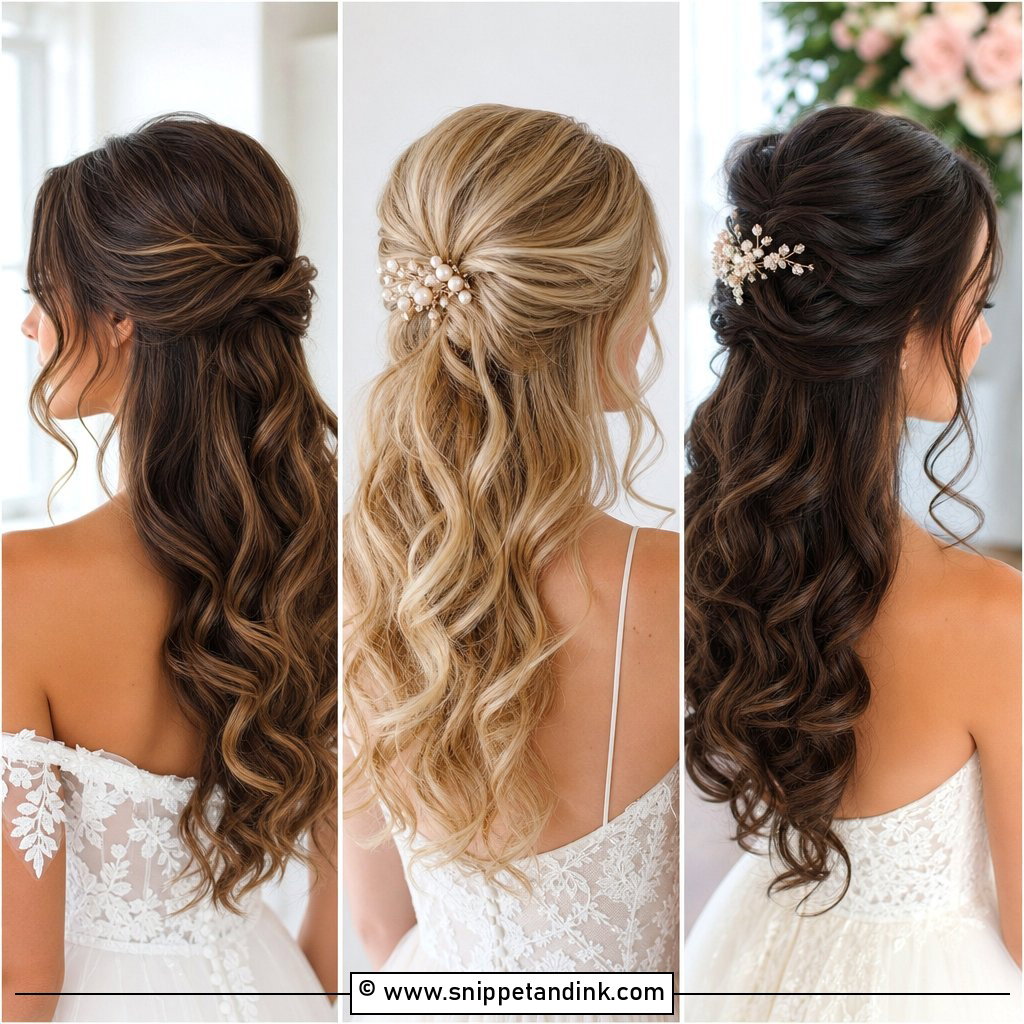
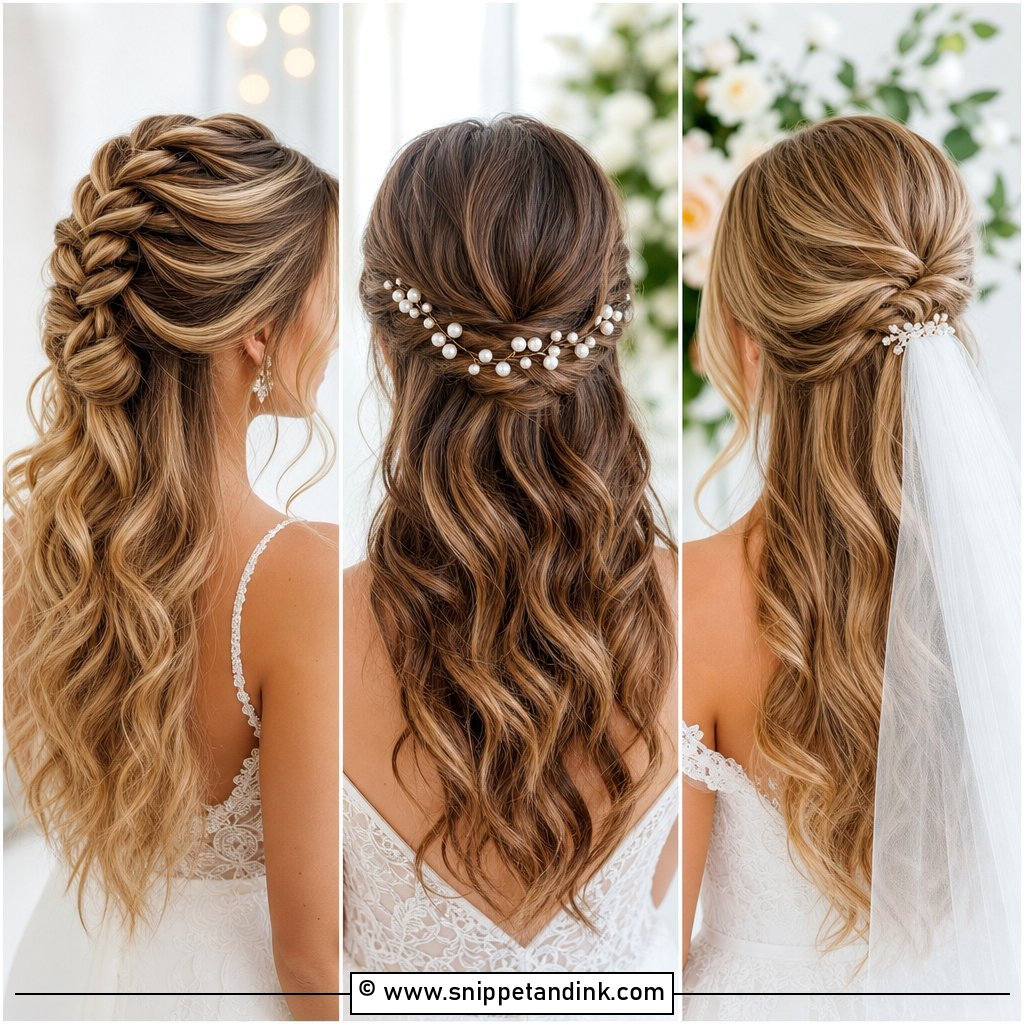
Waves are where I’d start if you’re unsure, because they flatter from every angle and hide small mistakes. The top goes back, the rest falls in loose bends around the shoulders. Pair it with strapless, sweetheart, square or off-the-shoulder necklines, where the collarbones are open and the waves have room. I secure the gathered section with hidden pins and only then add a pearl clip or small comb on top, so the accessory never has to do the holding.
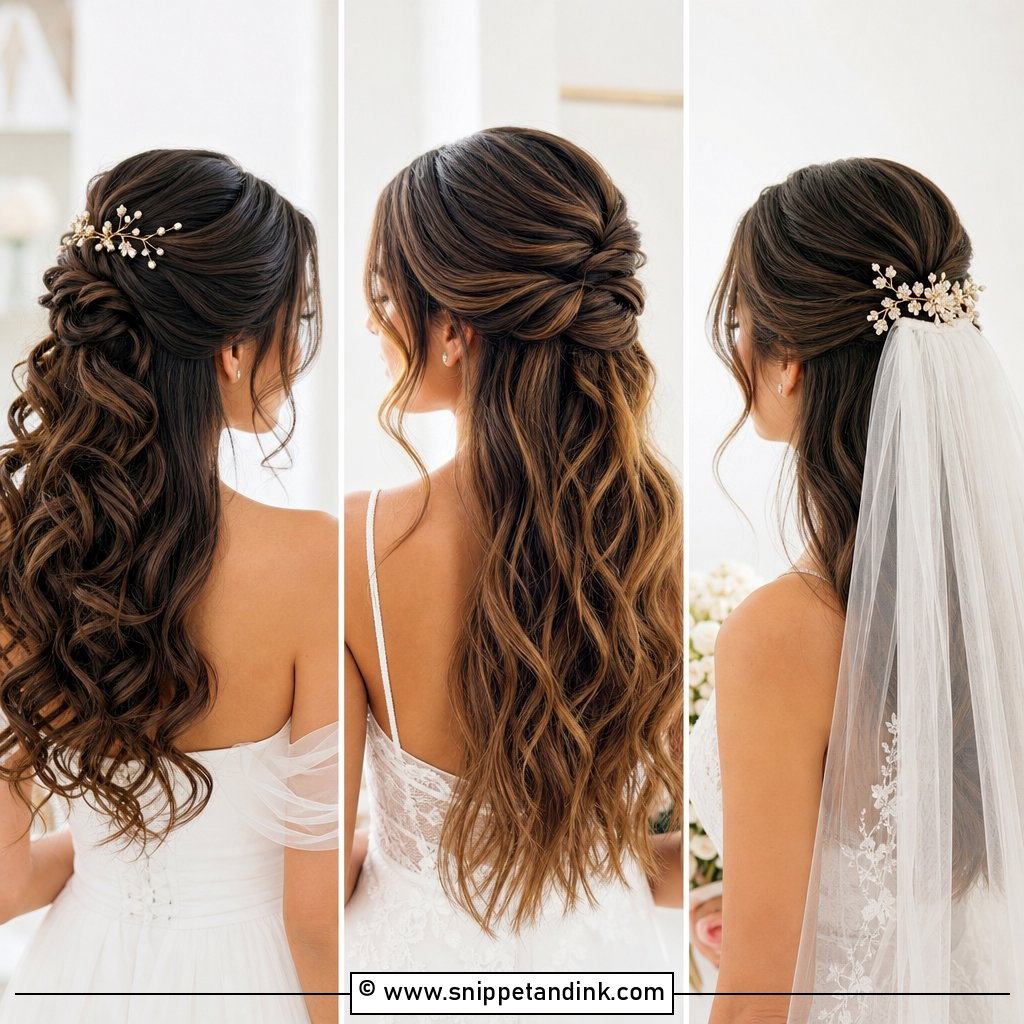
2. Twisted Half Up Wedding Hair
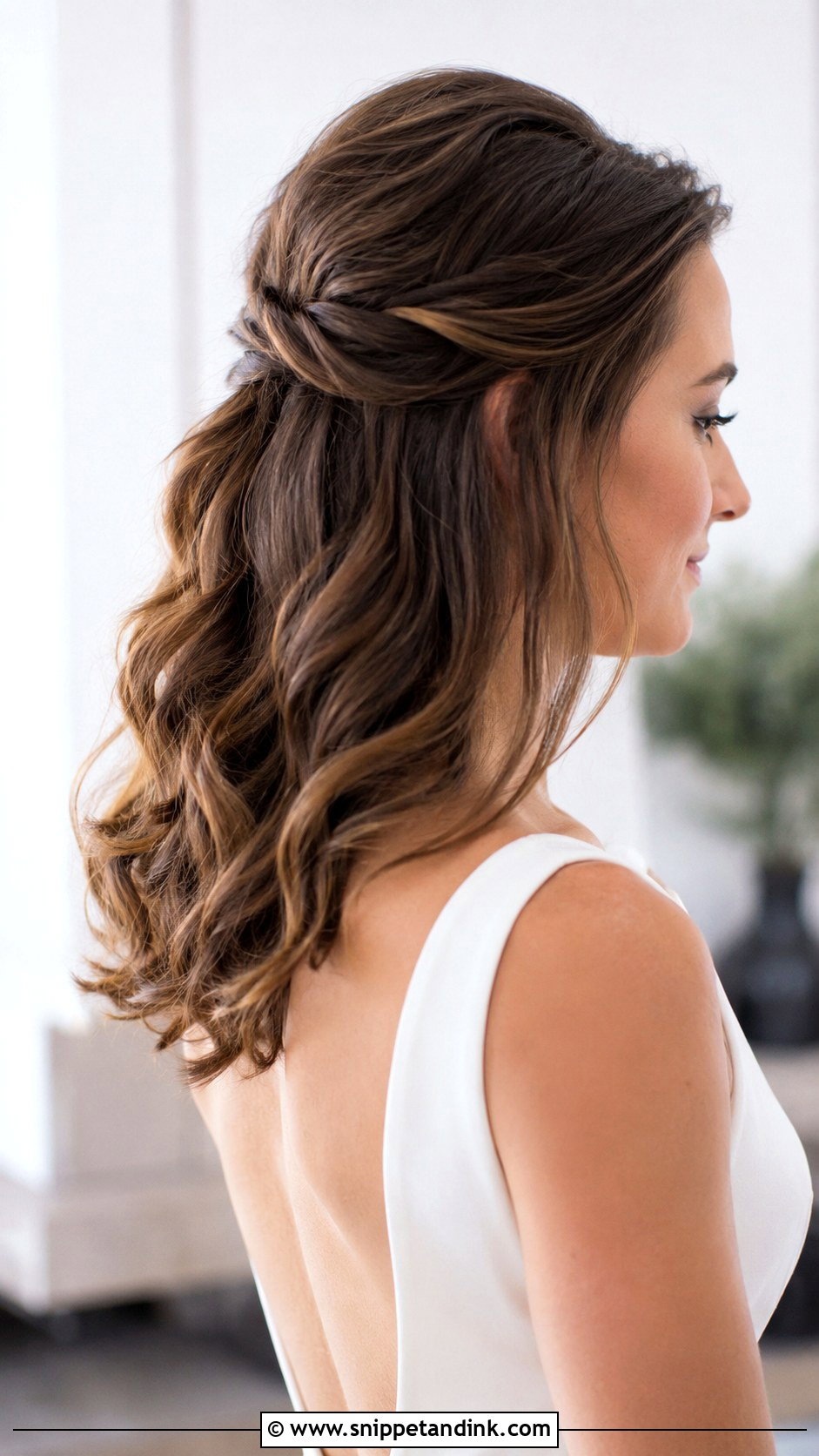
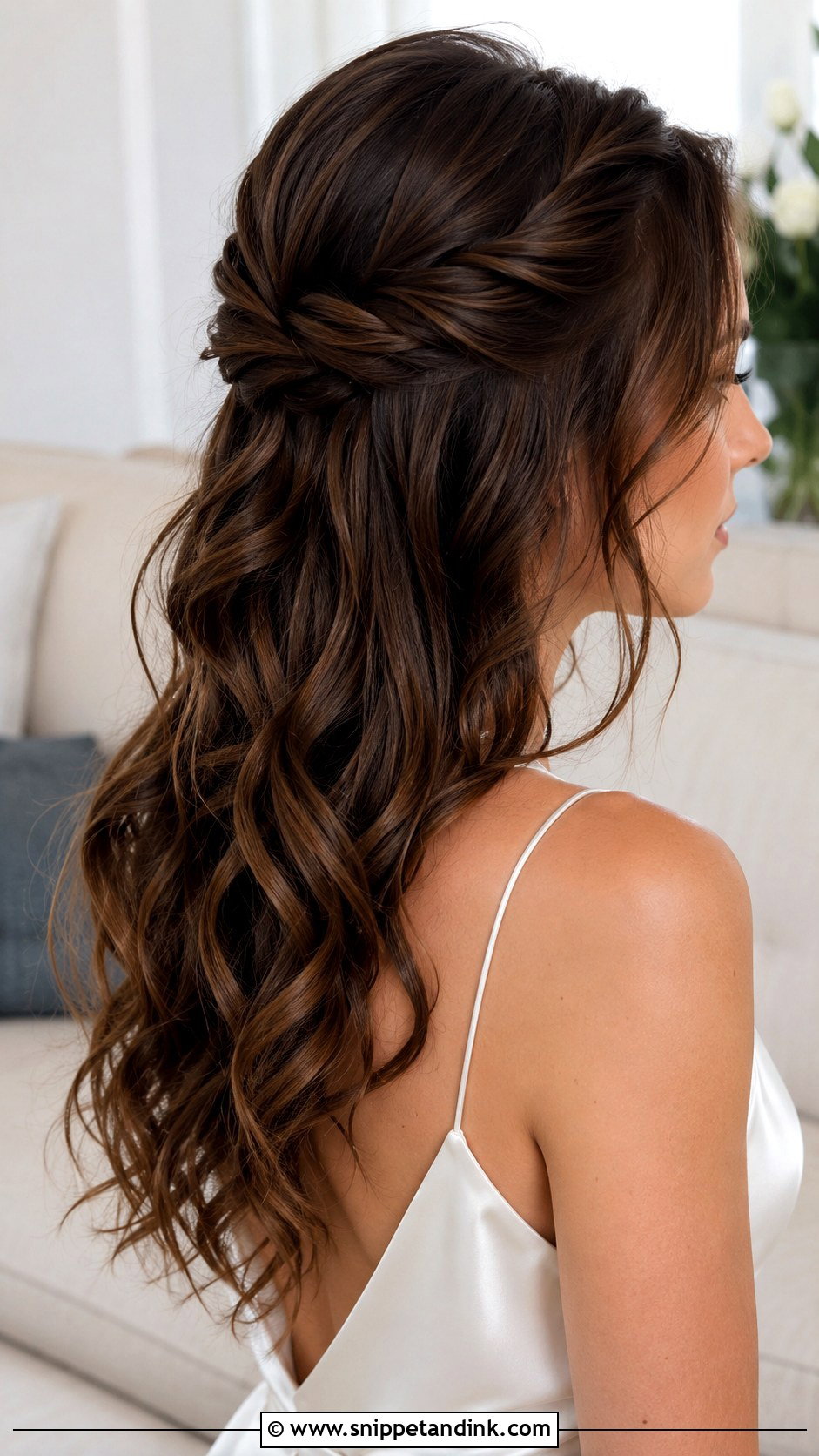
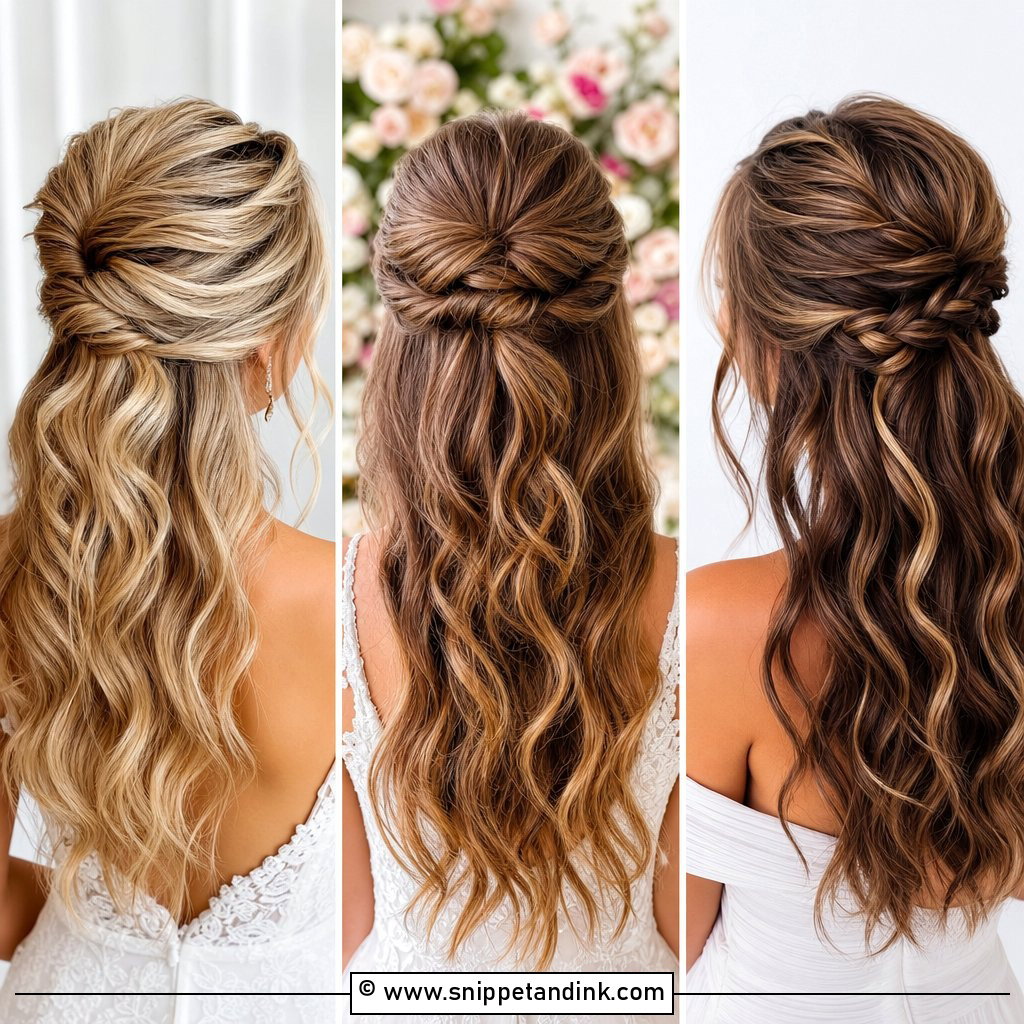
Two front sections twisted back to the crown is the half-up I’d choose for someone with growing-out layers or a fringe. The twist catches short front pieces that would otherwise fall forward through the ceremony. It looks best on hair that’s already curled or waved, because the twist blends into the texture instead of sitting on top like a stripe. A few pearl pins or one small floral piece at the join is enough.
3. Braided Half Up Wedding Hair
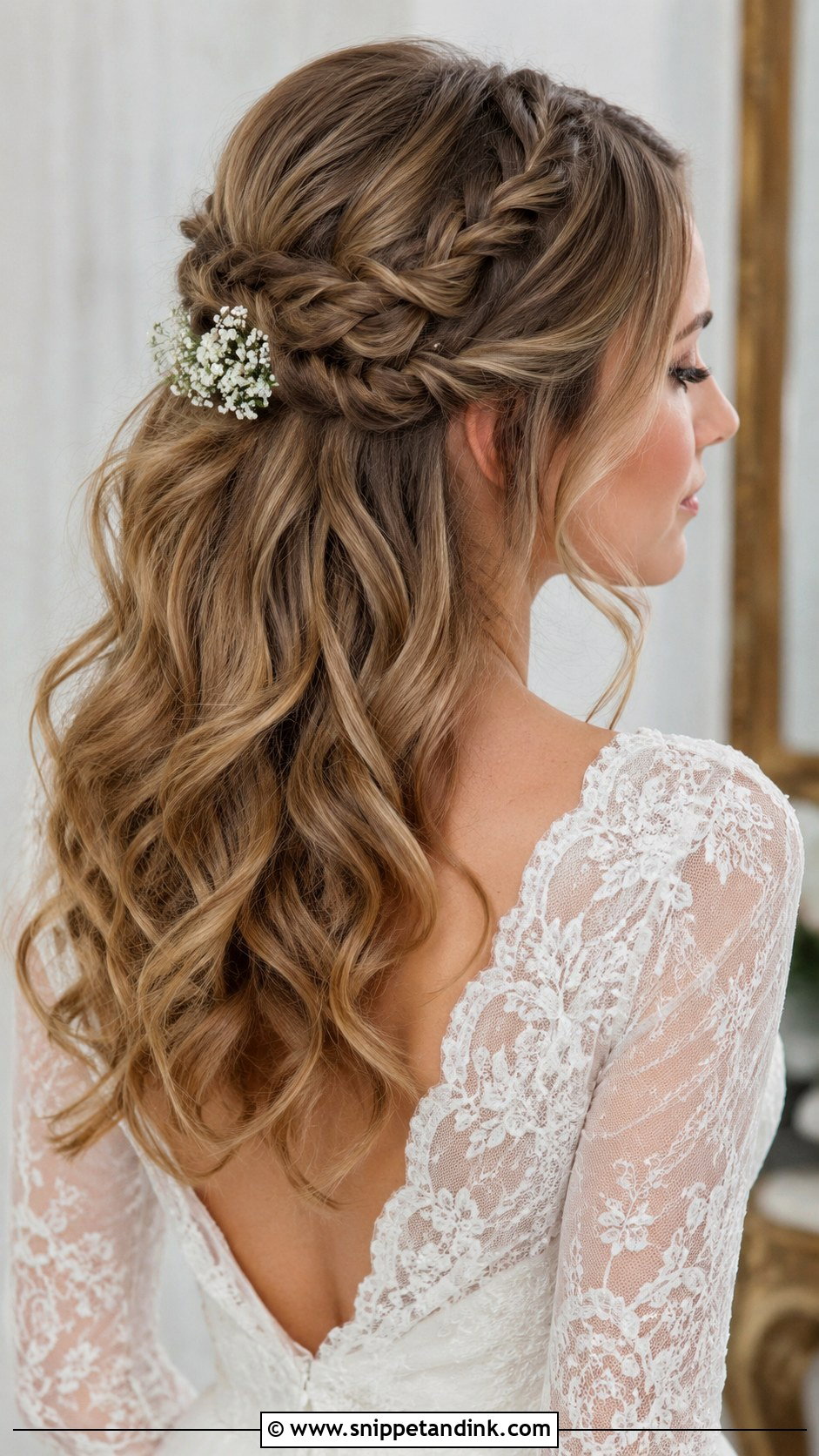
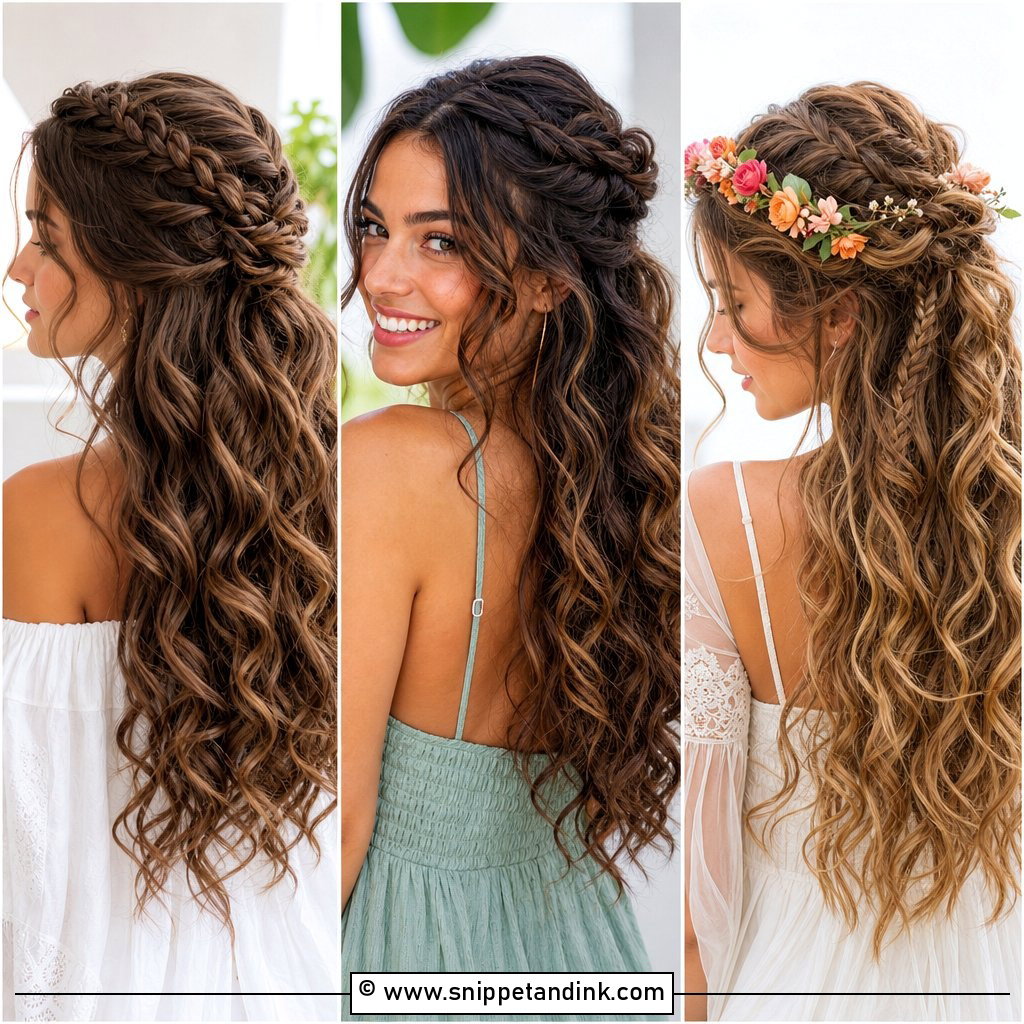
A small braid on each side, joined at the back over loose curls, gives you something pretty to look at in the photos taken from behind during the ceremony. Braids also trap shorter front layers better than any pin. The trick is braiding toward the back of the head at a slight downward angle, so the braids lie flat instead of sticking up at the temples. Once they’re pinned, I pull the edges to soften them. Lace gowns and outdoor ceremonies suit this one especially.
4. Half Up Wedding Ponytail
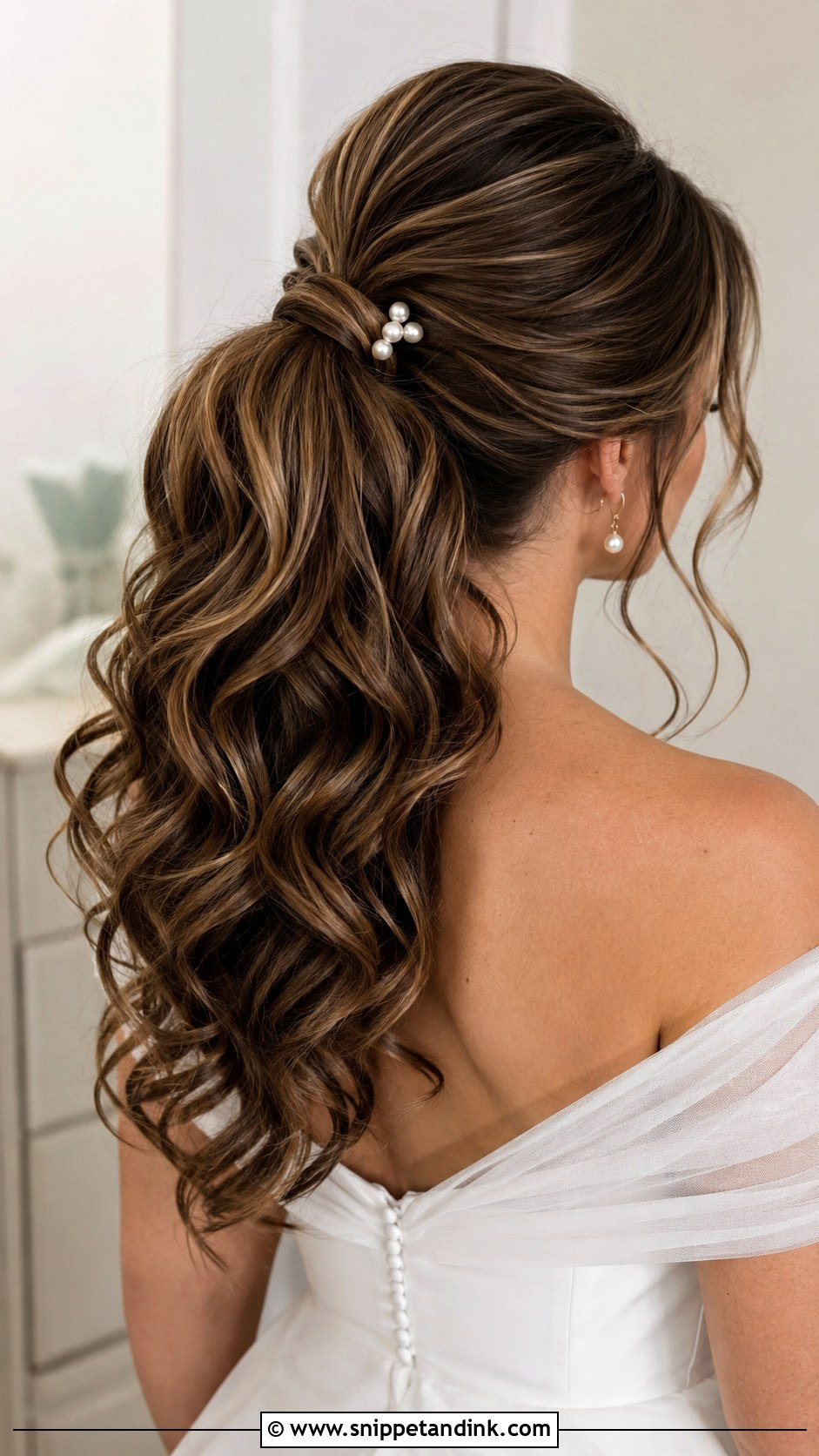
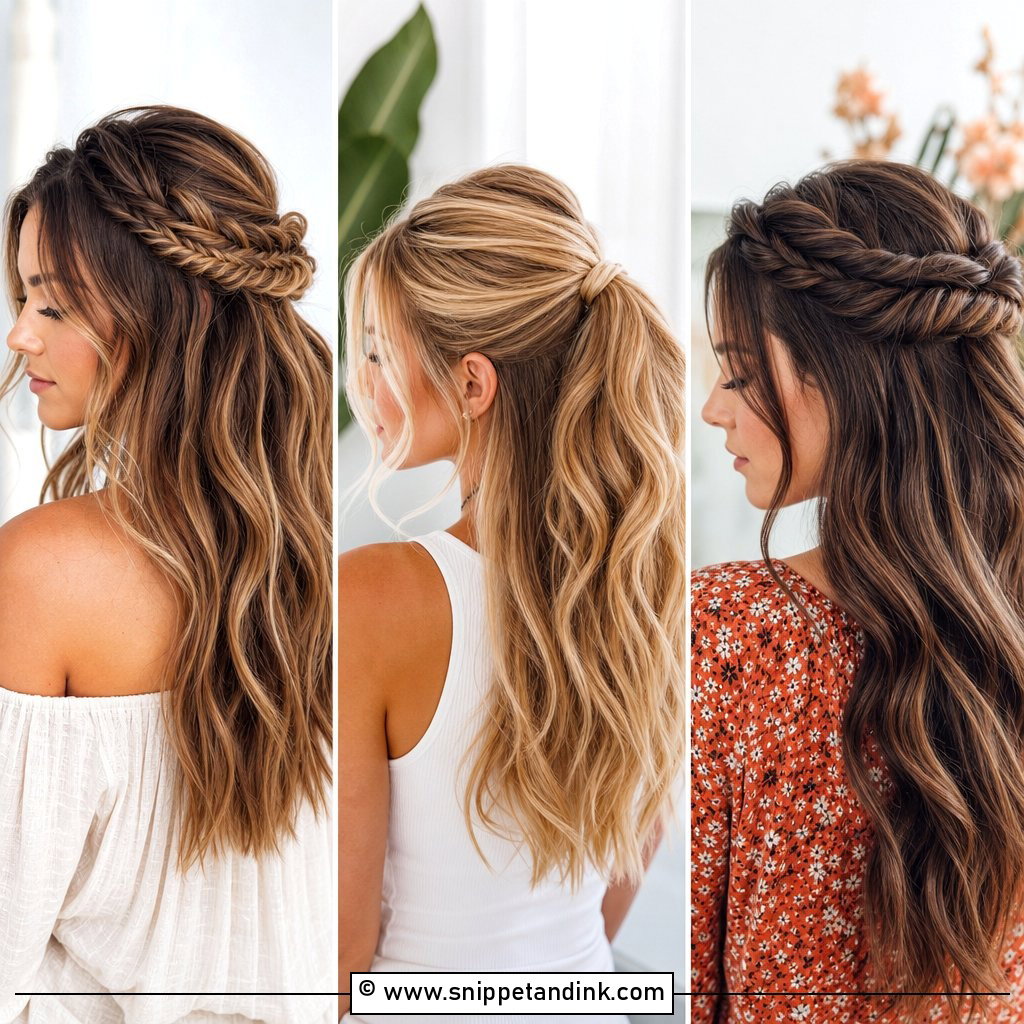
The half-up ponytail is the most modern version here, and the one with the most lift. I gather the top section at the crown, back-comb lightly underneath it so it sits up, then wrap a thin strand of hair around the elastic and pin it out of sight. Soft curls below keep it romantic; sleek waves make it sharper. I’d avoid it if your crown hair is very fine or you have a strong cowlick there, since the elastic can show through. A bow, clip or pearls finishes it.
5. Half Up Wedding Bun
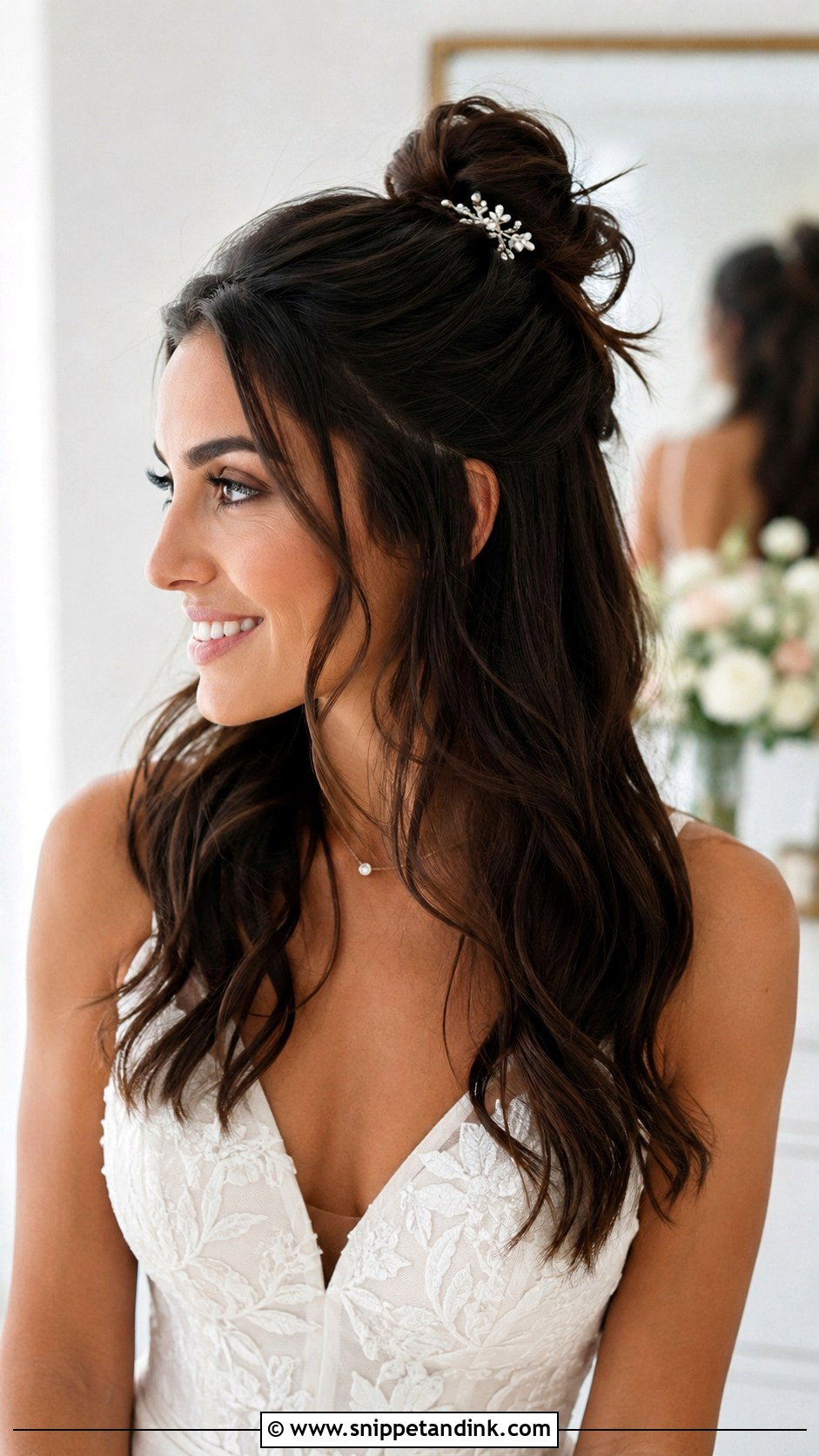
People say half-up wedding bun hairstyles are cute, and they are, but my reason for liking them is practical: a small bun gives you a solid knot of hair to pin a veil or flowers into. The top section is twisted into a little bun while the rest falls in curls, waves or your own texture. Low and loose leans boho; slightly higher looks crisper. Keep the bun small. A big one on top of loose hair looks top-heavy in profile, especially beside a fitted dress.
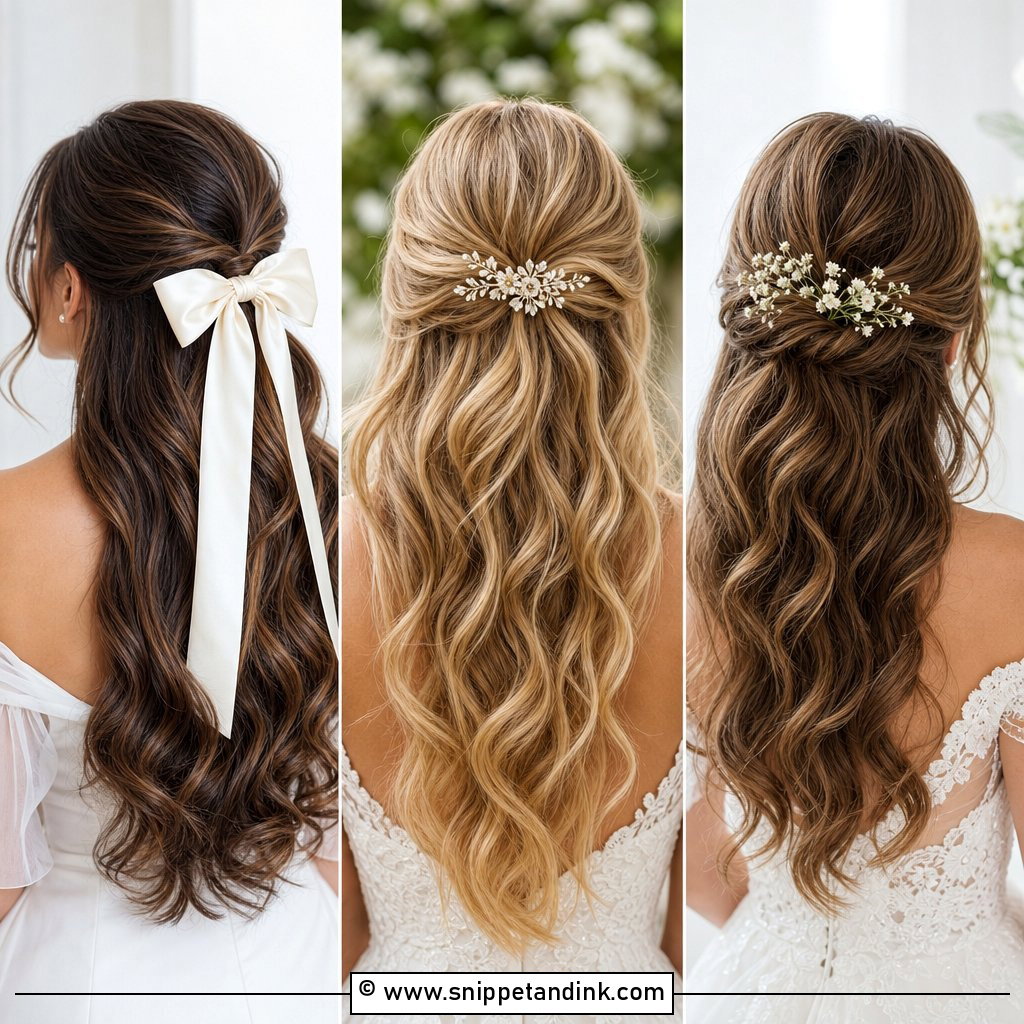
6. Half Up Wedding Hair With Pearl Pins
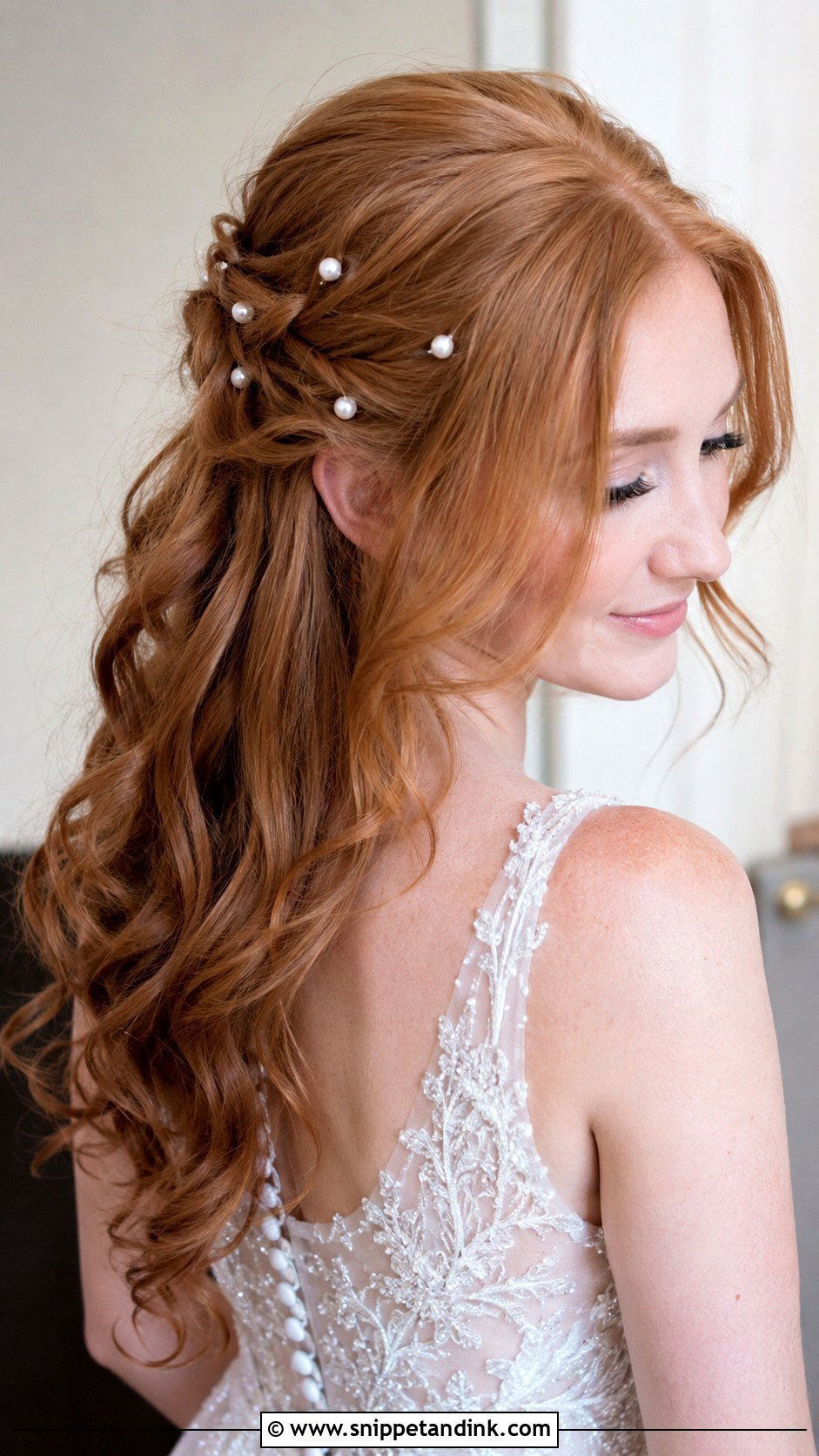
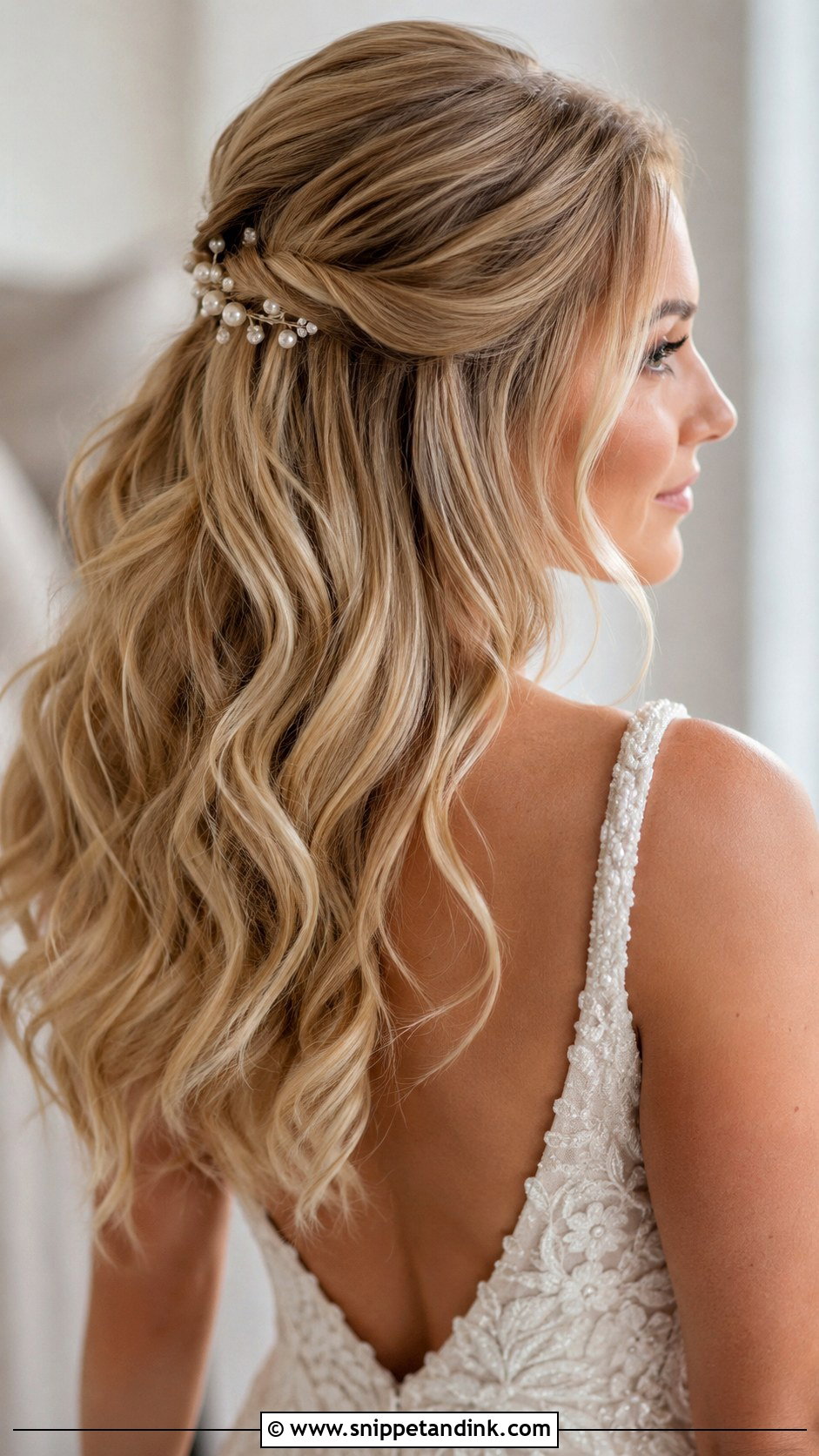
Pearl pins let you put shine exactly where you want it, which is why I carry more of them than any other accessory. Scattered lightly through waves, they look dreamy; clustered near the pinned section, they look tidier. The base underneath can be a twist, braid, ponytail or plain gathered section. I push each pin in at an angle toward the scalp and lock it behind a bobby pin, because pearl pins have smooth shafts that slide out of soft hair.
7. Half Up Wedding Hair With Veil
A veil comb needs a firm base, and the pinned section is exactly that. Just below the crown gives a traditional ceremony look; lower at the back reads softer and lets more of the hair show above the veil. I build in enough lift at the crown that the comb doesn’t press it flat over a few hours. When the veil comes off, nothing about the style needs redoing, which is a big part of why I recommend it.
8. Half Up Wedding Hair With Flowers
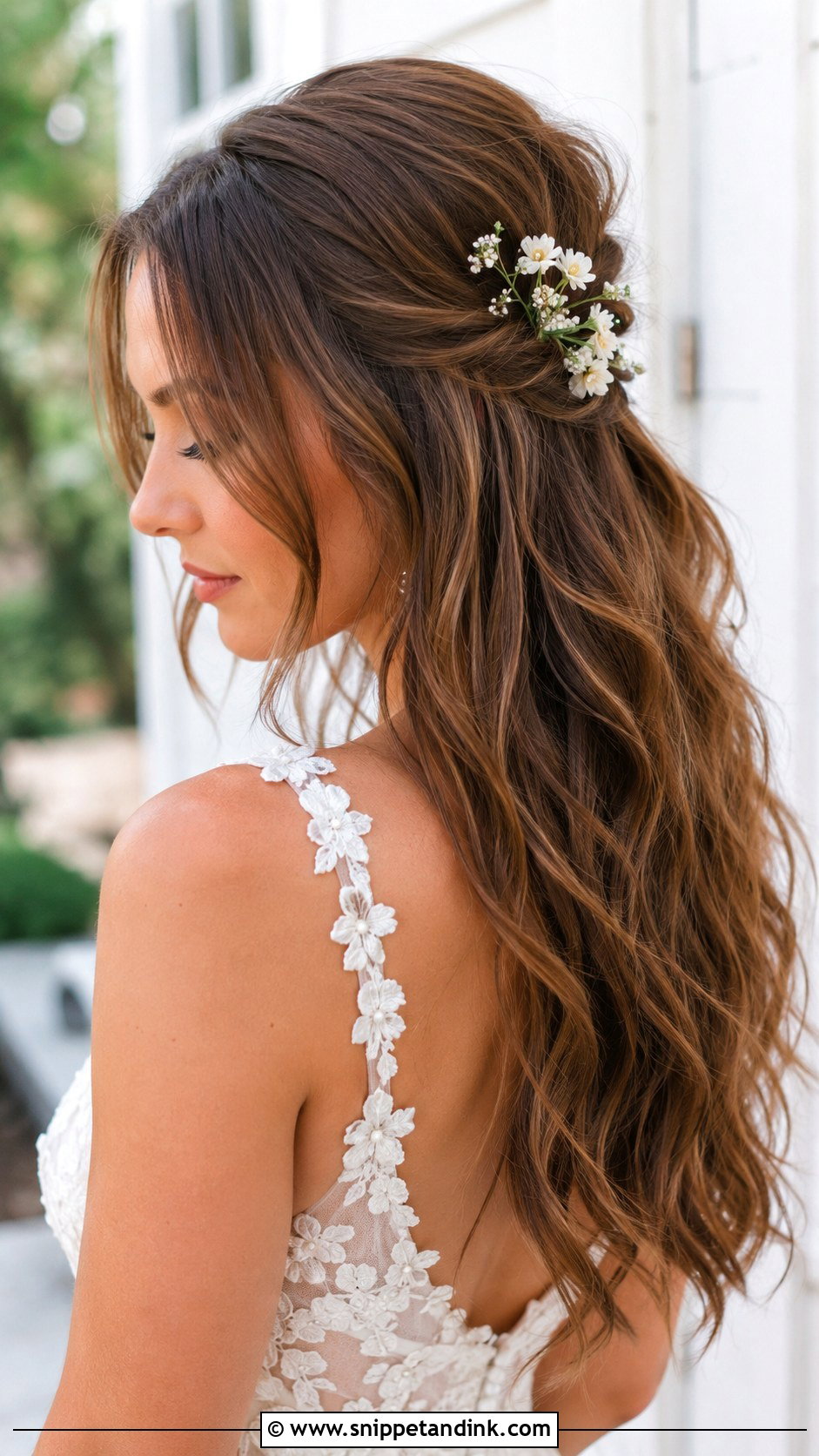
Small blooms tucked into the pinned section, along a braid or where two twists meet bring a fresh garden note. Size is everything: once a flower is wider than the section holding it, it competes with your face and your dress. Soft waves help the flowers blend in. Ask your florist to make the hair pieces from the same flowers as your bouquet, so the two read as a pair in photos.
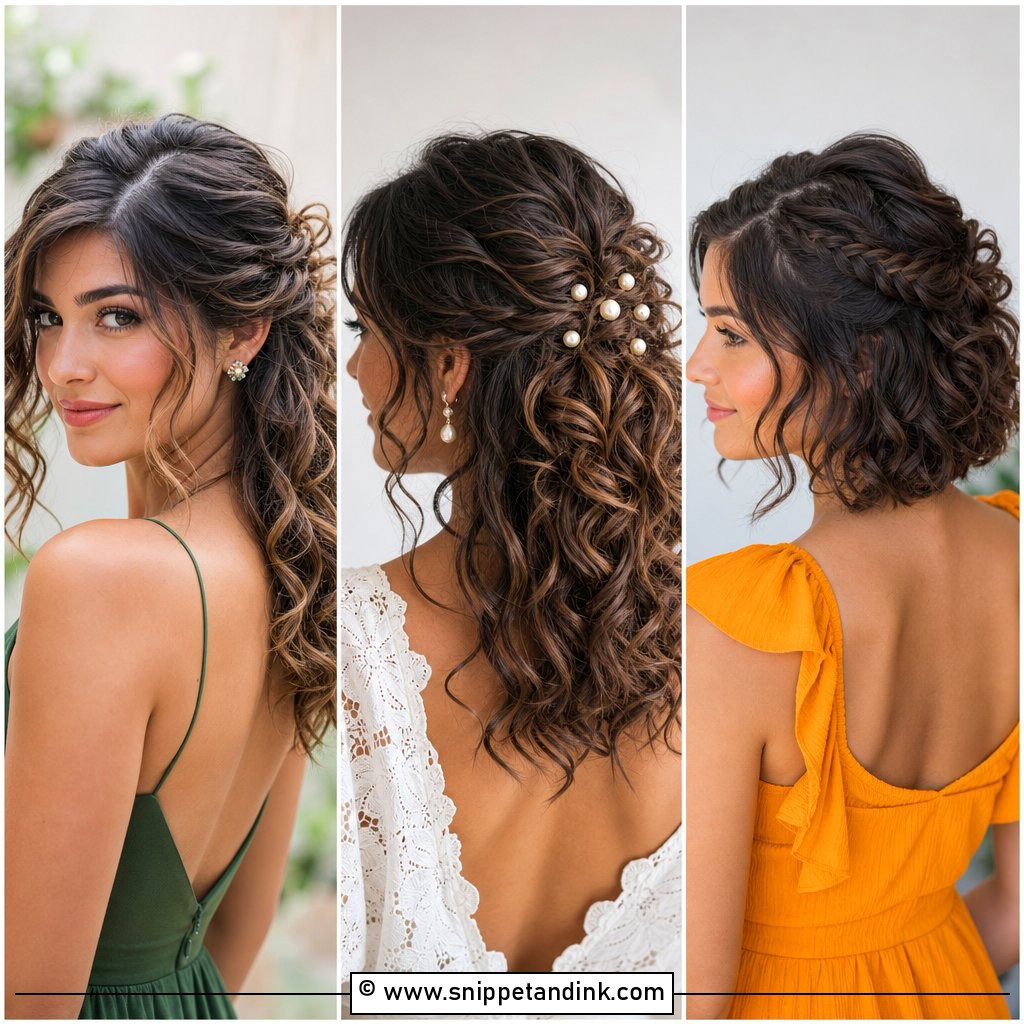
9. Half Up Wedding Hair For Short Hair
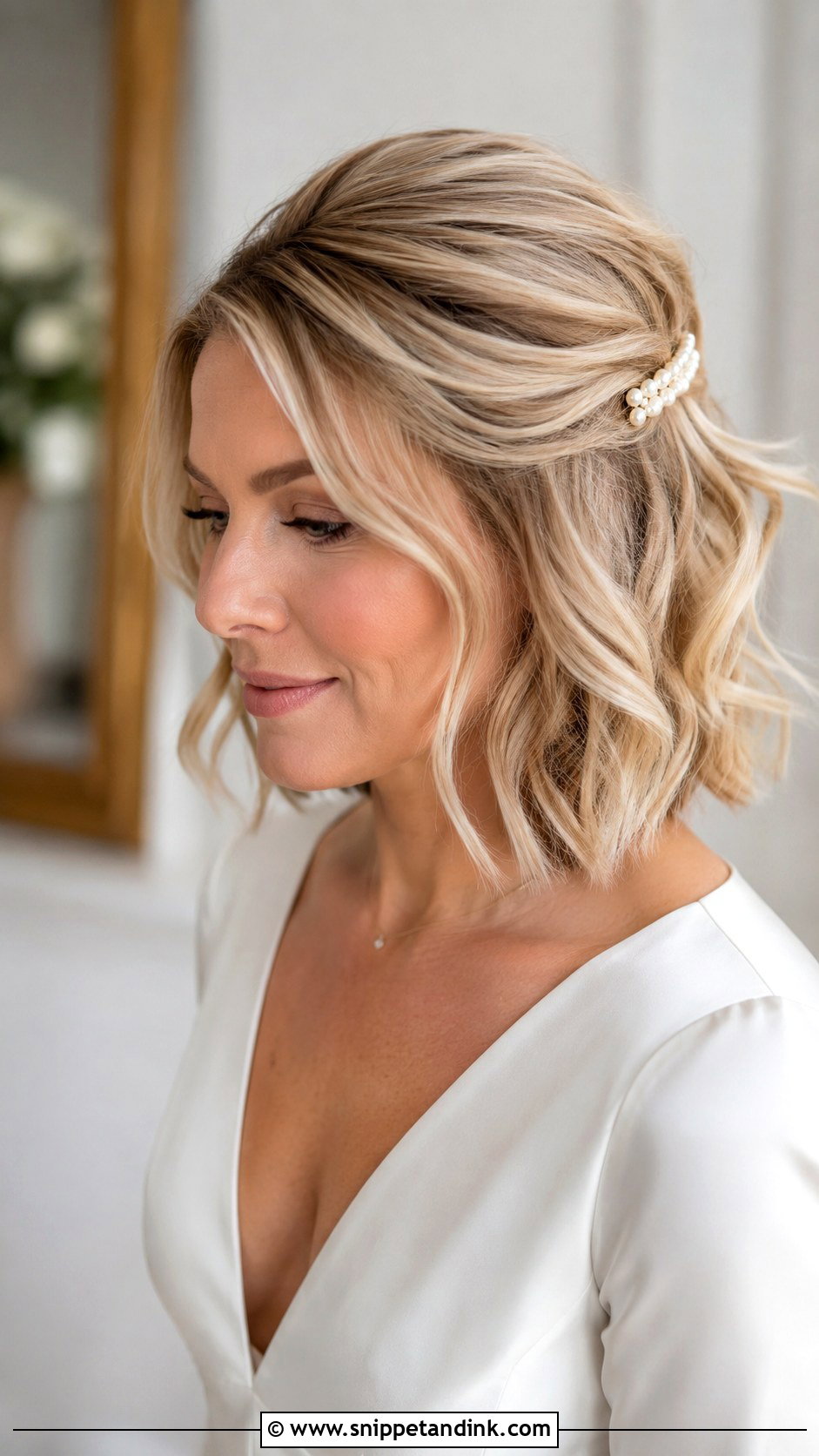
Short hair works half-up when it reaches somewhere between the chin and the shoulders. On a bob or lob I curl or bend the lengths first, then pin back only the sides, keeping the top section light so it doesn’t look strained. Small clips, pearl pins or a slim comb add the bridal finish. The one thing to avoid is a fresh cut in the final week; very blunt new ends are harder to bend softly.
10. Half Up Wedding Hair For Medium Hair
Collarbone-length hair is the easy middle ground. There’s enough to twist, braid or gather into a little ponytail, and not so much weight that the top section drags. I curl the loose lengths away from the face, which opens up the cheeks and neckline. A little crown volume makes it read as bridal rather than everyday. Veils, clips and simple combs all sit on it without trouble.
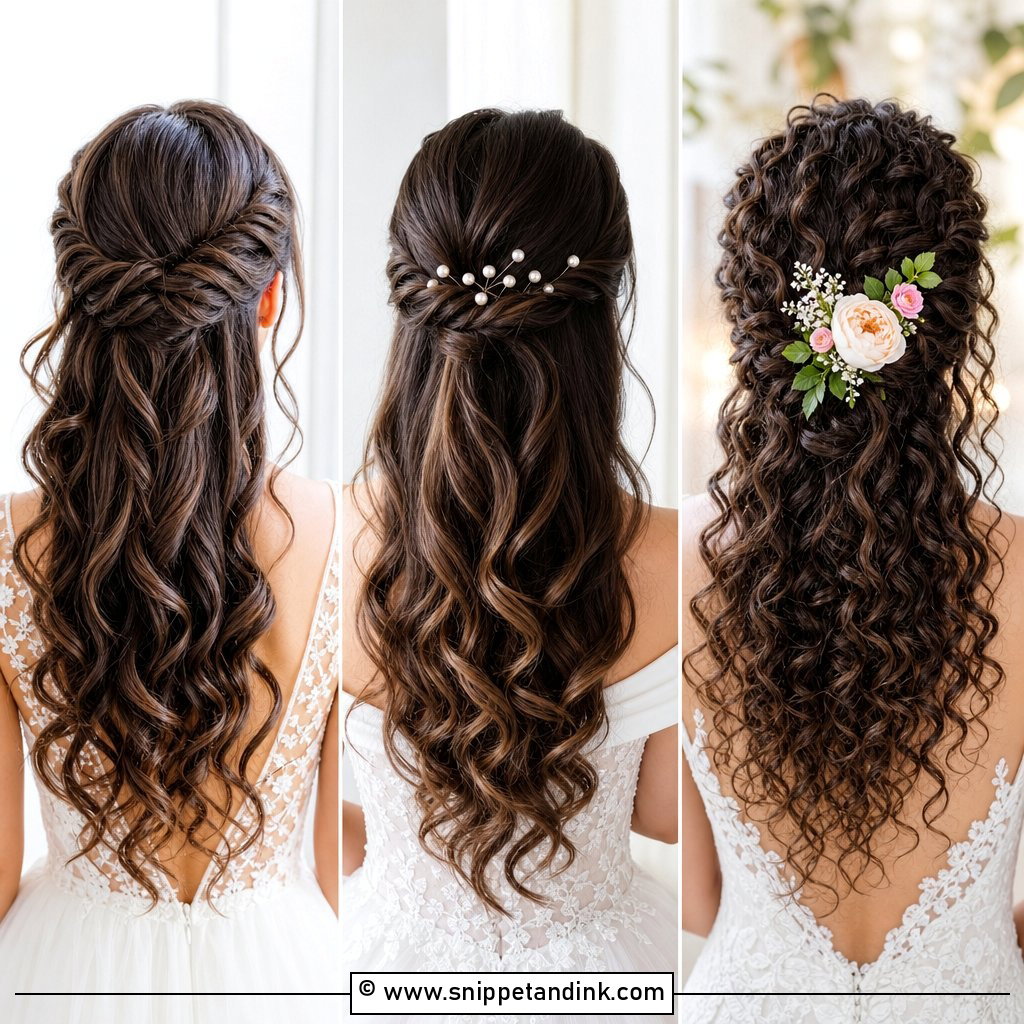
11. Half Up Wedding Hair For Long Hair
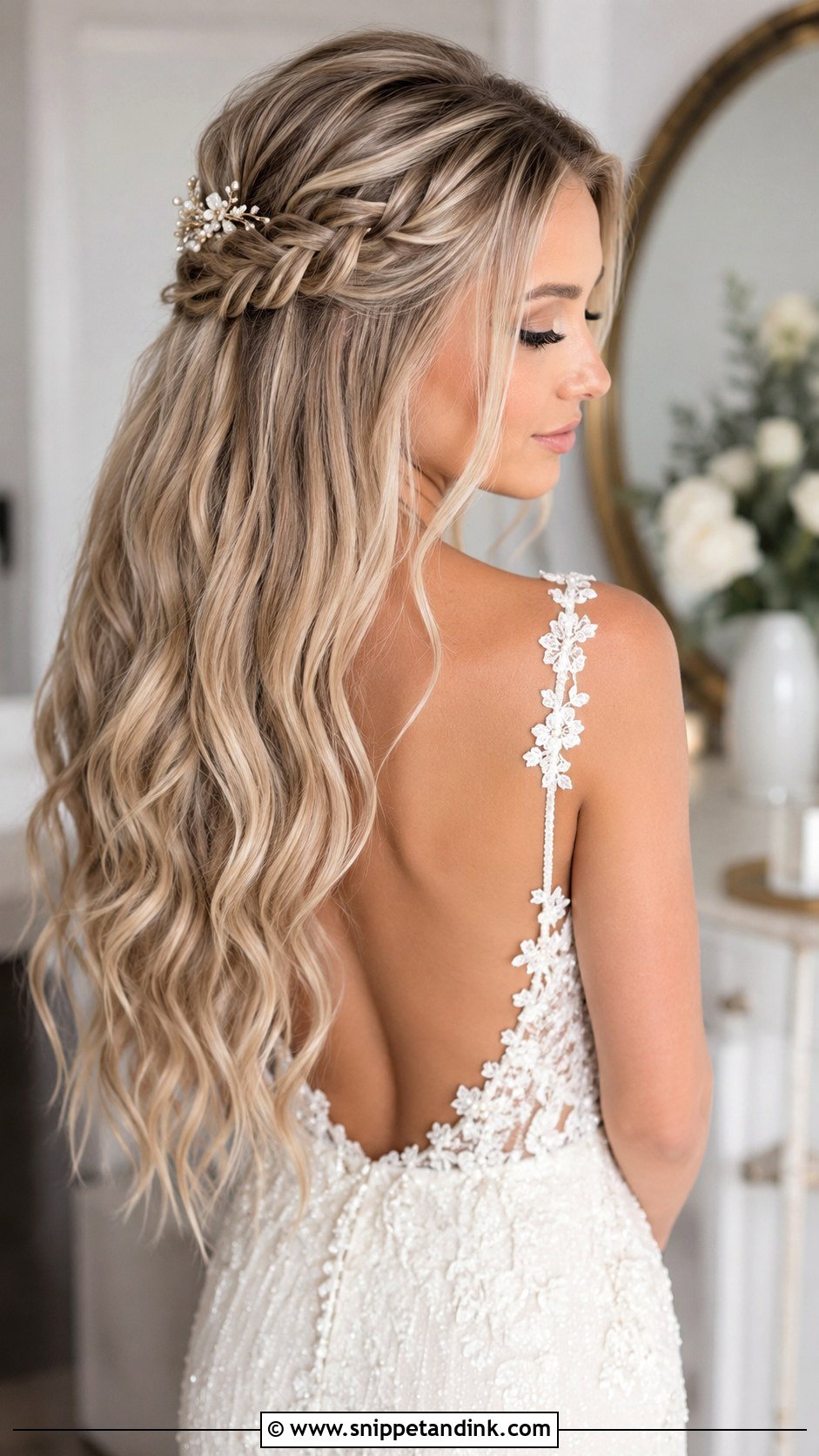
Long hair shows off the most in a half-up, and it needs the most structure to stay neat. Pulling back the front sections keeps it under control through photos and dancing, while a twist, braid or small ponytail at the crown stops the top collapsing under the weight below. With an open-back dress, I sometimes ask you to sit and lean back during the trial, because long curls get crushed against chair backs. Hold back on accessories; length and shine already carry the look.
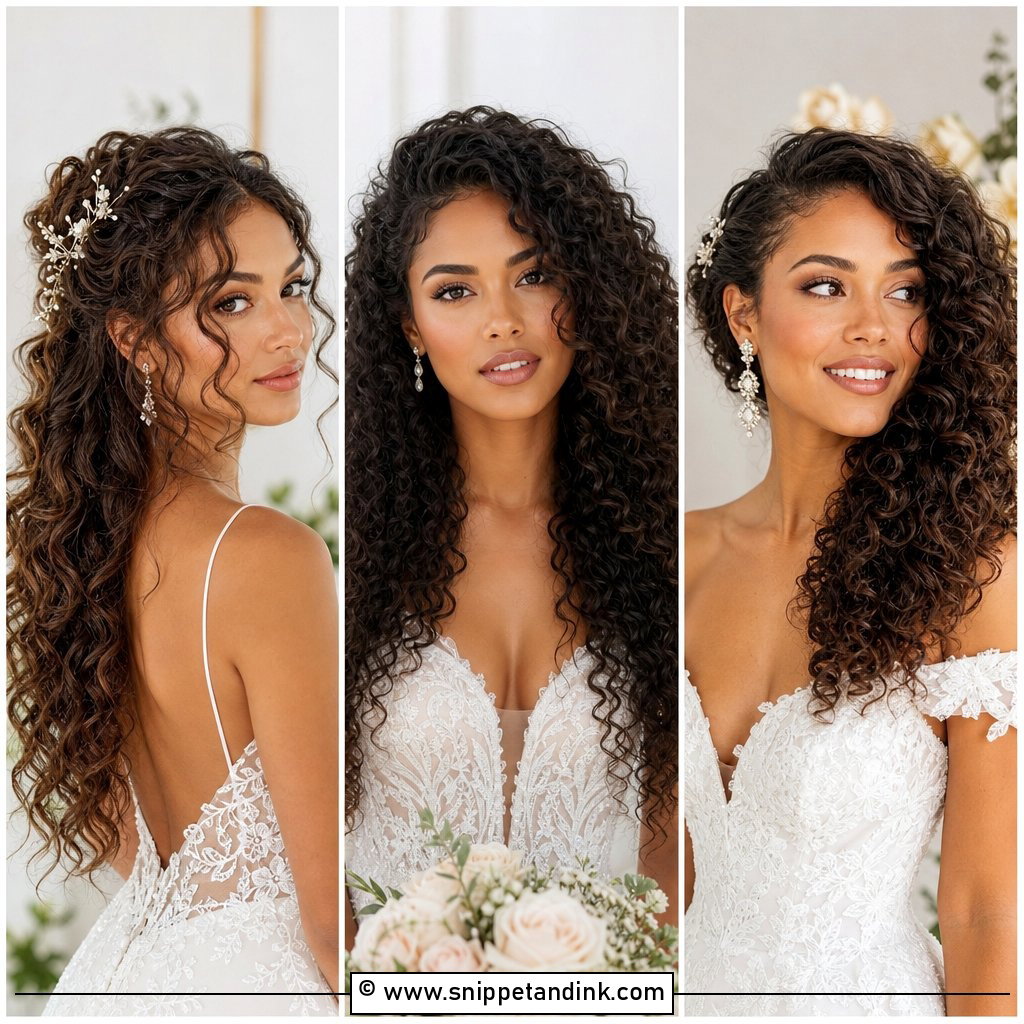
12. Half Up Wedding Hair For Curly Hair
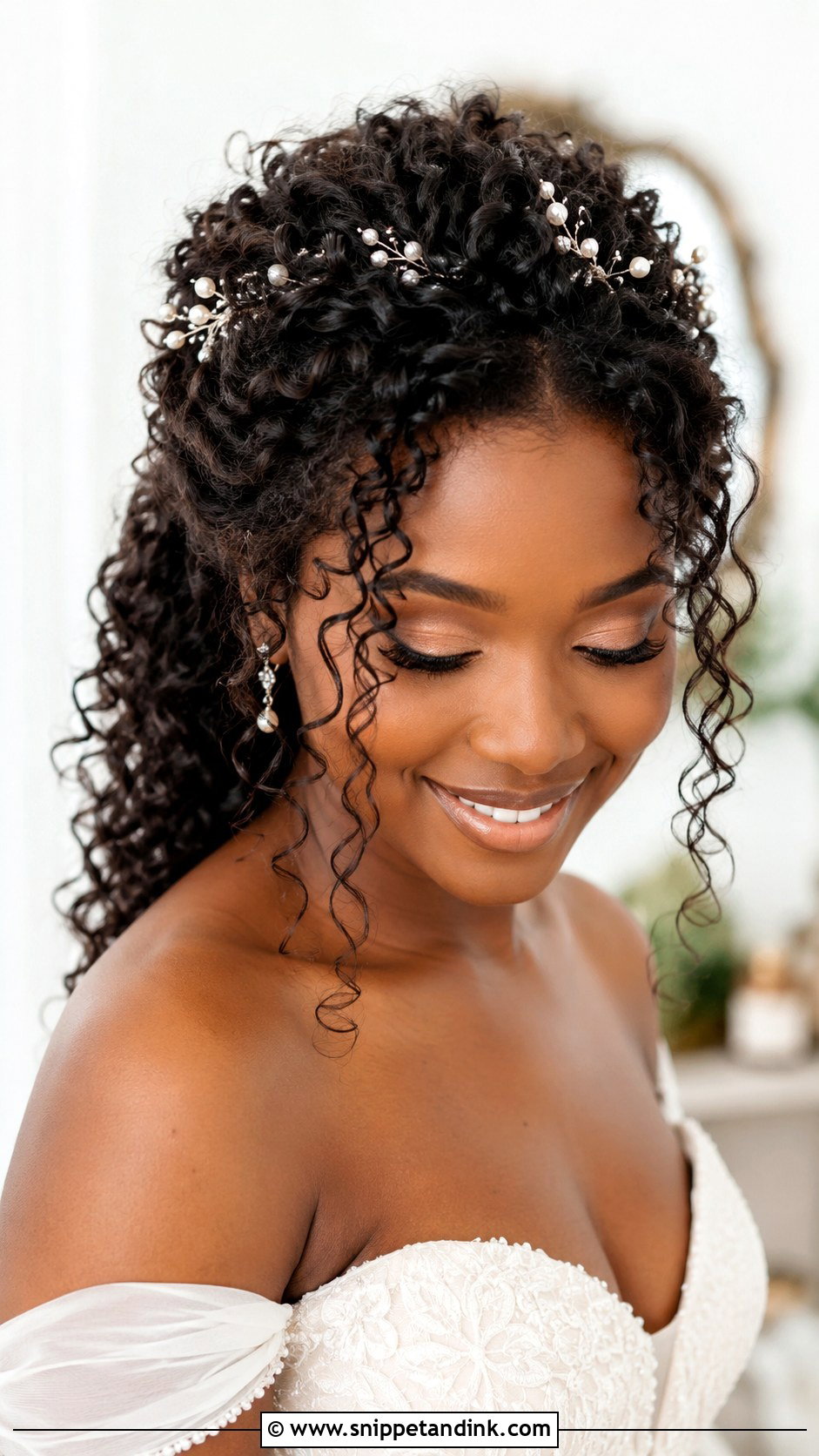
Curly hair should be gathered, never brushed out. I lift the top section with my fingers, pin it loosely and leave the curl pattern alone everywhere else, so it falls freely around the shoulders. Pulling tight makes curly hair look stretched and flat at the crown. A few defined curls around the face soften the front. Pearl pins, a floral comb or a plain clip finish it while your texture stays the main thing people notice.
13. Half Up Wedding Hair For Straight Hair
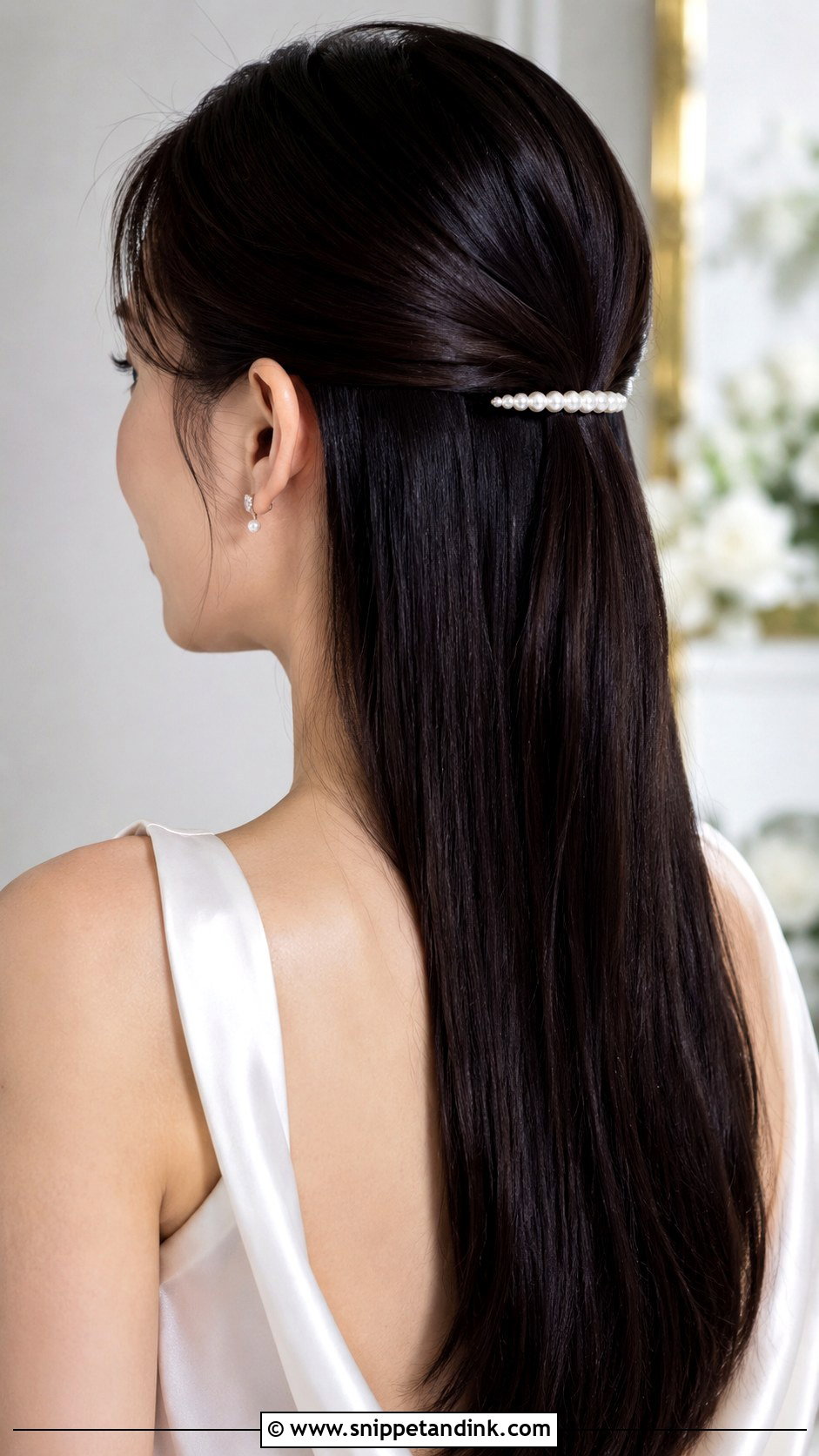
Straight hair gives the cleanest half-up, but it can look like an ordinary Tuesday without a few small touches. I add subtle crown volume, a deliberate middle part, or a single clip at the back to mark it as wedding hair. Straight hair shows accessories clearly, so a pearl barrette or metal comb really stands out. The flip side is that it shows flyaways too; a little smoothing balm on the palms, pressed over the top, handles them.
14. Half Up Wedding Hair For Fine Hair
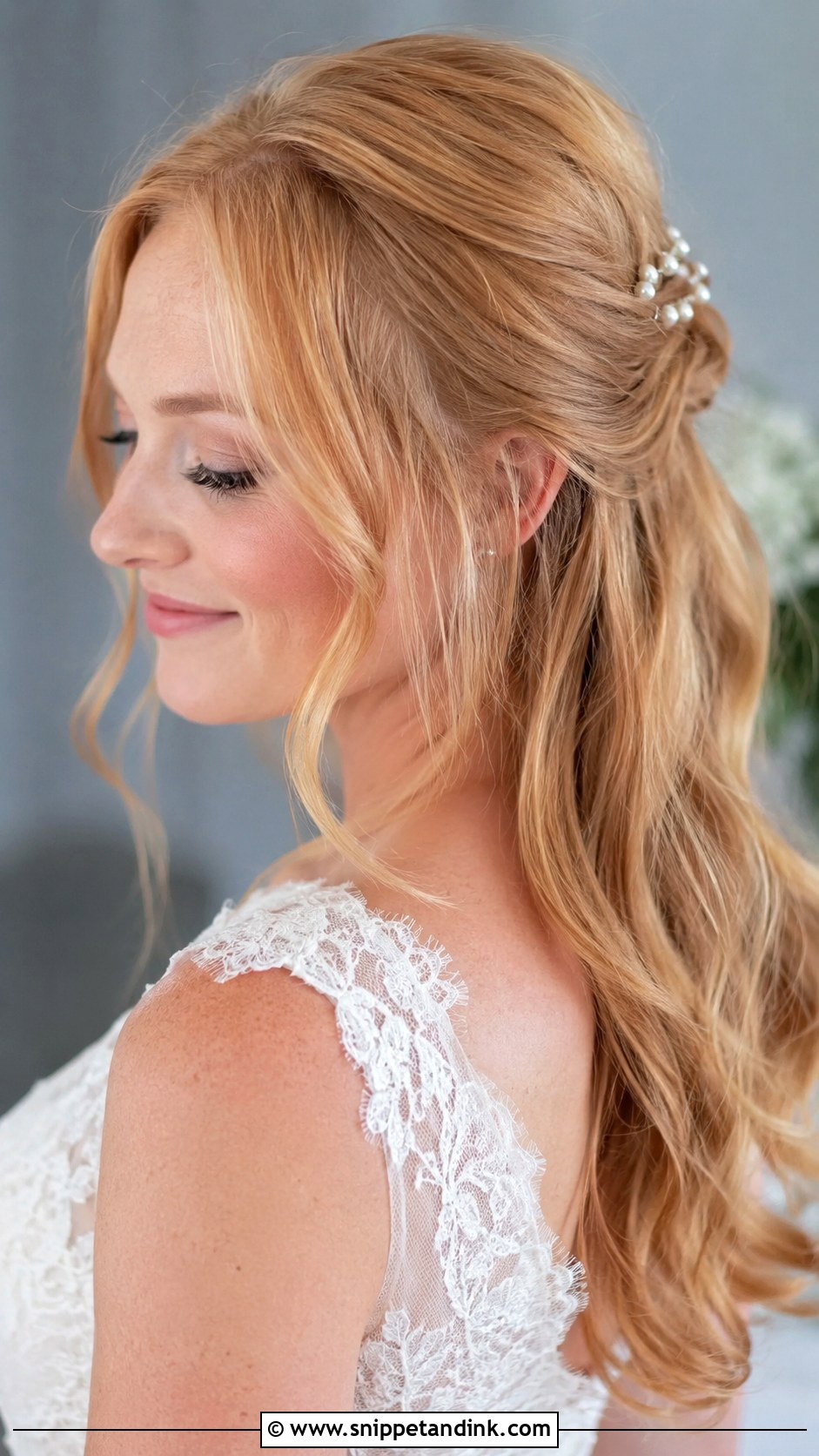
Fine hair loses volume underneath when too much is pulled up, so I take a smaller top section than you’d expect. Light teasing at the crown and soft waves through the lengths fill it out. A small braid or twist gives pins more to hold than flat hair does. Heavy clips will slide, so stick to delicate pearl pins, a slim comb or a lightweight ribbon, and keep the front pieces softly shaped.
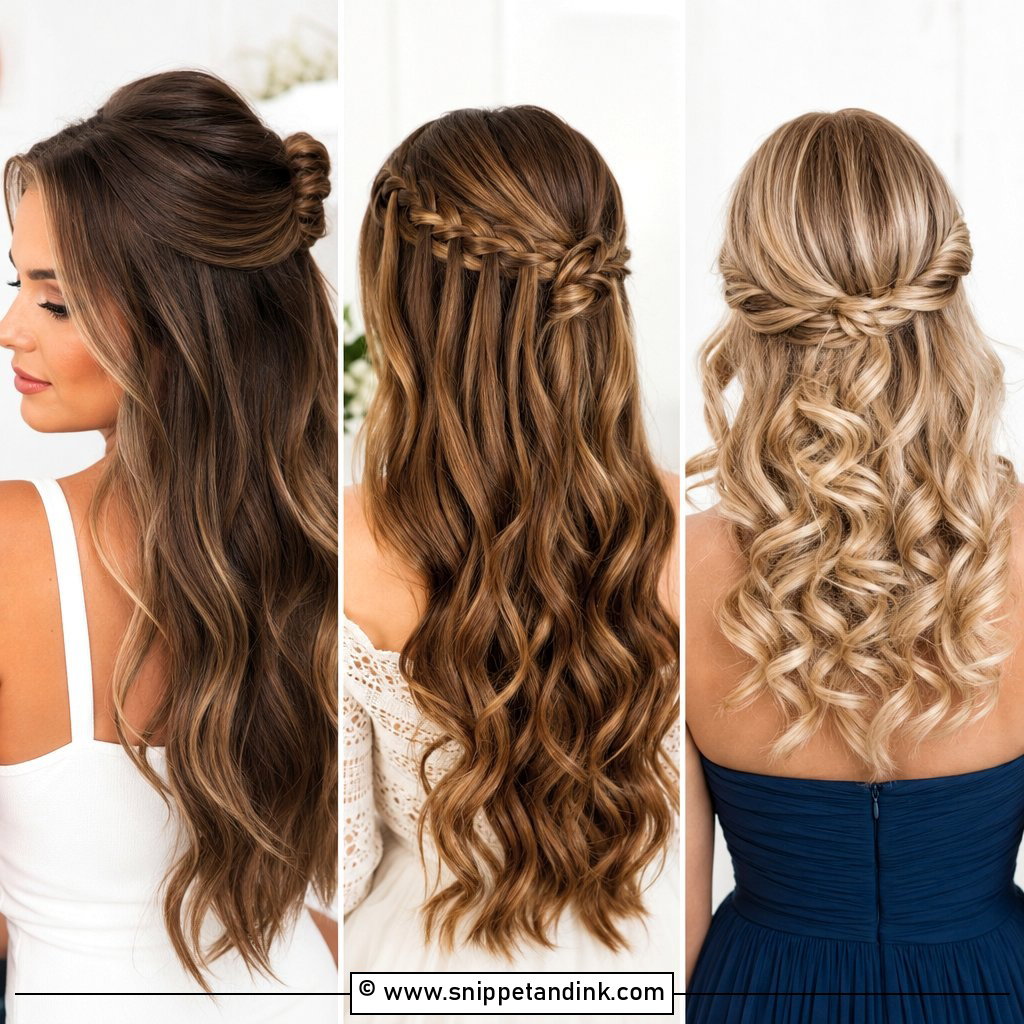
15. Boho Half Up Wedding Hair
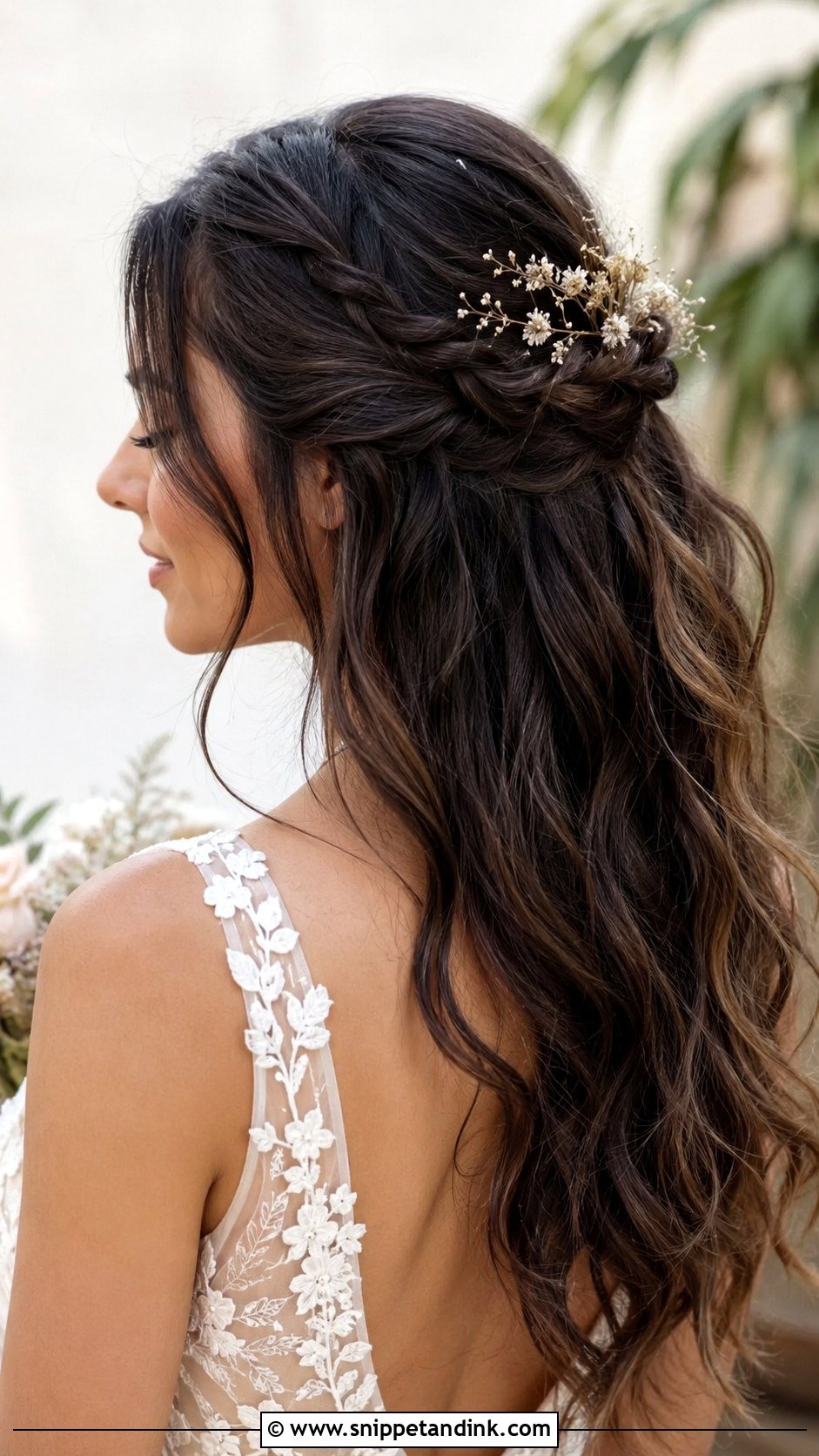
Boho half-up hair should look slightly undone, which is harder to build than it sounds. Real undone hair falls apart by evening. I set proper waves first, add small braids or twists, pin everything securely, and only then loosen pieces around the face and pull a few strands free. Outdoor, rustic and beach venues suit it, along with lace or flowing dresses. Dried flowers are worth considering here; unlike fresh ones they won’t wilt.
Trims, Gloss and Colour in the Weeks Before
A half-up shows your lengths and ends more than an updo does, so the condition of your hair counts for a lot. Timing the salon visits matters as much as the visits themselves.
Cut
Have a trim around two to four weeks out, not a big restyle. That leaves time for the ends to soften and lets you do your trial on the cut you’ll wear, not the one you had before.
Colour
Book colour or a gloss roughly a week or two before. Fresh toner can look slightly brassy or slightly flat for a few days, and you want it settled by the photos.
Treatments to skip
Smoothing treatments right before the wedding leave hair so slippery that curls drop and pins slide. The same goes for a heavy mask the night before. Save those for the honeymoon.
Test the Ponytail, Bun or Twist With Your Real Veil
Every version above lets you pull back just the top and keep the rest moving, and they adapt to nearly every length and texture. What decides whether yours lasts is balance at the crown, enough hold and a soft front. Test it before the wedding with the accessories and veil you’ll actually wear, positioned where they’ll actually go.
You'll Like These Ideas:


Leave a Reply