
Brides today pick gowns to suit their venue, their body and how they want to feel, not one fixed idea of what a bride wears. Drop waists, corsets, pearls, bows, basque waists, clean satin, removable sleeves and short reception dresses are all part of the current mix. I judge every one of them the same way at a fitting: can you sit, dance, hug and get through dinner without thinking about the dress? Below are classic, trend-led, modest, playful and minimal looks, with the honest fitting notes I’d give in the room.
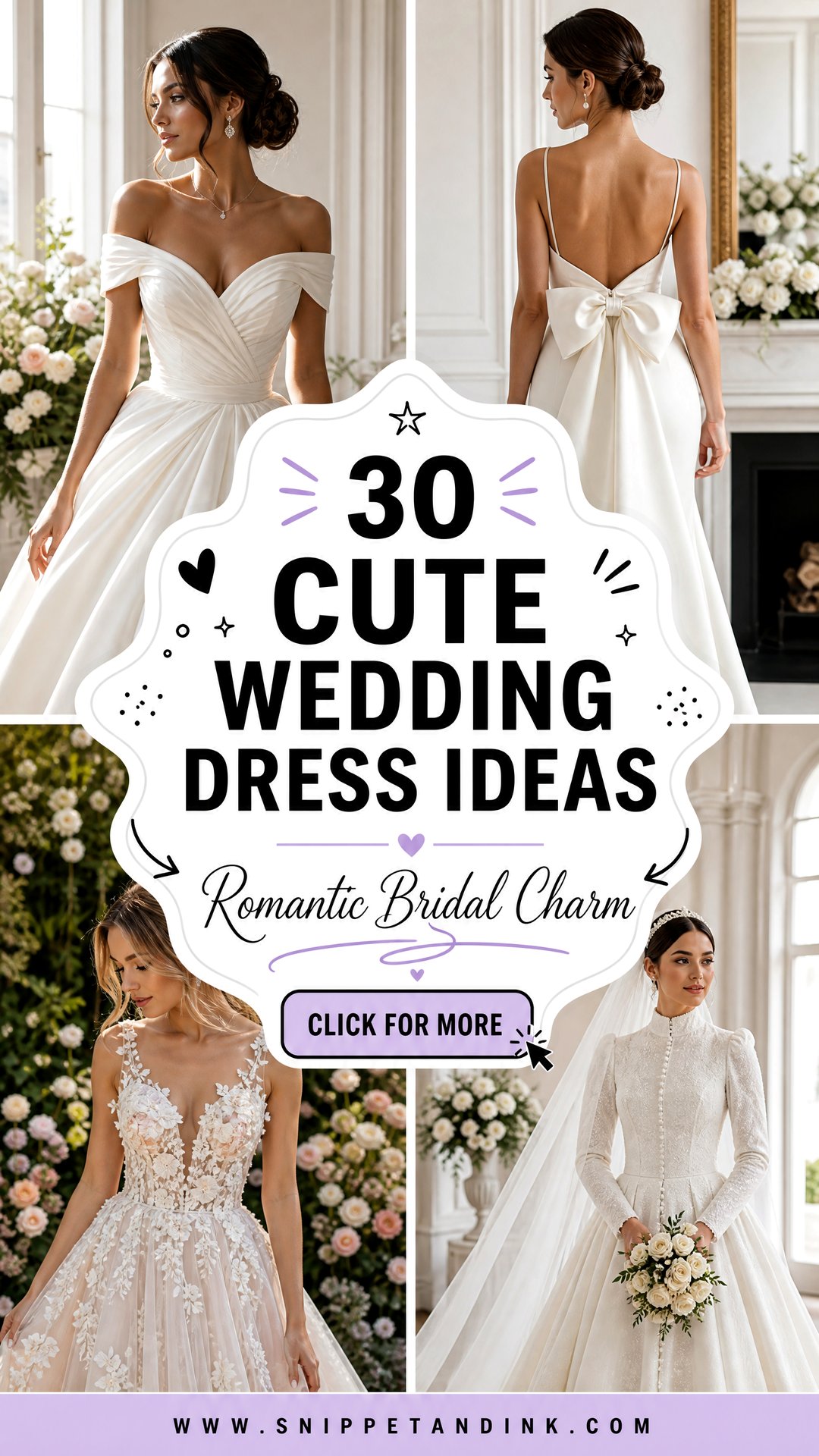
Try the Shape You’d Never Pick at Your First Appointment
Most brides arrive with a saved folder of one silhouette. I always ask them to try at least one dress from the opposite end of the rack too, because photos on a screen don’t tell you how a fabric hangs on your body. Some of the happiest brides I’ve dressed left in a shape they’d ruled out.
A few things make that first appointment far more useful:
- Start shopping early. Many gowns are made to order and can take several months to arrive, then alterations need weeks on top. Rush orders exist, but they usually cost extra.
- Bring two or three people whose opinion you trust. A big group means a lot of conflicting views and a tired bride.
- Wear smooth, nude underwear with no visible lines and bring shoes close to the heel height you’ll wear on the day.
- Set aside a part of your budget for alterations, veil and shoes. The gown price is rarely the whole cost.
Take photos from the back and side as well as the front, and look at them the next morning. If you’re still thinking about a dress a day later, that’s worth paying attention to.
1. Satin Ball Gown Wedding Dress
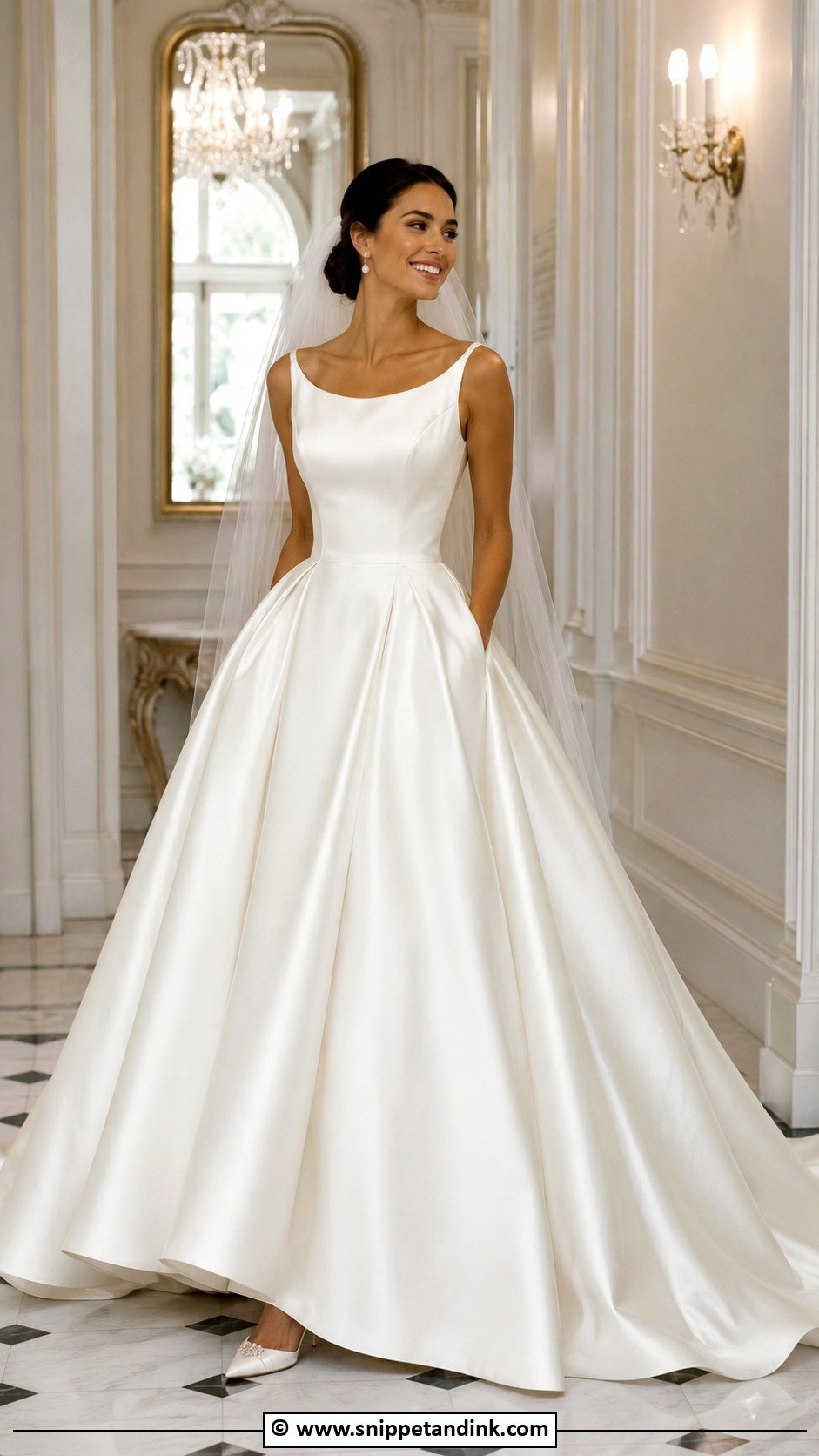
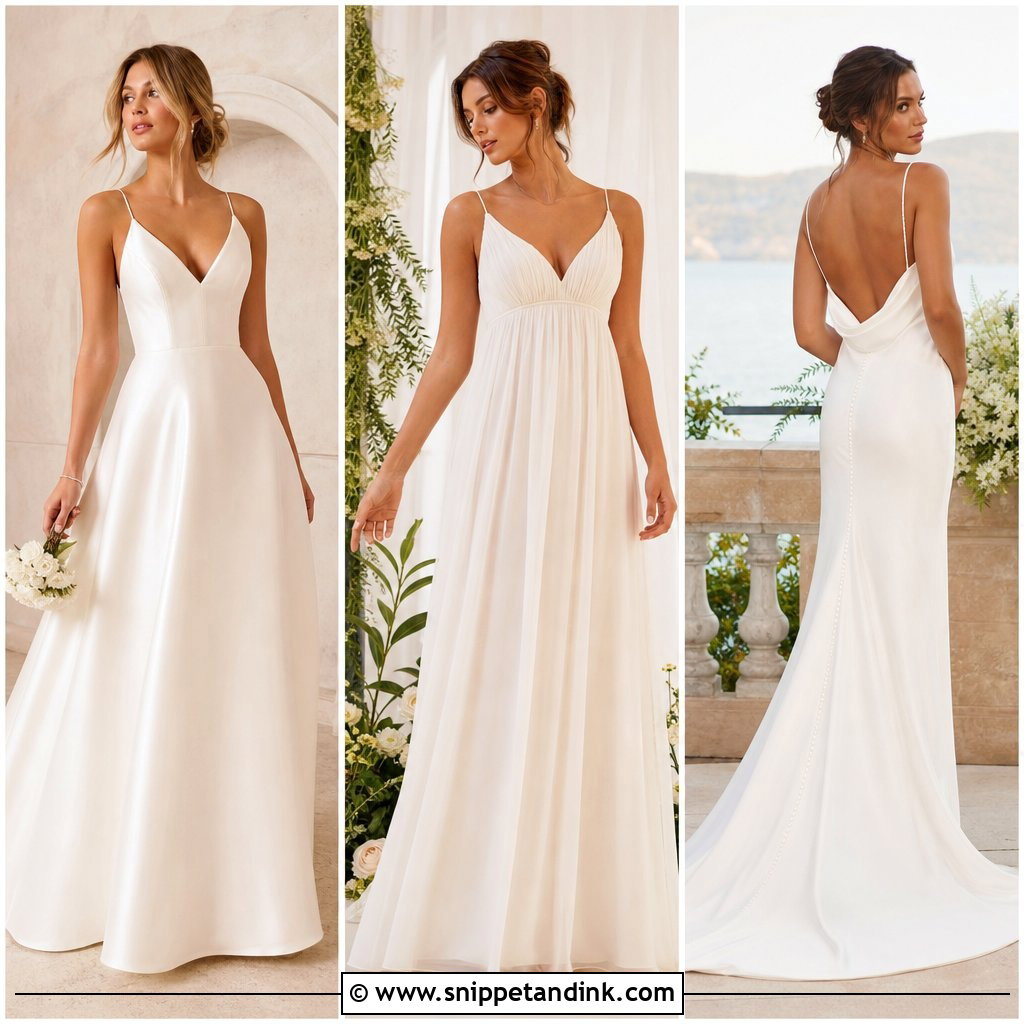
Satin ball gowns are heavier than they look on the hanger, and the weight comes from the skirt. A good one hangs that weight from a waist stay inside the bodice, so your shoulders and bust aren’t carrying it. I check for that before anything else. Straight, scoop and off-shoulder necklines soften the shape. Pearl earrings, a simple veil and pointed pumps suit grand hotels and black-tie venues, where smooth satin catches the light without needing sparkle.
2. Lace A Line Wedding Dress
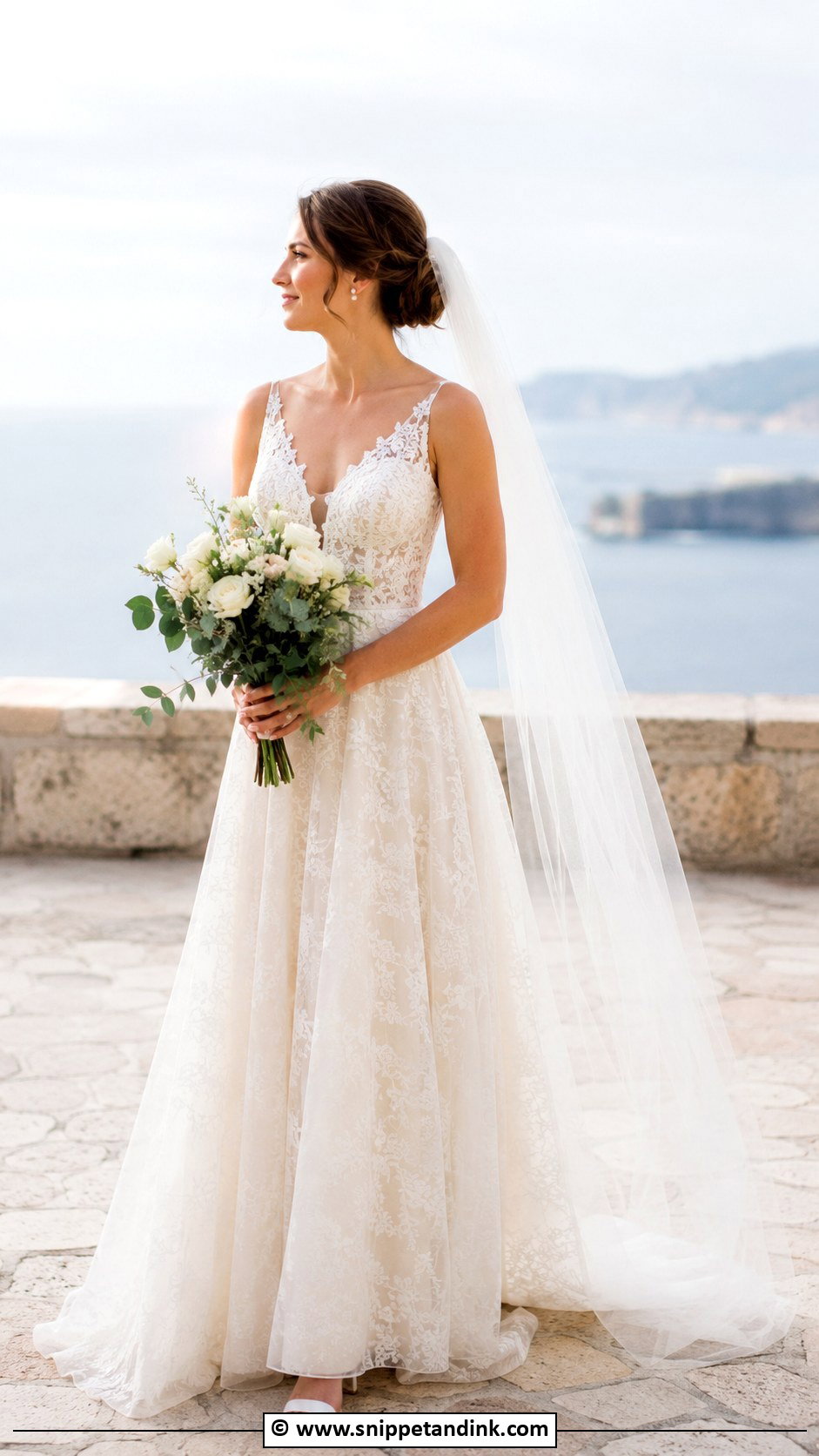
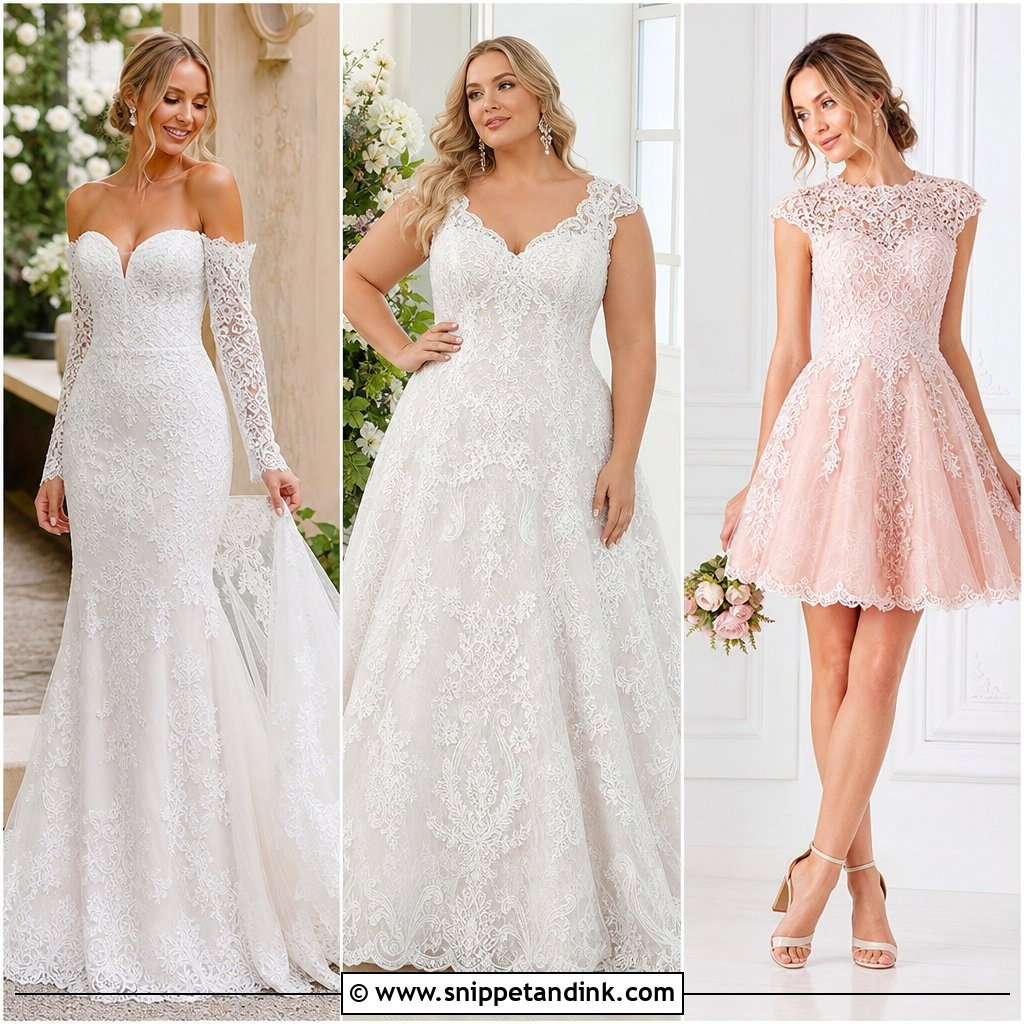
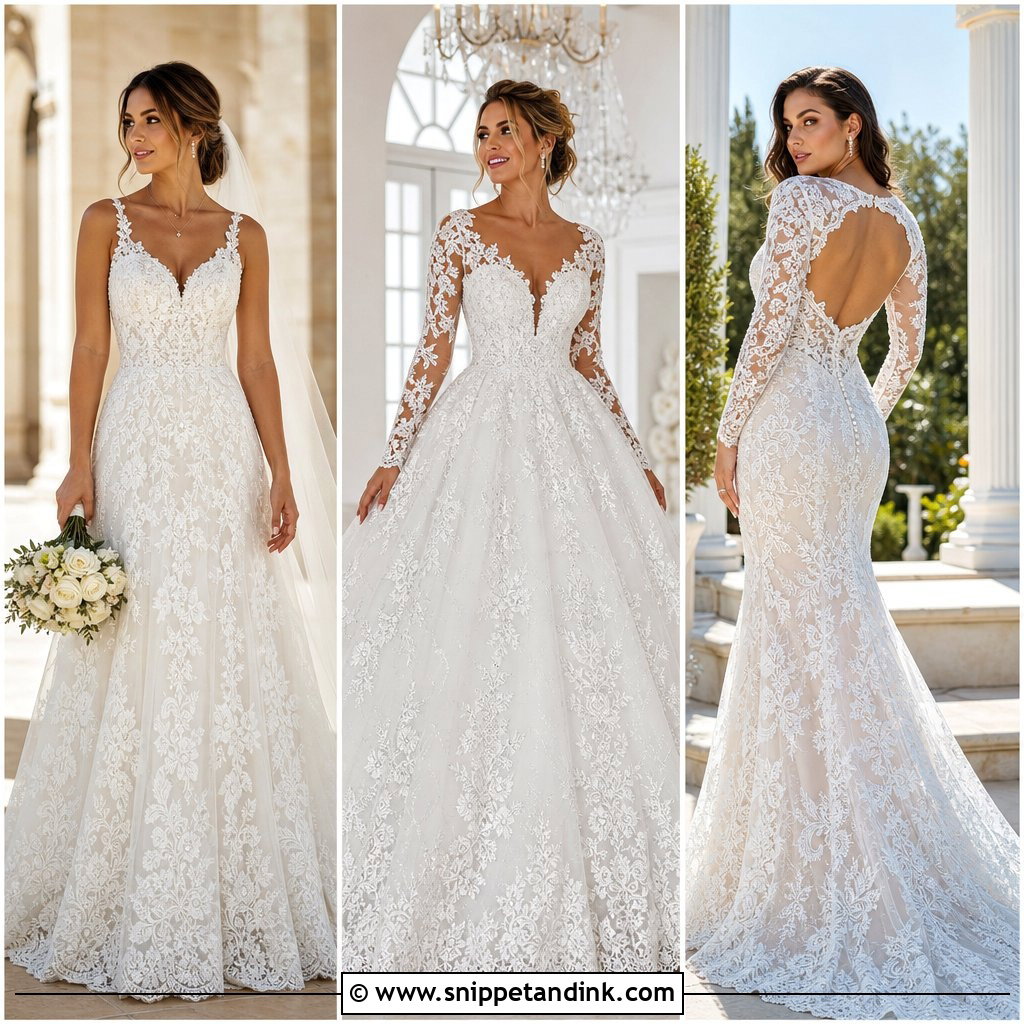
Lace A-lines suit more brides than any other dress in my fitting room, because the skirt clears the hip without clinging. The lace type changes the mood. Chantilly is fine and flat, floral lace feels like a garden, and dimensional appliqués add texture that shows from the back of the room. A V-neck, cap sleeve or sheer long sleeve shifts it again. Low block heels, pearl studs and a soft tulle veil complete it.
3. Off The Shoulder Wedding Dress
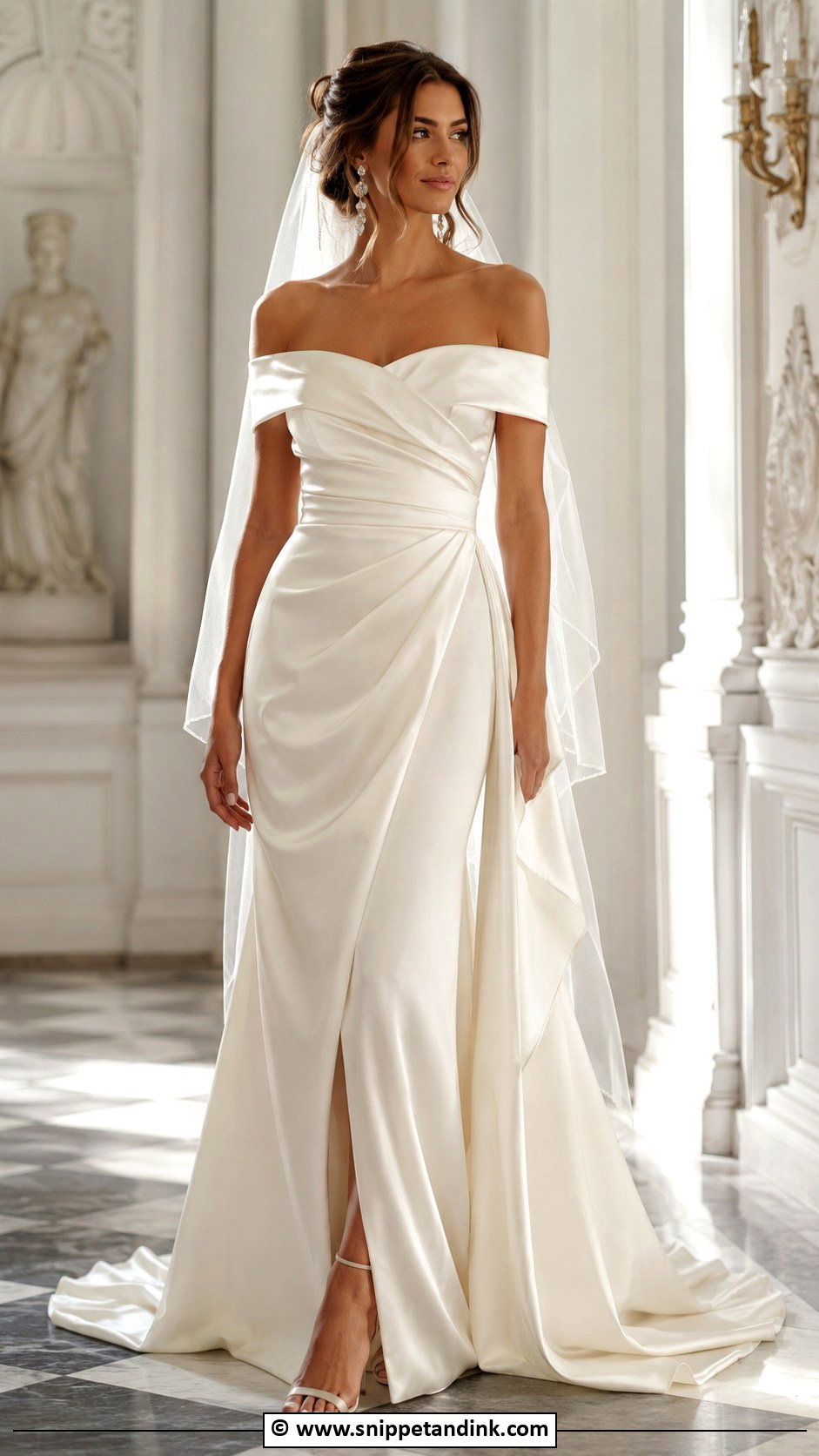
Off-shoulder bands slip, so I always ask the bride to lift her arms and hug me during the fitting. If the neckline drops, it needs an inner grip or boning. Lace or tulle makes it romantic; satin or crepe makes it sleek. Statement earrings usually look cleaner than a necklace here, unless the neckline leaves plenty of room. A low bun, a fingertip veil and slim heels give it an old-Hollywood finish.
4. Strapless Corset Wedding Dress
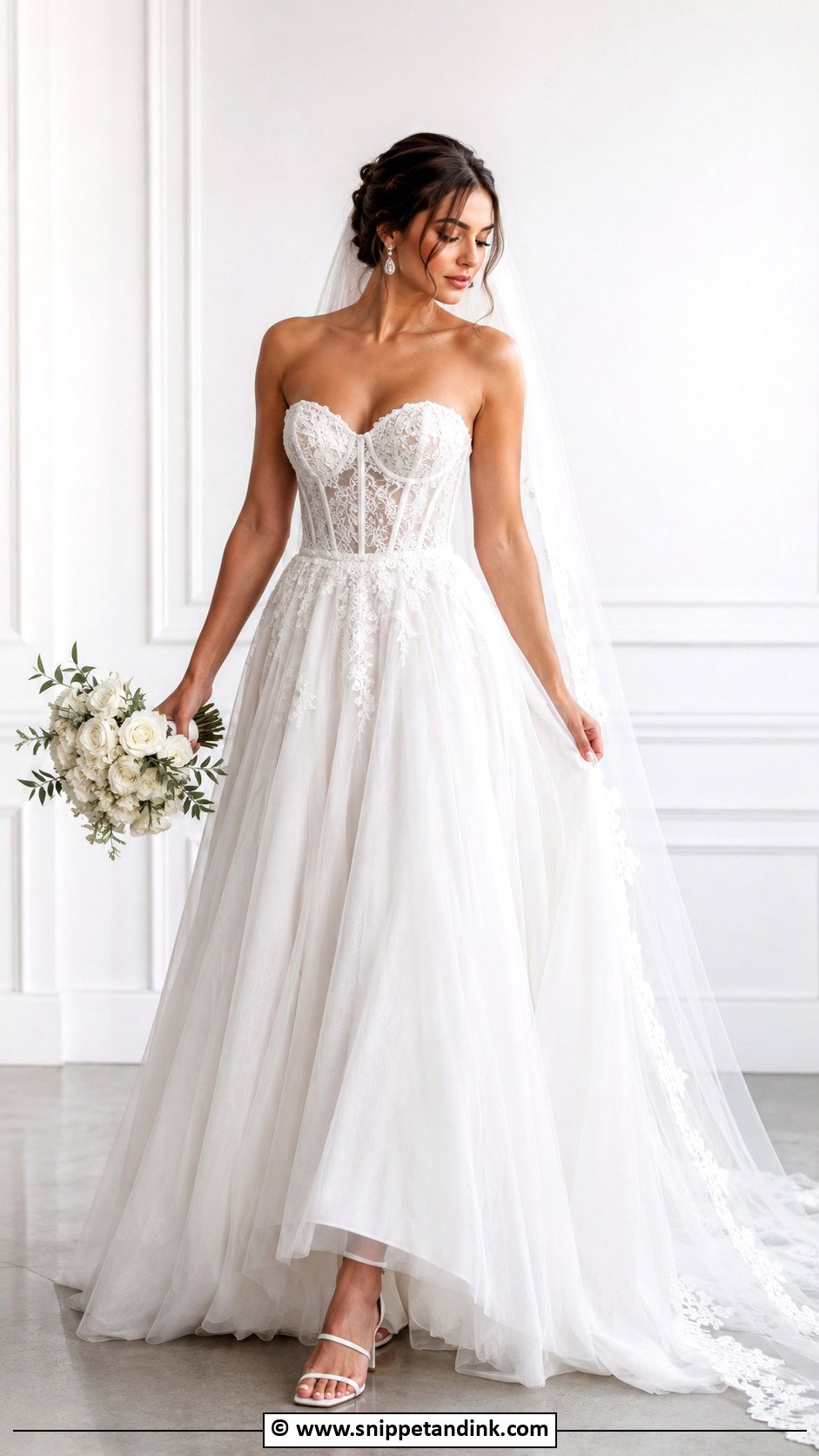
Corsets have a reputation for being uncomfortable, but a well-made one is the most supportive bodice you can wear. A strapless corset wedding dress with flexible boning shapes the waist and holds the bust without straps. Smooth satin looks clean; lace looks softer. It pairs with A-line, mermaid or tulle skirts. Sit down in it during the fitting, because boning that’s too long digs into the hips when you’re seated.
5. Drop Waist Wedding Dress
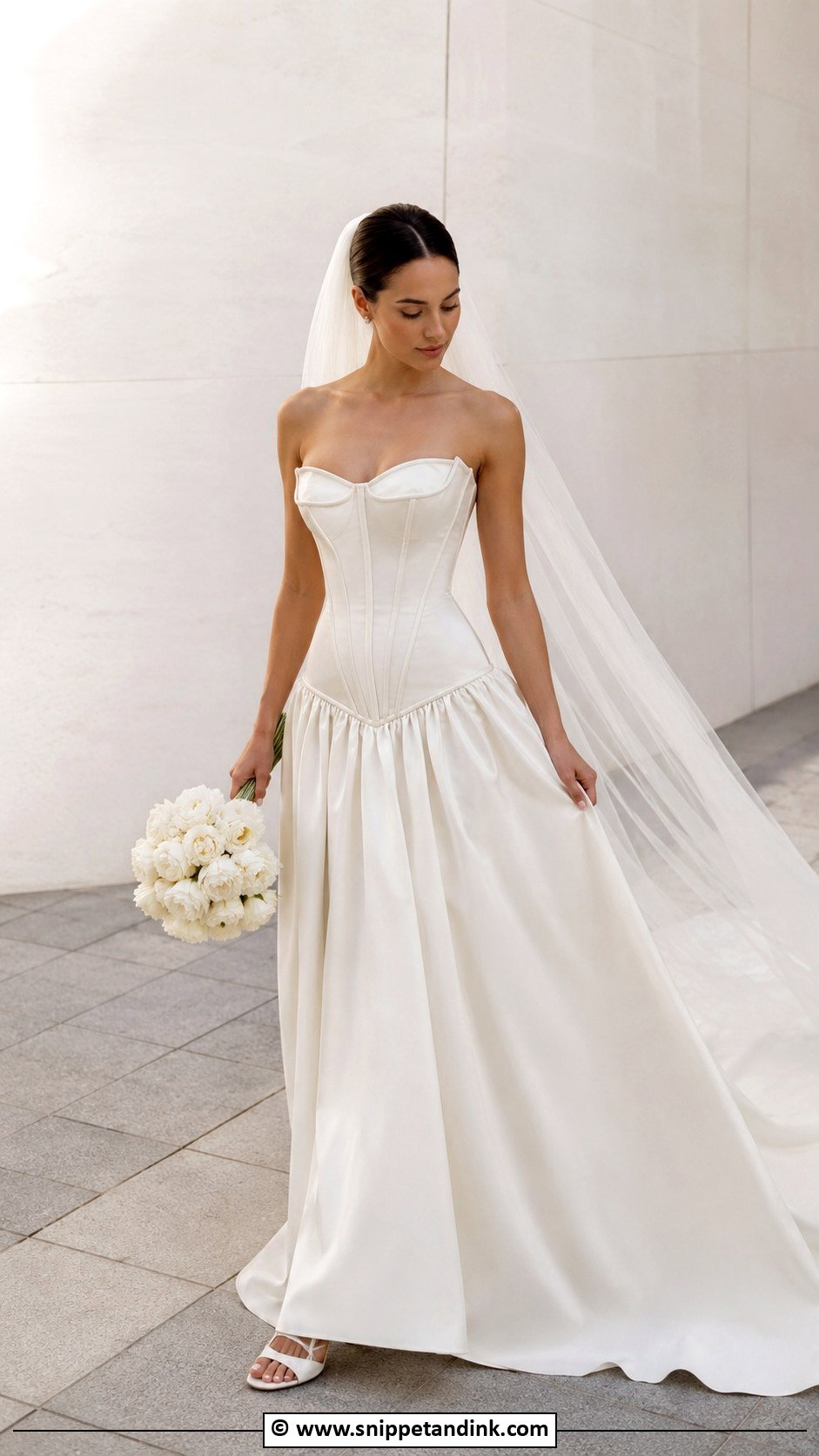
A drop waist wedding dress starts the skirt below the natural waist, which lengthens the torso. Where exactly the seam sits matters a great deal. On a short torso, a very low drop can make the legs look shorter, so I’d raise it an inch or two. Satin, mikado, tulle and lace all work, and corset drop waists are the most structured. Keep accessories simple so the waistline stays the focus.
6. Basque Waist Wedding Dress
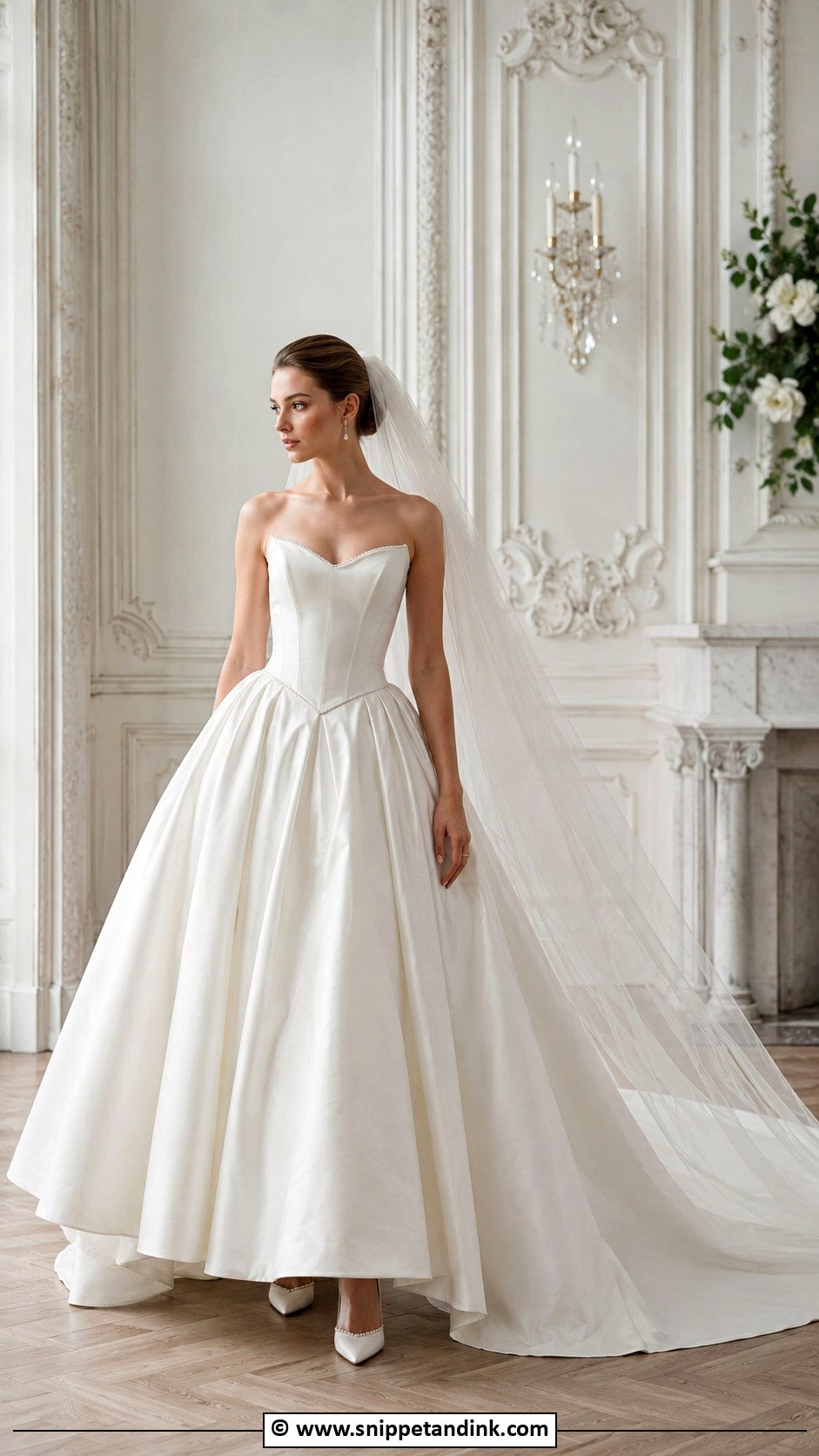
A basque waist dips into a point at the centre front and draws the eye downward in a long line. The point should land just below your natural waist; any lower and it presses into the stomach when you sit. It suits full skirts best, because the bodice shapes you before the volume starts. Lace, satin and mikado all work with strapless, scoop or square necklines. A long veil and pearl earrings finish the fairytale feel.
7. Square Neck Wedding Dress
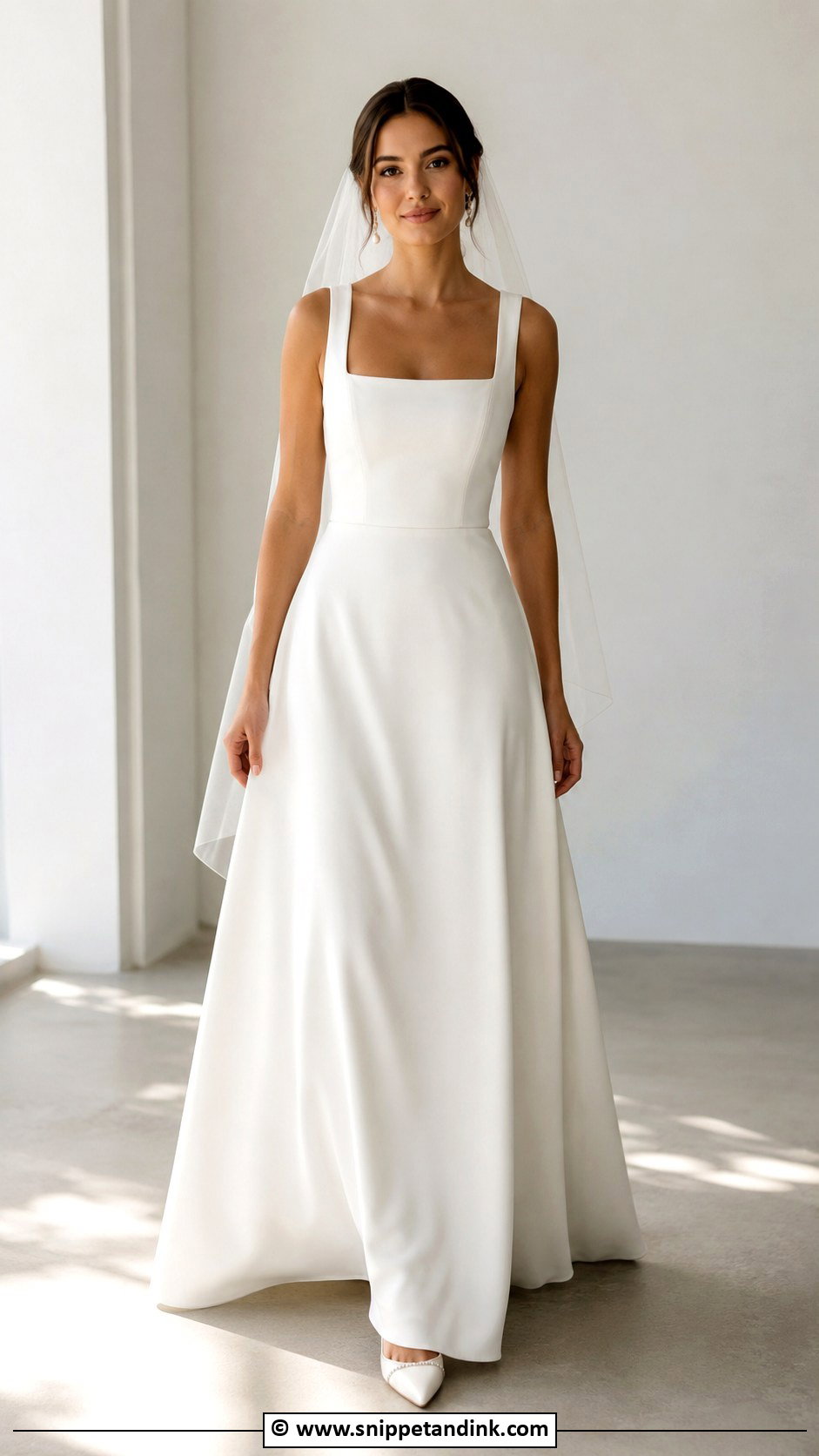
A square neckline is one of the most balanced shapes for the upper body, and it works on fitted gowns, A-lines and simple satin. Wide straps make it modern; lace sleeves make it romantic. It’s also a good middle ground if you’d like a little coverage. My fitting check: lean forward. If the neckline gapes, the bodice needs taking in at the side seams. A low chignon, pearl drops and a simple veil keep it crisp.
8. High Neck Wedding Dress
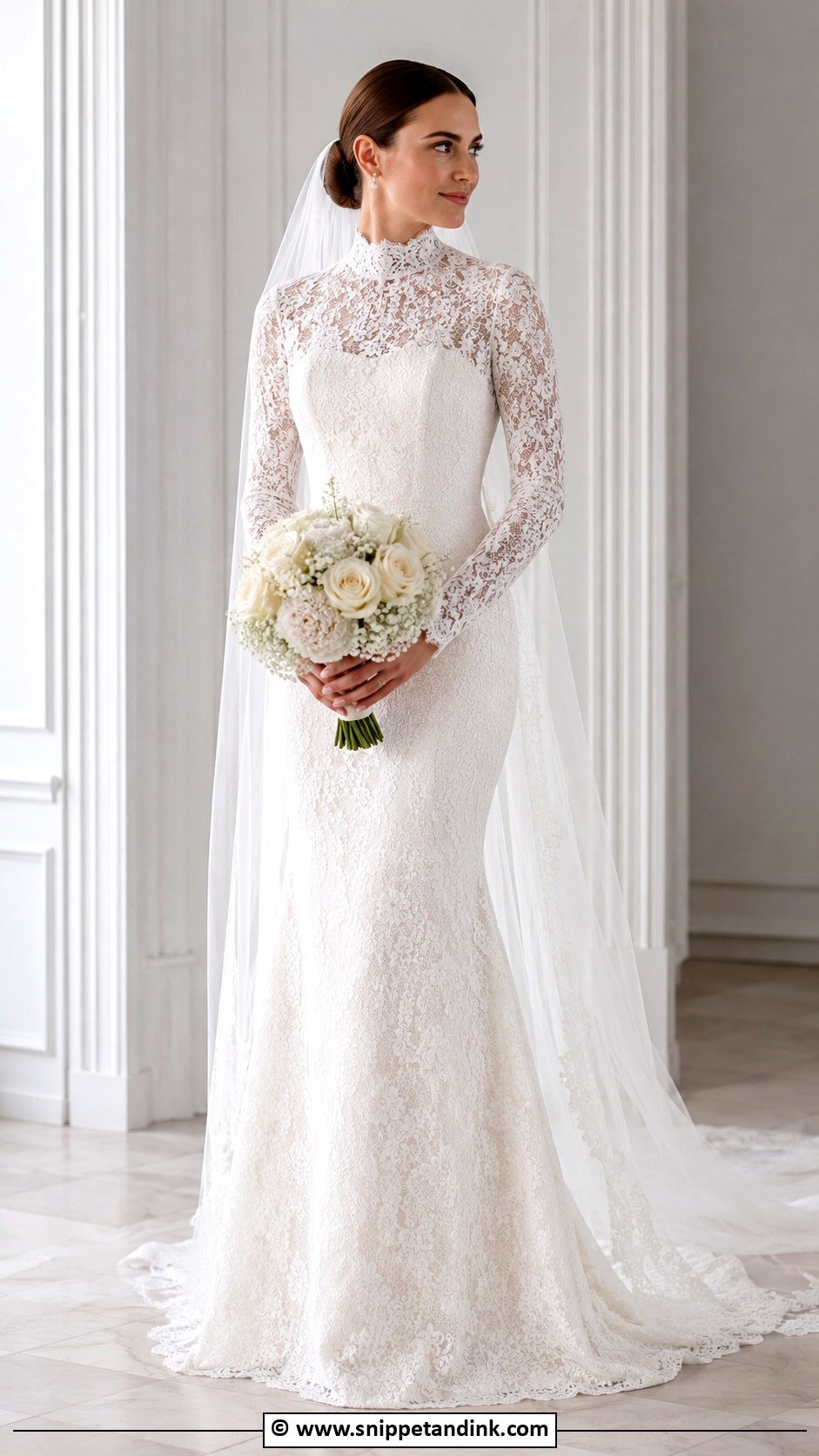
High necks look sophisticated without showing much skin, but in warm weather they can feel close. A sheer lace high neck breathes more than a lined satin one, so I’d suggest that for spring. Structured satin versions look sleek and modern in cooler seasons. Skip the necklace and keep earrings small. A smooth bun and a veil placed low at the back of the head let the neckline stand on its own.
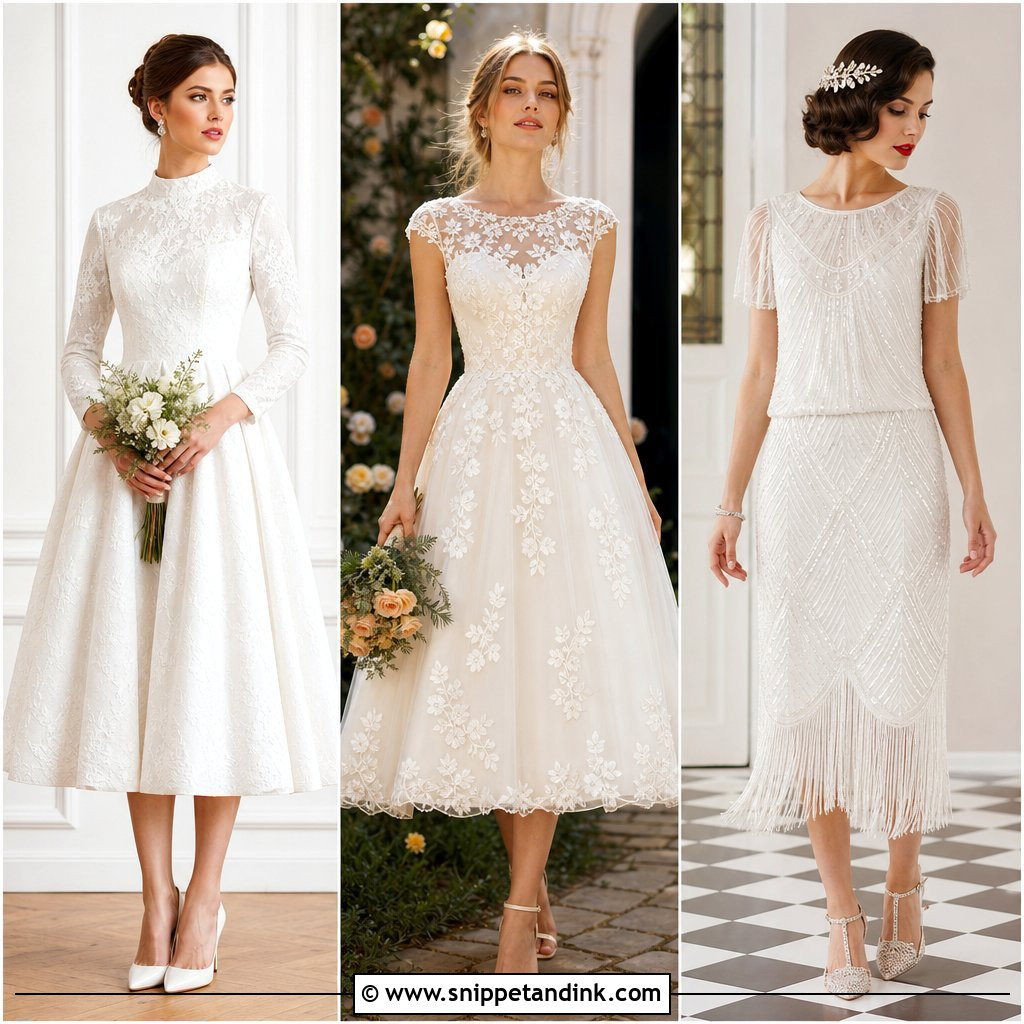
9. Long Sleeve Lace Wedding Dress
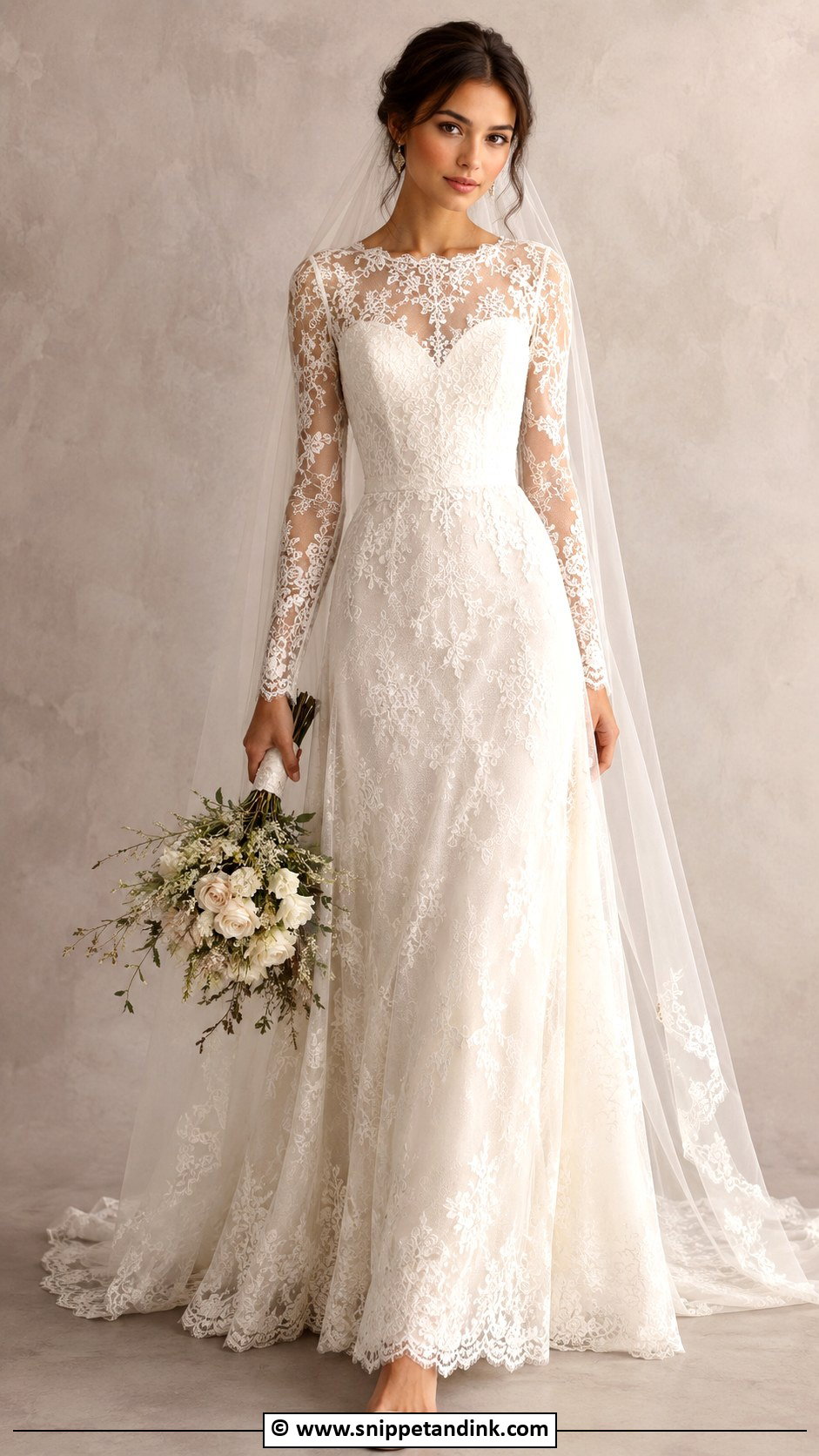
Long lace sleeves are a balance between coverage and movement. Sheer, unlined sleeves breathe and give you more arm room; lined sleeves feel more modest but can get warm. I check the armhole first, since a tight one pulls the bodice up every time you lift your arms. A-line, sheath, ball gown and fit and flare shapes all suit lace sleeves. Simple heels, a soft veil and small earrings keep the focus on the lace.
10. Detachable Sleeve Wedding Dress
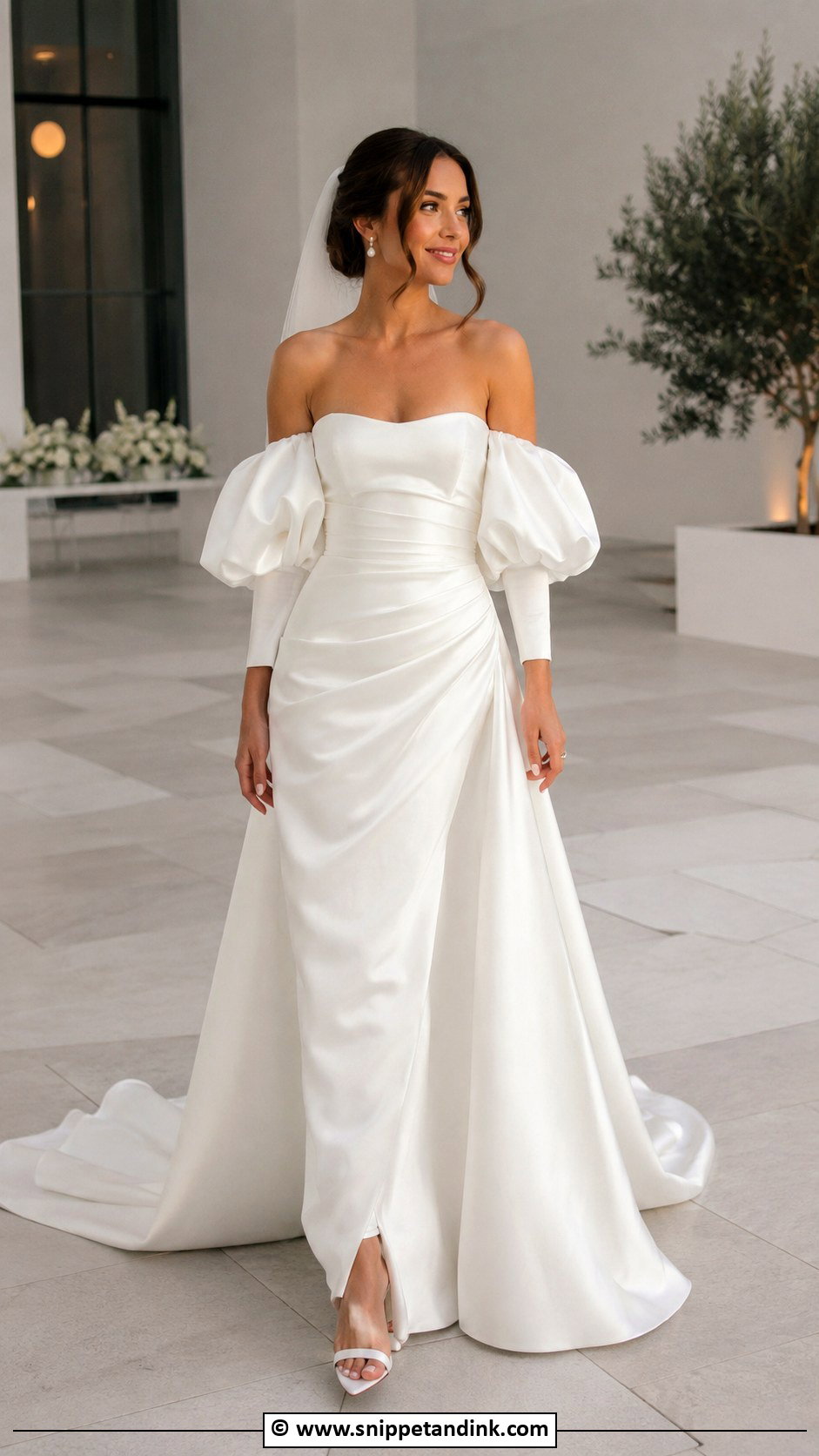
Detachable sleeves give you two looks from one dress, and the attachment point is what I test. Ties, snaps or hidden buttons all work, but they need to stay put when you hug and lift your arms. Puff sleeves read sweet, lace sleeves romantic and fitted satin polished. They pair with strapless, corset, square-neck and sweetheart gowns. Choose earrings that work with and without the sleeves, and practise removing them at a fitting.
11. Pearl Wedding Dress
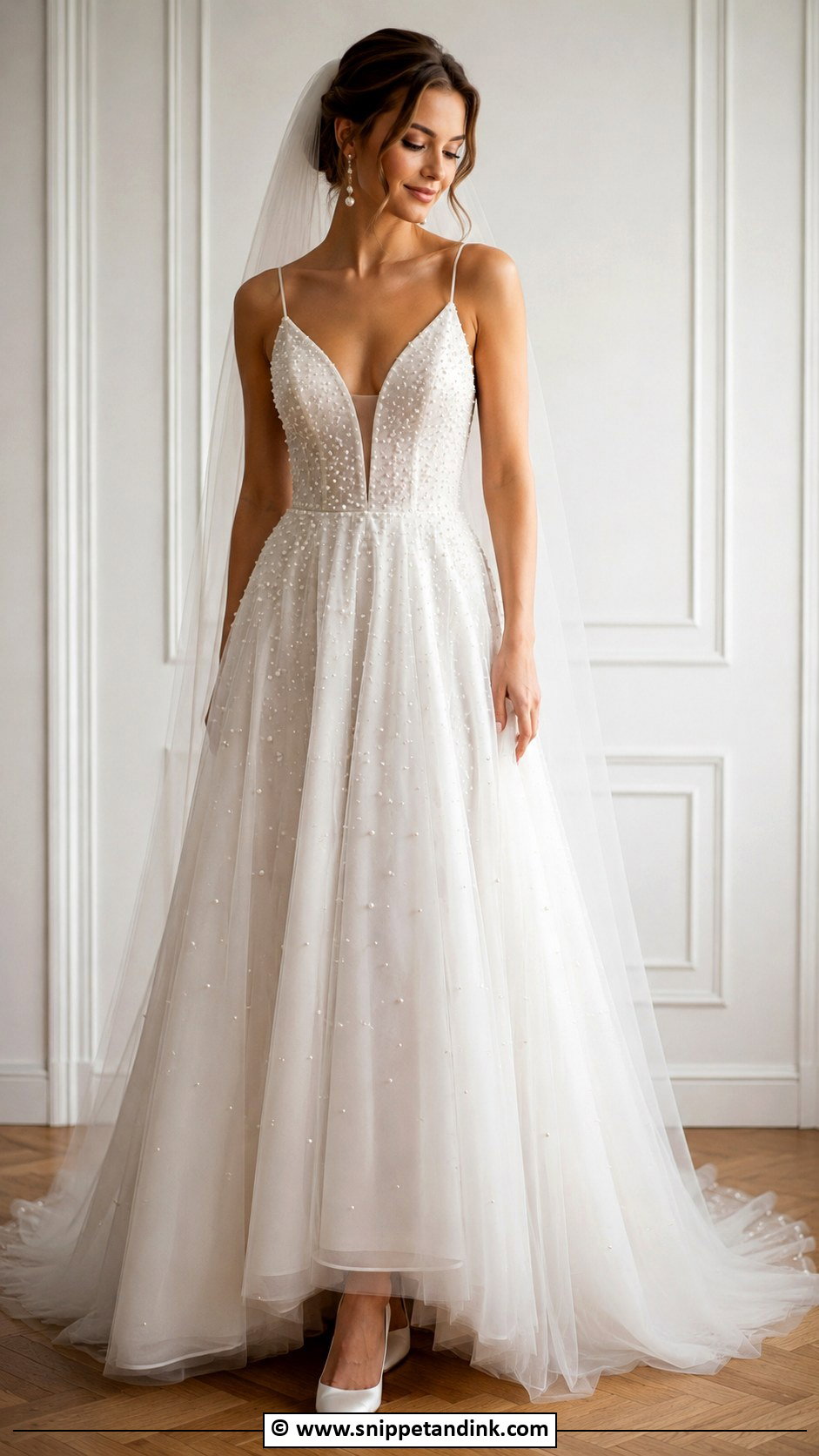
Pearl detail adds glow without the glare of glitter. Tiny pearls on tulle look soft; scattered pearls on a sleek gown look modern. Heavy pearl beading adds real weight, though, so I check that pearl straps aren’t cutting into the shoulders by the end of a fitting. All-over pearls, pearl sleeves and pearl edging are all options. Keep the veil plain, and choose satin heels and pearl earrings in the same tone as the dress.
12. Bow Back Wedding Dress
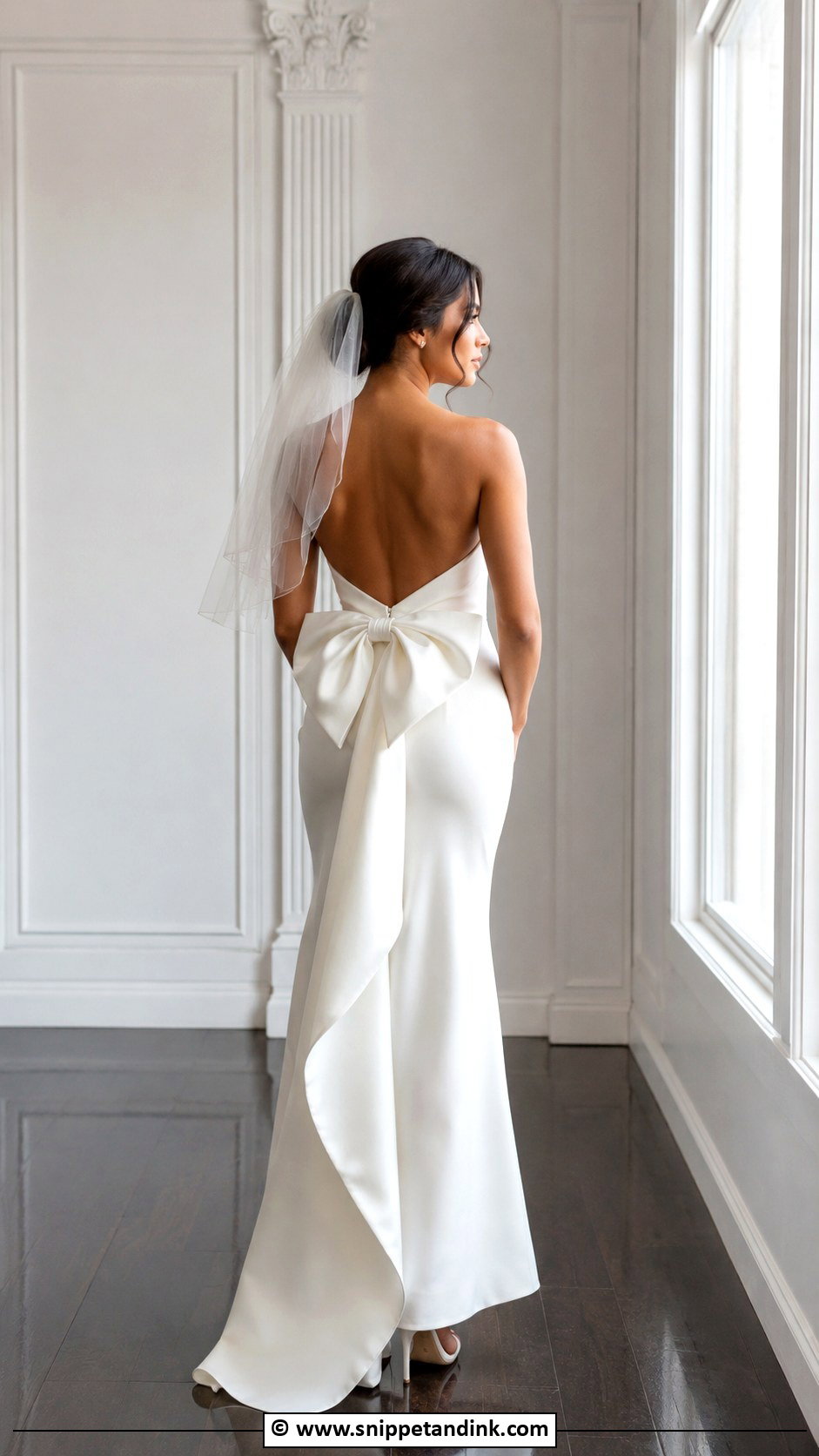
Back bows are made for the aisle, since that’s the view guests have for most of the ceremony. The problem comes at dinner. A large structured bow gets crushed against a chair back, so I suggest a detachable bow or a softer one that springs back. Satin bows look modern; soft bows on lace look romantic. Choose a shorter veil so it doesn’t cover the bow. Classic heels and minimal jewelry keep it polished.
13. Floral Applique Wedding Dress
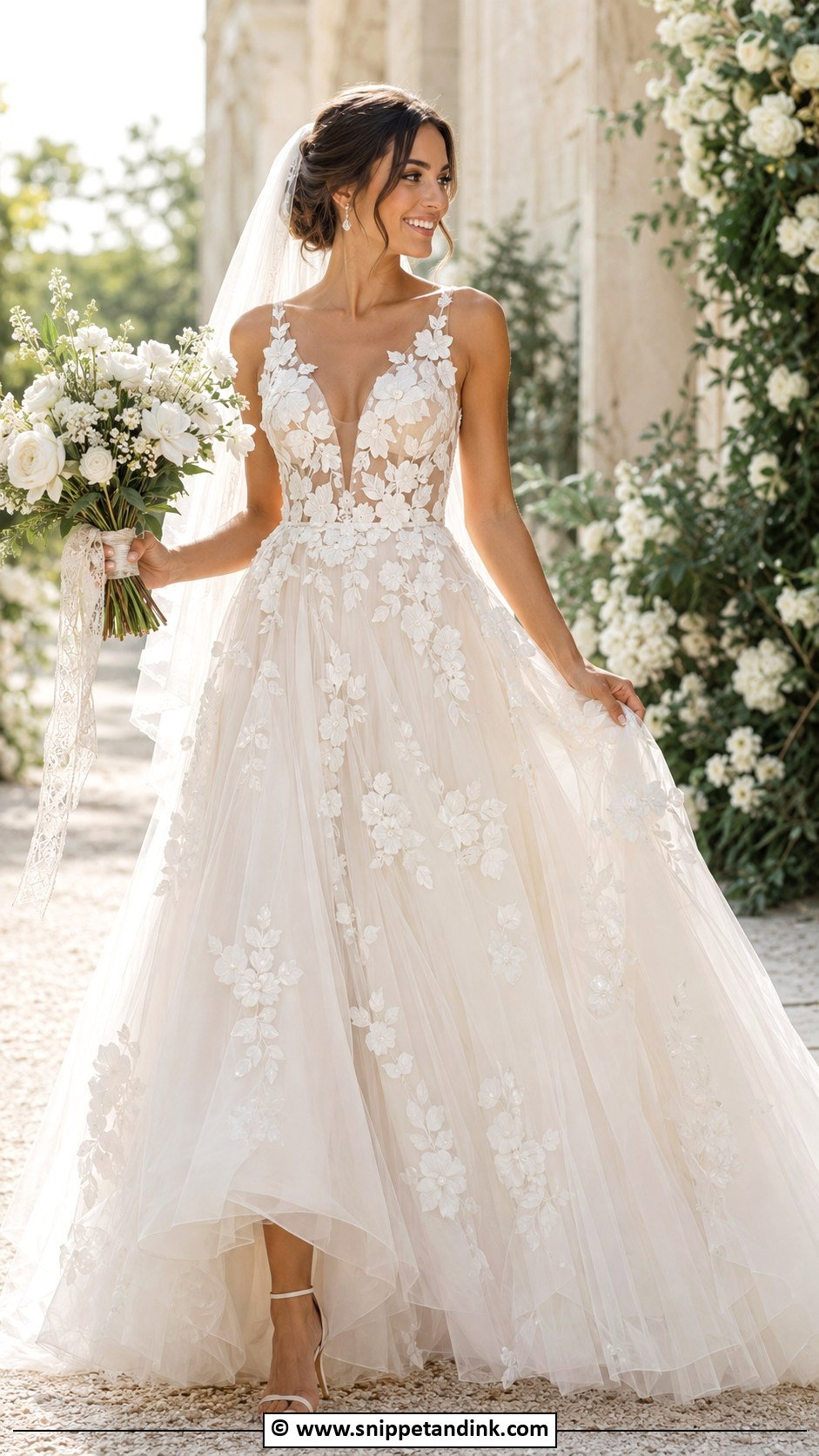
Floral appliqués are sewn on by hand and sit slightly raised, so they add depth that flat lace can’t. Their edges can lift and catch on jewelry, so I avoid bracelets with prongs and check for loose petals at the final fitting. They look good on tulle skirts, sheer sleeves and illusion necklines. Ivory keeps it classic; soft pastel embroidery makes it personal. Delicate heels and a simple veil suit gardens and outdoor venues.
14. Tulle Princess Wedding Dress
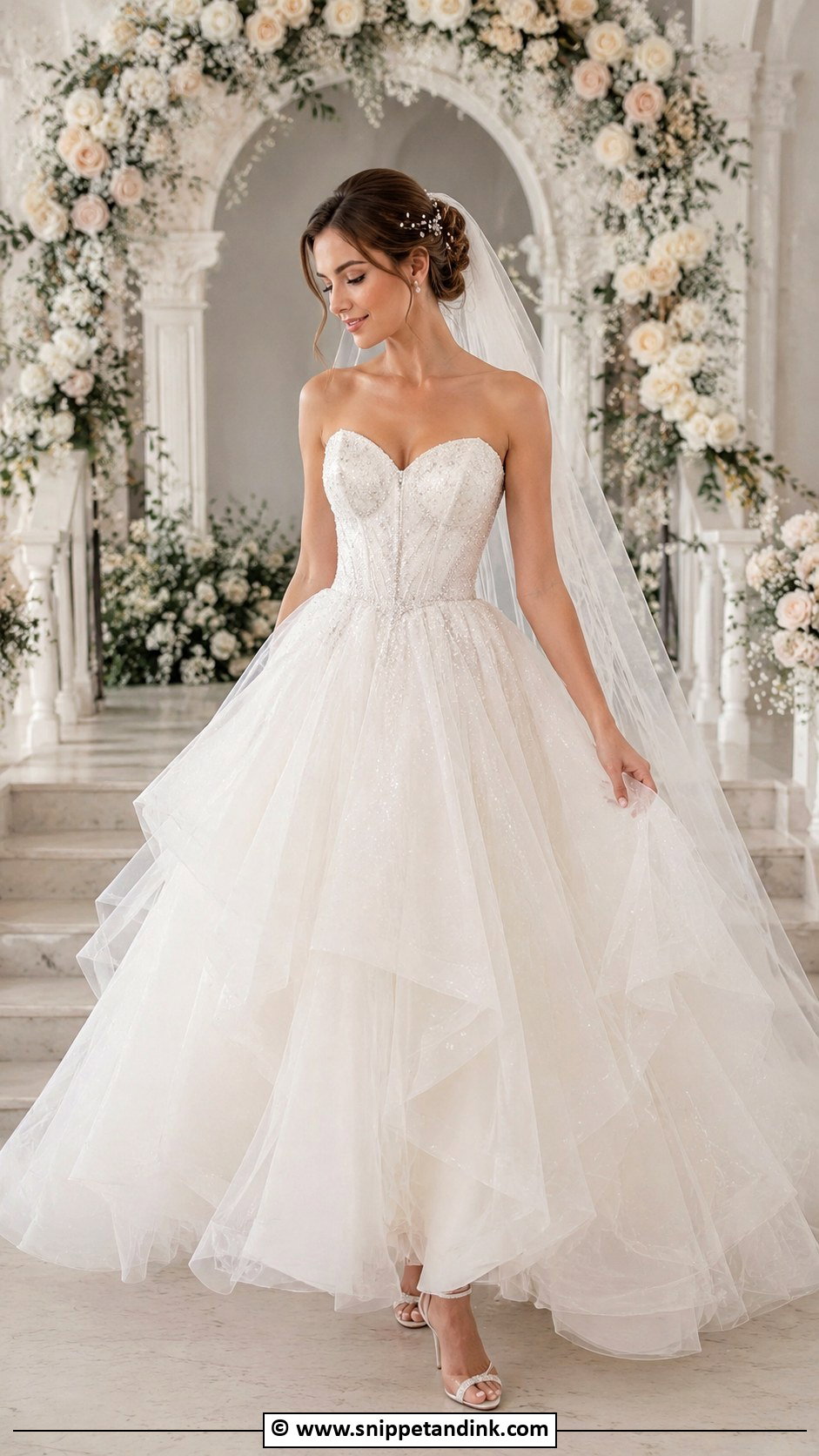
Tulle gives volume with very little weight, which is why princess gowns in tulle are easier to dance in than satin ball gowns. A fitted bodice keeps the shape balanced. Plain tulle looks clean; sparkle tulle adds shimmer in candlelight. Tulle snags on rings and bouquet wire, so wrap the bouquet stems in ribbon. Pearl pins and a veil work well, or a tiara-style headband if it suits your personality.
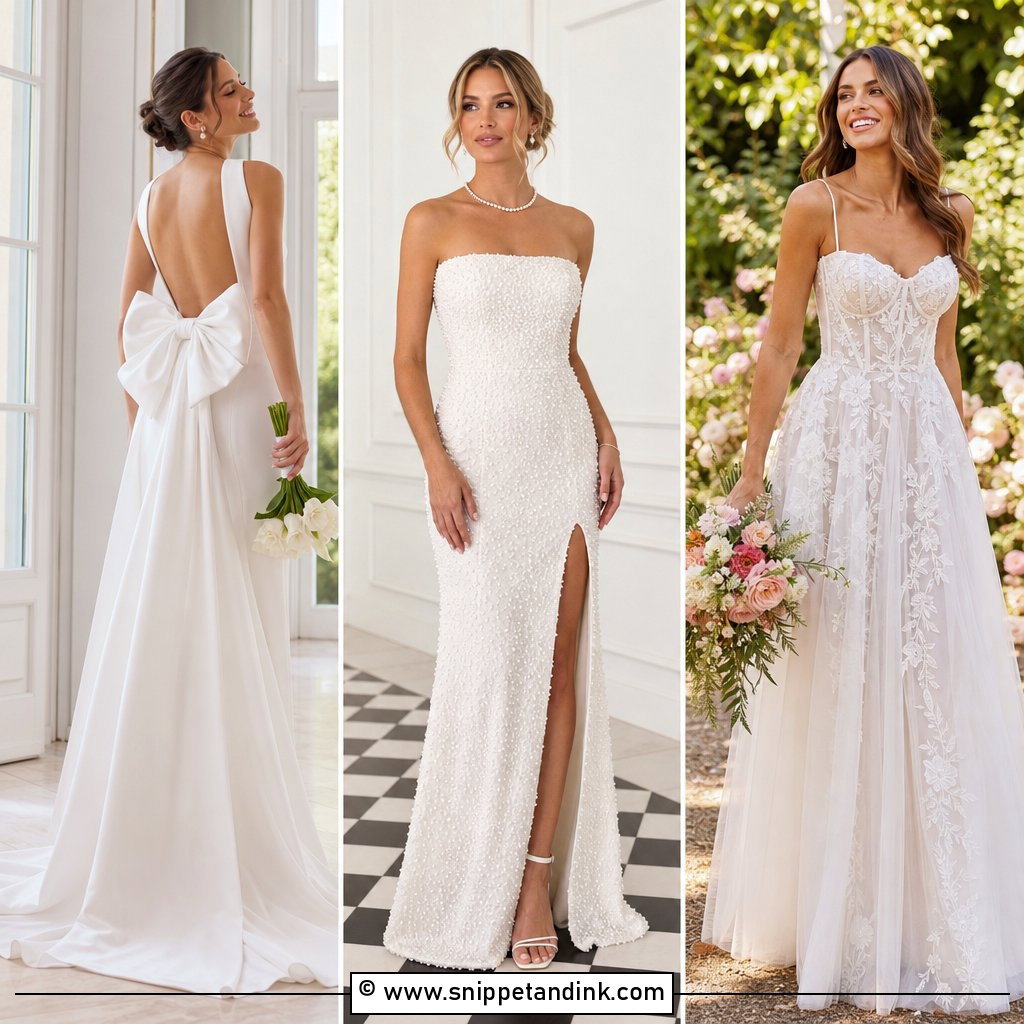
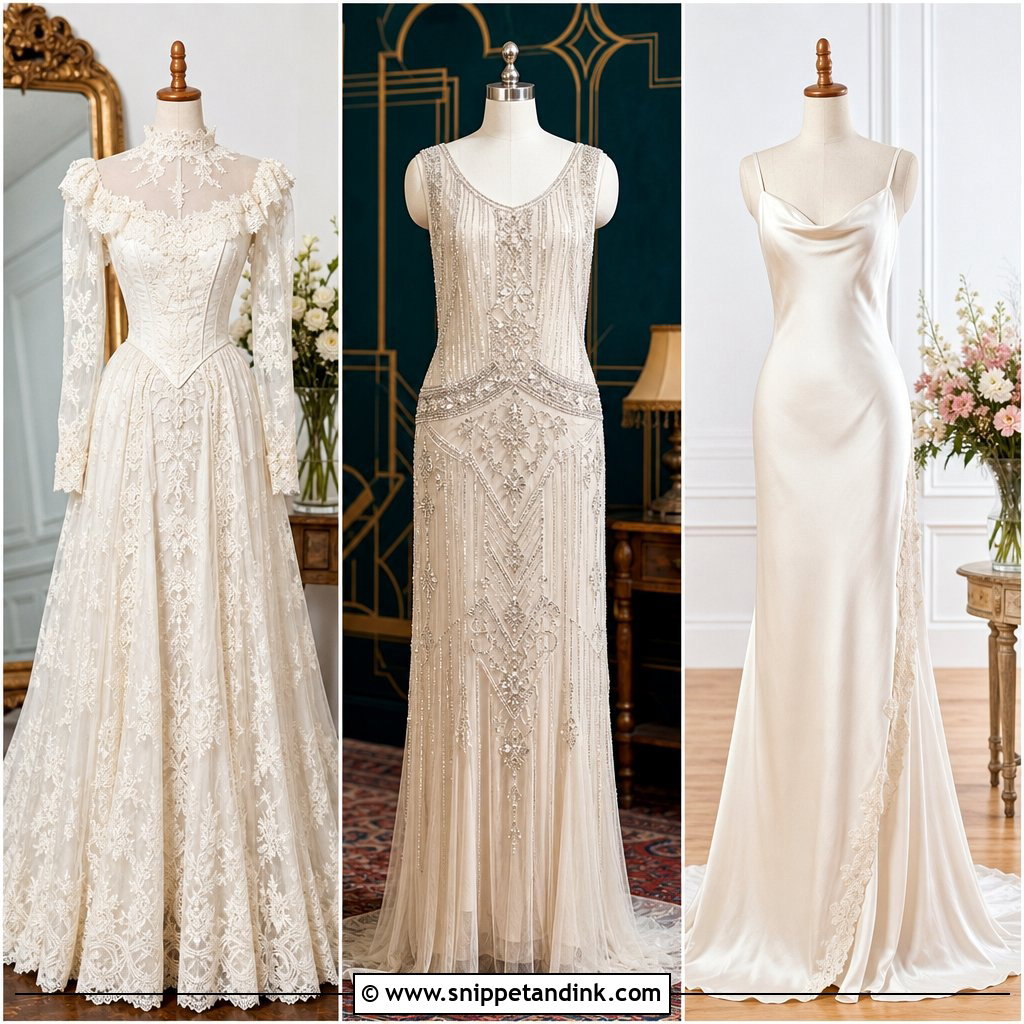

15. Simple Crepe Wedding Dress
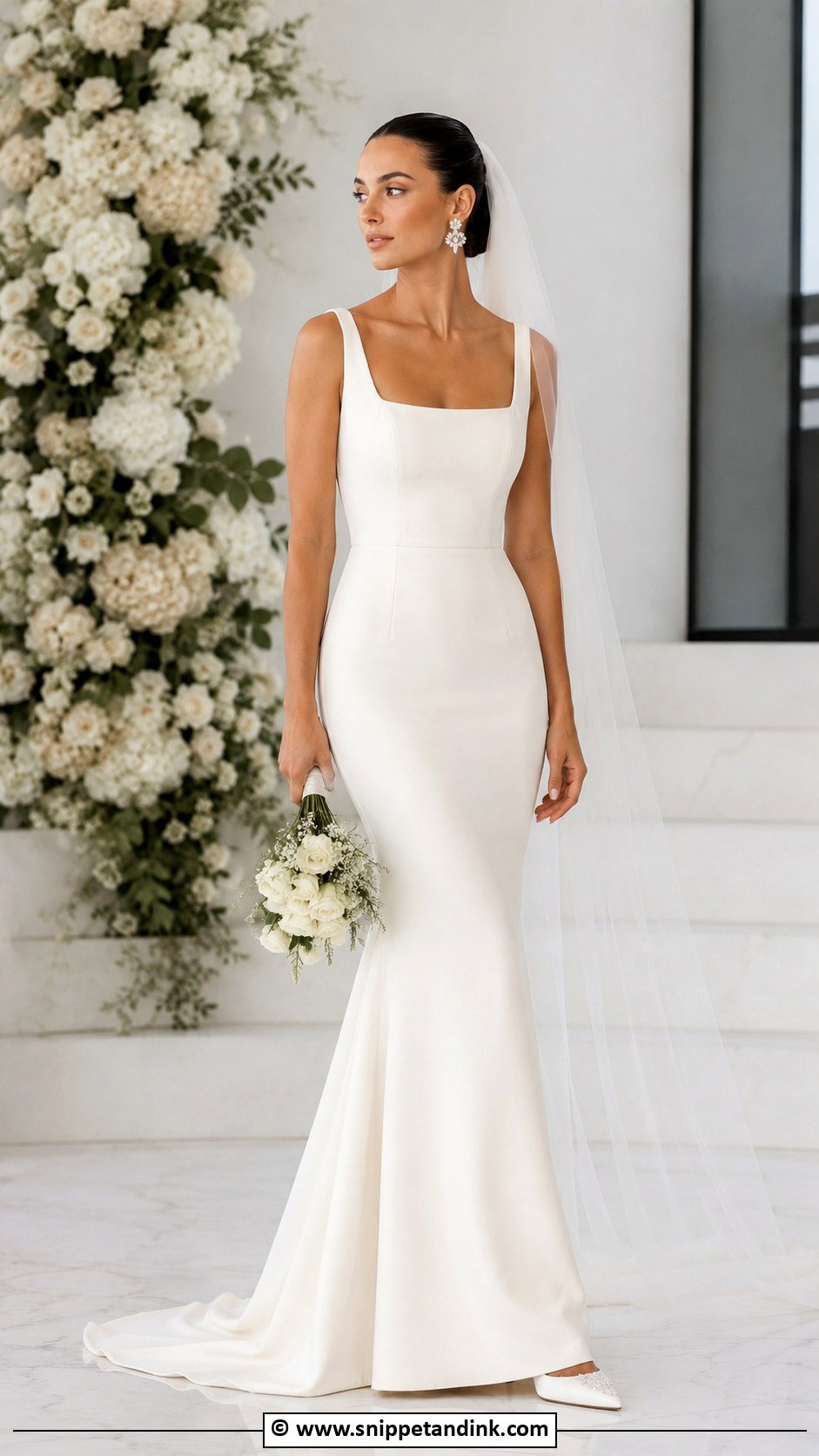
A simple crepe wedding dress has no lace or beading to distract from the fit, so alterations make or break it. Crepe drapes smoothly and has less shine than satin. I spend most of a crepe fitting on the seat and the hem, since a slim skirt shows every wrinkle. Sheath, fit and flare and column shapes all suit it. Statement earrings and a long veil add impact, or a removable overskirt adds ceremony drama.
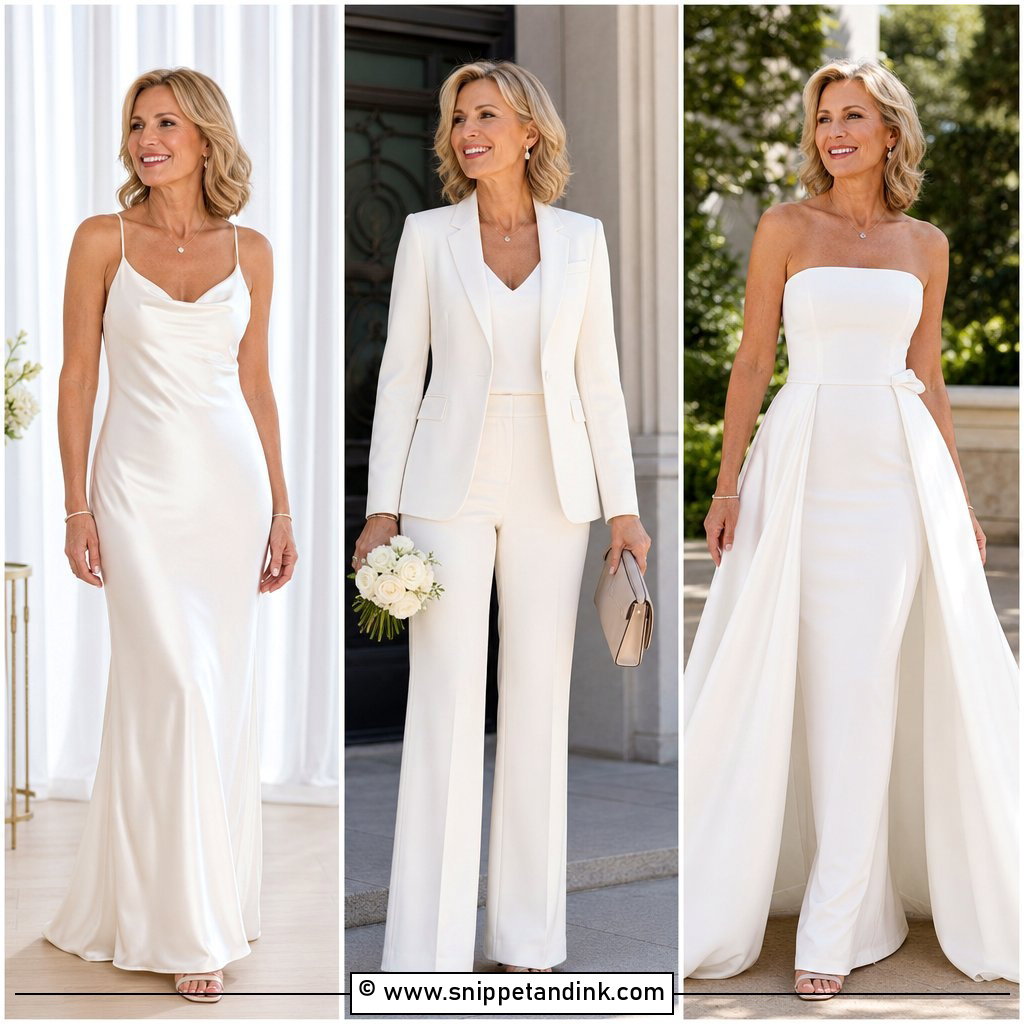
16. Satin Slip Wedding Dress
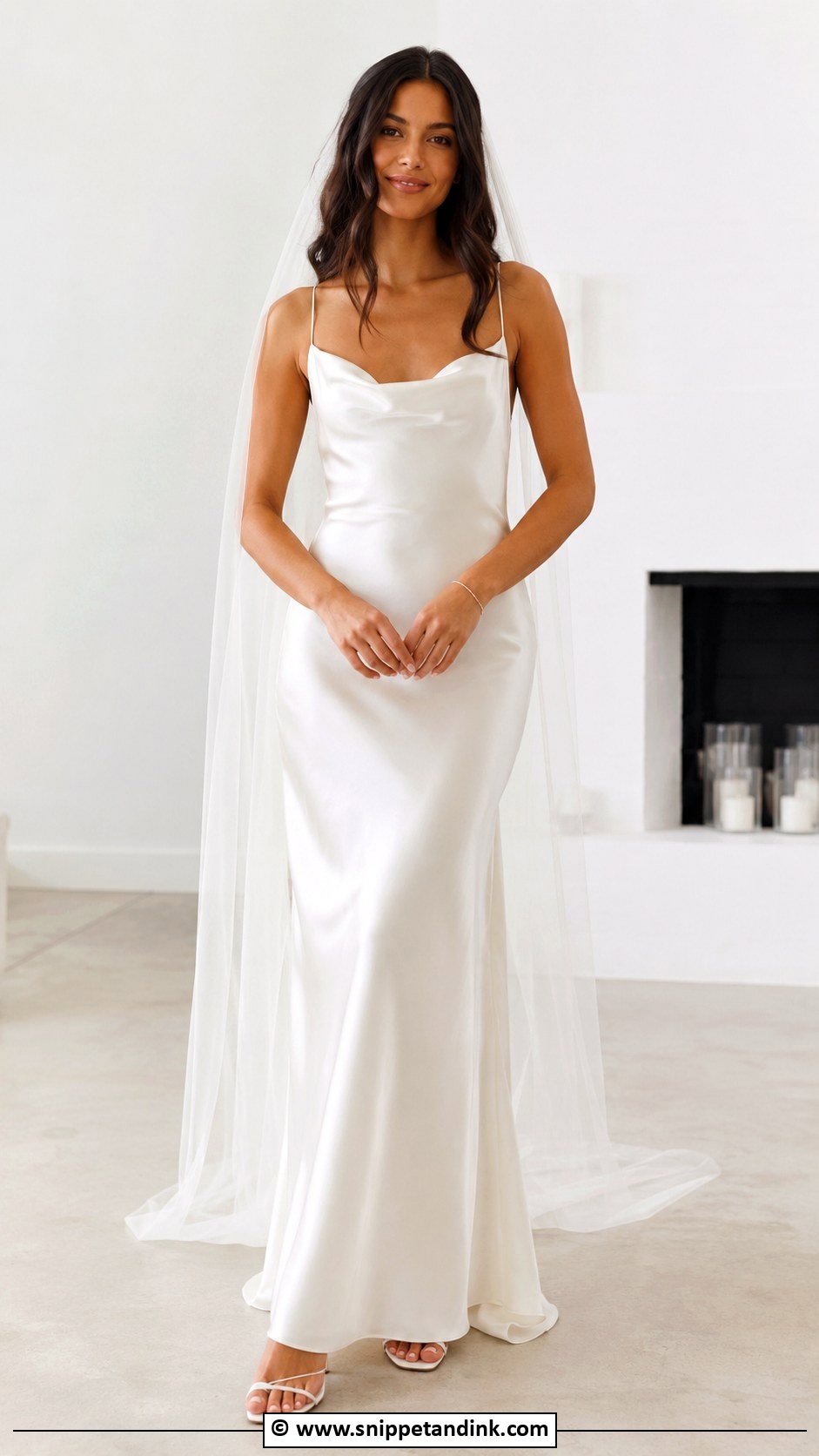
Slip dresses are cut on the bias, which gives them that liquid drape and also shows every line underneath. I fit them over the exact underwear you’ll wear on the day. Thin straps, a gentle neckline and a body-skimming shape suit beach, city and intimate weddings. Wear a long veil for the ceremony and swap to a pearl comb later. Strappy heels and soft waves keep it light.
17. Mermaid Wedding Dress
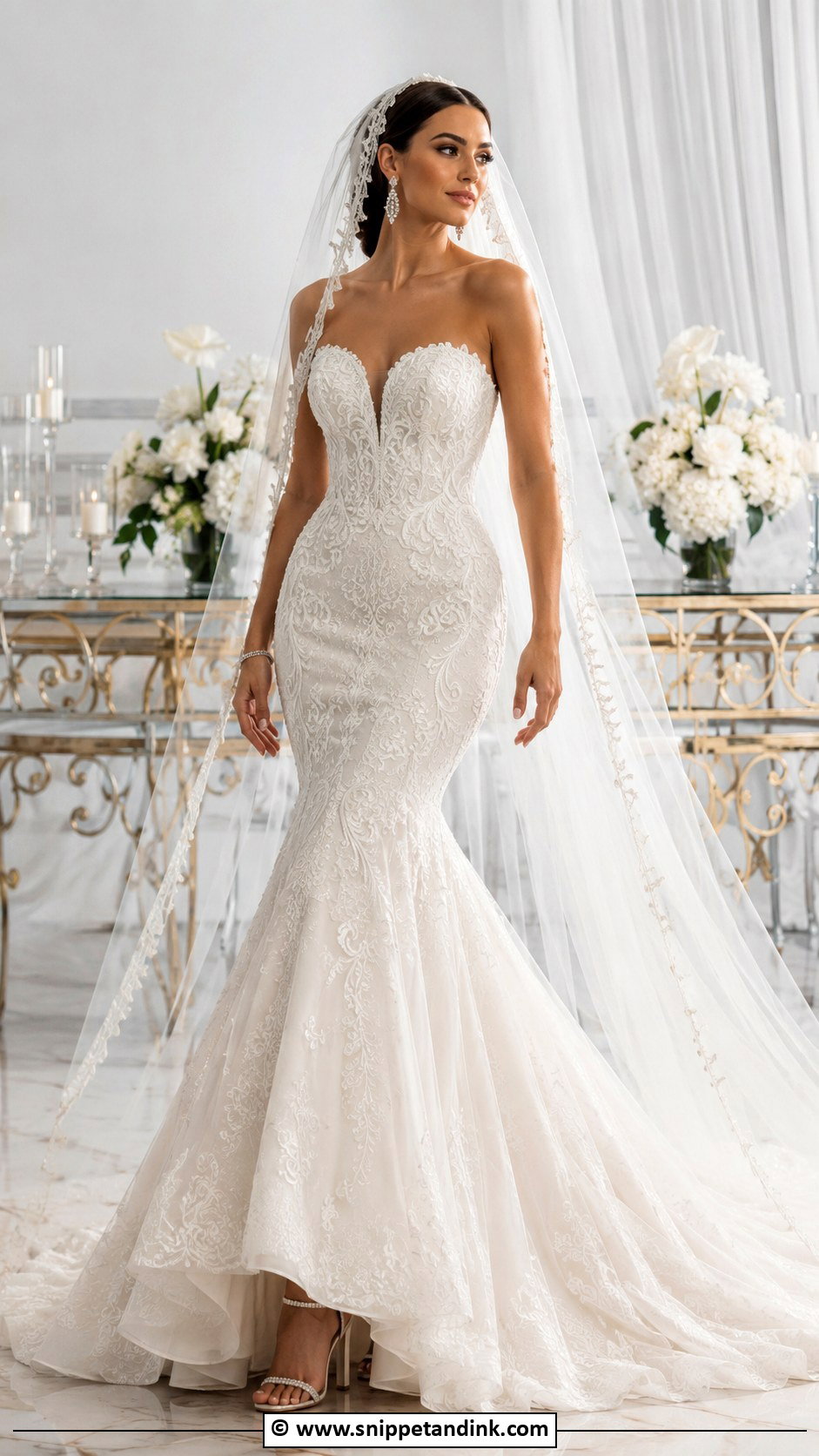
Mermaid gowns fit closely through the hips and flare near the knee, so movement is the big question. I have brides sit, climb a step and do a few dance moves during alterations. If the stride feels short, a trumpet cut that flares higher gives similar drama with more freedom. Satin and crepe look sleek; lace and beading look glamorous. Supportive heels and a fitted veil complete it.
18. Fit And Flare Wedding Dress
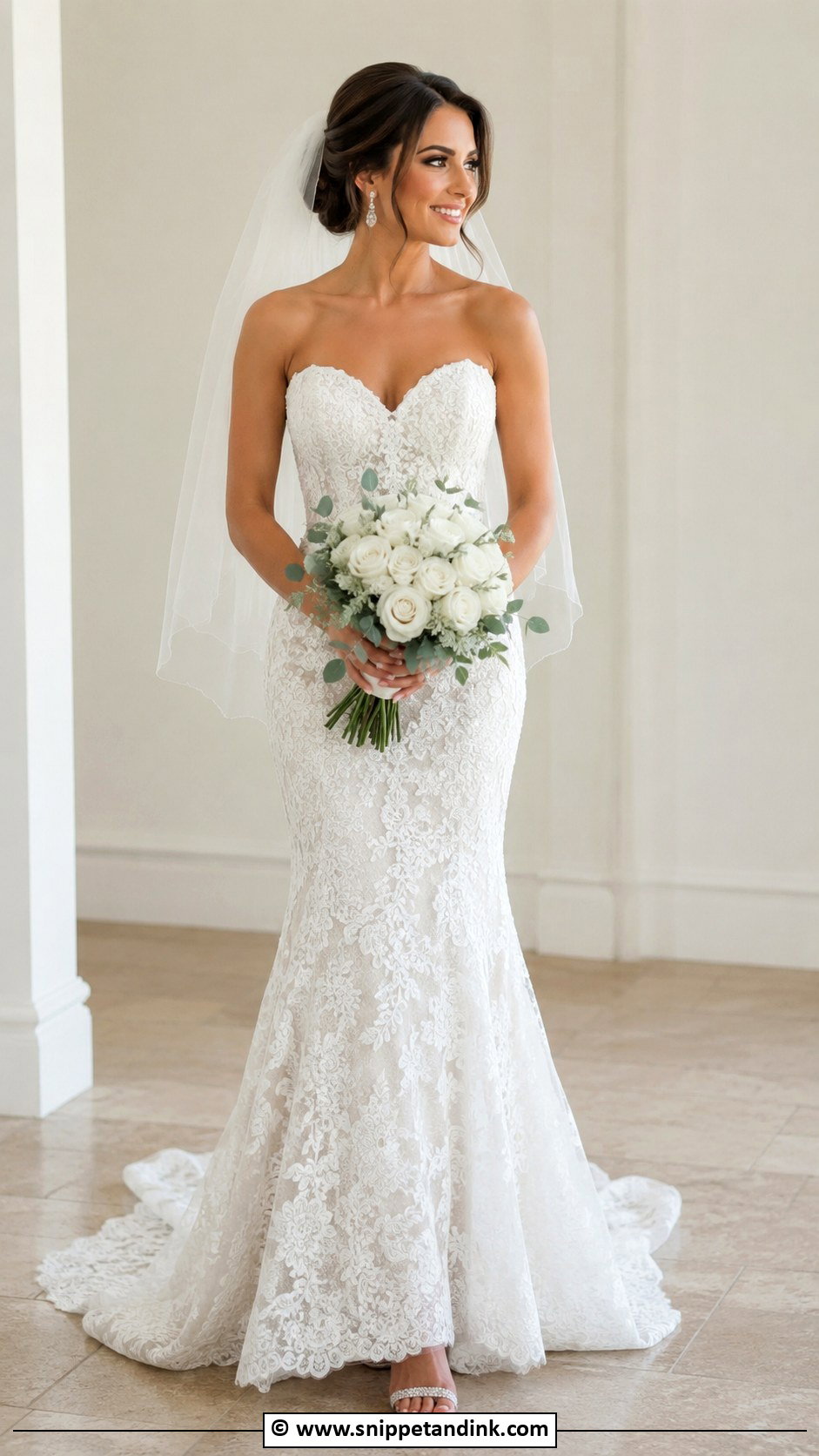
Fit and flare gowns are the version I suggest to brides who like a mermaid but want to dance. The skirt opens from the upper hip, so walking and sitting are much easier. Lace, crepe, satin and beading all suit it, and sweetheart, square and off-shoulder necklines all work. Choose comfortable heels and jewelry that matches the gown’s texture. It’s a dependable shape for many body types.
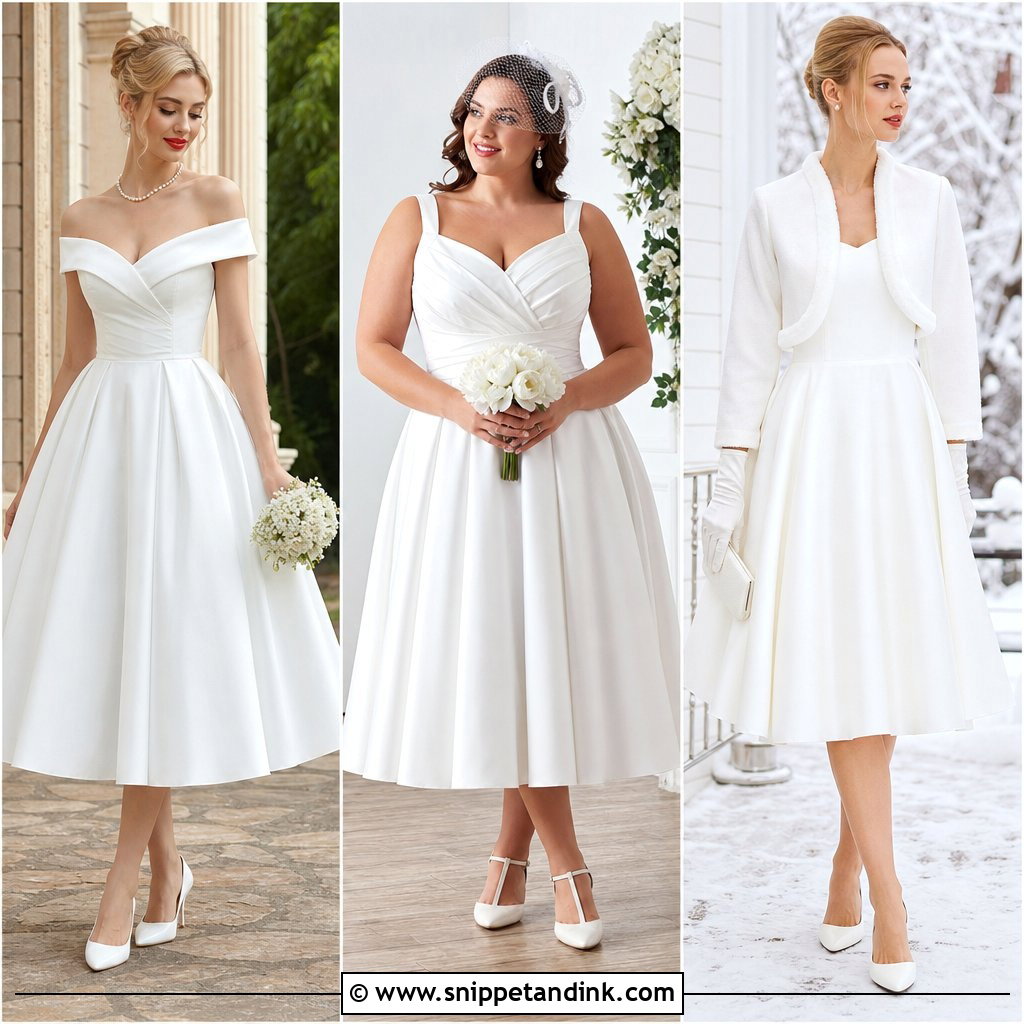
19. Tea Length Wedding Dress
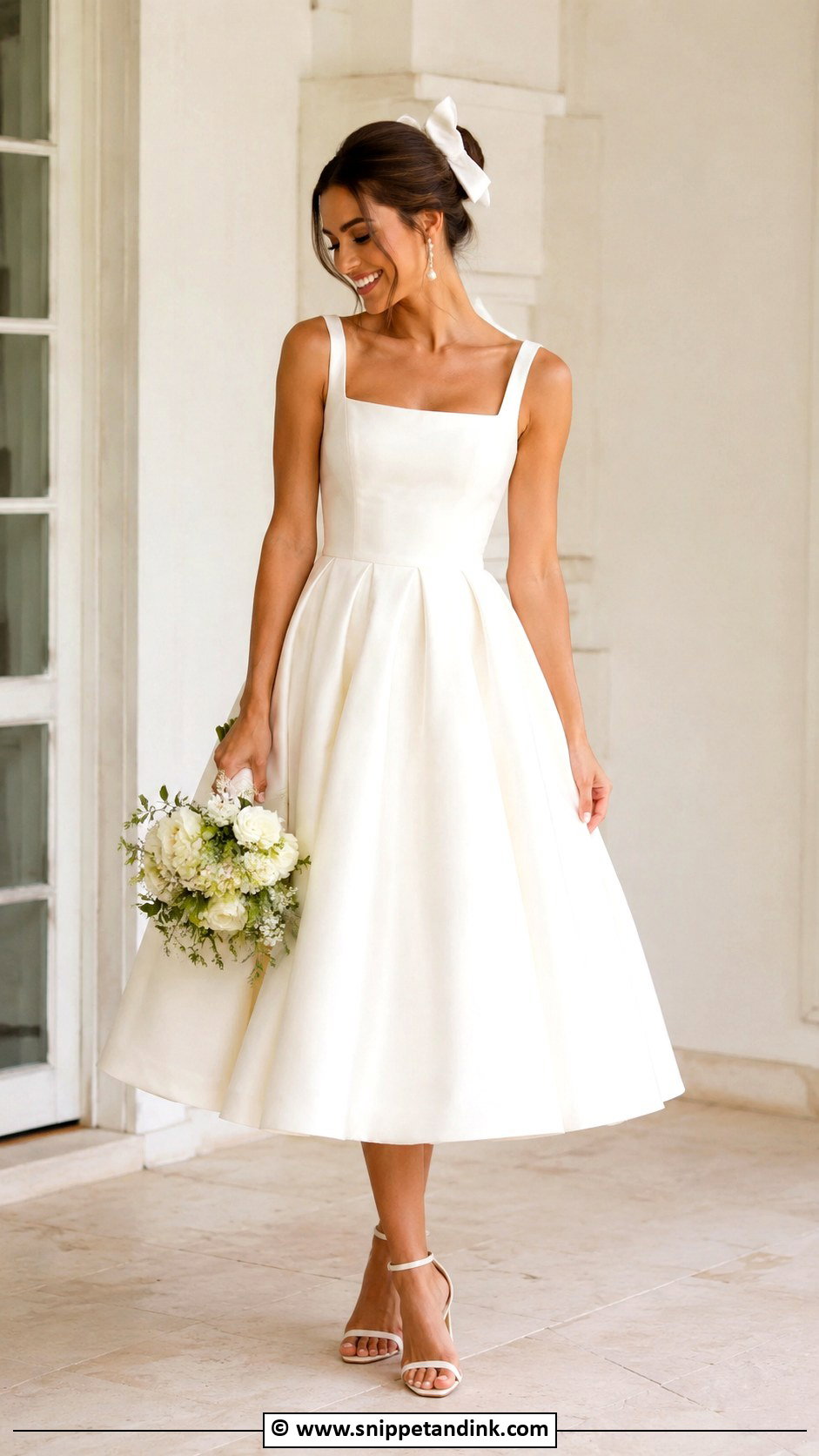
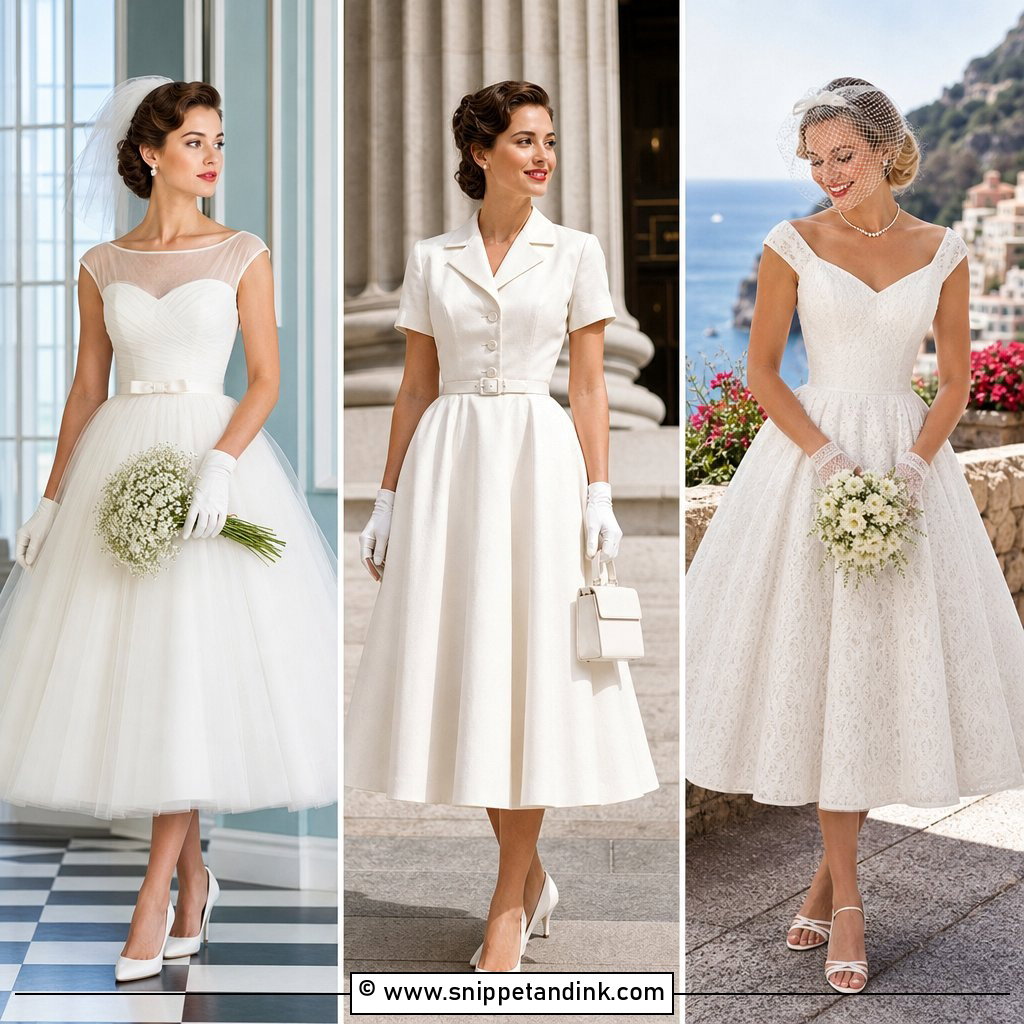
A tea length wedding dress puts your shoes on show all day, so I treat them as part of the outfit from the first fitting. The hem sits between the knee and ankle. Full skirts, fitted bodices, square necklines and short sleeves give it a retro feel. It moves freely at courthouse weddings, daytime celebrations and receptions. Pointed pumps, ankle-strap heels or embellished flats all work, with a birdcage veil or hair bow.
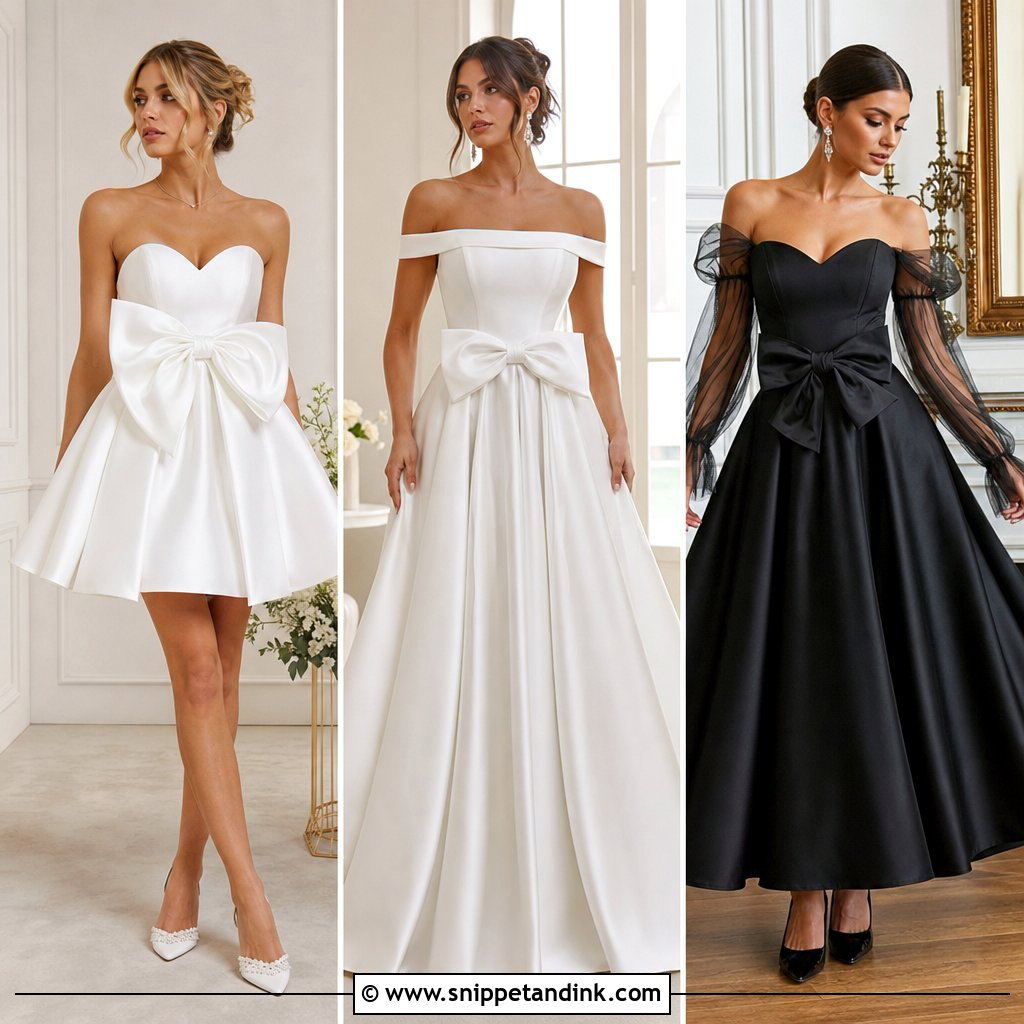
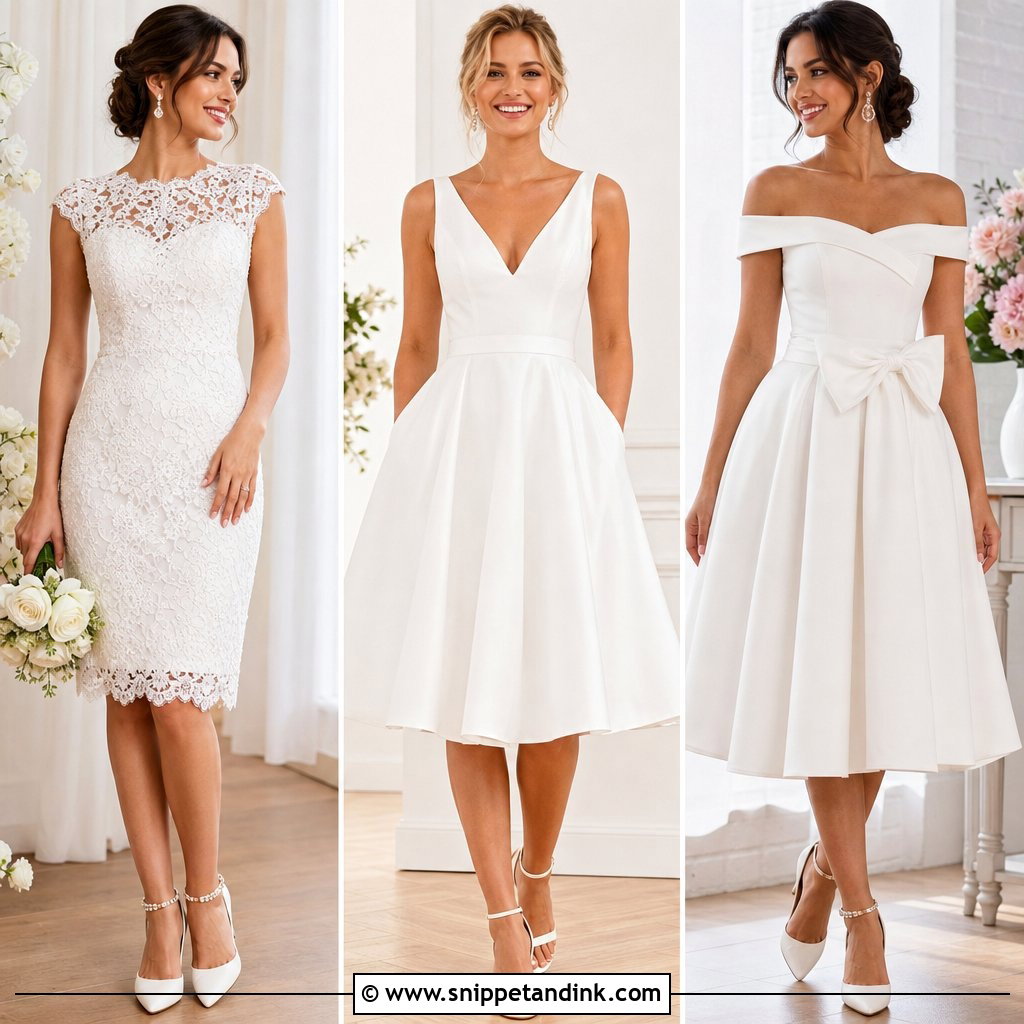
20. Short Reception Wedding Dress
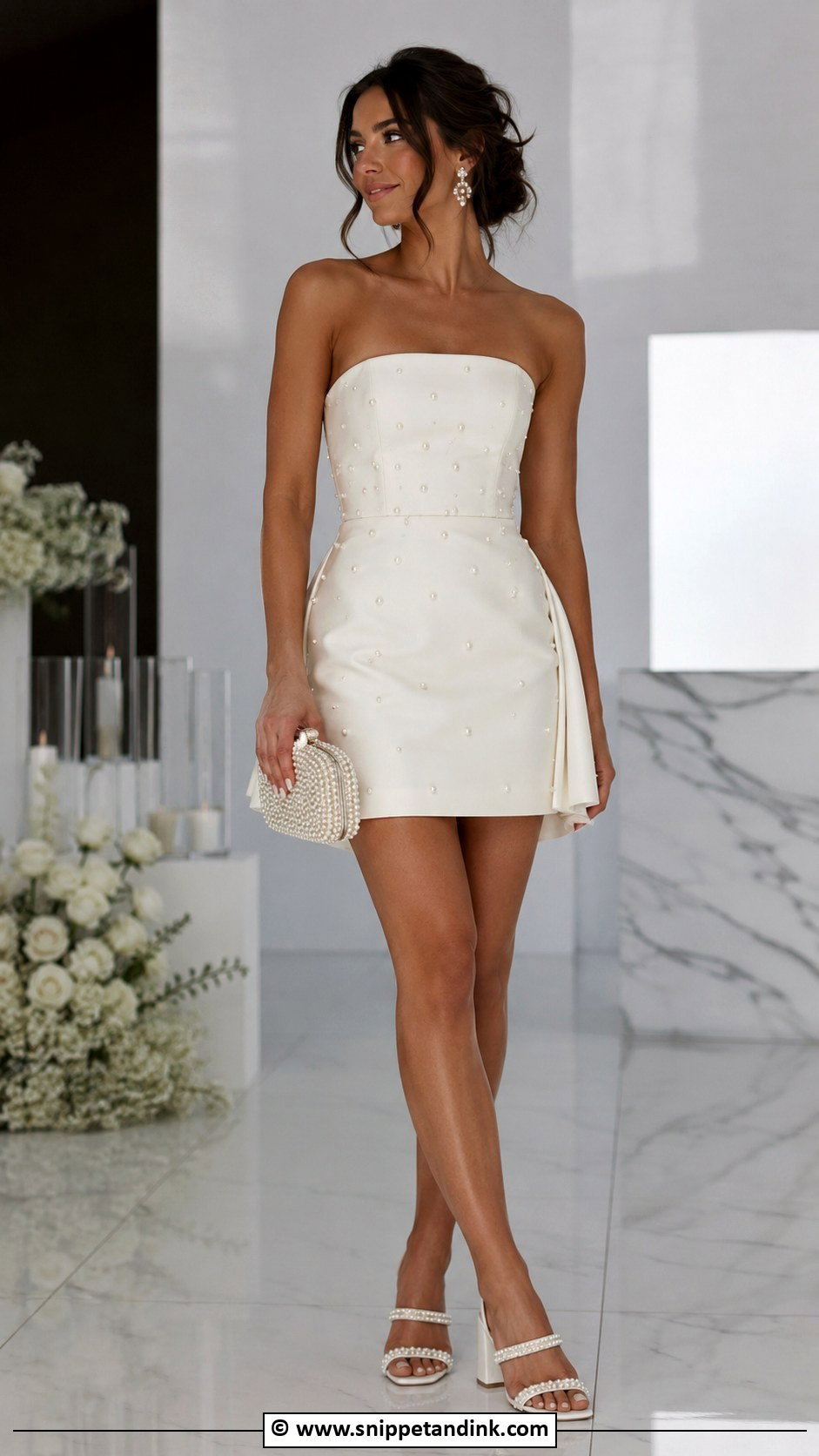
A short reception dress is the change I recommend to brides with a heavy ceremony gown. You’ll dance more freely and stop worrying about the train. Minis, above-the-knee dresses and structured designs with feathers, bows, pearls or sparkle all keep it bridal. Choose block heels, platforms or decorated flats if you plan to dance for hours. It also doubles as a courthouse, shower or after-party look.
21. Wedding Dress With Overskirt
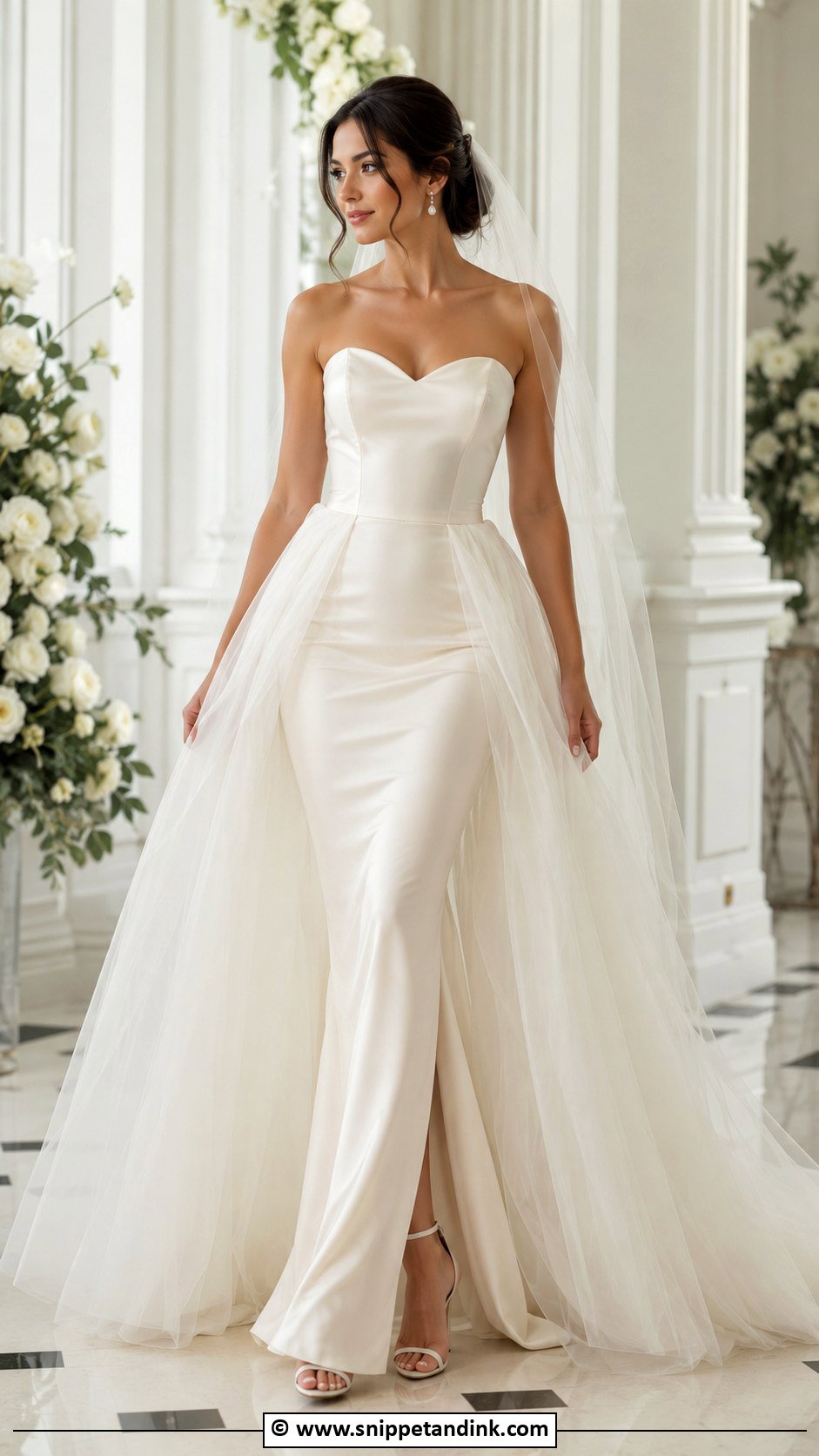
Overskirts give you two silhouettes in one outfit. The overskirt, in tulle, satin, organza or lace, attaches at the waist over a fitted sheath, mermaid or mini dress. The fastening is what I check. Hooks or snaps should hold through the ceremony and come apart in a minute without pulling the dress underneath. Practise removing it at a fitting with the person who’ll help you on the day.
22. Two Piece Wedding Dress
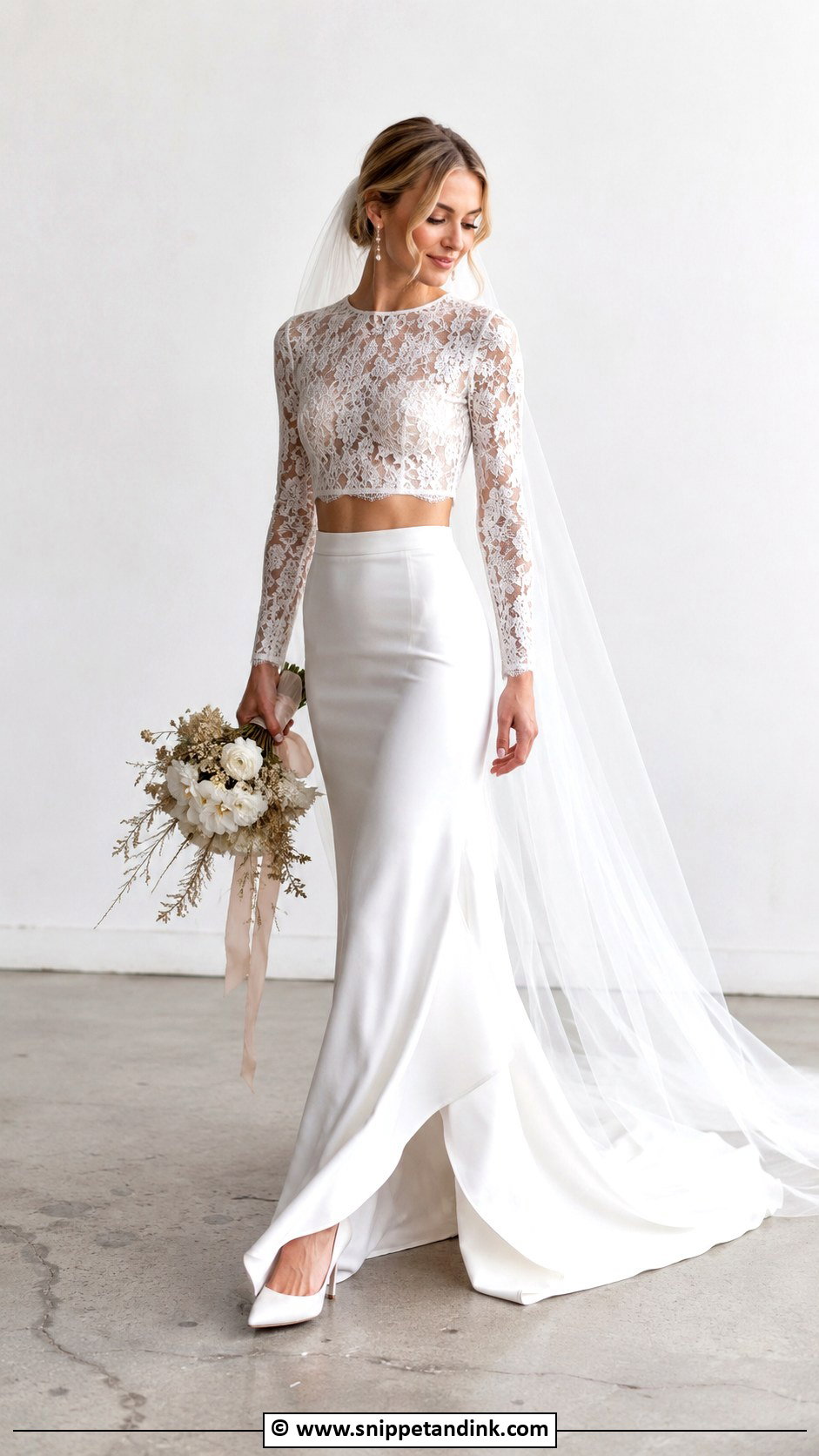
Two-piece outfits make alterations simpler, because the top and skirt are fitted separately. A crop top with a high-waist skirt, a lace top with a satin skirt, or a structured bodice over a flowing skirt all work. For a modest version, choose a top that meets the skirt fully. Check how much skin shows when you lift your arms, since crop tops ride up. Simple heels and a veil suit destination weddings.
23. Bridal Jumpsuit Outfit
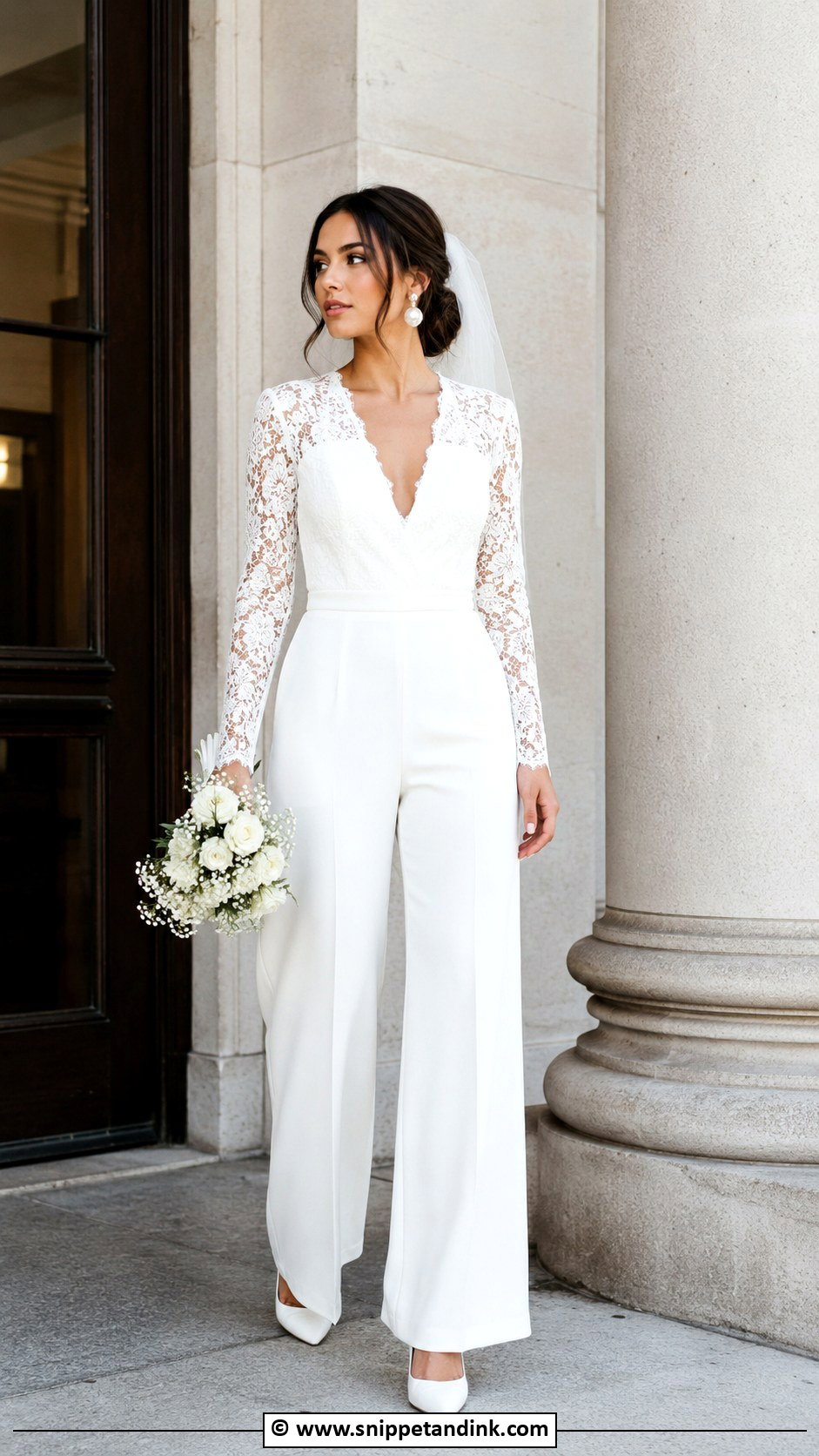
Tailoring decides whether a bridal jumpsuit looks bridal or office-ready. I check the rise first: too short and it pulls every time you sit. A wide leg reads like a gown; a fitted leg is cleaner and more modern. Lace sleeves, satin lapels, pearl buttons or a detachable train add ceremony feel. Pointed heels and statement earrings suit courthouses, city weddings and elopements.
24. Bridal Suit Outfit
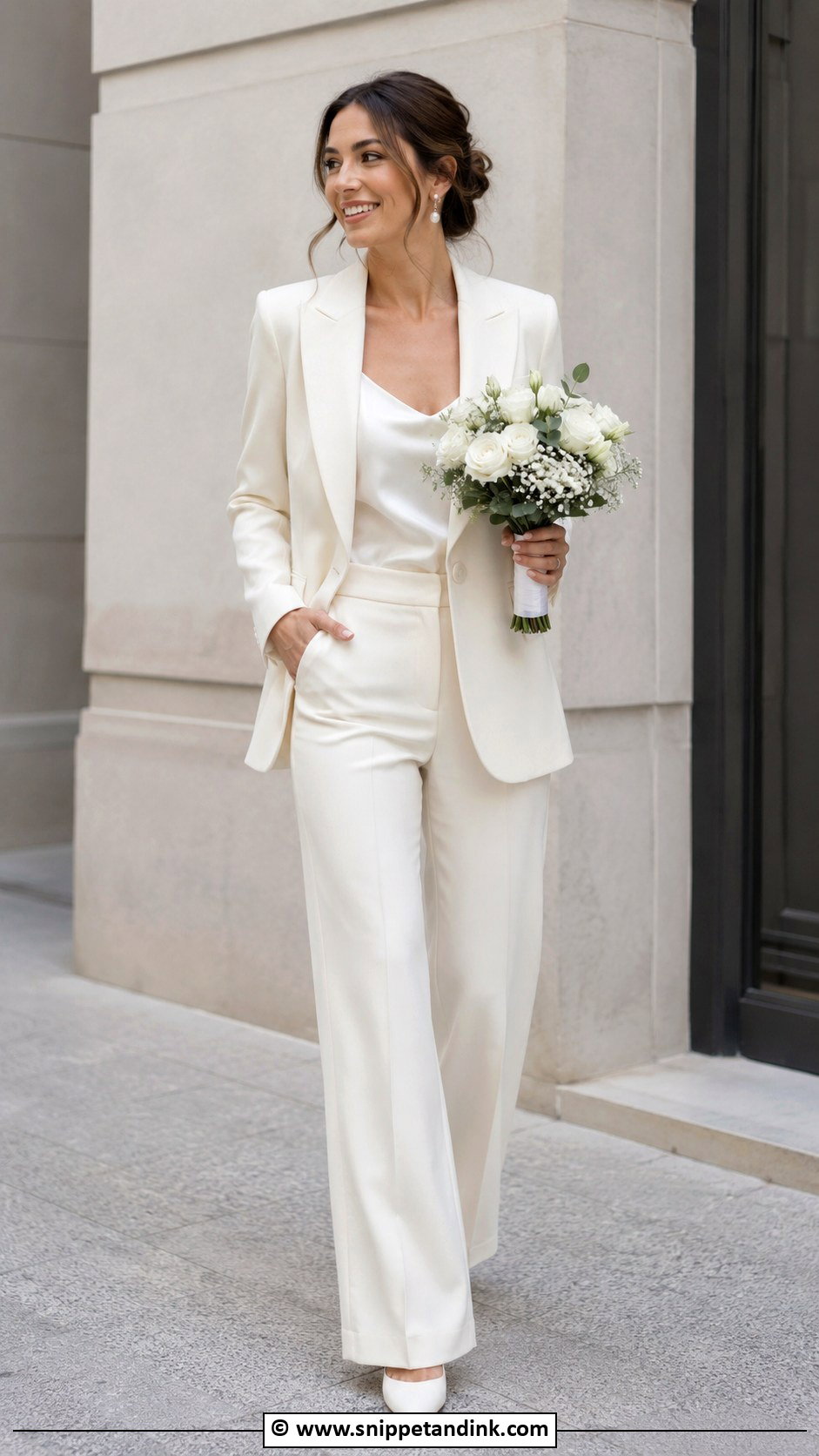
A white or ivory suit has a sharp, clean line that can feel just as special as a gown. Satin, crepe and wool-blend fabrics suit different seasons. The blazer shoulder is the part I’d never compromise on, since it’s the hardest thing to alter. A lace camisole, silk shell or structured corset underneath softens it. Pointed heels, pearl earrings and a small bouquet complete it, and a long veil with a suit makes a strong contrast.


25. Floral Embroidered Wedding Dress
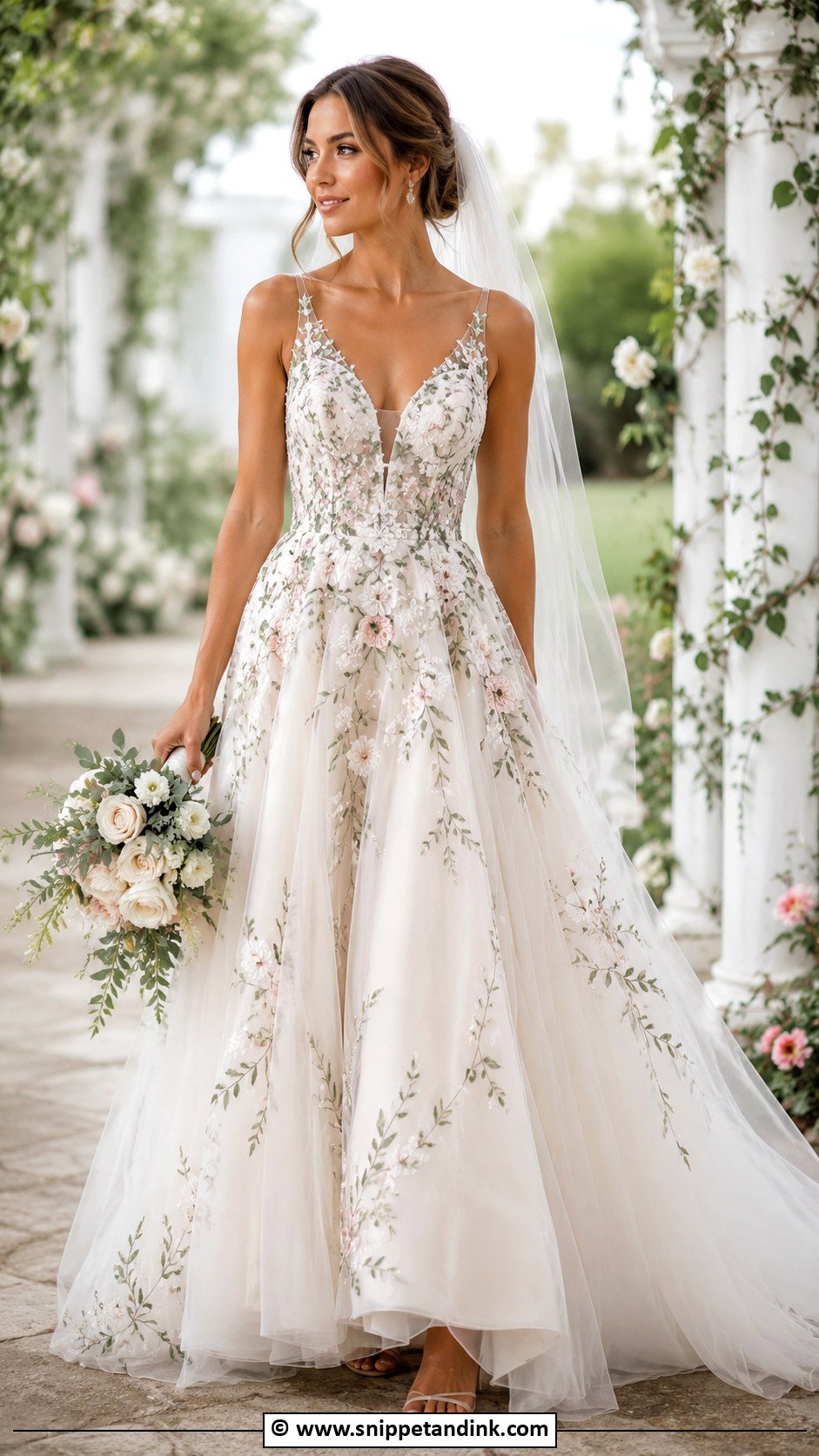
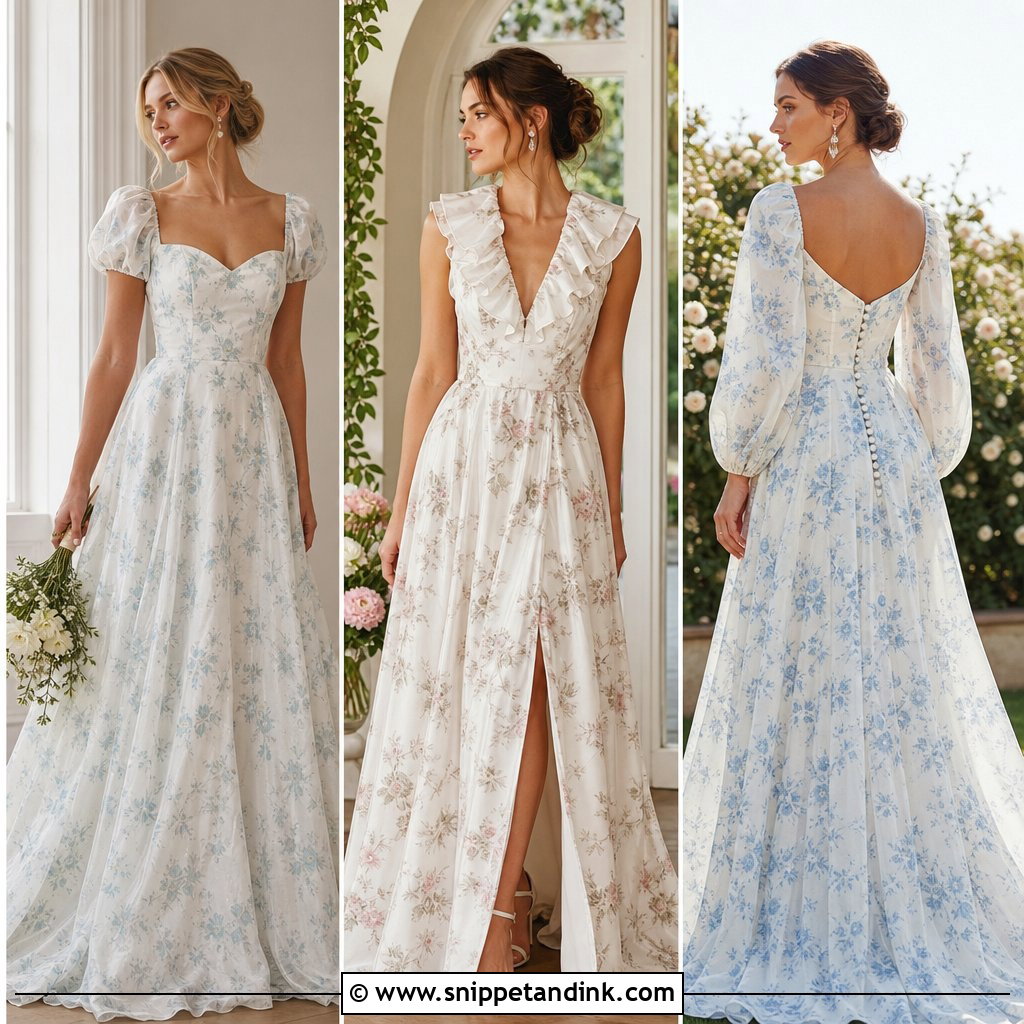
Embroidery is a way to make a dress yours. Ivory thread is subtle, while blush, blue, green or champagne thread adds colour. It sits well on sheer sleeves, bodices, veils and full skirts, and it can echo your flowers without being too literal. Keep shoes and jewelry simple so the stitching stays the focus. If you want an embroidered veil too, match the thread colour exactly.
26. Colored Wedding Dress
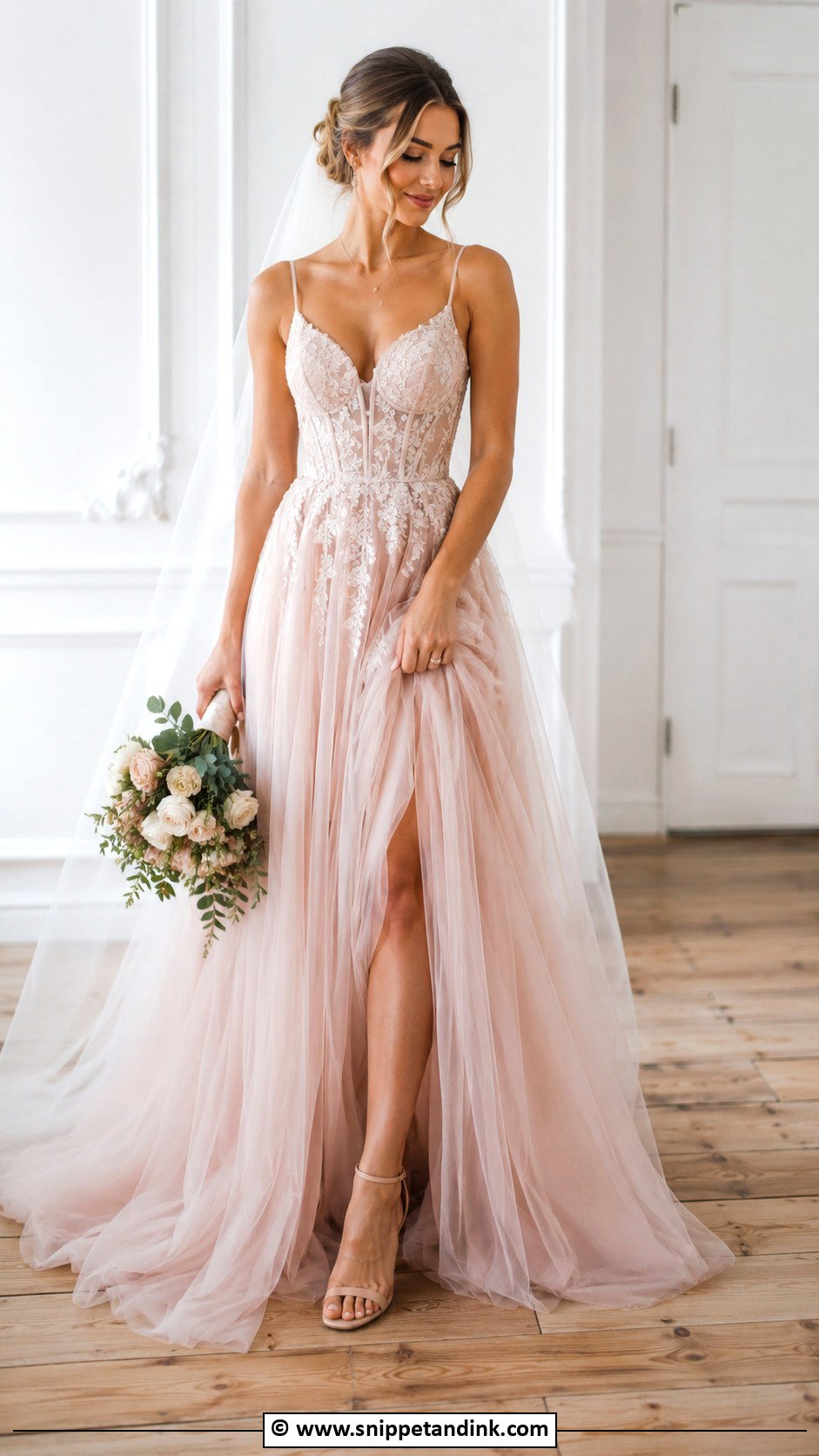
Colour suits some brides better than white, and I’d test it the way I test cream: against the face, in daylight. Blush, champagne, pale blue, buttercream, silver and soft floral prints can all feel bridal. A blush tulle gown looks romantic, champagne satin looks warm. Think about your makeup alongside the dress, since some shades pull colour from the skin. Neutral heels and soft jewelry let the shade lead.
27. Boho Lace Wedding Dress
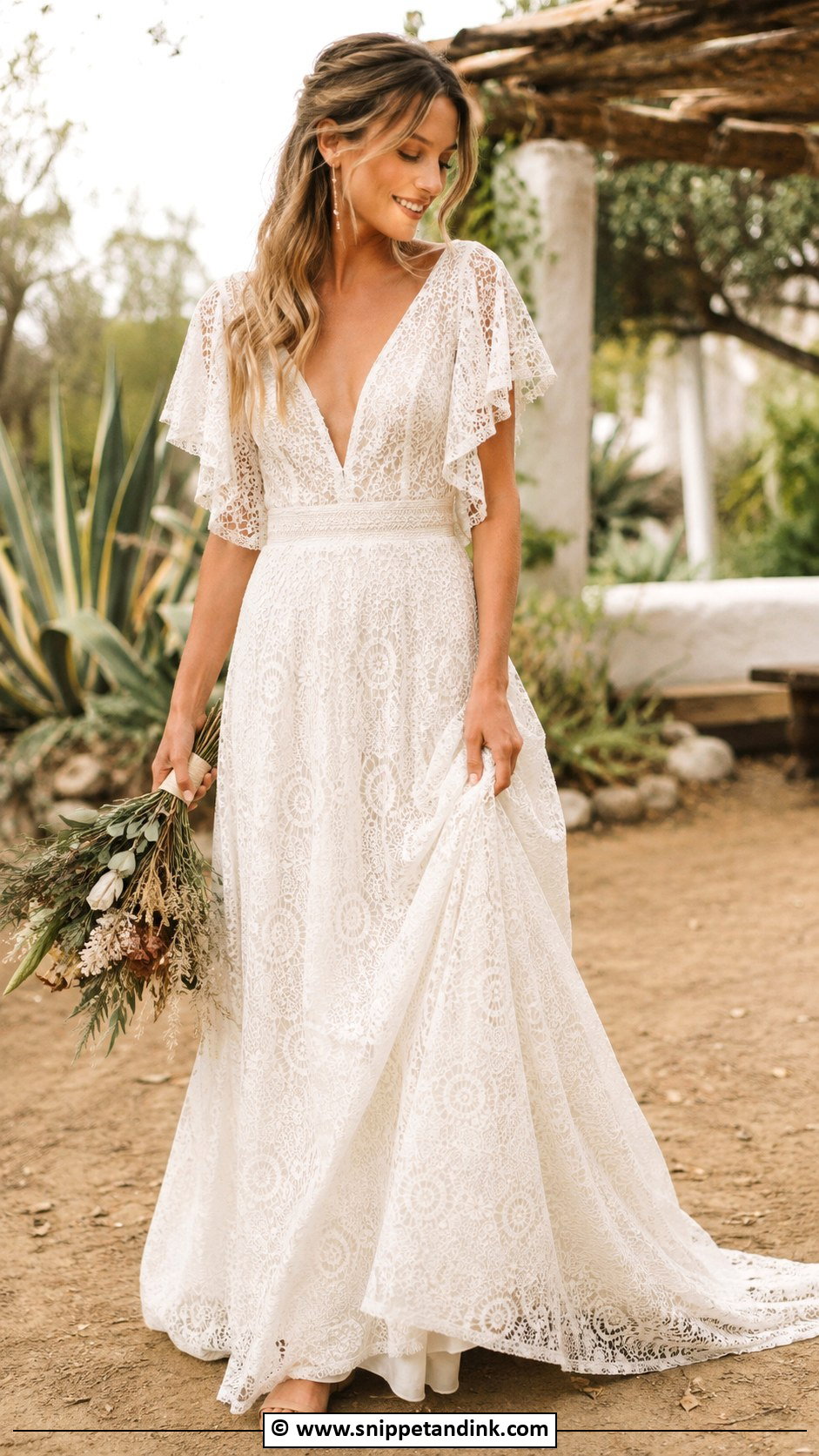
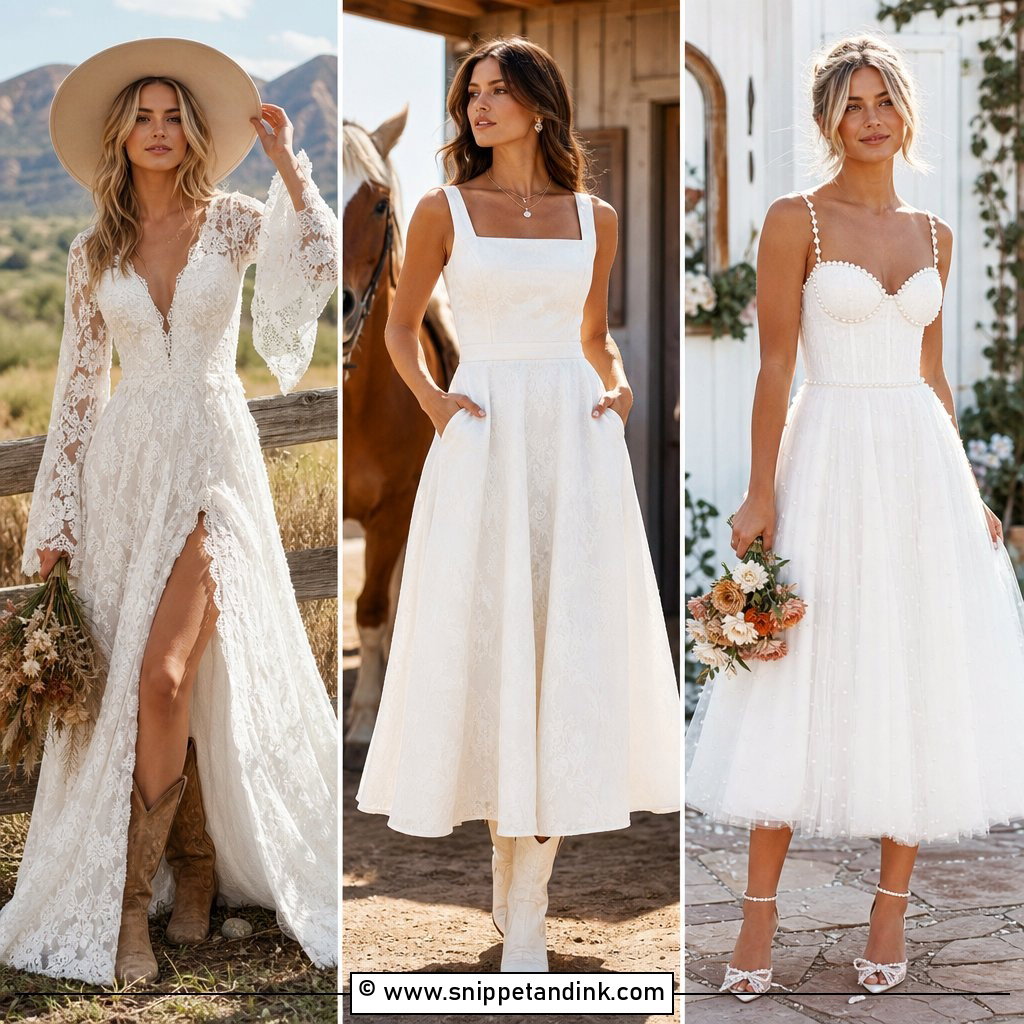
Boho lace dresses are often lightly constructed, which is why they feel so comfortable. They can also lack support, so I check the bodice before the style. Flutter sleeves, open backs, flowing skirts and bell sleeves suit outdoor, beach and desert venues. Loose waves, delicate earrings and sandals or block heels finish it. A flower comb works if it’s refined rather than costume-like.
28. Beach Wedding Dress
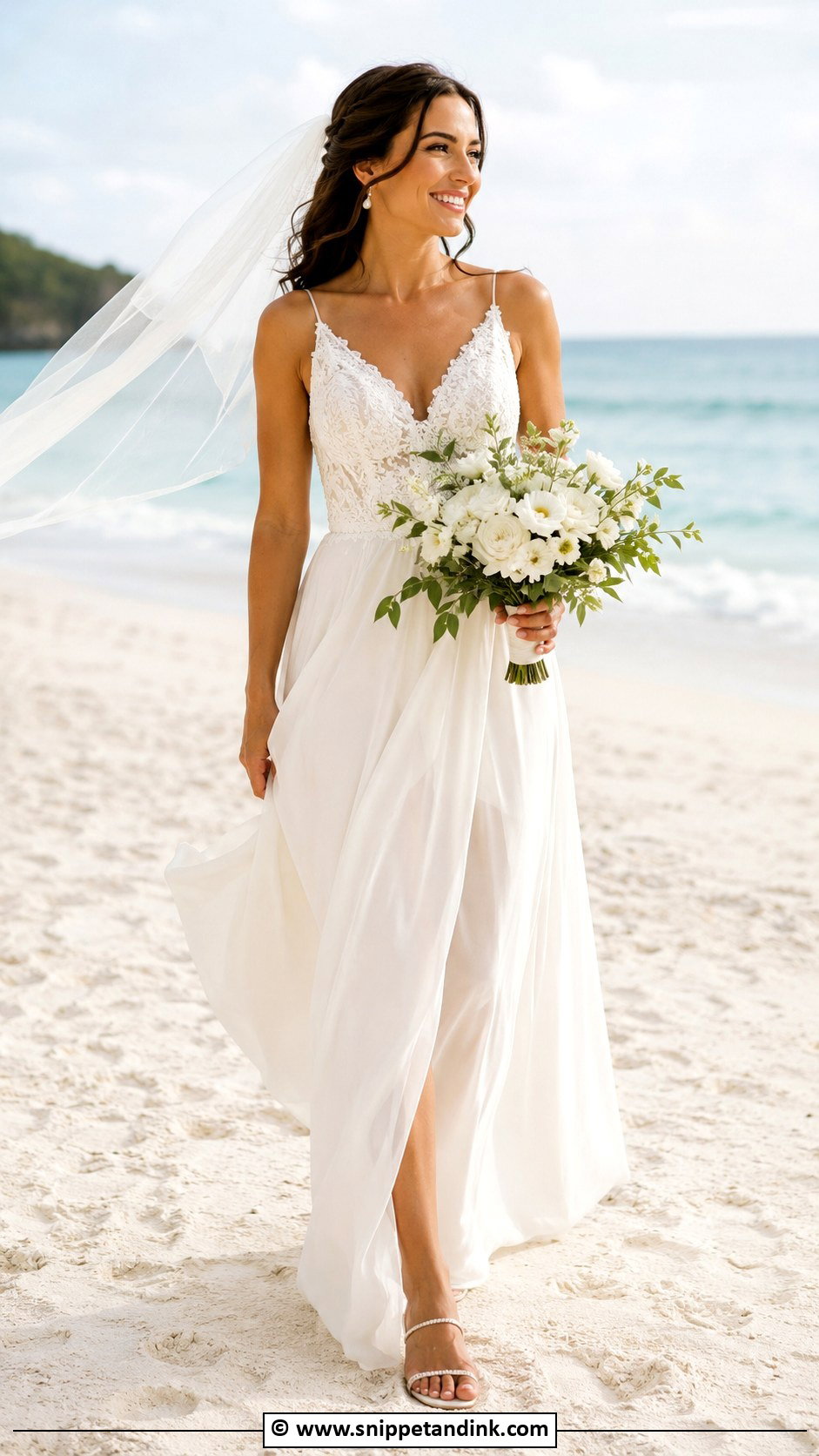
Sand changes how a dress moves. A long train drags damp sand along behind you, so for a beach wedding dress I suggest a hem that just touches the ground in flat shoes, or a bustle if you want a short train for photos. Chiffon, crepe, organza and soft tulle move with the breeze. Flat sandals or low block heels are safer than stilettos. Pearl earrings and a light veil suit the coast.
29. Courthouse Wedding Dress
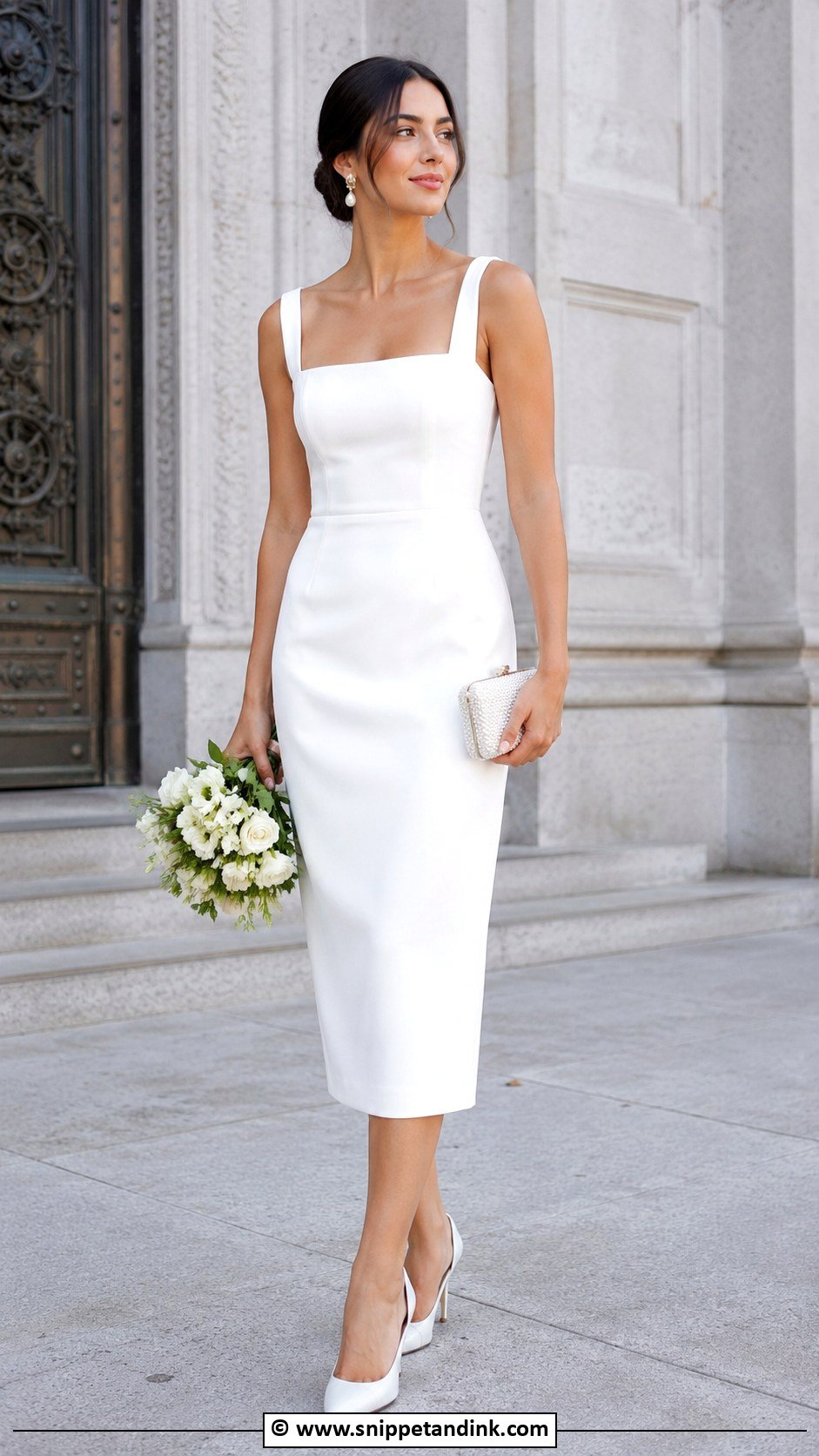
For a civil ceremony, choose something you can walk across a city in and still look good in photos afterwards. Short white dresses, tailored midis, satin slips, suits and clean columns all work. A structured mini with slingbacks feels playful; a midi with a blazer feels polished. A small bouquet, pearl earrings and a neat clutch complete the look, and it can work again at a larger celebration later.
30. Modest Wedding Dress
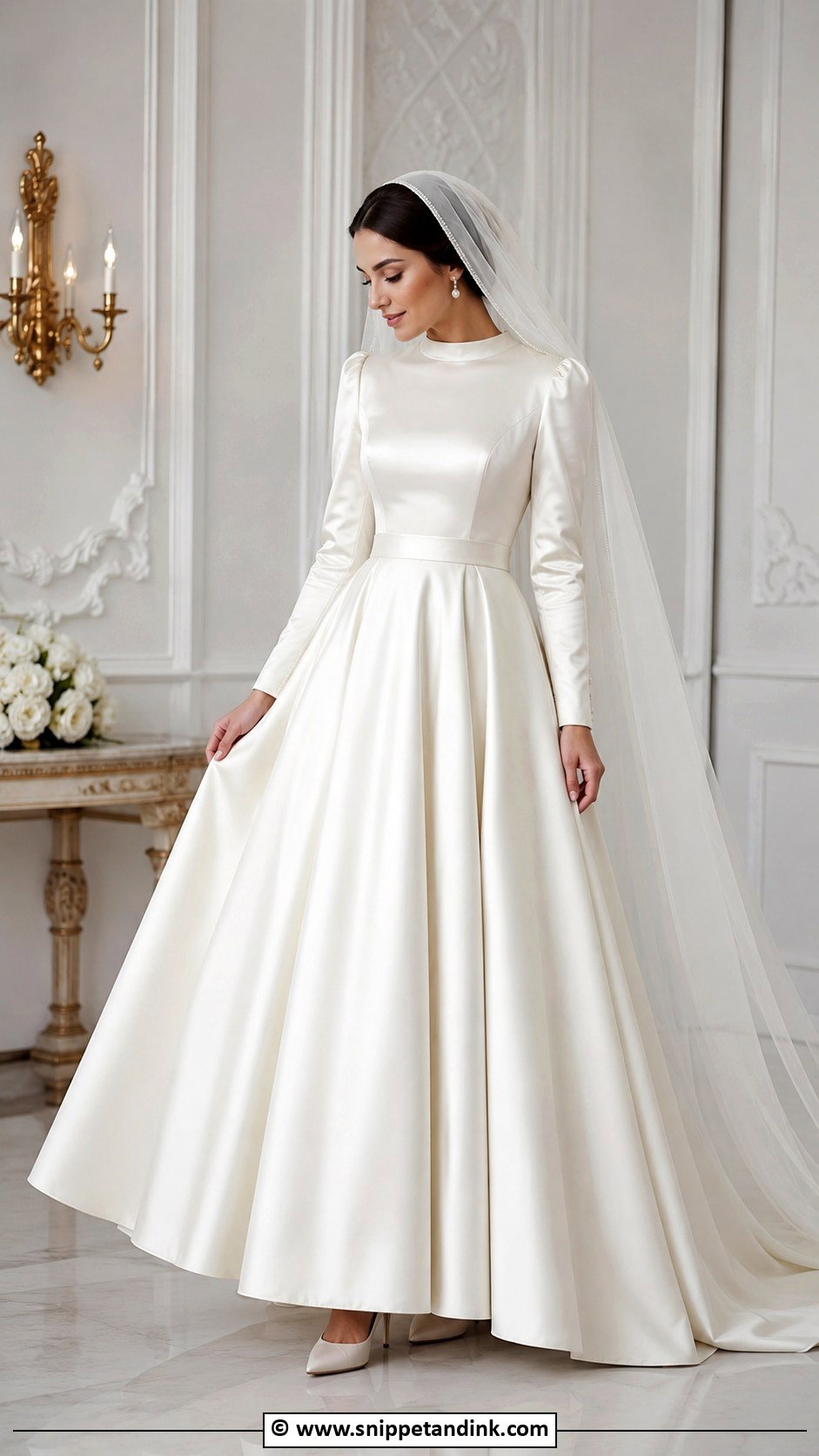
Modest gowns can be just as fitted and fashionable as any other dress. Covered doesn’t mean shapeless. Higher necks, long sleeves, lined bodices, covered backs and fuller skirts are all options, in lace, satin, crepe or organza. The shoulders are the area I fit most carefully, because a high neck and long sleeves pull from that point. Style it with a long veil, pearl earrings and closed-toe heels.
Planning a Quick Change Between Ceremony and Party
Several of the looks above come apart or change halfway through: detachable sleeves, overskirts and short reception dresses. They work well when the switch is planned, and they turn into a stressful half hour when it isn’t.
Practise it at a fitting
Have the person who’ll help you on the day come to your final fitting and do the change there, with the seamstress watching. Hooks, snaps and buttons that feel easy on a standing mannequin can be fiddly on a bride who has been hugging guests for three hours.
On the day
- Choose a natural pause for the change, such as the end of formal photos or just before dinner, and tell your planner and photographer.
- Keep a padded hanger and a garment bag in the changing room so the first gown or overskirt isn’t left in a heap.
- Decide in advance whether the veil comes off and who will remove the pins without pulling your hair.
- Have your second pair of shoes waiting in the room. Dancing shoes are often the real reason brides change.
Allow more time than you think it needs. Most changes are quick, but finding the bathroom, the helper and the bag usually takes longer than the change itself.
Trends Will Change; the Way the Dress Moves Won’t
Some brides walk in sure of a satin ball gown and leave with a slip dress, a jumpsuit or a short reception look. Consider the full outfit, from shoes and veil to hair, venue and season, and pay attention to how the dress feels when you move. Trends like drop waists, pearls, bows, sleeves and overskirts are fun to explore. Try on a few shapes you’d never have picked, then go with the one you keep thinking about.
You'll Like These Ideas:


Leave a Reply