
Waves are what I reach for when a bride tells me she wants to look like herself, only more finished. They add movement and shine around the face without the stiffness of a set curl, and the most current wavy looks are soft enough to touch. Hollywood waves, half-up waves, textured low buns and side-swept styles all belong to this family. Which one is yours depends on your neckline, the veil, your face shape, how much hair you have and where you’re getting married. I’ve written each idea below the way I’d explain it at a consultation, including who it doesn’t suit.
Sizing the Wave to How Much Hair You Have
Density matters more than length when I decide how to wave someone’s hair. The same iron and the same section size give completely different results on fine and thick hair, so I adjust before I start rather than correcting halfway through.
Fine or thin hair
Fine hair needs grip before heat. I use a light mousse or texture spray at the roots, take smaller sections so each wave holds, and pin every curl while it cools. Large, loose waves look sparse on fine hair and expose the scalp at the part, so I go a size tighter and let them relax.
Thick or coarse hair
Thick hair holds a wave but hides it. Large sections never heat through to the middle, which leaves waves on the outside and straight hair underneath, so I work in thin slices even though it takes longer. Expect styling to run past an hour and build the getting-ready schedule around that.
Layered versus one-length cuts
Layers give waves somewhere to move and help them separate. A heavy one-length cut pushes all the movement to the bottom. If you want softer layers, have them cut a few weeks before, never in the final days.
1. Hollywood Waves Bride Hairstyle
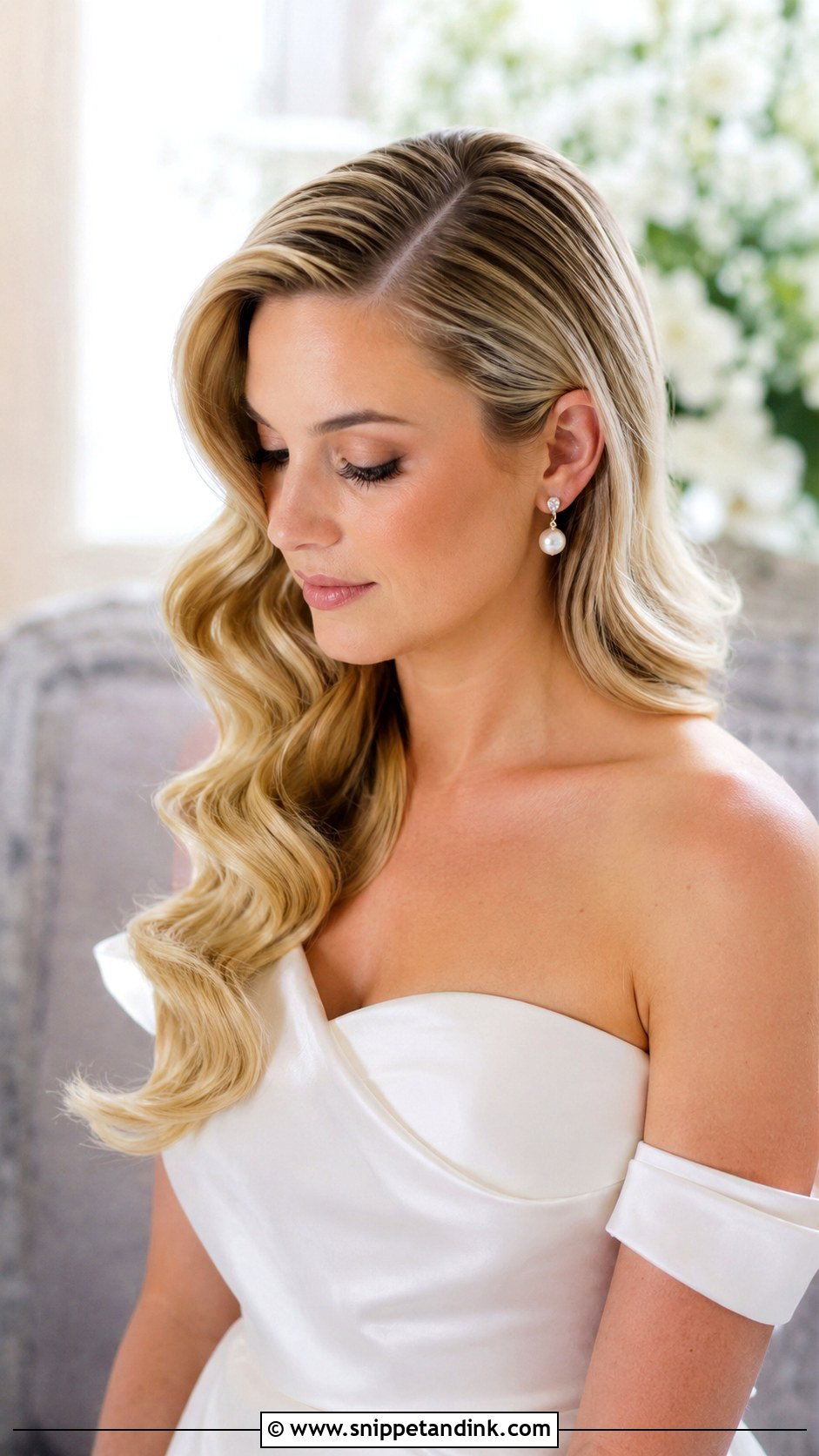
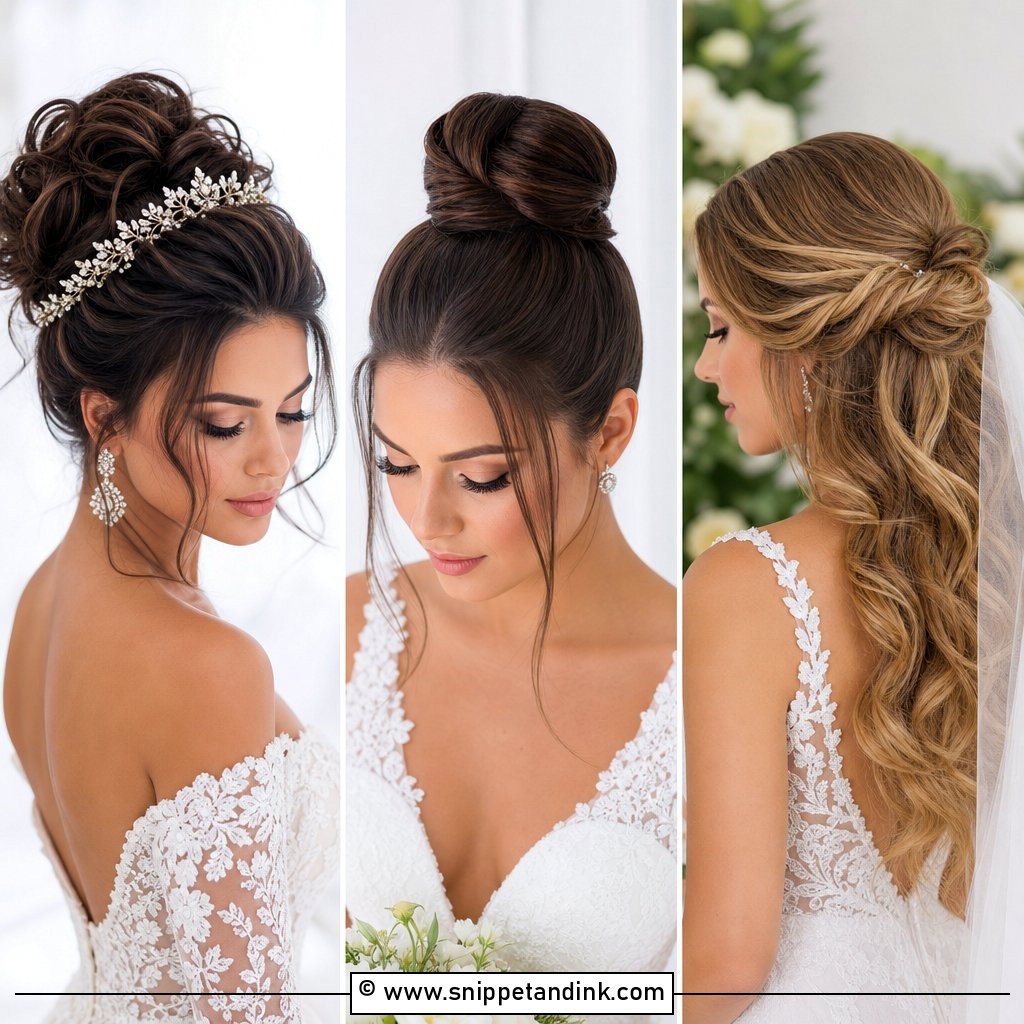
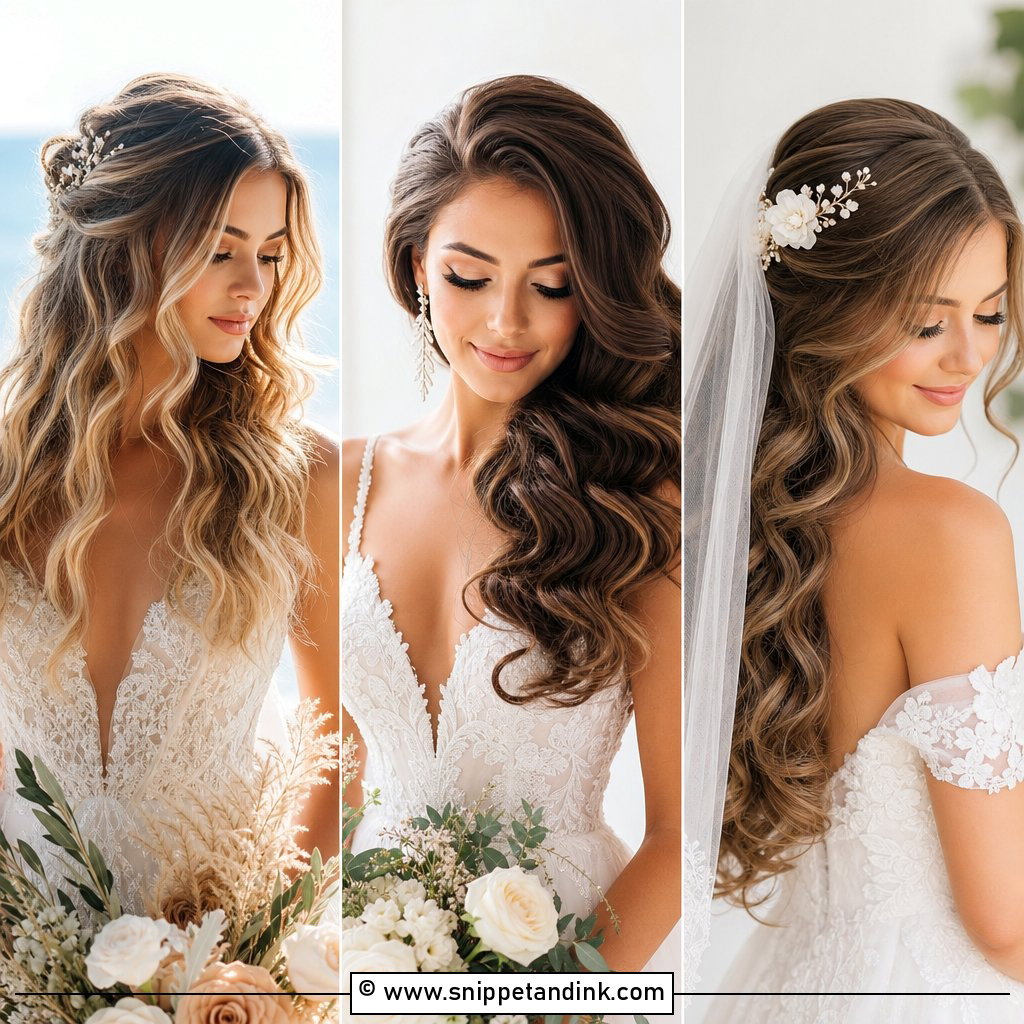
Glamour with structure is the short version. Hollywood waves need medium to long hair, because the bends have to fall far enough to read as one smooth ribbon over the shoulder. A deep side part, uniform bends and a high-shine finish suit strapless, off-the-shoulder, satin and fitted gowns. The detail most people miss is the front: I hide a pin just under the part so the heavy side can’t swing forward when you look down during your vows. Soft hold and patient brushing are what separate this from a head of tight curls.
2. Soft Waves Bride Hairstyle
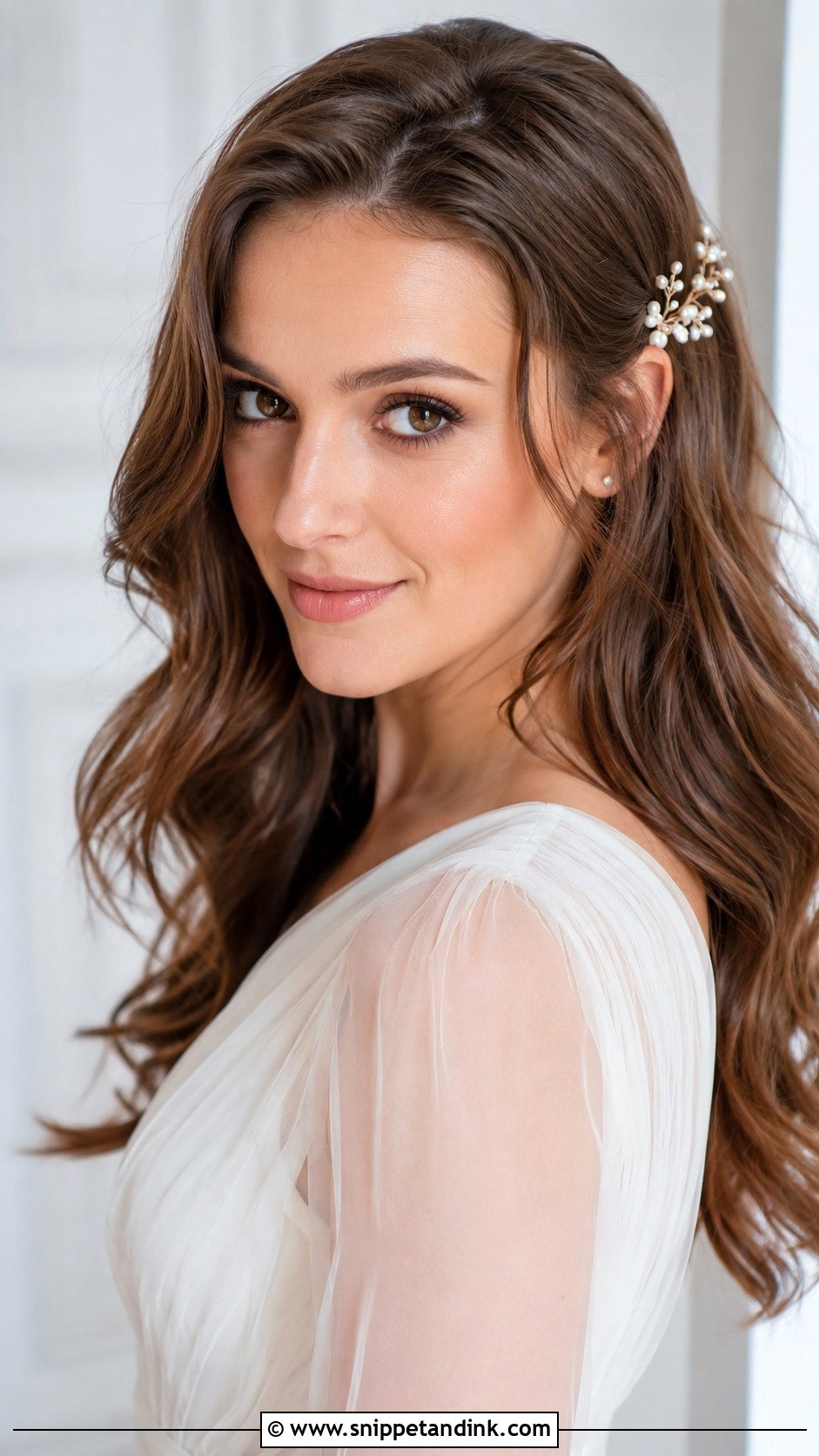
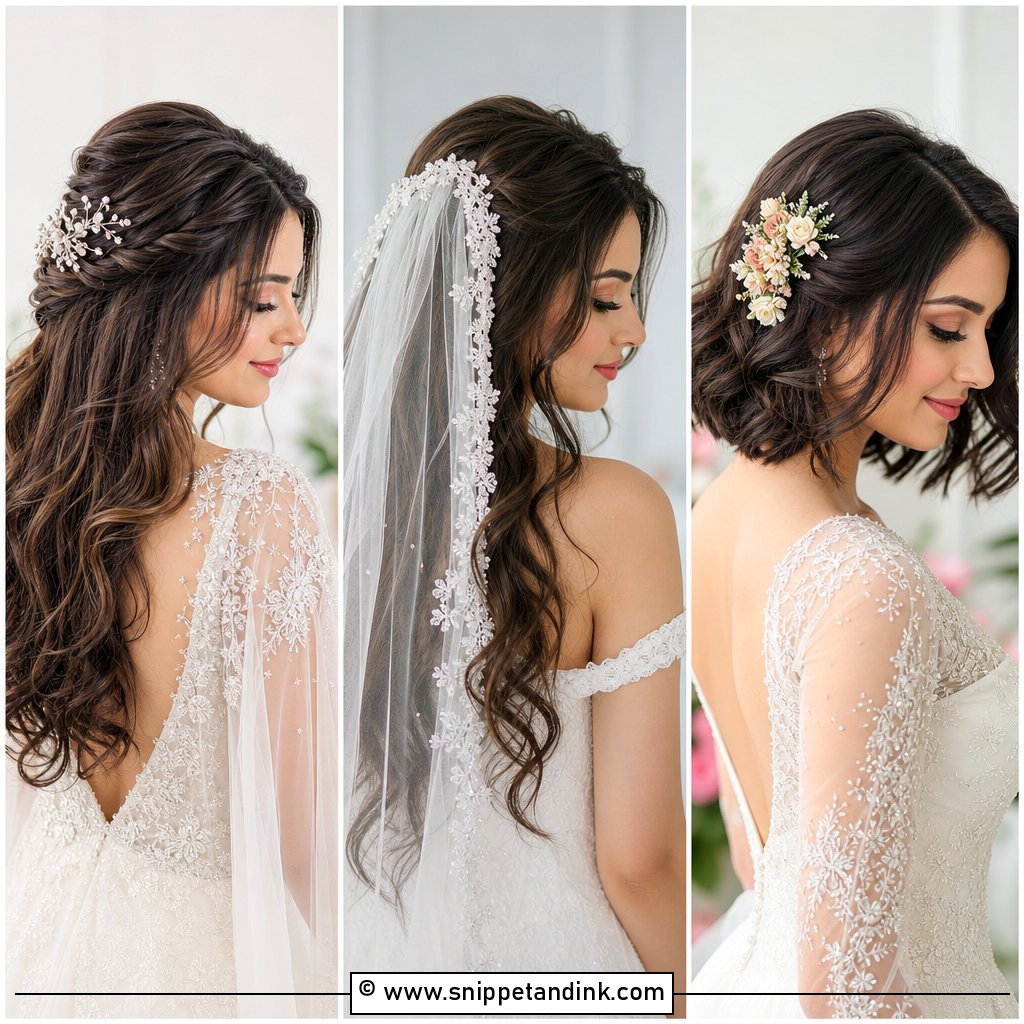
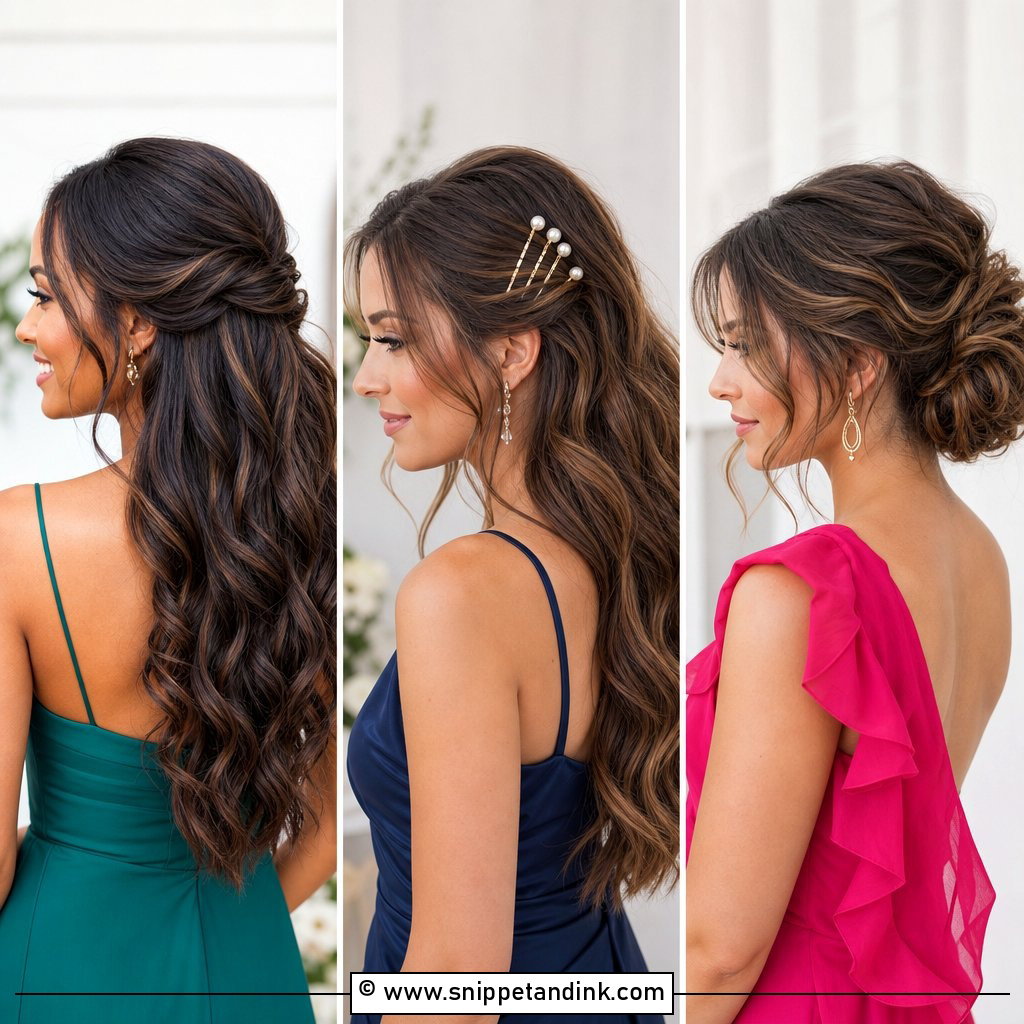
These start lower, around the cheekbone or jawline, which keeps the crown smooth and stops the head from looking wide in front-on photos. They’re less structured than Hollywood waves but still have shape. Because the bends begin below the face, I can turn them to flatter almost any face shape, away from a round face or in toward a narrow one. Veils, pins, slim headbands and small floral pieces all sit easily on top. Root volume and a flexible spray keep them bouncy rather than crunchy.
3. Half Up Waves Bride Hairstyle
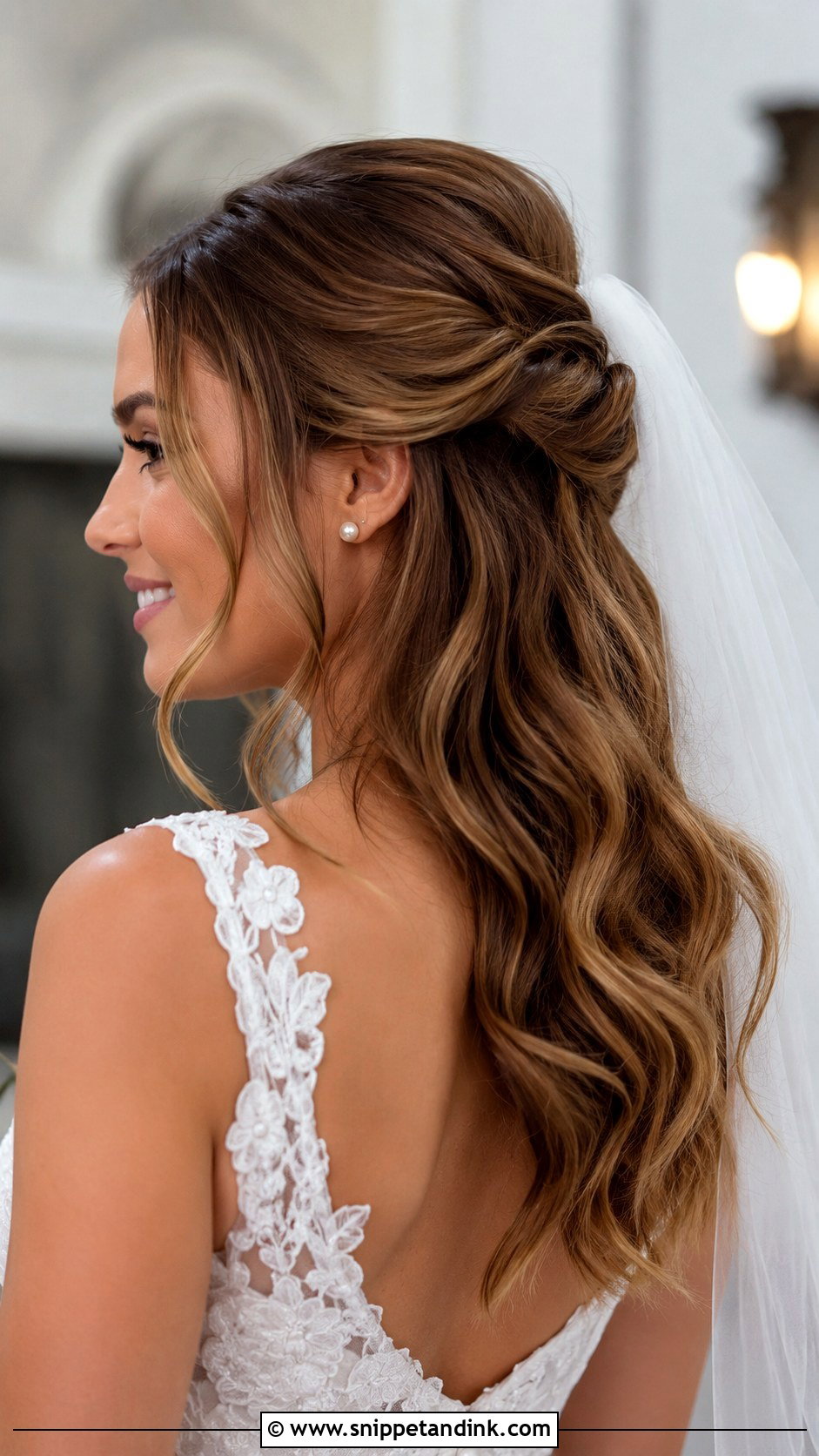
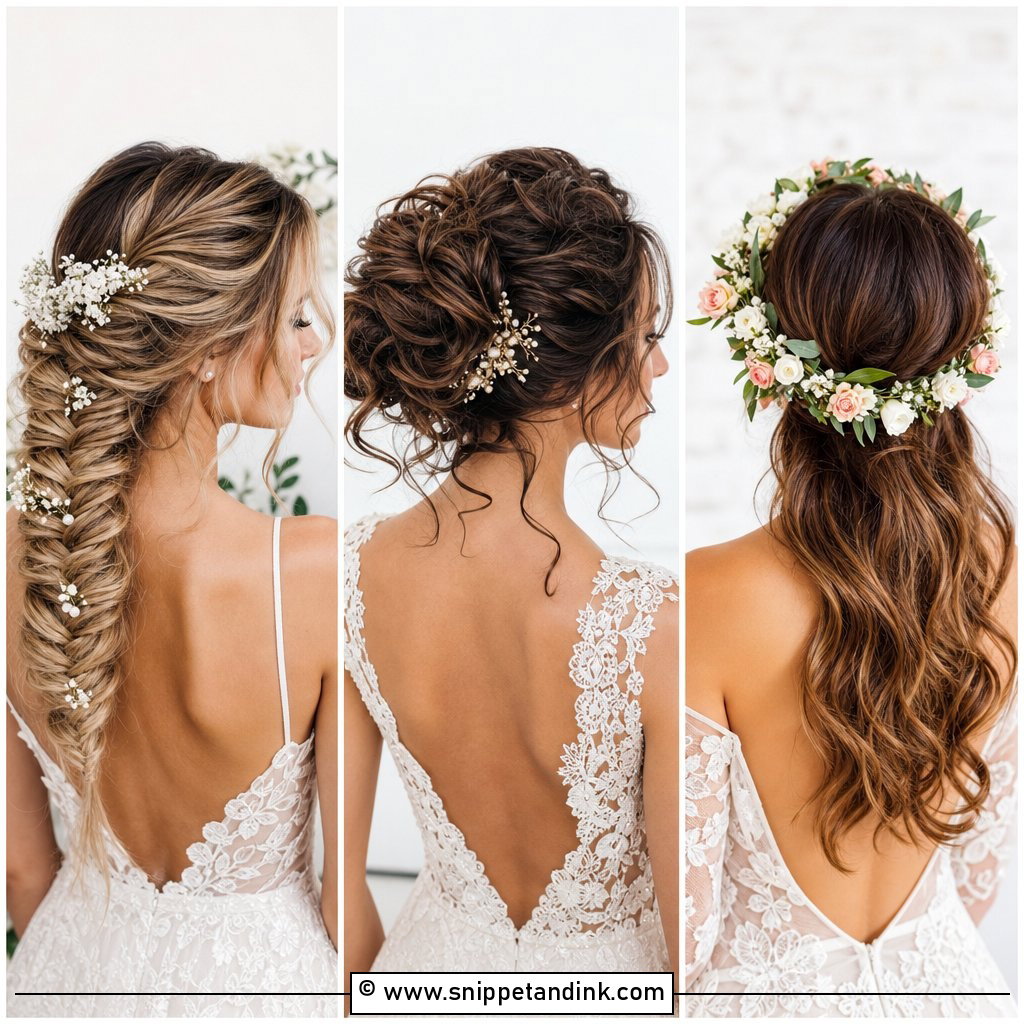
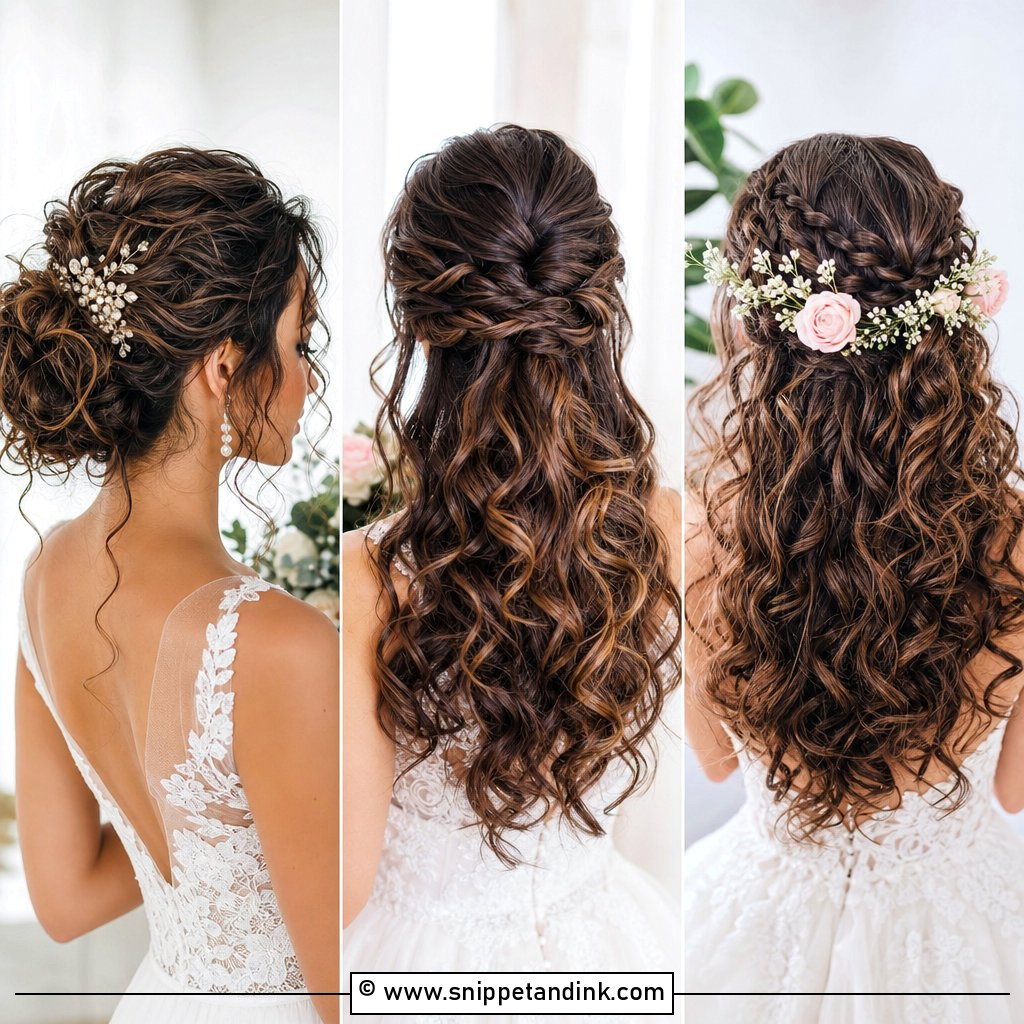
I suggest this to brides who know they’d otherwise be blinking hair out of their eyes during the ceremony. The top is twisted, pinned or braided, and the lengths stay waved and loose. Its best feature is practical: that pinned section is a natural anchor for a veil comb. Outdoor weddings suit it too, since the front can’t blow across your face. The only hair it fights is short, blunt layering at the crown, which pokes out of the twist, so I keep a fine comb and a touch of wax handy for those pieces.
4. Side Swept Waves Bride Hairstyle
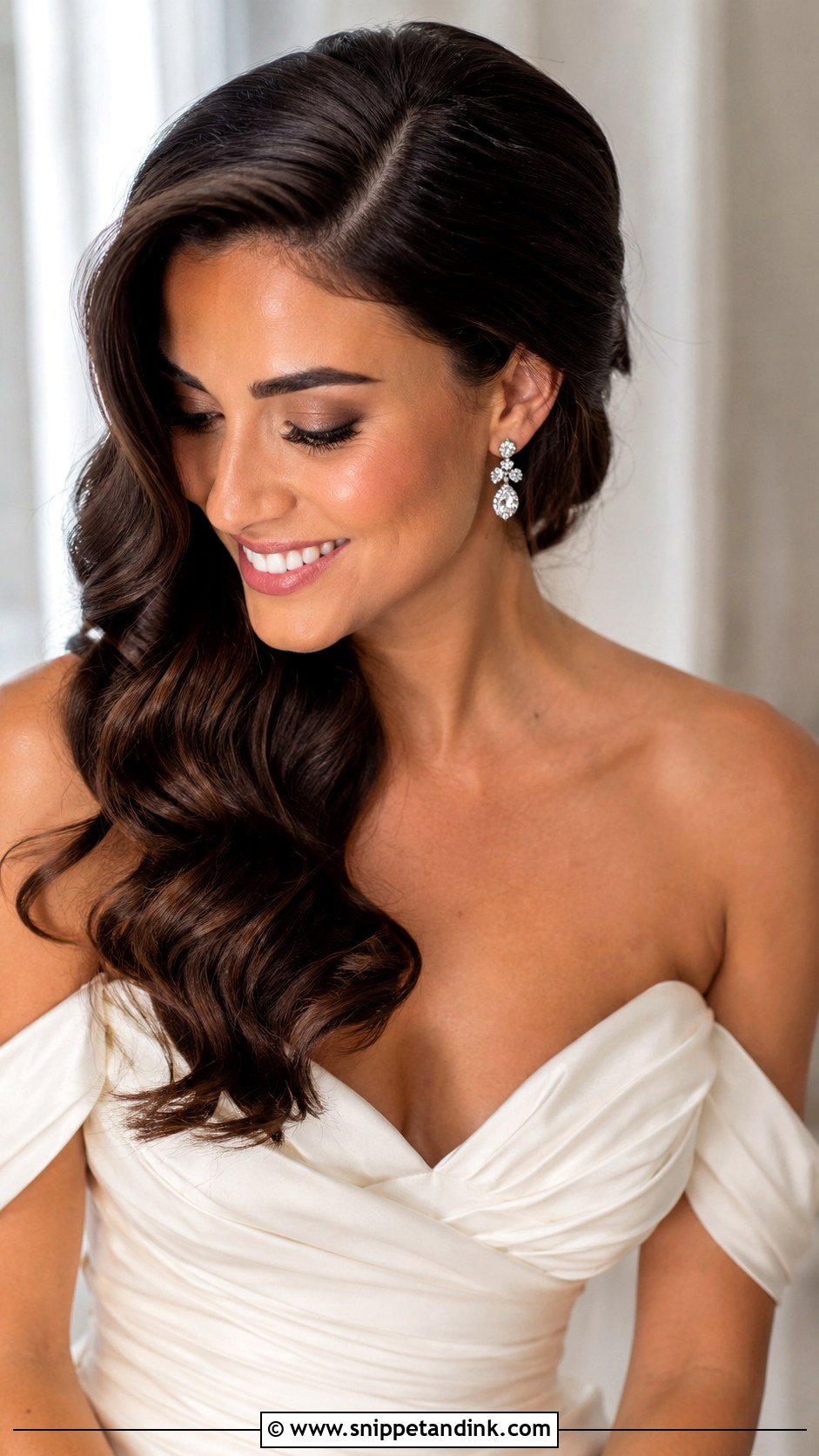
Brushing everything over one shoulder opens up the neckline, earrings and dress details on the other side. One-shoulder gowns, sweetheart necklines and dresses with detailed backs suit it particularly well. The waves can be sculpted or softer depending on the mood of the day. What holds it is hidden underneath: a row of pins locked behind the far ear and a few more under the swept section, placed so the hair stays put without lying flat against the head. You get loose hair with far more control than wearing it all down.
5. Loose Waves Bride Hairstyle
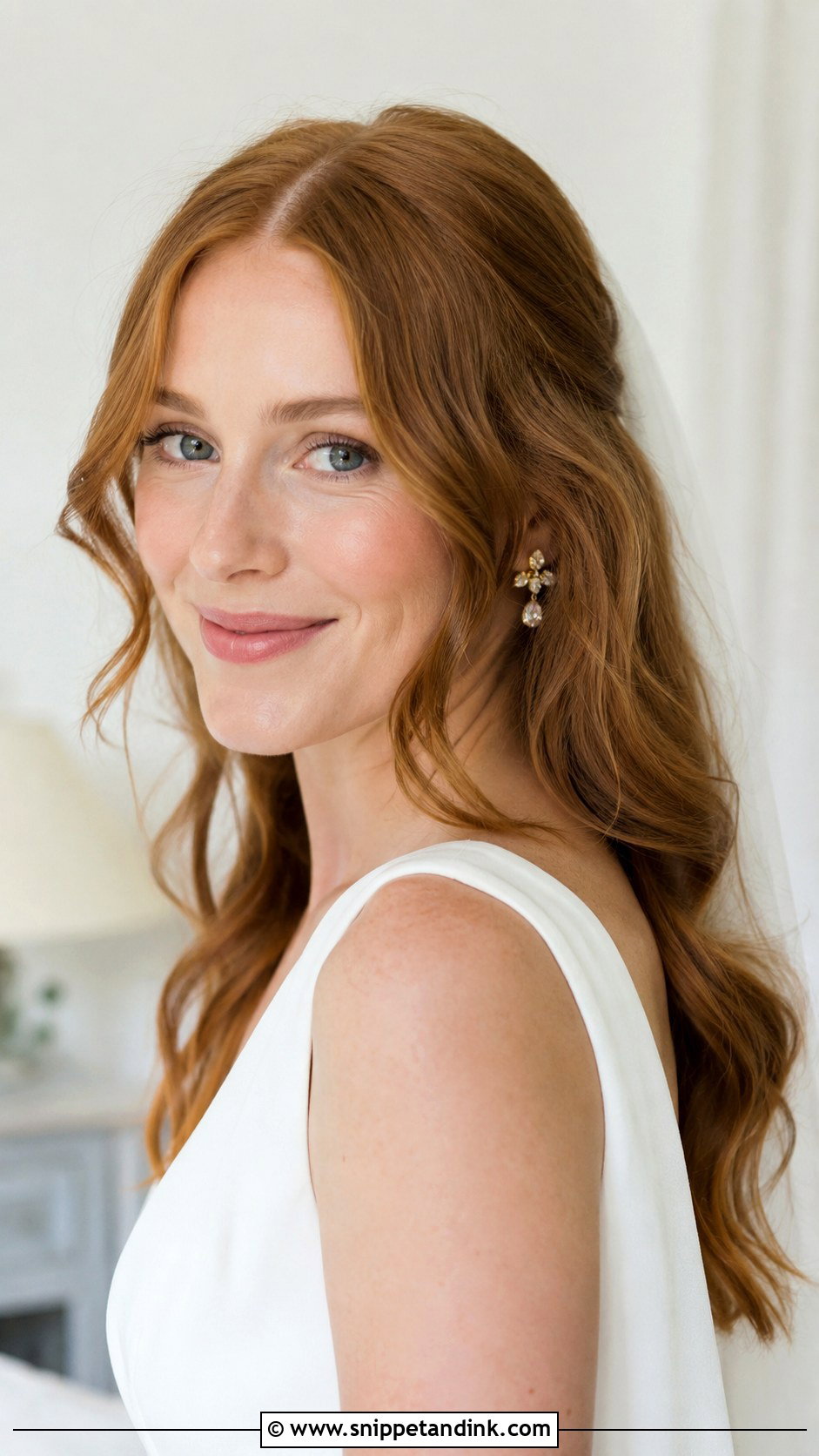
Loose waves look casual and are anything but. The best versions are shaped carefully so they still look intentional in photos, and garden weddings, beach ceremonies, rustic venues and minimal modern dresses all suit the open pattern. If your hair drops curl quickly, I use a slightly smaller barrel than the final look calls for, so it relaxes into loose waves around the time you walk down the aisle rather than an hour before. A center part reads modern, a side part more classic. Shine spray finishes it.
6. Long Waves Bride Hairstyle
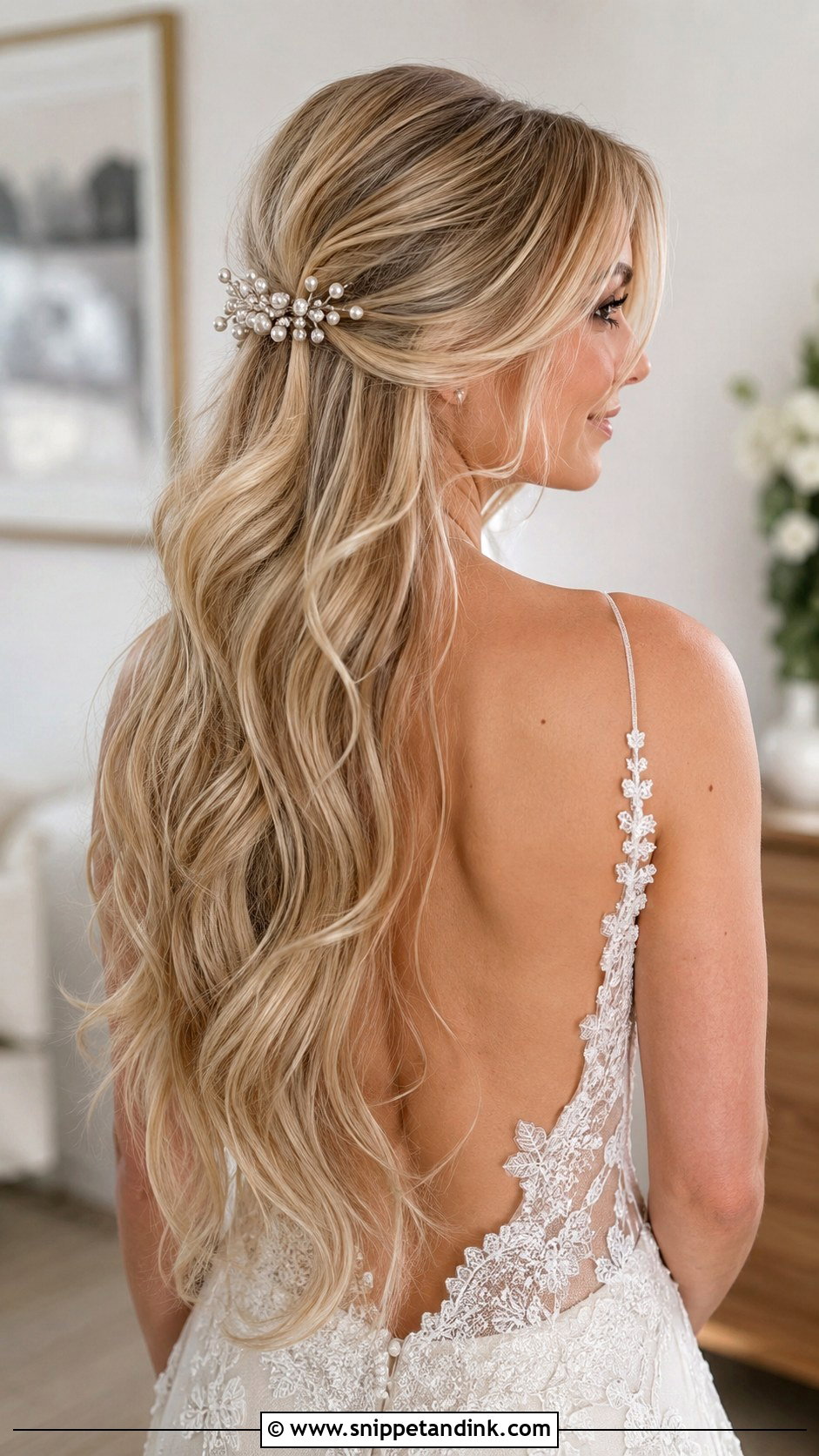
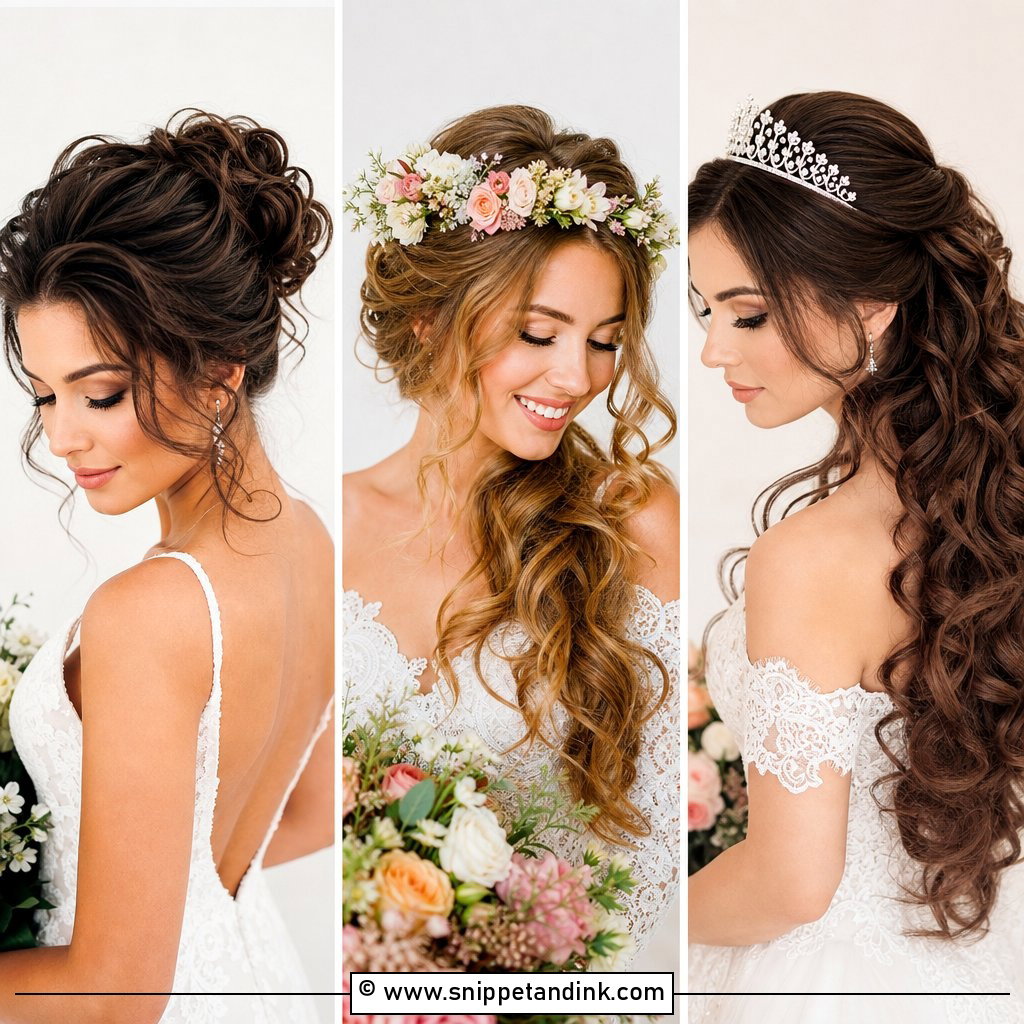
Length is generous to waves only when the ends are healthy and the layers blend; otherwise long hair hangs heavy and the movement collapses into the last few inches. A few invisible internal layers or face-framing pieces, cut a couple of weeks ahead, help the waves sit. Veils, pearl pins, floral combs and simple crowns all pair well. From behind, with a low-back gown or lace detail, long waves carry the back-view photos. To make the shape last, I heat-set each section, let it cool completely before brushing, then finish with a flexible spray.
7. Medium Length Waves Bride Hairstyle
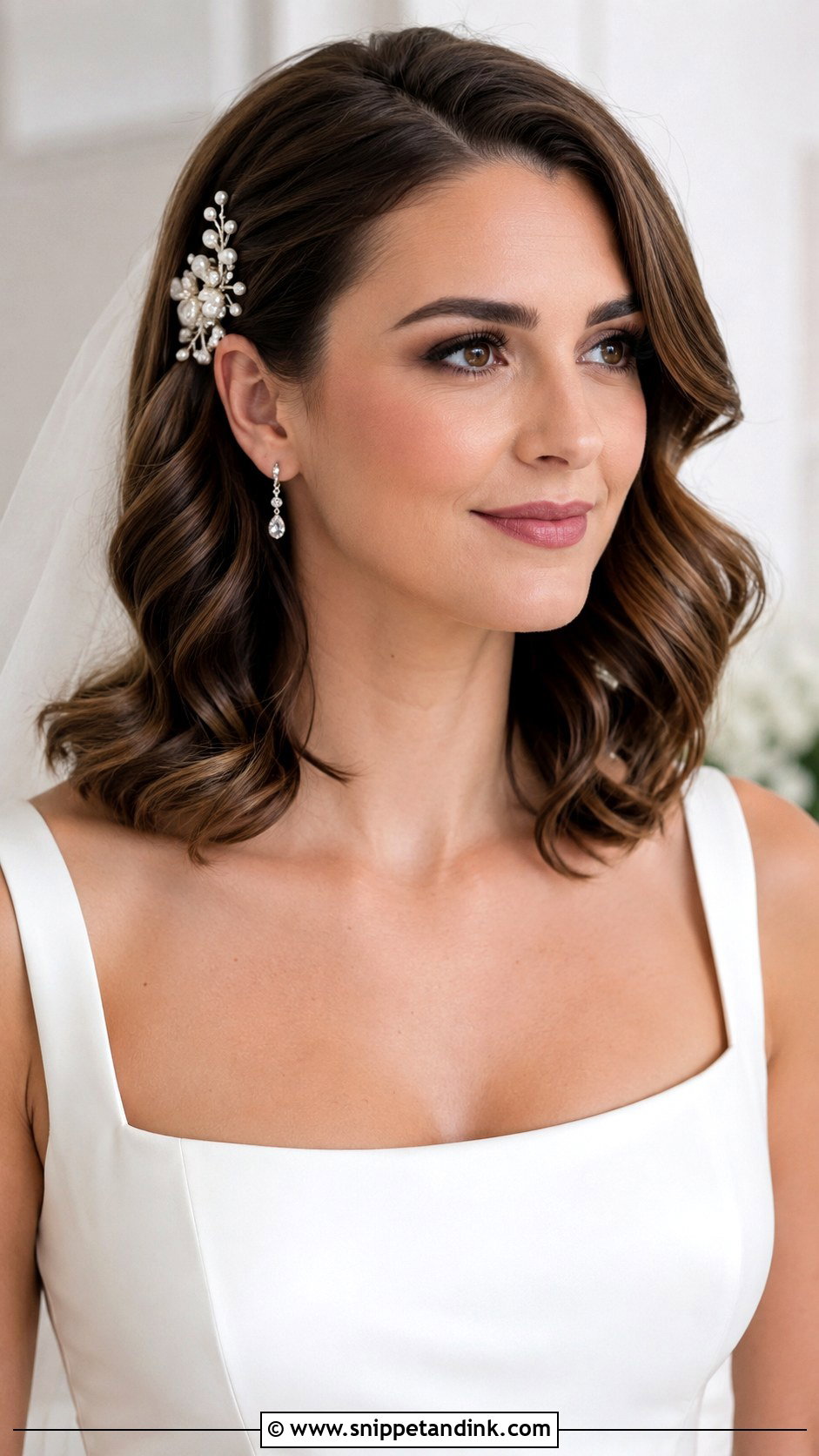
Around the collarbone or shoulders, waves have enough length to move without feeling heavy, and fine, medium or thick hair can all wear them once the wave size is adjusted. This length frames the face without covering the dress, which is why it works with square necklines, boat neck dresses and simple gowns. For more volume, I curl alternate sections in opposite directions so they don’t merge into one flat sheet, then lift the crown a little. One small comb or pin is enough decoration.
8. Short Waves Bride Hairstyle
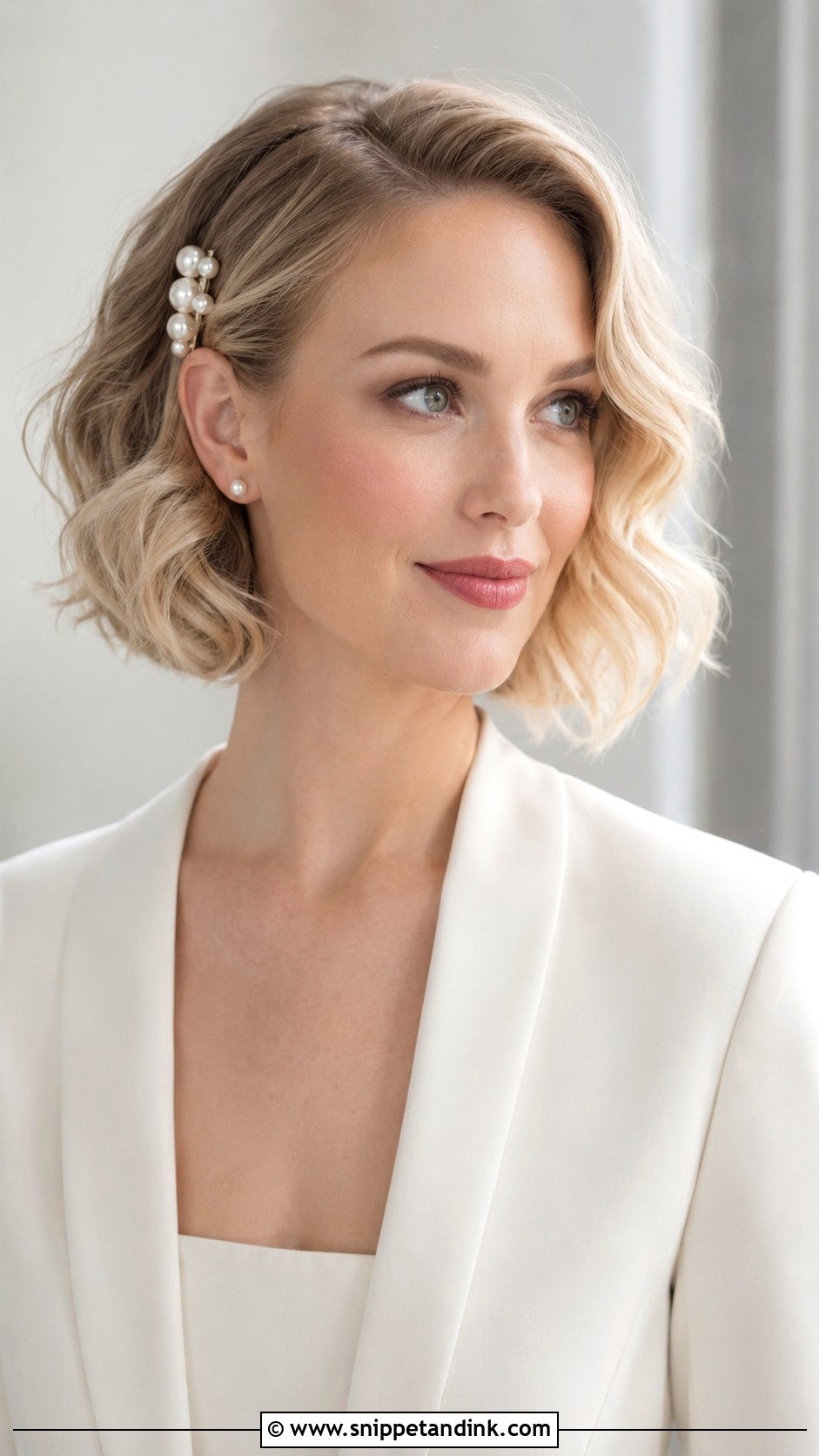
A bob, a lob or a chin-length cut can carry waves as elegantly as long hair, as long as the shape stays controlled. A side part leans vintage; a center part looks sleek and current. Plenty of brides with short hair are relieved to hear they don’t need extensions to look bridal. Short hair shows every bend, though, so I keep the ends smooth and the volume close to the head, because overdone curl makes a short cut look messy fast. A pearl clip, slim headband or small floral pin gives it the wedding finish.
9. Wavy Low Bun Bride Hairstyle
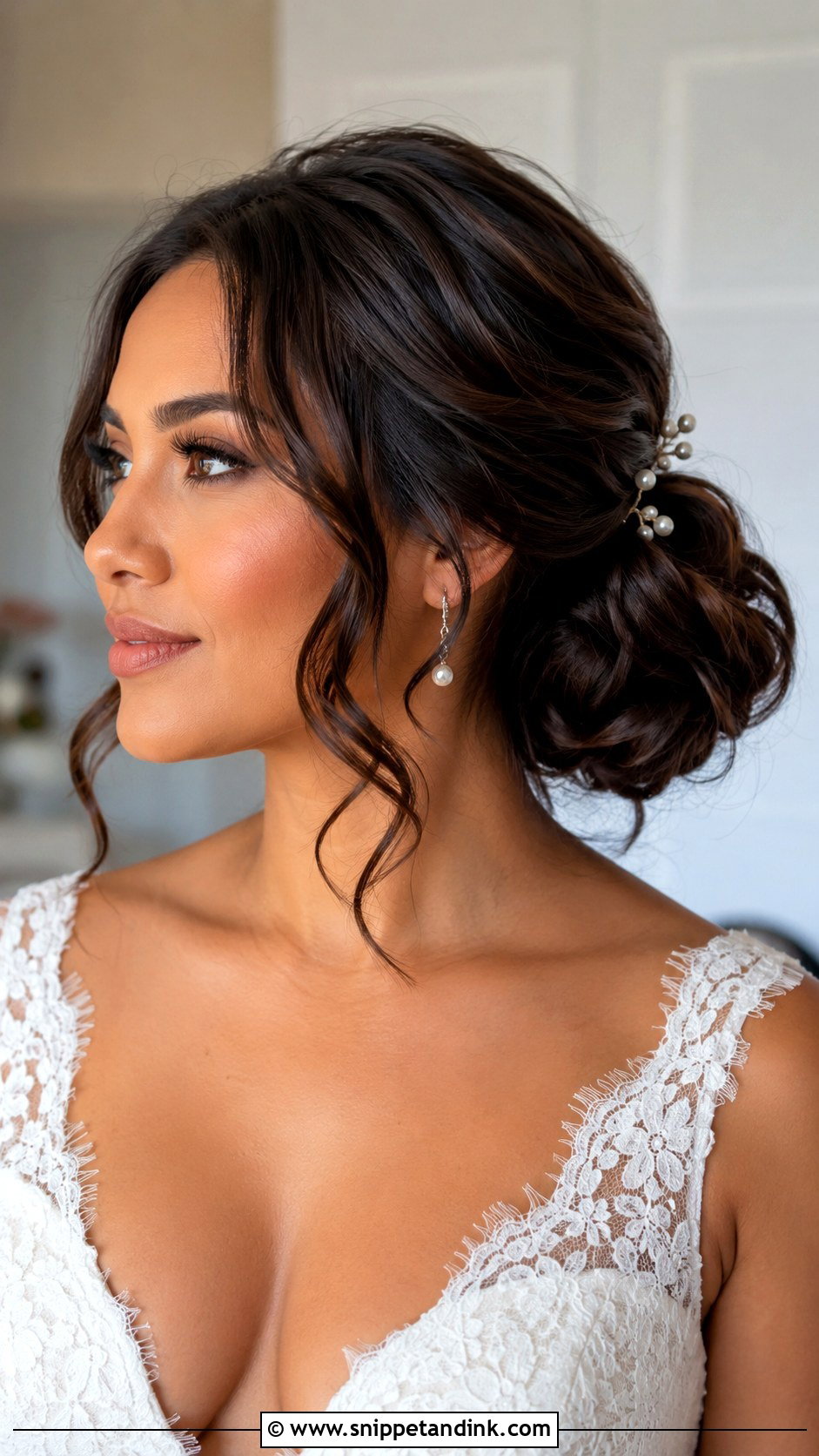
Waving the hair first and then gathering it at the nape gives the bun a fuller, textured shape that never looks stiff. Veils, detailed backs, high necks and warm days all suit it. The front pieces can be waved and tucked, or left loose for a softer frame. It’s one of the longest-lasting styles on this list, since once everything is secured very little can drop. I aim for balance rather than tension; a bun pulled tight at the temples can leave a bride with a headache by the reception.
10. Wavy Ponytail Bride Hairstyle
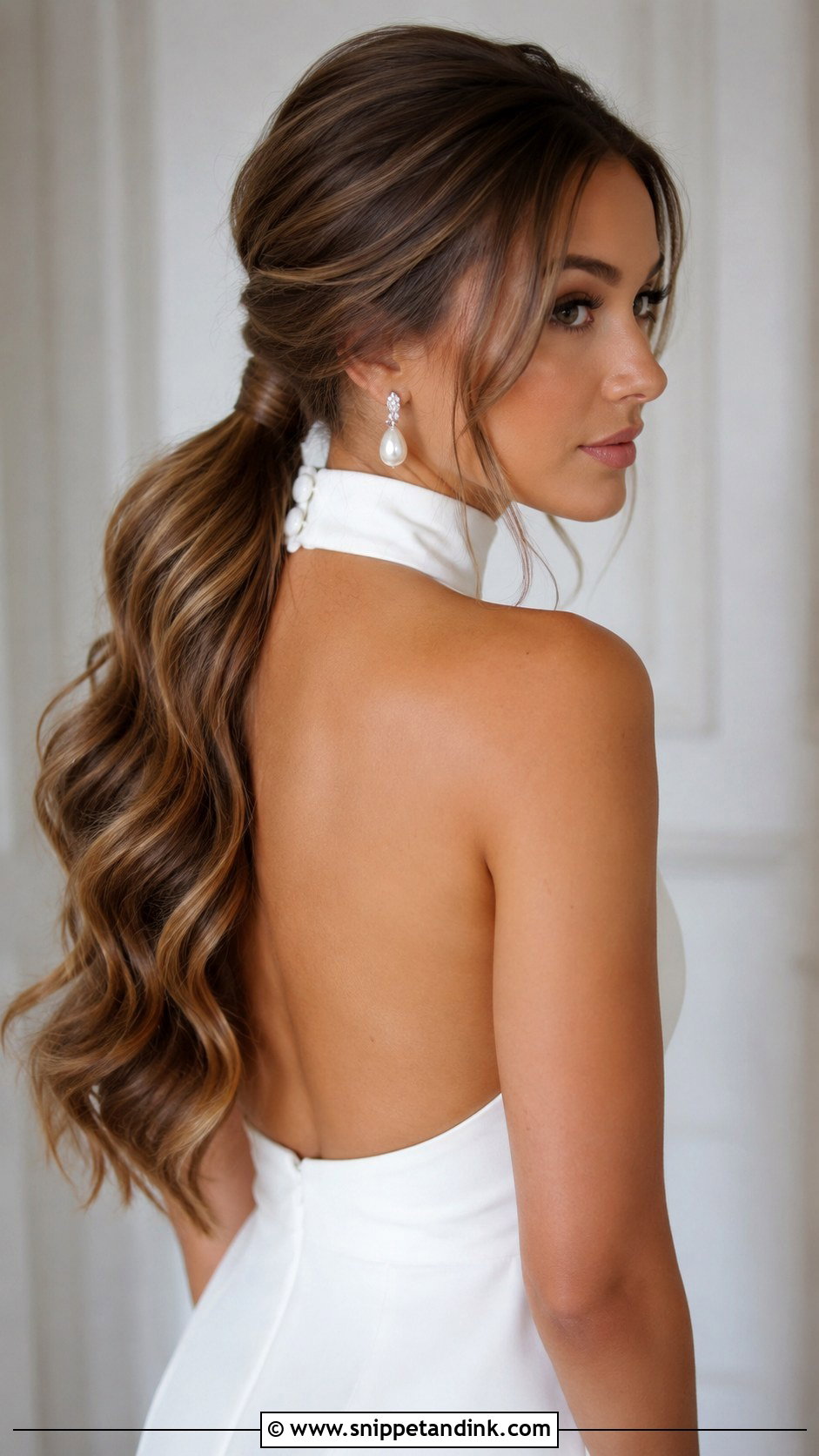
Comfort and length together: a wavy ponytail keeps hair off the neck without giving up movement. Low reads softer, high reads more fashion-led. Waves give the tail body so it looks full on camera, and a strand wrapped around the base hides the elastic. Clean gowns, halter necklines and statement earrings suit it. For security I build volume at the crown and pin that section down before tying, because a pony tied straight onto smooth hair slowly slips lower as the evening goes on.
11. Wavy Updo Bride Hairstyle
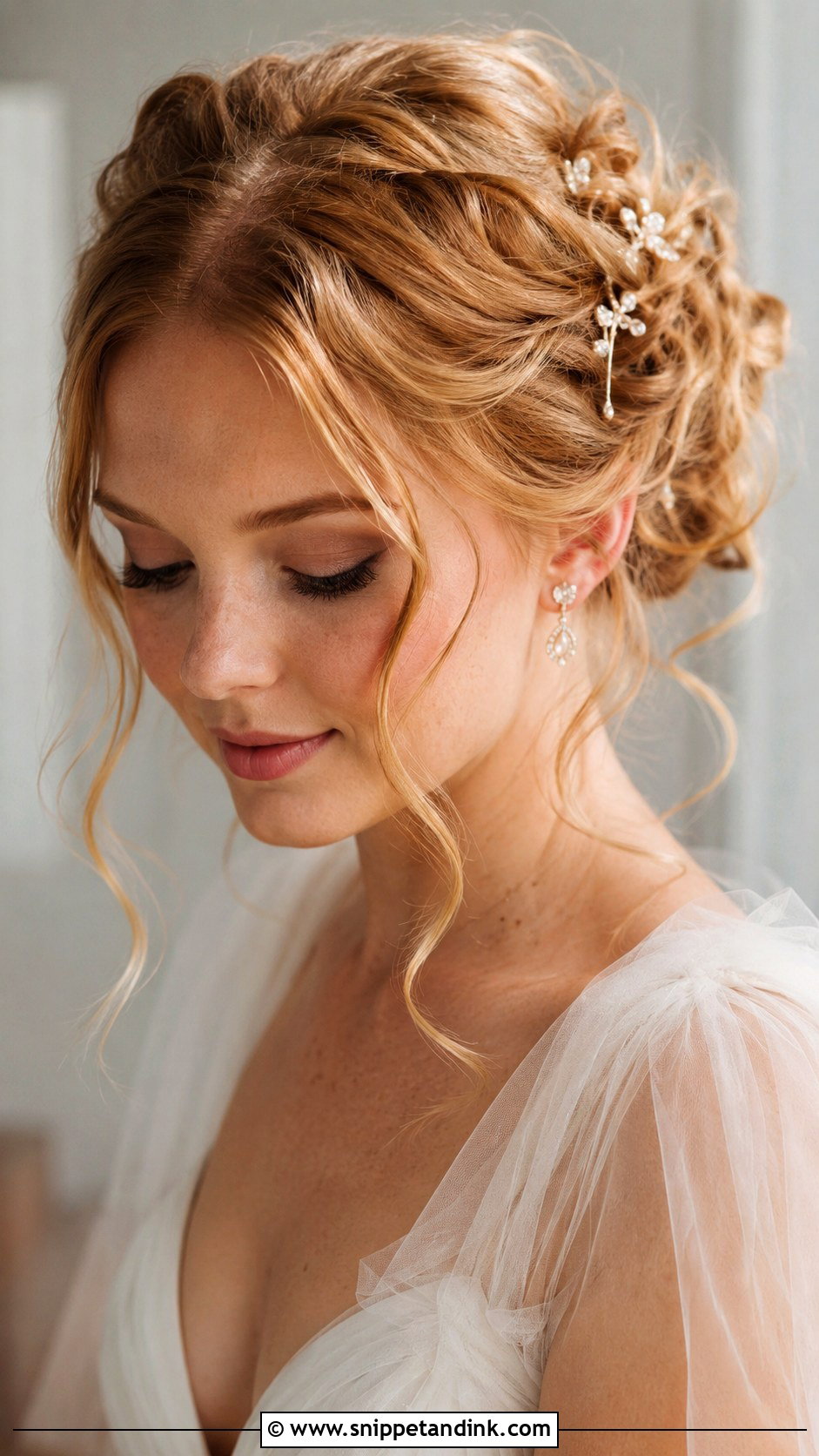
Here the waves themselves build the shape around the pinned sections, so you get structure without the severity of a sleek bun. Because texture makes hair look fuller than it is, this is one of my first suggestions for fine hair, as long as the prep includes a texture spray or dry shampoo for grip. Long ceremonies, outdoor weddings and a full dance floor are all easier with the hair lifted and secure. A few face-framing pieces, curled lightly, soften the edges, and small jewelled pins add a little sparkle.
12. Beach Waves Bride Hairstyle
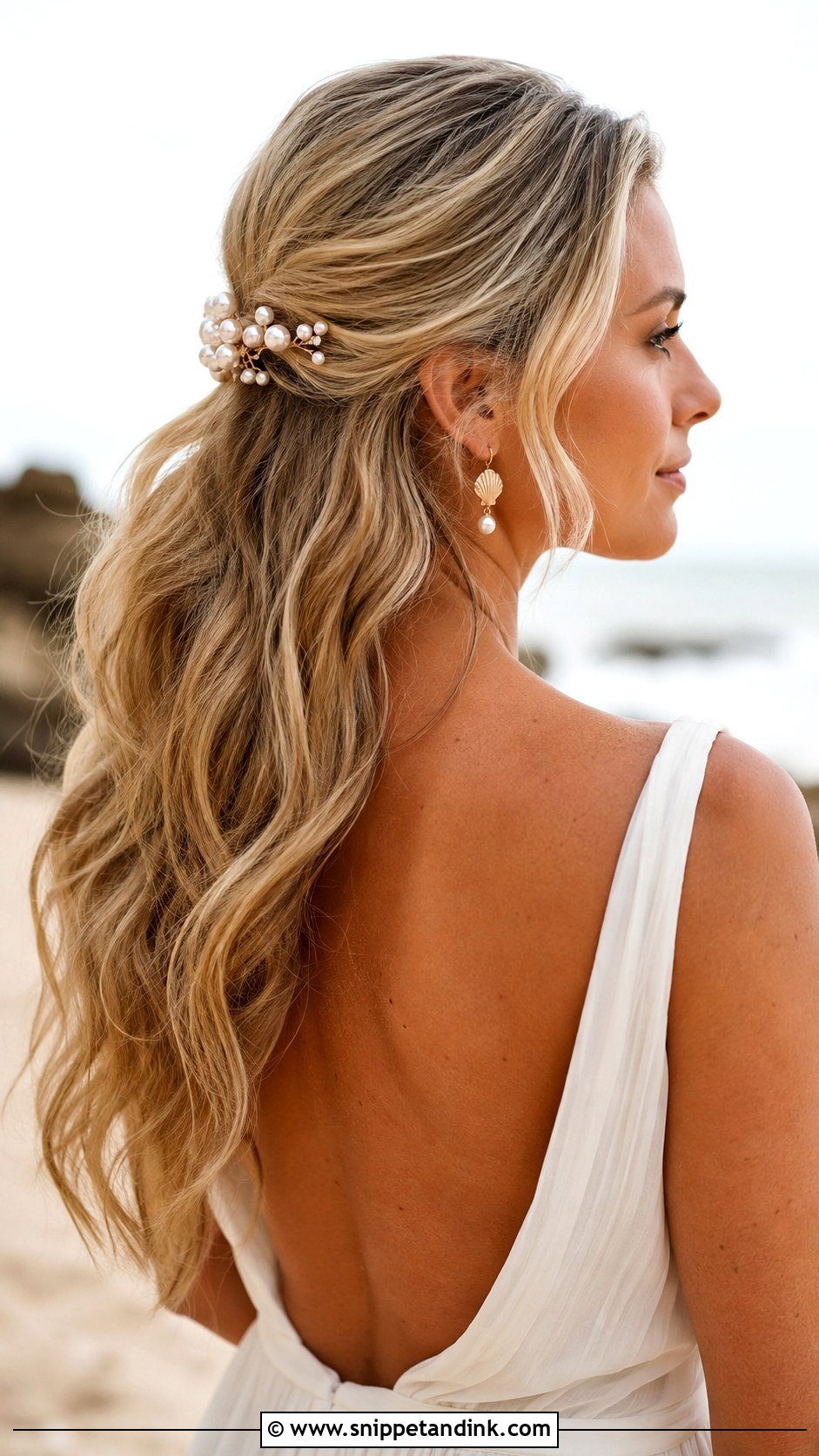
Beach waves should look airy, not dry or matted. Coastal weddings, destination ceremonies, backyard parties and light dresses suit their gentle bends and natural separation. Salt spray is what most people reach for, and I use it sparingly on brides, because a lot of salt leaves hair dull and rough to the touch. To make the style bridal, I keep the top smooth, add shine and pair it with one refined accessory such as pearl pins or a delicate comb. In humidity, anti-frizz prep and a flexible hold spray do more good than extra curling.
13. Vintage Waves Bride Hairstyle
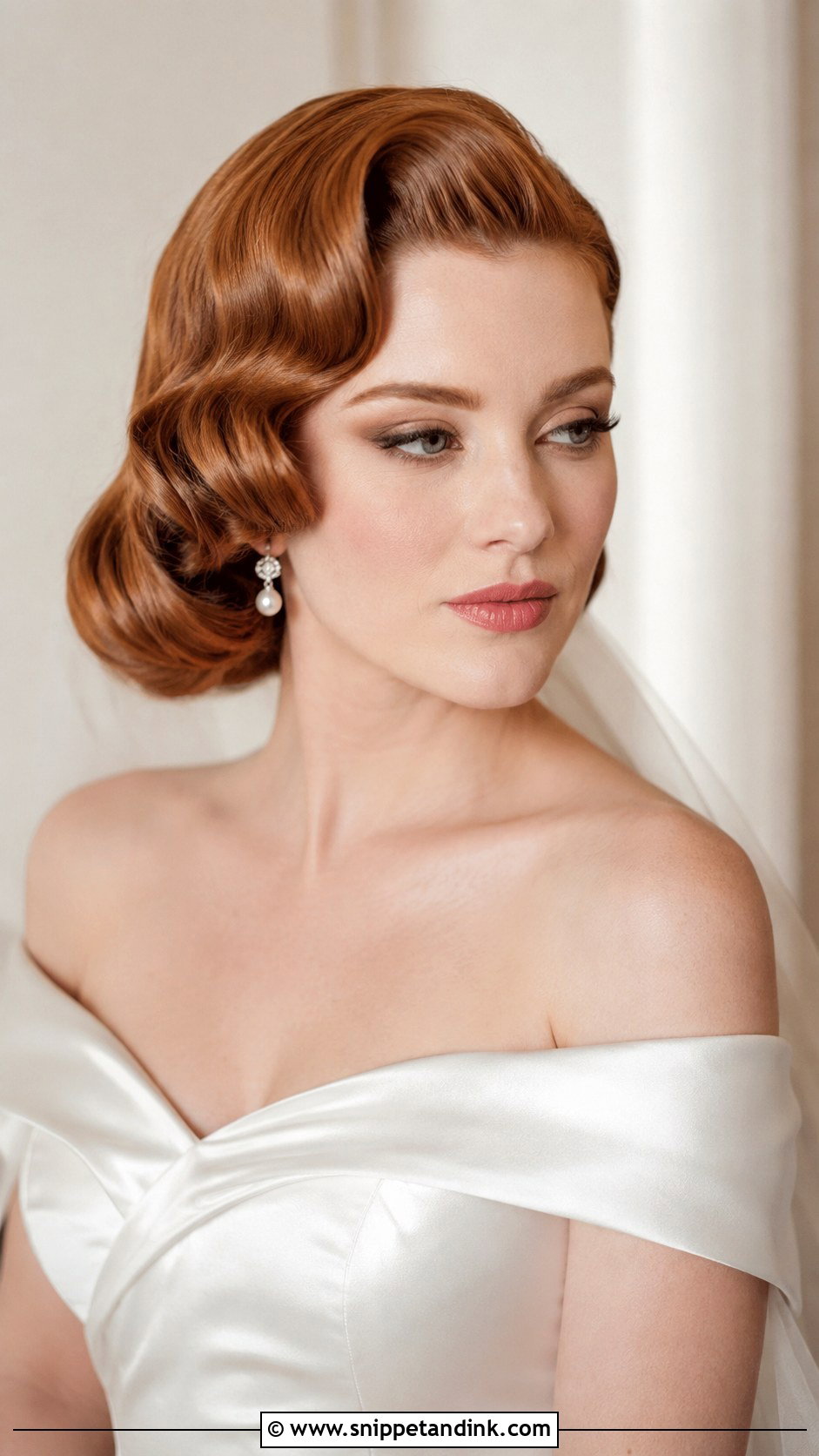
Sculpted close to the face with a side part and a smooth crown, vintage waves work across short, medium and long hair. Satin gowns, lace sleeves, birdcage veils and classic earrings suit them. They’re also the most technical style here. Each wave has to line up with the next, and on the morning there’s no time to start over, so I’d only book them after a trial where we’ve tested the pattern on your hair. For a modern take, I leave the waves a little soft rather than rigid. Gloss is what makes them look refined in portraits.
14. Natural Waves Bride Hairstyle
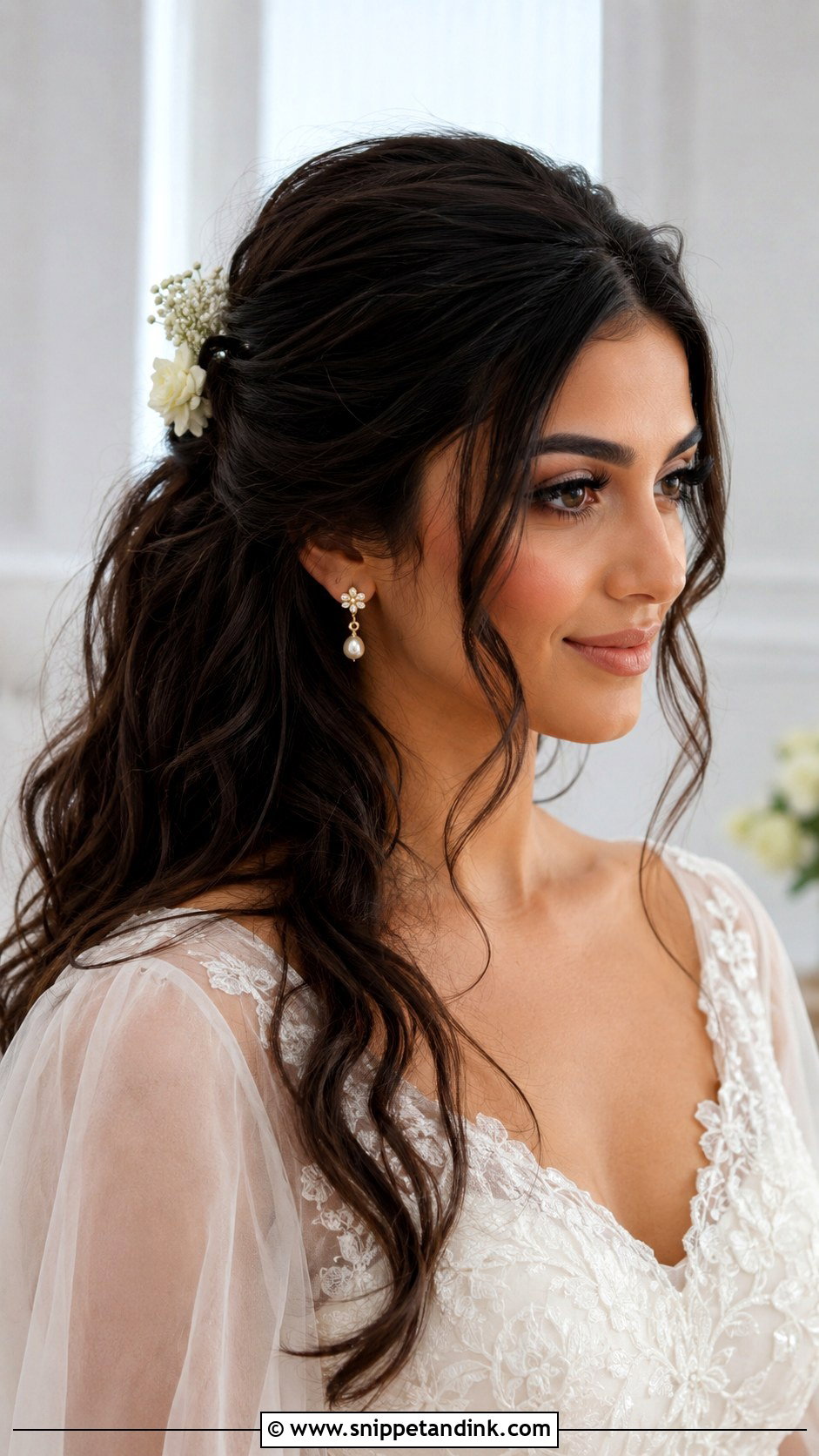
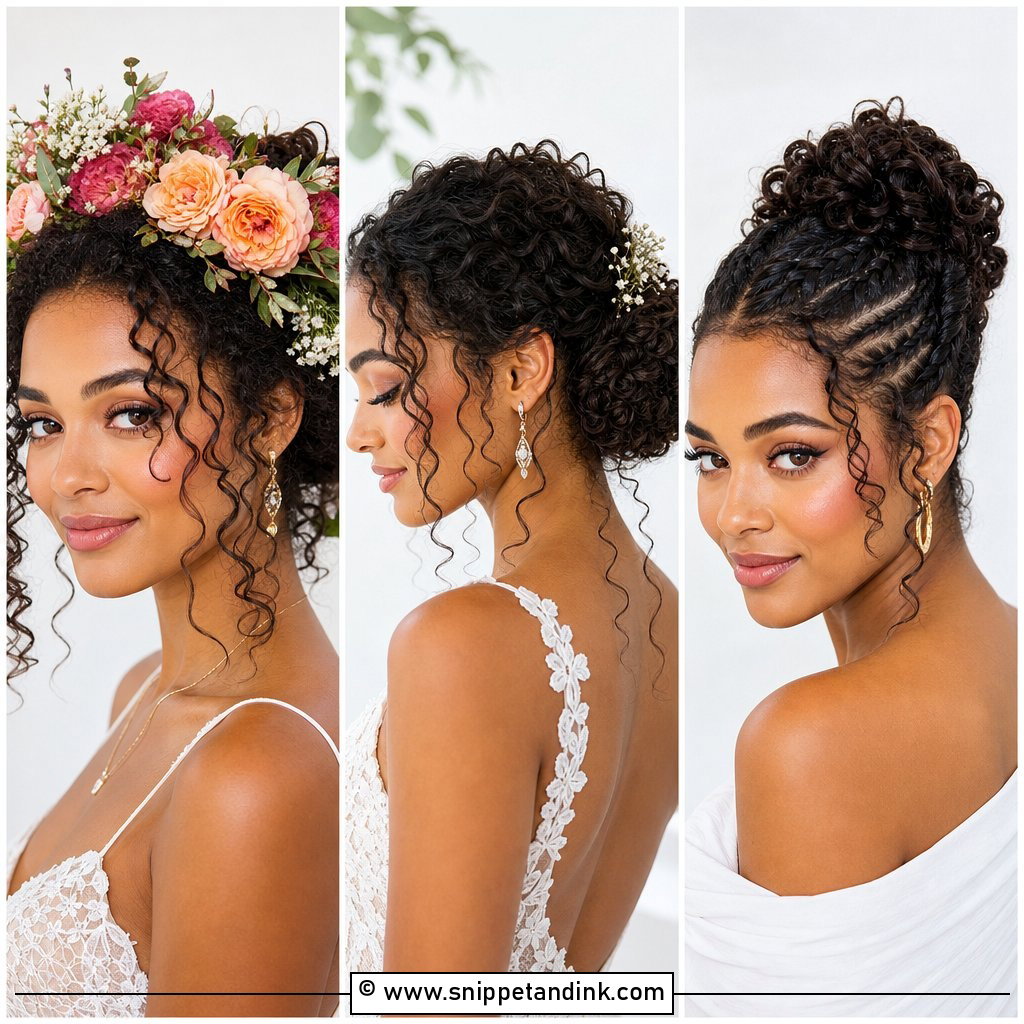
Working with your real texture doesn’t mean doing nothing. It means the right cut, prep and product: a curl cream, a light gel or a mousse to define the pattern and cut down frizz. I usually diffuse on low heat, touch up a few stray pieces with a curling iron and shape the front for balance. Simple veils, floral pins and relaxed gowns sit well with it. The aim is your own hair on a very good day, a bit shinier and more defined, rather than a different person in your photos.
15. Waves With Veil Bride Hairstyle
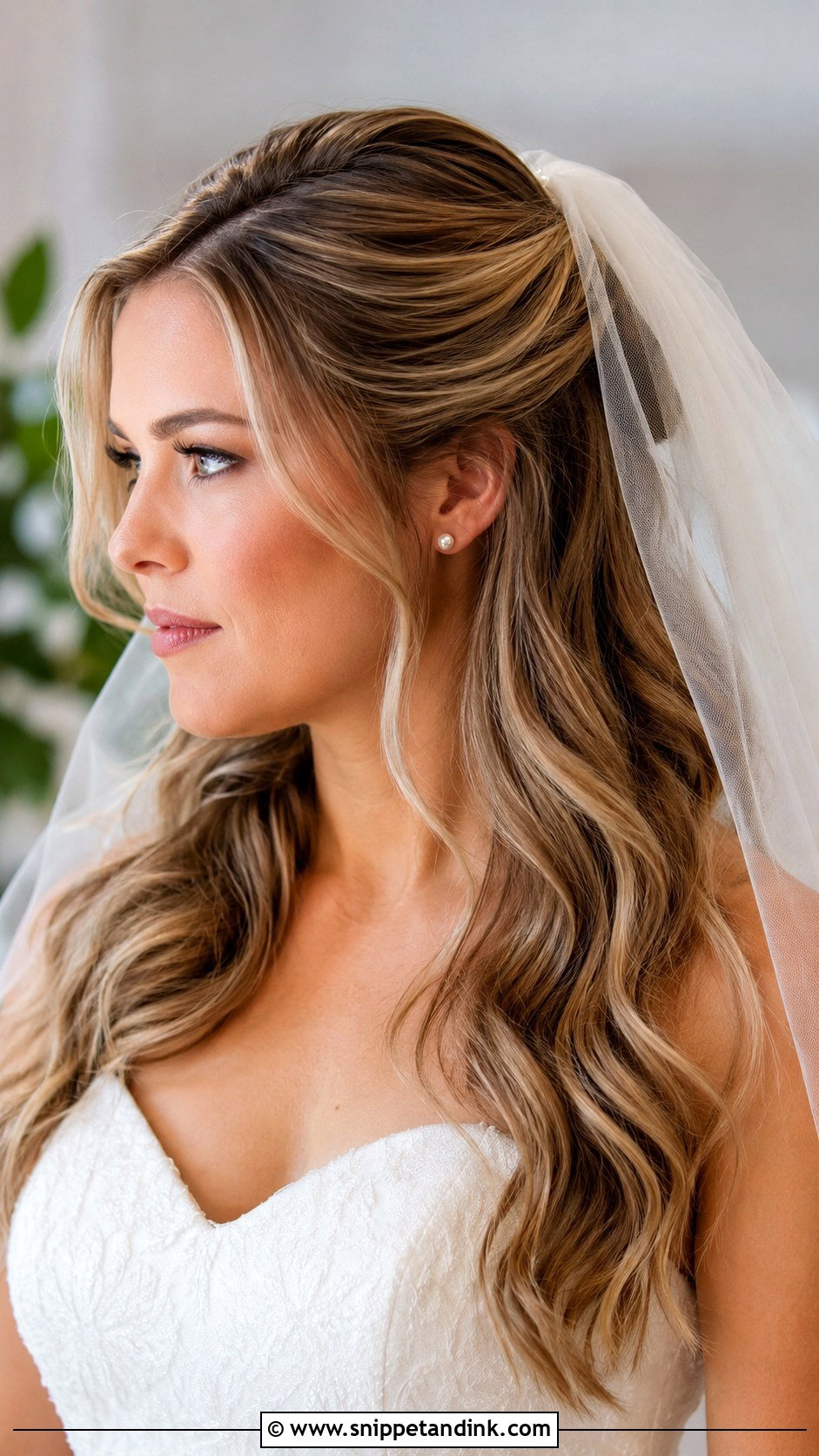
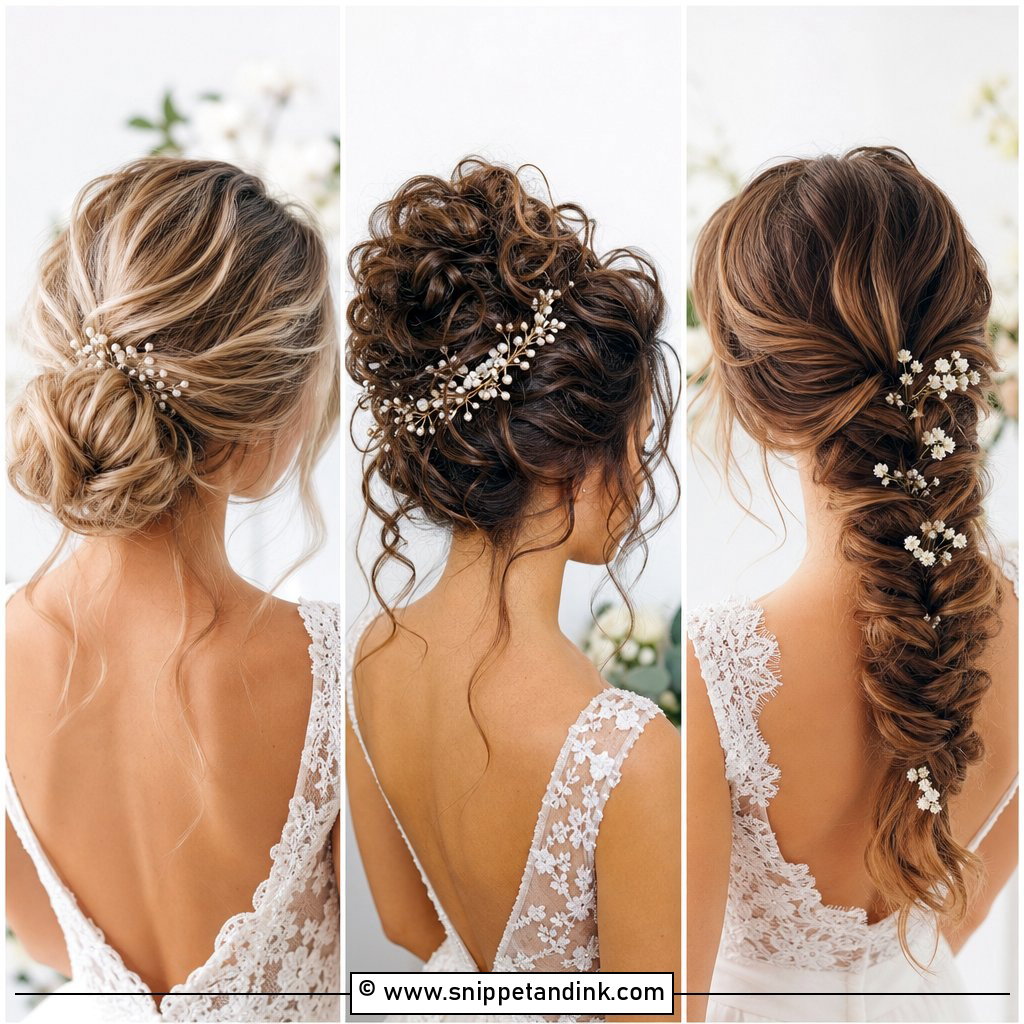
Decide where the veil sits before the hair is built, not after. A crown veil needs soft volume underneath to grip; a veil tucked under a half-up section or a low bun leaves the top of the waves visible. Loose waves under a veil show their movement through the tulle without hiding it. Long, medium and shoulder-length hair all work. Bring the actual veil to your trial so the comb can be tested, and keep the waves smooth near the comb, because textured hair tangles in tulle when the veil comes out.
Lace Shoulders, Beading and Loose Waves Don’t Always Get Along
Every style here that leaves hair down touches the dress, and the fabric changes how the hair behaves. Check this at your fitting, not on the morning.
- Beaded straps and appliqué catch waves and twist single strands into knots. If your shoulders are heavily beaded, a side sweep onto the plain side or an updo protects both the hair and the dress.
- Silk and satin mark easily. Shine spray and hair oil can leave spots where the ends rest on the fabric, so I apply them before you step into the dress and give them time to dry.
- Tulle and dry winter air build static that lifts waves into fuzz. A tiny amount of hand cream smoothed over the lengths calms it.
- High necks and lace collars push waves forward and can flip shoulder-length hair outward. Pinning the back section under, or going half up, keeps the line clean.
Does Your Hair Hold a Curl? Start There
Waves suit so many brides because they can be shaped soft or polished, modern or classic. The right version isn’t the photo that saves best; it’s the one that fits your hair, dress, veil, face shape and the actual plan for the day. Hair that holds curl easily can carry loose or Hollywood waves through to the last dance. Hair that drops fast is safer in a half-up style, a low bun or a wavy ponytail. Book the trial, bring clear photos and test the accessories early, while there’s still time to change your mind.
You'll Like These Ideas:


Leave a Reply