
Pakistani Walima bride hairstyles sit at the softer end of the wedding week. By the reception, most brides I style have spent the Barat under a heavy dupatta, a pinned passa and a lot of hairspray, so the Walima look should feel lighter on the head and kinder on the scalp. That doesn’t mean loose and unplanned. Pastel, champagne and ivory outfits show every frizzy strand and every flattened crown, so I still build a firm base under the softness. These are fifteen looks I’d actually offer a Walima bride, with notes on what each one needs from your hair, your dupatta and your jewelry.
Your Scalp After the Barat, and Why It Changes the Walima Plan
The Walima usually lands a day or two after the Barat, and brides forget that when they plan their hair. The night before, you’ll have taken out dozens of pins, a passa, maybe extensions and several coats of spray. The scalp is often tender where the heaviest jewelry pulled, and the hair is coated and limp.
This is what I ask brides to do between the two events:
- Take the Barat style down slowly, pin by pin, and brush out from the ends upward. Tugging at spray-stiff hair is how you lose a chunk at the nape.
- Wash and condition properly that night or the next morning. Hair loaded with spray won’t take a new curl, and dry shampoo on top only adds grit.
- Let it dry fully before bed. Damp hair pressed into a pillow kinks, and I’ll spend a long time chasing those dents with a straightener.
- Tell your stylist where it hurts. If the passa pulled on the left, I’ll move the anchor point for the Walima style somewhere else.
It’s also why I lean toward lighter structures for the reception. A bun with fewer pins, or open hair with a soft hold, gives a sore scalp a rest and still looks finished in photos.
1. Pakistani Walima Bridal Low Bun
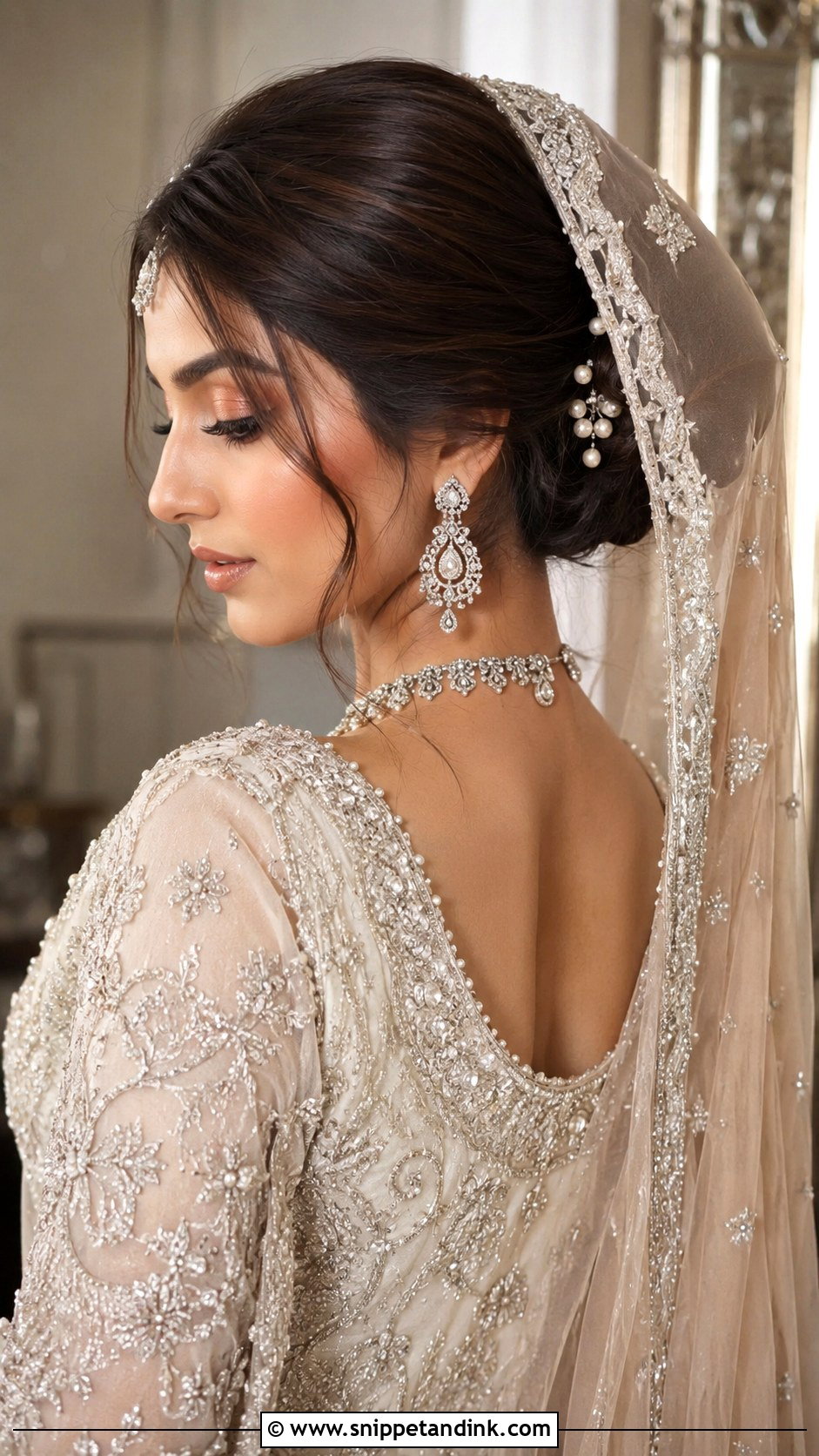
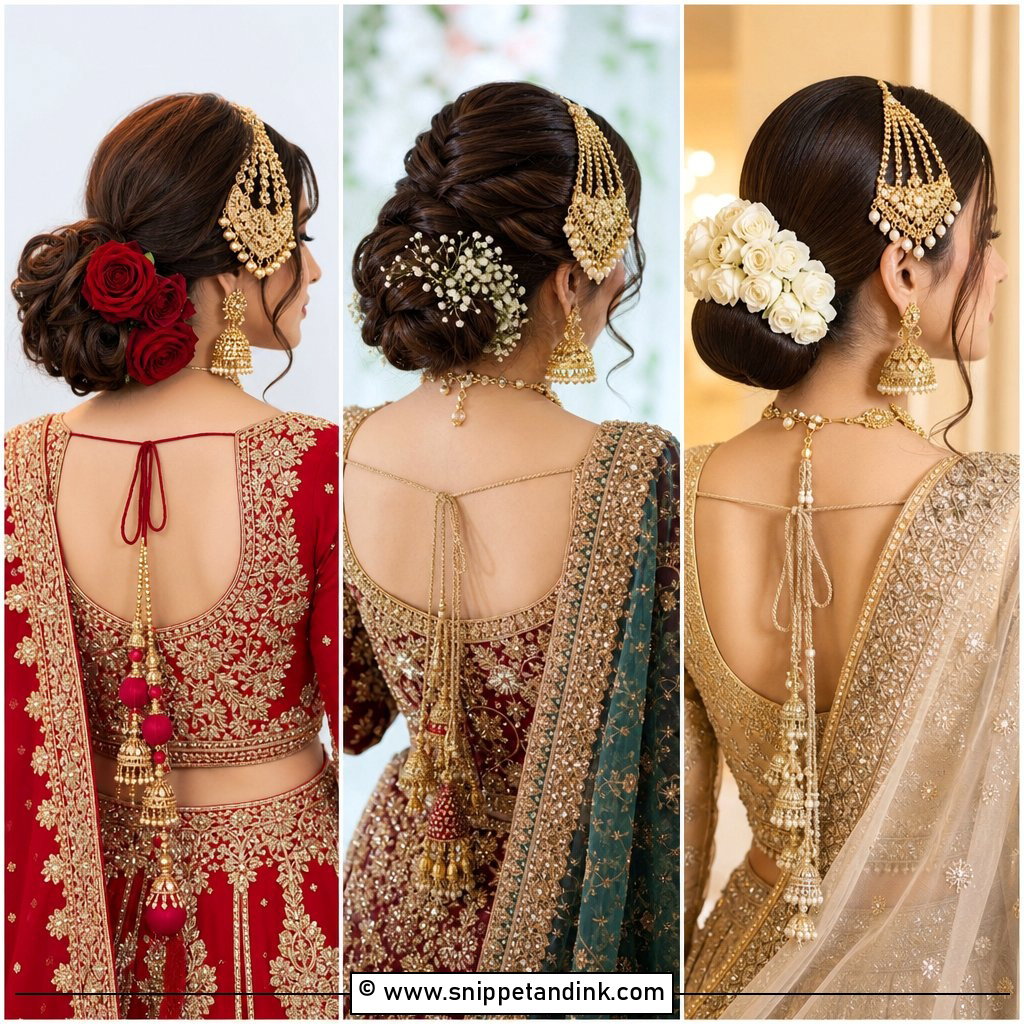
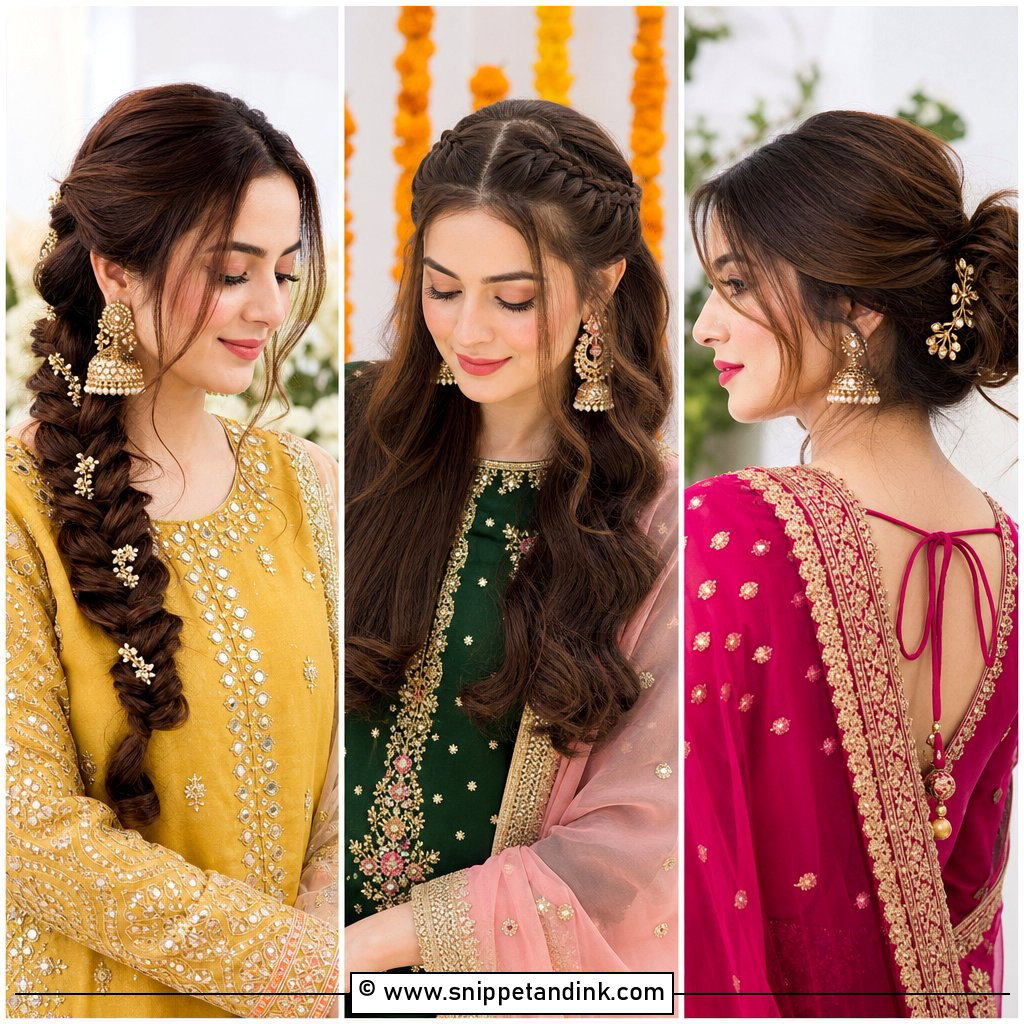
I start most Walima consultations here. A low bun sits at the nape, below where the dupatta pins go, so the crown stays round instead of getting pressed flat by fabric. With heavily embroidered gowns and pastel lehengas it also keeps the neckline and necklace clear. The first thing I check is how the dupatta will hang at the back, because a bun placed too high pushes it out like a tent. Smooth, twisted or braided all hold well, and in a humid hall it’s the safest of the fifteen since nothing loose is left to swell.
2. Pakistani Walima Bridal Soft Curls
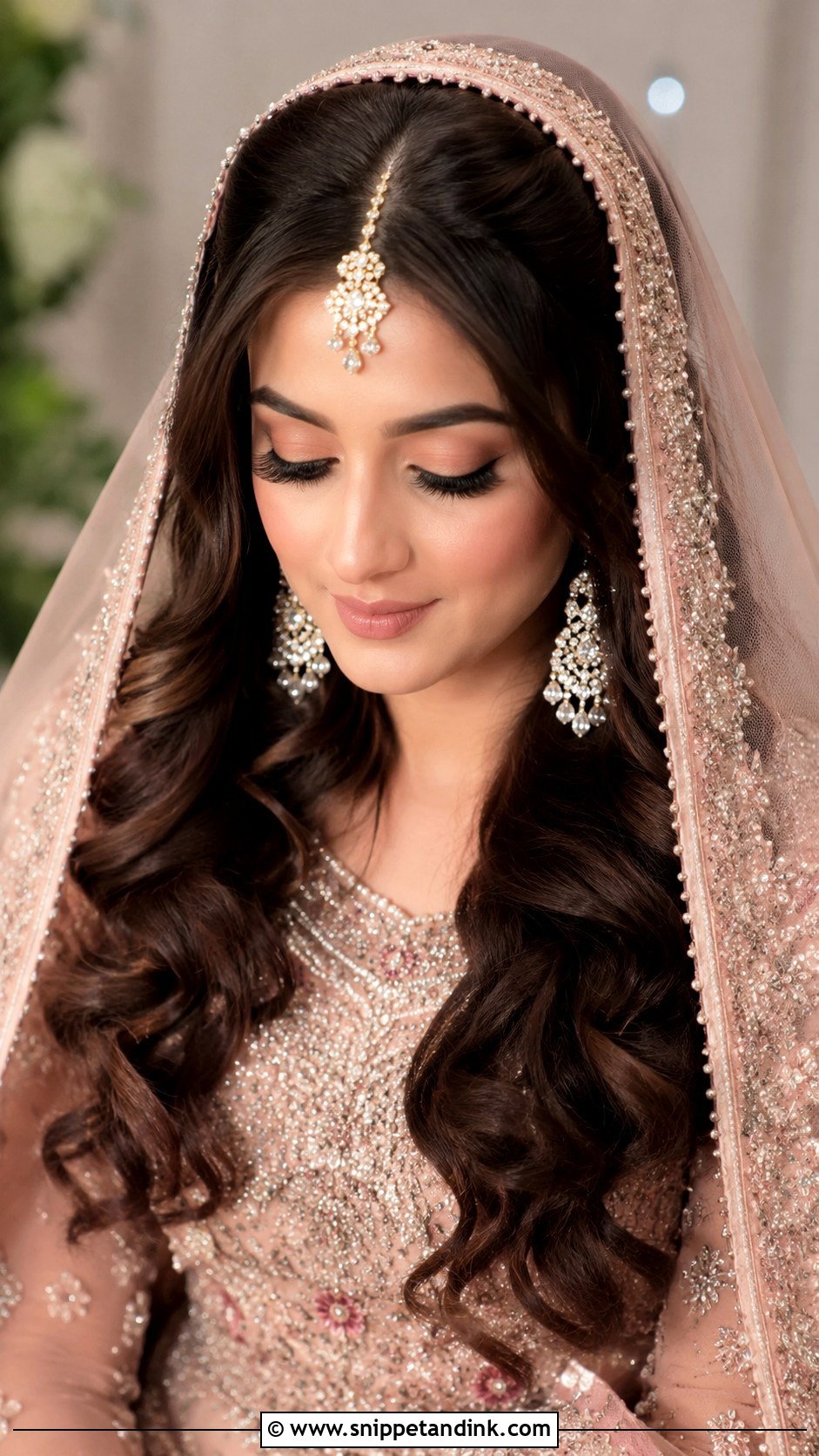
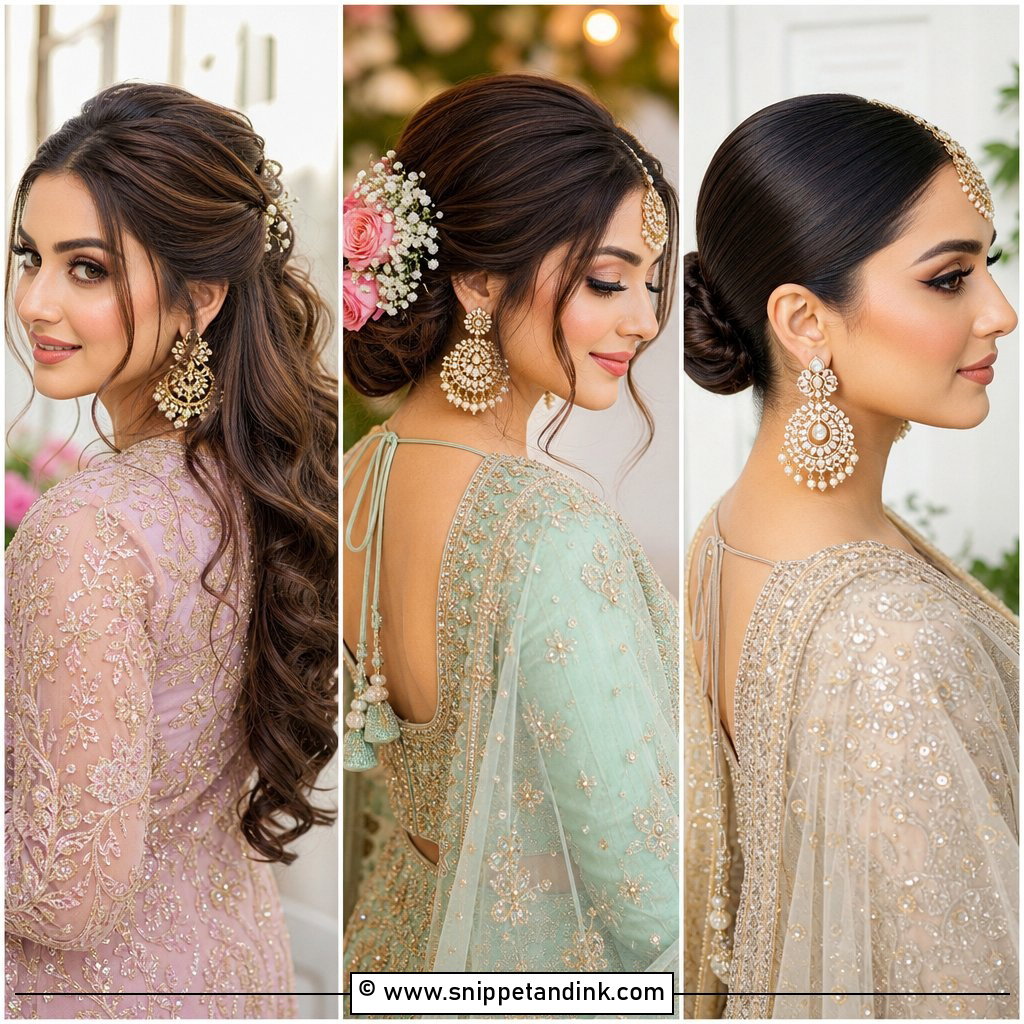
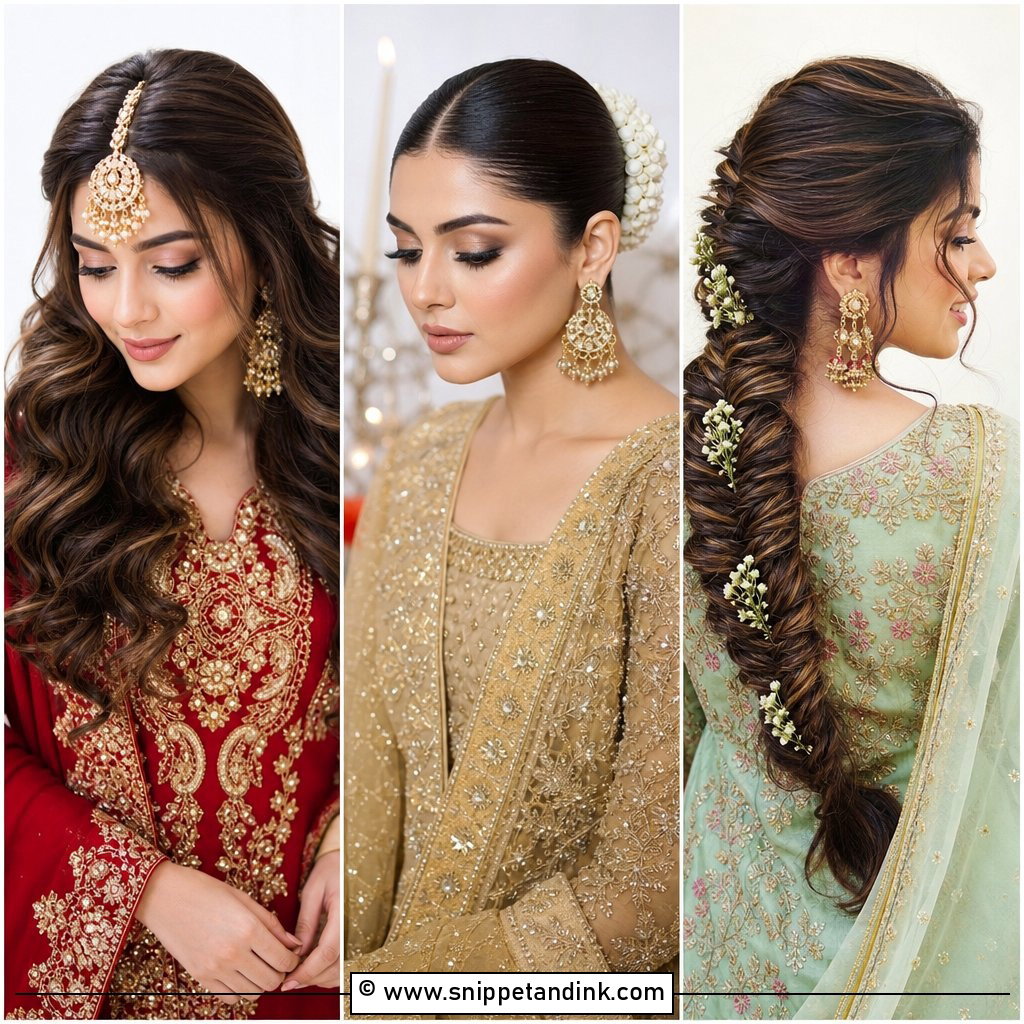
Open curls at a formal reception only work if they’ve been set properly. I curl in small sections, pin each curl while it cools, then brush them out right before the dupatta goes on, so you get airy movement instead of ringlets that collapse by dessert. A centre part reads more regal; a side part softens a strong jaw. Keep the dupatta light with this one. Sheer net pinned at the back is fine, but a heavily embellished piece will drag the curls flat within the first hour.
3. Pakistani Walima Bridal Half Up Hair
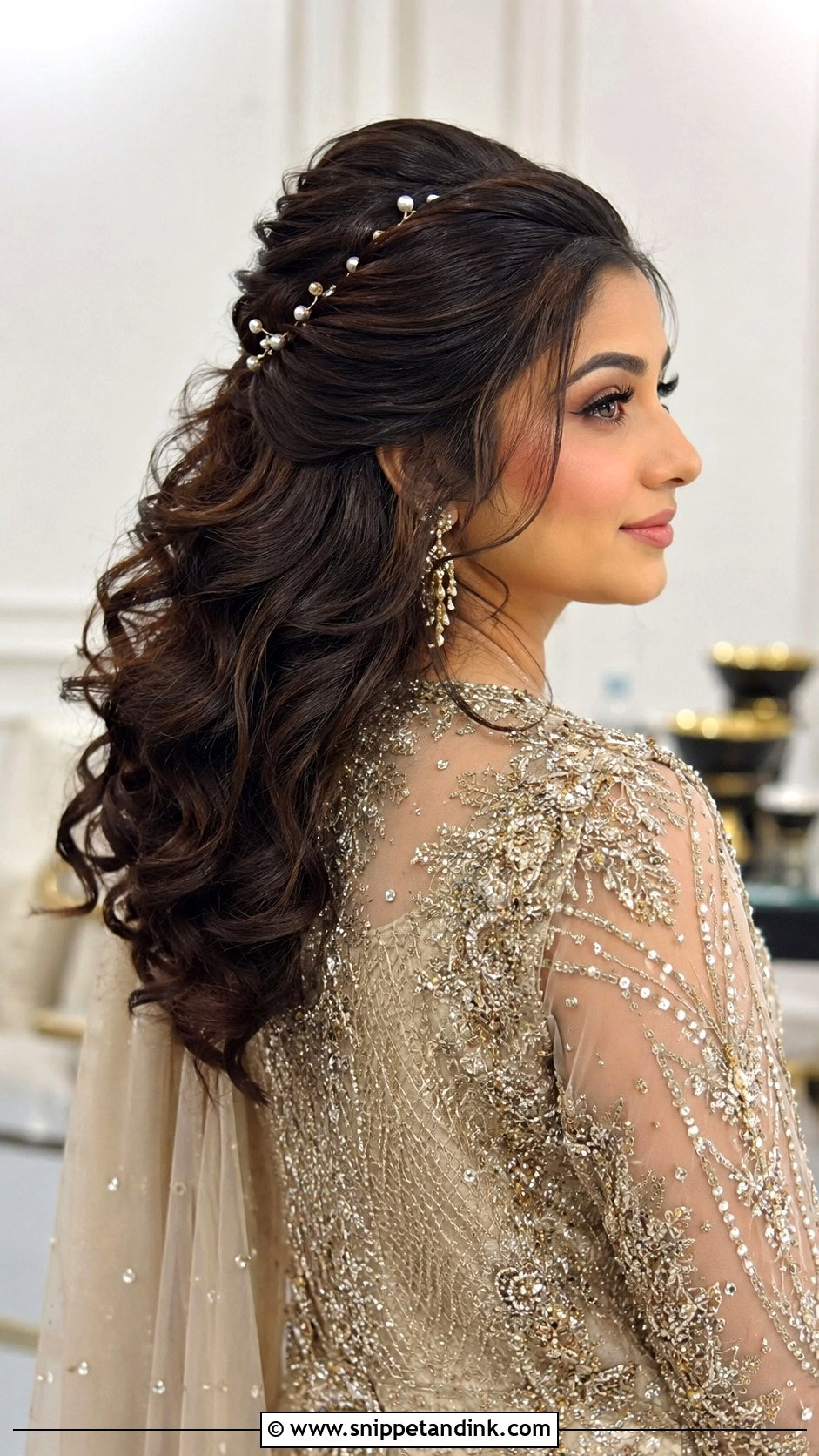
Half up is my compromise for brides stuck between open hair and a bun. The top section is lifted and locked onto a small hidden base of crossed bobby pins, which is also what gives a matha patti or a soft passa something solid to hook into. The lower length gets curled. One honest warning: on very fine hair the pinned section can look thin from behind, so I usually slip a small clip-in weft under the lift. It also keeps hair off your face through all the greetings and hugs, which matters more at a Walima than people expect.
4. Pakistani Walima Bridal Side Swept Curls
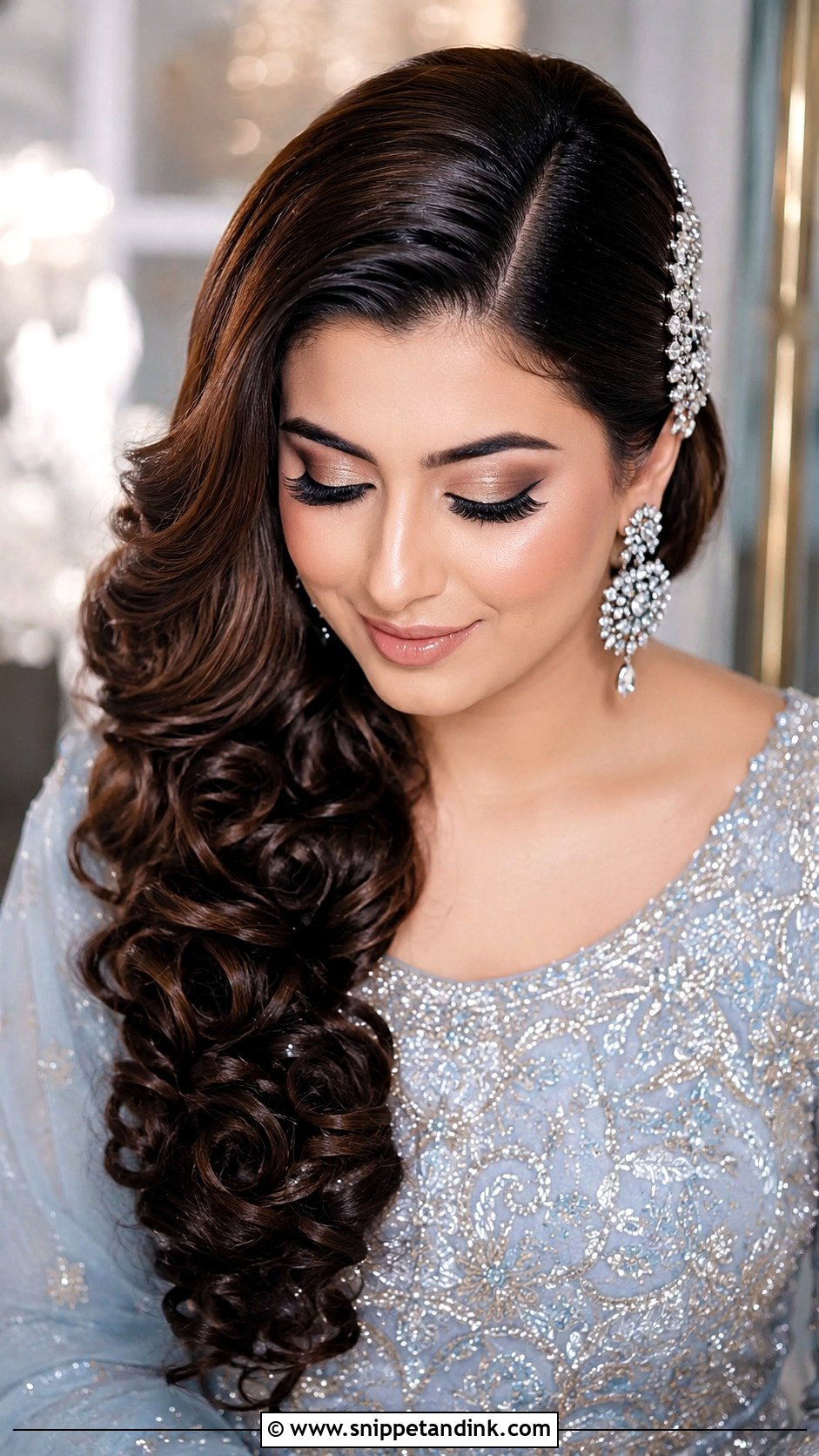
Side swept curls give glamour without the height of a puff. Everything comes over one shoulder, leaving the other ear and the side of the neck open for a statement earring or a one-sided dupatta drape. The real work is hidden. I anchor the hair behind the far ear with a row of criss-crossed pins, otherwise the weight slides back toward the centre within an hour. Silver, crystal and rose gold embroidery all suit it, and blended curls keep it current rather than stiff.
5. Pakistani Walima Bridal Sleek Bun
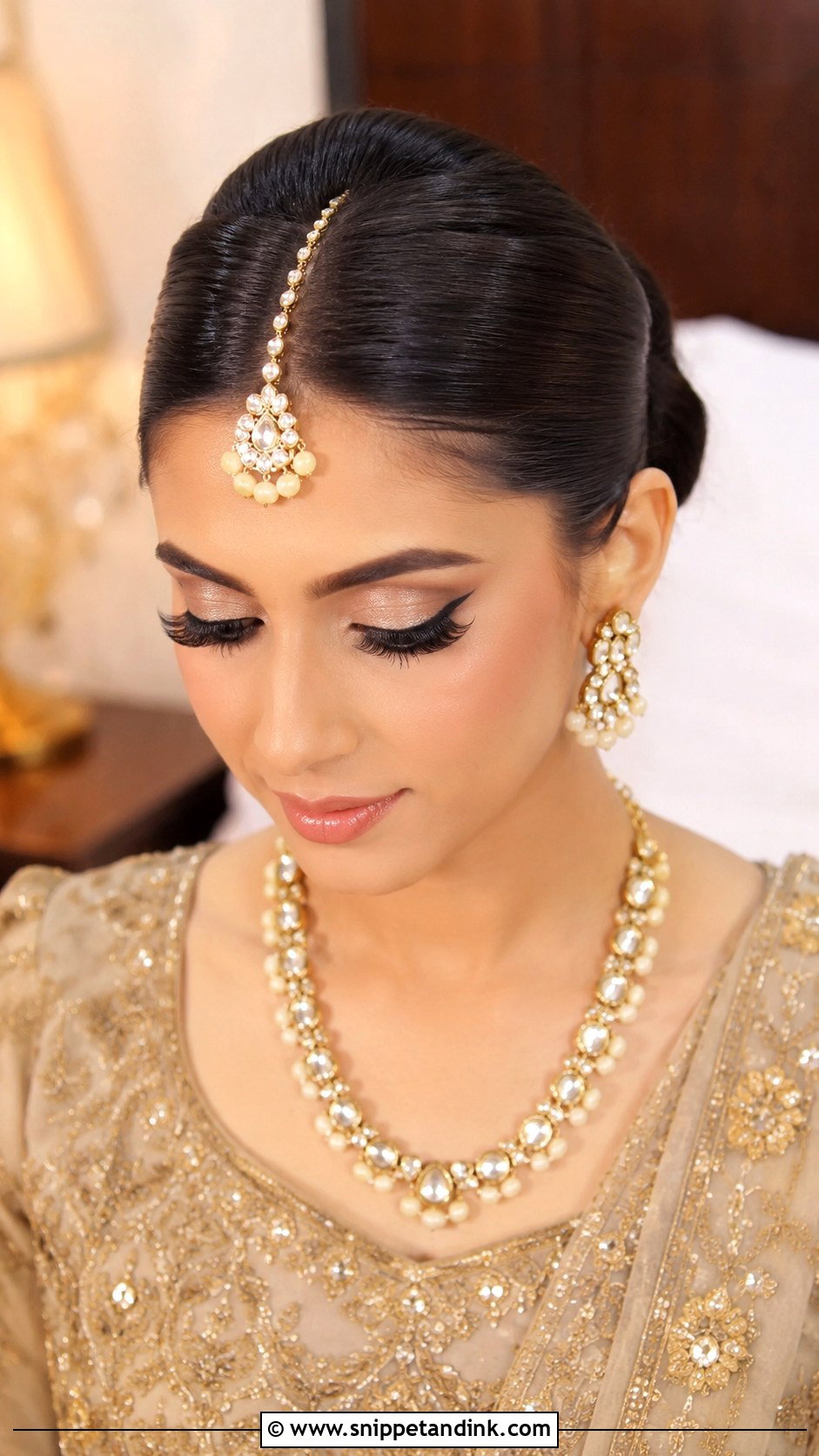
A sleek bun is what I suggest when the jewelry is the heaviest thing in the outfit. Smooth part, shine pulled straight back, a neat shape at the nape, and nothing fighting the necklace, jhumkas or dupatta border. High necks and boat necks suit it because the line from crown to shoulder stays clean. The catch is that sleek hair shows every bump, so I blow-dry it smooth first rather than leaning on gel, and I’d avoid it if your hairline is thinning at the temples. A centre tikka or a few small pearls finish it.
6. Pakistani Walima Bridal Loose Waves
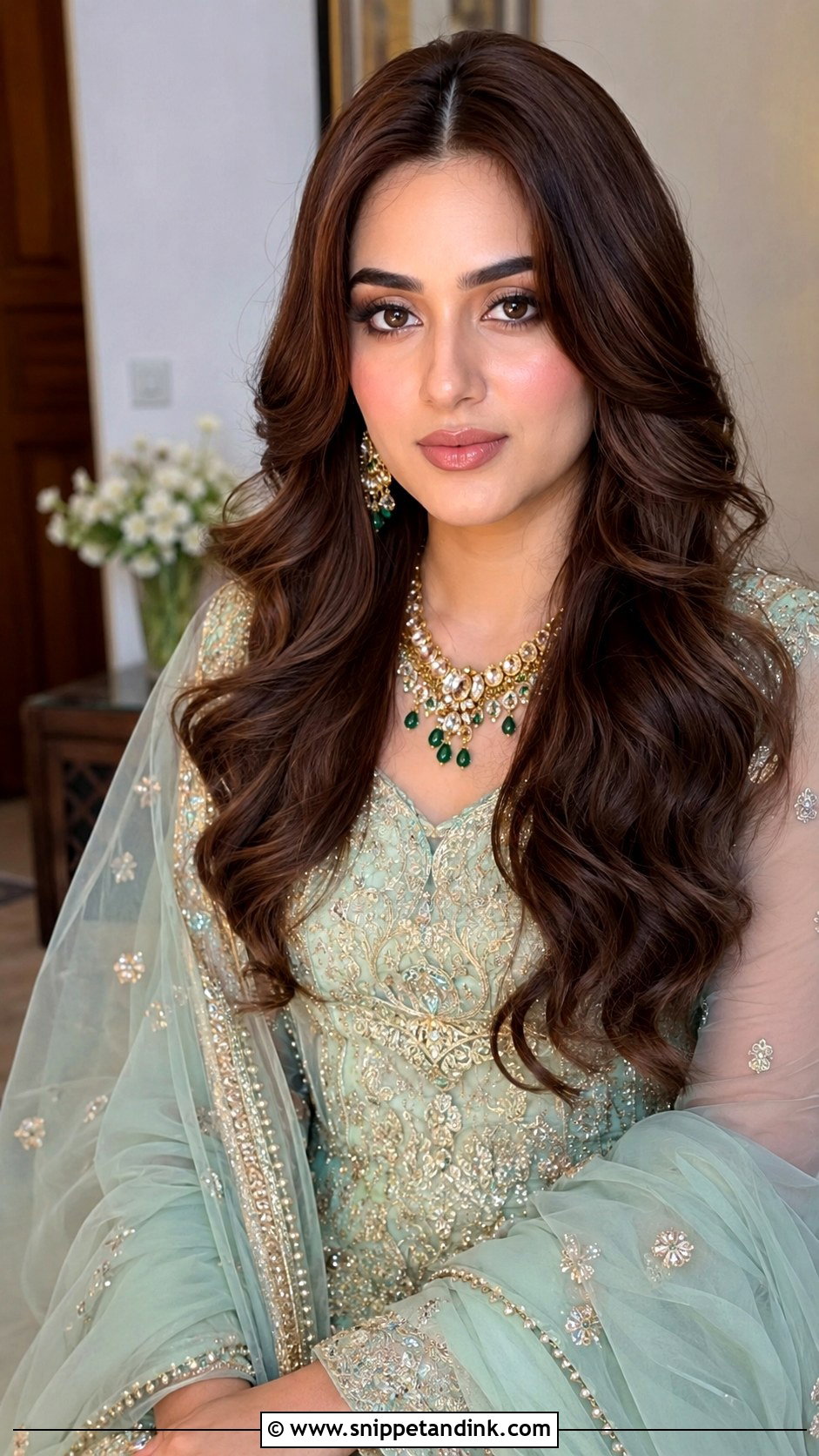
Loose waves need length and density to look finished, so on medium hair I often add extensions for body. I set them with a bigger barrel than I’d use for curls and brush through until the bends join into one movement. They sit well with pastel Walima dresses, especially ivory, powder blue and blush, because glossy hair picks up the light those colours give off. I shape the two front pieces away from the face so they don’t drop into your eyes every time you lean in for a photo.
7. Pakistani Walima Bridal Braided Bun
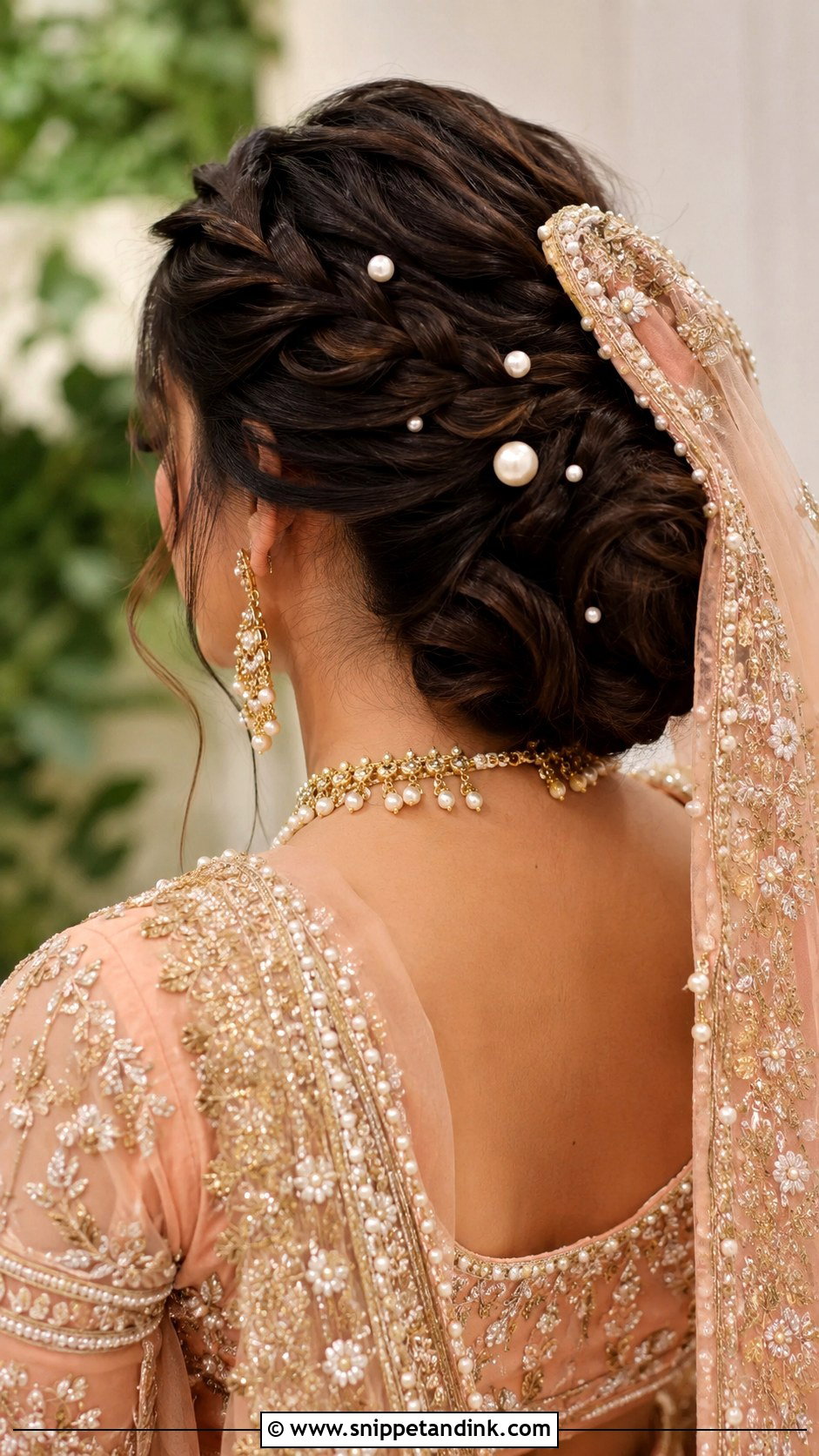
Thick hair is where a braided bun earns its place. Braiding the length before coiling it spreads the weight, so the bun stays tight through a long reception and gives the dupatta a firm anchor if you want it on the head. The braid can wrap the bun, trace one side or add texture at the crown. On fine hair I keep the braid small and gently pull it wider, or it ends up looking like a rope wrapped around a tiny knot. Little pearls or gold pins are usually all it needs.
8. Pakistani Walima Bridal Crown Volume Hair
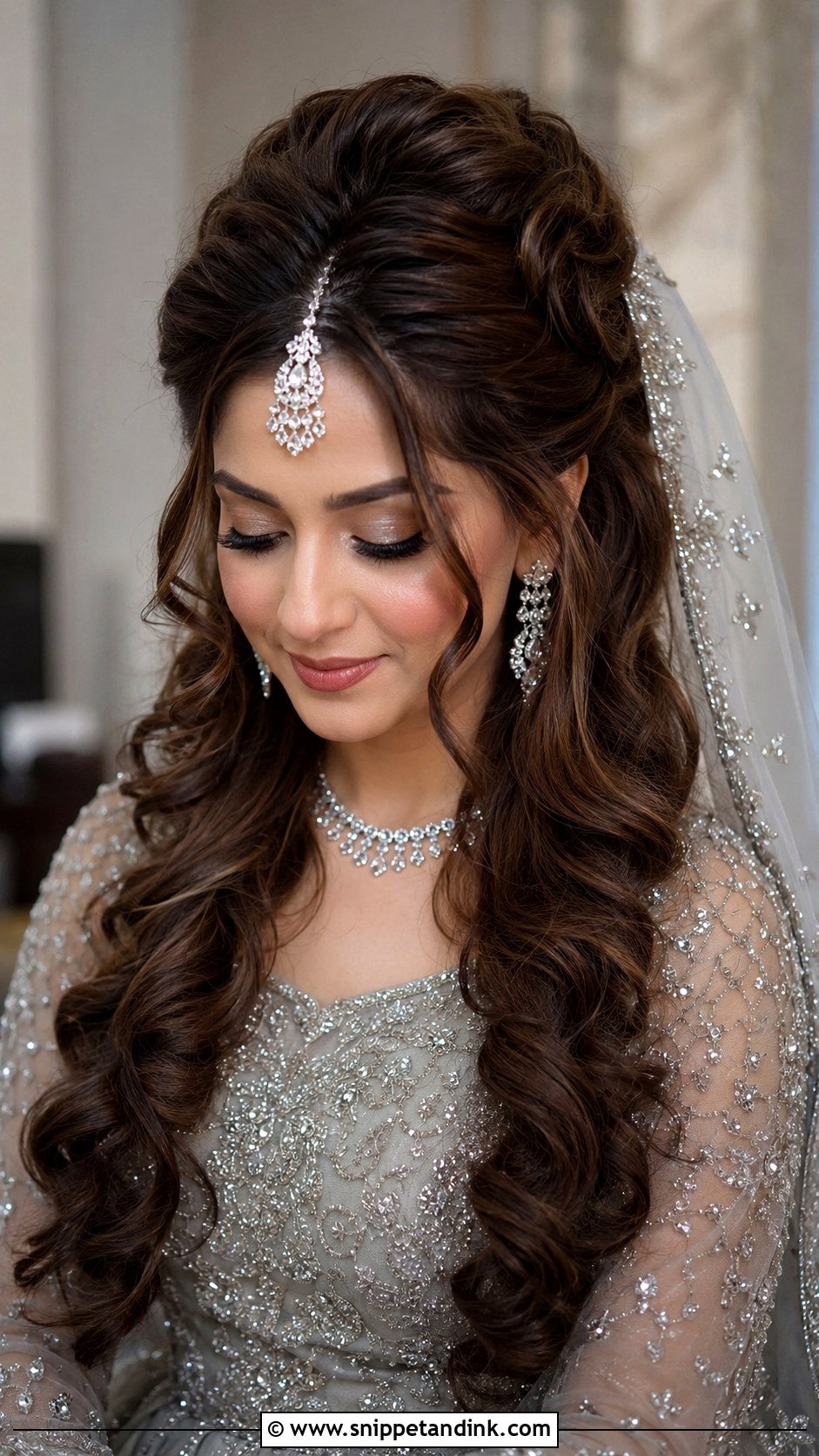
Crown volume means a little height under the dupatta, not a beehive. I backcomb only the roots of the top section, smooth the surface over it and pin from underneath so no teasing shows. That lift is what gives matha patti, tikka and passa somewhere to sit without sliding forward. The rest of the hair can go into a bun or curls. If the volume feels stiff at your trial, ask for less spray and more pinning, not less height.
9. Pakistani Walima Bridal Center Part Bun
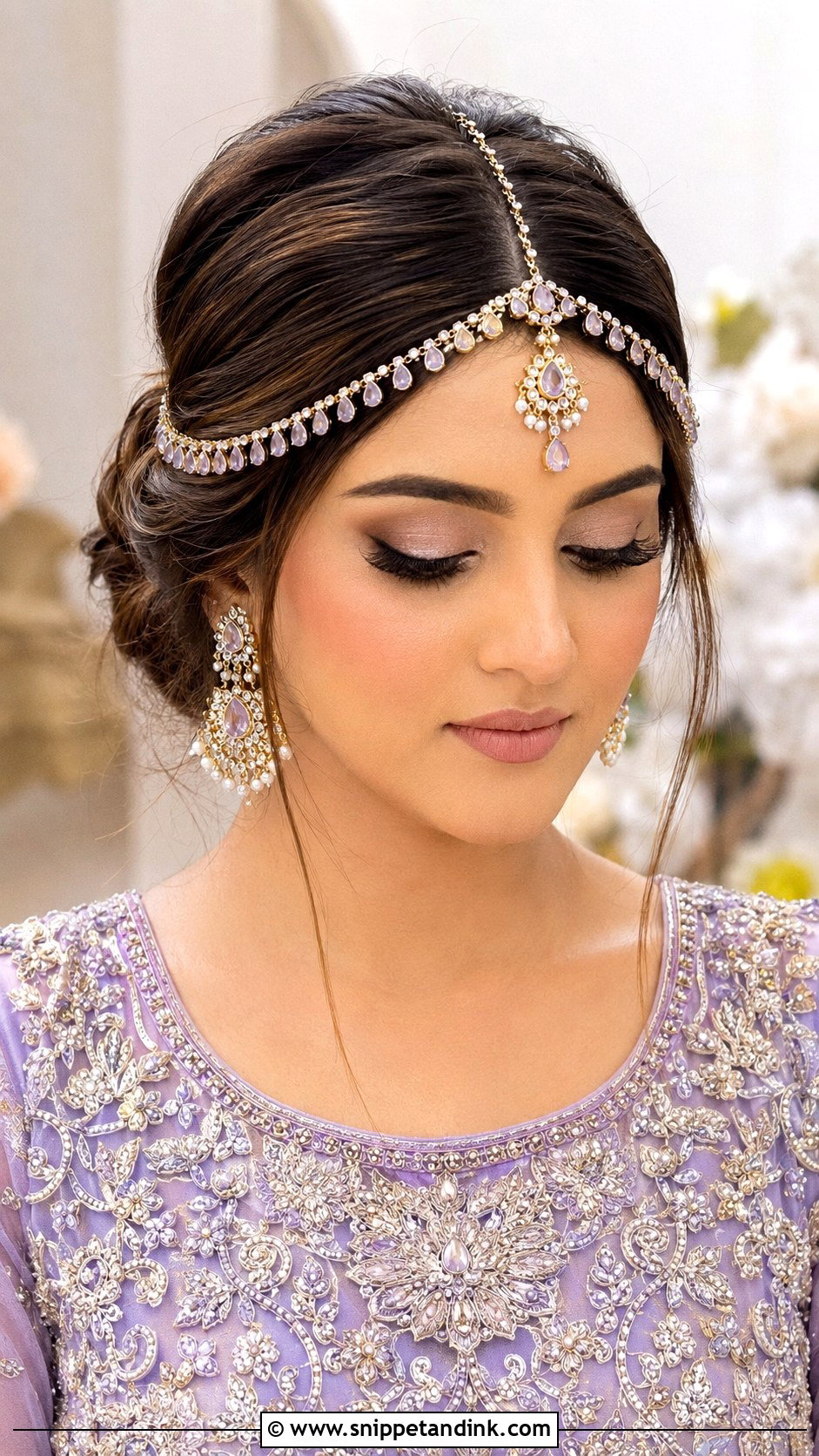
This is the most traditional shape on the list, and I rarely need to talk anyone out of it. A clean middle part frames the face evenly and lines up a tikka or matha patti exactly where it belongs. Where it fails is a crooked part. I set it with a tail comb on dry hair and check it in the mirror from straight on, never from the side. Glowing skin and soft contour keep the overall look from turning severe.
10. Pakistani Walima Bridal Open Hair
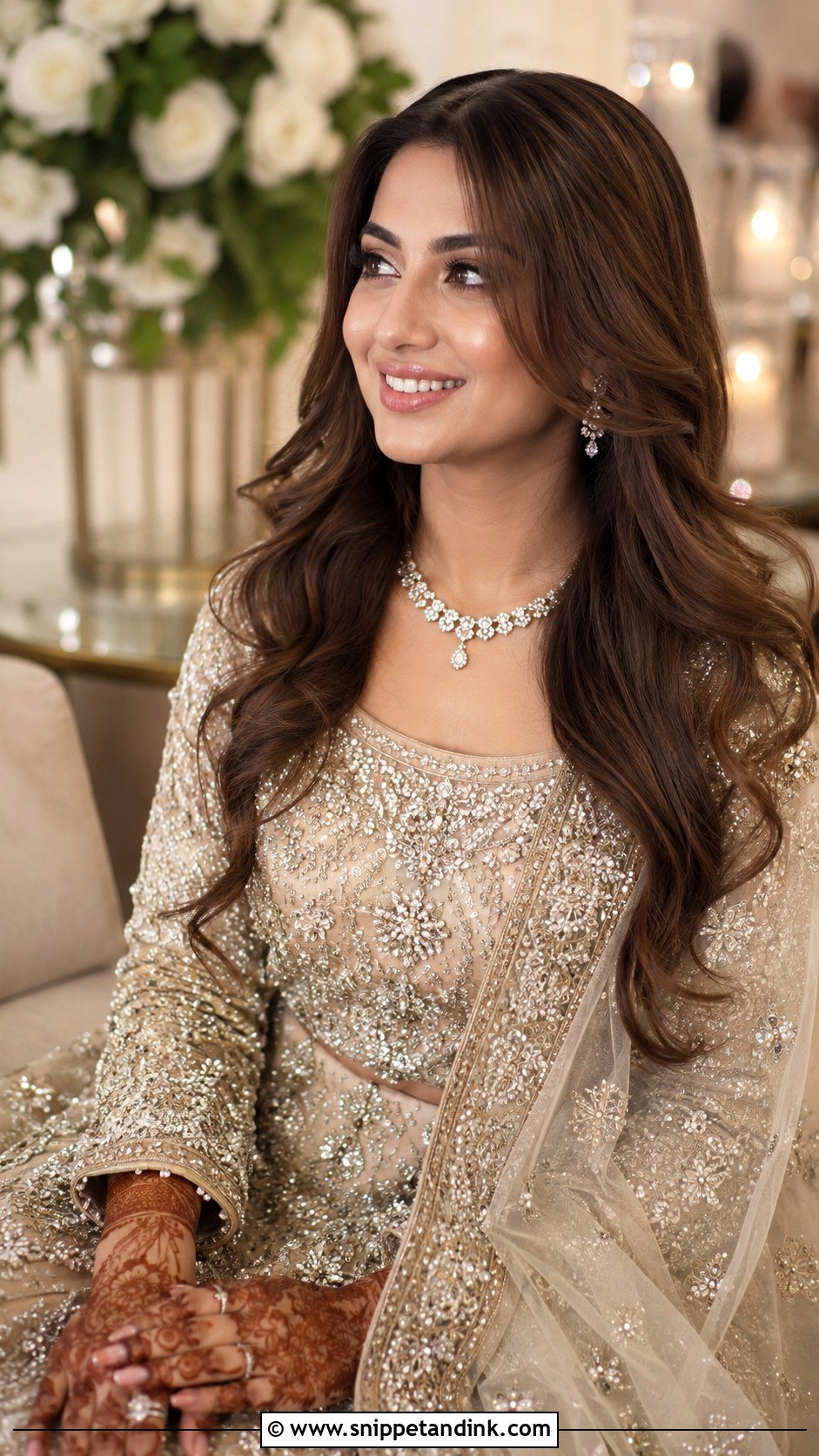
Open hair at a reception has one real enemy, and it’s the dupatta. Worn over the head it presses the hair flat and creases the top, so with this style I pin the dupatta lightly at the back or drape it on one shoulder. The hair itself can be soft curls or a full blowout with movement through the ends. Contemporary gowns and lighter shimmer makeup suit it. For a long evening I hide a few pins behind the ears and use a flexible spray, because a packed, warm hall turns a blowout fluffy in a couple of hours.
11. Pakistani Walima Bridal Passa Hairstyle
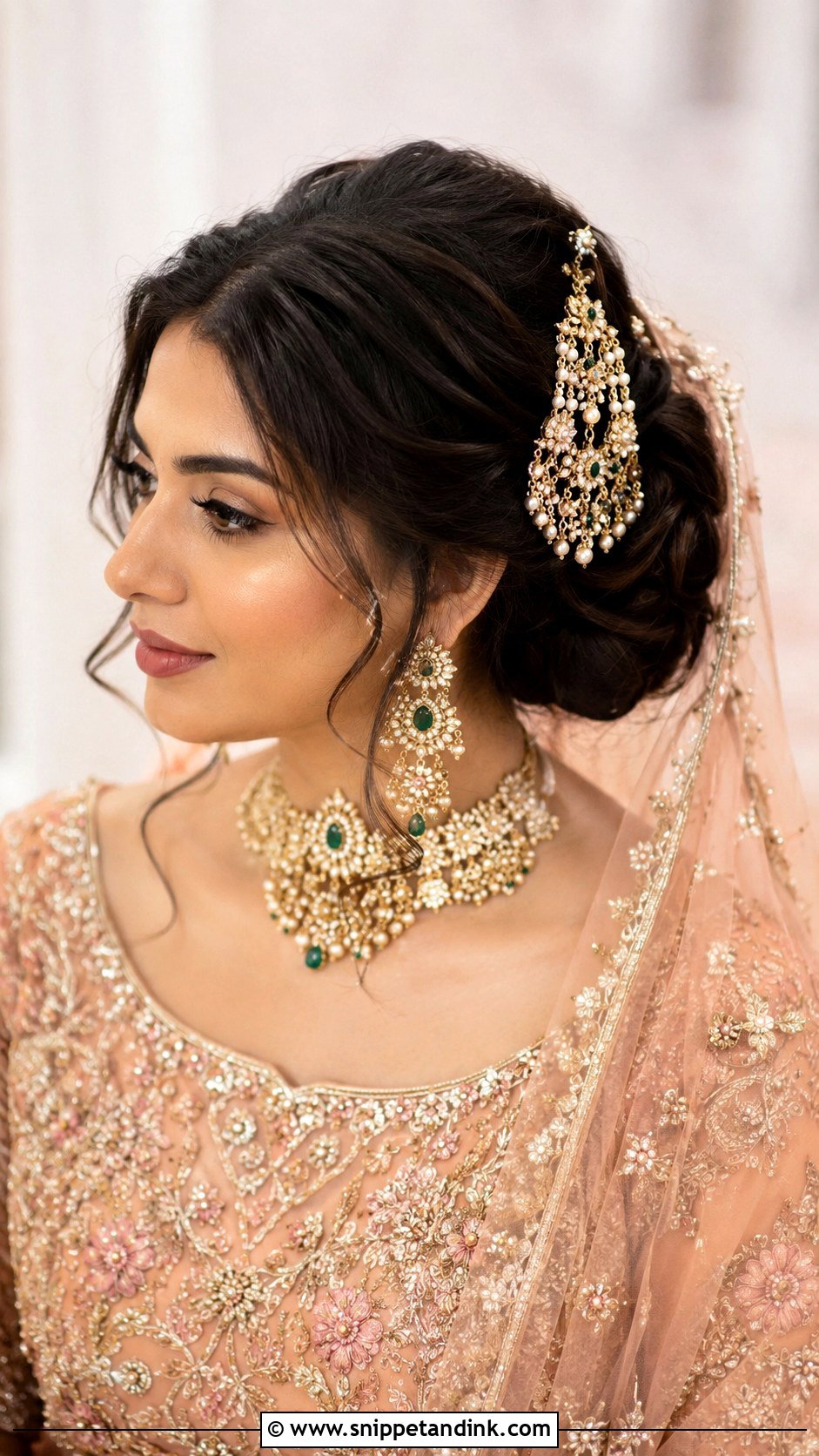
A passa pulls on whichever side of the head it sits, and that’s the first thing I plan around. I build a small braided or pinned base exactly where its hooks will go, so the weight rests on structure rather than loose strands. A low bun or side curls with a soft side part are the usual pairings. It belongs with Mughal-style jewelry, ghararas, shararas and long embroidered shirts. Keep everything else quiet, though. A passa plus a heavy tikka plus a choker crowds the face fast.
12. Pakistani Walima Bridal Matha Patti Hair
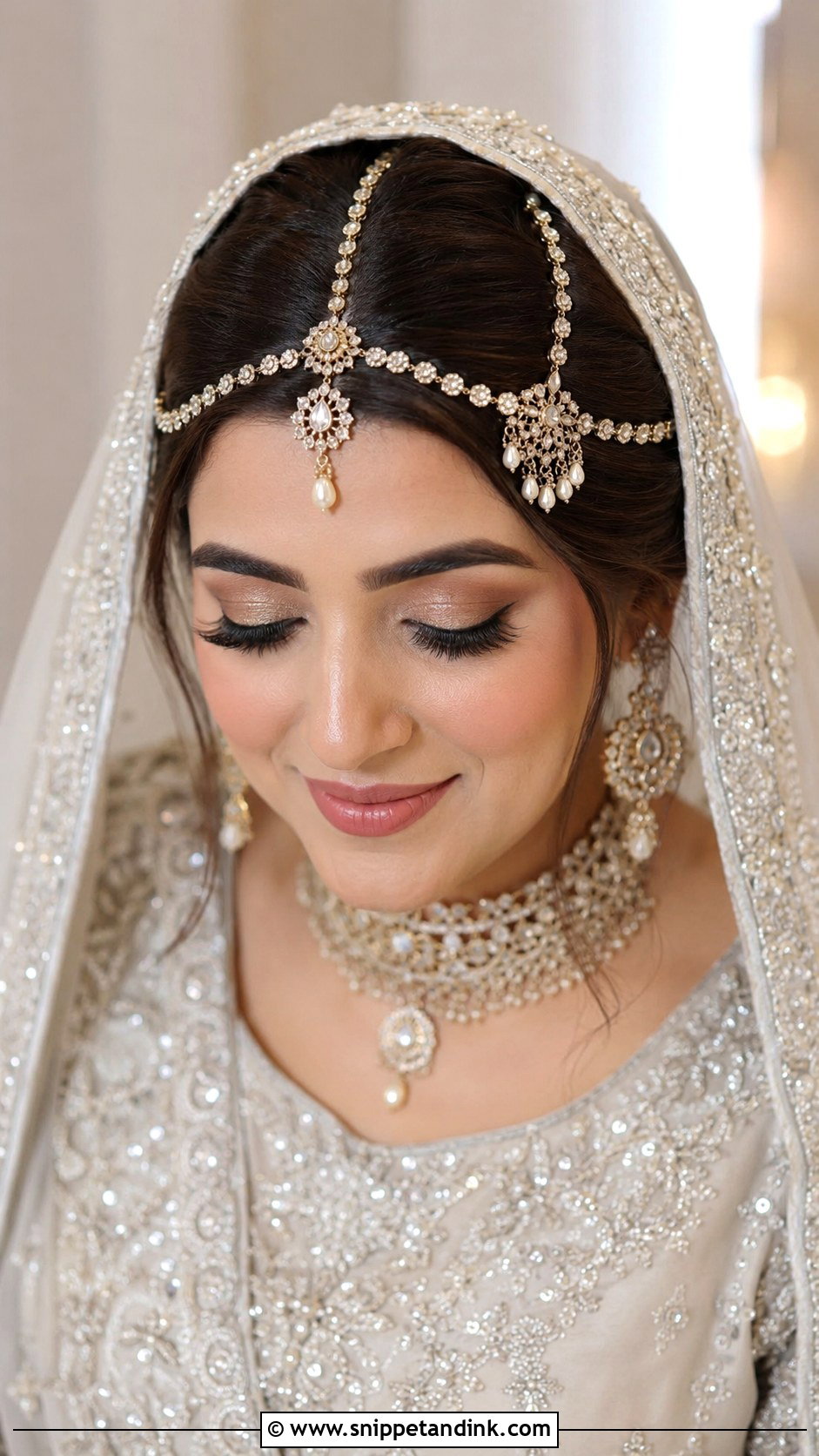
Matha patti hair needs structure at the front more than anywhere else. The chain runs along the hairline, so I keep that area smooth and pin the side pieces on top of the hair rather than under it, which stops the patti sliding when you laugh or tilt your head. A centre part bun or a smooth low bun holds it best. It suits traditional outfits like embroidered maxis, lehengas and pastel ghararas. Leave the texture refined so the jewelry stays the focus.
13. Pakistani Walima Bridal Floral Bun
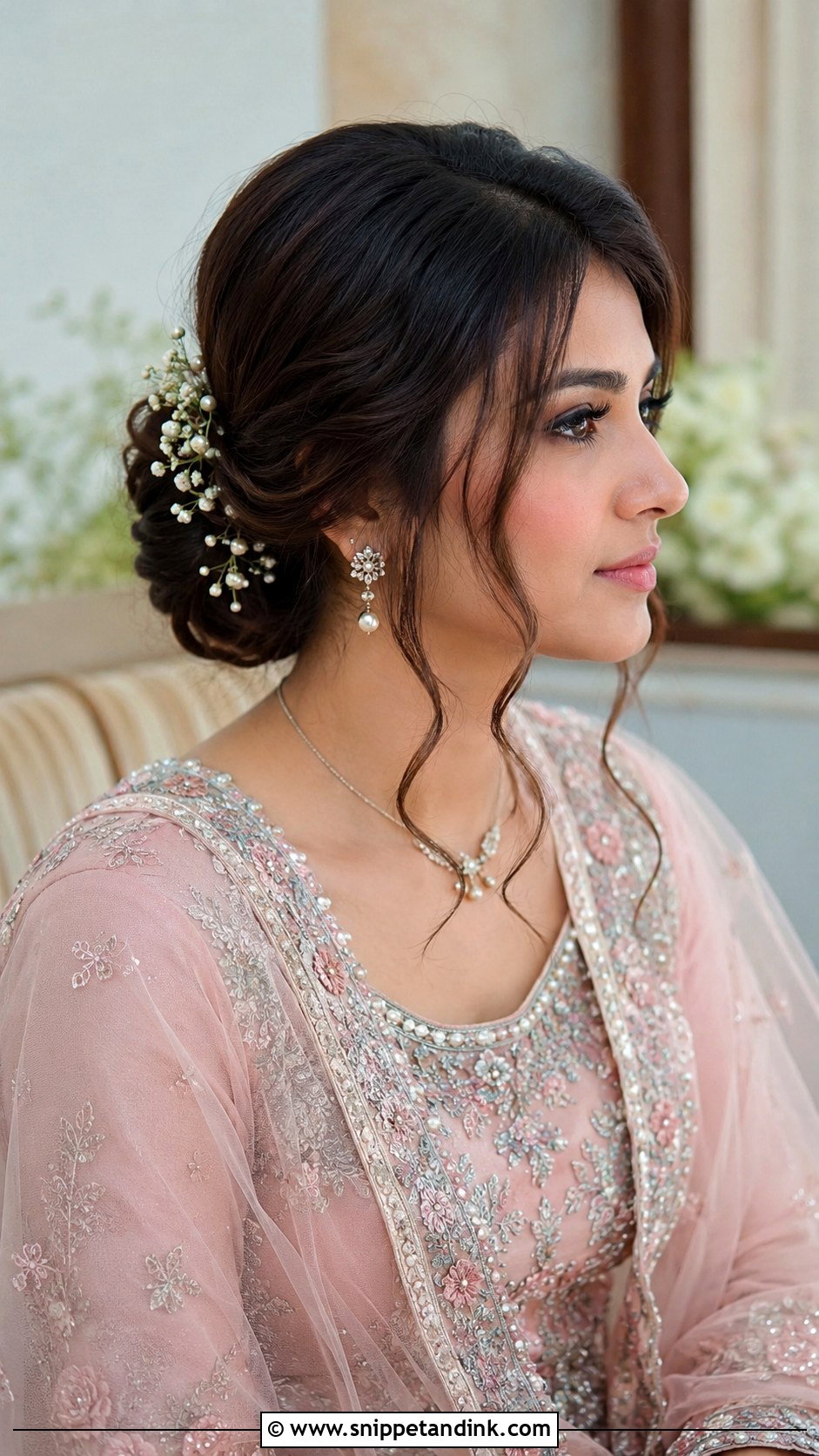
Fresh flowers wilt under hall lights, and that shapes how I use them. For a floral bun I pick sturdy blooms like spray roses, wire them, and keep them chilled until the last minute; baby’s breath lasts longer than jasmine over a long evening. The bun underneath can be low or loosely twisted. Ivory, blush, peach and mint outfits suit the freshness, and it makes most sense at an outdoor or daytime Walima. Use a few flowers as detail. Once they cover the bun, the hairstyle disappears.
14. Pakistani Walima Bridal Front Puff Hair
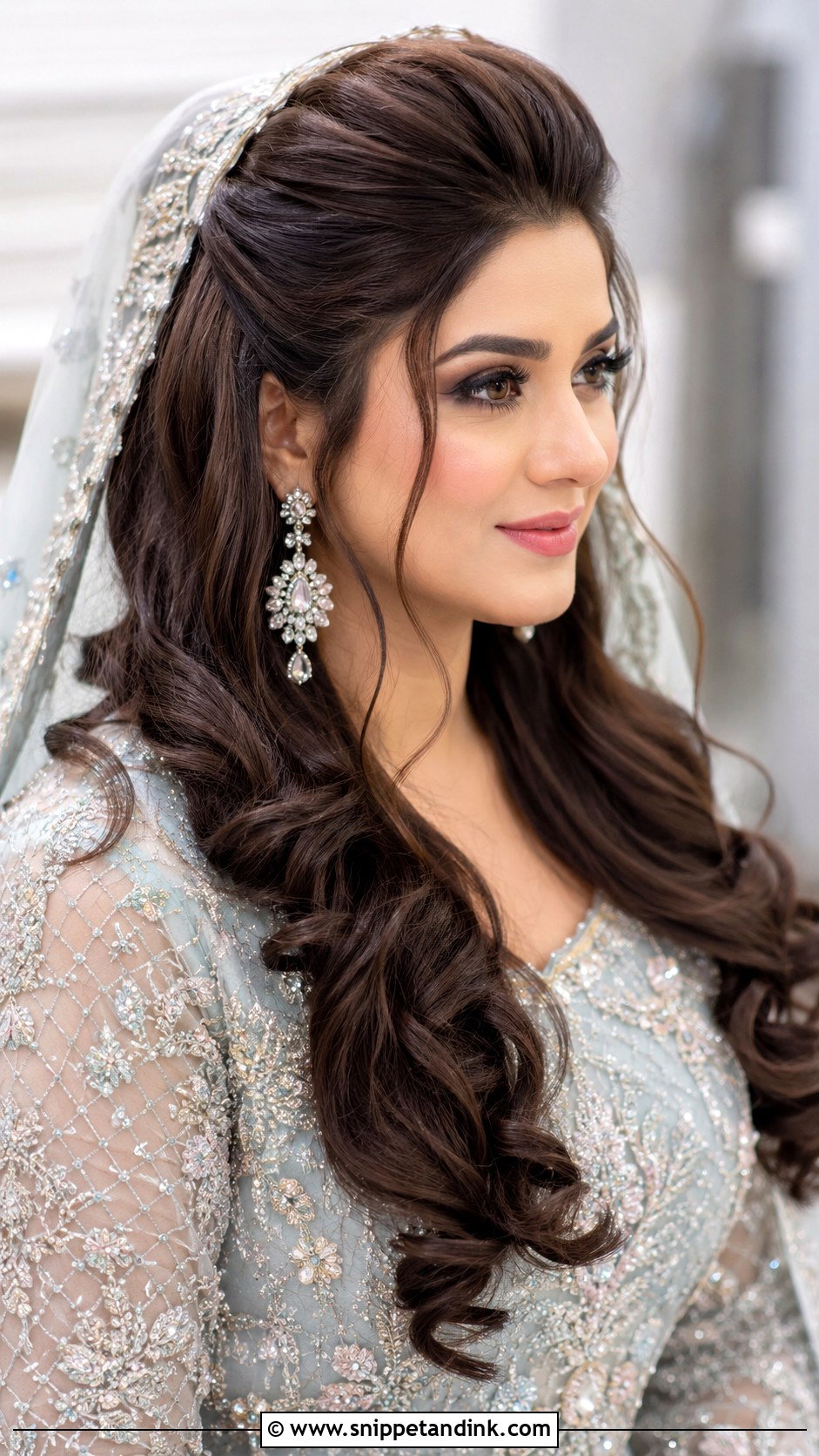
A front puff solves one problem well: a dupatta worn on top of the head that would otherwise flatten everything. I build it from a small backcombed section and pin it from behind so the shape survives fabric sitting on it. With modest height it can suit round, heart and oval faces, but I’d skip it on a long face, where it adds length you don’t need. Keep it soft and low. A tall, glossy puff dates a photo instantly.
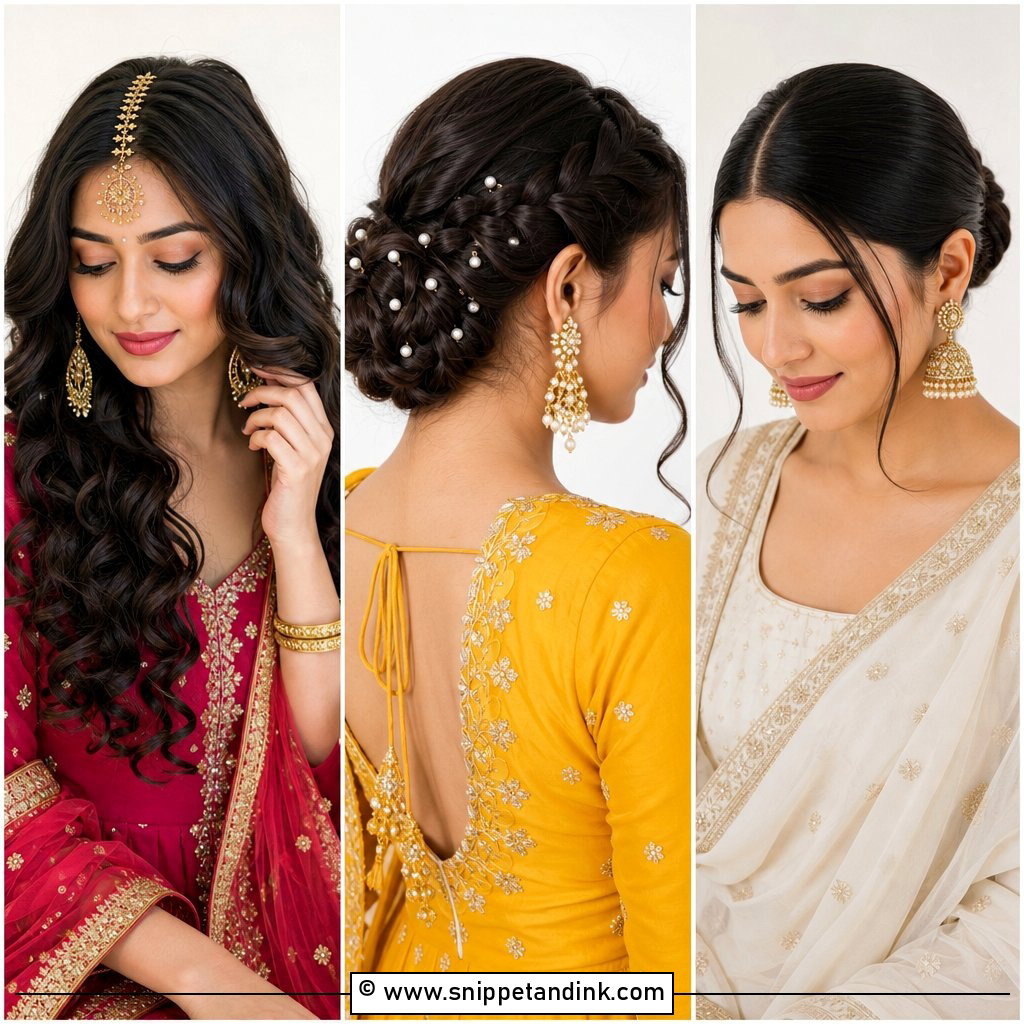
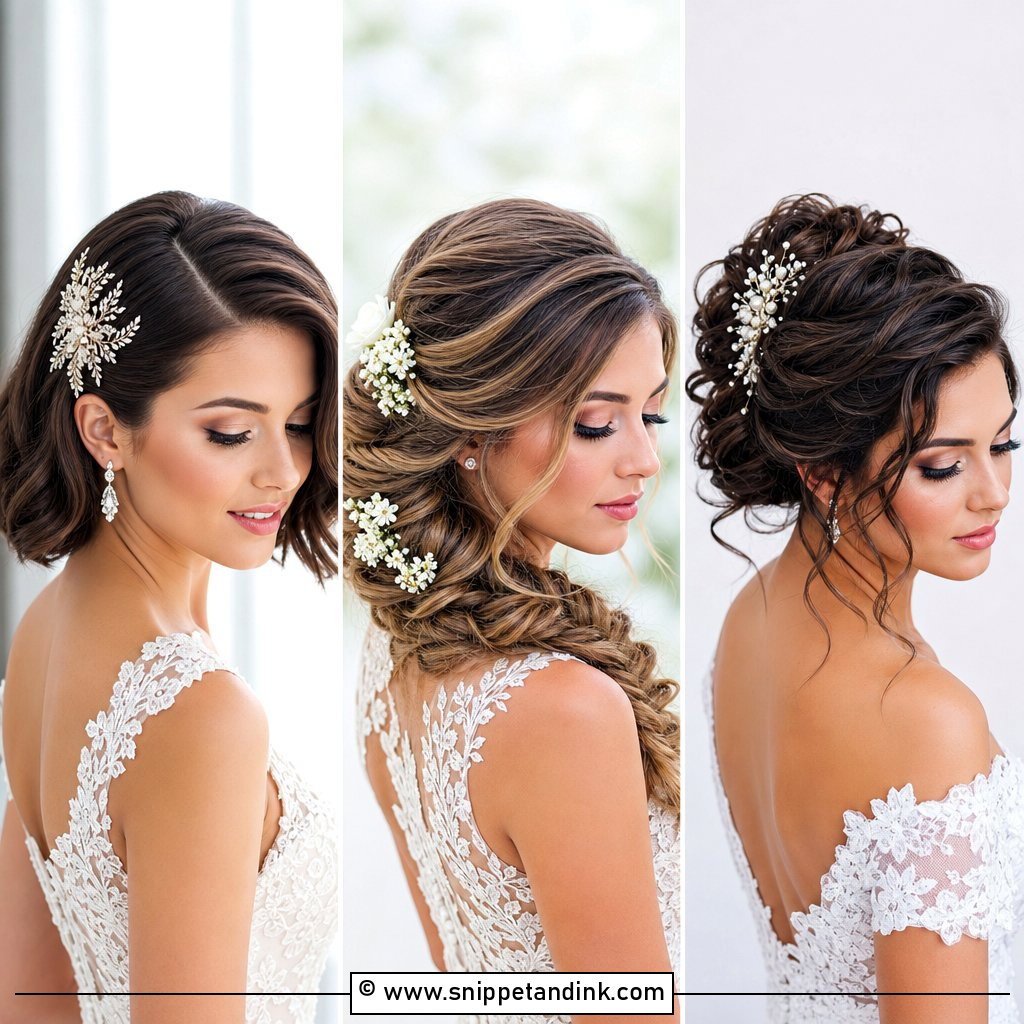

15. Pakistani Walima Bridal Long Curls
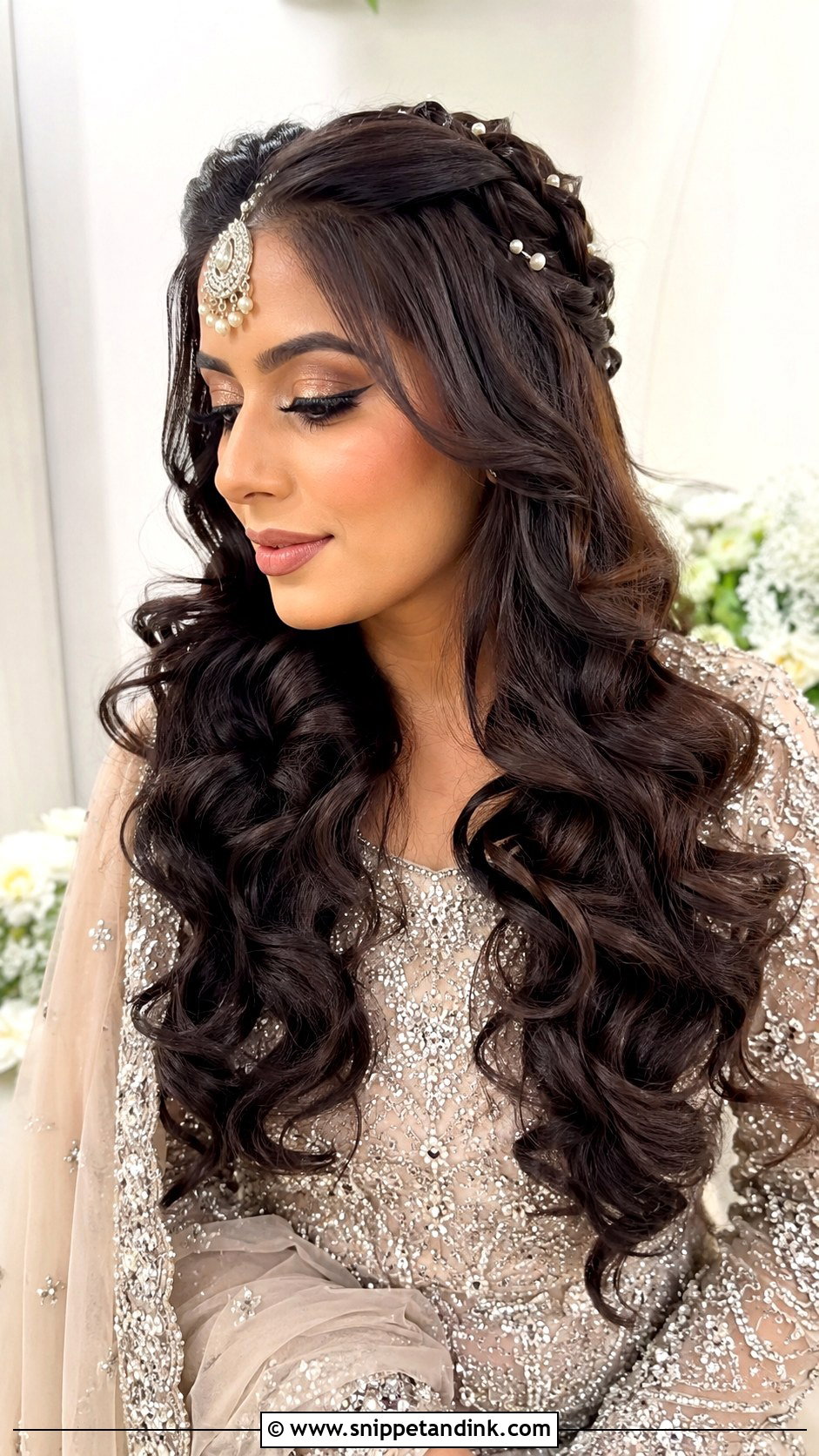
Long curls are the most dramatic look here and the most demanding. They need real length, so most brides wear extensions, and I match the weft colour in daylight, not under salon bulbs. Each curl is pinned while it cools, released late and sprayed lightly so it still moves under reception lights. They can fall down the back or over the shoulders depending on where the dupatta sits. A tikka or a couple of pearl clips is plenty. The curls are already doing the talking.
Net, Chiffon or Fully Embellished: What the Dupatta Does to Hair Underneath
Nearly every decision above comes back to the dupatta, so bring the actual one to your trial. Its weight matters far more than its colour.
Light net and chiffon
These rest on curls without crushing them. I fix them with two or three small U-pins into the base of a bun or a hidden section behind the crown, and they stay put through an evening of moving between tables.
Heavy borders and beadwork
A thickly worked border weighs more than most brides expect. Worn over the head, it flattens open hair and drags a high bun backward. For these I build a firmer anchor, usually a small braided base, and steer the bride toward a low bun or a half up style with a solidly pinned top.
Draped on one shoulder only
If the dupatta never goes on the head, your options open right up. That’s when long curls, side swept hair and full blowouts make the most sense.
Hall Lights, Warm Rooms and the Second Hour of the Reception
Walima venues tend to be warm, brightly spotlit and full of people, and hair reacts to all three. Finishing serum reads glossy on camera, but too much looks greasy under direct light, so I warm a tiny amount in my palms and press it over the surface only.
Heat and crowd humidity loosen curls and blowouts first and buns last, which is why I pin curls to set and hand a small travel spray to whoever is holding your clutch. Anything fresh in the hair gets checked after portraits and swapped out if the petals have started to brown.
A Walima Look That Still Feels Comfortable at the Last Family Photo
Most Walima brides don’t need the most elaborate style on this page. They need one that works with the dupatta they’re actually wearing and the jewelry they’ve already chosen, and that won’t ache after three hours of greetings. Look at your neckline, how the dupatta will sit, how heavy the jewelry is and what the weather is doing. Then test the style at a trial with the real dupatta pinned on. If it still feels easy after an hour in the chair and an hour walking around, it will carry you through portraits, family and the entrance.
You'll Like These Ideas:


Leave a Reply