
An Indian bride’s hair has to do more work than almost any other wedding style: it carries a maang tikka, often a matha patti, a heavy dupatta pinned on top, and sometimes a gajra weighing more than you’d expect. It also has to last through hours of rituals, heat and hugging. The thirty five looks below run from gajra buns and pearl braids to open waves, and cover functions from mehendi and sangeet to the pheras and reception. With each one I’ve noted how it holds up, what it needs underneath, and when I’d suggest something else.
One Hair Plan Across Mehendi, Sangeet, Pheras and Reception
Most Indian weddings mean three or four hairstyles over a few days, and sometimes two in one day. I plan them together, because each look affects the next. Heavy backcombing on Friday leaves hair tangled and dry by Sunday.
- Mehendi: something off the face and away from the hands, like a braid or loose bun, since you can’t touch your hair for hours.
- Sangeet: open hair, ponytails or soft braids that move when you dance.
- Wedding ceremony: a secure bun or braided updo that can carry the dupatta, tikka and flowers.
- Reception: a change in mood, often waves, a sleek bun or half up, which can sometimes be built from the morning’s curls.
Wash your hair the day before the main ceremony, not the morning of, and skip oil and heavy conditioner on the ends. Second day hair gives grip; freshly washed hair is silky and lets pins slip. If you plan to change looks between ceremony and reception, allow at least forty five minutes in the schedule.
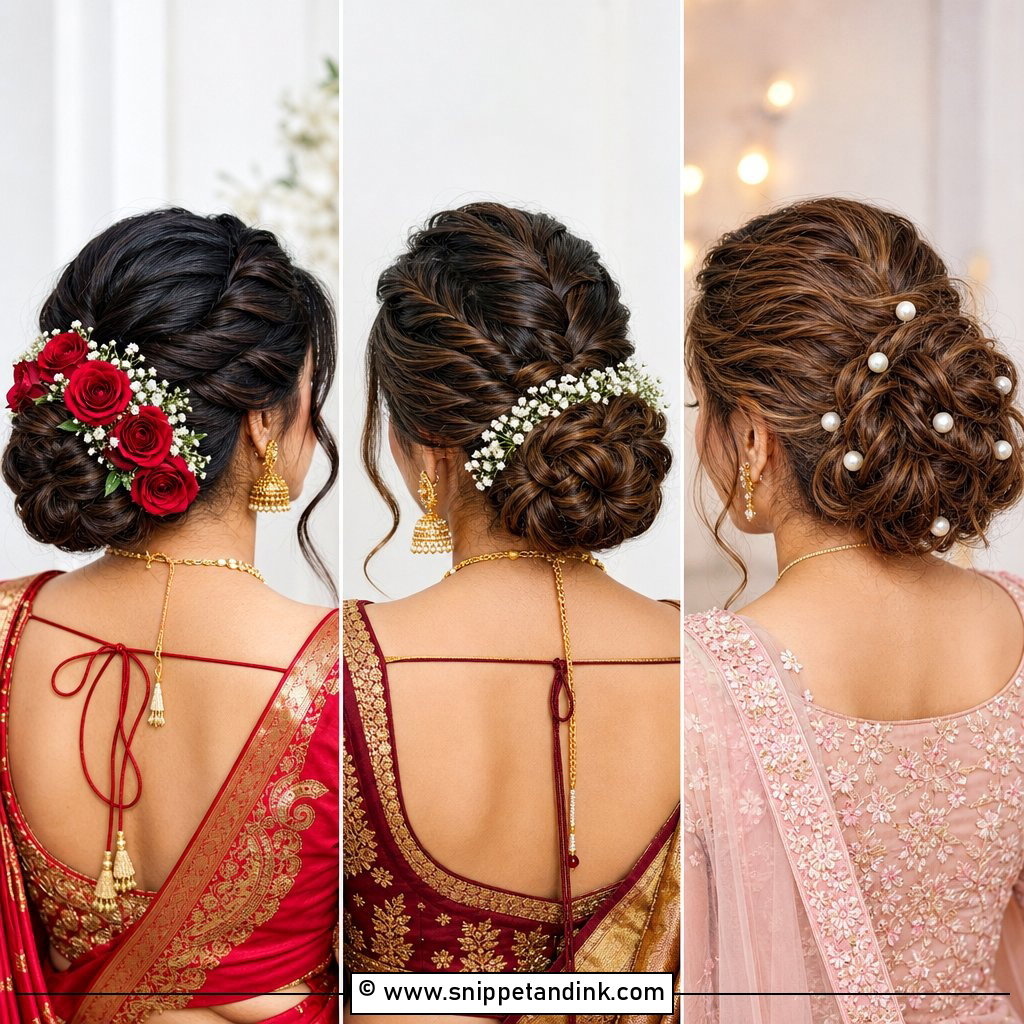
1. Floral Gajra Bun
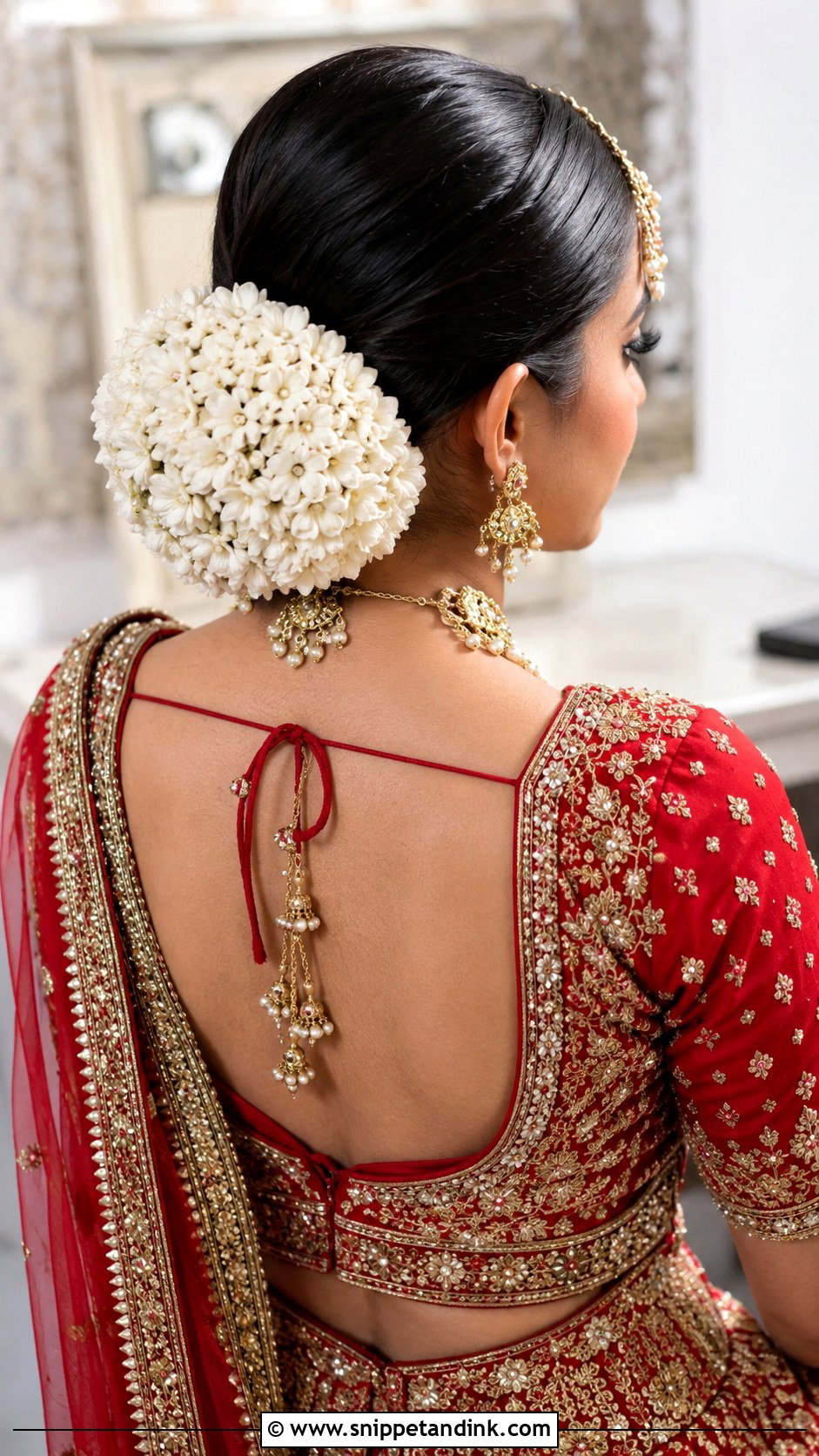
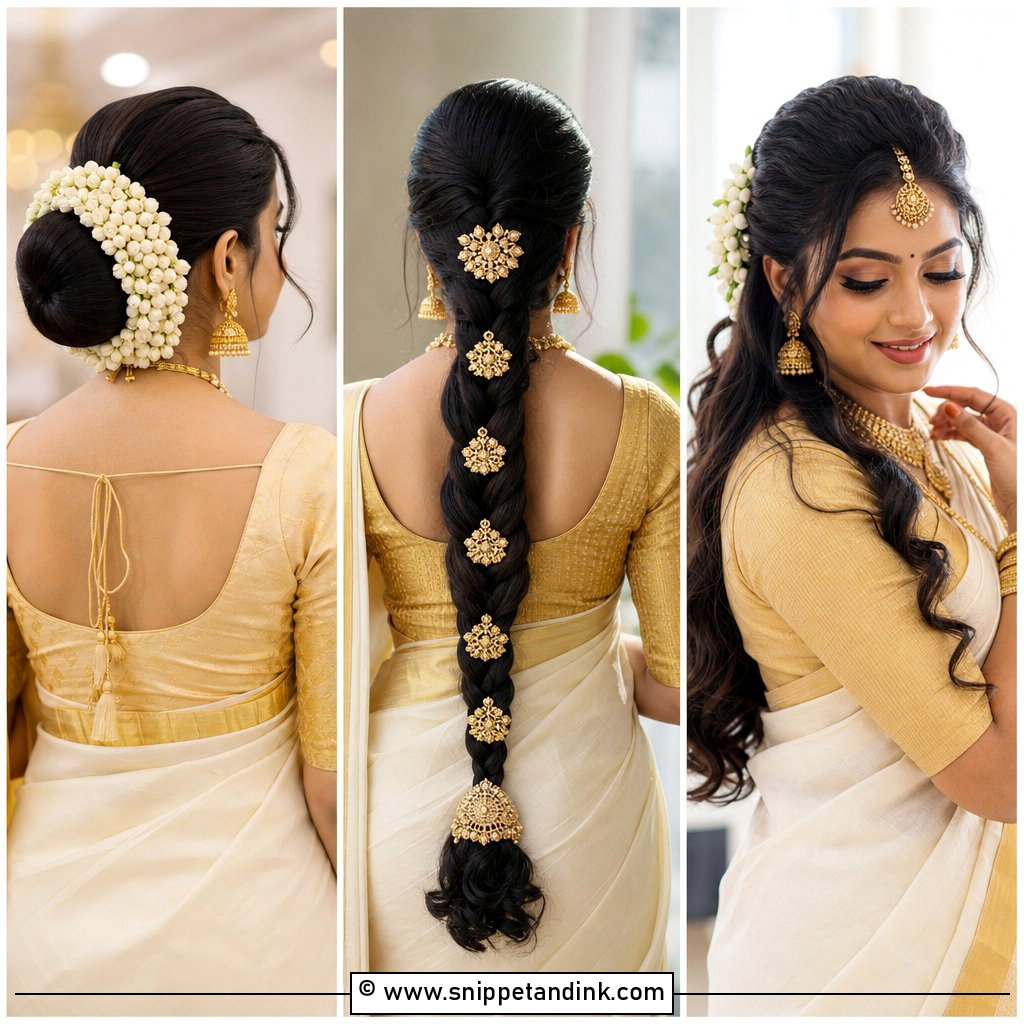
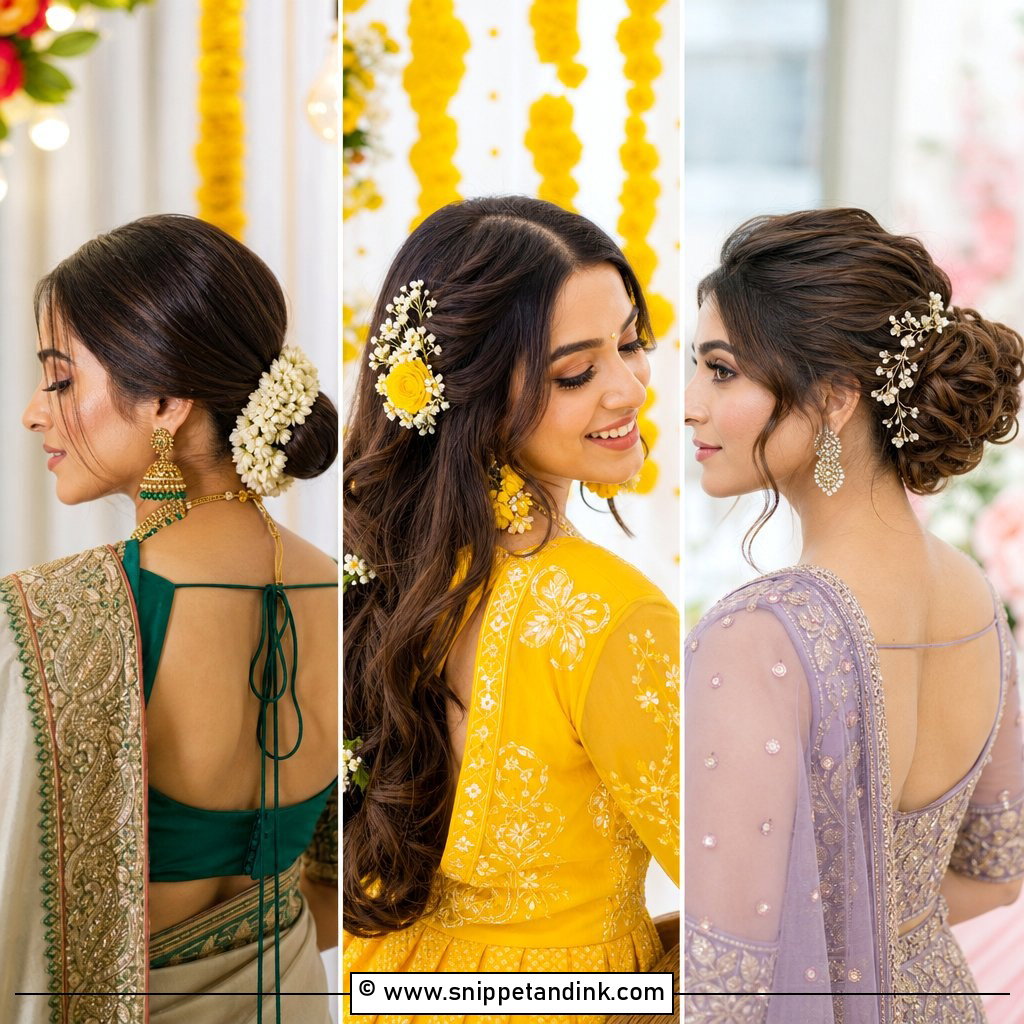
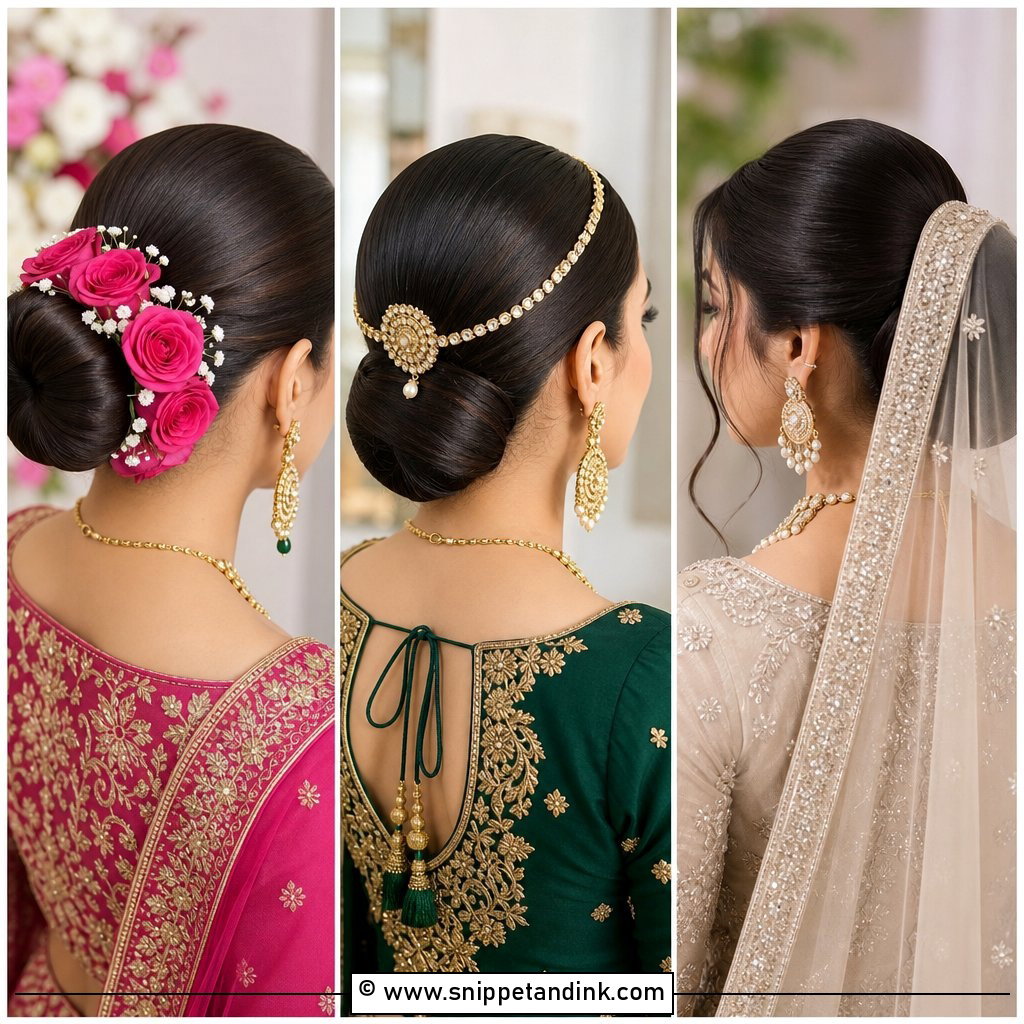
The gajra bun is still the look I’m asked for most for the main ceremony. Fresh jasmine or mogra wraps a sleek low bun and scents the air every time you move. Most brides need a bun filler or extension for the bun to be large enough to hold several rows of flowers, and I pin the gajra with long U pins through the strings, not just tucked in. Against dark hair the white flowers give strong contrast in photographs. A maang tikka and matching earrings complete it.
2. Pearl Embellished Braid
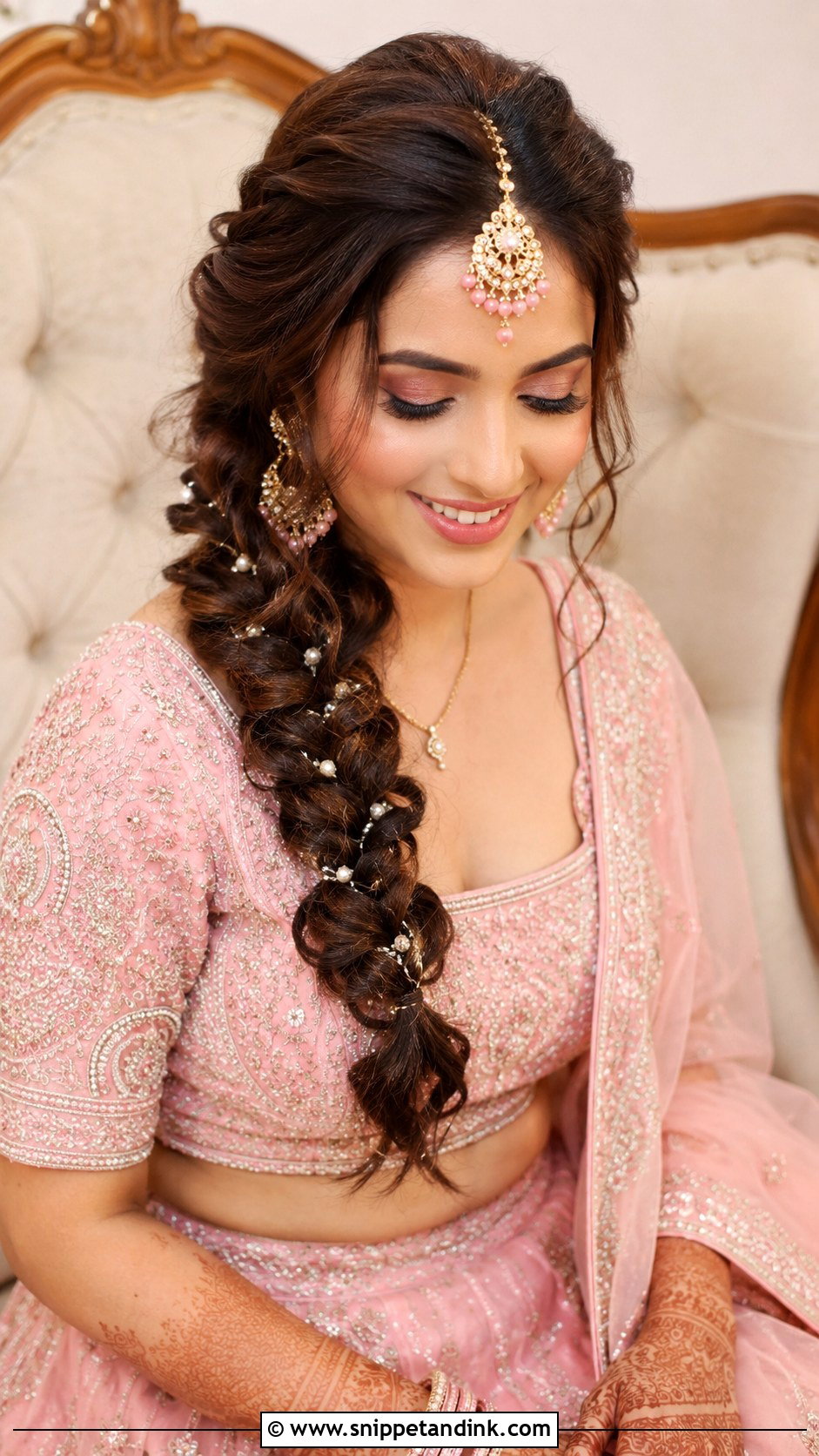
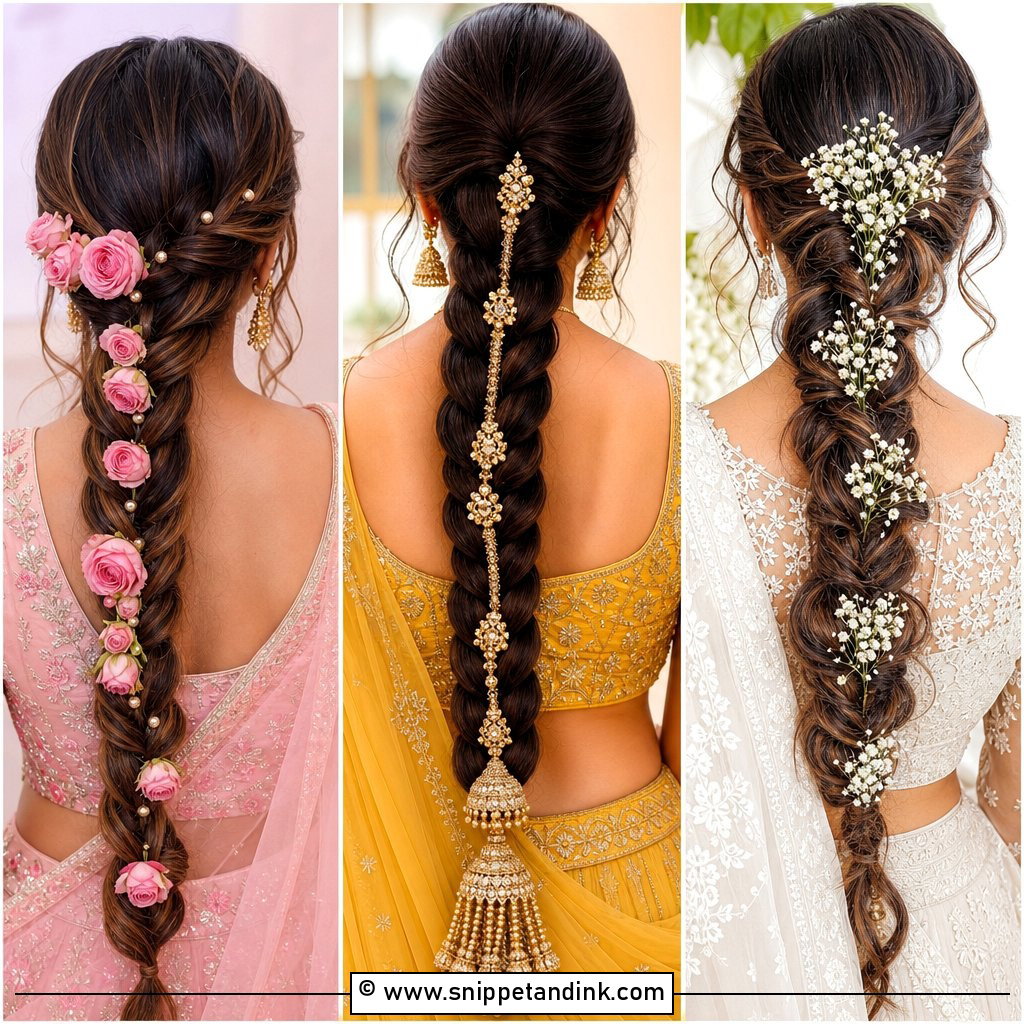
Strands of tiny pearls woven through a thick side braid give a quieter kind of glamour that suits sangeet and engagement functions. I thread the pearls on wire or clear thread and wrap them as I braid, which keeps them in place better than pinning them in afterward. Loose and textured works on thick hair; fine hair looks fuller with a tighter braid that I pancake afterward. Pastel lehengas and pearl jewelry make the most of it.
3. Rose Twist Hairstyle
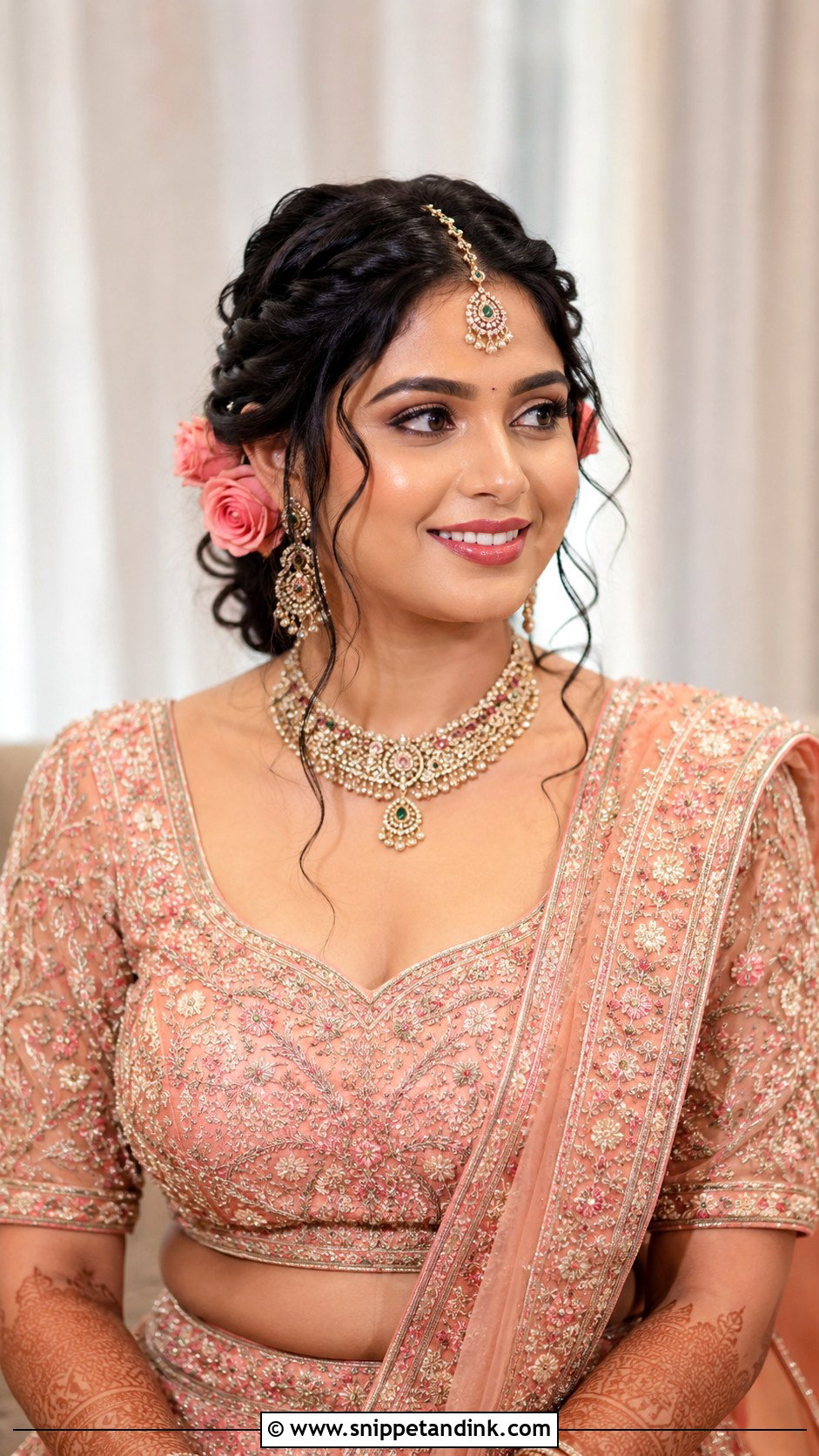
Fresh roses tucked into twisted sections give a garden feel that suits daytime and outdoor functions. The twists frame the face and pull attention toward the eyes. Real roses are heavier than they look and droop in heat, so I wire the stems short and use spray roses or small heads rather than full blooms. Matching the rose color to the outfit pulls the look together. It sits best with flowy lehengas and light jewelry.
4. Messy Braided Bun
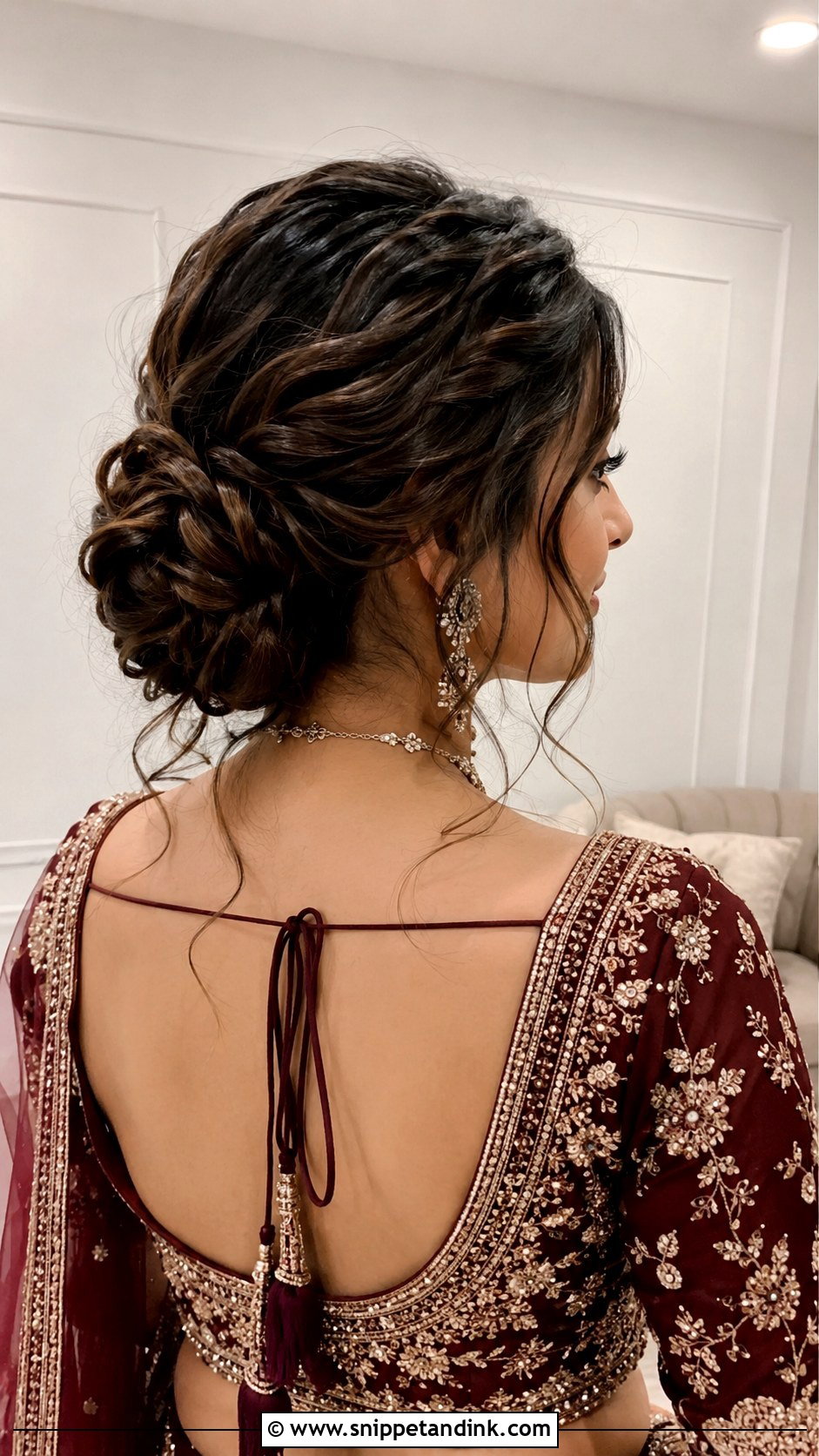
A braid coiled into a textured bun at the nape gives a relaxed, modern finish for receptions. The braid adds grip, which means the bun holds better than a smooth one, especially on silky hair that tends to slip. I pull out a few soft pieces around the face. Small flowers, pearls or a jeweled pin finish it. It’s one of the most comfortable bridal styles I do, since the weight sits low and evenly.
5. Snake Braid Low Bun
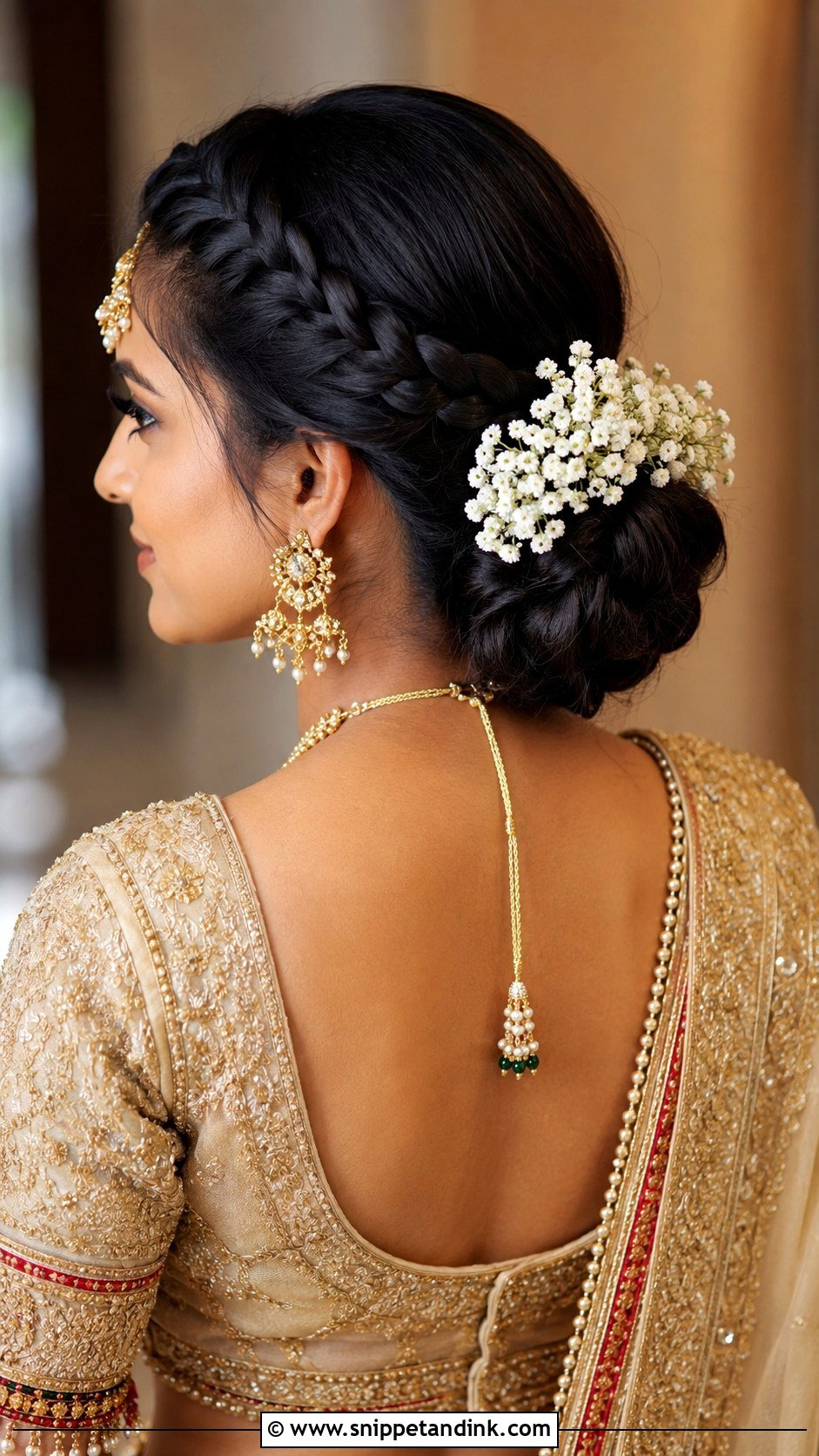
A braid that wraps across the crown like a snake before finishing in a low bun gives detail from the front while the bun keeps everything secure. It suits heavy lehengas and big jewelry, and because the braid is pinned flat along its whole length, it holds its shape through long functions. Tiny flowers or pearls can be set into the braid. Thin hair may need a clip in extension to make the braid wide enough to show.
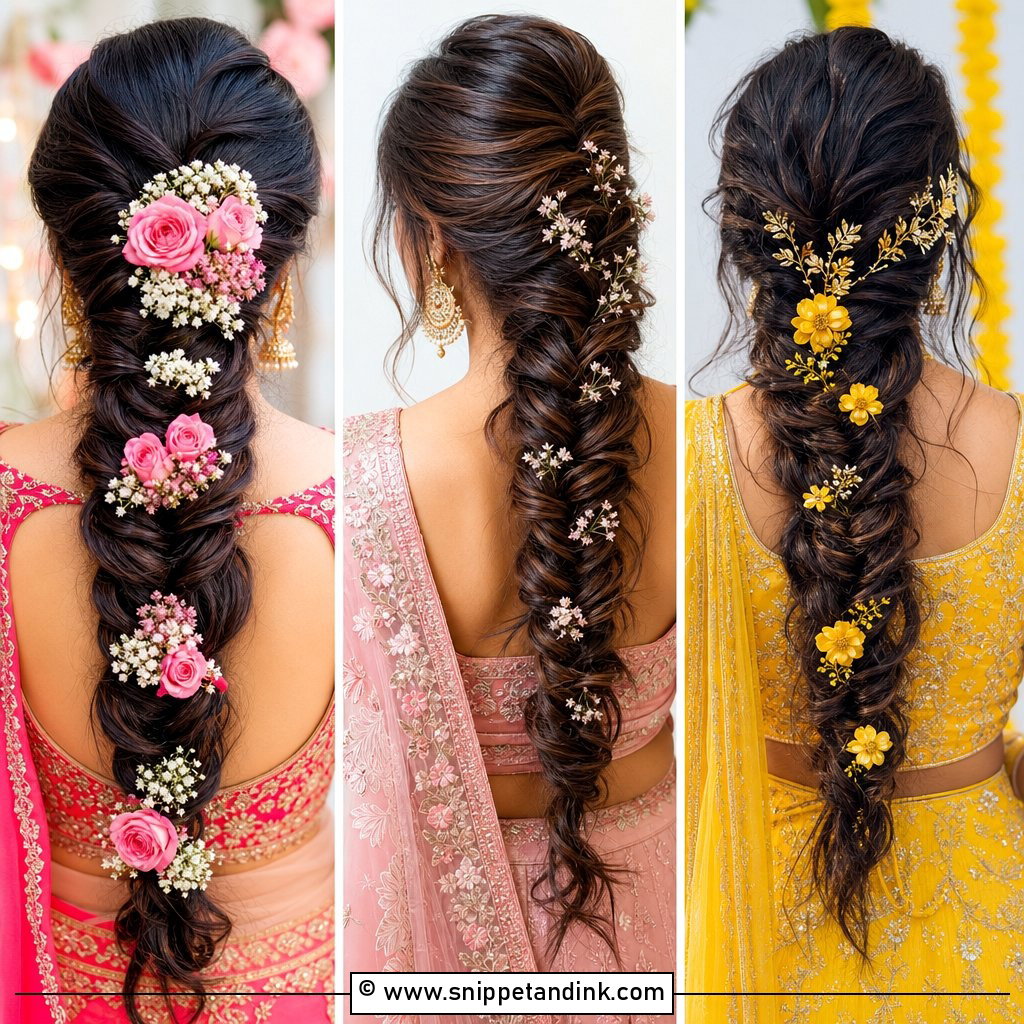
6. Fish Tail Braid With Flowers
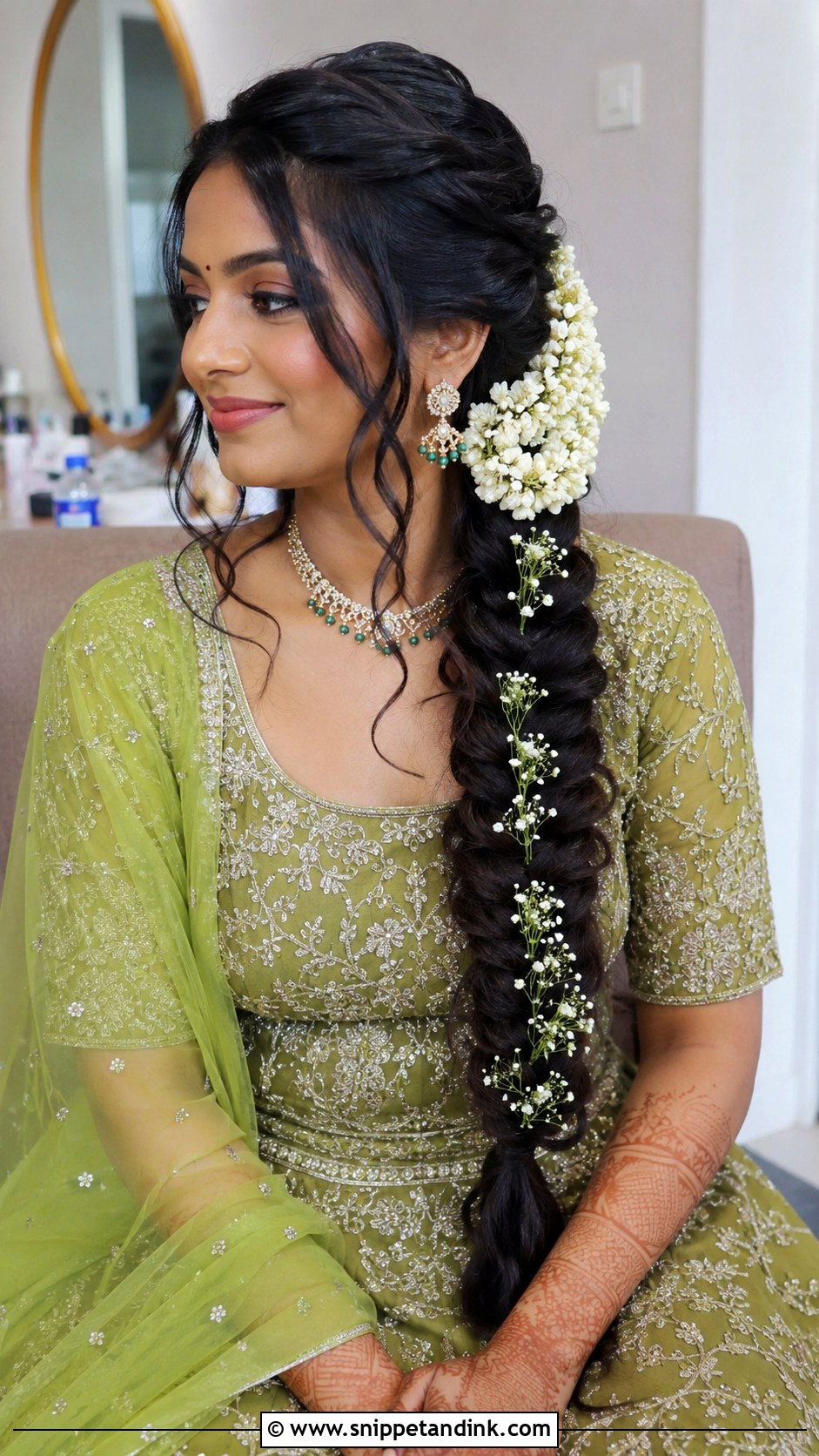
A fishtail draped over one shoulder looks elaborate but is comfortable for mehendi and sangeet, where you’ll be sitting and dancing. The fine woven pattern shows texture in photos better than a regular three strand braid. A gajra, fresh flowers or a hair vine can run along its length. I secure the end with a clear elastic and hide it with a flower, as fishtails can unravel from the bottom if the end isn’t tied firmly.
7. Half Up Half Down Bridal Look
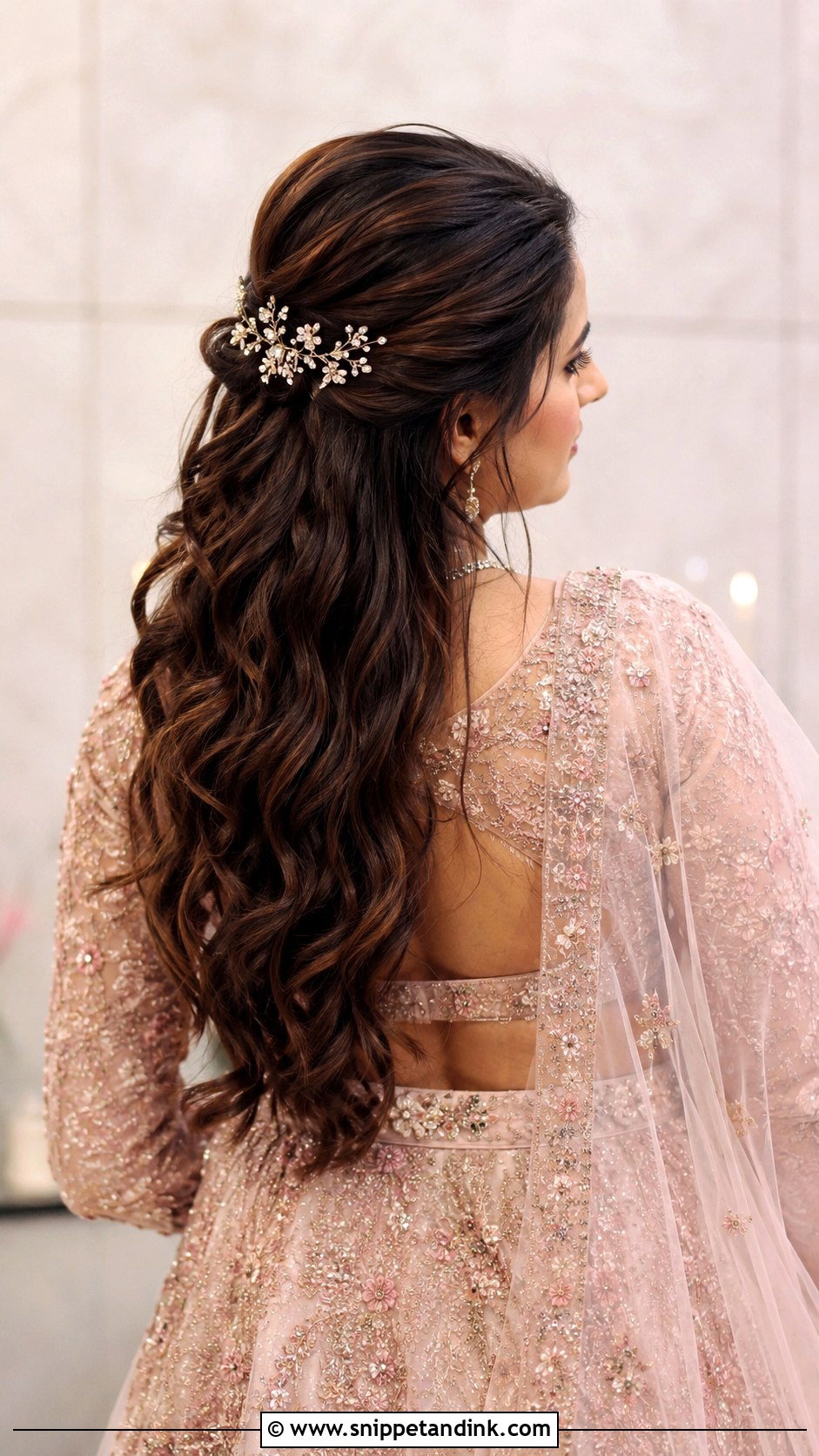
Half up, half down pulls the crown back and lets waves fall over the shoulders. It suits receptions and engagement functions and works with lehengas or gowns. A maang tikka, jeweled clip or small flowers sit at the crown. The open part is the weak point in a long day; I set the curls with heat and let them cool fully before brushing, otherwise they drop within a few hours in humid weather.
8. Hollywood Waves With Maang Tikka
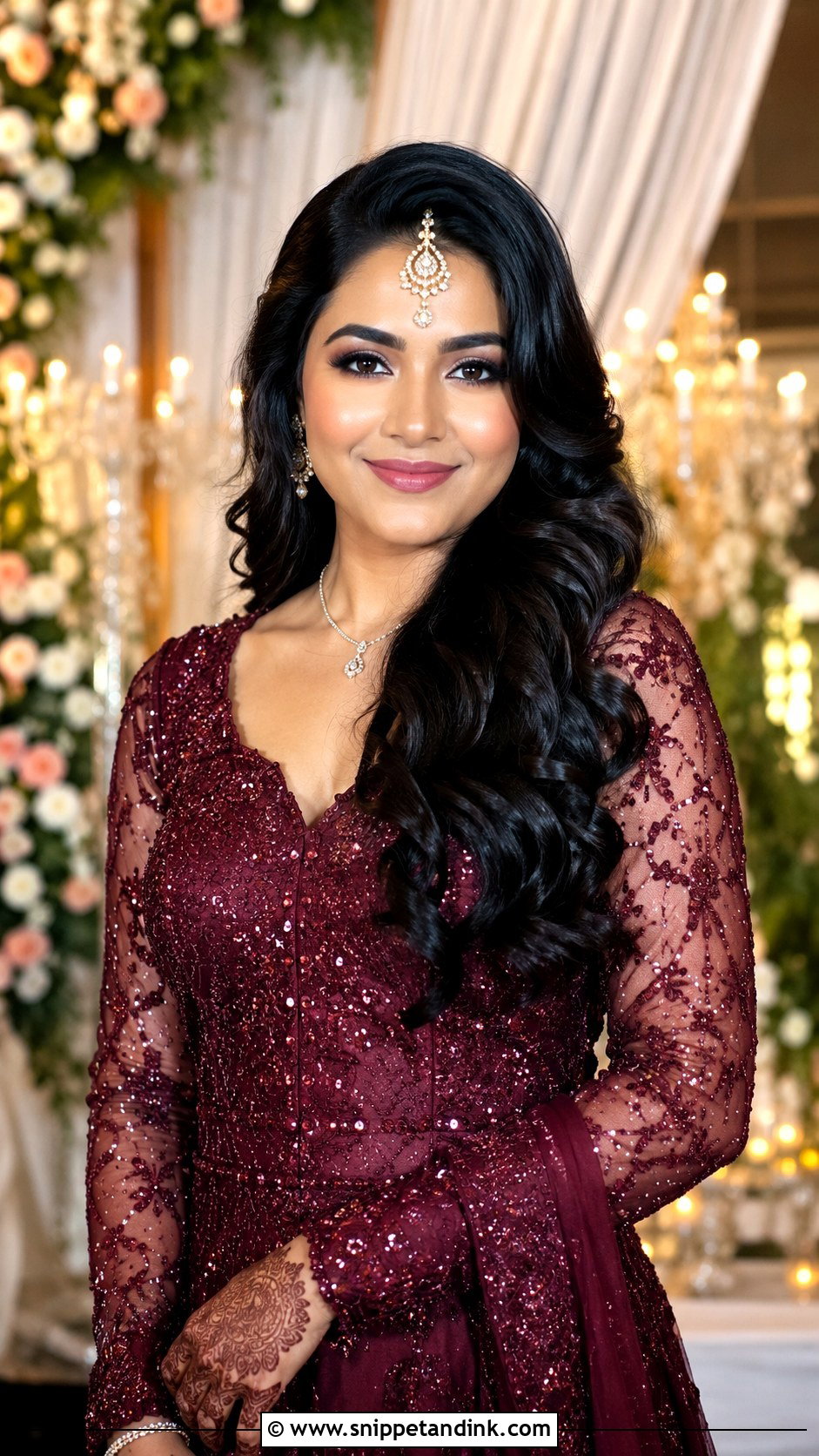
Hollywood waves are smooth, glossy curls brushed into one continuous wave. With a traditional maang tikka they make a strong fusion look for cocktail nights and receptions. A deep side part gives the most drama. The technique matters: I curl every section in the same direction, pin each curl to set, then brush them together, which is how you get that single sculpted wave rather than separate ringlets. It needs hair at least past the shoulders.
9. Diamond Accented Open Hair
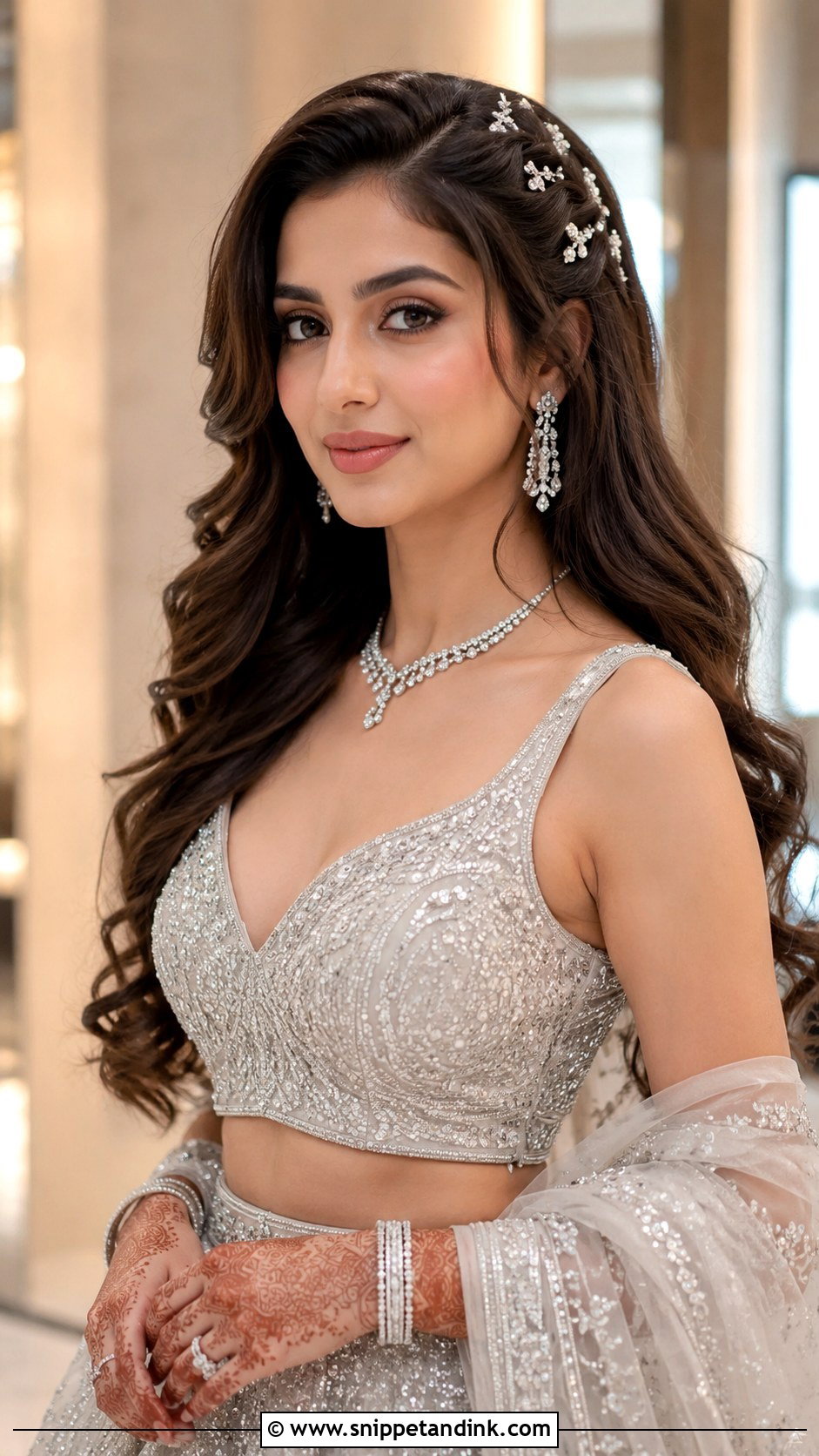
Small crystal pins scattered through loose waves add sparkle without weight. I keep them to the side and back of the head where they catch light when you turn. Open hair shows length and texture, but it’s the most humidity sensitive choice here, so it suits evening engagement and reception functions more than outdoor day events. A deep side part and statement earrings balance it.
10. Traditional Maang Tikka Bun
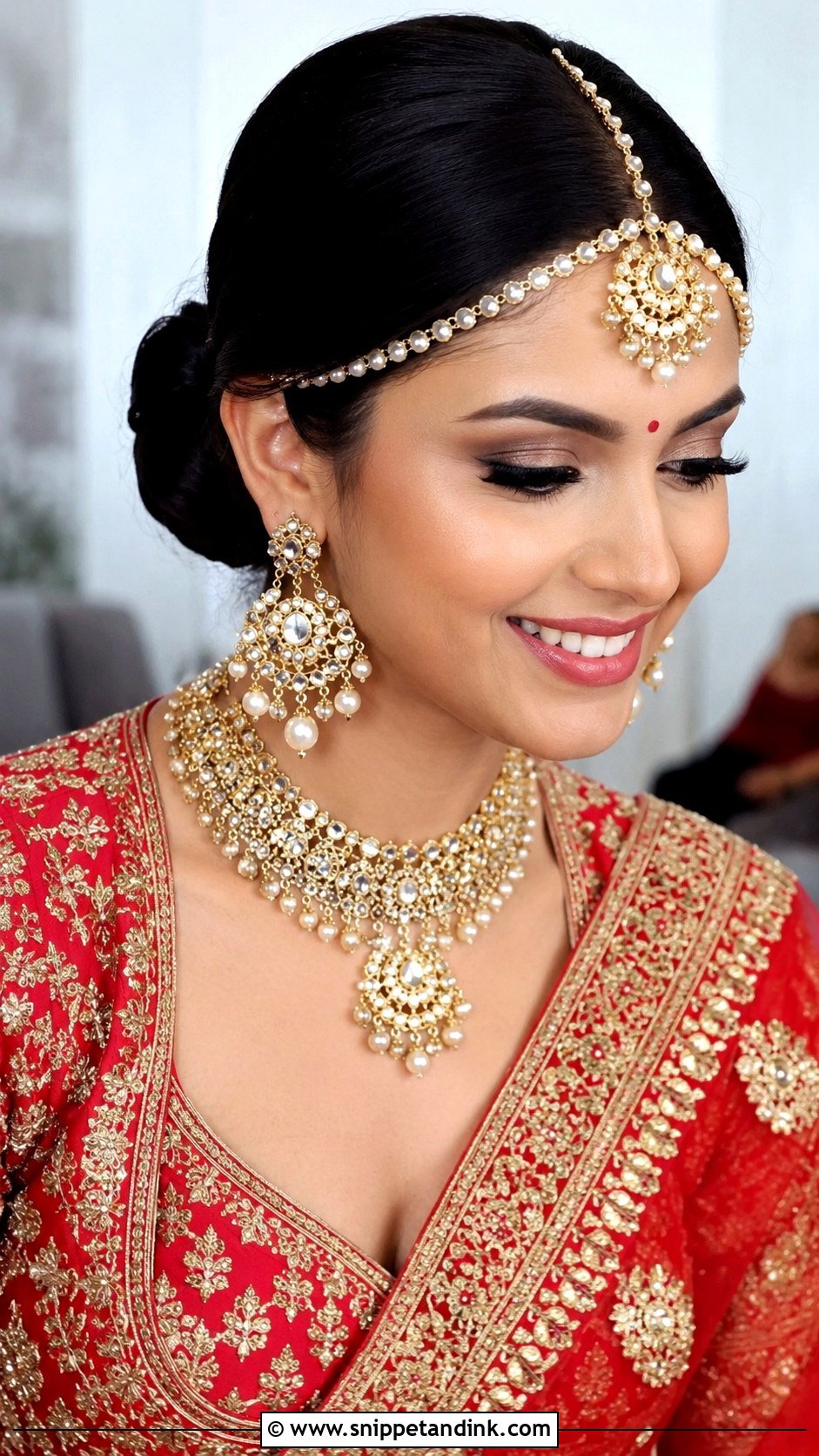
A classic low bun adorned with an elaborate maang tikka is the most dependable look for heavy bridal lehengas. The bun keeps hair out of the way during long ceremonies and gives the dupatta a firm anchor. I set the tikka chain into the center part and secure it with a small pin behind the hairline so it doesn’t slide when you bow your head. Fresh flowers or pearls can decorate the bun.
11. Floral Crown Braid
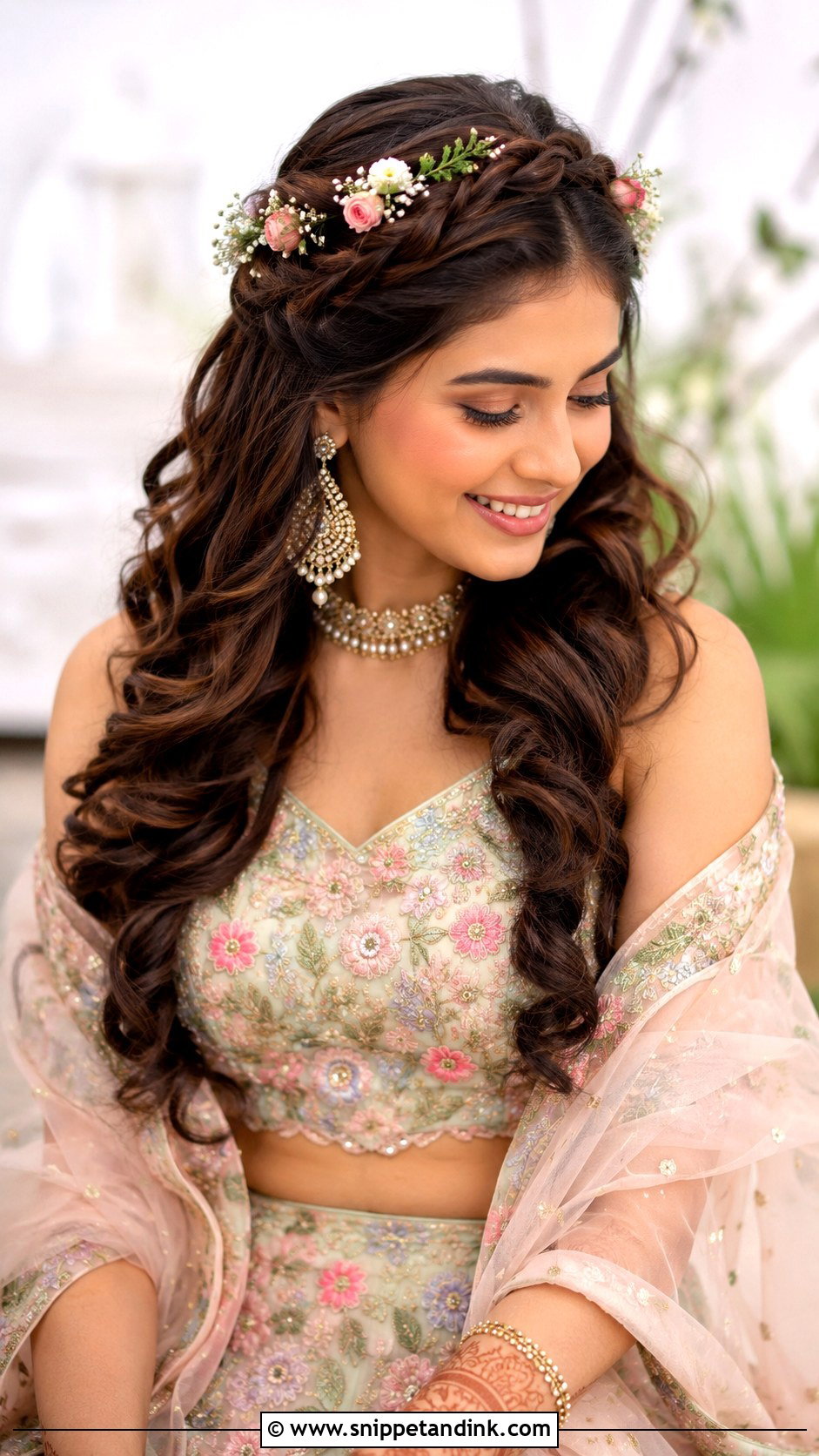
A braid wrapped around the head and dotted with flowers gives a halo effect that suits daytime and outdoor functions. It keeps hair off the neck, which matters in summer. The rest can stay loose or go into a low bun. I braid the crown fairly tight at the start and loosen it gently afterward; a loose braid at the start slips down toward the forehead within an hour. Pair it with flowy lehengas and simple jewelry.
12. Side Swept Curls
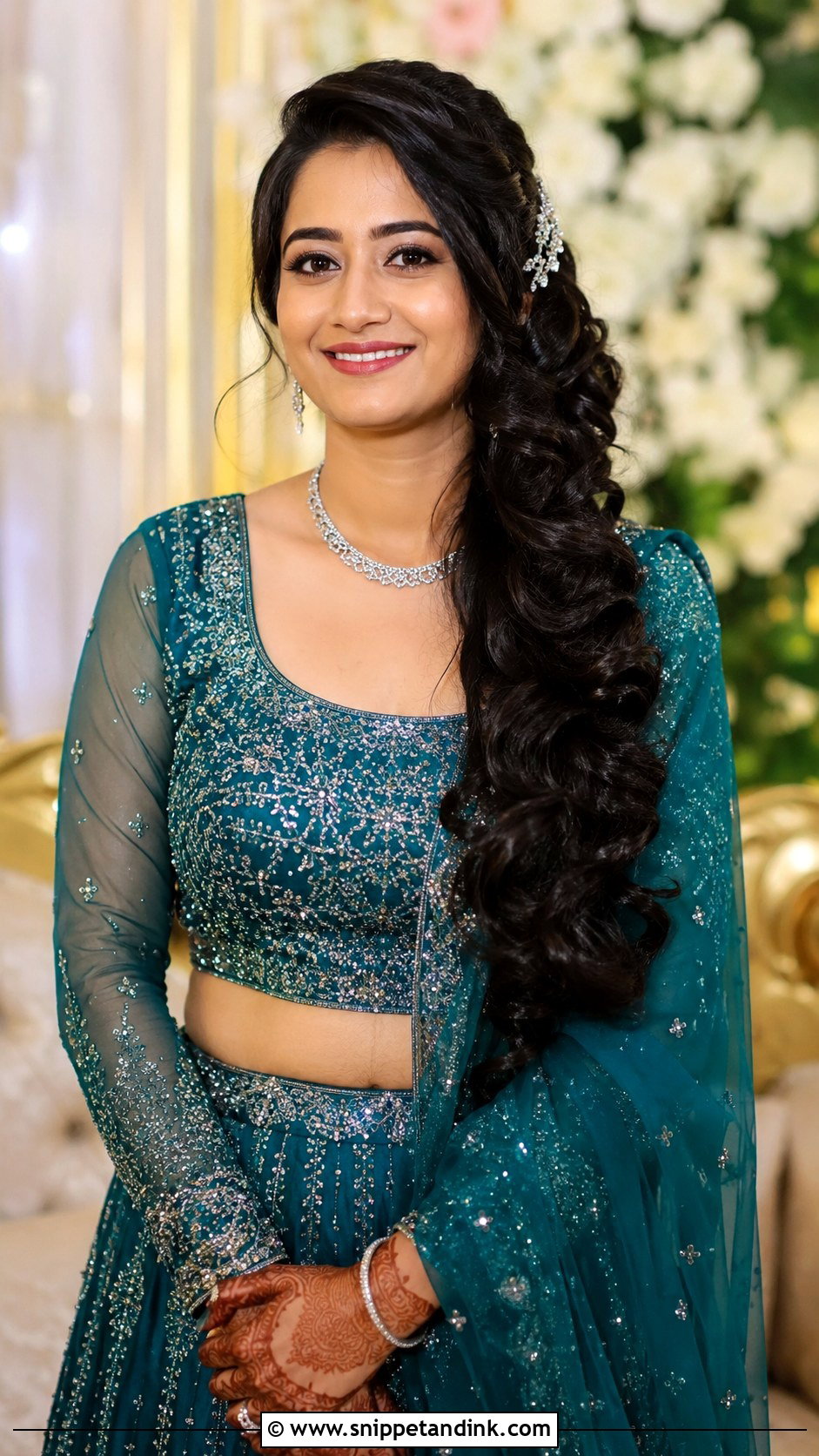
Sweeping all the curls over one shoulder frames the face and shows off statement earrings on the open side. I anchor the sweep with crisscrossed pins hidden behind the ear, which stops the hair from sliding back as the evening goes on. A jeweled pin near the part adds detail. It works for receptions and engagement parties and goes with lehengas or gowns.
13. Bun With Hair Accessories
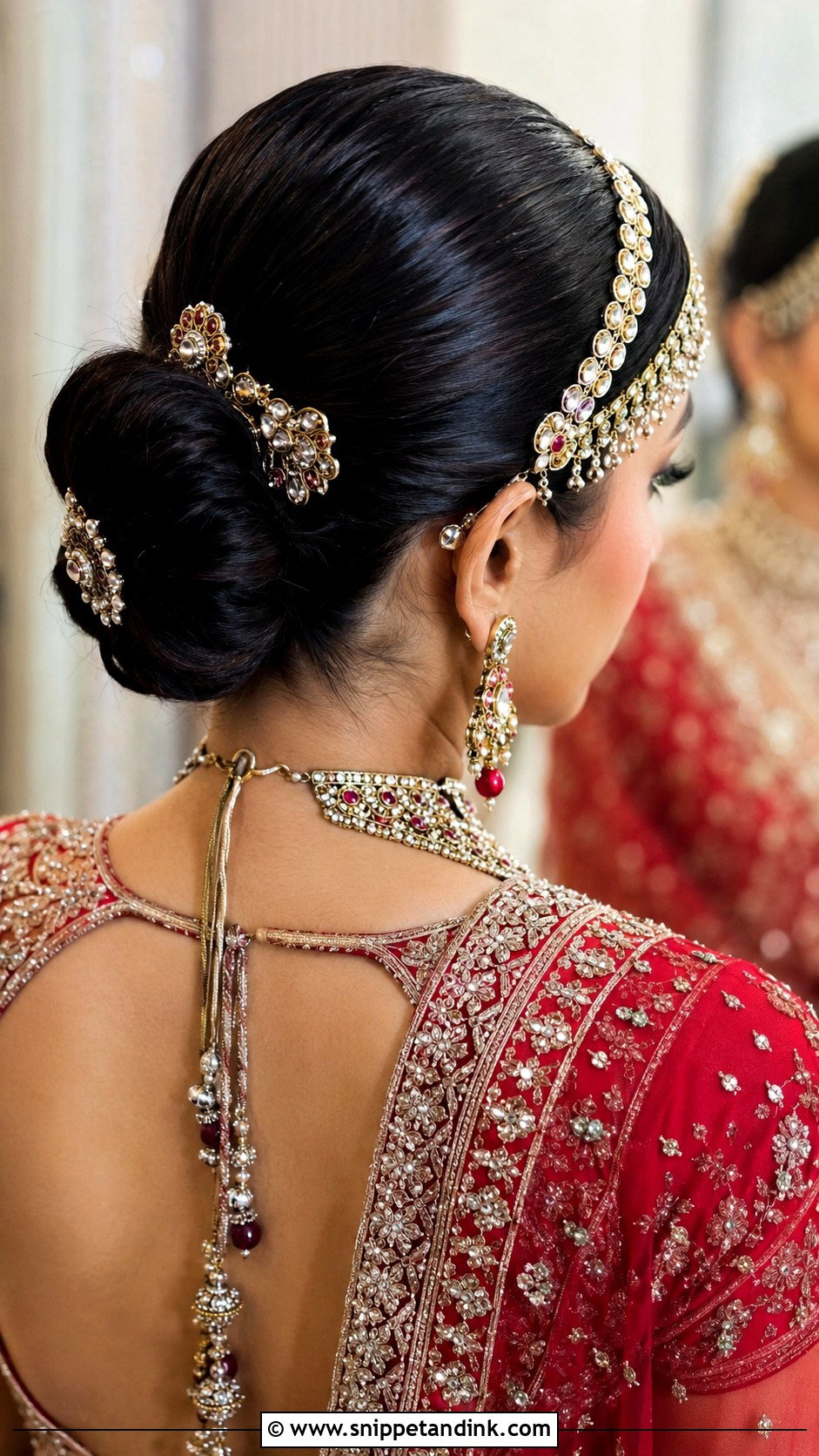
Jeweled pins, a matha patti or decorative combs turn a plain bun into a centerpiece. The bun can sit high or low depending on your neck and face; a high bun lengthens a short neck, a low one is calmer with a heavy necklace. Heavy accessories need a solid bun base, so I build it on a donut or padding and pin through the base, not just the surface. It belongs at the main ceremony.
14. Loose Wavy Updo
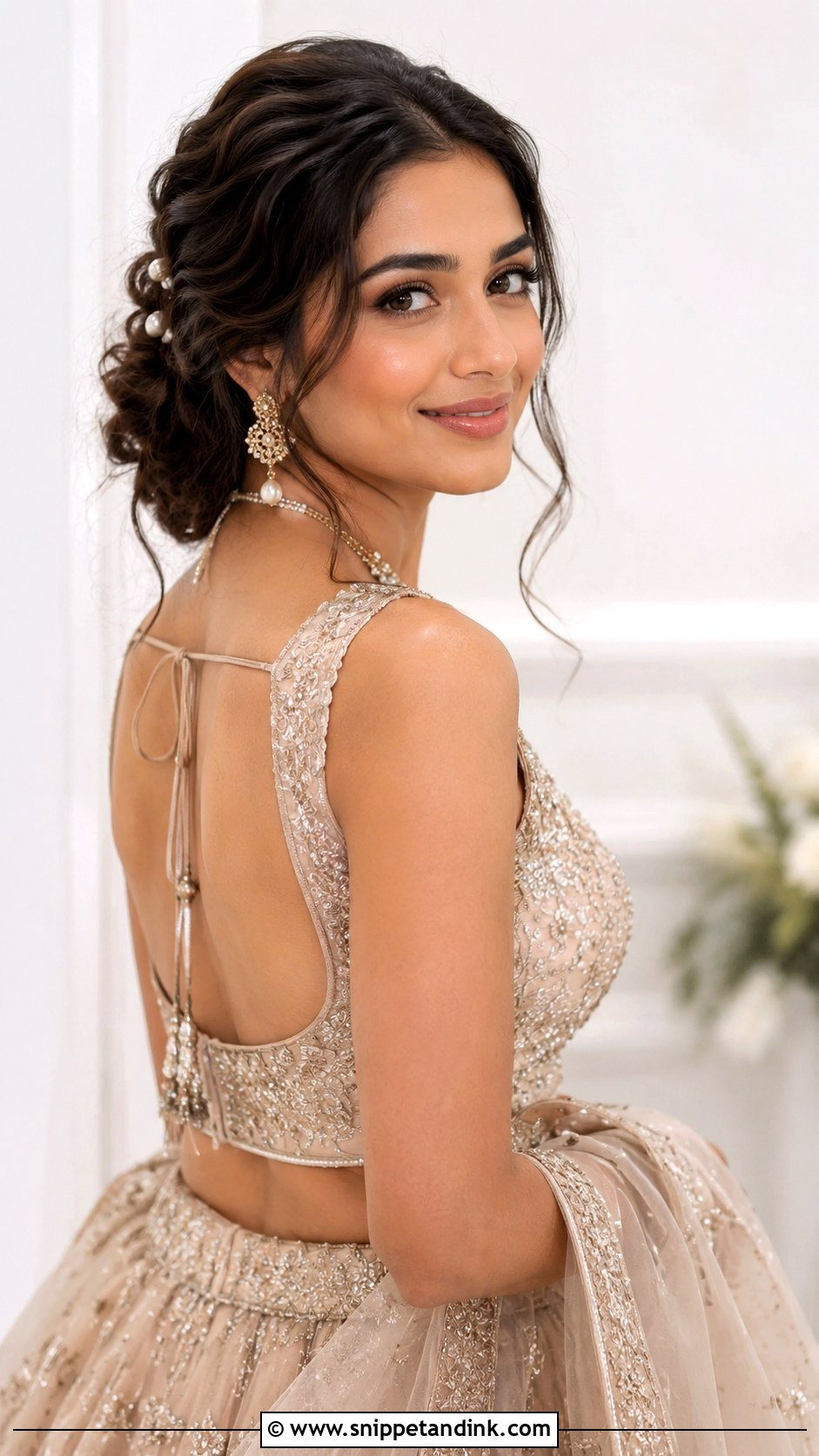
Soft waves gathered loosely at the back with face framing pieces left out make a relaxed reception updo. The trap is that loose updos can collapse; I build them on a few hidden pinned sections that carry the weight, so the soft parts on top are mostly decorative. Small flowers, pearls or jeweled pins add detail. It suits traditional and fusion outfits.
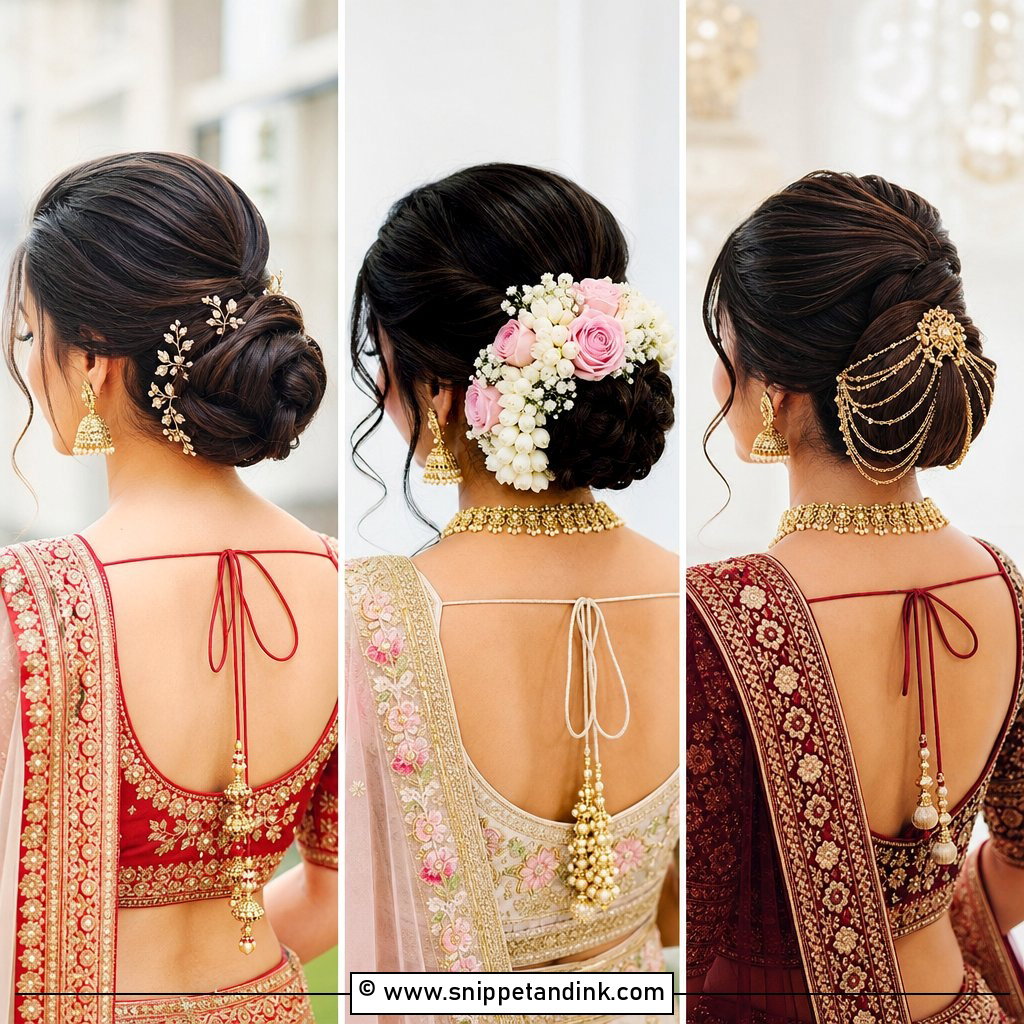

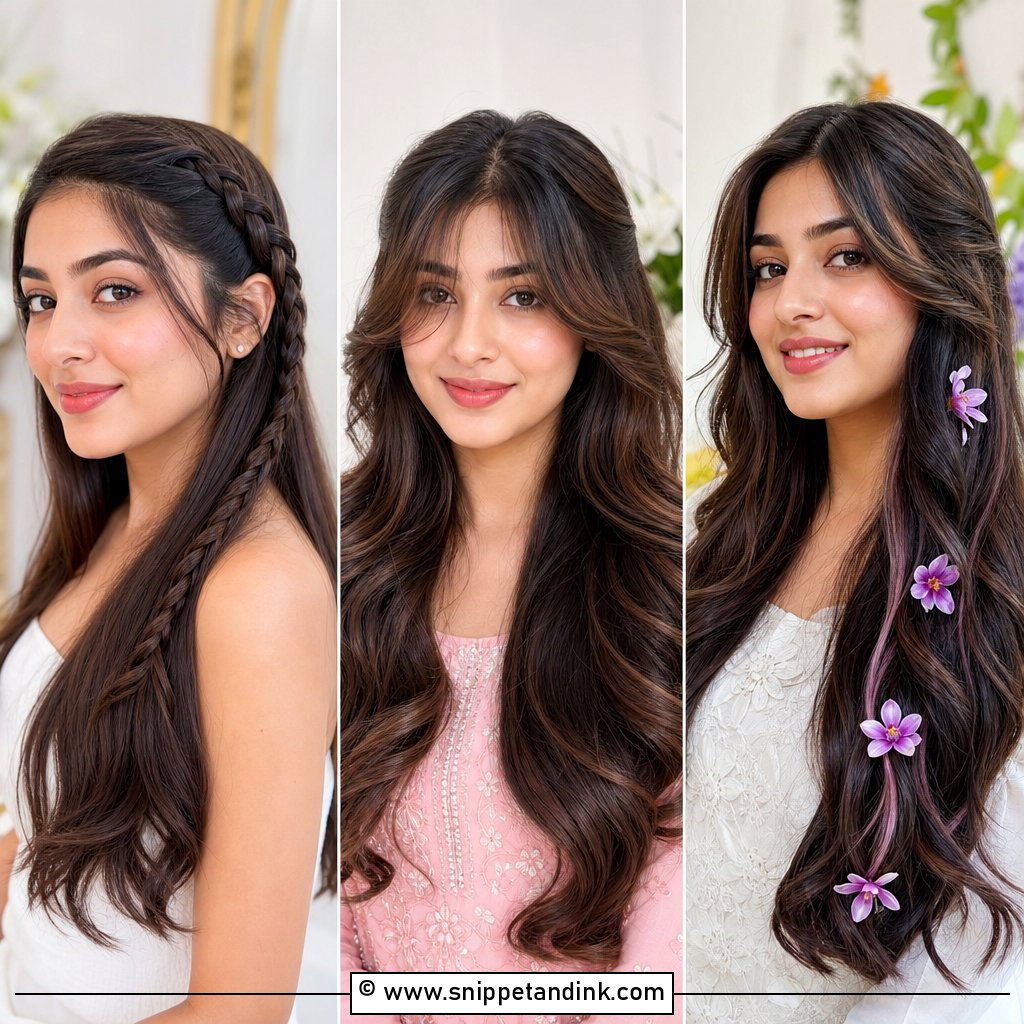
15. Braided Crown With Open Hair
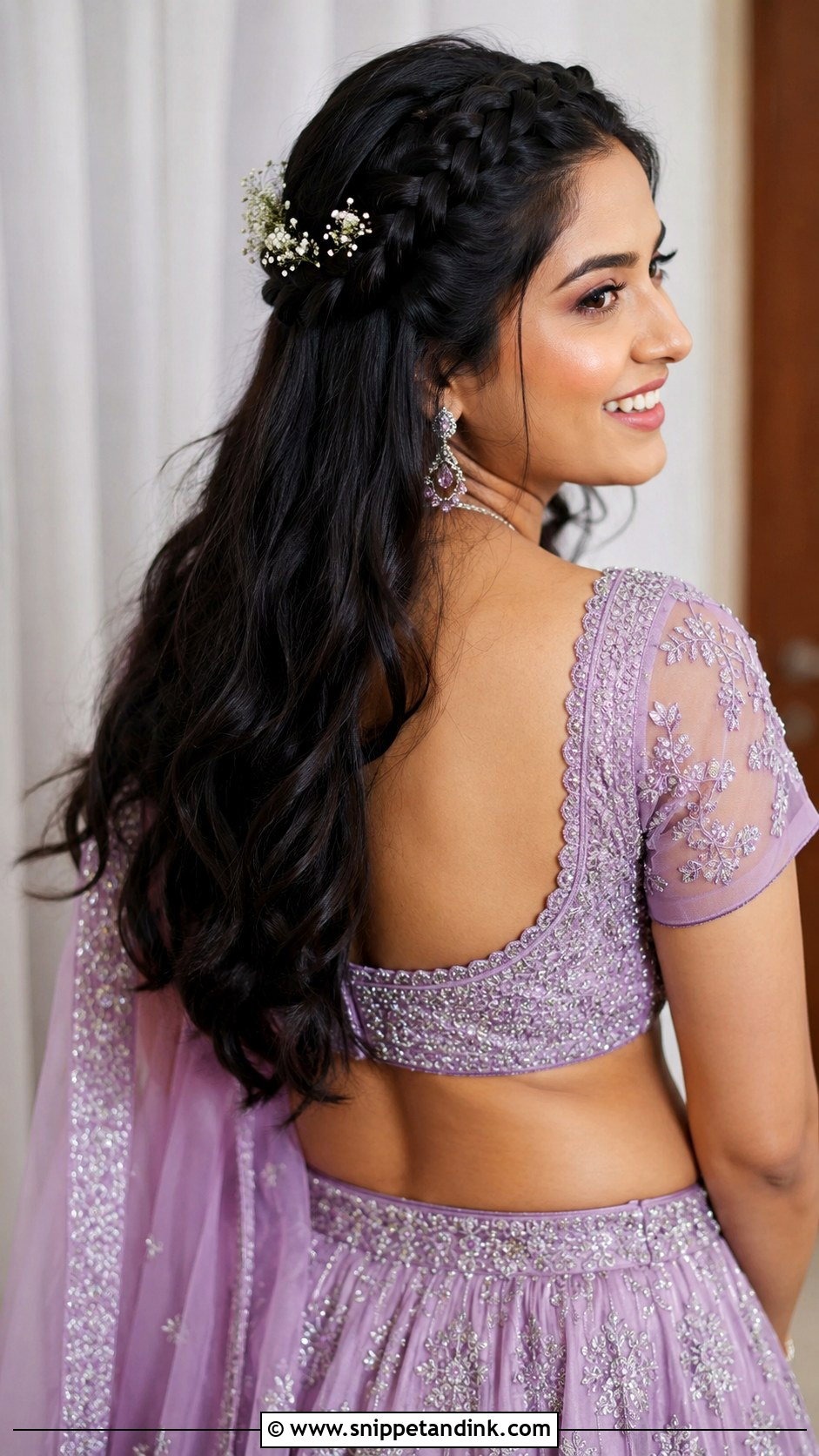
A braid across the top like a tiara with the rest of the hair loose suits mehendi and sangeet. It shows length and adds braided detail without full updo weight. Tiny flowers or pearls can go into the crown braid. I suggest prepping the loose section with a light texturizing spray, since freshly washed silky hair makes the crown braid slide.
16. Gajra Wrapped Braid
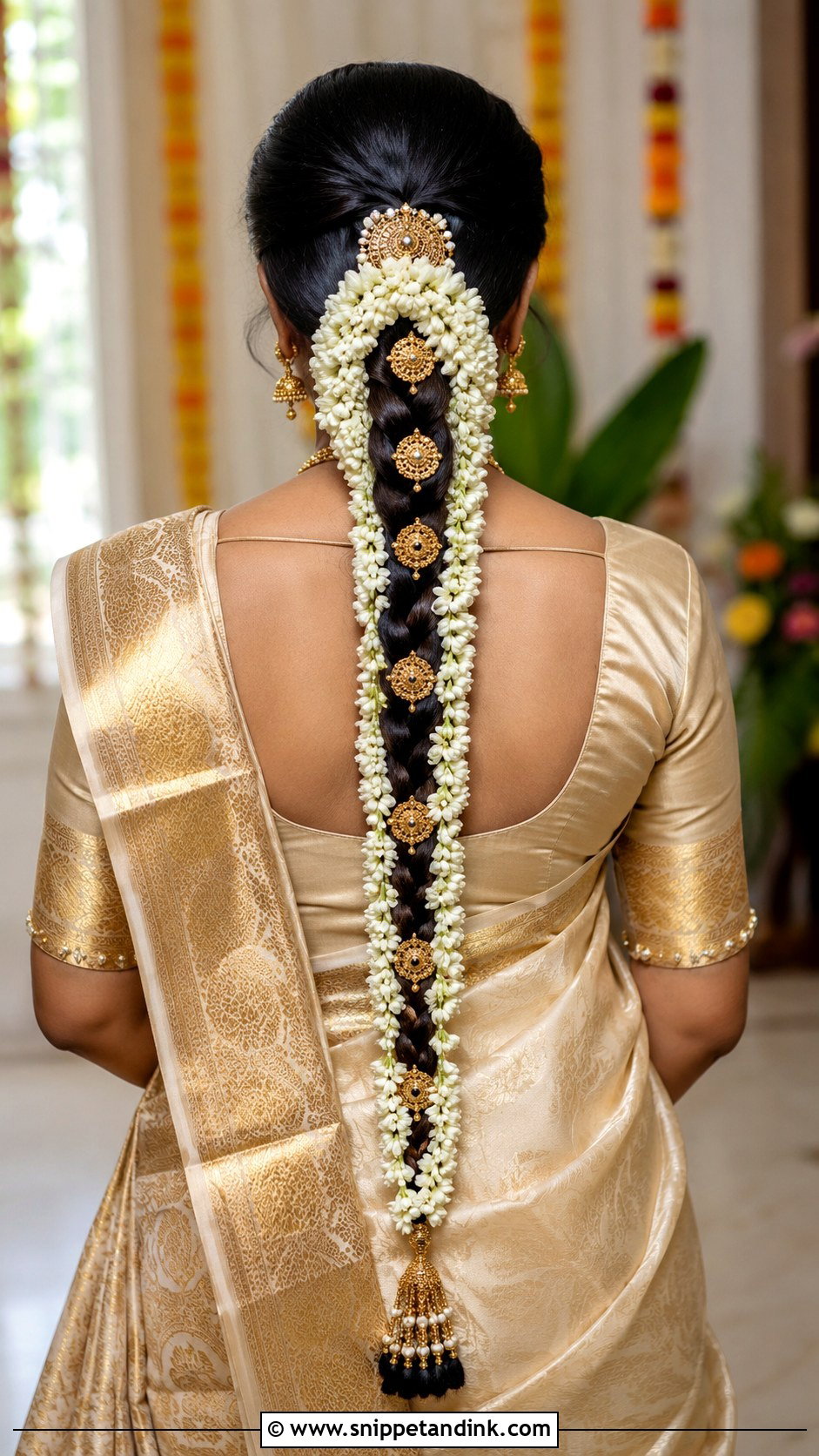
A long braid wrapped from top to bottom in jasmine is the classic South Indian bridal beauty look, often with gold jadai accessories between the flower rows. It suits silk sarees and temple jewelry. Most brides need a braid extension to get enough length for the full decoration. I fix the gajra strings at several points along the braid so the weight doesn’t drag it, and the bride should try sitting and standing in it at the trial.
17. Puff Bun With Tikka
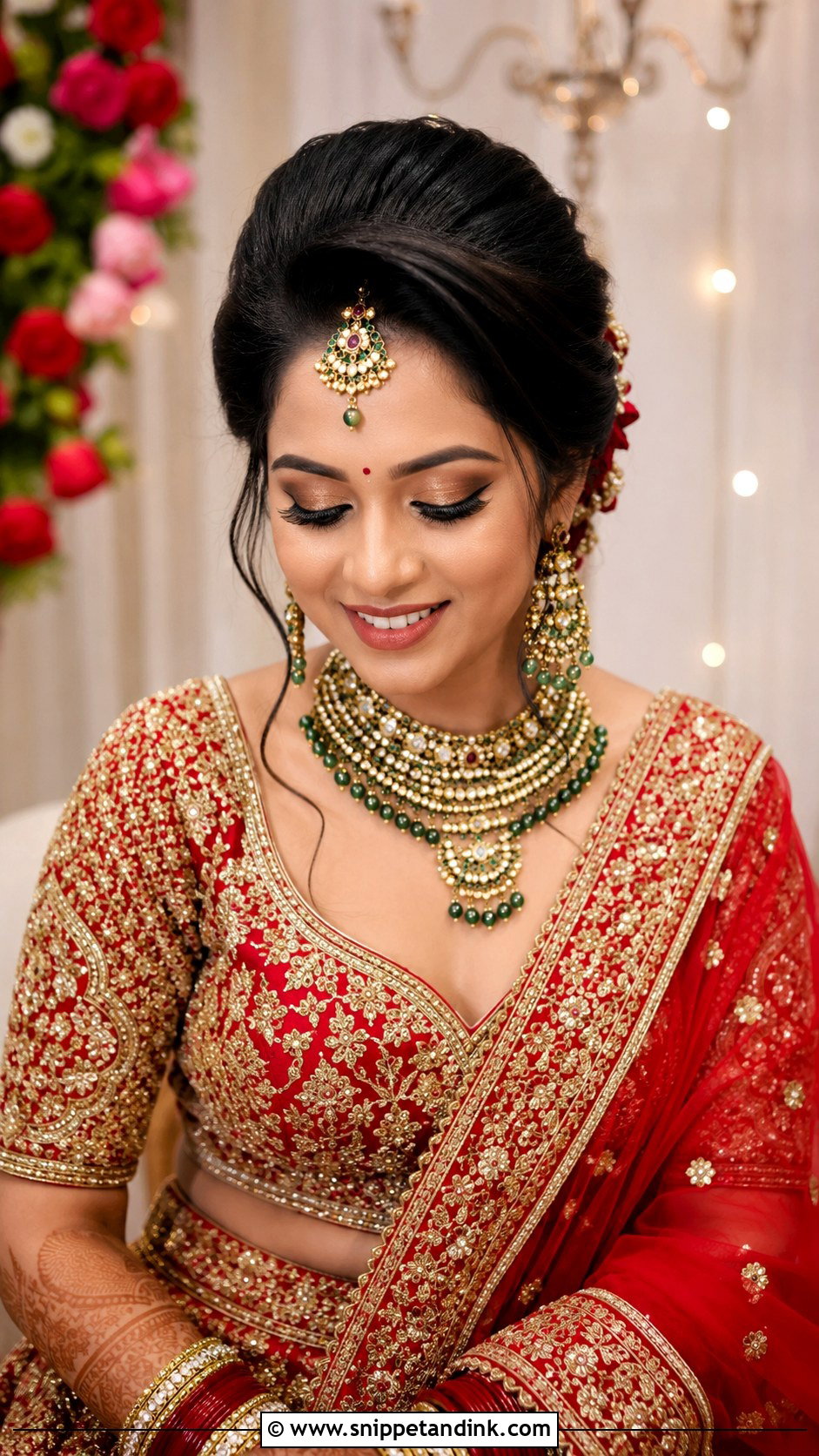
A puff at the crown above a classic bun adds height and gives a regal shape. It’s my go to for fine hair, because the volume at the top hides a flat crown. I backcomb the crown section at the roots, smooth the surface and pin it from underneath. A maang tikka pairs well. If your dupatta will be pinned on top of the head, keep the puff modest, or the dupatta will sit too high and look like a tent.
18. Floral Vine Half Updo
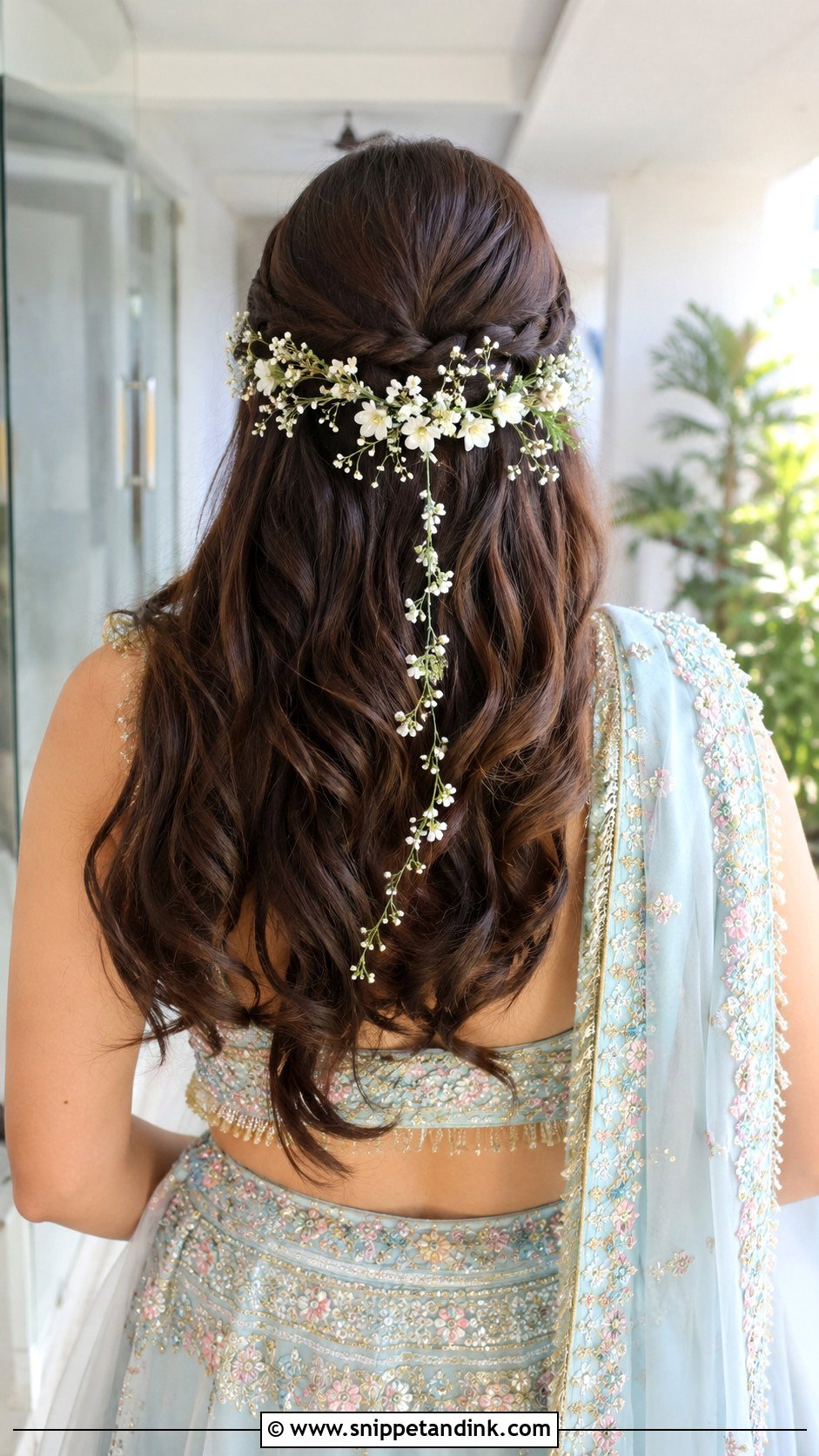
Small flower vines threaded through a half updo give a light, daytime feel. The vine adds detail without bulk, and the half up structure keeps hair off the face while showing length. Match the flowers to the outfit. Artificial vines last all day; fresh ones wilt in a few hours of heat, so I keep fresh vines for short ceremonies or bring a spare.
19. Sleek Low Bun
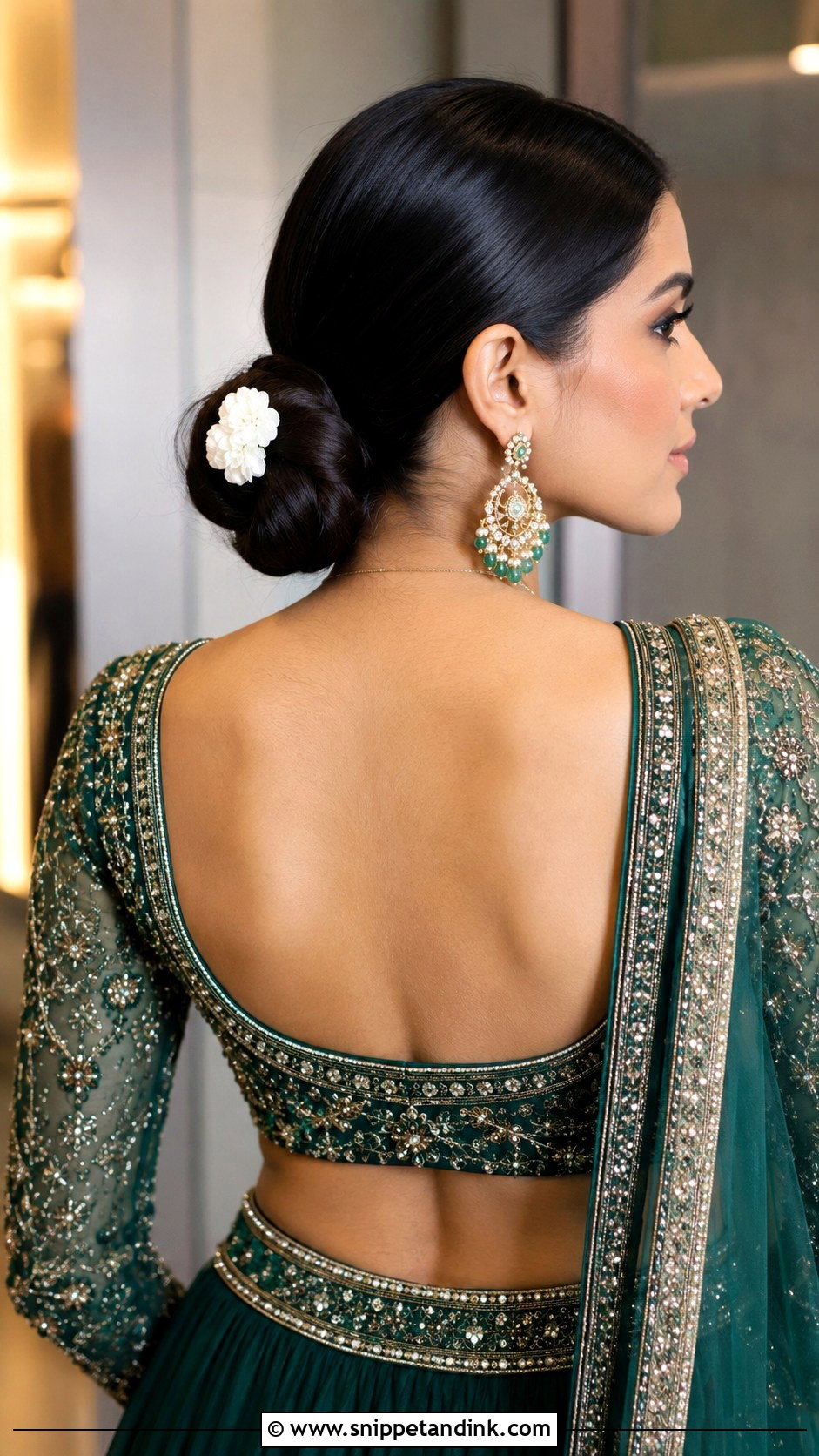
A sleek low bun is the minimalist’s choice: smooth, polished, sitting at the nape. It puts the focus on the face and earrings and goes well with structured lehengas. Sleek styles show every bump and flyaway, so I use a fine tooth comb and a light gel or wax, and a flat iron on frizzy hair before pulling it back. One floral accent or jeweled pin is enough.

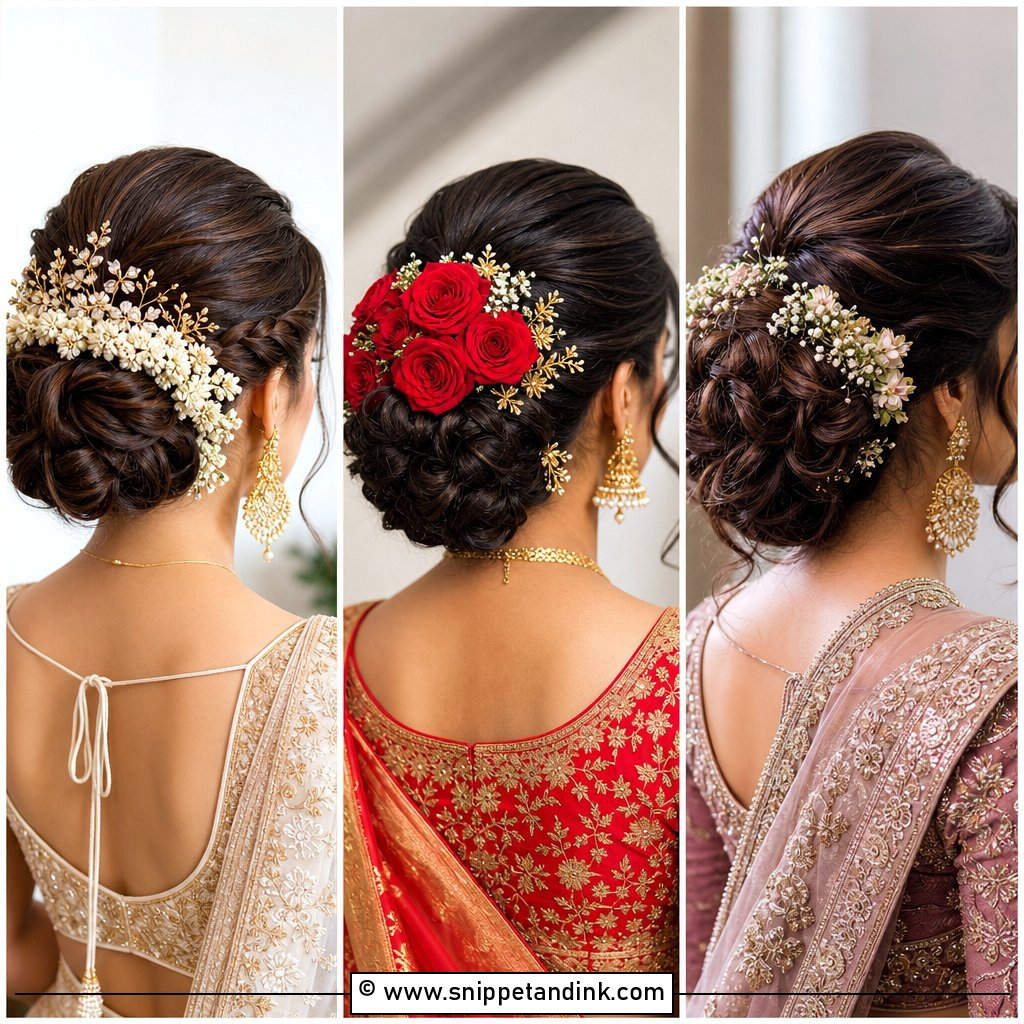
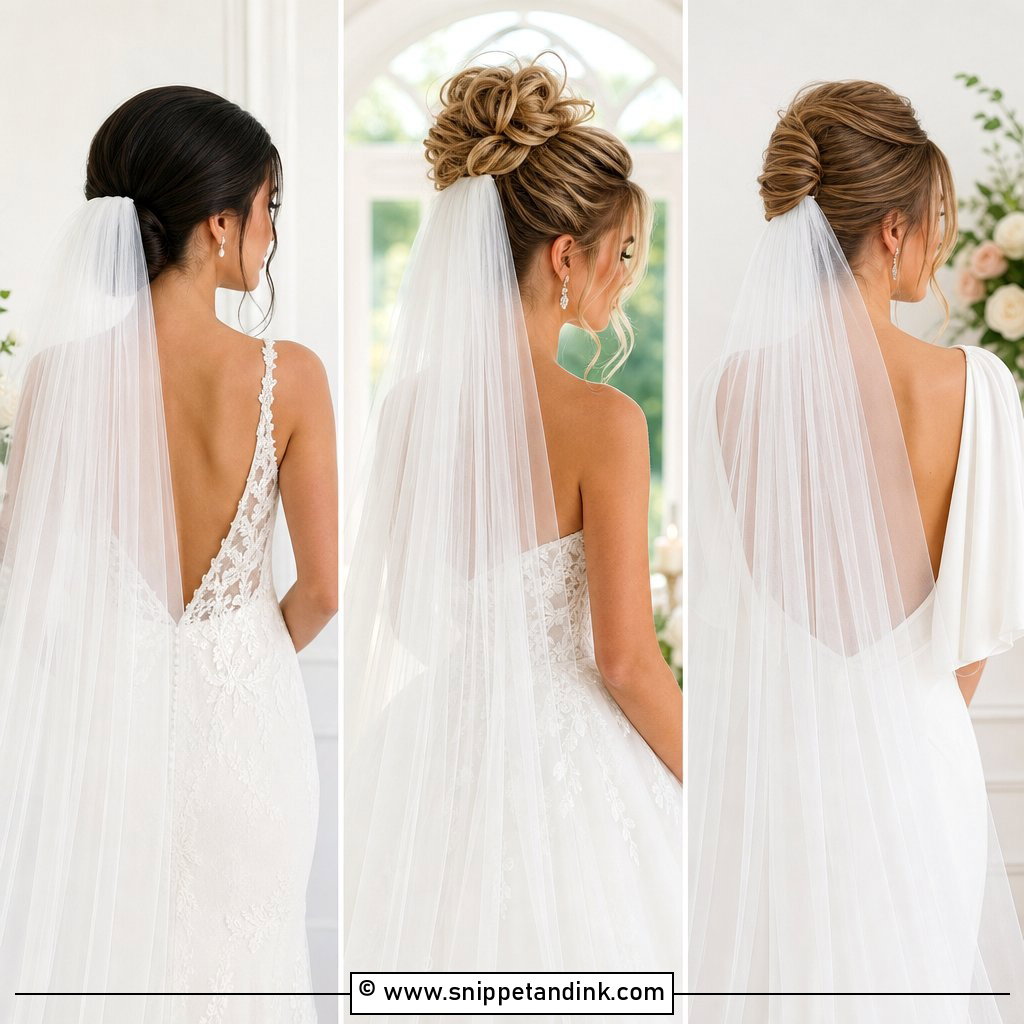
20. Rose Bun With Veil
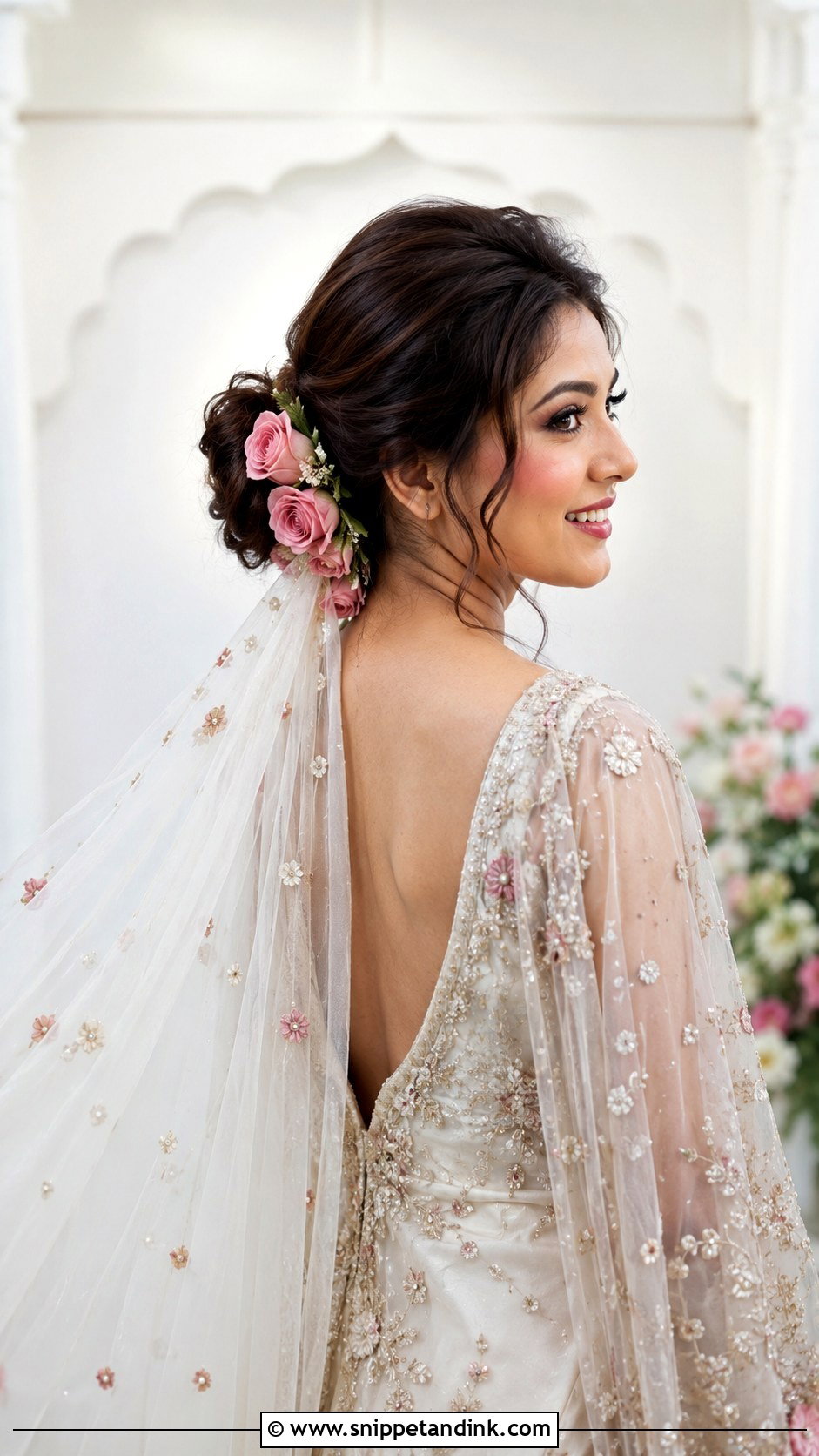
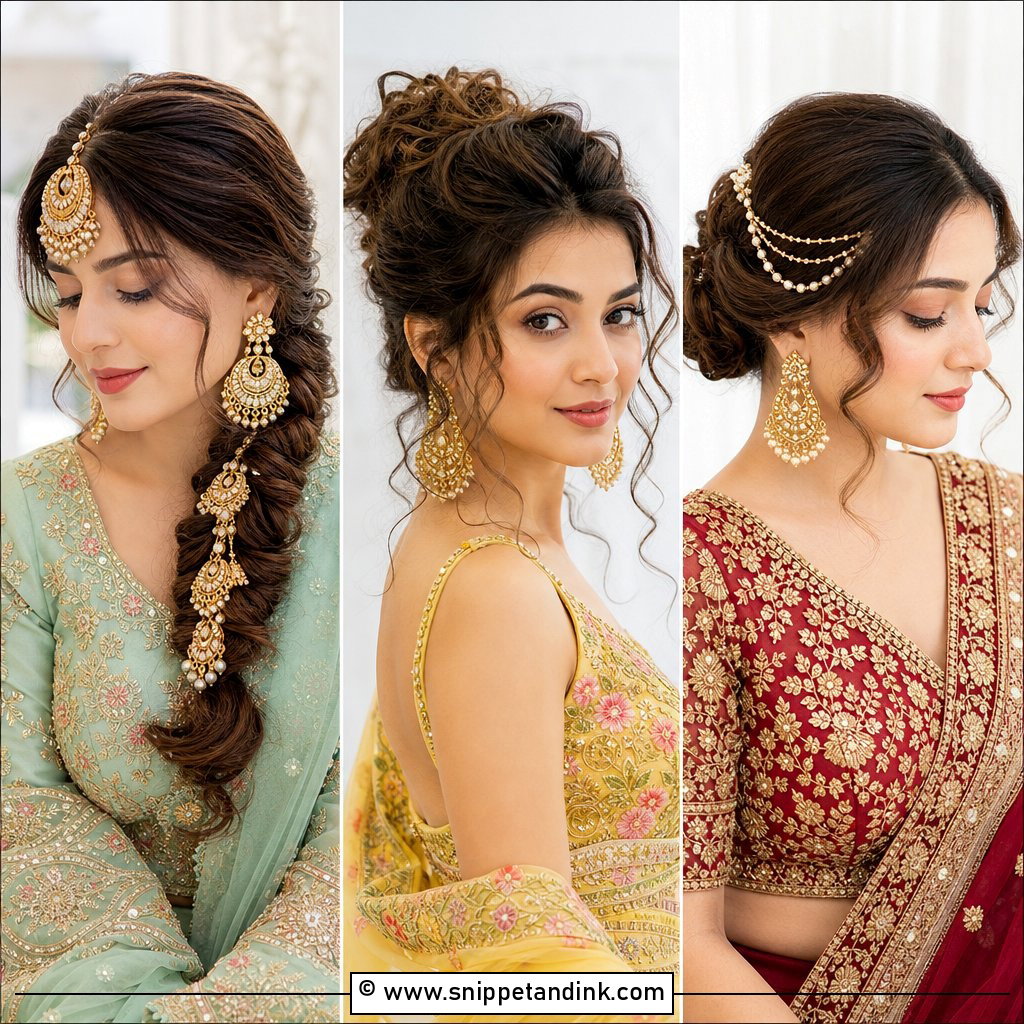
A rose bun with a soft veil suits Christian Indian ceremonies and fusion receptions. Fresh or fabric roses sit around a full bun, and a sheer veil adds softness. Placing the veil comb below the bun keeps the roses visible; at the crown it covers them but frames the face more. I sew or pin the veil comb into a small braid hidden under the bun, which holds better than sliding it into smooth hair.
21. Twisted Side Braid
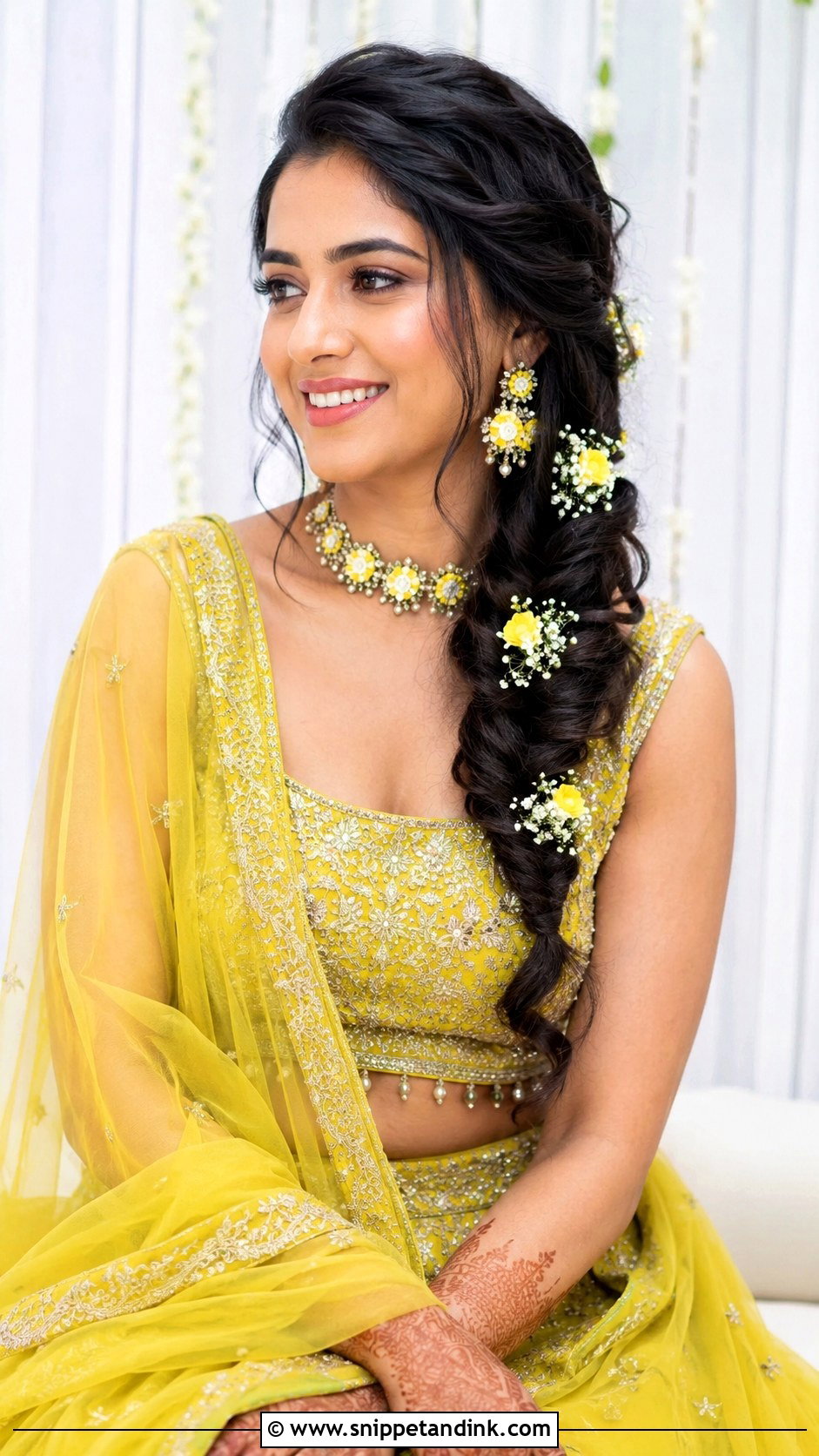
Two strand twists laid over one shoulder give texture with less tension than a braid. It’s comfortable for mehendi and sangeet, and the side placement shows earrings. Small flowers, pearls or a hair vine can be added. Twists can loosen as the hours pass, so I set them with a little cream and pin the end securely under a flower.
22. Bun With Fresh Flowers
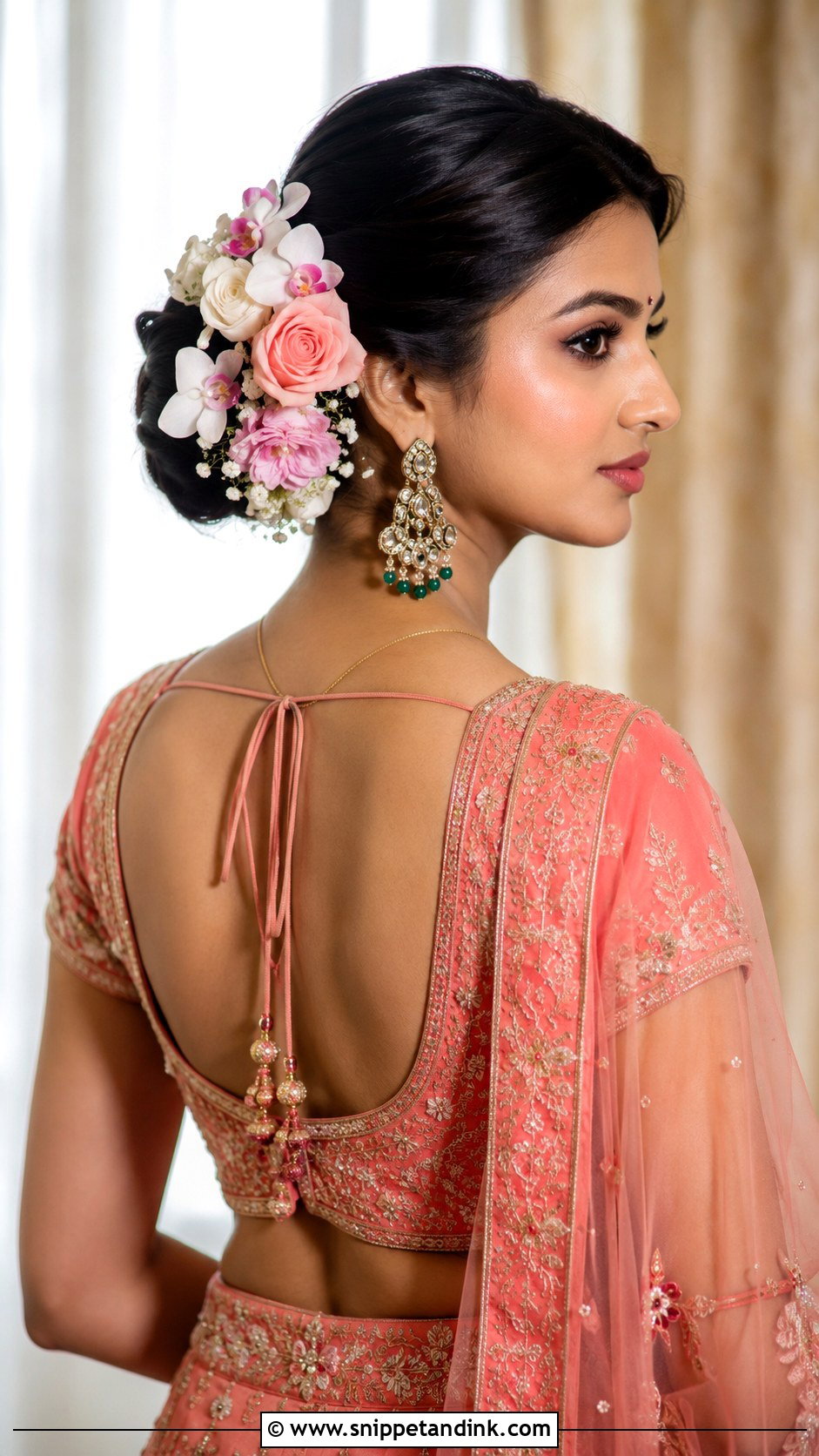
Roses, jasmine or orchids around a classic bun bring color and scent. Choose flowers to match the outfit. Orchids last longest in heat; roses and jasmine wilt faster, so they should be fixed as late as possible. I always ask the bride whether strong scents bother her, as hours of jasmine next to the face can cause headaches for some people. It pairs with statement jewelry and heavy lehengas.
23. Curly Open Hair With Tikka
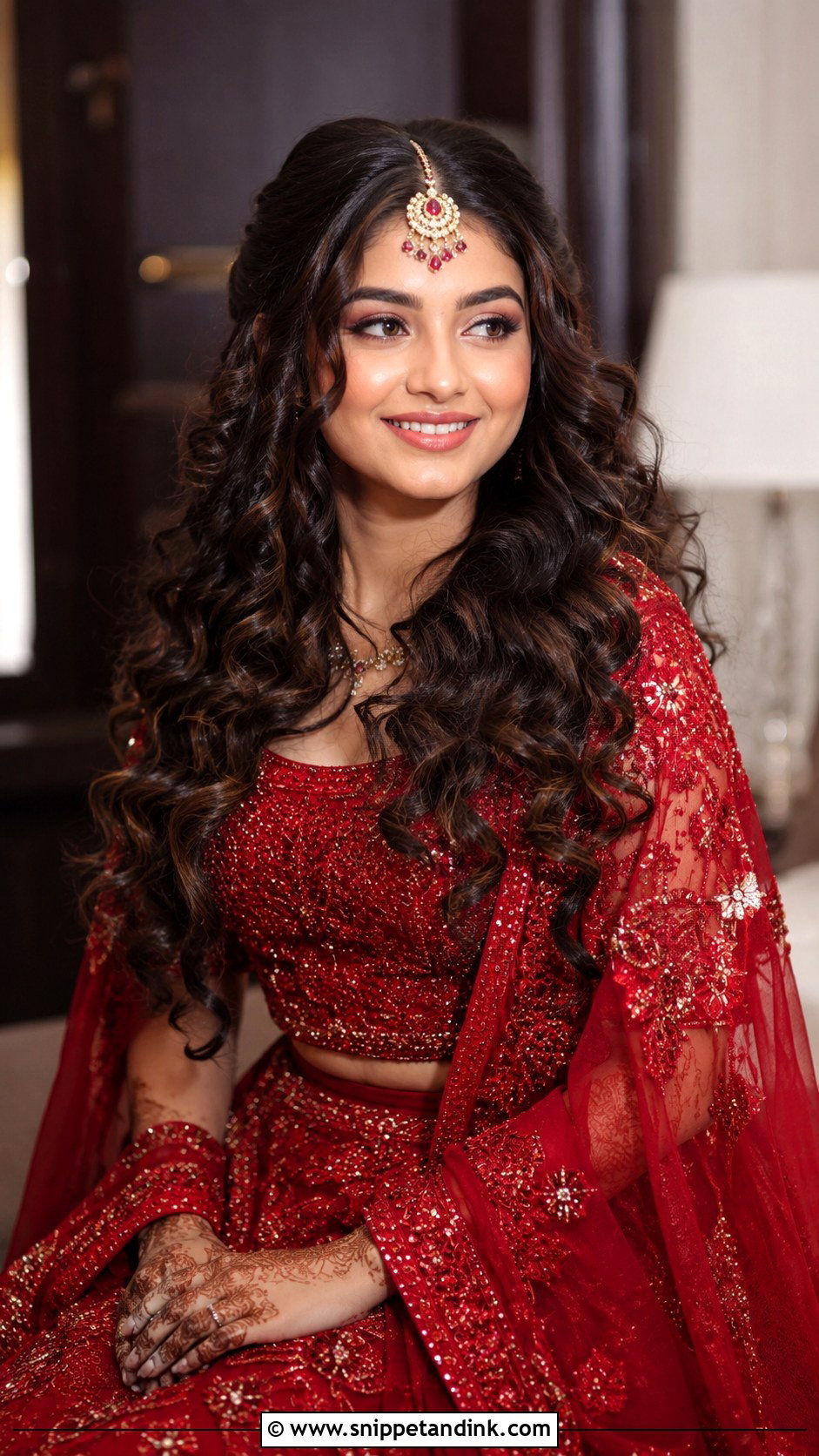
Defined curls left open look lively and youthful, especially with a maang tikka. They suit receptions and engagement functions. Natural curls hold far better than heat curls on straight hair, so if your hair is naturally curly, I work with your texture and define it rather than straightening and recurling. Jeweled pins or small flowers can be added. Humid venues are the main risk for heat set curls.
24. Braided Updo With Pearls
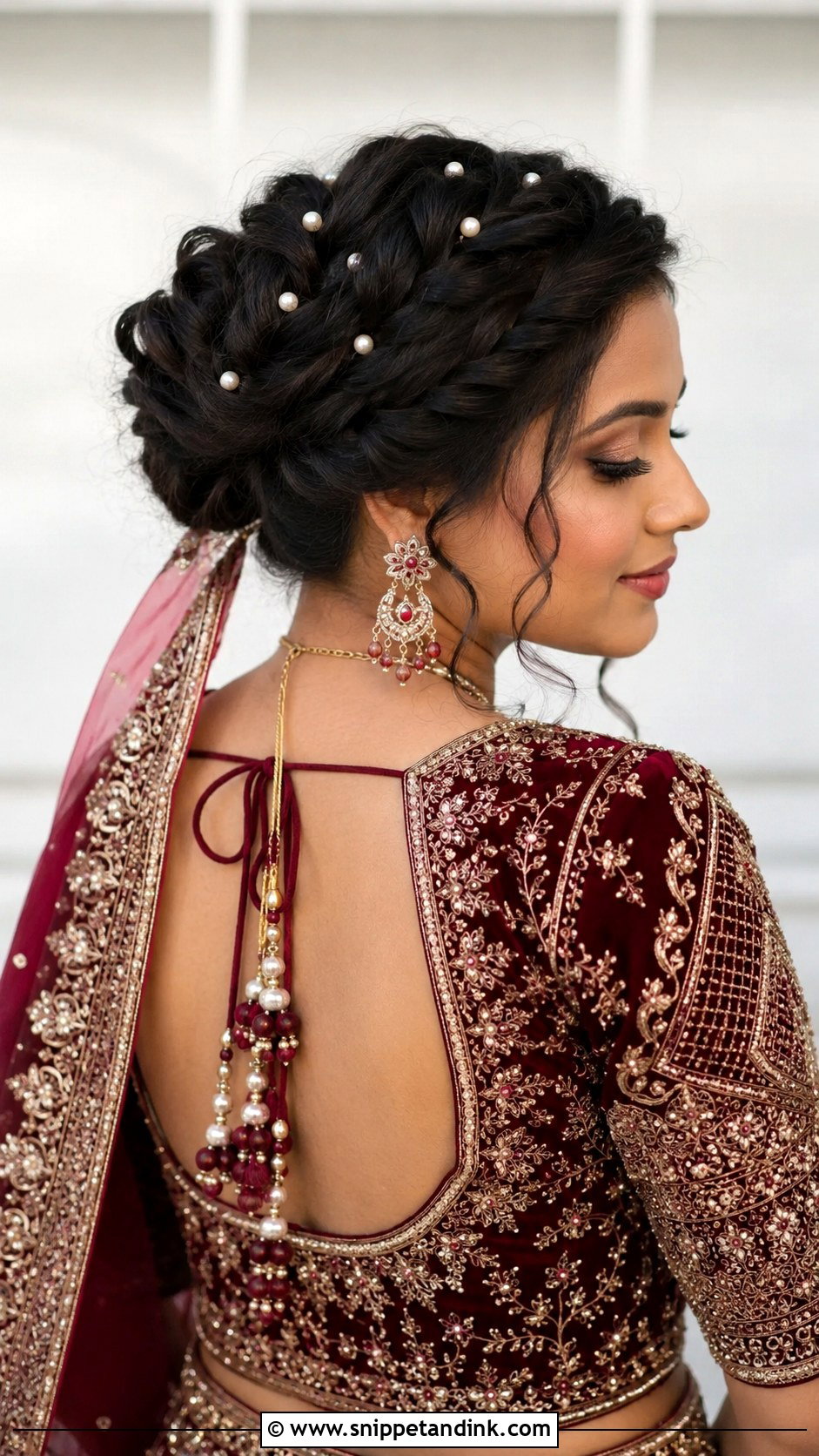
Braids wound into a structured updo with pearls throughout give an intricate, finished look for the main ceremony or reception. The pearls echo bridal jewelry. High or low placement depends on your neckline and features. Braided updos are among the most secure styles I do, because every braid gives the pins something to grip. They suit heavy lehengas and statement earrings.
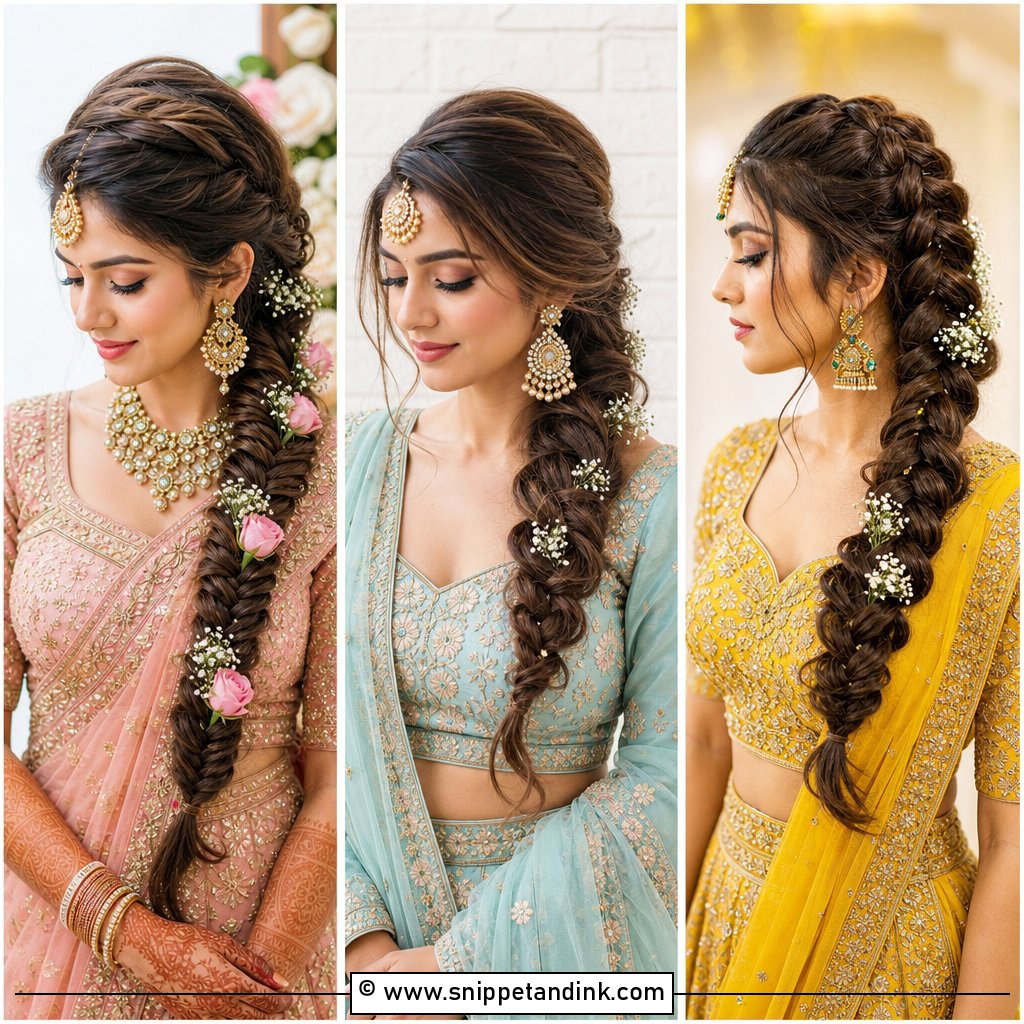
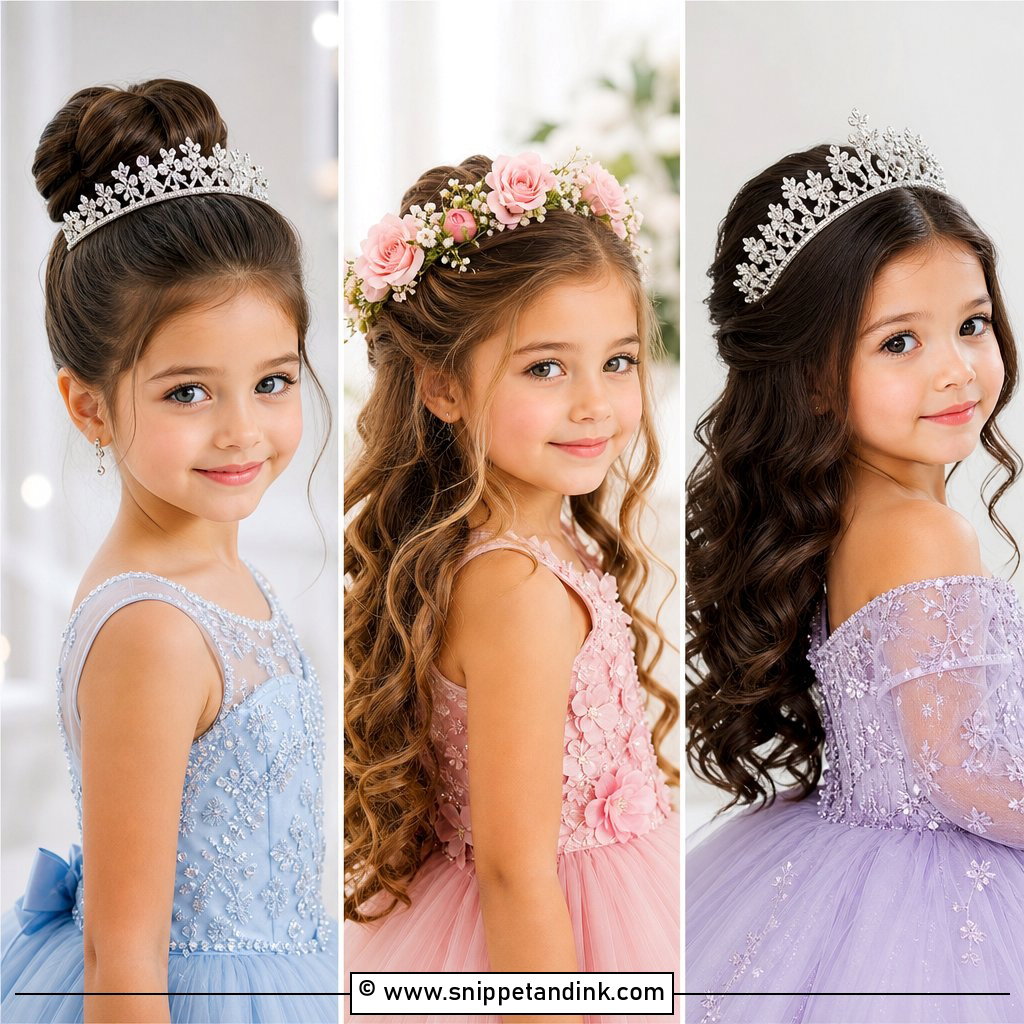

25. Messy Bun With Baby Breath
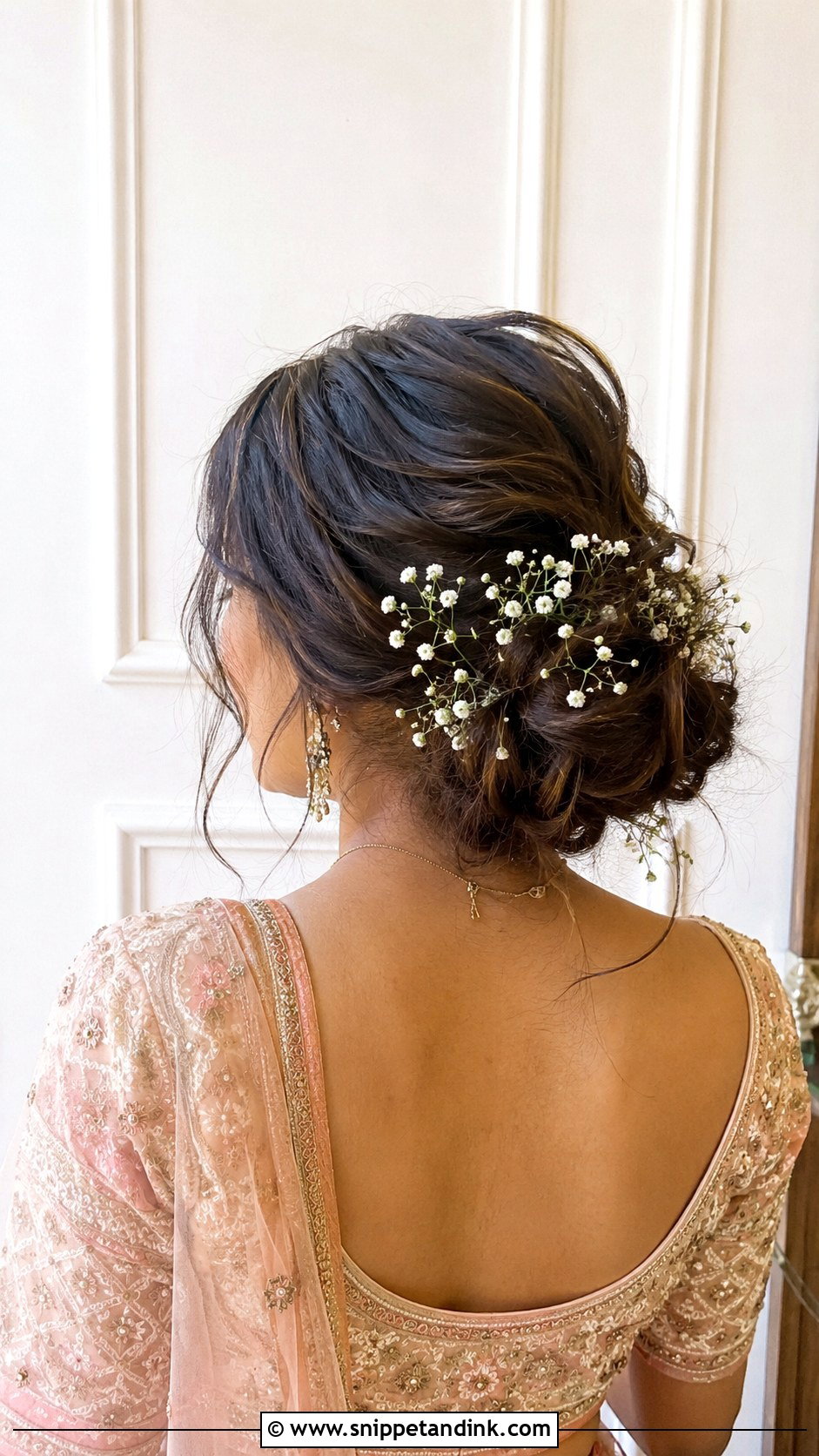
Baby’s breath in a soft, messy bun gives a light, airy finish for boho and outdoor weddings. The tiny flowers fill the gaps between loose sections. Baby’s breath dries rather than wilts, so it looks fine for hours, but it has a smell some find unpleasant up close; I mention this at trials. Pastel lehengas and minimal jewelry suit it.
26. Sleek High Bun
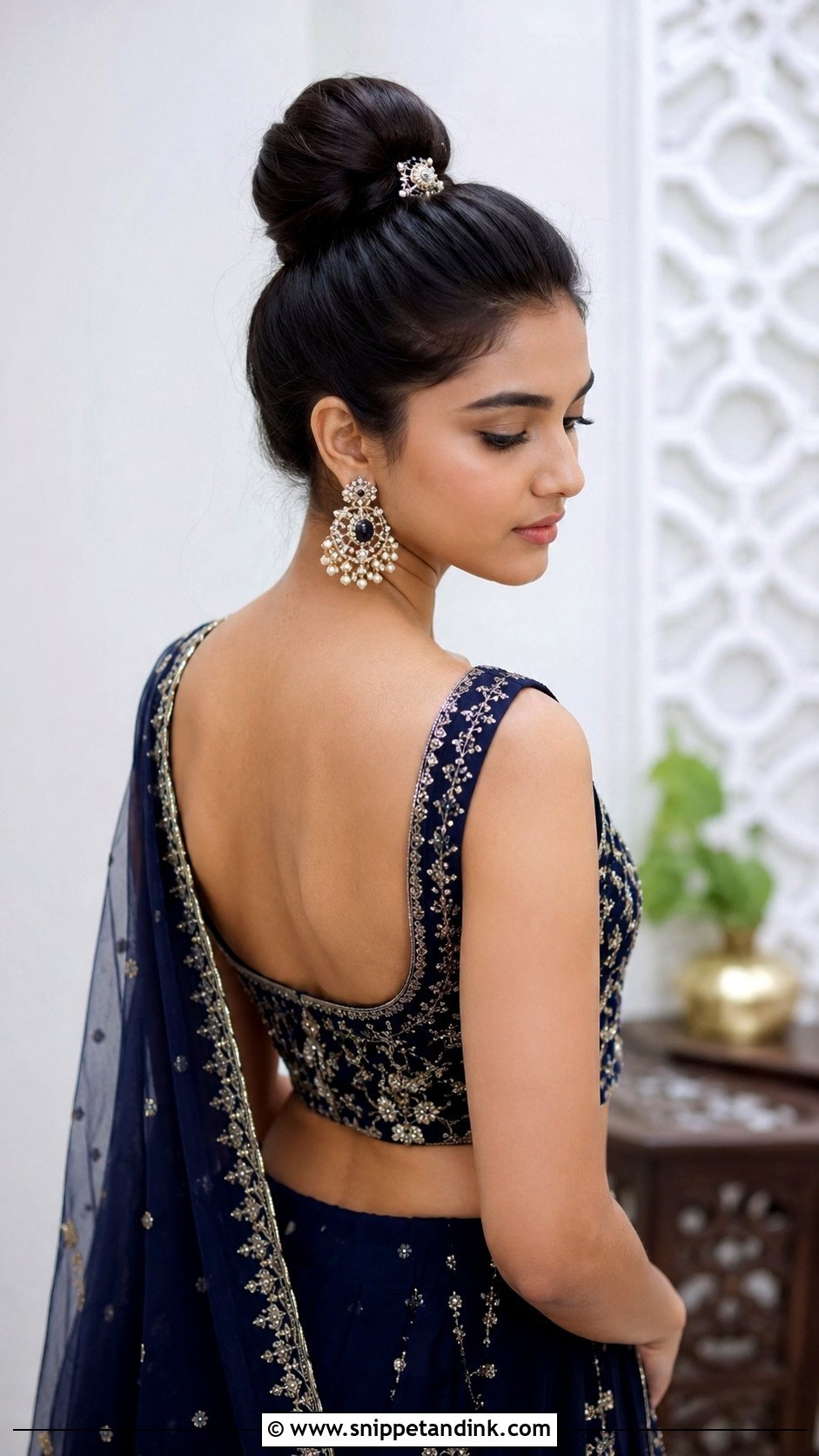
A sleek high bun lengthens the neck and gives a clean silhouette. It suits modern lehengas and statement earrings. With a heavy dupatta, though, a high bun can feel top heavy by the end of the day, so I suggest it for receptions where there’s no dupatta on the head. A jeweled clip or one floral accent adds detail.
27. Floral Ponytail
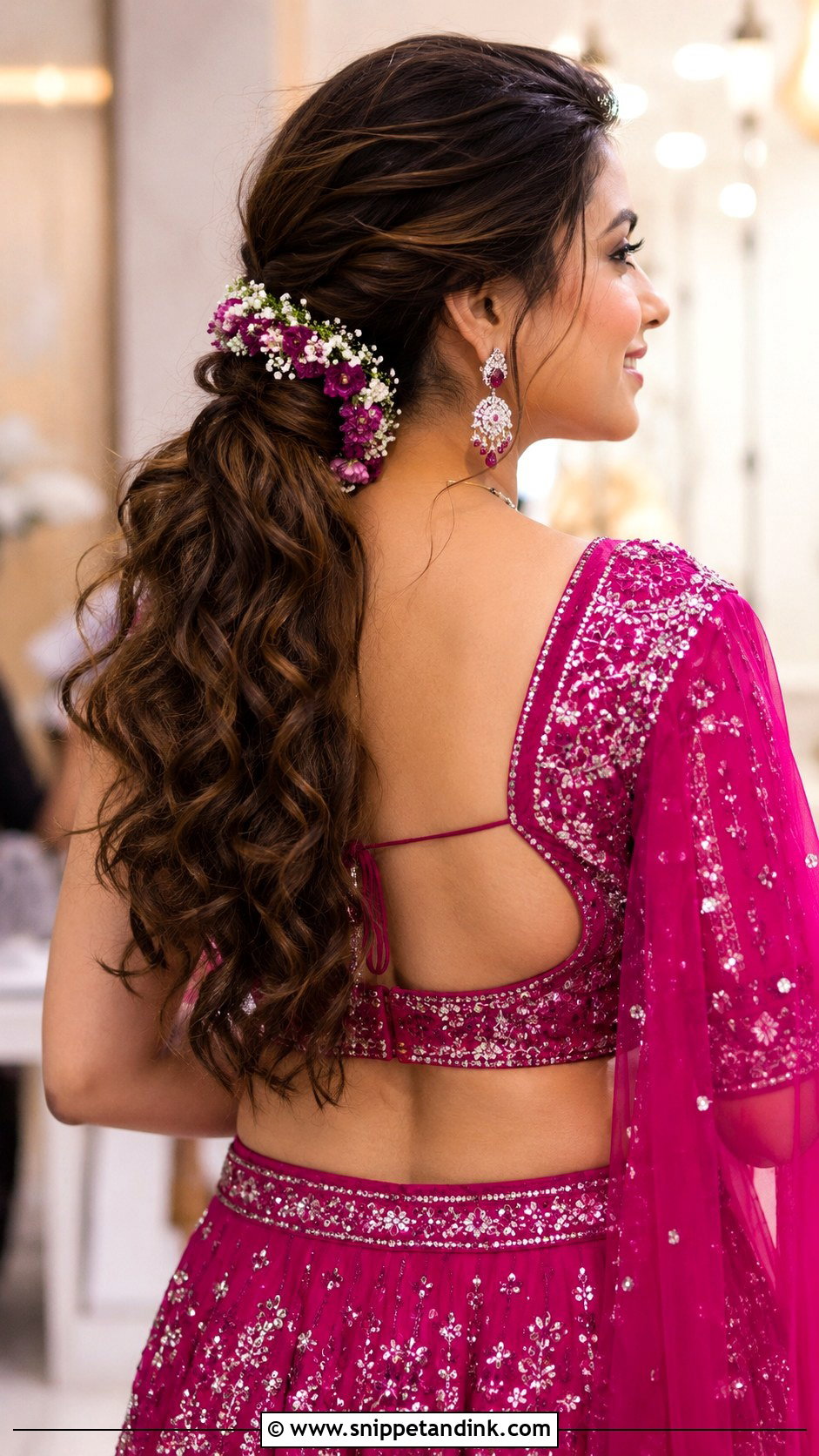
A ponytail decorated with flowers at the base is a fresh, younger alternative to an updo for sangeet and receptions. High looks dramatic, low looks calmer. A gajra wrap around the base adds a traditional touch. I put a few small hidden braids under the ponytail to anchor any flowers, and a hair extension wrapped around the base hides the elastic and adds length.
28. Braided Bun With Maang Tikka
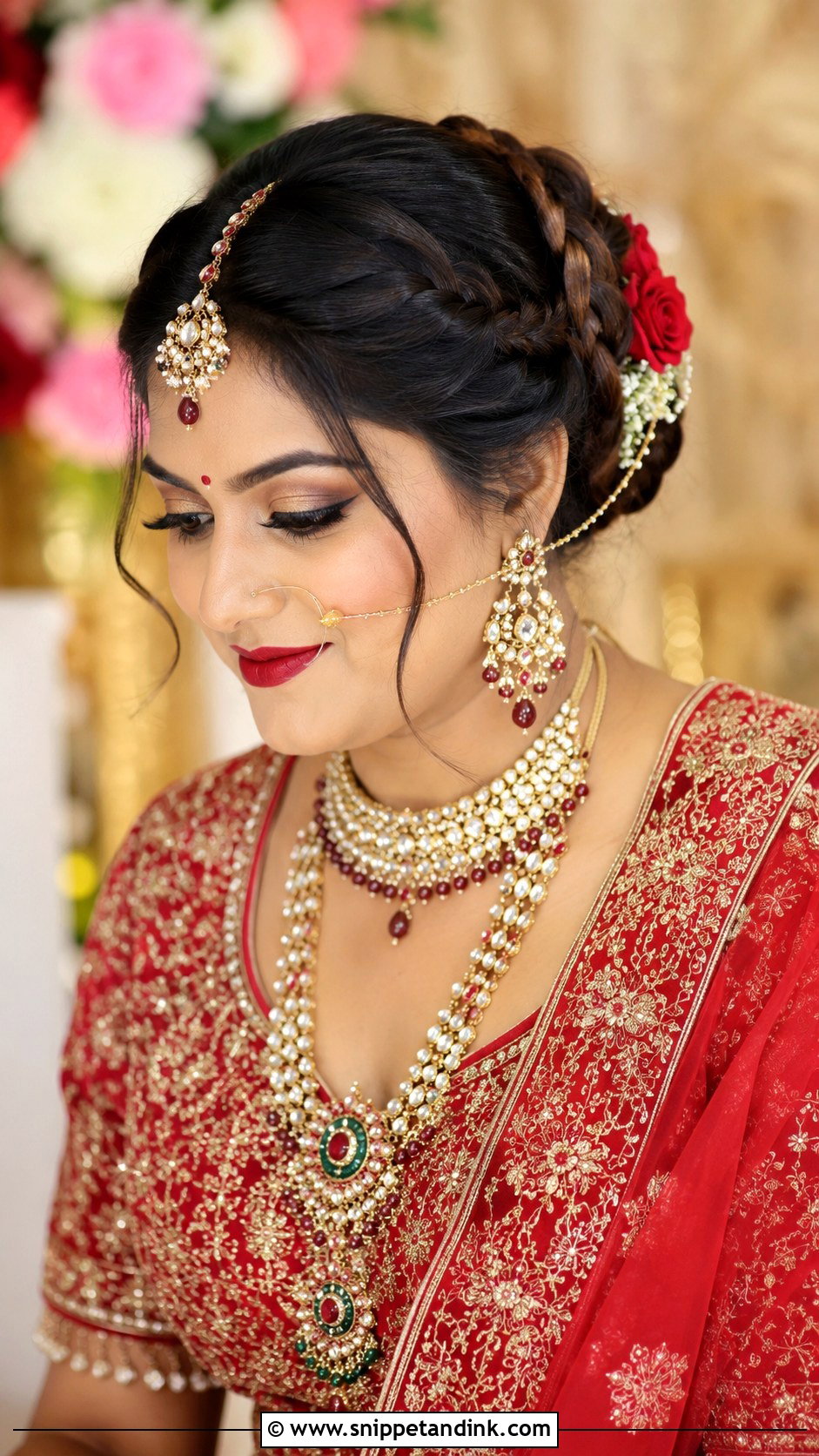
Braids woven into a structured bun with a maang tikka make one of the most traditional, detailed looks for the main ceremony. The braided texture adds interest from the back, which matters during the pheras when guests watch from behind. Fresh flowers or pearls can decorate the bun. It holds well under a heavy dupatta.
29. Soft Waves With Floral Pins
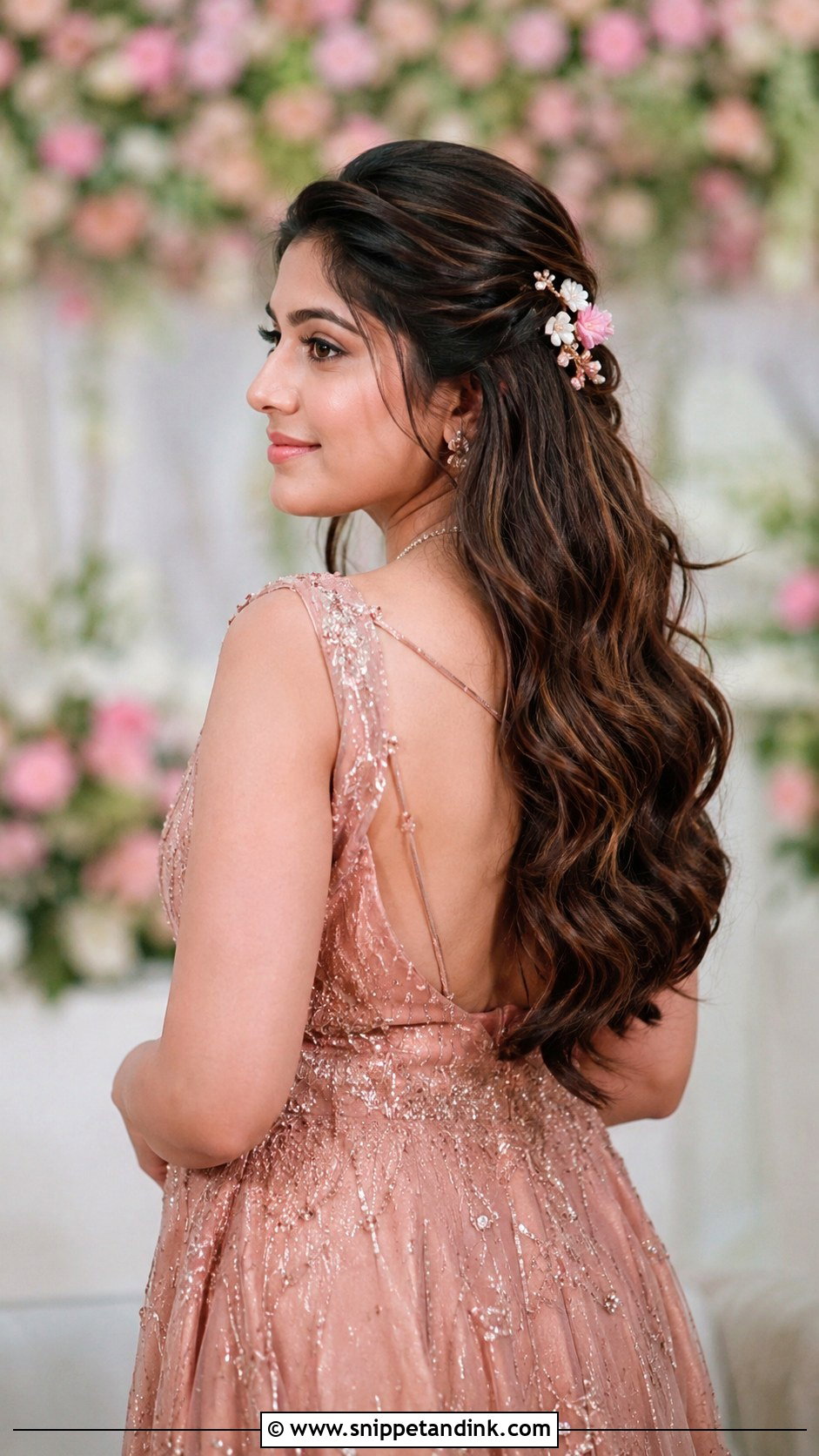
Soft waves with small flower pins scattered through them suit receptions and engagement functions. The waves show length and shine, and the pins add detail without weight. I place pins in a loose diagonal rather than a straight line, which looks more natural. Since the hair is open, keep a small comb and a travel hairspray with your bridesmaid for touch ups.
30. Vintage Bun With Gajra
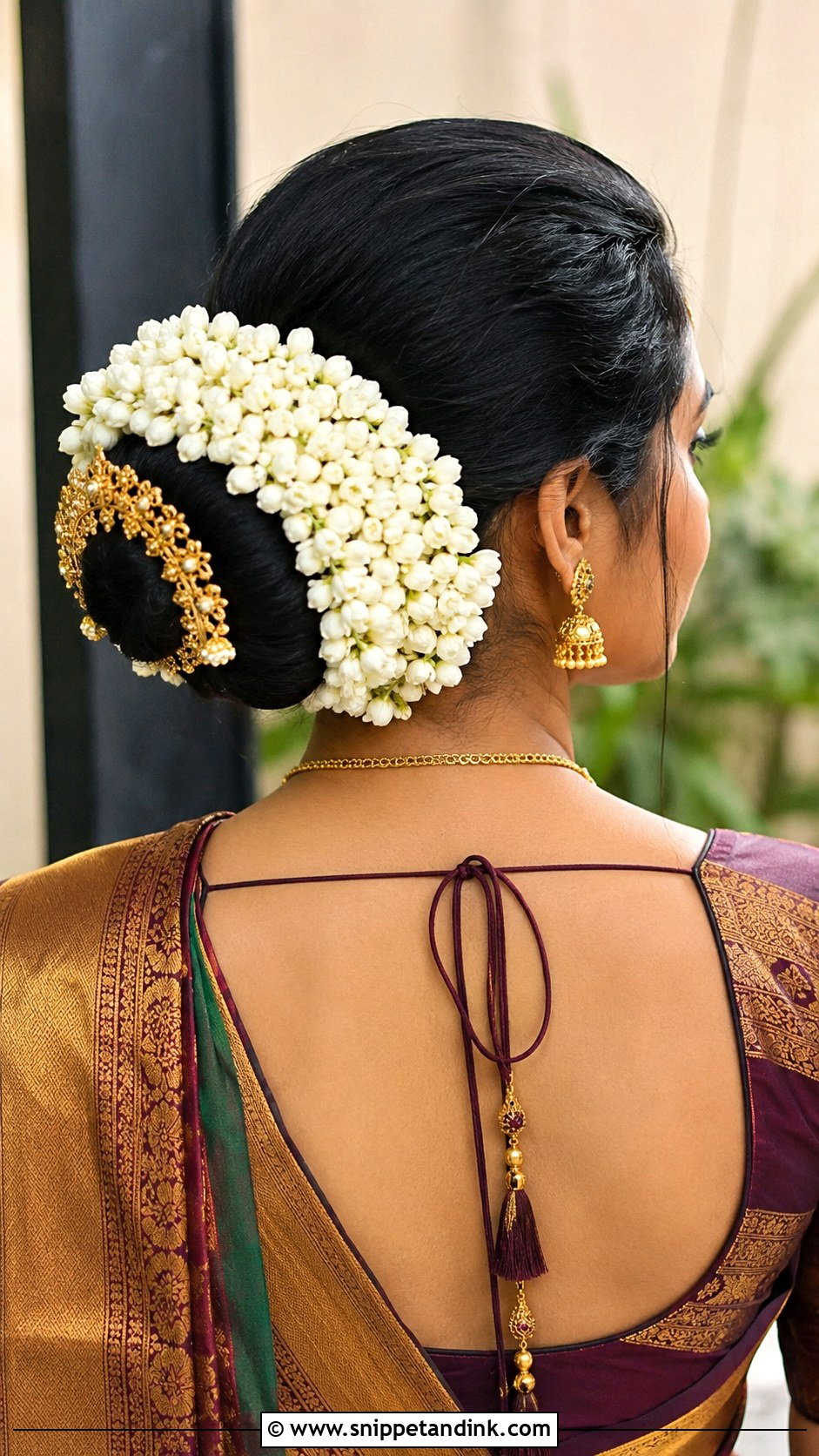
A vintage bun wrapped in rows of gajra is a classic that suits silk sarees and traditional jewelry. The structure is old fashioned on purpose, with smooth sides and a rounded bun. Gold accessories can sit between the flower rows. I set the bun slightly lower than a modern one so the gajra rows hang neatly instead of sitting on top of the head. It holds well through long ceremonies.
31. Half Updo With Flowers
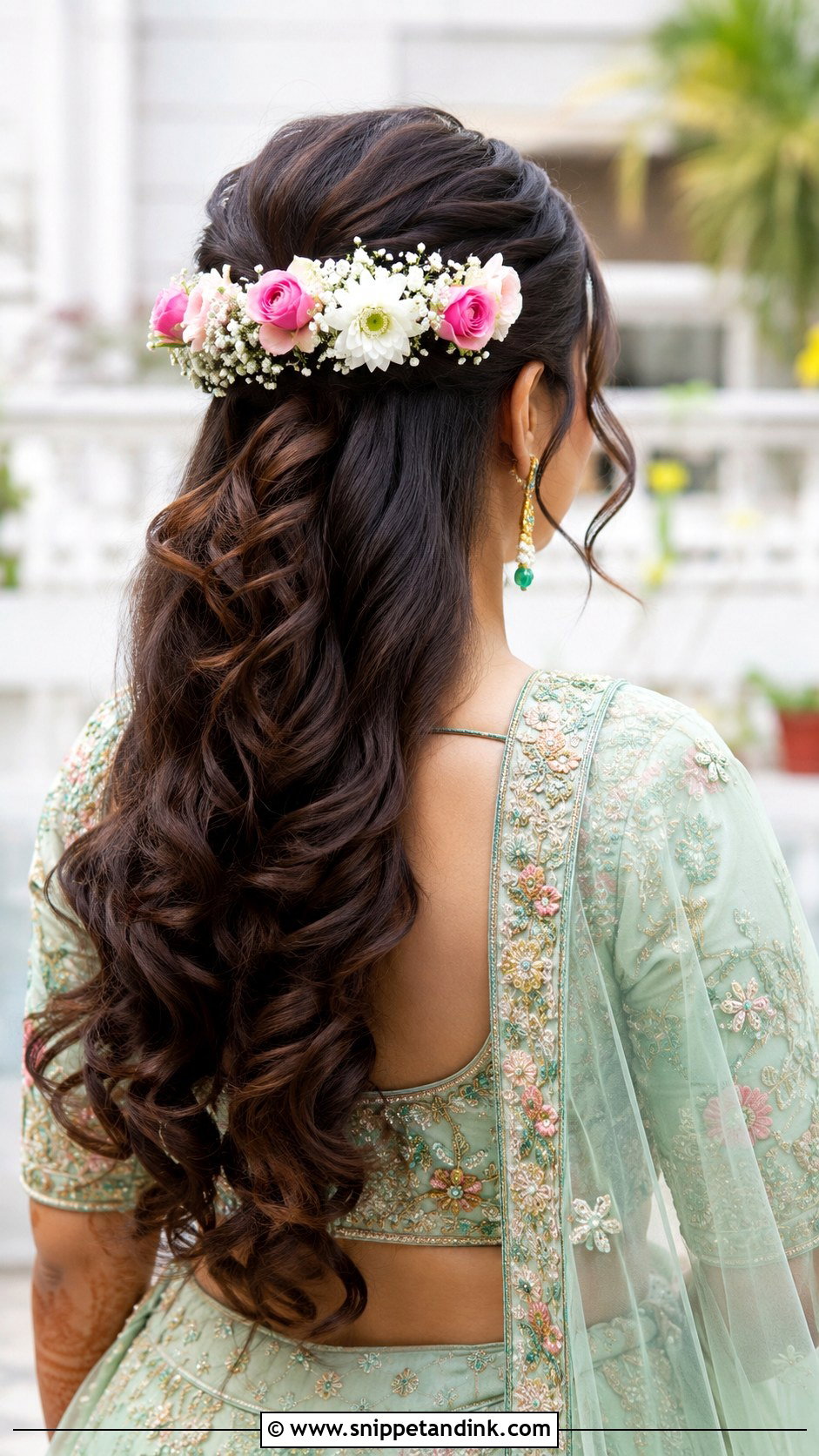
A half updo with fresh flowers at the crown and waves below suits mehendi and outdoor functions. The flowers add color and the open hair shows length. Matching the blooms to the outfit works well. For mehendi in particular, I keep the hair off the face and away from the hands, since you’ll be sitting still with wet henna for hours and can’t fix stray strands.
32. Sleek Ponytail With Tikka
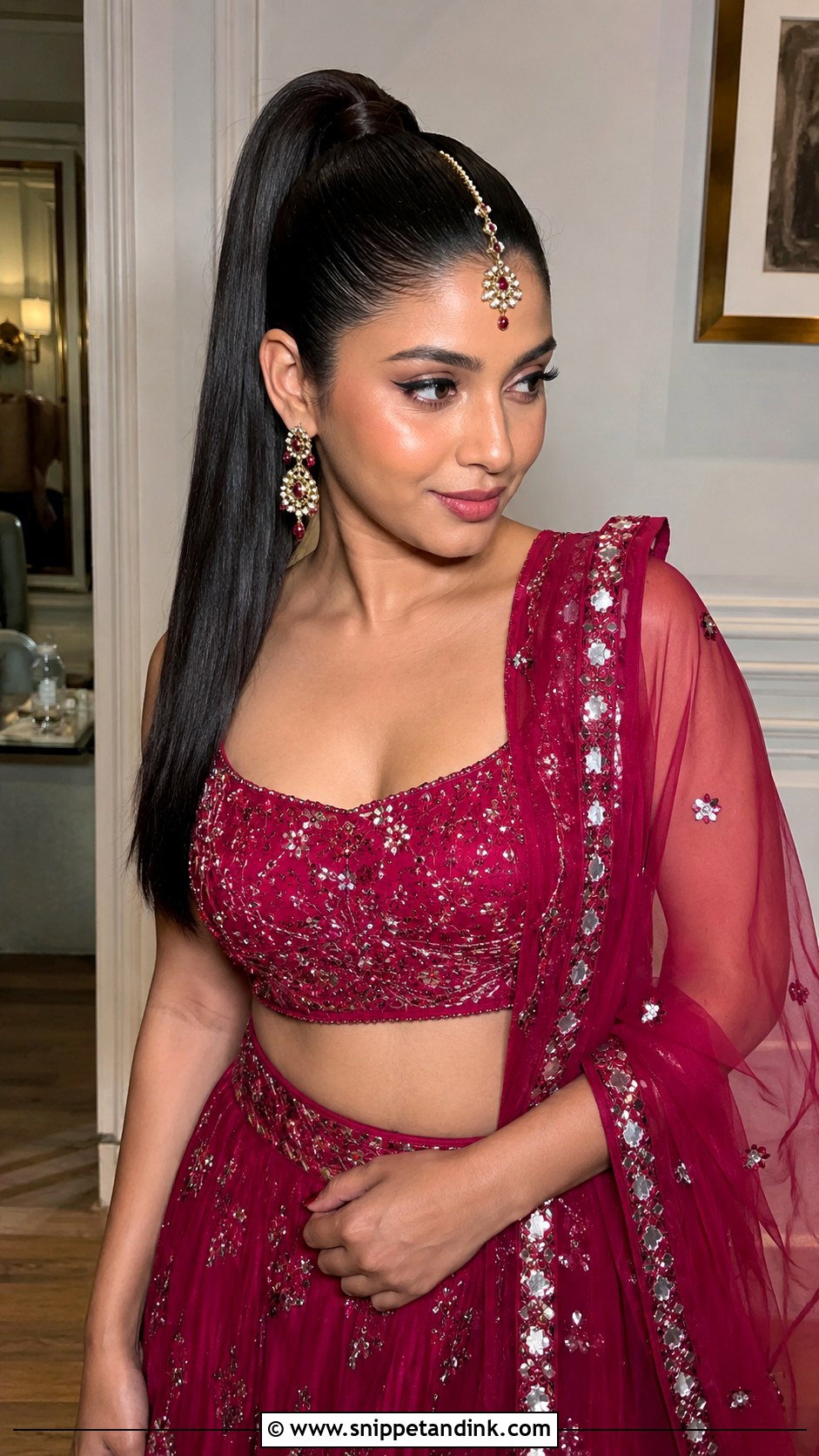
A sleek ponytail with a maang tikka mixes a modern line with traditional jewelry, and it suits fusion weddings and receptions. The finish has to be very smooth, so frizz control is the main job. A gajra wrap or a jeweled clip at the base adds a traditional touch. I attach the tikka to a small hidden braid along the part so the ponytail’s pull doesn’t drag it sideways.
33. Floral Bun With Veil
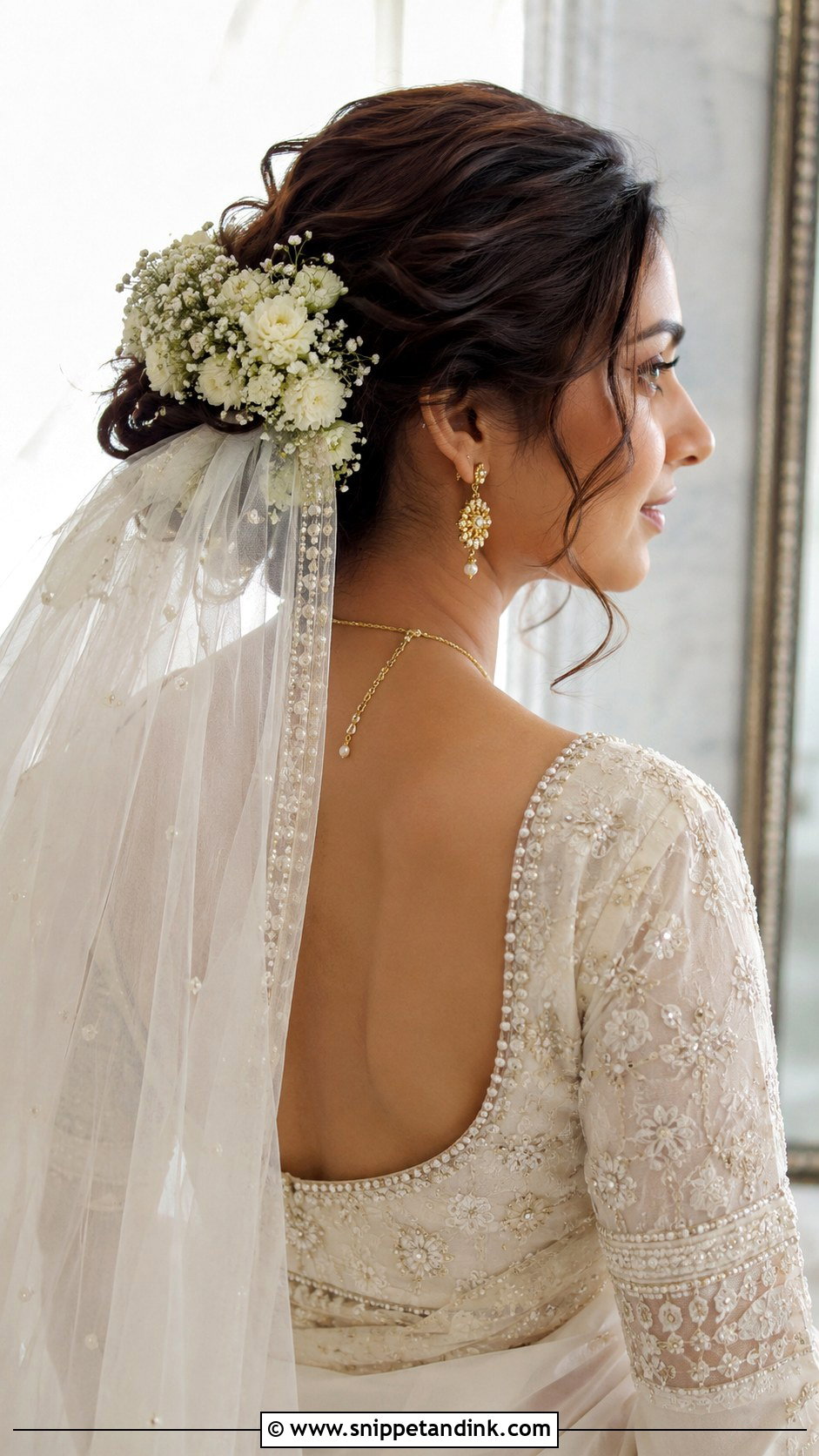
A floral bun with a sheer veil gives a soft, romantic look for fusion weddings and receptions. The flowers add color, the veil softens. You can fix the veil at the crown or below the bun. With fresh flowers, I put the veil in last, as getting the comb in between blooms crushes petals. It works with gowns and lehengas.
34. Crown Braid Bun
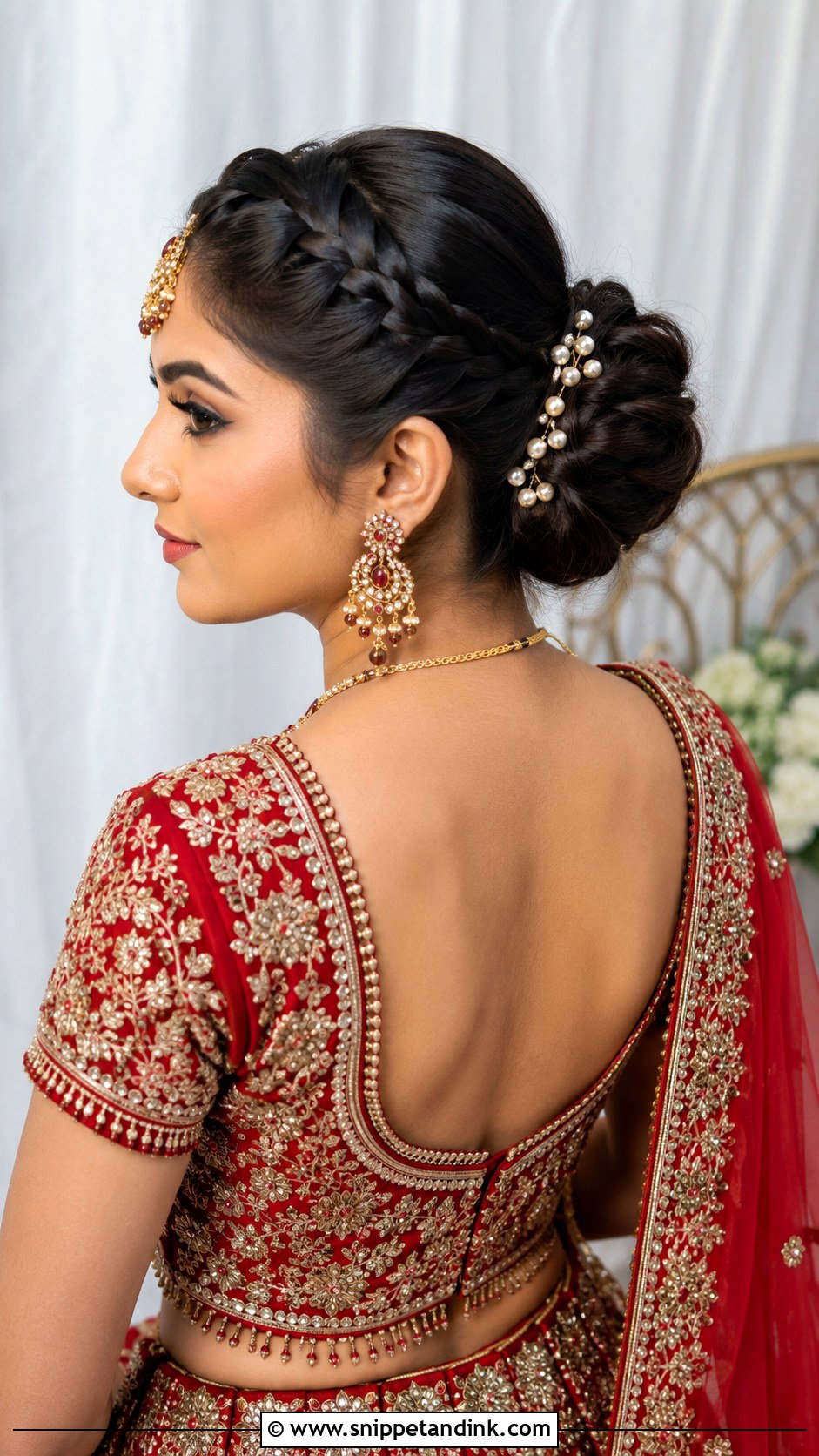
A crown braid leading into a structured bun creates a regal, detailed look for the main ceremony. The braid wraps the head like a tiara before ending in the bun. Flowers or pearls can decorate both. Thin hair often doesn’t have enough length to make both the braid and a full bun, so I add a clip in extension to the bun, keeping the natural hair for the braid.
35. Loose Braid With Florals
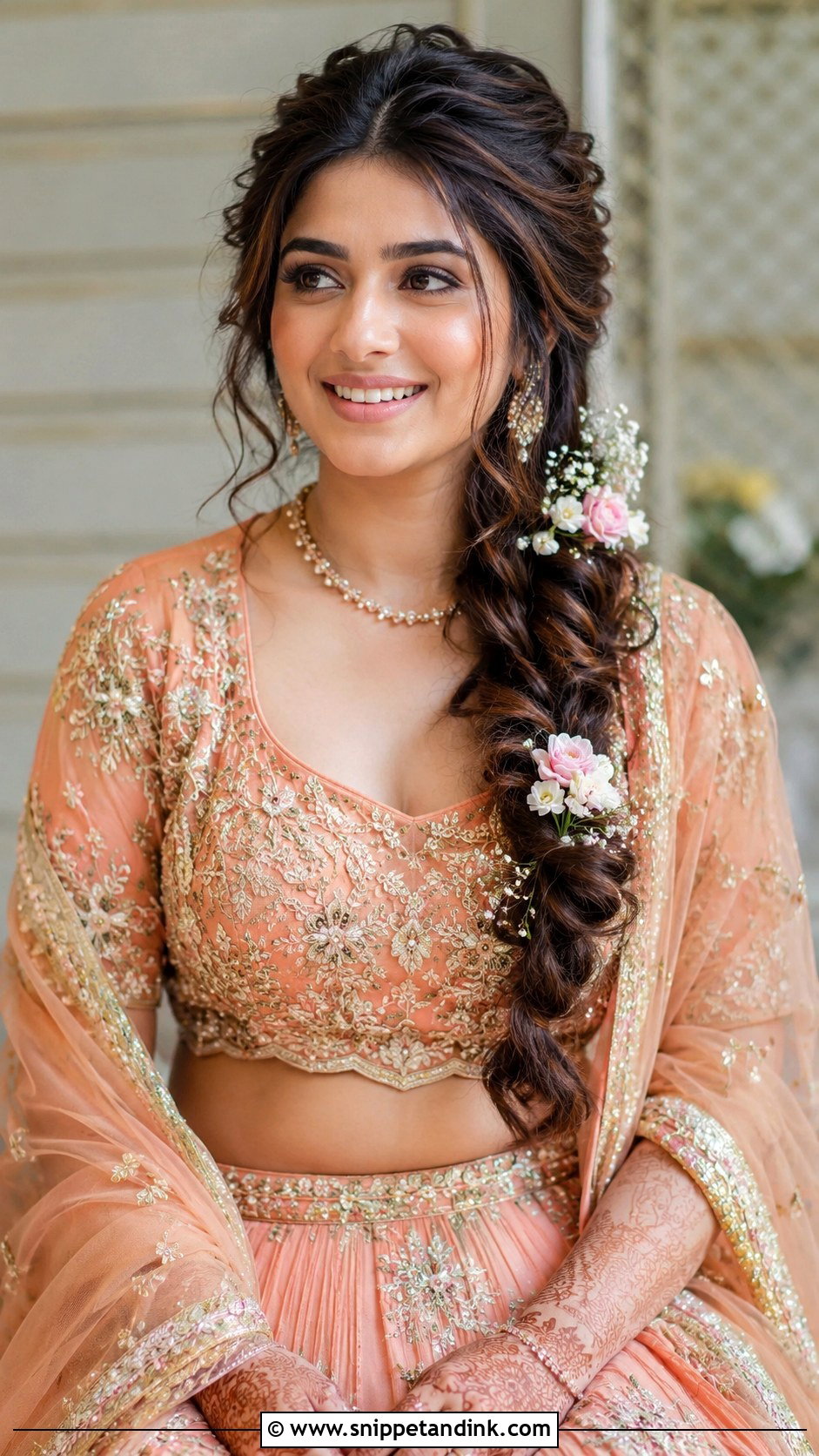
A loose braid over one shoulder with flowers along its length gives a relaxed bohemian look for mehendi and sangeet. It’s comfortable and modern. I pull the braid apart gently to make it fuller, then add flowers into the gaps. The looser it is, the more often it needs a pin check during the evening, especially if there’s a lot of dancing.
Pinning a Heavy Dupatta So It Stays Put
A bridal dupatta with heavy embroidery can pull on your hair for hours. Most complaints of headaches on the wedding day come from how it was pinned, not from the hairstyle itself.
- I build the hairstyle with a firm base, either the bun or a small hidden braid, so the dupatta pins go into structured hair, not loose strands.
- Pins go in at several points, at the crown and on both sides of the bun, so the weight is spread and never hangs from one spot.
- The tikka chain sits under the dupatta edge, which stops the fabric from sliding back.
- Bring a spare set of pins and have someone in the family who knows how to re-pin it after the pheras.
Real Jasmine Gajra From Morning to Pheras
Fresh jasmine opens and browns quickly in heat. Order gajra for the morning of the ceremony, wrap it in a damp muslin cloth and keep it in the fridge, not the freezer, until I’m ready to pin it, which is usually the last step before the dupatta. For a long day, keep a second string in the fridge for the reception. If you are allergic or sensitive to strong scents, silk or foam jasmine looks convincing from a few steps away and never wilts.
Your Hair, Your Dupatta and the Long Wedding Day
From gajra buns and pearl braids to Hollywood waves and floral updos, the right bridal style depends on your outfit, your jewelry, your hair’s real texture and every function you’ll wear it to. Book a trial with your hairstylist and makeup artist together, wear the actual tikka and a dupatta of similar weight, and stay in the style for a few hours. That trial will tell you more than any photo can about how comfortable the look will be on the day.
You'll Like These Ideas:







Leave a Reply