
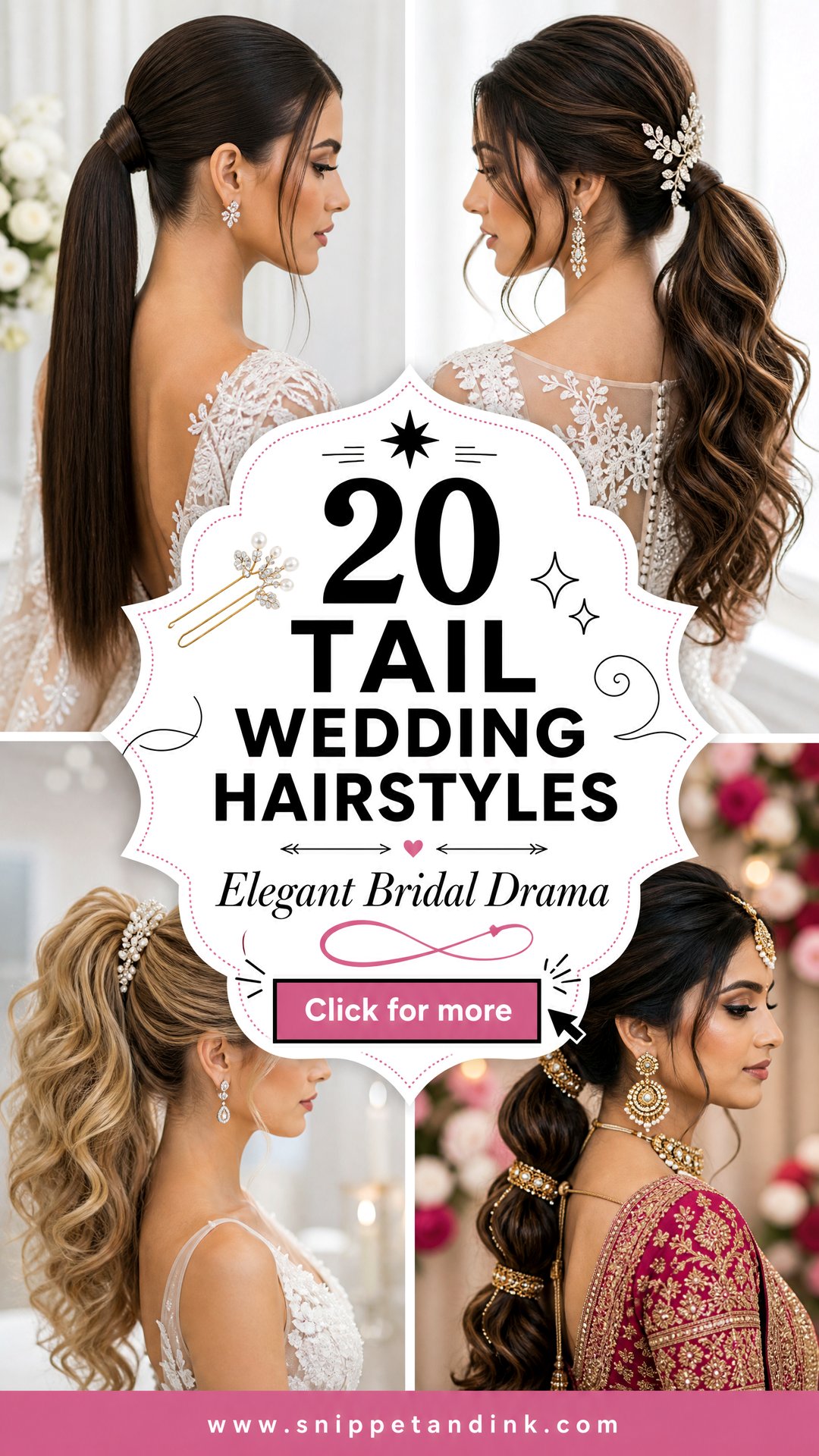
More brides are asking me for ponytails than ever, and I understand why. A well-built one is lighter than a full updo, keeps hair off the neck through dinner and dancing, and still moves in photos the way loose hair does. The style can go sleek or curly, high or low, braided, or dressed with pearls, ribbon or flowers, and it sits well with veils, open backs and big earrings. What separates a wedding ponytail from an everyday one is the build underneath: how it’s anchored, how the elastic is hidden and how the weight is managed. The twenty versions below, for brides, bridesmaids and guests, each come with the details I’d check before your day.
The Elastic Nobody Sees: How a Wedding Ponytail Is Anchored
An everyday ponytail is one hair tie and a quick brush. A wedding one is built in layers, and knowing the steps helps you understand what you’re paying for at a trial.
- Prep. Hair that’s freshly washed and silky slides out of elastics. I usually ask for hair washed the night before, dried smooth, with a light texturizing spray at the roots on the day for grip.
- The base. For anything heavier than shoulder length I use a hook-ended bungee elastic, which wraps tighter than a standard band without pulling at the scalp as you tie it.
- Stacking. For a fuller tail, I make two ponytails, one just above the other, so the top one falls over the lower and adds body.
- Locking. Two bobby pins crossed in an X under the base stop the tail drooping as the day goes on.
- Wrapping. A strand from underneath goes around the elastic and is pinned out of sight, so no band shows from any angle.
Tell your stylist if you get headaches from tight hair. A ponytail can be anchored securely without being pulled tight; the hold comes from the pins and the elastic, not from tension at your hairline.
1. Low Wedding Ponytail
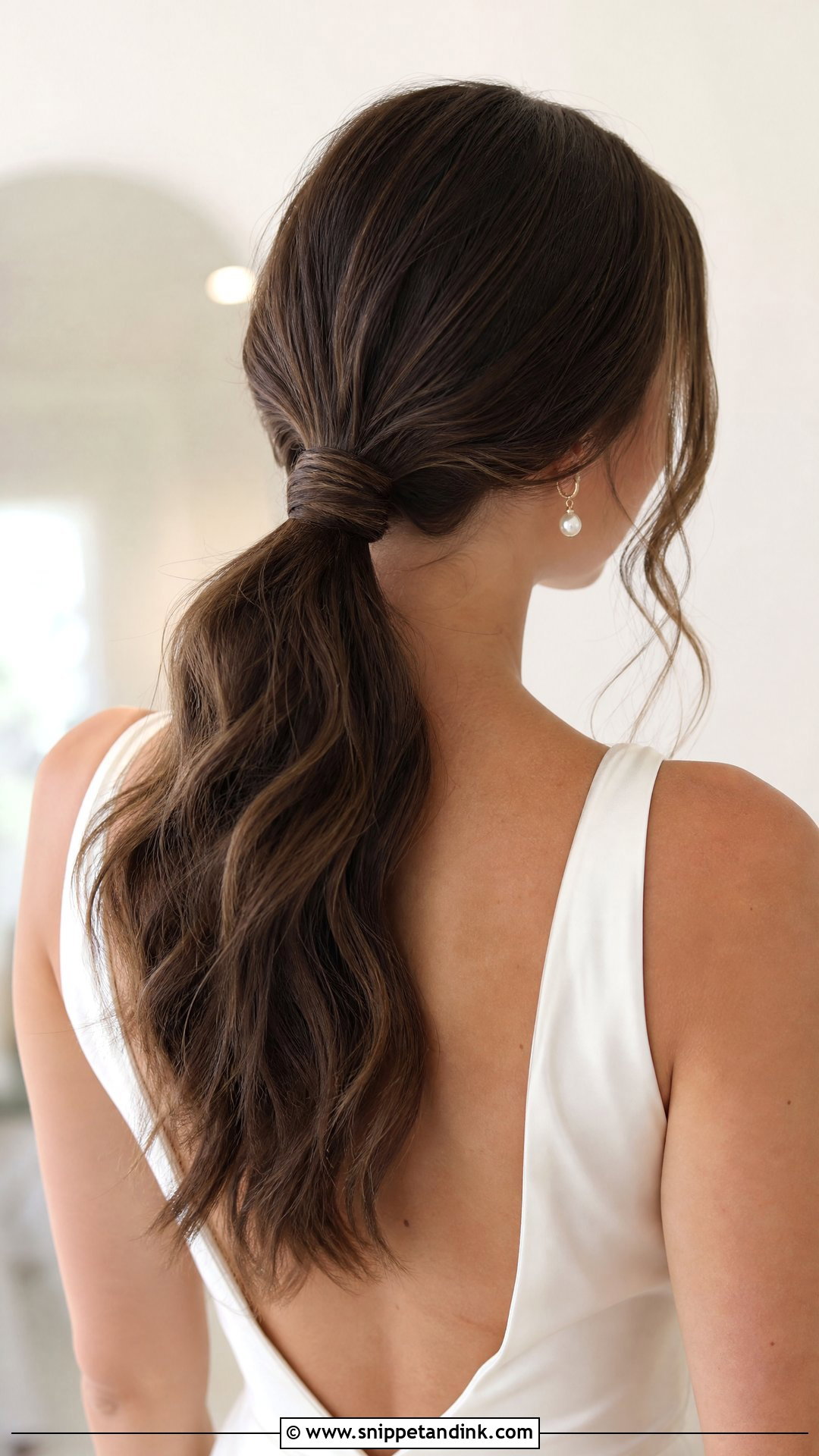
Sitting at the nape, a low ponytail puts almost no strain on the scalp, which is why it’s the one I suggest to brides who get tension headaches. A middle part and a few face-framing pieces suit it, and a wrapped hair base hides the elastic. I take the wrap section from underneath the tail, not the top, so the surface stays smooth. Waves through the length soften it; a smooth tail looks cleaner. It leaves your neckline, earrings and the back of the dress fully visible.
2. High Wedding Ponytail
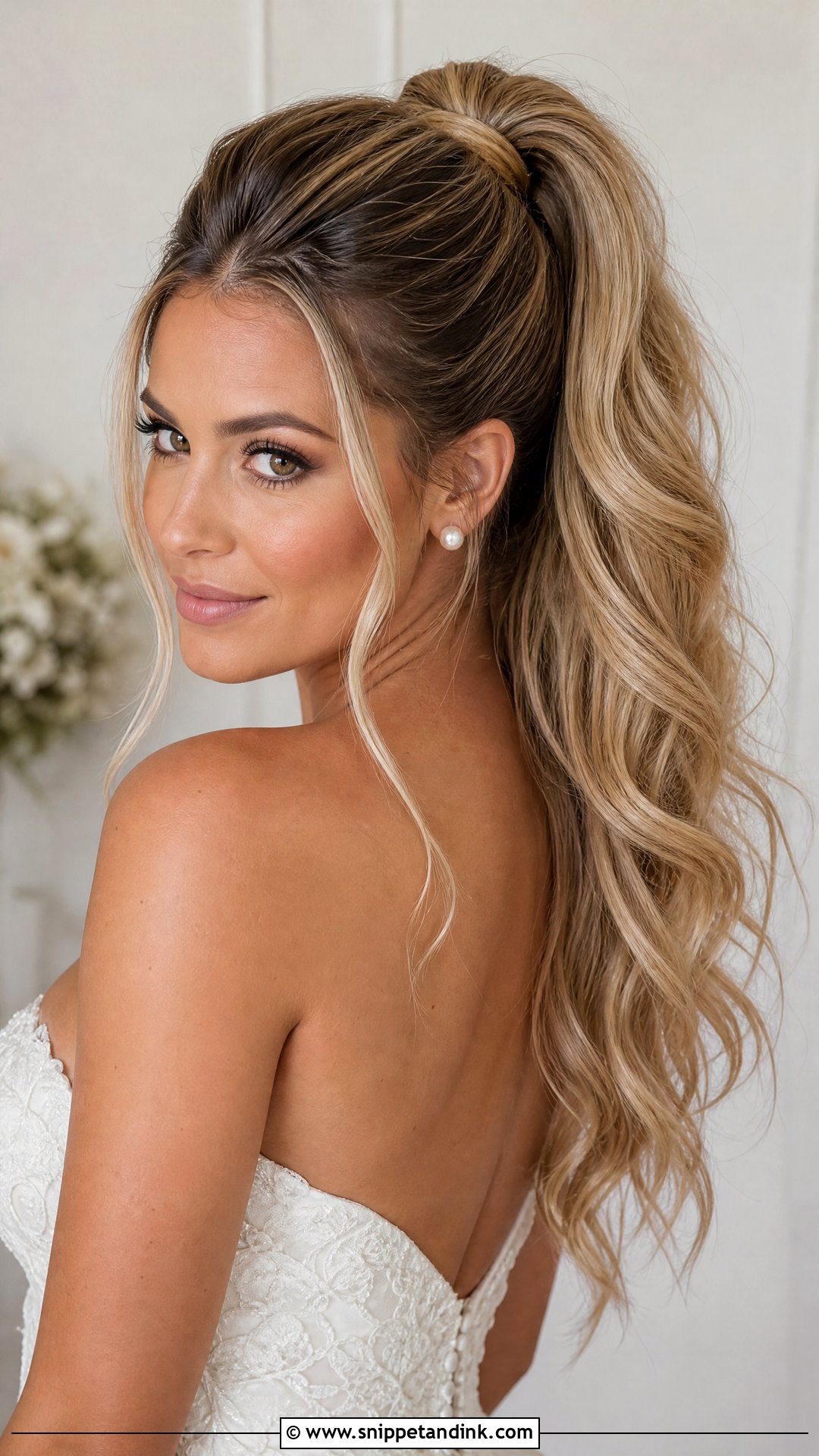
Height gives drama, but it also carries the most weight on the smallest patch of scalp. For a high ponytail I brush everything up with the head tilted back slightly, so the nape doesn’t sag once you’re upright, and I secure it with two elastics or a hook elastic rather than one tight band. The crown can be sleek, lightly teased or framed with loose tendrils. Long curls through the tail fill it out. It pairs well with strapless gowns and bold earrings. Wear it for a full afternoon at your trial; some people find a high tail sore by evening.
3. Curly Wedding Ponytail
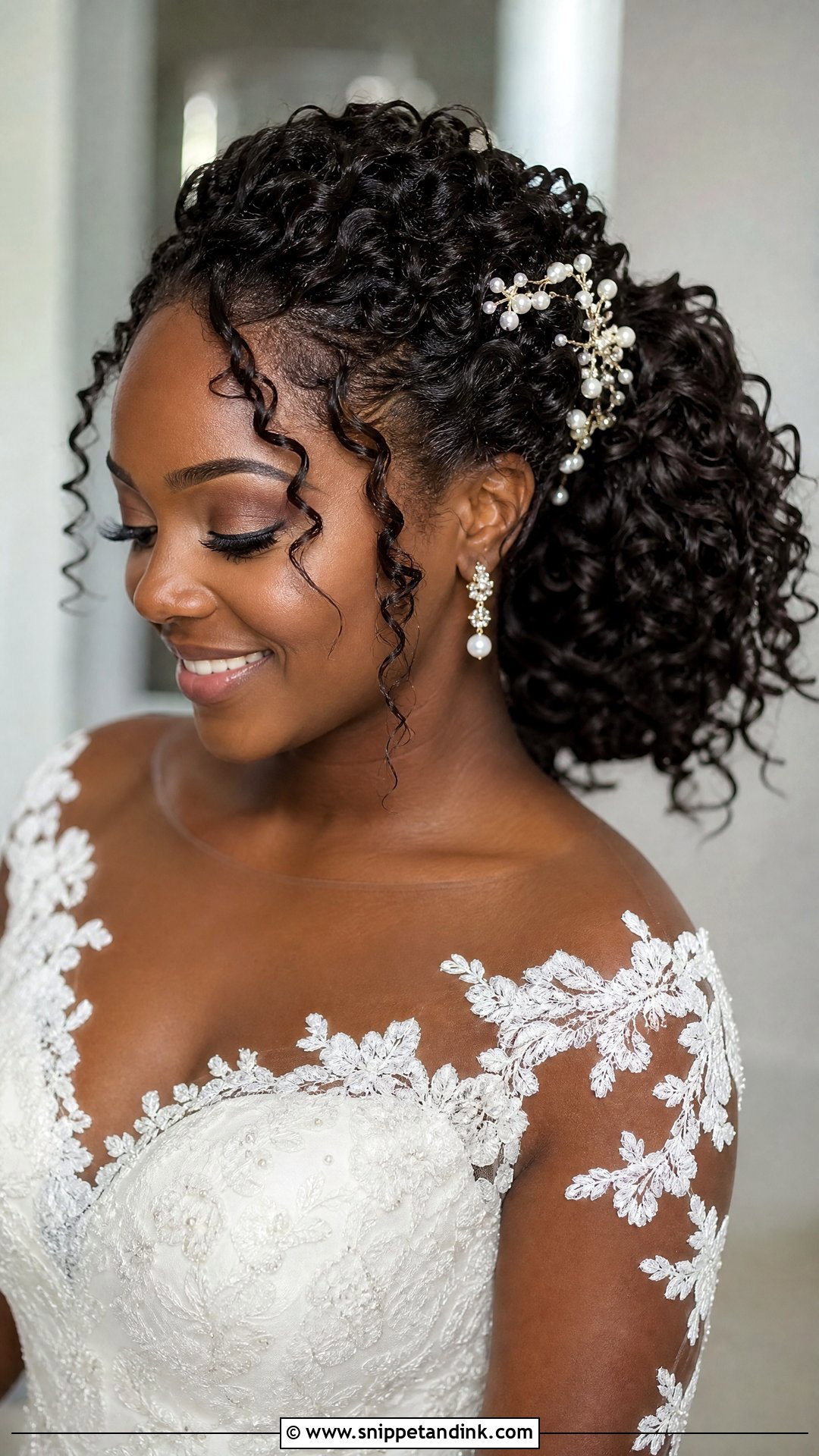
Curls lose shape over a day, so the set matters more than the iron. I curl in small sections, pin each curl while it cools and only release it once it’s cold; that’s what keeps a curly ponytail from falling flat by the first dance. Naturally curly hair needs a different approach: defining the pattern with product rather than reshaping it with heat. The tail can sit high, mid or low. A few curled pieces at the hairline soften it, and floral pins or pearl combs suit lace and tulle.
4. Sleek Wedding Ponytail
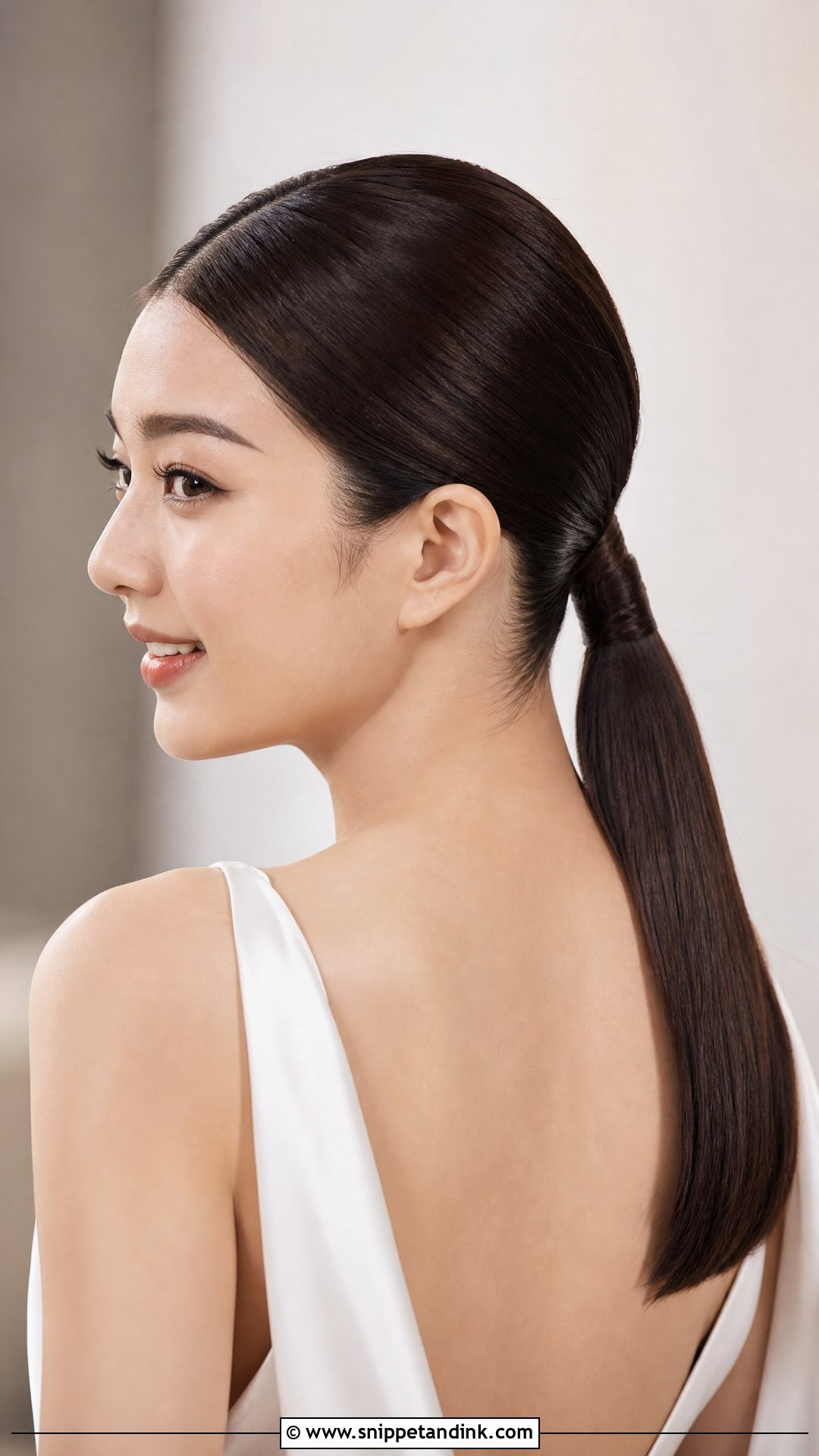
Sleek ponytails look simple and leave nowhere to hide. Every bump at the crown shows, so I blow-dry the hair smooth first, then brush it back with a boar bristle brush and a smoothing cream before securing it. The tail can be pin-straight, softly curved or bent at the ends. A wrapped base gives it a finished, tailored look. Flyaways get a little wax on a toothbrush, not more hairspray, which is what makes sleek hair look stiff. With the face fully open, makeup and earrings take center stage.
5. Wavy Wedding Ponytail
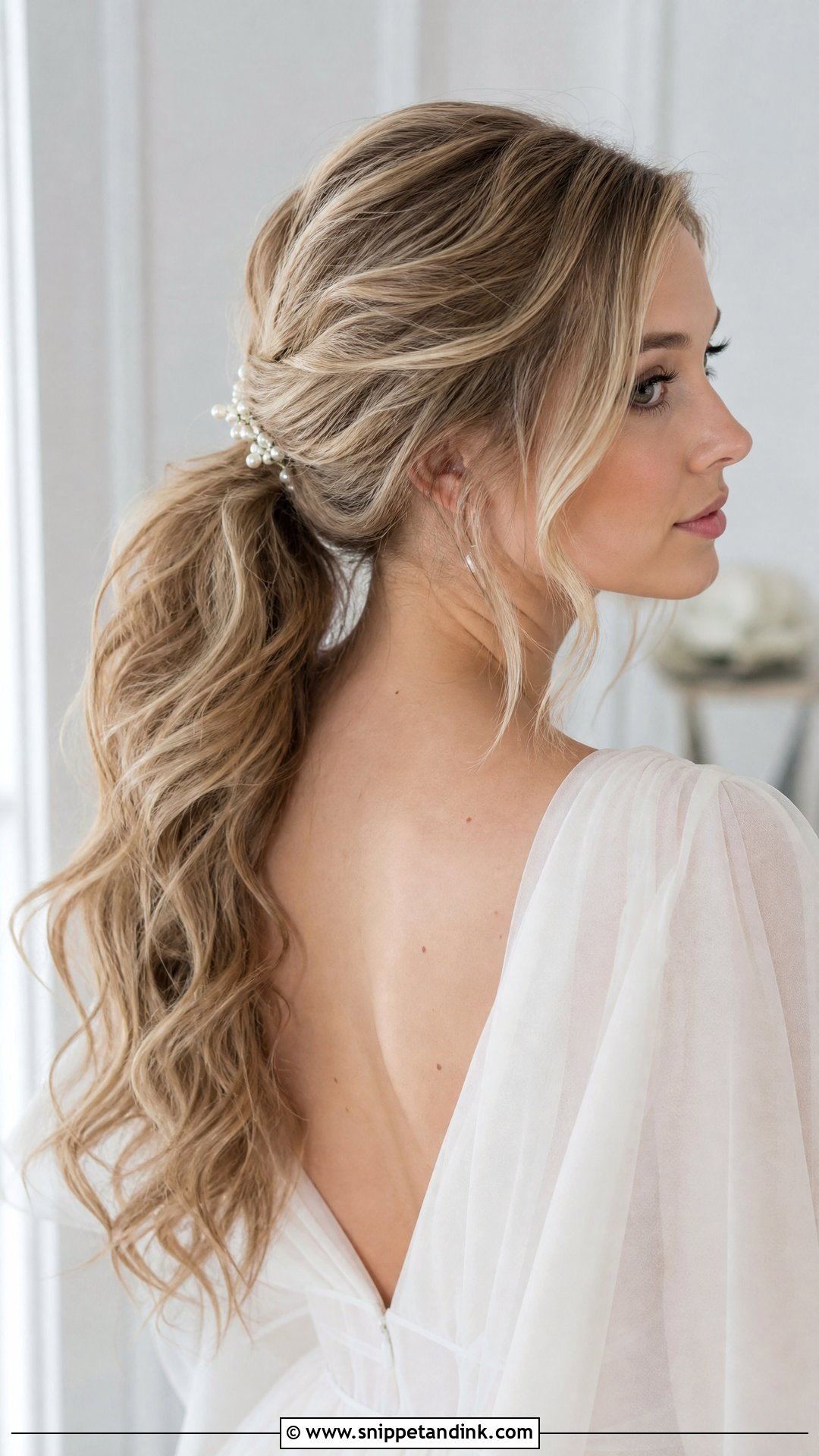
Loose waves suit garden, beach and outdoor weddings because they already look slightly windswept, so a breeze doesn’t ruin them. I keep the top smooth enough to look intentional and let the tail stay loose. A side part, center part or swept-back crown all work. Highlights show off a wave especially well, since the bends catch light at different depths. A thin vine, a few pearls or fresh flowers finish it without weighing the tail down.
6. Braided Wedding Ponytail
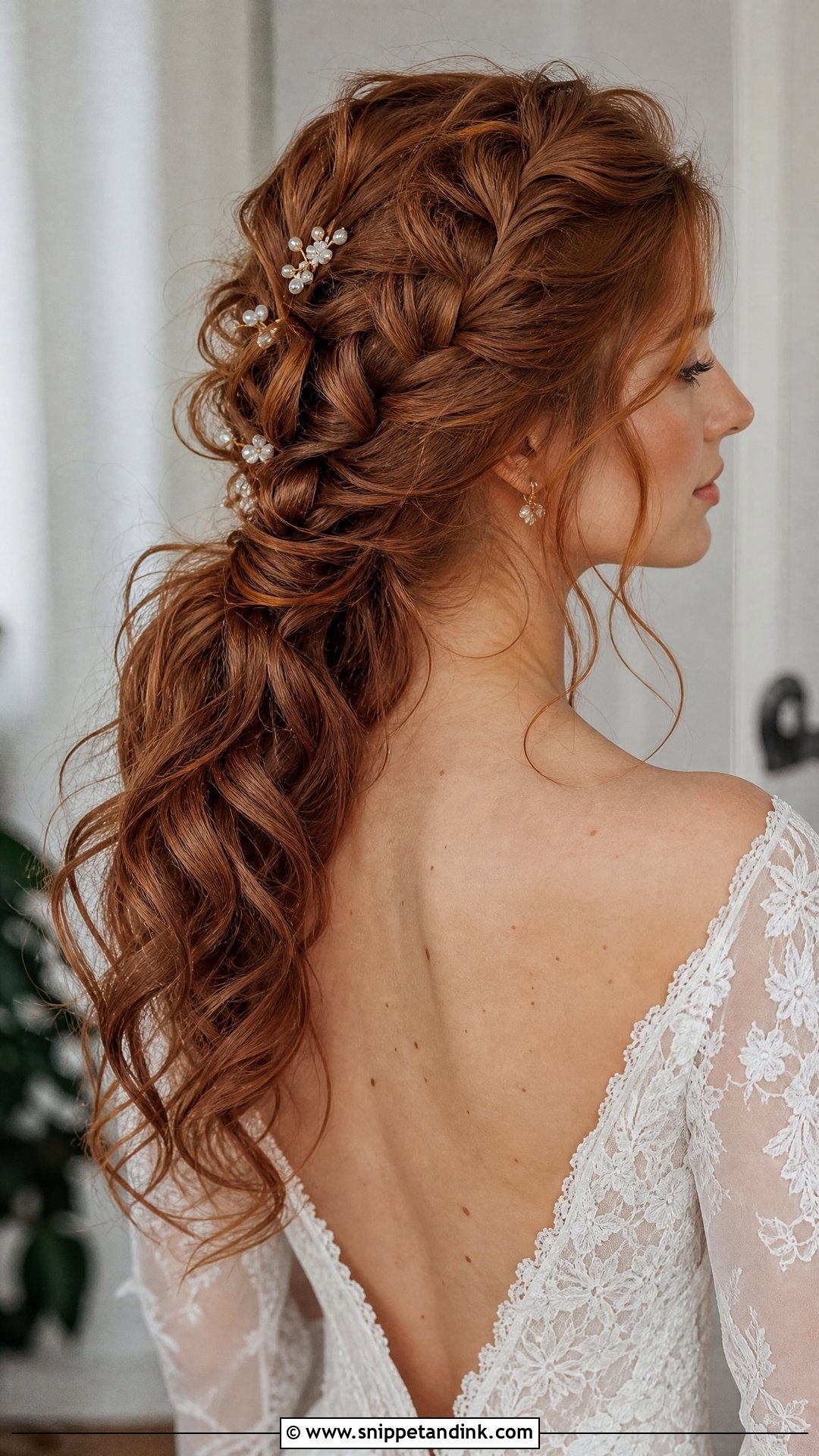
A braid isn’t only decoration; it’s also structural. A Dutch braid along the crown or down one side grips the shorter layers that would otherwise slip out of a plain ponytail over the day. It can start at the hairline, wrap the base or run through the tail. Loose, pulled-out braids look relaxed; tight ones look polished. It’s especially good on thick, textured and layered hair. Finish with curls in the tail, a few floral pins or a ribbon in your wedding colors.
7. Bubble Wedding Ponytail
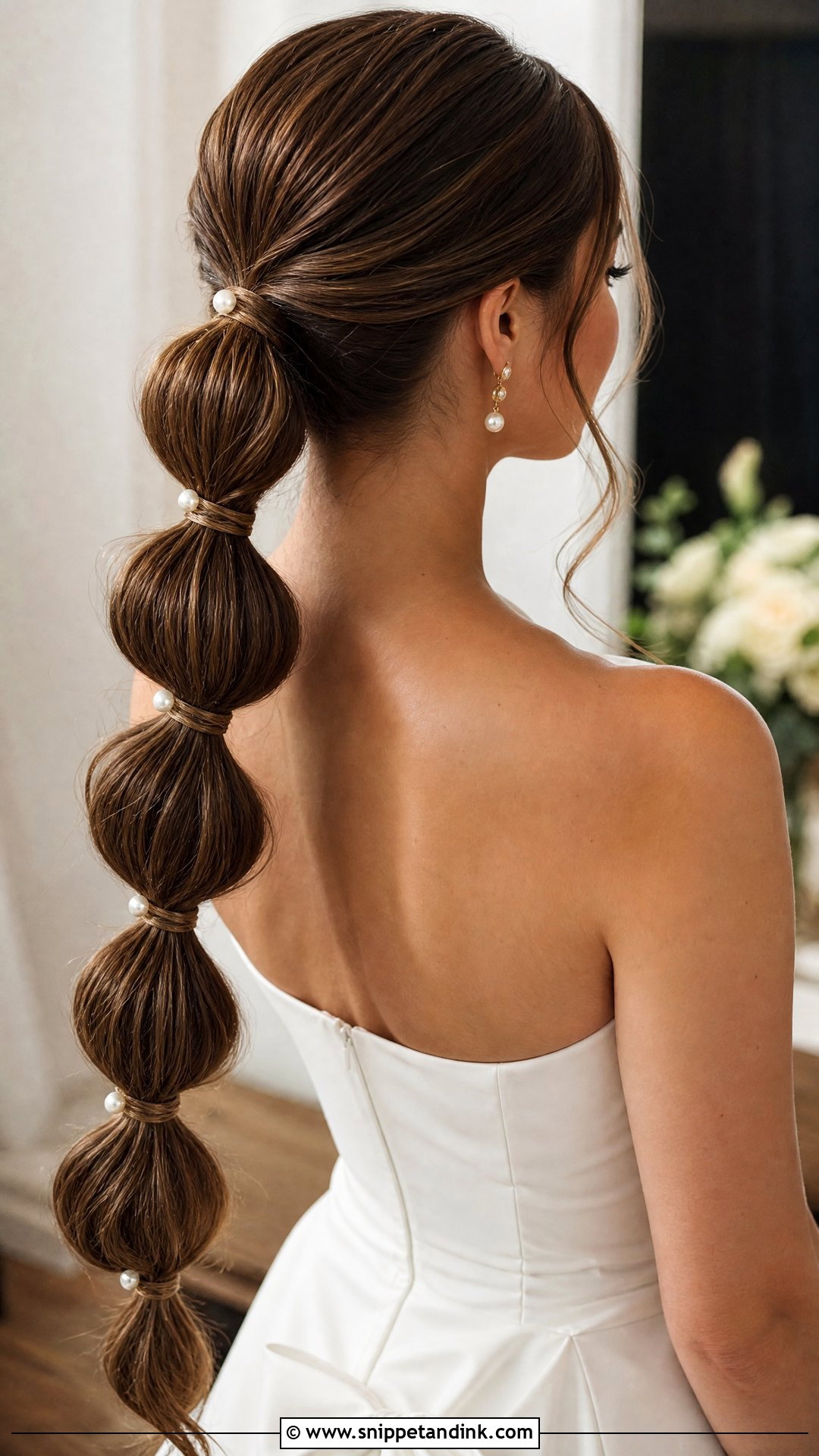
This one needs length, and plenty of it. A bubble wedding ponytail is made by placing small clear elastics down the tail at even intervals and gently pulling out each section into a rounded bubble. I space them about a hand’s width apart for long hair; closer together looks fussy. Extensions are common here, since thin ends make the lower bubbles shrink. For a bridal version, wrap each elastic in a strand of hair or a tiny pearl band. It holds its shape well, which makes it a good reception style, and it shows off an open-back dress.
8. Side Wedding Ponytail
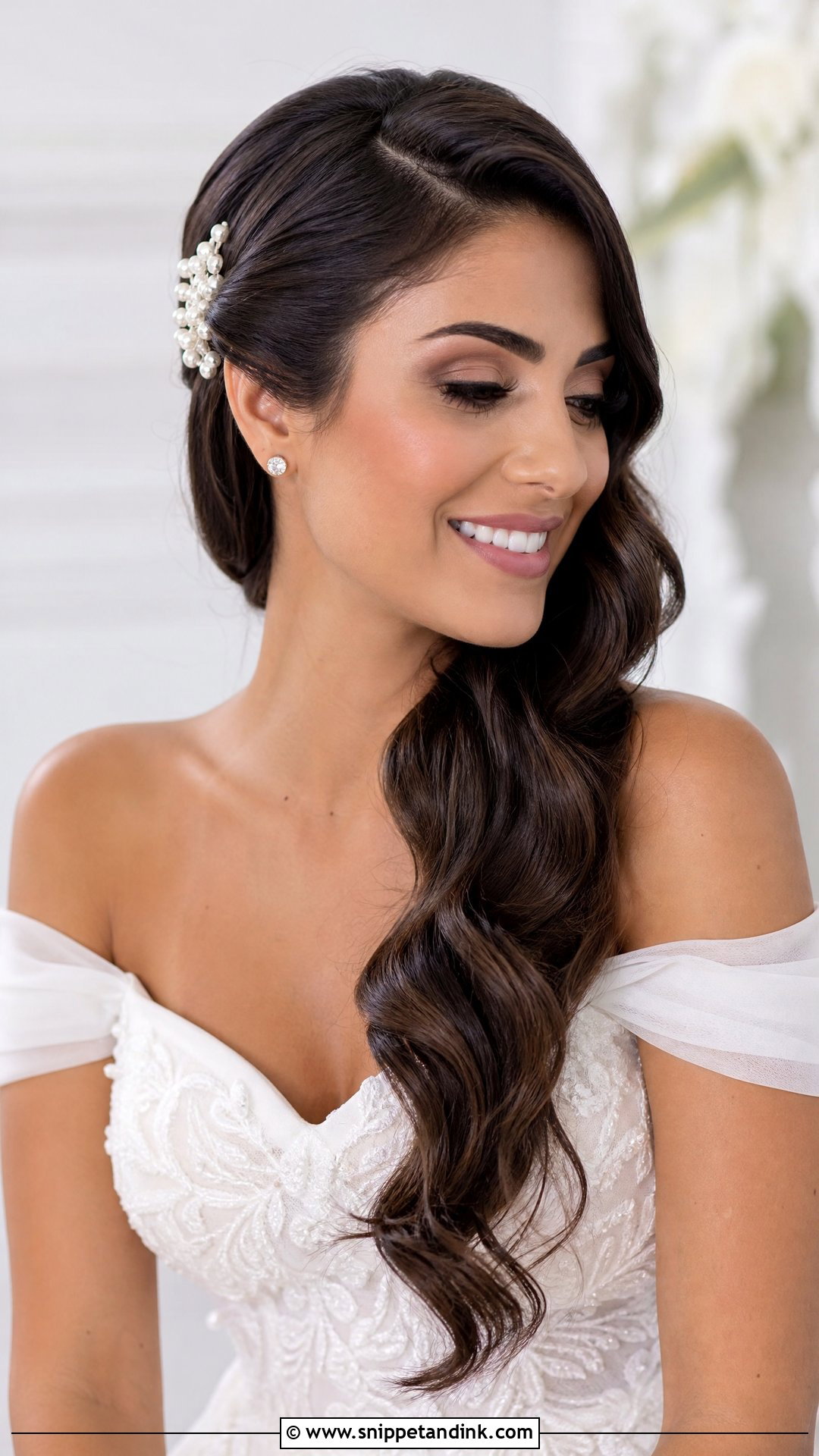
A side ponytail sits over one shoulder and draws the eye to the face, which makes it a good match for a one-shoulder neckline or a dress with a detailed back you want visible. The base must sit low and slightly behind the ear; too far forward and it slides around your neck as you turn. A deep side part gives an old-Hollywood feel, and a loose tail feels more relaxed. Balance it with a comb or a few pins on the opposite side.
9. Half Up Wedding Ponytail
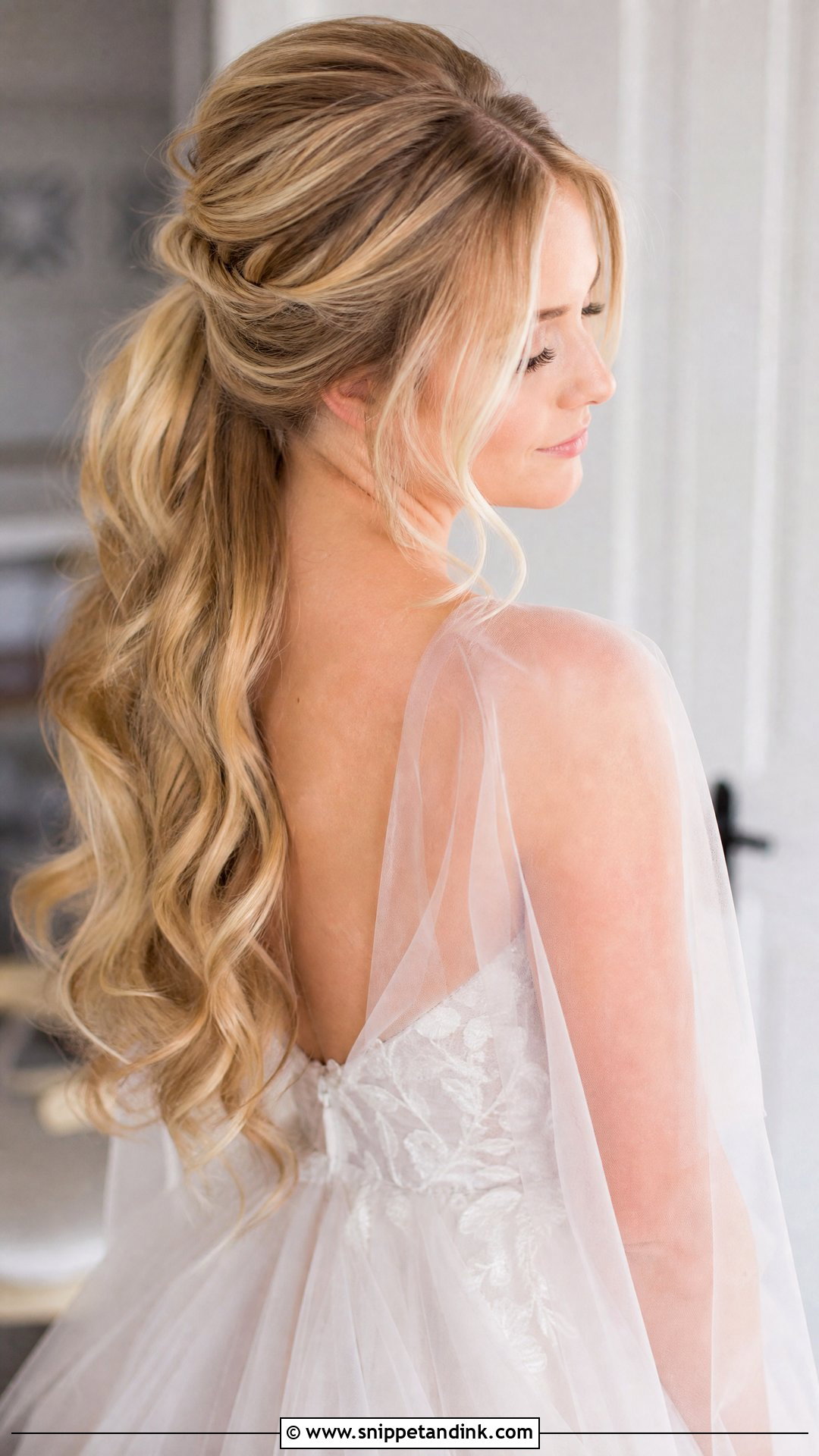
Half up, half down gives you the length of loose hair with a secured crown, and it’s the easiest ponytail to wear with a veil. I secure the top section with a small elastic, then lock it with two crossed bobby pins so it won’t slide down during the day. The ponytail section can be small and neat or full and teased. Loose waves look soft; a sleek top looks modern. The veil comb can go under the ponytail or into the crown. It suits medium to long hair.
10. Voluminous Wedding Ponytail
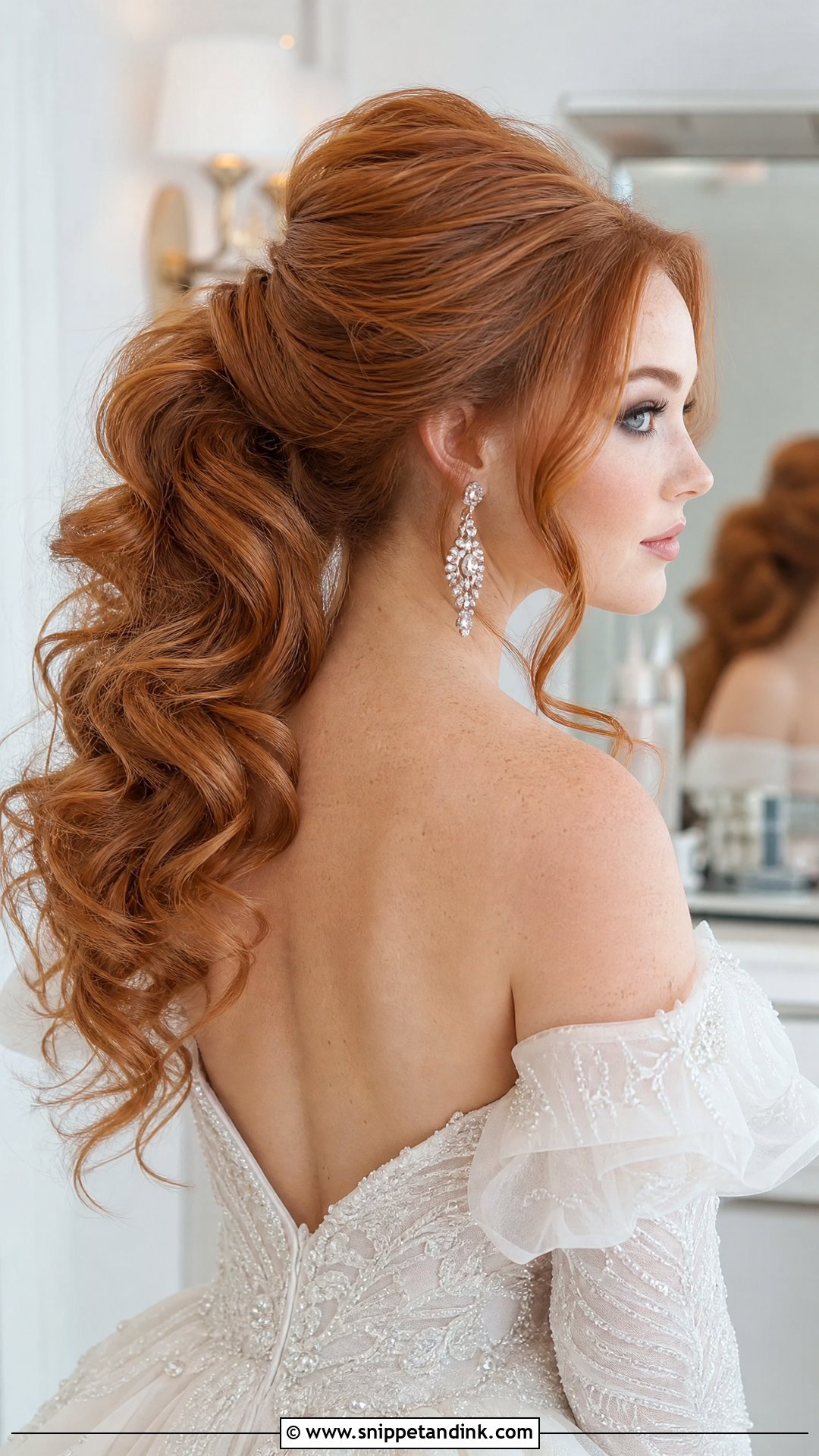
Volume at the crown comes from backcombing at the root of each section, then smoothing only the top layer over it. On fine hair I’d add clip-in wefts into the ponytail itself, attached around the base so they blend with the tail. Full skirts, dramatic gowns and formal ballrooms carry this size well. The difference between voluminous and messy is the surface: keep the top smooth and the volume structured. A wrapped base and a mist of shine spray finish it.
11. Messy Wedding Ponytail
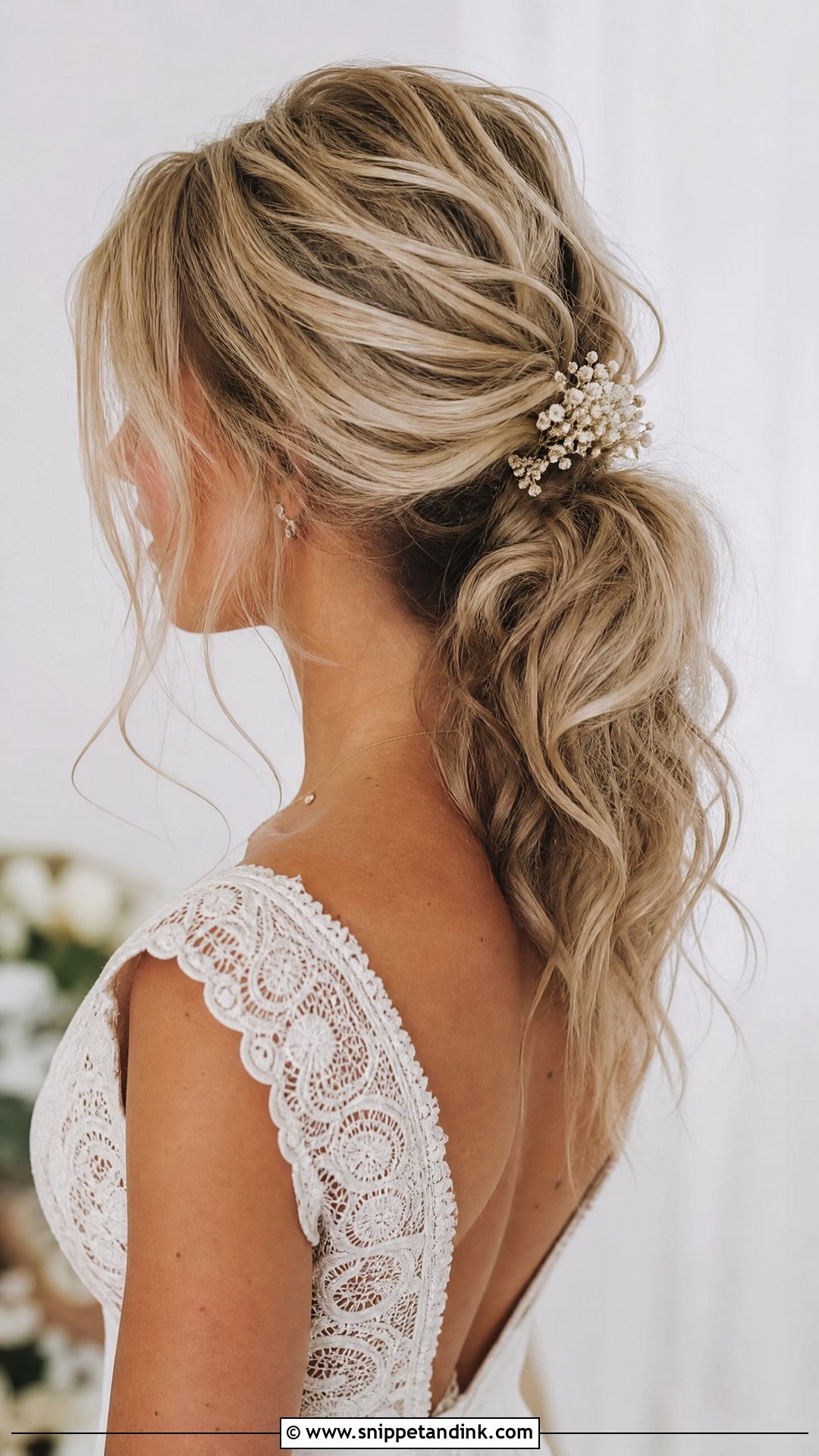
There’s a big difference between messy and undone-on-purpose. I create texture with a texturizing spray on dry hair, loose waves and a few pulled-out pieces at the hairline, then hide pins under the tail so the shape stays. The base sits low or mid. It’s a natural choice for boho and outdoor weddings, because a little breeze only adds to it. It sits well with lace dresses and natural makeup, and I’d keep the face pieces long enough to tuck behind the ears for dinner.
12. Pearl Wedding Ponytail
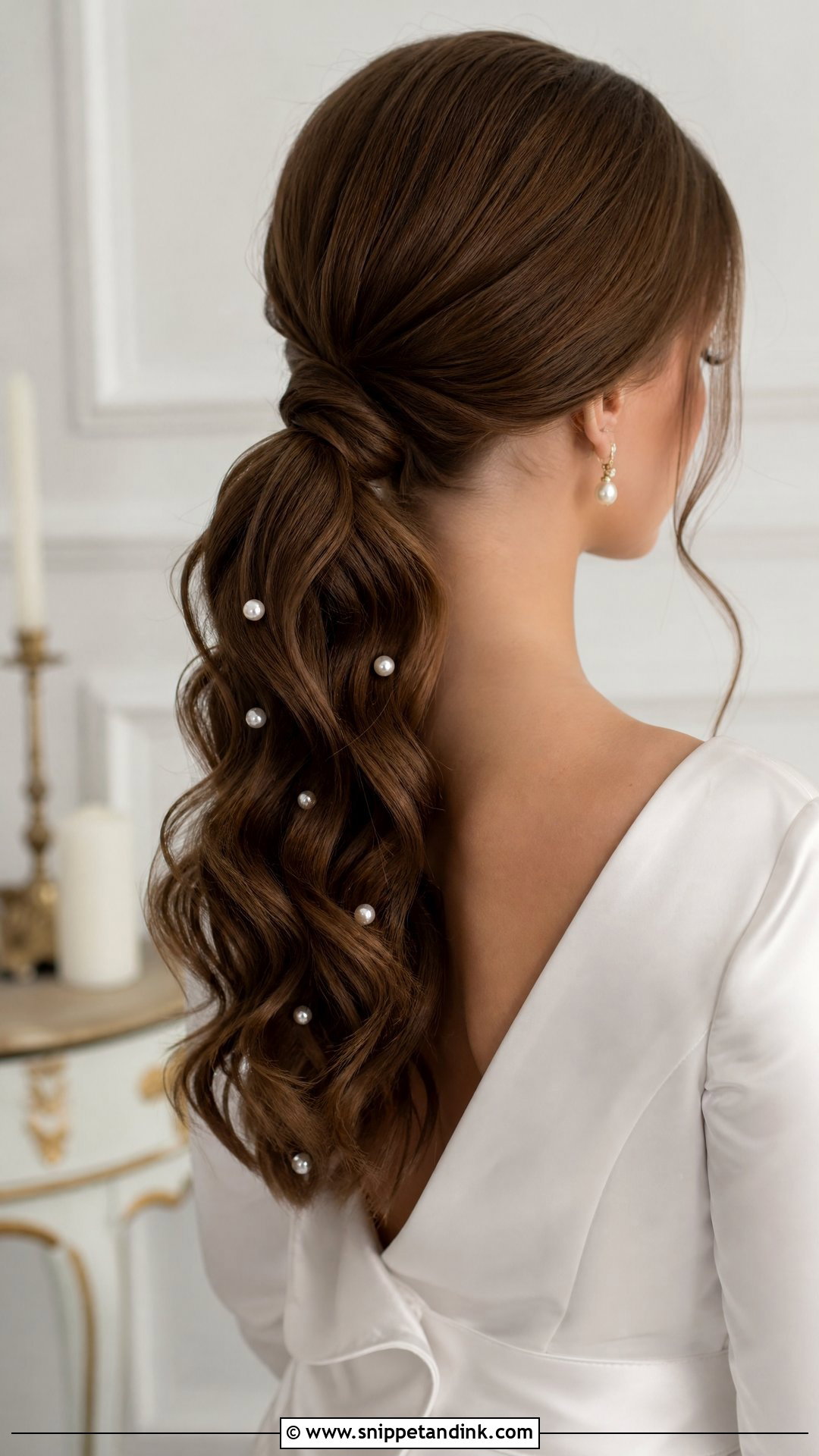
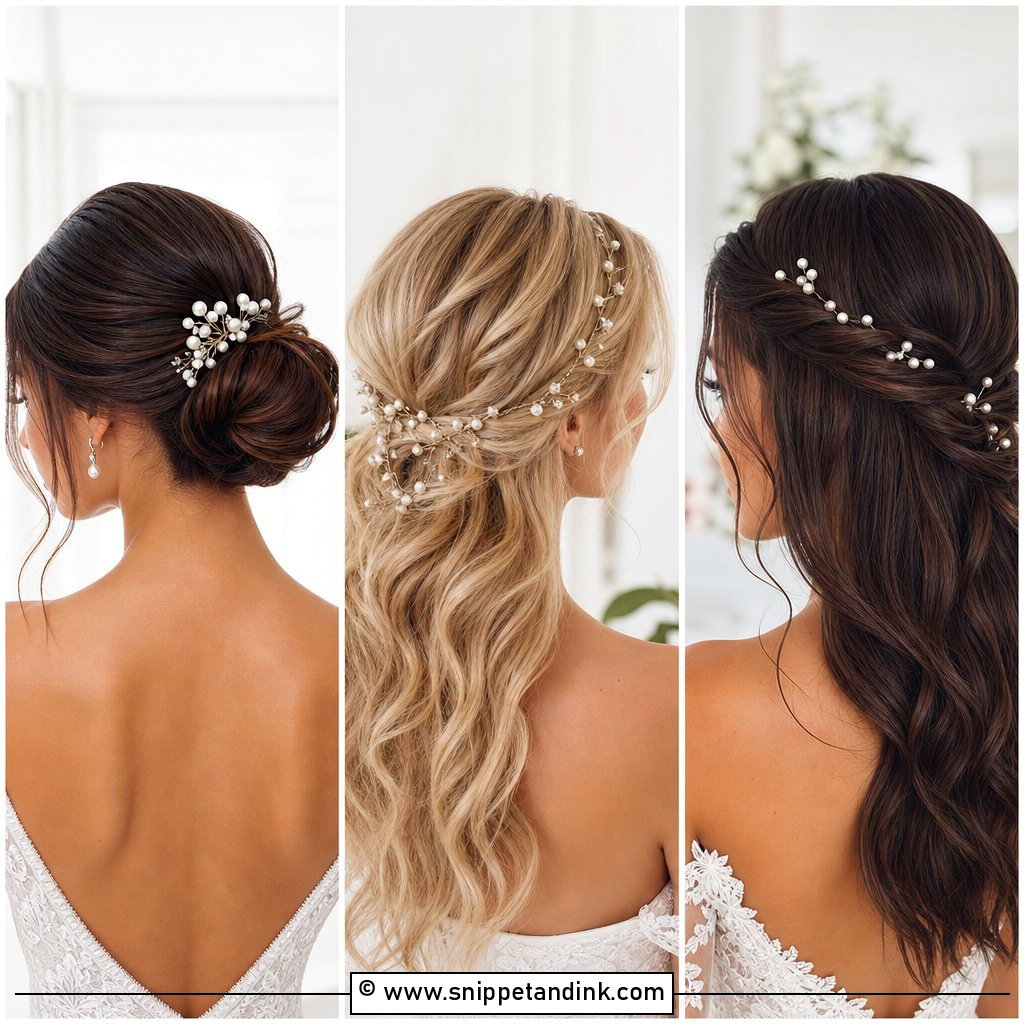
Pearls show up best on smooth hair. On very curly or textured hair they get lost. I set them around the base, along one side or scattered through waves, using pearl pins with a slight grip that won’t slide out of silky hair. A handful of well-placed pearls looks finer than a whole row. If you’re wearing pearl earrings, keep the hair pearls smaller so they don’t compete. It’s an easy way to dress up a simple ponytail for the ceremony.
13. Flower Wedding Ponytail
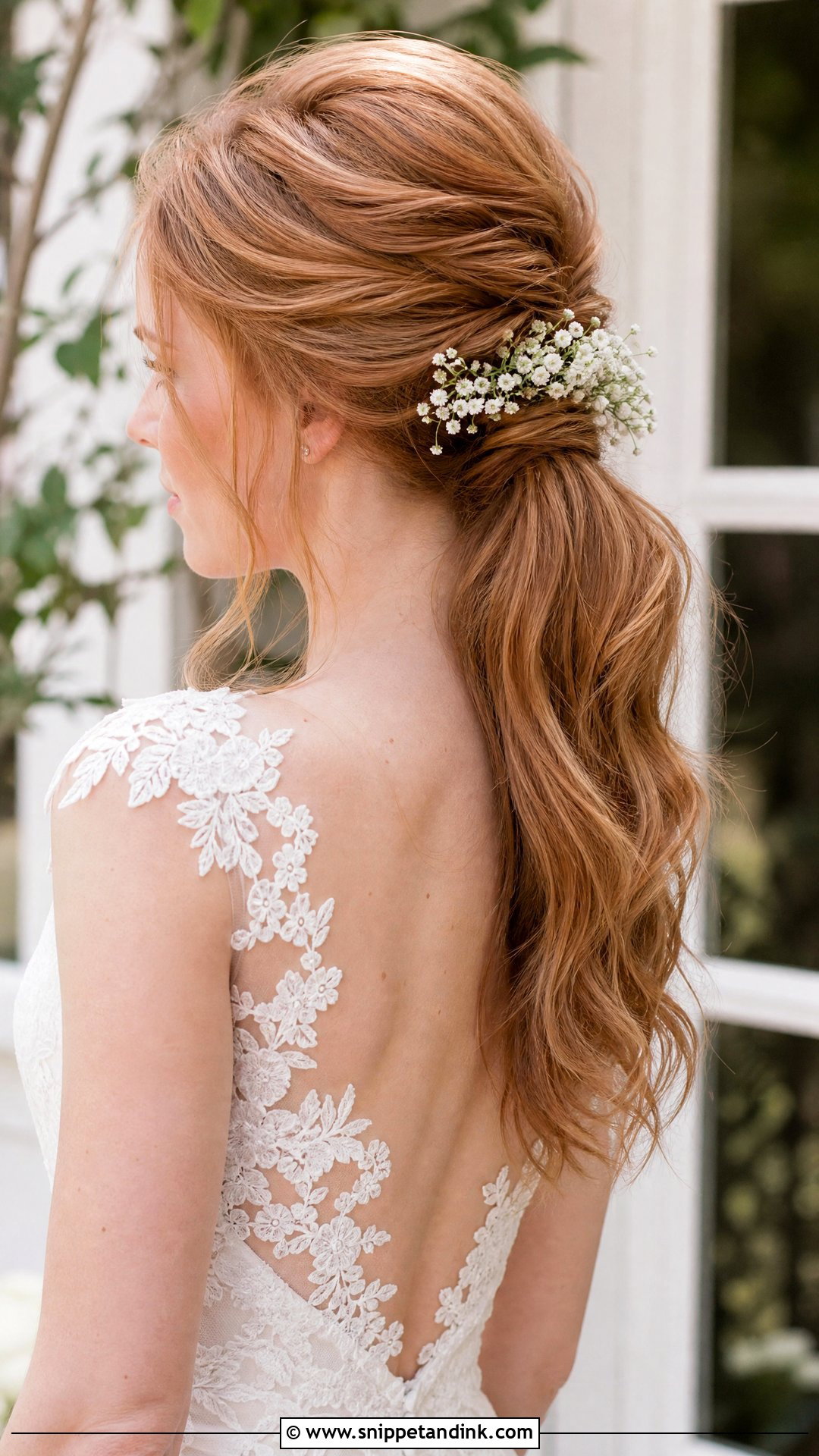
Fresh flowers wilt, and that’s the first thing to plan for. Hardy blooms like spray roses, wax flower and small orchids hold up for hours; delicate ones droop before the speeches. I prefer smaller blooms wired into a little cluster, which is easier to secure than big heads. Place them around the base, along a braid or tucked into one side. Ask your florist to make the hair pieces from the same flowers as your bouquet and deliver them chilled. They sit naturally with lace, chiffon, and flowy dresses.
14. Wedding Ponytail With Veil
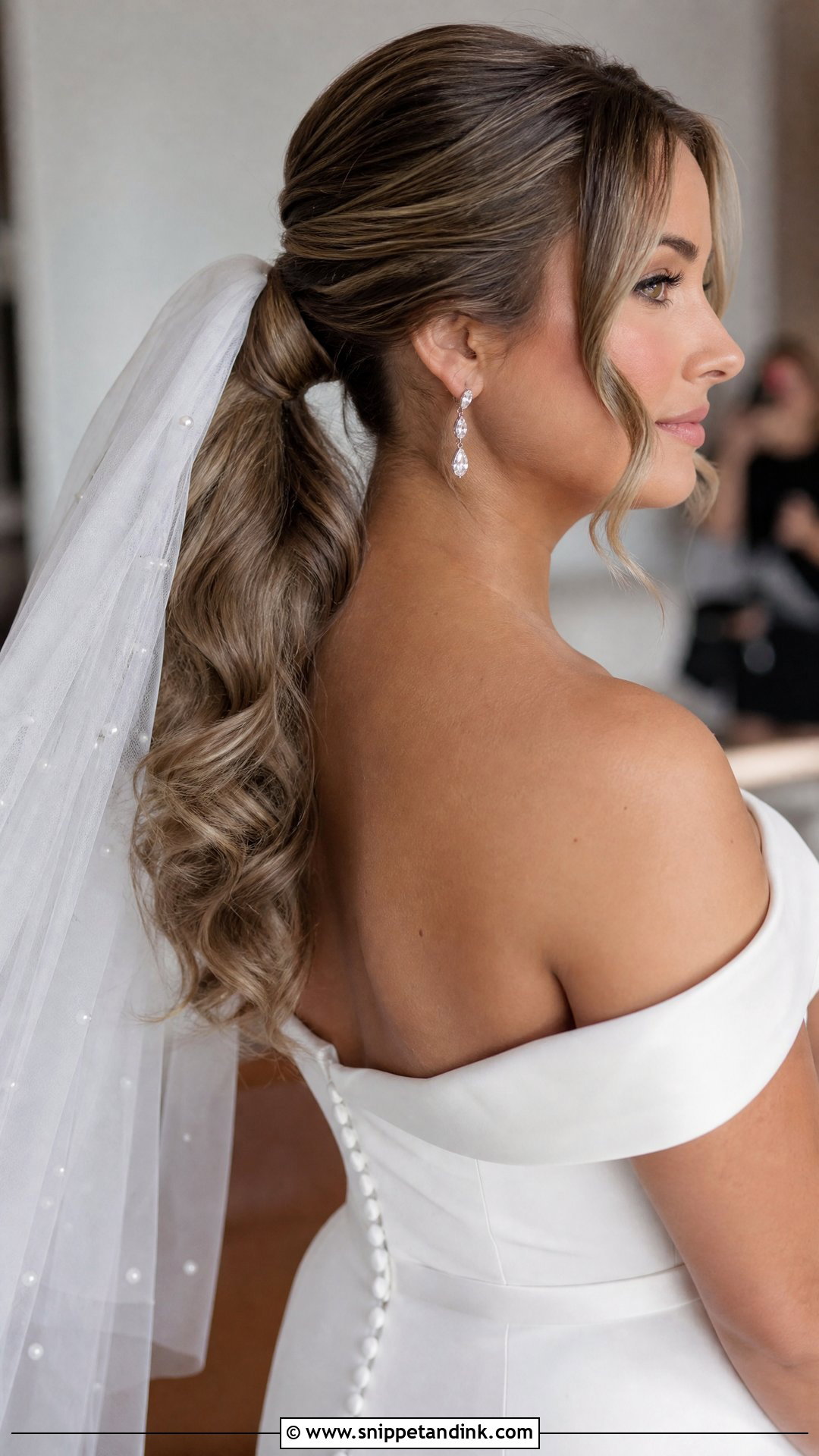
Veil placement makes or breaks this one. With a low ponytail I place the comb just above the base, so the veil falls over the tail like a curtain; for a high ponytail it goes underneath, so the tail rises above it. Either way, I build the hair first and add the veil last, anchoring the comb into crossed pins rather than loose hair. If you plan to remove the veil after the ceremony, make sure someone knows how it’s anchored so they can take it out without tugging the ponytail loose.
15. Wedding Ponytail With Ribbon
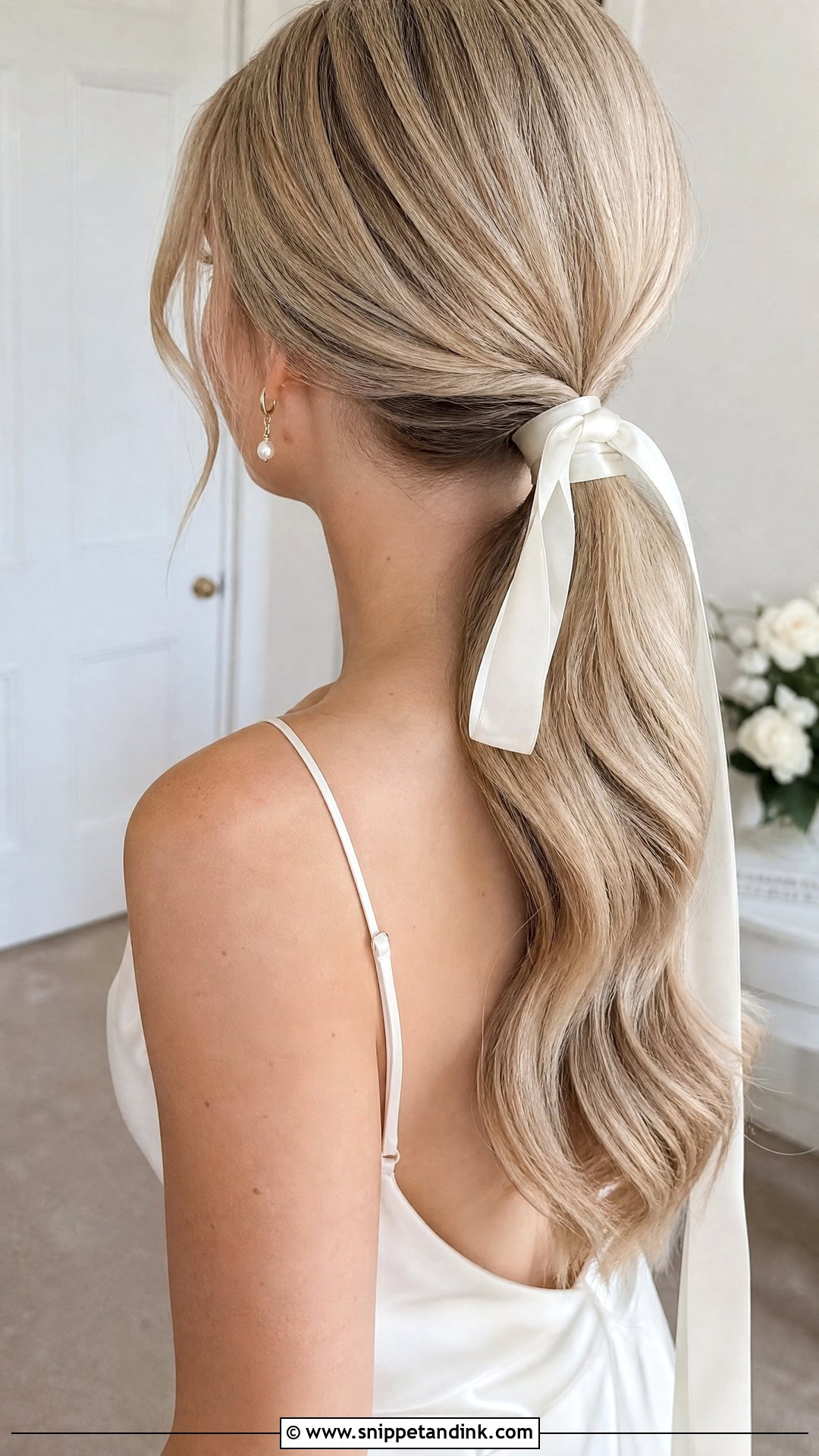
Ribbon is the simplest accessory to add, but it has to be tied well or it slides off the elastic. I tie it over a wrapped base, then pin the knot so it can’t loosen. Satin, silk or velvet ribbon all work, with velvet gripping hair best. White and ivory read classic; blush, champagne or dusty blue tie into a palette. Keep the bow modest so it reads grown-up. It’s a sweet idea for bridesmaids or a relaxed courthouse wedding.
16. Twisted Wedding Ponytail
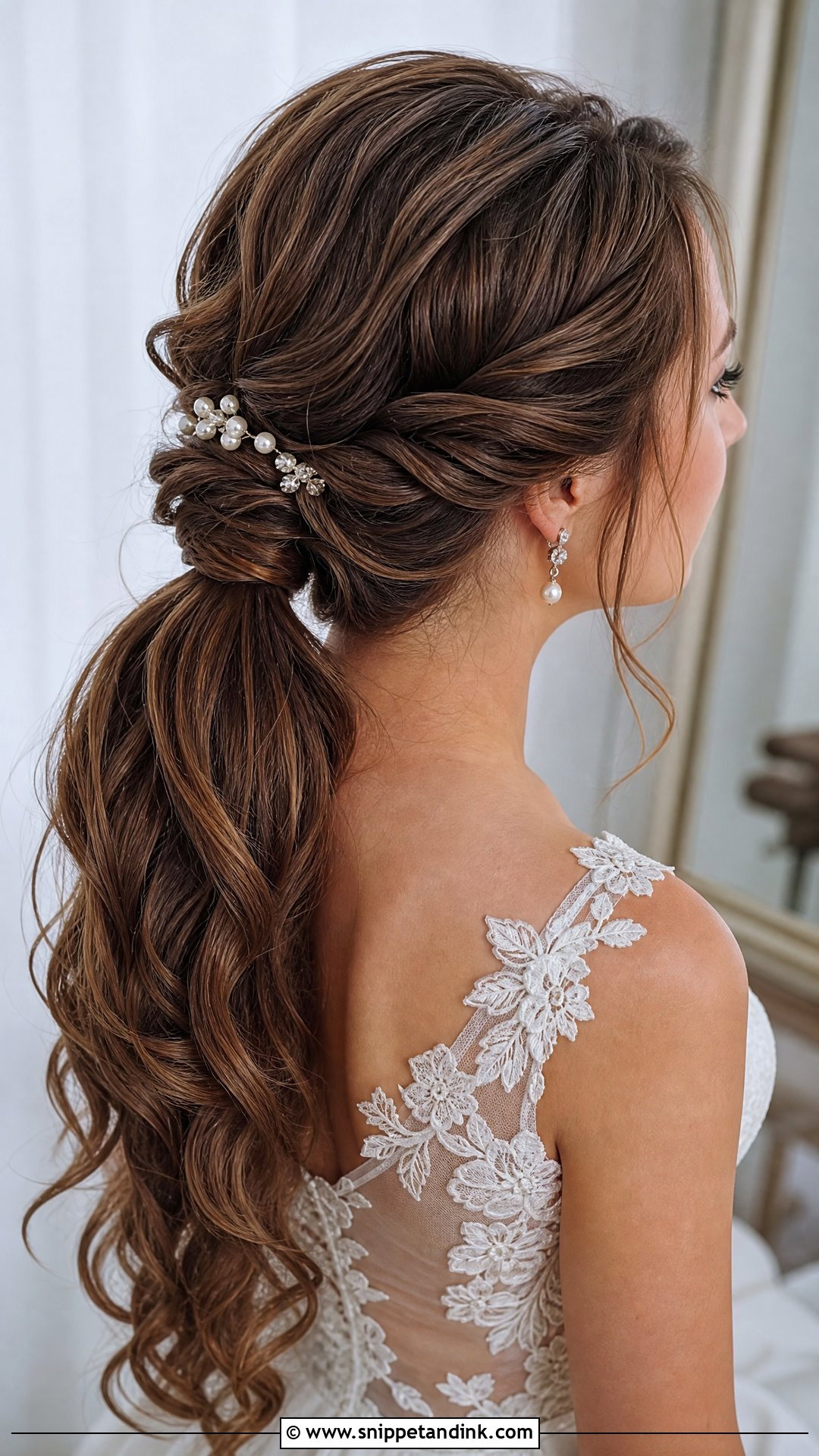
Twists give you some of the detail of a braid in less time, and they’re kinder to hair with short layers around the face. I take a section from each side, twist it back toward the base and pin it before gathering the ponytail, which catches loose pieces. The tail can be curled or left sleek. Pearl pins, small combs or a fine veil all sit well along the twists. Comfortable and quick, it adapts to formal and relaxed weddings.
17. Textured Wedding Ponytail
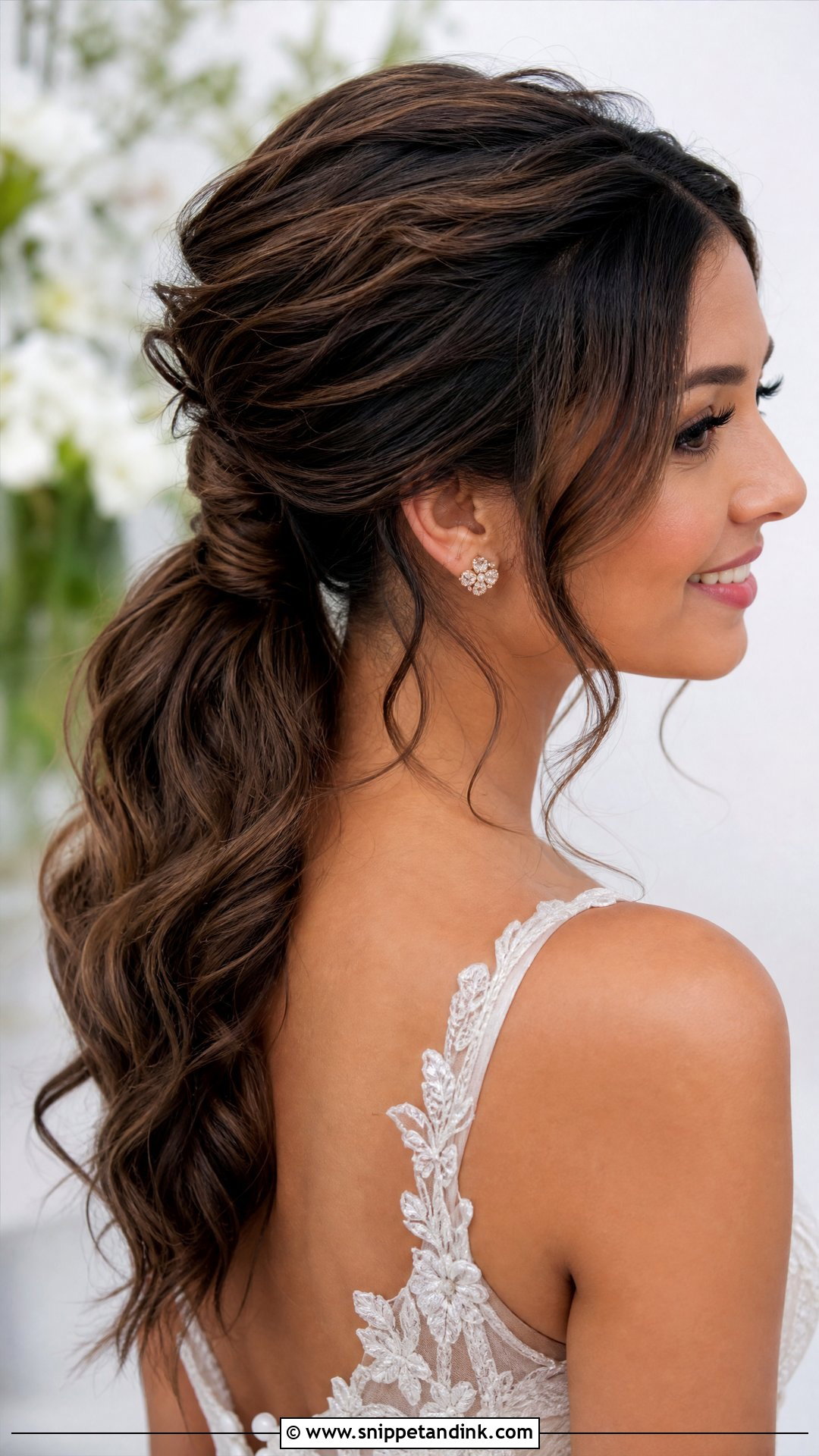
Layered hair naturally gives a ponytail texture, since the different lengths stack and create depth. I lift the crown, add bends or waves through the tail and leave a few face-framing pieces. It doesn’t need to be perfectly smooth, just intentional. Texture is forgiving outdoors: wind and humidity only add to it instead of wrecking it. A flexible-hold spray keeps it movable, which looks better in photos than a lacquered finish.
18. Short Hair Wedding Ponytail
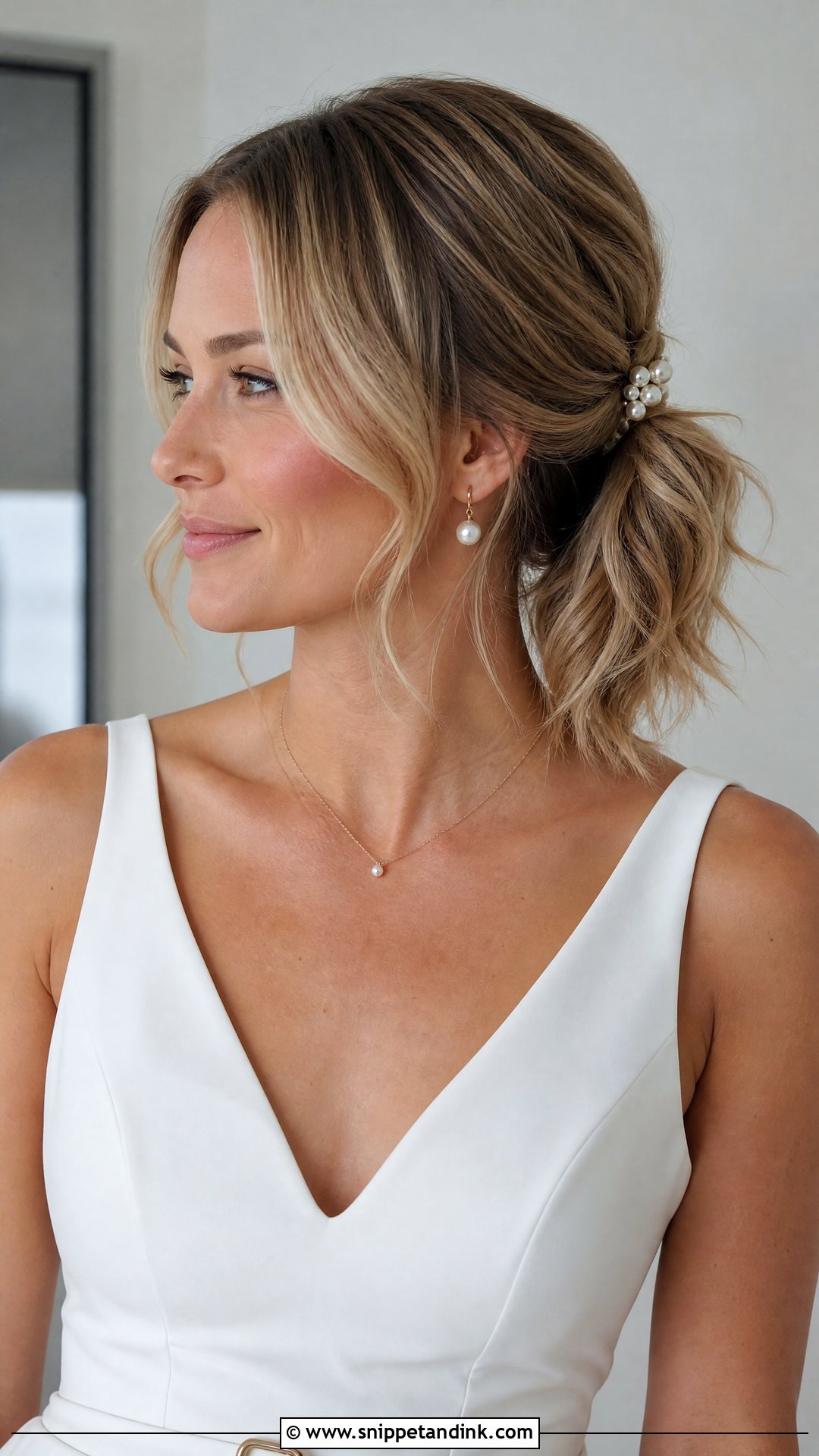
Shoulder-length hair can make a lovely low ponytail if the shorter pieces are handled well. I add volume at the crown so the shape isn’t flat, then pin any layers that won’t reach the elastic. A wrapped base, pearl clip or small bow finishes it. Bobs and lobs are common among bridesmaids, so this is the version I do most for a bridal party. Clip-in wefts can add fullness, though a petite ponytail looks just as deliberate when it’s polished.
19. Long Hair Wedding Ponytail
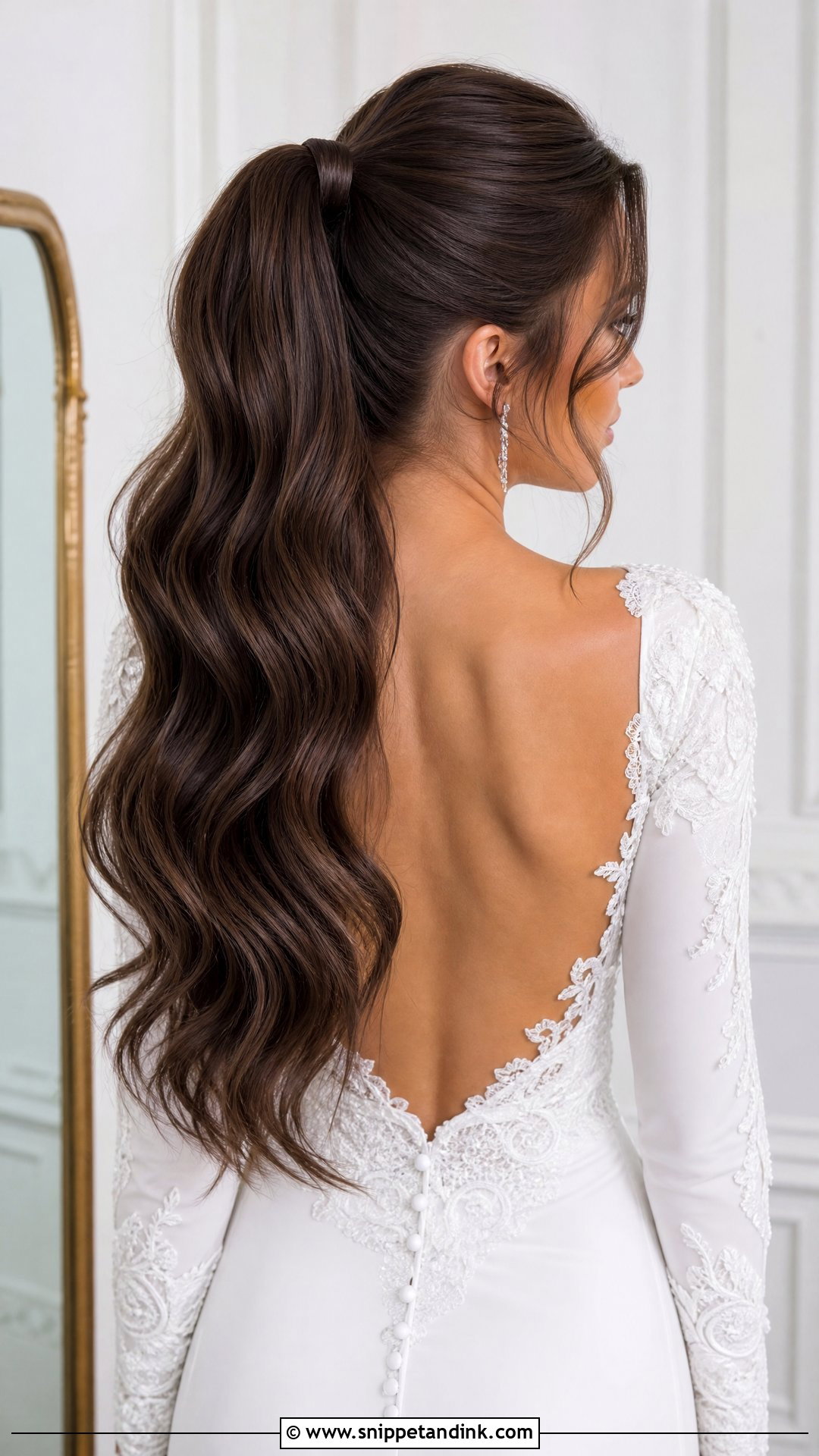
Very long hair gives the most options, from bubble sections to cascading curls, but weight is the challenge. A thick, waist-length tail pulls down on the base and slowly loosens it over the day. I secure long hair with two stacked ponytails or a bungee elastic, plus crossed pins under the base, and sometimes place extension wefts to balance the shape. High, low or side-swept all work. It pairs well with fitted gowns, open backs and statement earrings, and shine spray through the lengths keeps it glossy in photos.
20. Indian Wedding Ponytail
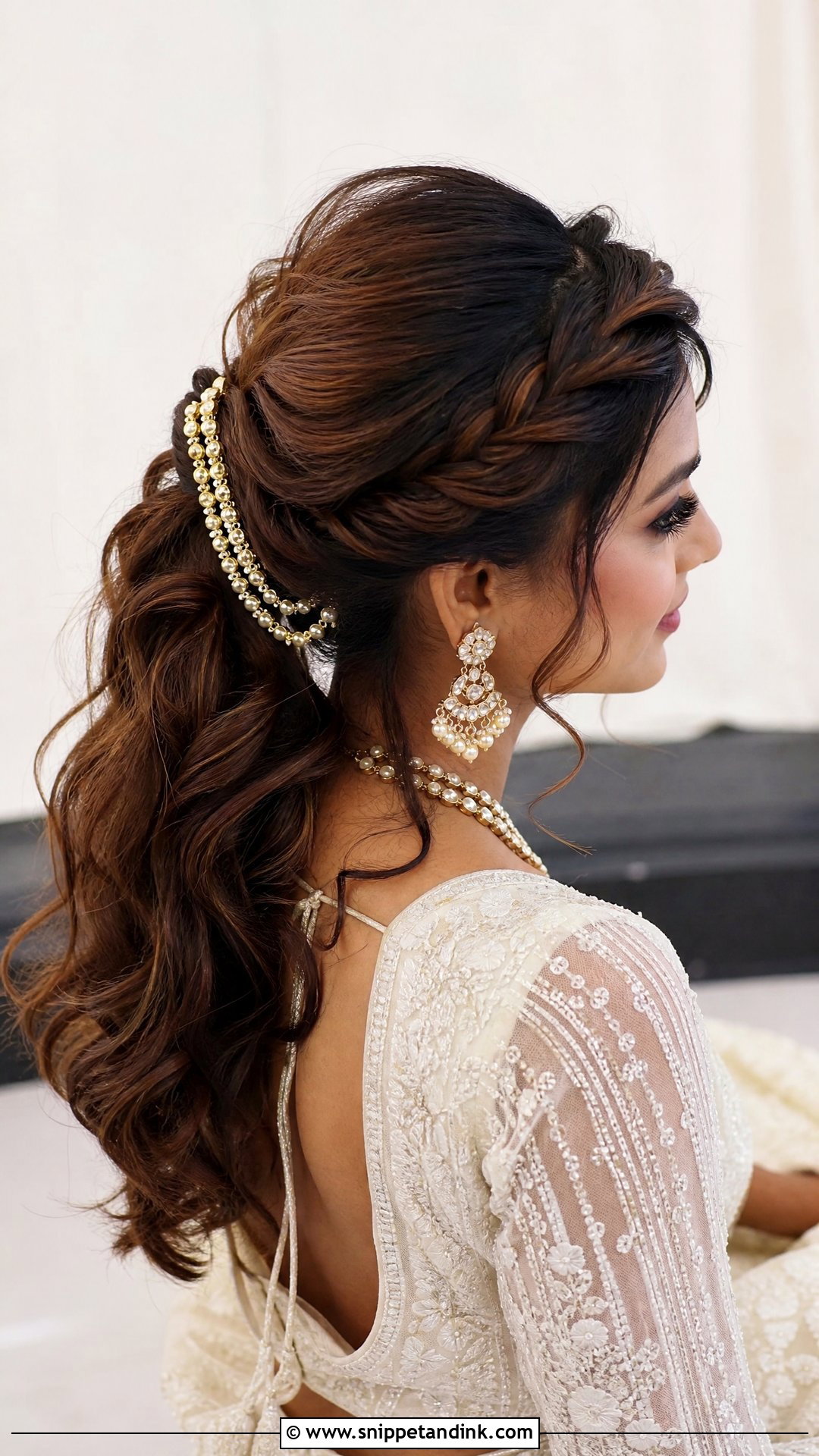
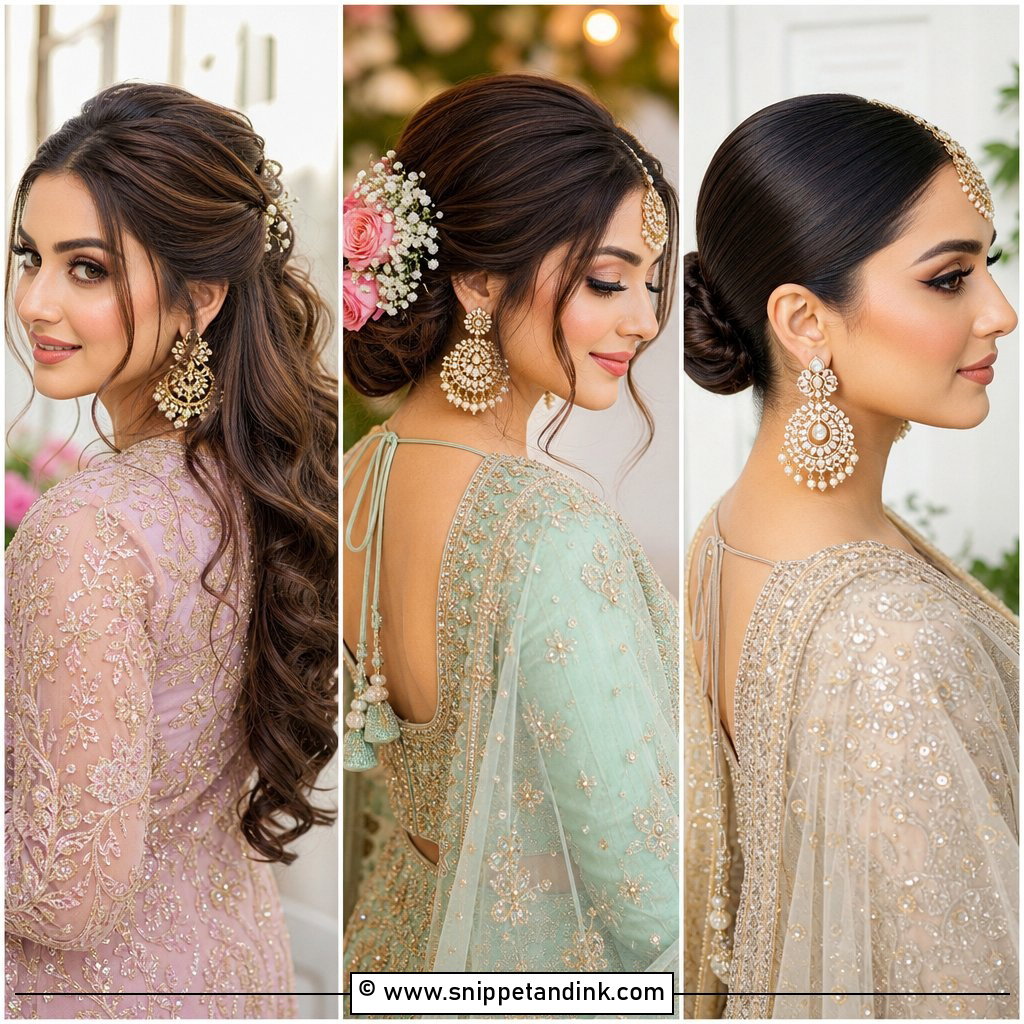
For an Indian wedding the ponytail has to work with a dupatta and heavy jewelry, so placement matters. I keep the base low or mid so a dupatta can be pinned over the head without crushing the tail, and I secure it with extra pins because a dupatta pulls on the hair when you move. Volume at the crown, soft curls, braids, hair chains, pearls or a floral garland all fit with lehengas, sarees and embroidered bridal outfits. Extensions add fullness for a grander look. Practice with your actual dupatta at the trial.
The Reception Switch and the Midnight Touch-Up
Ponytails are a favorite second look. Plenty of brides wear an updo or loose waves for the ceremony and change into a ponytail for dancing, because it keeps hair off a sweaty neck.
If you plan a switch, tell your stylist at the trial. Curls set for a ceremony style can be gathered into a ponytail later in a few minutes, but only if the base area wasn’t heavily teased or pinned. I’ll often leave a ponytail elastic already in place under a low updo so the change is quick.
A small kit for your bridesmaid’s bag
- Two spare bungee or clear elastics in your hair color
- A dozen bobby pins matched to your shade
- A travel hairspray and a tiny tube of smoothing cream
- A mirror and a soft brush for the crown
By late evening the tail will have dropped slightly and curls loosened. That’s normal. Tighten the base by pushing a pin up under the elastic, smooth the crown with a little cream on your palms, and twist the ends around a finger for a minute to revive a curl.
Placement First, Texture Second
Ponytails cover a lot of ground: sleek or curly, braided or floral, high or low. The right one depends on your neckline, length and texture, plus what you’ll pin into it. A low ponytail stays comfortable all day; a high one gives height but tires the scalp sooner. Braids and twists add grip, while ribbons, pearls and flowers add personality. Do a trial if it’s for your wedding, and wear it for several hours afterward so you know how it feels and holds before the morning arrives.
You'll Like These Ideas:


Leave a Reply