
Brides plan faster when they think in complete outfits rather than single pieces, because the dress, shoes, veil and jewelry all change how each other looks. That year brought a clear set of shapes worth knowing: drop waists, dramatic veils, short dresses, tailored suits, three-dimensional florals and layers that come off for the party. Each look below pairs the dress or separates with shoes, jewelry and the practical details I’d sort out at a fitting. They run from formal ballroom gowns to courthouse and beach outfits, and most can be adjusted for different figures and budgets with the right alterations.
Ordering Times for a Gown, a Suit and a Second Look
Most brides underestimate how long bridal clothing takes, and the outfits in this list run on very different clocks. The timings below are typical rather than fixed. They vary by designer, country and season, so confirm them with the shop when you order.
Made-to-order gowns
Ball gowns, corset bodices and custom appliqué pieces are usually cut after you order, and production commonly takes several months. Alterations then tend to begin two to three months before the wedding. For anything in this category, I’d start shopping around nine to twelve months out.
Suits, separates and short dresses
Many suits and short reception dresses can be bought ready to wear, but trouser hems and jacket sleeves almost always need tailoring, and pale fabrics are worth taking to someone who handles them often. Allow at least six weeks.
Two outfits on one schedule
If you’re wearing two looks, buy the main dress first and choose the second to suit its hair and accessories, not the other way round. Bring both outfits and both pairs of shoes to the final fitting so each hem is set for the right heel.
1. Drop Waist Bride Outfit
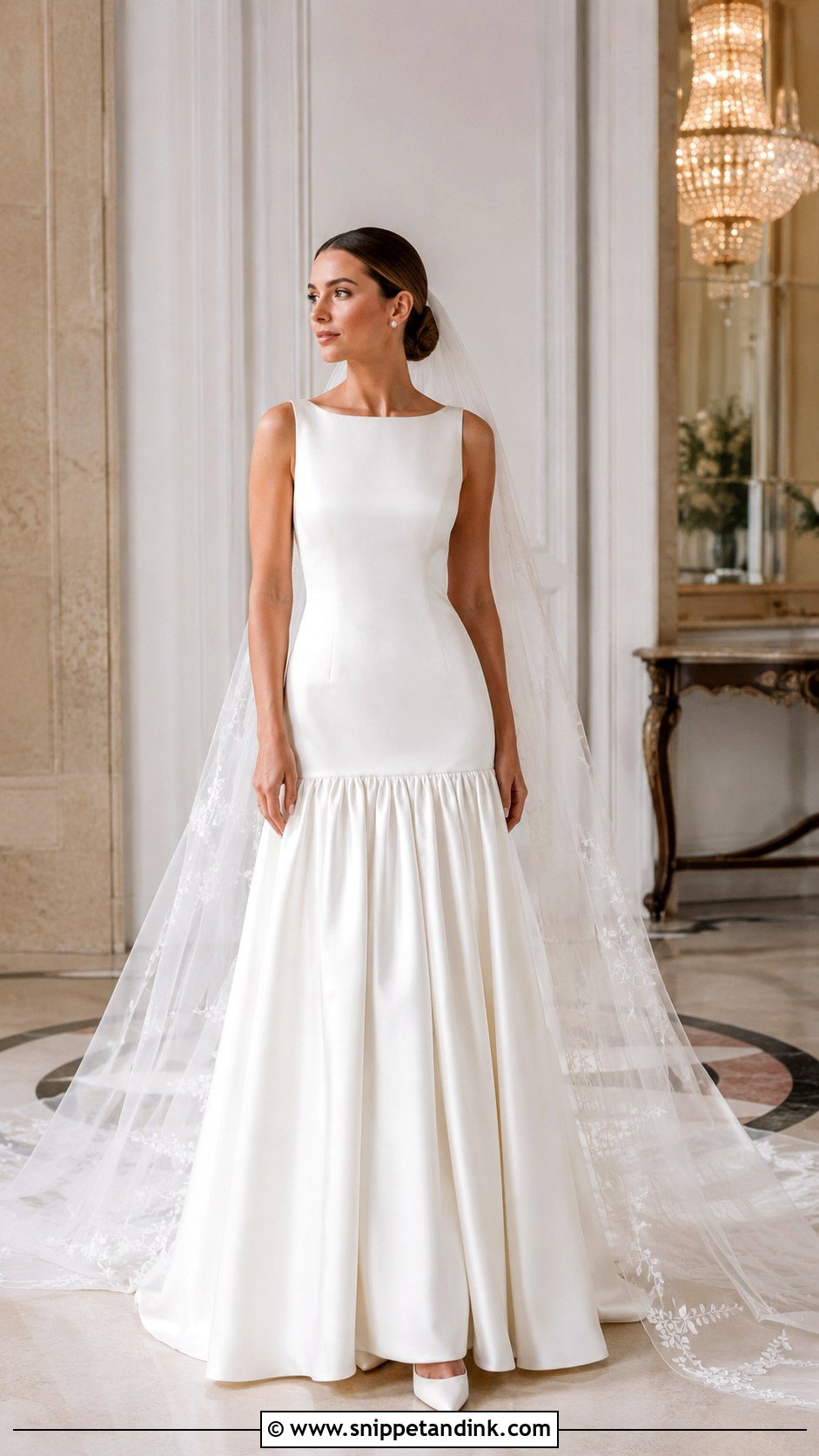
The drop waist was one of the defining shapes of 2024: a long, sculpted bodice that opens into a fuller skirt around the upper hip. Fit decides everything. If the seam lands too low on a short torso, the legs look shortened; placed at the right point, the line looks long and deliberate. I’d choose a structured ivory gown, pointed satin pumps to carry the line down, and a cathedral veil for softness. Pearl studs or small diamond drops are enough jewelry, and a smooth bun keeps the waist construction visible. It suits formal indoor and evening ceremonies. Sit down in it before final alterations, because a fitted hip seam should never dig in.
2. Basque Waist Ball Gown Bride Outfit
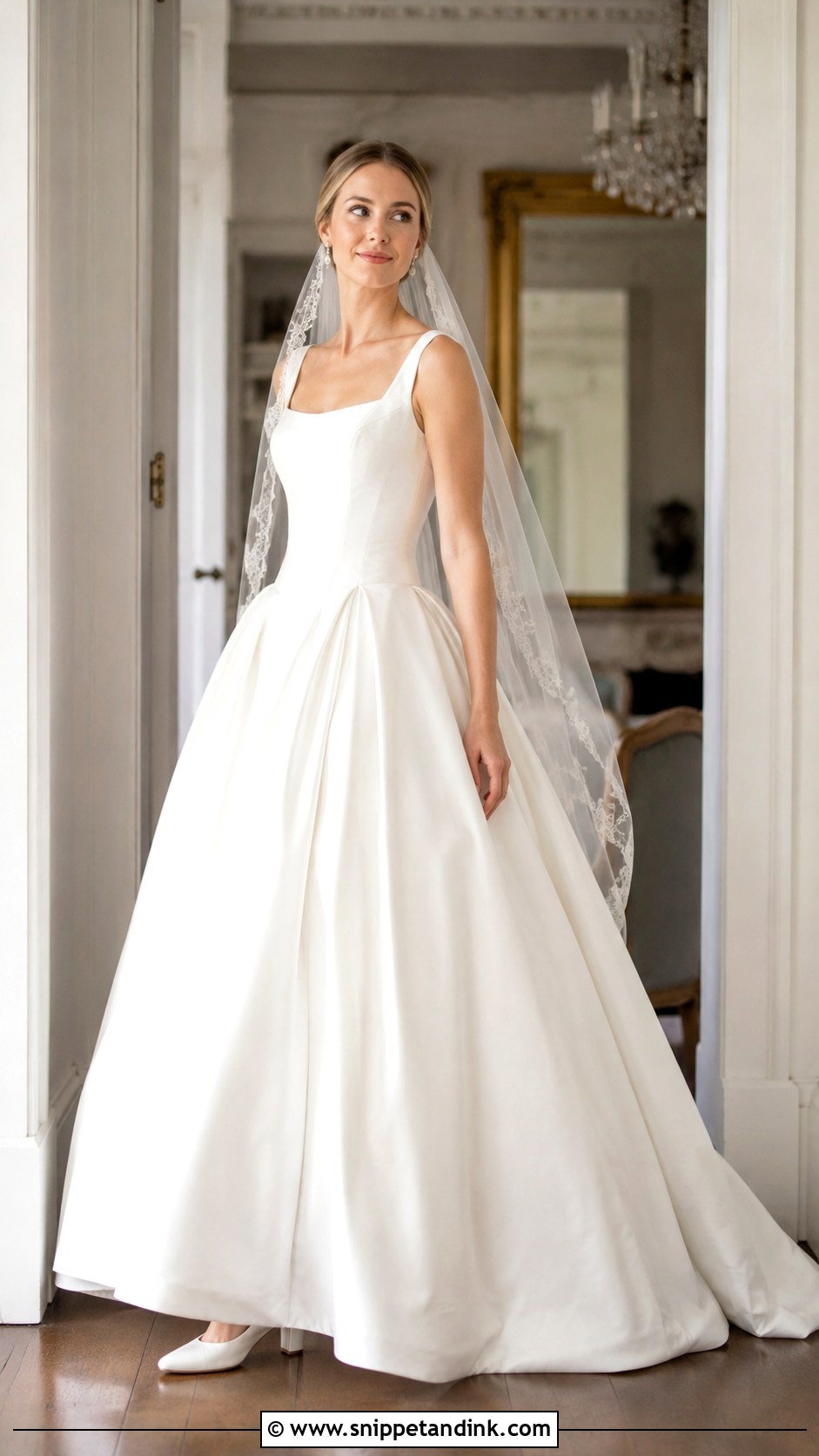
The V of a Basque waist points the eye to the centre and gives definition without a tight skirt. Paired with a structured bodice and a big skirt, it’s the regal option. Where the point lands needs adjusting for each body: long torsos can take a deeper V, while shorter ones look better with a shallower point. Low block-heel pumps, a lace-edged veil and fine drop earrings suit it, with a soft updo to balance the volume. Heavy skirts need a secure bustle, planned well before the wedding rather than on the night. It belongs in a ballroom or an estate.
3. Corset Lace Gown Bride Outfit
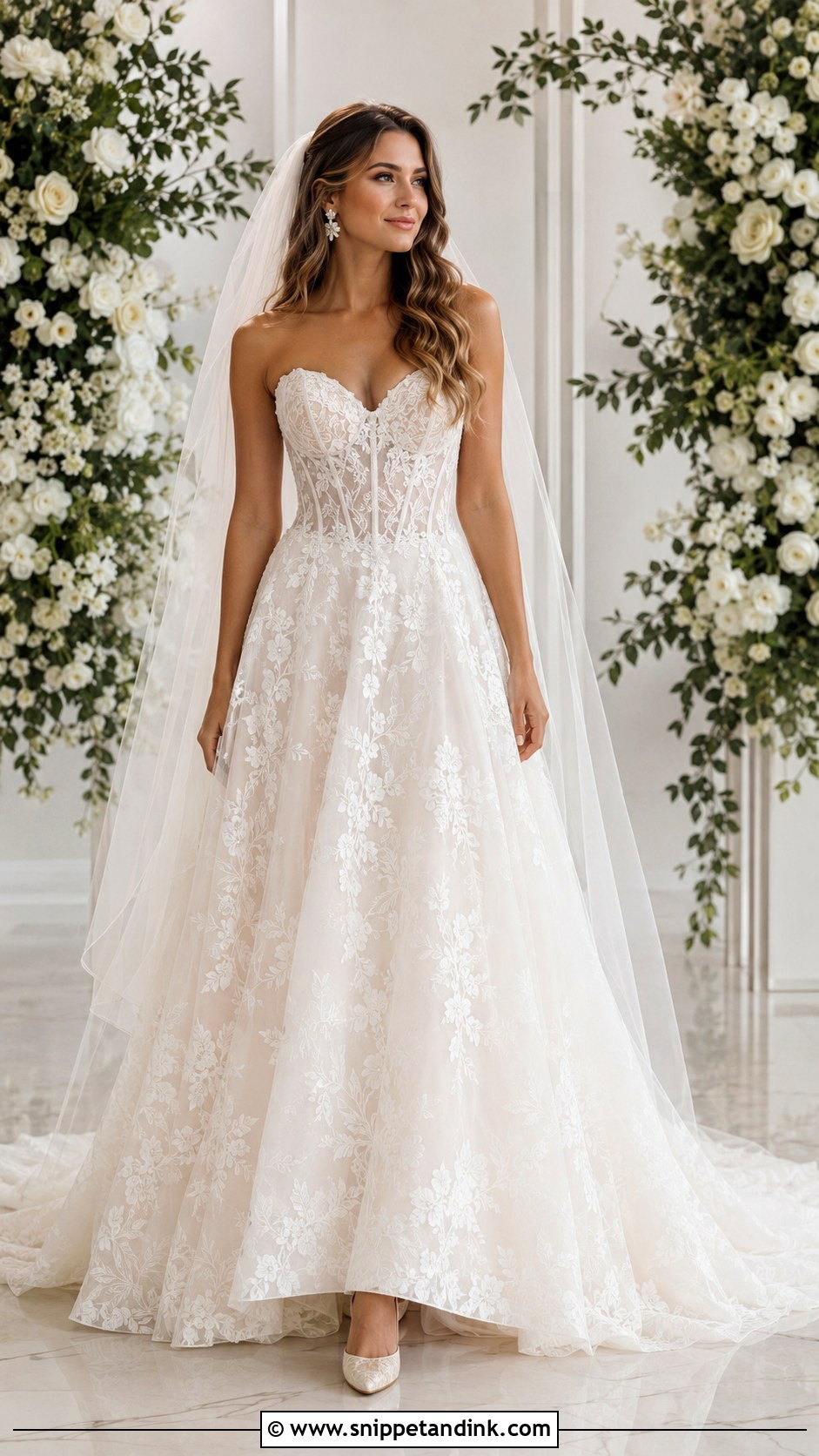
Visible corset seams under fine lace give structure and softness at once. I look for supportive boning, a softly curved neckline and lace that runs from the bodice into an A-line or fit-and-flare skirt without a hard join. Closed-toe ivory heels, floral earrings and a sheer veil with minimal edging finish it; an ornate necklace only fights the lace. Loose waves or a low textured bun soften the bodice. If the sheer centre panel makes you uneasy, ask for it lined. Then sit, walk and raise your arms at the fitting. A corset that only holds while you stand still needs more work.
4. Minimalist Satin Column Bride Outfit
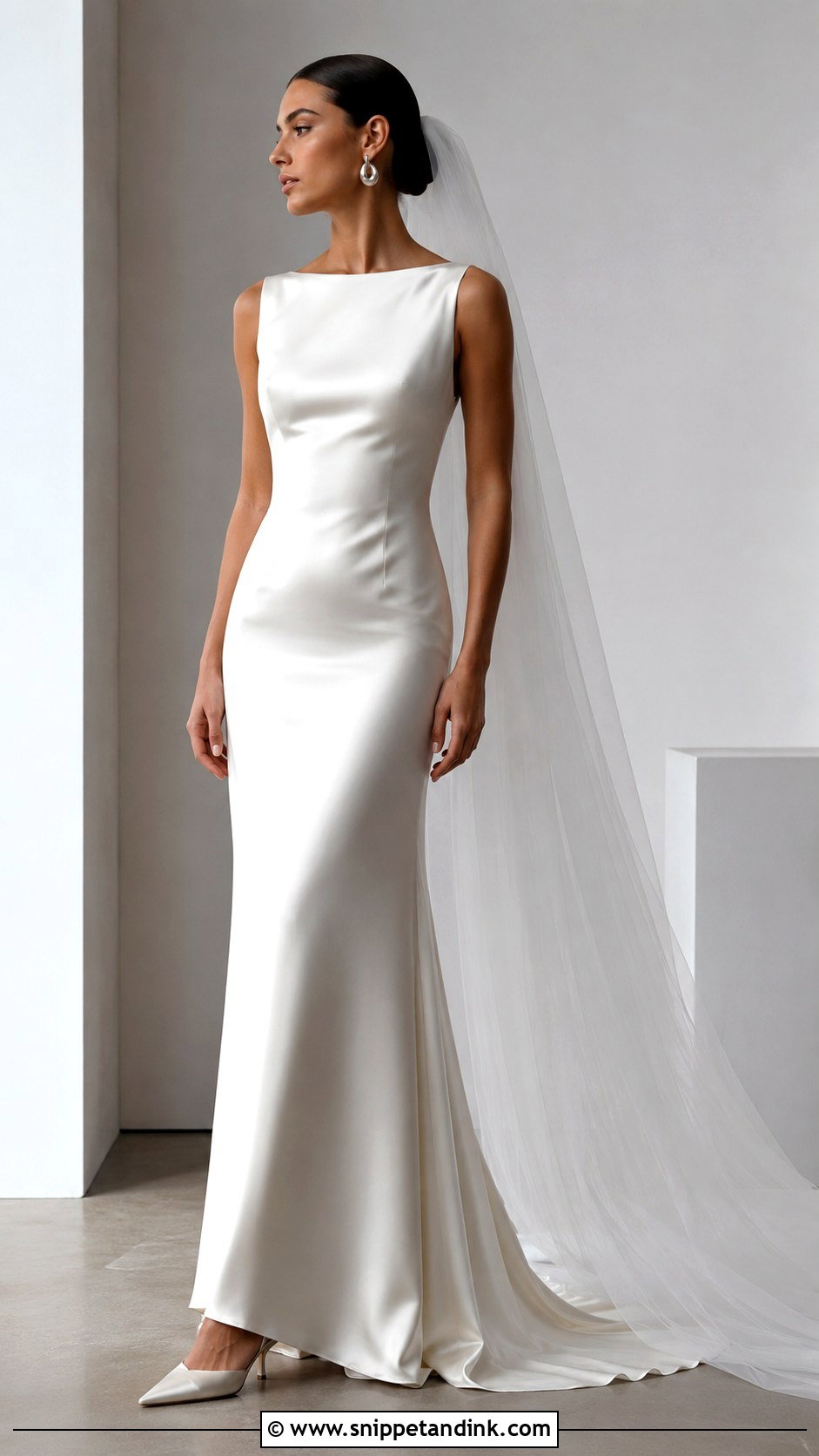
With nothing to hide behind, satin shows every fitting mistake. Pulls across the hips, an uneven hem, the outline of underwear: all of it catches the light. That’s why I’d budget for tailoring before anything else on a column gown. A straight or softly draped neckline, gentle waist definition and a floor-length skirt are the base. Pointed kitten heels, sculptural earrings and a sleek clutch suit it, with a long plain veil for the ceremony and a polished bun or glossy ponytail. It works well in hotels, galleries and on rooftops, and it makes a quiet backdrop for a family veil or coloured shoes.
5. Floral Appliqué Bride Outfit
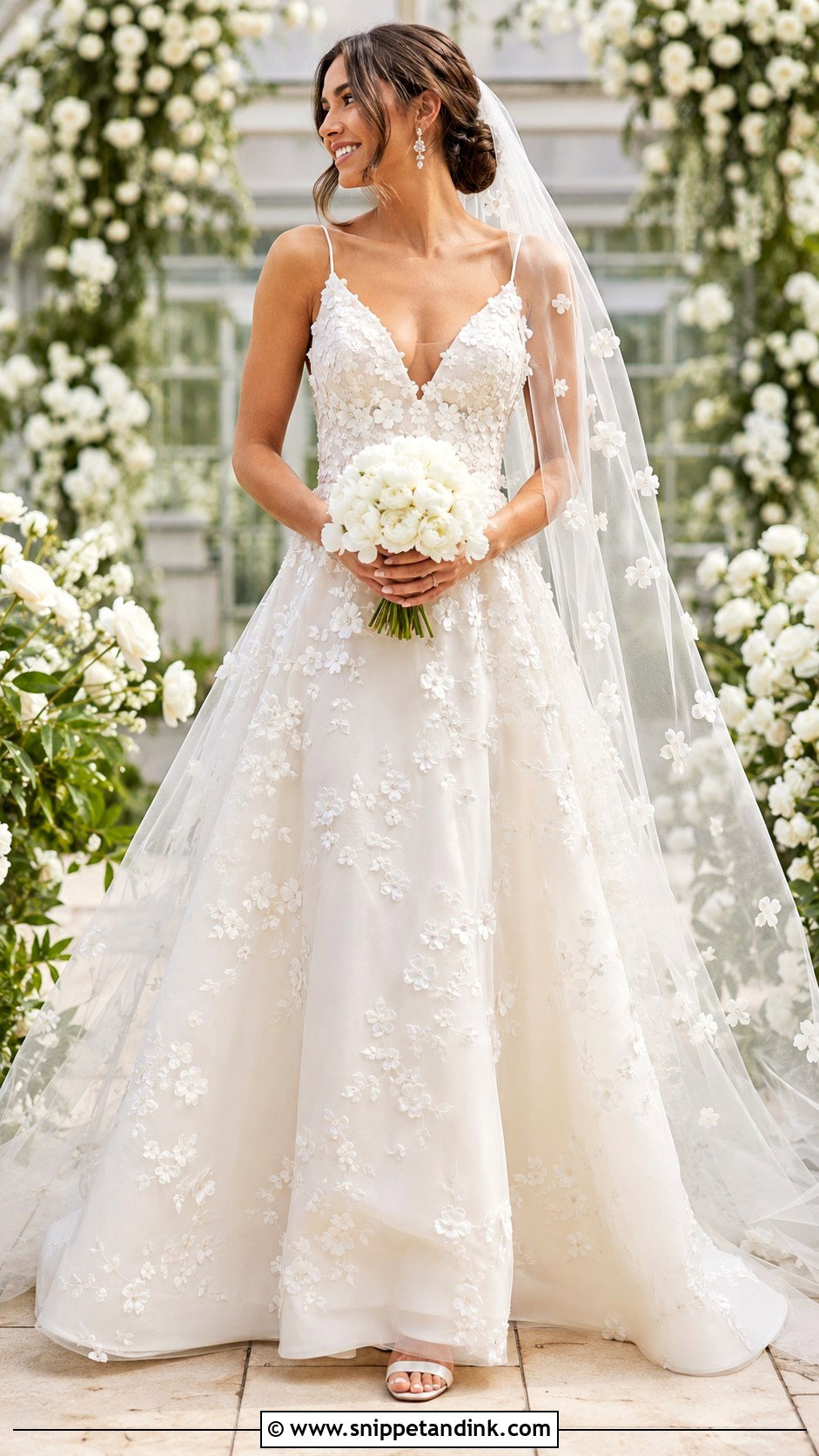
Three-dimensional flowers give texture without relying on sparkle, and they can do practical work too. During customisation, appliqués can be placed to add coverage over a sheer area or to draw the eye where you want it. I’d go with an A-line gown with flowers across the bodice, skirt or detachable sleeves, simple ivory sandals, small crystal earrings and a sheer veil with a few matching flowers near the edge. Keep the bouquet compact so it doesn’t compete. A low bun with face-framing pieces keeps the neckline clear. It’s a garden and spring look by default, though long sleeves and a heavier base fabric move it into autumn.
6. Off Shoulder Gown With Gloves Bride Outfit
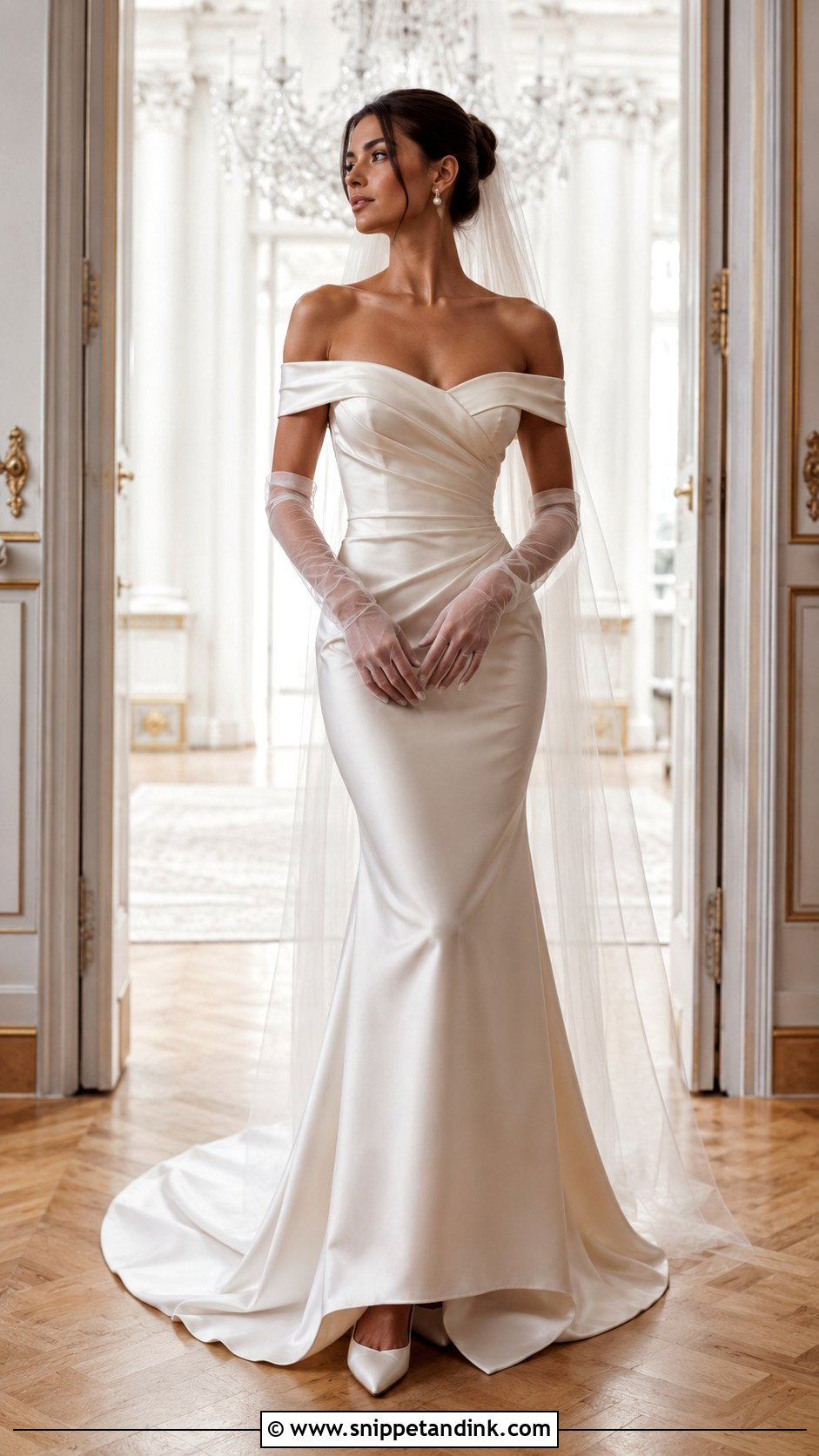
Gloves look elegant in photos and get in the way during the vows. Before committing, practise holding the bouquet and having a ring slid on; most brides either take the left glove off for that moment or choose a pair with an opening at the ring finger. The look itself is a fitted satin or structured mikado off-the-shoulder gown with a folded neckline and a firm internal bodice, plus sheer wrist-length gloves for subtlety or opera length for drama. Pointed pumps, pearl earrings and a clean chapel veil complete it, with hair up or swept back. It suits formal venues and cooler weather, and the gloves come off for dinner.
7. Bridal Cape Gown Outfit
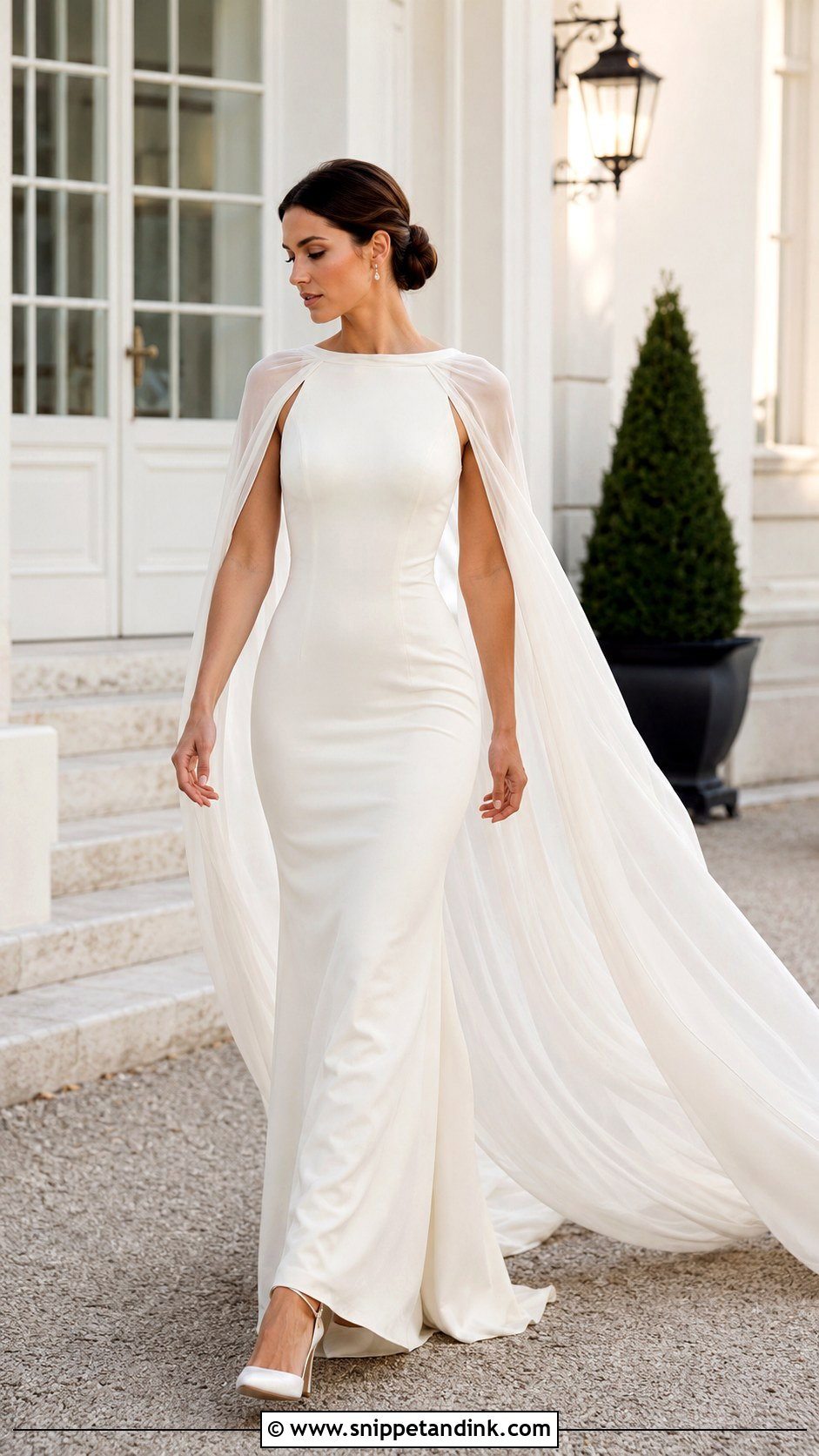
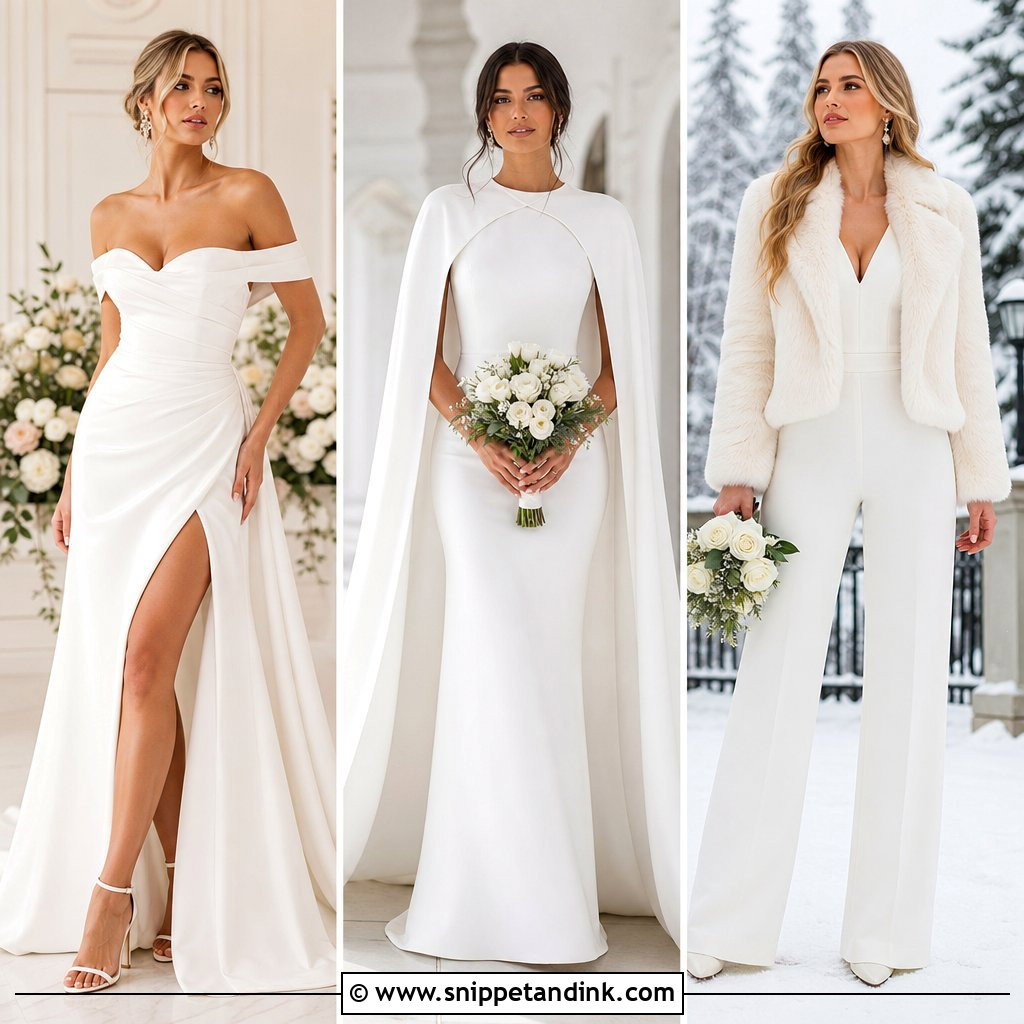
A cape gives you the movement of a veil with a more modern outline. Pair a simple fitted gown with a sheer floor-length cape fastened at the shoulders or neckline, then keep the rest plain: slim heels, small earrings, a low bun. Match the decoration in reverse. A cape with scattered pearls or embroidery suits a plain dress, while unembellished chiffon goes over a heavily decorated one. Check the cape length against the train so you don’t step on either, and remember detachable ones come off for dinner. Outdoors, a long cape catches the wind, which is wonderful for portraits and awkward on the aisle, so have someone straighten it before you walk.
8. Detachable Overskirt Bride Outfit
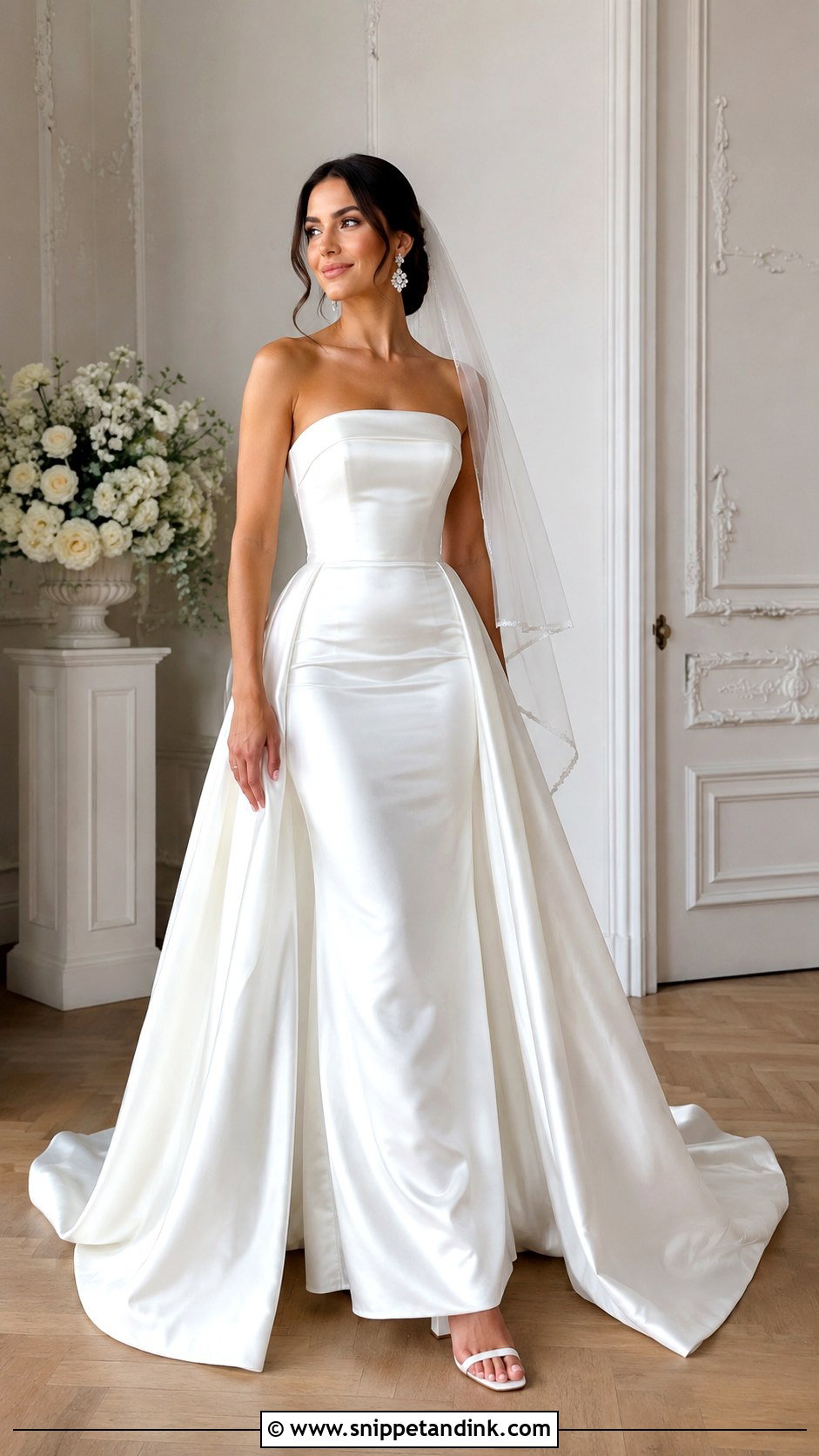
One outfit gives you two looks if you add a detachable overskirt. The base dress has to feel complete without it, so start with a fitted crepe, lace or satin gown you’d happily wear alone. The full overskirt goes on for the ceremony and comes off for the reception. Comfortable block heels, statement earrings and a polished updo work for both versions, and a fingertip veil stops the back from getting crowded with layers. Ask the seamstress to hide the fastening and to show you, and your helper, how to remove it without pulling on the base dress. It also saves buying a separate reception outfit.
9. Short Reception Dress Bride Outfit
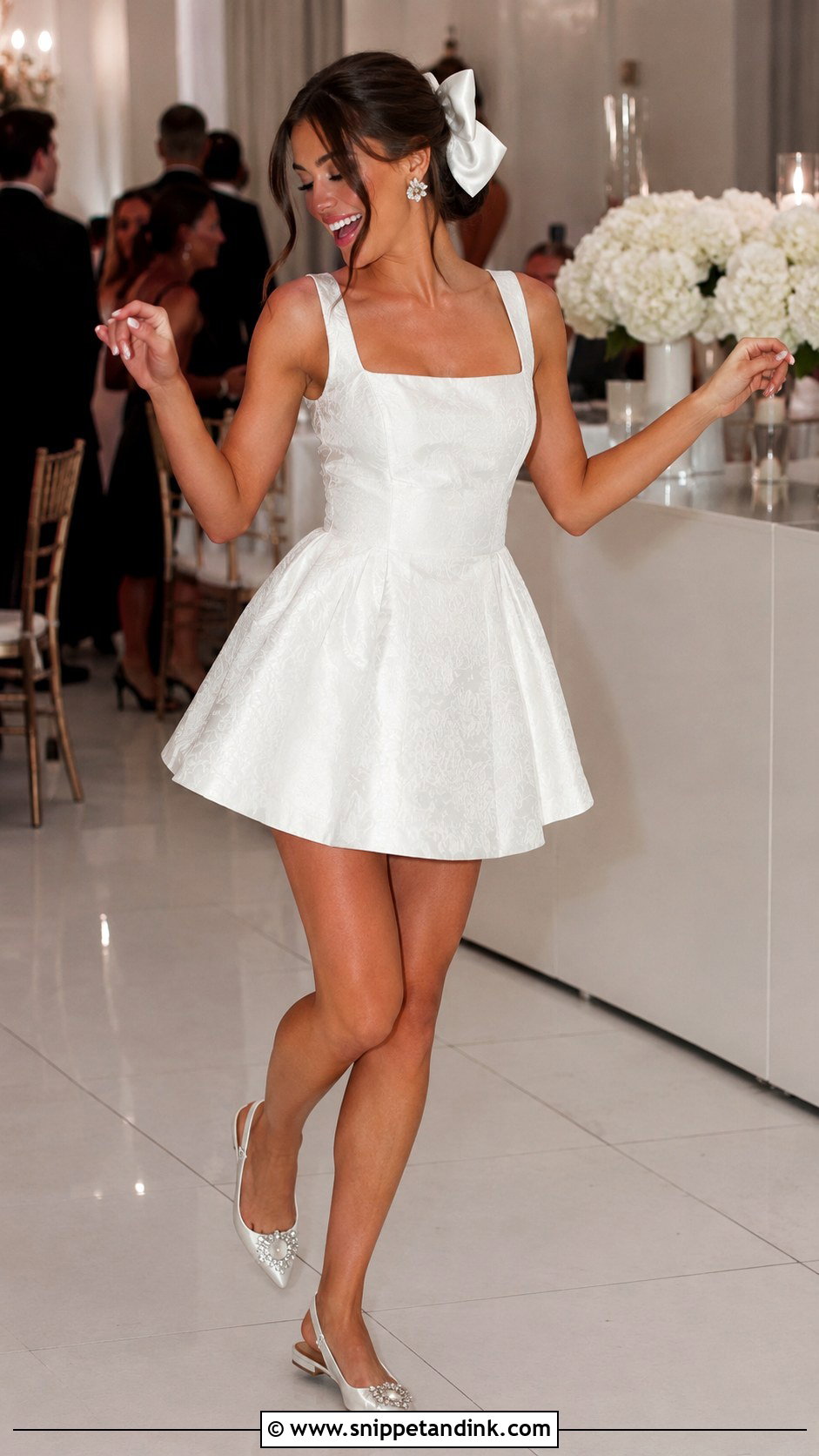
Short white dresses turned up everywhere in 2024, both as main dresses and as second looks for the party. When the music starts, a short dress lets you move while staying clearly bridal. I’d choose a structured mini or knee-length style with a square neckline, a bow, floral texture or a little crystal detail. Low slingbacks or embellished flats keep you dancing, and a ribbon, comb or floral clip replaces the veil, along with statement earrings and a small top-handle bag. If it’s very short, check the length while sitting, bending and climbing stairs. Tailored shorts beneath a full skirt add confidence without changing how it looks.
10. White Bridal Pantsuit Outfit
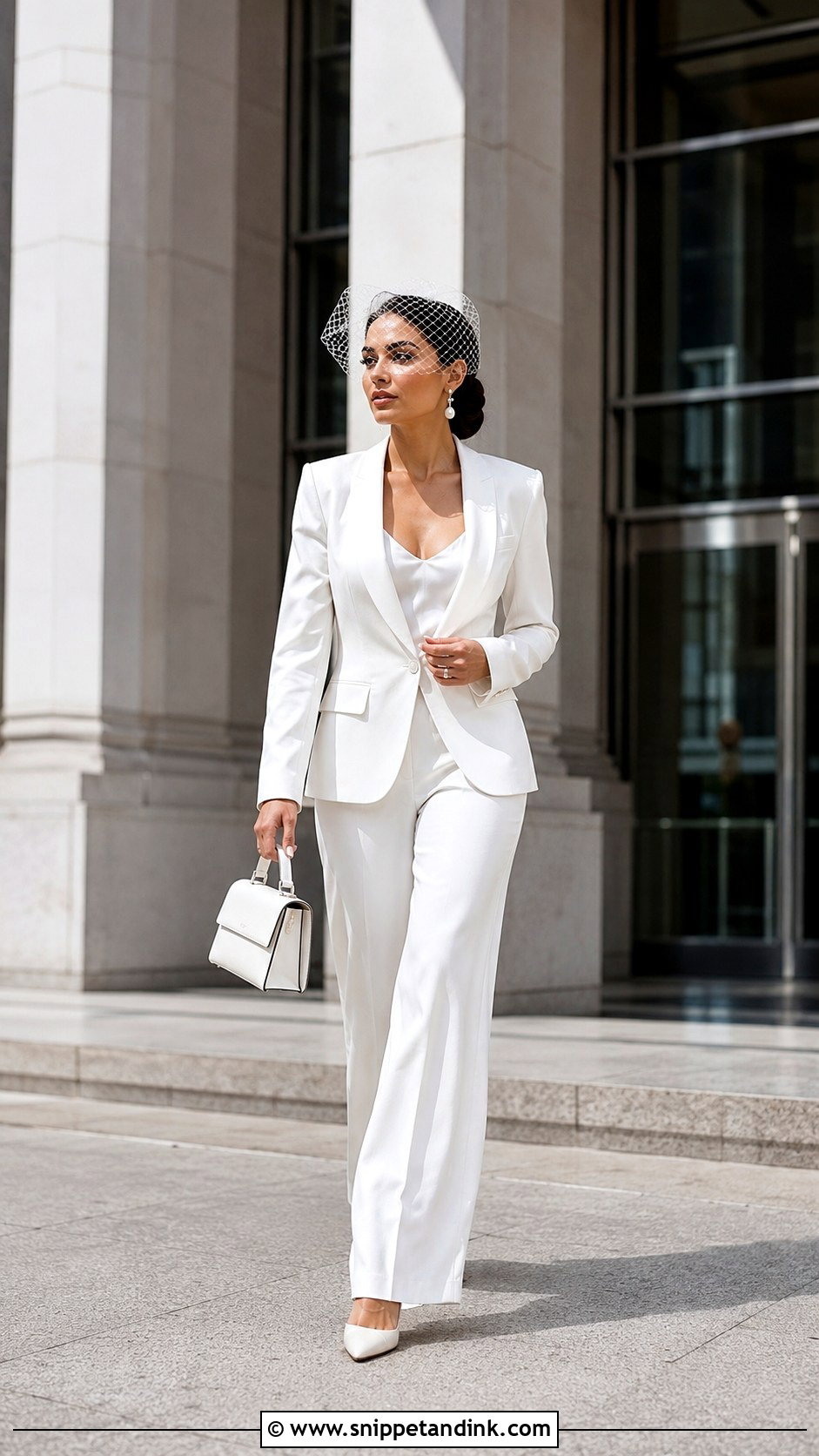
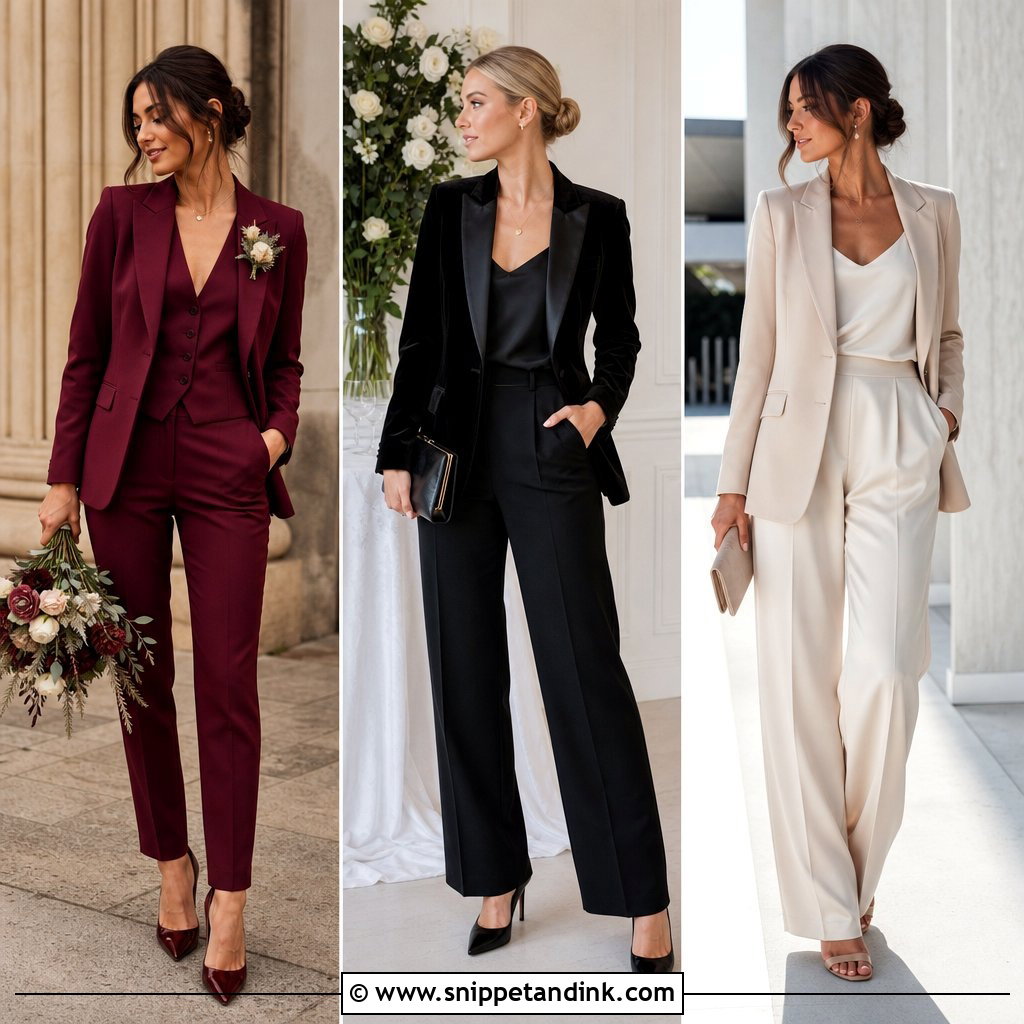
A white pantsuit lives or dies on the trouser hem. Decide the heel height before the trousers are altered, because changing shoes later leaves the hem either pooling or flashing ankle. A single-breasted blazer with a defined waist, plus a silk camisole, modest bodysuit or matching waistcoat underneath, gives a finished look. Pointed pumps, pearl drops and a structured mini bag suit it, with a birdcage veil or sleek hair bow adding the bridal note. Petite brides tend to look best in cropped or gently tapered legs, and wide legs move well on most figures. Steam it shortly before dressing and keep fabric tape handy for the lapels.
11. Bridal Two Piece Skirt Outfit
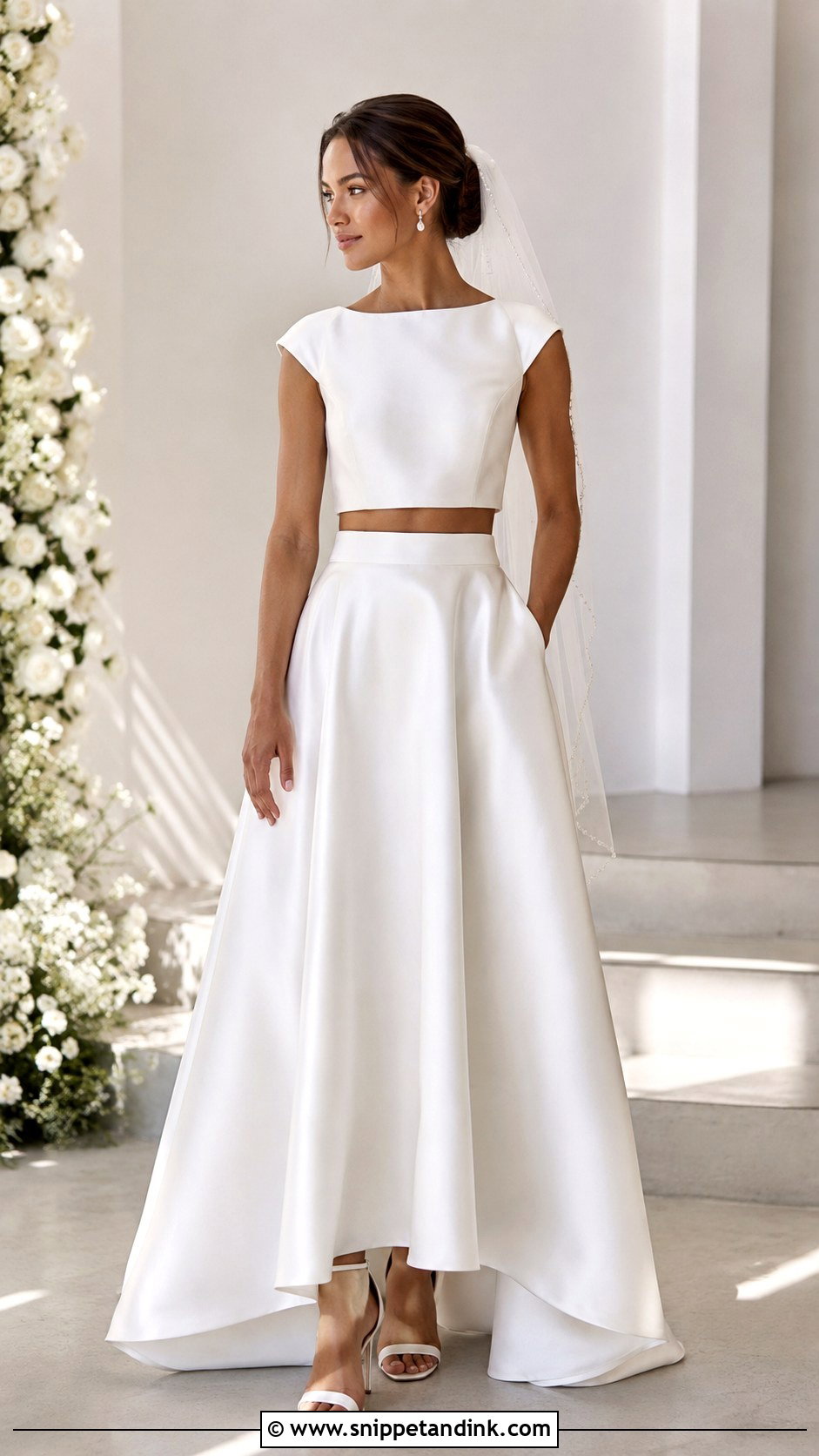
Separates are a gift for anyone whose top and bottom are different sizes, since each piece is fitted on its own. Combine a structured satin top, lace blouse or corset-style bodice with a high-waisted A-line skirt, in the same white or ivory unless you want contrast. Whites vary a lot between fabrics, so compare the two pieces side by side in daylight. Ankle-strap heels, fine earrings and a fingertip veil finish it. A small gap at the waist looks modern; an overlap gives more coverage. Later, you can swap the skirt for tailored trousers. Make sure the top is anchored with hooks or a grip strip at the waistband so it doesn’t ride up when you hug people.
12. Silk Slip Dress Bride Outfit
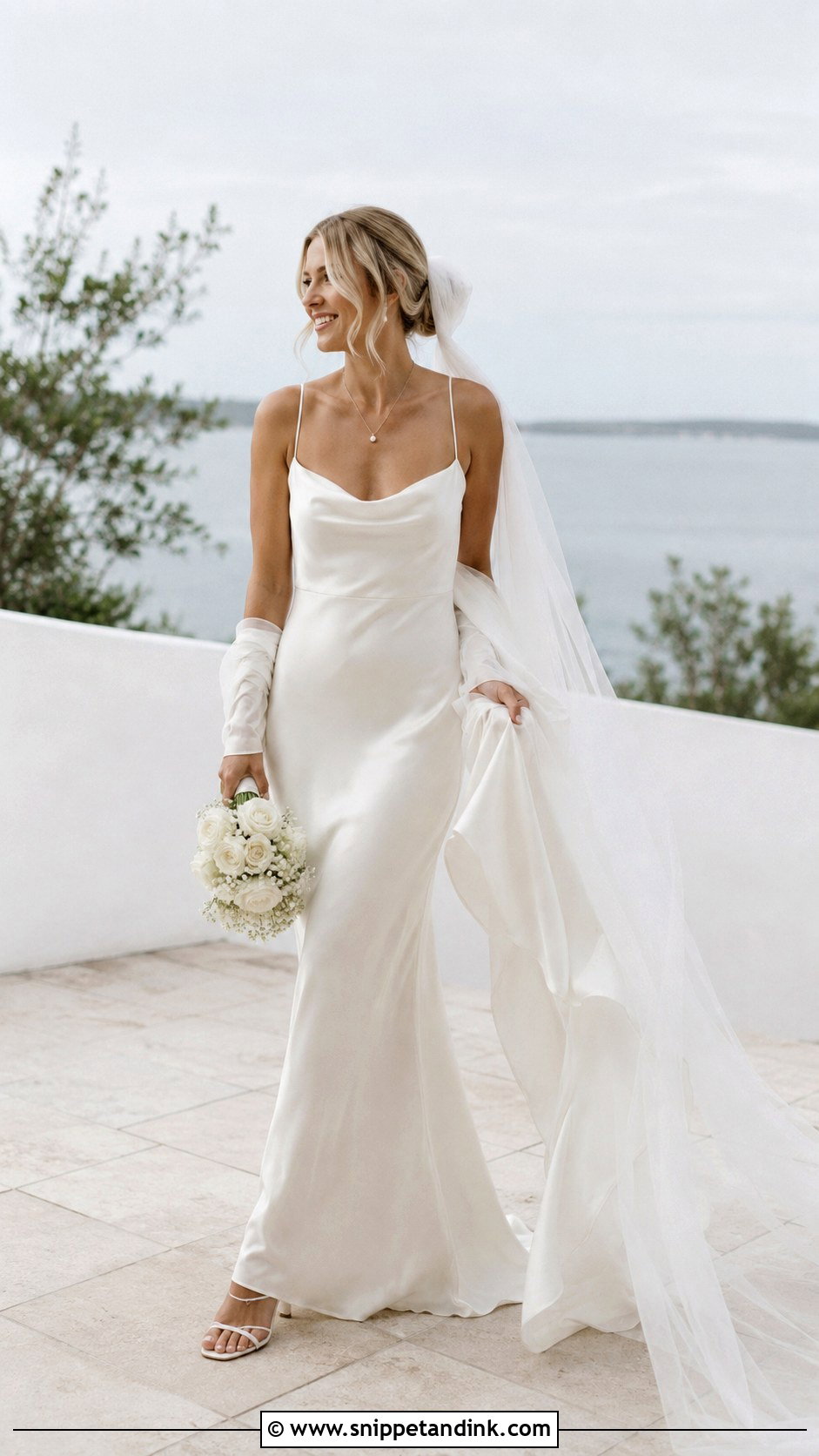
Silk slip dresses are honest about everything underneath, so the first thing I do with one is a lighting test. Try several smooth undergarment options in daylight and indoors; a line that’s invisible in the mirror can show clearly in photos. Choose a bias cut with a softly draped neckline, supportive straps and enough room through the hips to walk. Barely-there sandals, a pearl pendant and a long sheer veil suit it, with a smooth blowout or low knot. Bring a chiffon wrap or ivory jacket for the evening. Hang it by the straps rather than folding it, and steam it the morning of the wedding, because bias silk creases easily.
13. Blush Wedding Gown Bride Outfit
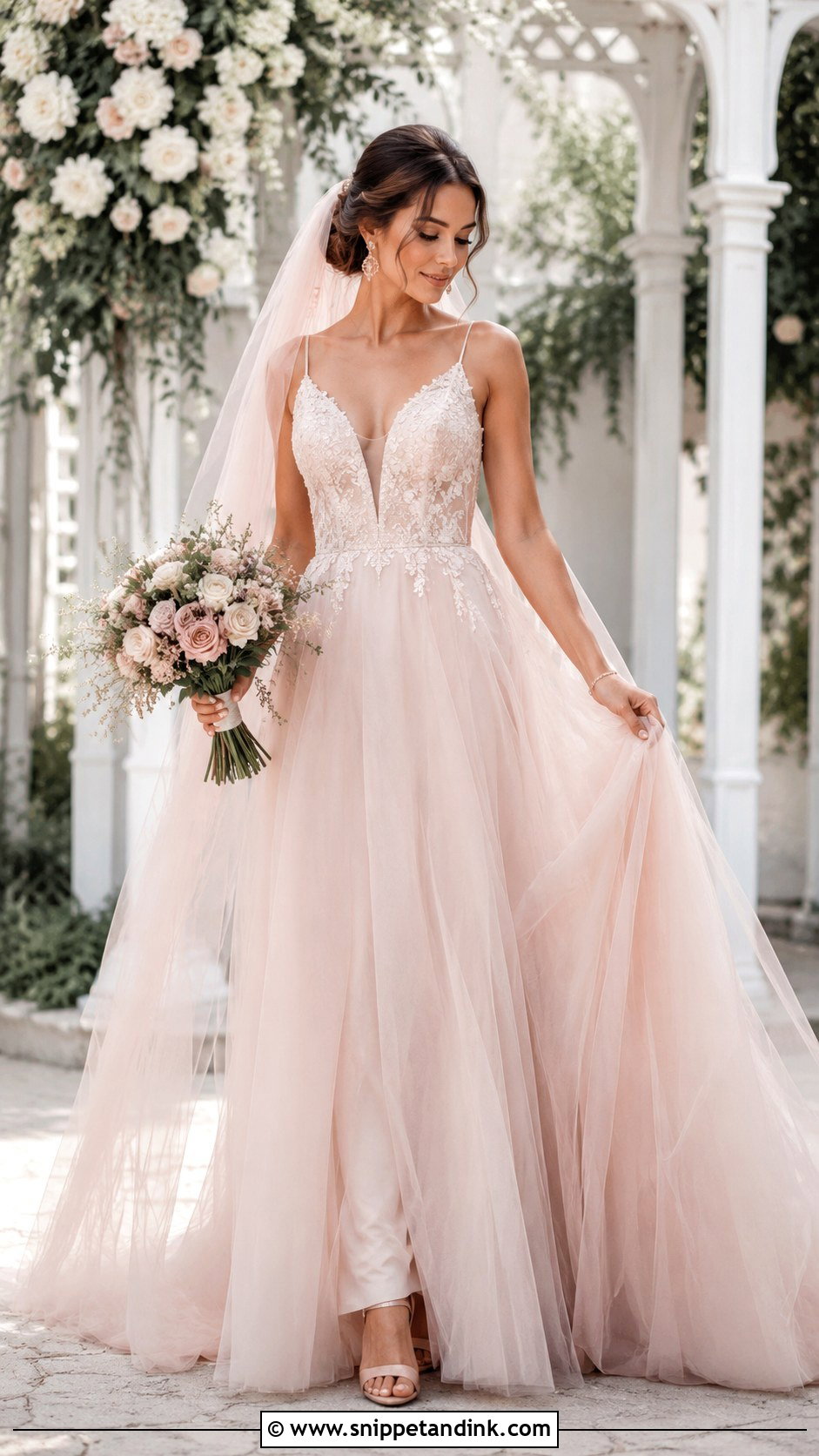
Colour became a bigger part of bridal fashion in 2024, from tinted veils to whole gowns in blush, champagne or pale blue. The catch is that soft colours shift on camera. A blush that looks pink in the boutique can wash out to white in bright sun or turn peachy under warm indoor bulbs, so I check every coloured gown in daylight, indoor light and with flash. Choose a softly tinted tulle or satin and pair it with neutral heels, rose-gold jewelry and a veil in a closely matched tone. Keep the bouquet palette tight so the dress stays the focus, and hold the fabric against your face in daylight before ordering.
14. Vintage Lace Long Sleeve Bride Outfit
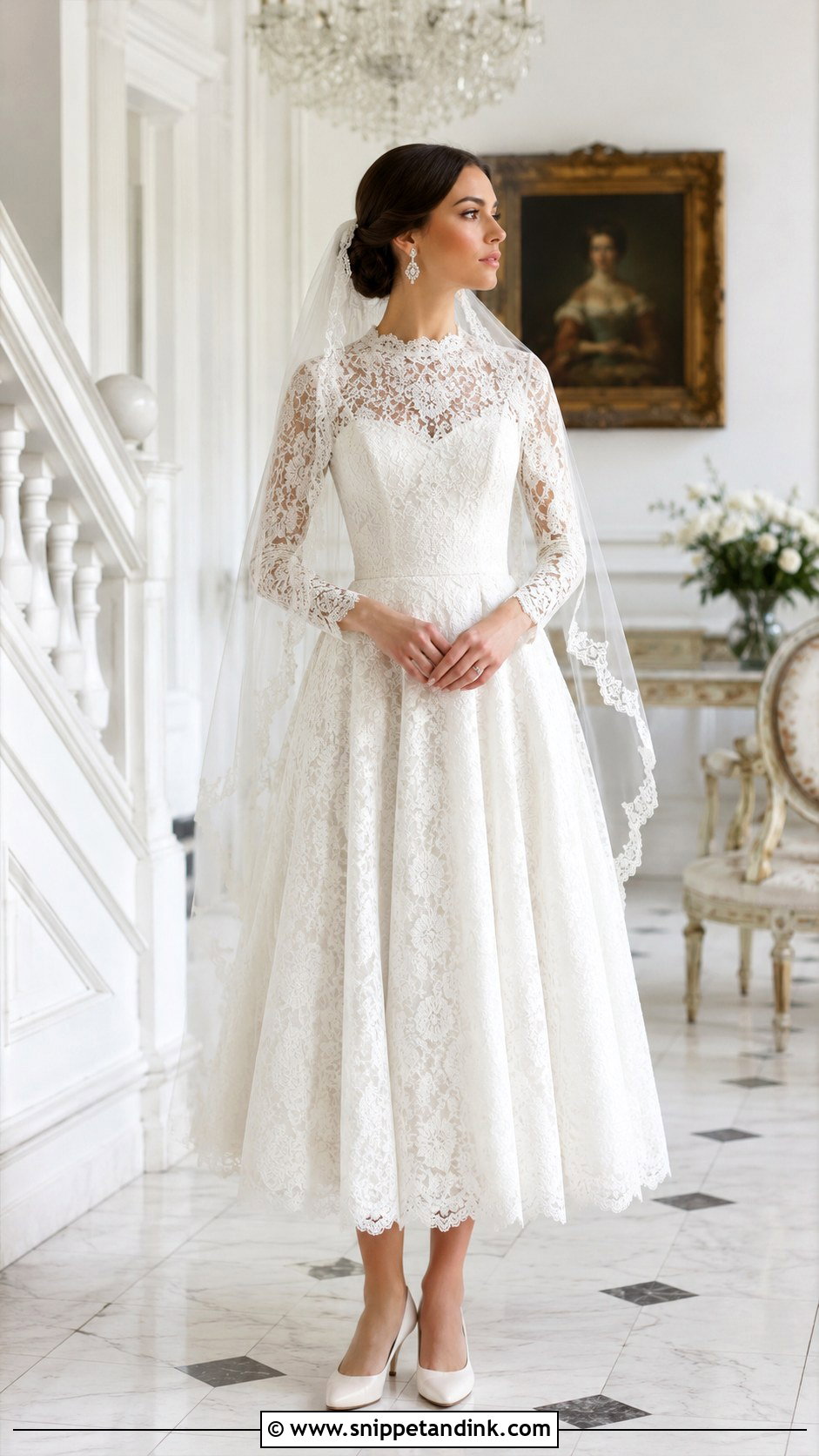
Lace sleeves need to bend. Unlined lace with no stretch locks at the elbow, so I check that the bride can raise her arms and hug before anything else is altered. Choose a gown with a lined bodice, a defined waist and lace sleeves cut with some movement. Almond-toe pumps, antique-style earrings and a lace-edged or plain tulle veil complete it, with a low chignon showing the sleeve pattern. Skip the necklace if the neck is high. If the veil has lace, match it closely to the dress or choose plain tulle, since two patterns that almost match look worse than one. Best for autumn and winter, though open lace over a breathable lining handles a mild spring day.
15. Halter Neck Bride Outfit
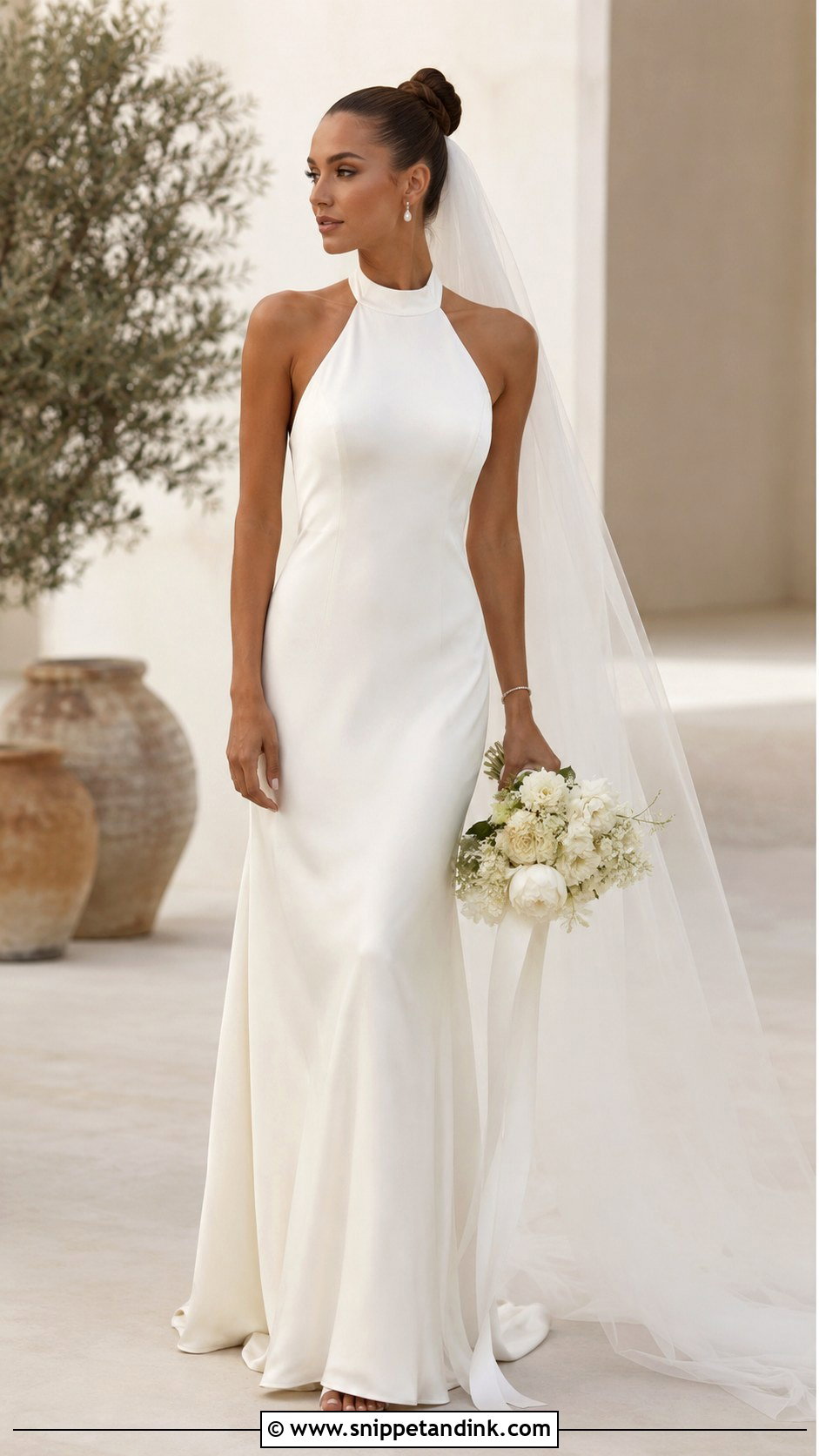
A halter fastens at the back of the neck, and that fastening decides how you wear your hair. A high bun or sleek ponytail shows off the halter shape and keeps hair from tangling in the hook or tie. Choose satin, crepe or chiffon with a fitted waist and either a fluid skirt or a tailored column. Some of the bodice weight hangs from your neck, so with a fuller bust I’d ask for internal support that anchors at the waist. Drop earrings, open-back heels and a simple bracelet suit it; skip the necklace. A long veil fixed below the bun adds softness. It’s a warm-weather and destination style.
16. Square Neck Wedding Gown Bride Outfit
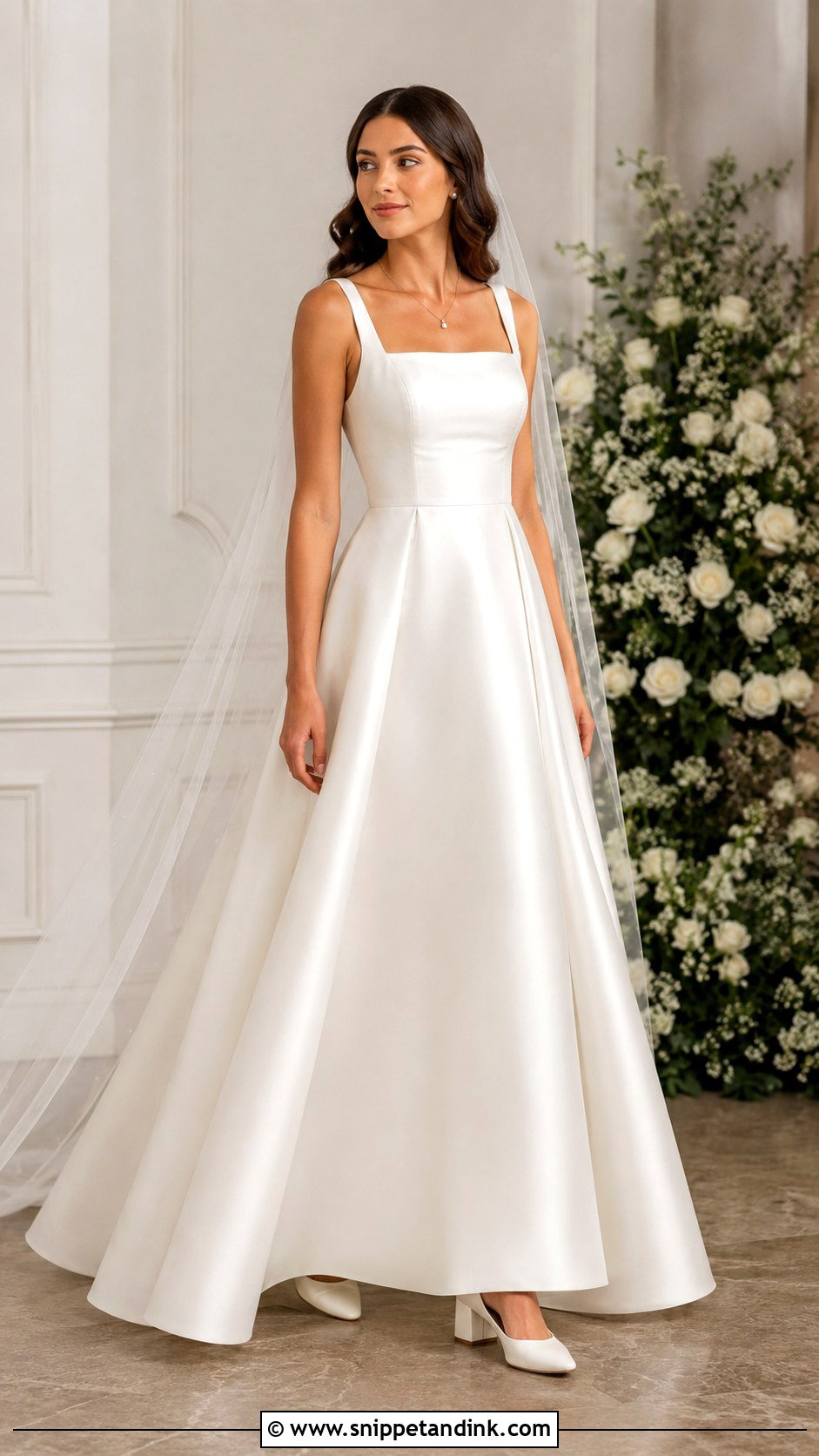
A square neckline is one of the easiest to accessorise, because it frames a fine pendant without crowding it. It pairs well with an A-line satin gown, a fitted crepe dress or lace with wide straps. Add pearl studs, the pendant and comfortable block-heel pumps. A shoulder-length or simple cathedral veil both work, depending on formality, with soft waves or a low bun. The width and depth of the square can be adjusted at alterations for more or less coverage, so don’t rule out a dress because the neckline sits a little low. Check that the straps lie flat and stay put as you move.
17. Bow Back Wedding Dress Bride Outfit
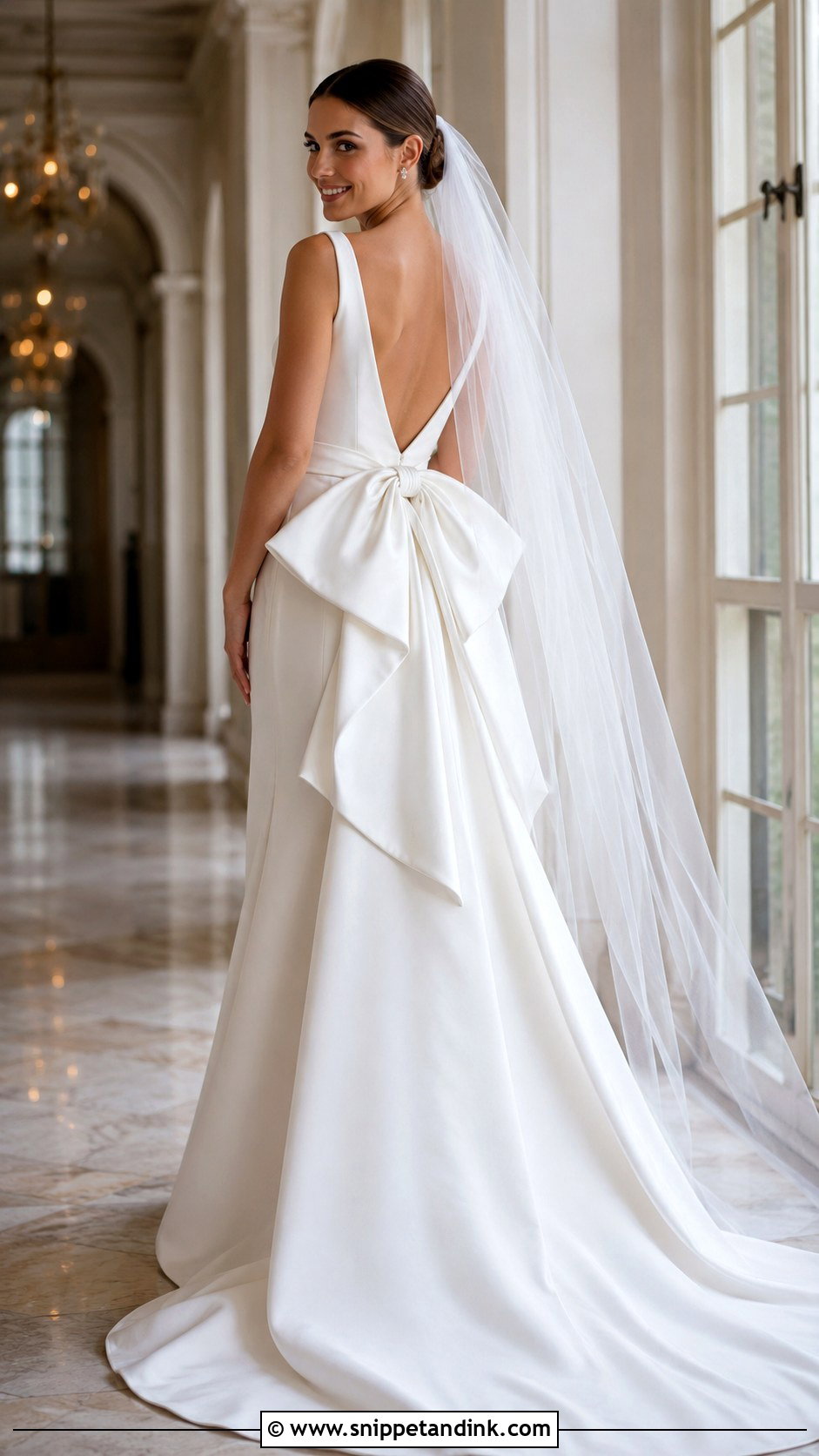
A big bow turns the back of a simple gown into the view everyone remembers from the aisle. Smooth satin or mikado holds a bow far better than soft fabric, and the bow can sit at the waist, the shoulder or just above the train. Keep everything else minimal: pointed heels, studs, and a plain veil that ends clearly above or below the bow, never lying on top of it. A polished bun keeps the back visible. Detachable bows are handy if they feel bulky at dinner. Ask for the fastening to be reinforced, because a bow that droops to one side spoils the back view in every photo.
18. Pearl Embellished Bride Outfit
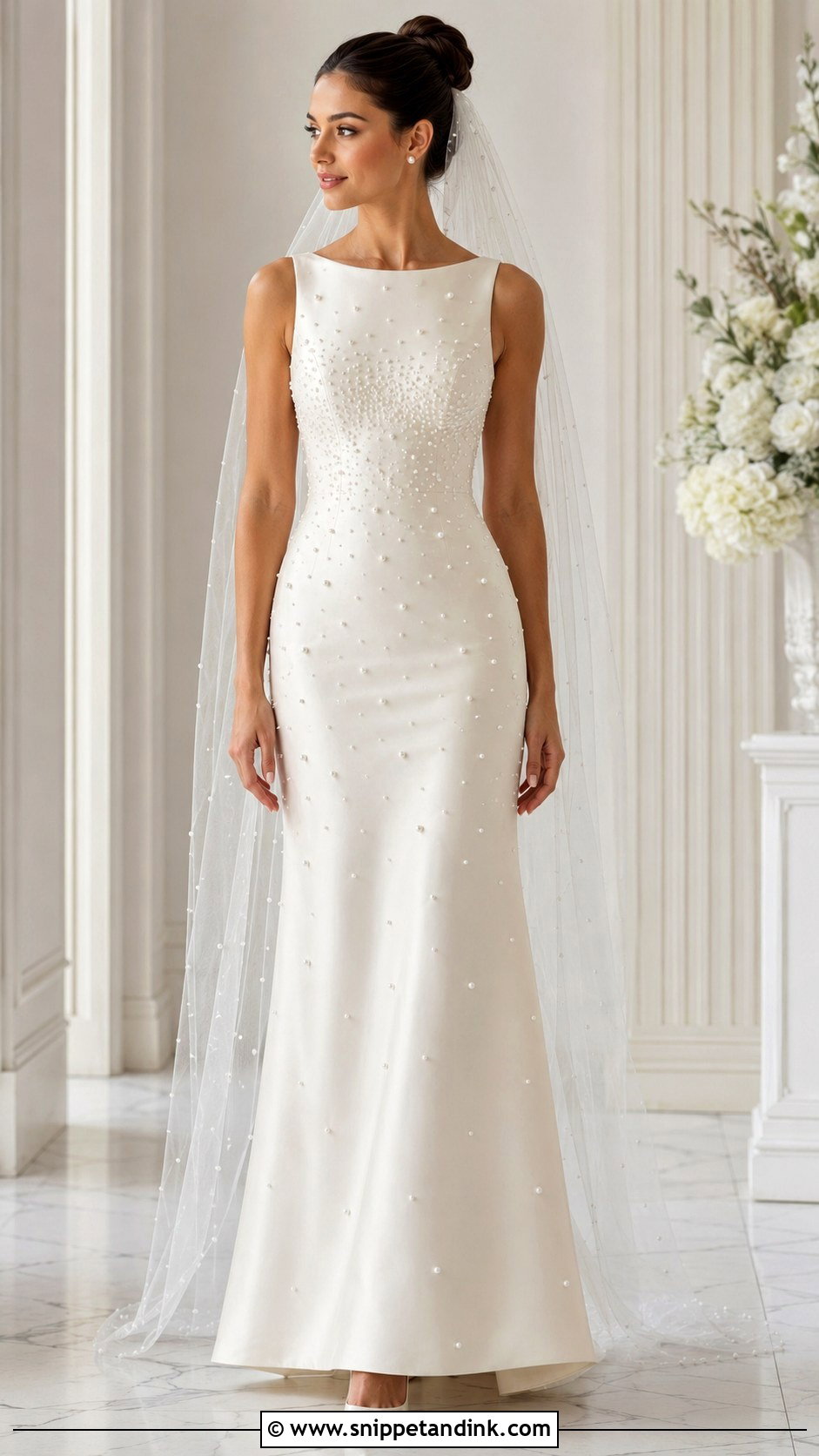
Scattered pearls give soft shine in daylight and at night, and they look better spread lightly over the bodice, sleeves or veil than covering every surface. Satin pumps, pearl studs and a smooth clutch complete it, and with a heavily decorated neckline I’d skip the pearl necklace. A neat updo and fresh makeup keep it clean. The practical check is snagging. Raised pearls catch on veil tulle, hair and fine jewelry, so try the veil on with the dress before the day. If a fully embellished gown feels too ornate, put the pearls on a cape, gloves or veil over a plain dress, then take that layer off for the reception.
19. Beach Bride Chiffon Outfit
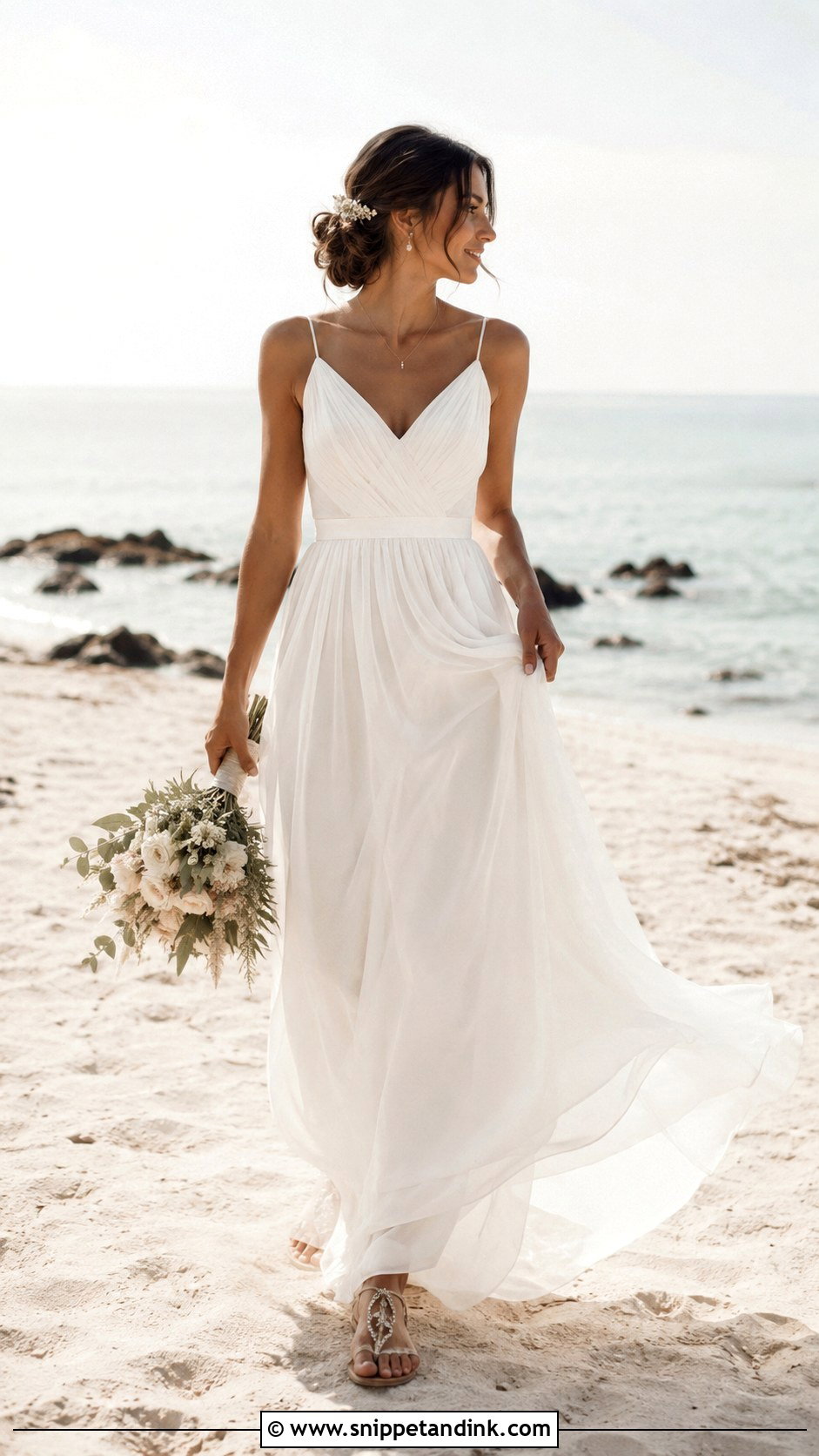
Sand, wind and heat change everything about a beach outfit. Choose a chiffon or lightweight crepe gown with secure straps, a defined waist and a skirt that floats without much volume, and leave long trains at home because they drag sand and seawater. Flat embellished sandals beat stilettos, which sink. Small earrings and a short veil or floral comb suit it. I’d go for a loose bun or controlled waves; a precise style will move in the breeze anyway. Bring a light wrap for the evening and ask someone to carry a clean cloth to brush sand off your feet before portraits.
20. Courthouse Midi Dress Bride Outfit
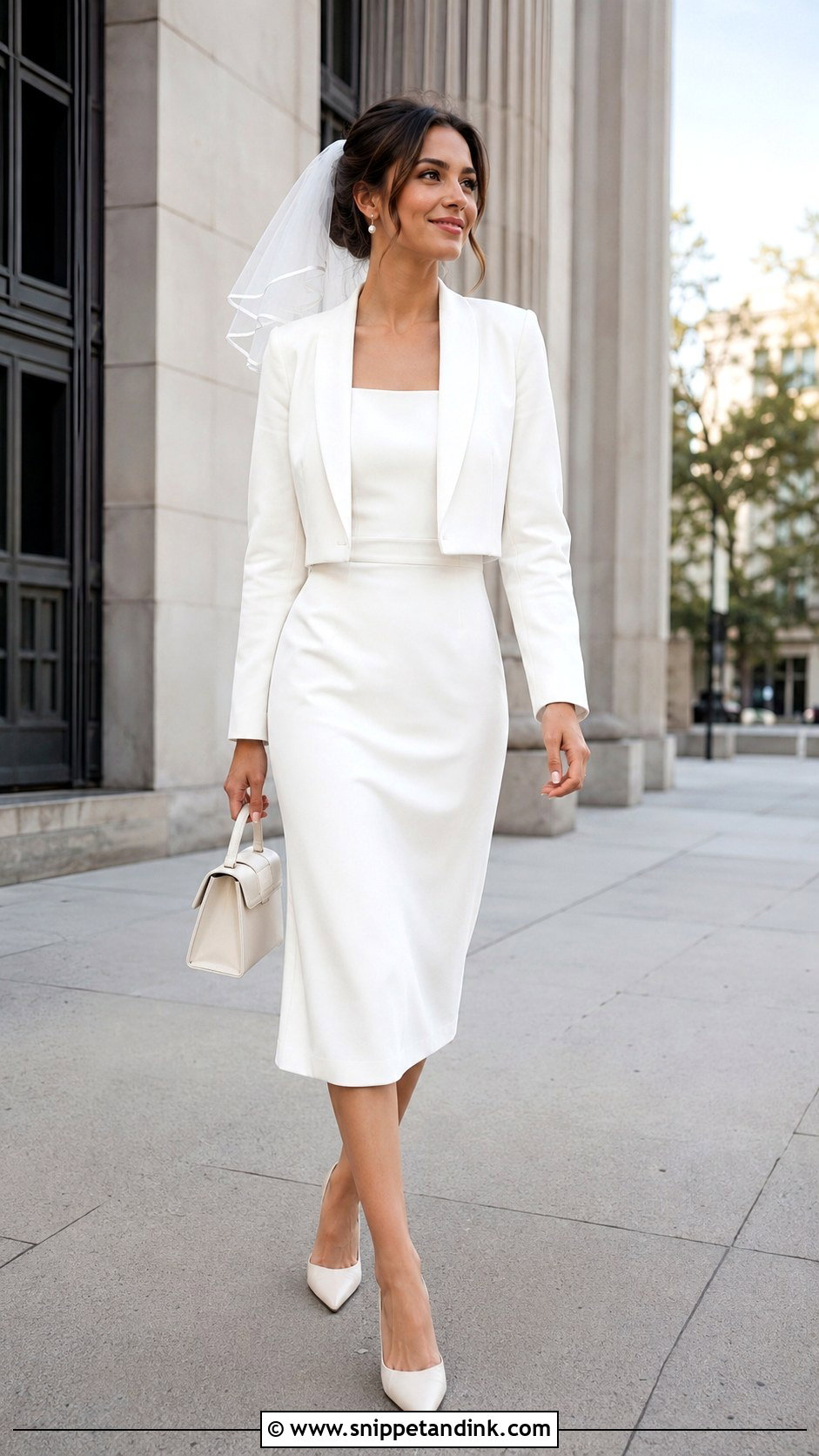
A courthouse wedding often means waiting on a bench, walking city streets and getting in and out of taxis, so the dress has to travel well. A white midi with a tailored waist, clean neckline and a skirt you can walk in is the base. Kitten heels, pearl or gold earrings and a small structured handbag suit it, and a short veil, pillbox-style headpiece or satin bow marks it as bridal. Add a cropped blazer or light coat when you need cover. Sit in it before the day, and remember crepe creases less than linen. Afterwards, every piece can be worn again on its own.
Planning the Outfit Change So You Don’t Miss the Party
Convertible pieces and second dresses are everywhere now, and the change itself is the part nobody schedules. A few decisions make it go smoothly.
- Pick the moment. Straight after dinner, before the first dance, is the usual choice; leave it later and guests notice you’ve gone.
- Book a private room near the reception with a mirror, decent light and a chair, not a bathroom stall.
- Name one helper who has practised the fastenings, bustle and overskirt hooks with you at the final fitting.
- Allow roughly fifteen to twenty minutes for a full dress change, less for removing an overskirt or cape. Veil pins take longer to come out than people expect.
- Have a hanger and garment bag waiting for the first look, so it isn’t left crumpled on a chair all night.
If your hair is being styled around a veil, ask at the hair trial how to switch to the reception accessory without redoing the whole style.
Wear the Whole Outfit at Least Once Before the Day
The right bridal outfit isn’t the most fashionable one. It’s the one that suits your venue, your comfort and your plans for the day. Start with the main silhouette, then pick shoes, jewelry, hair accessories and outer layers that support it. At your last fitting, wear everything together rather than judging each piece alone: walk, sit, dance a little and take a few phone photos in light like your venue’s. If something pinches or slips at that point, there’s still time to fix it.


Leave a Reply