
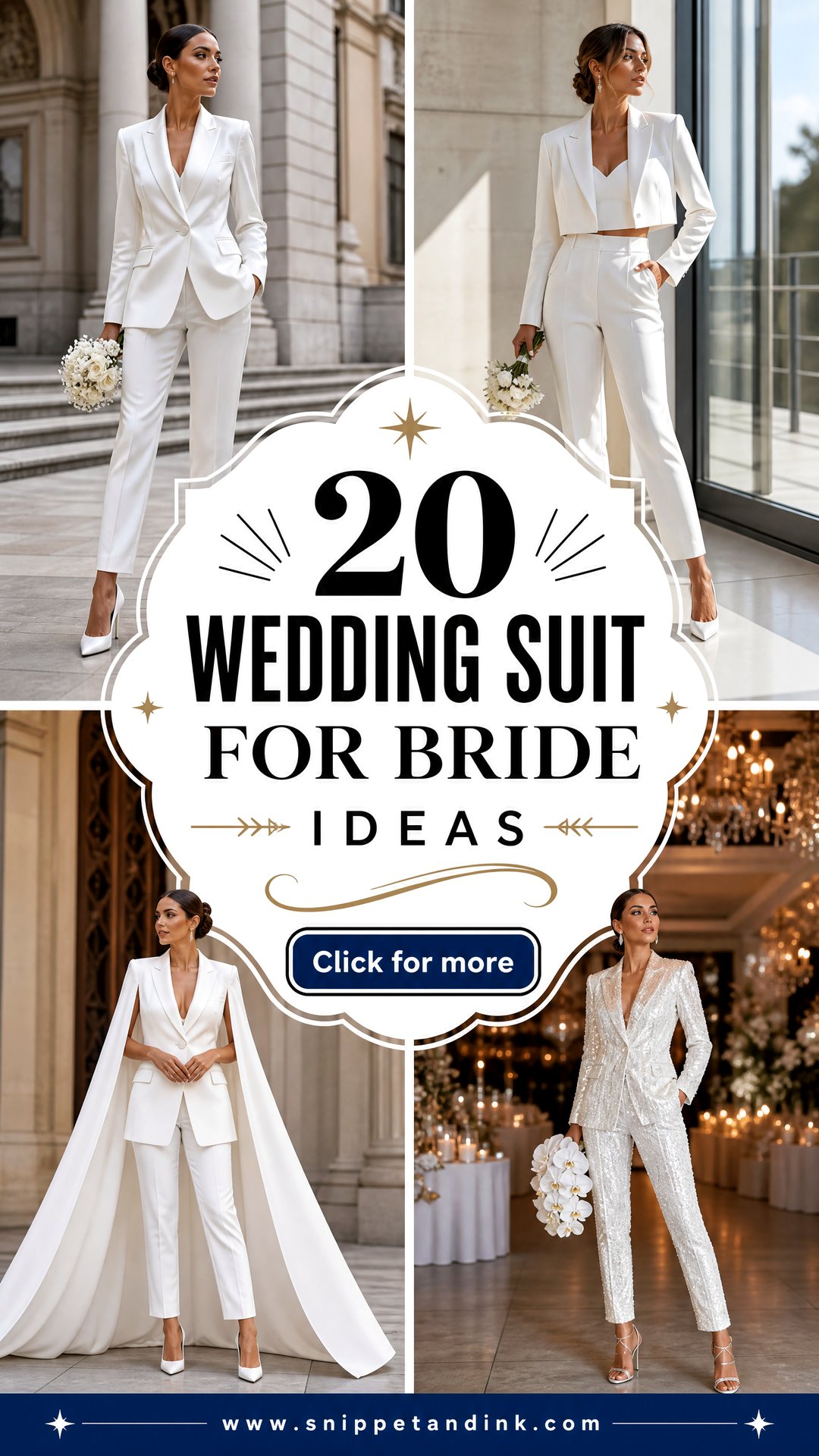
A suit can feel every bit as bridal as a gown, but it lives or dies on fit in a way a full skirt never does. A gown forgives a lot; a jacket shows exactly where the shoulder seam sits and whether the trousers break cleanly over your shoe. The twenty suits below range from sharp tuxedos and soft linen to satin, skirt suits and a few in color, each styled with shoes, jewelry, a bag and either a veil or a hair piece. For a courthouse ceremony, a destination wedding or a full reception, plan on alterations to the sleeves, waist and hem, and pick the cut that suits your venue and season first.
Off the Rack, Altered or Made to Measure?
Most bridal suits start life off the rack, and that’s fine as long as you know which fit problems a tailor can fix and which ones you’ll be stuck with.
Buy for the shoulders
The shoulder seam should sit right at the edge of your shoulder bone. If the jacket is too wide or too narrow there, walk away, because rebuilding a shoulder is costly and rarely looks right. Everything else is much easier to adjust.
Easy fixes a tailor will expect
- Sleeve length, so a little wrist or bracelet shows.
- Taking in the waist of the jacket for shape.
- Trouser hems, done with your exact wedding shoes on.
- Tapering or slimming the trouser leg.
Match the cloth to the season
Lightweight wool crepe is the fabric I reach for most, because it holds a crease in the trousers, resists wrinkling and stays comfortable in most temperatures. Linen and cotton blends suit heat but crumple; velvet and heavier wool belong to winter. Satin and silk look glamorous indoors, though they show sweat marks and water spots quickly, so they are a risky pick for an outdoor summer ceremony.
Made-to-measure is worth it if you’re between sizes top and bottom, very petite or very tall. It takes longer, so ask the tailor for a realistic timeline and leave room for at least one adjustment fitting after the suit arrives.
1. White Tuxedo Wedding Suit
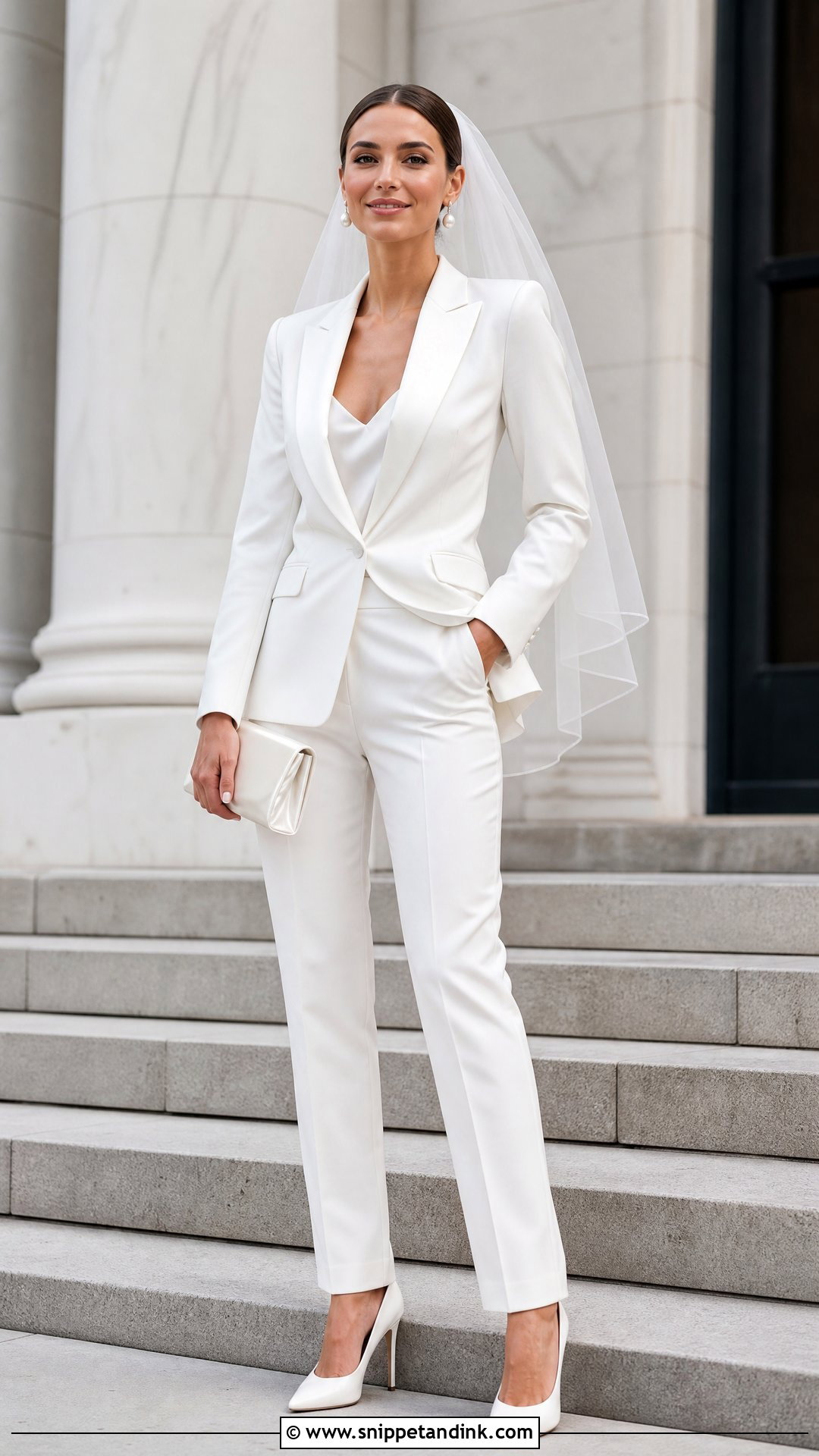
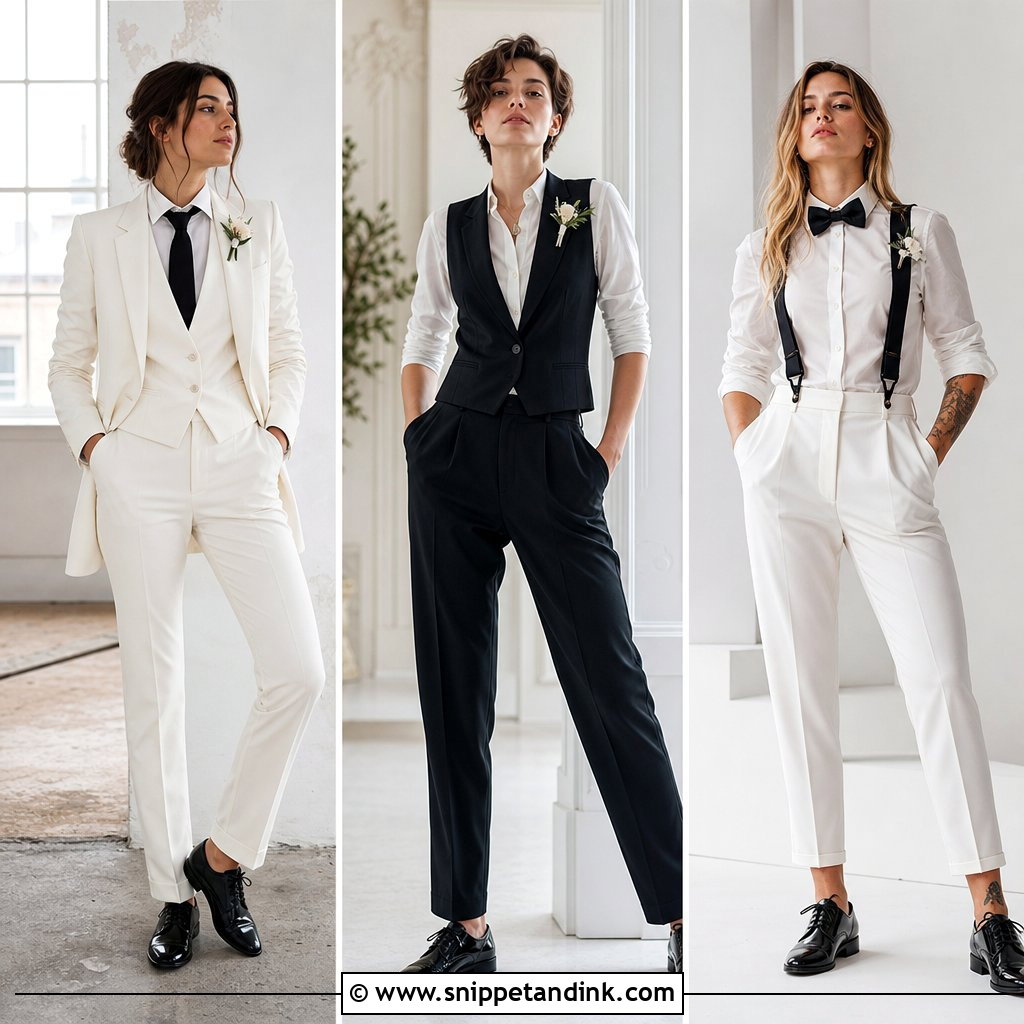
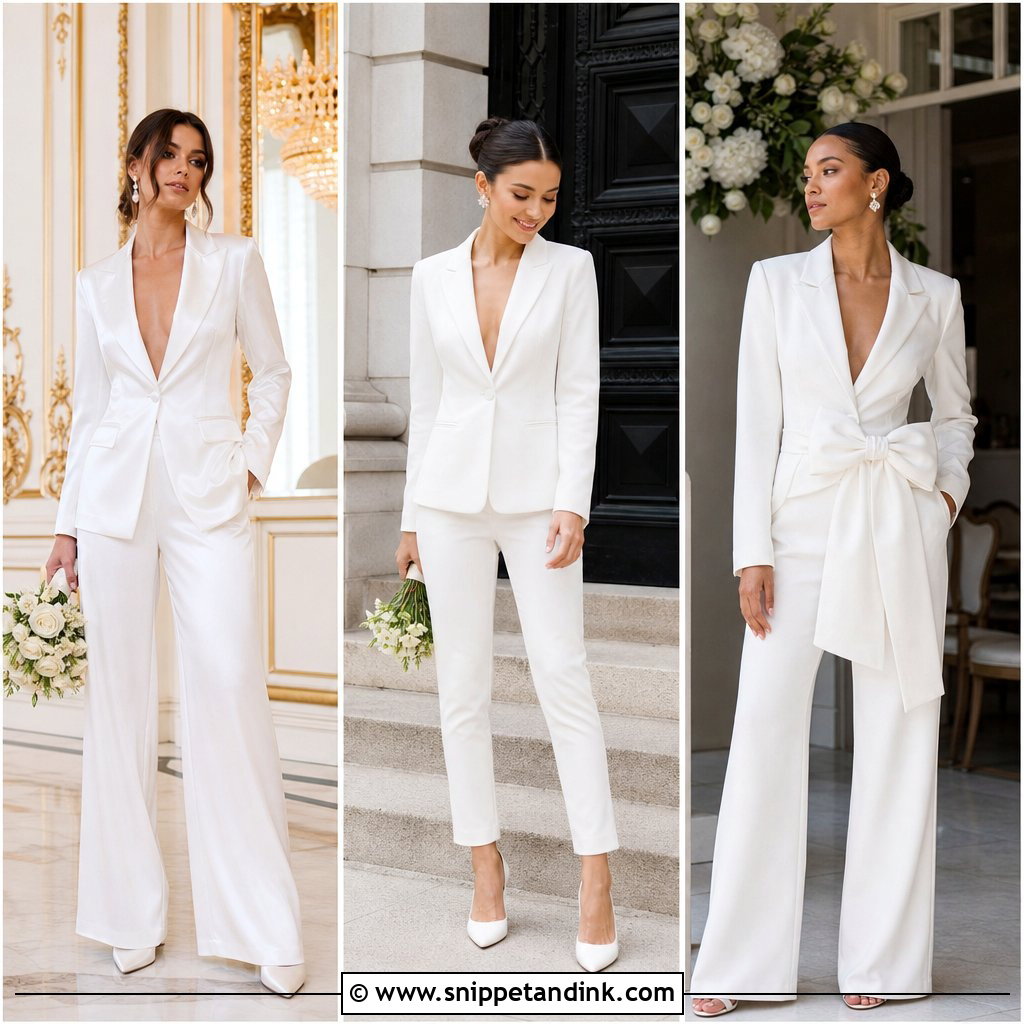
The white tuxedo is the suit I’d hand a bride who wants instant clarity: no one will mistake her for a guest. Satin peak lapels and a single button keep the jacket sharp, and straight or slightly flared trousers balance it. I always warn brides that bright white suiting shows what’s underneath, so a smooth silk camisole or bodysuit is better than lace. Hem the trousers to skim the shoe with no pooling at the ankle. A fingertip veil softens the tailoring without hiding the jacket, and a sleek low bun keeps the lapels clear.
2. Ivory Wide Leg Wedding Suit
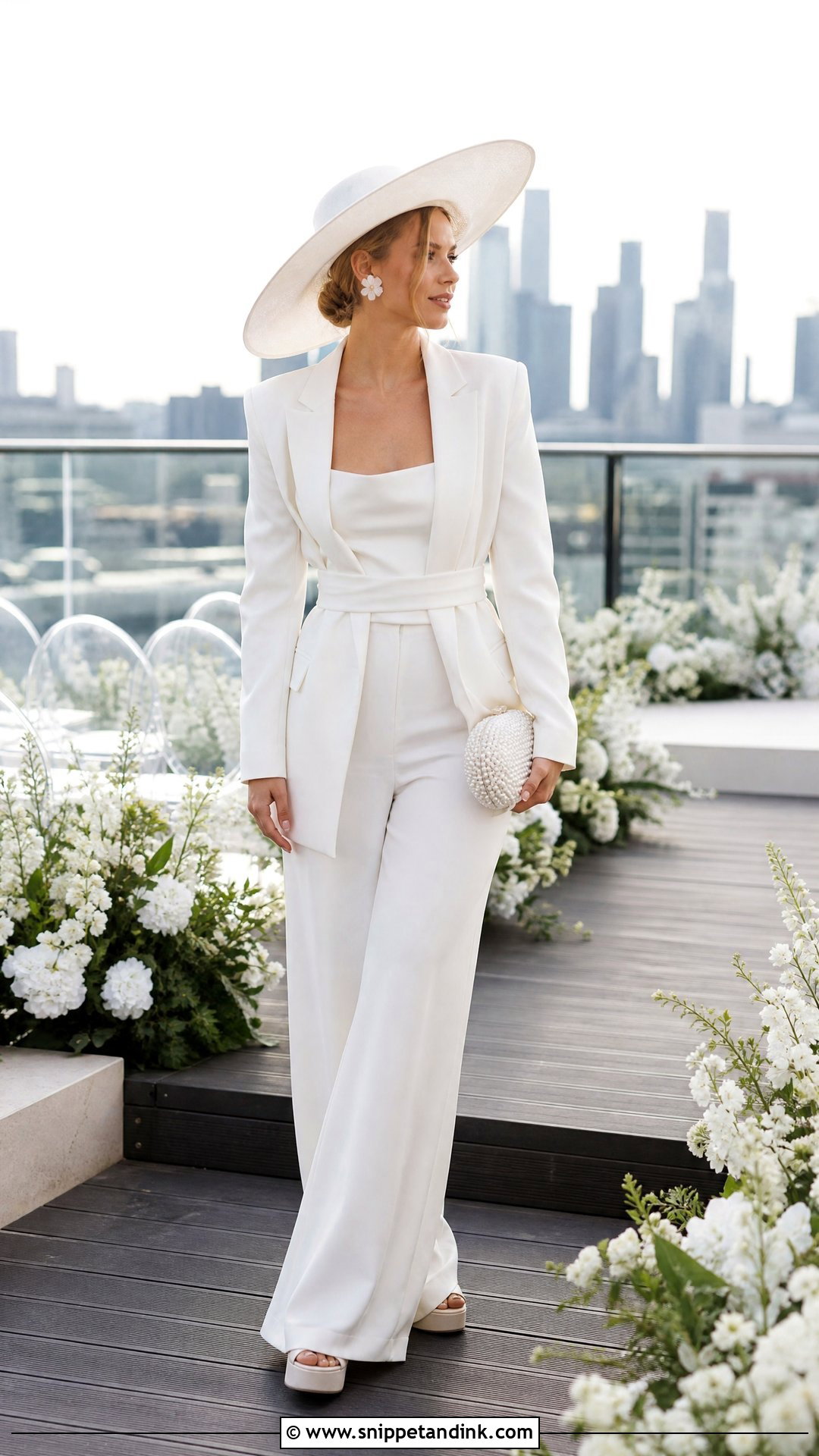
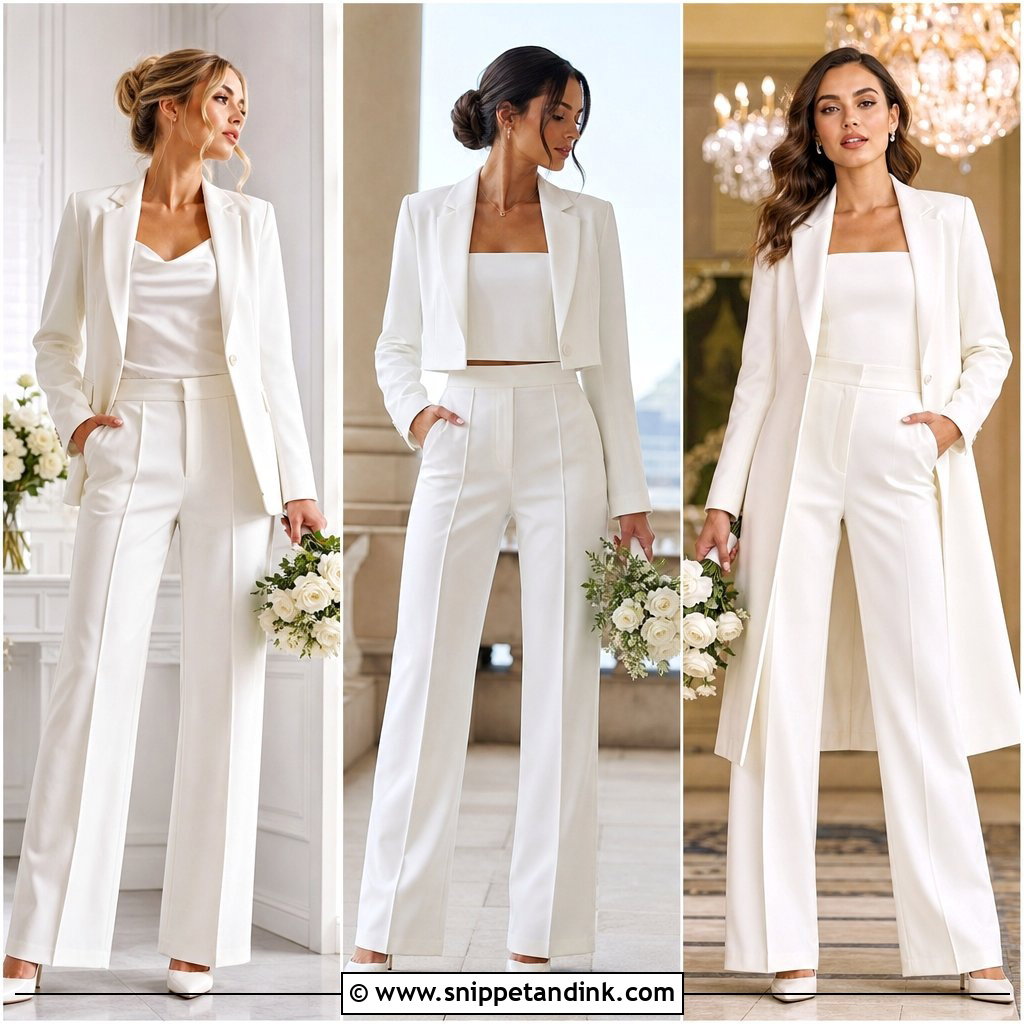
In my experience, wide-leg trousers move like a skirt when you walk, which is why brides who miss the swish of a gown tend to love them. Start with an ivory blazer that nips gently at the waist and high-rise trousers in matching crepe or satin-backed fabric. The hem has to be cut for your shoe height, and platforms or pointed heels stop the extra fabric dragging. A square-neck camisole leaves room for a fine necklace. Swap the veil for a wide-brimmed ivory hat if you want a more fashion-led look.
3. Double Breasted Wedding Suit
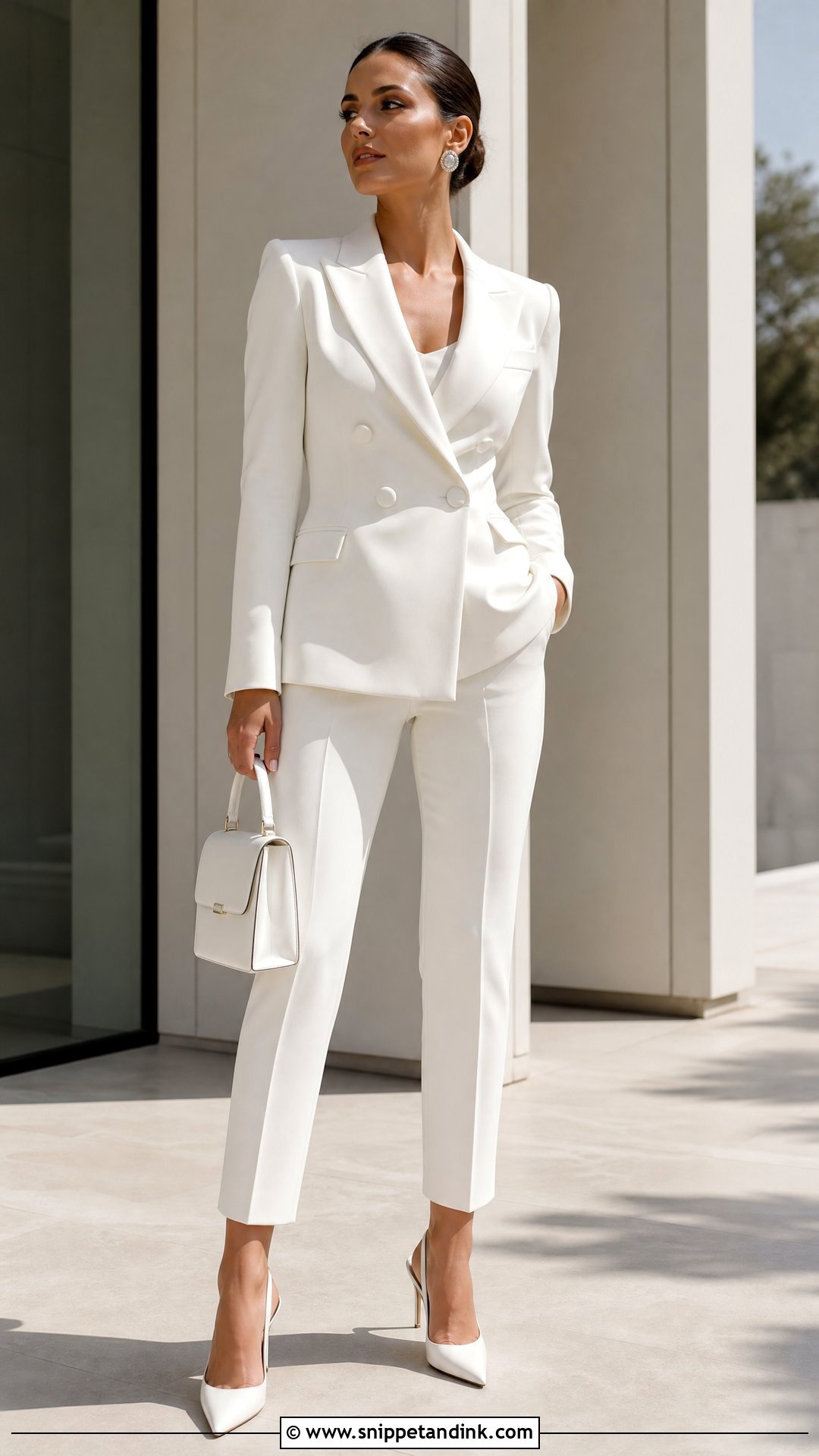
Double-breasted jackets are the most structured option here, so the fit of the shoulders is non-negotiable. A double-breasted wedding suit with covered buttons looks bridal rather than corporate, especially paired with tapered ankle trousers or straight full-length pants. Because the overlap adds bulk at the front, keep the layer underneath flat: a silk shell, or a high-neck satin blouse if you want coverage. On petite frames I’d shorten the jacket slightly; taller brides carry a longer cut well. Tuck the hair behind your ears to show the neckline.
4. Satin Lapel Wedding Suit
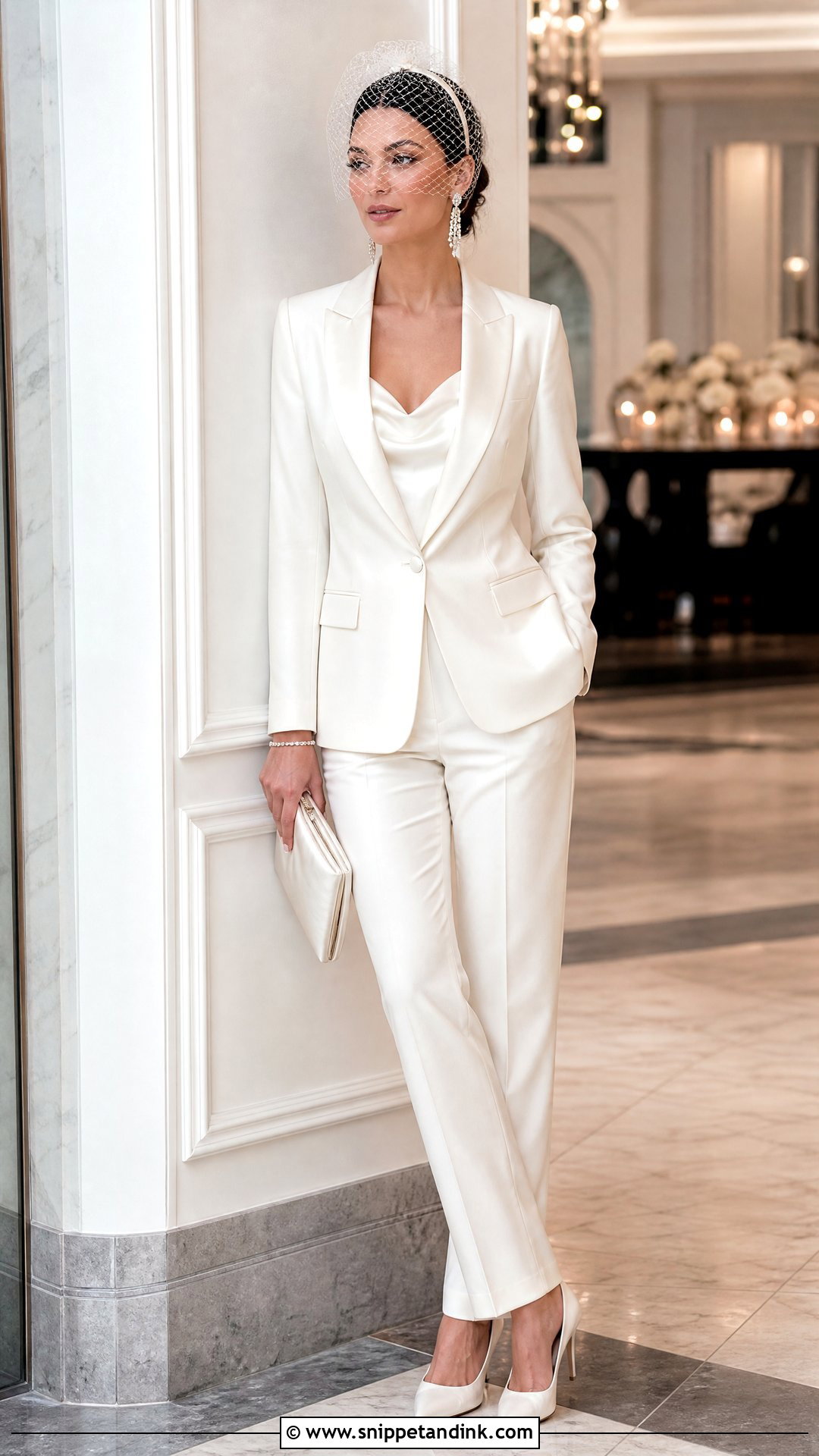
Satin lapels turn a plain blazer into evening wear. Pair an ivory or bright white jacket with a single satin-covered button with slim, straight or wide-leg trousers, then put a draped silk camisole underneath to echo the sheen. A birdcage or smooth shoulder-length veil keeps the jacket visible. Embellished flats are a good alternative to pumps if you’d rather be lower. Watch the lapel color under daylight: satin can read slightly warmer or cooler than the wool around it, so look at the jacket by a window before you buy.
5. Three Piece Wedding Suit
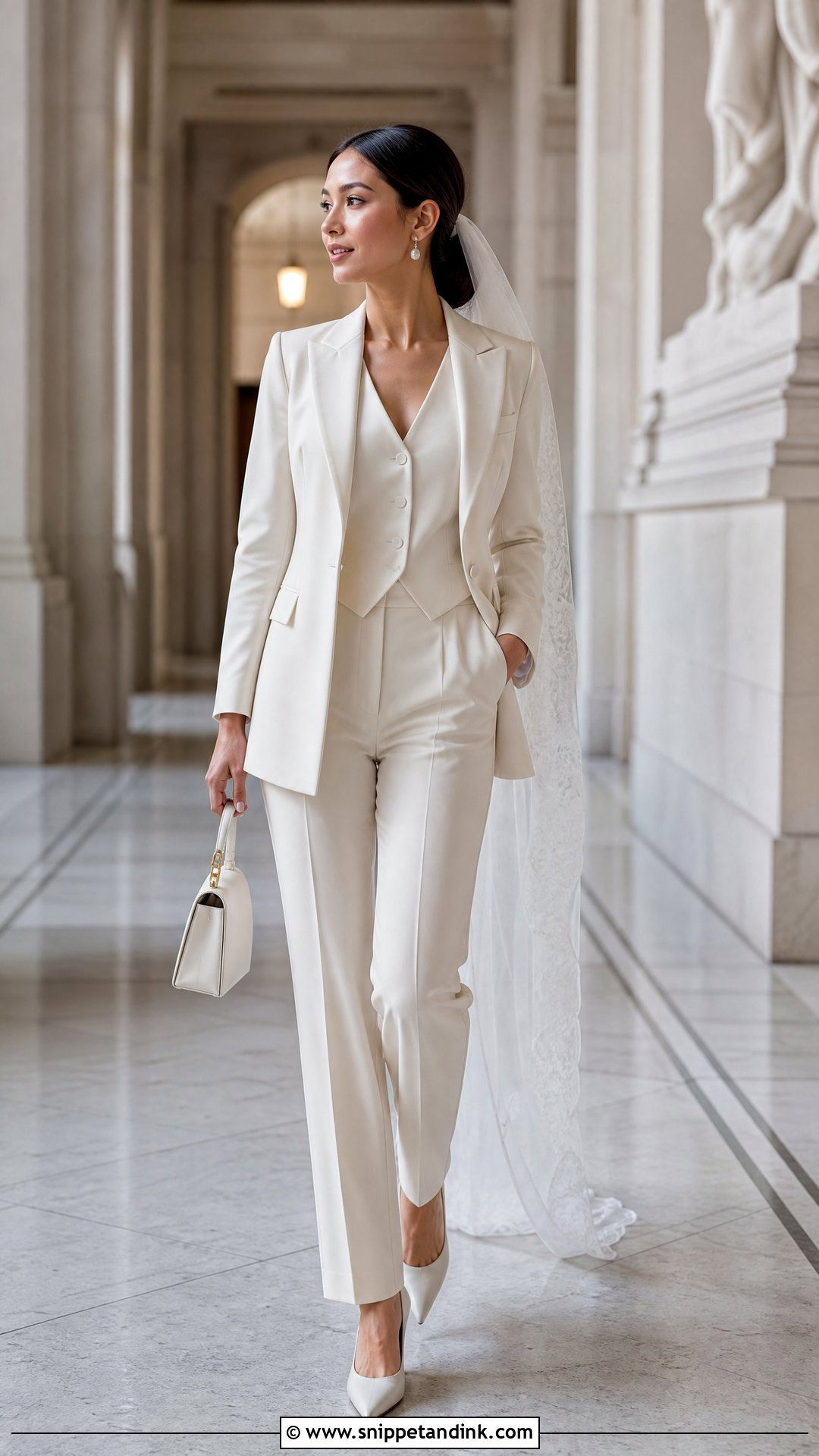
Three pieces means three outfits in one. Start the ceremony in the full blazer, waistcoat and trousers, then take the jacket off for the reception and dance in the waistcoat. White, cream or soft ivory all work. The waistcoat is the piece to fit carefully: the buttons should sit flat with no pulling when you sit or reach. Flat-front trousers keep the line clean. Pointed heels or polished loafers, gold or pearl jewelry and a low ponytail with a delicate veil balance the menswear roots of the look.
6. Lace Blazer Wedding Suit
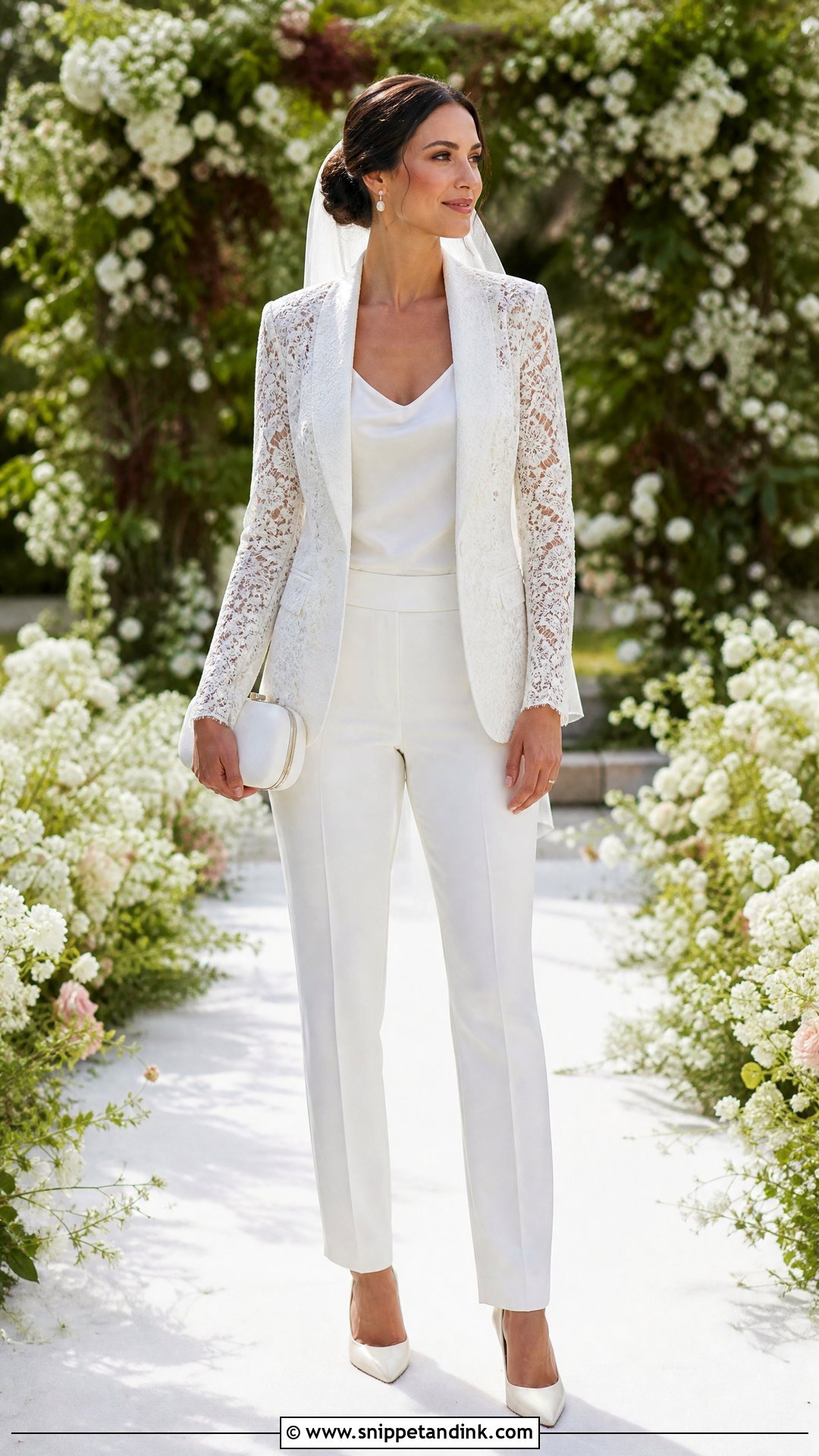
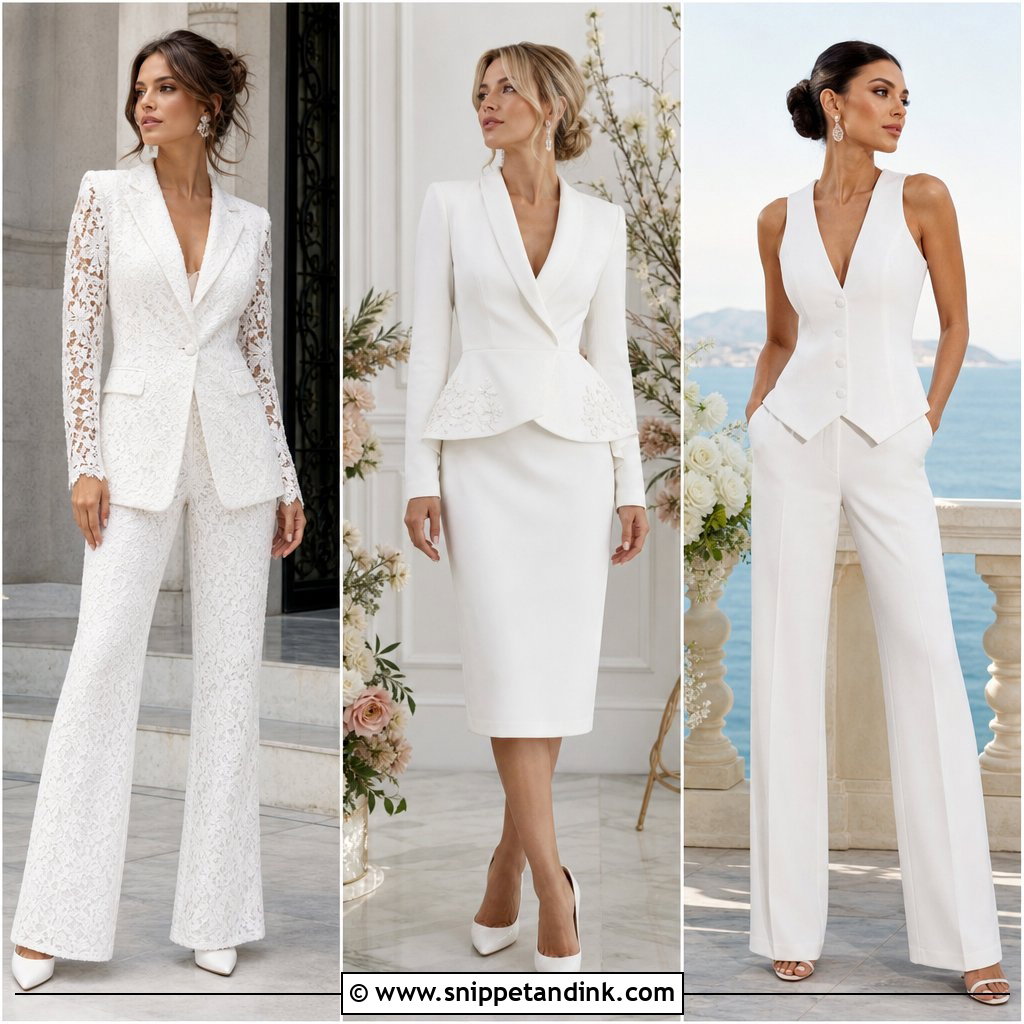
Lace on a jacket brings the romance of a gown to structured tailoring. Make sure the blazer is lined through the body, because unlined lace on a jacket stretches and shows seams. Pair it with smooth crepe trousers so the outfit doesn’t turn into texture on texture, and a plain satin camisole underneath. A simple tulle veil sits better with lace than another patterned layer. With sheer sleeves, keep bracelets minimal. Low or medium pointed heels are easy for spring and garden ceremonies.
7. Peplum Wedding Suit
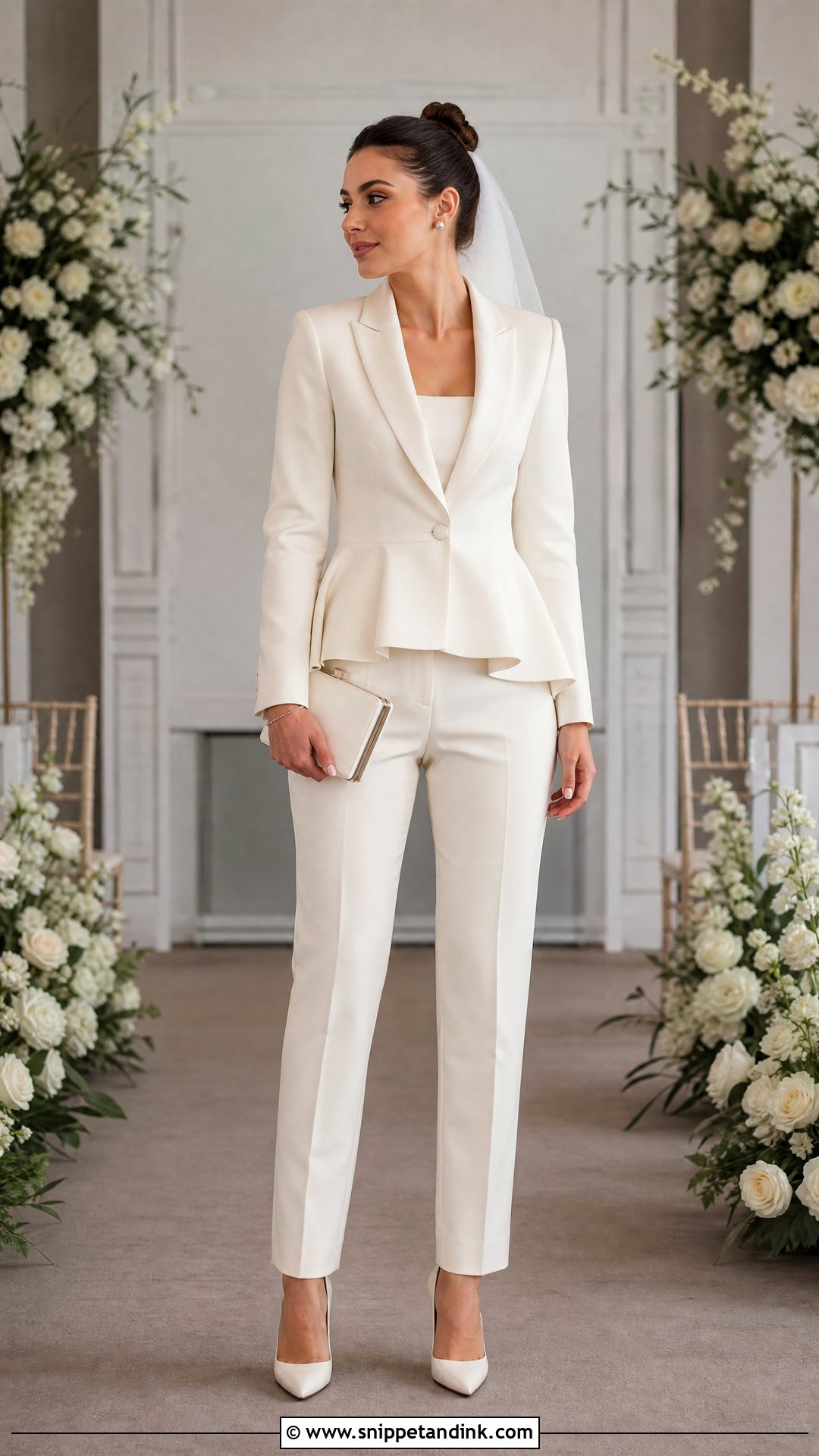
The peplum adds shape at the waist and a little movement as you walk. What I check is where it starts: it should begin at your natural waist and fall softly, never flare out around the widest part of the hips. Smooth crepe holds it best. Straight or slightly flared trousers continue the line, and pointed heels lengthen it further. A V-neck jacket can be worn over a discreet camisole or bodysuit. Pearl studs and a short veil beneath a polished bun finish the look for city ceremonies and lunch receptions.
8. Cropped Blazer Wedding Suit
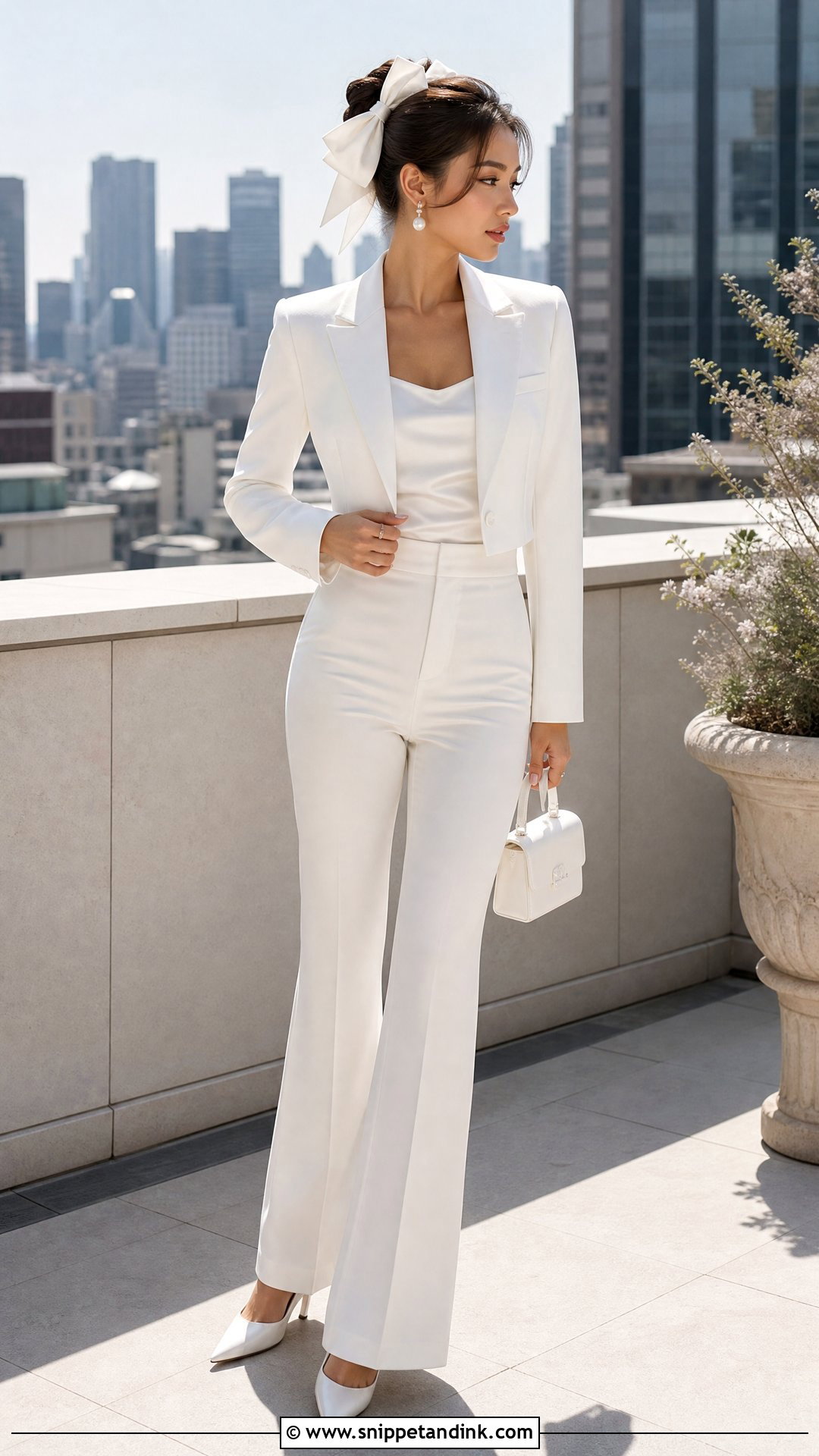
A cropped blazer over high-rise trousers is one of the most flattering bridal suits for shorter brides, because it shows off the waist and lengthens the leg. The crop has to land at the natural waist; a jacket that ends at the widest part of the torso does the opposite. Wide-leg or gently flared trousers that cover the shoe keep the line uninterrupted. Slingbacks and a mini top-handle bag suit the modern shape. An oversized satin bow at the back of the hair works in place of a veil.
9. Longline Blazer Wedding Suit
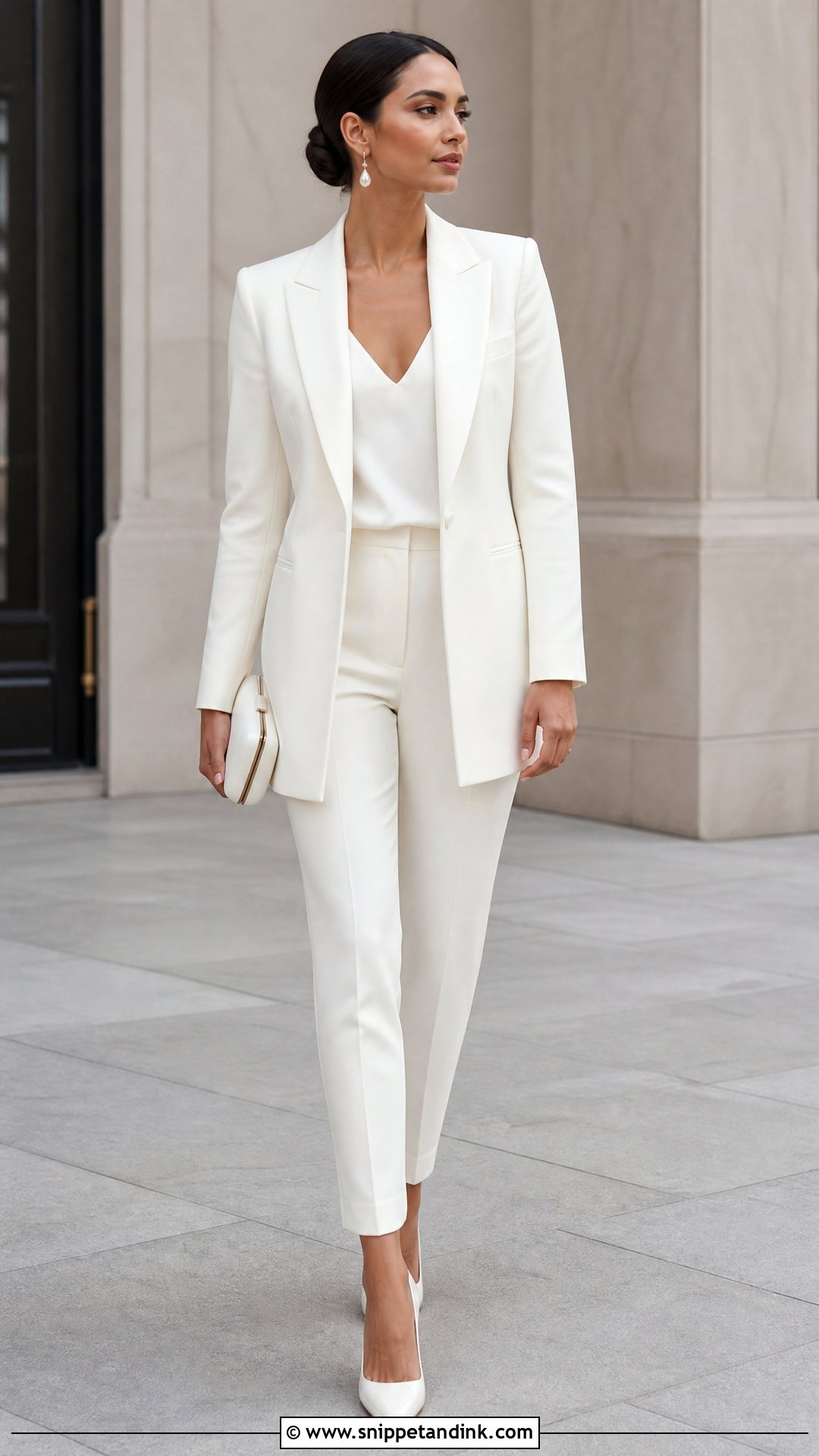
Longline blazers create drama in place of a train. An ivory jacket that falls below the hips looks best with narrow straight-leg or cigarette trousers; wide legs under a long jacket get heavy. Taller brides can go very long, while shorter brides should stop around mid-thigh. Make sure it has structure in the shoulders but still closes comfortably when you sit. A silk V-neck camisole lightens the layers. Drop earrings and a sleek bun or waved bob suit cool-weather ceremonies and restaurant receptions.
10. Midi Skirt Wedding Suit
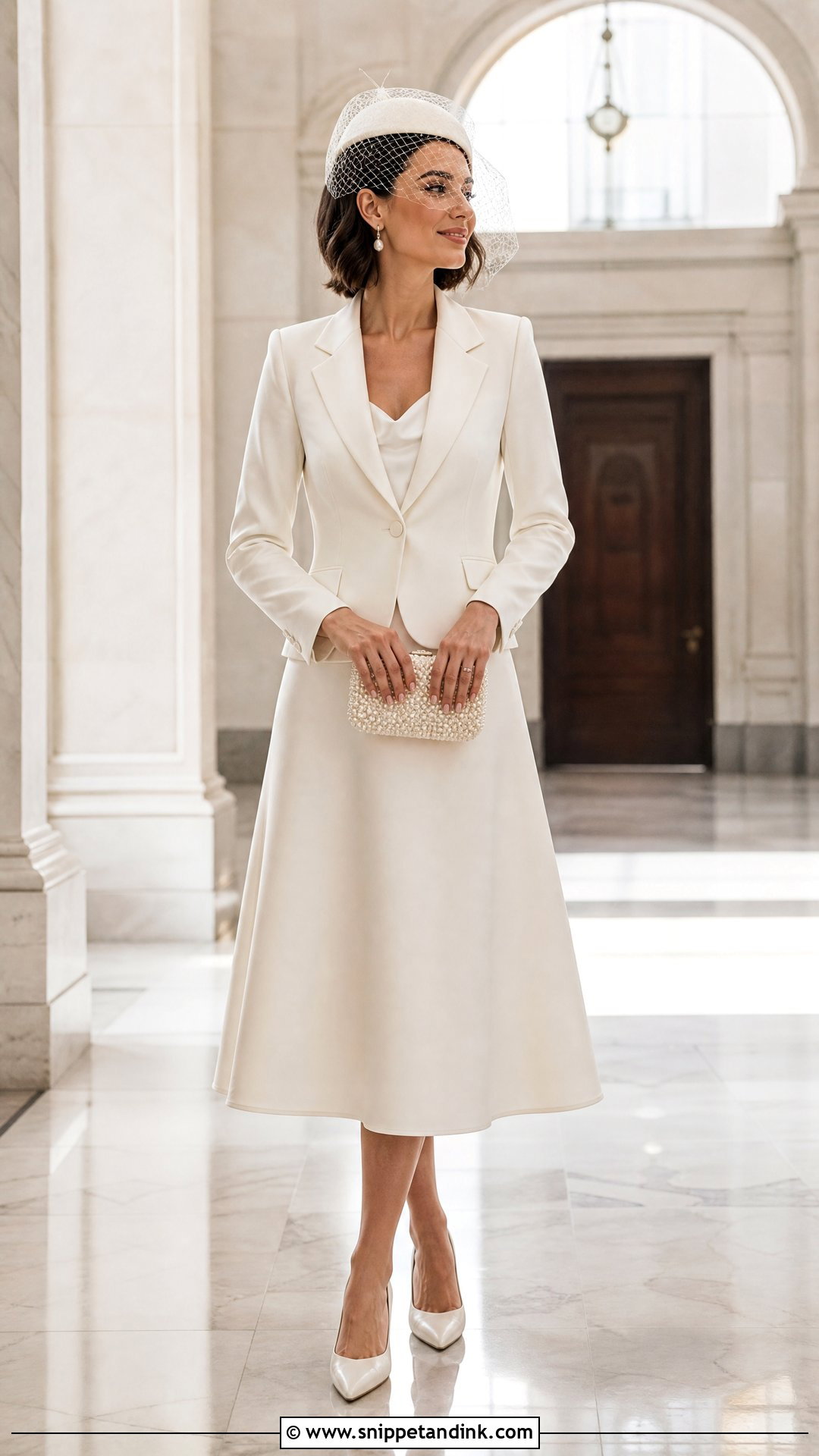
Not every bride wants trousers, and a skirt suit gives you tailoring with a softer line. Pair a fitted ivory jacket with a matching A-line, column or soft flare skirt below the knee. Check the back slit and lining before the wedding; a column skirt without enough slit makes stairs awkward. A pillbox-style hat or a short veil looks polished, especially for daytime civil ceremonies and elegant brunch receptions. A silk shell underneath and pointed pumps complete it.
11. Mini Skirt Wedding Suit
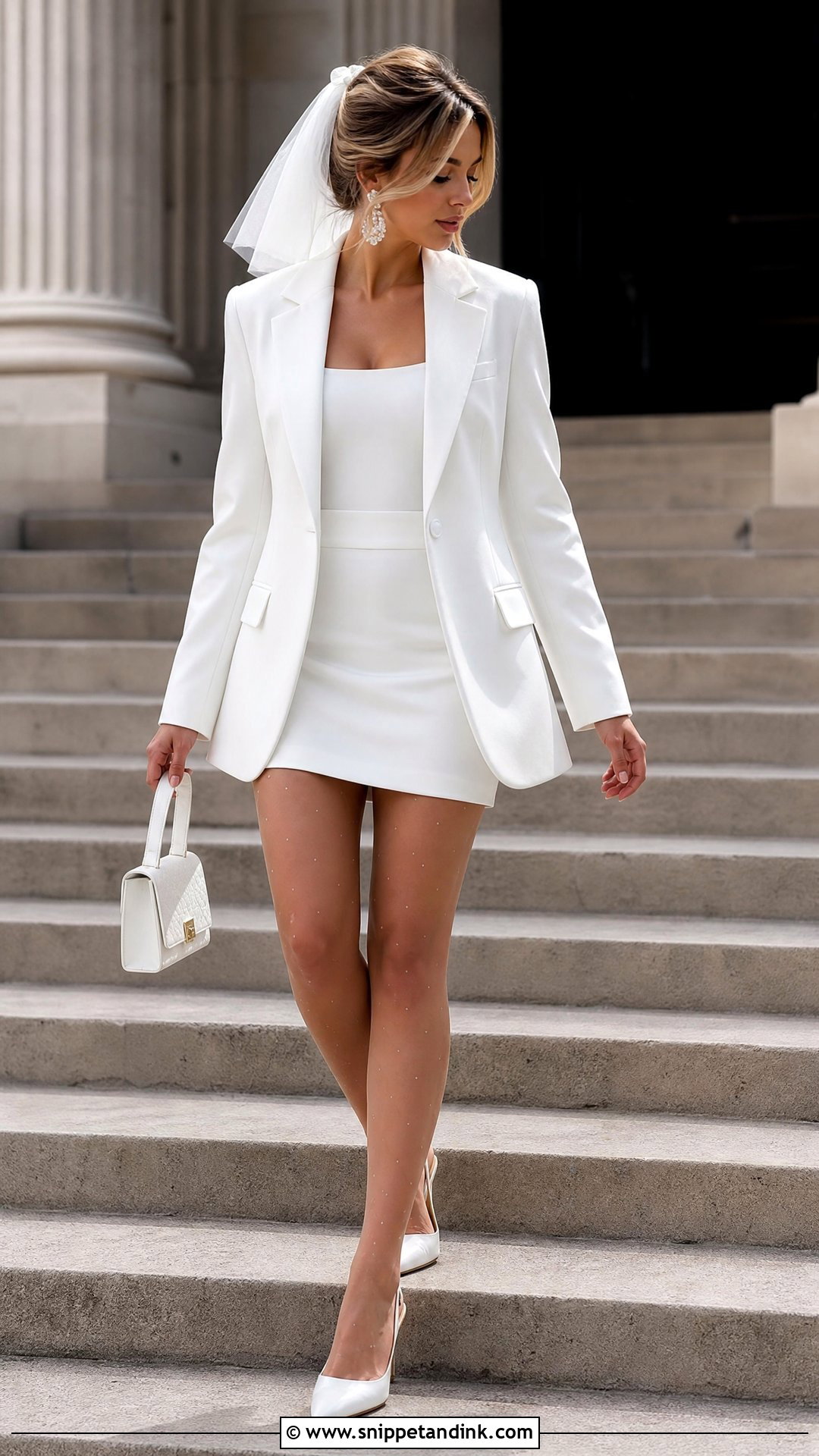
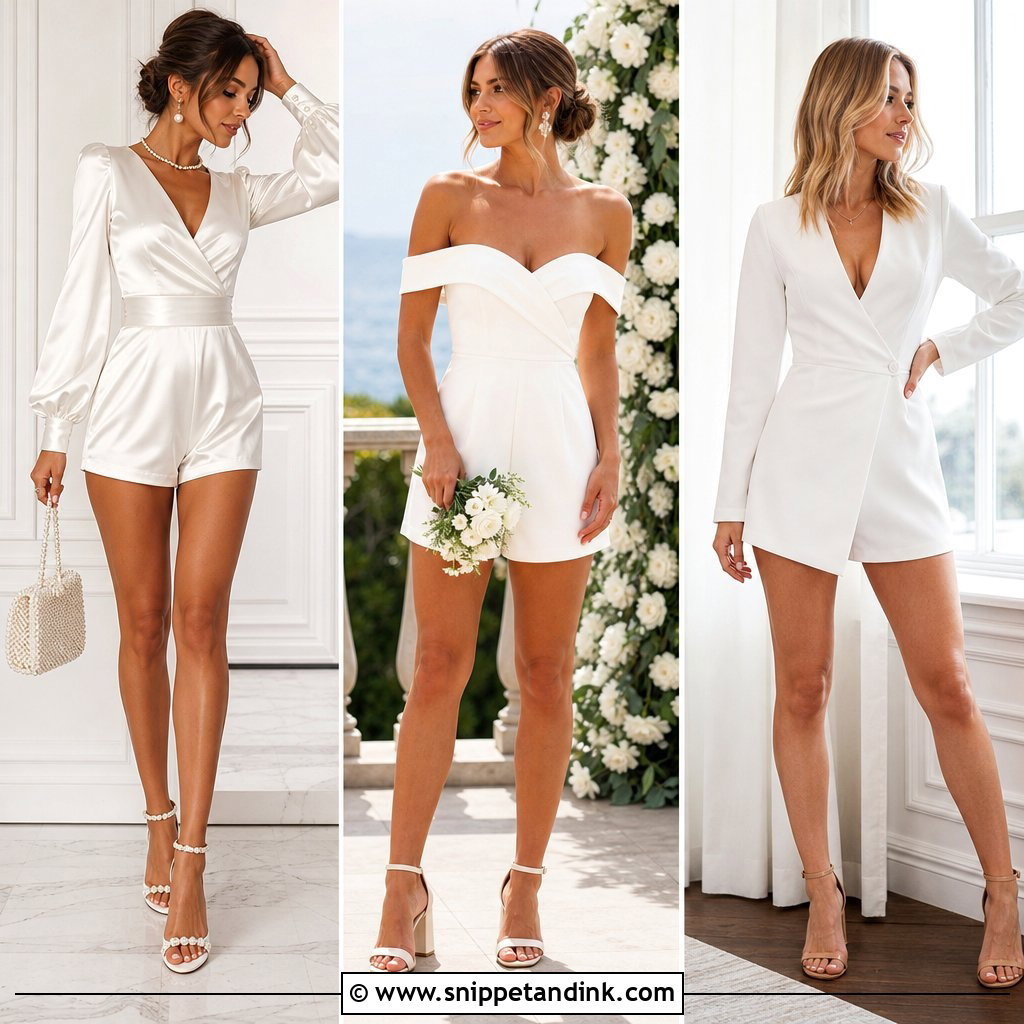
Mini skirt suits are pure fun, and they’re easy to move in. Pair a structured white blazer with a tailored mini skirt and a smooth bodysuit underneath so nothing untucks. Closed-toe pumps or ankle-strap heels balance the short hem, and sheer tights help in cooler weather. Keep the jacket slightly longer than the skirt, or choose a cropped one that clearly marks the waist; anything in between looks unplanned. A short veil or satin hair bow keeps it bridal for courthouse weddings and reception entrances.
12. Bridal Vest Wedding Suit
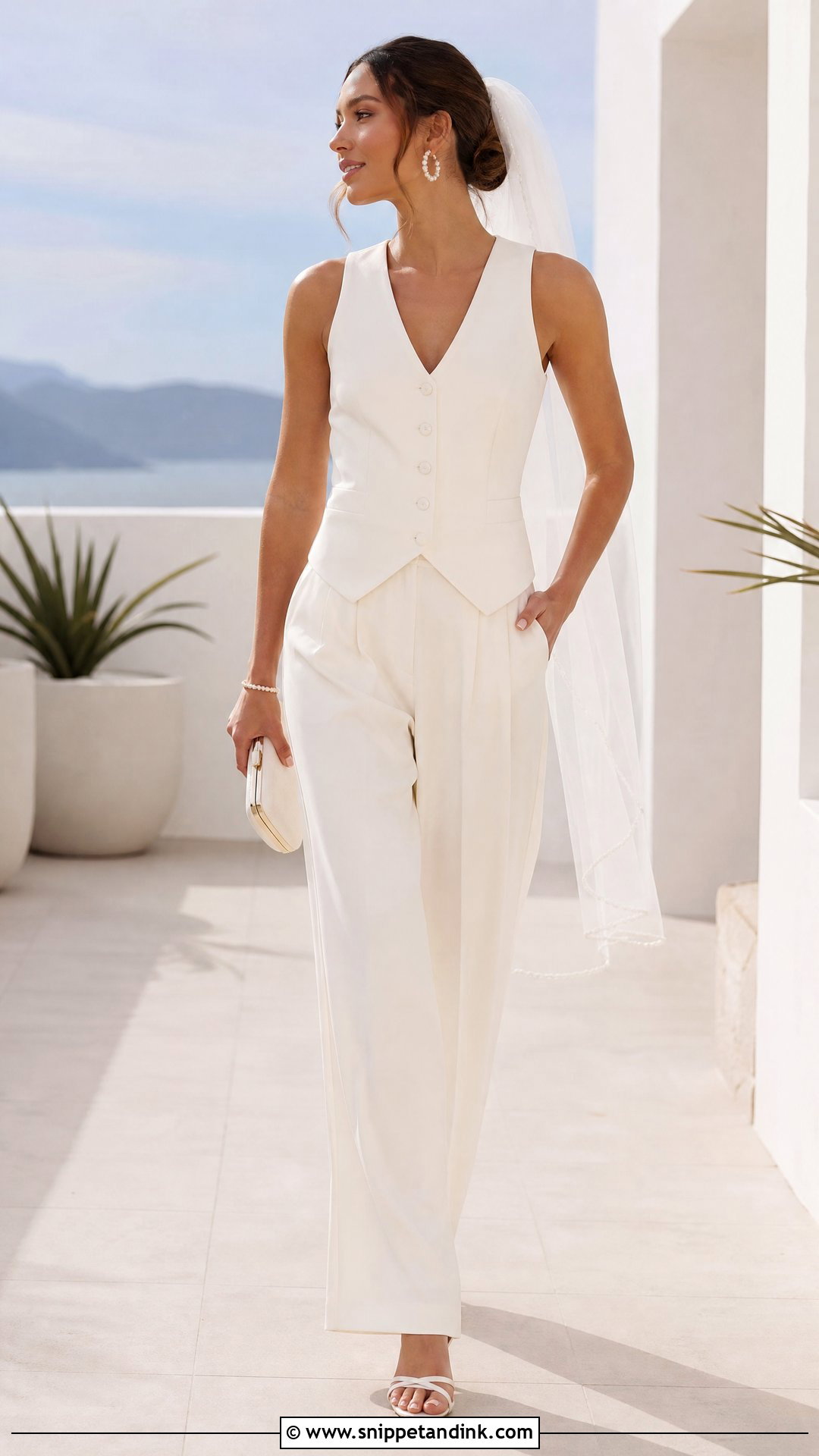
In summer heat, the waistcoat can be the whole top. A fitted button-front vest with matching high-rise trousers in ivory crepe or lightweight wool looks sharp sleeveless, and you can add the blazer for the ceremony. I check the armholes first: if they gape when you lift your arms, they need taking in. Wide-leg trousers move more; tapered ones look minimal. Heeled sandals and pearl hoops suit warm weather. A sheer fingertip veil under a low bun adds bridal detail without covering the waistcoat.
13. Cape Blazer Wedding Suit
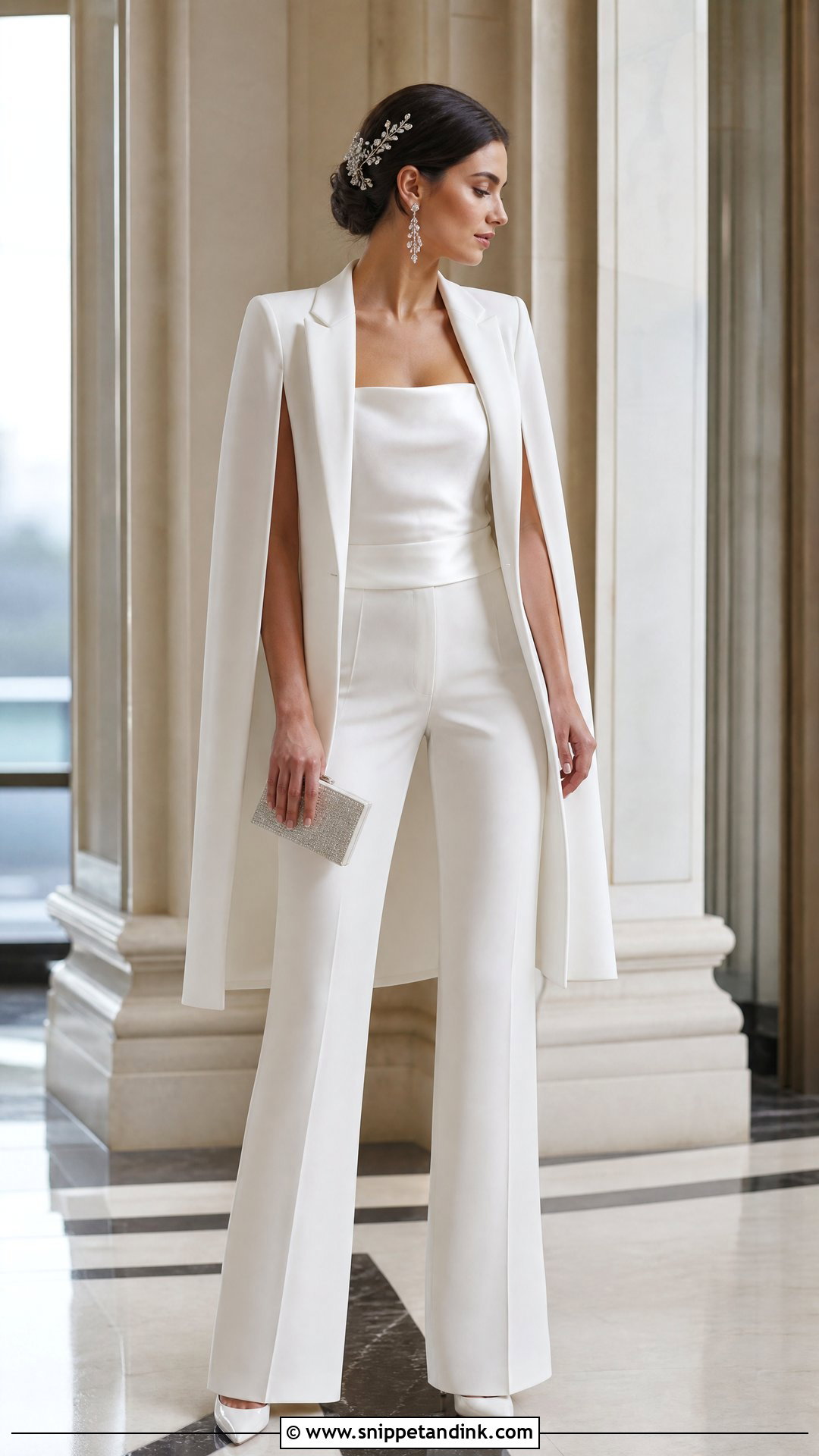
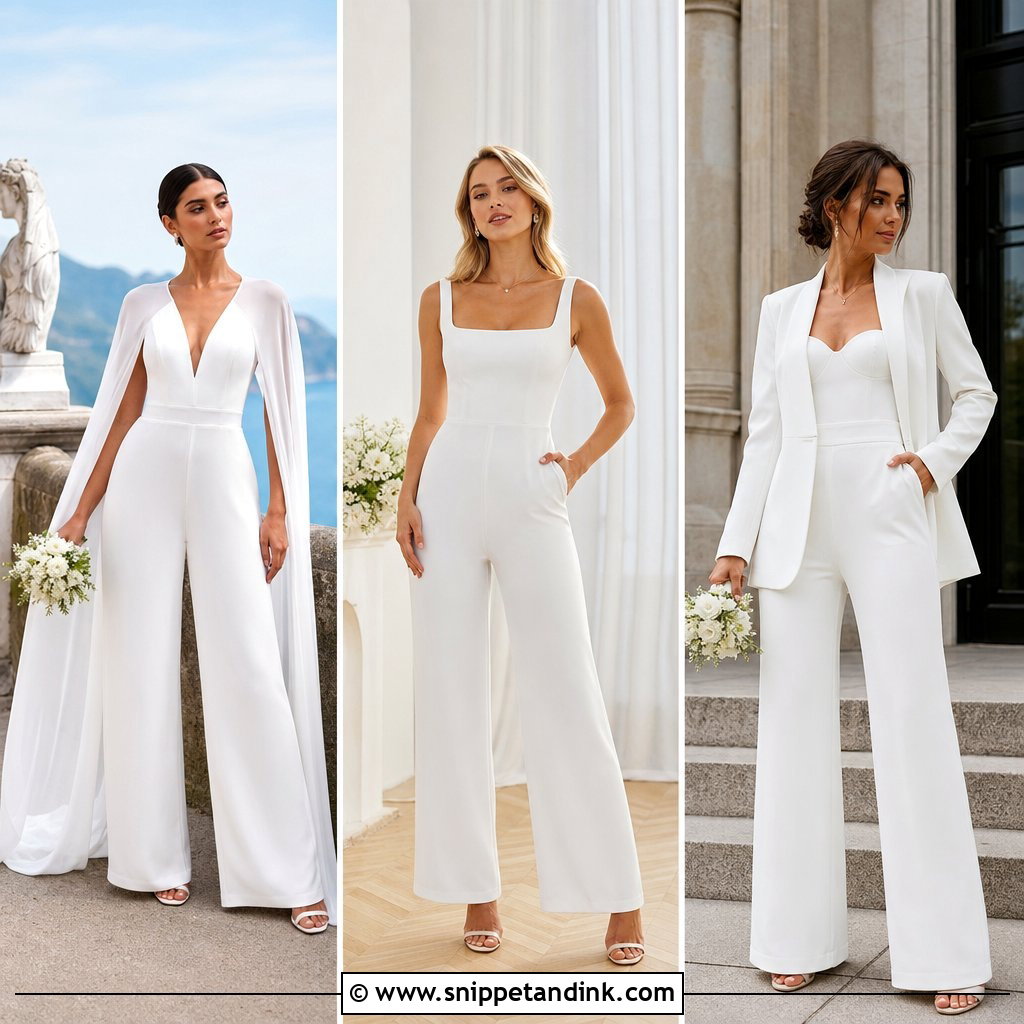
A cape blazer gives you drama while staying tailored. Pair a white cape-style jacket with straight or flared trousers and a fitted satin top. I have every bride raise her arms and hold her bouquet to make sure the cape doesn’t bunch over her hands. Since it already moves, skip a long veil and wear a small hair comb or headband. Crystal drop earrings add a little sparkle. Pointed heels keep the long line. It suits formal entrances and indoor ceremonies, and it’s lighter to carry around all day than a full gown.
14. Linen Wedding Suit
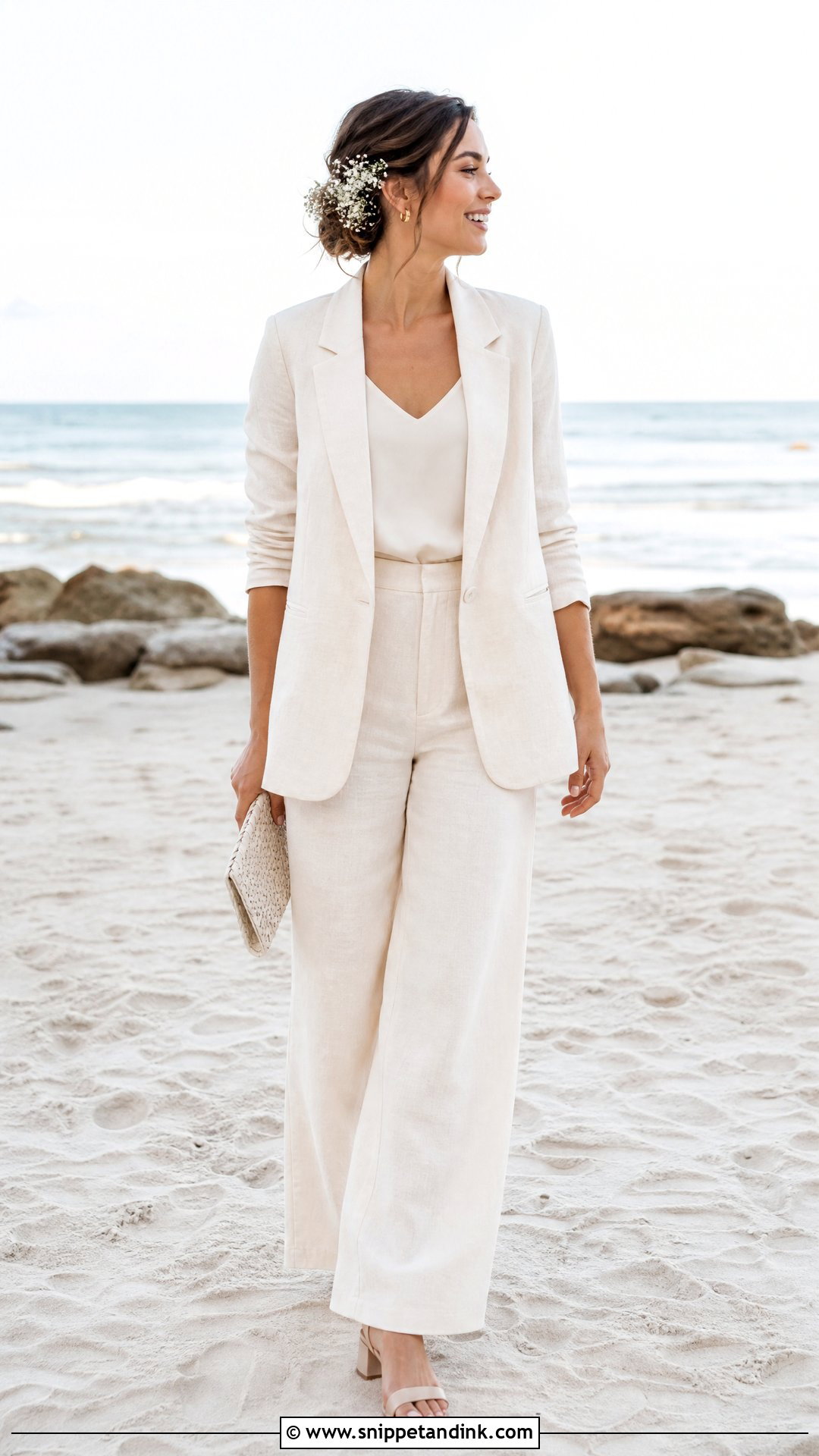
Linen breathes in heat but wrinkles the moment you sit, and I want brides to make peace with that before choosing it. A fully lined ivory blazer keeps its shape far better than an unlined one. Pair it with matching wide-leg or straight trousers and a silk camisole, fitted tank, or sleeveless shell underneath. Low block-heel sandals manage grass and stone. Have it steamed at the venue rather than packed folded, and go a little relaxed in the fit. Tight linen strains at the seams.
15. Velvet Wedding Suit
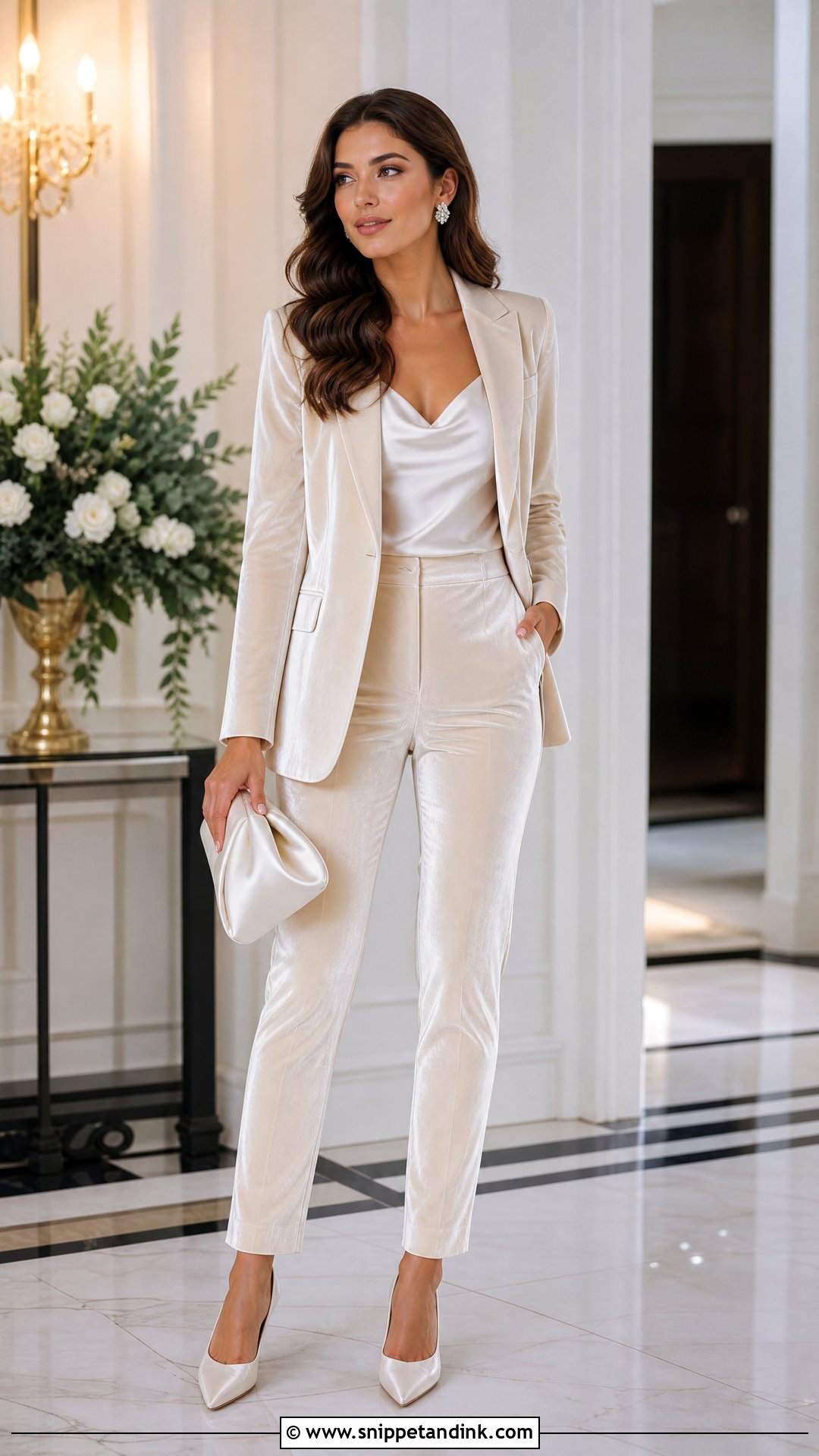
Velvet feels luxurious for winter, and it needs precise tailoring because the pile adds visual bulk. Choose an ivory, cream or pearl velvet blazer with matching trousers, or combine the velvet jacket with crepe pants for a lighter effect. A smooth silk camisole avoids bulky layers. Velvet marks where it’s pressed, so hang it on a padded hanger and steam it from the inside. Pointed closed-toe pumps and crystal studs keep it elegant. Hair should stay simple: a sleek bun or a plain headband.
16. Blush Pink Wedding Suit
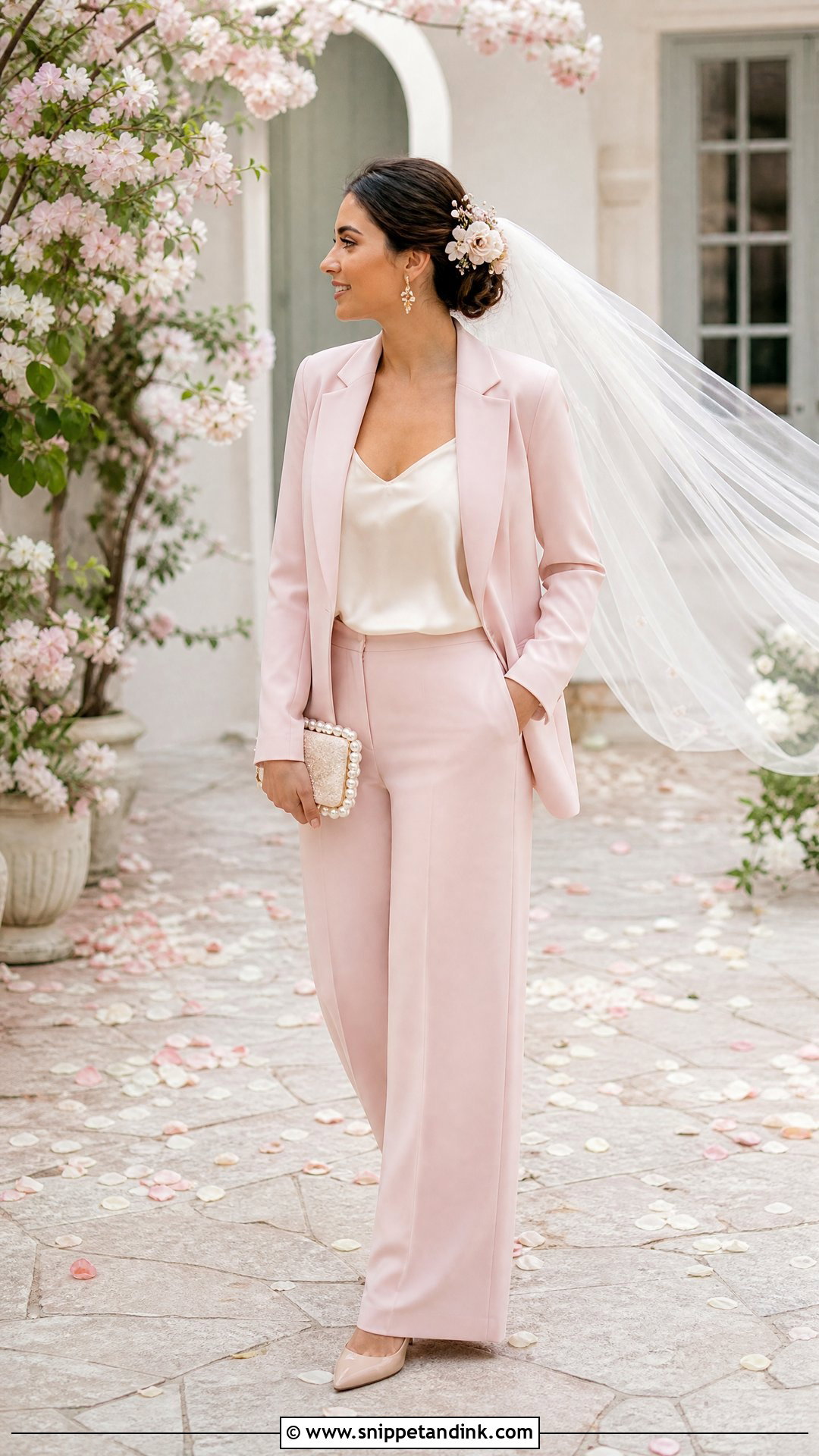
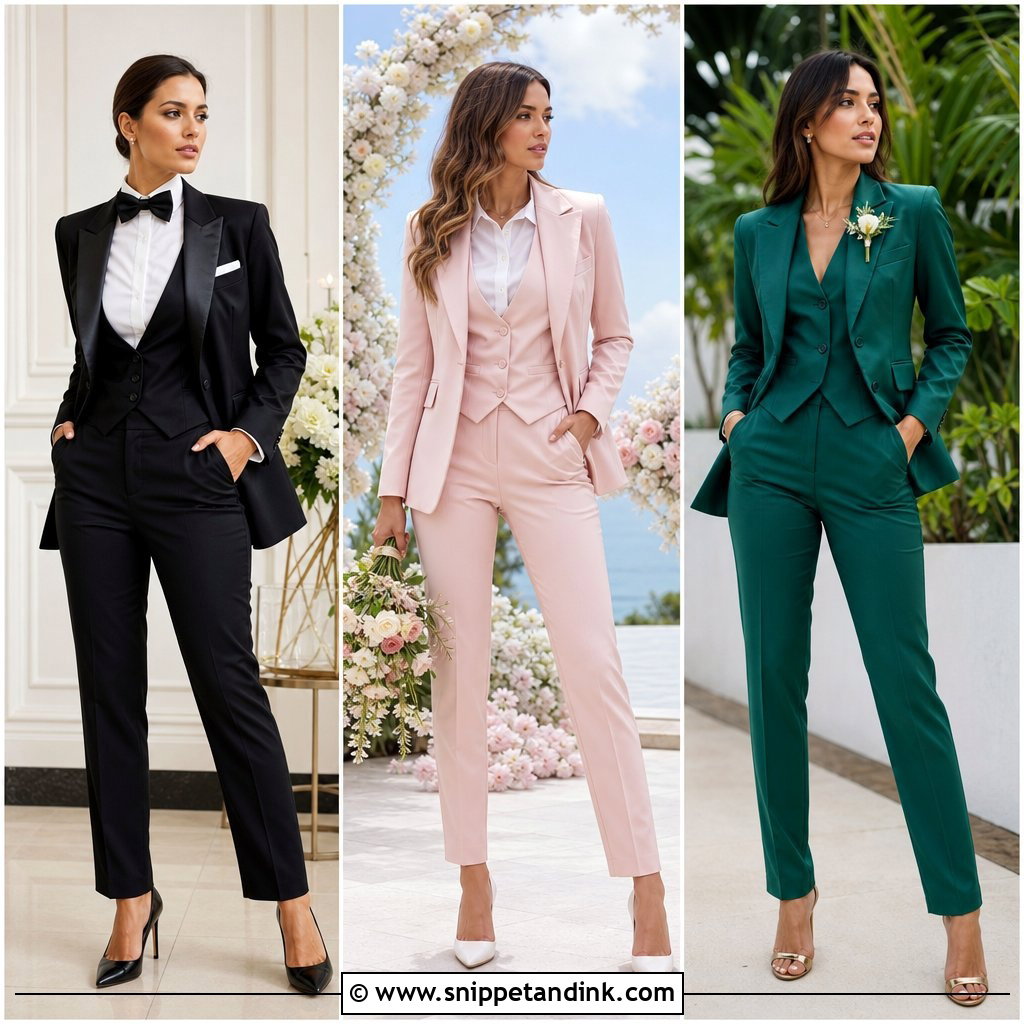
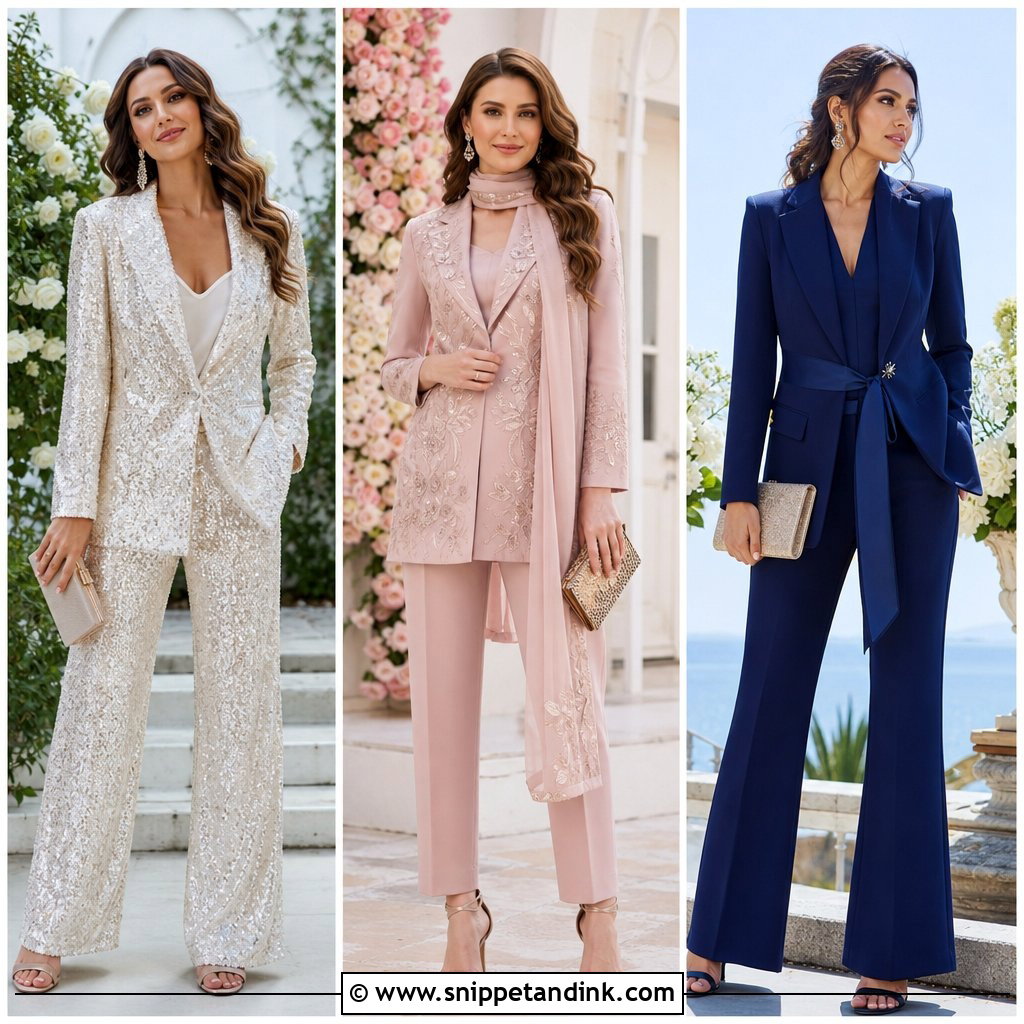
Pale pink is a soft step away from white that still feels romantic. The shade is everything: dusty blush or pale rose can look gray or flat against some skin tones, so test it in daylight before ordering. A tailored blazer with flowing trousers and a cream silk camisole keeps the palette light. Nude or metallic heels and rose gold earrings work well. You can still wear a sheer ivory veil if you want a recognizable bridal touch, or swap it for a floral hair comb at a spring or courthouse wedding.
17. Black Wedding Tuxedo Suit
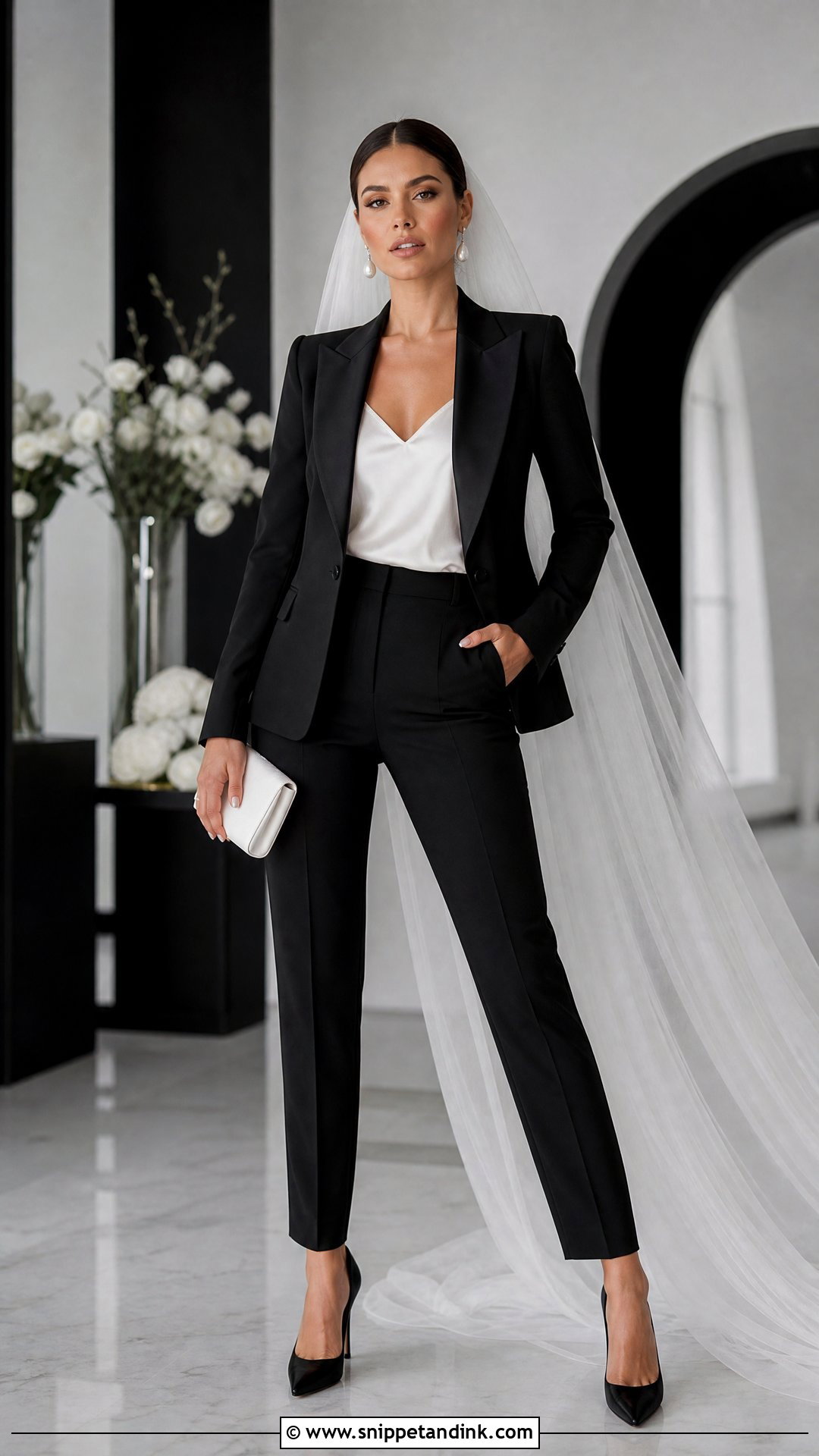
Black on a bride is a deliberate choice, and the styling has to make that clear. Choose a sharply fitted tuxedo jacket with satin lapels and matching high-rise trousers. A white silk camisole or crisp pleated shirt brightens the face. Add a white veil and a small white clutch to keep it unmistakably bridal; without those, it can drift toward business wear. Black pointed pumps and pearl or diamond-style earrings keep it formal. It suits evening ceremonies and monochrome weddings, and it’s worth telling family in advance.
18. Plus Size Wedding Suit
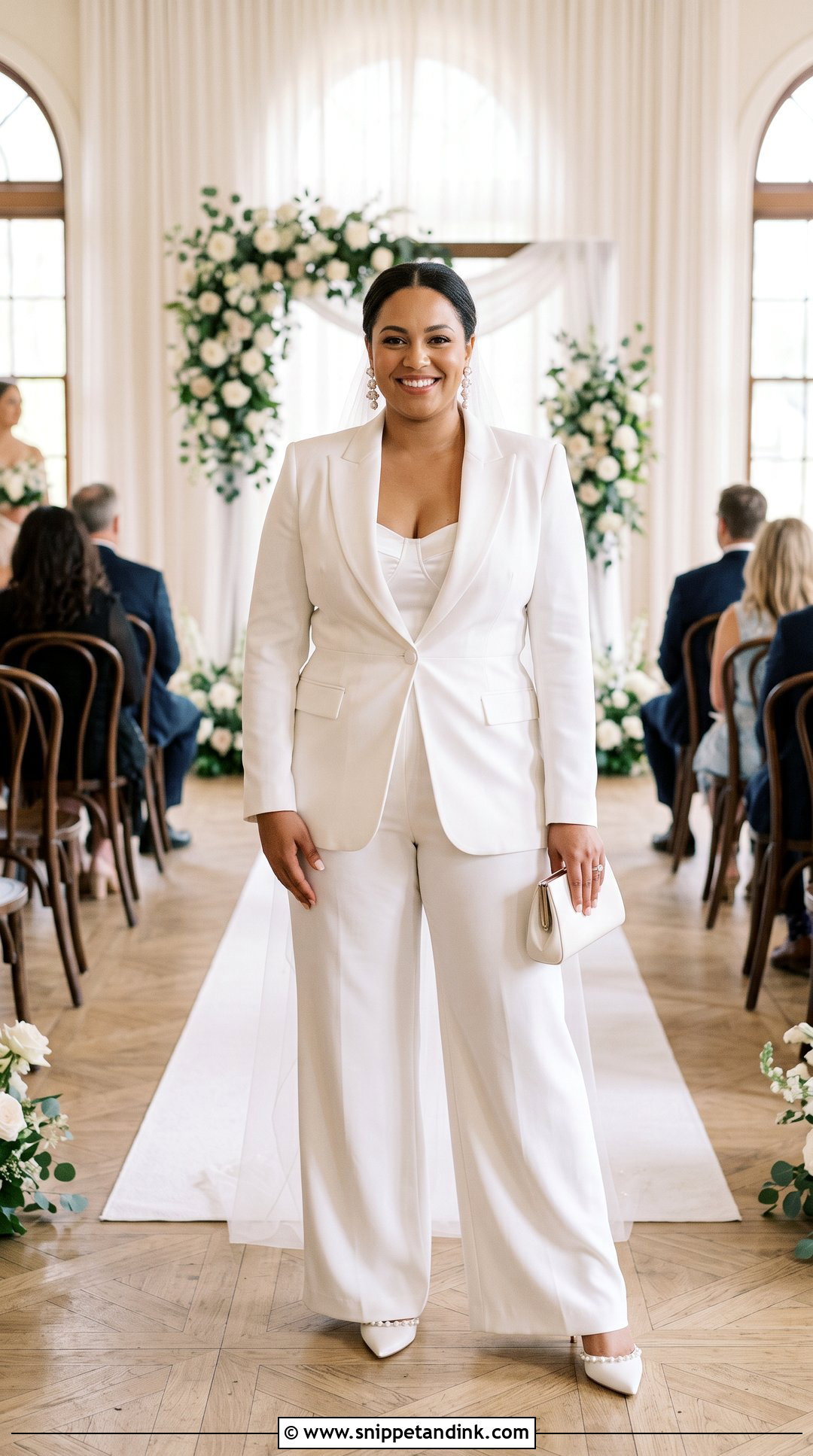
On a plus-size bride, a suit should support and define rather than hide. Start with a single-button or wrap-front blazer that marks the waist, then add high-rise straight or wide-leg trousers. Stretch crepe moves with you and still looks polished. Underneath, a supportive satin bodysuit or camisole with wider straps covers undergarments. I fit the shoulders first, because that’s the hardest area to alter, then take in the waist and sleeves. Statement earrings and a veil beneath a low bun finish it.
19. Petite Wedding Suit
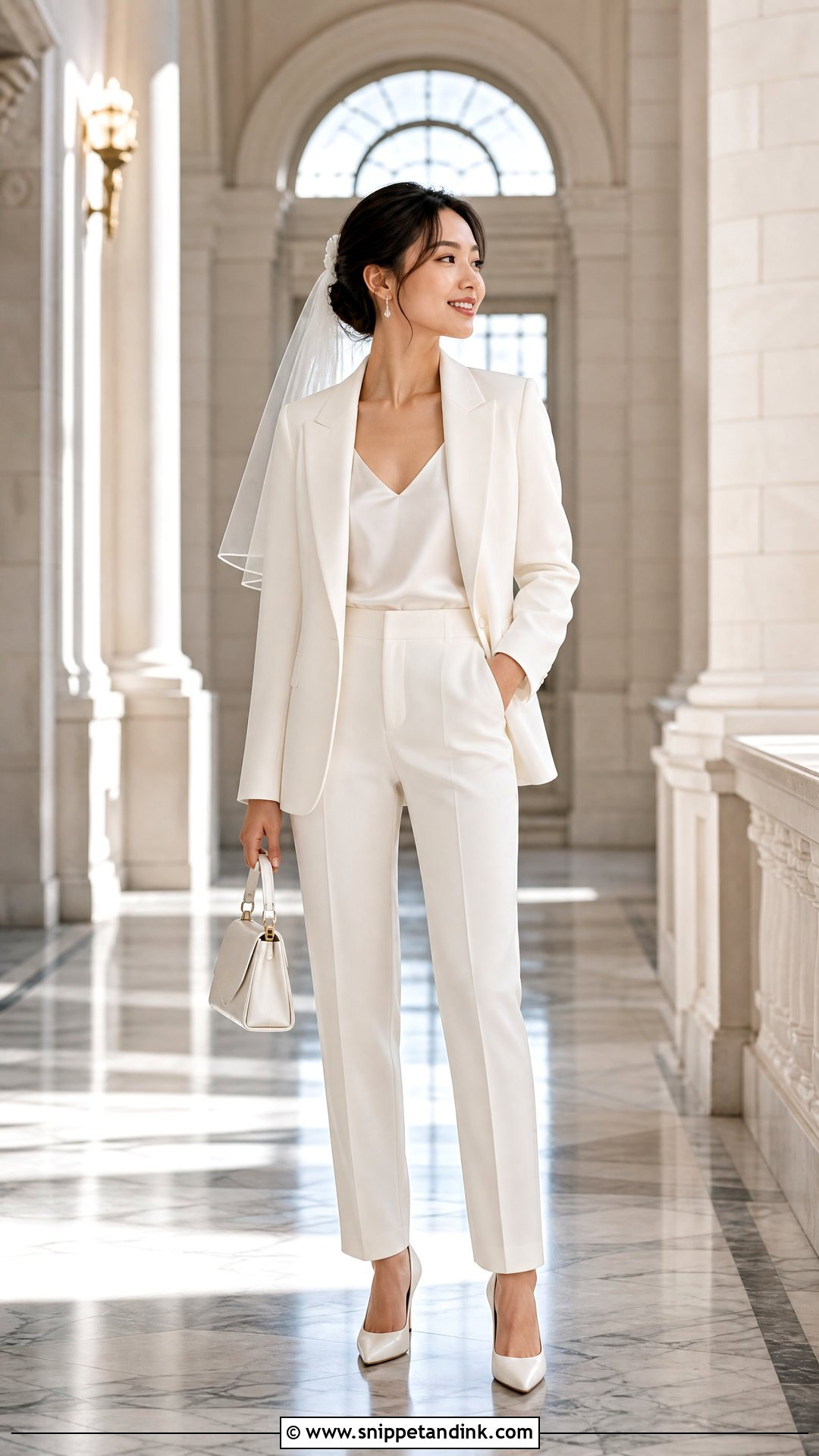
Petite brides get swallowed by standard suits unless the proportions are adjusted. Choose a cropped or hip-length blazer with narrow lapels and high-rise trousers to lengthen the line. Straight, flared or controlled wide-leg pants all work once the hem is professionally altered. A V-neck camisole opens the neckline, and white or skin-tone pointed heels extend the leg. Skip big cuffs, oversized pockets and long jacket hems. A short veil keeps everything in scale for city hall ceremonies and intimate dinners.
20. Sequin Reception Wedding Suit
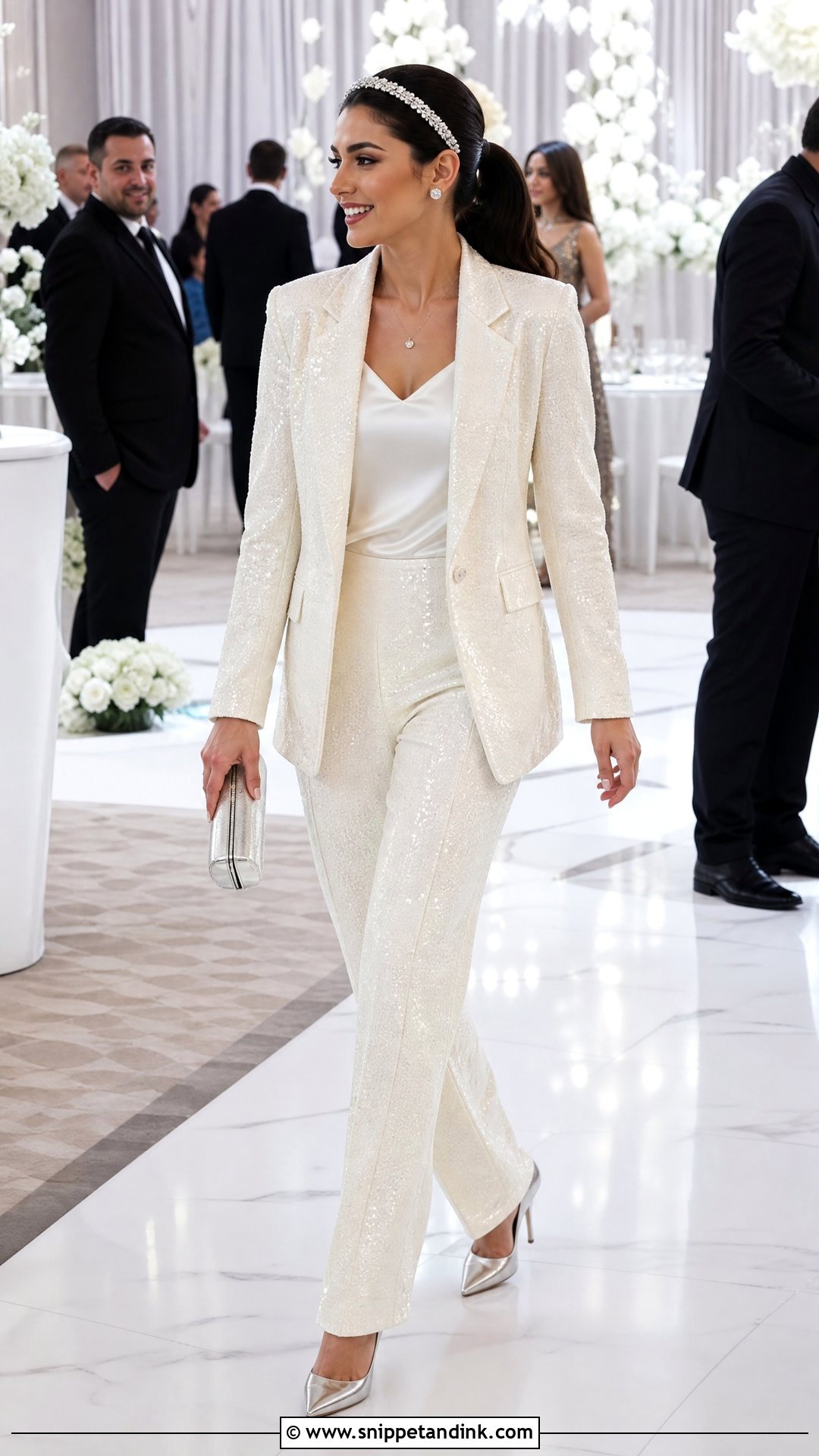
Sequins are made for the dance floor and are a fun outfit change for the reception. Choose a fully lined blazer and trousers in white, silver or pearl-toned sequins; lining stops the sequin backing from scratching your skin. I check the inner sleeves and inner thighs, where sequins rub and catch with movement. Keep everything else plain: a satin camisole, metallic pumps and a small clutch. Skip the long veil for a sleek ponytail, jeweled headband or bow. It’s a great look for dancing, reception photos and celebratory exits.
Ivory Suiting Shows Every Crease and Mark
A white or ivory suit records the day in a way a gown doesn’t. Trousers crease behind the knees in the car, jacket sleeves collect makeup at the cuffs, and lapels pick up foundation from every hug.
- Get dressed after makeup is set, and put the jacket on last.
- Travel with the jacket on a hanger, not on your lap, and stand rather than sit when you can before the ceremony.
- Keep a small kit with a stain pen tested on a fabric scrap, a lint roller and a travel steamer.
- Ask your partner and close family to hug with their face turned away from your shoulder.
After the wedding, take the suit to a dry cleaner who handles bridal wear within a week or two, and point out any marks. Store it in a breathable garment bag, never plastic, so the ivory doesn’t yellow.
A Suit Earns Its Place at the Wedding Through the Tailoring
A bridal suit can be romantic, glamorous, relaxed or bold, and the right one depends on your setting, season and how much you’ll be moving. Start there, then choose a cut that suits your frame. Alterations make the biggest difference of all, especially at the shoulders, sleeves, waist and trouser hem. Shoes and accessories should support the tailoring rather than compete with it. Above all, wear something that feels like you on the best version of an ordinary day, and the suit will carry the rest.
You'll Like These Ideas:


Leave a Reply