
I think of a wedding outfit as a whole day’s wardrobe, not one dress in a mirror. It has to get you through a ceremony, photos outside, a dinner and a dance floor, and sometimes a change in between. The twenty looks below run from ball gowns and lace sleeves to pantsuits, minis and courthouse separates, and each one comes with the shoes, jewelry, veil and finishing pieces I’d put with it, plus who it suits and where it struggles. Use trends as a starting point only. The silhouette you can sit, walk and breathe in for ten hours is the one you’ll look happiest in.
Plan the Wardrobe Around the Day’s Schedule First
Before brides start pinning dresses, I ask them to walk me through the day hour by hour. It changes the choice more than any trend. A ceremony at noon in a garden, portraits in a park and an evening reception in a ballroom ask three different things of one outfit, and the dress that looks right at the altar can be miserable by the time the band starts.
- Count the outdoor time. Long spells outside in heat or cold decide fabric weight and whether you need a coat or a lighter second look.
- Mark every transition: car rides, stairs, a walk between venues. Long trains and heavy skirts need someone to manage them at each one.
- Decide on a change early. Swapping into a second dress, re-pinning hair and changing shoes usually takes longer than people allow, so build it into the schedule rather than squeezing it into the cocktail hour.
- Note when you’ll be sitting the longest, usually dinner. That’s when tight boning, short rises and stiff petticoats make themselves known.
Once that picture is clear, the right silhouette often narrows itself down to two or three options.
1. Satin Ball Gown Wedding Look
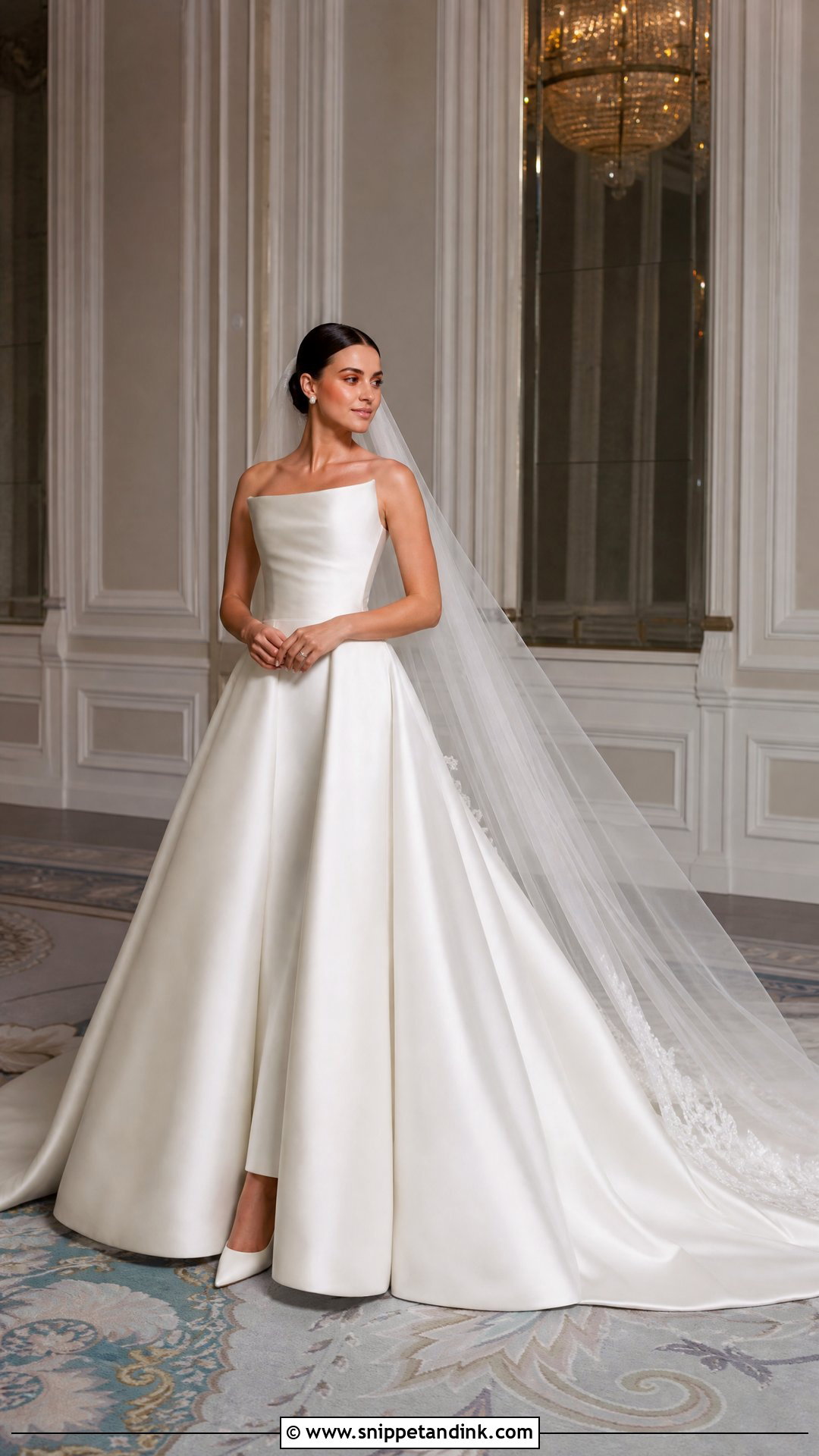
Satin ball gowns look formal because the fabric holds a clean, heavy line, and that weight is also the thing to manage. I check that the skirt keeps its shape from its own structure and a light petticoat, not from layers of stiff net that make it exhausting to wear. A scoop, square or strapless neckline balances all that plain fabric. Ivory pumps, pearl drops and a cathedral veil with a simple edge keep the attention on the cut, and a low bun shows off the bodice. Petite frames usually look better with a slightly narrower skirt; on taller brides a fuller skirt and long train keep their proportion. Ballrooms and grand indoor spaces suit it best.
2. Lace Long Sleeve Wedding Look
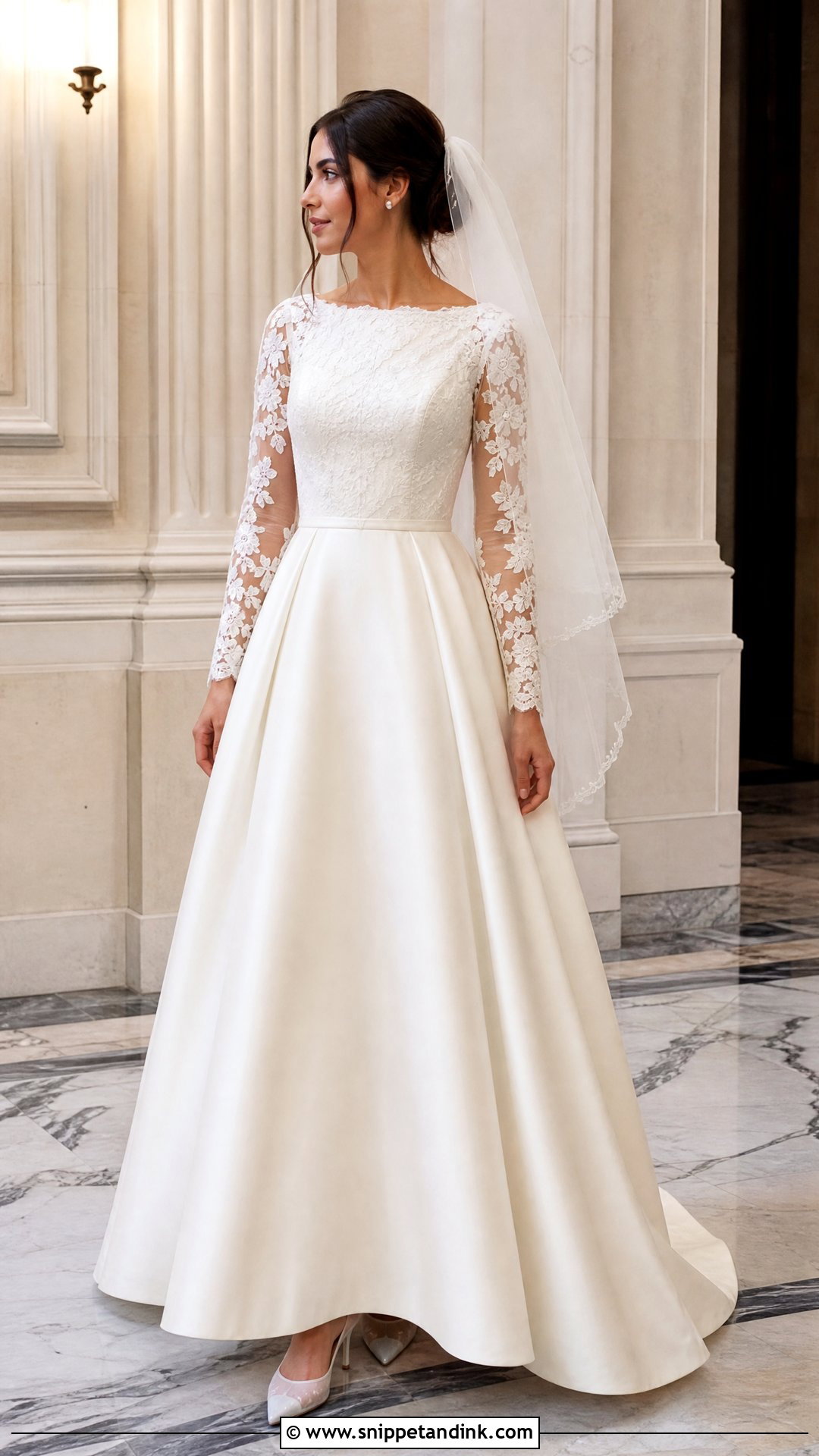
Lace sleeves are the most requested detail I see for cooler months, and the easiest way I know to add coverage without weight. A fitted bodice into an A-line or soft flare keeps it graceful. Sheer sleeves look light; lined ones give real coverage, and both need extra ease at the armhole or you’ll struggle to lift your arms for the first dance. Keep accessories small, closed-toe ivory heels and pearl studs, and choose a fingertip veil that doesn’t sit over the lace pattern. For outdoor moments in the cold, a clean wool bridal coat goes over it well. A simple bouquet stops the flowers competing with the lace.
3. Minimalist Slip Dress Wedding Look
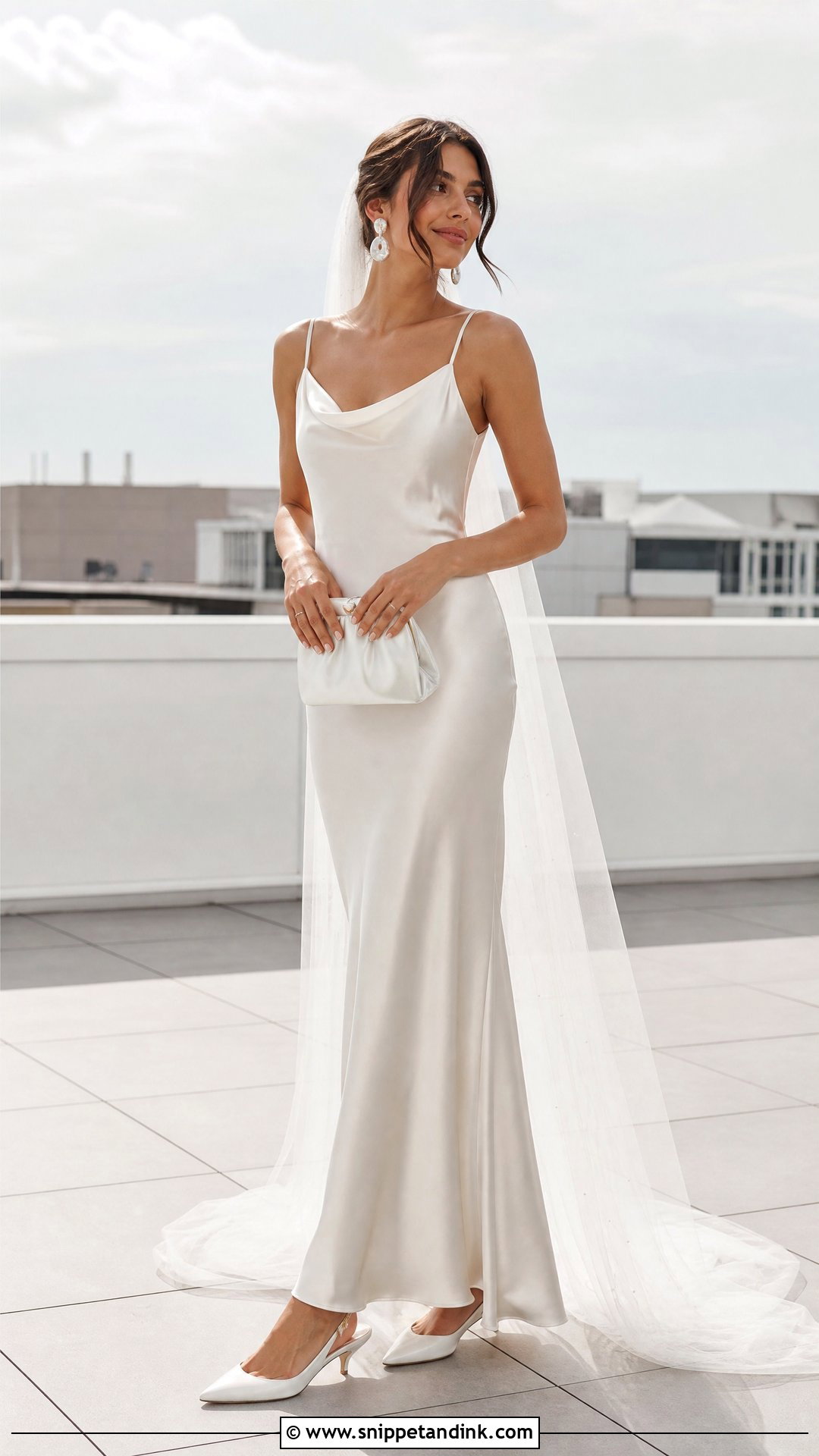
Slip dresses look simple and are anything but simple to fit. Bias-cut silk or satin follows every curve, so it shows every line underneath and every millimetre of a bad alteration. I’d only put a bride in one if she’s prepared for good undergarments and a skilled seamstress. Done right, it moves wonderfully. Slingback kitten heels, sculptural earrings, a small satin clutch and a sheer floor-length veil give it ceremony weight while keeping it minimal. Rooftops, galleries, restaurants and destination weddings are where it feels most natural. Bias-cut fabric also creases where you sit, so expect some rumpling across the lap by the reception.
4. Basque Waist Wedding Look
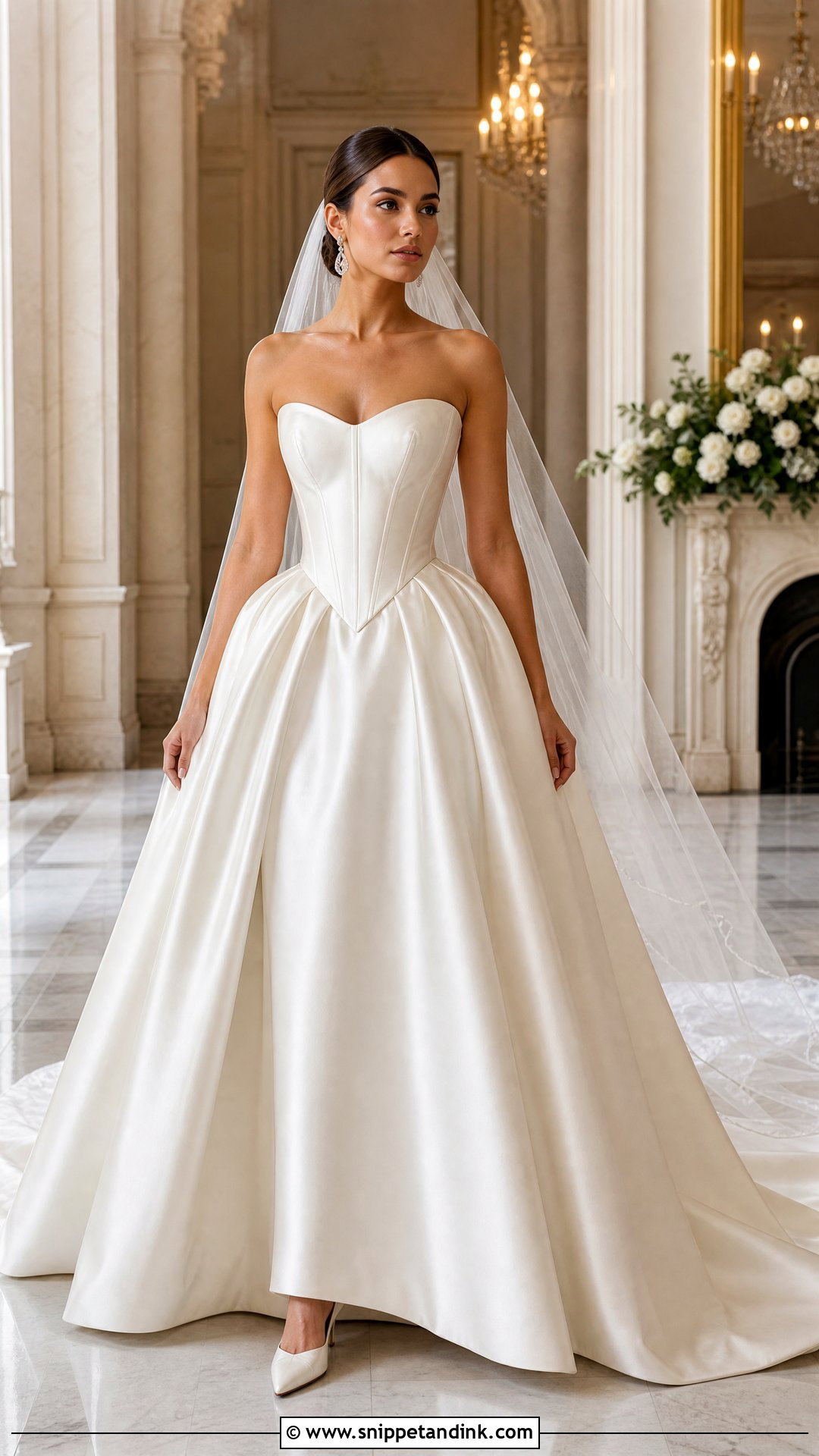
A basque waist dips into a point below the natural waist, which lengthens the torso and makes a full skirt look deliberate. It works in satin, mikado, lace or layered tulle. Wide straps or a curved strapless neckline give secure support. Since the waist seam is the whole point of this gown, I never add a belt or a big necklace; a fine tennis bracelet, medium drops and a chapel veil are plenty. The fitting detail to watch: when you sit, the point of the basque can fold or dig in, so the bodice needs proper boning running down into it.
5. Off The Shoulder Wedding Look
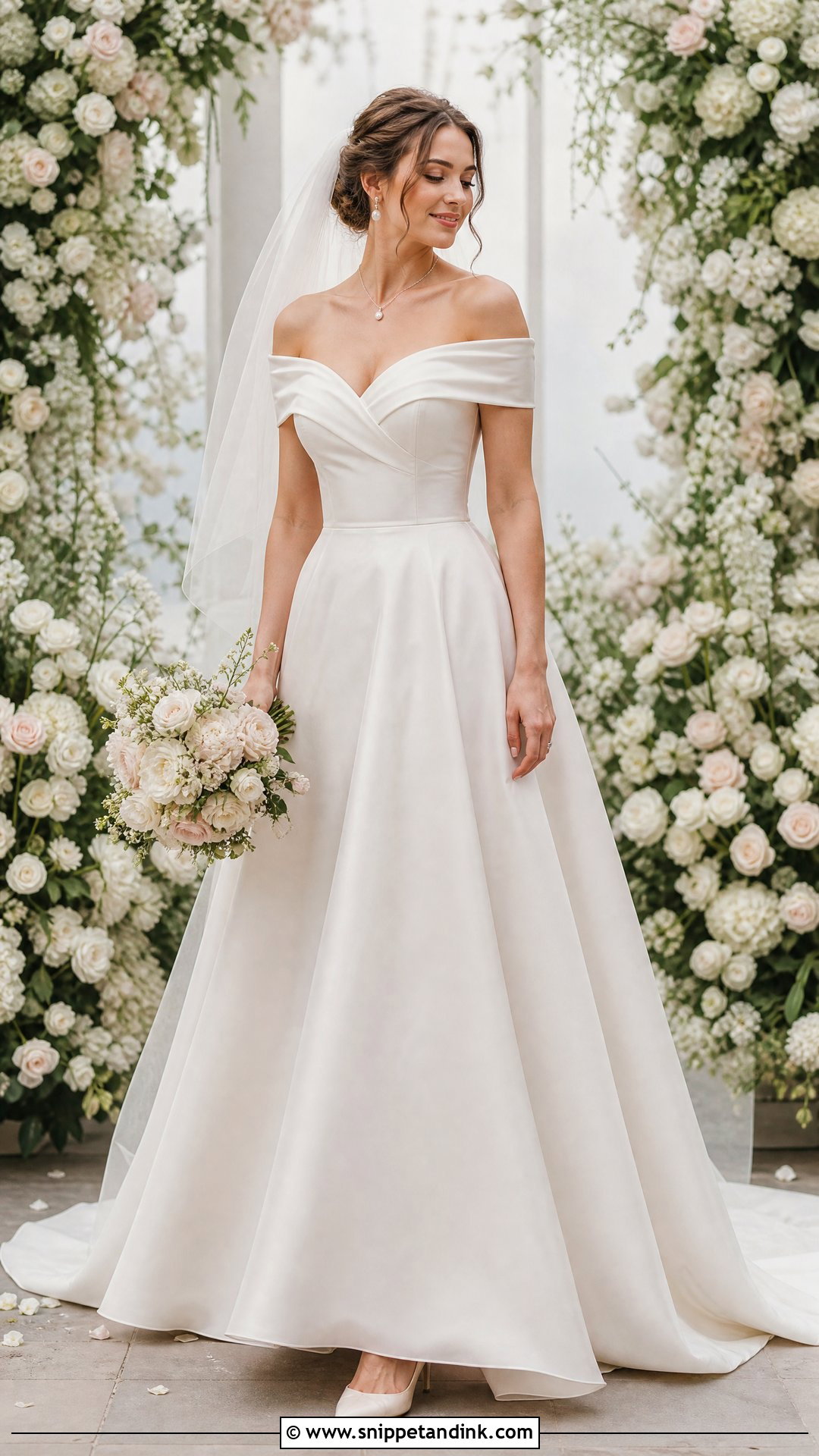
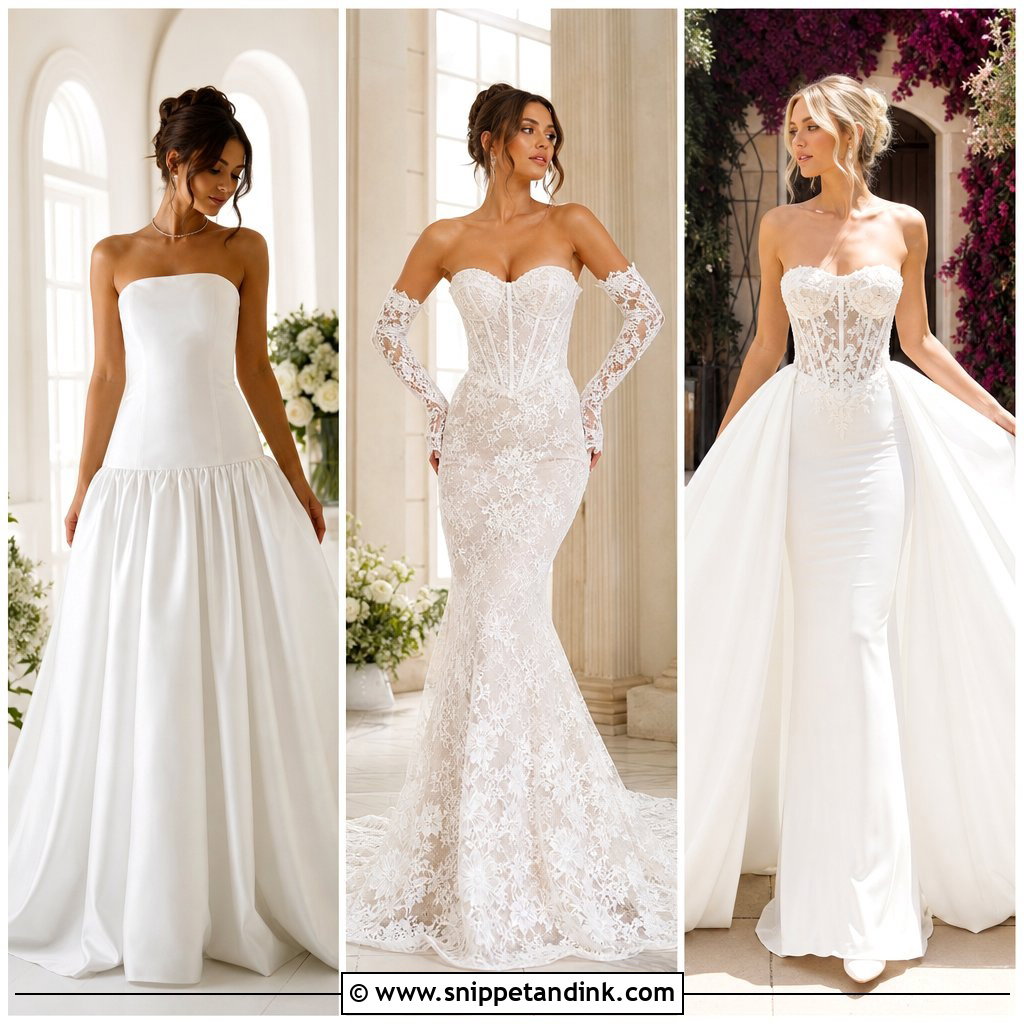
Off-the-shoulder necklines show off the collarbone, but they restrict how high you can lift your arms, and that’s what I test first. Raise them as if hugging someone taller than you. If the neckline rides up or the sleeves cut in, it needs adjusting. A fitted bodice with an A-line skirt looks soft; a column skirt feels sharper. Keep jewelry fine, a pendant and pearl earrings, and wear hair low or swept to one side so the shoulders stay visible. Attach the veil underneath the hairstyle so it falls behind the shoulders instead of catching on the neckline.
6. Detachable Overskirt Wedding Look
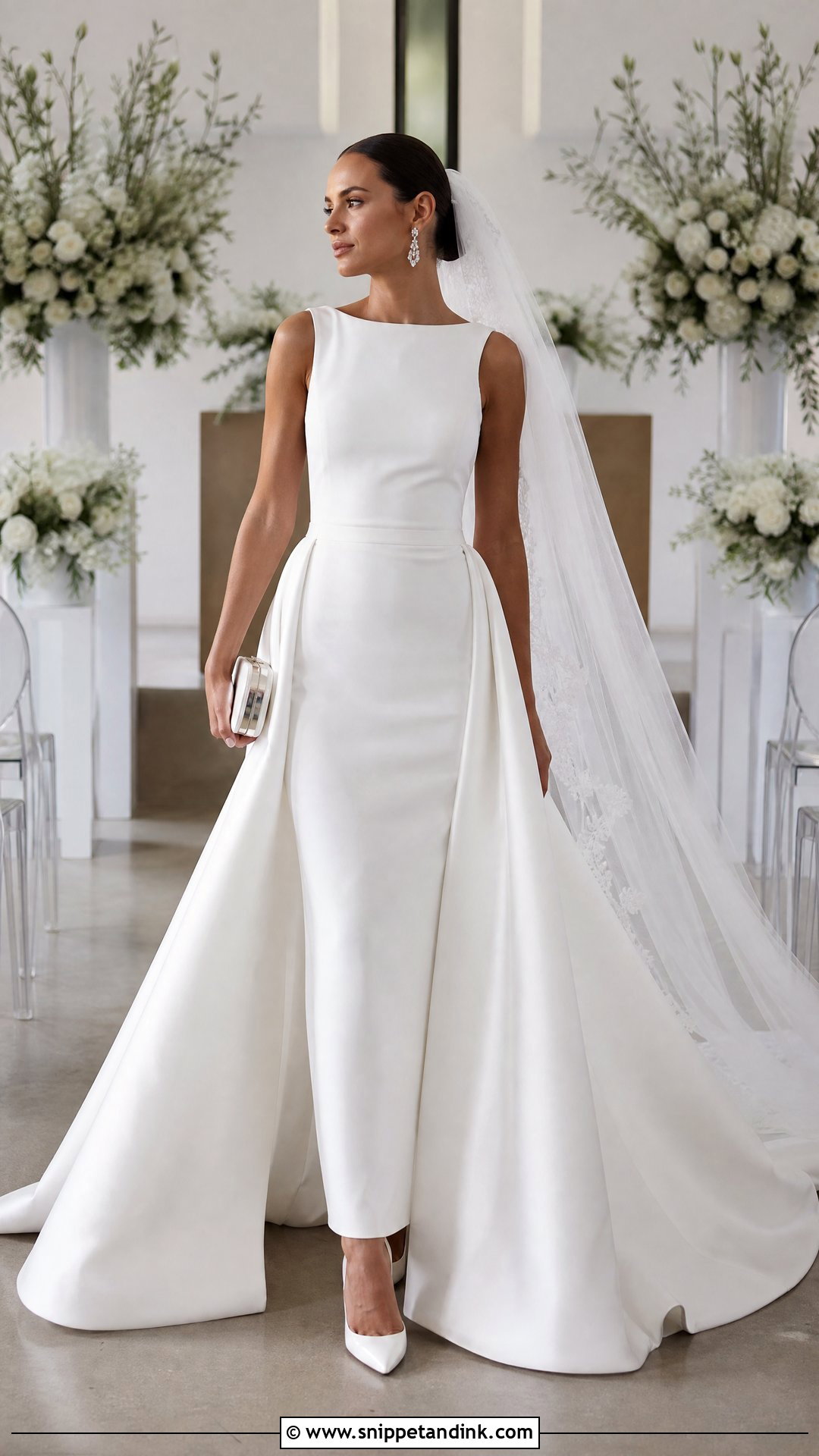
An overskirt gives you two silhouettes from one outfit. Underneath goes a fitted column, crepe or lace dress you can eat and dance in; over it, a satin or tulle overskirt adds volume and train for the ceremony. Take the overskirt and veil off together for the reception. The hook-and-bar or button closure is what I scrutinize: it has to sit flat and stay hidden from behind, because that’s where guests look as you walk away. It’s also a smart way to avoid buying a separate reception dress, and it packs more easily for a destination wedding.
7. Bridal Cape Wedding Look
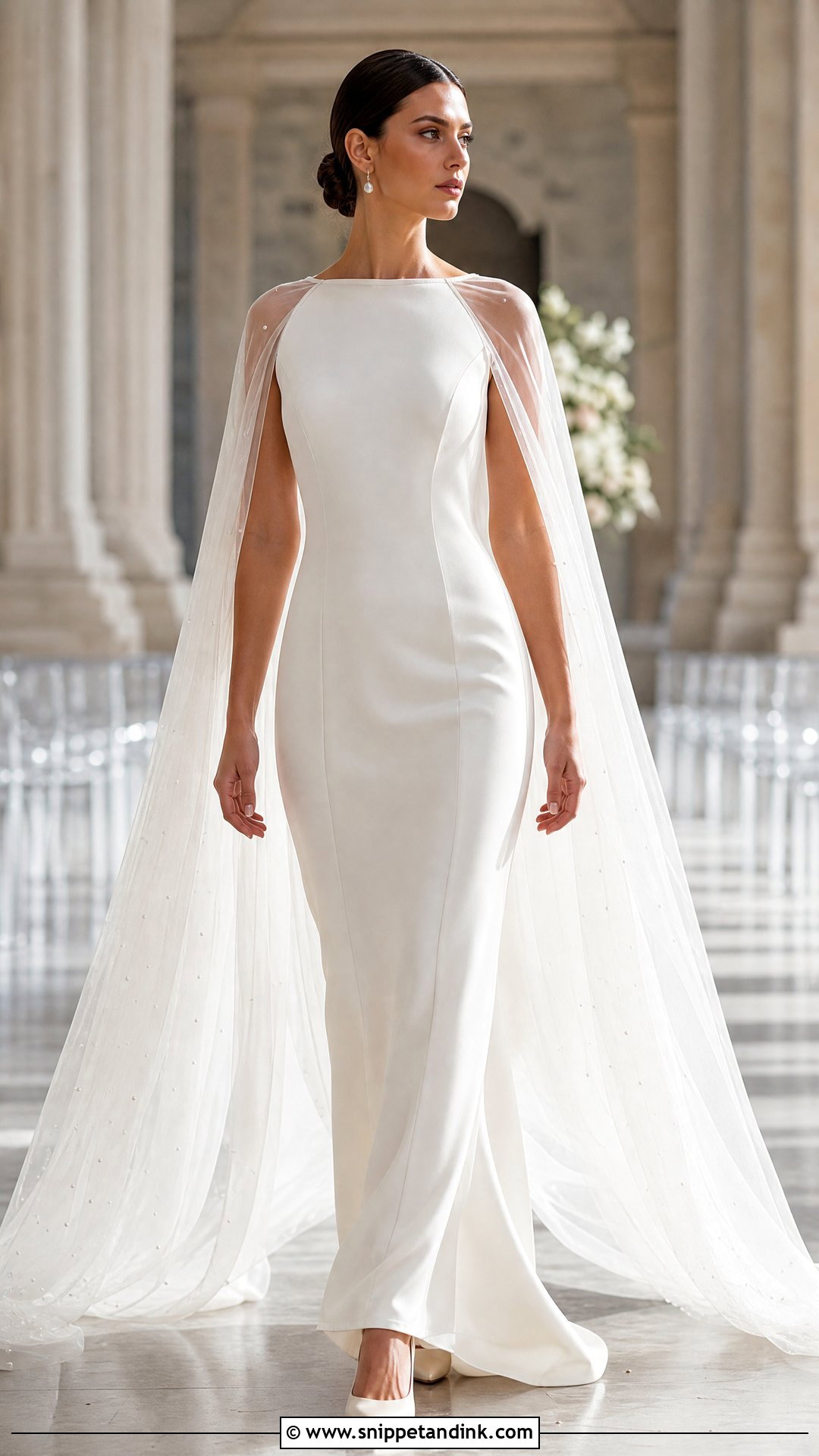
Capes move dramatically down a long aisle, which is why I suggest them as an alternative to a veil rather than an extra on top of one. Pair a sheer floor-length cape with a clean column, crepe or simple A-line gown, and keep detail to lace edging or scattered pearls. Hair needs to be up and smooth or it tangles in the cape’s neckline every time you turn your head. Opaque satin or light wool capes double as a cover-up for colder weddings. Practice walking in it before the day, and check the closure holds; capes catch on chairs and door frames more than people expect.
8. Tea Length Wedding Look
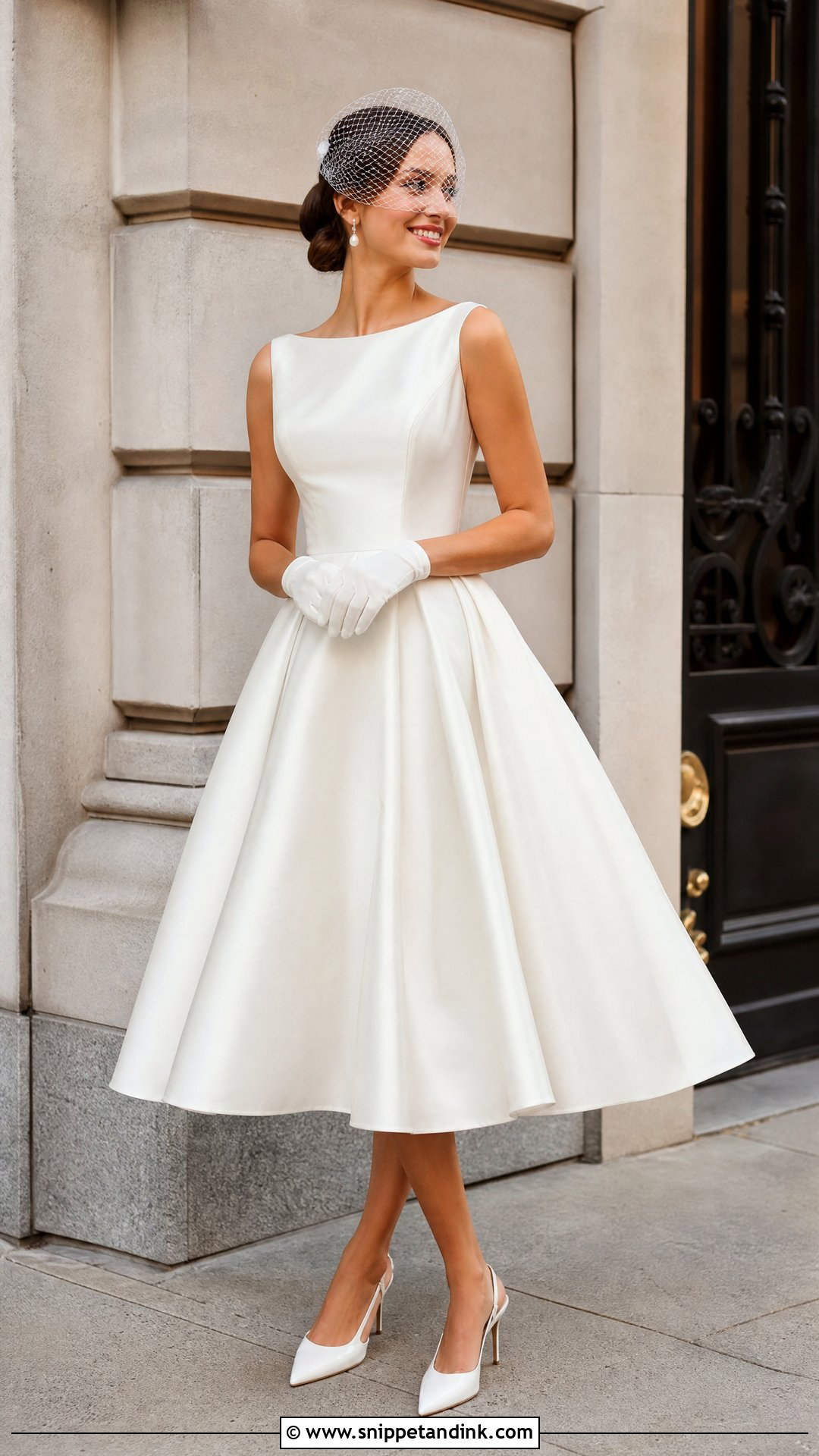
Tea length puts your shoes on show, so they become part of the outfit, not an afterthought. A fitted bodice and a skirt ending between knee and ankle suit pointed slingbacks, embellished pumps or low block heels. Pearl earrings, short gloves and a birdcage veil give it a vintage note, but use one or two of those, not all three, or it starts to look like fancy dress. A defined waist balances the shorter hem. Courthouses, daytime receptions and restaurant weddings suit it. Finish with a neat bun or a softly curled bob.
9. Bridal Mini Dress Wedding Look
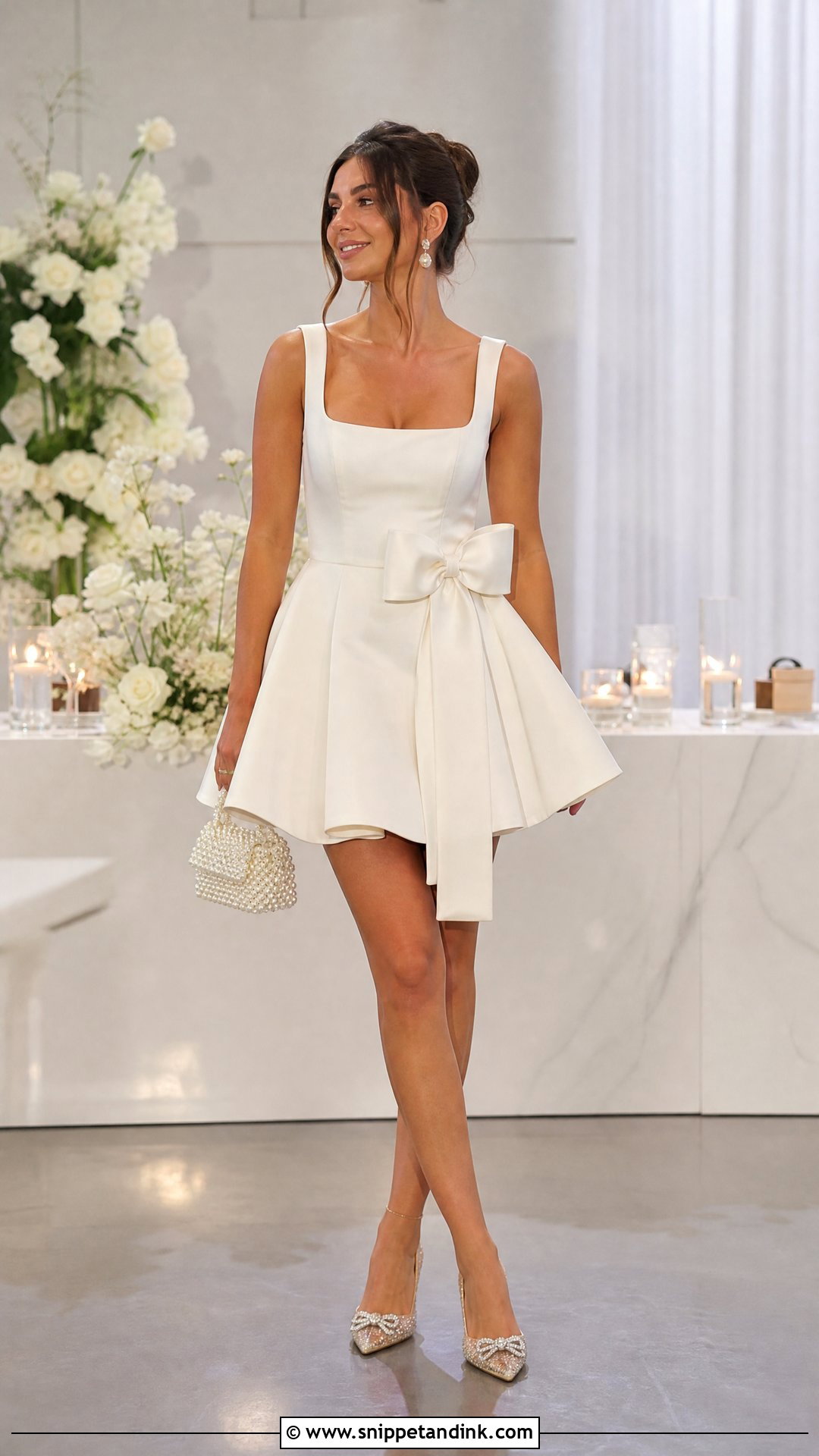
Most minis I style are second looks for the reception, worn after the ceremony gown comes off. Choose a structured shift, fitted satin or a small flared shape, and check coverage by sitting down and dancing in it, since short hems ride up faster than you’d think. A plain mini can take crystal heels or textured gloves; an embellished one needs plain shoes and small earrings. A short veil or a bow keeps it reading as bridal. Warm-weather city weddings and relaxed parties are its natural setting.
10. Bridal Pantsuit Wedding Look
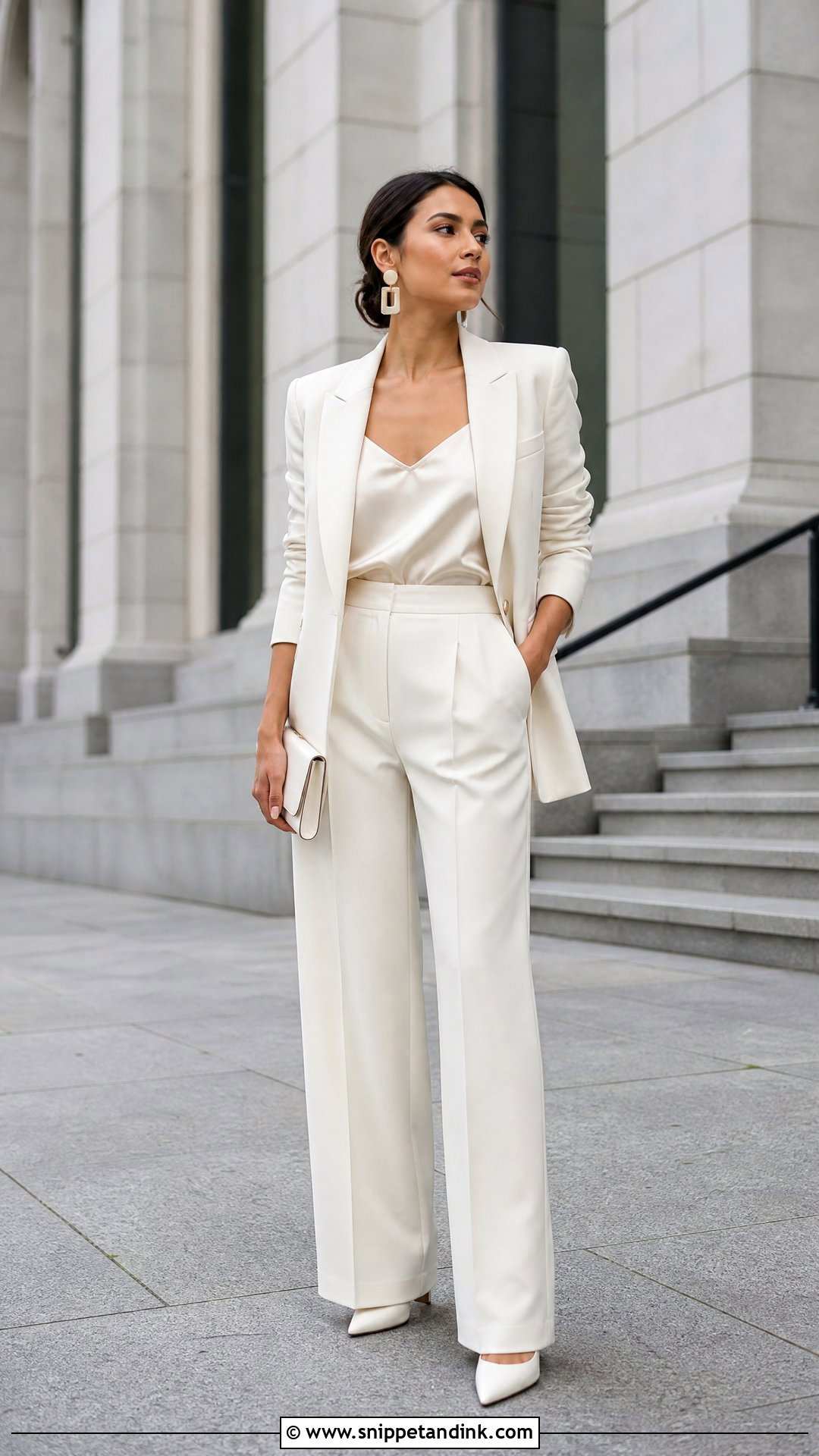
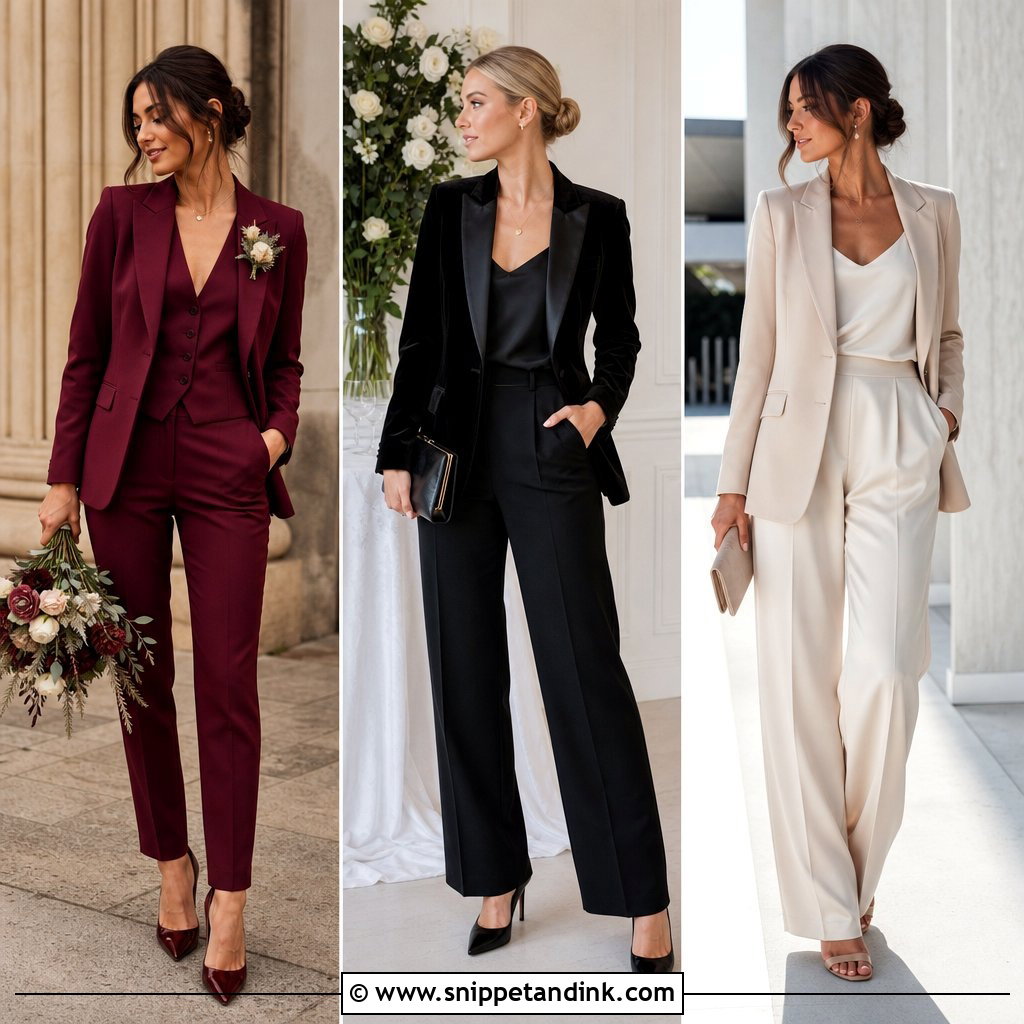
A suit has to be tailored to the bride, not bought off the rack and hemmed. I look at three places: the shoulders of the blazer, the waist, and the trouser break over the shoe, which should skim it without pooling. High-waisted trousers lengthen the leg. Under the jacket, a silk camisole, lace shell or smooth bodysuit keeps the line clean. Shoes can be pointed heels, polished loafers or embellished flats; decide before the hem is set, since each needs a different length. Add a detachable tulle train or a shoulder-length veil for the ceremony if you’d like more drama. It’s the obvious path for anyone who feels most like herself in tailored separates.
11. Bridal Jumpsuit Wedding Look
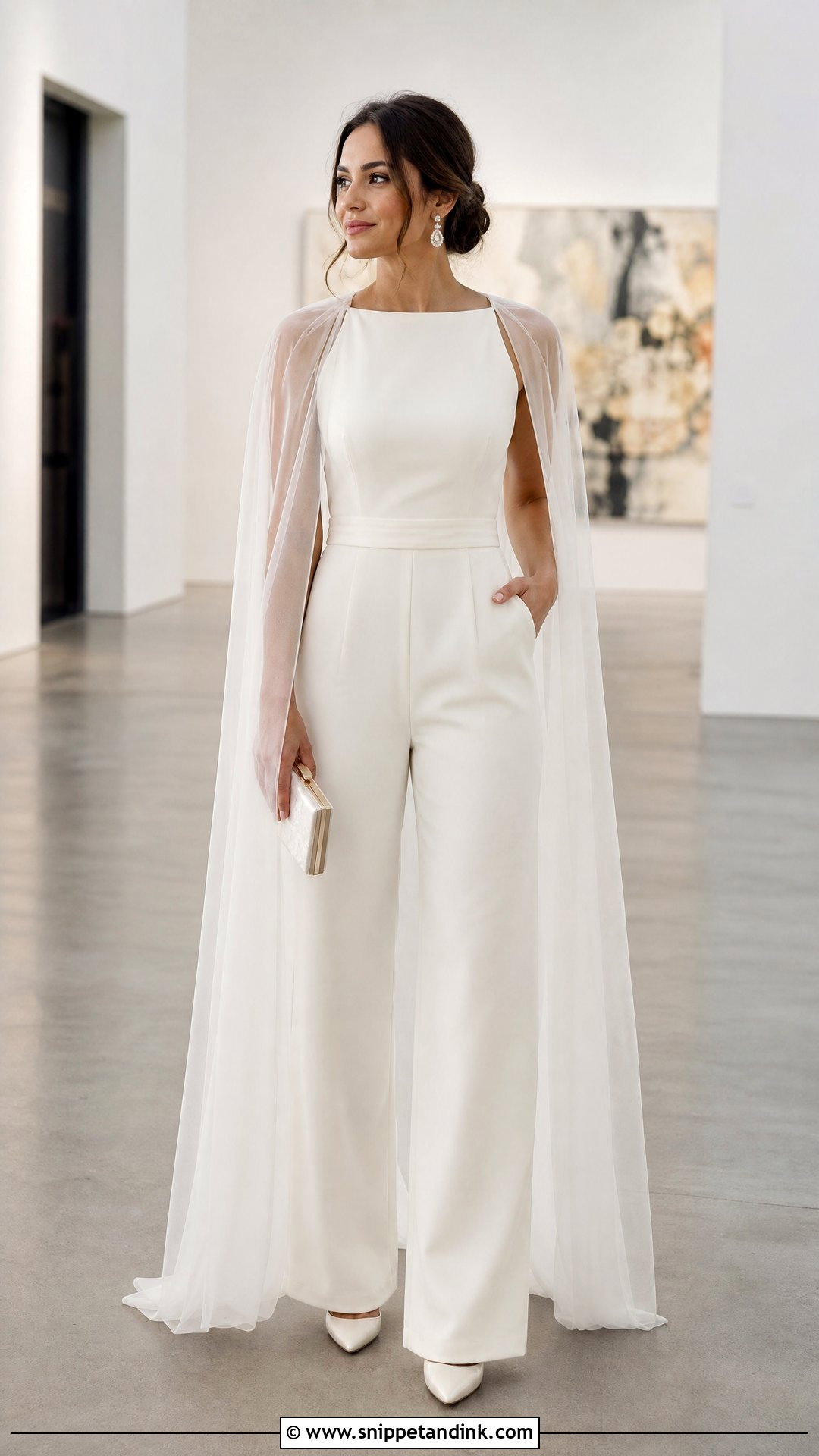
Jumpsuits give long, clean lines, but they come with one practical question I always raise: how do you use the bathroom? Look for a closure you can manage alone, ideally a side zip, before falling for the cut. A defined waist, fitted bodice and wide legs create balance, and crepe gives a smooth modern finish. Pointed pumps, drops and a compact clutch are enough. A removable cape, overskirt or long veil adds ceremony drama, then comes off for the party. Check the crotch length when sitting, since a short rise is uncomfortable within an hour.
12. Boho Lace Wedding Look
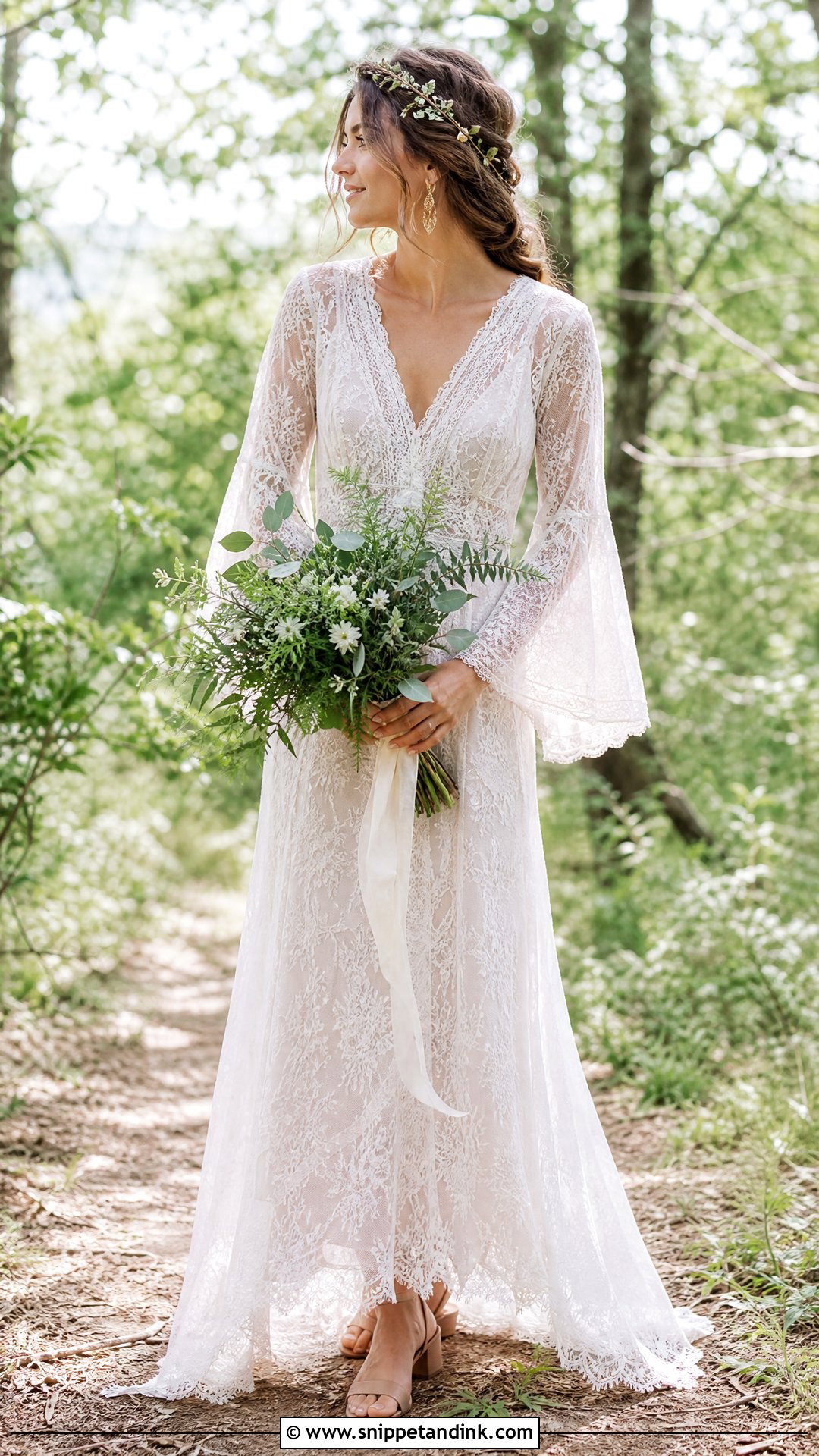
A boho lace wedding outfit is built for outdoor ground: grass, gravel, dirt paths. Choose lightweight botanical lace, a softly fitted waist and a skirt that moves, with bell sleeves, an open back or a modest V for character. Footwear is the real decision here. Low block heels, ankle boots or embellished flats keep you upright on uneven surfaces, and a hem a touch shorter at the front stops the lace collecting mud. Small gold earrings and a hair vine suit the mood far better than crystal. Woodland, barn and desert venues are its home.
13. Beach Wedding Look
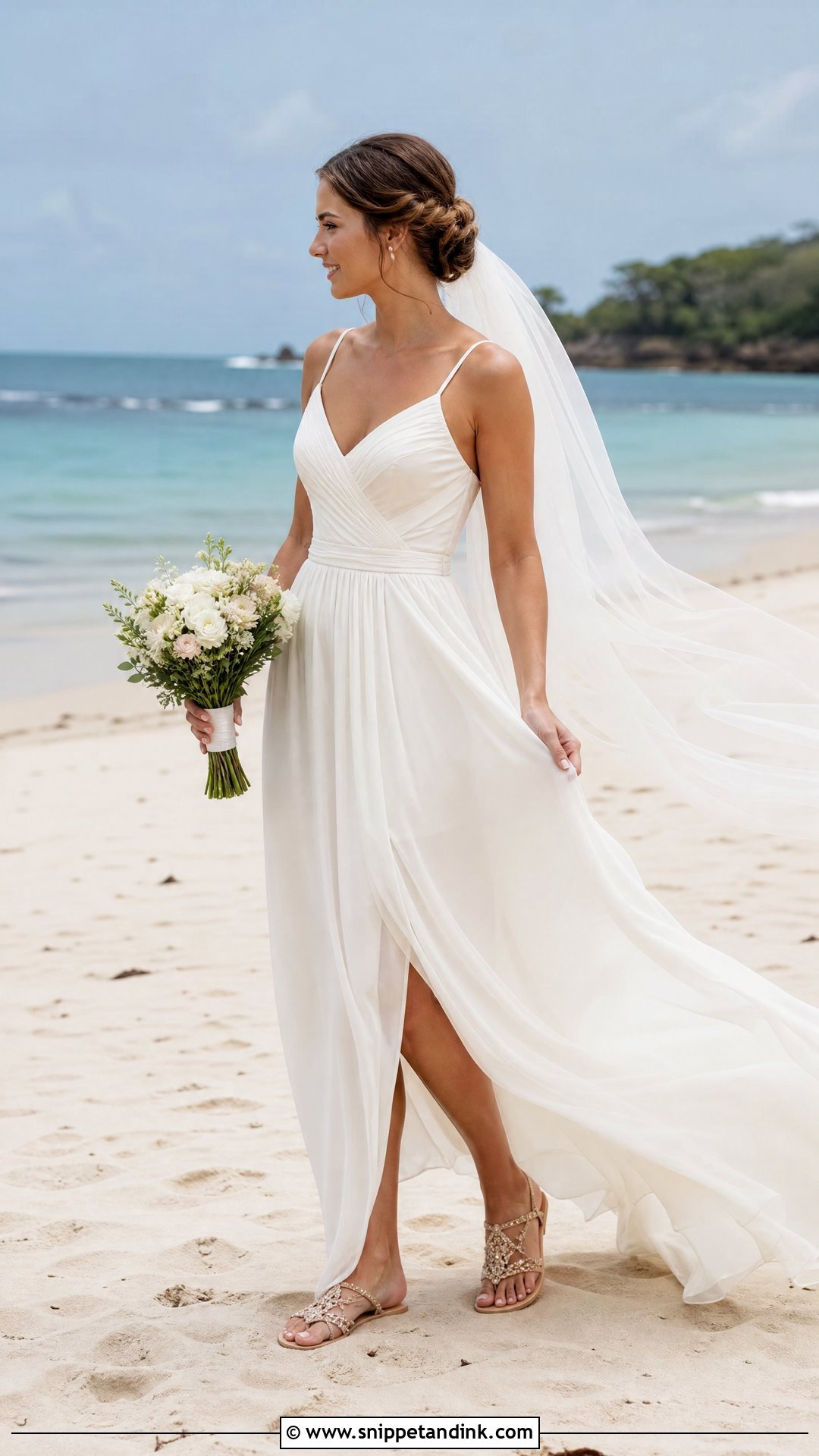
Wind is the problem at a beach, more than sand or heat. A lightweight chiffon, silk or crepe gown with a short train and a supportive bodice copes far better than a big skirt, which catches every gust. Flat sandals or low wedges keep you steady; heels sink straight in. Choose a veil you’re happy to take off after the vows, since a long one will spend the portraits blowing across your face. Pinned styles, braids and a sleek ponytail hold up in humidity better than loose waves. Heavy beading gets uncomfortable and hot in the sun.
14. Garden Wedding Look
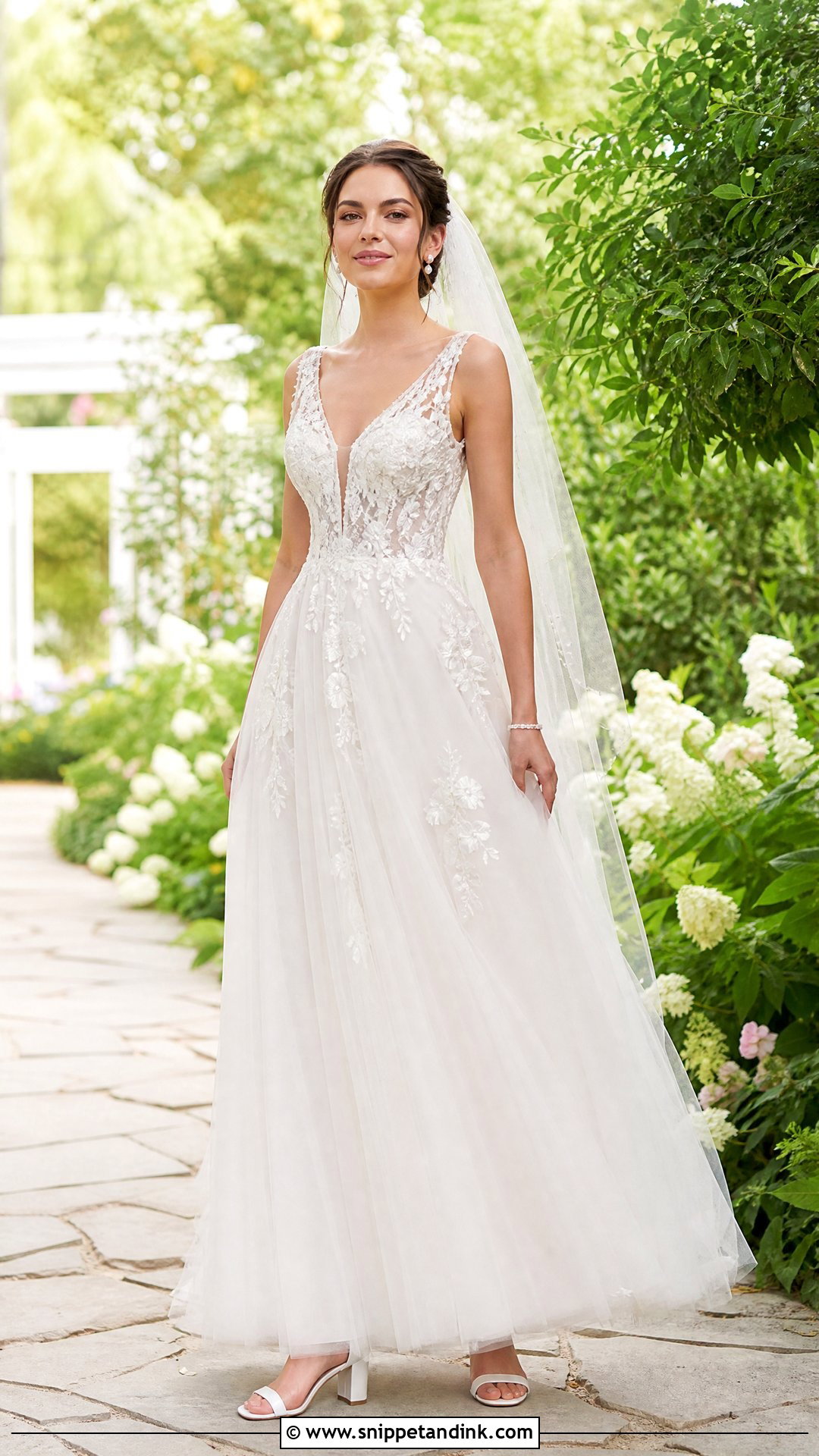
Garden gowns can borrow from the setting: floral appliqué or an airy tulle A-line looks at home among flowers and green paths. I keep the appliqué placed rather than covering the whole dress, so it reads as detail, not pattern. Block heels stop you sinking into lawn. A fingertip veil is much easier to manage outdoors than a long train, which drags across damp grass and picks up leaves. A soft updo with a few face-framing pieces and a pastel or greenery bouquet completes it for spring and summer gardens, conservatories and backyards.
15. Courthouse Wedding Look
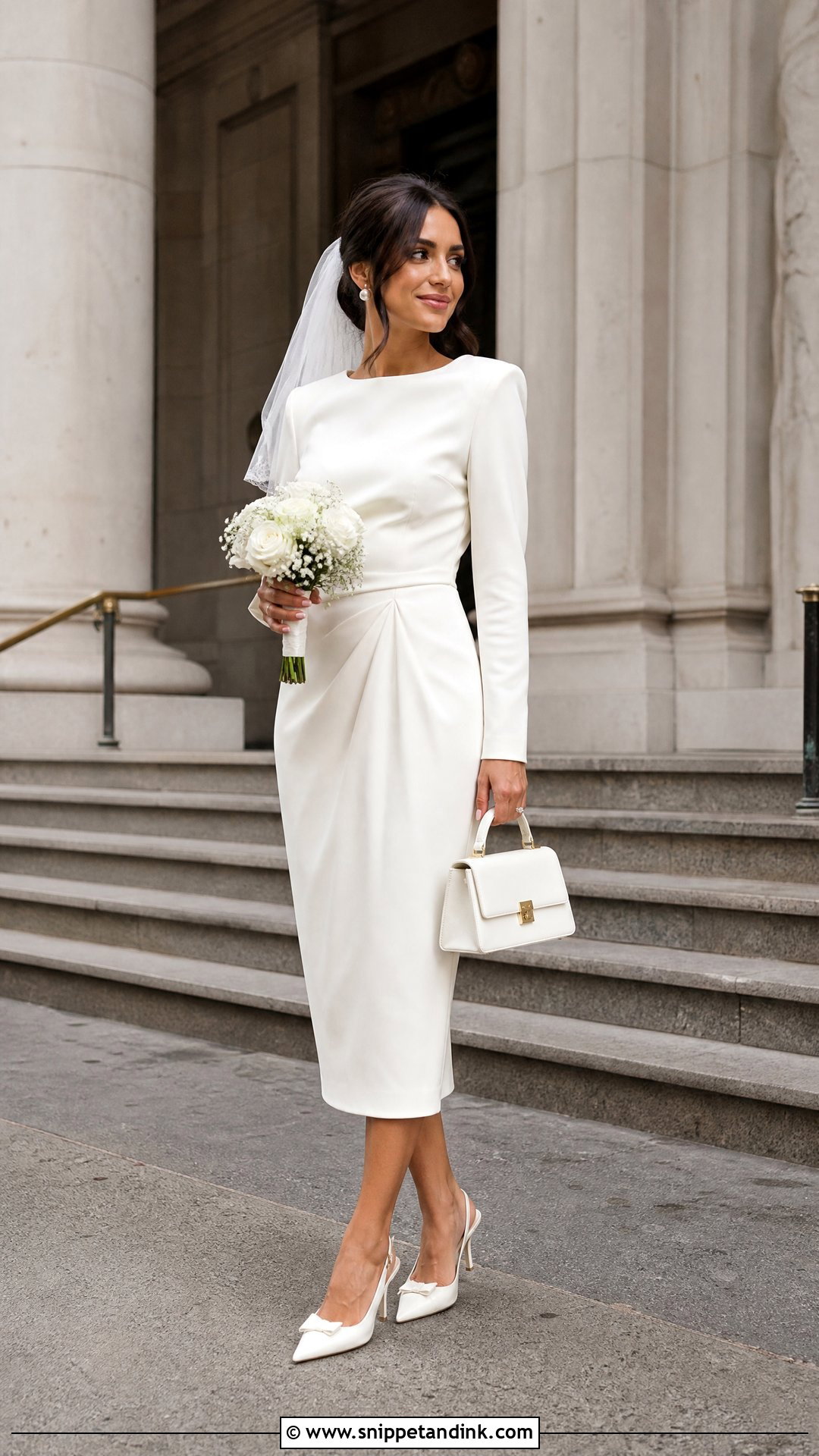
Courthouse weddings involve more waiting and walking than people plan for, often across a city for photos. A tailored midi, a sleek sheath or a blazer with a matching skirt in white, ivory or soft champagne looks bridal without a gown. Pointed slingbacks, a structured bag and pearl or gold earrings keep it polished. A short veil, a pillbox headpiece or a hair bow gives it a finishing touch. Bring a fitted coat in cooler months, and keep the bouquet small enough to hold during paperwork. The same outfit carries you straight on to lunch or a restaurant reception.
16. Winter Wedding Look
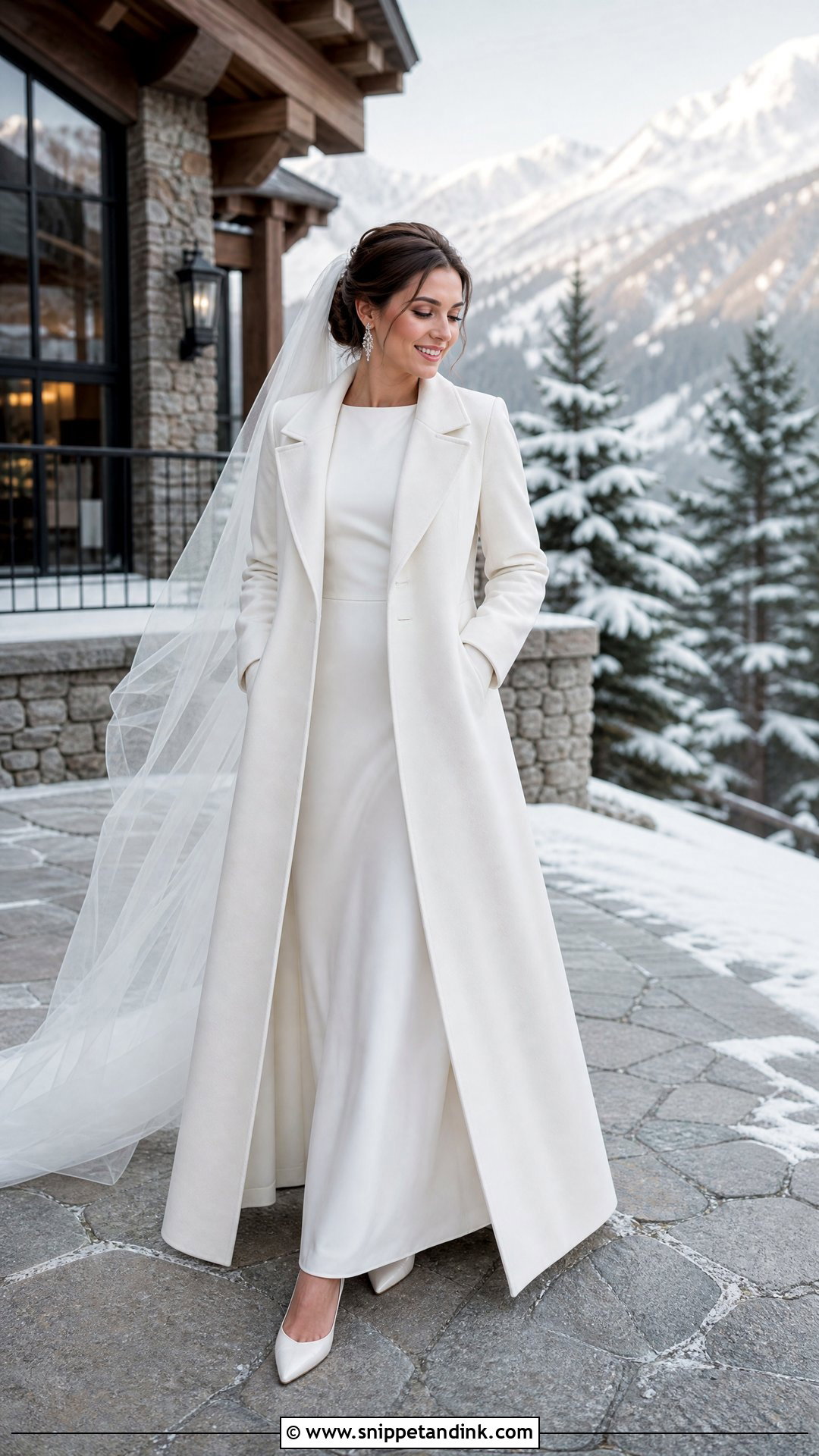
Warmth is the real styling problem in winter, so I plan the outerwear at the same time as the dress. A long-sleeve satin, crepe or lace gown with a lined bodice is the base. A tailored wool coat, faux-fur wrap or structured cape should be cut to fit over the sleeves without crushing them. Closed-toe pumps or dressy ankle boots are safer on icy steps. Heavier fabrics hold their shape in cold air better than thin layers of sheer tulle, which can look limp and offer no warmth. A long veil and a smooth low bun suit lodges, historic hotels and snow portraits.
17. High Neck Wedding Look
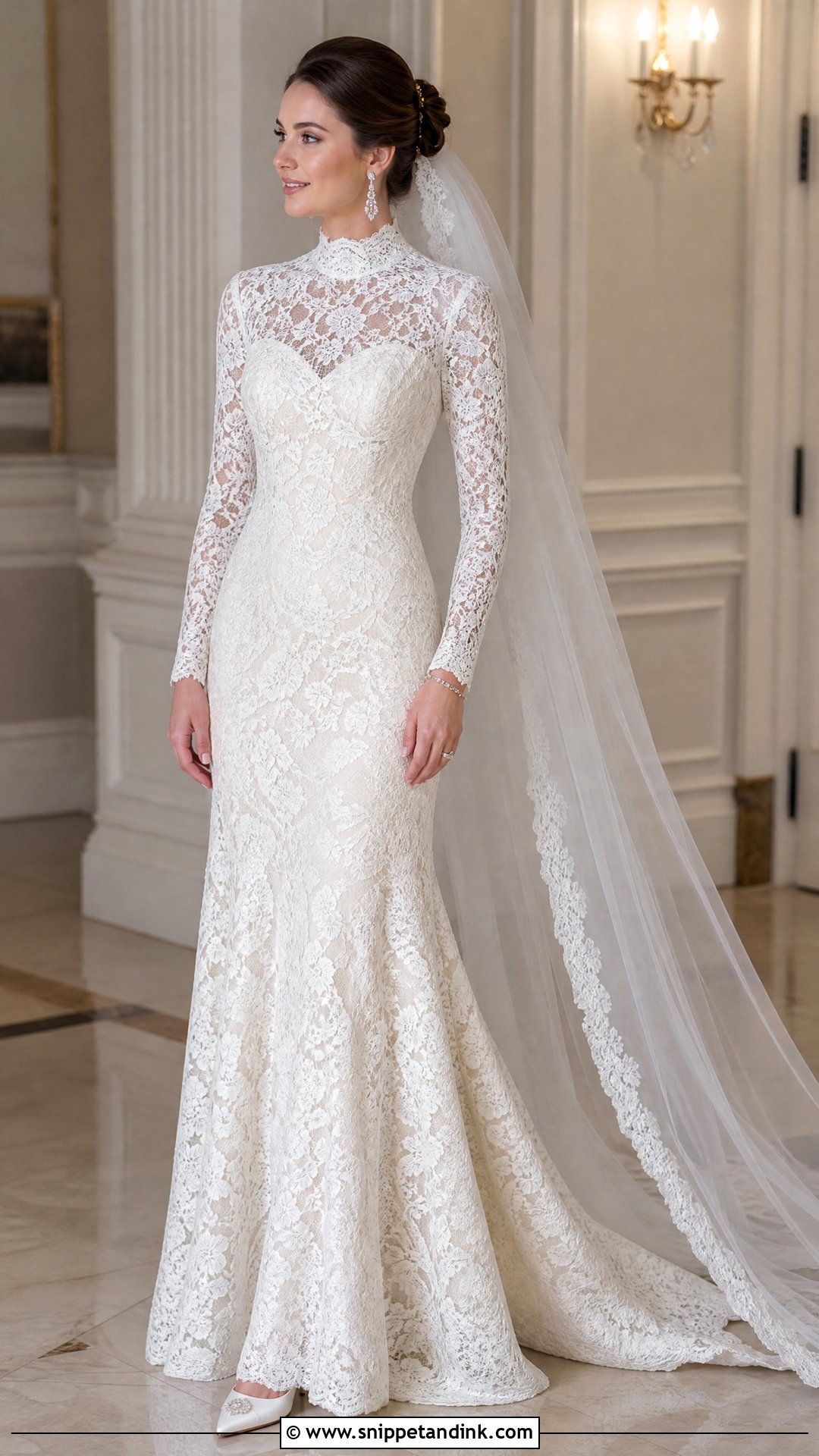
High necklines are dramatic but can feel heavy if the fabric is stiff. I go for soft lace, matte crepe or satin with clean seams, and I pay close attention to the fit at the neck itself. Too tight and you’ll feel it every time you swallow; too loose and it collapses forward. Skip the necklace entirely. Drop earrings, a slim bracelet and ivory heels are enough, with hair up so the collar shows. Attach the veil under the hairstyle so it doesn’t bunch at the nape. It’s a strong option for formal ceremonies, cooler seasons and anyone who wants modest coverage.
18. Square Neck Wedding Look
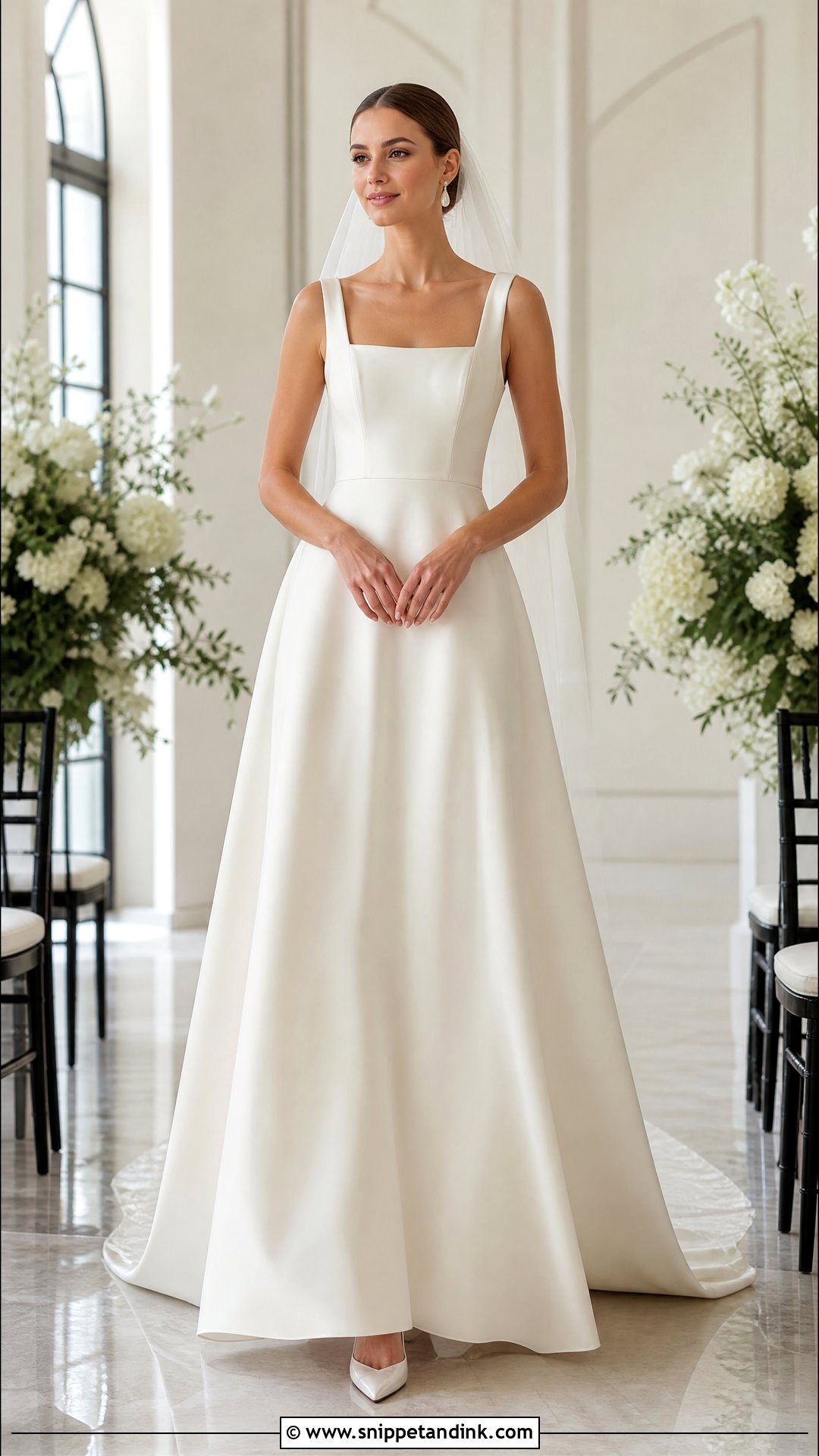
Square necklines frame the face with straight lines, and they’re one of the most forgiving shapes I fit across different bodies. Wide straps, long sleeves or a structured sleeveless bodice all work, with an A-line skirt for softness or a column for a sleeker line. Short drops and a fine chain bracelet suit it; a big necklace breaks up the shape. A center-parted bun, smooth waves or half-up hair keep it balanced. Watch the corners of the neckline at fittings. If the bodice is a touch loose, the square gapes outward when you lean forward.
19. Floral Embroidered Wedding Look
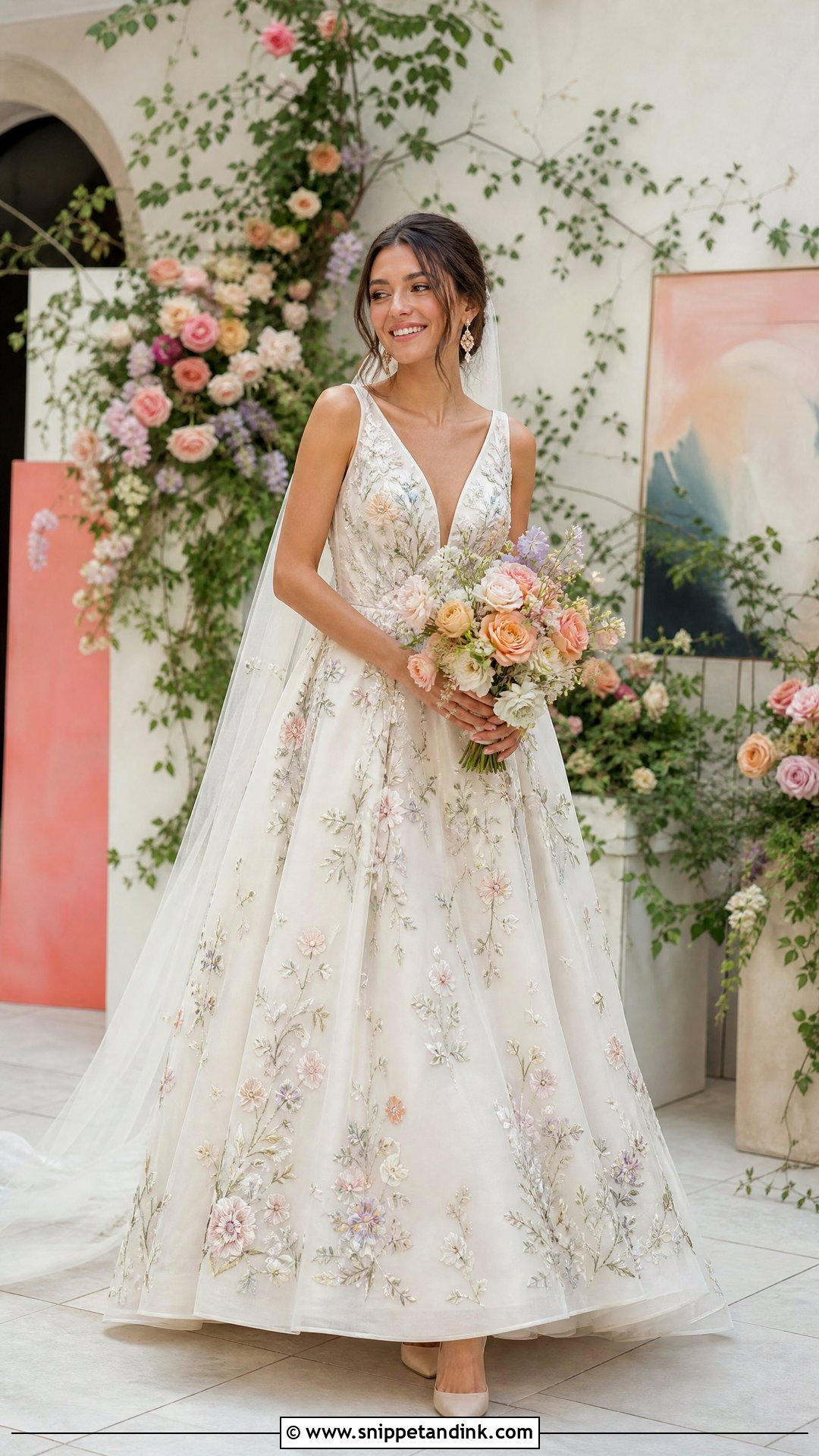
Colored floral embroidery is one of the easiest ways to step away from plain white without losing the bridal feel. Tonal ivory flowers stay subtle; soft colored thread is more expressive. Either way, keep the silhouette clean, a fitted bodice and flowing A-line, so the embroidery carries the look. A plain veil usually sits better than an embroidered one unless they were designed as a pair. Pull one soft color from the dress into the bouquet and stop there. Garden, gallery and destination weddings show it off well.
20. Reception Two Piece Wedding Look
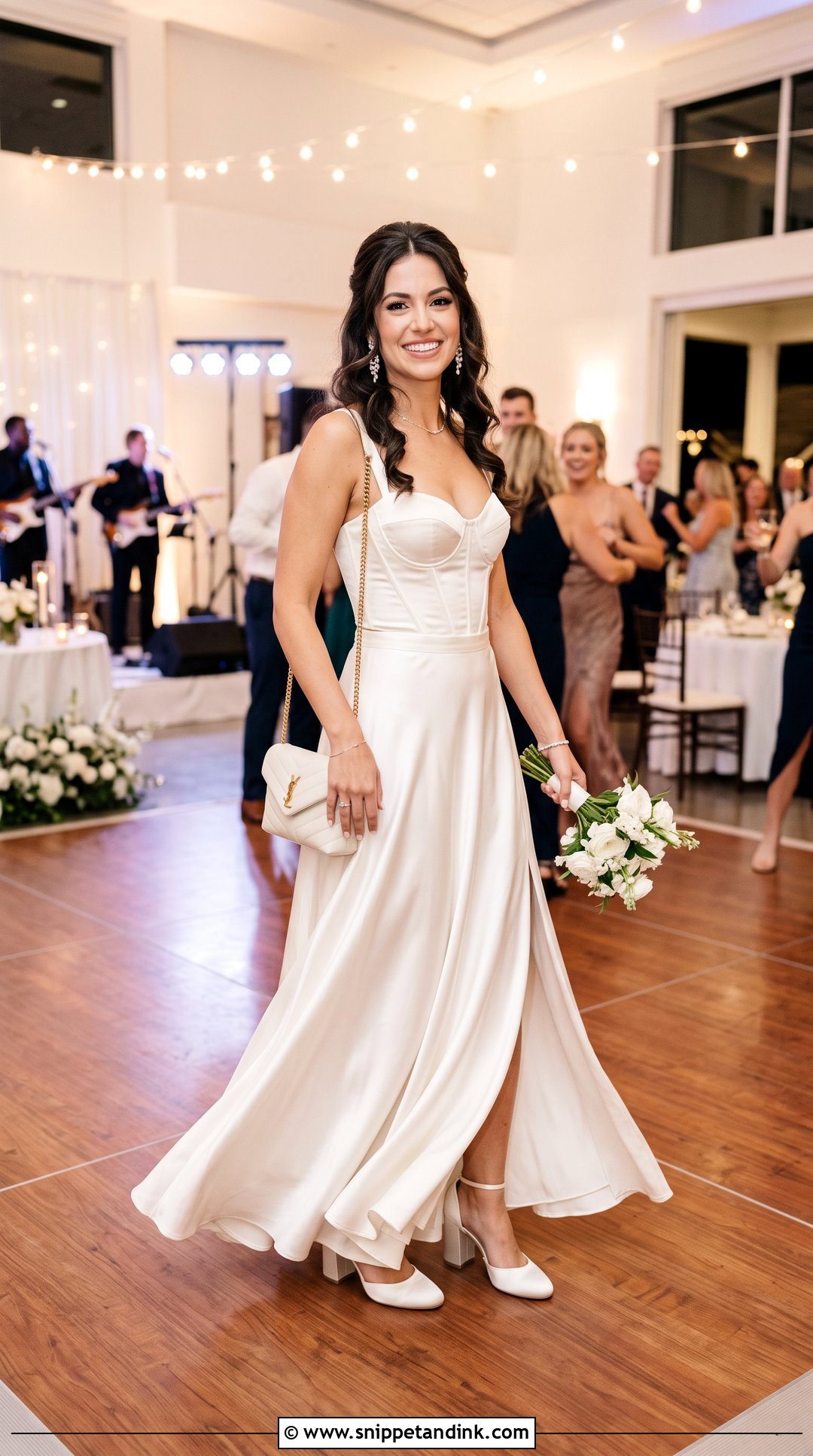
A bridal two-piece set is the reception outfit with the longest life afterward, since each half can be worn again separately. Pair a structured corset top, satin camisole or embellished crop with a high-waisted midi or maxi skirt, keeping the amount of skin to what you and the room are comfortable with. If the top is detailed, the skirt should be plain and fluid; a simple top can take feathers, fringe or sparkle below. Block heels and a small shoulder bag free your hands for dancing. The gap between top and skirt shifts as you move, so test it with your arms raised.
How Satin, Crepe, Lace and Chiffon Read on Camera
The fabric changes how a dress looks in photos as much as the cut does, and it’s something I point out at every appointment, because a shop mirror under soft lights doesn’t show it.
- Satin catches light and shows every wrinkle and seam. It looks rich in portraits but creases where you sit, so plan a quick steam or a smooth-out before formal photos after the ceremony.
- Crepe is matte and holds a clean line, which suits minimal and modern looks. It reveals undergarment edges, though, so foundations need to be smooth.
- Lace gives texture that reads well in close-ups. Very fine lace can look flat from a distance, so a fuller pattern or a little beading helps in wide shots.
- Chiffon and tulle move beautifully in wind and on a dance floor. They photograph soft rather than structured, and pale layers can turn slightly transparent against strong backlight.
- Bright white can show a blue tint under camera flash; ivory and soft white usually look warmer next to most skin tones.
If you can, ask the shop for a quick photo of you in the dress near natural light. It tells you more than an hour in front of the mirror.
Your Venue Narrows the List Faster Than Any Trend
A good bridal wardrobe comes from matching each piece to what the day will ask of it. The looks above cover formal ceremonies, gardens and beaches, courthouses and late-night receptions. Start with a silhouette that feels secure, then add shoes, jewelry, hair pieces and outerwear that suit the setting instead of competing with the dress. Walk, sit and dance in the whole outfit before the wedding. Good alterations will do more for a simple dress than any accessory can. Trends are worth looking at, but the outfit should look like you.


Leave a Reply