
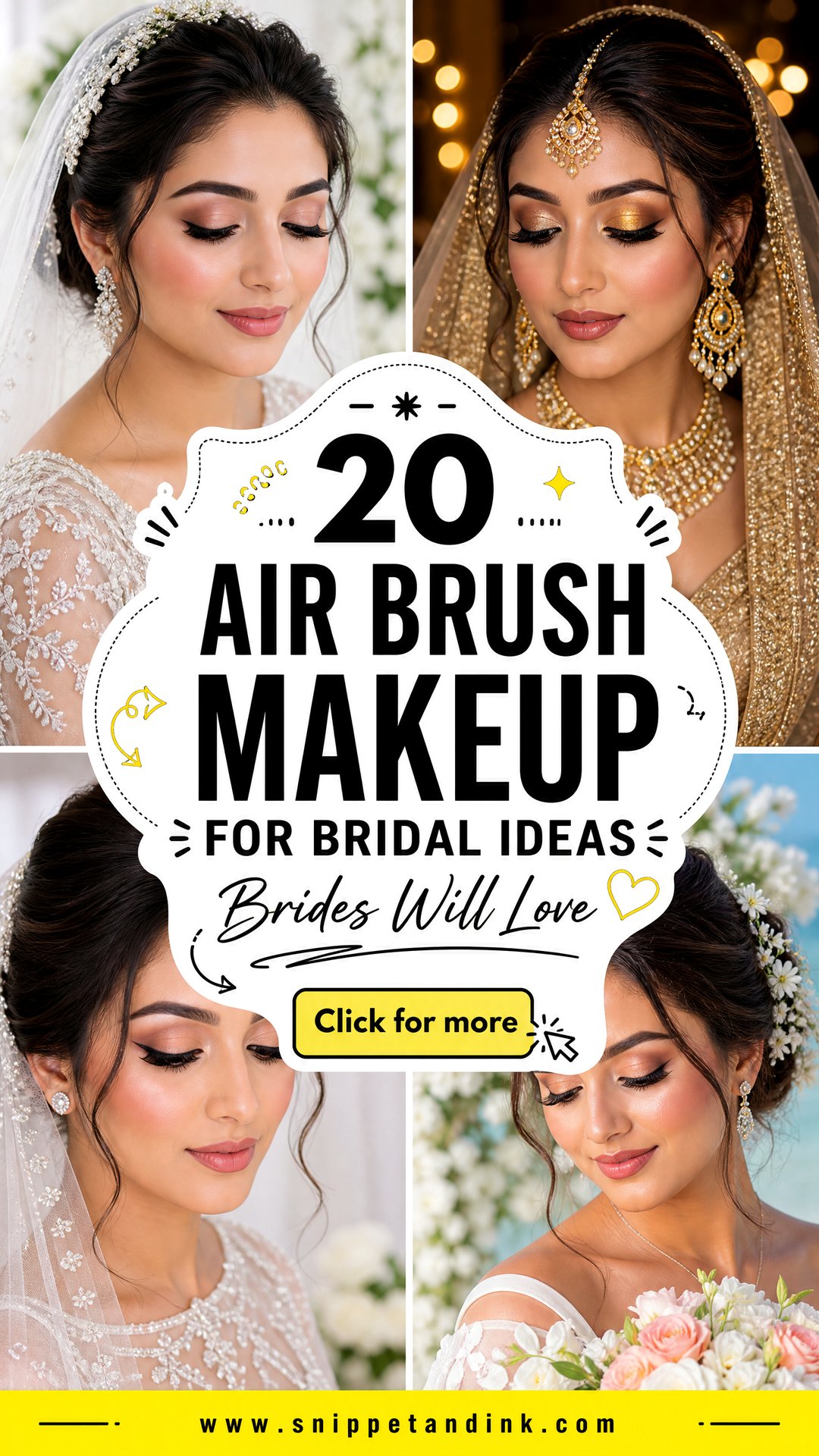
Brides usually ask me for airbrush because they’ve heard it lasts and looks smooth on camera. Both are true, with conditions. The foundation goes on as a fine mist, so I can build coverage in thin passes instead of pressing cream into the skin, and a good silicone formula will sit through hugs, tears and a warm reception. What it won’t do is hide flaking or fix skin that wasn’t prepped. Below are twenty complete bridal faces built on an airbrush base, from barely there to full glam, and for each one I’ve noted what I’d actually do in the chair and who it suits.
What the Airbrush Gun Can and Cannot Do for Your Skin
Airbrush foundation is a liquid thin enough to pass through a small gun powered by a compressor. I build it up in passes, holding the gun several inches from the face and moving constantly, so the color lands as tiny dots rather than a smeared layer. That’s why it looks smooth on camera: there are no brush strokes or sponge edges for a lens to catch.
The formula matters as much as the tool. Most artists carry one of three types, and it’s worth asking which yours uses.
- Silicone-based: the longest wearing and the most water resistant. My usual choice for weddings, especially in heat. It needs an oil cleanser or balm to remove properly.
- Water-based: lighter and easier on sensitive or dry skin, but it moves sooner with sweat and tears.
- Alcohol-based: very durable and mostly used for body work or tattoo cover. Too drying for most faces.
What airbrush can’t do is change texture. Raised acne, flaking and enlarged pores still show, and a dry patch can look more obvious because the mist sits on top of it. If your skin is very dry or you’re mid-breakout, a traditional cream foundation pressed in with a sponge may serve you better, and a good artist will tell you that honestly at the trial.
1. Natural Airbrush Bridal Makeup
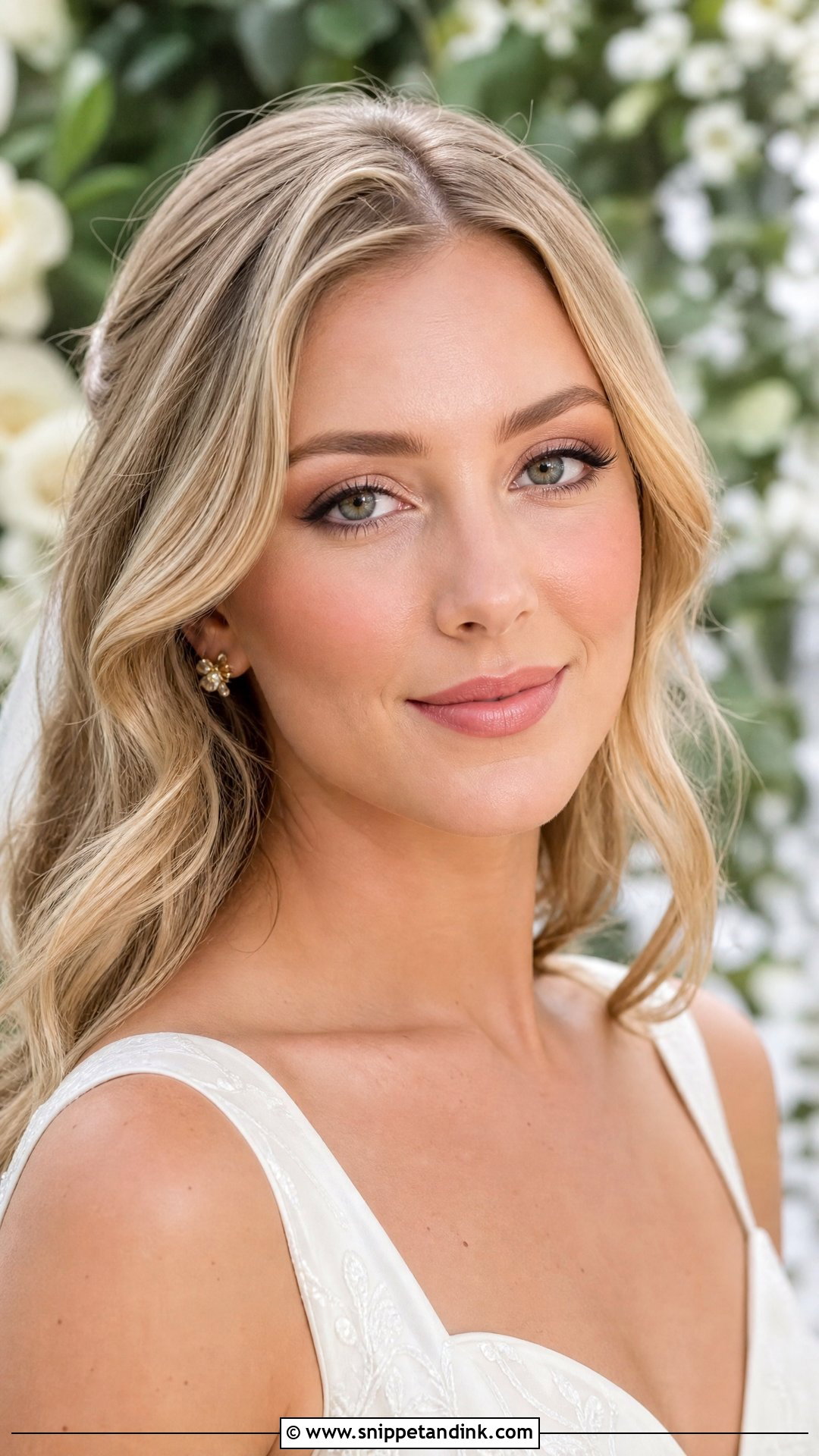
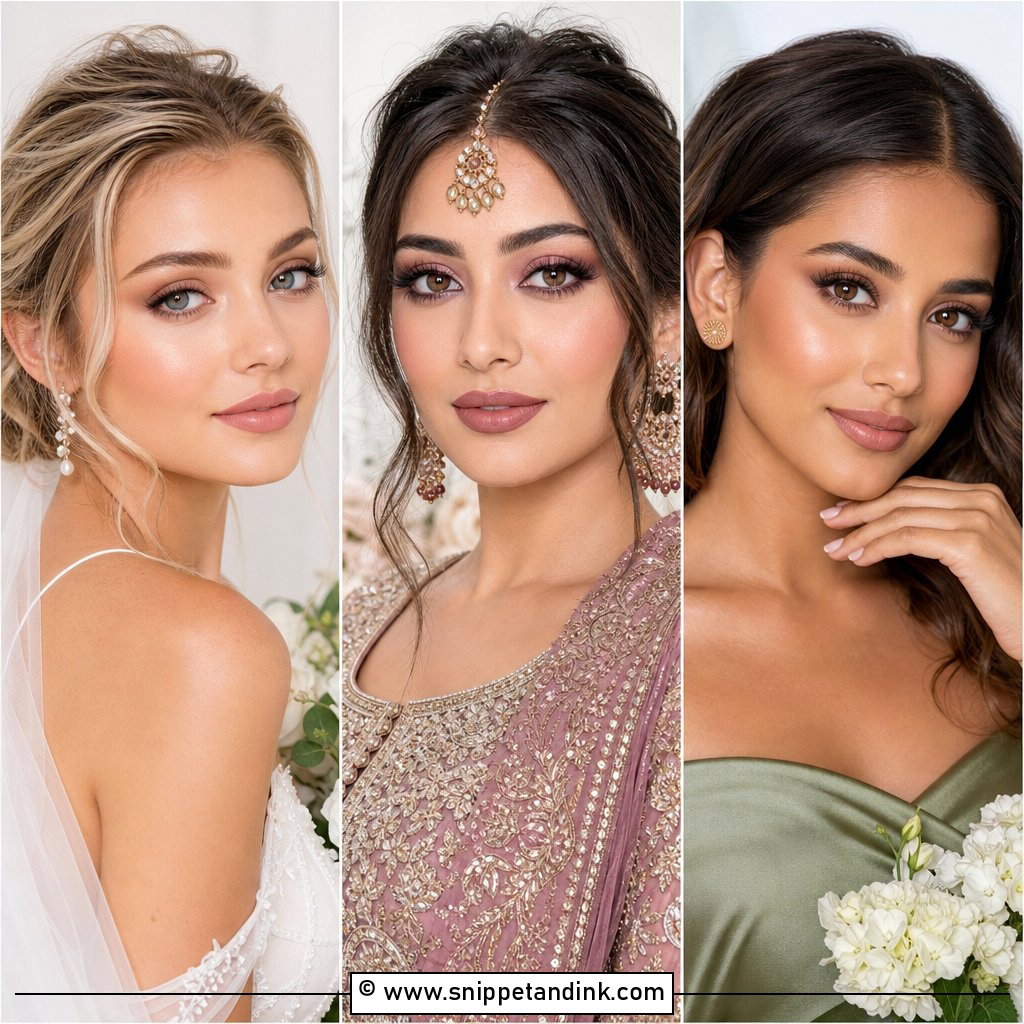
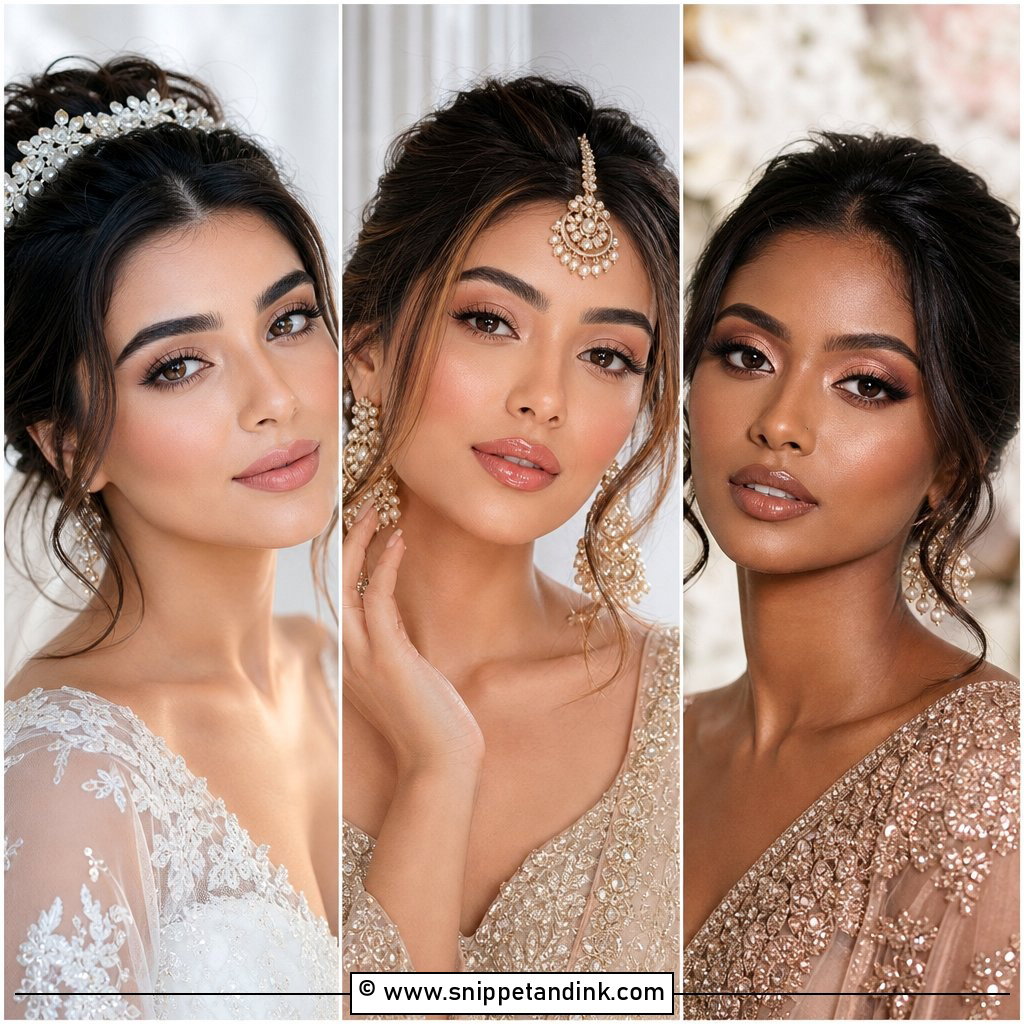
This is the look I end up doing most often for brides who rarely wear foundation. I spray at low pressure from a little further back, two light passes at most, so redness softens but freckles still show through. Then I spot-conceal only where the airbrush didn’t quite reach, usually the corners of the nose. Eyes stay simple: champagne or soft taupe on the lid, a thin brown liner, curled lashes and brushed-up brows. A peachy-pink blush and a rosy nude lip finish it. Outdoor and courthouse ceremonies suit it best, because daylight is kind to a thin base.
2. Dewy Airbrush Bridal Makeup
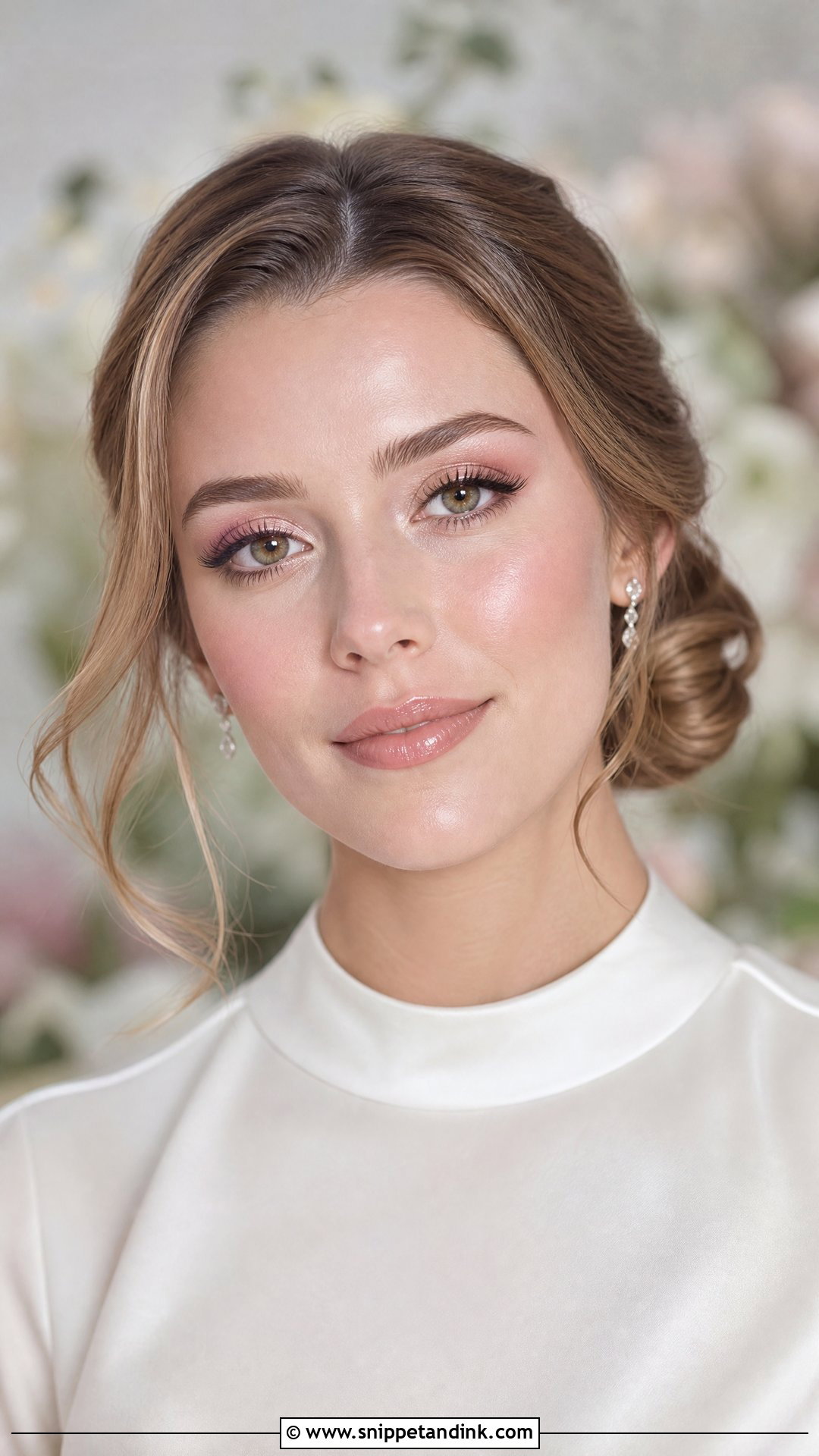
A fresh, hydrated glow on an airbrush base comes from where the radiance goes, not from a shiny foundation. I lay a satin airbrush layer first, then press cream blush and a soft highlight onto the cheekbones and keep the T-zone lightly powdered so the glow doesn’t spread. Warm beige or pale rose on the eyes, wispy lashes and a glossy nude-pink lip complete it. One honest warning: on oily skin, dewy turns into shine by the speeches, so I only suggest it to normal or dry skin types.
3. Matte Airbrush Bridal Makeup
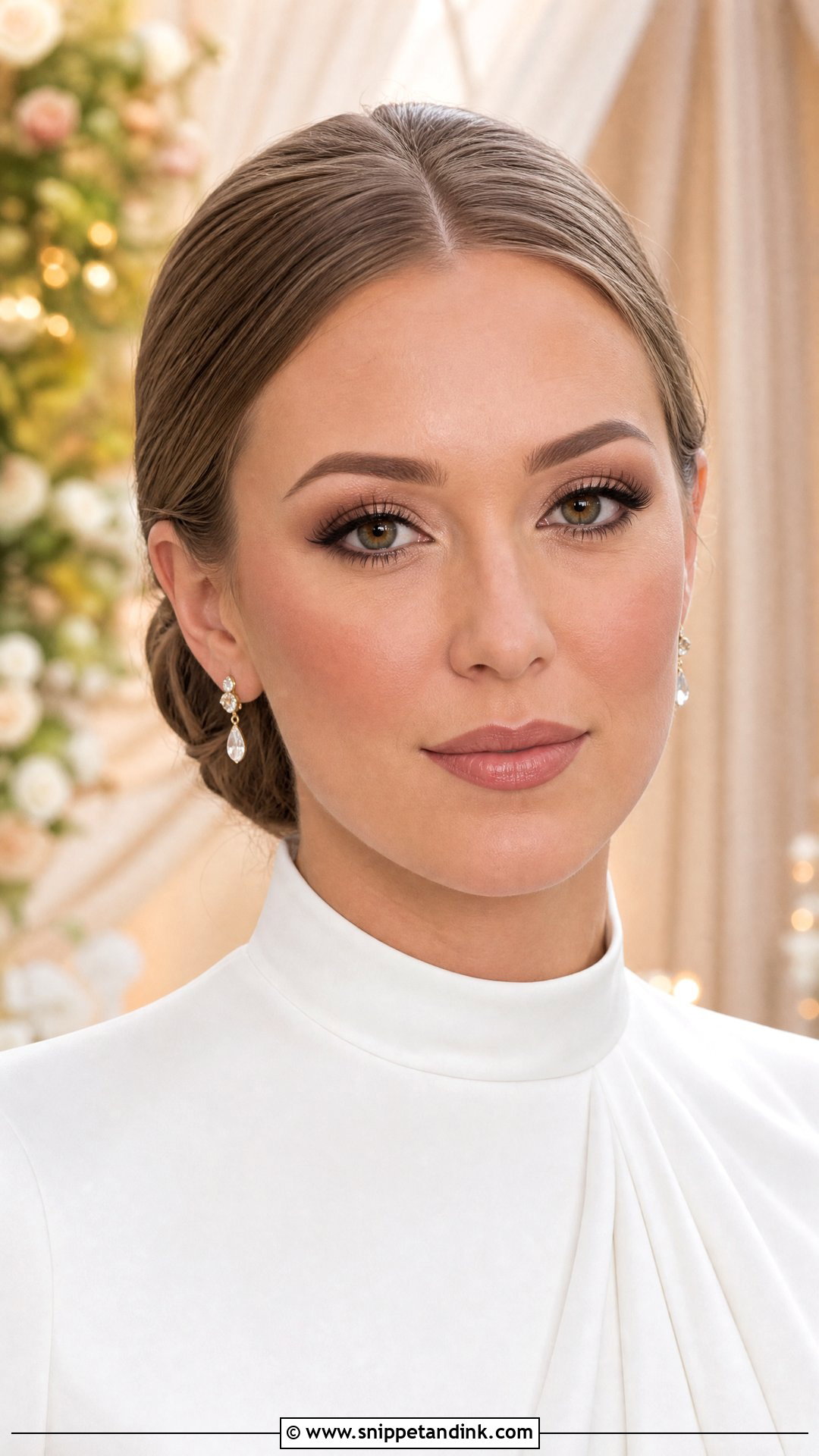
Oily skin, humid venues and twelve-hour days all point toward a matte airbrush finish. Done well, it looks like velvet rather than powder. I keep the foundation layer thin and let a mattifying primer do the oil control underneath, because stacking powder on top of airbrush is what makes skin look flat. Soft contour, muted blush and a little cream glow only on the very top of the cheekbone keep the face from looking one-dimensional in photos.
4. Soft Glam Airbrush Bridal Makeup
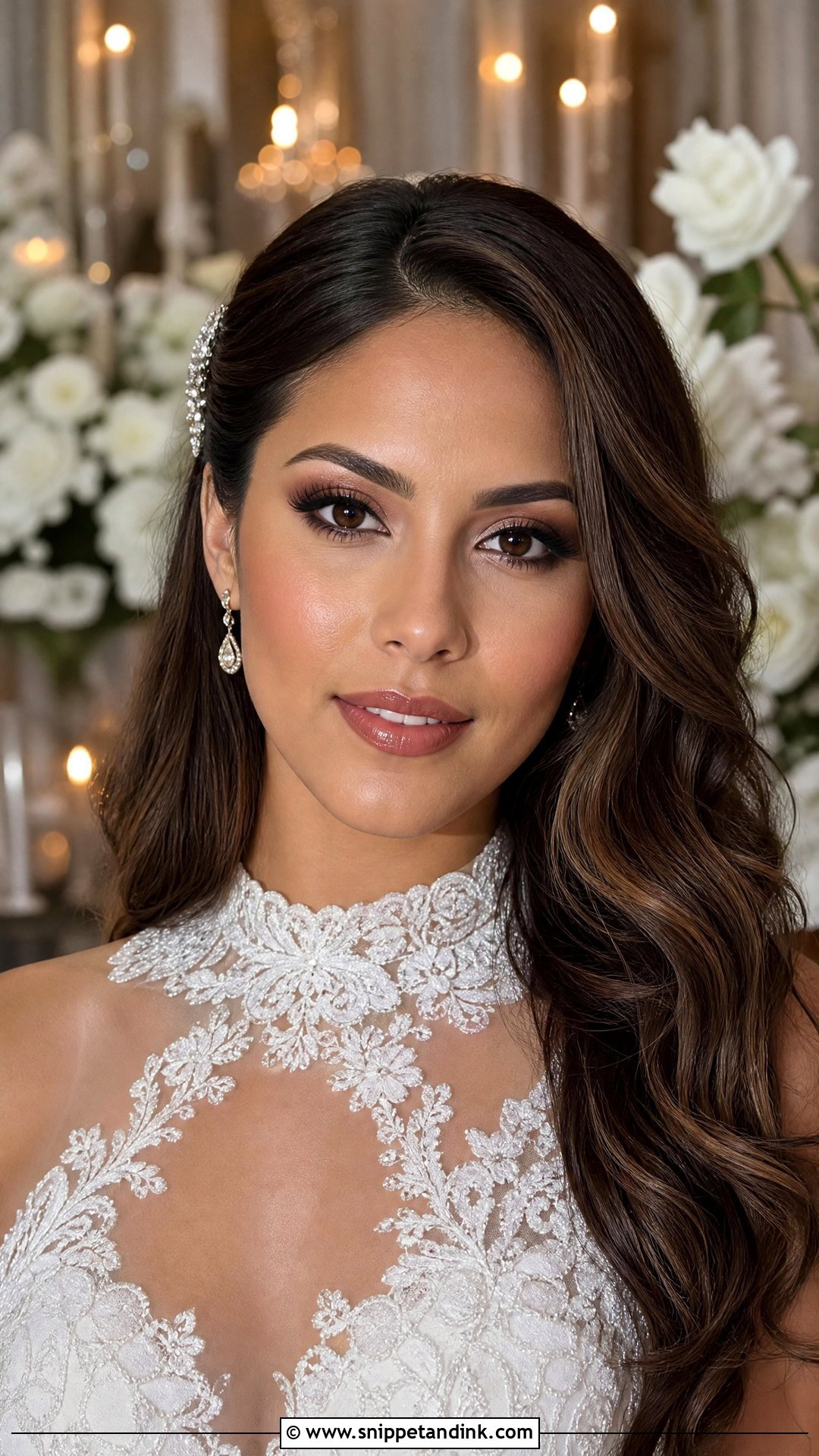
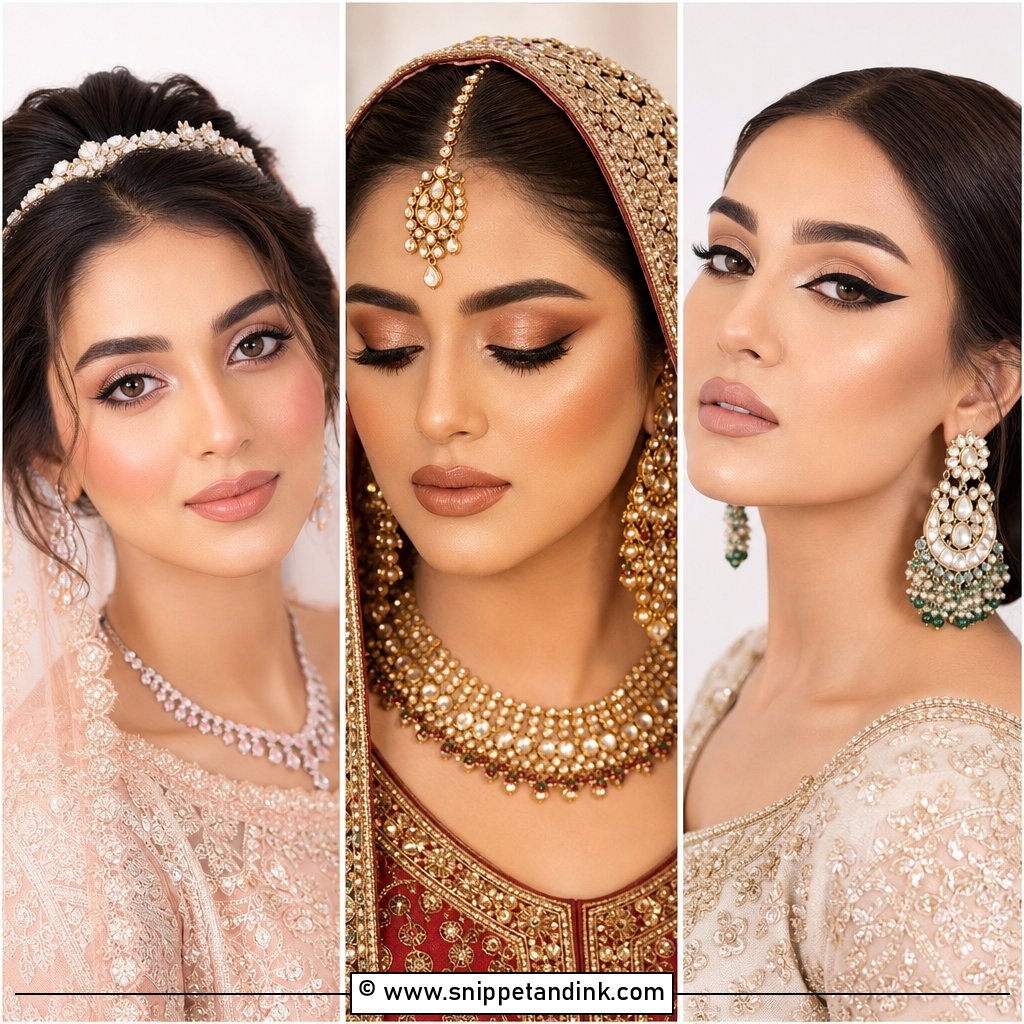
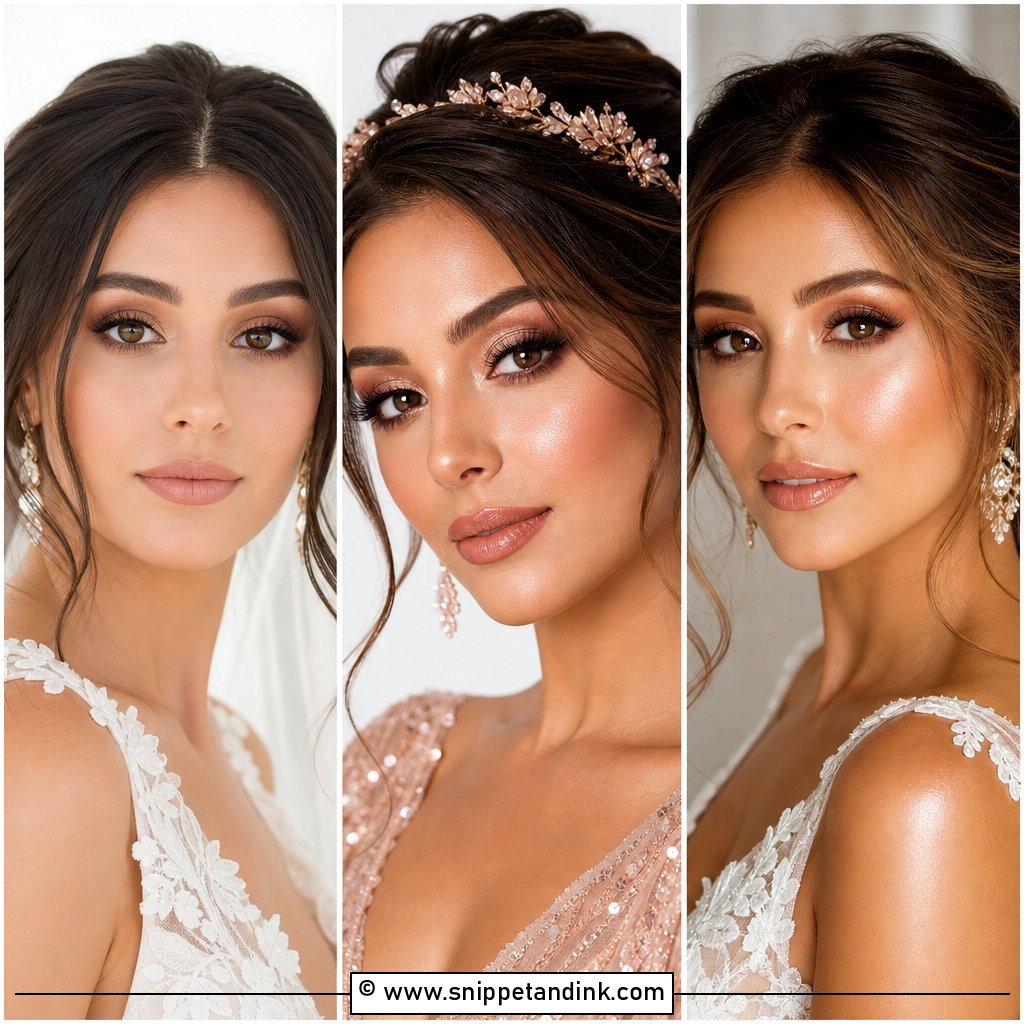
Soft glam is the middle ground most of my brides land on after the trial. The skin is smooth and lightly sculpted, the eyes get warm neutrals with a gentle smoke at the outer corner, and lashes add flutter without looking like strips. I keep brows structured but brush the front hairs upward so they don’t look stamped on. A rosy nude lip and warm blush balance the eyes. It sits comfortably with satin or lace and reads as makeup in photos while still looking like you across a dinner table.
5. Full Coverage Airbrush Bridal Makeup
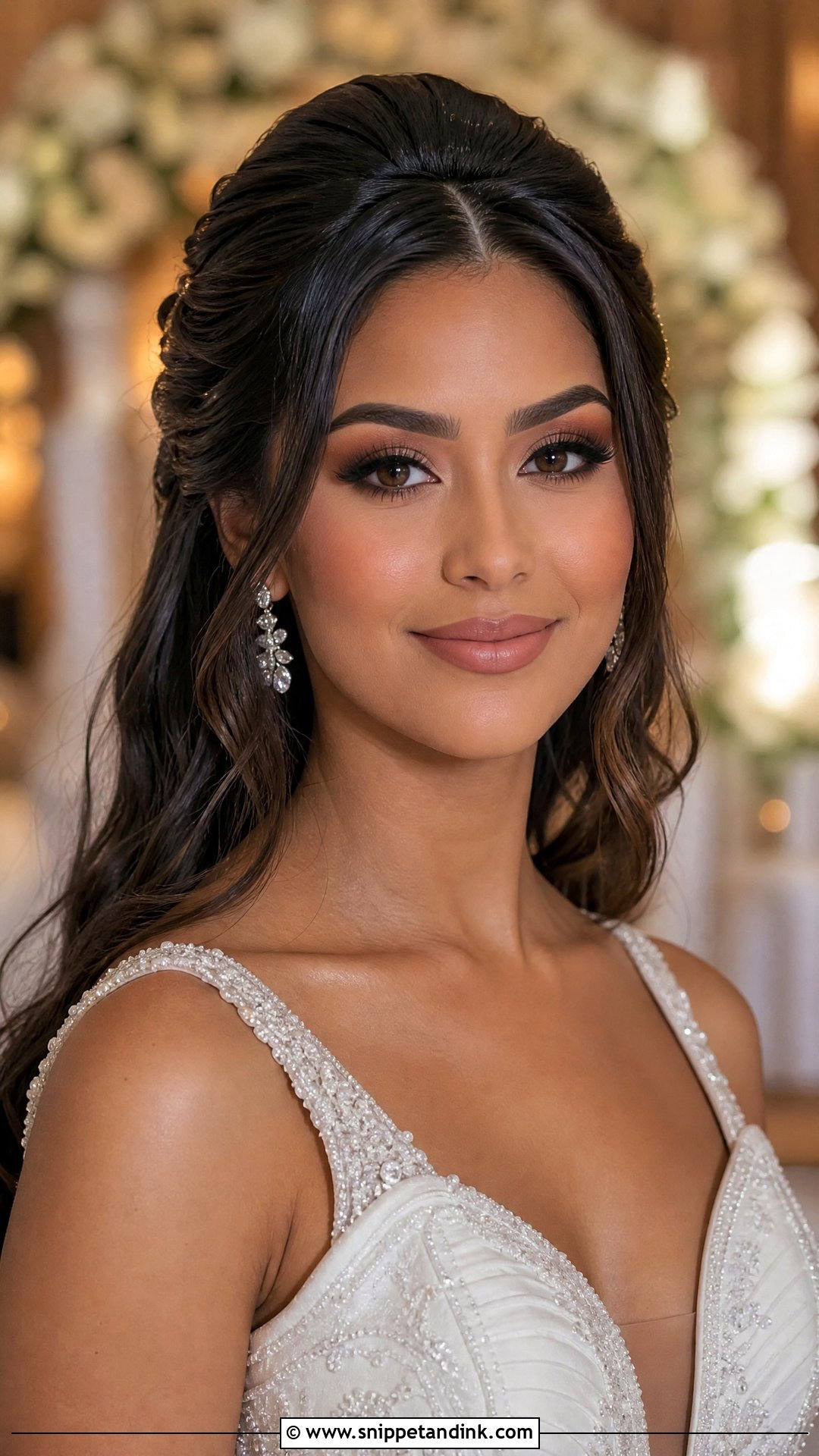
Full coverage airbrush bridal makeup is where the technique earns its reputation. Acne marks, redness and hyperpigmentation can be covered in several fine mists instead of one thick layer, so the skin looks perfected without that cakey edge around the nose. I still finish with targeted concealer on the darkest marks, because forcing the airbrush to cover everything means overspraying the whole face. Bronze-brown eyes, defined liner, full lashes and a neutral rose lip keep the perfected base from looking masklike. Raised texture is the limit here: coverage hides color, not bumps.
6. Airbrush Bridal Makeup For Oily Skin
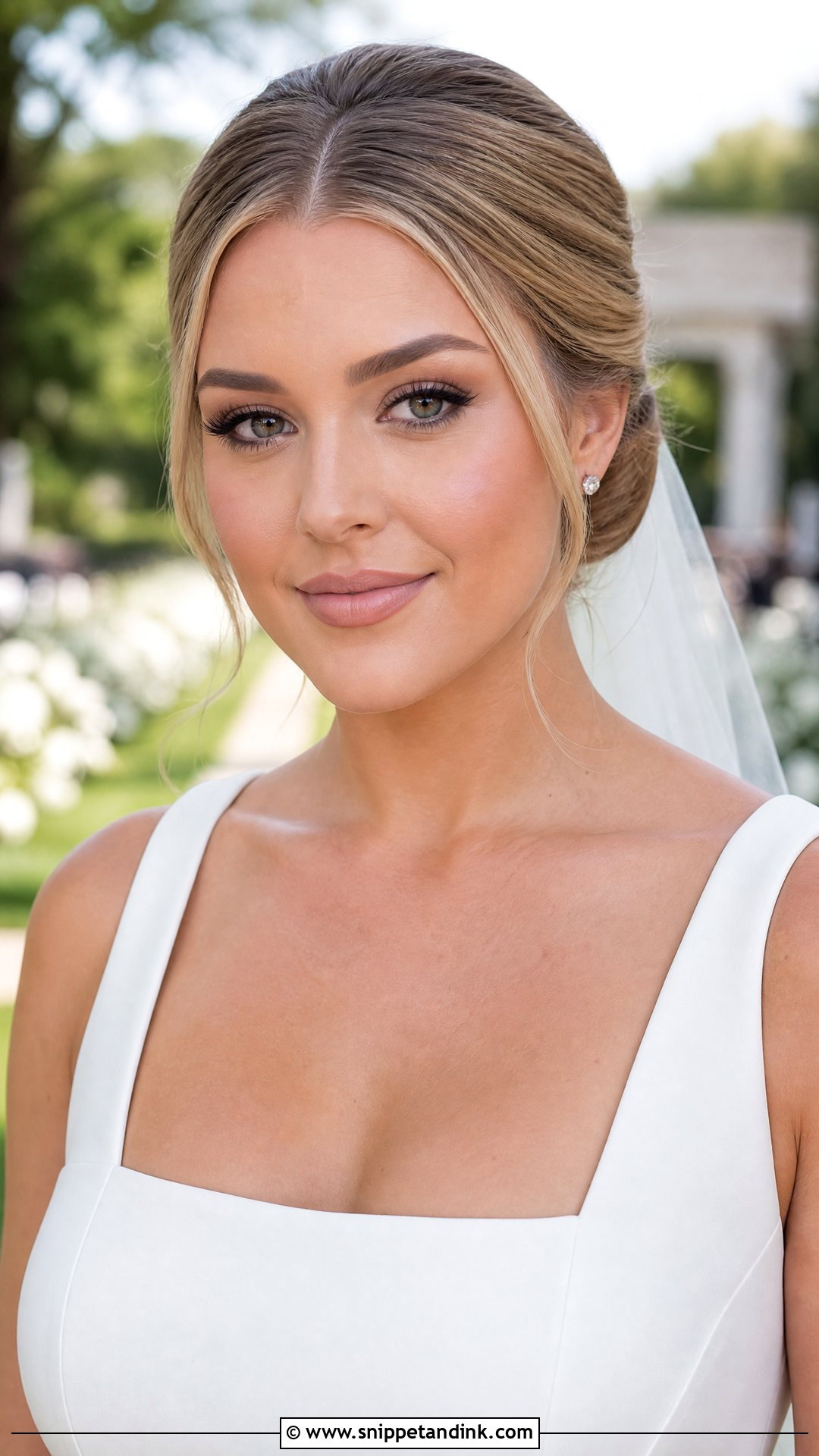
Oily skin needs grip more than coverage. I prep with a light hydrating layer, add mattifying primer only on the forehead, nose and chin, then airbrush a long-wear formula in one even veil. Silicone-based airbrush foundations resist shine better than water-based ones, so that’s what I reach for here. A fine powder goes on the sides of the nose and chin only. Soft brown eyes, waterproof liner and a satin nude lip keep it fresh. Plan on one blotting paper touch-up after the ceremony; that is normal, not a failure.
7. Airbrush Bridal Makeup For Dry Skin
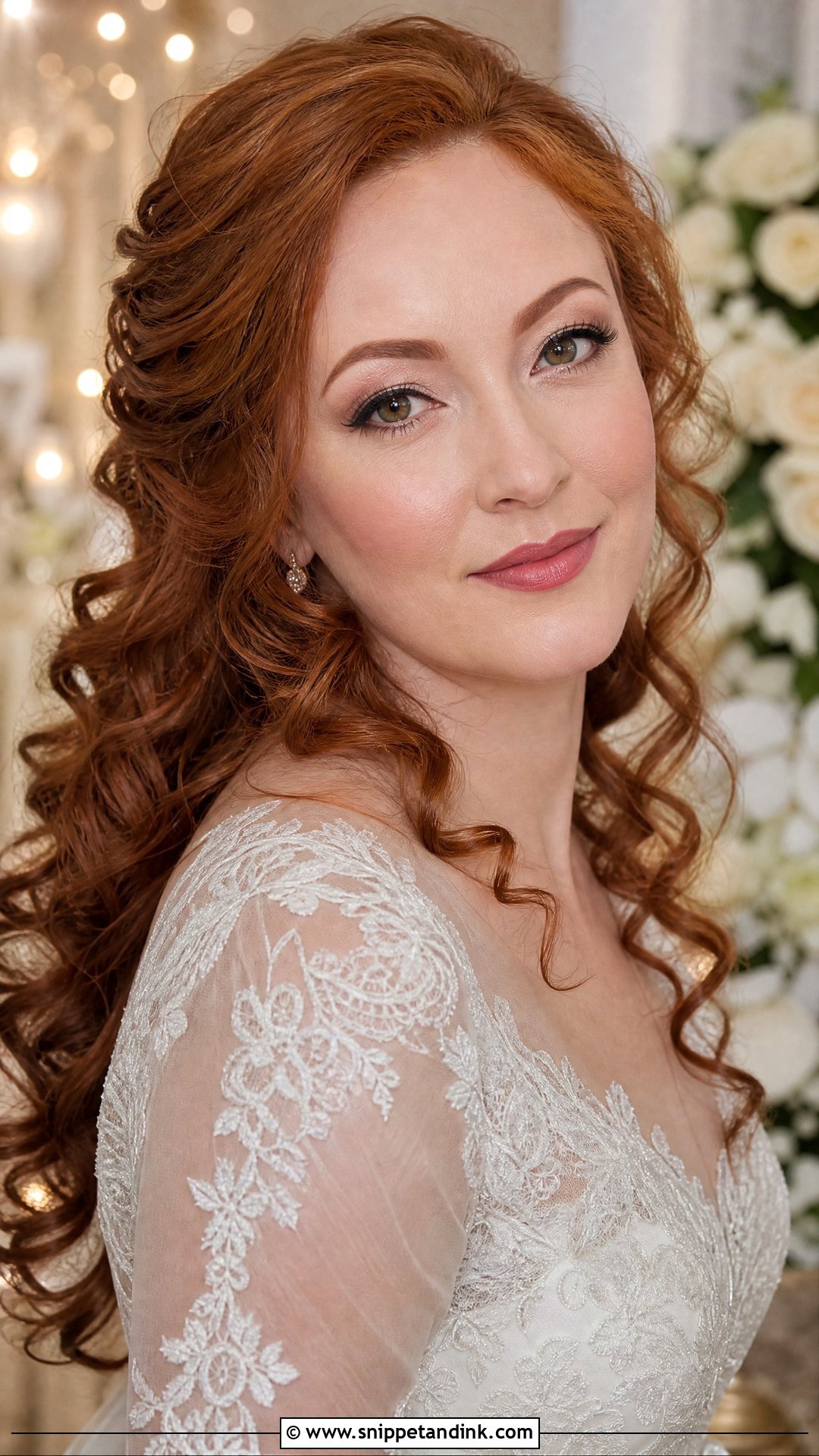
Dry skin is the case where I’m most careful with airbrush. The mist catches on any flake and makes it more visible, so prep matters more than product: a hydrating serum, a rich moisturizer given ten minutes to sink in, then a flexible primer. I choose a satin or luminous formula, never a fully matte one. Cream blush, a gentle liquid highlight and powder only under the eyes keep it comfortable. A creamy rose lip suits it far better than a dry matte. If your skin is flaking the week of the wedding, exfoliate gently a few days before, not that morning.
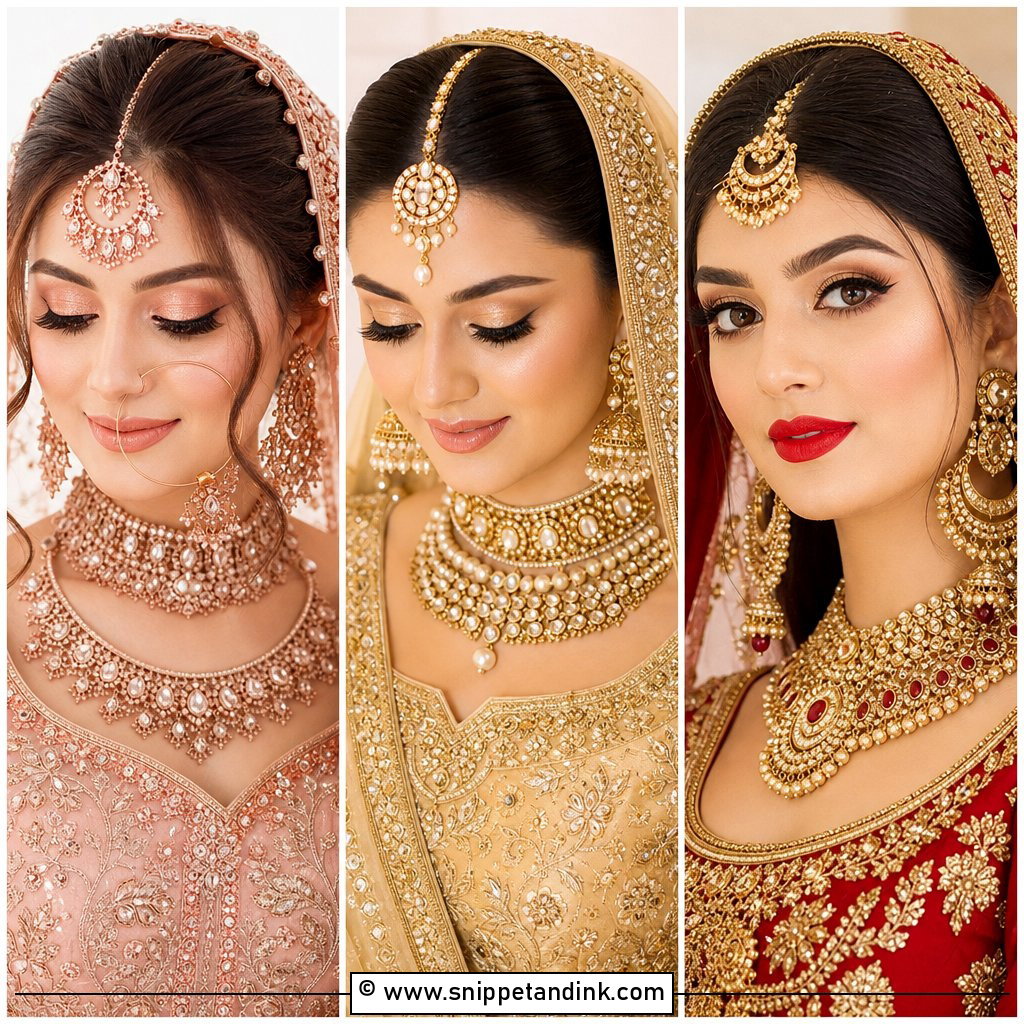
8. Airbrush Bridal Makeup With Red Lip
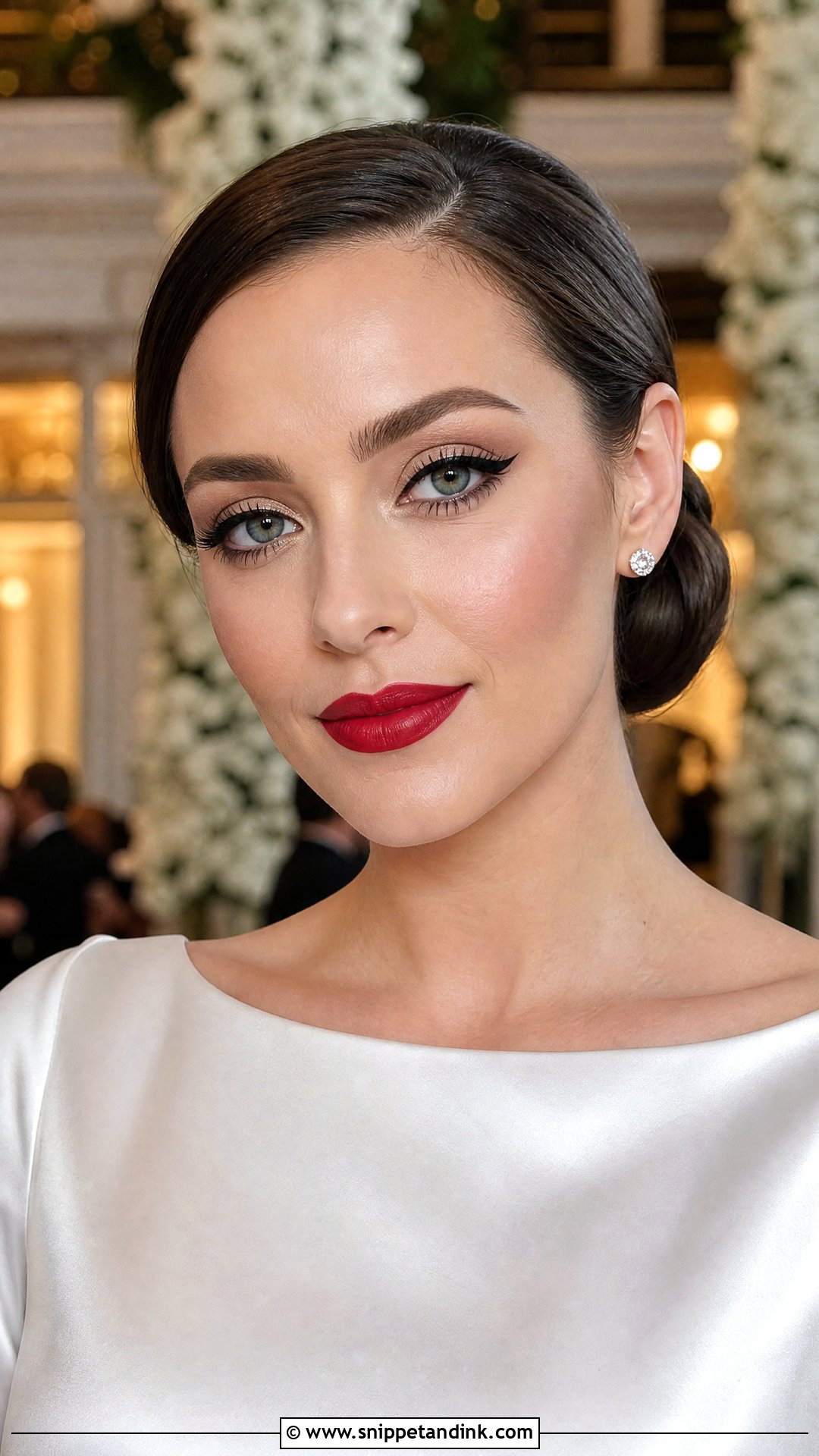
A red lip asks everything else to step back. I keep the airbrush base clean and evenly balanced, contour softly and use only a restrained highlight so the face doesn’t compete with the mouth. Matte neutrals on the eyes, a thin wing and defined lashes give enough structure. The shade matters more than people expect: blue-reds whiten teeth on camera, brick reds sit better on warm undertones, and true red is the safest middle. I line the whole lip, blot and reapply, and hand the bride the lipstick for after dinner. Classic gowns and black-tie evenings carry it best.
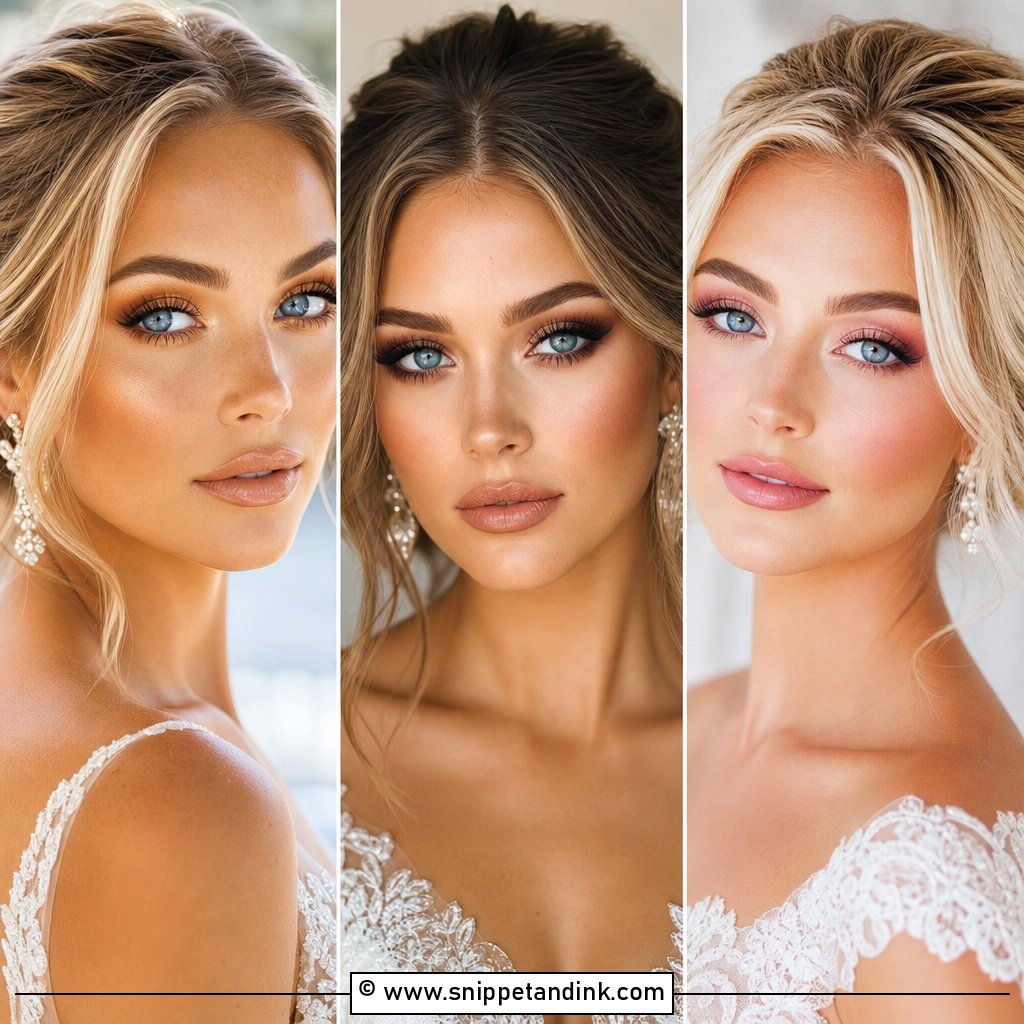
9. Airbrush Bridal Makeup With Nude Lip
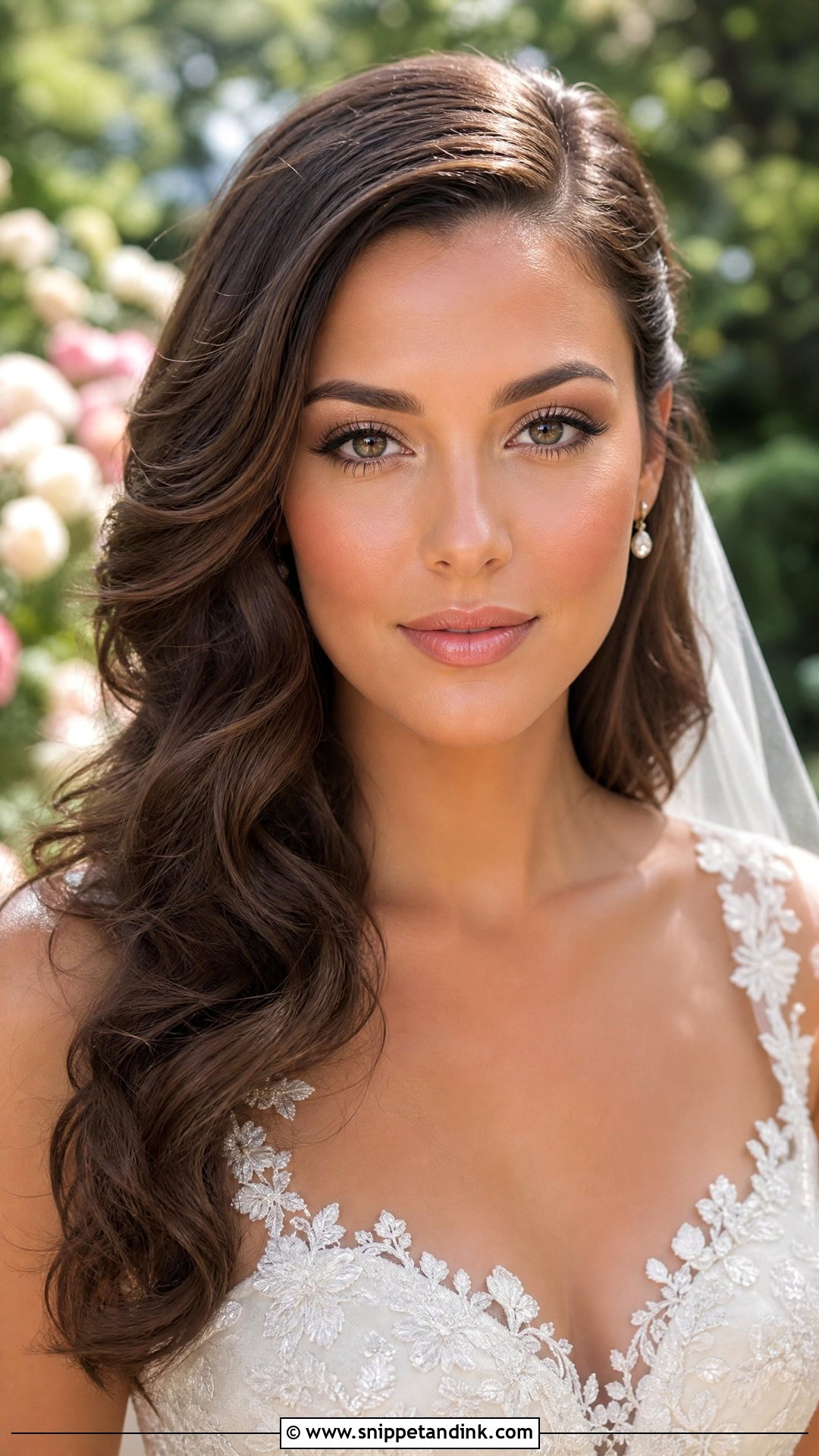
The trap with a nude lip is picking one that drains the face. Fair skin usually suits pink-beige, medium skin looks right in peachy nudes, and deep skin glows in caramel, cocoa or warm rose. Hold the lipstick against your lips in daylight at the trial, not under vanity bulbs, which flatter almost every shade. Around it, I keep the airbrush complexion smooth with bronzer and a healthy blush, then decide the eyes: champagne shimmer for daytime or a soft brown smoke for evening. It adapts to nearly any venue.
10. Airbrush Bridal Makeup With Smokey Eyes
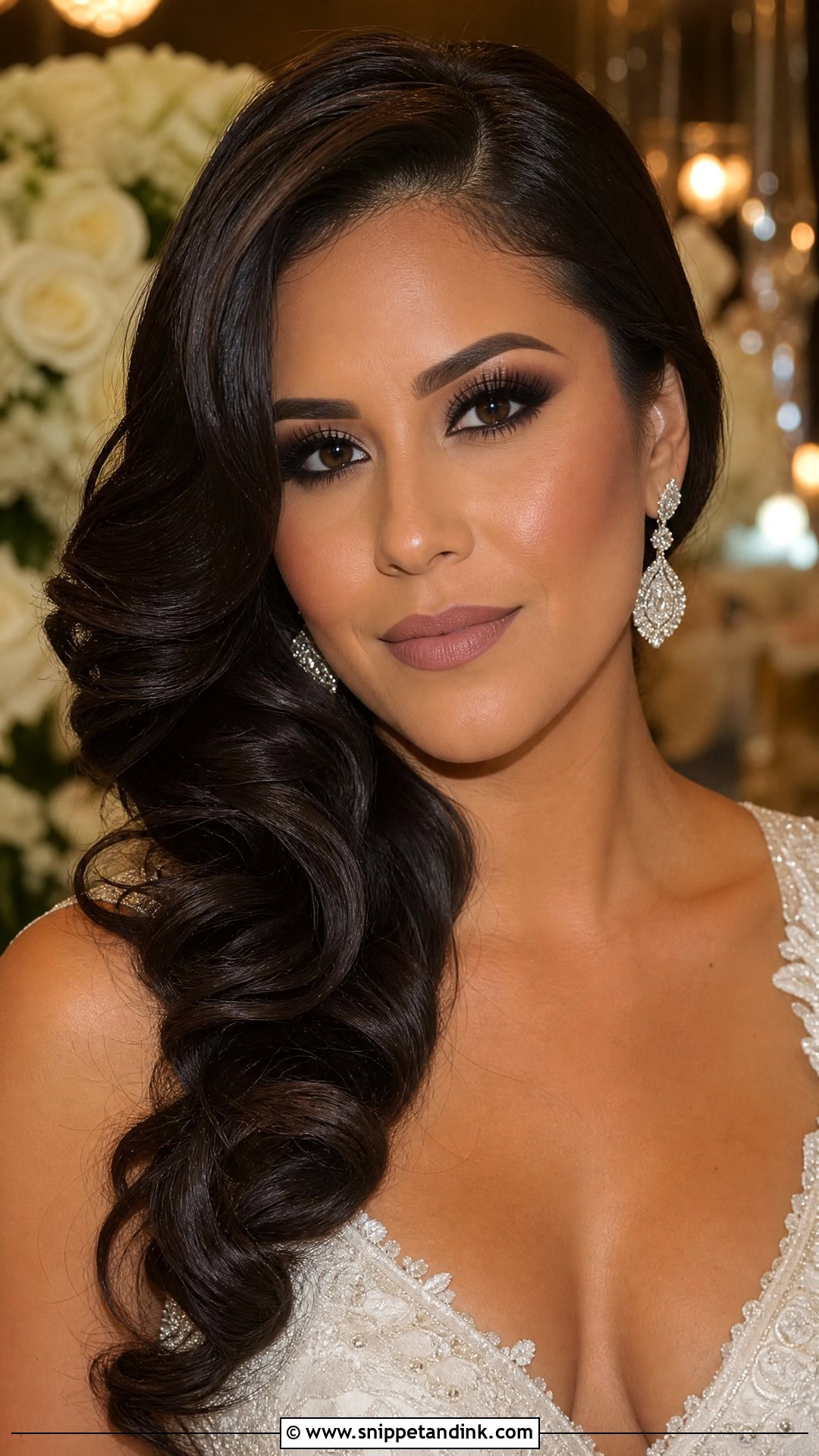
A bridal smoky eye should be blended and lifted at the outer edge, never heavy underneath. I pair charcoal, bronze, plum, or deep brown shadow with waterproof liner and full lashes, and I do the eyes before I airbrush, so any fallout can be cleaned off without disturbing the base. That order matters more with airbrush than with cream foundation. A nude or muted mauve lip keeps things balanced. Under flash, the under-eye area has to stay bright and clean, so I spray a touch lighter there.
11. Airbrush Bridal Makeup With Gold Eyeshadow
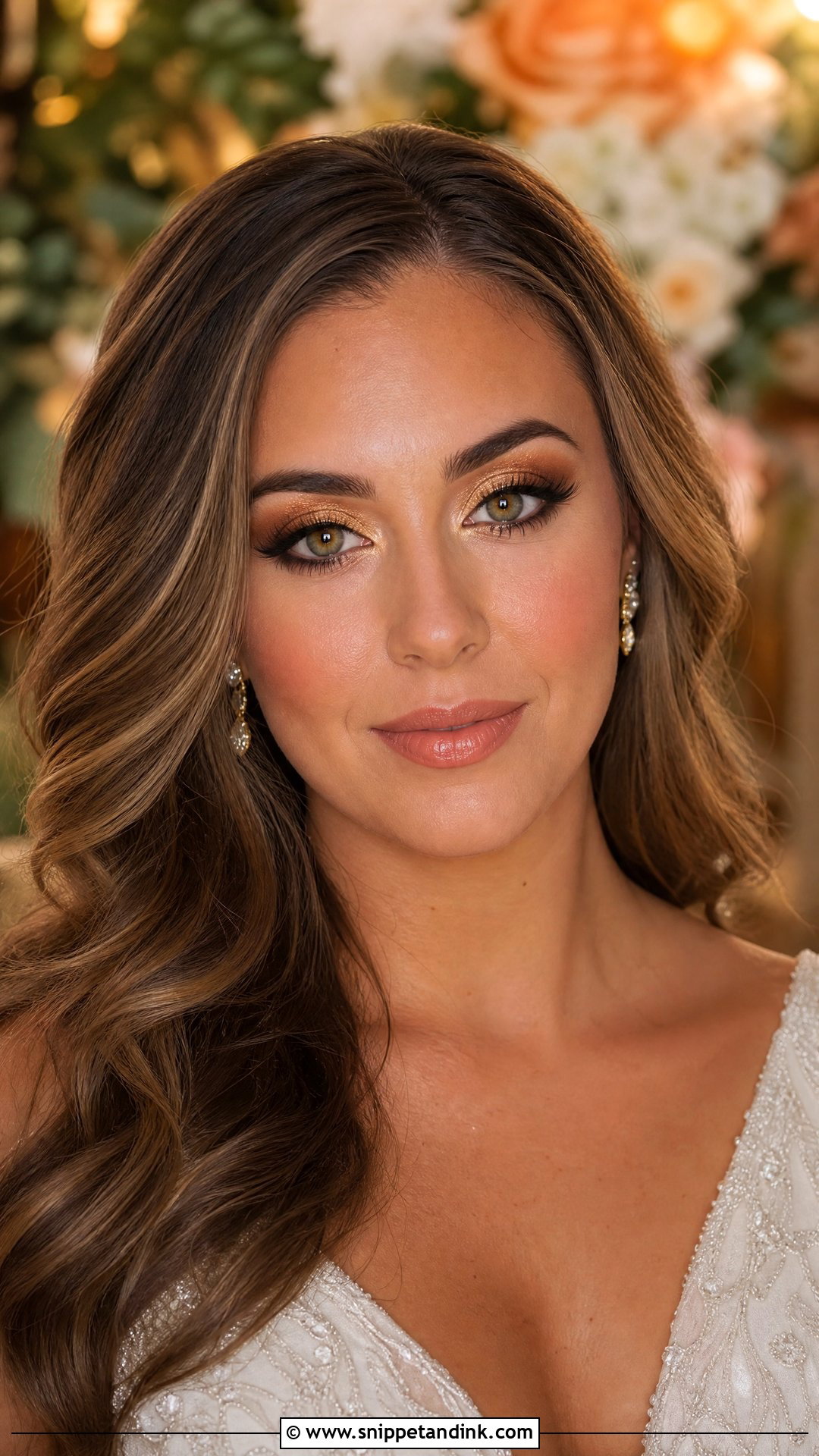
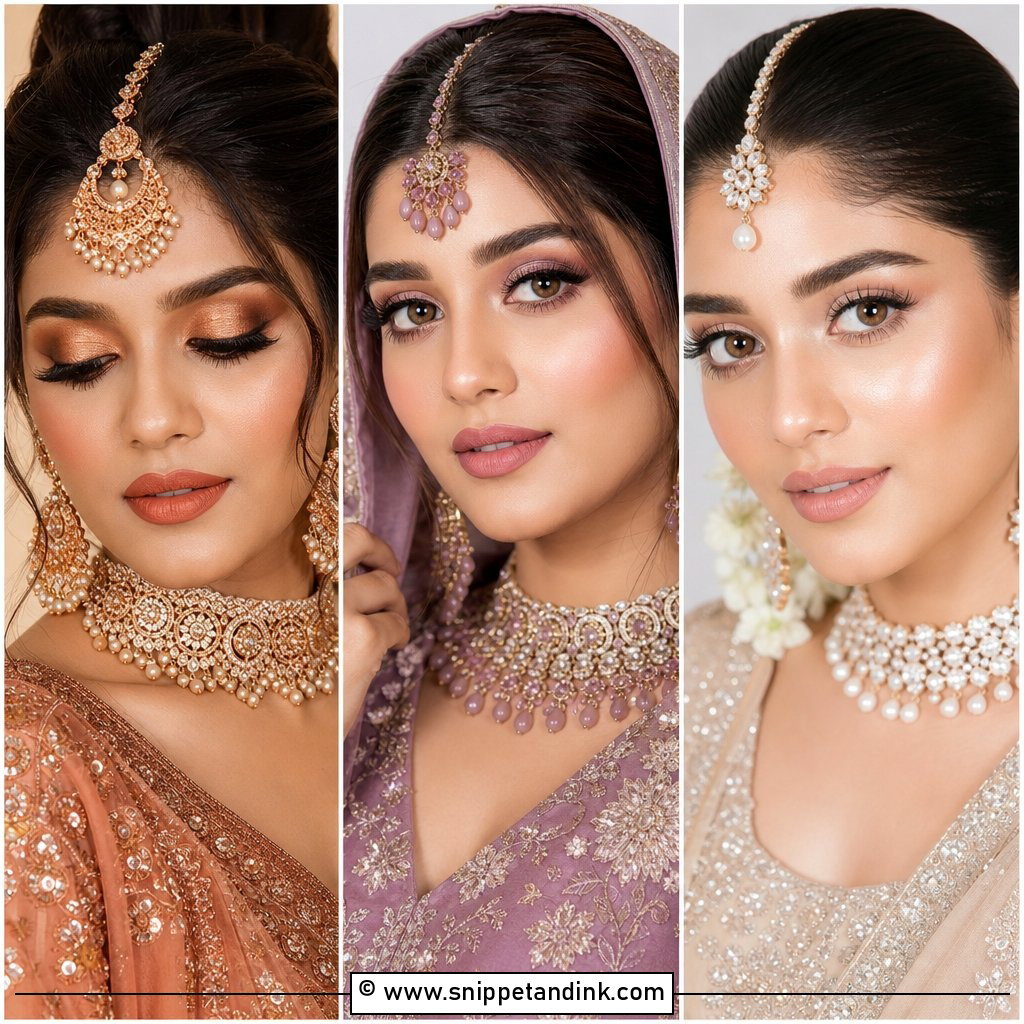
Gold shadow works when it’s blended into soft brown or bronze, not placed as one flat metallic sheet that looks like foil in close-ups. I tie it to the skin with warm bronzer, peach blush and a golden highlight so the whole face reads as one temperature. Thin liner, soft lashes and groomed brows frame it. Peach nude or soft caramel lips suit it. Golden-hour portraits and traditional celebrations with warm lighting are where this face shines, but in cool fluorescent light it can turn slightly yellow, so ask where your photos will be taken.
12. Airbrush Bridal Makeup With Rose Gold Eyeshadow
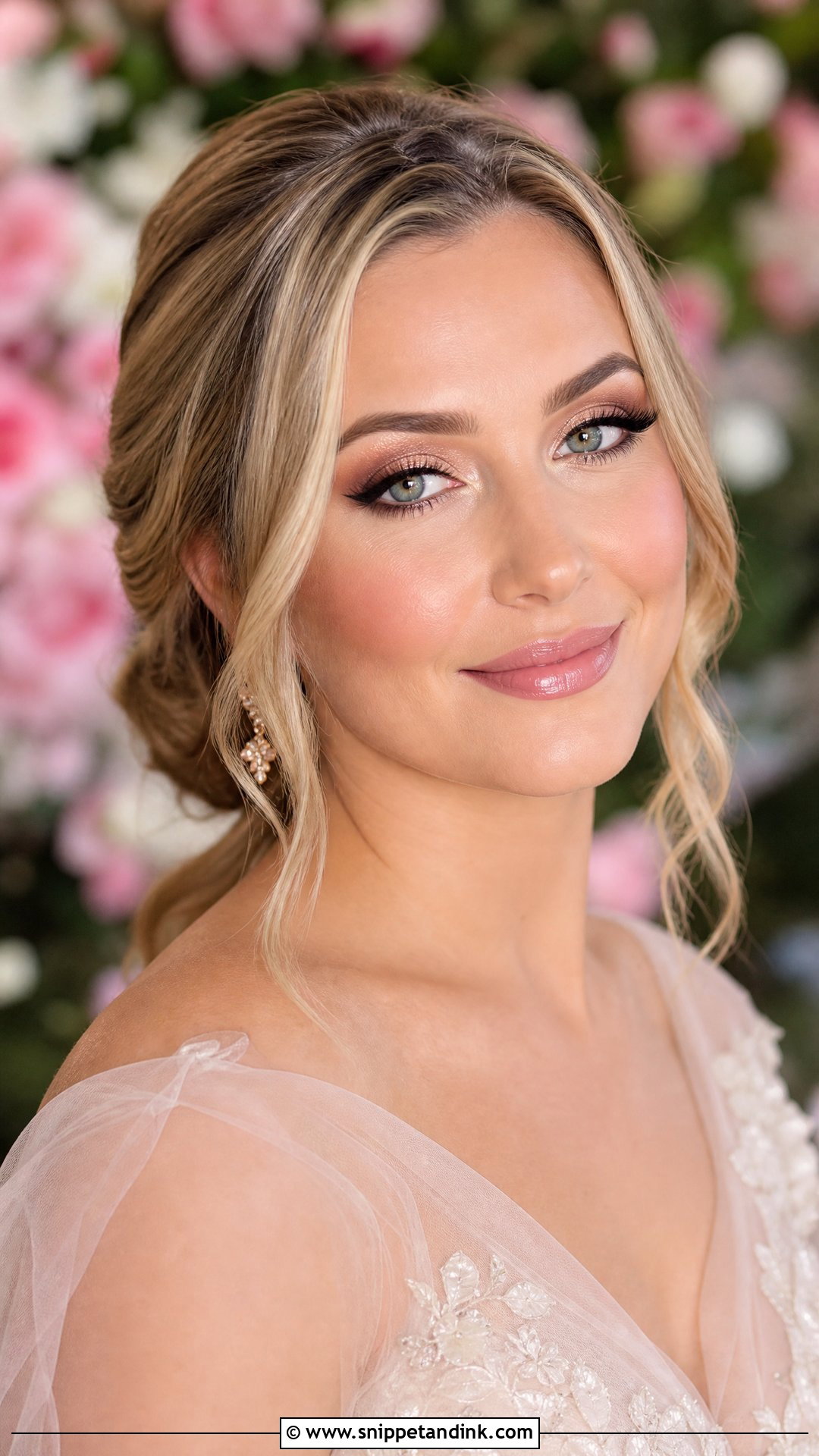
Rose gold sits between warm and cool, which is why it flatters more eye colors than plain gold or silver. I press the shimmer onto the center of the lid with a fingertip and blend mauve or dusty rose into the crease so the shimmer has a soft frame. Liner stays tight to the lashes, with wispy lashes for lift. The base gets a satin airbrush finish, pink blush and a little champagne highlight. A rosy nude lip ties it together. It suits blush-toned palettes and spring ceremonies, and it’s a gentle first step for brides nervous about color.
13. Airbrush Bridal Makeup With Winged Liner
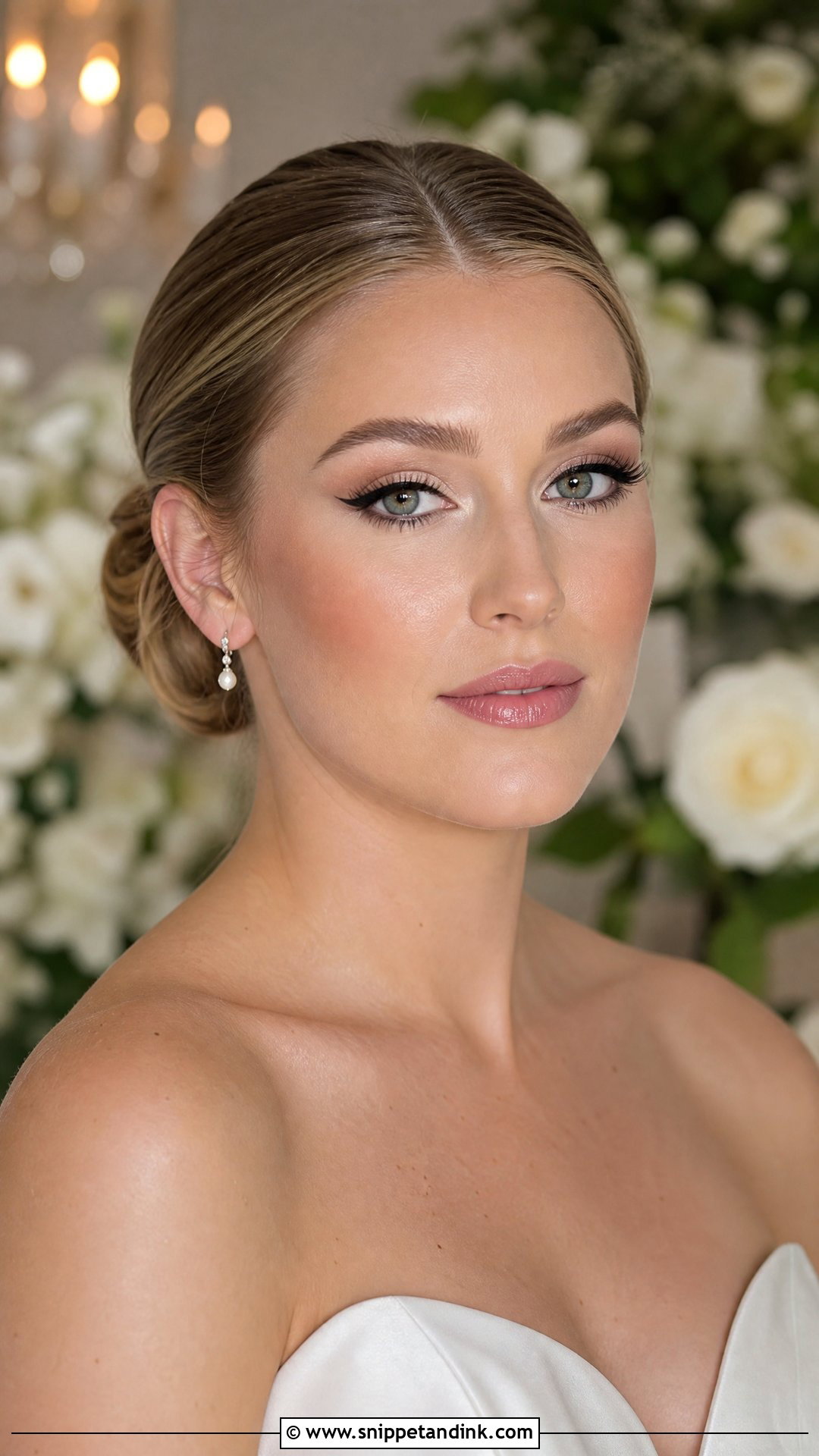
A winged liner works on many eye shapes, but hooded lids need the wing drawn with the eye open, looking straight ahead, or it folds and disappears. I map it that way at every trial. The wing can be tiny or more defined; on the lid I keep beige or soft taupe so the line stays crisp. Airbrush gives the skin a smooth canvas and peach or rose blush keeps the face lively. Nude, pink and red lips all work. It has a vintage feel that pairs well with sleek buns and minimalist gowns.
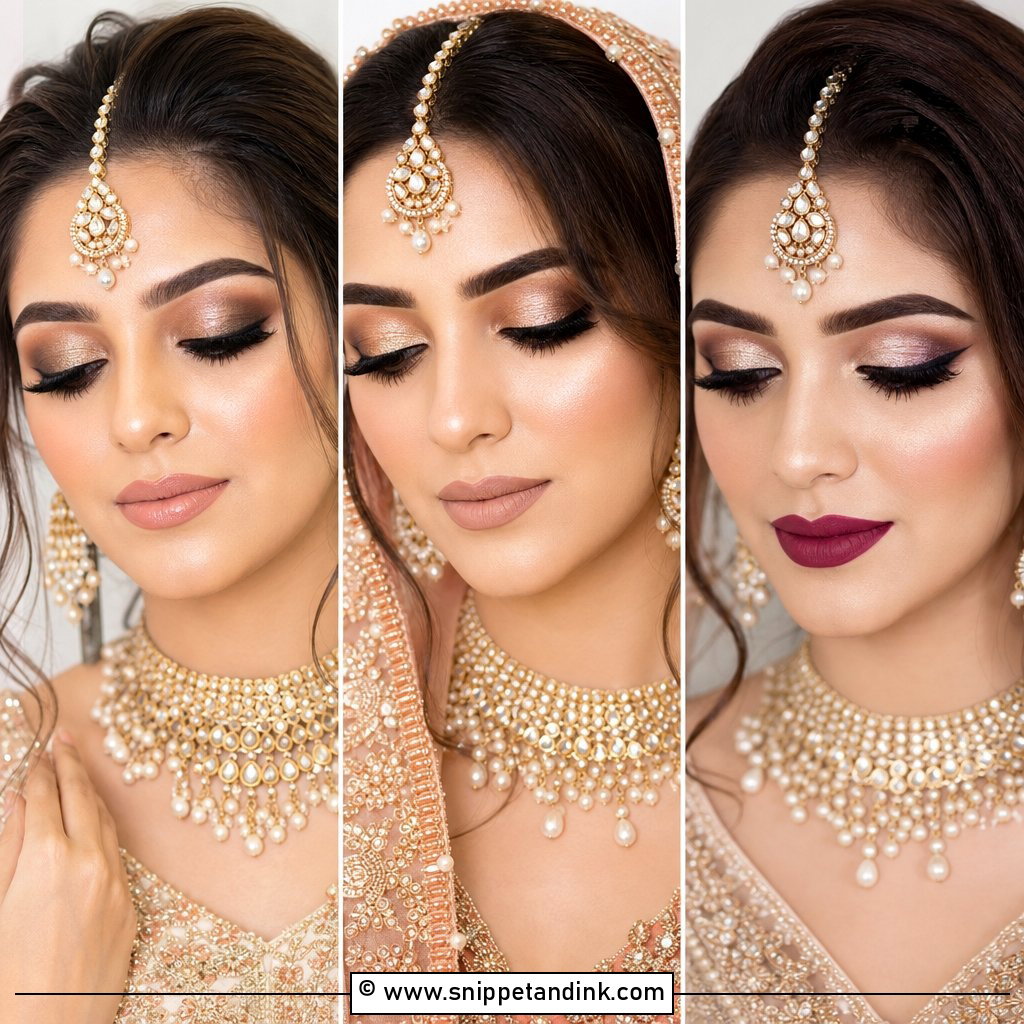
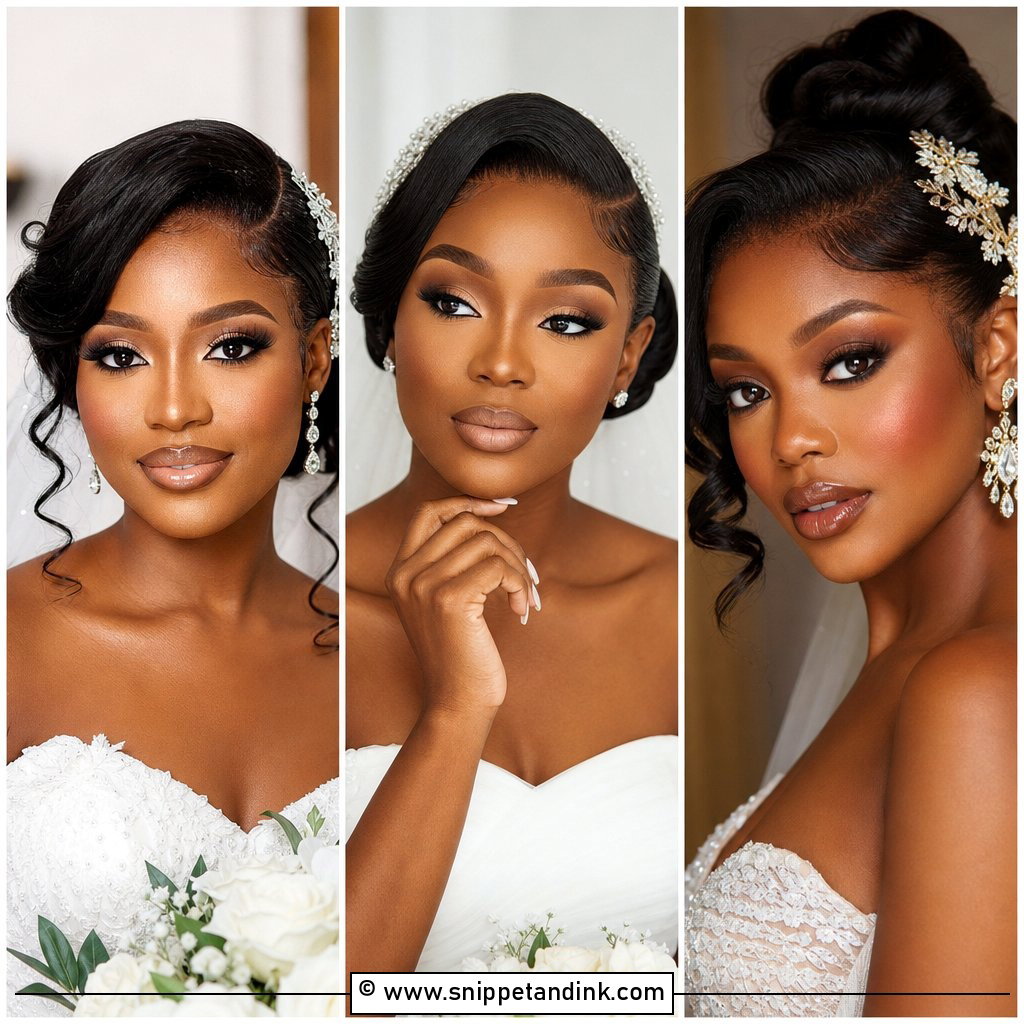
14. Airbrush Bridal Makeup For Beach Wedding
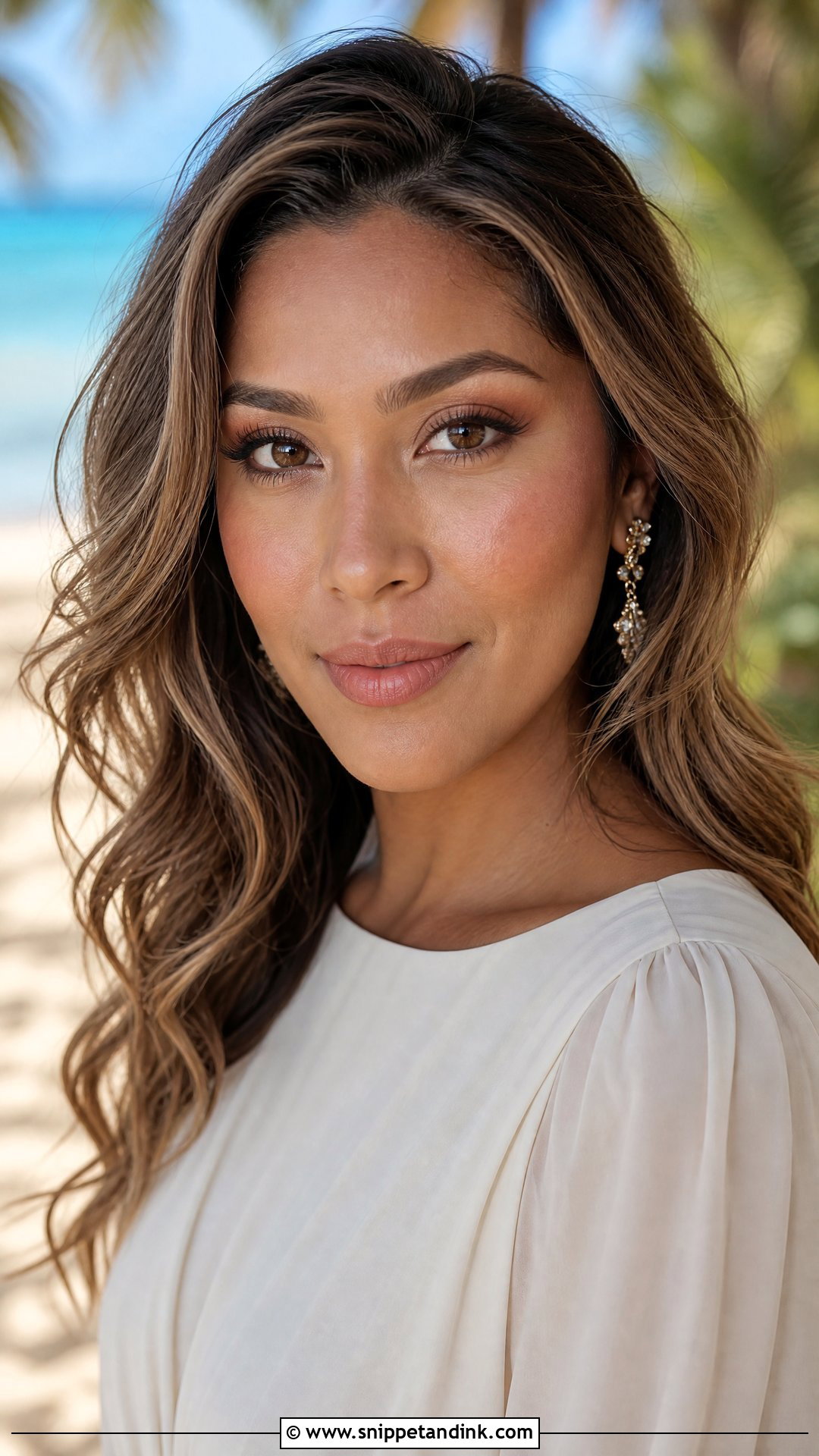
Sand, salt air and full sun are hard on any base, so for the beach I use a silicone airbrush formula in a natural matte or satin finish and keep it thin. Bronzer, coral blush and a soft golden highlight give the warmth people expect by the water. Eyes stay simple: waterproof mascara, soft bronze shadow and a little smudged liner at the lash line. I avoid black shadow and sticky gloss, because wind blows hair and sand straight into both. A peachy nude or coral lip looks right in beach light. Bring a fan; heat is the real enemy, not the water.
15. Airbrush Bridal Makeup For Outdoor Wedding
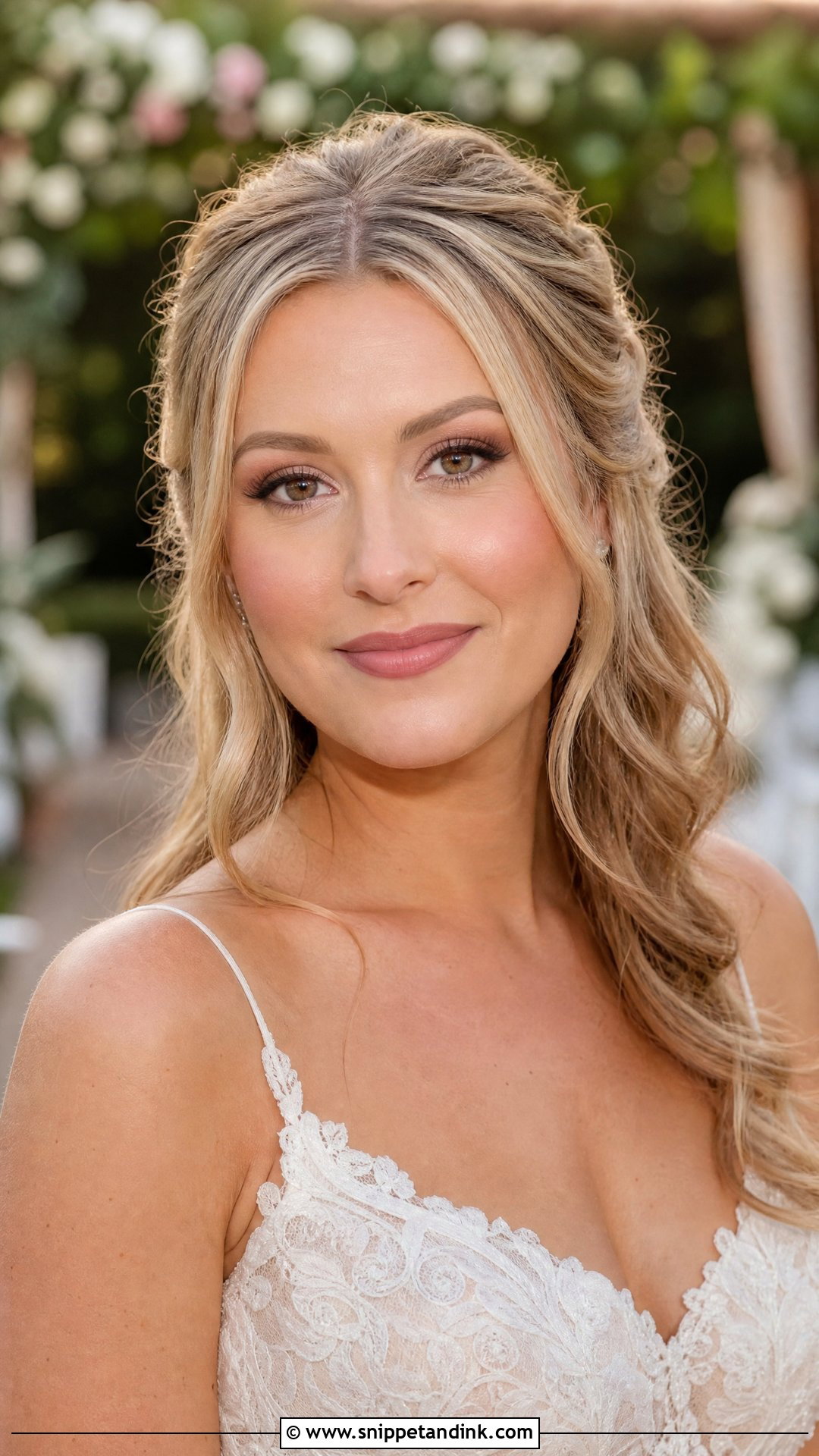
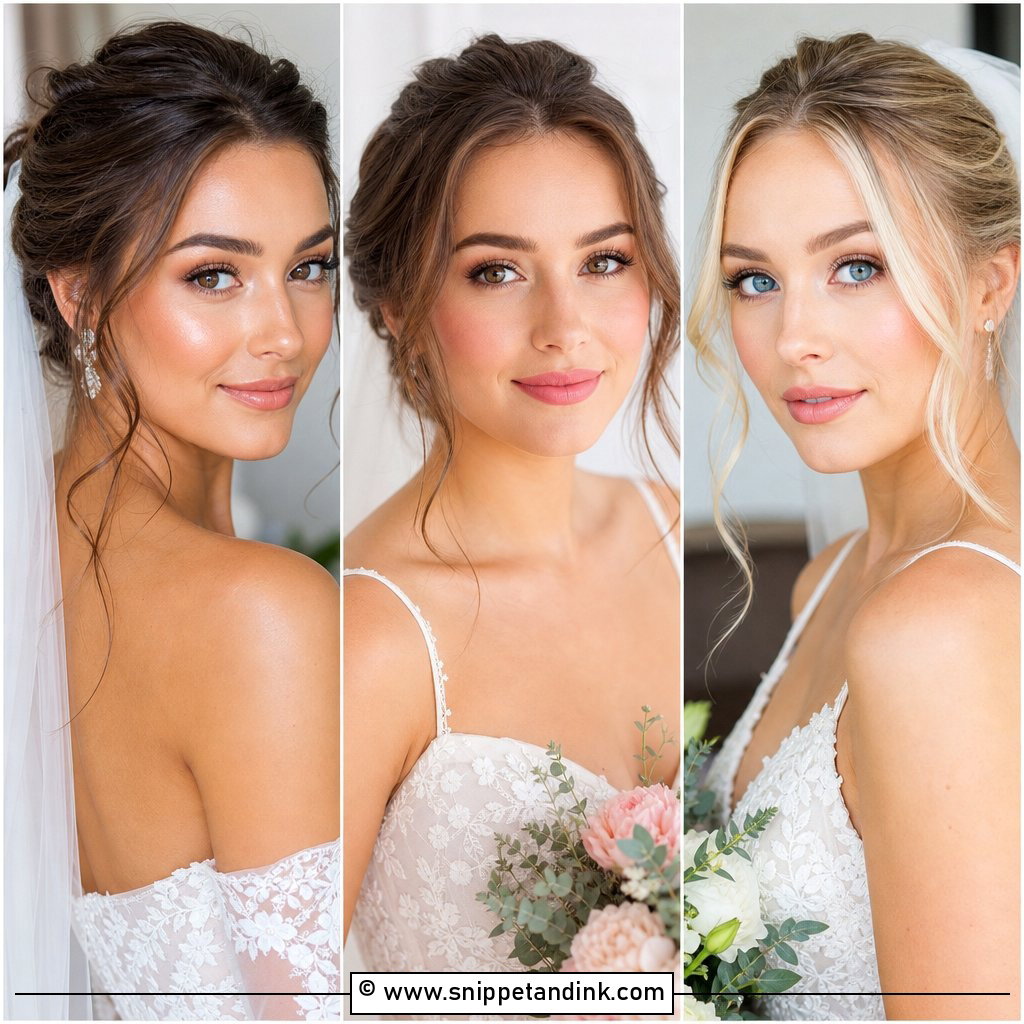
Outdoor light changes every hour, so I choose a satin finish rather than full matte or full dewy, because satin reads natural in shade and in direct sun. Shine stays controlled through the center of the face, with glow only on the high points. Soft neutral eyes, waterproof liner and individual lashes add definition without looking heavy in daylight. Daylight also eats blush, so I go one step brighter than you’d wear to work: rose, peach or soft berry. A long-wear lipstick in a natural shade finishes it.
16. Airbrush Bridal Makeup For Winter Wedding
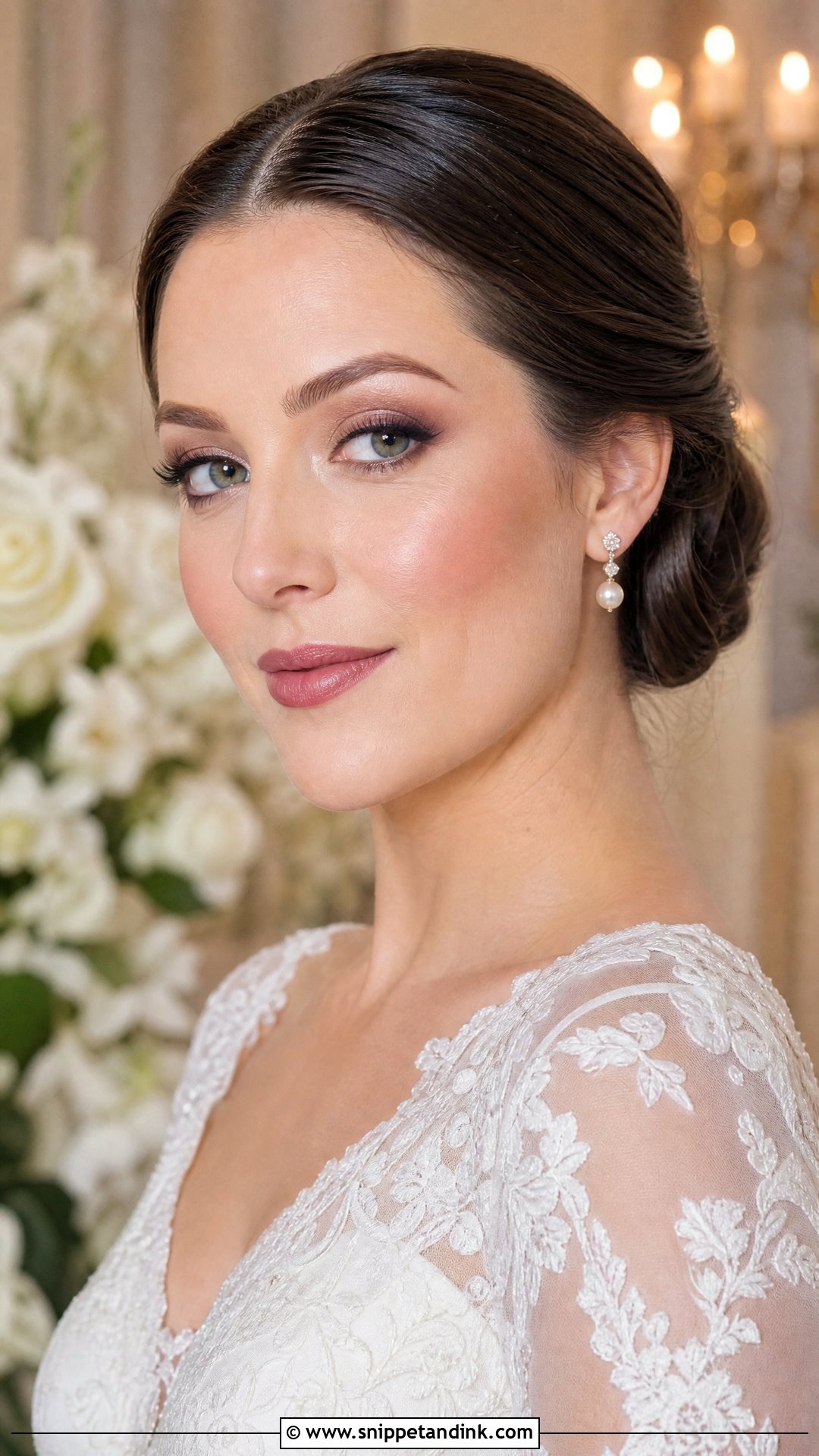
Cold air and central heating both dry the skin, so for a winter wedding I spend extra time on hydration before the satin airbrush base goes on. Rosy blush, soft contour and a refined highlight bring back the warmth that cold weather takes out of the face. On the eyes, cool taupe, soft plum or deep brown suit heavier fabrics. A mauve or berry-rose lip sits well with deep florals. Moving from a freezing car into a warm room can make the base look damp for a few minutes; it settles, so don’t blot it immediately.
17. Airbrush Bridal Makeup For Summer Wedding
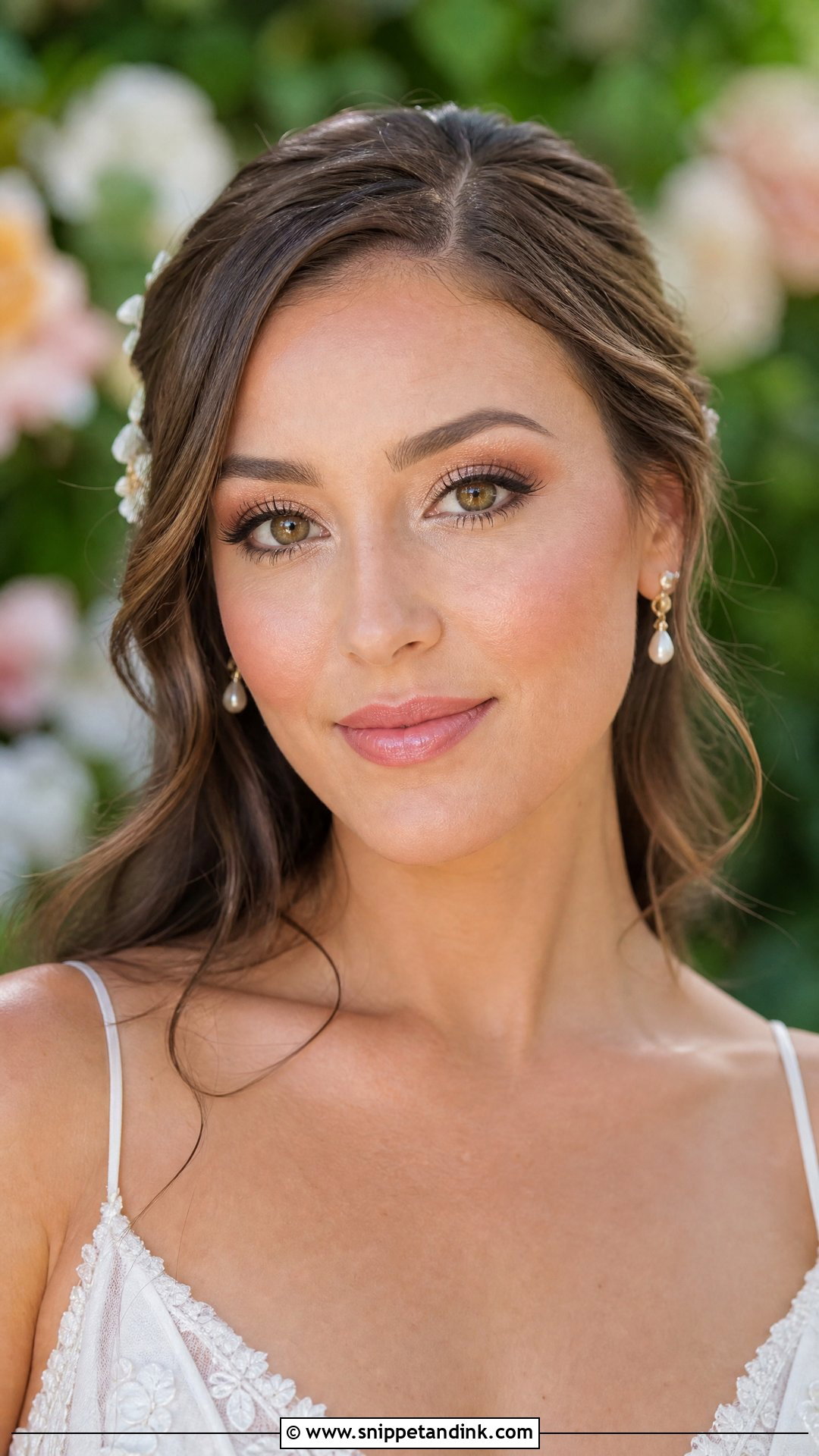
In summer I think about sweat before color. Oil-control prep goes where you need it, then one thin layer of a heat-resistant airbrush foundation, because a heavier base slides faster when you perspire. Warm bronzer, peach blush and a champagne highlight make skin look healthy rather than slick. Bronze or soft brown shadow with waterproof mascara and liner stays put in heat. A peach or warm nude lip keeps it bright. This is the base I trust most for destination weddings, since it lets me give coverage without the weight that heat punishes.
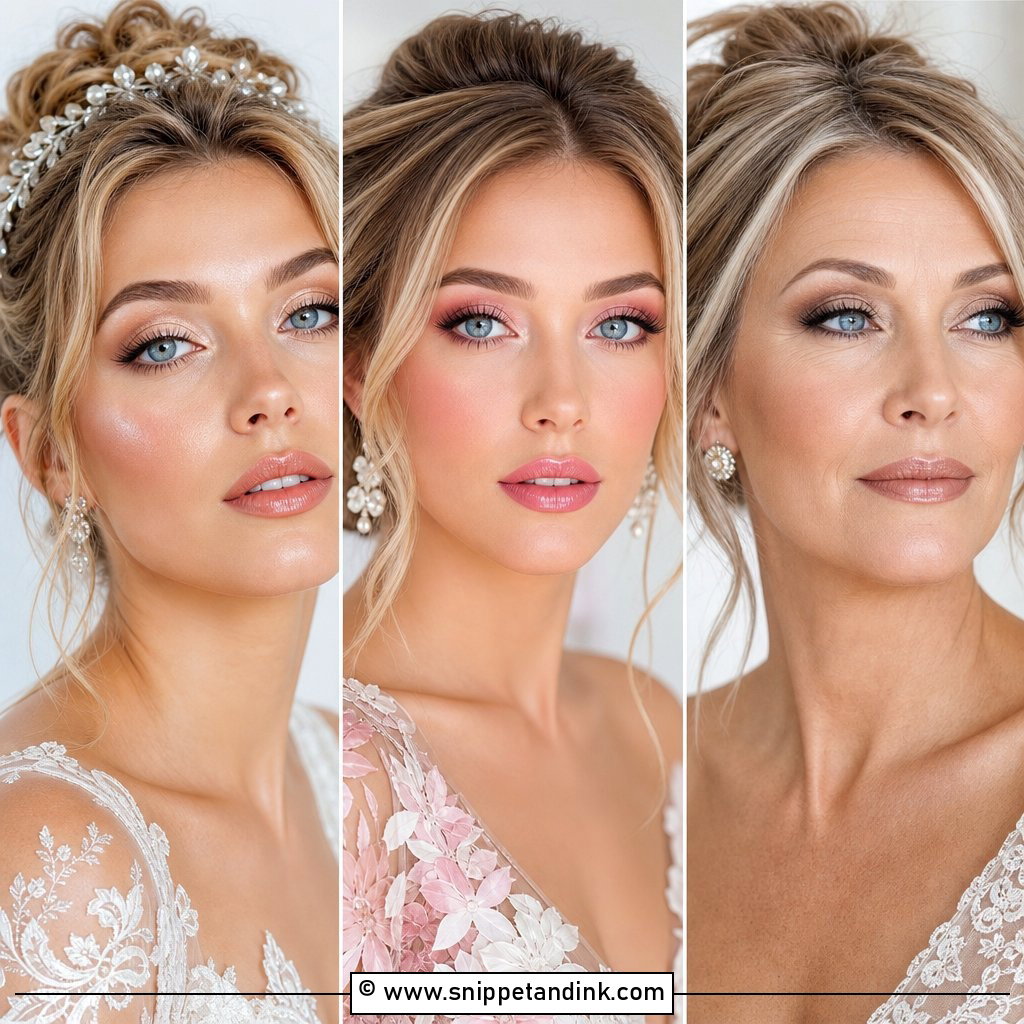
18. Airbrush Bridal Makeup For Mature Bride
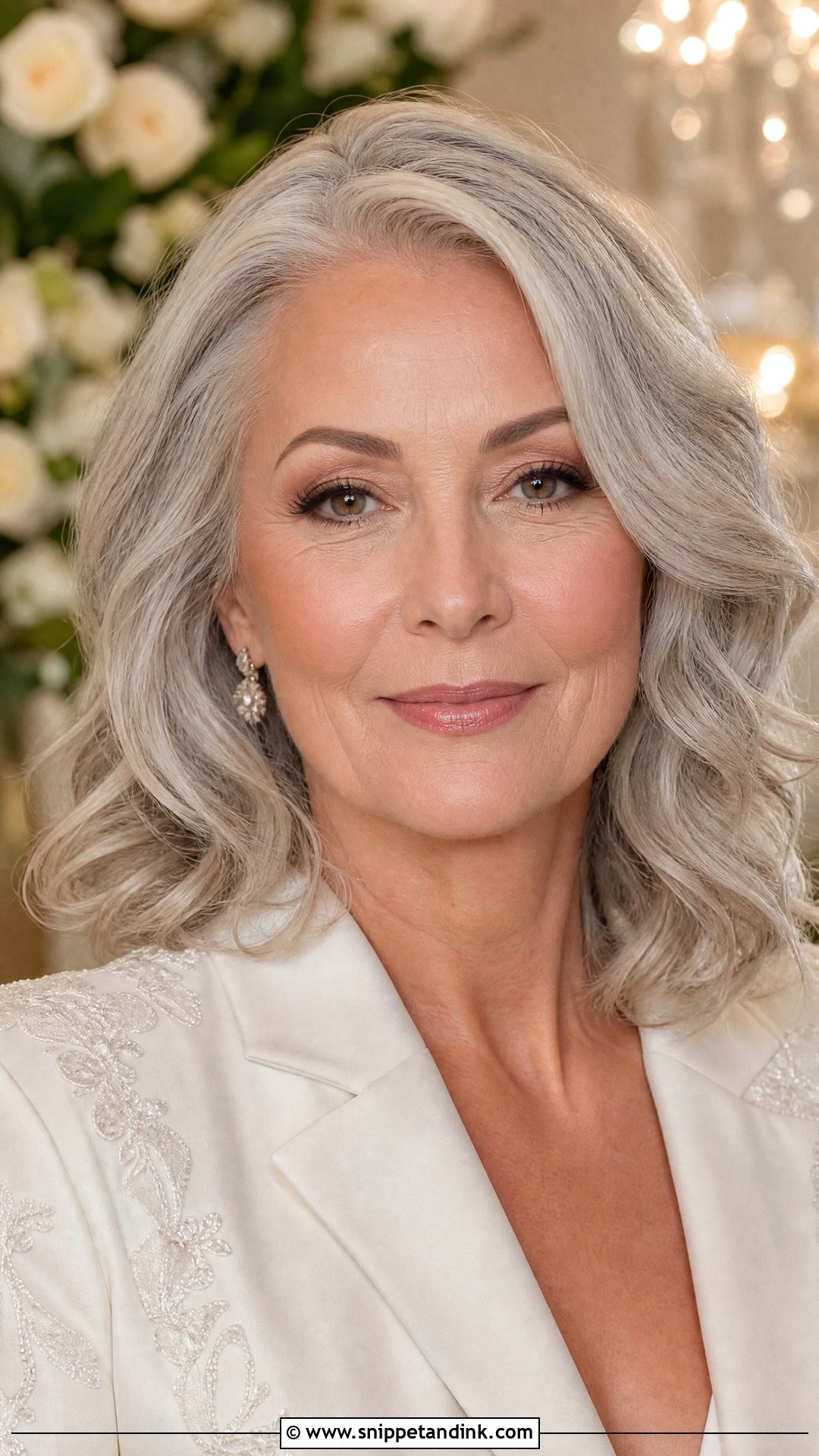
On mature skin, less product is almost always the answer. Airbrush helps because the mist doesn’t drag across fine lines the way a brush can, but I keep the layer very thin and use light-reflecting concealer only where shadows sit. Powder goes on sparingly, if at all, since it collects in creases by evening. Satin shadows in taupe, rose or soft brown look better than glitter, which highlights crepey lids. I curl the lashes, keep liner tight to the lash line and place cream blush slightly higher on the cheek for lift. A satin rose or berry lipstick finishes it.
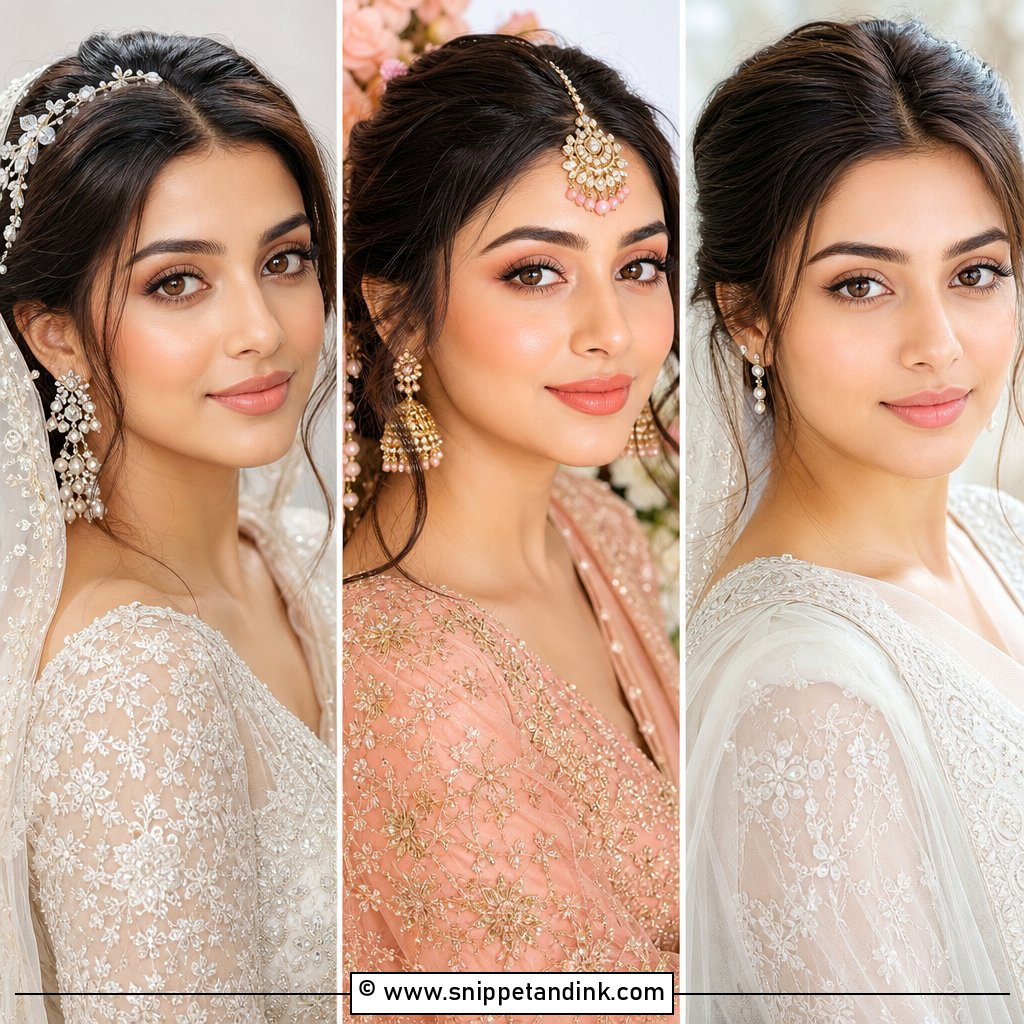
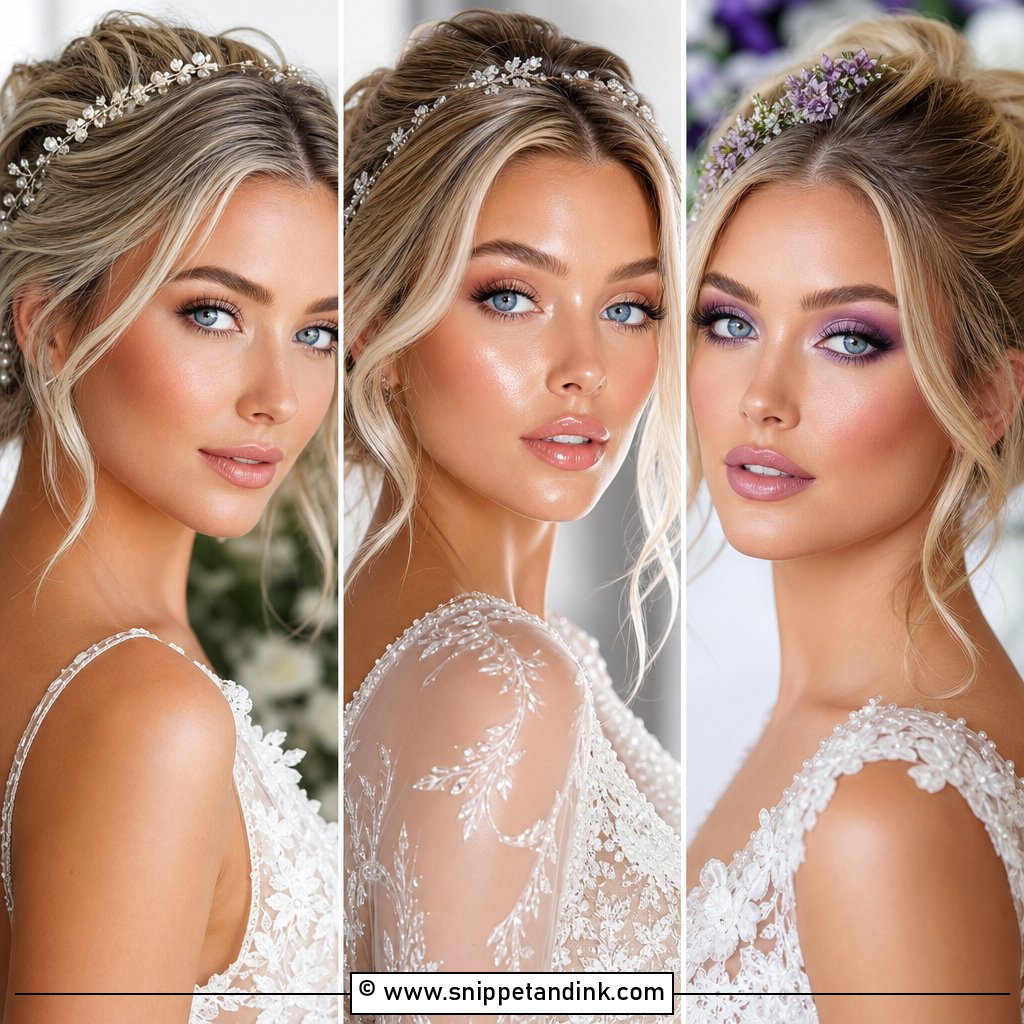
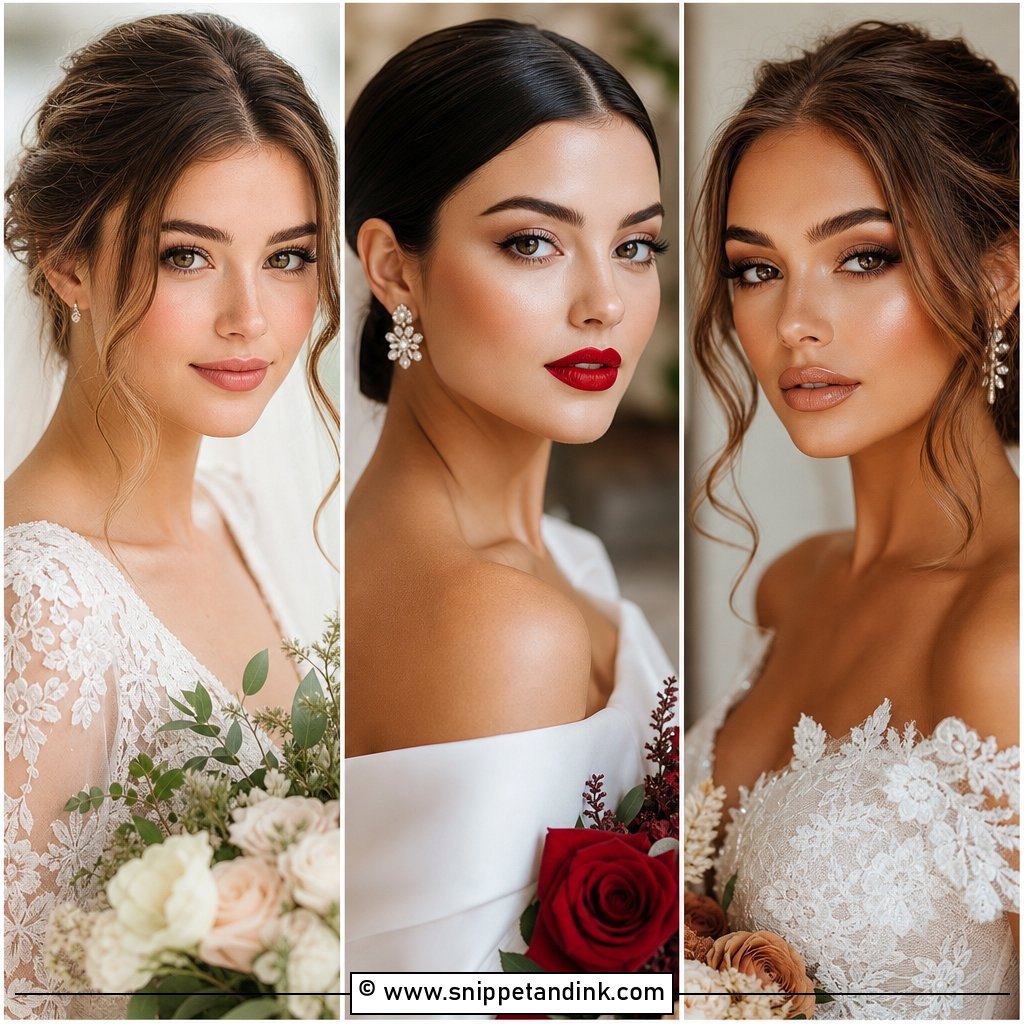
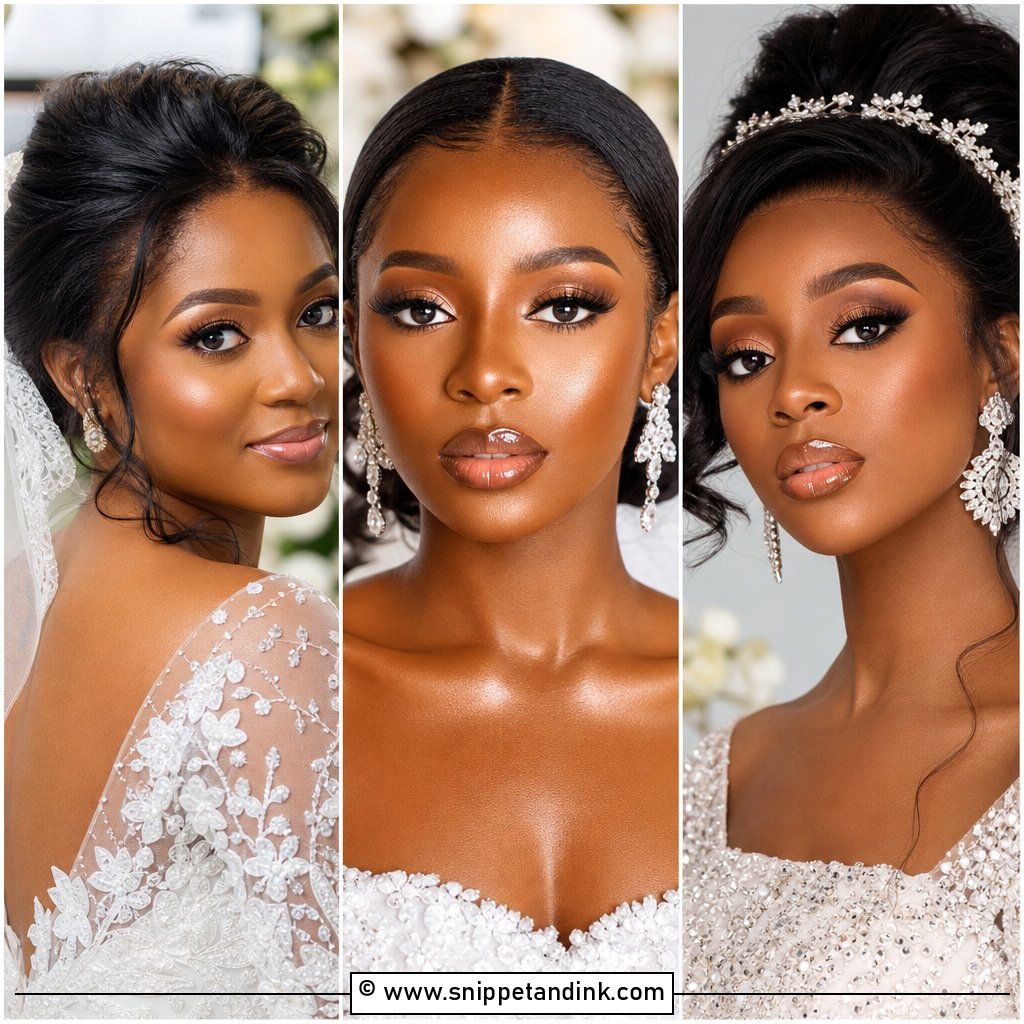
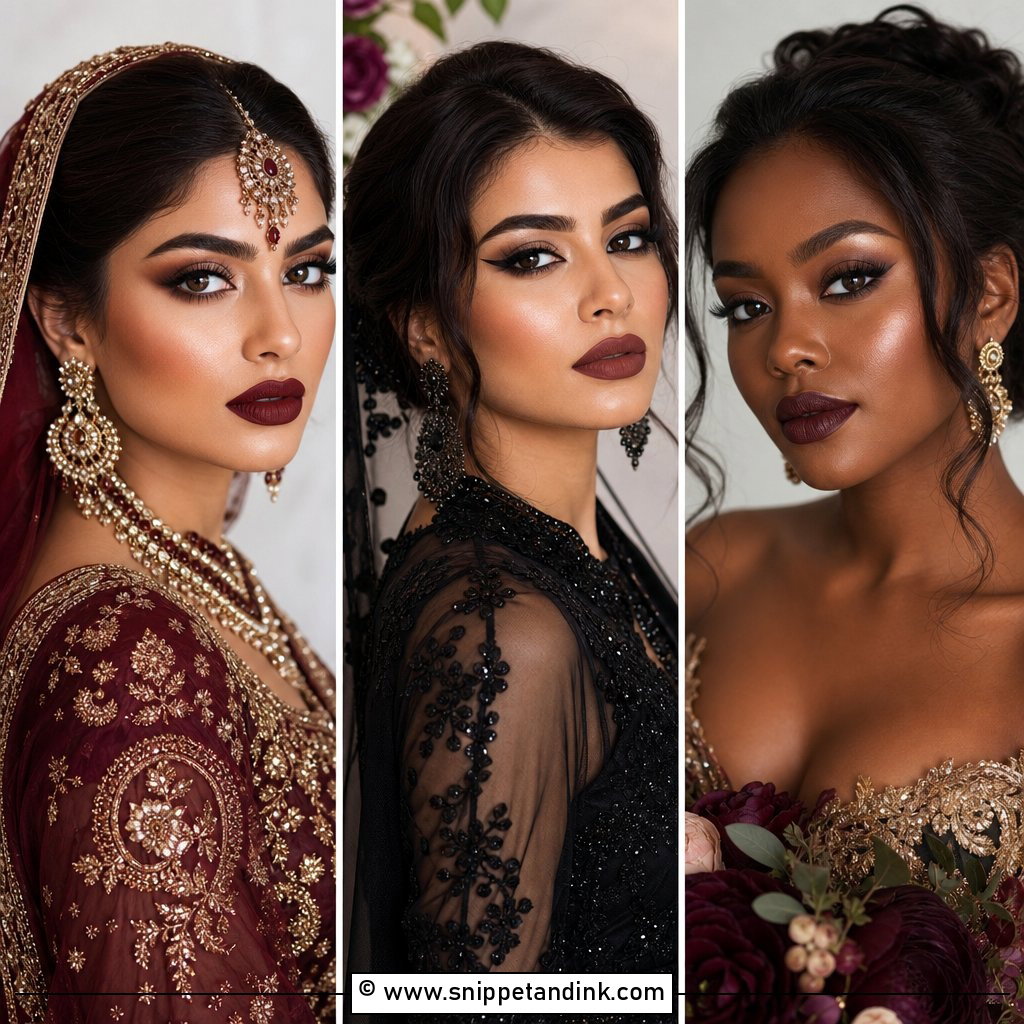
19. Airbrush Bridal Makeup For Dark Skin
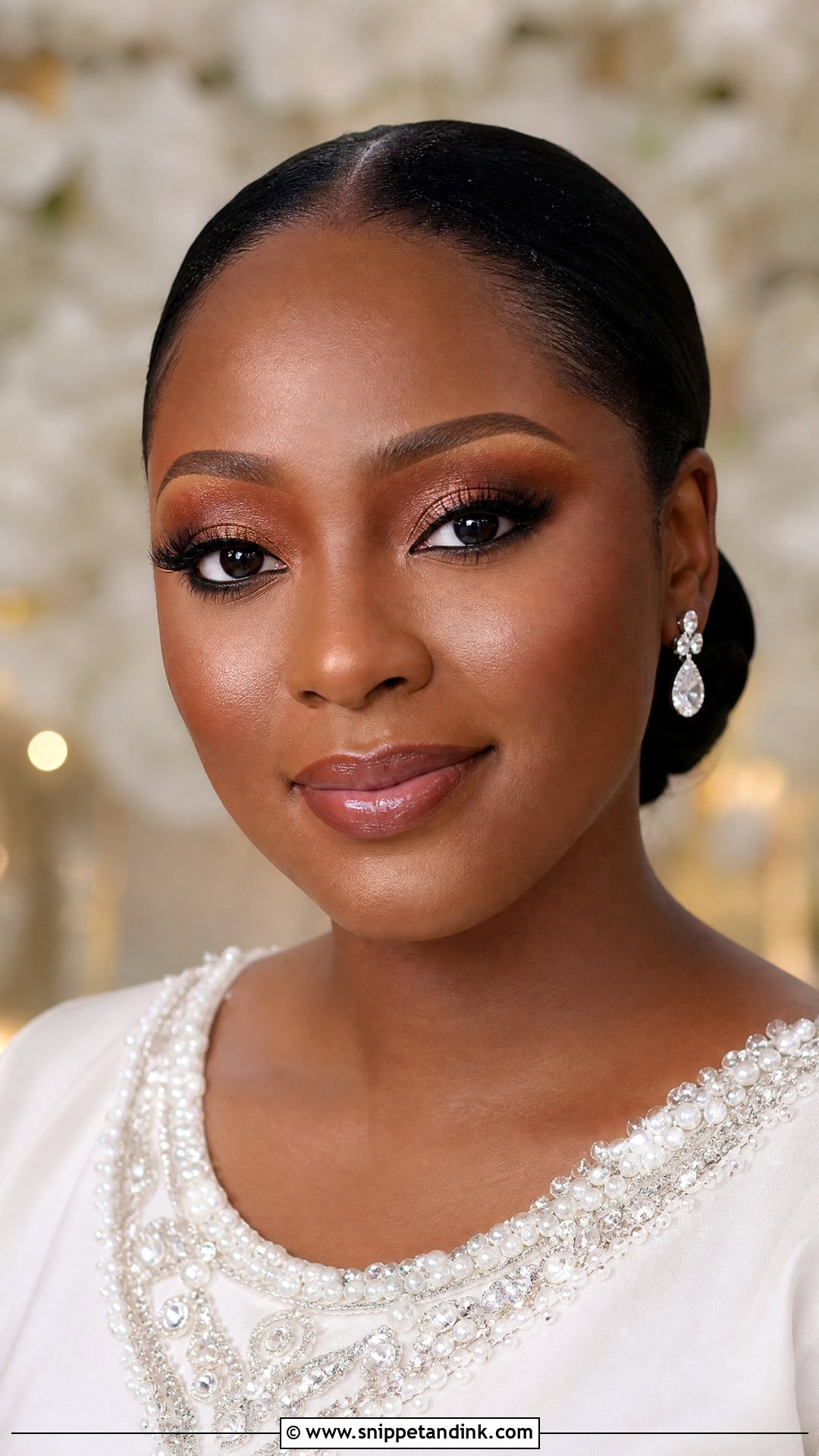
On dark skin, the shade match decides everything. Many deep complexions have a lighter center and a deeper perimeter, so I often mix two airbrush shades or spray the center and the jawline separately. That’s how you avoid the flat, ashy cast that a single shade gives in flash. A warm base, soft contour and a golden or bronze highlight bring out depth. Deep rose, berry or terracotta blush adds life. Bronze, copper and plum read richly on the eyes, and lips can go from soft brown nude to deep red. Respect the undertone and let the skin keep its glow.

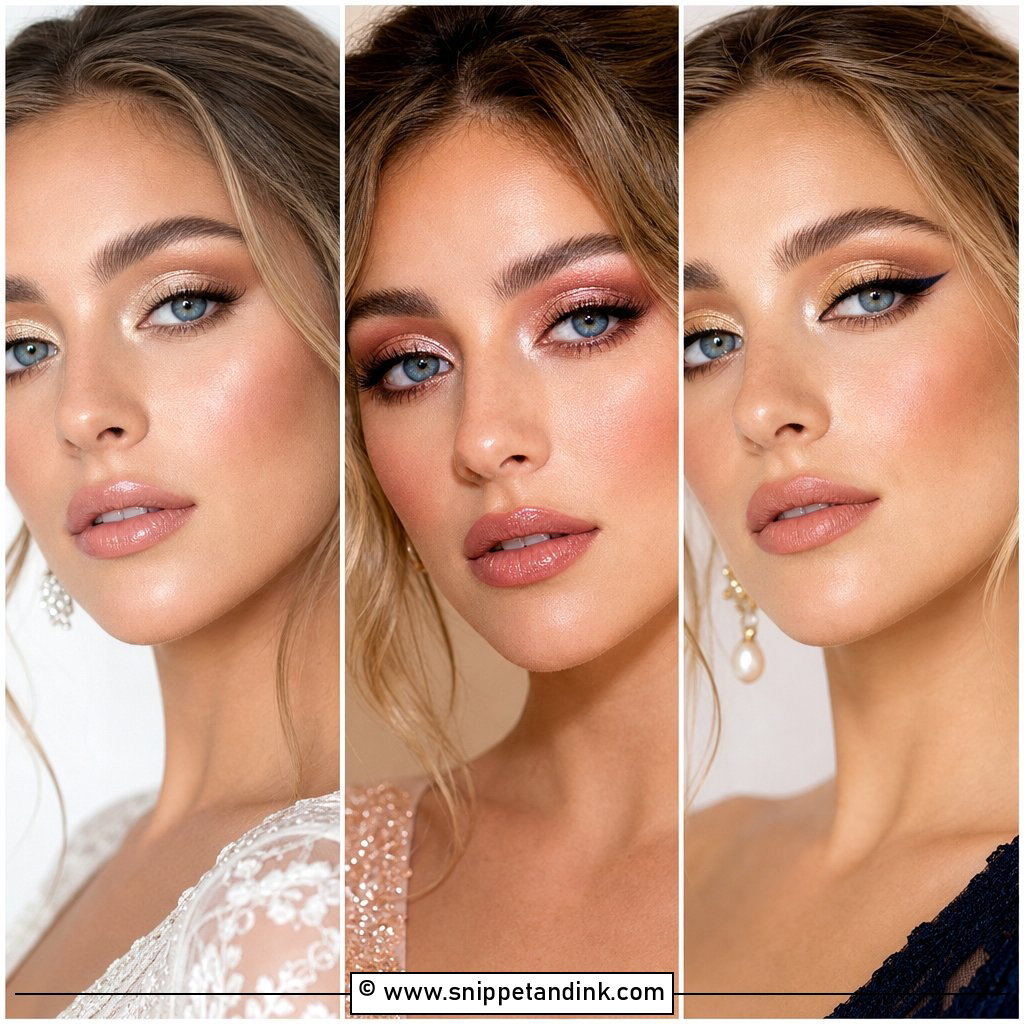
20. Airbrush Bridal Makeup For Fair Skin
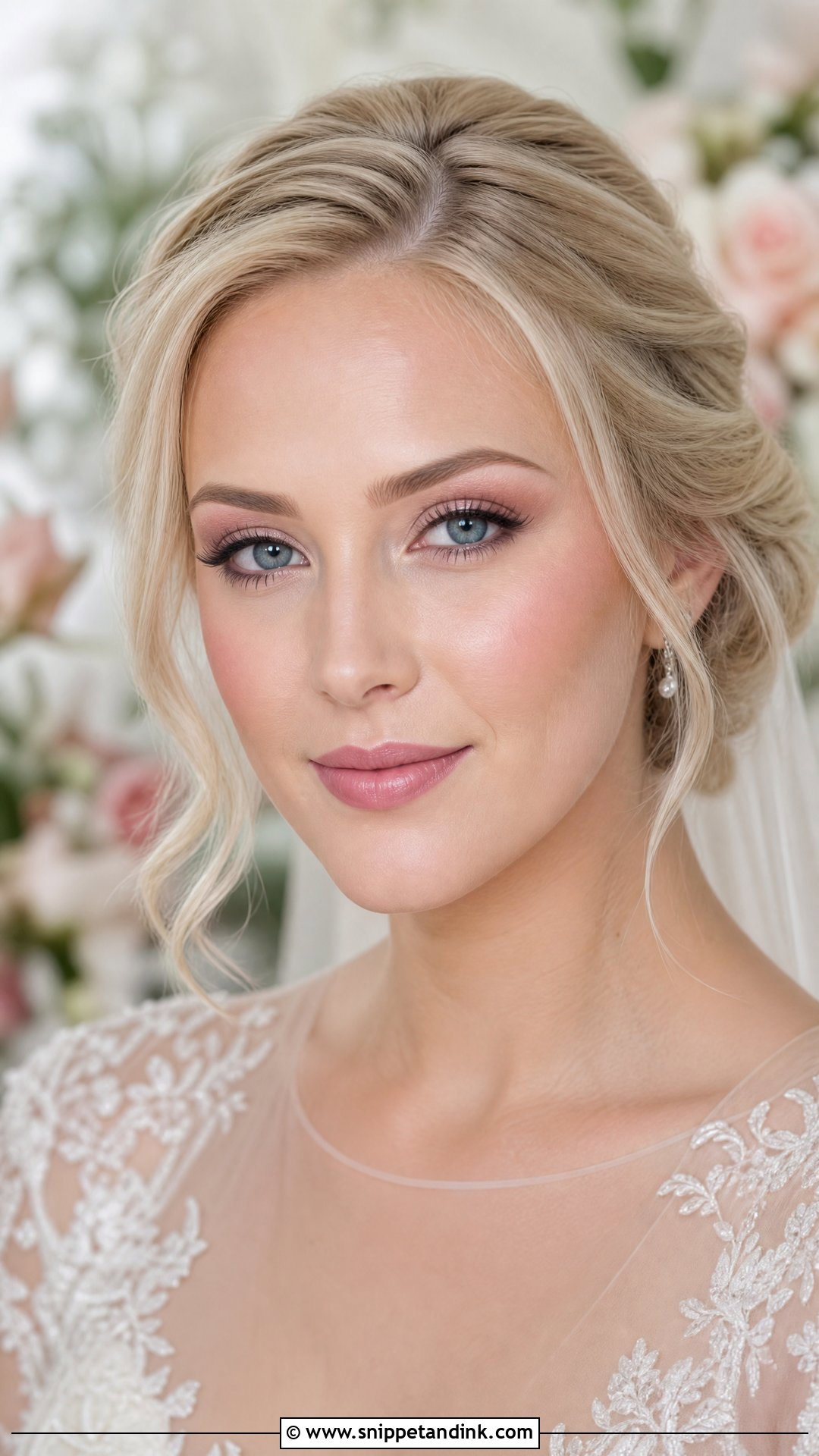
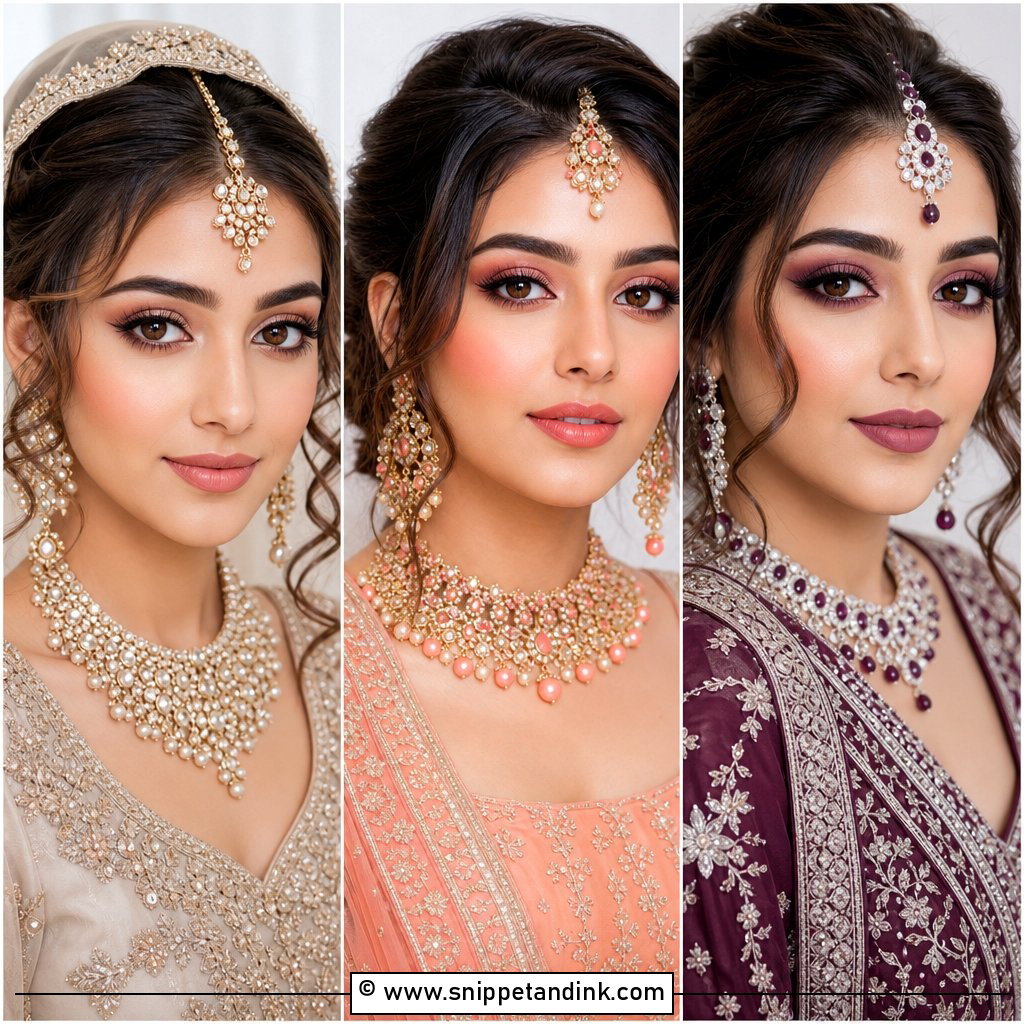
Fair skin shows every heavy hand, so contour has to be a shade or two deeper than your skin at most, never a muddy brown stripe. A light airbrush pass evens redness around the nose and cheeks while keeping the complexion soft. Baby pink, soft peach or cool rose blush adds freshness. On the eyes, champagne, taupe or muted mauve give definition without harshness, and brown liner usually sits more gently than black for daytime. A pink nude or soft berry lip completes it. In photos, the gentle definition still shows clearly.
Run the Trial Like a Rehearsal of the Whole Day
Book the trial roughly two to three months out, early enough to change direction and late enough that your skin and tan look much as they will on the day. Wear a top close to your neckline color so we can judge how the face sits against it.
Then don’t take it off. Keep it on for at least six hours and treat it like a test run:
- Take a phone photo with flash at the start and again at the end, in the same spot, to see where it faded or got shiny.
- Eat a proper meal and drink from a glass, then check the lipstick and the corners of the mouth.
- Press a tissue to the forehead and nose after a few hours. Light oil is normal; foundation lifting off is not.
- Hug someone. If the base transfers onto a white shirt, the formula or the setting needs to change.
- Note anything that itches or stings, and tell your artist the same day.
Touch-ups, removal and the night after
Airbrush doesn’t need much maintenance, but ask for a small kit: blotting papers, a pressed powder in your shade and your lipstick. Blot before you powder, otherwise you’re layering powder onto oil. At the end of the night, a silicone base won’t come off with micellar water alone. Use a cleansing balm or oil first, massage for a full minute, then a gentle cleanser. Skip the facial or peel in the last week before the wedding, because freshly treated skin can react to products it handled fine before.
Start With Your Skin Type, Then Pick the Finish
Airbrush can be soft and barely there or the base for bold eyes and a red lip, and it adapts to nearly every skin type when the prep is right. Start with your skin, not the finish you saw online: oily skin leans matte, dry skin leans satin, and mature skin wants the thinnest layer possible. Then let the trial settle the rest. Test the coverage, the lipstick wear and the photos, and you’ll know exactly which of these faces is yours before the morning arrives.
You'll Like These Ideas:



Leave a Reply