
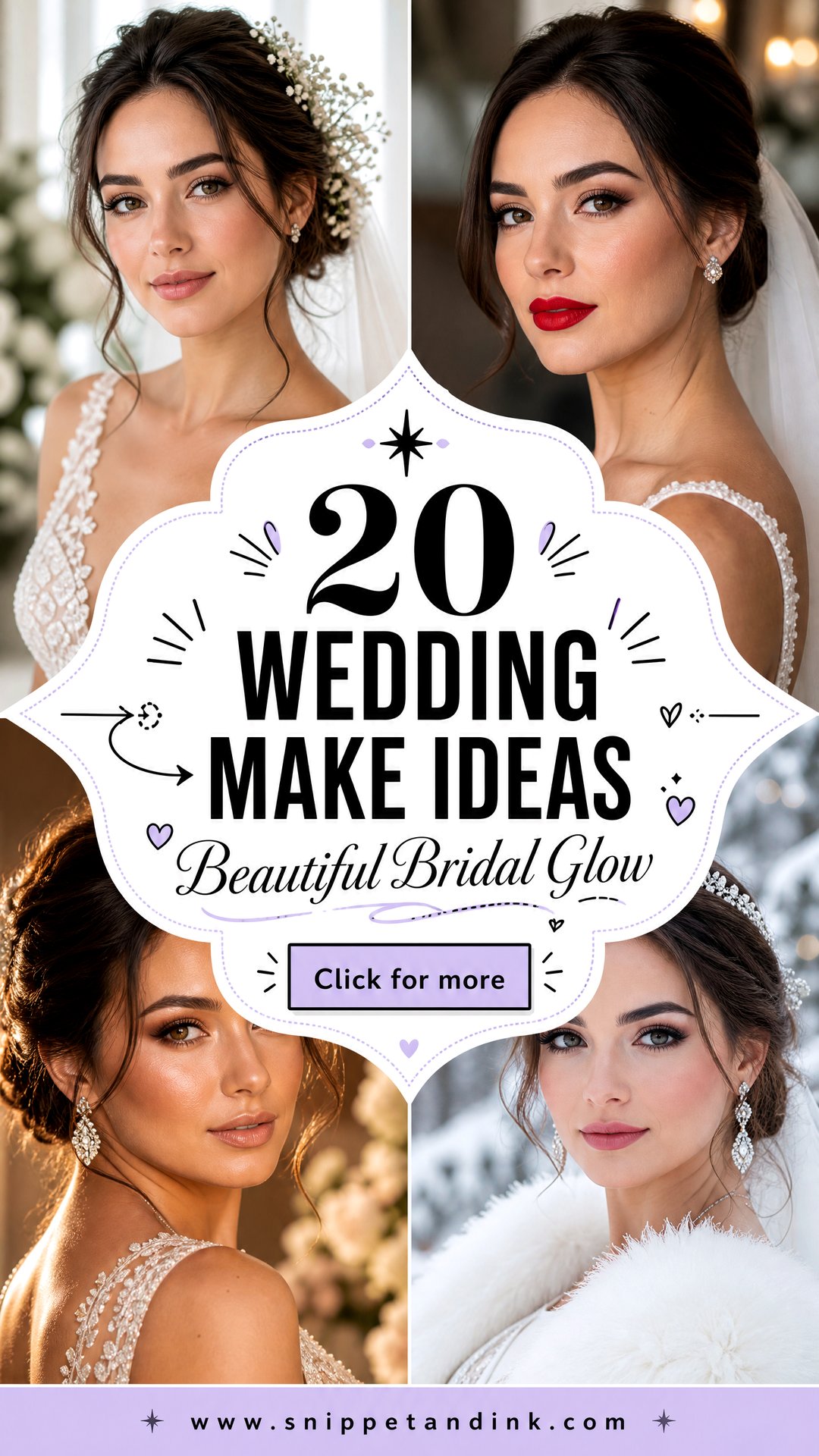
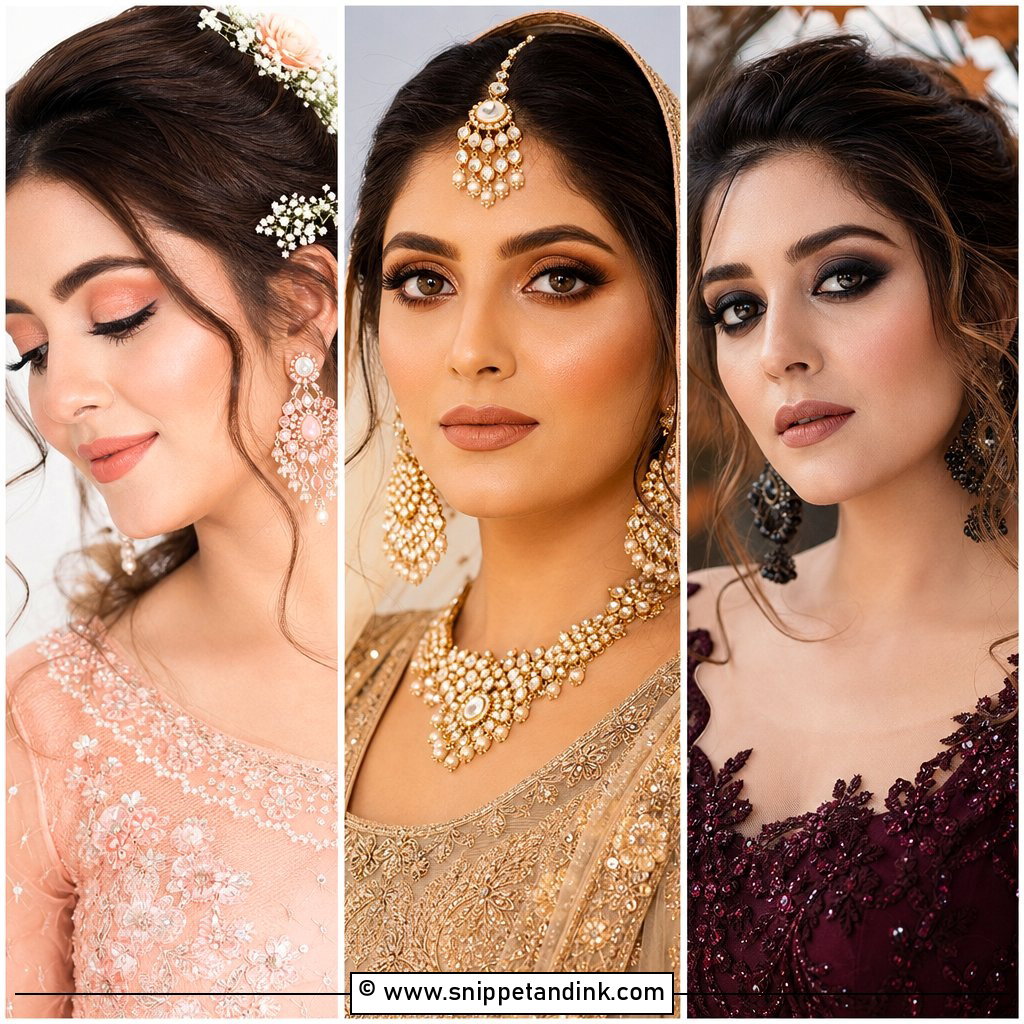
When a bride sits in my chair, I don’t start with a lipstick or an eyeshadow palette. I start with her skin, the light she’ll be standing in and how long the day runs. The looks brides ask for right now share a common thread: skin that still looks like skin, blush you can actually see, and one feature that leads. Soft glam, dewy cheeks, matte neutral eyes and glossy nude lips all sit within that. The same thinking applies to bridesmaids, mothers of the bride and guests, with the depth adjusted to the role. Below are twenty looks with notes on how I build each one and who I’d steer toward or away from it.
A Month of Skin Prep Before Any Foundation Goes On
No foundation fixes skin that’s dehydrated, irritated or freshly peeled. The skin I work on the morning of the wedding is shaped by the four weeks before it. Here’s the timeline I give brides.
- Four weeks out: settle on your skincare and stop trying new products. If you want a facial, book it now, so any breakout or redness has time to calm down.
- Two weeks out: no strong peels, retinoid increases or new actives. Freshly exfoliated skin flakes under foundation.
- One week out: brow shaping, waxing and threading. Redness from hair removal can take a day or two to fade.
- A few days out: lash extensions, if you want them, and a spray tan tested at least once before. Tan shades can read orange in flash.
- The night before: a simple moisturizer, lots of water, and no new masks or treatments.
On the morning, I need clean, moisturized skin with no heavy oils. If you wear sunscreen, tell your artist which one. Some sunscreens with a white cast can cause a pale flashback in flash photos, so I sometimes switch to a different formula for the hours of photography.
1. Natural Wedding Makeup
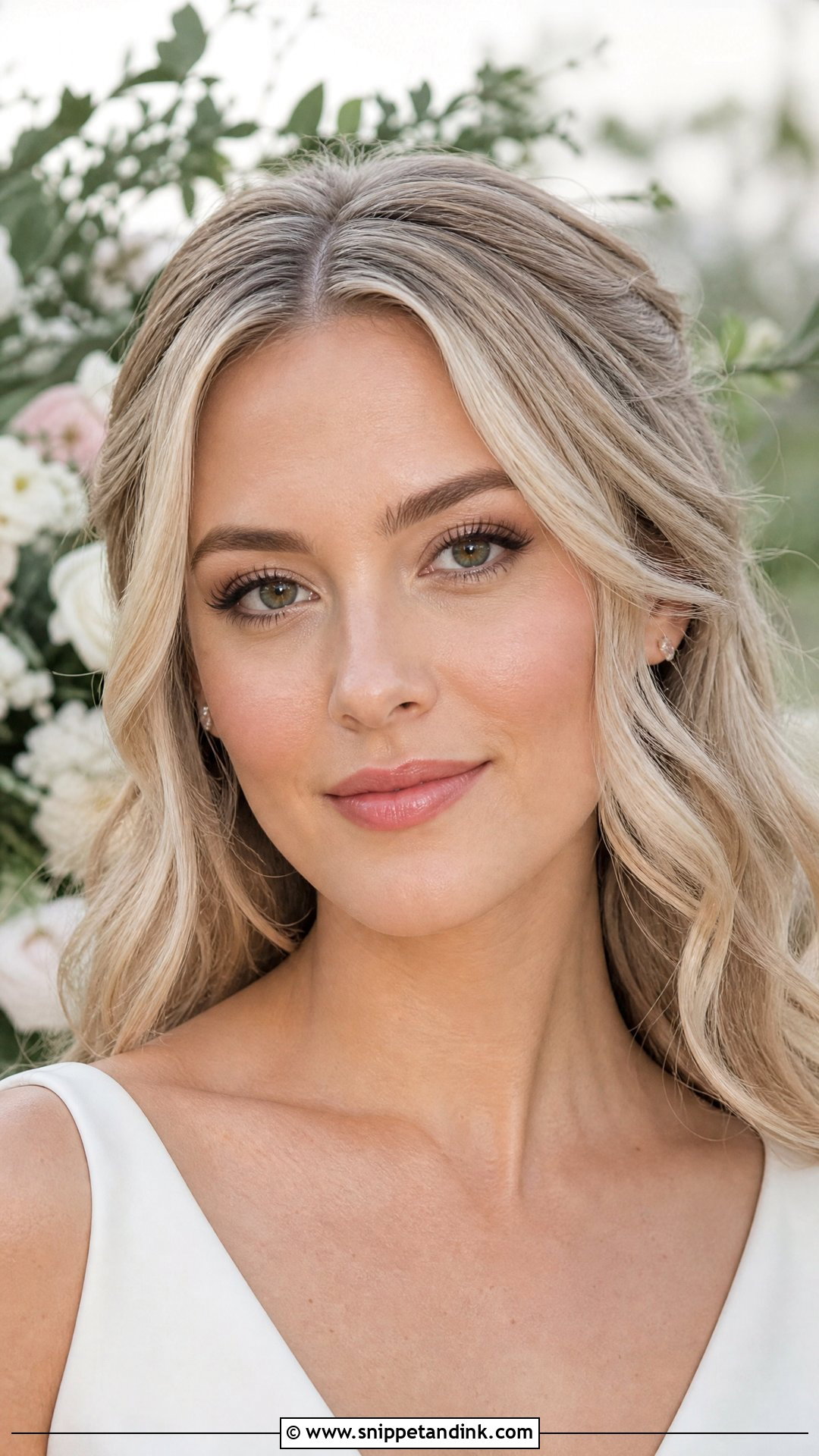
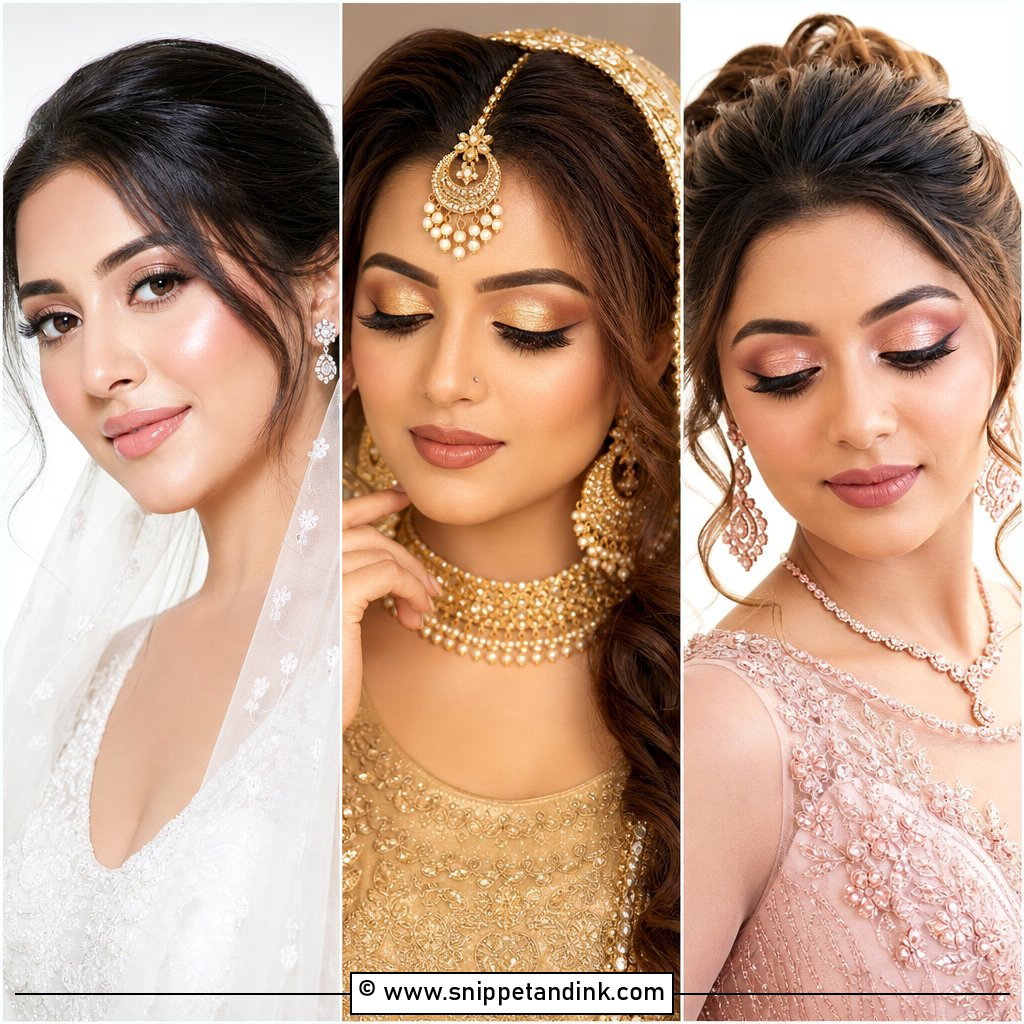
Natural makeup takes more care than people expect, because nothing hides a mistake. I prep the skin well, then use a light-to-medium foundation that evens tone but lets freckles show. Tightlining the upper lashes defines the eye without visible liner, and a few individual lashes look more like your own than a strip. Cream blush in rose or peach keeps the face from going flat in photos. I’d steer brides away from going too bare, though. Makeup that looks natural in the mirror often looks like nothing at all in a wedding album, so I build slightly more than feels necessary.
2. Soft Glam Wedding Makeup
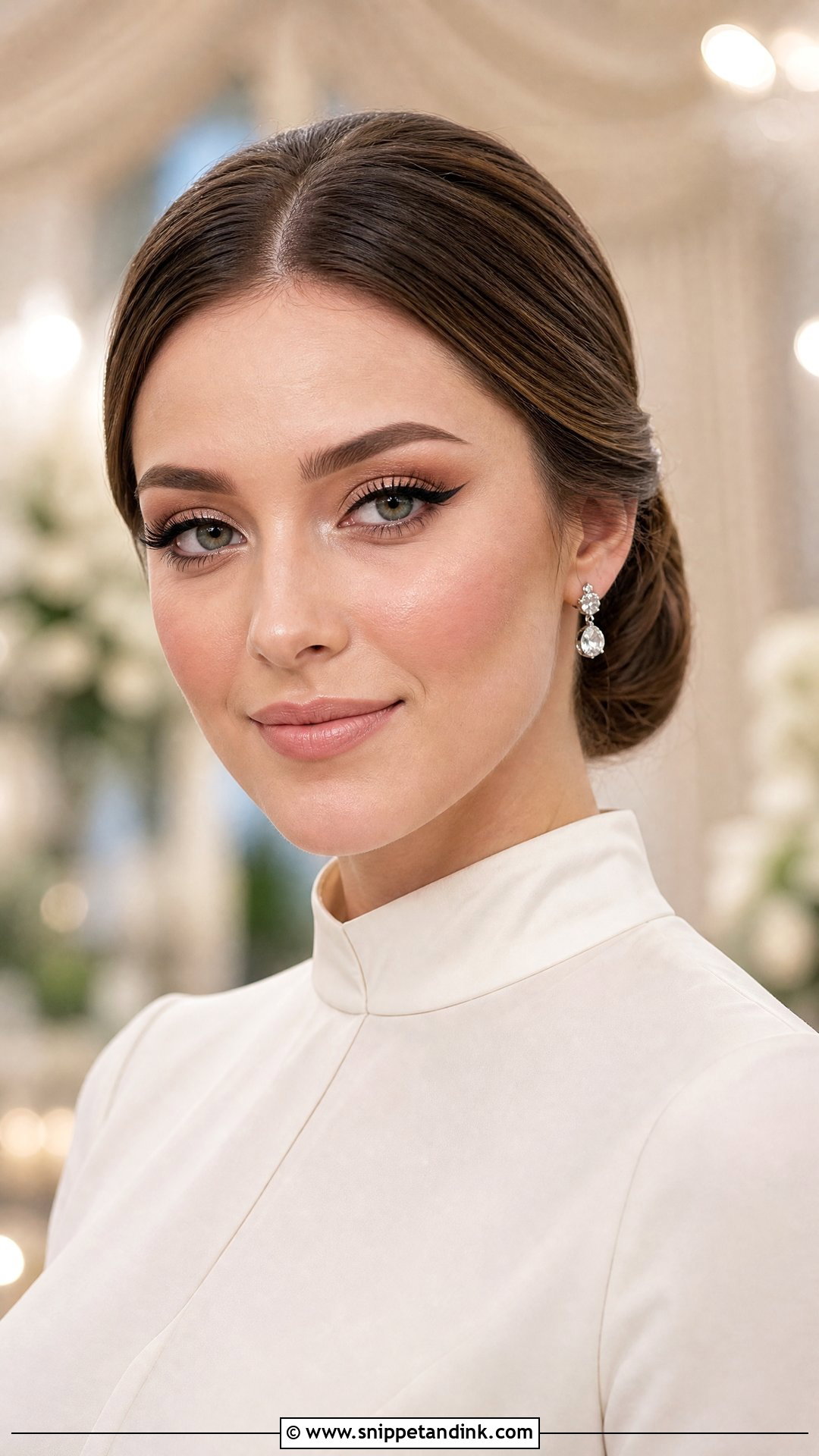
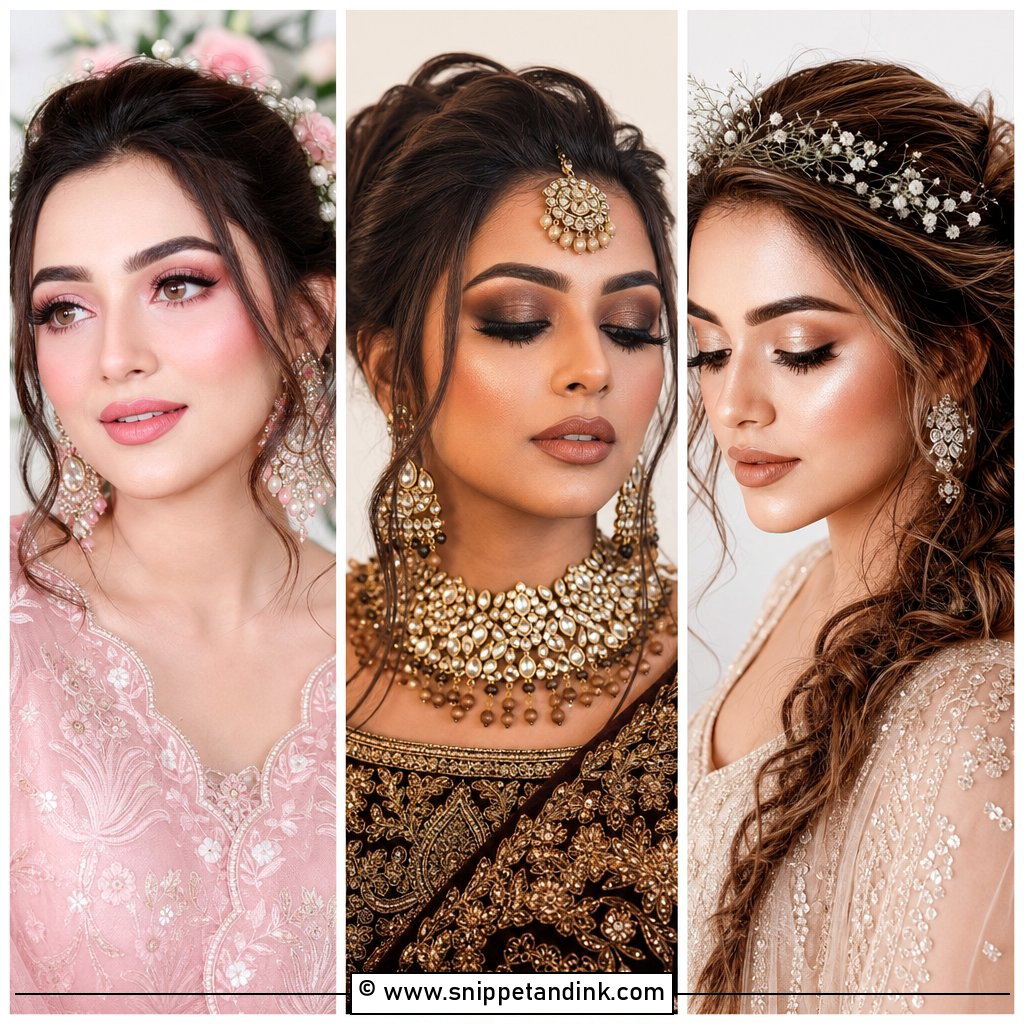
Soft glam is the look I’m asked for most. It has definition without the weight of full glam. The skin is smooth and softly radiant, the eyes are blended in neutral beige, taupe and warm brown into a lifted shape, and there’s a thin wing with wispy lashes. Contour sits just under the cheekbones. Blush is visible but diffused. A nude liner under a creamy lipstick keeps the mouth full. It suits almost every dress and face shape, which is exactly why it’s popular, and it’s the safest starting point if you’re not sure what you want.
3. Dewy Wedding Makeup
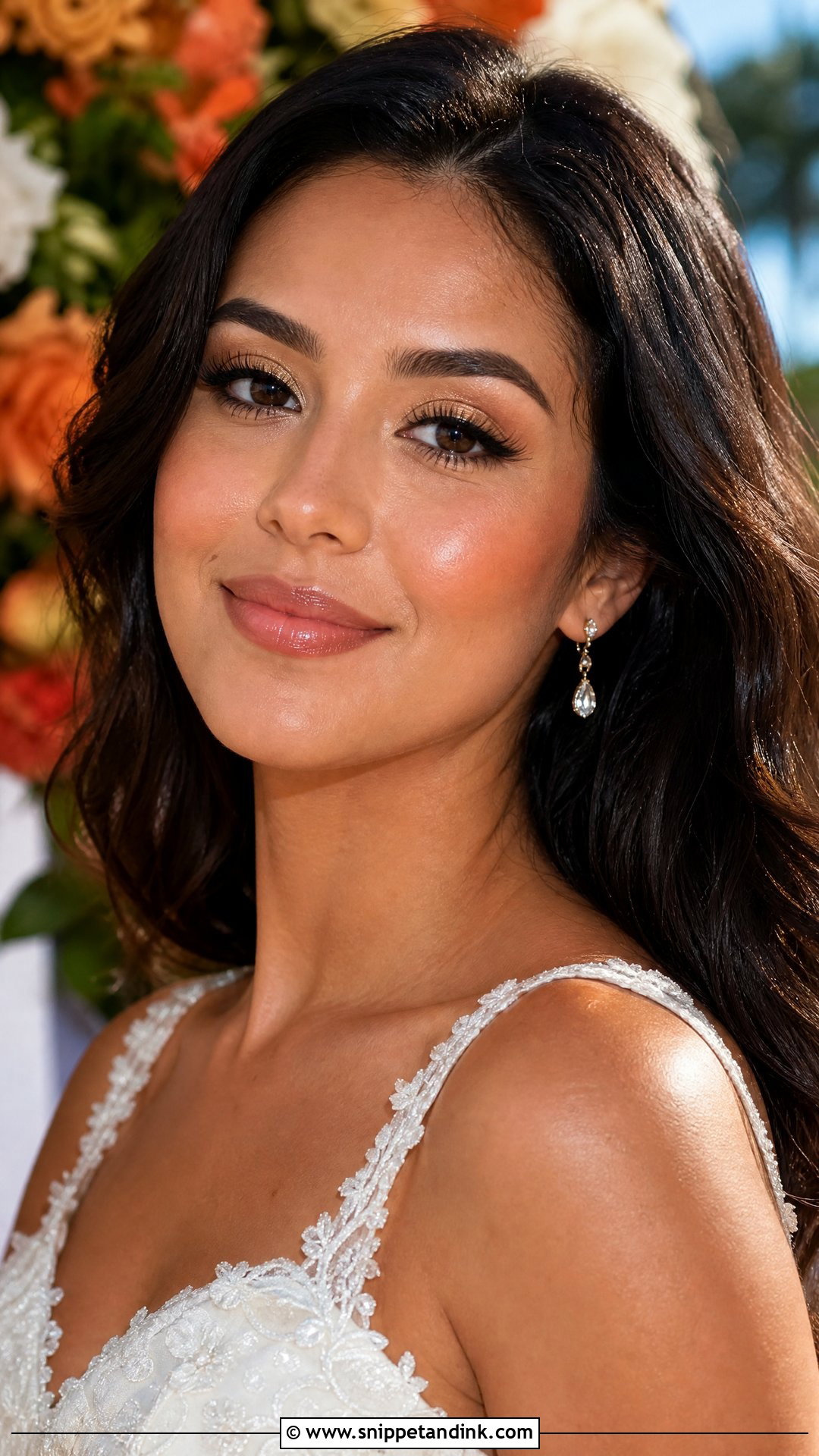
Dewy skin looks fresh, but glow has to be placed, not spread everywhere. I keep shine on the cheekbones, brow bones and bridge of the nose, and set the center of the face, the forehead and the chin with a fine powder. Otherwise by the reception the glow becomes grease. Thin layers of foundation over a radiant primer and cream blush give a skin-like finish. This works best on normal to dry skin. Oily skin tends to go shiny within a couple of hours, so I’d suggest a satin finish instead.
4. Matte Wedding Makeup
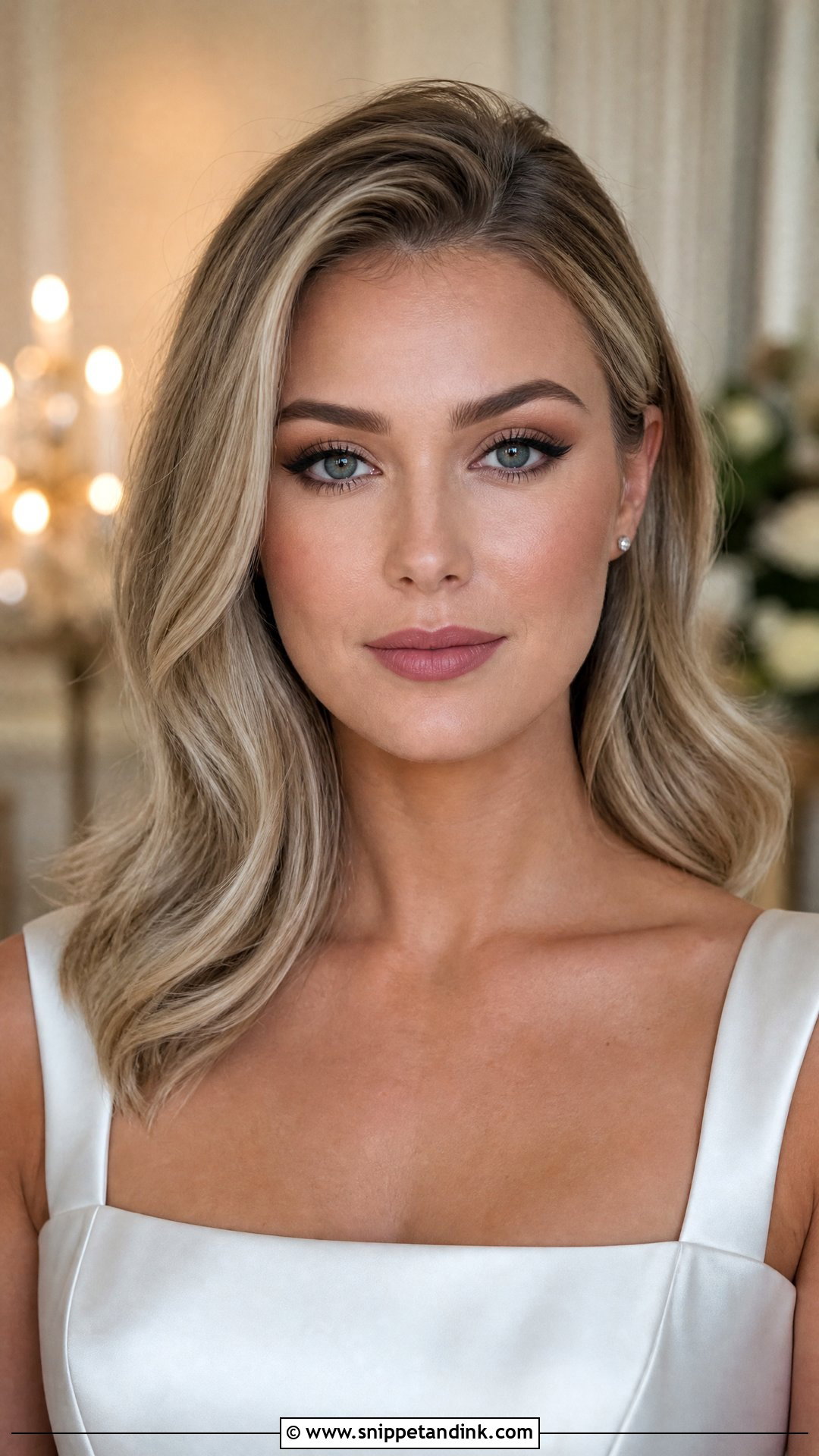
Matte makeup is the long-wear workhorse for warm weather, long days and oily or combination skin. The finish should be velvet, not flat. Flat matte skin looks dry in close-ups and settles into fine lines. I use a smoothing primer, long-wear foundation and a finely milled powder pressed in with a puff rather than swept on. Matte shadows in ivory, taupe and mocha give depth to the eyes. Muted rose or terracotta blush keeps the face warm. It suits formal and black-tie weddings well.
5. Classic Red Lip Wedding Makeup
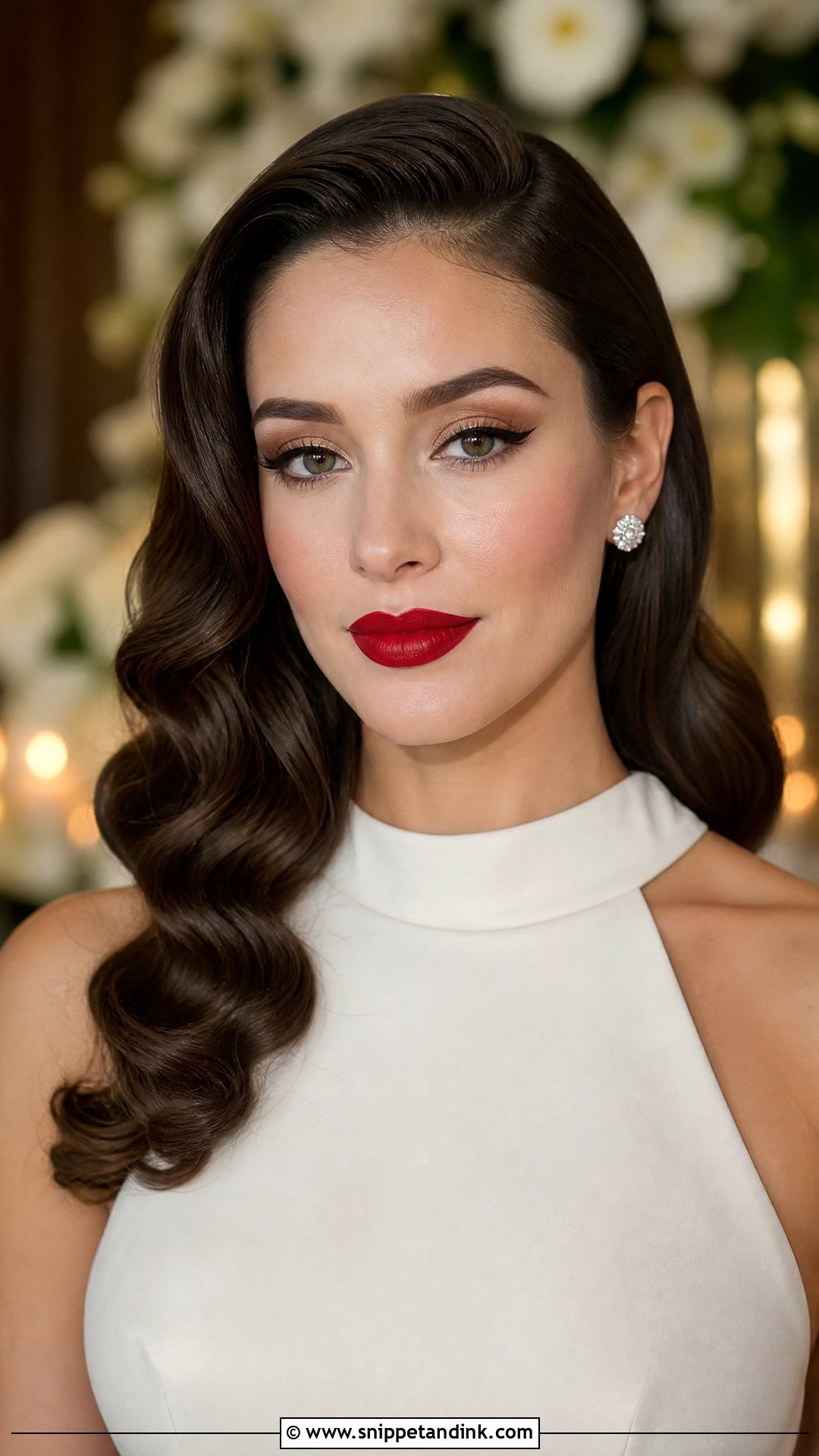
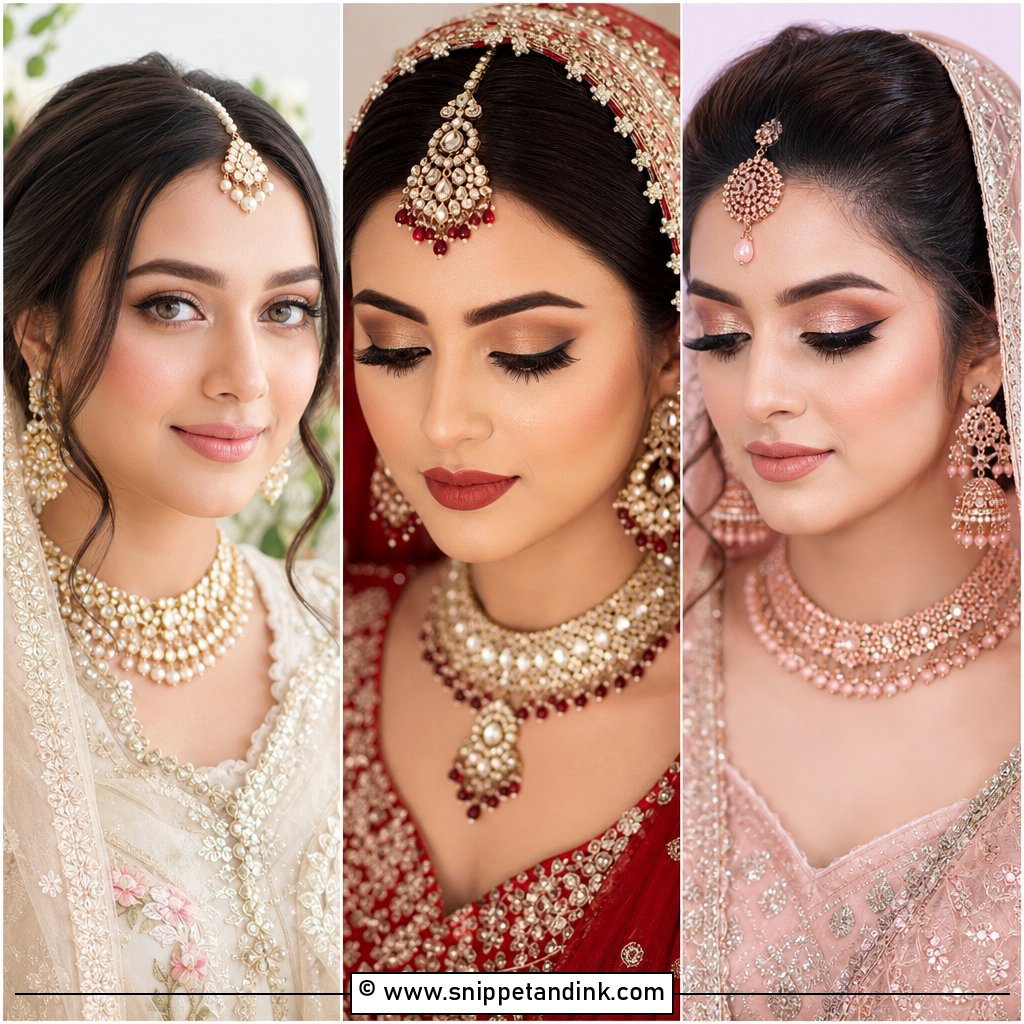
A red lip changes the whole face, so everything else steps back. I keep the skin satin, the contour soft, and the eyes to champagne shadow with a slim black wing. The shade matters more than the formula: blue-reds suit cool undertones, tomato reds suit warm undertones, and deep cherry suits richer complexions. I line the whole lip first, then build long-wear lipstick in thin layers and clean the edge with concealer. Red shows every smudge, so the bride needs the exact lipstick in her touch-up kit. It’s especially good with simple gowns and evening receptions.
6. Smokey Eye Wedding Makeup
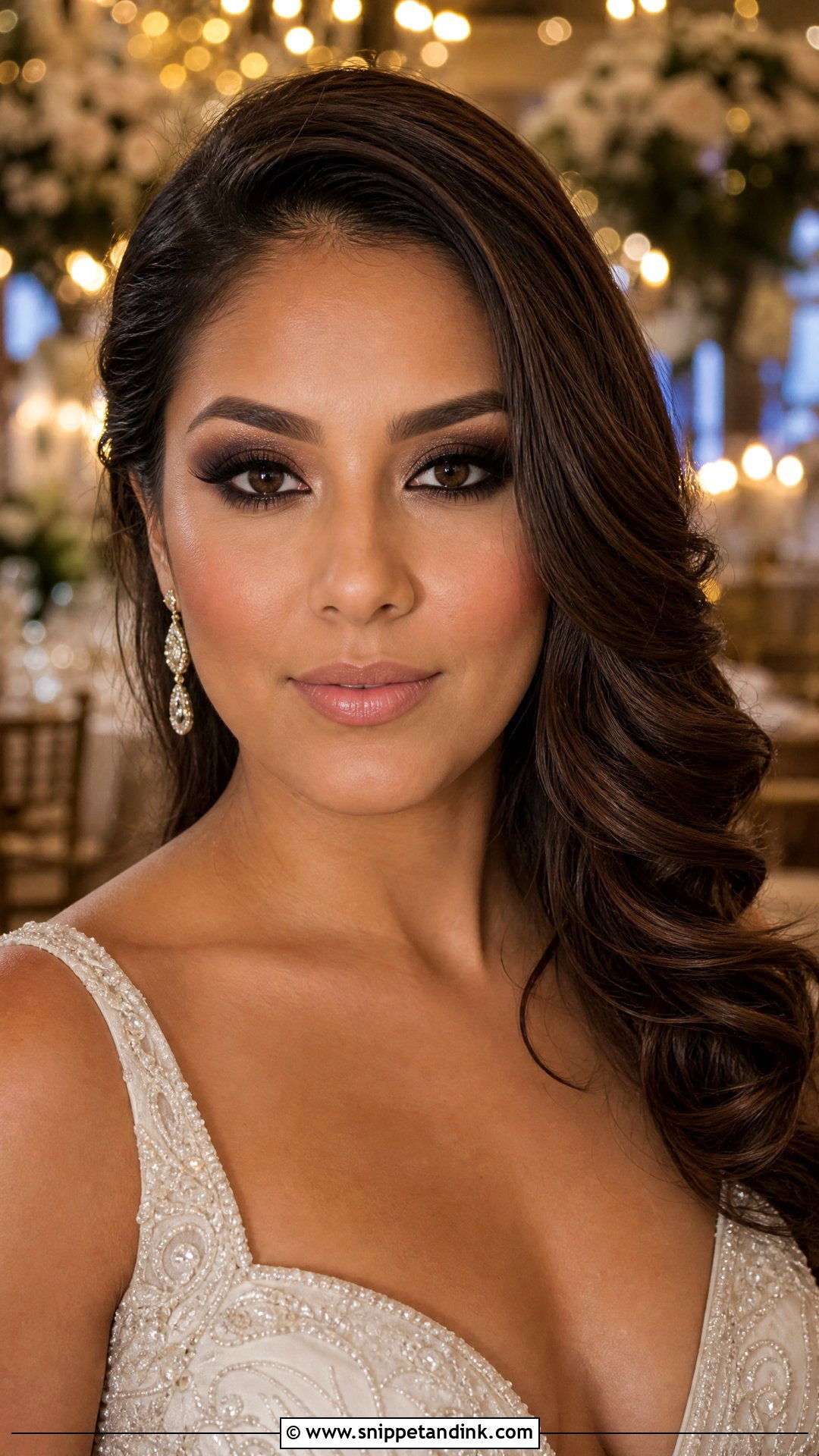
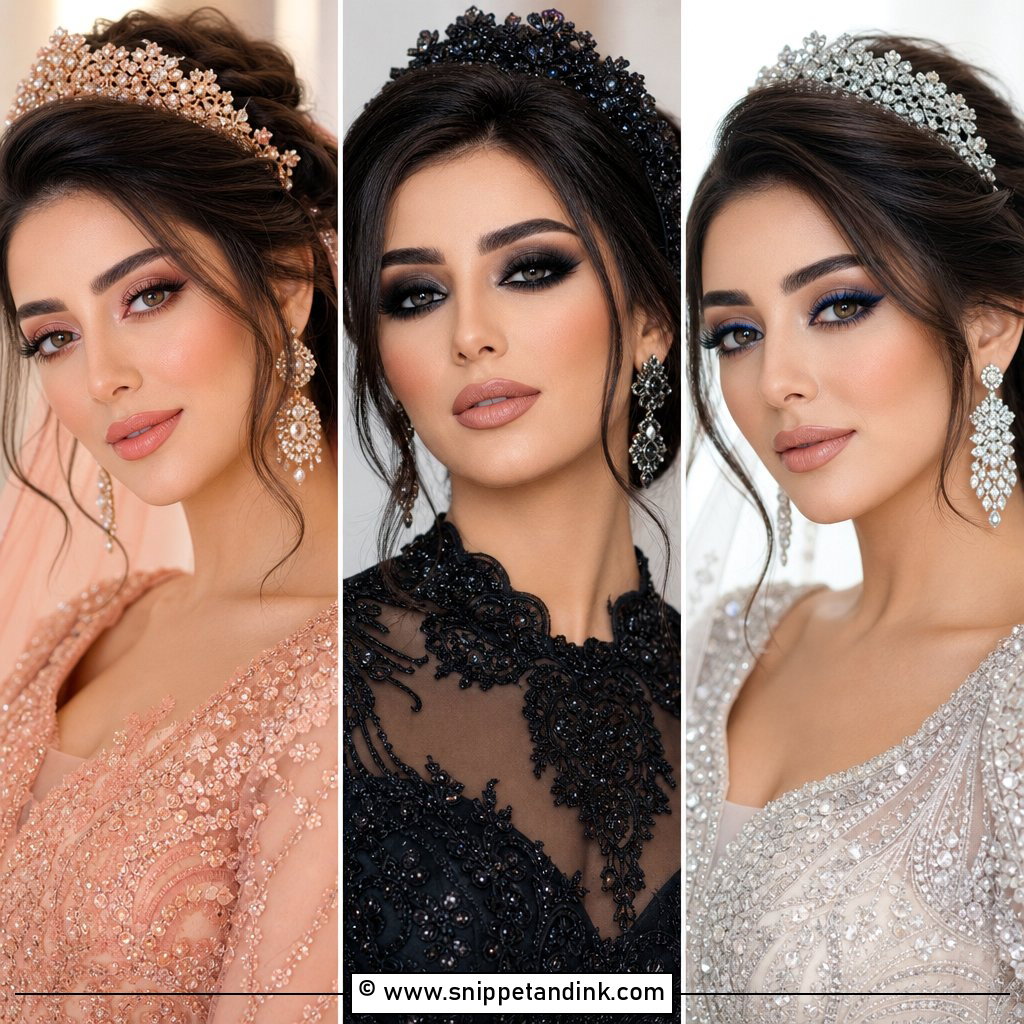
Smokey eye wedding makeup works for a bride when it’s blended to the point of having no hard edges. I choose taupe, bronze, espresso, plum or charcoal based on eye color. Black is rarely necessary. The darkest shade stays close to the lash line and fades upward and outward, which lifts the eye instead of closing it. Waterproof liner is essential, since happy tears hit the lower lash line first. With the eyes leading, the skin stays clean, the blush muted and the lip nude.
7. Rose Gold Wedding Makeup
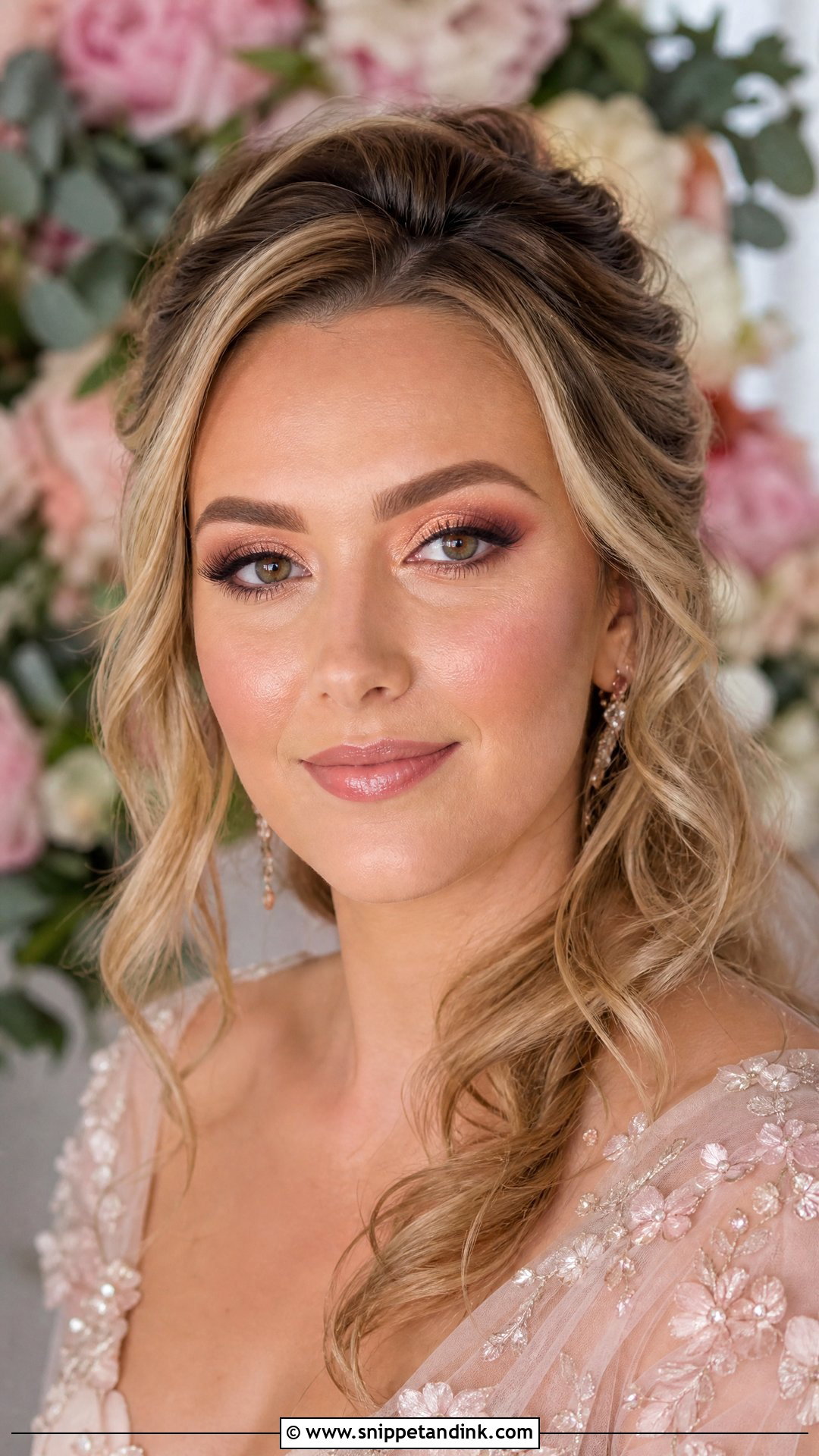
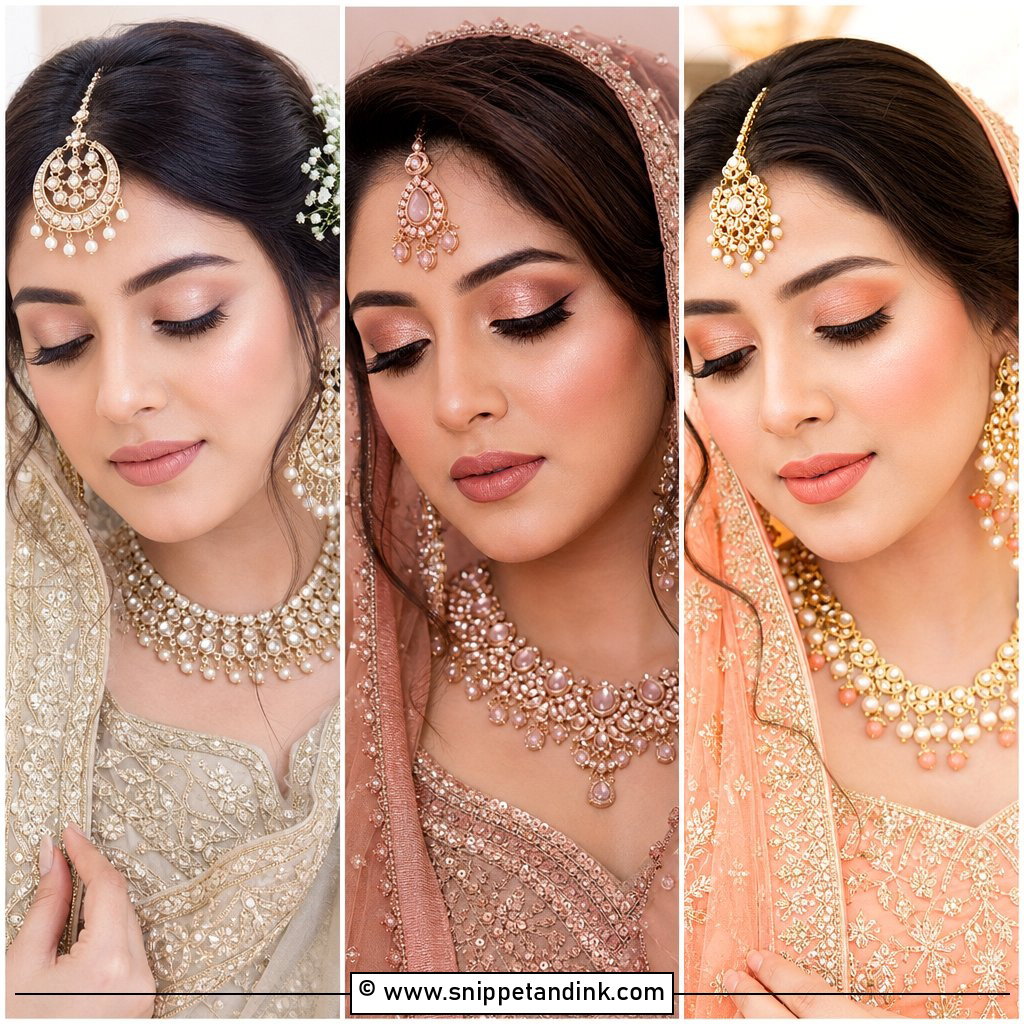
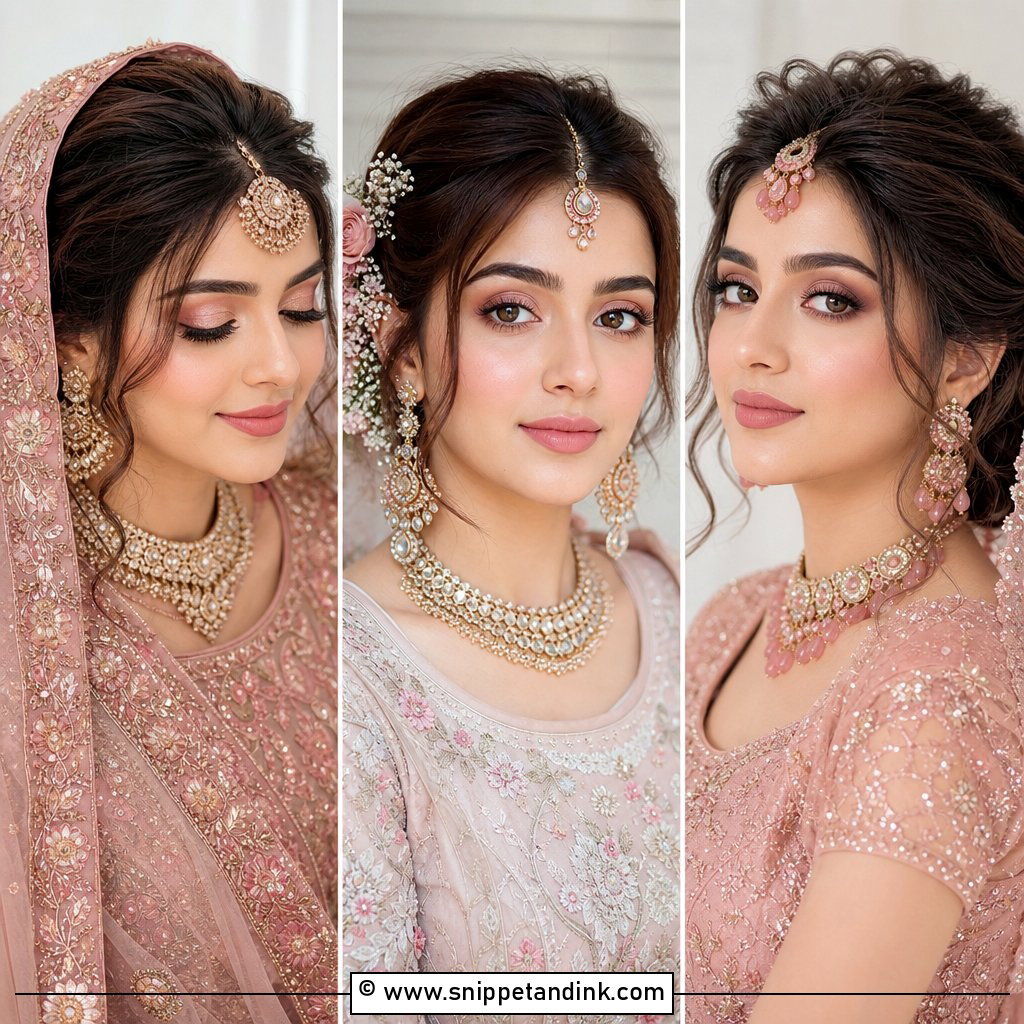
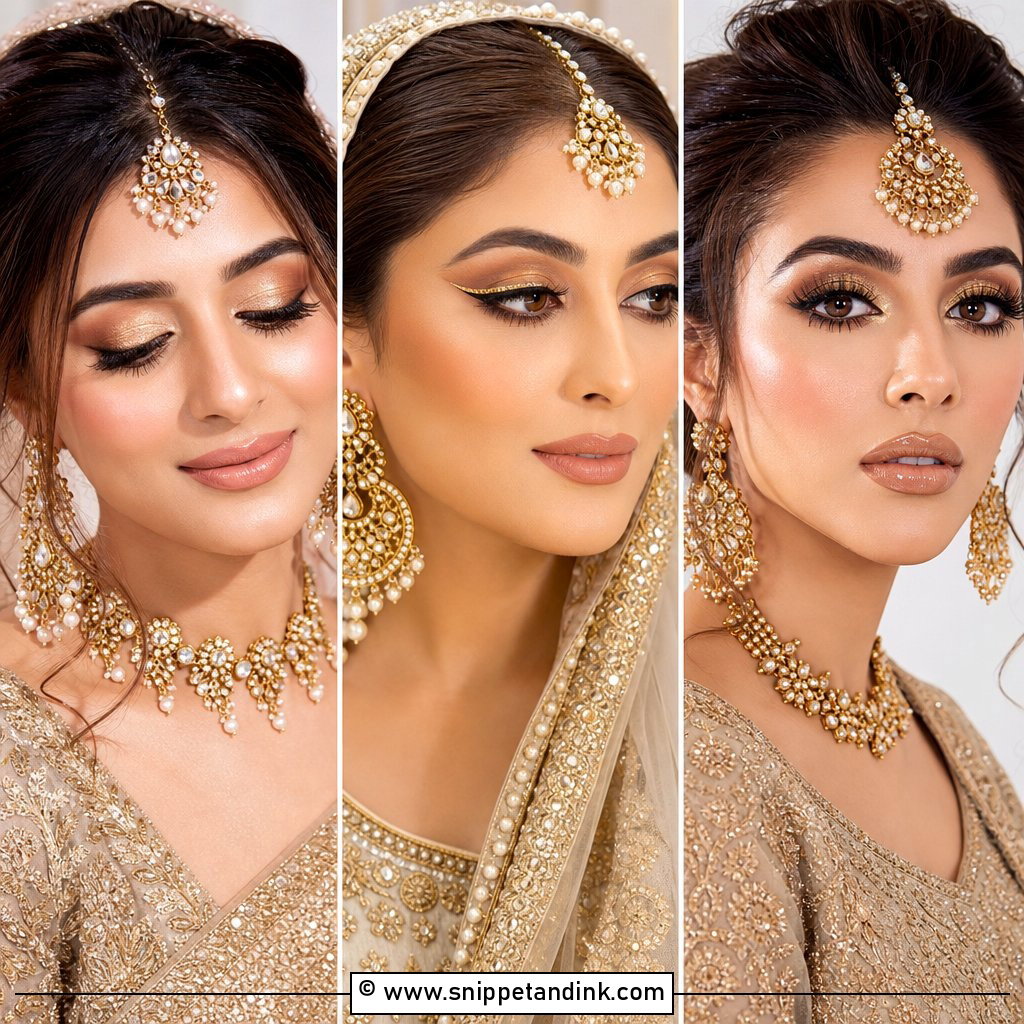
Rose gold sits between pink and bronze, which is why it flatters such a wide range of skin when the depth is adjusted. I place rose gold shimmer on the center of the lid, warm brown in the crease and a deeper bronze or plum along the lashes. On deeper skin I push the crease shade darker so the shimmer still shows. Peachy-pink blush and a warm champagne highlight carry the tone onto the face. Keep shimmer off any lid with crepey texture, where metallics emphasize creasing. It suits blush gowns and sunset portraits.
8. Bronze Wedding Makeup
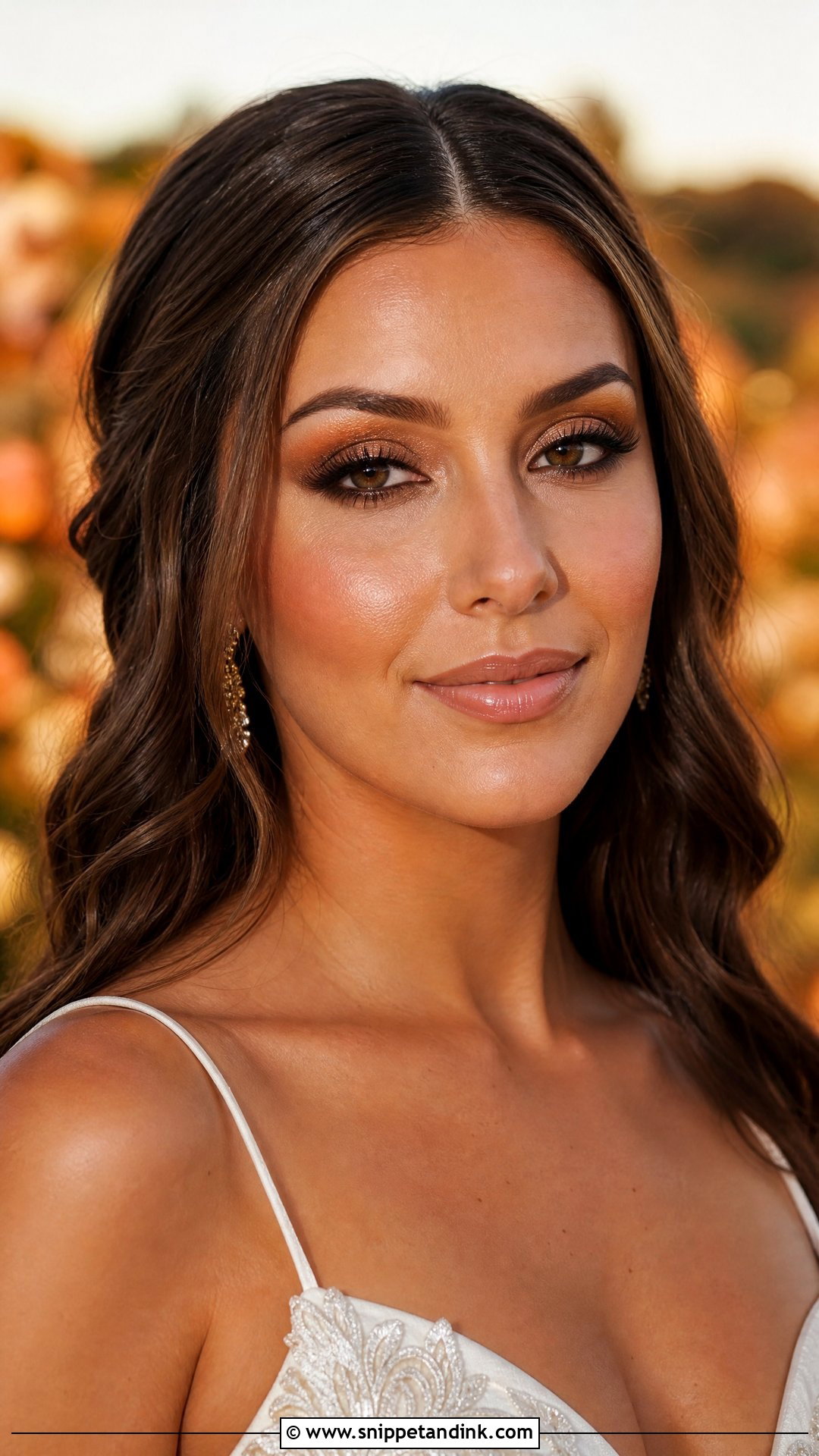
Bronze makeup gives warmth and a sun-kissed shape, which suits summer weddings, destination ceremonies and golden-hour photos. I place bronzer where the sun naturally hits: temples, cheekbones and along the jaw. Then caramel and copper shades on the eyes with a soft brown liner. The common mistake is a bronzer that’s too orange for the skin, which looks fine indoors and muddy outside. I always check bronzer against the neck in daylight. Peach or terracotta blush and a caramel gloss finish the face.
9. Pink Wedding Makeup
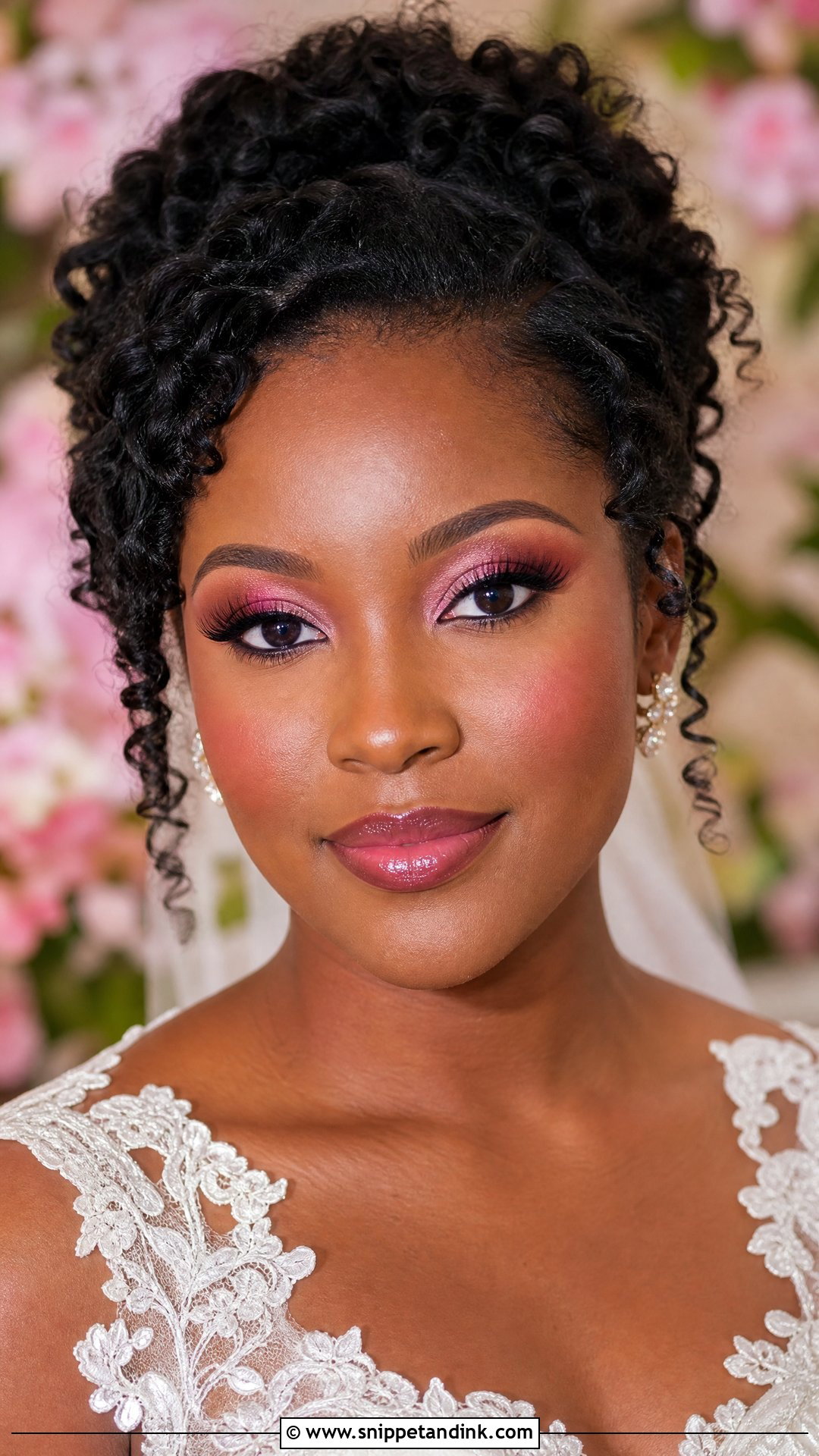
Pink makeup can easily look young, and the fix is matching the depth of pink to the skin. Baby pink suits fair skin, rose suits light skin, berry pink suits tan skin, and deep rose or plum-pink suits deep skin. I keep the base satin, wash pink shadow over the lids and add soft brown in the crease so the eye still has shape. Blush goes high on the cheekbones for lift, and a matching pink lip pulls the face together. Garden and spring weddings suit it best.
10. Peach Wedding Makeup
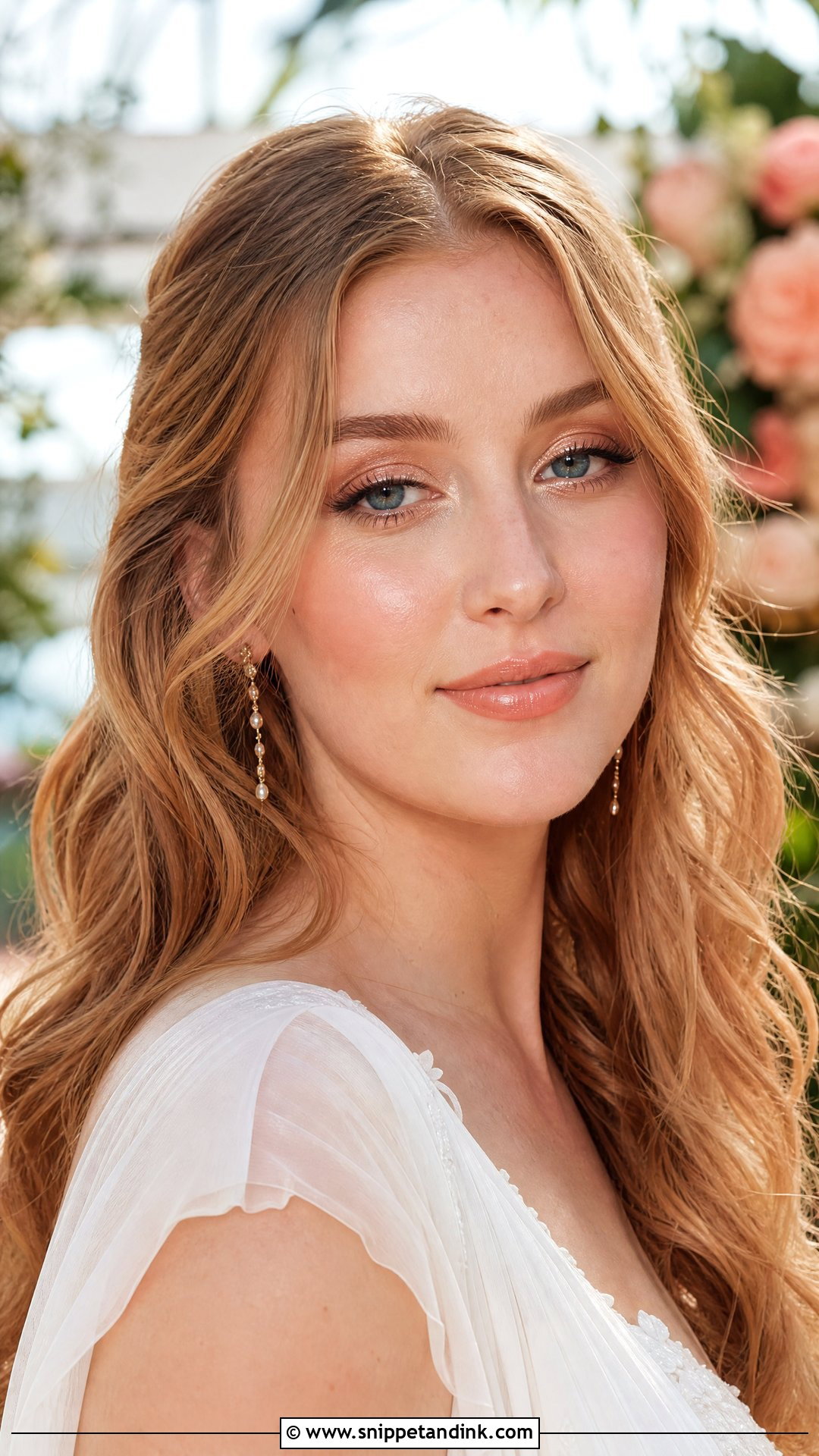
Peach is the warmest neutral there is, and it brightens cheeks, lips and eyes at once in natural light. I use a lightweight foundation, a touch of soft bronzer, then cream peach blush pressed onto the apples of the cheeks. Champagne and warm beige shadows with a brown liner keep the eyes soft. On deep skin I use a richer apricot rather than a pale peach, which can look chalky. A peach-nude lipstick or a glossy coral-peach lip finishes it. It photographs well with sage and champagne palettes.
11. Brown Wedding Makeup
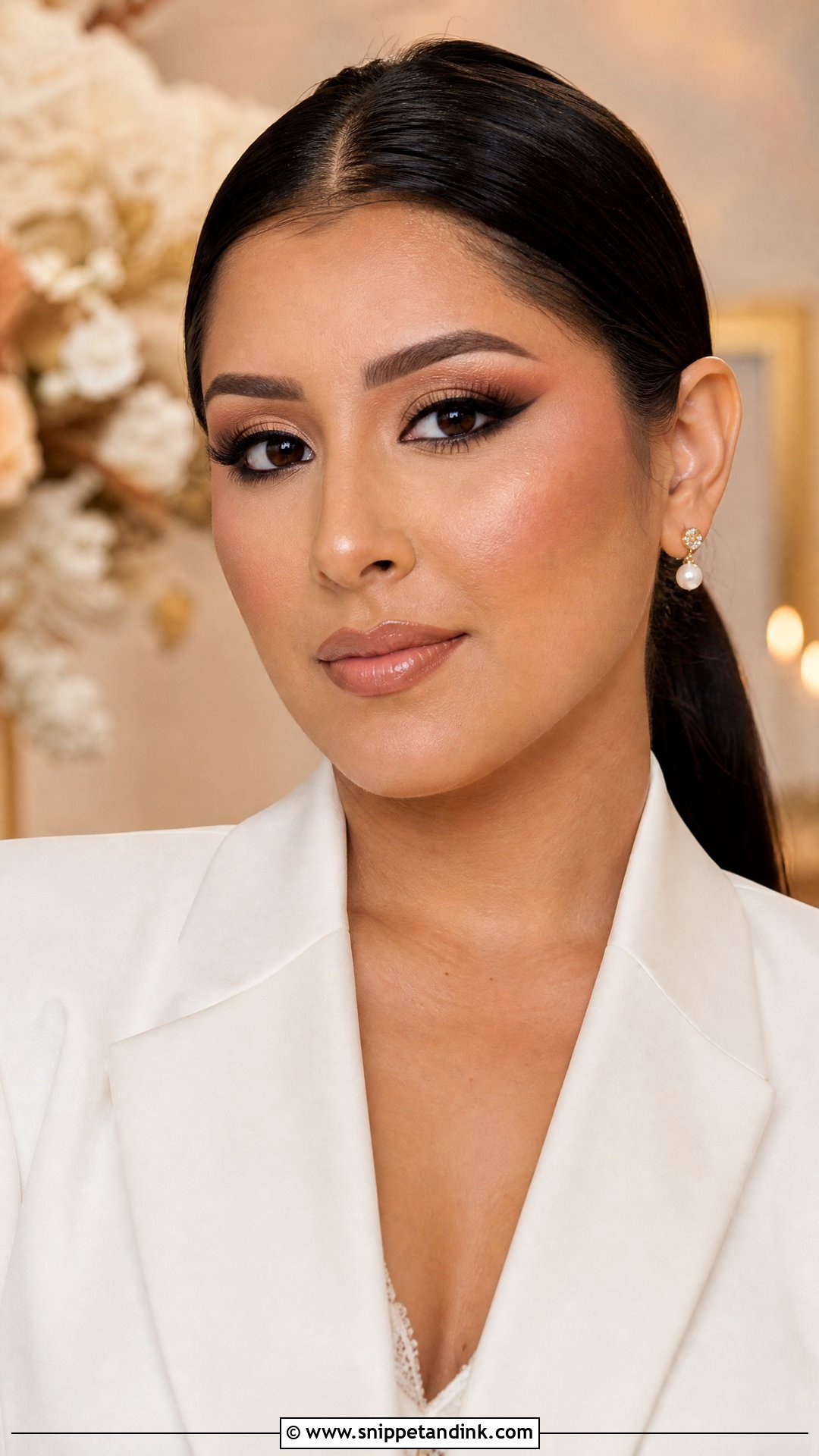
Brown wedding makeup is the most wearable neutral because brown adds depth without looking harsh. Warm beige, camel, mocha and espresso shadows build a lifted shape. I usually swap black liner for brown on this look, since brown defines the lash line but softens in photos. Satin skin, light contour and a neutral blush keep the face cohesive. For lips, the right nude depends on the complexion: beige nude on fair skin, rosy brown or caramel deeper. It works in any season.
12. Champagne Wedding Makeup
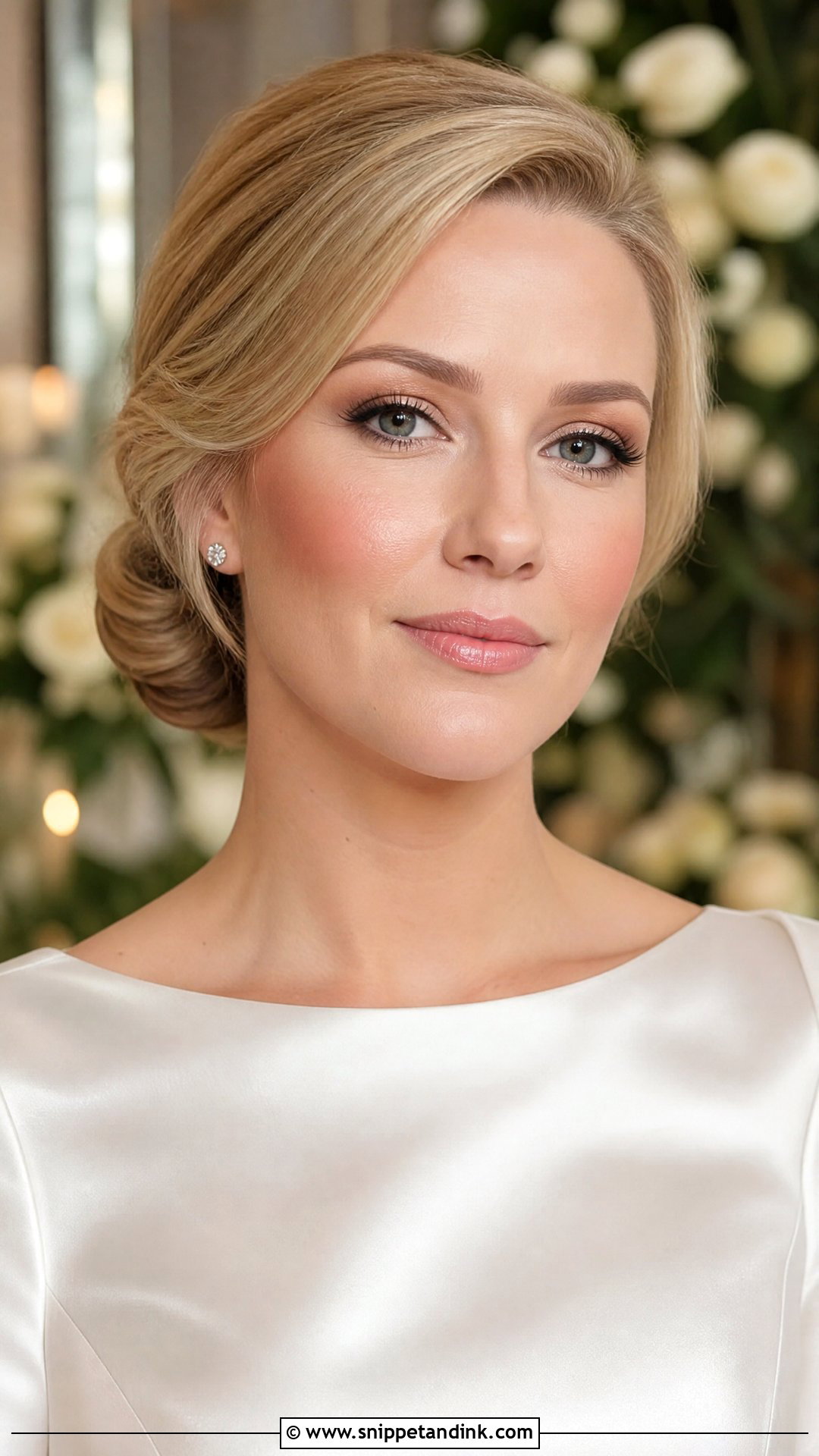
Champagne is about light without color. I sweep champagne shimmer over the lid, blend soft taupe into the crease for shape, and add a thin liner with wispy lashes. The skin stays smooth with a pale pink or peach blush. Highlight goes only on the high points of the cheekbones. Shimmer on textured skin, like the sides of the nose or areas with visible pores, makes texture look worse in close-ups, so I keep it well away from those spots. A nude-pink satin lip completes the look. It suits traditional and courthouse ceremonies alike.
13. Burgundy Wedding Makeup
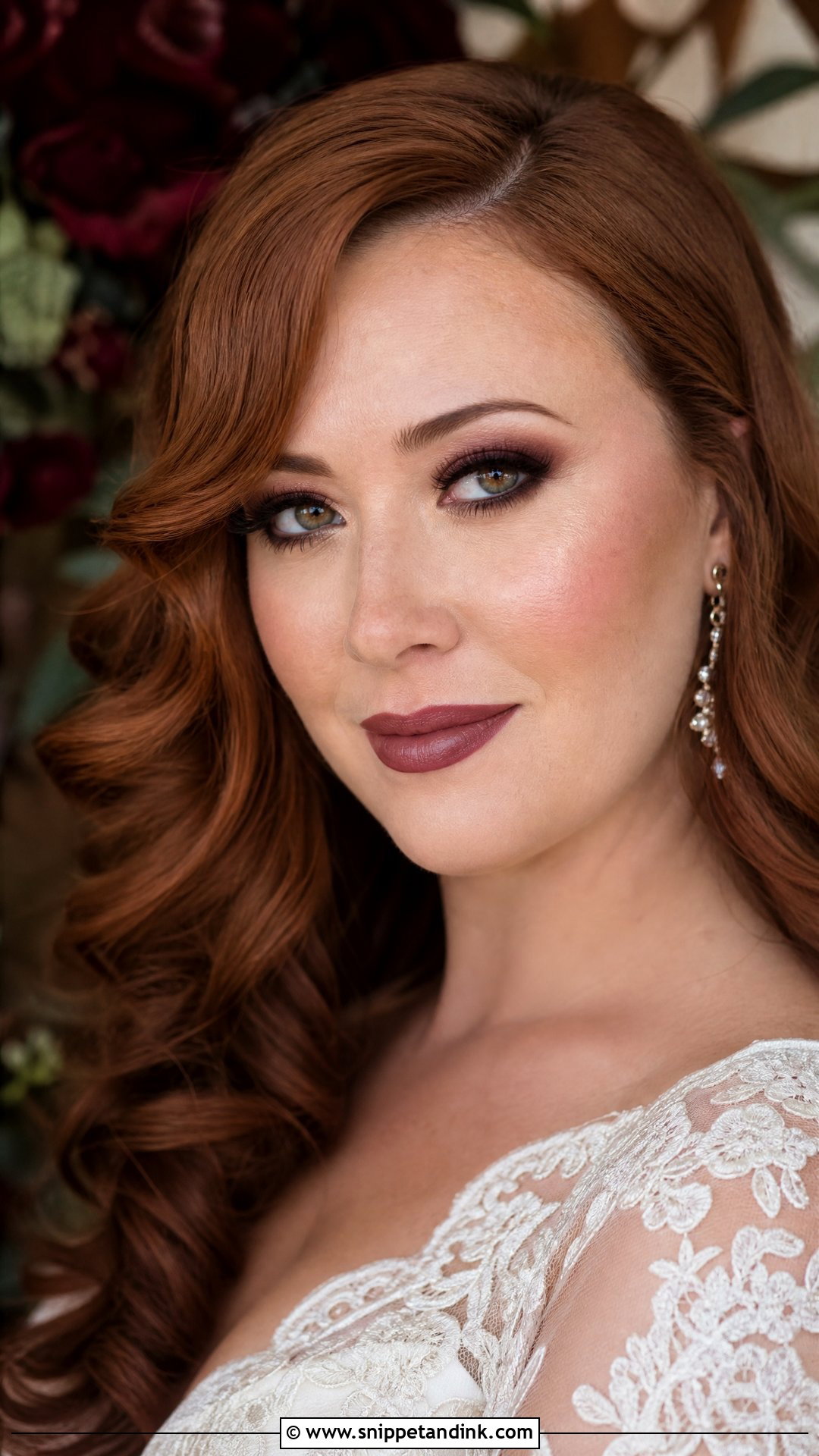
Burgundy is an accent color, not a full face. I wash it softly over the outer lid, blend a plum-brown into the crease, and keep brown or black liner tight to the lashes. It makes green and hazel eyes look brighter, and gives brown eyes a warm richness. The rest of the face stays polished with medium coverage and berry blush. For the lip I’d pick either a muted berry stain or a nude rose. If the eyes are the focus, the nude lets them lead. It’s most at home at fall and winter weddings and evening events.
14. Gold Wedding Makeup
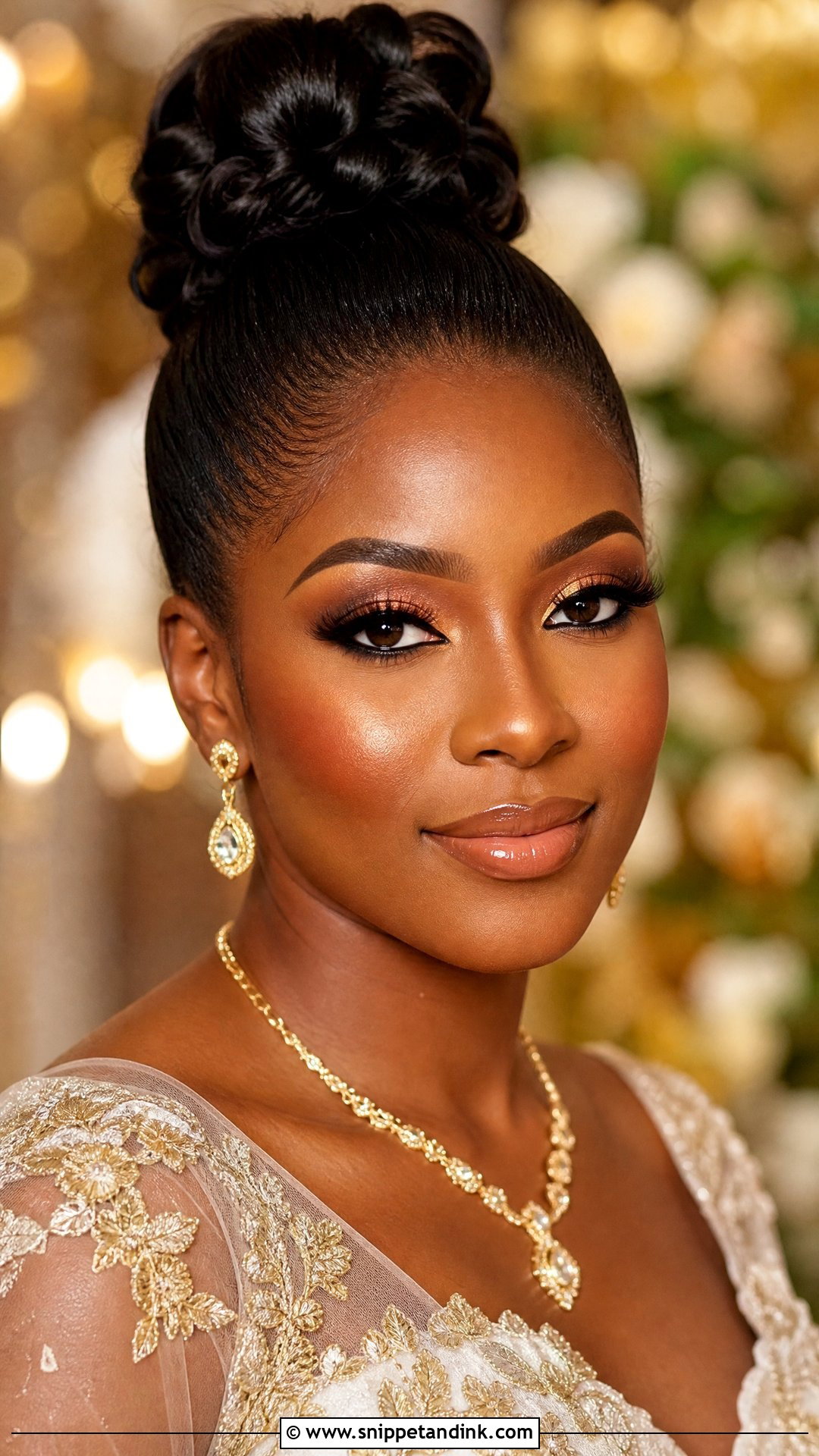
Gold makeup feels celebratory without glitter. I use a refined gold shimmer on the center of the lid, then blend bronze or soft brown into the crease so the gold looks set into the eye rather than sitting on top. Bronzer, warm peach blush and a soft golden highlight match it on the skin. Deep yellow gold suits tan, olive and deep skin. On fair skin I switch to a paler champagne gold, which reads warm instead of brassy. Gold jewelry and warm ivory dresses suit it.
15. Full Glam Wedding Makeup
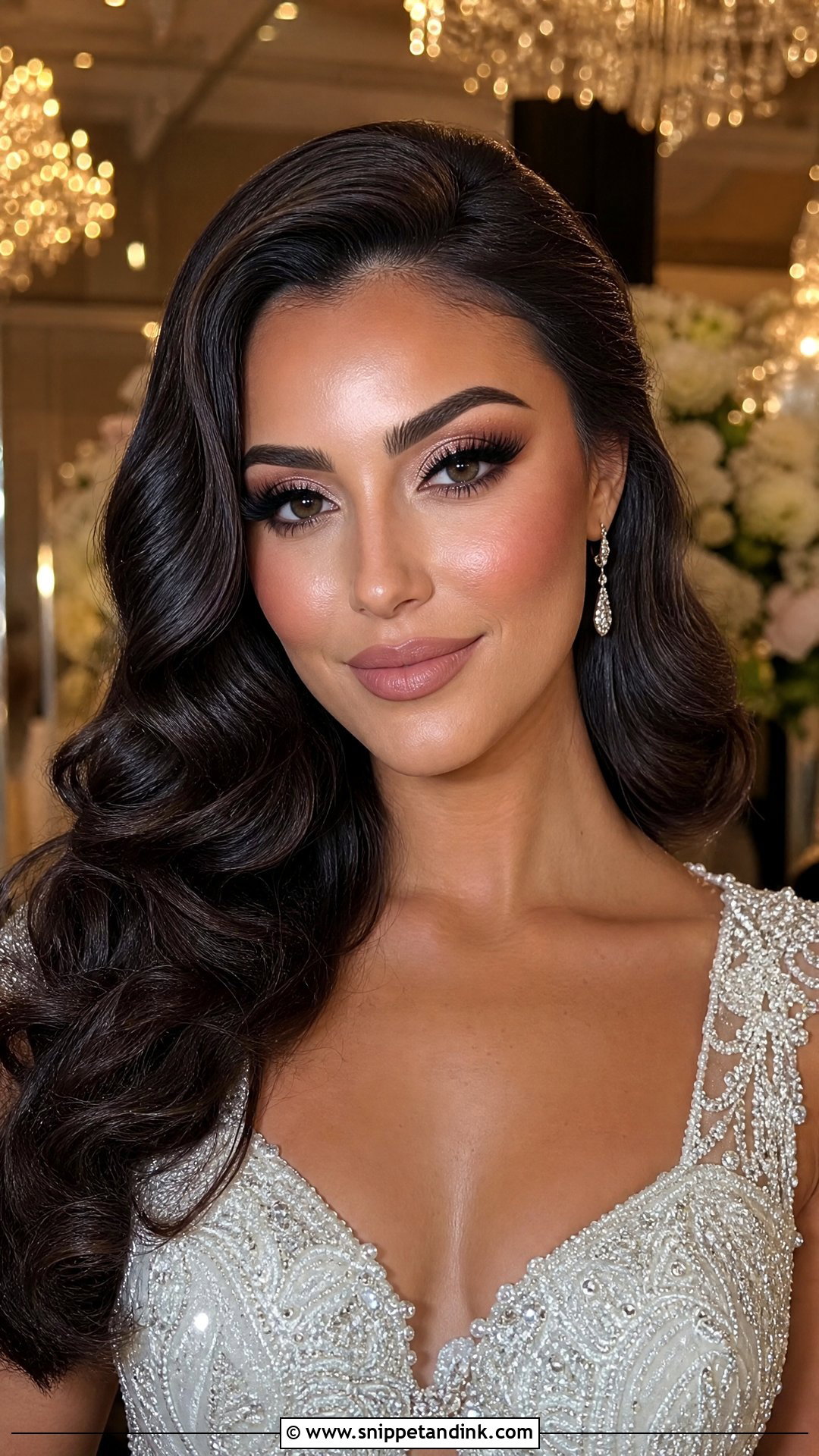
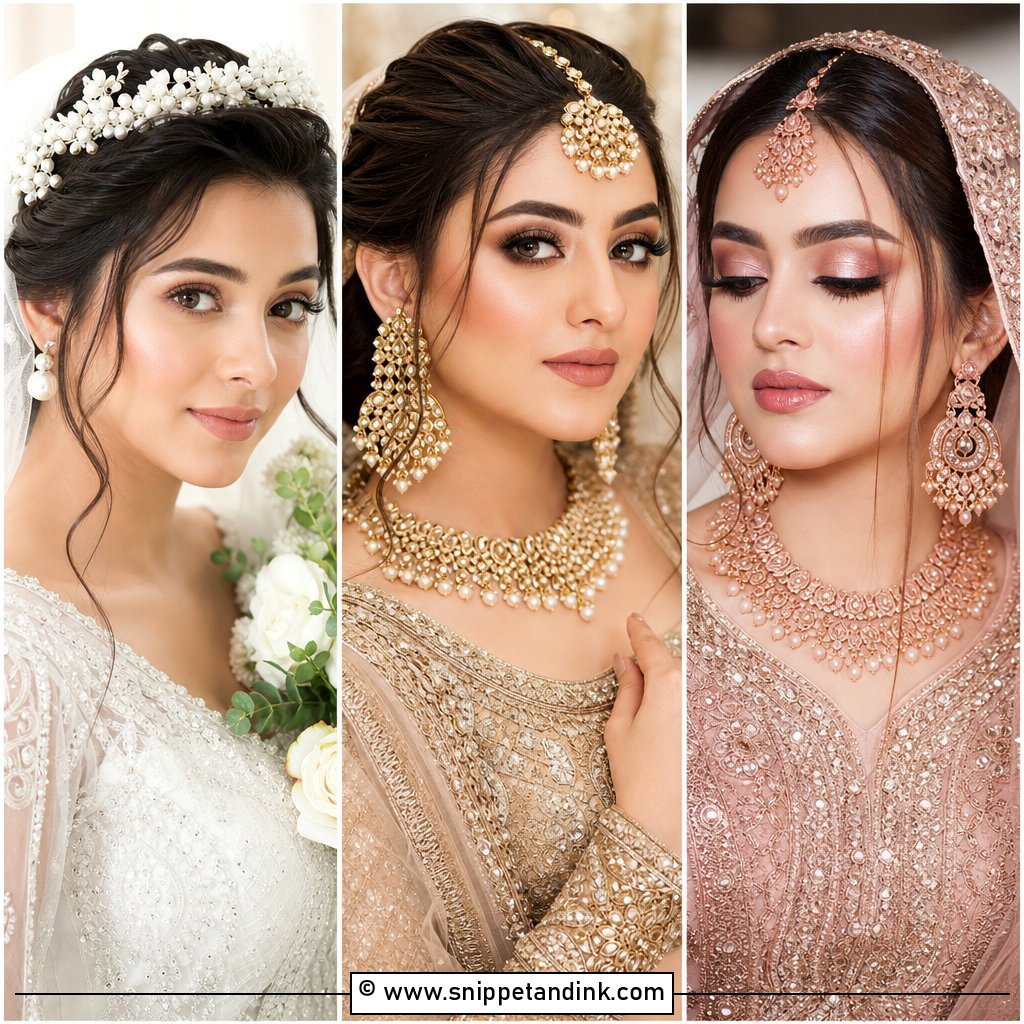
Full glam wedding makeup is sculpted and camera-focused: full-coverage foundation, bright under eyes, defined contour, polished brows and dramatic lashes. What keeps it bridal rather than a nightclub look is blending every edge and choosing classic shades. I add blush more generously than seems right, because professional lighting and flash wash color out. A lined nude or berry lip balances the strong eyes. I set it in layers with powder and setting spray. It suits evening weddings, large venues and brides who already love wearing makeup.
16. Minimal Wedding Makeup
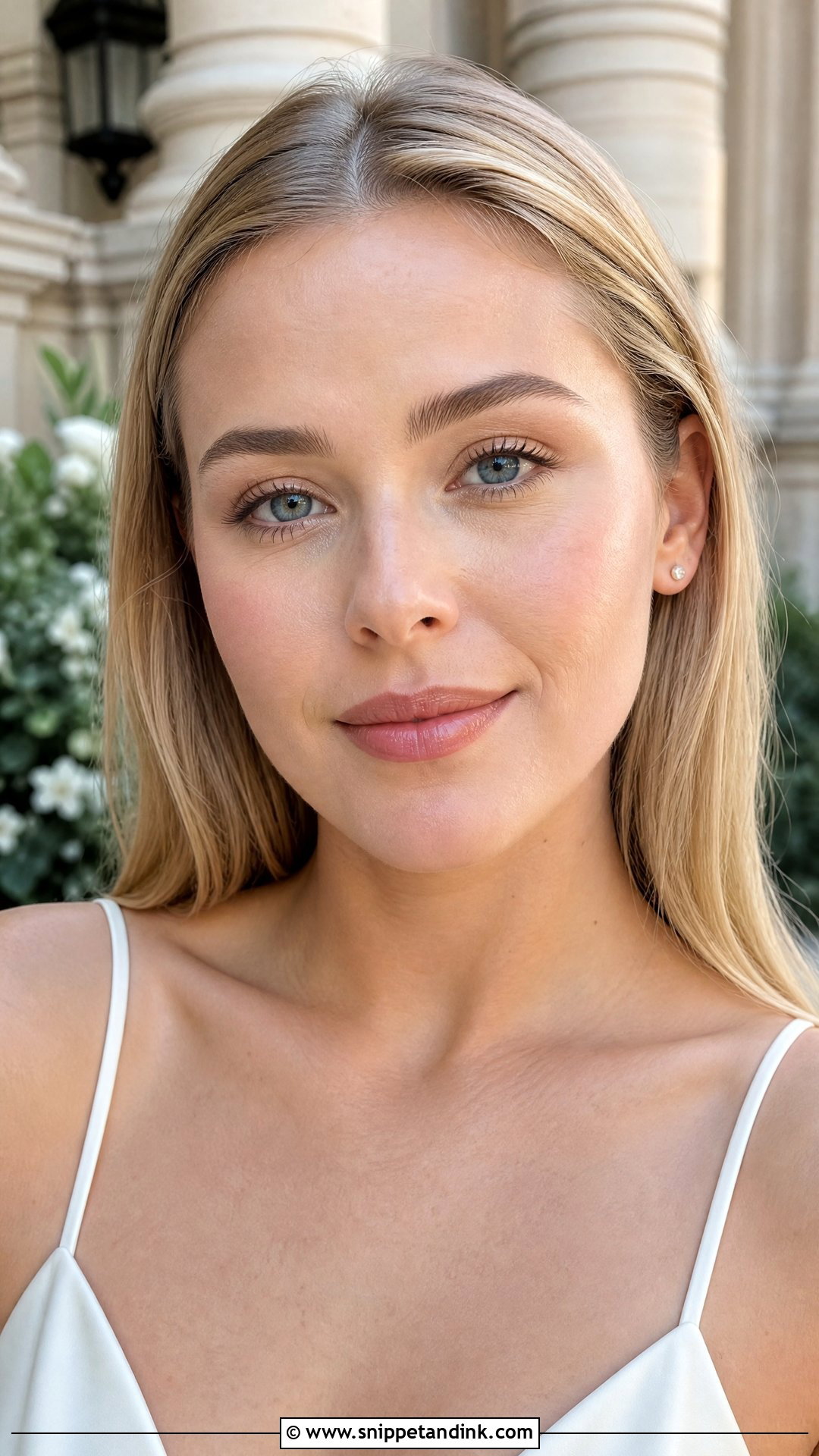
Minimal makeup isn’t bare. It’s edited. I use a skin tint or sheer foundation, spot concealer only where it’s needed, cream blush, brow gel, curled lashes and a wash of neutral shadow. Contour is skipped in favor of a light bronzer where the sun would hit. The lip stays close to your natural color. This is the look for brides who rarely wear makeup and feel masked in anything heavier. Expect to blot more often, though. Sheer formulas offer less control over shine.
17. Vintage Wedding Makeup
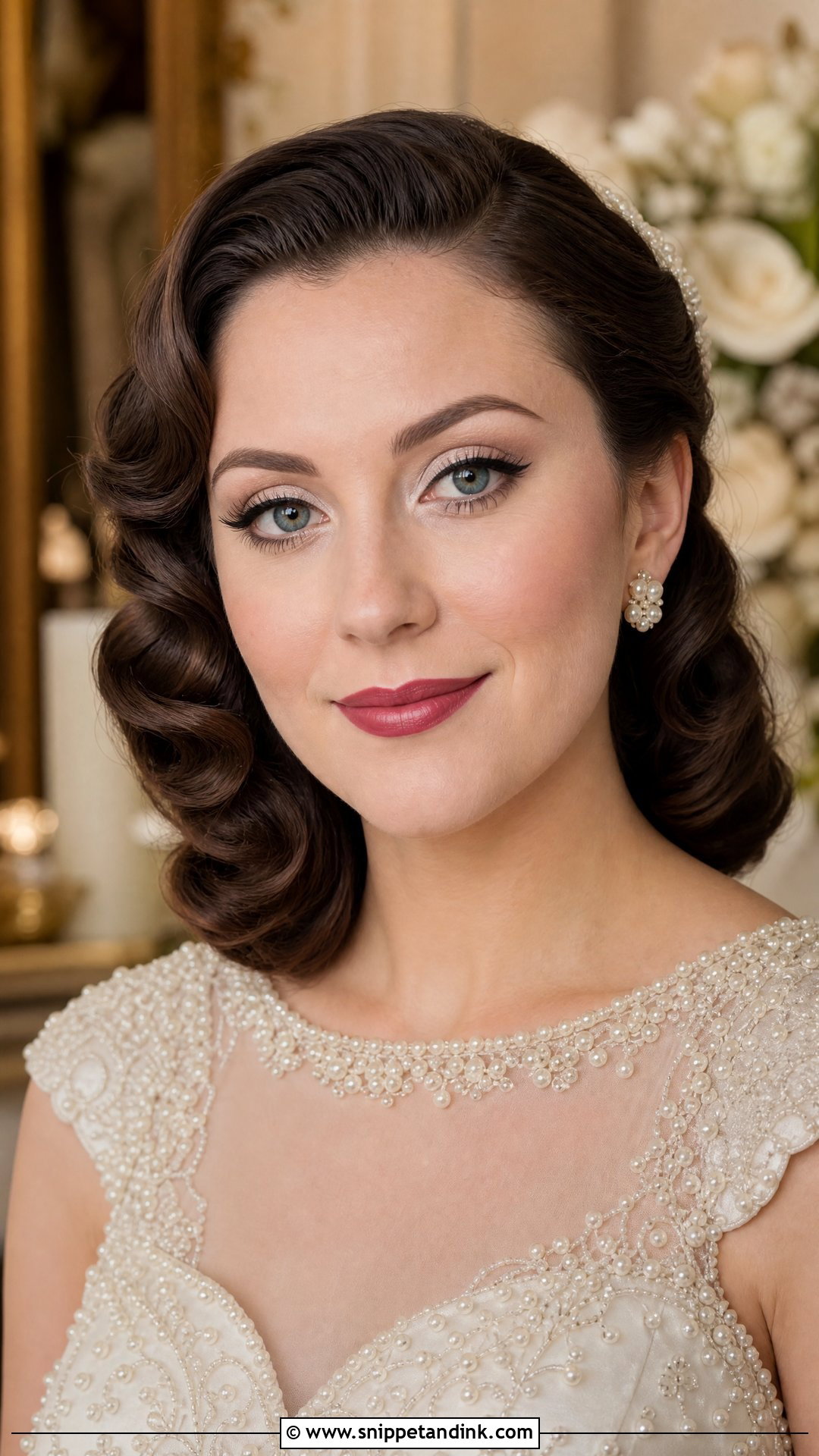
Vintage makeup borrows from classic film looks but has to stay out of costume territory. I build smooth satin skin, powdered only where needed, a gentle sculpt under the cheekbones, ivory lids and a clean winged liner. Blush goes slightly higher on the cheeks than a modern placement, which is the detail that makes it read vintage. The lip can be red, berry, rose or warm nude. I keep the wing modest. An exaggerated flick dates the look in the wrong way. Sleek buns, pearls and simple gowns suit it.
18. Beach Wedding Makeup
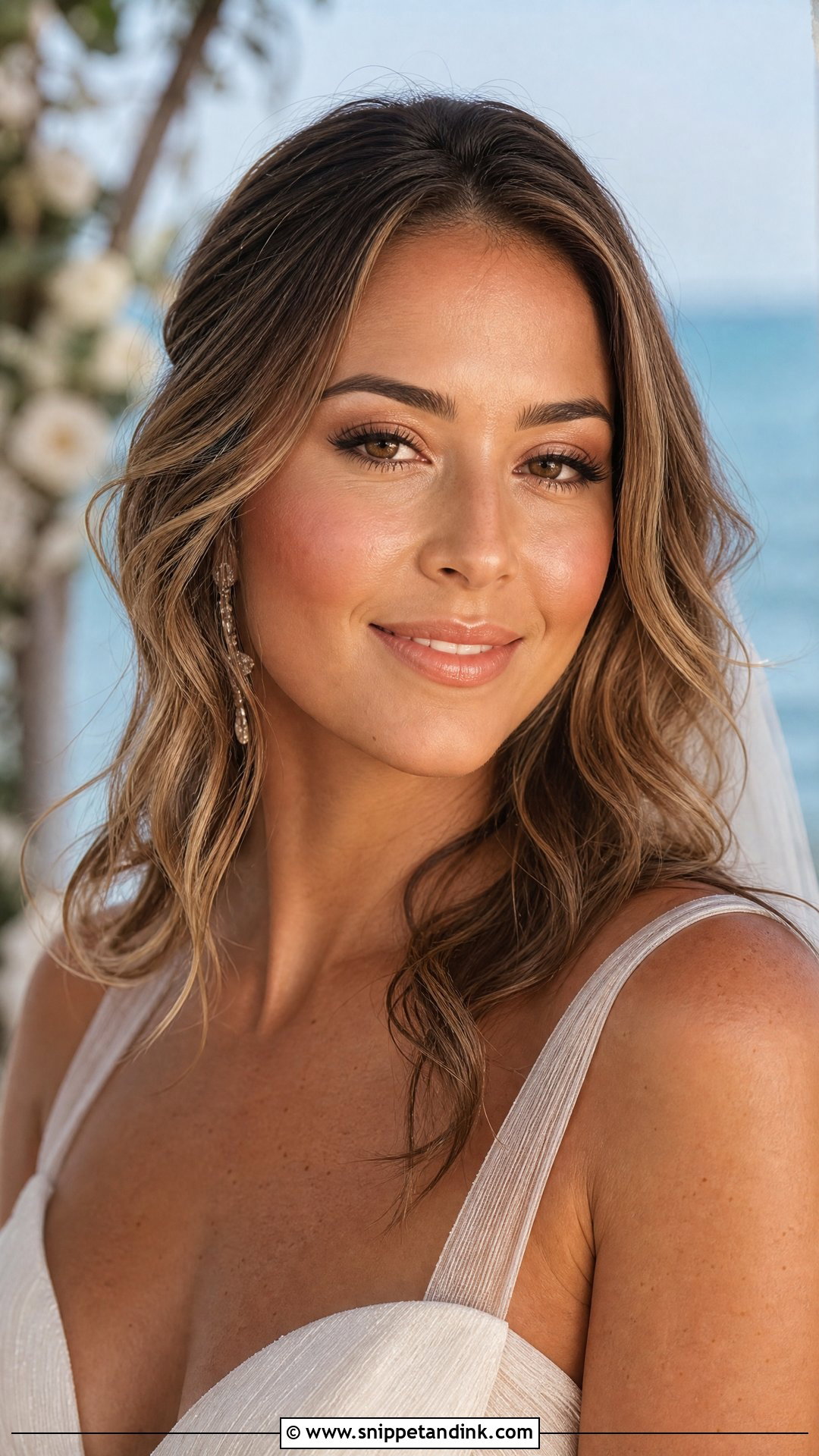
Beach weddings throw humidity, wind, sun and tears at makeup all at once. I use lightweight long-wear complexion products, waterproof mascara and liner, and cream products that set firmly. Powder is kept to a minimum, since heavy powder looks cakey in strong sun. Blotting papers handle shine through the day. A bronzed base with peach or coral blush warms the face. Heavy black smoky eyes look harsh in bright outdoor light, so I keep the eyes in champagne, sand or soft bronze. A peachy gloss or coral stain is easy to reapply.
19. Winter Wedding Makeup
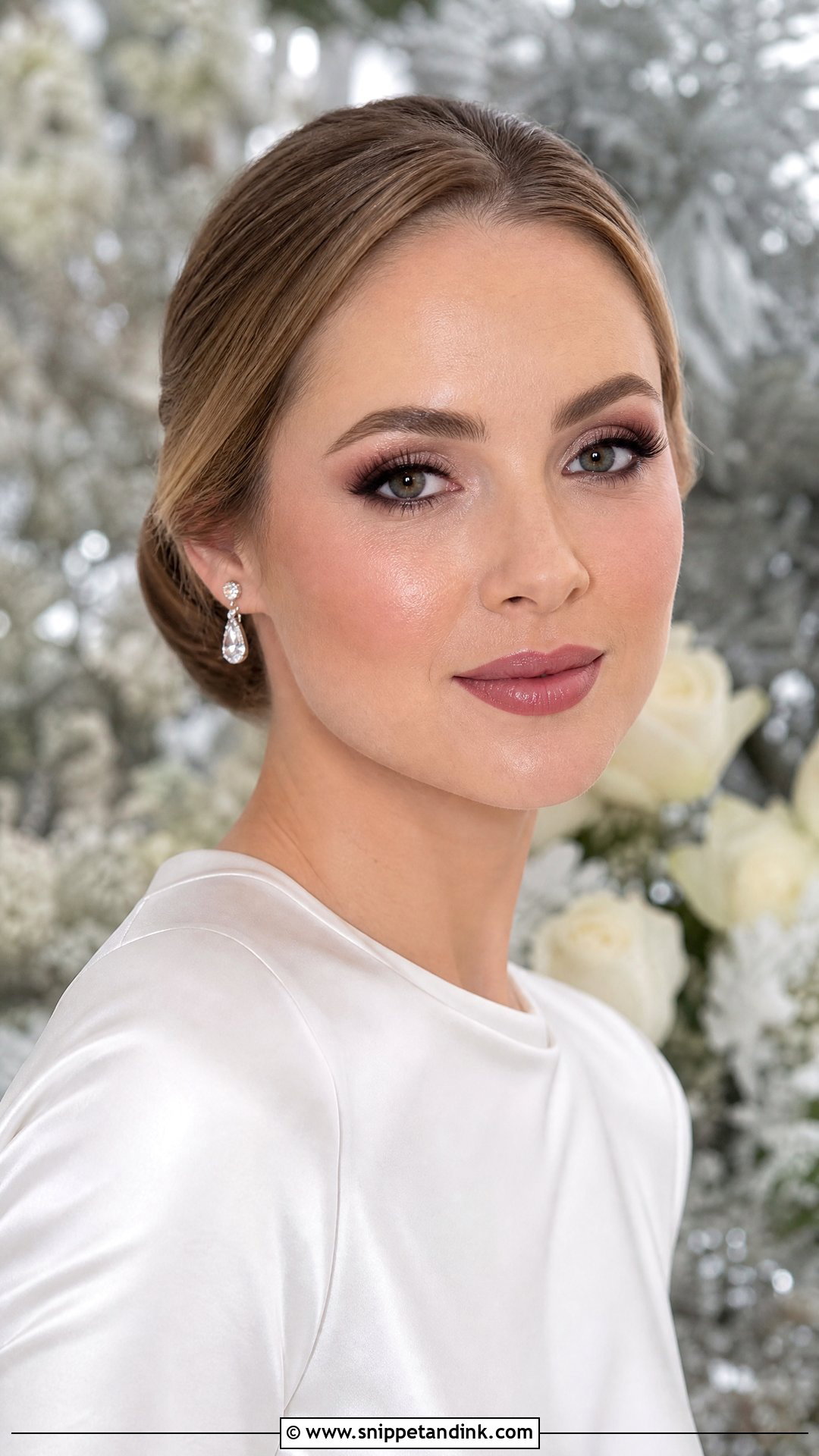
Winter wedding makeup handles deeper tones and velvet textures well. Cold air and indoor heating dry the skin, so I hydrate thoroughly before foundation, otherwise it clings to dry patches. A satin or velvet base photographs better than very glossy skin in cool light. Eyes can go deeper in taupe, chocolate, cranberry or plum. Rose or berry blush brings warmth back to a cold-weather complexion. Long sleeves, structured gowns and sleek hair all pair naturally with it.
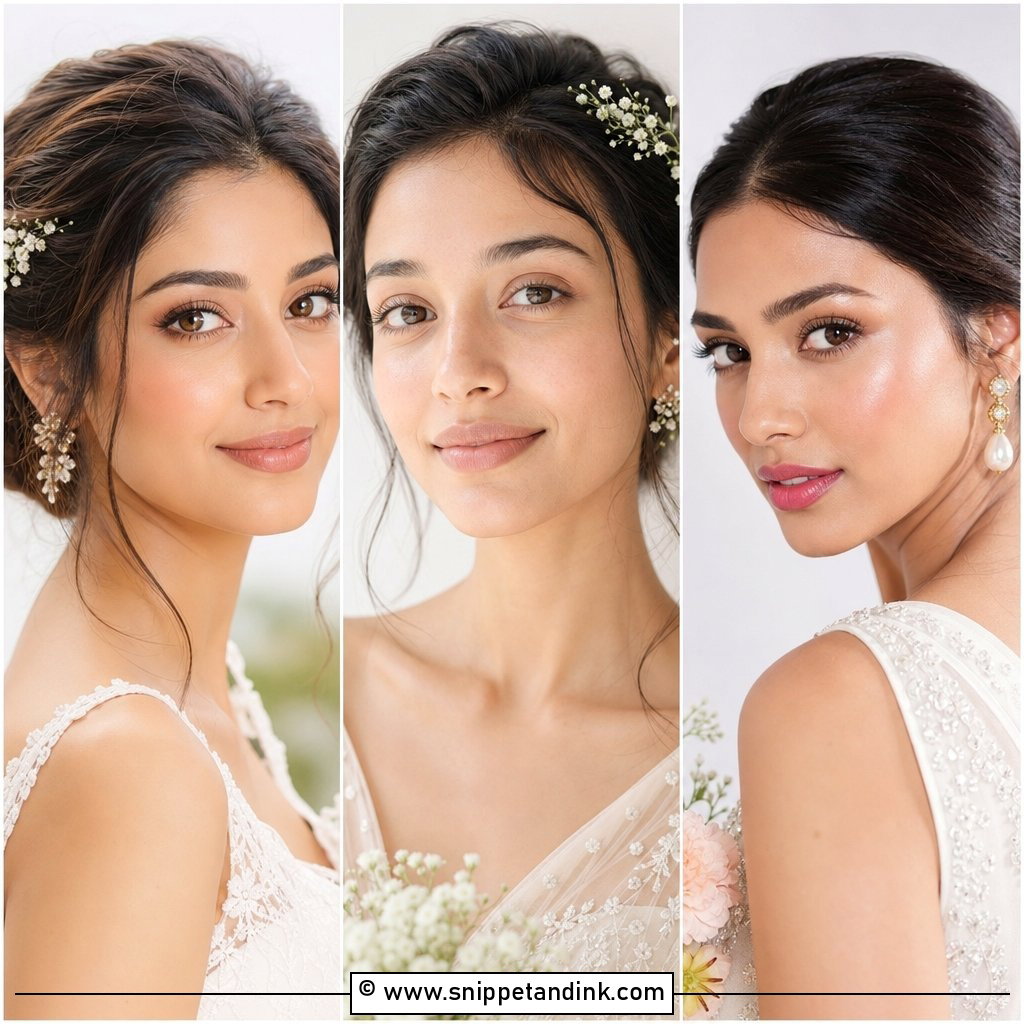
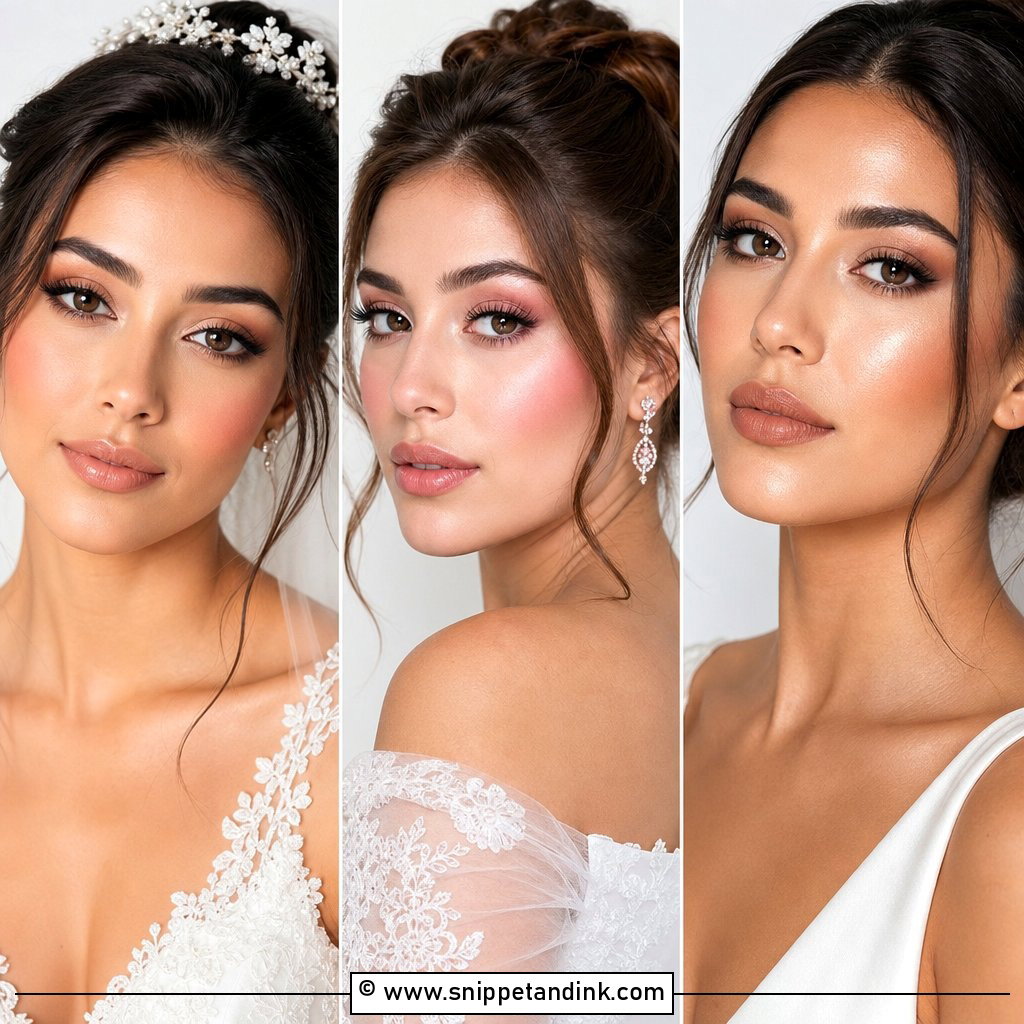
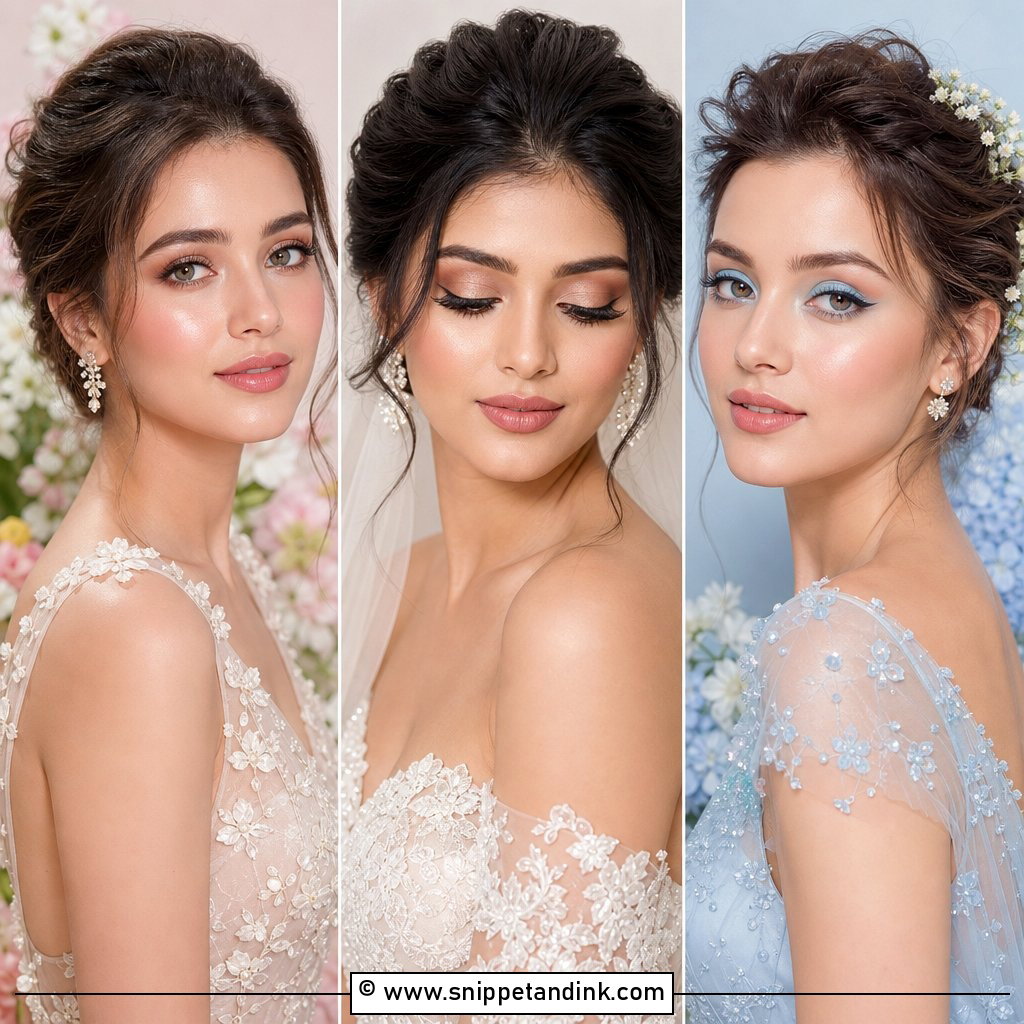
20. Wedding Guest Makeup
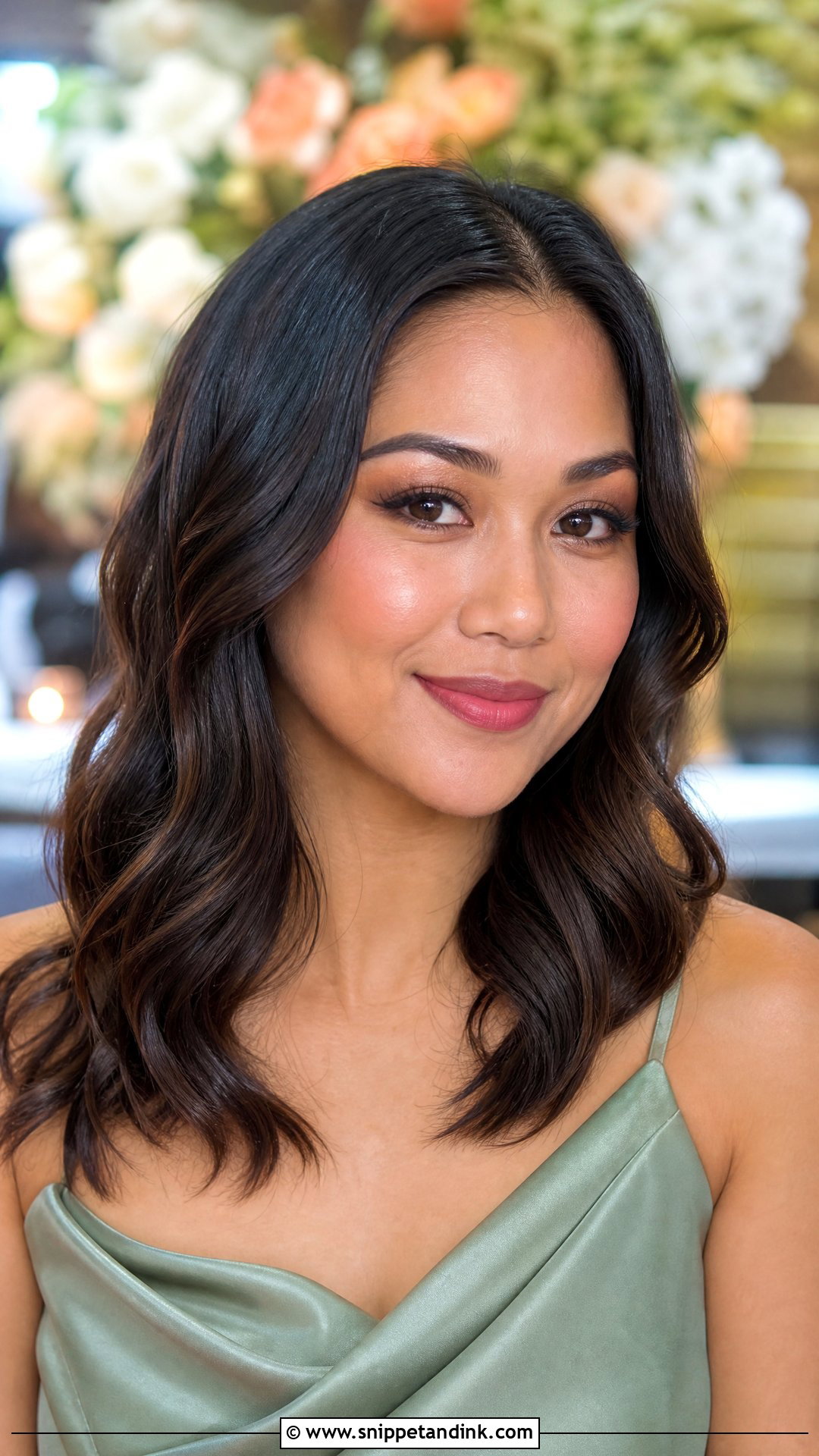
Guest makeup should look polished without competing with the bride. During the day, I keep guests in soft neutral eyes, peachy blush and a pink-nude lip. In the evening, more depth works: brown liner, shimmer on the lid, a richer rose or berry lip. Choose foundation that’s comfortable for hours, especially for photos, outdoor ceremonies or dancing. If the dress is already bold, the makeup should step back. Mothers of the bride often want more coverage and staying power than they wear daily, which is worth planning with the artist in advance.
Sensitive Eyes, Contact Lenses and Lash Glue
Eyes cause more trouble on wedding mornings than anything else. They water, react to products or simply get tired. I check the following with every bride at the trial.
Contact lens wearers
Put your lenses in before I start, not after. Inserting lenses over finished eye makeup drags product into the eye and causes watering. I avoid loose glitter and keep shimmer away from the lower lash line.
Reactions to glue
Lash glue is the most common cause of red, itchy eyelids on the day. If you’ve never worn false lashes, test the exact glue at your trial and wear it for several hours. Latex-free formulas exist for people who react to standard glue. Individual lashes use less glue than a full strip and tend to be more comfortable.
Eyes that water easily
Waterproof mascara on the top lashes and a tubing mascara or none at all on the bottom keep tears from turning into dark smudges. Have cotton swabs in the touch-up kit and dab tears away from the outer corner instead of rubbing.
Let the Light at Your Venue Decide the Finish
Any of these looks can work if it fits your face, your outfit and your role. A natural glow, soft glam, a red lip, a bronze base or a deeper winter look all suit a wedding once the colors are balanced and the products last. Before the day, wear your makeup in natural light and take a photo with flash. Use waterproof formulas where tears are likely, keep touch-up products with someone nearby, and don’t try a completely new look the week of the wedding. The goal is you, at your most confident.
You'll Like These Ideas:


Leave a Reply