
The reason I like airbrush for weddings is simple: I can lay foundation down in layers so thin they’re hard to see, then stop exactly when the skin looks even. That keeps the face feeling light for ten or twelve hours, which matters more to a bride at the reception than it does in the mirror at 9 a.m. But the foundation is only one part. Brows, lashes, blush and lip color decide whether the face reads as natural or glam. These twenty full faces are the ones I’d actually build on an airbrush base, with the small decisions that make each one hold up in daylight and evening light.
Prepping Skin in the Fortnight Before an Airbrush Base
Airbrush foundation sits on whatever surface it’s given. Smooth, hydrated skin gives a flat, even finish; flaky or irritated skin shows through the mist. Most of what helps happens in the last two weeks, and most of it is about not changing things.
- Stop trying new skincare. A reaction a week out is much harder to cover than an ordinary blemish.
- Schedule any facial, peel or professional treatment at least a couple of weeks before, never the week of the wedding.
- If you use retinoids or strong acids, ask your dermatologist whether to pause them in the final days, since they can leave skin flaky.
- Wax or thread brows several days ahead so any redness settles before makeup goes on.
- If you plan a spray tan, book it a couple of days before and tell your makeup artist, because the airbrush shade has to match the tanned skin, not your trial skin.
On the morning itself, a gentle cleanse and a moisturizer you already trust are enough. Let it absorb for ten minutes before the airbrush goes on, or the foundation can slide on top of it.
1. Natural Airbrush Wedding Makeup
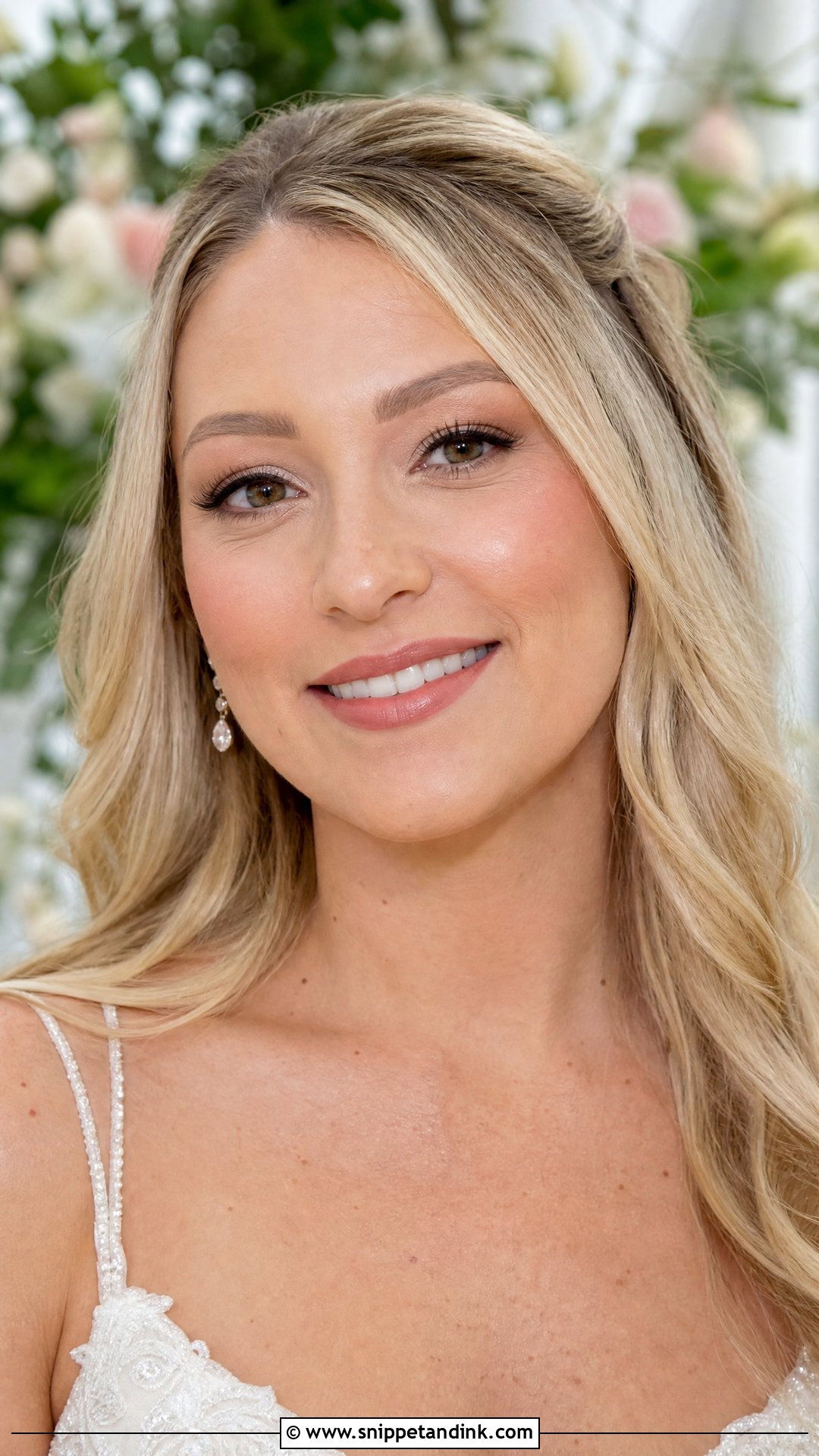
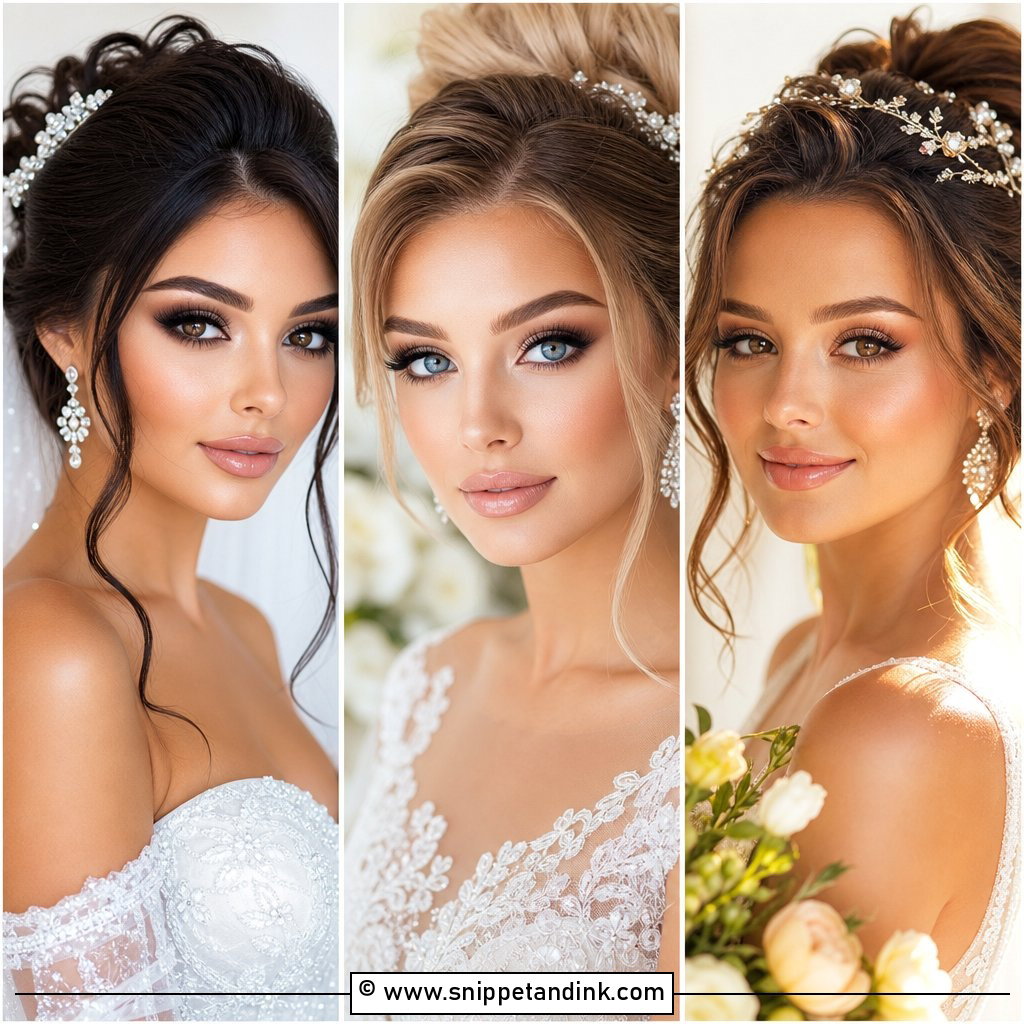
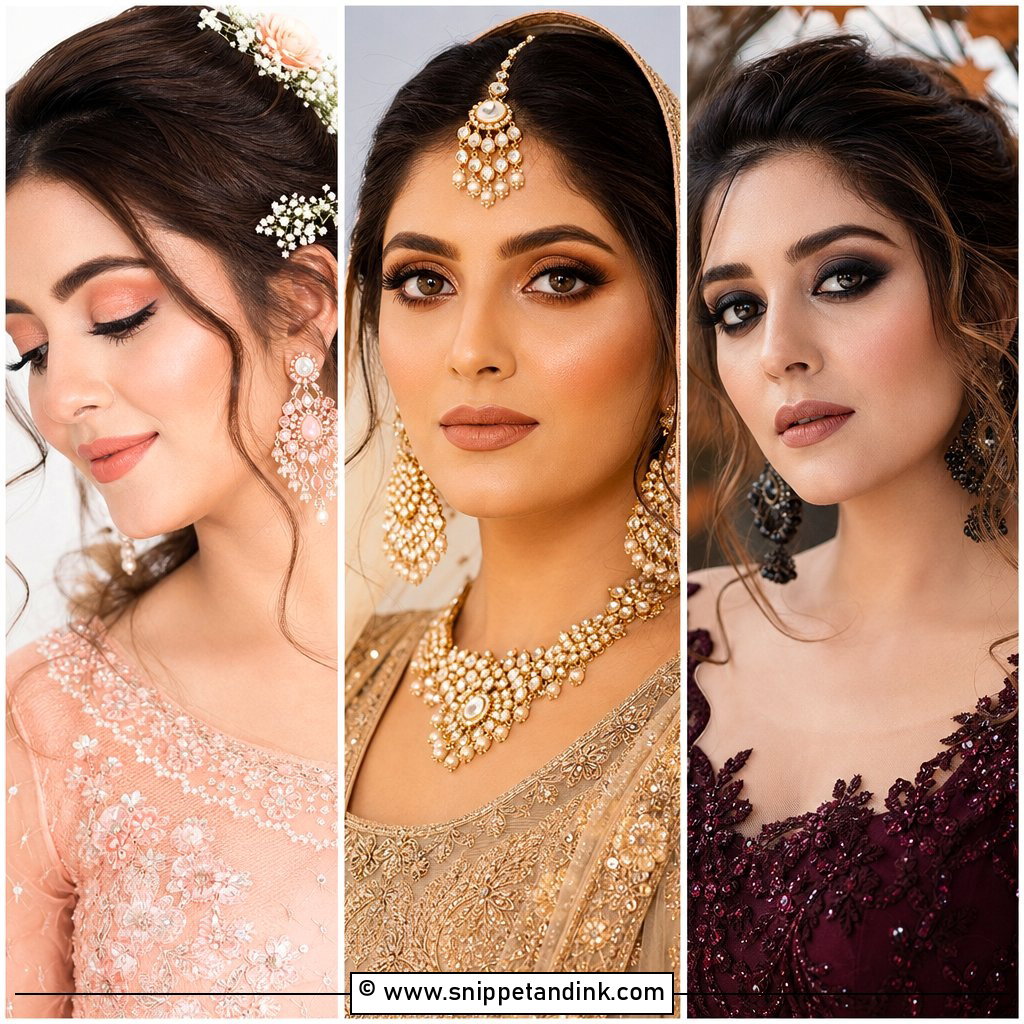
For a natural face, I keep the airbrush sheer and let freckles and a bit of skin texture show; covering them entirely is what makes thin coverage look fake. Taupe on the lid, curled lashes, brushed-up brows and a thin brown liner tight to the lashes give quiet definition. Peachy-pink cream blush adds life. The lip should match your own lip tone, satin nude or soft rose. Keep the highlight to the top of the cheekbone so morning light makes the skin look fresh rather than oily.
2. Soft Glam Airbrush Wedding Makeup
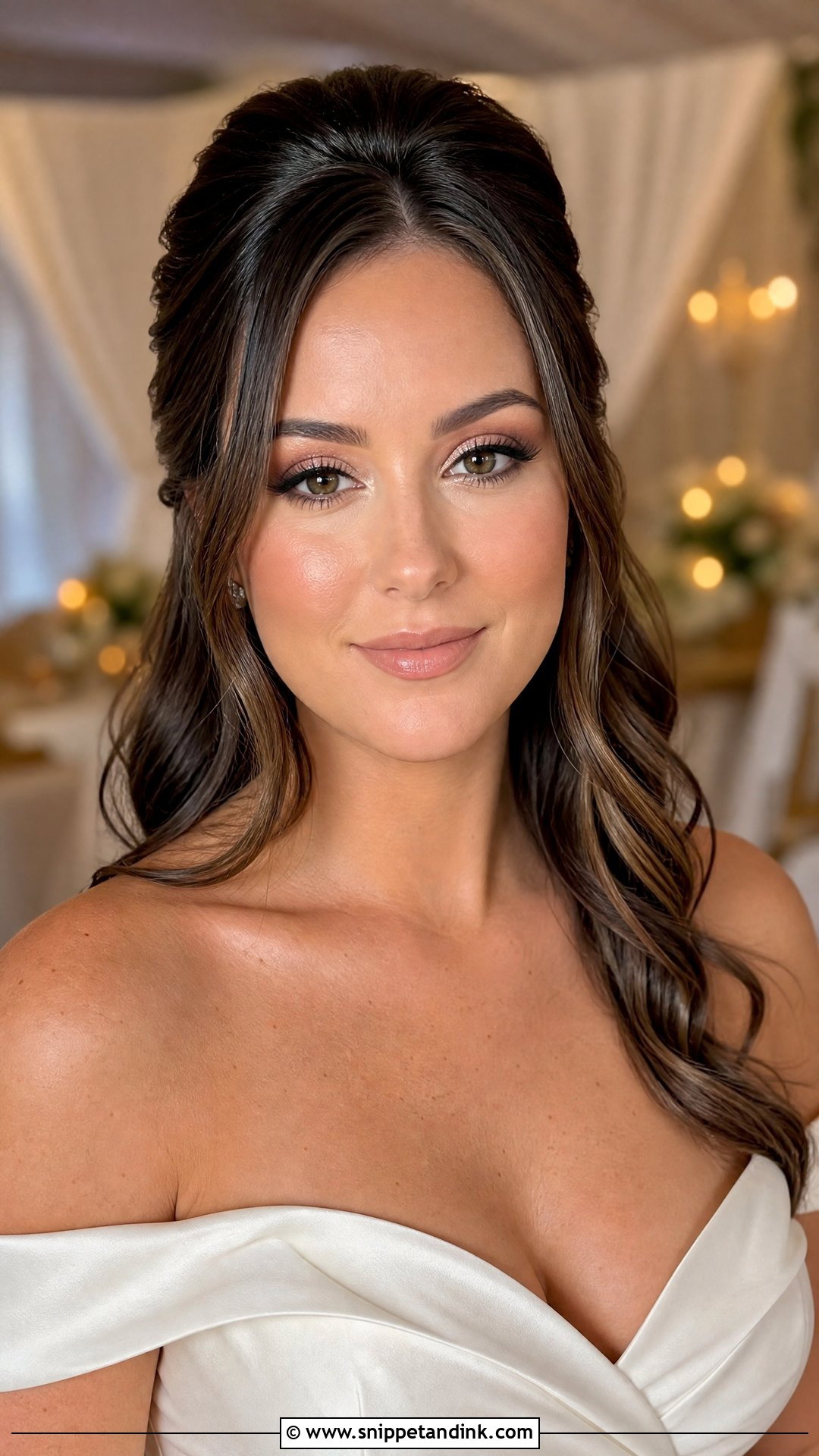
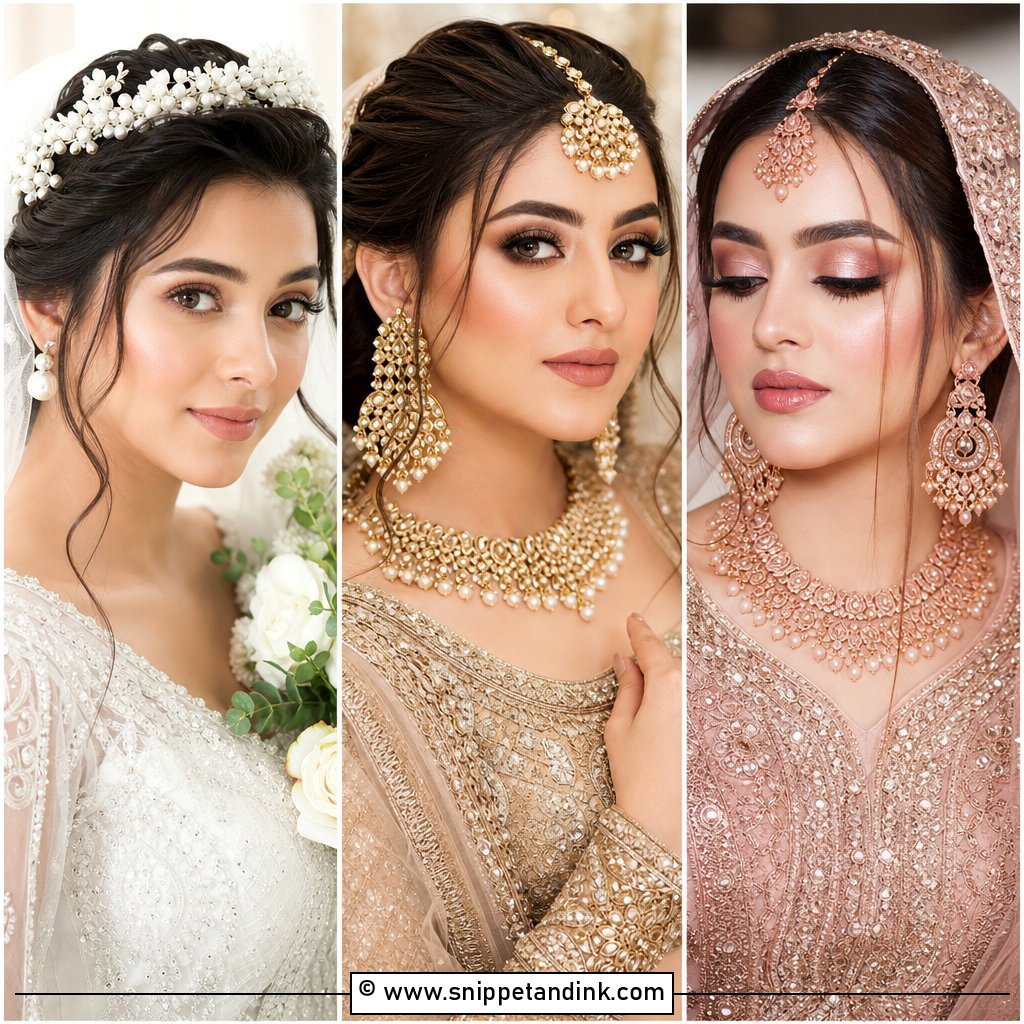
Soft glam starts with where the foundation sits. I build airbrush coverage through the center of the face and fade it toward the hairline, which gives that blurred, smooth look without a mask edge. Warm brown and champagne shadow shape the eyes, wispy lashes lift them, and contour stays soft under the cheekbones so it reads in photos but not across a table. A rosy nude blush and satin beige-pink lip finish it. Most trials end up here because it suits nearly any dress and hairstyle.
3. Dewy Airbrush Wedding Makeup
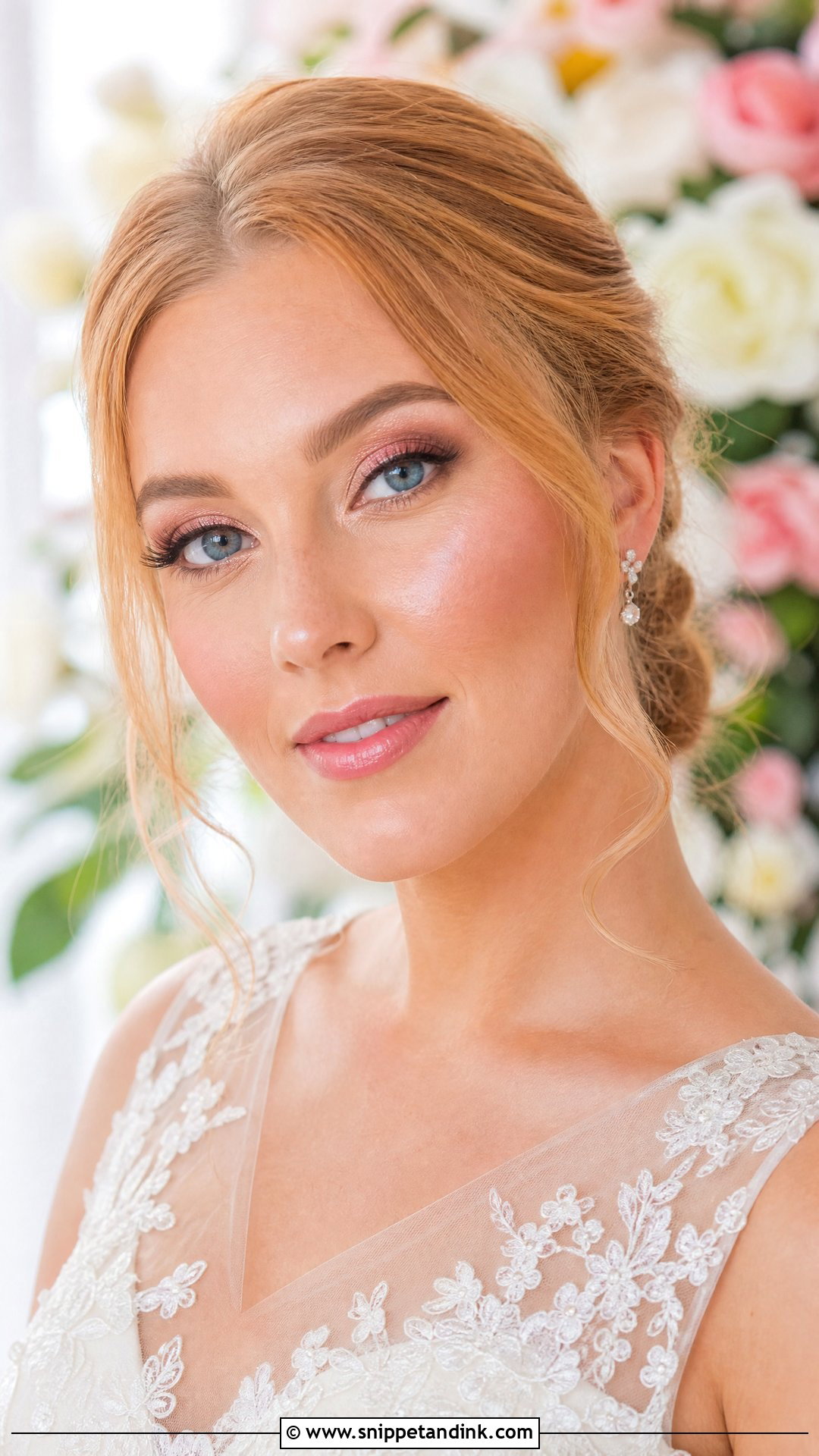
The difference between dewy and oily is where the shine lives. I hydrate the skin well, spray a lightweight base, then powder only the T-zone. Glow goes onto the cheekbones as a refined champagne highlight, with soft pink blush pressed on top. Pale bronze or light rose shimmer on the eyes and natural lashes keep things airy, and a glossy nude-pink lip finishes it. It suits tulle and chiffon at spring garden weddings. If your forehead gets shiny by lunch on a normal day, pick satin instead.
4. Matte Airbrush Wedding Makeup
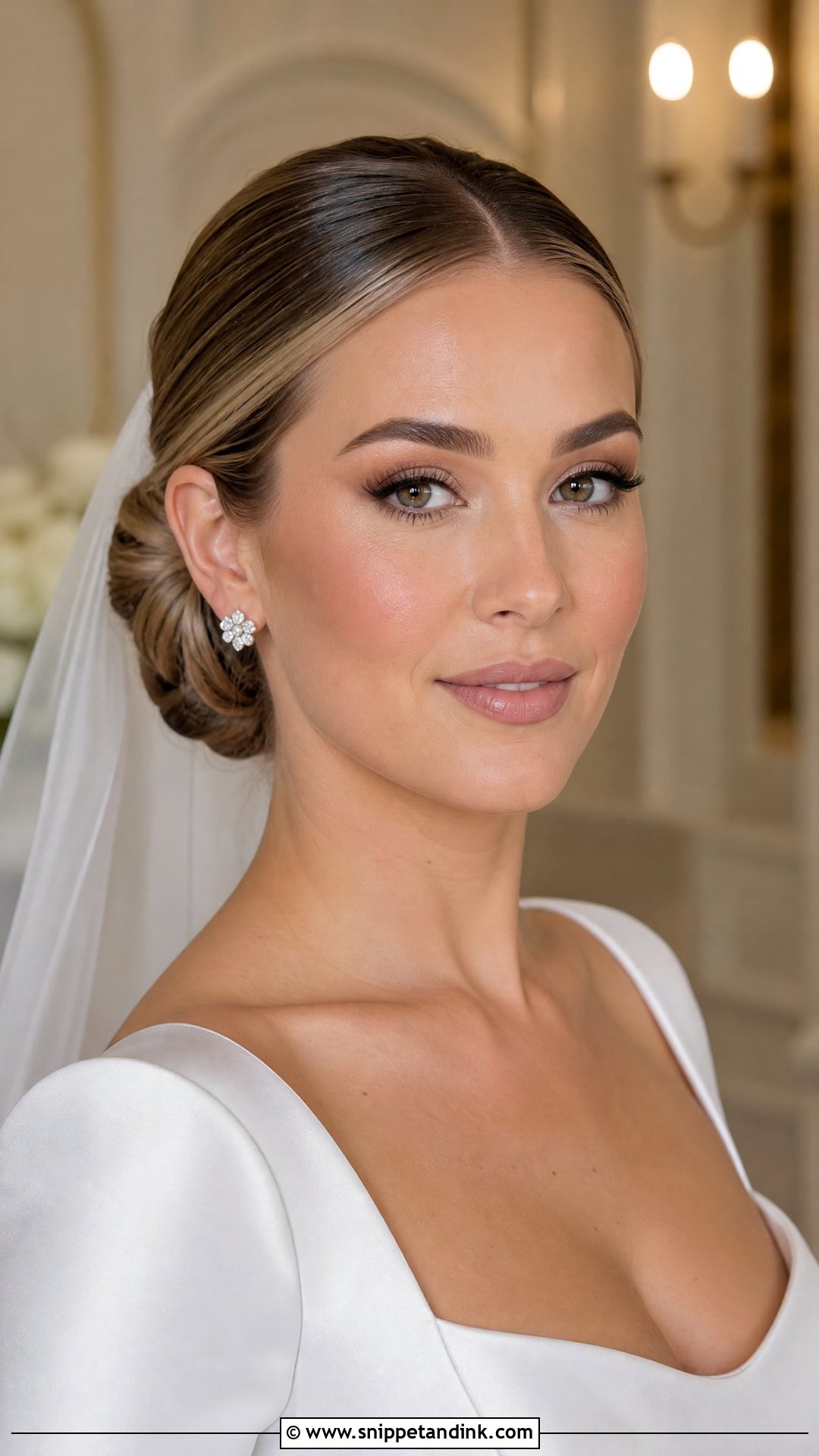
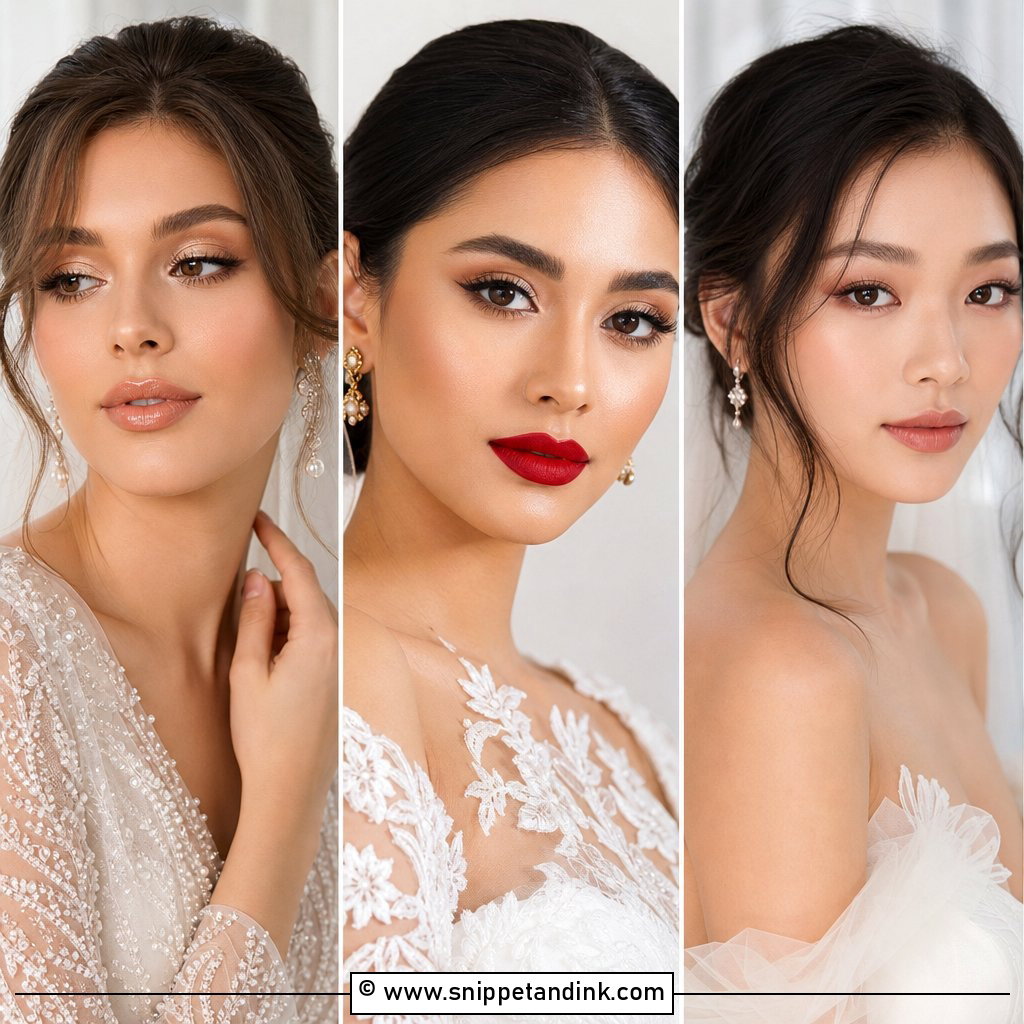
Matte holds best through heat and long receptions, and it’s my usual suggestion for oily or combination skin. Done well, it looks velvety. I avoid piling powder on top of the airbrush and instead add a little soft highlight back onto the cheeks so the face has life. Neutral matte shadows in beige, taupe and cocoa give quiet depth. A tightlined upper lash line or a soft wing adds structure. Long-wear nude rose or mauve lipstick lasts through dinner without a reapply.
5. Airbrush Wedding Makeup With Red Lip
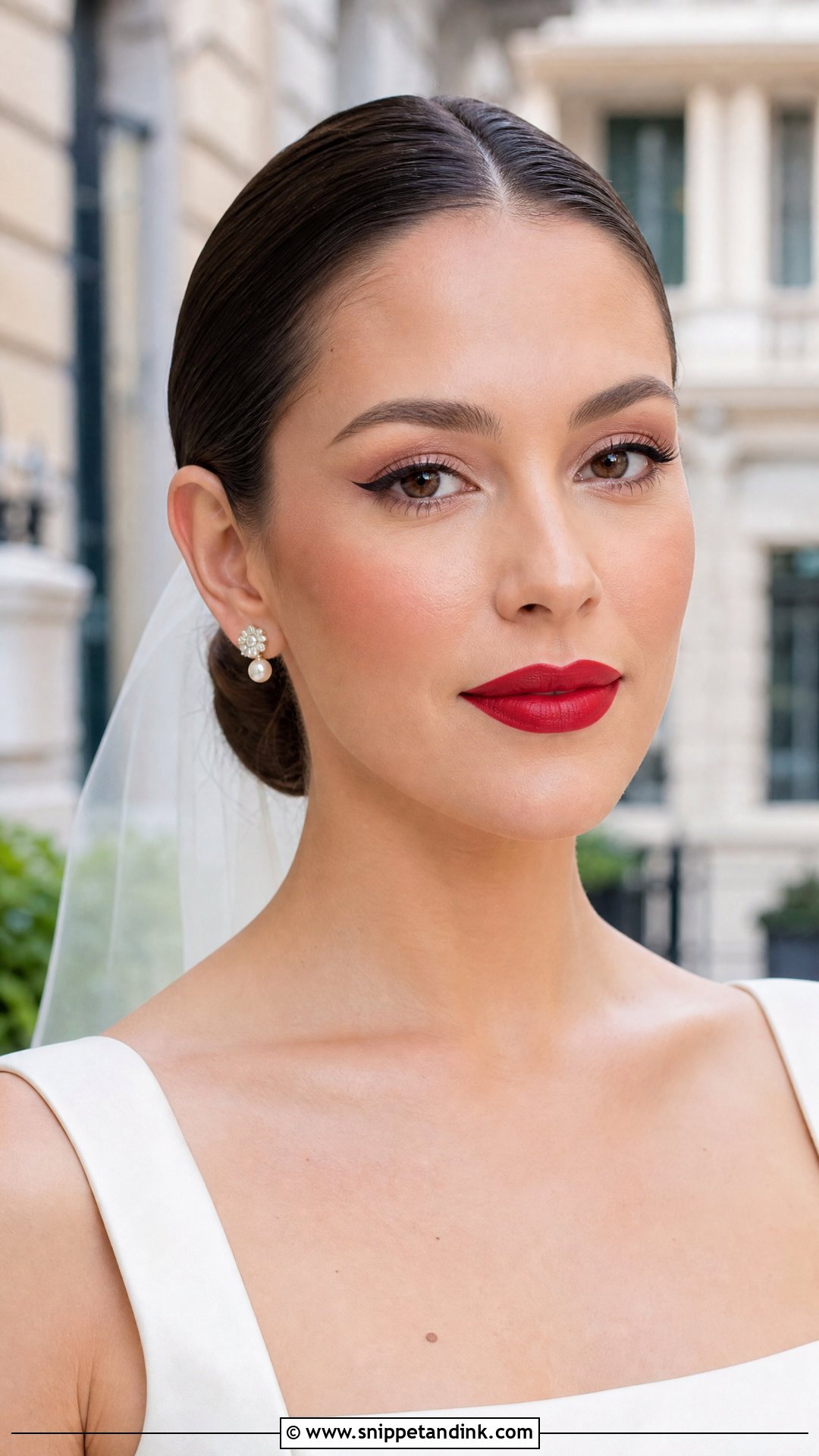
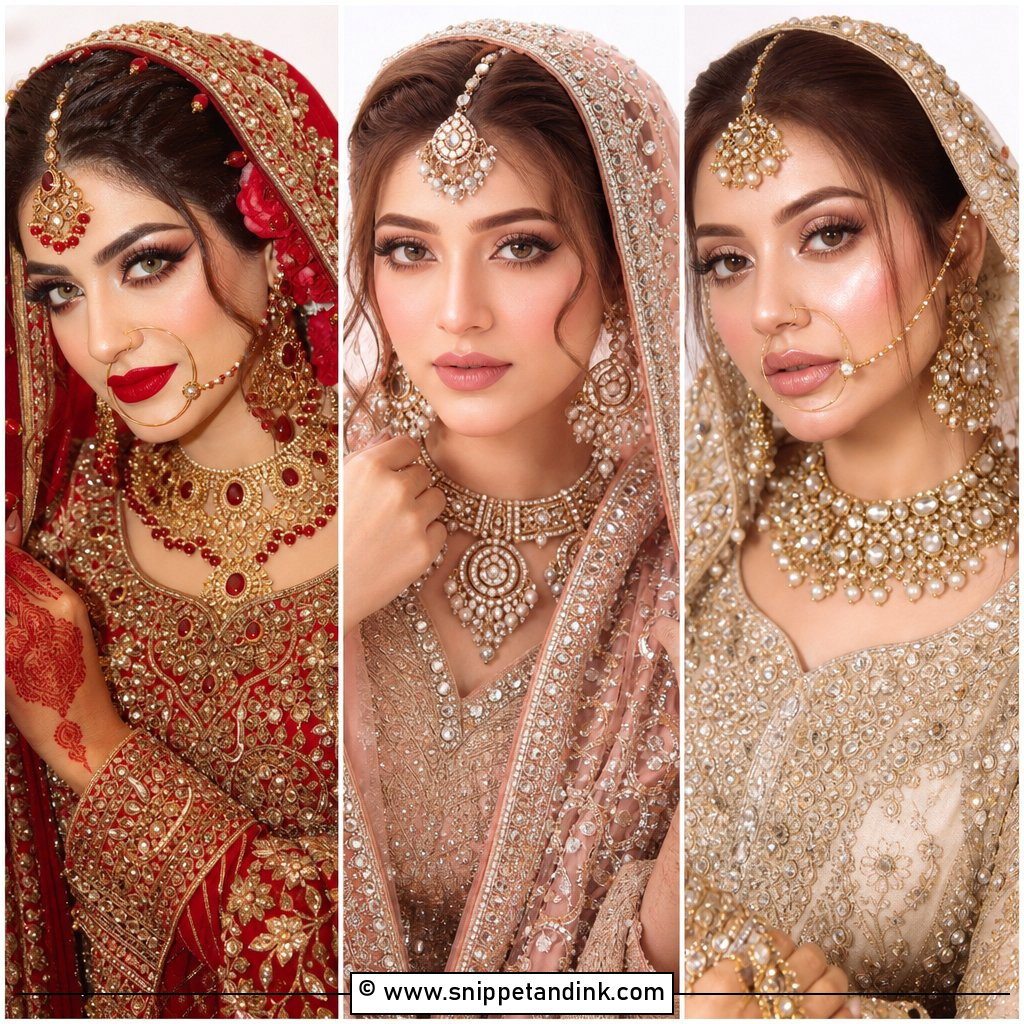
A red lip needs a calm face around it. I keep the airbrush semi-matte, eyes clean with soft beige shadow and a thin wing, and brows gently shaped rather than filled heavily. A neutral rose blush matters, because without it the skin looks washed out next to the bold lip. Blue-red suits fair and cool undertones, true red sits on balanced skin and brick red flatters warmer skin. I always line the full lip before color, so the edge stays sharp after kissing and toasting. Sleek buns and simple gowns let it lead.
6. Airbrush Wedding Makeup For Brown Eyes
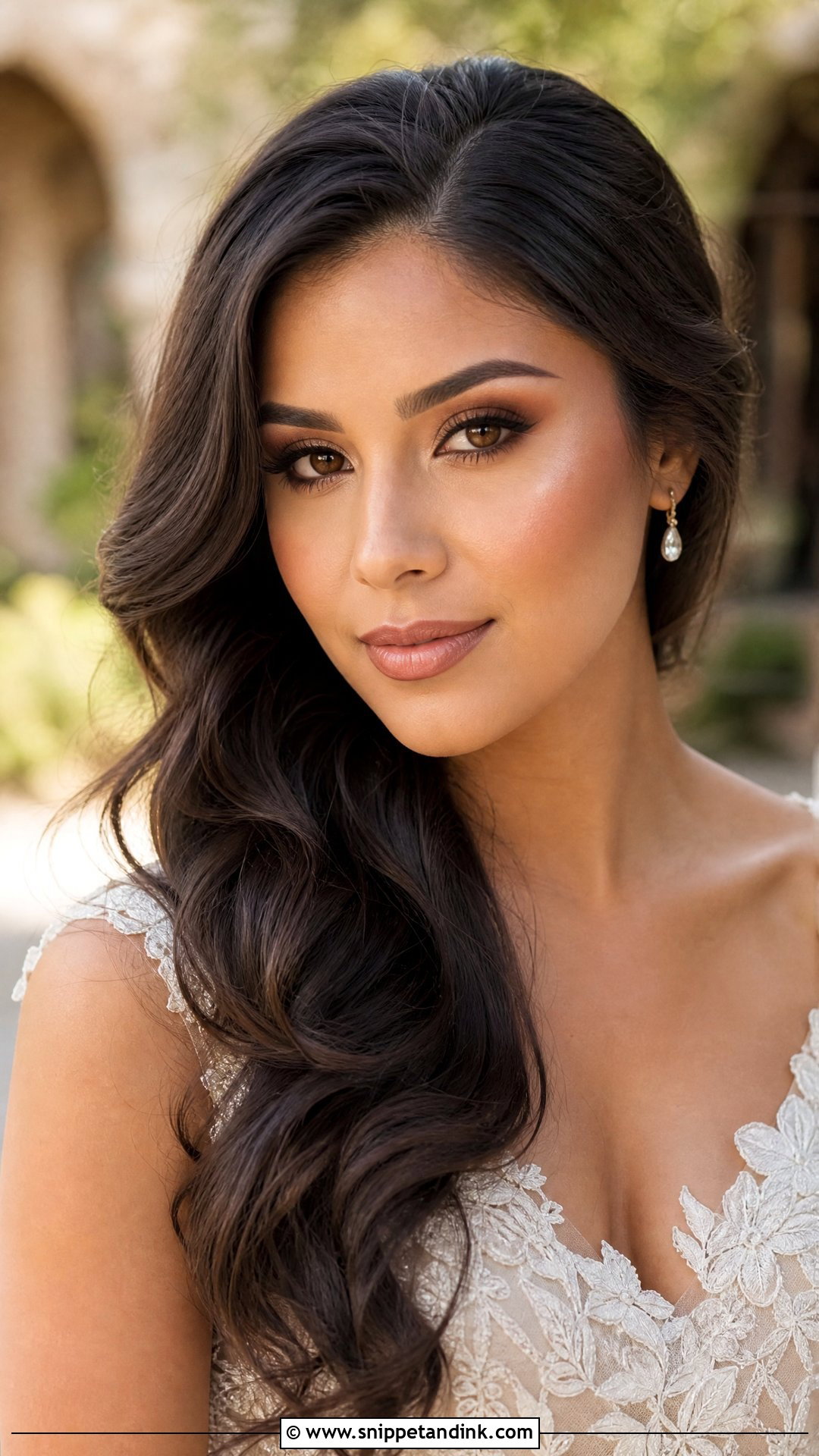
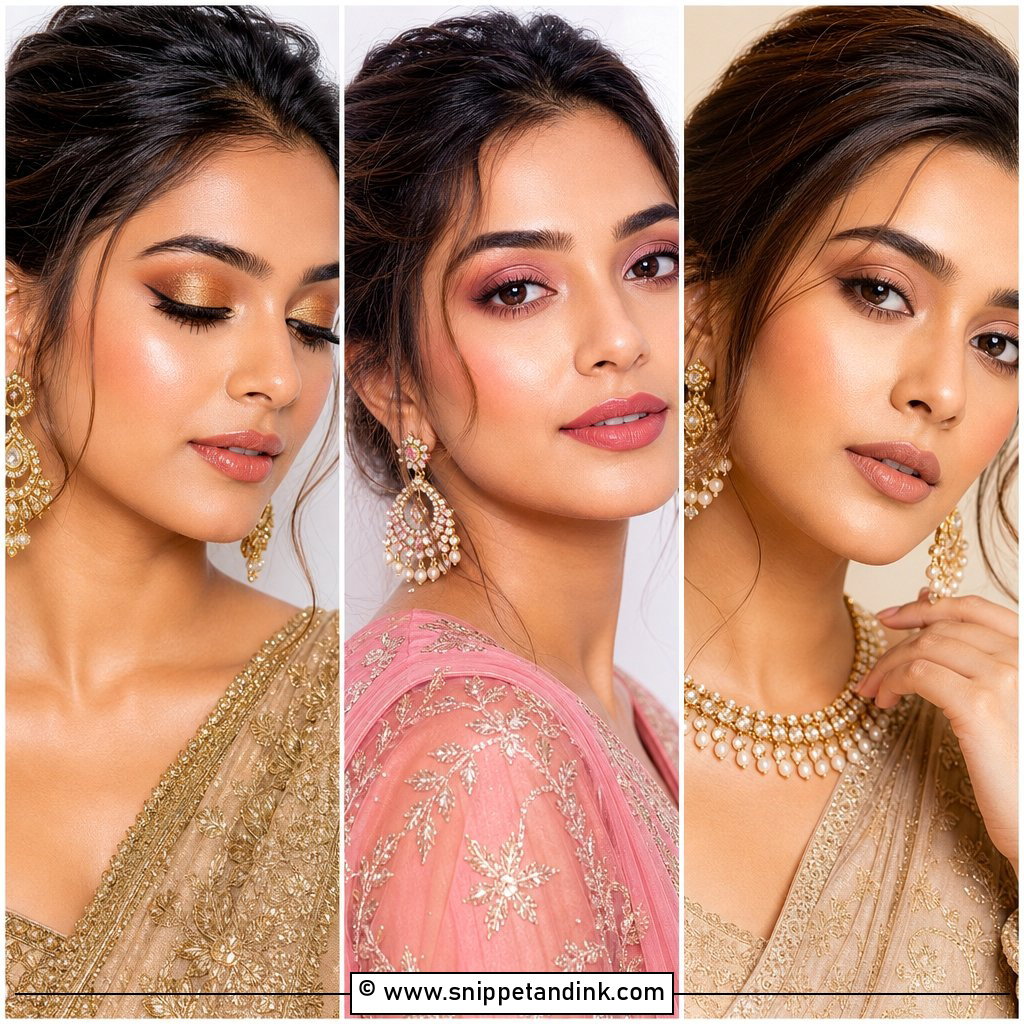
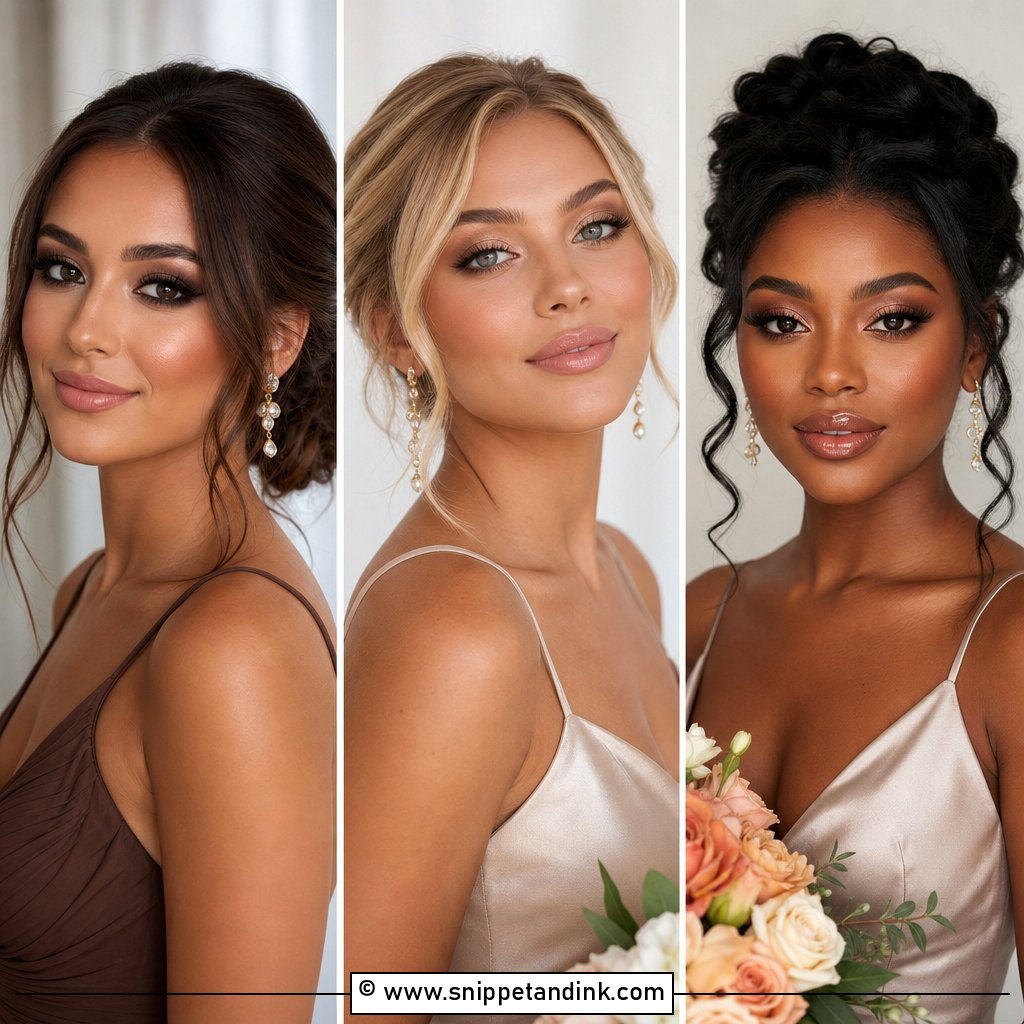
Airbrush wedding makeup for brown eyes can go warm without going smoky. Bronze, warm taupe, soft gold and espresso brighten brown irises, especially when I put the lightest shimmer right at the center of the lid where it catches light. Over a satin airbrush base, peach or warm rose blush links the eyes to the skin. A brown wing, individual lashes and softly filled brows give enough definition for close-ups. Caramel nude or soft terracotta lips finish it, and it moves easily from daytime to evening.
7. Airbrush Wedding Makeup For Blue Eyes
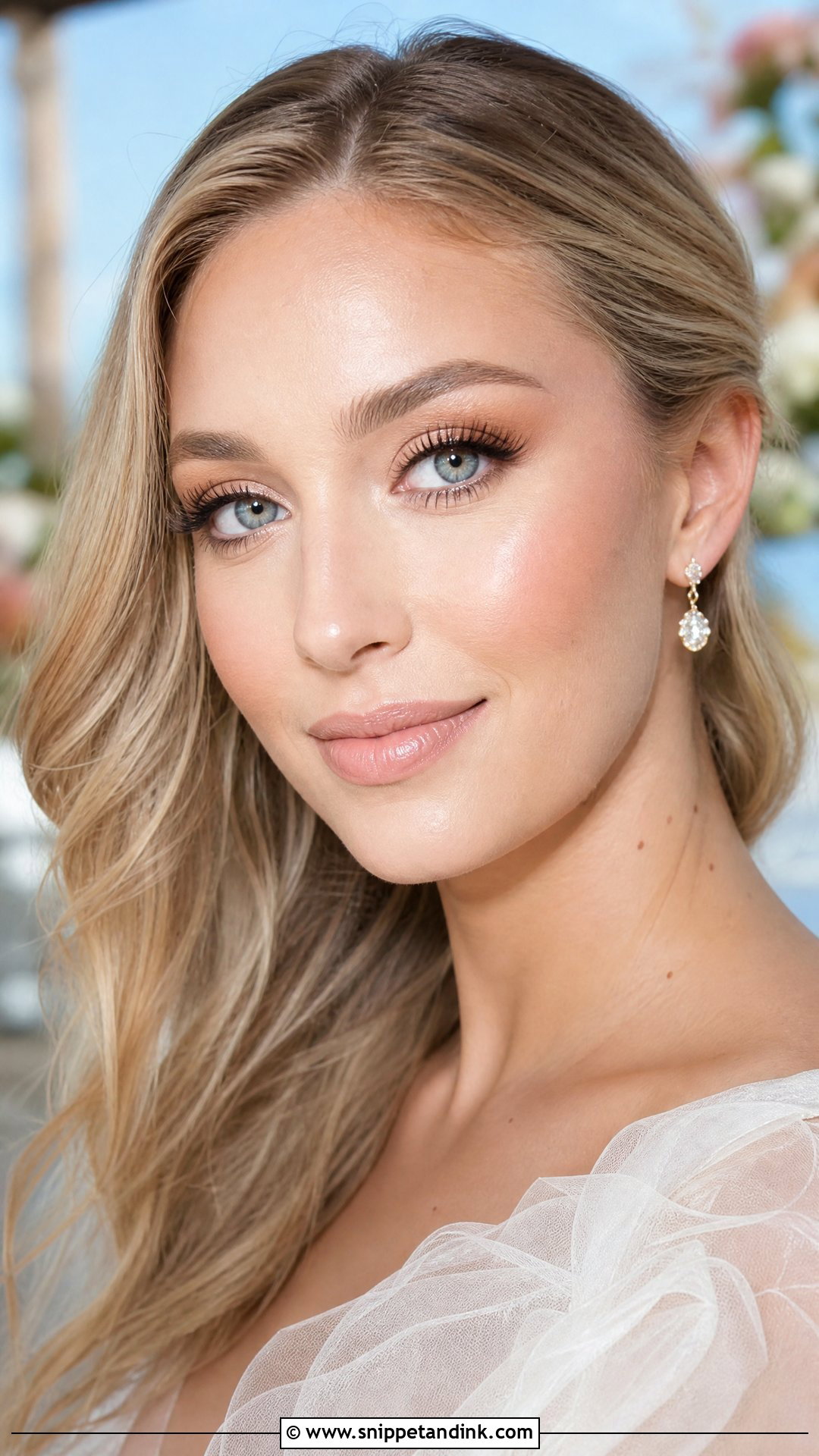
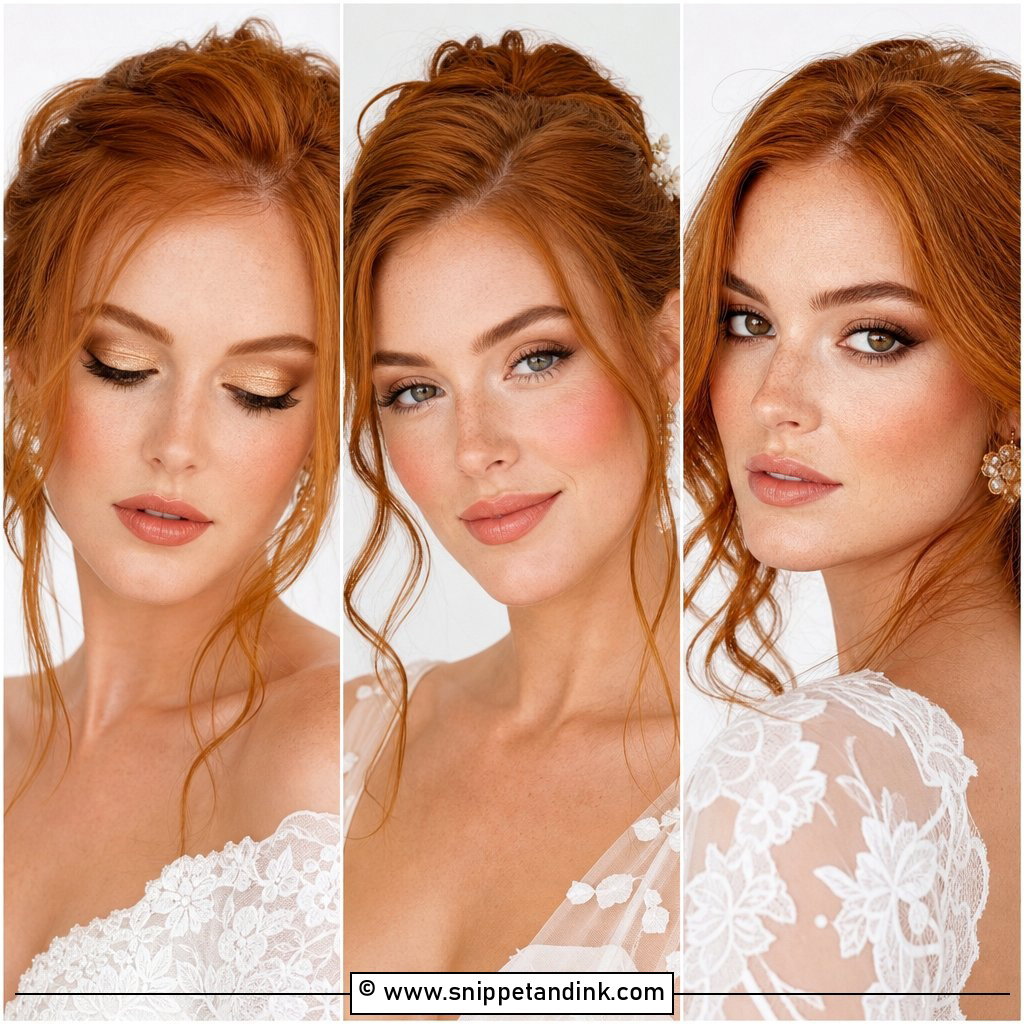
Peach, champagne, bronze and soft brown flatter blue eyes because warm tones sit opposite blue and make it look brighter. I keep the airbrush base fresh with a natural satin finish so it doesn’t compete with the lid color. Peachy blush warms the face and a champagne highlight lifts the cheekbones. Brown liner is softer than black here. Wispy lashes open the eye without covering the shadow, and a nude peach or pink-beige lip keeps everything light.
8. Airbrush Wedding Makeup For Green Eyes
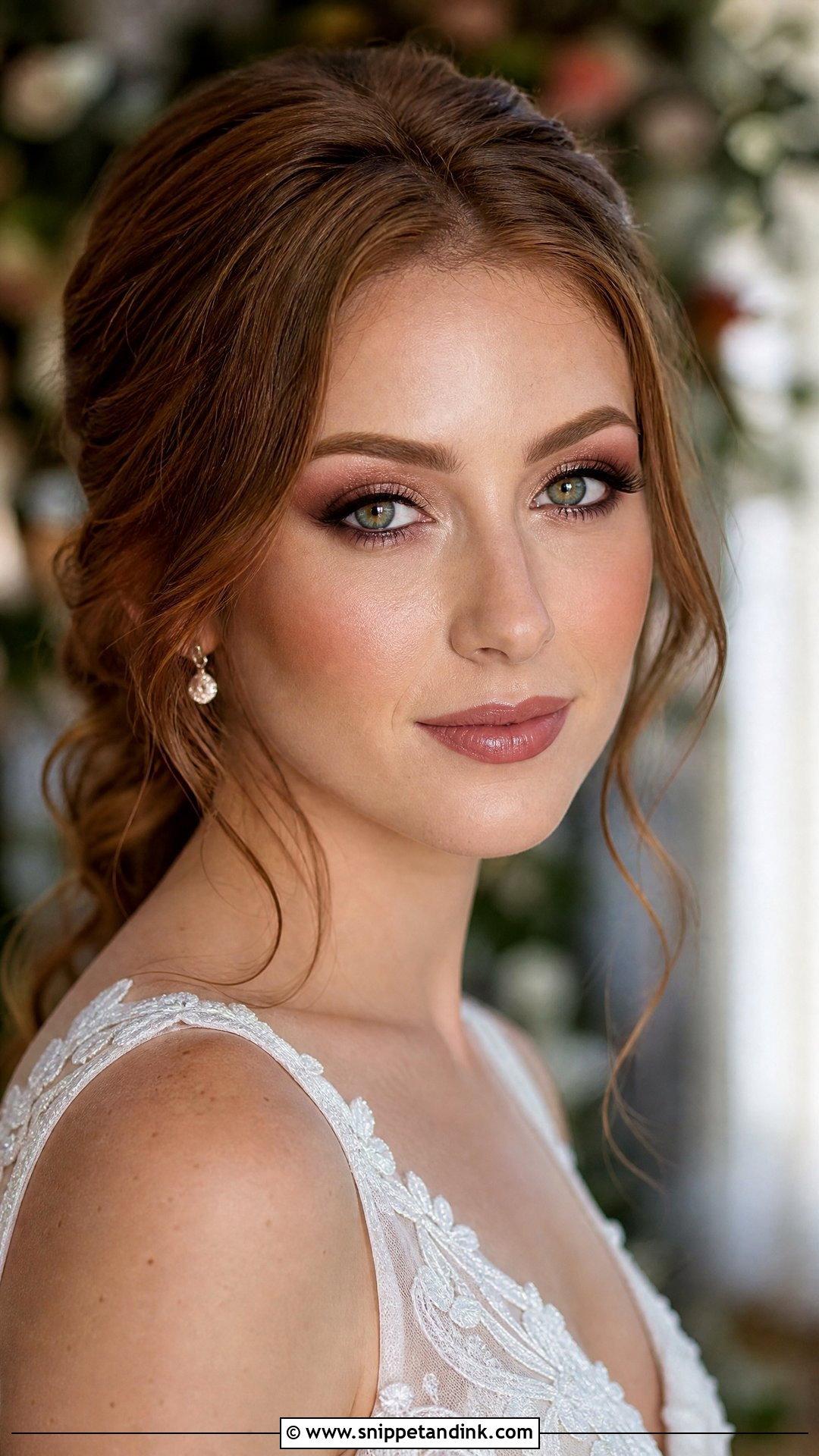
Airbrush wedding makeup for green eyes works with rose gold, mauve, plum-brown and warm copper, all red-leaning shades that make green read brighter. I spray the base evenly over any redness first, since red cheeks next to red-toned shadow can look tired. Muted rose blush and a gentle highlight keep the face fresh. Rose gold goes on the lid, soft brown in the crease and a touch of plum liner near the lashes. Fluttery lashes and a rosy nude lip finish it. Autumn florals sit especially well with this palette.
9. Airbrush Wedding Makeup For Hazel Eyes
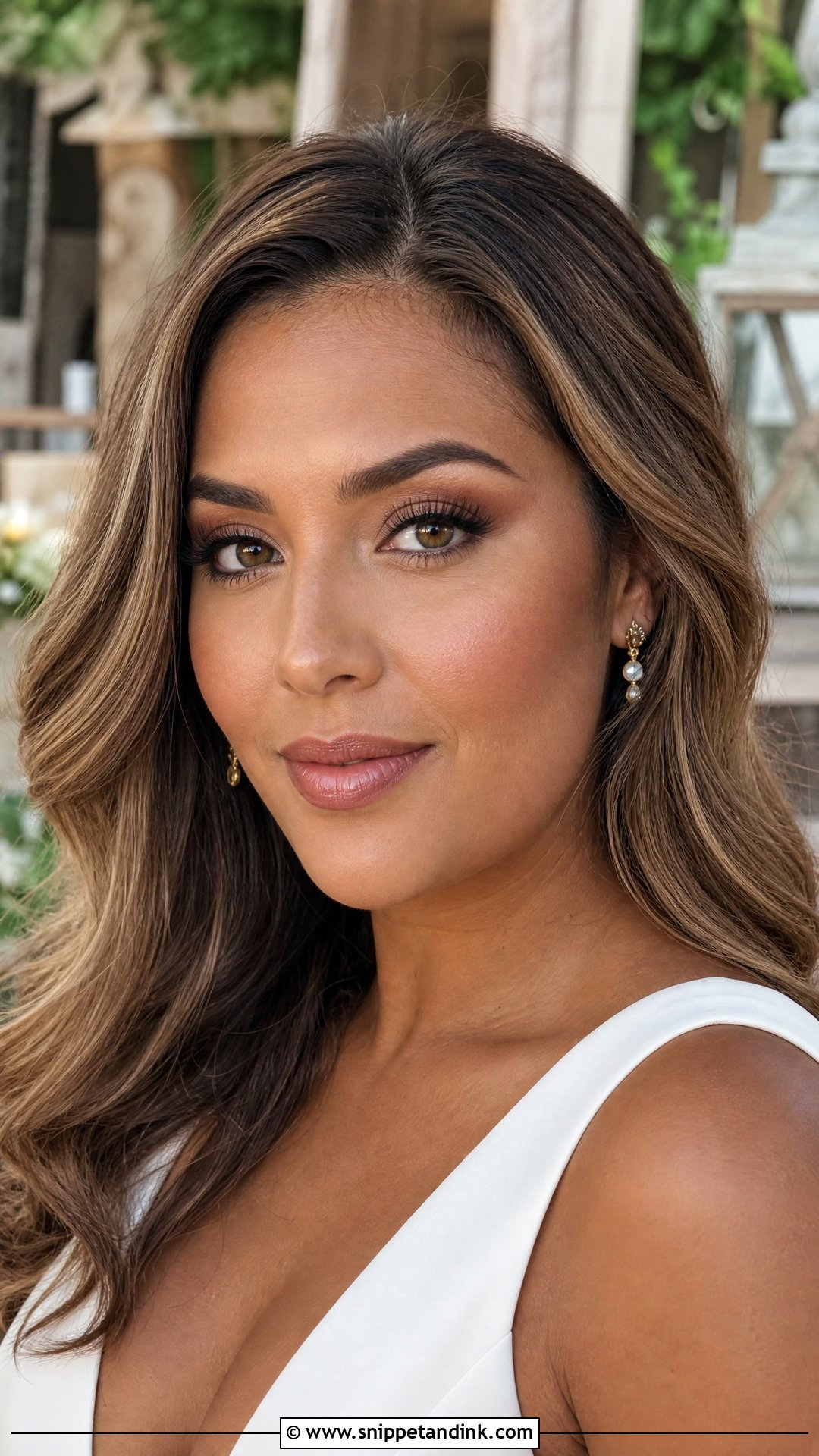
Hazel eyes change with what you put next to them. A warm bronze eye with olive-brown depth in the crease pulls out both the gold and the green flecks at once. Over a natural airbrush finish, I add golden peach blush and a delicate highlight. A smudged brown liner gives definition without a hard edge, and I choose lashes that lift the outer corners. Warm nude or cinnamon rose lips suit it. It’s flexible enough for a barn or a ballroom.
10. Airbrush Wedding Makeup For Hooded Eyes
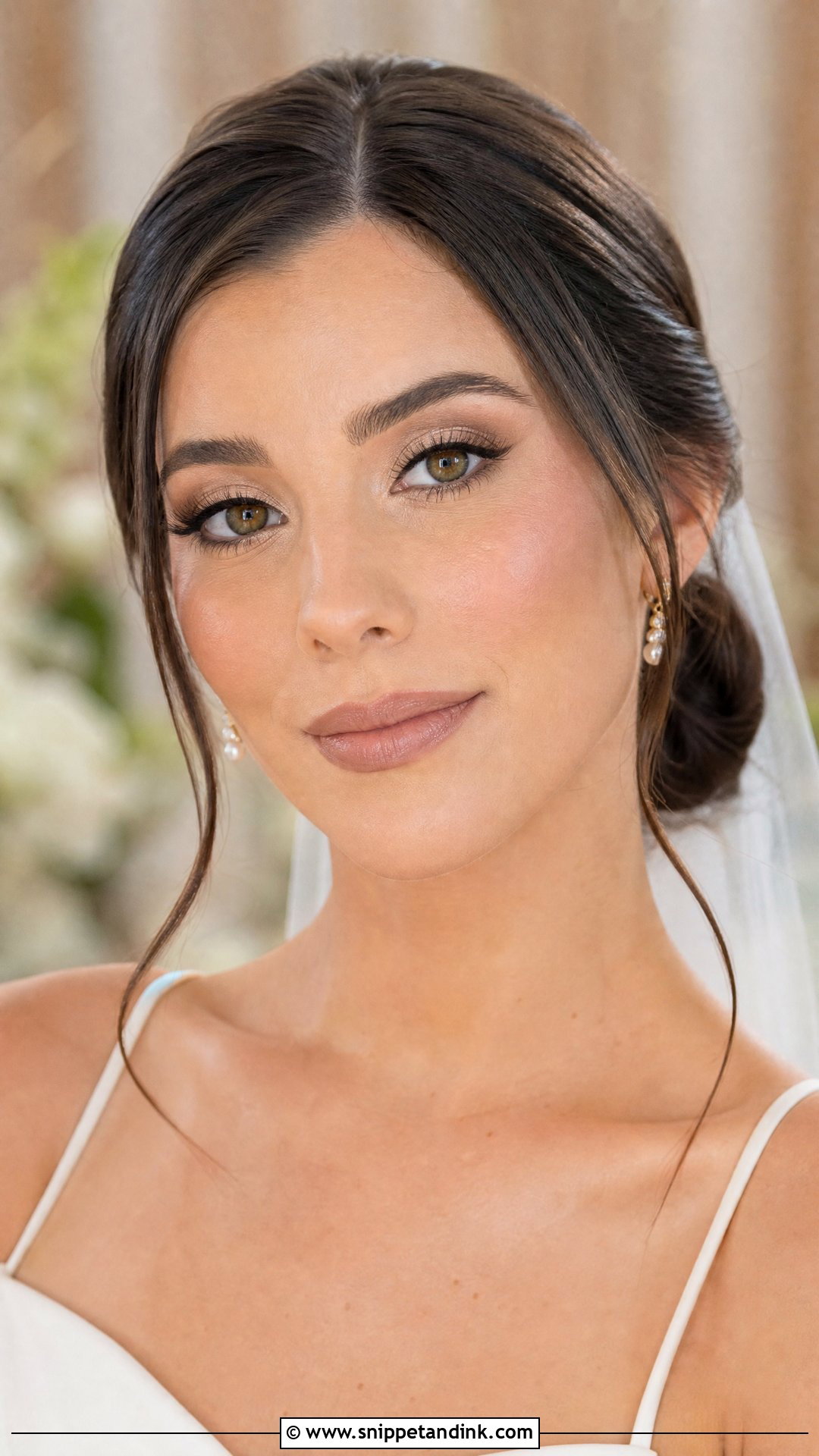
With hooded eyes, I always do the eye mapping with the bride’s eyes open and looking straight ahead. Shimmer stays on the inner lid where it shows, and the matte transition shade goes slightly above the natural crease so it’s visible when the eye is open. A thin wing drawn outward elongates the eye. Blush placed a touch higher lifts the face, and individual lashes beat one heavy strip, which weighs the lid down. A satin rose or nude mauve lip keeps the rest calm.
11. Airbrush Wedding Makeup With Smokey Eye
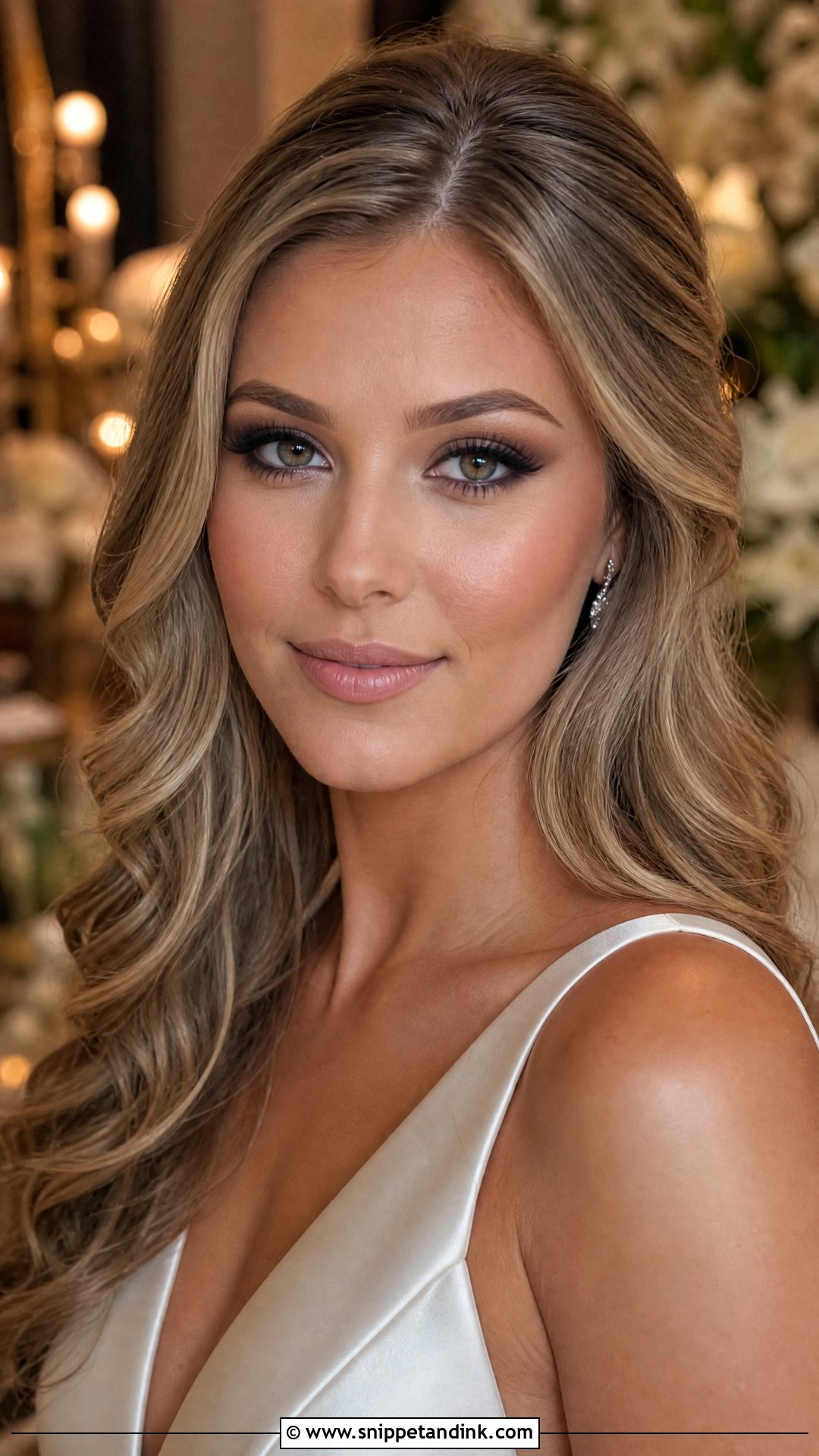
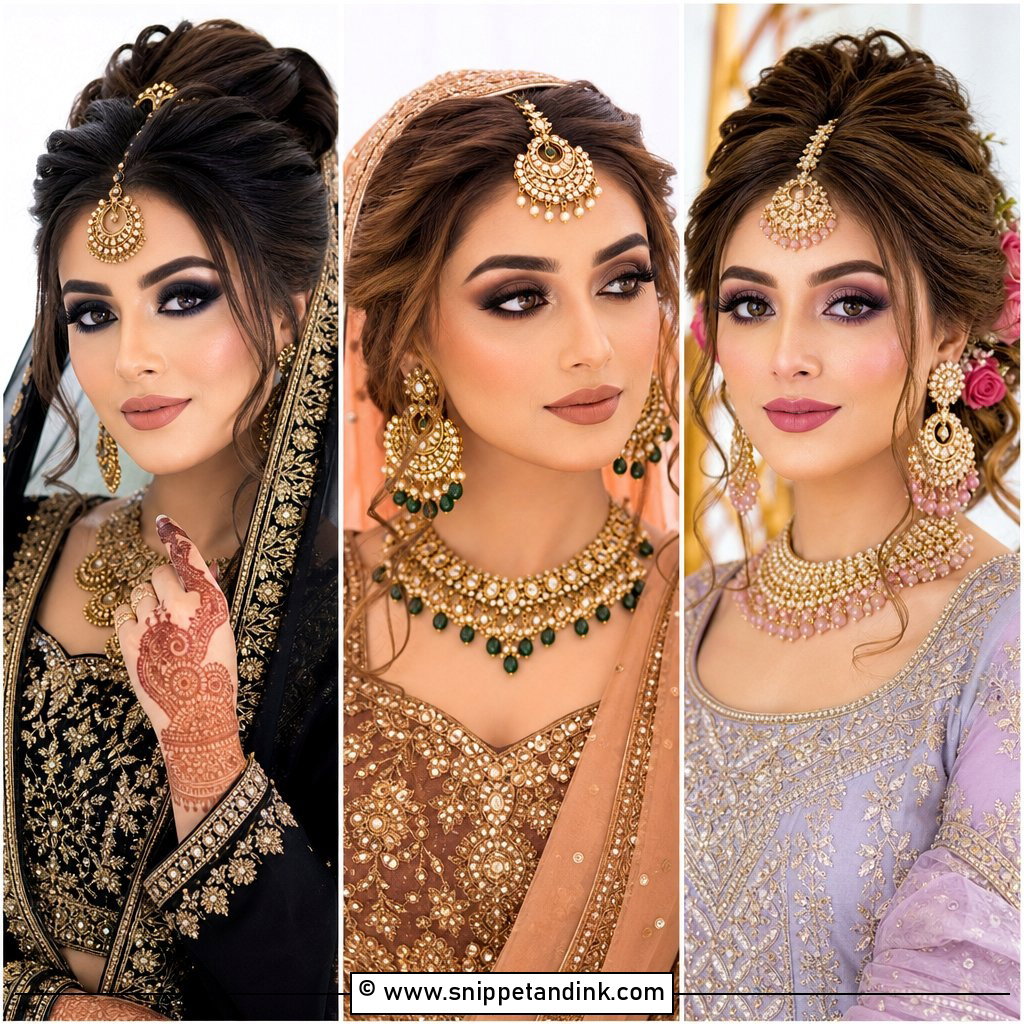
A bridal smokey eye should be blended soft, in taupe, chocolate, bronze or charcoal-brown instead of solid black, which can look hollow in photos. I finish the eyes before spraying the face so any shadow fallout can be wiped away cleanly. The airbrush complexion stays softly matte, with neutral blush, subtle contour and a champagne highlight. Lashes can be fuller but shouldn’t hide the shadow. A nude beige or muted mauve lip balances the intensity. Evening and black-tie weddings carry it best.
12. Airbrush Wedding Makeup With Winged Liner
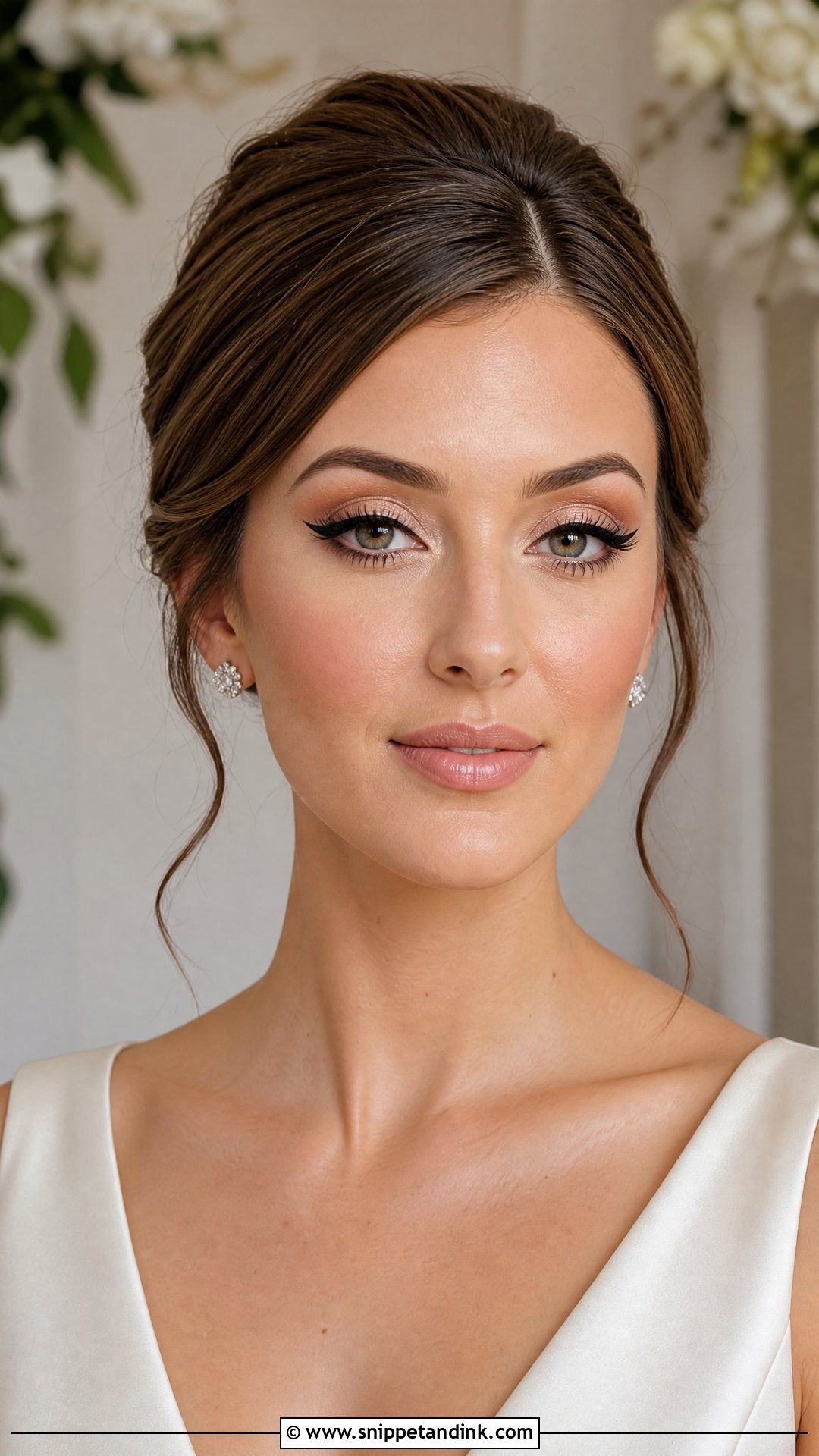
A wing should follow the eye’s own angle, from the outer corner toward the end of the brow, rather than a shape copied from a photo. I keep the lid simple, beige or soft brown, and draw the line over a smooth matte or satin airbrush base. Thin and lifted reads classic; slightly thicker gives more drama. Separated lashes, softly sculpted brows and a natural flush finish it, with a pink-nude or soft rose lip. It sits well under a veil and with updos.
13. Airbrush Wedding Makeup With Pink Lip
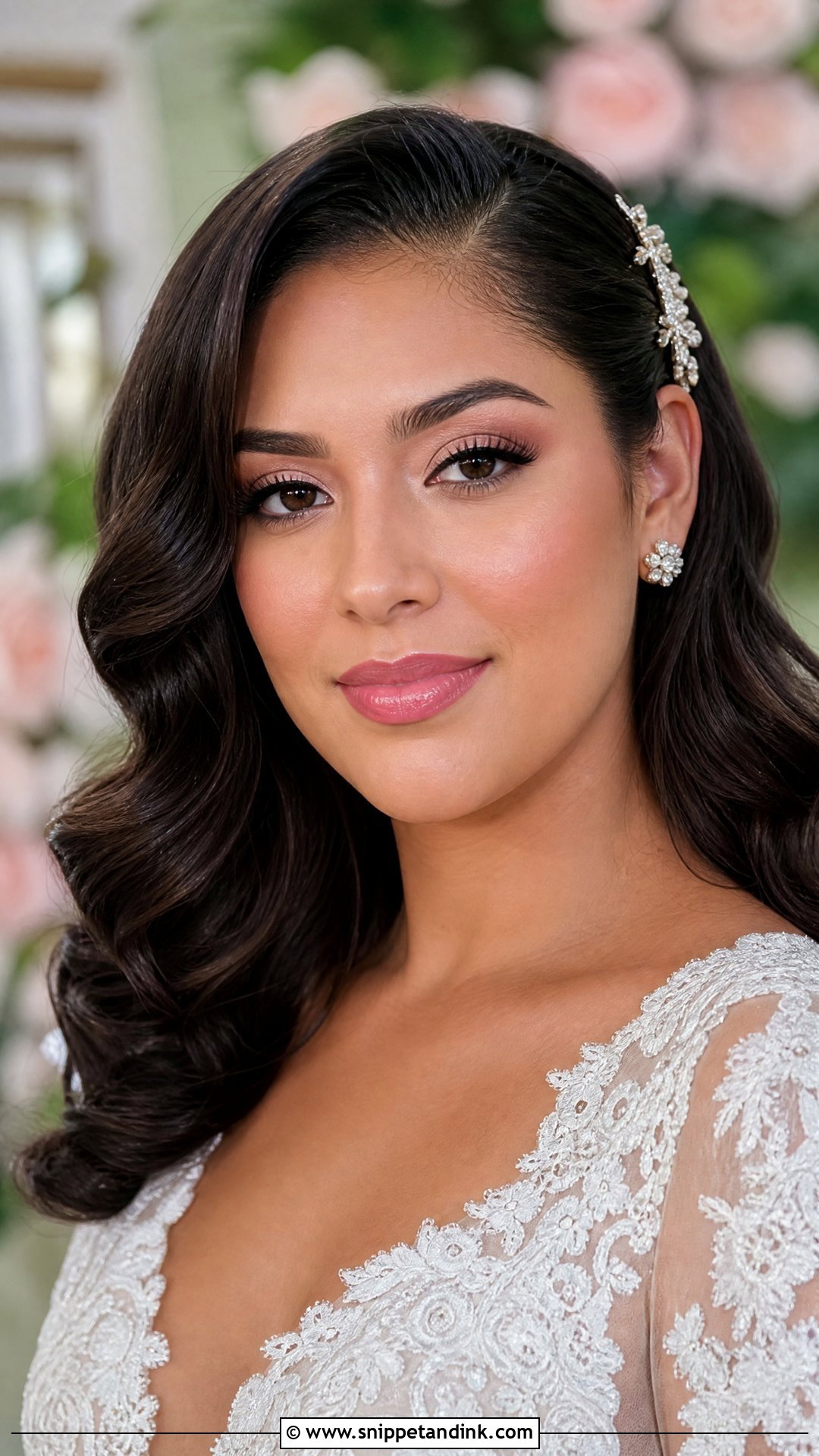
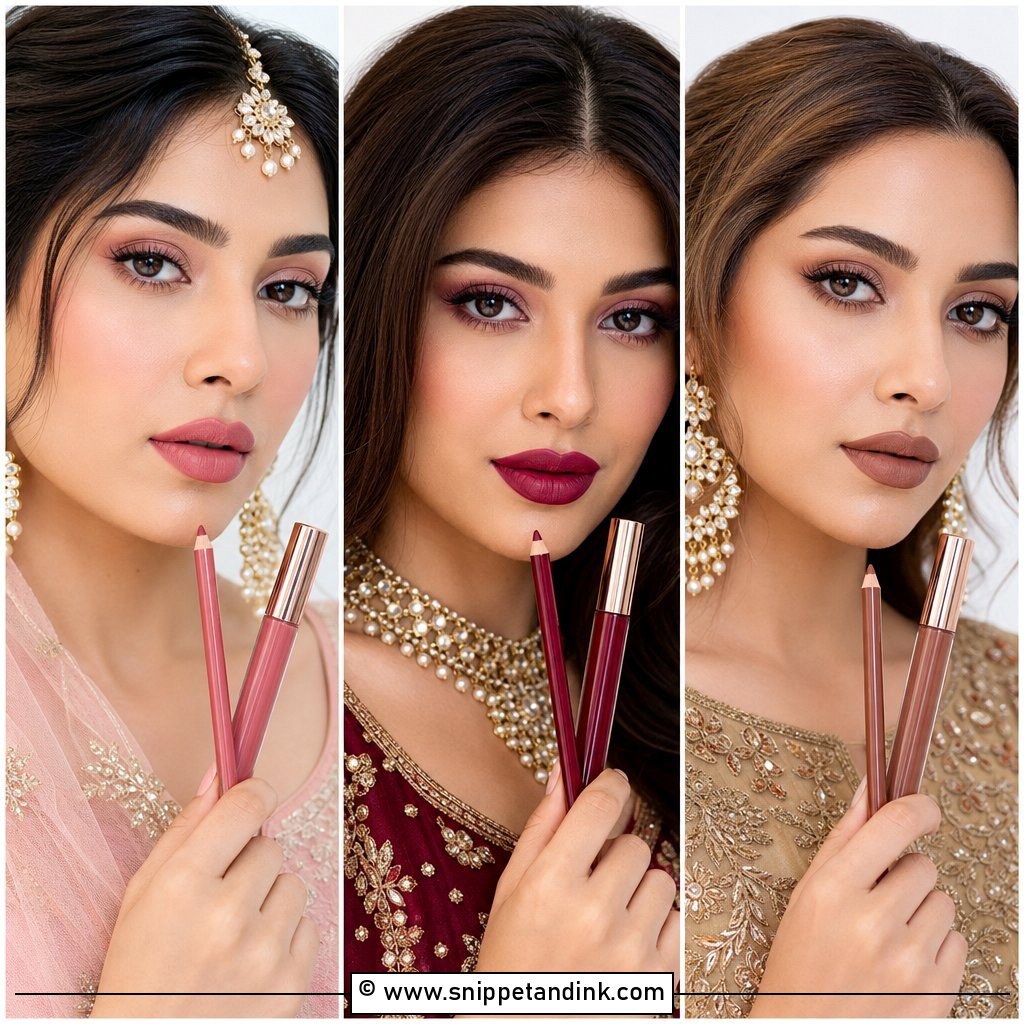
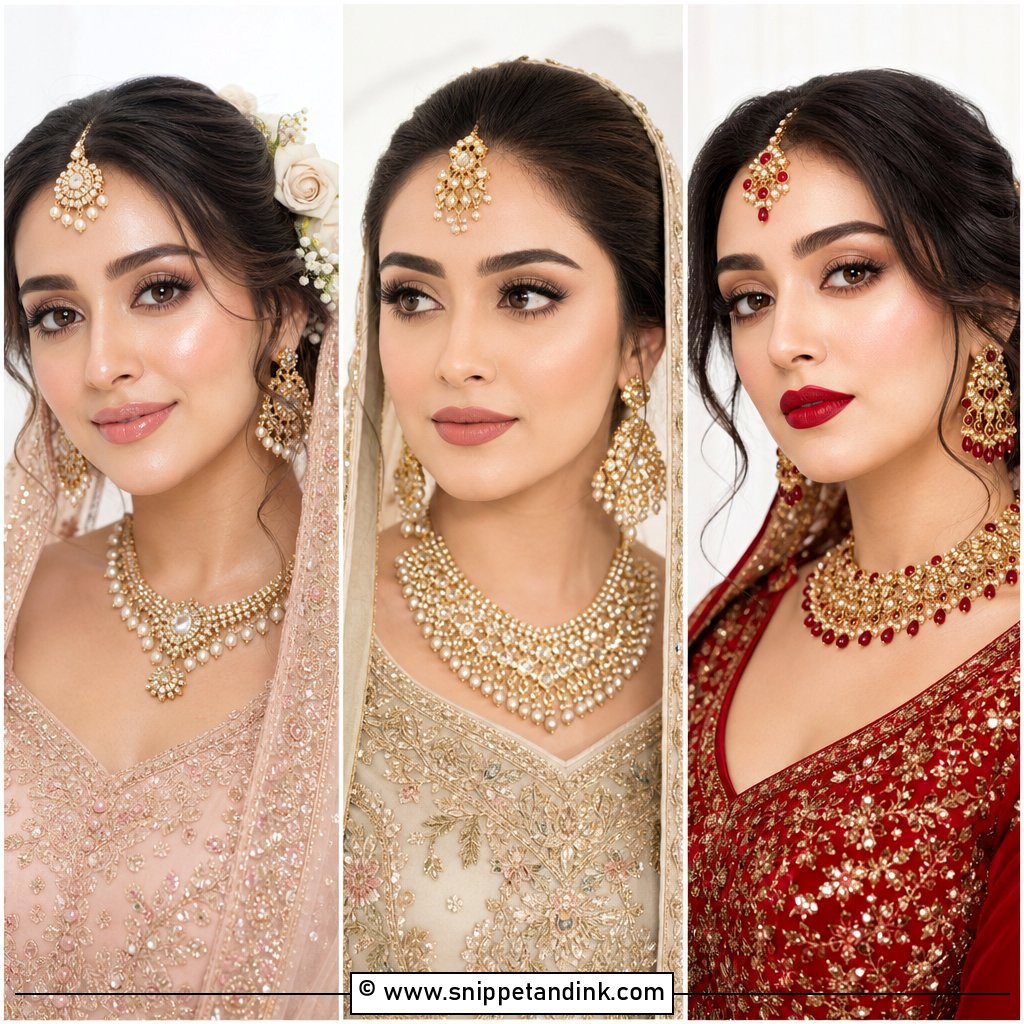
With a pink lip, undertone decides the shade. Fair and light skin suits petal pink or rose; medium and tan skin can wear warm pink, guava or rosy nude; deep skin glows in berry pink, rich rose or mauve-pink. I match the blush to the same color family as the lip so the face looks connected. Eyes stay soft: champagne shimmer, taupe shadow and wispy lashes. It’s a gentle way to wear color at a daytime spring ceremony.
14. Airbrush Wedding Makeup With Nude Lip
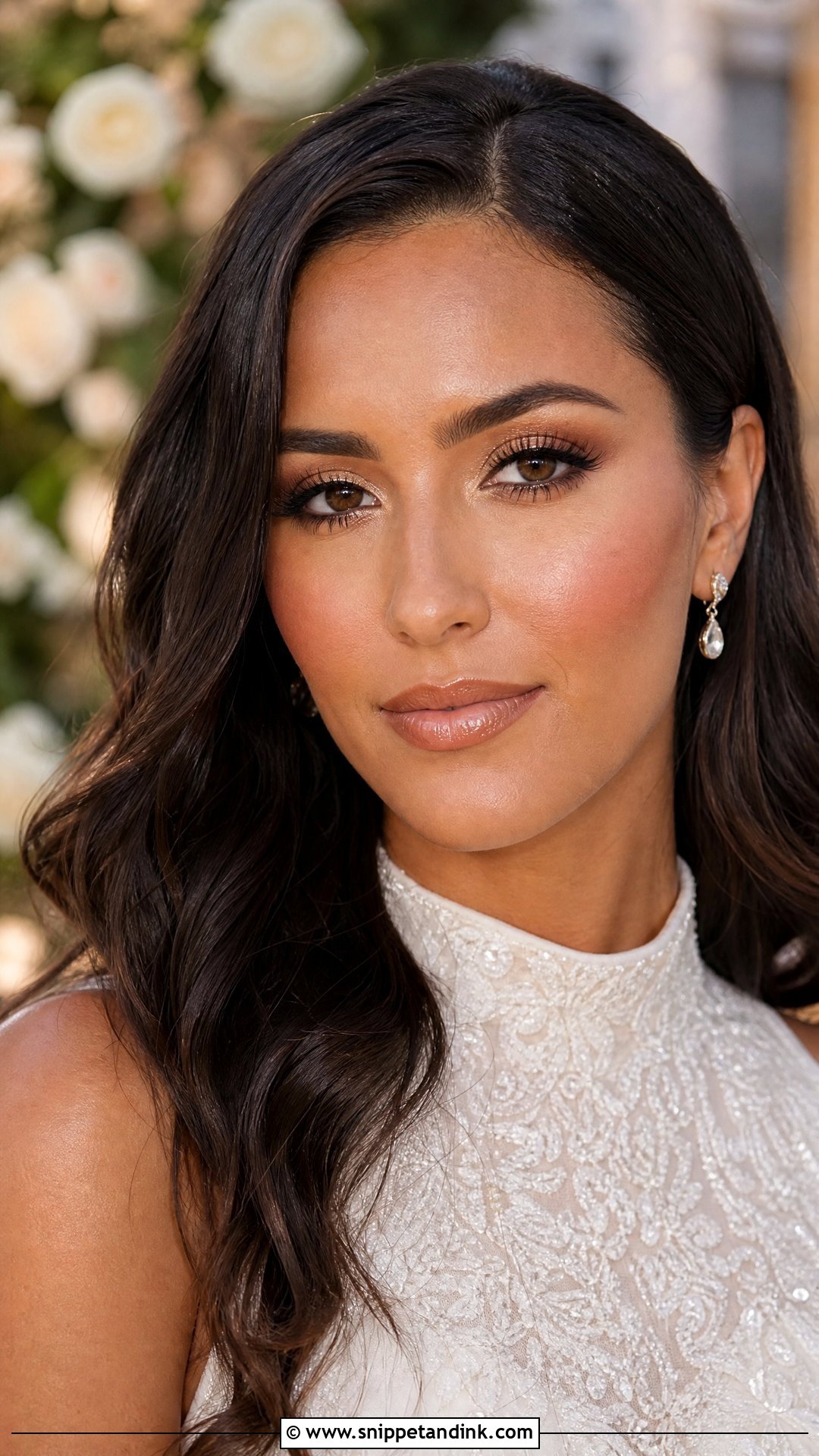
Pale nudes disappear in photos and can make lips look chalky. I pick a nude a shade or two deeper than the bride’s own lip: beige-pink, caramel, peach, rose or cocoa, depending on skin tone. Over the airbrush base, blush puts warmth back, and neutral brown shadow, a thin liner and natural lashes define the eyes. A satin or lightly glossed finish keeps the lip from looking dry. It’s understated glam that still shows up on camera.
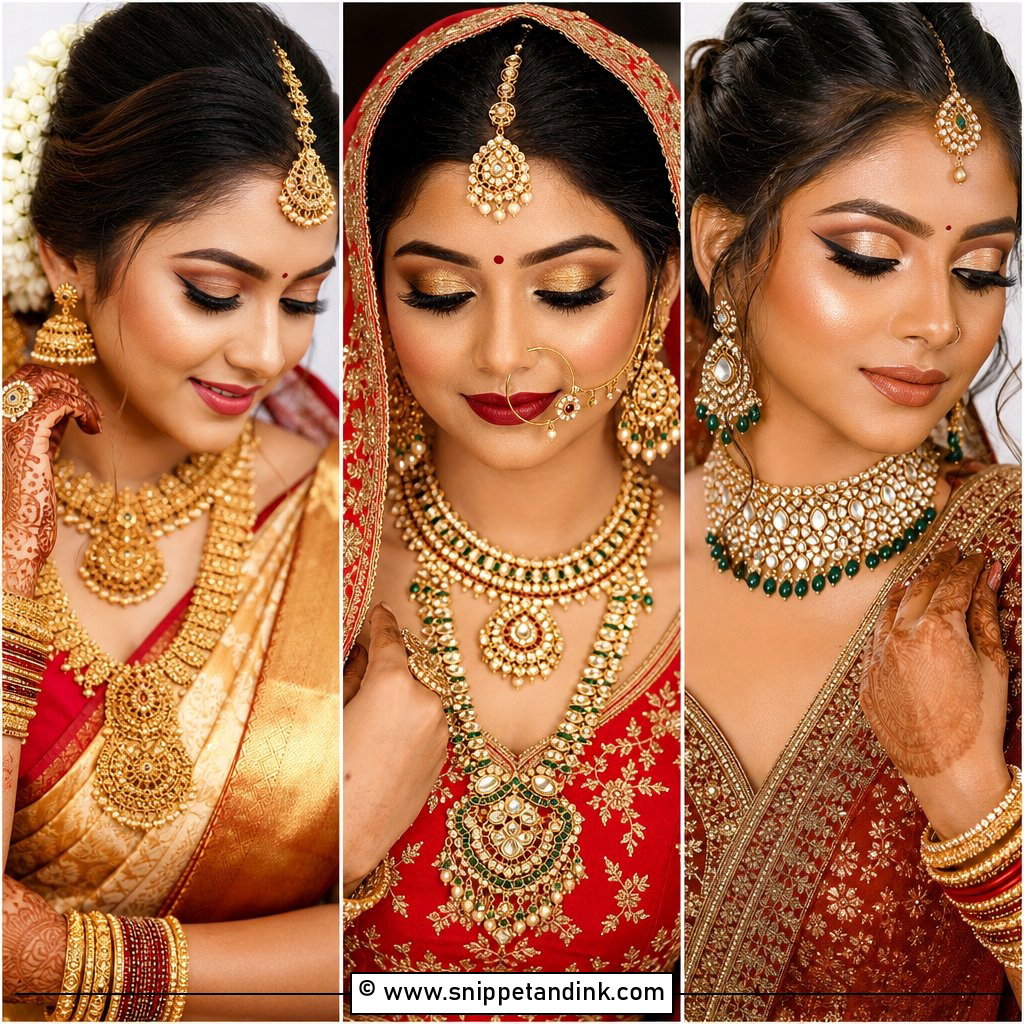
15. Airbrush Wedding Makeup For Summer Wedding
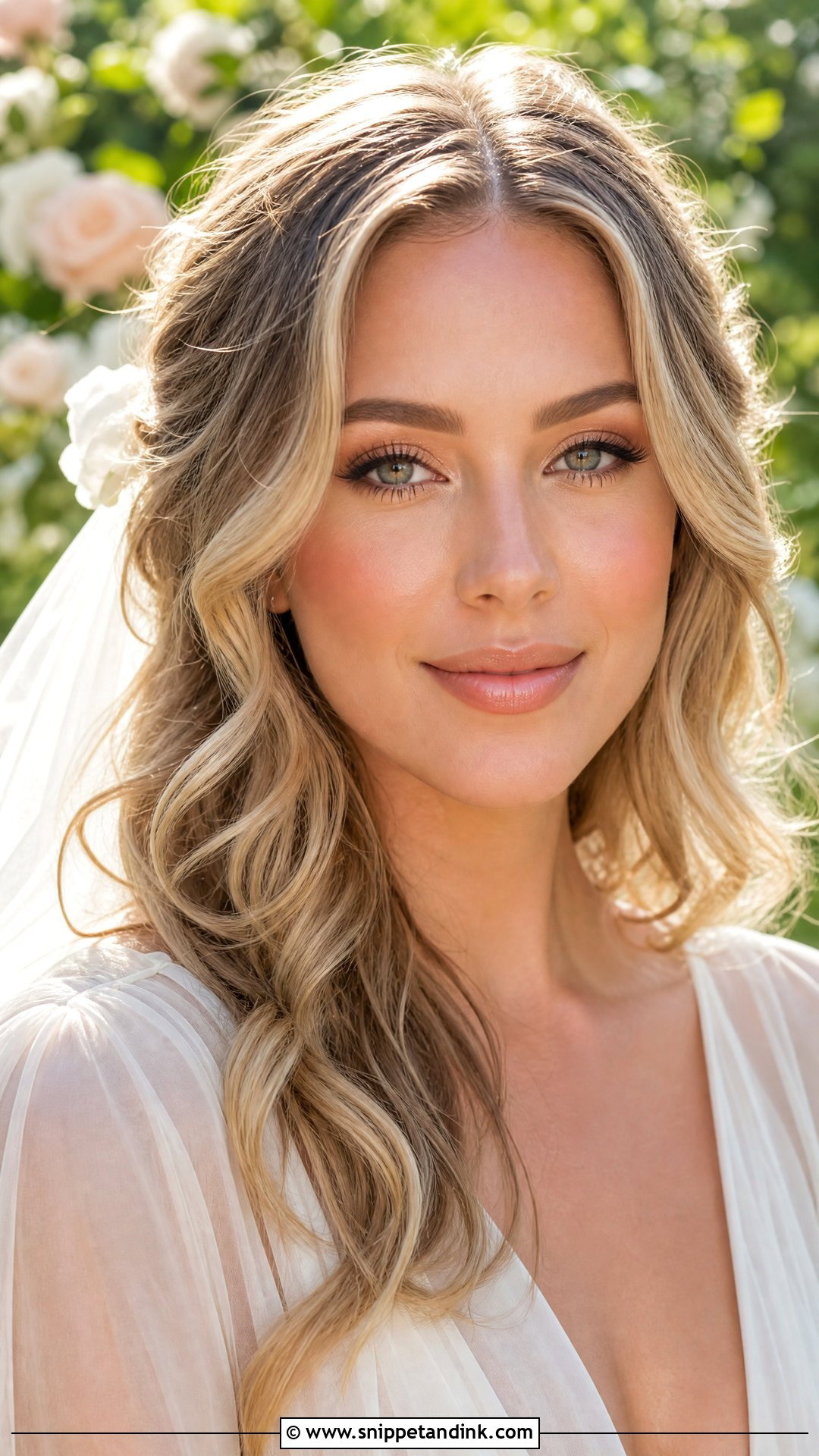
In summer, I spray thinner than usual, because heavy foundation slides first when you sweat. Waterproof eye products and powder only on the oily zones do most of the work. Warm bronze shadow, peach blush and a golden highlight give a sunny glow, and groomed natural brows hold up better in humidity than heavily filled ones. Lashes need a strong adhesive set long enough to go tacky. A peachy nude or coral rose lip adds freshness. Glowing is the goal; shiny means it’s time to blot.
16. Airbrush Wedding Makeup For Winter Wedding
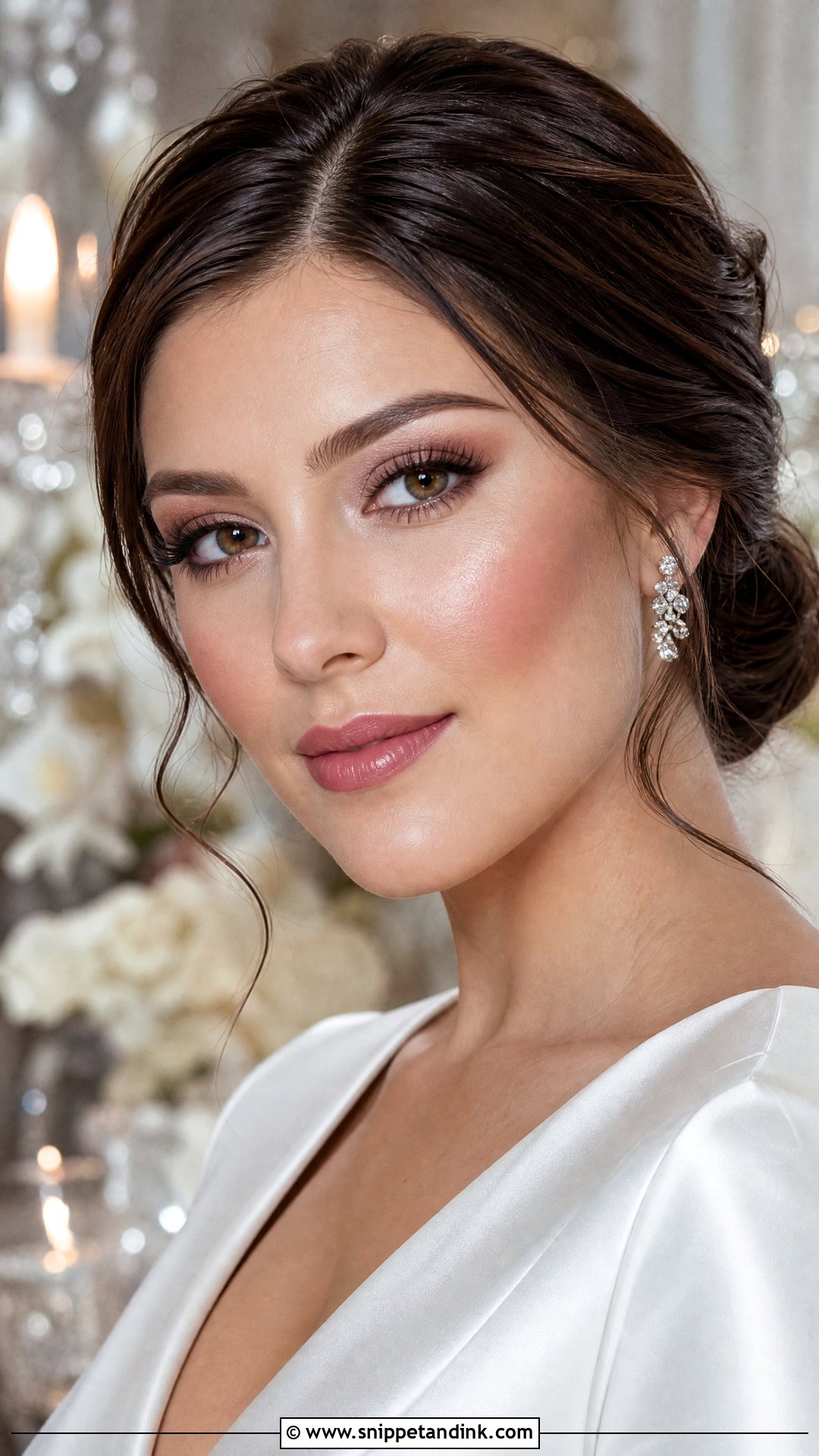
Winter faces can take a little more depth. A satin airbrush base keeps the skin from looking dry, and I prep with extra moisturizer since heating and cold air both strip the skin. Rose, taupe or soft cranberry on the eyes adds seasonal warmth, and cool pink or mauve blush brings color back to the face. A pearl or icy champagne highlight on the cheekbones and inner corners catches candlelight. Rosewood, berry nude or classic red lips suit satin gowns and indoor venues.
17. Airbrush Wedding Makeup For Beach Wedding
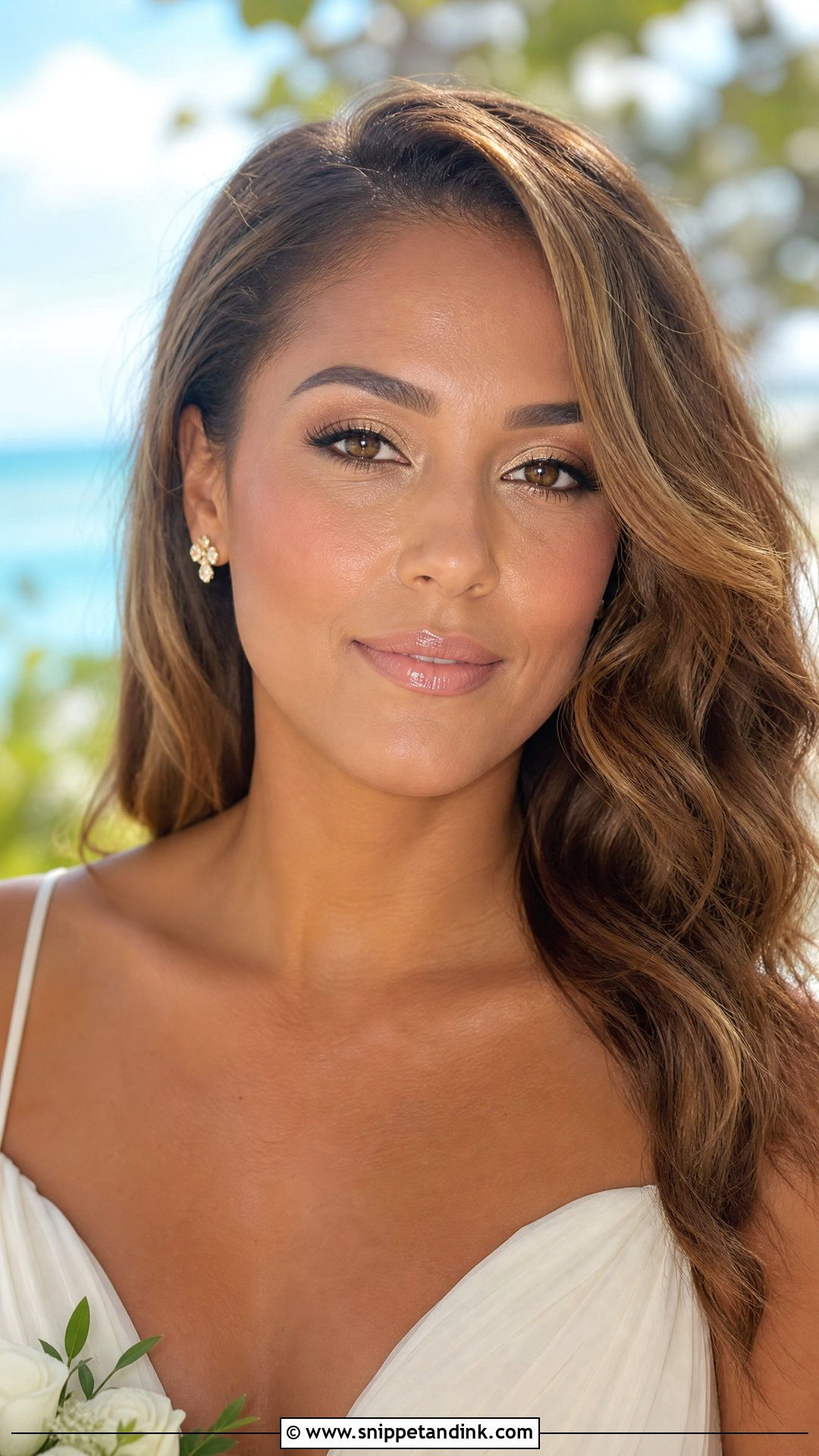
At the beach, I focus the airbrush on evening the skin rather than covering it, because a heavy base looks out of place against sand and sea. Waterproof mascara, soft bronze liner and warm sand or champagne shadow keep the eyes defined but relaxed. Coral-peach blush and a soft golden highlight give a sunlit effect. A tinted balm or satin peach lip is more comfortable than a dry matte in salty wind. Loose waves and simple dresses suit the mood.
18. Airbrush Wedding Makeup For Black Bride
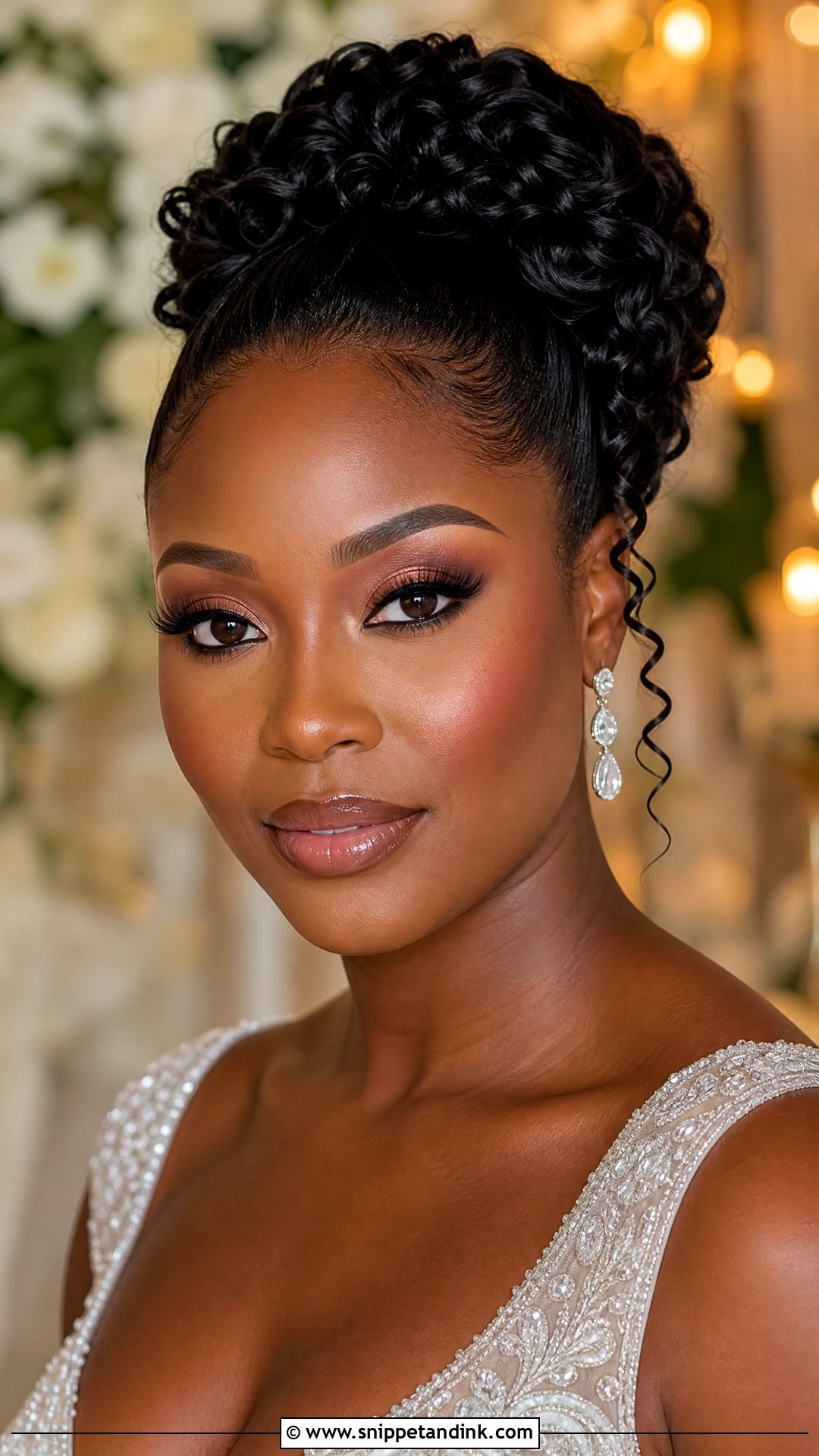
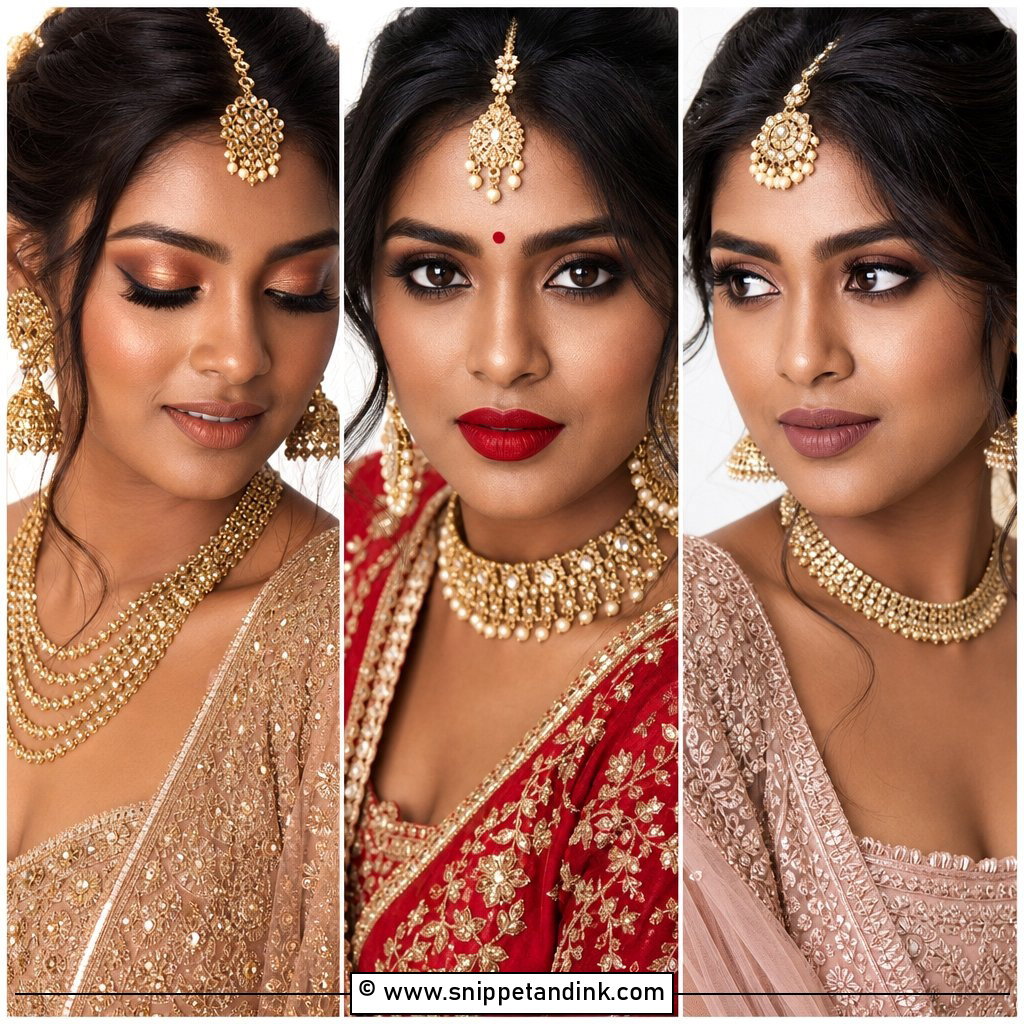
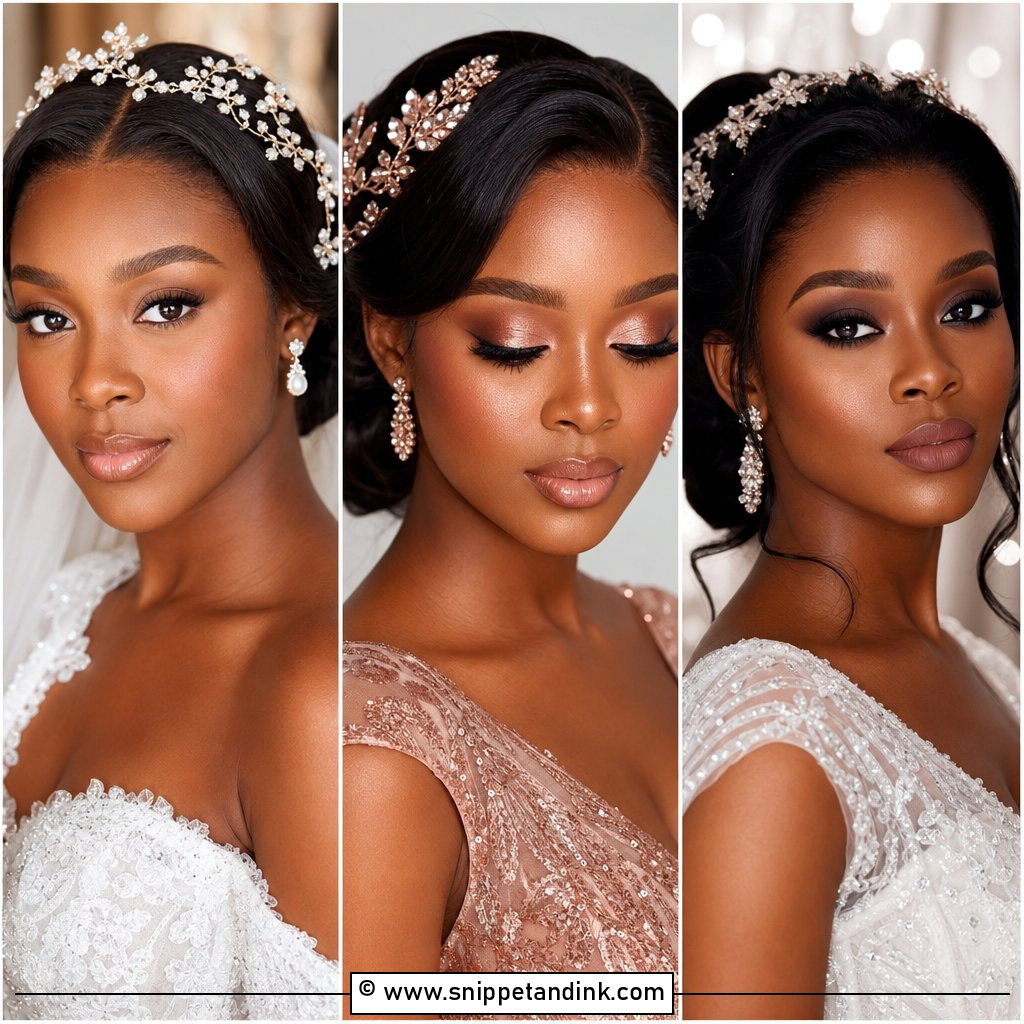
For a Black bride, the base match is the whole foundation of the look. I check the face, neck and chest, and often blend two airbrush shades so the center of the face and the perimeter each match. One shade sprayed everywhere is what leaves deep skin looking grey in flash. Bronze, copper, plum and soft gold shadows look rich on deeper complexions. Warm berry, terracotta or deep rose blush needs enough pigment to show on camera. A golden or bronze highlight gives glow without ashiness. Brown nude, berry rose or soft brick lips finish it beside textured updos or soft curls.
19. Airbrush Wedding Makeup For Mature Bride
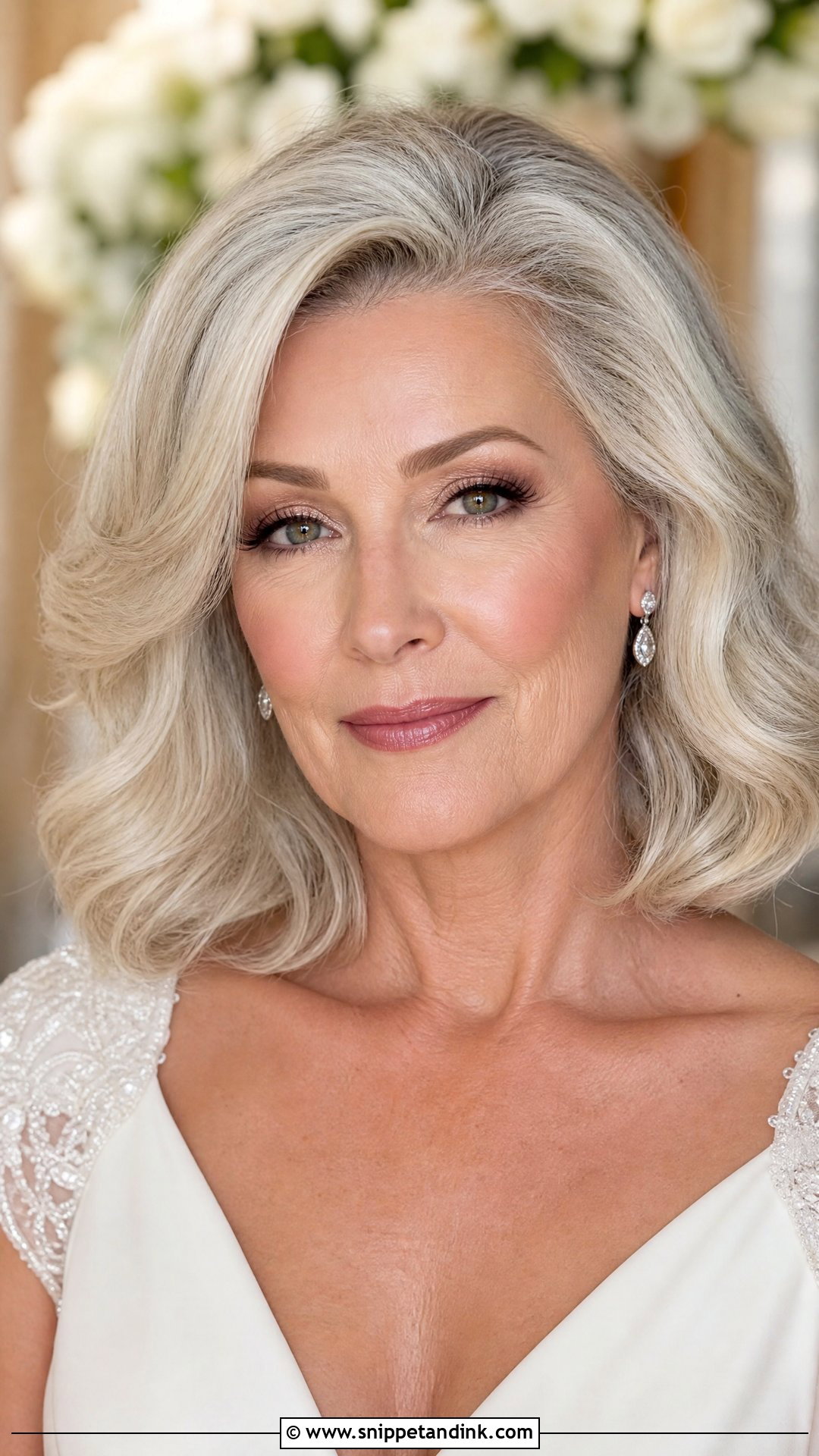
Mature skin does best with light layers and coverage placed only where it’s needed. Prep matters: well-hydrated skin lets the airbrush sit flat instead of catching on texture. Satin finishes flatter more than very matte or very shiny. I lift the liner slightly at the outer corner and use lightweight lashes, and I skip heavy shadow under the lower lashes because it drags the eye down. Creamy rose blush placed high and a satin rose or pink-brown lip keep the face fresh into the evening.
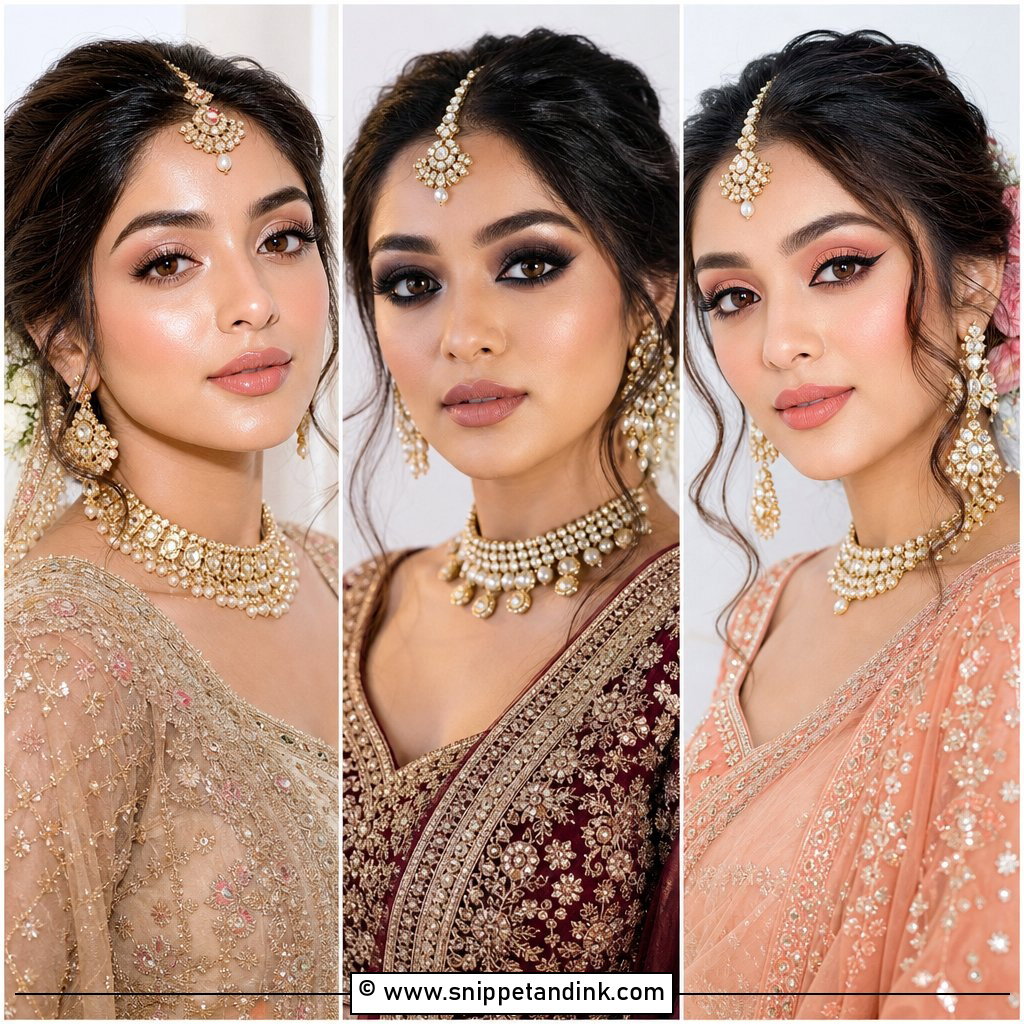
20. Full Glam Airbrush Wedding Makeup
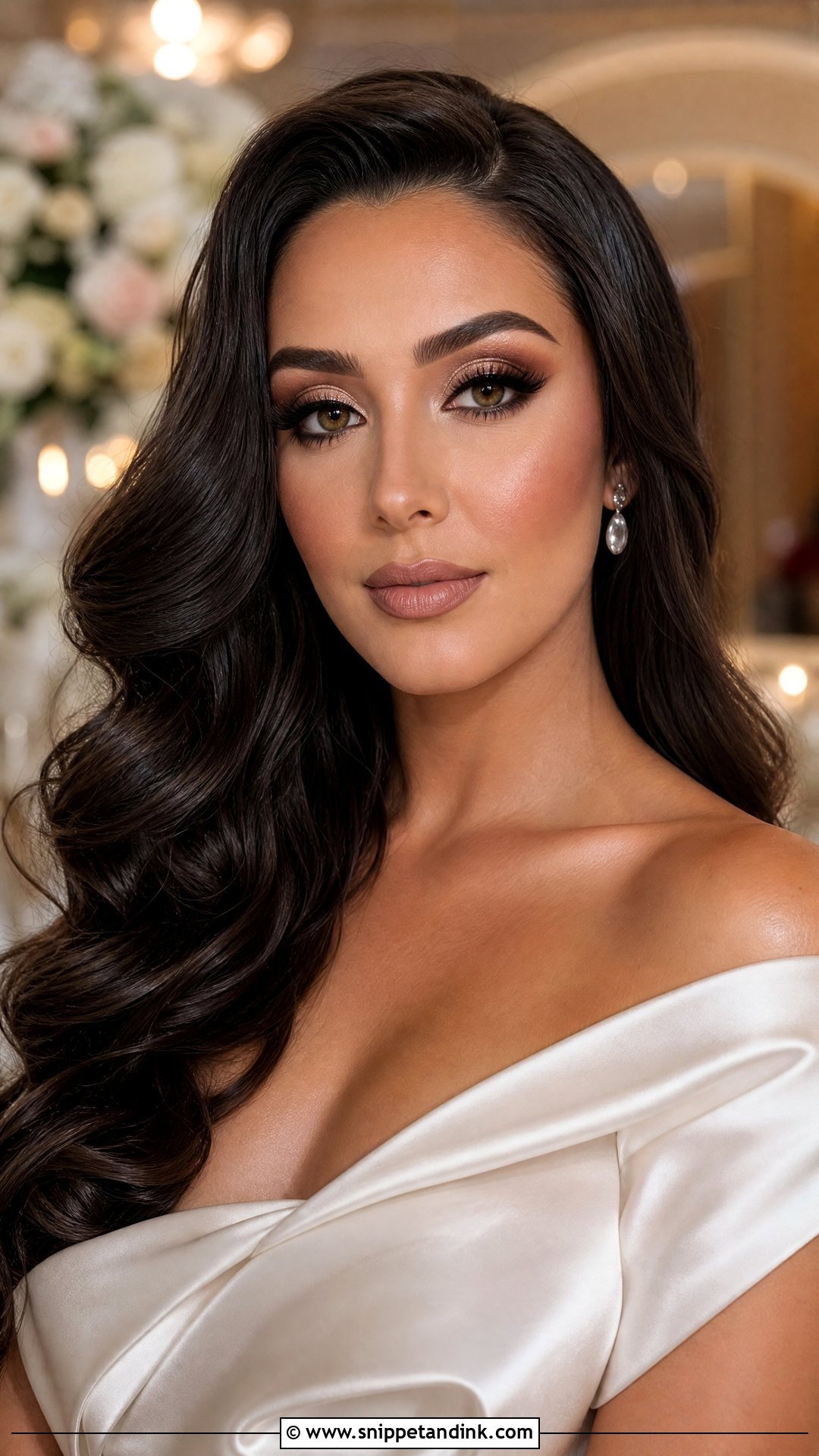
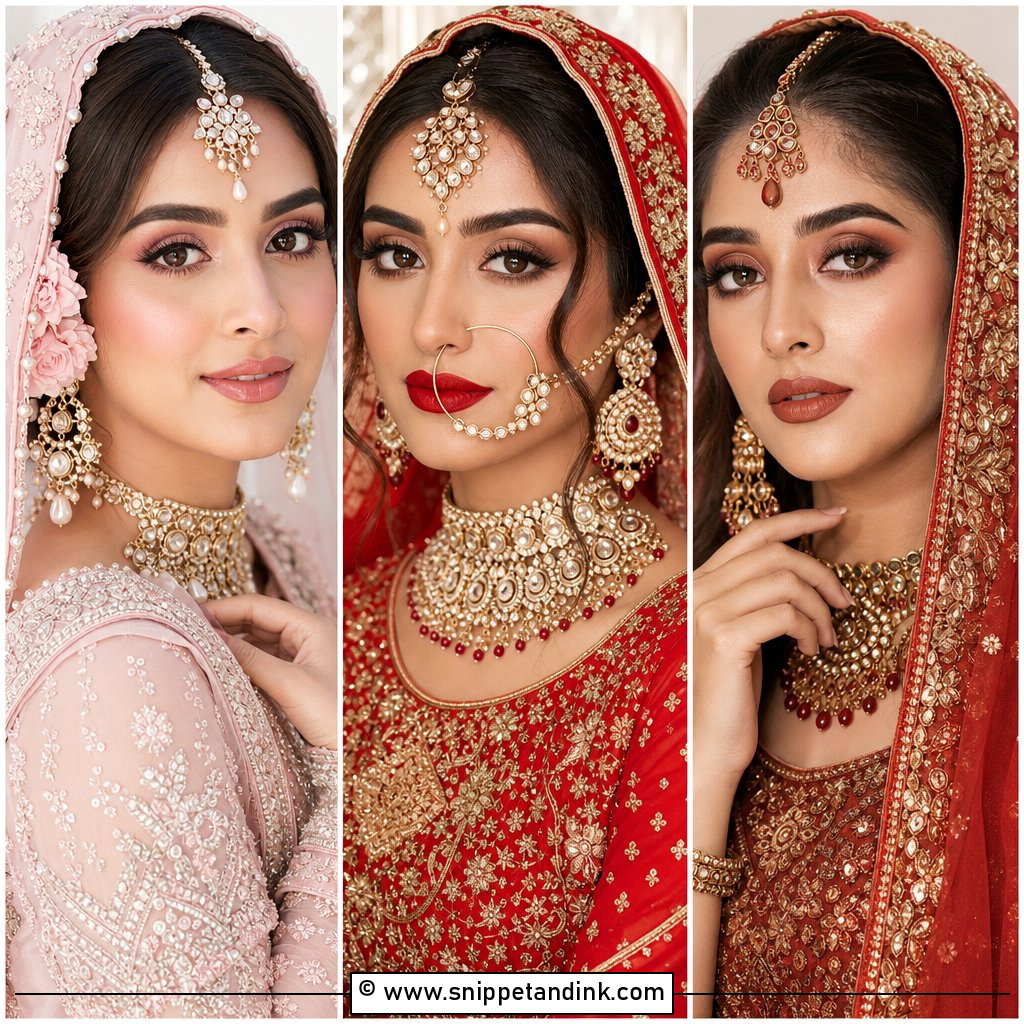
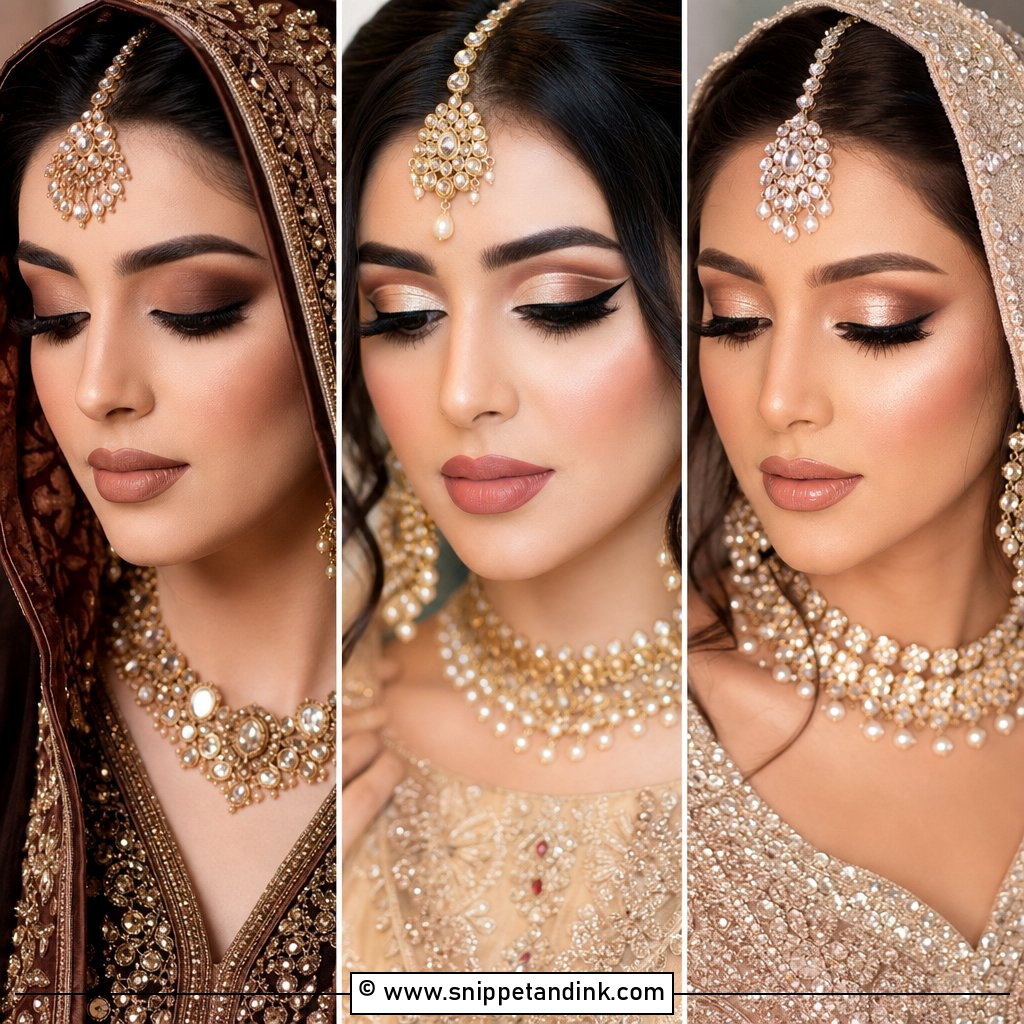
Full glam on an airbrush base means building coverage in thin passes so it never looks thick, then layering definition on top: warm brown shadow, shimmer on the lid, sculpted liner and fuller lashes. Soft contour, bright under-eye coverage, polished brows and a glowing highlight complete the face. The lip sets the mood; nude rose stays soft, classic red turns it formal. I’d suggest it to brides who wear makeup daily, because someone who never does may not recognize herself in the mirror. Ballrooms and evening receptions suit it.
Why a Base Can Look White Under Camera Flash
Flashback is the white cast that appears on the face in flash photos while looking normal in the mirror. It’s one of the most common reasons a bride is unhappy with reception photos, and it usually comes from two things.
The first is sunscreen. Mineral filters such as zinc oxide and titanium dioxide reflect light, and a high-SPF layer under foundation can bounce flash straight back. For the ceremony, I prefer a lower-SPF or chemical-filter base and rely on shade for sun protection during outdoor portraits. The second is setting powder. Some very fine finishing powders, especially silica-heavy ones, look invisible in daylight but turn white under flash when packed under the eyes.
Testing for it at the trial
Take one photo with your phone’s flash on, close to your face, before you leave the trial. If the under-eyes or forehead look pale or grey, ask your artist to swap the powder or rethink the sunscreen. It’s a two-minute check that saves hours of retouching later. Also ask your photographer whether they use flash at the reception, so your artist knows which light to plan for.
The Face Works When the Parts Agree
The foundation is only one decision. How the eyes, lips, blush, brows and finish work together with your dress, lighting and comfort decides whether the face feels like yours. Book a trial, wear it for several hours and photograph it in daylight and indoors before you commit. Be honest with your artist about your skin and how much coverage you can tolerate. When the formula and colors are right, the makeup stays out of the way from the first photo to the last dance.
You'll Like These Ideas:


Leave a Reply