
Almond is the shape I file most often for brides, and the reason is simple: it slims the finger without the risk that comes with a stiletto point. Straight sidewalls taper into a soft rounded peak, so French tips, chrome, pearls and fine lace art all have somewhere to sit. Your hands end up in more close-ups than you’d expect, from ring shots to the bouquet hand-off, and almond holds its outline from most camera angles. Below are twenty sets I’d happily put on a bride, with notes on how each one wears, what I check before starting it, and when I’d talk you out of it.
How Much Natural Length an Almond Shape Needs
An almond nail is filed, not grown into shape, and it needs a free edge to taper. I file the sidewalls straight first, then bring each side in toward a centre peak. If the free edge is shorter than a couple of millimetres, there’s nothing to taper, and you end up with an oval.
If your nails are short or weak, you have three honest options:
- Grow them out for six to eight weeks under a builder gel overlay, which adds strength while the free edge grows.
- Use soft gel extensions for the wedding week, which give even length on every finger and soak off afterward.
- Accept a short soft almond. It’s the most comfortable option and still looks refined in photos.
One warning: over-filing the sidewalls to get a sharper point weakens the nail right where it bends. A slightly fuller almond is stronger and wears better over a long day.
Almond also means different things in different salons. Some techs file a slim, pointed almond; others file something closer to an oval. Show your tech a photo of the exact peak you like, ideally of a hand with a similar nail bed to yours, and ask to see one finger shaped before the full set is filed.
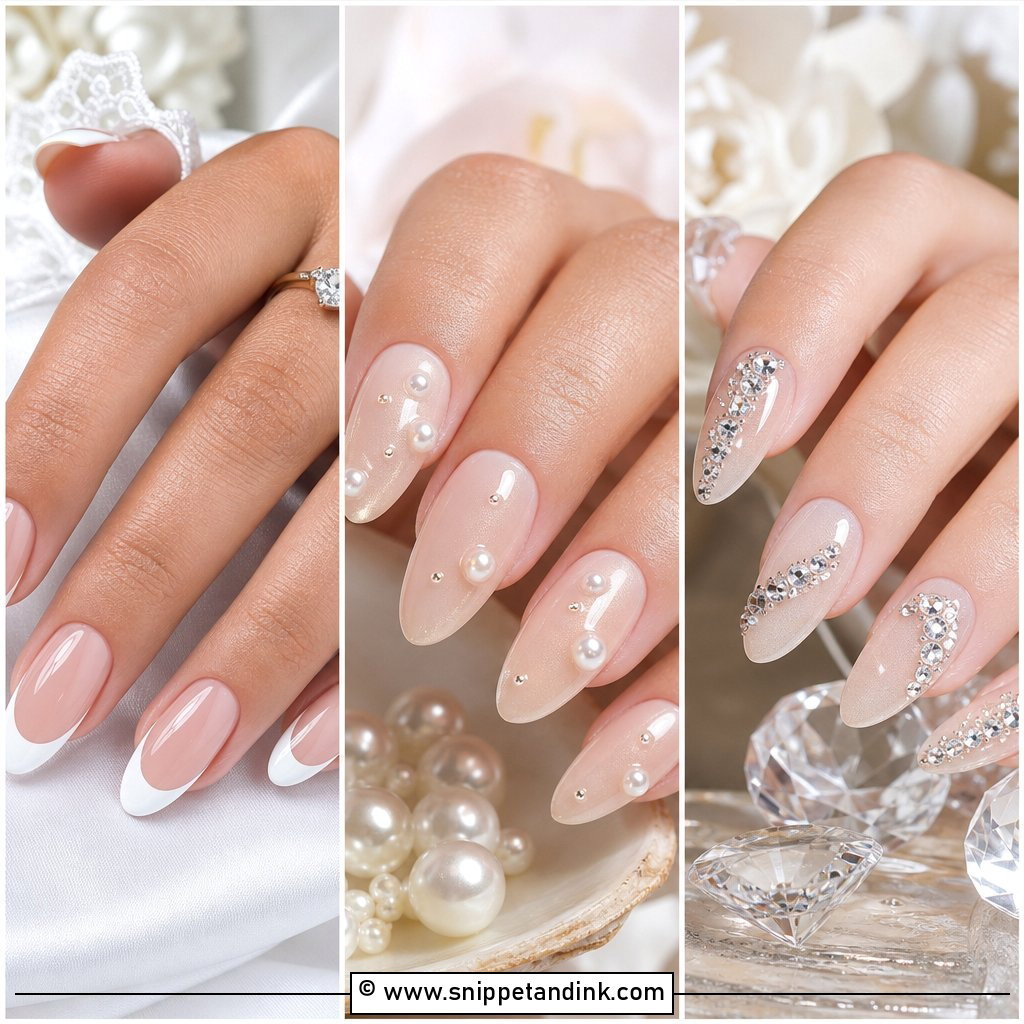
1. Classic French Tip Almond Wedding Nails
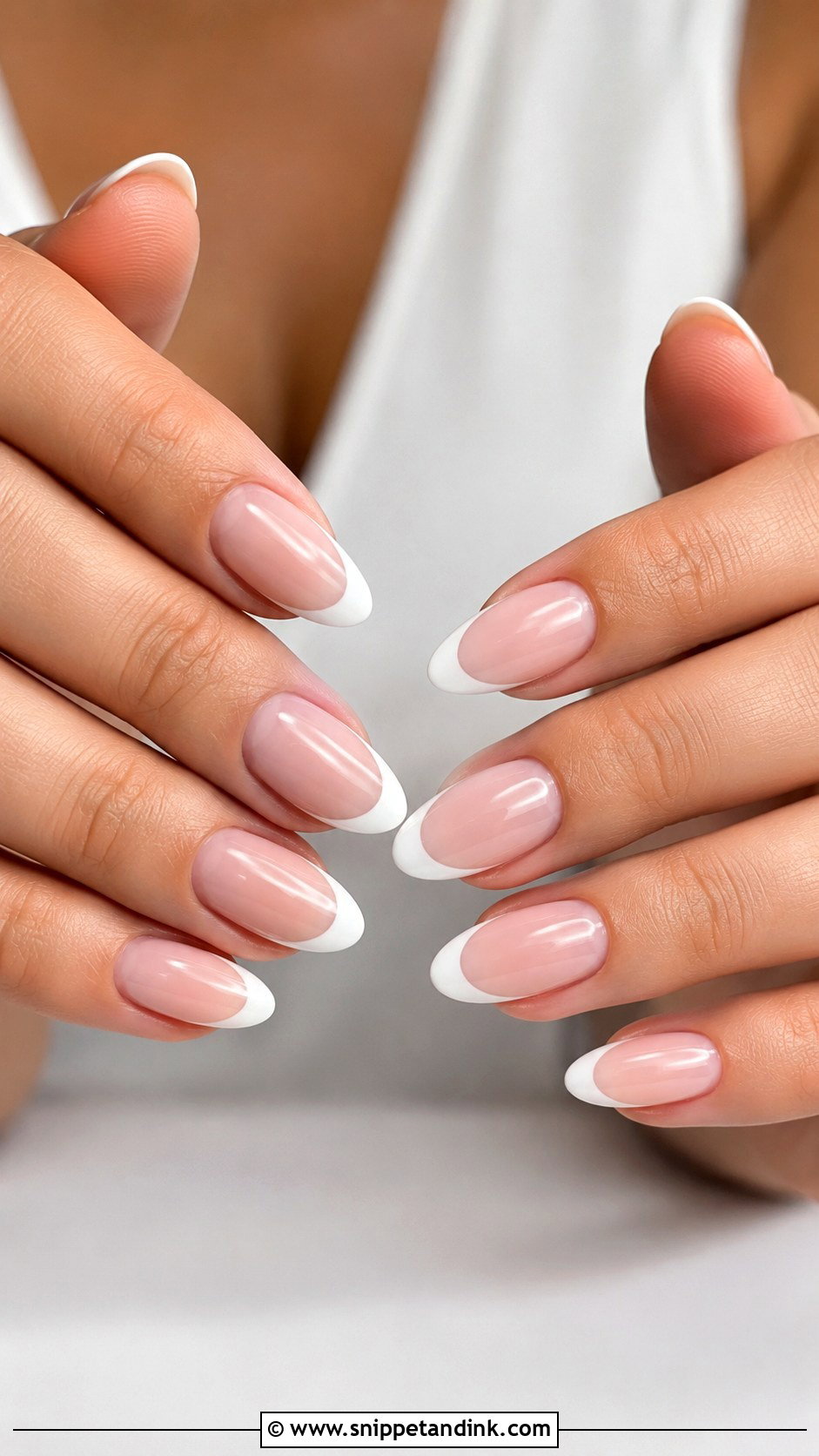
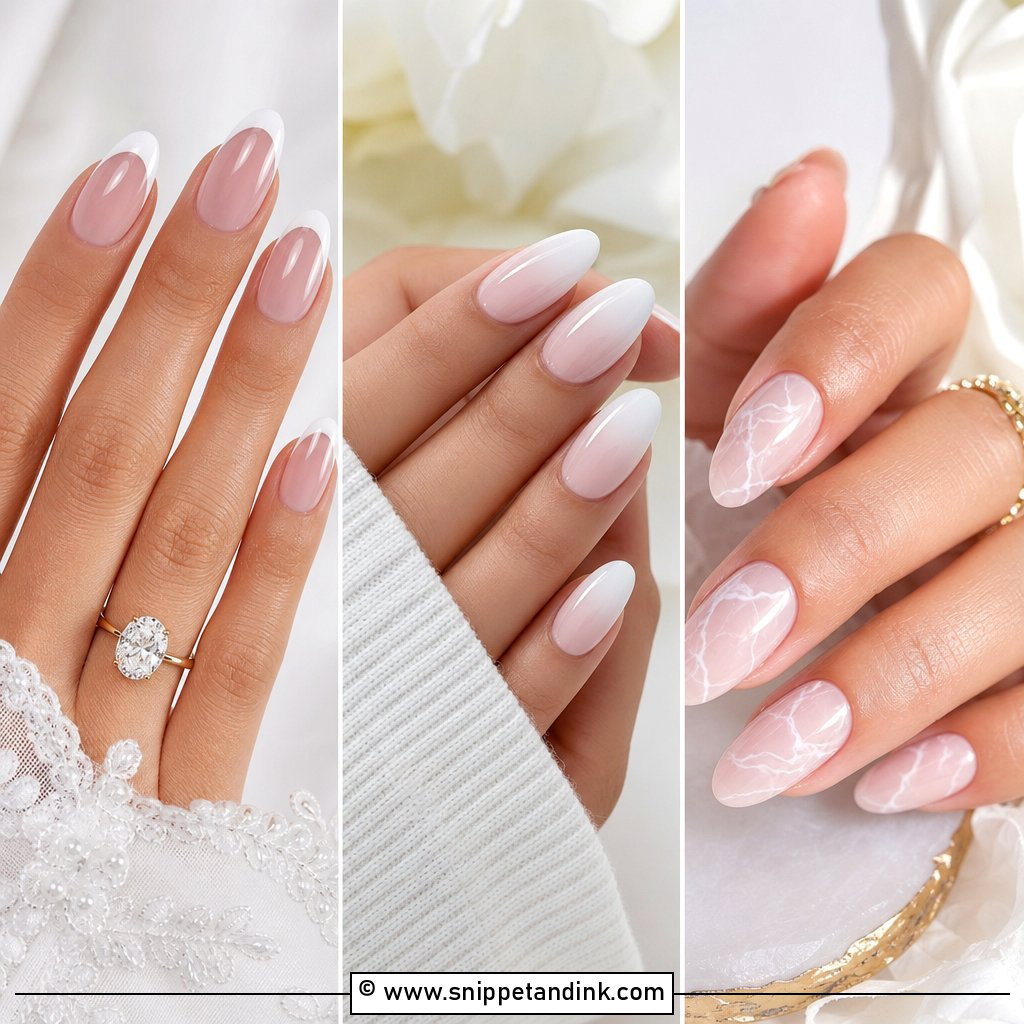
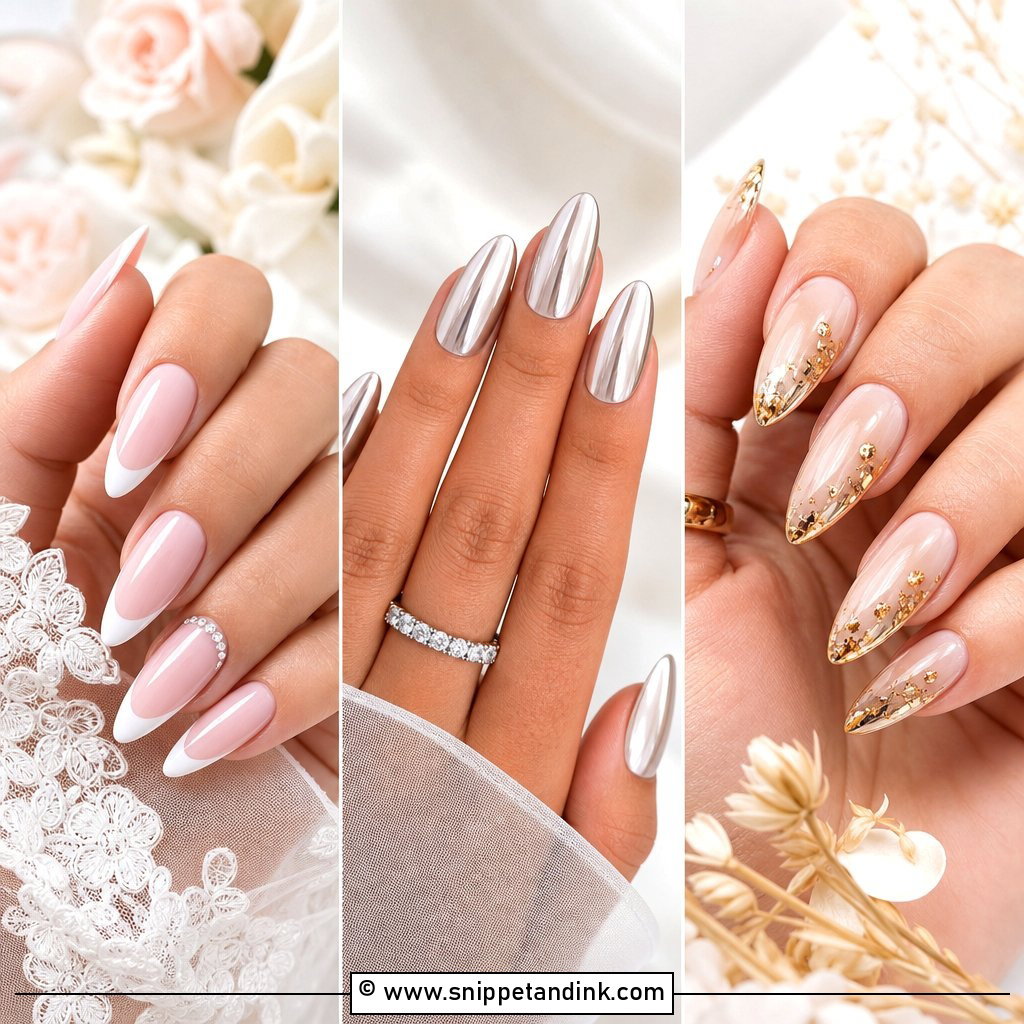
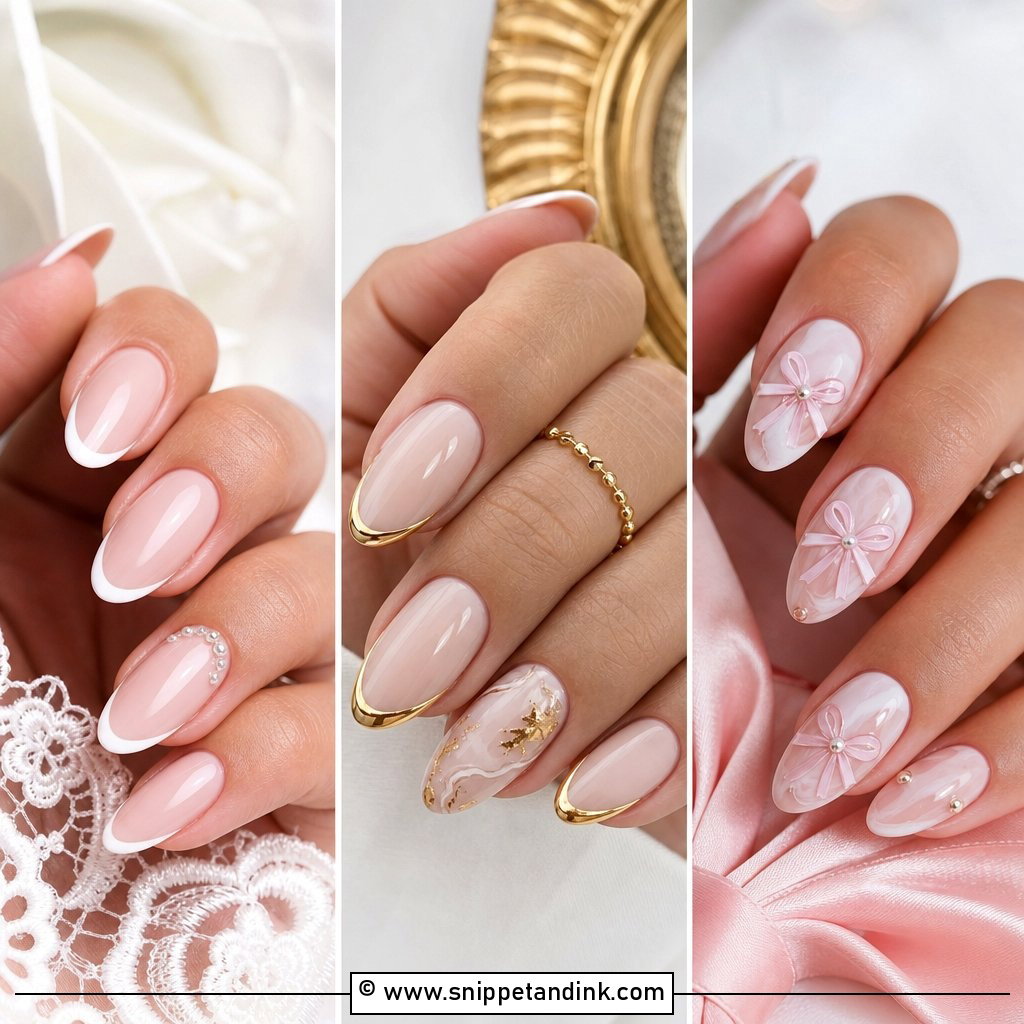
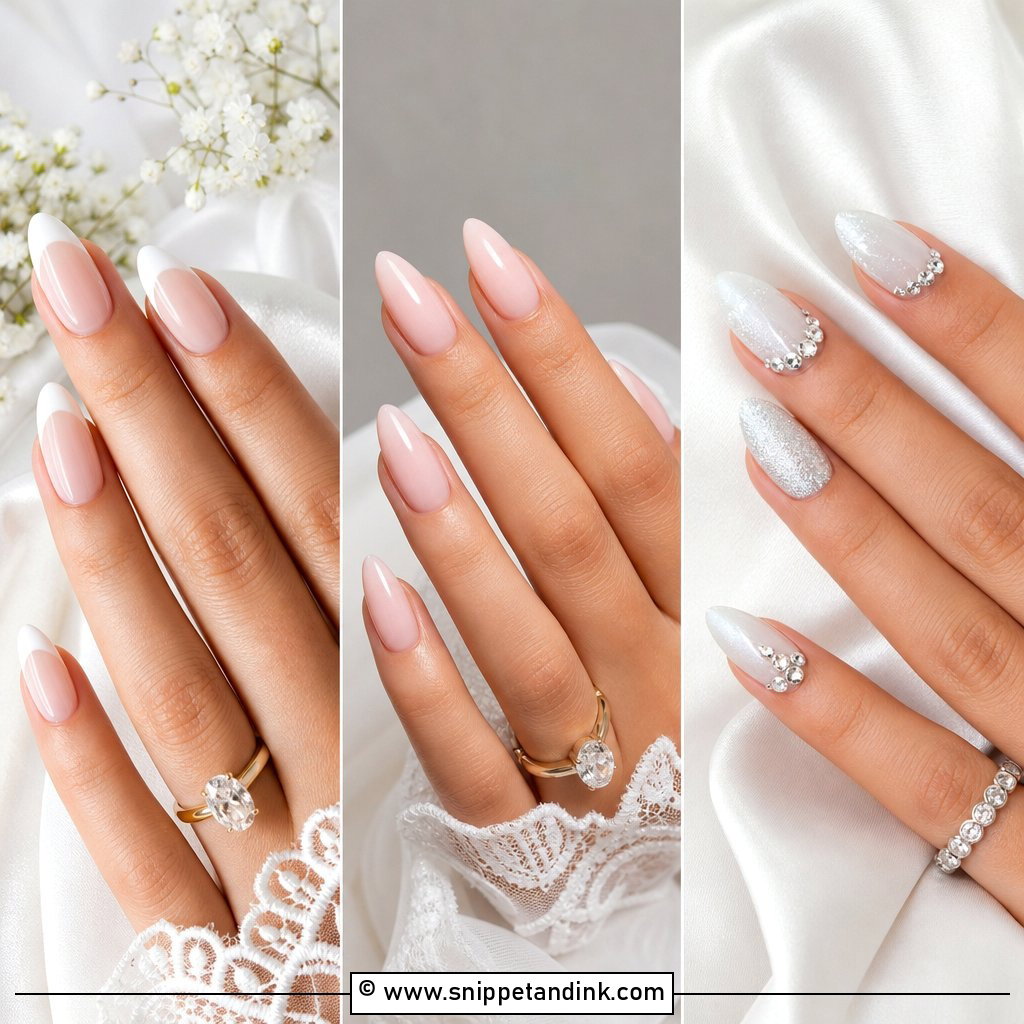
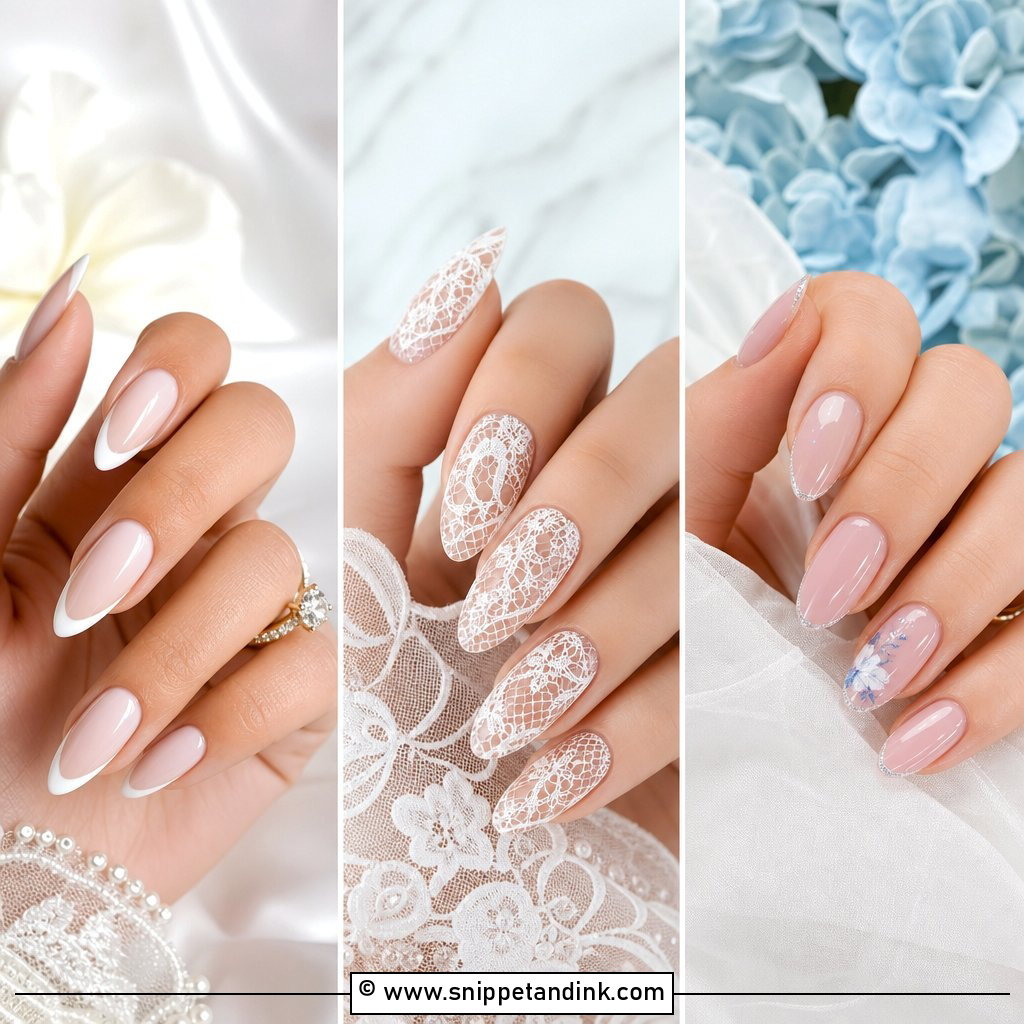
A French tip on almond lives or dies by the smile line. On a square nail the white runs straight across, but here I paint it as a curve that echoes the peak, so the white looks like part of the shape instead of a stripe stuck on top. Over a sheer pink base, a thin to medium tip goes with nearly any dress. If your nail beds are short, I keep the white slimmer so the pink section still looks long.
2. Milky White Almond Wedding Nails
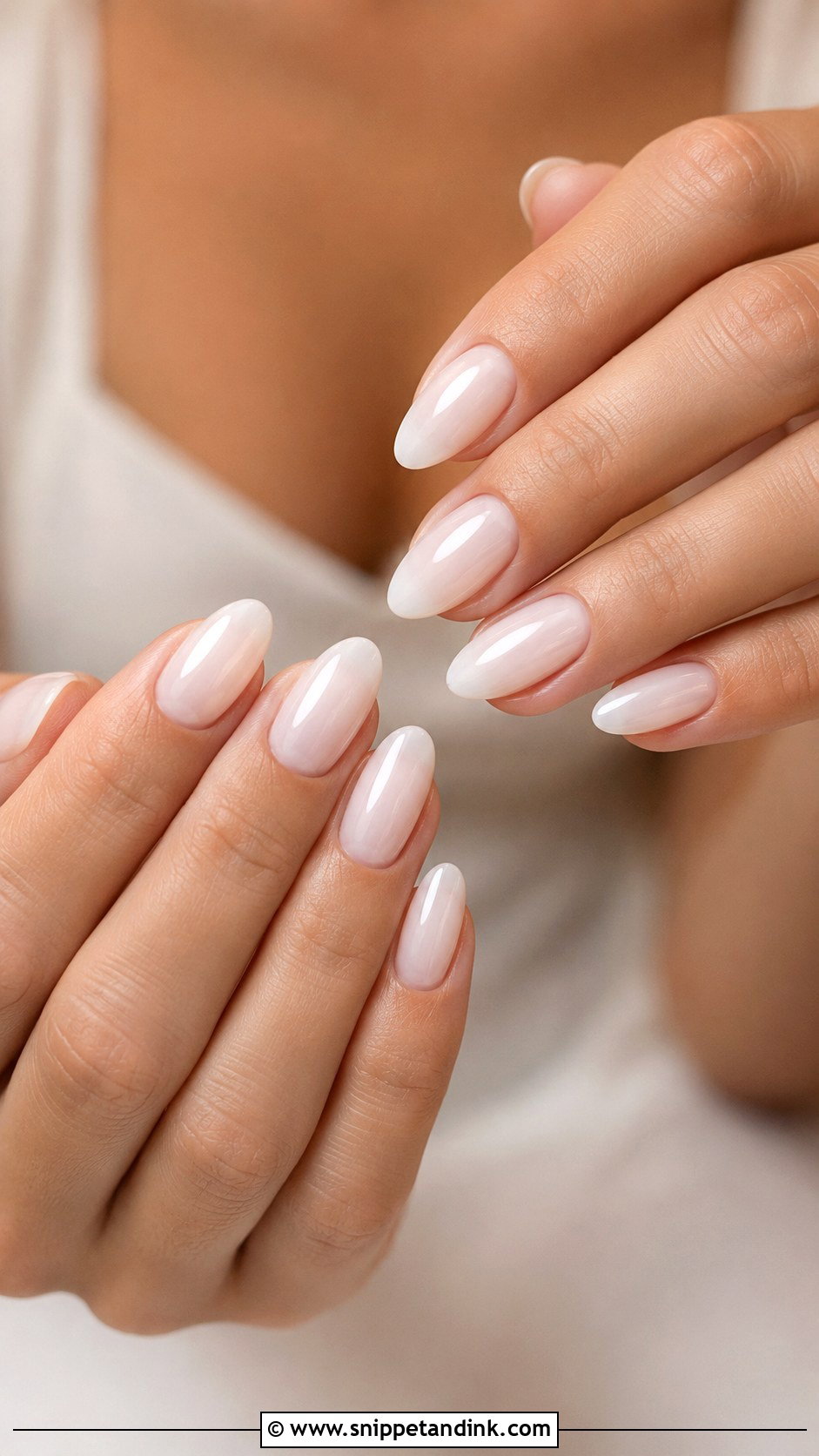
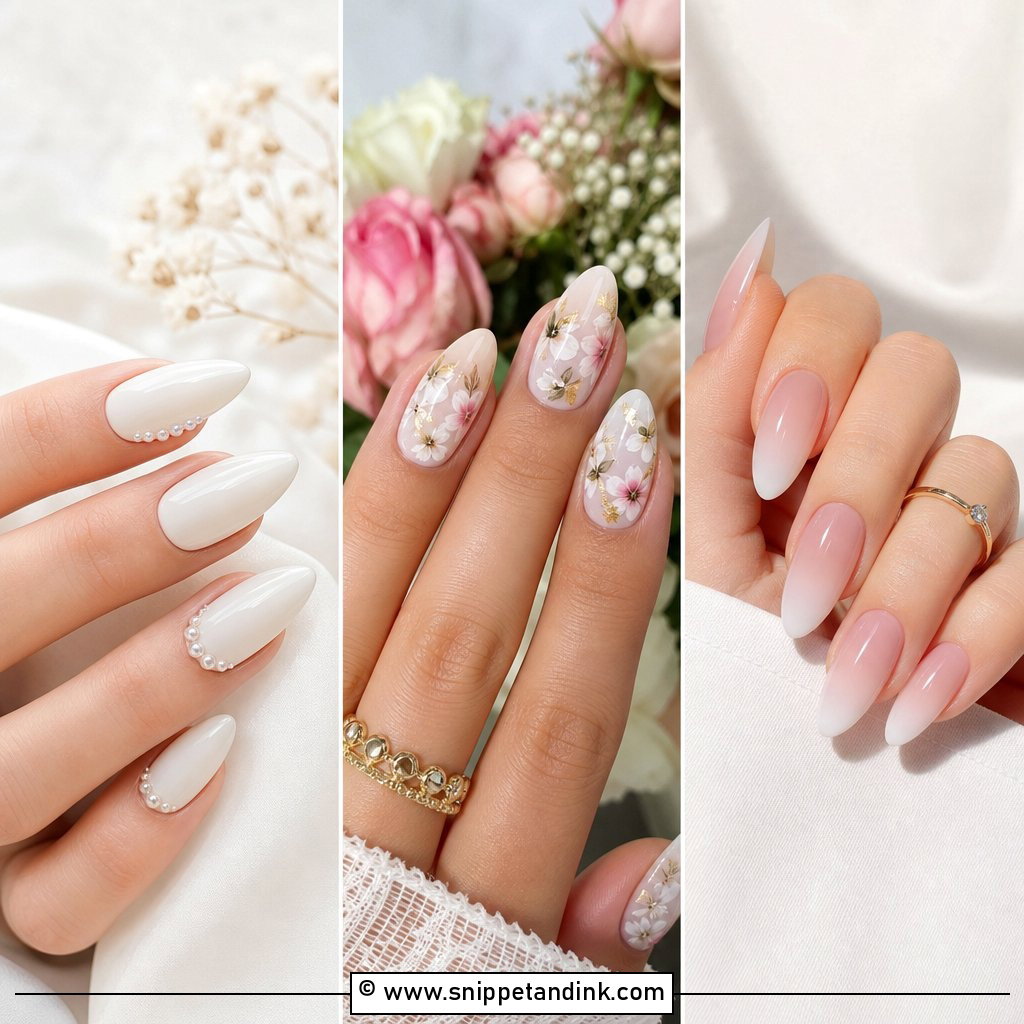
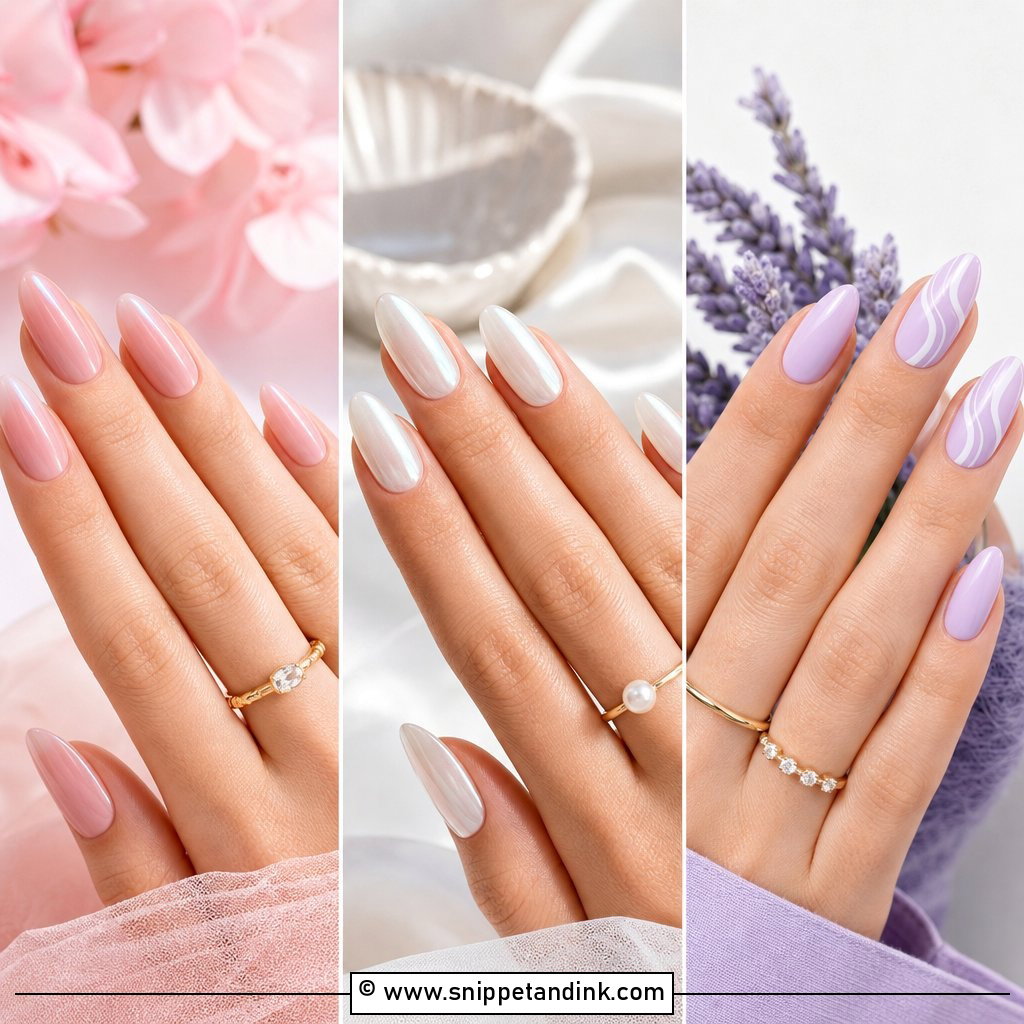
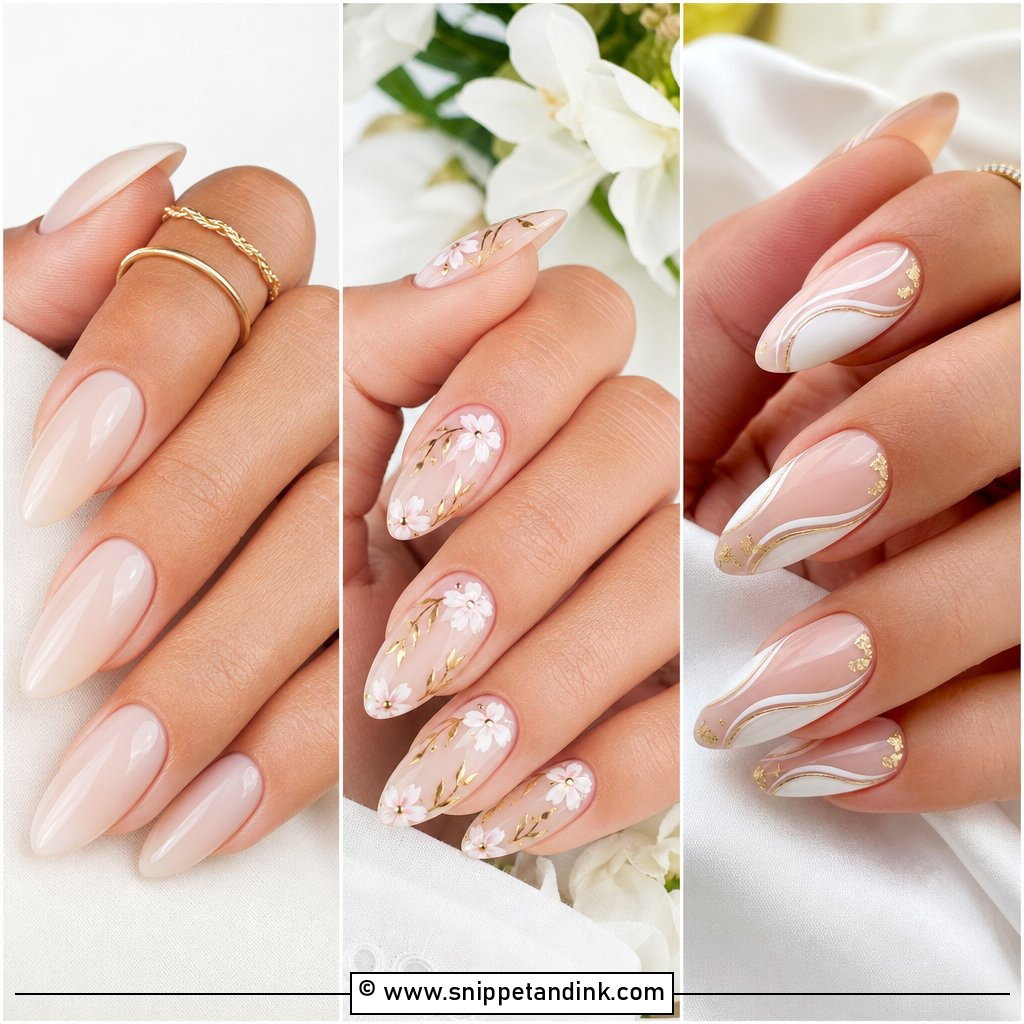
Milky white sits halfway between sheer and solid, a cloudy finish that still lets a hint of nail show through. It’s harder to apply than it looks. Thin milky gels streak if they go on thick, so I build two or three very thin coats and cure each one, which gives that even porcelain look instead of patchy white. It suits ivory, champagne and pearl-toned dresses, and it stays out of the way of your ring, which is exactly why so many minimalist brides ask for it.
3. Nude Almond Wedding Nails
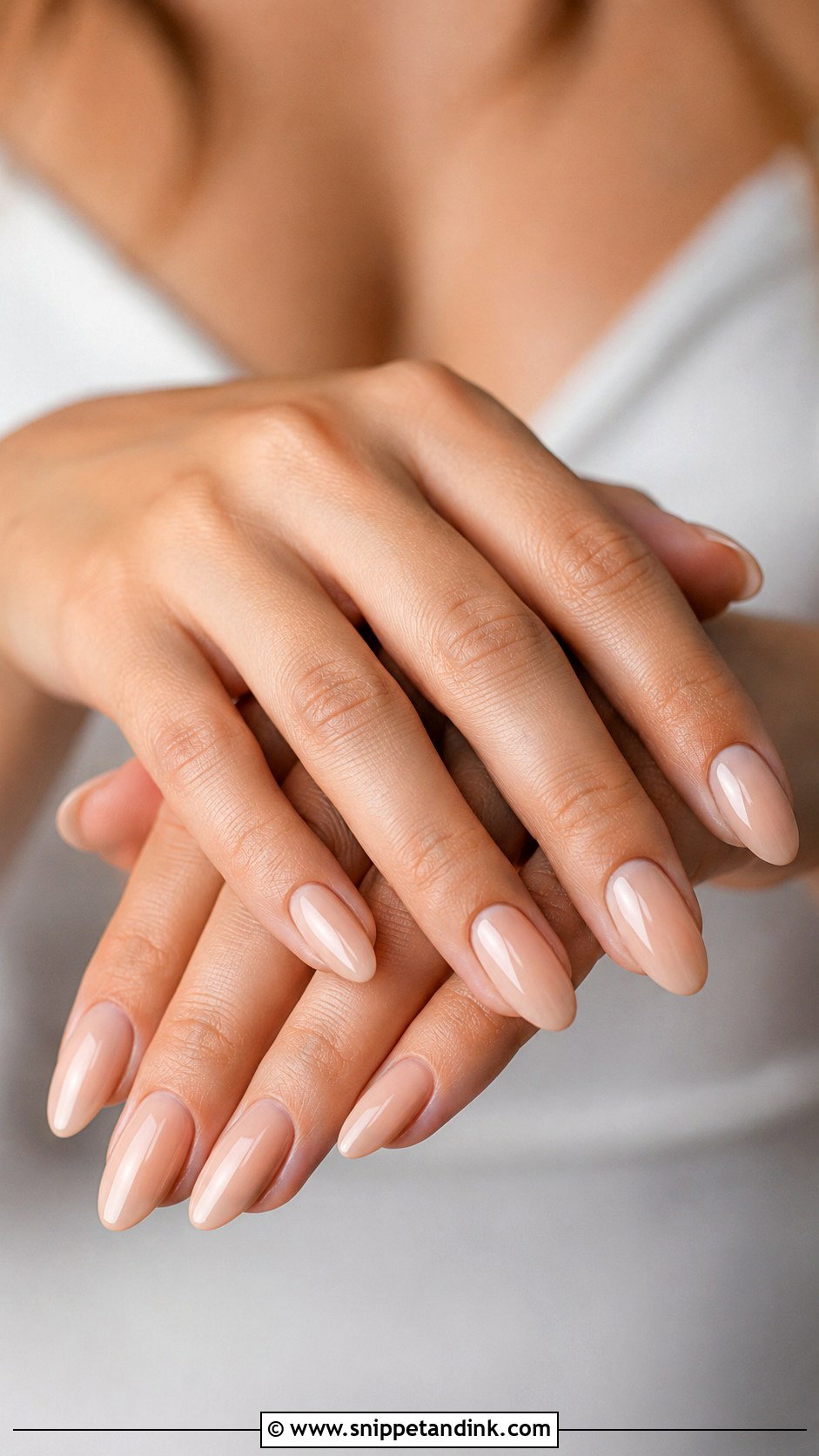
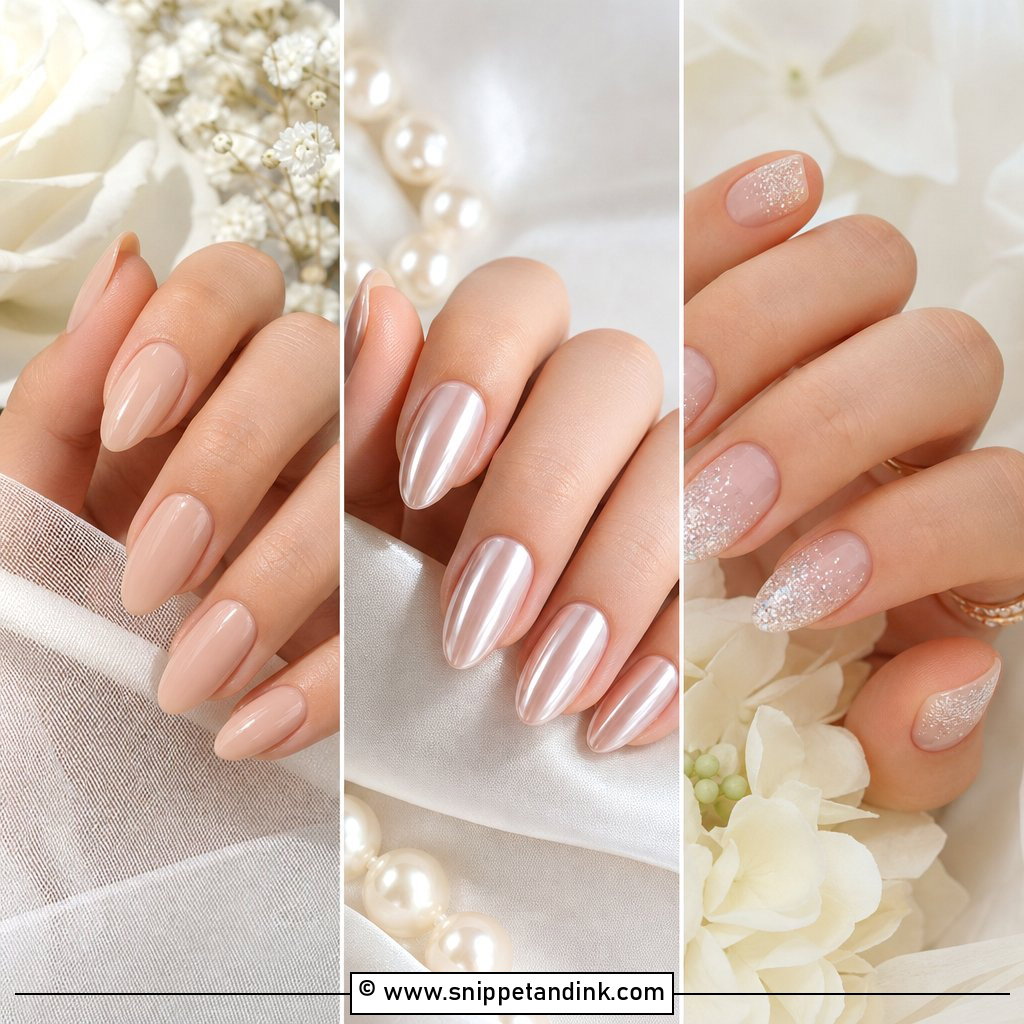
The right nude should look like a smoother, brighter version of your own nail, not vanish into your skin. As a rough starting point, fair skin tends to suit beige-pink, medium skin warms up with peachy nudes, and deeper skin glows in caramel, mocha or rosy brown. I always swatch two or three shades on the actual nail before committing, because a bottle colour and a cured colour rarely match. A high-gloss top coat finishes it; on a plain nude, shine is what makes the set look fresh rather than unfinished.
4. Pink Almond Wedding Nails
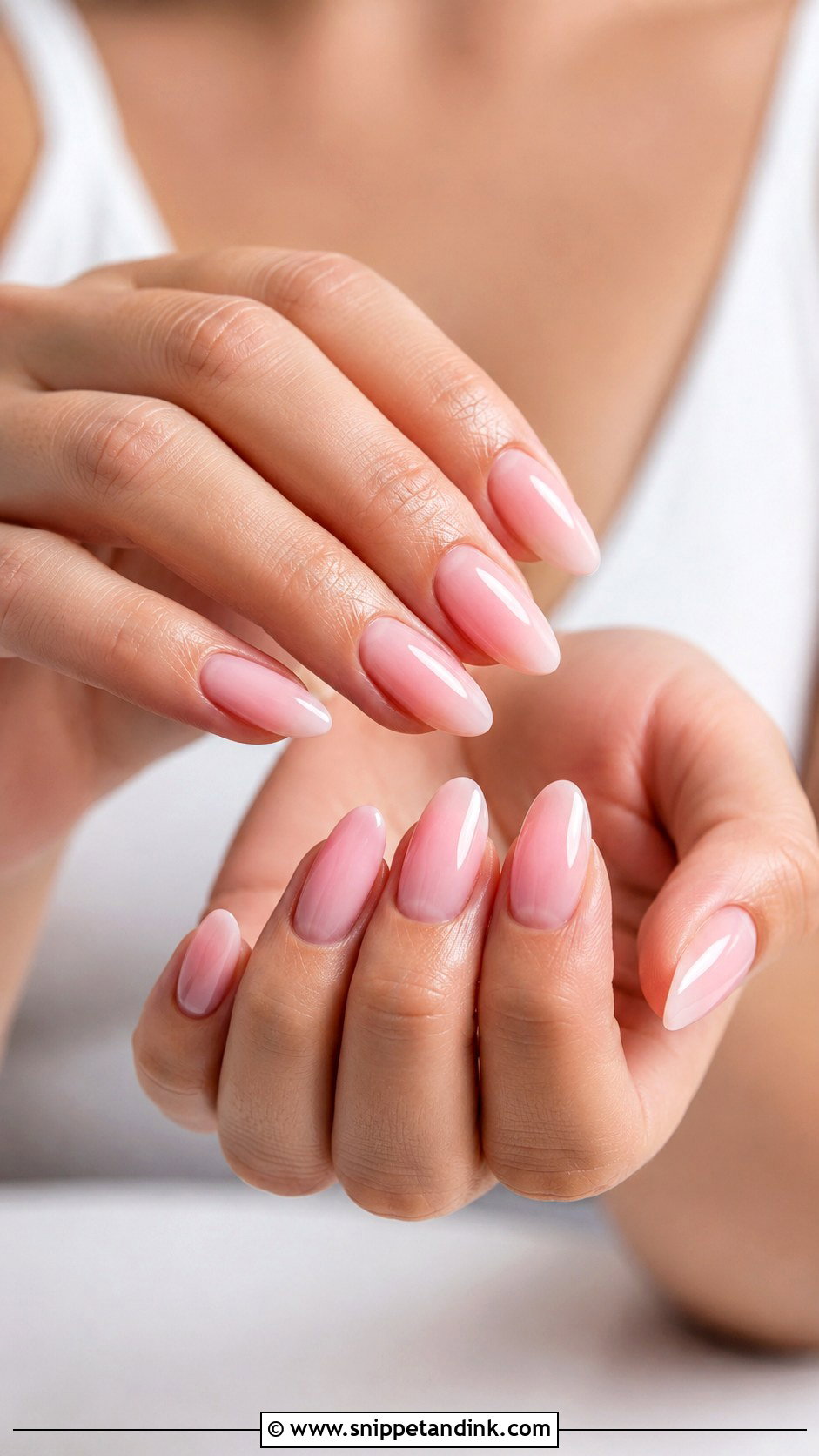
Pink is where I see the most mismatch with skin undertone. Baby pink can turn chalky on olive skin, and a rose-tinted nude often flatters more brides than a true blush. Filed to a medium almond, one smooth shade looks polished, and a fine shimmer top coat adds depth without reading as glitter. Spring garden weddings and dresses with floral appliqué or tulle are where this colour feels most at home.
5. Glazed Donut Almond Wedding Nails
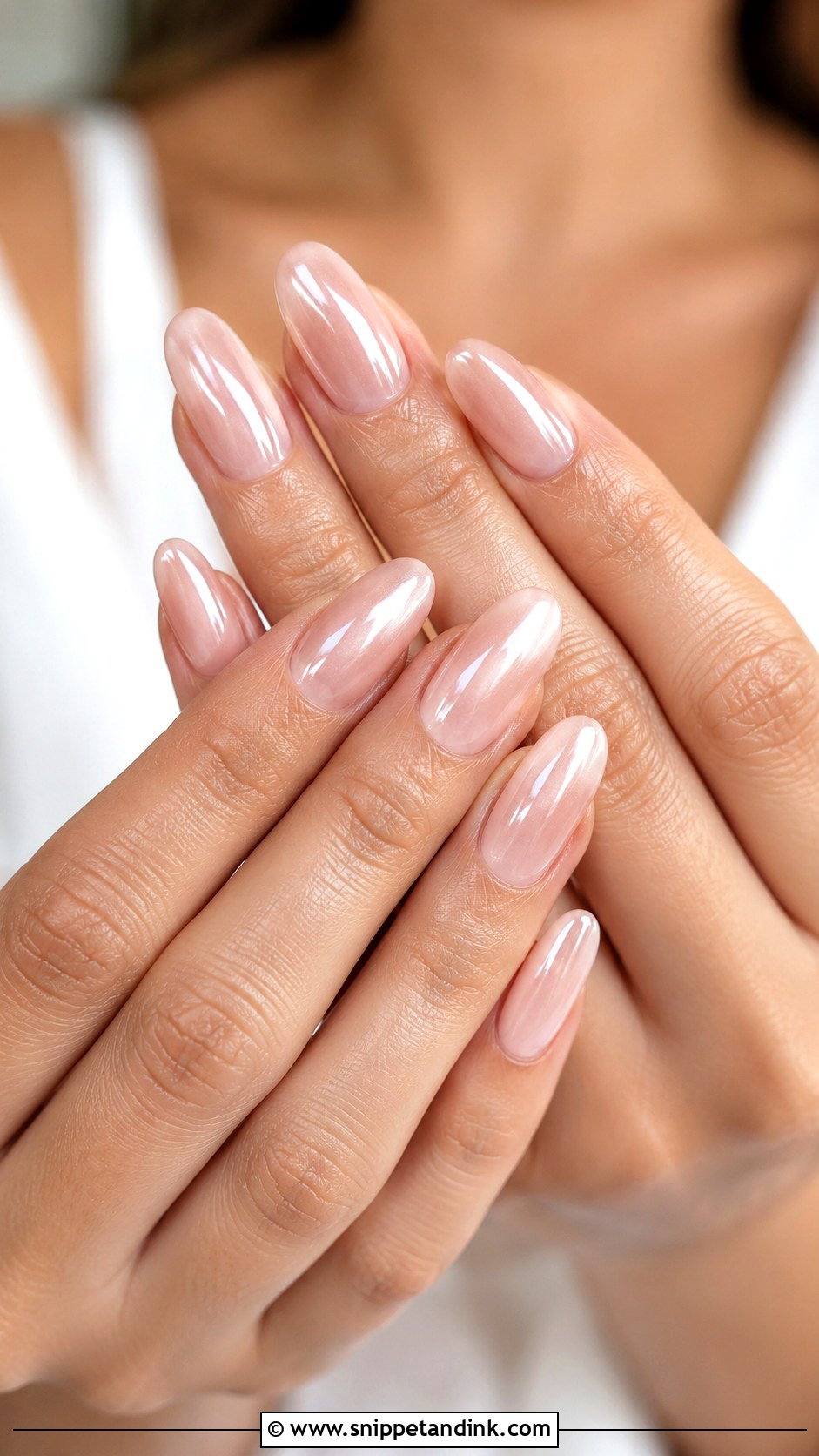
The glazed finish is a sheer base of pink, nude or milky white with a fine chrome powder rubbed over a cured no-wipe top coat, then sealed. The almond curve catches light down its centre line, which is why this set looks so silky on the hand. I keep the powder thin: one light pass gives a glaze, a heavy buff gives a mirror, and the mirror version can look harsh in flash photos. In natural daylight and close-up ring shots, the soft version is the one that looks most expensive.
6. Pearl Almond Wedding Nails
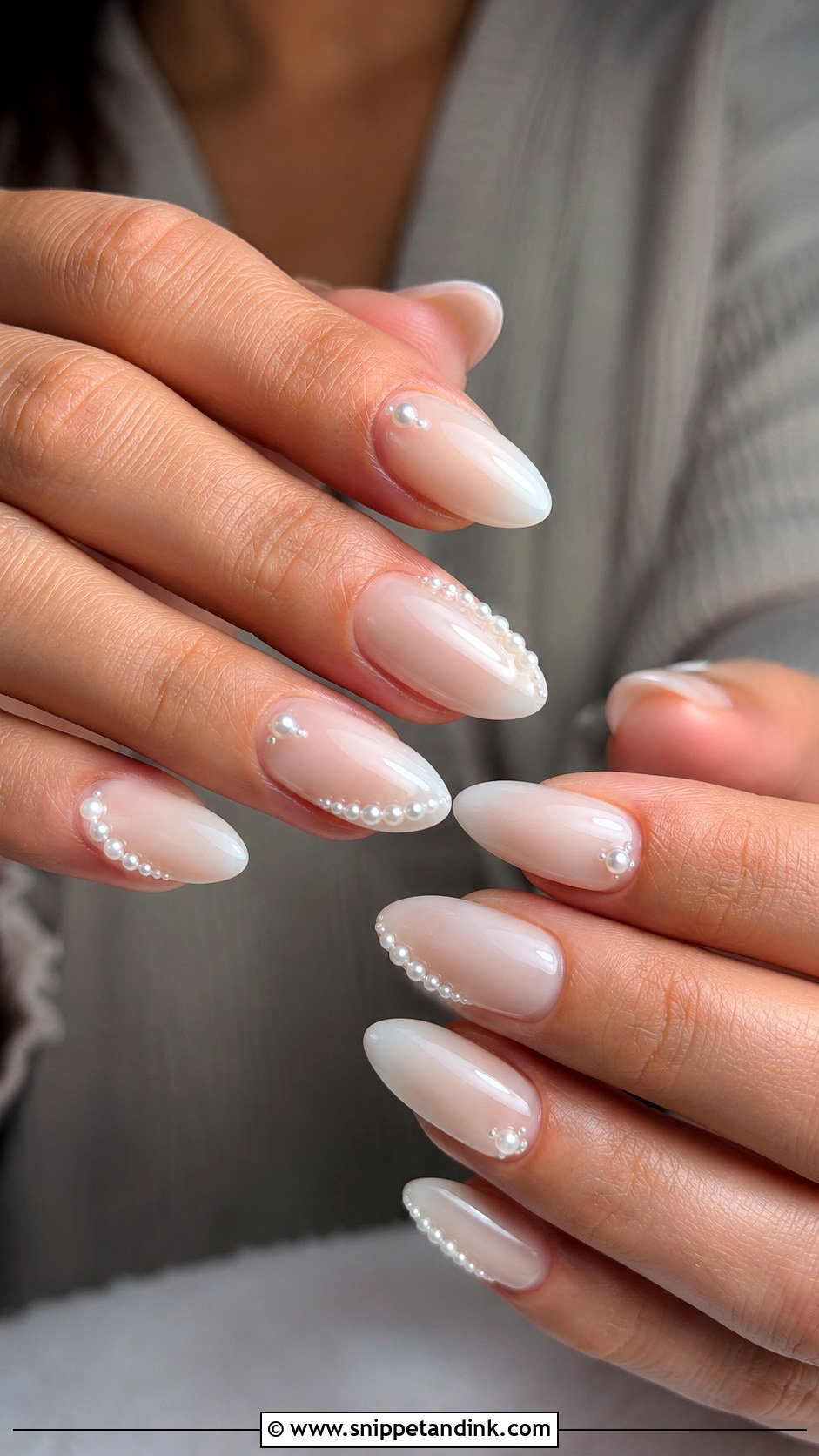
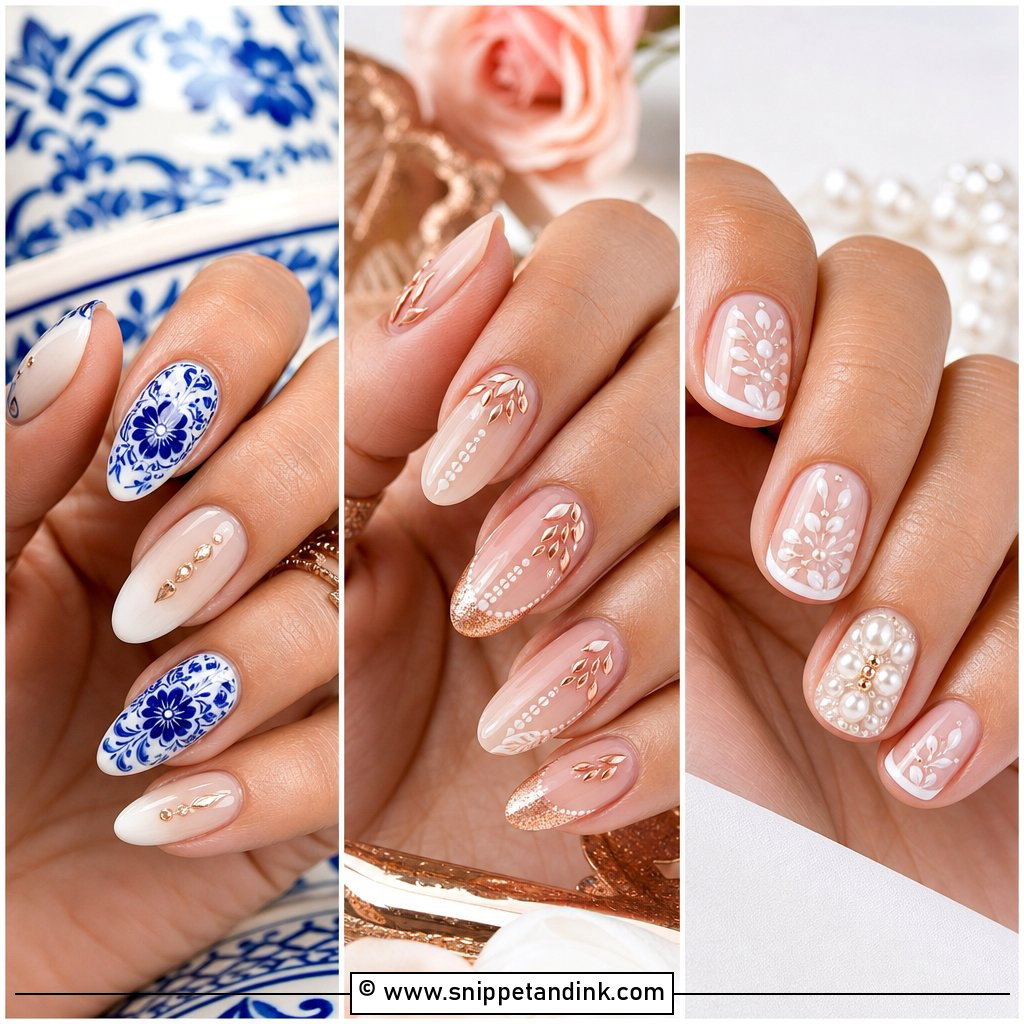
Pearls need restraint on a bride. Real flat-back pearls set in gel add height, and a full row of them can snag lace or tulle when you lift your skirt. For most clients I either place two or three small pearls near the cuticle on one accent nail, or paint raised gel dots that mimic pearl without the bulk. A milky, blush or sheer beige base keeps the set clean. Paired with pearl earrings or a beaded veil, it coordinates nicely; just avoid matching every single accessory, or it starts to look like a costume.
7. Chrome French Almond Wedding Nails
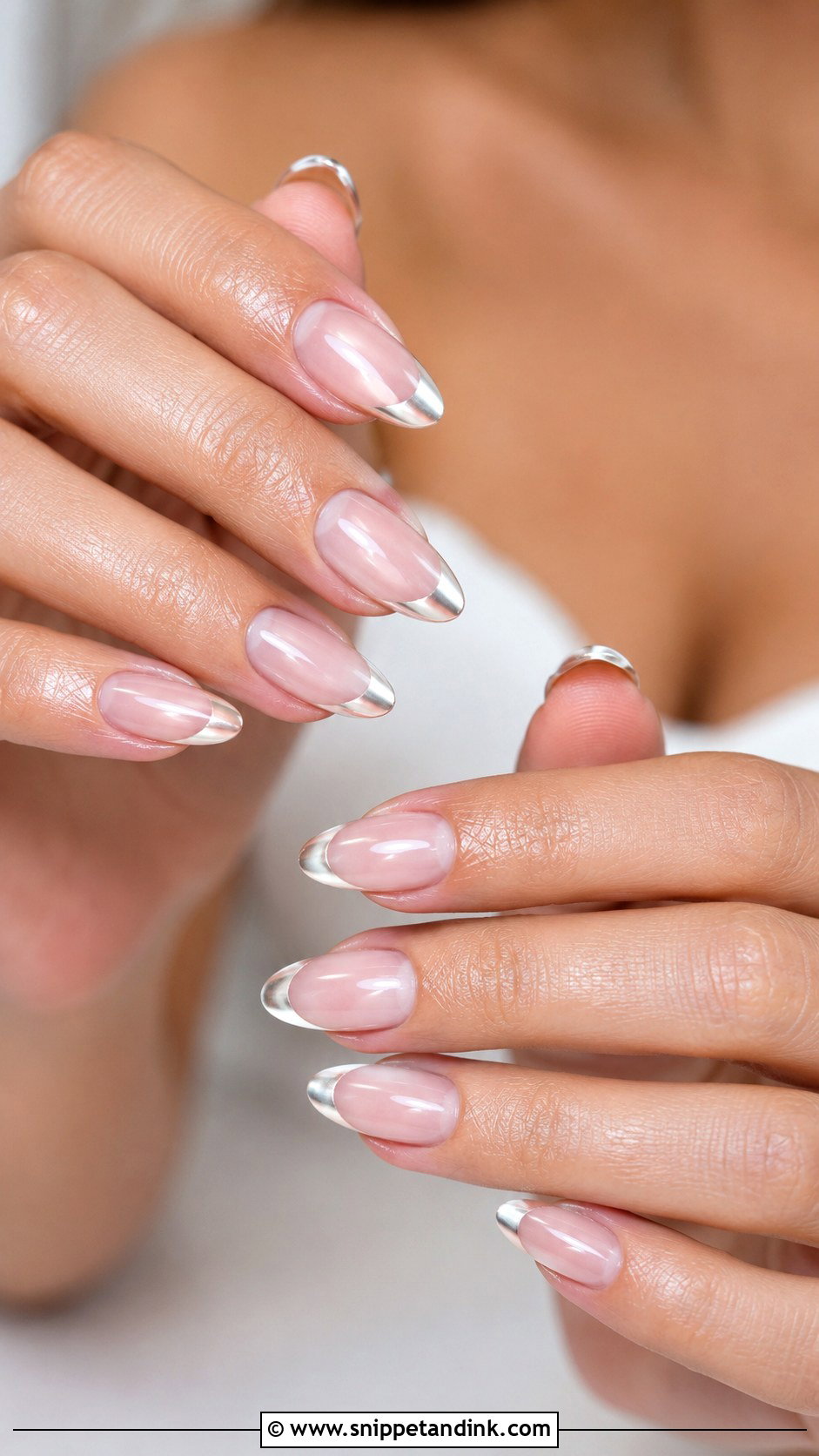
Here the French edge is chrome instead of white: pearl, champagne or soft silver. The trick is to keep the chrome line thin and curved, because a thick metallic band shortens the nail visually. Chrome powder only grips where the cured top coat is, so I paint the tip shape first and apply the powder just to that area with a small brush. Over a sheer pink or nude base it reads as one quiet modern detail, which suits a bride who normally wears plain nails.
8. Ombre Almond Wedding Nails
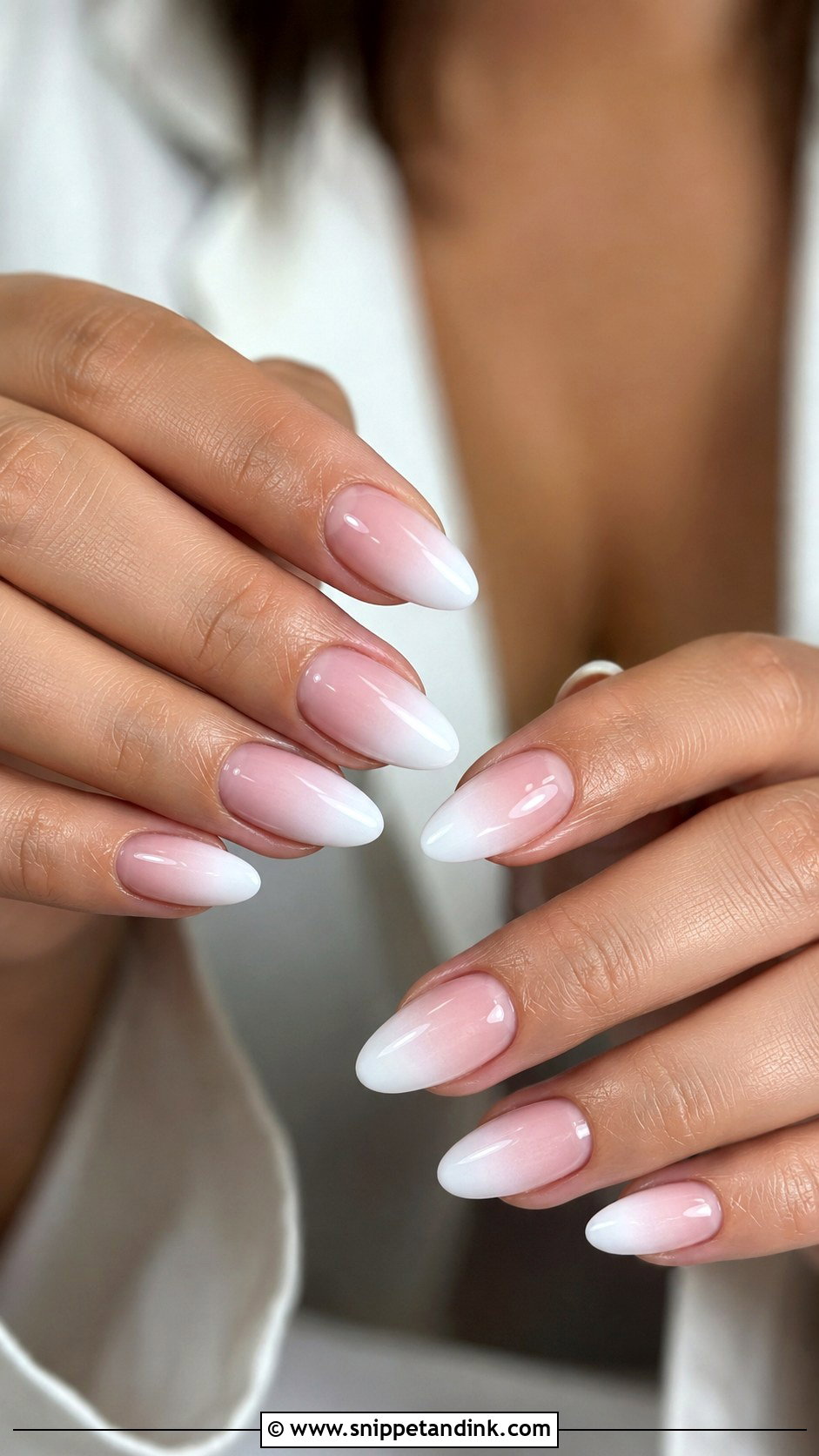
A wedding ombre fades from nude or pink at the cuticle into white at the tip, the look often called baby boomer nails. The fade follows the length of an almond nail naturally, so it suits this shape better than most. In gel I blend it wet with a brush rather than sponging, which avoids the grainy texture sponged fades can leave. I suggest it to brides who want white on their nails but find a crisp French line too formal. It’s a style that looks at home at a beach ceremony as easily as in a ballroom.
9. Lace Almond Wedding Nails
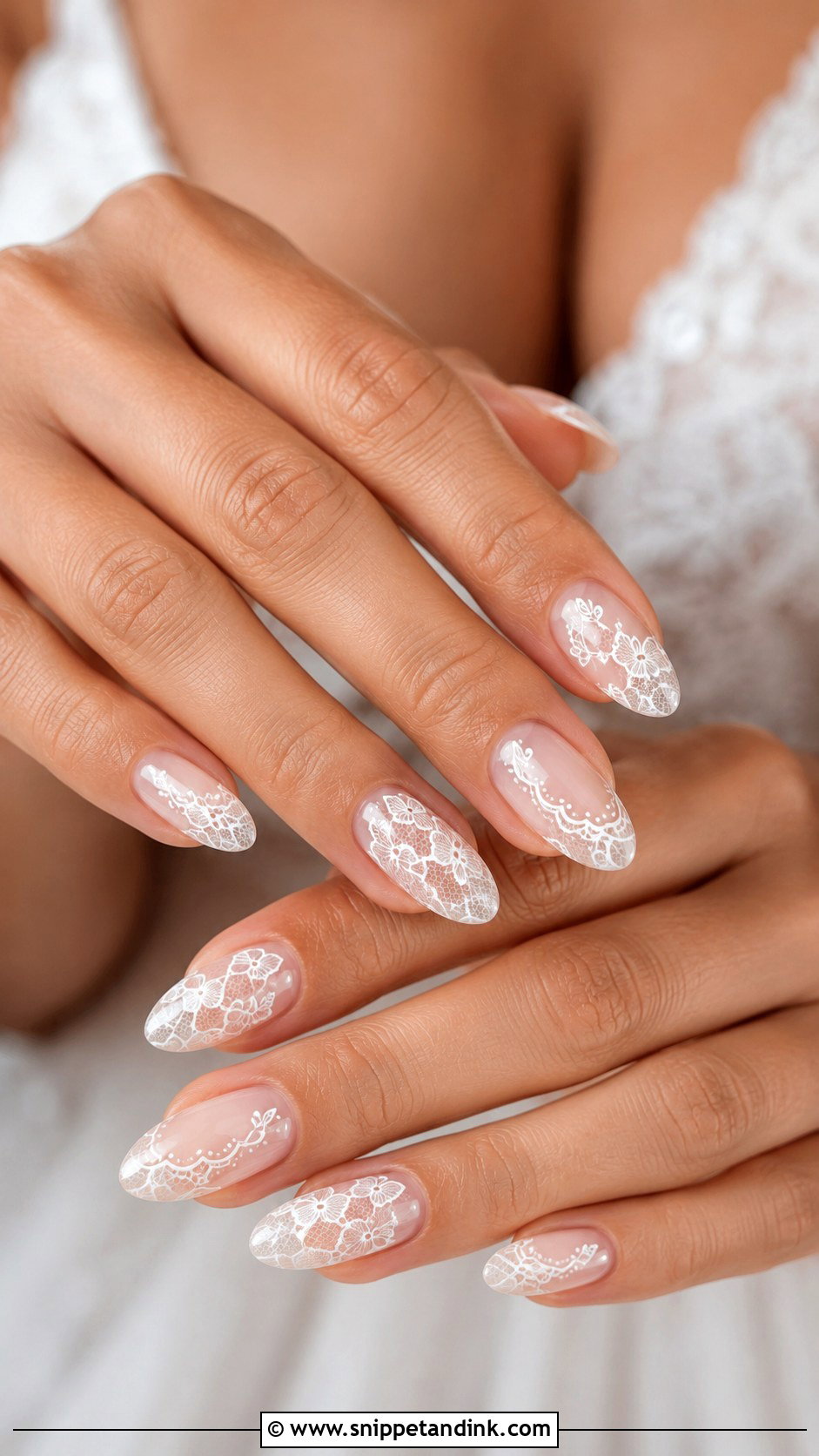
If your gown has lace, this is the set that ties hands and dress together. I paint fine white lace motifs with a long liner brush over a sheer nude, blush or milky base, usually on two accent nails. Almond gives enough length for scallops and tiny florals, but the art has to stay airy; dense lace on every finger looks crowded once you’re holding a bouquet. If the dress is already heavy with lace, one accent per hand is plenty.
10. Floral Almond Wedding Nails
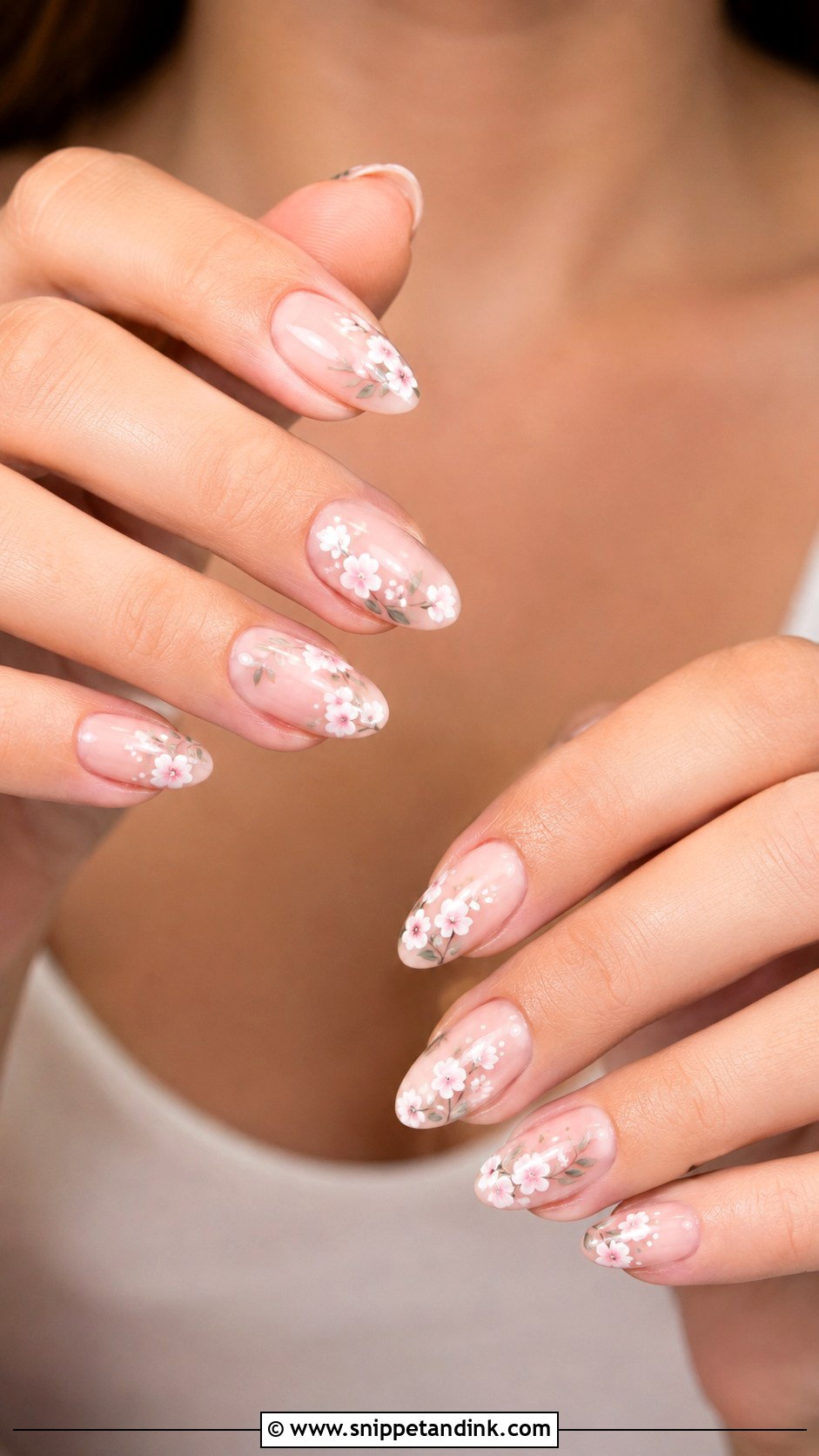
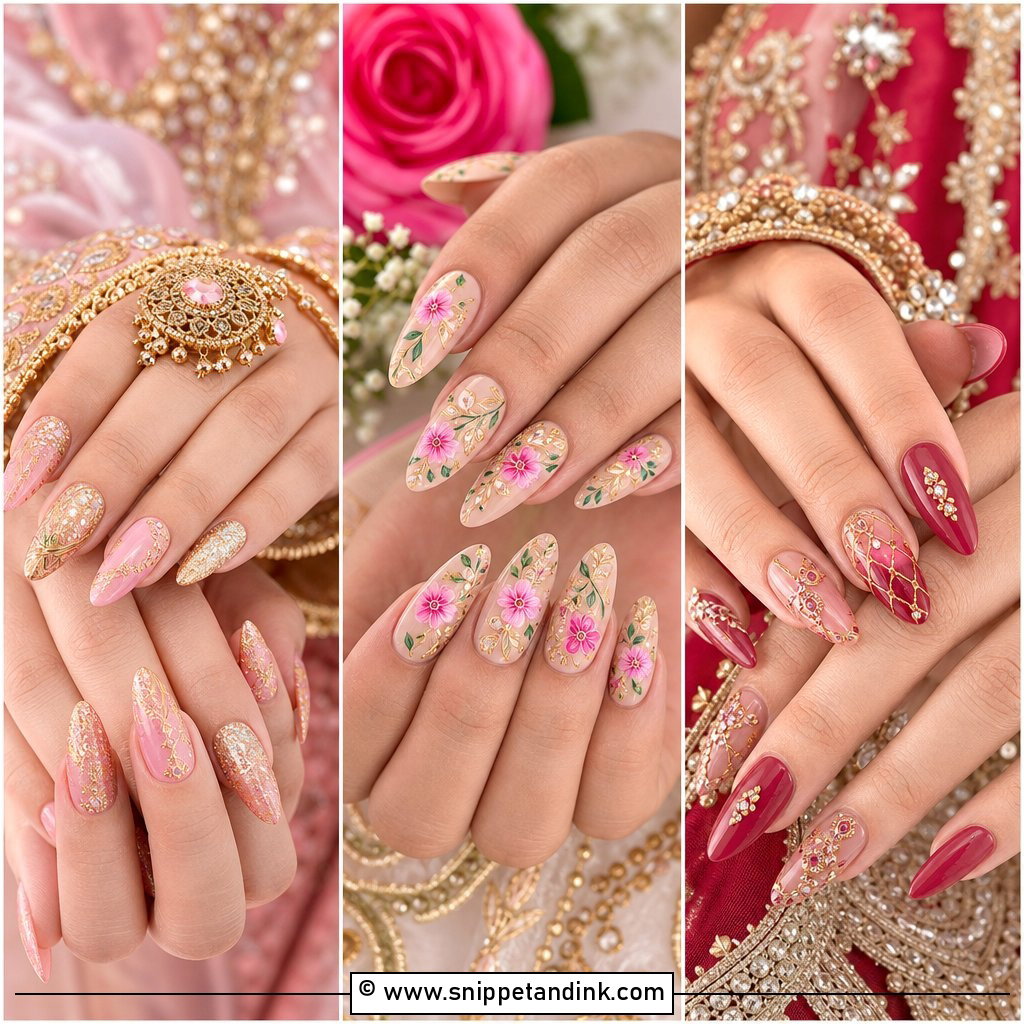
Floral art needs scale more than anything else. Tiny daisies, baby’s breath dots or fine rose outlines over a nude or sheer pink base suit almond, because the tapered tip already looks a little like a petal. Large bold blooms crowd a slim nail and get lost in photos. I usually keep flowers to two accent nails per hand; a full floral set can work for a garden ceremony, but it competes with a busy bouquet.
11. Gold Accent Almond Wedding Nails
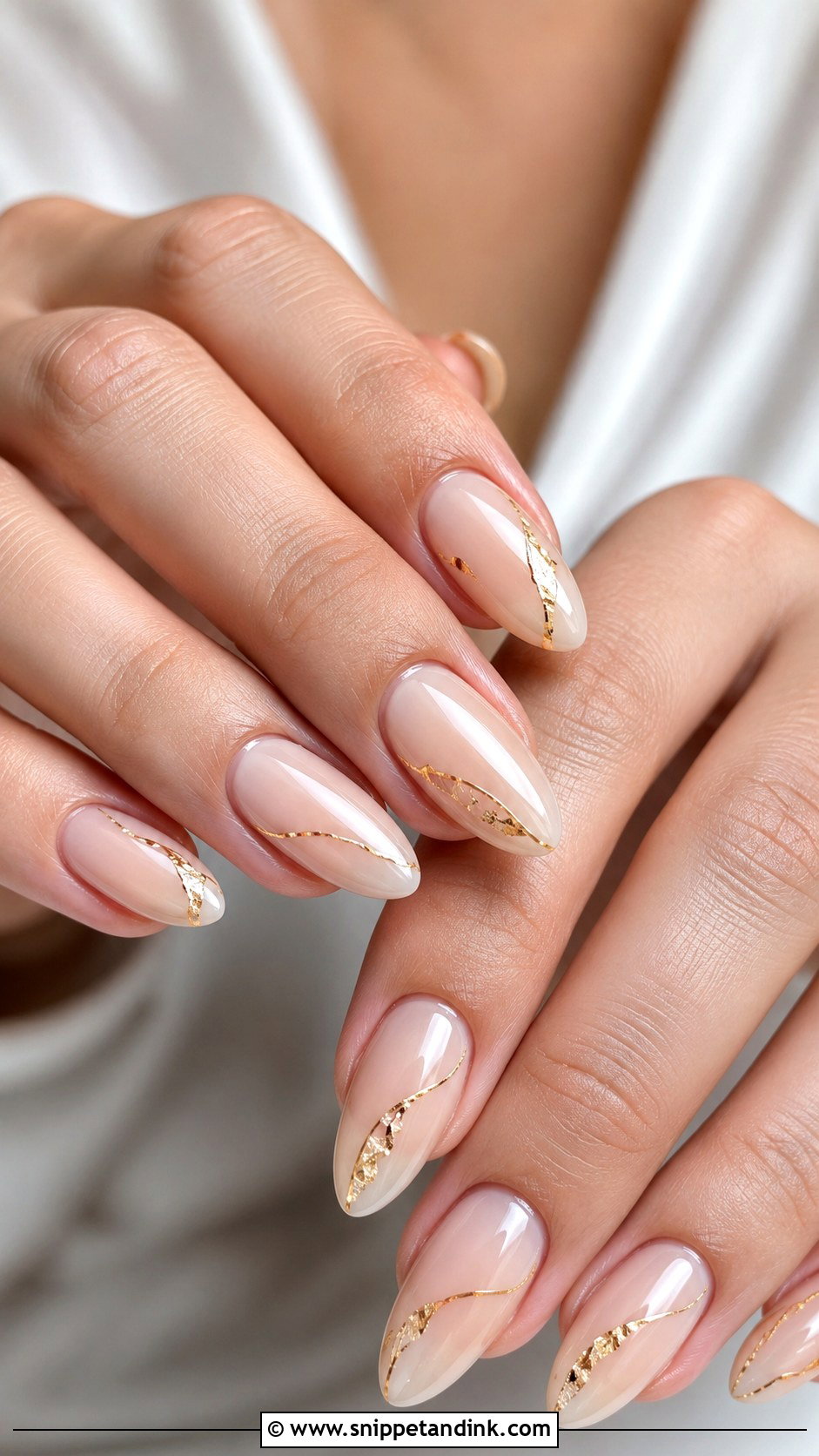
Gold earns its place if your ring or jewellery is yellow gold. Over a sheer nude, milky or pale pink base I’ll use thin gold foil, a fine gold line, or a soft gold French edge. Foil has one weakness: the edges lift and catch if they’re not fully sealed under top coat, so I always encapsulate it and run a finger over the nail to check. Keep the gold minimal. A small flash near the tip or cuticle looks richer than gold everywhere, and it pairs well with champagne dresses and warm ivory.
12. Silver Glitter Almond Wedding Nails
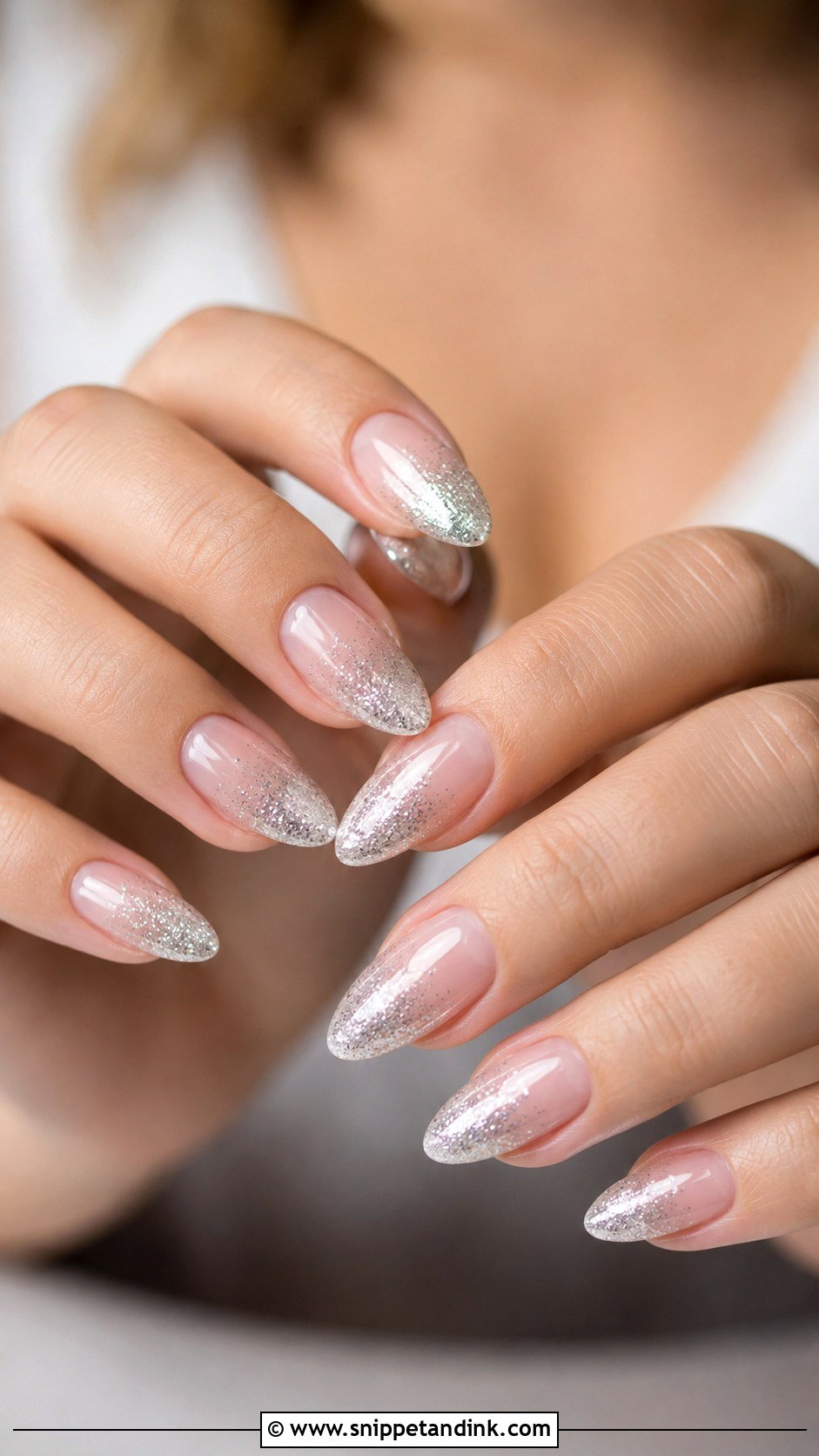
Fine glitter, never chunky. Large hex glitter looks festive but rough in close-ups and is miserable to remove later. I fade fine silver glitter from the tips down over a sheer pink or nude base, or keep it to one accent nail if you’d rather stay quiet. A thick top coat over glitter is non-negotiable, otherwise the surface feels gritty and catches your veil. Evening receptions and winter weddings suit it best, since candlelight makes the sparkle look soft rather than loud.
13. White Swirl Almond Wedding Nails
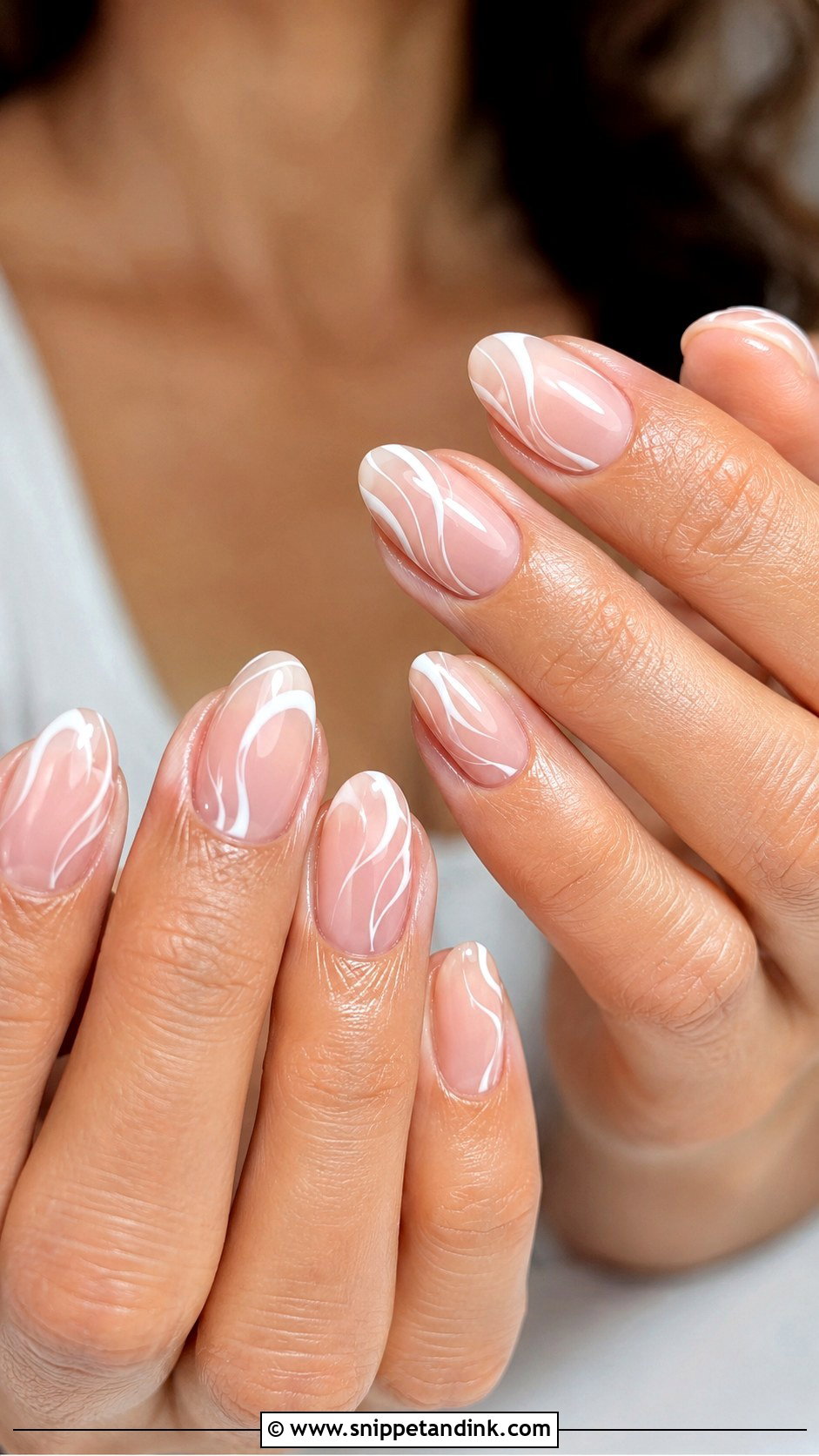
Swirls are a good answer if you want nail art but don’t like flowers, pearls or glitter. Thin white lines curve across a sheer nude or pink base and follow the taper of the almond. The skill is in line weight: wobbly or thick swirls look homemade, so I use a long striping brush and keep the spacing open. A tiny bit of shimmer in the white adds dimension. It suits sleek crepe gowns and minimal veils far better than a lace or ballgown look.
14. Matte Almond Wedding Nails
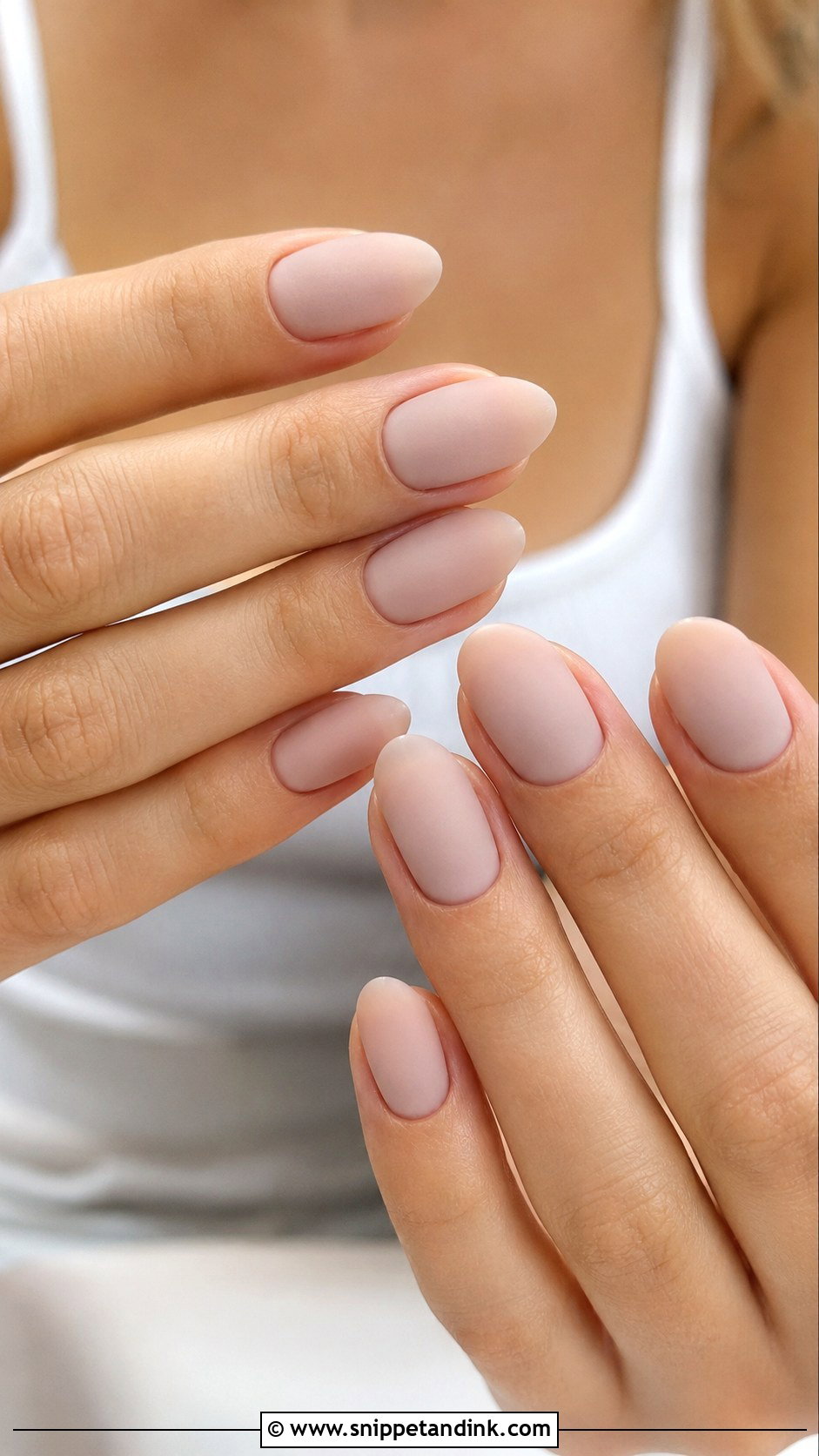
I’m honest with brides about matte: it looks velvety and calm on day one, but matte top coats pick up oils, self-tanner and makeup more readily than gloss, and they can start to look dull within a few days. If you love it, book your appointment close to the wedding and keep hand cream away from the nails. In nude, blush or milky shades the almond silhouette stops it from looking flat. It pairs well with crepe and minimalist dresses and simple jewellery.
15. Short Almond Wedding Nails
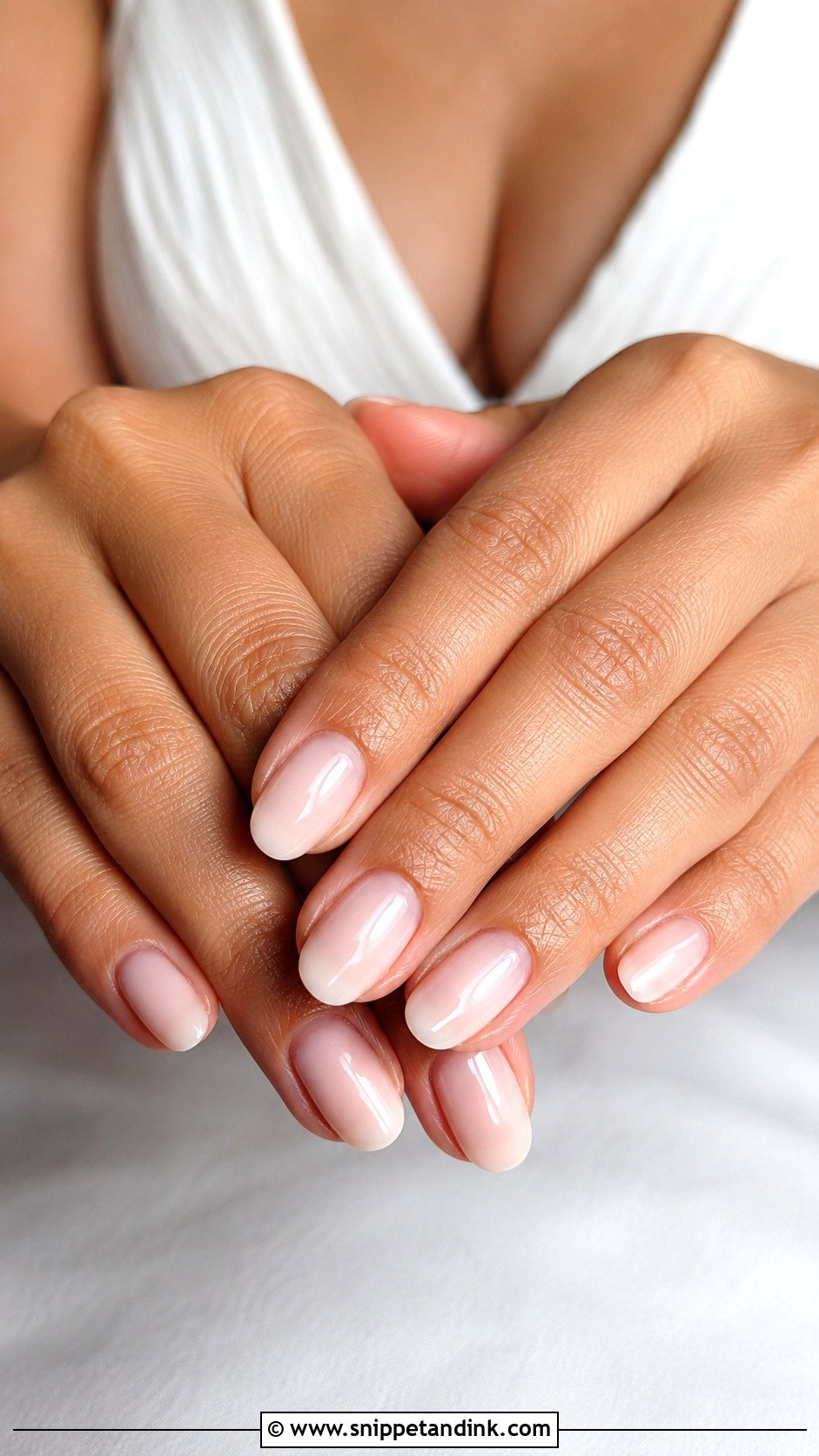
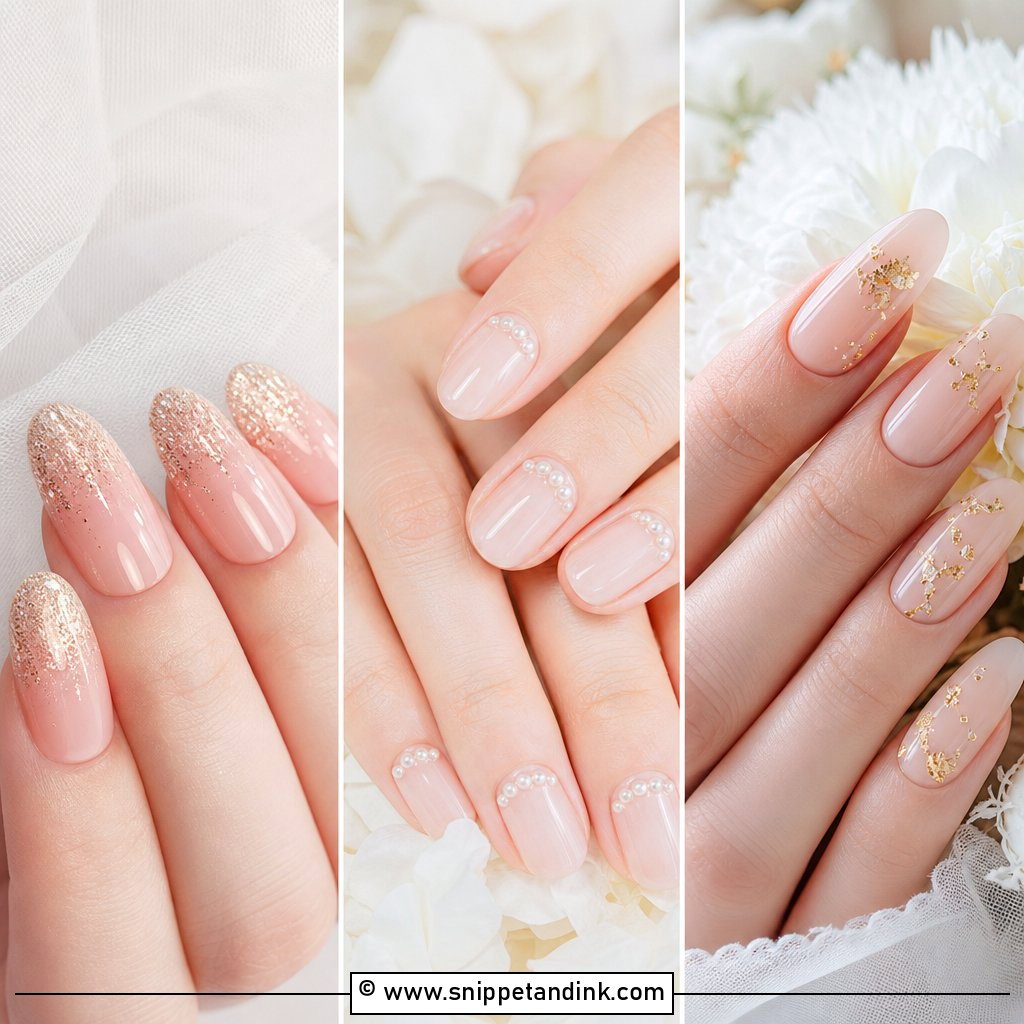
Clients who type all day or work with their hands usually end up here. Short almond wedding nails still need a little free edge, just a couple of millimetres past the fingertip, so the taper has room to form. Without it, the shape collapses into an oval. Soft nude, milky white, blush and micro French all suit this length; heavy art just makes a short nail look smaller. Clean shaping and a glossy finish do most of the work.
16. Long Almond Wedding Nails
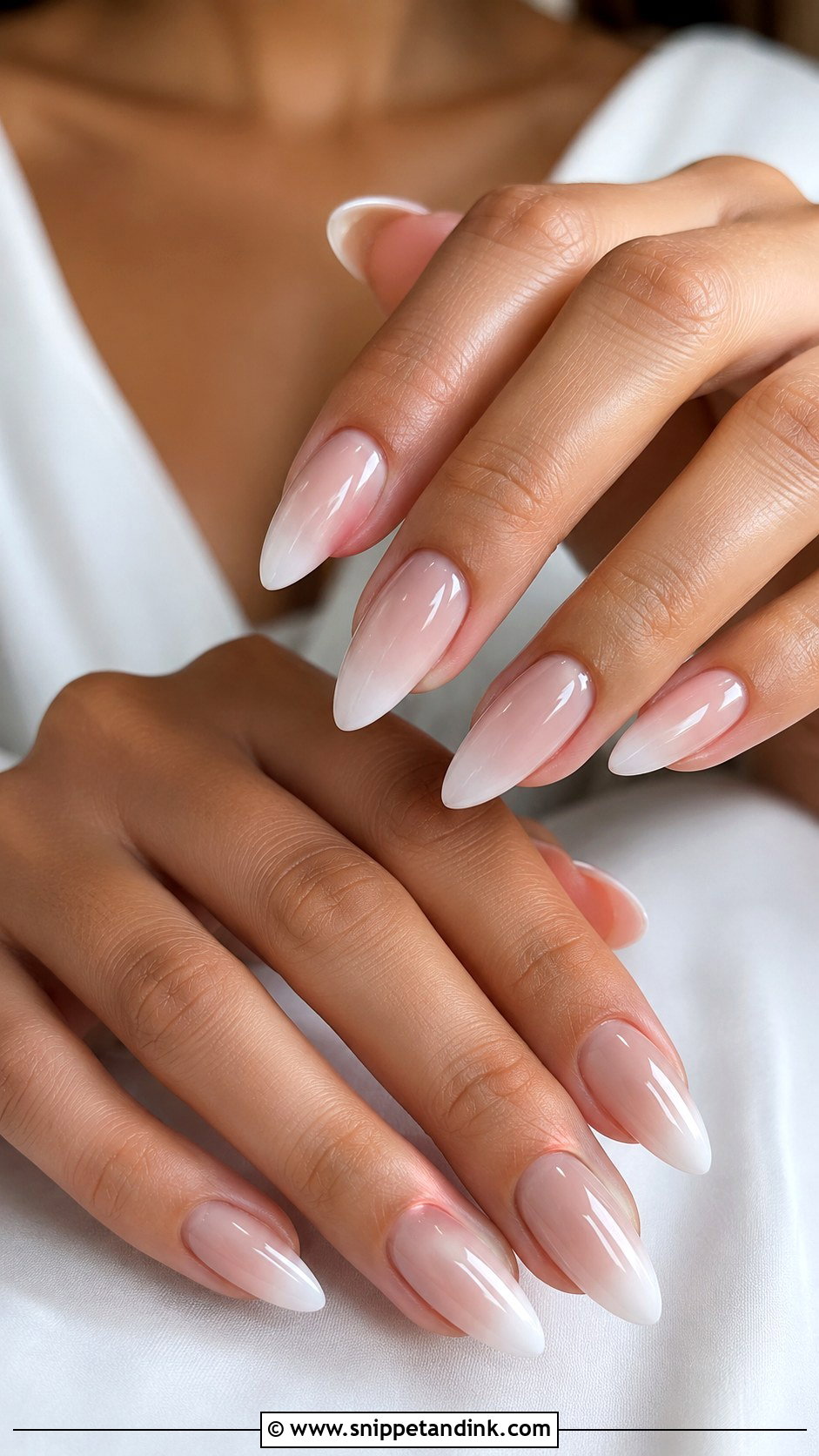
Length changes the physics. The longer an almond nail, the more leverage on the tip, and the more likely it is to snap when you catch it on a car door or a dress zipper. Natural nails at this length often need structure from builder gel or soft gel extensions. Design-wise there’s room for French tips, ombre, lace, pearls or chrome, but since the length already does the talking, I keep colours soft: sheer pink, milky white, nude, ivory or pearl chrome. I also keep the sidewalls even and the peak rounded so the set never tips into stiletto territory.
17. Ivory Almond Wedding Nails
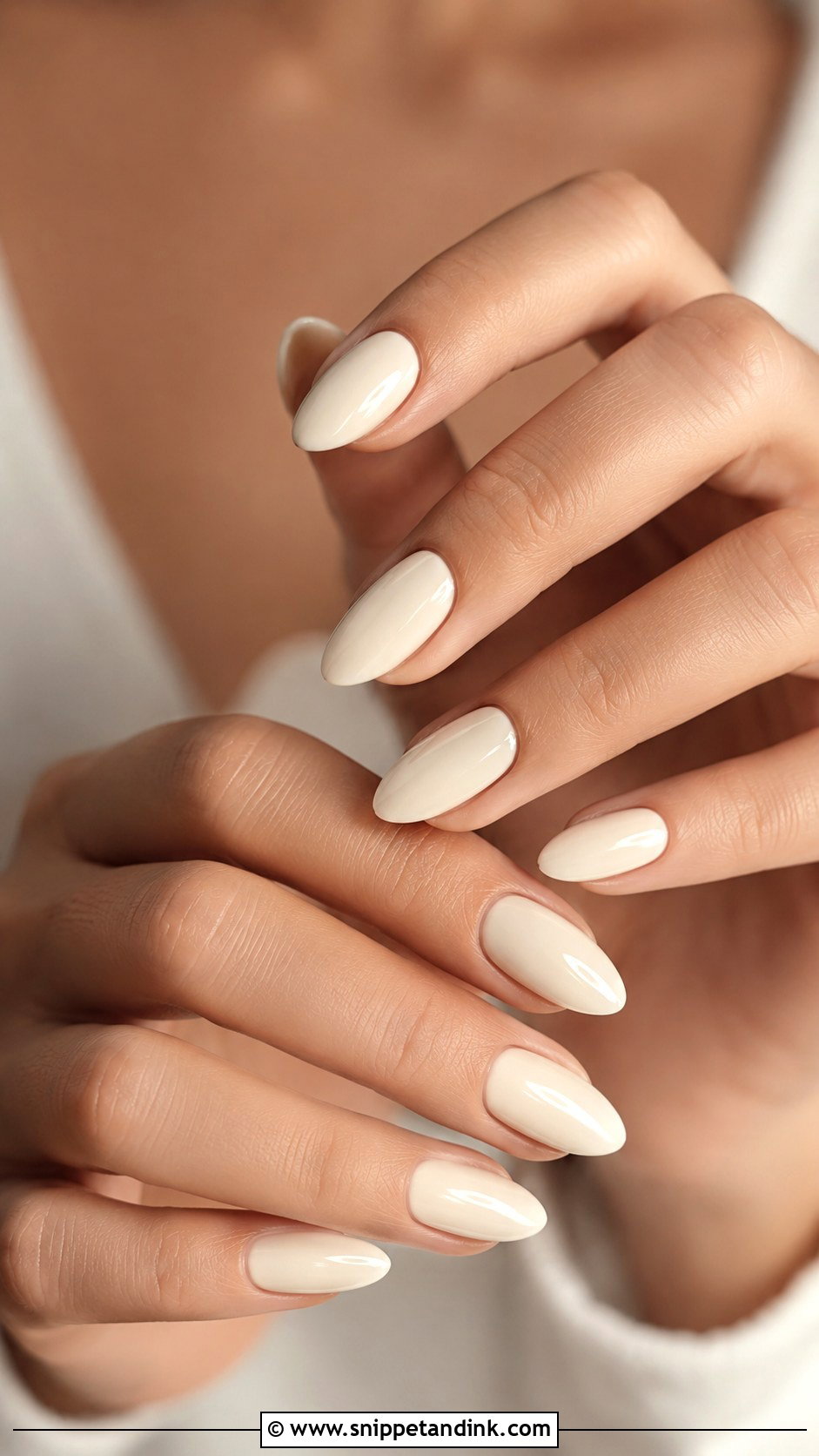
Ivory is my go-to when a bride’s dress is cream, champagne or warm white. Stark white polish next to an ivory gown can make the dress look slightly yellow, while ivory polish sits in the same family. The reverse is true too: next to a bright optic white dress, ivory can look dingy, so I like to see a fabric swatch first. Wear it as a full glossy set, with a subtle pearl top coat, or with fine gold accents.
18. Blush Chrome Almond Wedding Nails
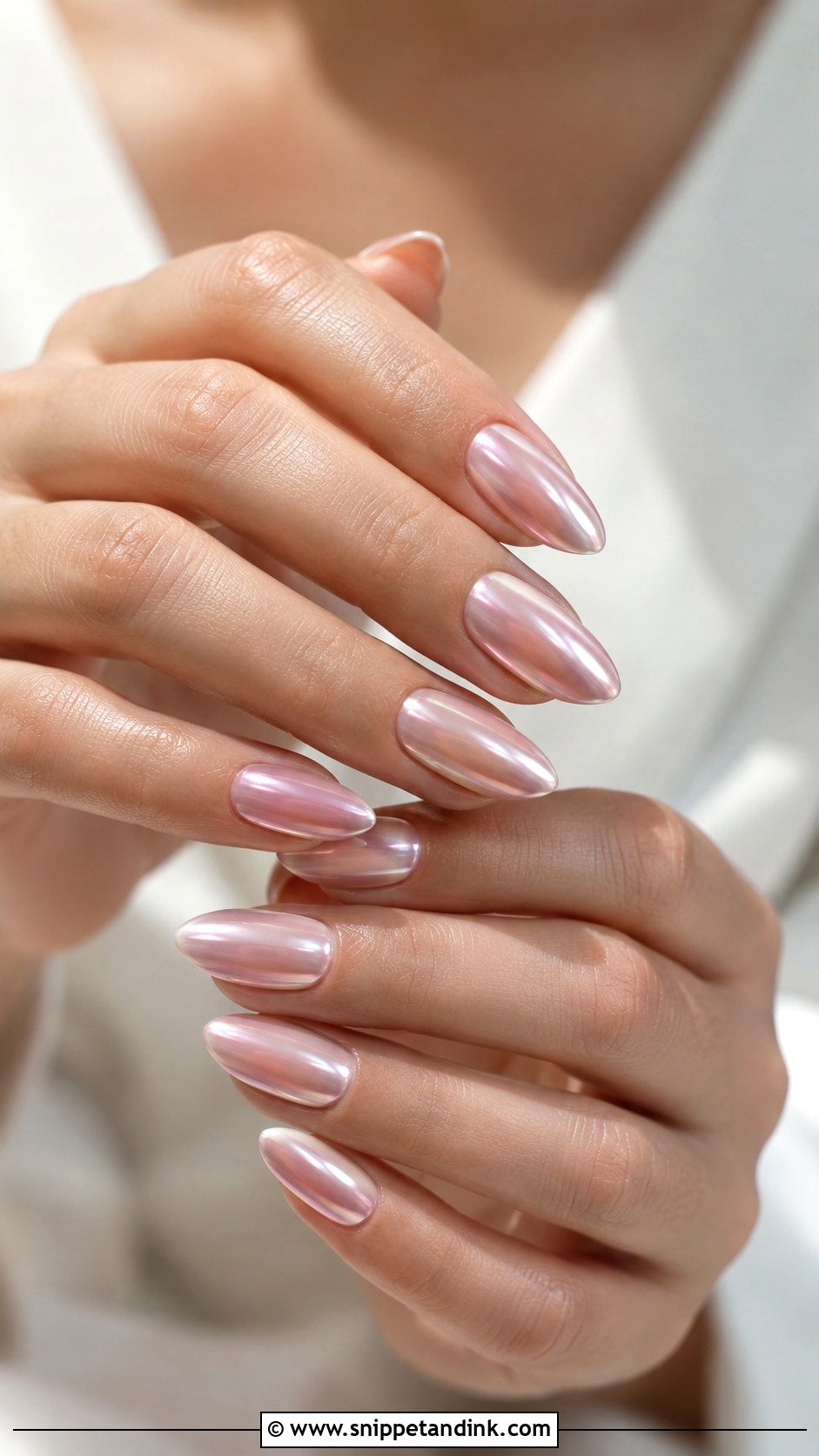
Blush chrome starts with a warm pink base and adds a sheer chrome layer on top. It’s softer than silver chrome and has more depth than plain pink, a little like satin. Because chrome shows every bump underneath, I level the base carefully first; any ridge shows as a wobble in the reflection. Ask for a fine powder and a light hand. With rosy makeup, pink bouquets and tulle, this is one of the more romantic sets on the list.
19. Micro French Almond Wedding Nails
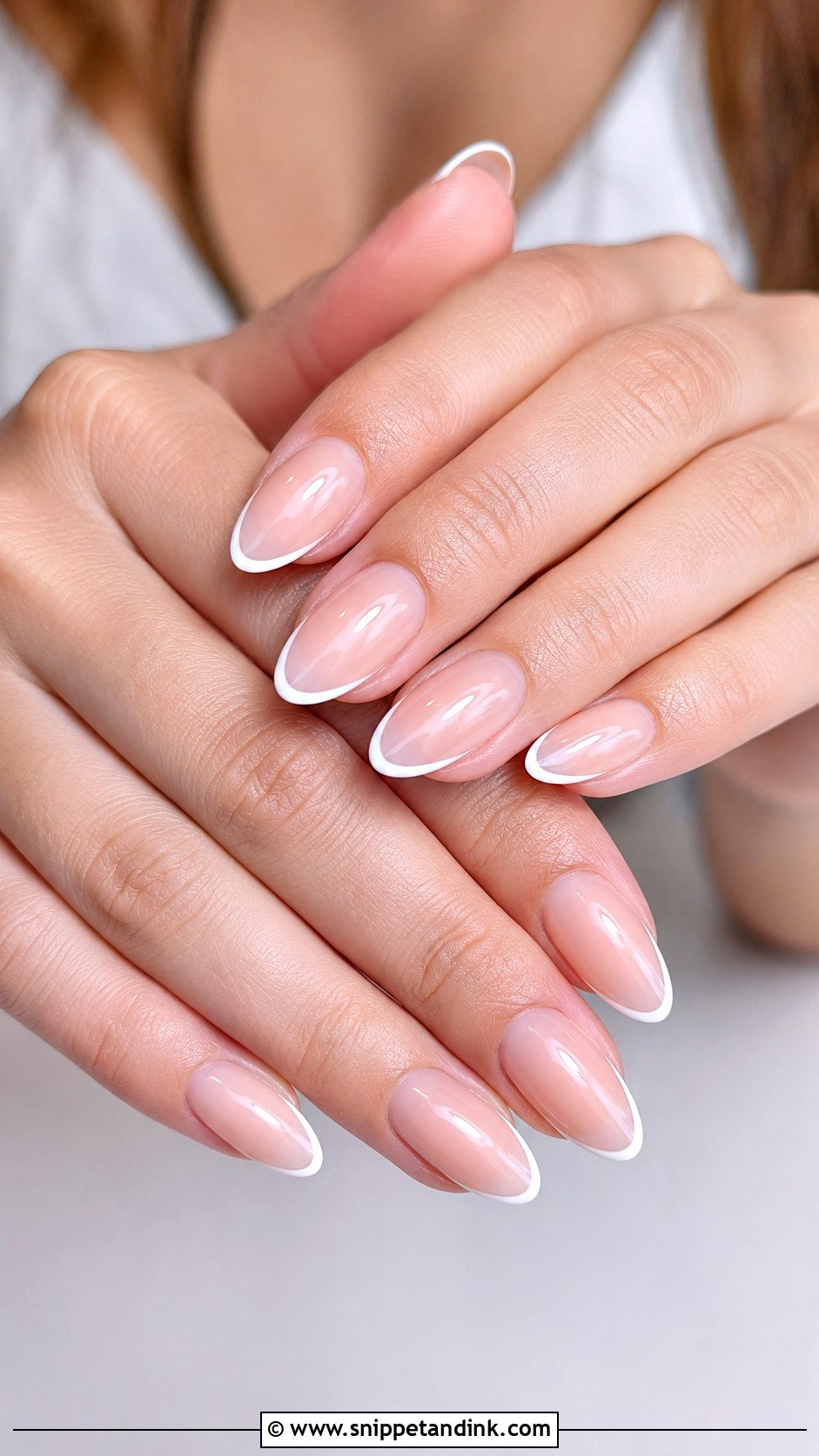
A micro French uses a tip line barely a millimetre or two wide, and it hides a lot. Grown-out gel shows less, slight differences between nail lengths disappear, and the fingers look longer because the eye follows the thin white edge up the taper. White, ivory, pearl or soft champagne all work for the tip. I recommend it often on short to medium almond nails, and to anyone who wants detail without visible nail art.
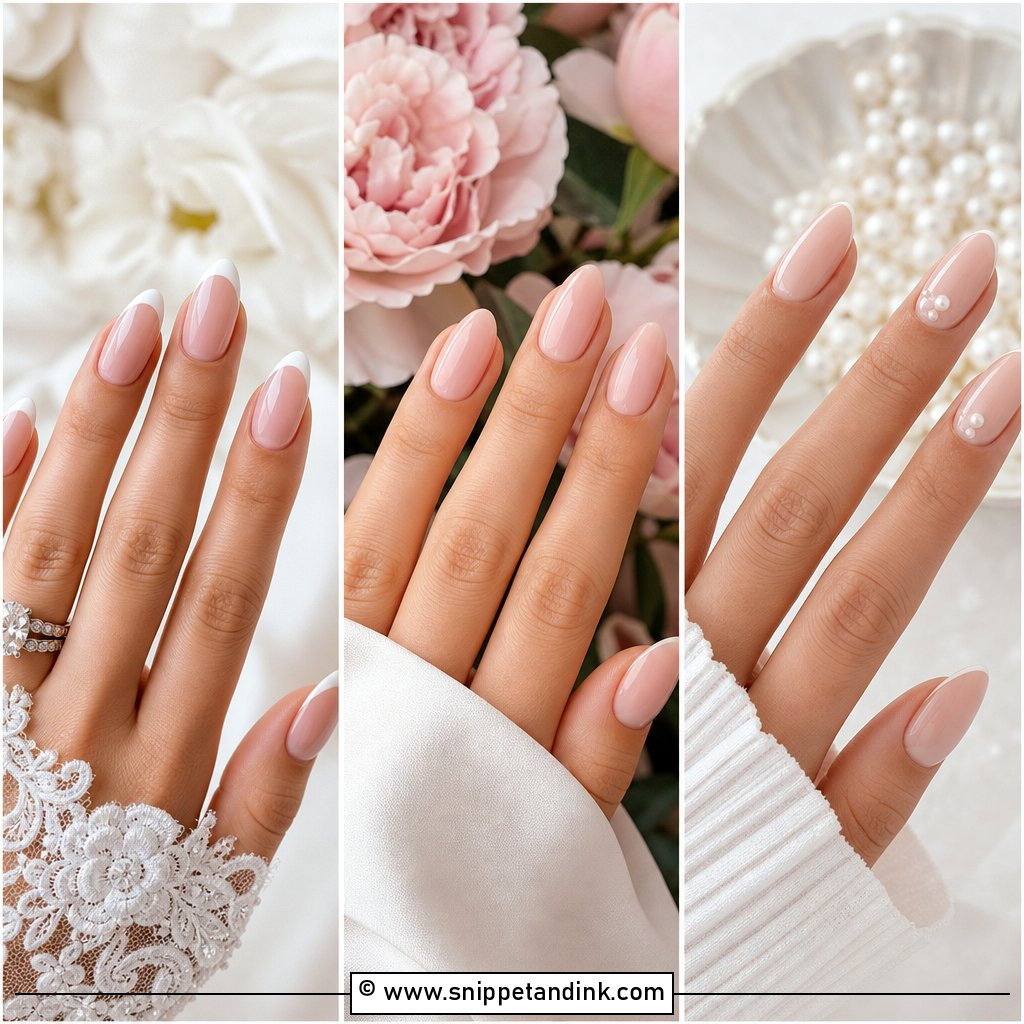
20. Rhinestone Almond Wedding Nails
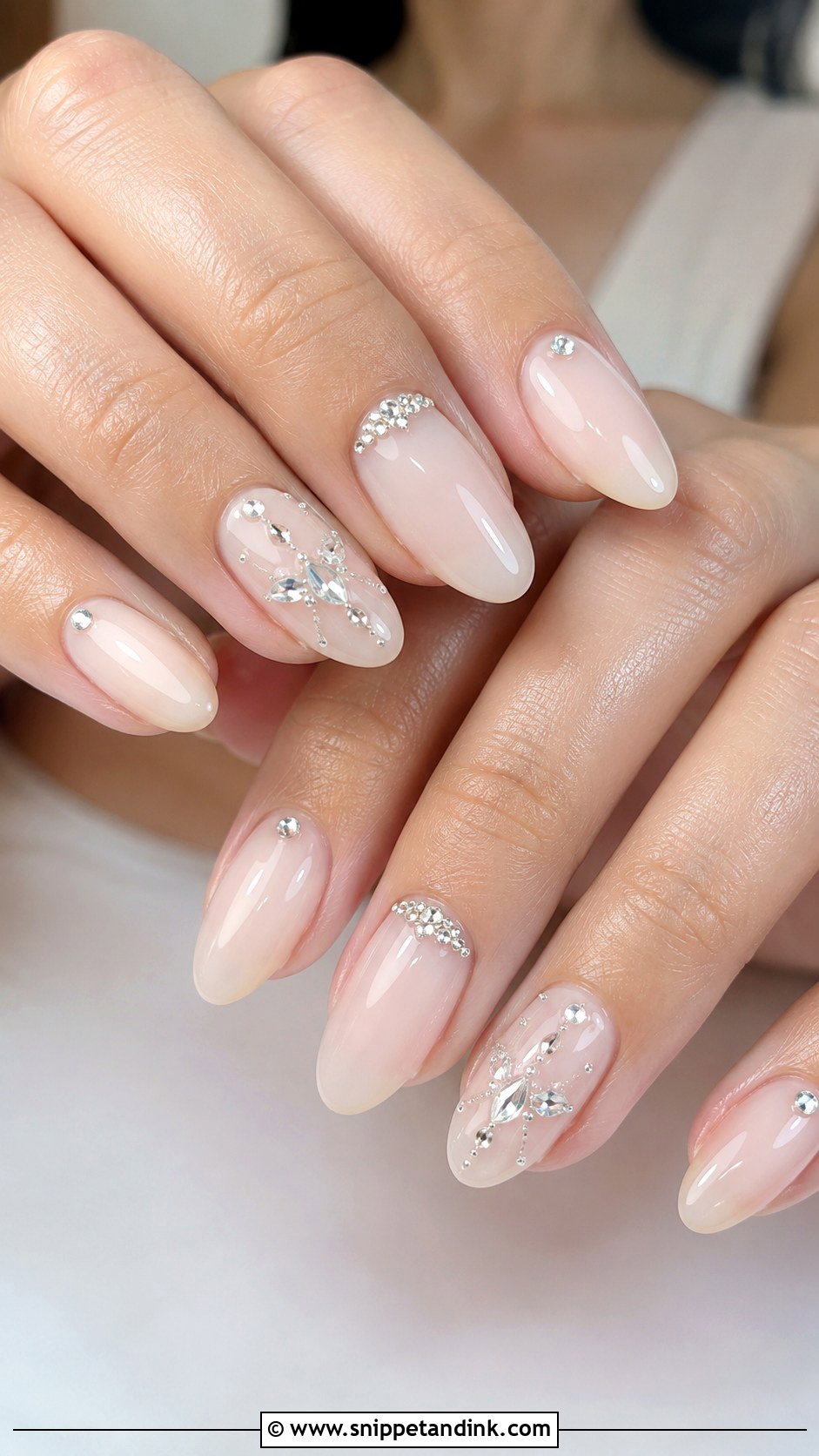
Crystals look best with restraint. A few small clear stones near the cuticle, framing a French tip, or on one accent nail give sparkle without looking costume-heavy. I set them in a thick gel adhesive and cap the edges with top coat, because exposed stones are what catch on beaded bodices and veil netting. Pick flat-backed stones with a low profile. Over a sheer nude, blush or milky base, they shine in candlelight at an evening reception without overpowering a beaded gown or crystal earrings.
Protecting a Tapered Tip Through Wedding Week
Almond is the most breakable of the common shapes, because the stress all lands on that narrow peak. I book bridal sets one to three days before the wedding. Earlier than that you get regrowth at the cuticle in close-ups; later, and there’s no time to fix a chip.
For those last days, use the pads of your fingers for car doors, zips and gift bags, and open cans with a spoon. Rub cuticle oil in morning and night, and wear gloves for washing up. The oil keeps the skin around the nail soft, which matters more in ring close-ups than the polish does.
If one breaks on the morning
Don’t file it down to match the others in a rush. Slip a nail file, a small tube of nail glue and a press-on in a similar shade into your emergency kit. A cracked gel nail can be glued and filed smooth in a few minutes, and a press-on covers a snapped one well enough for photos. Then have it rebuilt properly after the honeymoon.
The Shape Does Most of the Work
Almond suits nearly every bridal design here, from a plain French or milky polish to chrome, pearls, lace and a little sparkle. What decides the right set is your dress fabric and colour, your jewellery metal, the season, and how comfortable you really are with length. For a classic look, nude, pink, ivory or French almond nails rarely go wrong. For something more current, try chrome, swirls, micro French tips or a few pearls. Whatever you choose, it should still feel like your own hands when you’re signing the register.
You'll Like These Ideas:


Leave a Reply