
Brides bring me more almond reference photos than any other shape, and for good reason. Almond shape wedding nails for bride sets lengthen the fingers through their tapered sides, while the rounded peak keeps them soft enough for a ceremony. The shape takes a French tip, milky polish, pearls, lace, chrome and blush tones without fuss. What matters more is how a design sits with your dress, ring and bouquet, and how it holds up at the distance of a ring close-up. The sets below run from very quiet to quite detailed, and for each I’ve said what it asks of your nails and where it tends to go wrong.
A Month of Hand Care Before Any Polish Goes On
The nail design gets the attention, but in ring close-ups the camera sees cuticles, dry skin and hangnails just as clearly. A few weeks of care before the appointment makes any almond set look better.
- Stop picking or peeling off old gel. Peeling strips away layers of the nail plate, leaving it thin and bendy, and an almond peak needs strength.
- Massage cuticle oil into each nail at least once a day. It keeps the skin supple so your tech can push it back cleanly instead of cutting it hard.
- Use a thick hand cream at night, especially in winter, when knuckles crack.
- Wear gloves for washing up and cleaning. Hot water and detergent dry out nails faster than anything else.
- Put sunscreen on the backs of your hands if you are outdoors a lot. Hands show up in more photos than you would expect.
If you bite your nails, start now. Even a few weeks of growth gives enough free edge for a short soft almond, and an overlay can protect what has grown.
1. Classic French Almond Wedding Nails
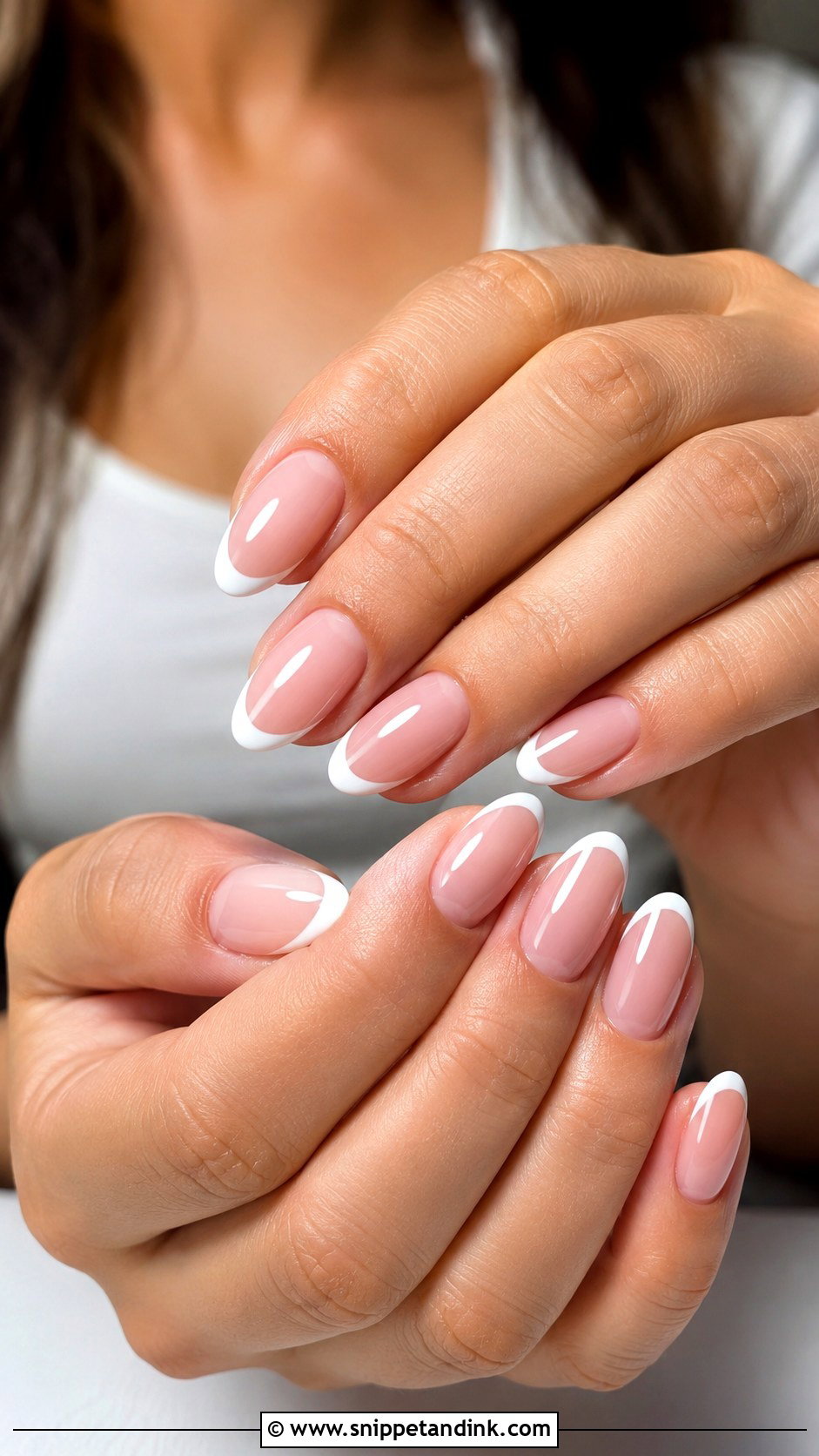
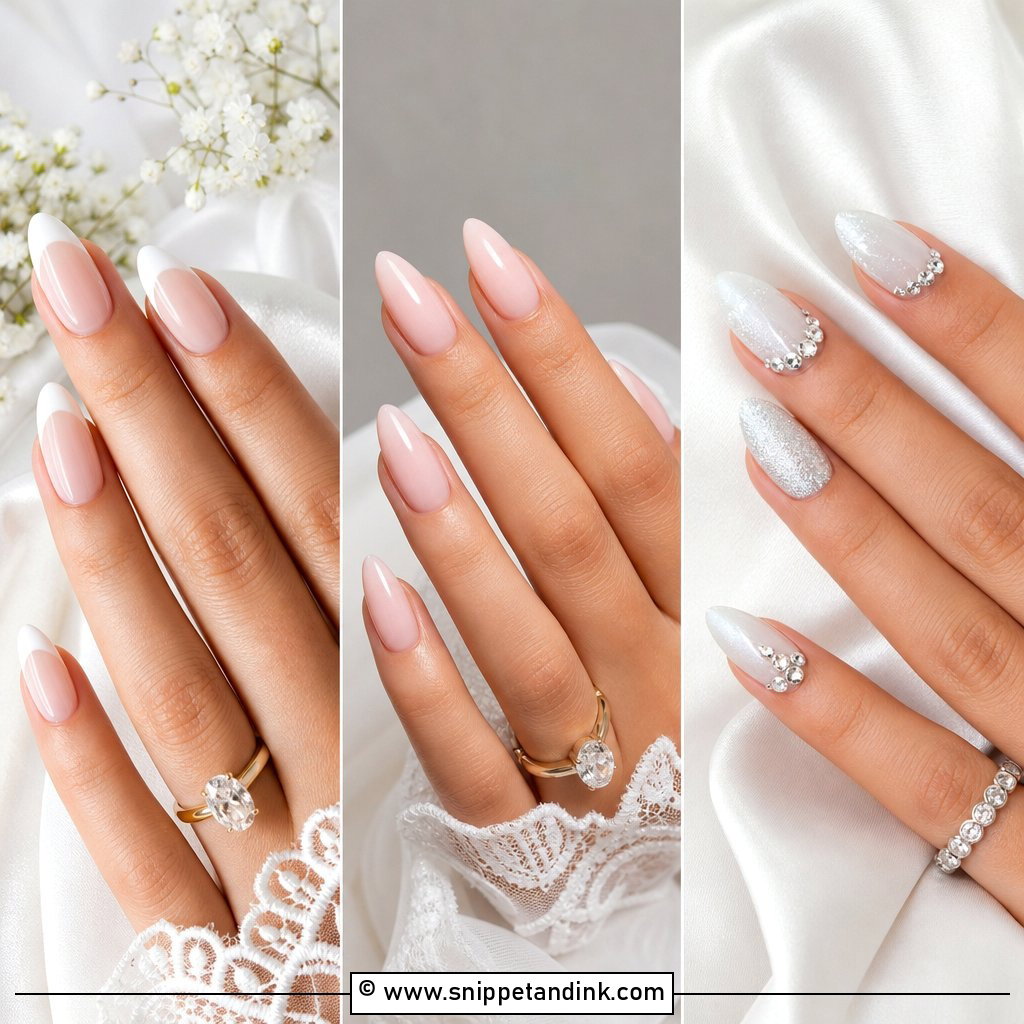
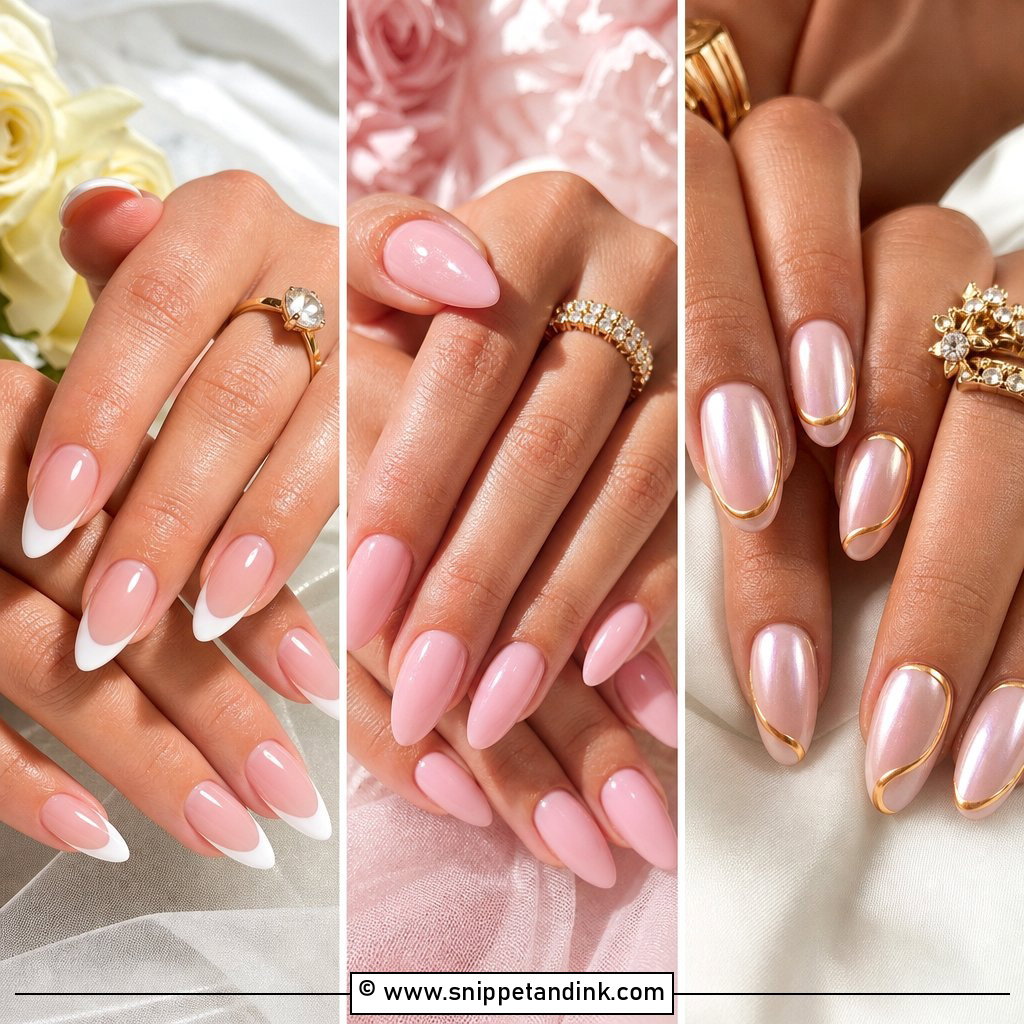
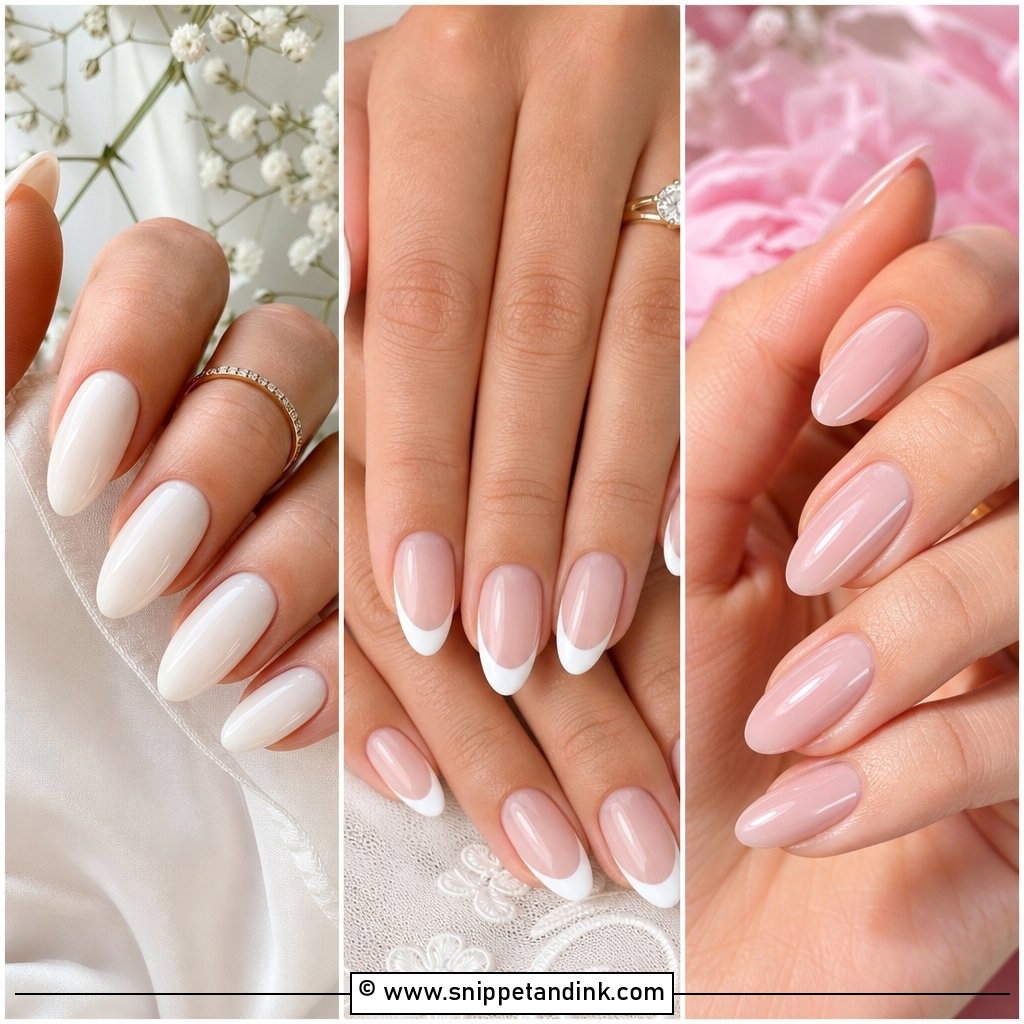
Hard to get wrong, which is why it’s the set I book most. A sheer pink or nude base with a clean white tip outlines the almond shape exactly. The modern version uses a thinner smile line, curved to follow the peak; a thick straight band makes the nail look stubby. Medium length is the sweet spot. Finish with a glossy top coat and it will suit a plain satin gown or a lace one equally well.
2. Milky White Almond Wedding Nails
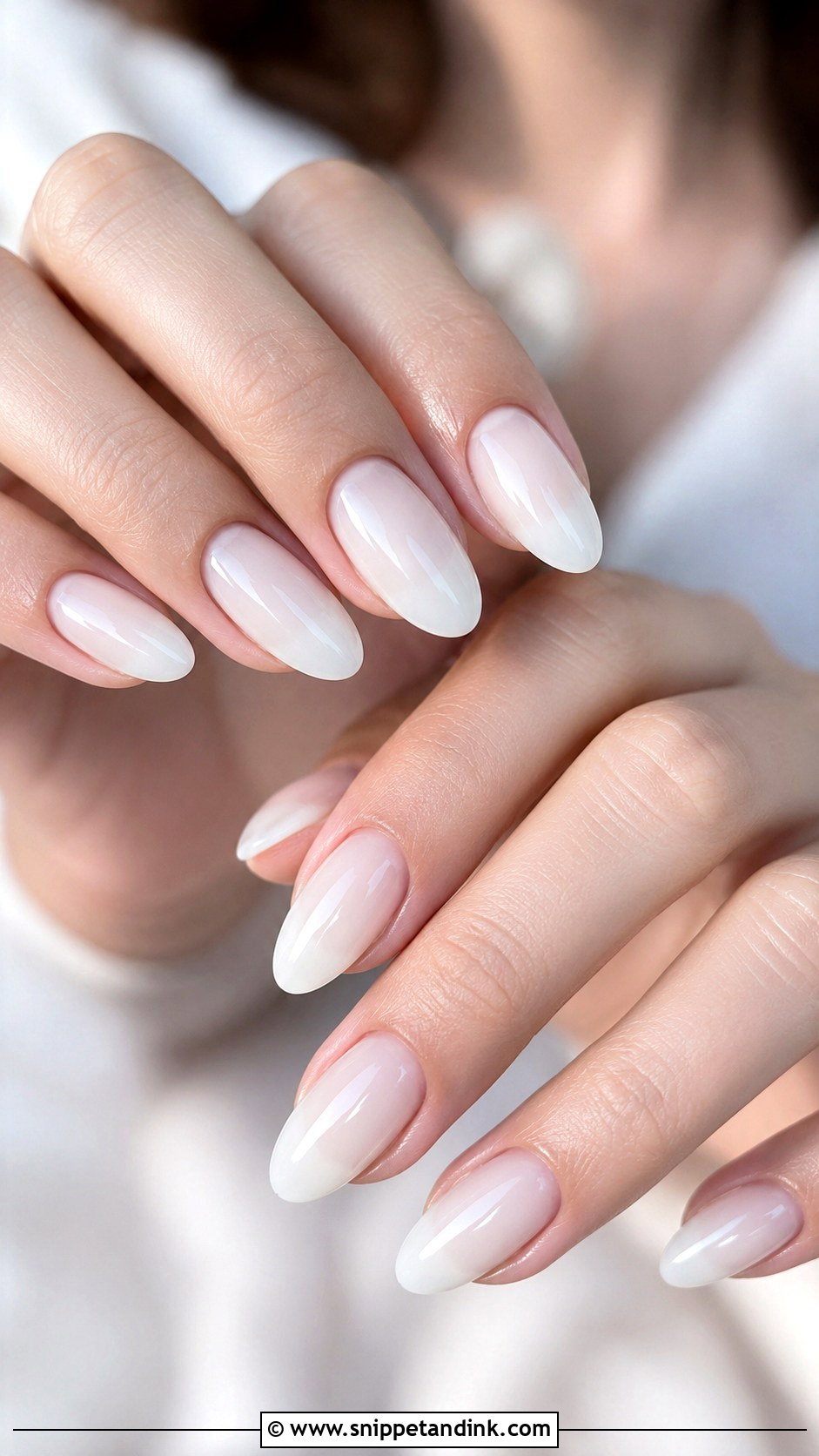
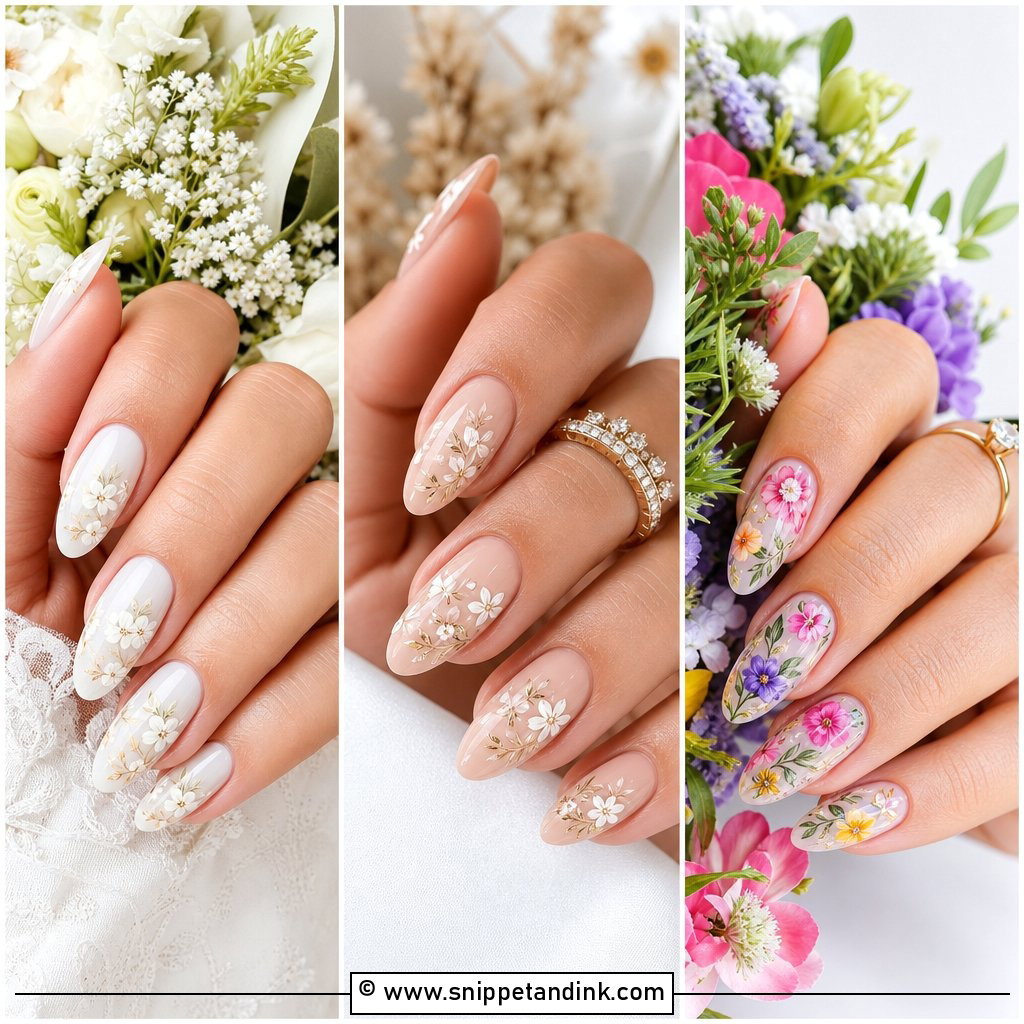
The appeal of milky white is that it doesn’t compete with the dress. It’s softer than solid white and has a jelly-like translucency, which looks expensive on almond nails. Getting it even takes patience: I apply thin coats and cure between each, because one thick coat of milky gel looks streaky the moment it catches daylight. Keep it plain for a quiet look or add a faint shimmer top coat. It also stays wearable long after the wedding, which brides heading off on honeymoon appreciate.
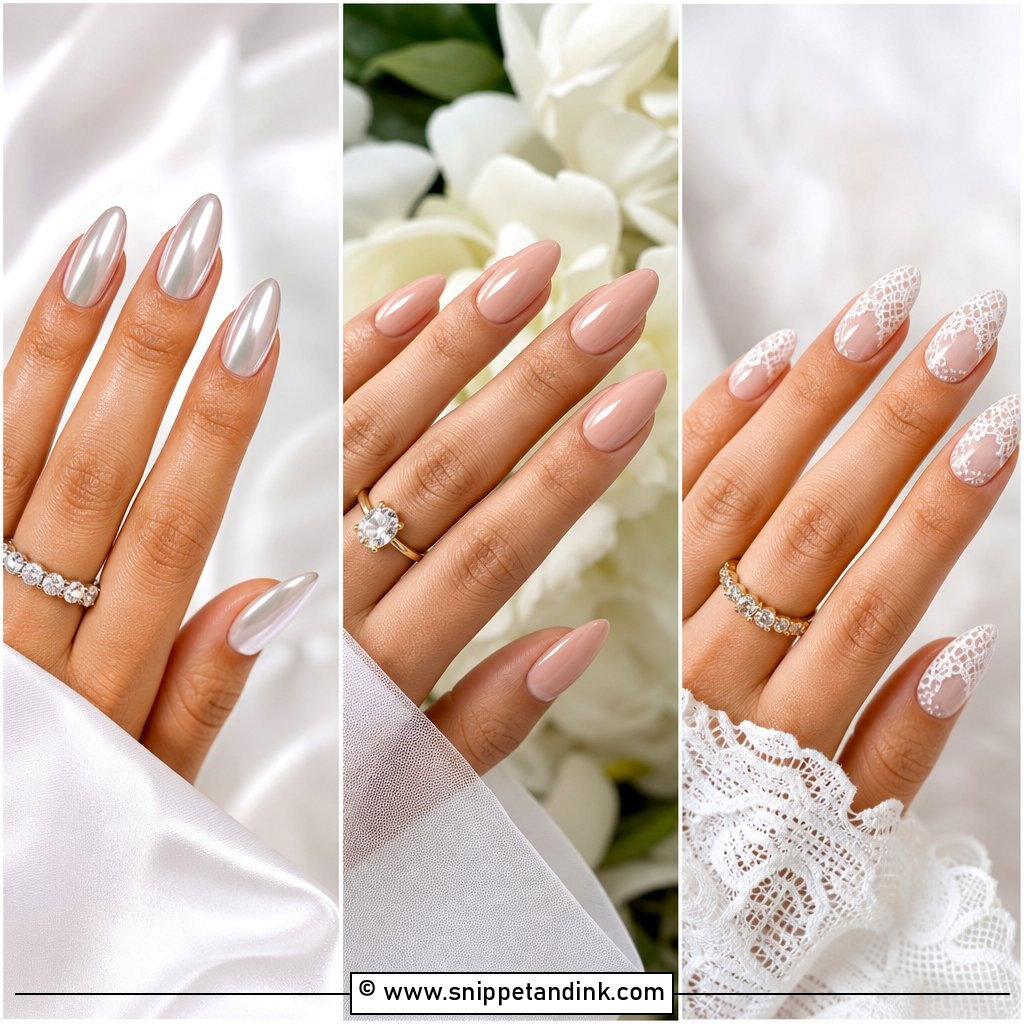
3. Pearl Chrome Almond Wedding Nails
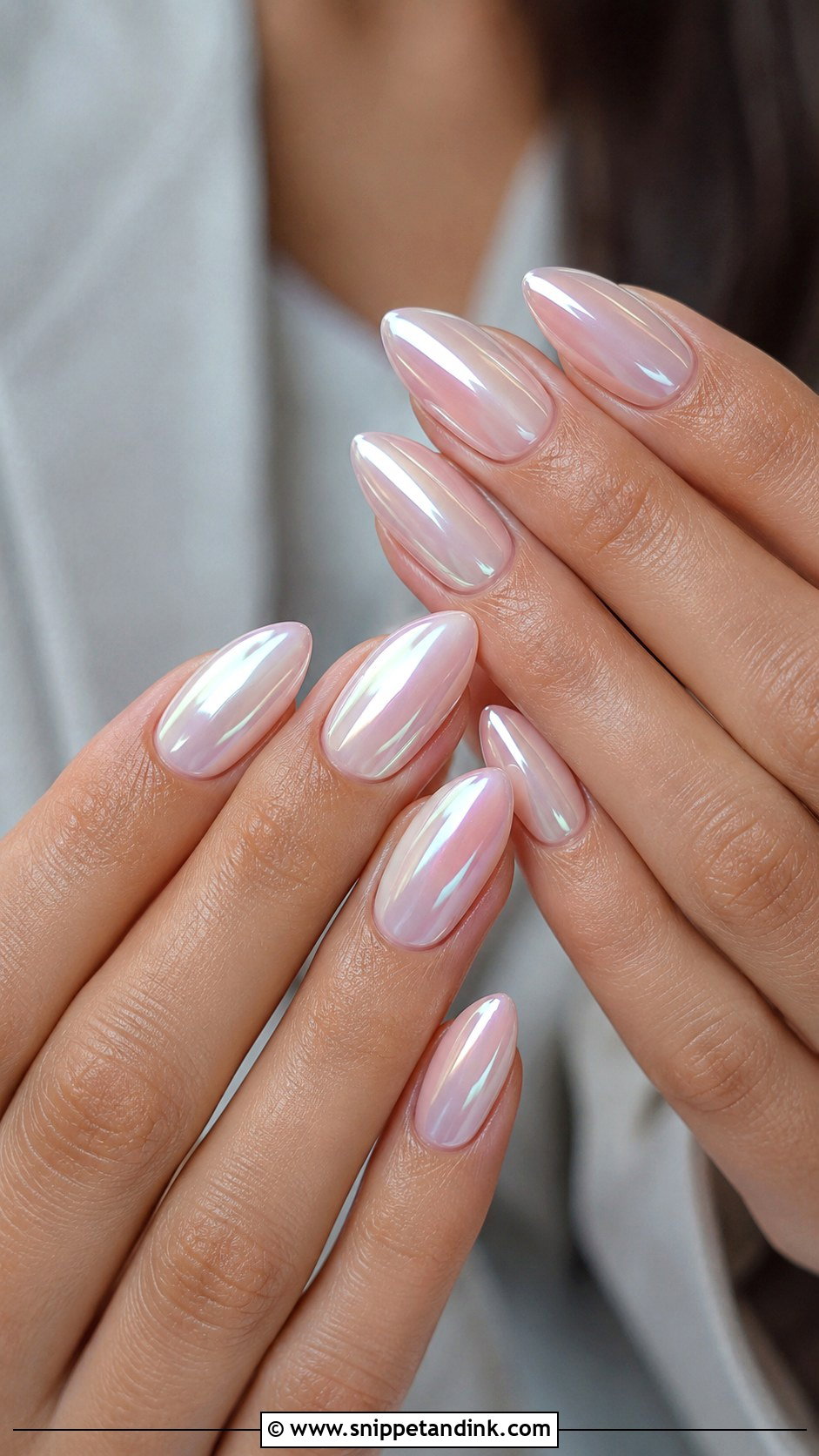
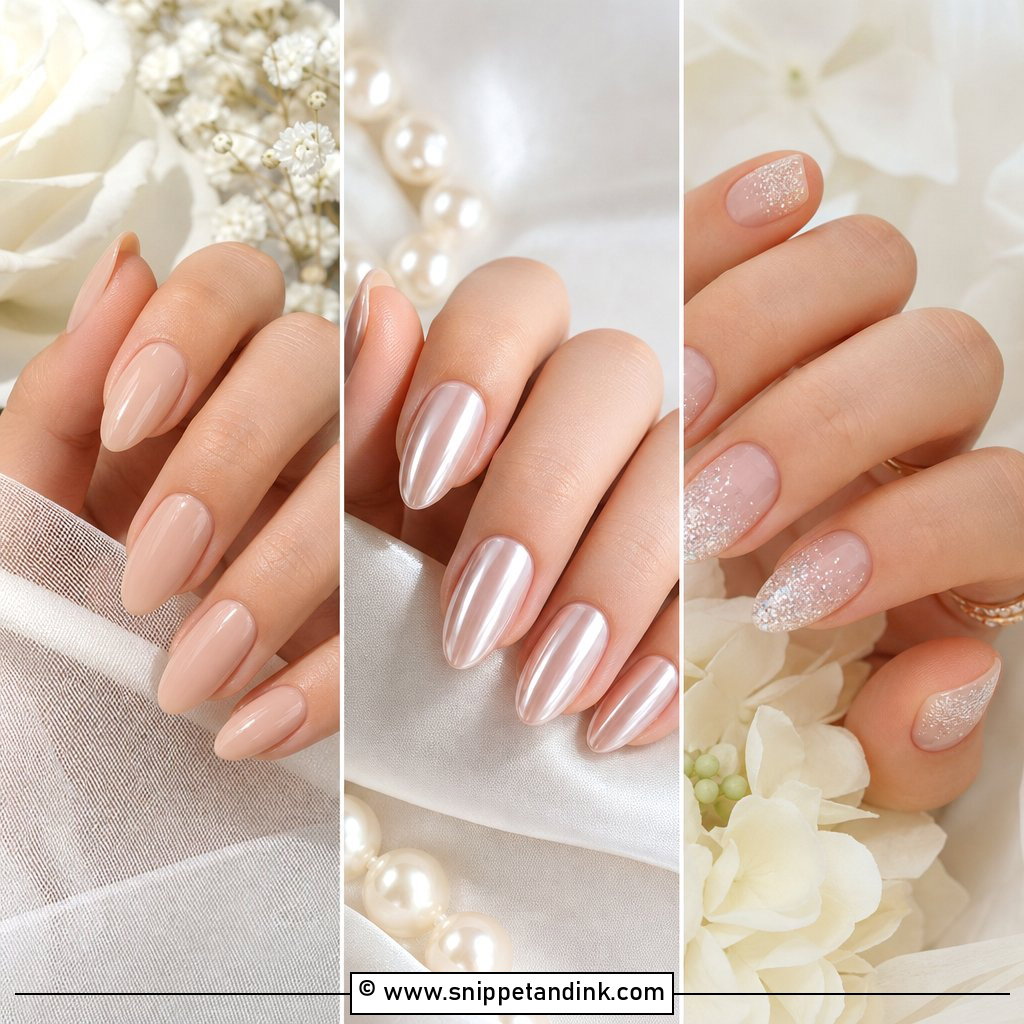
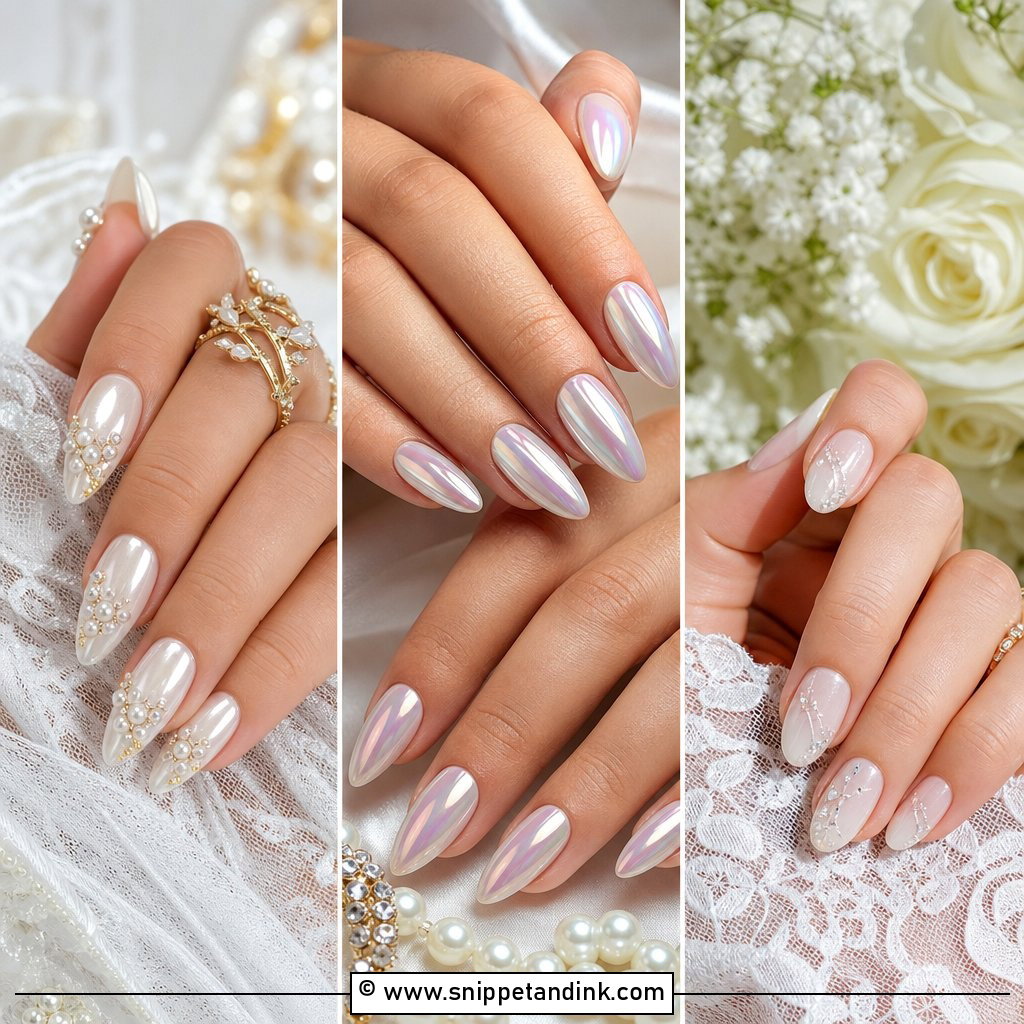
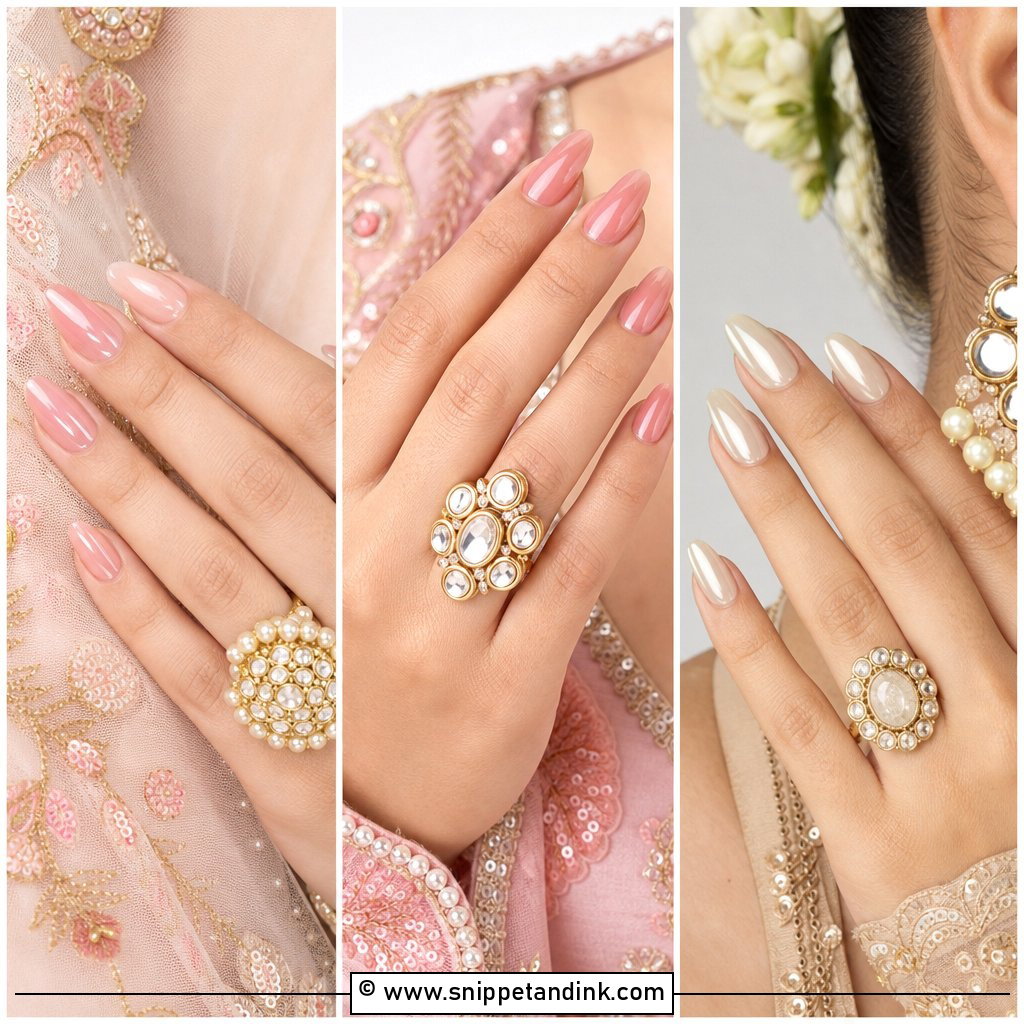
Pearl chrome gives a glow rather than a shine. Over milky white, pale pink or sheer nude, I rub a fine pearl powder into a cured top coat and seal it, and the finish shifts slightly as your hand moves. Outdoors and under warm reception lighting it photographs softly. I keep it thin; overworked chrome starts to look metallic. Pearl jewellery and satin are its natural partners.
4. Nude Almond Wedding Nails
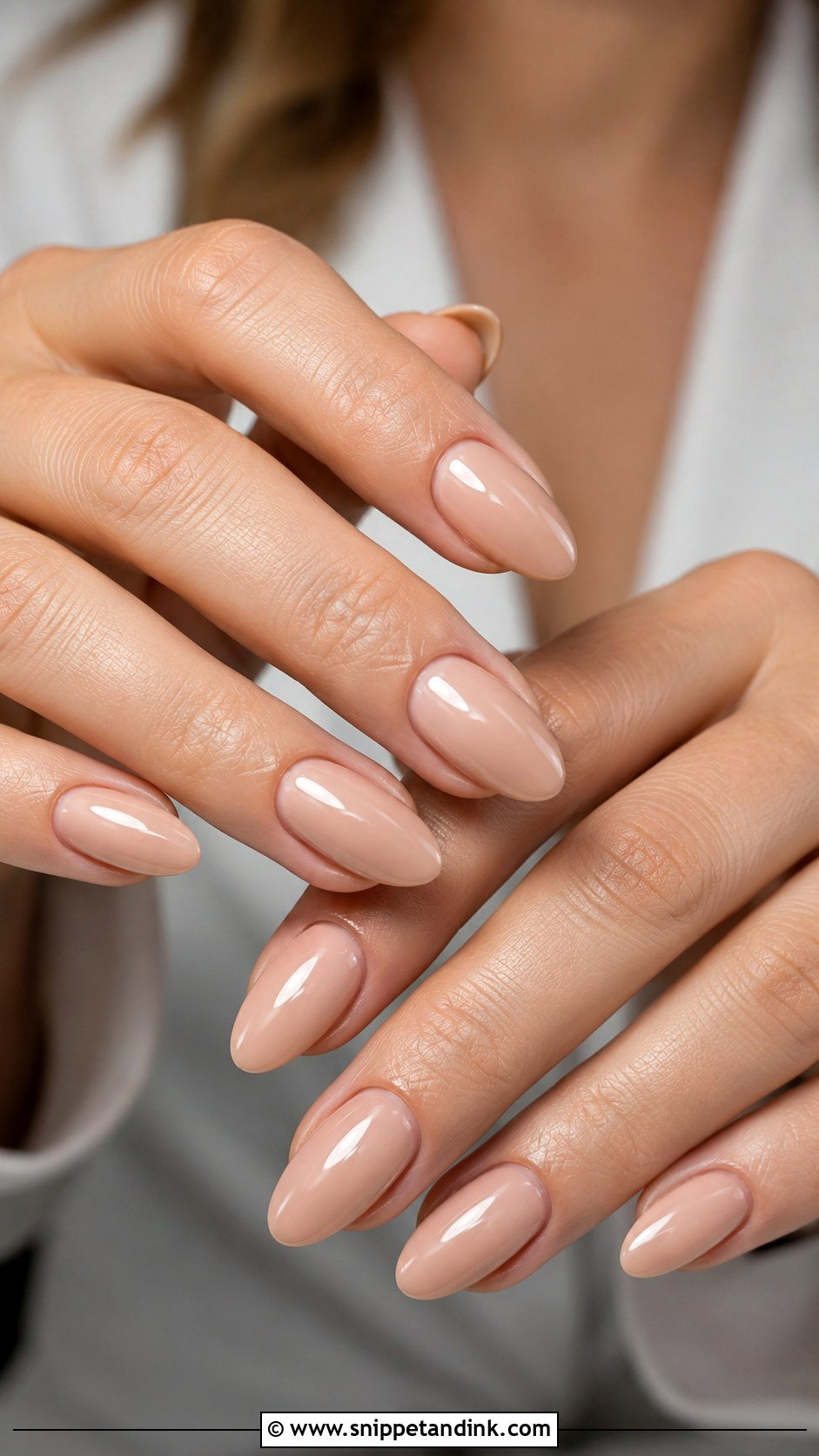
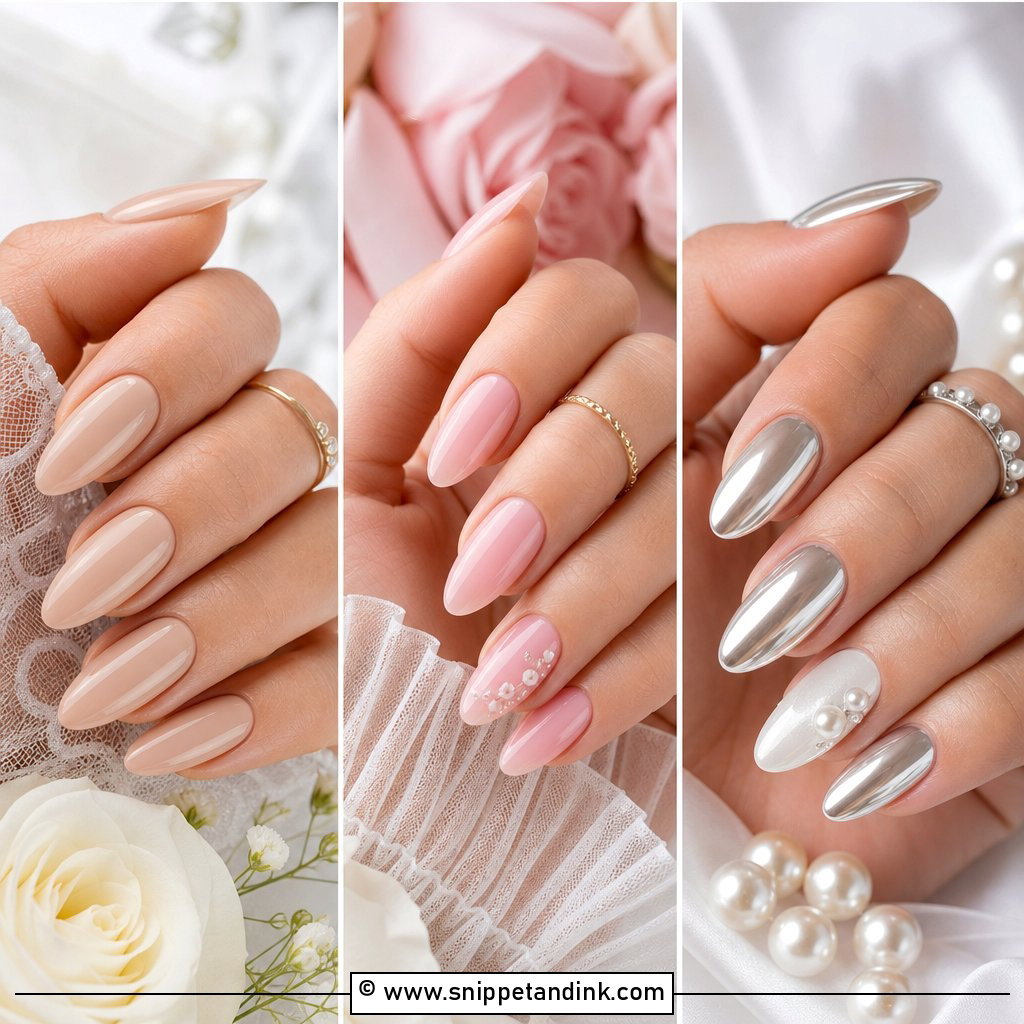
The practical bride’s choice: chips and regrowth barely show on a nude, which counts if your nails need to last through a honeymoon. Matching the shade to your skin is the whole job. Pink-beige usually suits fair skin, peachy nudes warm up medium skin, and caramel, mocha or soft cocoa glow on deeper skin, though undertone can override all of that. I test shades on your actual nail. With a heavily beaded or lace dress, a glossy nude almond balances the busy fabric rather than adding to it.
5. Blush Pink Almond Wedding Nails
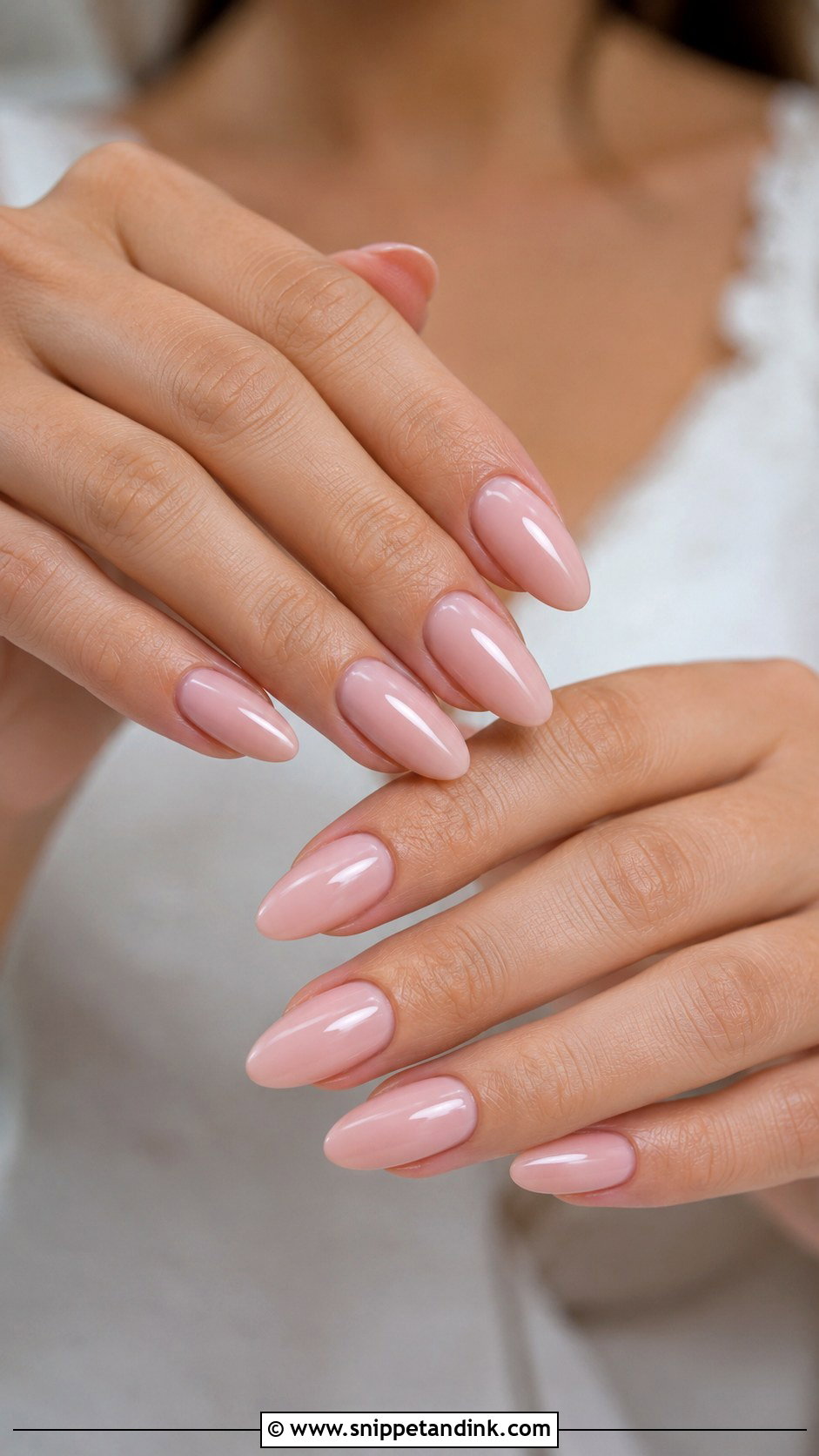
Choose sheer blush over opaque bubblegum pink. Sheer colour lets the natural nail show through and reads as a healthy flush; opaque pink can look childish next to a white gown. It sits well with rose gold, soft glam makeup and pink or ivory flowers. Plain and glossy is my usual finish, with a hint of shimmer if you want depth.
6. White French Tip Almond Wedding Nails
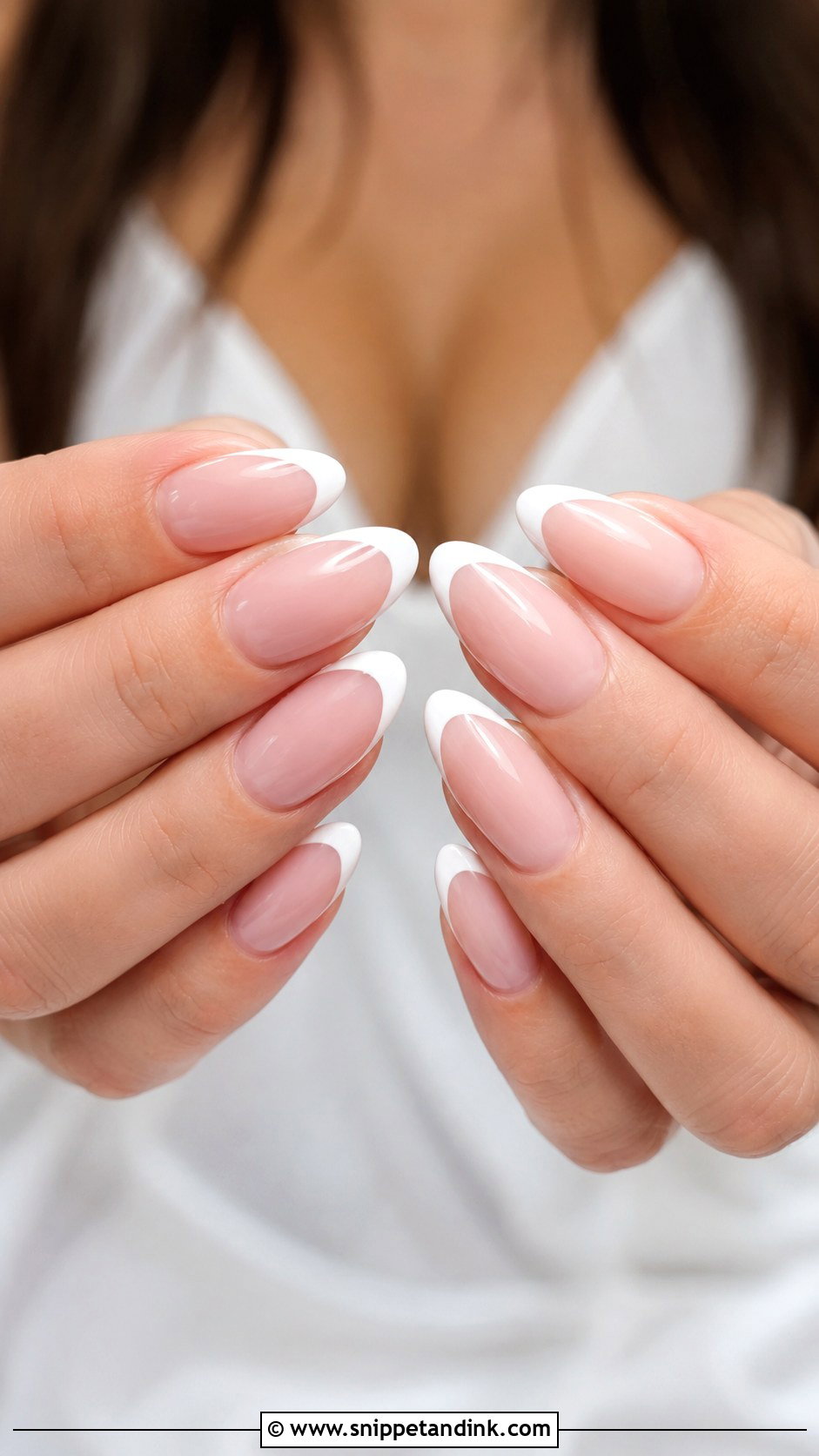
Think of this as the classic French turned up a notch. The tip is more opaque and defined, so it shows up clearly in photos without looking dramatic. I prefer it on medium or long almond nails, where the white has room to curve. On short nails a deep tip eats the nail. What I check most carefully is symmetry: every smile line should sit at the same height and angle, because uneven tips are the first thing you notice when ten fingers line up in a photo.
7. Baby Boomer Almond Wedding Nails
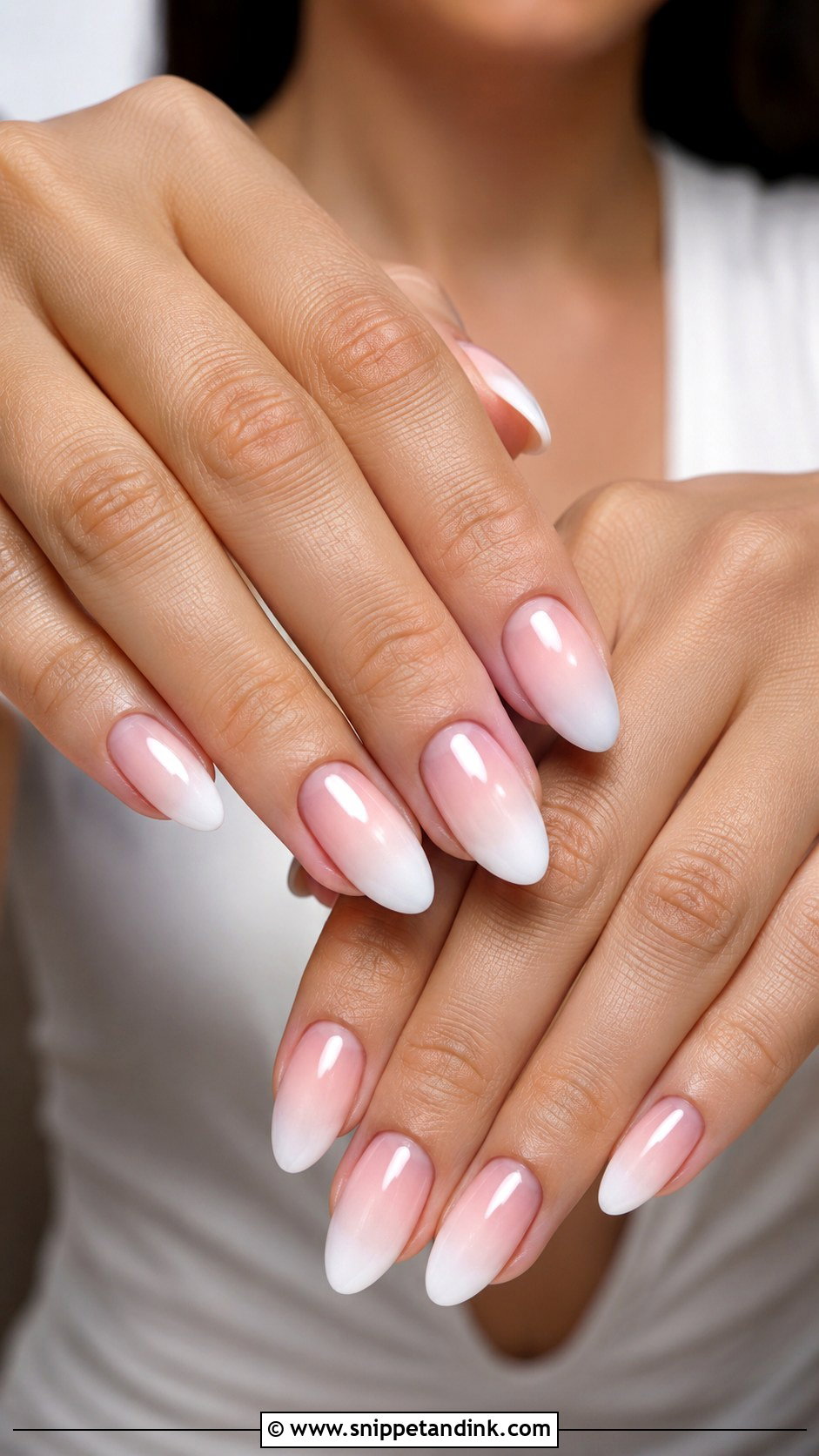
It’s a soft pink fading into white with no hard line. Baby boomer almond wedding nails suit brides who like a French manicure but find the line too crisp. The tapered shape stretches the gradient, so the fade looks longer than on a square nail. I blend it in gel with a brush in small passes, since a rushed fade leaves a visible band. Glossy is lovely here, and a sheer shimmer top coat adds a little glow.
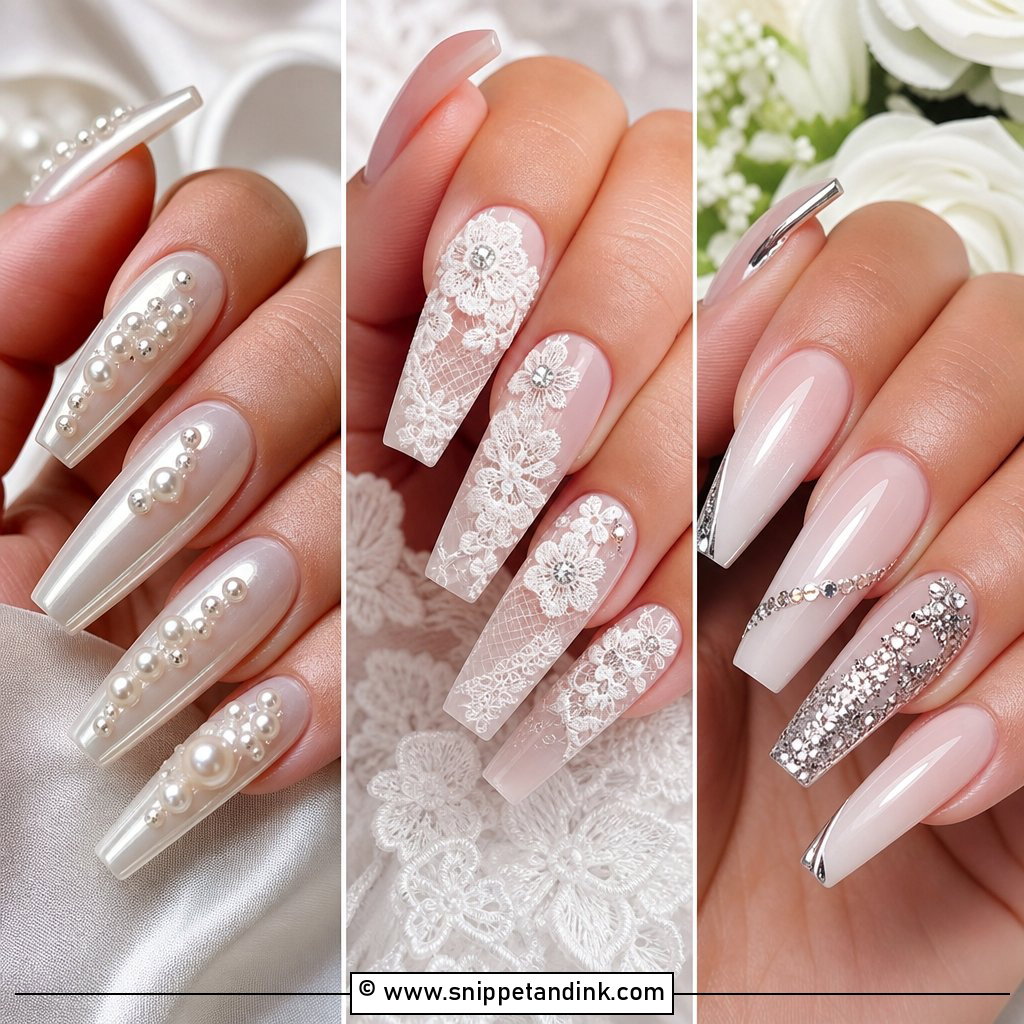
8. Lace Almond Wedding Nails
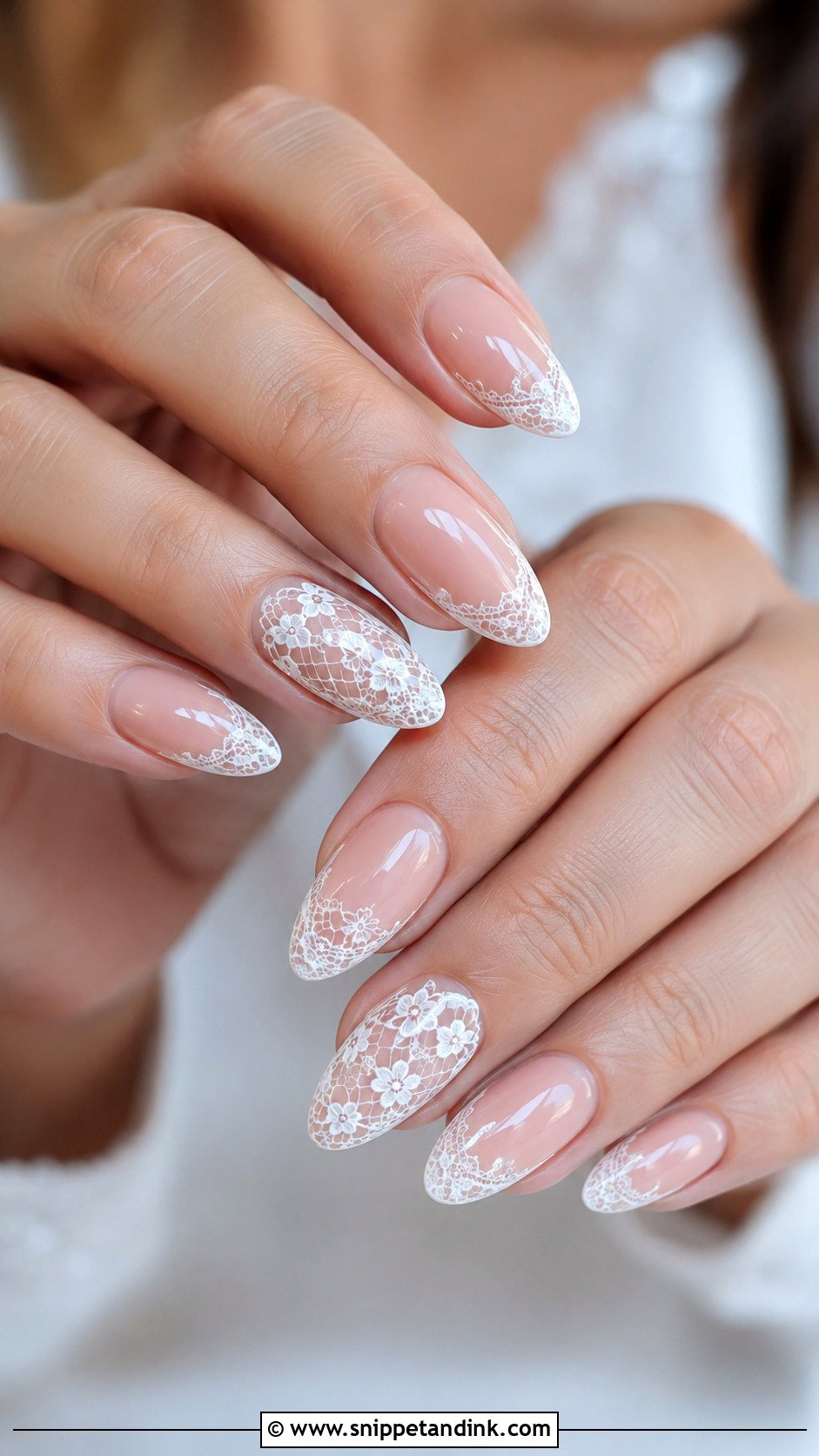
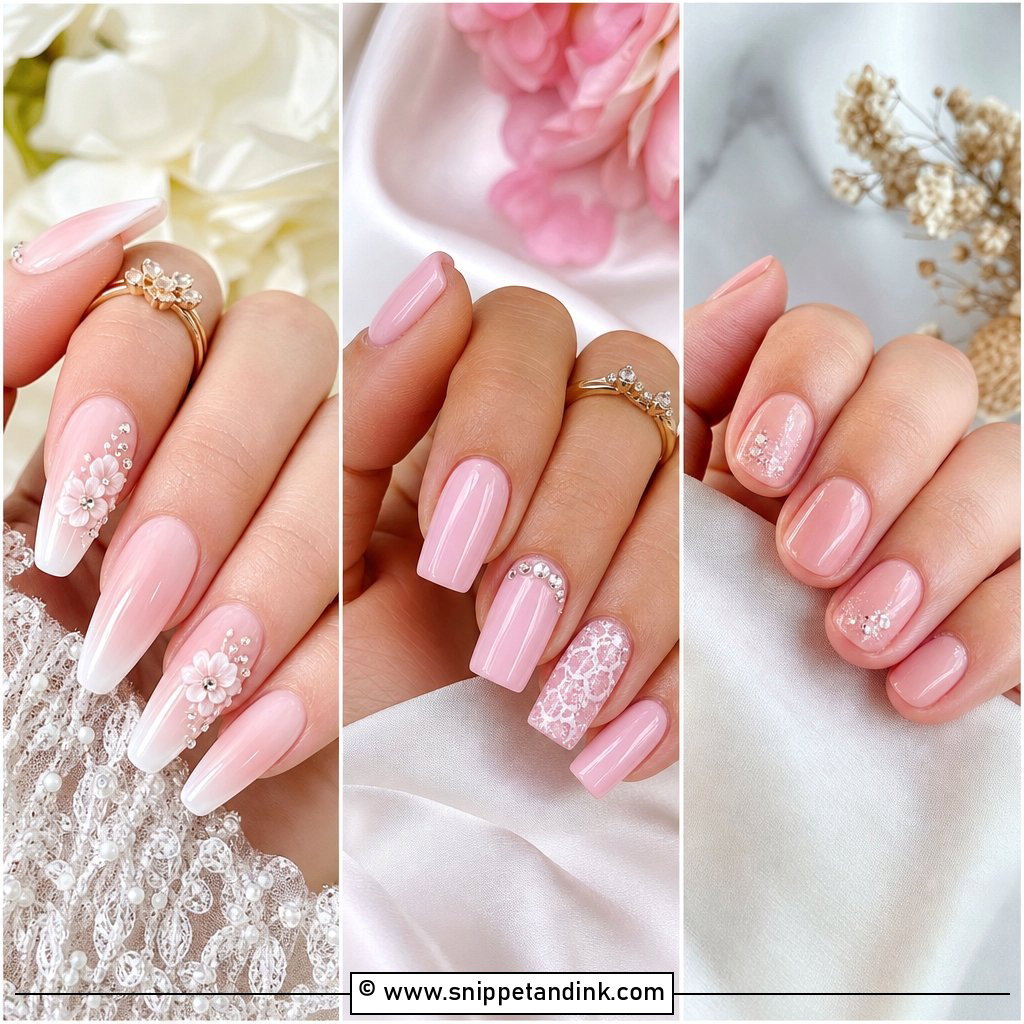
Lace on the nails should echo the dress, not copy it. With a lace-sleeved gown or an embroidered veil, I pick one element of the pattern and paint it in fine white lines over sheer nude, blush or milky white on a couple of accent nails. Stamping plates can mimic fabric texture too, and they give crisper repeats than freehand on a busy pattern. Leave the rest of the nails plain so the art reads as detail rather than clutter.
9. Floral Almond Wedding Nails
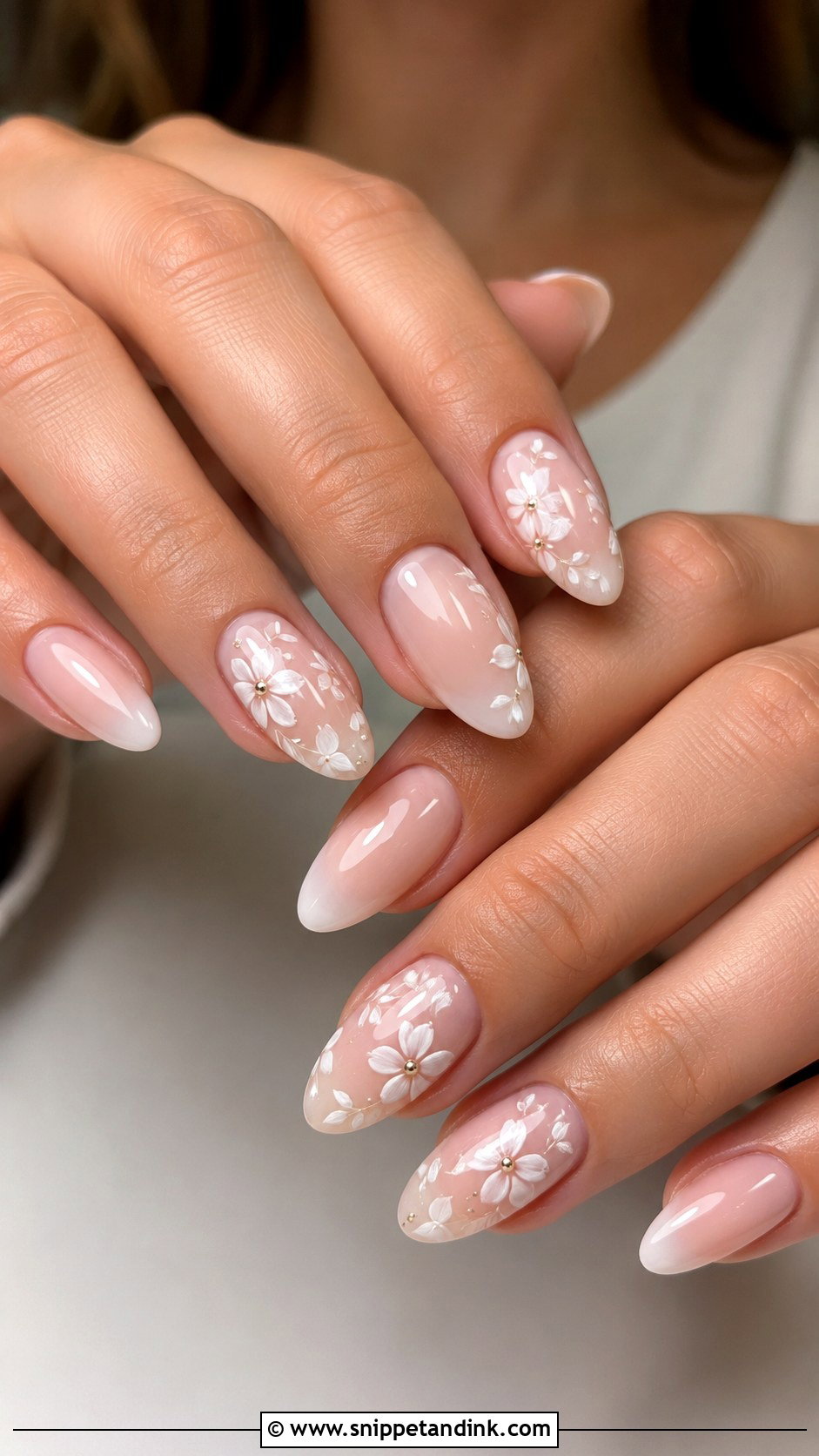
Painted florals have to stay small. Tiny white flowers, sheer petals or blush blooms over a nude or milky base look delicate on one or two accent nails per hand, and crowded on all ten. I let the art follow the length of the nail rather than sit in the middle, which suits the almond taper. A few gold dots or pearl centres add detail. Spring and summer garden weddings are where this set feels most natural.
10. Pearl Accent Almond Wedding Nails
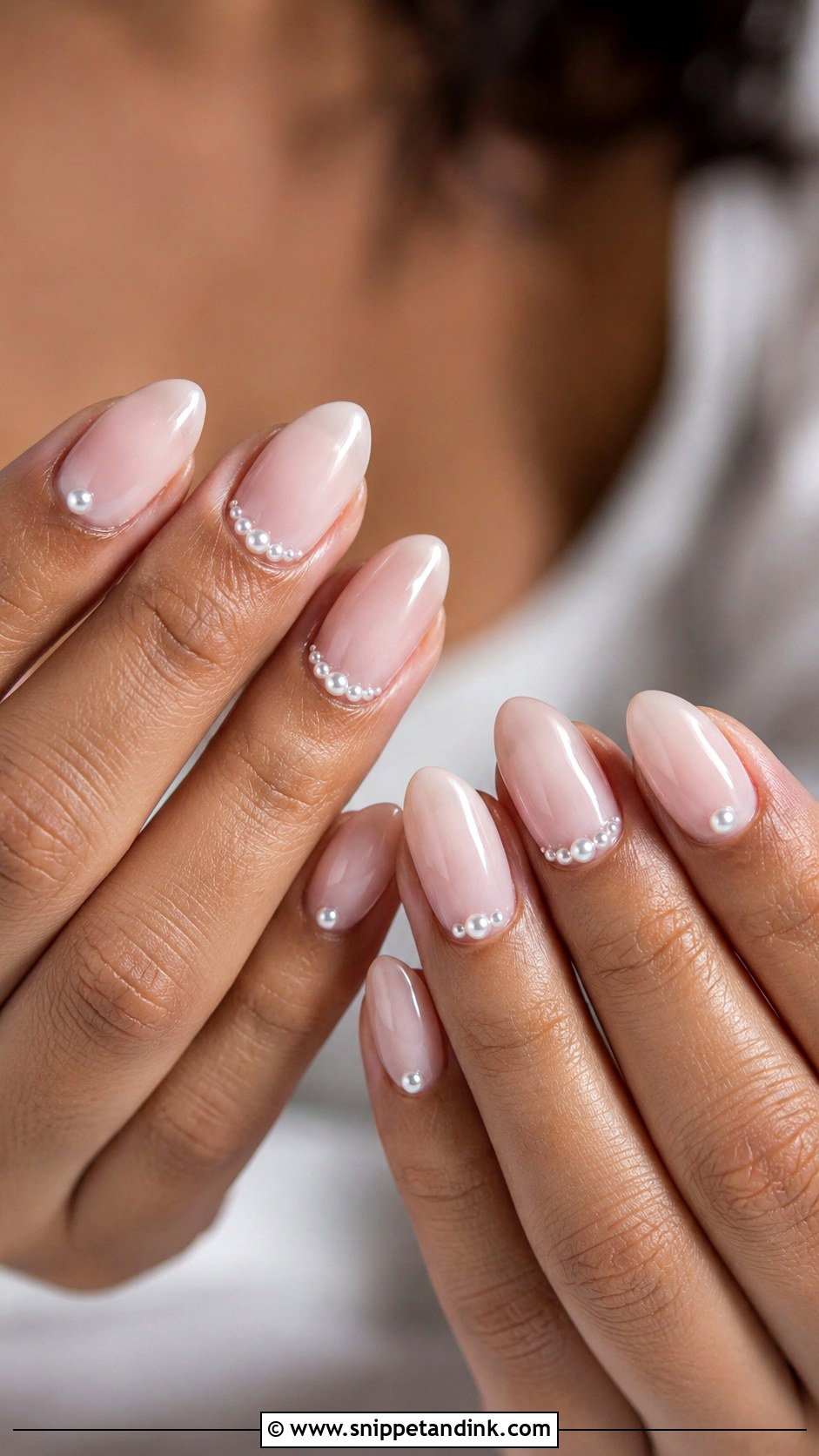
Restraint is the whole design. A few pearls near the cuticle, along the smile line or on a single feature nail look refined; a dozen look like costume jewellery and add bulk you’ll feel all day. I use small flat-back pearls set in gel and capped at the edges so they don’t snag fabric. The base can be nude, milky white, blush or a soft French. With pearl earrings or a pearl-trimmed veil, the set pulls everything together.
11. Champagne Glitter Almond Wedding Nails
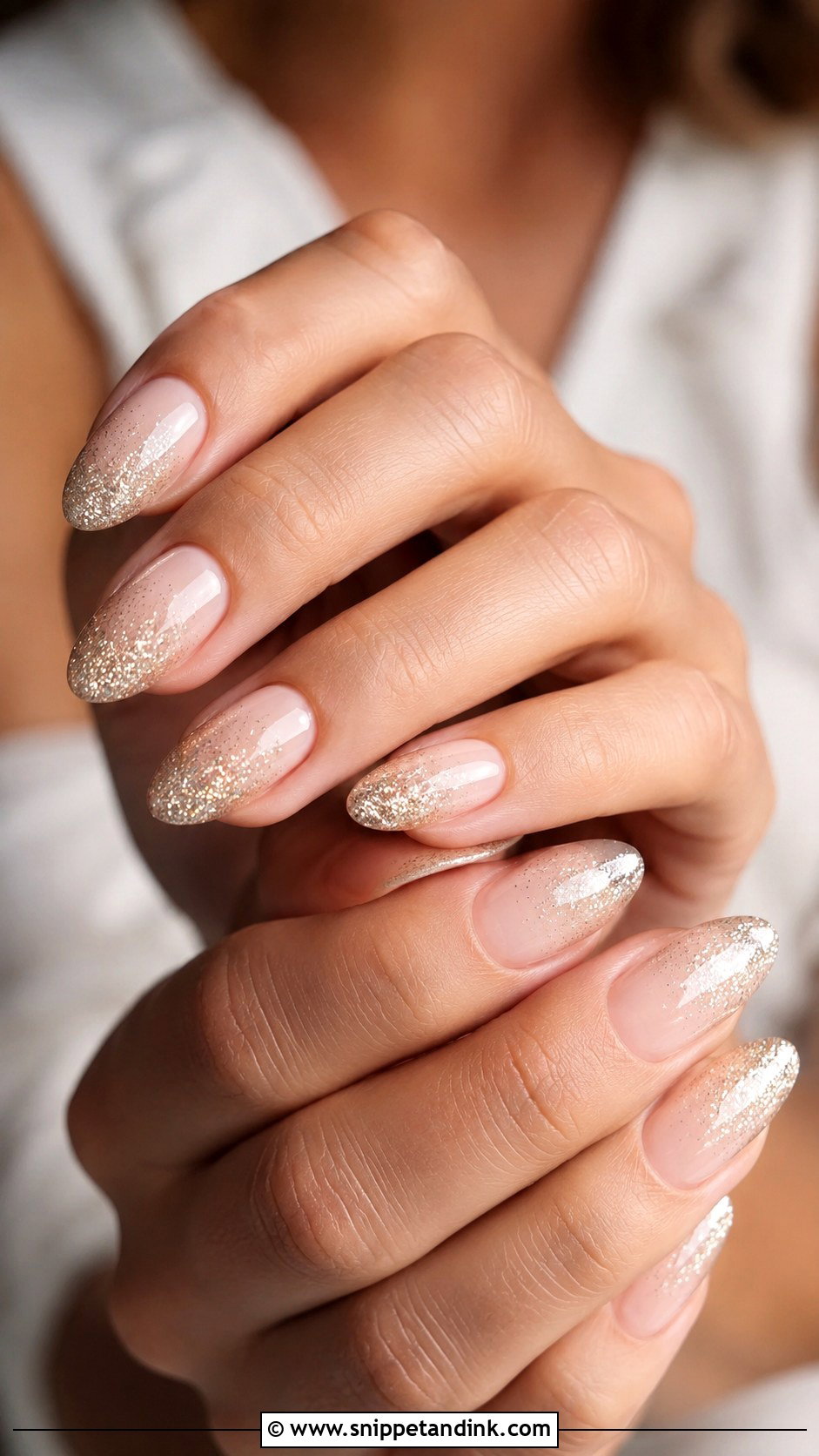
Champagne glitter is warmer and softer than silver or bright gold, and under reception lights it twinkles rather than flashes. Over a sheer nude or blush base, I place it at the tips, at the cuticle or faded through the nail. Fine glitter only; chunky pieces feel rough and are hard to remove. It’s the sparkle I suggest with ivory dresses, gold jewellery and warm makeup.
12. Gold Foil Almond Wedding Nails
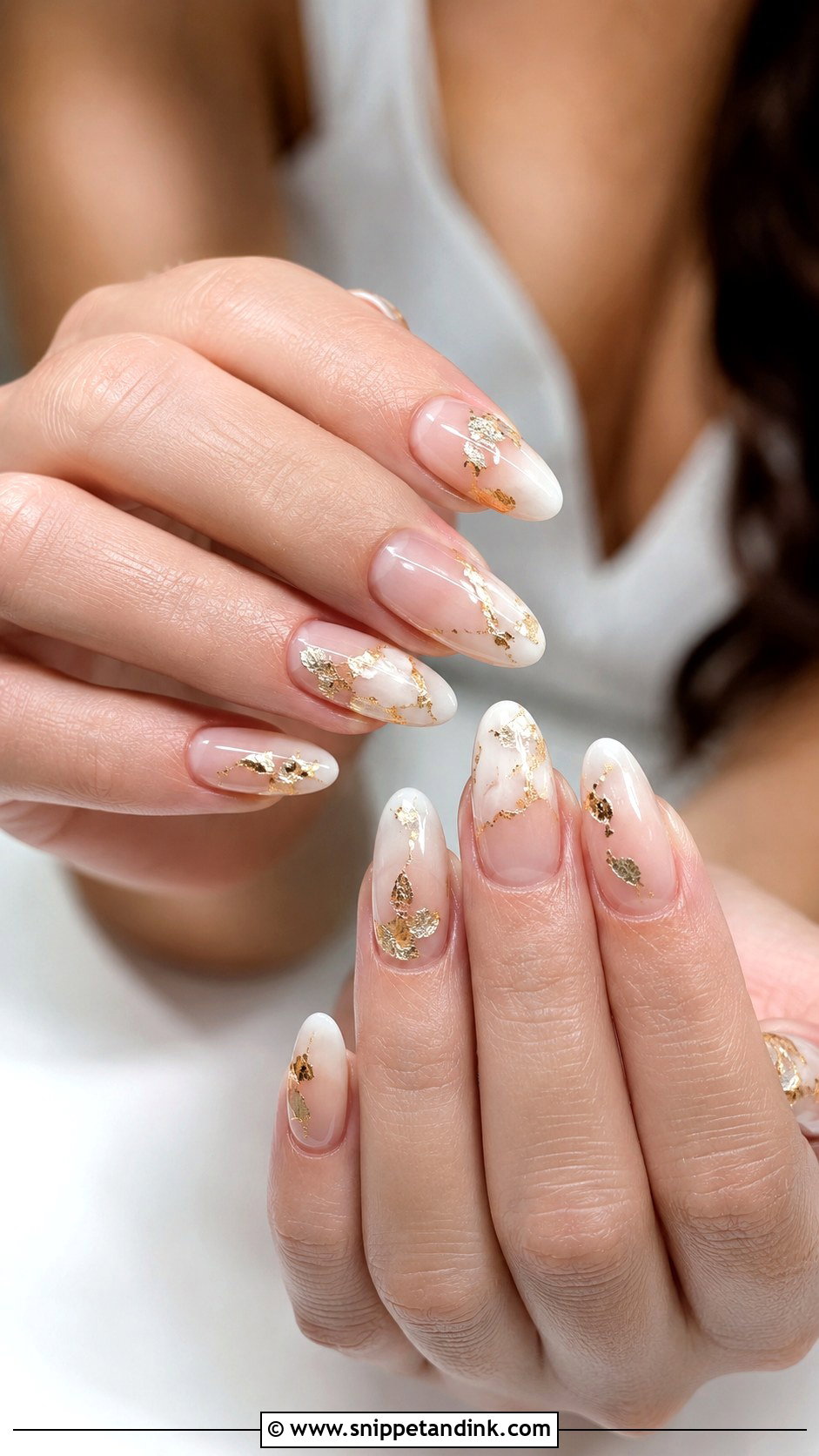
Foil should look scattered, like flakes caught in the light, not laid down in sheets. Gold foil almond wedding nails start with a sheer nude, milky white or soft pink base, and I press small torn pieces of foil into a tacky layer before sealing everything under top coat. Foil edges that aren’t fully covered lift within days, so I cap the free edge carefully. With gold rings, gold hair accessories or a warm ivory gown it looks considered, and in photos the foil catches small flashes of light.
13. Silver Chrome Tip Almond Wedding Nails
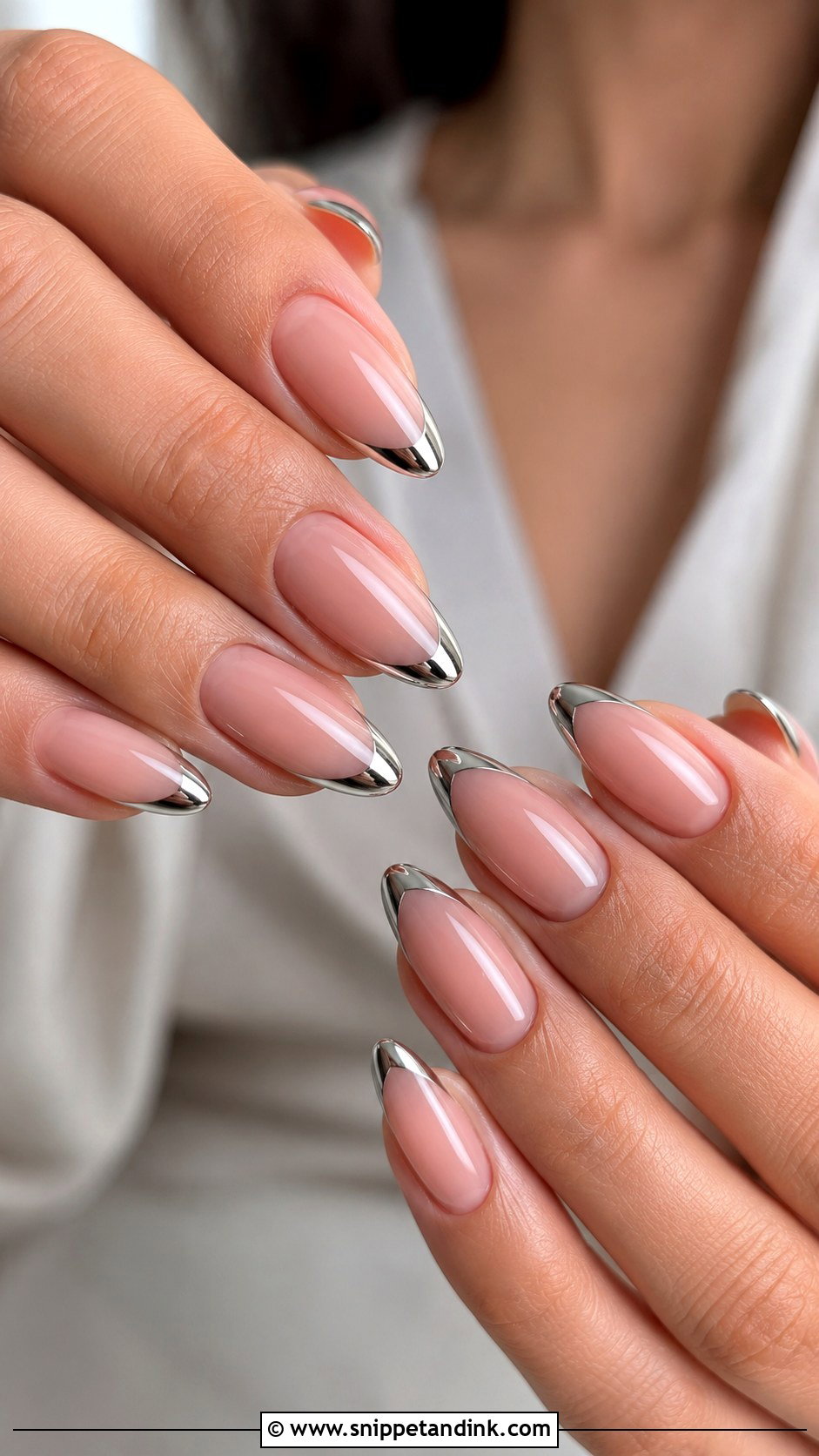
This one swaps the white French tip for soft silver chrome. Silver chrome tip almond wedding nails keep a sheer pink, nude or milky base, so the overall effect stays quiet until your hand moves and the tips catch the light. Thin tips look refined; thick ones look heavy. I’d point brides with white gold, platinum or diamond jewellery here before anyone else, since the metal tones agree.
14. Soft Pink Chrome Almond Wedding Nails
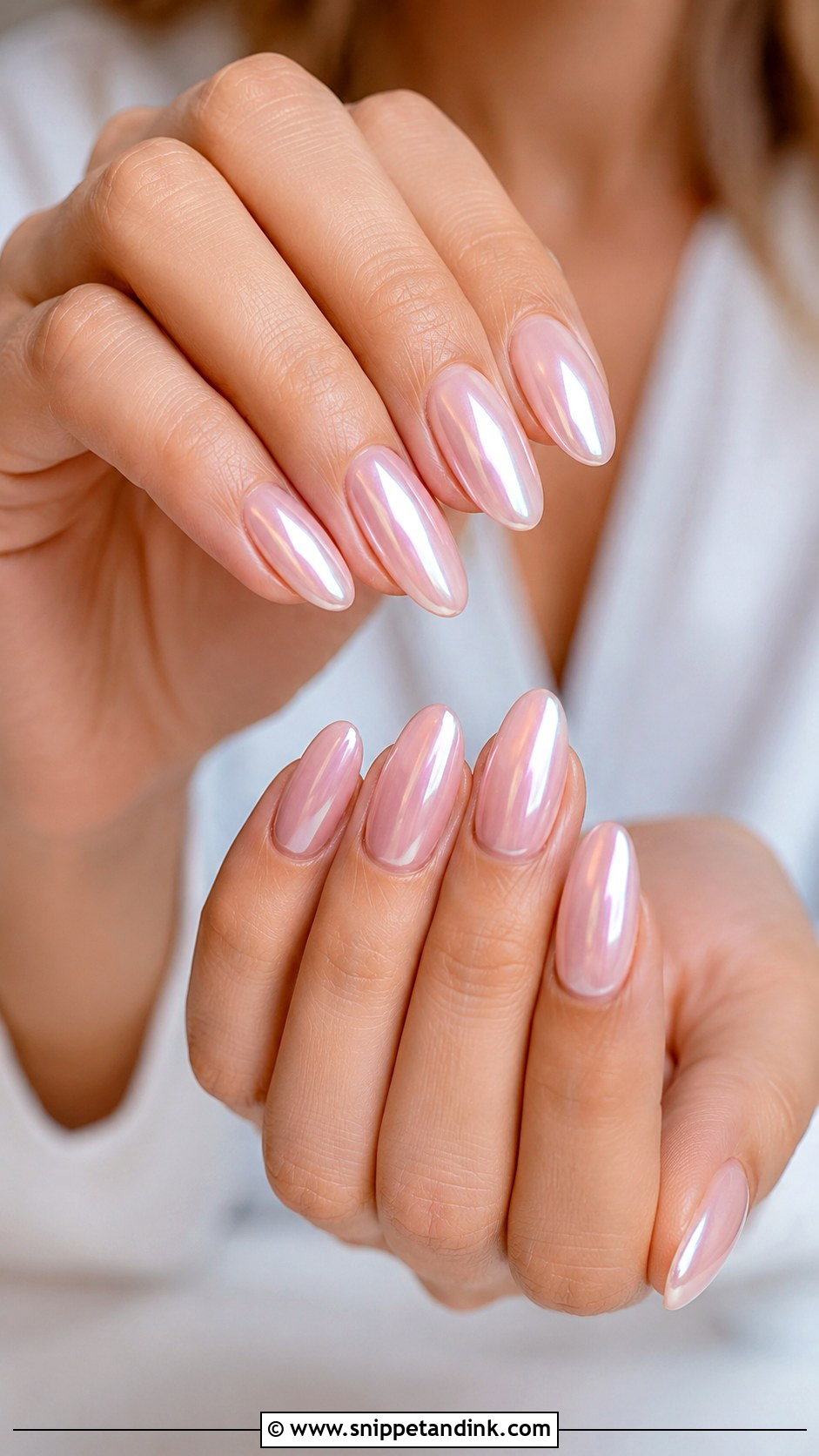
Pink chrome sits somewhere between plain pink and pearl. A pale pink base adds warmth, and a sheer chrome powder on top gives a soft sheen rather than a mirror. Almond suits it because the curved surface carries the light from cuticle to tip. It works with blush makeup and romantic gowns, and gives more personality than plain pink without the contrast of a French. Level the base well first, since chrome highlights every bump.
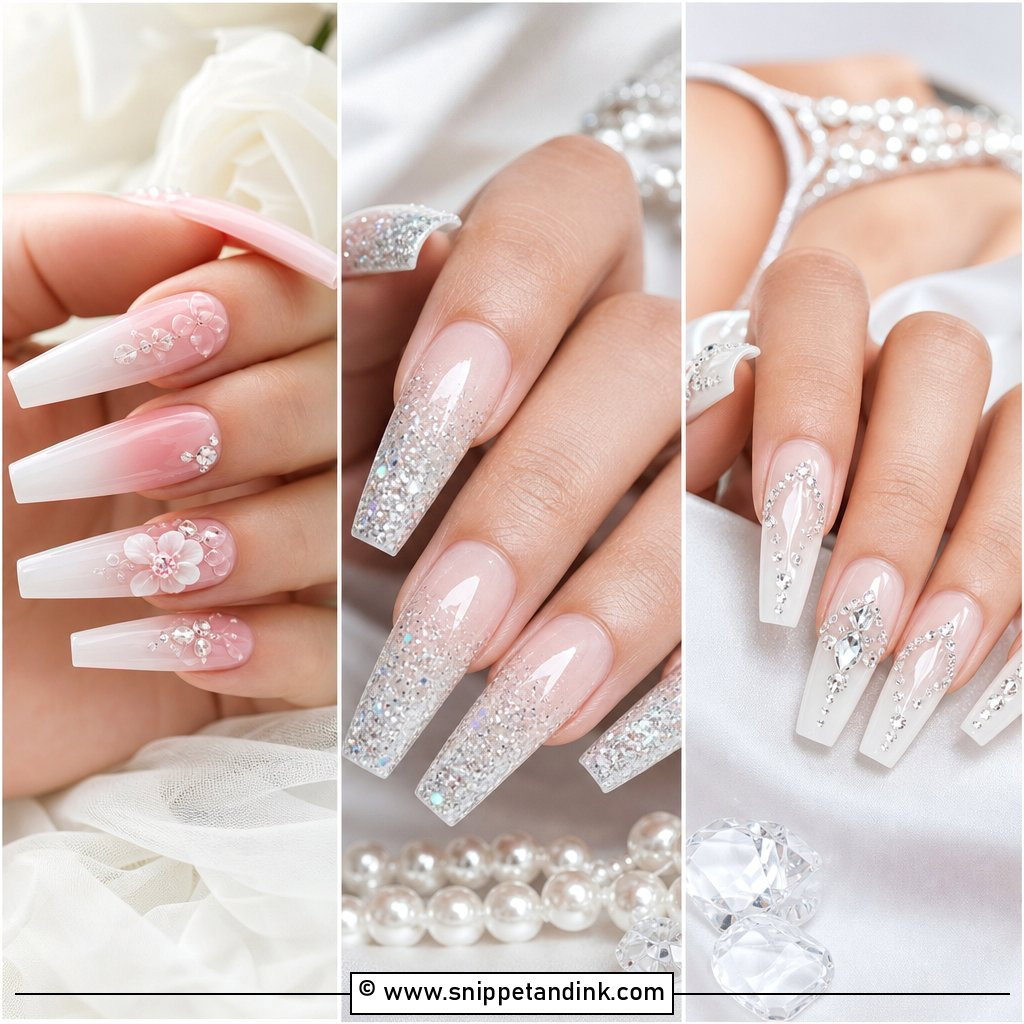
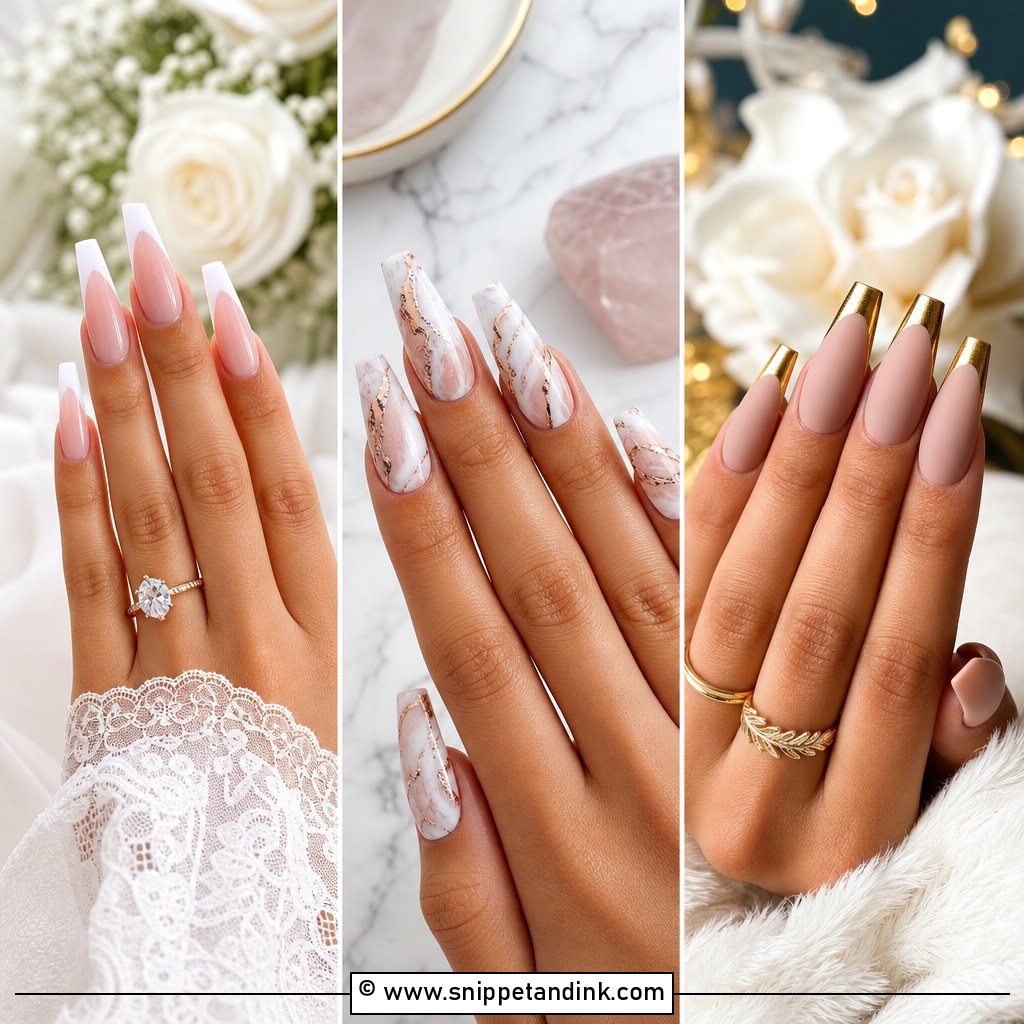
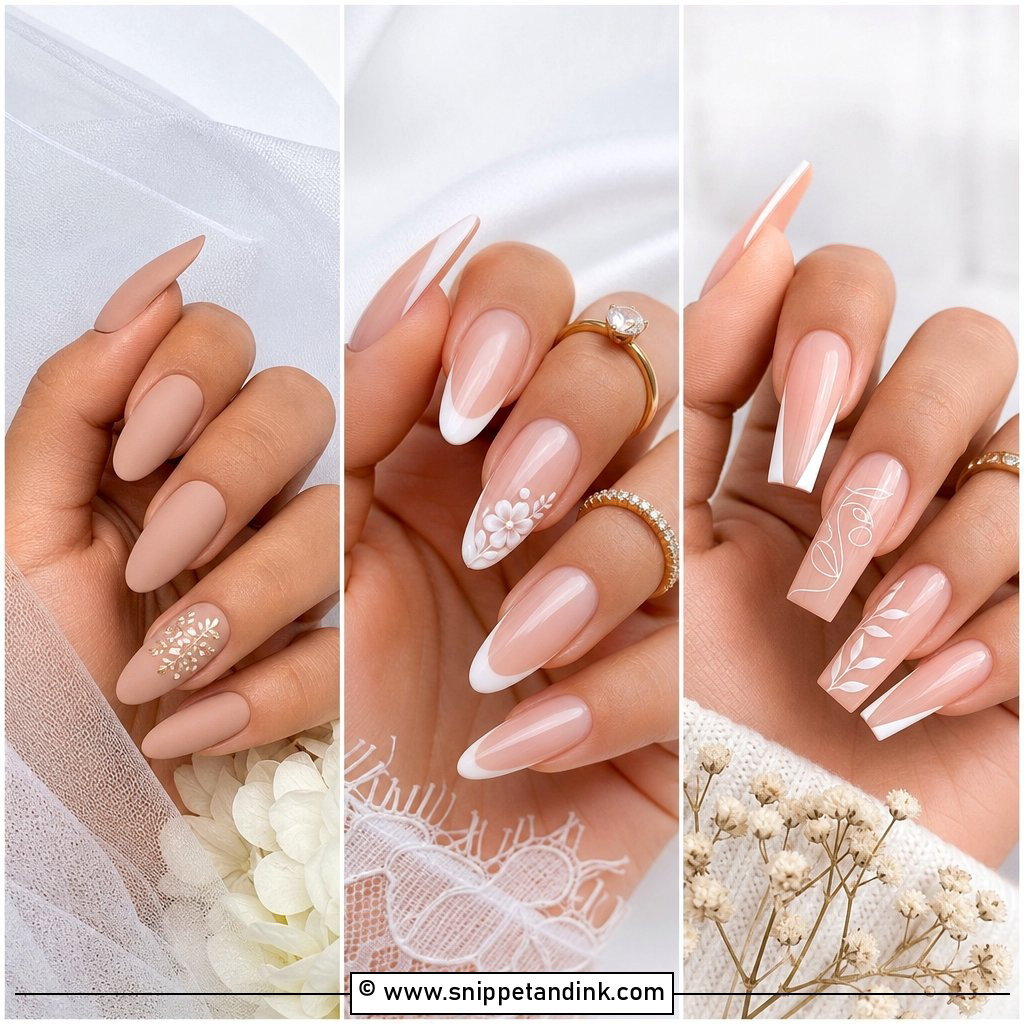
15. Ivory Almond Wedding Nails
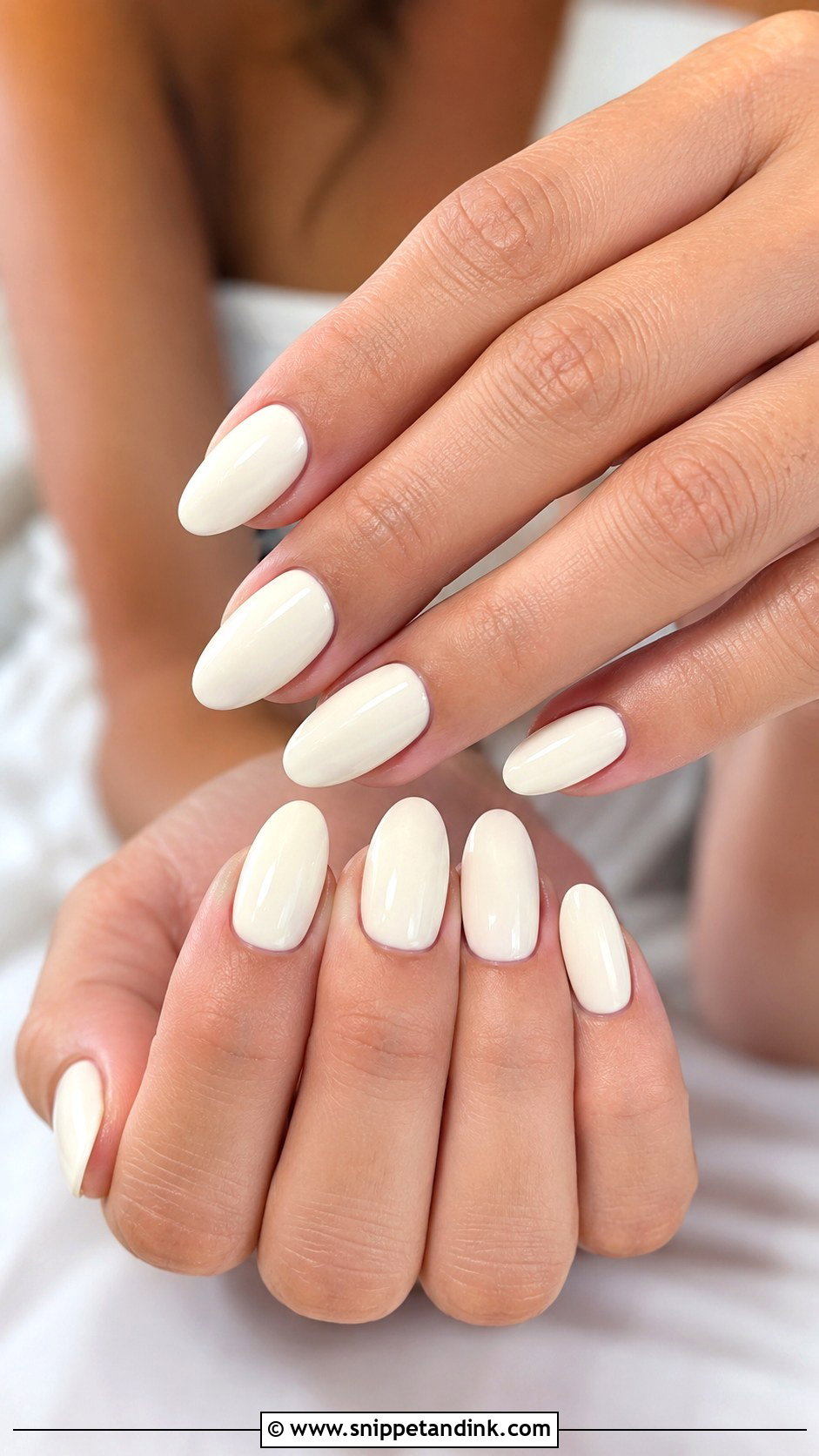
With an ivory, champagne or vintage-style dress, I’d choose ivory polish over pure white nearly every time. The creamy tone sits in the same family as the fabric, where stark white can make an ivory dress look yellow by comparison. A high-gloss finish keeps it smooth; a single tiny pearl or a fine shimmer adds detail. Keep the peak balanced and not too pointed. It’s also a warmer, more natural-looking option against the skin than bright white.
16. Sheer Pink Almond Wedding Nails
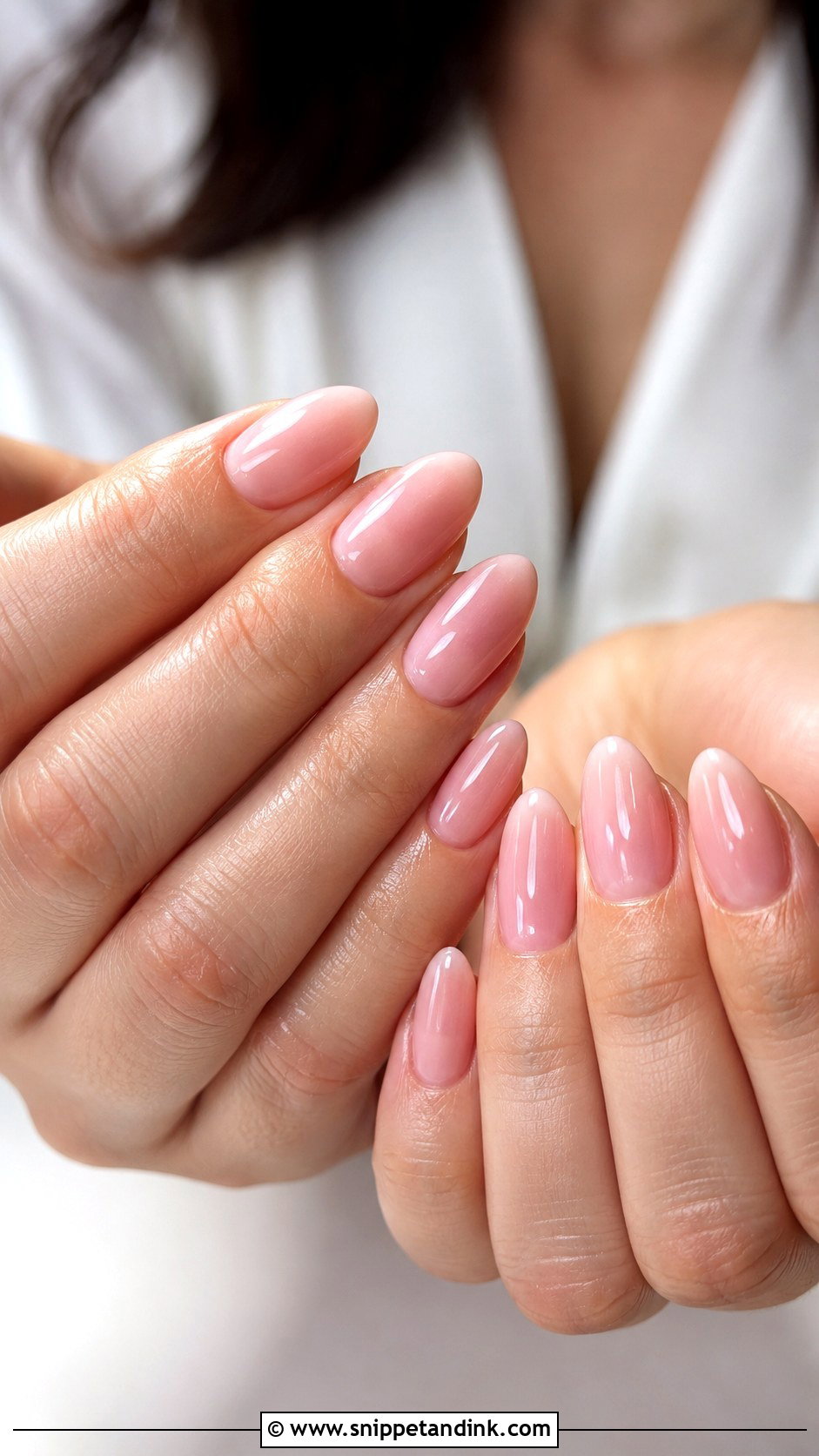
Sheer pink is the quietest set here, and it has a practical advantage: it grows out softly, with no harsh line at the cuticle after a week. That makes it a sensible choice if you’re flying off on honeymoon straight after the wedding. Some of your natural nail tone shows through, so neat cuticle work matters more than usual. I recommend it to brides who rarely wear colour but still want their hands to look cared for. A glossy top coat finishes it.
17. White Swirl Almond Wedding Nails
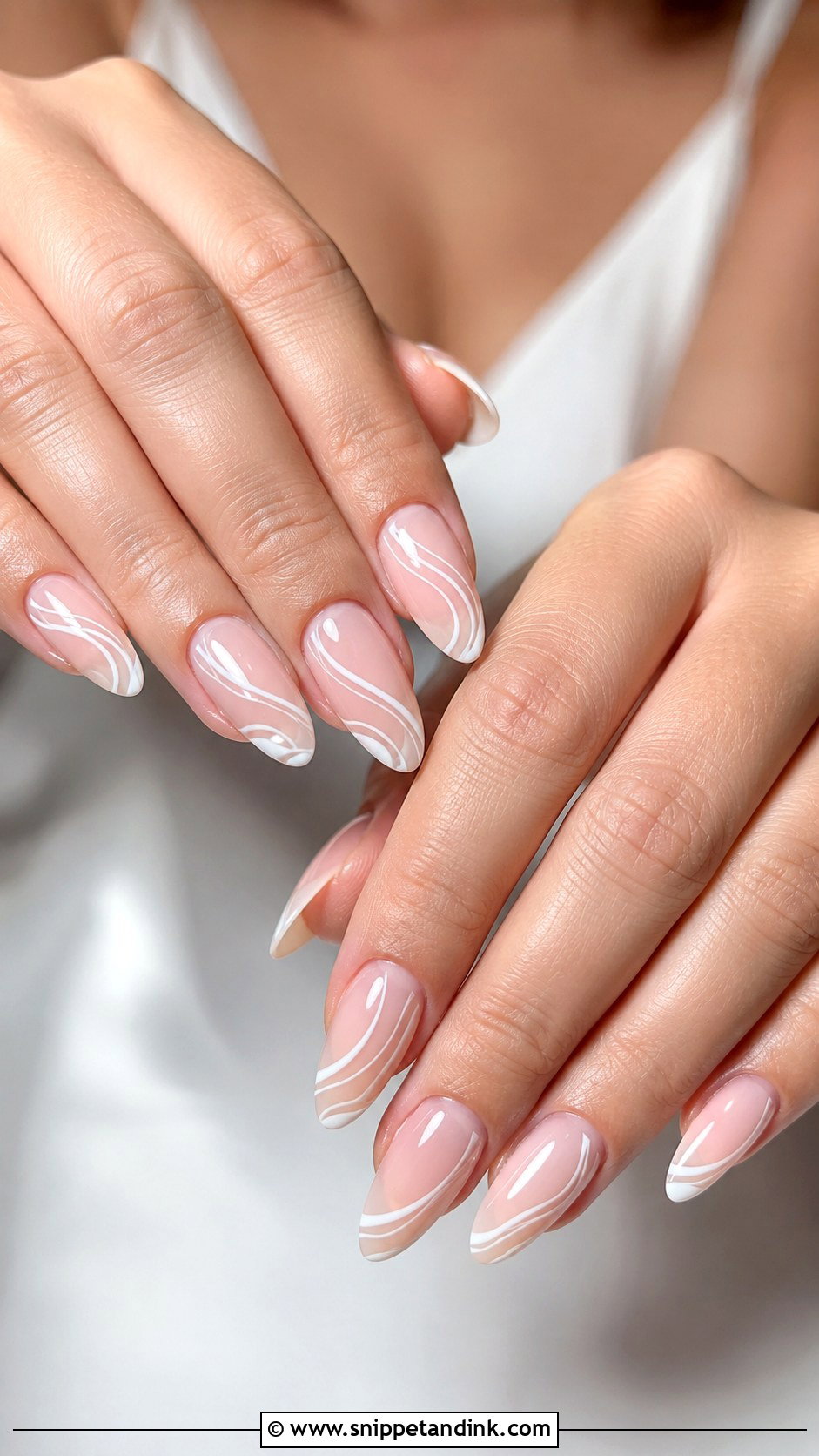
Swirls give movement without flowers, glitter or pearls. White swirl almond wedding nails usually start from a nude, blush or milky base with thin white curves added across every nail or a few accents. The lines follow the taper of the almond, which makes them look intentional. Line quality is everything: I use a long, thin striping brush and keep the spacing generous. Thick or shaky swirls look dated quickly in photos.
18. Matte Nude Almond Wedding Nails
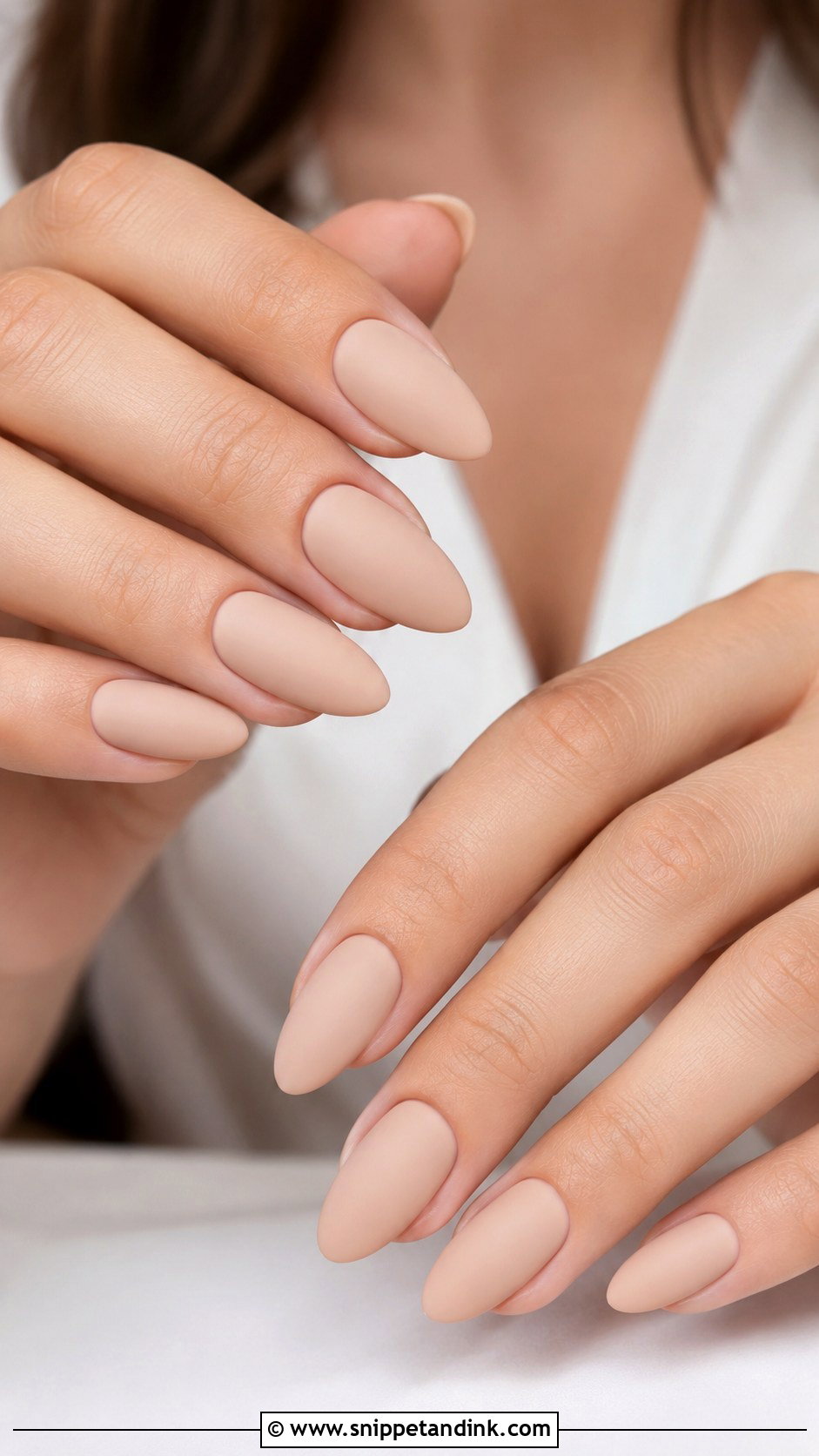
Matte nude has a modern, editorial feel that suits a simple gown and sleek hair. The catch is that a matte finish shows every ridge and mark, so I level the nail surface carefully before the matte top coat goes on. It also absorbs oils from hand cream and self-tanner, so keep both away from your nails in the wedding week. Choose a nude that suits your undertone. Worn this way, it’s one of the easier sets to live with afterward.
19. Glitter Ombré Almond Wedding Nails
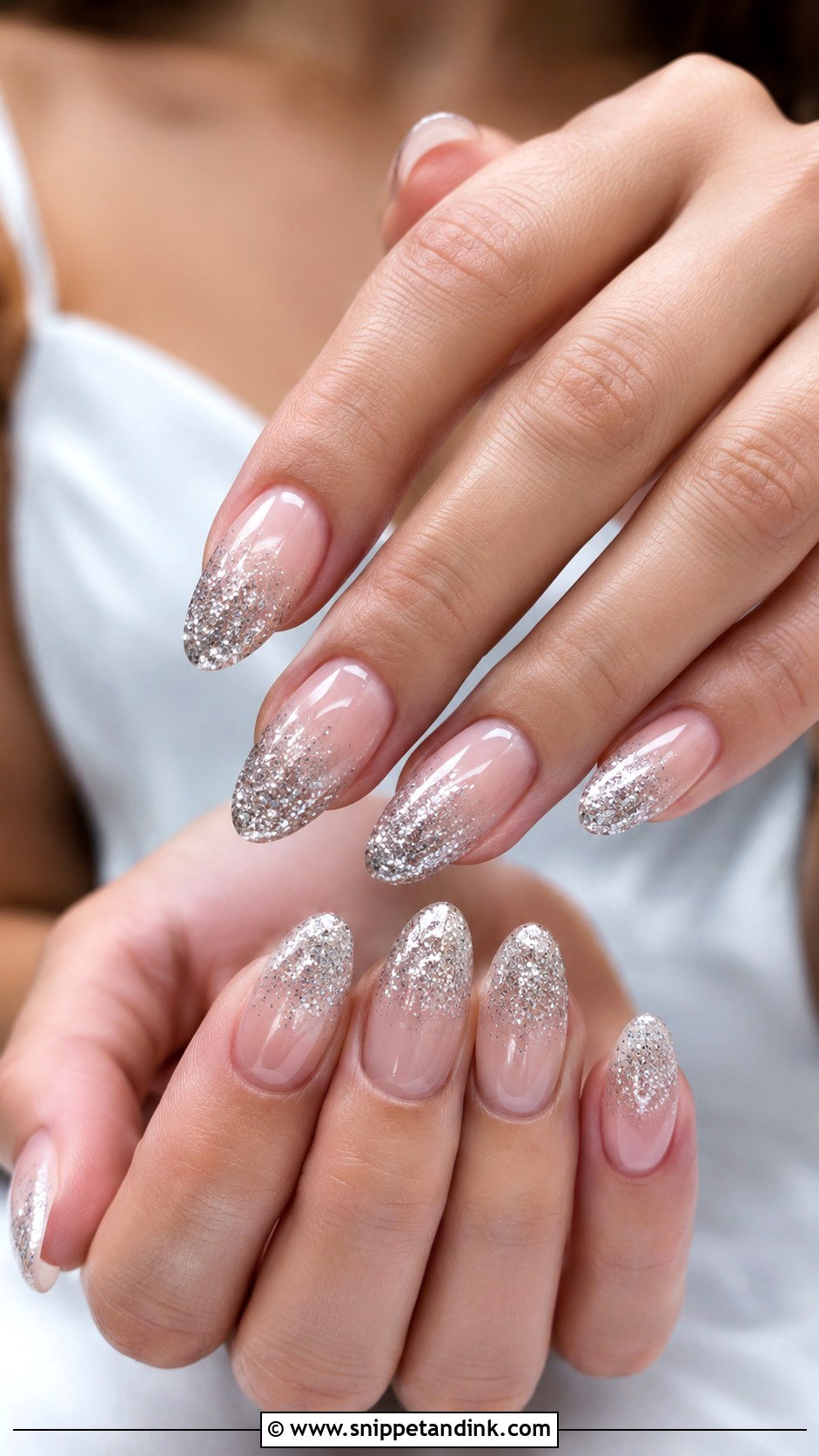
A glitter fade can run from the tip down or from the cuticle up. Tip-down lengthens; cuticle-up hides regrowth, which is useful if the set must last two weeks. Over a nude, blush or milky base, fine silver, pearl or champagne glitter keeps it delicate. Medium-length almond nails show the fade best. I always finish with a thick, smooth top coat so the surface doesn’t feel gritty, which also stops it snagging your veil.
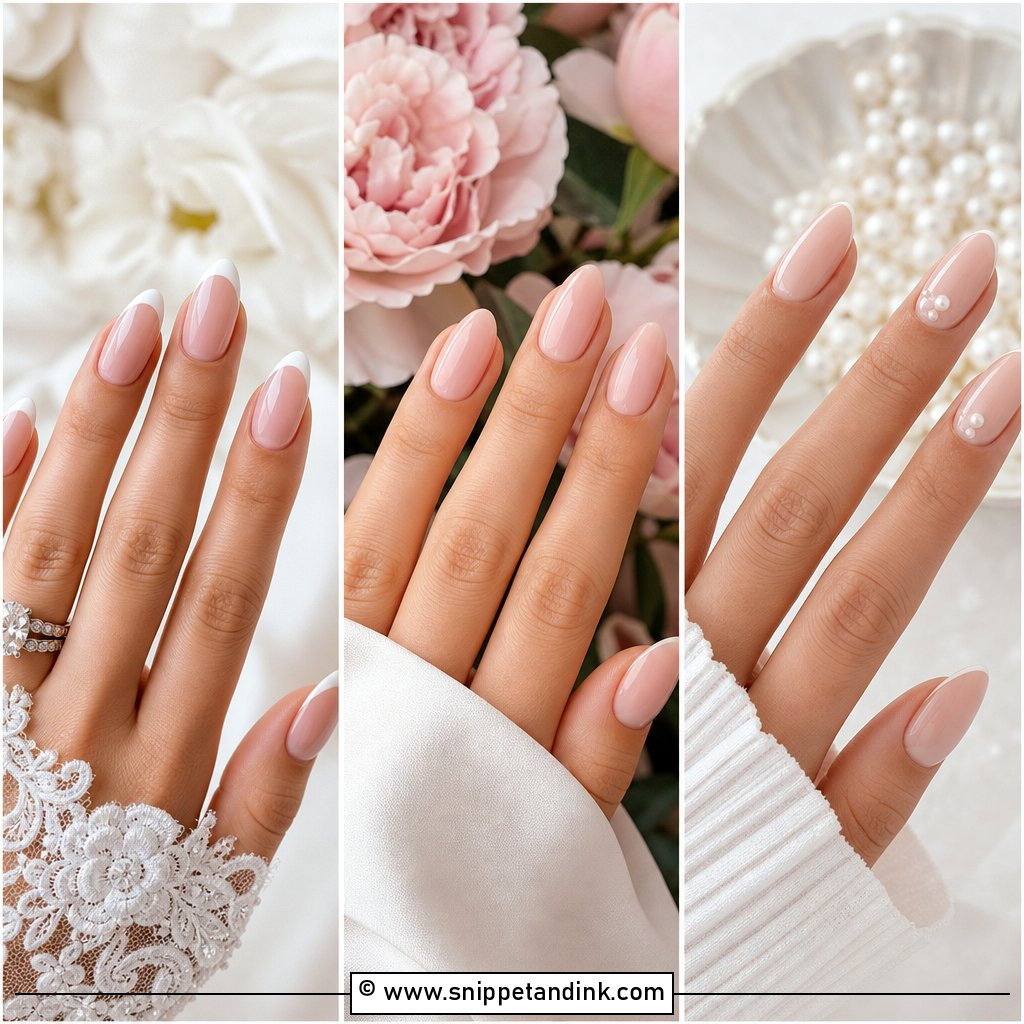
20. Short Almond Wedding Nails
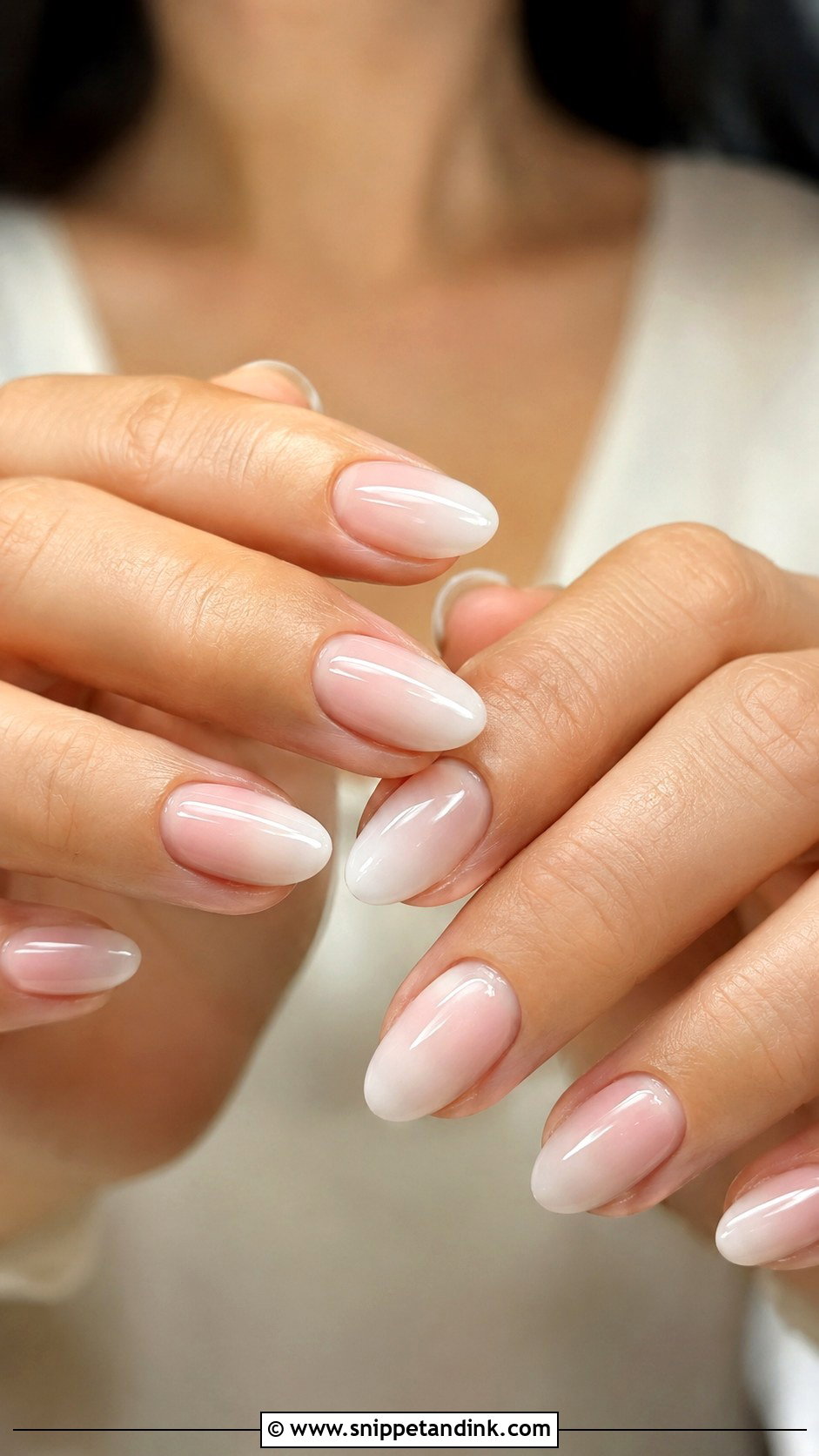
You don’t need extensions to have a polished bridal manicure. A short almond with only a couple of millimetres of free edge still softens the fingertips and gives a tapered outline. Milky white, sheer pink, nude, baby boomer and micro French all suit it. Short nails also break less, which matters during a week of carrying boxes and tying ribbons. The key is precise, even shaping, so the short length looks chosen rather than settled for.
What to Look For in a Nail Tech’s Almond Work
Almond is one of the harder shapes to file well, because the peak has to sit dead centre on every finger. Before you book, study the tech’s portfolio with a few specific things in mind.
- Symmetry across the hand. Look at photos showing all four fingers together. The peaks should line up and the tapers should match.
- The side view. A good structured nail has a gentle rise in the middle and a thin, even tip, not a flat plate or a thick lump.
- Cuticle work in close-ups. Polish should sit just short of the skin, with no flooding into the cuticle and no gap.
- Fine-line art. If you want lace or swirls, ask to see that exact kind of work, not just plain colour.
At the trial, ask to see one finger shaped before the whole hand is filed. It is much easier to adjust the peak or length at that stage than to fix ten nails afterward.
Will Your Set Still Look Good on Day Ten?
Almond works for simple, detailed, glossy, matte, classic and modern sets alike. The right one depends on your dress, your jewellery, your skin tone, your natural length and how practical you need to be in the days around the wedding. Sheer pink, ivory and the classic French are the safest calls. Lace, pearls, florals, chrome tips and gold foil give more personality. A trial manicure a few weeks before tells you how the set wears and feels, so the version you wear down the aisle has already proved itself.
You'll Like These Ideas:


Leave a Reply