
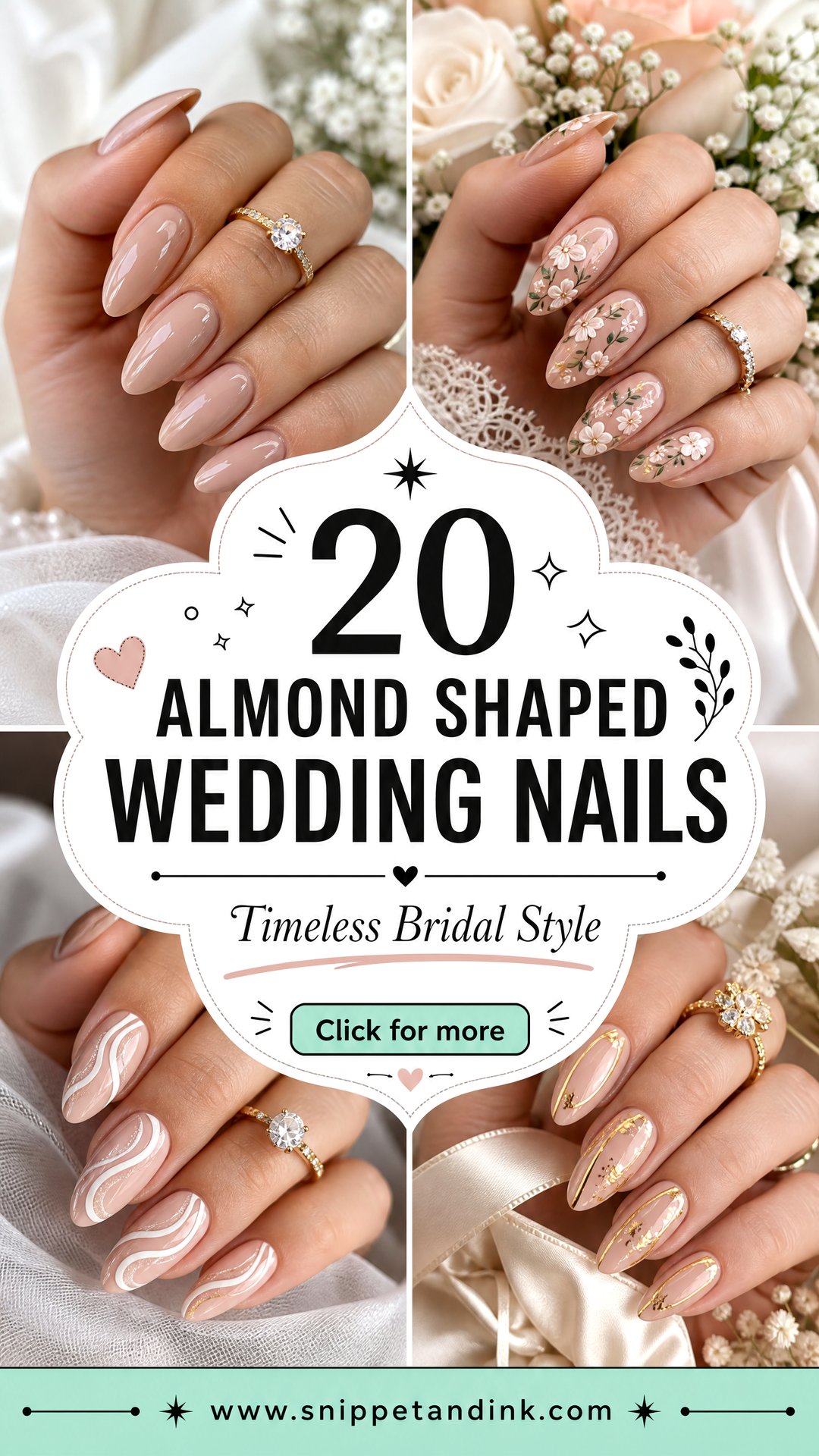
Ring photos are unforgiving, and almond is the shape that copes with them best. The taper makes fingers look longer, the rounded peak keeps it from looking sharp, and it works as well for a bridesmaid or guest as for the bride. Sheer pinks, milky whites, French tips, chrome, florals, pearls and fine shimmer all sit comfortably on it. Whether you want a plain bridal set or a detailed nail art set, the shape gives art room without tipping into drama. I’ve written up twenty almond sets below, from the very classic to the quietly modern, with the practical notes I give clients at the table: how each one is done, what it needs from your nails, and when I’d suggest something else.
Six Hands in One Photo, Not Six Identical Sets
Almond suits nearly every hand, which makes it a good shape for a whole bridal party. Identical sets on six people can look like a uniform in group photos, though. I prefer a shared thread with small differences.
- Keep the bride’s set the most detailed. Bridesmaids can wear the same base colour with a simpler finish, such as plain milky white against the bride’s milky white with pearls.
- Let each bridesmaid choose her own length. A short almond and a long almond in the same shade still look coordinated.
- Tie the colour to the bridesmaid dresses carefully. Blush suits most palettes; a nail that exactly matches a coloured dress often looks too much.
- Mothers of the couple tend to be happiest with a sheer pink or a soft French on short nails.
For a group, book together a day or two before the wedding and warn the salon early. A bridal party takes hours of chair time, and many salons need a deposit to hold several stations at once.
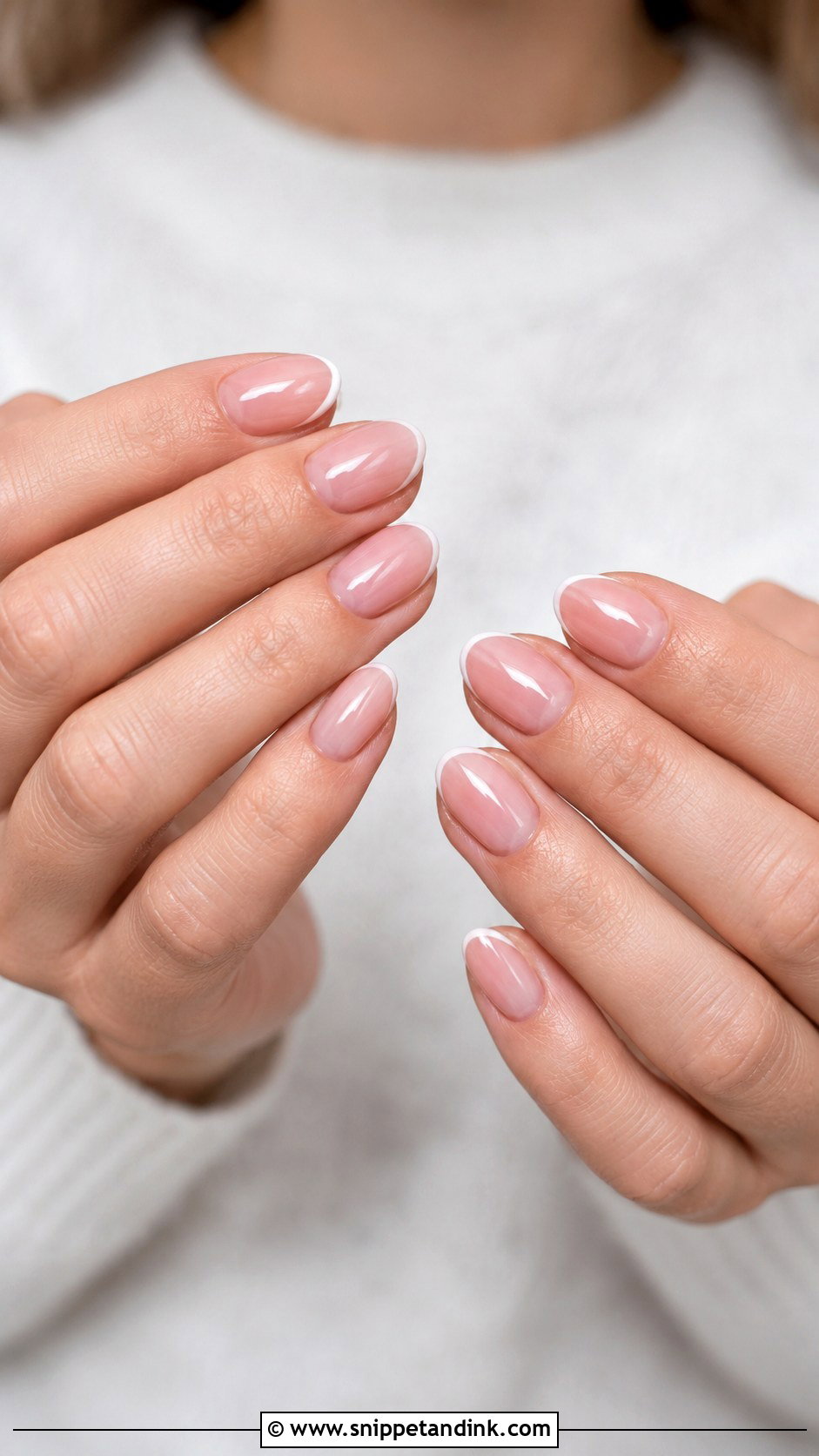
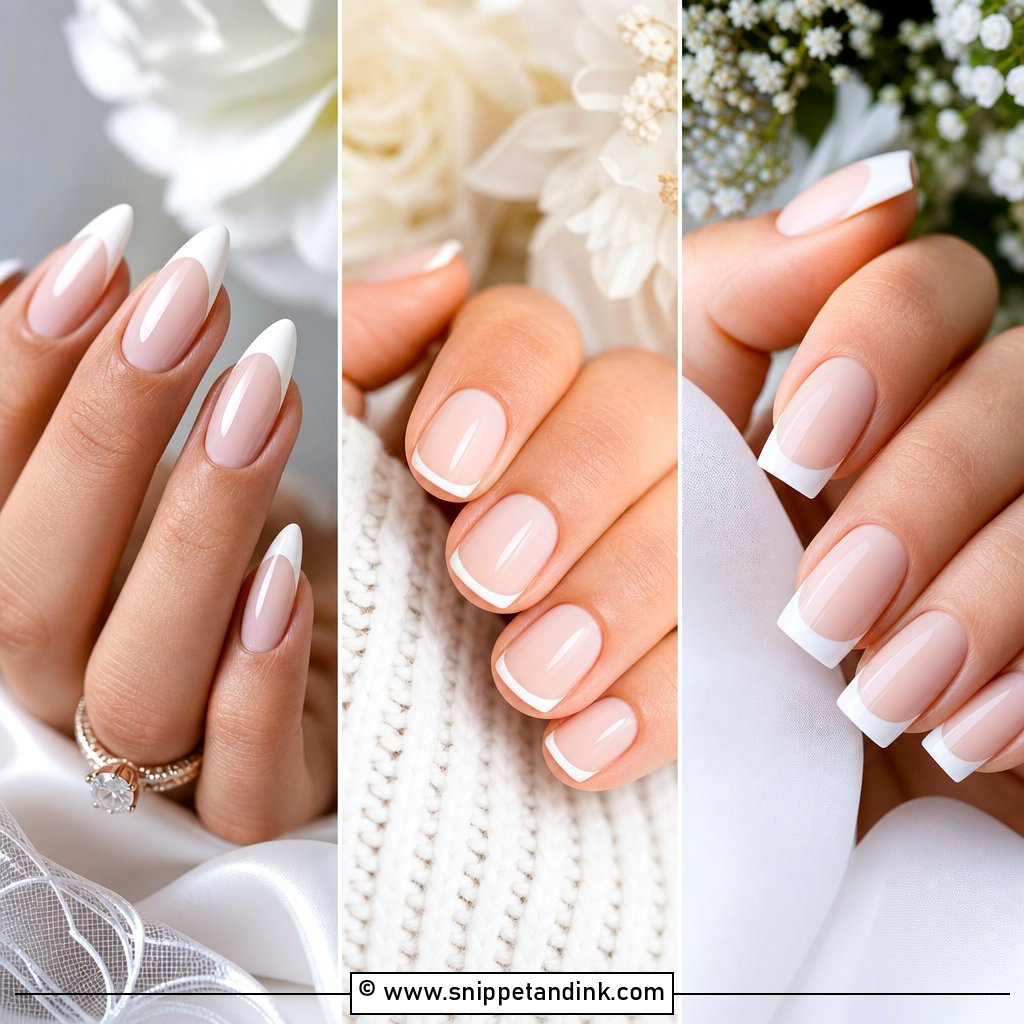
1. Almond Wedding French Tip Nails
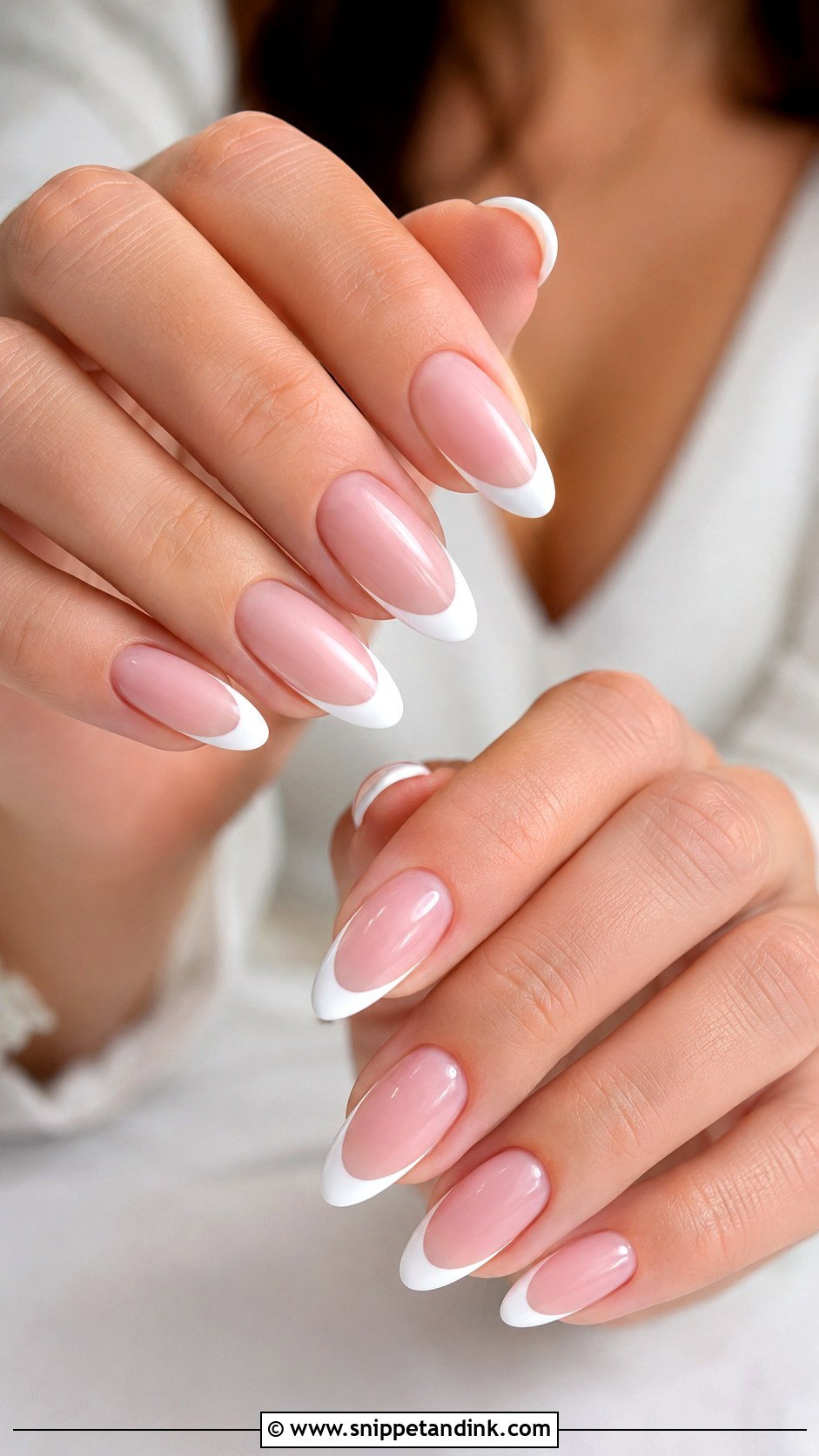
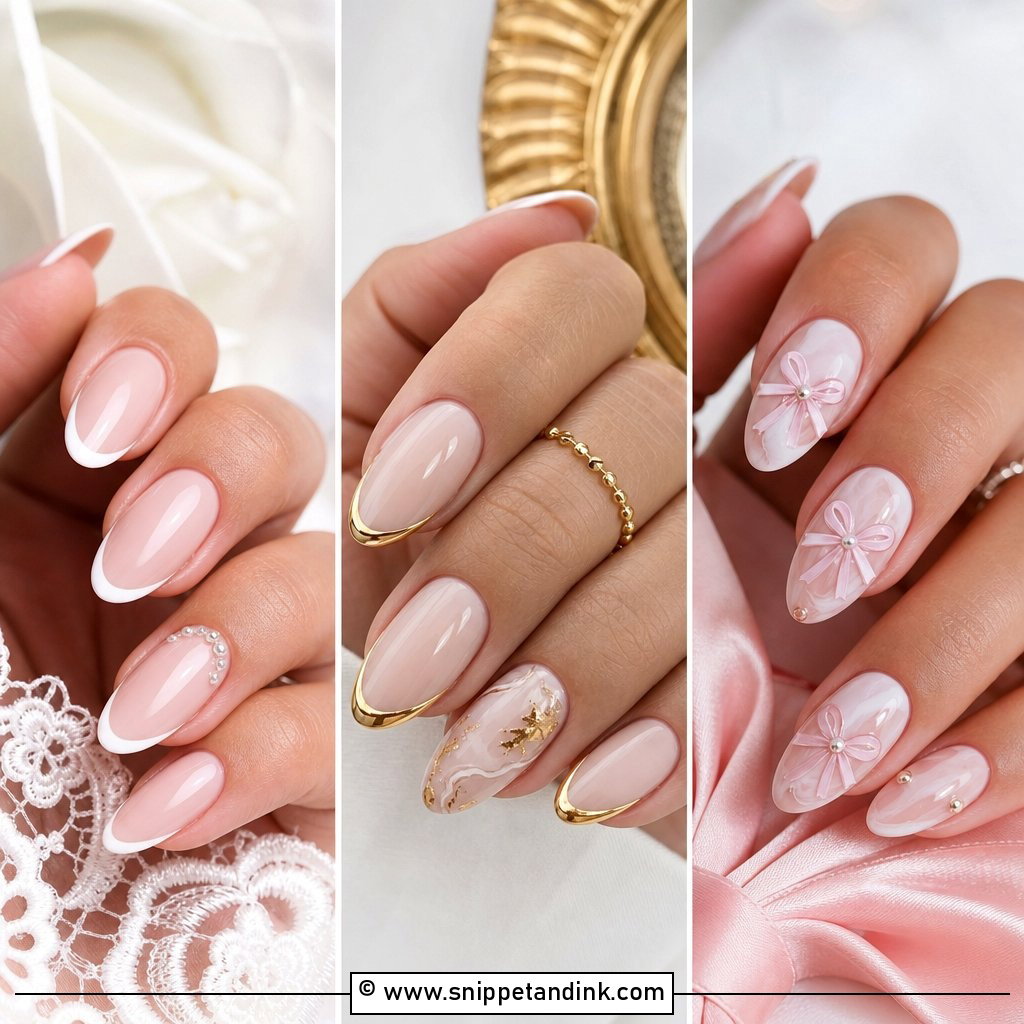
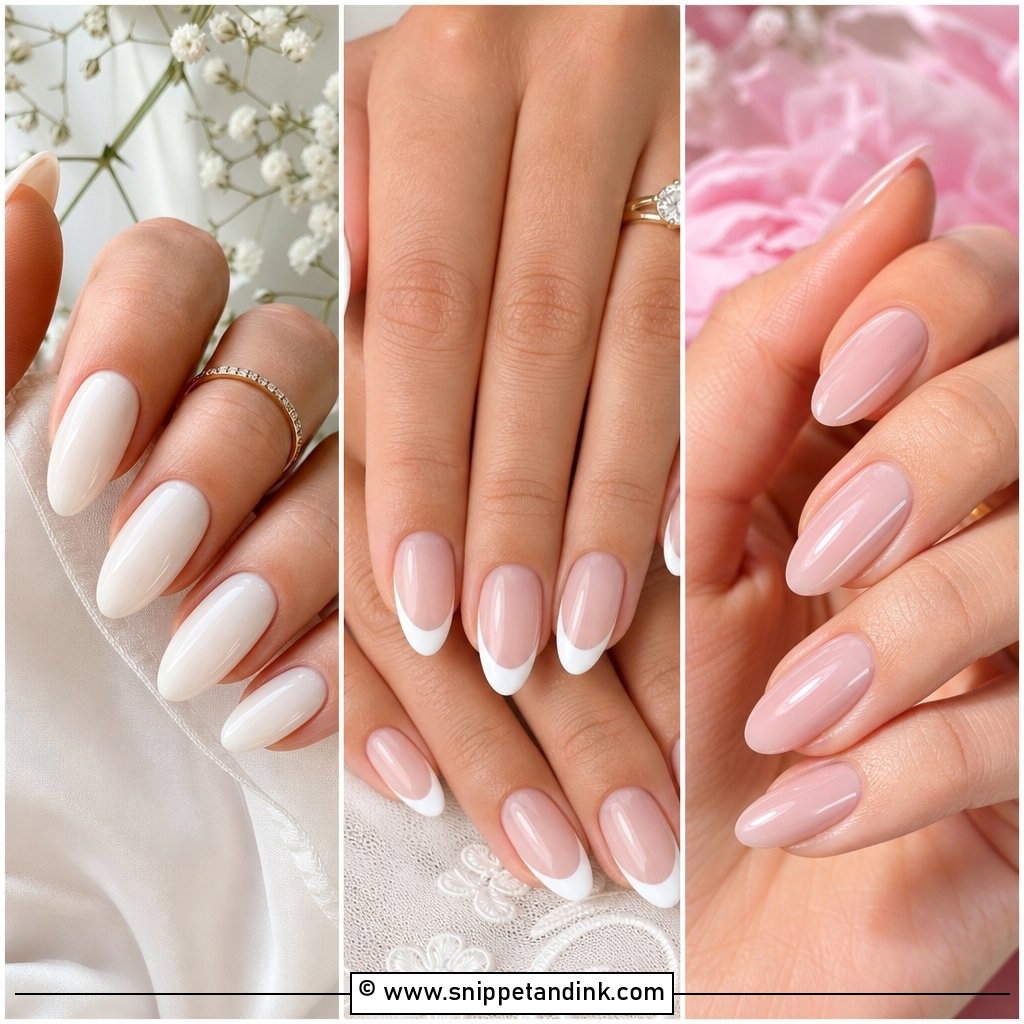
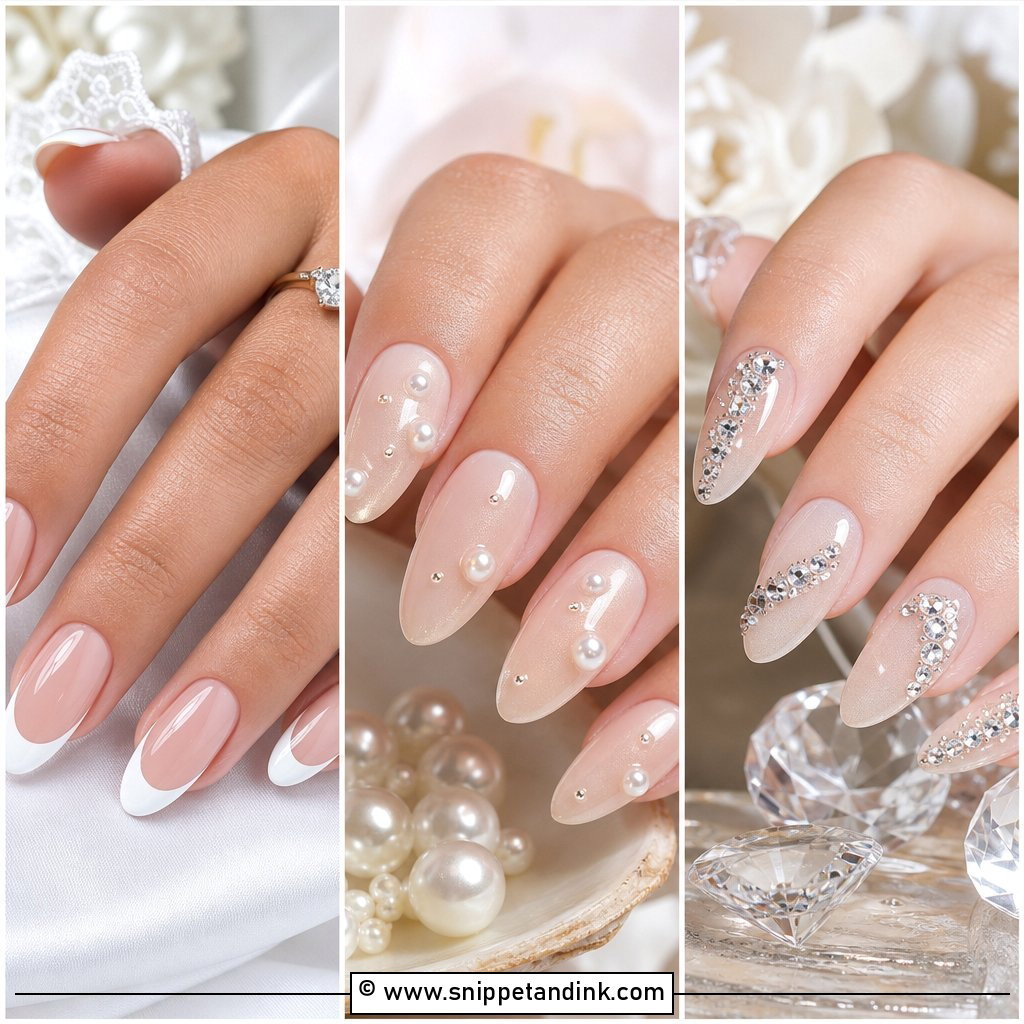
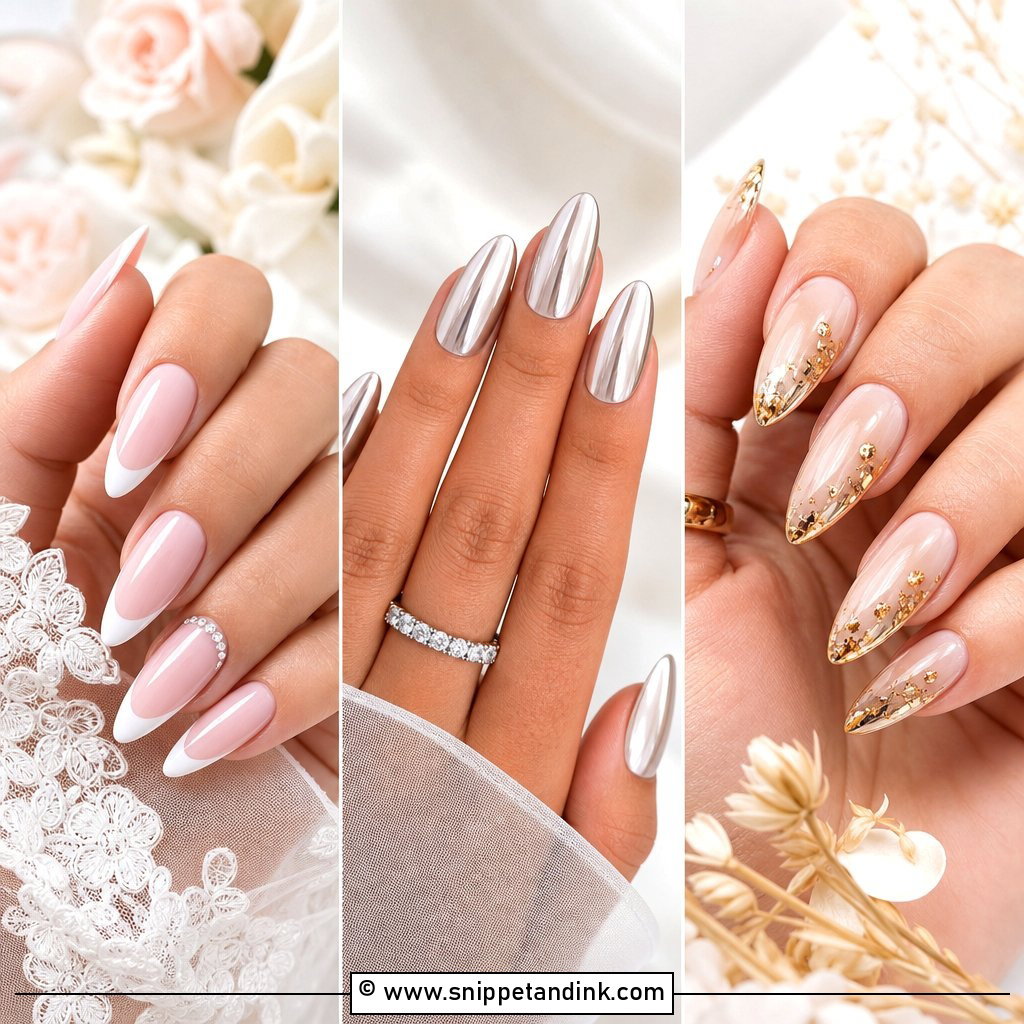
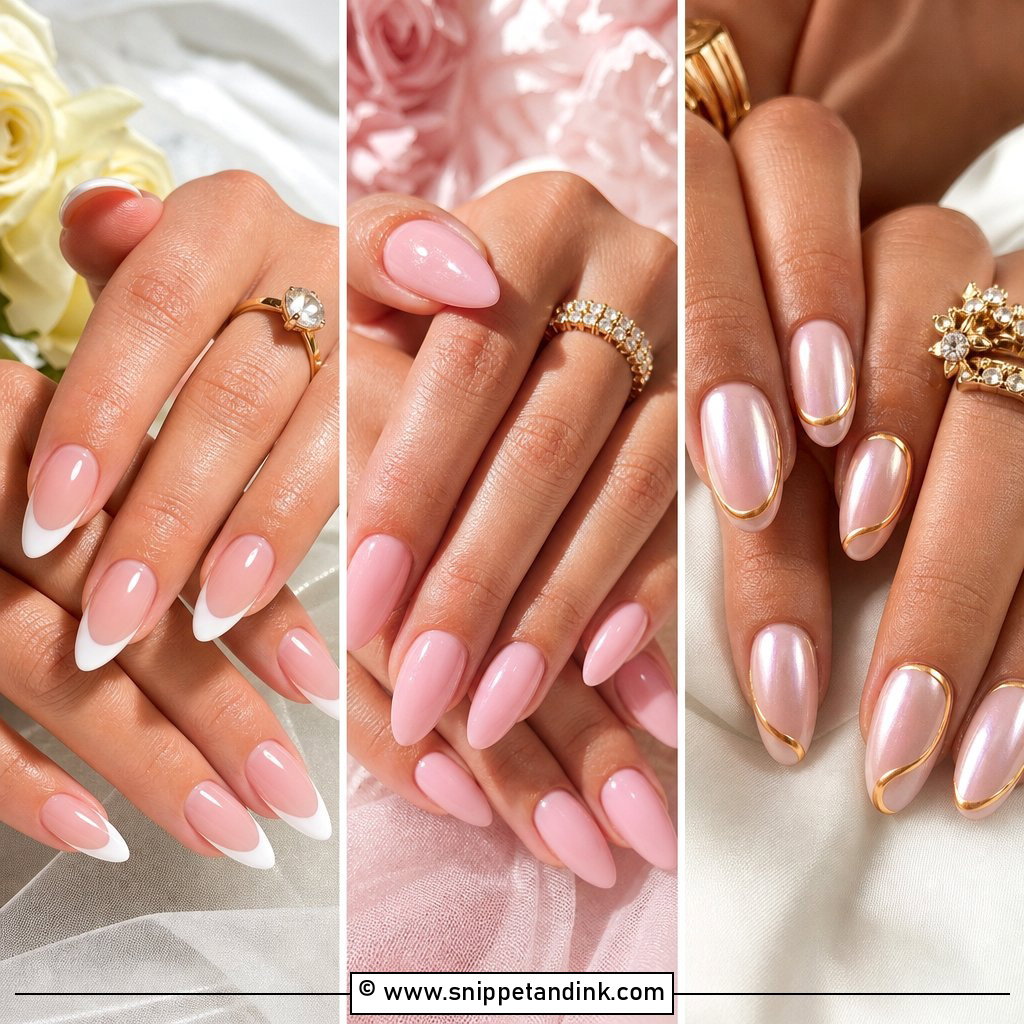
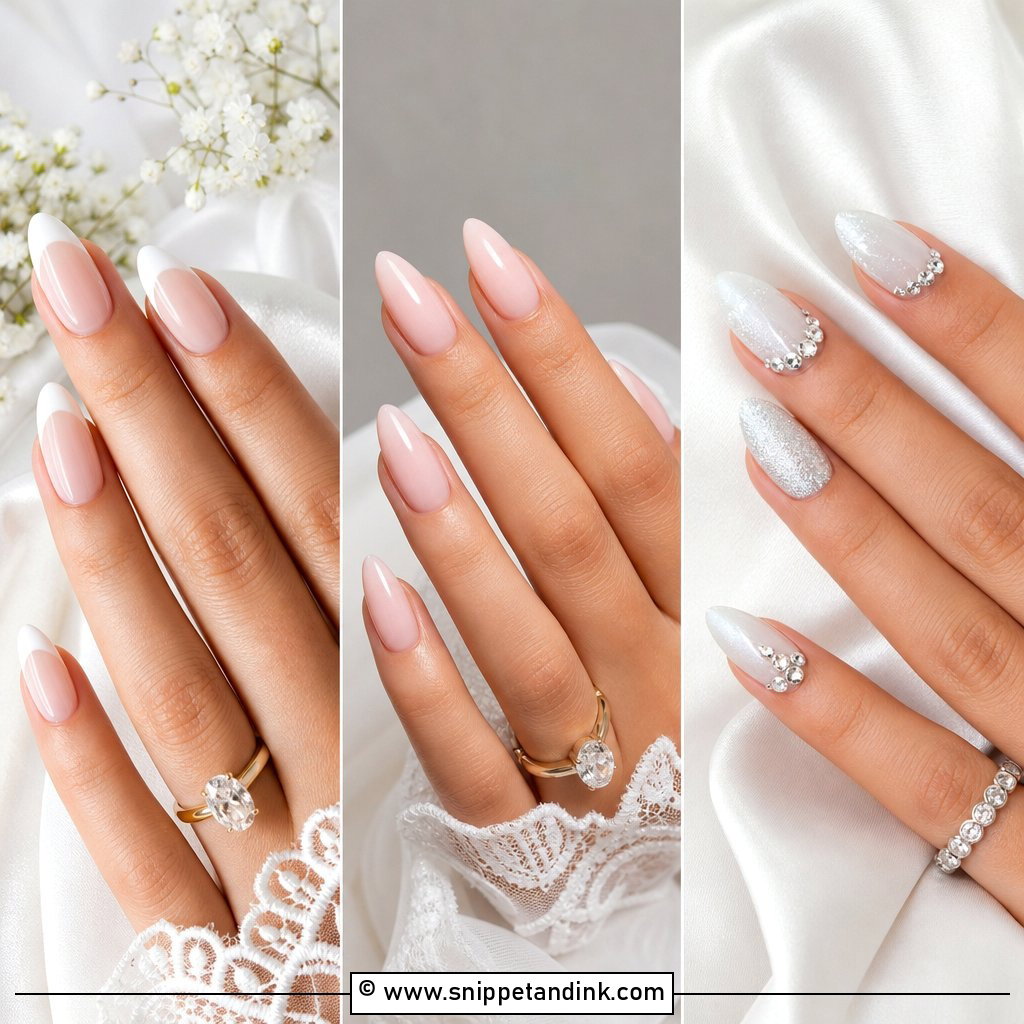
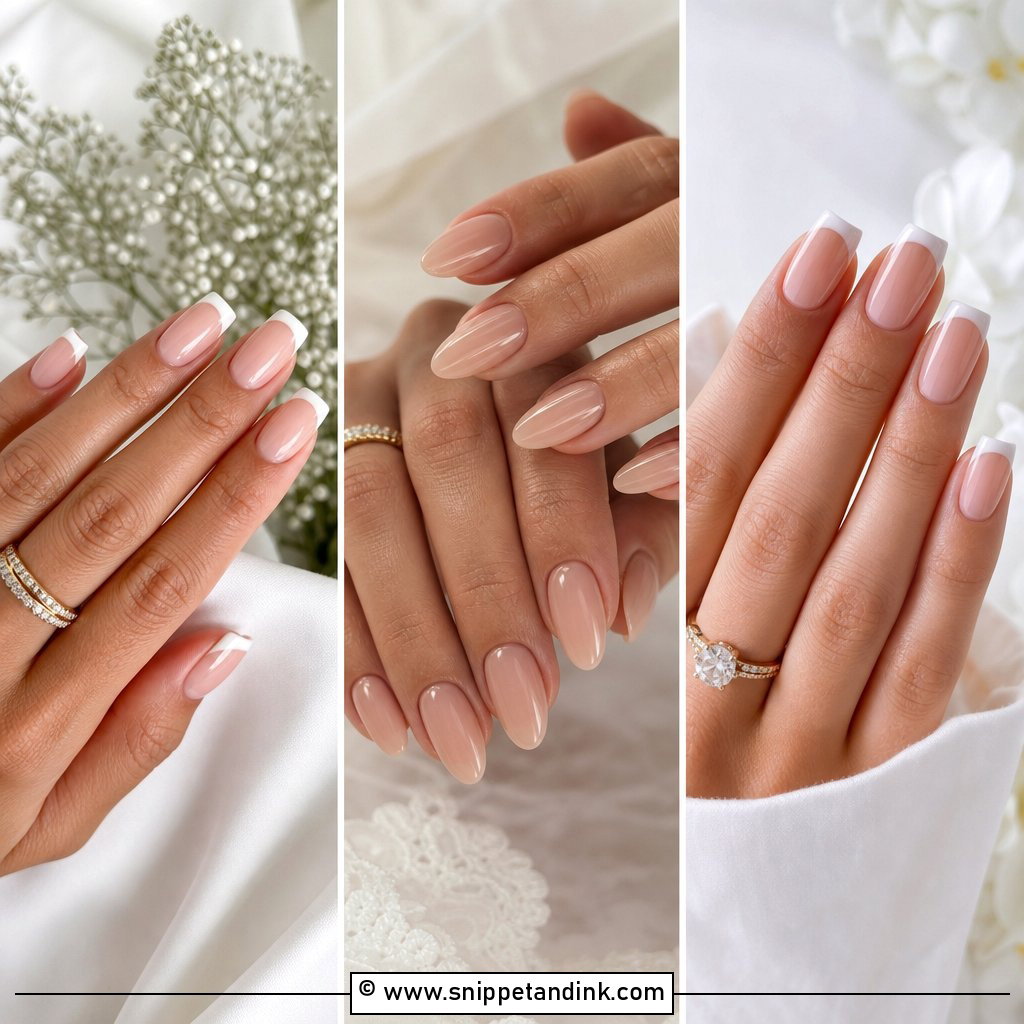
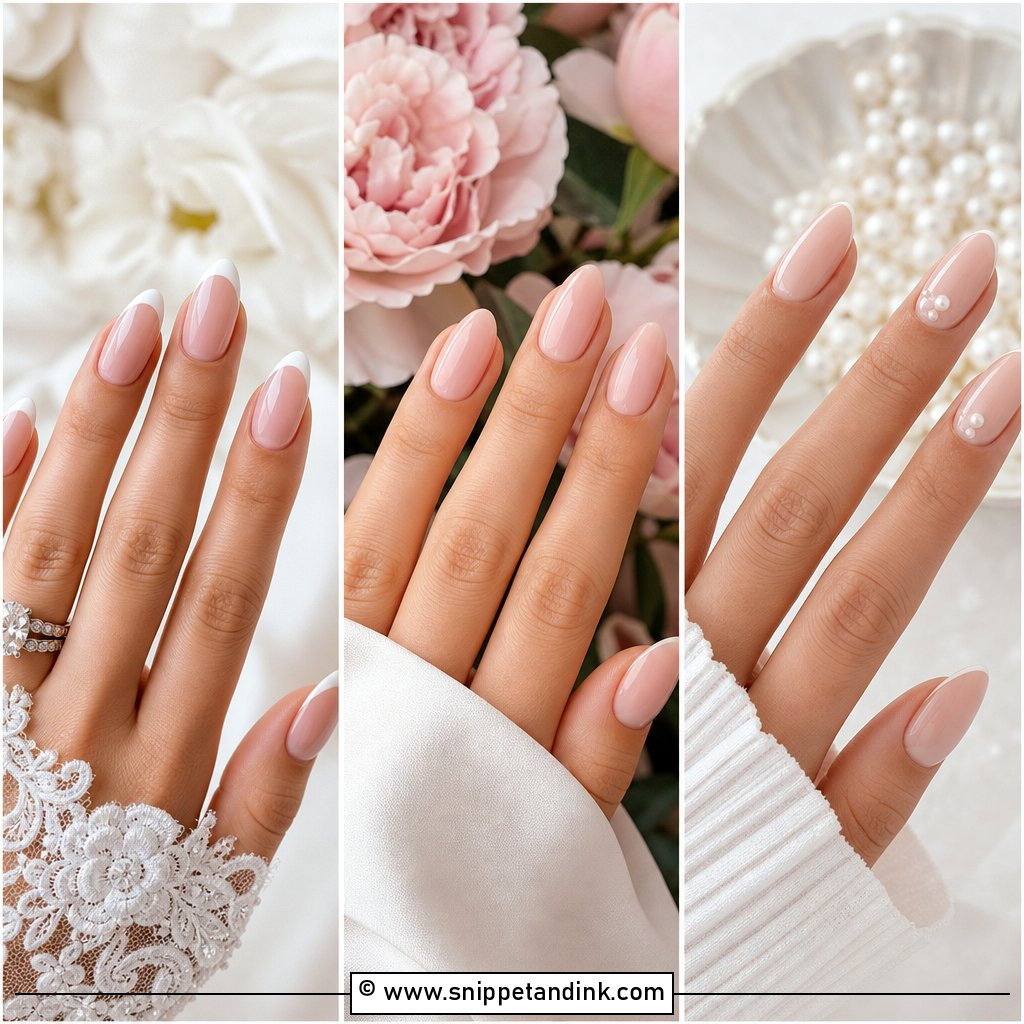
Few bridal sets are harder to get wrong. The white tip looks finer on an almond than on a square because the curve breaks up the line. I paint the smile line to follow the peak and keep it thin over a sheer pink or nude base. A thick tip reads older and heavier; a slim one reads modern. It suits satin and lace alike, and it never pulls attention away from an engagement ring.
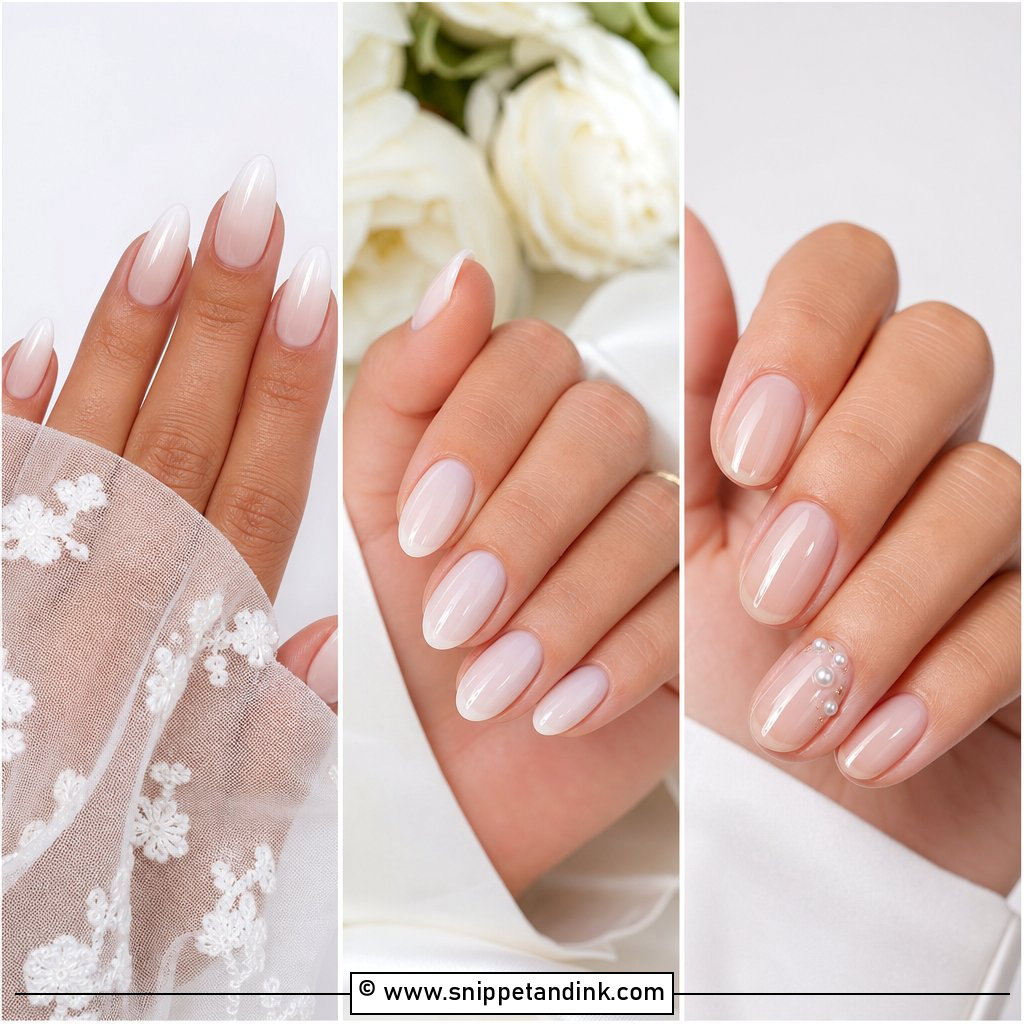
2. Almond Wedding Milky White Nails
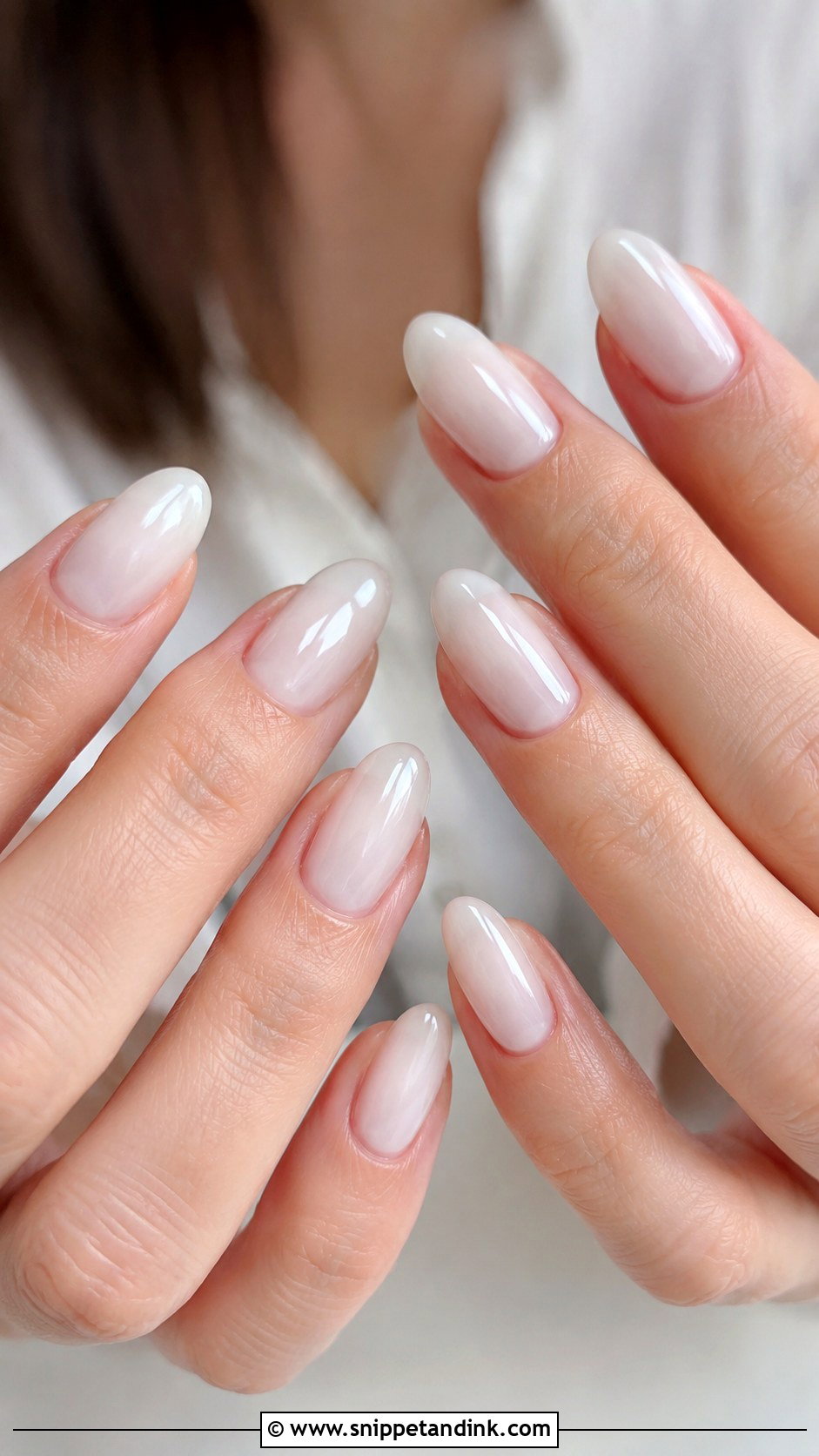
Milky white has a cloudy, half-sheer finish, softer than solid white, so it sits comfortably next to ivory, champagne, blush and white dresses alike. It’s easy to wear and fiddly to apply. Milky gels streak when laid on thick, so I build thin cured coats until the colour is even. Keep it glossy, or add a faint shimmer. Of all the trend-led sets, this one dates the least in photos.
3. Almond Wedding Chrome Nails
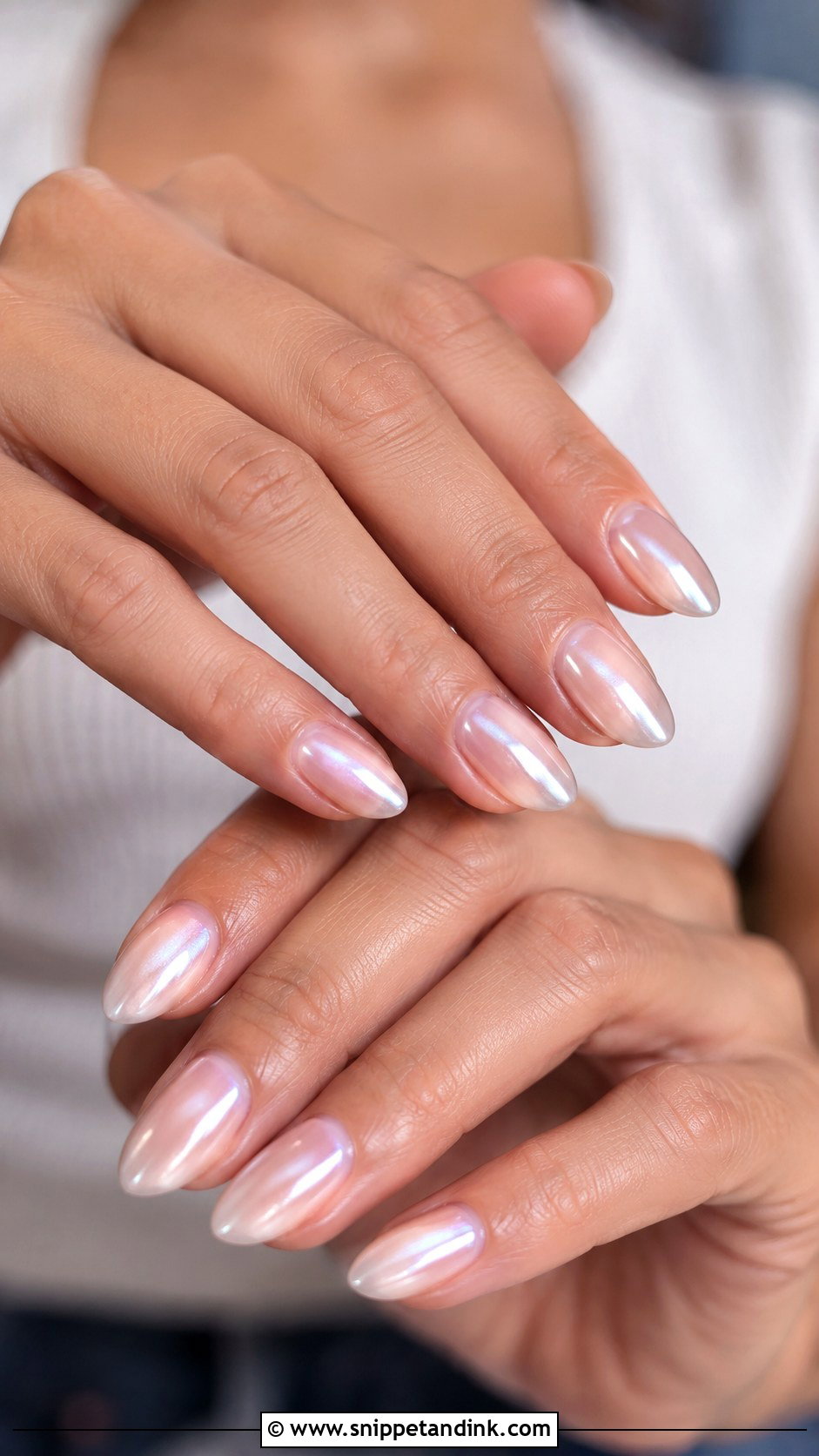
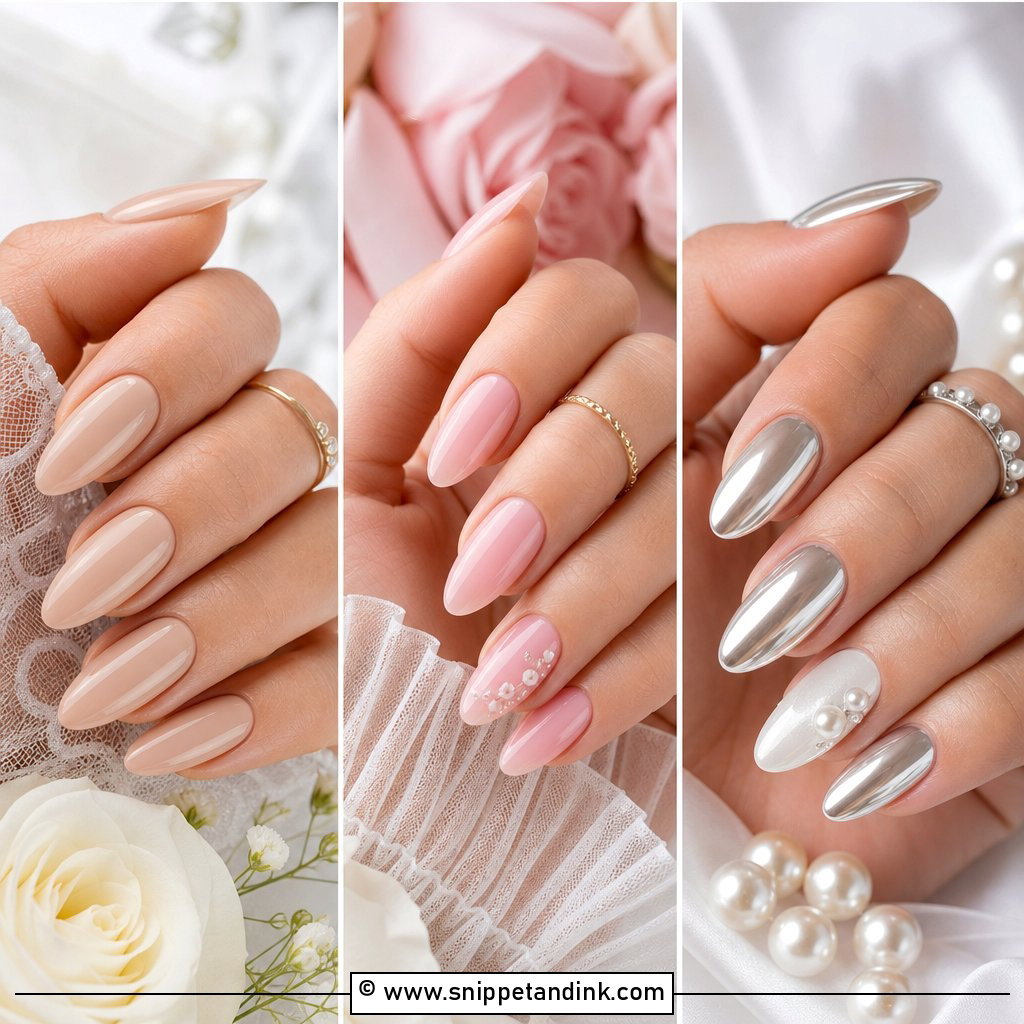
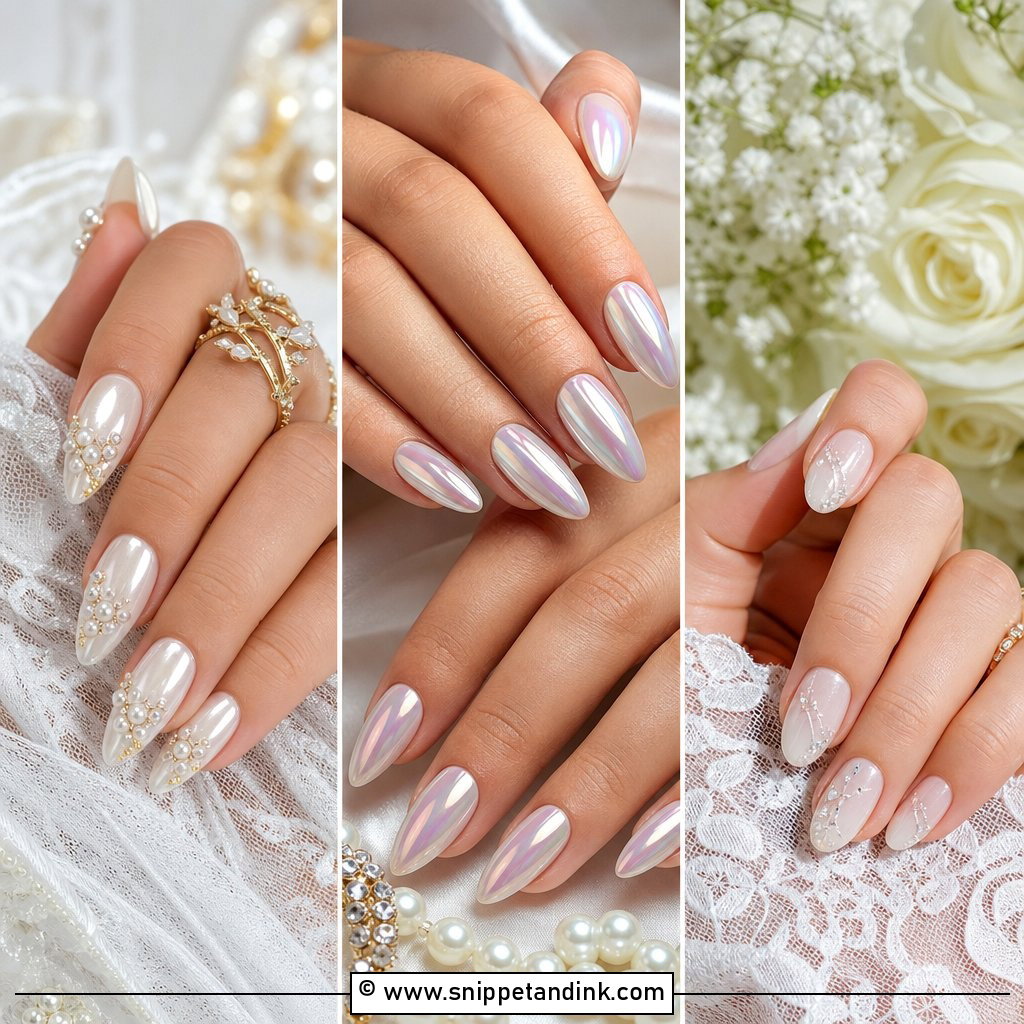
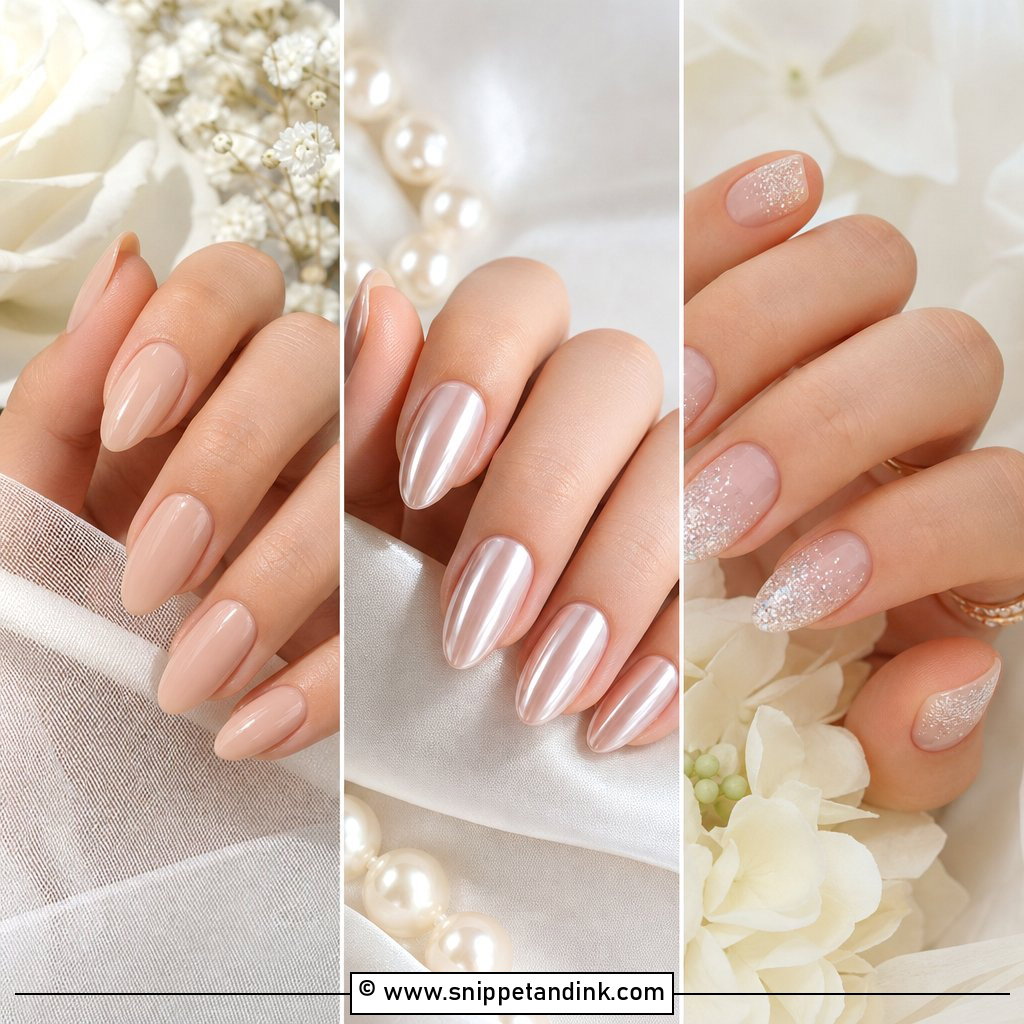
Chrome over a sheer nude, pink or milky white base gives a glazed finish, and on almond the light runs down the centre of the nail in one smooth stripe. The powder is buffed over a cured no-wipe top coat, then sealed. How much you buff decides the result: a light pass gives a gentle sheen, heavy buffing gives a mirror. For a bride, I almost always stop at the sheen. It suits satin dresses, pearl earrings and sleek hair.
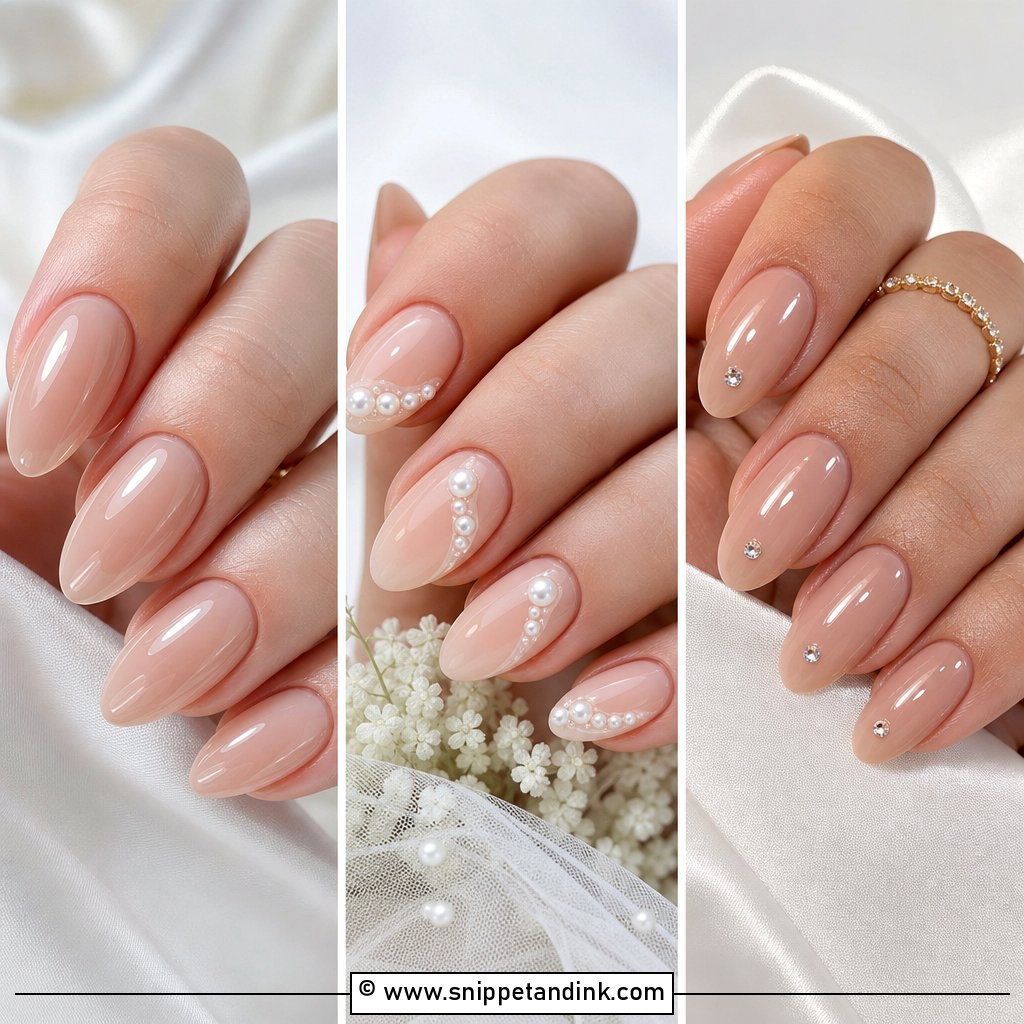
4. Almond Wedding Nude Nails
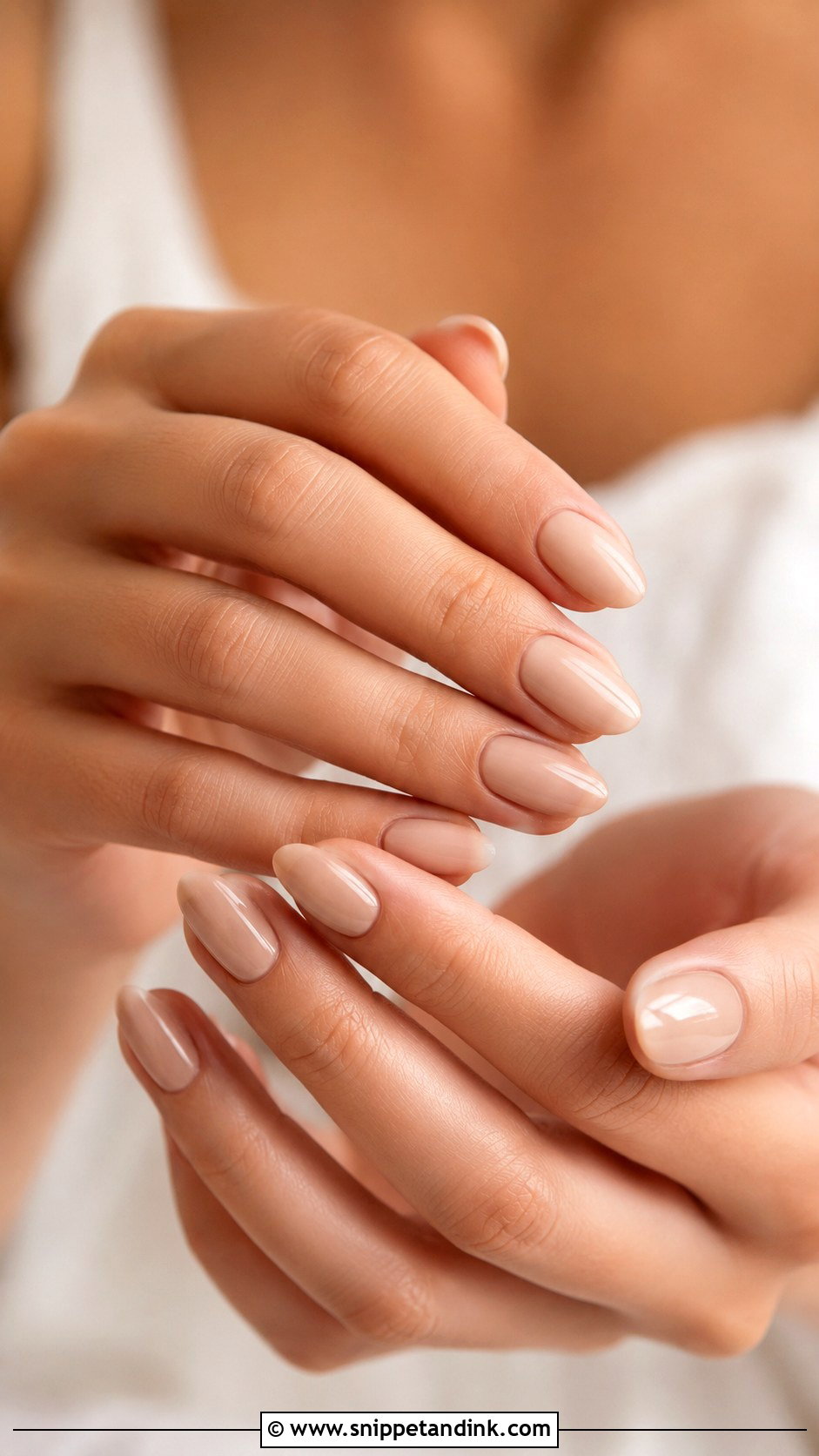
A good nude flatters your skin; a flat beige can make hands look washed out. As a starting point, fair skin suits soft pink nudes, medium skin peachy beige, olive skin neutral taupe, and deeper skin caramel, mocha or warm brown. I swatch on the nail itself, since bottle colour and cured colour often differ. A glossy finish is classic; a sheer jelly nude is softer and grows out more discreetly. This is one of the easiest sets to live with for a fortnight.
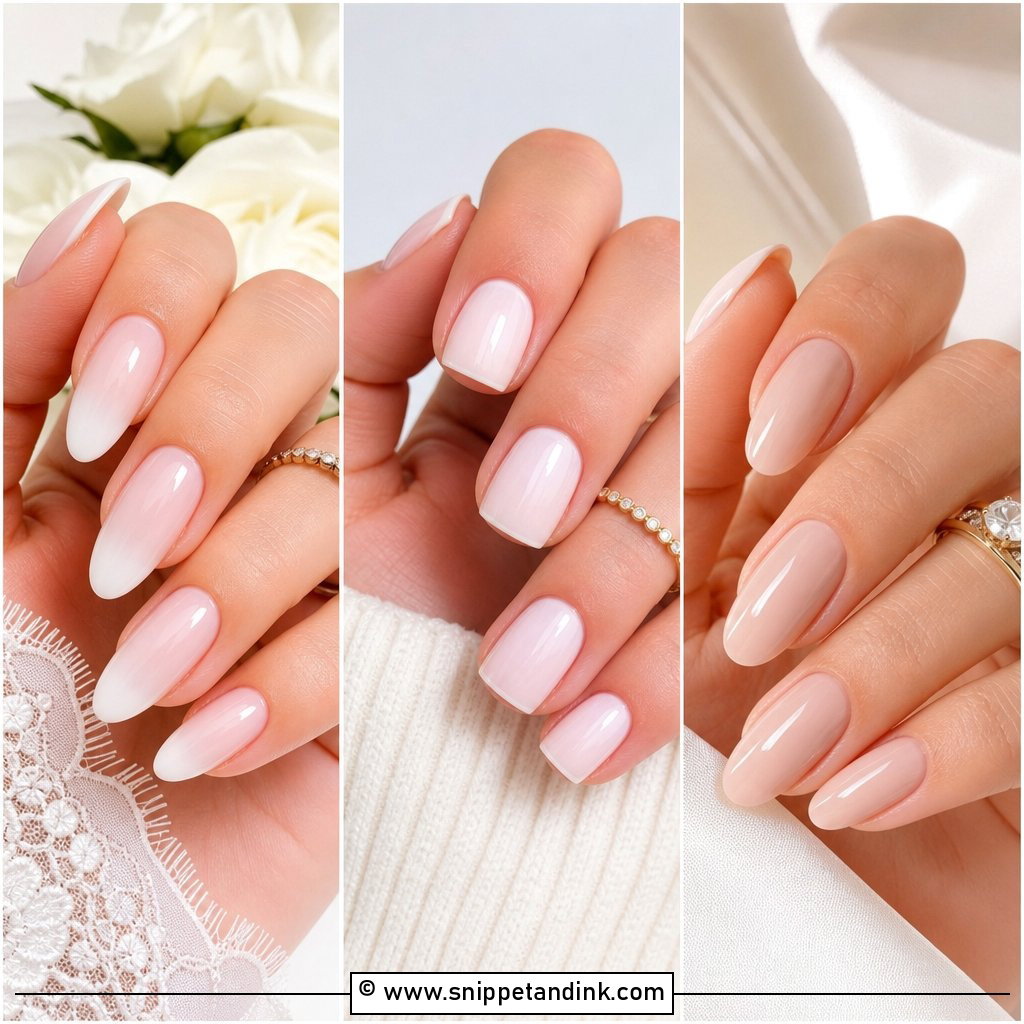
5. Almond Wedding Pink Nails
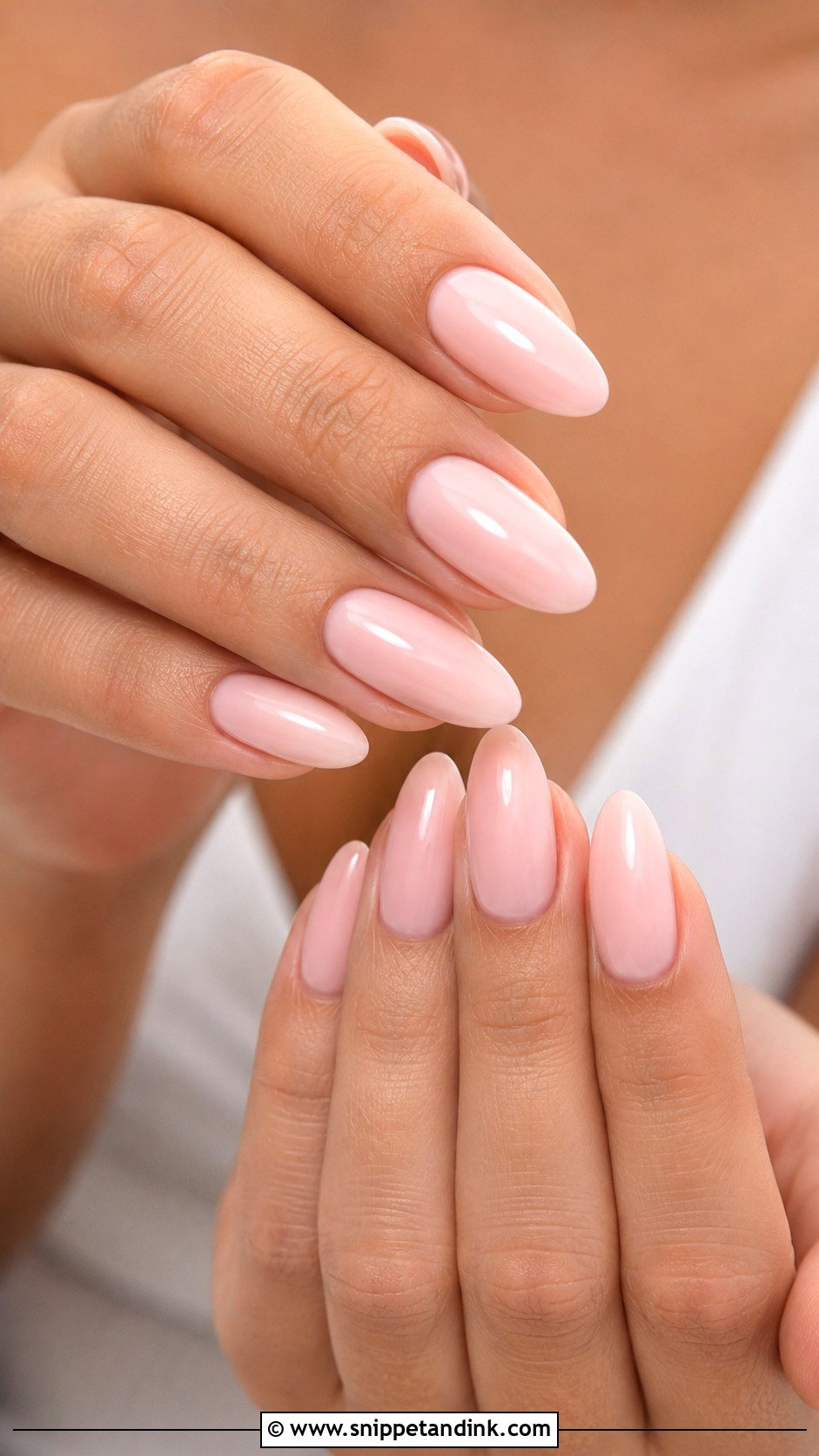
Pink comes in more versions than people expect: baby pink, sheer blush, rose and muted ballet pink each read differently on the hand. Ballet pink with a grey tint can look chalky on warm skin, while rose tends to flatter more people. I like pink on short to medium almonds, glossy for a clean look or with a tiny shimmer for warmth. It suits spring and summer garden weddings, and bridesmaids can wear it across a wide range of skin tones.
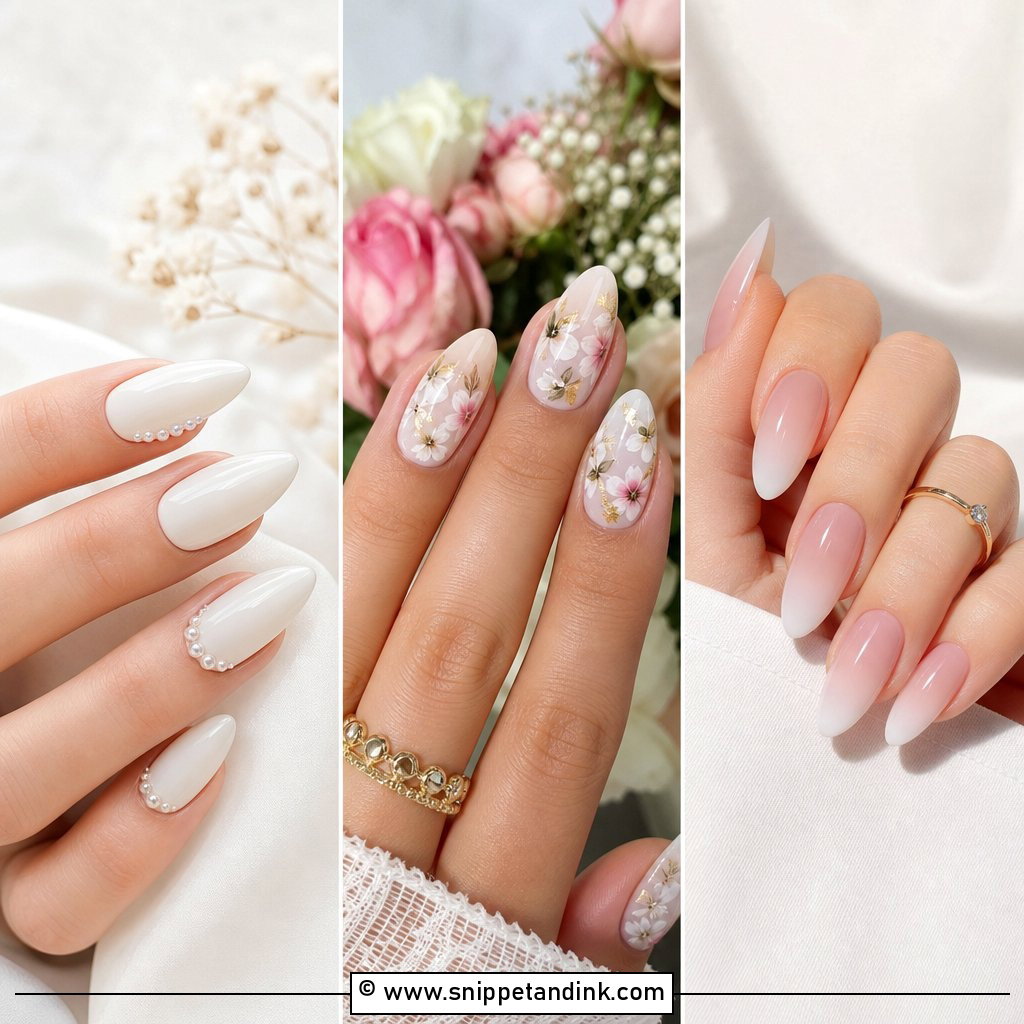
6. Almond Wedding Ombre Nails
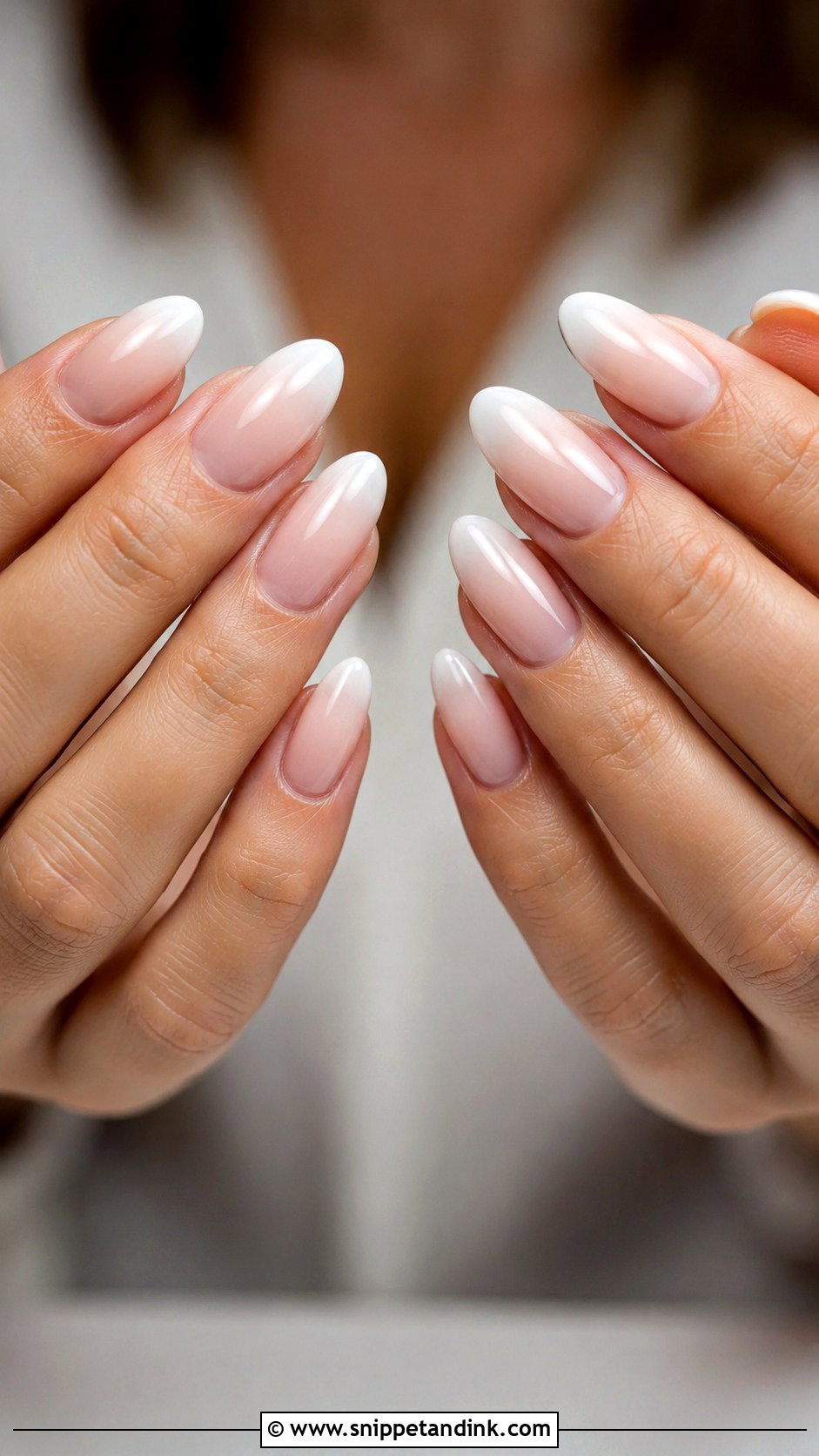
Ombre is two soft shades blended together, usually nude or pink fading into white at the tip, and it’s often called baby boomer nails. On almond, the fade follows the natural taper, so it looks more natural than on a square shape. I blend the gel in small passes with a brush; a sponge can leave texture. It’s the softer cousin of the French and suits lace, tulle and chiffon. Keep the colours sheer and creamy, and finish glossy.
7. Almond Wedding Pearl Nails
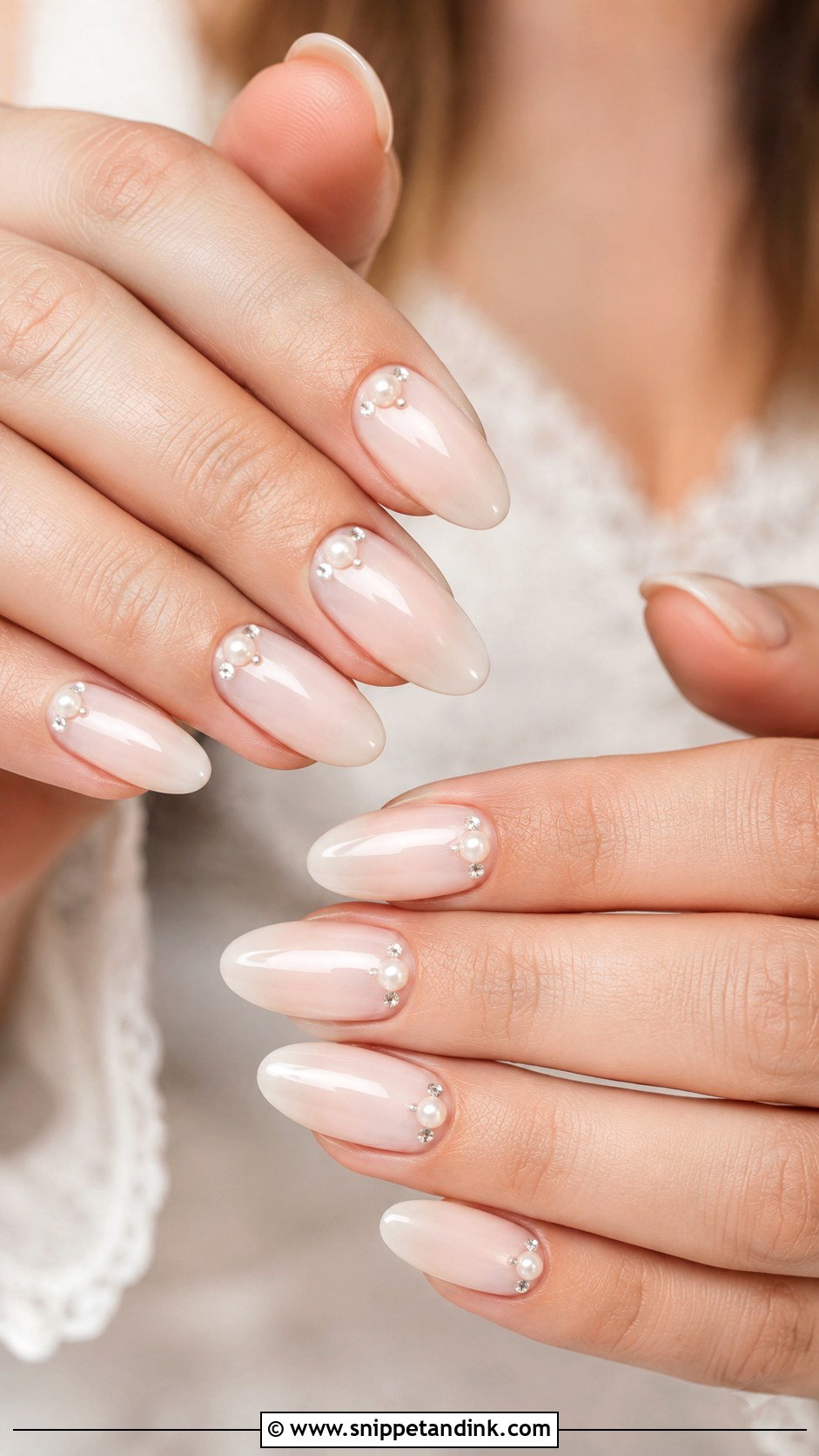
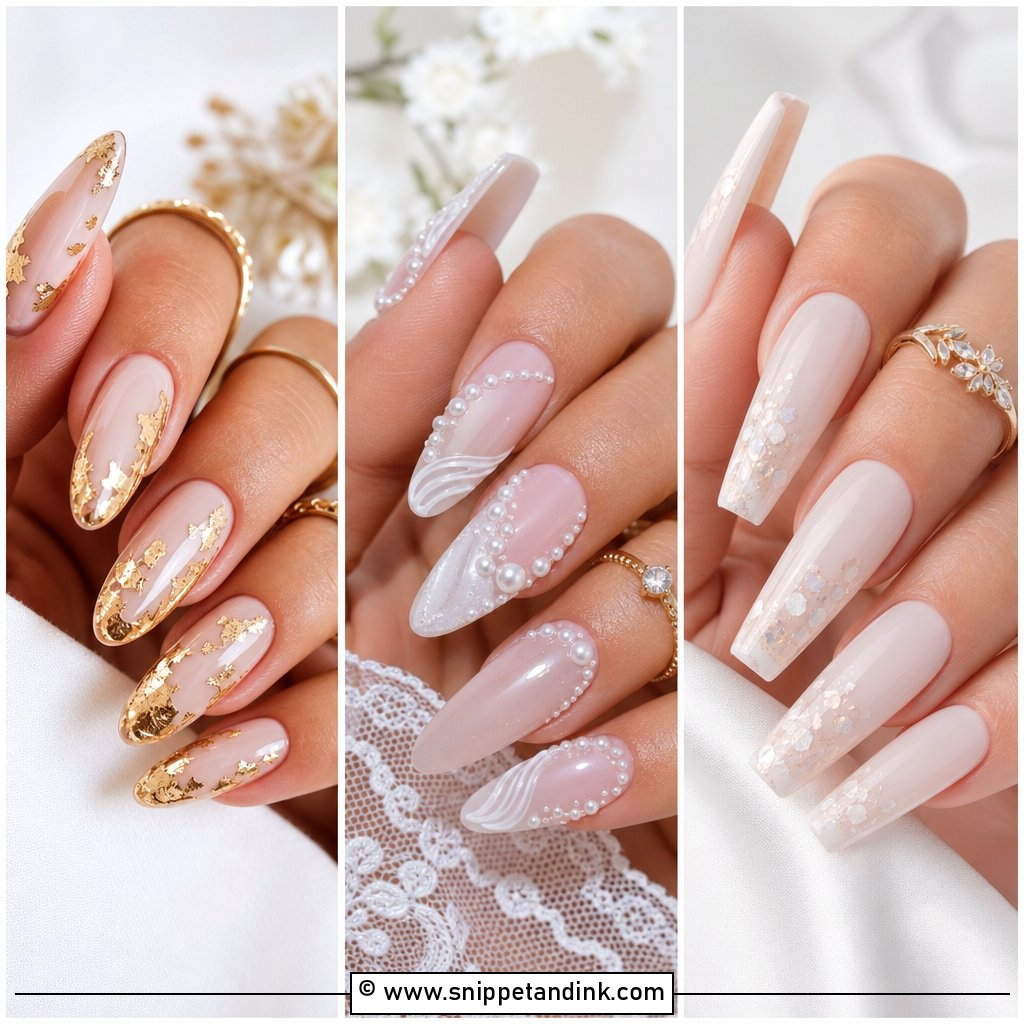
Pearls work best as punctuation. Two or three near the cuticle, a short row along a French tip or a light scatter over a nude or milky base is plenty. I set them in thick gel and seal around the base so they don’t catch on lace or a veil. If you’re wearing pearl jewellery, a pearl veil or a pearl-beaded dress, the nails pick up the theme without needing to match it exactly. Keep the pearls small; large ones feel bulky by the end of the reception.
8. Almond Wedding Floral Nails
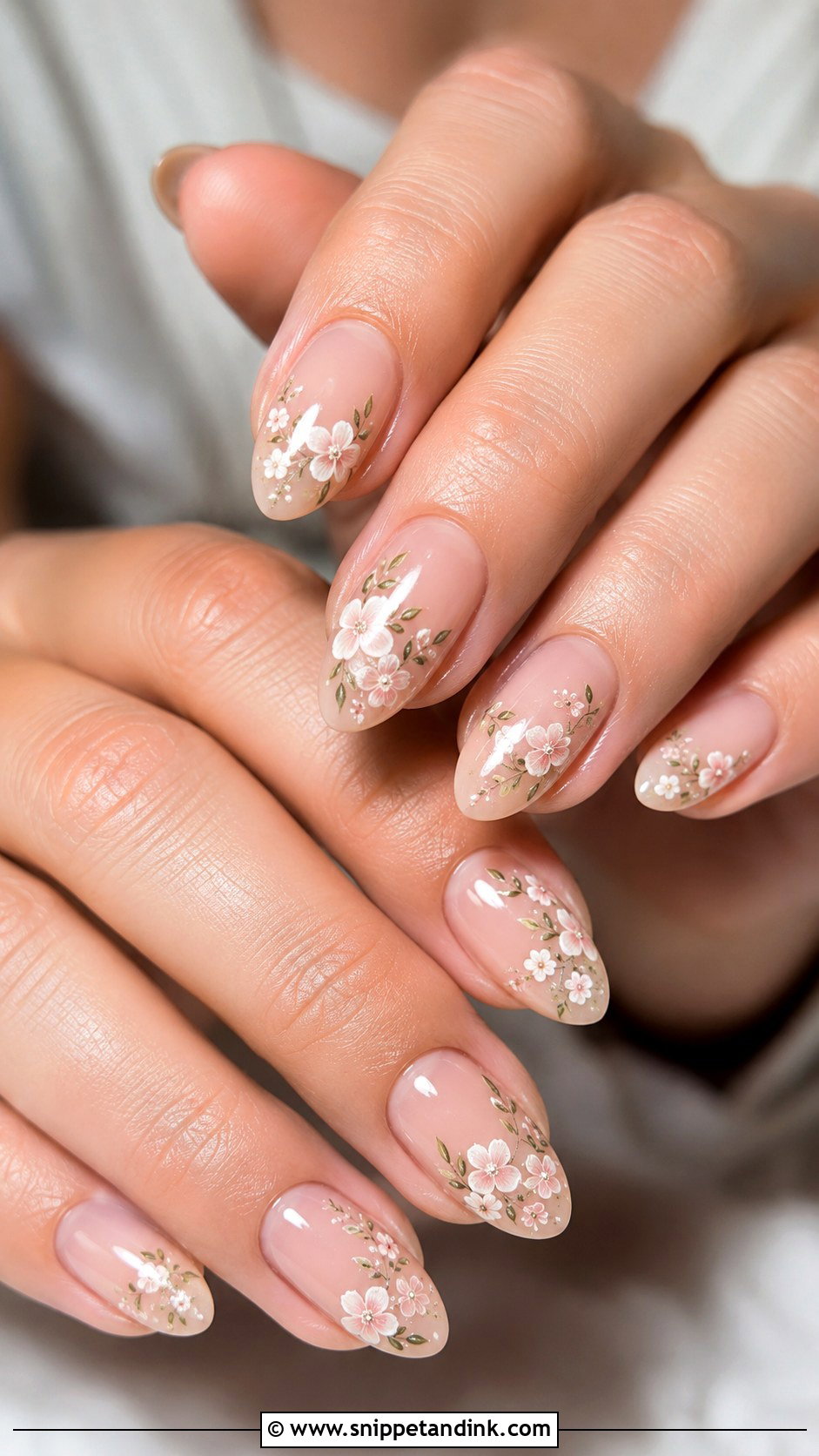
Painted flowers suit garden weddings, spring ceremonies and dresses with floral lace. Tiny white flowers, blush petals or pressed-flower effects over a sheer nude or pale pink base give each almond nail enough room. I either keep flowers to a few accent nails or make the pattern very fine across all ten. A glossy top coat makes the petals look fresh; matte gives a softer, more vintage feel, though it marks more easily.
9. Almond Wedding Lace Nails
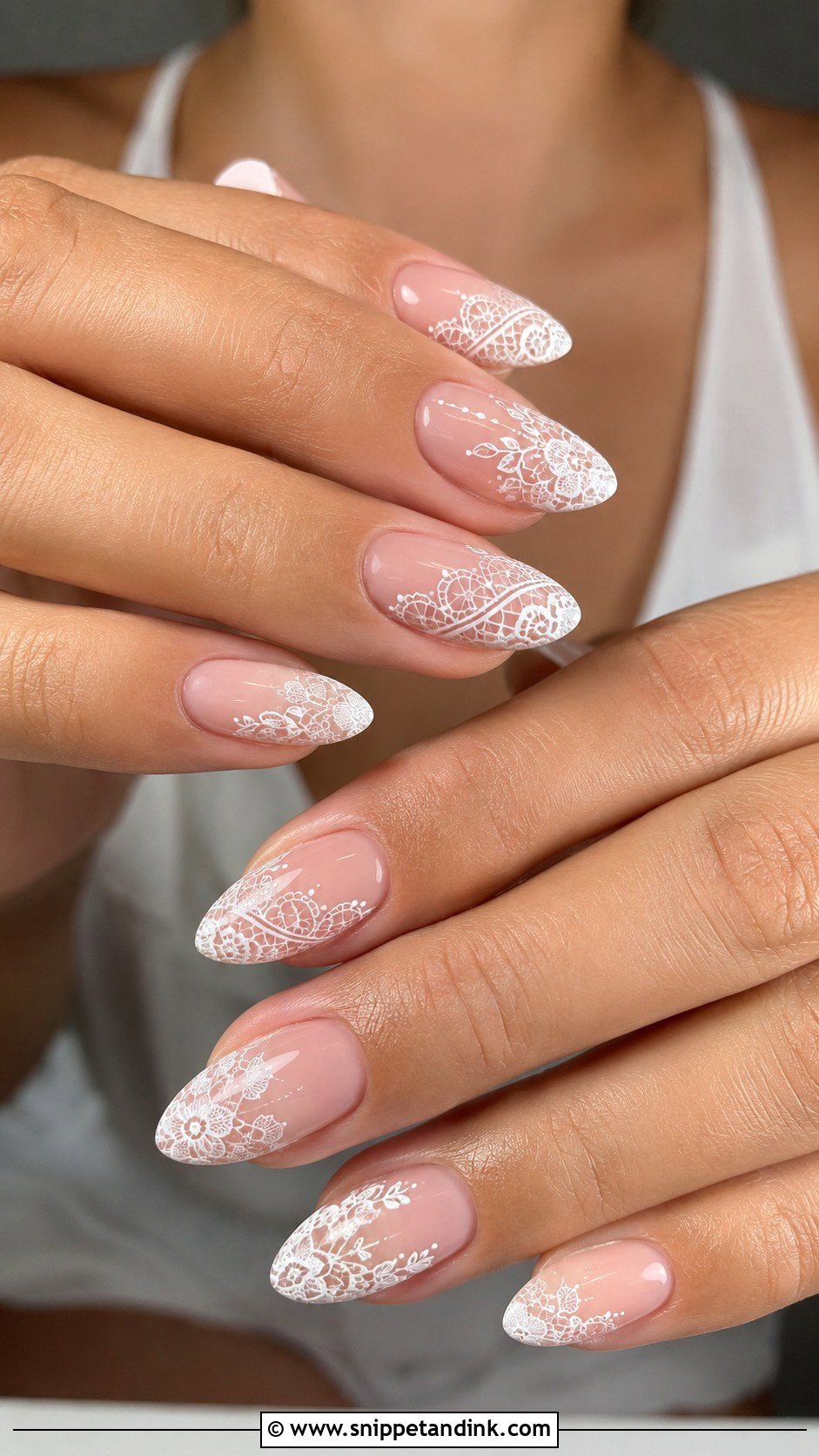
Lace art over sheer nude, blush or milky white looks elegant because the pattern can run the full length of an almond nail. The lines need to be thin, clean and evenly spaced, or the set starts competing with the dress. I paint it freehand with a long liner brush, or use a stamping plate for very regular patterns. Lace on every nail is a statement; lace on two accents with plain glossy nails around them is the version I’d suggest to most brides.
10. Almond Wedding Glitter Ombre Nails
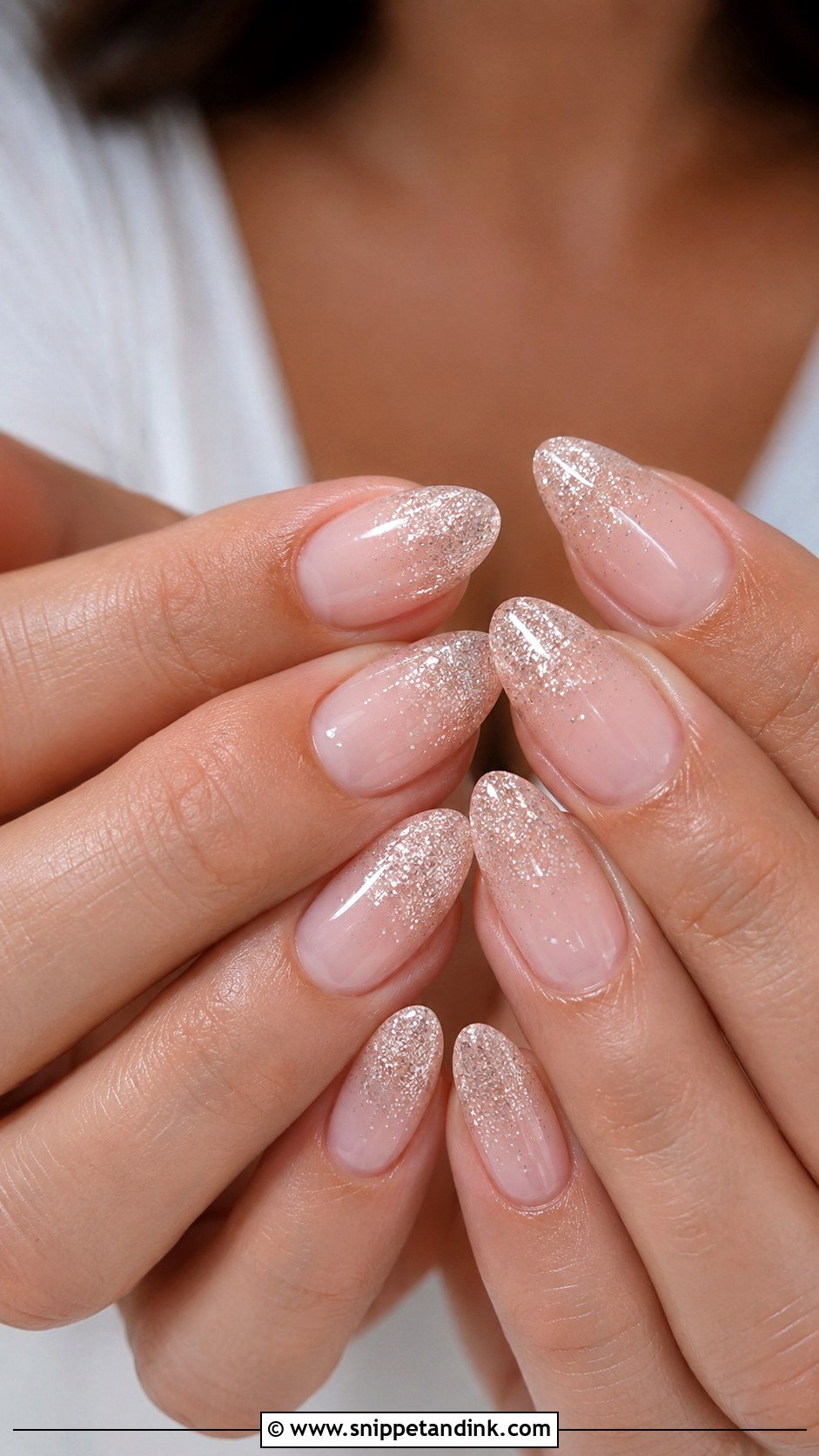
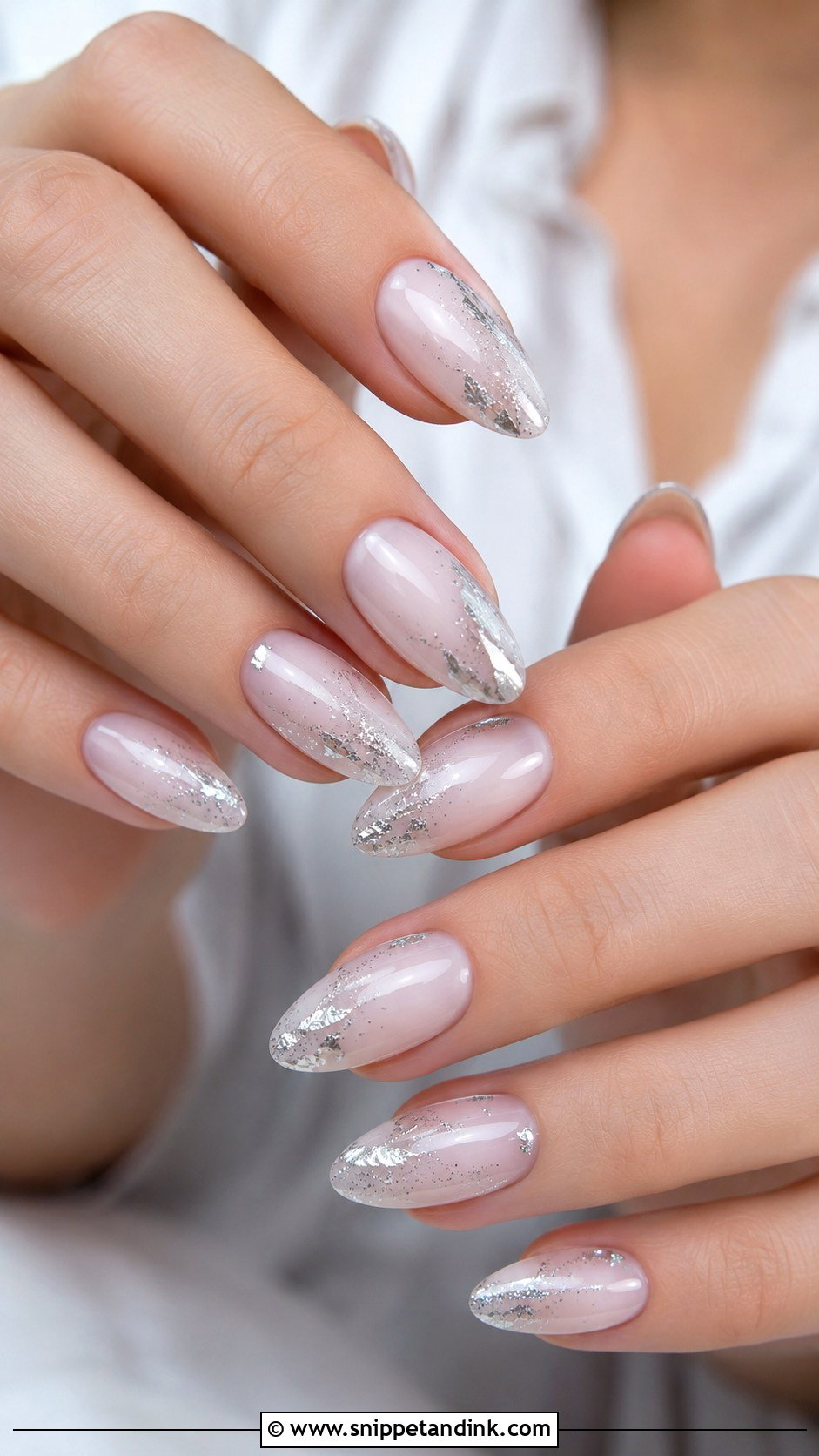
A glitter fade starts with sheer pink or nude and graduates fine silver, champagne or pearl glitter from the tip or the cuticle. I always reach for micro-glitter; large pieces look chunky and catch fabric. Match the glitter to your metal: silver with platinum and white gold, champagne with yellow gold and warm accessories. Evening weddings and formal receptions suit it best, since low light makes the sparkle look soft.
11. Almond Wedding White Swirl Nails
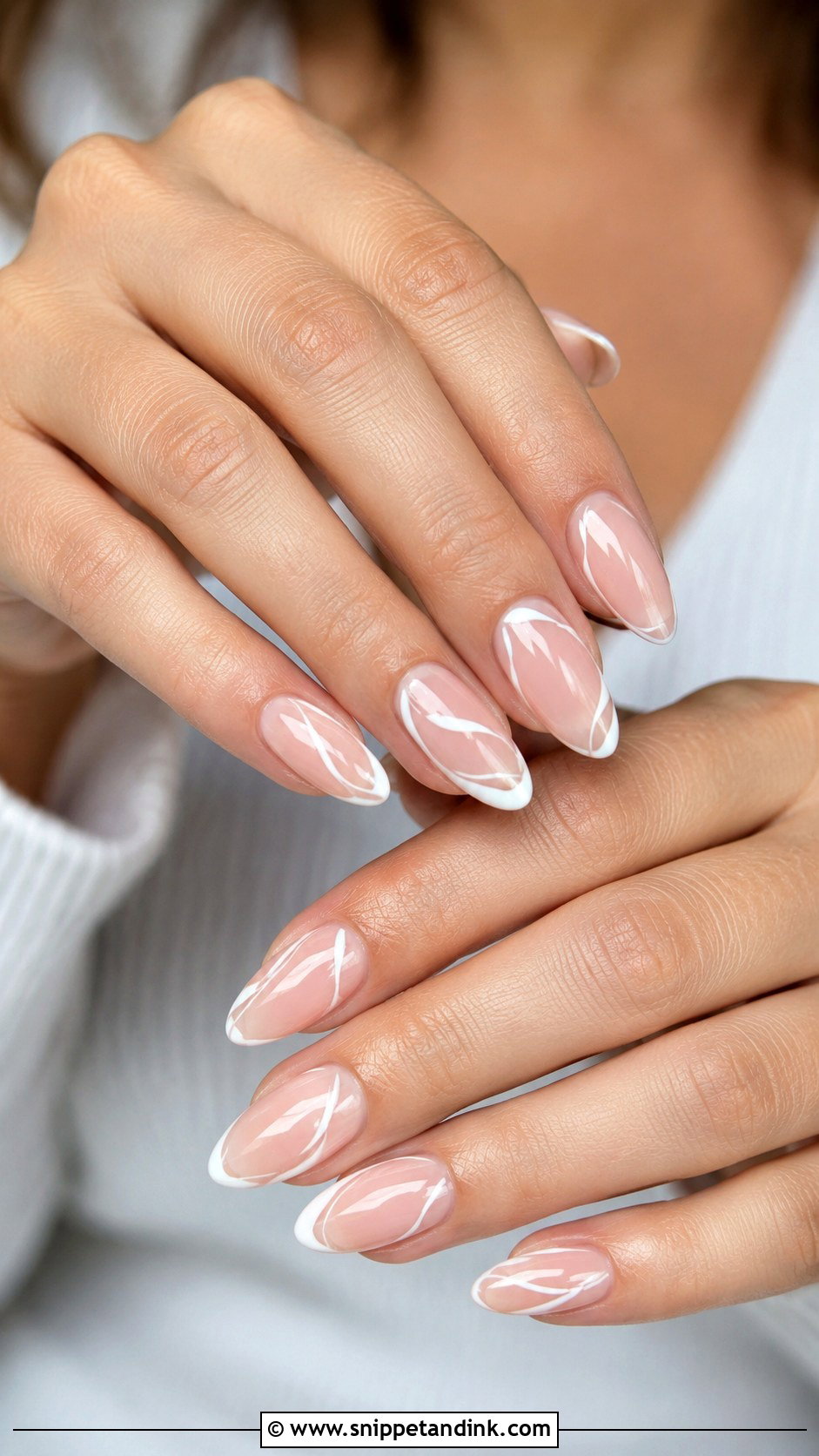
Swirls are nail art for brides who don’t want flowers, glitter or gems. In Almond wedding white swirl nails, thin white lines move across a sheer pink, nude or milky base and follow the curve of the tip. The technique is in the brush: a long, fine striper and a steady hand give clean curves, while shaky lines look homemade. Space them out. A pearl chrome layer under the white softens the whole set.
12. Almond Wedding Gold Accent Nails
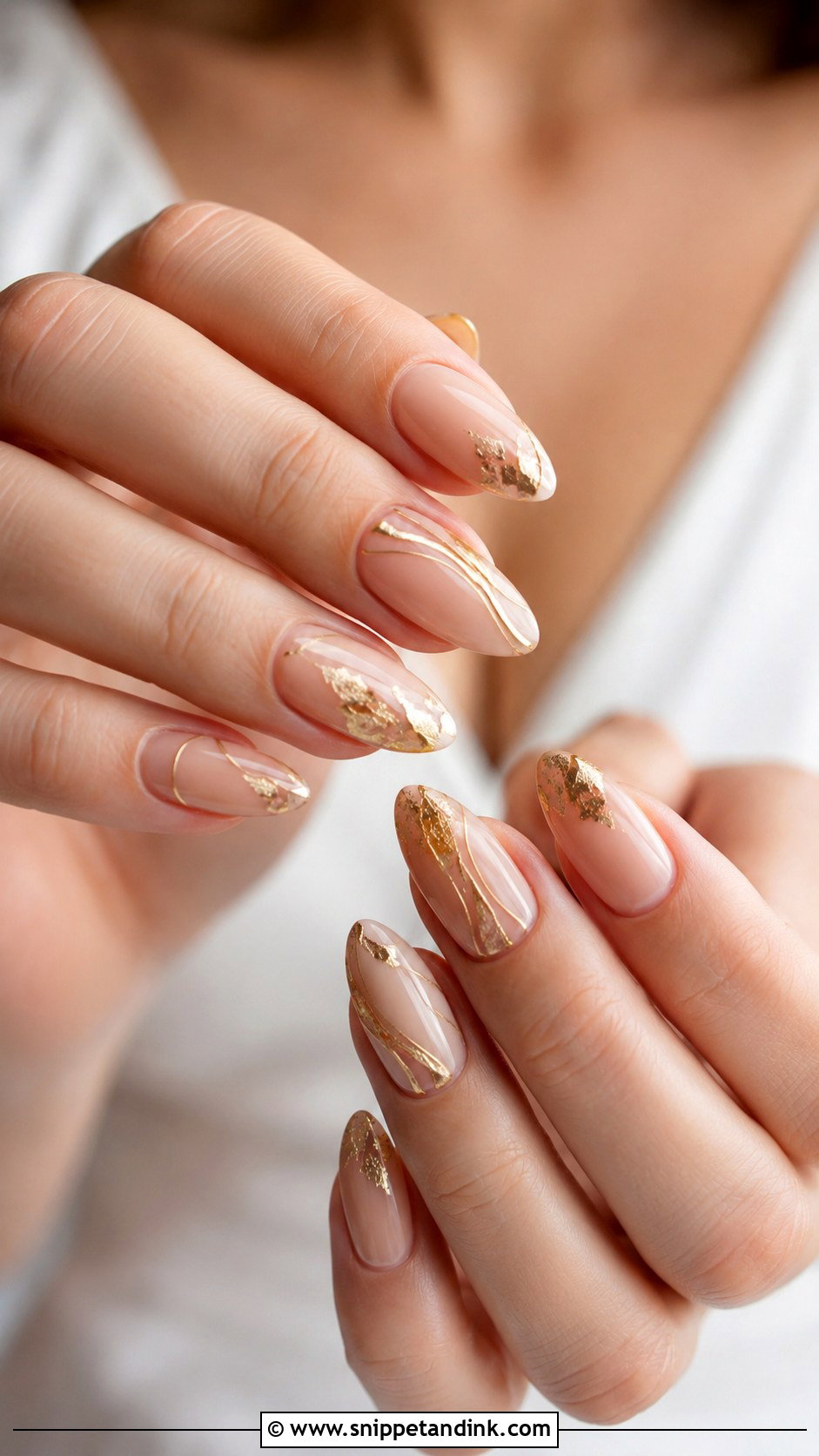
Warmth is what gold adds. In Almond wedding gold accent nails, fine foil, a gold French tip or thin metallic lines sit over a nude, blush or milky base. I use gold sparingly: a little foil at the cuticle or a single fine outline. Foil must be fully sealed or the edges lift within days. It suits gold jewellery, champagne and warm ivory dresses, and it glows nicely at autumn weddings and candlelit receptions.
13. Almond Wedding Silver Accent Nails
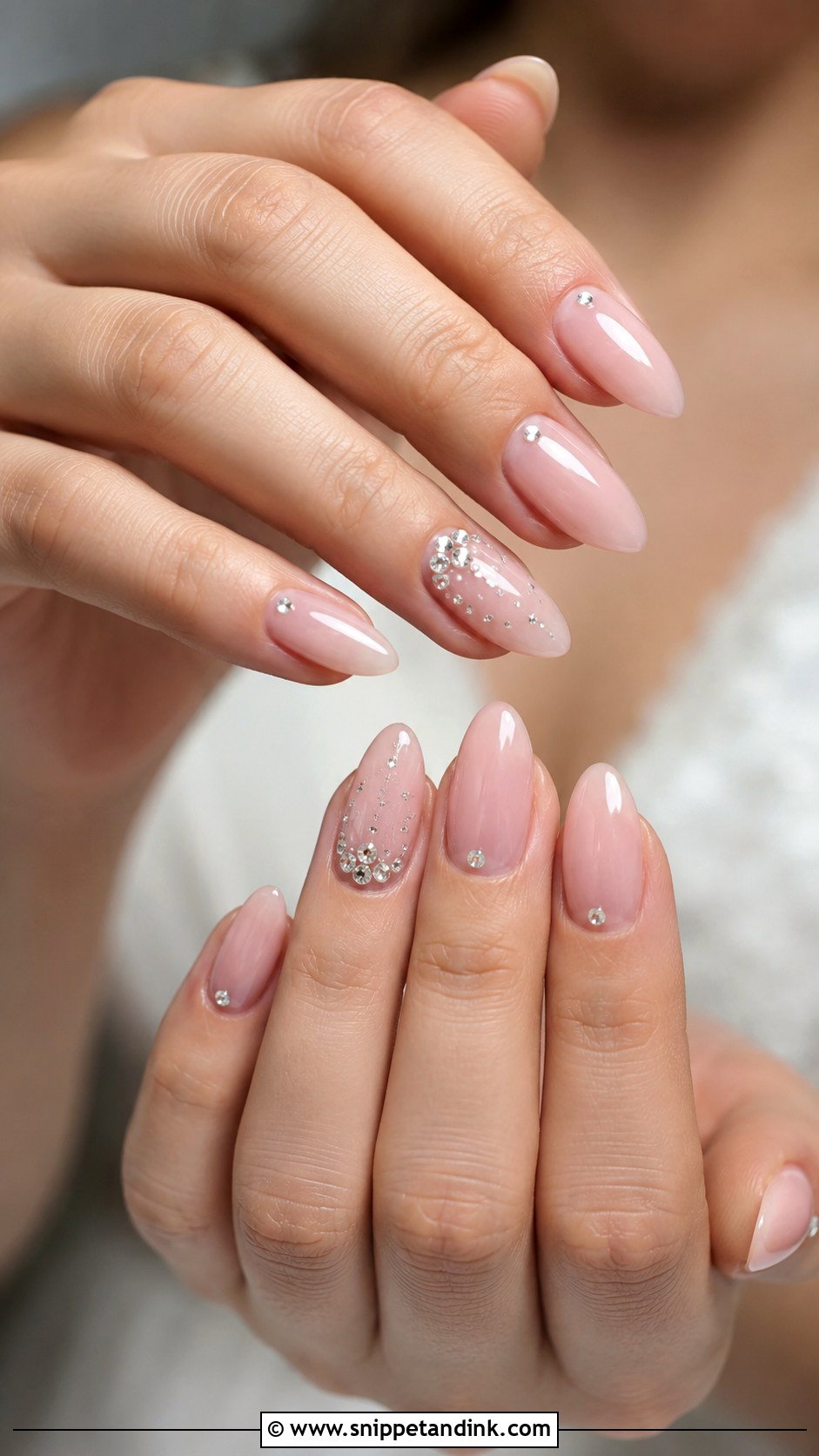
Silver reads cool and crisp, and it belongs with a bright white gown, platinum rings, crystals and cool-toned makeup. Over a sheer pink or milky white base, I add fine silver glitter, chrome lines, a little silver foil or a fine silver French. Keep the accents very fine. It gives sparkle without the busyness of full glitter, and in ring photos it catches the light without clashing with the diamond.
14. Almond Wedding Blush Nails
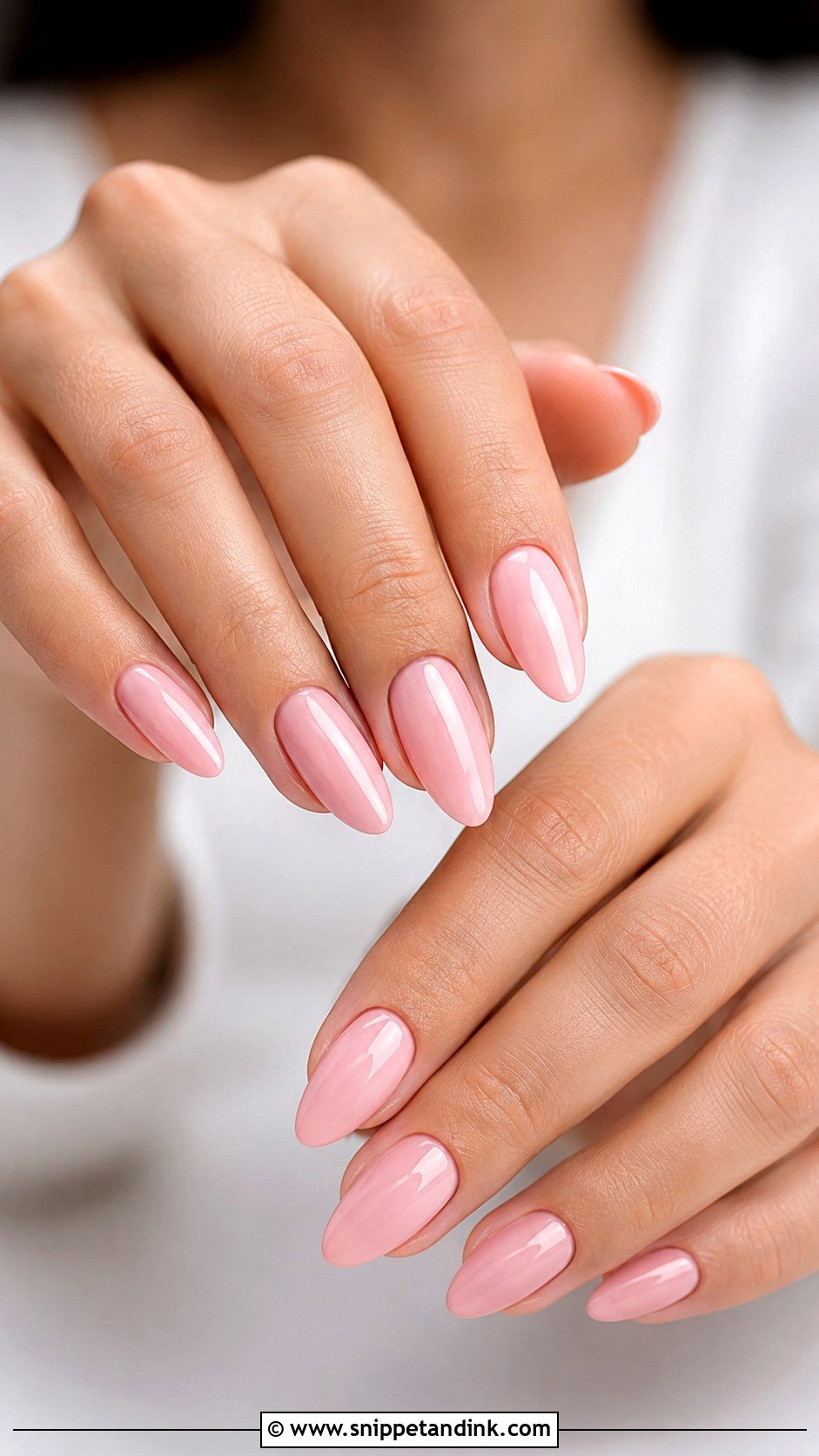
Blush is a touch warmer than baby pink, and that warmth is why it flatters ivory, cream, champagne and rose-toned details. On almond, a high-gloss blush looks polished and gentle. I’ll keep it one shade or add a thin French, a few tiny pearls or a sheer shimmer. It’s also one of the best bridesmaid colours I know, because it sits comfortably with dusty blue, sage and mauve dresses.
15. Almond Wedding Short Nails
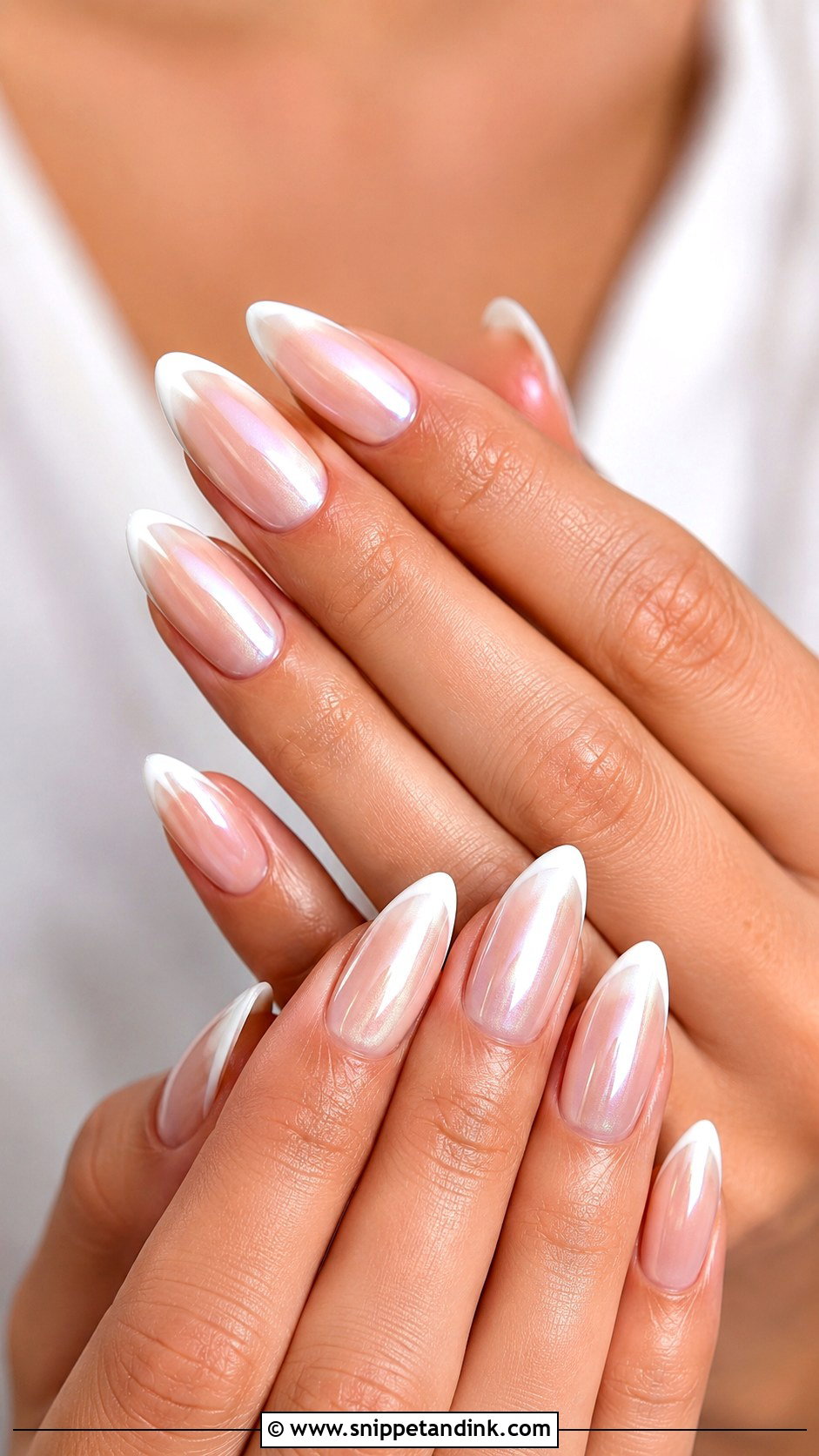
Short almonds are usually slightly softer and rounder at the peak, which gives a neat, natural look. It’s the length I suggest to brides who aren’t used to long nails, since they’ll be holding flowers, signing papers, hugging people and eating dinner with them. Sheer pink, milky white, micro French and a soft nude gloss suit the space. If you want detail, keep it tiny; large gems swamp a short nail.
16. Almond Wedding Long Nails
Long almonds look more dramatic but still softer than stilettos. The extra length allows detailed designs like French tips, ombre, lace, chrome, florals or pearls. Since the length is already bold, I keep colours soft: sheer pink, nude, milky white or pearl. Long nails also carry more leverage at the tip, so on natural nails I usually add a builder gel overlay for strength. If you’ve never worn this length, try a set a few weeks before so you know how it feels doing up a necklace or texting.
17. Almond Wedding Matte Nails
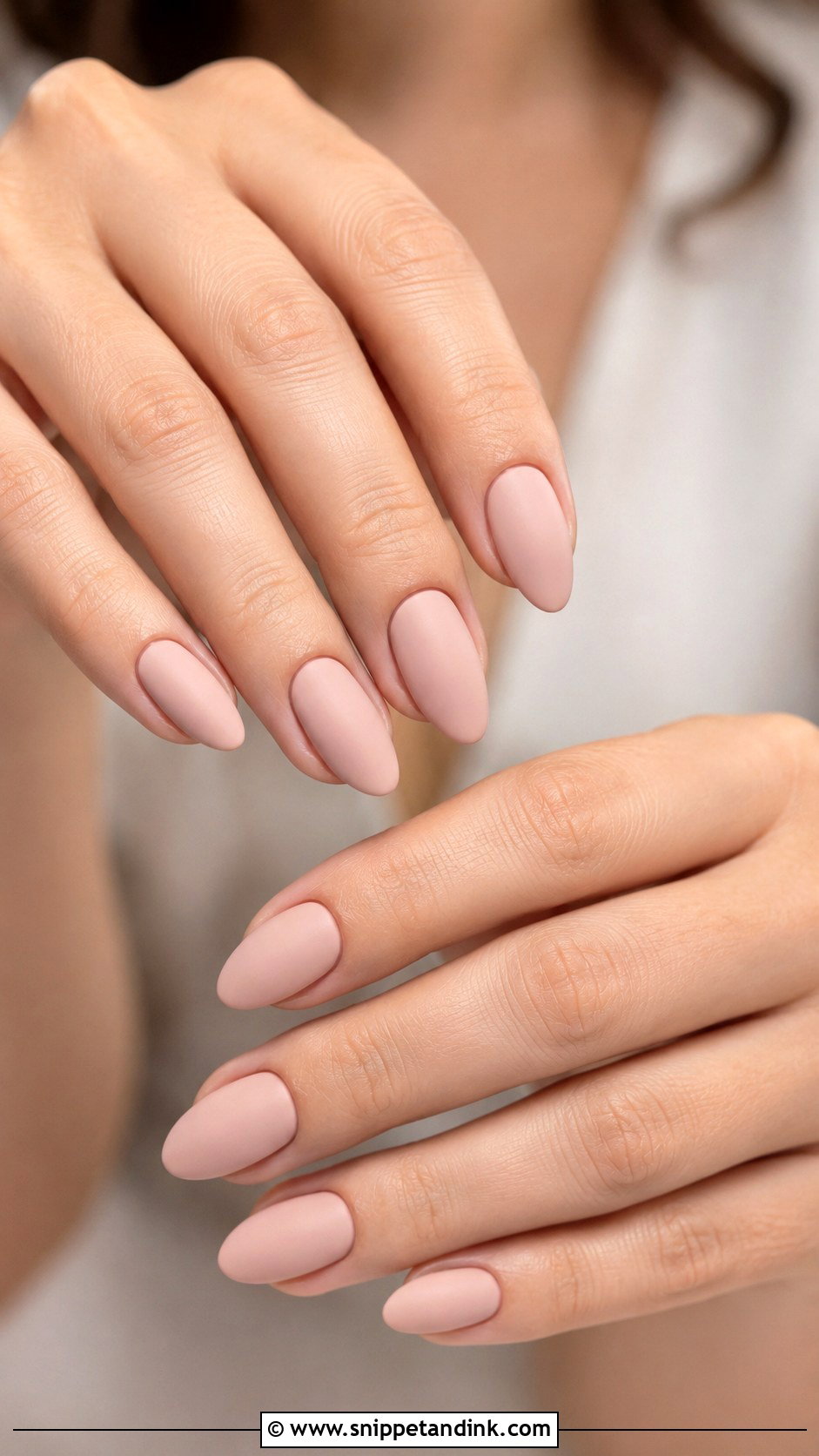
Matte gives a soft, velvety finish over nude, blush, pale pink, ivory or milky white. It also makes lace, floral or swirl details look more delicate. The drawback is real: matte top coats pick up oils and marks faster than gloss and can look dull within days. Carry an alcohol nail wipe for quick cleanups on the day. It suits minimalist dresses and brides who want no shine at all.
18. Almond Wedding Cat Eye Nails
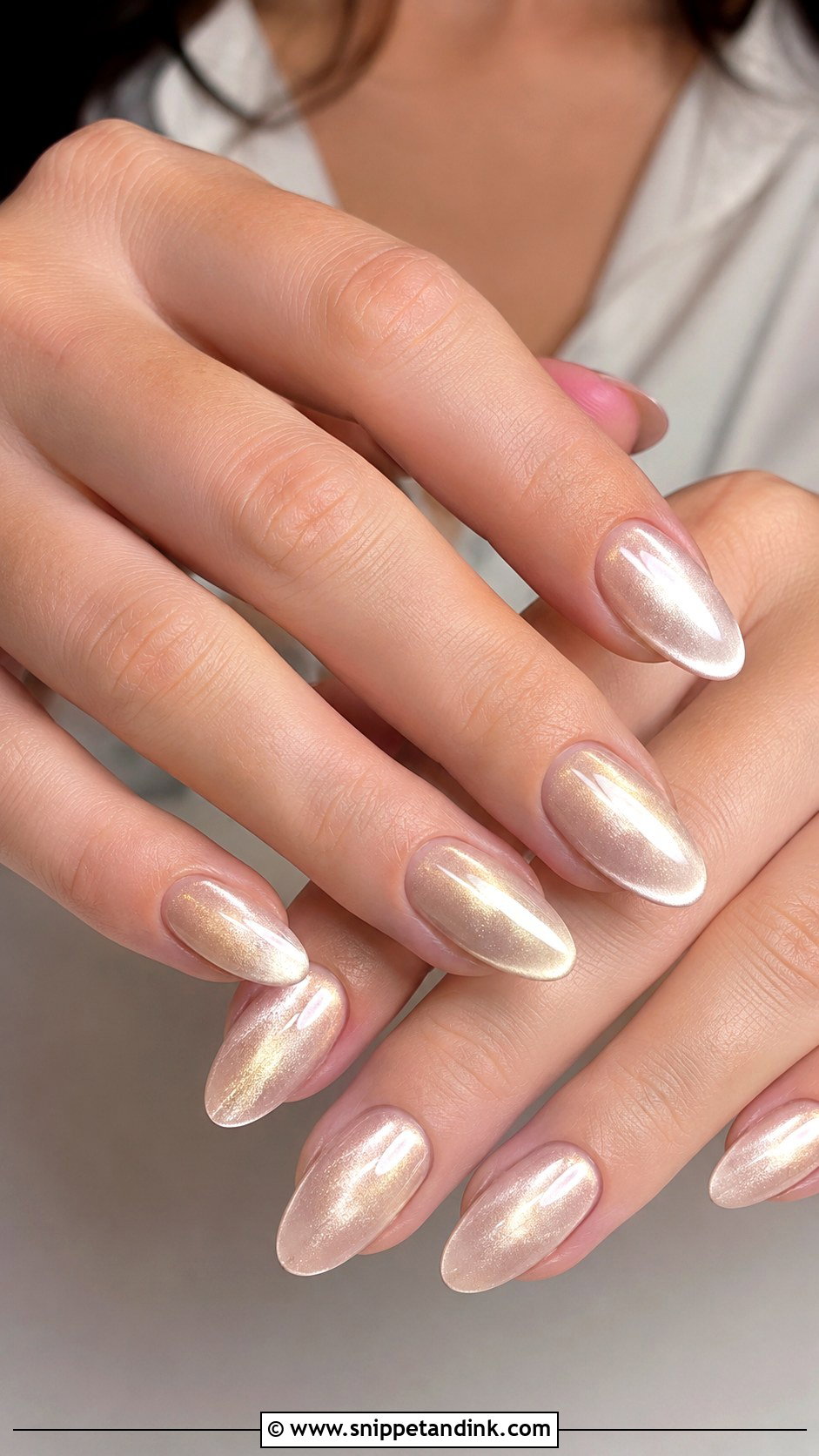
Cat eye gel contains fine magnetic particles; a magnet held over the wet gel pulls them into a band of light that shifts as the hand moves. In dark colours it’s dramatic, but in pearl, champagne, pale pink, ivory or nude it gives a soft inner glow. The almond shape stretches that glow down the nail. I ask brides how strong they want the pull: a diffused shimmer looks bridal, while a tight stripe looks more like an evening look.
19. Almond Wedding Rhinestone Nails
Small clear crystals on a nude, pink, or milky base add sparkle without heaviness. I place them near the cuticle, down one side, or on one or two accent nails, set in thick gel and capped so the edges don’t snag. Avoid oversized stones; they feel bulky and catch on hair and lace. Paired with crystal pins, a beaded gown or sparkling earrings, a few well-placed stones are enough.
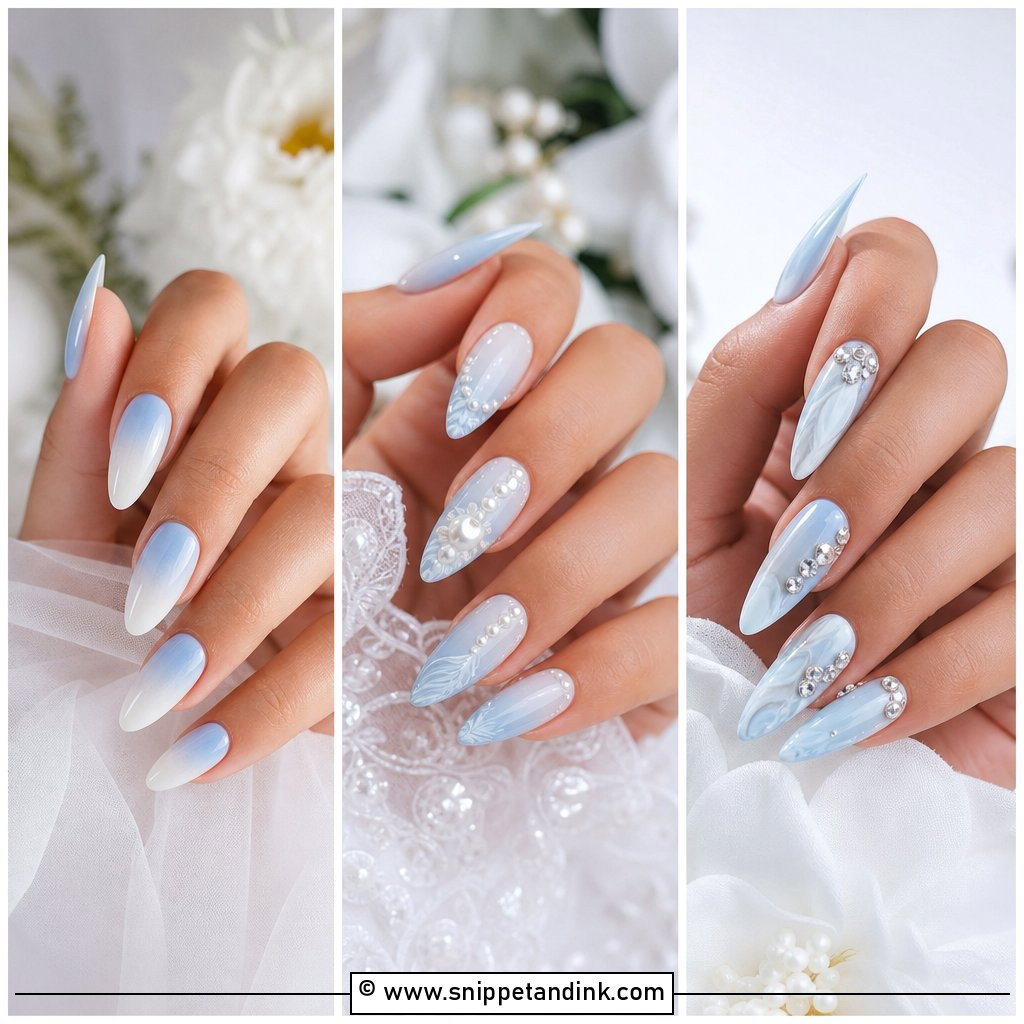
20. Almond Wedding Something Blue Nails
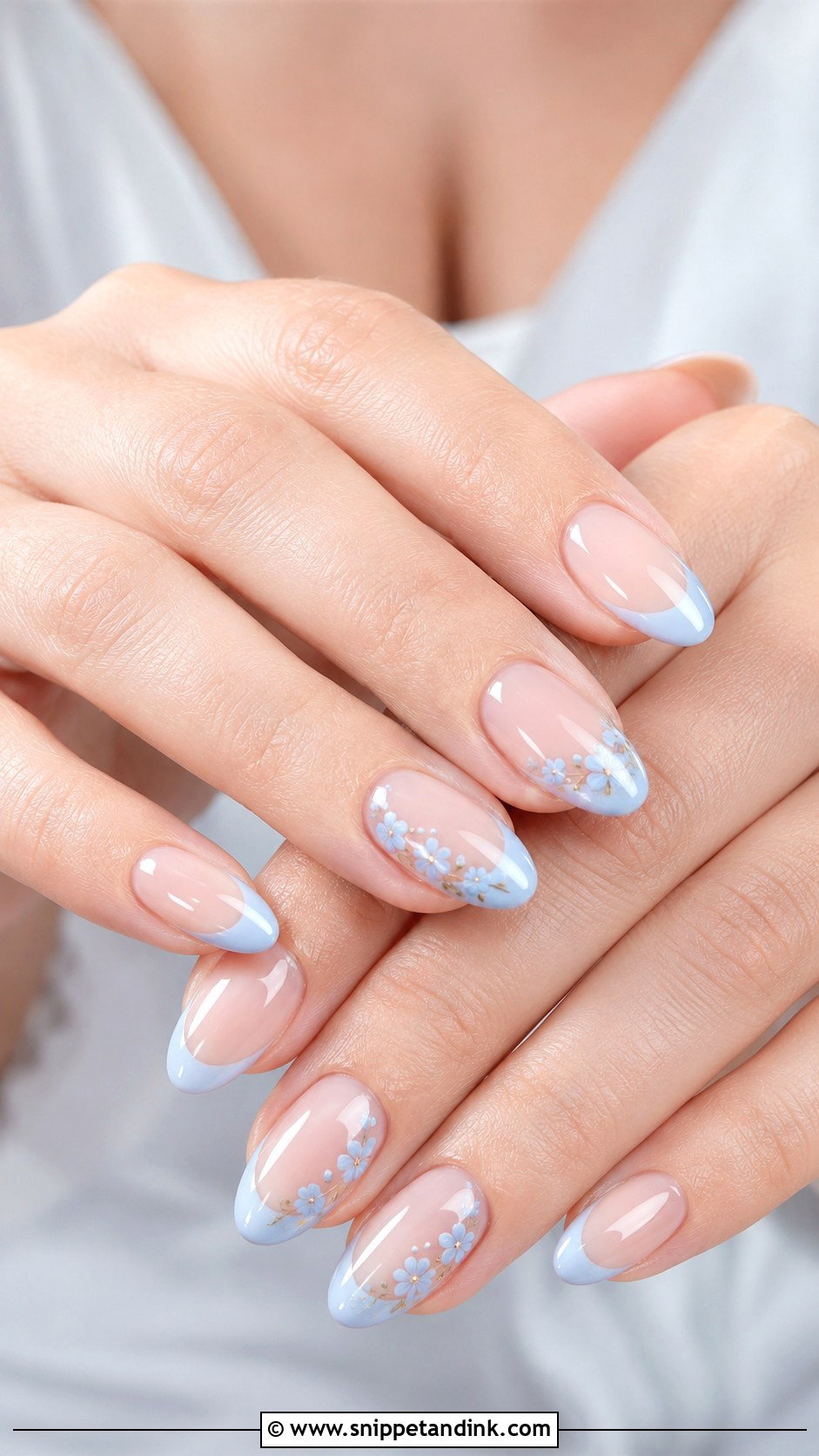
The tradition of something blue fits neatly onto a fingernail. Powder blue, an icy blue French tip, tiny blue flowers or a single pale blue accent nail over a sheer nude or milky base all work. I keep the blue soft and small; a bright blue can look out of place next to a white gown in photos. Bridesmaids can wear a matching accent for a coordinated touch. It’s a private detail that’s easy to show off when someone asks to see the ring.
How These Finishes Change Under Flash and Candlelight
Your nails will be photographed in daylight, under indoor lights, with flash and by candlelight, often on the same day. Some finishes behave differently in each.
- Milky and bright whites can look slightly blue under strong flash. Ivory and creamy milky shades hold up better.
- Chrome reflects whatever is around it, so a mirror finish can bounce flash back as a hot white spot. A soft, lightly buffed chrome photographs more evenly.
- Cat eye and fine glitter come alive in candlelight and with movement, but can look flat in a still daylight portrait.
- Very sheer nudes may almost disappear in a bright outdoor shot. One shade deeper than you would choose for everyday wear often reads better on camera.
- Glossy top coats show flash reflections; matte avoids glare but can look dull in low light.
When I do a trial, I take a quick phone photo of the hand both with and without flash. It takes a minute, and it catches a white that looks right at the table but turns blue in the album.
Test the Set in Daylight Before You Commit
There’s a reason almond nails stay so popular at weddings: they flatter most hands, work at many lengths and suit nearly every bridal style. French tips, milky polish, pearls, chrome, lace, florals and soft shimmer can all be simple or detailed on this shape. Choose the one that fits your dress, jewellery, venue and comfort level. If you’re unsure, book a trial manicure and photograph your hand in natural light, with flash, and in the evening, so you see how the colour, shape and finish behave in each setting.
You'll Like These Ideas:


Leave a Reply