
A Bengali bride is recognisable from across the mandap: kohl-heavy eyes, a red bindi, chandan or alpana dots arched over the brows, and a lip strong enough to stand next to Banarasi silk. These 20 Bengali Bridal Wedding Makeup Ideas run from the classic red-and-gold face to softer reception and pre-wedding looks. What I plan around first is not the colour story but the night itself: a Bengali wedding often runs late, the bride sits near the yagna fire, sindoor lands on her parting and sometimes her nose, and tears at the bidaai are almost guaranteed. Every look below has to survive that.

Planning Your Makeup Around Sindoor, Fire and a Late Lagna
Bengali weddings put makeup through things most bridal timelines never do. Before I pick a single colour, I ask for the lagna time and how long the bride will sit near the yagna. A fire a few feet away for an hour softens foundation and makes the T-zone shine faster than any summer afternoon.
- Sindoor daan: the groom applies sindoor to your parting, and it often falls onto the forehead and nose. I keep powder light along the hairline so a stray dusting can be brushed away instead of sticking to wet foundation.
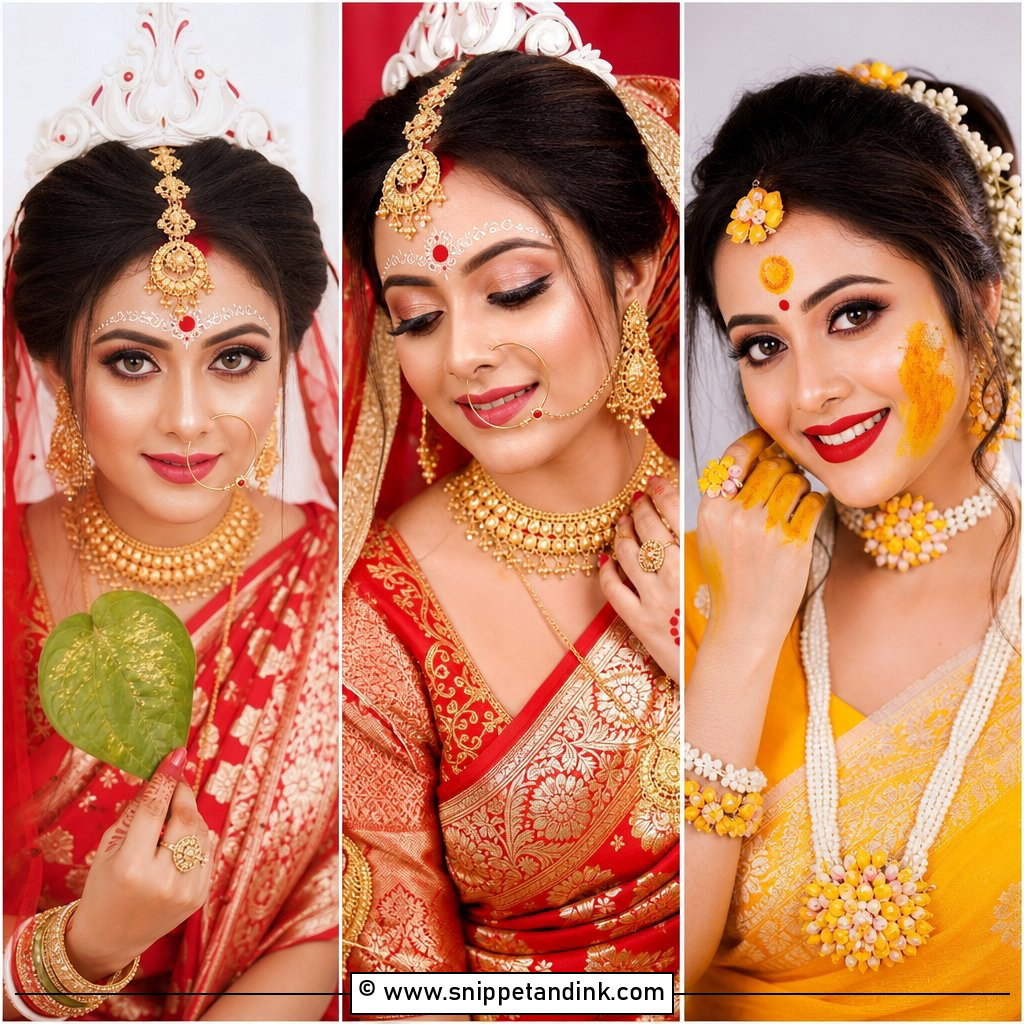
- Shubho drishti: your face is hidden behind betel leaves, then revealed. Lash glue must be fully dry before you hold those leaves close to your face.
- Fire heat: I use a heat-resistant setting spray and set the base in thin layers instead of one heavy coat of powder.
- Bidaai: almost every bride cries. Waterproof mascara and a set kajal line are not optional.
If the lagna falls after midnight, plan your makeup start time backwards from the first portraits, not from the ceremony. I’d rather do a fresh lip and blot an hour before the rituals than start the whole face too early and fight it all night.
1. Classic Bengali Bridal Makeup
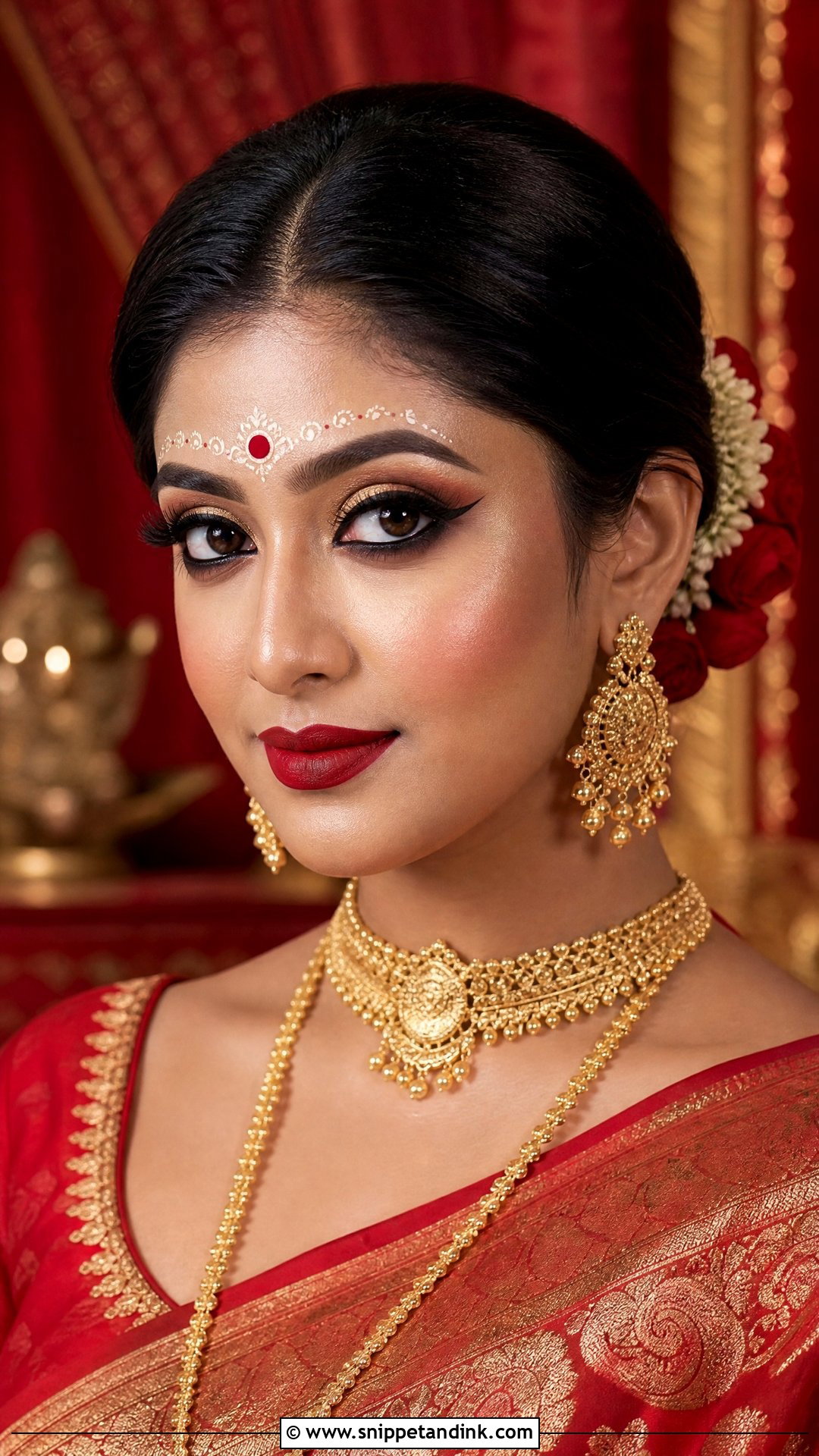
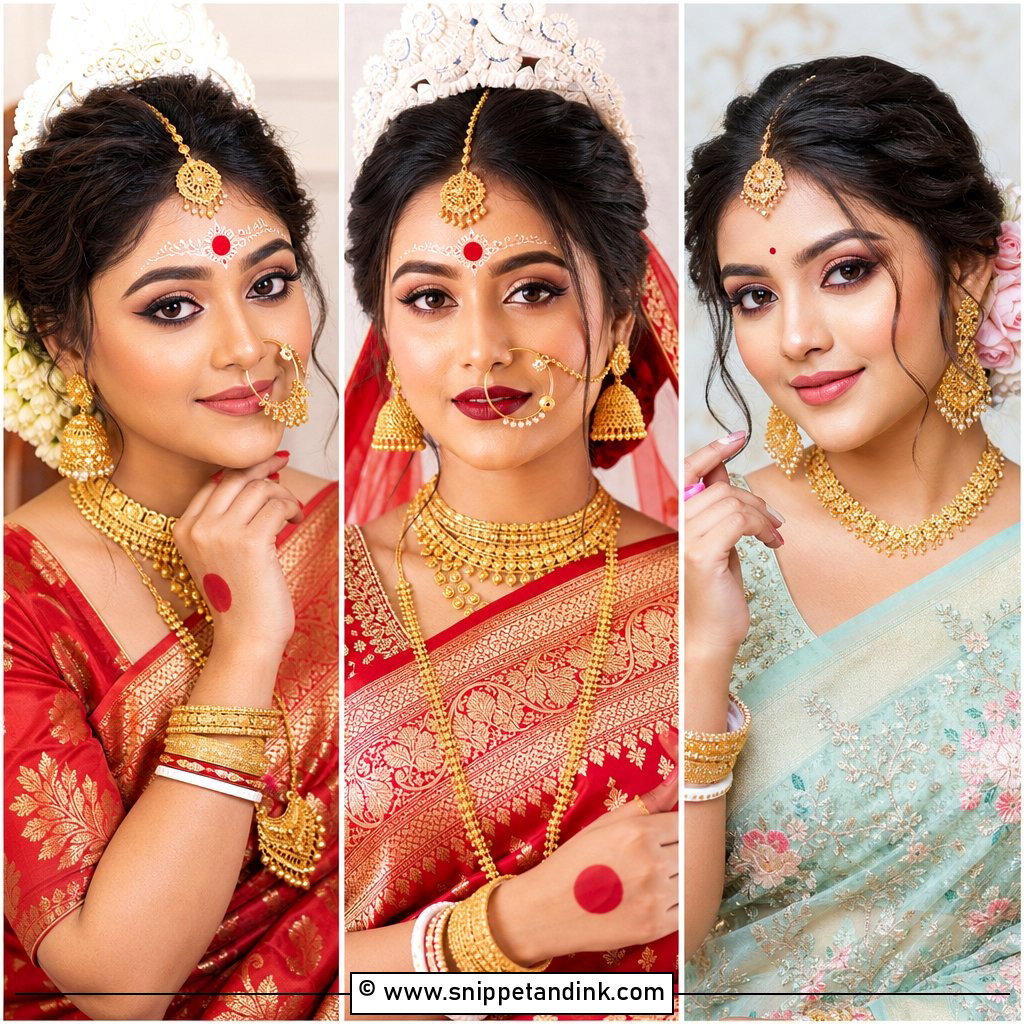
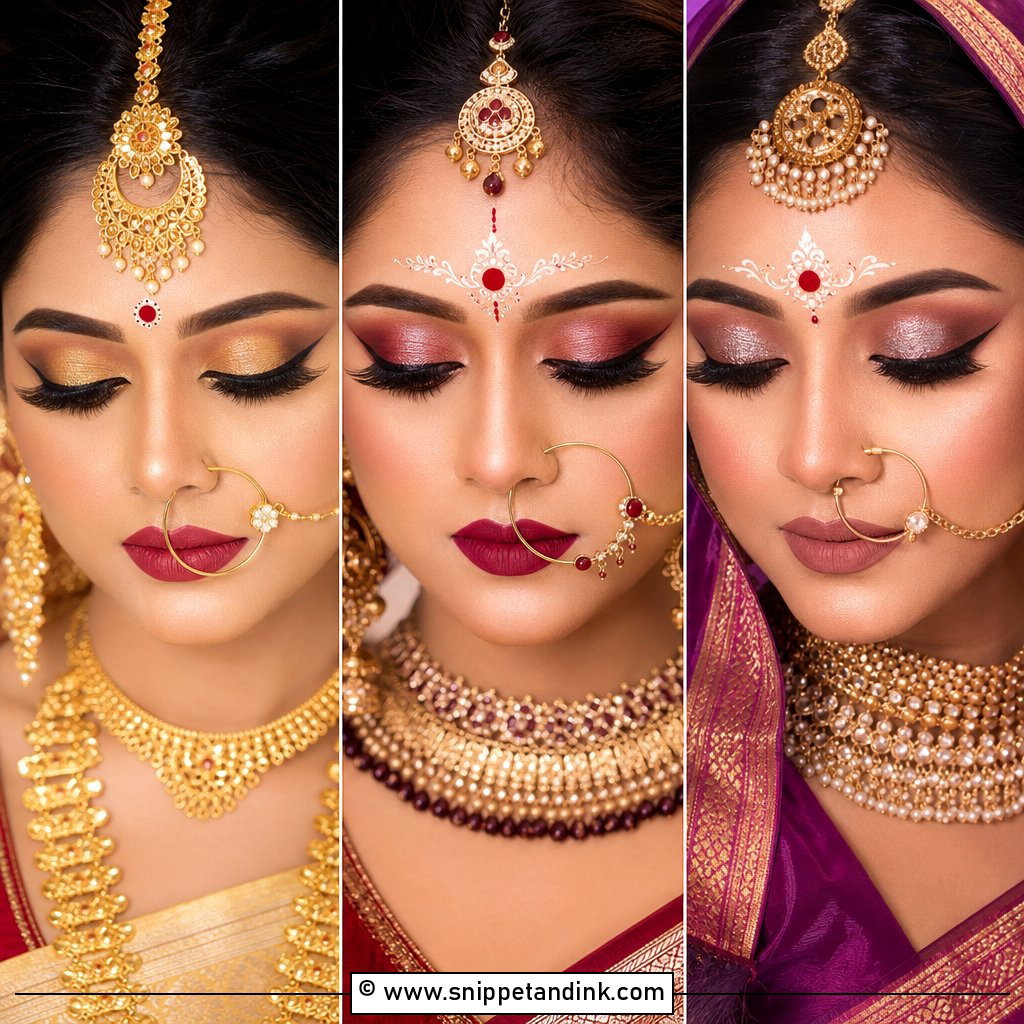
Red, gold, black kohl and skin that looks alive: that is the classic face. I keep the base a soft matte through the centre and let a little sheen stay on the cheekbones, because a fully matte bride under tungsten mandap lights looks like plaster in close-ups. Gold shimmer goes on the lid, deep brown in the crease, then black winged liner and kajal on the waterline. I set the kajal with a touch of black shadow pressed on top, otherwise it migrates into the lower lid by the time the garlands are exchanged. A true red lip ties the face to the alta, the sindoor and the large red bindi.
2. Red Banarasi Saree Bridal Makeup
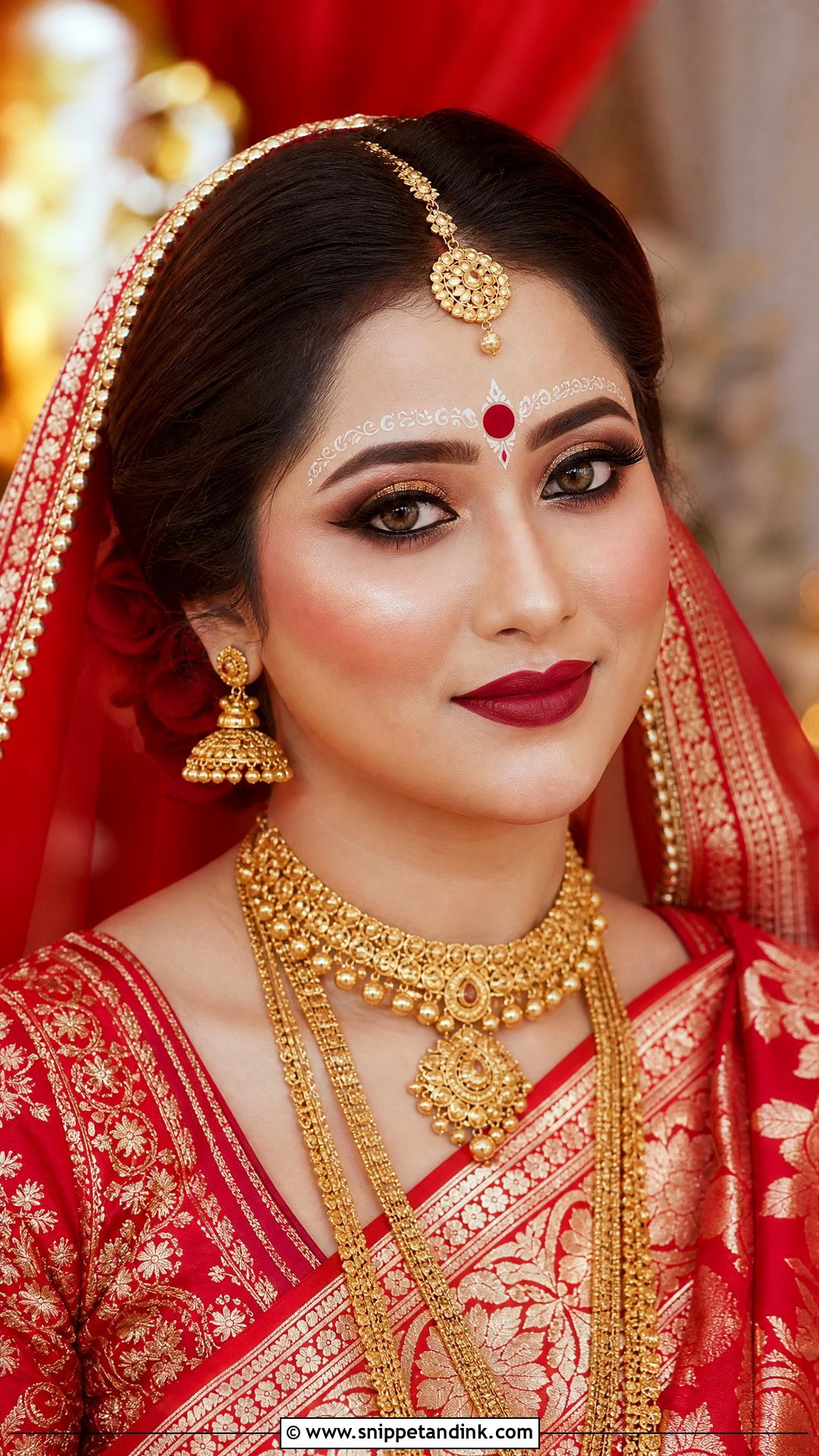
Banarasi silk is busy. The zari borders throw light everywhere, so a shiny face competes with the fabric instead of sitting above it. I go satin-matte on the skin, antique gold on the lid, and bronze into chocolate brown at the outer corner. Thick, clean liner gives the traditional elongated eye. For the lip, I hold swatches against the actual saree in daylight: a bright vermilion red takes a blue or neutral red, while a maroon-red weave looks better with ruby. Contour stays faint, since a heavy gold choker already shadows the jaw.
3. Bengali Bridal Makeup With Red Lip
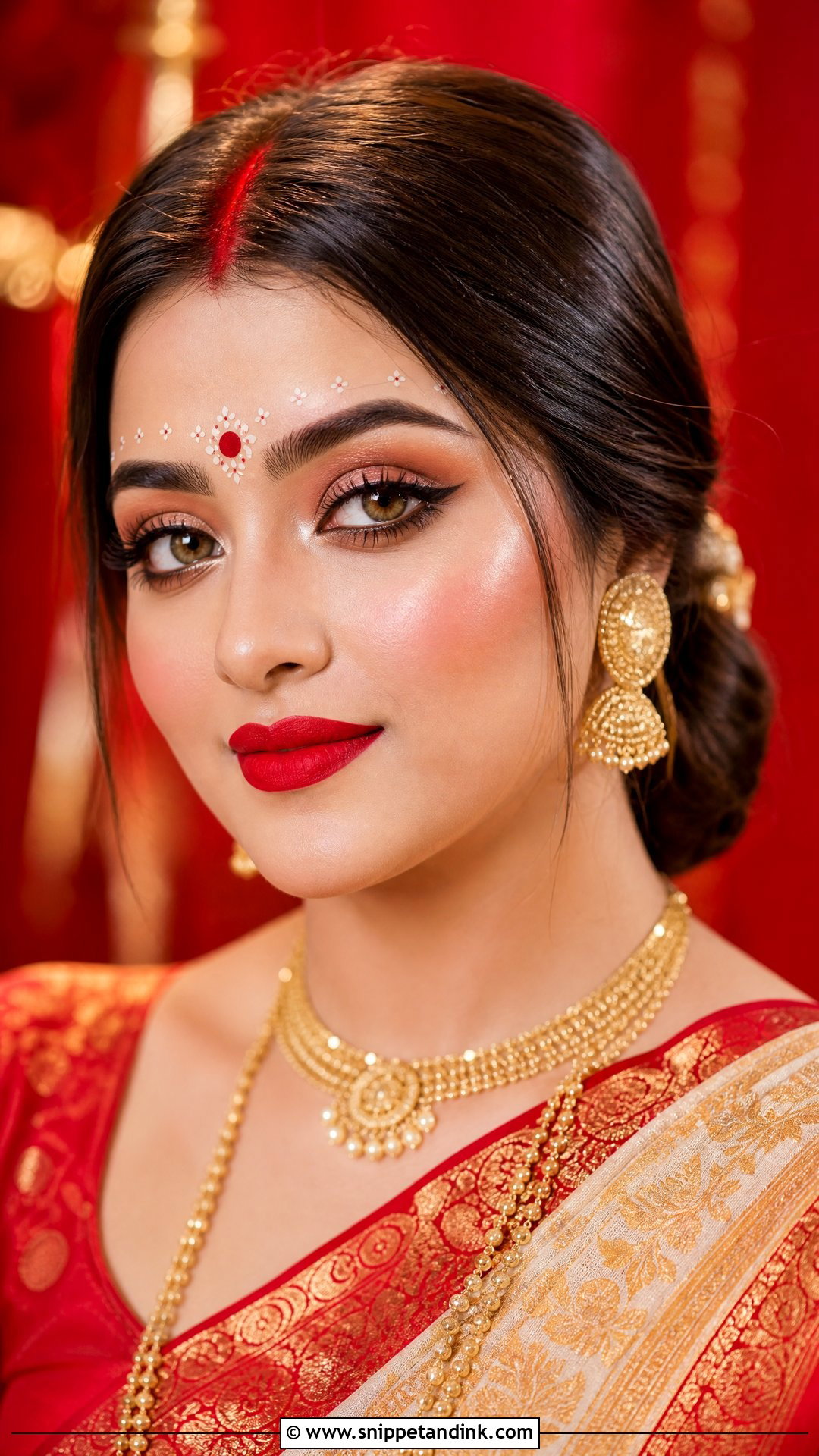
The lip is usually the anchor of the whole face, so I build it first in my head and keep everything else quieter. Exfoliate the night before, line the full mouth with a pencil one shade deeper, fill the whole lip with that liner, then apply a long-wear velvet red on top. That liner base is what stays when the bride eats sweets during the rituals. Peachy rose blush, a little champagne highlight and warm brown eyes with a short wing keep it balanced. I’d skip this lip for a bride who hates touching up; red fades unevenly and someone needs to check it between ceremonies.
4. Bengali Bridal Makeup With Gold Eyeshadow
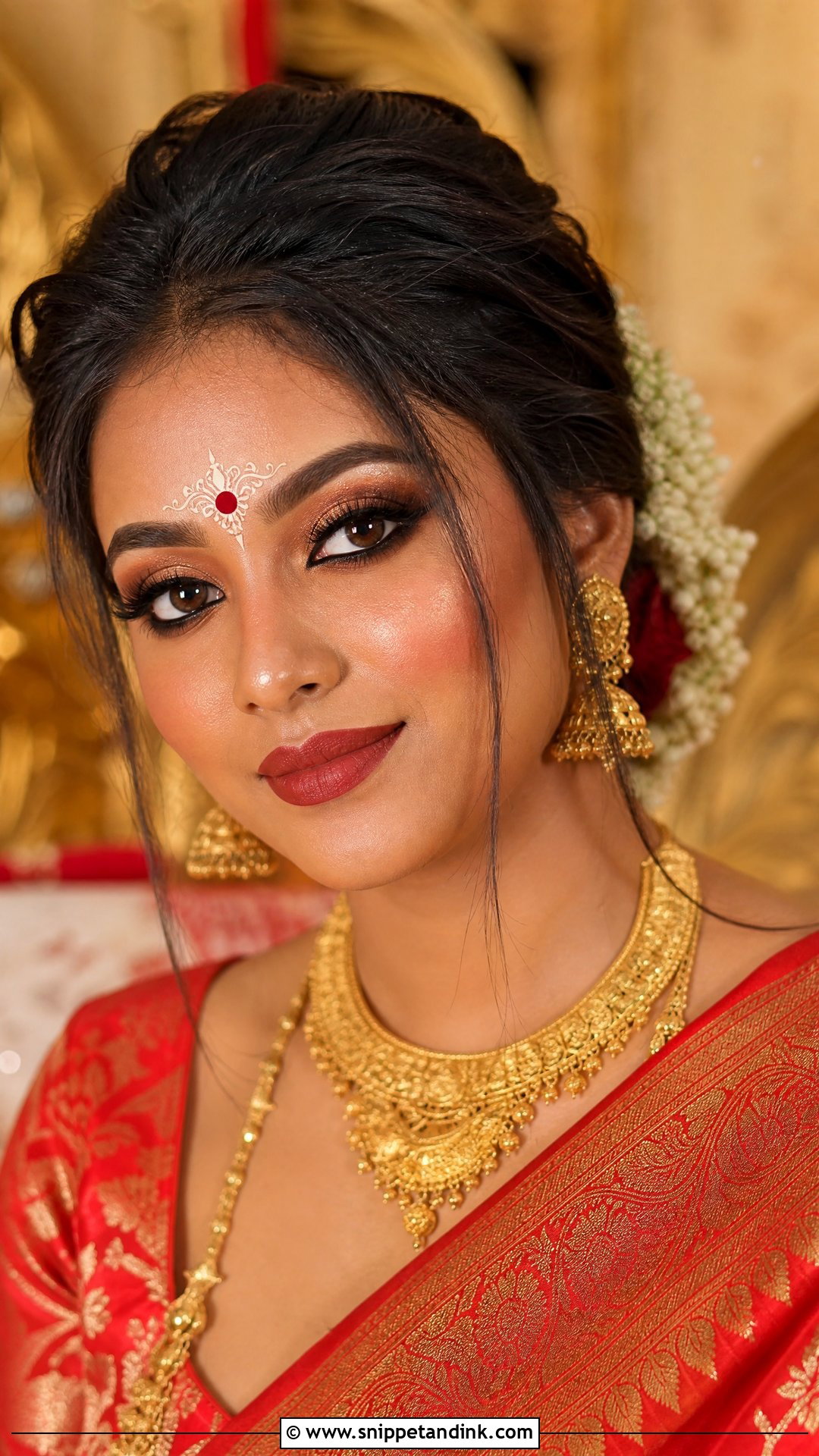
Gold on the lids works so well on Bengali brides because it repeats what is already in the jewelry and the saree border. The shade of gold matters more than the brand. Champagne sits best on fair skin, antique gold on medium and tan, and bronze-gold or copper-gold on deep skin; a pale yellow gold on deep skin turns chalky in flash. I pack the metallic with a damp brush over a sticky base so it does not drop onto the cheeks, then smoke the crease in brown and add black liner. A brick or terracotta lip keeps it from tipping into costume.
5. Bengali Bridal Makeup With Bold Kajal
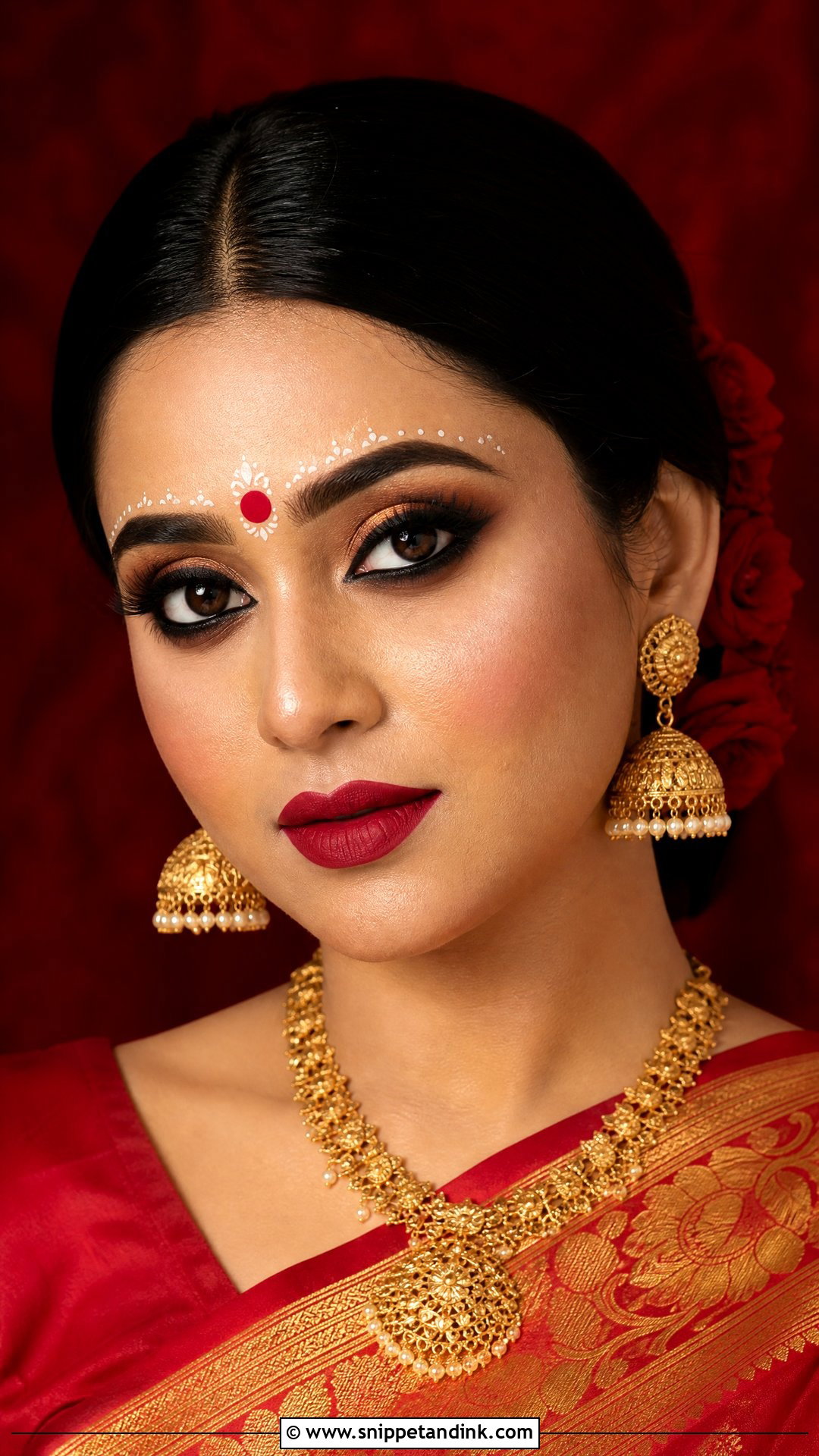
Kajal is the soul of this face, and it is also the first thing to fail. I line both waterlines, then smudge black or deep brown shadow along the lash roots so the line has an edge to fade into rather than a hard stripe. Bronze or muted copper on the lid keeps the eyes from looking flat and sunken under all that black. Brides with hooded lids or watery eyes need extra care here: a smudge-proof gel liner under the kajal, and a cotton bud tucked in the touch-up pouch for the bidaai.
6. Soft Glam Bengali Bridal Makeup
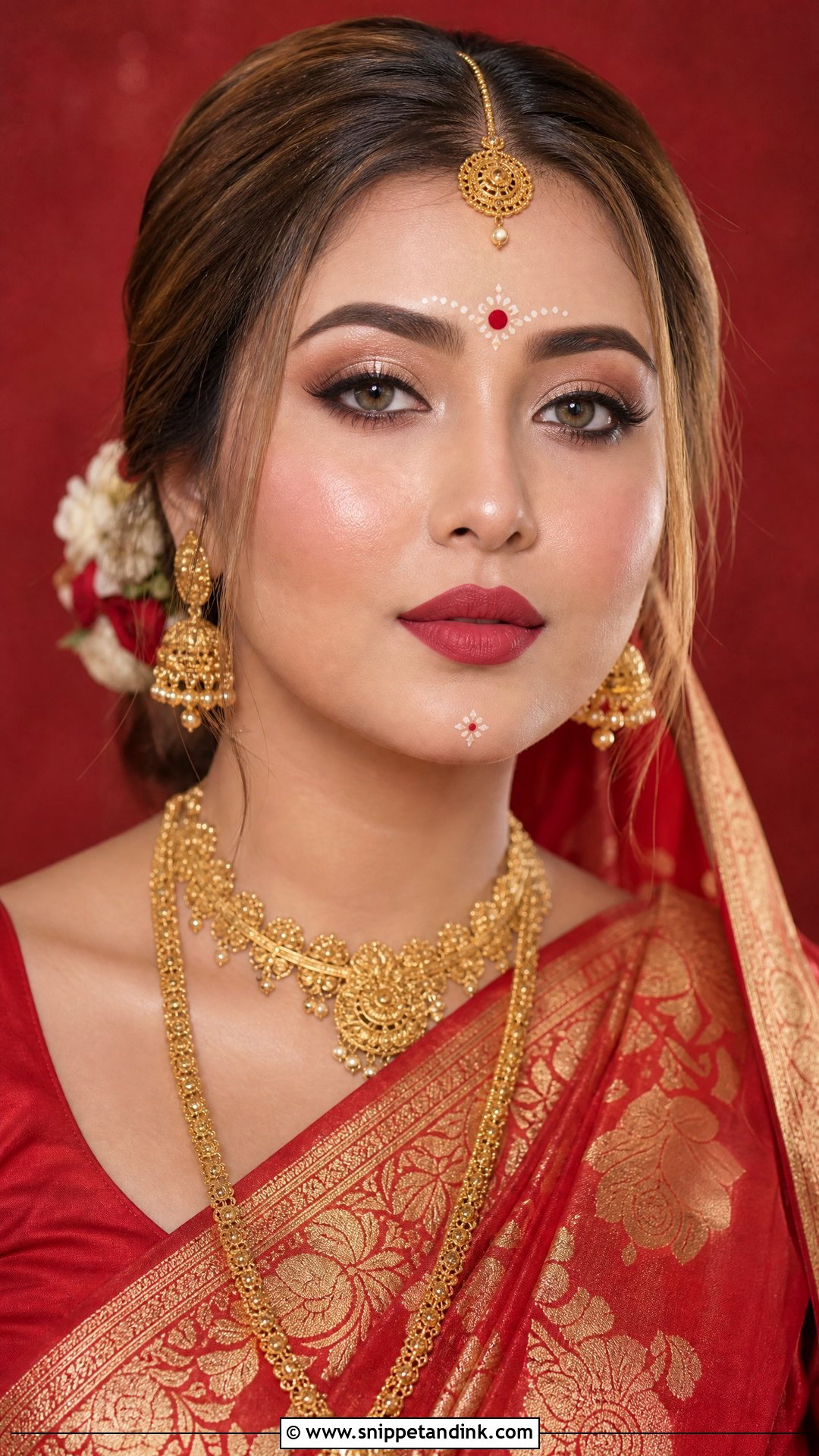
Soft glam suits a bride who rarely wears full makeup and is nervous about not recognising herself. The skin is the work: thin layers, matte only through the T-zone, a natural glow everywhere else. Neutral brown shadow, a little shimmer in the centre of the lid, thin black liner and wispy lashes. I swap the deep red for rose red or muted ruby. The cultural details stay, they are just executed smaller and neater, which reads beautifully at a daytime wedding or a small home ceremony.
7. Dewy Bengali Bridal Makeup
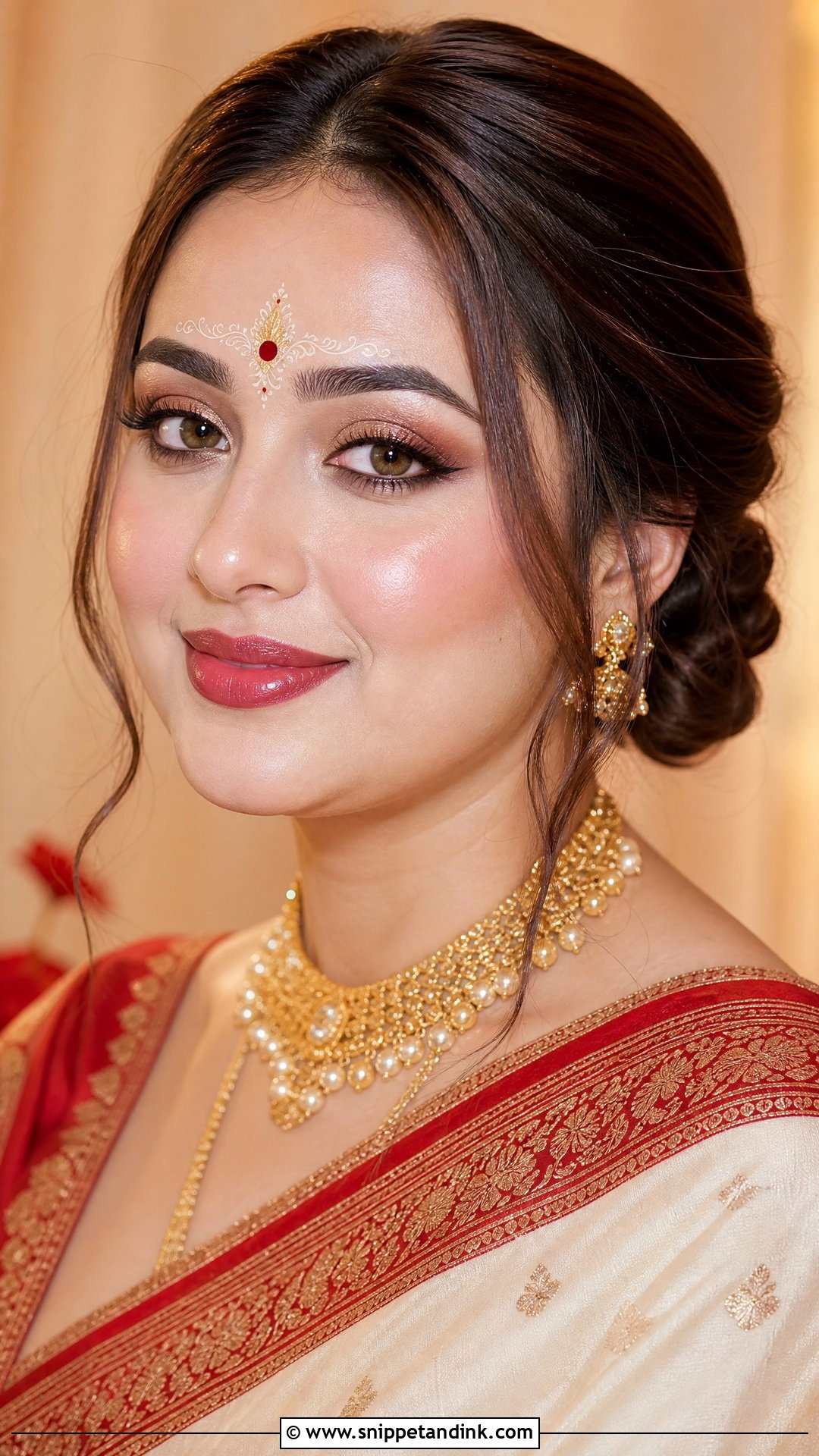
Dewy skin is the hardest finish to keep alive through a long Bengali night, so I only suggest it for winter weddings or air-conditioned halls. Hydrating prep, a luminous long-wear foundation, then powder pressed only around the nose, mouth and forehead where oil breaks through first. Cream blush in rose or coral gives the flush. Champagne or peach shimmer on the eyes, brown liner, fluttery lashes and a glossy rose lip finish it. Near the yagna fire, that glow can turn to shine within the hour, so I always leave blotting papers with someone close by.
8. Matte Bengali Bridal Makeup
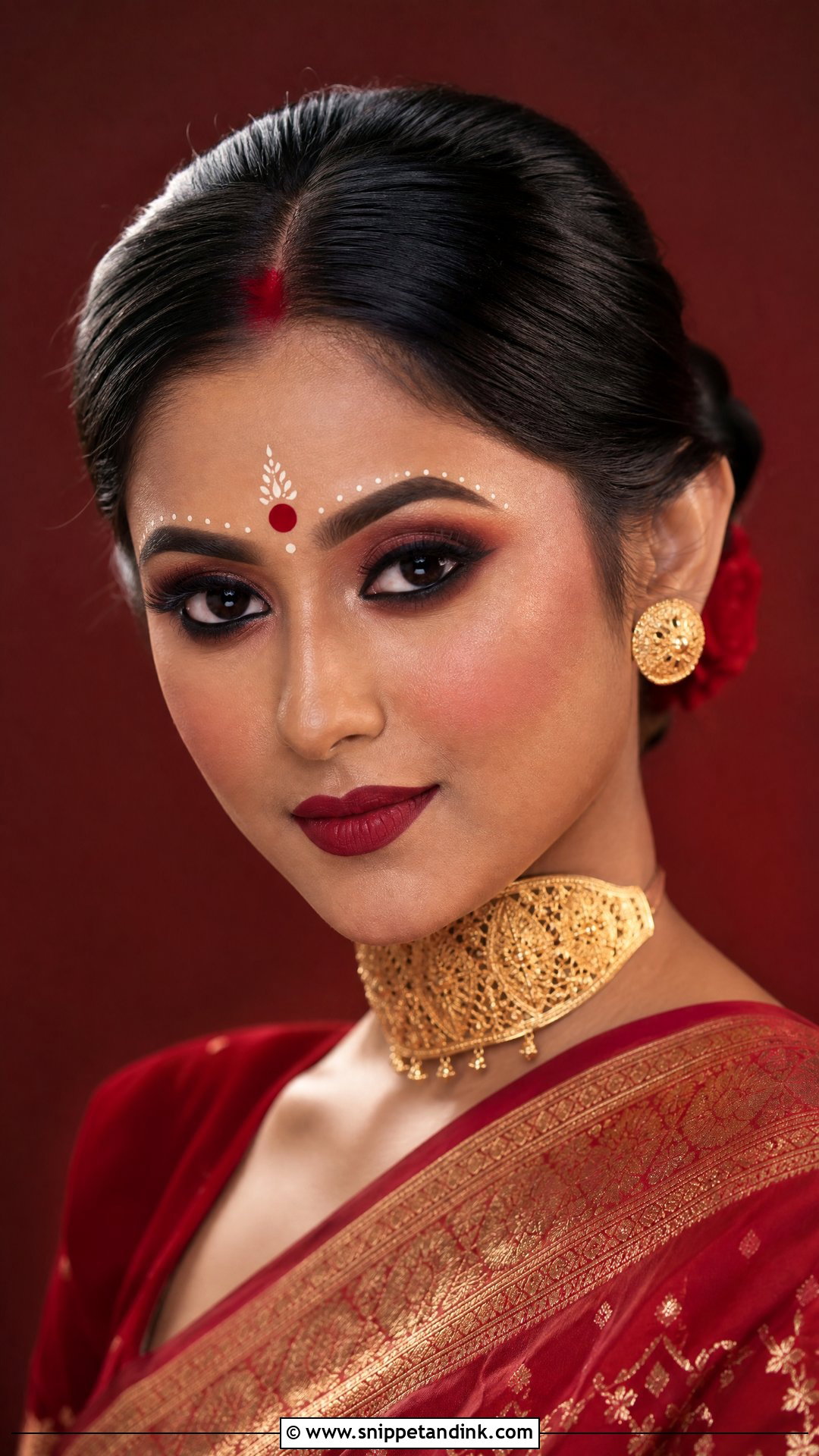
In humid weather, matte is the practical answer. The aim is velvet, not dry. I use oil-control primer only where the bride actually gets oily, a long-wear foundation and a finely milled powder pressed in with a puff, not swept. Then I add warmth back: soft contour, rose-brown blush and a little highlight high on the cheekbone, or the face looks flat in portraits. Matte browns or deep plum on the eyes with bold liner and kajal, and a matte red or maroon lip. Very dry skin is the exception; full matte will settle into flaky patches by the reception.
9. Minimal Bengali Bridal Makeup
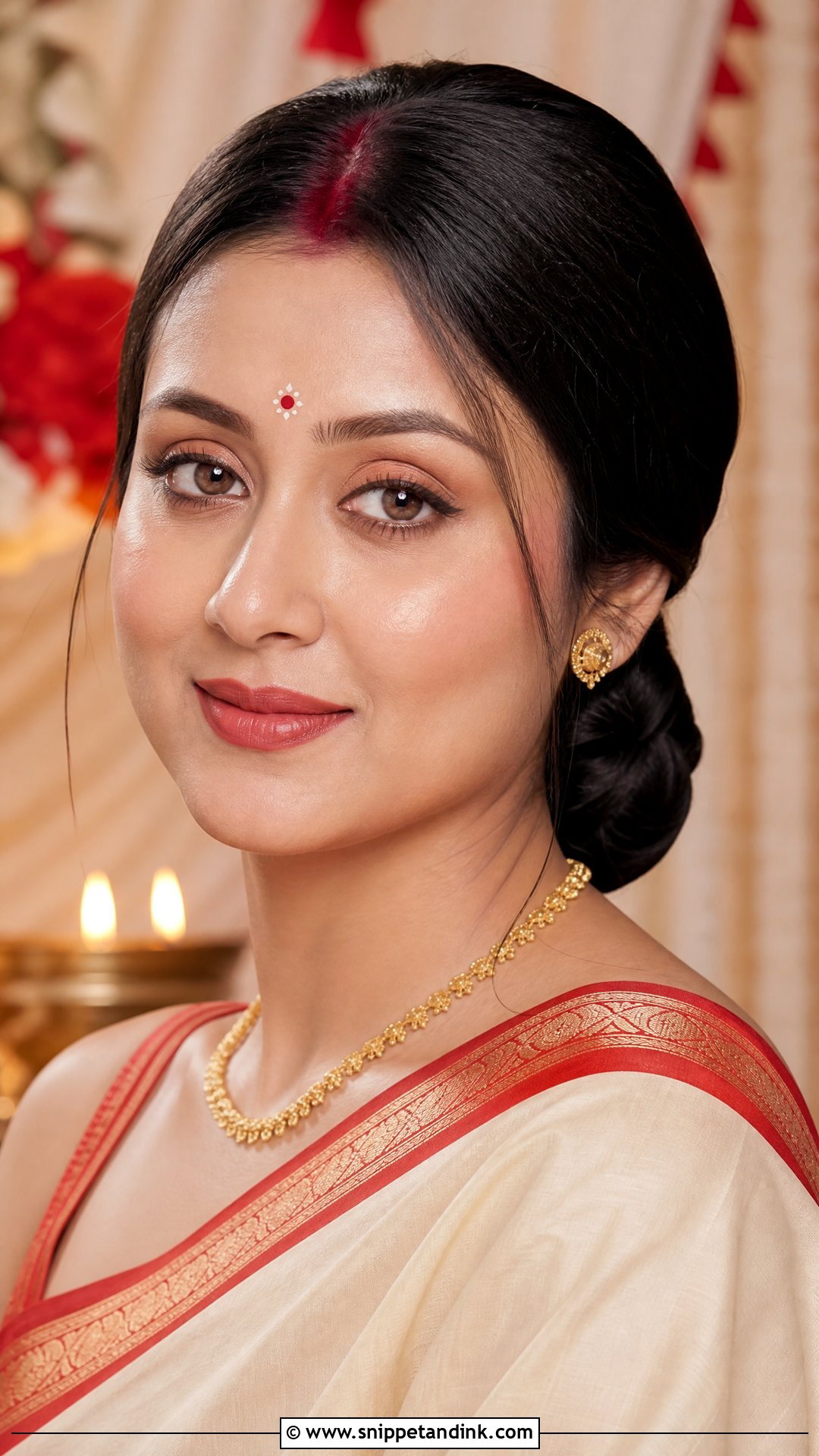
A minimal face still needs ceremony, and the ceremony comes from the details done precisely. I even out the skin with a light foundation or tint, conceal only what needs it, groom the brows and choose one focal point, usually the bindi or the lip. Soft brown liner, light kajal, natural lashes and a wash of champagne on the lid. A rose-red or muted brick lip carries enough colour for the photographs. This is the face I’d suggest for a registry ceremony or a bride who wants to look at her album in twenty years and see herself.
10. Modern Bengali Bridal Makeup
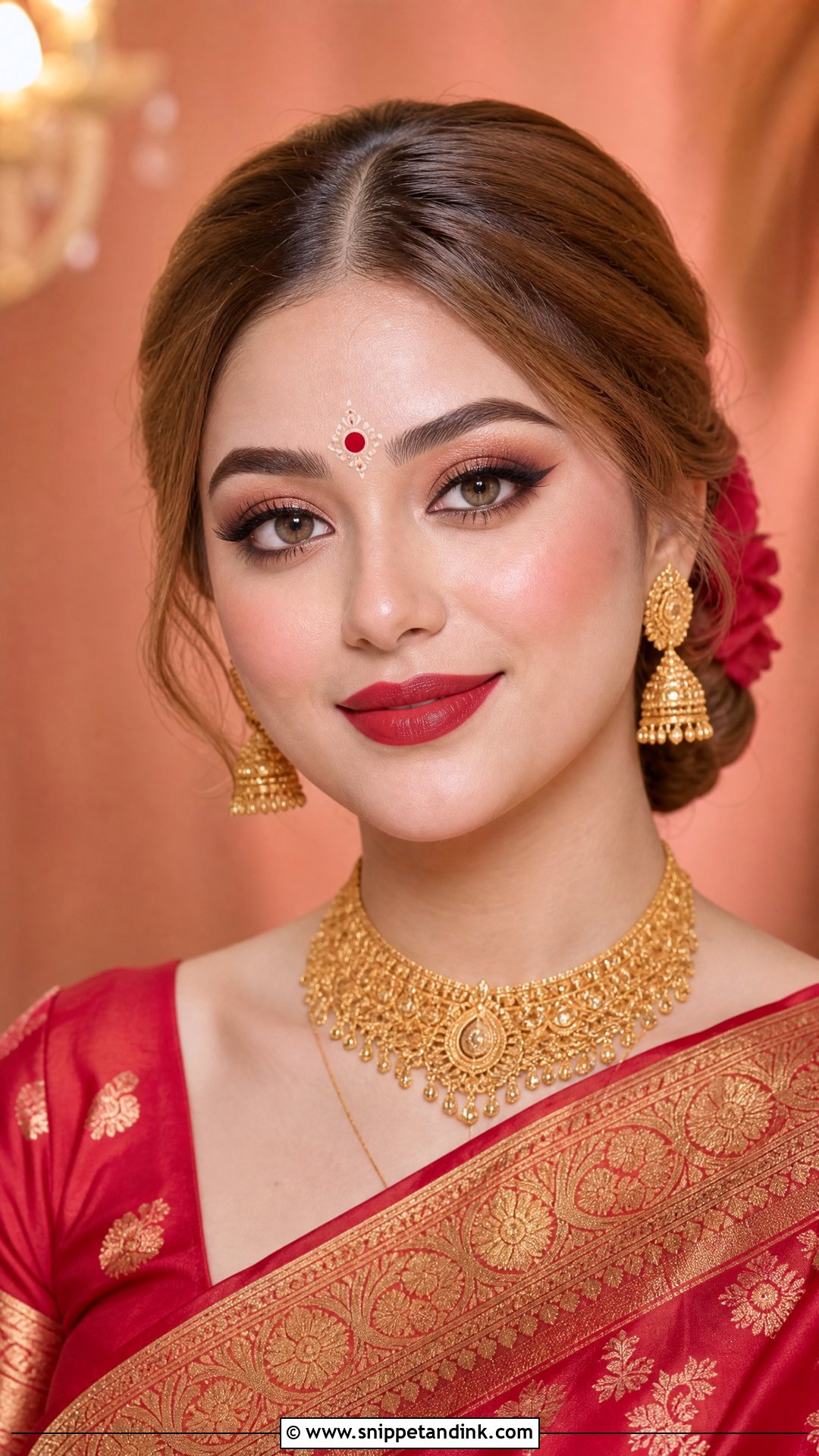
Modern Bengali bridal makeup keeps the red bindi and the traditional details but cleans up the placement. Instead of heavy black shadow, I blend warm taupe, bronze or soft plum into a lifted wing, keep the skin satin, and place blush high on the cheek so it pulls the face upward. Classic red, cinnamon red or berry on the lips depending on the saree. The chandan dots get smaller and more symmetrical. It suits designer sarees, sculpted blouses and lighter jewelry, where an old-school heavy face would look out of step.
11. Bengali Bridal Reception Makeup
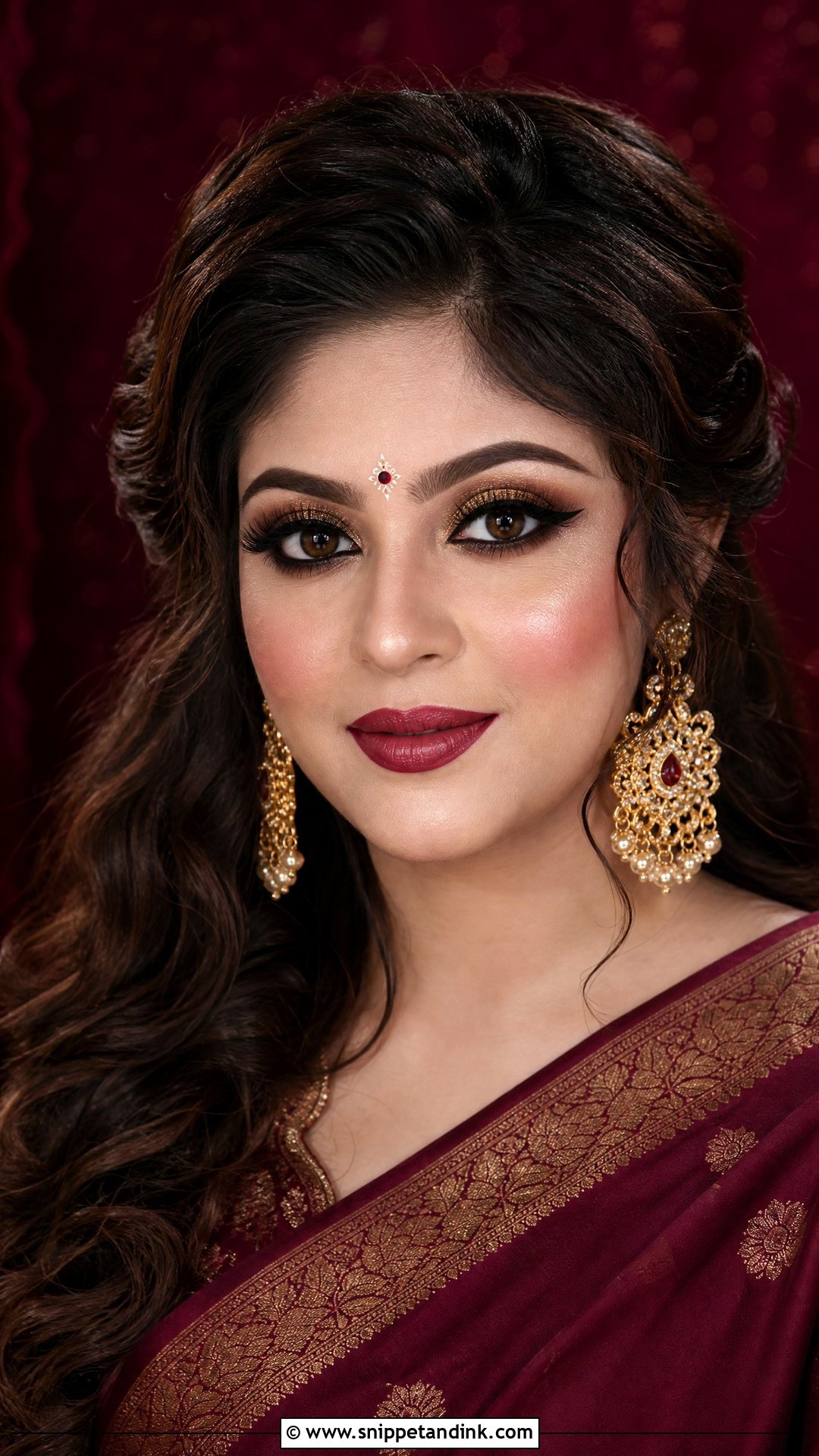
Reception makeup can be more glamorous, since there is no fire, no sindoor and far less crying. I re-base rather than pile on: blot, remove creased concealer, and lay a fresh satin layer over the original. The evening drama comes from bronze smokey eyes, black liner, full lashes and softly filled brows. If the wedding lip was bright red, I move to wine, rose brown or deep berry so the two sets of photos feel different. Velvet sarees in particular absorb light, and the face can carry more sculpting next to them.
12. Bengali Bridal Haldi Makeup
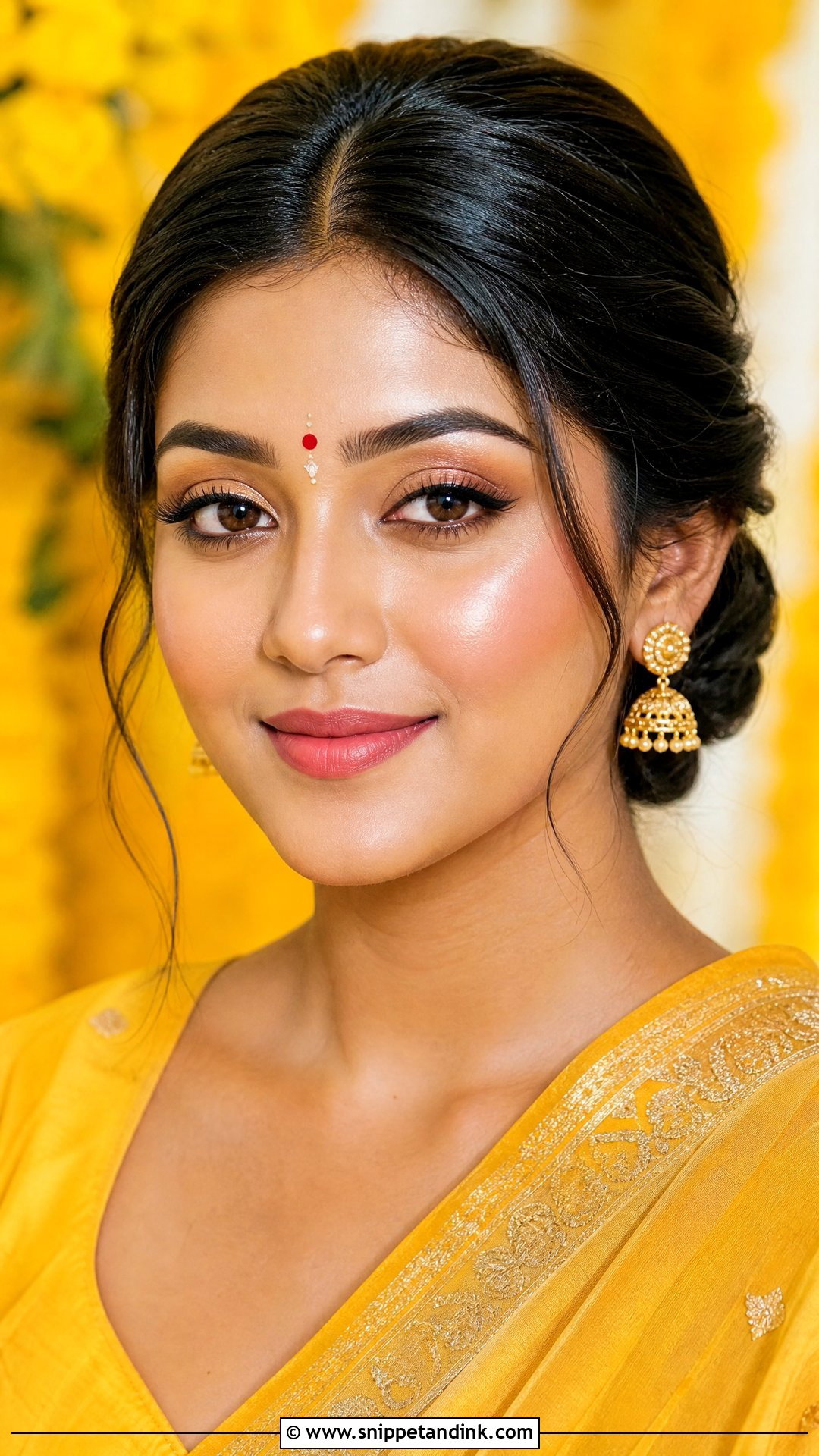
Haldi makeup has one hard rule: turmeric paste is going on the face and arms, so anything I apply either gets covered or gets washed off. I keep the base breathable and light, use waterproof concealer only where needed, and cream blush in peach or warm pink. Golden beige shadow, brown liner and waterproof mascara replace heavy kajal. A peachy nude or coral tint on the lips. I avoid shimmer completely because turmeric already stains the skin yellow-gold, and shimmer on top of it photographs muddy.
13. Bengali Bridal Mehndi Makeup
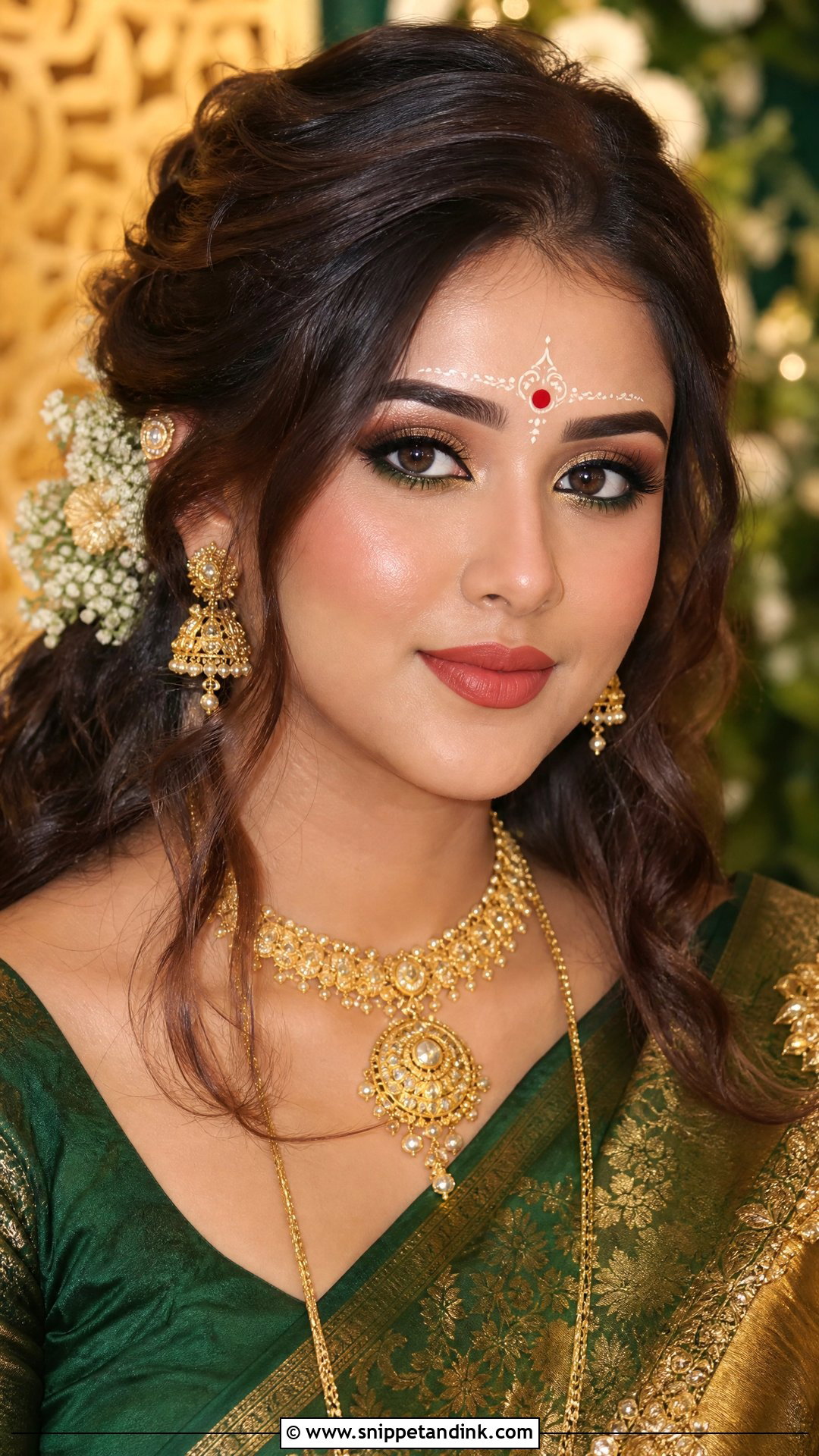
The mehndi function is the place to play with colour, because the outfits are usually green, mustard, teal or pink and nobody expects the formal bridal face. Olive-gold shimmer, copper shadow or a soft green liner over warm brown definition all work. Satin skin, coral blush and a terracotta or rose-brown lip keep it festive. The bride sits still for hours while the henna dries, which sounds easy on makeup, but she cannot touch her face with wet hands. Waterproof formulas and a light setting spray matter more here than people expect.
14. Bengali Bridal Sangeet Makeup
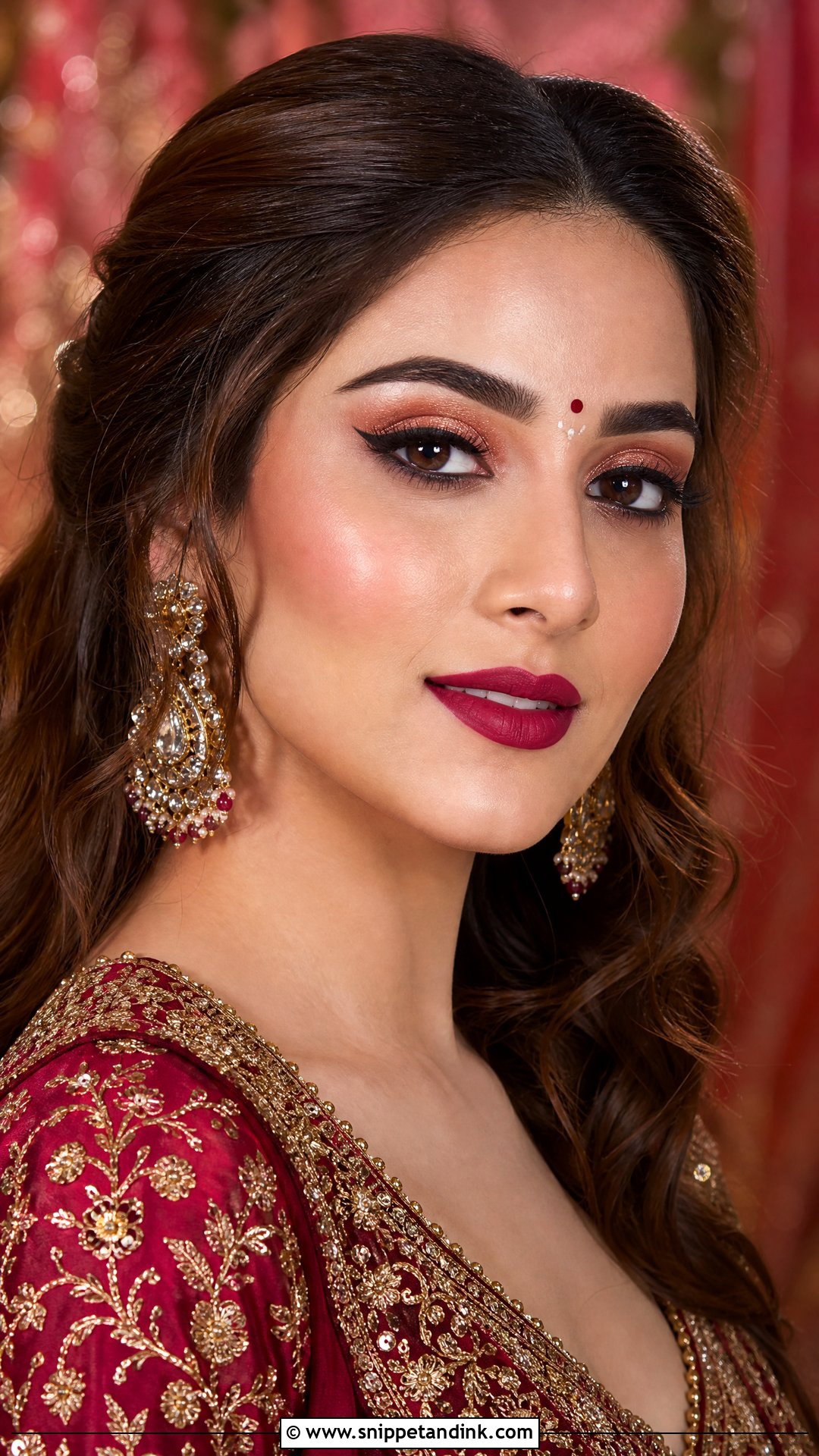
Sangeet makeup has to survive dancing. I use a long-wear base, set it thoroughly, and build a bronze or rose-gold shimmer eye with black liner, full lashes and soft smoke under the lower lashes. The cheeks can be more sculpted than on the wedding day. My rule for the lip is simple: a heavy outfit gets a softer lip, a plain one gets a bold berry or ruby. Lashes are the weak point at a sangeet, so I glue them on with a thin line and let the glue go tacky for thirty seconds before placing them.
15. Bengali Bridal Makeup For Fair Skin
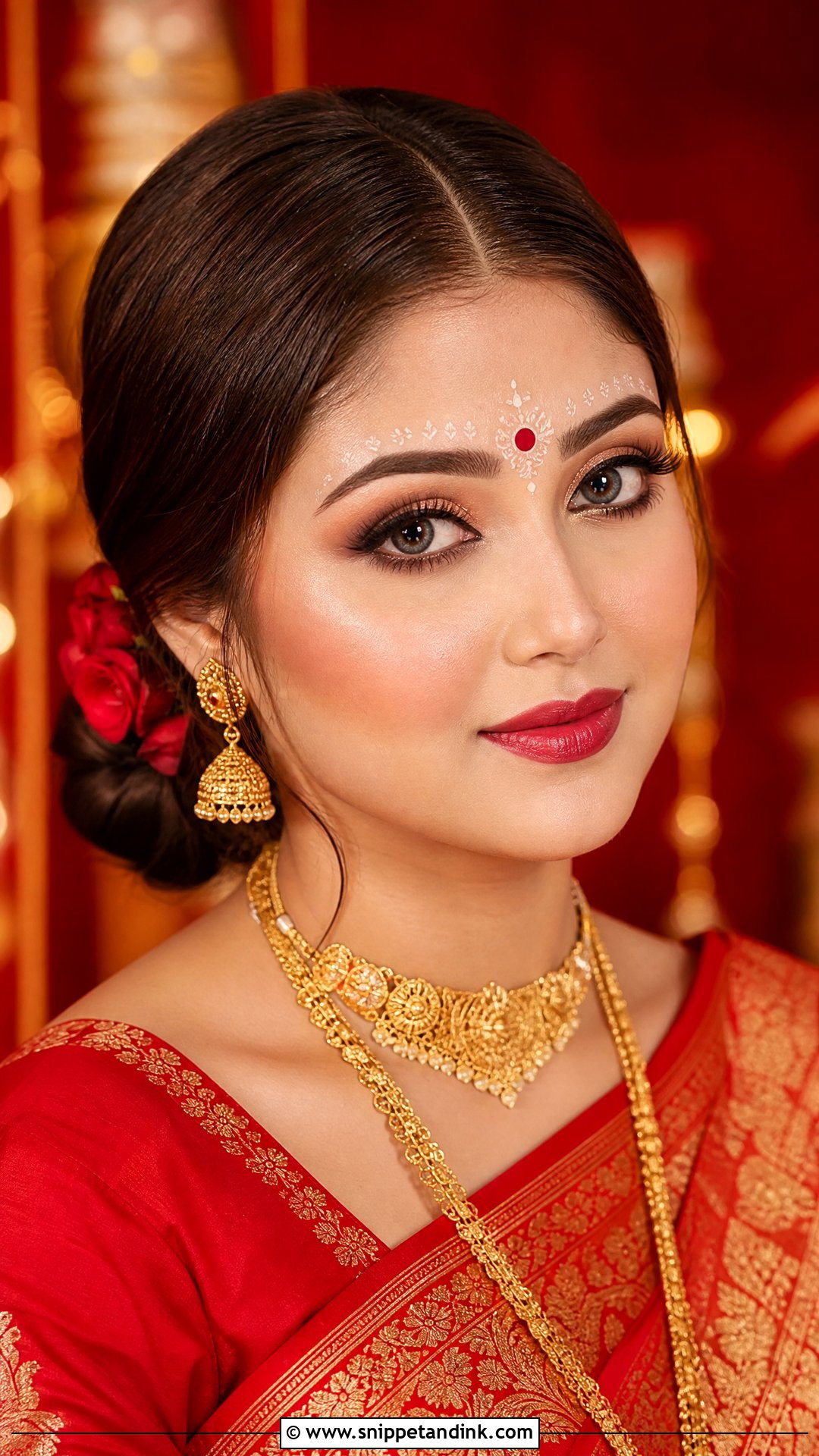
Fair skin can look washed out beside red silk and heavy gold if the makeup is too pale. I match foundation to the neck, never the inner arm, and add warmth with peach or rose blush. Champagne gold on the lid, brown in the crease, black liner and defined lashes give the classic eye. True red or soft ruby on the lips. I avoid icy highlighters entirely on fair brides; they read grey in flash. The bindi and chandan dots need to be very crisp, because every wobble shows on light skin in close-up.
16. Bengali Bridal Makeup For Medium Skin
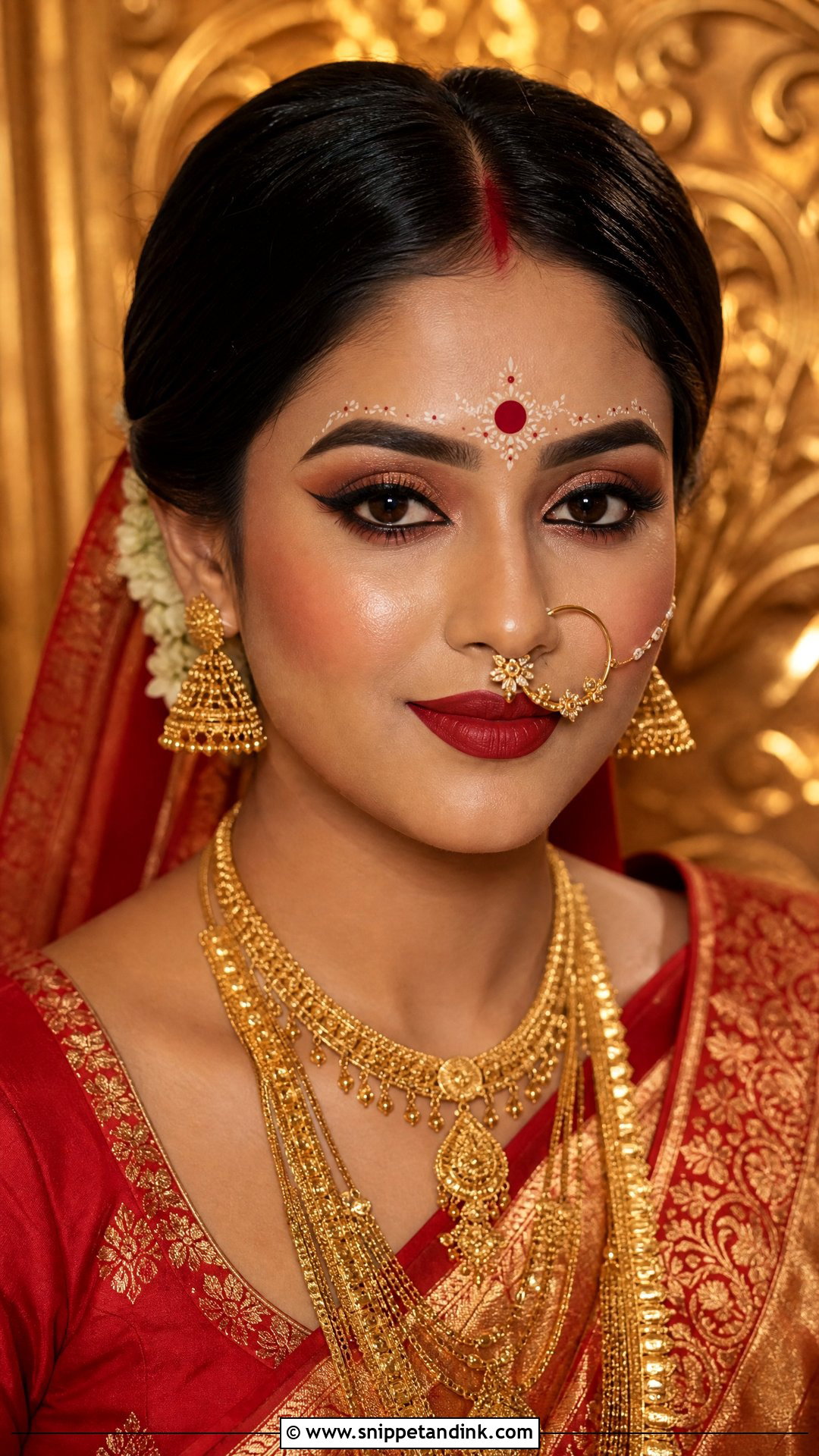
On medium and olive skin tones, the most common mistake I correct is concealer that is too light, which leaves a grey ring under the eyes in photos. I match a golden or neutral foundation and brighten only the very centre of the face. Antique gold, bronze and warm brown shadows look rich without turning ashy, and black kajal adds the traditional Bengali definition. Terracotta or warm rose blush, and a brick red or ruby lip. Very pale nudes flatten the face on this skin tone.
17. Bengali Bridal Makeup For Tan Skin
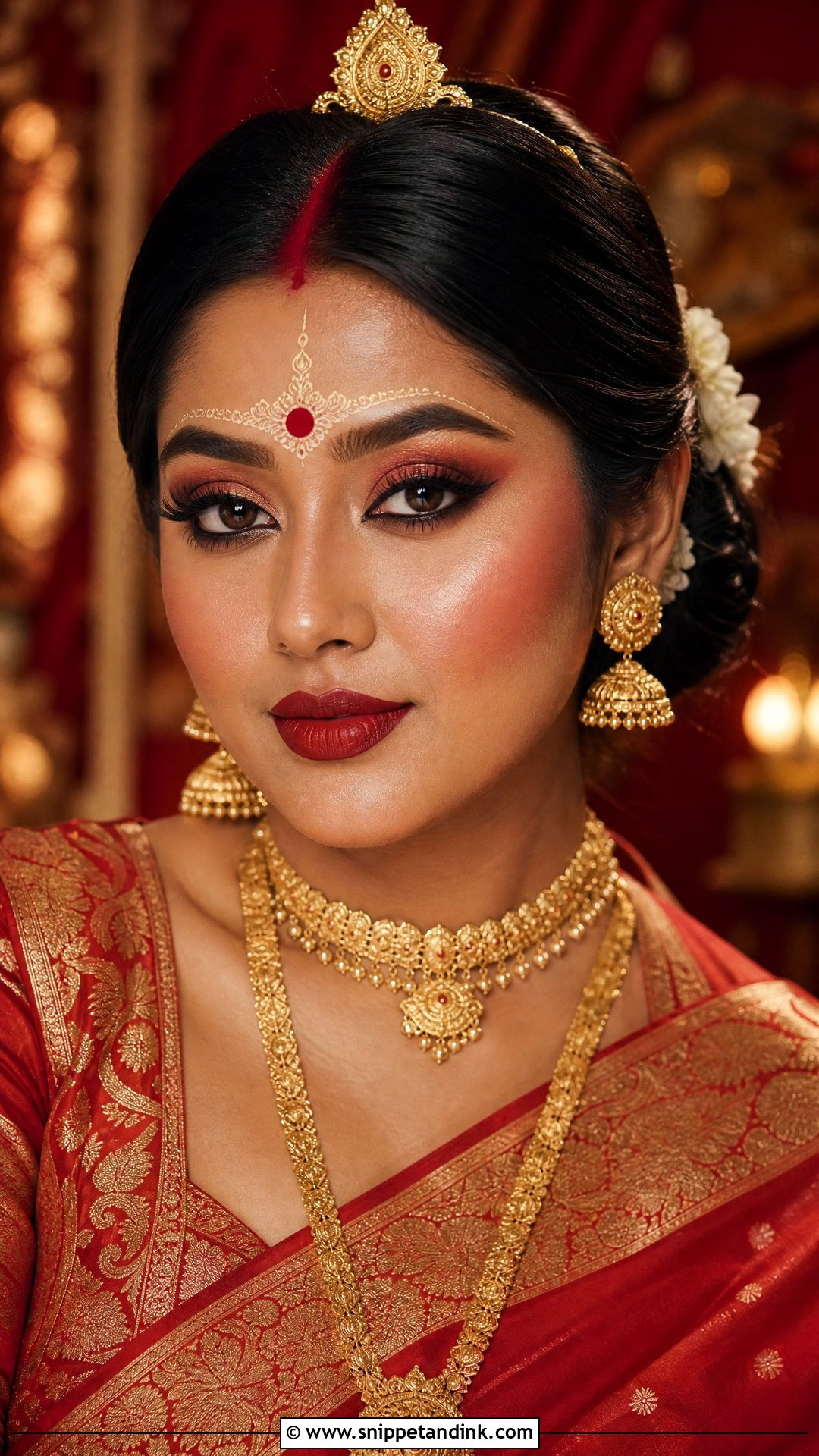
Tan skin needs a base matched to the chest and neck. I match the base there, since the face is often a shade lighter or more uneven, and that difference shows when a bride wears a deep blouse. Warm bronzer replaces grey contour, which looks muddy on tan skin. Copper-gold and burgundy on the eyes, bold kajal, soft lashes. Burnt peach or terracotta blush. Deep red, oxblood or brick on the lips. Gold highlight should be blended until you can only see it when the bride turns her head.
18. Bengali Bridal Makeup For Deep Skin
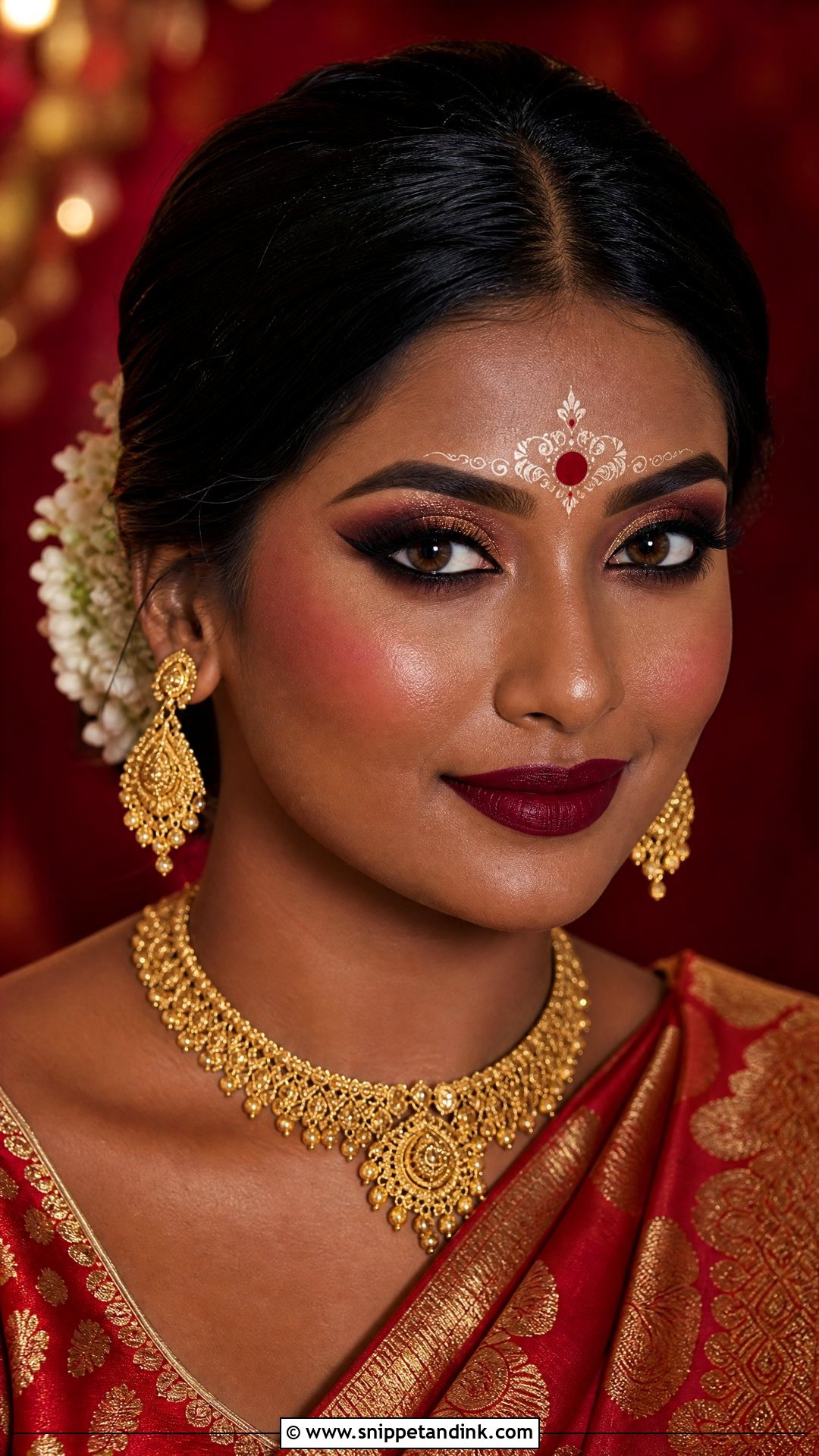
Deep skin carries rich pigment better than any other skin tone, but only if the base is right. I check the foundation match in daylight and then again with a phone flash, because a base that looks right in the mirror can flash back grey or ashy. Bronze, copper, deep gold or plum on the eyes, defined with black liner and kajal. Berry, wine or oxblood on the lips. Blush in warm plum or deep rose, pressed in softly. The red bindi and white chandan dots show up vividly against deep skin, so they need to be neat.
19. Bengali Bridal Makeup With Maroon Lip
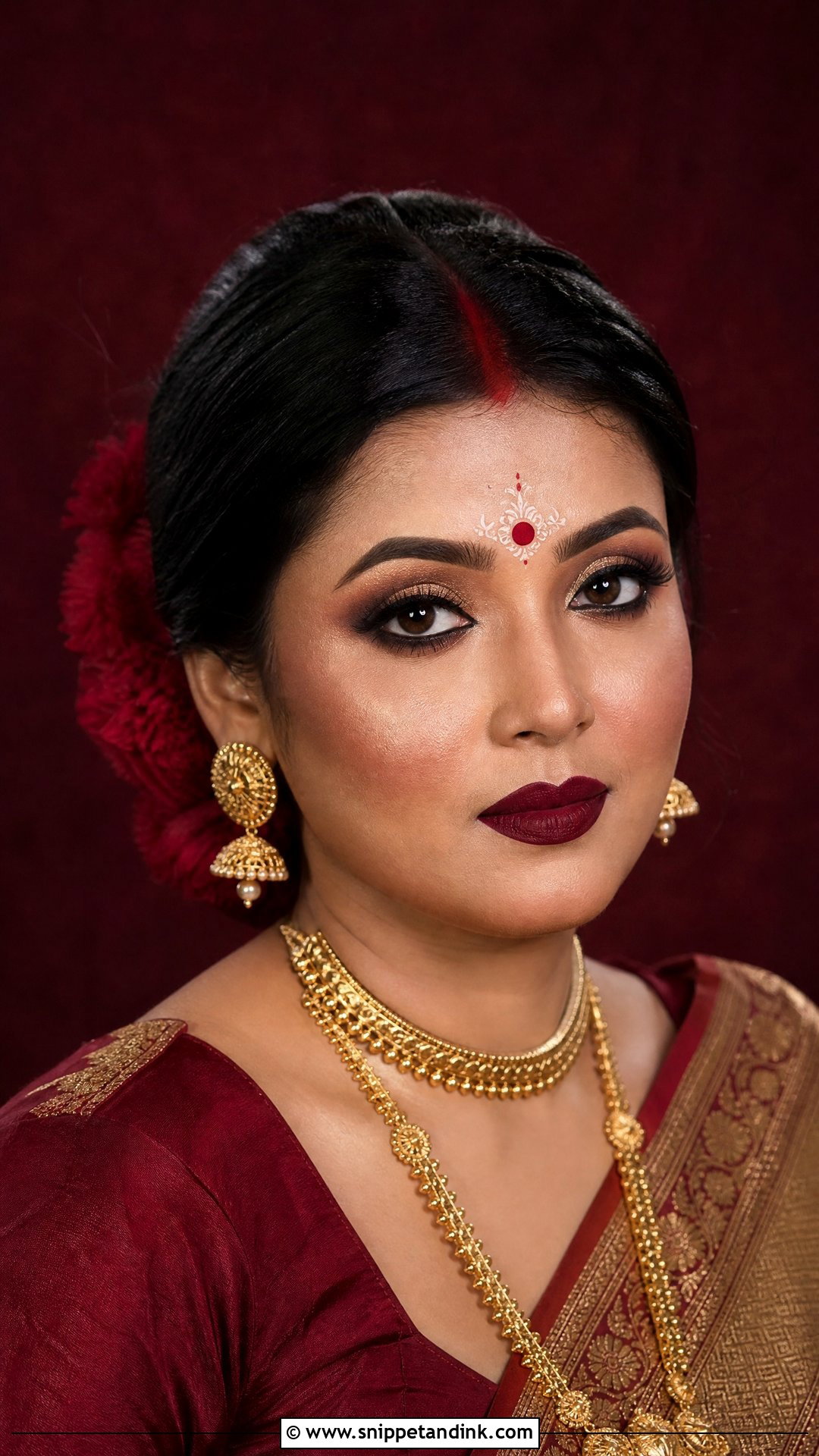
A maroon lip turns the classic face slightly darker and moodier, and I like it best for winter ceremonies and late-night lagnas. I keep the skin smooth and lightly sculpted so the lip carries the focus, with bronze or warm brown on the eyes and a little smoke near the lashes. The trap is making both eyes and lips very dark: under mandap lights it can look severe. Rose-brown blush and a restrained golden highlight balance it. Maroon also forgives fading better than bright red, since a worn-down maroon still looks like a deliberate stain.
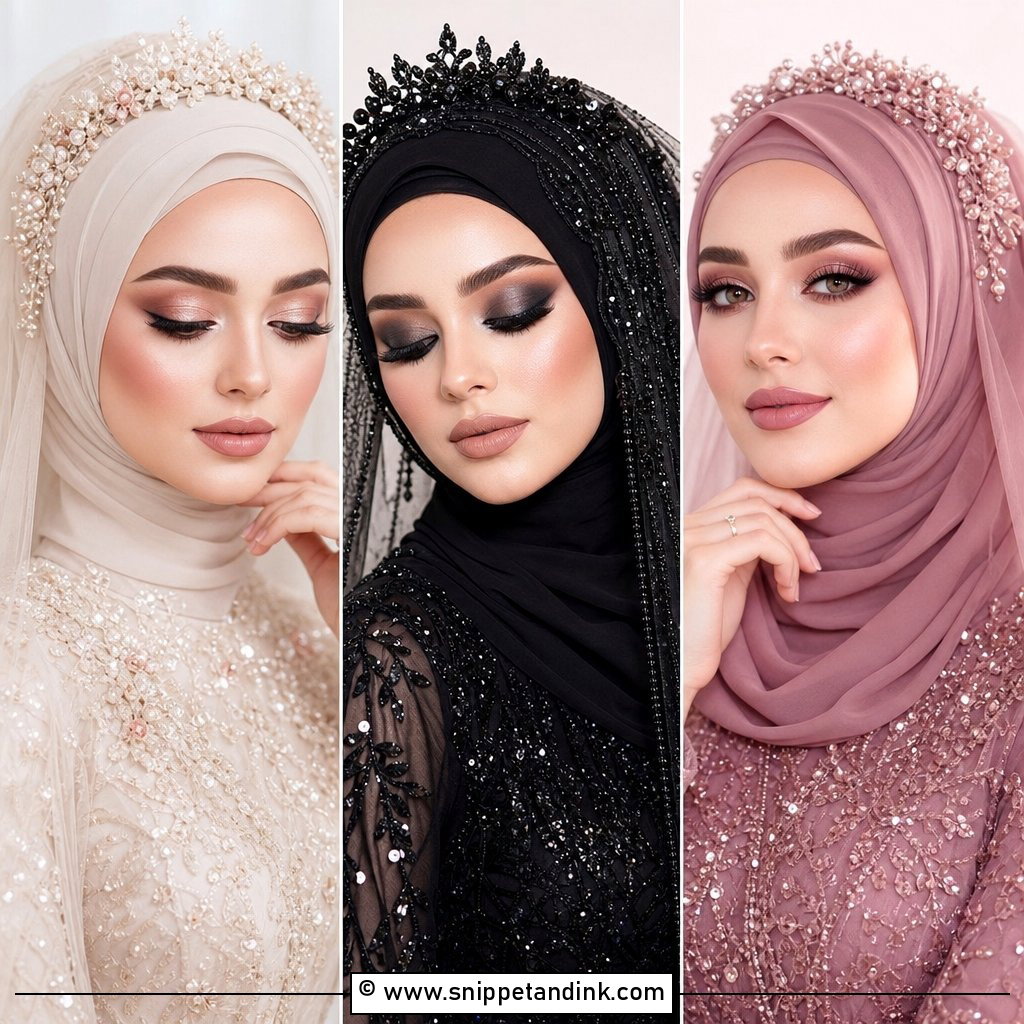
20. Bengali Bridal Makeup With Pastel Saree
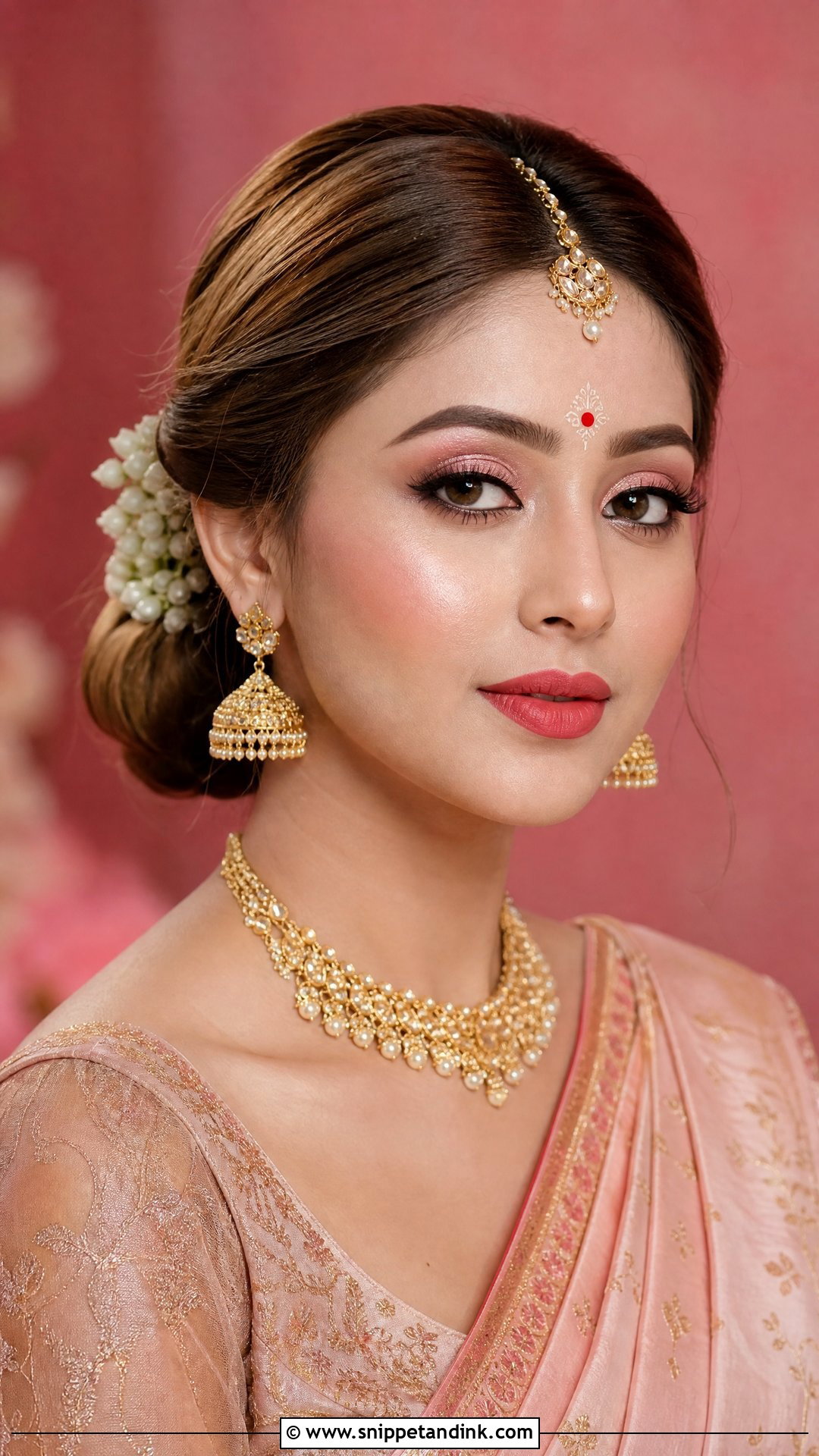
Pastel sarees need a lighter hand or the face looks heavier than the outfit. Luminous satin skin, gentle contour and rose or soft mauve blush. Champagne, rose gold or taupe on the eyes with thin black liner and clean lashes. A muted rose or pink-brown lip works better here than maroon. I still keep the bindi and chandan, but I draw them smaller and space the dots more delicately. Mint, blush and powder blue silks especially pick up a cooler tone in the face, so I keep the blush on the cooler side too.
Drawing Chandan Dots That Stay Crisp All Night
The chandan pattern above the brows is the detail guests look at most closely, and it is the one I see go wrong most often. Real sandalwood paste cracks and flakes as it dries, especially in air conditioning, so I either thin it to a creamy consistency or switch to a cosmetic-grade white and a long-wear red liner for the kumkum dots.
My order of work
- Finish and set the whole base first. Dots drawn on unset foundation smear the moment you touch your brow.
- Mark the centre point above the nose and the end points over each arch with tiny pencil dots, so both sides mirror each other.
- Work from the centre outwards with a fine brush or a rounded toothpick, alternating white and red if the design calls for it.
- Leave the paste to dry untouched for several minutes before the bindi goes on.
- Lock it with a light mist of setting spray held at arm’s length; spraying close up can make the paste run.
Keep the design in proportion to your forehead. A short forehead with a heavy crown or mukut looks crowded with three rows of dots, while one clean arch reads better in portraits. If you’re doing your own, practise the pattern twice in the week before, on clean skin, and photograph it from straight on and from the side.
The Face That Lasts From Shubho Drishti to Bidaai
The red bindi, chandan, kajal and gold are the constant; everything else bends to your outfit, skin and the hours you will be sitting in front of that fire. A bride who loves drama can carry bold kajal and a maroon lip, and a quieter bride can wear dewy skin and a muted red without losing any of the tradition. At the trial, I’d ask yourself one question: will this face still look like you at two in the morning, after the sindoor and the tears? If yes, you have your look.
You'll Like These Ideas:


Leave a Reply