
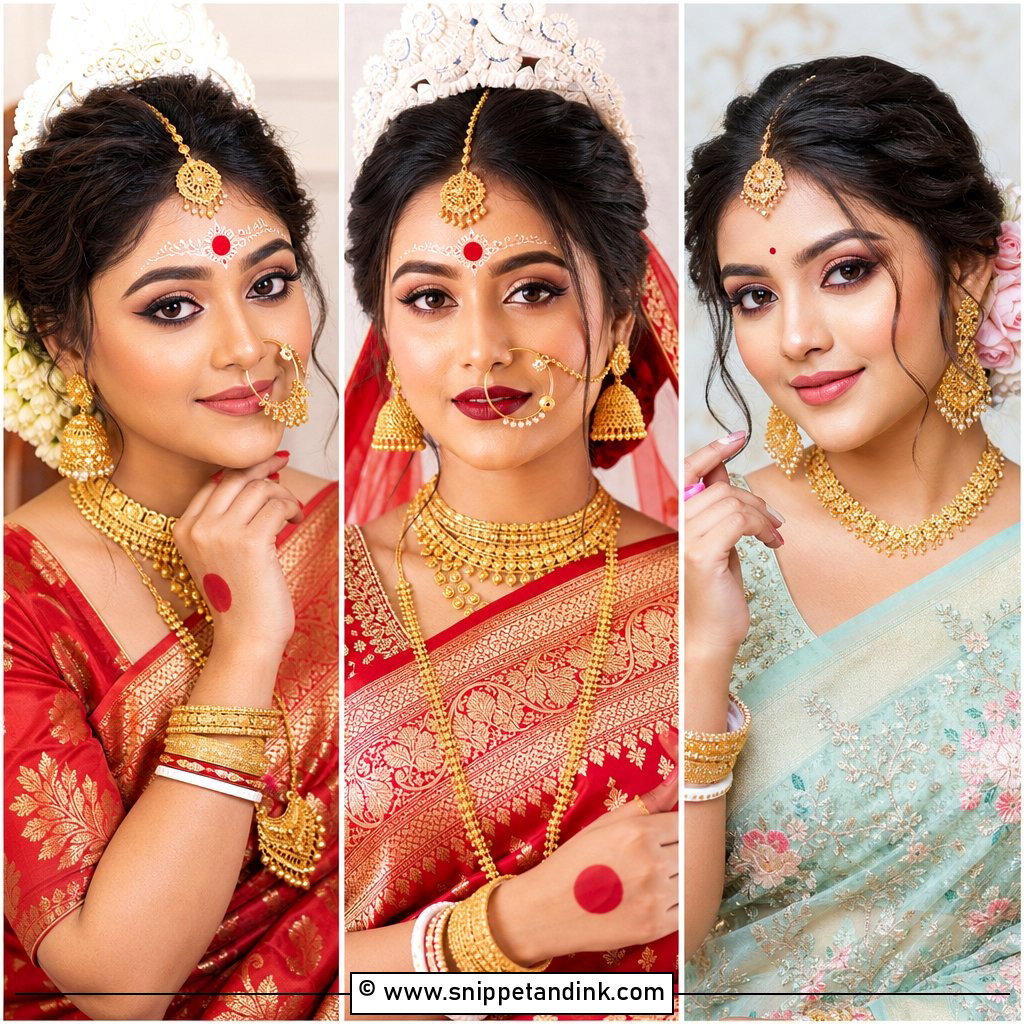
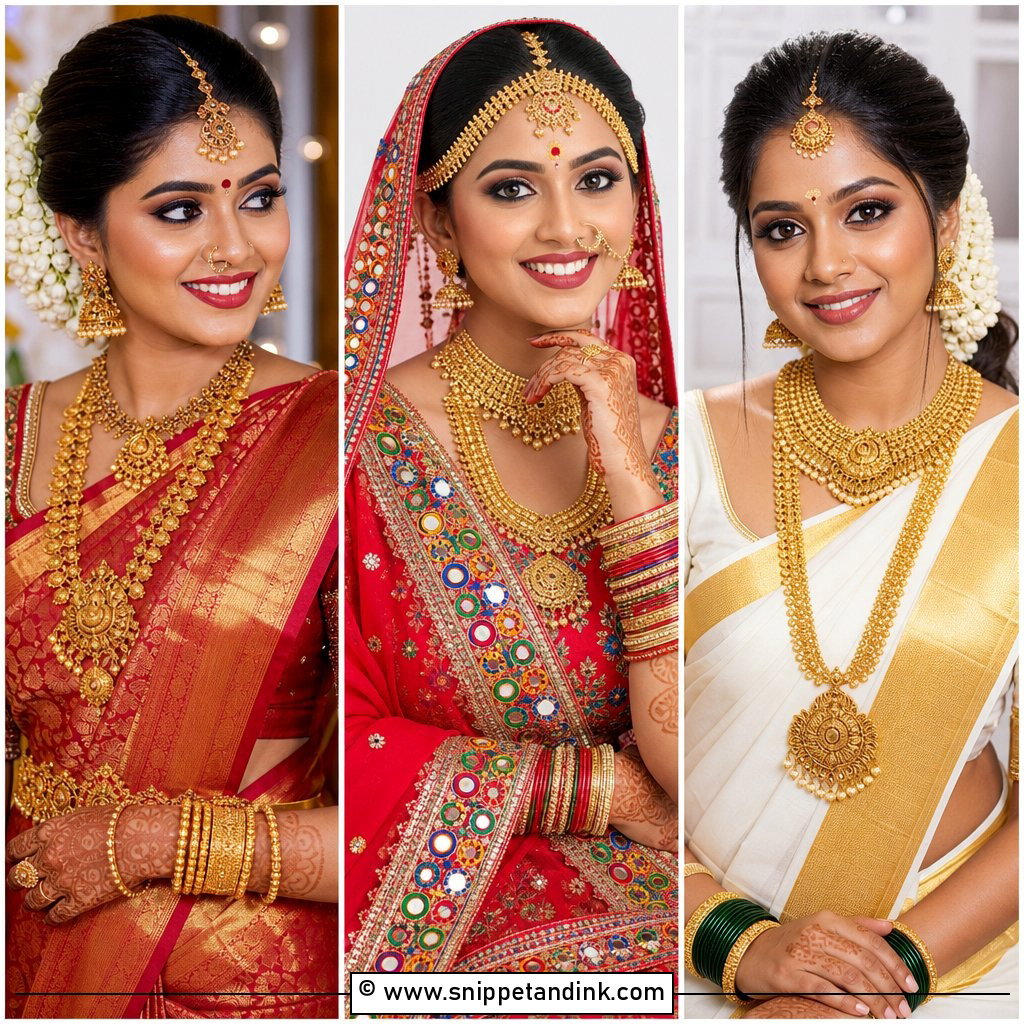
Bengali bridal makeup is recognizable from across a room: kajal-lined eyes, a red bindi framed by chandan dots, alta on the feet, and a red Banarasi saree under a white shola mukut. All that detail is exactly why the face needs balance. Too much shimmer fights the zari, and too little definition disappears under the mukut and ghomta in photos. When I make up a Bengali bride, I’m also working around a long night of rituals, so wear matters as much as color. The looks below keep the classic details while updating the skin finish, eye blending and lip tone, from the traditional red lip to lighter faces for the haldi and reception.

Drawing Chandan So It Stays Crisp Until Sindoor Daan
Chandan work is the part of a Bengali bridal face that most often goes wrong, usually because it gets rushed at the end. I draw it once the base is fully set and before the eyes are finished, so I can still adjust the brows if the pattern makes them look uneven.
- Map the design with tiny guide dots first, starting at the center of the forehead and working outward, and check the symmetry in a mirror from both sides.
- Use a fine brush or a toothpick. Traditional sandalwood paste cracks and flakes as it dries, so I mix it to a smooth consistency or use a white cosmetic paint that stays flexible.
- Add red dots or kumkum only after the white has dried, otherwise the colors bleed into each other.
- Keep the pattern clear of the hairline where the mukut and ghomta will rest, since fabric rubbing over thick paste smudges it.
Ask to see the chandan design at your trial. Families often have strong opinions about how elaborate it should be, and it’s far easier to agree before the wedding morning.
1. Traditional Bengali Bridal Makeup
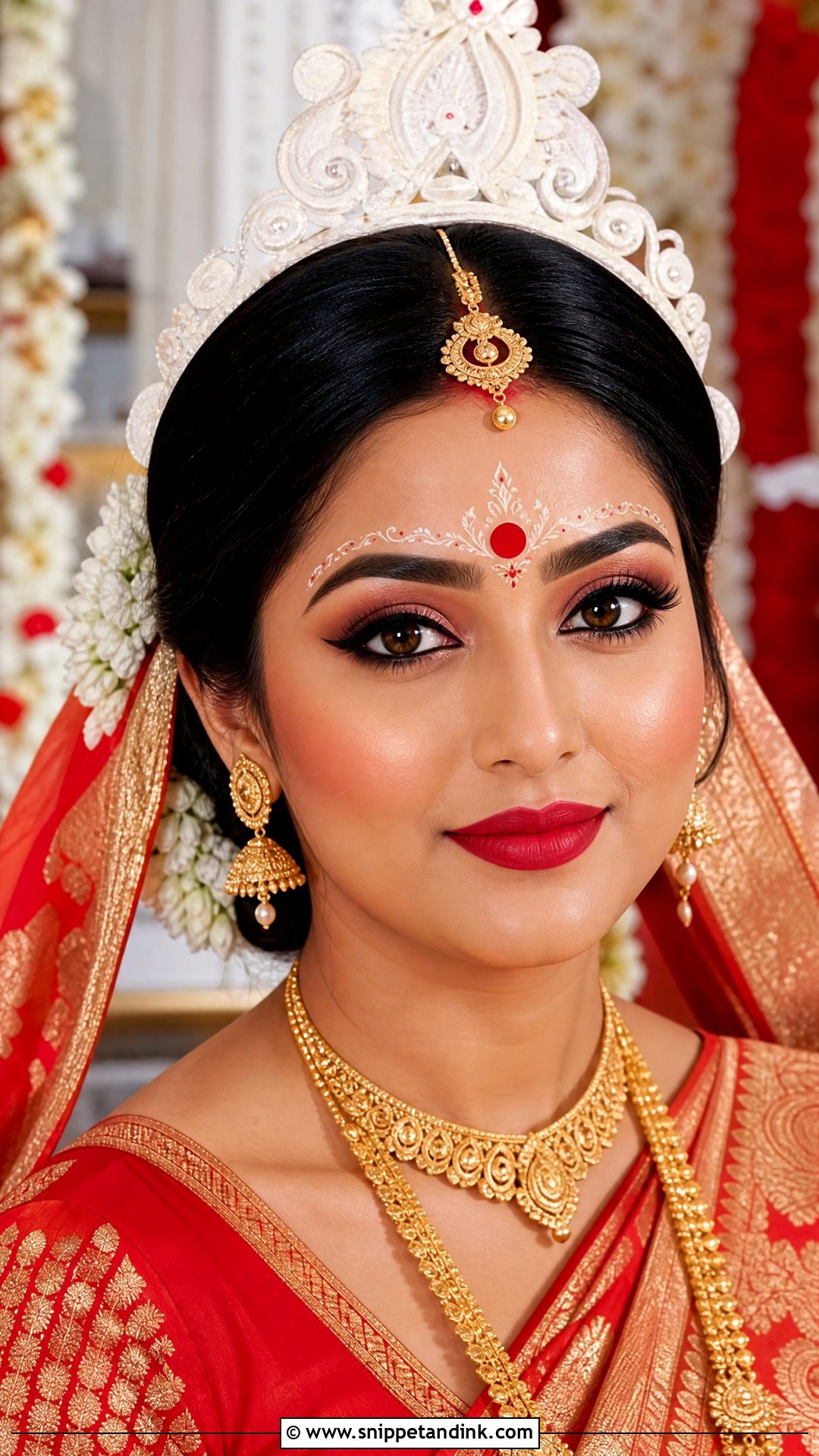
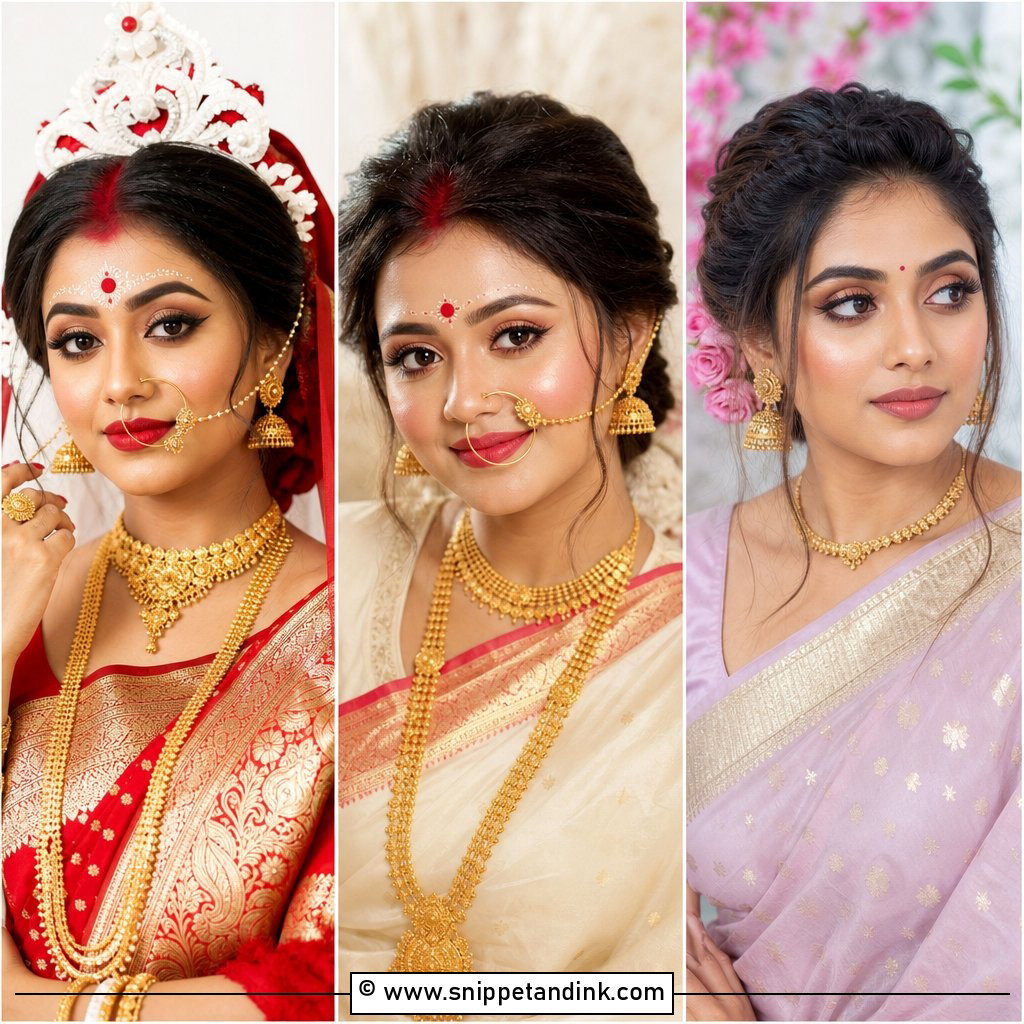
The traditional face is what most families picture, and it’s built for the main ceremony. I start with a satin base, set softly so it lasts through hours of ritual without going flat. Eyes get black kajal in the waterline, a winged liner, warm brown shadow and full lashes, because under the mukut and ghomta the face is surrounded by white and red and the eyes need weight to hold their own. A bold red lip, a red bindi and chandan dots complete it. I keep blush in warm rose or soft coral so it doesn’t compete with the saree.
2. Red Banarasi Bengali Bridal Makeup
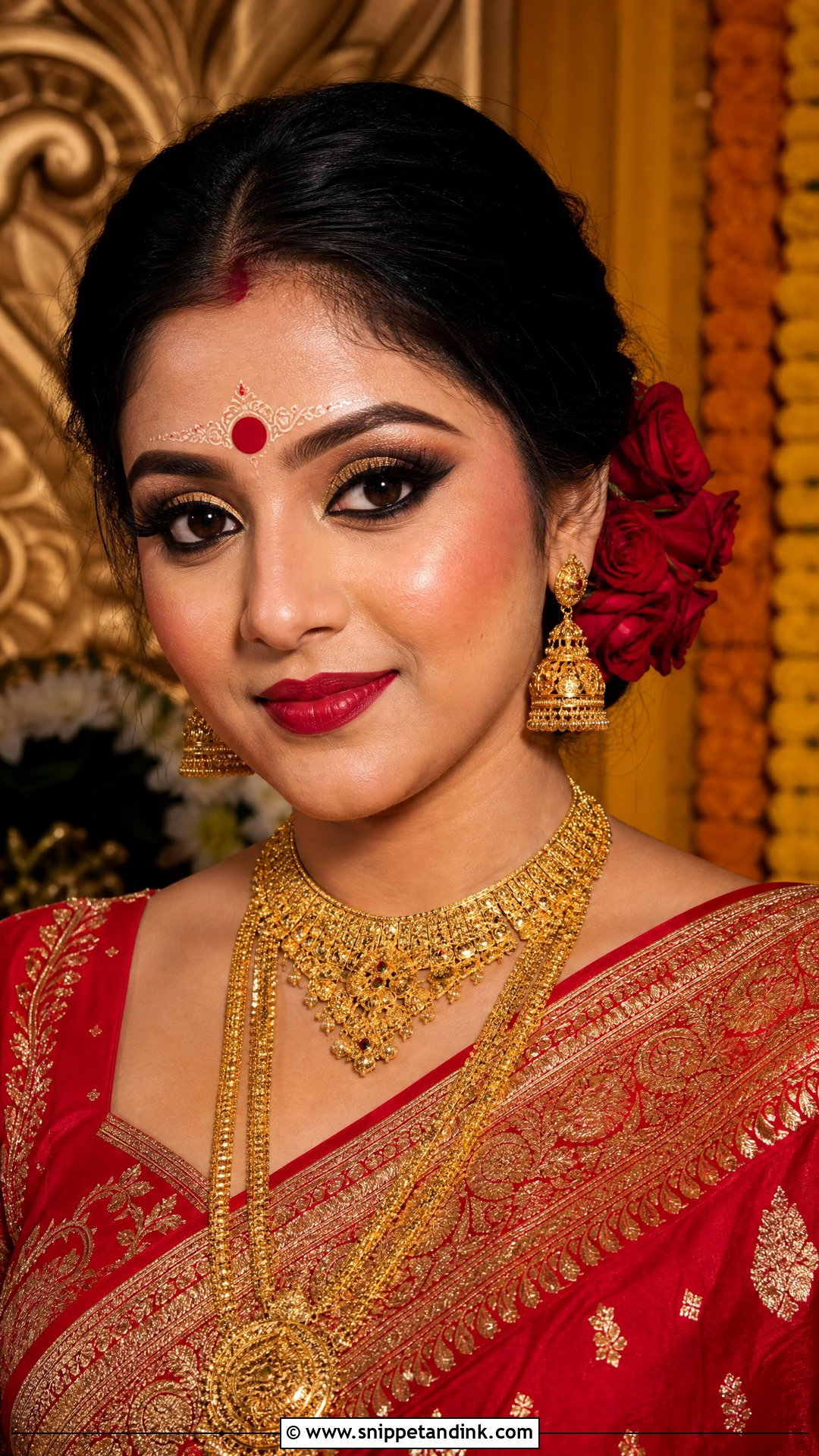
A red Banarasi carries heavy zari, and the makeup has to sit beside that richness without trying to match it shine for shine. I keep the base luminous but controlled, with fuller coverage through the center of the face for the camera. Gold and bronze shadow picks up the zari, while black liner and tightlined kajal keep the eyes sharp. A classic red or deep ruby lip ties the face to the saree. Highlighter goes only on the tops of the cheekbones, because gold zari plus a glowing forehead under a mukut looks greasy in flash. The bindi has to be bold enough to stand up to the fabric.
3. Soft Glam Bengali Bridal Makeup
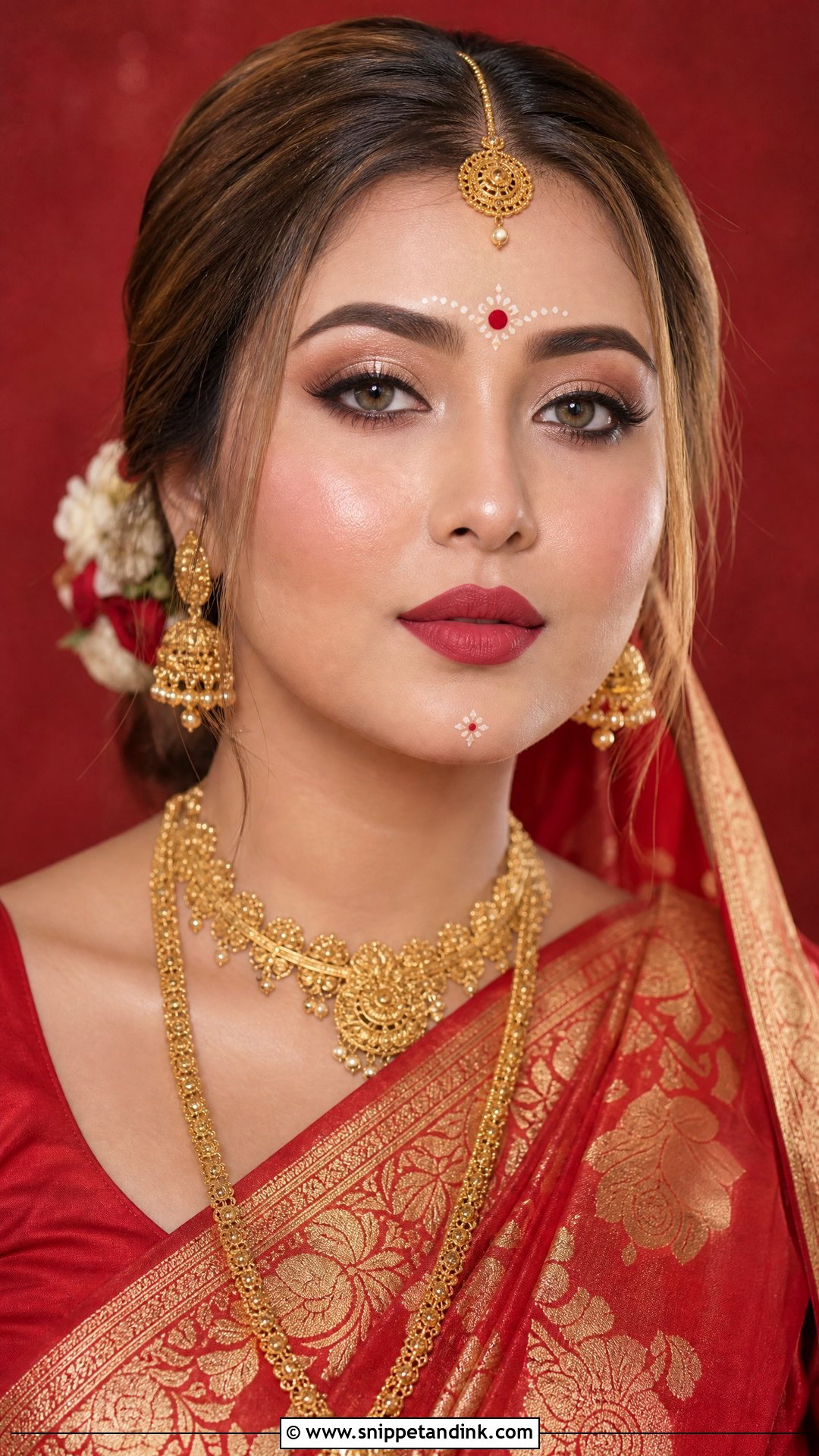
Not every bride wants heavy, black-rimmed eyes. Soft glam Bengali bridal makeup keeps the impact through glowing skin, diffused shadow and fluttery lashes, finished with a soft red or rose lip. Champagne, taupe and brown shadows replace the black smoke. I still run kajal along both waterlines, because without it the face stops reading as Bengali. A peachy rose blush keeps it fresh, and a simple bindi trail with light chandan suits red, ivory or pastel Banarasis.
4. Bengali Bridal Makeup With Red Lip
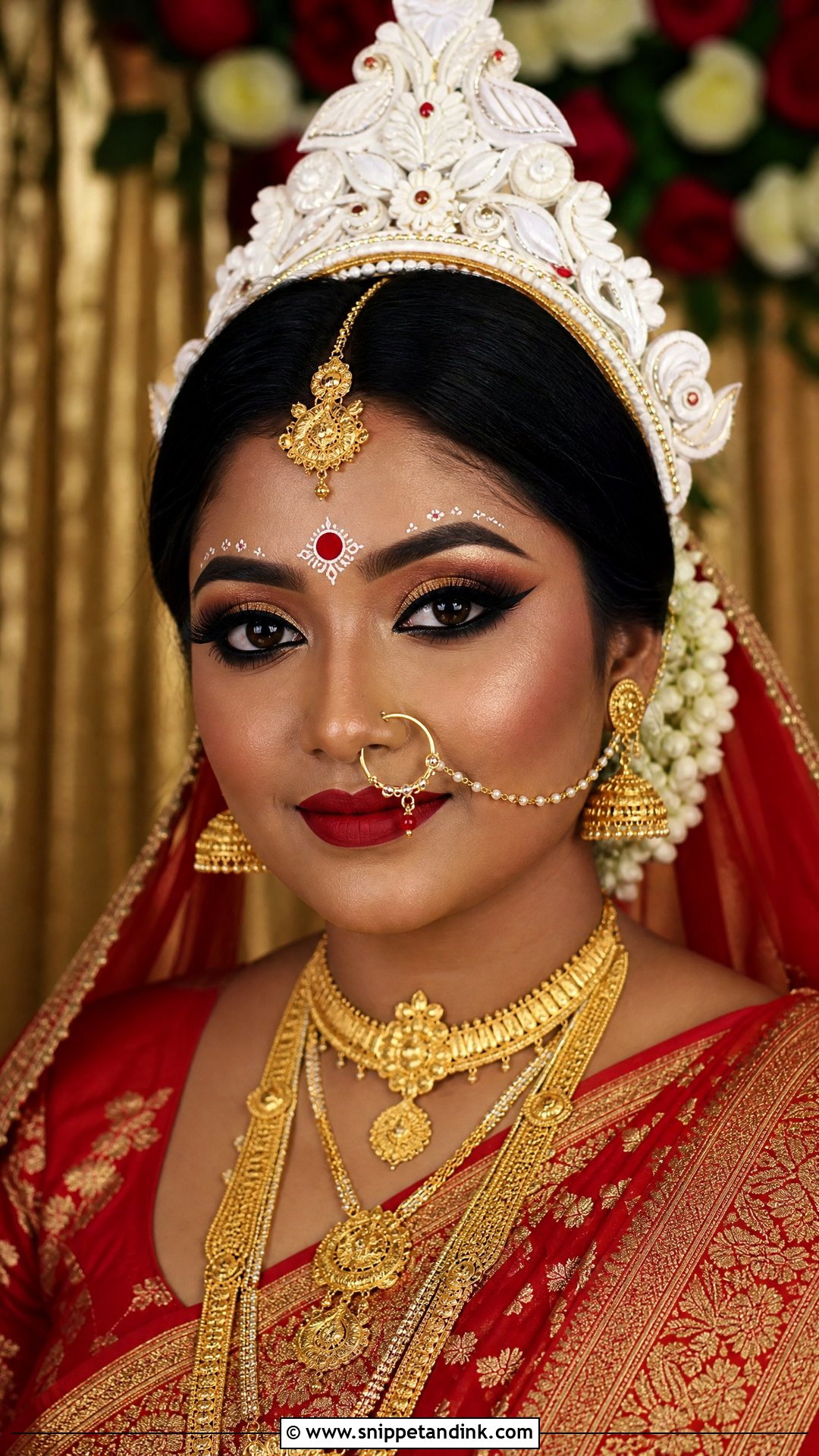
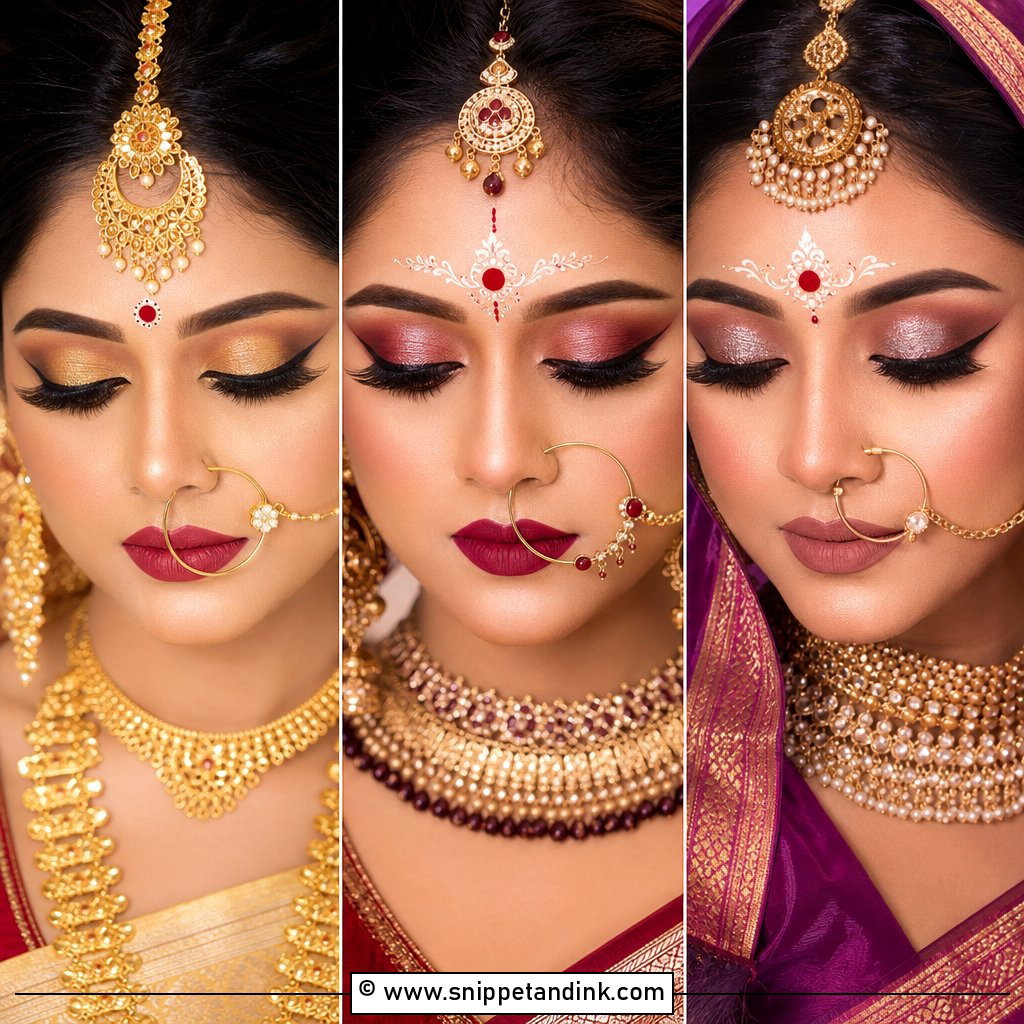
The red lip is the Bengali bride’s signature, and it shows up every flaw around it. I keep the skin around the mouth and chin smooth and matte so the red has a clean edge. Brown-gold shadow, black liner, mascara and shaped brows define the eyes without competing. Pick the red by undertone: blue-reds suit many deeper and cooler complexions, brick reds suit warmer skin and golden sarees. Line and fill the entire lip with a matching liner first. It stops feathering, and when the lipstick wears down later in the night, what’s left is still red.
5. Bengali Bridal Makeup With Smokey Eyes
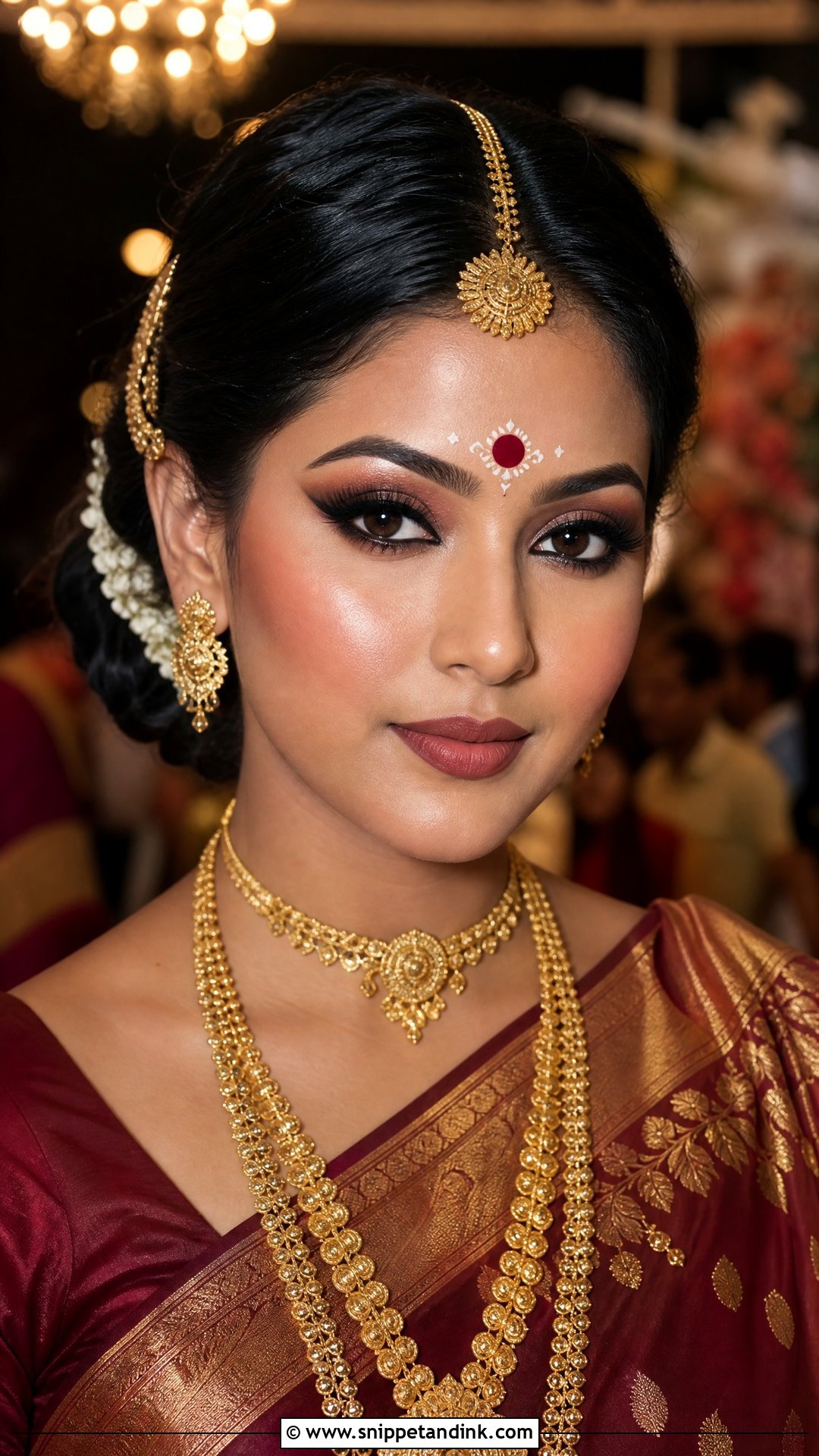
Smoky eyes belong to the reception or a late-night ceremony, when the lighting is low. I blend deep brown, bronze, espresso and soft charcoal rather than straight black, so the eyes look intense without going harsh. Kajal smudged along the lower lashes keeps it Bengali, and lifted lashes open the shape. With that much on the eyes, the lip goes muted, usually rose brown or a deep nude, on a satin-matte base that holds under hot lights. One caution: smoky lower lashes travel when you cry, and Bengali weddings bring plenty of tearful goodbyes, so I set the lower line with a matching powder shadow.
6. Natural Bengali Bridal Makeup
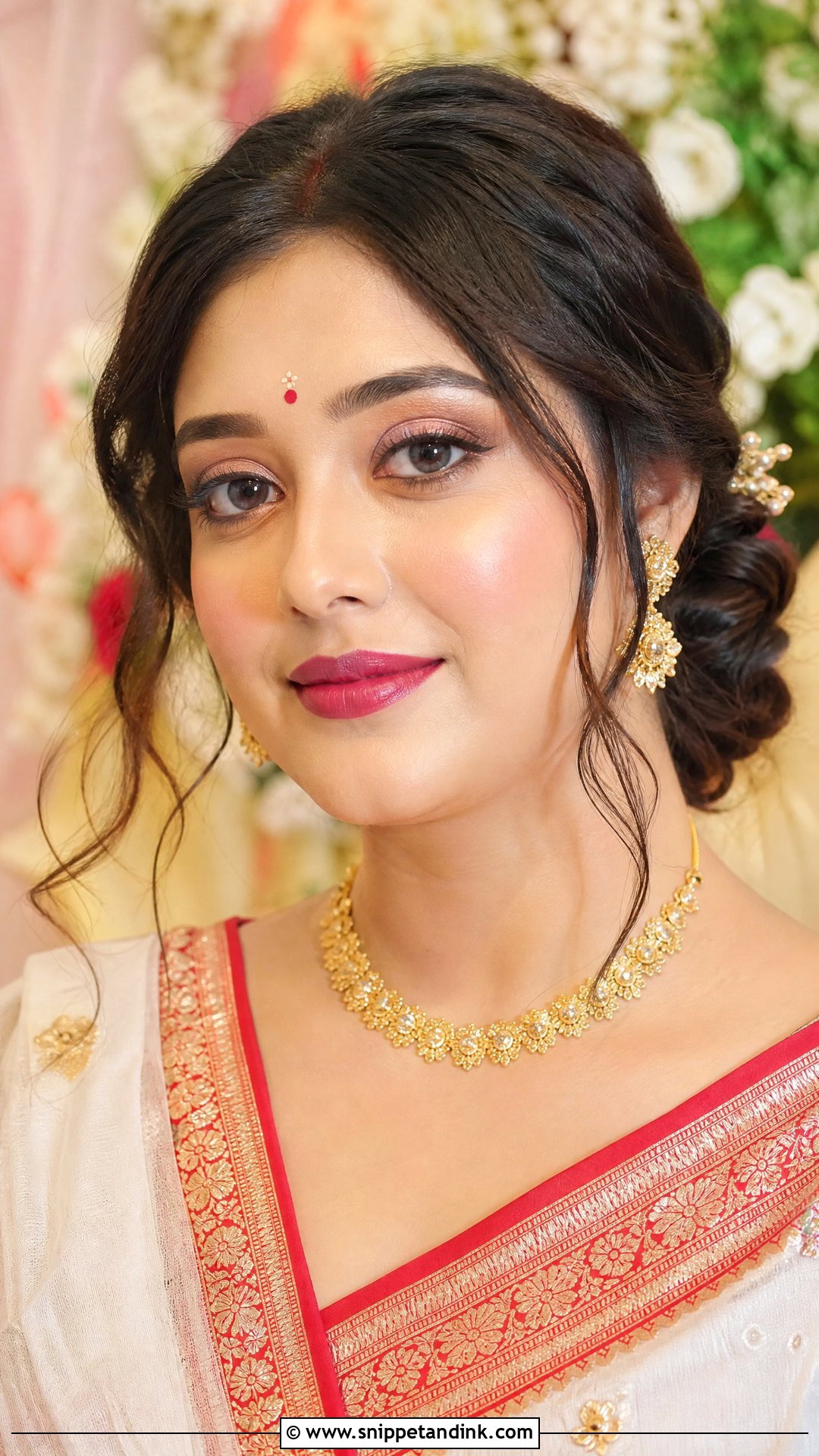
Natural Bengali makeup doesn’t mean bare. It means everything looks refined and close to your real features. I prep the skin, use a thin foundation with spot coverage and a creamy blush, and swap thick black liner for soft brown while still keeping a little kajal. Lids stay beige, rose or light bronze. The lip follows the saree, from pink-red to soft berry. Morning weddings, registry events and intimate ceremonies suit it best. A small red bindi and delicate chandan keep it recognizably Bengali.
7. Bengali Bridal Makeup With Gold Eyeshadow
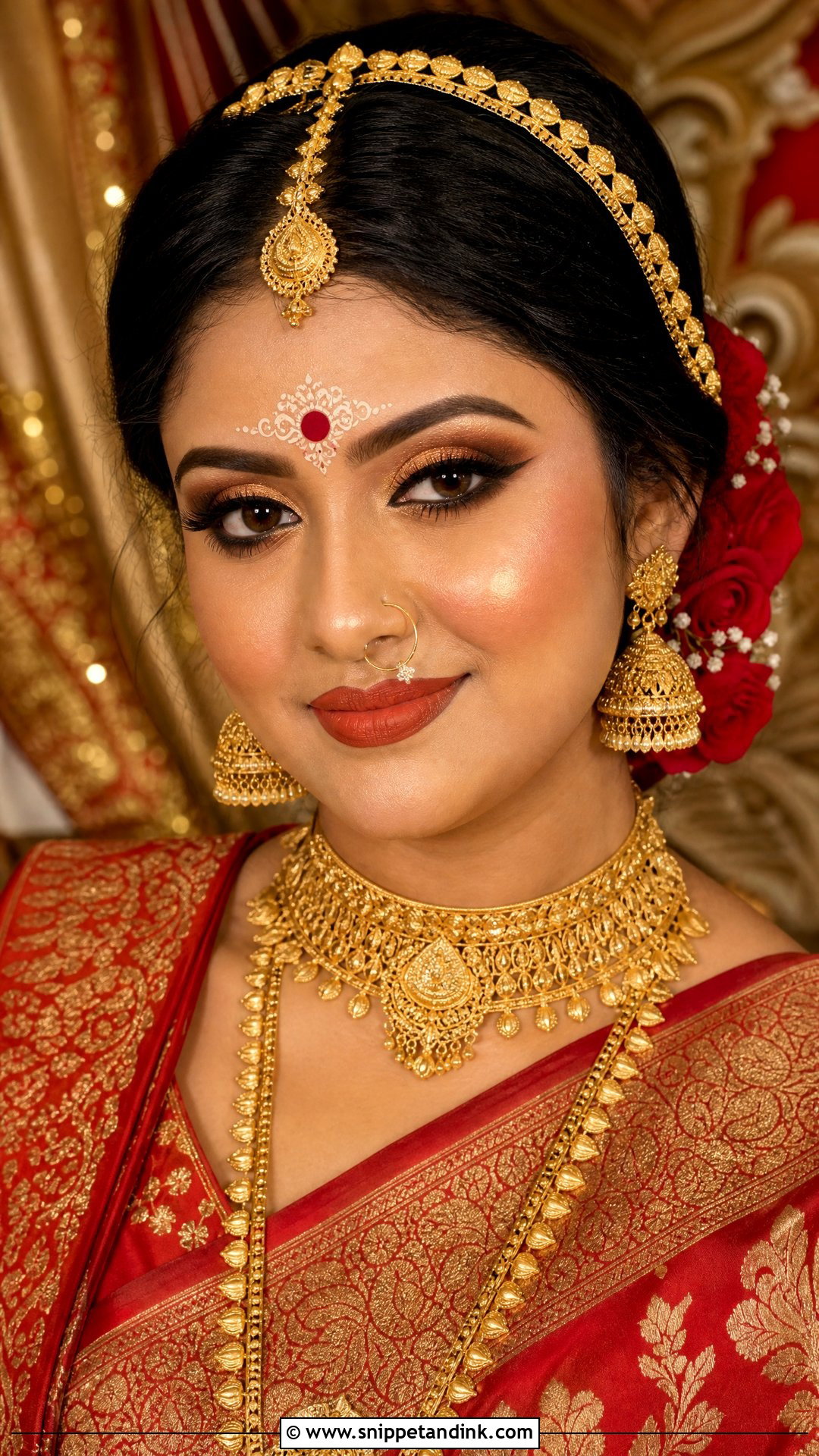
Gold shadow is a natural match for Bengali jewelry and Banarasi zari, but the shade of gold matters. Soft champagne suits fair and light skin, antique gold suits medium and olive skin, and rich bronze-gold glows on tan and deep skin. I blend matte brown through the crease so the shimmer has depth, then add black winged liner, kajal and lashes. Peach blush, light contour and a golden highlight keep the face warm. A red, maroon or brick lip suits it, and warm indoor lighting makes the gold look richer still.
8. Bengali Bridal Makeup With Chandan Design
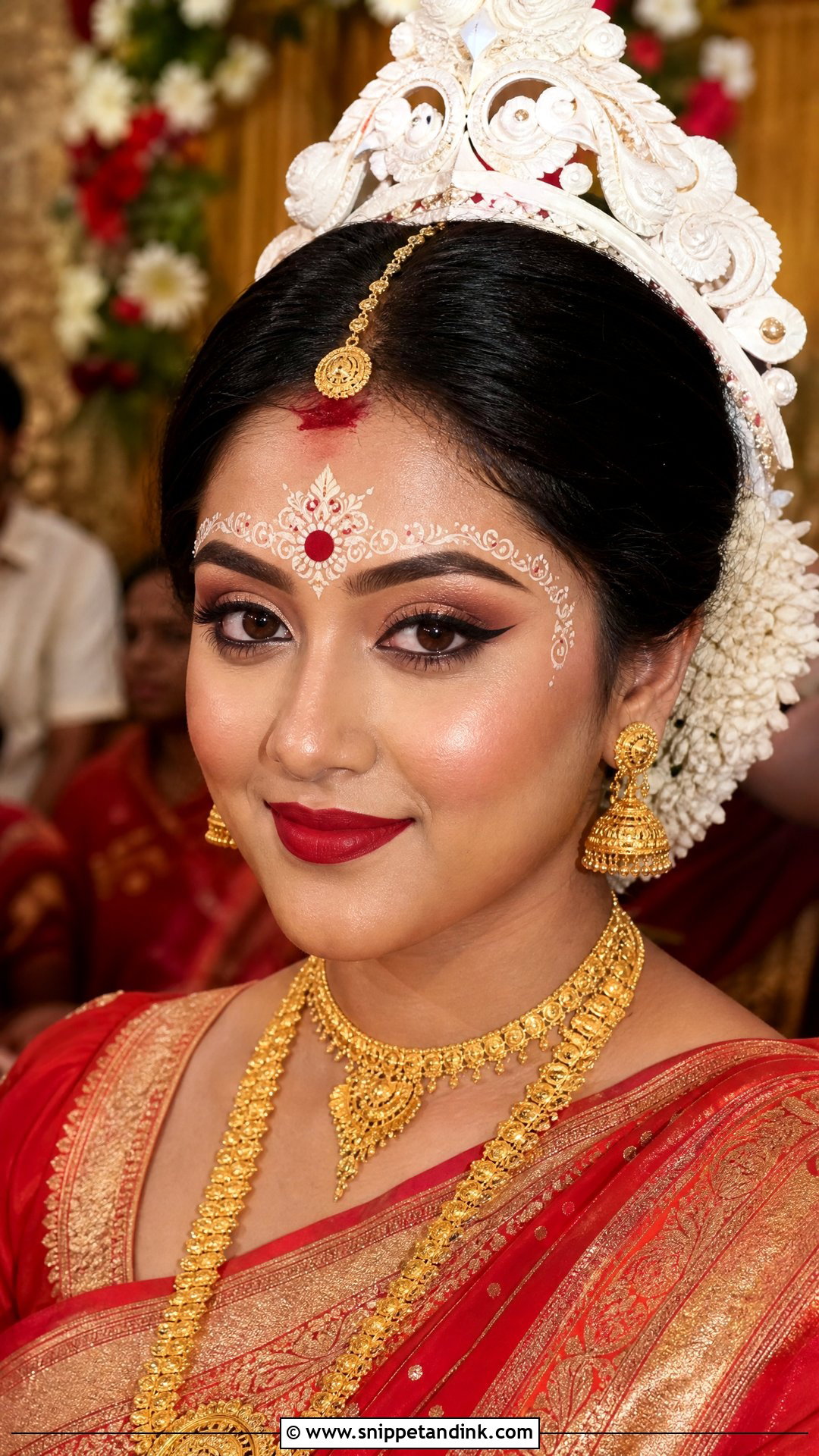
Chandan is the most meaningful detail on a Bengali bridal face, and the one I spend the most time on. It can be tiny dots arched above the brows or a fuller pattern across the forehead and temples. Because the chandan is the detail, I keep the base smooth, the brows clean and the forehead free of shimmer. The red bindi sits at the center with the design spaced evenly around it, which takes a steady hand and a mirror check from both sides. Classic kajal, liner and soft gold or brown shadow, with a red or berry lip, keep the rest of the face balanced.
9. Bengali Bridal Makeup With Big Bindi
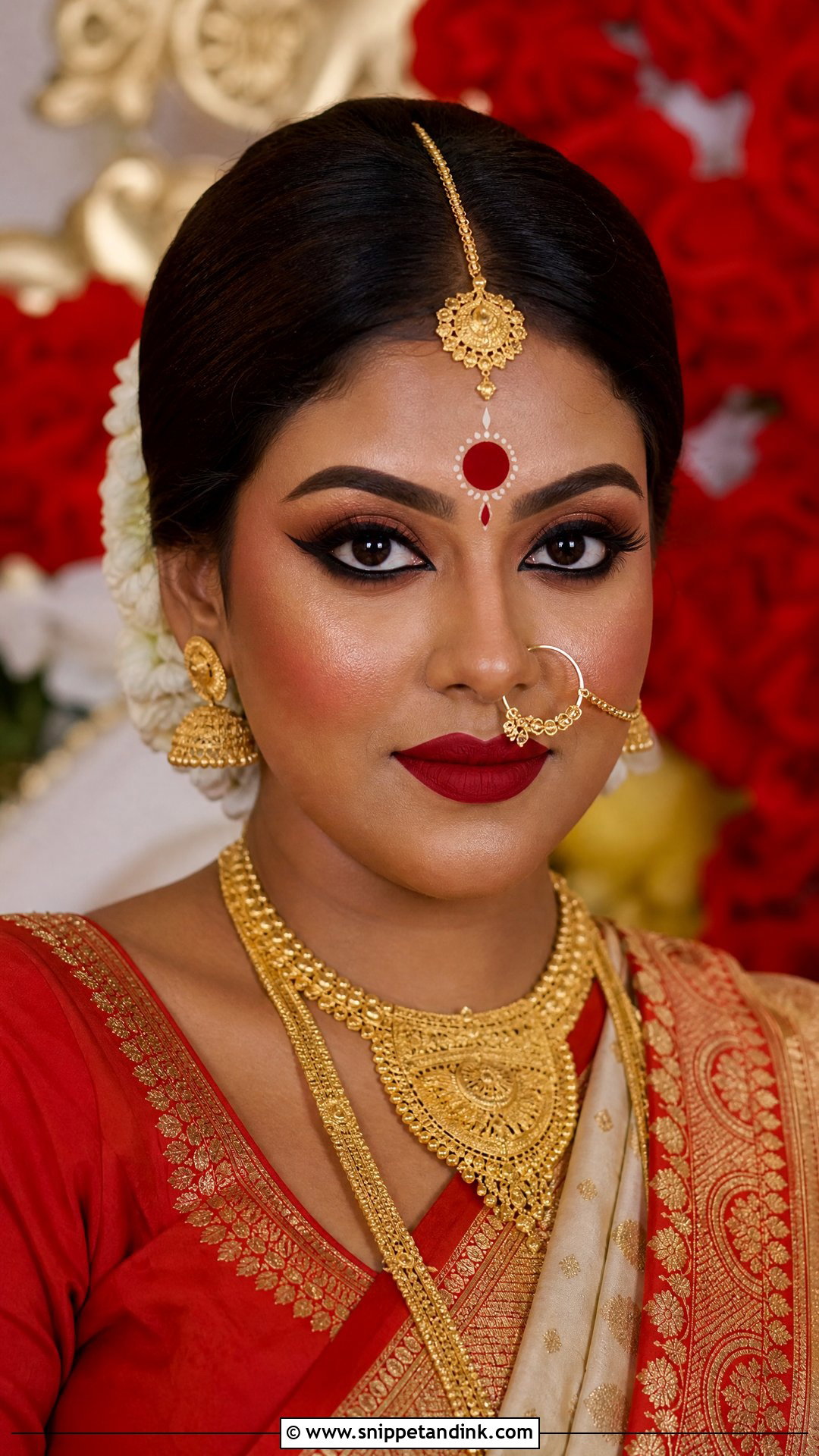
A big red bindi gives the face one strong focal point, and everything else has to support it. I shape the brows carefully, since the bindi sits right between them and any unevenness shows. Matte brown shadow, black liner, kajal and separated lashes keep the eyes defined but tidy. A satin red lip echoes the bindi, and warm blush keeps the complexion alive. Skip shimmer on the forehead, where it distracts from the bindi and chandan. Try the bindi size against your forehead at the trial, because one that’s too large on a small forehead crowds the mukut.
10. Modern Bengali Bridal Makeup
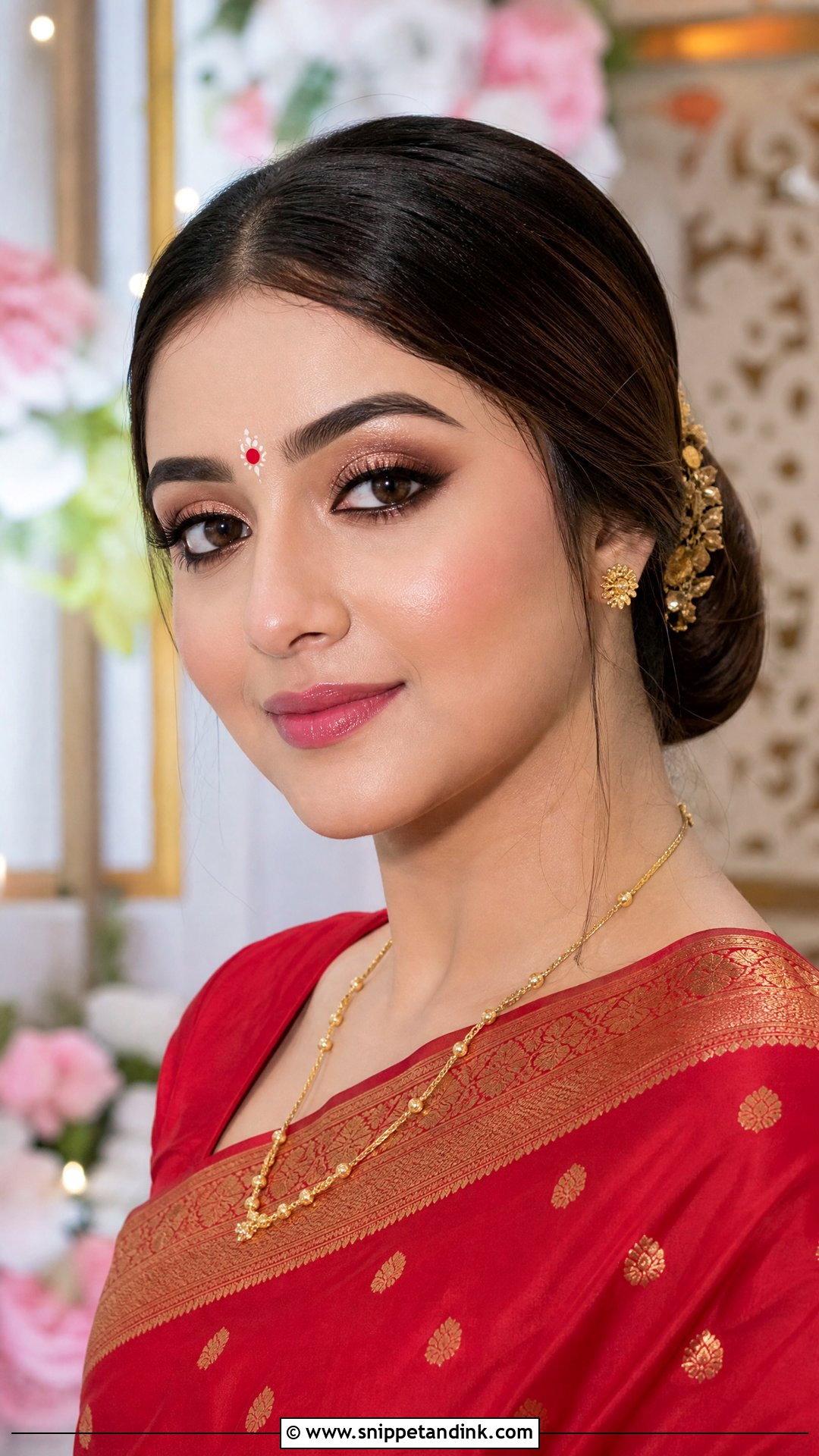
Modern Bengali makeup keeps the cultural essentials and updates the finish. Instead of a heavy matte base, I use a skin-like satin foundation and powder only where needed. Eyes are softly sculpted with brown liner, smudged kajal and a touch of lid shimmer. The lip can move away from bright red into rose, terracotta or muted berry, and the bindi and chandan stay minimal. Contemporary sarees, lehengas and fusion outfits suit it, and it holds up in high-resolution photography because nothing looks thick.
11. Minimal Bengali Bridal Makeup
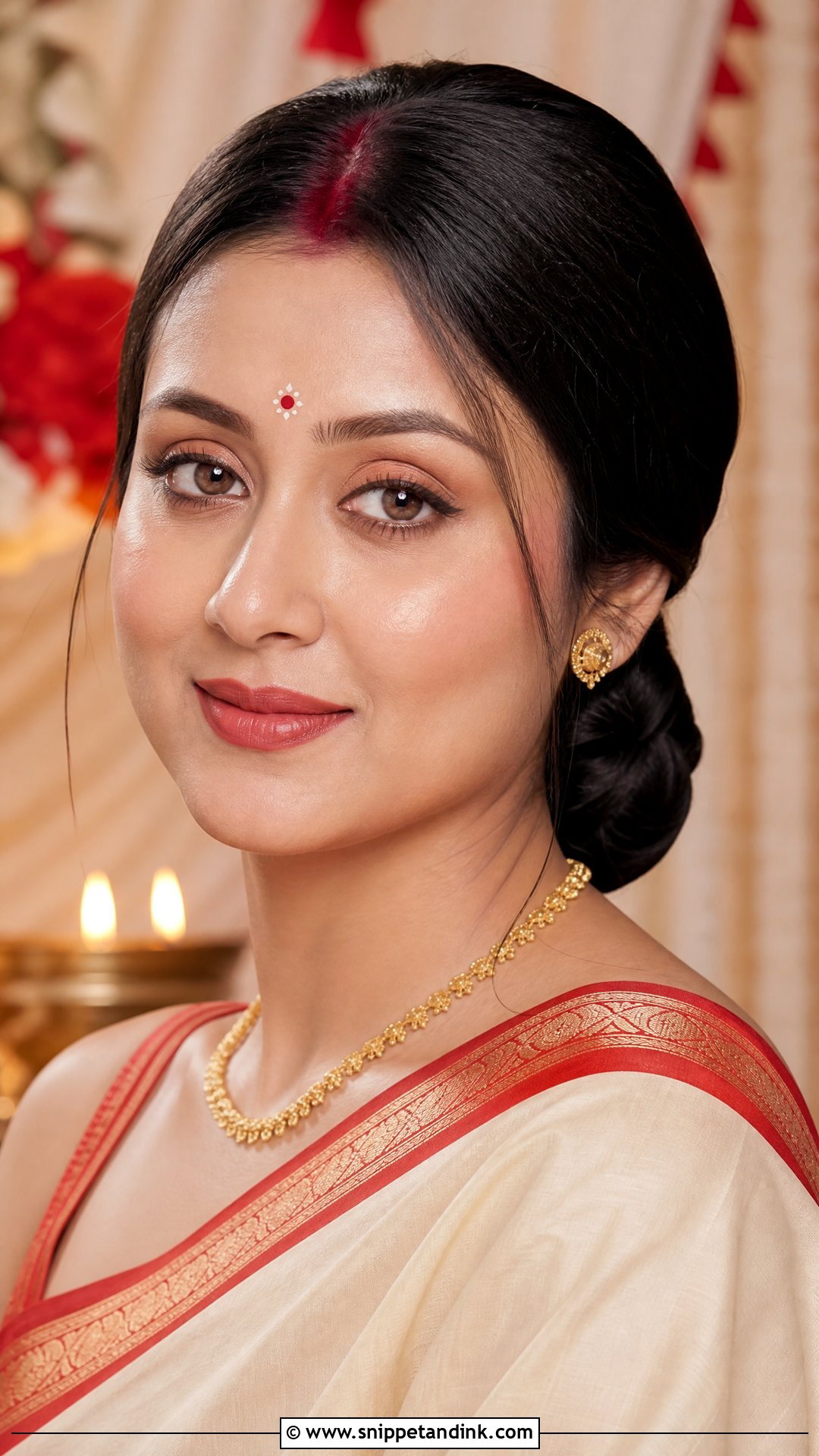
Minimal makeup gives you comfort and cultural detail without a heavy face, particularly for daytime rituals. I use a lightweight long-wear foundation or skin tint and conceal only where needed. Cream blush, a soft highlight and brushed brows keep the face fresh, with thin liner, light kajal, soft brown shadow and natural lashes on the eyes. A sheer red or berry tint replaces a full matte lipstick. The bindi stays small and the chandan dots delicate. Ivory, white-red and handloom sarees sit naturally with it. The trade-off is staying power, since sheer products need more touch-ups over a long day.
12. Matte Bengali Bridal Makeup
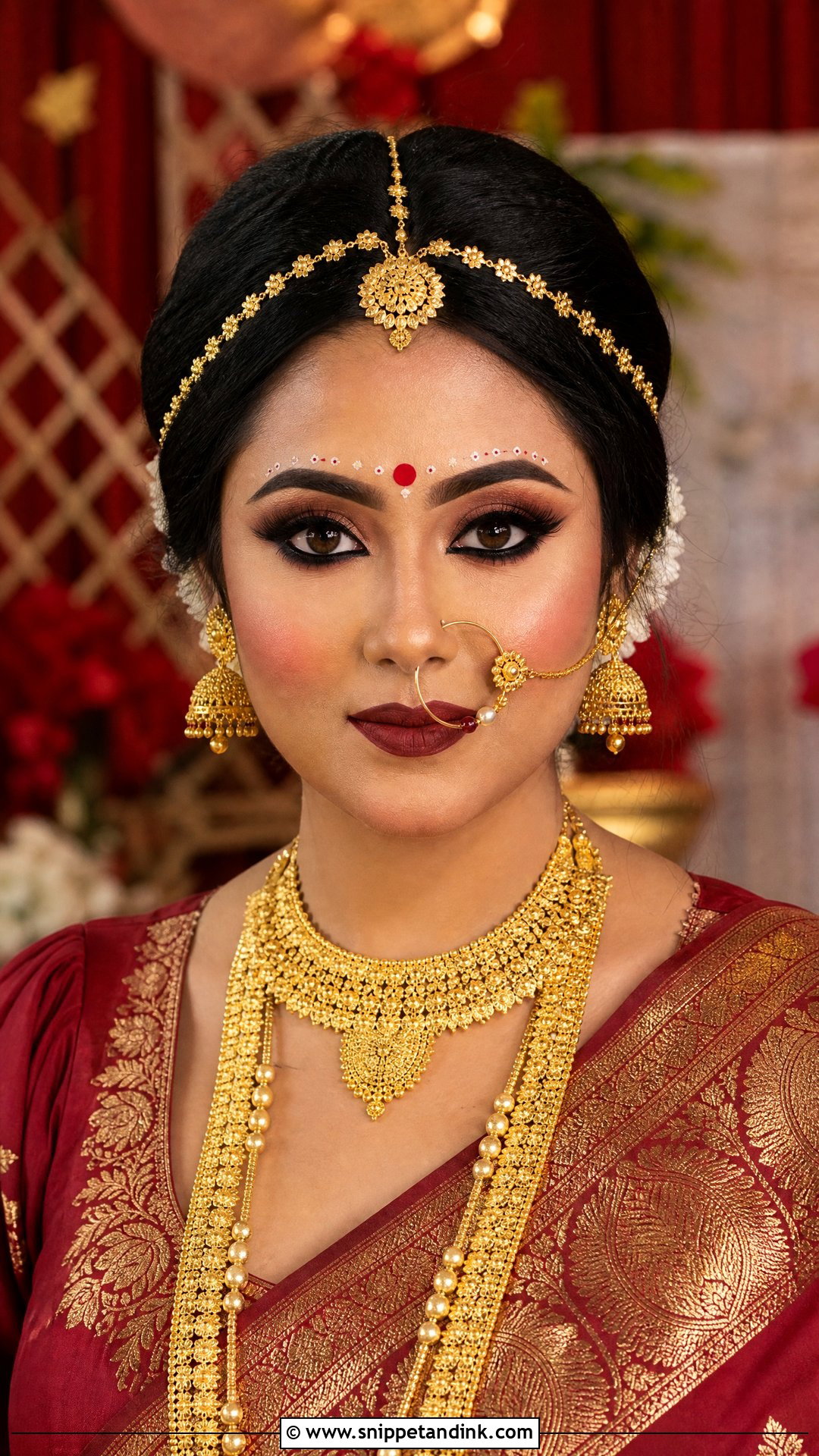
Matte is my go-to for humid weather, oily skin and long ceremonies, and it behaves well under flash. The risk is a dry, masky face, so prep is everything: a hydrating moisturizer first, then a long-wear matte foundation, soft powder and setting spray. Eyes can carry matte brown, terracotta and deep cocoa with sharp black liner, and a matte red or maroon lip completes the face. Use more blush than feels natural, because matte bases mute the face’s warmth on camera. Highlighter stays very subtle, on the cheekbones only.
13. Dewy Bengali Bridal Makeup
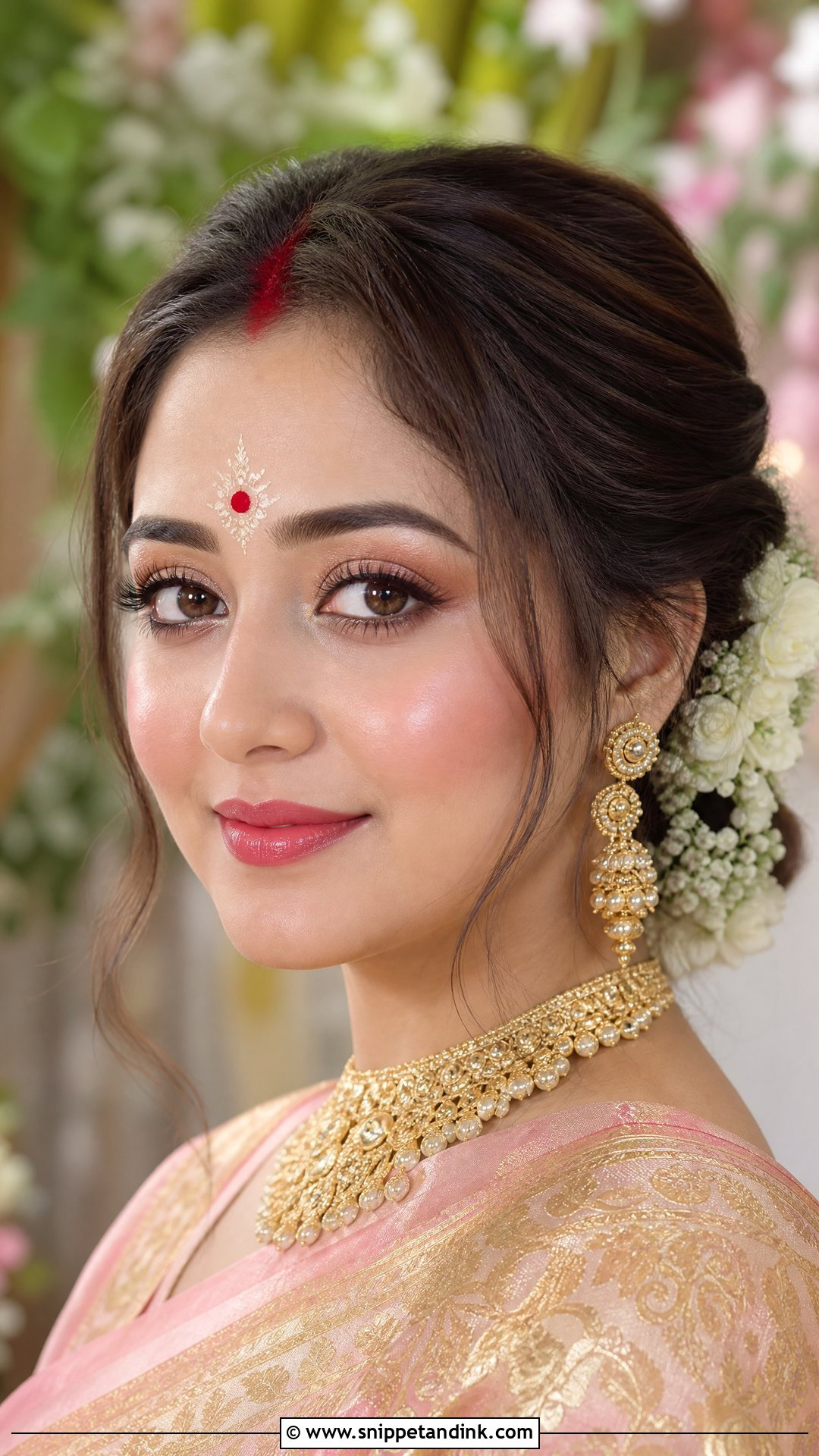
Glow looks fresh in natural light, but it has to be placed with care. Dewy Bengali bridal makeup uses a radiant primer, thin foundation, cream blush and a liquid highlight on the cheekbones, with powder only on the T-zone, smile lines and under-eyes. Champagne shimmer, brown liner, kajal and wispy lashes keep the eyes soft, and a glossy red or berry lip finishes it. I’d save this for a winter wedding or an air-conditioned venue. In humid heat, dewy turns oily within a couple of hours, and chandan can slide on a damp forehead.
14. Bengali Bridal Makeup For Reception
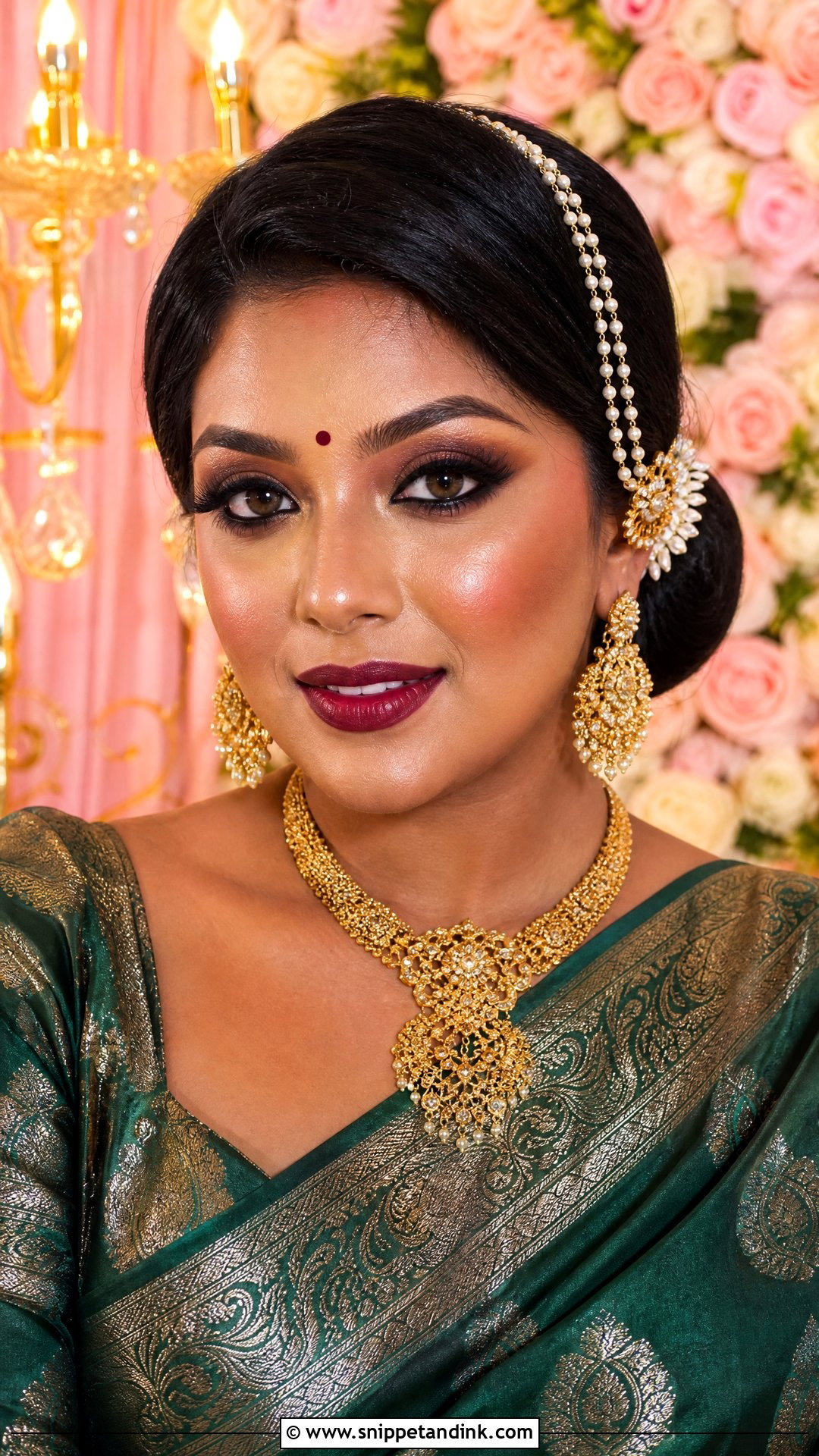
Reception makeup can be more fashion-led than the ceremony look. Many Bengali brides switch from the red lip and chandan to sculpted eyes, softer lips and a sleeker base: bronze smoky eyes, luminous skin, defined contour and a nude rose or deep berry lip. A bindi can stay, smaller or jewel-toned to suit the outfit. Darker reception colors like wine, emerald or navy handle stronger makeup well, and fuller lashes with a polished highlight hold up under evening lights. Since the reception often follows a very late night, I spend extra time on skin prep, because tiredness and leftover product both show.
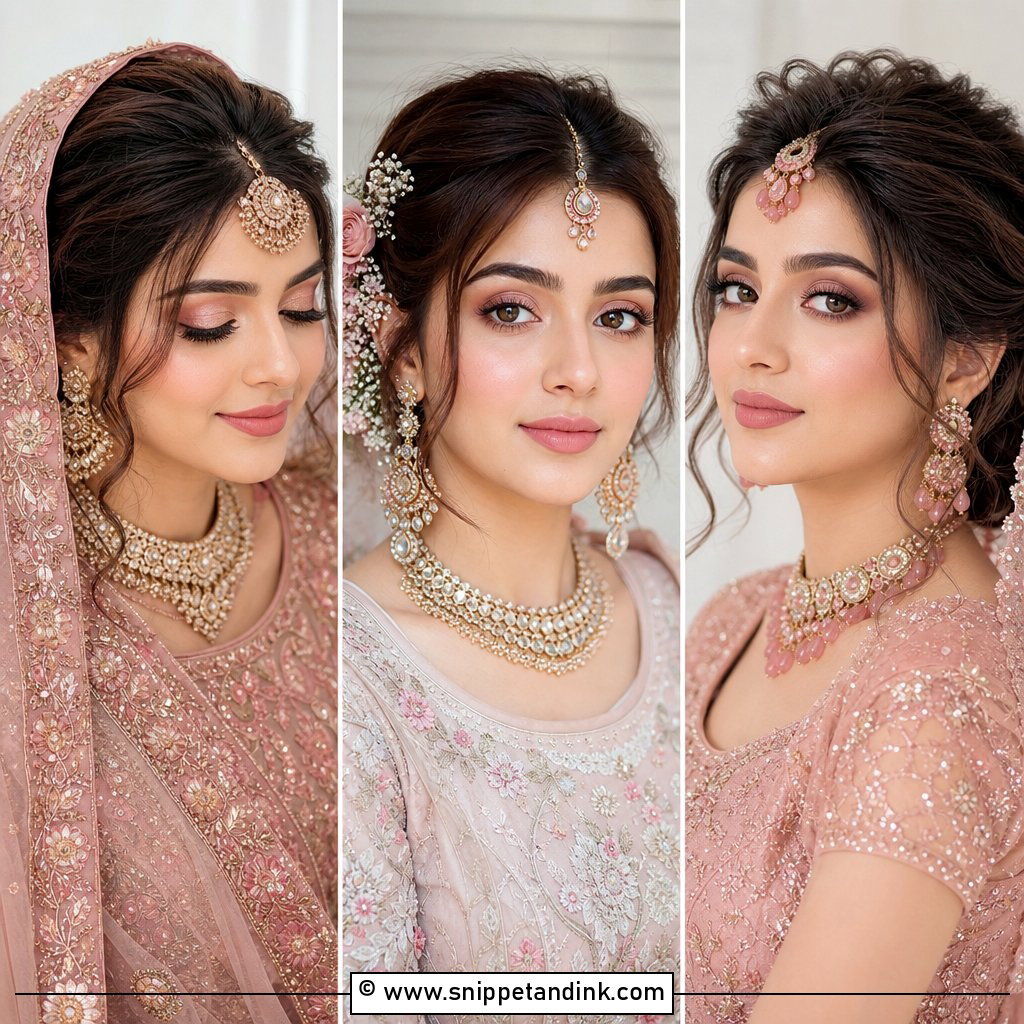
15. Bengali Bridal Makeup For Haldi
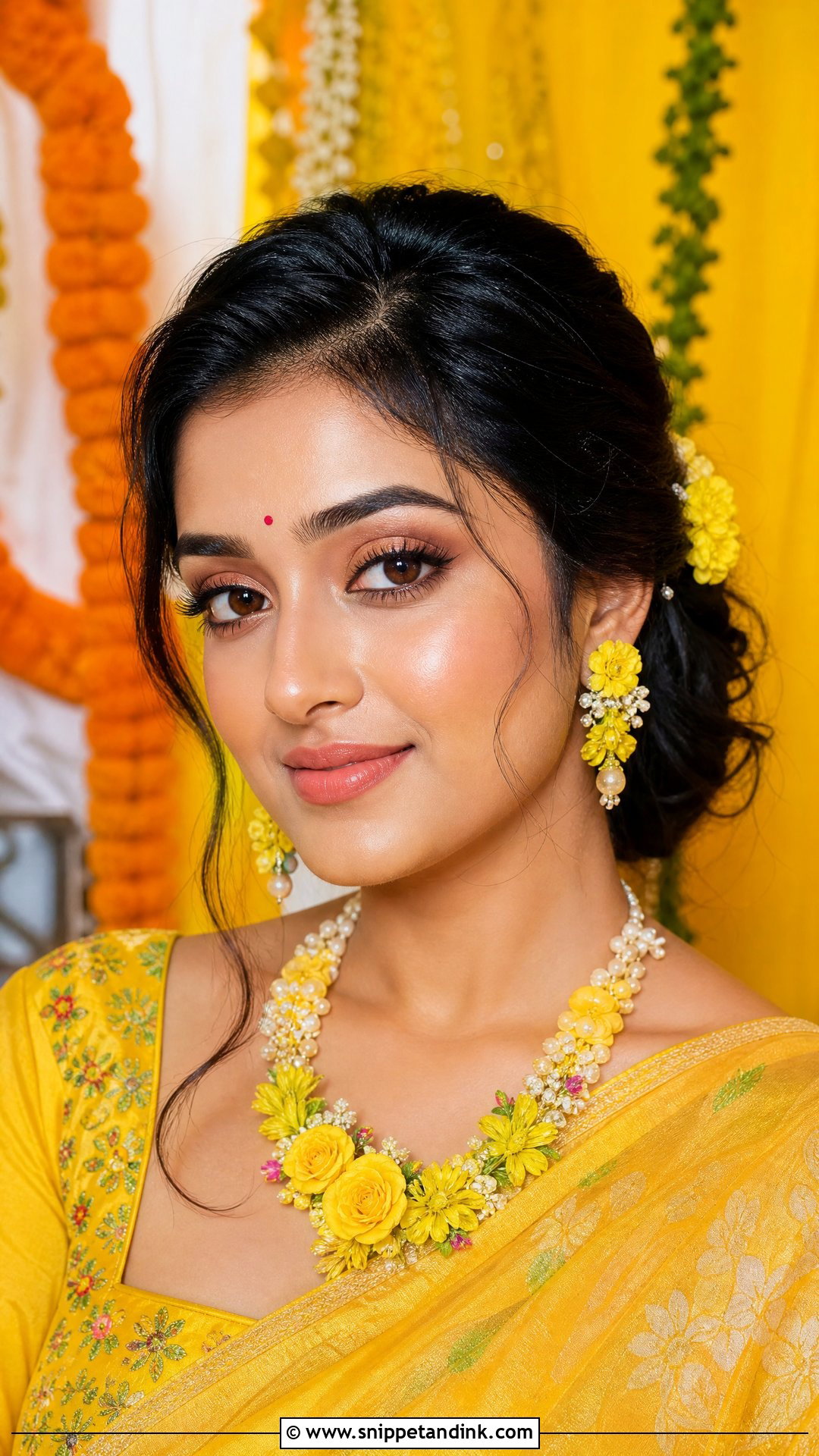
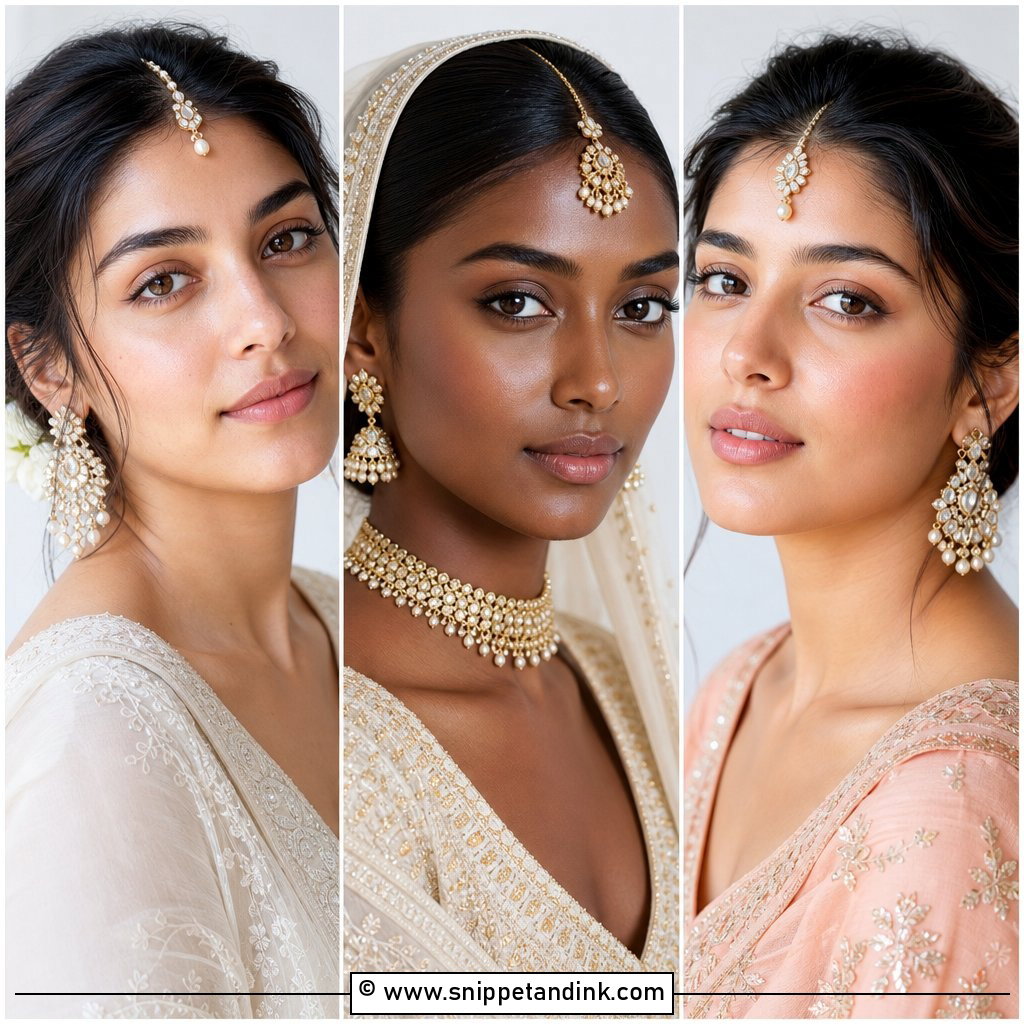
Haldi makeup has to survive turmeric paste, water and a lot of laughing, so I keep it light and waterproof: a thin base, waterproof concealer, cream blush and minimal powder. Soft brown liner, mascara and a wash of golden peach shimmer are enough on the eyes. Skip heavy lashes, because turmeric paste gets caught in them. A peach, coral or soft pink lip works better than deep red here, and a small bindi with floral jewelry finishes it. Yellow, white and orange outfits suit it.
16. Bengali Bridal Makeup For Mehndi
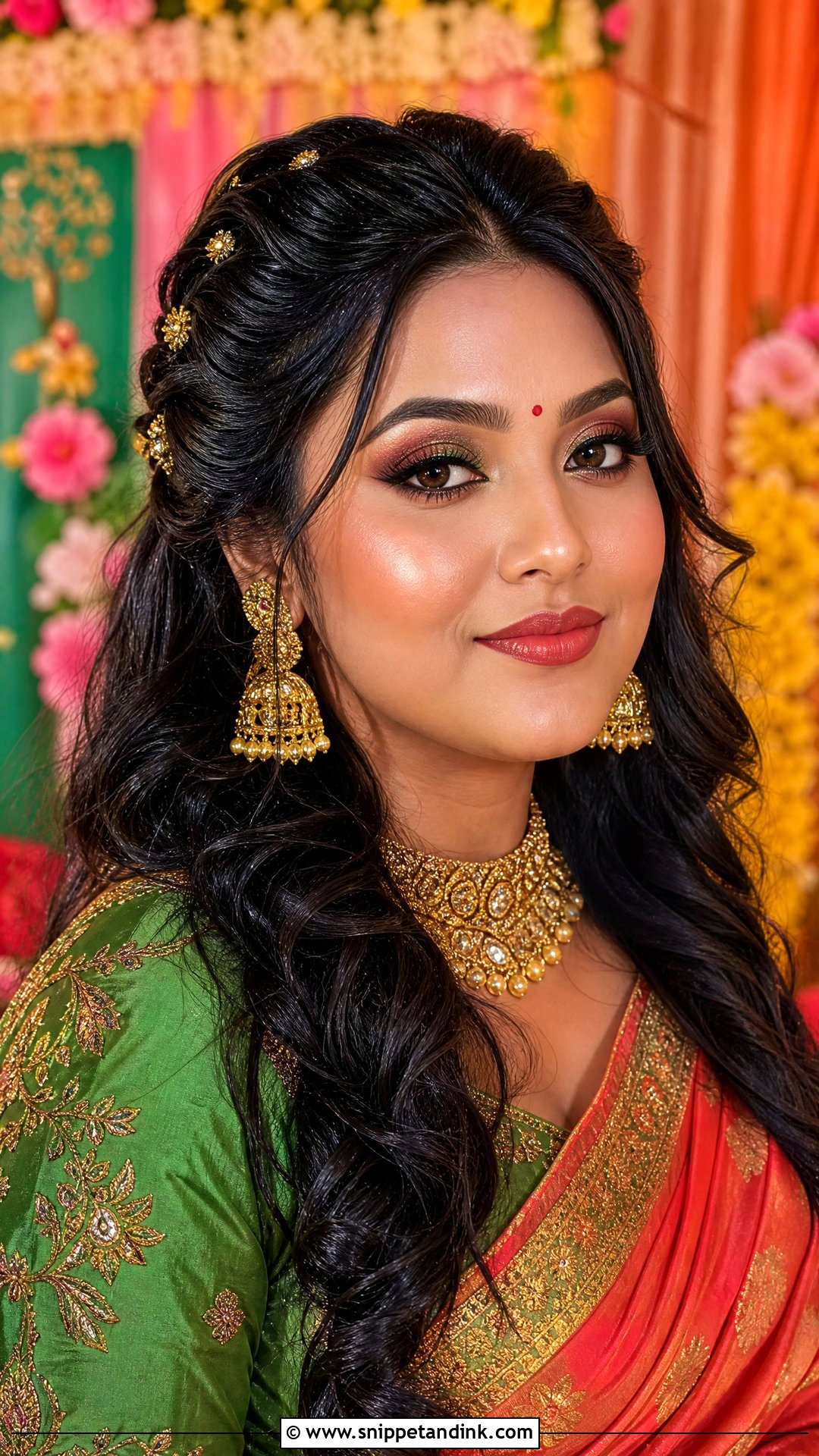
Mehndi makeup gives you room for color. The hands are already full of detail, so I keep the face festive but balanced, with a smooth satin base, warm blush and defined brows. Olive green, copper or rose gold shadow can pick up the outfit, with kajal and liner so it still feels Bengali, and terracotta or rose suits the lips. Keep the bindi simple and skip heavy chandan unless the event is formal. Sitting still for hours while the henna dries is tiring, so comfortable, lightweight products matter more than full coverage.
17. Bengali Bridal Makeup For Engagement
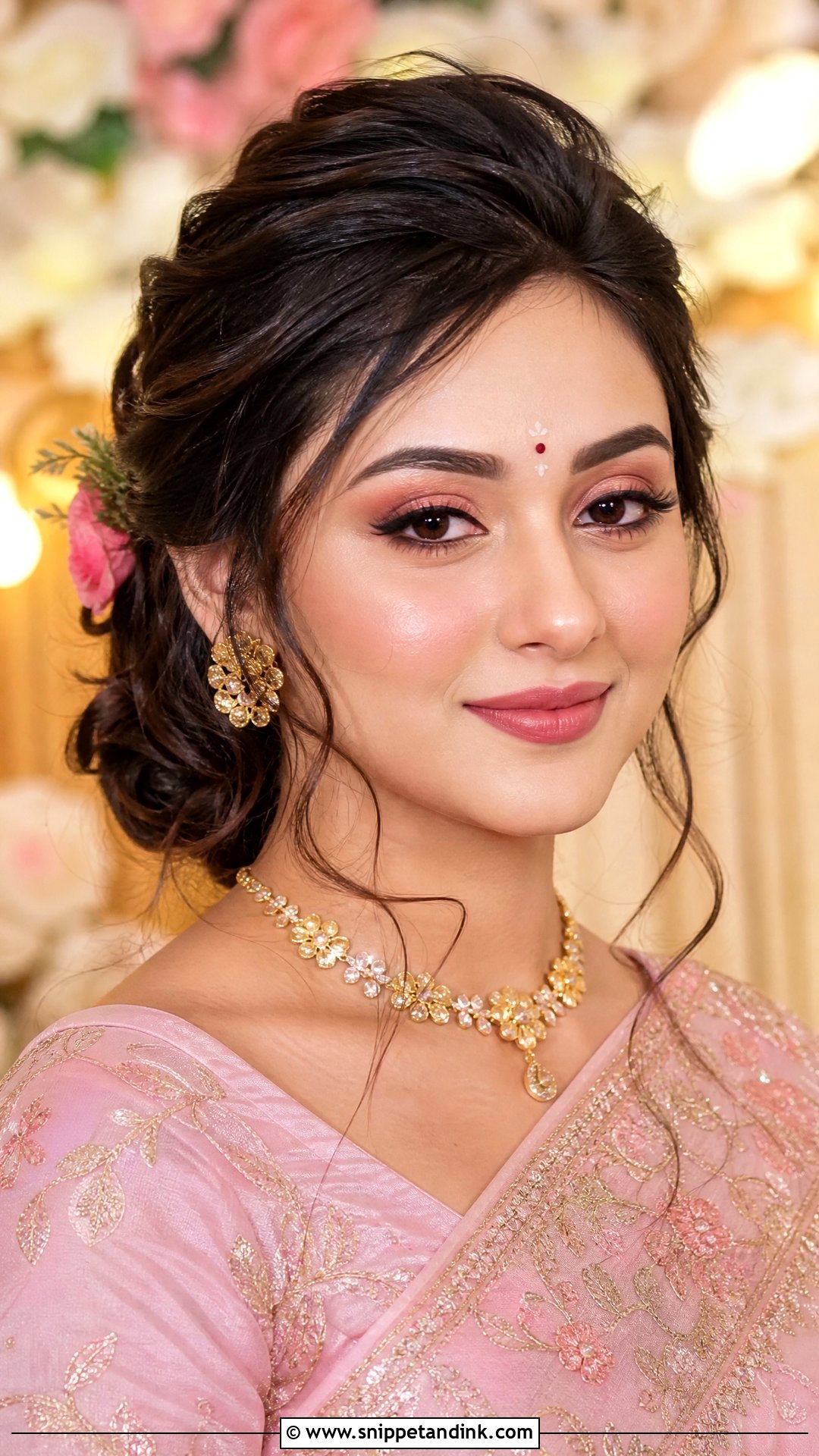
Engagement makeup is usually softer than the wedding but polished enough for portraits. A glowing satin base, lifted eyes and a romantic lip carry it. I’d use rose-gold shadow, brown-black liner, light kajal and medium lashes, with blush in soft pink, peach, or mauve for a healthy look. Dusty rose or muted red suits the lips, and a small bindi adds a Bengali touch without making it ceremonial. If you book the same artist for both days, the engagement doubles as a real-life trial of the wedding makeup.
18. Bengali Bridal Makeup With Maroon Lip
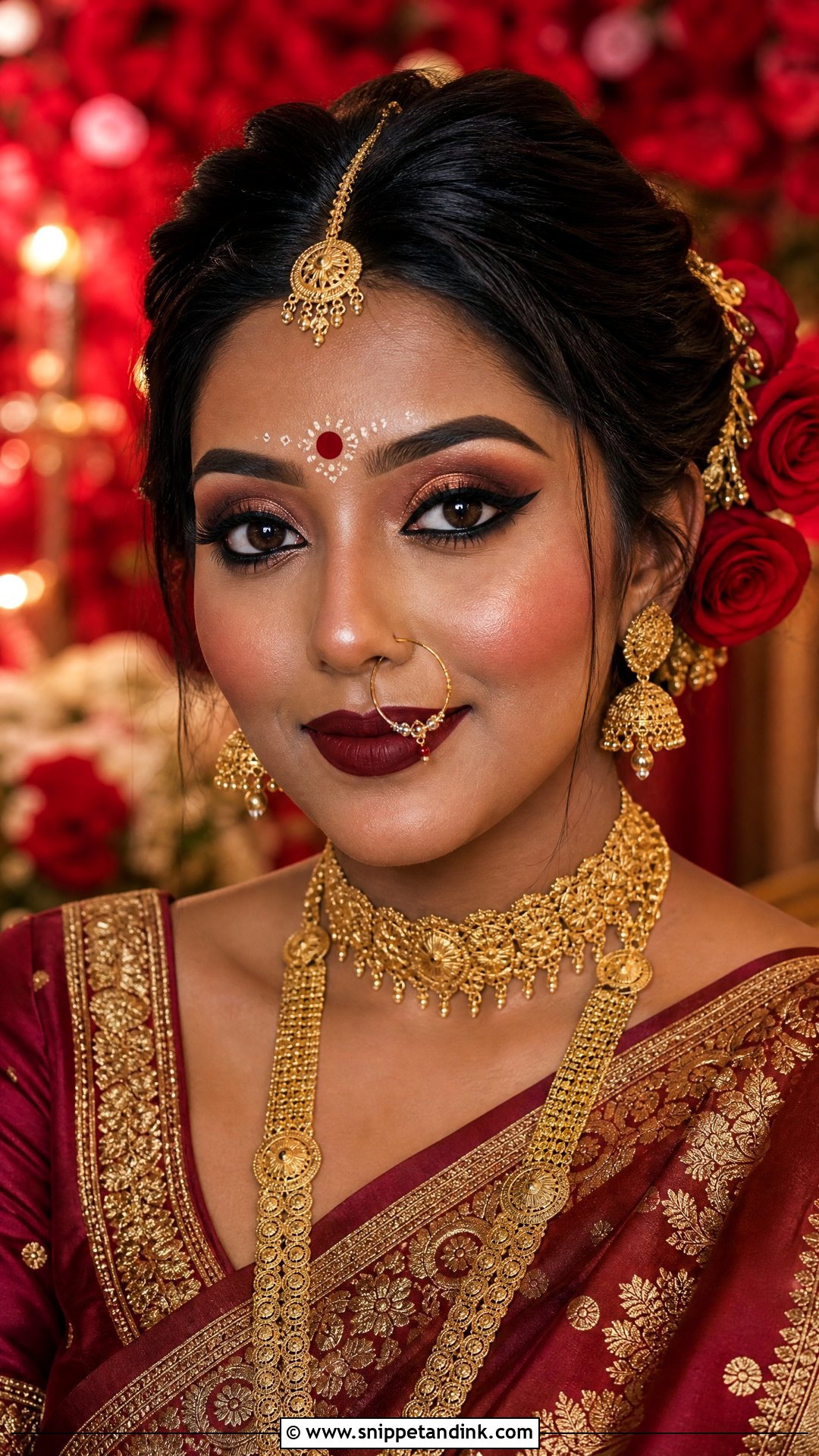
Maroon gives a deeper, more regal mood than bright red, and it sits well with red, maroon, gold, cream and emerald outfits. Dark lips show every uneven edge, so I line precisely, use a long-wear formula and clean the outline with a little concealer on a flat brush. Bronze, copper or matte brown eyes with kajal and a winged liner balance it, and warm rose or berry blush stops the face looking stark. A satin-matte complexion keeps it polished. On very thin lips, maroon can make them look smaller, so I’d test a slightly lighter wine shade too.
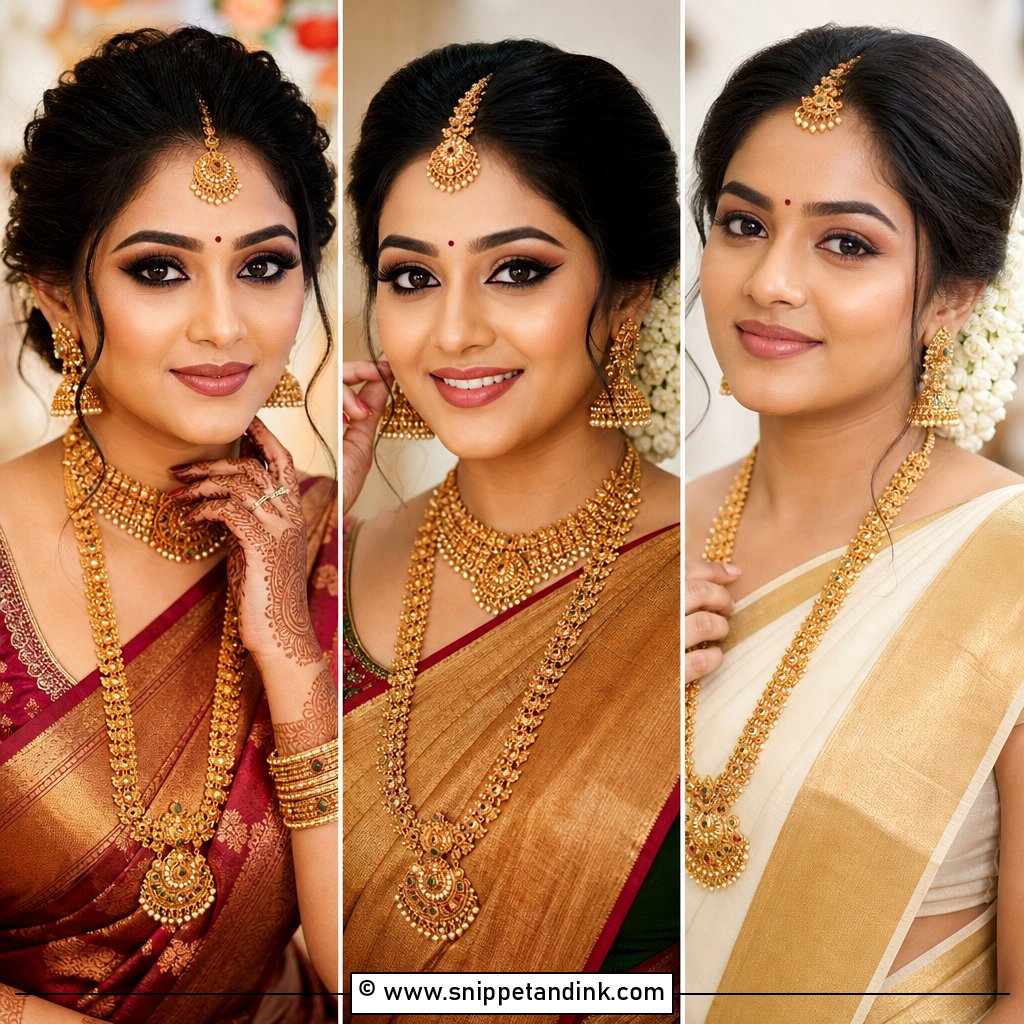
19. Bengali Bridal Makeup With Pink Saree
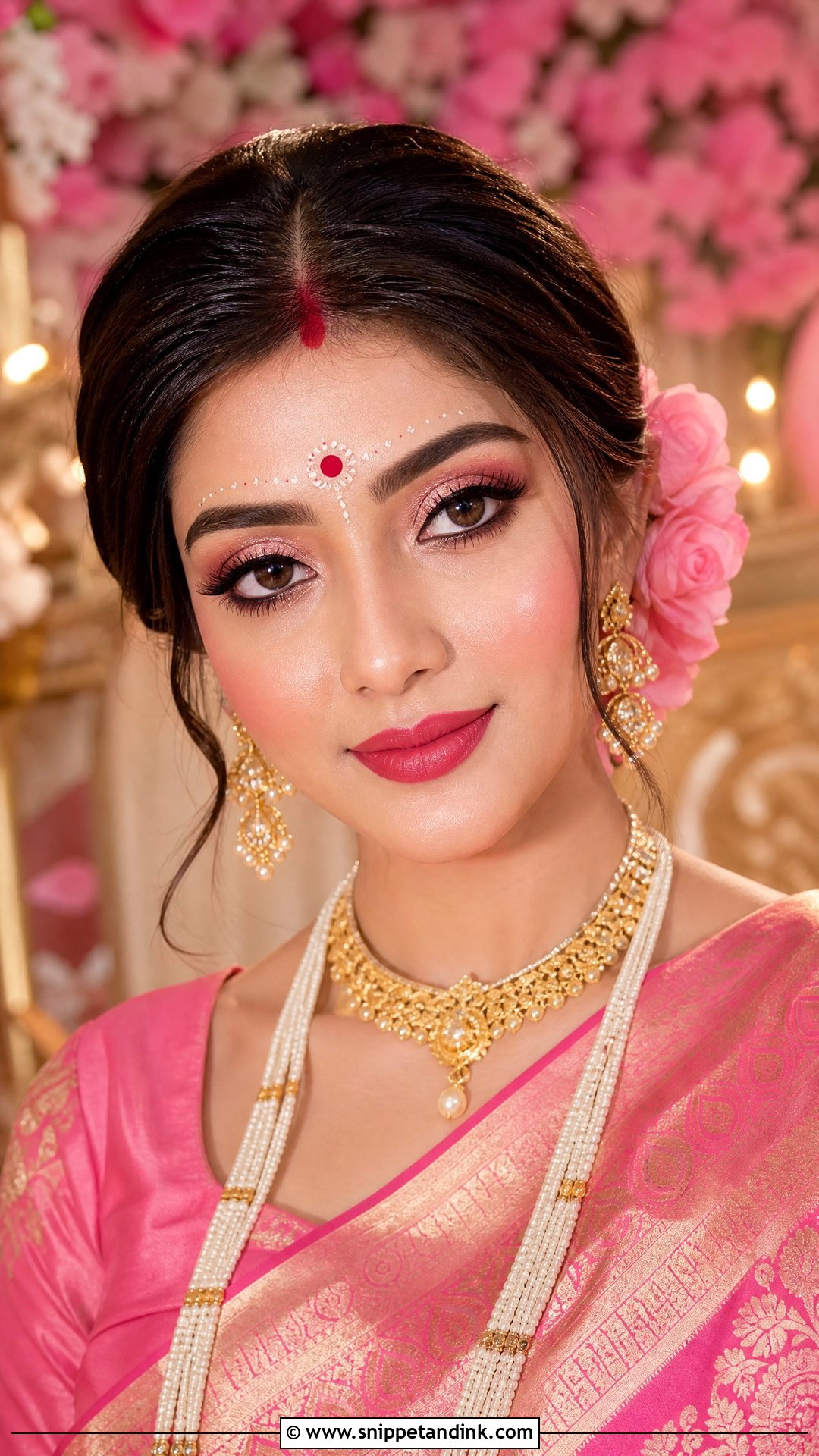
A pink saree softens the Bengali look while keeping it traditional. I’d use rose, mauve, champagne or soft gold shadow with black liner and gentle kajal, and lashes that flutter rather than weigh the eye down. A pink-red or berry lip ties in with the saree, and blush in fresh pink goes high on the cheeks. The bindi can be red for contrast or deep pink to coordinate. Hold your lipstick against the saree in daylight before the wedding, since two pinks with different undertones clash quickly. Light chandan keeps the face recognizably Bengali.
20. Bengali Bridal Makeup With White Saree
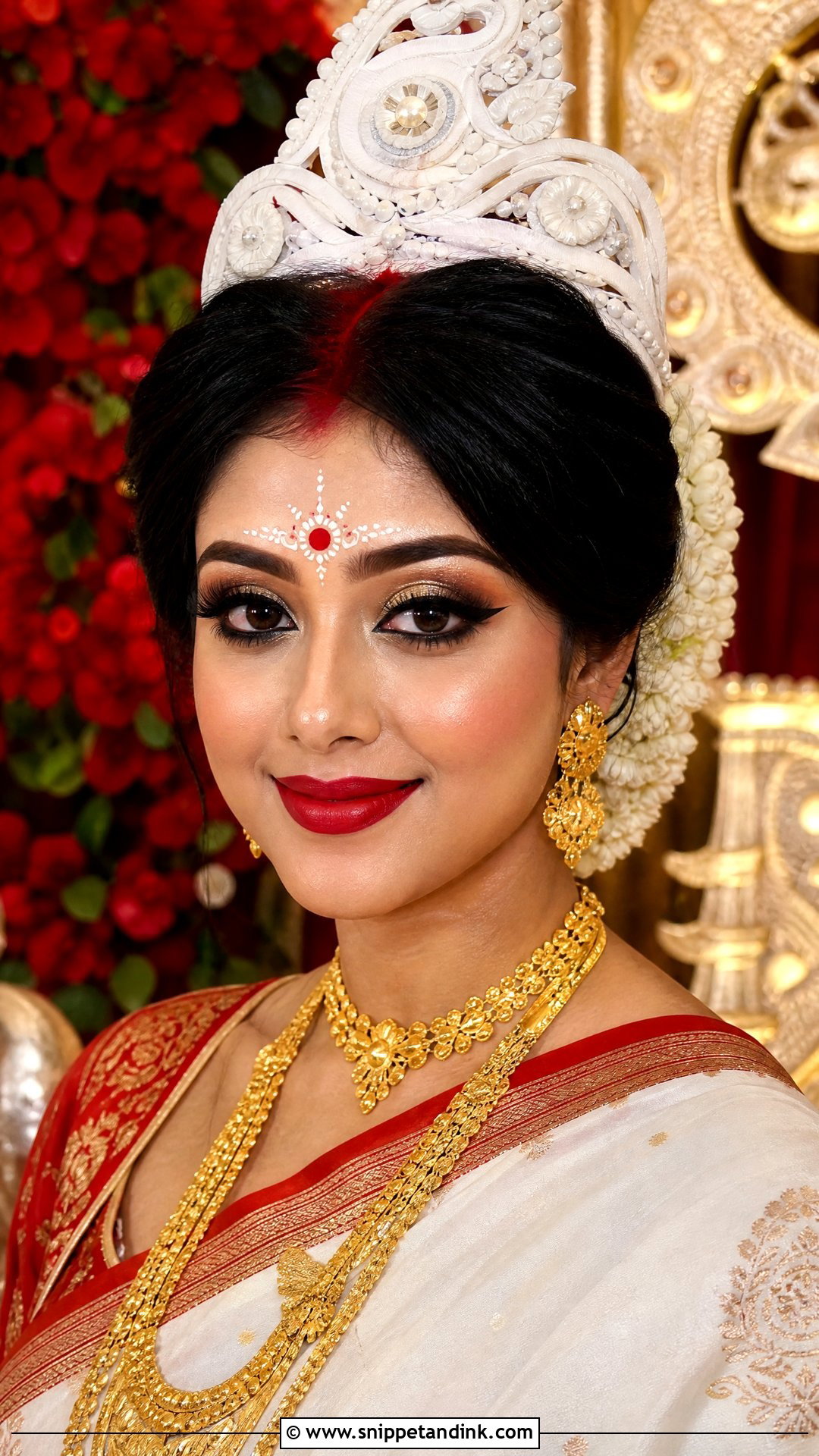
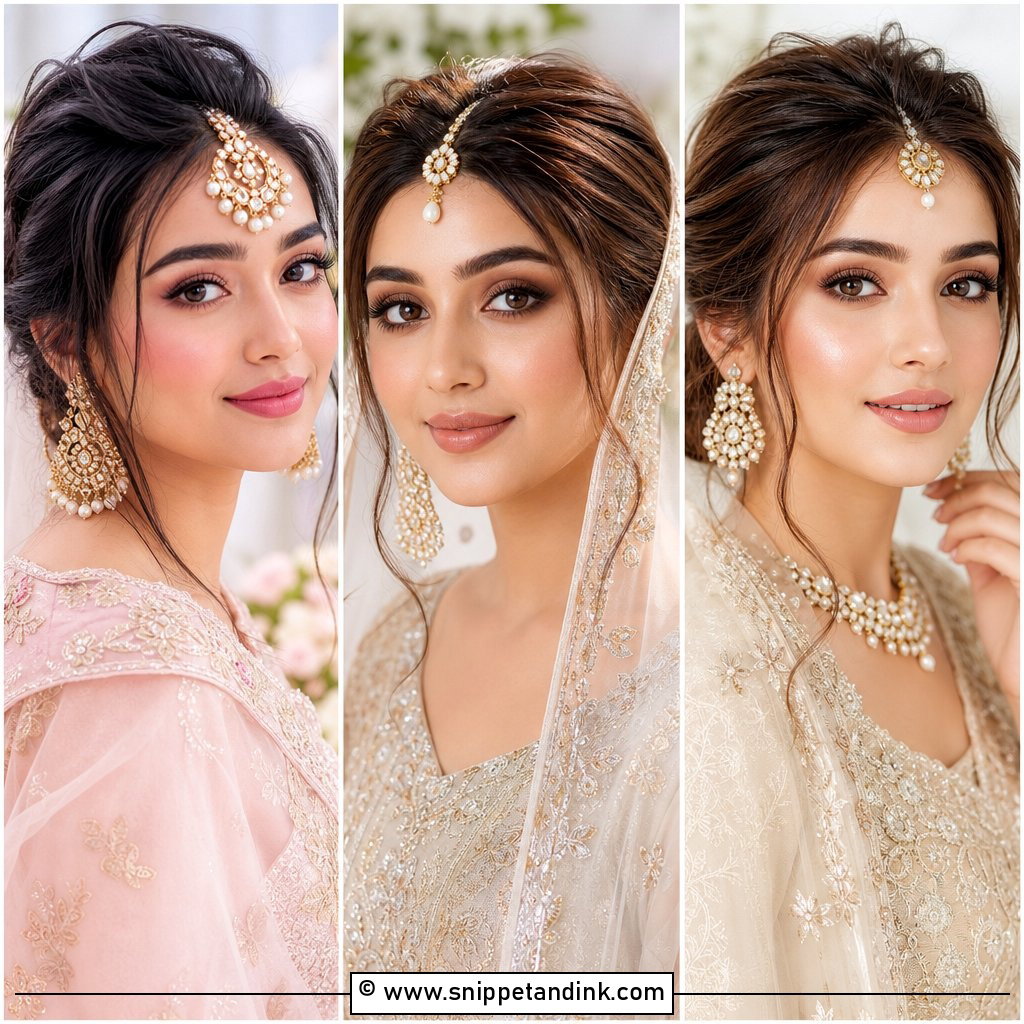
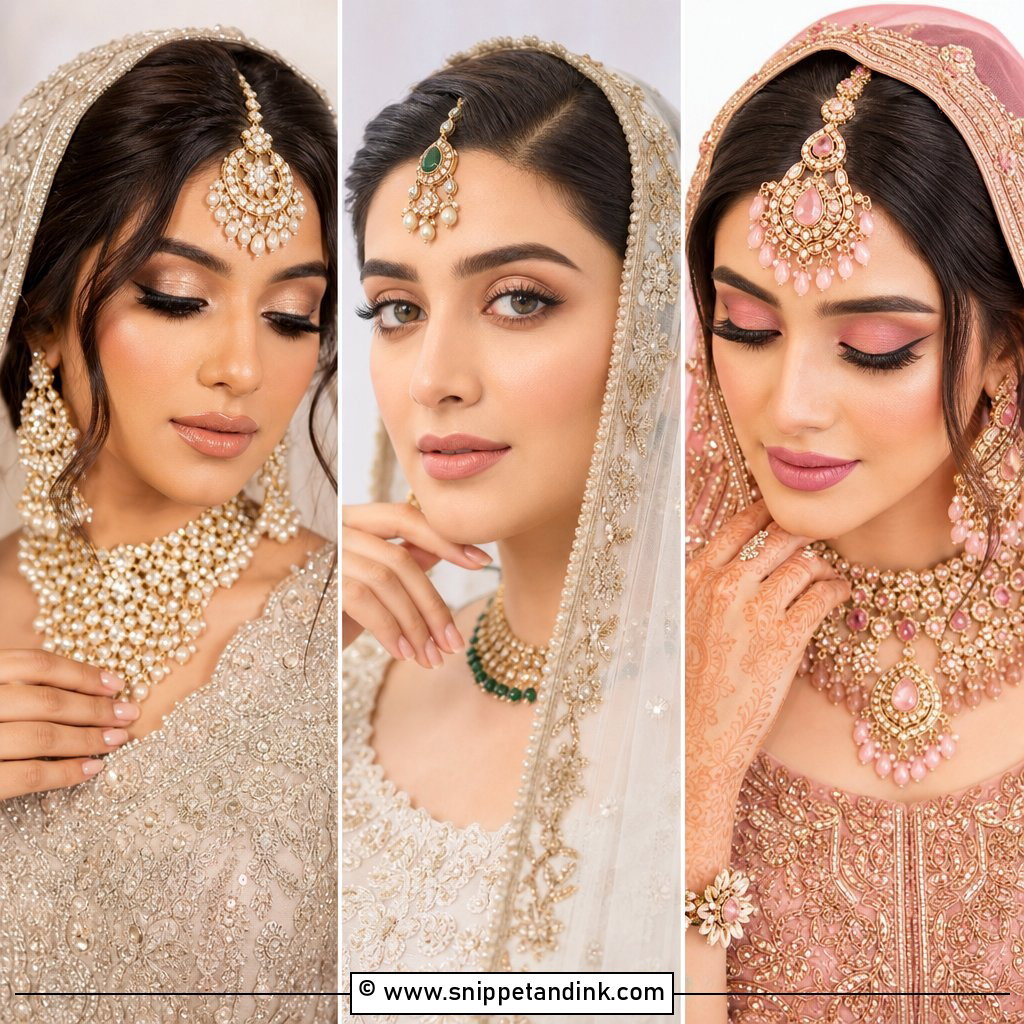
A white saree with a red border is one of the most graceful Bengali bridal choices, and white is unforgiving next to the face. Without enough warmth, the skin looks washed out in photos. I start with a radiant satin base, then rose or coral blush. Eyes stay classic with gold shimmer, brown crease shadow, black kajal and a winged liner, and a red lip looks striking against the white. Keep the bindi red and the chandan dots clean, with shankha-pola and gold jewelry finishing it. Make sure your foundation is set and transfer-resistant, because it shows on white fabric immediately.
Turmeric Tint, Fasting and a Late Lagna
A Bengali wedding schedule affects makeup in ways brides don’t always expect. The gaye holud usually happens on the morning of the wedding or the day before, and turmeric can leave the skin faintly yellow. I wash it off gently, moisturize well, and check the foundation shade again on the day instead of relying on the trial match.
Many brides also fast until the rituals are done. An empty stomach and a long day mean dry lips and tired skin, so I prep the lips with balm early and choose a long-wear lipstick that doesn’t need constant reapplying. If your lagna falls late at night, the makeup may have to last many hours before the main rituals even begin, which is one more reason I build everything in thin layers.
Sindoor on the Nose and Other Ritual Moments
During sindoor daan, vermilion often falls onto the forehead, nose and cheeks. Plenty of families treat that as a happy sign, so don’t panic about it. Afterward, brush the loose powder away with a clean, dry, fluffy brush. Wiping with a damp tissue smears red right through the foundation.
Give someone close to you a small pouch with that brush, your lipstick, blotting papers, kajal and a few cotton buds for cleaning under the eyes after the farewell.
Kajal, Red and Gold, Adjusted to Your Own Face
Bengali bridal makeup carries identity as much as style, which is why the heaviest look isn’t automatically the right one. The right one flatters your skin tone, suits your saree, lasts through the rituals and still looks like you. Red lips, kajal, chandan, bindi, sindoor, alta and gold jewelry will always define the Bengali bride; modern skin finishes simply make those details easier to wear and photograph. Use these looks as a starting point, then adjust the foundation, lip tone, eye depth and forehead design at your trial until the face in the mirror feels like yours.
You'll Like These Ideas:


Leave a Reply