
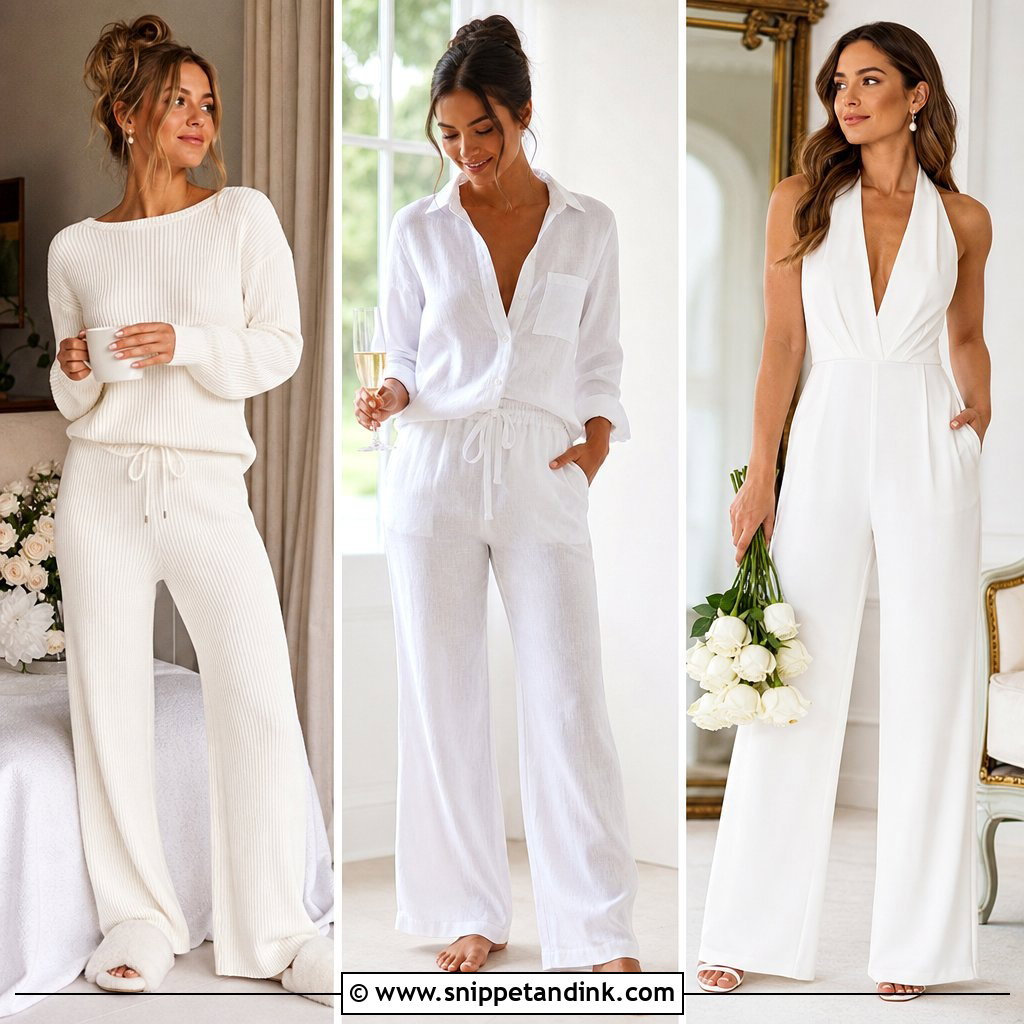
I spend most wedding mornings standing in front of a bride in a robe, so I have strong opinions about what she should be wearing. A good bridal dressing gown keeps you comfortable for several hours of hair and makeup, lets you change into the dress without dragging anything over your face, and looks good in the getting-ready photos that every photographer takes. The non-negotiables are a front opening, enough overlap to stay closed when you sit, soft fabric and sleeves that stay out of my way. After that, length, color, trim and monogramming are about your taste and your venue. Below are twenty robes, from classic silk and lace to florals and cozy cotton, each styled with what goes underneath and on your feet.
How a Robe Behaves in the Makeup Chair
From my side of the chair, the best robe is the one I never have to think about. A few construction details decide that, and they rarely show up in product photos.
- A V or wrap neckline gives me room to blend foundation down the neck and onto the chest. High shawl collars collect product along the edge.
- Elbow or three-quarter sleeves stay clear of the counter. Long bell sleeves trail through powder and setting spray.
- Fluffy towelling and some faux furs shed fibres onto fresh lashes and setting powder; smooth weaves don’t.
- Bright white directly under the chin bounces light up into your face, which can look flattering in person but sometimes washes out close-up shots. Ivory is gentler.
Order early if you want anything personalized or matched to bridesmaids, and wash or steam the robe once before the day. New fabric can carry loose dye or sizing, and you don’t want that rubbing onto your neck after I’ve finished it.
1. White Silk Bridal Dressing Gown
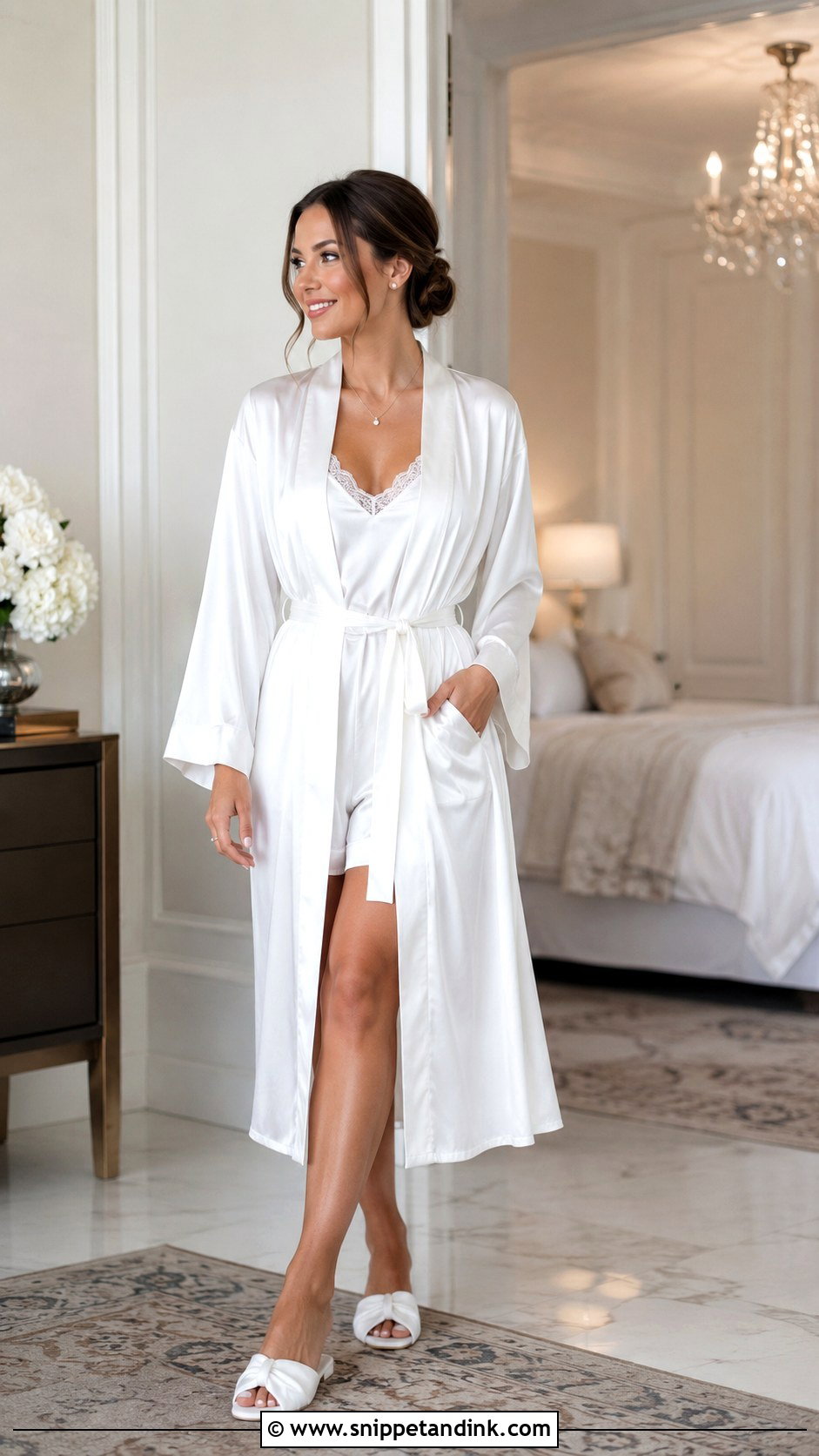
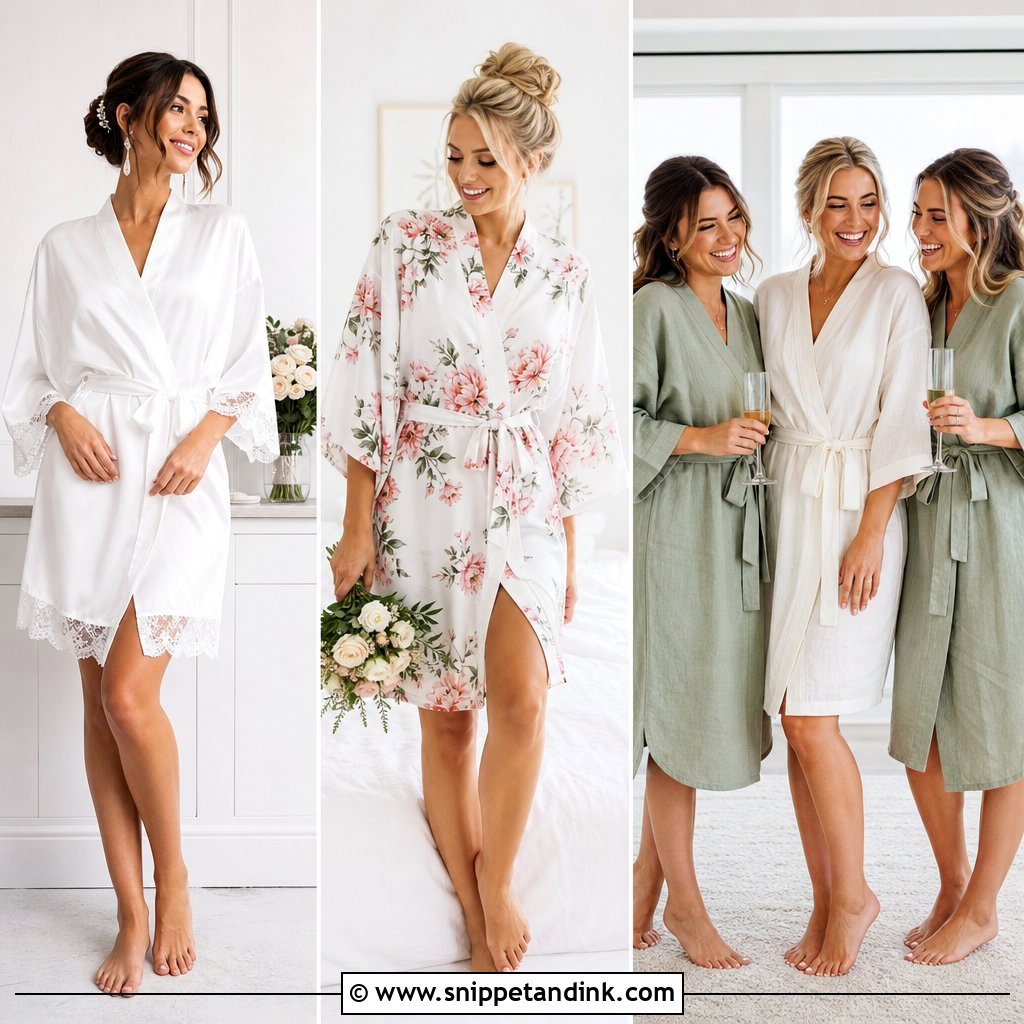
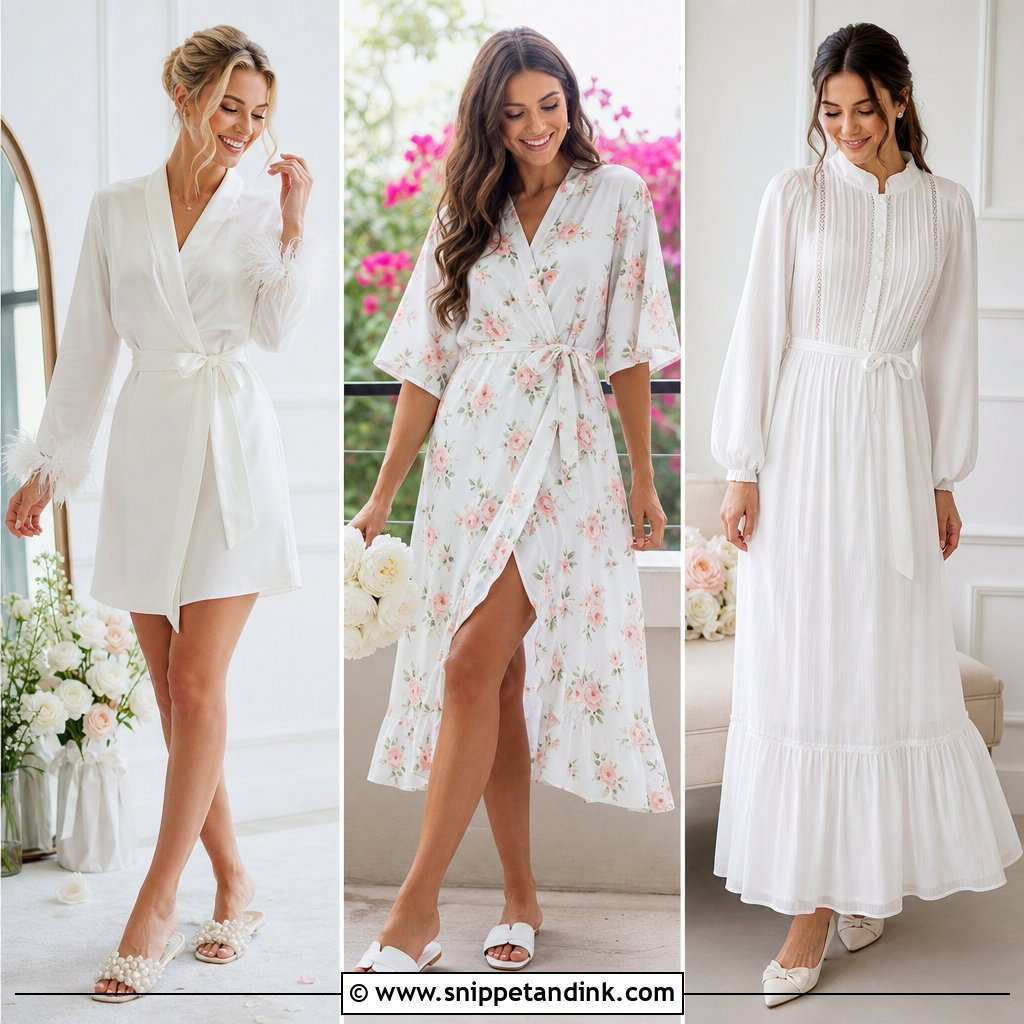
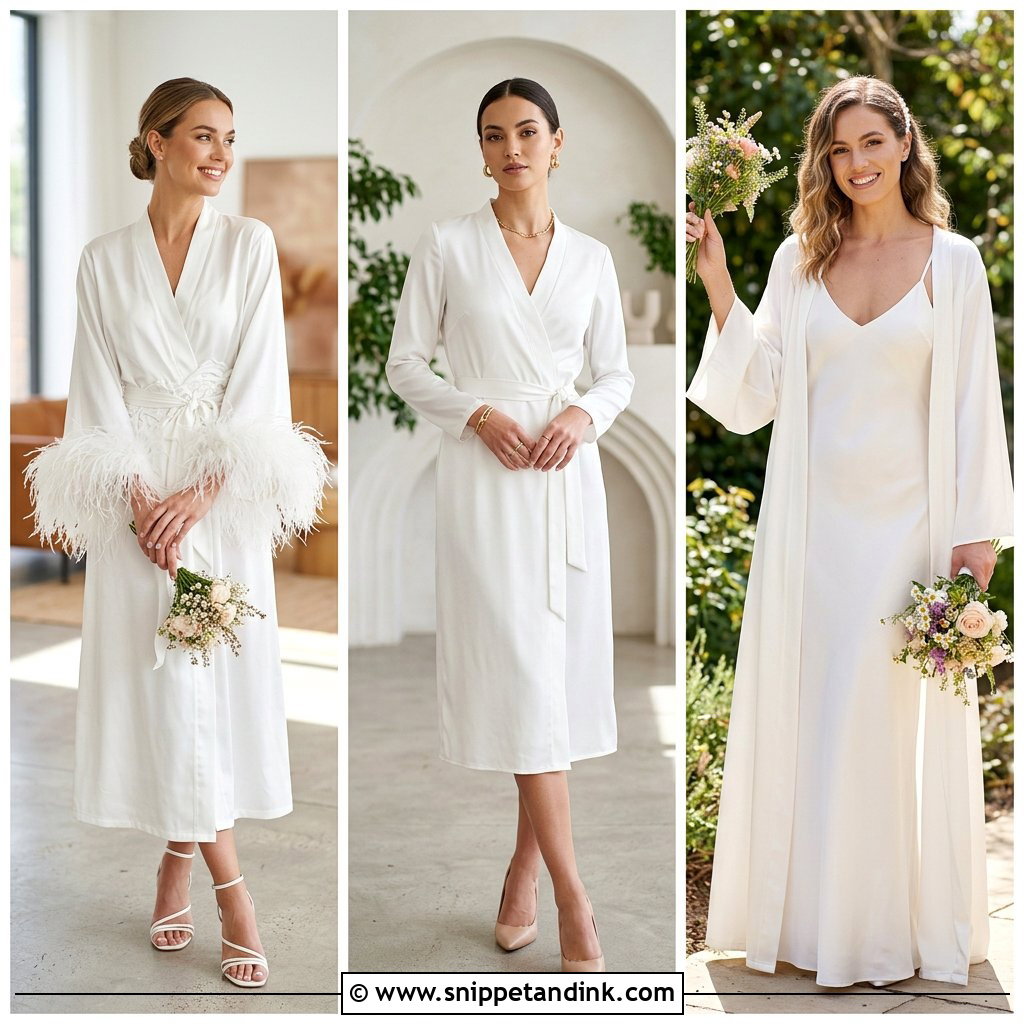
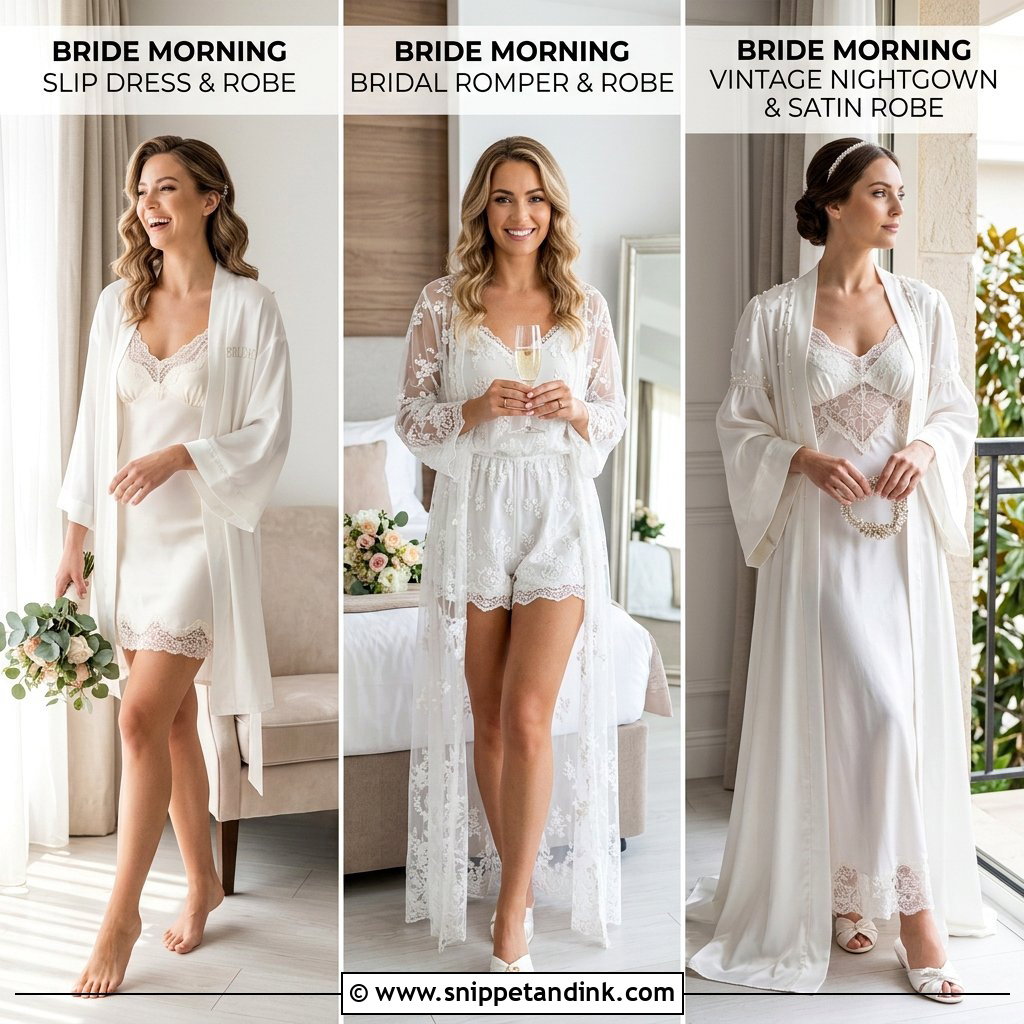
White silk is the robe most brides picture, and it earns the spot. A midi wrap with wide sleeves and an inner tie stays closed while you’re in the chair, and a smooth camisole-and-shorts set underneath means nothing has to come off over your head later. Real silk breathes, which matters under a ring light, and its soft sheen reads well on camera without the plastic glare cheap satin gives off. In a bright hotel suite or estate bedroom it needs very little help: satin slippers and pearl studs. Steam it the night before, then sit down in it and check the neckline from the side.
2. Ivory Satin Bridal Dressing Gown
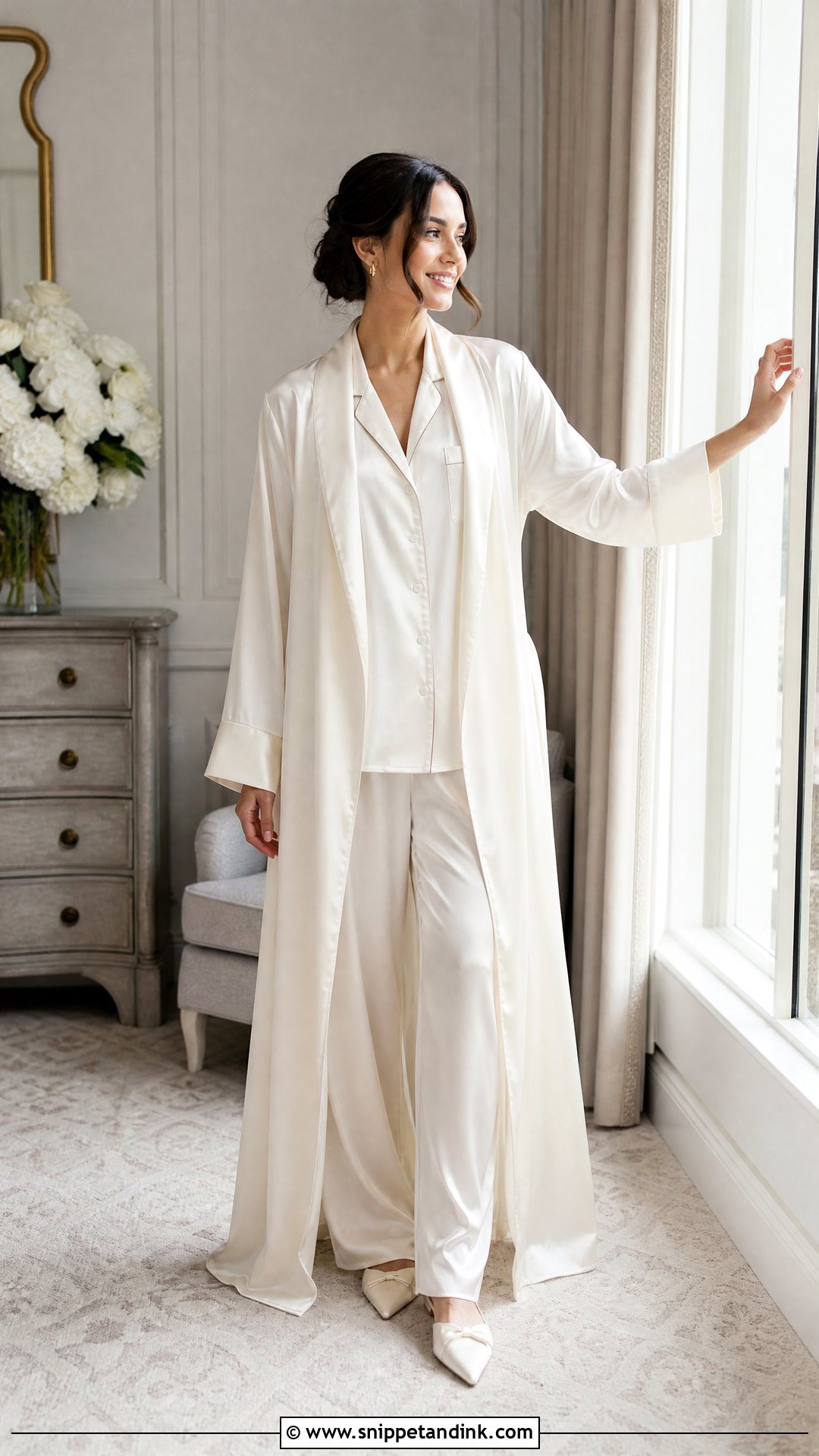
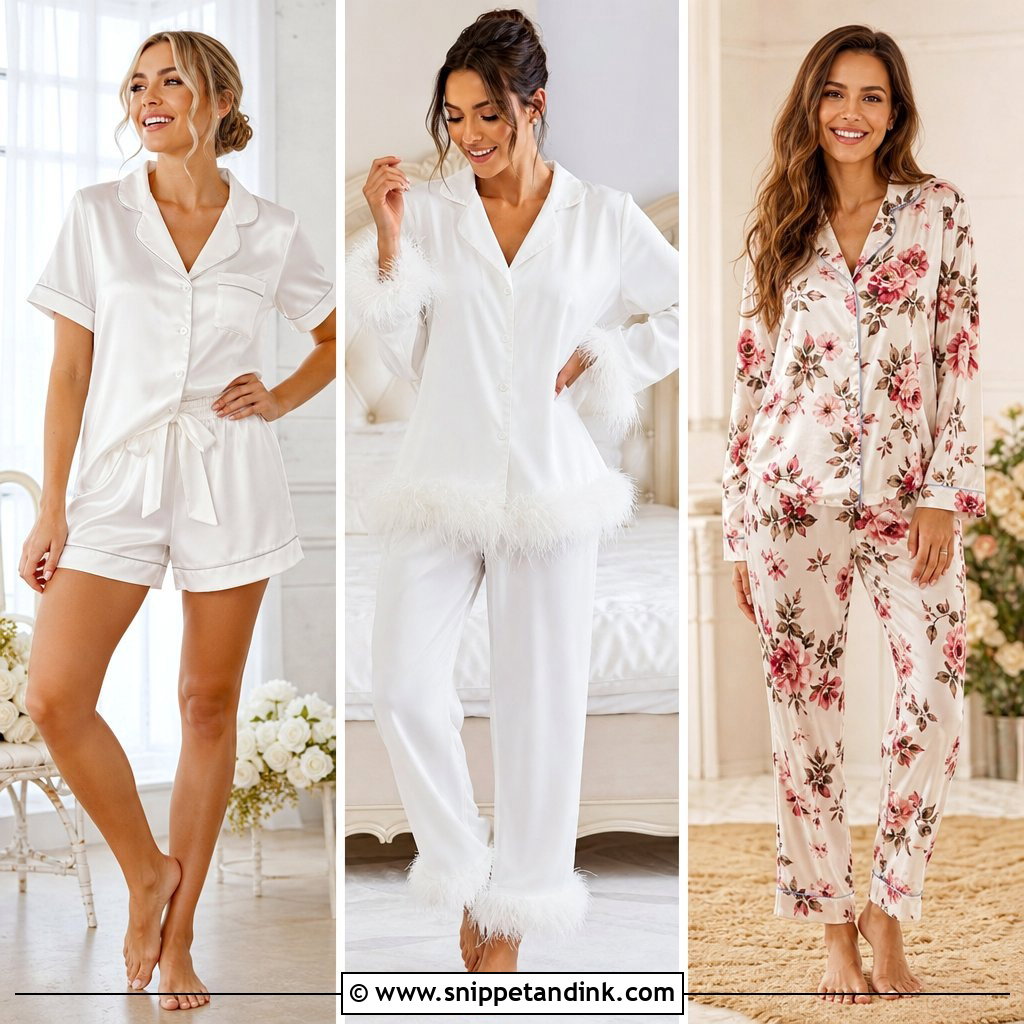
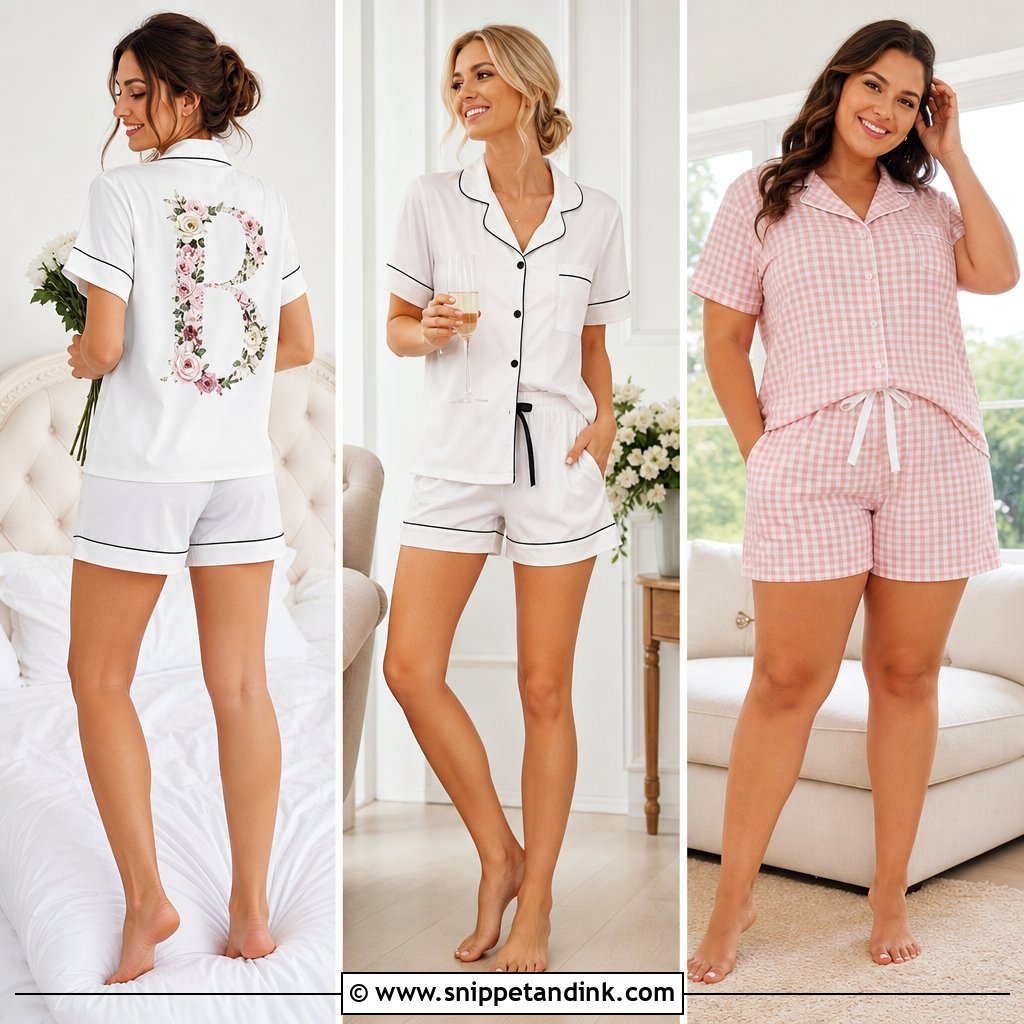
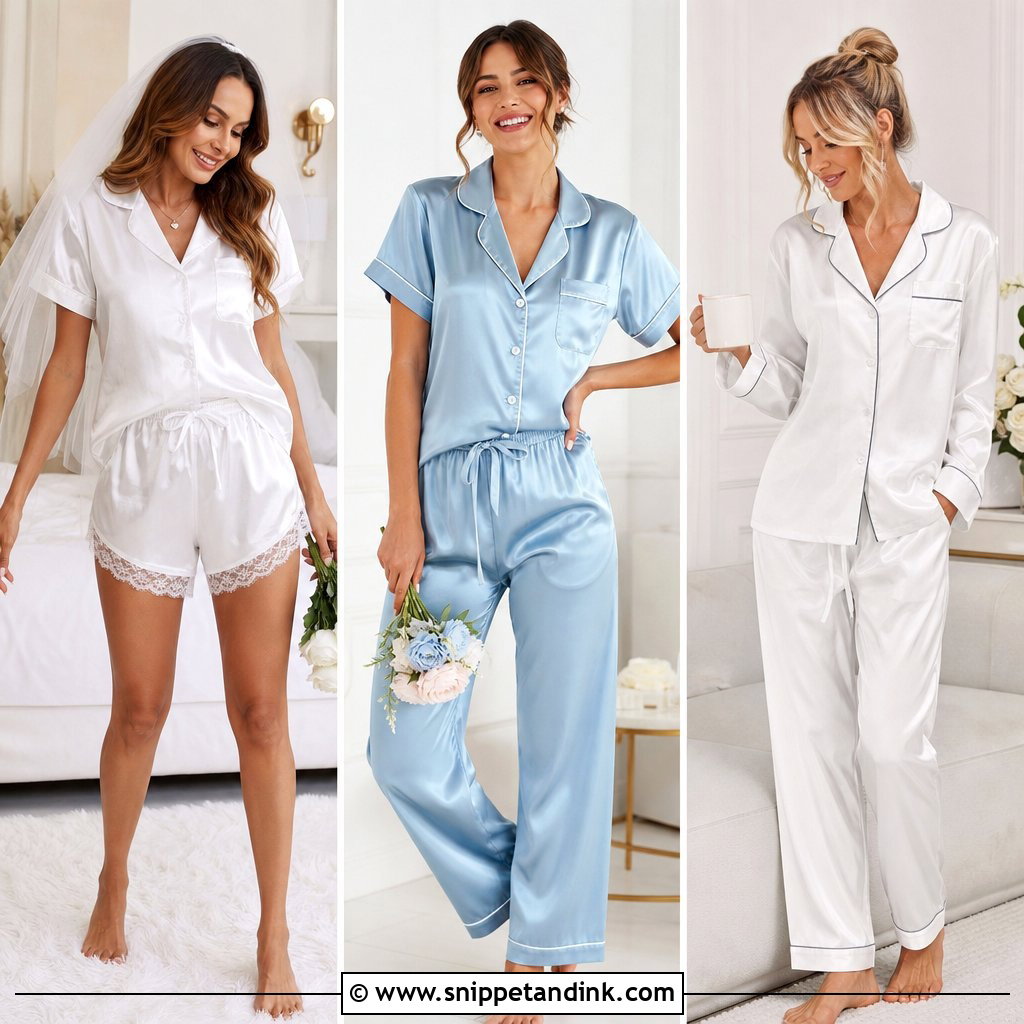
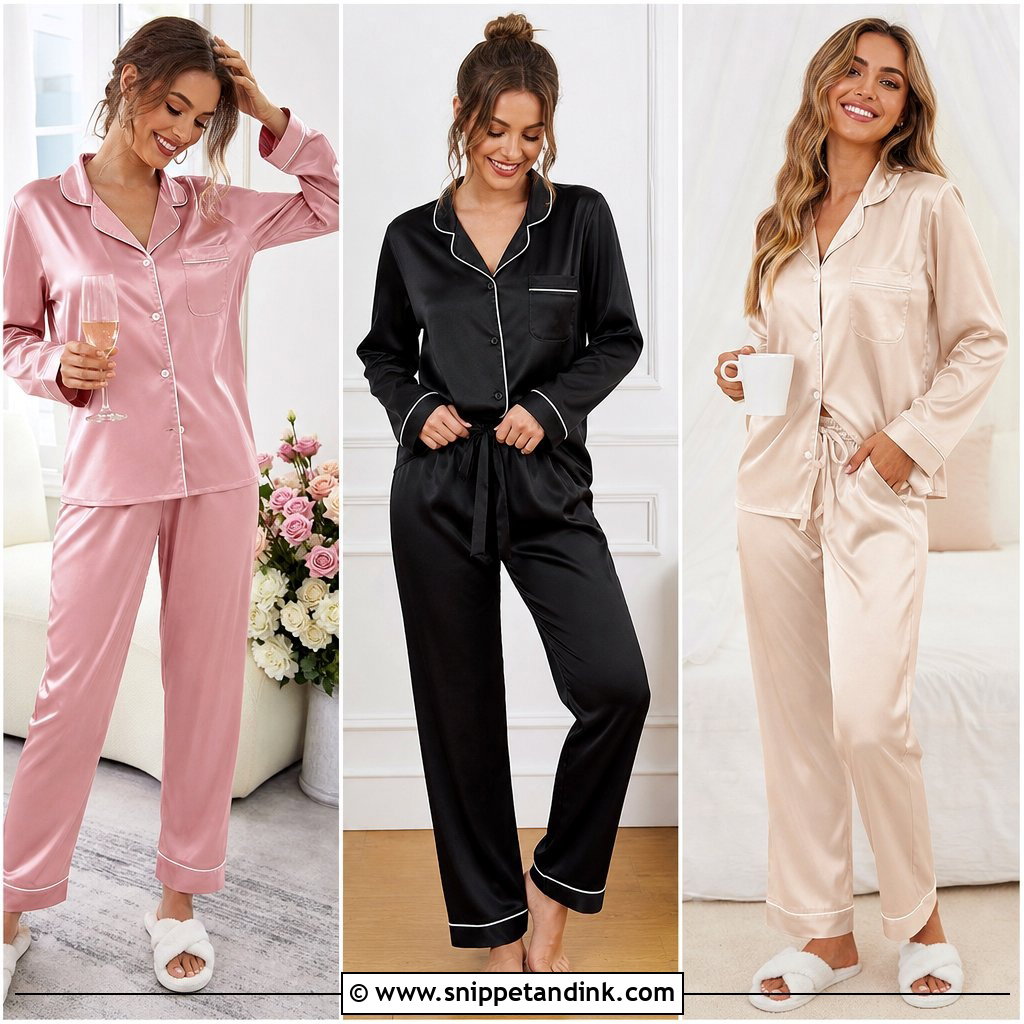
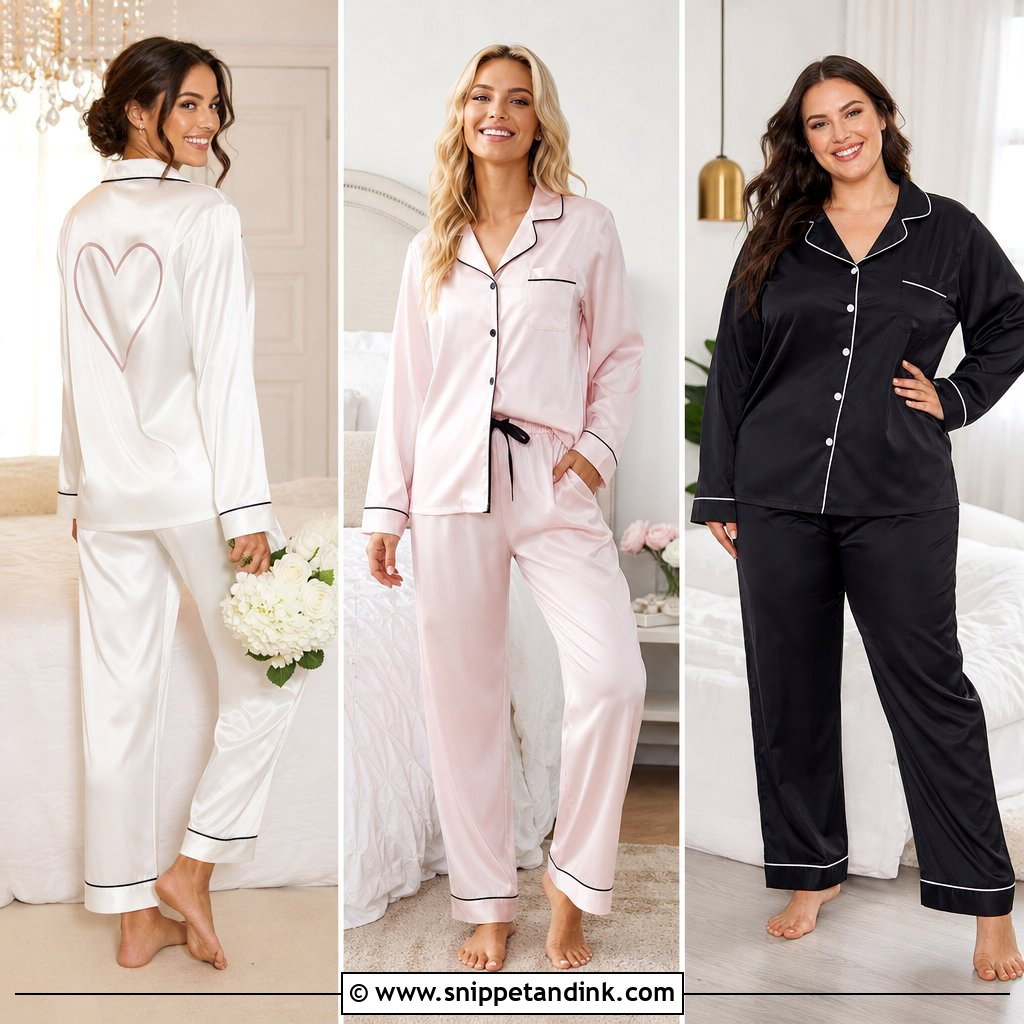
Ivory is kinder than bright white for many skin tones, and if your gown is creamy, it keeps the morning and the ceremony looks in the same family. A knee-length satin robe with a lightly structured shawl collar and matching belt looks neat. I always ask brides to wear a button-front pajama set underneath, because a pullover top means wrecking my work at the worst moment. Heavier satin falls straight; thin satin clings and shows every crease from sitting. For group photos, dress bridesmaids in champagne, taupe or muted rose so you stand out without anyone looking mismatched.
3. Lace Trim Bridal Dressing Gown
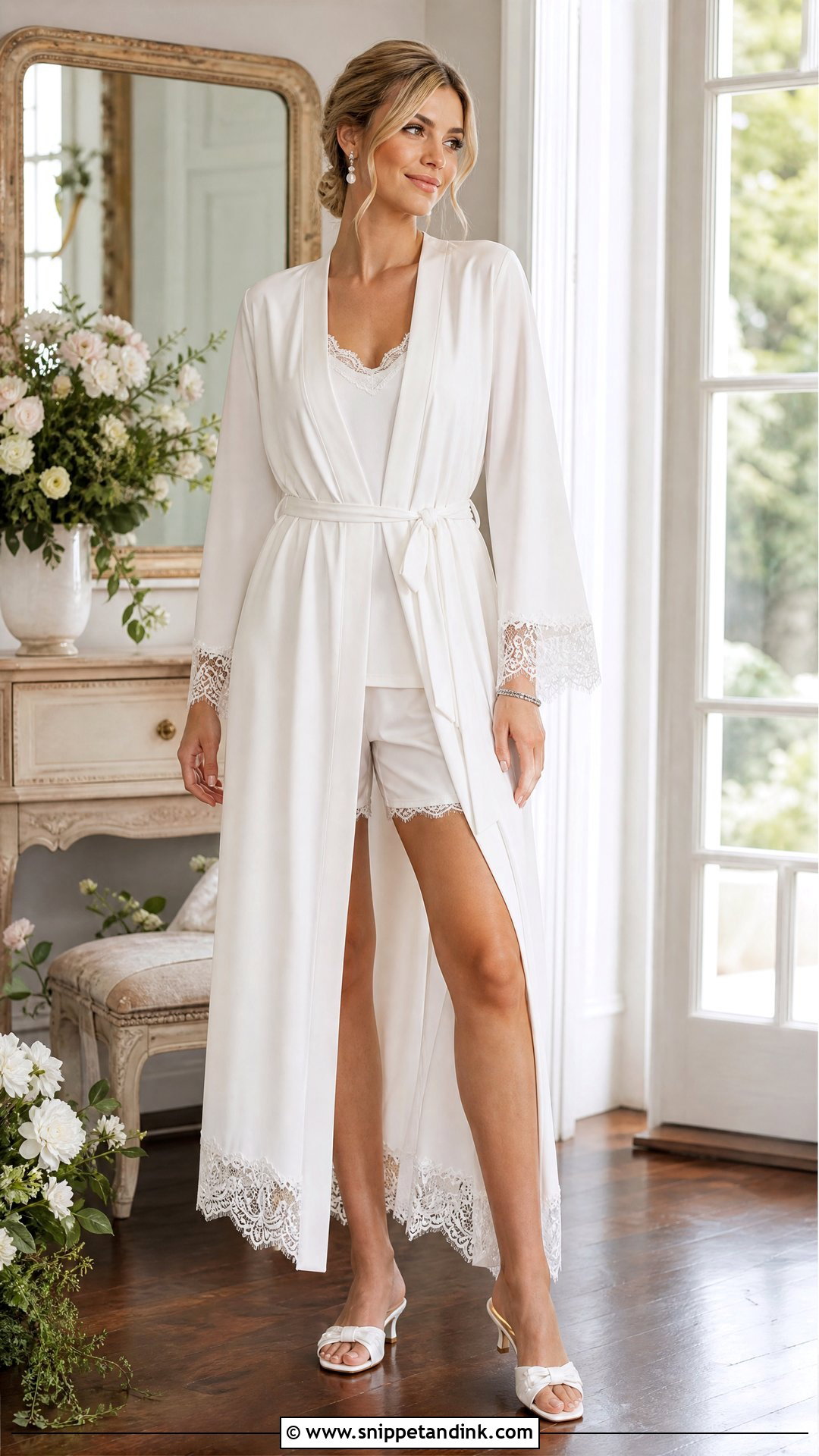
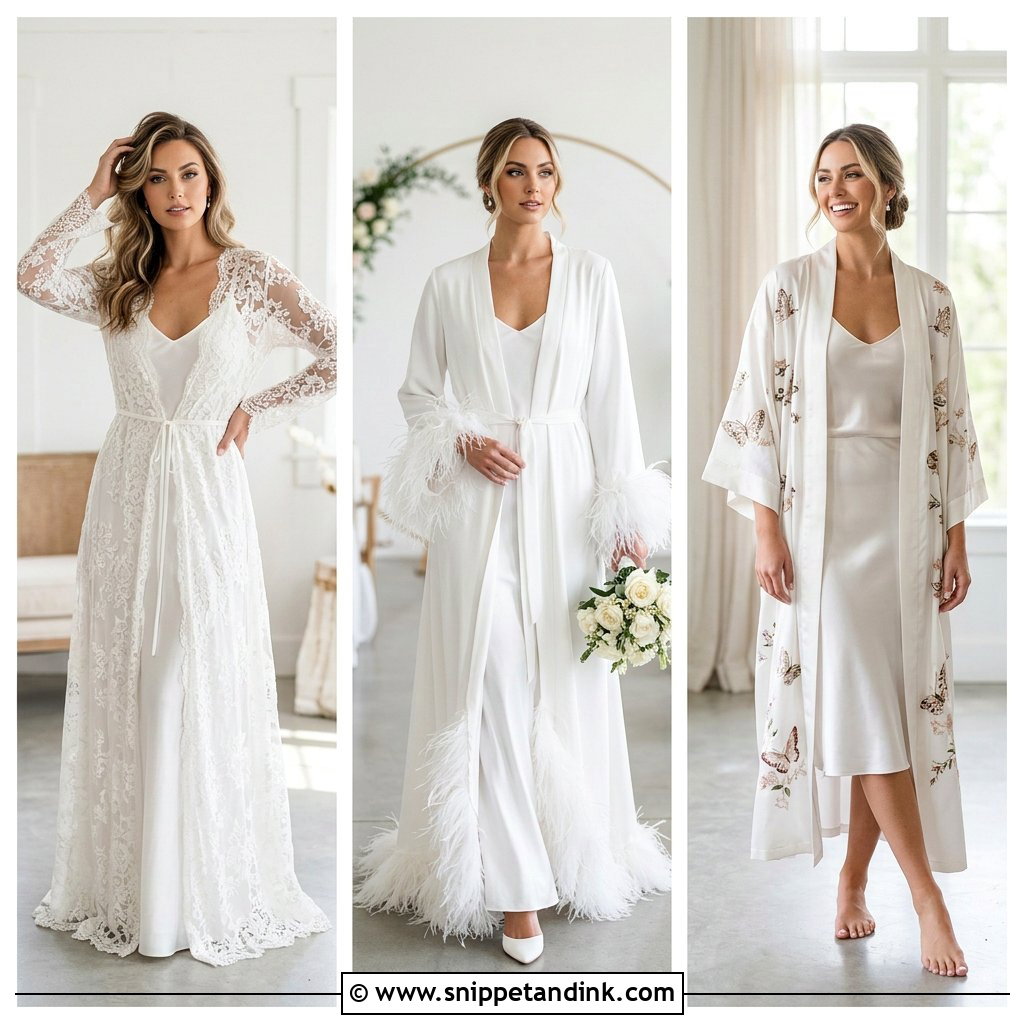
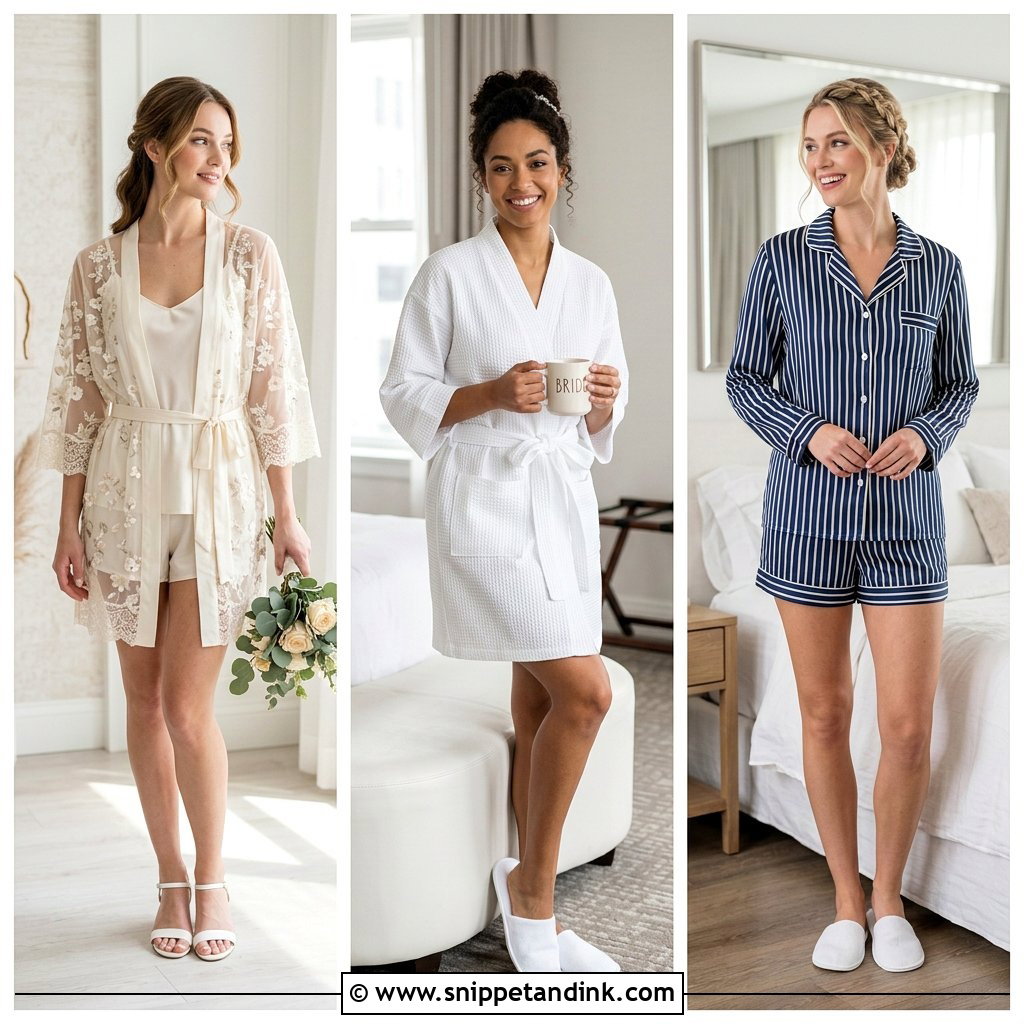
Lace trim gives softness without the robe turning sheer. Start with an opaque white wrap with lace at the neckline, cuffs and hem, over a white camisole and relaxed shorts. Here’s my working complaint about lace cuffs. Wide, floppy ones drag through foundation on the counter and get dusted with powder, so pick a narrow cuff or push the sleeves up while I work. Stick to one lace pattern. Scalloped edges look pretty in detail shots, especially if your ceremony dress has lace too.
4. Long Bridal Dressing Gown
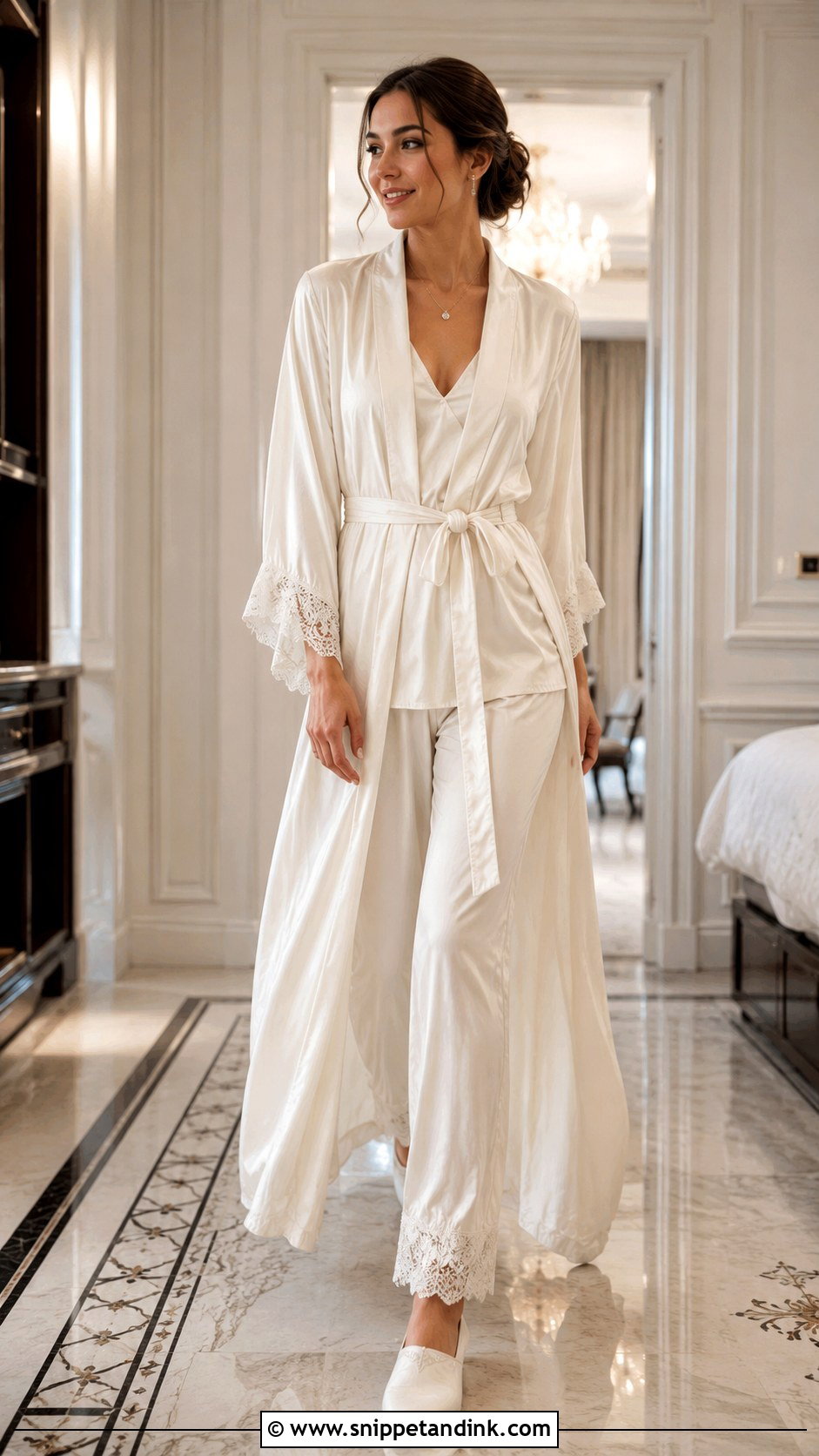
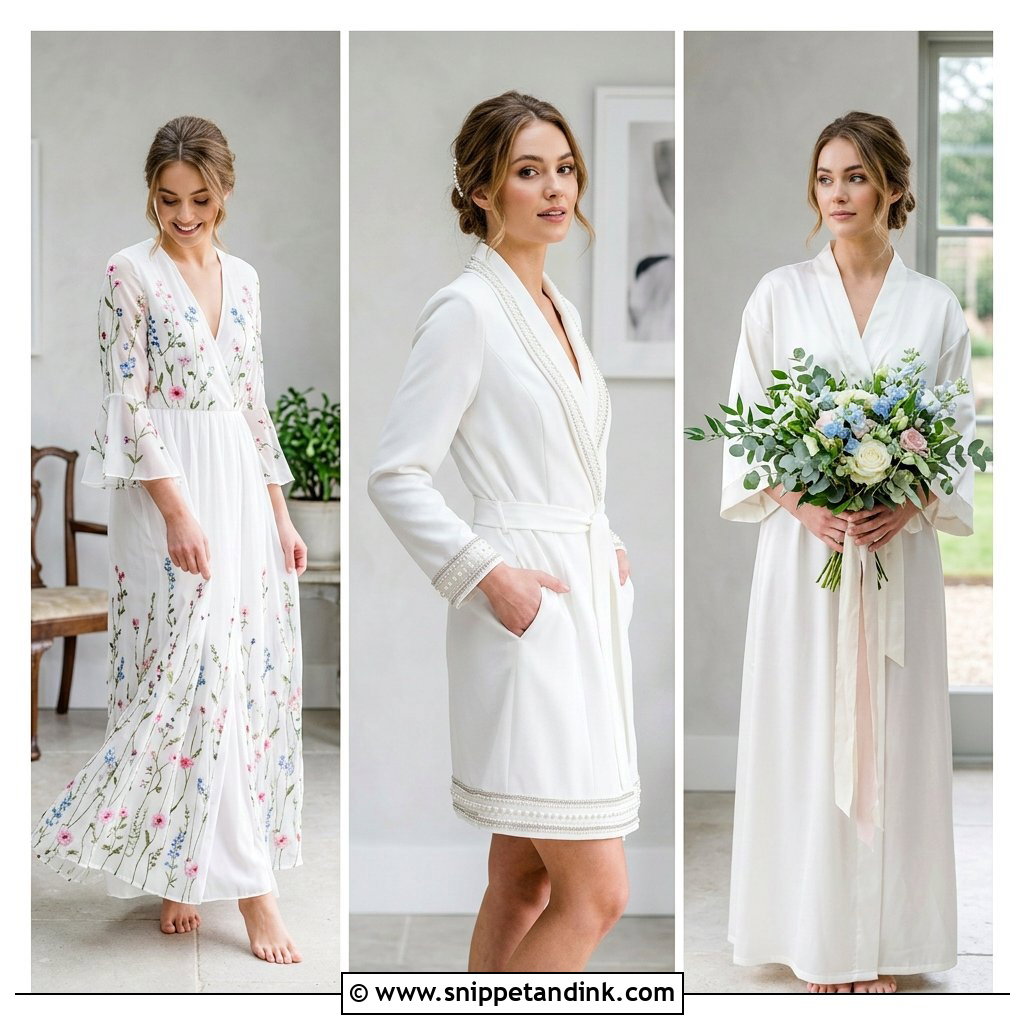
A floor-length robe feels graceful and gives more coverage for a cool or formal morning. Choose a fluid ivory one with long sleeves and a defined waist, layered over a matching ankle-length lounge dress or a camisole-and-pant set. The hem should stop just above the floor in your slippers, not in bare feet, or you’ll catch it walking between the makeup chair and the window. Low side slits help with stairs. Long robes look great in grand hotel rooms and on staircase portraits, but if you’ll be moving around a lot, they’re the least practical option on this list.
5. Short Bridal Dressing Gown
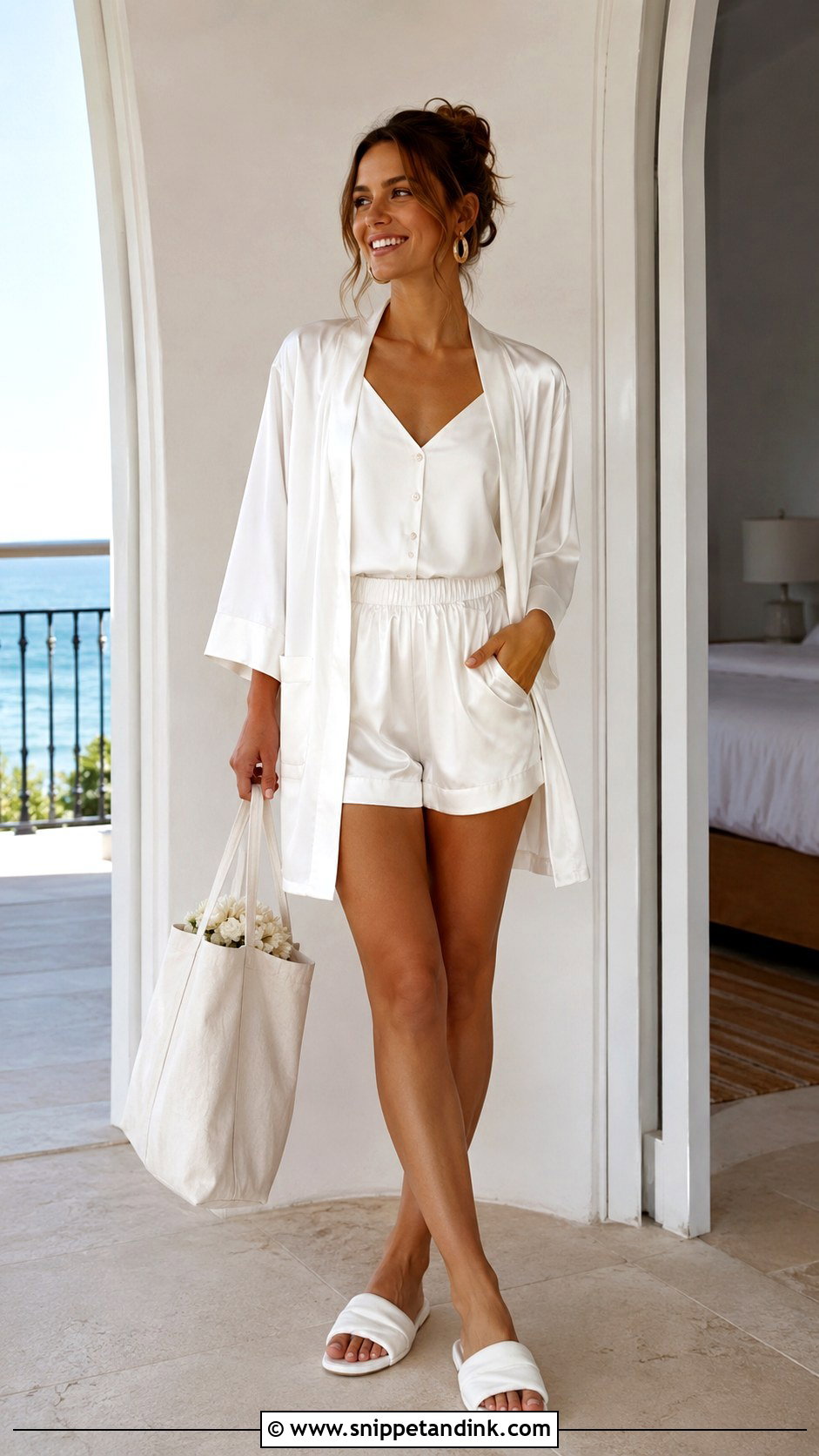
Short robes are practical for warm weather and busy mornings. Aim for a hem a few inches above the knee that stays decent when you sit in a tall makeup chair, which hitches everything up more than a sofa does. Matching high-waisted shorts and a sleeveless button-front top underneath keep you covered whatever happens. A crisp satin or soft cotton blend keeps its shape better than very thin fabric. Look for a wide overlap and two ties, inside and out, because you’ll be greeting the florist and photographer at the door in it.
6. Floral Bridal Dressing Gown
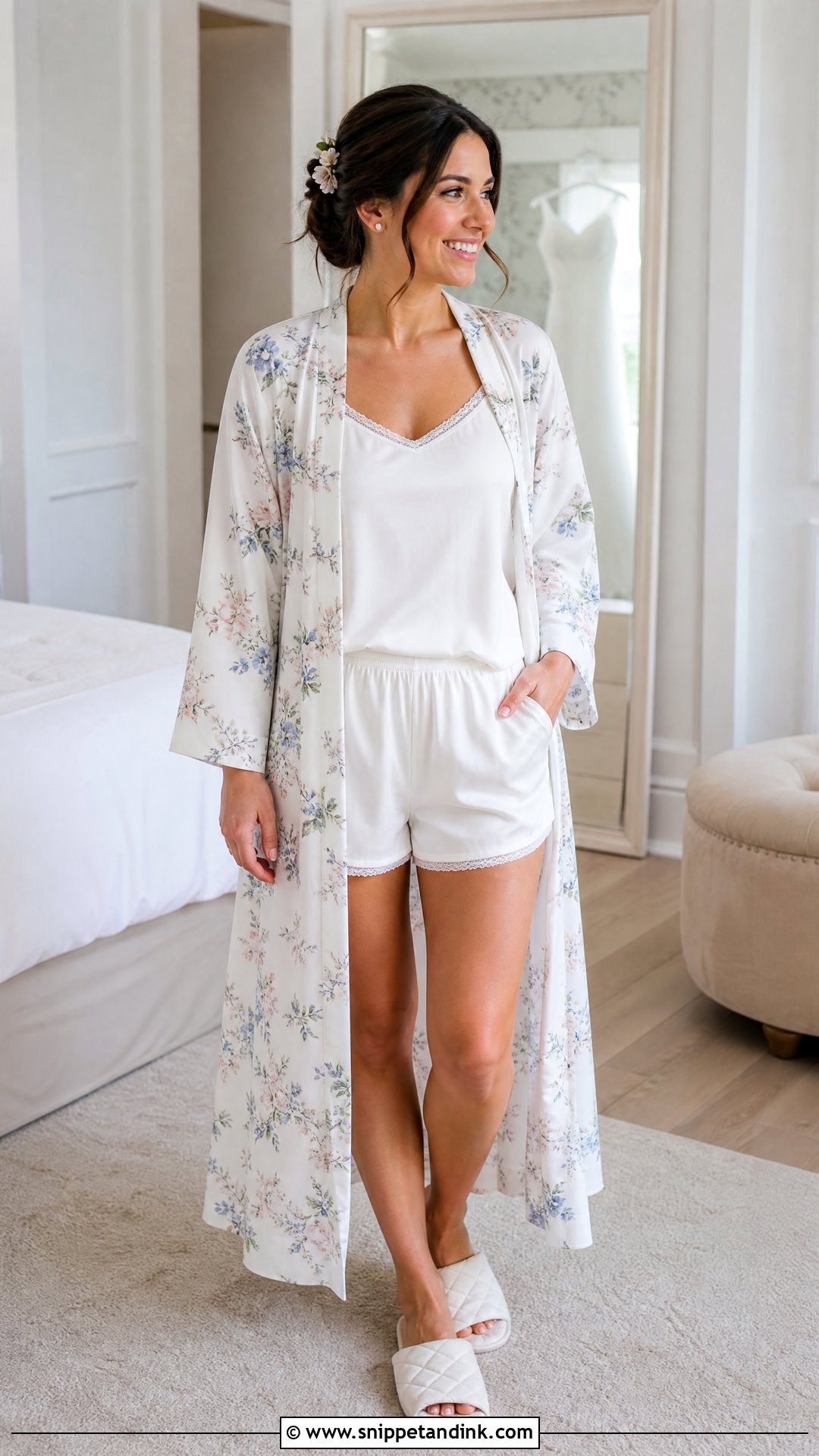
A white or ivory base with soft blue, blush, lavender or green flowers adds color and still looks bridal. Pick up one shade from the print for the camisole-and-shorts set underneath. Print scale matters on camera. Tiny patterns blur into texture from across a room, and oversized blooms swamp a petite bride in a short robe, so medium-scale florals photograph best. If your bridesmaids wear florals too, give them darker backgrounds so you’re still easy to spot. Keep the hair clip small, and take it out before your stylist starts.
7. Personalized Bridal Dressing Gown
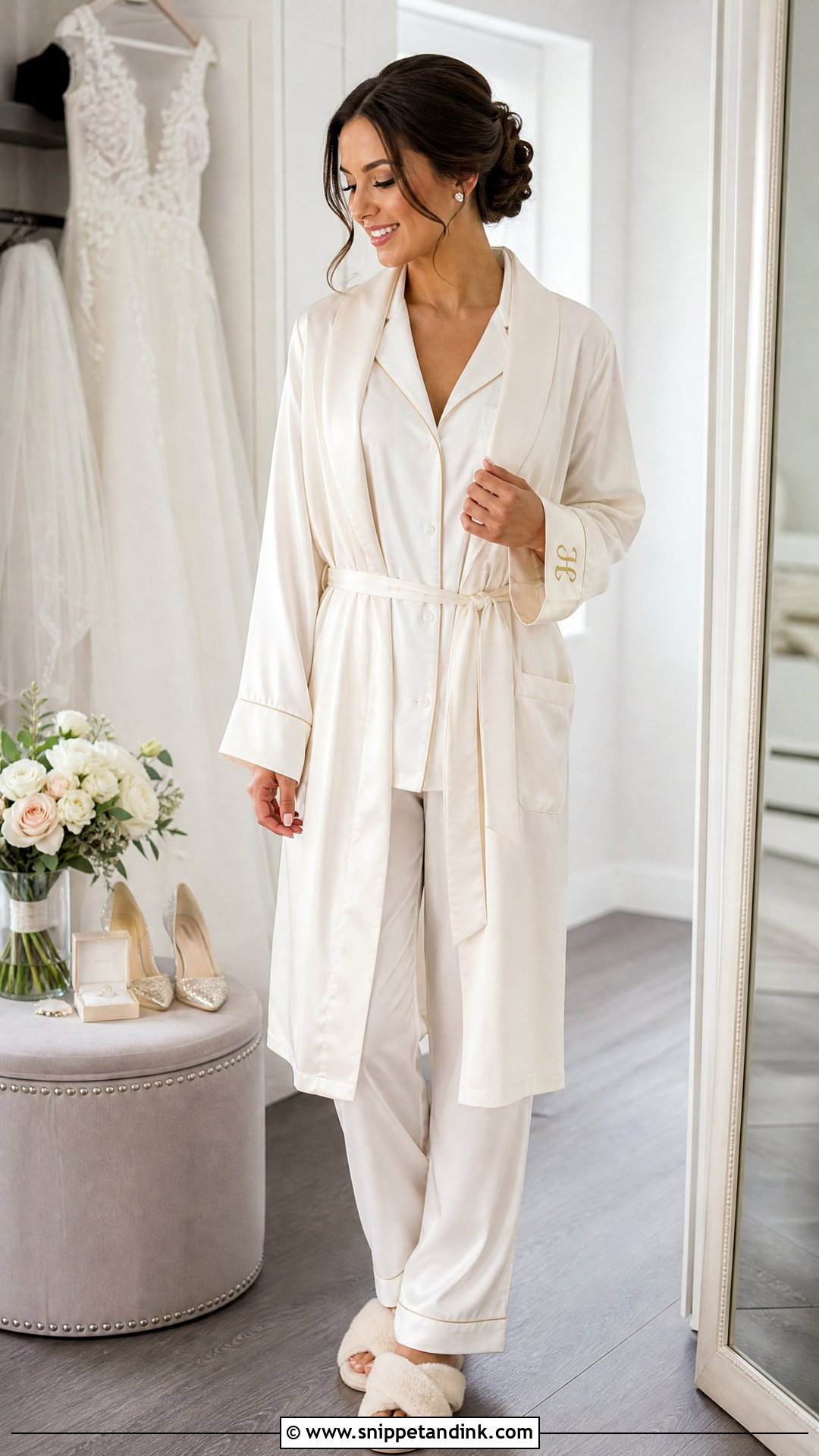
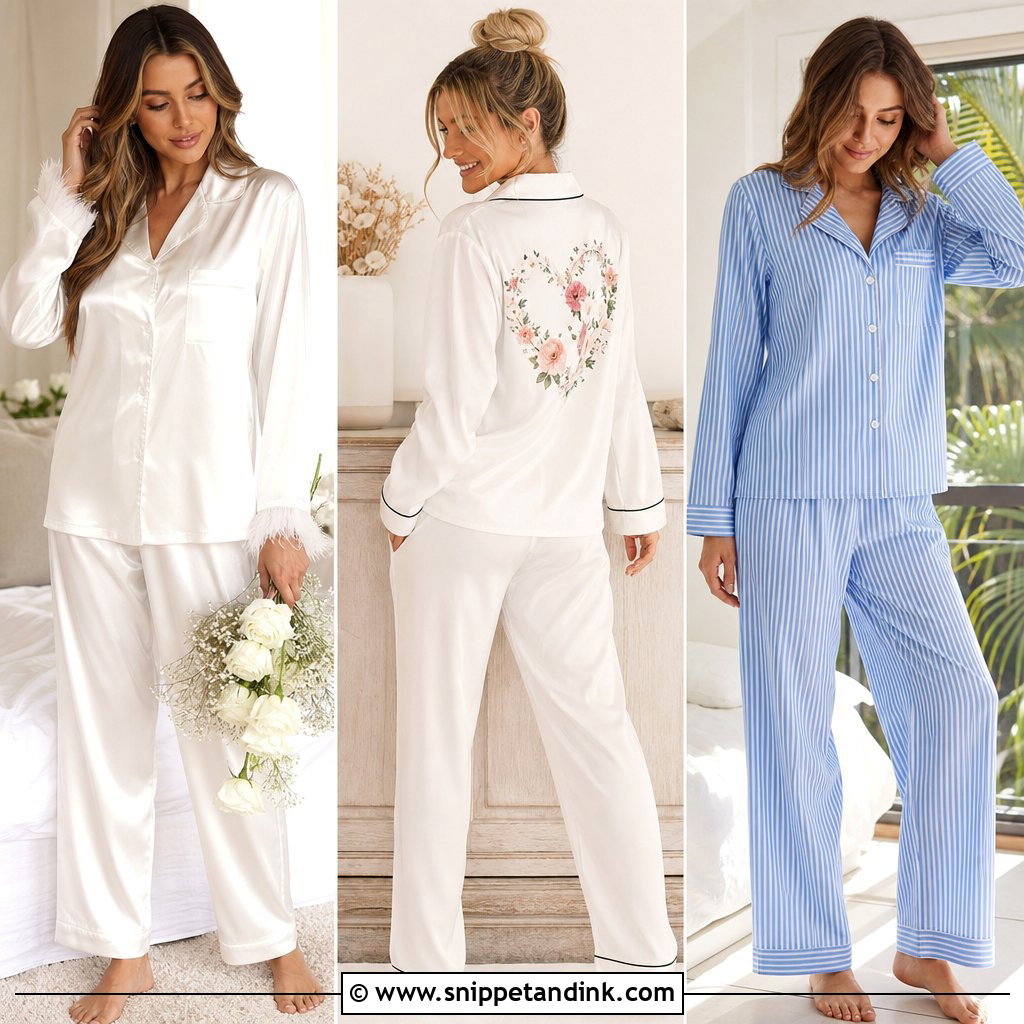
A monogram makes the robe feel like yours and turns it into something you’ll keep. Initials, a first name or the date near the chest or cuff look more lasting than big lettering across the back. Keep the thread close to the fabric, such as champagne, pale gold or soft blue on ivory. Check the spelling twice before ordering, and allow extra delivery time, since personalization adds days or weeks depending on the maker. A plain white pajama set with matching piping goes underneath.
8. Embroidered Bridal Dressing Gown
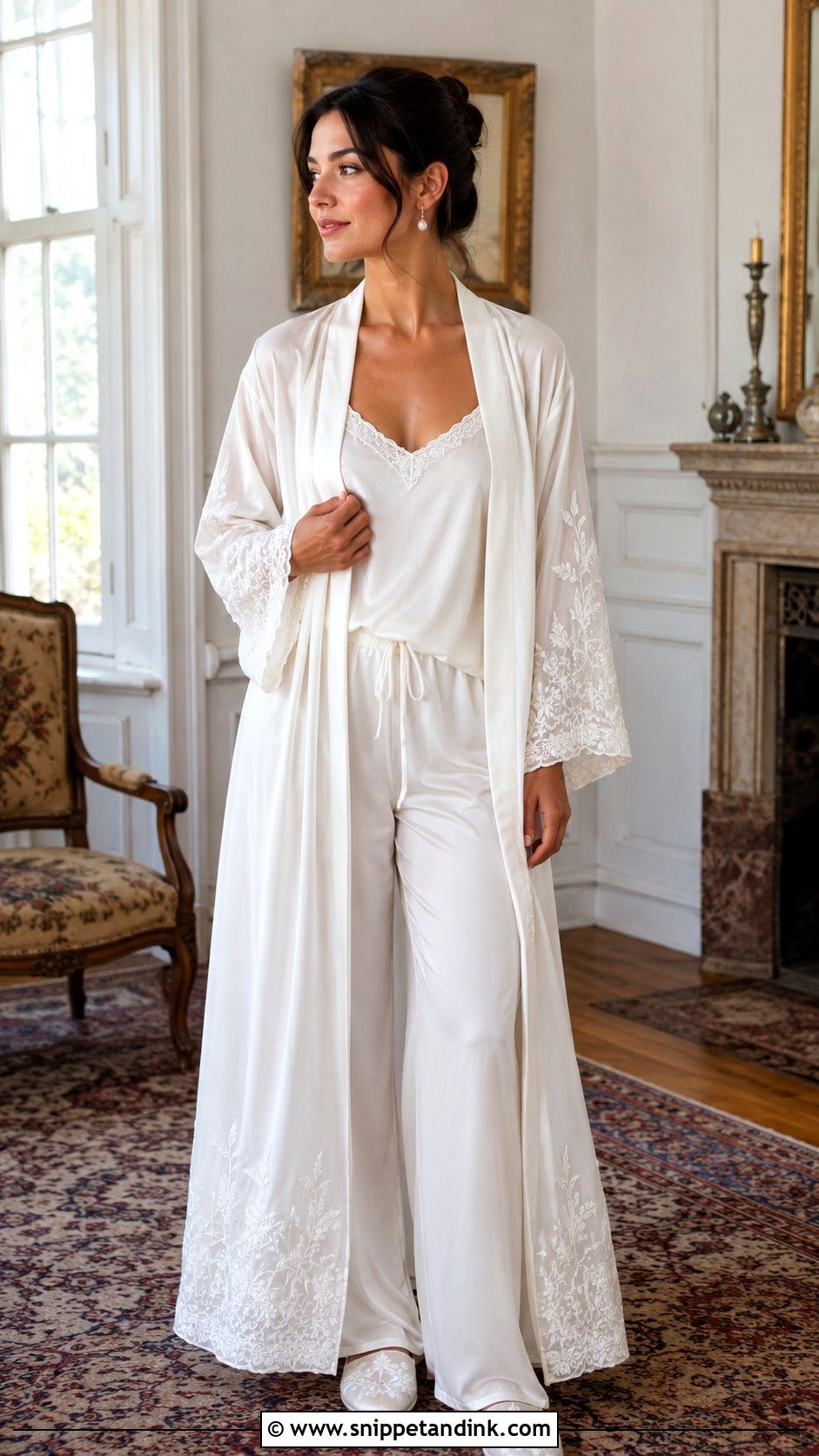
Embroidery adds texture without shine, which I like next to a bride’s face because it doesn’t bounce light into the camera. White cotton, silk or matte satin with botanical stitching along the sleeves and hem pairs well with a simple ivory camisole and matching wide-leg lounge pants. Two or three thread colors are enough; white-on-white is the subtlest, pale blue a quiet nod to tradition. Turn the robe inside out before buying. The back of heavy stitching can be scratchy against the neck, and you’ll be sitting still in it for a long time.
9. Feather Trim Bridal Dressing Gown
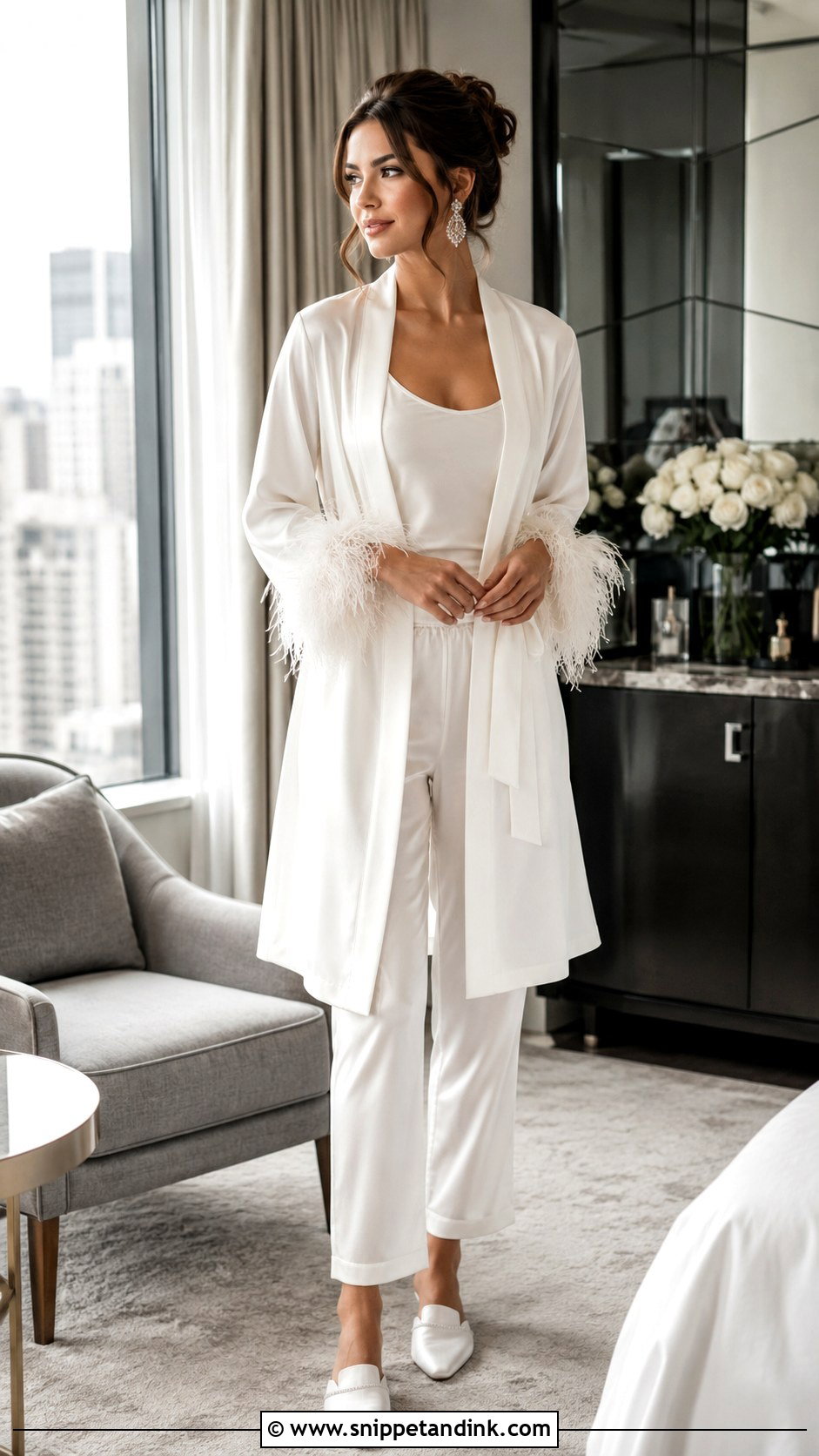
A feather-trim bridal dressing gown is pure glamour, and I’ll be honest: it’s the one I watch nervously. Loose feathers stick to wet lash glue and freshly set foundation. Choose light trim at the cuffs only, not around the neckline, and shake it out well the day before to get rid of any shedding. A knee-length satin robe over a plain white tank and tailored lounge pants balances the drama. Keep the robe well away from the gown bag, too. A wisp of feather on ivory tulle is surprisingly hard to find once it’s there.
10. Pearl Bridal Dressing Gown
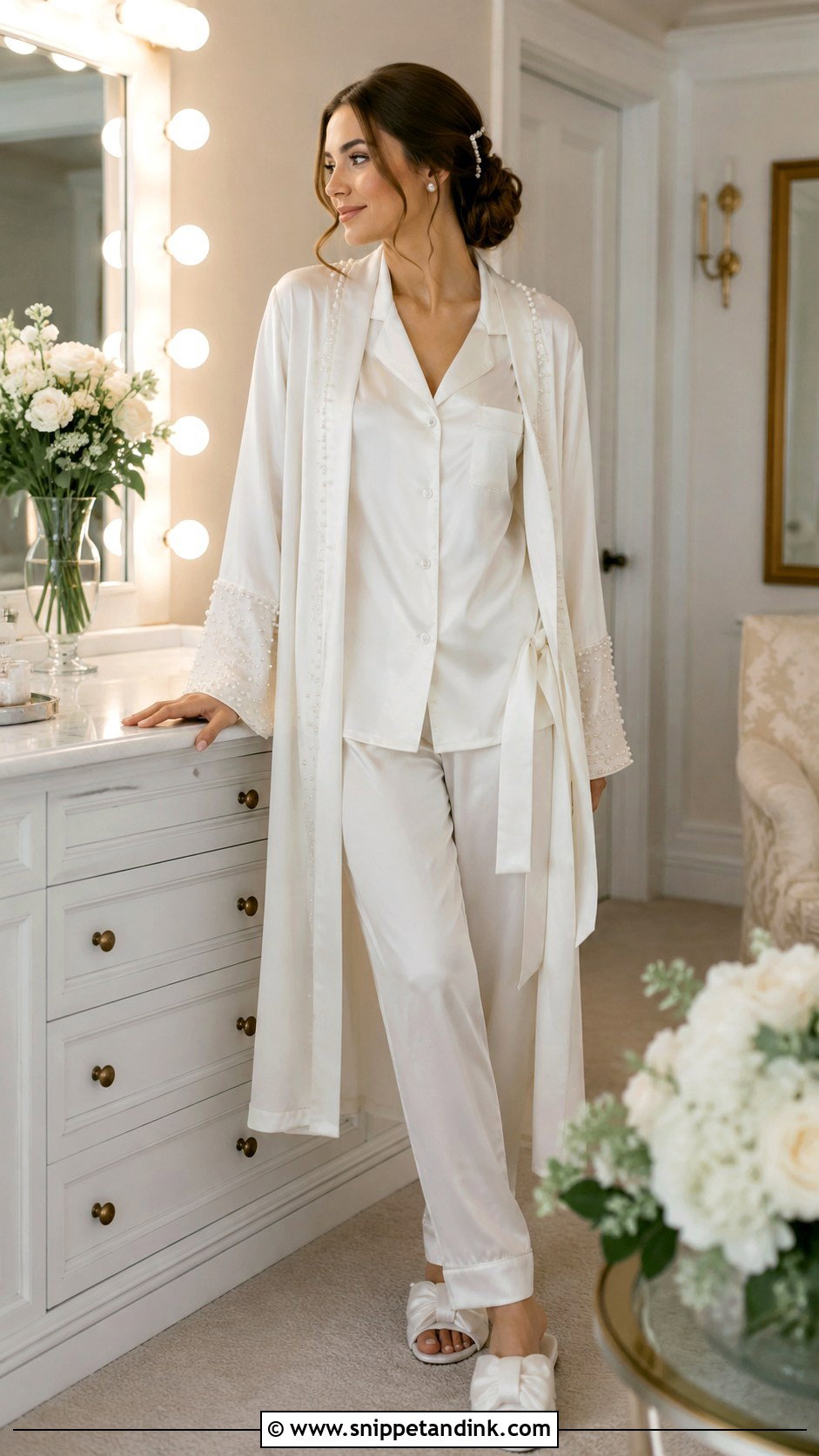
Small pearls on the cuffs, shoulders or belt link the robe to classic bridal jewelry. Avoid dense pearl work on the back or seat, where you’ll be leaning against a chair for hours. Look for smooth-backed pearls that are firmly attached; rough settings snag lace and hair. A smooth ivory button-front set with piping sits underneath. Any pearl hair clip should come out before your stylist starts. Store the robe flat or on a padded hanger to protect the beading.
11. Chiffon Bridal Dressing Gown
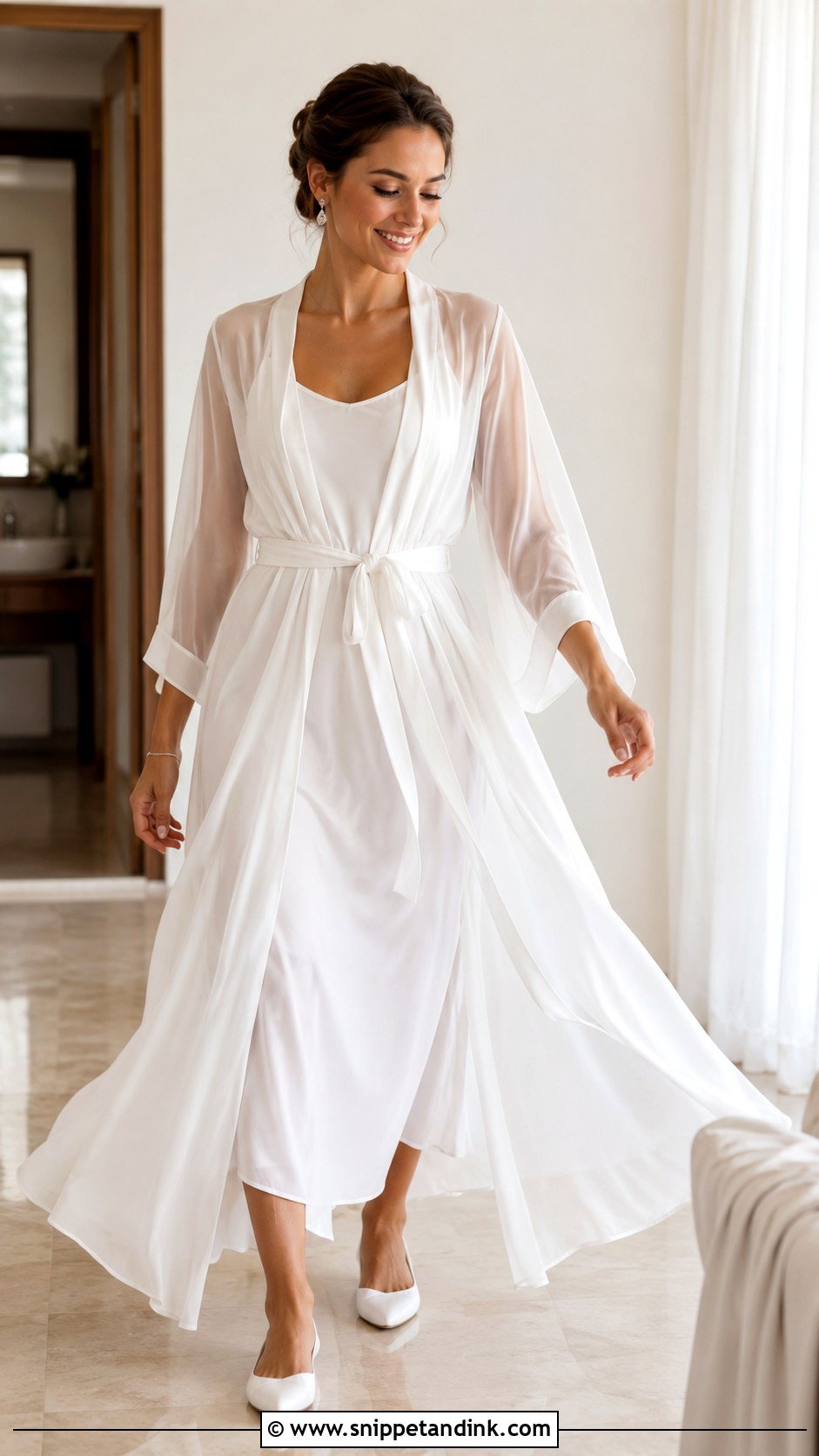
Chiffon floats and moves nicely in photos, but it’s see-through, so it needs an opaque layer underneath: a white sleeveless lounge dress or a camisole-and-pant set. A midi or ankle length with a deep wrap gives the best mix of movement and coverage. Matte chiffon looks softer on camera than shiny versions. Keep the sleeves loose but not long; floaty sleeves and liquid foundation do not get along. A weighted or finished hem stops it blowing open every time someone opens the door.
12. Cotton Bridal Dressing Gown
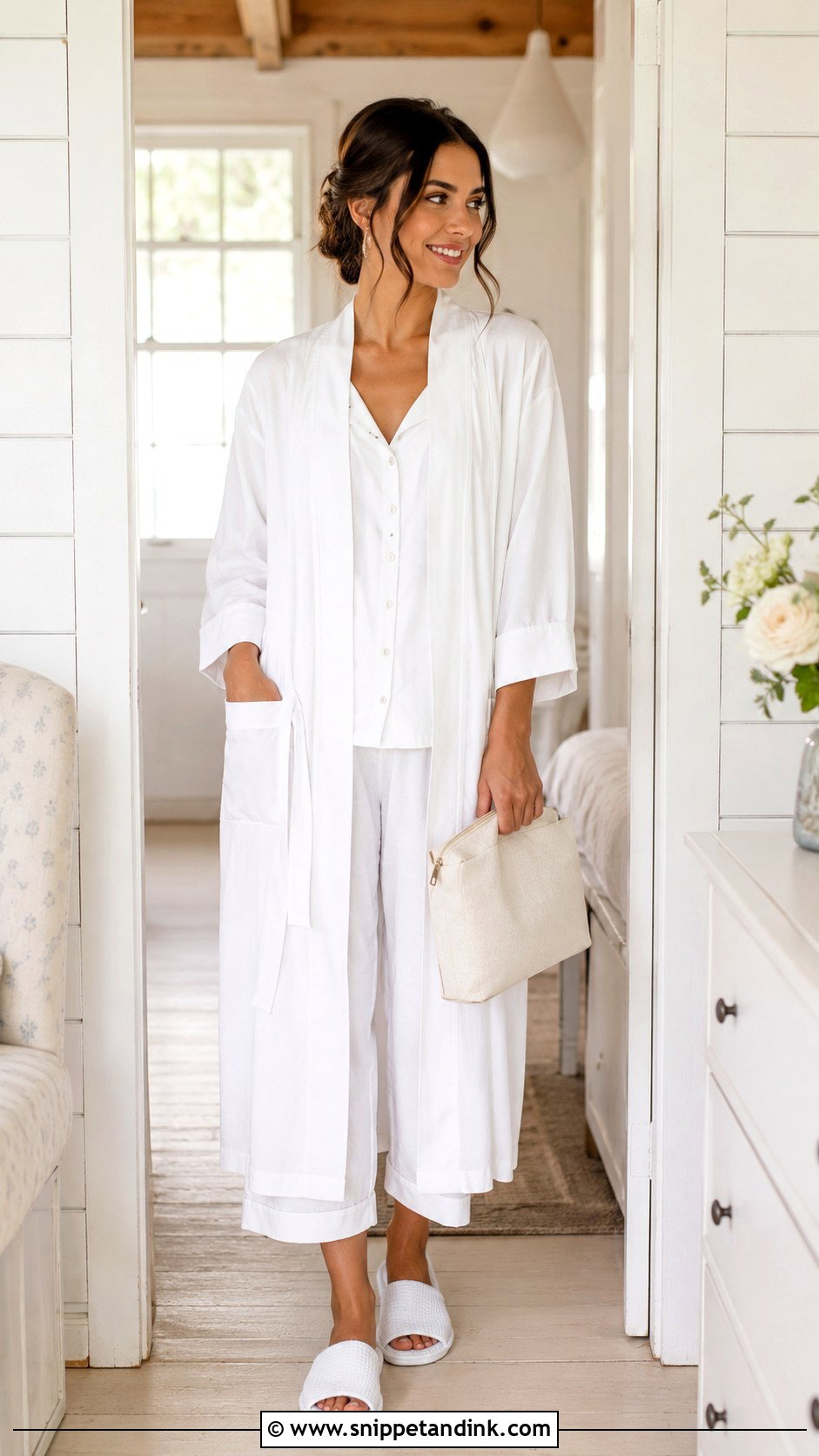
Cotton is the robe I’d recommend for heat, outdoor venues and anyone who hates slippery satin. Crisp white poplin with three-quarter sleeves, pockets and a secure wrap stays cool, and three-quarter sleeves are the ideal length from where I stand. Wear a white cotton button-front top with shorts or cropped pants underneath. Poplin needs enough body that it doesn’t look like a bathrobe from a gym. It also creases easily, so press it the day before and hang it straight away. Bridesmaids in striped or floral cotton make easy companions.
13. Waffle Bridal Dressing Gown
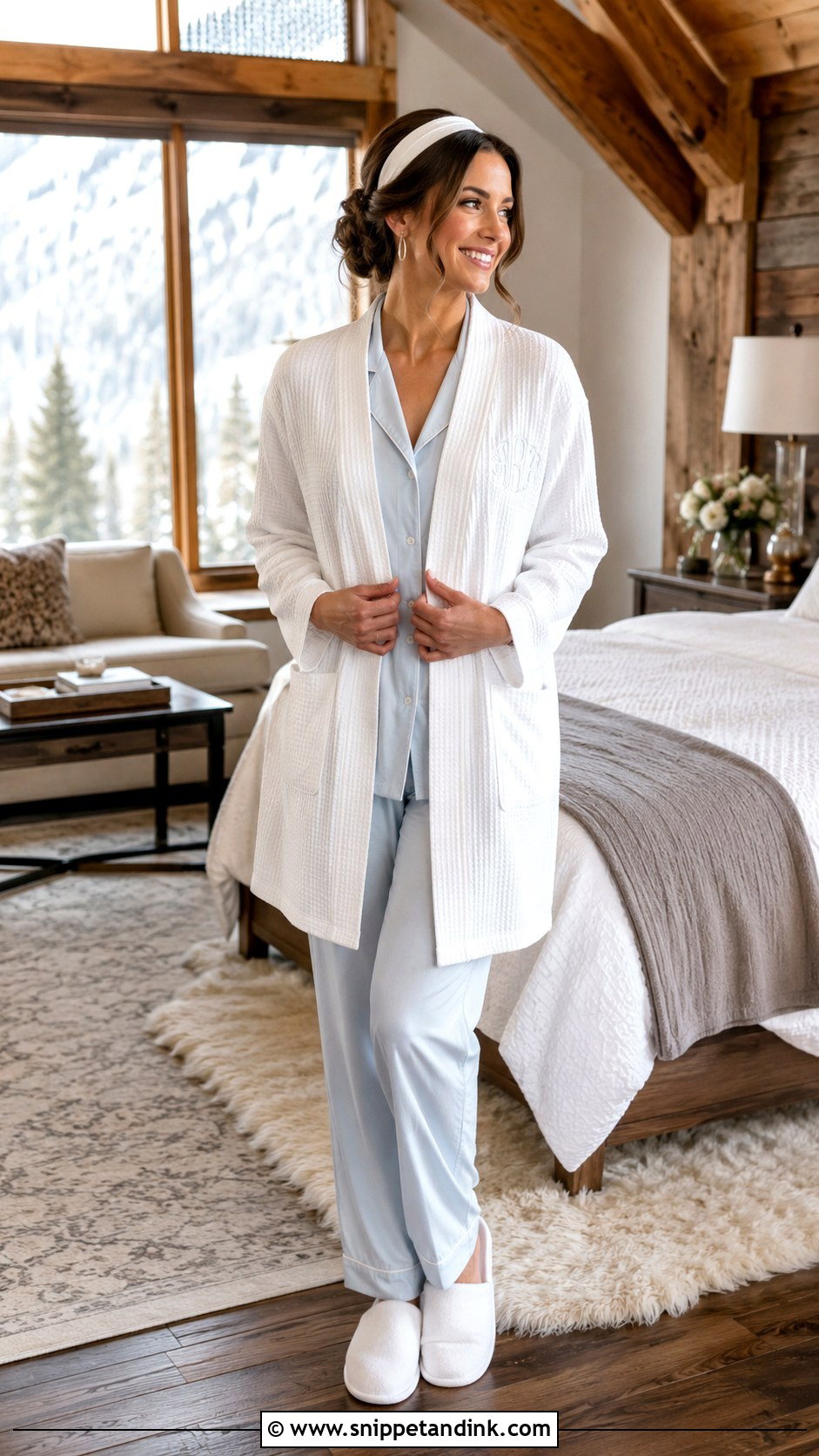
Waffle weave is cozy for a cold morning or a relaxed venue. Choose a lightweight knee-length style, not a heavy spa robe, which looks bulky in photos and makes you overheat under lights. A button-front pajama set in white, pale gray or dusty blue sits underneath. Fine waffle looks neater on camera than thick weaves. Pockets are useful for tissues and lip balm. Check the shoulders: if the robe is tight there, you can’t lift your arms comfortably while your stylist pins.
14. Velvet Bridal Dressing Gown
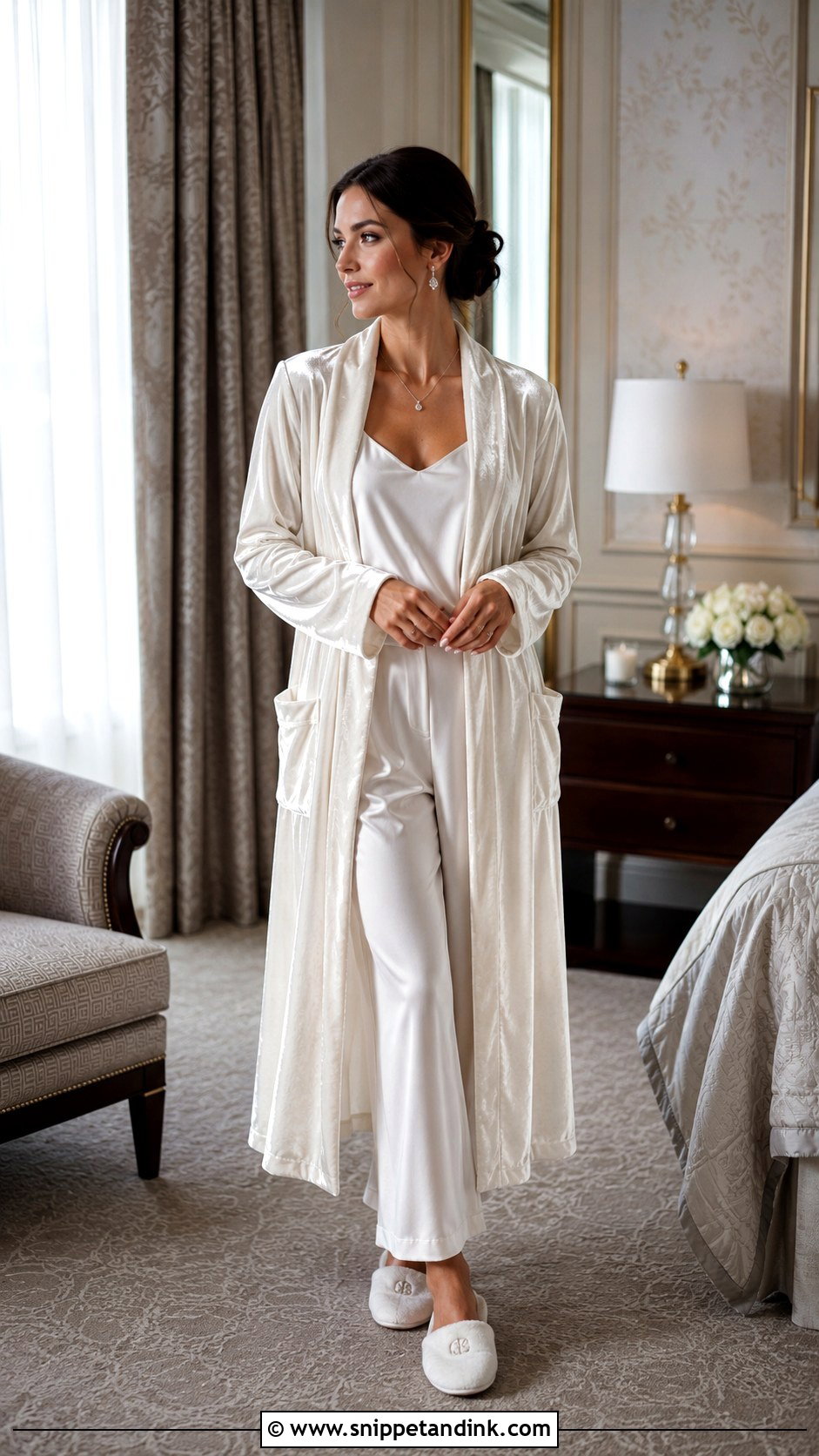
Velvet is warm and rich for an autumn or winter morning, in ivory, pearl or a very pale blue. A light satin camisole and wide-leg pants underneath keep the outfit from getting too heavy. Velvet changes shade depending on which way the pile lies, so look at it in daylight before you buy. My warning is about products. Setting spray, hairspray and steam all leave marks on velvet pile, so cover the robe with a cape while your hair is being finished, and hang it so nothing presses on it before photos.
15. Blue Bridal Dressing Gown
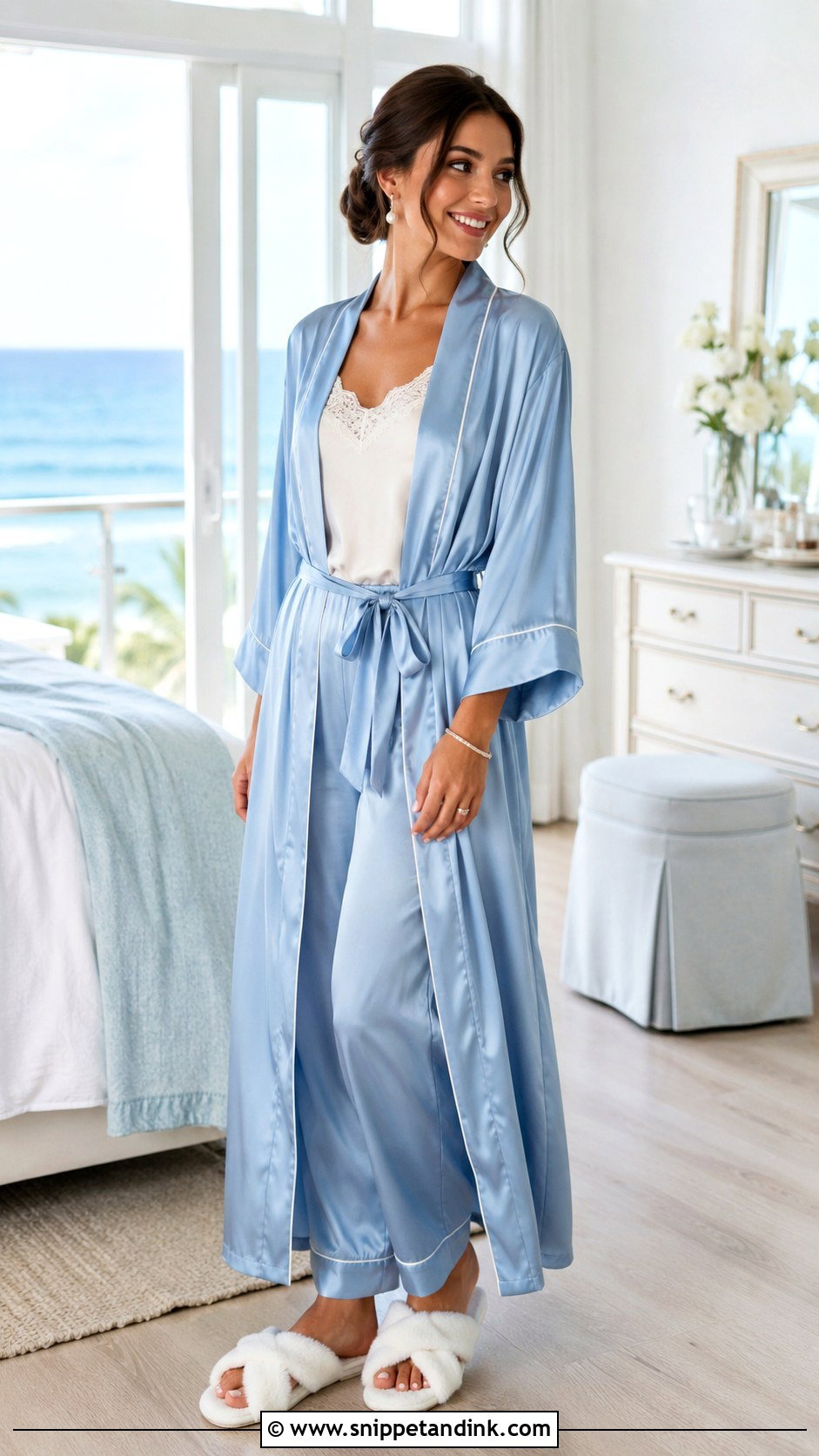
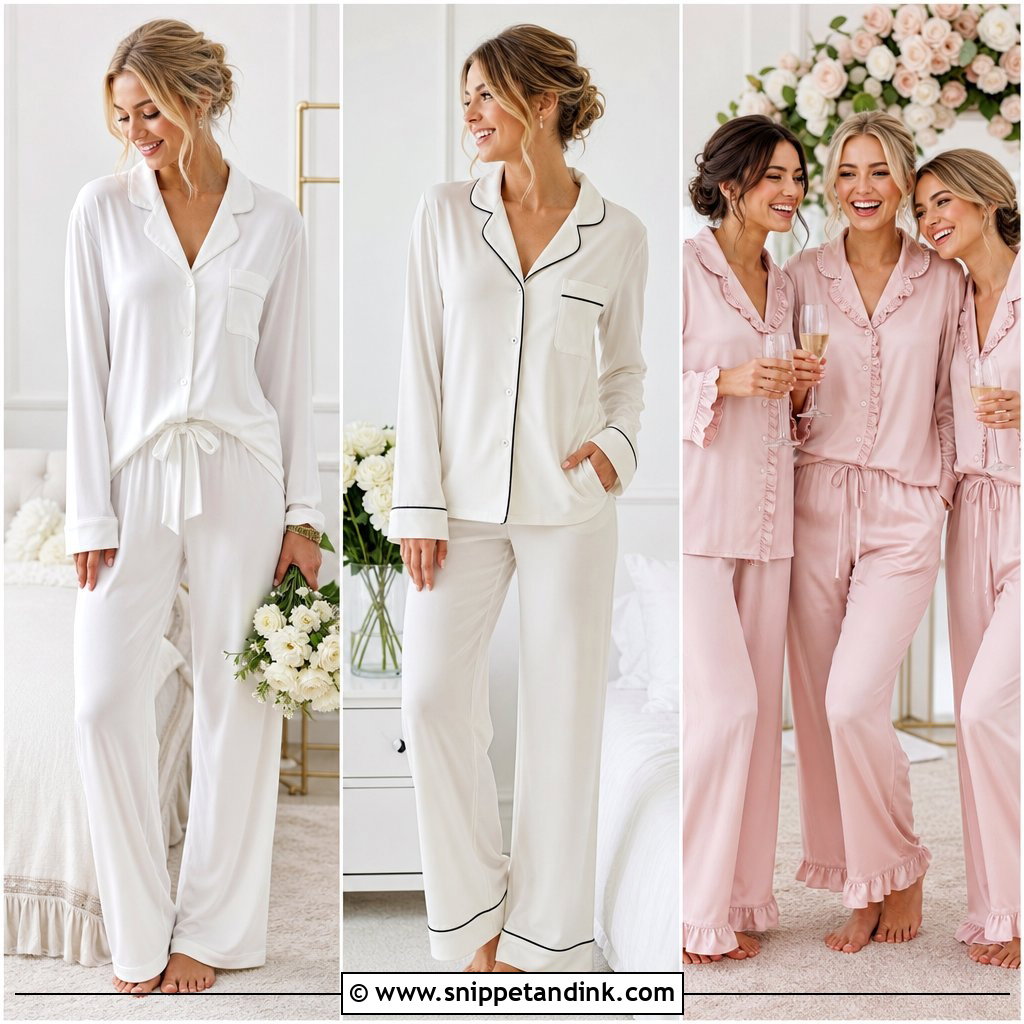
Pale blue sets you apart from attendants in white or neutrals and nods to the something-blue tradition. Powder-blue satin or silk with ivory piping and a midi hem looks deliberate rather than like ordinary sleepwear, especially with an ivory camisole set underneath. Keep the shade soft. Strong blue reflects onto skin in close-up photos and can cast a cool tone under the chin. Compare the robe with your dress and the room before deciding.
16. Blush Bridal Dressing Gown
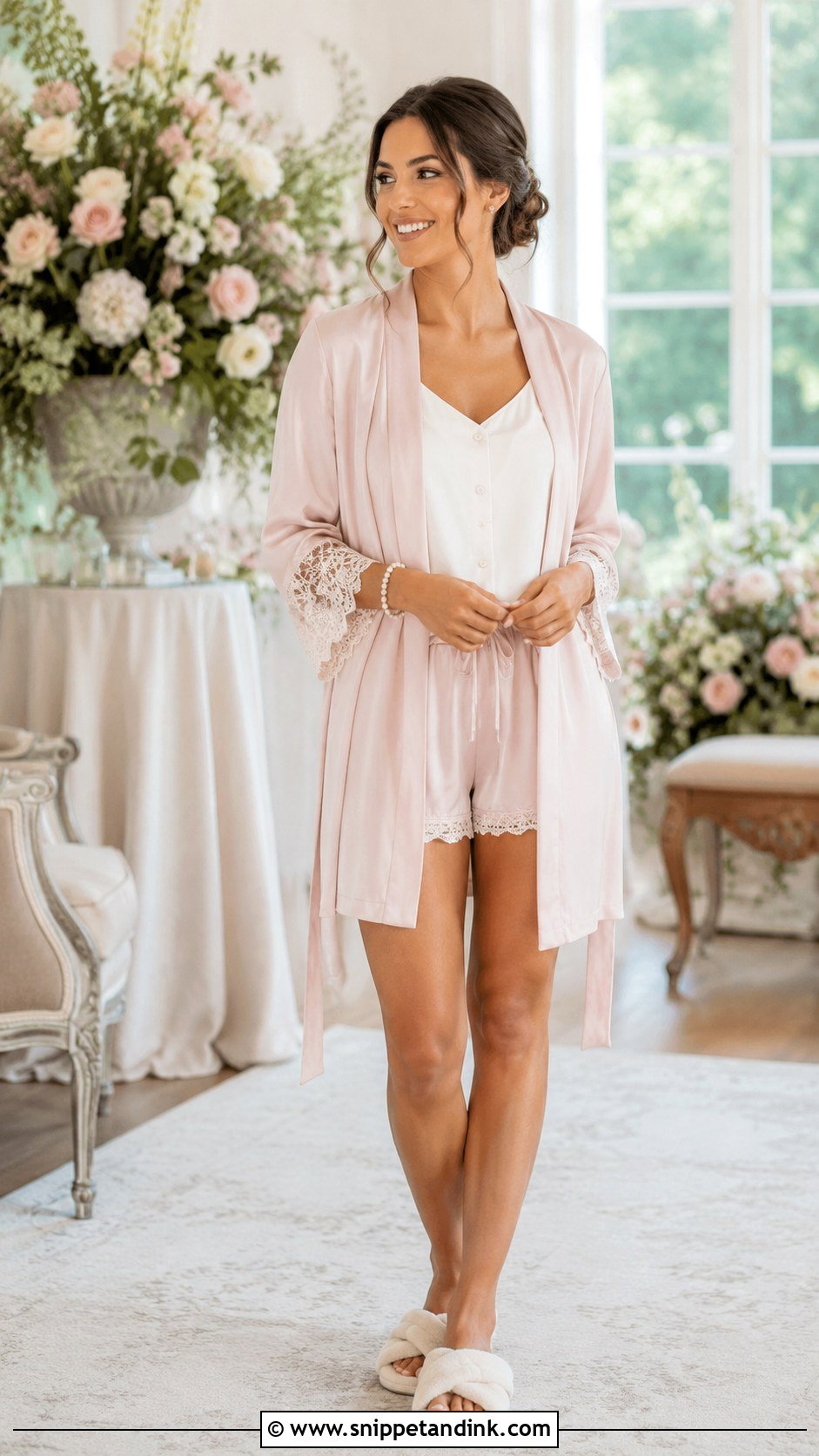
Blush flatters many brides and feels softer than white. Matte satin, silk or light crepe with ivory lace at the cuffs looks pretty over an ivory button-front top and blush shorts. The trap is choosing a blush too close to your skin tone. In photos you end up looking as though you’re wearing nothing, so compare a few shades against your bare arm in daylight. Ivory piping or a contrasting belt adds definition. If bridesmaids wear deeper pink, you’ll stay easy to identify.
17. Kimono Bridal Dressing Gown
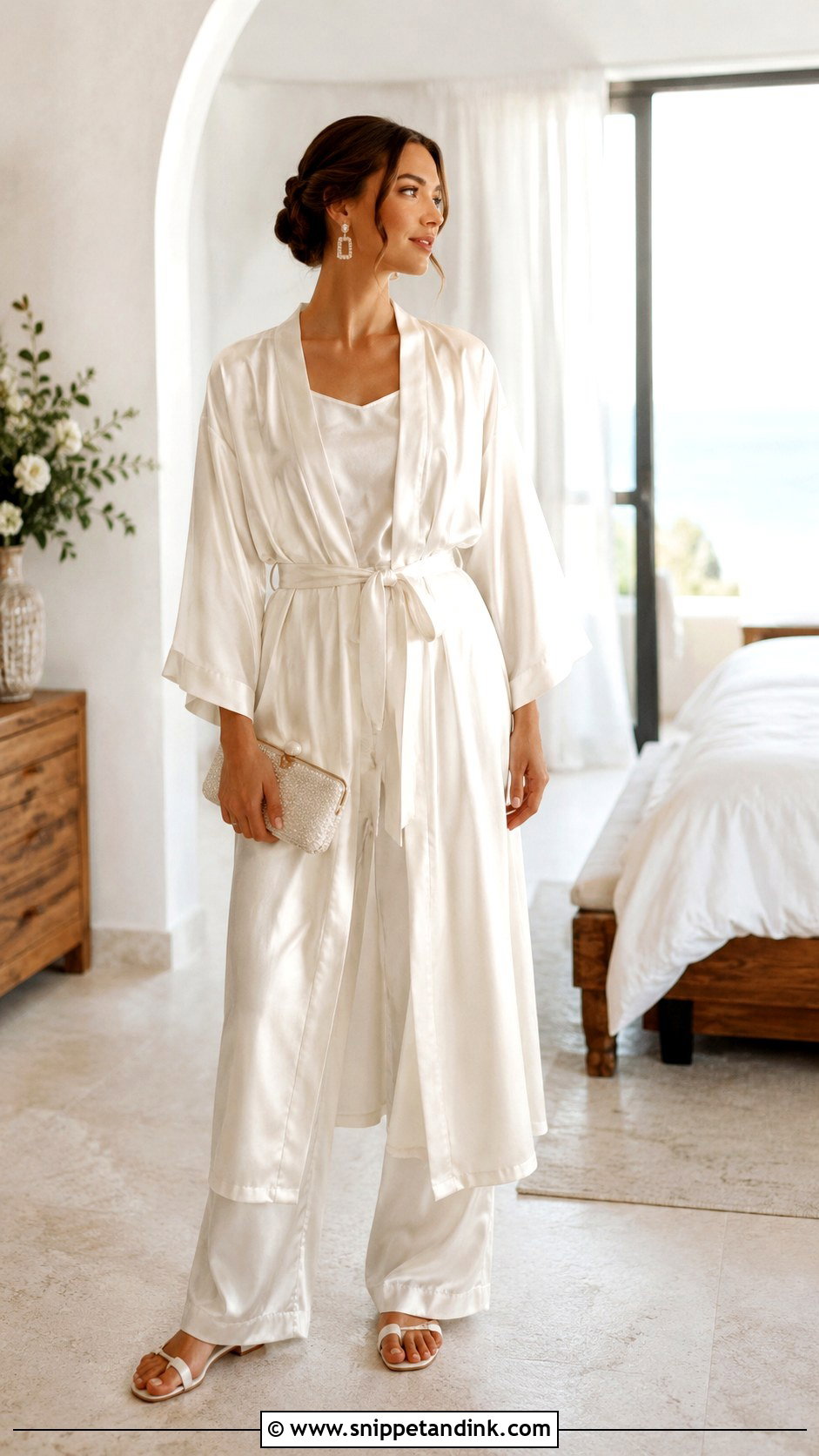
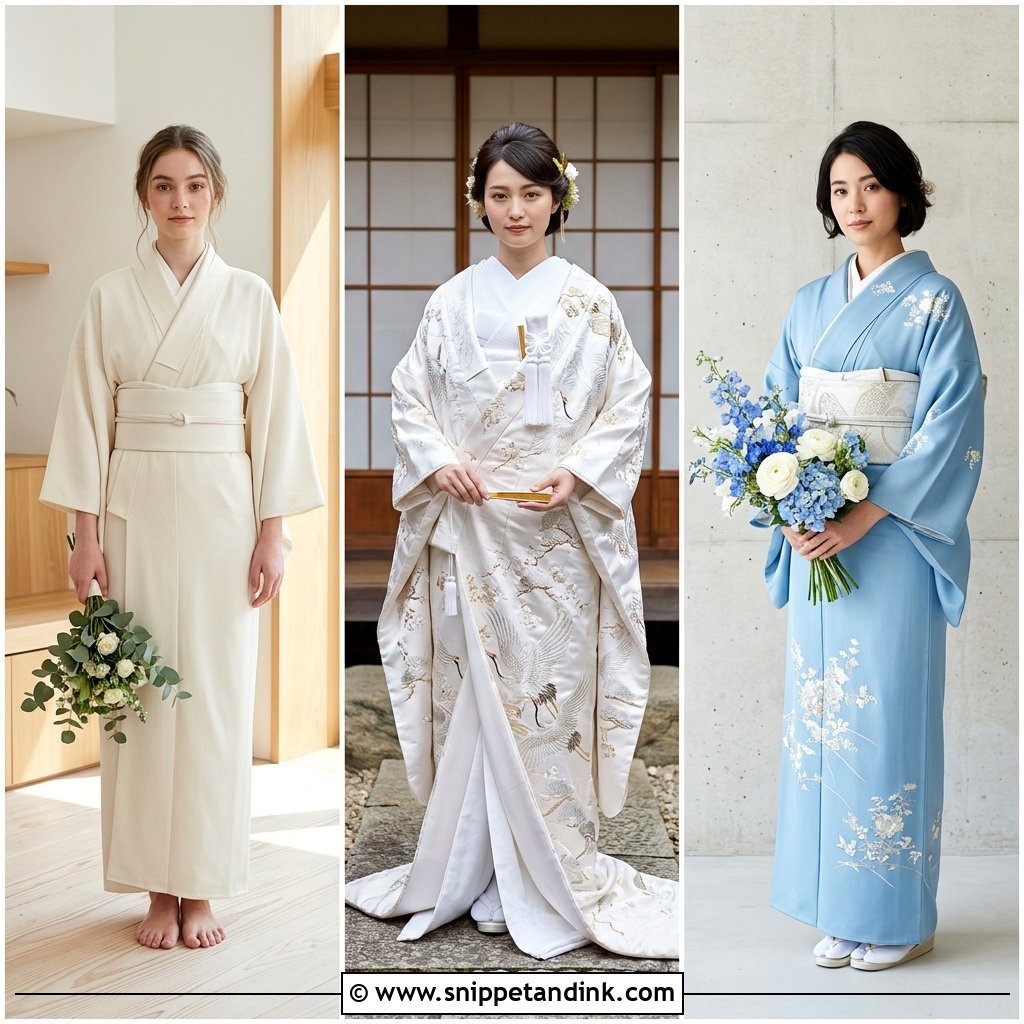
A kimono-style robe has graceful sleeves and a clean wrap line in ivory satin or printed silk, at knee or mid-calf length. If you choose one, do it with respect for where the shape comes from, and keep styling simple when the fabric is already strongly patterned. Sleeves at bracelet length are what I’d ask for; traditional hanging sleeves sweep through breakfast plates and makeup palettes. A wide sash shapes the waist, and an inner tie keeps the front closed. Everything underneath should open at the front.
18. Vintage Bridal Dressing Gown
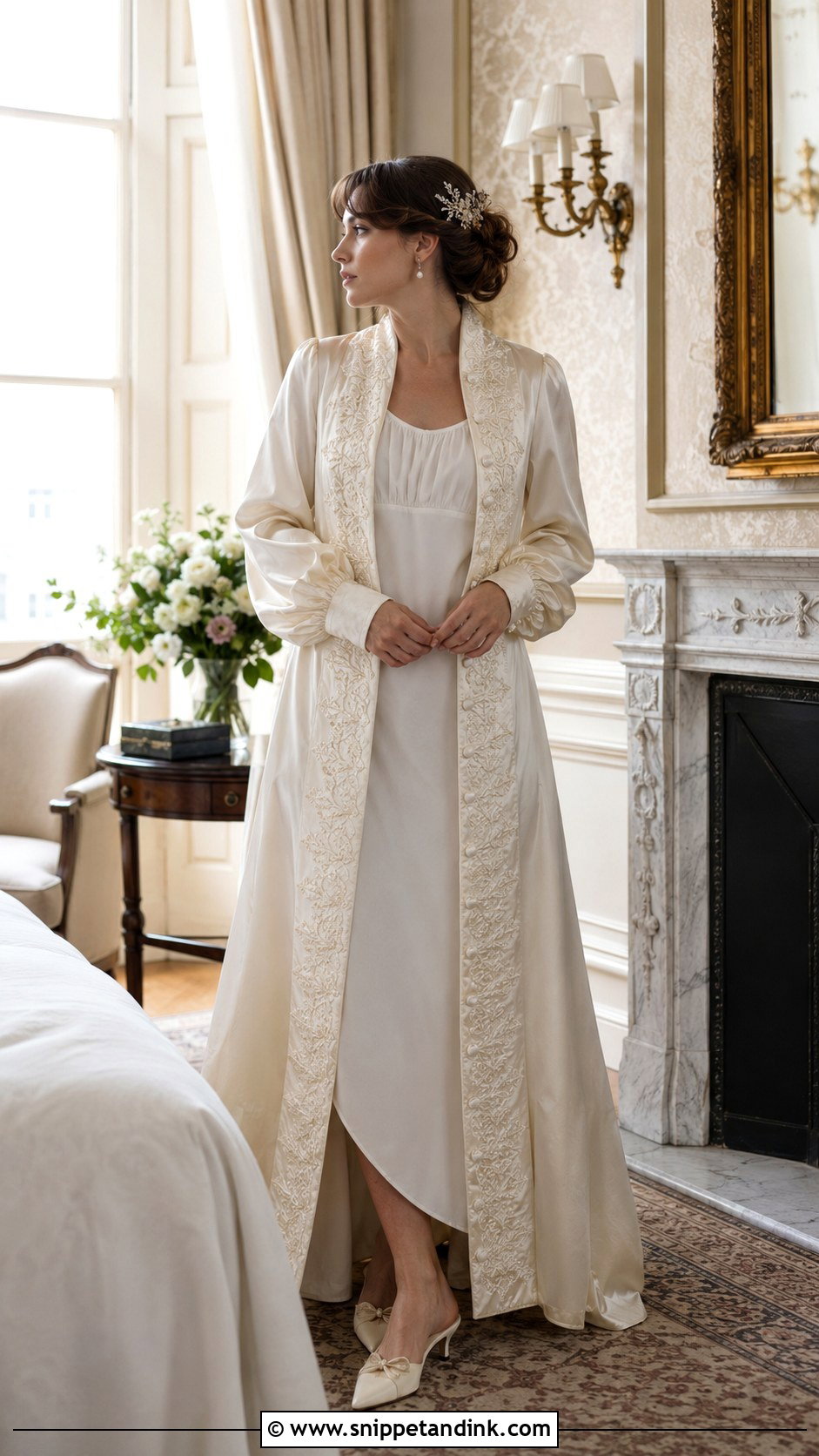
A vintage-inspired robe in cream with covered buttons, gathered sleeves and lace or embroidered panels gives the morning photos a romantic, collected feel. Wear it over a modest ivory lounge dress. Genuine vintage pieces need checking for weak seams, yellowing and small sizing; old robes were often cut narrow through the shoulders. A newly made version gives comfort and sturdiness. Keep accessories to one era, and add a decorative comb only after your hair is finished.
19. Minimalist Bridal Dressing Gown
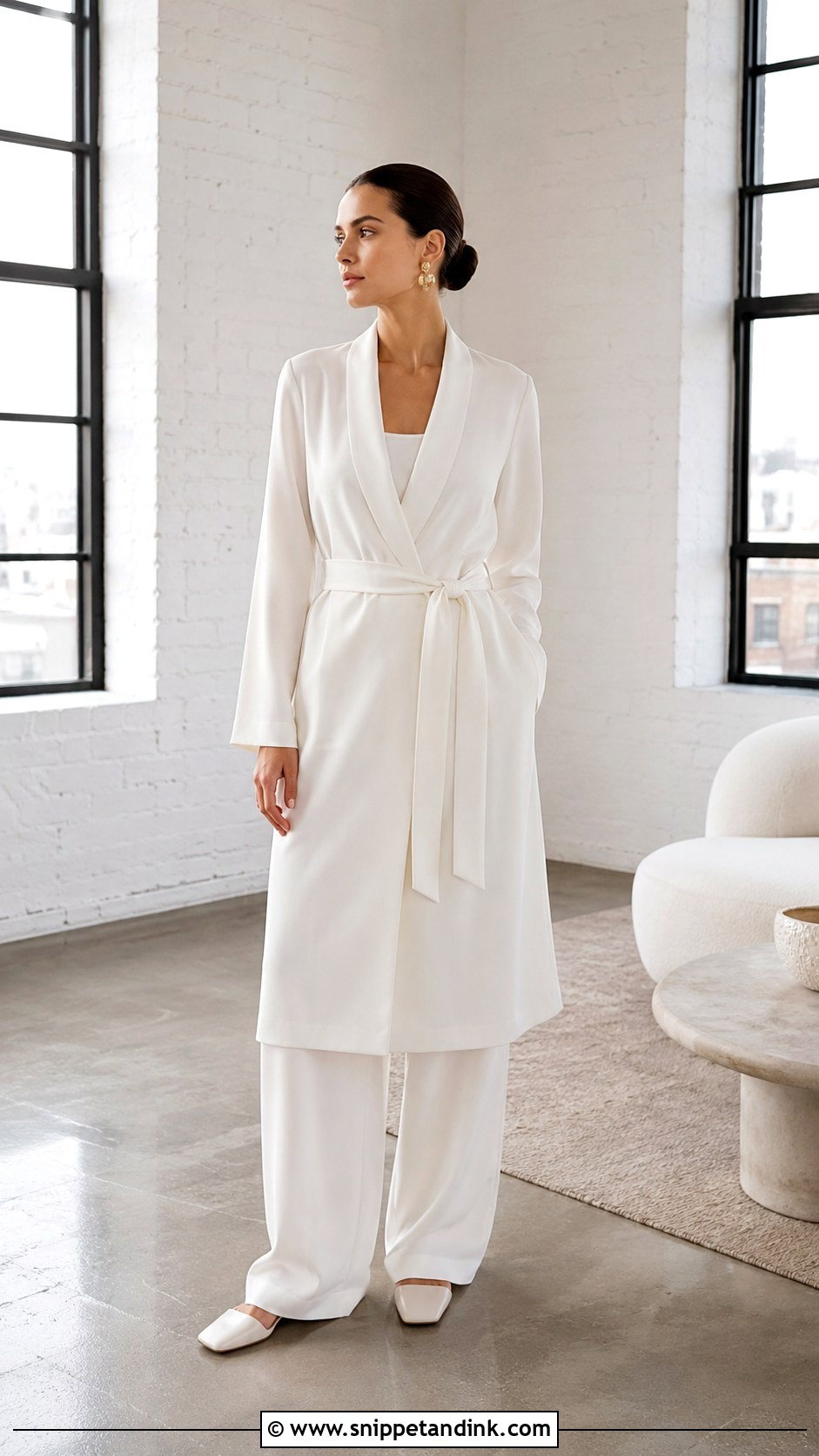
With no trims to distract, fit and fabric are everything here. Smooth ivory crepe or matte silk, a straight midi hem, a narrow belt and slim sleeves look modern and expensive when the seams are neat, and cheap when they aren’t. An ivory tank with matching wide-leg pants underneath makes a tonal outfit. Slim sleeves are my favorite to work around. Check that the belt loops land at your natural waist and that the overlap stays closed when you cross your legs.
20. Bridal Dressing Gown With Bridesmaid Robes
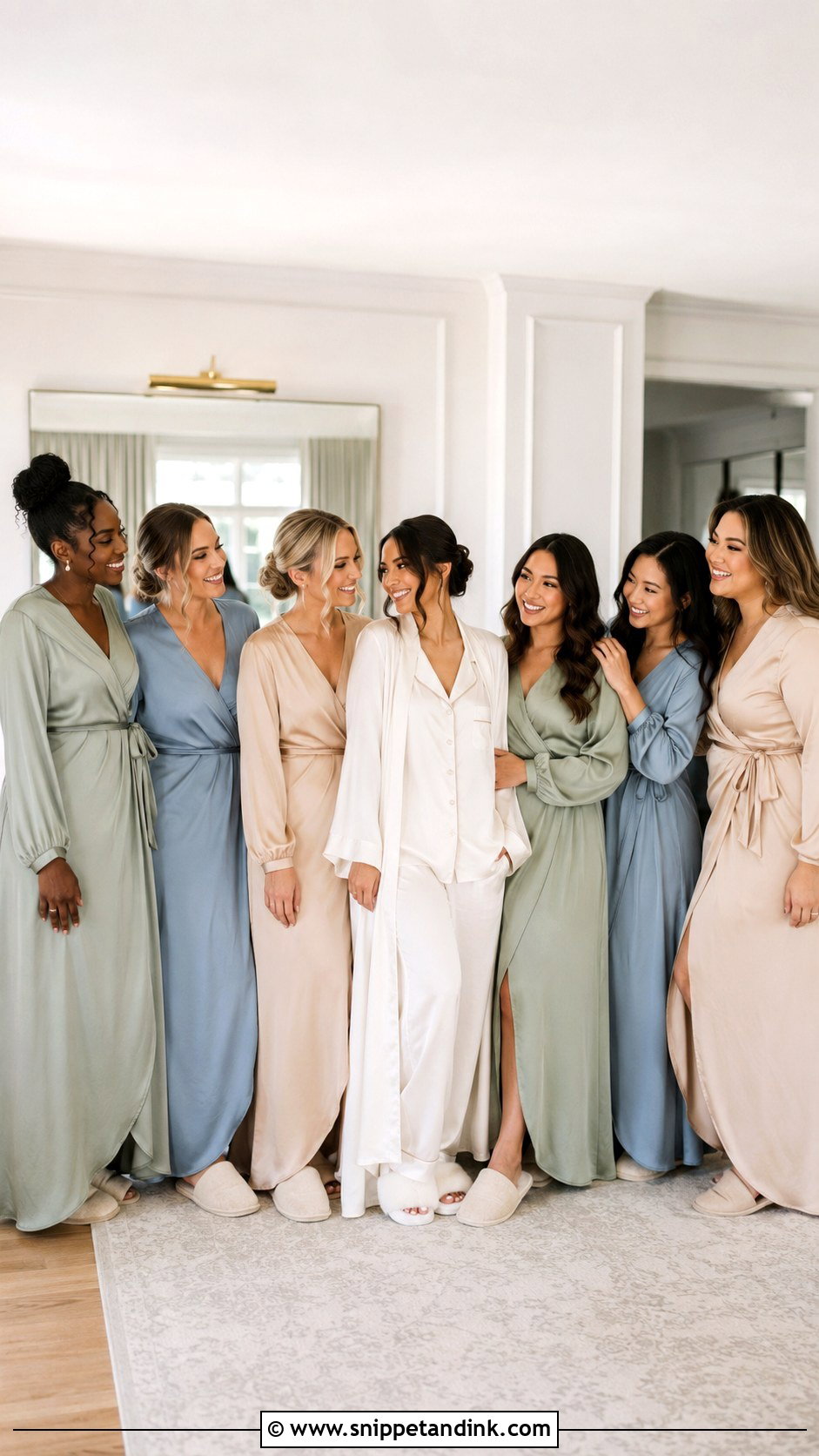
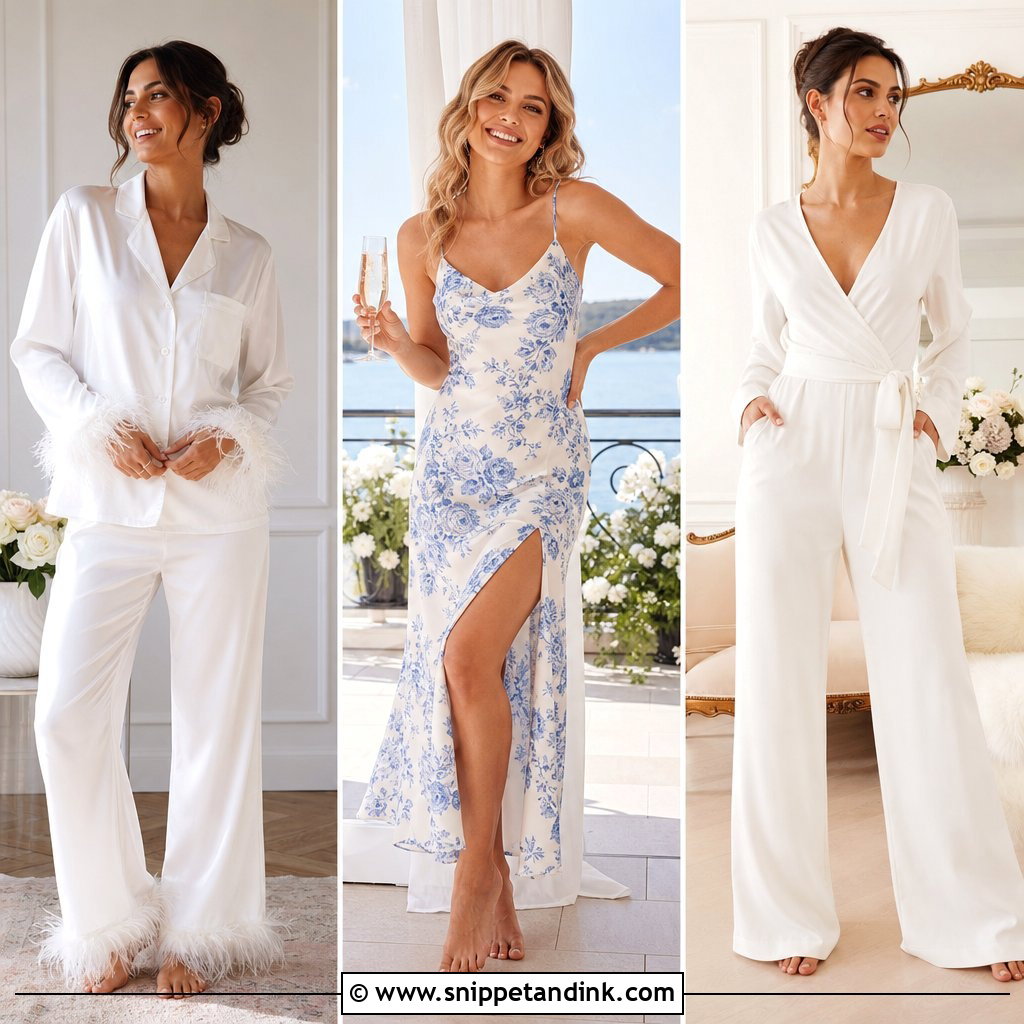
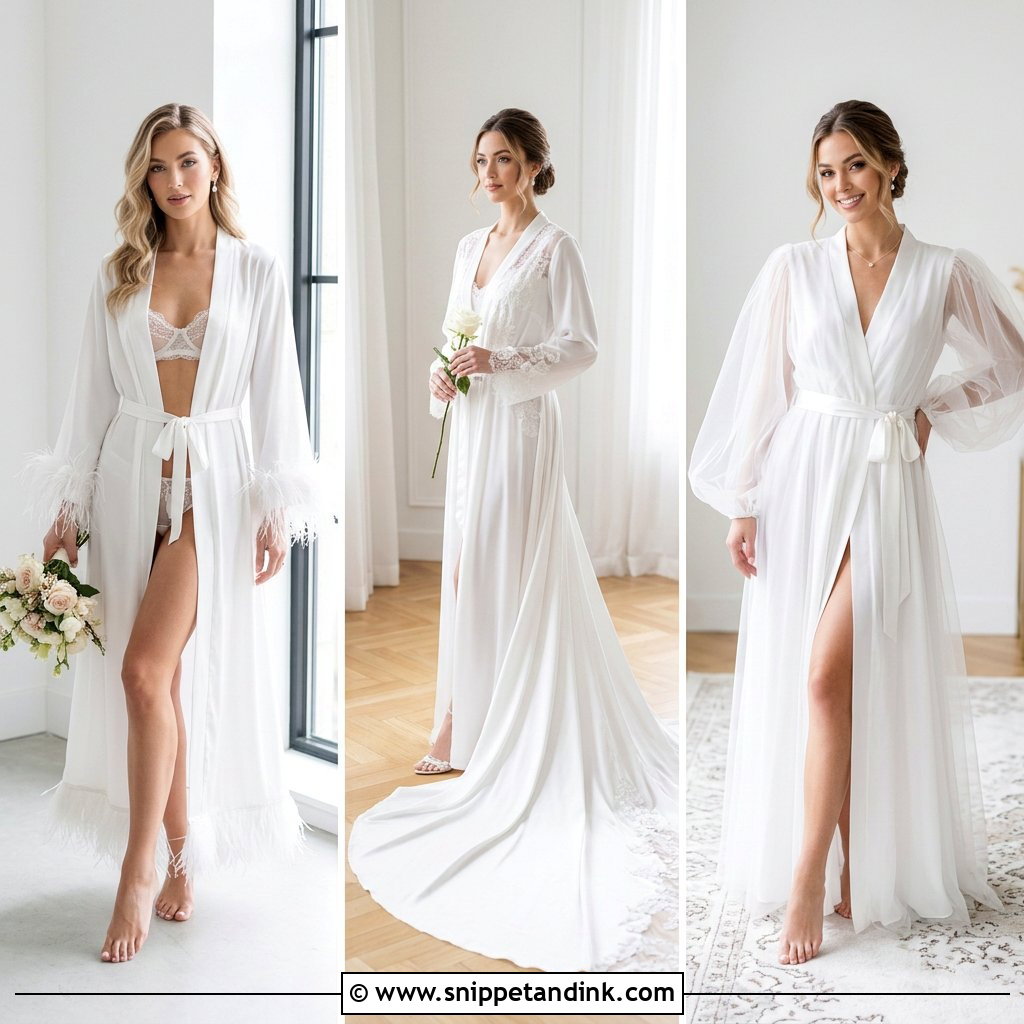
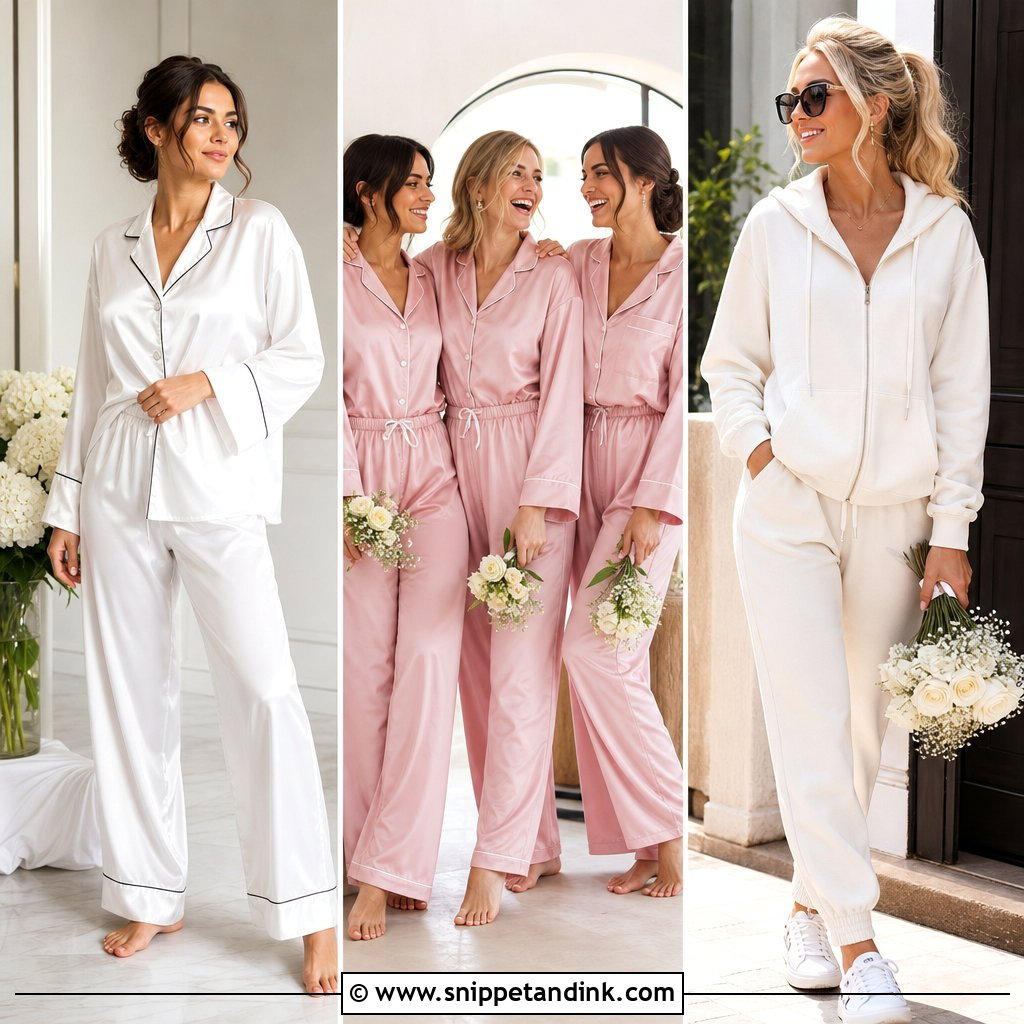
A coordinated bridal-party look doesn’t mean identical robes. Put the bride in ivory satin over a matching button-front set, and choose attendants’ robes in sage, dusty blue, champagne or another wedding color. Staying within one fabric family keeps textures consistent in group shots. Offer a range of sizes and enough length for different heights and body types, and give everyone shorts or pants underneath. Please don’t ask attendants to buy expensive getting-ready outfits. If you can, give the robes as gifts they’ll actually use again.
From Robe to Gown Without Smudging Anything
The changeover is where makeup gets ruined, usually in the last fifteen minutes when everyone is rushing. I ask brides to plan it like a small rehearsal.
- Finish makeup and hair, then do final lip and touch-ups only after you’re in the dress.
- Take off jewelry with clasps at the back first, so nothing catches on the robe collar.
- Open every button on the underlayer before you stand up, then step out of it rather than lifting it.
- Step into the gown wherever possible. If anything must go over your head, cover your face with a thin scarf or a hood made from a clean pillowcase.
- Keep the robe on a hook nearby, not on the bed, so it’s ready if you need to take the dress off later.
If foundation does land on the robe or the dress, don’t rub. Blot lightly with a dry tissue, then dab with a little micellar water on a cotton bud from the outside of the mark inward. Rubbing spreads the pigment and pushes it into the weave.
Getting Ready Should Feel Like the Calm Part
The robe you pick should be comfortable, stay closed and suit the way you want the morning to look. Silk and satin give polish; cotton and waffle give breathing room; lace, pearls, embroidery, florals and feathers add character with very little effort. Whatever you choose, sit and move in it before the day, make sure every layer opens at the front, and have it steamed or pressed the night before. Add slippers, simple jewelry and a sensible underlayer, and the robe becomes part of the story your photographer tells.
You'll Like These Ideas:


Leave a Reply