
The getting-ready outfit is the first thing I dress a bride in on the wedding day, and it has a real job to do long before anyone looks at it. Matching comfortable, coordinated sleepwear has to survive hours of sitting in a makeup chair, eating breakfast and lifting arms for the hairstylist. That is why I push button-front tops so hard: the bride can step out of hers without dragging anything over a finished updo or a full face of makeup. Below are twenty sets, from satin to flannel, with my notes on fit, fabric and how each one behaves through a long morning.
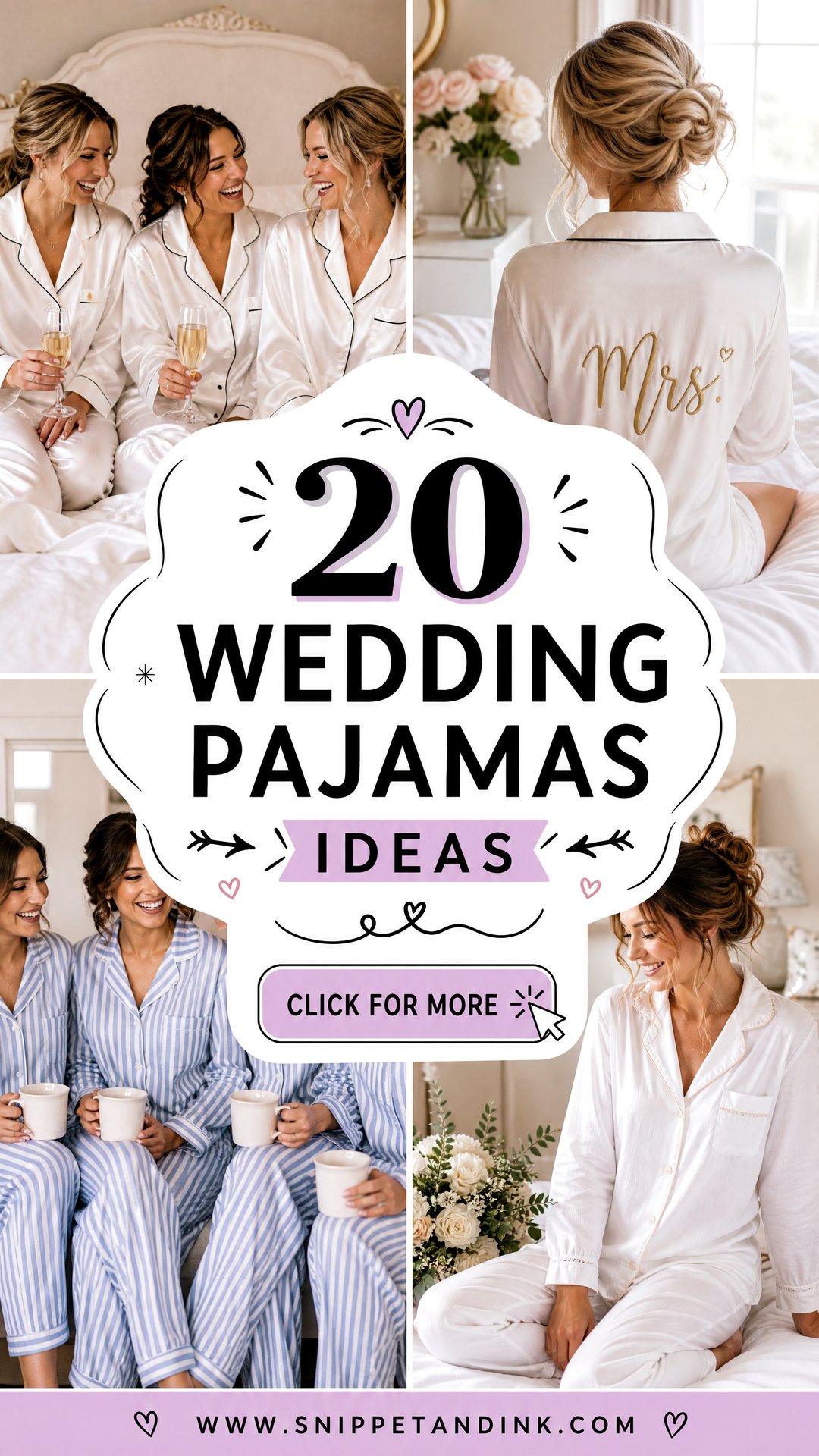
Sizing a Pajama Set Around Hair, Makeup and Breakfast
When I fit getting-ready sets, I don’t ask people to stand still. I ask them to do what the morning will actually demand: sit in a tall chair with their back straight, raise both arms above their head, lean toward a mirror and sit on the floor. Most sizing problems show up within thirty seconds of that routine.
- Shoulders: the seam should sit at the edge of the shoulder or slightly past it. A seam that sits inside pulls the whole back tight when the arms go up for hair.
- Bust placket: watch the gap between buttons when she sits. If it opens, size up rather than adding fashion tape.
- Sleeve and cuff: long sleeves should clear the wrist bone so they stay out of foundation and food.
- Rise and inseam: a rise that is too short digs in after an hour in a makeup chair. Pants should break just above the floor so nobody trips in slippers.
- Waistband: elastic with a drawstring adjusts as the morning goes on, which matters after breakfast and champagne.
For a group order, I collect each person’s bust, waist, hip and height and size against the brand’s own chart, not against what they usually buy. I order early enough to allow one round of exchanges, because a set that arrives too small the week of the wedding rarely gets fixed.
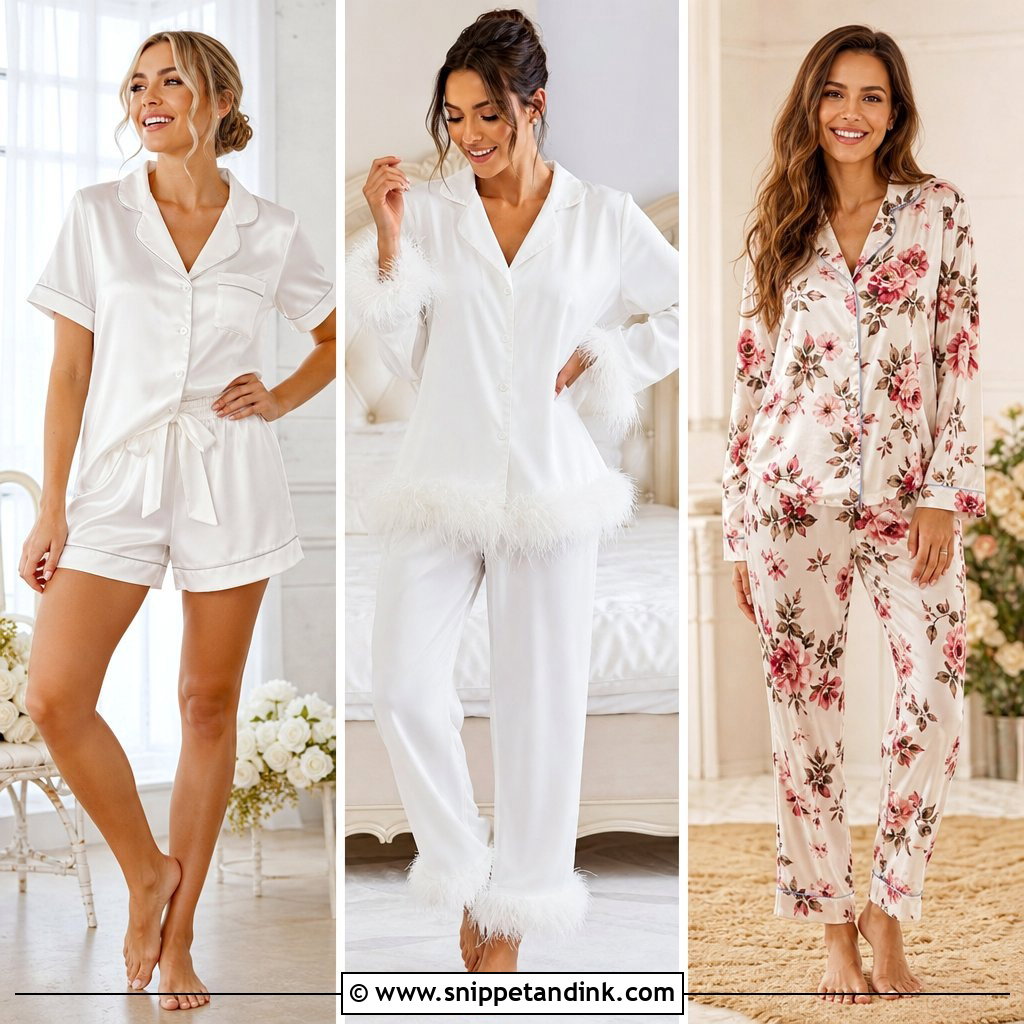
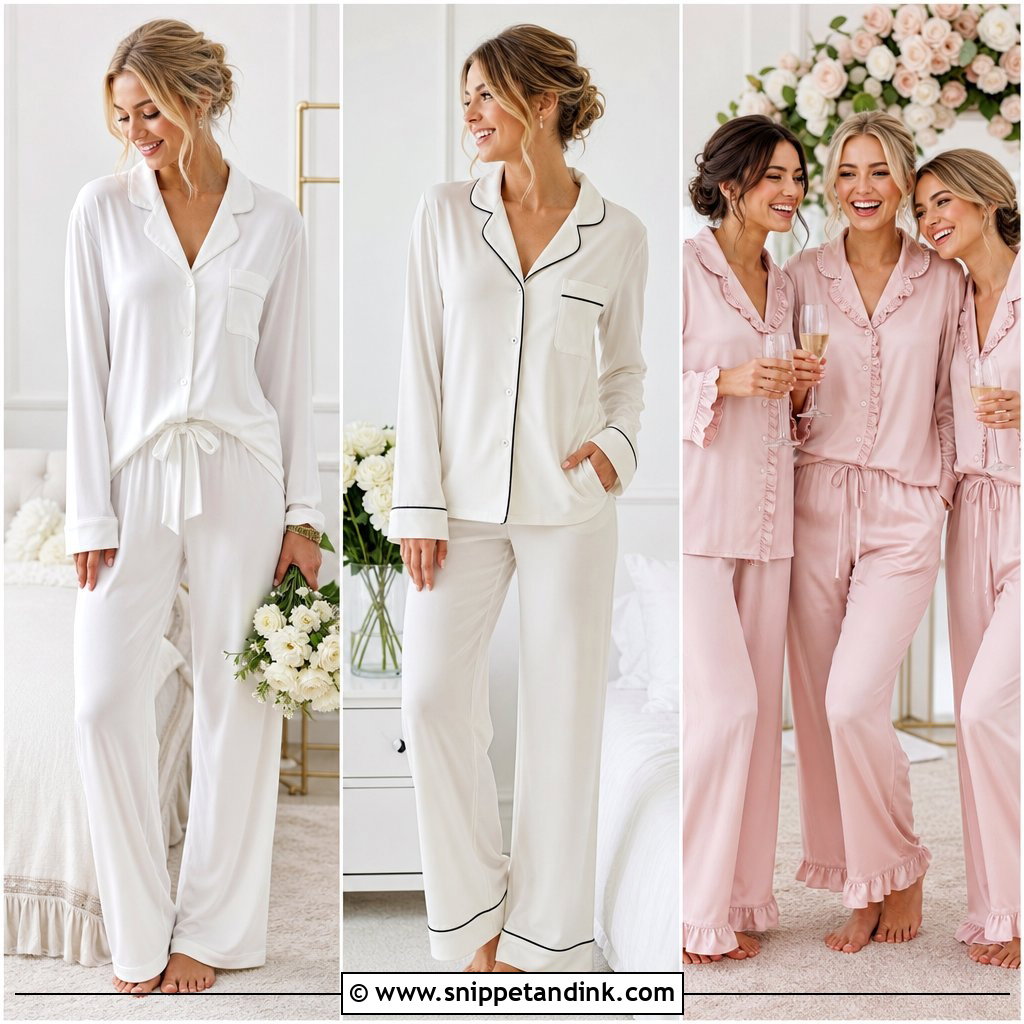
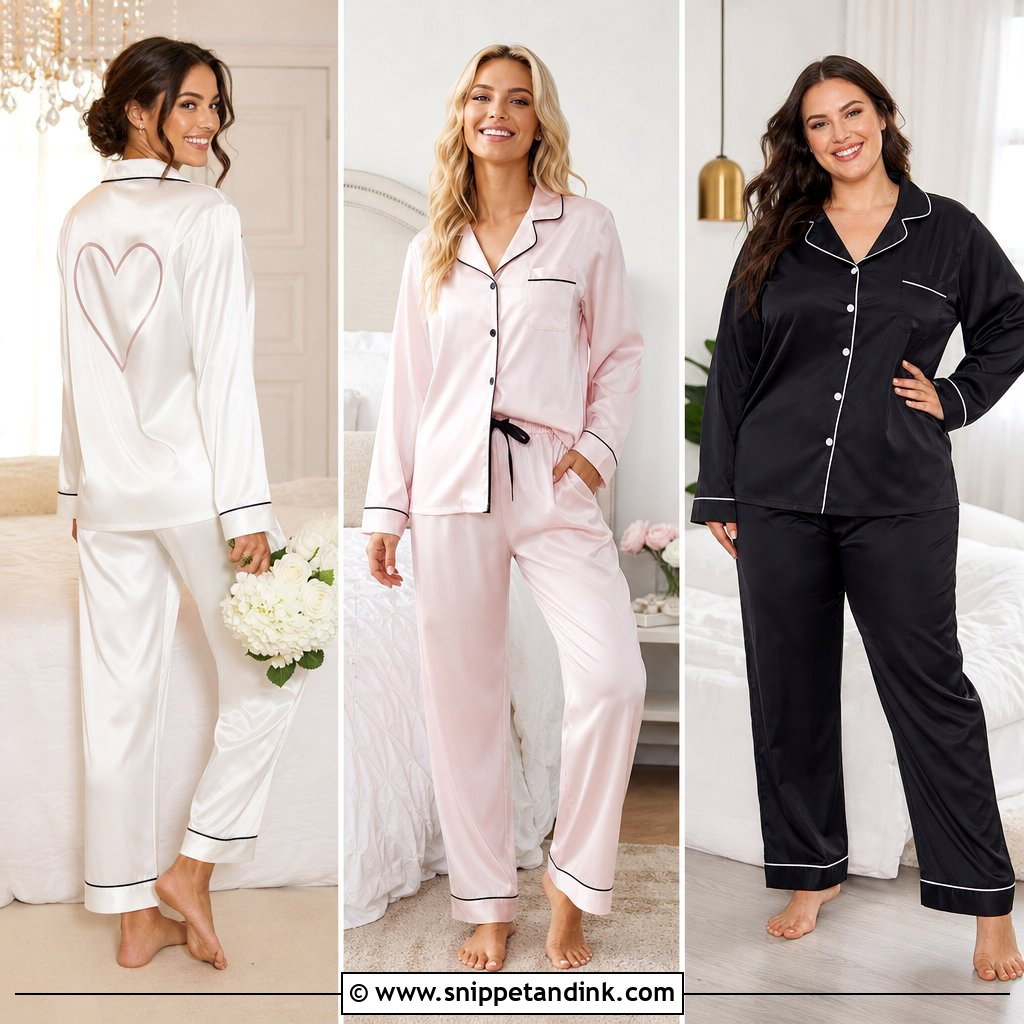
1. White Satin Wedding Pajamas
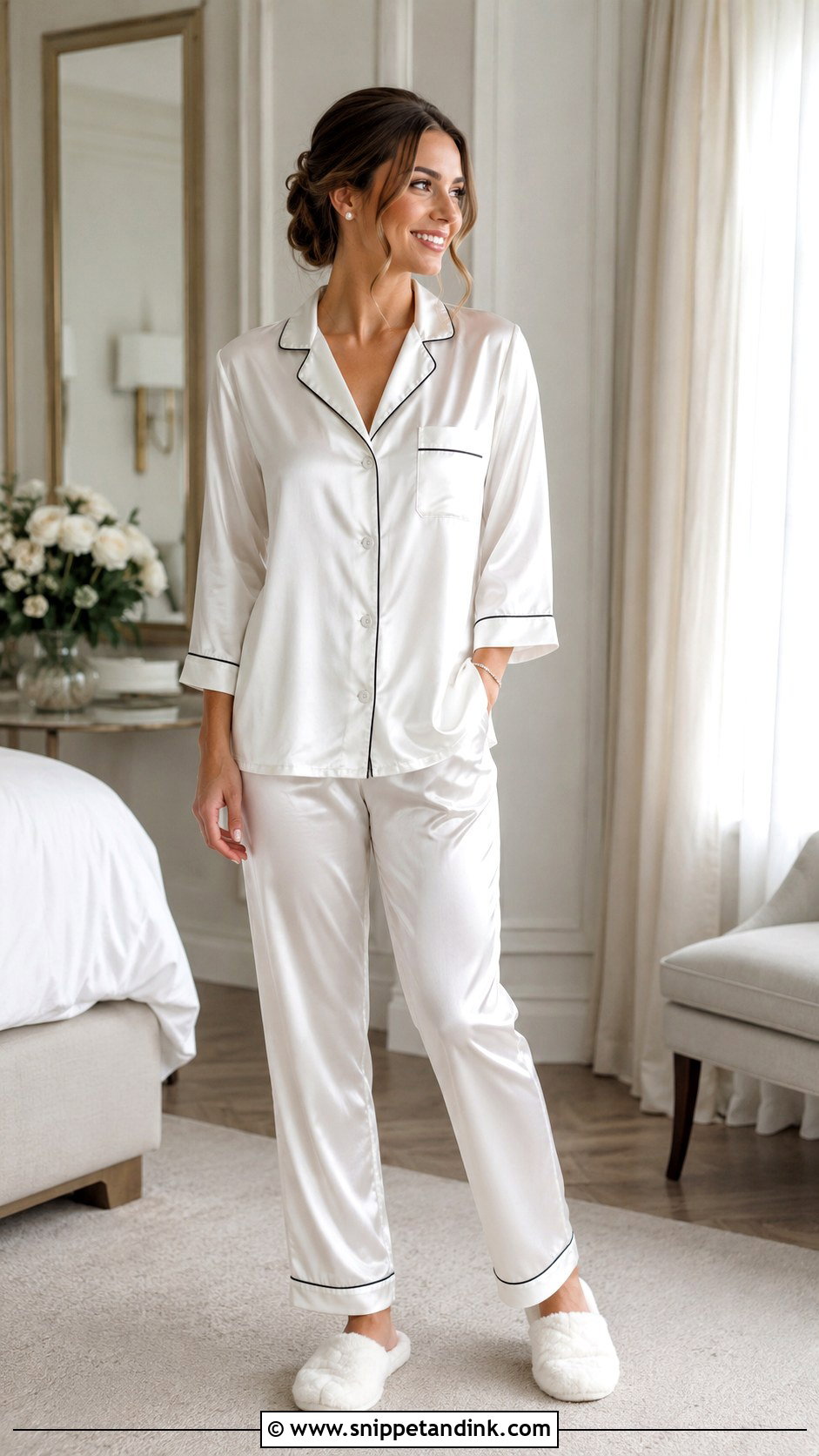
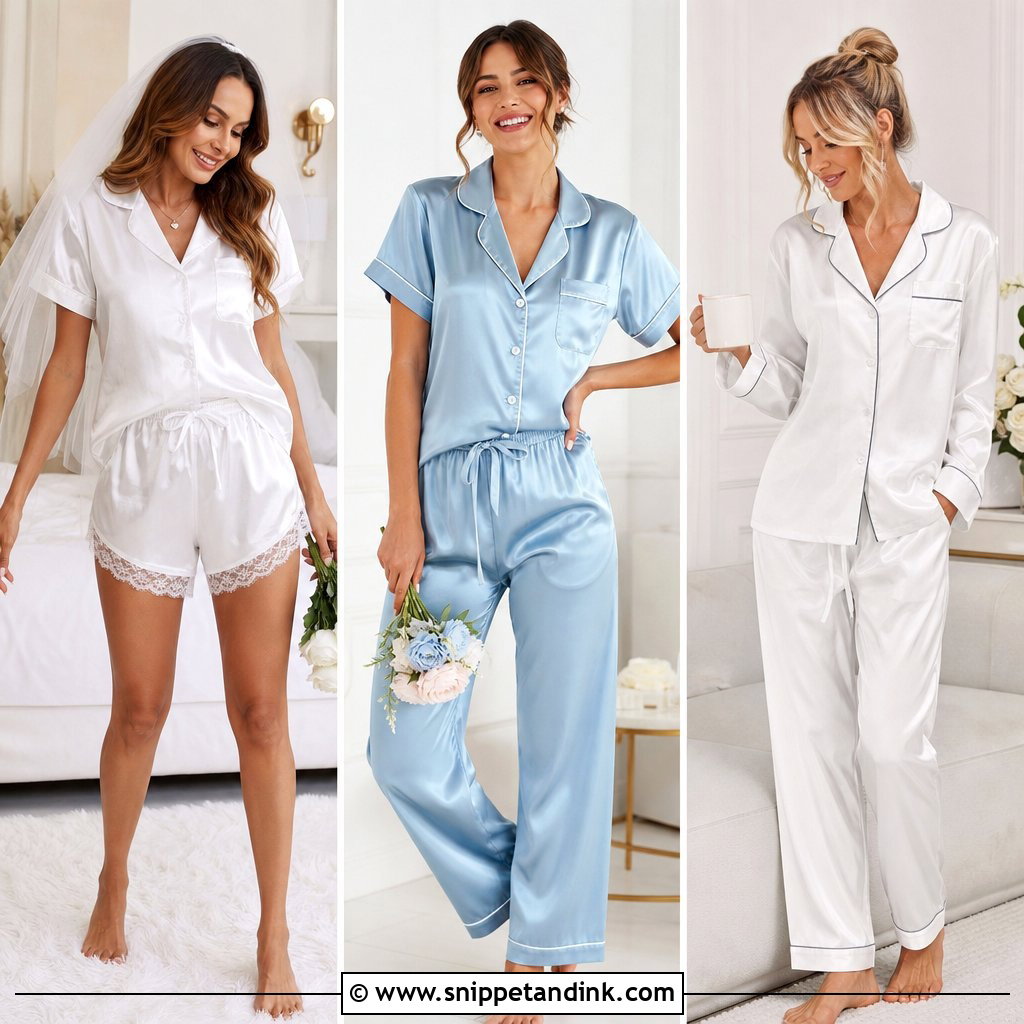
White satin is the set most brides ask me for, and it rewards a little care. I size the shirt slightly relaxed through the shoulders, because satin has no stretch and a tight back seam strains every time she raises her arms for curling. Thin white satin also shows whatever is underneath it, so I suggest a smooth nude layer rather than a white one. Steam it the night before, hanging, and keep it on the hanger until she changes; satin creases at the elbows and behind the knees faster than any other fabric on this list. Pearl studs and plain slippers are all it needs.
2. Personalized Wedding Pajamas
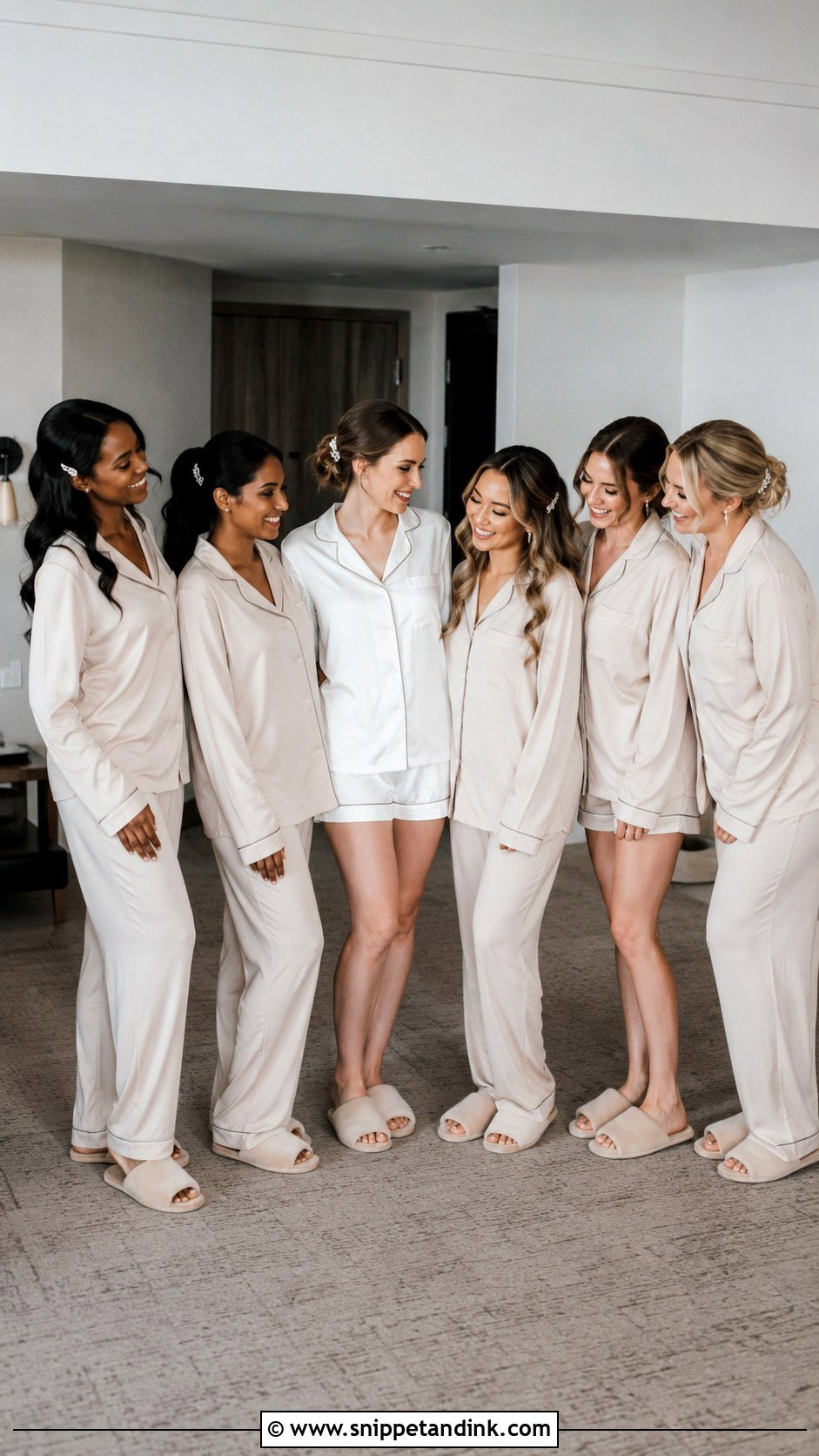
A name or initials on the pocket turns a set into something the bridesmaids keep. I always advise small embroidery over big lettering across the back: it reads as a gift rather than a costume, and it gets worn again. Order each person’s own size and bottom length instead of guessing one fit for everyone. The bride in white with her group in a single wedding color is the simplest arrangement, and hair clips should come off before the stylist starts.
3. Floral Wedding Pajamas
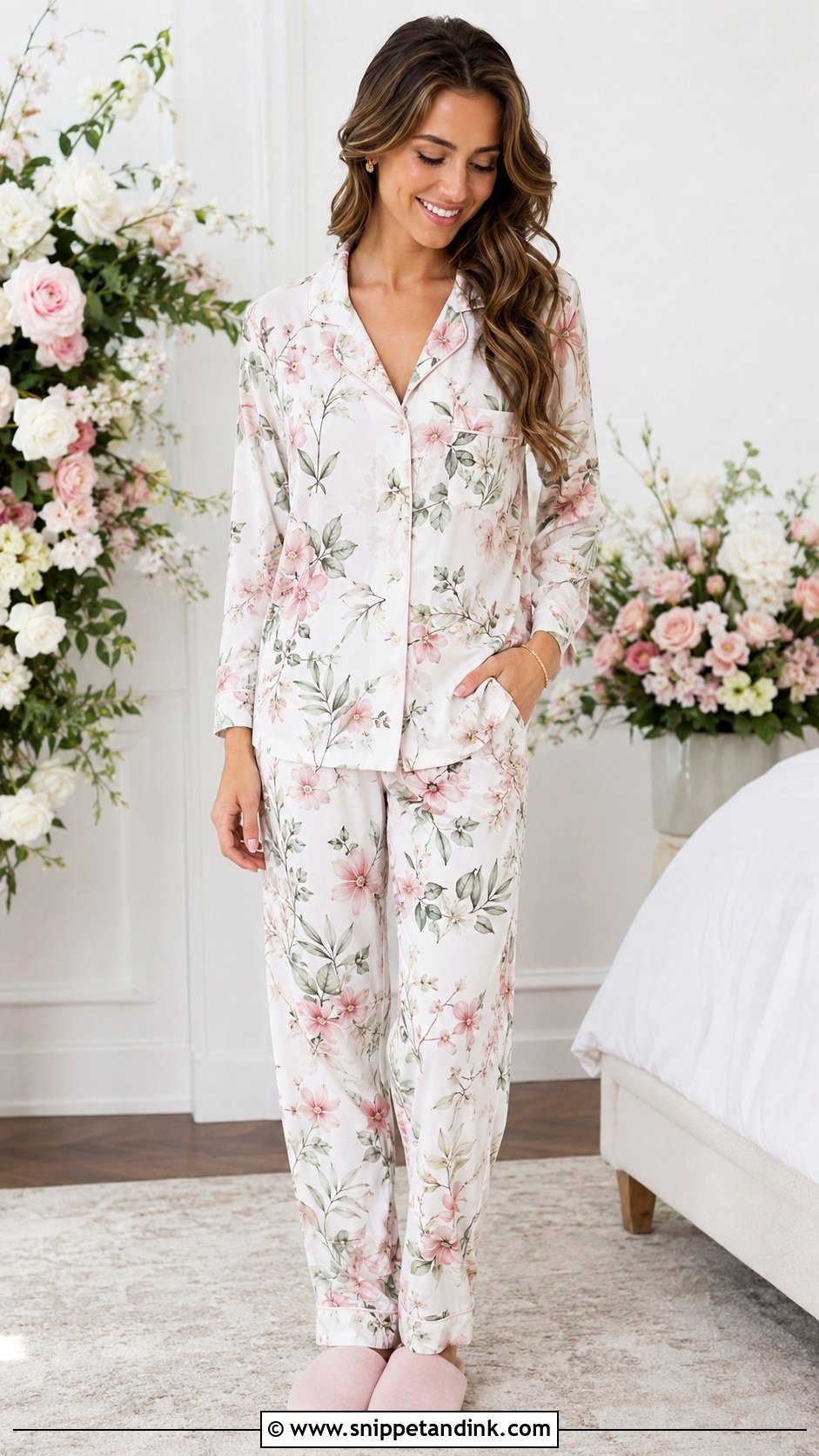
Florals do the decorating for you, which means accessories can almost disappear. I look for a matching button-front shirt and pants with a small print on a light ground, ivory for the bride and blush or sage for the attendants. The detail I check most is print scale. Mixing a tiny ditsy floral with a large botanical makes a group look accidental, so I keep one scale across every set. Cotton or modal breathes better than satin here, and a dark floral carries the idea into autumn.
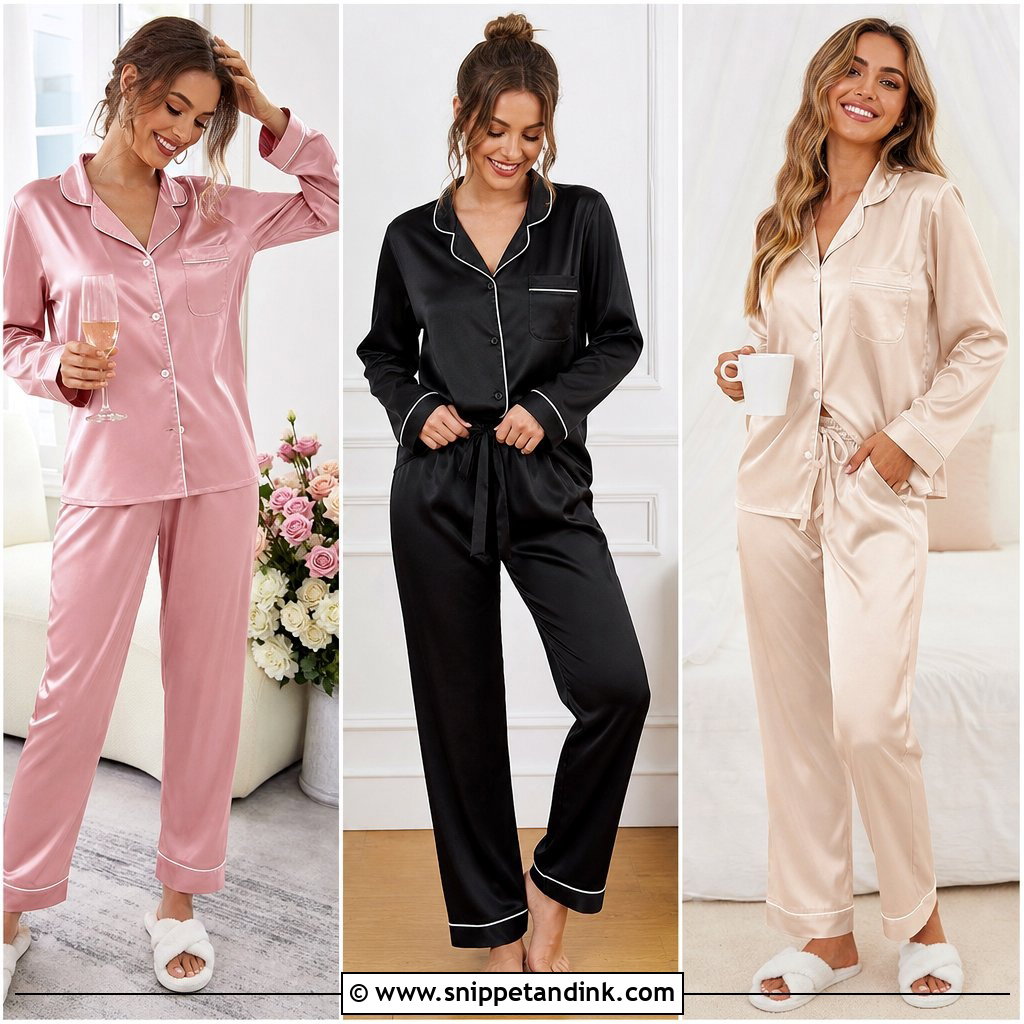
4. Blush Pink Wedding Pajamas
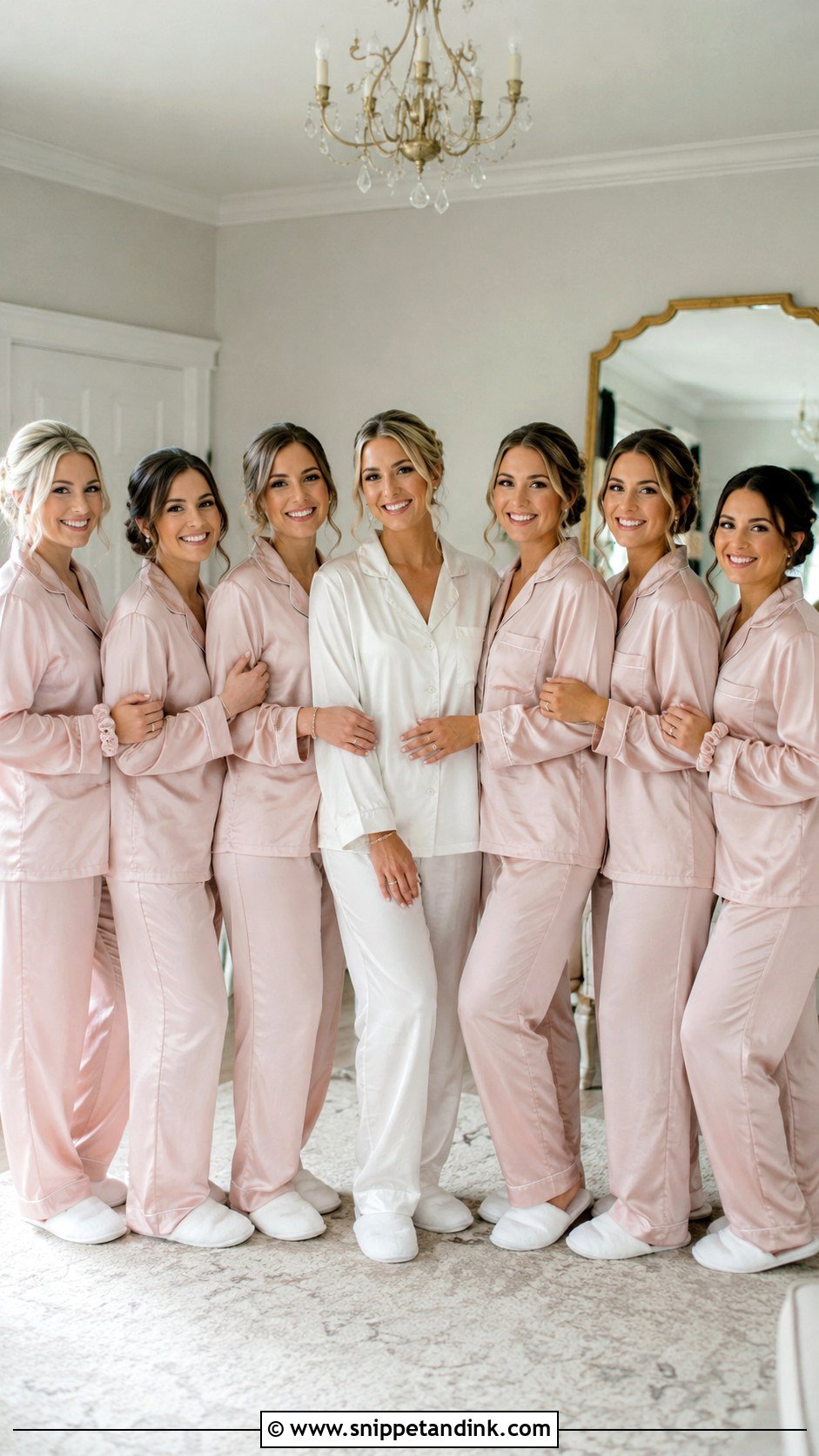
Blush flatters a wide range of skin tones and lets the bride’s white set stand apart without effort. Pale pink satin sits a step dressier than pink cotton, so decide on the mood first. My one warning: blush varies more between dye lots than almost any color. A sample that looks pink indoors can read peach or beige by a window, so I check swatches in daylight before the full order goes in. Fabric scrunchies worn on the wrist until the hair appointment are a small, useful extra.
5. Champagne Wedding Pajamas
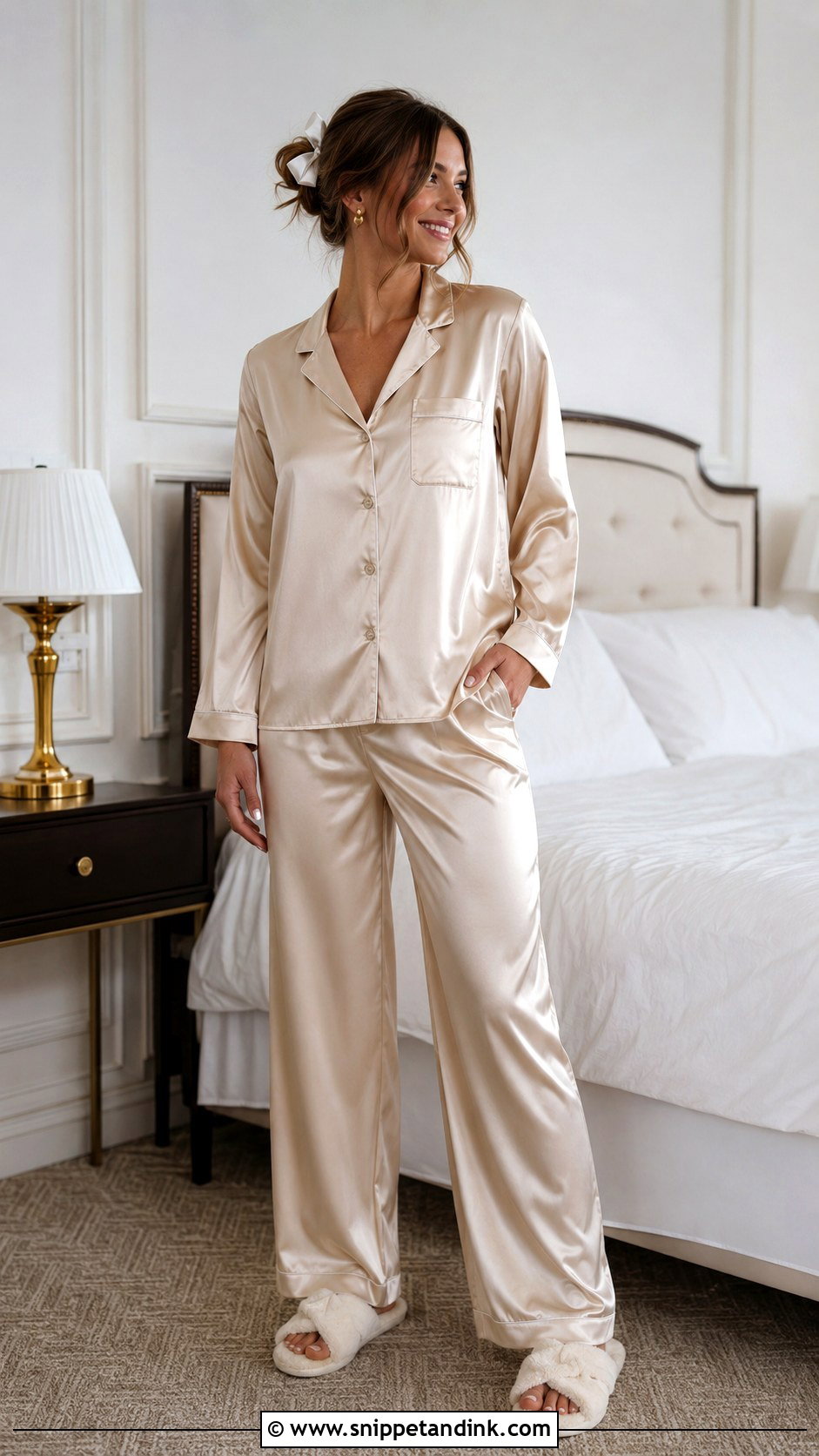
Champagne is the neutral I reach for at formal weddings, but it is also the hardest shade to match across a group. One maker’s champagne is pale gold and another’s is nearly grey, so I order every set from the same collection and ideally the same batch. A silky top with wide-leg pants keeps it dressy, and darker piping at the collar gives the shape some edge. Skip embellished accessories. The sheen of the fabric is already doing the work.
6. Blue Striped Wedding Pajamas
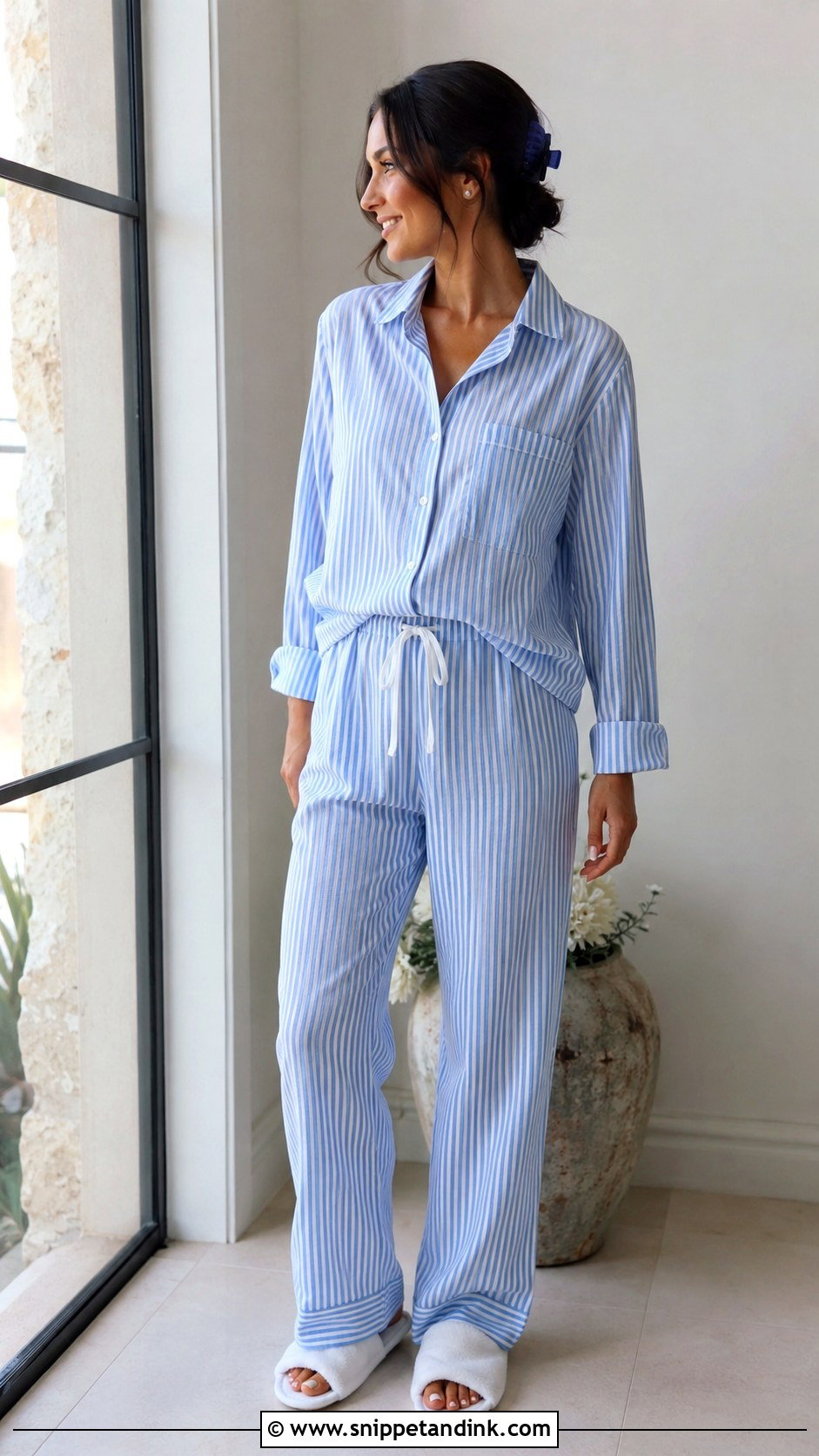
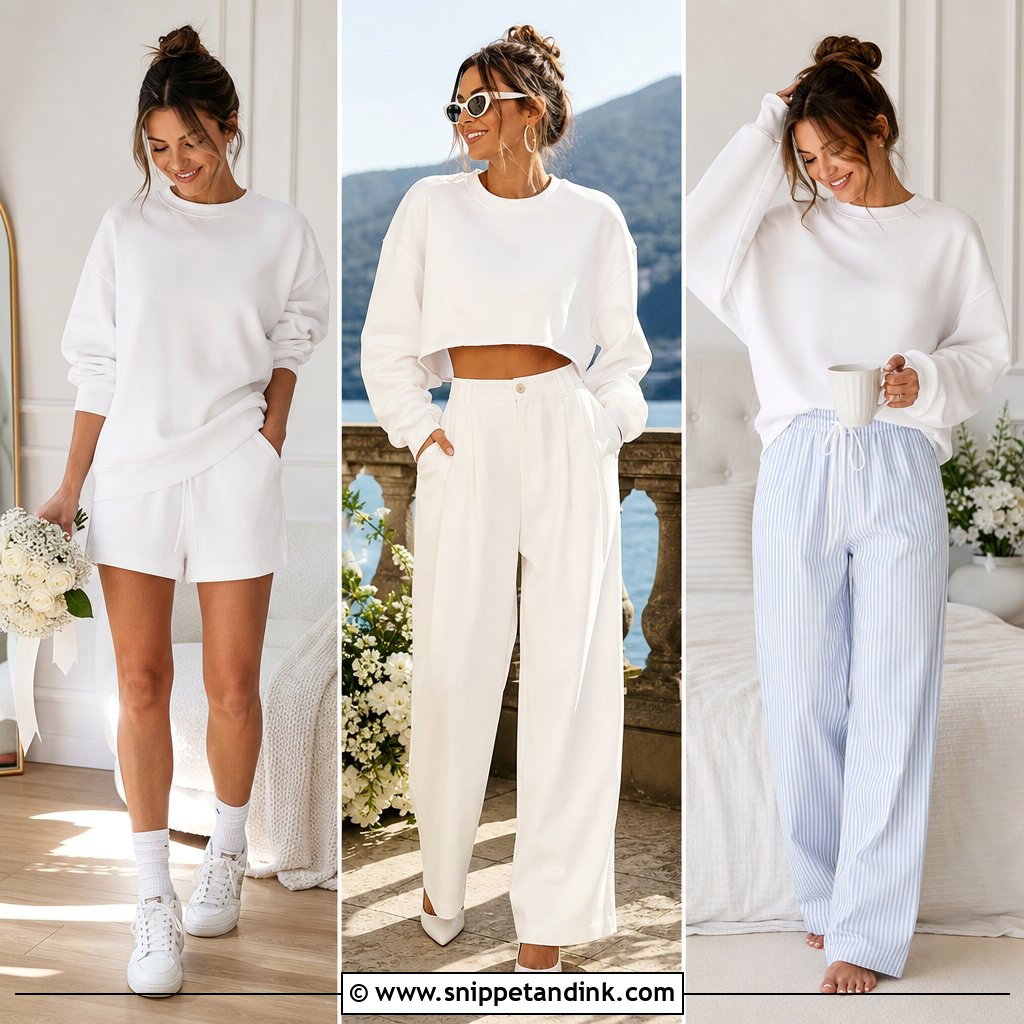
Striped cotton is the set I see people actually wear again, because it looks like good everyday sleepwear rather than wedding merchandise. A white shirt with narrow blue stripes and matching pants is crisp; the bride can wear solid white or the same stripe with a monogram on the pocket. Poplin holds its shape, while a cotton-modal blend gives more ease across the back. I’d keep extra patterns out of the slippers and clips so the striped pajamas stay the only print in the room.
7. Black And White Wedding Pajamas
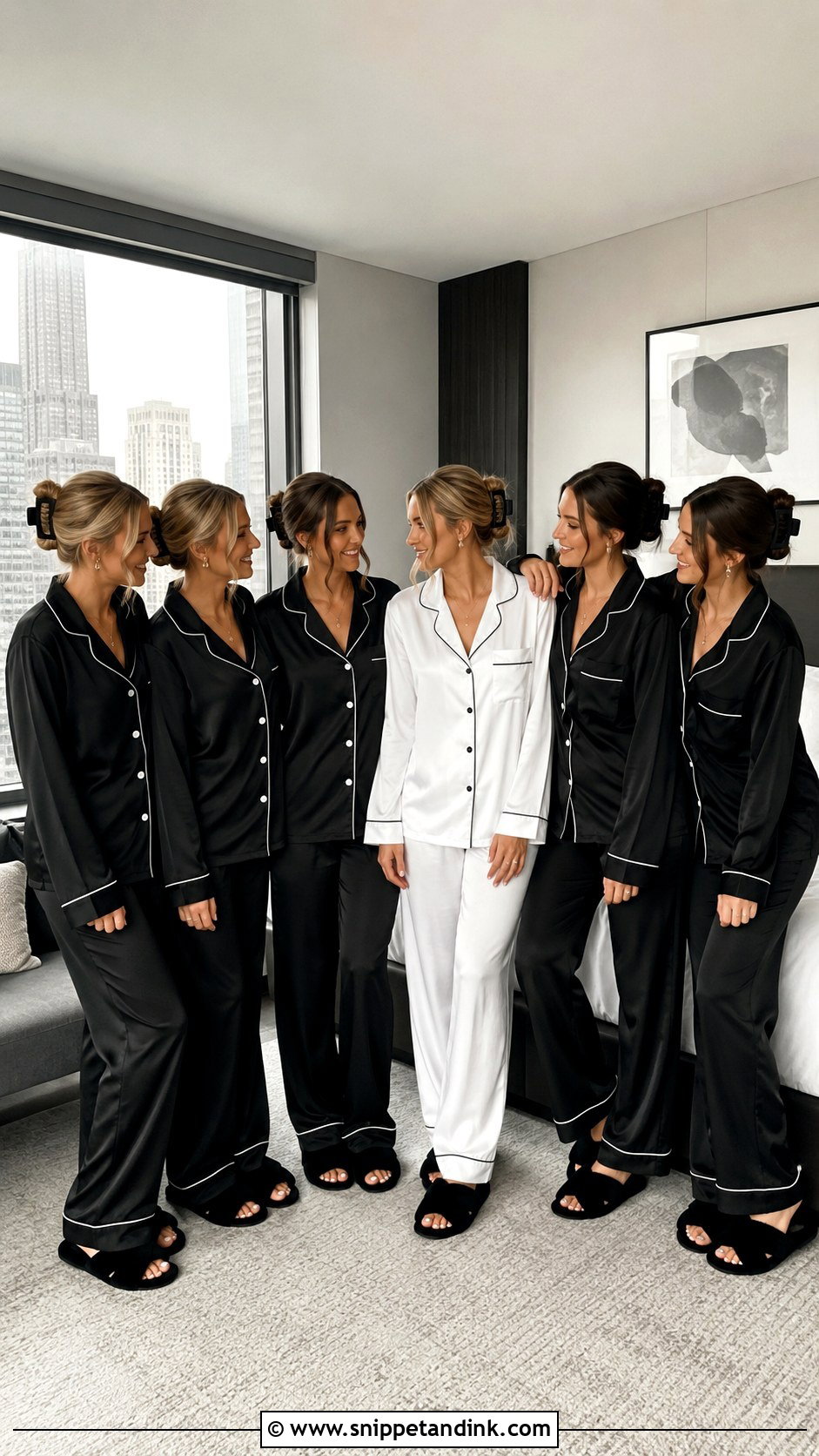
A black-and-white scheme is the easiest way to make a mixed group look organized. The bride wears white with black piping; everyone else wears black with white trim. Black satin shows every bit of lint and loose face powder, though, so I keep a lint roller nearby for this one. If you want less shine, choose matte satin or modal. And keep the piping width and button color identical across sizes, since those small details are what make the sets read as a matching group.
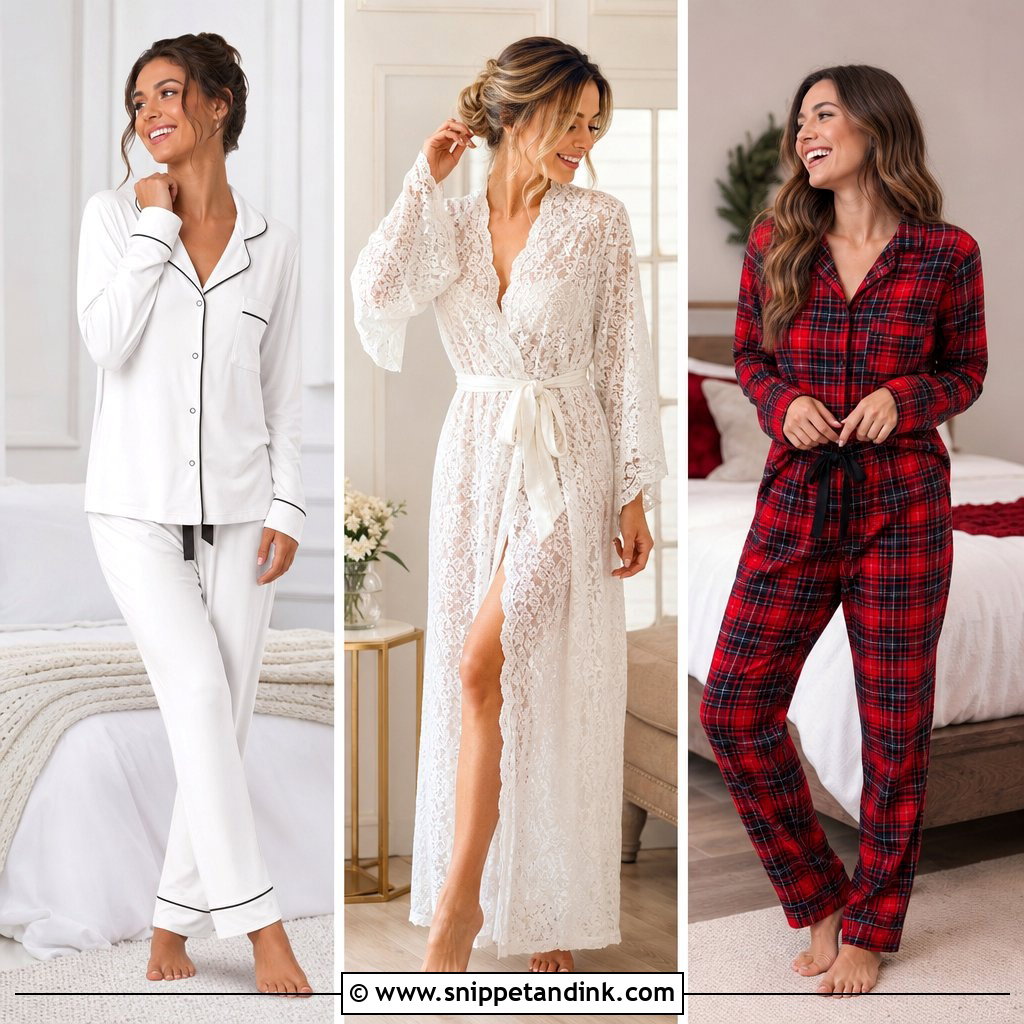
8. Cotton Wedding Pajamas
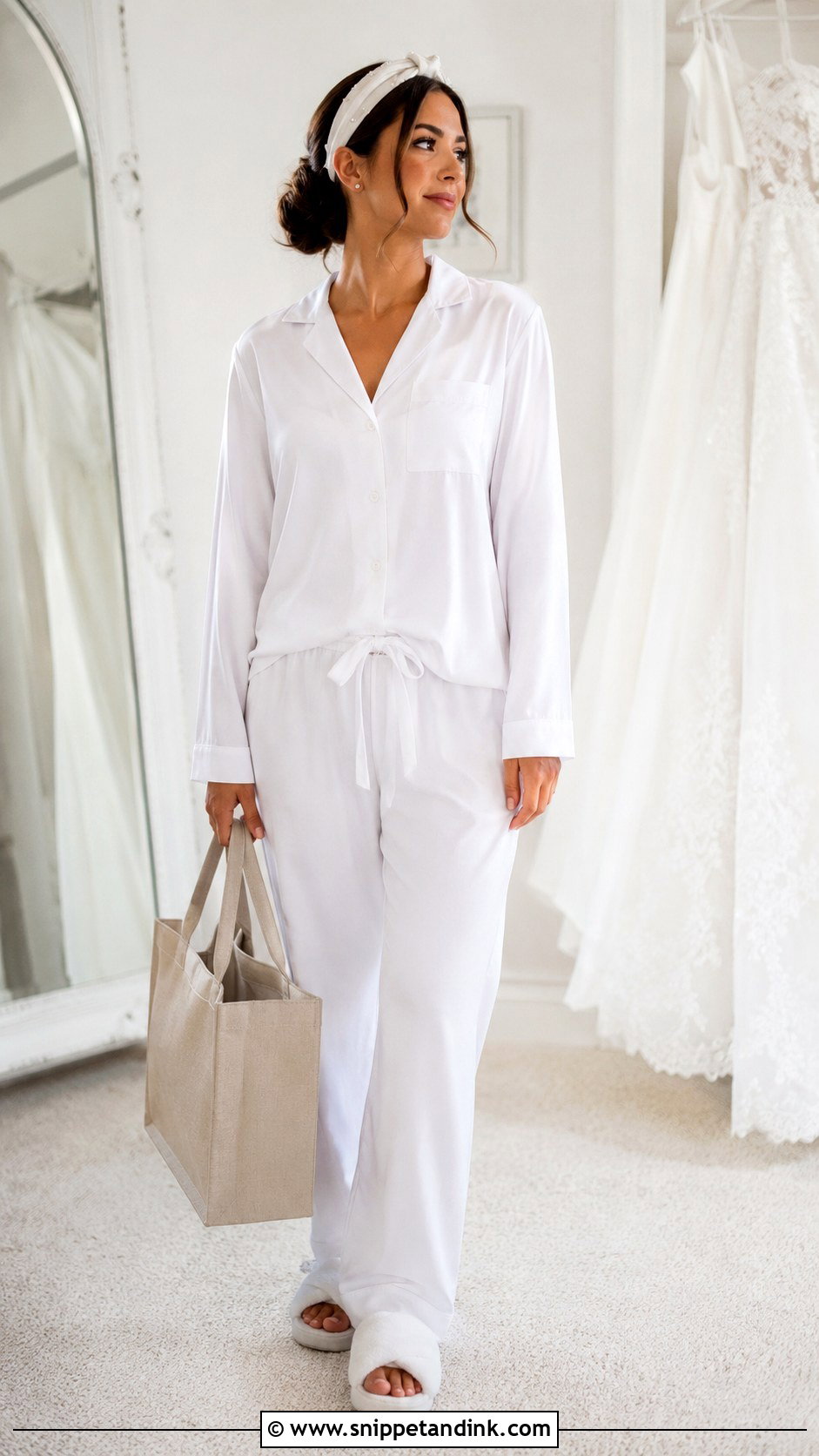
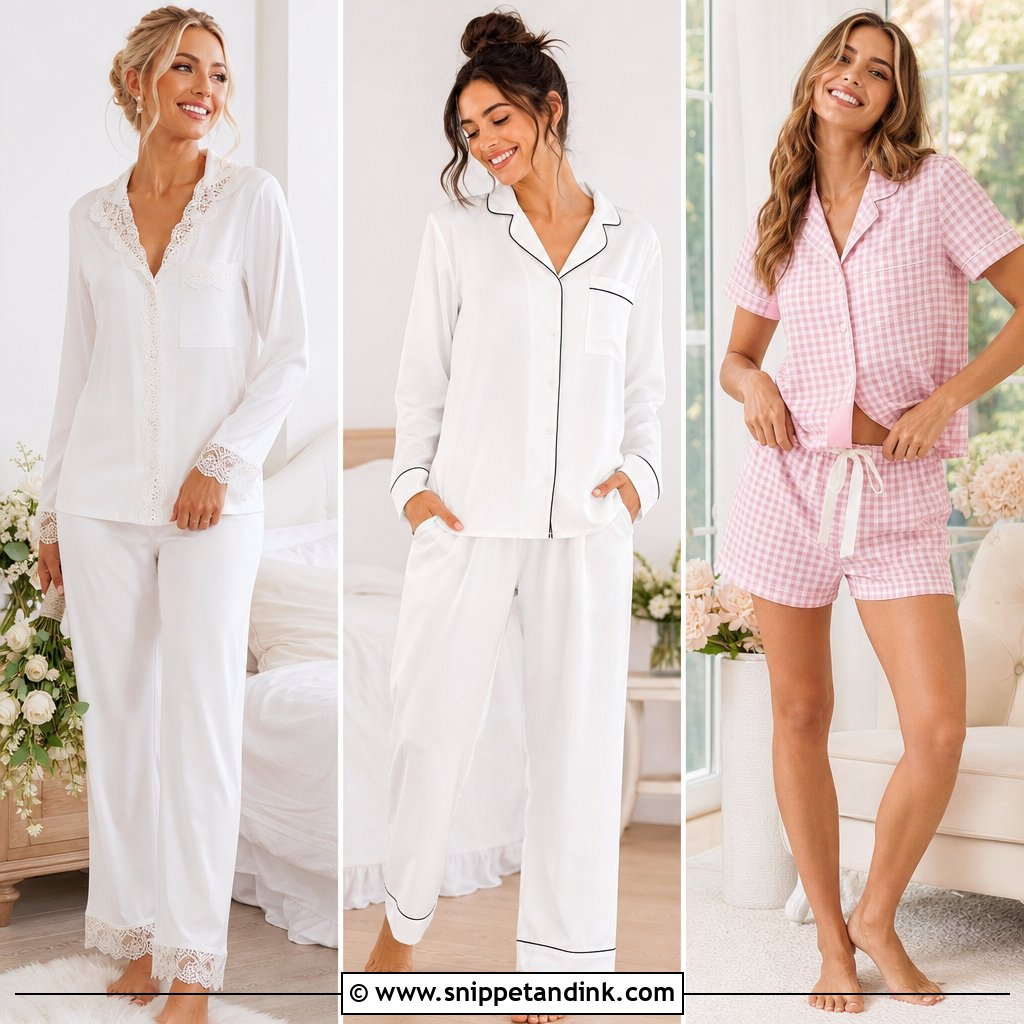
Cotton is my practical recommendation for anyone who runs warm or simply dislikes slippery fabric. Poplin gives a crisp, tailored look; jersey is softer and more forgiving. Two cautions from fittings: pale cotton can turn see-through under strong light, so hold it up to a window before you commit, and 100 percent cotton can shrink in a hot wash, so wash cold before the day if you prewash at all. A slightly loose cut lets air move, and a fabric headband keeps hair off the face during skincare.
9. Modal Wedding Pajamas
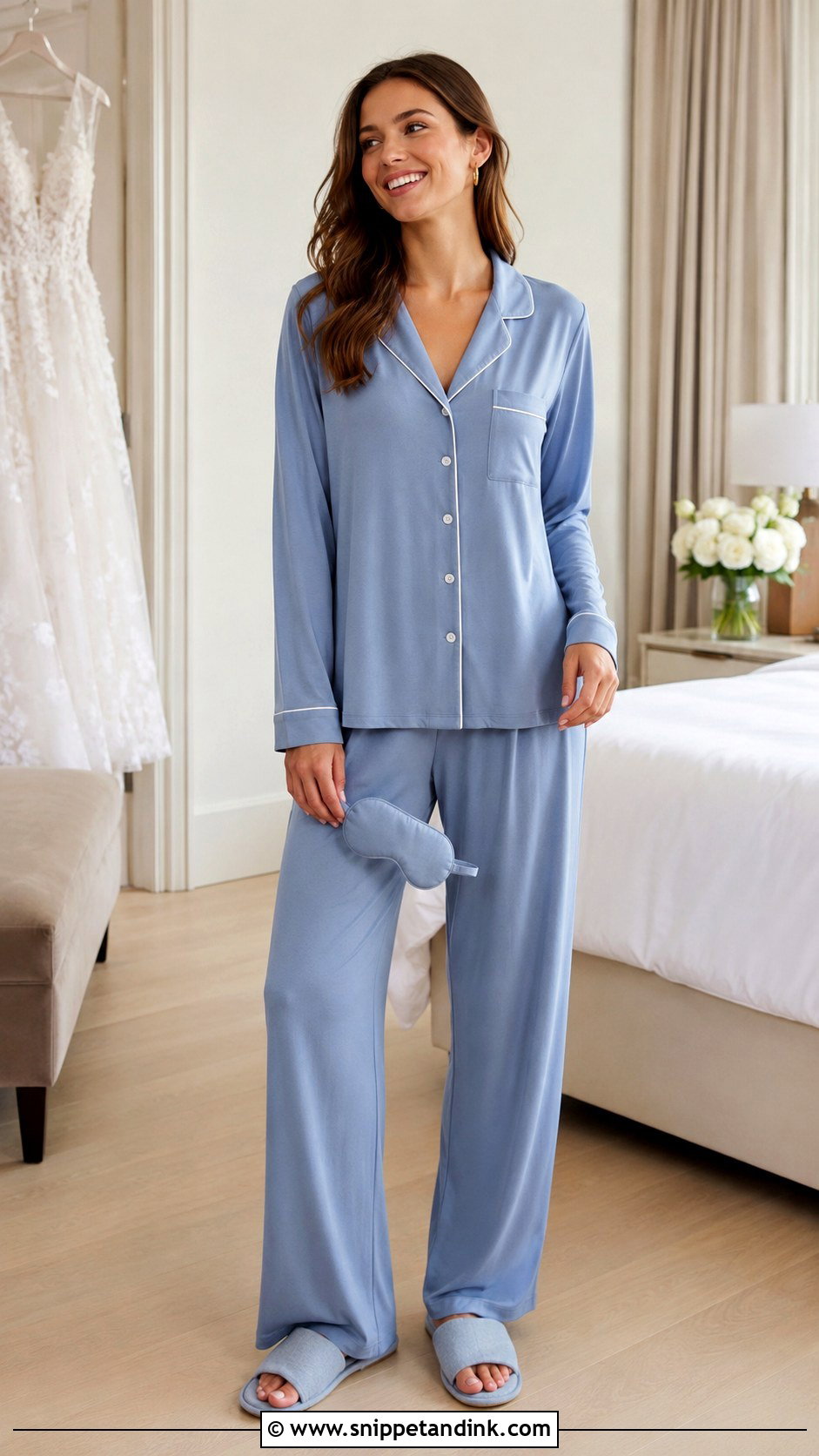
Modal drapes and stretches, which makes it kind to bodies that will spend hours sitting, twisting and leaning toward a mirror. I’d choose ivory for the bride and muted tones like dusty blue or mauve for everyone else. The weak point of very light modal is cling, so I look for a heavier weight and a waistband that stays put without digging in. It also wrinkles in storage, so fold it loosely or hang it rather than leaving it packed tight in a suitcase.
10. Long Sleeve Wedding Pajamas
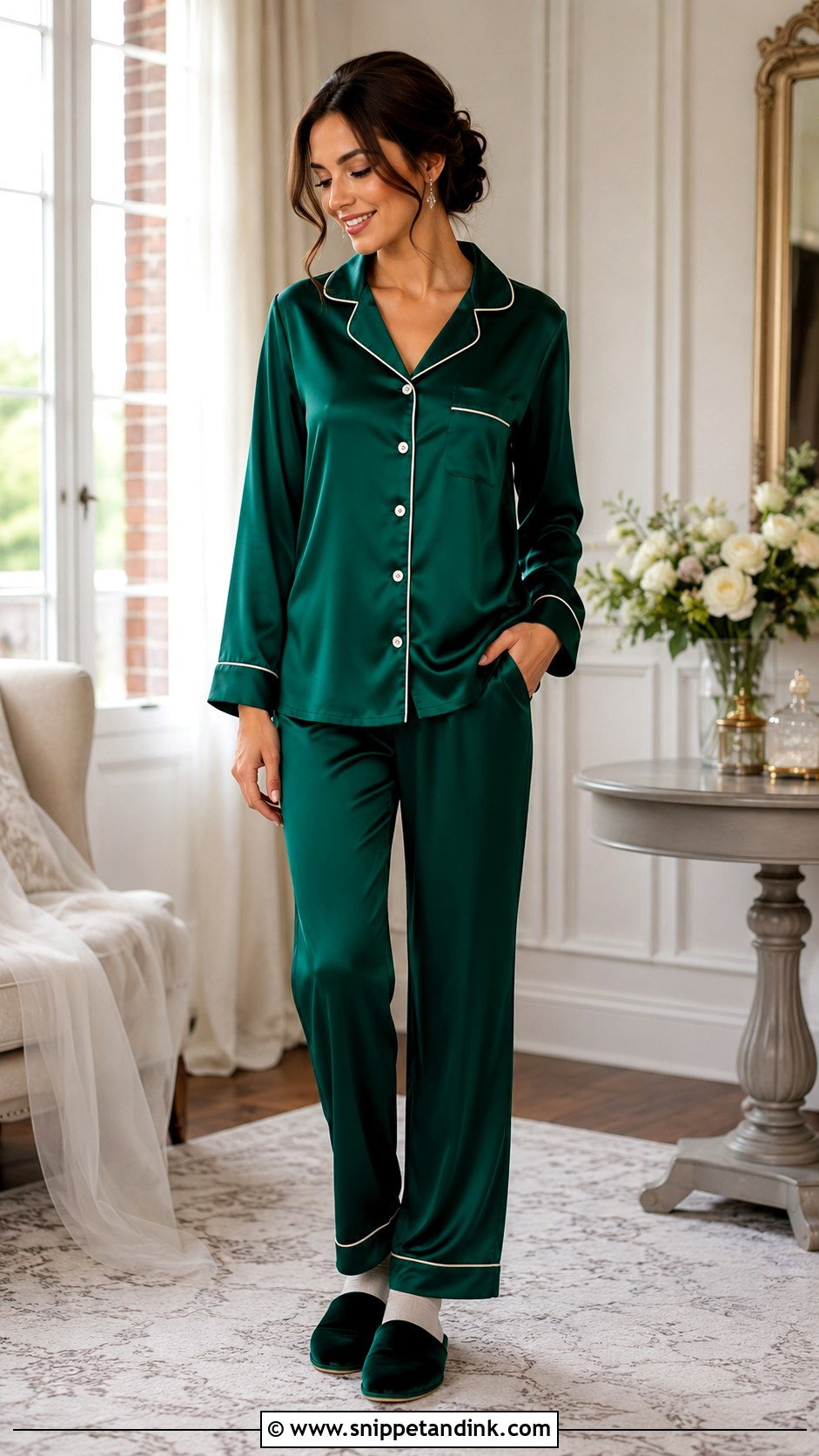
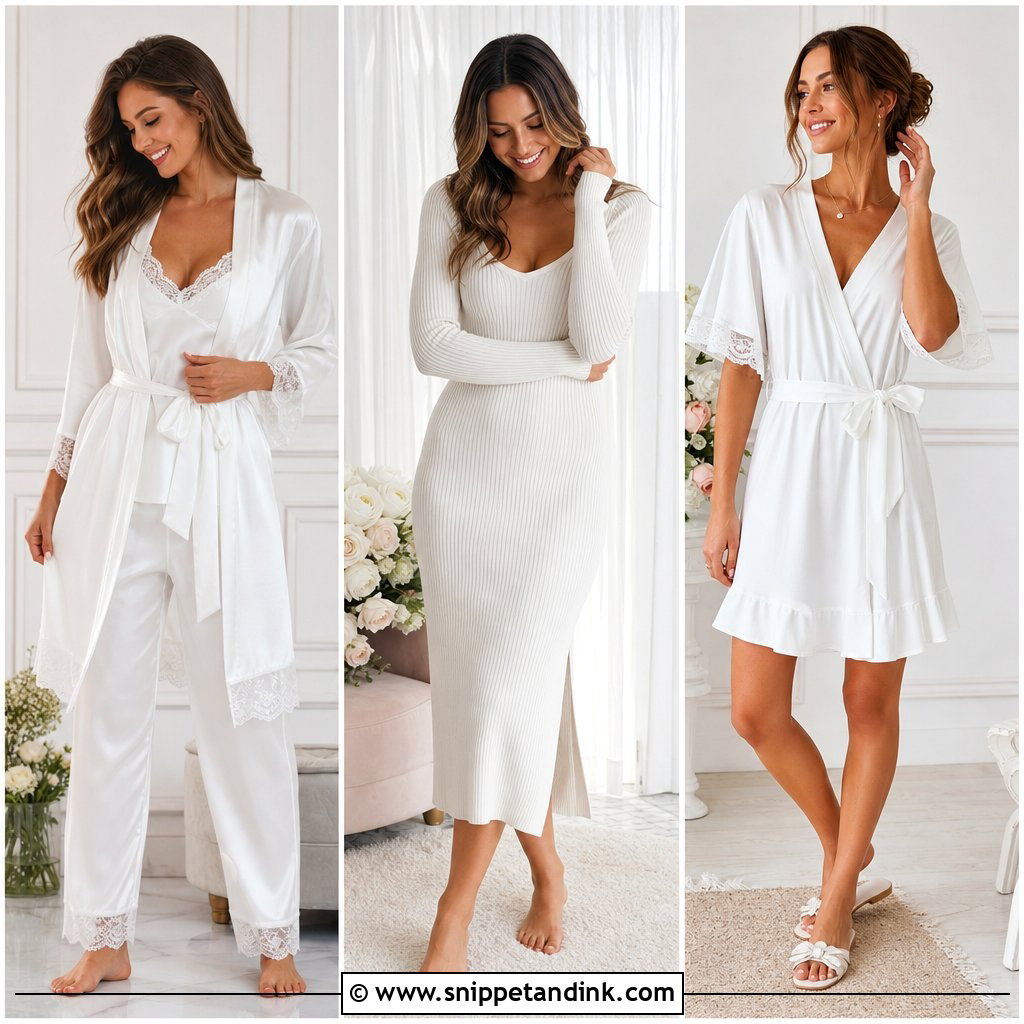
Long sleeve wedding pajamas make sense for cold suites, early starts and autumn or winter dates. The fit point I watch is the cuff. If it sits loose over the hand, it drags through foundation and coffee, so I prefer cuffs that roll or button back cleanly above the wrist. White satin with fine piping suits the bride, and a jewel-toned set gives the group seasonal color. With sleeves this long, a robe on top is just extra bulk.
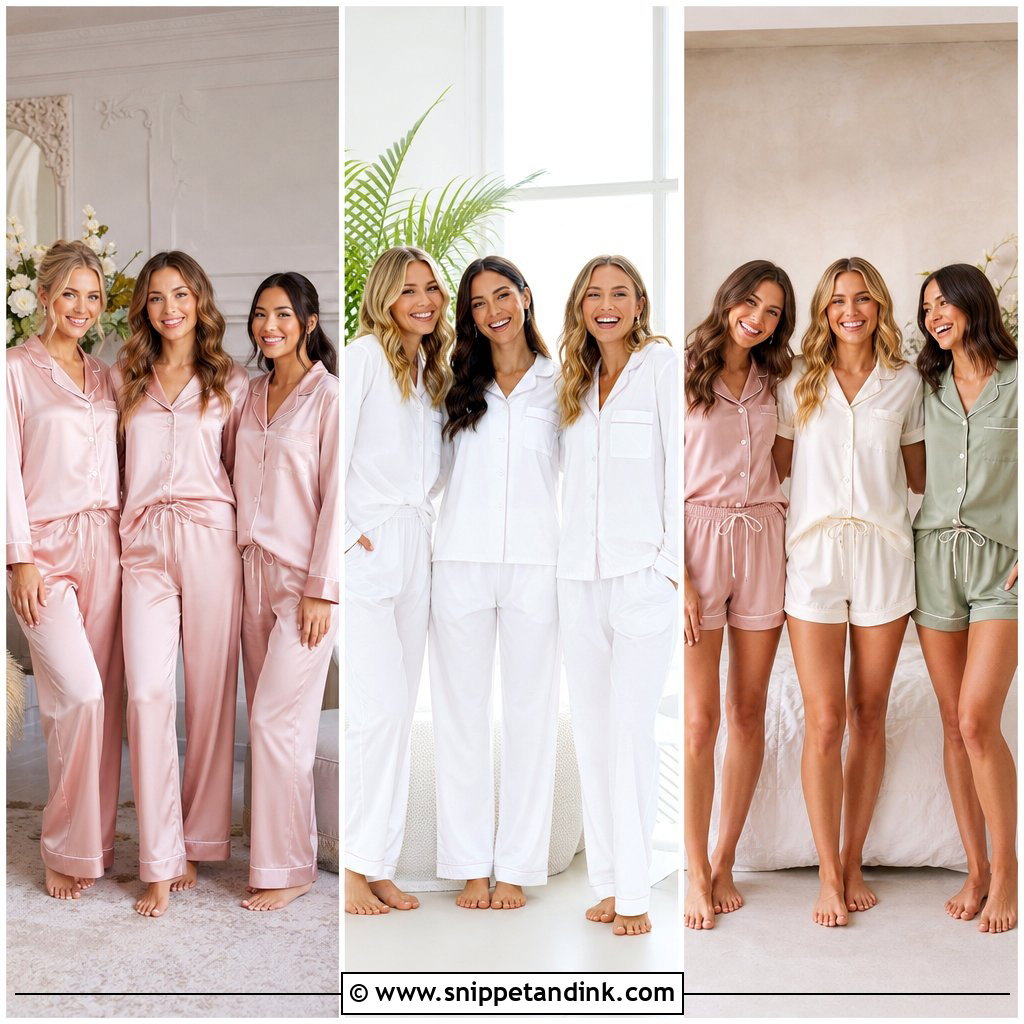
11. Short Sleeve Wedding Pajamas
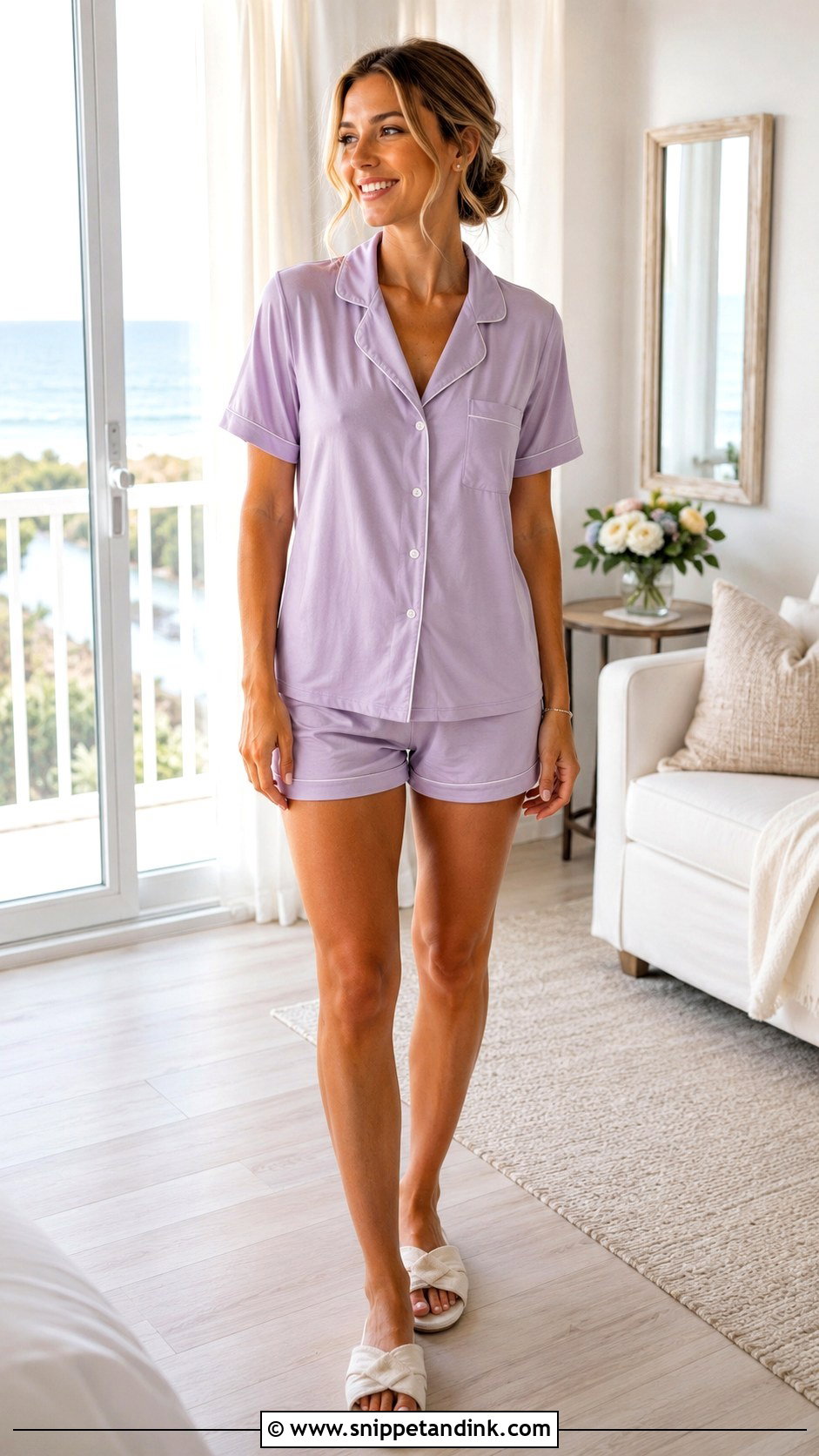
In a warm room with ten people, hot tools and a steamer running, short sleeves are a kindness. A collared shirt with tailored shorts still looks put together. I check two things: arm openings loose enough that the sleeve doesn’t ride up when someone lifts their arms, and a waistband that holds when the group walks between rooms or out to a balcony. Open-toe slippers suit the heat, but if you’ll be walking outside, choose a pair with a real sole.
12. Feather Trim Wedding Pajamas
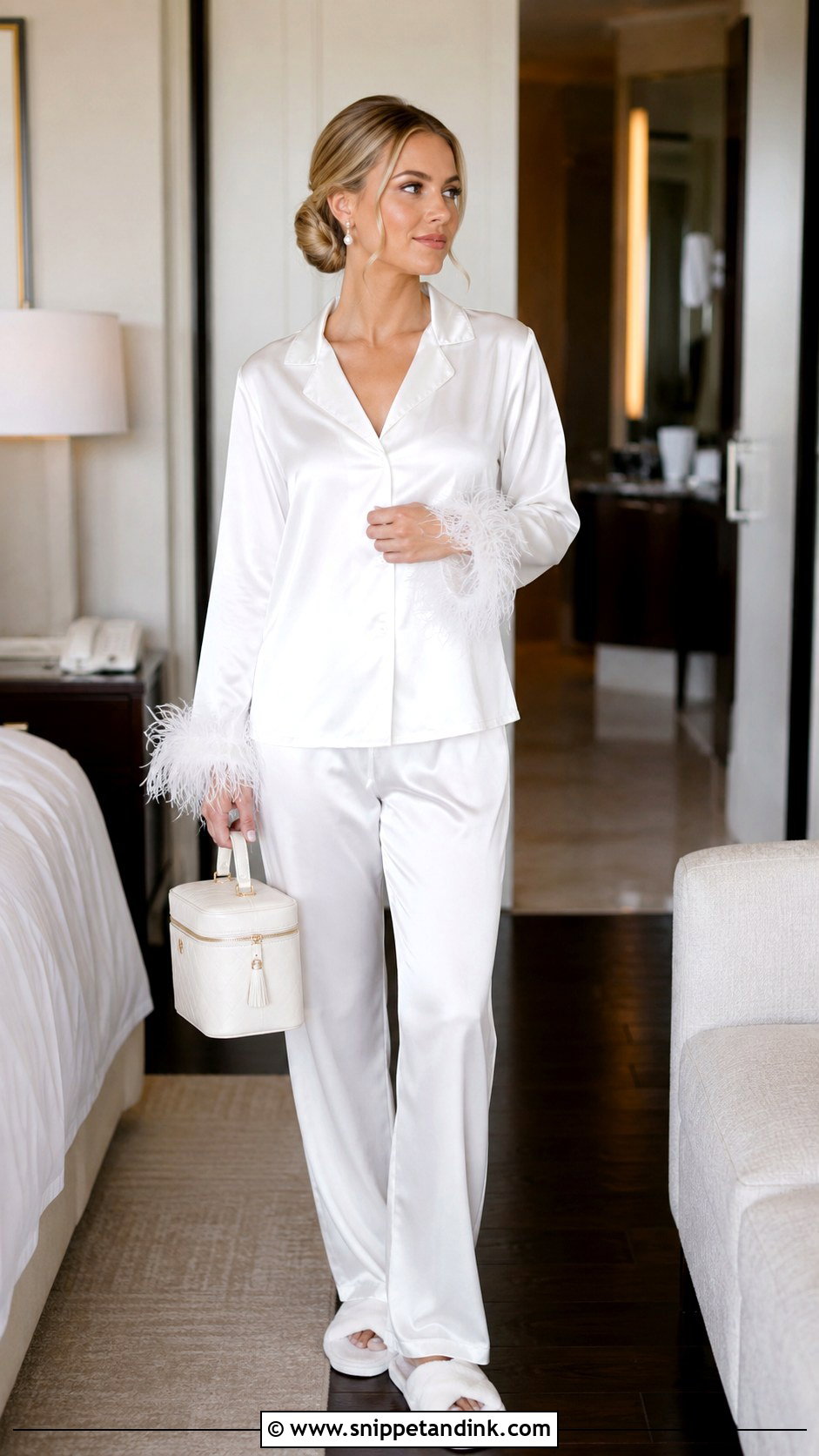
Feathers are fun and fragile, so I treat this as the bride’s set only. Keep the trim on the cuffs, ideally removable or firmly stitched, and dress the attendants in plain satin so her outfit stays distinct for the polished bridal morning. Feather cuffs shed into setting spray and catch on curling irons, so I’d unbutton or slip them off before the hairstylist starts on her. Plain slippers, pearl earrings, nothing else feathered.
13. Lace Trim Wedding Pajamas
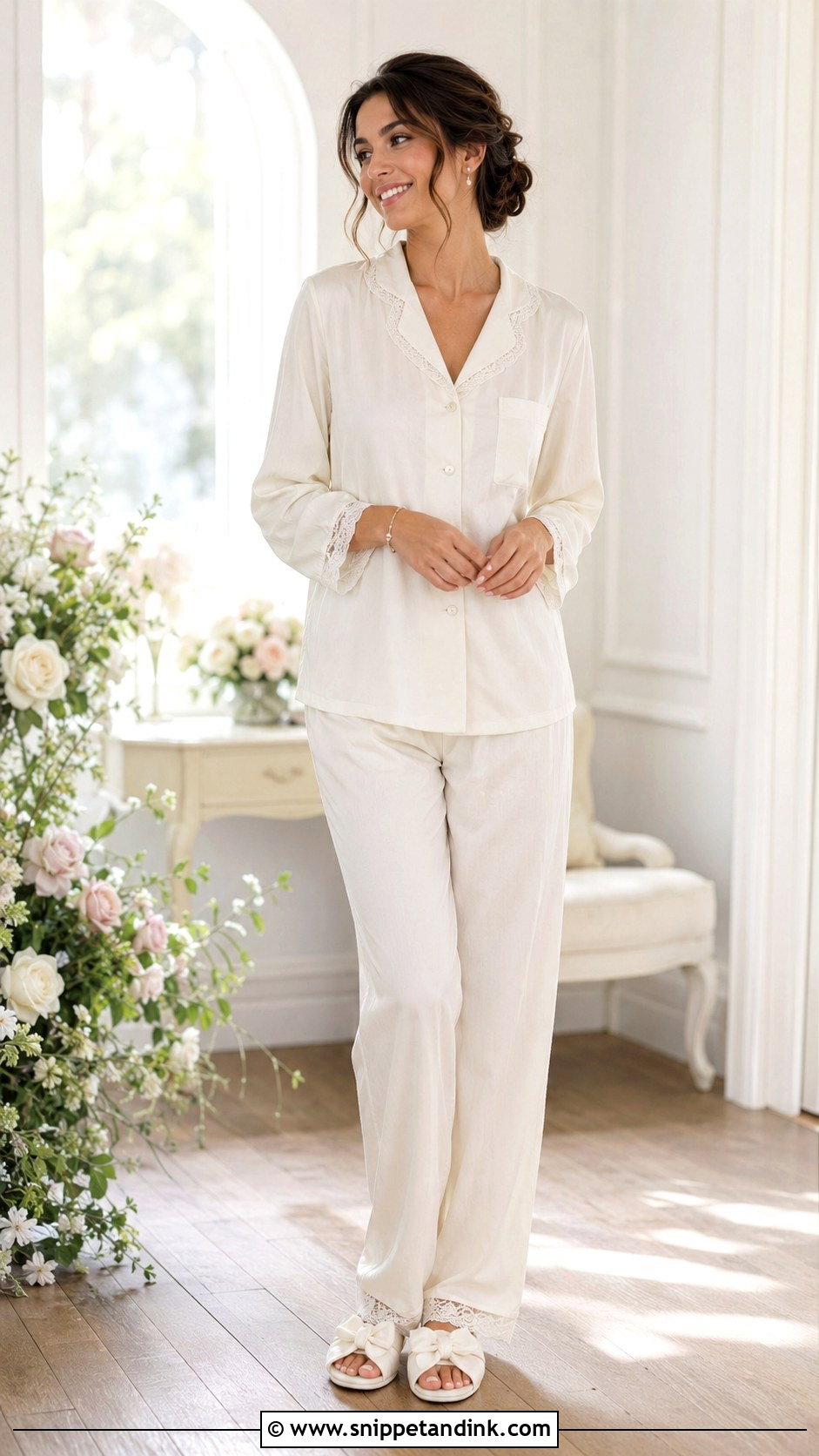
Lace trim gives a set a bridal finish without tipping it into lingerie. I prefer narrow lace on the collar or cuffs over wide panels, because broad lace snags on earring backs, bobby pins and upholstery. A lined or medium-weight body fabric keeps coverage reliable. Lace is also the trim most likely to lose shape in a careless press, so steam from inside the garment at a distance, and check the care label before any heat goes near it.
14. Monogrammed Wedding Pajamas
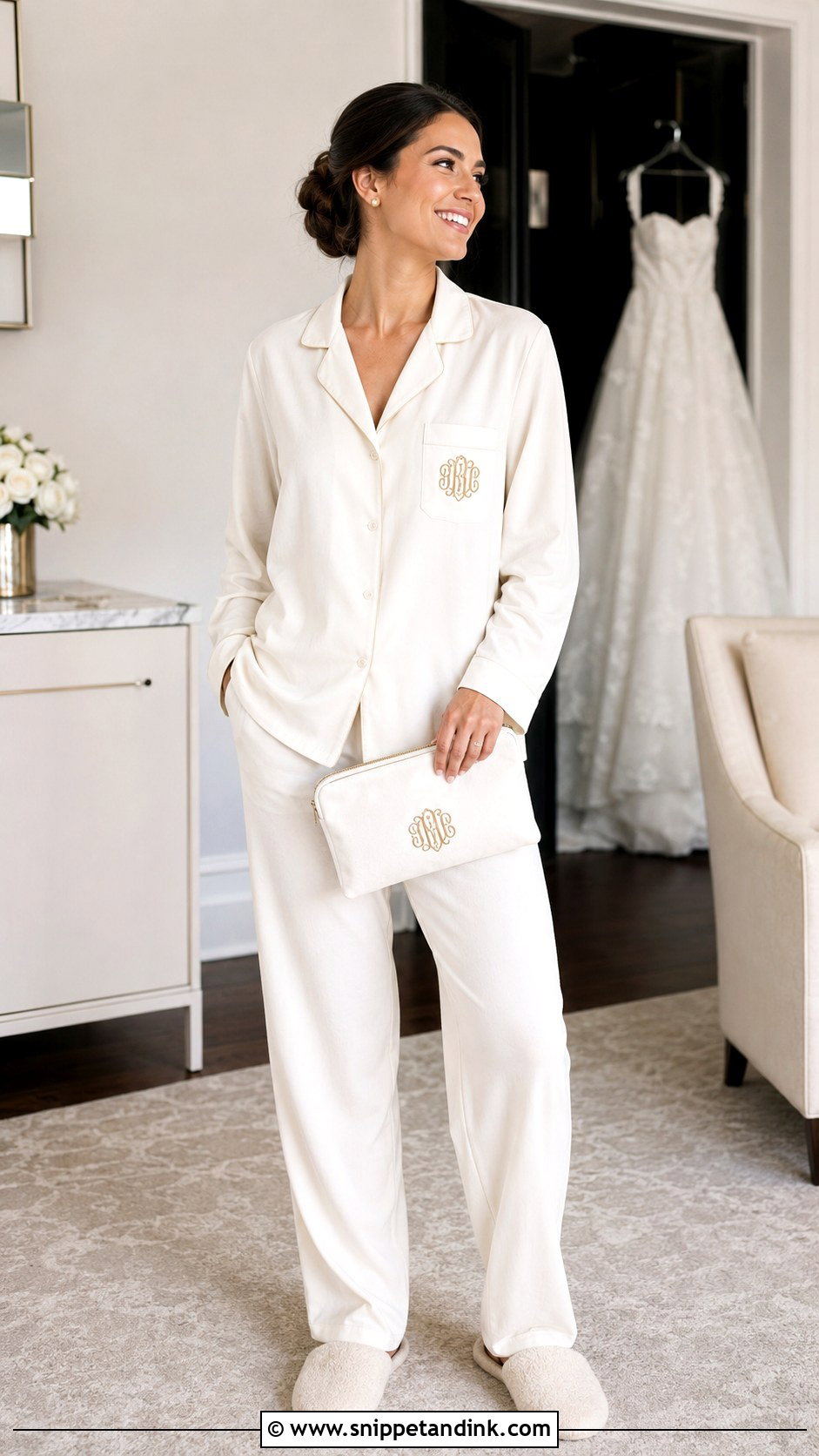
Monograms feel personal and age well, which is why they turn up again on lazy Sundays long after the wedding. I match the thread to the piping rather than using a loud contrast, and I keep the letters near the chest pocket or on a cuff. The step people skip is proofreading. Three-letter monograms follow different orders, so I confirm spelling and letter order with each person in writing before anything is stitched. Embroidery mistakes can’t be unpicked cleanly on satin.
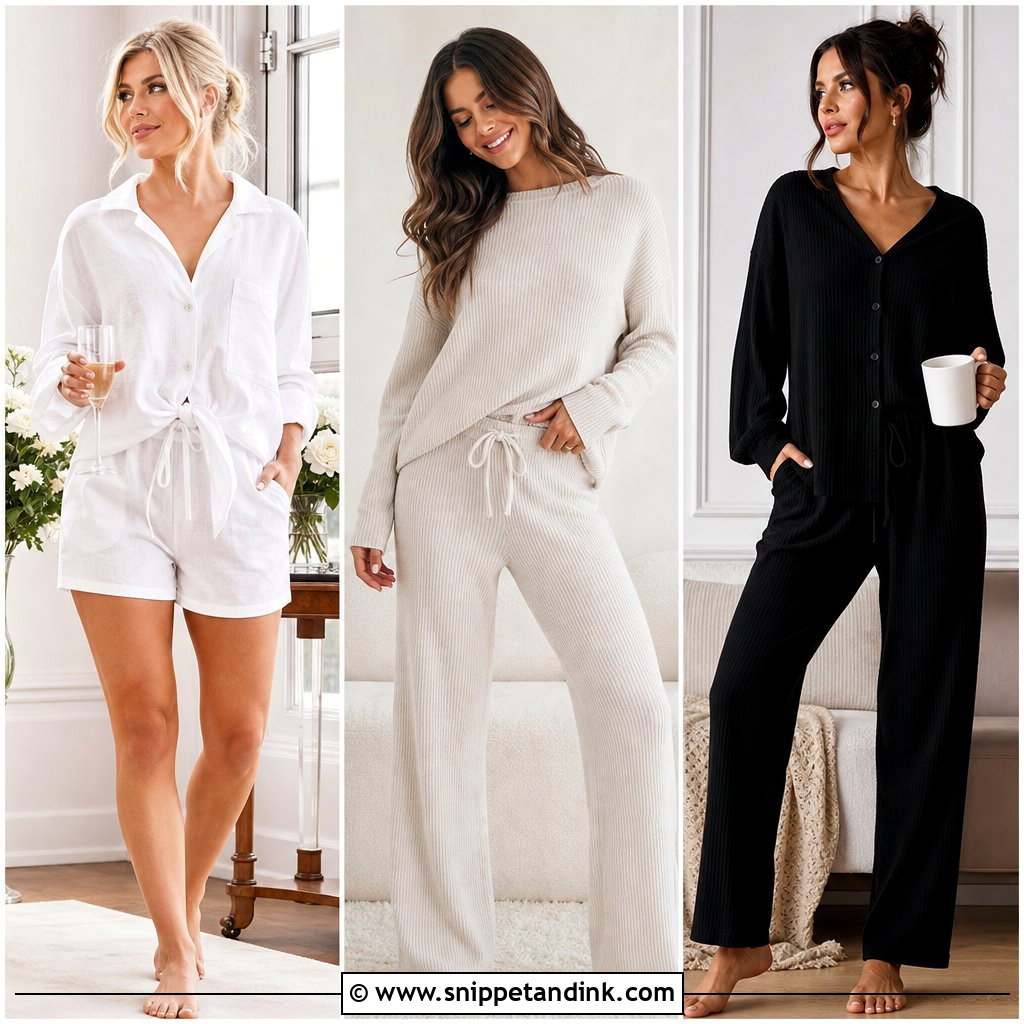
15. Mix And Match Wedding Pajamas
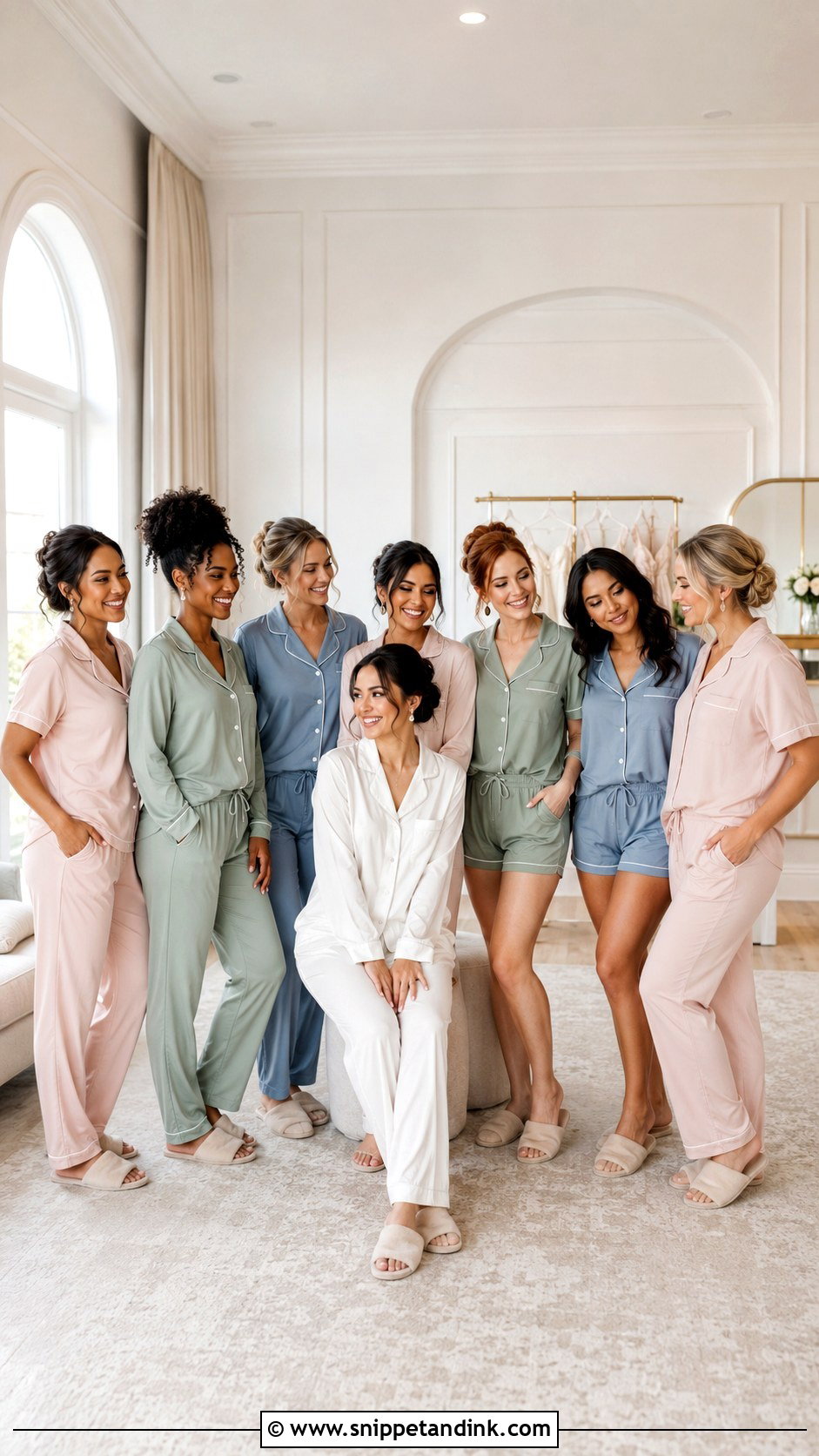
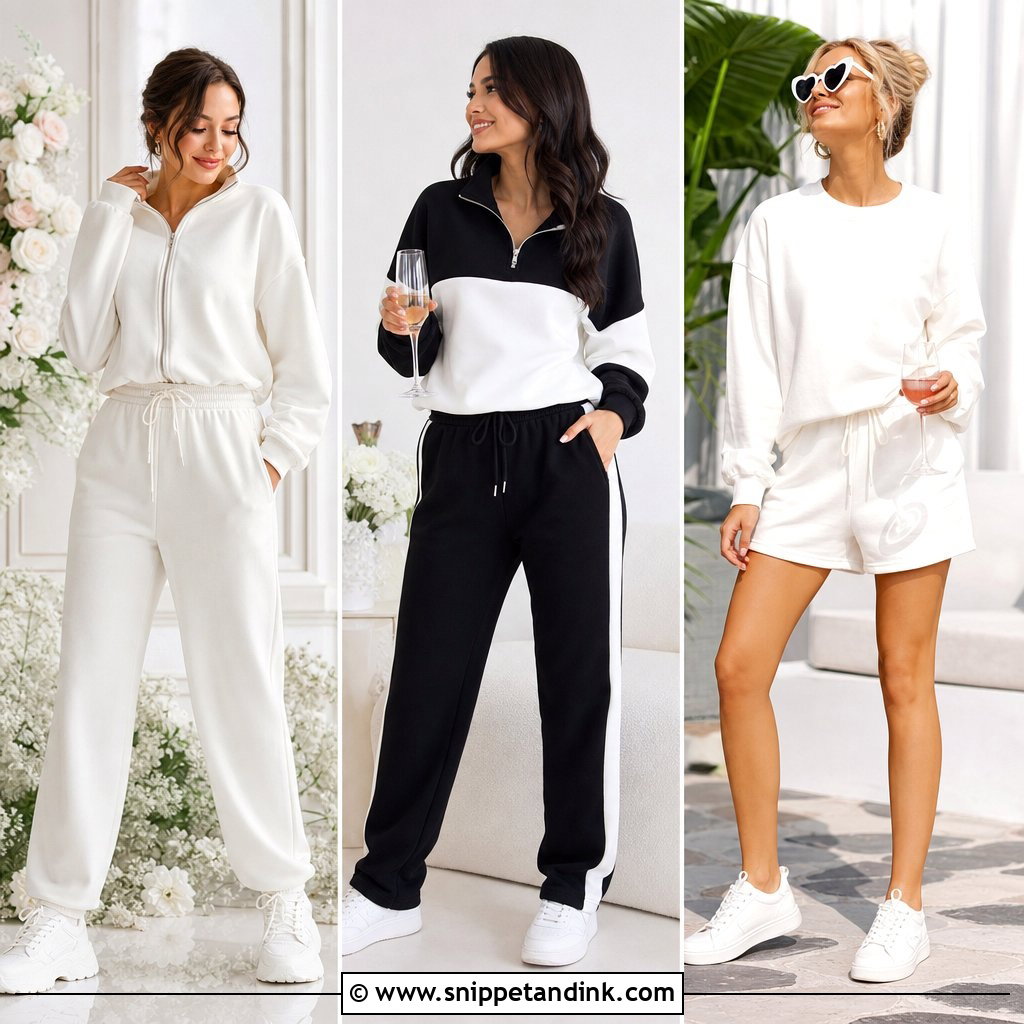
Letting each person choose her own silhouette solves more group problems than any other idea here. I set two or three approved colors and one shared element, usually the fabric or the piping, then let people pick shorts, straight legs or wide legs. Groups with different body shapes and coverage needs tend to feel far more at ease this way. Spread the colors out when everyone stands together so one shade doesn’t cluster at one end of the line.
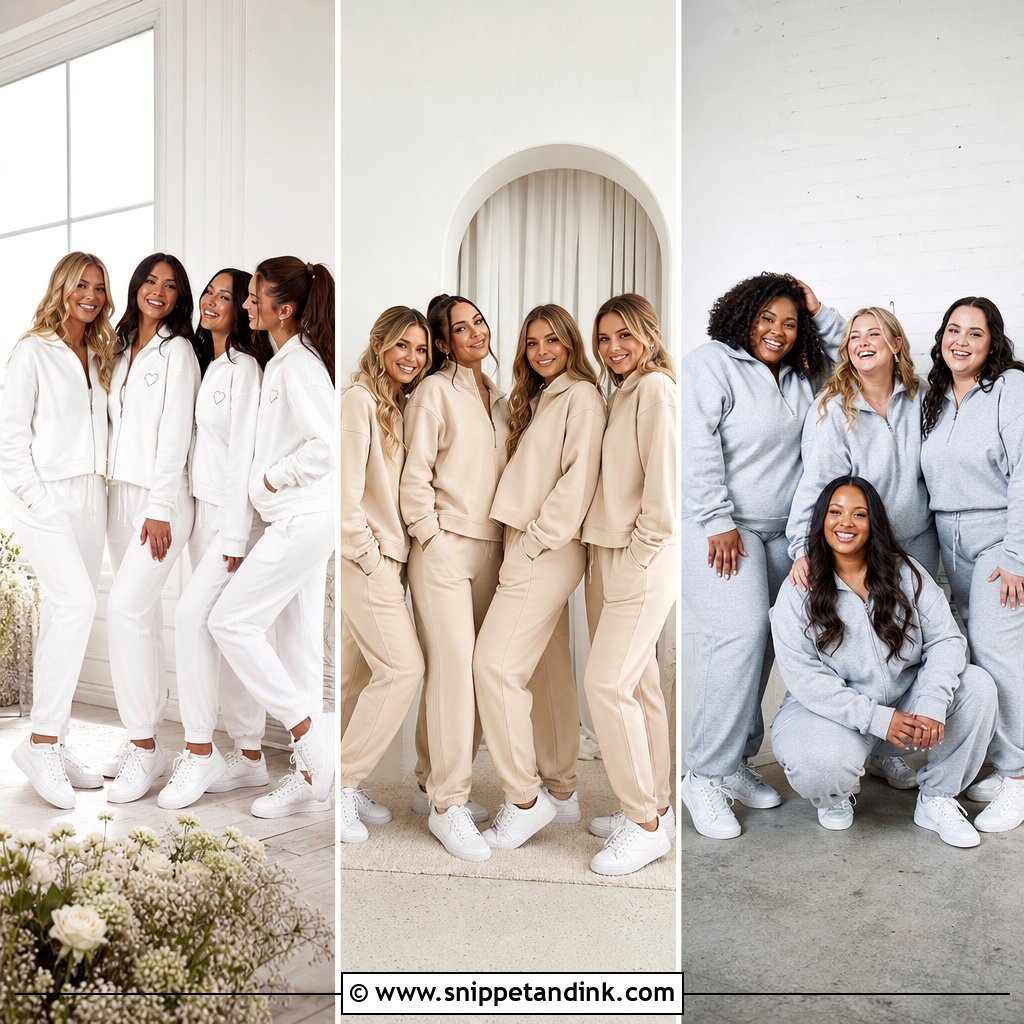
16. Plus Size Wedding Pajamas
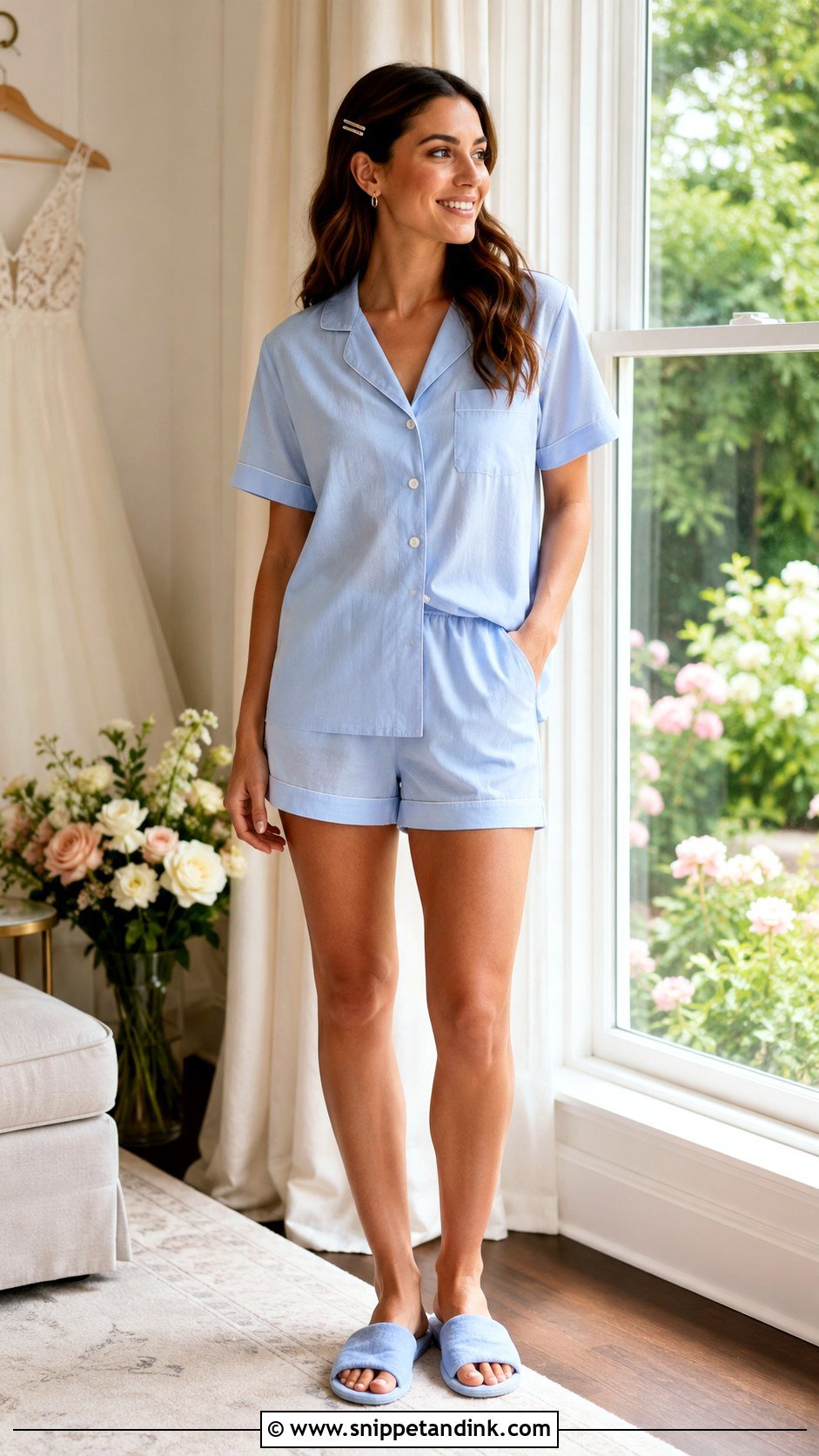
Plus size sets deserve the same piping, fabric and finish as every other size in the order, and I won’t build a group look from a line that cuts corners above a certain size. The fit check is the button placket across the bust: if it gaps when she sits or reaches forward, size up or choose a style with a hidden button between the main ones. A flexible waistband, real pockets and medium-weight fabric that skims rather than clings make the biggest difference. Always measure against the brand’s own chart, not a usual size.
17. Flannel Wedding Pajamas
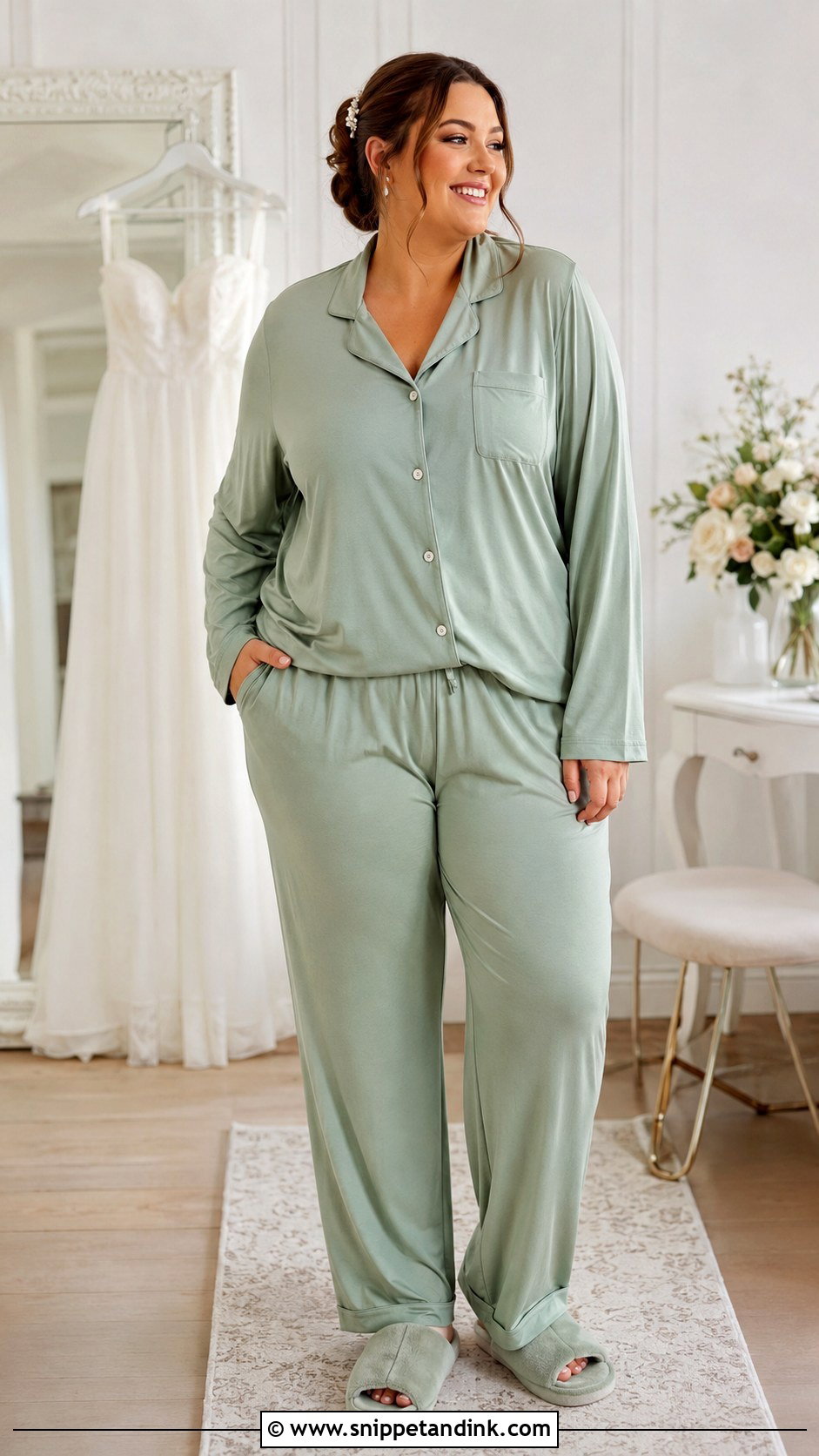
Flannel is for mountain lodges, winter dates and old houses with drafty bedrooms. A soft plaid or solid flannel button-front set with matching pants looks relaxed but considered, especially with the bride in grey-and-white plaid and the group in forest green or burgundy. I keep the plaid scale identical across sets. I also steer people toward lighter flannel, because a crowded room with hair tools heats up quickly and thick flannel becomes uncomfortable within the hour.
18. Summer Wedding Pajamas
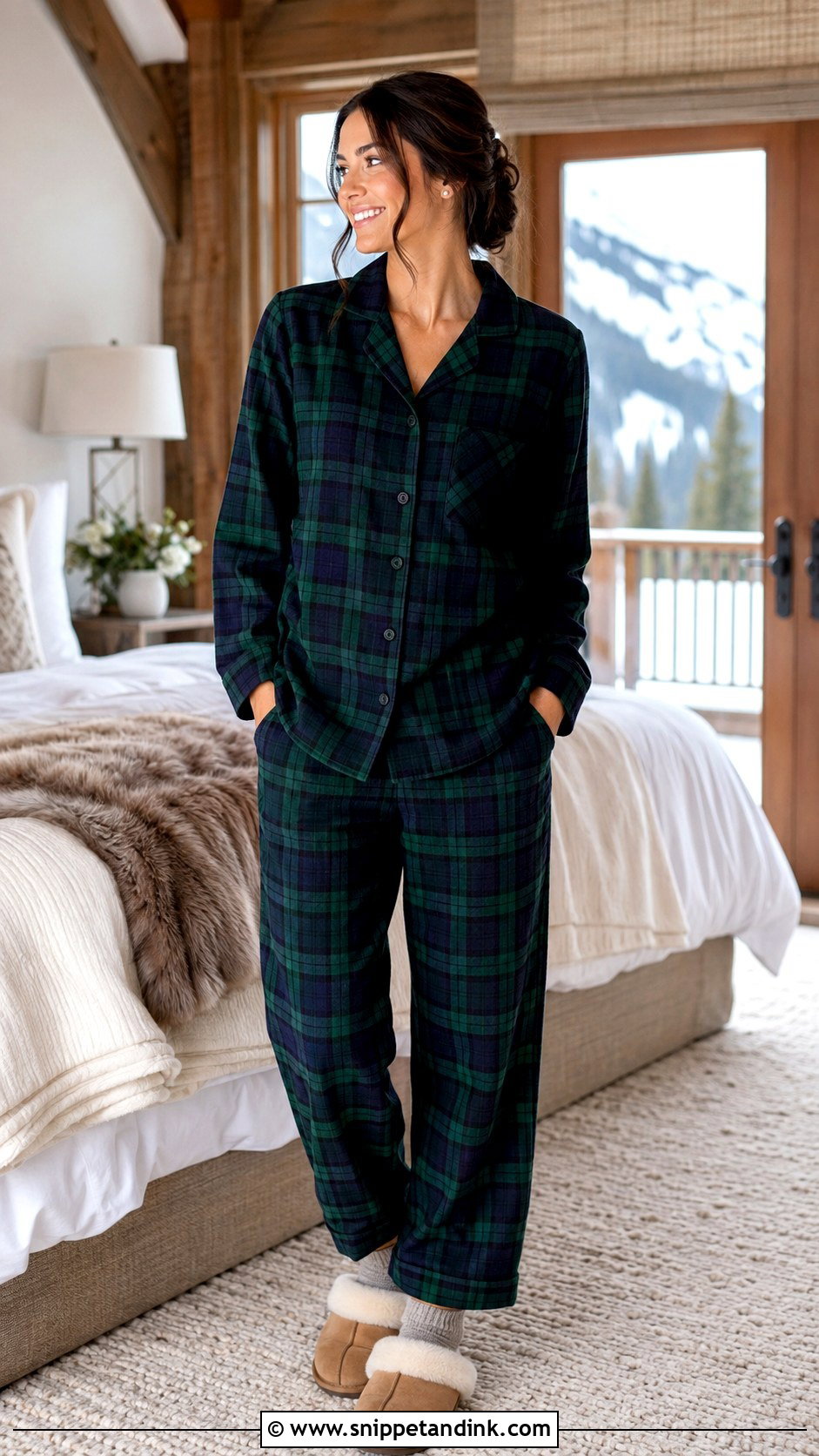
For summer, fabric weight matters more than color. I suggest cotton, a linen blend or light modal with shorts, and I’d leave thick satin and robes at home. Linen blends wrinkle the moment someone sits, so steam right before the group gets dressed and accept a little softness. The bride in white with attendants in sky blue or coral works at a beach or garden venue, and open-toe slides keep feet cool on hot tile.
19. Winter Wedding Pajamas
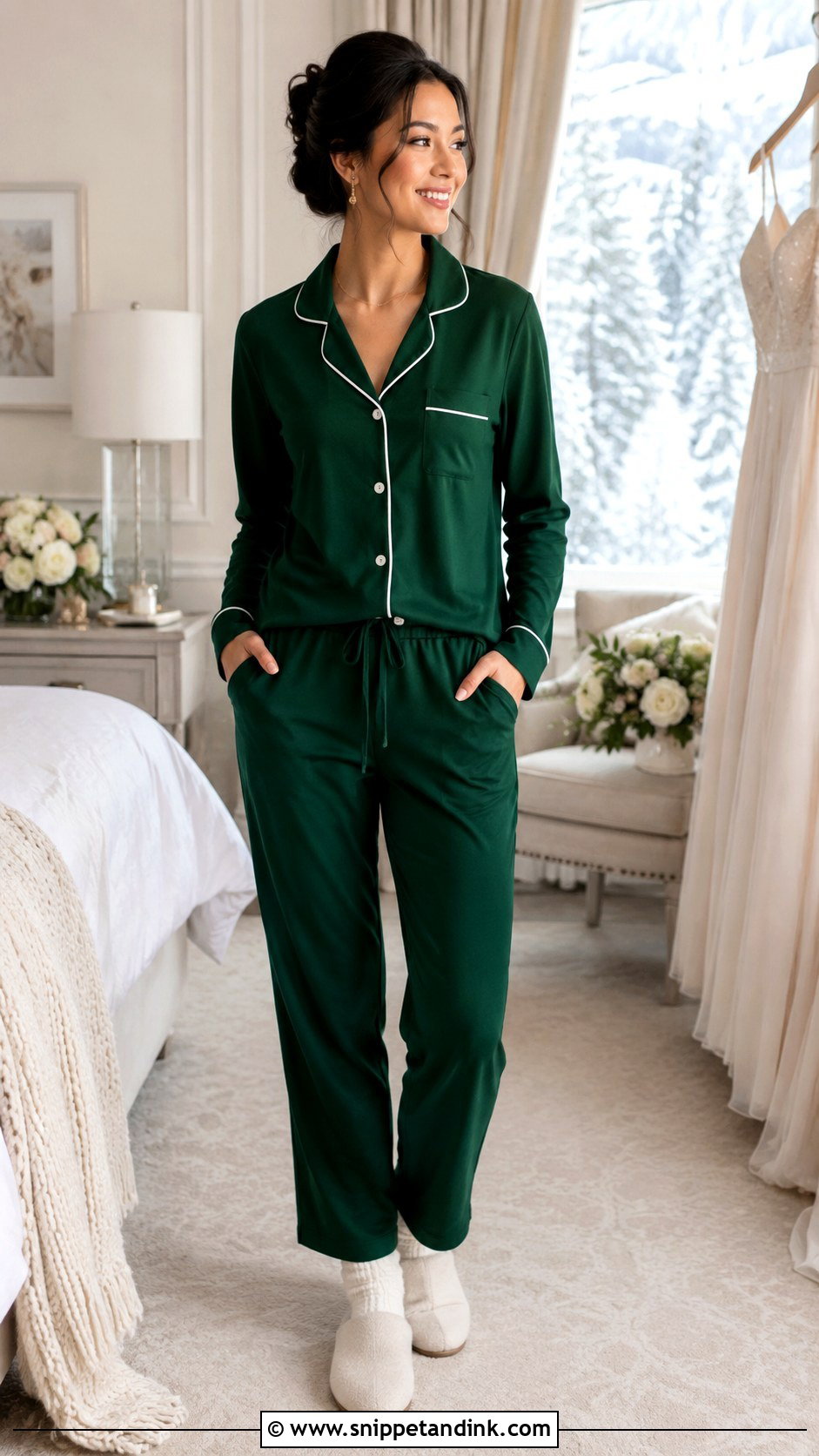
Winter sets need warmth without bulk. Long sleeves and full-length pants in brushed cotton, heavier modal or matte satin all work; I’d avoid cheap polyester satin in dry winter air because it builds static and clings to tights and legs. Ivory for the bride and emerald or plum for the group looks rich. Keep a cardigan in the room for anyone who gets cold, and have them take it off before the group stands together. Socks under the pant hem keep feet warm without showing.
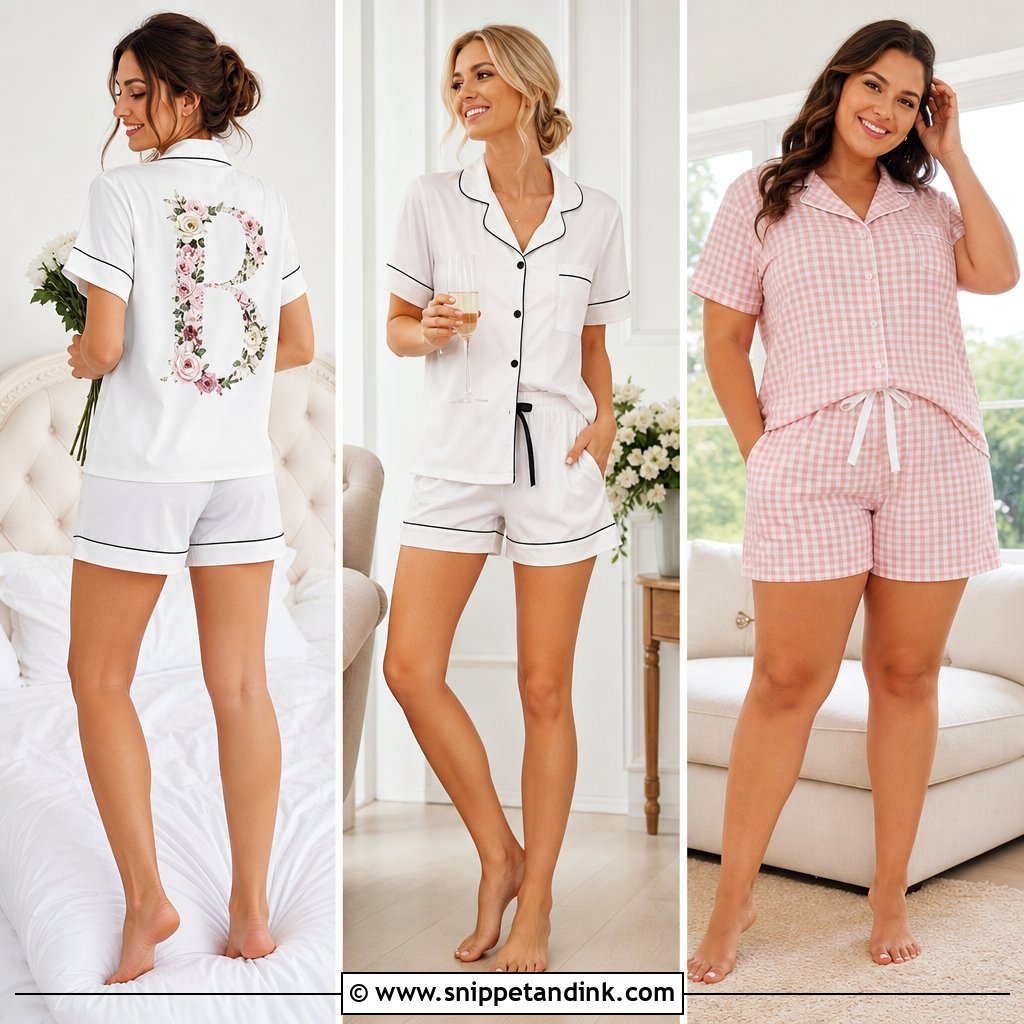
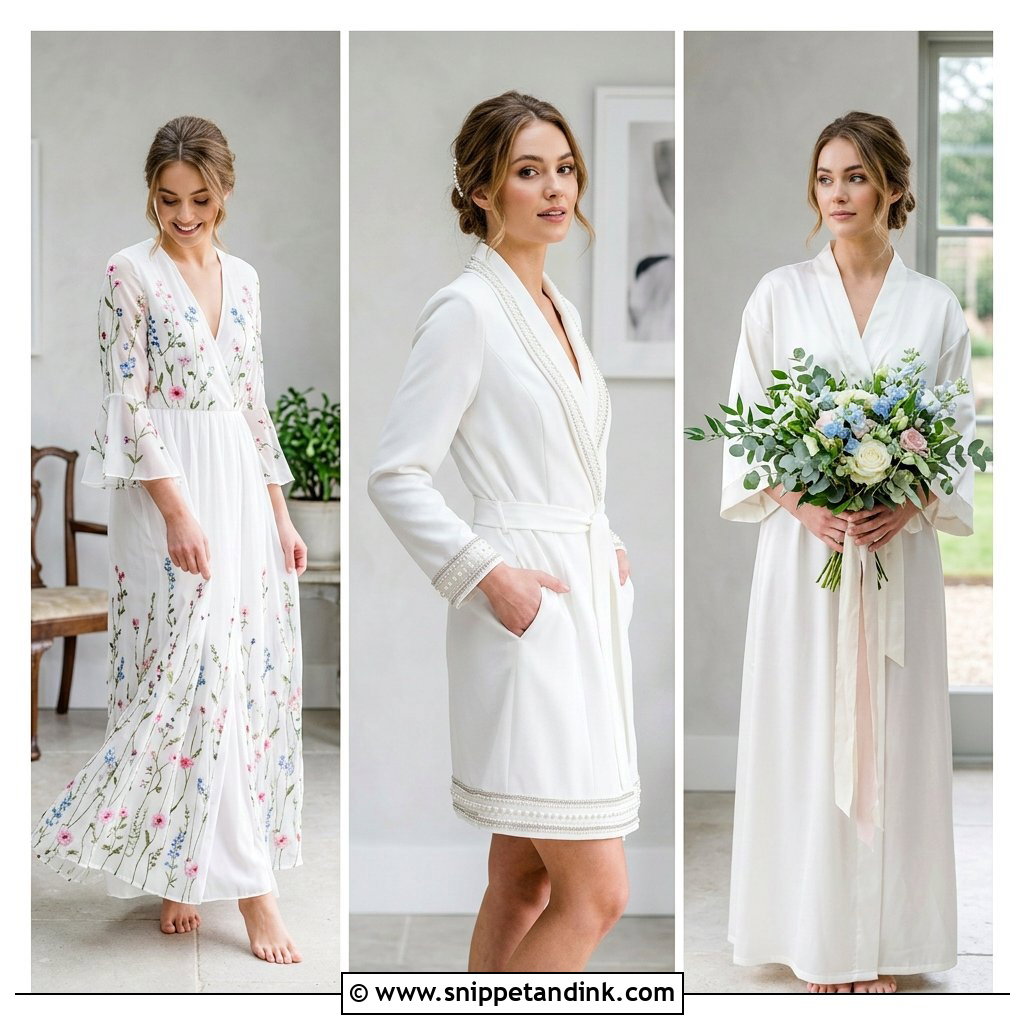
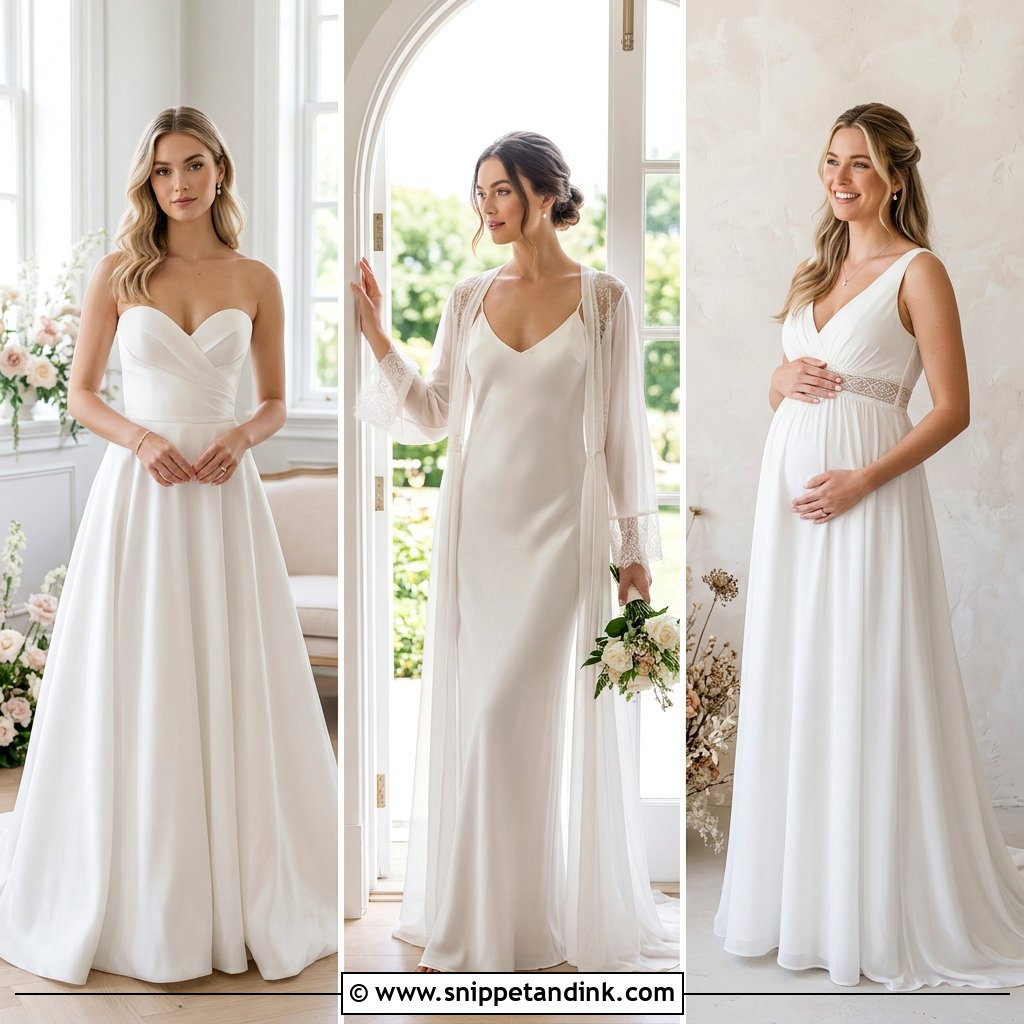
20. Bridal Party Wedding Pajamas
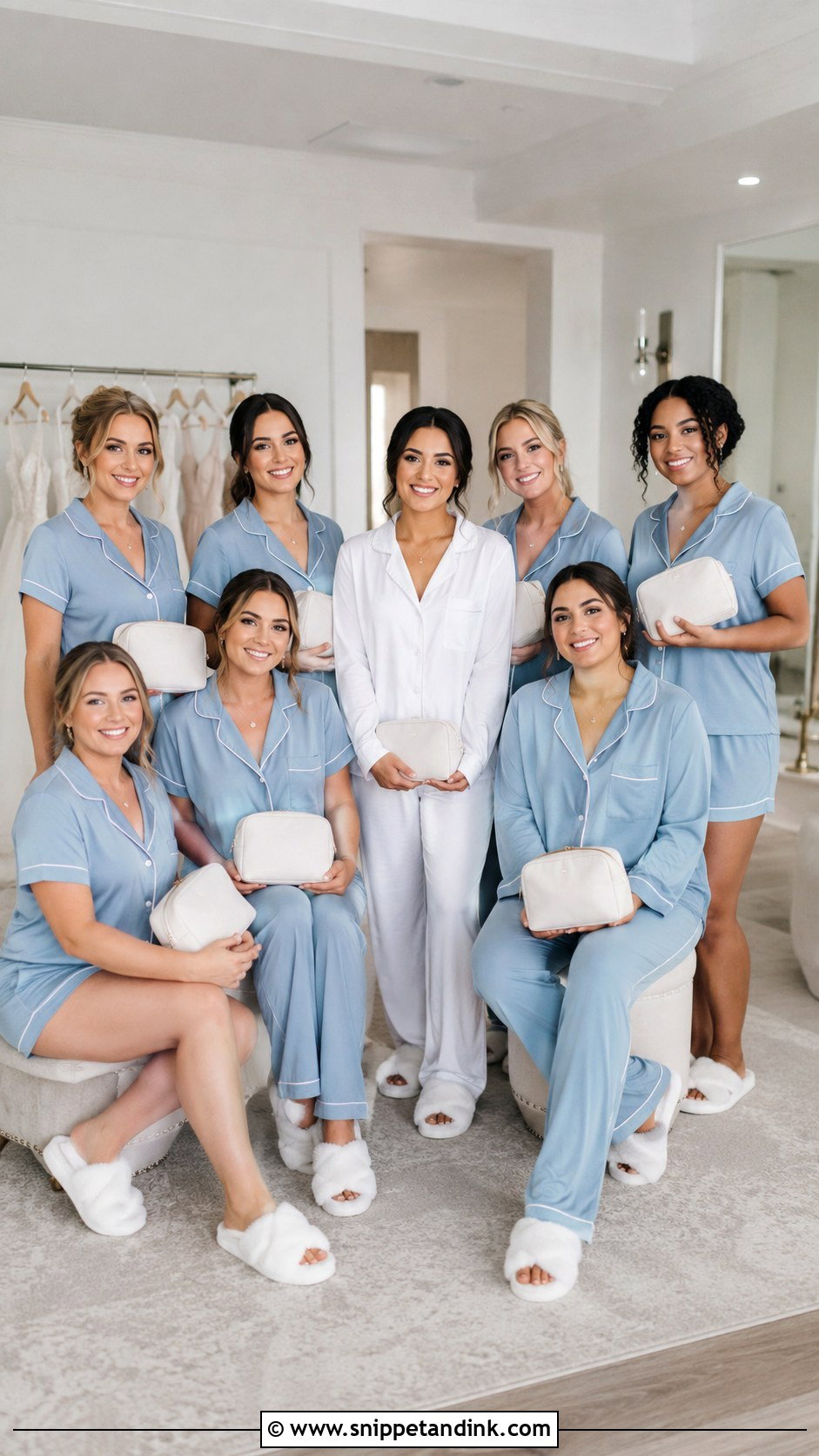
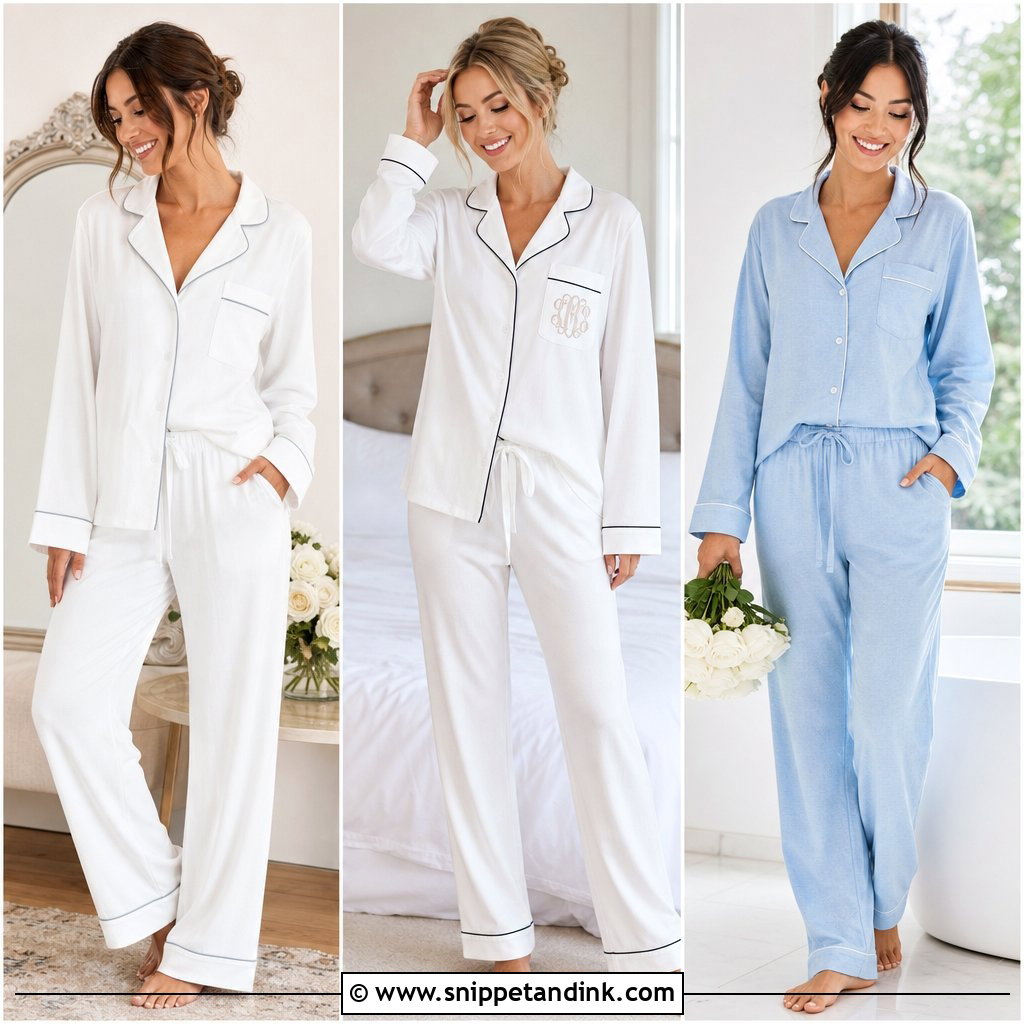
A bridal party set works when one detail is truly shared, whether that is the color, the fabric or the trim. My routine is to collect measurements early, order with time left for exchanges, and offer both shorts and long pants. I’d also leave slogans and dates off unless the group really wants them, since plainer sets get worn again. Before you settle on a color, think about the room you’ll be in, the season and the backdrop, then match everyone’s slippers and hand out zippered pouches for phones and lip balm.
How Satin, Cotton and Modal Behave by Hour Five
Every fabric here looks fine at seven in the morning. The difference shows later, after hours of sitting, reaching and drinking coffee in a warm room. Polyester satin creases across the lap and holds static, and I’ve watched many sets that looked crisp on the hanger turn rumpled before noon. Silk satin breathes better but water-spots, so keep drinks with lids nearby. Cotton poplin wrinkles yet still looks neat, and jersey and modal resist creasing but can cling once the room heats up.
If the set is new, I’d wash cotton in cold water before the day so any shrinkage happens at home, not after the wedding. Satin I’d leave unwashed, hang on a padded hanger and steam lightly from the inside. Pack each set flat on top of a suitcase, not rolled at the bottom.
A Small Kit That Saves Pajama Sets on the Day
Things go wrong with pajamas in predictable ways: foundation on a white collar, a popped button, a seam that gives when someone sits on the floor. I keep a few items in the suite for exactly these moments.
- A handheld steamer and a few padded hangers
- A lint roller, essential with black or navy sets
- Makeup-removing wipes and a dry cloth for blotting collars
- Safety pins, a needle and thread in the main colors, and spare buttons if the brand included them
- Fashion tape for a gaping placket on a set that can’t be exchanged in time
One more habit I recommend: have the bride put her set on before makeup, and keep a clean towel draped over her collar while the artist works. It takes ten seconds and protects the set she will most likely want to keep.
Comfort Wins the Wedding Morning
A good pajama set is one nobody thinks about once they’re wearing it. Buttons at the front, a waistband that gives, fabric suited to the season and sizes that actually fit will carry a group through the whole morning. Satin brings polish; cotton, modal and flannel bring comfort in their own seasons. Use the ideas above as a starting point, then put each person’s ease ahead of perfect symmetry, and the group will still look like they belong together.
You'll Like These Ideas:


Leave a Reply