
The getting-ready hour gives me some of my favorite frames of the whole wedding day: the bride laughing at the window, the dress hanging behind her, her mum doing up a necklace. The robe is in nearly all of them. It needs to cover you while you sit for hair and makeup, come off without touching a finished hairstyle, and look good under window light rather than just in a product photo. Satin, lace, embroidered names, feather trim, breathable cotton and properly inclusive sizing all have a place. Before picking one, think about how warm the room will be, how your hair will be styled, and the colors your photographer will be working with. An inner tie, a secure belt, pockets and fabric that steams easily do more for those pictures than any trim.

What a Robe Has to Get Through Before the Gown Goes On
From behind the camera, I see the same few problems every wedding morning, and nearly all of them come from the robe and what’s underneath it.
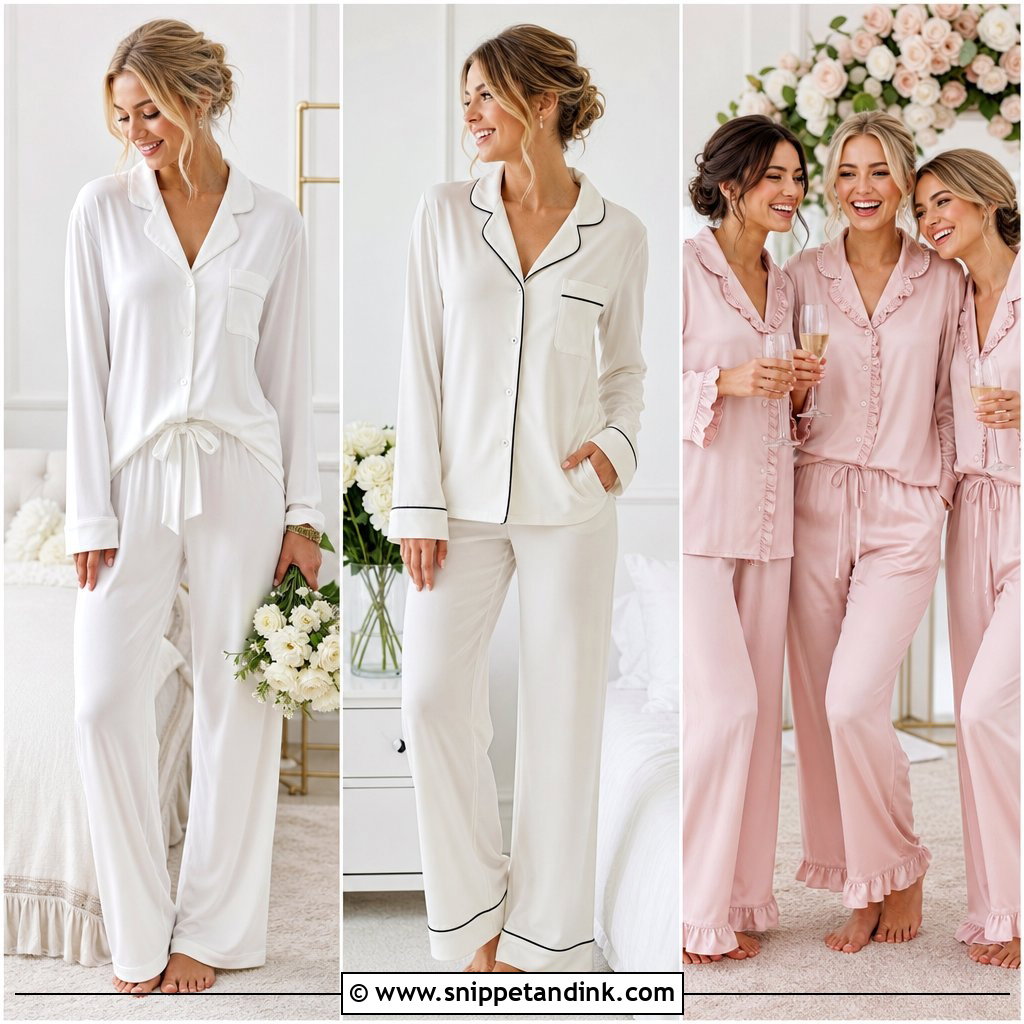
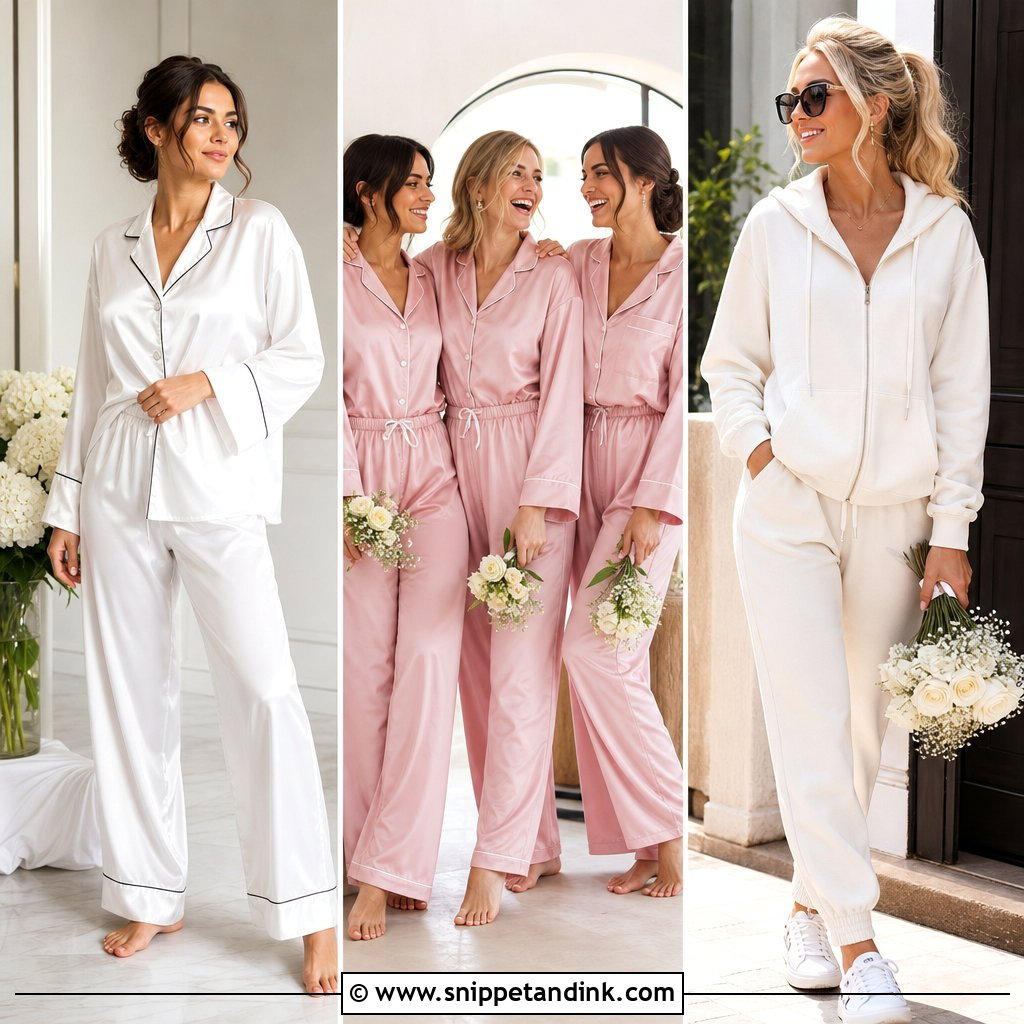
- It has to open at the front. Once hair and makeup are done, nothing should go over your head, including the layer under the robe. Button-front pajamas or a strappy cami you can step out of are the safe choice.
- Makeup transfers. Foundation and setting spray mark necklines and collars, especially on dark or silky fabric. A towel or cape over the robe during makeup saves it for the photos.
- Bra straps and tan lines show. If you’ll wear a strapless dress, wear a strapless bra or no straps under the robe from the start so you don’t have marks on your shoulders when the gown goes on.
- Robe length matters when you sit. Short robes fall open in the makeup chair. Knee length or longer stays put.
Try the whole outfit on a week before: sit in a chair, cross your legs and lift your arms like someone is pinning your hair. If you’re adjusting it constantly, so will every frame.
1. White Satin Bride to Be Robe
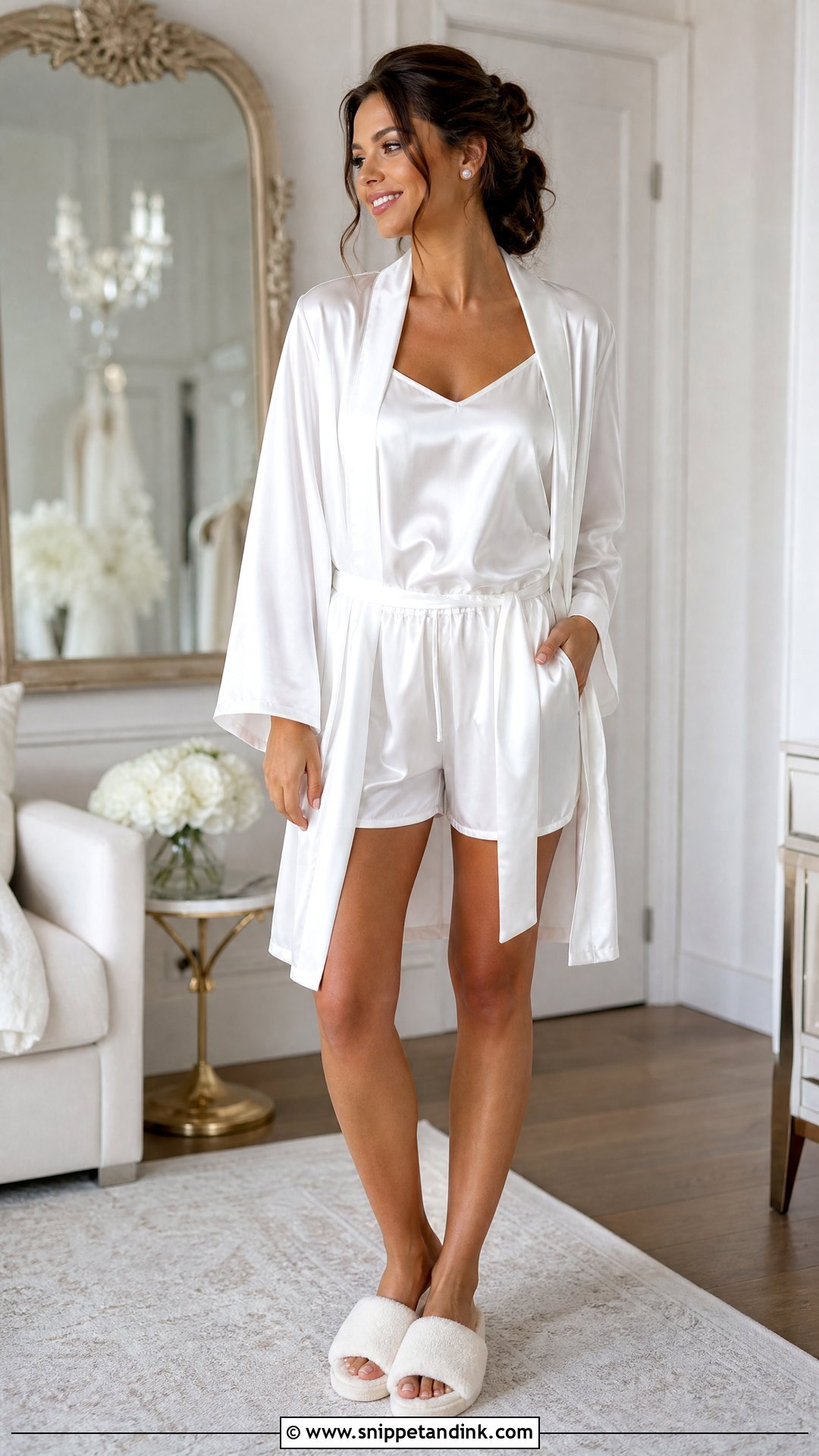
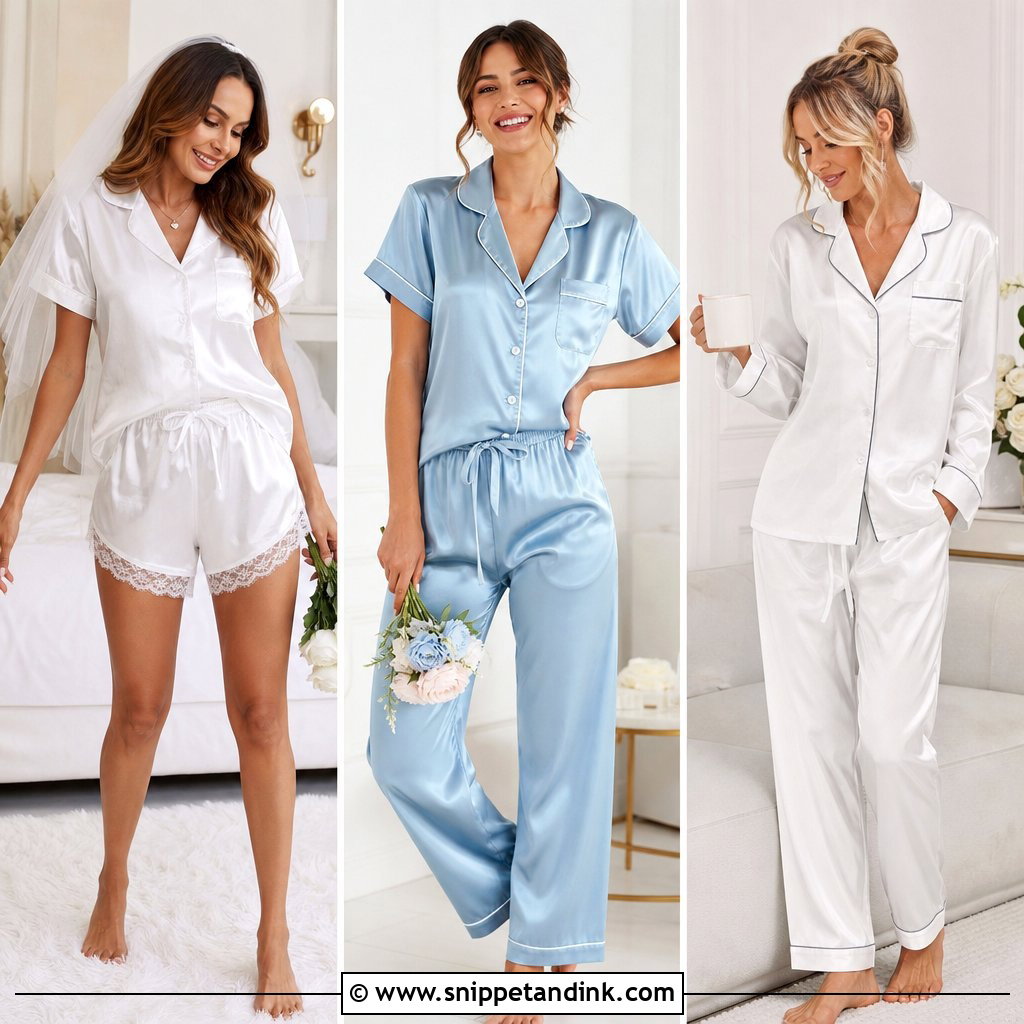
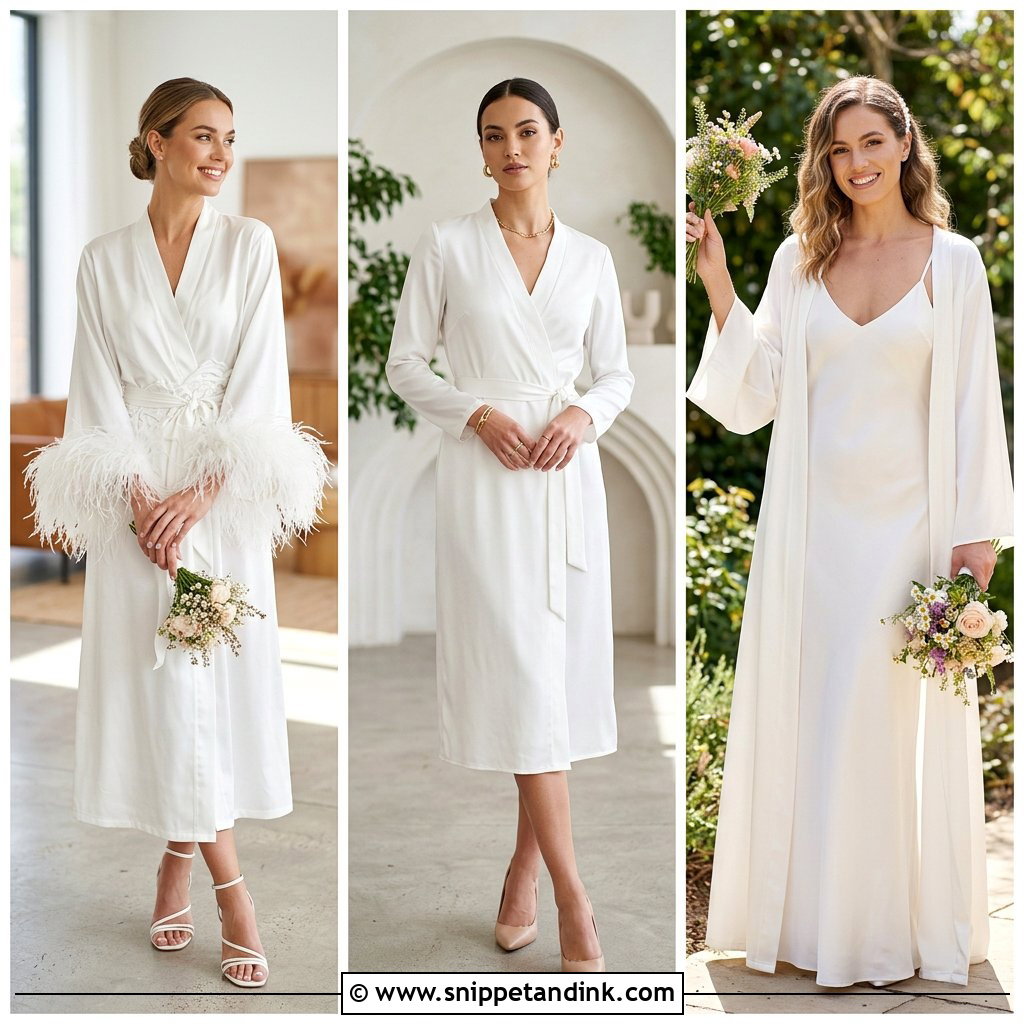
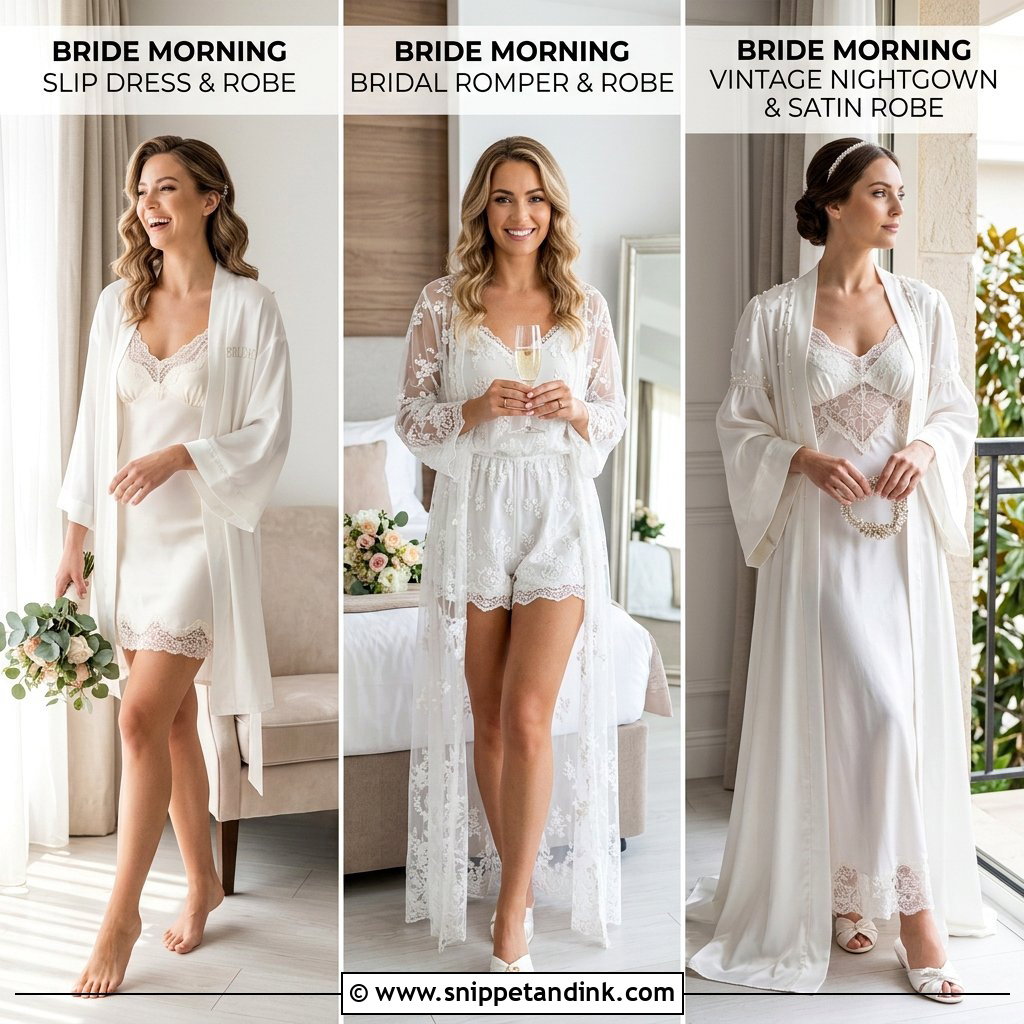
A white satin robe is the one most brides picture, and it’s popular for good reason: satin catches window light along every fold. What I’d watch is the shine level. Very glossy polyester satin can blow out to flat white in a bright room, so a softer, matte-backed satin keeps more detail. Knee length, an inner tie and draped sleeves are easiest to live in. Wear a white cami and lounge shorts underneath so you stay covered when you sit or cross your legs. Cushioned white slippers and pearl studs are enough; your real jewelry comes later. A loose bun or a single clip keeps hair out of the way before styling.
2. Lace Trim Bride to Be Robe
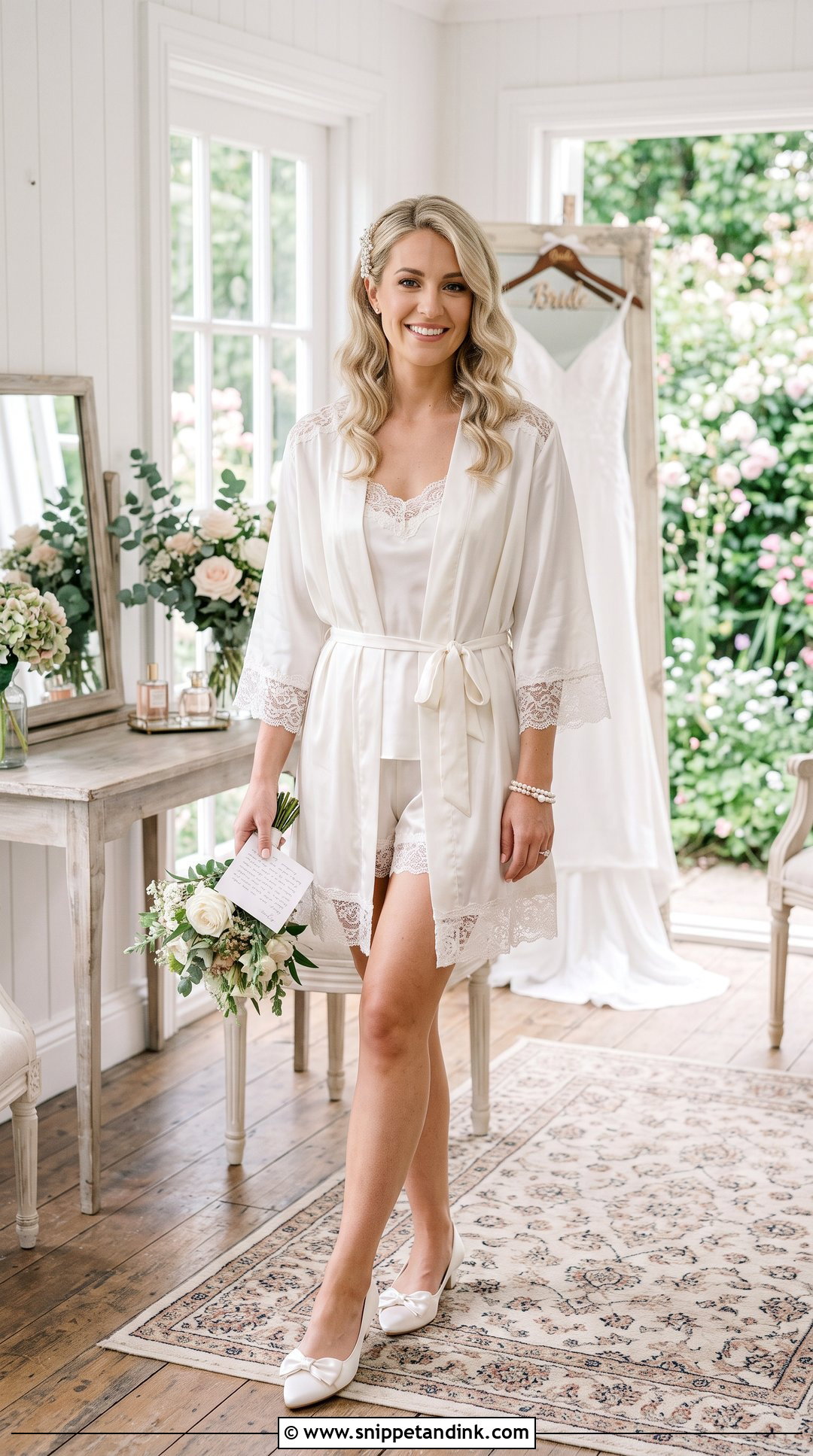
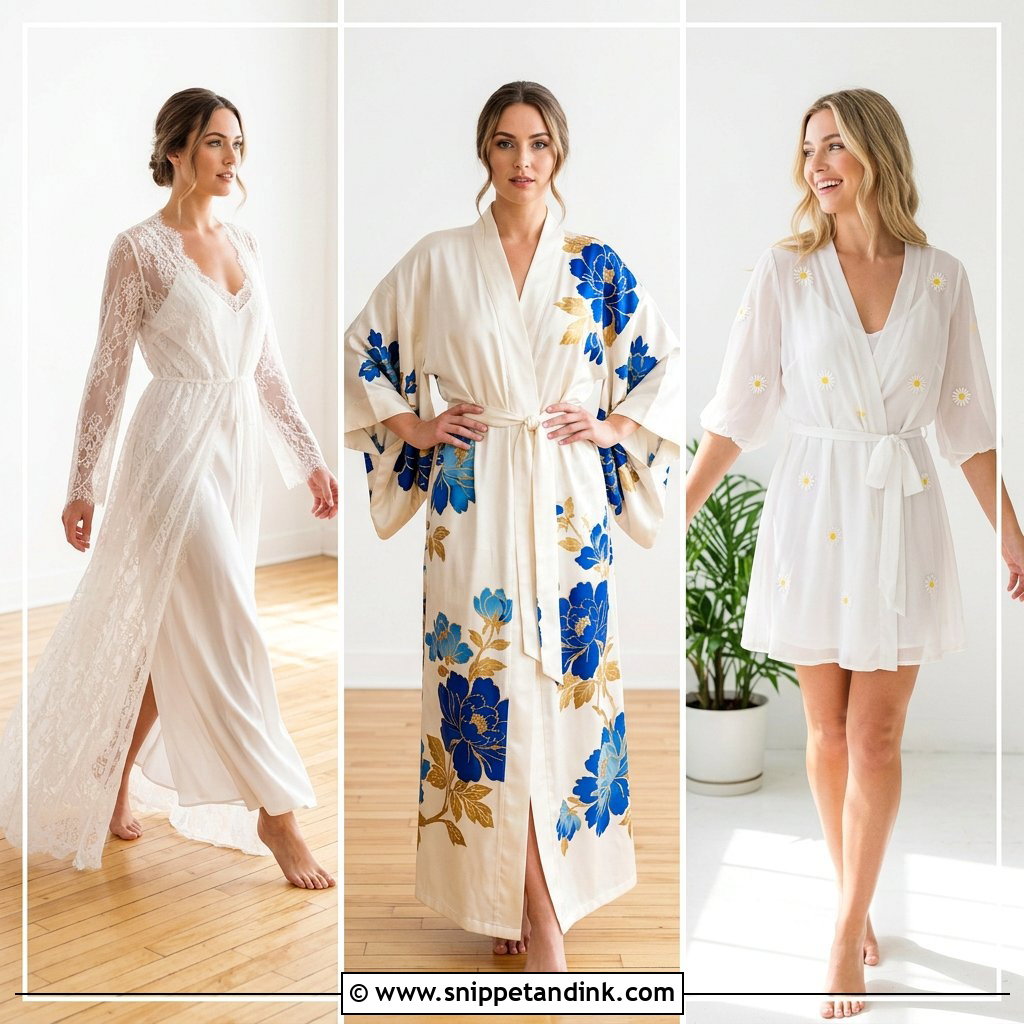
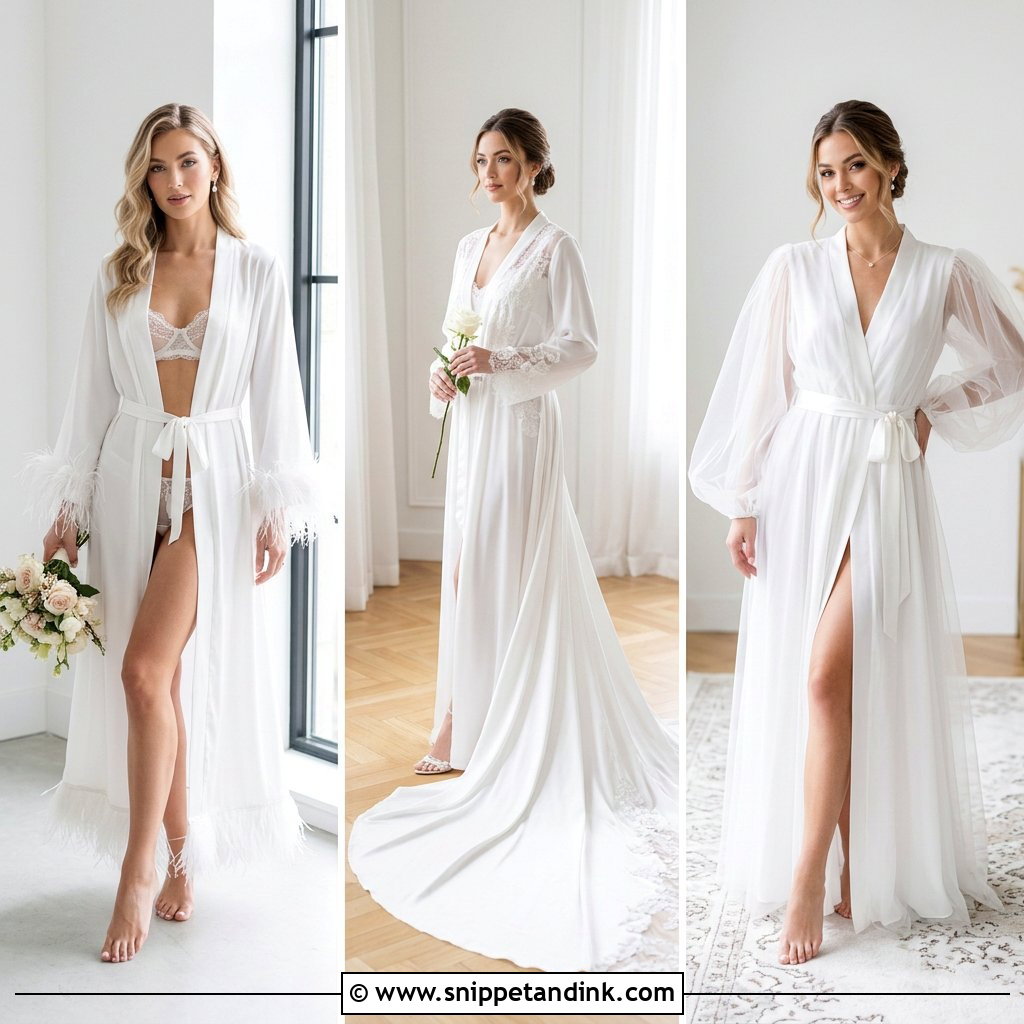
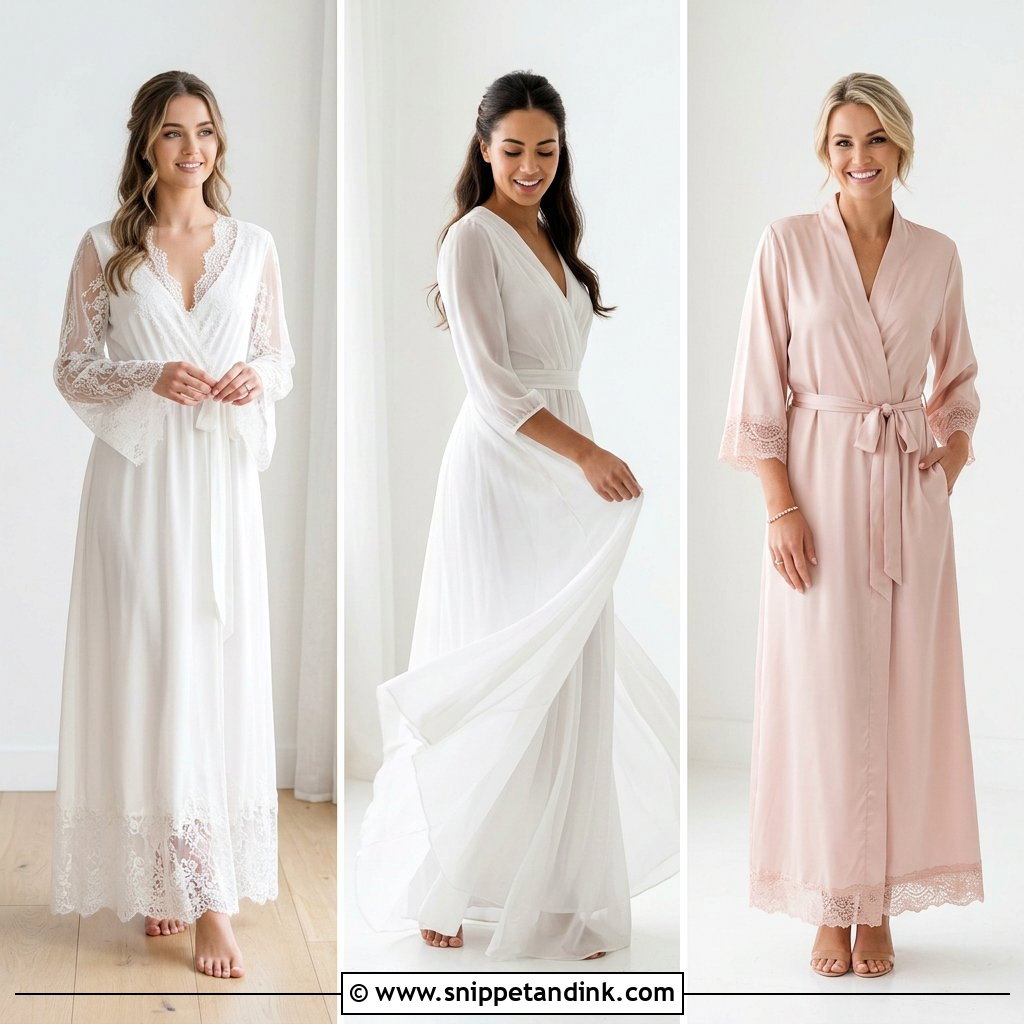
Lace edging gives a robe some texture to photograph without turning it fussy. A white or ivory satin body with lace on the cuffs and hem works best; in close-up detail shots, that lace reads beautifully against skin. Layer it over a modest matching cami and shorts. Pointed satin slippers, small pearl earrings and a fine bracelet complete it. Tie the belt at the natural waist and give it a final tug before any portrait, because a loose belt makes even a good robe look like a bathrobe on camera. A pearl claw clip holds long hair until the stylist starts. It suits garden, estate and vintage-leaning weddings well.
3. Long Silk Bride to Be Robe
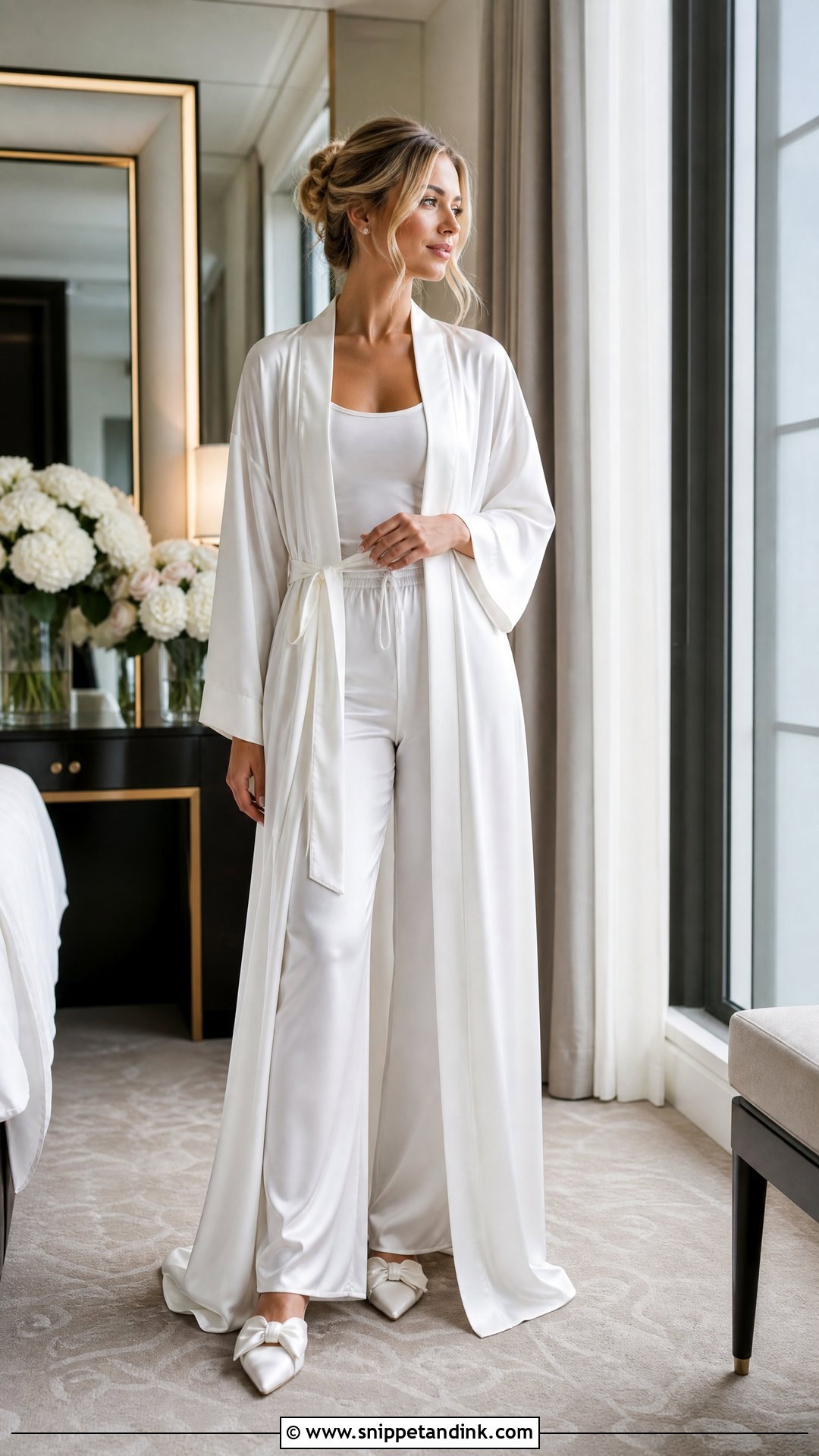
Floor-length silk is the robe I love to photograph walking: it trails slightly and moves with each step across a bright suite. Wide sleeves, a secure inner tie and a hem that stops just above the floor so you don’t step on it. A smooth white tank and soft wide-leg lounge pants underneath add coverage without bulk. Flat satin mules, simple studs and a soft hairband that slides off before styling finish it. Real silk water-marks easily, so keep drinks and setting spray well away and check the care label before you steam it. It’s calm rather than flashy, and it fits a formal hotel or editorial-style wedding.
4. Feather Trim Bride to Be Robe
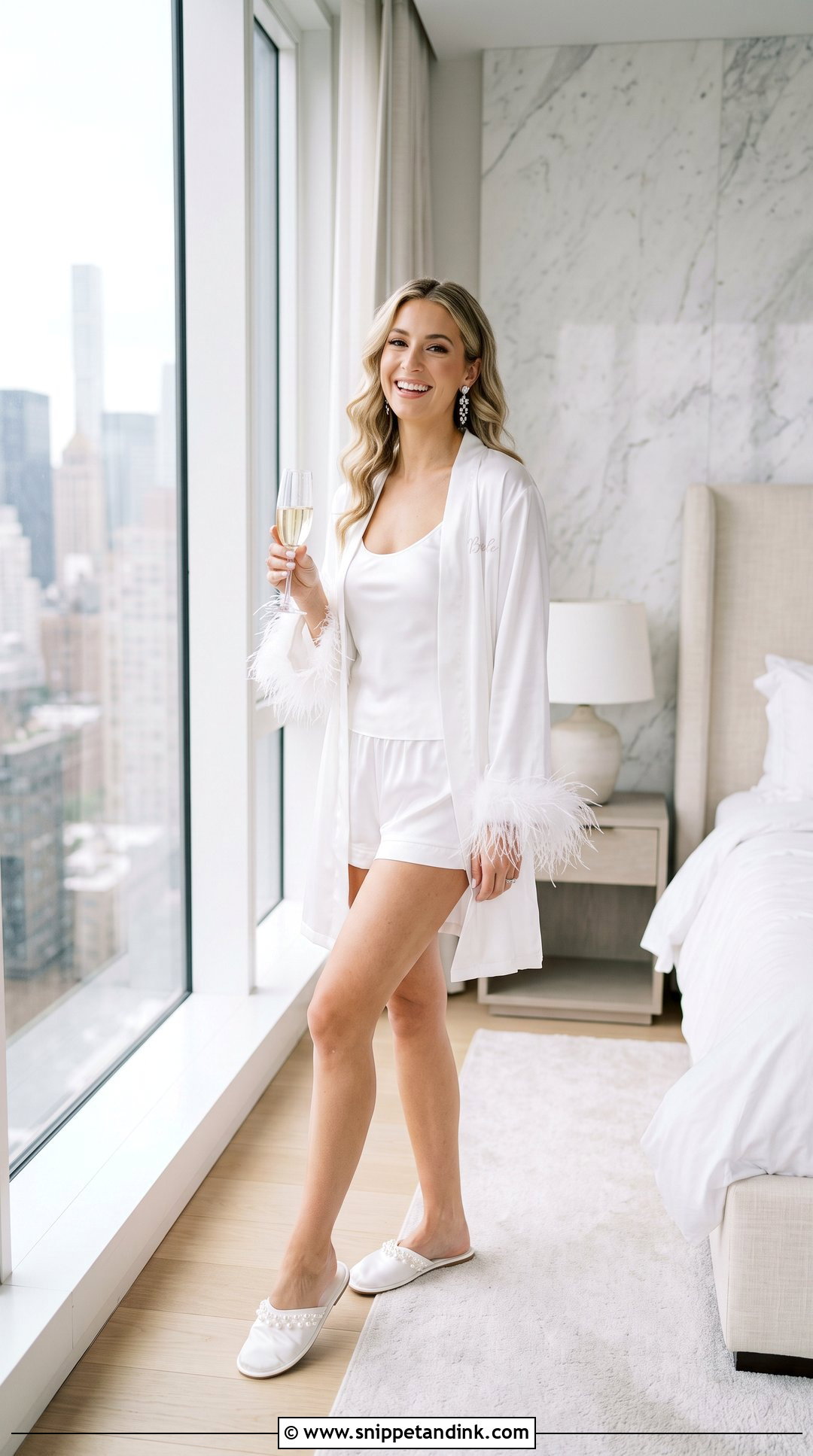
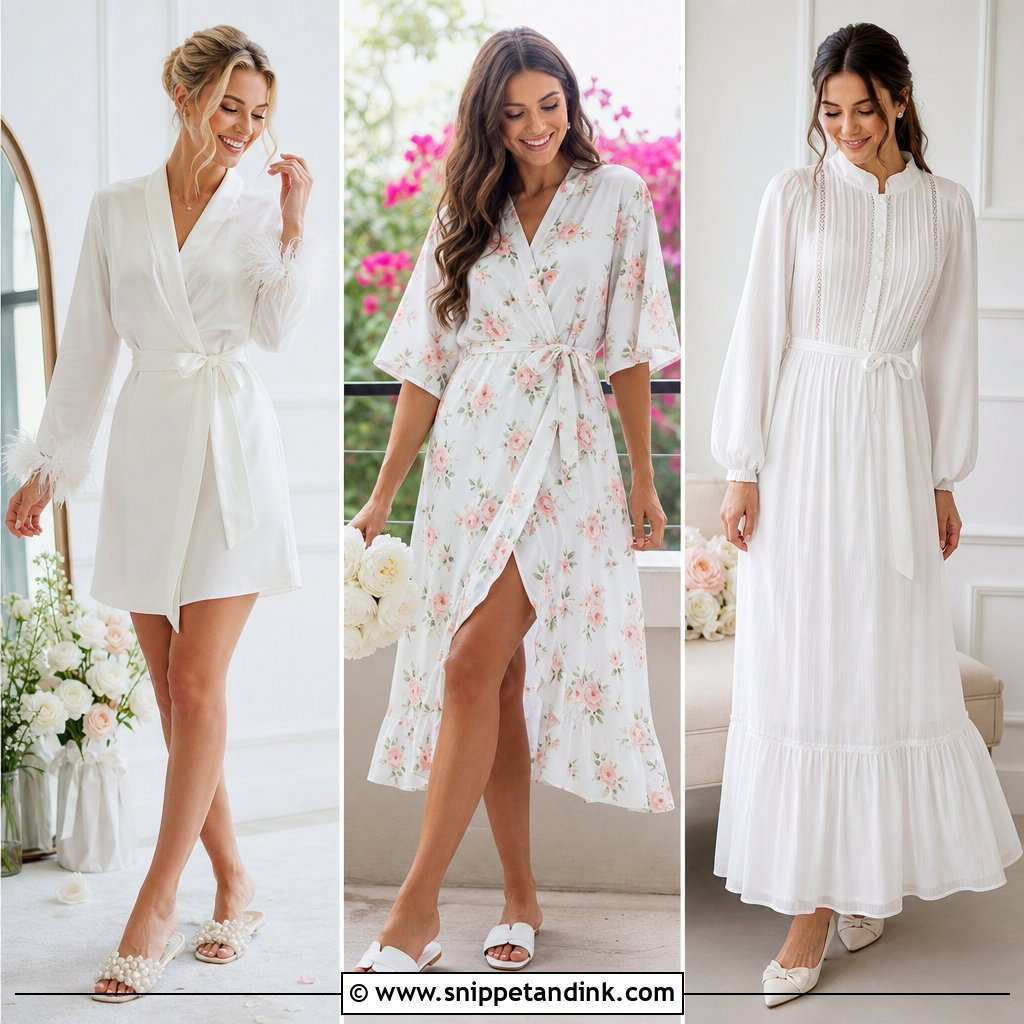
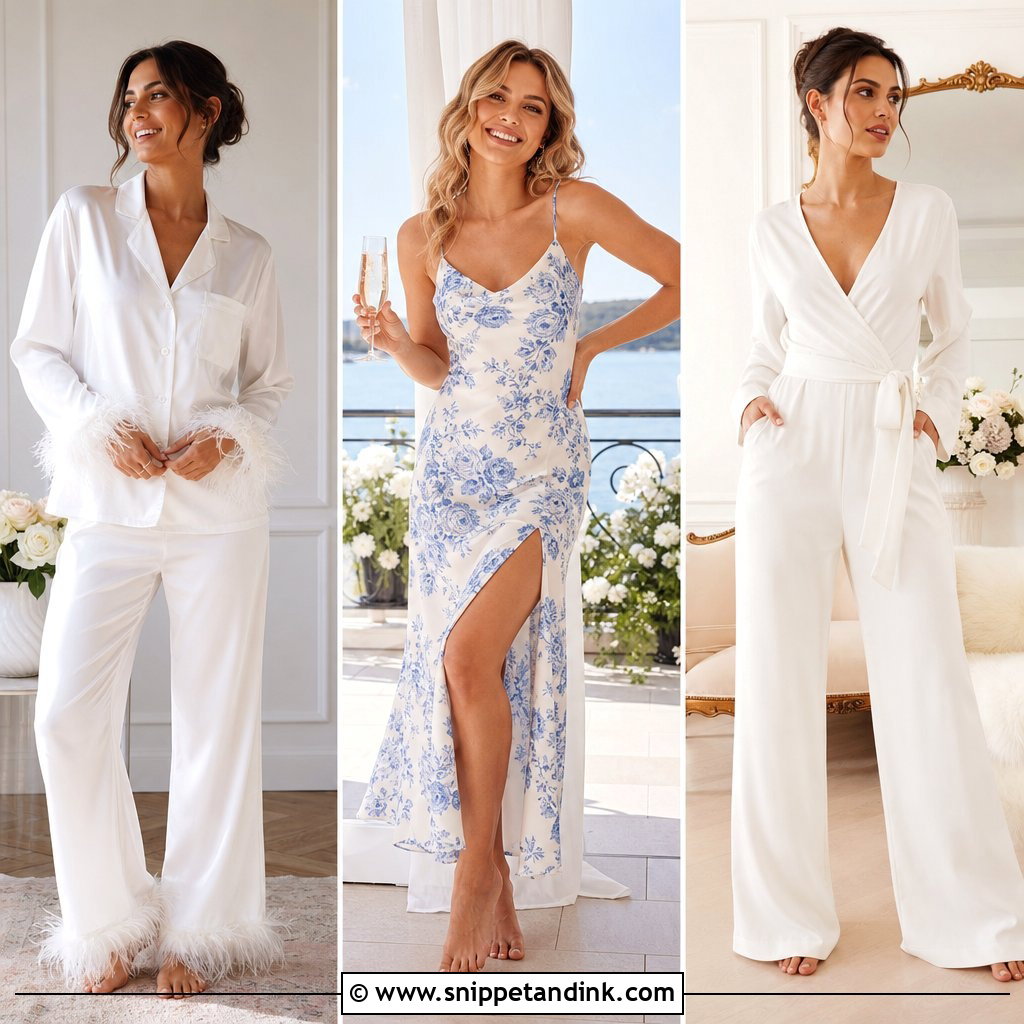
Feather trim moves in a way satin alone can’t, and that movement is what makes a fun frame. I’d keep it light and to the cuffs, not the whole hem, because feathers end up in lipstick, in breakfast and stuck to the makeup artist’s brushes. Pair it with a fitted white camisole, tailored lounge shorts, and sleek satin slippers. Crystal studs and a simple ponytail keep it modern. Watch sleeve width: very wide cuffs drag through foundation on the counter. Detachable feather cuffs are the clever version, since they come off once the makeup starts. It fits a glamorous city wedding or a bride who wants a bolder getting-ready shot.
5. Personalized Bride to Be Robe
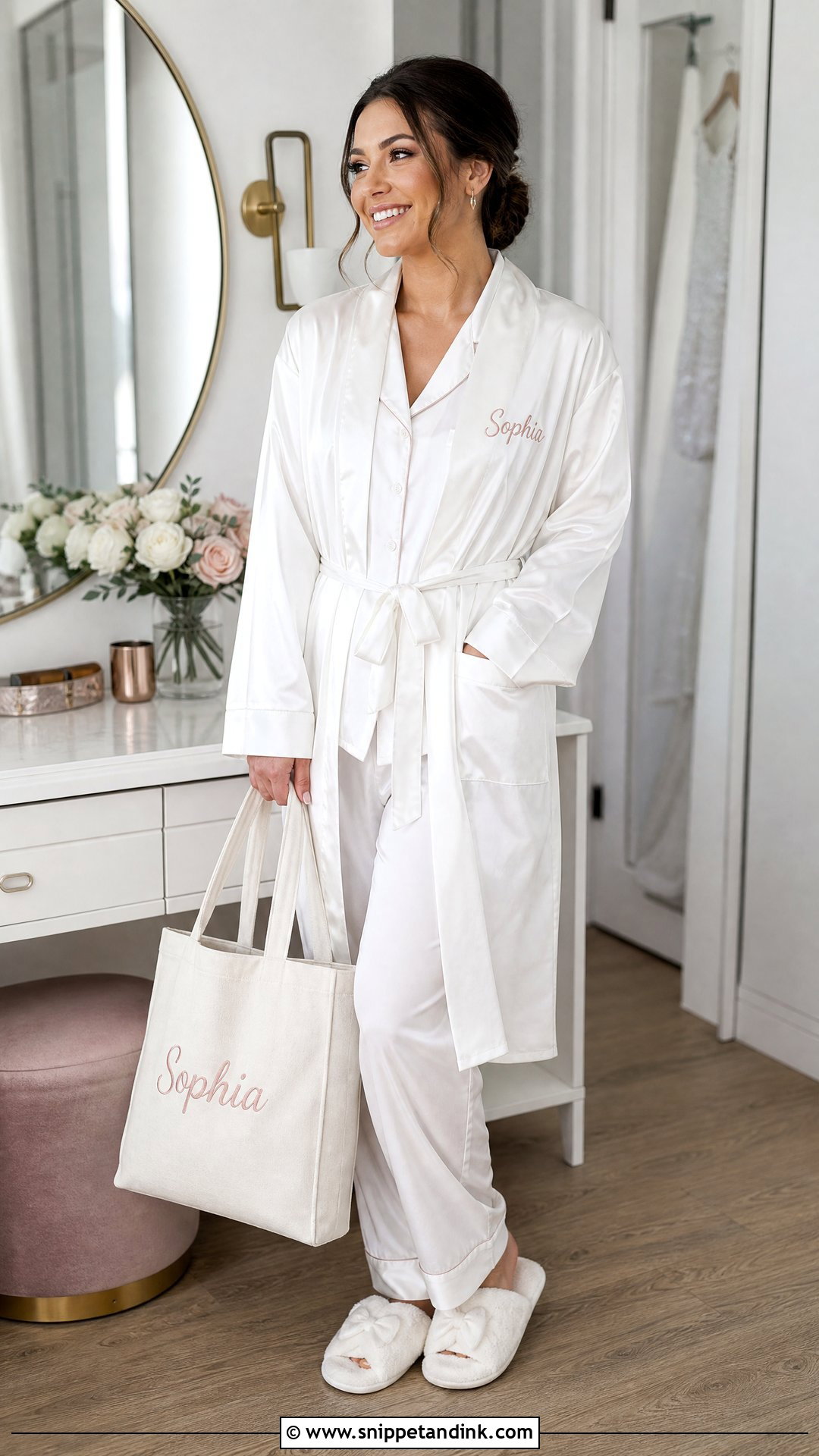
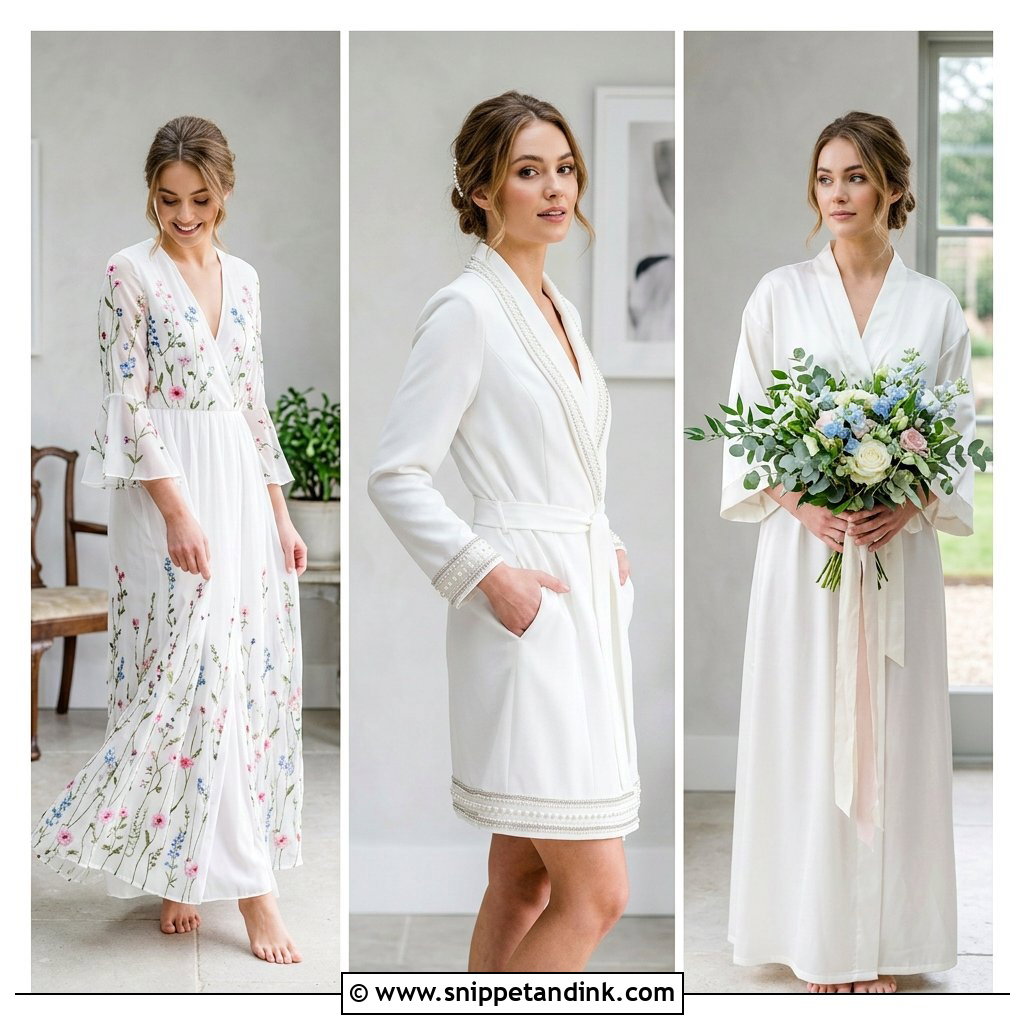
A personalized robe turns a one-morning outfit into a keepsake. Embroider the first name, initials, new surname or wedding date on white satin, soft cotton or a matte fabric. I’d keep the stitching small on the chest or cuff; huge lettering across the back only shows when you’re facing away from the camera, which is rarely the shot anyone wants. Wear it over coordinated button-front pajamas with neutral cushioned slippers. A personalized tote can carry your morning things. Small hoops and a neat clip finish it. Proofread every letter twice and order early, as embroidery adds production time.
6. Floral Bride to Be Robe
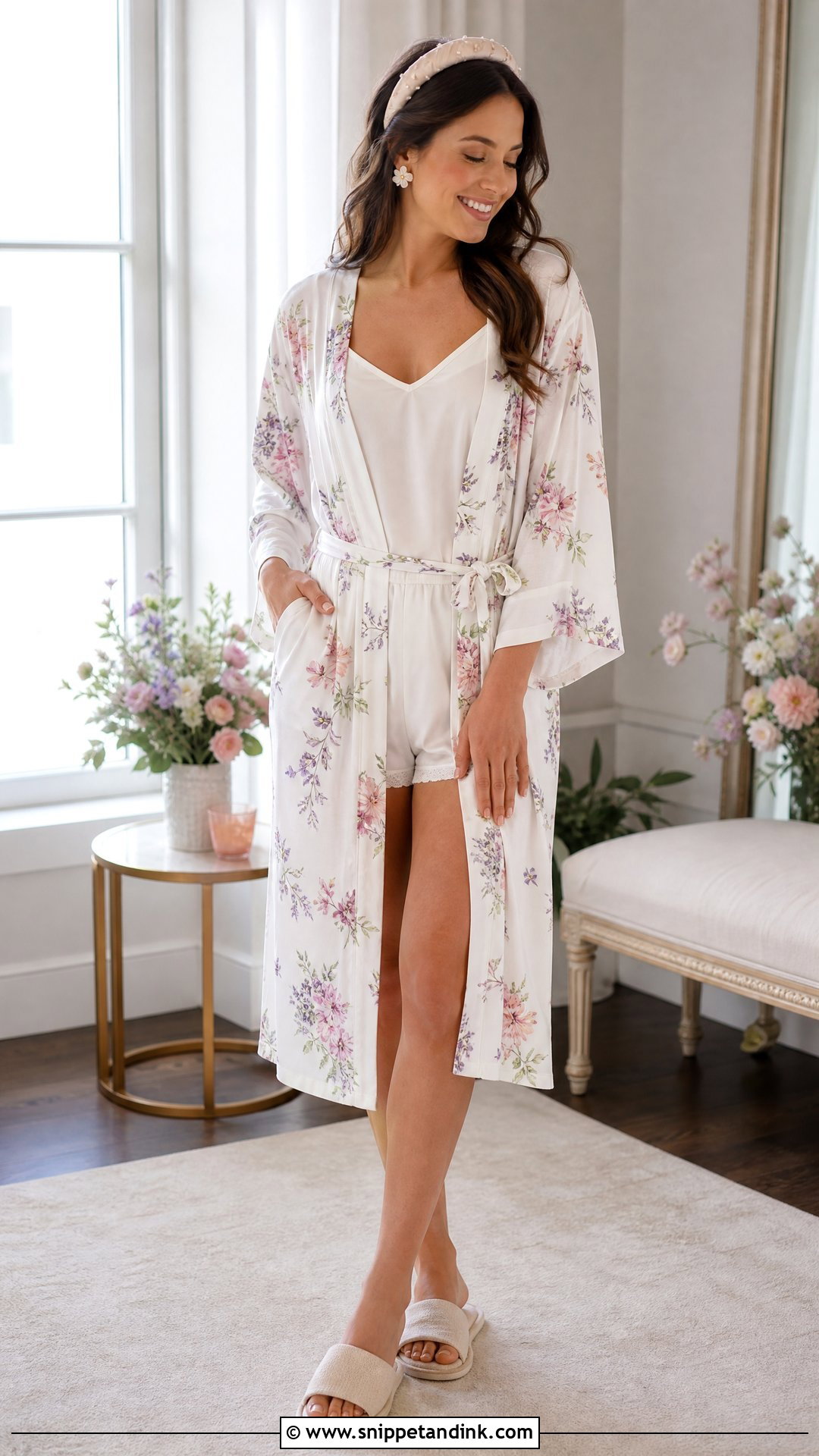
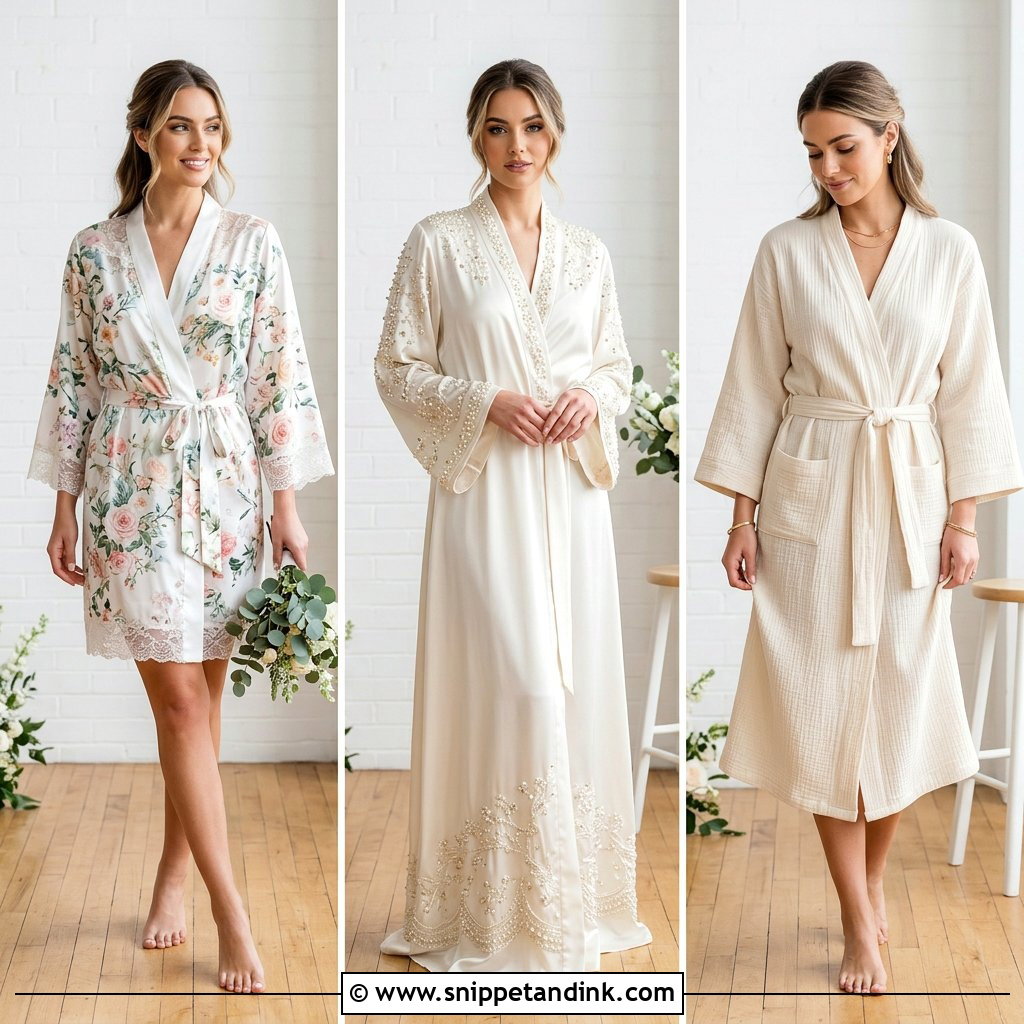
Florals make the morning frames feel warmer, especially when the print picks up a color from the bouquet. Look for a light background with soft blue, blush, lavender or green flowers, worn over a plain cami and shorts so the print doesn’t fight the base layer. Neutral slides, tiny floral earrings and a headband in one shade of the pattern finish it. If bridesmaids wear related prints, put the bride on a white ground or with a special trim so she’s still the obvious center of a group shot. It suits spring and garden weddings, and it’s easier to wear again than a robe with bridal lettering.
7. Cotton Waffle Bride to Be Robe
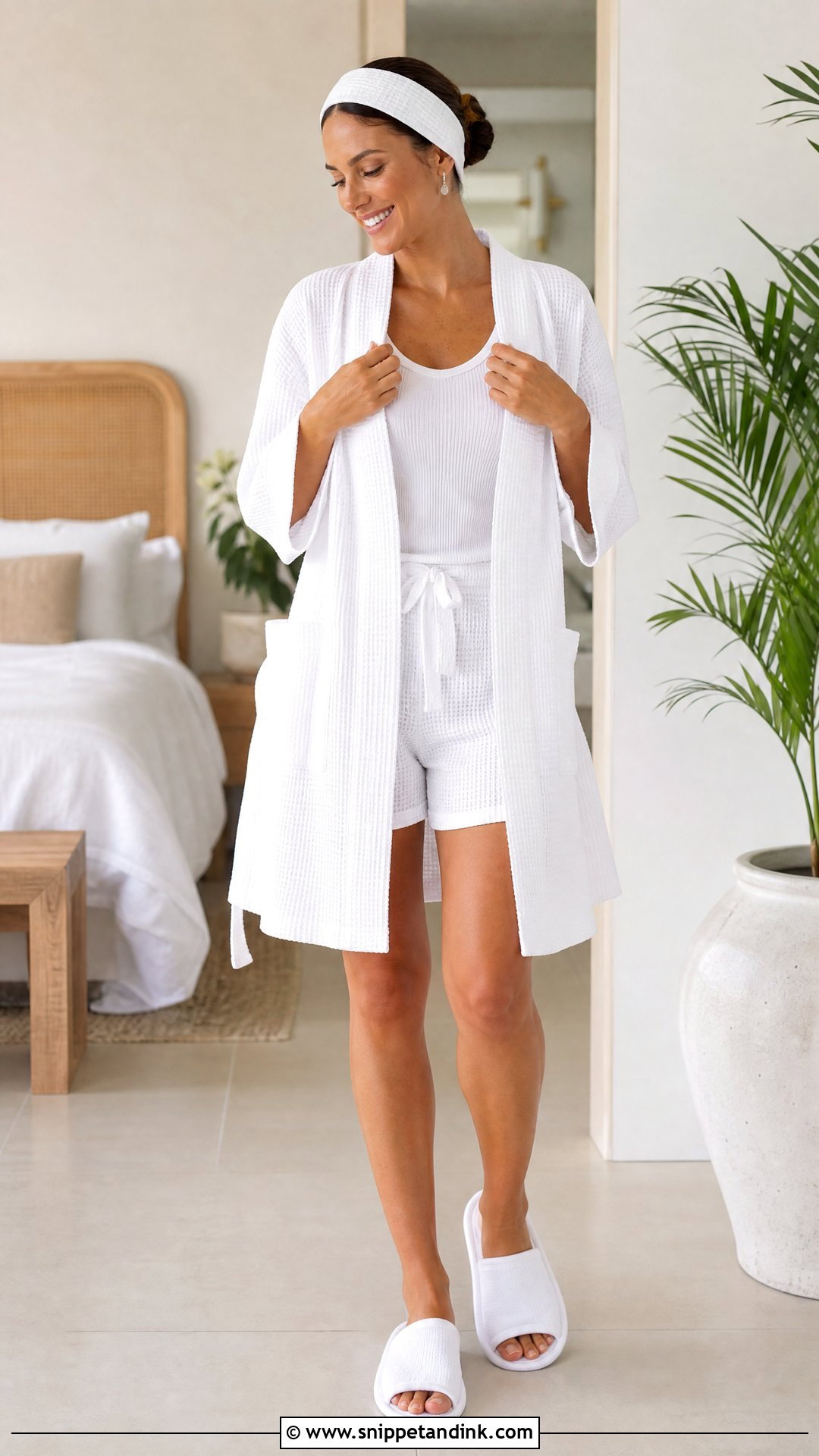
Hair, makeup, breakfast and photos can take three or four hours, and a cotton waffle robe is the one you’ll actually want on by hour three. It breathes far better than glossy satin in a crowded suite. Go over a light ribbed tank and cotton shorts. White spa slippers, studs and a terry headband for skin prep, with one warning: take the headband off well before hair starts, since it can leave a crease along the hairline. Pockets hold lip balm and tissues. In photos, the waffle texture reads as relaxed and spa-like rather than glamorous, and it suits a warm resort or casual wedding.
8. Linen Bride to Be Robe
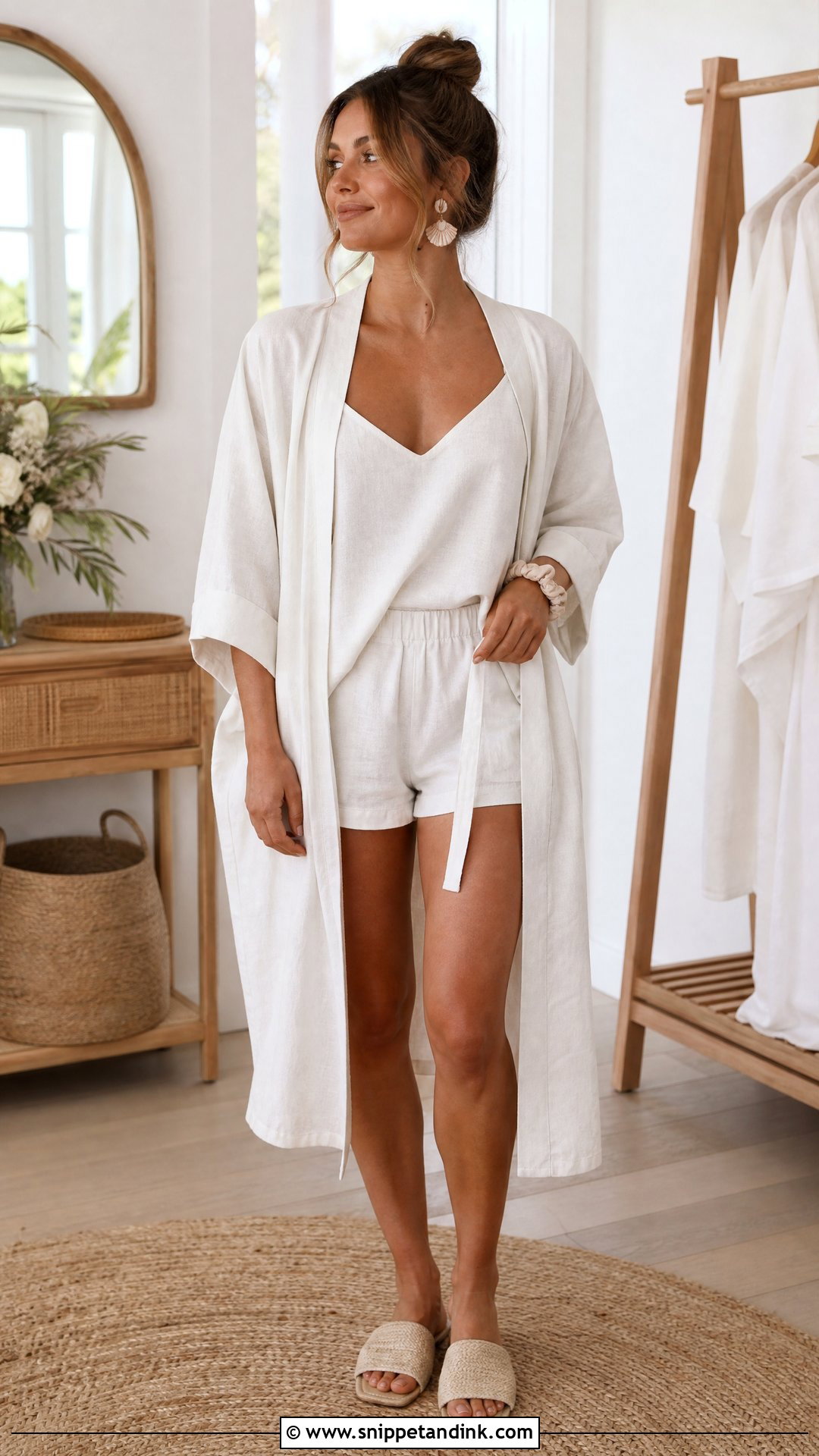
Linen looks natural against wood, greenery and window light, which makes it a natural match for a coastal or outdoor wedding. Choose soft ivory, a relaxed wrap and three-quarter sleeves. A white linen-blend cami and pull-on shorts sit underneath. Woven slides, small shell earrings and a fabric scrunchie complete it. Linen creases the second you sit, so steam it before the photographer arrives; a few soft creases look natural, deep lap folds don’t. A slightly longer hem gives coverage as you move around. It’s the robe for brides who would rather have texture than shine.
9. Sheer Chiffon Bride to Be Robe
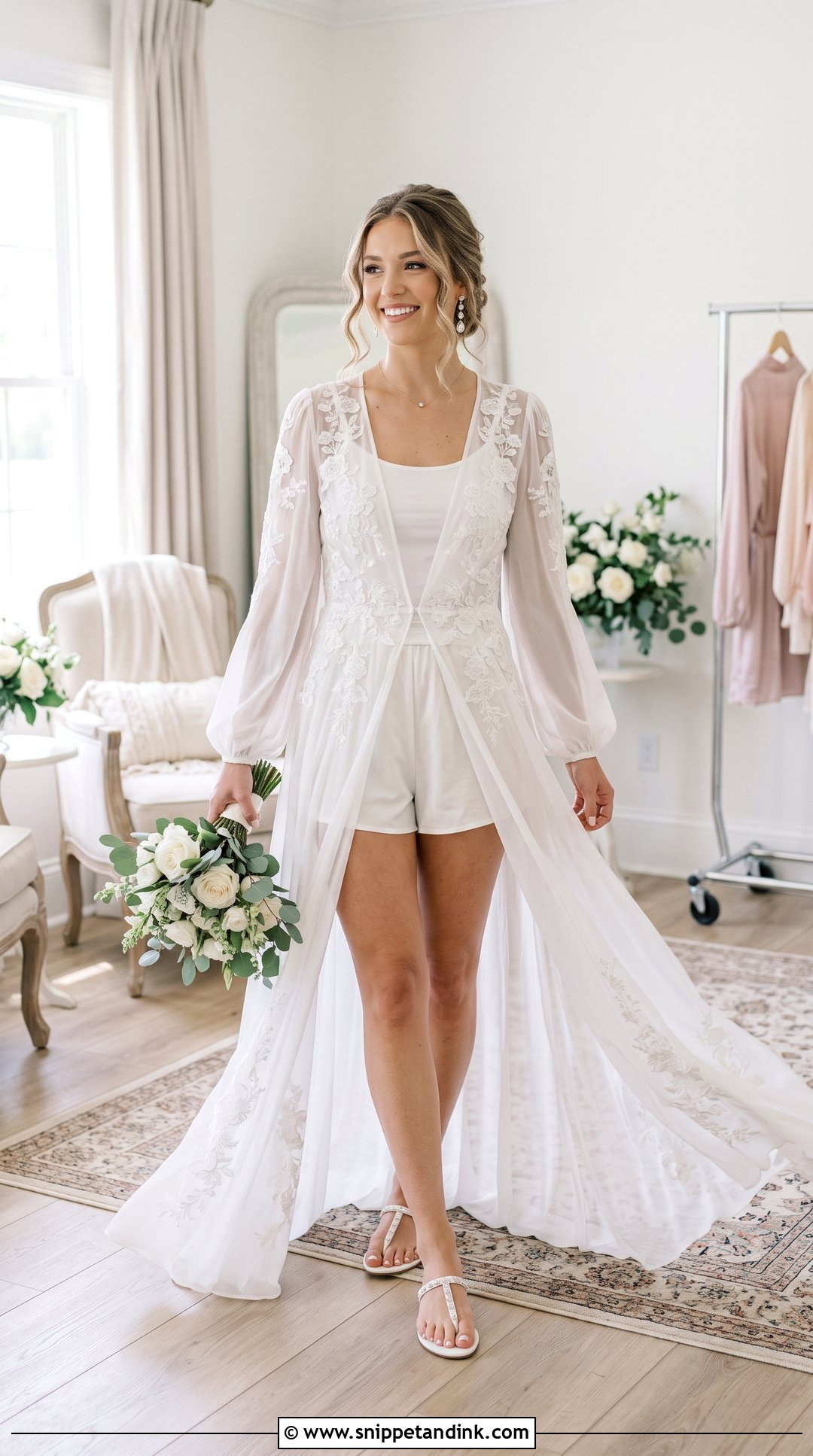
Sheer chiffon is lovely in backlight, which is exactly where it can catch you out. Against a bright window, it becomes almost transparent, so an opaque white tank and full-coverage lounge shorts underneath aren’t optional. A long white robe with flowing sleeves and subtle floral appliqués suits it. Delicate flat sandals or white satin slippers, small crystal earrings and a low ponytail finish it. Stand by a window and take a phone photo of yourself in it before the day. A secure inner closure keeps the layers lined up when you move. It’s made for a bright spring suite.
10. Pearl Bride to Be Robe
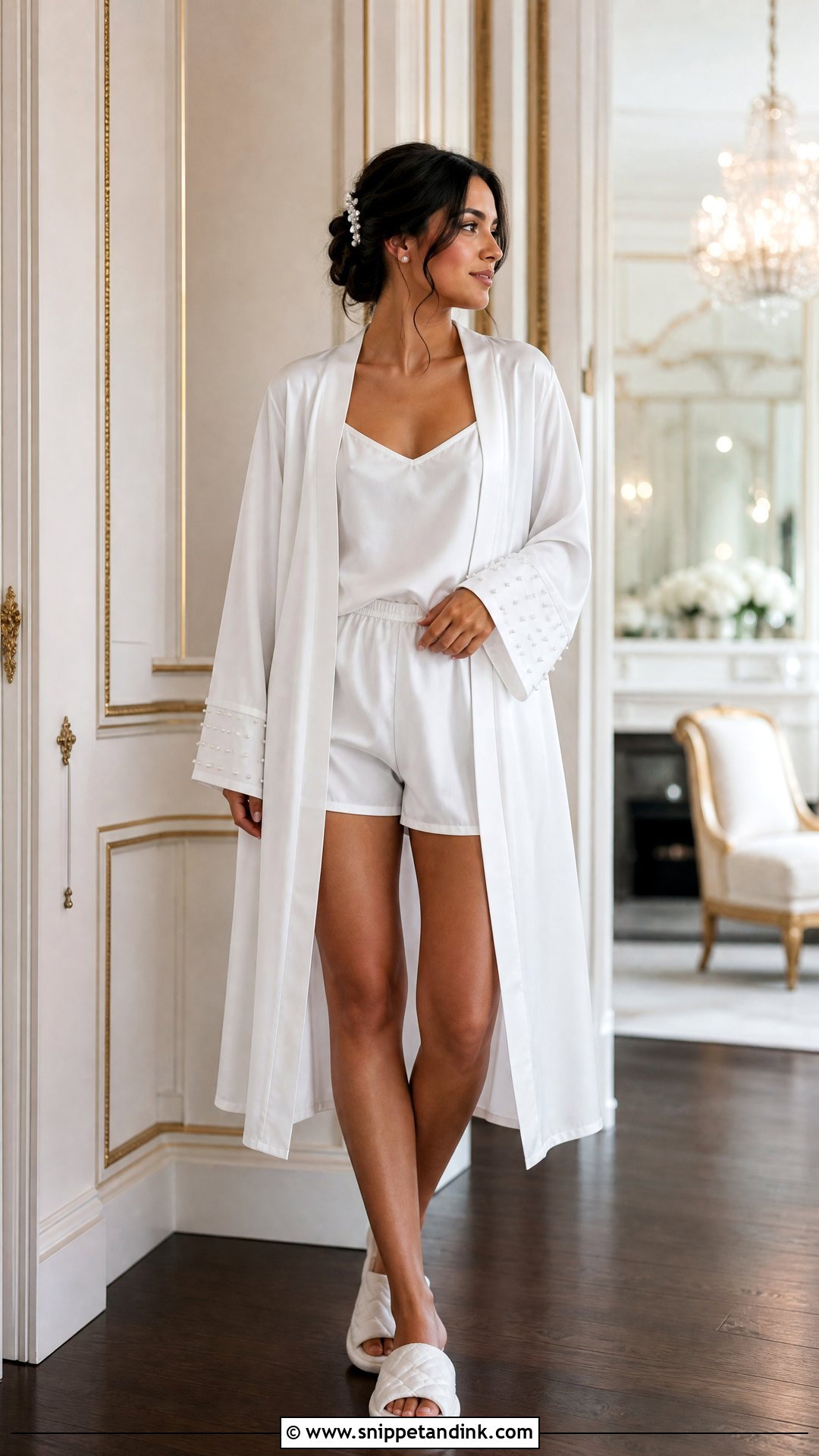
Pearls on a robe echo classic bridal jewelry without any extra pieces. A white satin or matte crepe robe with scattered pearls on the cuffs, shoulders or back works well. Keep the base layer plain: a cami and knee-length lounge shorts. Pearl studs, quilted white slippers and a small pearl clip complete it, and I’d stop there, since pearl necklaces, headbands and bracelets on top start to look like costume. Check every pearl before the morning and pack a needle and thread, because one popping off onto the carpet tends to happen mid-shoot. It fits a ballroom or country club wedding.
11. Bow Sleeve Bride to Be Robe
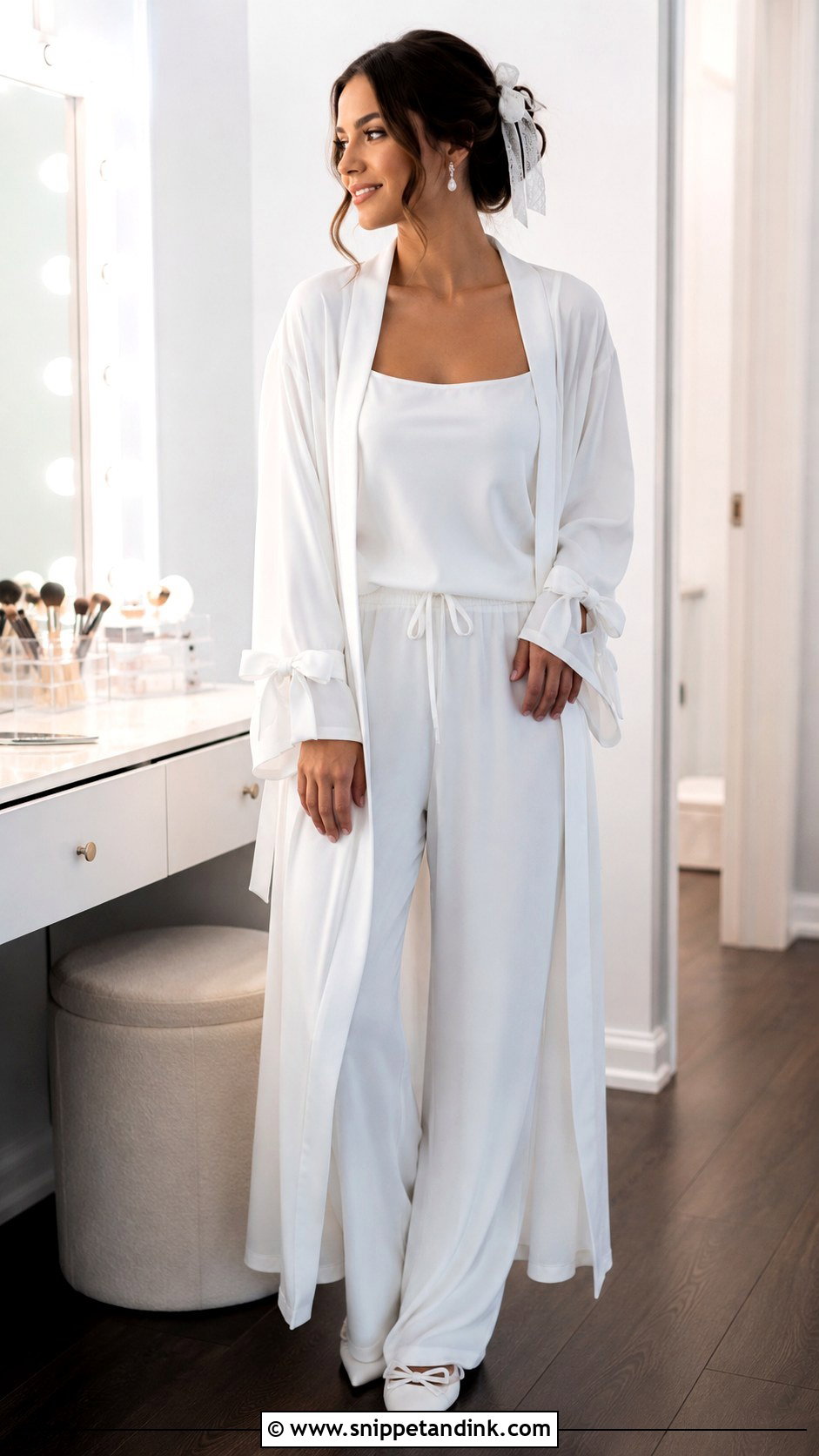
Small bows at the cuffs keep a robe sweet without going into lace. White crepe or satin with neatly tied bows, a square-neck cami and matching lounge pants is the combination. The longer base gives you coverage in the makeup chair, and the robe slides off without brushing finished hair. Pointed slippers, fine drop earrings and a ribbon hair tie for the early hours complete it. Keep the bows to the sleeves or belt; bows everywhere crowd the frame. It reads well both in close-up detail shots and in full bridal party portraits.
12. Something Blue Bride to Be Robe
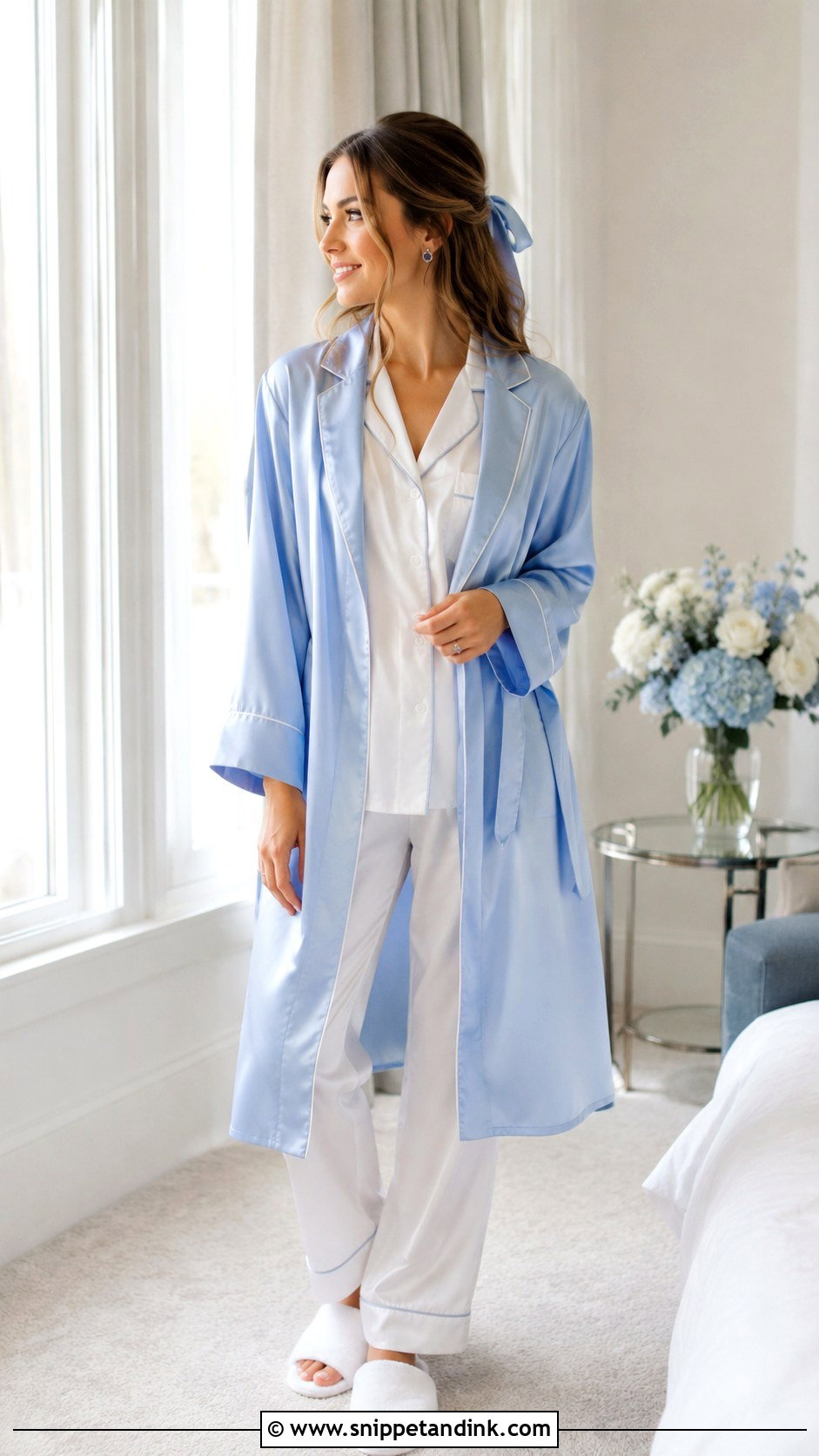
A pale blue robe is an easy way to carry something blue into the morning photos. Powder-blue satin or soft cotton with white piping, worn over a white button-front pajama set, gives clean contrast. Add white slippers, blue gemstone studs and a satin ribbon in the hair that comes out before styling. If bridesmaids go a deeper blue, the bride’s lighter shade stands out in group frames. Pale blue also reflects nicely onto skin, unlike some cooler greys. It’s easy to wear again on the honeymoon.
13. Blush Bride to Be Robe
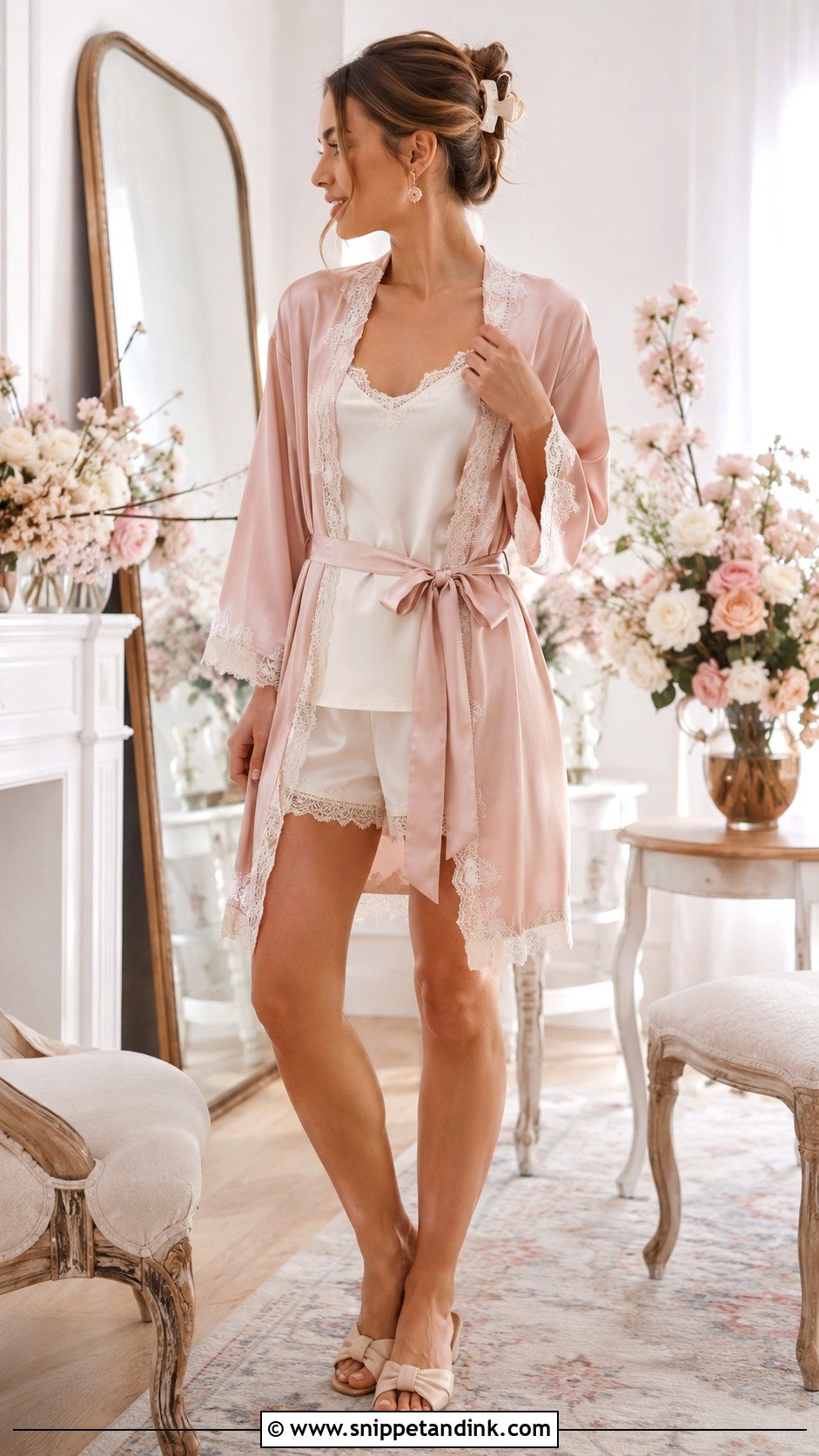
Blush is warm against skin, but not every blush behaves on camera. Some shades turn bubblegum in warm indoor lighting, so hold the robe near your face under the suite’s lamps and by a window before deciding. A dusty blush with ivory lace trim over an ivory cami and shorts is the version I’ve found most flattering. Neutral satin mules and rose-gold earrings keep the palette light, with a cream claw clip for the hair. Bridesmaids in mauve, champagne or florals complete a soft group look. It suits a spring wedding or an elegant indoor venue.
14. Champagne Bride to Be Robe
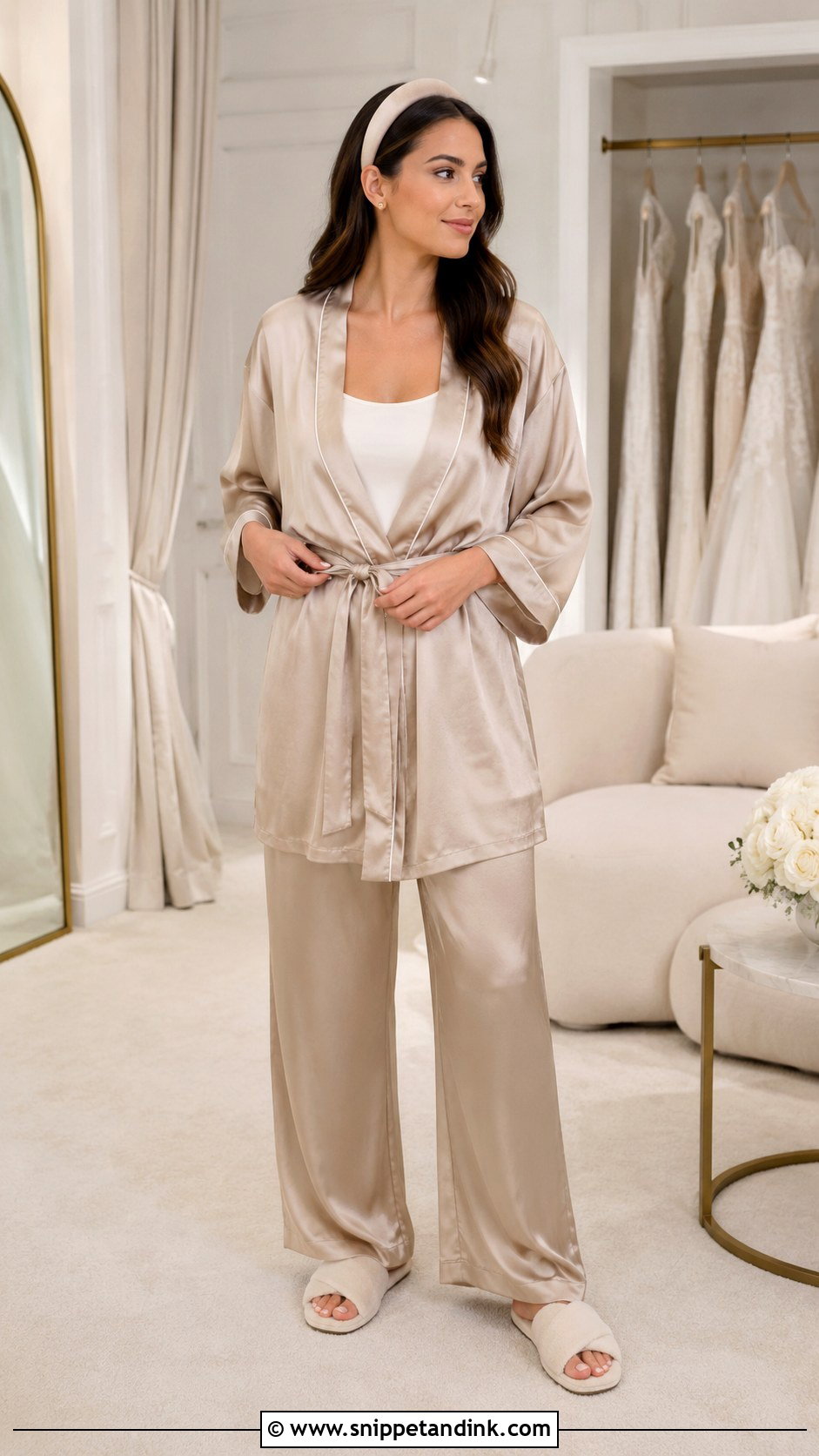
Champagne satin is the robe I’d recommend to brides who look washed out in bright white. Pick a knee-length wrap with ivory piping, an inner tie and side pockets, layered over an ivory tank and champagne wide-leg pajama pants. Cream open-toe slippers, gold studs and a padded neutral headband finish it. The slightly different neutrals add depth. One warning from editing: under warm tungsten lamps, champagne can drift toward yellow, so turn off the overheads and use window light for the robe portraits. It sits well with gold, beige and ivory palettes.
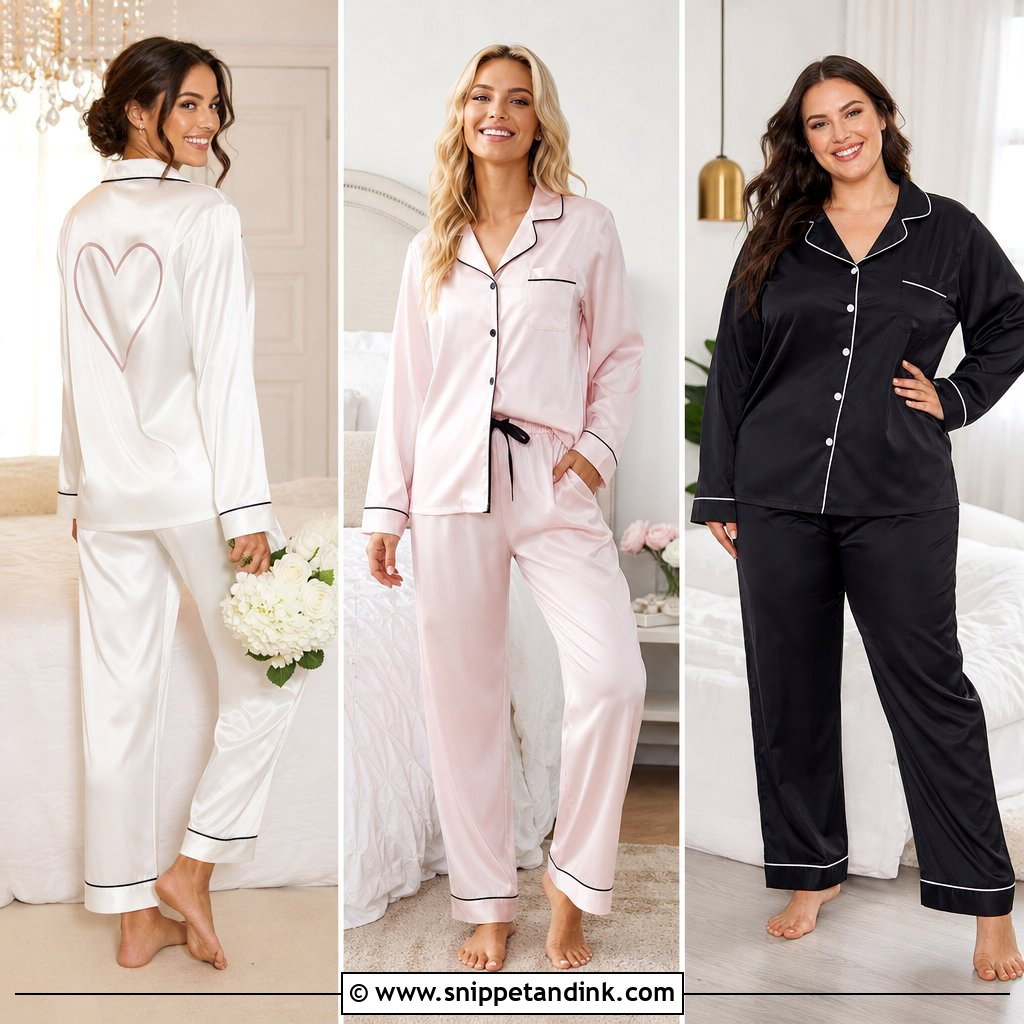
15. Black Bride to Be Robe
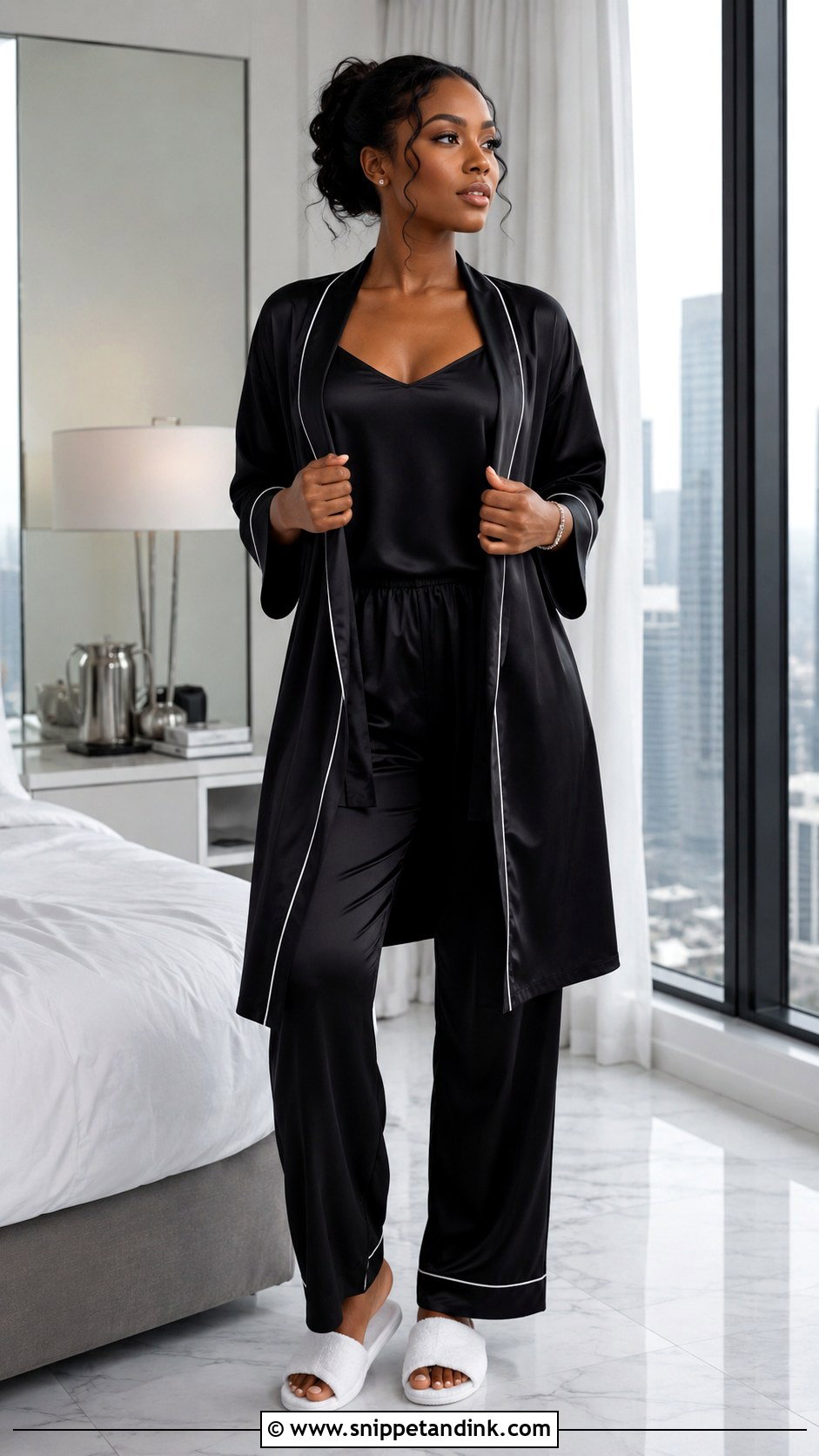
A black satin robe surprises people, and it photographs with real contrast against white bedding and a white gown on the hanger. White piping or small “Bride” embroidery keeps it clearly bridal. Wear it over a black cami and relaxed lounge pants. White slippers, crystal studs and a silver bracelet bring light near the face. If the bridesmaids are in white or pale grey, the bride stands out instantly in group frames. Black shows face powder and setting spray, so keep a towel over your lap during makeup and a lint roller nearby. It suits evening and minimalist weddings, and you’ll actually wear it afterwards.
16. Plus Size Bride to Be Robe
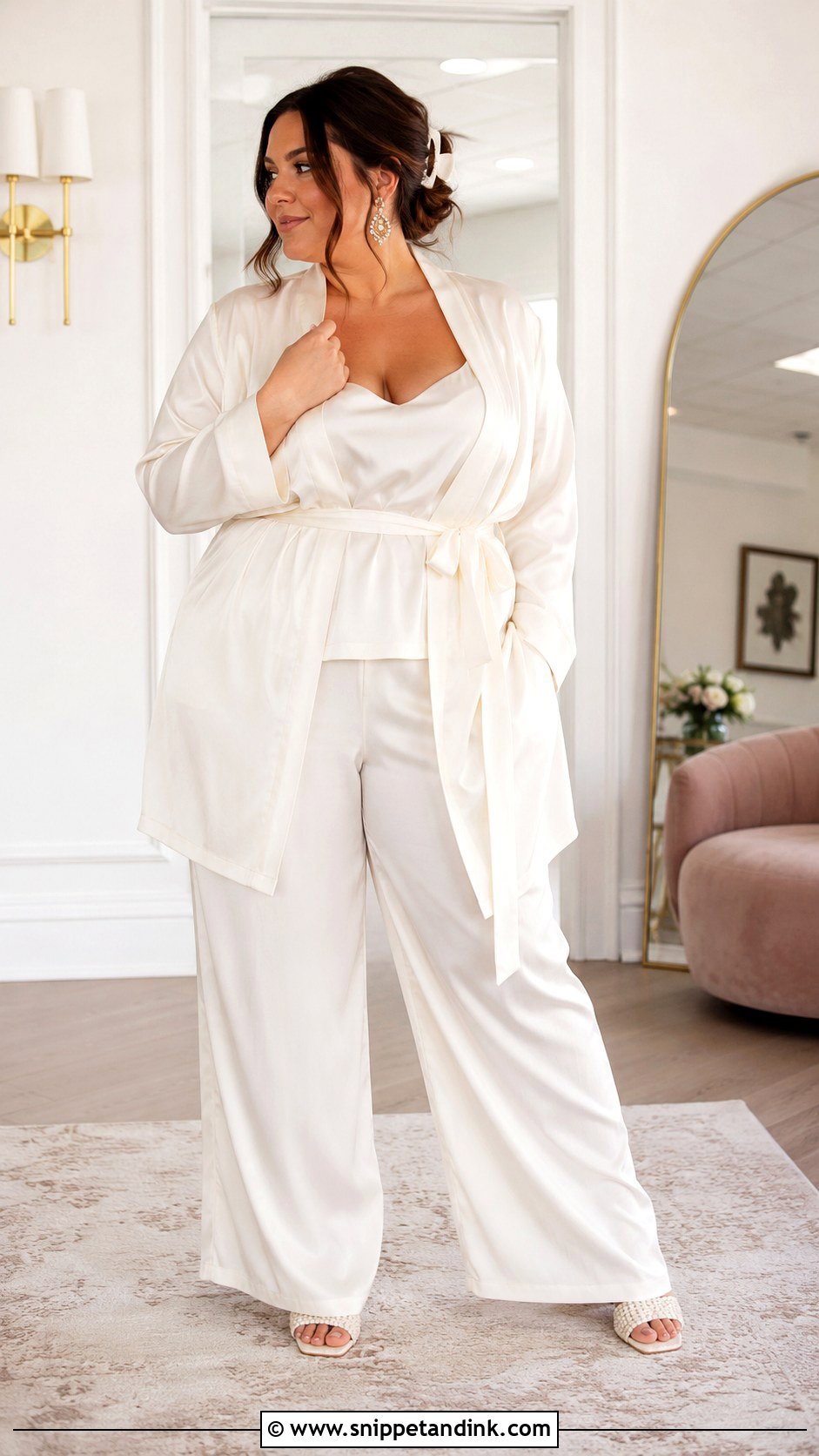
A good plus-size robe stays closed without you holding it, which is the thing I notice first through the lens. Look for brands with a real size range rather than a one-size label, because one-size robes are often cut narrow across the hips and gape when you sit. A long matte satin robe with an inner tie, generous overlap and an adjustable outer belt gives a smooth line. A supportive cami and soft wide-leg pants in the same shade sit underneath. Cushioned mules, medium earrings and a comfortable clip complete it. Three-quarter sleeves stay out of makeup and breakfast. Measure bust, hips, arm and length before ordering.
17. Maternity Bride to Be Robe
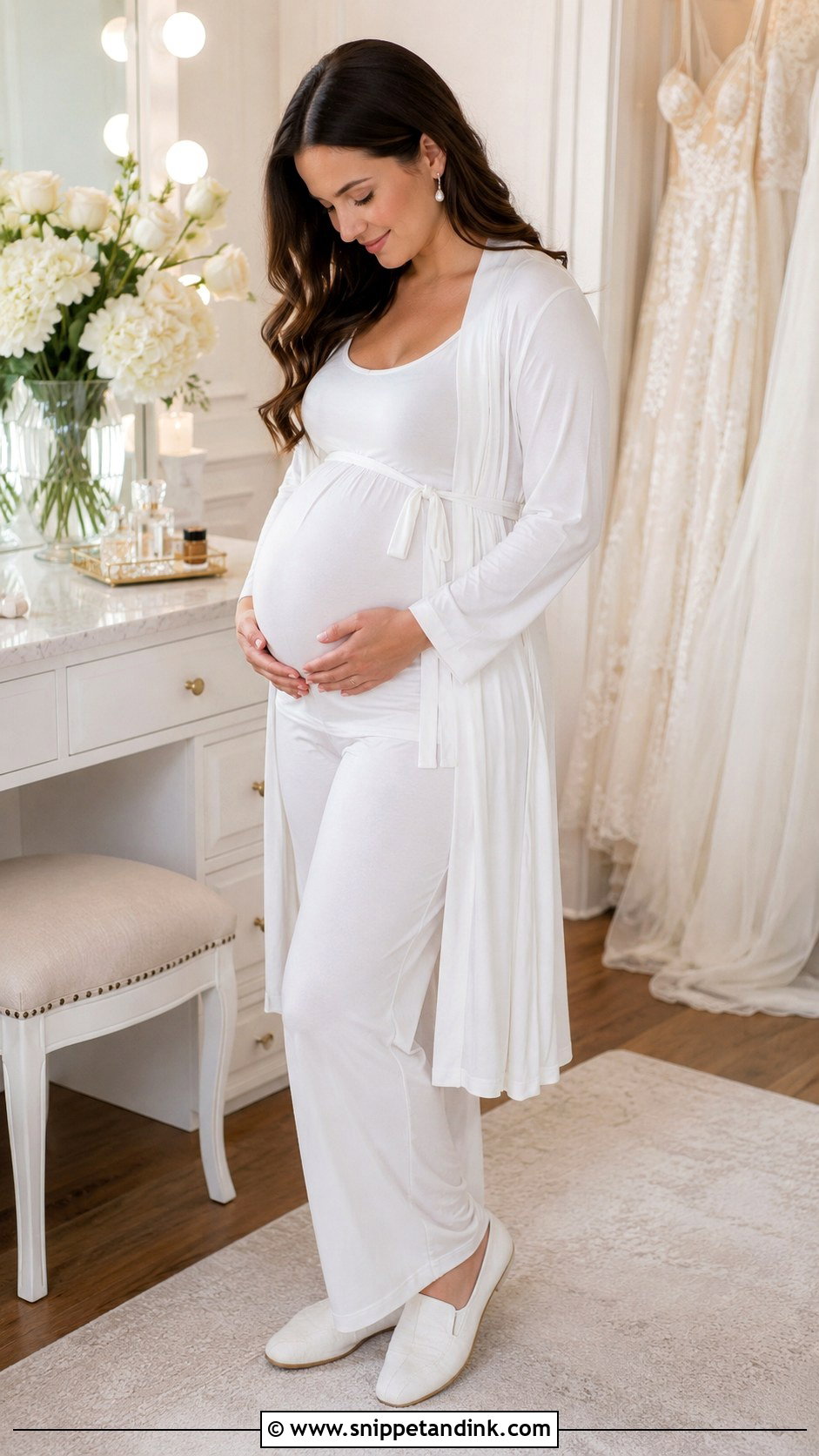
A maternity robe needs stretch and a waist tie that sits above the bump, not across it. Soft jersey or a bamboo blend is comfortable for hours, with enough front overlap to stay covered. A maternity tank and loose lounge pants with a gentle waistband go underneath. Supportive slip-on flats or cushioned slippers help on a long morning on your feet, and light earrings won’t pull. Skip heavy embellishment at the waist or sleeves. A longer hem covers you when seated for hair and makeup. I’d also plan a chair with good back support for the getting-ready portraits. The robe will see plenty of use after the baby arrives.
18. Beach Bride to Be Robe
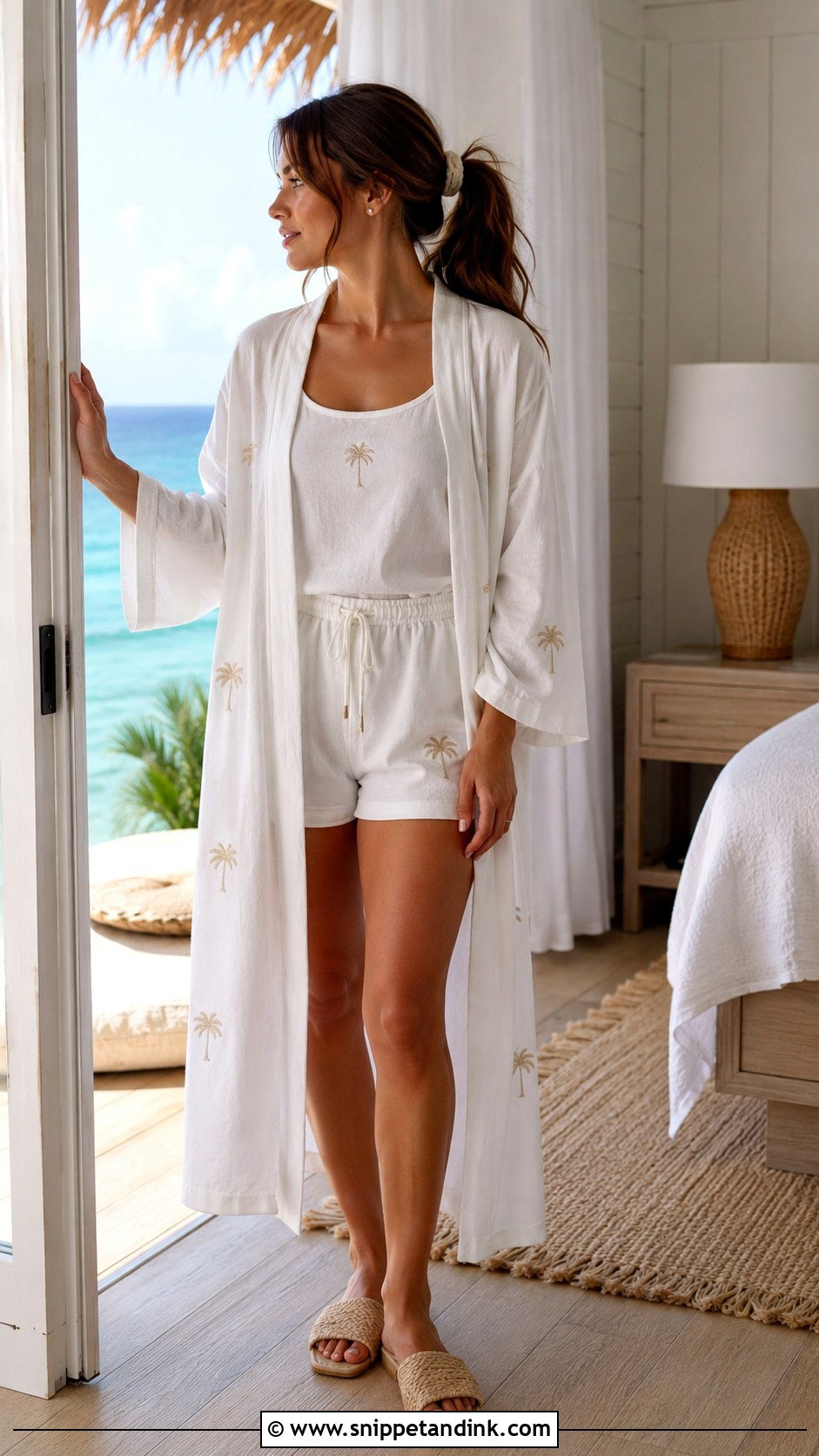
Beach suites are bright and often humid, so the robe needs to breathe. A white cotton robe with subtle palm, shell or floral embroidery suits the setting, worn over a cotton tank and drawstring shorts. Flat woven slides, small pearl studs and a fabric hair tie complete it. Skip heavy feathers and synthetic satin, which feel sticky in a warm room and show sweat marks on camera. A knee-length hem stays off sandy floors and balcony tiles. Bridesmaids in sea blue, sage or soft coral give the group frames a coastal palette. It looks right against ocean views and bright resort rooms.
19. Velvet Bride to Be Robe
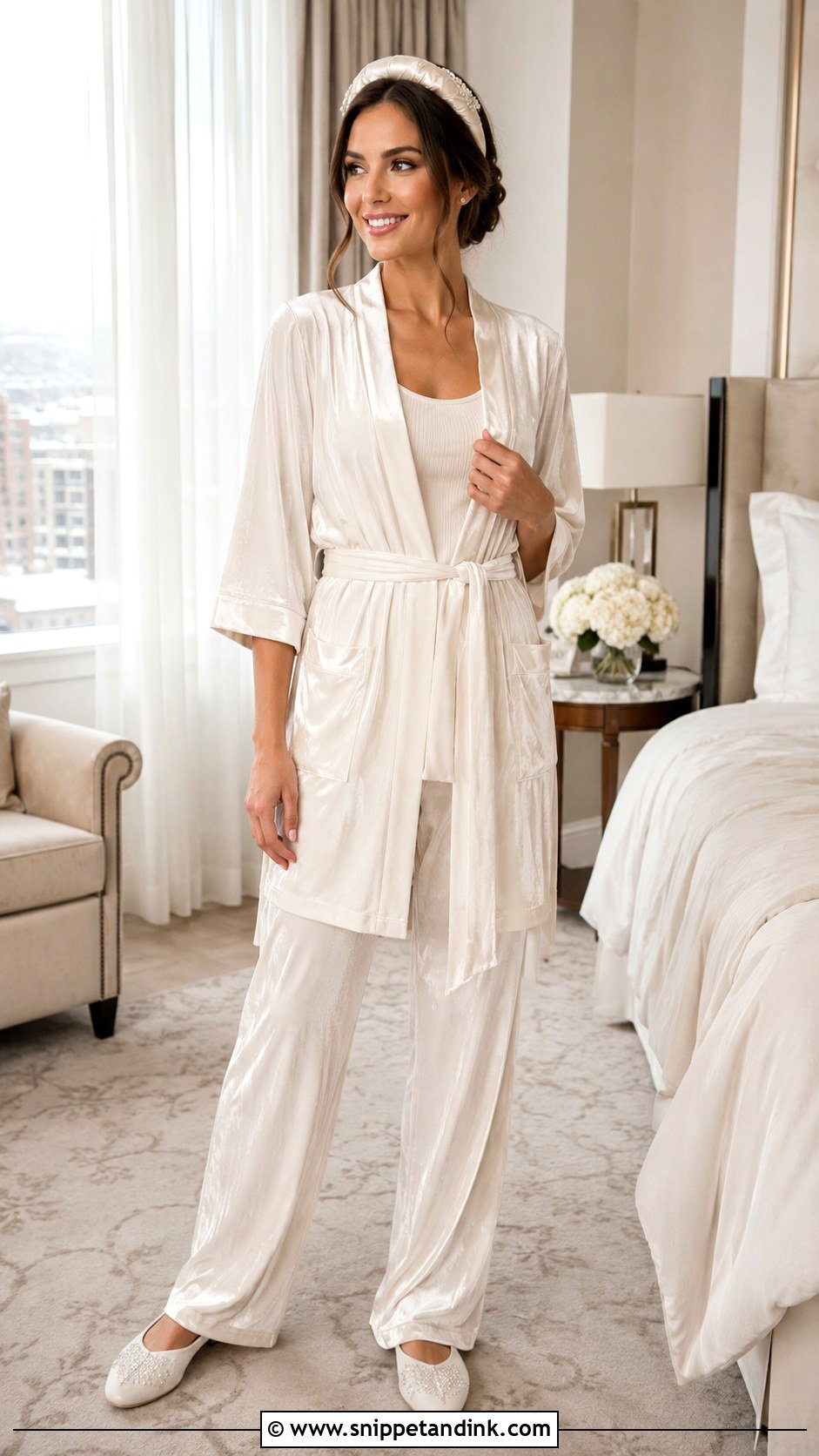
Velvet adds depth to winter photos; it absorbs light instead of reflecting it, so the color looks rich rather than shiny. Choose ivory or winter white with a smooth lining and three-quarter sleeves so cuffs stay out of the makeup. Layer over a light knit tank and matching lounge pants. Closed-toe slippers, crystal studs and a satin headband finish it. A streamlined shape with little trim and a defined waist keeps velvet from looking heavy. It picks up every hair and speck of powder, so a lint roller is essential before close-ups. It suits winter hotels and mountain venues.
20. Matching Bridal Party Bride to Be Robe
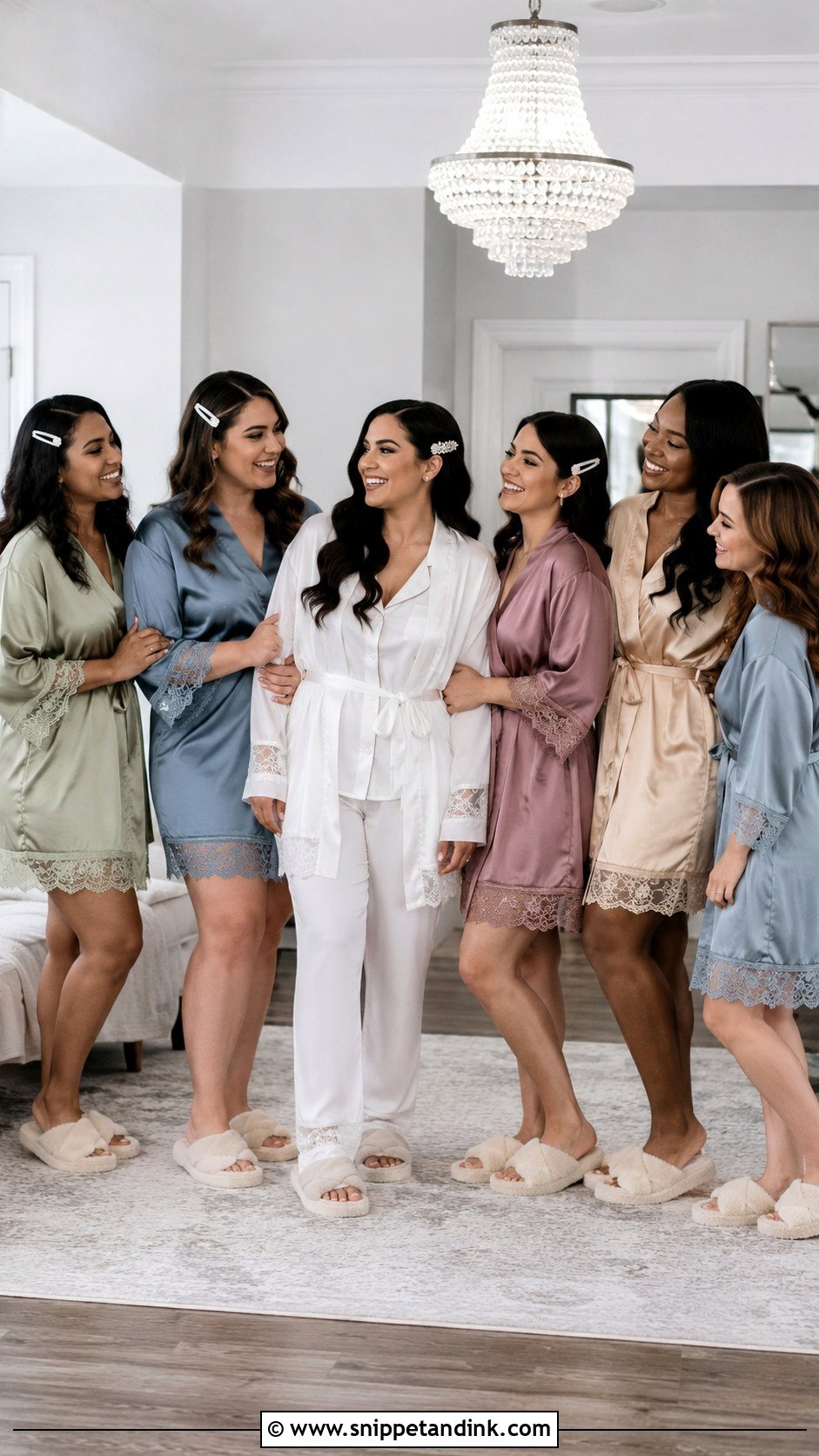
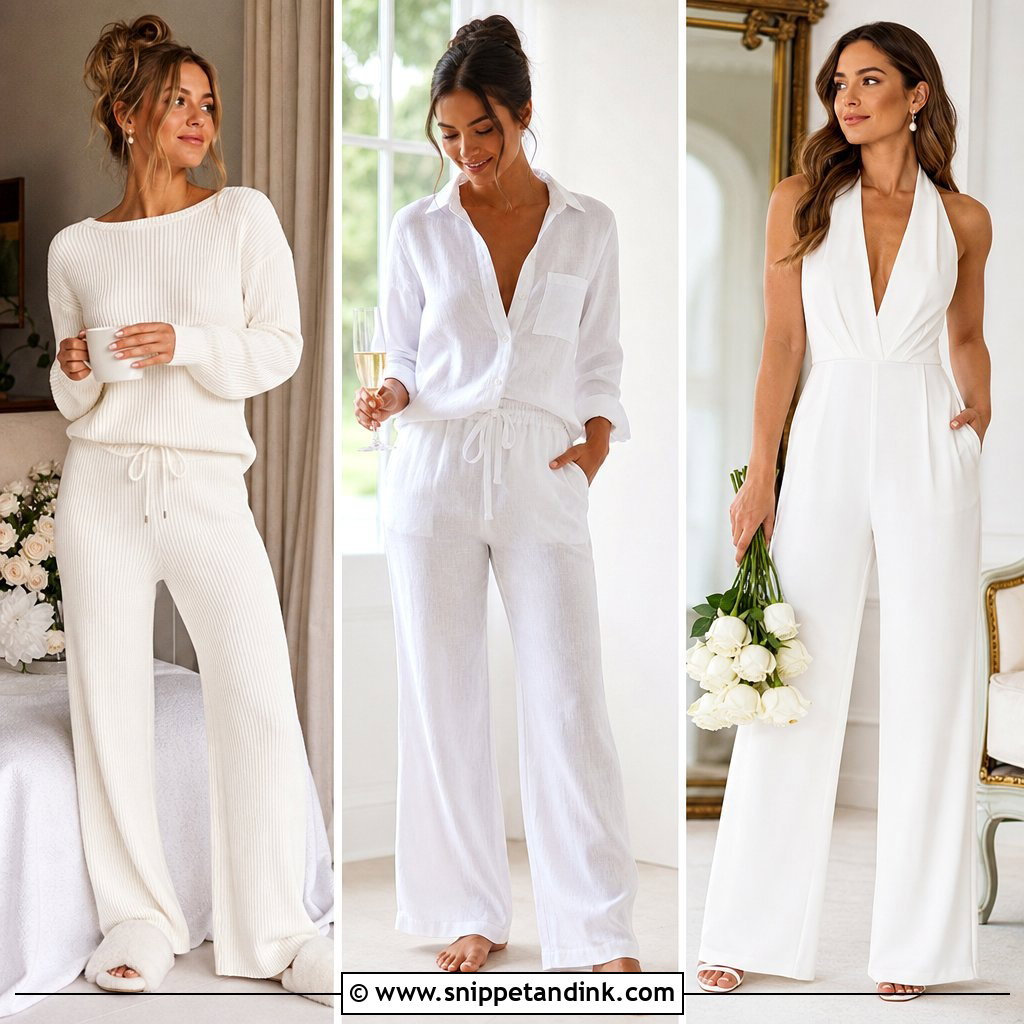
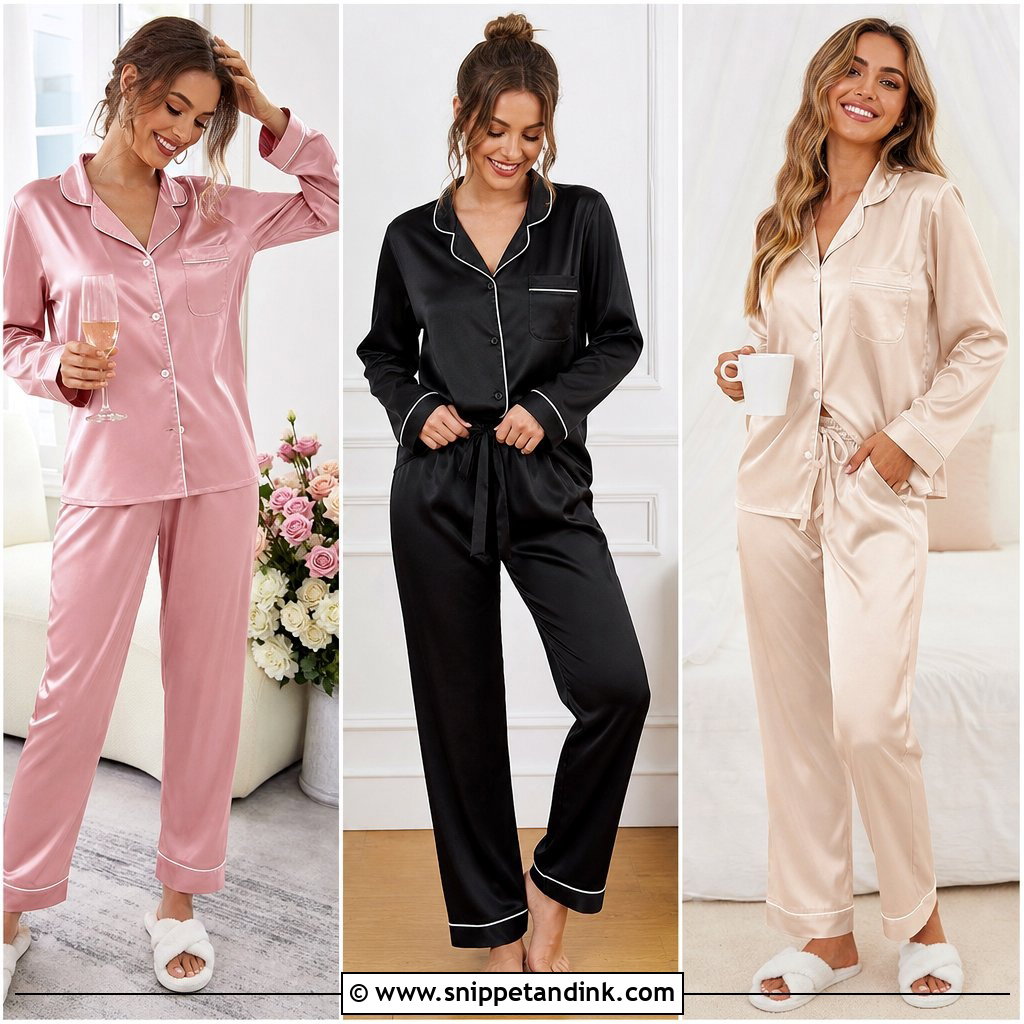
Coordinated robes make the group shot look planned, as long as the bride still stands out. Put the bride in white satin with lace trim over white pajamas and give bridesmaids solid robes from the wedding palette; sage, dusty blue, mauve, champagne and soft grey all work. Keep everyone’s slippers the same neutral and put any embroidery in the same place. The bride wears pearl earrings and a white clip; attendants keep accessories smaller. Collect real measurements for each person rather than ordering one universal size. When I line up the group, matching lengths matter as much as matching colors, so ask for the same length across the set.
Getting Good Robe Photos in a Small Hotel Room
Most getting-ready rooms are smaller and messier than anyone expects. A few things make a big difference to the robe portraits:
Clear one corner by the biggest window before your photographer arrives. Move suitcases, coffee cups, chargers and plastic bags out of sight. Soft daylight from the side is the most flattering light for both satin and skin, and it’s why I’ll often ask to turn the overhead lights off.
Steam the robes the night before or first thing, and hang them rather than leaving them folded in a bag. Satin creases show far more in a photo than they do in a mirror.
Plan the robe shots for after hair and makeup are finished but before you step into the dress. That window is usually short, so if you want a group photo in matching robes, get everyone changed and ready at the same time rather than in waves.
Leave Time for Embroidery and Delivery
Personalized and matching robes are made to order, and embroidery, shipping and any exchanges add up. I’d order around two months out so there’s time to fix a misspelled name or a wrong size. Wash or steam them once before the day to soften the fabric and get rid of packaging creases.
How Long Will the Robe Actually Be On Camera?
A robe has a short but busy role: an hour or two of hair and makeup, a few relaxed portraits, then it comes off for the dress. Satin and silk give a classic shine, while cotton, linen, jersey and bamboo blends keep you cool. Lace, feathers, pearls, bows, florals and embroidery can all make it feel special, but a secure tie and proper sizing matter more in the photos than any trim. Add a modest base layer, comfortable slippers and a couple of small accessories. Think about the season, the room temperature, what’s behind you in the shots and the bridal party colors. Pick the one you can sit, move and relax in, and you’ll still be glad to wear it on a slow Sunday years later.
You'll Like These Ideas:


Leave a Reply