
I spend most wedding mornings standing about a foot away from a bride in a robe, so I have strong opinions about them. A bridal robe has two jobs: it has to look good in the first photos of the day, and it has to let me work on your face, neck and hairline without fabric getting in the way. Satin, lace, feathers, prints and monograms can all do both, if you pick the cut carefully. Below are the robes I see most often, what each is like to work around in the chair, and the small decisions (collar shape, sleeve width, what goes underneath) that make the difference between a calm morning and a foundation-stained lapel.
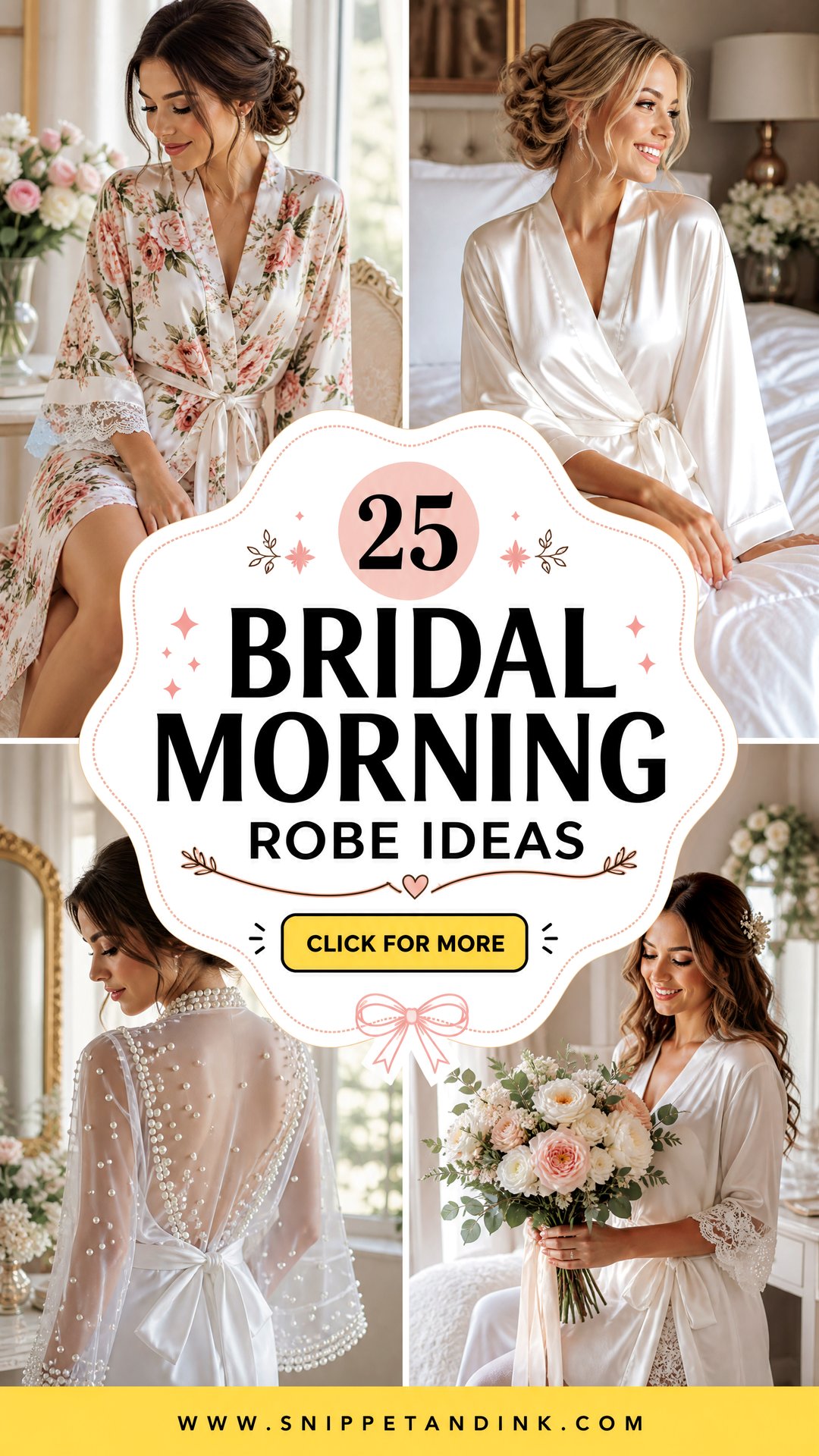
What a Robe Has to Do in the Makeup Chair
Before I look at colour or fabric, I look at the neckline. I blend foundation down the neck and onto the chest so there’s no line in photos, and a robe with a high, tight collar either gets stained or stops me finishing the job. A wide, open wrap that I can fold back over your shoulders is ideal.
- Sleeves should push above the elbow. Wrists and hands get moisturiser, and sometimes body makeup for tattoos or sun lines.
- The belt should tie at the side or the natural waist. A bow right under the bust bunches when you sit and pushes the collar up toward your jaw.
- Check the length sitting in a tall chair. Makeup artists usually work from a director’s chair, and short robes ride up a long way on them.
- Wear a strapless bra or the gown’s undergarments underneath, so the robe can slide off for neck and shoulder work and nothing leaves a strap mark.
If you’ve fallen for a robe that breaks these rules, such as a feathered or tulle one, wear a plain cotton robe in the chair and change into the showpiece for photos afterwards. Plenty of brides do exactly that, and nobody looking at the album can tell.
1. White Satin Bridal Robe
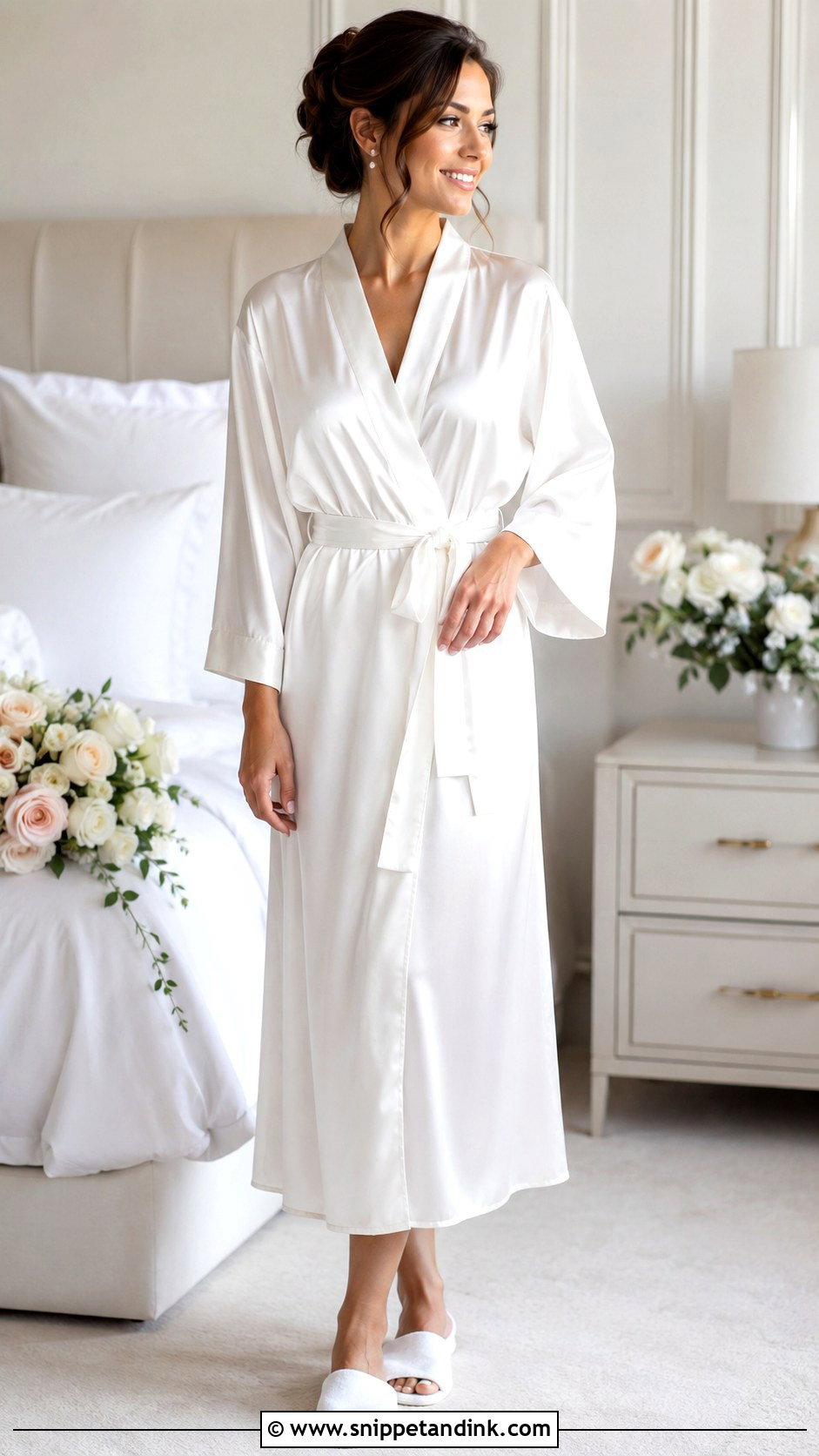
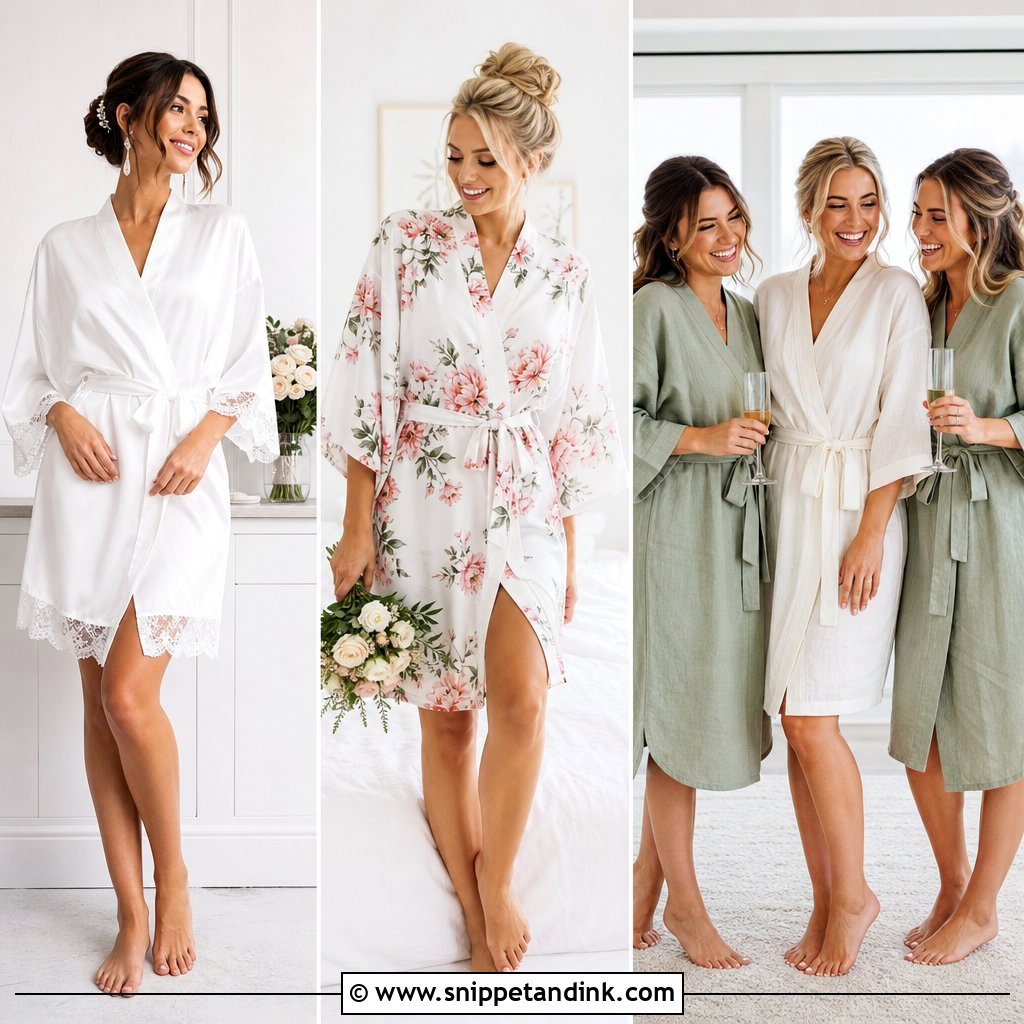
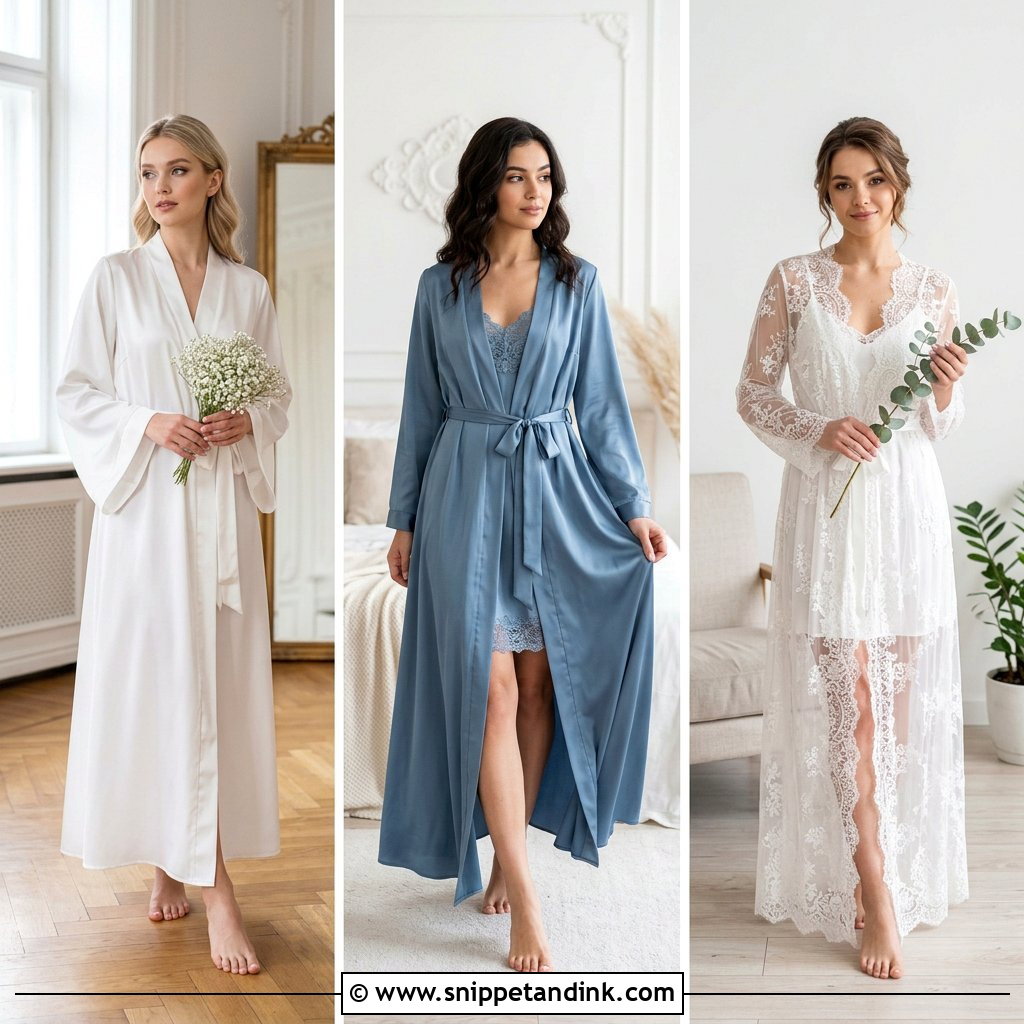
White satin is the classic, and it bounces window light up onto the face, which I appreciate when the bridal suite is dim. The risk is the collar: white satin shows every touch of foundation, bronzer and lipstick. I ask brides to choose a relaxed wrap with a deep V, sleeves loose enough to push above the elbow, and a tie that doesn’t sit right under the bust where it bunches when seated. White satin slippers, pearl studs and a plain clip keep it simple, and it sits happily beside bridesmaids in blush, champagne, sage or dusty blue.
2. Lace Bridal Robe
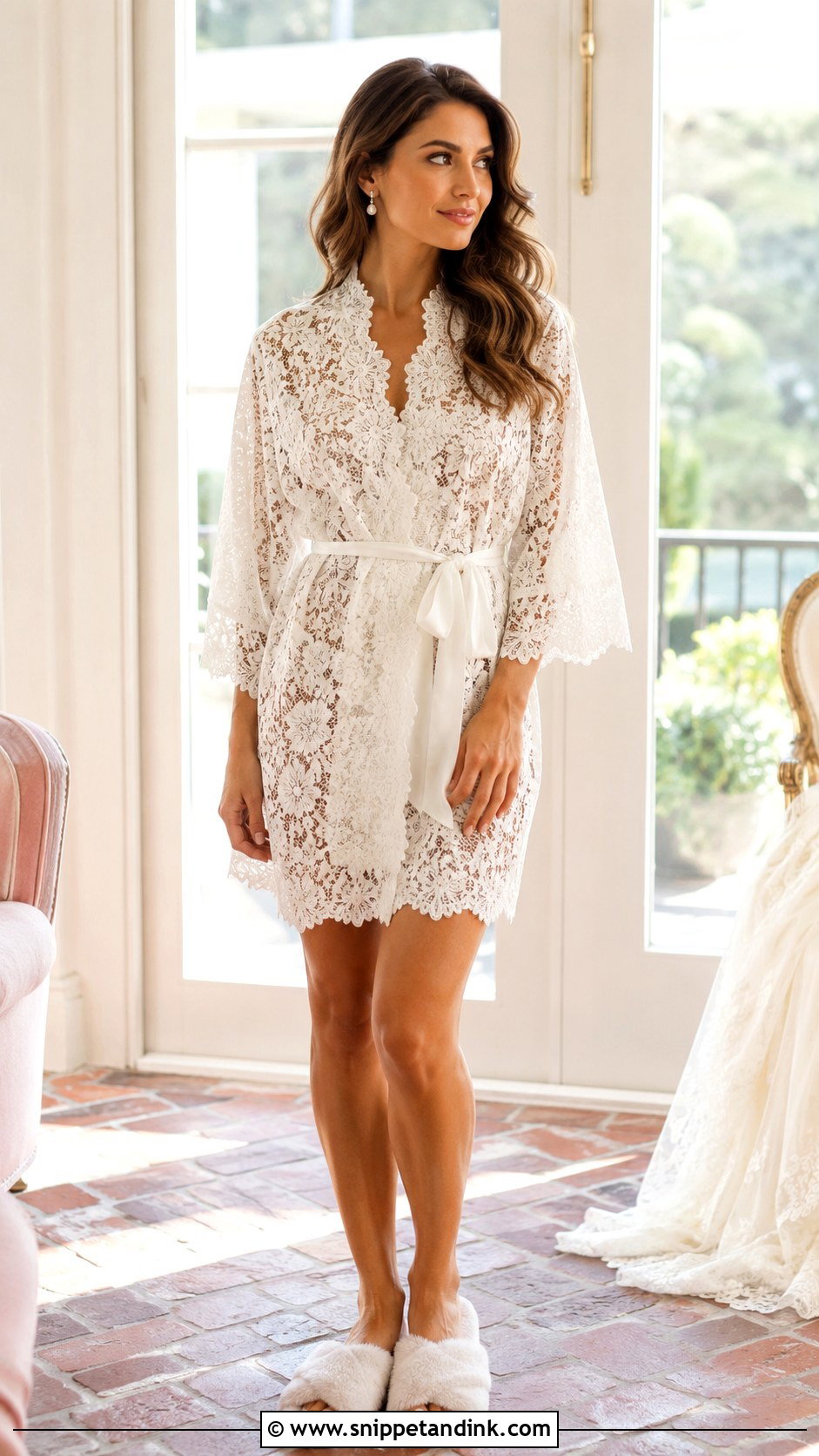
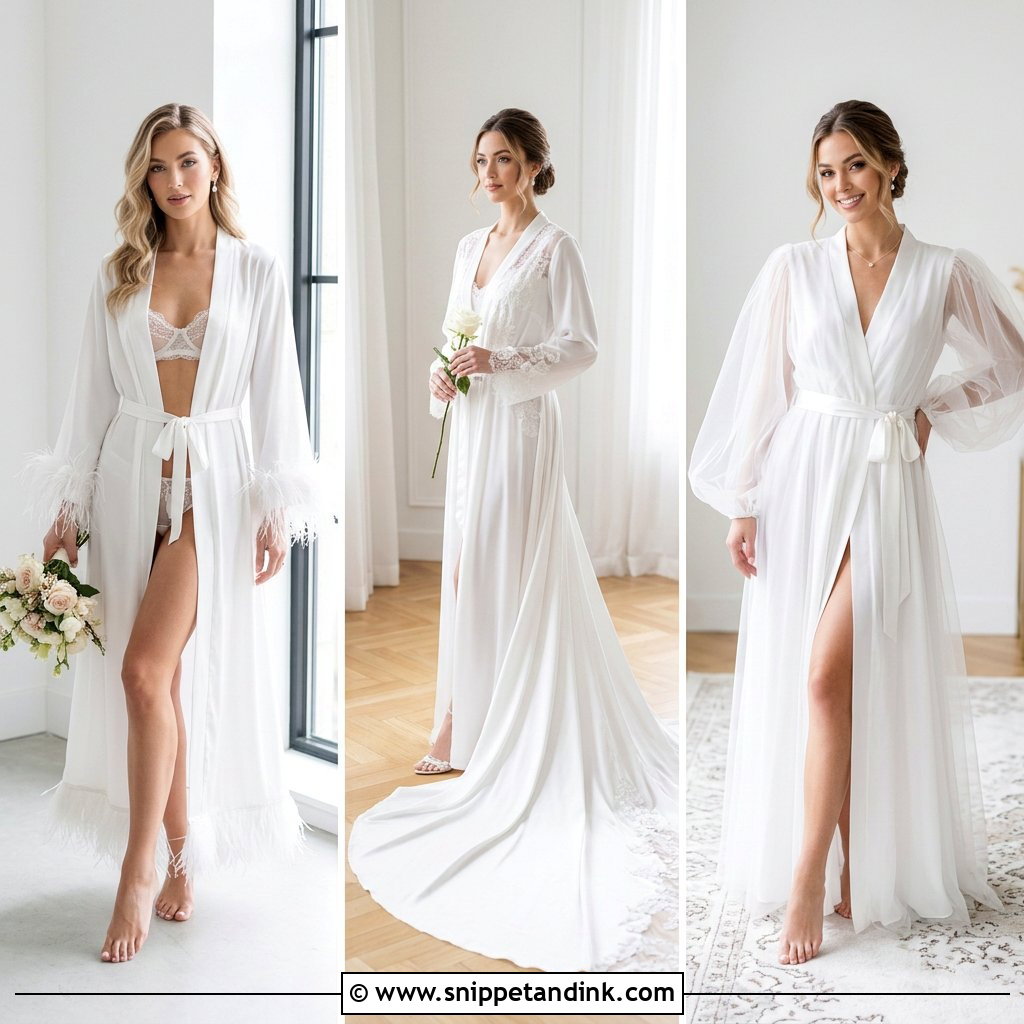
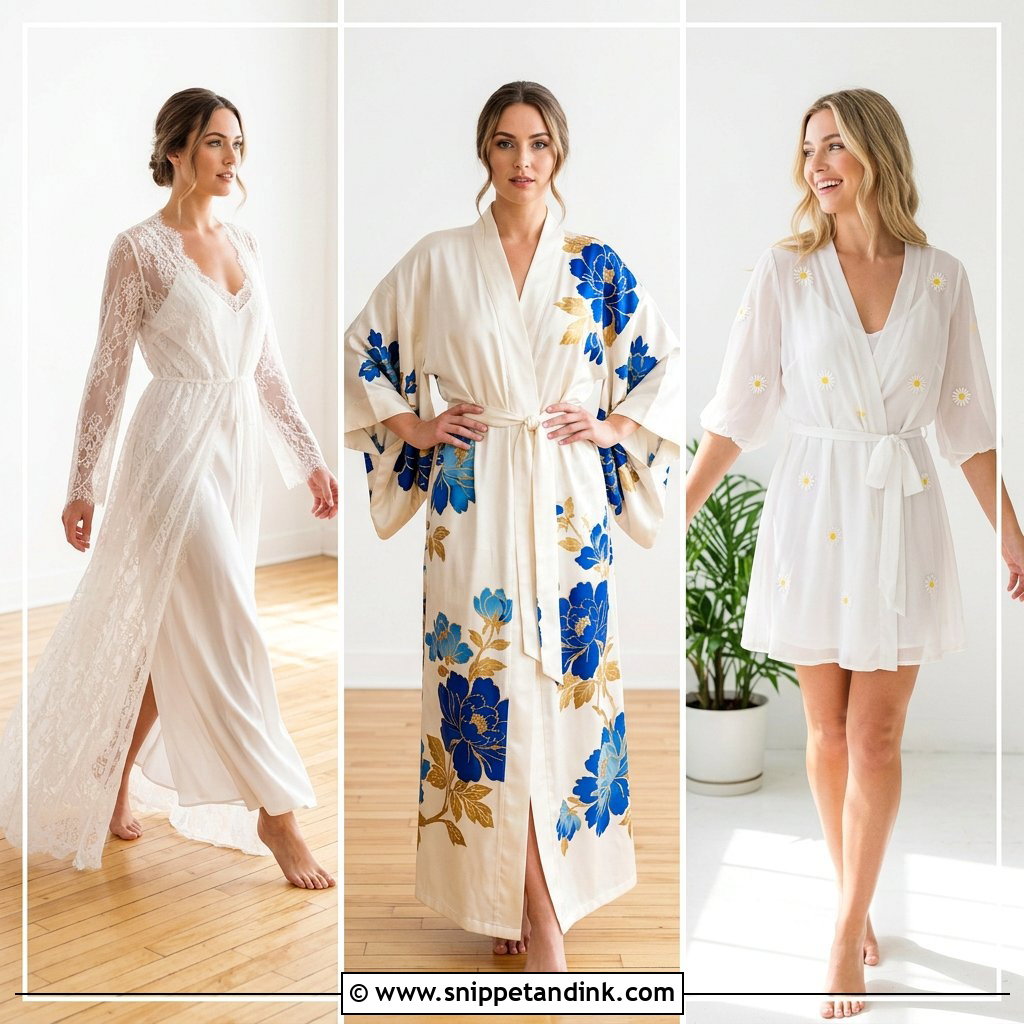
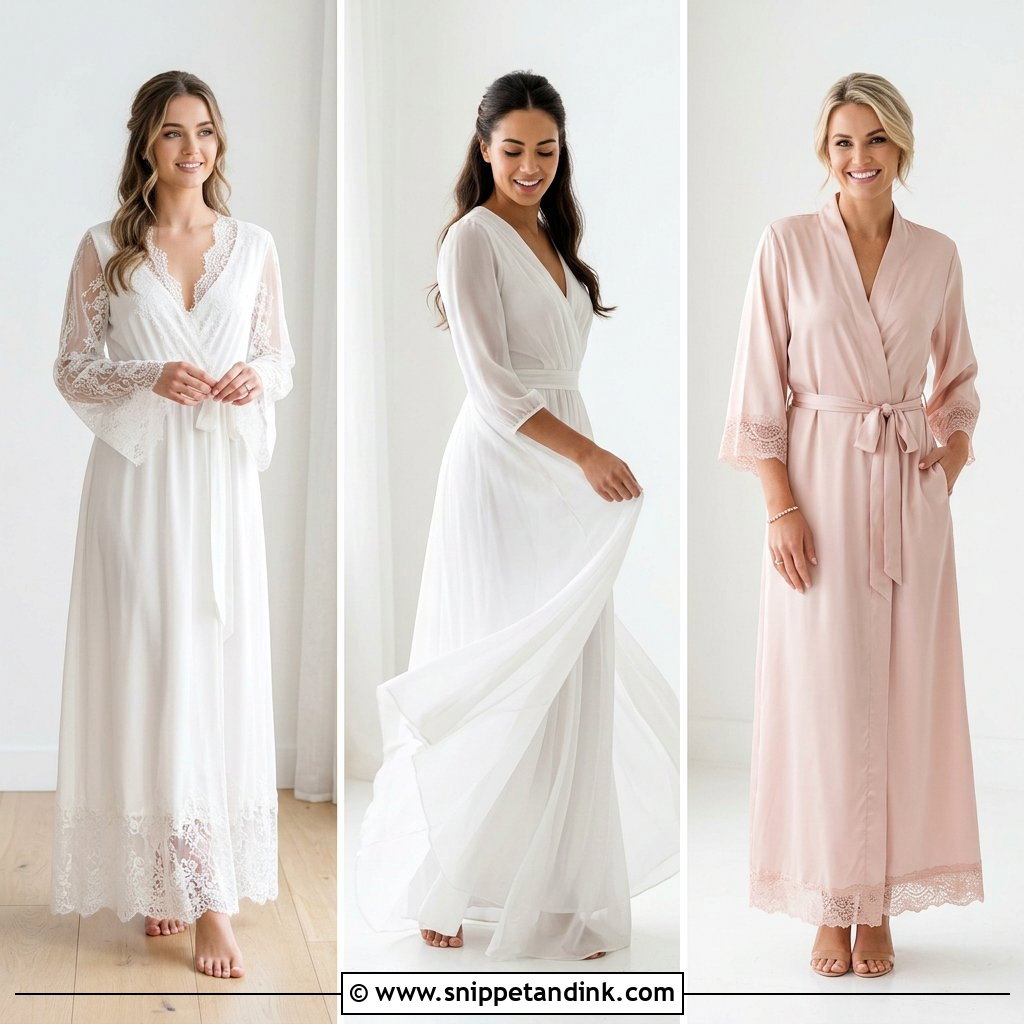
Lace robes suit brides whose gowns have lace, appliqué or a vintage line, because the getting-ready photos then echo the dress. Look for one that’s lined, or semi-sheer only at the sleeves; unlined lace beside a bright window shows a lot more than people expect. Scalloped hems and flutter sleeves look sweet, but long trailing lace sleeves catch on brushes and setting spray, so I pin them back while I work. Ivory slippers and a low bun or soft waves finish it.
3. Feather Trim Bridal Robe
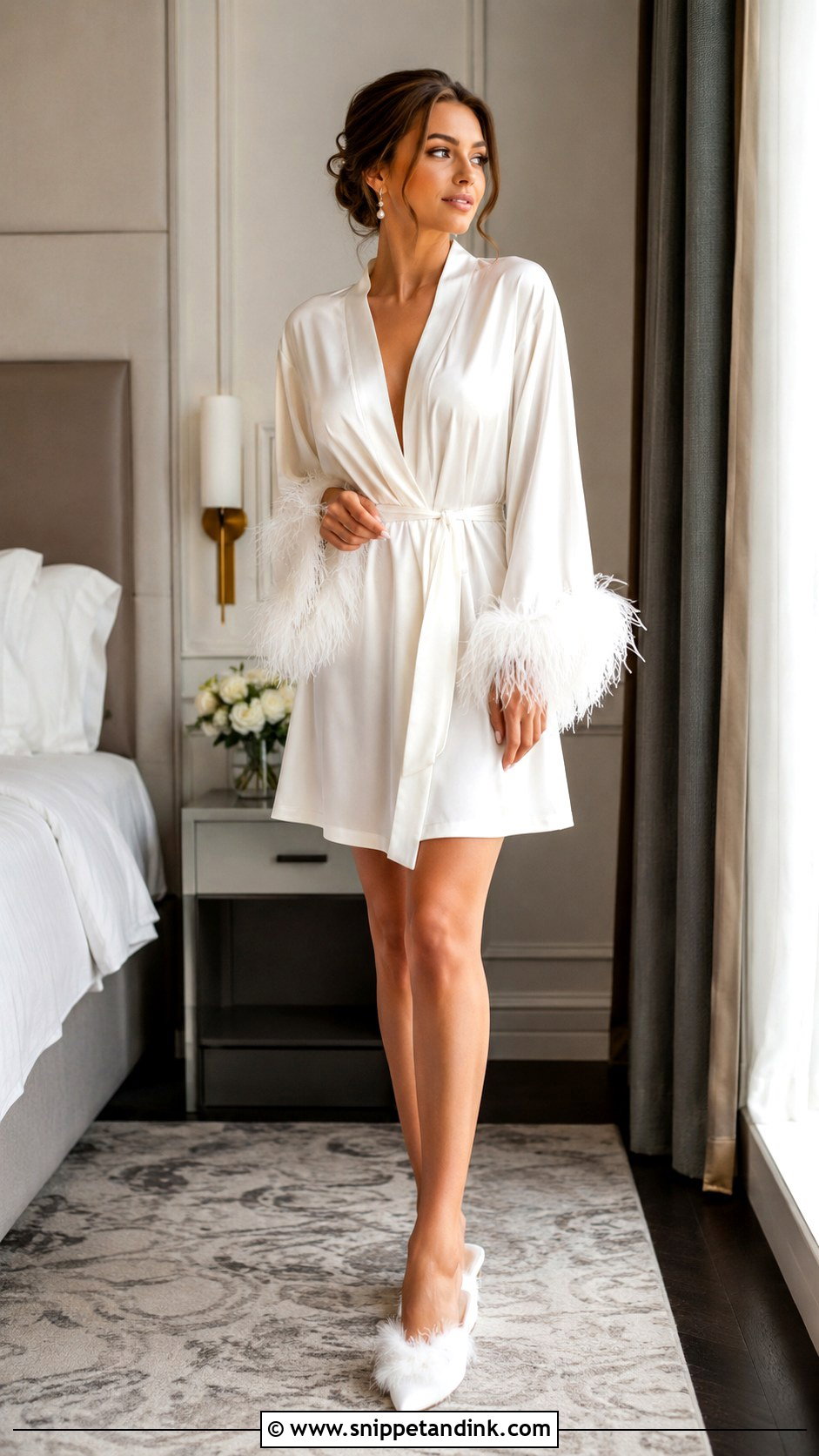
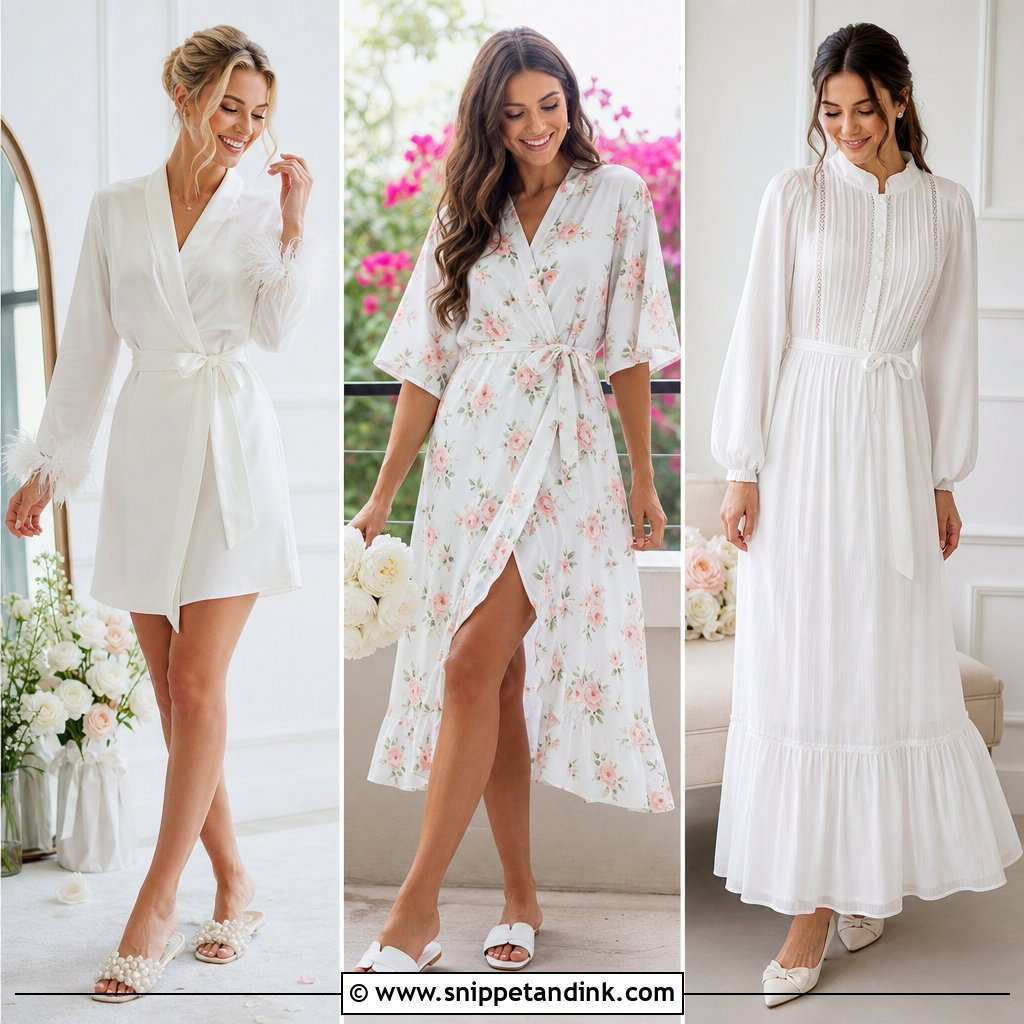
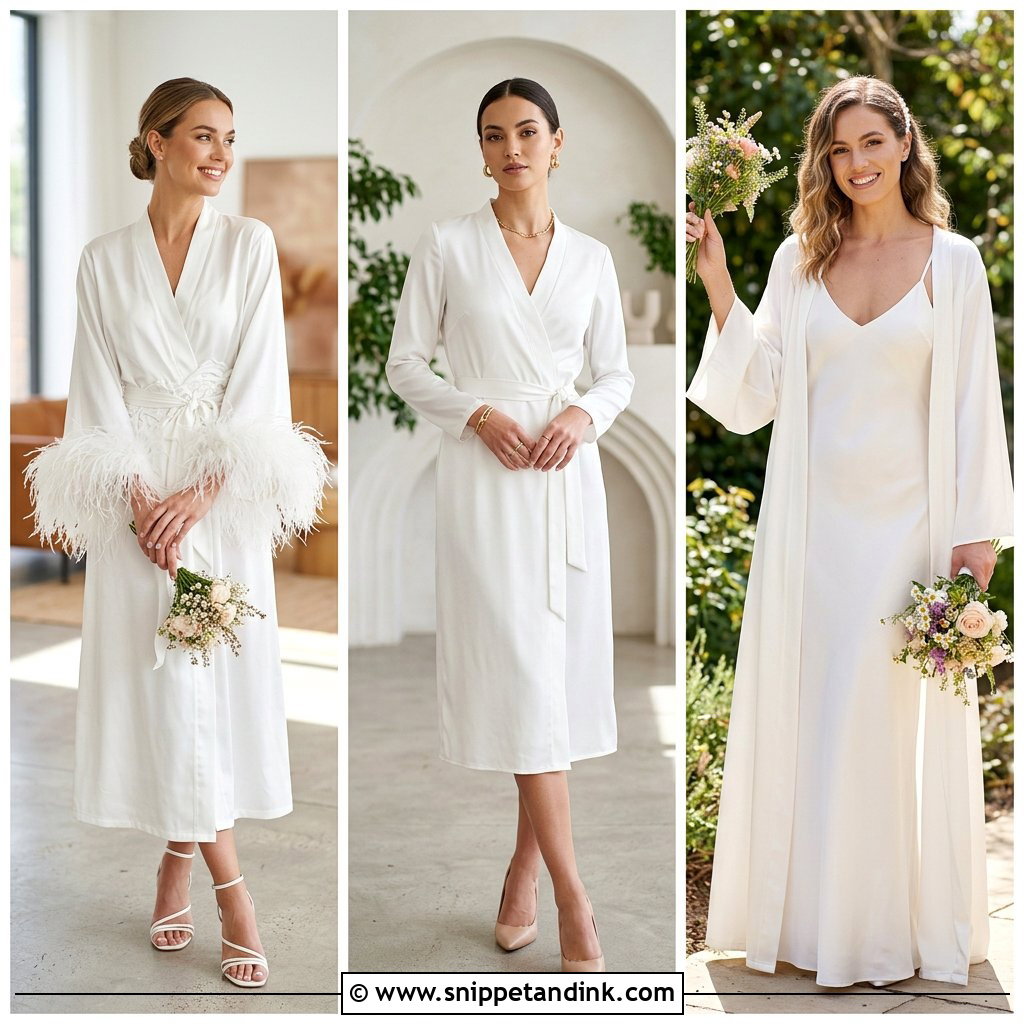
Feather trim moves when you walk, which is exactly why it makes good window and walking shots. It also sheds. Marabou and ostrich trim release fine fibres that land on freshly applied foundation and lash glue, so I keep a feather robe off until makeup is finished and set. Wear a plain robe in the chair, then change into the feathered one for photos. Keep the body of the robe white, ivory or champagne so the trim is the only detail, and add sleek slippers and pearl drops.
4. Personalized Bridal Robe
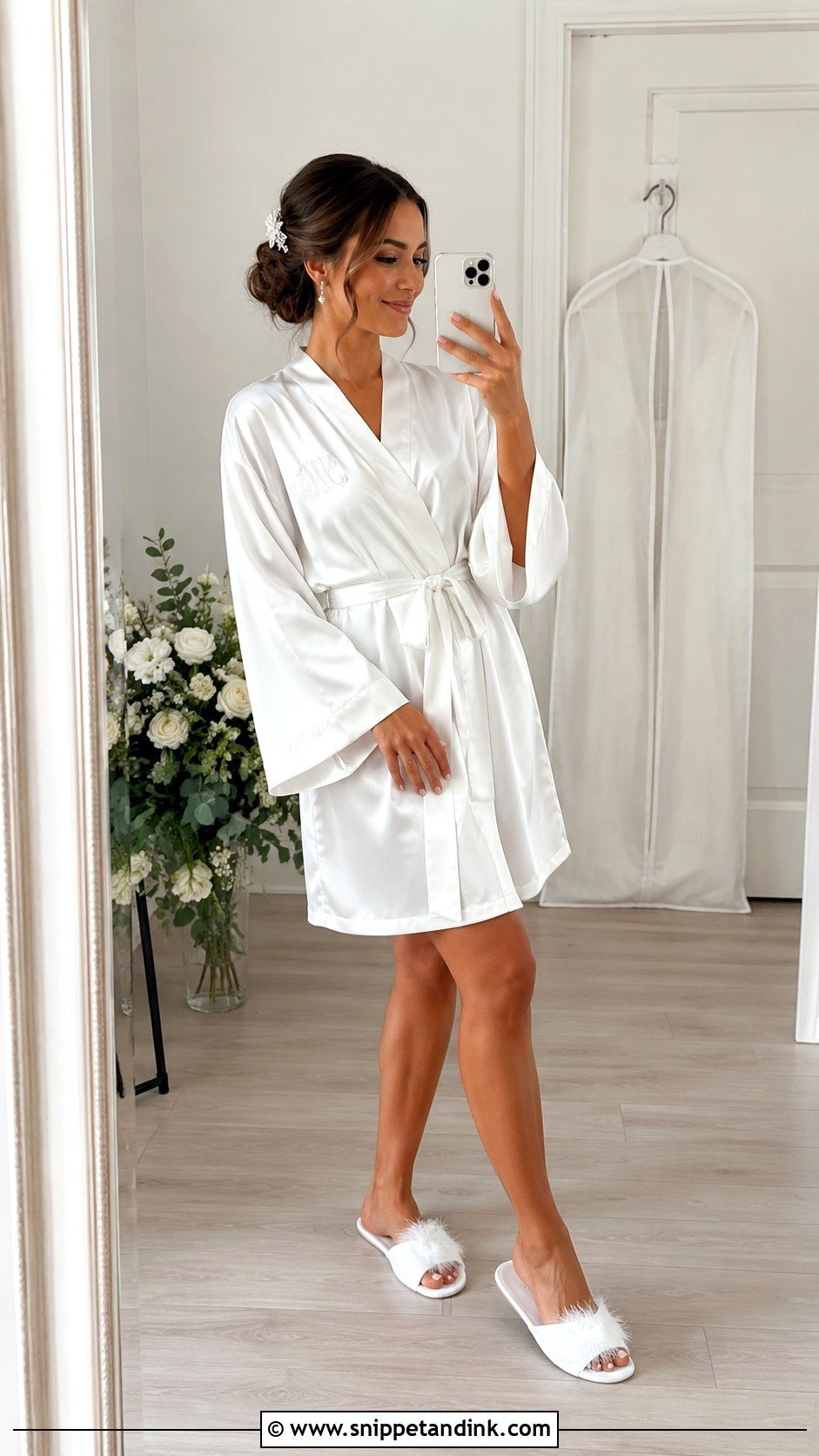
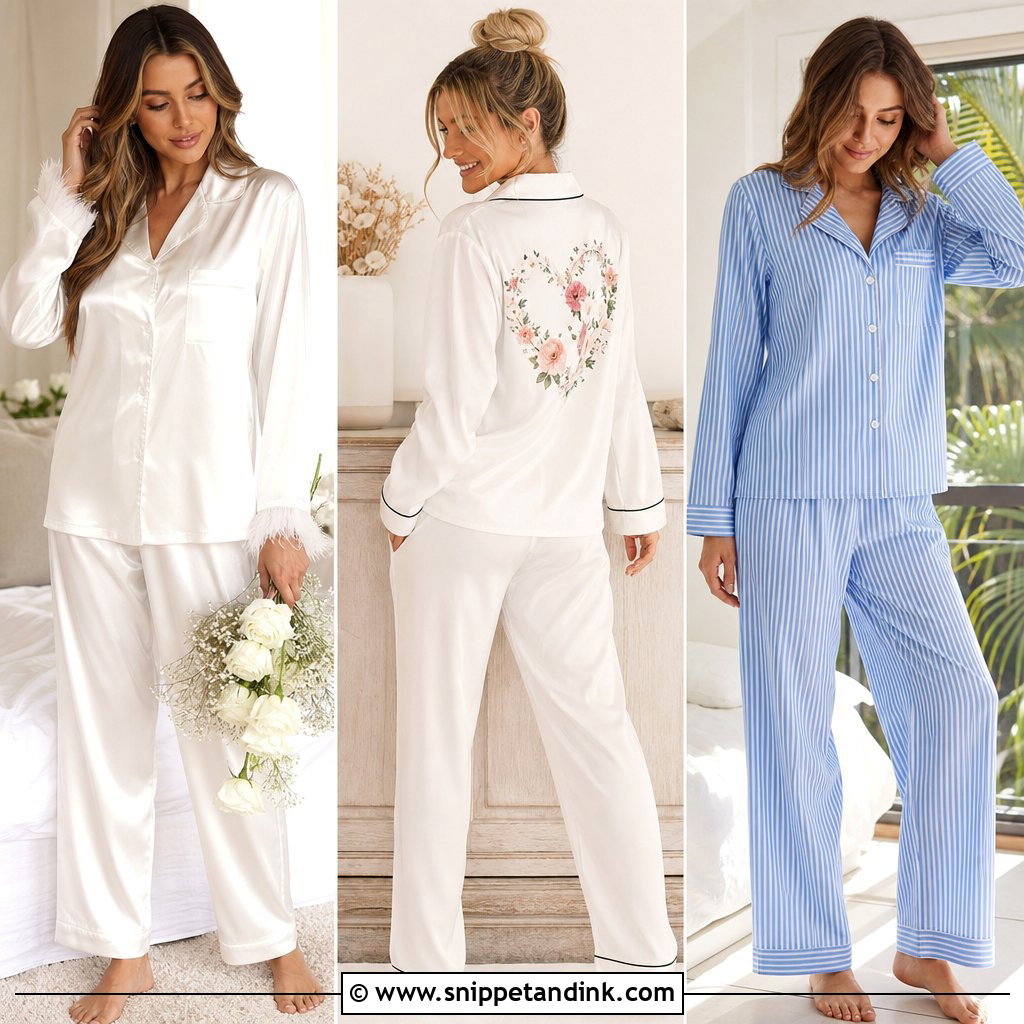
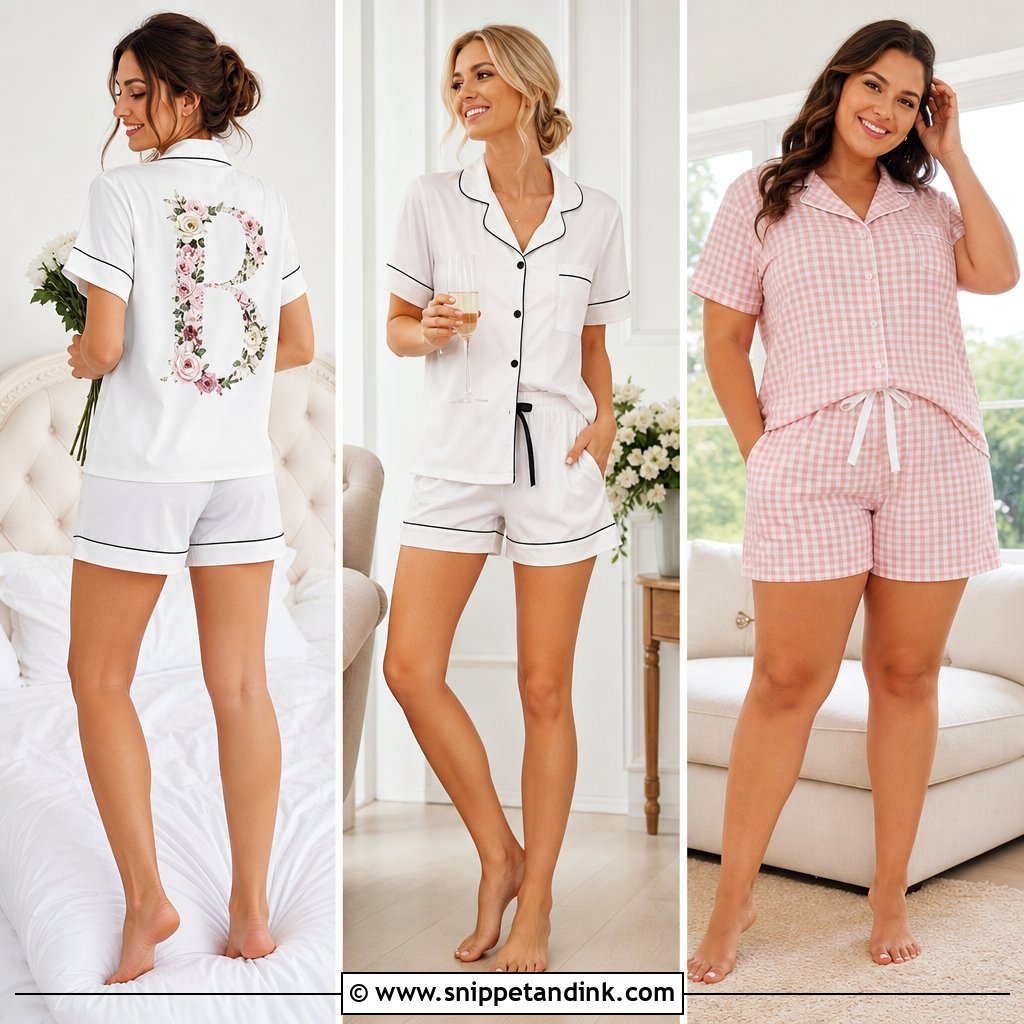
A personalized bridal robe becomes a keepsake, with a new surname, initials, the date, “Bride” or a monogram stitched on the back, sleeve or pocket. Back embroidery shows best in photos because it reads when you’re facing a mirror or a window. Satin and cotton take embroidery well; lace and florals are harder to stitch cleanly. Allow extra time for custom orders, and match thread colour to the palette. If bridesmaids have names on theirs, the group shots look organised without anyone posing.
5. Floral Bridal Robe
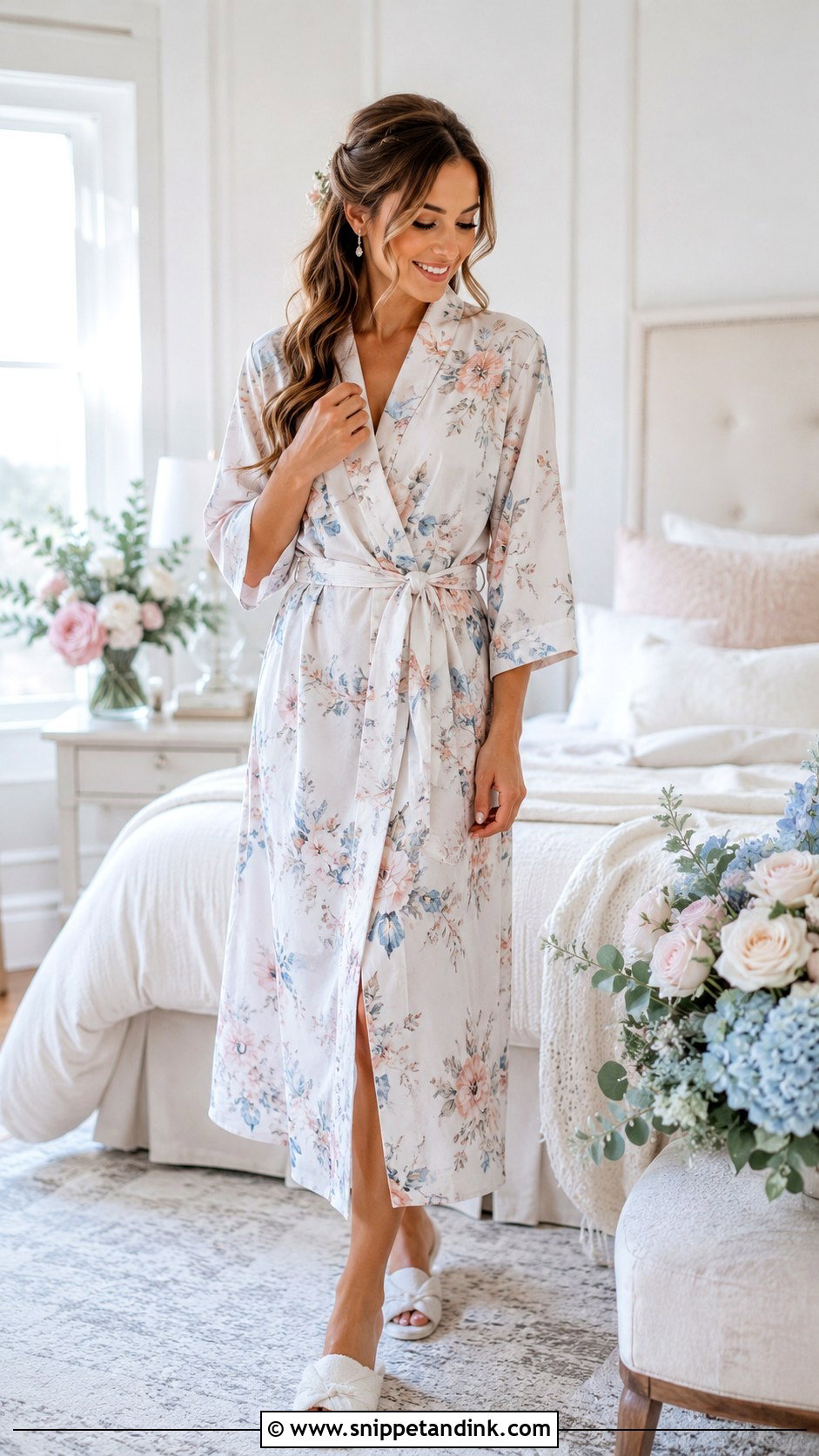
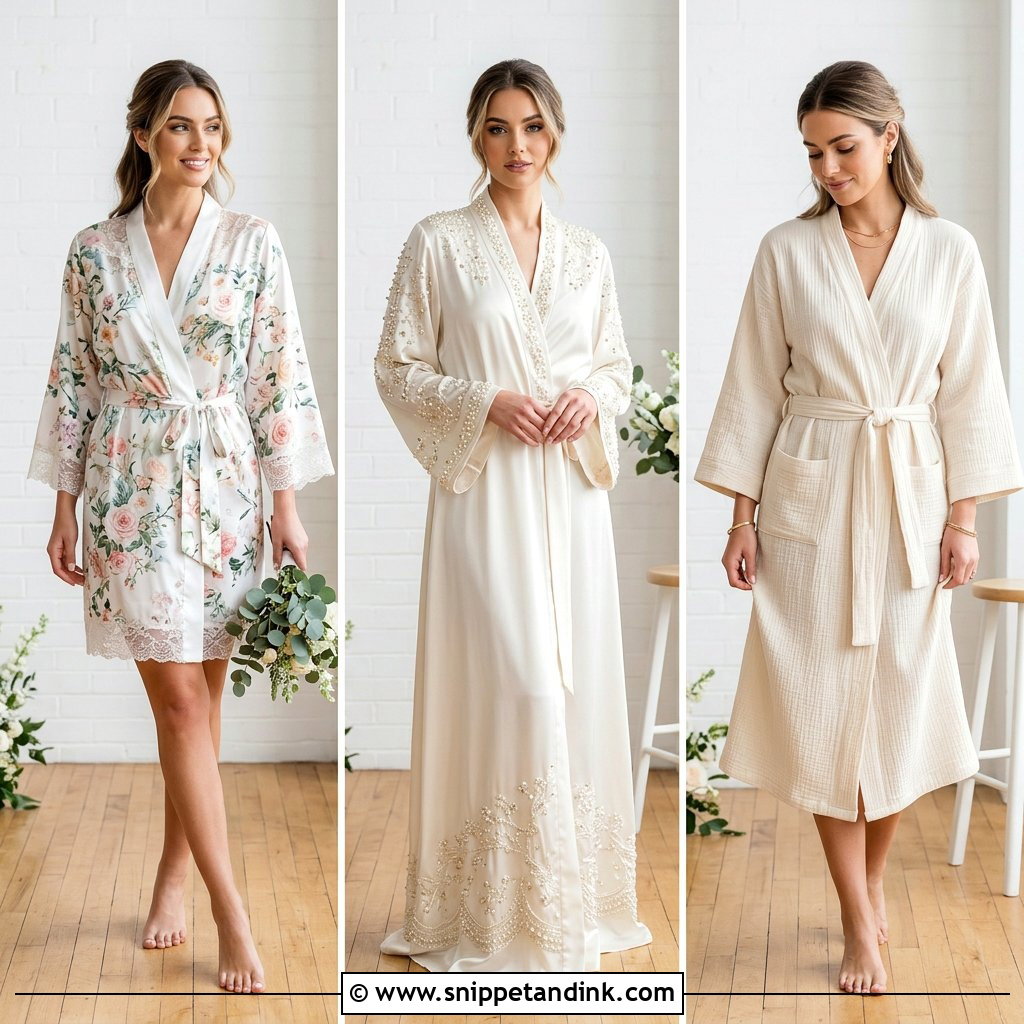
Florals bring colour into the room and feel right at spring weddings and garden venues. A white or ivory base with a soft print keeps it bridal; blush, blue, lavender or sage florals look good beside bouquets and bridesmaid dresses. From where I stand, a print is forgiving: a smudge of foundation that would ruin white satin disappears into flowers. Neutral slippers and soft curls suit it, and it’s the robe brides most often keep wearing afterwards.
6. Champagne Satin Bridal Robe
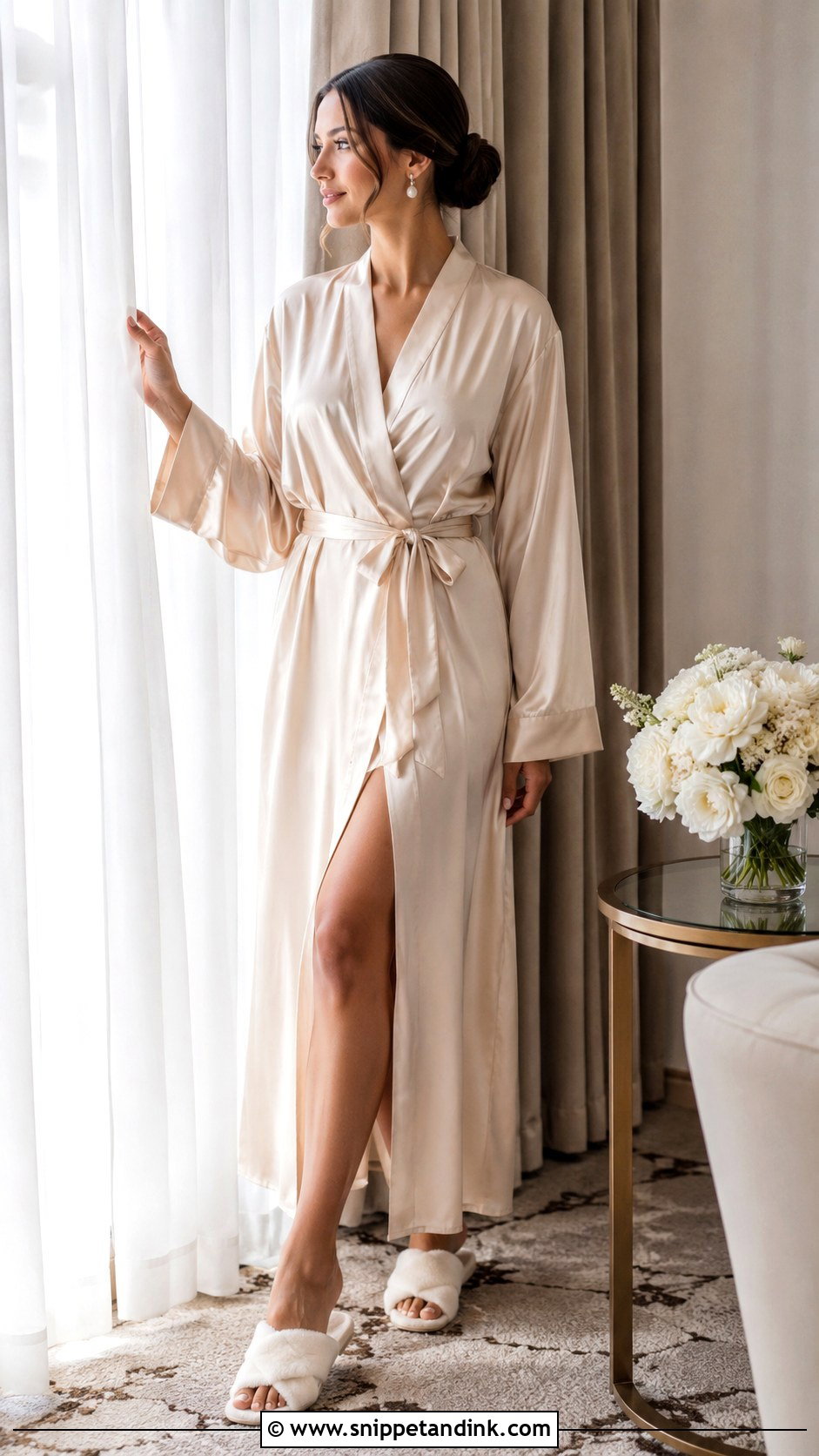
Champagne satin is warmer than white, and that warmth near the face flatters most skin tones in photos, especially deeper and olive complexions that bright white can make look slightly grey. It sits nicely with ivory gowns, pearls and bridesmaids in taupe, mocha, blush or champagne. I ask for a clean wrap front, a belt that actually holds, and a length that covers the knee when you’re sitting in a tall makeup chair, since many short robes ride up there. It suits classic weddings, autumn dates and hotel suites.
7. Silk Bridal Robe
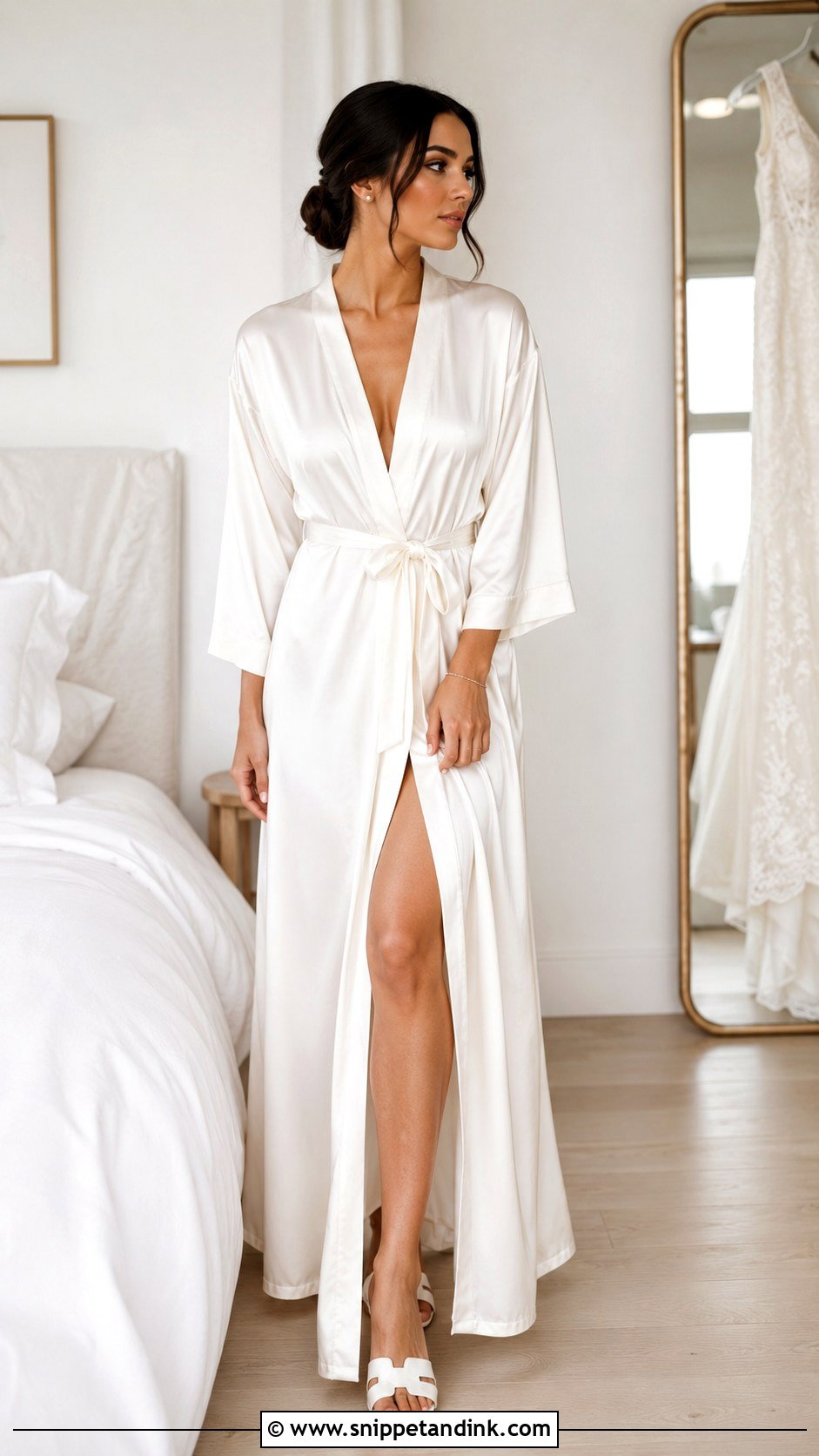
Real silk drapes softly and looks less shiny than polyester satin, and it breathes, so you don’t overheat under hot styling tools. It also creases easily and water-spots, which matters when setting spray and hairspray are in the air. Hang it the night before and steam it on low through a cloth. Ivory, pearl white, champagne or a muted pastel all work, with leather or satin slippers and small pearl earrings. It’s the most comfortable robe on this list, and the one you’ll wear for years.
8. Cotton Bridal Robe
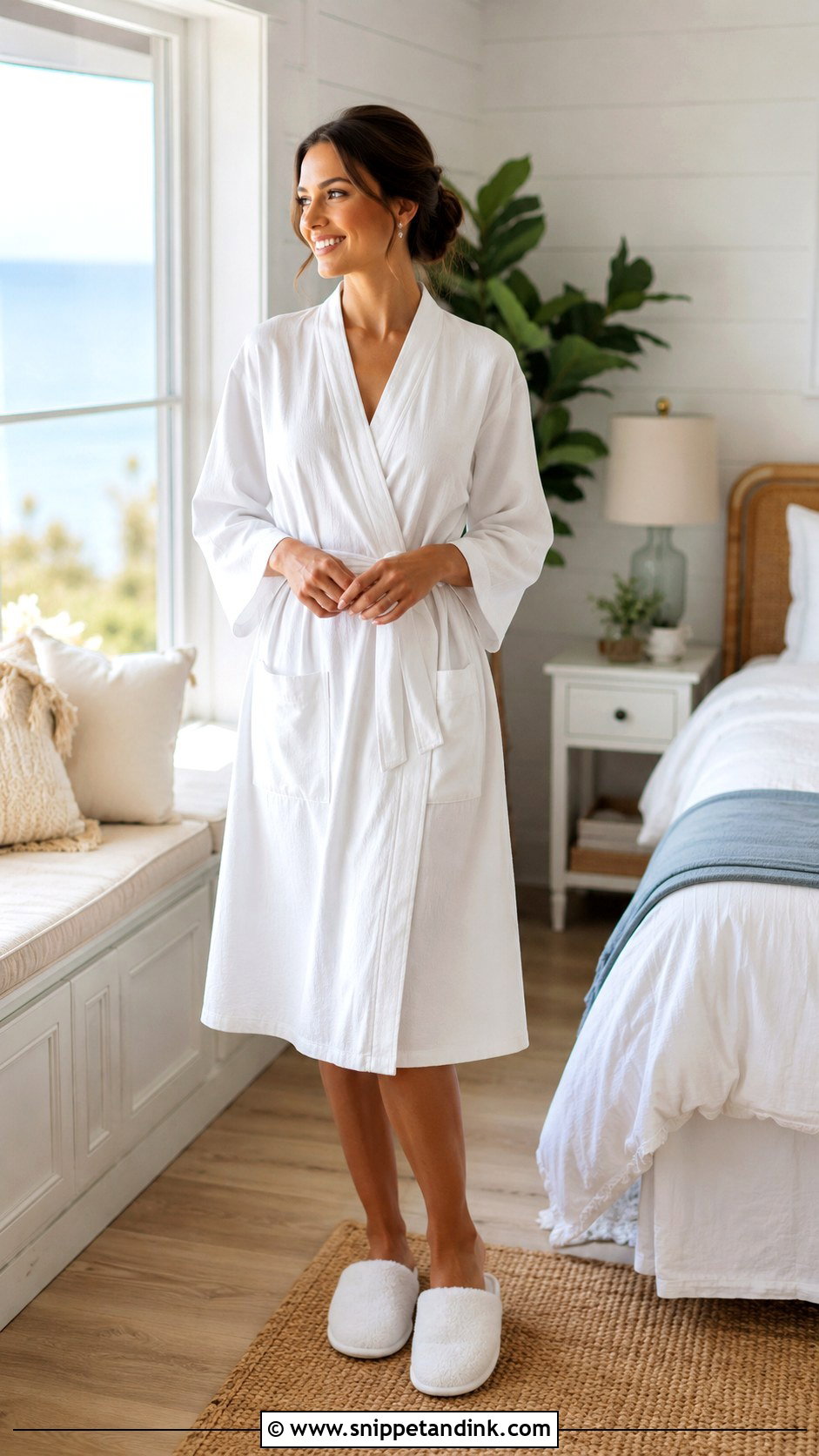
Cotton is what I’d choose for a hot room. Satin can cling once the curling tongs and the steamer have been running for an hour, while crisp cotton, waffle weave or light poplin stays cool. It also absorbs makeup spills instead of spreading them. Embroidered initials or a small “Bride” stitch make it feel like a wedding piece. Plush slippers and simple studs keep it relaxed, and it suits summer, beach and destination weddings.
9. Long Bridal Robe
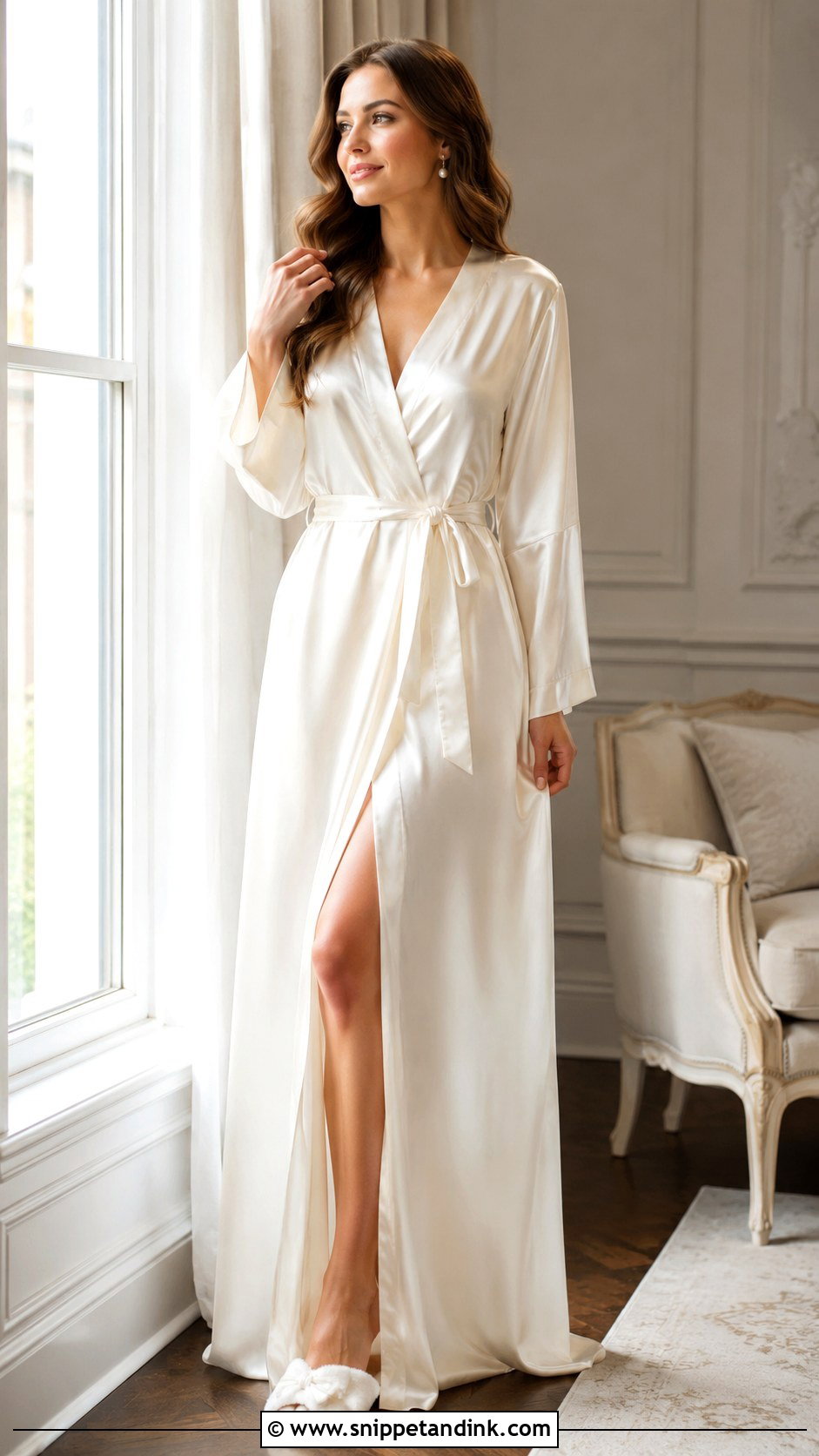
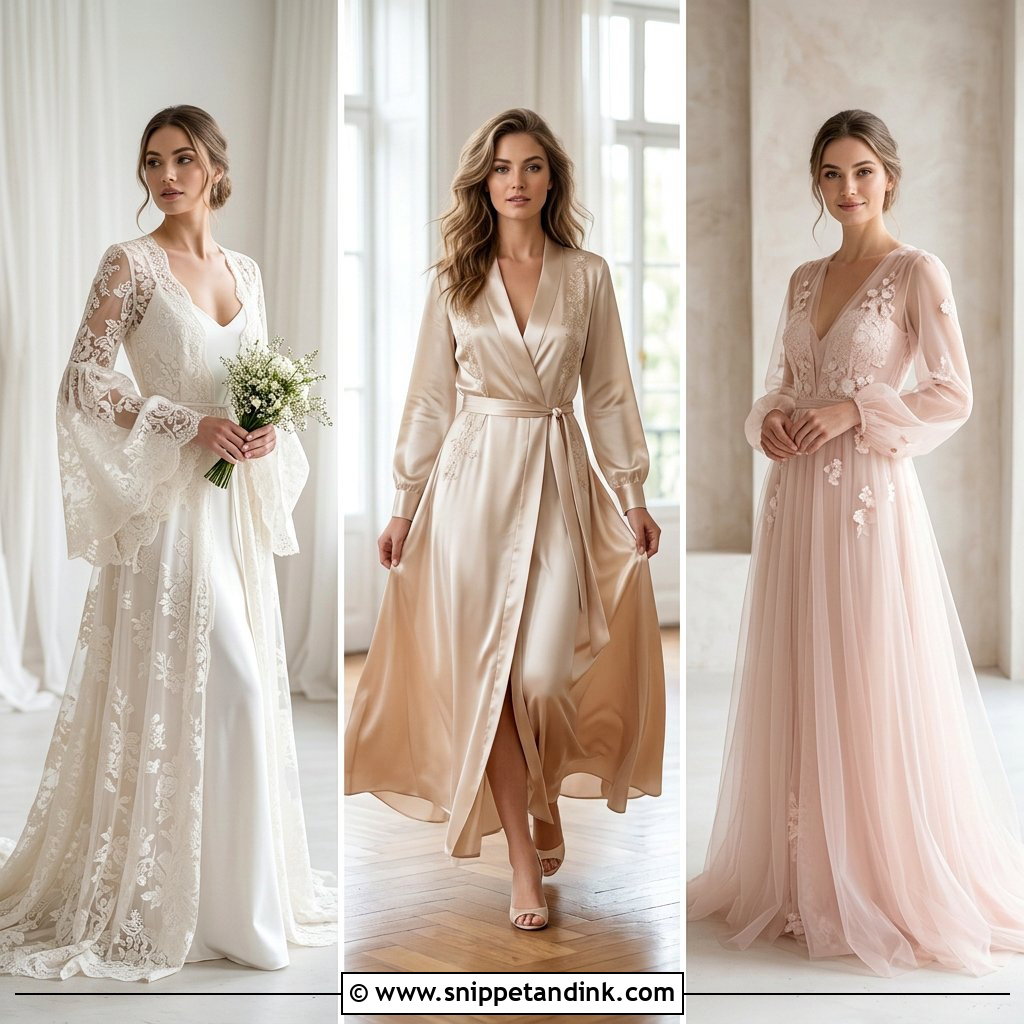
Floor-length robes give long, dramatic lines for window portraits, staircase shots and full-length photos, and they cover more, which many brides prefer with family and a photographer in the room. Satin, silk, chiffon or lace all suit the length. Practically, a long hem gets stepped on as you climb in and out of the makeup chair, so I hold it while you sit. Low slippers, pearl earrings and a neatly tied belt keep it graceful at formal and estate venues.
10. Short Bridal Robe
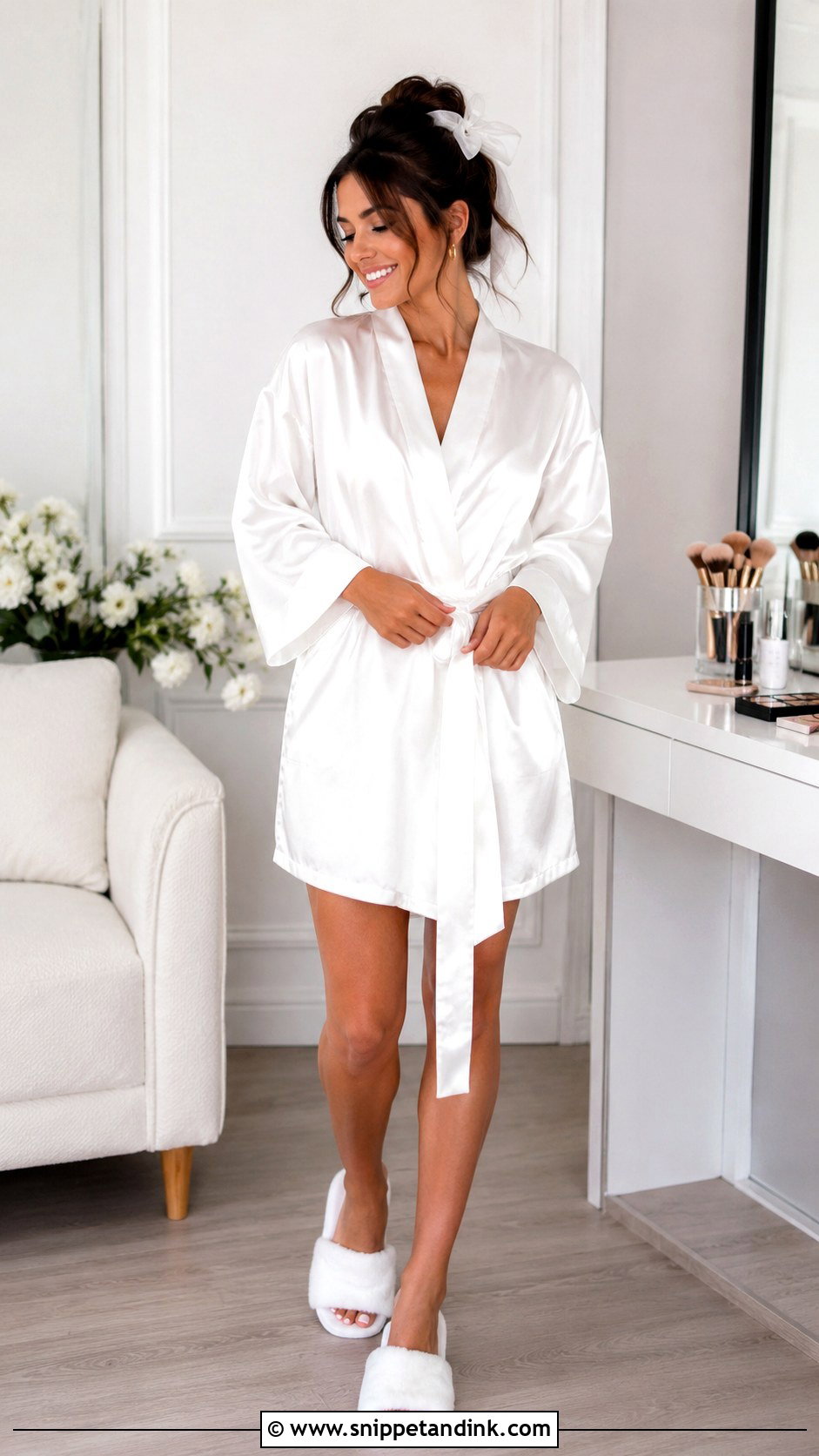
A short bridal robe is easy for a busy morning of makeup, hair, breakfast and quick photos. Check the length sitting down, not standing. A robe that hits mid-thigh standing will ride much higher on a tall director’s chair, and that’s the chair most makeup artists use. Satin, cotton and floral prints all work in short cuts. Matching slippers, small hoops and a soft bow before the final hairstyle keep it light for warm weather and casual venues.
11. Chiffon Bridal Robe
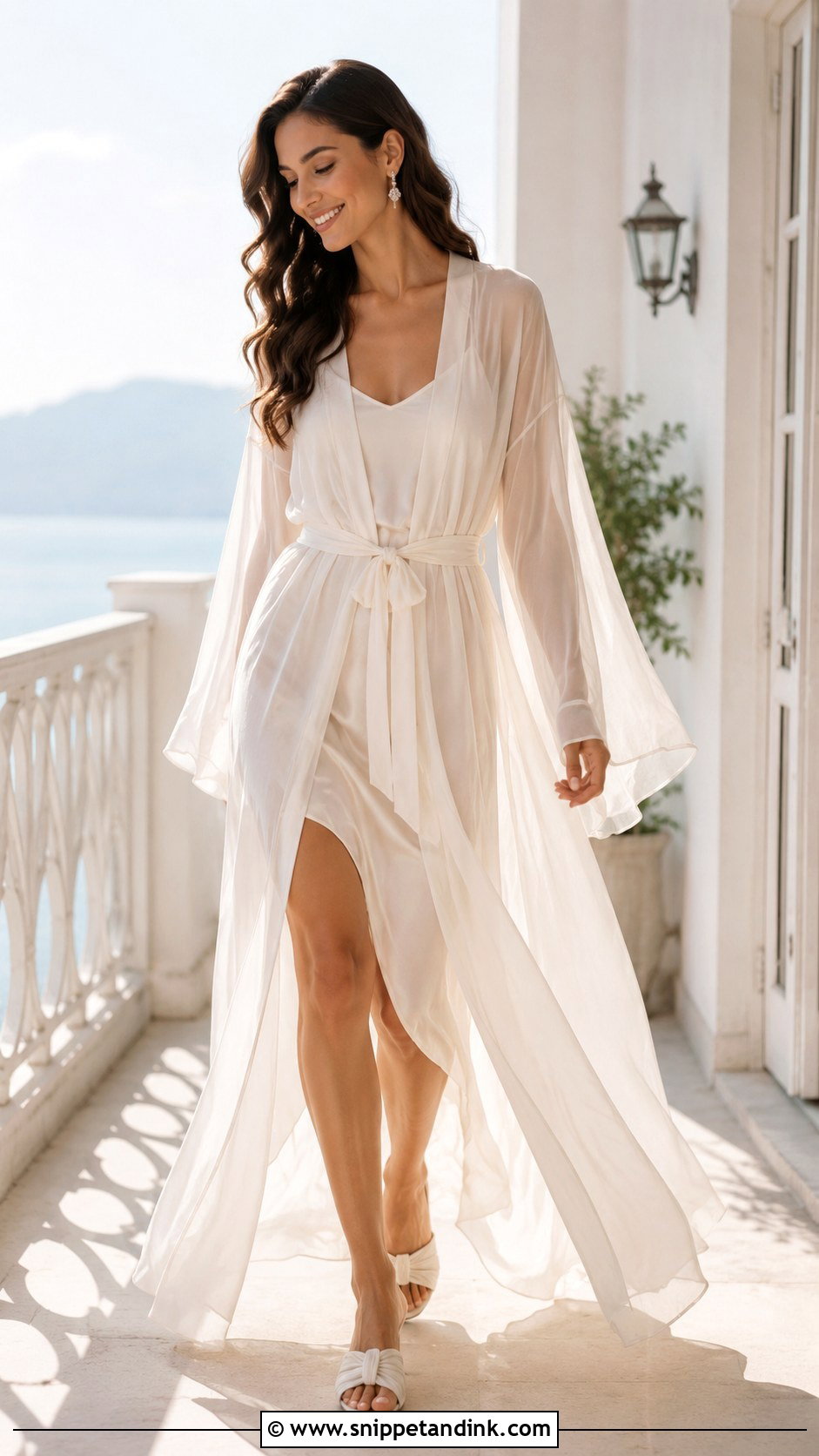
Chiffon floats when you move and photographs softly, but it’s sheer, so it needs something under it: a slip, a cami set or simple bridal sleepwear. Ivory, blush, champagne or white keep it bridal. Loose chiffon sleeves drift into everything near the face, so I tuck or clip them while I’m working on eyes. With satin slippers and loose waves, it suits outdoor portraits, beach resorts and garden venues.
12. Pearl Detail Bridal Robe
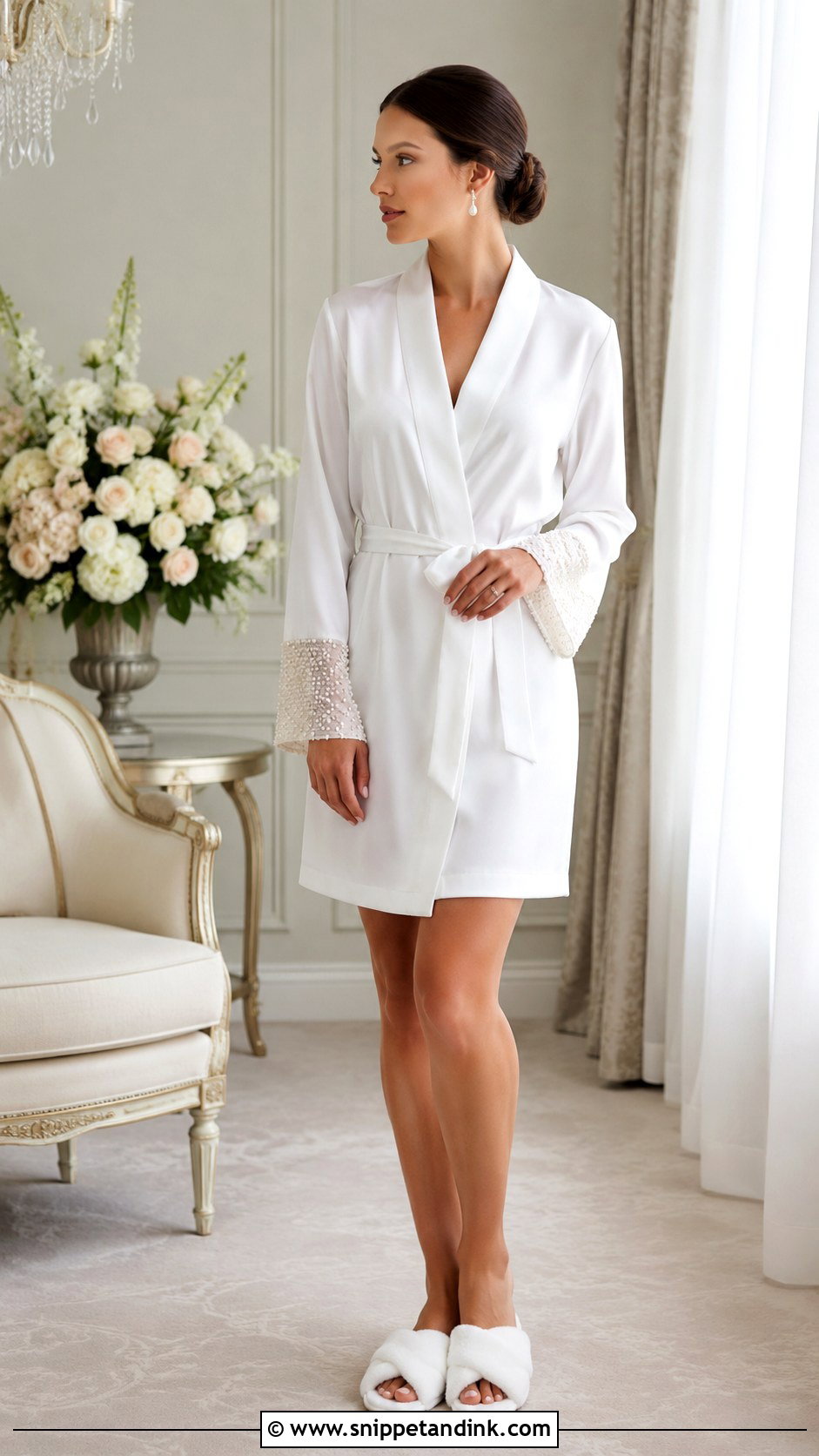
Pearl details on sleeves, hem, collar or belt add texture without a print, and they show up well in close-ups. A word from the makeup chair: pearls on the collar sit right where I’m blending neck and jaw, and sewn-on beads can catch on a sponge. I prefer pearls at the cuffs or hem. Keep the robe white, ivory or champagne, and match it to pearl earrings and a smooth bun if your dress, veil or shoes already carry pearls.
13. Embroidered Bridal Robe
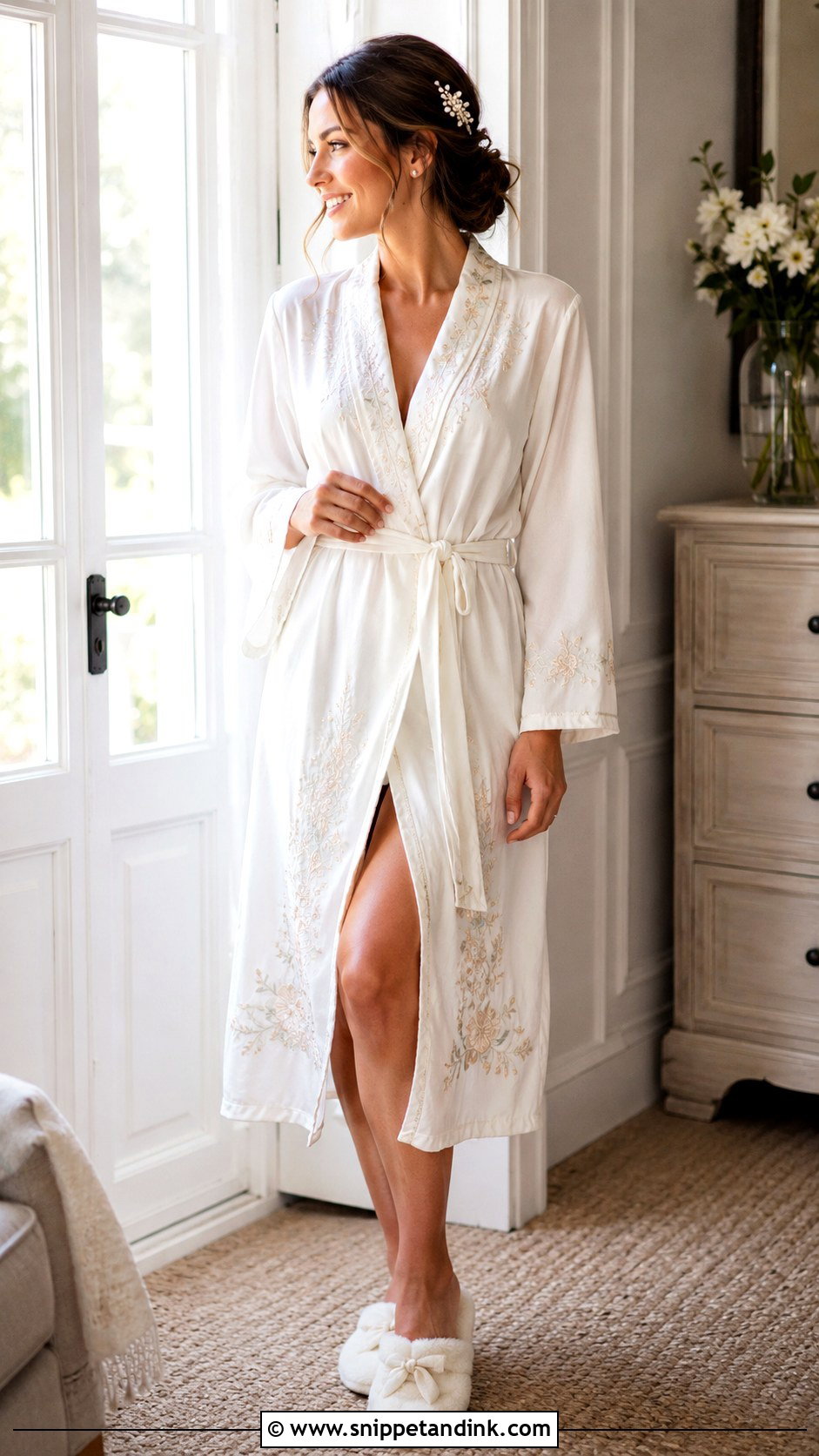
Embroidery makes a plain robe feel personal: florals, initials, the date or a delicate vine. Thread choice matters more than the pattern. Ivory on white is subtle, blush on champagne is warm, and blue on white gives a quiet “something blue”. Satin, cotton and tulle all take stitching. I’d keep slippers and jewellery plain so the detail stays readable, and coordinate the colour with your flowers or stationery to connect the morning to the rest of the day.
14. Tulle Bridal Robe
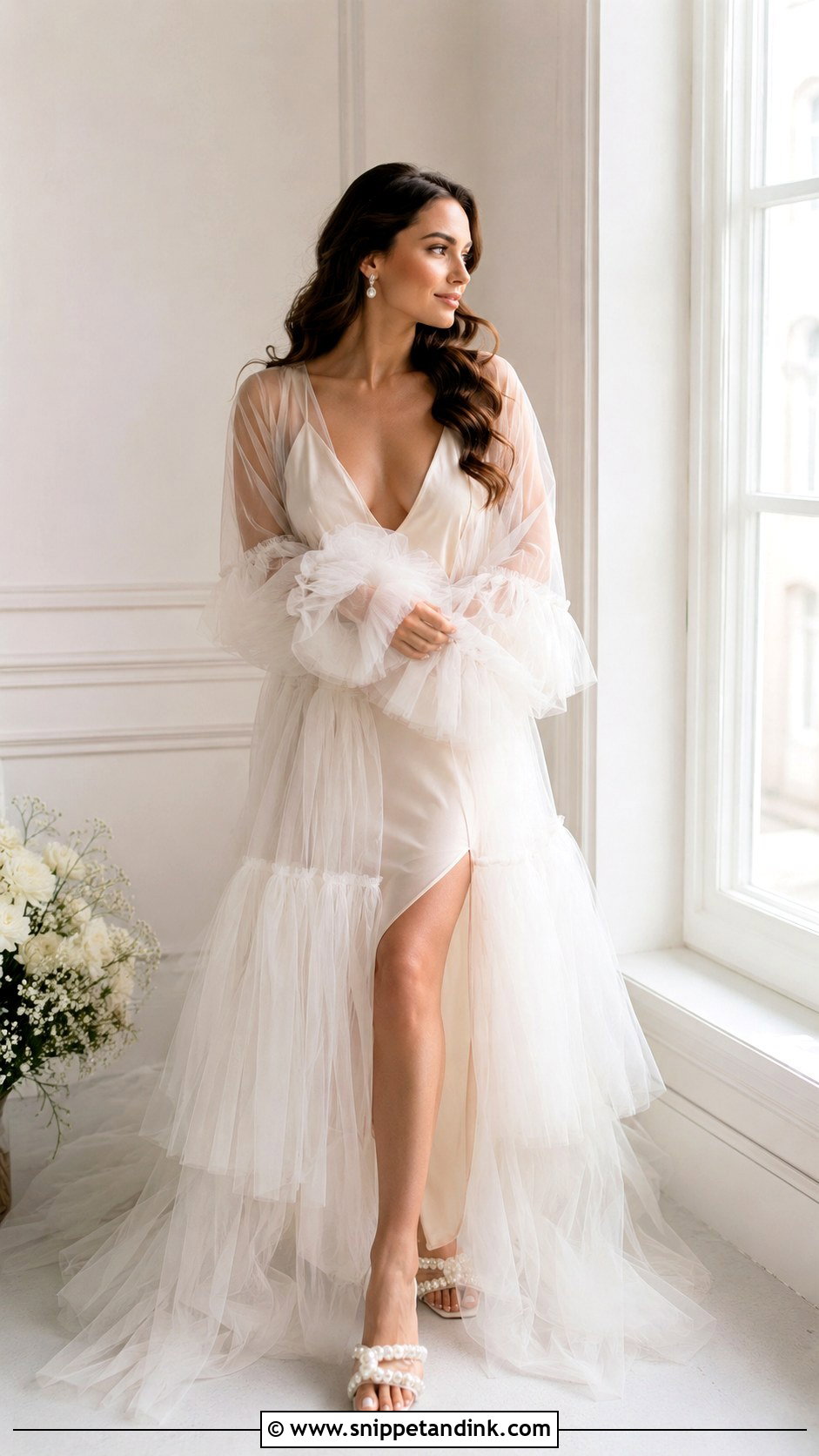
Tulle robes with puff sleeves, layered skirts or small appliqué look more like fashion than loungewear, and in bright window light the layers glow. They aren’t practical for the chair, though. Volume around the shoulders blocks my access to the neck and collarbones, and tulle grabs loose powder. I suggest wearing it only for photos, over a fitted slip or cami set, once hair and makeup are done.
15. Blue Bridal Robe
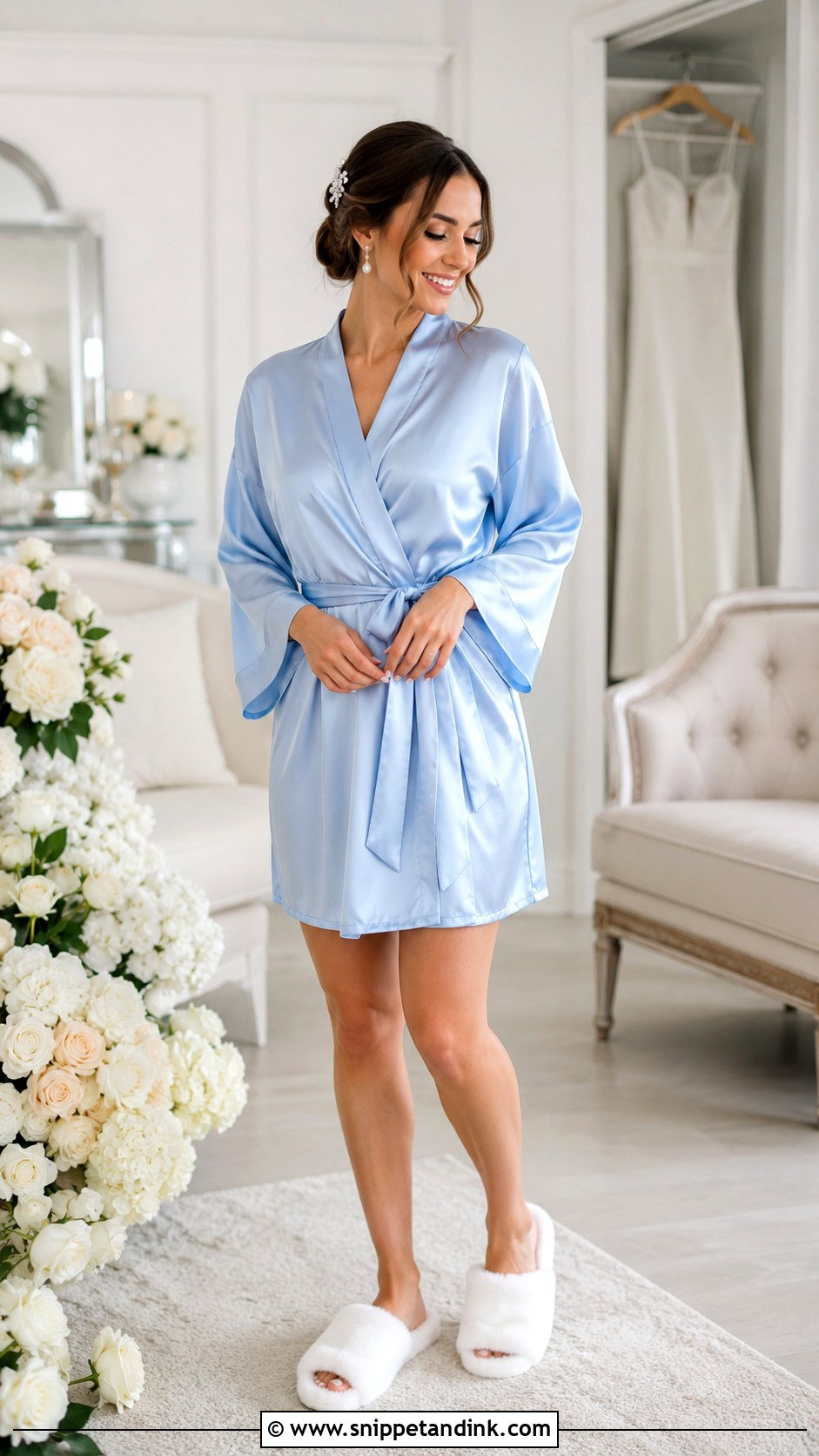
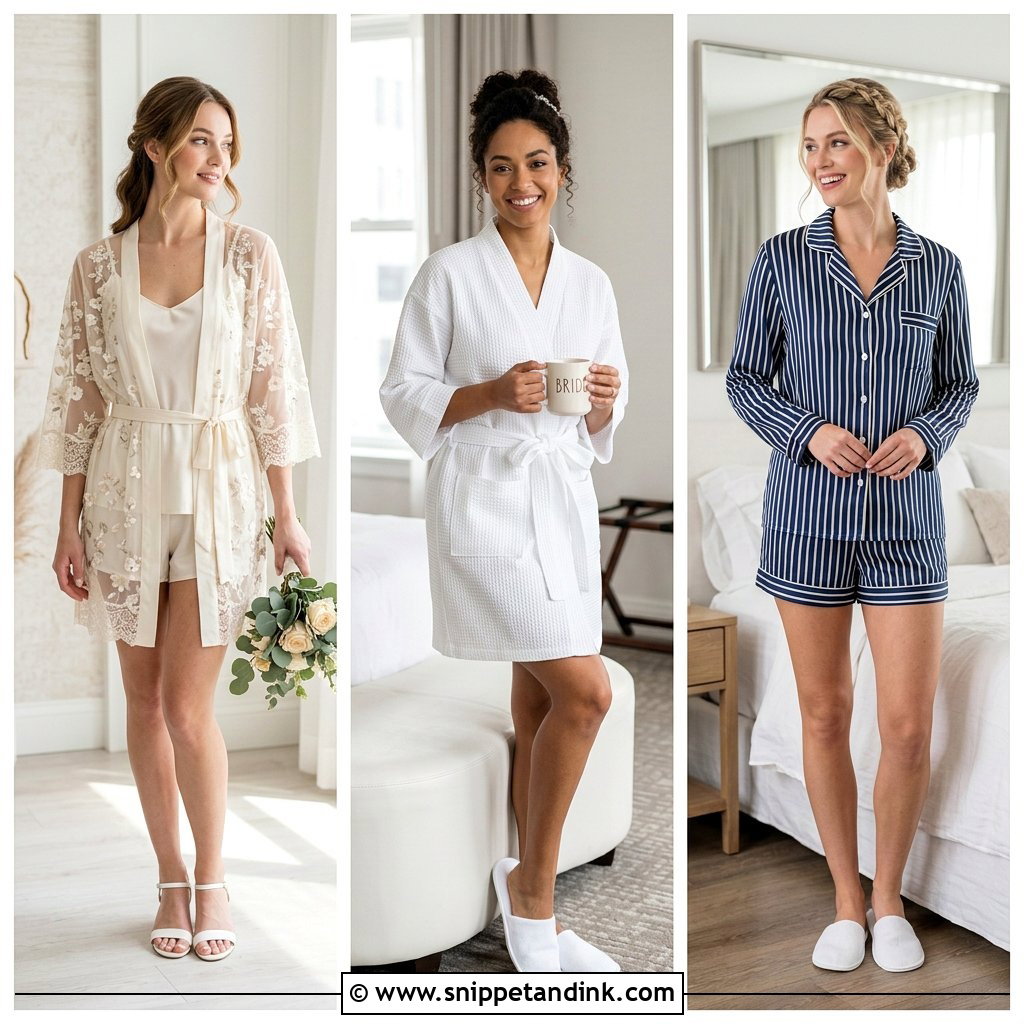
A blue robe is an easy “something blue”. Powder, dusty, mist or pale cornflower shades still read bridal, especially if your palette includes blue flowers, blue bridesmaid dresses or coastal details. Satin looks polished, cotton is comfortable, and a floral print softens it. Blue near the face can make undereye shadows look slightly cooler in photos, so I adjust colour correction a touch when a bride wears it. White slippers and pearl earrings keep the look fresh.
16. Blush Bridal Robe
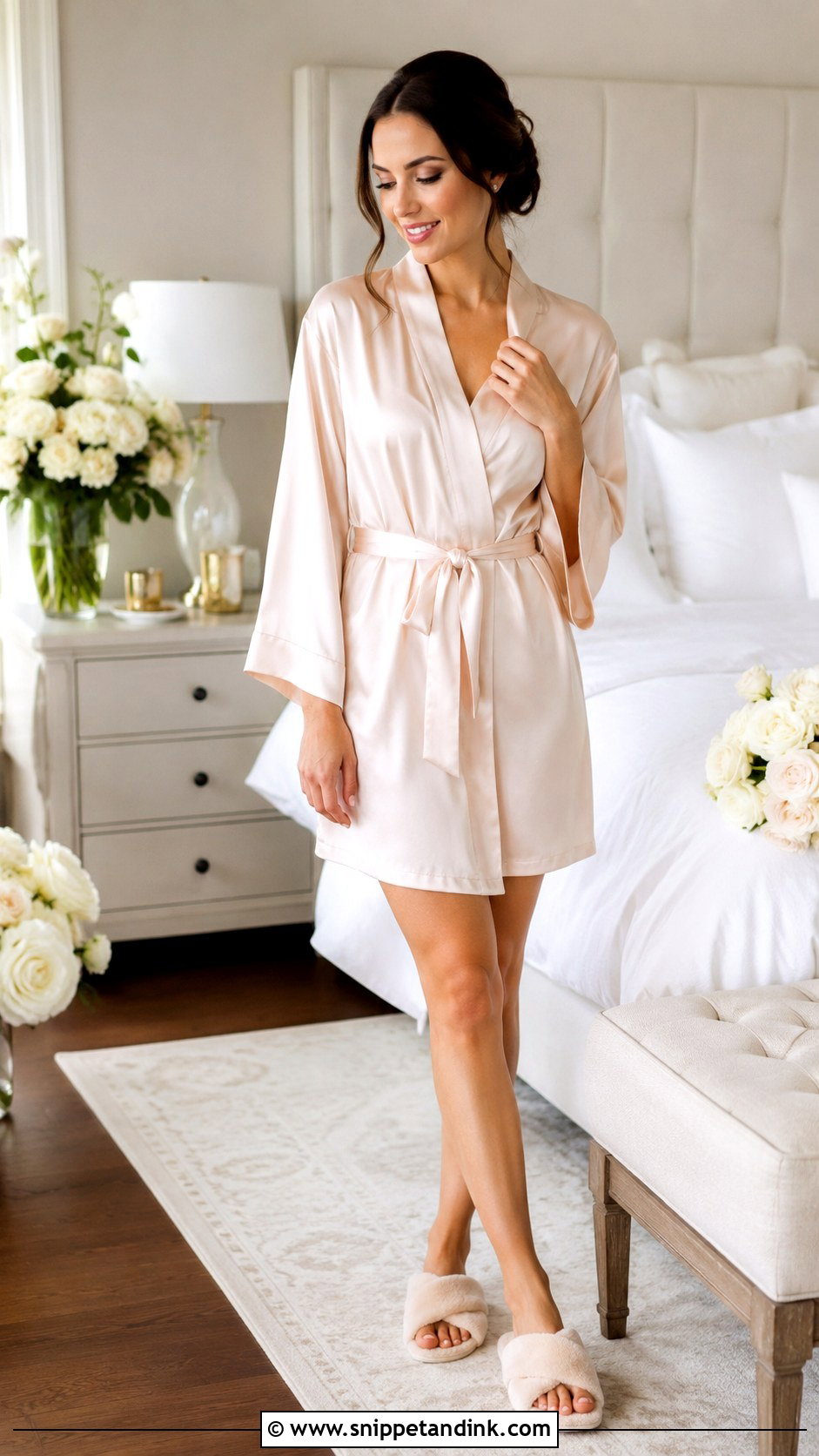
Blush is the robe I quietly recommend most often to brides who worry that white makes them look washed out. A little warmth under the chin reflects back onto the skin. It goes with ivory gowns, rose bouquets, champagne accessories and bridesmaids in deeper pink. Satin, lace or cotton all work. Pearl studs and nude slippers finish it, and it suits any season.
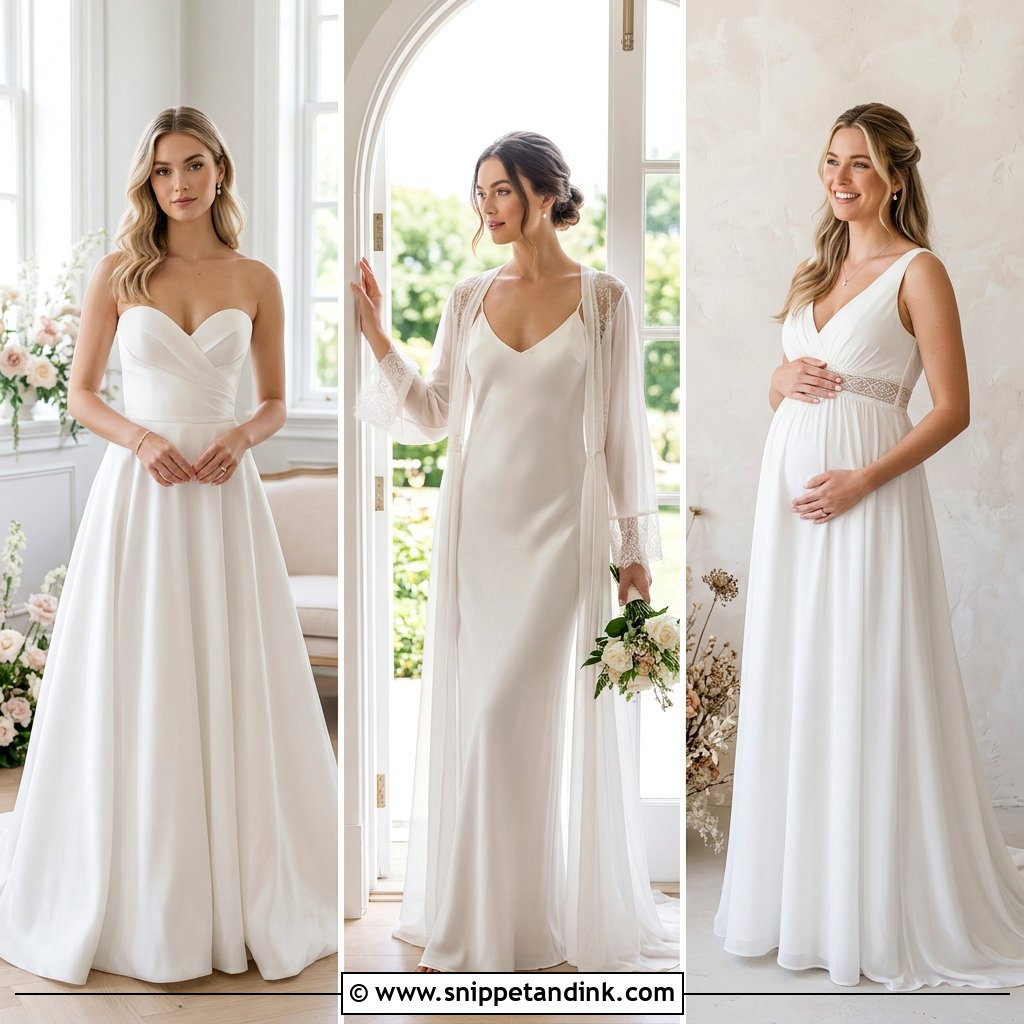
17. Bridal Robe With Slip Dress
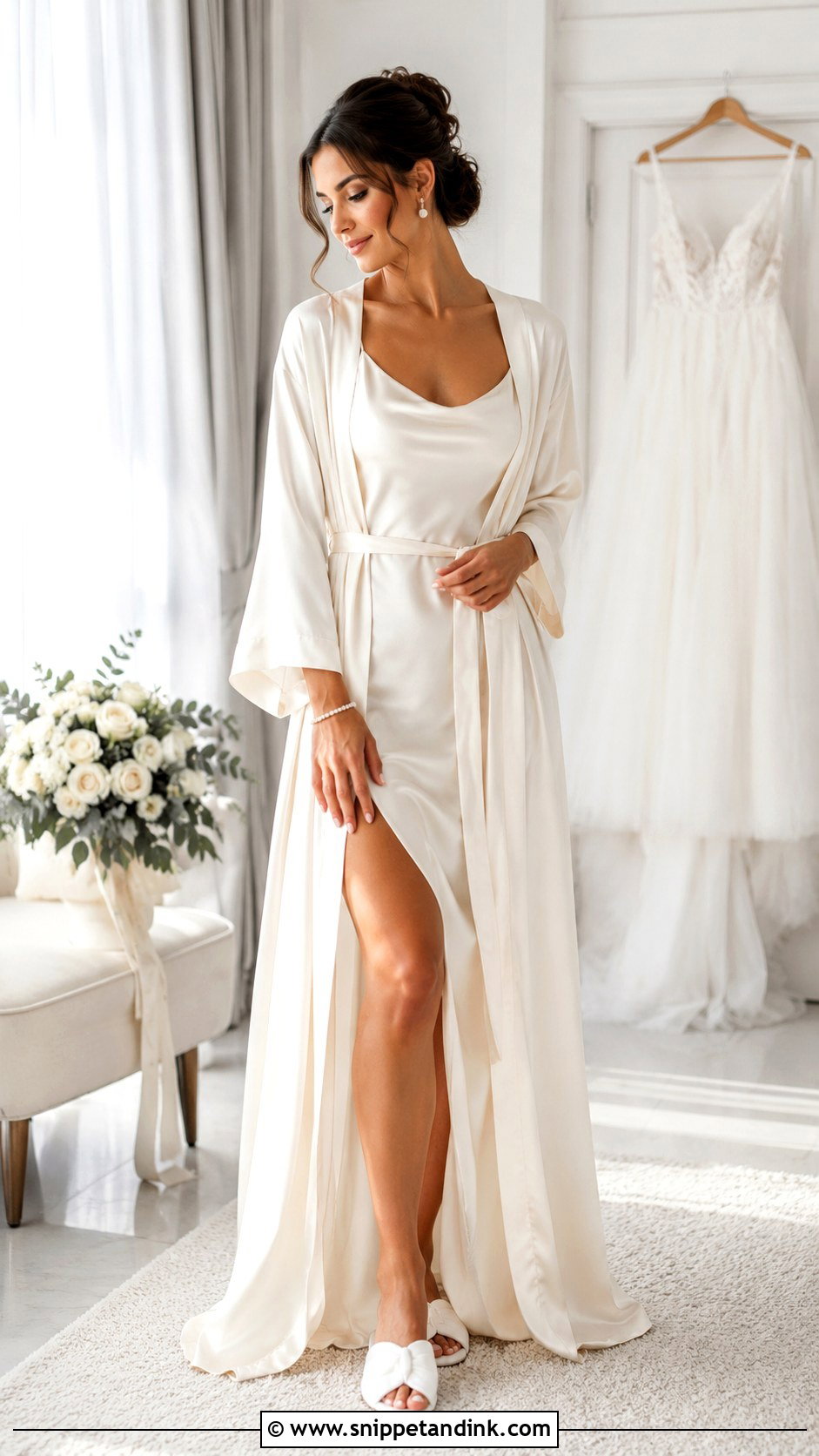
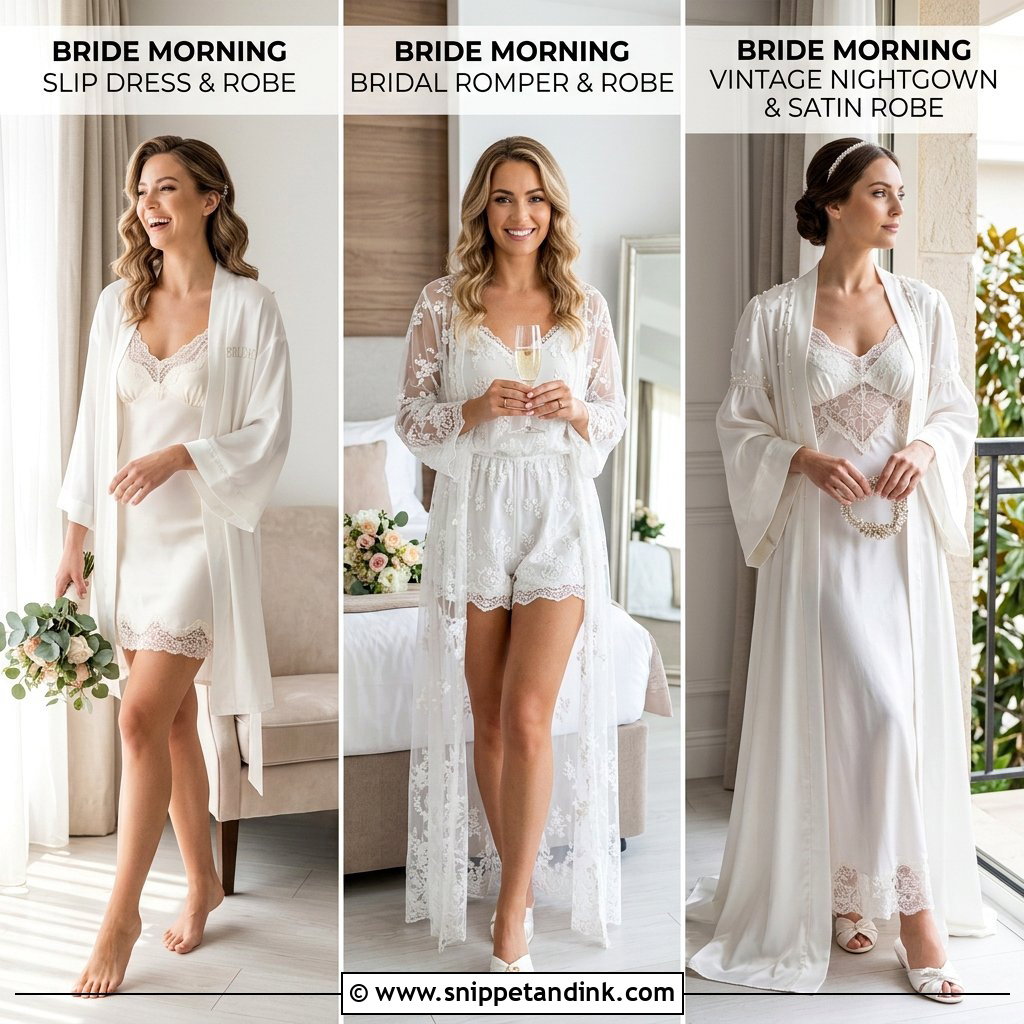
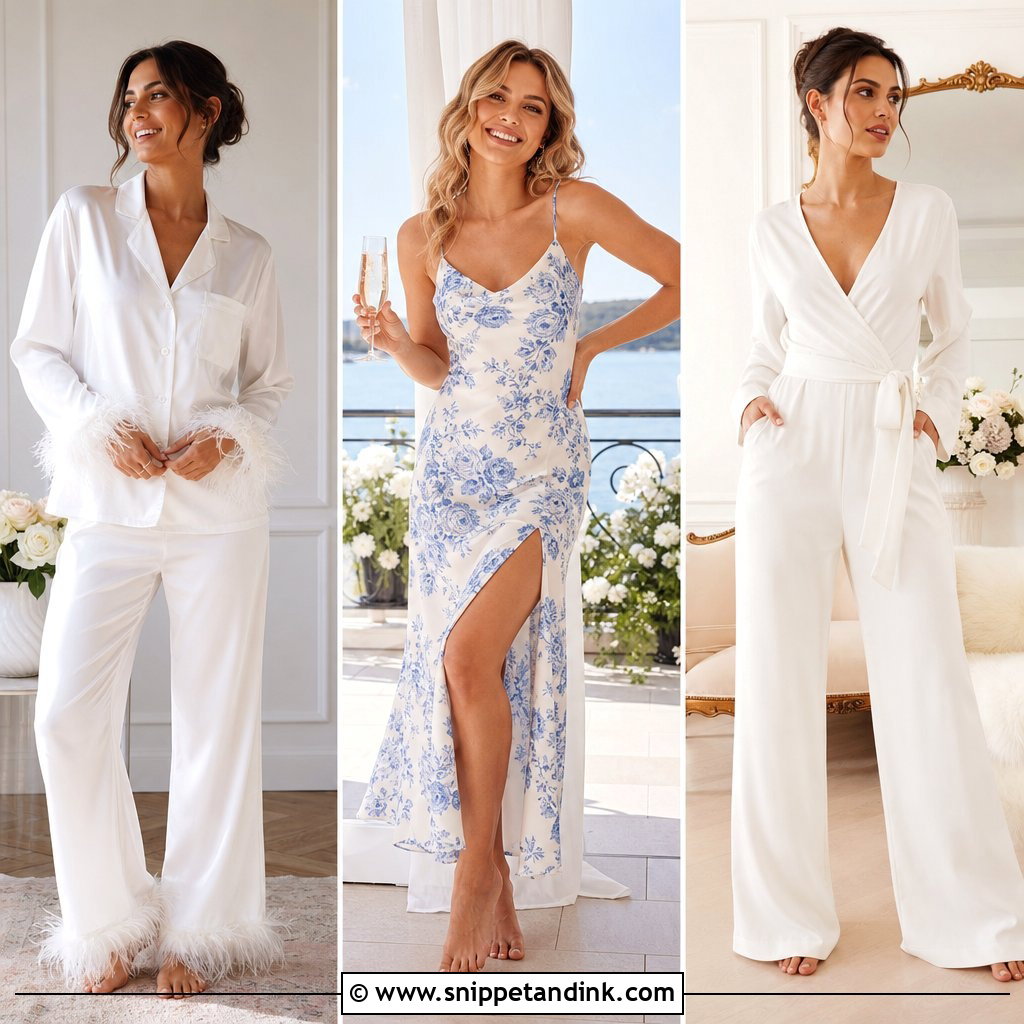
A slip under the robe solves the coverage question completely. When the robe comes off for a photo or a final neck touch-up, you’re still dressed. A matching ivory set looks classic; a lace robe over a satin slip adds texture. Choose a slip with thin straps or a low back so it doesn’t interfere with a strapless gown’s lines when you change. Slippers, pearl earrings and a hair clip finish it for full-length and mirror shots.
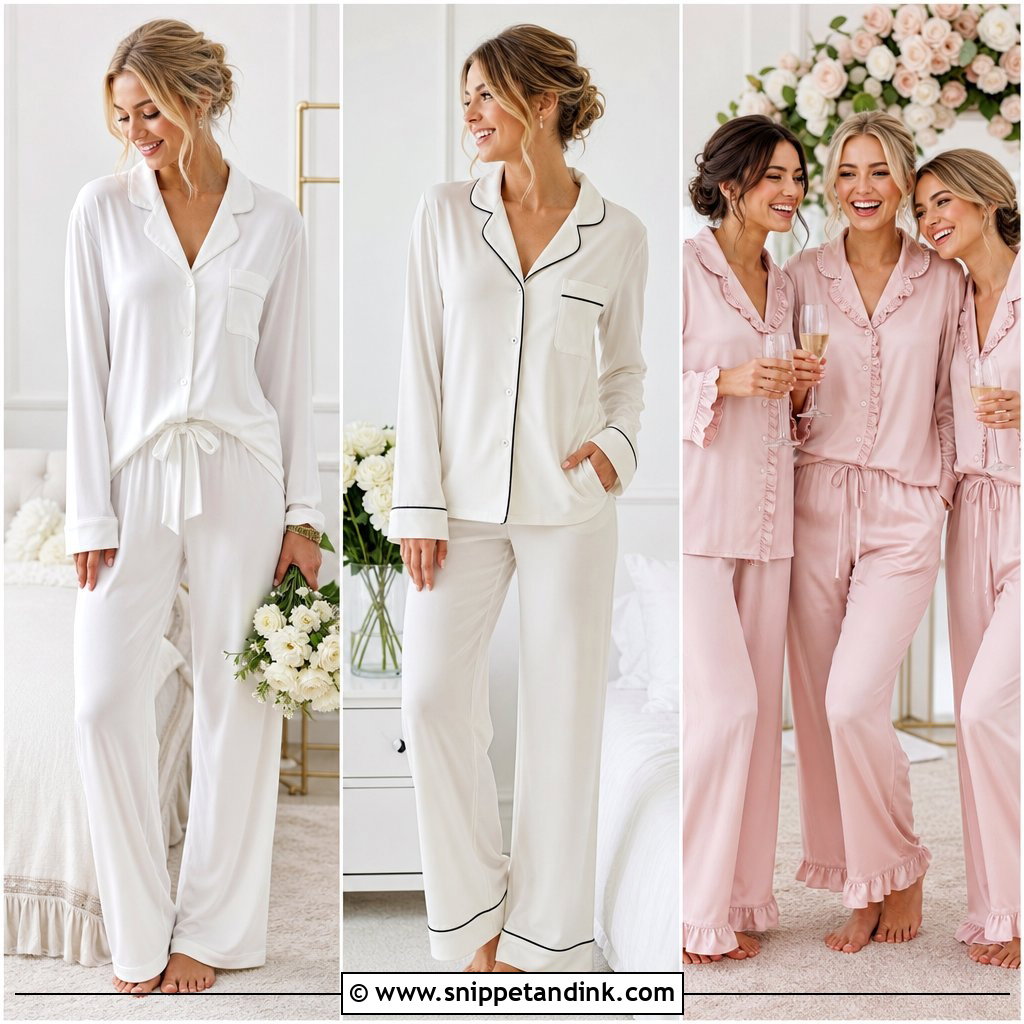
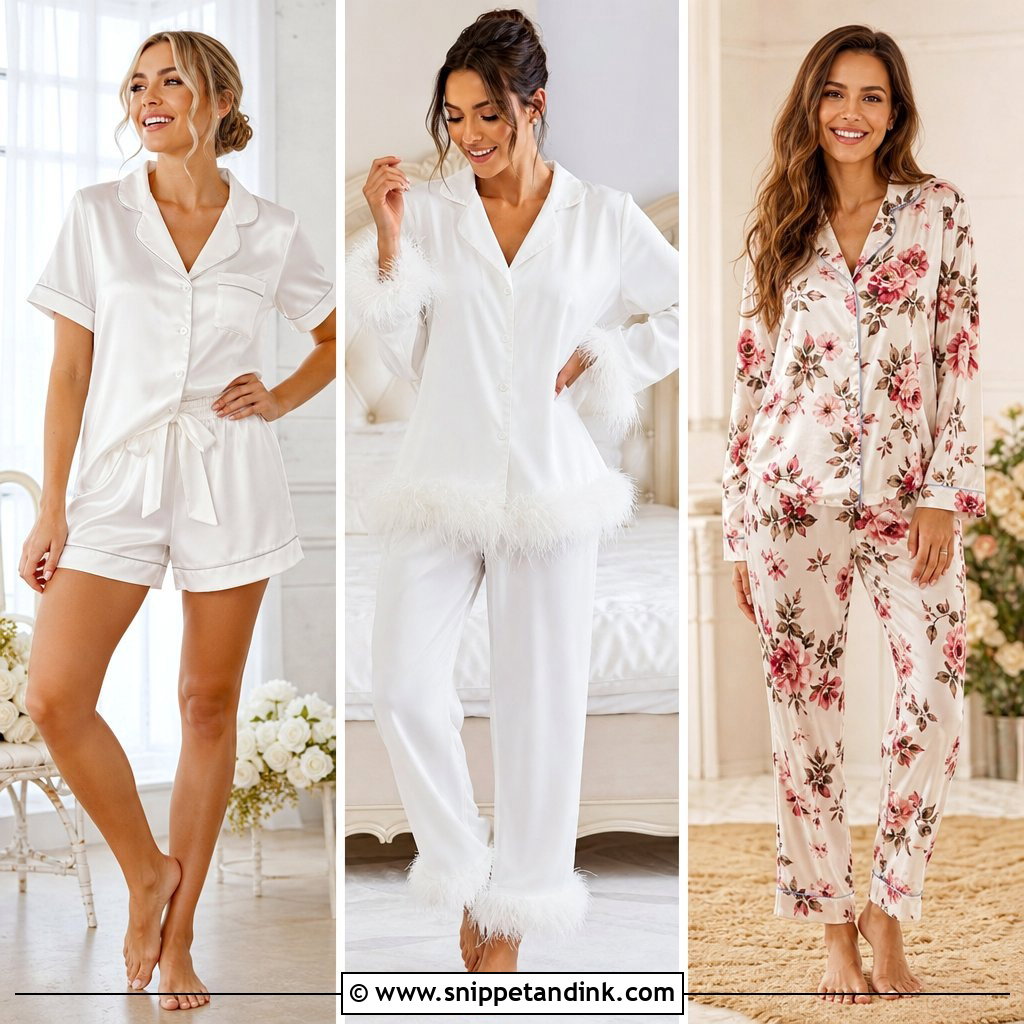
18. Bridal Robe With Pajama Set
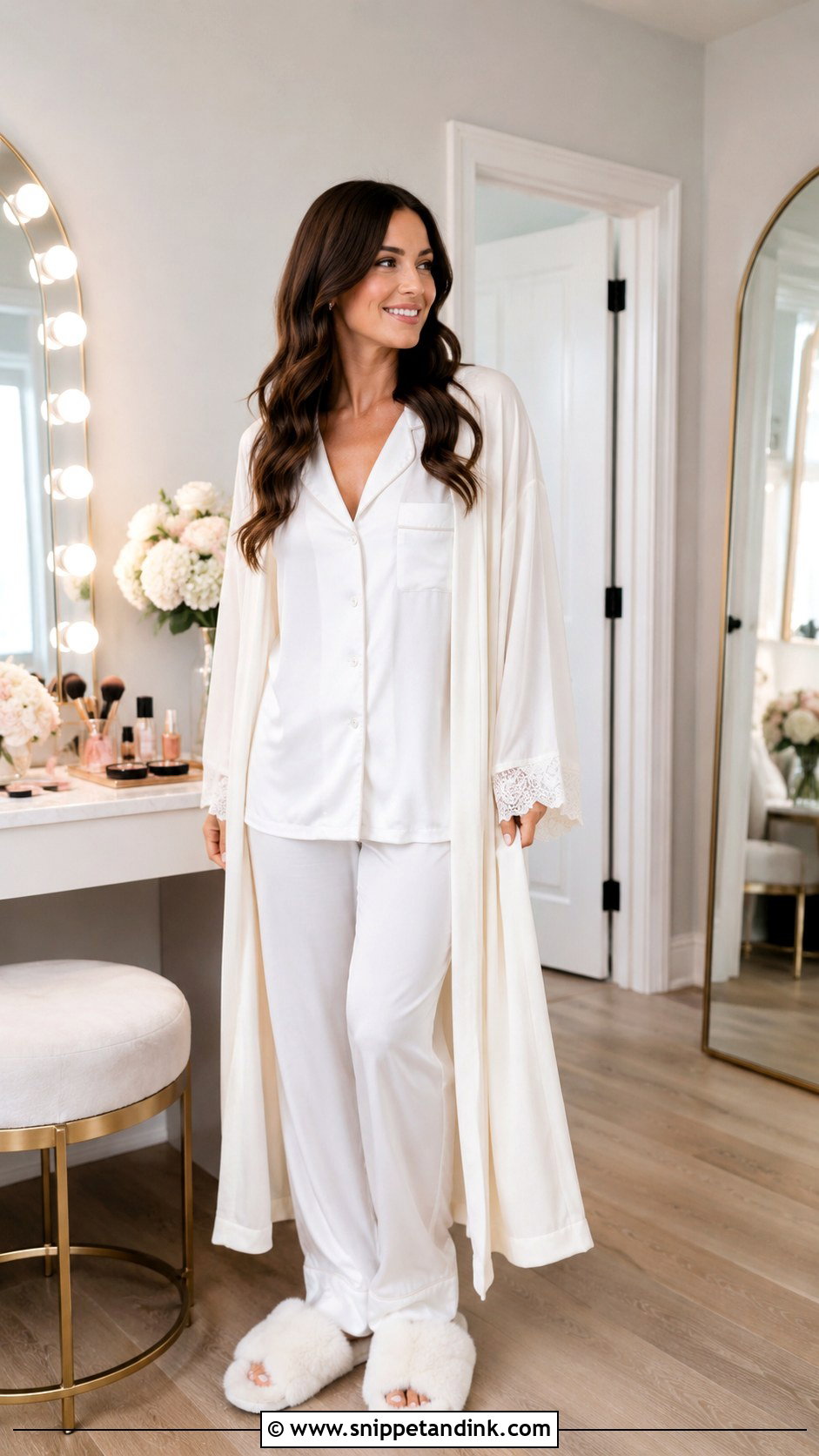
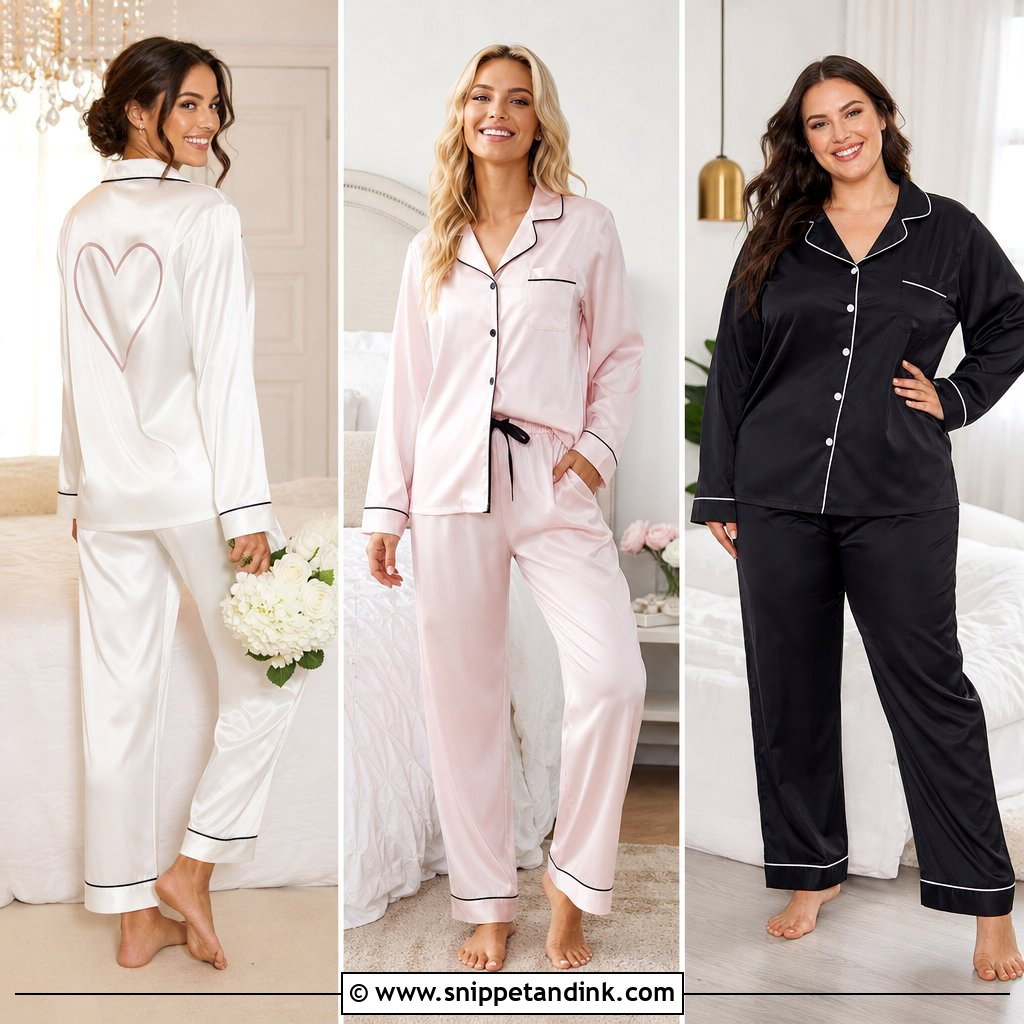
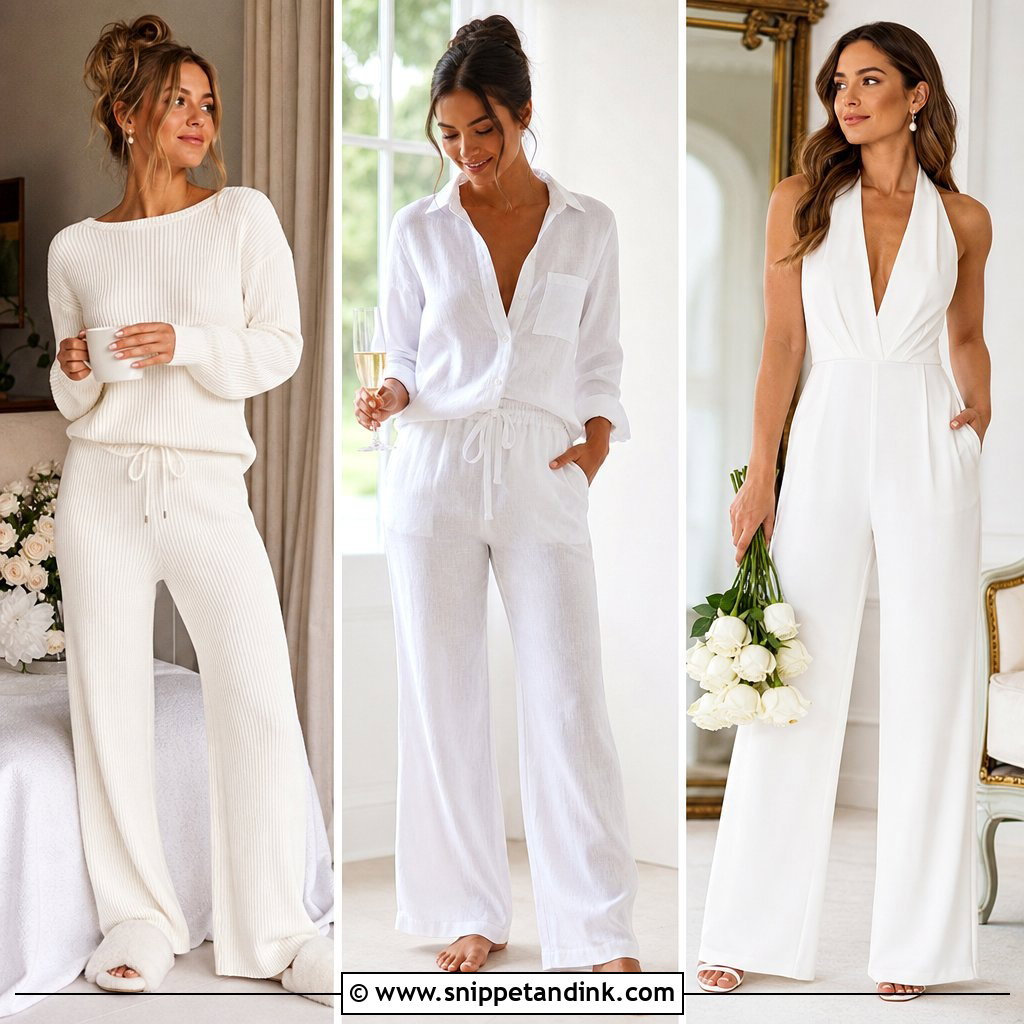
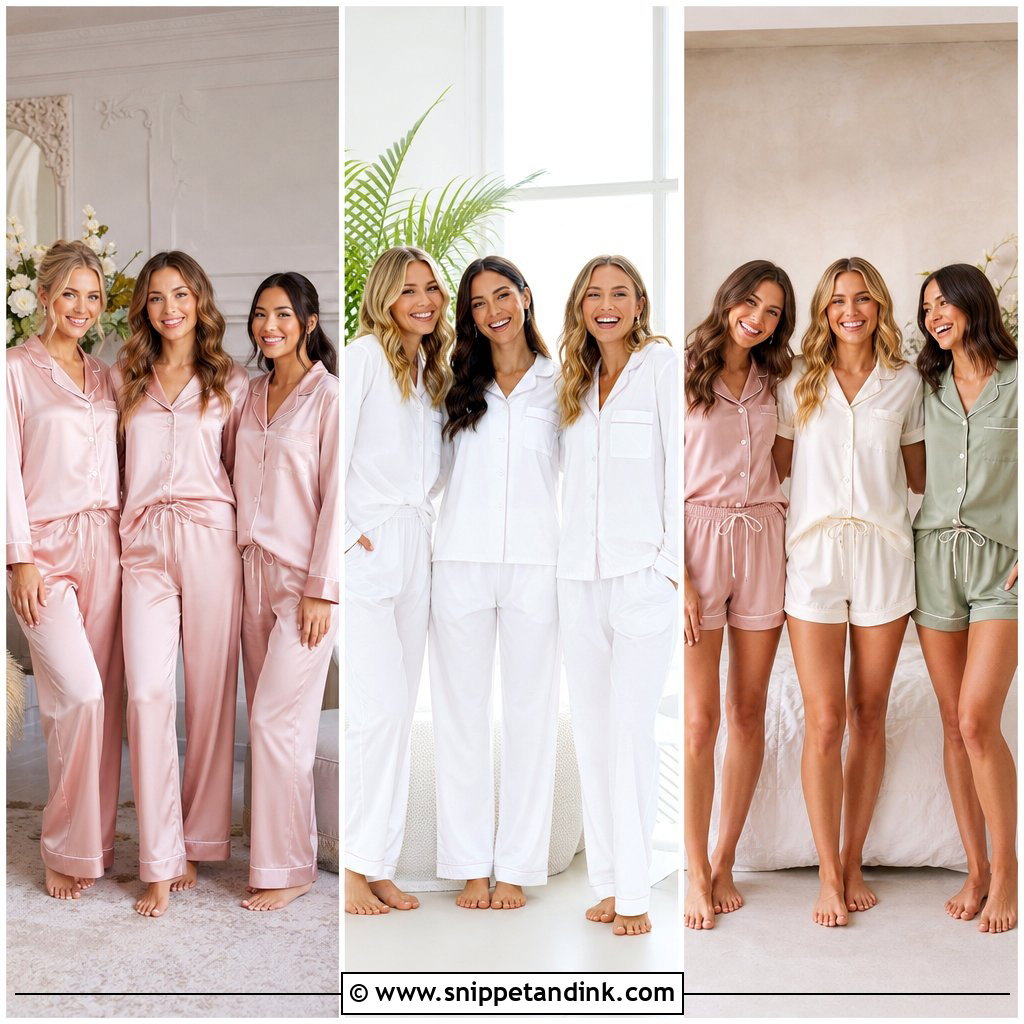
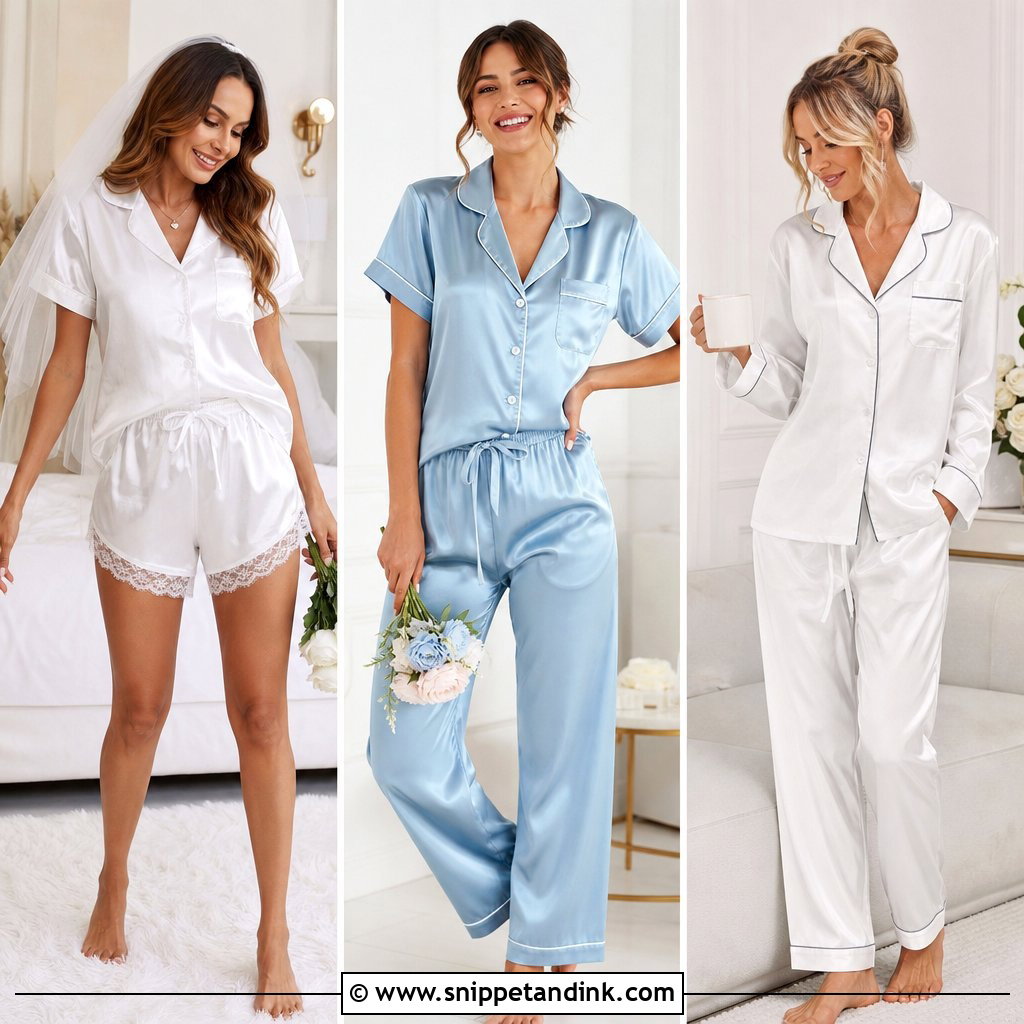
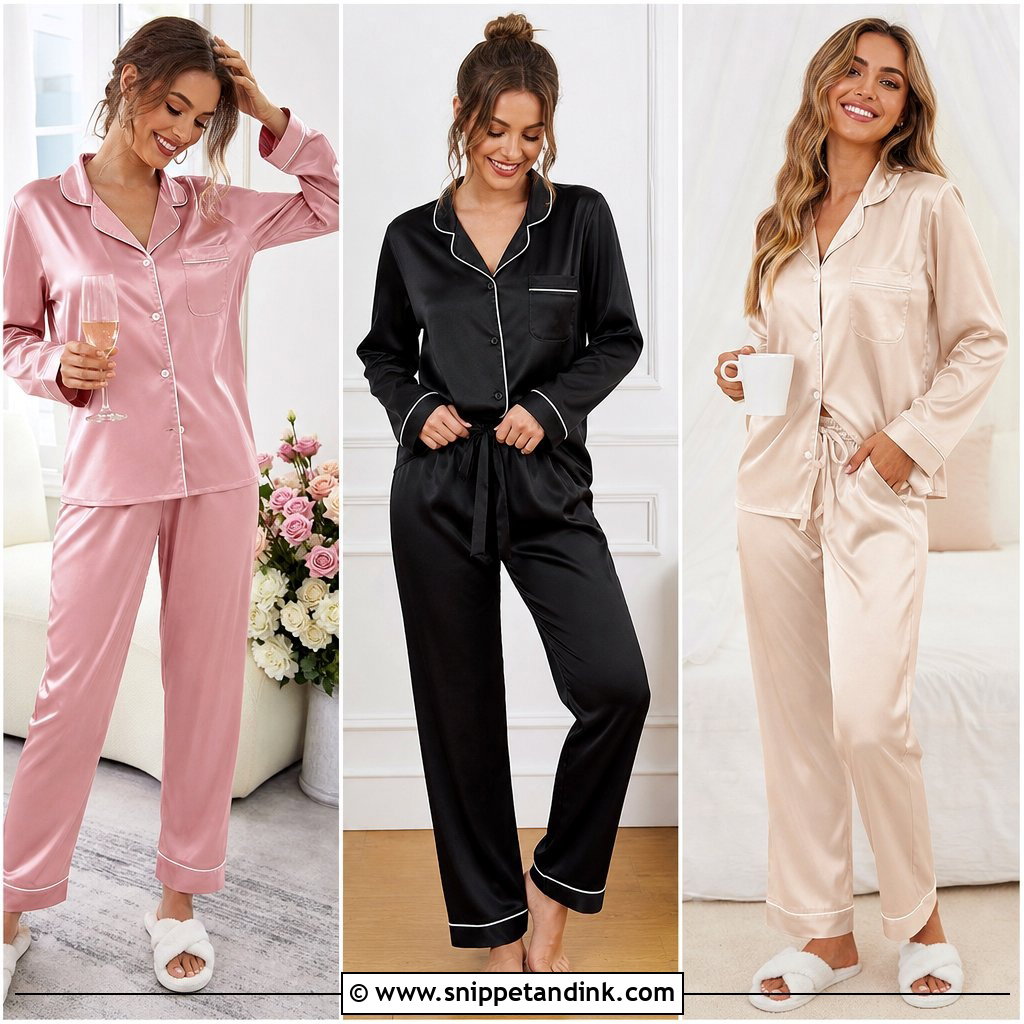
Pajama sets under a robe are the comfortable choice for a long morning with the bridal party. The one rule I’m firm on: buttons down the front. Anything you pull over your head after makeup will drag across your face and through your hair. A white or ivory button-front set under satin, cotton or a floral robe looks neat, with slippers and simple jewellery. Group photos work nicely when bridesmaids wear coordinating pajama sets.
19. Bridal Robe With Bridal Slippers
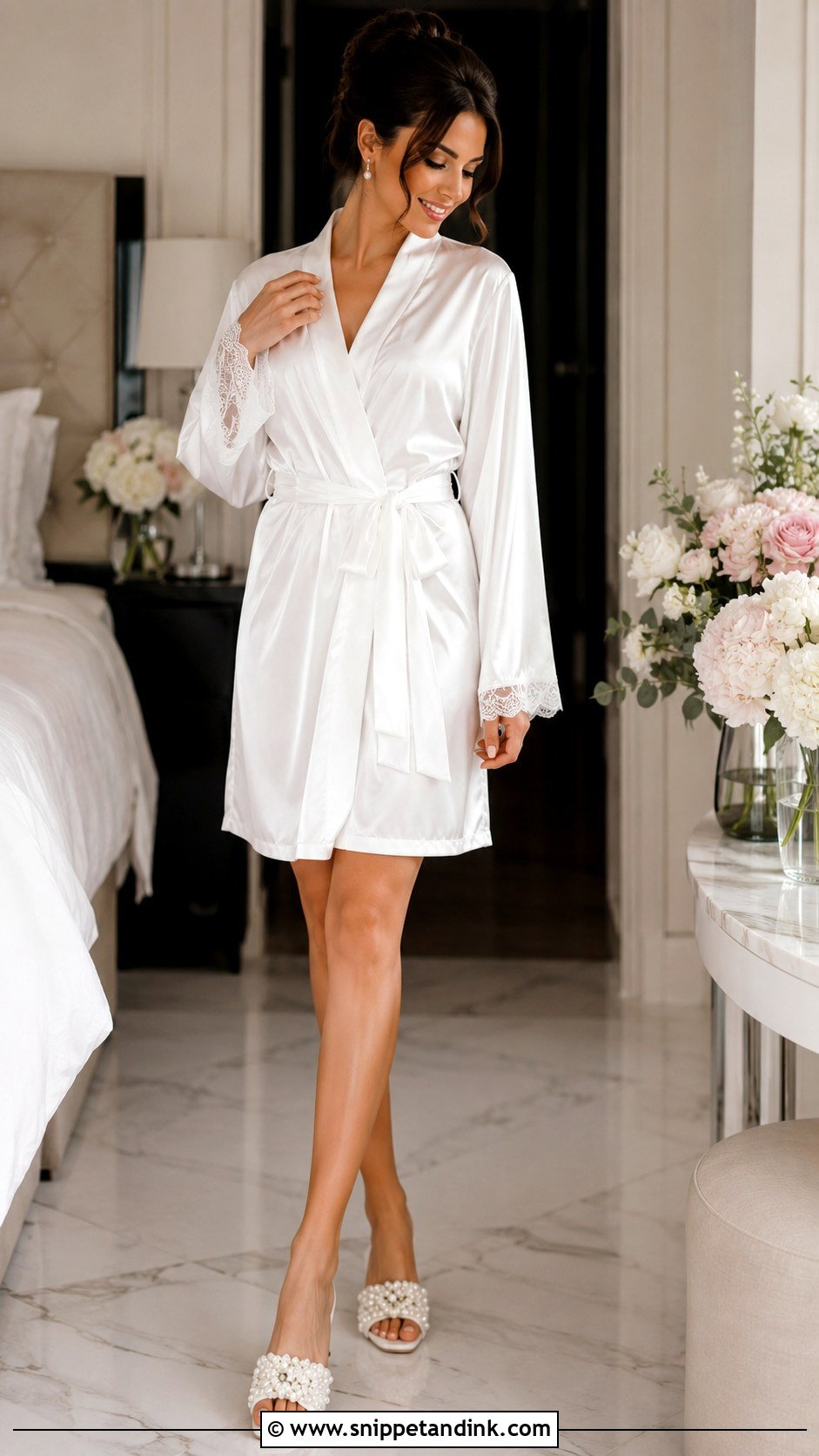
Slippers matter more than people think, because they’re in every full-length frame. Options like satin bow slippers, pearl slippers, plush slides or simple closed mules should match the robe: pearls with white satin, plush slides with cotton. Closed toes are kinder for the morning if your pedicure is fresh, since open slides scuff polish. A neatly tied belt and delicate earrings make the head-to-toe look feel intended.
20. Bridal Robe With Hair Bow
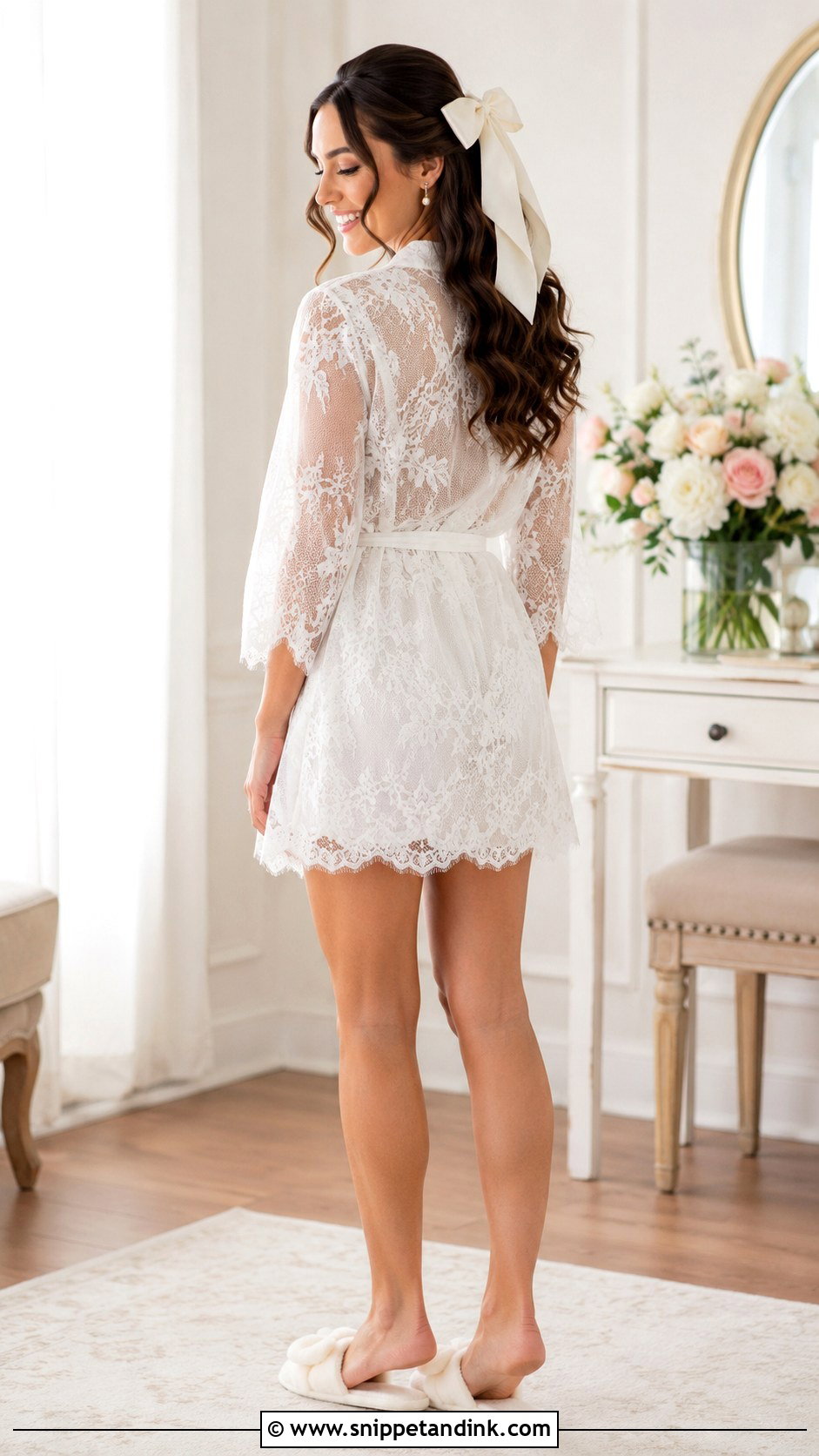
A satin or organza bow fills the gap before the veil or final hair accessory goes on, and it frames the face in close-ups and mirror shots. Ivory reads classic, blush reads soft, and blue gives a hidden “something blue”. Clip it in after hair is set, not before; a bow worn during styling leaves a dent. Keep earrings small and slippers plain so the bow is the only focal point.
21. Bridal Robe With Pearl Headband
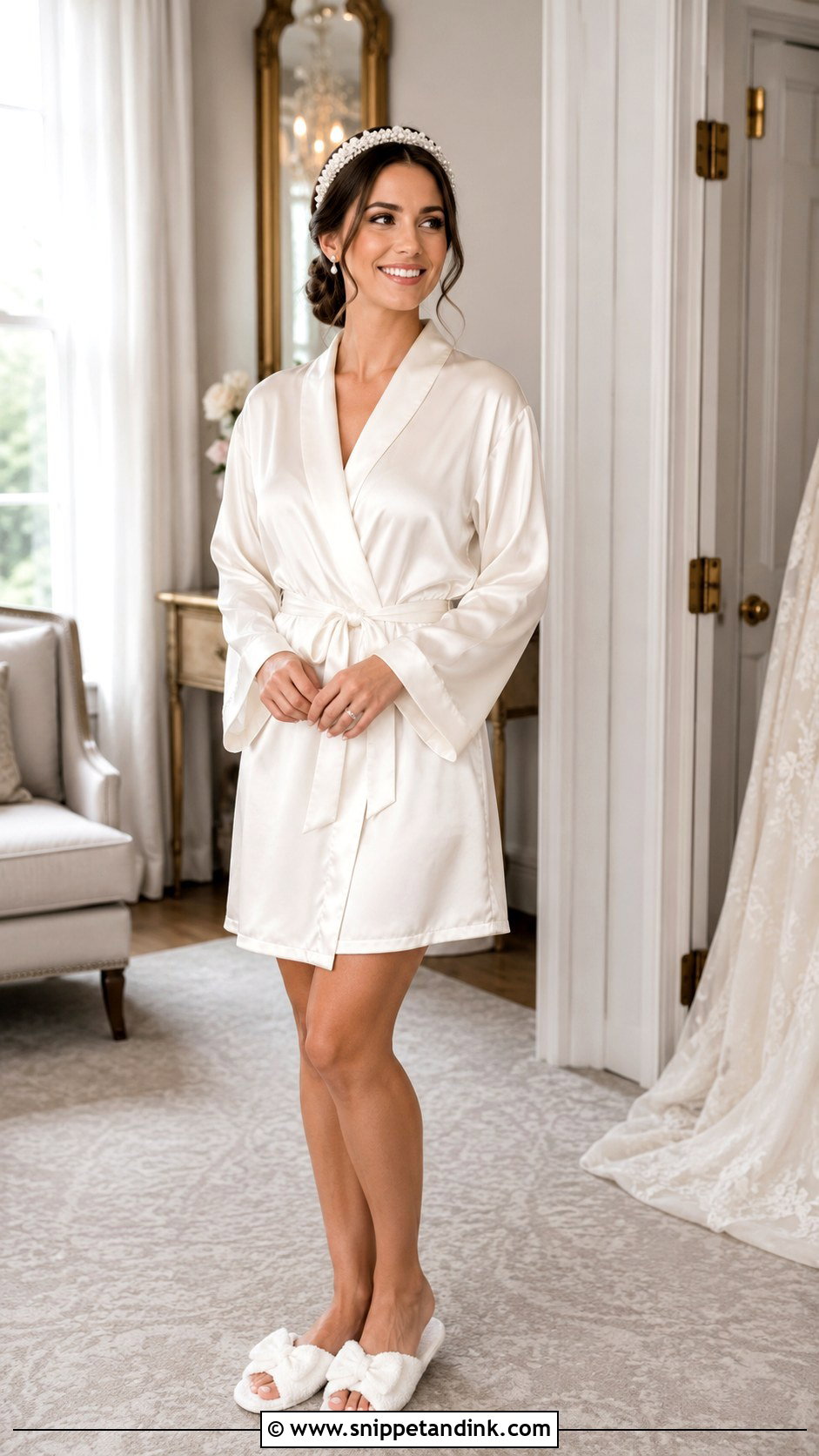
A pearl headband holds loosely curled or pinned hair off the face while you wait for final styling, and it looks finished in photos without the weight of a veil. Satin, silk or lace robes in white, ivory or champagne suit it. I’d keep a headband off until foundation is done, since it presses on the hairline where I’m blending. Pearl studs or small drops are enough jewellery with it, and it’s well suited to seated makeup photos and close portraits.
22. Bridal Robe With Matching Bridesmaid Robes
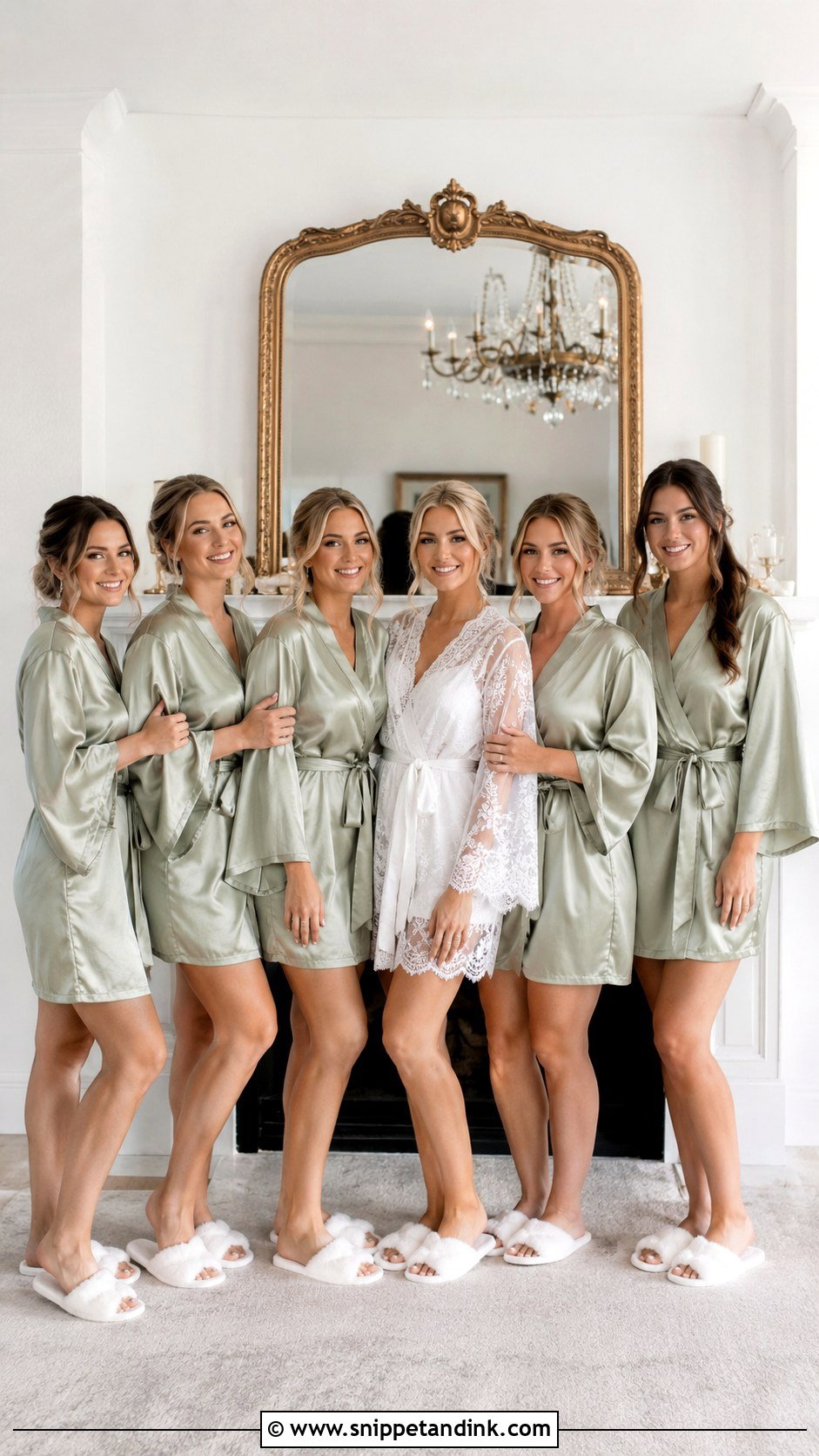
Dressing everyone in matching bridesmaid robes makes a getting-ready room look organised in photos. The bride wears white or ivory and the bridesmaids wear a palette colour: sage, blush, champagne, dusty blue or mauve. Same fabric for everyone looks soft; giving the bride lace or feather trim against everyone else’s plain satin makes her stand out. Personalised slippers or initials are optional extras. Ask everyone to arrive in a button or zip top, though, since they’ll be changing into robes before their own makeup.
23. Bridal Robe With Flower Girl Robe
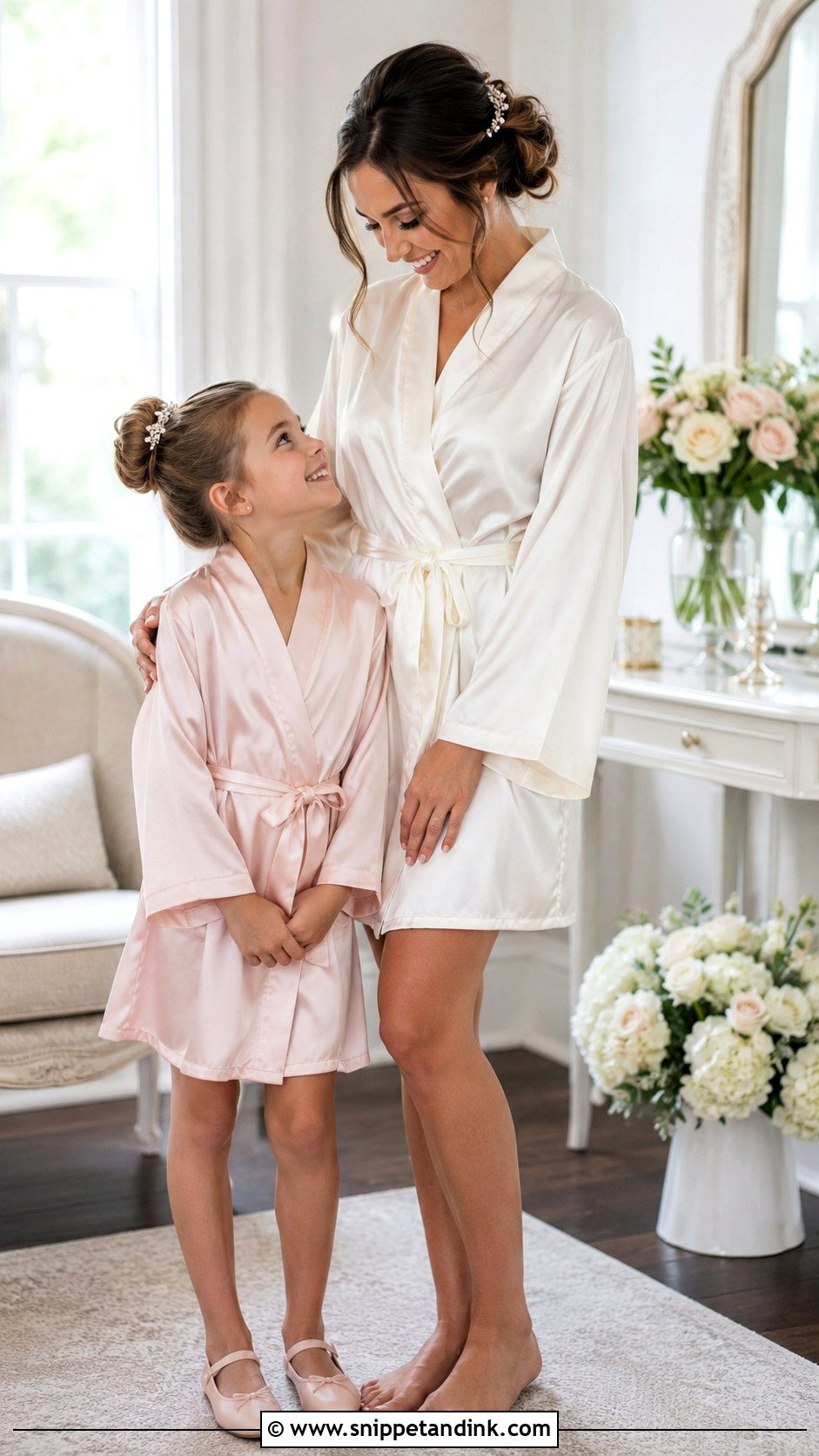
A mini robe for the flower girl in blush, white or a soft print makes for affectionate photos with the bride. Choose cotton or soft satin with a secure tie and enough coverage for a child who will climb on furniture. Ballet flats or small slippers keep her steady. Schedule her photos early, before she gets bored, and keep any makeup off the robe, since little ones like to hug faces.
24. Bridal Robe With Mother Of The Bride Robe
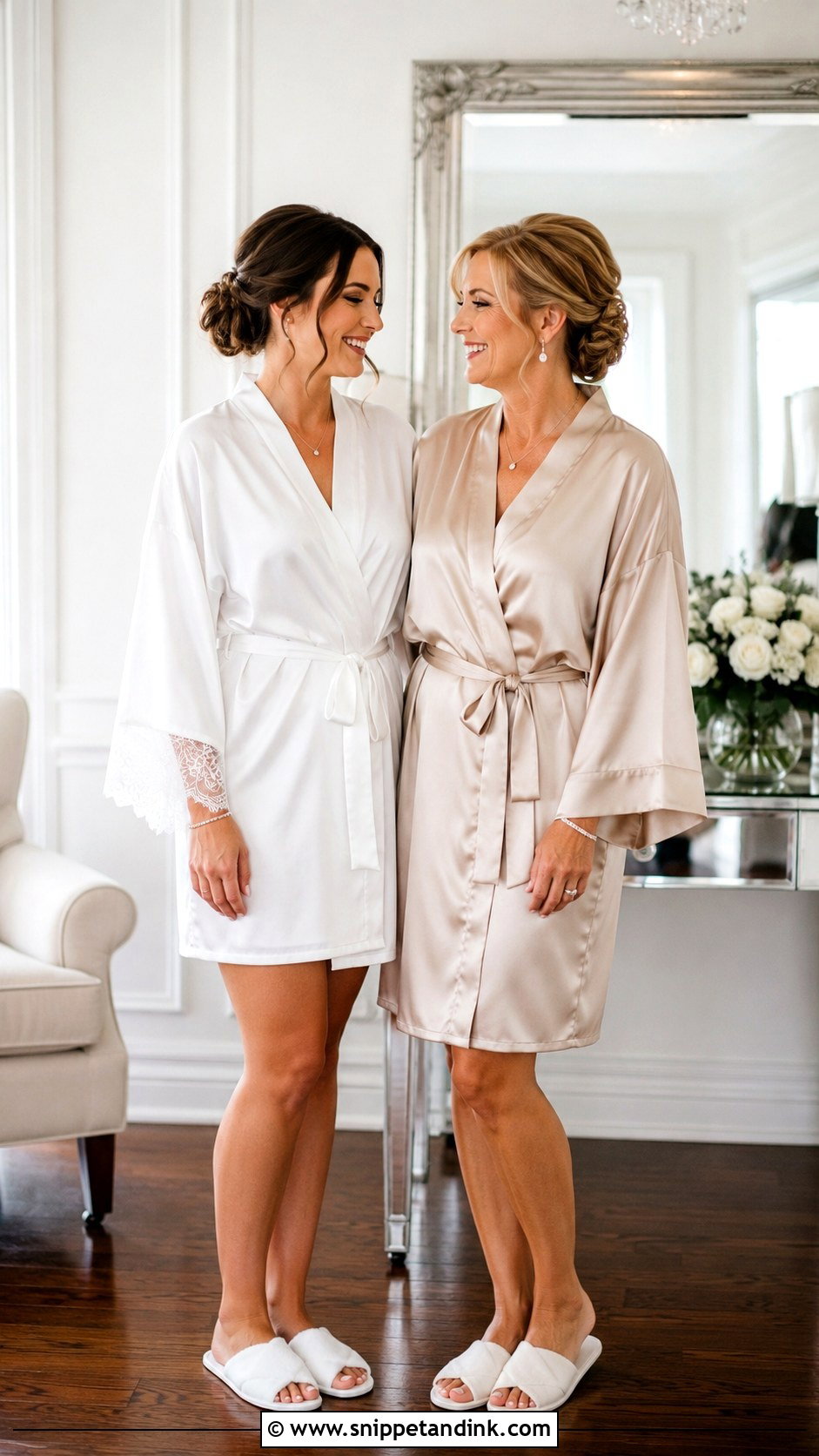
The mother of the bride in her own robe often produces the quietest, most emotional photos of the morning. The bride wears white or ivory; her mother might choose champagne, blush, navy, dusty blue or a palette colour. Matching fabric links them, while a different shade keeps each distinct. Comfort comes first: sleeves, length and warmth should suit her, not just the photos. These robes appear in buttoning, gift and hug shots, so I touch up both faces before those moments.
25. Bridal Robe With Wedding Bouquet
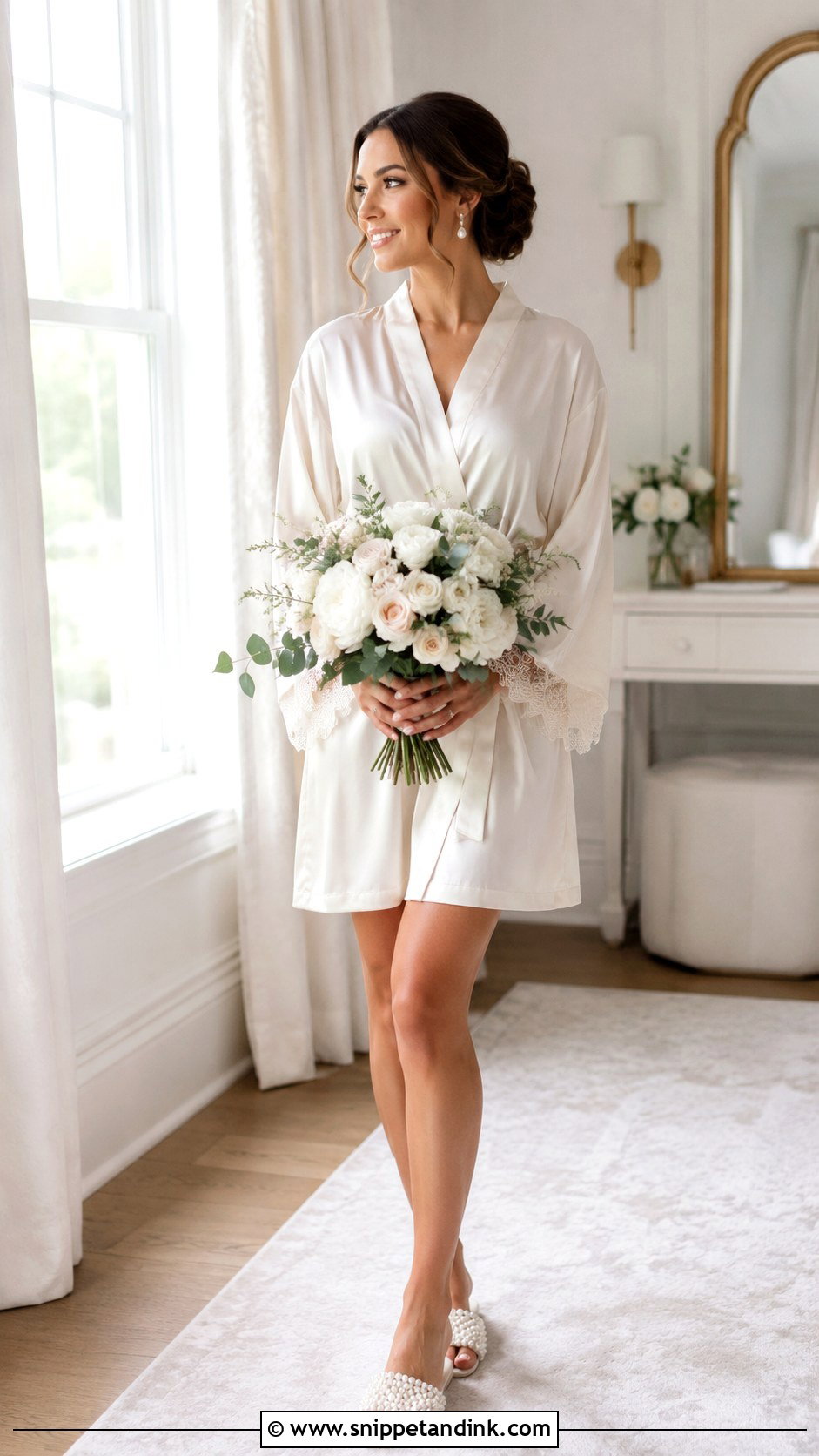
When the bouquet arrives, take a few portraits in the robe before the dress goes on. A plain white, ivory or champagne robe lets the flowers lead; a floral robe can echo the bouquet more softly. Hold the bouquet at waist height near a bright window, and keep slippers, jewellery and hair accessories tidy. Watch the robe front, though: wet stems and pollen from lilies or other open blooms stain pale satin, so hold the bouquet slightly away from your body.
Satin Arrives Creased: A Week-Out Robe Checklist
Robes come folded in plastic, and satin creases set hard in transit. The deep folds across the back and down the front are what show up in photos. A few days before the wedding, unpack every robe in the party and hang it.
- Steam satin and silk on a low setting, from the inside, and keep the steamer moving. Holding it in one spot can leave water marks on silk.
- Check embroidery and names for spelling and placement now, while there’s still time to reorder. Custom pieces often take a few weeks.
- Try each robe in front of a window in daylight. Some white satins and almost all unlined lace turn see-through when backlit.
- Pack a lint roller and a white makeup-removing wipe for the room. Small spots of foundation on satin lift with a gentle dab if you catch them quickly; rubbing spreads them.
- Hang the robes together on matching hangers. Photographers love a row of robes on a door, and it keeps them uncreased until you change.
On the morning itself, I ask brides to keep their robe on the hanger until they’re out of the shower and have moisturised. Body lotion and fresh satin don’t mix well, and a few minutes of drying time saves the fabric from marks.
Your Robe Is the First Outfit in the Album
A good wedding robe photographs well and stays out of the way while hair and makeup happen. Fabric, length, coverage and season decide most of it: satin is classic, cotton is cool, lace is romantic and feathers are for photos only. Personal touches like embroidery turn it into something you’ll keep. Whatever you pick, think about how it behaves in the chair as well as how it looks on the hanger, and the morning will run more smoothly.
You'll Like These Ideas:


Leave a Reply