
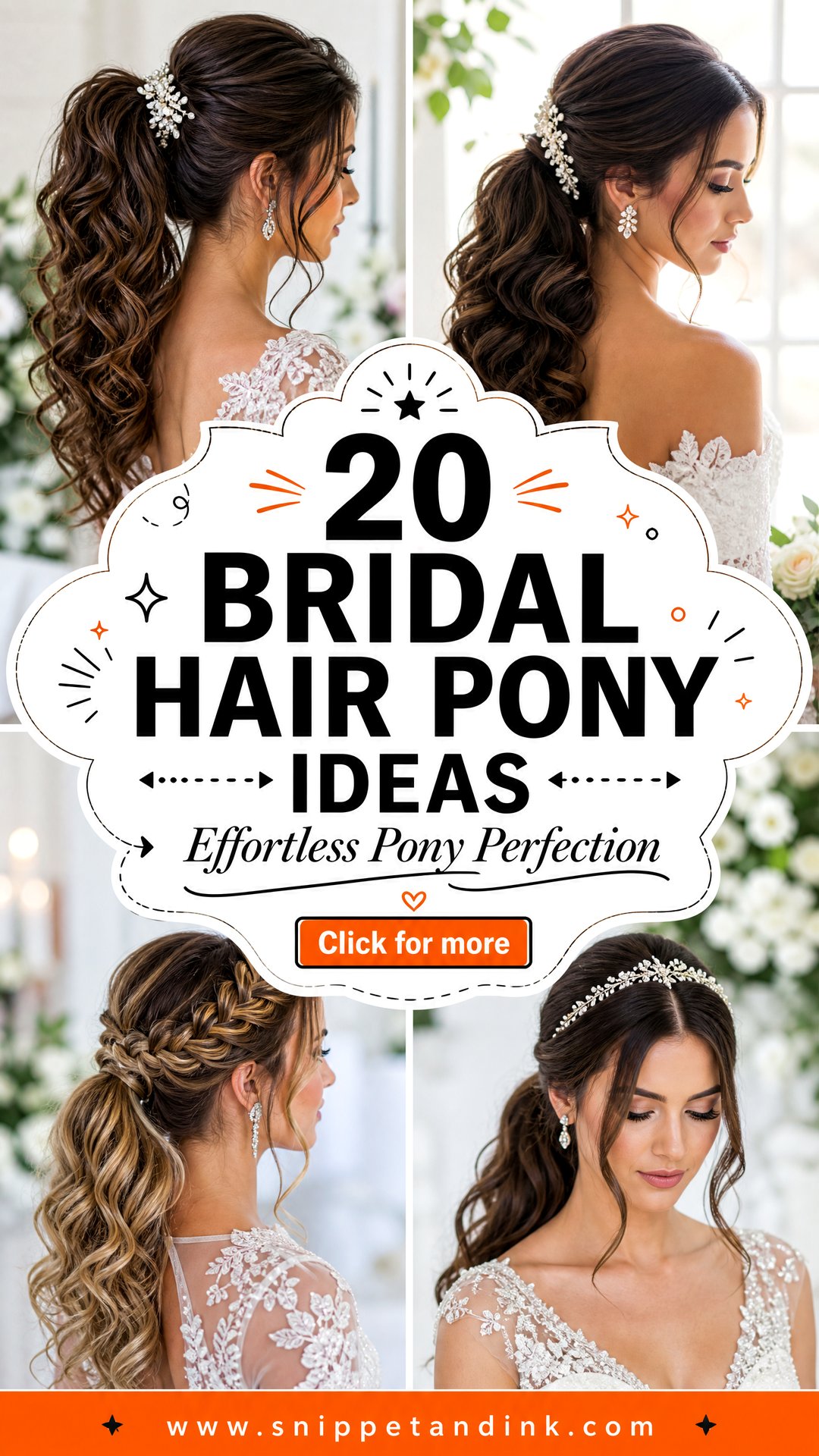
Ponytails are the request I hear most from brides who don’t want to feel like their hair is wearing them. Pulling the hair up and back clears the neckline, so earrings and the cut of the dress finally get seen, and the tail still swings when you walk. What people underestimate is how much the details change it. A sleek low ponytail and a curled high one are almost different hairstyles, with different prep and different weak points. Below are twenty versions I’d actually put on a bride, with notes on how each one behaves once the day gets going.
Where the Elastic Sits Decides Everything Else
Before I think about waves or pearls, I find the base. Run your hand from your chin up past your ear: where your fingers meet the back of the head is roughly a mid ponytail. Below that is a low one, above it a high one. The placement changes how the ponytail frames your face and how much pressure it puts on your scalp for the next twelve hours.
On a wedding day I rarely trust one elastic. A ponytail that looks secure at 9 a.m. has to get through hugs, a veil being removed and a lot of dancing.
- I gather the hair with a small elastic, then add a second one or a bungee band for a firmer lock that doesn’t snag when it comes out.
- Two bobby pins slid into the base from opposite sides and crossed act like an anchor, especially for heavy or long hair.
- A small hidden padding or teased section under the base props the tail up so it doesn’t hang flat by evening.
- Hair is prepped with a little grit (texture spray or dry shampoo) so pins have something to bite into. Squeaky clean hair is slippery.
Tell your stylist if you get headaches from tight styles. A slightly lower base, or a ponytail built from two stacked sections, spreads the weight and makes a big difference by the end of the night.
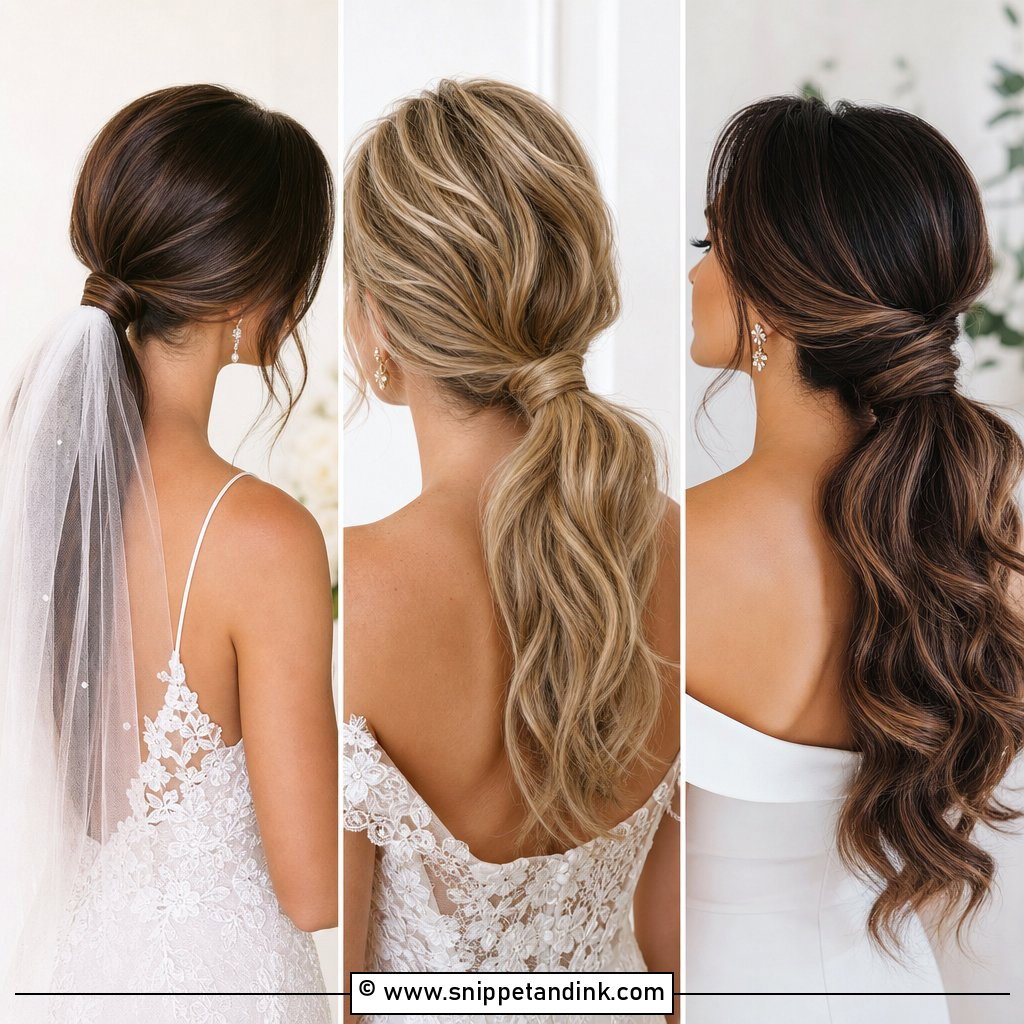
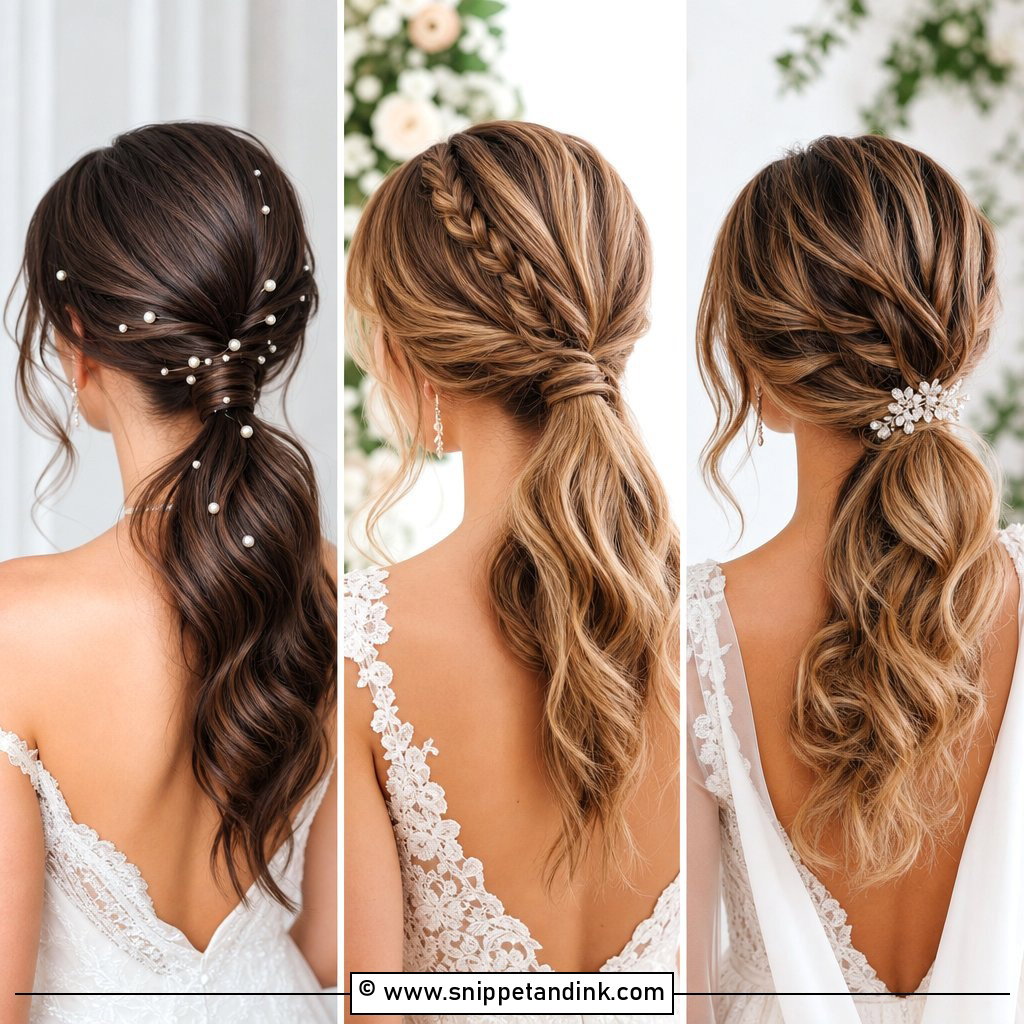
1. Low Bridal Ponytail With Waves
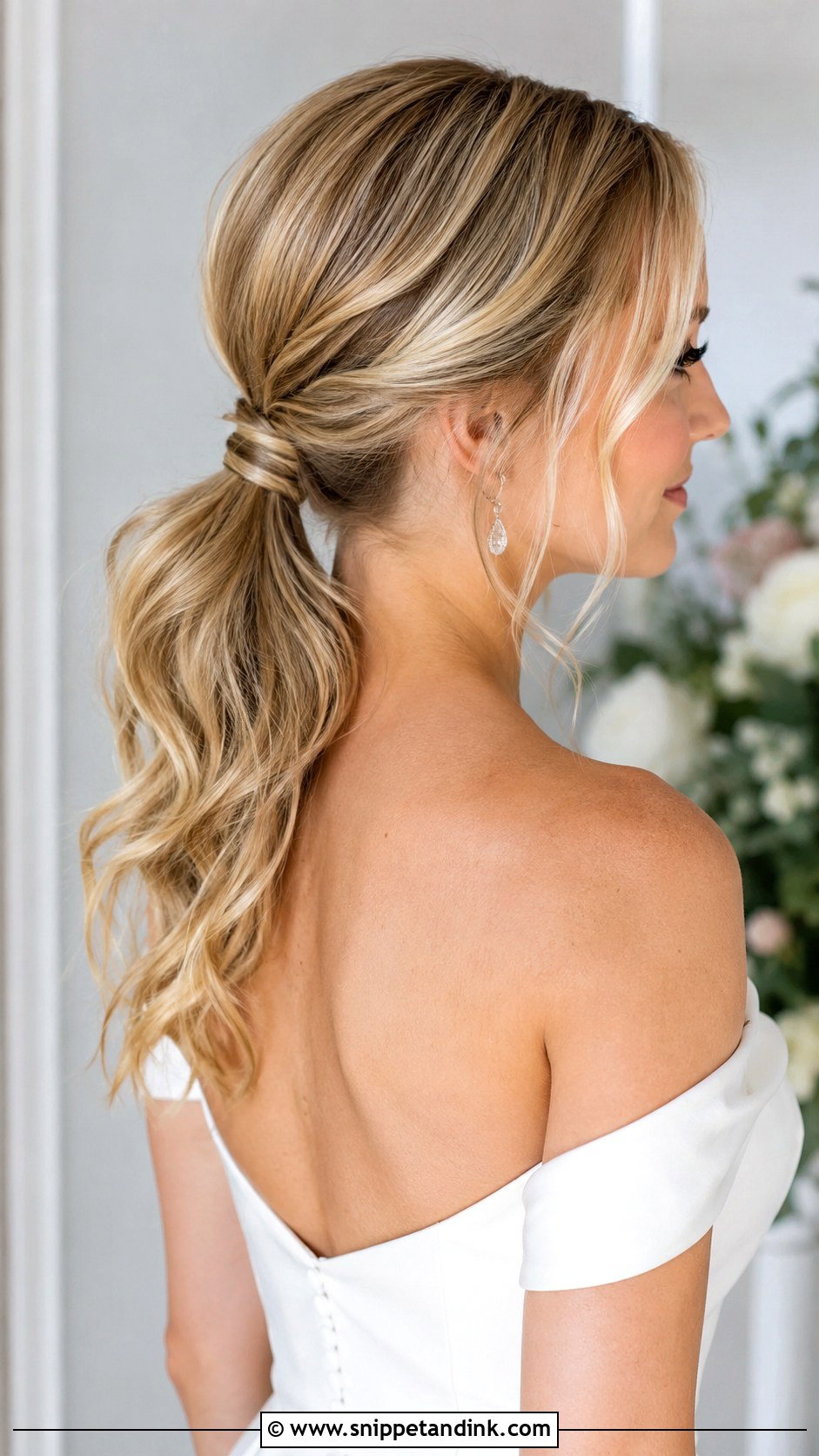
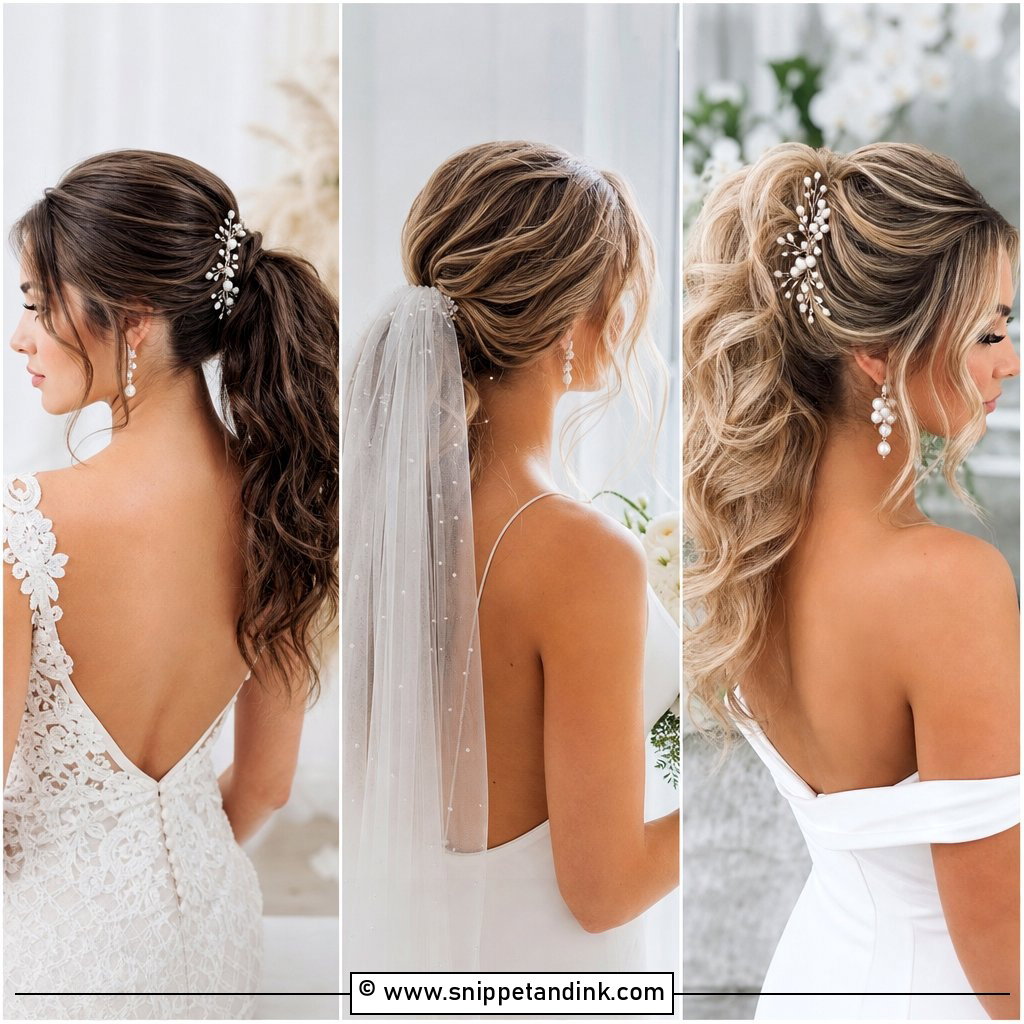
This is the one I steer most nervous brides toward first. Sitting at the nape, the base takes almost no strain, so there’s no tension headache by the speeches, and a veil comb slides in above it without fighting the elastic. I curl the lengths before I gather them, not after, because waves set on loose hair keep their shape better through the tail. Finish by wrapping a thin strip of hair around the band and pinning it underneath. Skip that wrap and it reads as gym hair, however good the waves are.
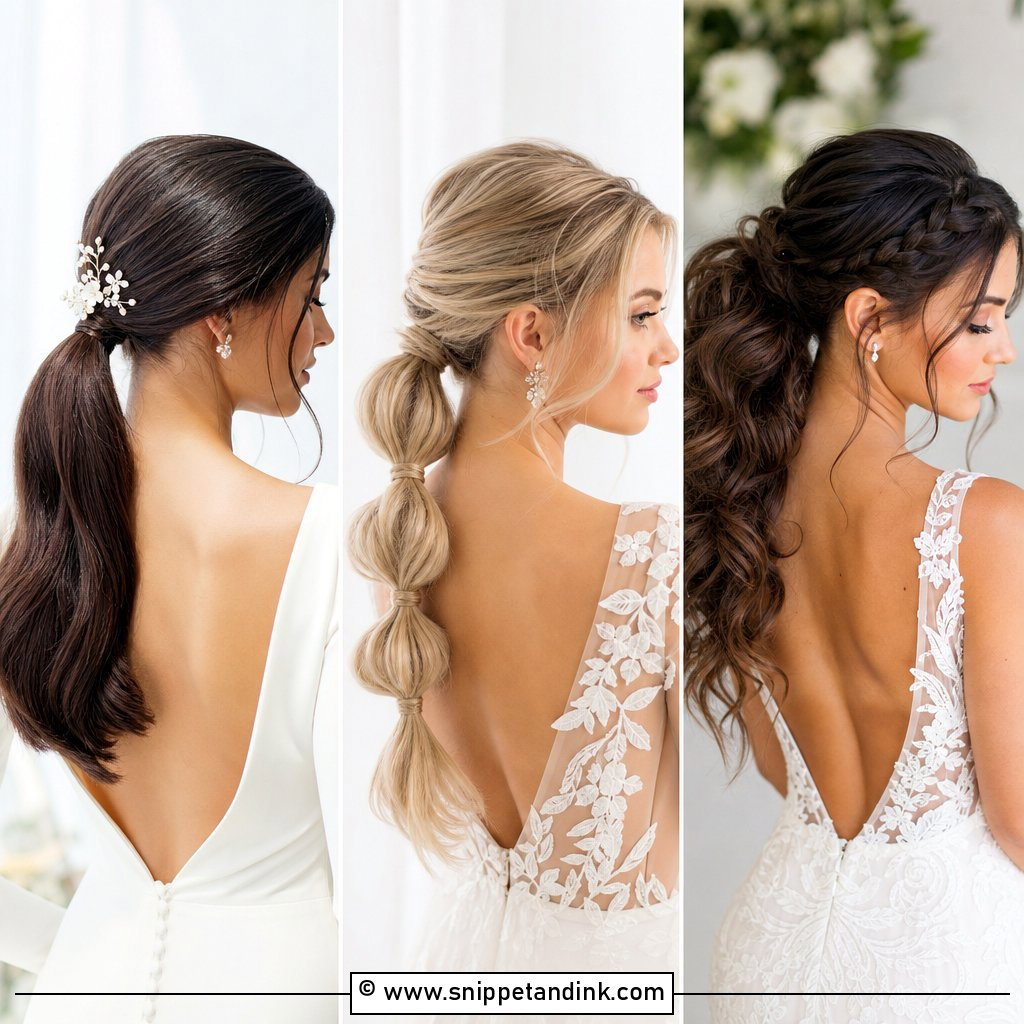
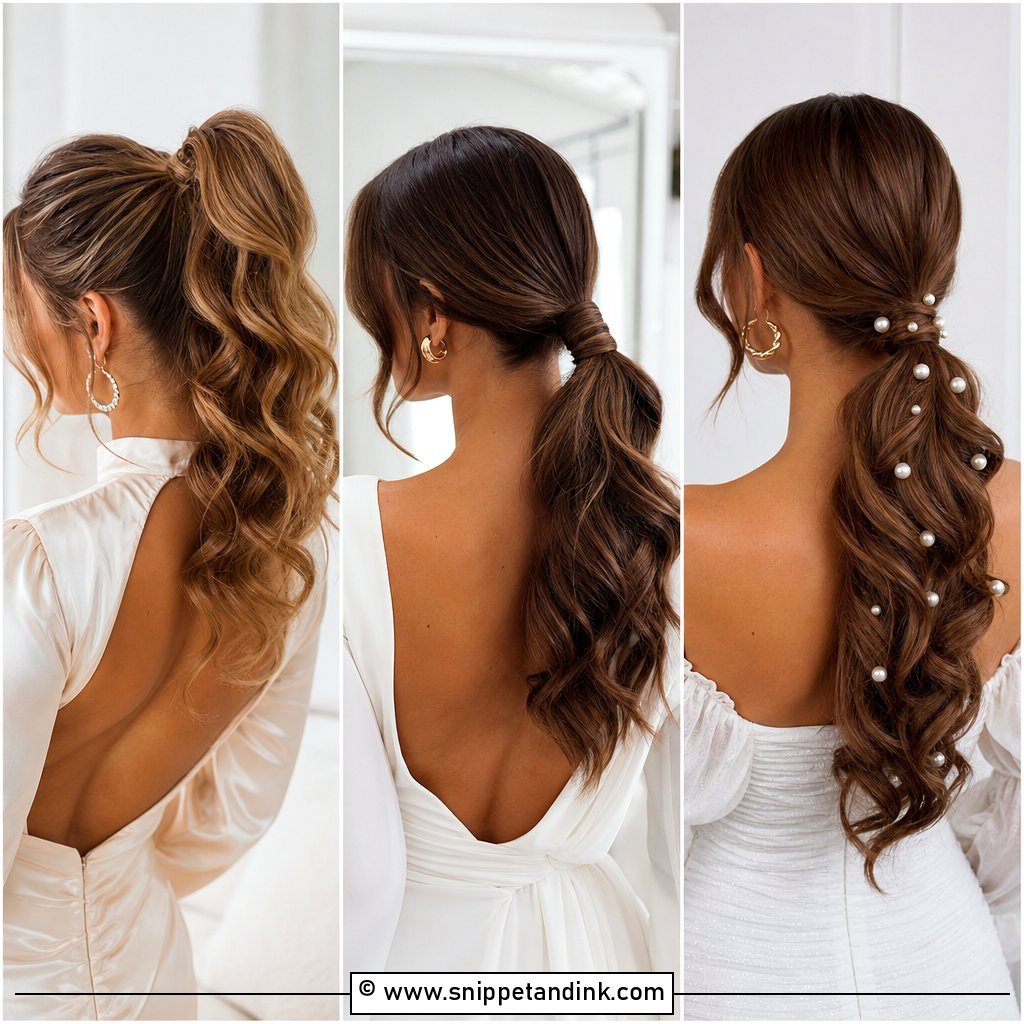
2. Sleek Low Bridal Ponytail
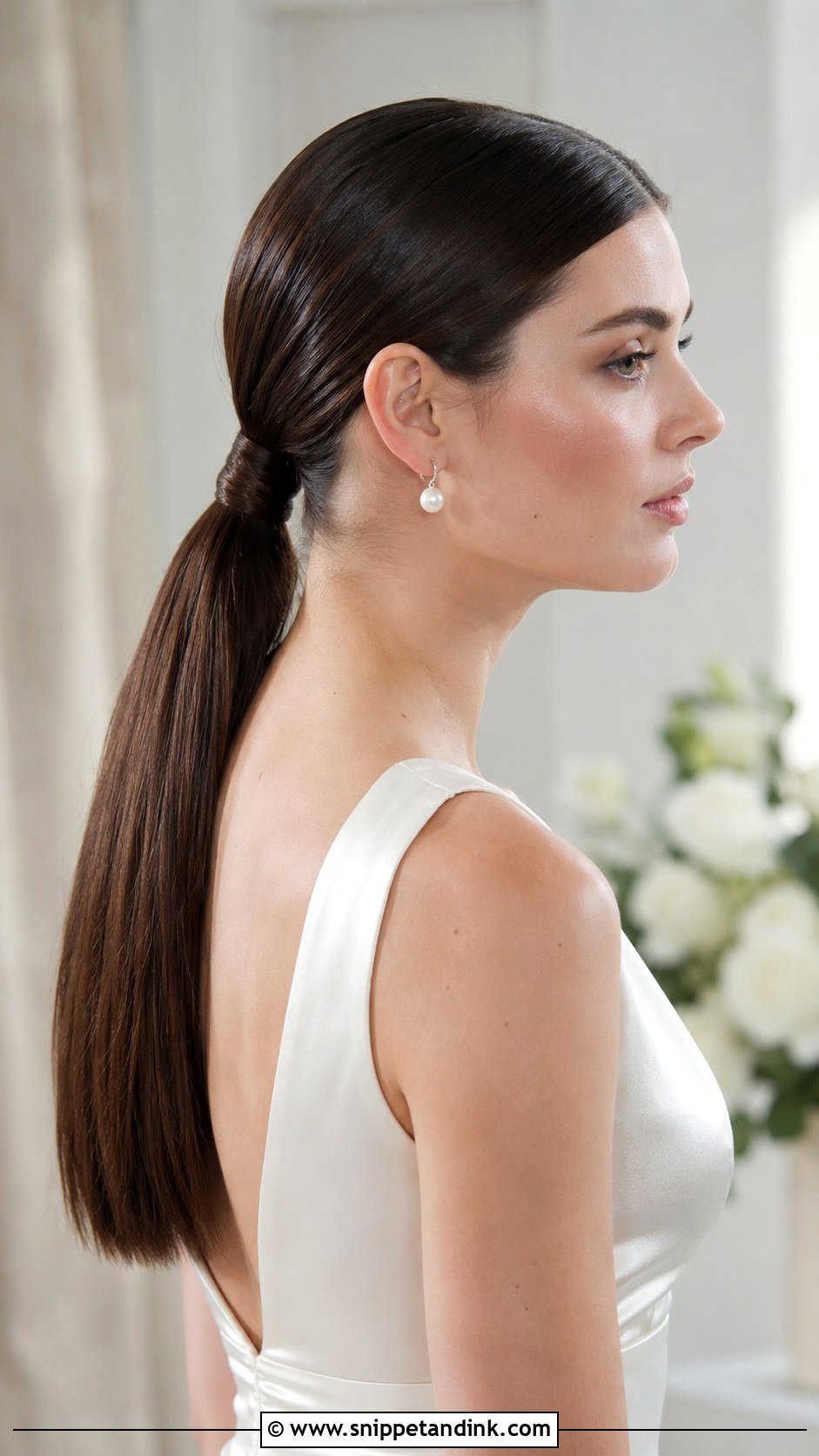
Sleek styles are unforgiving, and that’s their whole appeal. Every bump at the crown shows, so I blow-dry the hair smooth with a paddle brush and gather it while it’s still warm, then brush it back with a boar bristle brush and a light shine cream. The mistake I see most is pulling it too tight to get that glassy finish. By evening that tension aches, and fine hair can show scalp at the part. Snug and smooth is the target, not stretched. It suits a minimal dress with clean jewelry better than anything heavily beaded.
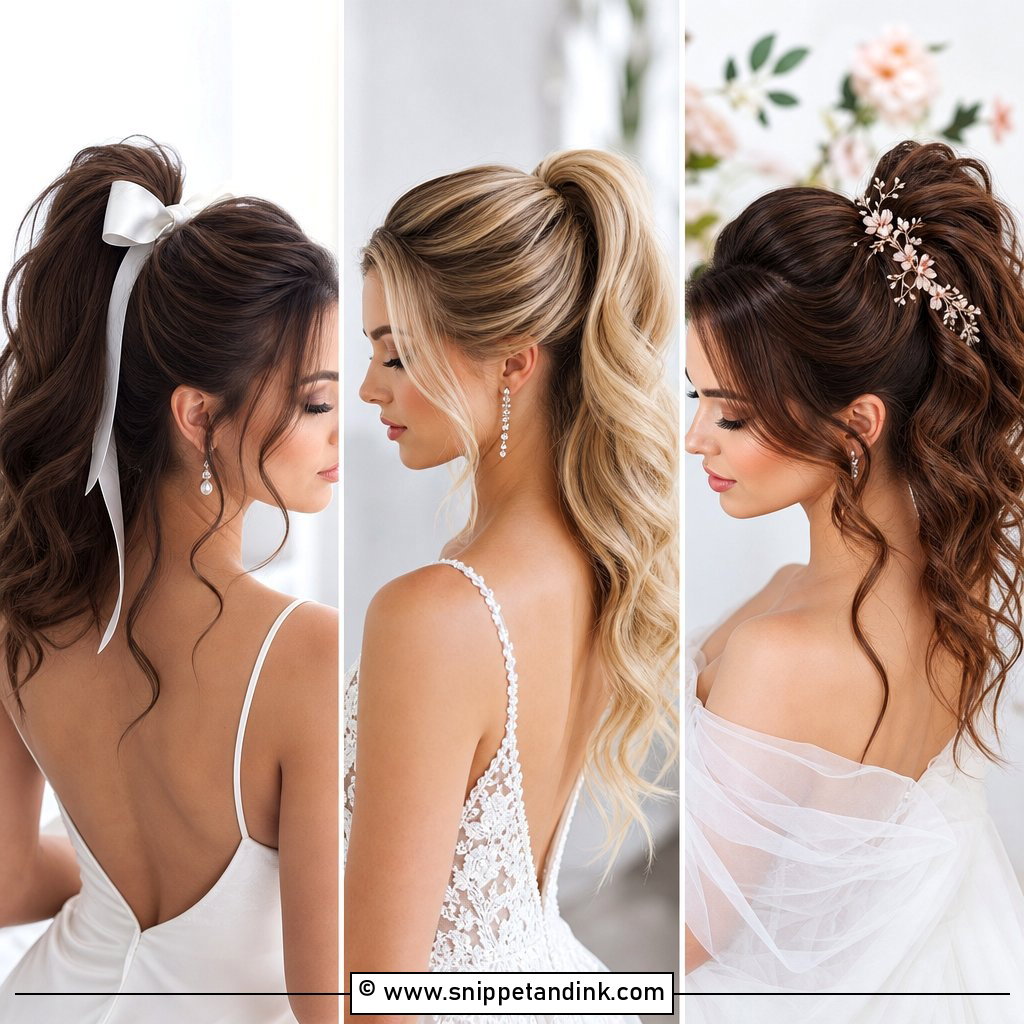
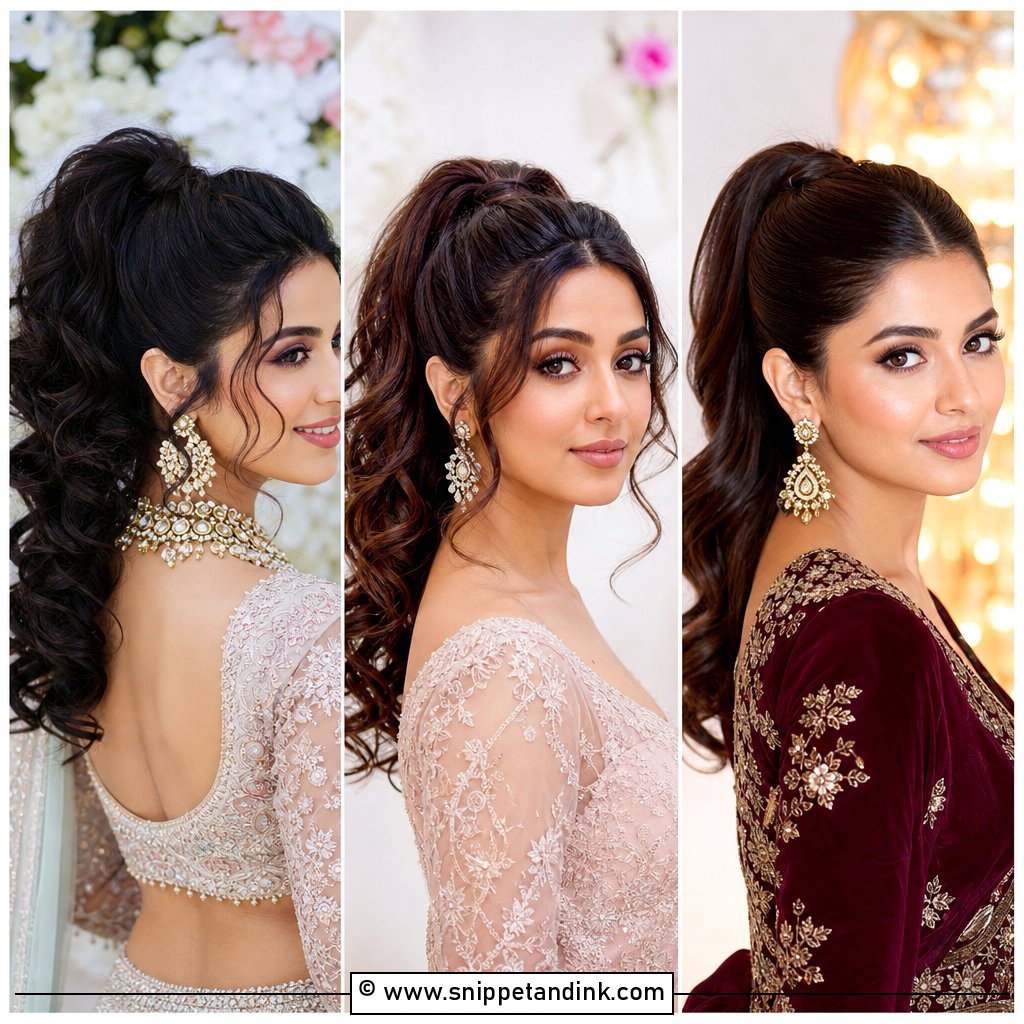
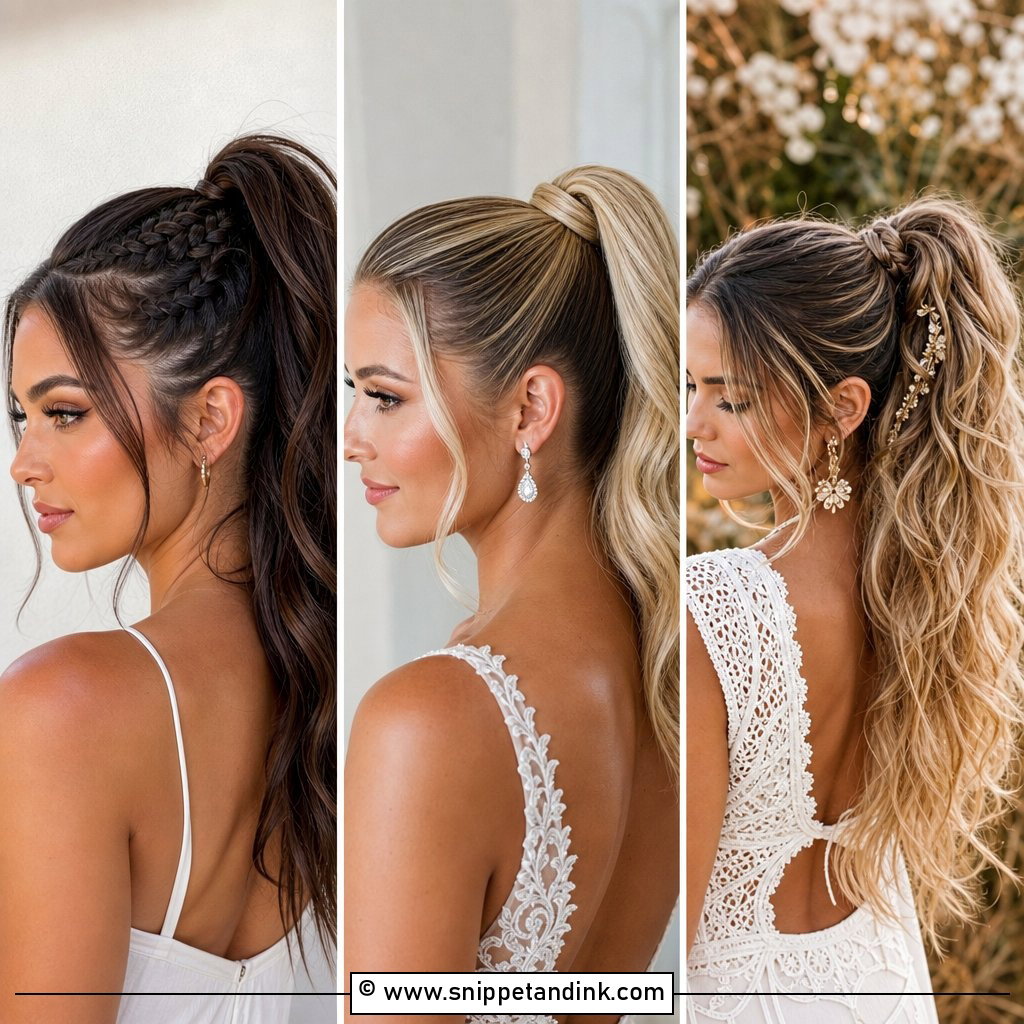
3. High Bridal Ponytail With Curls
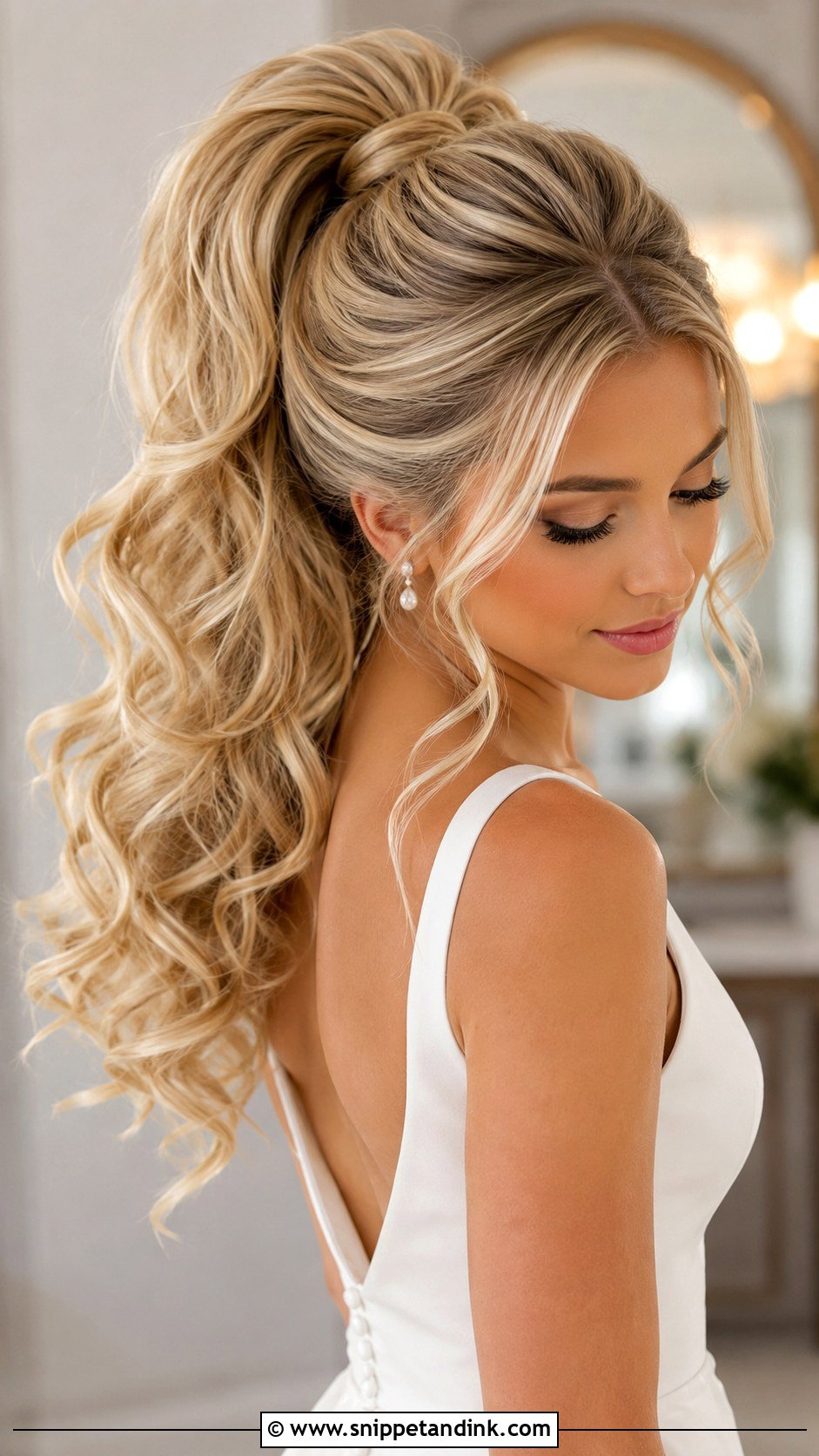
Height changes the whole face. A ponytail set high on the crown lifts the eye line and makes cheekbones look sharper, which is why it reads so well across a dance floor. The trade-off is weight: a long curled tail pulls on a high base all day. I use two elastics, one to gather and one to lock, and I pin a wrapped base into place with crossed bobby pins under the tail. Keep the crown smooth instead of teased. Backcombing at the top of a high ponytail tends to look dated in profile photos.
4. Textured Bridal Ponytail
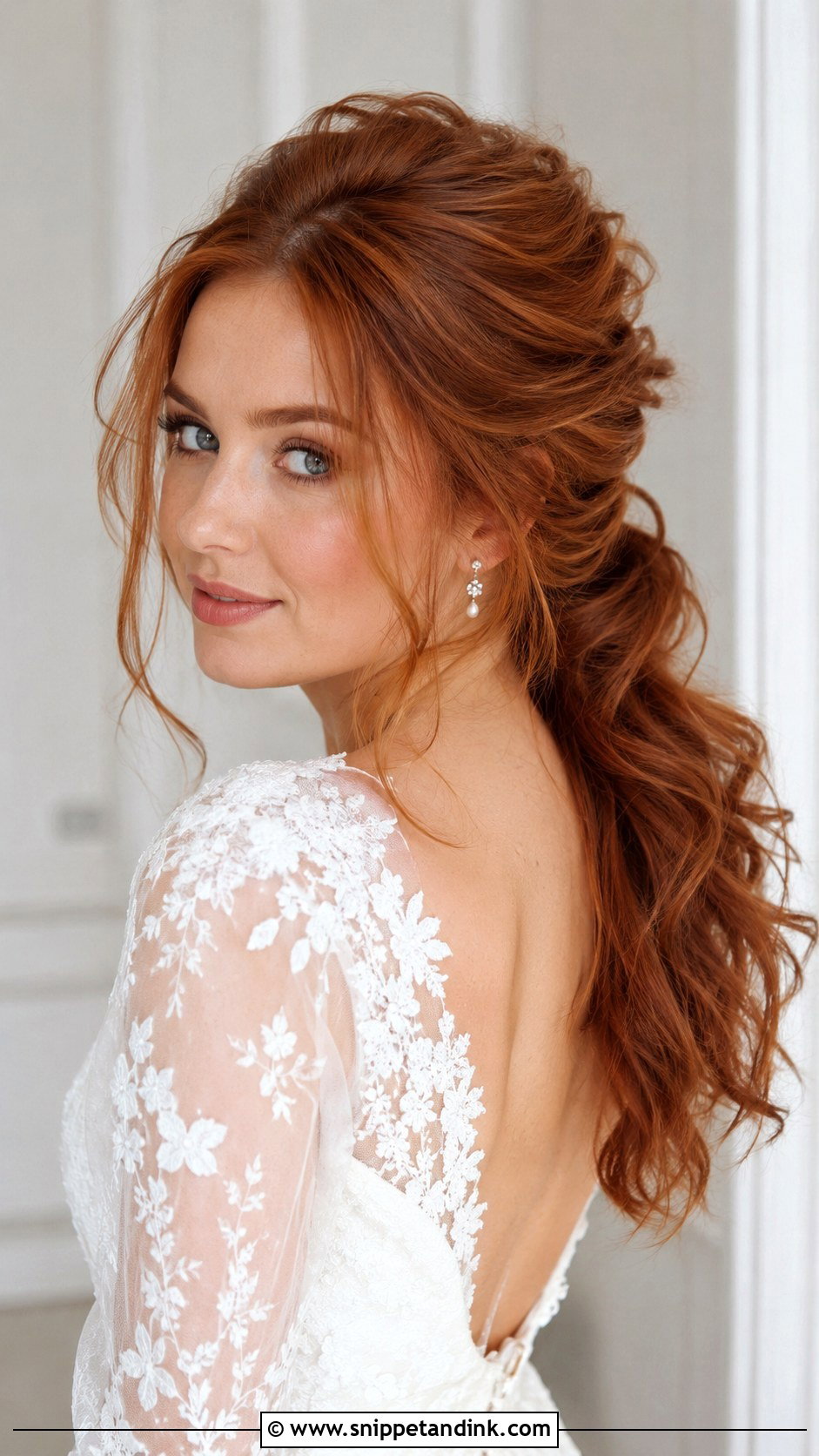
Texture is easier to wear than it looks to create. I prep with a texture spray on dry hair, bend the lengths with a flat iron or a large barrel, then break the curls apart with my fingers so nothing looks set. The crown gets a little lift and two or three pieces come loose at the front. It belongs with lace, chiffon and outdoor ceremonies. The honest catch: very silky, straight hair often won’t hold this kind of texture past the first few hours unless it was prepped with grit from the start.
5. Side Bridal Ponytail
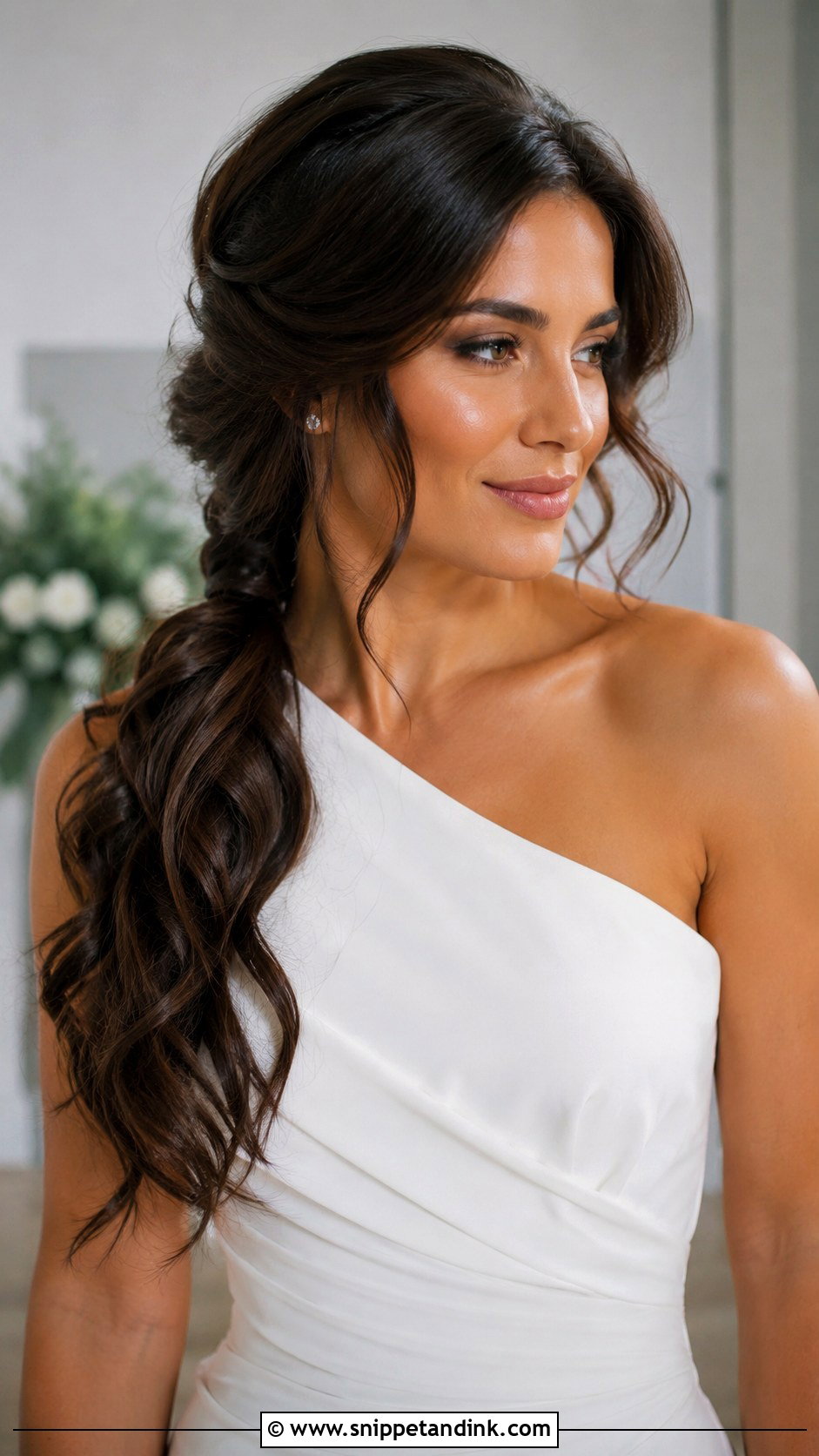
Swept over one shoulder, the ponytail becomes something you see from the front, which matters if most of your photos will be face-on during the ceremony. I anchor the base just behind the ear rather than right beside it, so it doesn’t bump against the jawline when you turn your head. A soft side part keeps it balanced. It pairs naturally with one-shoulder gowns because the hair sits on the bare side. Watch out if you’re carrying a large bouquet on that same side; the tail tends to get caught in the stems.
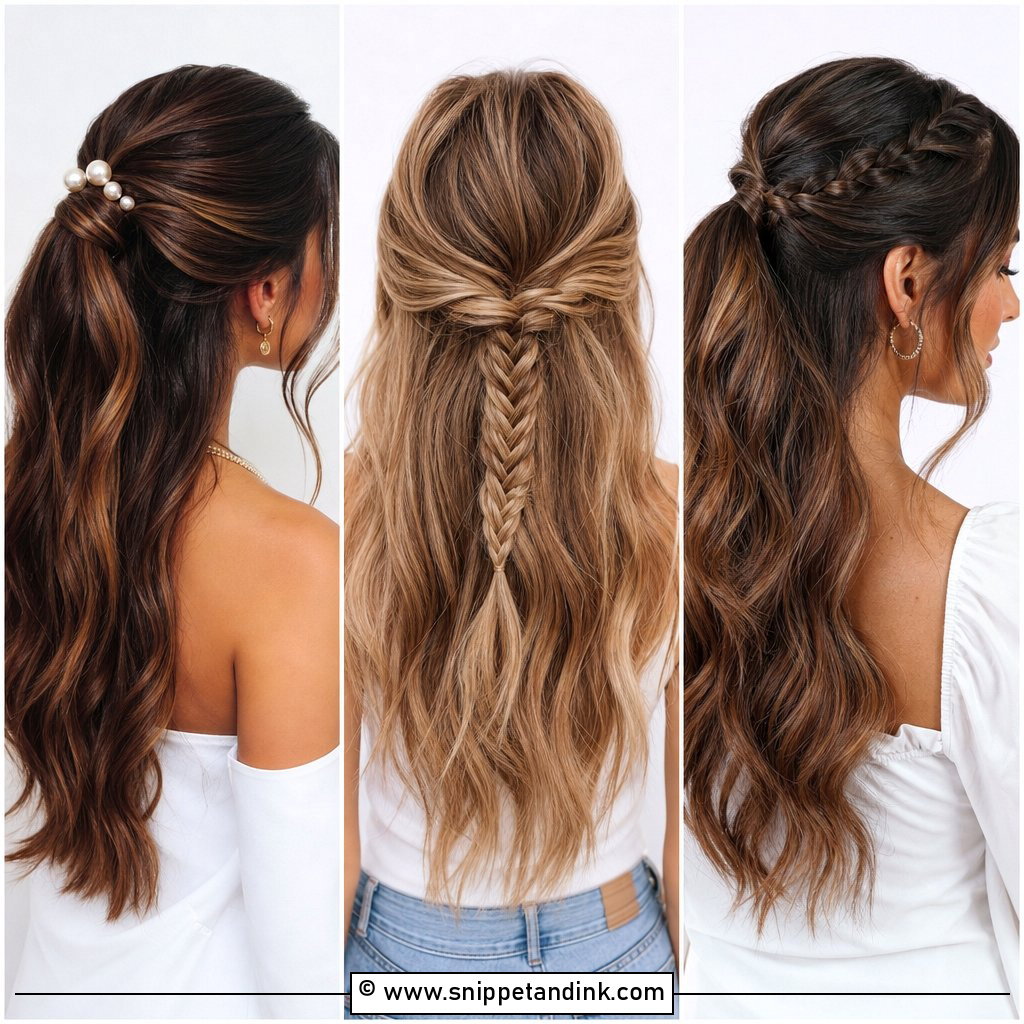
6. Bridal Ponytail With Pearl Pins
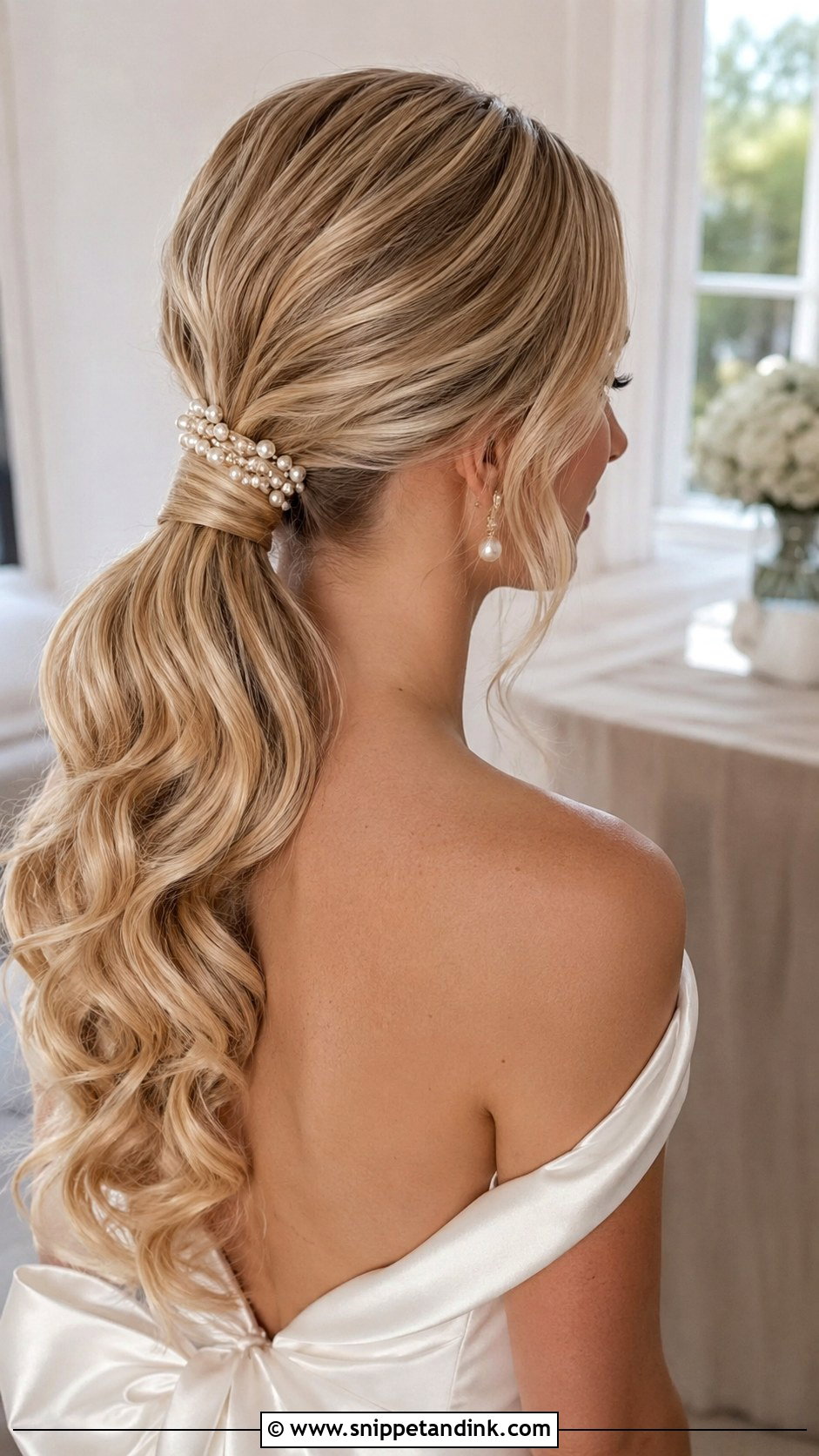
Pearl pins are the easiest way to make a ponytail look bridal without adding a big accessory. I place them where the eye already goes: a few at the base, a couple along the outside of a wave. Hairpins with pearls need something to grip, so on freshly washed silky hair I spray the section first or they creep out by lunch. Stop before it looks like a scatter. Five to nine pins usually reads as deliberate on a ponytail, and more than that starts to compete with your earrings.
7. Bridal Ponytail With Face Framing Pieces
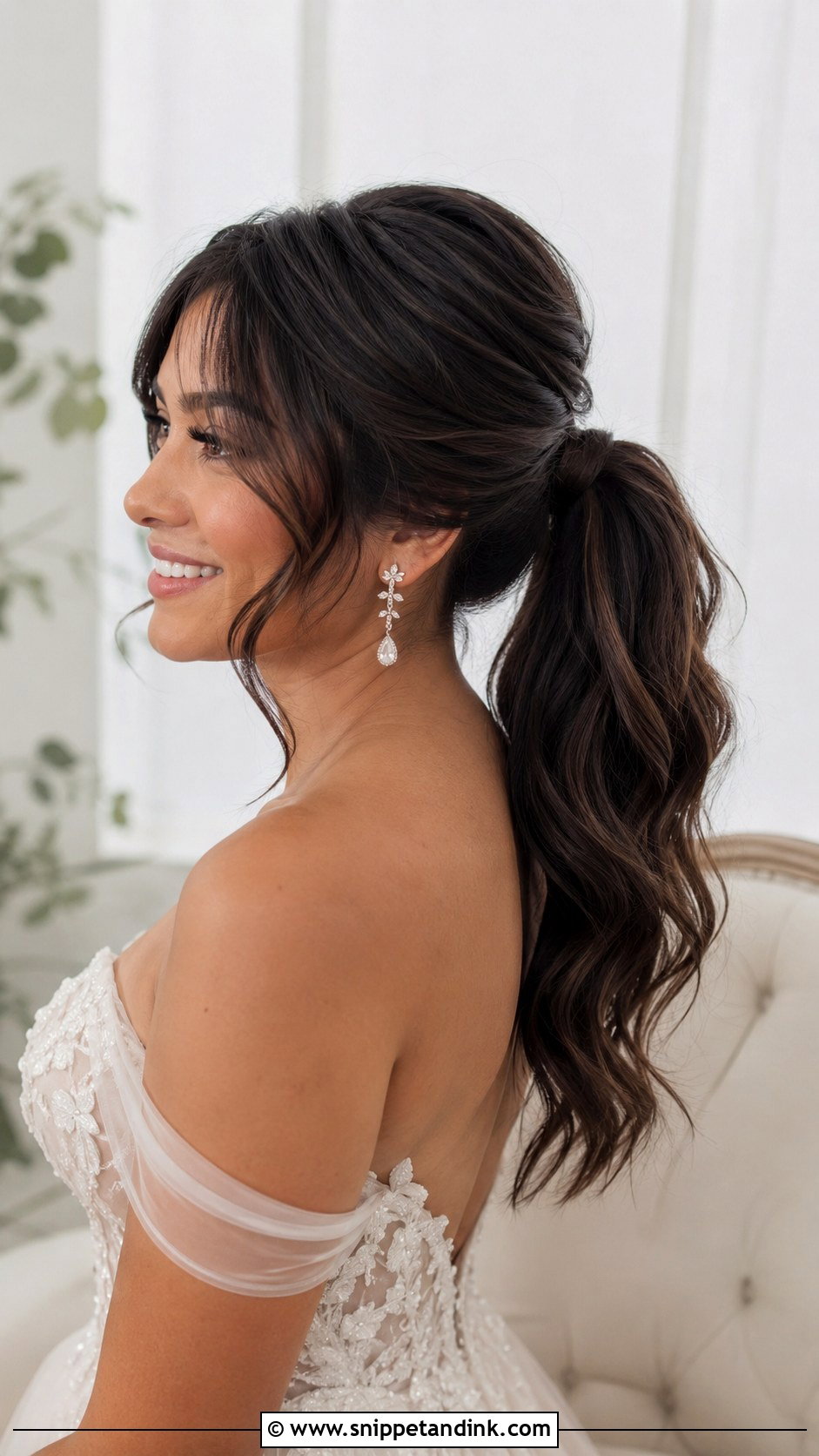
Some brides feel exposed with every strand pulled back, and face framing pieces solve that. I cut the pieces out at the start, before the ponytail goes up, so they fall from the hairline naturally instead of looking pulled down afterward. Keep them thin. A thick front section curled tightly at 8 a.m. usually droops into a curtain by the reception, while two fine wisps per side stay soft. If you have a cowlick at the front, tell your stylist at the trial, because it decides which side those pieces will actually sit on.
8. Braided Bridal Ponytail
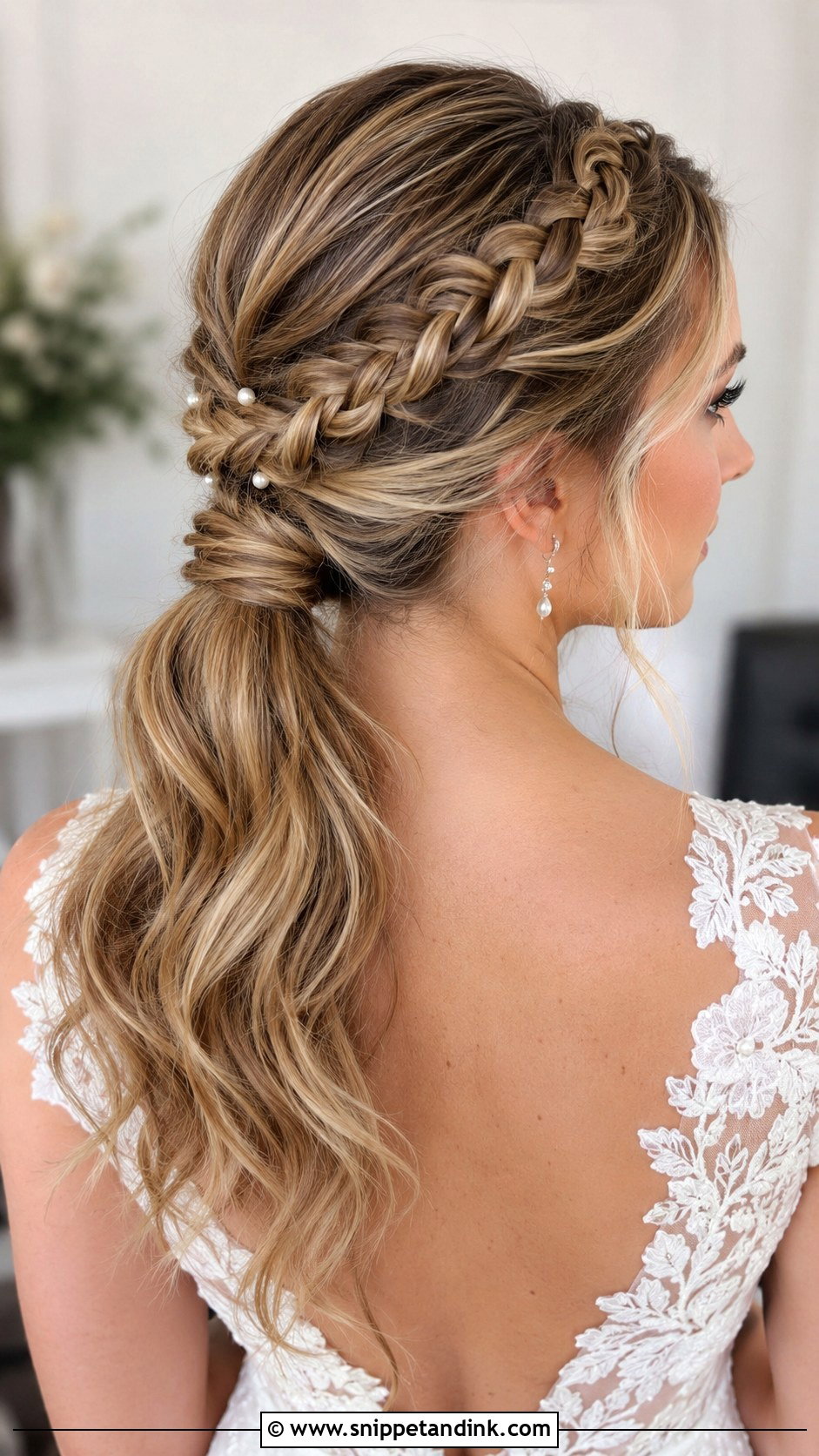
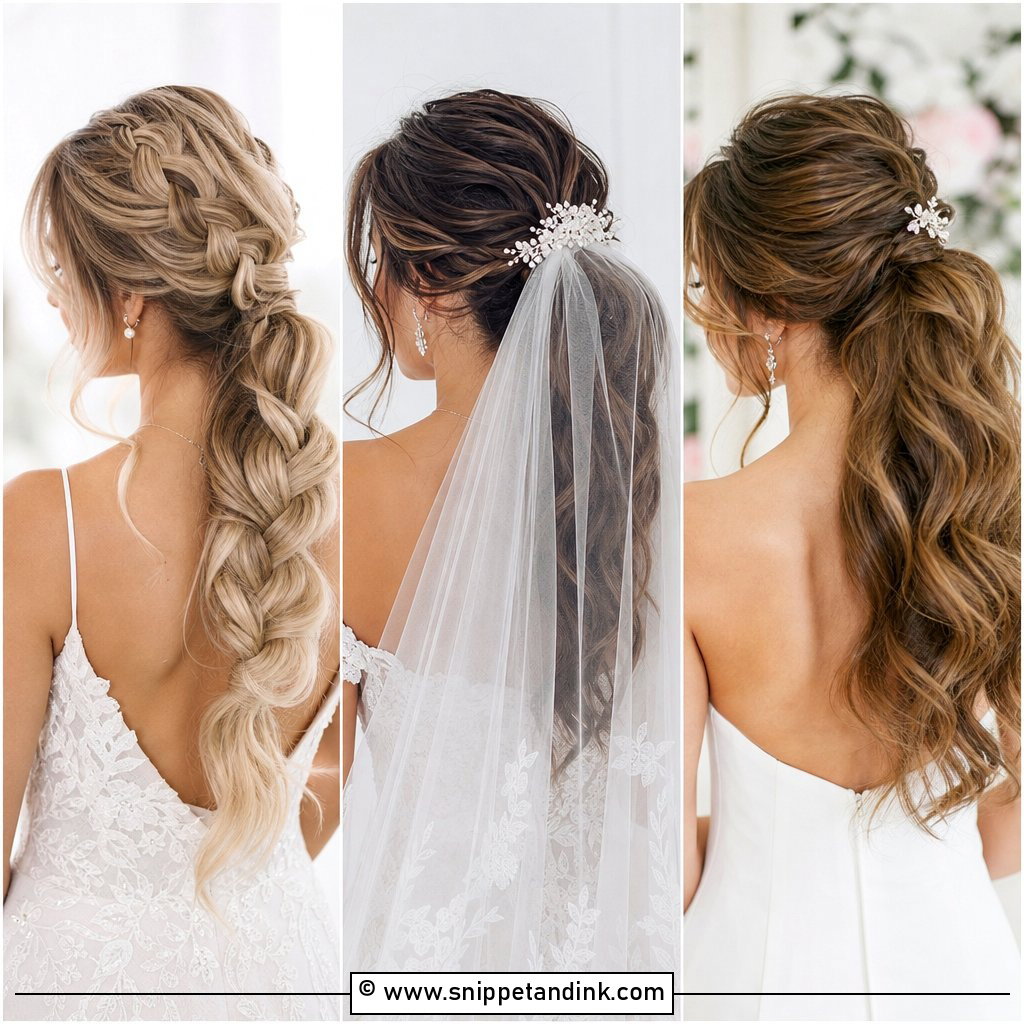
Braids are quietly practical. A braid gripping the base, or running down through the tail, holds sections that would otherwise slip loose after hours of hugging. I usually braid with a little texture spray so the plait can be pancaked (gently pulled wider) without the strands sliding out. On thin hair a braid running the full length can look stringy at the end, so I’ll often braid only the first third and leave the rest in waves. Small flowers tucked into the braid hold far better than in a smooth ponytail, because they have something to grab.
9. Bubble Bridal Ponytail
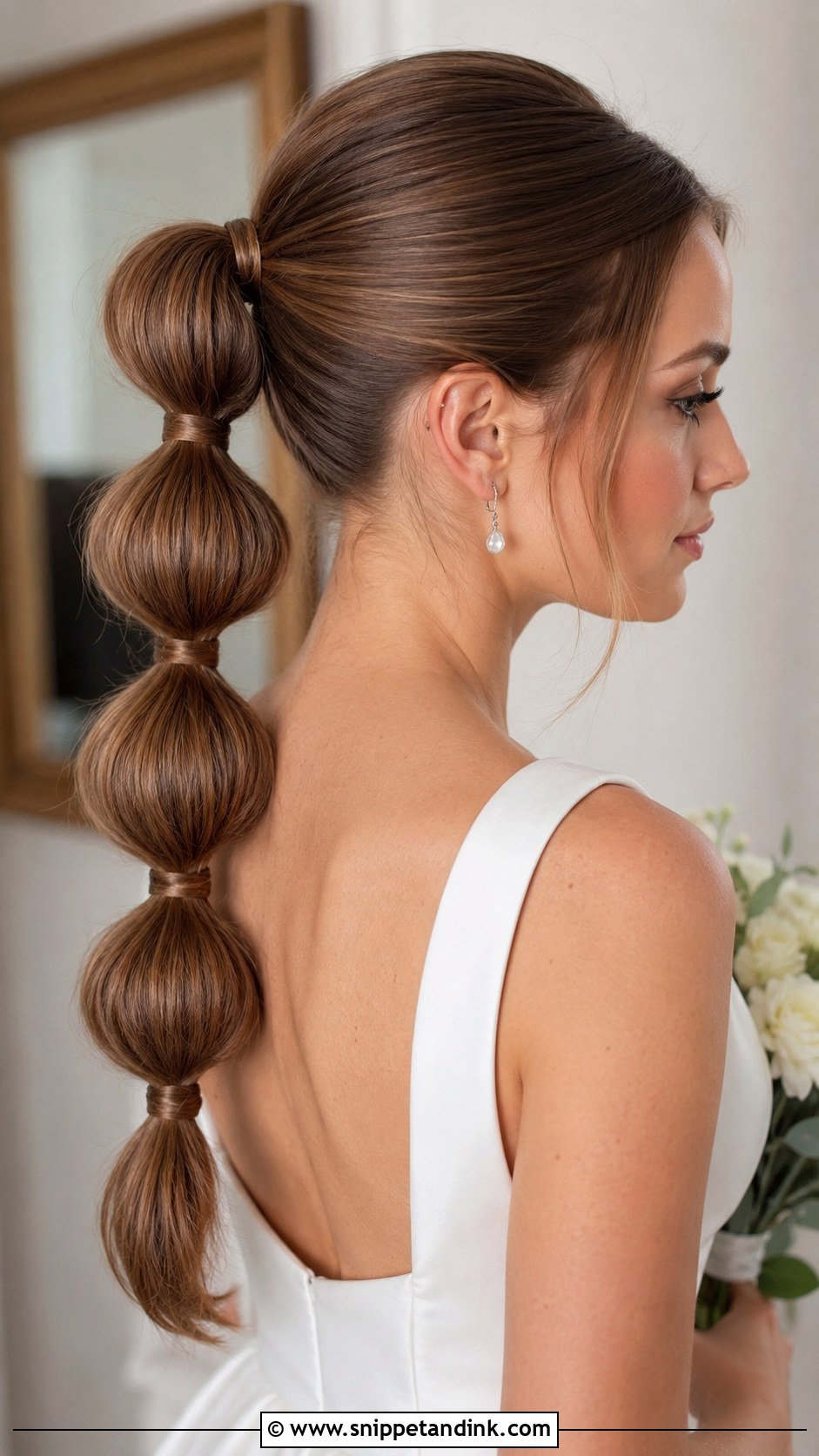
A bubble bridal ponytail needs length and density to look right. Each bubble is a section between two clear elastics, gently pulled out to round it, and short or fine hair runs out of material after three or four bubbles. That’s when I suggest clip-in wefts placed under the base. I keep the sections soft rather than tight, and hide each elastic with a small wrap of hair or a pearl. It looks modern and needs very few accessories, but it’s harder to touch up yourself, so ask your stylist to show you how to puff a flattened bubble.
10. Hollywood Wave Bridal Ponytail
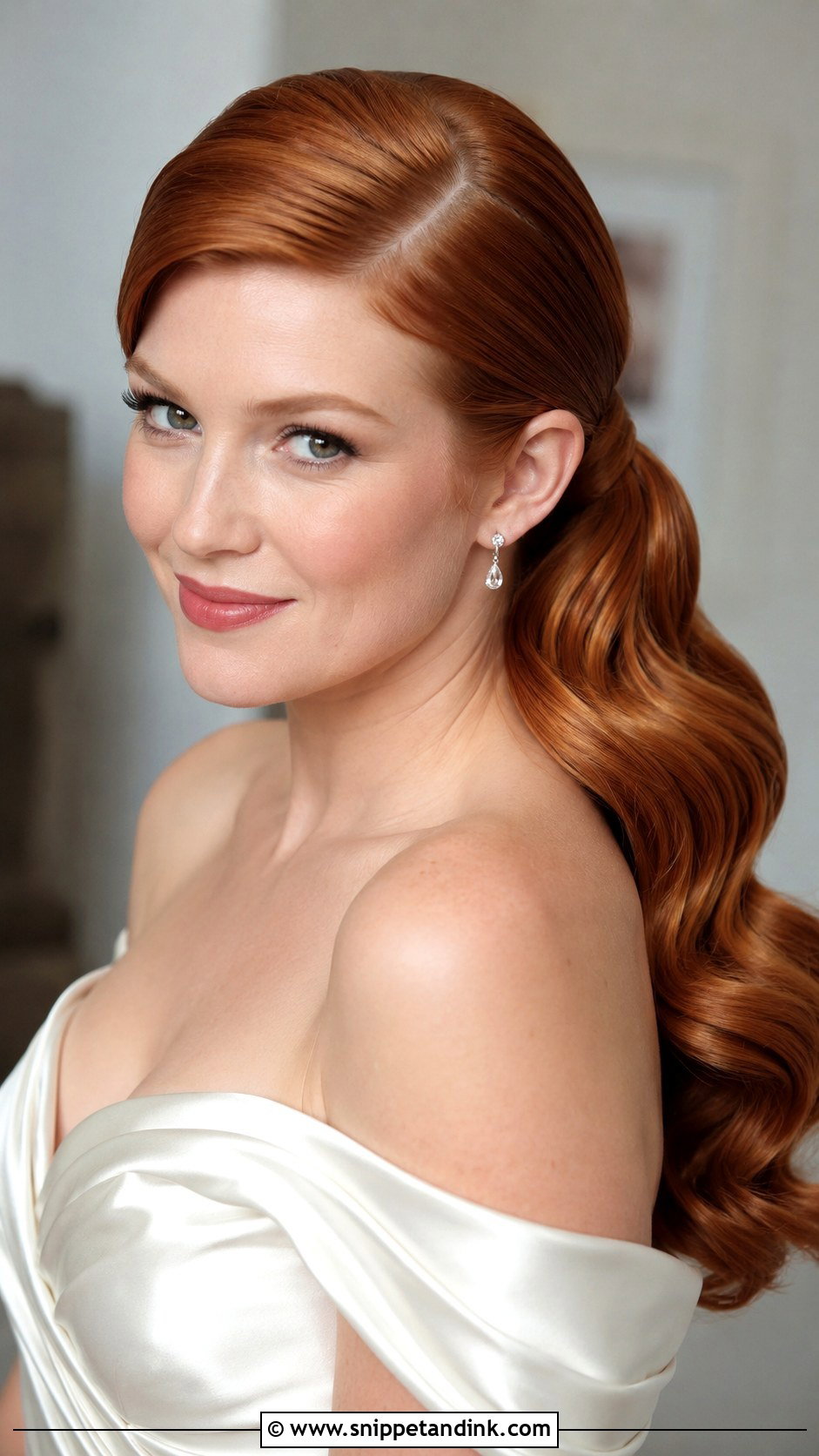
A Hollywood wave bridal ponytail is the most technical look here. The waves have to run in one direction and connect, so I curl every section the same way, pin each curl to cool, then brush it all out together into one ribbon of S-bends. Rushing the cooling step is what makes these fall flat. It belongs at formal evening weddings and suits a deep side part. Humidity is its enemy; if your ceremony is outdoors in summer, ask about a looser version with more hold built in.
11. Messy Bridal Ponytail
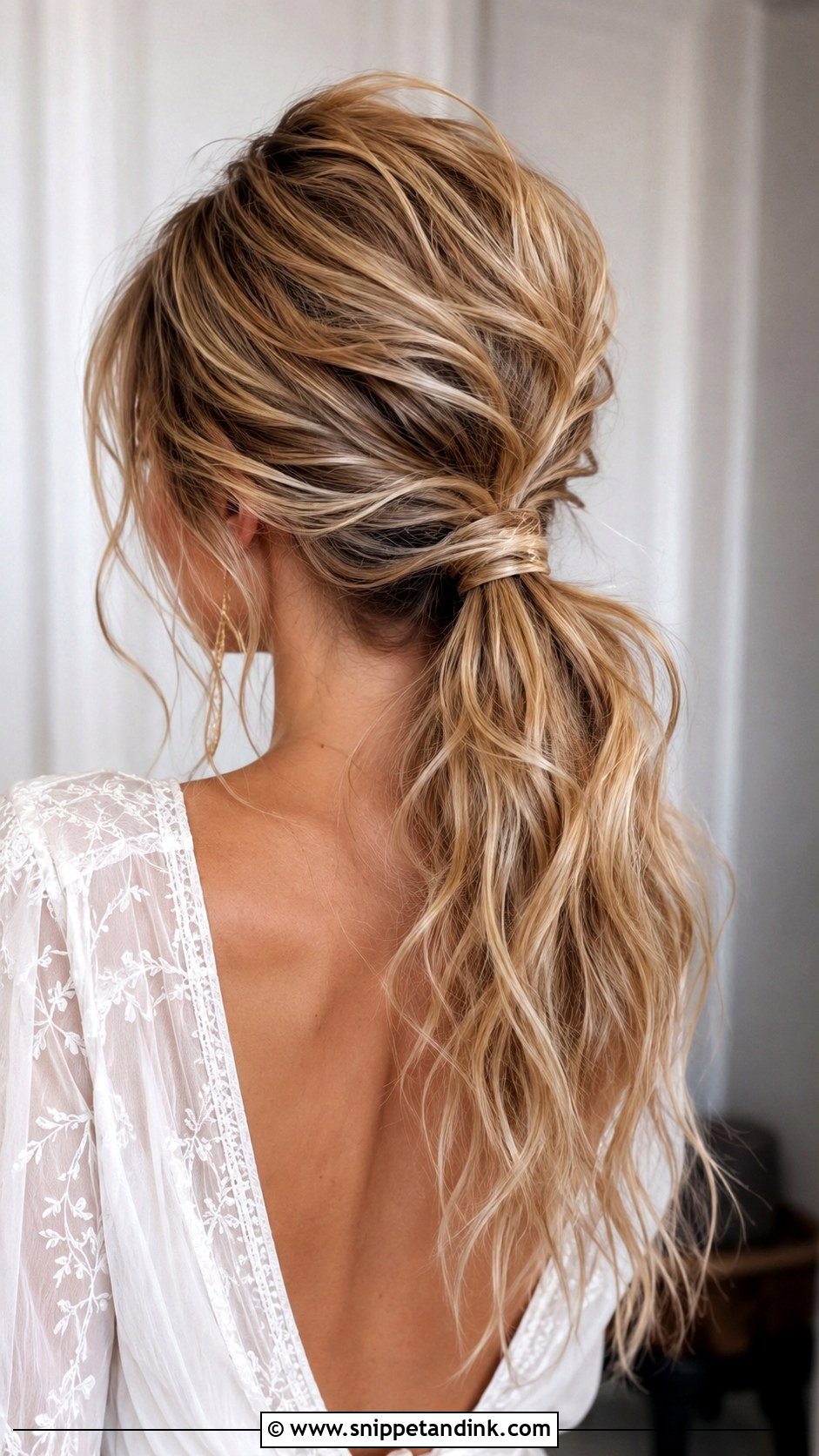
Messy is a word I always ask brides to define, because to one person it means soft and to another it means a bit of frizz. The bridal version has volume at the crown, loose waves in the tail and a few pieces left out on purpose, but every piece is placed. I set the base first and pull texture out afterward, never the other way round, or the whole thing slides. Boho gowns and garden venues suit it. If you hate flyaways in photos, this isn’t your style.
12. Curly Bridal Ponytail
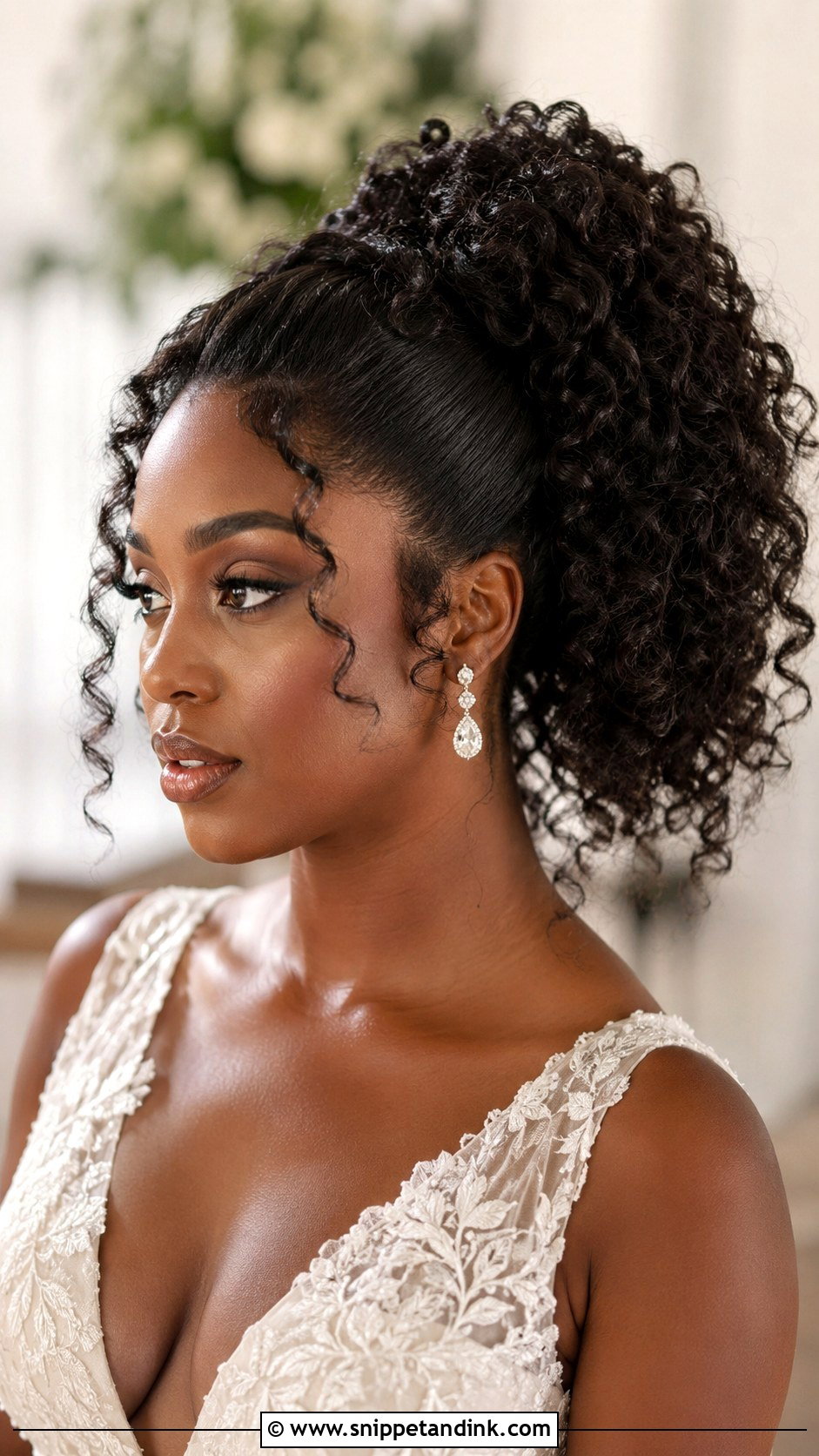
With natural curls I work with your curl pattern, not against it. That means styling on damp or freshly refreshed hair with a cream and gel, gathering it gently so the curls don’t get stretched or broken, and keeping the elastic snug but loose enough not to crush the base. Placement is flexible: high for height, low for something softer. A trial is worth it here because curl definition depends on products your hair already likes. It looks best with bare shoulders and a statement earring, letting the curls do the talking.
13. Bridal Ponytail With Veil
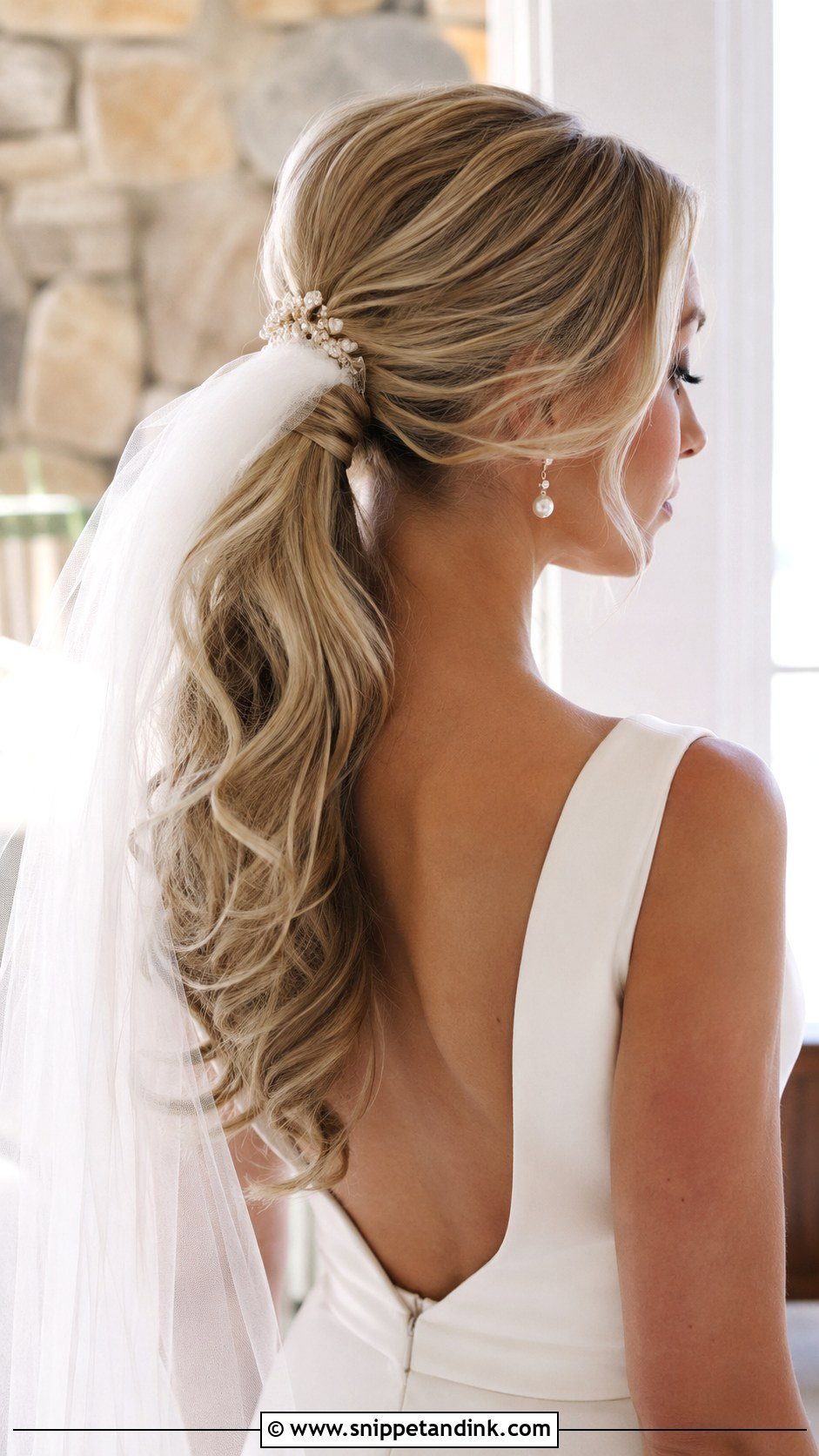
Veil placement is where ponytails go wrong if nobody plans it. With a low ponytail, I slide the comb in above the base, tucked into a small section of backcombed hair so it has grip. With a high ponytail, the comb can sit under the base so the veil falls behind the tail like a waterfall. A heavy cathedral veil will drag a high ponytail backward over the hours, so a lighter single tier is the safer pairing. Bring the actual veil to your trial; a similar-looking one won’t tell your stylist much about the comb or its weight.
14. Bridal Ponytail With Hair Bow
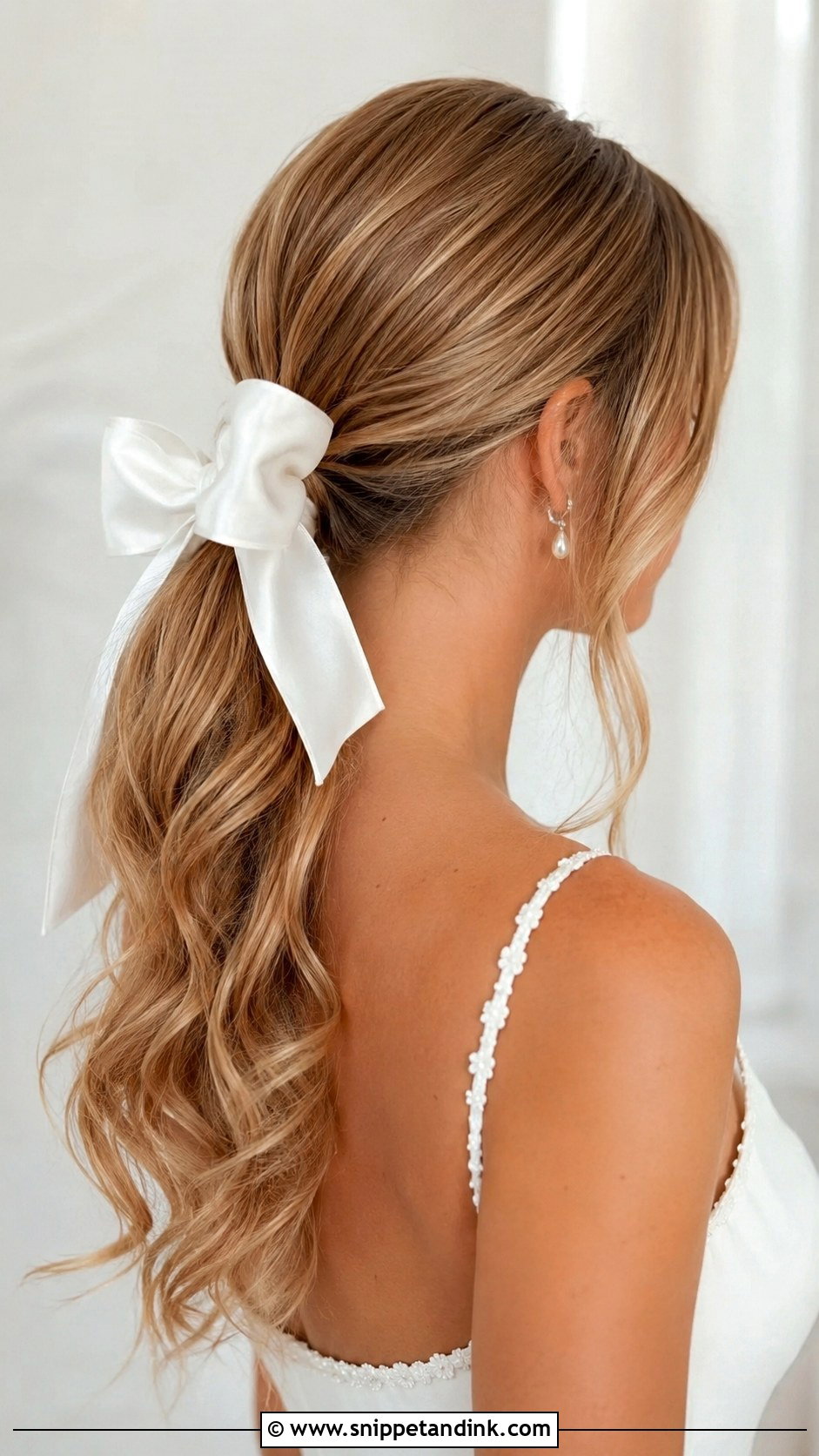
A bow is fashion more than tradition, and fabric decides how it ages through the day. Satin holds its loops, organza stays light, and very soft silk tends to droop by evening unless the bow has a stiffened backing. I attach the bow to a clip or bobby pins slid through the knot so it’s anchored over the elastic, not just tied around it. A low ponytail with a bow feels classic, while a high ponytail with a bow is more playful. It’s an easy reception change too if you start the day with a veil.
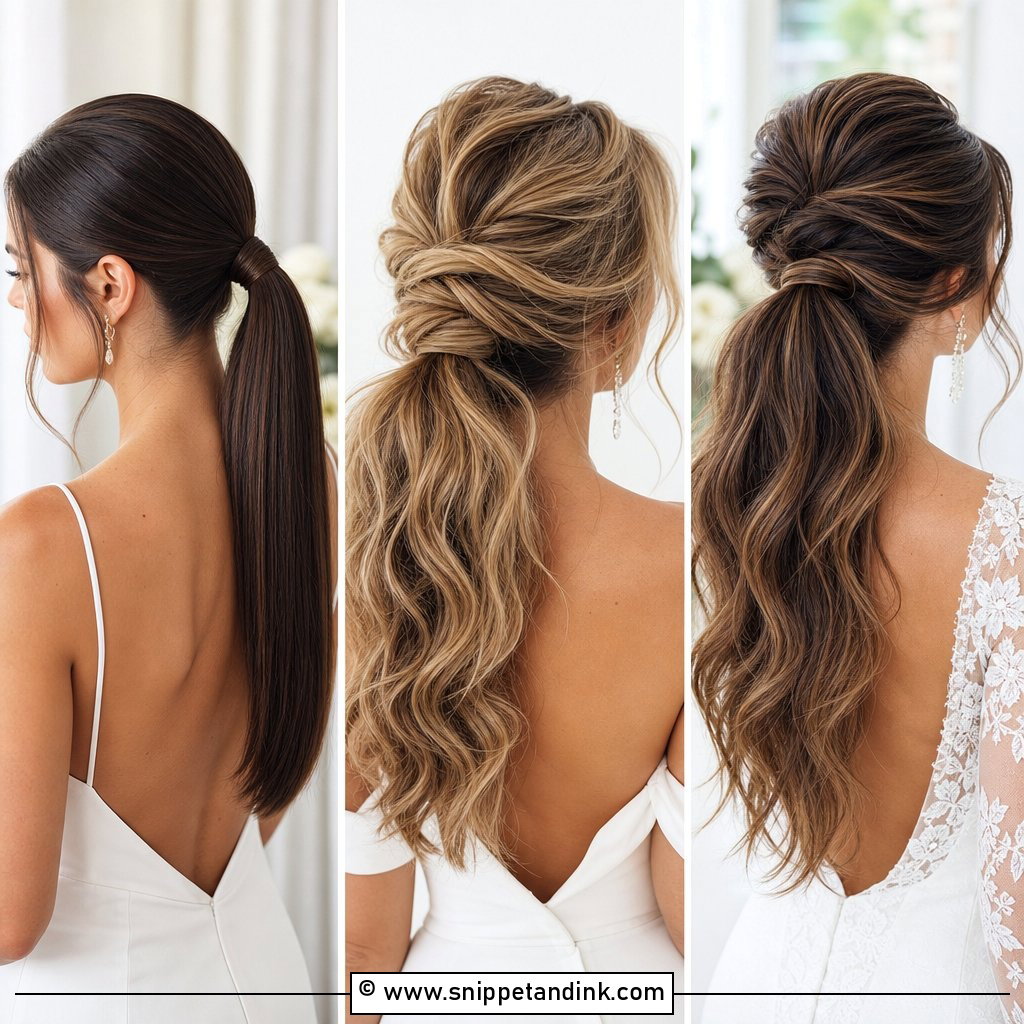
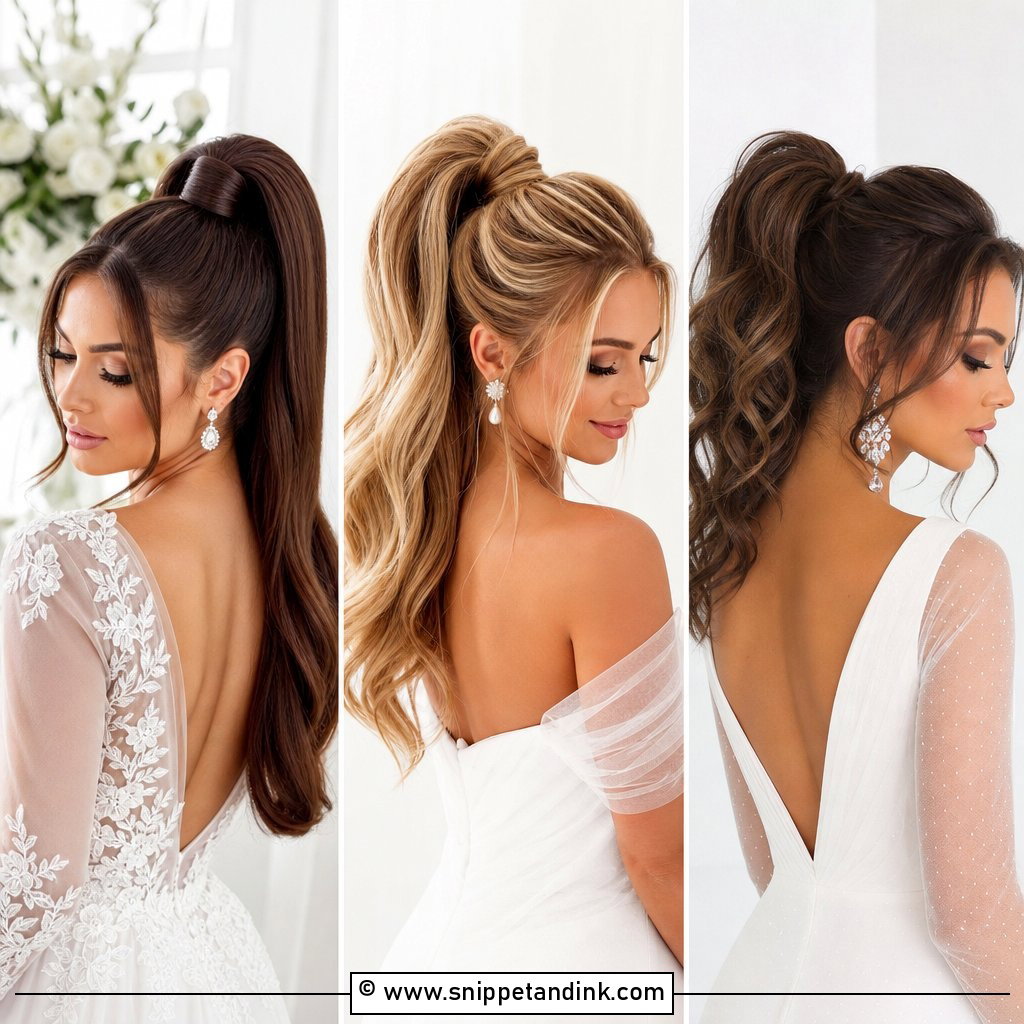
15. Middle Part Bridal Ponytail
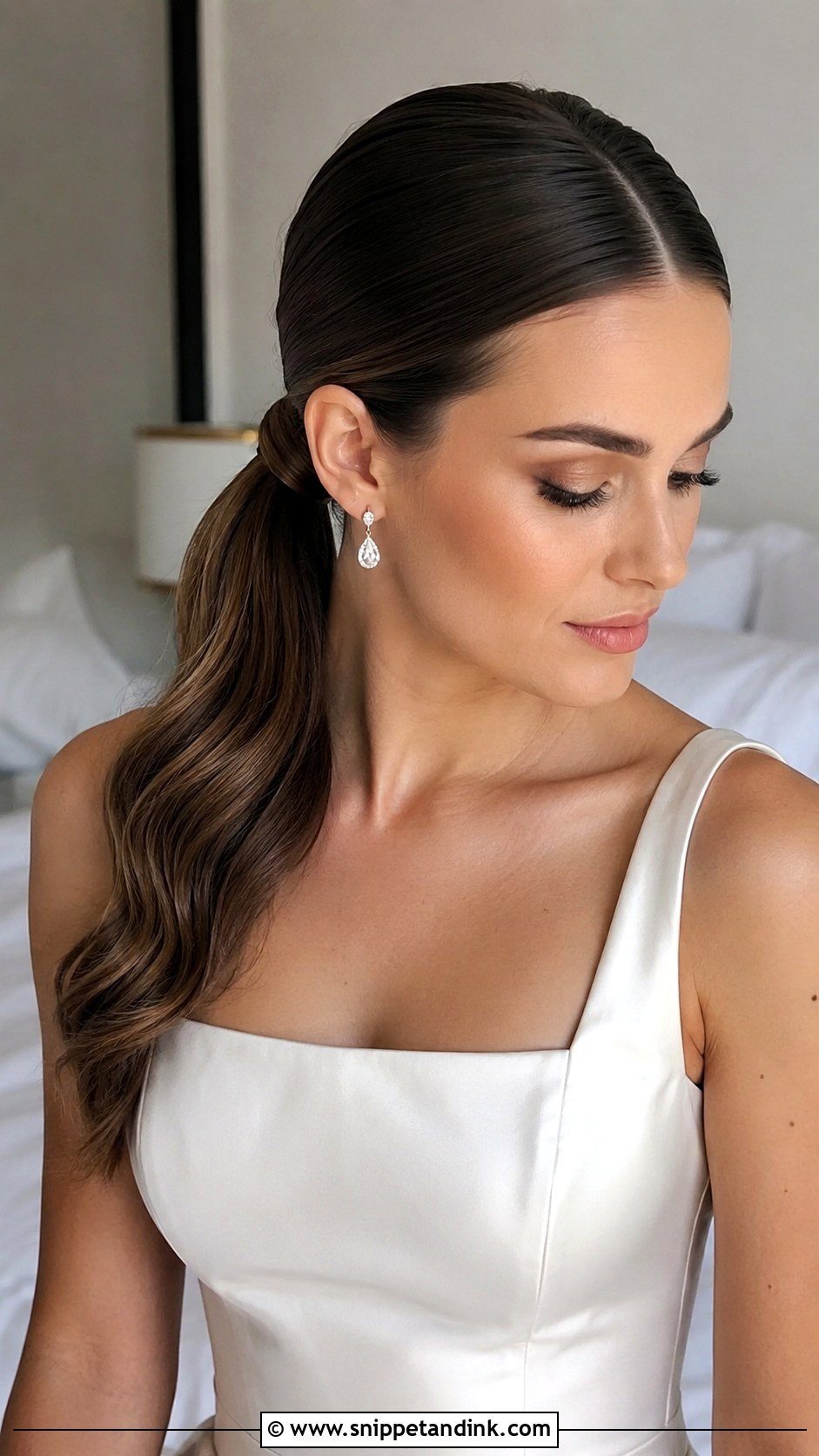
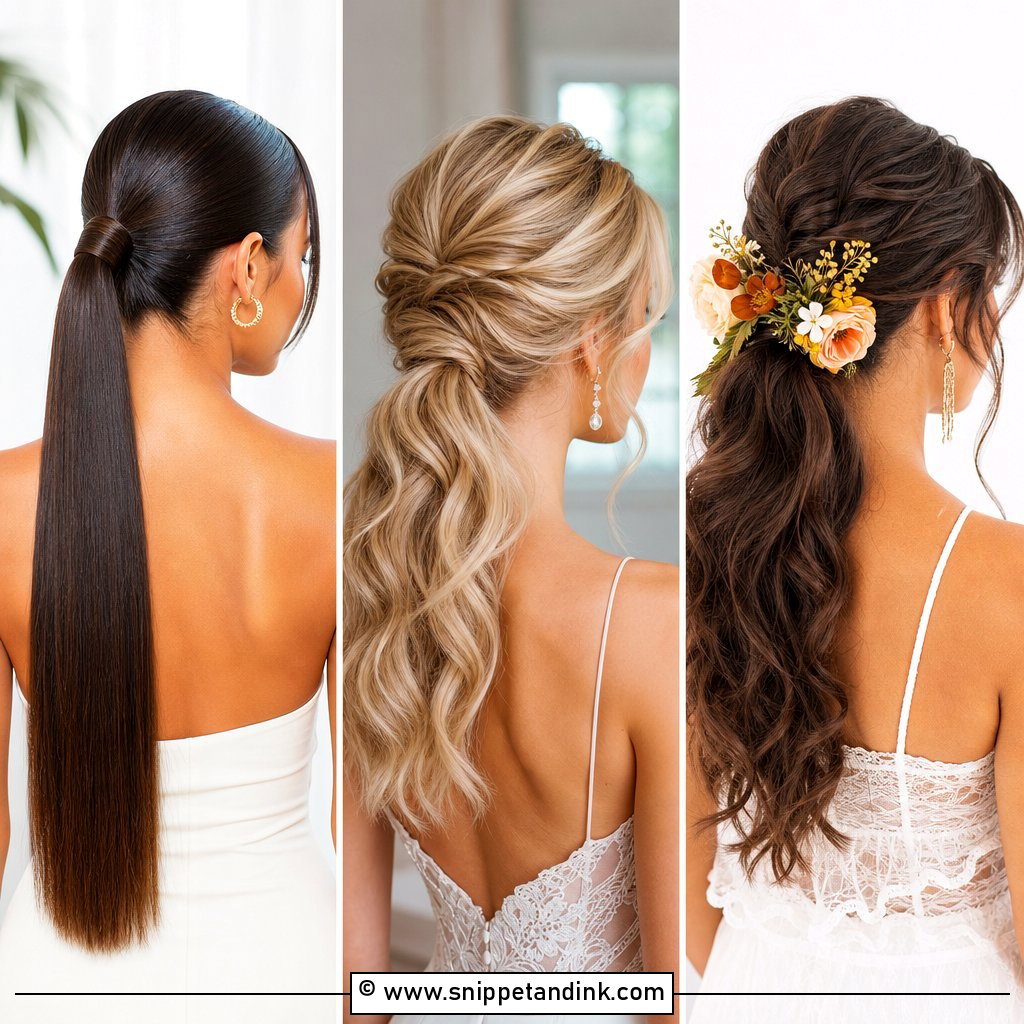
A middle part shows any asymmetry in the hairline, so I check where your hair naturally falls before committing. If your part wants to sit off-center, forcing it straight leaves a ridge by afternoon. When it does sit right, the look is precise and suits square necklines and column dresses. I smooth the sides with a small amount of gel on a fine-tooth comb and let the tail stay wavy for softness. Short baby hairs near the temples are fine to leave; slicking every one down usually looks flat in photos.
16. Deep Side Part Bridal Ponytail
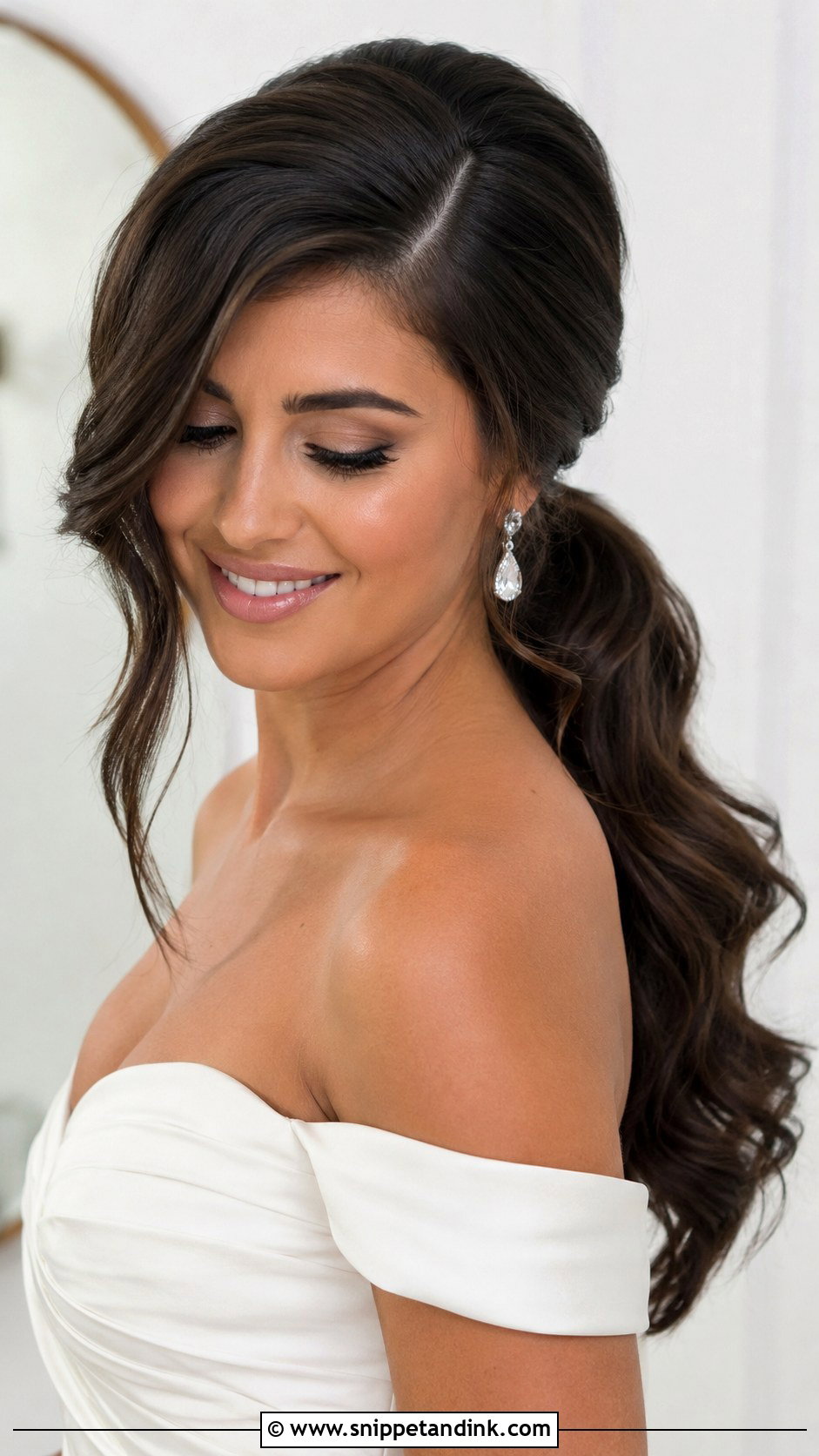
Drama with very little effort. A deep side part sweeps across the forehead and does a lot of face framing on its own. I set the sweep with a couple of hidden pins behind the ear on the heavy side, because that front section is the first thing to fall when you’re hugging guests. Sleek or waved both work, and it suits off-the-shoulder and vintage-inspired gowns. If you wear glasses, test this one, since the sweep can tangle with the arms of the frames.
17. Twisted Bridal Ponytail
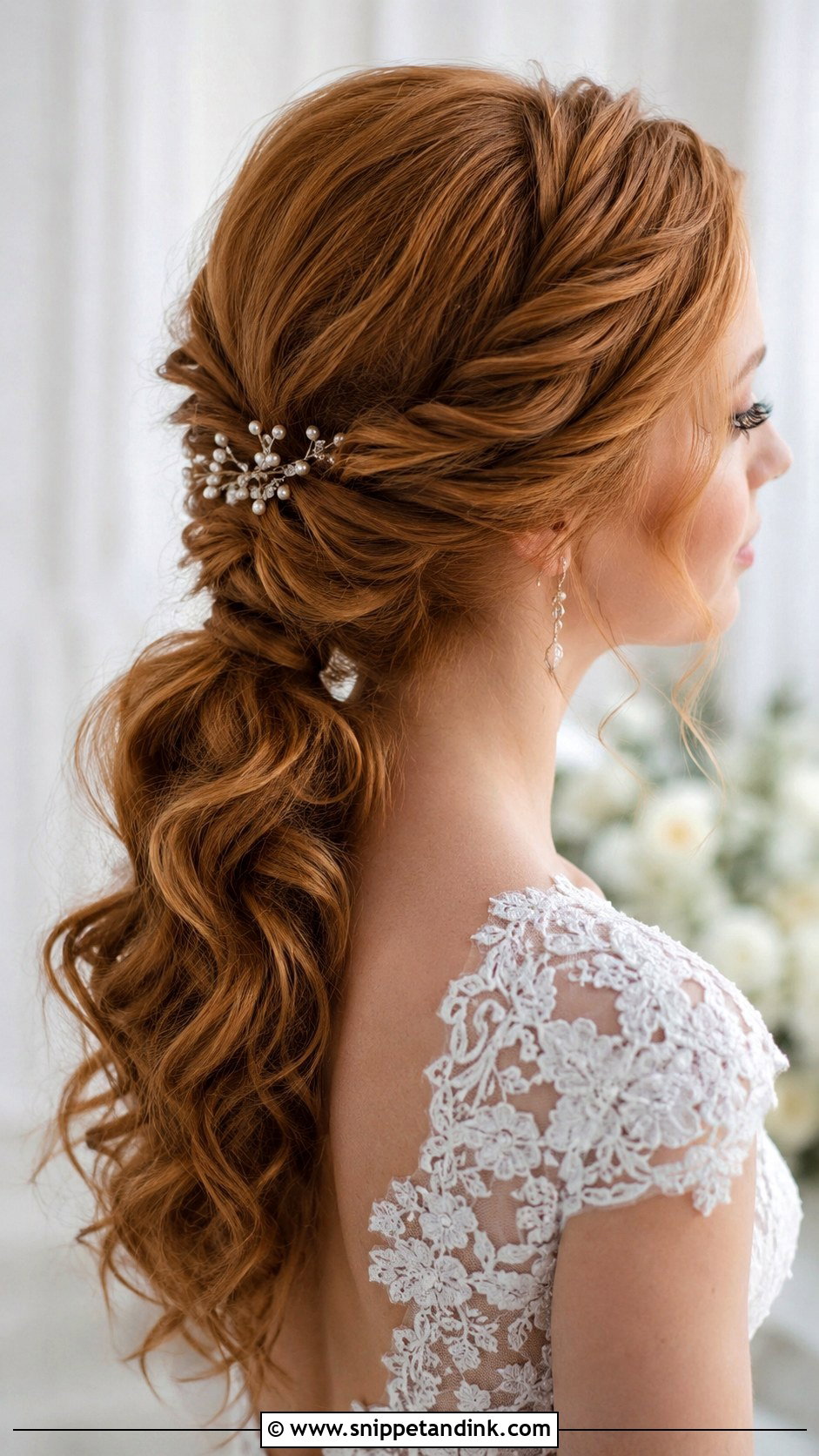
Twists give detail at the back without the time or the skill a braid needs. I take a section from each side, twist it toward the base and pin it, then gather everything into the ponytail. Rope twists unravel if they’re too loose, so I twist slightly tighter than looks right, then gently loosen them once pinned. It shows best as you walk away from guests, which makes it a good pick for the aisle exit and dress-back photos. A small comb near the twists finishes it.
18. Half Up Bridal Ponytail
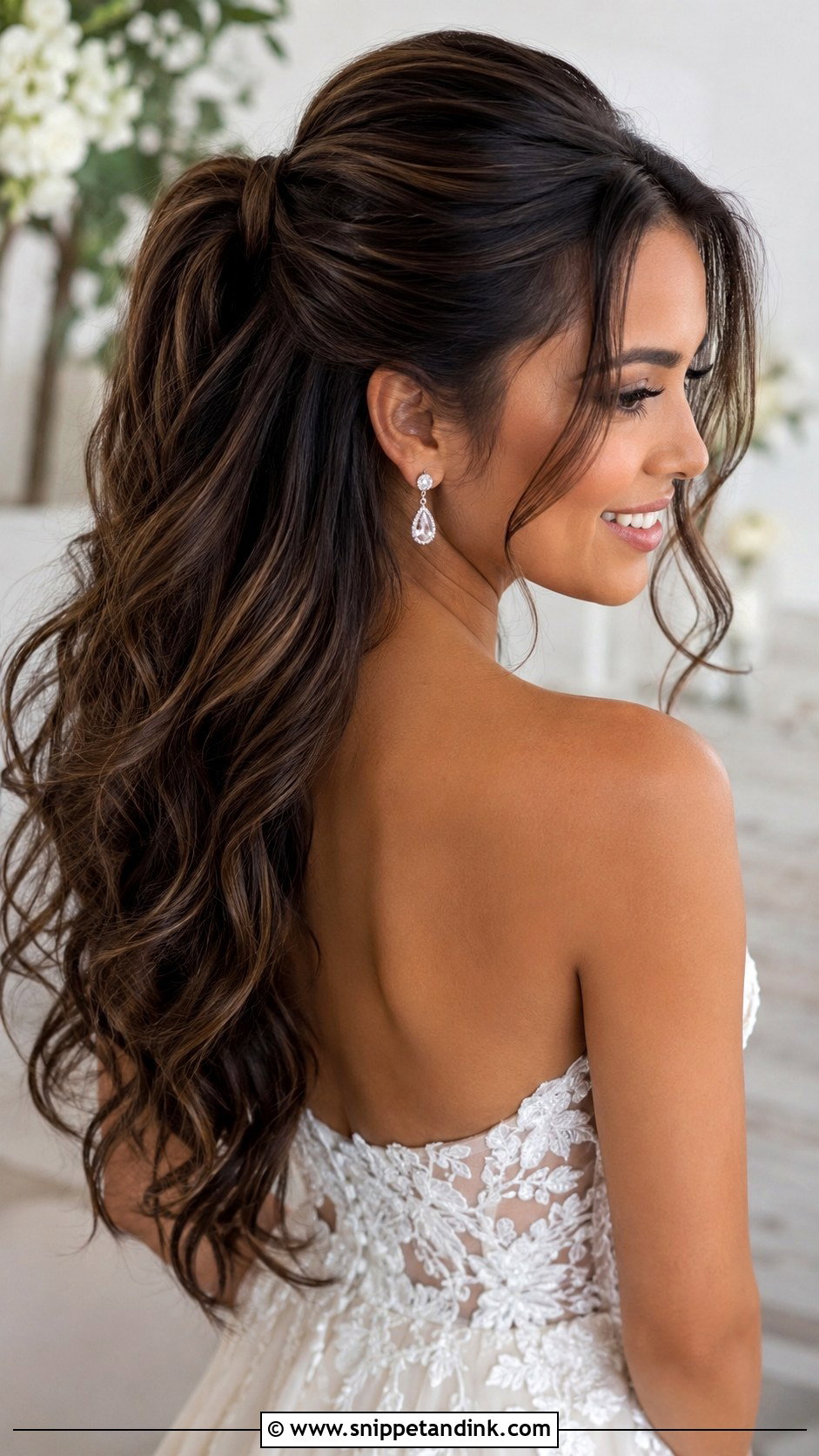
Half up, half down borrows lift from an updo and keeps length on the shoulders. Only the top section goes into the ponytail, so it’s the lightest option on the scalp here. Layers and waves suit it best. The weak point is the hair left down: it’s the part that falls flat in heat, so I set those curls with more hold than the ponytail itself. A small bow or a comb at the base makes it read as wedding hair rather than an everyday style.
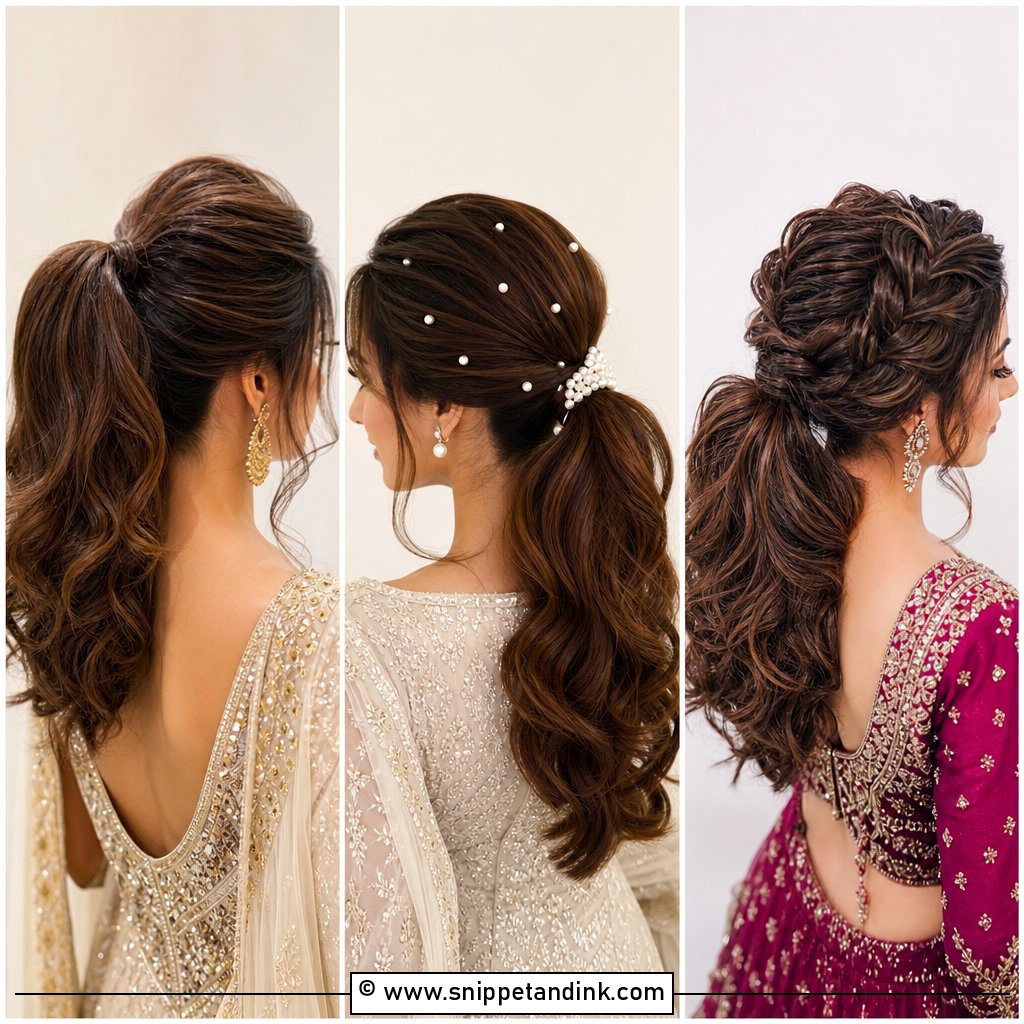
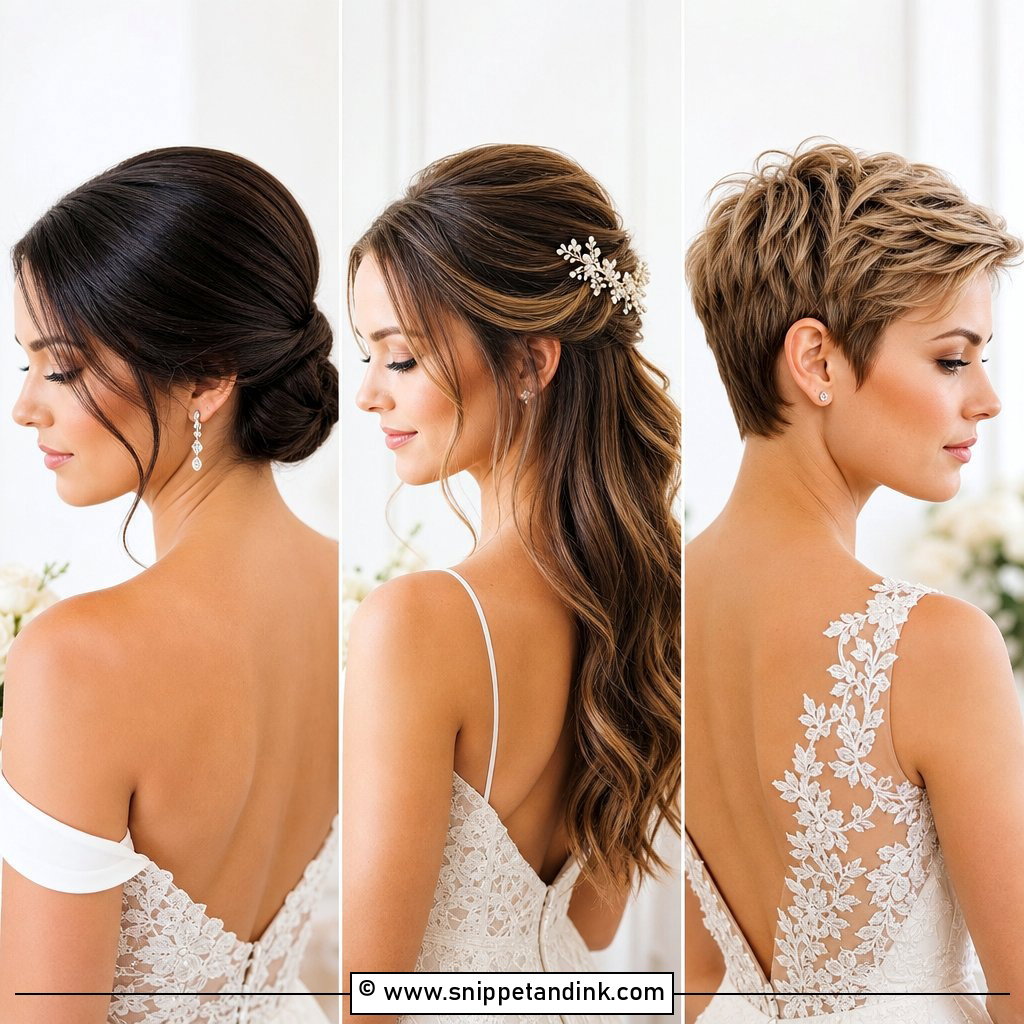
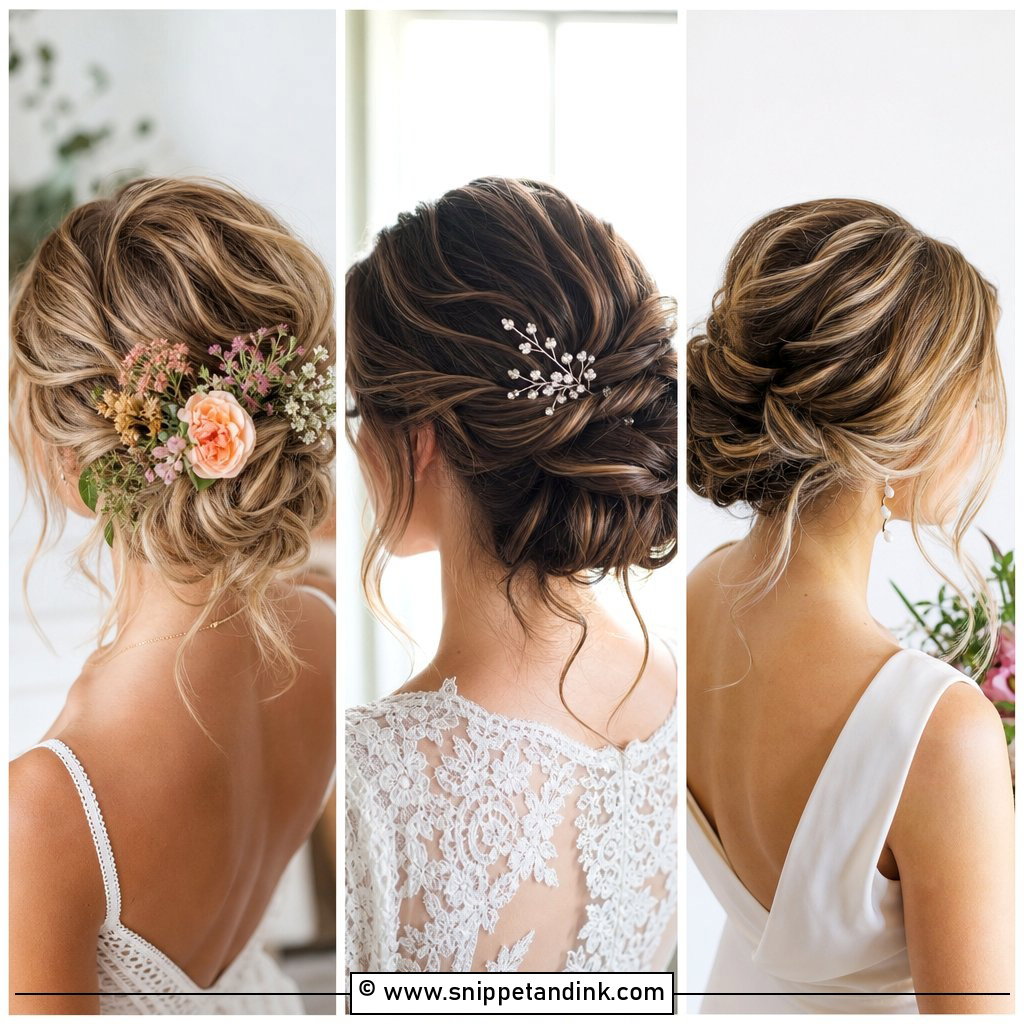
19. Bridal Ponytail For Long Hair
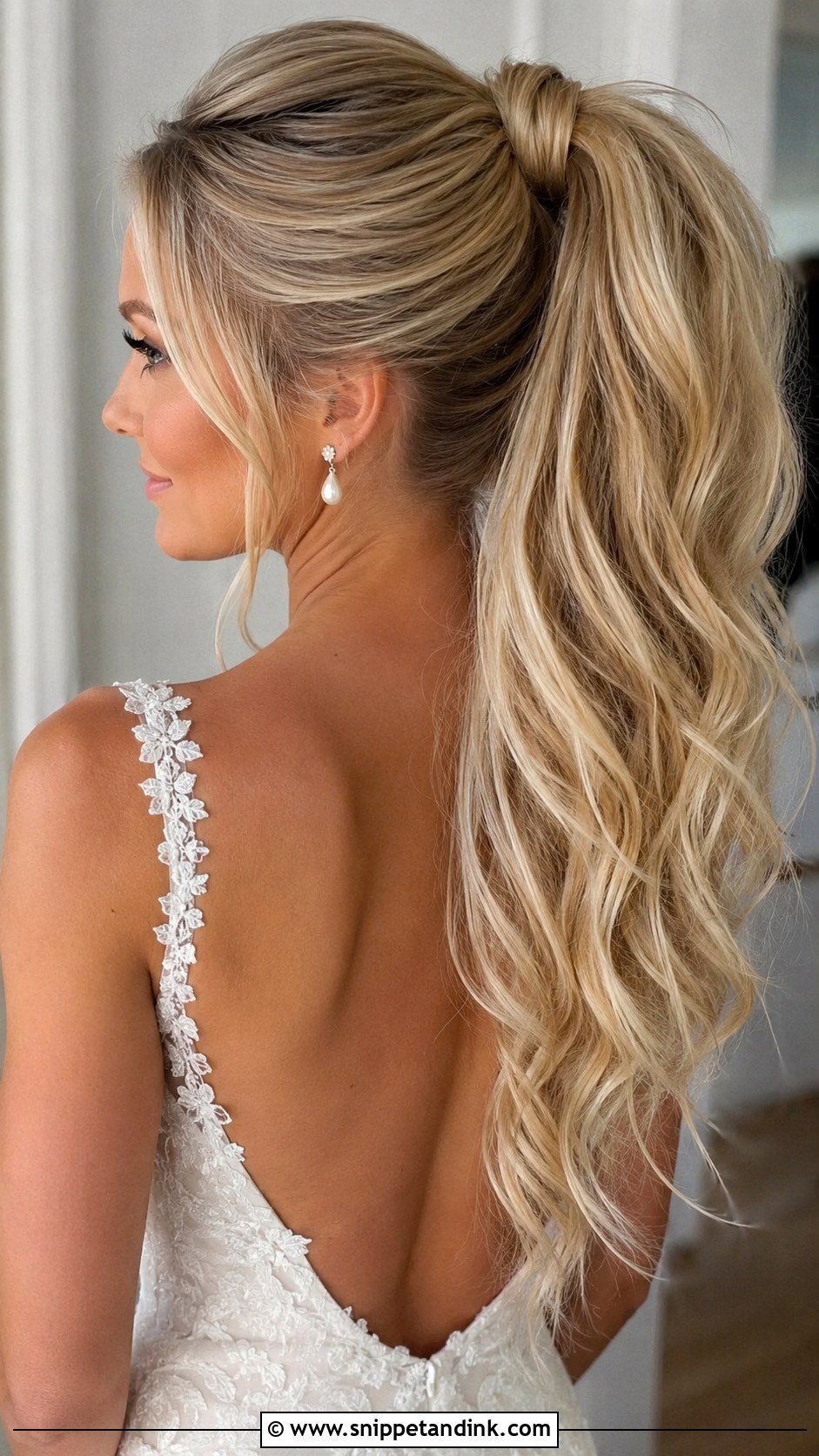
Long hair gives you room for waves, curls, bubble sections, braids or a sleek cascade, but it also brings weight. Waist-length hair pulls a ponytail downward and flattens the crown within a few hours. I counter that with a hidden padding or a small teased section under the base, and I secure the elastic with crossed bobby pins rather than relying on the band alone. Extensions can add fullness if your ends are thin. With an open-back gown, check where the tail lands when you’re standing; sometimes it hides the detail you chose the dress for.
20. Bridal Ponytail For Medium Hair
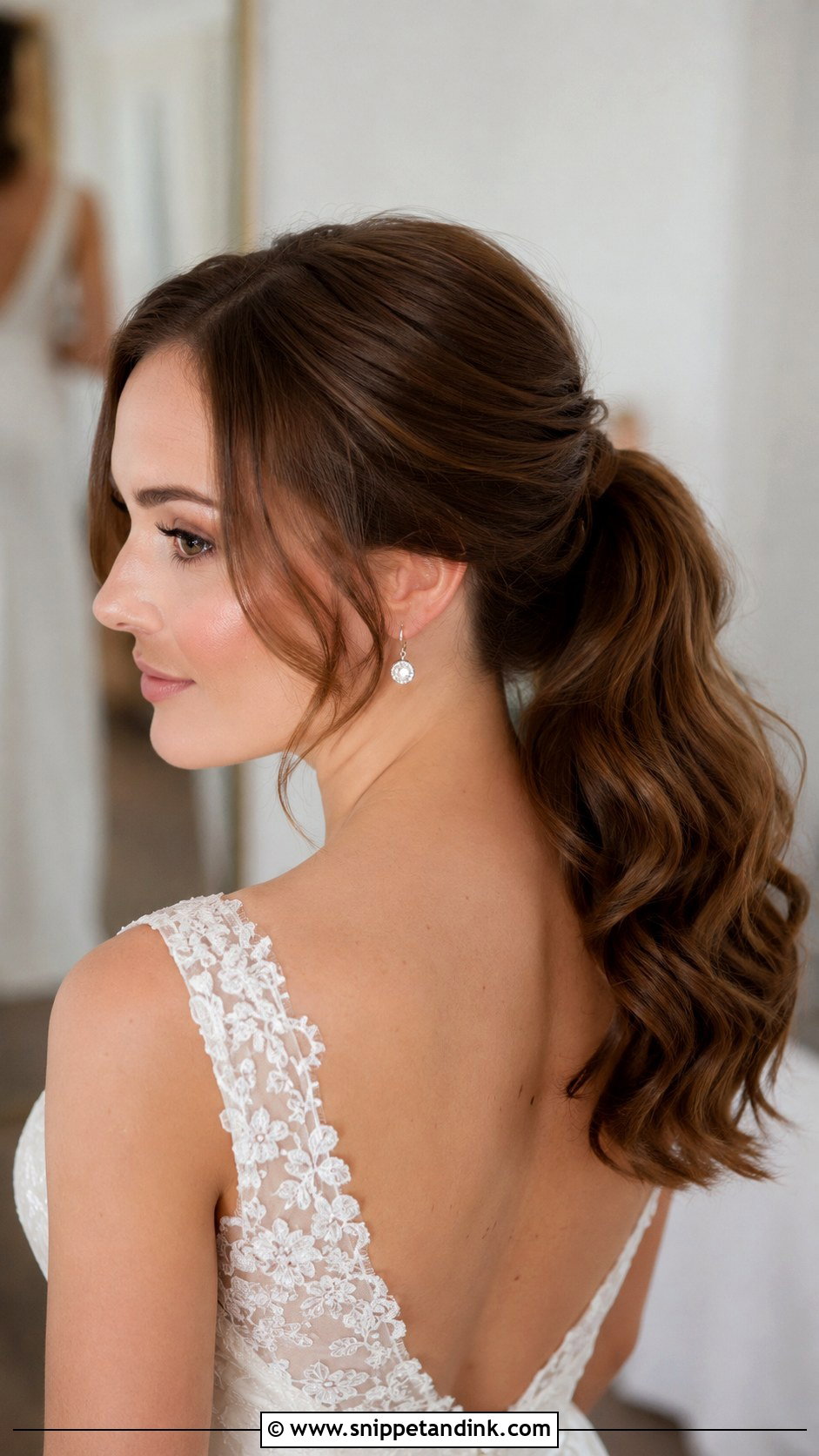
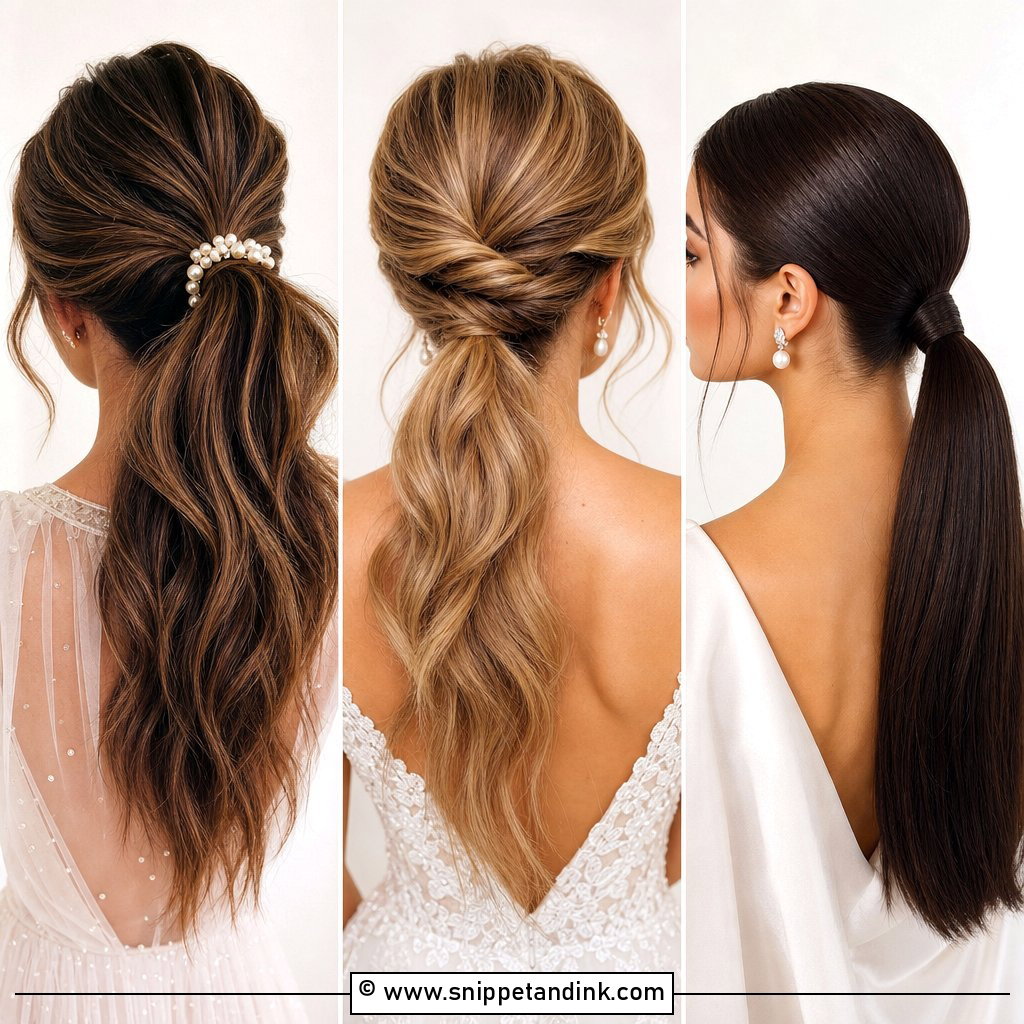
Shoulder-to-collarbone length can still make a full ponytail. I place it mid-height or lower so the tail has enough length to hang rather than stick out, and I curl it to add bulk. Shorter layers near the nape are the usual problem: they escape the elastic, so I pin them up or add a small clip-in piece matched to your color. Medium-length ponytails are lighter and kinder on the scalp than long ones, which makes them a sensible choice if you have a long day of portraits.
What Happens to a Ponytail by the Last Dance
Ponytails fail in predictable ways, so I prepare for each of them at the trial rather than hoping for the best.
The tail drops or droops
This usually comes from long, heavy hair sitting on a single elastic. Ask your stylist to show you how to push the base back up and tuck in one extra bobby pin. Keep two pins matched to your hair color in your bag; that’s often the entire repair.
Waves fall out in humidity
Curls set with too little product lose their shape fast at an outdoor summer wedding. I curl in small sections, let each one cool completely before touching it, and finish with flexible hold. If the waves soften during the day, a looser texture still looks intentional on a ponytail, which is one of the reasons ponytails forgive more than loose hair does.
Scalp ache at the base
If you feel pulling during the trial, say so then. A ponytail that hurts after an hour will be unbearable after ten. Loosening the elastic slightly and moving the anchor pins lower fixes most of it without losing the shape.
One more practical note: have your hair washed the day before, not the morning of, unless your stylist tells you otherwise. Day-old hair holds a ponytail and its pins far more reliably than freshly washed, silky hair.
Settling on Height, Part and Finish
The right ponytail is the one that suits your hair’s density and your dress neckline, then survives the full day. Placement, part and finish all change how it reads, so treat your trial as an experiment rather than a copy of one photo. Show your stylist the inspiration, but also let her tell you what your hair will and won’t hold.
You'll Like These Ideas:


Leave a Reply