
Plenty of brides talk themselves out of a ponytail because it sounds too casual, then fall for it at the trial. Done properly, it’s the most practical wedding style I put in. It stays put through the hugging, the portraits, a breezy terrace and a long night of dancing, yet it still moves and still frames the face. It takes a veil, pearl pins, a bow or fresh flowers without complaint. What separates a wedding pony from the one you wear to the gym is structure: a shaped crown, a hidden elastic, real volume and a height chosen for the neckline. Bridal pony hairstyles come in more moods than people expect, from glossy and sleek to curly, braided and soft.
A High Pony Gets Heavier by Hour Eight
The thing nobody mentions about bridal ponytails is the ache. A full, high pony, especially one with extensions, hangs all its weight from one small point on the scalp. It feels fine at noon. By the speeches, plenty of brides are quietly pressing their fingers into the base. The fix is in how I build it, and it’s worth raising before the trial.
- Two stacked ponytails. For a high pony, I tie the top half slightly higher than the bottom half and blend them. The weight splits across two points and the pony looks longer and fuller.
- A bungee band instead of a plain elastic. It hooks in and wraps, so the base can be firm without the scalp being dragged tight.
- Crossed pins under the base. Two pins anchoring the tie to the hair below take some of the pull off the hairline.
- Smooth, not scraped. A polished crown comes from product and a good brush, not from pulling until the eyebrows lift.
If you get headaches easily or have a sensitive scalp, a low or mid ponytail is the kinder choice. It carries the same weight closer to the neck, where most people barely feel it.
1. Low Bridal Ponytail
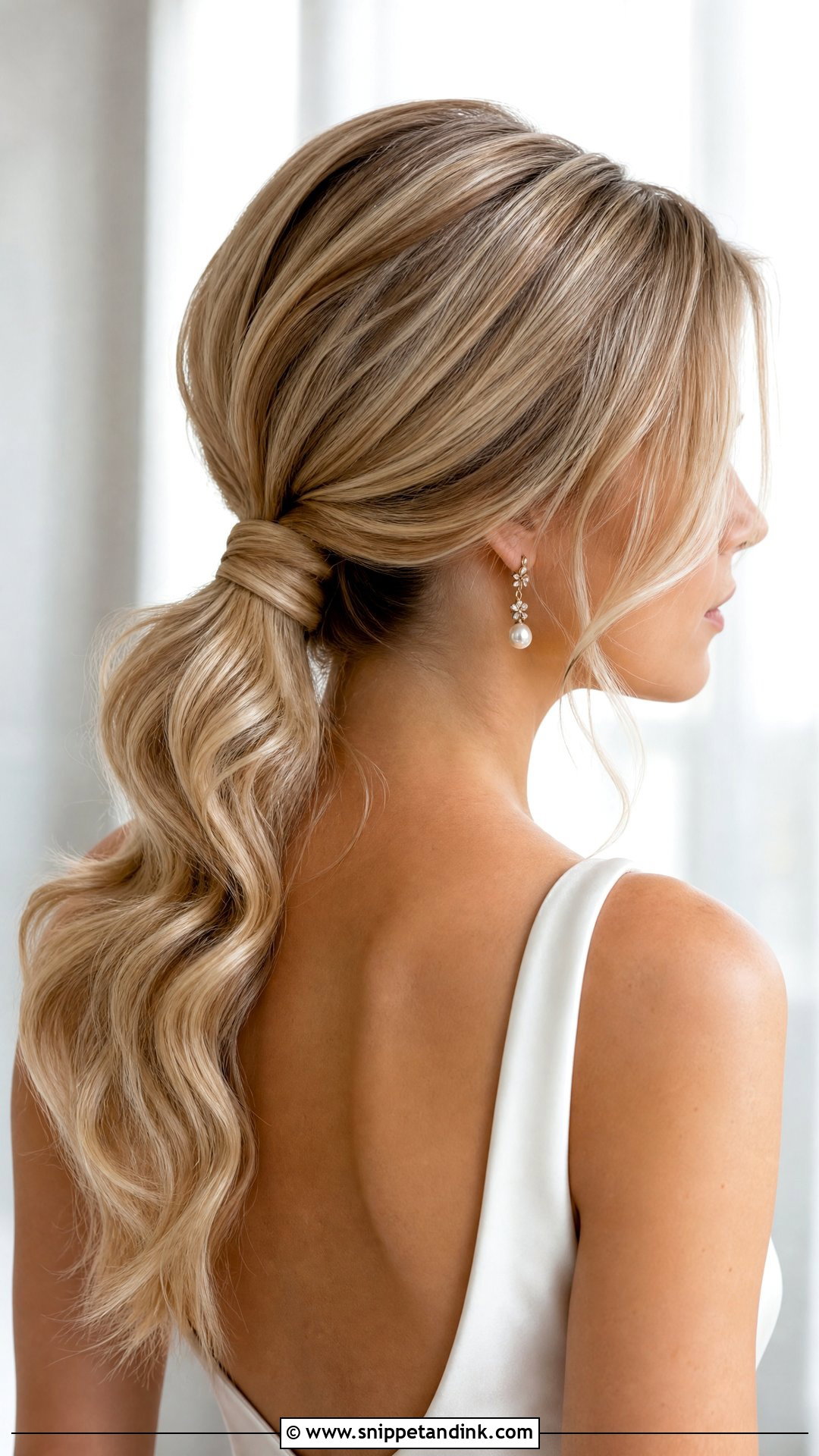
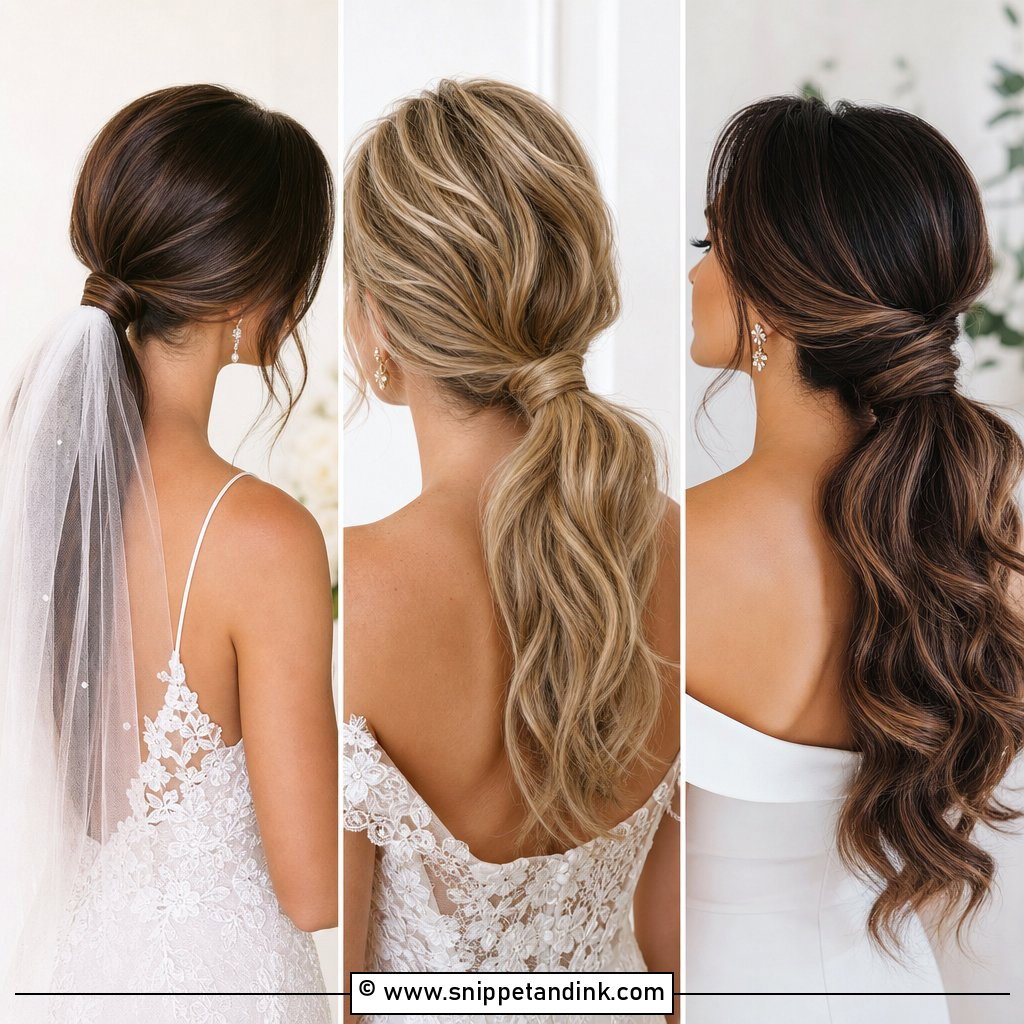
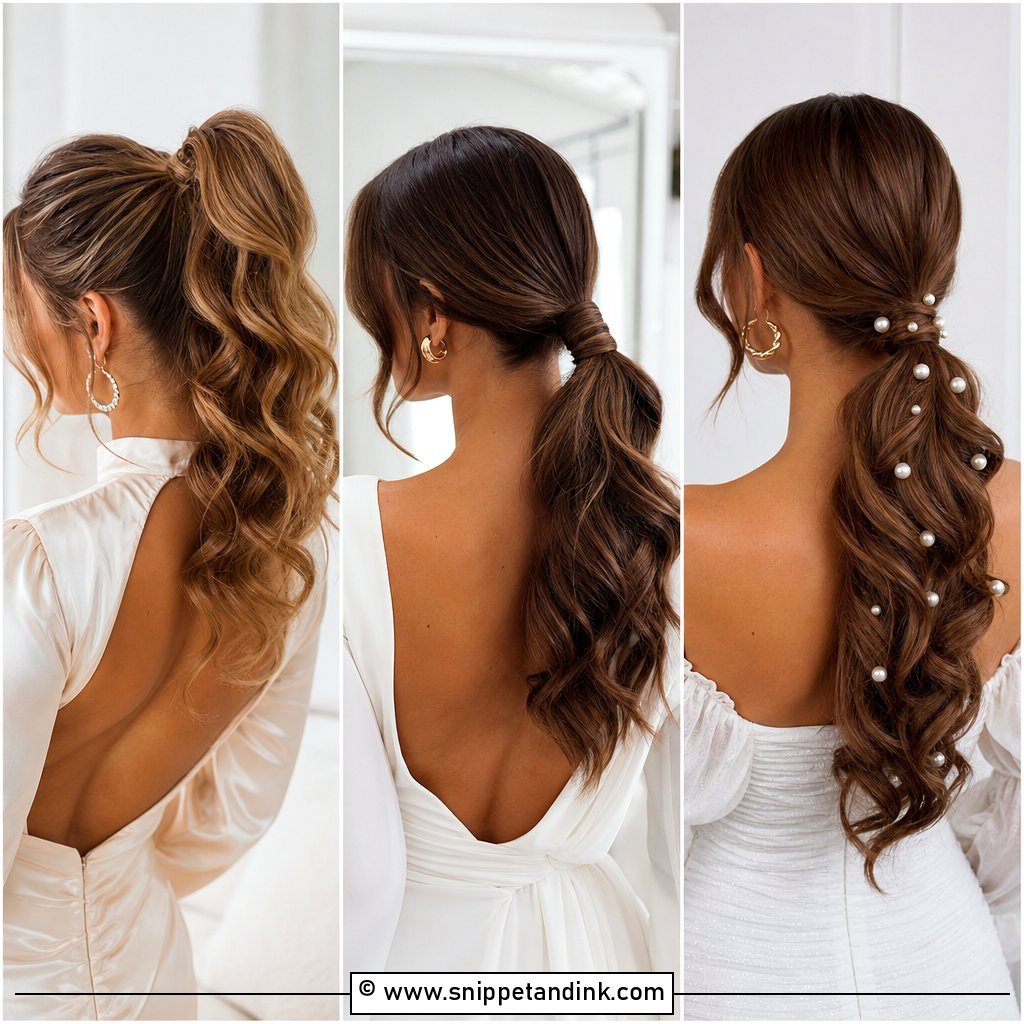
The low ponytail is the one I’d put on a bride who can’t decide, because it sits at the nape and gets along with veils, open backs, high necklines and fine jewelry alike. Smooth the crown for a classic finish, or I’ll add a little root lift if her hair falls flat in photos. A loose wave through the length softens it. I always wrap a strand of her own hair around the elastic and pin it underneath; a visible band is the single detail that makes a pony look unfinished. Sitting low, it puts no pull on the scalp, so it’s comfortable from breakfast to the last song.
2. High Bridal Ponytail
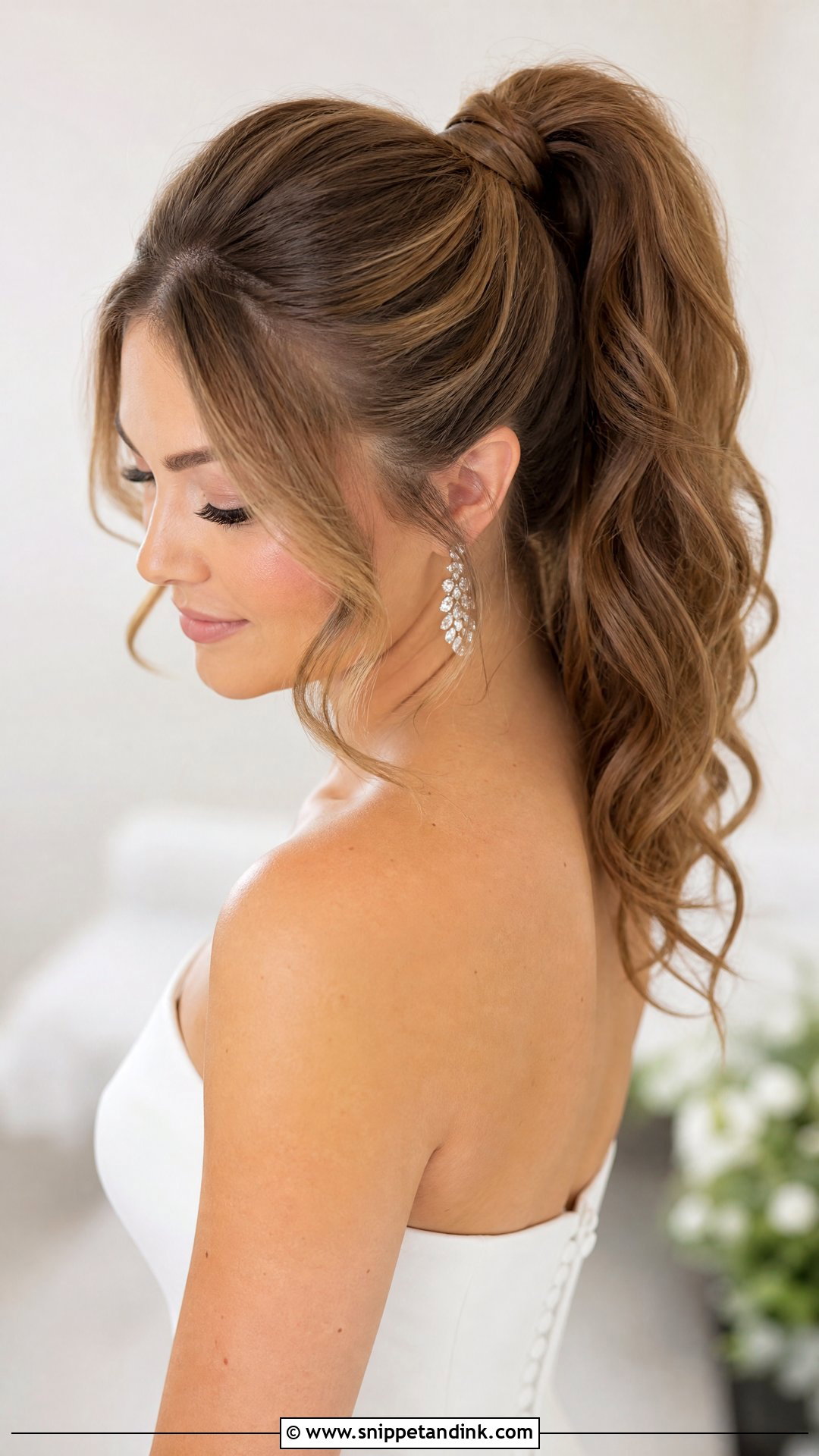
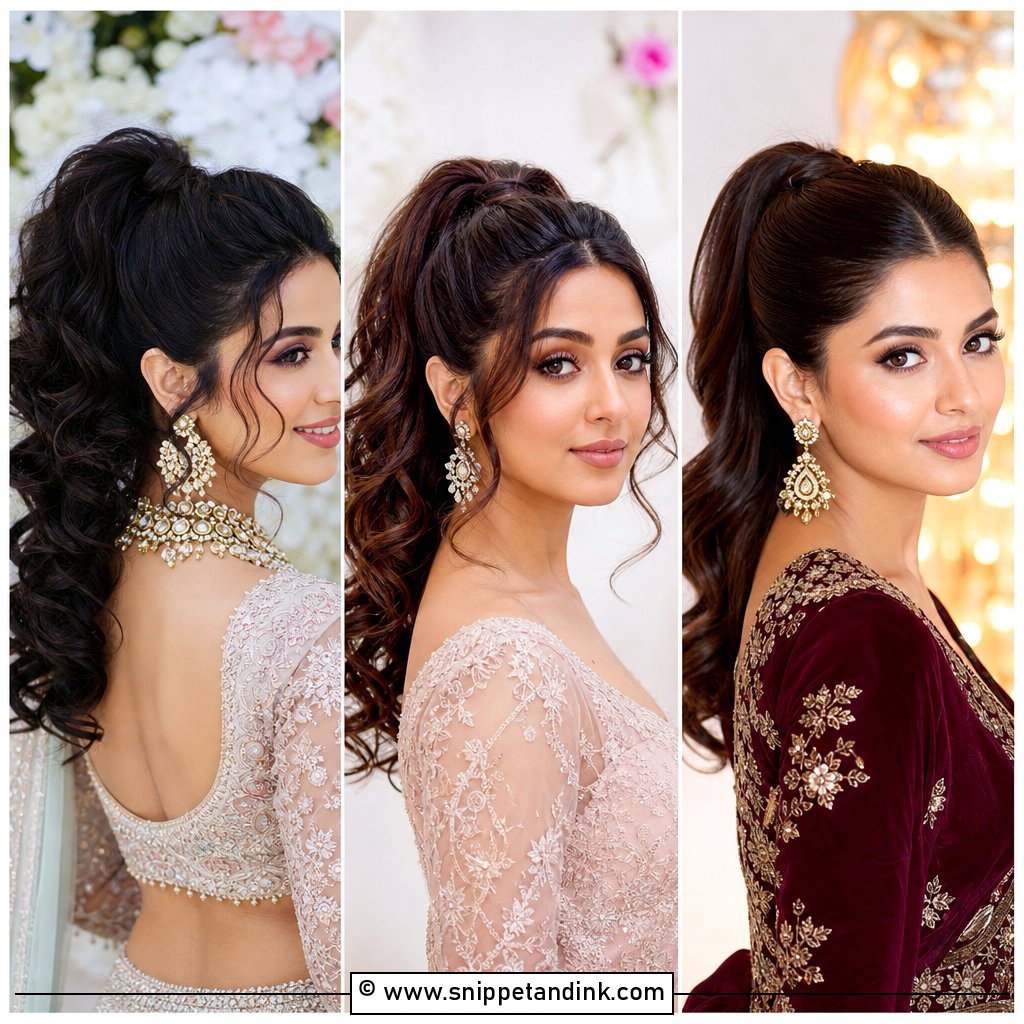
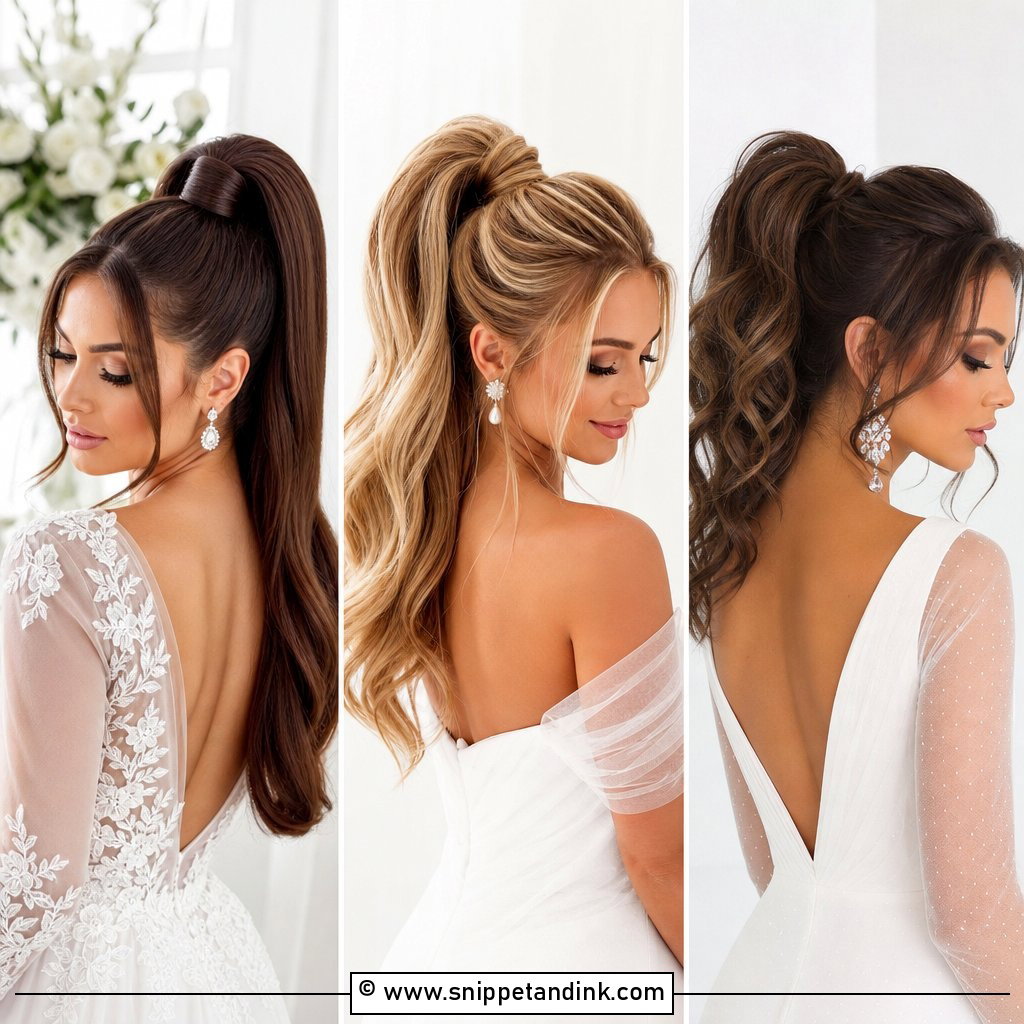
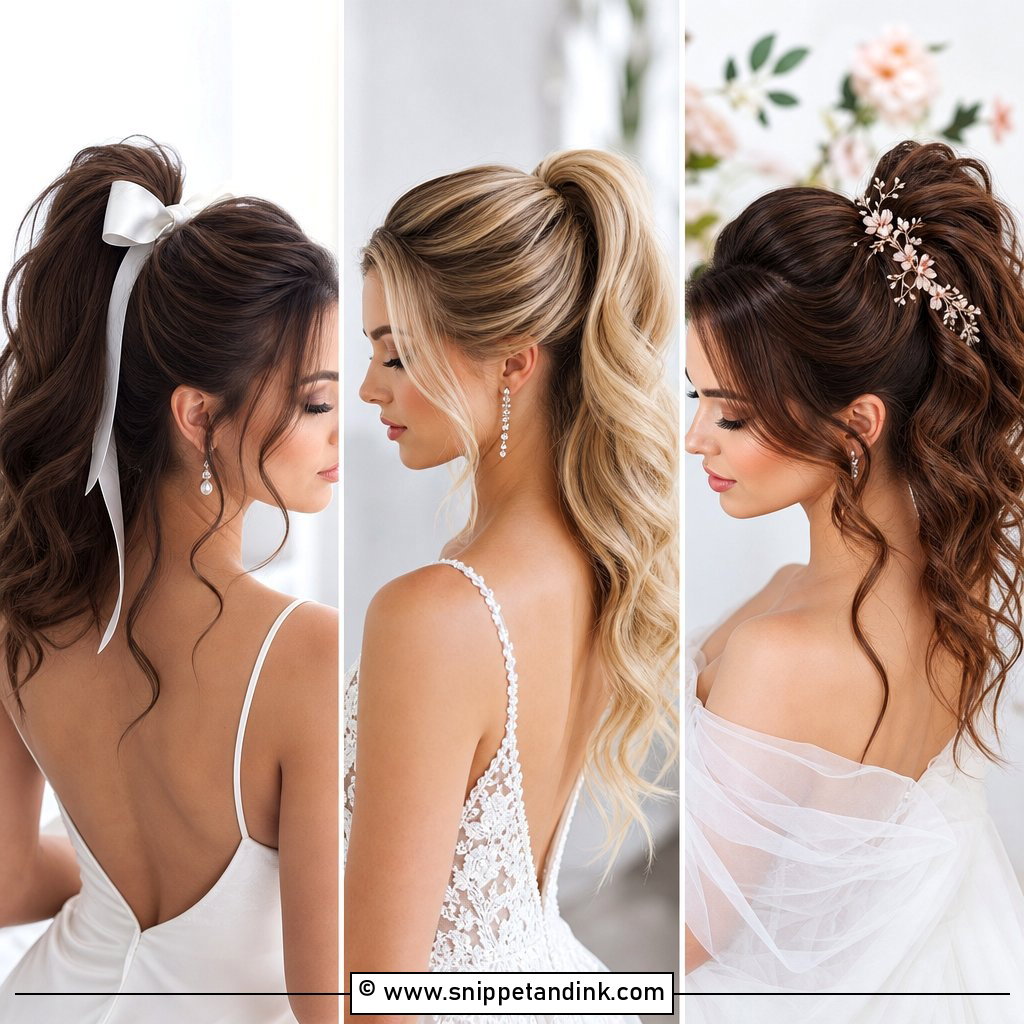
Pull the pony up to the crown and the whole face lifts with it. That drama suits strapless dresses, clean satin and anyone who wants a red-carpet finish. Balance is the craft here: a smooth, secure crown above a full, glossy length with a soft bend at the ends. Fine or medium hair usually needs extensions to get that cascading shape, and I’m upfront about that at the consultation. Keep any face-framing pieces few and controlled. A high pony with too many loose strands at the front starts to look like it fell down.
3. Sleek Bridal Ponytail
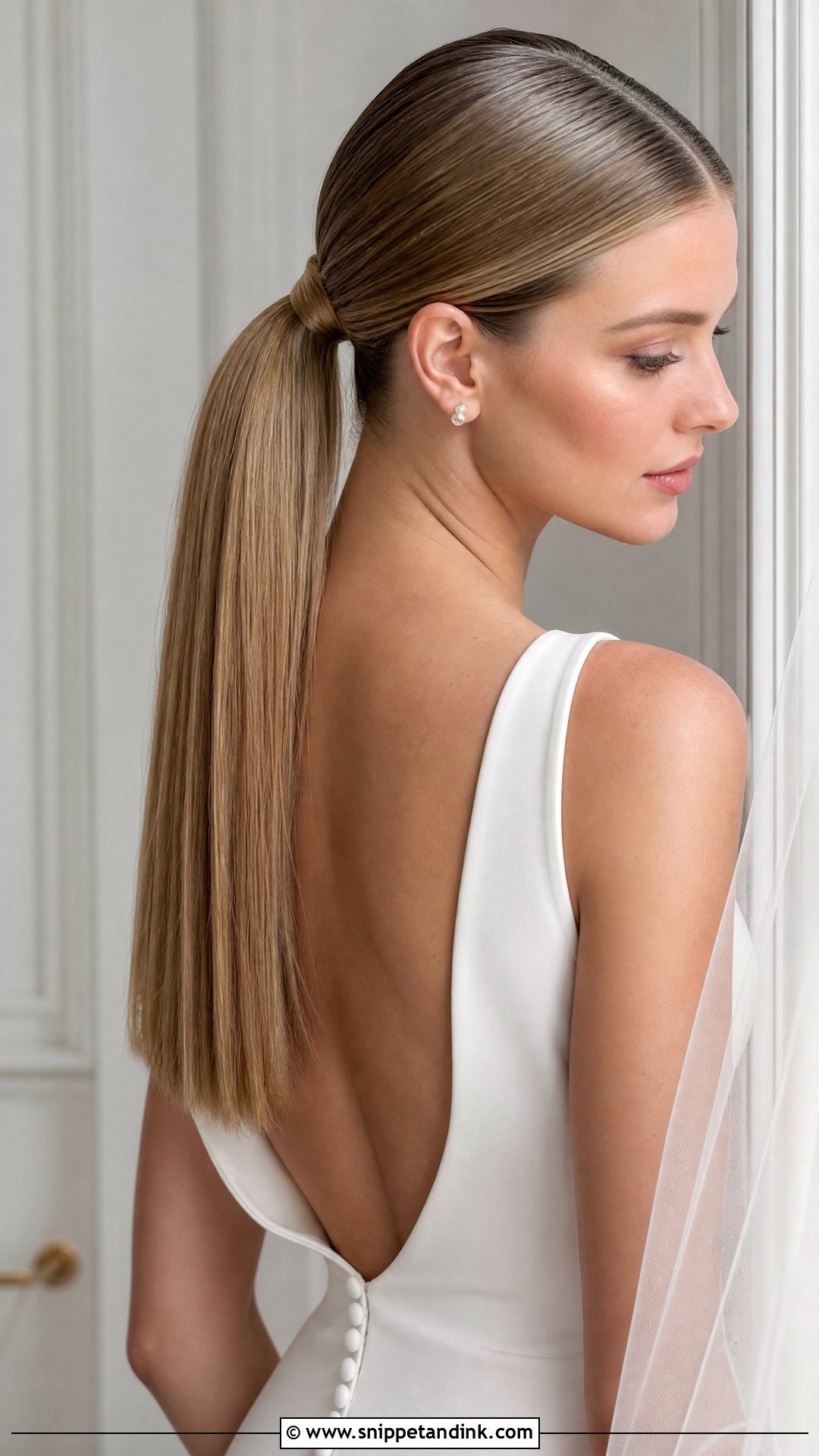
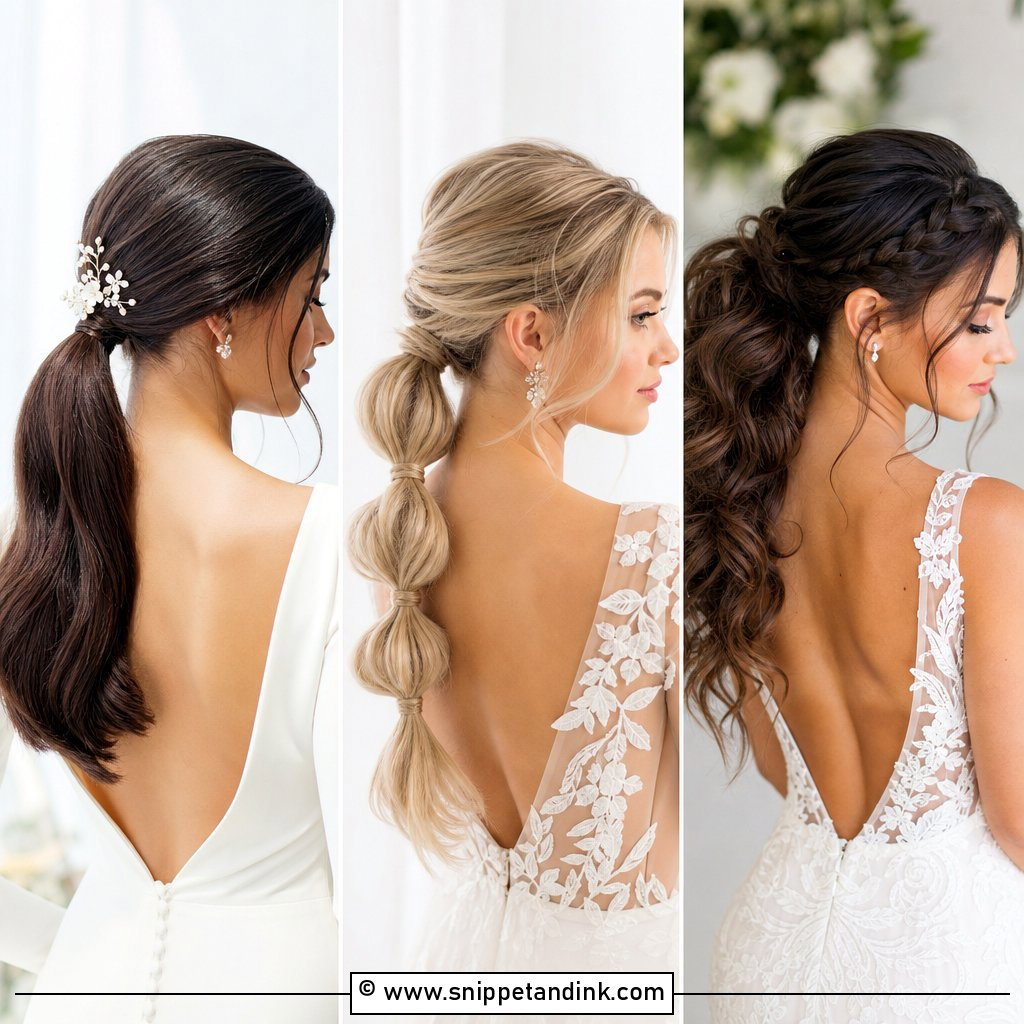
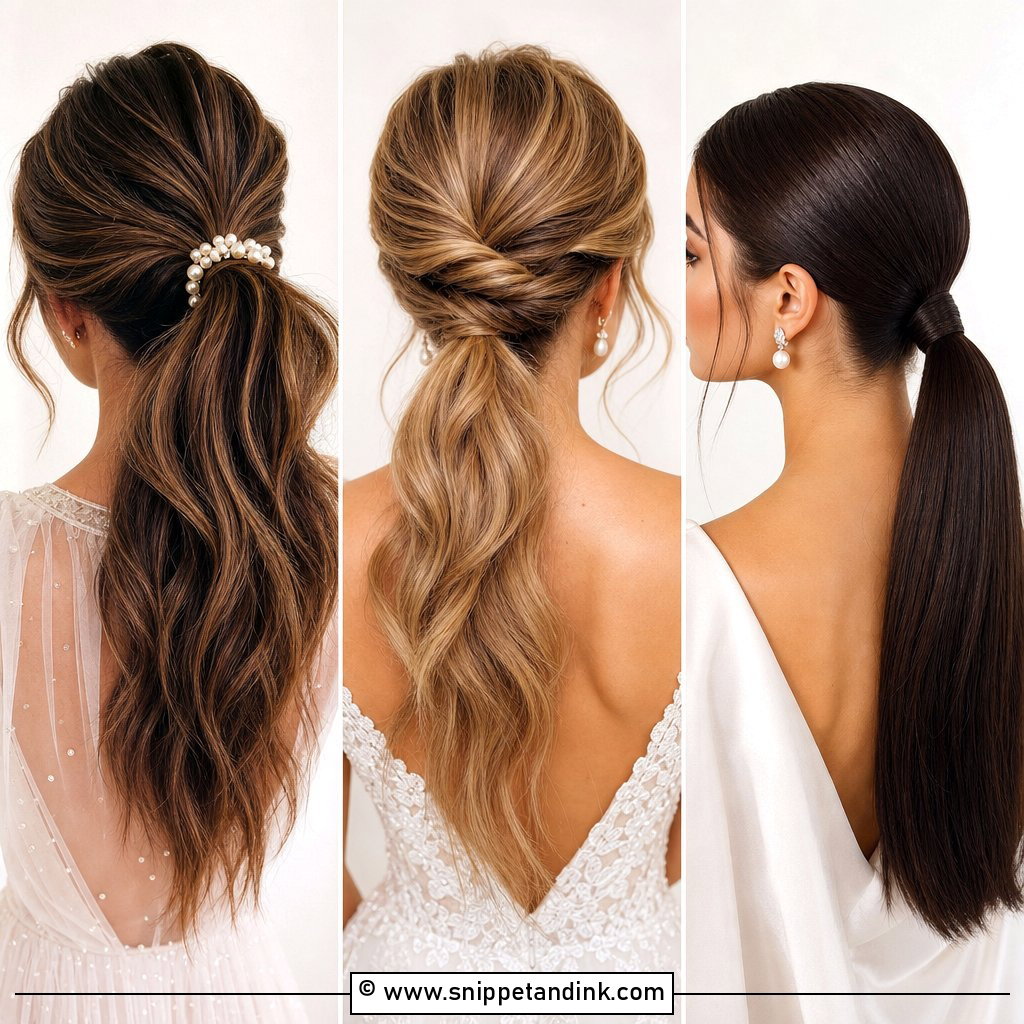
Shine and a clean line are the whole job with a sleek ponytail. Minimalist brides, city and courthouse weddings, and gowns with strong architectural seams all suit it. A middle part looks the most refined; a side part is kinder to round or long faces. The length can be straight, curved or lightly waved, but the top must stay glass-smooth. I prep with an anti-frizz cream on damp hair and blow-dry it flat with a paddle brush before I tie anything, because no amount of spray fixes frizz that was dried in. Simple to describe, unforgiving to do, and very expensive-looking when it’s right.
4. Wavy Bridal Ponytail
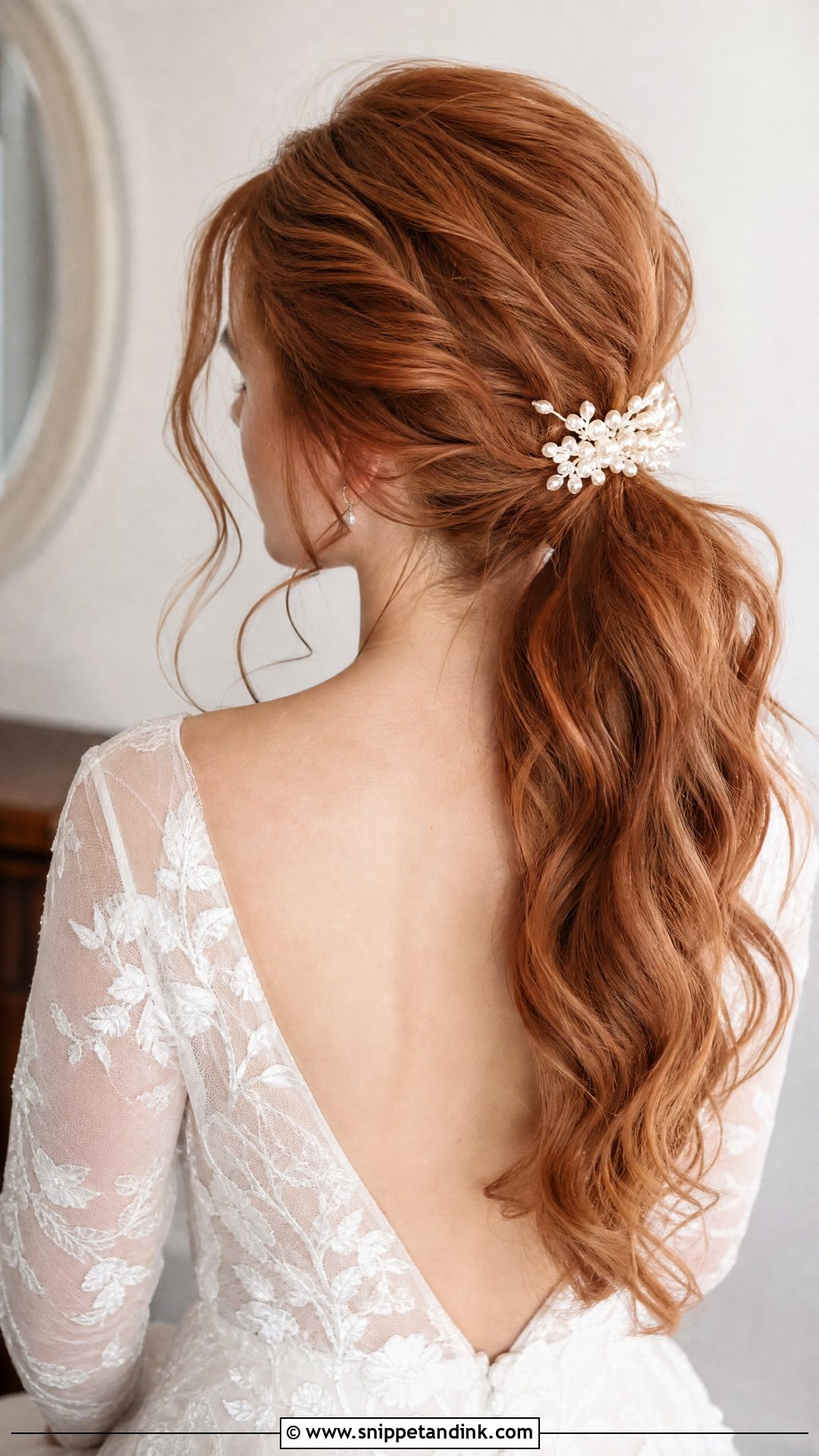
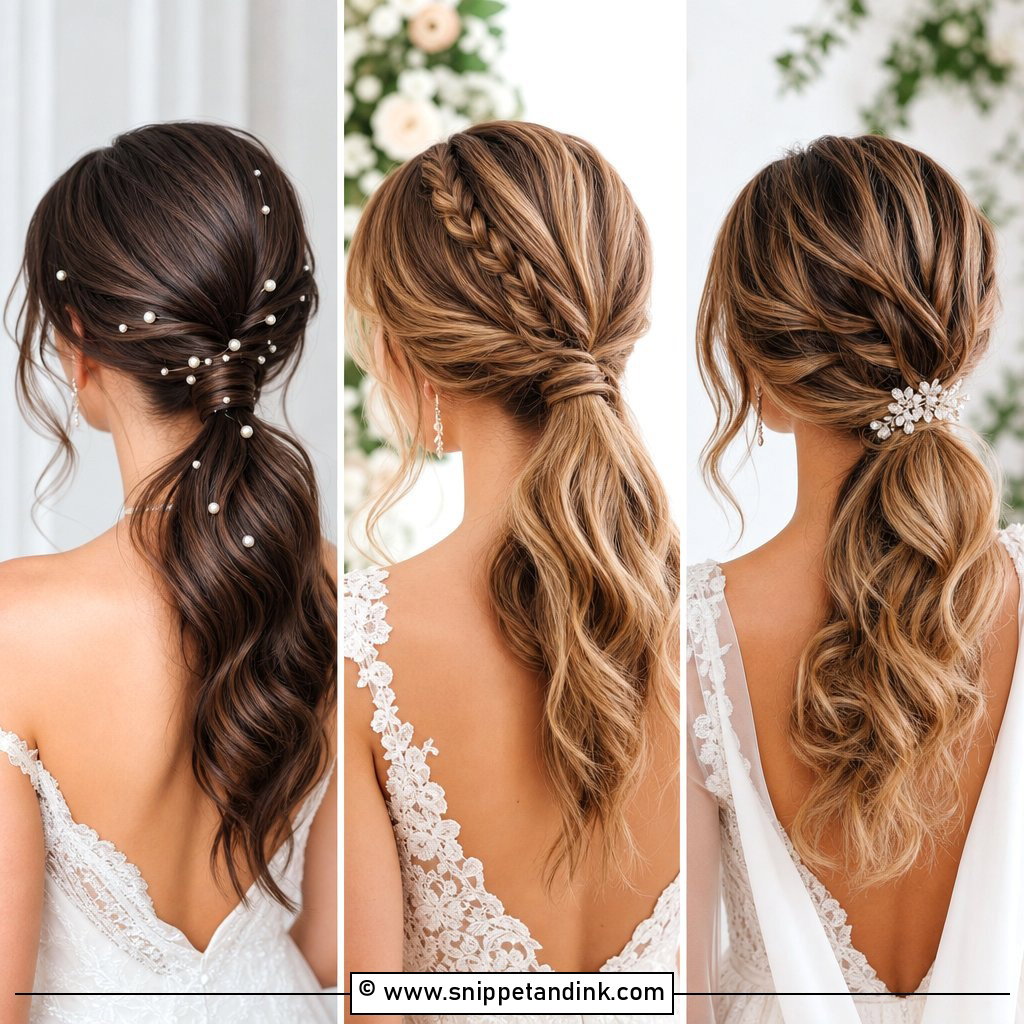
Waves give a ponytail softness and movement without the weight of wearing everything down. Garden, beach and barn weddings suit this one. The waves need shape, though: I set them with a large barrel, pin each curl while it cools, and brush them out only once, so they read as defined in photos rather than messy. Some crown volume and a few loose tendrils keep the face soft. A delicate comb set just above the tie, or a few pearl pins, finishes it, and lace gowns sit nicely beside it.
5. Curly Bridal Ponytail
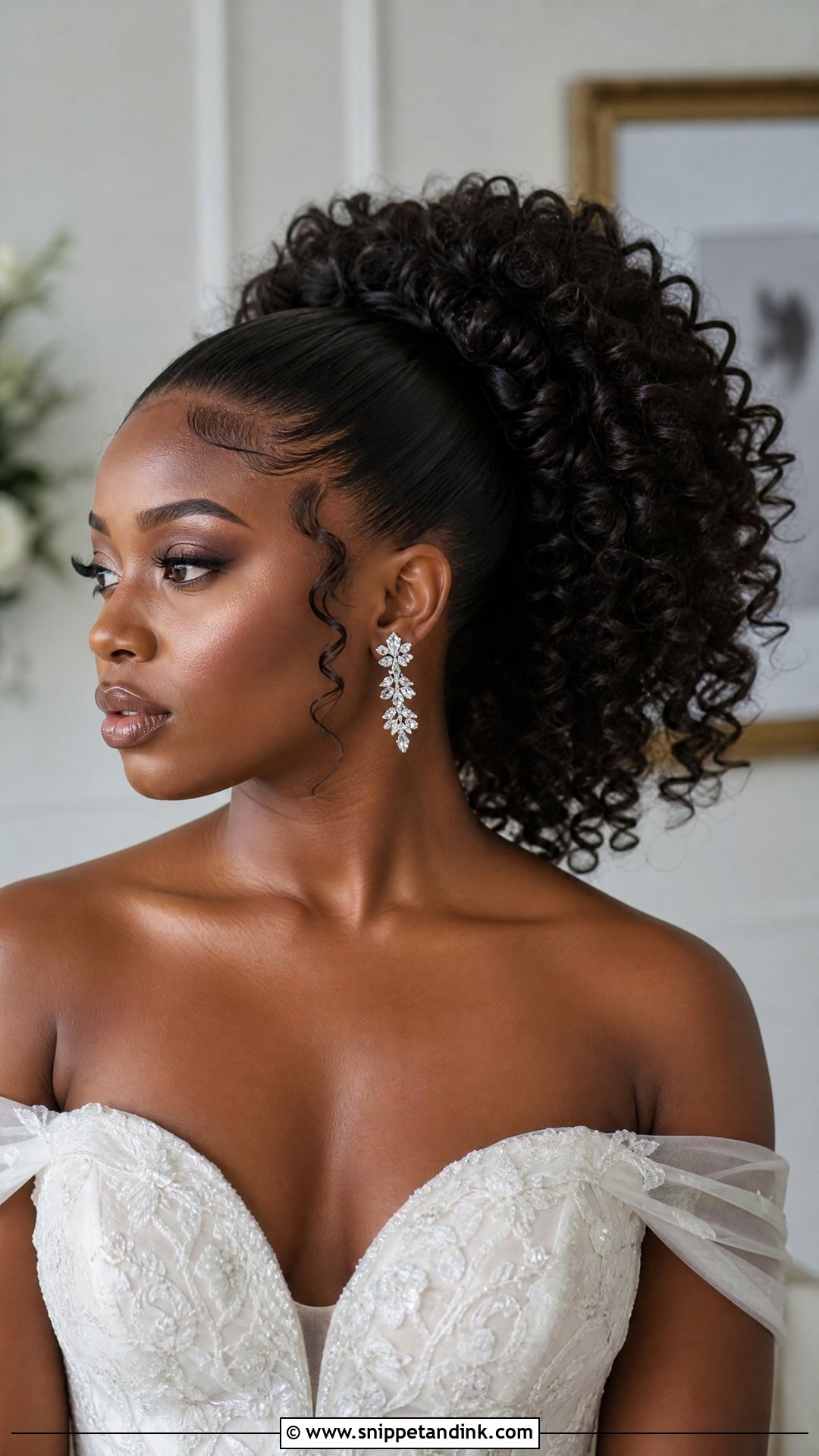
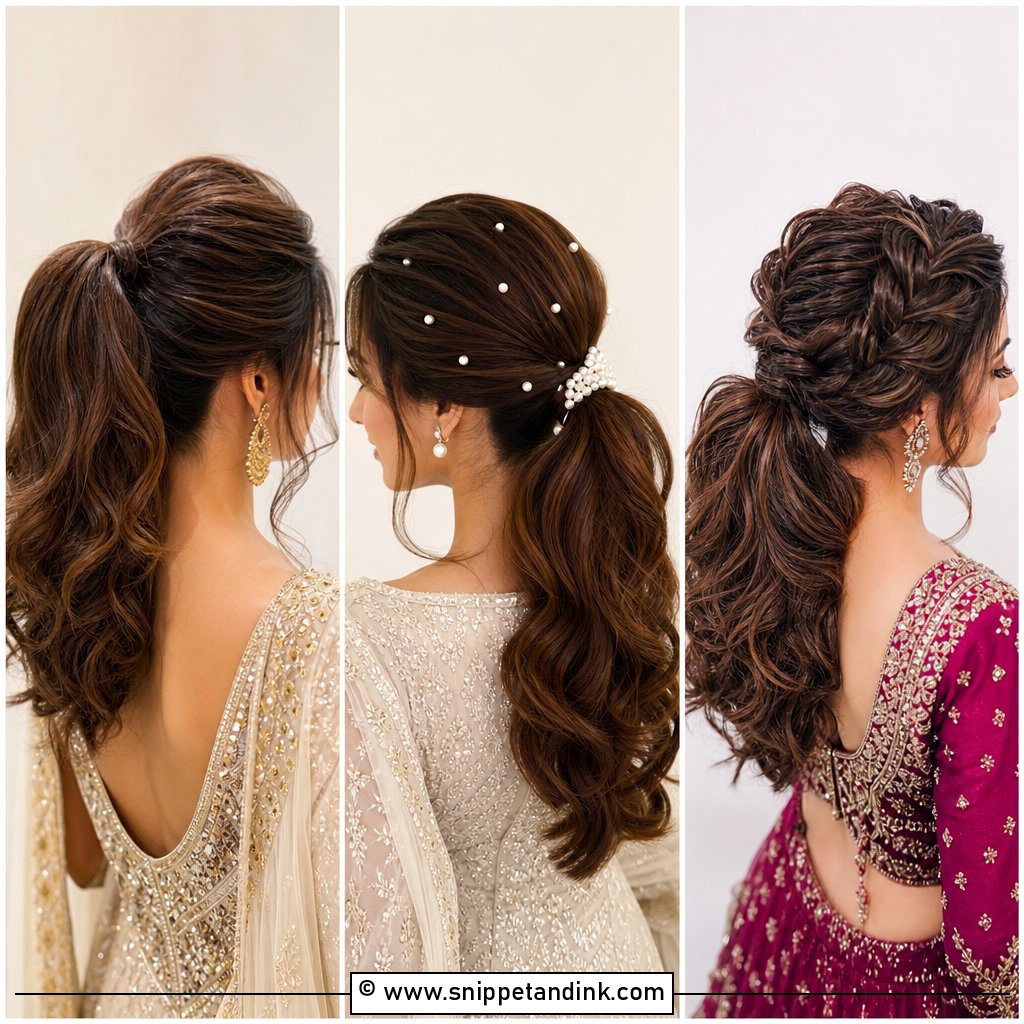
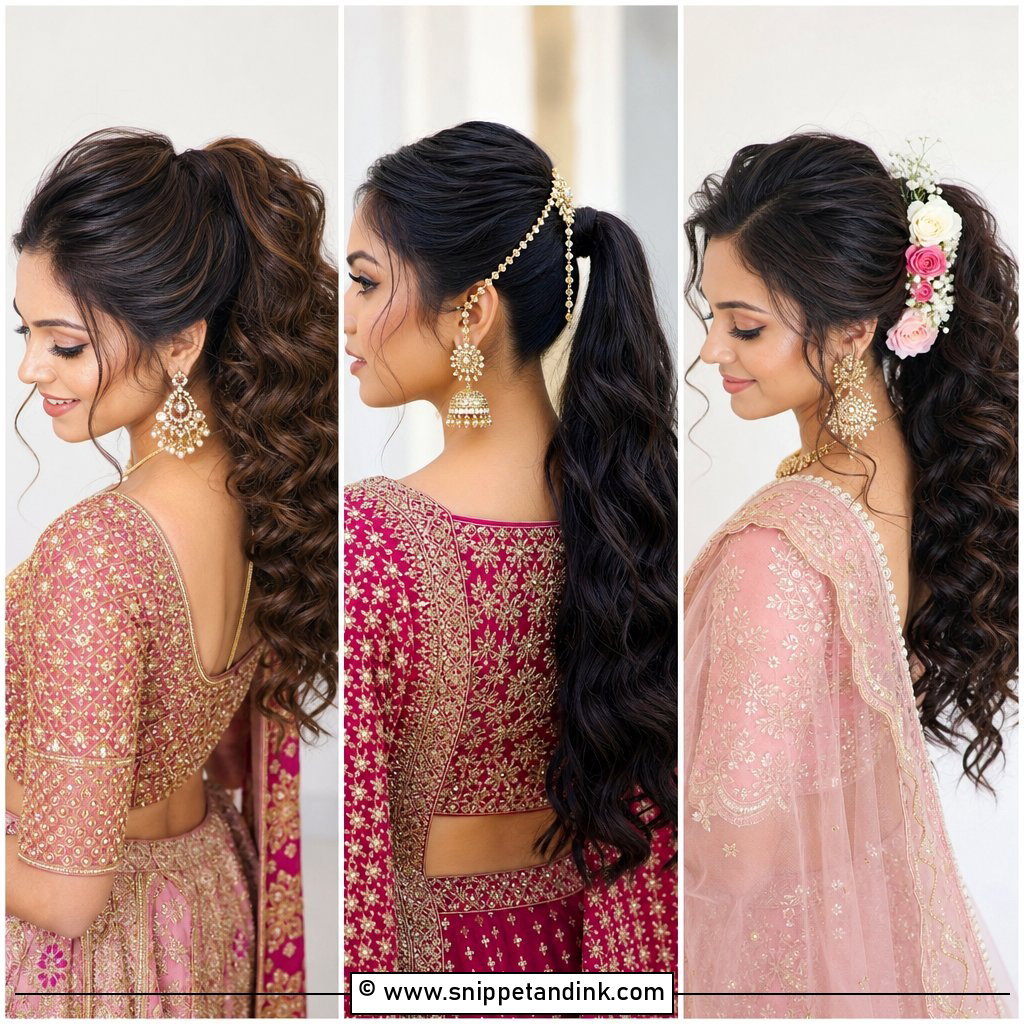
A curly ponytail keeps natural texture and still lifts everything off the neck. High, mid or low depends on the dress and how much weight she’s comfortable carrying. Definition is what I’m protecting: curls should look hydrated and shaped, never brushed into frizz. I refresh curls with a little water and cream, smooth only the base with a soft brush and gel, and leave the length alone. The contrast of a sleek base and a full curly pony is striking. If there’s a veil, I tuck it under the pony so it doesn’t crush the curls.
6. Braided Bridal Ponytail
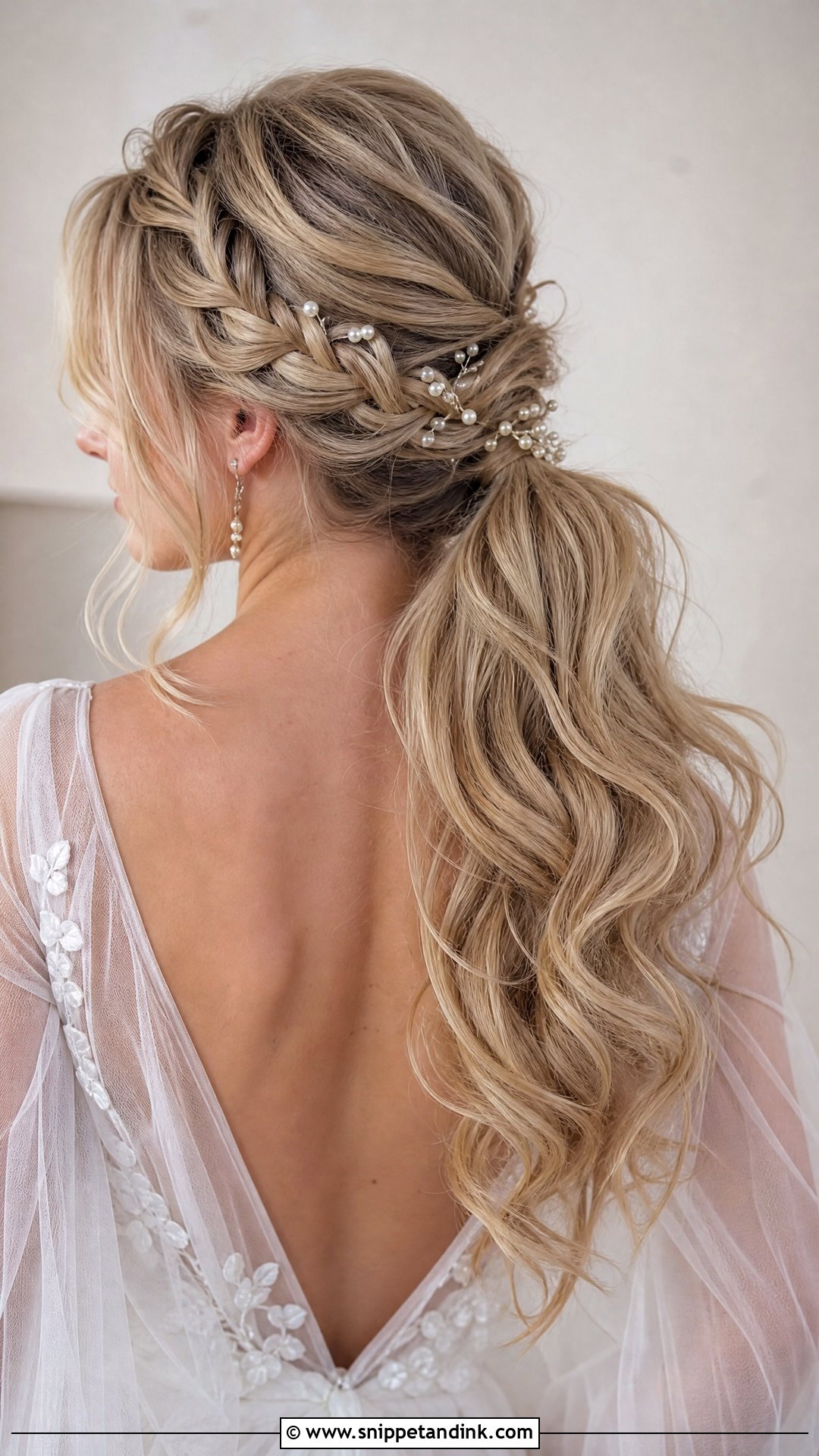
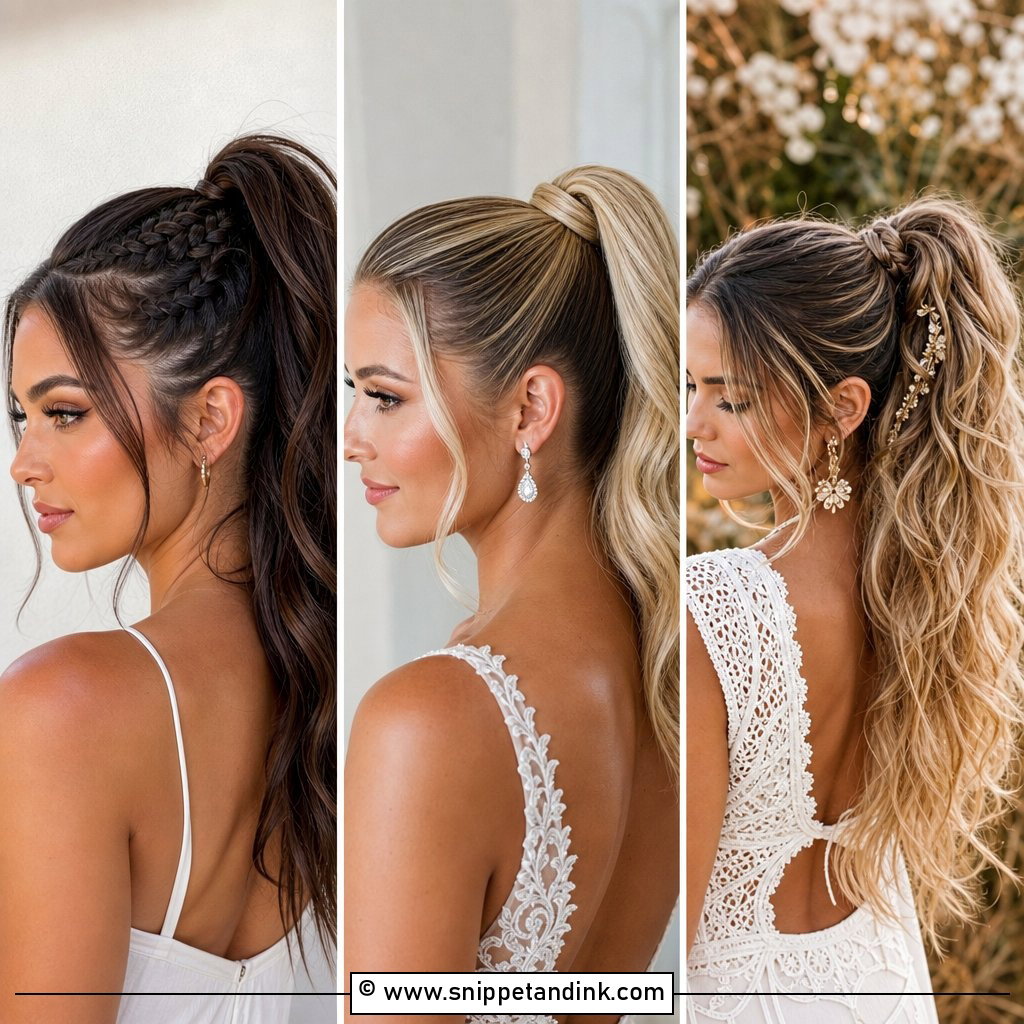
Braids add detail and hold in one move. I start one at the crown, wrap it into the base, or braid through the length for a fuller boho shape. Outdoors, the structure is what keeps the hair in place through wind and heat when a plain pony would blow apart. After it’s done I pull the edges of the braid gently wider so it looks soft rather than tight. Pearl pins, tiny blossoms or a slim ribbon threaded through it add the bridal note.
7. Bubble Bridal Ponytail
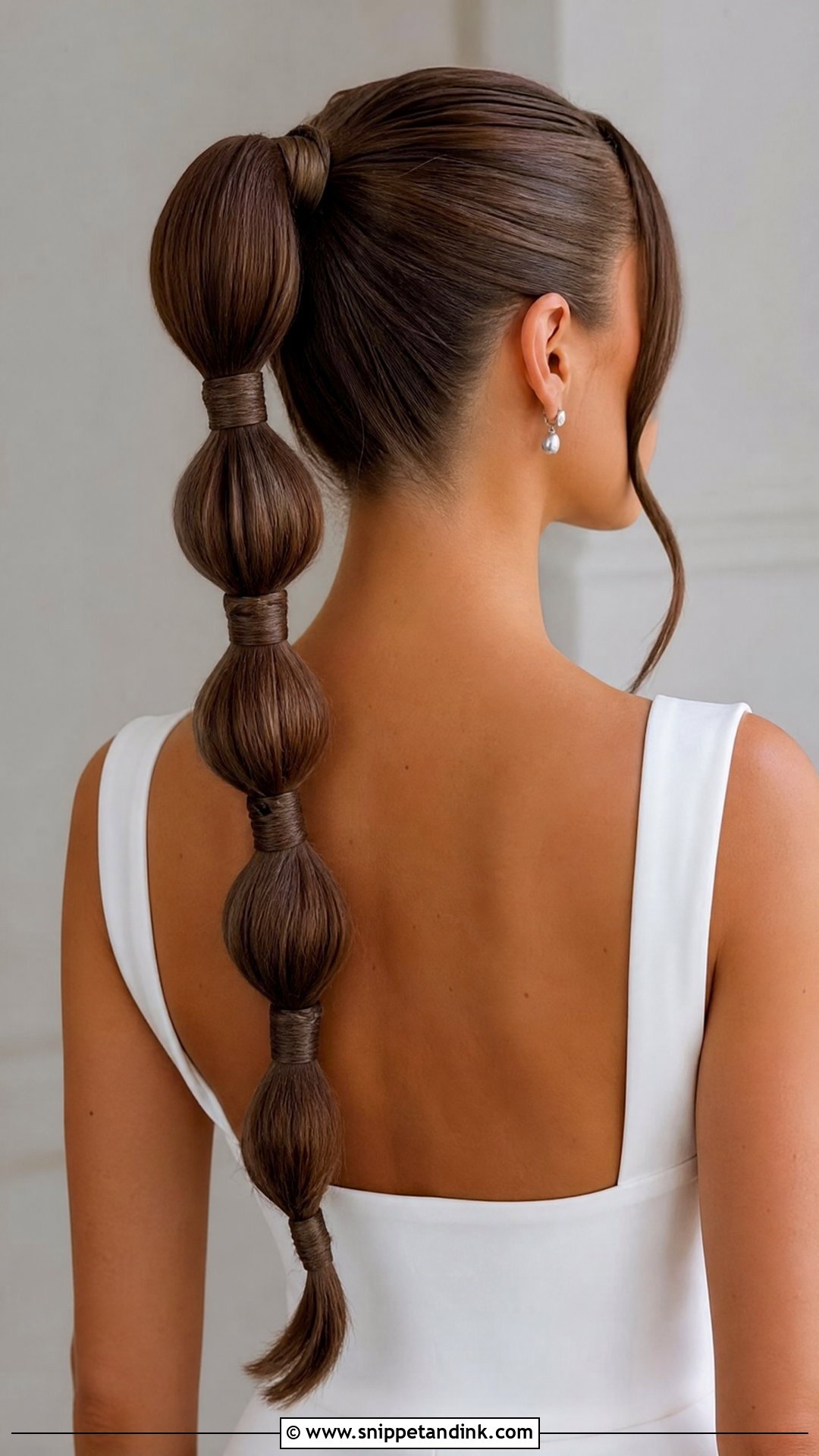
A bubble bridal ponytail is the playful one, and it still looks polished. The length is tied off in sections and I gently pull each section wider to form a rounded bubble. You need real length, or extensions, otherwise the bubbles end up small and crowded. Keep it sleek for a fashion-led wedding or softly textured for a romantic one. Swapping plain elastics for clear ones, small pearl pins or a strand of wrapped hair at each tie makes it look finished. It’s also secure, which matters more than people think by midnight.
8. Side Bridal Ponytail
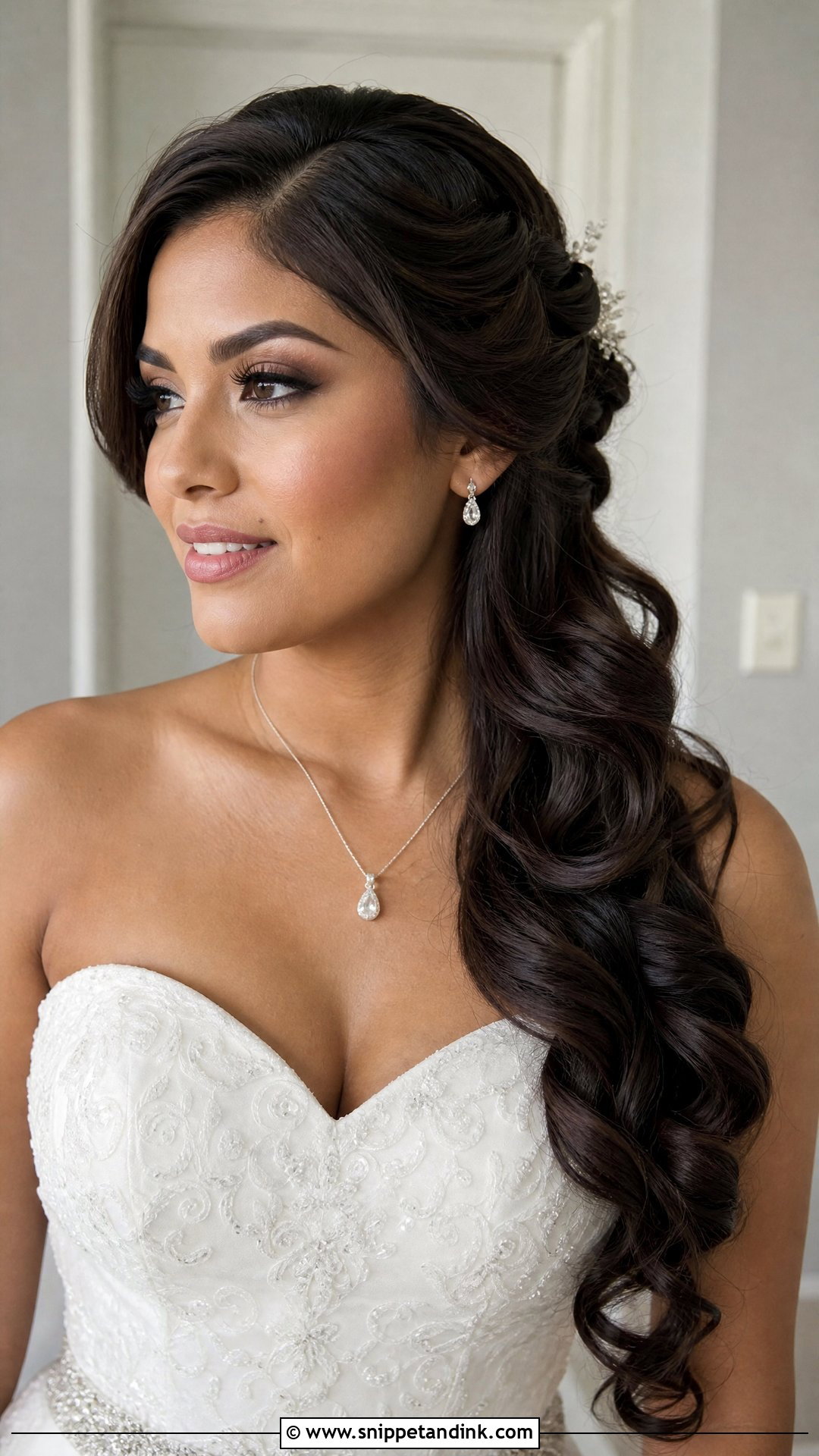
Swept over one shoulder, a side ponytail shows its shape from the front, which is where most wedding photos are taken. It pairs naturally with one-shoulder gowns, sweetheart necklines and dresses with a back detail you still want seen. Smooth, curled or loosely textured all work. I keep the tie low, just behind the ear, because a side pony tied too high instantly looks casual. A deep side part or a pinned twist on the opposite side balances the weight. I also check which side she’ll stand on at the altar, so the guests get the good view.
9. Voluminous Bridal Ponytail
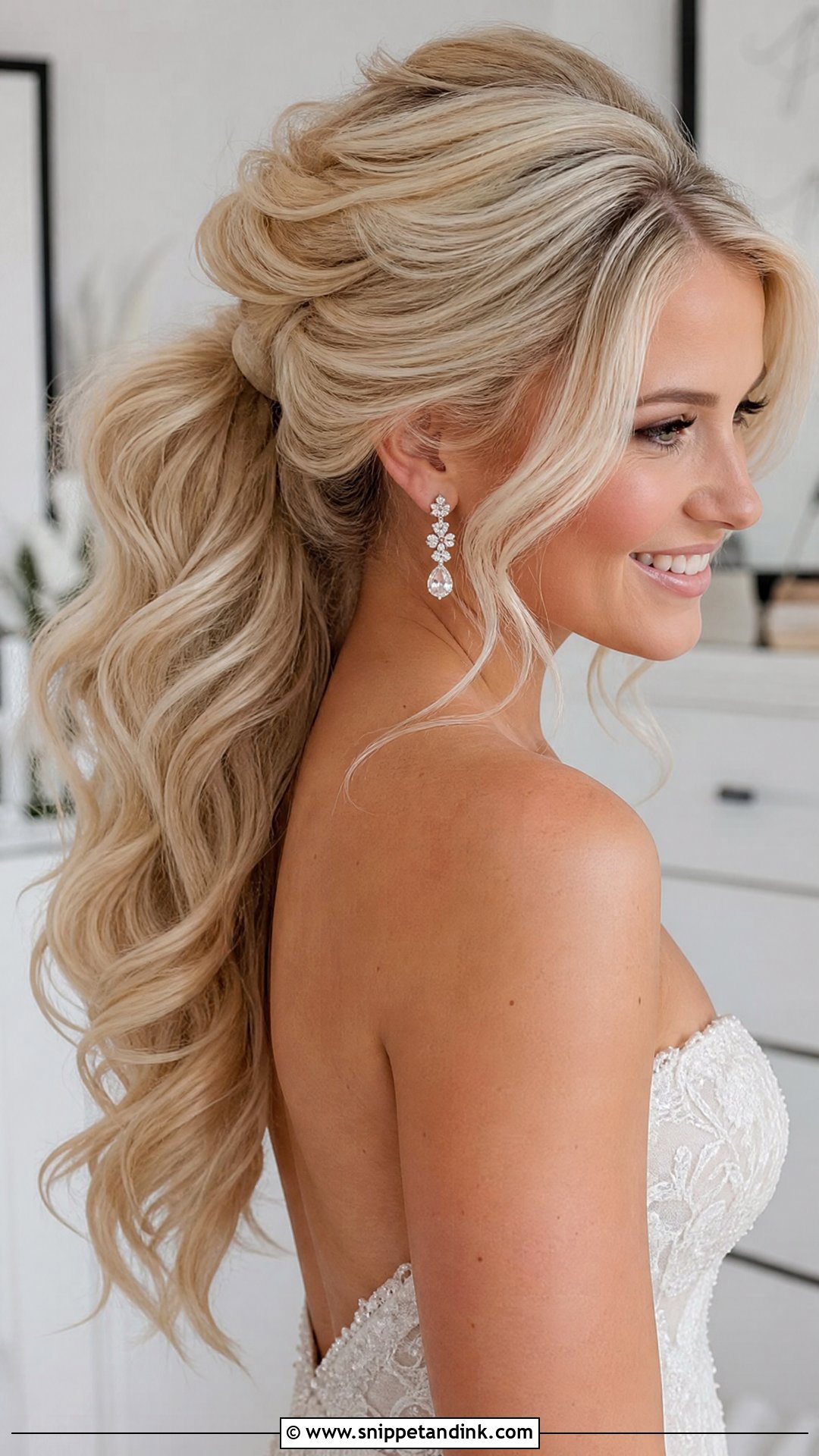
A voluminous bridal ponytail is built, not brushed. That usually means backcombed roots, a hidden padding piece and often extensions for a full crown and a thick length. Controlled volume is the aim; puffed sides make it look dated. I tease only the crown section, smooth the top layer over it, and put big soft waves through the length so it looks rich from the back. Fitted gowns and dramatic veils suit it. For fine hair, it gives the look of much thicker hair without committing to an updo.
10. Textured Bridal Ponytail
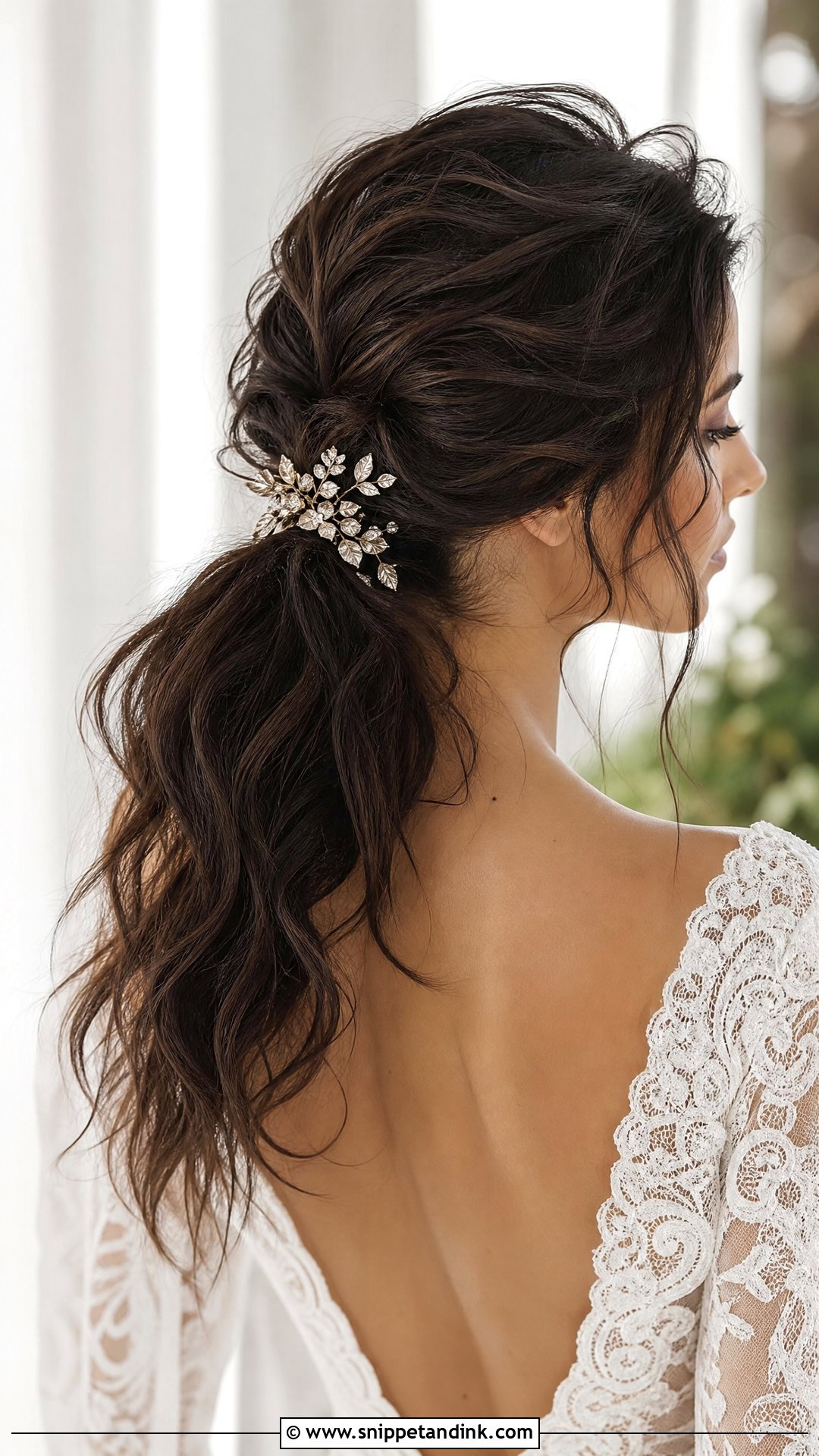
Relaxed but still deliberate, the textured ponytail has soft volume and loose movement. It belongs at outdoor venues, rustic weddings and destination ceremonies with boho dresses. I lightly tease, twist or pin the crown before tying, and the waves through the length should look touchable rather than crunchy. It’s the most forgiving style on this list, since a bit of movement through the day only helps it. Without a few face-framing pieces and one accessory, though, it can slide toward everyday.
11. Pearl Bridal Ponytail
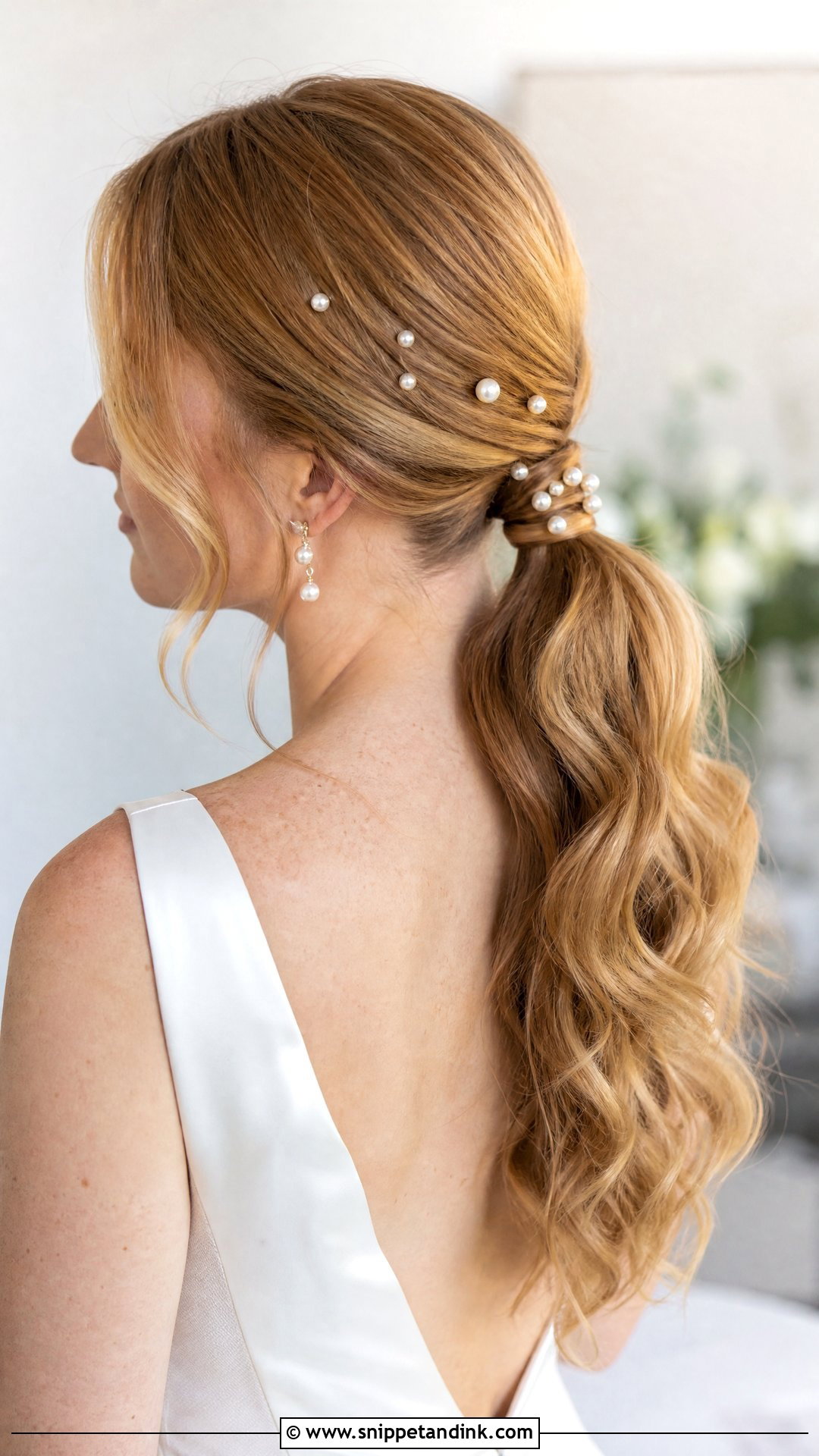
Pearls make a plain pony ceremony-ready without fuss. They can line a braid, scatter through waves, ring the base or sit as pins near the crown. Low and sleek, high and glossy, or textured all work, and lace, satin and tulle all suit pearls. Restraint is the skill: a few well-placed pearls look expensive, a dozen look busy. I place them where the light hits from the front and the side, then take a phone photo to check the spacing before I spray.
12. Bridal Ponytail With Veil
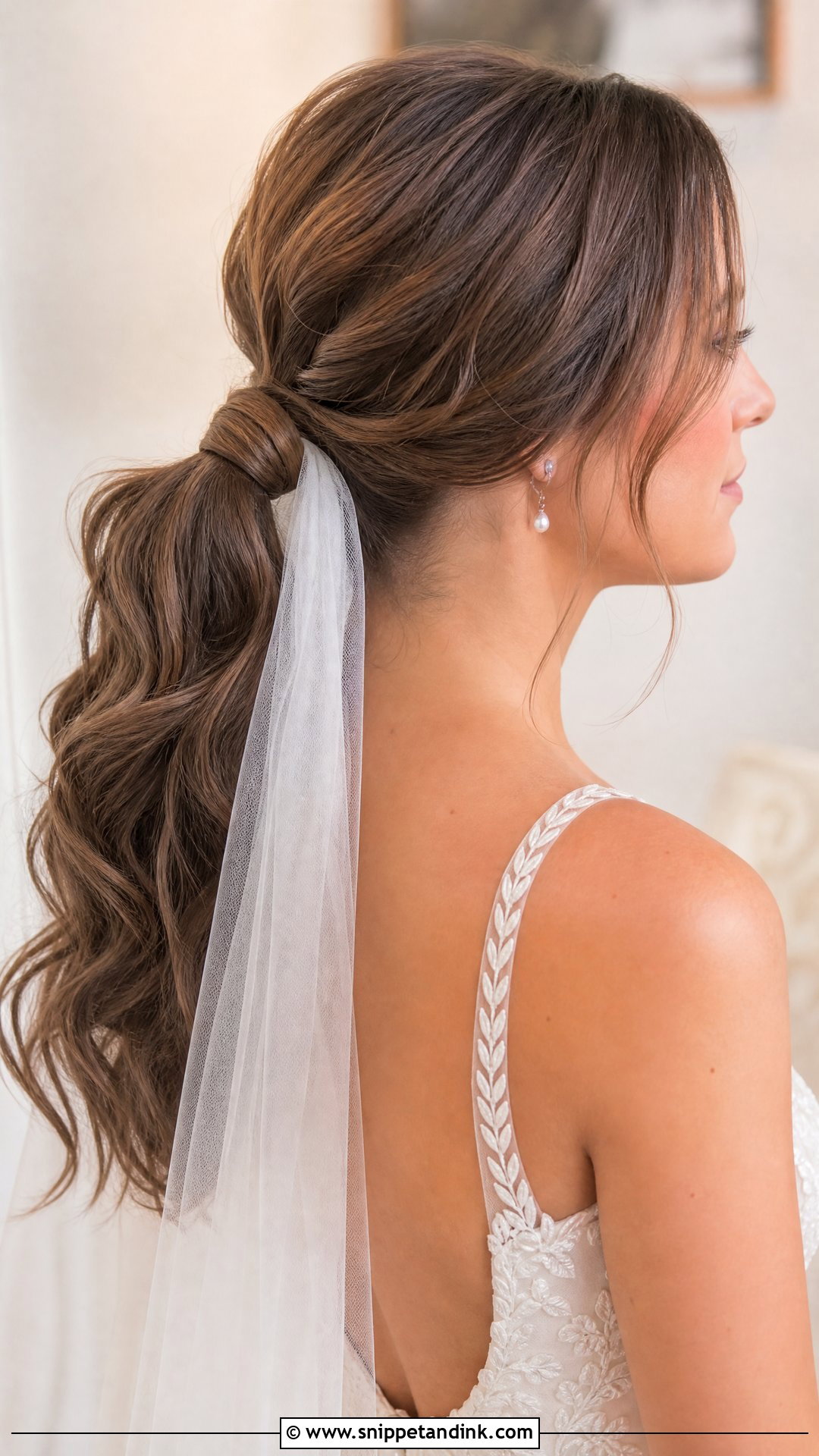
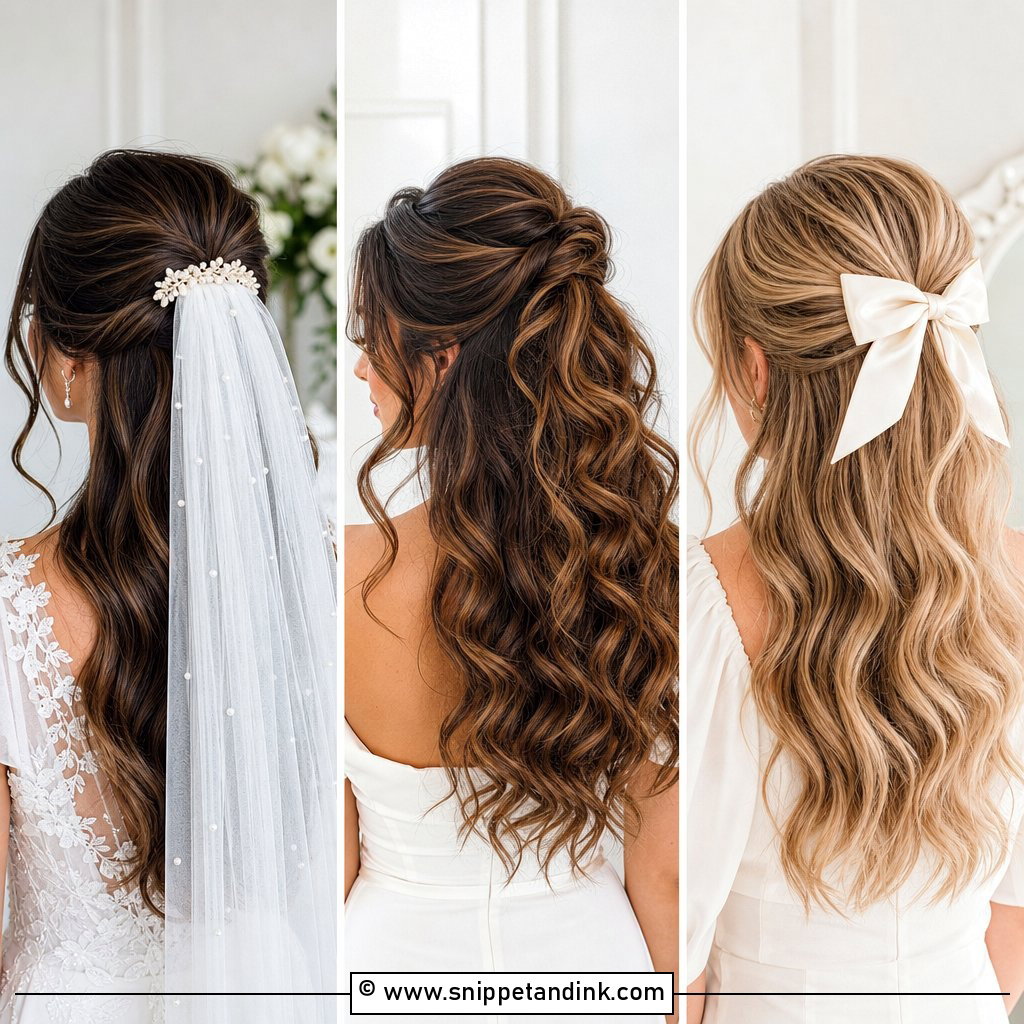
Pairing a ponytail with a veil comes down to planned placement. Under the pony gives a soft, flowing fall; above it gives more traditional volume at the crown. A low or mid pony is the most secure base. I always test the comb at the trial, because a veil slid in at the wrong angle drags the pony down or flattens the crown, and you only discover it once it’s been on for an hour. Soft waves, a wrapped base and a few face-framing pieces keep the hair looking finished after the veil comes off for the reception.
13. Bridal Ponytail With Bow
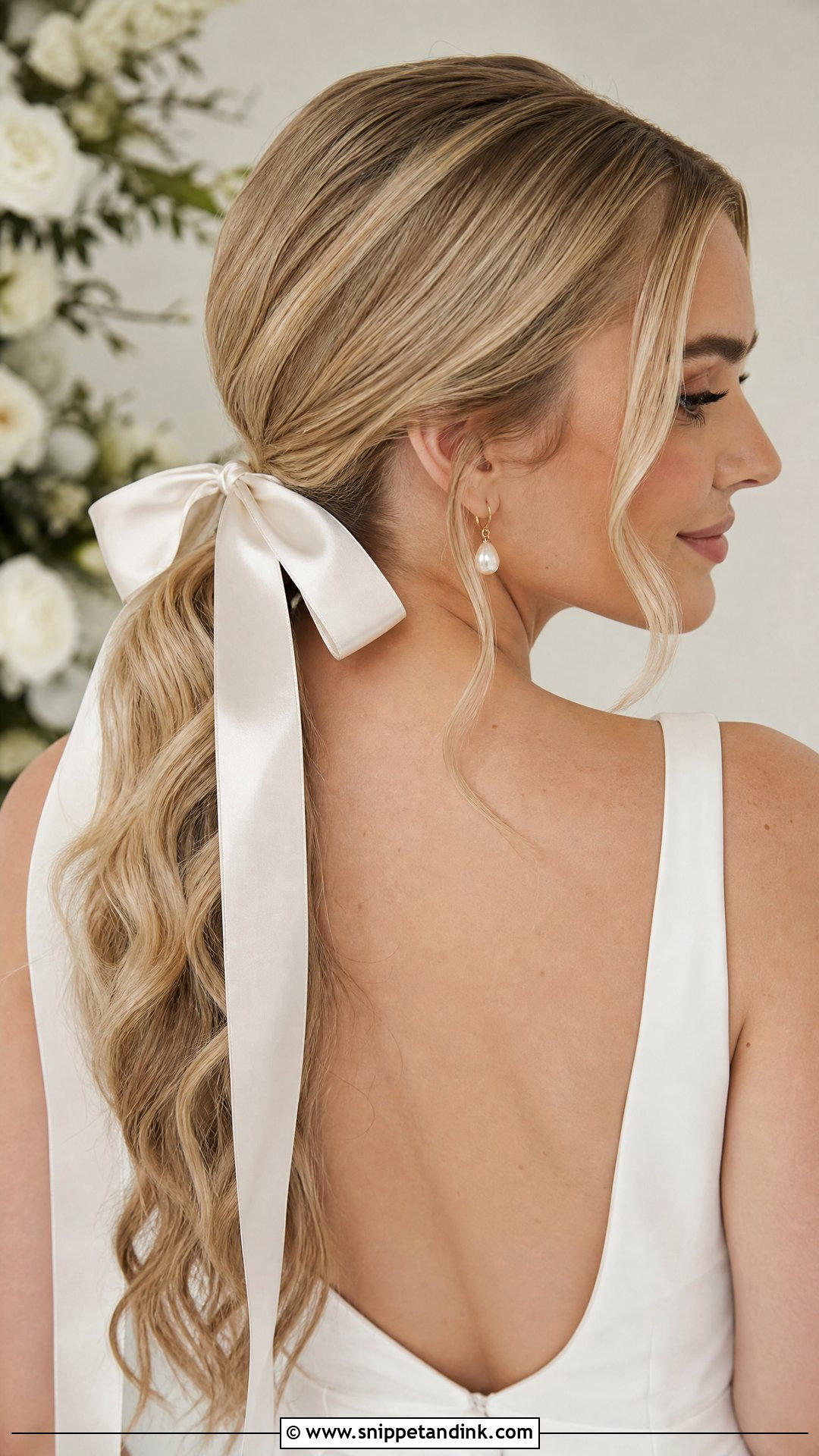
A bow is the sweetest pony accessory and one of the simplest. A long satin bow suits a low pony; a smaller velvet or silk bow suits a mid ponytail or shorter hair. Match the bow to the gown: a plain dress can carry a statement bow, a detailed lace one wants something small. The base must be neat, since a bow sitting on a lumpy tie draws the eye straight to the lumps. I sew or pin a small comb onto the back of the bow so it doesn’t rotate as she moves.
14. Hollywood Wave Bridal Ponytail
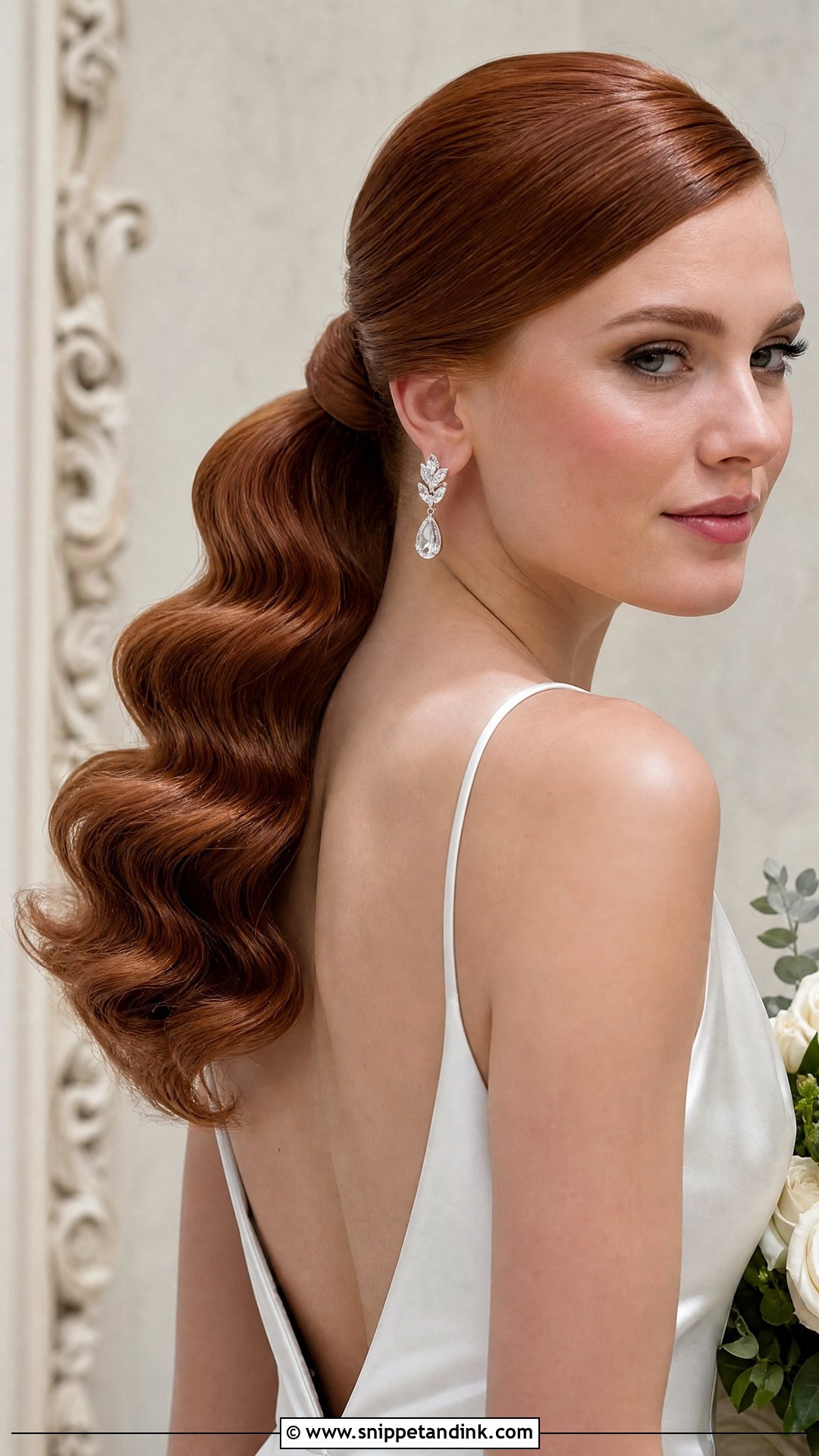
A Hollywood wave bridal ponytail is the vintage glamour option: a polished crown and a length falling in sculpted, glossy waves. Satin gowns, dramatic earrings and evening weddings suit it, and the uniform wave catches light in a way loose curls don’t. I curl every section in the same direction, pin each one to set, then brush through with a boar bristle brush and shape the ridges with clips while the spray dries. Strong but flexible hold keeps the shape without stiffness. A side part reads more classic; a center part more current.
15. Short Bridal Ponytail
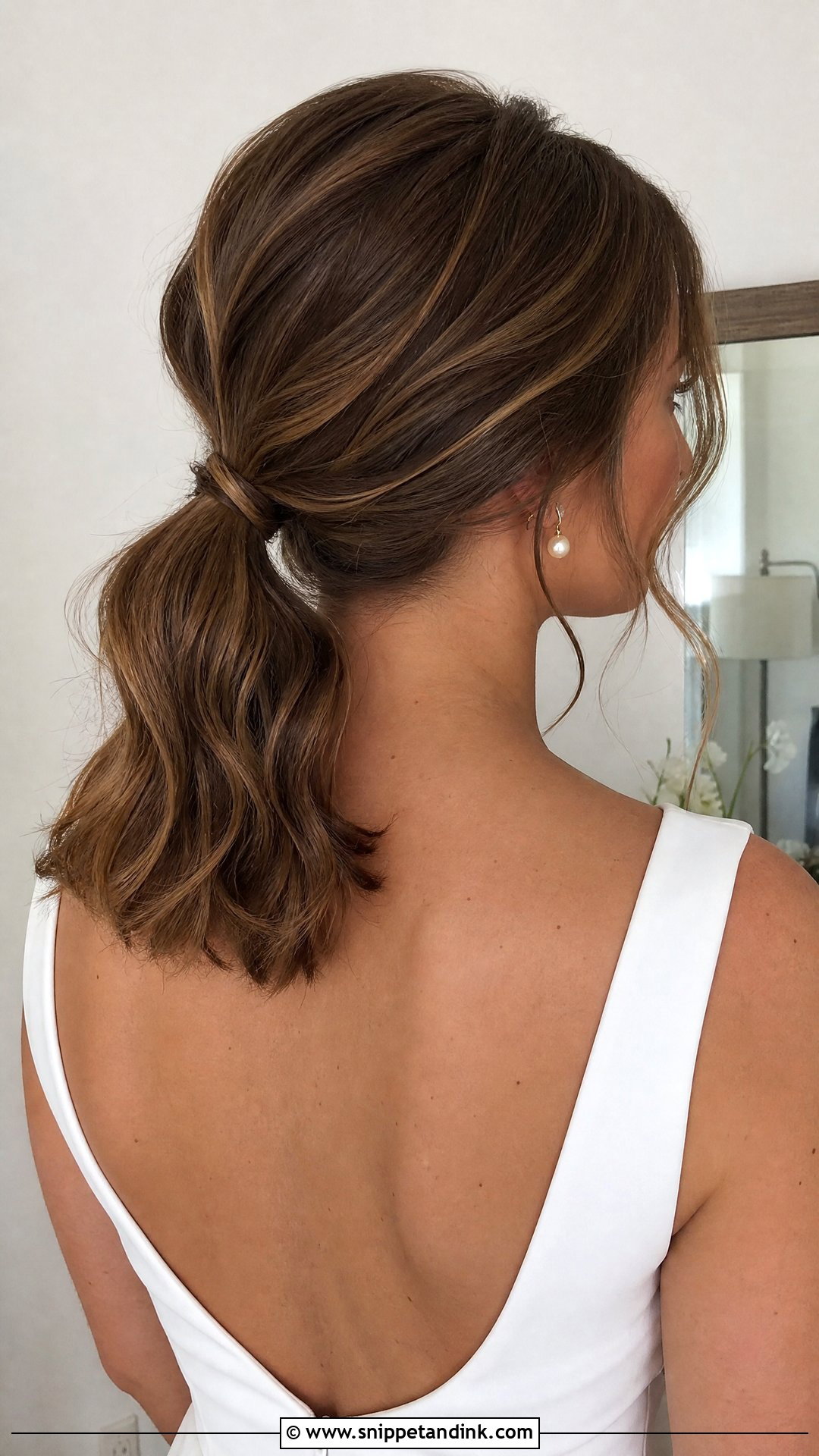
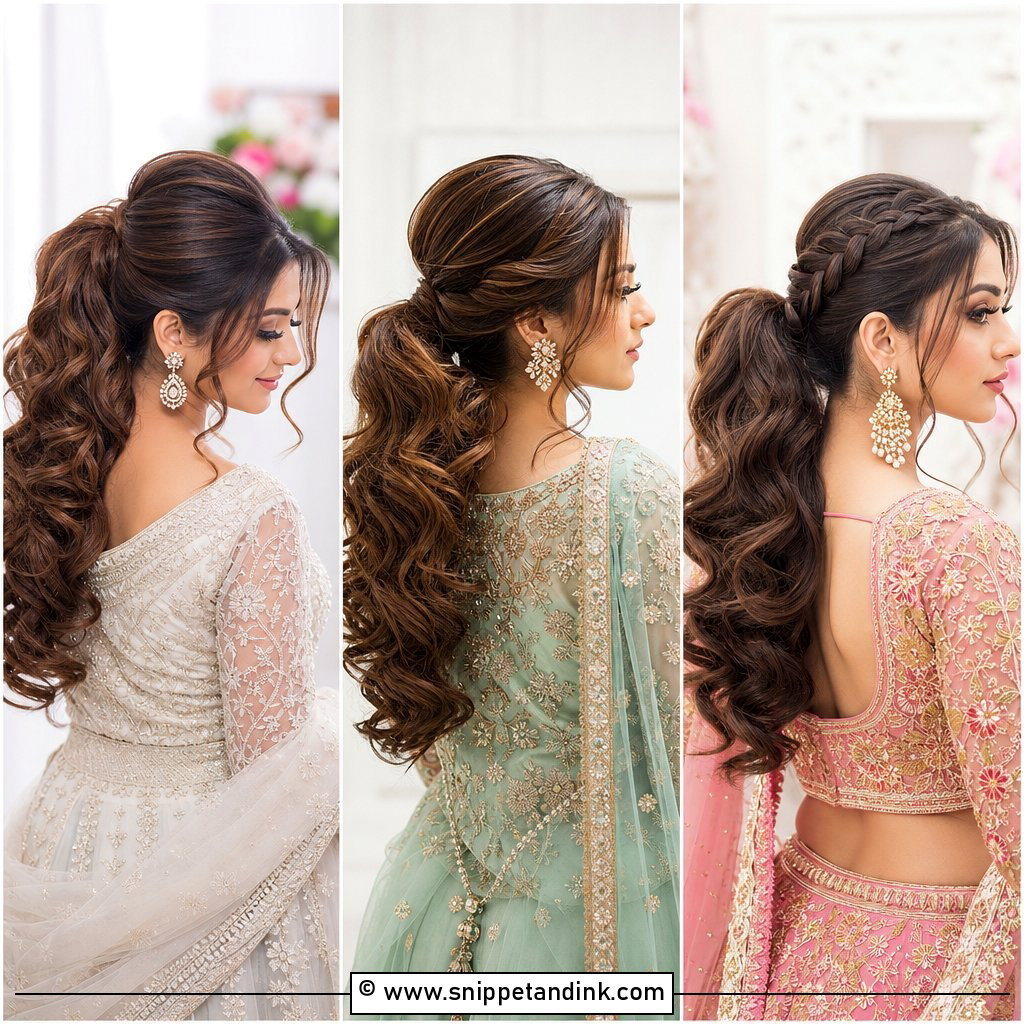
Shoulder-length hair, lobs and medium cuts can absolutely wear a pony. The aim is to make the shorter length look chosen rather than like a last-minute tie-back. I add crown volume, smooth the sides, put a soft bend through the ends, and wrap the elastic with hair or a small accessory. Shorter layers at the nape tend to escape, so I pin those up underneath before tying. A couple of face-framing pieces soften it, and it sits easily with modern gowns, courthouse weddings and simple veils.
Getting That Thick, Long Pony When Your Hair Isn’t
Many of the fullest ponytails in wedding photos have extra hair in them. With a ponytail that’s easier to hide than with almost any other style, because the join sits under the base. There are two routes I use.
Wrap-Around Pony Piece or Clip-In Wefts
A wrap-around pony piece is one long section that clips or combs in at the base and wraps a strip of hair around the elastic. It’s quick and you can put it in yourself. Clip-in wefts go into your own hair first and then I gather everything together, which blends better if your natural hair is fine or layered and you want the pony to move as one piece.
Settle These Before the Trial
- Order the hair with enough time for a return. Shades rarely match perfectly the first time, and a couple of weeks of buffer saves a lot of stress.
- Check the color in daylight by a window, not under bathroom lights. Matching the ends of your hair matters more than the roots, since that’s what blends.
- Choose human hair if the plan involves curling or waving it. Many synthetic pieces can’t take heat and will melt or frizz.
- Bring it to the trial so I can trim the ends to blend with yours. A blunt, too-perfect end is what gives extensions away.
Add up the weight once more before deciding on height. A long added piece on a high pony is exactly the combination that hurts by evening, so mid-height is often the smarter place for the extra length.
Wear It Through a Whole Trial Afternoon
A ponytail can be sleek, glamorous, soft, curly or playful and still hold up better than most updos. Which one suits you comes down to the neckline, where the veil goes, your texture, the venue and the weather. A low ponytail reads classic, a high one reads bold, waves read romantic, and braids or bubbles give the back view something to look at. Take your inspiration photos to the trial, but also ask your stylist straight out what will last on your hair in that month’s humidity. Then leave it in for the rest of the day and notice how it feels at dinner time.
You'll Like These Ideas:


Leave a Reply