
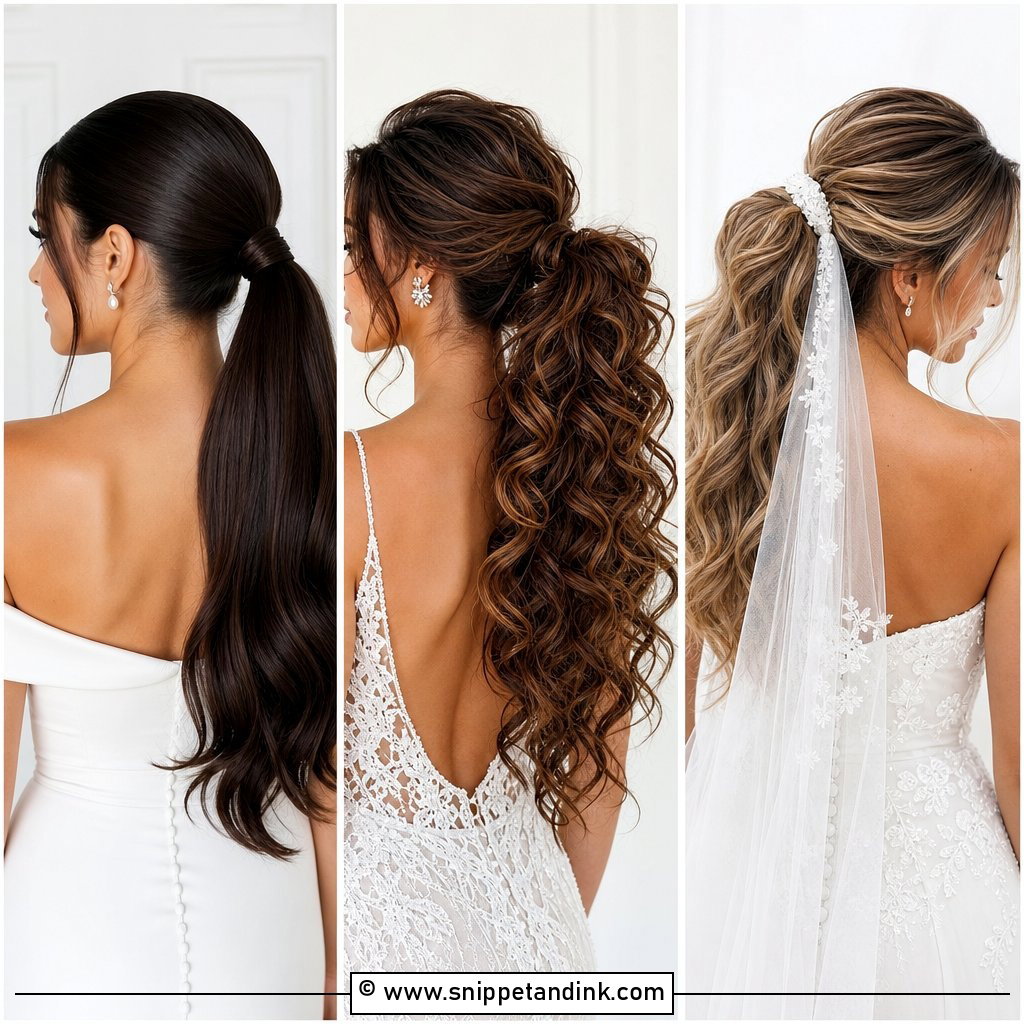
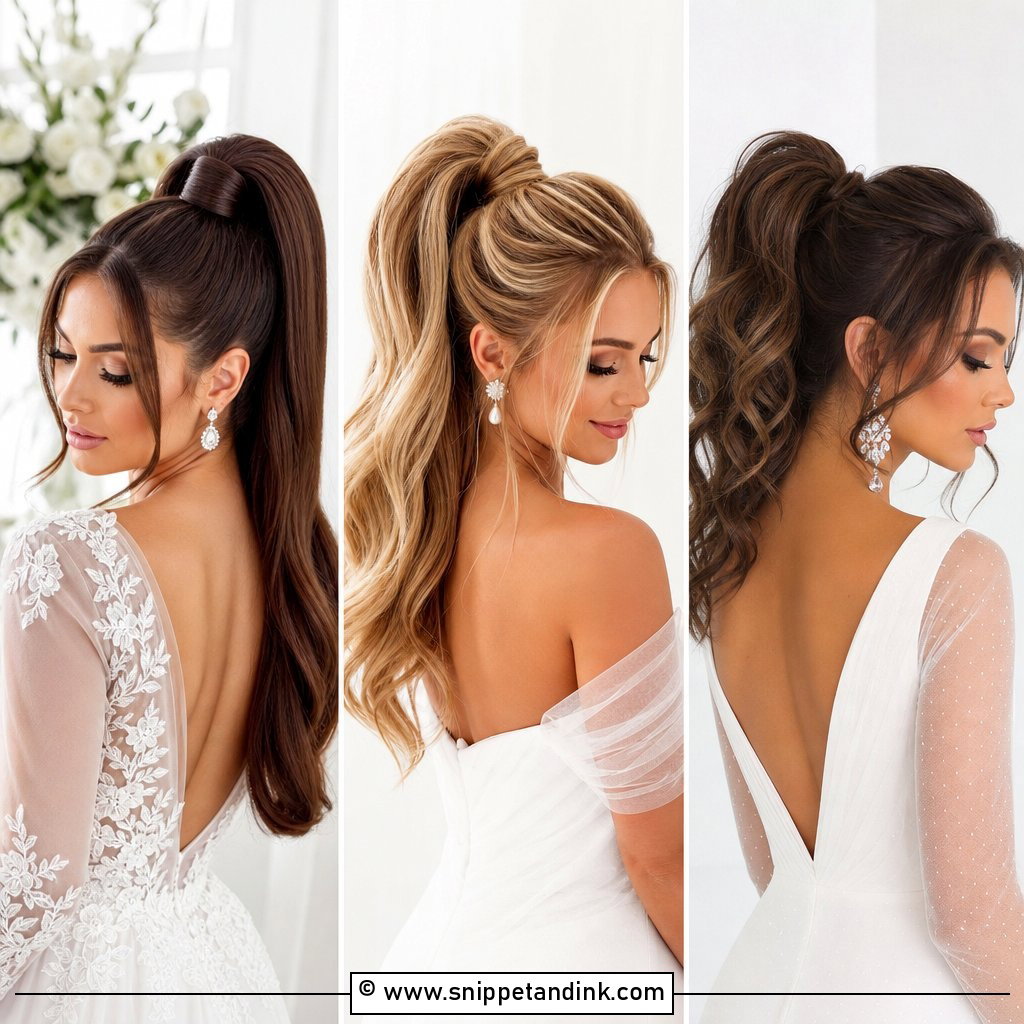
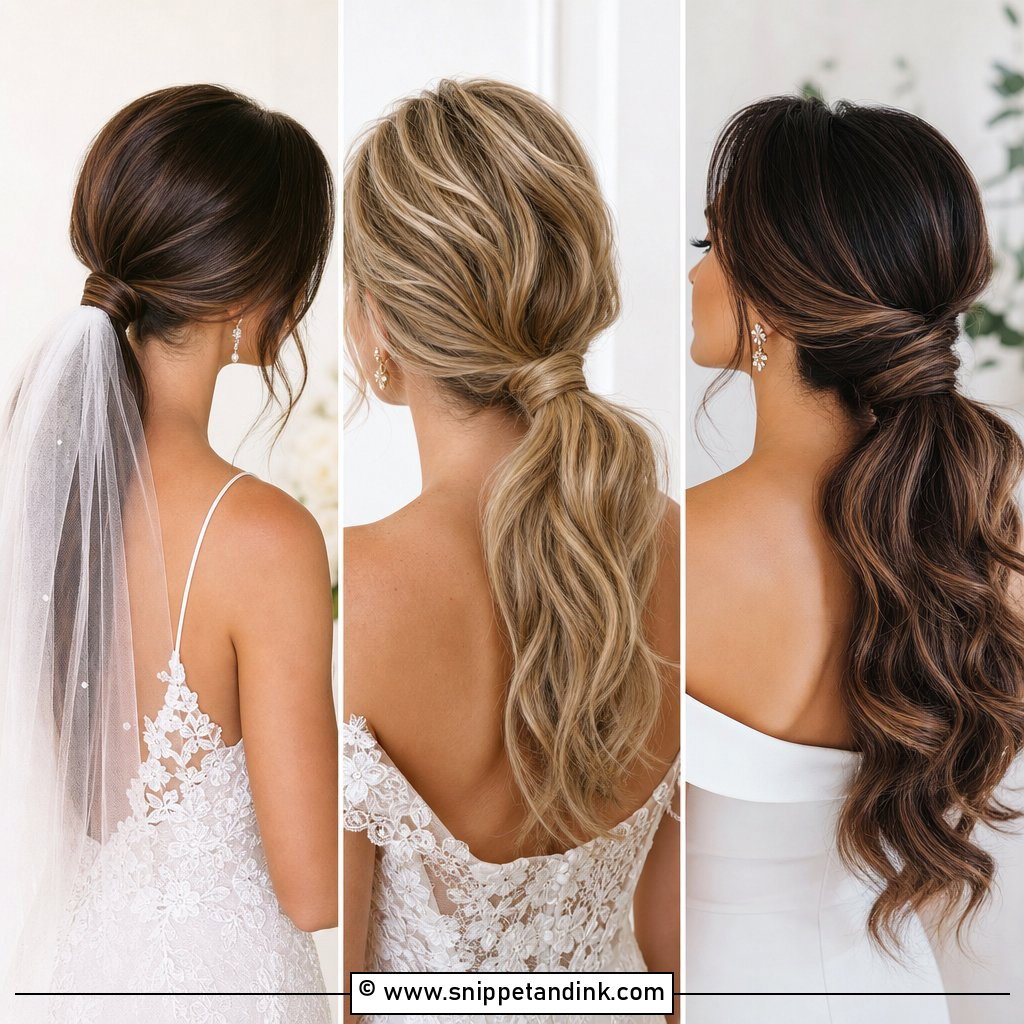
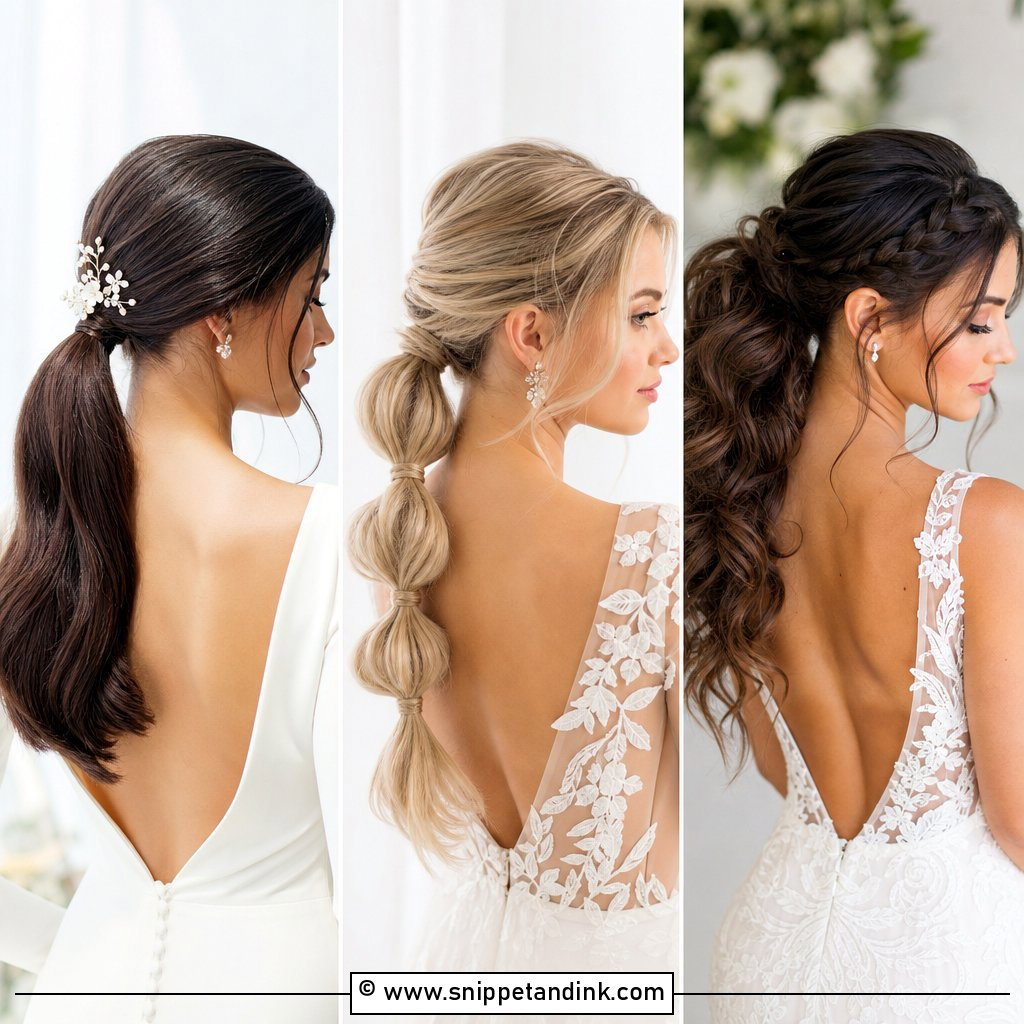
Ponytails used to be the bridesmaid option. Now plenty of brides ask for one, usually for the sangeet or reception, sometimes for the ceremony itself. A good bridal pony isn’t just hair pulled back: it’s built on a hidden base, often lengthened with a clip-in piece, and placed so it works with your earrings, neckline and whatever will sit on your head. Below are 30 ponytail looks for Indian weddings, sleek, braided, curled and dressed with pearls or gajra, with notes on how each one is built and where it holds up or struggles.
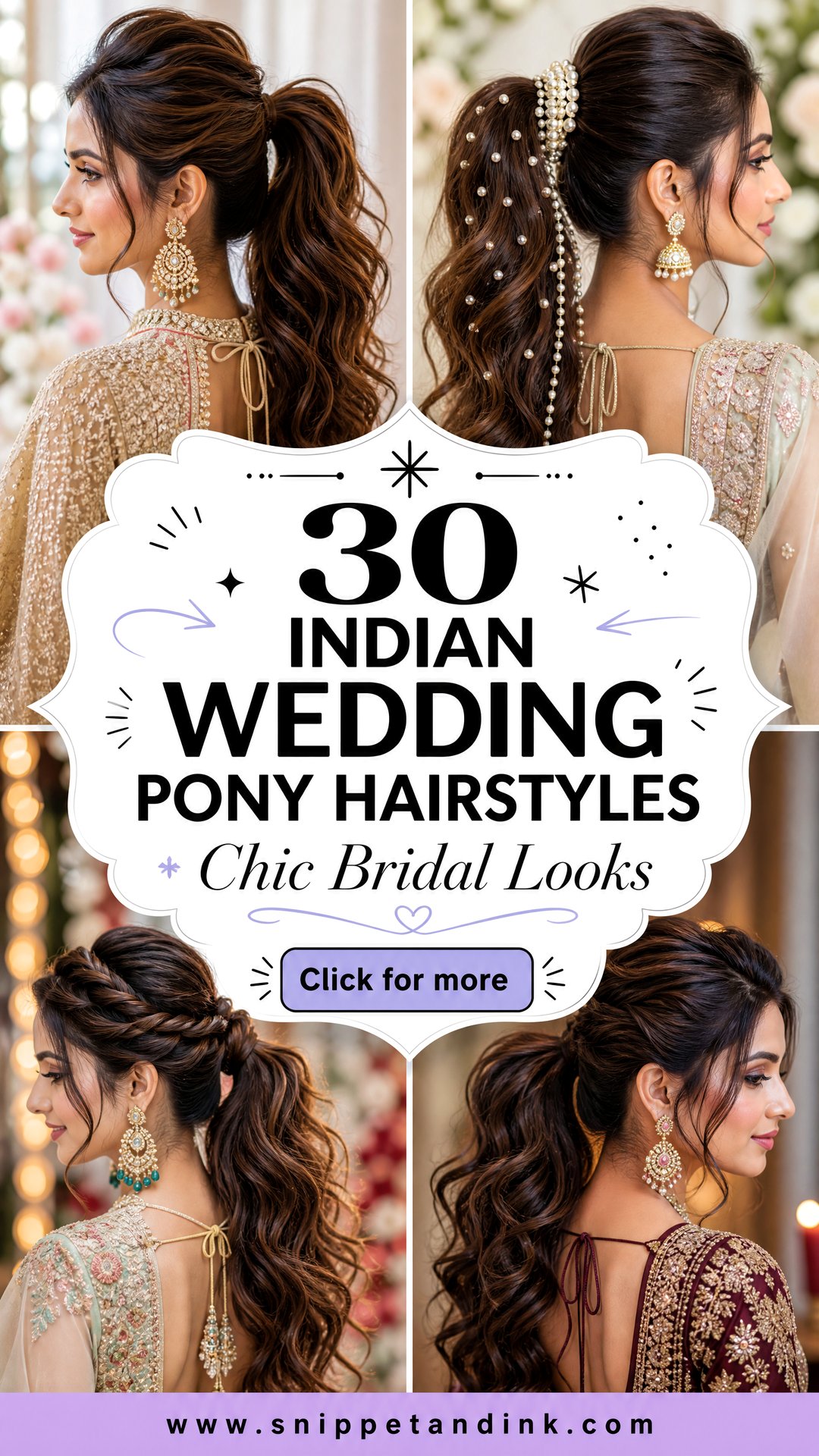
Can a Ponytail Work for the Pheras?
It can, but only with some planning. The main conflict is the dupatta. If it will be draped over your head and pinned, a pony has nowhere solid to hold it, and the fabric tends to slide off the back. A low pony at the nape works better than a high one, because the dupatta can be pinned just above the elastic.
Jewellery is the other question. A maang tikka works well with a pony; a matha patti or a jhoomar needs pinned sections behind the ears or at the side, which a sleek pony doesn’t provide. For most brides I suggest a pony for the sangeet, cocktail or reception, and a secure bun for the ceremony itself. Bridesmaids and guests, though, can wear a pony to every function.
1. Sleek Low Ponytail With Gajra
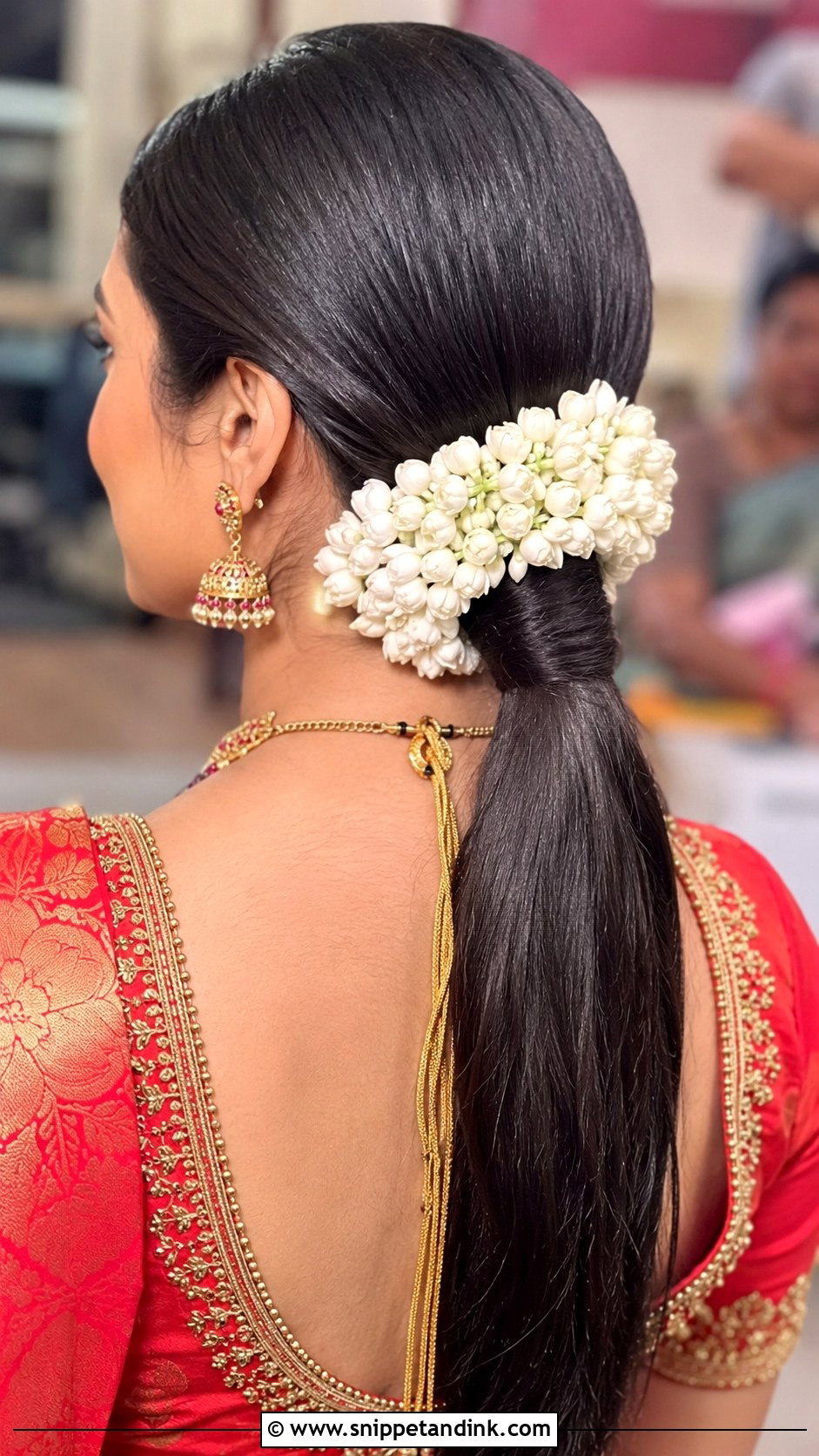
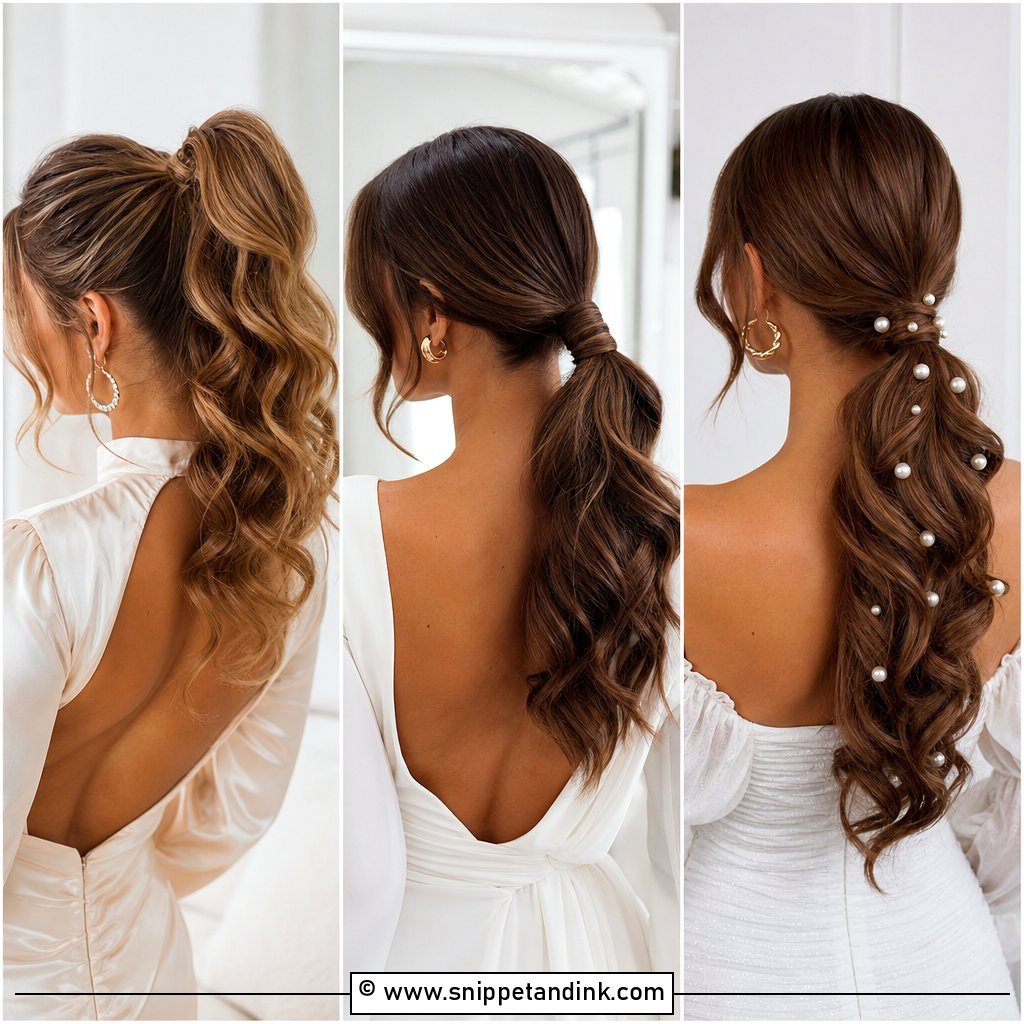
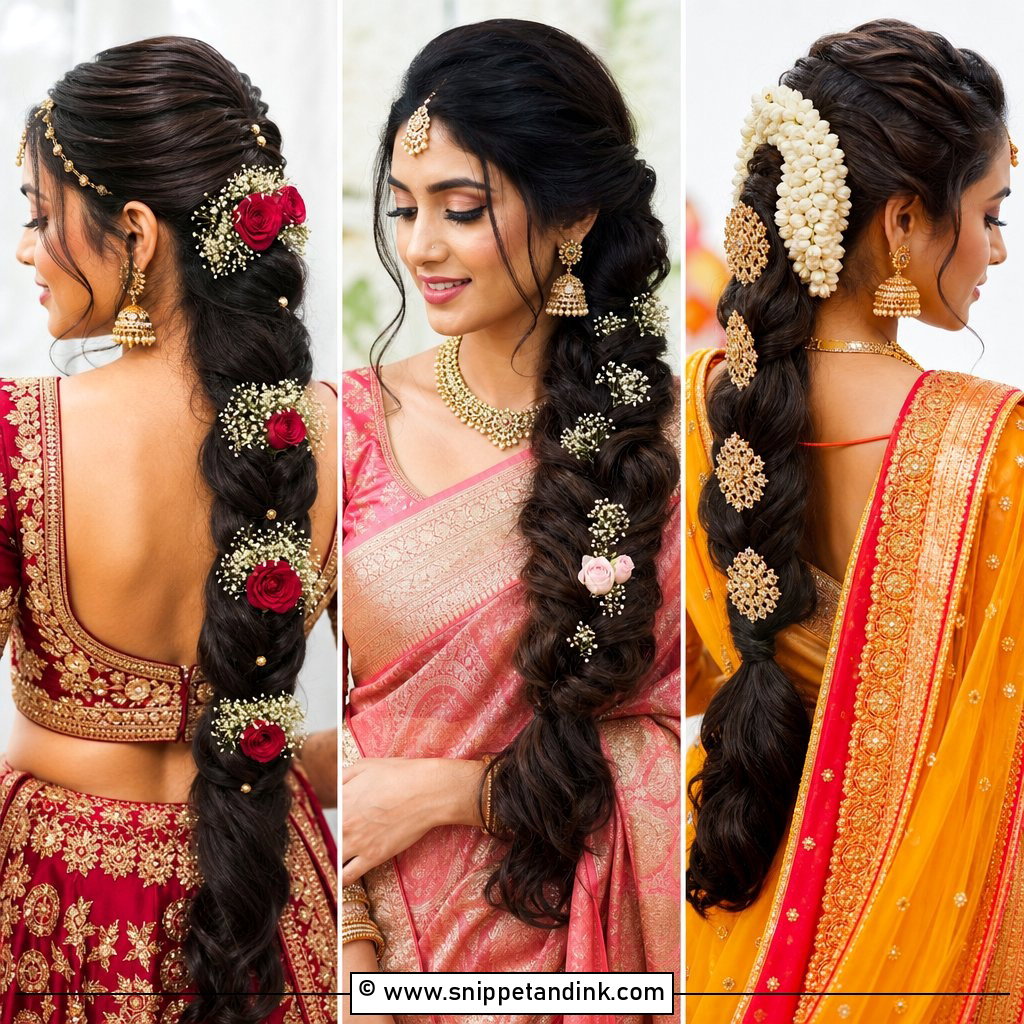
A sleek low pony wrapped in fragrant gajra is the ponytail I’d trust for a traditional ceremony. Sitting at the nape, it gives a dupatta somewhere to rest, and it doesn’t pull on the scalp the way a high pony does over a long muhurtham. I brush the hair flat with a smoothing cream and tie it over a tiny hidden braid so the elastic can’t slide. The jasmine winds down the tail and is pinned through its string. Add a delicate tikka, and it sits comfortably with a heavy lehenga or a silk saree.
2. High Voluminous Ponytail
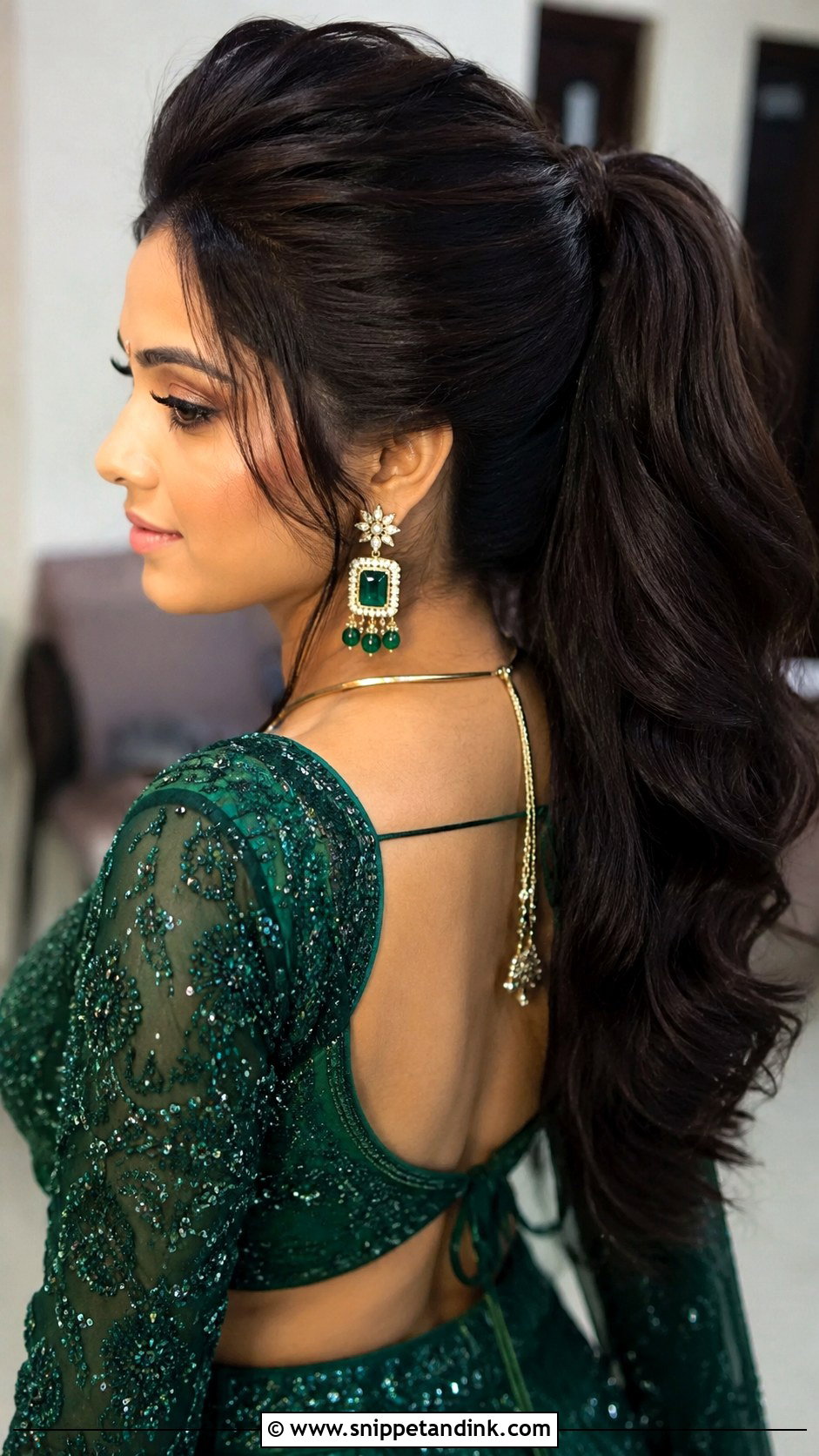
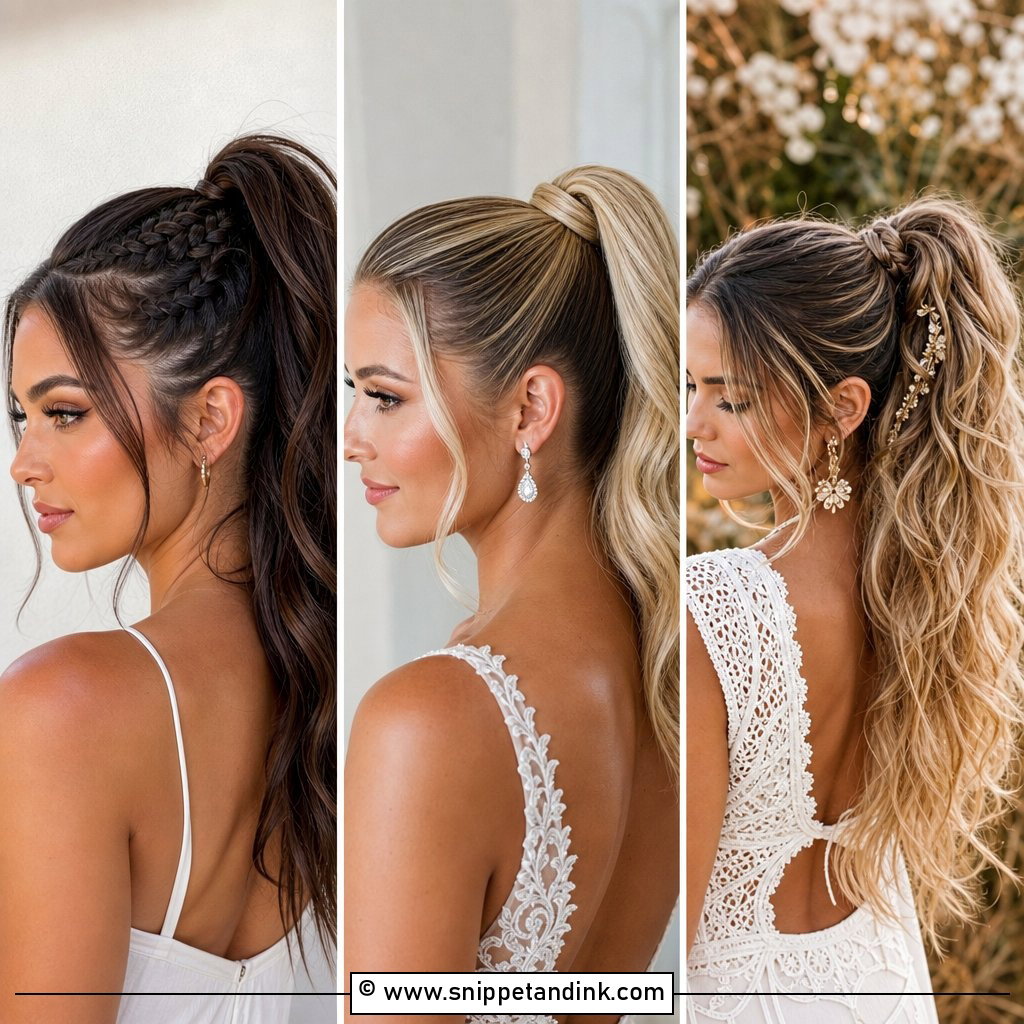
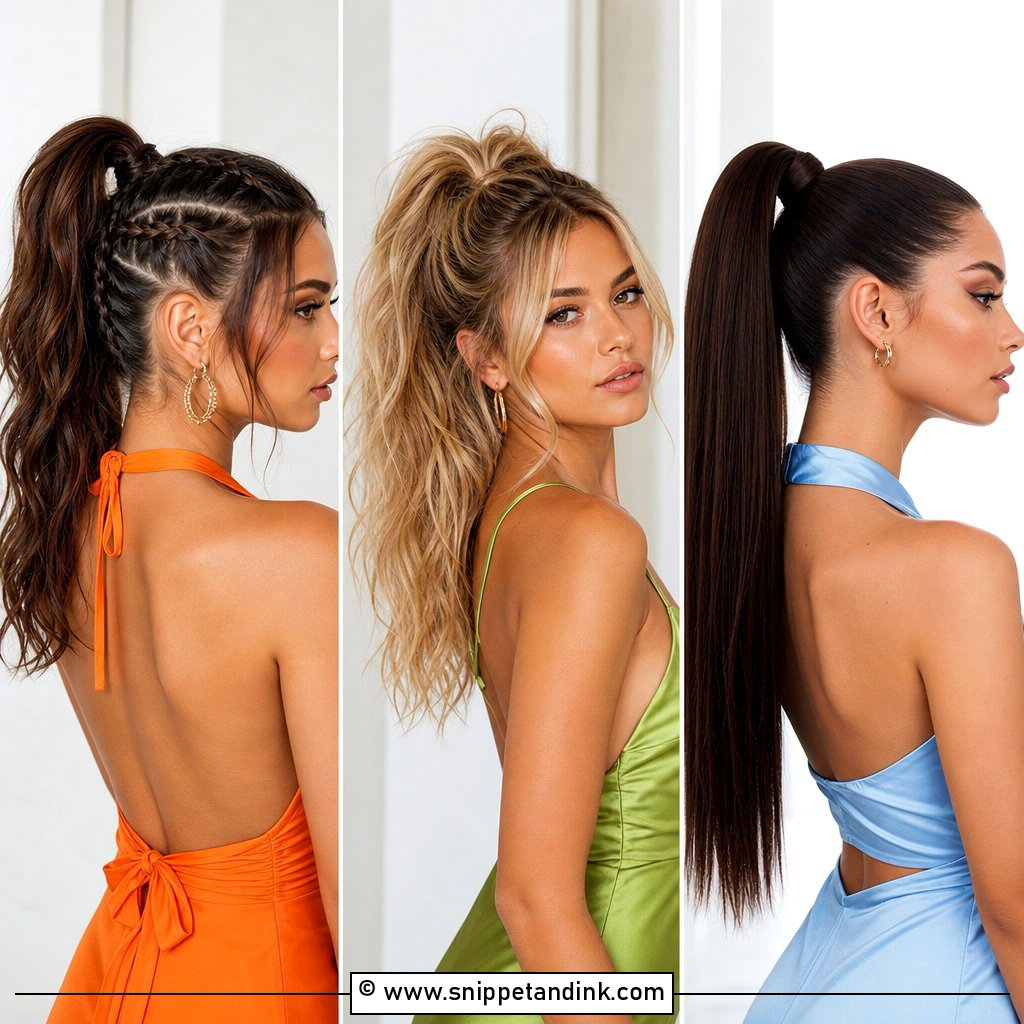
Height is the whole point of this one. I backcomb the crown in small sections, smooth a clean layer over it, and tie the pony just below the top of the head. Tying it right on the crown looks dramatic but starts to ache within a couple of hours. A clip-in ponytail piece adds length and fullness for photos. Wrap a strand around the base to hide the elastic. It’s my pick for sangeet nights and cocktail receptions, with statement earrings, when you’ll be dancing and want the tail to swing.
3. Curly Ponytail With Maang Tikka
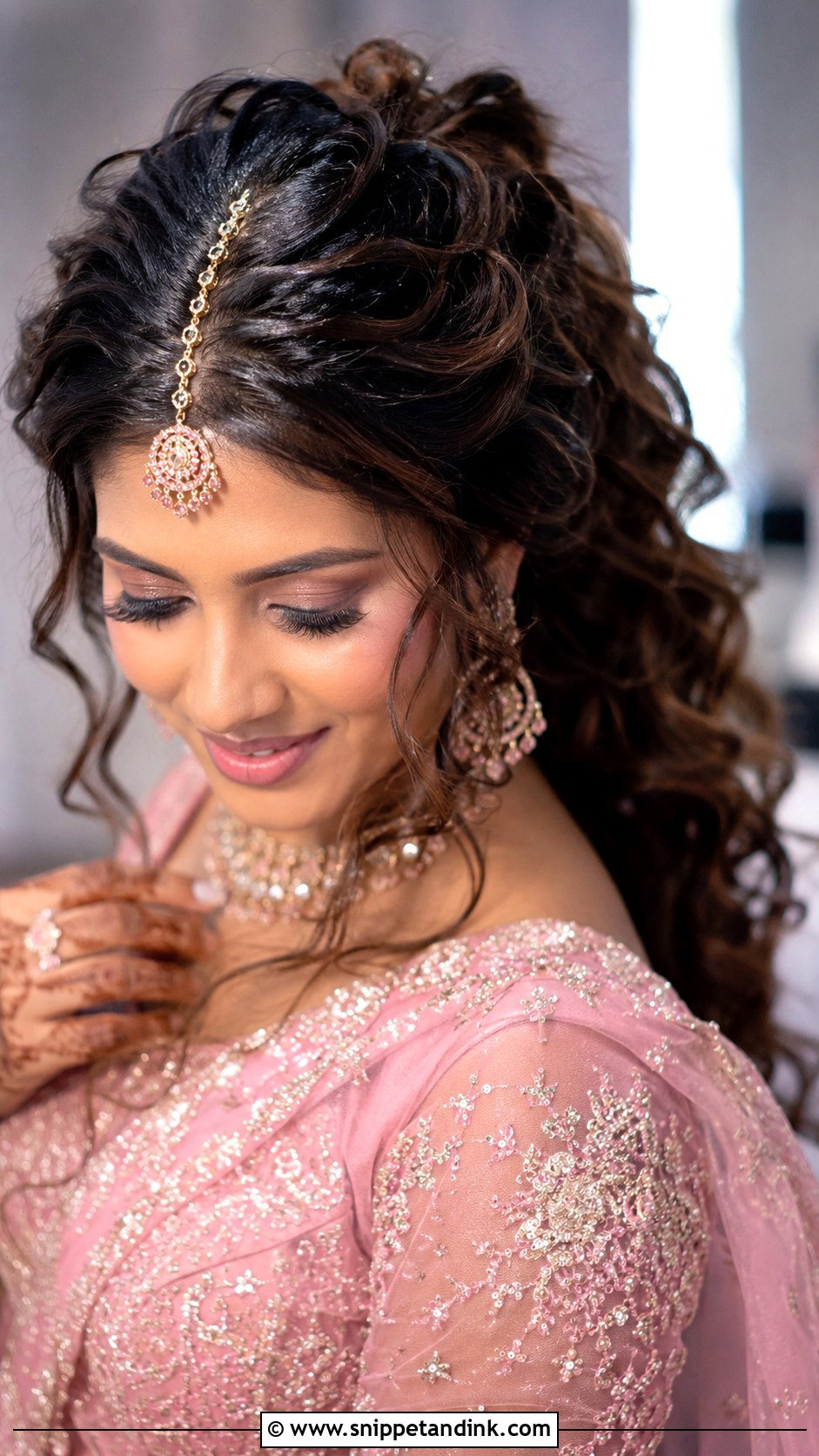
A reception look gets softness from curls cascading from a ponytail without the commitment of open hair. The curls have to be set before the pony is tied, otherwise the elastic flattens them at the base. A maang tikka along the part keeps it traditional. Medium to long hair or extensions give the fullest result. I finish with a flexible spray, not a stiff one, so the curls move when you turn your head. Leave a couple of tendrils at the face to soften the pulled-back front.
4. Braided Ponytail
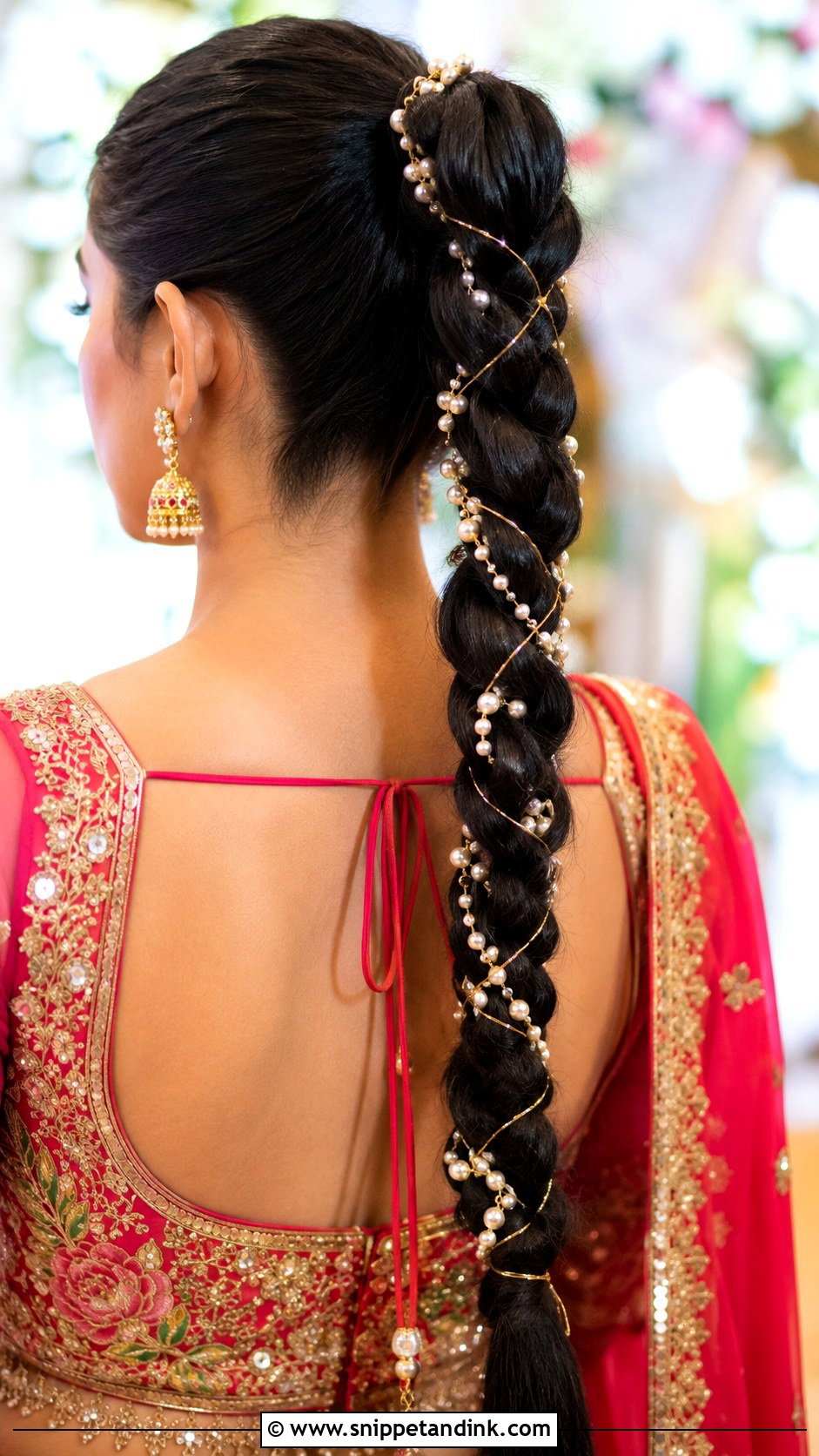
Braiding a pony down its length stops it from frizzing or tangling with jewellery as you move. The braid can start high or low. I braid tightly near the elastic and loosen toward the ends, so it stays secure at the top while looking fuller below. Small flowers or pearl pins go along the braid. It holds well through long ceremonies and dancing, and thick, long hair gives the best braid; finer hair benefits from a clip-in piece before braiding.
5. Pearl Embellished Ponytail
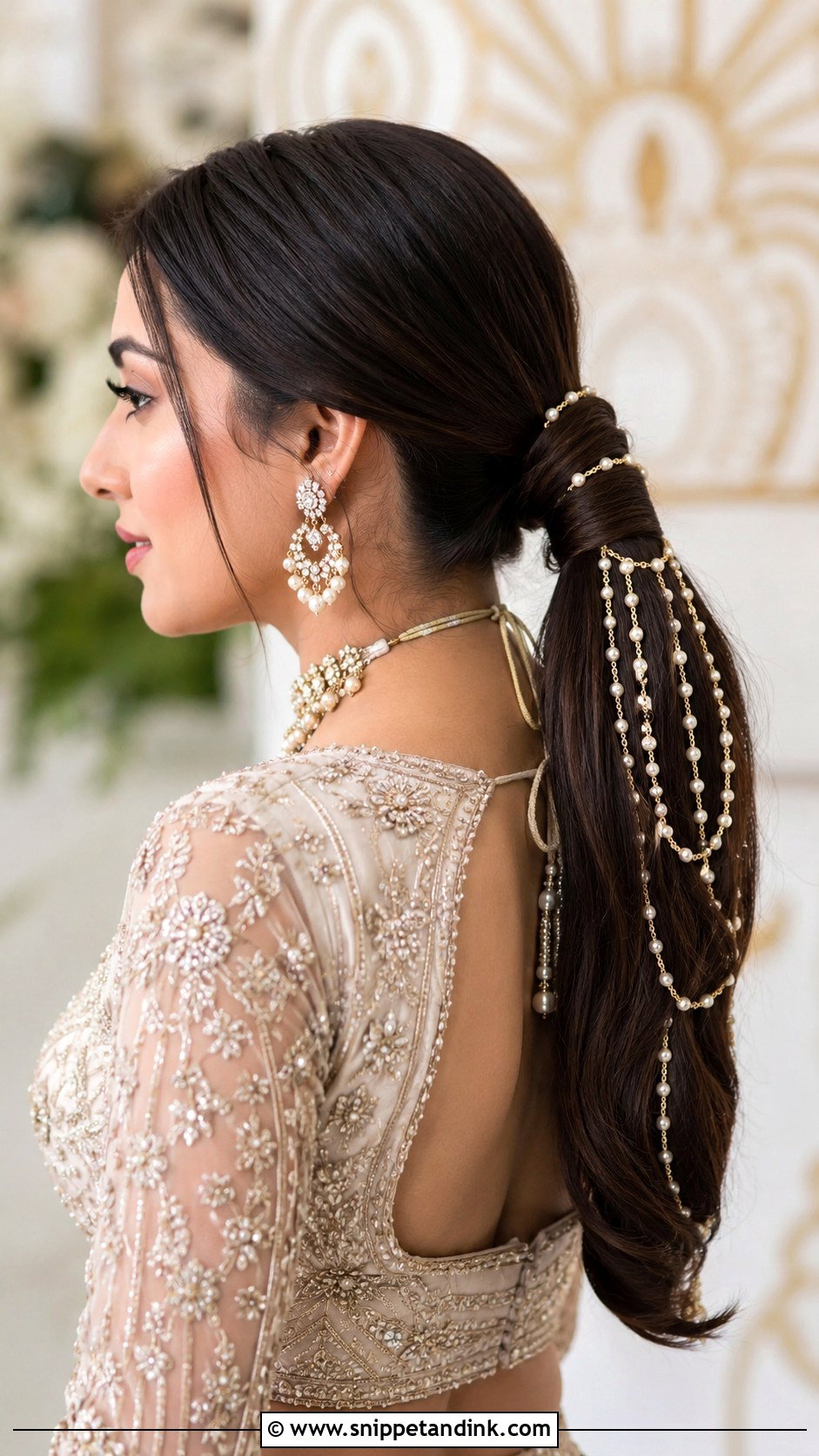
Pearls are light, which makes them ideal for a pony, where heavy ornaments drag the tail down. Strands can be woven through the tail or wrapped round the base. I keep the base sleek, because pearls on a fuzzy base just look messy. Pastel lehengas and ivory sarees suit them best, at engagements or receptions. Choose a low or high pony depending on your neckline; a high-neck blouse looks better with a high pony that clears the collar.
6. Bubble Braid Ponytail
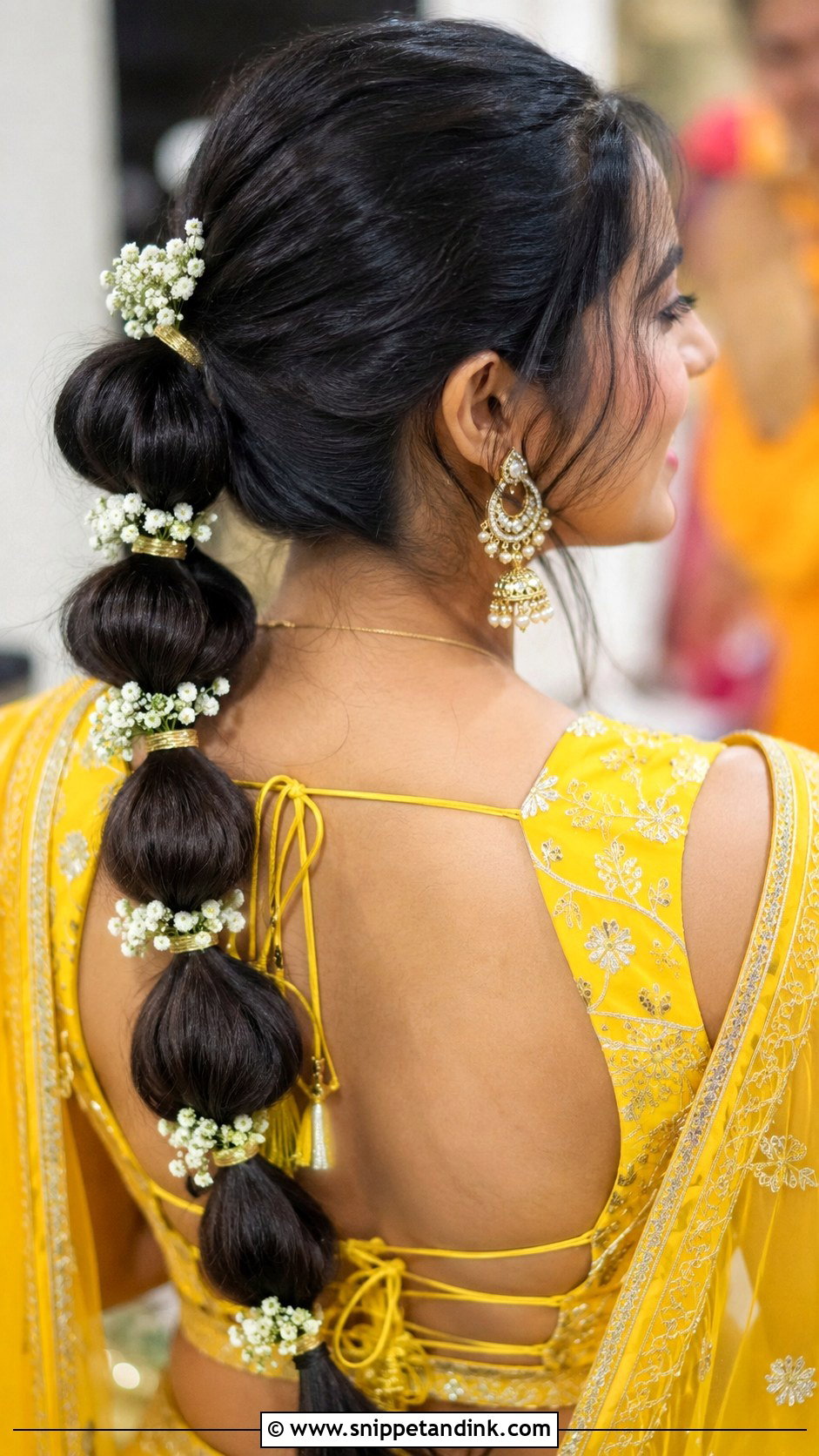
A bubble pony is quick: small elastics spaced down the tail, each section gently pulled wider into a rounded bubble. It’s fun for mehendi and haldi and easy for bridesmaids to copy. Tiny flowers tucked between the bubbles hide the elastics. Long, thick hair makes the roundest bubbles; on finer hair I add a ponytail extension first. Clear elastics disappear better than coloured ones in photos.
7. Fishtail Braid Ponytail
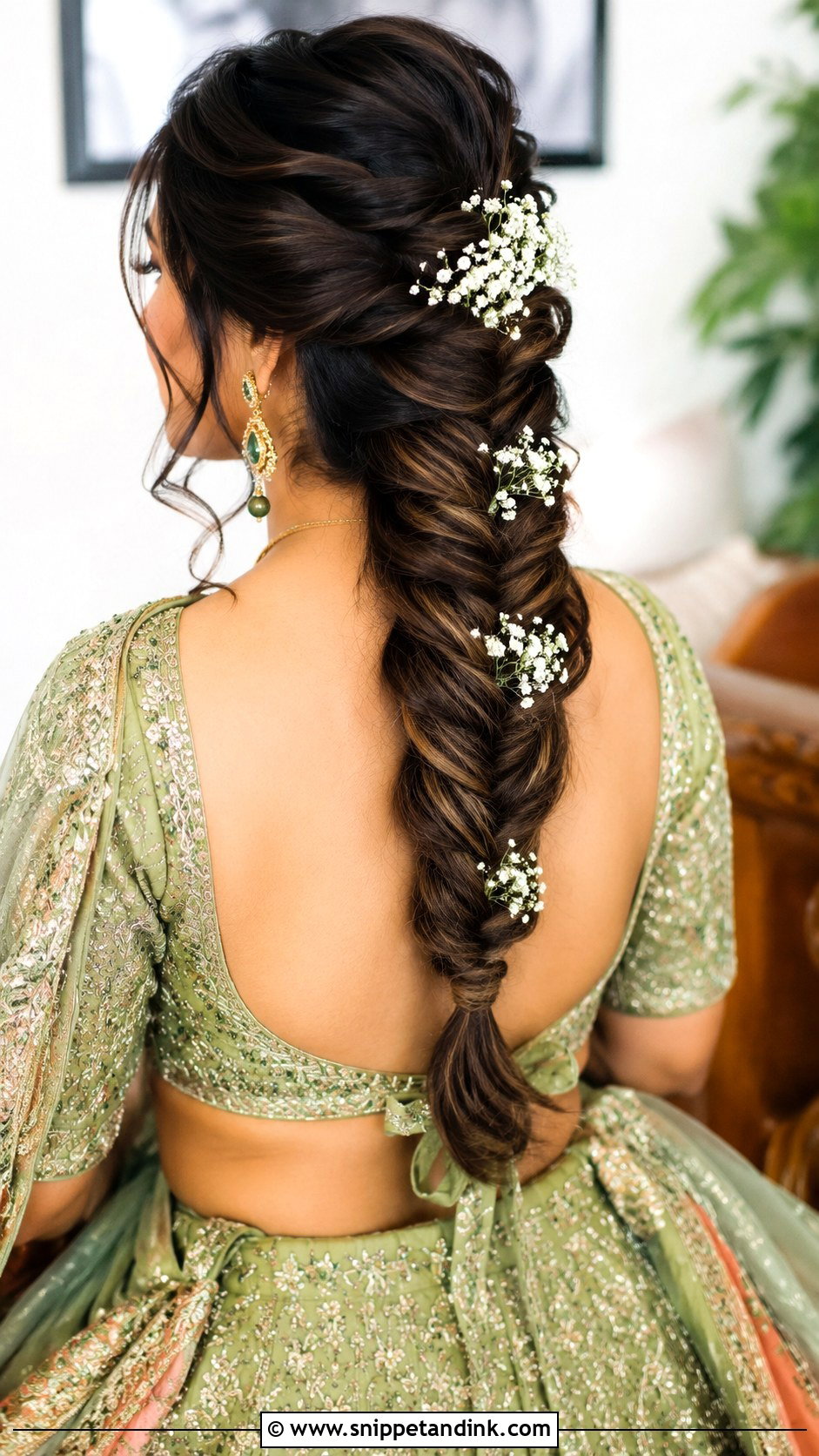
A fishtail pony looks complex but is relaxed to wear. The hair is gathered into a pony, then woven into a fishtail and loosened slightly for texture. Baby’s breath or small buds slip easily into the weave. Mehendi and sangeet suit it. Very layered hair will have short ends poking out of the fishtail; a little texture spray before braiding helps the pieces grip.
8. Messy Low Ponytail With Baby’s Breath
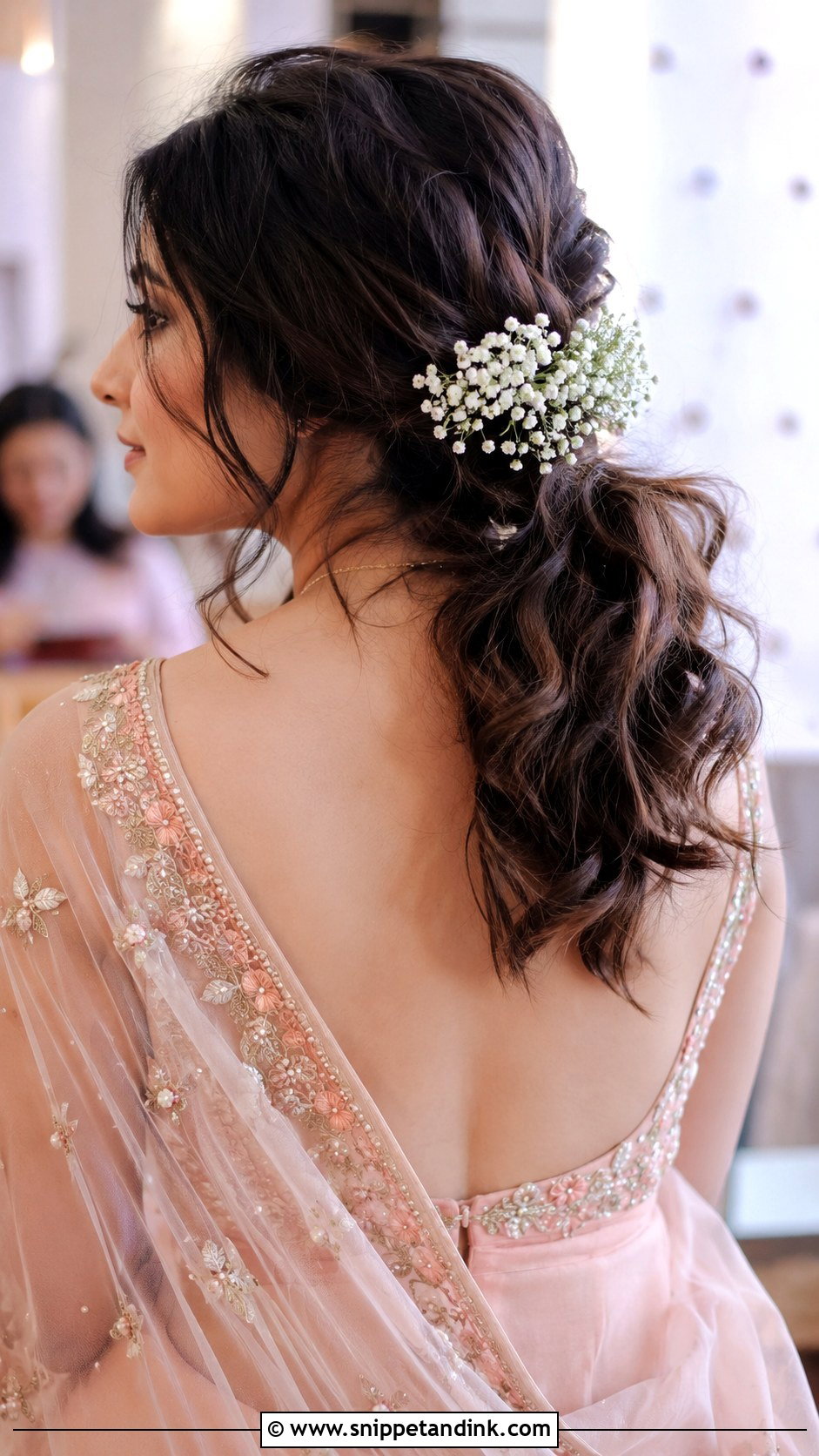
A loose low pony with baby’s breath is an easy match for an intimate daytime wedding. The texture is tousled, and the flowers sit at the knot. I pin the base securely under the soft surface so it doesn’t sag as the day goes on. Face-framing pieces are left loose. Flowy lehengas and pastel sarees suit it, and a light spray holds the shape without making it stiff. Baby’s breath lasts well out of water, which is why it’s such a reliable choice for daytime.
9. Side Swept Ponytail
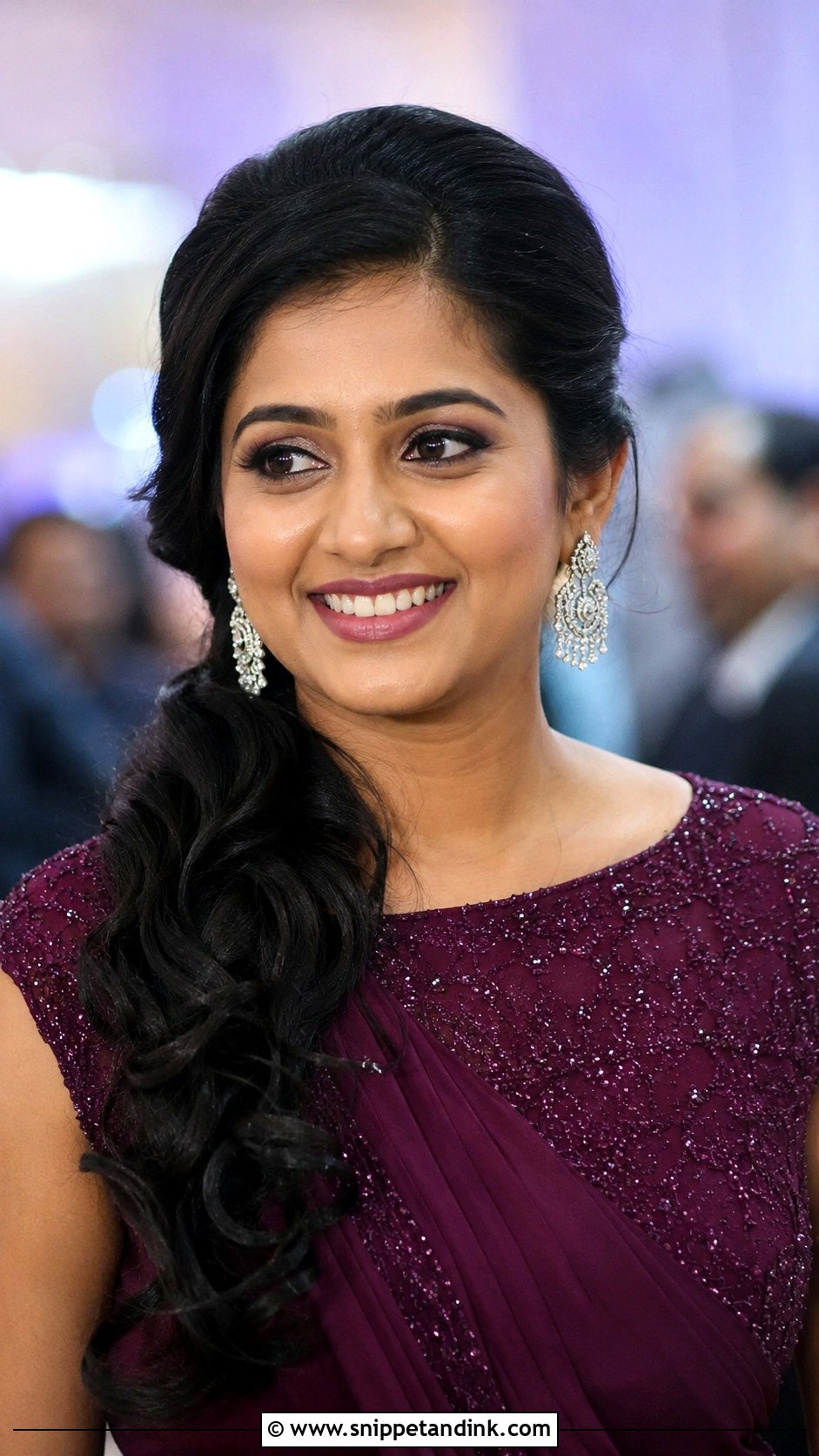
A side-swept pony falls over one shoulder, showing the earring and neckline on the other side. The base needs anchoring: I tie the pony just behind one ear, then cross pins on the opposite side so the hair doesn’t drift back. Soft waves add movement. It pairs with reception gowns and saree drapes, and round and oval faces suit the asymmetry well. Statement jewellery on the open side finishes it.
10. Sleek High Ponytail With Hair Wrap
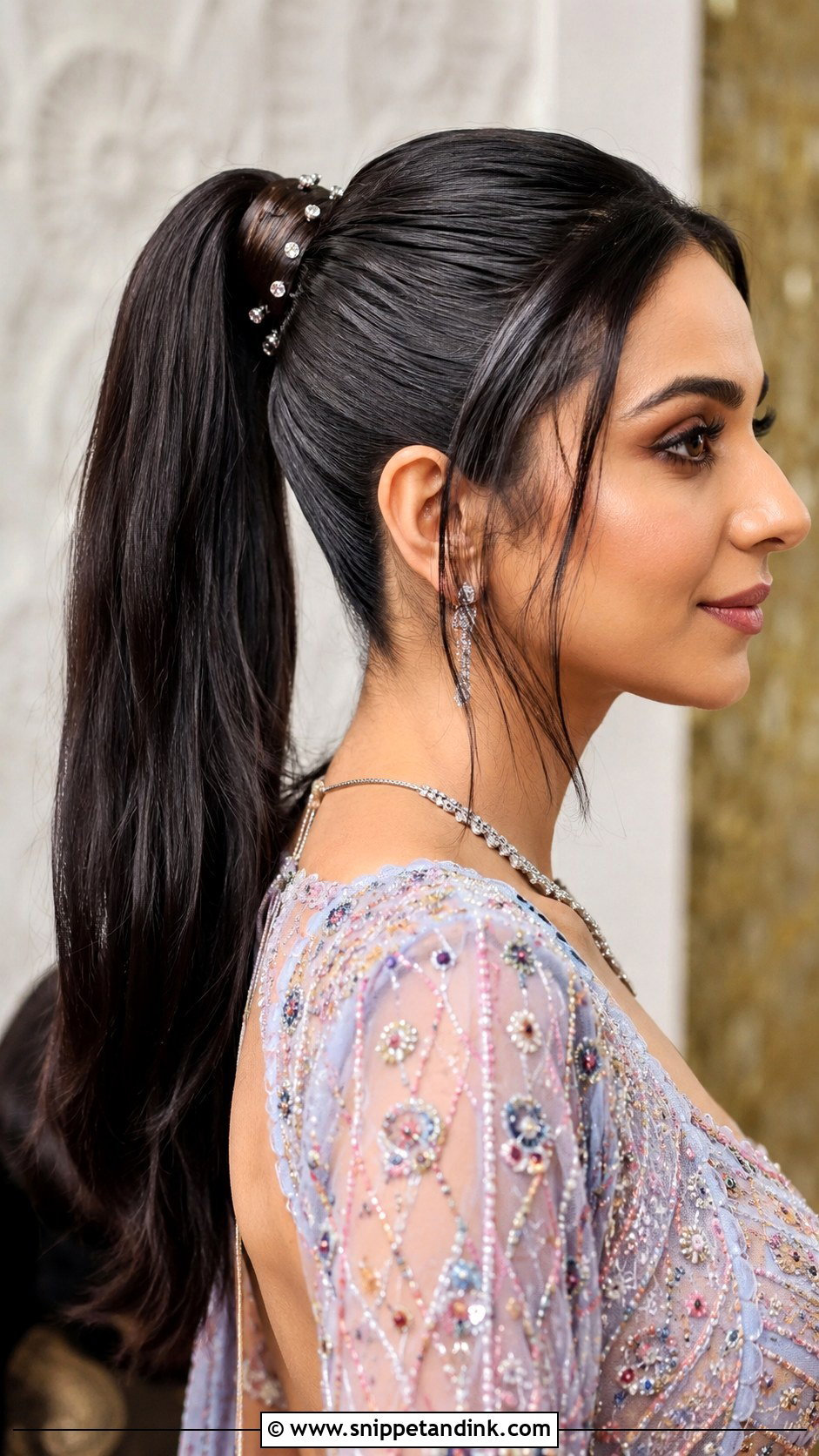
A sleek high pony with a hair wrap is all about precision. I blow-dry the hair straight, brush it back tightly with a smoothing cream, and tie it high. A strand of hair wraps the base and is pinned underneath to hide the elastic. A shine serum keeps it frizz-free. It goes with contemporary lehengas and fusion outfits, at cocktail evenings and receptions. The high, tight placement can cause a headache over a long evening, so it’s better for a shorter event.
11. Floral Ponytail With Roses
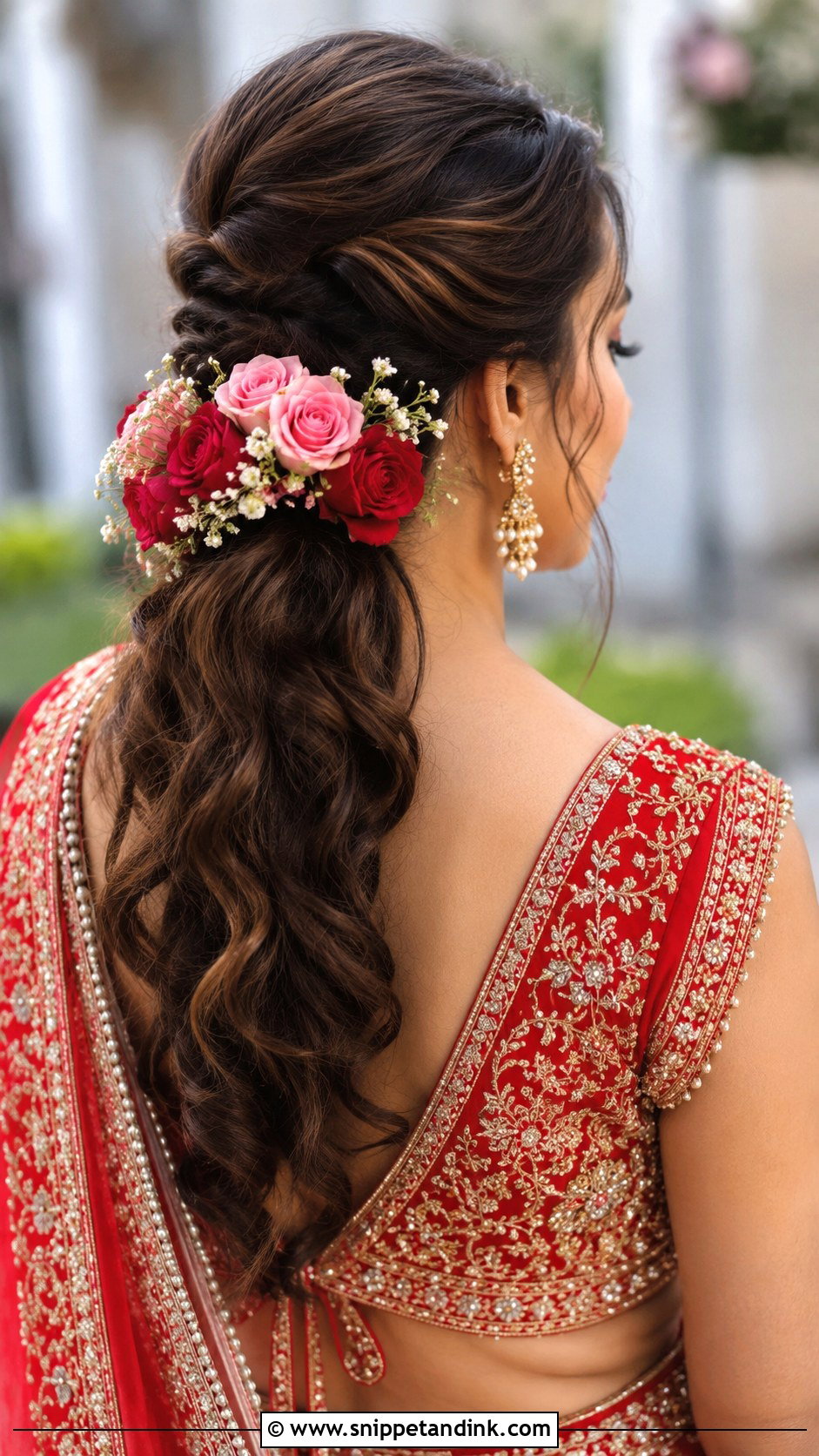
Fresh roses can sit at the base of a pony or run down its length. I use small spray roses rather than full-sized blooms, since big roses are heavy and drag the tail down. They pair with red and pink bridal lehengas. Roses wilt after several hours in heat, so I’d add them close to the event. A low pony shows larger blooms best.
12. Twisted Crown Ponytail
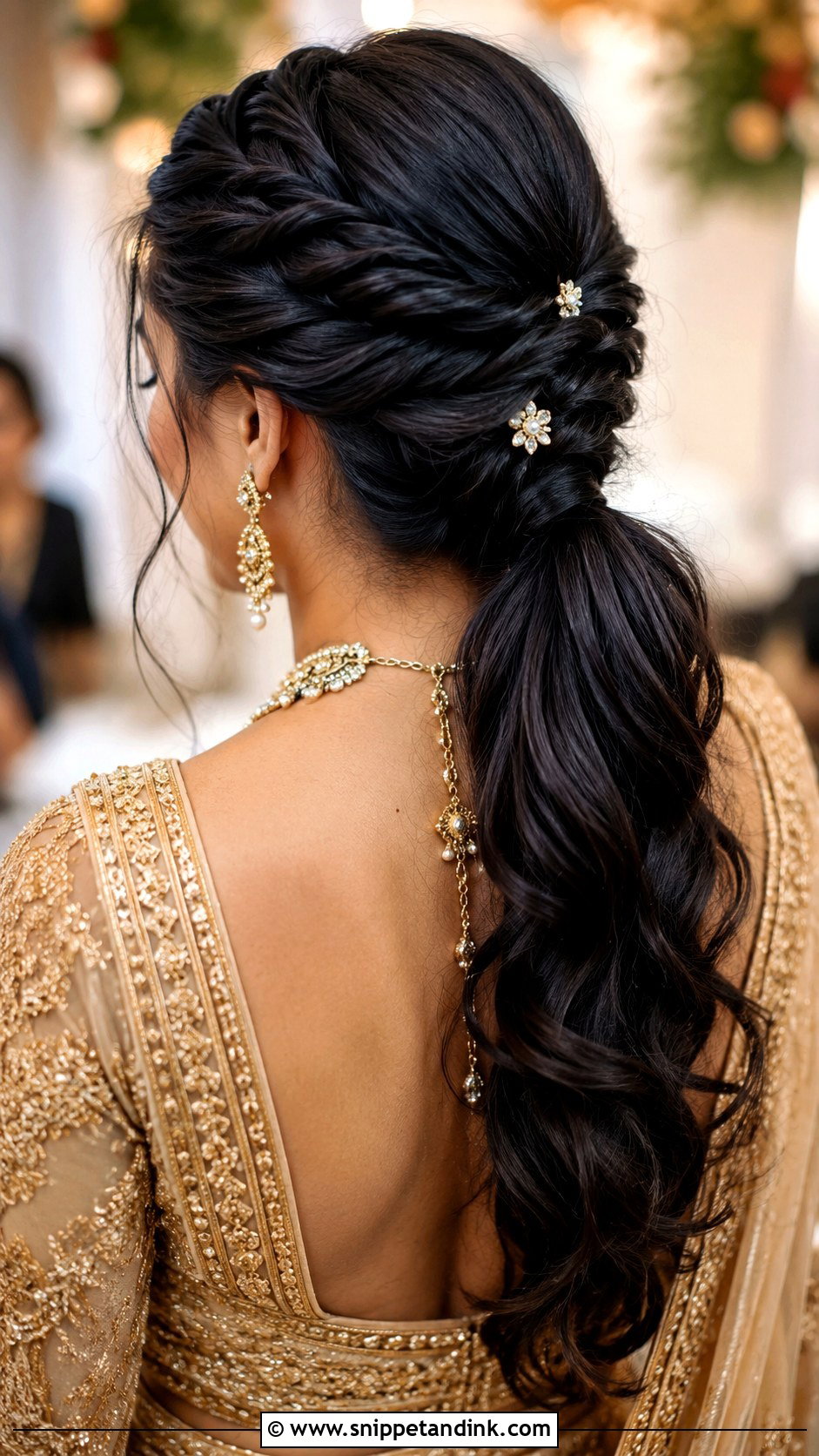
Twisting sections along the crown before gathering them into a pony adds detail and keeps the front hair secure. I twist toward the back and pin each twist so it doesn’t loosen. It works with high or low ponies. A maang tikka or jewelled pins add sparkle. Receptions and engagements suit it, and thick, long hair shows the twists best.
13. Half Up Ponytail
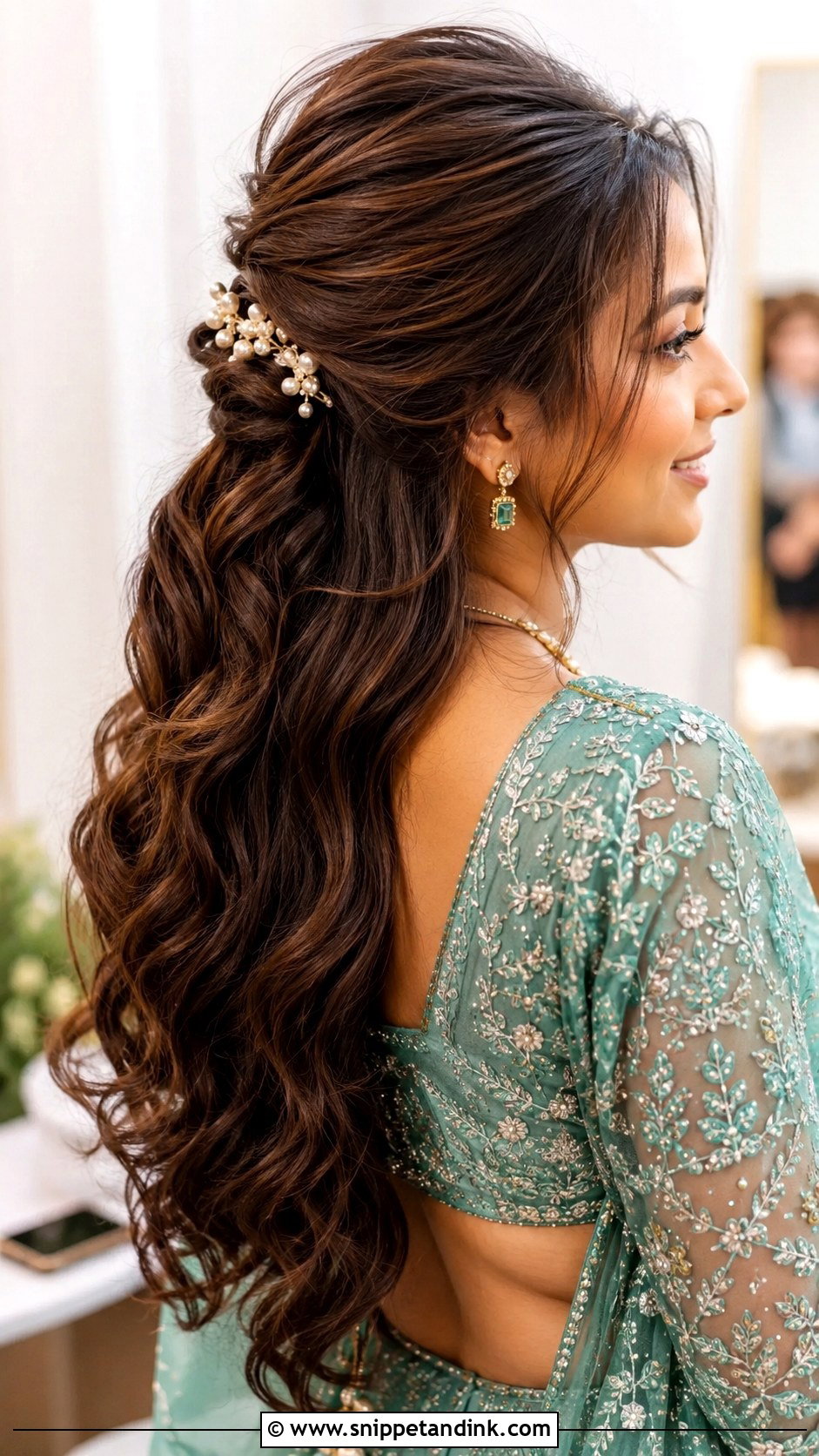
A half-up pony pulls only the top section back, leaving the rest to flow. It keeps hair off your face while showing your length. I add volume at the crown before tying, so the top doesn’t look flat. Pearls or small flowers can dress the gathered section. It suits sangeet nights and pre-wedding functions, and most hair lengths can wear it.
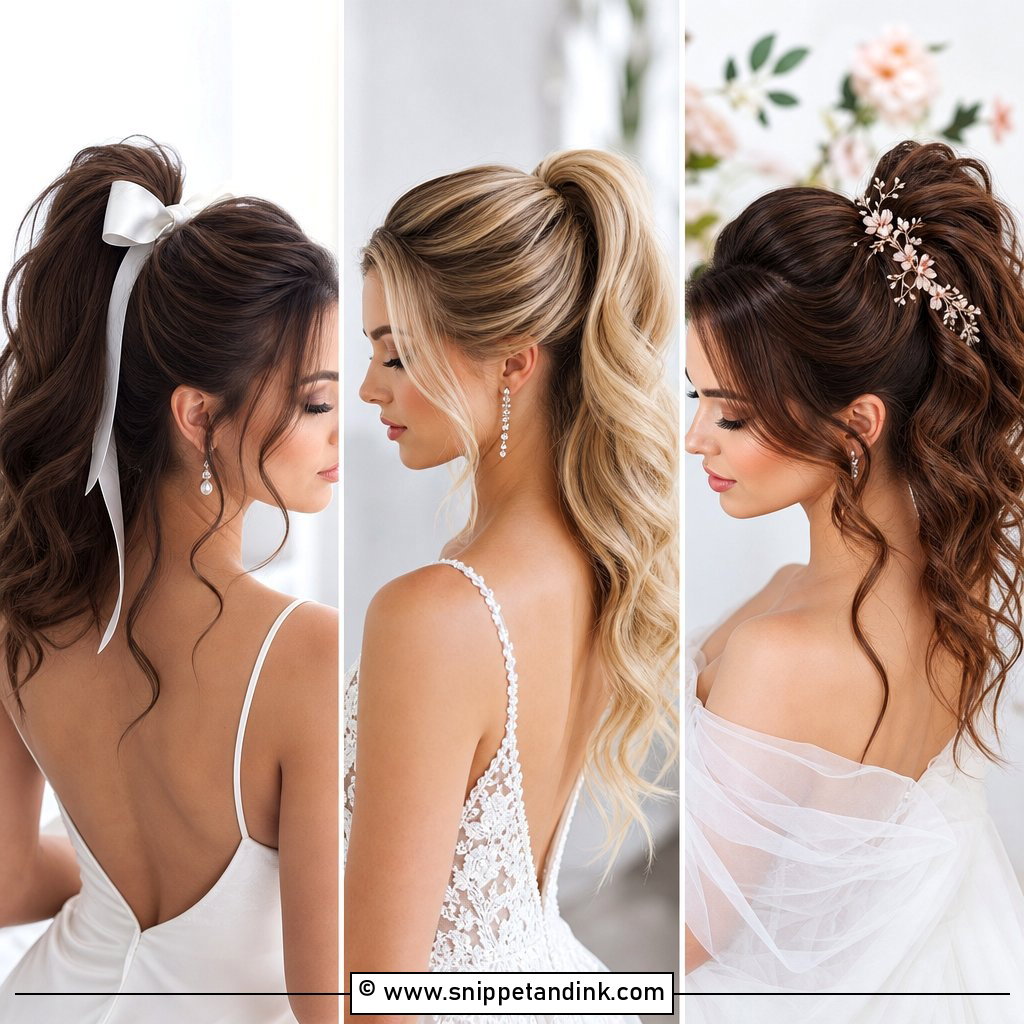
14. Voluminous Curled Ponytail With Headband
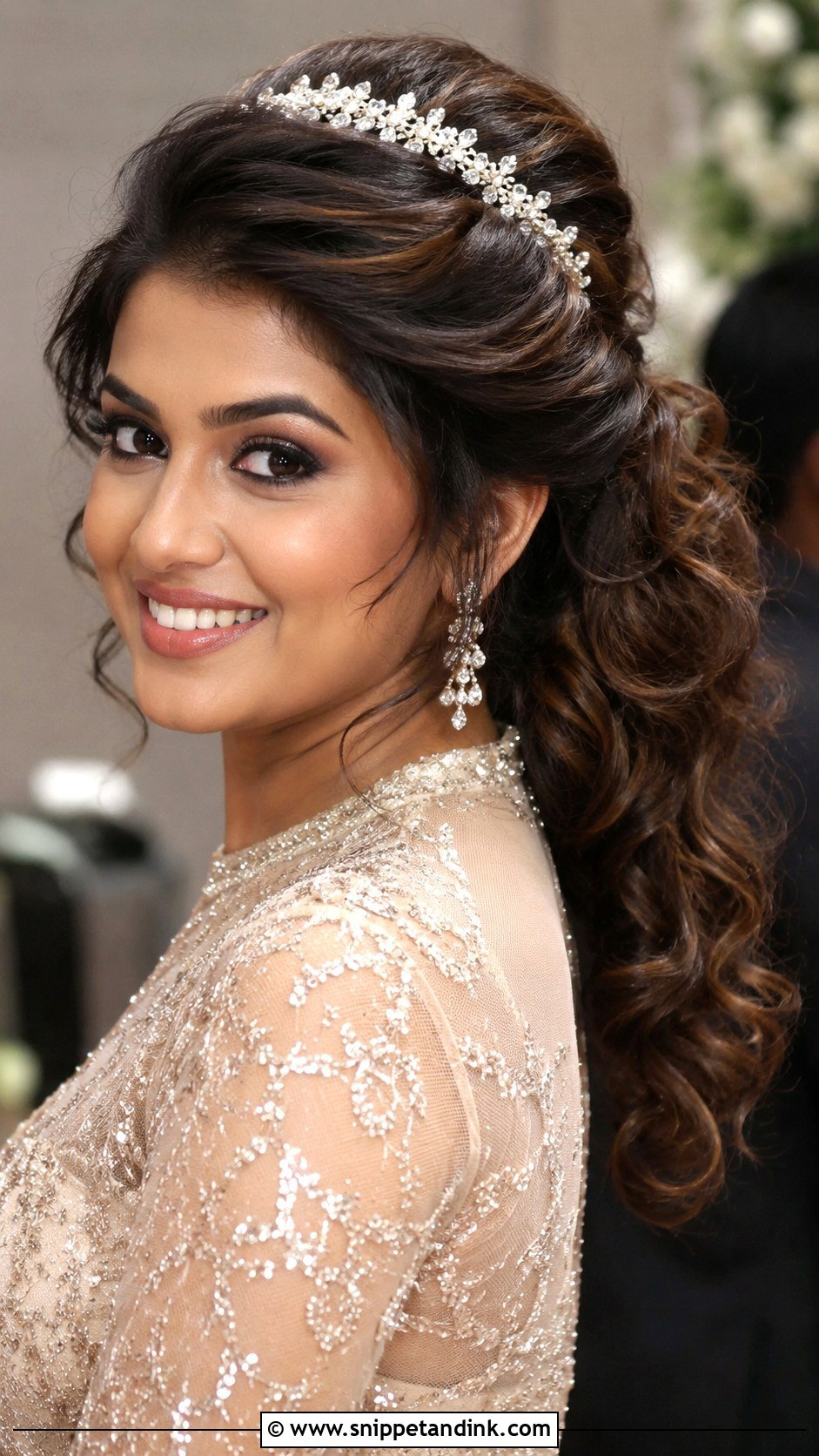
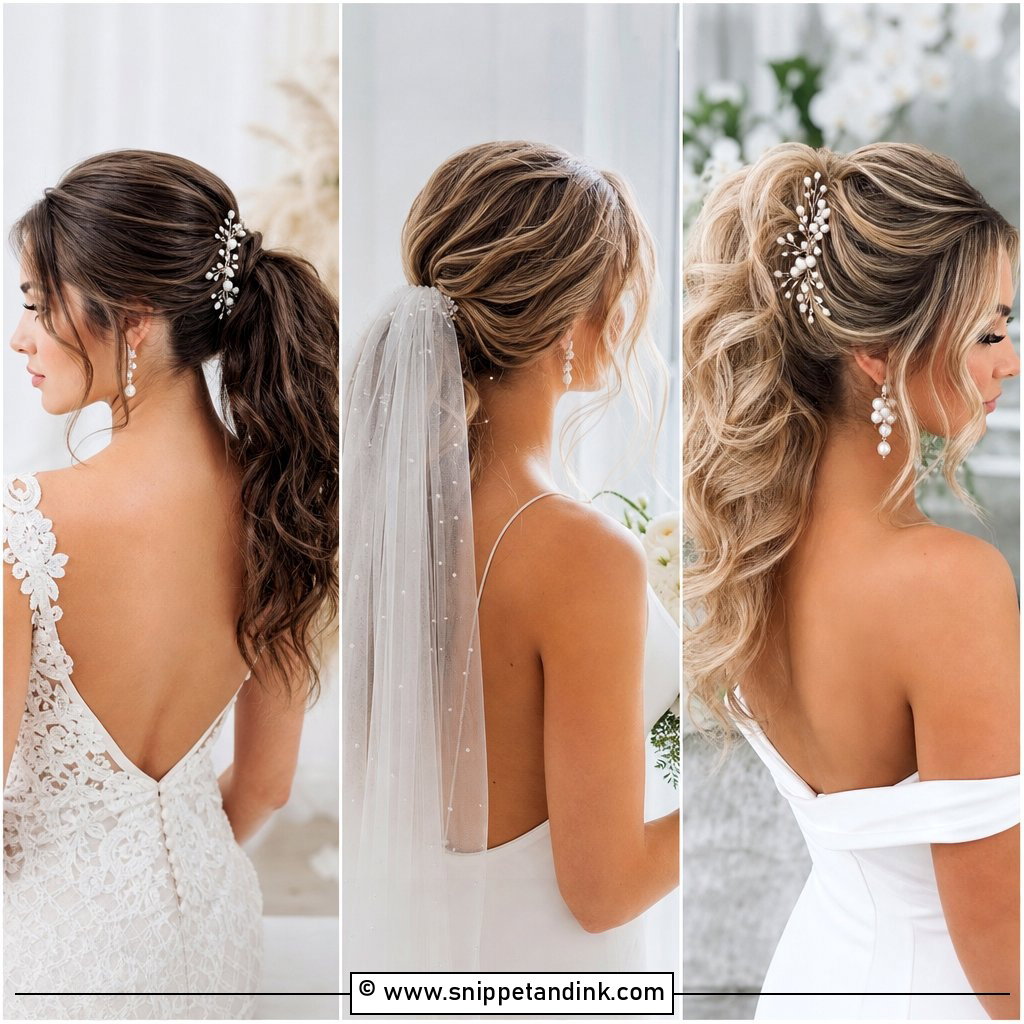
A sparkling headband with a voluminous curled pony adds glamour without flowers. The crown is teased for height, the headband sits just in front of it, and the curls fall behind. I pin the headband at both ends behind the ears so it doesn’t slide forward. Crystal or pearl embellishments can match your jewellery. It suits reception gowns and shimmering lehengas. Headbands can press behind the ears after a few hours, so try yours on for an hour at the trial.
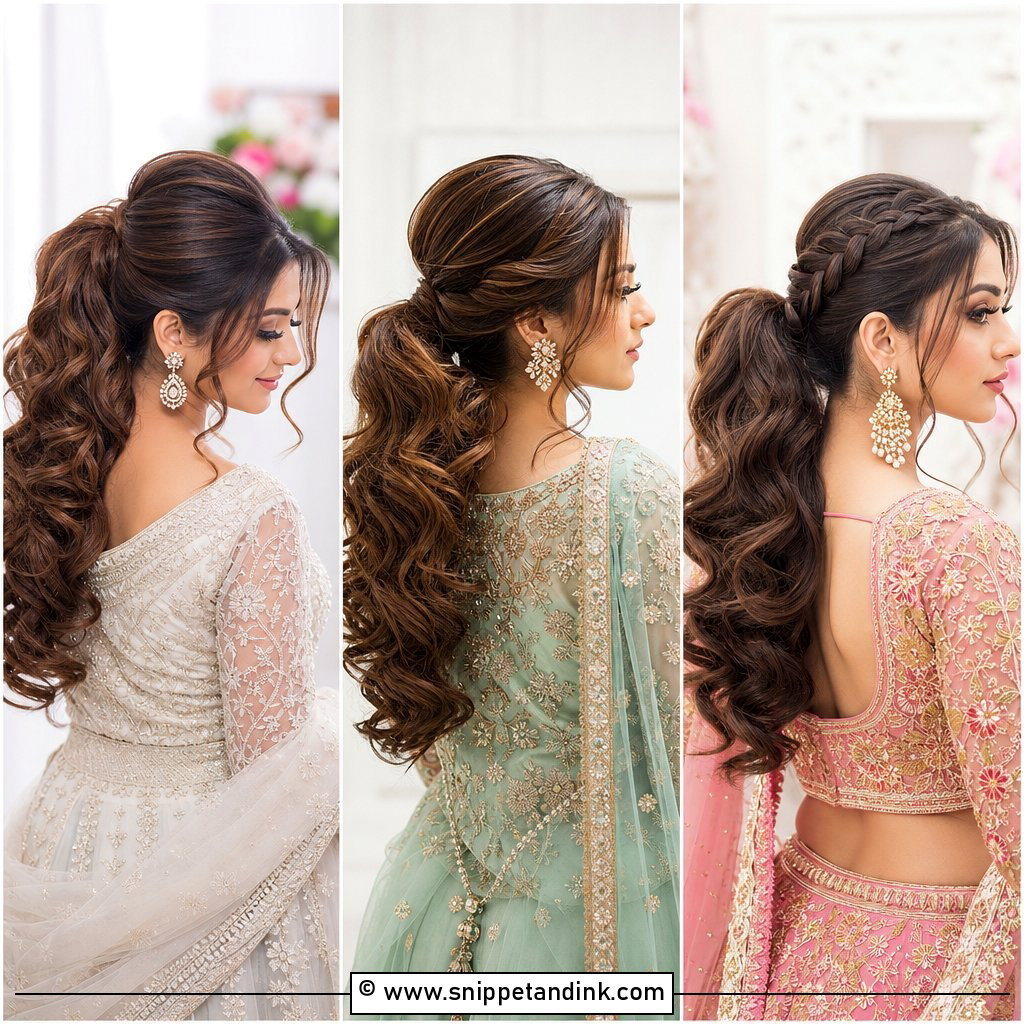
15. Low Wavy Ponytail
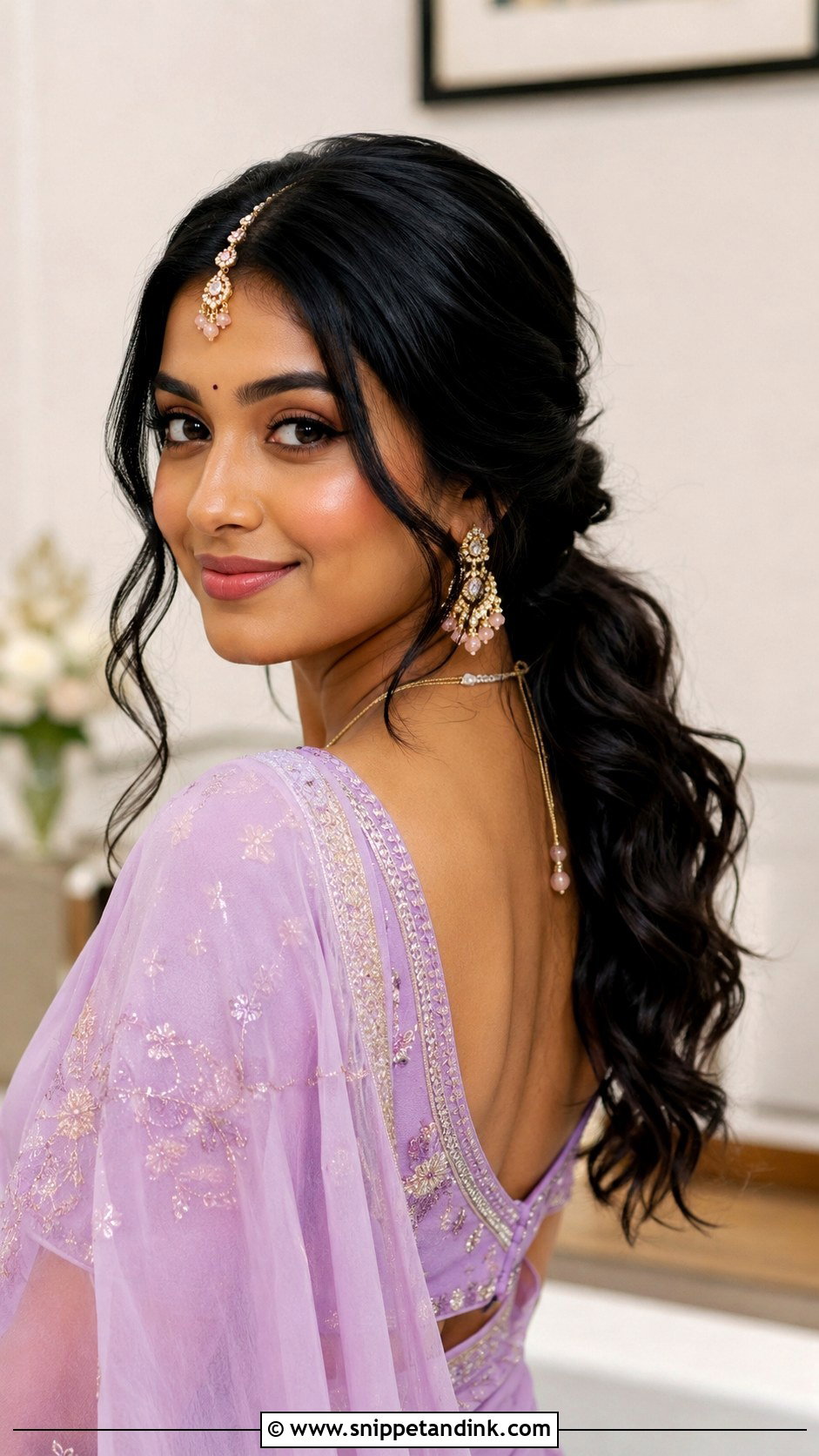
A low pony with soft waves is relaxed and comfortable for daytime ceremonies and small gatherings. A center part keeps it balanced. I curl before tying so the waves aren’t crushed at the base. A maang tikka adds tradition. Medium to long hair with natural body suits it best, and a light spray keeps the waves soft.
16. Bouffant Ponytail
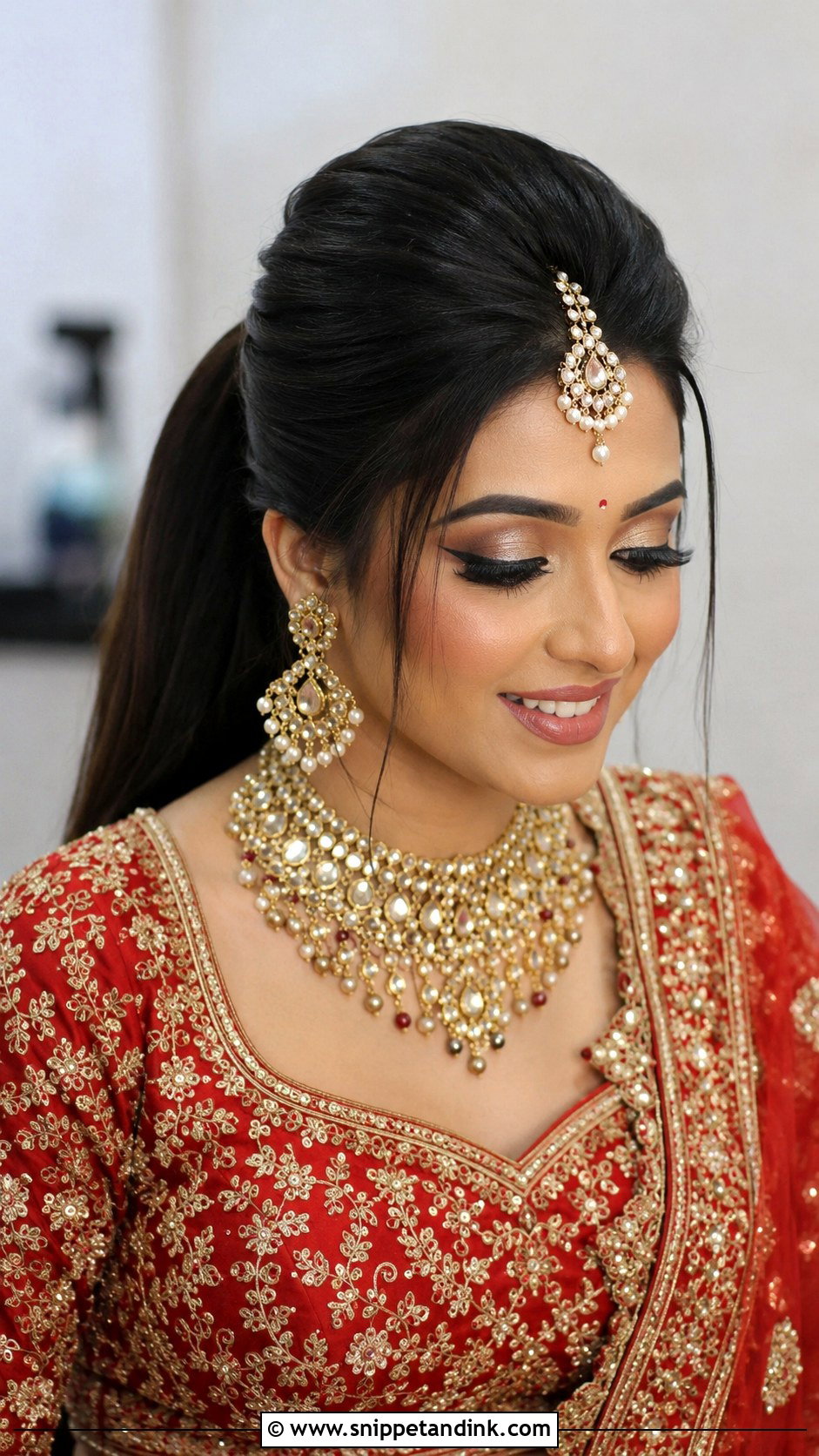
The bouffant pony teases the crown high for volume, then smooths the rest into a polished tail. It’s a retro, statement look for receptions. The lifted crown needs plenty of pins and a light setting spray between sections. A tikka can sit along the part. Thick, long hair holds the height best. A long face may look longer with a high bouffant, so keep it lower if that’s a concern.
17. Puff Ponytail With Maang Tikka
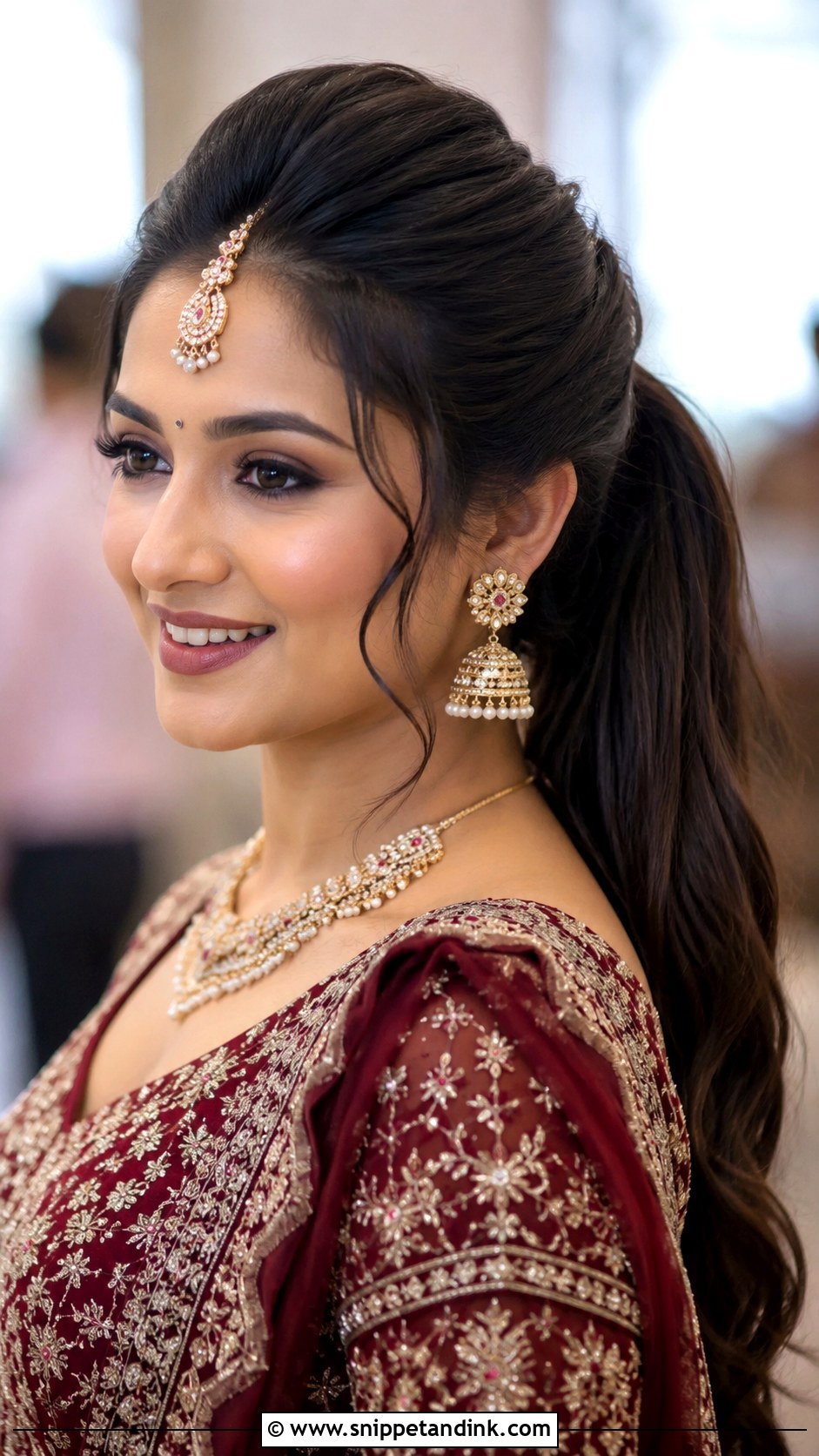
A neat front puff with a pony is a classic Indian combination. The crown is lifted gently and pinned, with a maang tikka along the part. Round and heart-shaped faces suit it well. I keep the puff smooth on top, backcombing only at the root. A few curls in the tail soften it. It works for engagements and receptions with statement jhumkas.
18. Fishbone Braided High Ponytail
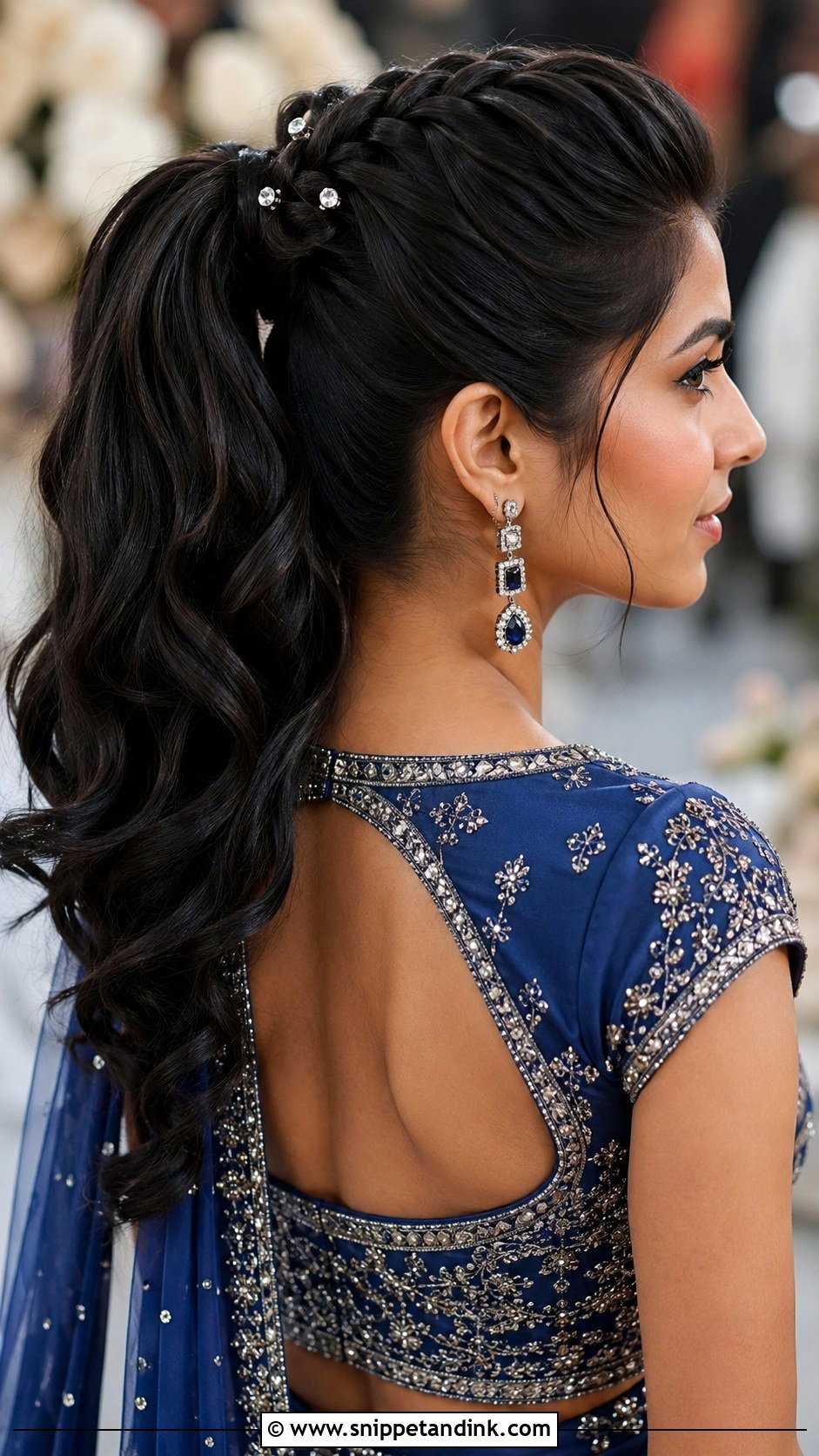
A fishbone braid sits along the top of the head and feeds into a high pony, so the detail is right where the camera sees it from the front. It’s one of the more secure high ponies, because the braid holds the crown hair that would otherwise slip loose during dancing. I’d steer clear of it if you have a very sensitive scalp; a tight braid plus a high elastic is a lot of tension for one evening. Small jewelled pins along the braid add sparkle for sangeet and cocktail nights.
19. Sleek Ponytail With Jeweled Hair Chain
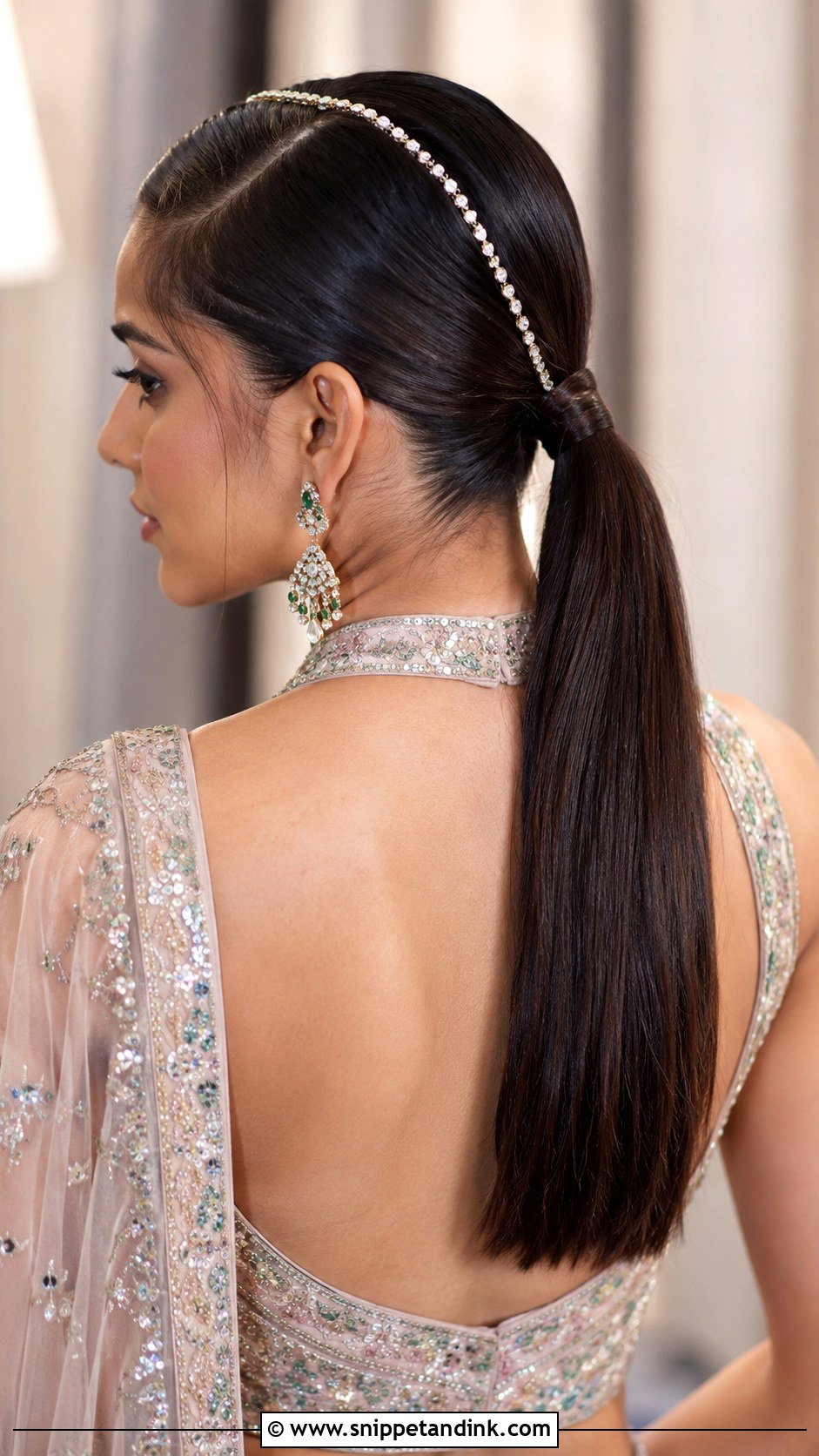
Hair chains look fragile, and they are, so the pony under them has to be immaculate. I pin each end of the chain to a small hidden section behind the ears, then let it lie across the part or wrap the base. Any bump in the hair shows through the chain, so I smooth the base twice. It works with fusion lehengas and contemporary outfits, especially at engagements and reception parties. Pick a chain in the same metal as your earrings.
20. Long Straight Ponytail With Extensions
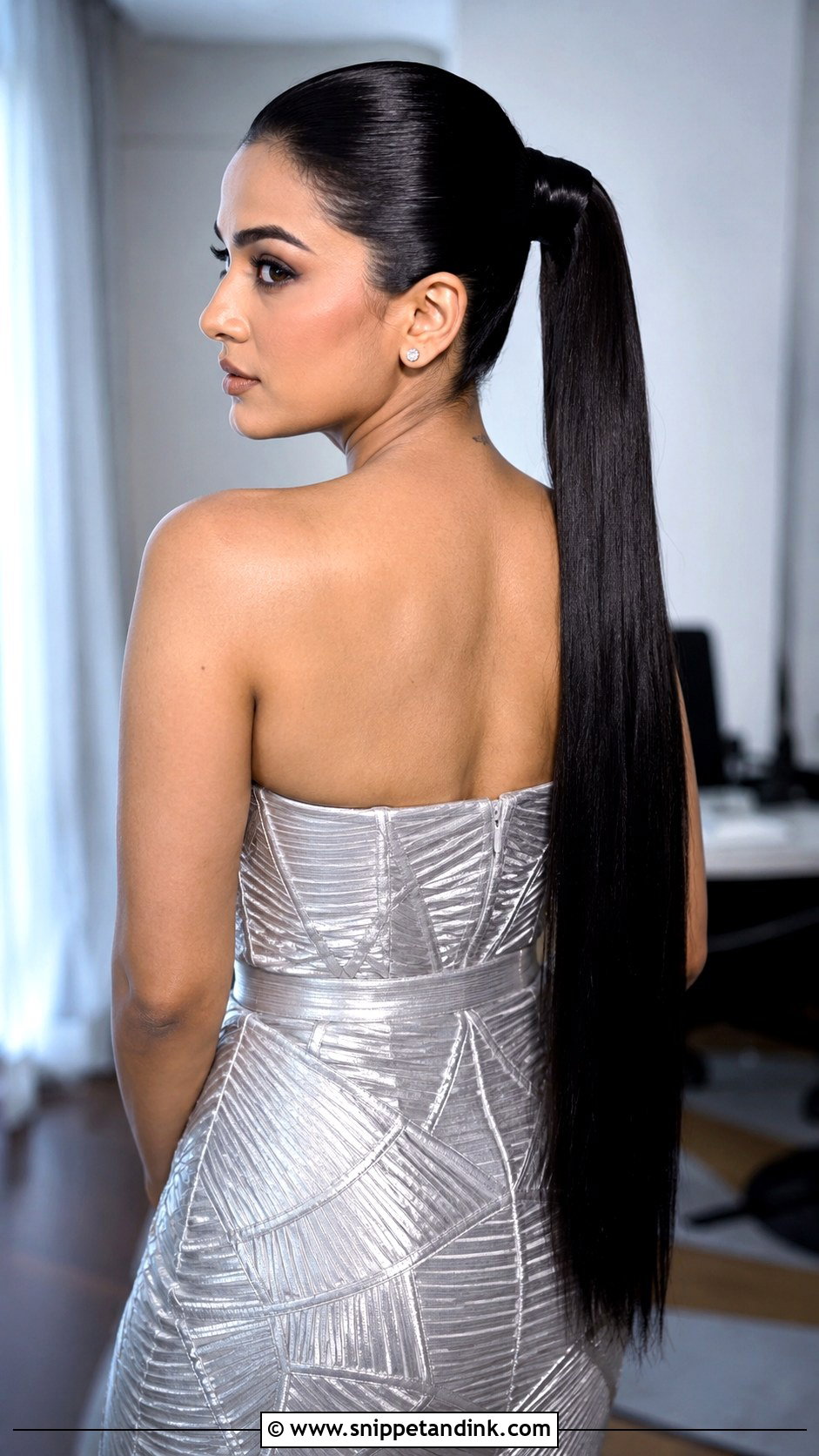
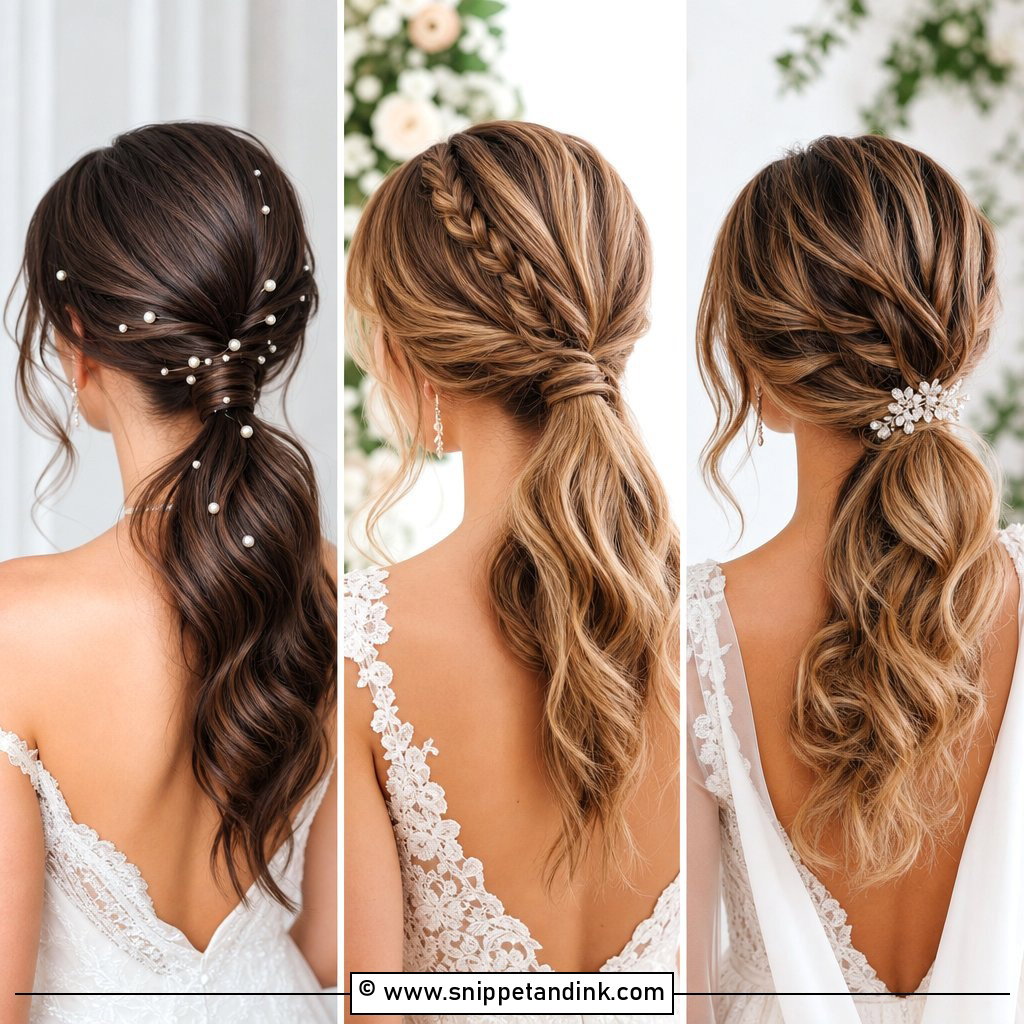
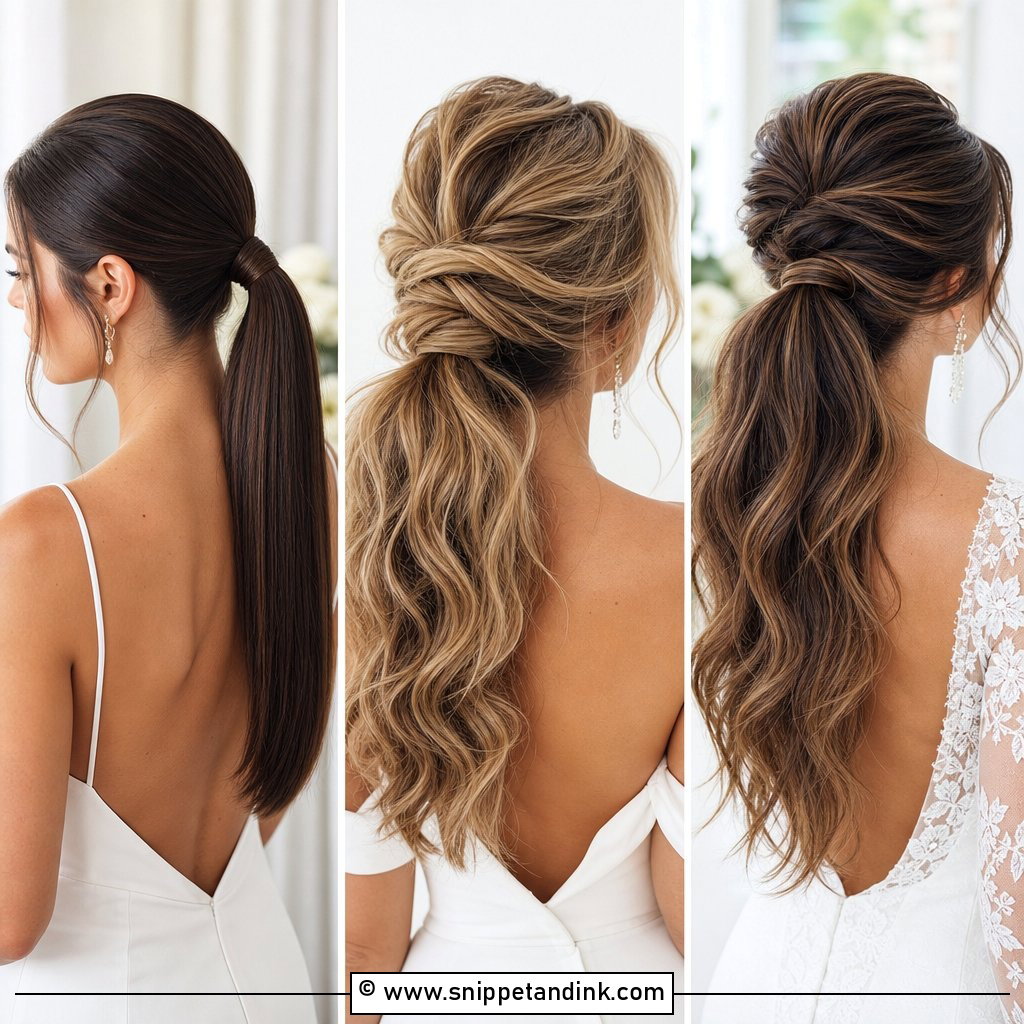
Almost every waist-length pony you see at a reception has some extension in it. A clip-in or wrap-around ponytail piece is attached over your own tied pony, then the base is wrapped with your own hair to hide the join. The match matters more than the length: the extension should be the same colour and texture as your hair, or the line shows under flash. Smooth everything with a serum. Structured lehengas and fusion gowns suit this, at cocktail nights and receptions.
21. Rope Braid Ponytail
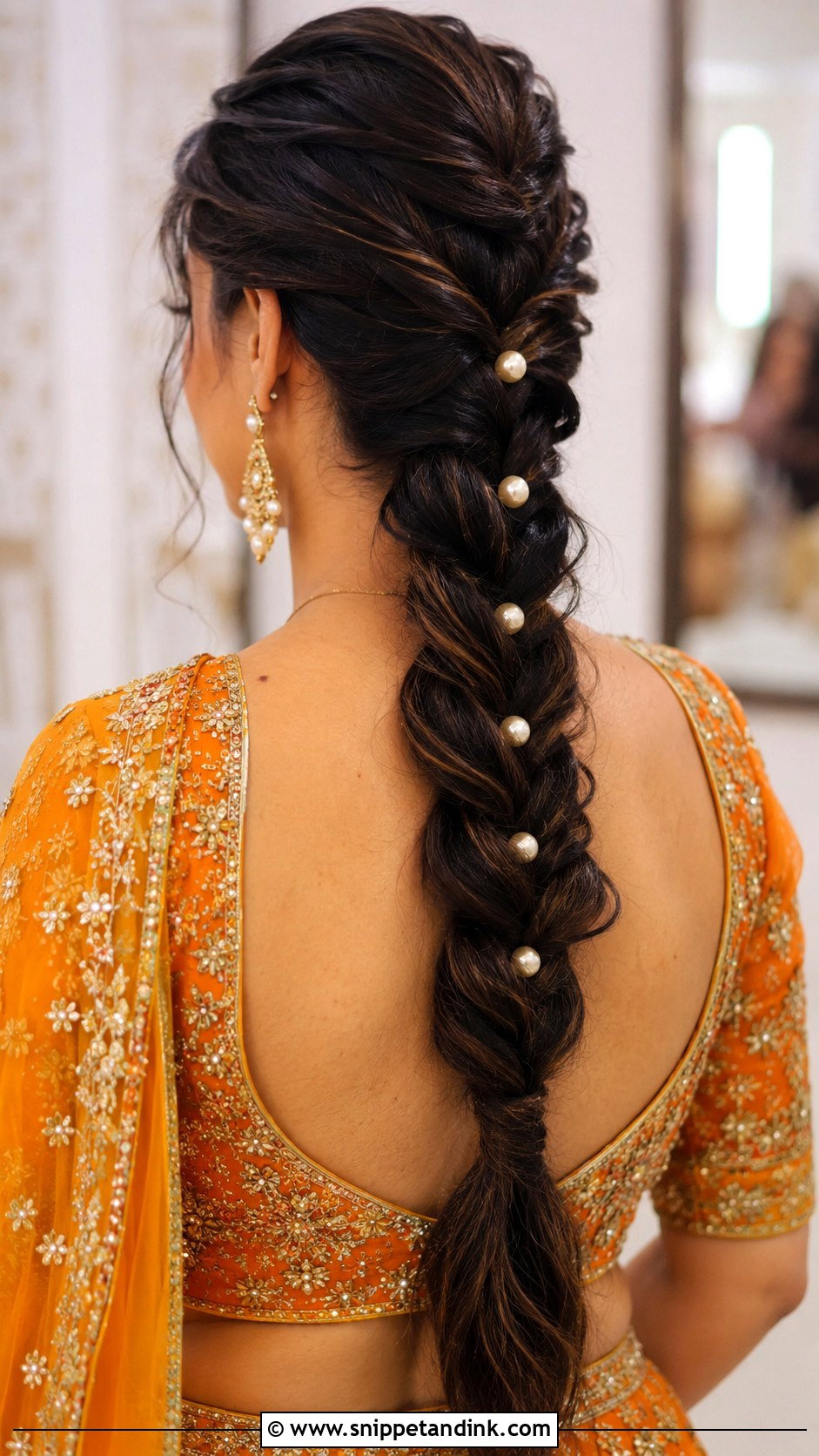
Two sections twisted around each other make a rope that’s quicker than a braid and has a smooth, corded look. The trick is direction: twist each strand one way and wrap them the opposite way, or the rope unwinds within an hour. Pearl pins or small flowers can sit in the grooves. It works for high or low ponies, and I like it for mehendi and sangeet. Hair with some natural body holds the twist better than very silky hair.
22. Front French Braid Ponytail
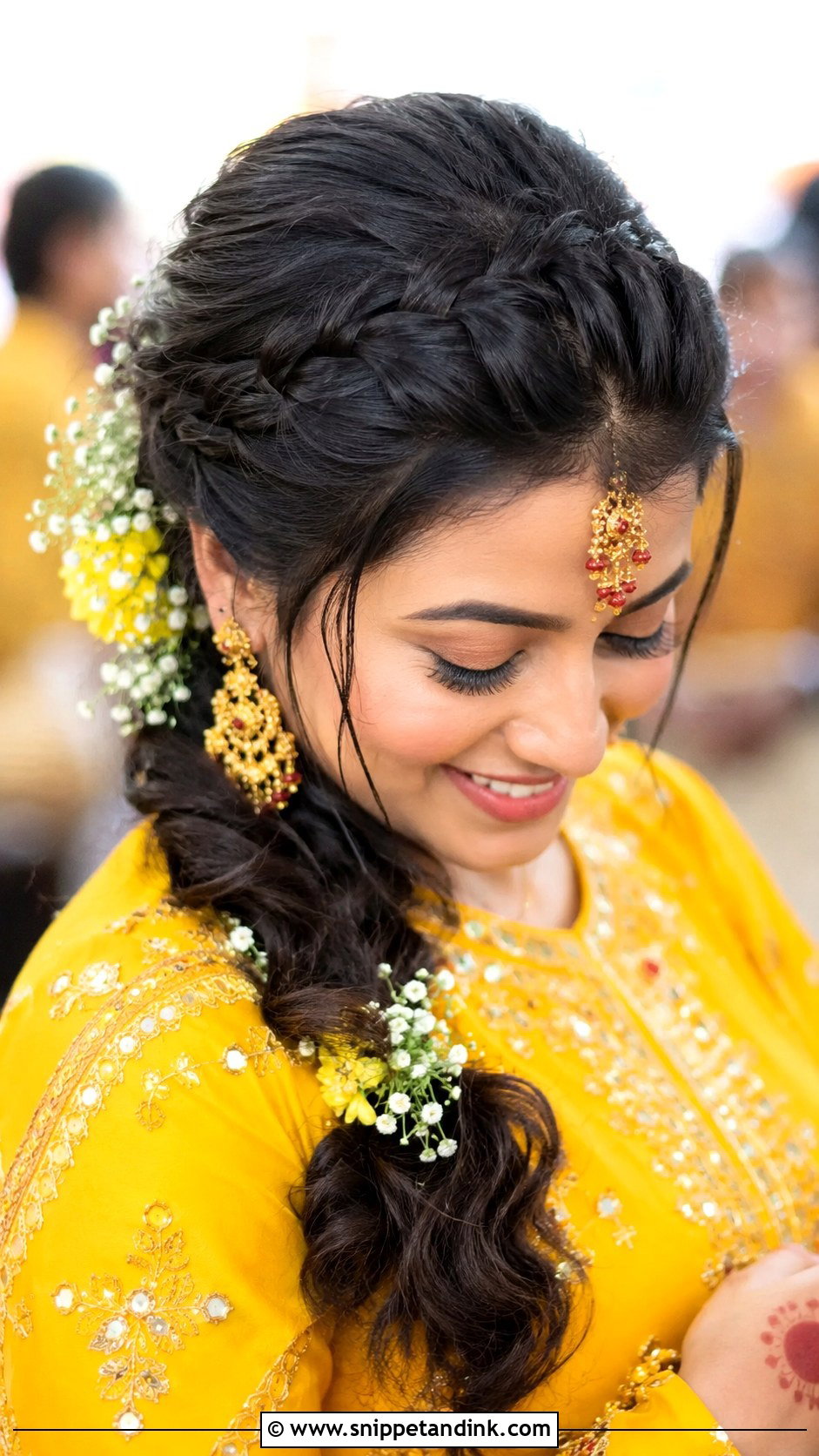
Two French braids running from the hairline into a pony keep every strand off your face, which is exactly what you want at a haldi or mehendi where your hands are busy or covered. The tail can be left wavy. I smooth the hairline with a little gel first so short pieces don’t spring loose. Tiny flowers along the braids add colour. Long, thick hair gives the fullest braids, but shorter hair can manage with a clip-in tail.
23. Loose Romantic Ponytail
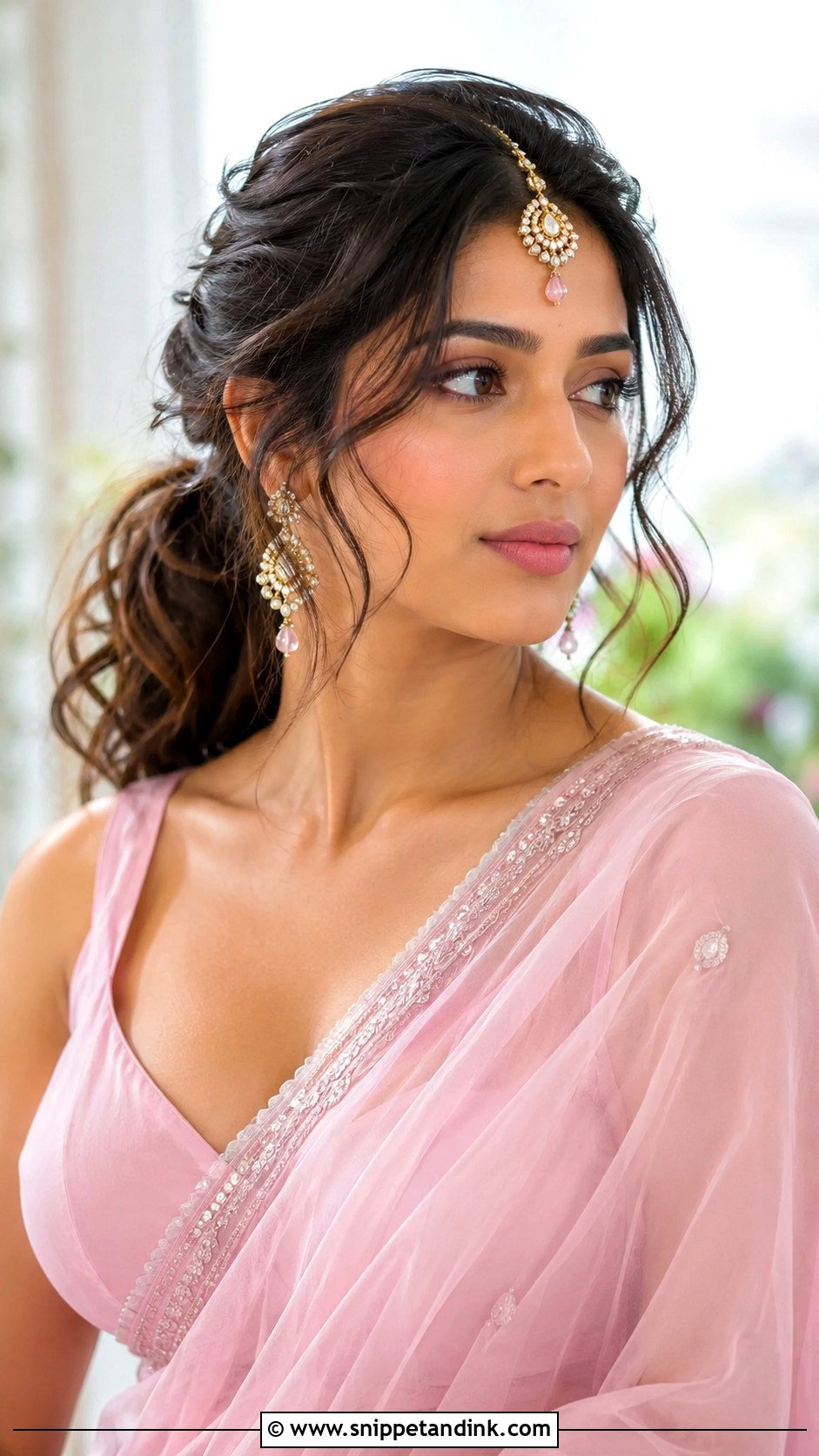
Soft doesn’t mean unsecured. For a loose, romantic pony I tie a firm base first, pin it, and only then pull the surface looser and tease out tendrils at the face. Done the other way, it sags by lunchtime. A soft center part keeps it balanced. Pastel lehengas and flowing sarees suit it for an intimate daytime wedding, and a delicate tikka keeps it bridal.
24. Sleek Ponytail With Pearl Strands
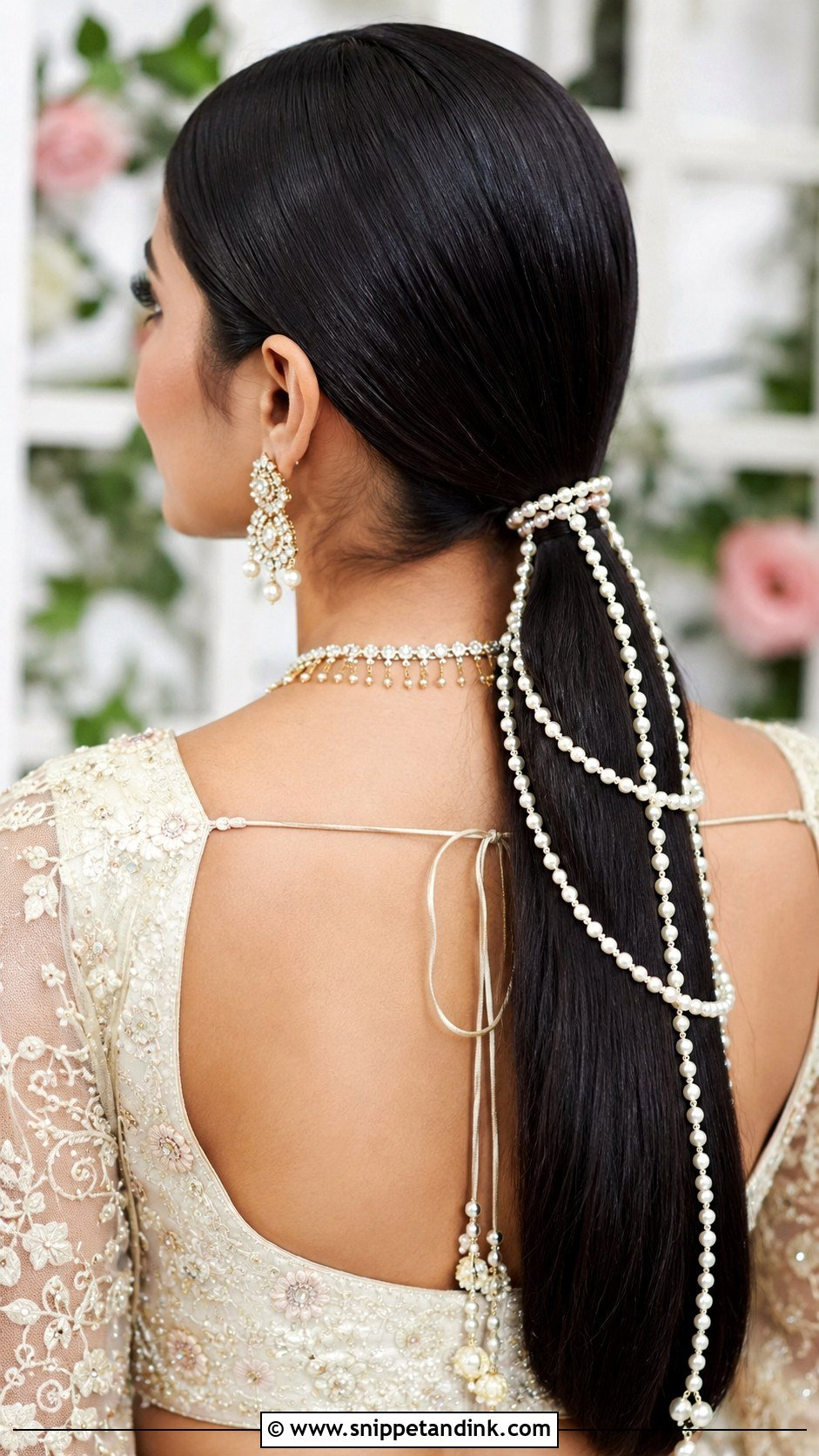
Pearl strands draped down a sleek pony need anchoring every few centimetres; otherwise they slide down the tail as you move. I pin them under the surface so the pins disappear. The smooth base shows the pearls at their best. Ivory and pastel outfits suit them, at engagements and receptions. A low pony looks most graceful here, and pearl earrings tie it together.

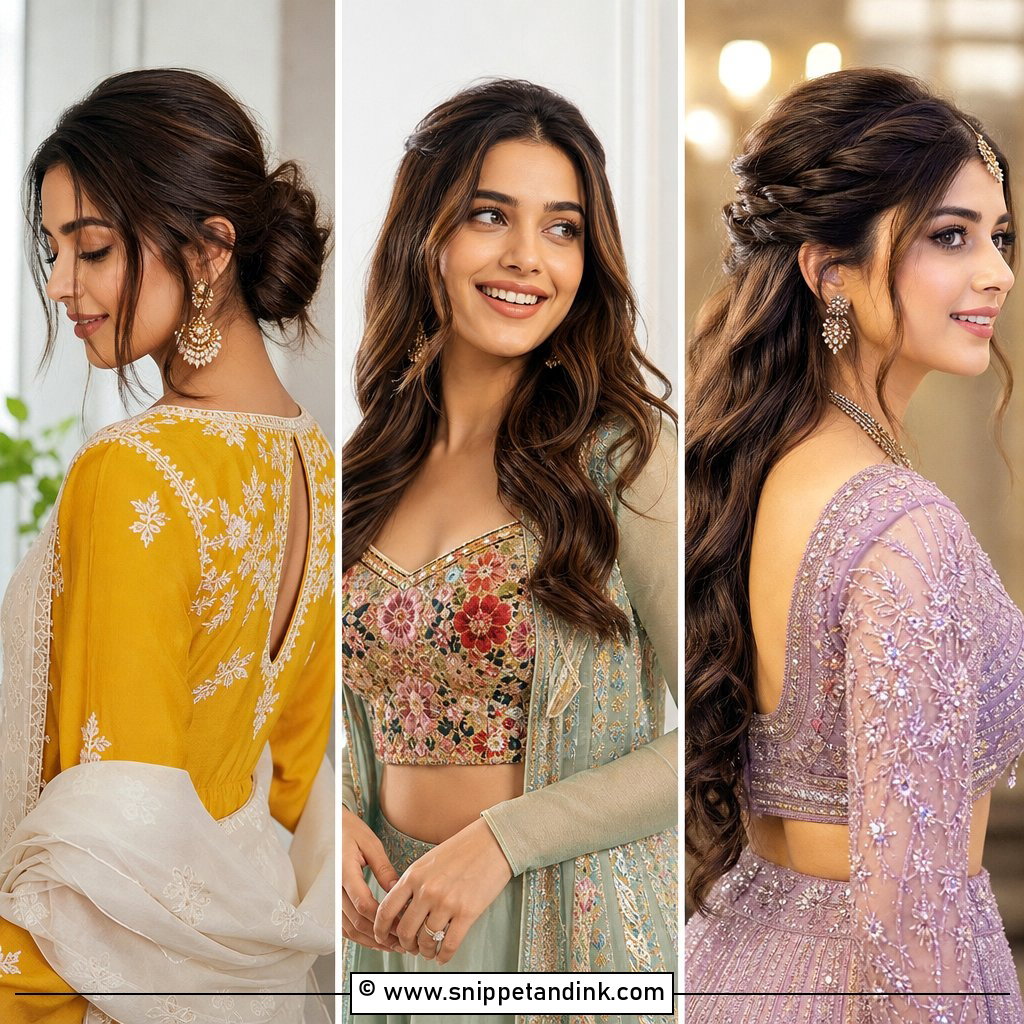
25. Bouncy Blow-Dried Ponytail
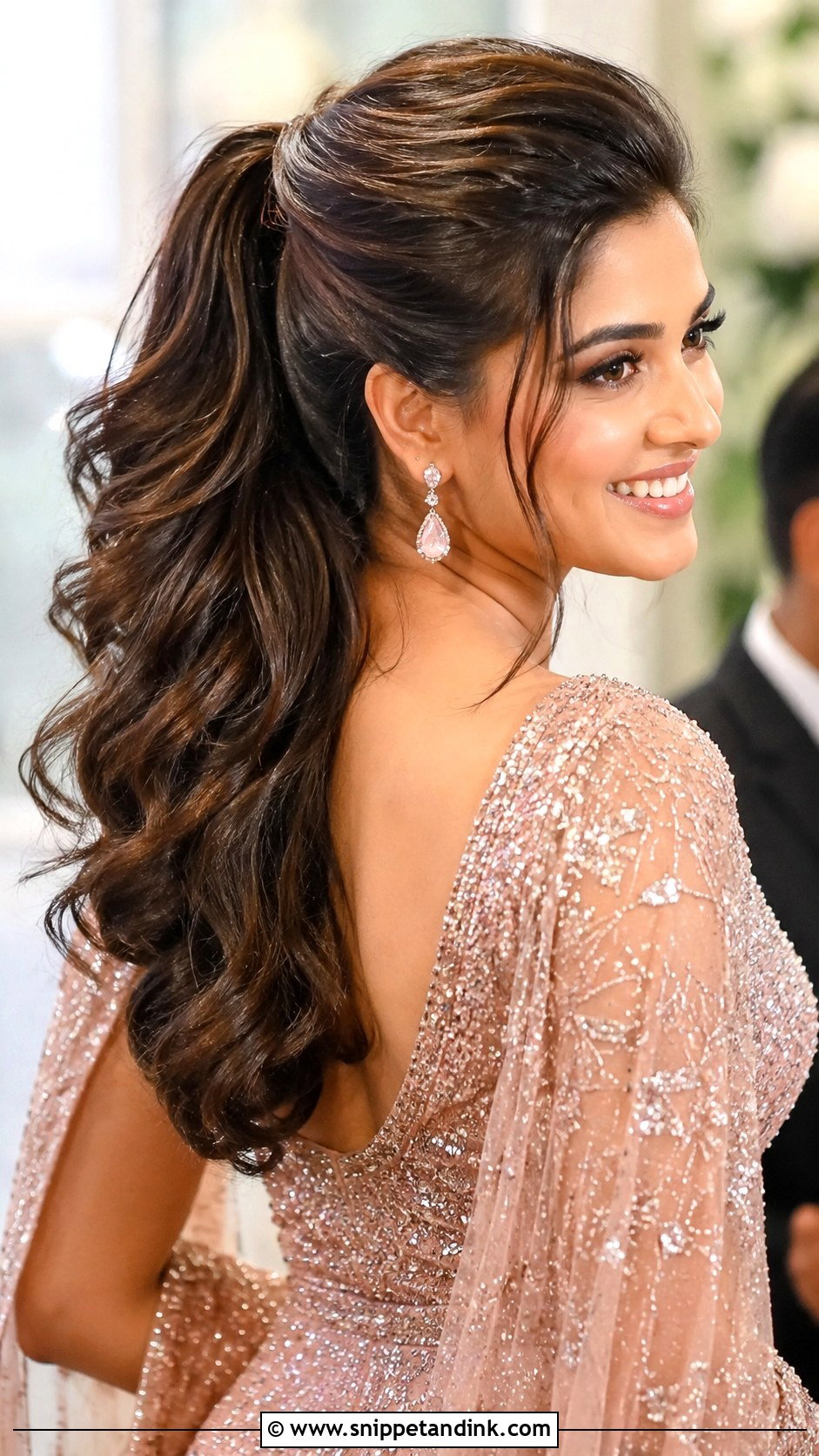
Bounce comes from the blow-dry, not the elastic. I dry the hair in sections with a large round brush, lifting at the root, then tie the pony while the hair still has that volume. A slight curl at the ends softens the tail. Medium to long hair works best. Wrap a section round the base to hide the band. It’s a fresh choice for reception gowns and lehengas, and it holds up well to dancing.
26. Side Braided Ponytail With Gajra
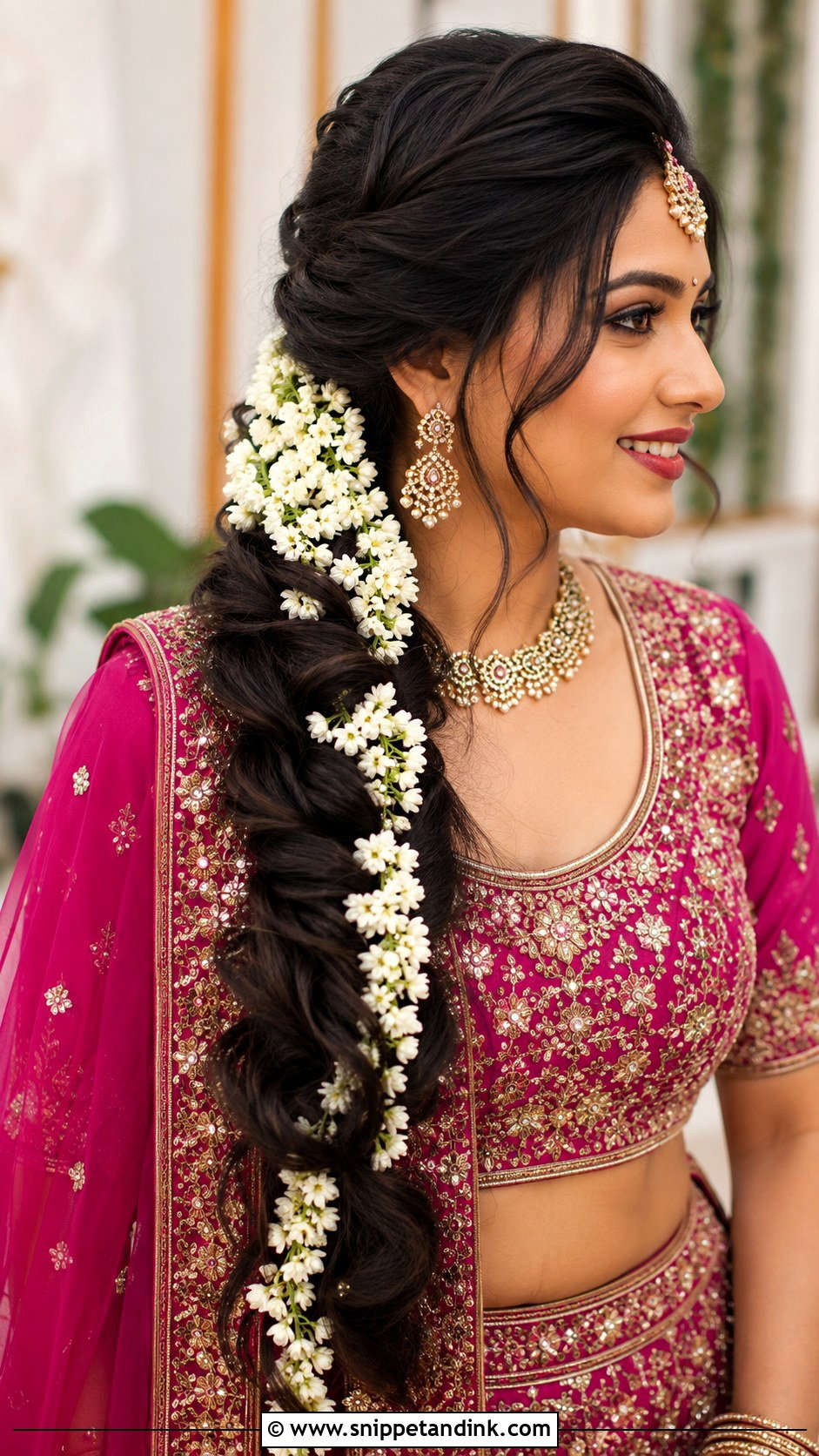
A side braid feeding into a pony, dressed with gajra, keeps one side neat while the tail falls over the shoulder. It suits mehendi and haldi celebrations, when you’ll want hair away from your face. I braid toward the ear where the pony will sit, so the braid joins the tail without a gap. The gajra goes on last, wound round the tail. Long, thick hair gives the fullest result.
27. Faux Voluminous Ponytail
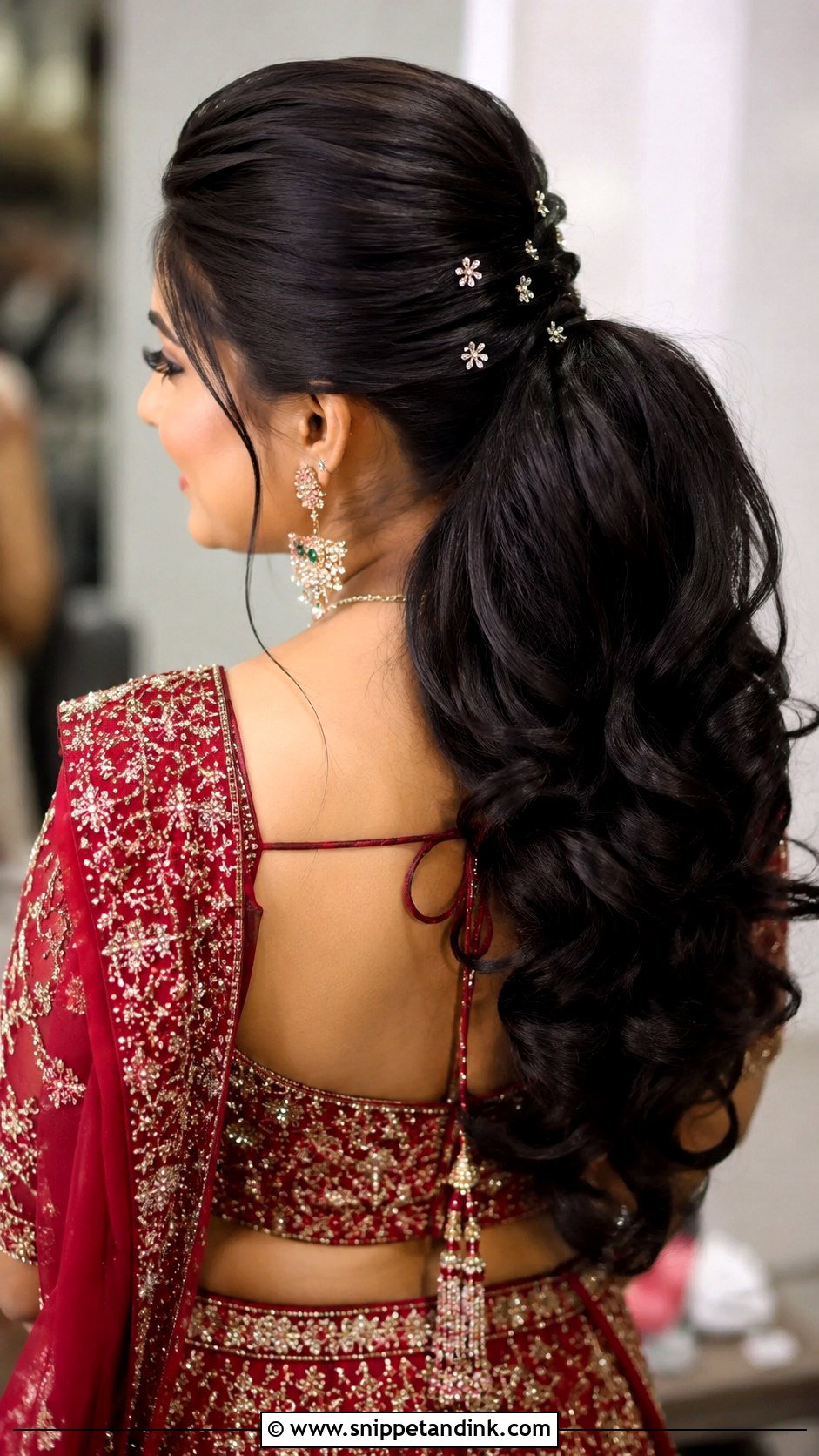
Fine hair gets the most out of this trick. After tying the pony, I fan the tail out and pin small sections underneath at the base, which pushes the hair outward so it looks twice as wide. The crown should stay smooth for contrast. Jewelled pins add sparkle. A fuller tail balances heavy outfits and statement jewellery that would otherwise overwhelm a thin pony.
28. Sleek Wet Look Ponytail
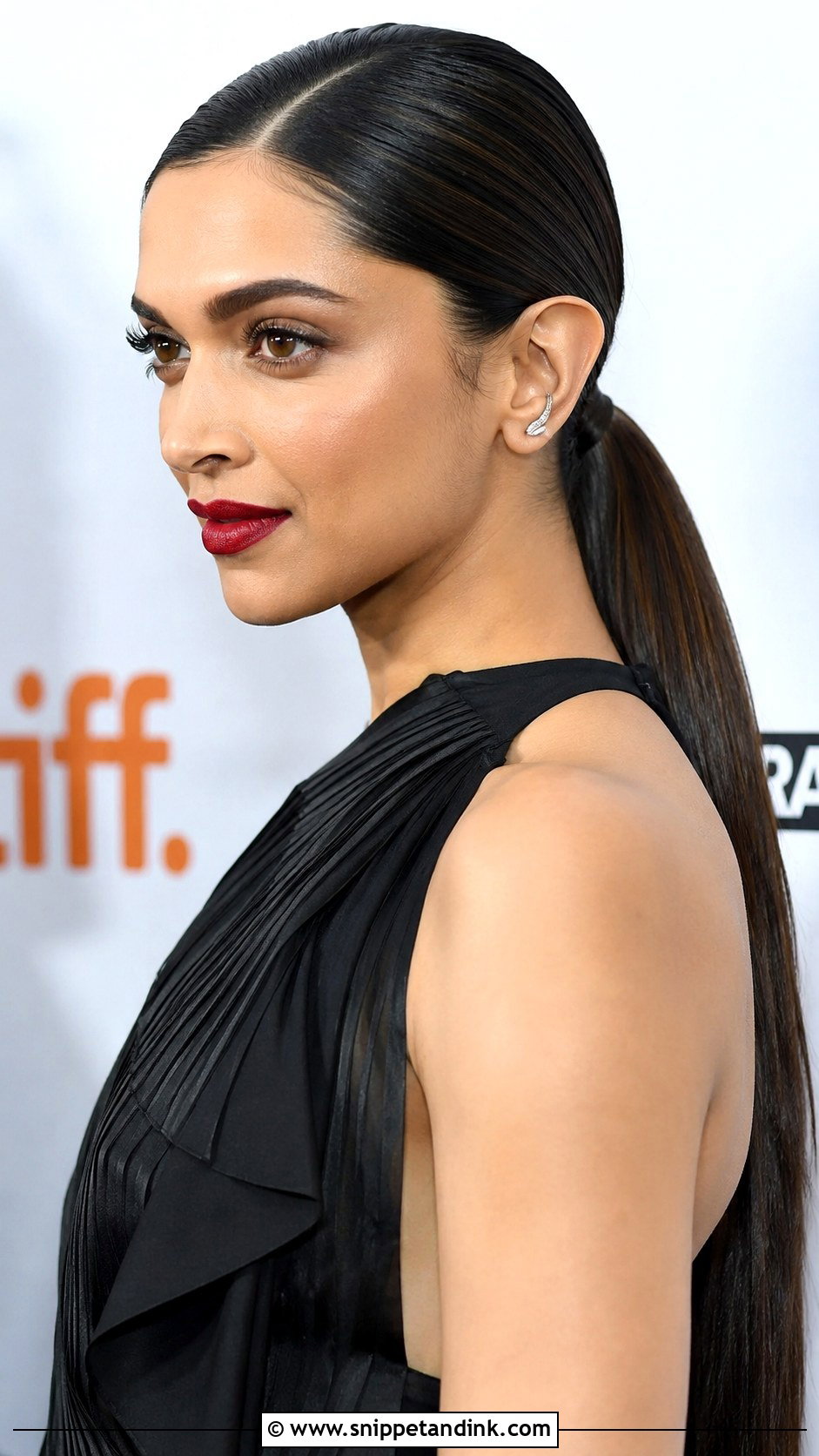
The wet look relies on gel applied in thin layers and combed through for a glossy, sculpted finish. Too much gel at once can flake as it dries, so I build it up slowly. The part must be razor-sharp. It’s bold and modern, suited to cocktail evenings and receptions with fusion outfits or gowns. Choose high or low depending on your neckline. It pairs with bold makeup and statement jewellery.
29. Textured Reception Ponytail
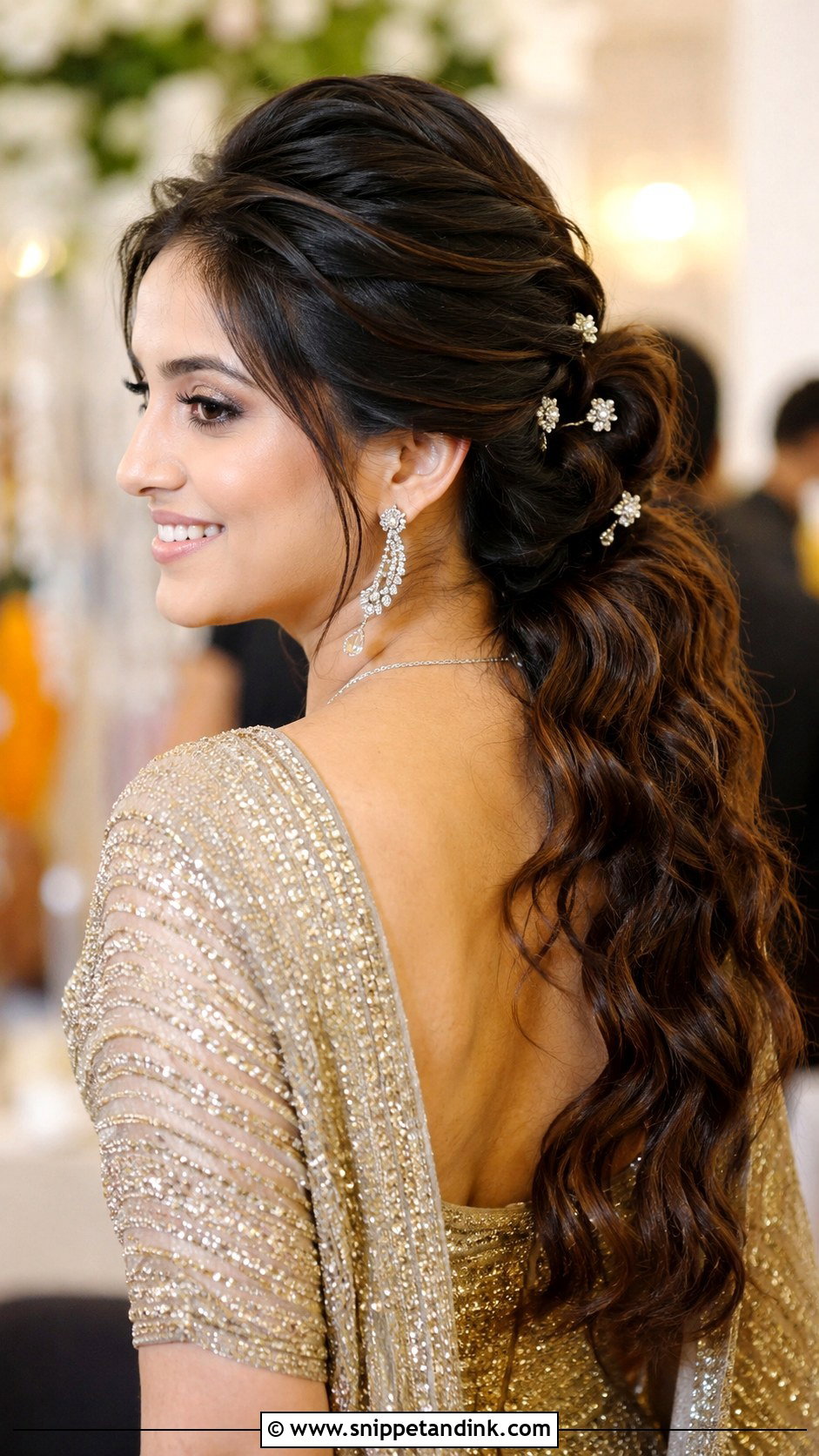
Texture is what keeps a reception pony from looking flat under event lighting. I lift the crown, curl the tail in mixed directions, and pull a few pieces loose at the end. Shimmering gowns and lehengas suit it. Long, thick hair holds the texture best, while fine hair needs a texture spray. Jewelled pins and statement earrings finish it.
30. Low Twisted Ponytail With Hair Accessories
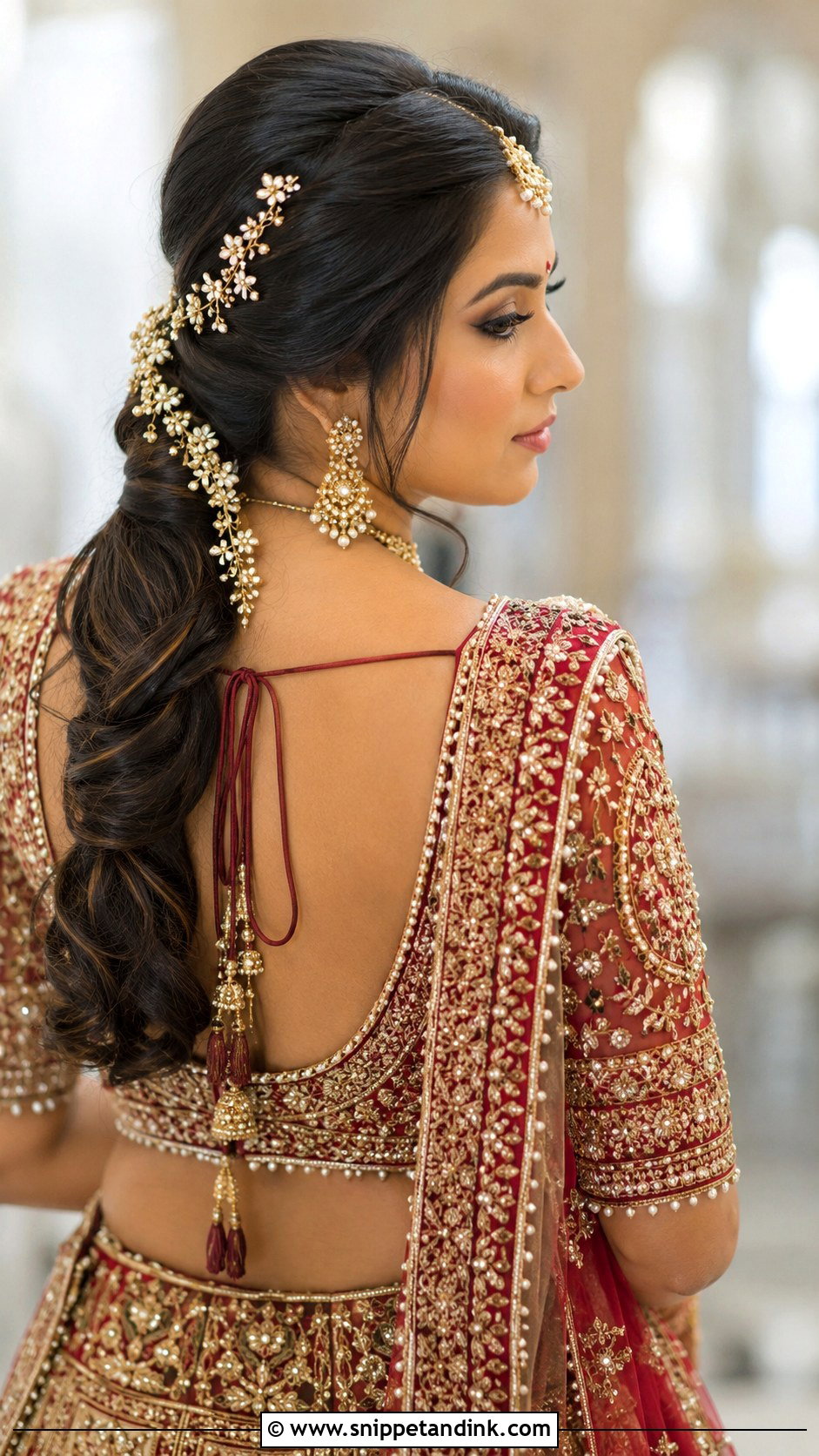
Twisting the sections before gathering them into a low pony adds detail without the weight of a braid. I twist each section toward the nape and pin it. Jewelled pins or a hair vine add sparkle. The low placement is comfortable for a long ceremony and leaves room for a dupatta. It suits heavy lehengas and silk sarees, with a maang tikka to finish.
Clip-In Pony Pieces: Matching and Hiding the Join
Extensions make most bridal ponies look the way they do in photos. A clip-in or wrap-around pony piece attaches over your own tied pony, then a strand of hair wraps the base.
- Match the colour in daylight, not under shop lights. Many people have lighter ends than roots, so a two-tone piece can blend better.
- Match the texture too. A silky straight piece on wavy hair looks obvious unless both are styled the same way.
- Human-hair pieces can be curled and straightened like your own; synthetic pieces often can’t take heat, so check before styling.
- Bring the piece to your trial so your stylist can trim or style it to blend.
When a High Pony Starts to Ache
A high, tight pony pulls on the scalp, and after a few hours some brides get a headache. A few changes help. Tie the pony slightly below the crown rather than on top of it. Use two elastics, one tied at the base and a second just below, so the weight isn’t on one point. Cross a couple of pins under the elastic for support. If it still hurts, it’s fine to take it down and switch to a low pony or open waves between events. Comfort shows on your face in photos.
A Pony for Every Function, From Haldi to Reception
Choose a pony by function: something braided and secure for haldi and mehendi, a high, swinging pony for the sangeet, a sleek low one with gajra if you want it for the ceremony, and a full, glossy pony for the reception. From gajra-wrapped low ponies to voluminous curls crowned with sparkle, there’s a version for each event. Take your favourite ideas, your jewellery and any planned extensions to your trial, and wear the pony long enough to know how it feels.
You'll Like These Ideas:


Leave a Reply