
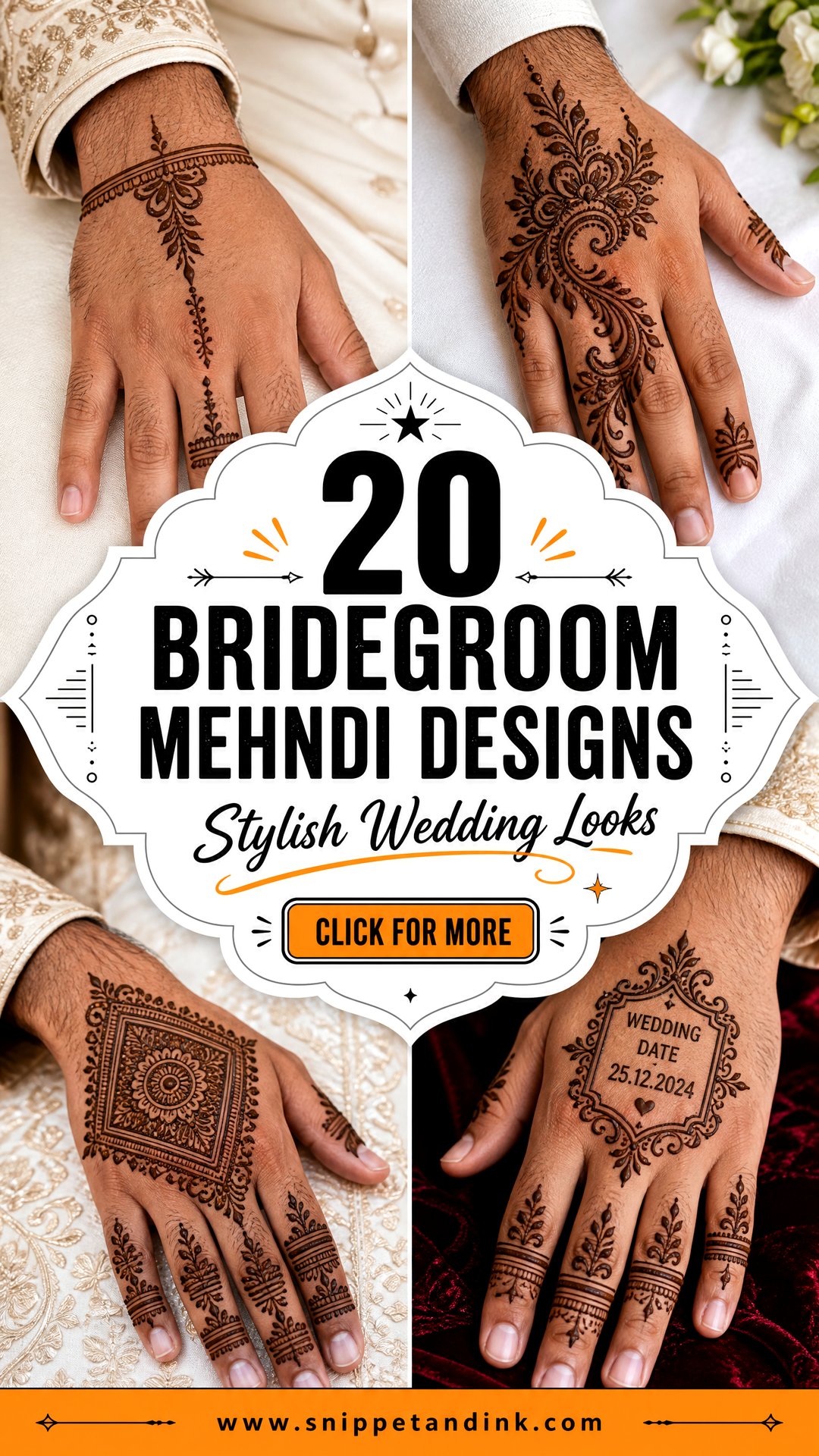
Groom mehndi used to mean a single dot of henna on the palm, applied so the family could say the ritual was done. That has changed. Most grooms I sit with now want a design they actually chose: a small palm mandala, initials, a wedding date, or a full Indian hand to sit beside the bride’s. What I plan around is that a groom’s hands are working all week. He’s shaking hands, holding the sehra, receiving blessings and sliding on a ring in close-up. So the twenty ideas below lean toward bolder lines and more open skin than bridal work, because that is what stays crisp on a man’s hand after a long day.
What Changes When the Hands Belong to the Groom
Most of my working days are spent on brides, and a groom’s hands ask for a few adjustments. Before I draw anything, I look at how much hair is on the back of the hand, how long he can realistically sit still, and what his sleeves will do on the day.
Hair on the back of the hand
Paste sits on top of hair instead of skin, then lifts away as it dries, and the stain underneath comes out patchy. If you want back-hand coverage, trim the hair short with clippers a day or two before. I’d avoid shaving that morning. Freshly shaved skin stings under the lemon and sugar seal, and any small nick takes the colour unevenly.
The time you actually have
A bride can sit for hours. Most grooms have relatives pulling them away every few minutes, so plan the design around the slot you really have. Arabic trails, a palm mandala or a bracelet band go on quickly; a full Indian hand with a portrait does not. Tell your artist how long you can give her and let her scale the design to fit, rather than asking for full coverage and getting rushed lines.
Sleeves, watches and a kada
Bring a photo of the outfit. A sherwani with a long fitted cuff hides most wrist work, while a kurta pushed up at the mehndi shows the forearm. If you’ll wear a watch or a kada at the ceremony, say so, and I’ll finish the wrist band below where it sits so the best part of the design isn’t hidden under metal.
1. Simple Groom Mehndi Design
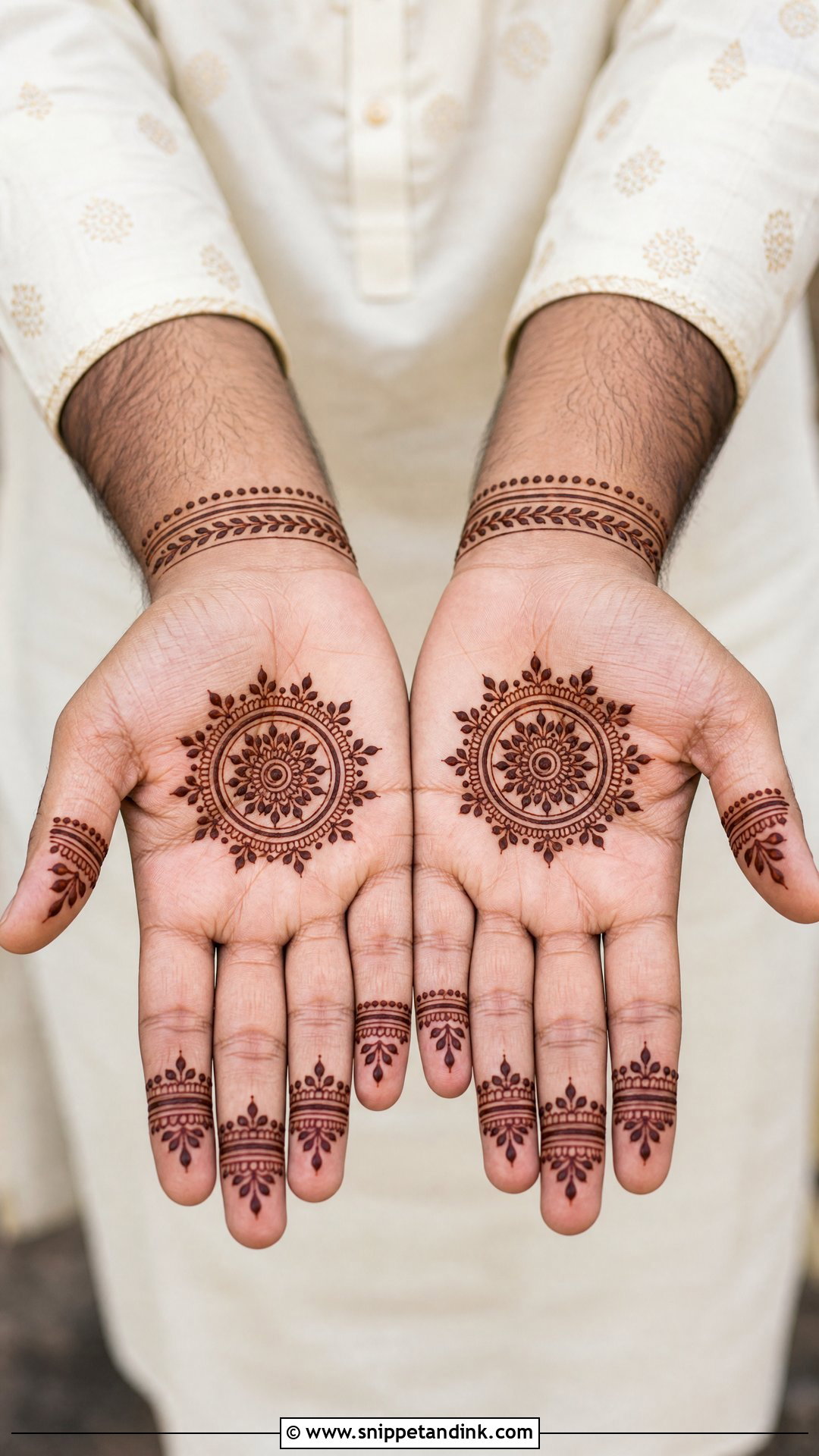
A neat mandala on the palm or the back of the hand, a clean border, a few dots and a light wrist line. That’s the whole design, and it fits into a short sitting. First-time grooms often worry about how henna will look next to a watch or embroidered cuffs, and this one never fights either. I keep the centre motif heavy and leave real negative space around it, because a small design drawn with thin, crowded lines reads as a smudge from across the mandap. Fingertip caps are optional. I only add them when the groom wants the hand to look a little fuller.
2. Full Hand Groom Mehndi Design
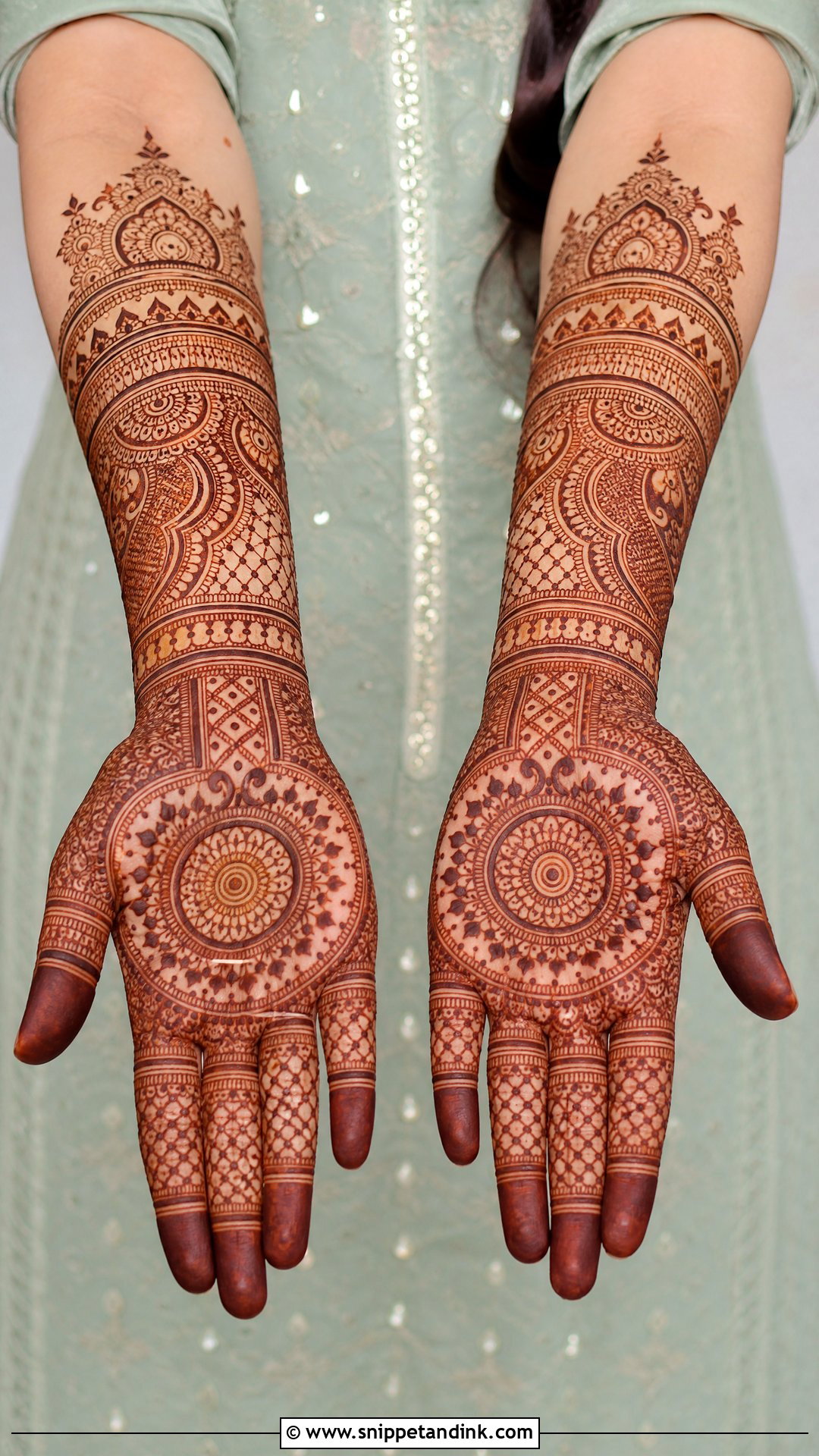
Full coverage on a groom is a different job from full coverage on a bride. I draw larger motifs with thicker outlines, geometric panels and paisleys, and let the wrist-to-forearm bands carry some of the weight so the palm isn’t packed edge to edge. The palm usually holds a mandala, a groom symbol or the couple’s initials, while the back of the hand takes jaali, vines, and bracelet-style details. Spacing is what I watch most. A man’s palm is broader, and fine filling stretched over that area looks thin once the paste comes off, so I’d rather leave gaps that stain cleanly. At a traditional Indian or Pakistani wedding, or a big destination event, this is the coverage most families expect to see.
3. Groom Name Mehndi Design
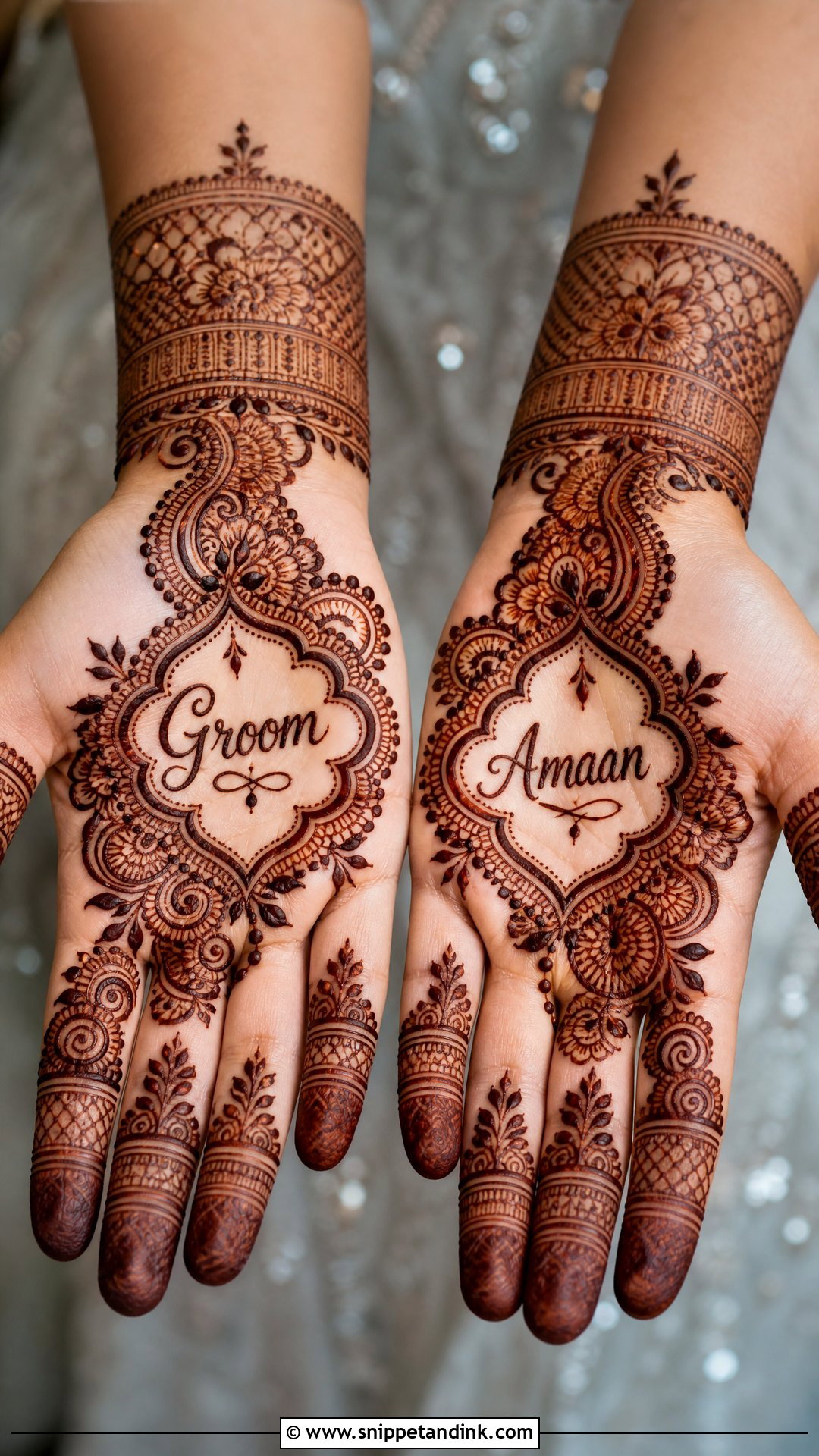
Names are where I slow down. Paste spreads slightly as it sits, and the stain softens every edge over the next two days, so a name written in fine script often blurs into a squiggle. I write lettering thicker than feels necessary and keep the pattern around it quiet. It can run across the palm, sit inside a mandala, follow the wrist band or hide in a paisley, and some grooms add the bride’s name beside their own. Devanagari, Urdu, Punjabi and English all work. Send your artist the exact spelling and script ahead of time so she can practise, since hand-lettering a language you don’t write every day is where mistakes creep in.
4. Bride And Groom Mehndi Design
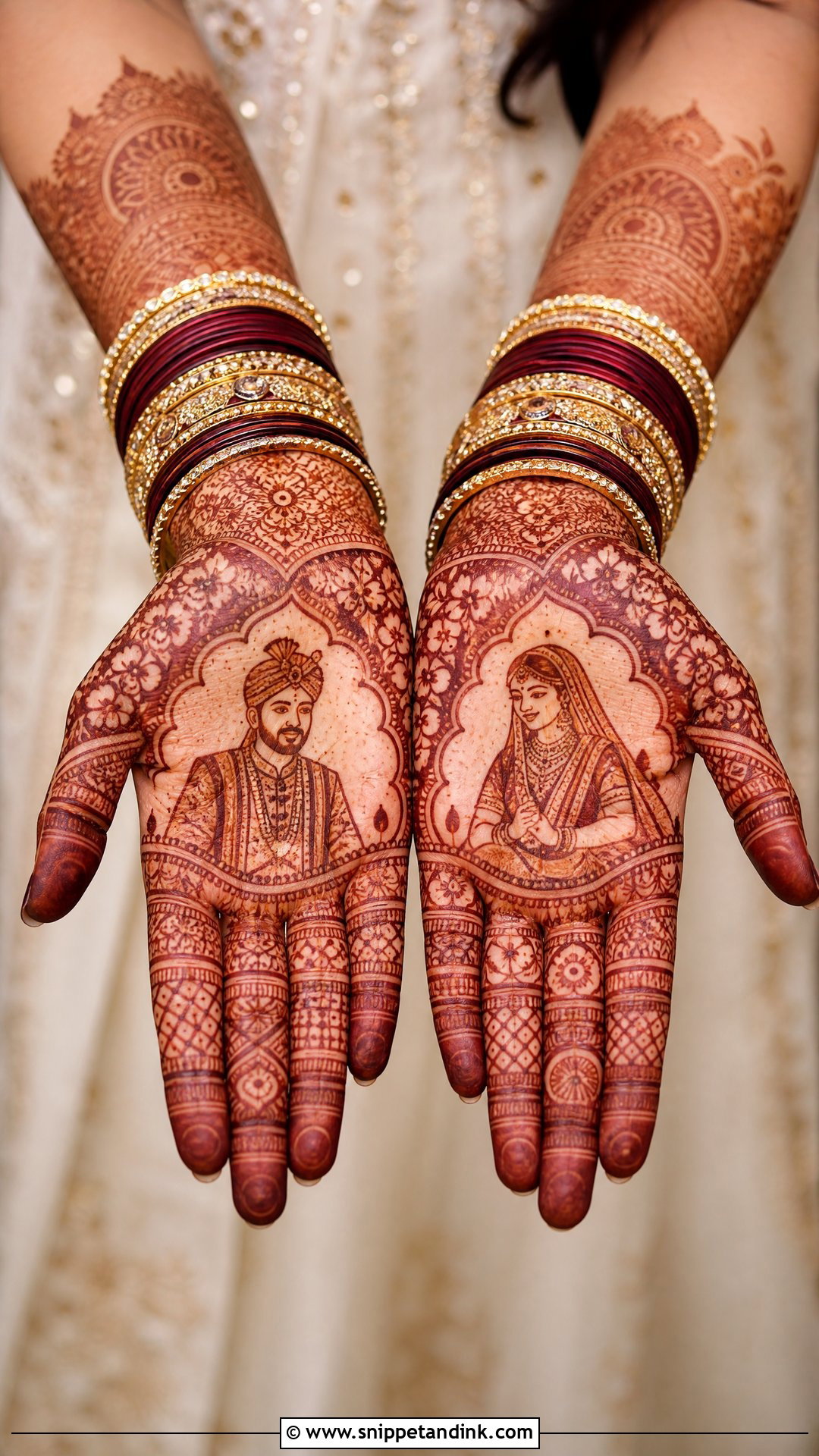
Portrait work on a groom’s hand needs room. A bride and groom mehndi design can carry small faces, a dulha-dulhan scene, garlands or a dhol, but faces are the first thing to lose detail as the stain develops. I draw them with clean outlines and very little shading. My usual layout puts the portrait on one palm and balances it with a mandala or wedding symbol on the other. It works well for couples planning matching themes, as long as nobody asks me to squeeze the whole baraat onto one hand.
5. Arabic Groom Mehndi Design
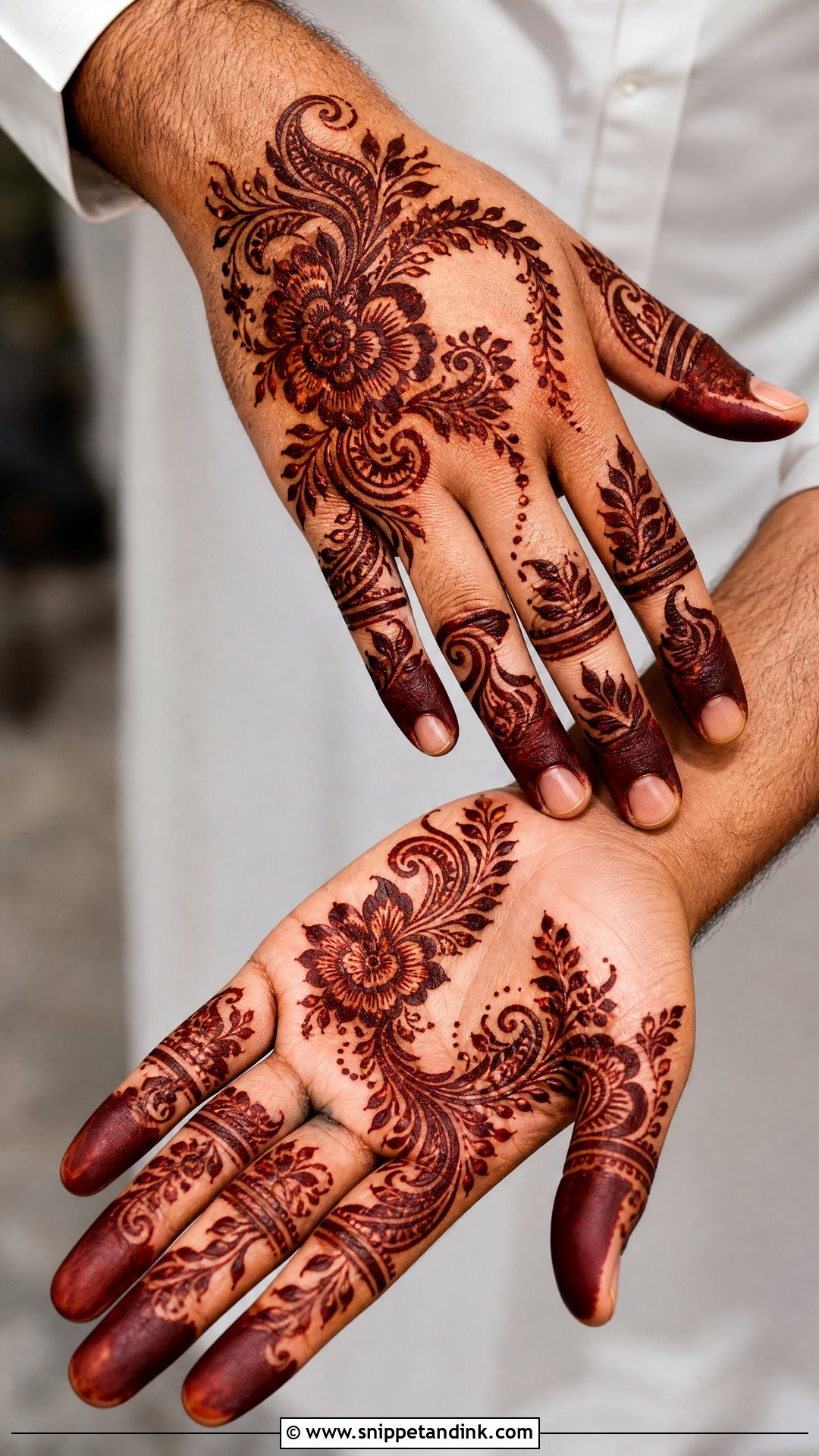
Arabic work is my most common suggestion for a groom who is short on time. The pattern runs diagonally across the palm or back of the hand in leafy vines, paisleys, dots and thick borders, with plenty of bare skin in between. Because the strokes are wide, it goes on quickly and dries before anyone gets restless. Those same wide lines keep their shape when the stain deepens to reddish-brown or maroon, which is why they show so clearly in pictures.
6. Indian Groom Mehndi Design
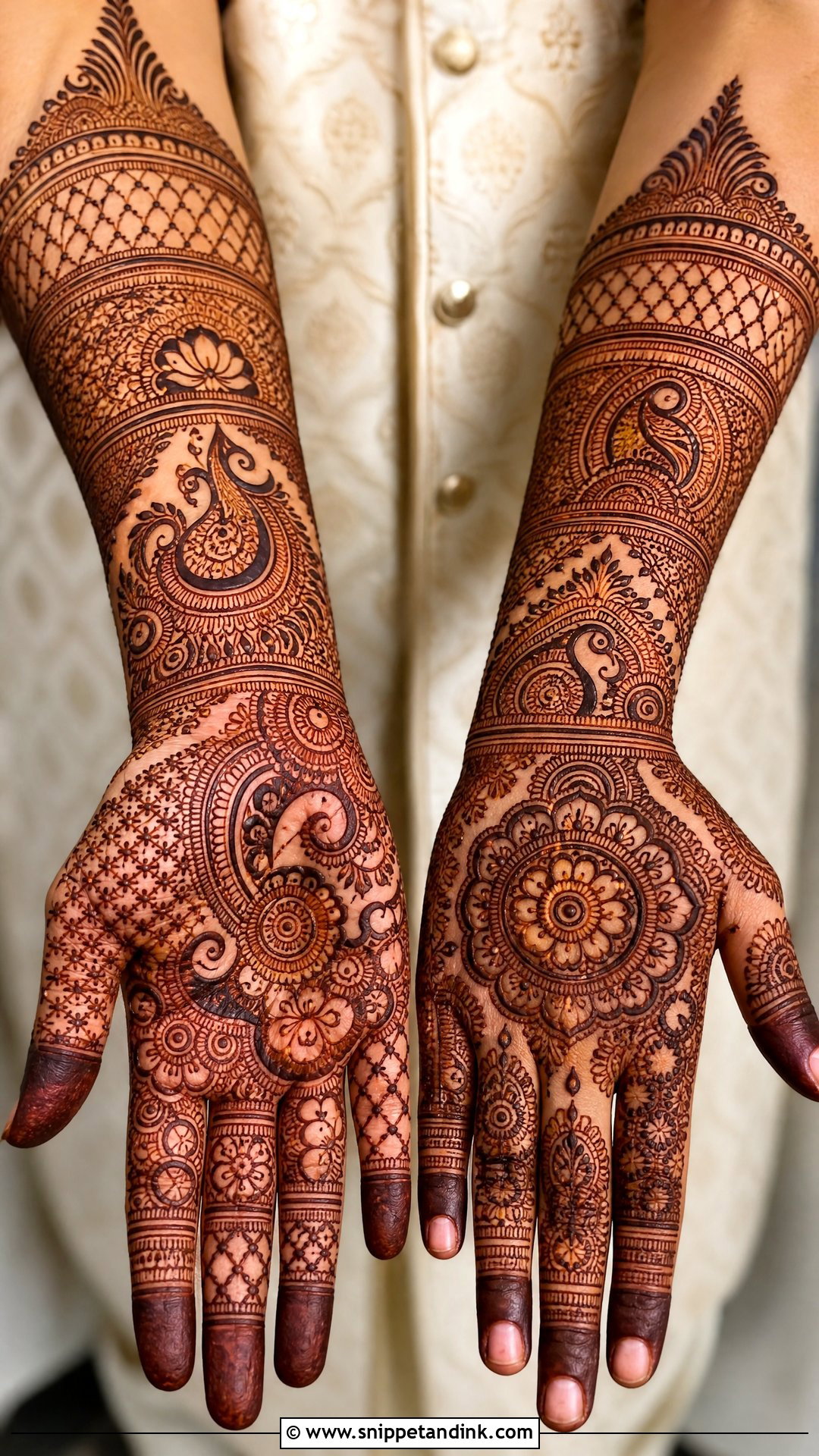
Traditional Indian patterns carry the most ritual meaning: mandalas, paisleys, peacocks, jaali, kalash and lotus. On a groom I strengthen the symmetry and cut back the delicate shading, because the soft gradients a bride’s hand carries tend to look patchy spread over a larger hand. The layout I reach for is a central palm mandala framed by paisley panels with a bold cuff at the wrist, then a lighter matching mandala and finger bands on the back. Expect the longest sitting of anything on this list. If the family ceremonies matter more to you than fashion, this is the design your elders will recognise straight away.
7. Indo Arabic Groom Mehndi Design
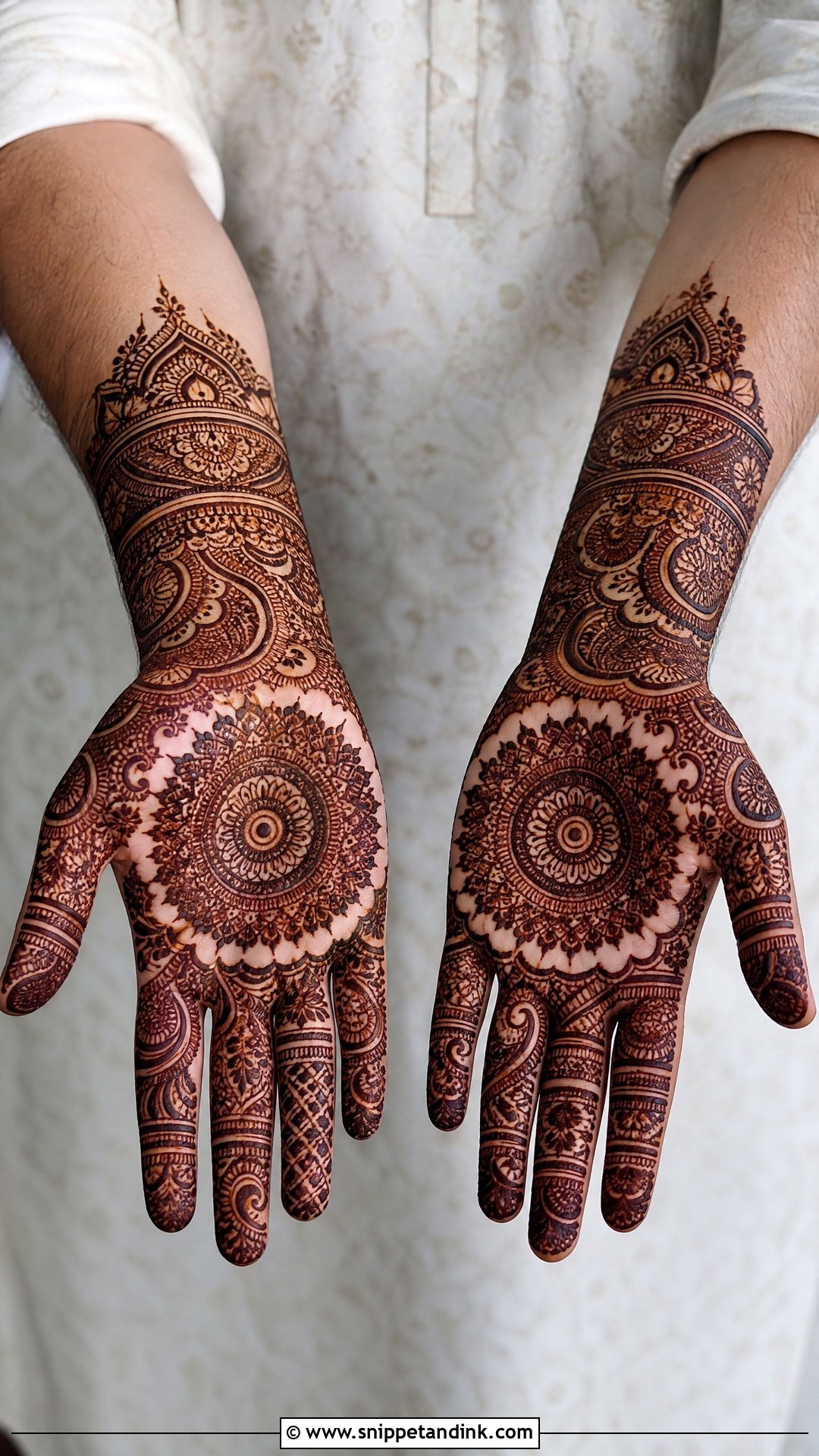
When a groom can’t decide between Indian detail and Arabic openness, we usually land here. A central Indian mandala sits on the palm, Arabic floral trails run off it, and bold paisleys break up the open skin. Bracelet bands and leafy strokes finish the back of the hand. It gives medium coverage in a medium sitting, and that matters on a mehndi night when the groom is also expected to dance, greet every aunty and pose for each cousin’s phone.
8. Royal Groom Mehndi Design
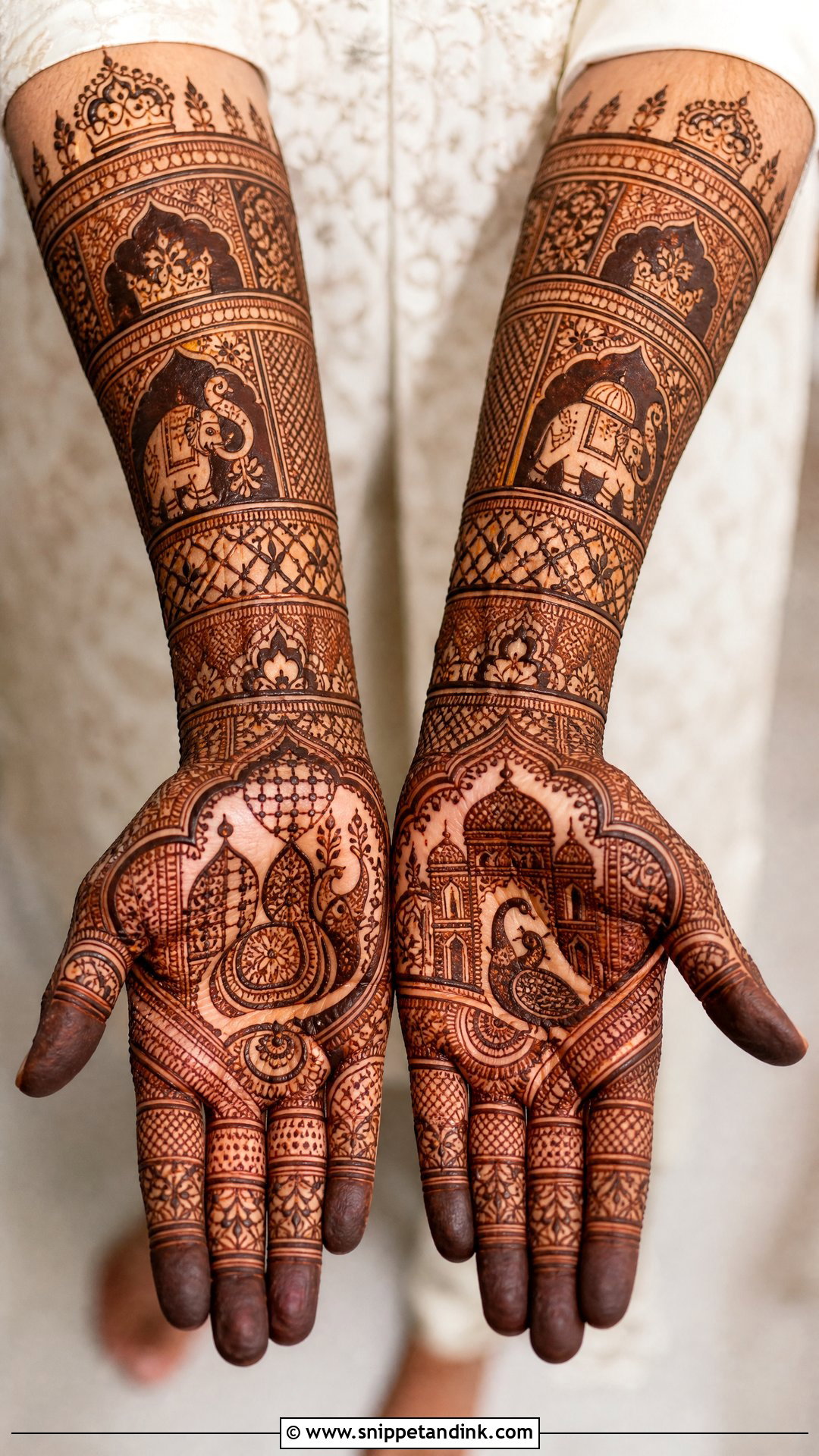
Arches, elephants, peacocks, sword-like borders, crowns and heavy cuffs make up the royal look. The trap is scattering them. I lay royal motifs out in clean panels: one palm carries an emblem or mandala, the other holds initials or the wedding date, and strong jaali work crosses the back of the hand. A sherwani, saafa and embroidered jacket are already competing for attention, so overfilling turns the hands into noise. Space around each motif is what keeps it looking regal.
9. Minimal Groom Mehndi Design
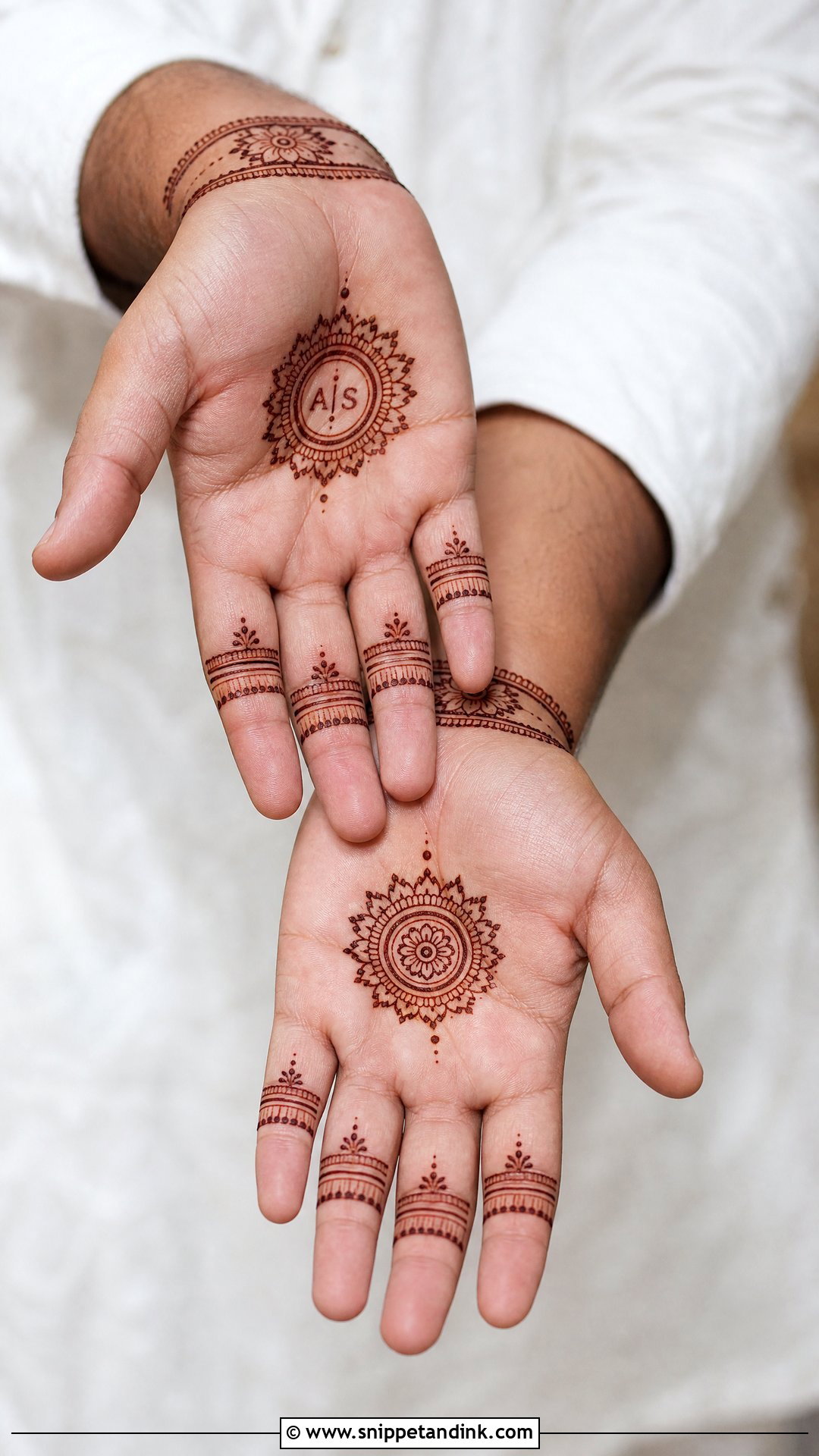
Minimal doesn’t mean careless, and that’s the line I try to protect. A small palm mandala, a crisp wrist band, fine finger lines or one initial near the thumb can look intentional or unfinished depending entirely on placement. I size the motif against the hand before I start so it sits centred instead of drifting toward the fingers. Grooms who want to take part in the ceremony without full coverage tend to choose this, and so do couples at fusion weddings or courthouse ceremonies with a cultural touch.
10. Back Hand Groom Mehndi Design
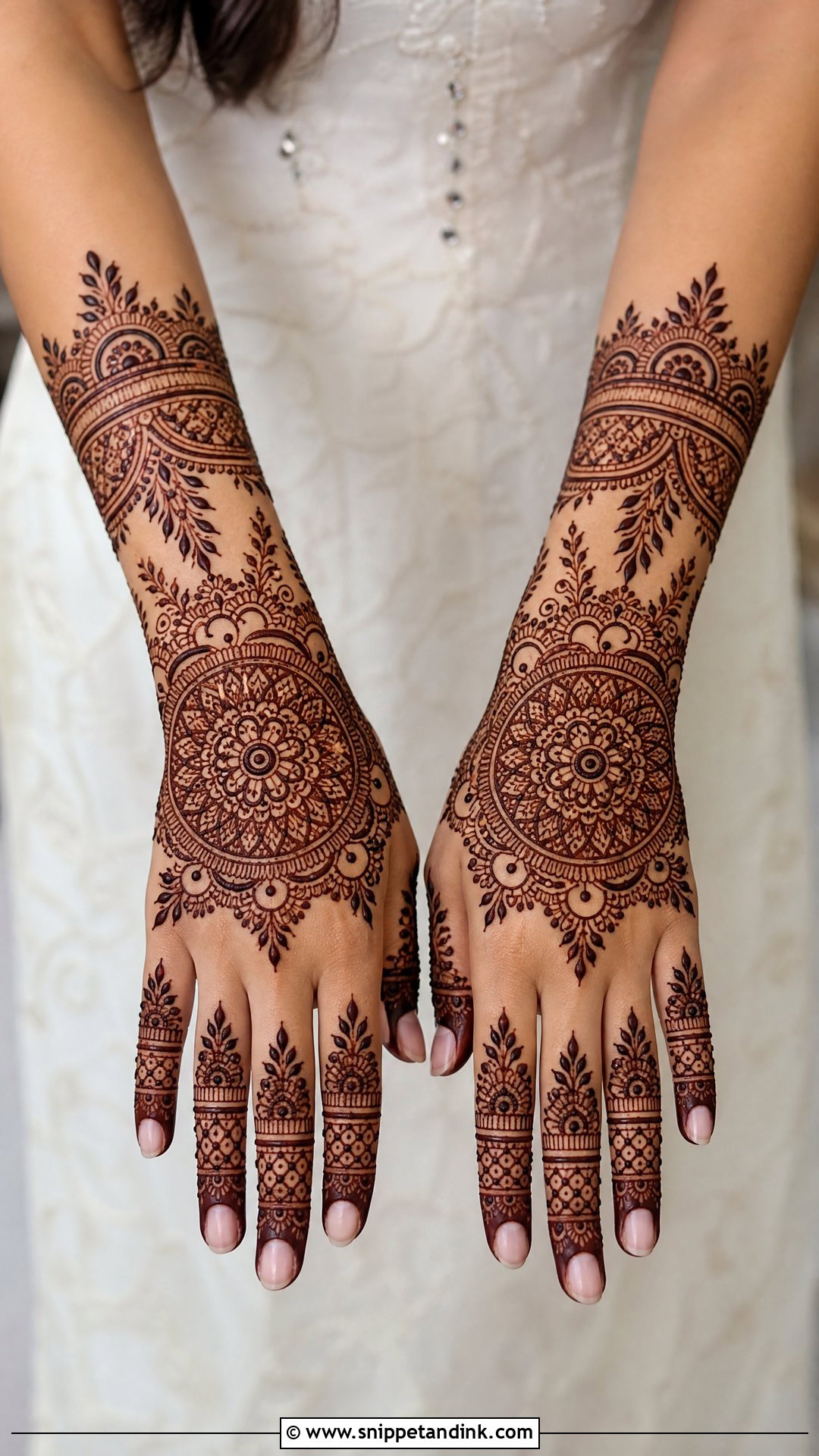
The back of the hand is what people actually see, in greetings, while you hold a glass and in every ring close-up. A central mandala, geometric bands, finger details and a bracelet finish cover it well, and open space between motifs keeps it neat. Back hand mehndi also suits grooms who find henna on the palm uncomfortable. One honest caution: the back of the hand stains lighter than the palm. I use a slightly thicker line there and ask the groom to leave the paste on longer than he’d like.
11. Palm Groom Mehndi Design
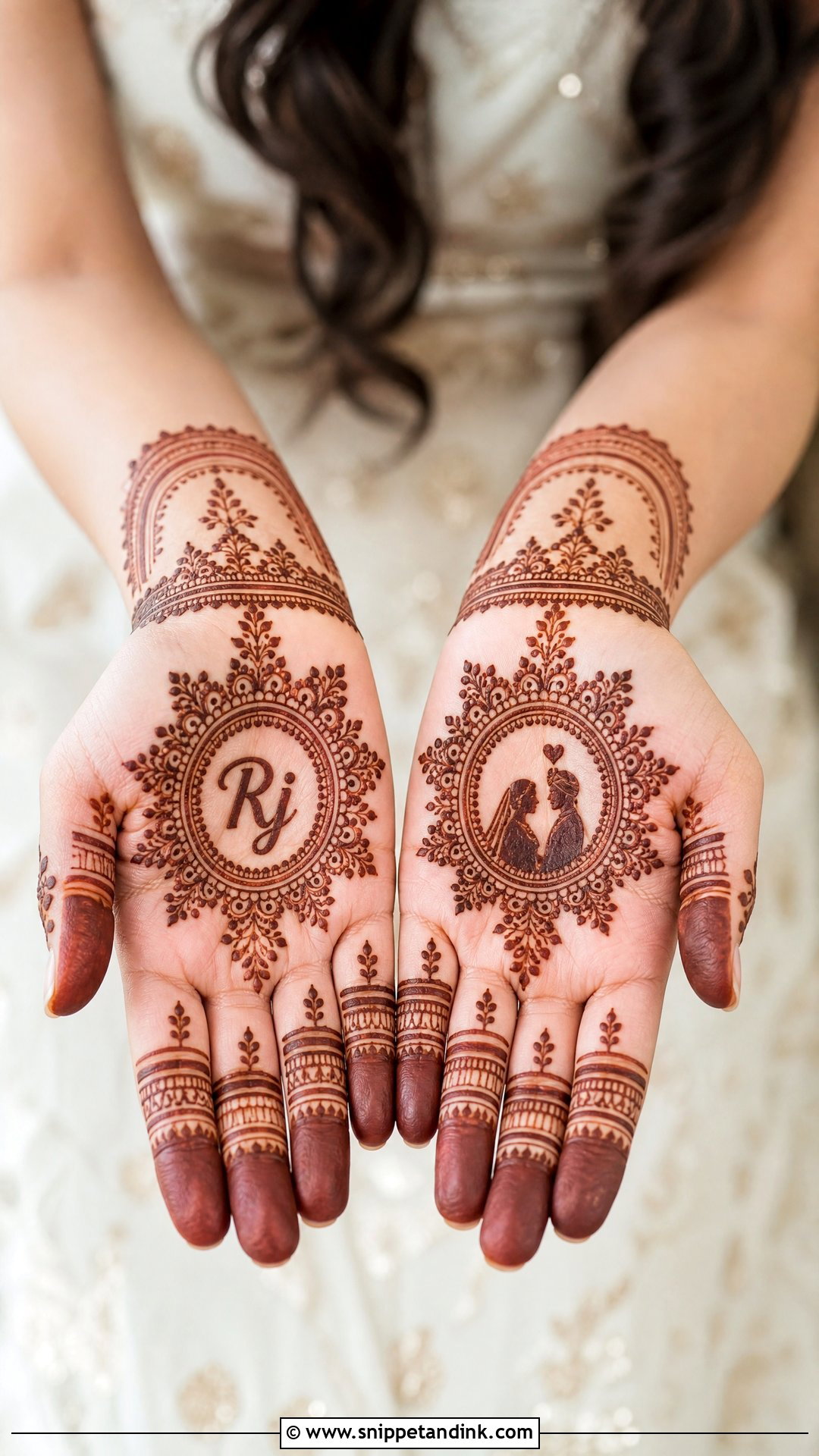
Palm skin takes henna better than almost anywhere else, which is why the deepest stains I see are always in the centre of the palm. That flat space holds a mandala, initials, a date, a religious symbol or a small bride-groom motif without crowding. Plenty of grooms keep the fingertips plain and let the centre do the work. A border and a short wrist extension fill it out if you want more, and on days when you’d rather keep it private, a closed hand hides the whole thing.
12. Groom Mehndi Design With Initials
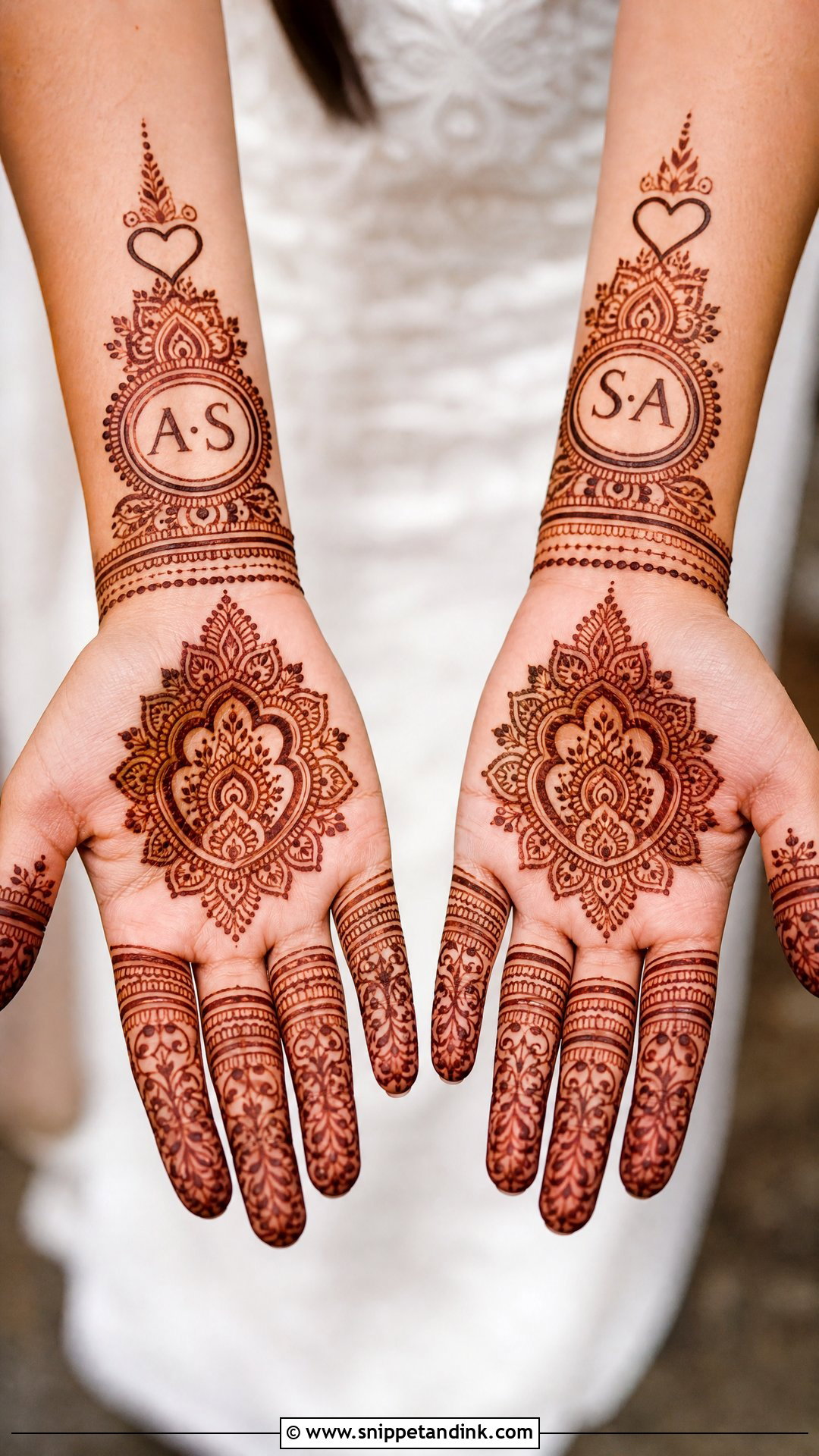
Two letters are far easier to keep legible than a full name, so initials are my safer recommendation when a groom wants something personal. I set them inside a heart, a mandala centre, a wrist band or a small paisley frame, sometimes linked by a tiny date or an infinity curve. Thin letters disappear as the stain spreads, which is why I draw bold calligraphy. Initials slot into Arabic, Indian or minimal patterns, and they’re quick enough to add at an engagement, nikah or sangeet without booking a long session.
13. Groom Mehndi Design With Wedding Date
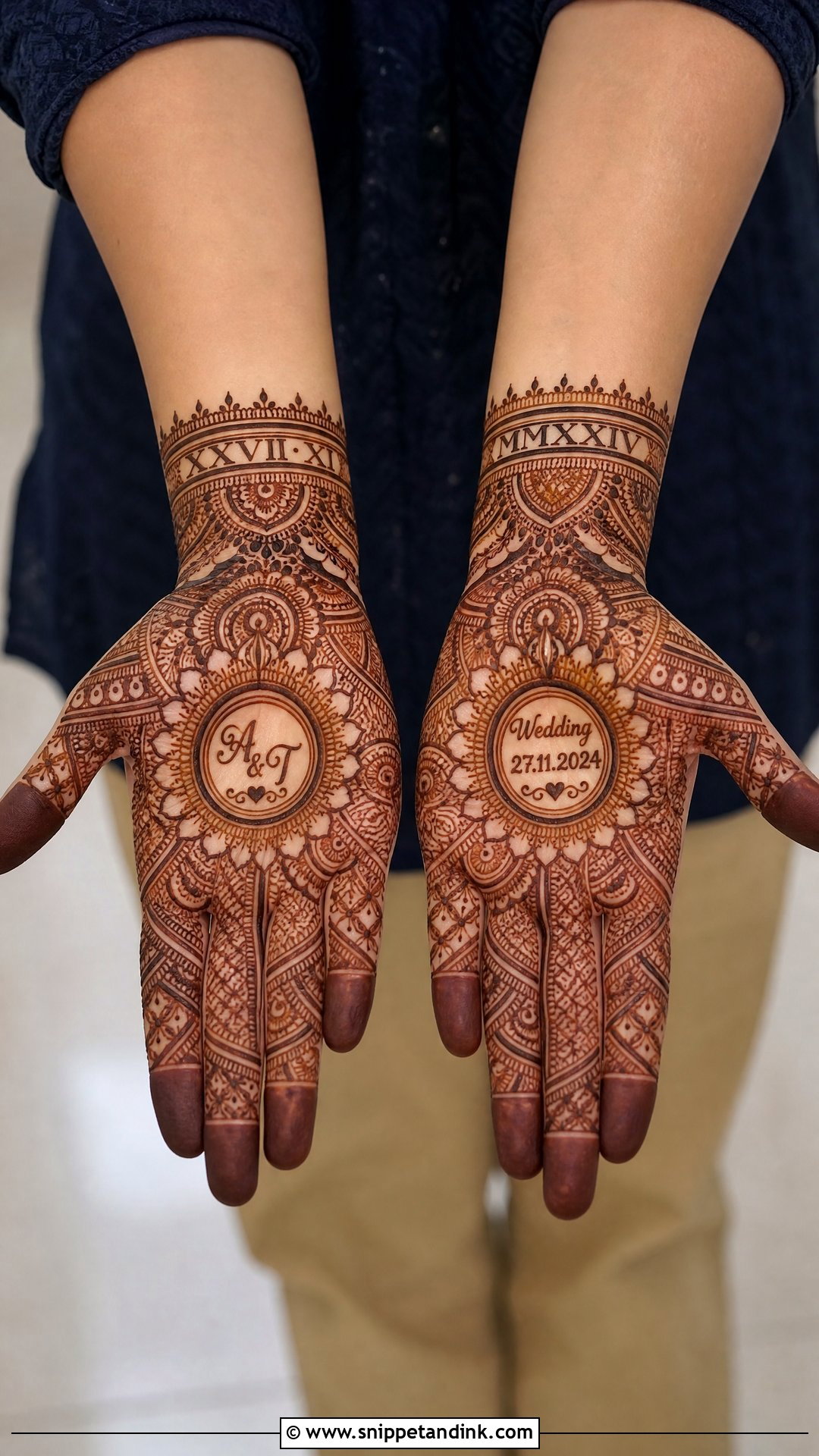
Numbers are surprisingly unforgiving in henna. A 6, 8 or 9 closes up into a blob if the loops are drawn small, so I write dates larger and bolder than most grooms expect. The date can wrap the wrist like a bracelet, hide inside a palm mandala or sit beneath the couple’s initials. Roman numerals avoid the closed-loop problem completely and suit a modern design, while ordinary numerals feel warmer. Keep the pattern around it plain or the date gets lost in photos.
14. Mandala Groom Mehndi Design
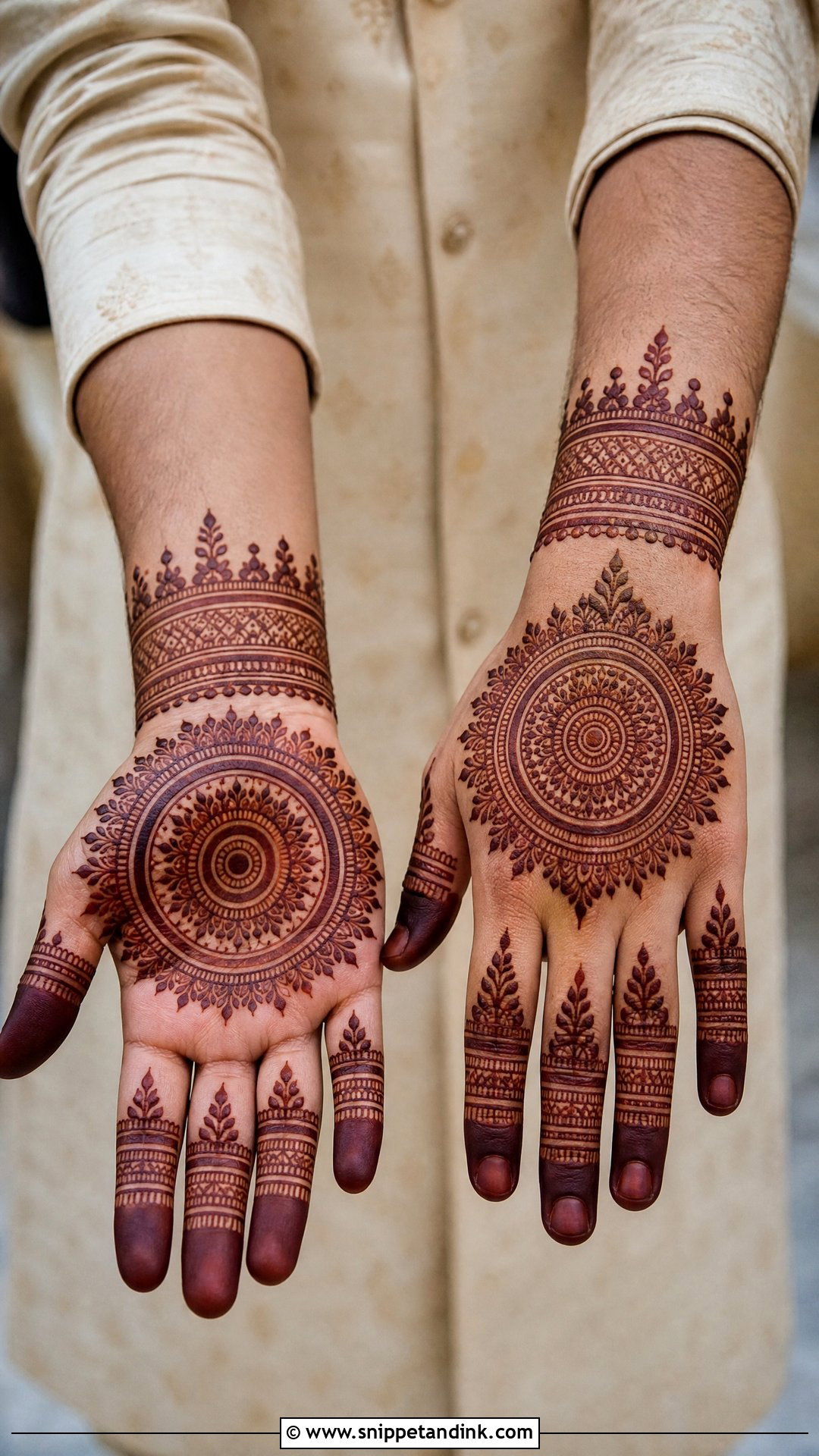
If a groom tells me he has no idea what he wants, I start with a mandala. The circle sits naturally in the palm or on the back of the hand and doesn’t argue with any outfit. For men I draw it bolder, with thick outlines, dot rings and geometric petals rather than lace-fine filling. Fingers can stay bare or get simple tip bands, and a wrist cuff closes the design. It’s one of the quicker options here, and the symmetry holds up well in close-up photography.
15. Peacock Groom Mehndi Design
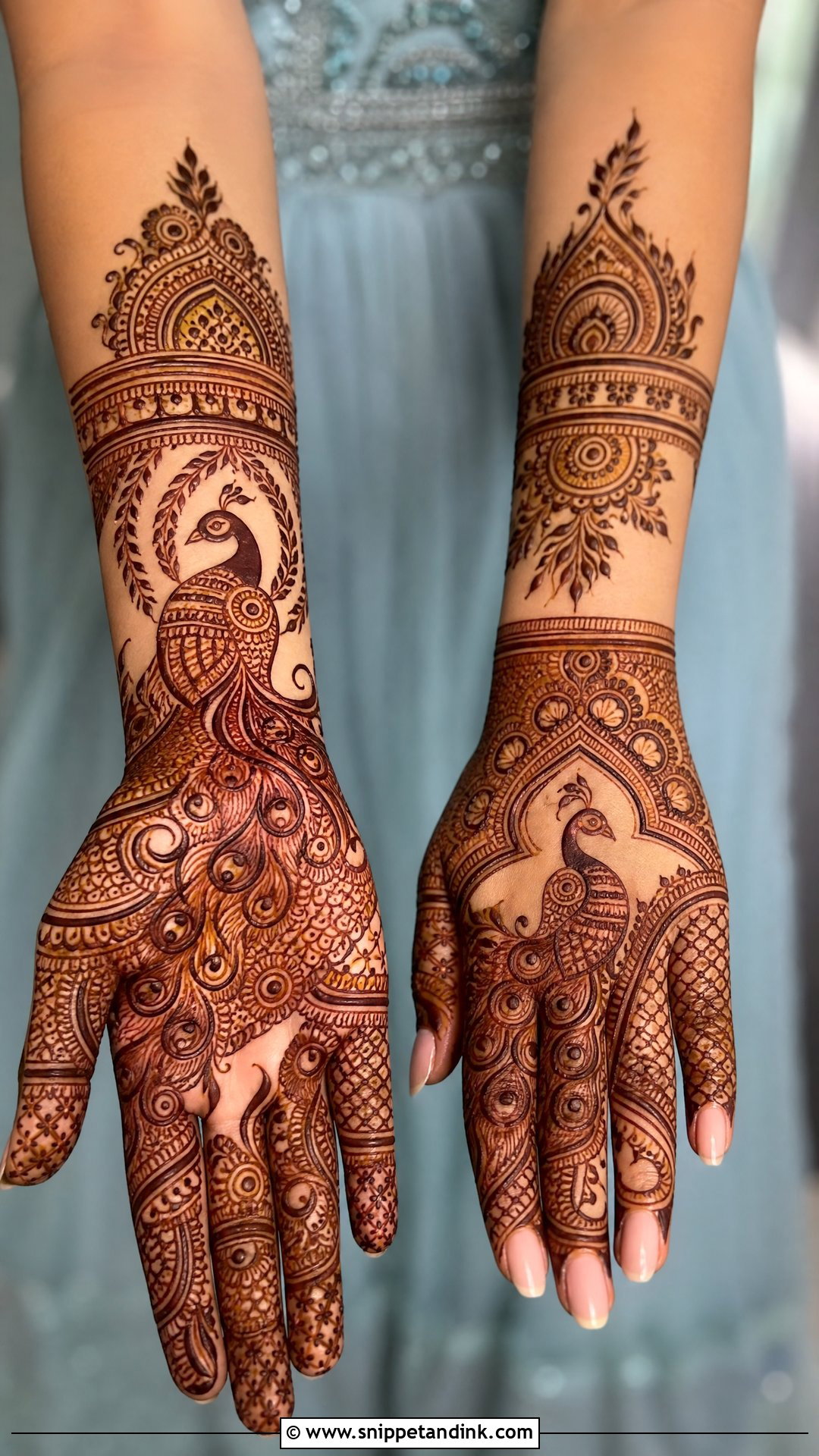
Peacocks are the motif I simplify most for grooms. On a bride I might fill every feather; on a groom I keep bold outlines and limited fine filling so the bird reads as strong rather than fussy. It can sit on the palm, stretch across the back of the hand or curl near the wrist with paisley and feather lines. Jaali mesh, a mandala or a leafy border completes the hand. It belongs at a colourful traditional ceremony, where everyone in the room understands what the motif means.
16. Geometric Groom Mehndi Design
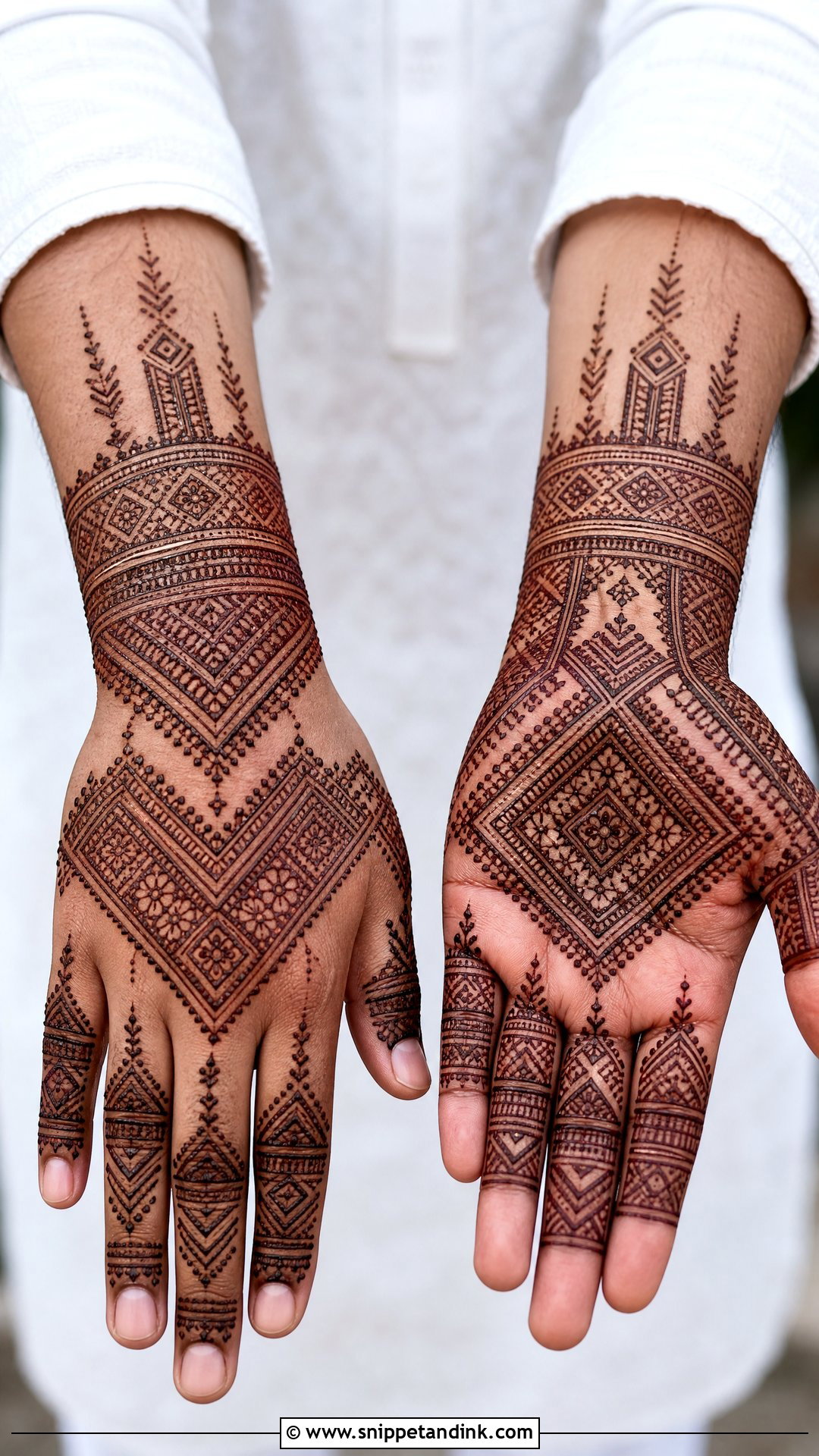
Grooms who wear a watch every day and like tailored clothes often pick geometry. Triangles, squares, diamonds, grids, chevrons and straight bands replace the florals, across the back of the hand, the palm or from wrist to forearm. Moroccan-style geometry is the version I draw most for men. The hard part is accuracy: a grid that drifts a few millimetres looks wrong in a way a vine never does, so I map the lines lightly with dots first. A few dots or border lines soften it, and it sits well with simple kurtas, tailored sherwanis and contemporary outfits.
17. Bracelet Groom Mehndi Design
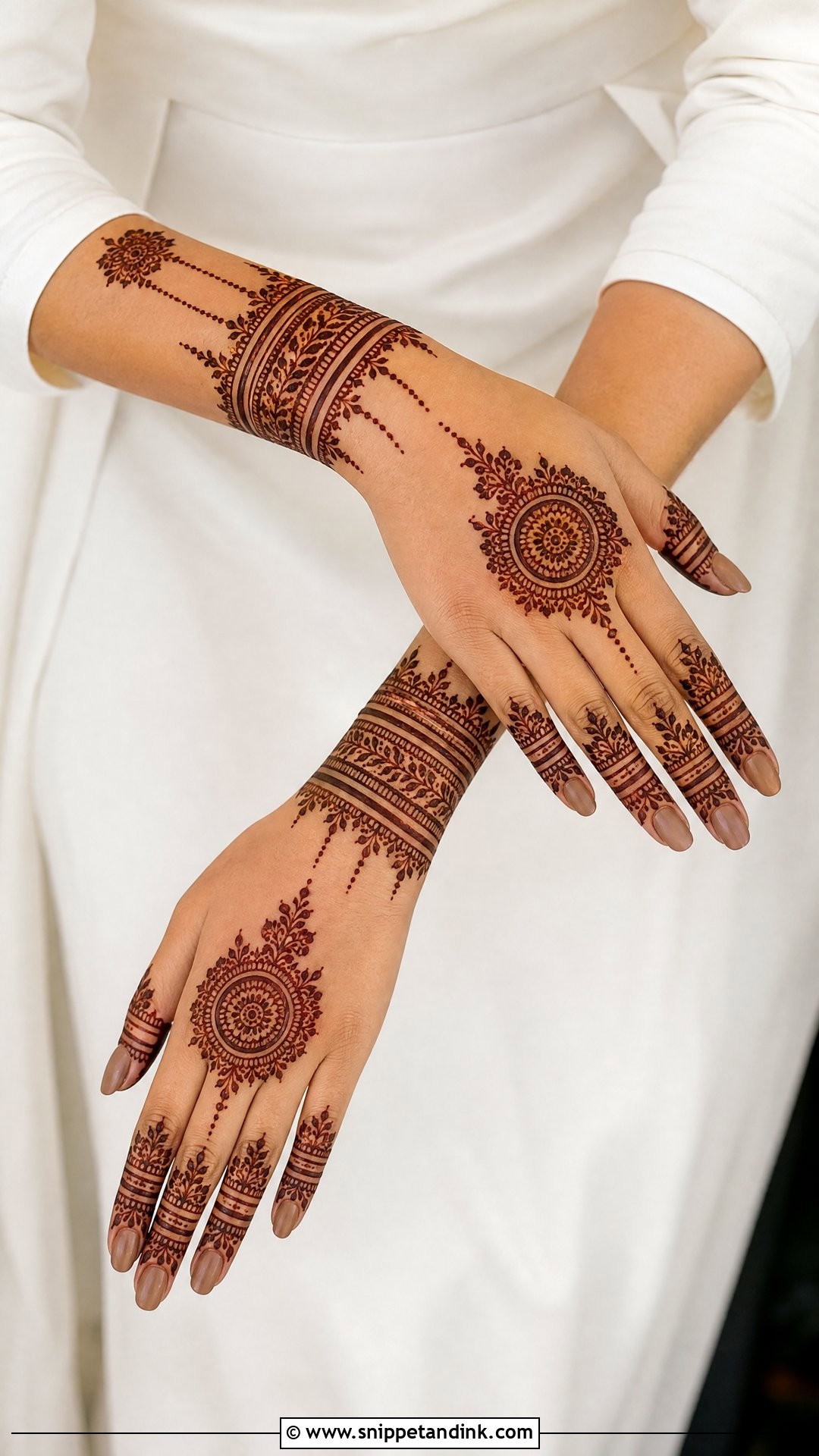
This one behaves like jewellery. The decoration sits on the wrist and lower hand, in cuff bands, chain-like lines, a small mandala, leafy details or geometric borders, with the back of the hand mostly open around one central motif. Grooms who don’t want anything on the palm like it, and it shows best at a mehndi or haldi event with sleeves rolled up. Wrist skin stains a little lighter than the hand, so expect a softer colour at the cuff than on the knuckles.
18. Dulha Mehndi Design
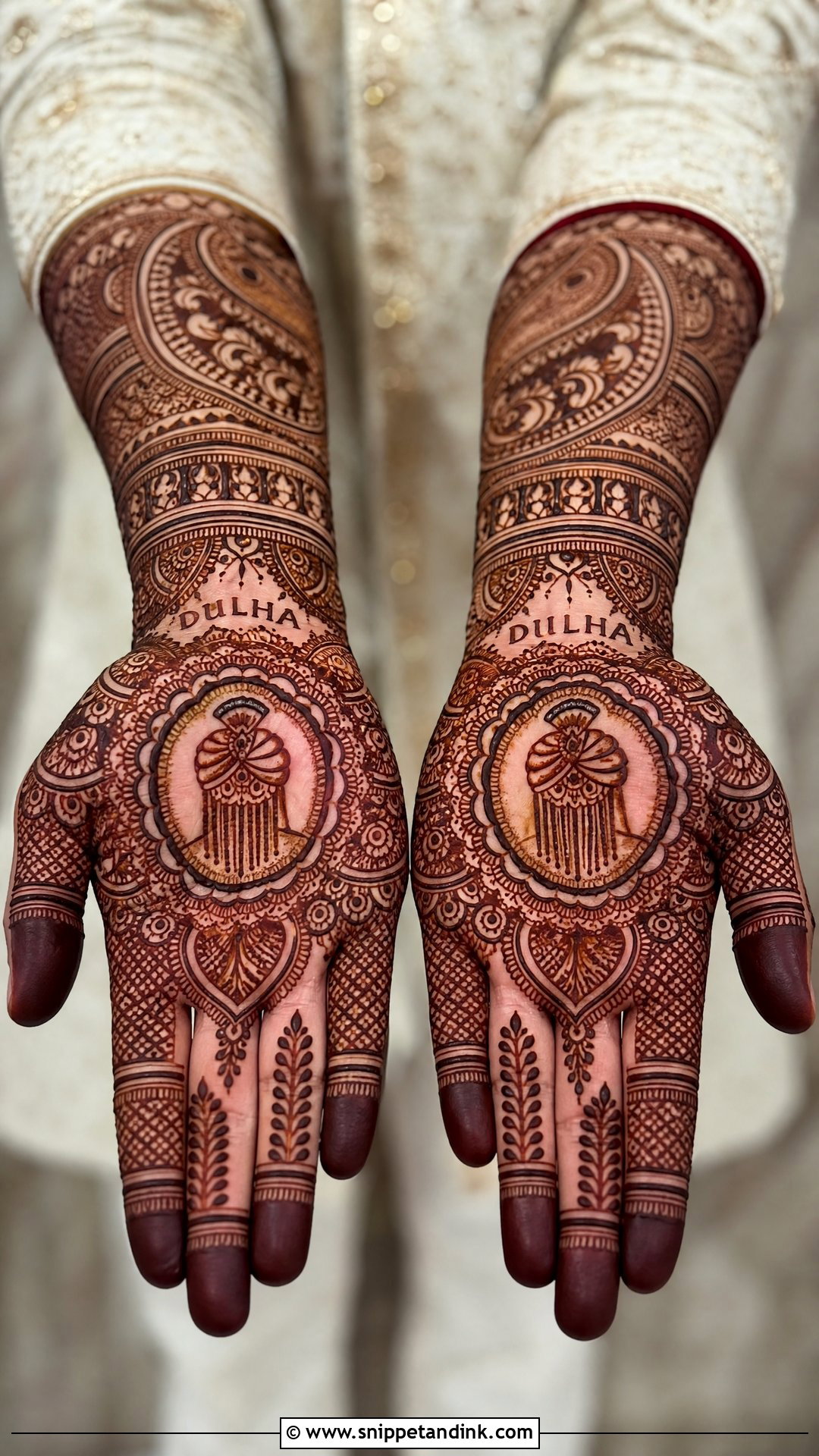
This is the most playful design on the list. It might spell out “Dulha,” show a groom figure, a turban, sehra strings or a small wedding procession. The palm gives enough flat space for lettering and characters, so that’s where I place it, framed with paisleys, mandalas and simple borders. It gets the biggest reaction at the mehndi function itself. Choose it if you don’t mind being teased about it for the rest of the evening.
19. Forearm Groom Mehndi Design
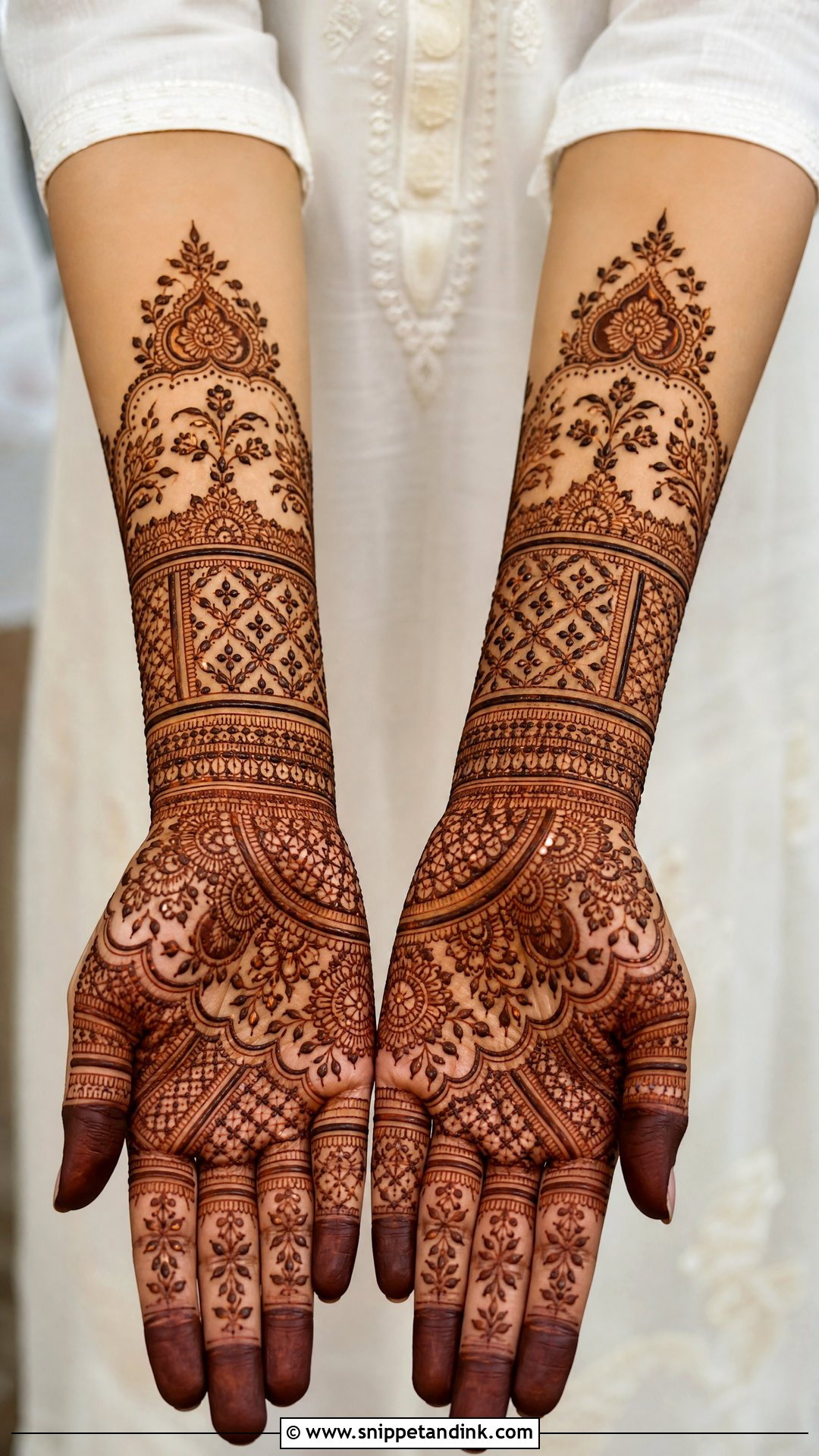
Forearm work starts at the wrist and climbs upward with bands, geometric panels, Arabic vines or symbolic motifs. Some grooms do one statement forearm and keep the hands simple, which suits shorter sleeves or a pre-wedding shoot. Paisleys and mandalas read traditional; Moroccan grids or clean linework look modern. I follow the arm’s taper rather than drawing a straight rectangle, because a panel that ignores the shape looks bulky the moment he bends his elbow. Forearm skin also stains lighter than the hands, so leave the paste on as long as you can stand it.
20. Matching Bride And Groom Mehndi Design
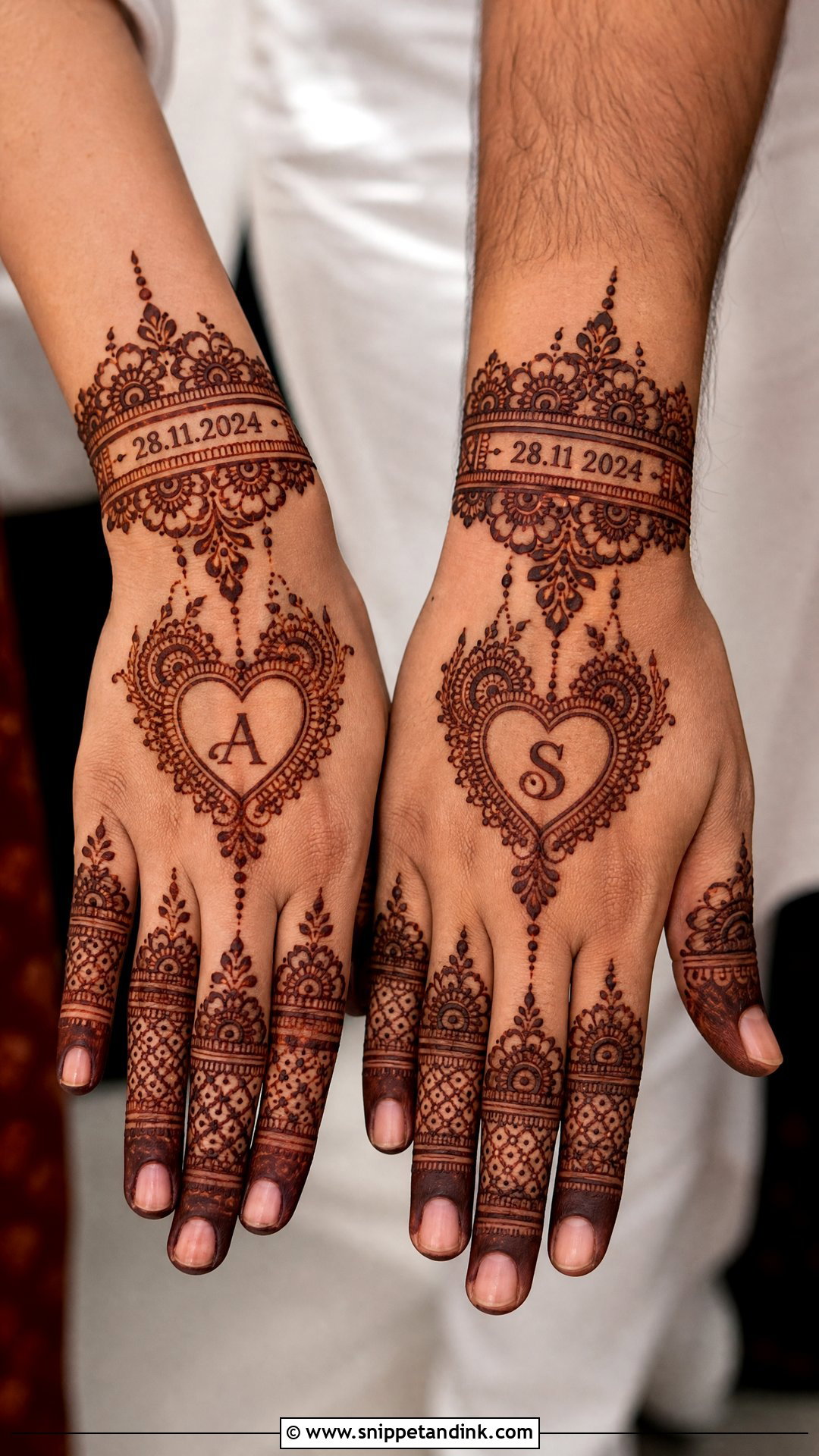
The groom’s half of a matching set should be the quieter one. I repeat one key motif from the bride’s design, such as her mandala, the initials, the date, a peacock, a lotus or her jaali border, and keep the rest of his hand clean. Some couples choose half-heart motifs that complete when their hands meet; others match through lettering or similar wrist bands. If you’re after that joined-hands photo, both artists need to agree on placement and scale beforehand, or the halves won’t line up in ring shots and posed portraits.
Getting a Dark Stain on Hands That Never Stop Working
Natural henna comes off orange. The colour deepens over the next day or two as it oxidises, usually peaking around 48 hours, so I ask grooms to book their mehndi one to two days before the main ceremony, never that morning. After that, the stain depends mostly on how you treat it.
- Leave the paste on as long as you can, ideally six hours or overnight, wrapped loosely if you sleep in it.
- Dab on a lemon and sugar mix once it has dried so the paste stays pressed against the skin.
- Scrape the dried paste off with a blunt edge or rub it away with your fingers. Don’t wash it off.
- Keep the hands away from water, soap and sanitiser for the rest of that day. Early water is the most common reason a stain stays pale.
- A little warmth helps the colour develop, so hold your hands near a heater for a few minutes or rub in a few drops of mustard oil.
The groom’s problem is that his hands are busy. You’ll be shaking hands, washing before rituals and perhaps sitting through a haldi, where turmeric paste lands right on top of fresh henna. Wipe the turmeric away gently with a little oil before rinsing, instead of scrubbing at the stain.
Ask what’s in the cone
Natural paste is made from henna powder, lemon juice or water, sugar and an essential oil, and it stains anywhere from orange to deep maroon. Anything sold as instant black henna is a different product, often containing PPD, a hair-dye chemical that can cause severe skin reactions. If a cone promises a black stain within an hour, say no. And if you’ve never worn henna before, ask for a small patch test a few days ahead.
Your Hands Will Be in Every Ring Photo
Your outfit and your schedule should decide this more than any trend. A plain palm mandala suits some grooms, while others want full-hand work, initials, a date or royal motifs. Whatever you choose, hold it to one test: lines bold enough to survive the stain, with space between the motifs so nothing merges. Get natural henna applied a day or two ahead, give it the aftercare above, and let the colour finish deepening before the photographer arrives.


Leave a Reply