
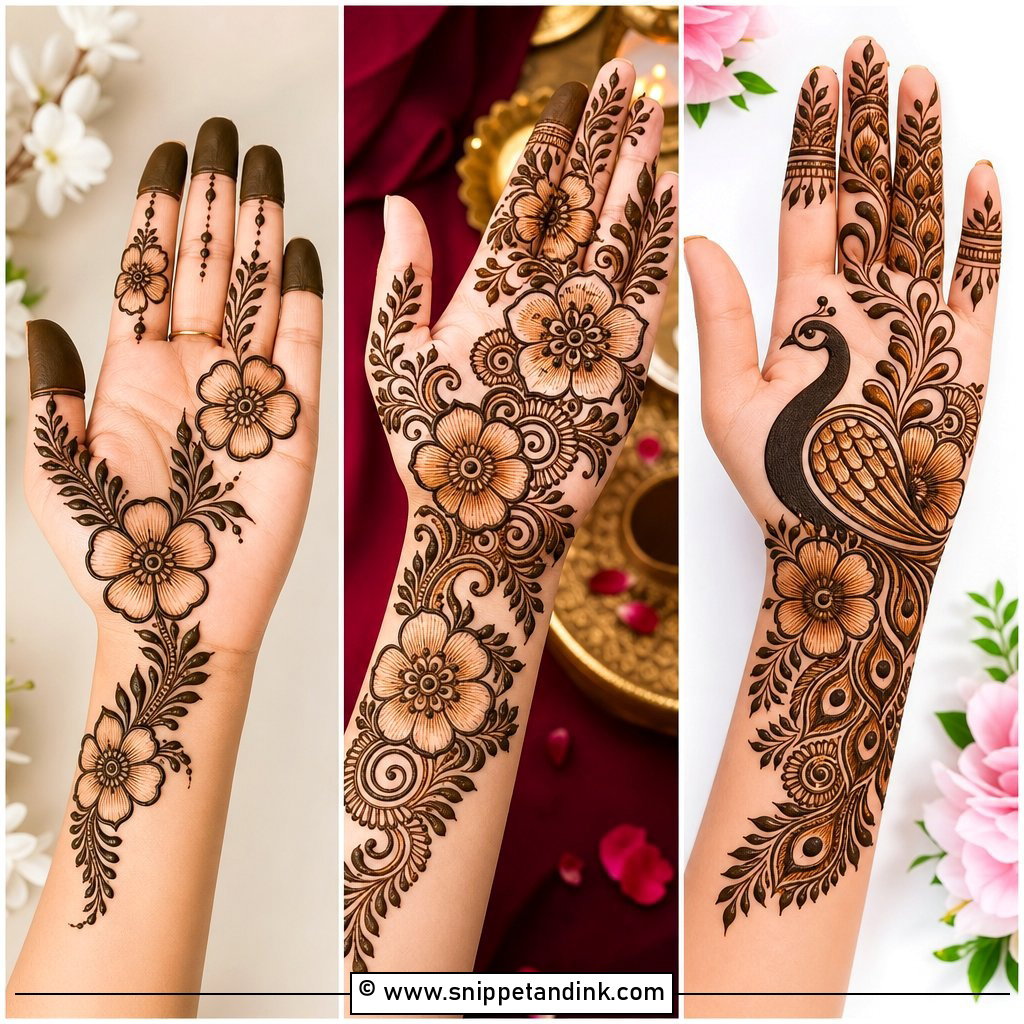
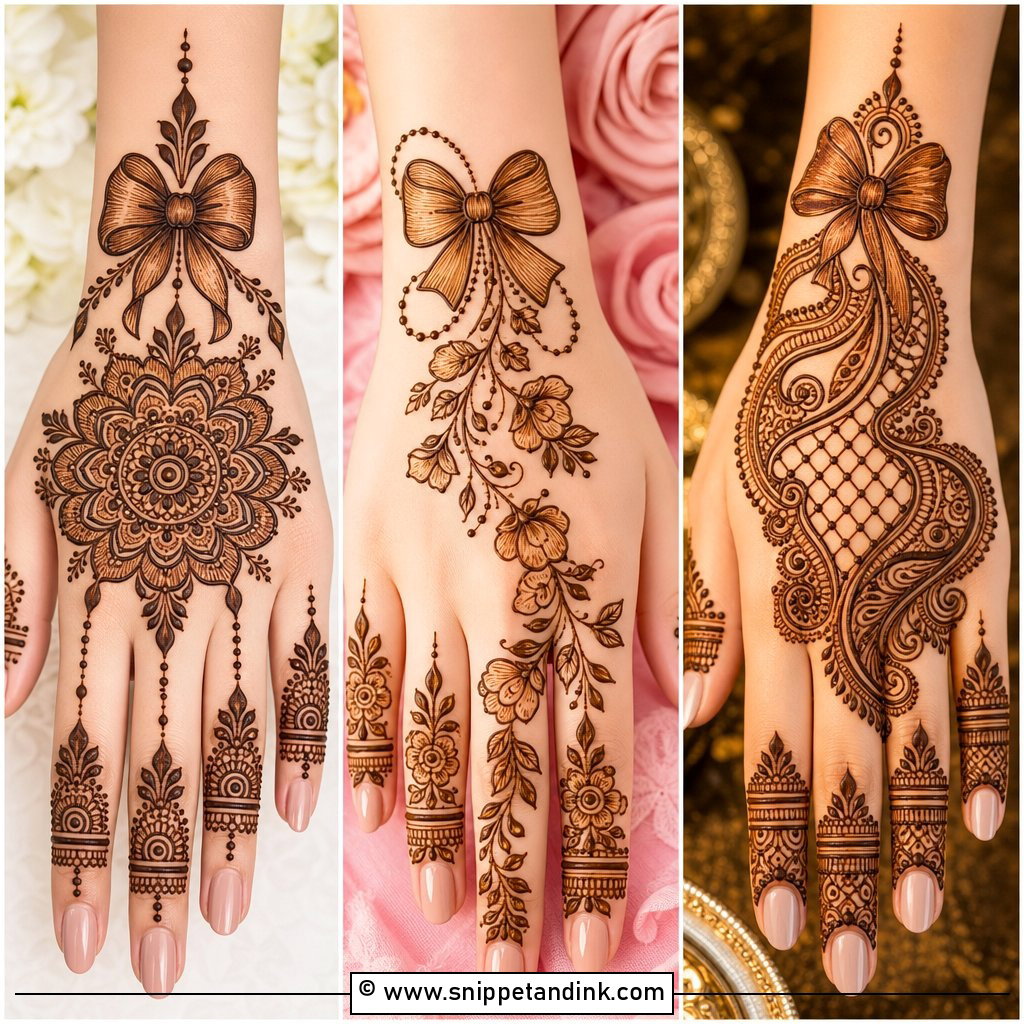
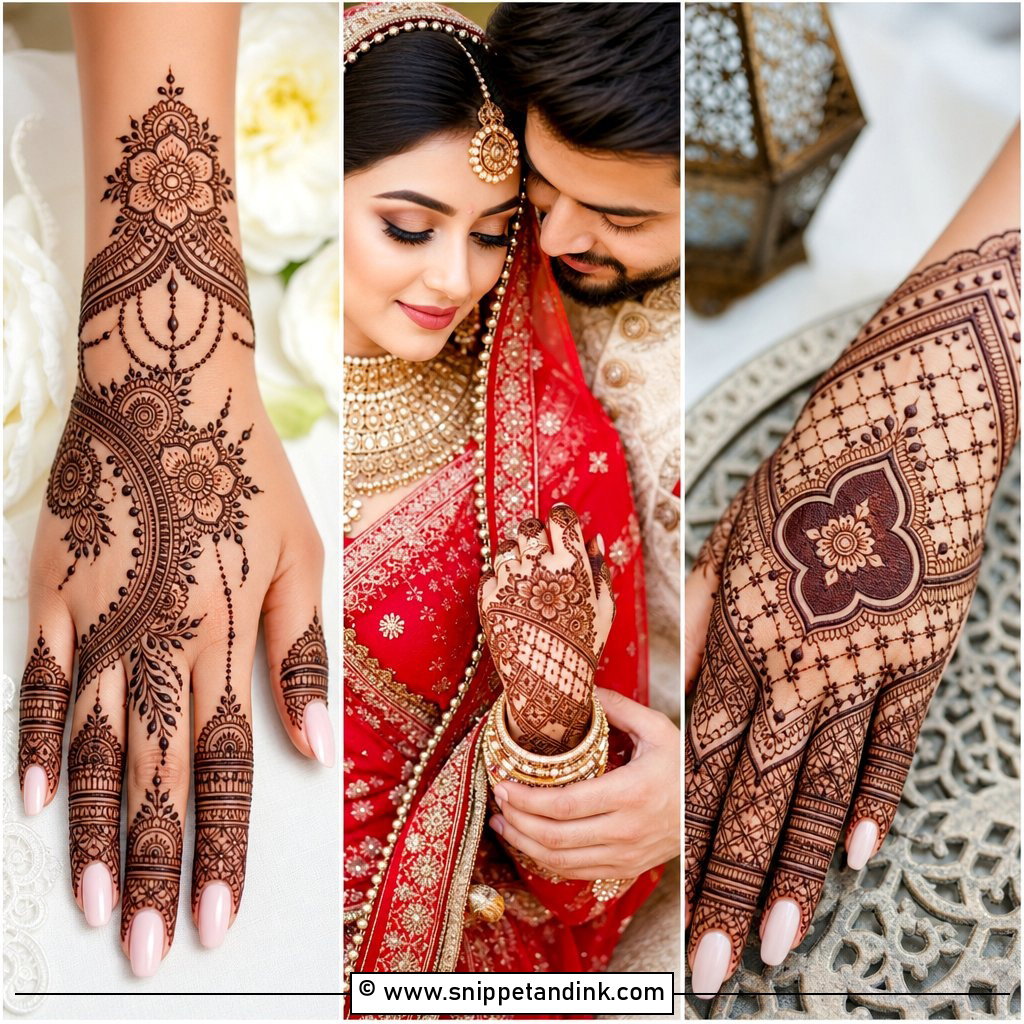
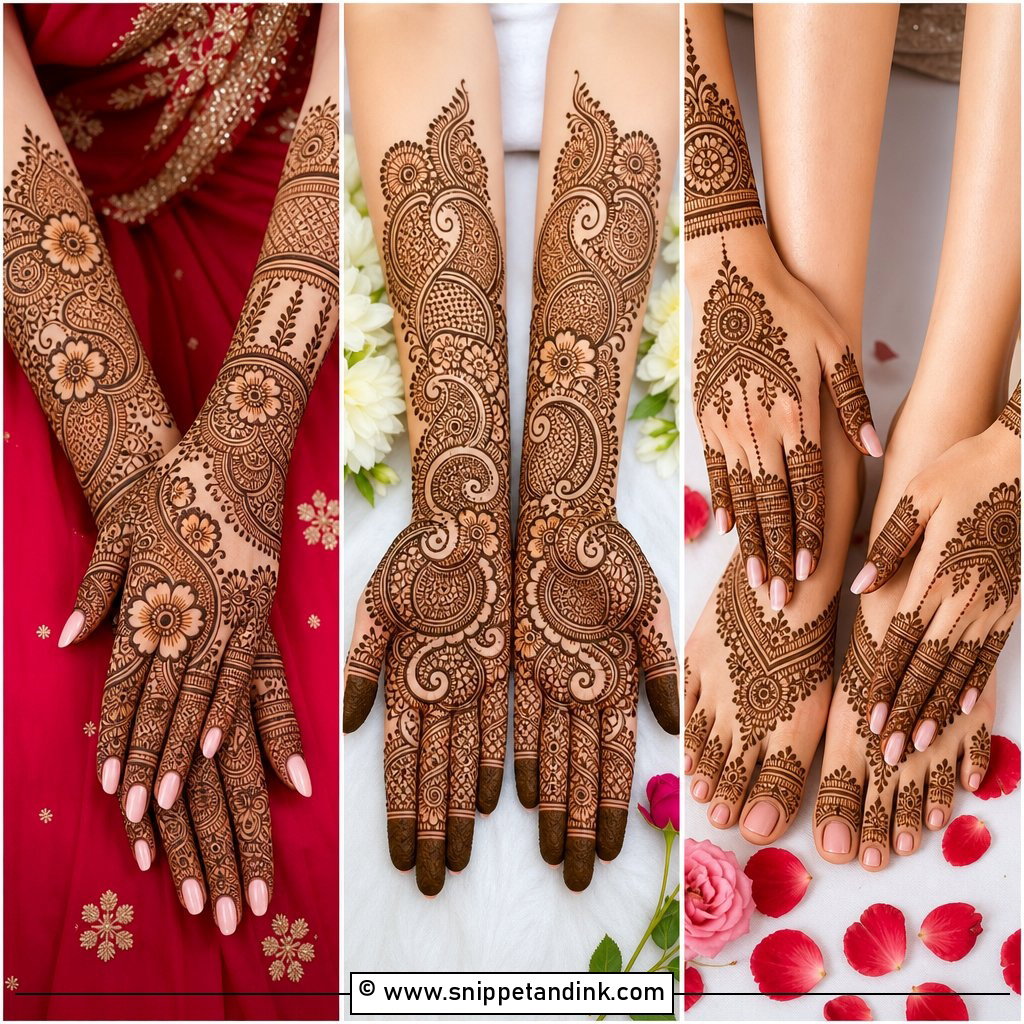
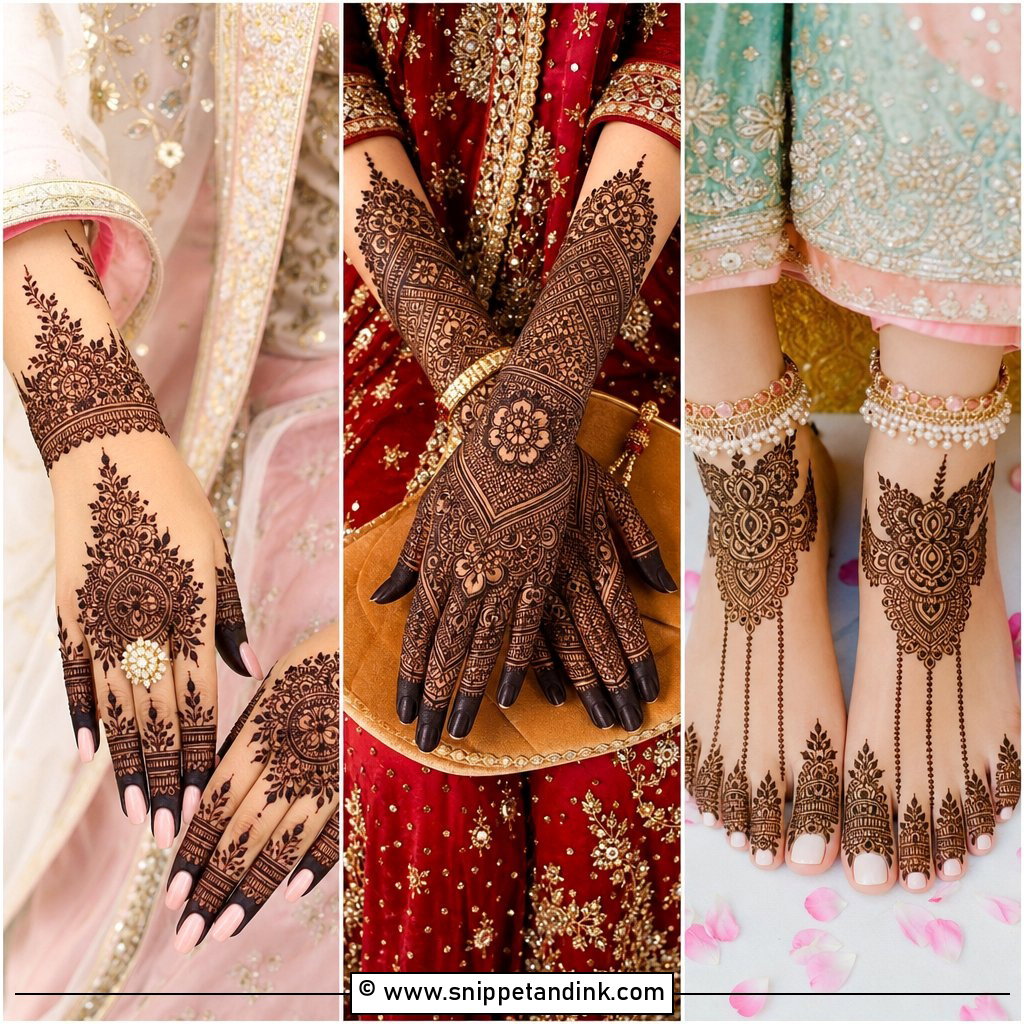
Most of the time, the back of the hand is the mehndi people see: in photos, in jewellery shots and in everyday hand movement while you greet, serve and talk. That’s why I plan it more carefully than the palm. A good back design can make fingers look longer and a broad hand look more balanced, and a badly placed one does the opposite. Below are 35 options, from a few dots and a flower to full bridal coverage, with notes on where each one sits, how it stains and what it suits, from Eid and Diwali to engagements and small family evenings.
Where Your Sleeve Ends, the Design Should Too
The first thing I ask before drawing a back design isn’t which motif you like. It’s what you’re wearing. A design that runs halfway up the forearm looks wonderful in photos, then disappears under a full-sleeve kurta, and the visible part ends in an awkward cut-off line at the cuff.
- Full sleeves: keep the design to the hand and wrist, with a finished border at the wrist bone.
- Three-quarter or elbow sleeves: a forearm extension works, but end it with a deliberate band, not a fading vine.
- Sleeveless or cap sleeves: this is where long trails to mid-forearm really show.
- Heavy bangles or a kada: plan a clear gap where they’ll sit, or the cuff detail hides under the metal.
Hand shape matters next. Diagonal trails make short or broad hands look longer, while a big central mandala suits slim hands that can carry width. If your fingers are short, I’d skip horizontal bands at every joint and choose vertical details instead.
1. Simple Back Mehndi Design
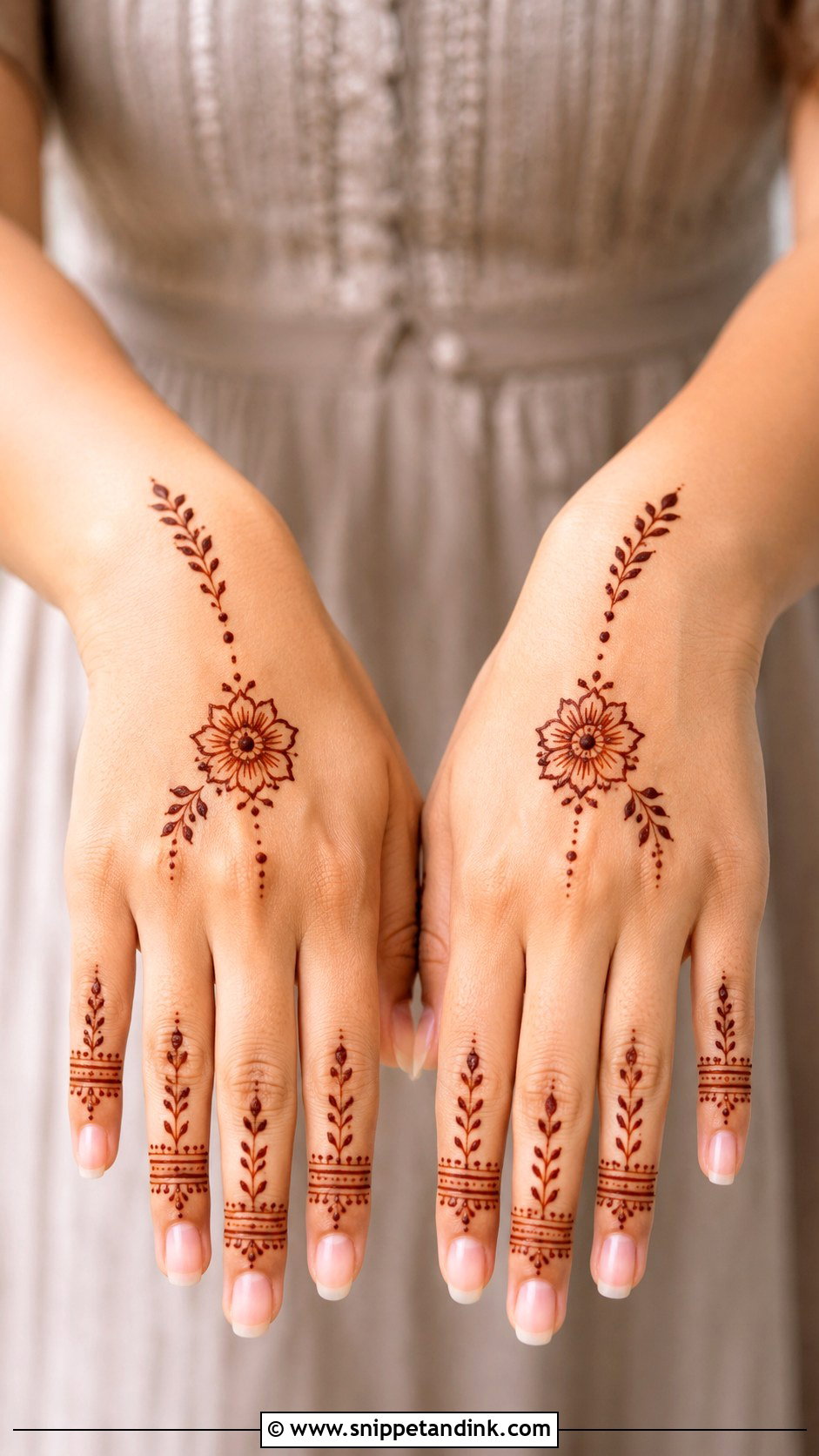
Small flower, mandala or leafy centre; light finger details; a bare wrist or one thin band. That’s the whole design, and it works because so much skin is left open. I use fine lines and tiny dots here and keep the spacing even across all five fingers, since unevenness is easy to spot in a sparse design. It’s my go-to for last-minute bookings and school events, and it doesn’t compete with delicate rings or bangles.
2. Arabic Back Mehndi Design
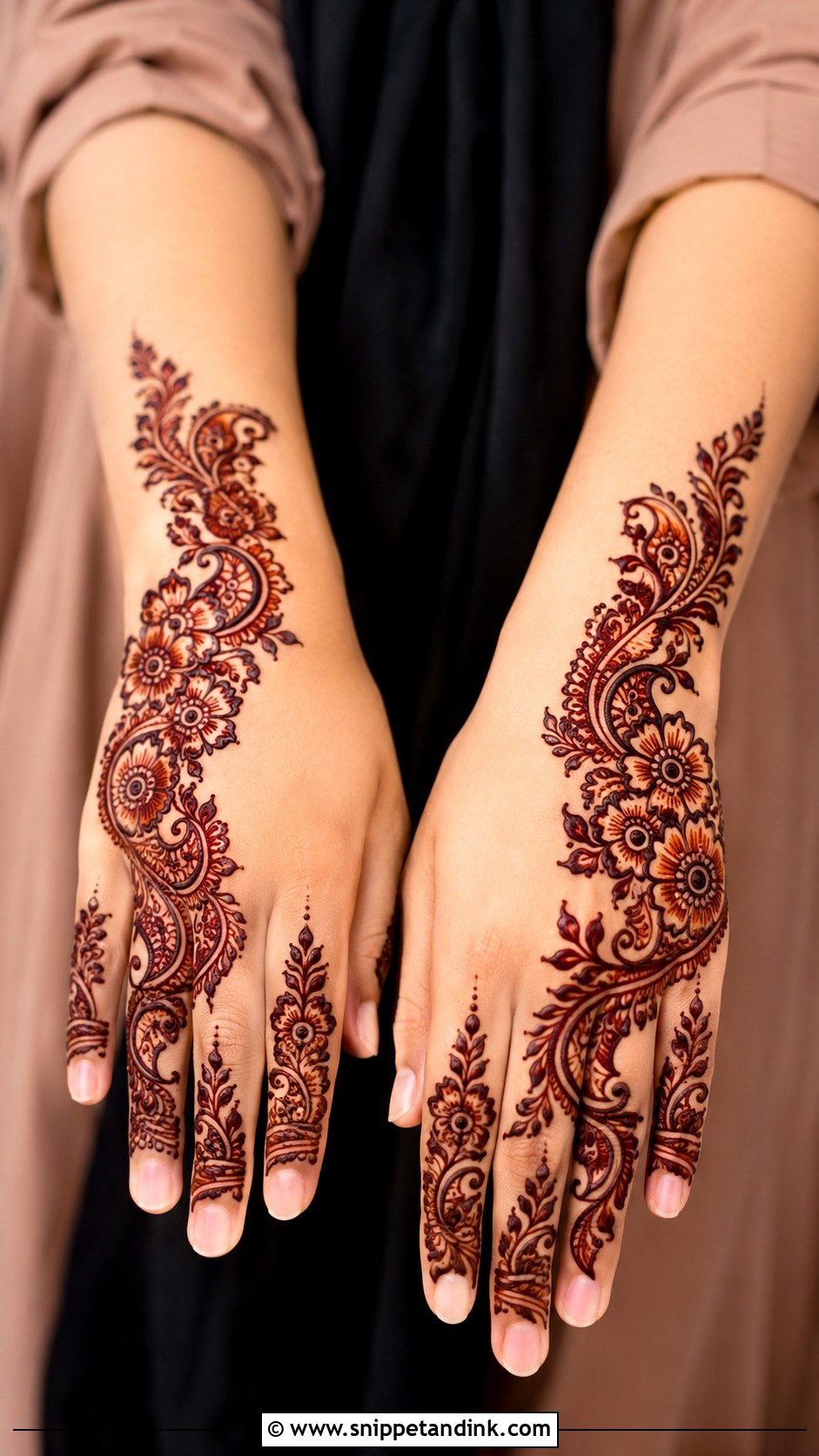
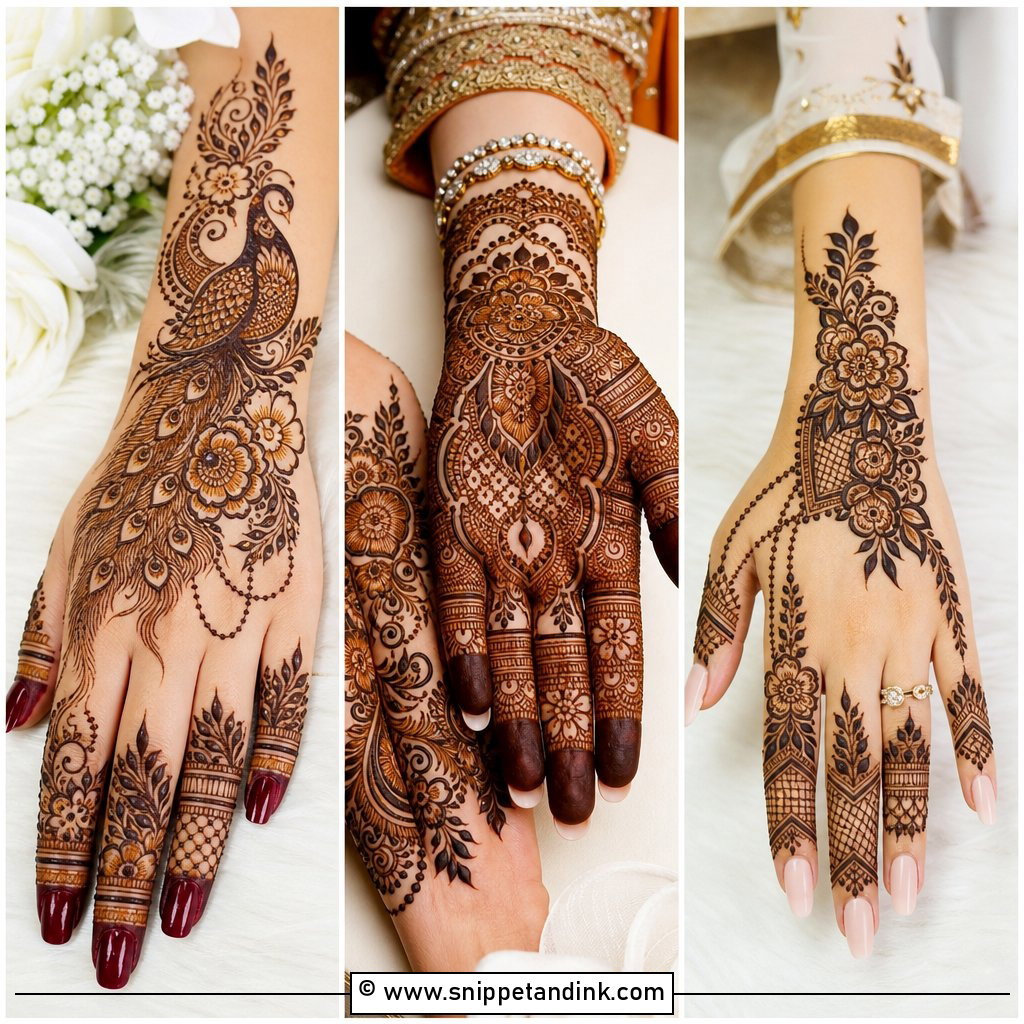
Arabic mehndi trades filling for flow. The pattern usually travels diagonally from the wrist to one finger, using large flowers, leaves, curls and paisley shapes, and leaves plenty of bare skin around them. I draw the flowers and vines in a thick outline first, then add soft inner detail; the thick line is what keeps the design visible from across a room. It doesn’t need full coverage to look finished, which is why it’s so popular for Eid, sangeet nights and festive dinners.
3. Full Back Hand Mehndi Design
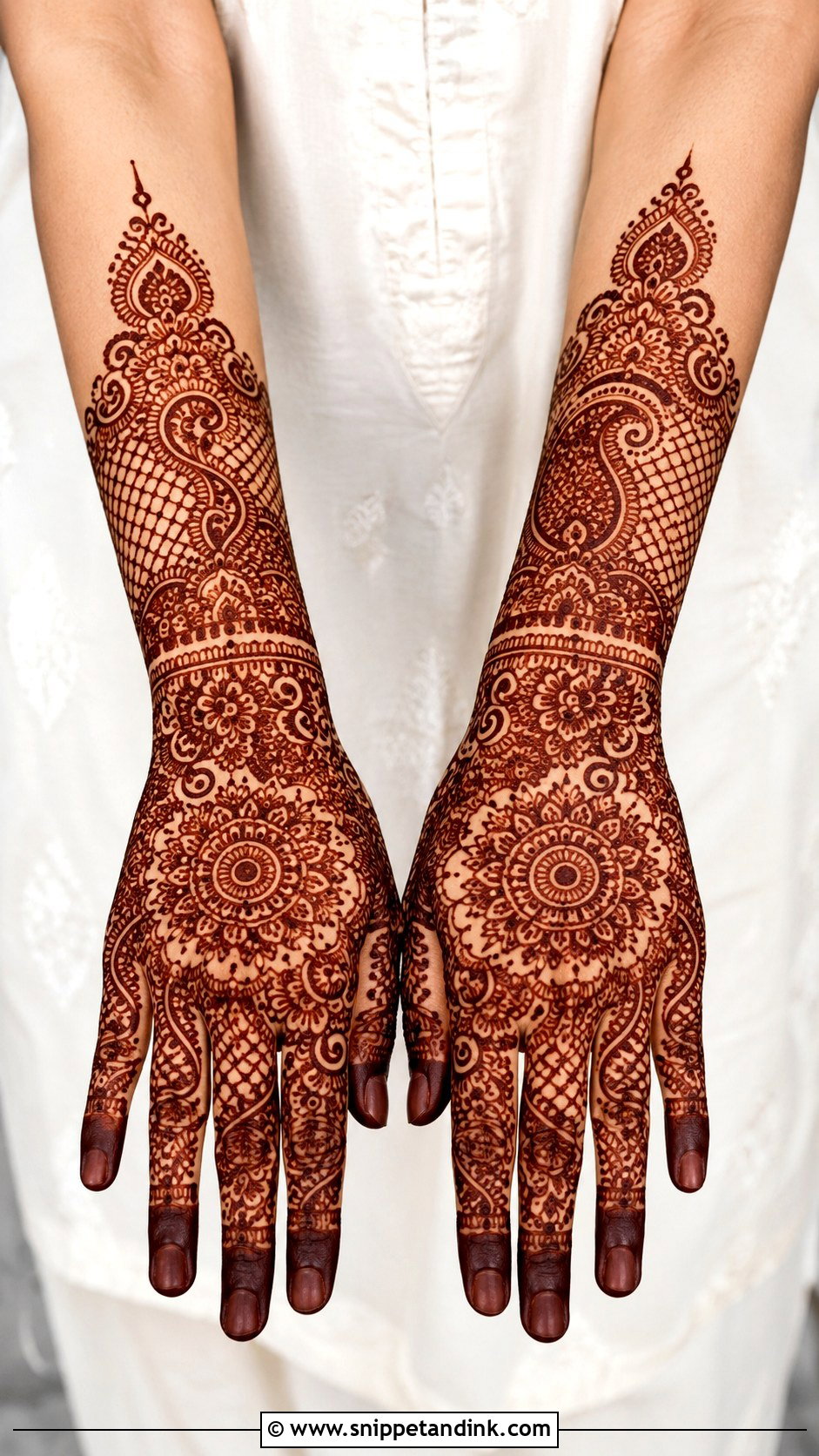
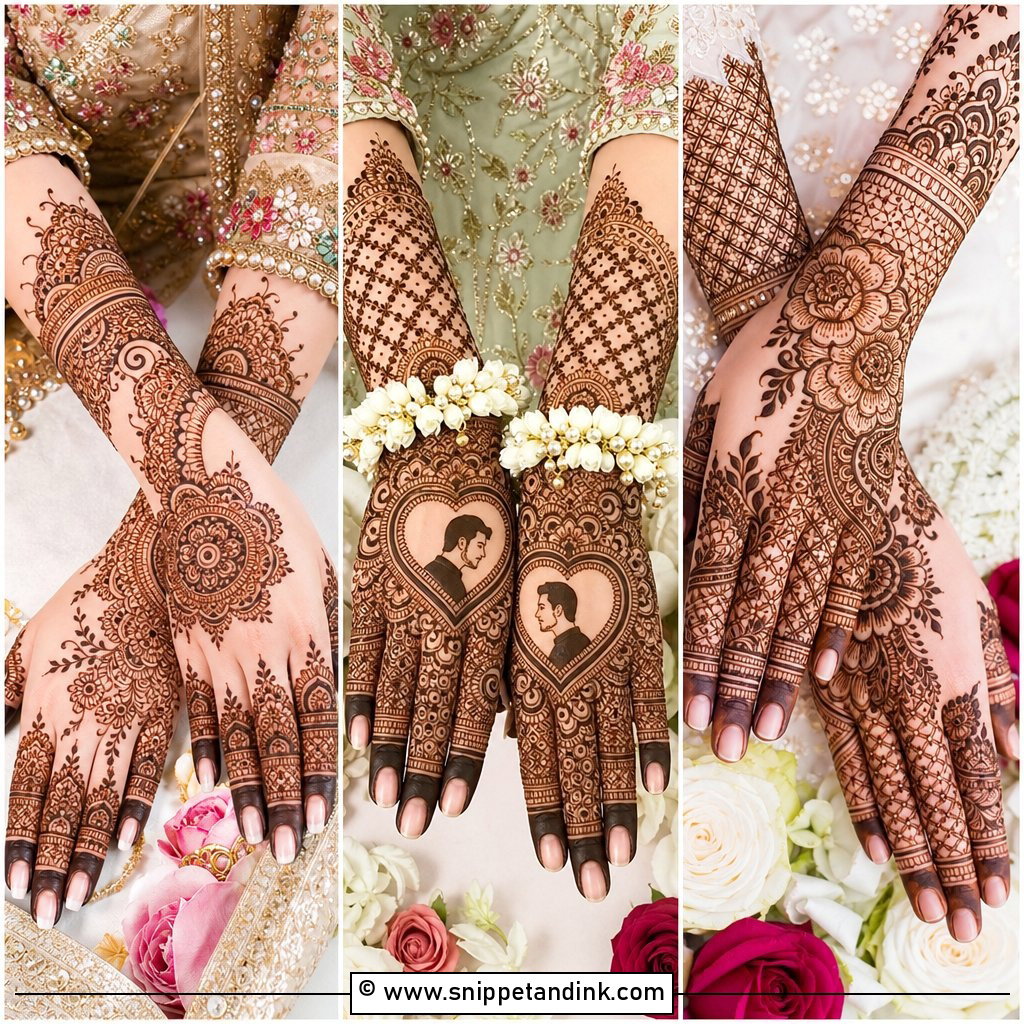
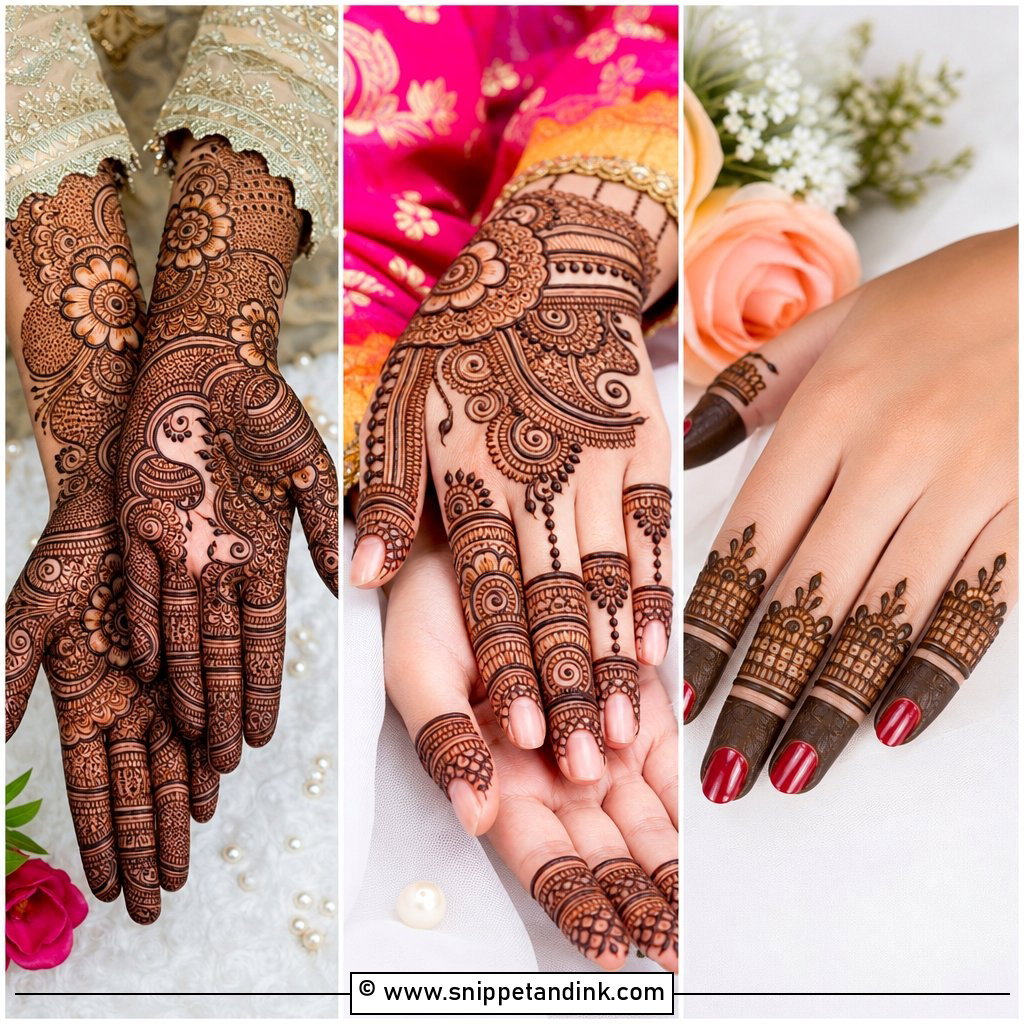
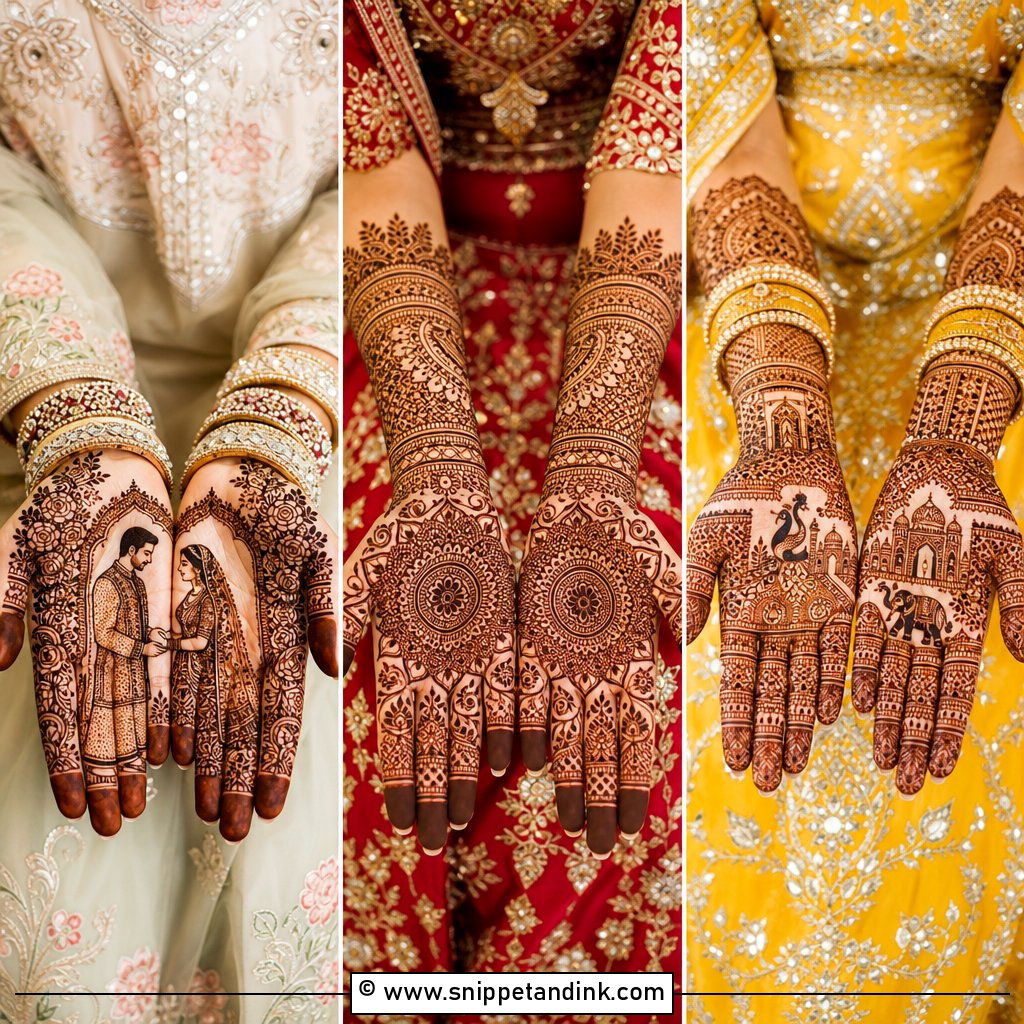
Full coverage takes in the fingers, back of the hand, wrist and often the lower forearm, combining flowers, paisleys, jaali, mandalas and shaded leaves. Because this side is always on show, I never repeat one pattern across the whole hand. Dense areas next to lighter ones give the stain depth; uniform filling makes it look flat. Fingertips can be filled, capped or banded like rings, and a wrist cuff finishes the edge. It’s a natural choice for bridesmaids, family weddings and engagements.
4. Bridal Back Mehndi Design
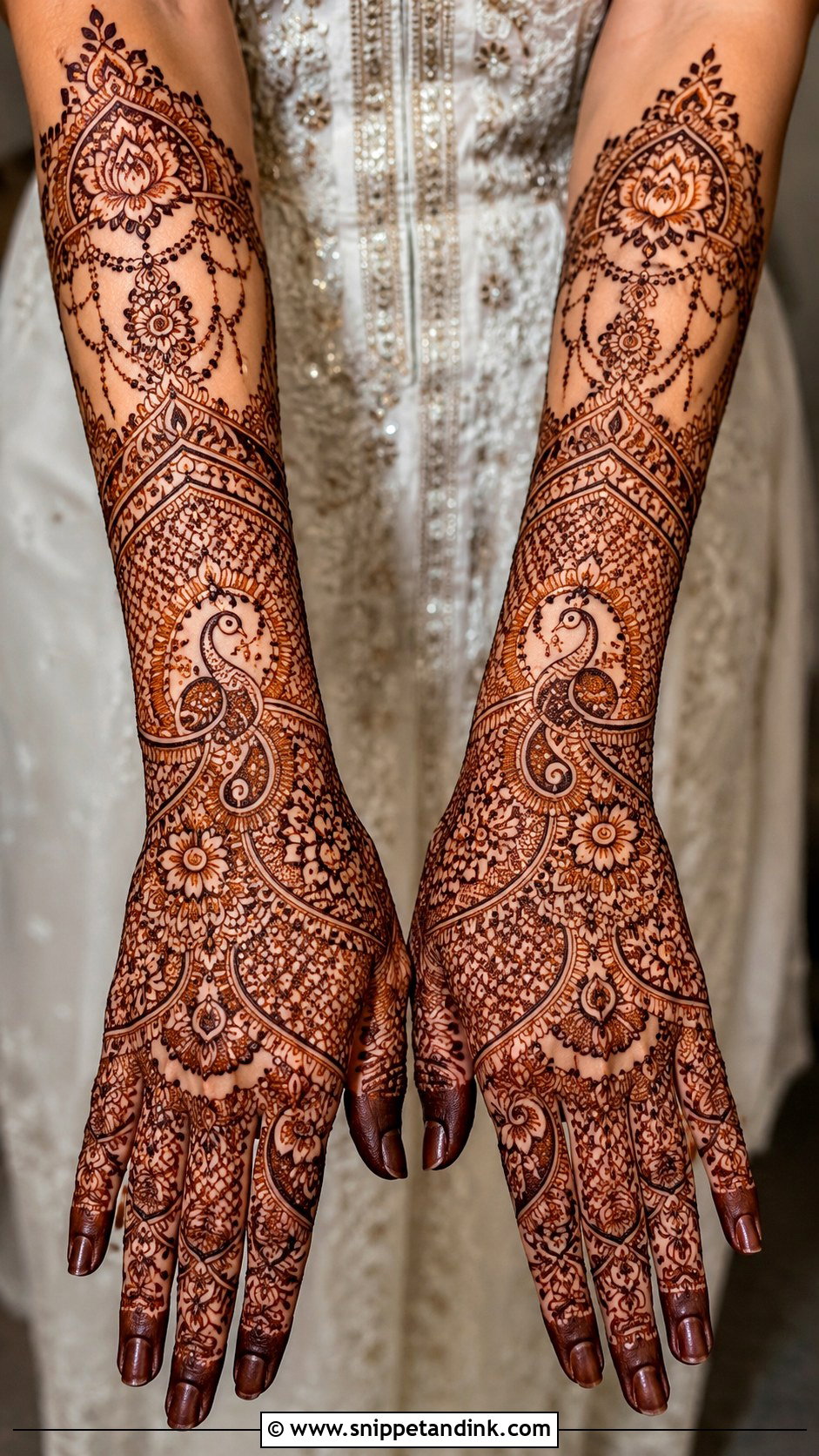
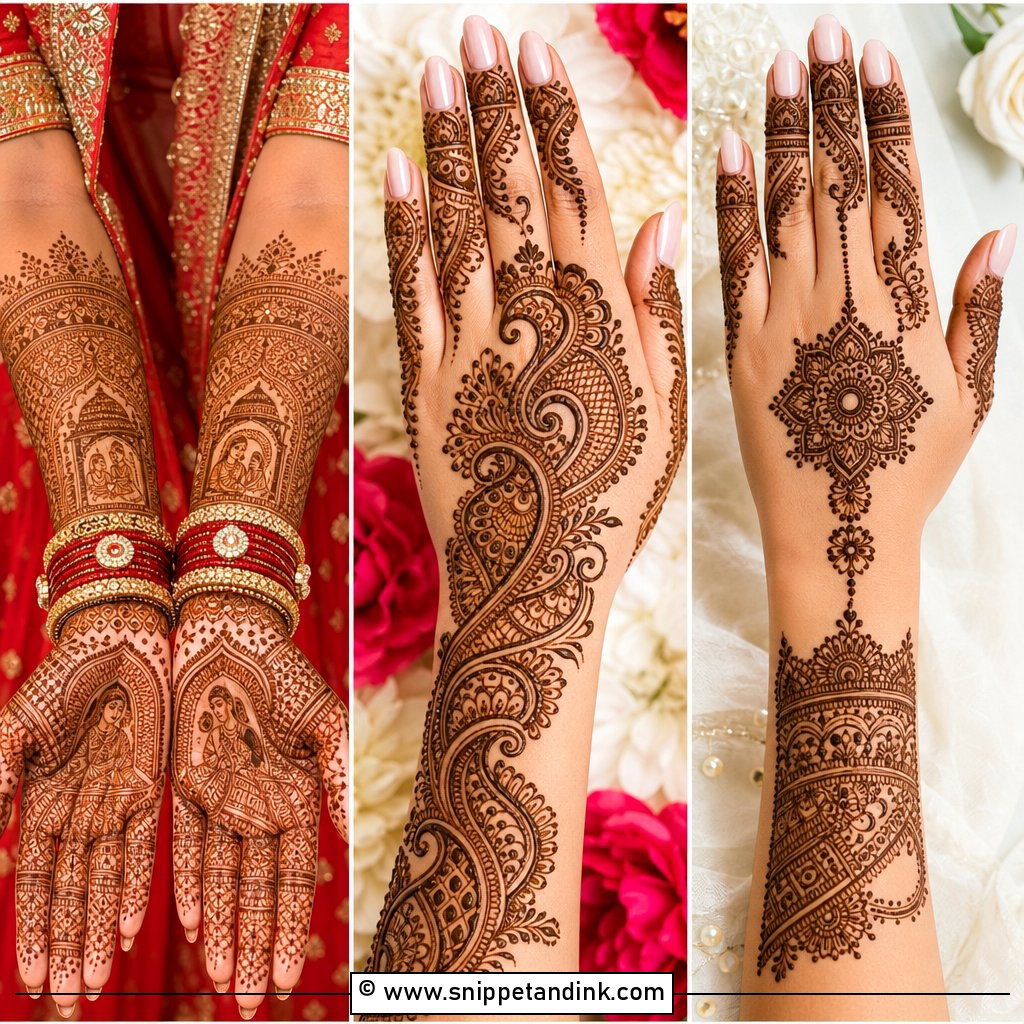
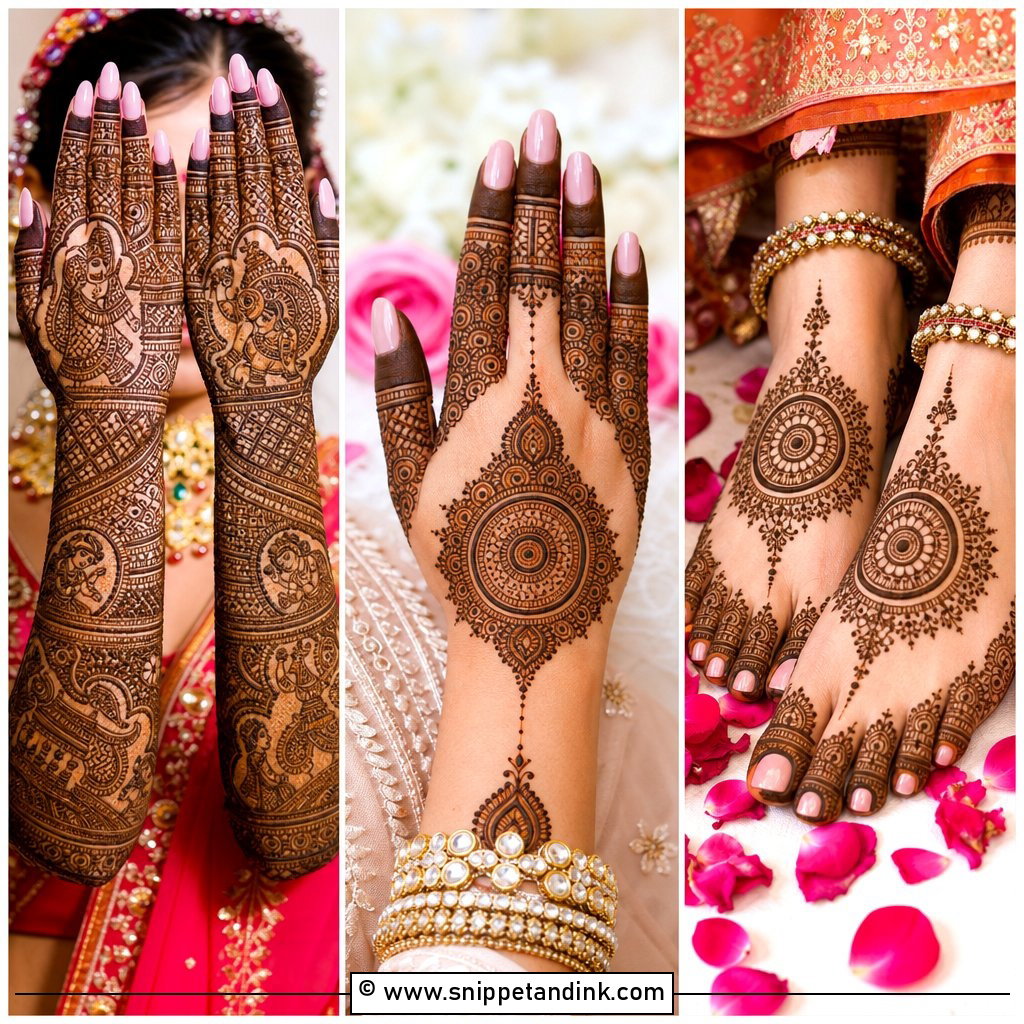
Bridal back mehndi design brings together dense Indian patterns, fine netting, paisleys, lotus motifs, peacocks and jewellery chains. I plan it together with the palm and arm designs so all three connect, because a bride’s hands are photographed from every side. This side also frames the rings, bangles and hathphool, so the pattern should open up slightly around where they sit. A central mandala or floral dome on the hand, detailed finger bands and leaf lines complete it, and small initials or wedding symbols can be hidden inside. The goal is that deep maroon stain on the wedding day.
5. Mandala Back Mehndi Design
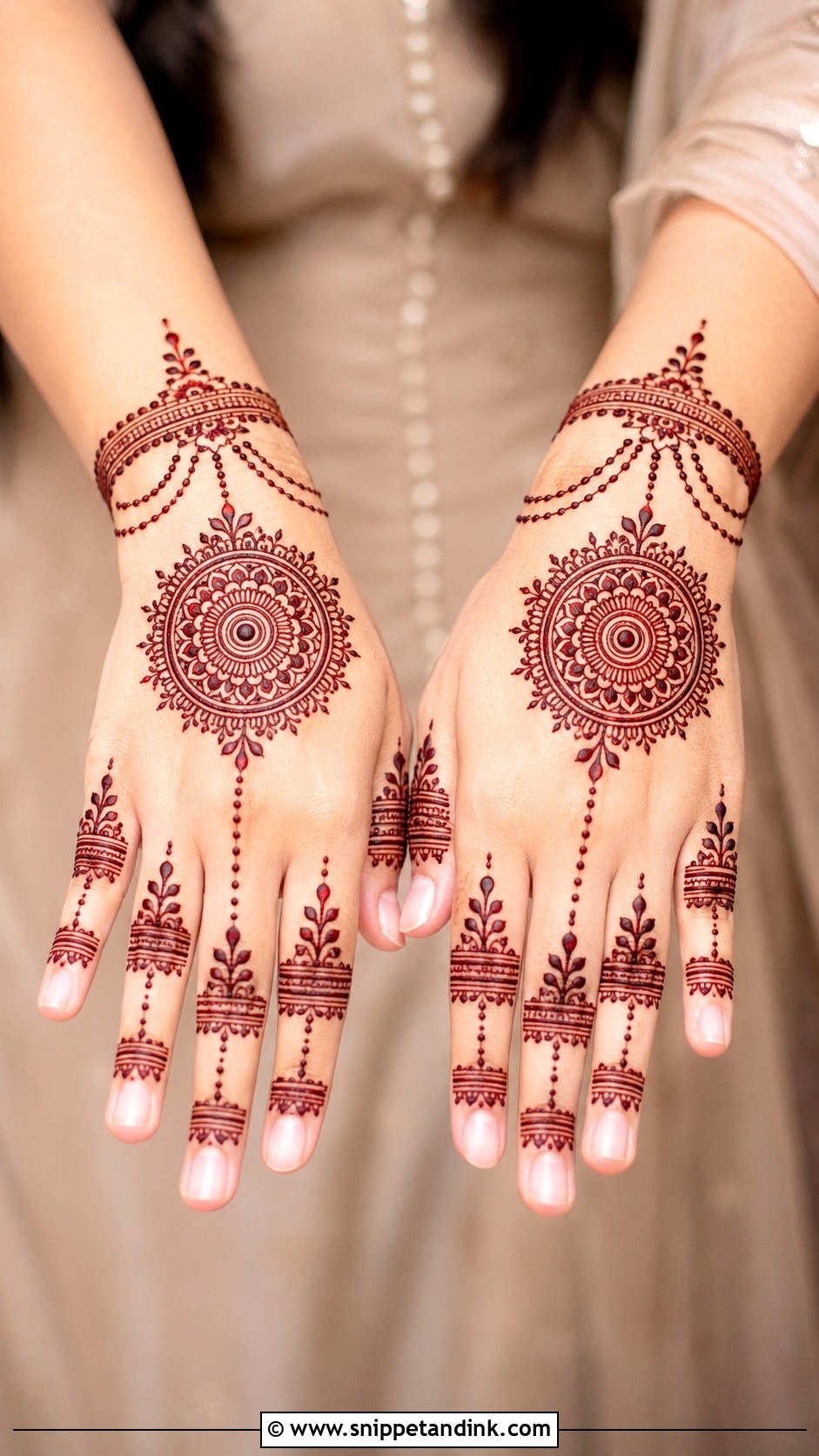
A round centre balances any hand. I place the mandala in the middle of the back of the hand, then add finger bands, dot chains and small leafy extensions. It can be kept light or made very detailed. For a modern finish, the wrist stays clean and the fingers carry symmetrical work; for a fuller look, the mandala links to a bracelet band. Everything depends on an even circle, so I draw it with the hand relaxed and flat, never while the client is gripping something.
6. Flower Back Mehndi Design
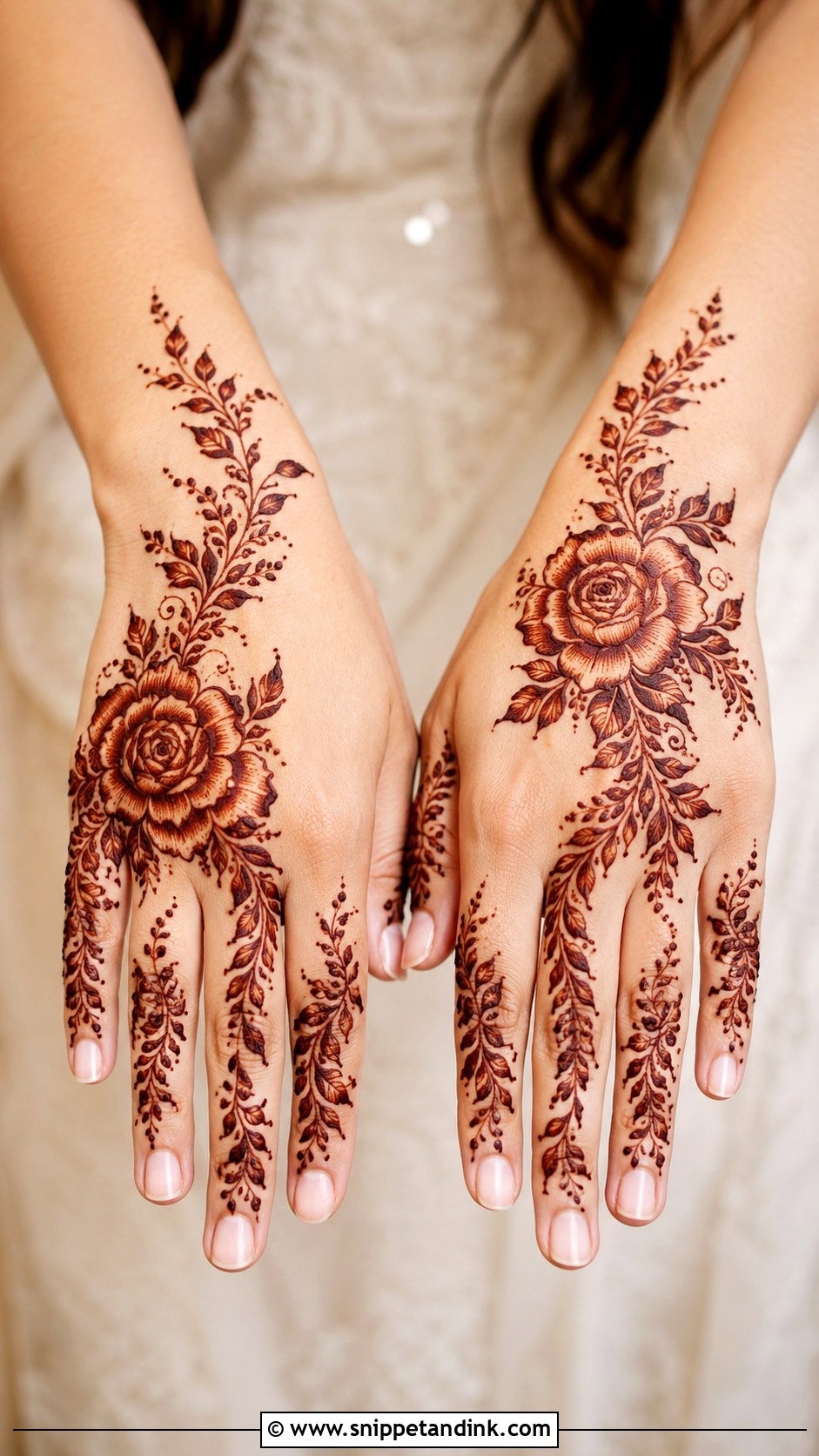
Large roses, lotus flowers, sunflowers or small blossoms all suit this side of the hand. The common layout puts one big flower near the centre with vines running to the fingers and wrist. Want a darker stain? Thick petal outlines and shaded strokes inside. Want it lighter? Leave the petals open and add a few dots around them. It’s a comfortable pick for engagements, festivals, baby showers and wedding guests.
7. Stylish Back Mehndi Design
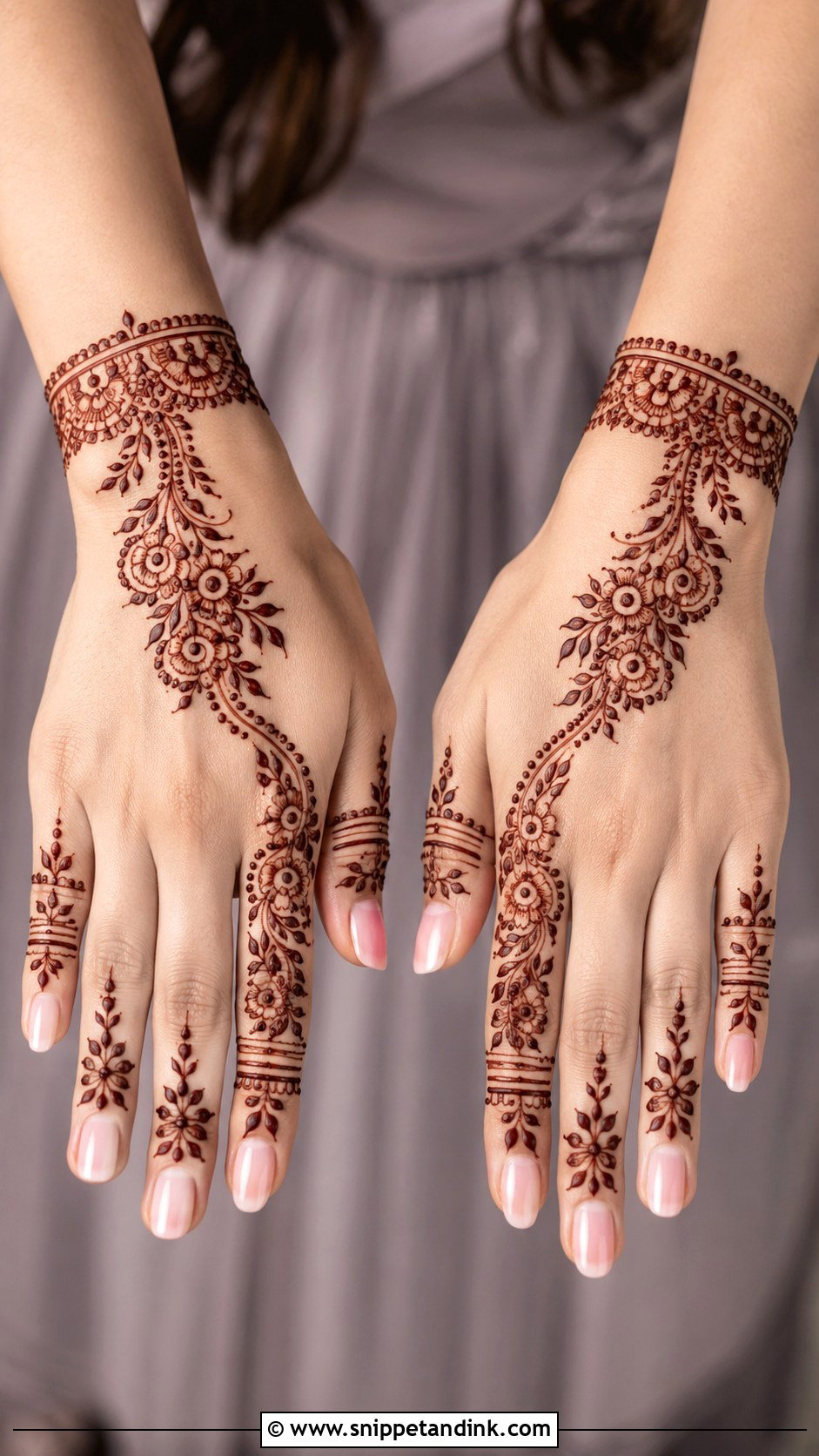
Stylish here means placement, not quantity: a side trail, a bracelet cuff, finger rings, geometric lines and a few floral touches. I check the design with the hand relaxed and hanging, because that’s how it’s seen most of the day, not posed flat on a cushion. Half-and-half fingers, some detailed and some plain, give it a current look. Negative space makes every element count.
8. Modern Back Mehndi Design
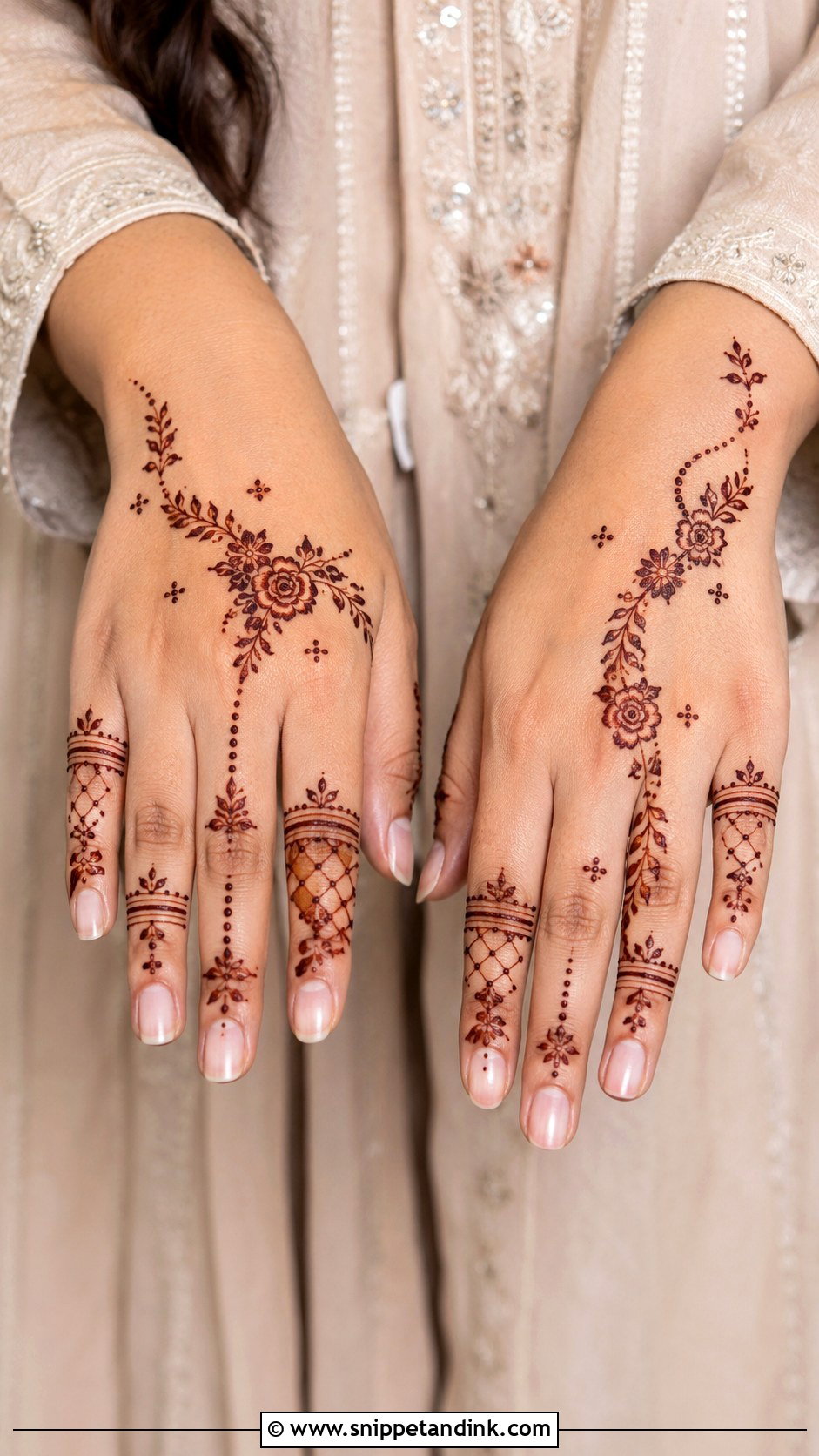
Fine-line florals, scattered dots, simple grids, cuffs and ring-style finger bands make up most modern back designs. Heavy traditional filling is left out and open skin does the framing. Pick one focus, a small mandala or a diagonal vine, and build light details around it. It goes with western and fusion outfits better than dense work does, so it suits college events, birthdays and office celebrations. Because every line is visible, I use a smooth, well-strained paste for this kind of work.
9. Easy Back Mehndi Design
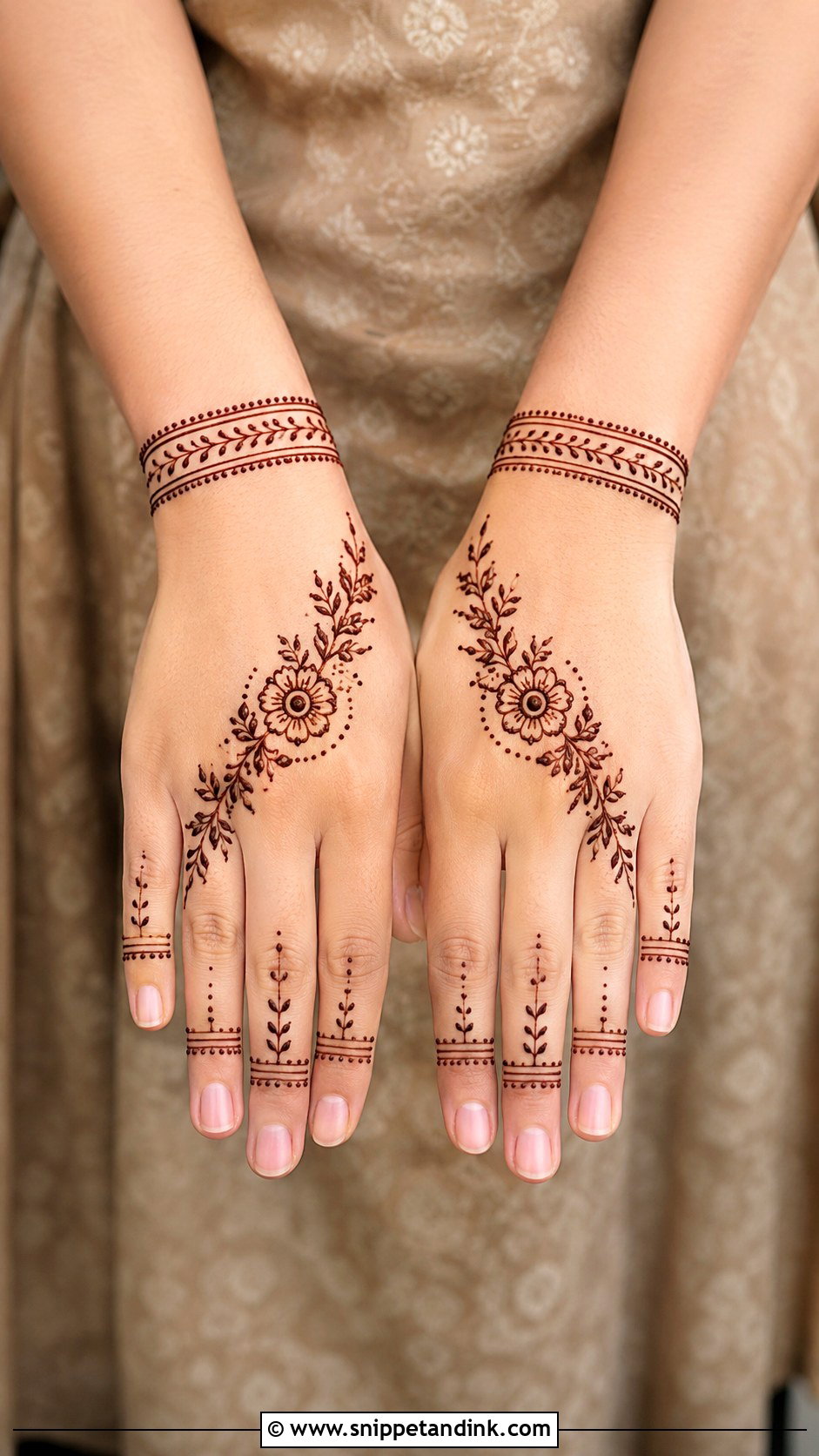
When time is short, start with a round flower, small mandala or leafy branch in the centre, ring it with dots, and decorate the fingers with straight lines, mini leaves or small half-circles. One thin wrist band, or none. Repeated shapes are much easier than shading and forgive a shaky line. Spacing is what makes it look neat once the paste dries and comes off, so leave more room between motifs than feels necessary.
10. Back Finger Mehndi Design
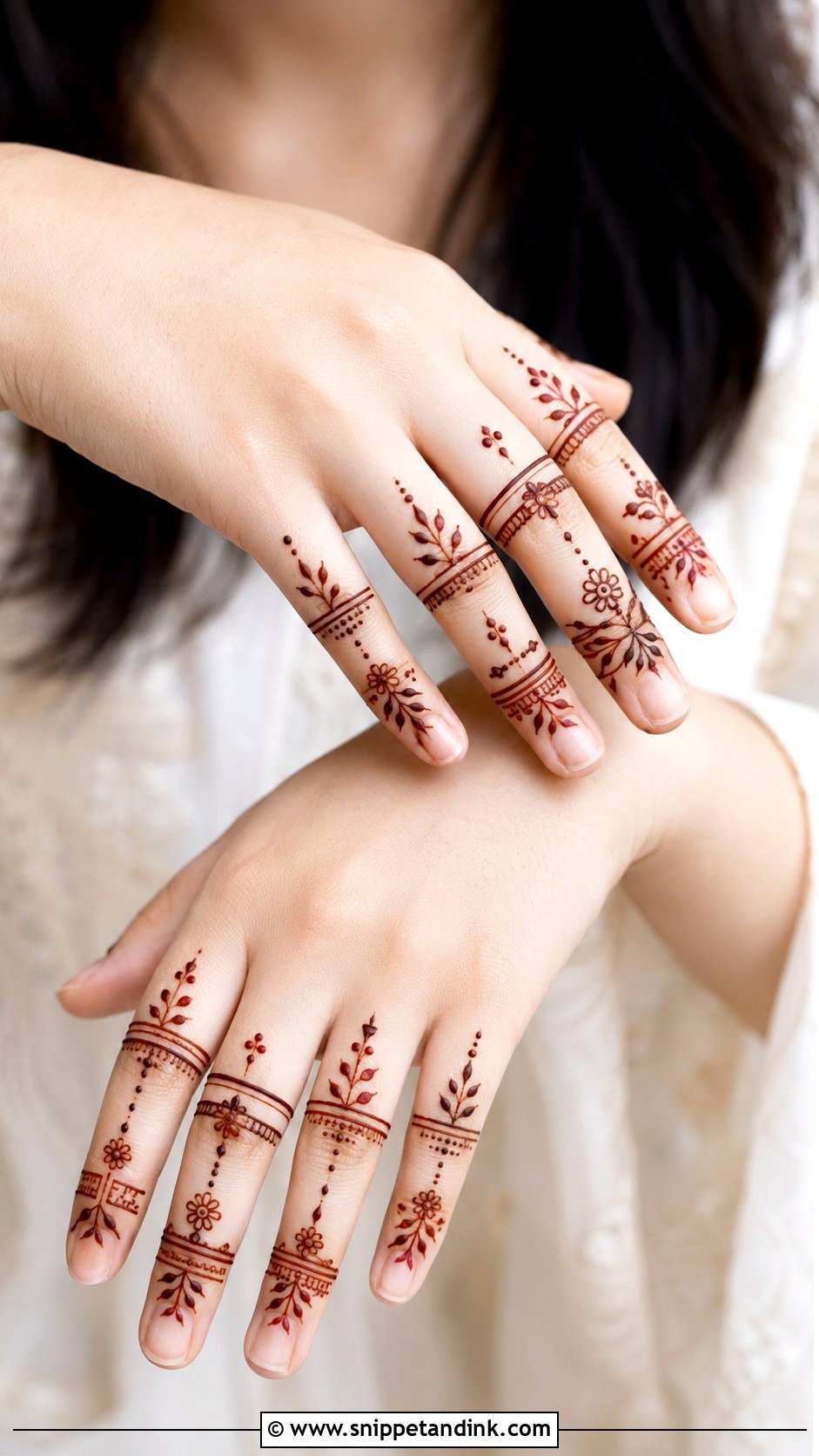
Detail on the fingers, lightness on the back of the hand: that’s the idea. Each finger can carry its own pattern of rings, dots, leaves, tiny flowers or geometric bands, while the centre stays nearly empty or holds one small motif. Fingers take a deeper stain than the back of the hand, so this layout looks rich with very little paste. I keep the bands at matching heights across the fingers so the hand reads as balanced. It frames rings and nail colour nicely.
11. Back Wrist Mehndi Design
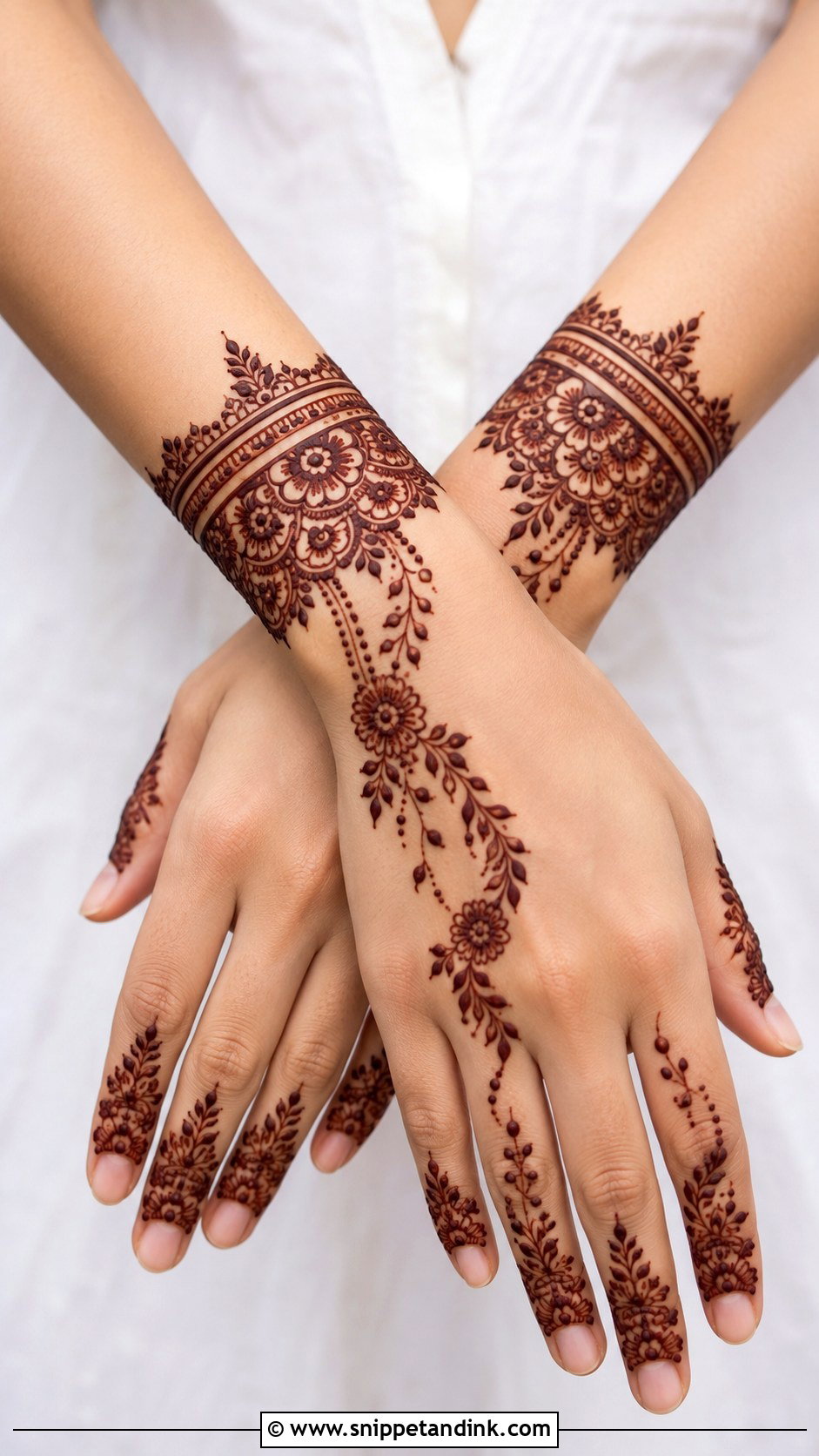
This design concentrates at the wrist, as a cuff, bracelet, lace band or floral chain, and reaches only lightly toward the fingers with dots or thin vines. It suits anyone who wears a watch or bangles daily and doesn’t want the whole hand covered. Uneven spacing is very visible in a band, so I mark the top and bottom edges with light dots before filling. A small centrepiece on the hand can complete it if you’d like more.
12. Back Hand Bracelet Mehndi Design
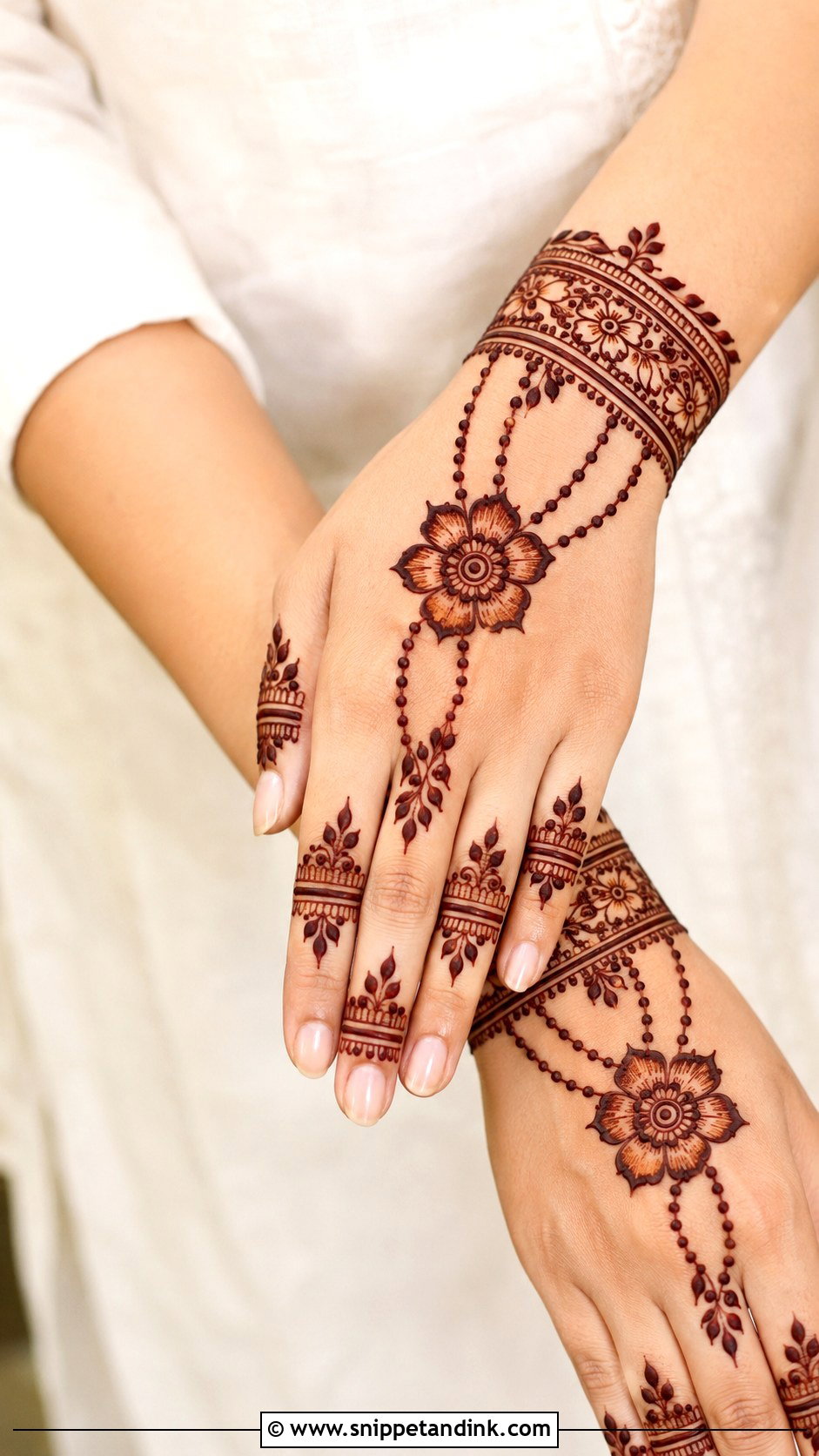
Back hand bracelet mehndi design imitates jewellery: a wrist cuff with chains running to finger rings or a centre motif. A small mandala or flower can sit on the hand while dotted chains lead to one or more fingers. I draw those chains as fine dotted lines rather than solid ones, which looks far more like real jewellery and makes the hand look longer. It’s decorative without being heavy, which is why I see it so often at engagements and on bridesmaids.
13. Back Hand Ring Mehndi Design
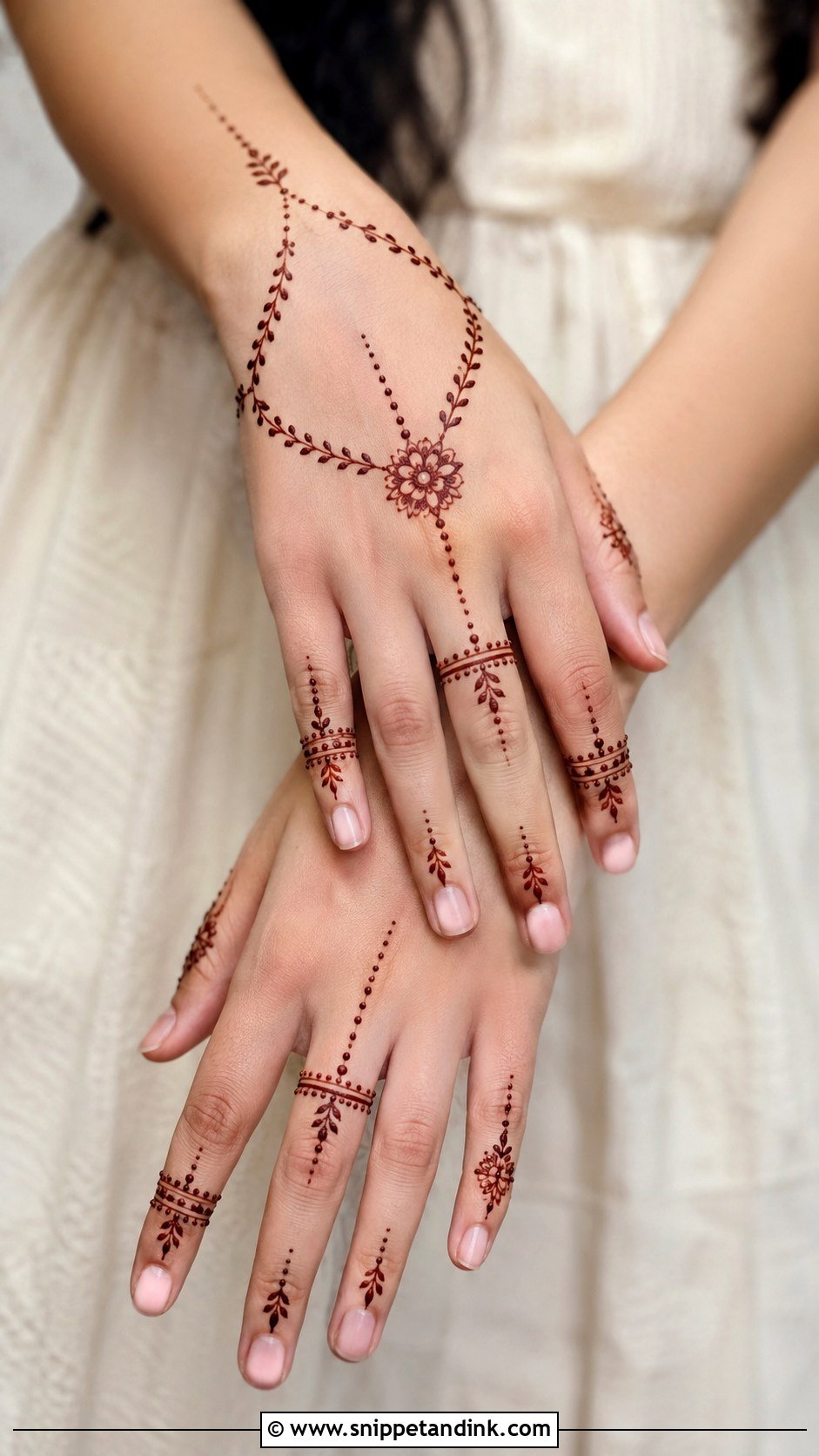
Ring mehndi is the lightest of the jewellery styles: small bands around the fingers linked by dotted lines or thin vines to a modest central motif. Choose one statement finger or band them all. Keep the centre small, a tiny flower, circle or leaf cluster, so it stays like soft jewellery rather than coverage. It’s lovely in close-ups at engagements, and quick enough to do while guests wait their turn.
14. Back Hand Jaali Mehndi Design
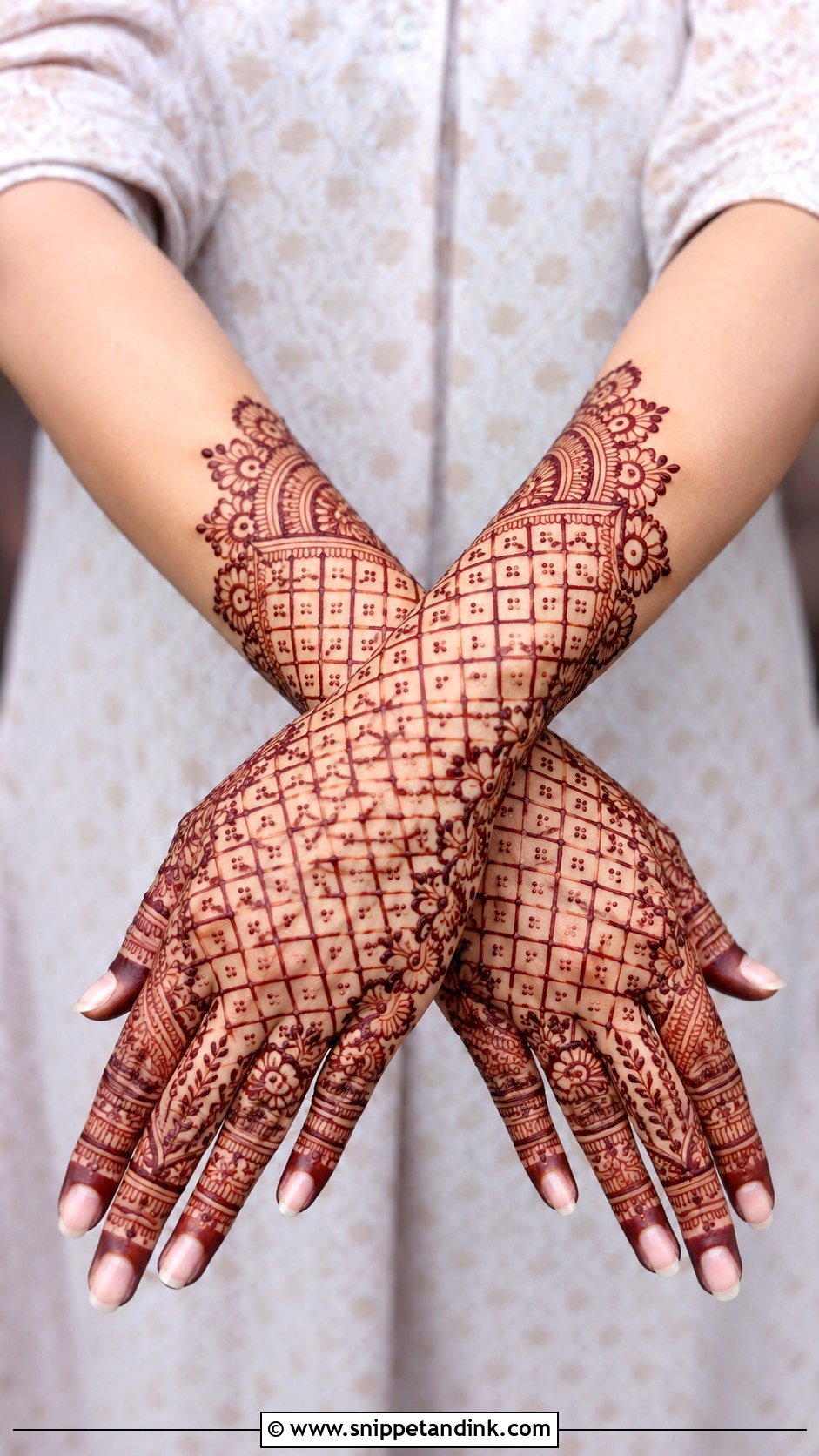
Jaali is mesh, and on the back of the hand it adds texture without needing many motifs. It can cover the centre, the fingers or a wrist cuff, and pairs well with flowers, paisleys and mandalas. I put it in one main area and leave space around it; jaali everywhere looks crowded. Keep the grid lines even, and add tiny dots or petals inside only some boxes. It’s a good choice for weddings and formal events.
15. Back Hand Paisley Mehndi Design
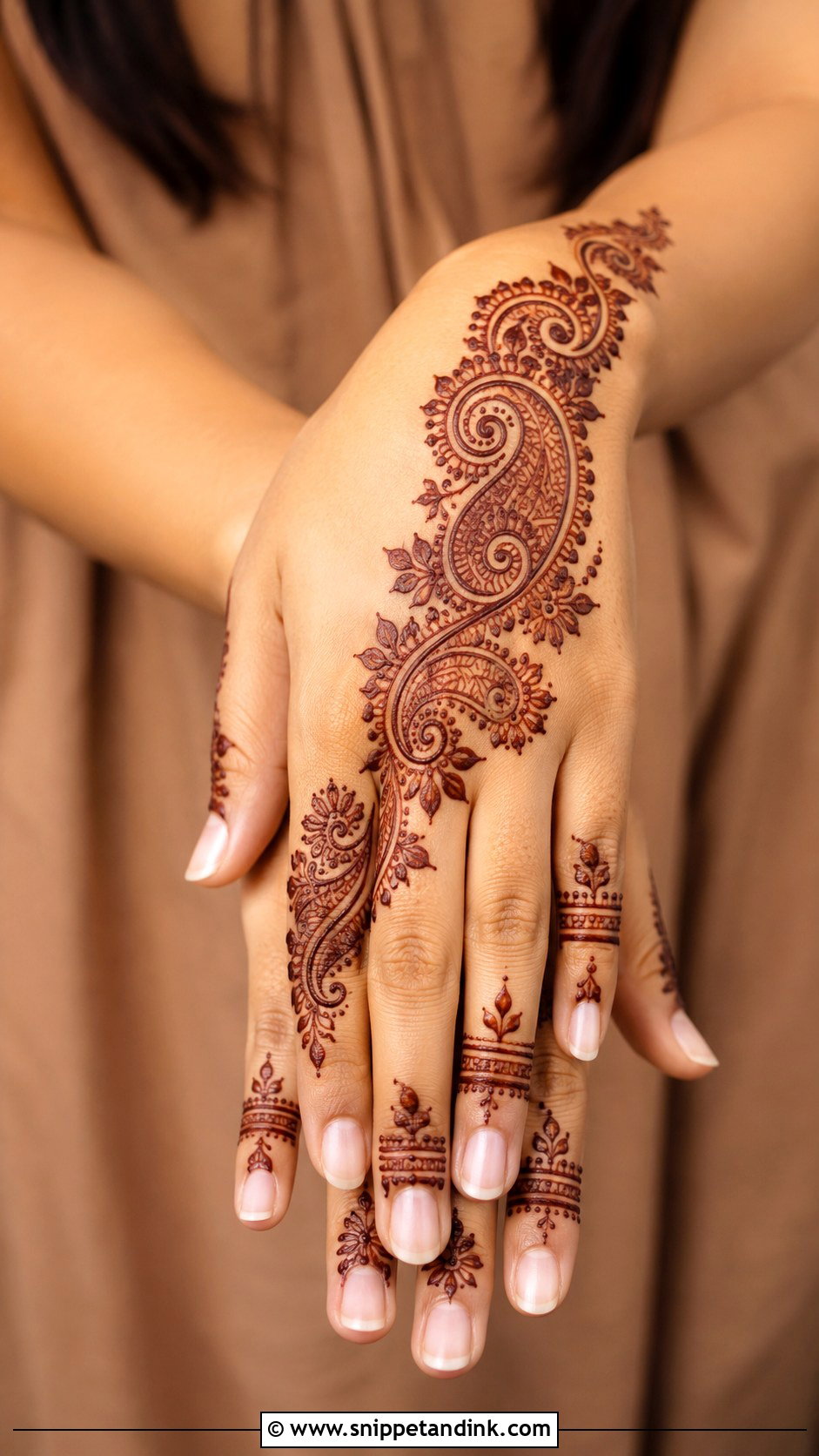
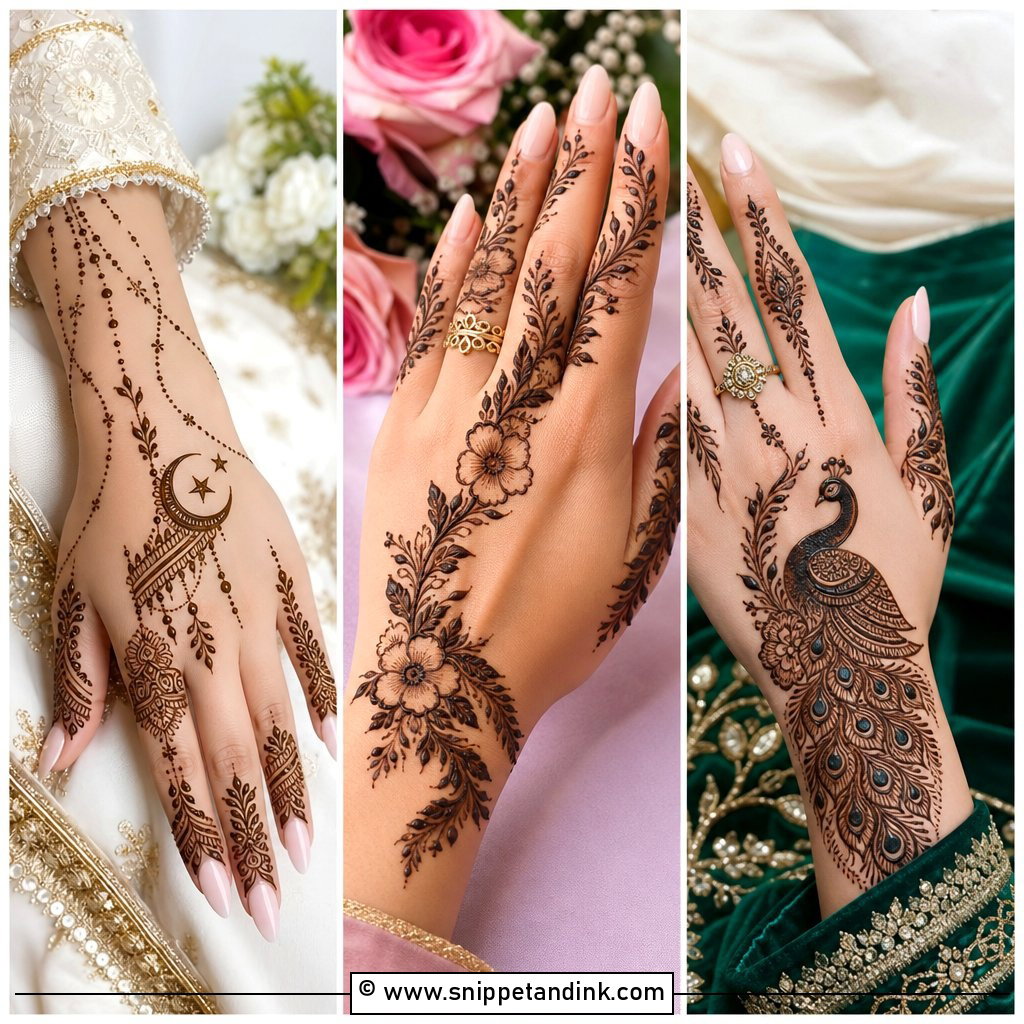
Paisleys can be large and bold or small and repeated along a vine. A diagonal paisley trail suits the back of the hand best, following its natural shape from wrist toward fingers, with flowers, leaves, dots and curves around it. Thick outlines keep the teardrop shape clear after staining. Extend the paisleys to the wrist and add detailed finger bands for a fuller hand, or keep one main paisley with light leafy branches for something simple. It’s at home at weddings, pujas, Eid and Diwali.
16. Back Hand Peacock Mehndi Design
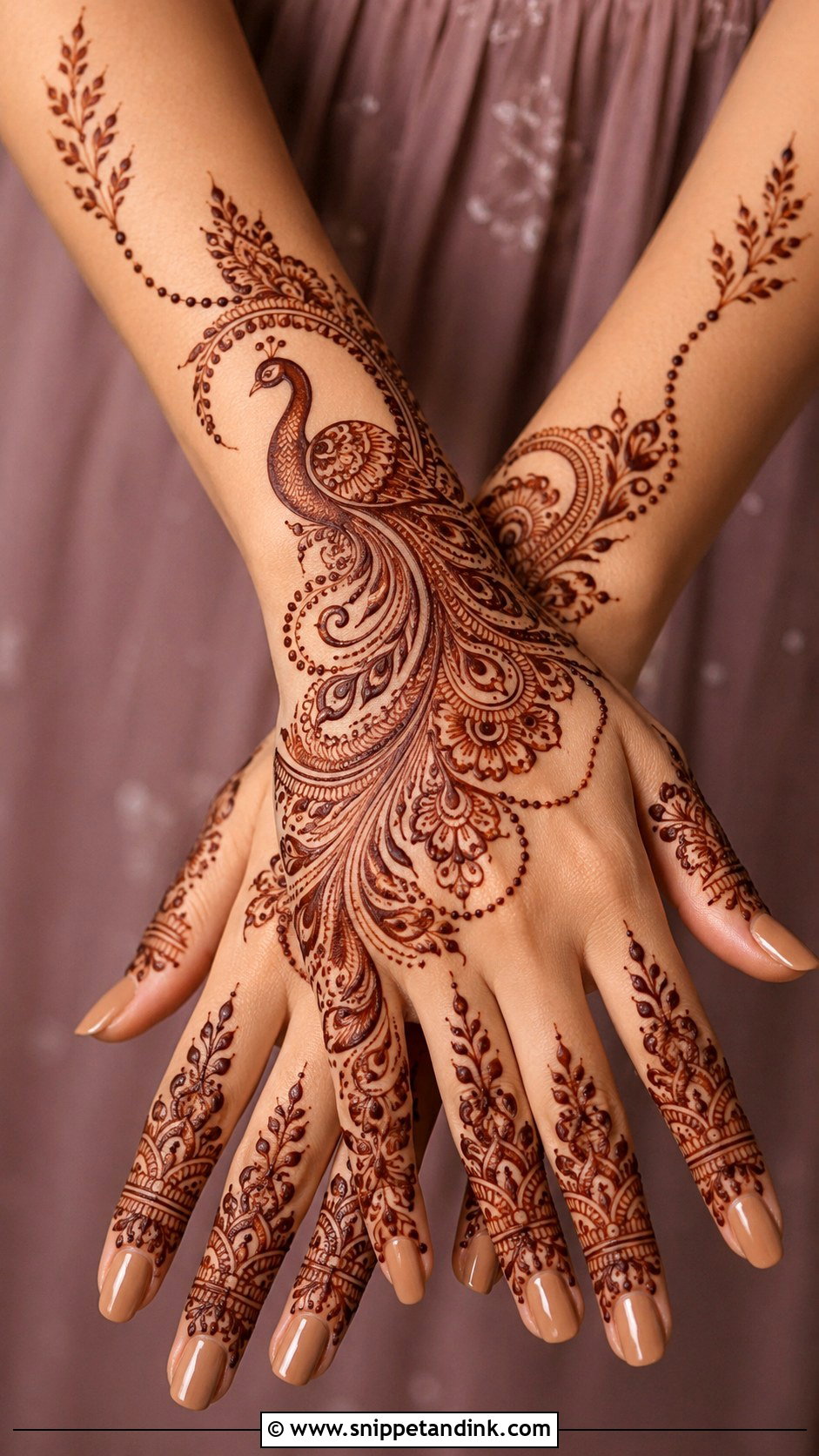
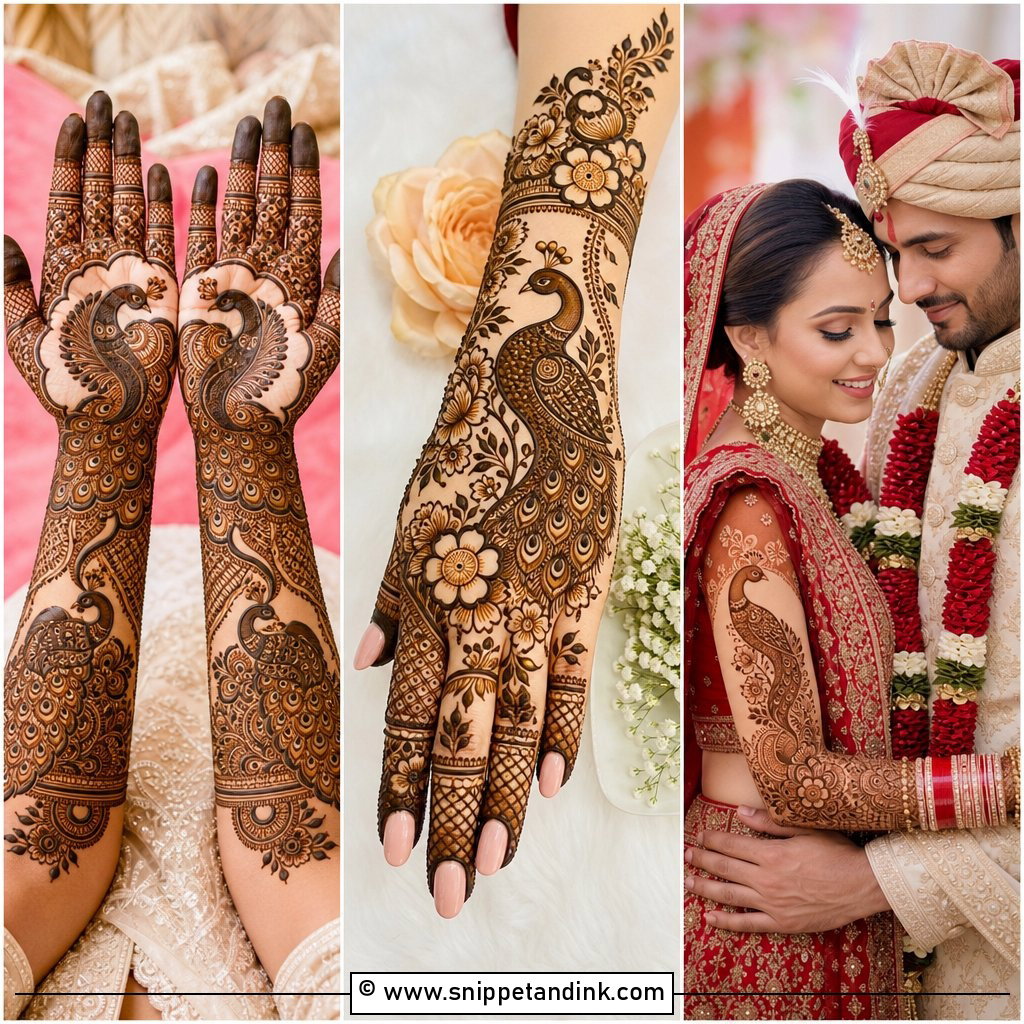
A peacock can sit near the wrist, in the centre or along a diagonal trail, its feathers giving room for curved lines, dots, petals and tiny paisleys. The body should be bold and the feather work fine; reverse that and the bird gets lost. I let the finger patterns echo the feather curves so the hand feels connected. Give it space to breathe, because an overcrowded centre is the most common way this motif fails.
17. Indo Arabic Back Mehndi Design
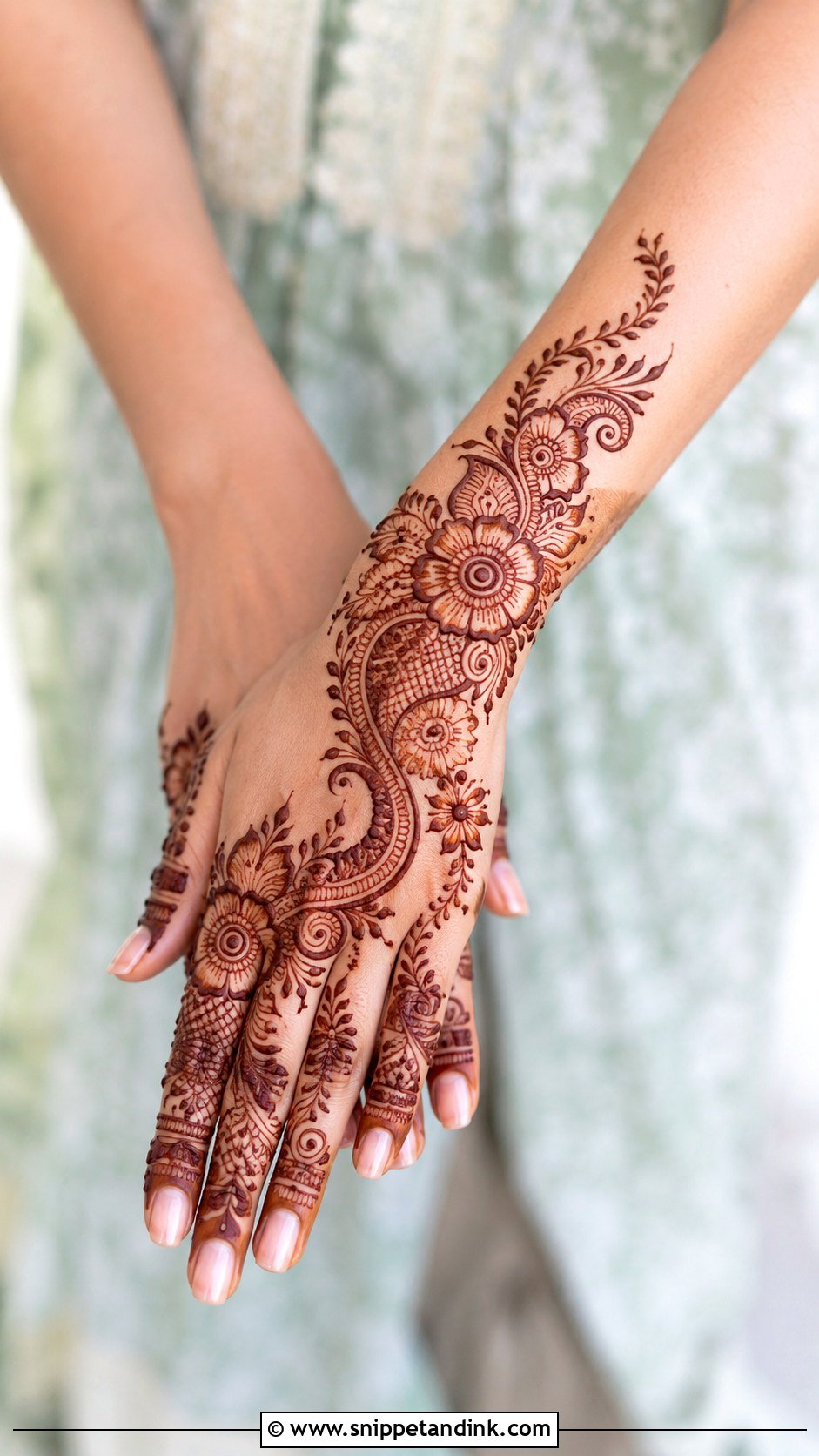
Indo Arabic back mehndi design mixes the bold flow of Arabic work with fine Indian detail: large flowers and vines alongside tiny dots, paisleys, jaali and shaded leaves. A diagonal layout gives it movement on the back of the hand. I keep the big motifs bold and fill only selected areas with Indian detail, so the design never tips into heavy. The fingers carry a mix of bands, leaves and small mesh sections. It’s the middle ground I suggest most often to guests and bridesmaids.
18. Indian Back Mehndi Design
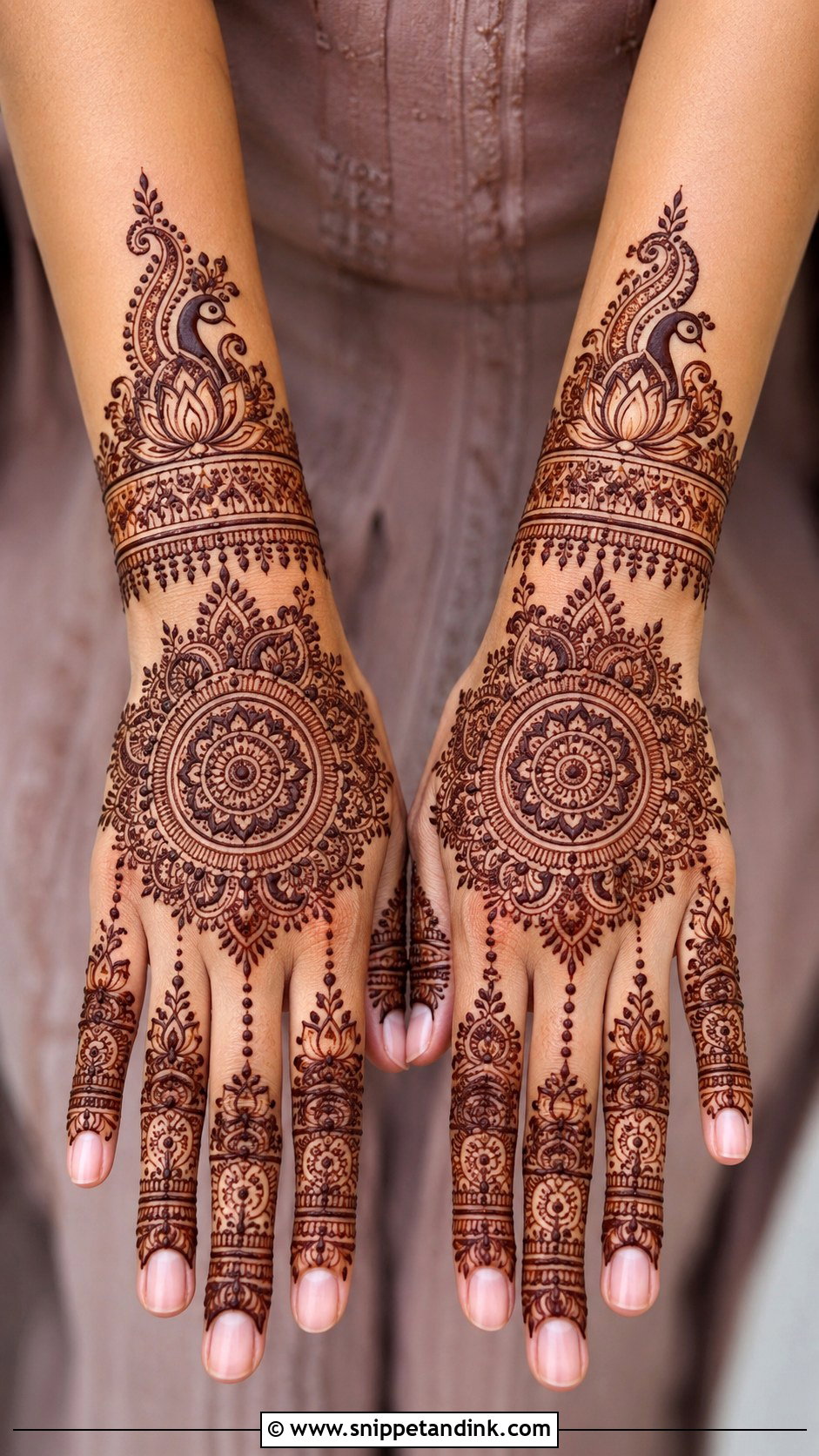
Indian mehndi means detailed filling, symmetry and cultural motifs: mandalas, paisleys, peacocks, lotus flowers, vines, dots and fine line work. It can cover the whole back of the hand or circle a strong central motif. Because it gets dense quickly, I plan it before the cone touches skin, and I leave small gaps between motifs so the stain doesn’t merge into one dark block. Keep the fingers connected to the main design. A deep maroon stain is the classic result.
19. Moroccan Back Mehndi Design
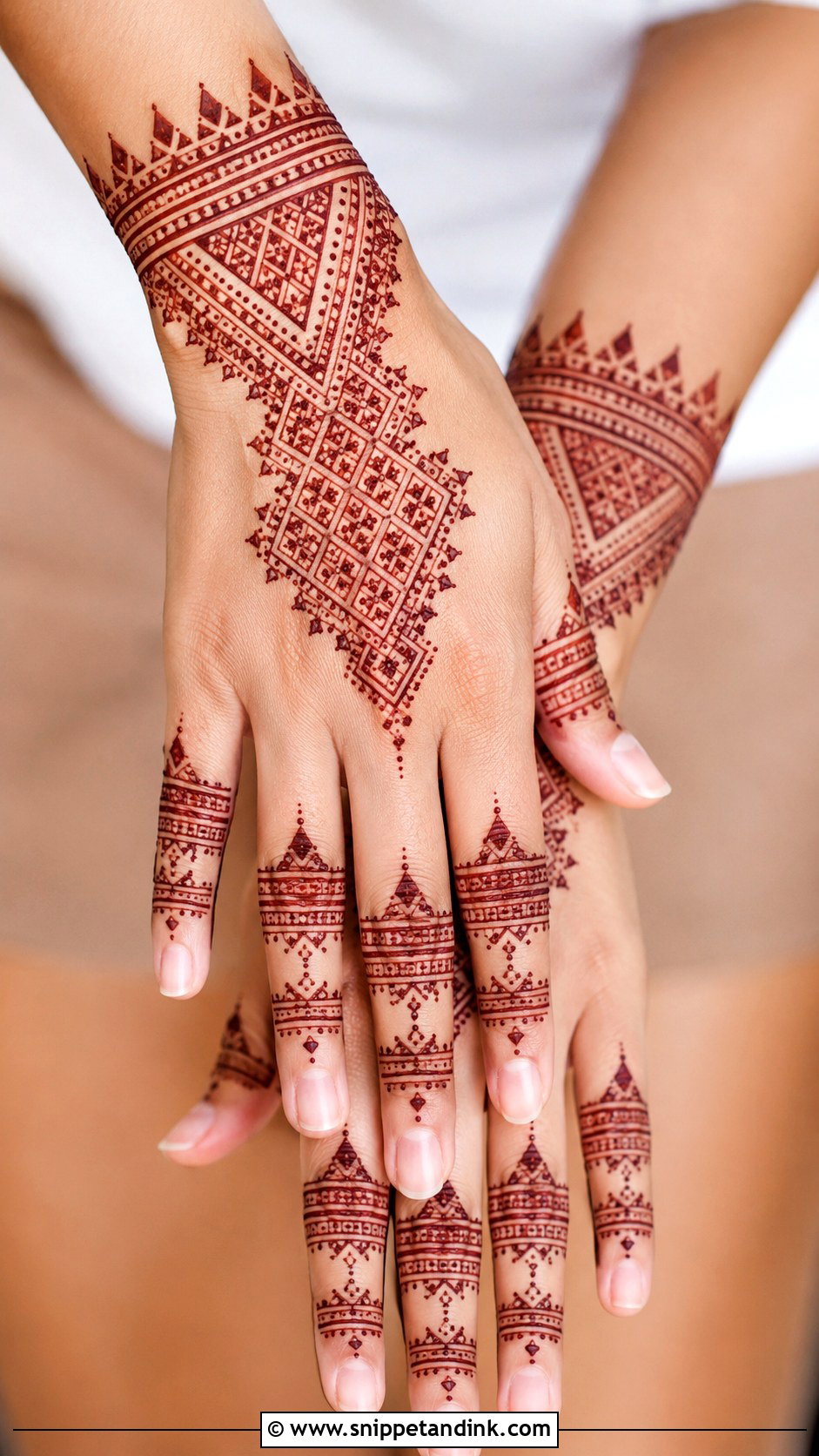
Moroccan-style henna uses diamonds, triangles, straight lines, grids, dots and bold borders. Next to floral Indian and Arabic work, it feels structured and modern. On the back of the hand it can be a central panel, a wrist cuff or a strip from finger to wrist. Precision is the hard part, so I’d only book it with an artist who shows straight-line work in her portfolio. Small dots inside the shapes add texture without extra weight.
20. Gulf Back Mehndi Design
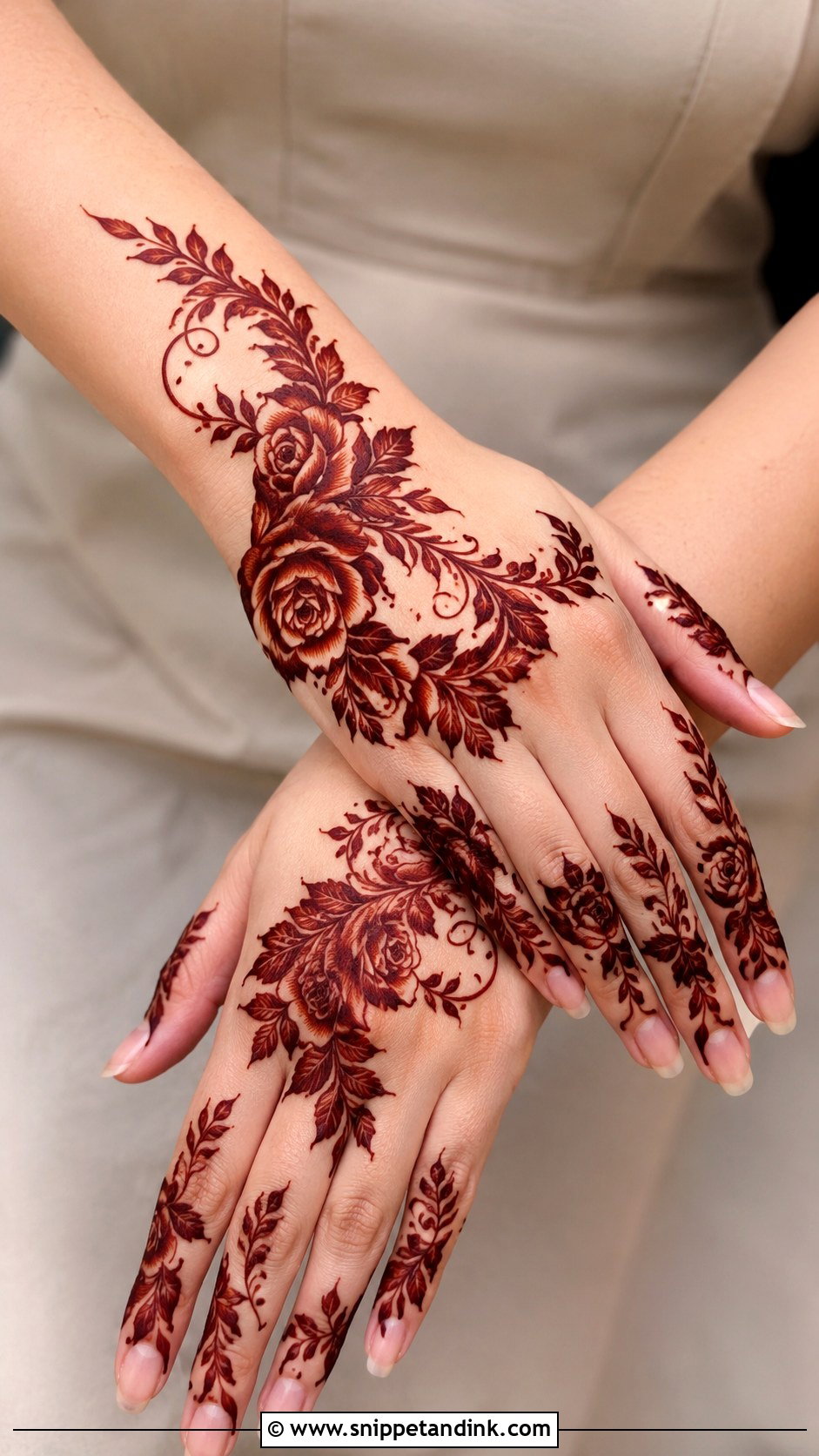
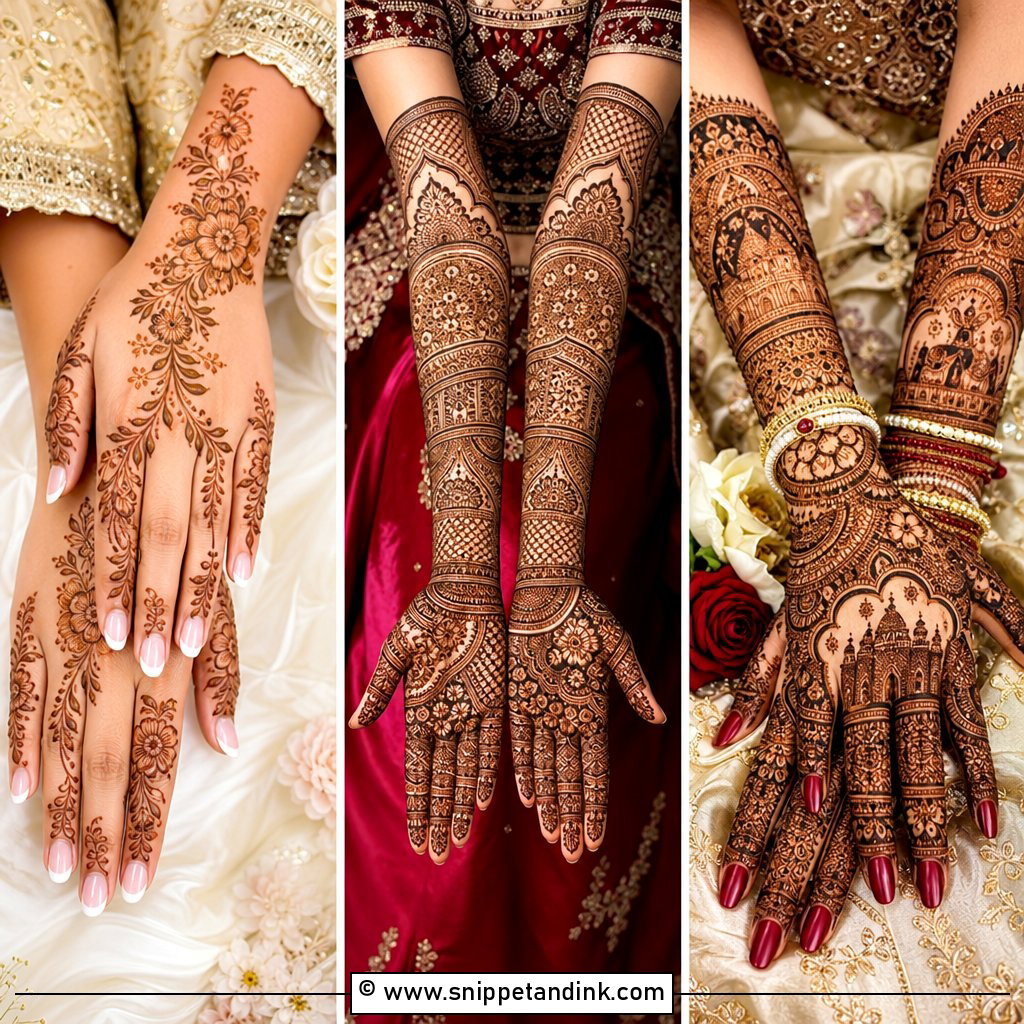
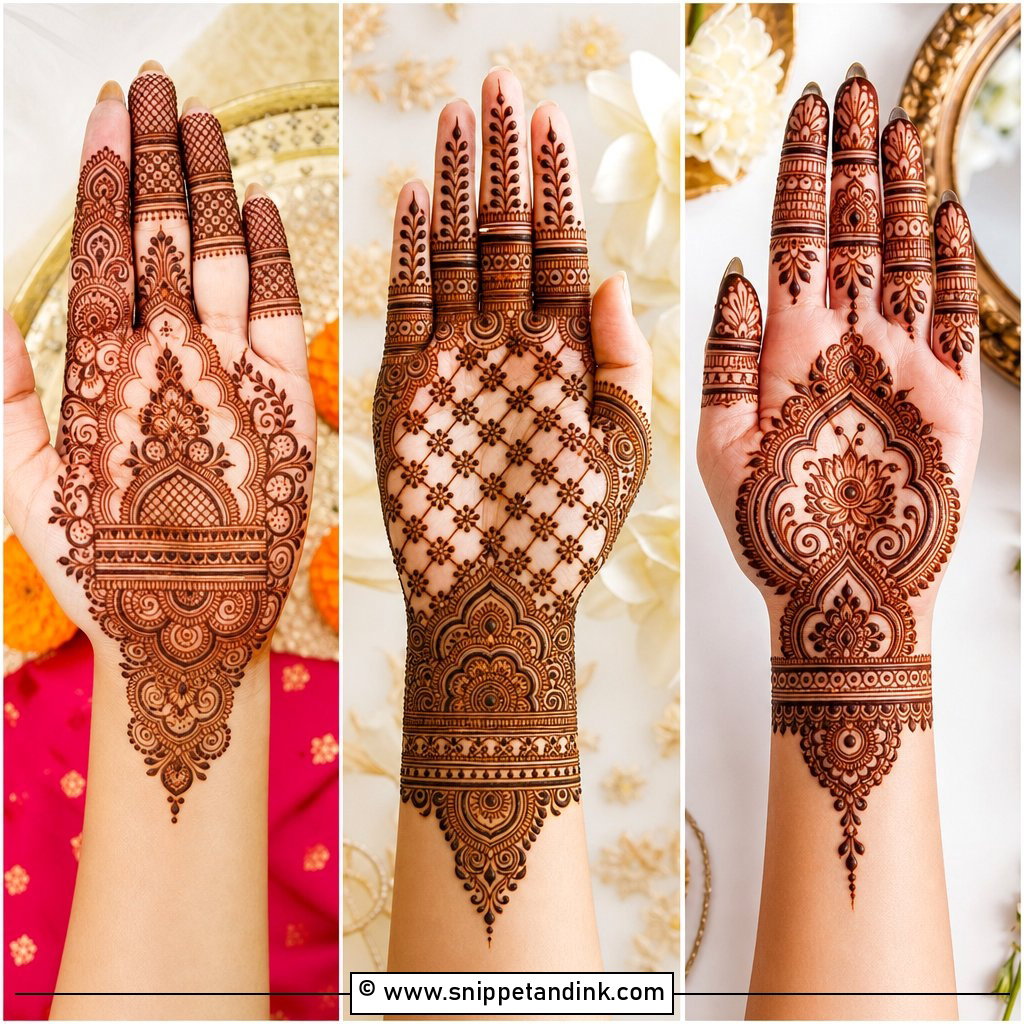
Khaleeji-inspired mehndi uses bold florals, flowing vines, open spacing and strong outlines. It moves from wrist to index finger or sweeps across the hand in a soft curve, often with large roses, leafy trails and shaded petals. Clear negative space is non-negotiable here; it’s what lets the bold shapes stand out. Light rings, dots or leafy tips are enough for the fingers. It suits Eid, weddings and evening events.
21. Minimal Back Mehndi Design
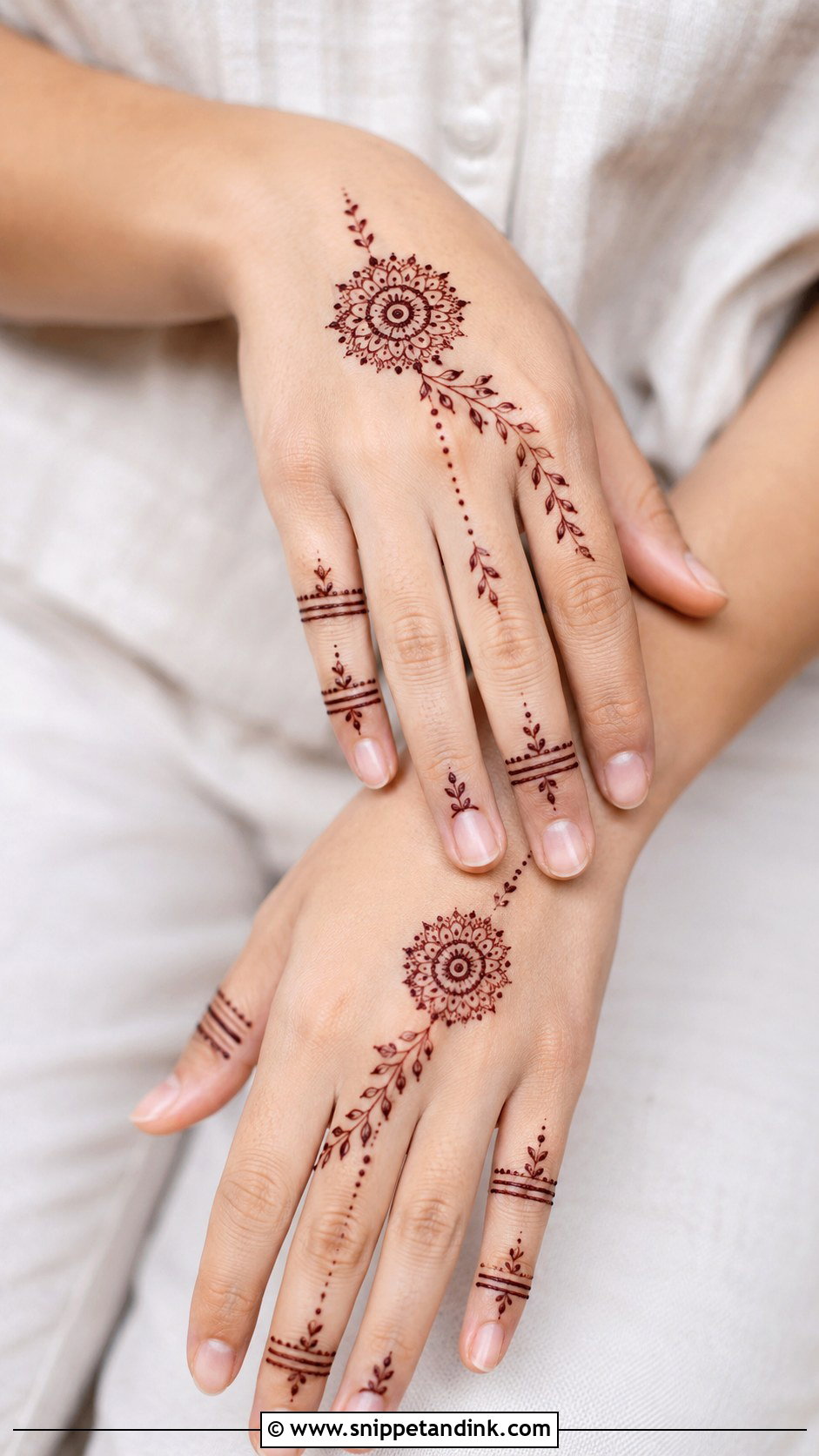
Minimal designs highlight the shape of the hand rather than covering it: a small flower, a tiny mandala, finger rings, dot chains or a fine leafy branch. Choose one focus area, the fingers or the centre, and leave the rest open. Thin lines and neat dots matter more here than anywhere else. I’d suggest it for a small gathering, an office event or a younger girl who doesn’t like heavy patterns.
22. Heavy Back Mehndi Design
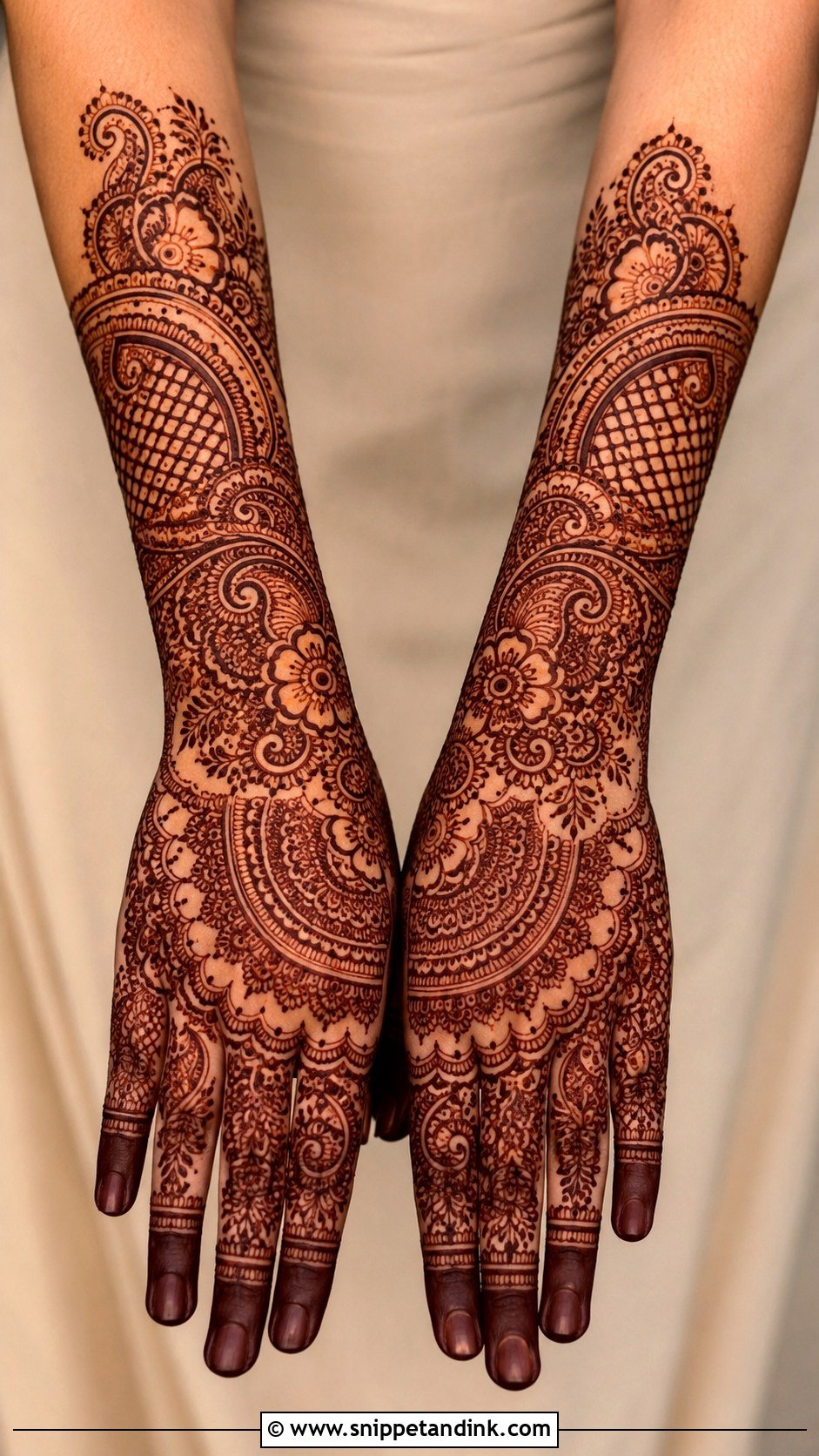
Heavy designs cover most of the back of the hand, the fingers, wrist and sometimes the forearm, with jaali, paisley clusters, dense florals, peacocks, mandalas and bracelet bands. What keeps it elegant is variety in scale. I combine large motifs with small fillers instead of repeating one detail everywhere, and I leave tiny gaps between sections so the stain develops with dimension rather than going muddy. It’s for brides, sisters of the bride and major celebrations.
23. Back Hand Mehndi Design For Engagement
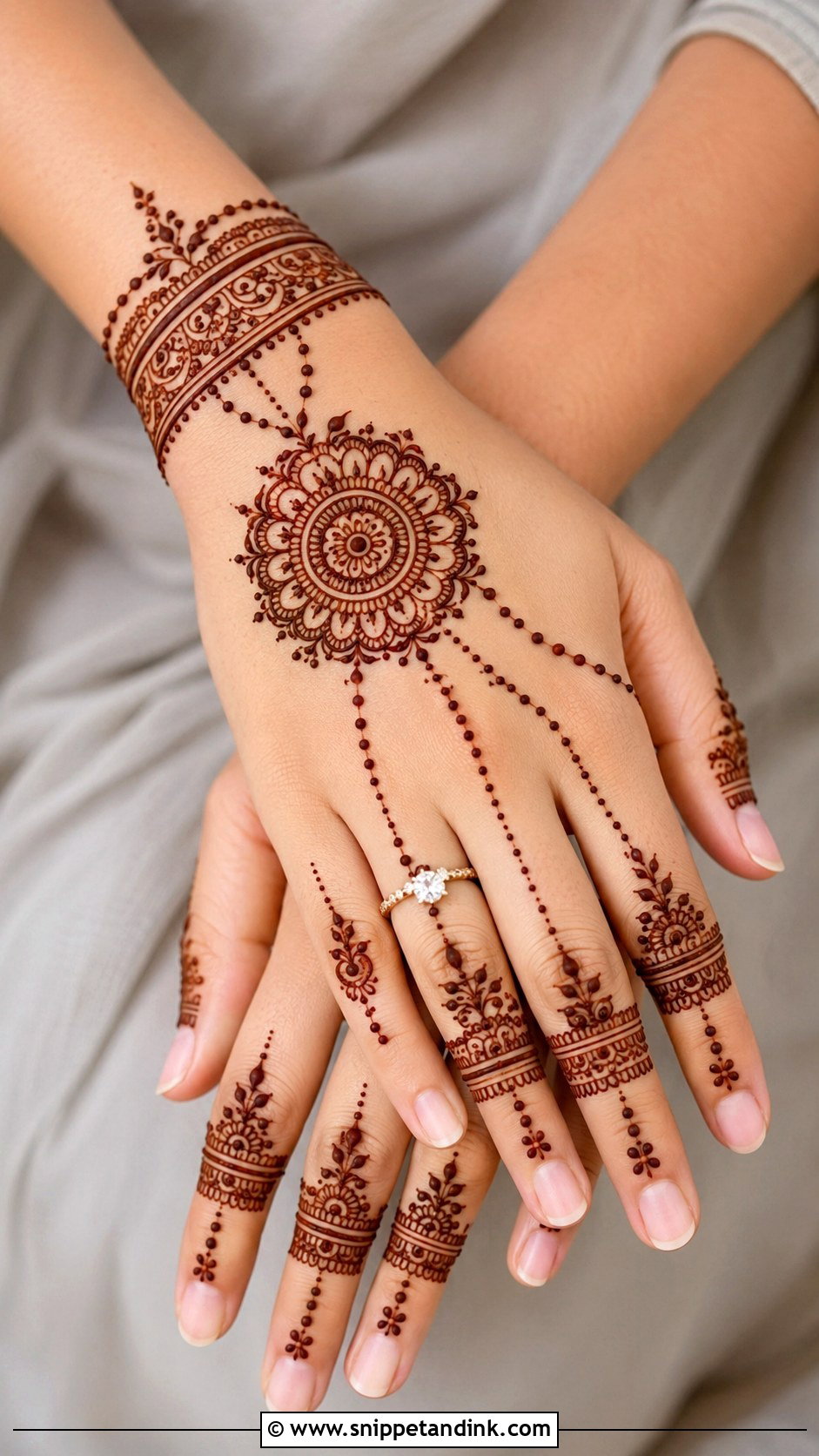
Engagement photos zoom in on the ring, so the mehndi’s job is to frame it. A ring-chain mehndi layout, a floral mandala or a bracelet design all work. I highlight the ring finger with a neat band, dots or a small vine but keep the exact spot where the ring sits fairly open, so the jewellery stays visible. A flower or soft mandala on the centre of the hand finishes it. Minimal or medium coverage, depending on the outfit.
24. Back Hand Mehndi Design For Wedding
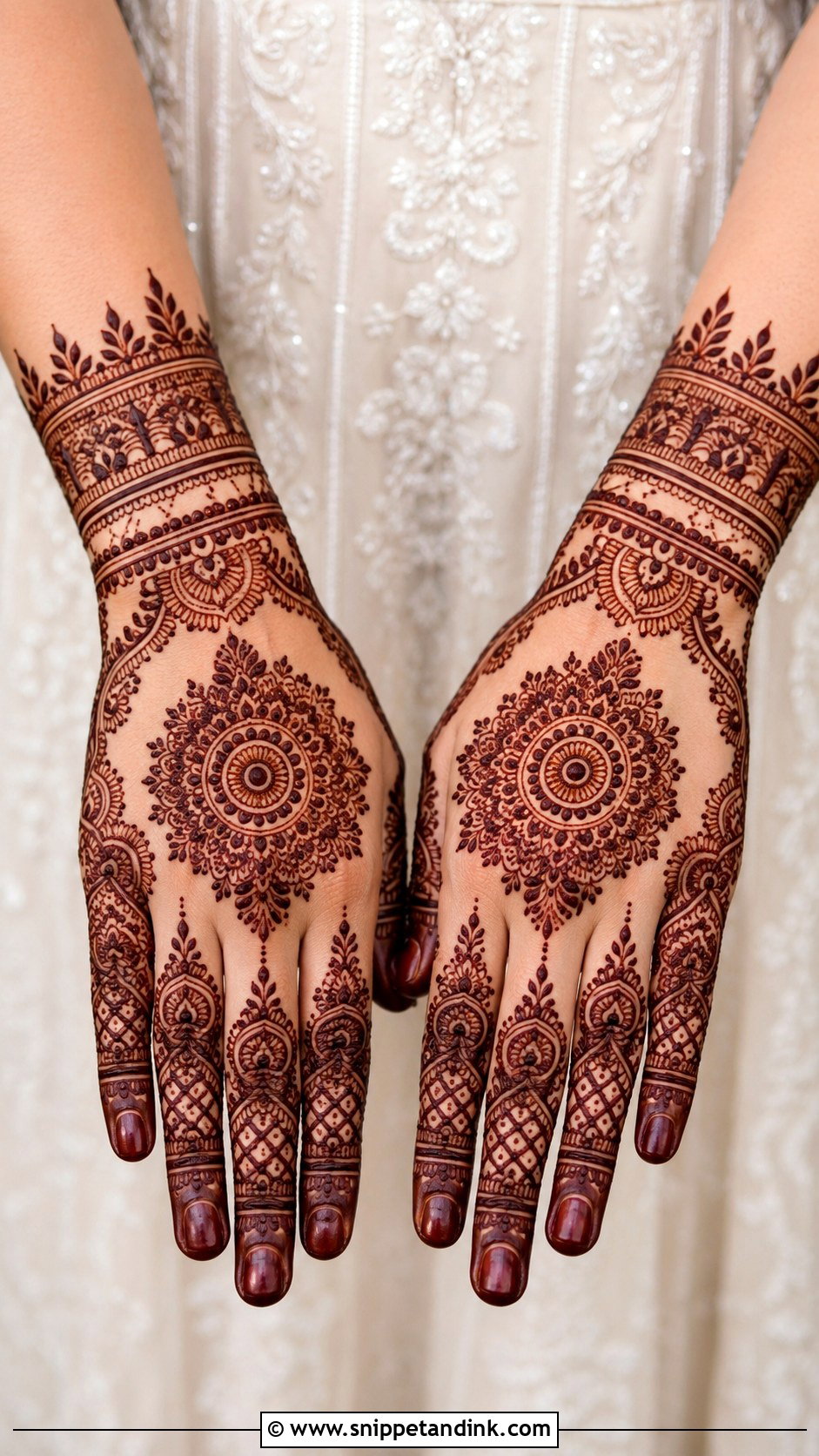
At a wedding, coverage depends on who you are. Brides suit fuller Indian or Indo-Arabic work; guests and bridesmaids usually do better with a medium Arabic trail or a floral bracelet. Either way, the hand should look complete: decorated fingers, a strong centre, a finished wrist. I always ask about the outfit before I start. Heavy embroidery calls for a cleaner design, while a plain outfit can take a richer one.
25. Back Hand Mehndi Design For Eid
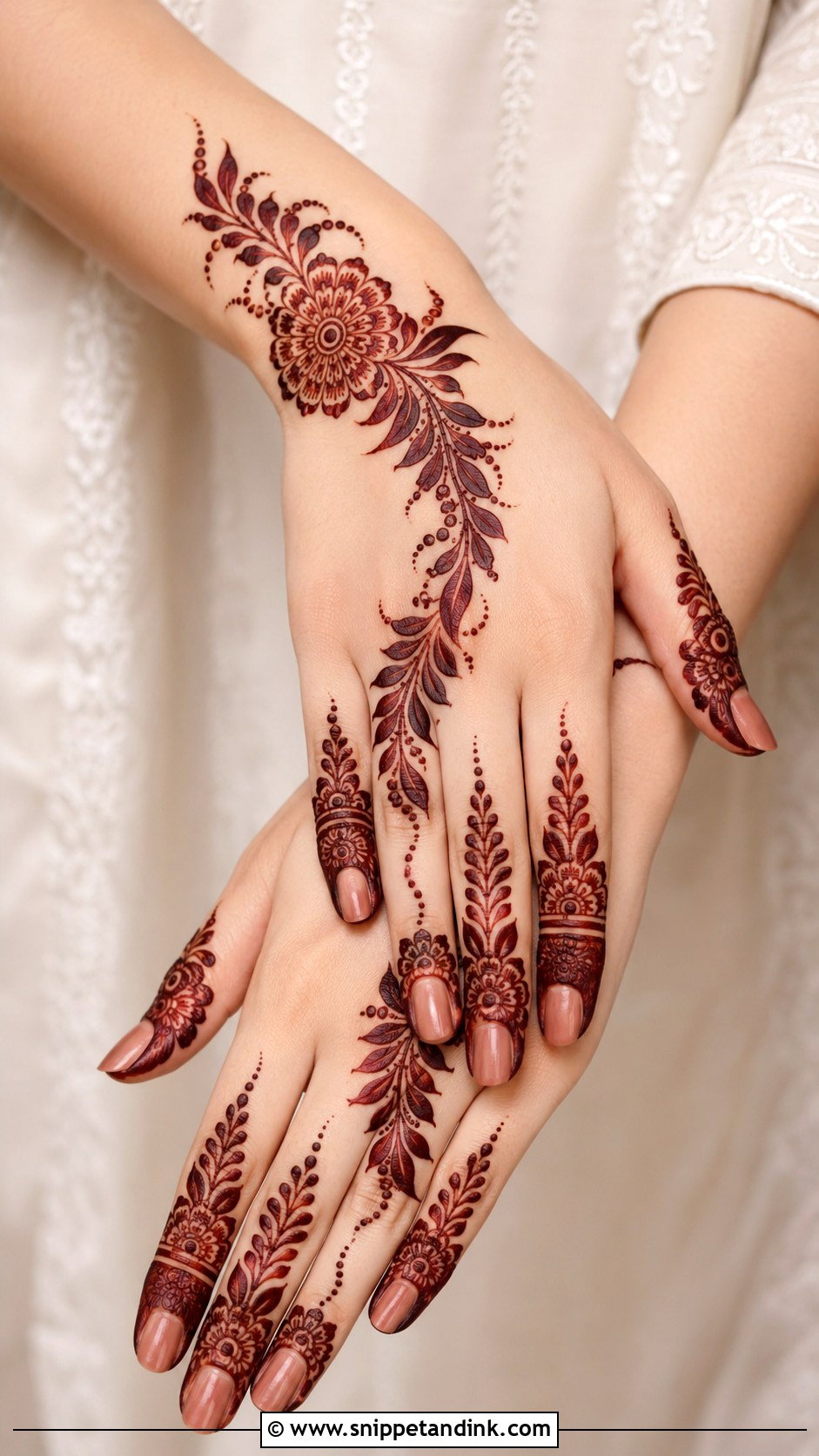
Eid mehndi has to be comfortable all day, because you’ll be greeting family, serving food and handling plates. Arabic and Gulf patterns are popular for a reason: bold, quick to apply and easy to read. A floral trail from wrist to index finger, a mandala with finger details or a bracelet design all work. Keep the fingers neat, since they’re on show with every greeting. Open spacing keeps the stain crisp.
26. Back Hand Mehndi Design For Diwali
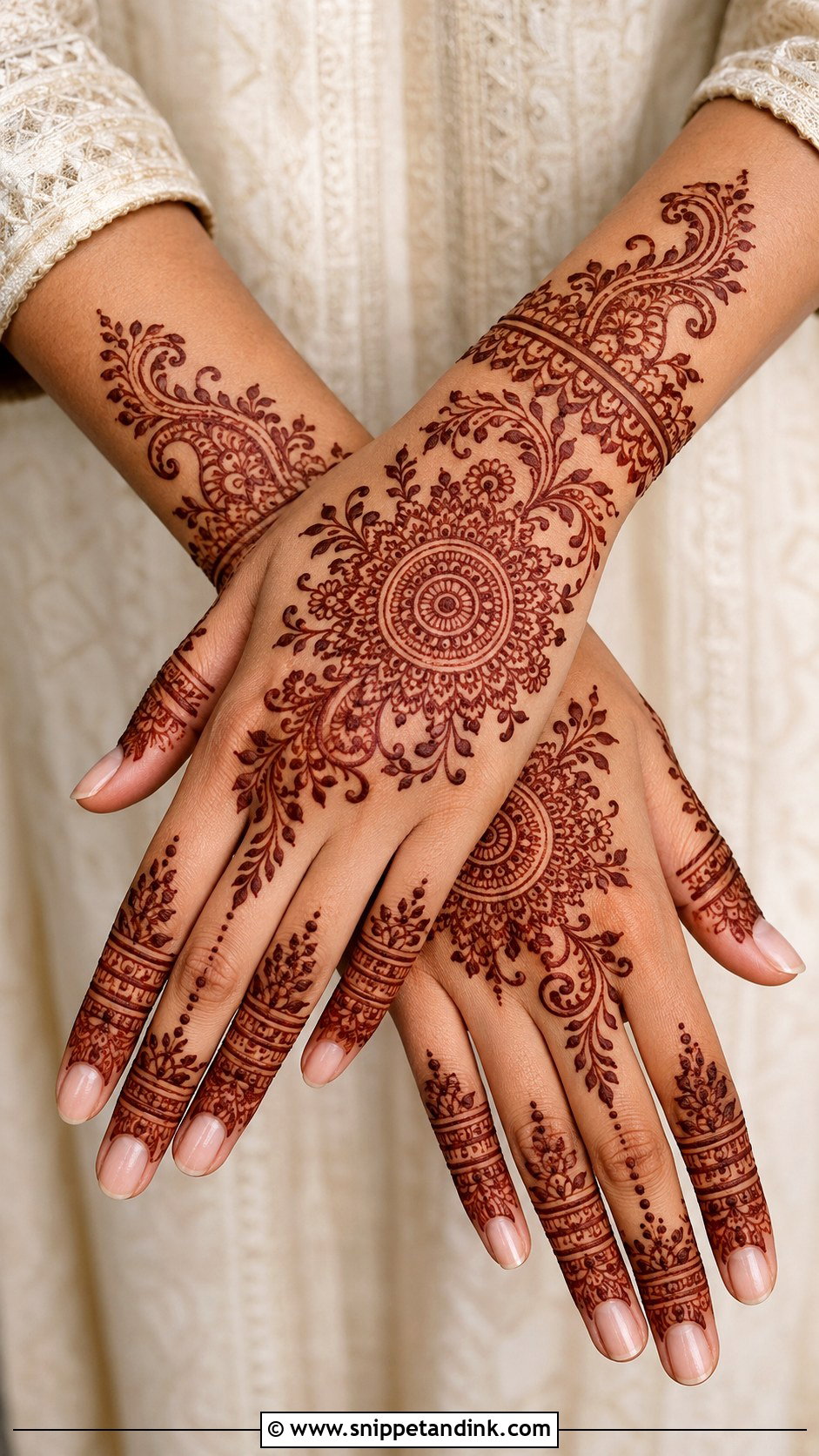
Diwali mehndi can be festive and detailed without becoming bridal. Mandalas, floral vines, paisleys and bracelet cuffs all look right with bangles and ethnic outfits. A decorated wrist with clean fingers works well for family gatherings and photos under diya light. Go traditional with Indian motifs, fine dots and leaf borders, or modern with a minimal mandala and ring-style fingers. Don’t overfill the hand; a clear pattern with a reddish-brown stain sits best beside colourful outfits and gold jewellery.
27. Back Hand Mehndi Design For Karwa Chauth
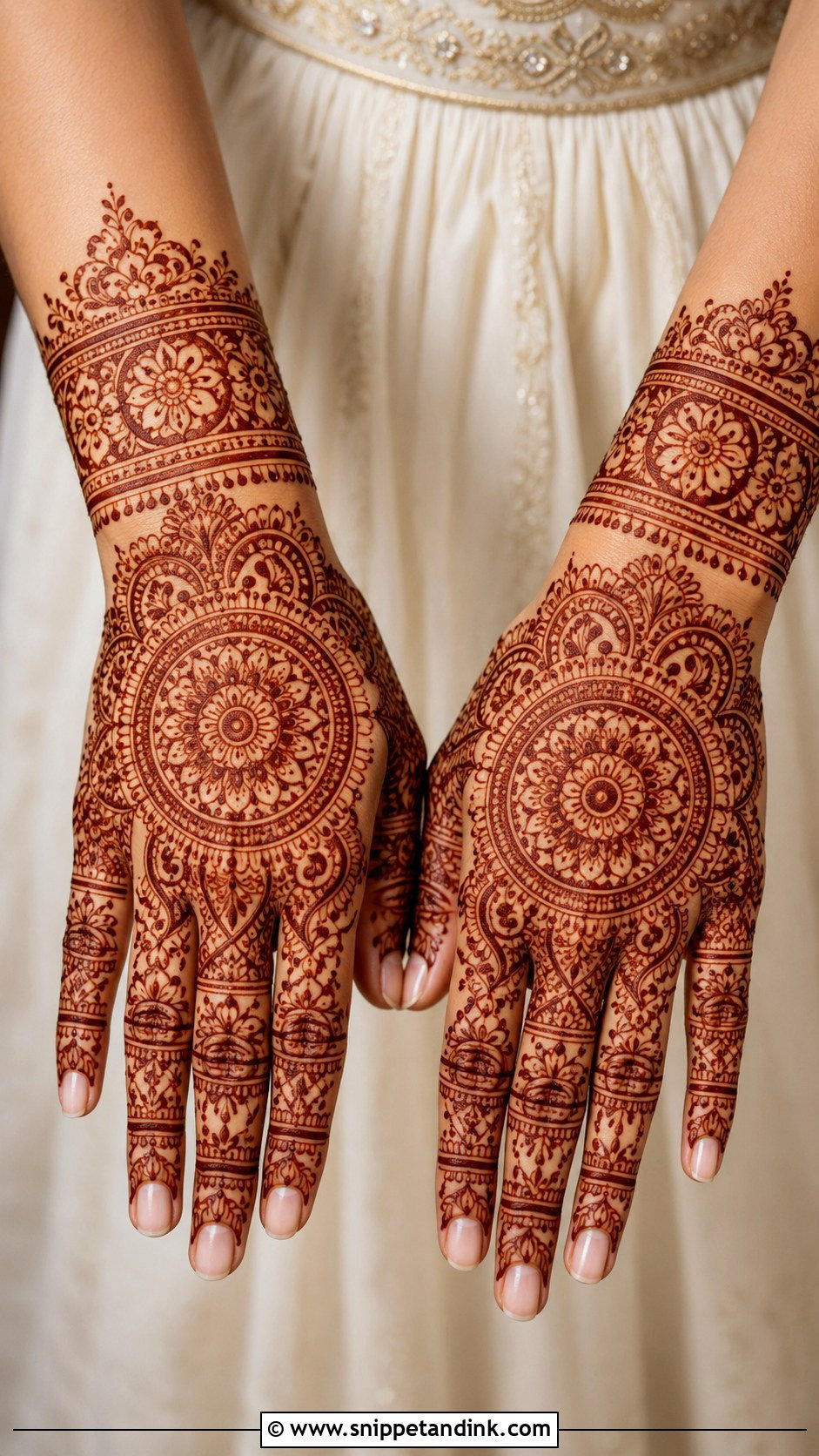
Karwa Chauth mehndi usually leans traditional and slightly bridal, with fuller mandalas, paisleys, flowers and wrist cuffs. A centred design with decorated fingers suits bangles and festive clothes, and an Indo-Arabic trail is the lighter alternative. The back of the hand is in close-up photos when you hold the thali, so I give the wrist enough detail to connect with bracelets. Fine fillers, dots and curved borders finish it.
28. Back Hand Mehndi Design For Kids
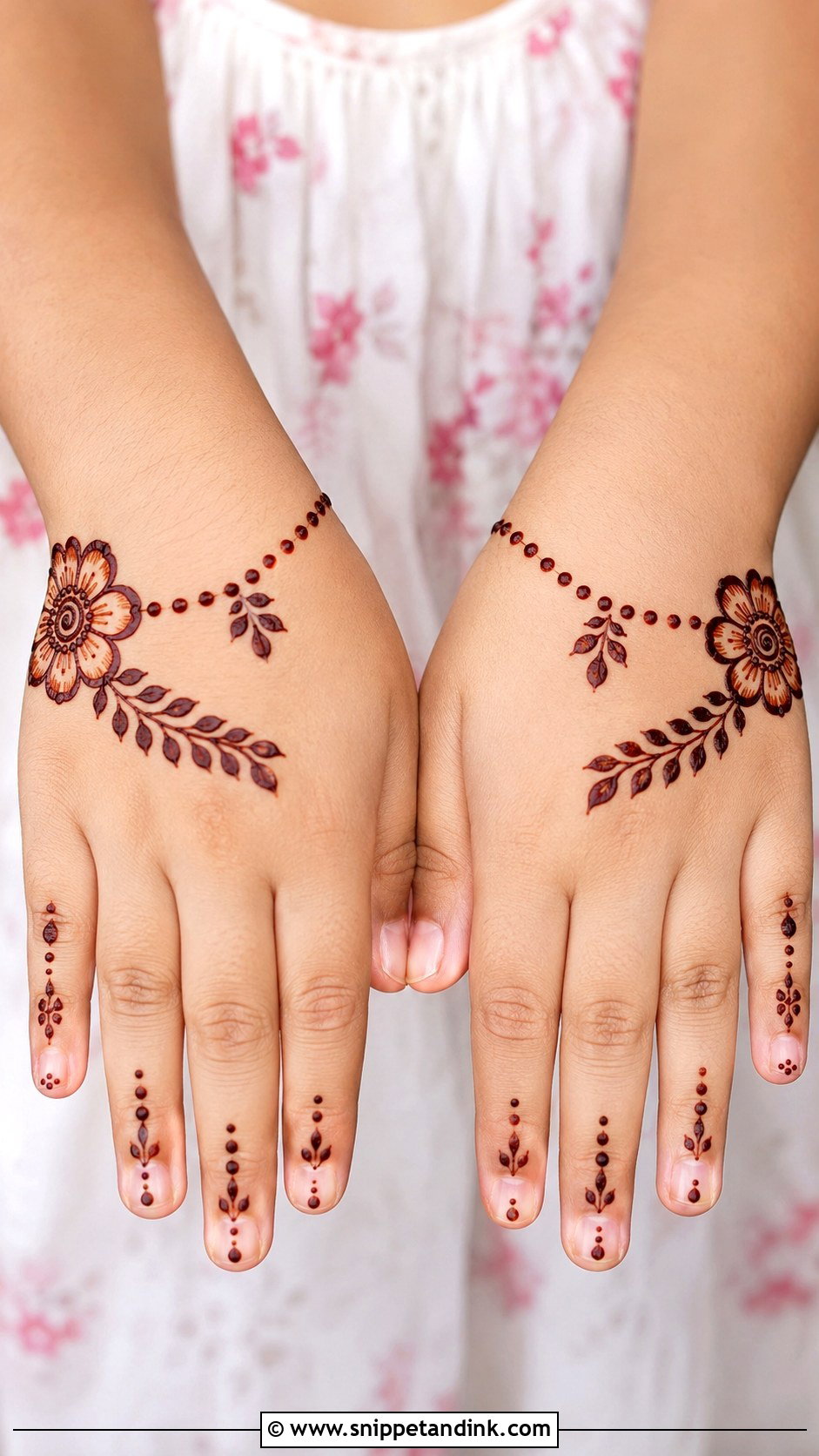
Back hand mehndi design for kids needs to be finished before they lose patience. A small flower, round mandala, simple floral trail or dotted bracelet is plenty, with light dots, tiny leaves or small bands on the fingers. Dense designs stay wet longer and get smudged, so I use rounded shapes and clean lines with thin paste. The dried paste should simply flake away, so I keep it thin enough not to crack off in chunks.
29. Back Hand Mehndi Design For Girls
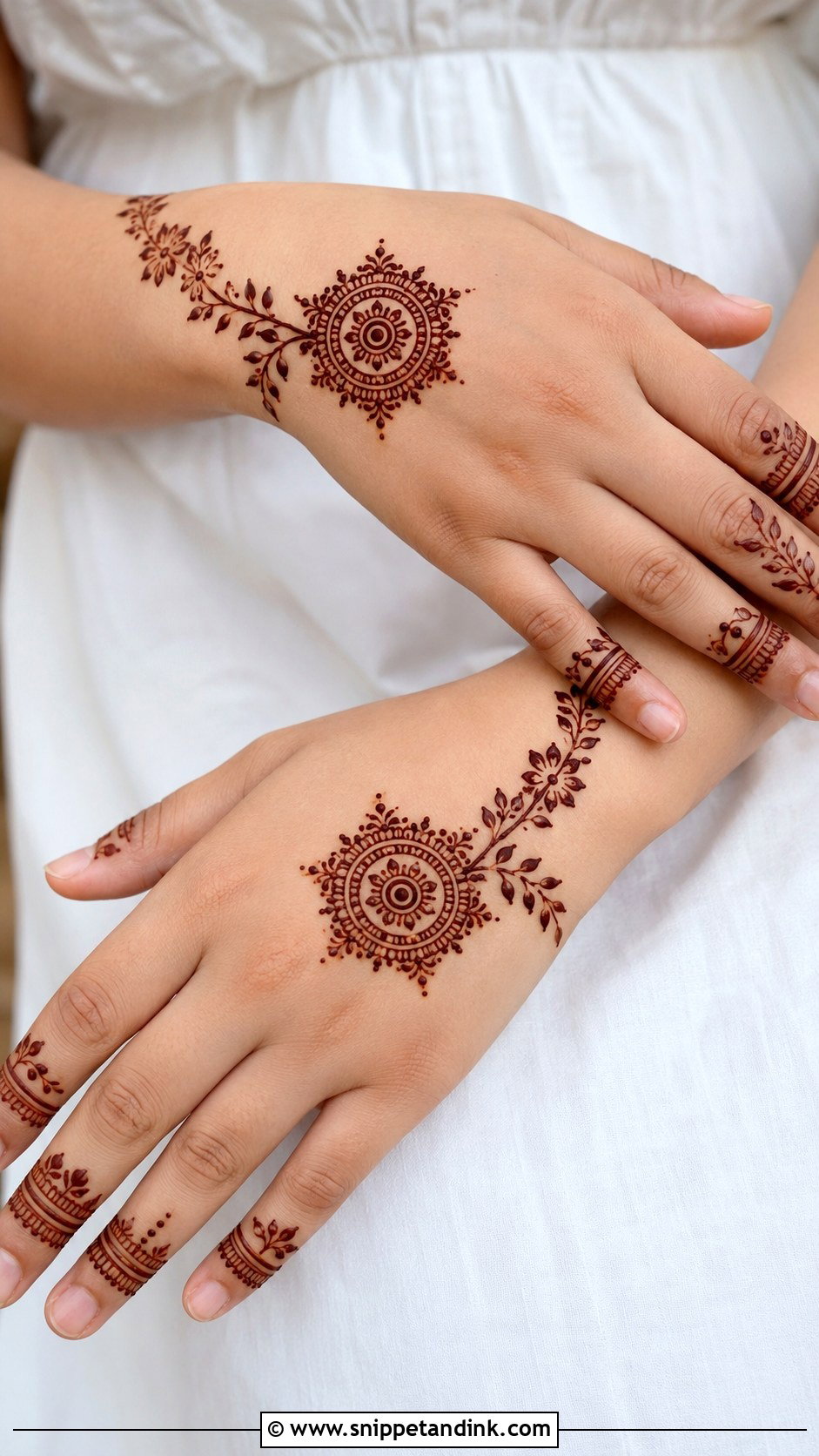
Girls usually want something playful and light: floral trails, simple mandalas, finger bands, leafy vines or a bracelet pattern. I keep it clearly younger than a bridal style. A half-hand layout looks pretty and age-appropriate. For a trendier touch, decorate only two or three fingers and leave open space on the hand, tied together by a small centre flower or mandala. It suits school functions, festivals and family weddings.
30. Back Hand Mehndi Design For Bridesmaid
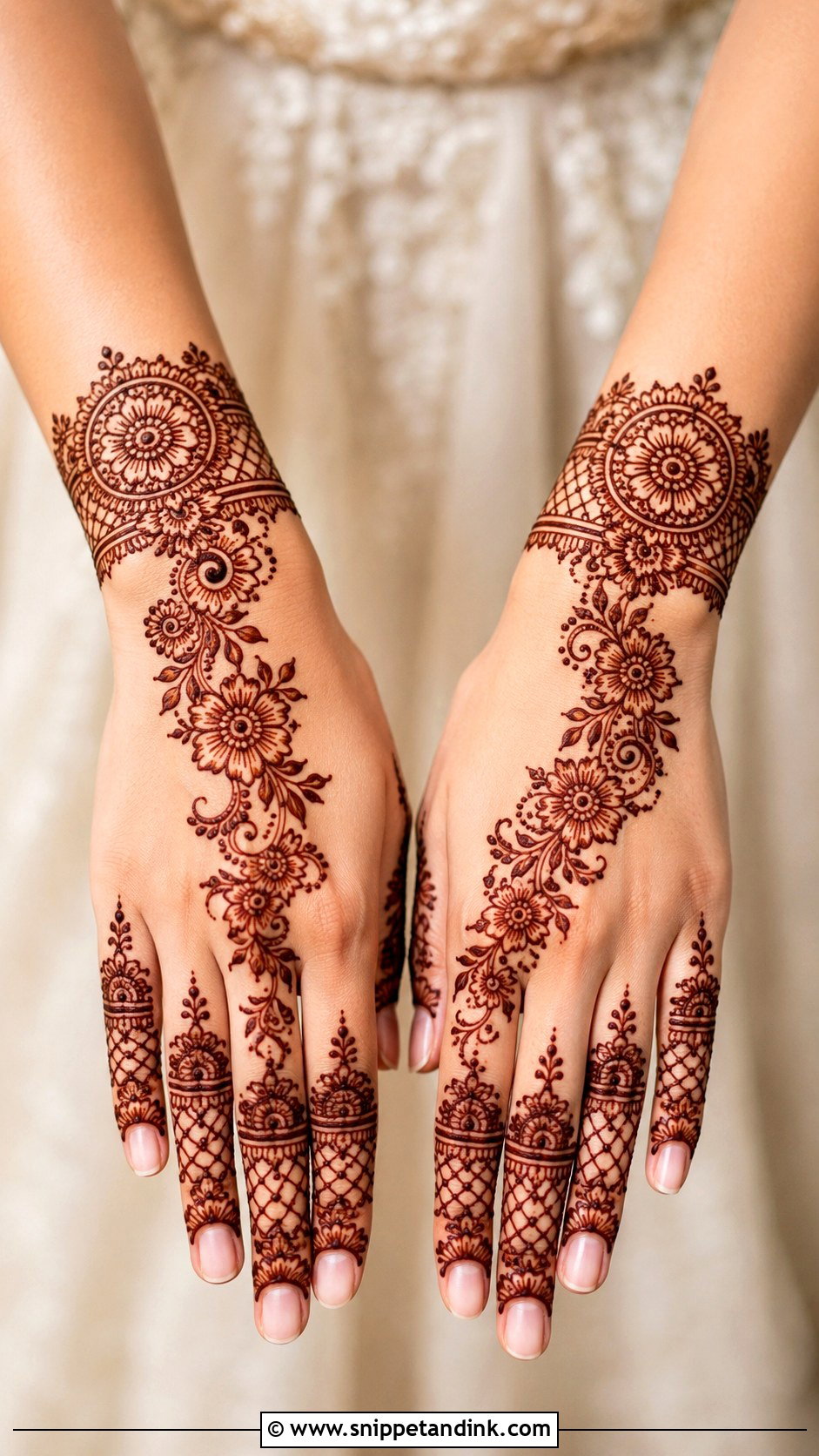
Bridesmaids should sit a step below the bride. Medium coverage works best: an Indo-Arabic floral trail, a mandala bracelet or a jaali pattern with decorated fingers. Think about your sleeves and jewellery first. Heavy jewellery suits open spacing, while a simple outfit can carry a fuller design. And remember you’ll be dancing, running errands and posing all day, so pick something that won’t feel precious.
31. Back Hand Mehndi Design For Party
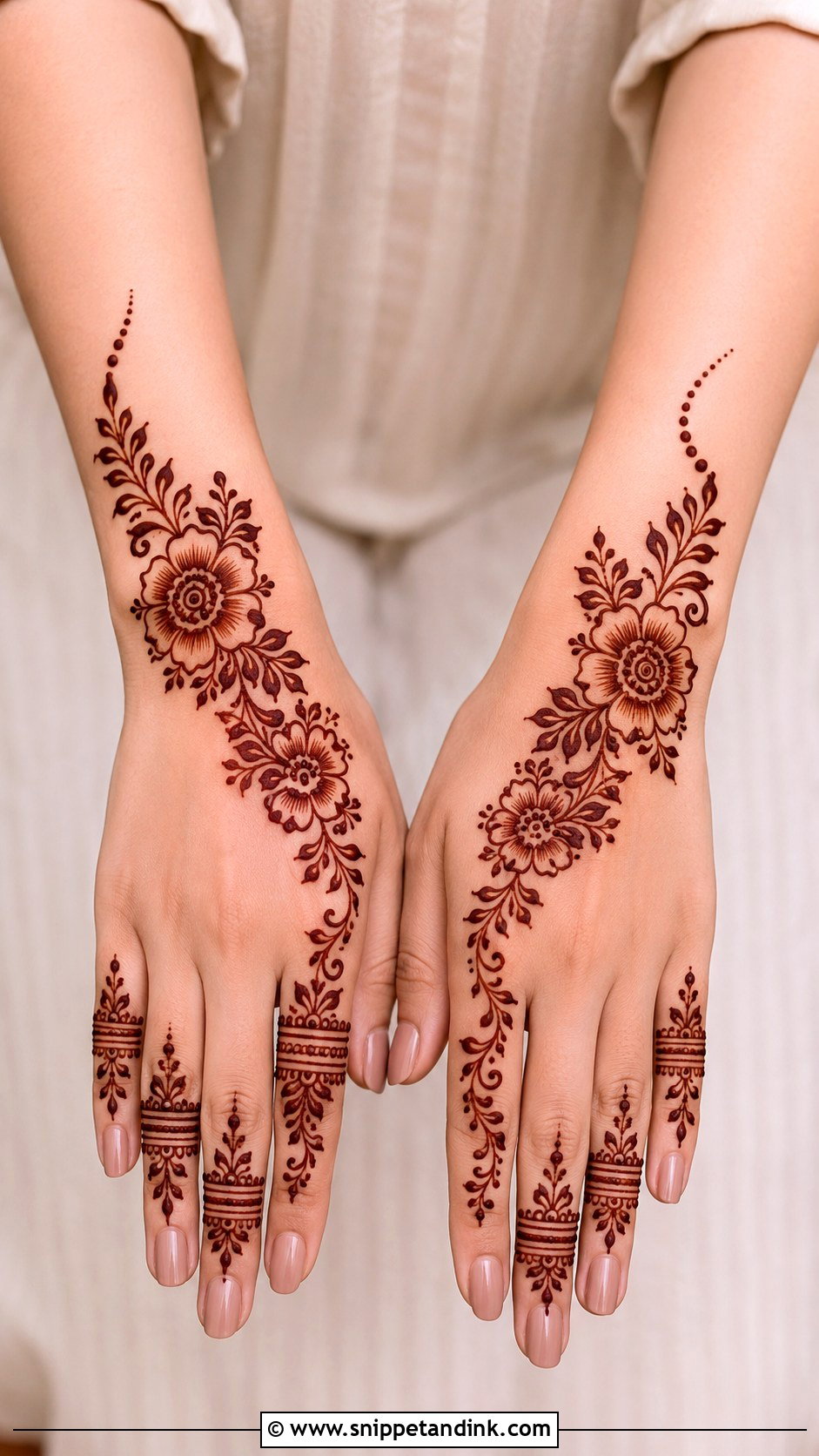
Party mehndi doesn’t need coverage. A diagonal Arabic trail, finger ring mehndi, a bracelet cuff or a minimal mandala is enough to make the hand stand out with fusion outfits, gowns or simple dresses. I keep traditional heavy filling out unless the event is very formal, and use negative space to make it look current. Highlighting one finger with extra detail while keeping the others light is an easy trick that photographs well.
32. Back Hand Rose Mehndi Design
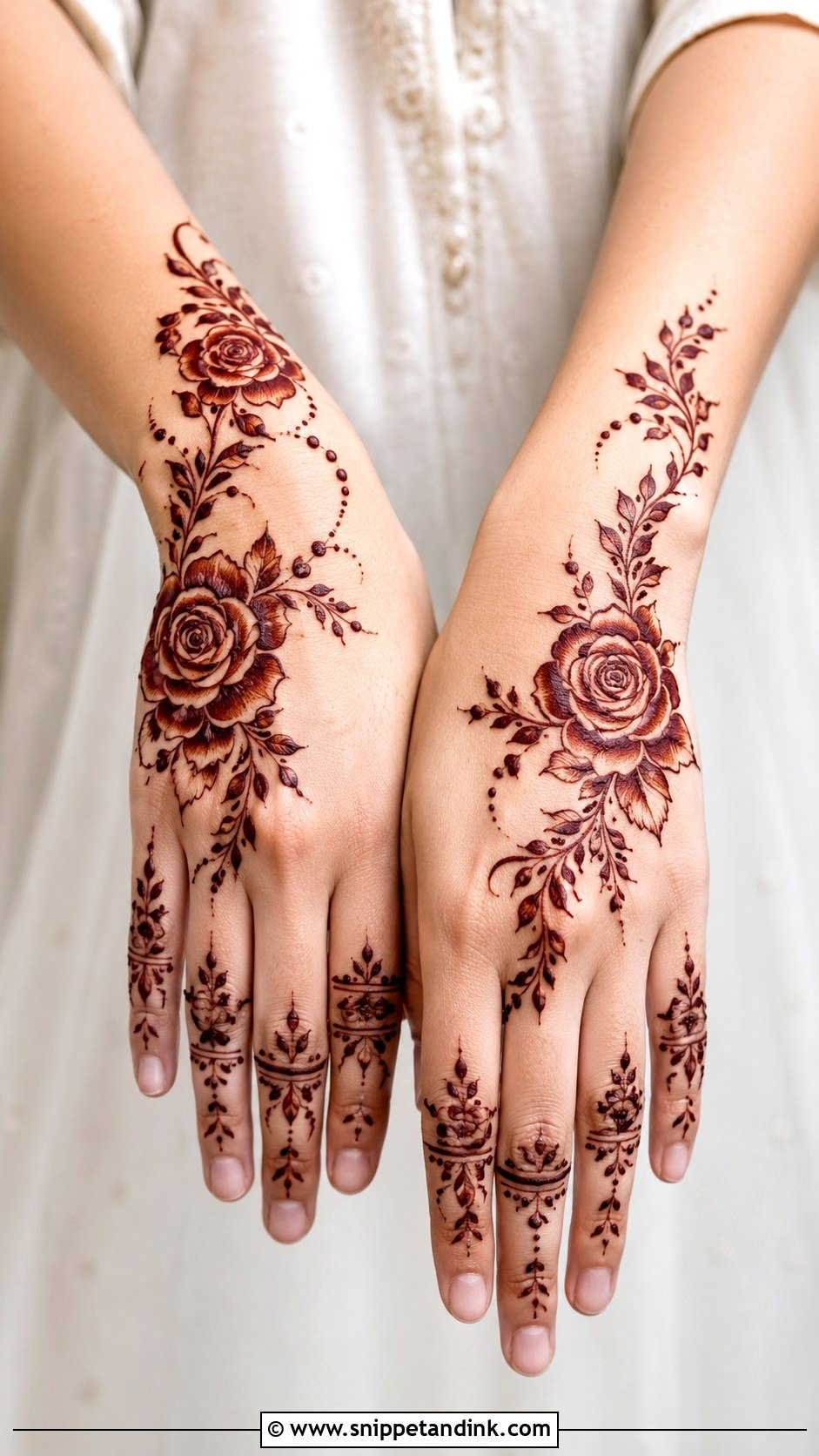
A large rose on the side of the hand with leaves and vines moving to the fingers, or small roses along a diagonal Arabic trail: both are popular in modern henna. Rose petals look best with bold outlines and gentle shading. Keep everything around them simple so the rose stays the focus. As the stain deepens over the first day, the petal layers separate visually and the rose becomes much more defined than it looked when the paste first came off.
33. Back Hand Lotus Mehndi Design
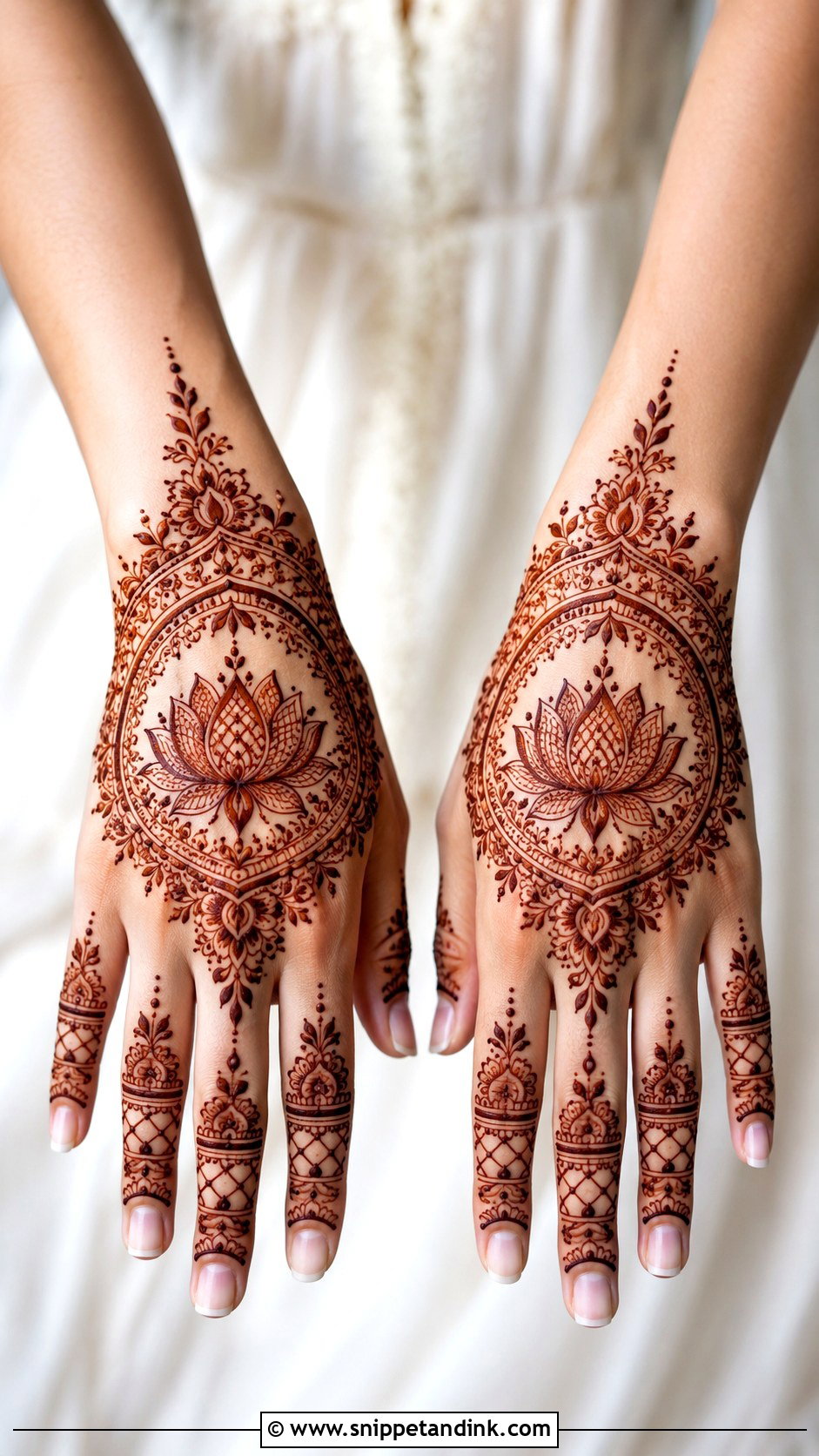
The lotus is a calm, traditional focal point, placed in the centre, near the wrist or inside a full Indian pattern. Its layered petals need to be clean and evenly spaced, or the motif turns into a blob after staining. I draw it petal by petal from the base outward. Dots, leaves, mandala rings or jaali sections complete it. One main flower keeps it simple; repeated floral borders make it rich. Weddings, pujas and festivals all suit it.
34. Back Hand Leaf Mehndi Design
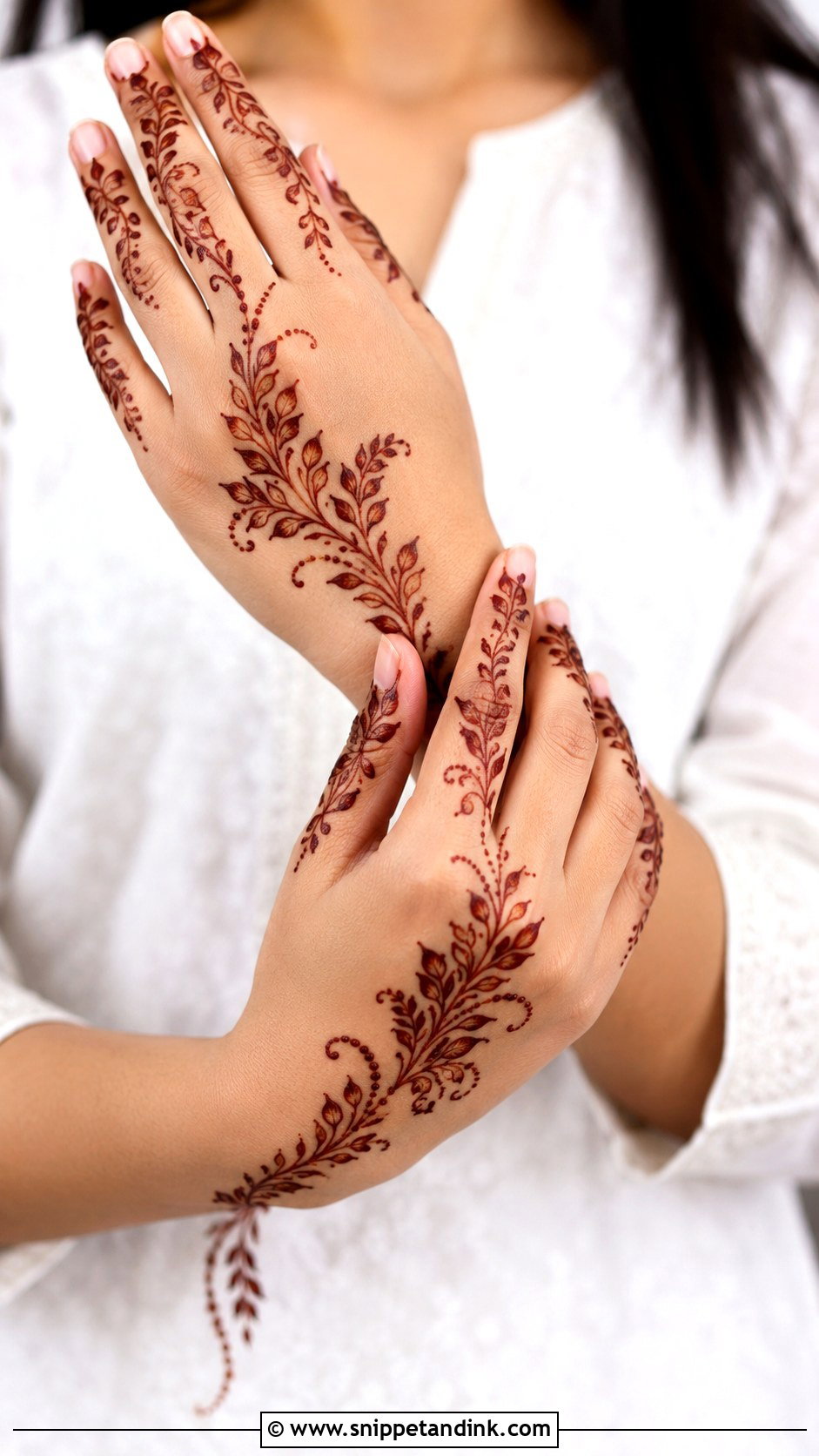
Leaf designs are lighter than florals but still detailed. Vines can run diagonally across the hand, wrap the wrist or decorate the fingers like jewellery. I curve the stems to follow the hand’s shape and vary the leaf sizes so the design has movement, filling gaps with small dots. They mix easily with Arabic, minimal and Indo-Arabic patterns, and suit every hand size, from daily wear to festivals.
35. Back Hand Geometric Mehndi Design
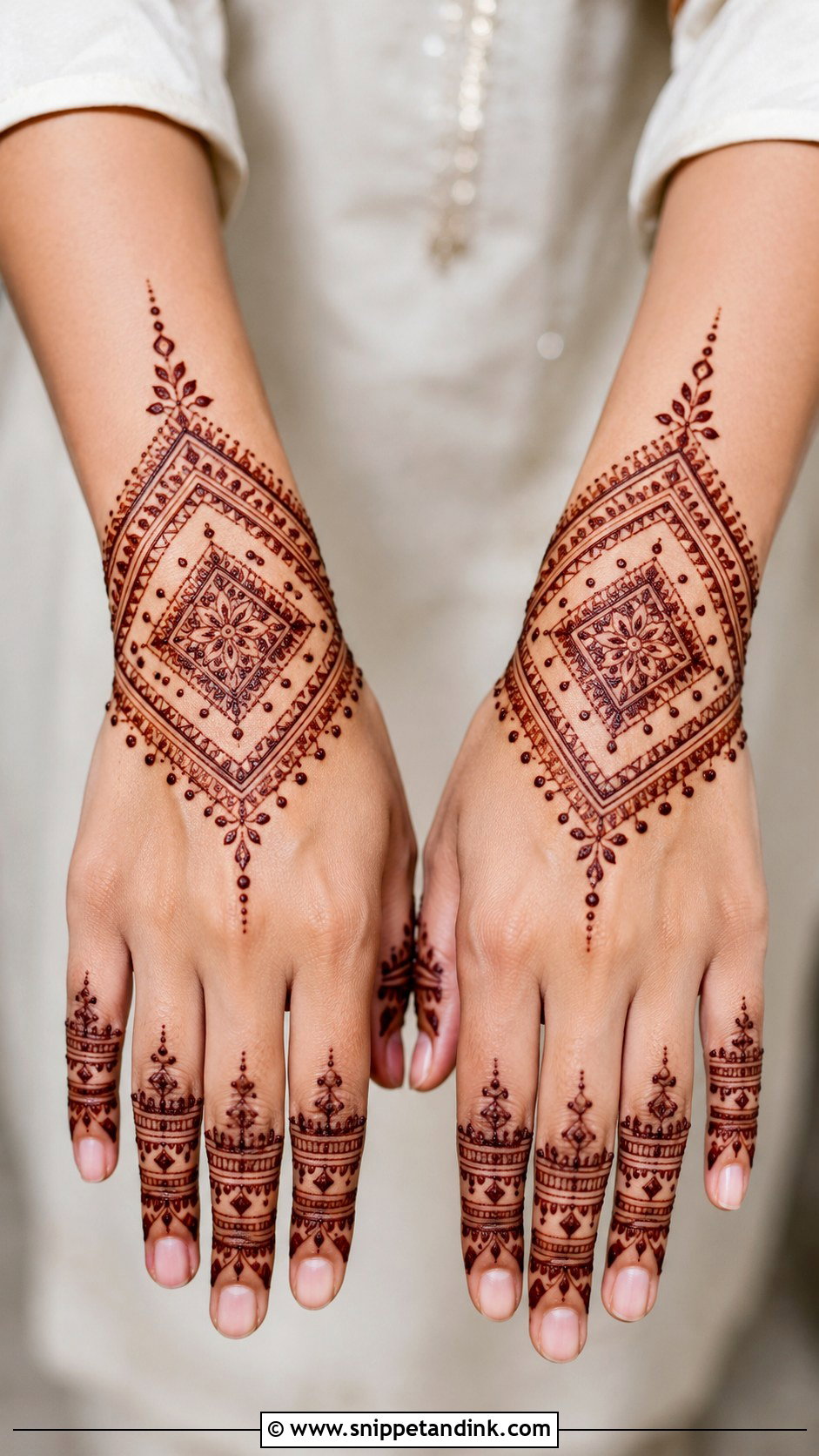
Diamonds, squares, triangles, lines, grids and structured bands replace soft florals in geometric work. A panel in the centre of the back of the hand can connect to finger bands and a wrist cuff, or you can soften the geometry with small dots or simple leaves. Steady line work is essential, and open space keeps it from looking tight. It suits people who like symmetry, modern outfits and casual parties.
A Smudge, a Pale Patch or One Hand Lighter Than the Other
Small accidents happen even with experienced hands. If wet paste smudges, lift it straight away with a slightly damp cotton bud and let the artist redraw the line. Henna starts staining quickly, so the sooner the smear comes off, the fainter its mark will be. Once it has dried in place, it’s part of the design.
A pale result usually means the paste came off too early or the hands were cold. There’s no safe way to darken a finished stain much, so it’s better to plan ahead: keep the paste on for several hours, stay warm, and keep water away for as long as you can afterwards. Reapplying henna on top of a light stain can deepen it a little, but the new lines rarely sit exactly on the old ones.
It’s also completely normal for one hand to fade faster. Your dominant hand gets washed and used far more, so its back stain softens first. If the event is a few days after application, be gentler with that hand: gloves for washing up, and a little oil before showering.
Start With the Event, Then the Motif
From simple finger patterns to full bridal coverage, the right back design depends on the occasion, outfit, jewellery and how comfortable you’ll be. Arabic trails give bold movement, mandalas balance, Indian patterns tradition, minimal designs a clean modern feel. Floral, leafy and bracelet styles are reliable when you want festive but easy; jaali, paisleys and wrist detail make weddings and engagements look complete. Choose the one that feels natural on your own hand, then give the stain time to develop.
You'll Like These Ideas:


Leave a Reply